0001875084-26-000014.txt : 20260428 0001875084-26-000014.hdr.sgml : 20260428 20260428171704 ACCESSION NUMBER: 0001875084-26-000014 CONFORMED SUBMISSION TYPE: 486BPOS PUBLIC DOCUMENT COUNT: 18 FILED AS OF DATE: 20260428 DATE AS OF CHANGE: 20260428 EFFECTIVENESS DATE: 20260430 FILER: COMPANY DATA: COMPANY CONFORMED NAME: PGIM Private Real Estate Fund, Inc. CENTRAL INDEX KEY: 0001875084 ORGANIZATION NAME: EIN: 000000000 STATE OF INCORPORATION: MD FISCAL YEAR END: 1231 FILING VALUES: FORM TYPE: 486BPOS SEC ACT: 1940 Act SEC FILE NUMBER: 811-23739 FILM NUMBER: 26909263 BUSINESS ADDRESS: STREET 1: 655 BROAD STREET STREET 2: 6TH FL CITY: NEWARK STATE: NJ ZIP: 07102 BUSINESS PHONE: (862) 302-9412 MAIL ADDRESS: STREET 1: 655 BROAD STREET STREET 2: 6TH FL CITY: NEWARK STATE: NJ ZIP: 07102 FILER: COMPANY DATA: COMPANY CONFORMED NAME: PGIM Private Real Estate Fund, Inc. CENTRAL INDEX KEY: 0001875084 ORGANIZATION NAME: EIN: 000000000 STATE OF INCORPORATION: MD FISCAL YEAR END: 1231 FILING VALUES: FORM TYPE: 486BPOS SEC ACT: 1933 Act SEC FILE NUMBER: 333-286863 FILM NUMBER: 26909262 BUSINESS ADDRESS: STREET 1: 655 BROAD STREET STREET 2: 6TH FL CITY: NEWARK STATE: NJ ZIP: 07102 BUSINESS PHONE: (862) 302-9412 MAIL ADDRESS: STREET 1: 655 BROAD STREET STREET 2: 6TH FL CITY: NEWARK STATE: NJ ZIP: 07102 N N N 486BPOS 1 f44996d1.htm 486BPOS 486BPOS
0001875084falsePGIM Private Real Estate Fund, Inc.falsefalsefalsefalsefalsefalsefalsefalsefalsefalsefalsefalsefalsefalsefalseNofalsefalsePrudential Investment Management Services LLC (the “Distributor”) is the principal underwriter and distributor of the Common Shares and serves in that capacity on a “best efforts” basis, subject to various conditions. Shares may be offered through Selling Agents that have entered into selling agreements with the Distributor. Selling Agents typically receive the sales load with respect to Class T Shares purchased by their clients. The Distributor does not retain any portion of the sales load. Class T Shares are subject to a sales load of up to 3.5% of the total offering price (including sales load). Class I Shares, Class D Shares and Class S Shares are each not subject to a sales load; however, investors could be required to pay brokerage commissions on purchases and sales of such shares to their Selling Agents. Investors should consult with their Selling Agents about the sales load and any additional fees or charges their Selling Agents might impose on each class of Common Shares. See “Purchase of Shares — Sales Loads.”A 2.0% early repurchase fee payable to the Fund will be charged with respect to the repurchase of a shareholder’s shares by the Fund at any time prior to the day immediately preceding the one-year anniversary of a shareholder’s purchase of the Common Shares (on a “first in-first out” basis). An early repurchase fee payable by a shareholder may be waived by the Fund, in circumstances where the Board determines that doing so is in the best interests of the Fund and in a manner that will not discriminate unfairly against any shareholder.Pursuant to an investment management agreement, the Manager receives a Management Fee, payable monthly in arrears at an annual rate of 1.00% of the average daily value of the Fund’s net assets.The table assumes the Fund (including by the Fund’s consolidated subsidiaries) does not use entity-level leverage. To the extent the Fund does use such leverage, the Fund would bear interest and other costs associated with leverage (the figure in the table does include expenses associated with the Fund’s credit facility, such as the amortization of costs obtaining borrowings and unused commitment fees). In addition, the Fund expects that its unconsolidated operating entities will use borrowings, the costs of which will be indirectly borne by the Fund’s shareholders. See “Leverage.”The Fund also pays the Distributor a Distribution Fee pursuant to its 12b-1 Plan that is payable monthly and accrued daily at an annualized rate of 0.60% of the net assets of the Fund attributable to Class S Shares and Class T Shares. The Distribution Fee is for the sale and marketing of the Class S Shares and Class T Shares and to reimburse the Distributor for related expenses incurred. All or a portion of the Distribution Fee may be used to pay for sub-transfer agency, sub-accounting and certain other administrative services that are not required to be paid pursuant to a service fee under Financial Industry Regulatory Authority (“FINRA”) rules. The Distributor generally will pay all or a portion of the Distribution Fee to the Selling Agents that sell Class S and Class T Shares. Payment of the Distribution Fee is governed by the Fund’s Distribution and Service Plan.Pursuant to an investment management agreement, the Manager will receive an incentive fee calculated and payable quarterly in arrears in an amount equal to 10% of the Fund’s Portfolio Operating Income for the immediately preceding quarter. No incentive fee on Portfolio Operating Income will be payable in any calendar quarter in which the Fund did not achieve a 5% Total Return over the trailing 12-month period. Actual Portfolio Operating Income may be higher or lower. The Fund expects the Incentive Fee it pays to increase to the extent the Fund earns greater income through its investments. See “Management and Advisory Arrangements” for more information concerning the Incentive Fee.The Fund pays the Distributor a Servicing Fee pursuant to its 12b-1 Plan that is payable monthly and accrued daily at an annualized rate of 0.25% of the net assets of the Fund attributable to Class S Shares, Class T Shares and Class D Shares. The Servicing Fee is for personal services provided to shareholders and/or the maintenance of shareholder accounts and to reimburse the Distributor for related expenses incurred. The Distributor generally will pay (or “reallow”) all or a portion of the Servicing Fee to the Selling Agents that sell Class S Shares, Class T Shares and Class D Shares. The Servicing Fee is governed by the Fund’s Distribution and Service Plan.Represents estimated fees and expenses related to property management, including real estate/property taxes, disposition expenses, any other expenses related to investments in real property by the Fund’s consolidated subsidiaries, if applicable. In addition, the Fund expects that its unconsolidated operating entities will incur property management, disposition and other expenses related to investments in real property, the costs of which will be indirectly borne by the Fund’s shareholders. The Fund’s real estate operating subsidiaries expect in the future to hire affiliated loan servicing managers (who could also be joint venture partners for an investment) at prevailing market rates to perform management and specialized services for the Fund’s loan investments.“Other Expenses” represent the annual other expenses of the Fund based on actual amounts of other expenses incurred during the fiscal year ended December 31, 2025, divided by the Fund’s average net assets for the fiscal year ended December 31, 2025.Pursuant to an Expense Limitation and Reimbursement Agreement, the Manager has contractually agreed to waive its fees and/or reimburse expenses of the Fund through August 15, 2028 (the “ELRA Period”) so that the Fund’s Specified Expenses will not exceed 0.50% of net assets (annualized). The Fund has agreed to repay these amounts, when and if requested by the Manager, but only if and to the extent that Specified Expenses are less than 0.50% of net assets (annualized) (or, if a lower expense limit is then in effect, such lower limit) within three years after the date the Manager waived or reimbursed such fees or expenses. This arrangement cannot be terminated without the consent of the Fund’s Board prior to the end of the ELRA Period. “Specified Expenses” is defined to include all expenses incurred in the business of the Fund, including organizational and offering costs (other than the Fund’s organizational and offering expenses relating to the initial sale of Common Shares, which will be paid directly by PGIM Investments and its affiliates), with the exception of (i) the Management Fee, (ii) the Incentive Fee, (iii) the Servicing Fee, (iv) the Distribution Fee, (v) property level expenses, (vi) brokerage costs or other investment-related out-of-pocket expenses, including with respect to unconsummated investments, (vii) dividend/interest payments (including any dividend payments, interest expenses, commitment fees, or other expenses related to any leverage incurred by the Fund), (viii) taxes, and (ix) extraordinary expenses (as determined in the sole discretion of the Manager). 0001875084 2026-04-28 2026-04-28 0001875084 cik0001875084:CapitalMarketsRiskMember 2026-04-28 2026-04-28 0001875084 cik0001875084:PrimeSingleTenantRiskMember 2026-04-28 2026-04-28 0001875084 cik0001875084:MortgageLoanRiskMember 2026-04-28 2026-04-28 0001875084 cik0001875084:MezzanineLoanRiskMember 2026-04-28 2026-04-28 0001875084 cik0001875084:CMBSRiskMember 2026-04-28 2026-04-28 0001875084 cik0001875084:DelayInUseOfProceedsRiskMember 2026-04-28 2026-04-28 0001875084 cik0001875084:SelectionRiskMember 2026-04-28 2026-04-28 0001875084 cik0001875084:RelianceOnInvestmentProfessionalsMember 2026-04-28 2026-04-28 0001875084 cik0001875084:LiquidityRiskMember 2026-04-28 2026-04-28 0001875084 cik0001875084:DistributionsRiskMember 2026-04-28 2026-04-28 0001875084 cik0001875084:ValuationRiskMember 2026-04-28 2026-04-28 0001875084 cik0001875084:RecourseFinancingsRiskMember 2026-04-28 2026-04-28 0001875084 cik0001875084:RealEstateJointVentureRiskMember 2026-04-28 2026-04-28 0001875084 cik0001875084:JointVentureRiskMember 2026-04-28 2026-04-28 0001875084 cik0001875084:NonDiversificationRiskMember 2026-04-28 2026-04-28 0001875084 cik0001875084:CompetitionRiskMember 2026-04-28 2026-04-28 0001875084 cik0001875084:CommercialRealEstateIndustryRiskMember 2026-04-28 2026-04-28 0001875084 cik0001875084:RealEstateInvestmentRiskMember 2026-04-28 2026-04-28 0001875084 cik0001875084:GeopoliticalClimateRiskMember 2026-04-28 2026-04-28 0001875084 cik0001875084:GeneralMarketAndEconomicRiskMember 2026-04-28 2026-04-28 0001875084 cik0001875084:LimitedHistoryOfOperationsRiskMember 2026-04-28 2026-04-28 0001875084 cik0001875084:InflationRiskMember 2026-04-28 2026-04-28 0001875084 cik0001875084:RMBSRiskMember 2026-04-28 2026-04-28 0001875084 cik0001875084:ABSRiskMember 2026-04-28 2026-04-28 0001875084 cik0001875084:FixedIncomeInstrumentsRiskMember 2026-04-28 2026-04-28 0001875084 cik0001875084:BelowInvestmentGradeHighYieldOrJunkBondInstrumentsRiskMember 2026-04-28 2026-04-28 0001875084 cik0001875084:IlliquidInvestmentRiskMember 2026-04-28 2026-04-28 0001875084 cik0001875084:ResidentialRealEstateIndustryRiskMember 2026-04-28 2026-04-28 0001875084 cik0001875084:CyberSecurityRiskMember 2026-04-28 2026-04-28 0001875084 cik0001875084:ArtificialIntelligenceTechnologiesDevelopmentRiskMember 2026-04-28 2026-04-28 0001875084 cik0001875084:AffiliatedTransactionsRiskMember 2026-04-28 2026-04-28 0001875084 cik0001875084:RisksRelatedToTheFundsReitStatusMember 2026-04-28 2026-04-28 0001875084 cik0001875084:TaxRisksOfInvestingInTheFundMember 2026-04-28 2026-04-28 0001875084 cik0001875084:RisksRelatedToTheFundsReitStatus1Member 2026-04-28 2026-04-28 0001875084 cik0001875084:RepurchaseOffersRiskMember 2026-04-28 2026-04-28 0001875084 cik0001875084:AntiTakeoverProvisionsMember 2026-04-28 2026-04-28 0001875084 cik0001875084:IncentiveFeeRiskMember 2026-04-28 2026-04-28 0001875084 cik0001875084:NonUSInvestmentRisksMember 2026-04-28 2026-04-28 0001875084 cik0001875084:PropertyManagerRiskMember 2026-04-28 2026-04-28 0001875084 cik0001875084:DerivativesRiskMember 2026-04-28 2026-04-28 0001875084 cik0001875084:TaxRisksOfInvestingInTheFund1Member 2026-04-28 2026-04-28 0001875084 cik0001875084:FailureOfFinancialInstitutionsAndSustainedFinancialMarketIlliquidityRiskMember 2026-04-28 2026-04-28 0001875084 cik0001875084:LeverageRiskMember 2026-04-28 2026-04-28 0001875084 cik0001875084:PotentialConflictsOfInterestRiskMember 2026-04-28 2026-04-28 0001875084 cik0001875084:AllocationOfInvestmentOpportunitiesRiskMember 2026-04-28 2026-04-28 0001875084 cik0001875084:BestEffortsOfferingRiskMember 2026-04-28 2026-04-28 0001875084 cik0001875084:PreferredSharesMember 2026-04-28 2026-04-28 0001875084 cik0001875084:CommonSharesMember 2026-04-28 2026-04-28 0001875084 cik0001875084:ClassISharesMember 2026-04-28 2026-04-28 0001875084 cik0001875084:ClassDSharesMember 2026-04-28 2026-04-28 0001875084 cik0001875084:ClassSSharesMember 2026-04-28 2026-04-28 0001875084 cik0001875084:ClassTSharesMember 2026-04-28 2026-04-28 0001875084 dei:BusinessContactMember 2026-04-28 2026-04-28 0001875084 cik0001875084:ClassISharesMember 2025-12-31 0001875084 cik0001875084:ClassTSharesMember 2025-12-31 0001875084 cik0001875084:ClassSSharesMember 2025-12-31 0001875084 cik0001875084:ClassDSharesMember 2025-12-31 0001875084 cik0001875084:ClassISharesMember 2024-12-31 0001875084 cik0001875084:ClassSSharesMember 2024-12-31 0001875084 cik0001875084:ClassTSharesMember 2024-12-31 0001875084 cik0001875084:ClassDSharesMember 2024-12-31 0001875084 cik0001875084:ClassISharesMember 2023-12-31 0001875084 cik0001875084:ClassSSharesMember 2023-12-31 0001875084 cik0001875084:ClassTSharesMember 2023-12-31 0001875084 cik0001875084:ClassDSharesMember 2023-12-31 0001875084 cik0001875084:ClassISharesMember 2022-12-31 0001875084 cik0001875084:ClassSSharesMember 2022-12-31 0001875084 cik0001875084:ClassTSharesMember 2022-12-31 0001875084 cik0001875084:ClassDSharesMember 2022-12-31 0001875084 cik0001875084:SeriesAPreferredSharesMember 2026-03-31 2026-03-31 0001875084 cik0001875084:ClassTSharesMember 2026-03-31 2026-03-31 0001875084 cik0001875084:ClassSSharesMember 2026-03-31 2026-03-31 0001875084 cik0001875084:ClassISharesMember 2026-03-31 2026-03-31 0001875084 cik0001875084:ClassDSharesMember 2026-03-31 2026-03-31 xbrli:shares xbrli:pure iso4217:USD iso4217:USD xbrli:shares
As filed with the Securities and Exchange Commission on April 28, 2026
Securities Act File No. 333-286863


Investment Company Act File No. 811-23739
UNITED STATES

SECURITIES AND EXCHANGE COMMISSION

WASHINGTON, D.C. 20549
FORM N-2
REGISTRATION STATEMENT UNDER THE SECURITIES ACT OF 1933
(X)

PRE-EFFECTIVE AMENDMENT NO.

POST-EFFECTIVE AMENDMENT NO. 4
(X)
and/or
REGISTRATION STATEMENT UNDER THE INVESTMENT COMPANY ACT OF 1940
(X)

AMENDMENT NO.
11
(X)

Check appropriate box or boxes
PGIM Real Estate Fund Inc.

(Exact Name of Registrant as Specified in Charter)
655 Broad Street

Newark
,
New Jersey
07102-4410

(Address of Principal Executive Offices)
(Registrant’s Telephone Number, Including Area Code):
(973) 802-5032
Claudia DiGiacomo, Esq.

PGIM Investments LLC

655 Broad Street, Newark, New Jersey 07102

(Name and Address of Agent for Service)
With Copies to:
Benjamin C. Wells, Esq.
Simpson Thacher & Bartlett LLP
425 Lexington Avenue
New York, New York 10017
Jacqueline Edwards, Esq.
Simpson Thacher & Bartlett LLP
425 Lexington Avenue
New York, New York 10017
Ryan P. Brizek, Esq.
Simpson Thacher & Bartlett LLP
900 G Street, N.W.
Washington, D.C. 20001
Approximate Date of Proposed Public Offering:
As soon as practicable after the effective date of this
Registration Statement.
__
Check box if the only securities being registered on this Form are being offered pursuant to dividend or interest
reinvestment plans.
X
Check box if any securities being registered on this Form will be offered on a delayed or continuous basis in
reliance on Rule 415 under the Securities Act of 1933 (
Securities Act
), other than securities offered in
connection with a dividend reinvestment plan.

__
Check box if this Form is a registration statement pursuant to General Instruction A.2 or a post-effective
amendment thereto.

__
Check box if this Form is a registration statement pursuant to General Instruction B or a post-effective
amendment thereto that will become effective upon filing with the Commission pursuant to Rule 462(e) under the
Securities Act.
__
Check box if this Form is a post-effective amendment to a registration statement filed pursuant to General
Instruction B to register additional securities or additional classes of securities pursuant to Rule 413(b) under the
Securities Act.
It is proposed that this filing will become effective (check appropriate box):
__
when declared effective pursuant to Section 8(c) of the Securities Act.
__
immediately upon filing pursuant to paragraph (b) of Rule 486.
X
on April 30, 2026 pursuant to paragraph (b) of Rule 486.
__
60 days after filing pursuant to paragraph (a) of Rule 486.
__
on (date) pursuant to paragraph (a) of Rule 486.
If appropriate, check the following box:

__
this post-effective amendment designates a new effective date for a previously filed post-effective amendment
registration statement.

__ This Form is filed to register additional securities for an offering pursuant to Rule 462(b) under the Securities
Act, and the Securities Act registration statement number of the earlier effective registration statement for the same
offering is:

__ This Form is a post-effective amendment filed pursuant to Rule 462(c) under the Securities Act, and the
Securities Act registration statement number of the earlier effective registration statement for the same offering is:

__ This Form is a post-effective amendment filed pursuant to Rule 462(d) under the Securities Act, and the
Securities Act registration statement number of the earlier effective registration statement for the same offering is:
Check each box that appropriately characterizes the Registrant:

X
Registered Closed-End Fund (closed-end company that is registered under the Investment Company Act of 1940
(
Investment Company Act
)).

__
Business Development Company (closed-end company that intends or has elected to be regulated as a business
development company under the Investment Company Act).

X
Interval Fund (Registered Closed-End Fund or a Business Development Company that makes periodic
repurchase offers under Rule 23c-3 under the Investment Company Act).

__
A.2 Qualified (qualified to register securities pursuant to General Instruction A.2 of this Form).

__
Well-Known Seasoned Issuer (as defined by Rule 405 under the Securities Act).

__
Emerging Growth Company (as defined by Rule 12b-2 under the Securities Exchange Act of 1934 (
Exchange
Act
)).

__
If an Emerging Growth Company, indicate by check mark if the registrant has elected not to use the extended
transition period for complying with any new or revised financial accounting standards provided pursuant to
Section 7(a)(2)(B) of the Securities Act.

__
New Registrant (registered or regulated under the Investment Company Act for less than 12 calendar months
preceding this filing).


PGIM REAL ESTATE FUND INC.

formerly, PGIM Private Real Estate Fund, Inc.
CLASS I COMMON SHARES (PPRUX)

CLASS D COMMON SHARES (PPRDX)

CLASS S COMMON SHARES (PPRSX)

CLASS T COMMON SHARES (PPRTX)


The Fund.
PGIM Real Estate Fund Inc., a Maryland corporation (the
Fund,
we,
us,
or
our
), is a non-diversified,
closed-end management investment company registered under the Investment Company Act of 1940, as amended (the
Investment Company Act
), and is operated as an
interval fund.
The Fund has elected and has qualified, and intends to
continue to qualify annually, as a real estate investment trust (
REIT
) for U.S. federal income tax purposes under the
Internal Revenue Code of 1986, as amended (the
Code
). In order to continue to qualify as a REIT, the Fund must
distribute at least 90% of its REIT taxable income each year to its shareholders (
shareholders
).
PGIM Investments LLC (the
Manager
or
PGIM Investments
) serves as the investment manager to the Fund and has
engaged its affiliate, PGIM, Inc. (the
Subadviser
or
PGIM
), as subadviser to provide day-to-day management of the
Fund’s portfolio, primarily through the PGIM Real Estate investment group (
PGIM Real Estate
) and the PGIM Credit
investment group (
PGIM Credit
). PGIM Real Estate, a manager of public and private real estate investing, is an
investment group of PGIM. PGIM Credit is the public and private fixed income investment group of PGIM. PGIM Fixed
Income, a manager of private and public fixed income investments, is an investment sub-group of PGIM Credit. The Fund
seeks to provide a broad range of investors with access to diversified, institutional quality real estate by leveraging the
expertise of PGIM.
Investment Objectives.
The Fund’s investment objectives are to provide current income and long-term capital appreciation.
There can be no assurance that the Fund will achieve its investment objectives. The Fund’s investment objectives are not
fundamental and may be changed by the Fund’s board of directors (the
Board
) without Fund shareholder approval.
Investment Strategies.
The Fund invests, under normal circumstances, at least 80% of its net assets (plus the amount of its
borrowings for investment purposes) in private real estate and publicly traded real estate securities. The Fund expects to
invest primarily in private real estate, which includes investments in property, equity investments in real estate or real
estate related companies and debt investments backed by real estate or real estate related companies acquired from
private issuers or in private transactions. This portion of the Fund is generally weighted to investments in property sectors
that PGIM considers primary, including housing, logistics, and retail, targeting investments that PGIM believes can benefit
from long-term structural changes driven by demographics and technological shifts. PGIM also employs strategies that
seek to capture value through cyclical opportunities and pricing dislocations in niche property sectors including, but not
limited to self-storage, hotels, data centers, net lease (meaning for these purposes properties leased to long-term tenants
where the tenants have agreed to pay substantially all expenses related to the property, including taxes, insurance and
maintenance). Many of these property investments are expected to be structured through privately-owned operating
entities that own and operate whole or partial interests in real properties. The Fund’s investments in publicly traded real
estate-related securities may include commercial mortgage-backed securities (
CMBS
), residential mortgage-backed
securities (
RMBS
), asset-backed securities (
ABS
), equity or debt securities issued by public REITs or real
estate-related investment companies, as well as exchange-traded funds (
ETFs
), other pooled investment vehicles and
other instruments that provide exposure to real estate for investment purposes. Publicly traded securities may be
exchange-traded or traded over-the-counter (
OTC
). Generally, the Fund’s investments in CMBS, RMBS and real
estate-related ABS are expected to be traded over-the-counter. Real estate-related investment companies are investment
companies that primarily invest in real estate or activities relating to the ownership, construction, financing, management,

servicing or sale of such real estate. The Fund may invest in derivative instruments which may include options contracts,
futures contracts, options on futures contracts, indexed securities, credit linked notes, credit default swaps and other swap
agreements for investment, hedging and risk management purposes. For purposes of the 80% policy, the Fund’s derivative
investments will be valued based on their market value. The Fund may invest in securities of any credit quality, maturity
and duration.
Securities Offered.
The Fund currently offers four classes of its common stock, $0.001 par value per share (the
Common
Shares
), on a continuous basis: Class I shares of Common Shares (
Class I Shares
), Class D shares of Common Shares
(
Class D Shares
), Class S shares of Common Shares (
Class S Shares
) and Class T shares of Common Shares (
Class T
Shares
). The Fund may offer additional classes of its Common Shares in the future.
No secondary market.
The Common Shares have no history of public trading, nor is it currently intended that the Common Shares will be listed on a public
exchange or any other trading market in the near future.
No organized secondary market is expected to develop for the Common Shares.
Even though the Fund will make quarterly repurchase offers for its outstanding Common Shares (currently intended to be limited to 5% of
its outstanding Common Shares per quarter), investors should consider Common Shares of the Fund to be an illiquid investment.
There is no guarantee that you will be able to sell your Common Shares at any given time or in the quantity that you desire.
There is no assurance that the Fund will be able to maintain a certain level of, or at any particular time make any, distributions to
shareholders.
An investment in the Fund may not be suitable for investors who may need the money they invest in a specified timeframe.
We cannot guarantee that we will make distributions, and if we do we may fund such distributions from sources other than cash flow
from operations, including the sale of assets, borrowings or return of capital, and although we generally expect to fund distributions from
cash flow from operations, we have not established limits on the amounts we may pay from such sources.
Distributions may also be funded in significant part, directly or indirectly, from temporary waivers or expense reimbursements borne by
the Manager or its affiliates, that may be subject to reimbursement to the Manager or its affiliates. The repayment of any amounts owed
to our affiliates will reduce future distributions to which you would otherwise be entitled.
Such distributions may constitute return of capital and also reduce an investor’s adjusted tax basis in the Common Shares, thereby
increasing the investor’s potential taxable gain or reducing the potential taxable loss on the sale of Common Shares. Any capital returned
to holders of Common Shares through distributions will be distributed after payment of fees and expenses.
Sales Load.
An investor in Class T Shares will pay a sales load of up to 3.5% on the amounts it invests. If you pay the maximum aggregate 3.5%
sales load, you must experience a total return on your net investment of 3.6% in order to recover such sales charges.
Investing in the Common Shares involves certain risks. See
Risks
beginning on page
42
of this prospectus.
 
Offering
Price
(1)
Maximum
Sales Load
Proceeds
to Fund
(2)
Class I Common Shares, par value $0.001 per share
Current NAV
Amount Invested at NAV
Class D Common Shares, par value $0.001 per share
Current NAV
Amount Invested at NAV
Class S Common Shares, par value $0.001 per share
Current NAV
Amount Invested at NAV
Class T Common Shares, par value $0.001 per share
Current NAV plus Sales Load
3.5%
Amount Invested at NAV
Maximum Offering
(3)
$2,000,000,000
$70,000,000
$1,930,000,000
(1)
Each class of Common Shares is continuously offered at net asset value (
NAV
) per share, plus, in the case of Class T Shares, a maximum sales load of up to 3.5% of the
offering price. Class I Shares, Class D Shares and Class S Shares are not subject to a sales load; however, investors could be required to pay brokerage commissions on purchases
and sales of such shares to their selling agents. Investors should consult with their selling agents about the sales load and any additional fees or charges their selling agents
might impose on each class of Common Shares. A 2.0% early repurchase fee payable to the Fund will be charged with respect to the repurchase of a shareholder’s shares by the
Fund at any time prior to the day immediately preceding the one-year anniversary of a shareholder’s purchase of the Common Shares (on a
first in-first out
basis).
(2)
The Fund bears its ongoing offering expenses, subject to a specified expense cap and reimbursement limitations, as described below. Pursuant to an Expense Limitation and
Reimbursement Agreement, the Manager has contractually agreed to waive its fees and/or reimburse expenses of the Fund through August 15, 2028 (the
ELRA Period
) so that
certain of the Fund’s expenses, including organizational and offering expenses (excluding initial organization and offering costs), among other expenses as specified in this
prospectus (
Specified Expenses
) will not exceed 0.50% of net assets (annualized). The Fund has agreed to repay these amounts, when and if requested by the Manager, but only
if and to the extent that Specified Expenses are less than 0.50% of net assets (annualized) (or, if a lower expense limit is then in effect, such lower limit) within three years after
the date the Manager waived or reimbursed such fees or expenses.
(3)
Assumes an offering of 100% Class T Shares at the maximum sales load.

Neither the Securities and Exchange Commission (the
SEC
) nor any state securities commission has approved or
disapproved of these securities or determined if this prospectus is truthful or complete. Any representation to the contrary is
a criminal offense.
Prospectus dated April 30, 2026.


Interval Fund/Repurchases.
 The Fund is an
interval fund,
a type of fund which, in order to provide liquidity to
shareholders, has adopted a fundamental investment policy to make quarterly offers to repurchase between 5% and 25%
of its outstanding Common Shares at net asset value. Subject to applicable law and approval of the Board, for each
quarterly repurchase offer, the Fund currently expects to offer to repurchase 5% of the Fund’s outstanding Common
Shares on the repurchase request deadline at the net asset value per Common Share as of the repurchase pricing date.
Written notification of each quarterly repurchase offer (the
Repurchase Offer Notice
) will be sent to shareholders at least
21 days before the repurchase request deadline (i.e., the date by which shareholders can tender their Common Shares in
response to a repurchase offer) (the
Repurchase Request Deadline
). The date on which the repurchase price for
Common Shares is determined shall occur no later than the 14th day after the Repurchase Request Deadline (or the next
business day, if the 14th day is not a business day). See
Periodic Repurchase Offers
and
Risks — Repurchase Offers
Risk
for additional information regarding repurchase offers and related risks.
Leverage.
The Fund may seek to enhance the level of its current distributions to common shareholders and capital
appreciation through the use of leverage, subject to the limitations of the Investment Company Act. The Fund may use
entity level debt (i.e., non-mortgage debt at the Fund level), including unsecured and secured credit facilities from certain
financial institutions, and other forms of borrowing (collectively,
Borrowings
), which Borrowings are limited to 33
 1
3
% of
the Fund’s total assets (less all liabilities and indebtedness not represented by Investment Company Act leverage)
immediately after such Borrowings.
The Fund also expects that certain of its private real estate investments will utilize property level debt financing (mortgages
on the Fund’s or its operating entities’ properties that are generally not recourse to the Fund or the operating entities
except in extremely limited circumstances). Property level debt will be incurred by wholly-owned or joint venture operating
entities utilized by the Fund and secured by real estate owned by operating entities. In a non-recourse mortgage, if an
operating entity were to default on a loan, the lender’s recourse would be to the mortgaged property, and the lender would
typically not have a claim to seek recovery from any unpaid portion of the loan from the other assets of the Fund or its
subsidiaries. See
Leverage
and
Risks — Leverage Risk.
When such property level debt is not recourse to the Fund,
and the entity holding such debt was not formed for the purpose of avoiding the Investment Company Act limitations on
leverage, the Fund will not treat such borrowings as senior securities (as defined in the Investment Company Act) for
purposes of complying with the Investment Company Act’s limitations on leverage unless (i) the entity holding such debt is
an entity that primarily engages in investment activities in securities or other assets and is primarily controlled by the Fund,
including a subsidiary in which the Fund owns all or a majority of the voting securities of the subsidiary (
Controlled
Subsidiary
), or (ii) the financial statements of the entity or joint venture holding such debt would be consolidated in the
Fund’s financial statements. In certain limited cases, property level debt may be recourse to the Fund. See
Risks —
Recourse Financings Risk.
In addition, the Fund may enter into investment management techniques (including reverse
repurchase agreements and derivative transactions) that have similar effects as leverage, but which are not subject to the
foregoing 33
 1
3
% limitation if effected in compliance with applicable SEC rules and guidance.
Investment Manager.
PGIM Investments, the Fund’s investment manager and a registered investment adviser under the
Investment Advisers Act of 1940 (the
Advisers Act
), provides administrative and management services to the Fund,
subject to the supervision of the Board. PGIM Investments is an indirect, wholly-owned subsidiary of Prudential Financial,
Inc. (
Prudential
) (NYSE:PRU) that was organized in 1987. As of December 31, 2025, PGIM Investments’ total assets
under management were approximately $333.2 billion.

Subadviser.
The Manager has engaged PGIM as subadviser to provide day-to-day management of the Fund’s portfolio,
primarily through PGIM Real Estate and PGIM Credit. PGIM Real Estate, a manager of public and private real estate
investing, is an investment group of PGIM. PGIM Credit is the public and private fixed income investment group of PGIM.
PGIM Fixed Income, a manager of private and public fixed income investments, is an investment sub-group of PGIM
Credit. The Manager is permitted to allocate portions of the Fund’s portfolio to any of the investment groups within PGIM.
PGIM is an indirect, wholly-owned subsidiary of Prudential Financial, Inc. (NYSE:PRU) (generally referred to in this
Prospectus as
Prudential
) that was organized in 1984. PGIM is the global asset management business of Prudential. As
of December 31, 2025, PGIM managed approximately $1.47 trillion in assets. PGIM, Inc.’s predecessor companies began
managing fixed income portfolios for affiliates in 1875 and for unaffiliated institutional clients in 1928. PGIM's address is
655 Broad Street, Newark, New Jersey 07102.
Sponsors’ Investment.
To provide the Fund with an initial source of capital to begin making investments, Prudential,
through its affiliates, agreed to commit an aggregate of $150 million to the Fund as a seed investment. Subsequently,
Prudential, through its affiliates, committed an additional $100 million in capital to the Fund. The Fund has used and will
continue to use such capital to invest in opportunities consistent with its investment objective and strategies. We believe
this investment creates a significant alignment of interests with the Fund’s investors and demonstrates a strong
commitment to the Fund’s strategy.
Investing in the Fund involves certain risks, and is suitable only for investors who can bear the risks associated with private
market investments with potential limited liquidity. The Common Shares should be viewed as a long-term investment within a
multi-asset personal portfolio, and should not be viewed individually as a complete investment program. Because of the risks
associated with investing in private real estate and using leverage, an investment in the Fund may be considered speculative.
You could lose some or all of your investment. See
Risks
below in this prospectus.
This prospectus provides information that you should know about the Fund before investing. Please read this prospectus
carefully and keep it for future reference. A Statement of Additional Information, dated April 30, 2026, as it may be
amended (the
SAI
), containing additional information about the Fund has been filed with the SEC and is incorporated by
reference in its entirety into this prospectus. Additional information about the Fund has been filed with the SEC and is
available upon written or oral request and without charge. You may also obtain the SAI and other information regarding the
Fund on the SEC’s website at http://www.sec.gov. For a free copy of the Fund’s most recent SAI, annual report or
semi-annual report or to request other information or ask questions about the Fund, please write to the Fund at 655 Broad
Street, Newark, NJ 07102-4410, call toll-free at (844) 753-6354 or visit the Fund’s website at
www.pgim.com/realestatefund. This reference to the website does not incorporate the contents of the website into
this prospectus.
As permitted by regulations adopted by the SEC, paper copies of the Fund’s annual and semi-annual shareholder reports
will not be sent by mail, except to investors that specifically request paper copies of the reports. Instead, the reports will be
made available on the Fund’s website at www.pgim.com/realestatefund, and you will be notified by mail each time a report
is posted and provided with a website link to access the report.
You may elect to receive all future reports in paper free of charge. If you invest through a financial intermediary, you can
contact your financial intermediary or, if you are a direct investor, you can call (844) 753-6354 to let the Fund know you
wish to receive paper copies of your shareholder reports. Your election to receive reports in paper will apply to all funds
held in your account if you invest through your financial intermediary or all funds held within the Fund complex if you
invest directly with the Fund.
The Common Shares do not represent a deposit or obligation of and are not guaranteed or endorsed by, any bank or other
insured depository institution, and are not federally insured by the Federal Deposit Insurance Corporation, the Federal
Reserve Board or any other government agency.

TABLE OF CONTENTS
You should rely only on the information contained in or incorporated by reference into this prospectus. The Fund has not authorized anyone
to provide you with different information. If anyone provides you with different or inconsistent information, you should not rely on it. The
Fund is not making an offer of these securities in any jurisdiction where the offer is not permitted.
Website Disclosure
The Fund’s website, at www.pgim.com/realestatefund, contains additional information about the Fund, but the contents of the website are
not incorporated by reference in or otherwise a part of this prospectus. From time to time, the Fund may use its website as a distribution
channel for material Fund information.

i


PROSPECTUS SUMMARY
This is only a summary. This summary does not contain all of the information that you should consider before investing in the PGIM Real
Estate Fund Inc. (the
Fund
). You should review the more detailed information contained in this prospectus and in the Statement of
Additional Information (the
SAI
), especially the information under the heading
Risks.
The Fund
The Fund, a Maryland corporation, is a non-diversified, closed-end management investment company registered under
the Investment Company Act of 1940, as amended (the
Investment Company Act
). The Fund continuously offers its
Common Shares and is operated as an
interval fund.
The Fund has elected to be taxed as a real estate investment
trust (
REIT
) for U.S. federal income tax purposes under the Internal Revenue Code of 1986, as amended (the
Code
).
 
PGIM Investments LLC (the
Manager
or
PGIM Investments
) serves as the investment manager to the Fund. The
Manager has engaged its affiliate, PGIM, Inc. (the
Subadviser
or
PGIM
), as investment subadviser to provide
day-to-day management of the Fund’s portfolio, primarily through the PGIM Real Estate investment group (
PGIM Real
Estate
) and the PGIM Credit investment group (
PGIM Credit
). PGIM Real Estate, a manager of public and private real
estate investing, is an investment group of PGIM. PGIM Credit is the public and private fixed income investment group of
PGIM. PGIM Fixed Income, a manager of private and public fixed income investments, is an investment sub-group of
PGIM Credit. 
 
See
The Fund.
Market Opportunity
Real estate can provide investors with access to diversified, stable income streams and long-term growth potential
throughout market cycles. PGIM has a long track record of delivering income and growth to institutional investors by
focusing on key structural drivers that impact asset sectors, and by identifying markets with attractive fundamentals
that drive growth. The Subadviser expects that changing demographics, population growth and migration, shifting
consumer behavior and technology advancements will benefit equity and debt investments within housing, logistics, and
dominant retail, with certain high growth markets benefiting disproportionately. More tactical strategies, like
self-storage, hotel, net lease, high yield debt, and other niche strategies may provide cyclical opportunities to capture
value through pricing dislocation. Over the medium term, the Subadviser believes that more tactical strategies may offer
attractive relative yields and potential inflationary pressures may help drive strong real estate returns.
Who May Want to Invest
Investors should consider their financial situations and needs, other investments, investment goals, investment
experience, time horizons, liquidity needs and risk tolerance before investing in the Fund. An investment in the Fund is
not appropriate for all investors, and the Fund is not intended to be a complete investment program.
 
Barriers to investing in real estate can be high, which has in the past curbed broad-based participation in the asset
class. These include high capital requirements and complex, relatively illiquid transactions. The Fund may be an
appropriate investment for long-term investors who are seeking:
 
access to a high quality private real estate portfolio professionally managed by the Manager and Subadviser,
including access to PGIM Real Estate’s leading real estate investment platform and expertise combining an
institutional fee structure with the enhanced transparency of a registered fund under the Investment Company
Act;
 
the operating cash flow, capital appreciation and portfolio diversification benefits that real estate can offer; and
 
the opportunity for attractive current distributions through a tax-efficient structure and the potential for
long-term capital appreciation.
Investment Objectives
The Fund’s investment objectives are to provide current income and long-term capital appreciation. There can be no
assurance that the Fund will achieve its investment objectives. The Fund’s investment objectives are not fundamental
and may be changed by the Fund’s board of directors (the
Board
) without Fund shareholder approval.

 1

Investment Strategies
The Fund invests, under normal circumstances, at least 80% of its net assets (plus the amount of its borrowings for
investment purposes, if any) in private real estate and publicly traded real estate securities. The Fund expects to invest
primarily in private real estate, which includes investments in property, equity investments in real estate or real estate
related companies and debt investments backed by real estate or real estate related companies acquired from private
issuers or in private transactions. The Fund’s investments in publicly traded real estate-related securities may include
commercial mortgage-backed securities (
CMBS
), residential mortgage-backed securities (
RMBS
), asset-backed
securities (
ABS
), equity or debt securities issued by public REITs or real estate-related investment companies, as well
as exchange-traded funds (
ETFs
), other pooled investment vehicles and other instruments that provide exposure to
real estate for investment purposes. Publicly traded securities may be exchange-traded or traded over-the-counter
(
OTC
). Generally, the Fund’s investments in CMBS, RMBS and real estate-related ABS are expected to be traded
over-the-counter. Real estate-related investment companies are investment companies that primarily invest in real
estate or activities relating to the ownership, construction, financing, management, servicing or sale of such real estate.
PGIM Real Estate will utilize the fixed income expertise of PGIM Fixed Income (as defined below) to make investments in
specific types of publicly traded real estate securities within investment guidelines set by PGIM Real Estate. PGIM Real
Estate will have the ability to allocate the Fund’s portfolio between private real estate and publicly traded real estate
securities as well as determine the portion of the publicly traded real estate securities or cash equivalents that will be
managed by PGIM Fixed Income. The Fund may invest in derivative instruments which may include options contracts,
futures contracts, options on futures contracts, indexed securities, credit linked notes, credit default swaps and other
swap agreements for investment, hedging and risk management purposes. For purposes of the 80% policy, the Fund’s
derivative investments will be valued based on their market value. The Fund may invest in securities of any credit
quality, maturity and duration.
 
The portfolio’s opportunity set is generally expected to be broadly diversified by property type and geography with a focus
on U.S. markets, but with the potential to include non-U.S. markets where PGIM has expertise. The Fund generally seeks
to target property investments that PGIM believes may benefit from long-term structural changes driven by
demographics and technological shifts. Investments are generally expected to be in stabilized and income producing
properties through which the Fund seeks to provide investors with consistent and reliable current income and the
potential for capital appreciation through active asset management and research-led investing.
 
This real estate portfolio is generally expected to be weighted to investments in property sectors that PGIM considers
primary, including housing, logistics, and retail, targeting investments that PGIM believes can benefit from long-term
structural changes driven by demographics and technological shifts. PGIM also employs strategies that seek to capture
value through cyclical opportunities and pricing dislocations in niche property sectors including, but not limited to
self-storage, hotels, data centers, net lease (meaning for these purposes properties leased to long-term tenants where
the tenants have agreed to pay substantially all expenses related to the property, including taxes, insurance and
maintenance). Many of these property investments are expected to be structured through privately-owned operating
entities that own and operate whole or partial interests in real properties. In addition to equity investments in these
sectors, the Fund’s private real estate investments may also include mortgage debt, mezzanine debt, and preferred
equity or common equity issued by or in connection with real estate related operators or investments companies.
 
The Fund has obtained exemptive relief from the Securities and Exchange Commission (the
SEC
) that will permit it to,
among other things, co-invest with certain other persons, including certain affiliates of the Manager or Subadviser and
certain public or private funds managed by the Manager or Subadviser and their affiliates, subject to certain terms and
conditions.
 
For a more complete discussion of the Fund’s portfolio composition, see
Investment Objectives and Strategies.
The Offering
The Fund currently offers four classes of its common shares, $0.001 par value per share (the
Common Shares
), on a
continuous basis: Class I shares of Common Shares (
Class I Shares
), Class D shares of Common Shares (
Class D
Shares
), Class S shares of Common Shares (
Class S Shares
) and Class T shares of Common Shares (
Class T
Shares
). The Fund may offer additional classes of its Common Shares in the future. The Fund has obtained exemptive
relief from the SEC that permits the Fund to issue multiple classes of Common Shares and to, among other things,
impose asset-based distribution fees (12b-1 fees) and early repurchase fees.
 
Class I Shares are continuously offered at the Fund’s net asset value (
NAV
) per share, plus, in the case of Class T
Shares, a maximum sales load of up to 3.5% of the offering price. Holders of Class I Shares, Class D Shares, Class S
Shares and Class T Shares have equal rights and privileges with each other, except that Class I Shares, Class D Shares
and Class S Shares do not pay a sales load, and that the Fund does not pay any servicing or distribution fees with
respect to Class I Shares. See
— Ongoing Distribution and Servicing Fees
and
Summary of Fund Expenses
for
information on servicing and distribution fees. Class I Shares, Class D Shares and Class S Shares are not subject to a
sales load; however, investors could be required to pay brokerage commissions on purchases and sales of such shares to
their selling agents. Investors should consult with their selling agents about the sales load and any additional fees or
charges their selling agents might impose on each class of Common Shares.
 
Proceeds from the offering will be held by the Fund’s custodian and available to fund investments. No arrangements
have been made to place such proceeds in an escrow, trust or similar account. The Fund generally expects to invest the
proceeds from the offering within three months from receipt thereof, subject to the availability of appropriate investment
opportunities consistent with the Fund’s investment objectives and market conditions.
 
The Fund reserves the right to reject a purchase order for Common Shares for any reason.

2

Investment Manager
PGIM Investments LLC (previously defined as
PGIM Investments
or the
Manager
), an indirect wholly-owned
subsidiary of Prudential Financial, Inc. (previously defined as
Prudential
) and a registered investment adviser under
the Advisers Act, is the Fund’s investment manager. PGIM Investments and its predecessors have served as a manager
or administrator to registered investment companies since 1987. PGIM Investments’ principal address is 655 Broad
Street, Newark, NJ 07102-4410. As of December 31, 2025, PGIM Investments served as investment manager to all of the
Prudential U.S. and offshore open-end management investment companies, and as manager and administrator to
closed-end investment companies. As of December 31, 2025, PGIM Investments’ total assets under management were
approximately $333.2 billion.
Subadviser
PGIM, an indirect wholly-owned subsidiary of PGIM, serves as the Fund’s investment subadviser.
 
See
Management and Advisory Arrangements.
Investment Management Agreement
The Fund and the Manager have entered into a management agreement (the
Management Agreement
) pursuant to
which the Manager is entitled to receive a base management fee and an incentive fee from the Fund, as described
below.
 
The base management fee (the
Management Fee
) will be payable at the end of each month at the annual rate of
1.00% of the average daily value of the Fund’s net assets.
 
The incentive fee (the
Incentive Fee
) is calculated and payable quarterly in arrears in an amount equal to 10% of the
Fund’s Portfolio Operating Income for the immediately preceding quarter. No incentive fee on Portfolio Operating Income
will be payable in any calendar quarter in which the Fund did not achieve a 5% Total Return over the trailing 12-month
period.
 
Portfolio Operating Income
means (1) the Fund’s share of Net Operating Income from the Fund’s real estate equity
investments; plus (2) the Fund’s net investment income (or loss) (i.e., net of fund level expenses) from debt, preferred
equity investments and traded real estate-related securities; minus (3) the Fund’s expenses (excluding the Incentive Fee
and distribution and servicing fees).
 
Net Operating Income
means operating revenue net of operating expenses (inclusive of interest on investment level
debt) for the Fund’s operating entities that invest in real estate and excludes (i) gains or losses from sales of
depreciable real property, (ii) impairment write-downs on depreciable real property, (iii) real estate-related depreciation
and amortization for each real estate operating venture and (iv) adjustments for recognizing straight line rent.
 
Total Return
for any 12-month period shall equal the sum of: (i) all distributions accrued or paid (without duplication)
on the Common Shares since the beginning of the applicable 12-month period plus (ii) the change in aggregate NAV of
Common Shares since the beginning of the year, before giving effect to (x) changes resulting solely from the proceeds of
issuances of Common Shares, (y) any allocation/accrual to the performance participation interest and (z) applicable
distribution and servicing fee expenses.
 
Portfolio Operating Income does not include any component of capital gains or capital appreciation. The Manager is not
entitled to any incentive fee based on the capital gains or capital appreciation of the Fund or its investments.
 
See
Management and Advisory Arrangements.
Investment Subadvisory Agreement
The Manager has entered into a subadvisory agreement (the
Subadvisory Agreement
) with the Subadviser which
provides that the Subadviser will furnish investment advisory services in connection with the management of the Fund.
Under the Subadvisory Agreement, the Subadviser, subject to the supervision of the Manager, is responsible for
managing the assets of the Fund in accordance with the Fund’s investment objectives, investment program and policies.
The Subadviser generally determines what properties, loans, joint ventures, securities and other instruments are
purchased and sold for the Fund and is responsible for obtaining and evaluating financial data relevant to the Fund. The
Manager continues to have responsibility for all investment advisory services pursuant to the Management Agreement
and supervises the Subadviser’s performance of such services.
 
Subadvisory fees are paid by the Manager out of the management fee that it receives from the Fund. No subadvisory fees
are paid by the Fund directly to PGIM. Because the Subadviser is an affiliate, the Manager may from time to time share
certain of its profits with, or allocate other resources to, the Subadviser. Any such payments by the Manager to the
Subadviser will be from the Manager’s own resources.
Investment Process
PGIM Real Estate Investment Process for Private Real Estate
 
PGIM Real Estate utilizes its scale and on-the-ground experience to identify high quality real estate assets that it
expects to benefit over the long term from structural shifts led by demographics, technology, consumer behavior and
other fundamental factors. Investment themes and high conviction strategies are developed collaboratively in a top
down/bottom up process that involves the Fund’s portfolio management team and PGIM Real Estate’s investment
research, transactions, asset management and debt capital markets teams. See
Investment Objectives and Strategies
— Investment Process.
 
Deal Sourcing:
PGIM Real Estate’s transactions team targets opportunities that are a fit with the Fund’s strategy.
Opportunities are sourced through a variety of channels, including joint venture partners, brokers, property owners and
operators, and the legal and financial community. This approach is made possible by the extensive experience and
relationships of the real estate professionals that PGIM Real Estate employs across the United States, coupled with the
significant deal flow the transactions team sees as a result of executing a significant volume of annual transactions.

 3

 
Underwriting:
The transactions team will conduct an initial underwriting of an asset which includes creating a detailed
cash flow model with key assumptions informed by an analysis of primary sale and rent comparisons, market pricing
expectations, tenancy review, and capital needs. Investment research and the debt capital market teams provide
guidance on rent growth and debt assumptions. Investment research will also provide detailed insights as to real estate
fundamentals within the market and submarket, including: supply, demand, job growth, wage growth, educational
attainment. Asset management advises on underwriting assumptions relative to other assets the Fund may own in the
market. The transactions team will assess initial returns to determine if the investment is a fit for one of the funds
managed by PGIM Real Estate.
 
Allocation Meetings:
Investments that are determined to offer attractive risk-adjusted returns will be presented by the
transactions teams at the bi-weekly Allocation Committee meetings where portfolio managers (on behalf of funds) will
have an opportunity to ask questions about the investment opportunity to ensure there is a strategy fit.
 
Once an investment has been presented on a preliminary basis, it will typically be formally allocated at a future
Allocation Committee meeting to an eligible fund. PGIM Real Estate employs a rotational queue system to provide fair
and equitable deal flow to each of the active accounts and funds managed by the Subadviser. See
Allocation of
Investment Opportunities.
 
Due Diligence:
Due diligence kicks off once the transaction team professional determines there is fund interest and once
PGIM Real Estate has gained control of the investment opportunity. Due diligence includes, but is not limited to, a
detailed review of legal, physical, title, and environmental issues, as well as lease analysis, tenant credit and operating
expenses.
 
Sustainability.
PGIM Real Estate’s overarching sustainability mission statement is that we believe doing the right thing
for our people, the environment, and our communities leads to better results for all stakeholders. While the Fund does
not seek to implement a specific environmental, social and governance (
ESG
), impact or sustainability strategy we
strive to generate returns for investors while considering sustainability factors and applying best practices through our
investment and asset management processes. Sustainability considerations are embedded through various stages of
PGIM Real Estate’s investment processes that target efficiency and screen for risks, and is applied to some degree
across most of the Fund’s investments. PGIM Real Estate performs upfront asset-level due diligence which informs
prudent capital and operational strategies that focus on efficiency measures that aim to reduce negative environmental
impacts as well as operating expenses. Additionally, assets are screened for transitional and physical climate risks, and
appropriate mitigation measures are included in the asset strategy to strengthen its resilience profile.
 
Investment Committee:
A comprehensive investment committee paper is presented by the deal team (portfolio
management, regional Transactions professionals, Asset Manager, and Investment Research) to the Investment
Committee, a 9-member board with 29 average years of investment experience. The investment committee papers
highlight key risks and mitigants of the investment opportunity, final underwriting, notable issues discovered during due
diligence, an ESG scorecard, a market analysis provided by Investment Research, portfolio suitability, comps (rents,
sale, land), and any other deal specific support for the investment thesis. The Investment Committee reviews and
approves investments based on a majority vote.
 
PGIM Fixed Income Investment Process for Publicly Traded Real Estate Securities
 
In managing the Fund’s assets, PGIM Fixed Income uses a combination of top-down economic analysis and bottom-up
research in conjunction with proprietary quantitative models and risk management systems. In the top-down economic
analysis, PGIM Fixed Income develops views on economic, policy and market trends. In its bottom-up research, PGIM
Fixed Income develops an internal rating and outlook based on the underlying collateral of the security, the origination
and servicing of the collateral and the inherent structure of the security. The rating and outlook are determined based on
a thorough review of the financial health and trends of the investment. PGIM Fixed Income may also consider investment
factors such as a review of the financial health and trends of the issuer, expected total return, yield, spread and
potential for price appreciation as well as credit quality, maturity and risk. The Fund may invest in a security based upon
the expected total return rather than the yield of such security.
Competitive Advantages
Prudential’s investment management business, PGIM, is one of the top ten asset managers worldwide, managing more
than $1.47 trillion of assets as of December 31, 2025 and providing deep asset class expertise to meet our clients’
investment objectives. PGIM Real Estate pursues exceptional outcomes for investors and borrowers through a range of
real estate equity and debt solutions across the risk-return spectrum. PGIM Real Estate’s and its predecessor entities’
and business units’ scope of insights, rigorous risk management and seamless execution are backed by more than 140
years of experience investing in real estate through direct mortgage loan originations, and more than 50 years of history
managing open end real estate equity vehicles similar to the Fund. Please see below for PGIM Real Estate’s competitive
advantages:
 
Always Value Driven; Research Led:
PGIM Real Estate builds clients’ real estate portfolios from the bottom up, finding
and creating value at the individual investment level. PGIM Real Estate is not a macro allocator nor a financial engineer,
but rather an active investment manager who builds and rebuilds real estate portfolios over time grounding our
investment thesis in local market research and understanding the impacts of macroeconomic and demographic trends
on real estate. PGIM Real Estate is known for spotting value early and many of our first-of-their-kind investment
strategies are now industry standards.

4

 
Active Asset Management:
PGIM Real Estate asset managers are sector specific and regionally focused. They have
experience working on assets that sit along all points of the risk spectrum from core to value add. They have the
knowledge and expertise to add value through management of the on-site property teams, deep market knowledge, and
by driving capital projects to capture additional value.
 
Rock Solid Risk Management:
From PGIM Real Estate’s earliest beginnings as an insurance led financial house, risk
management has always been and continues to be central to PGIM Real Estate’s DNA. PGIM Real Estate’s commitment to
being a fiduciary first and managing risk on behalf of our clients, has developed into a prudent, conservative,
time-tested investment process weathering multiple market cycles over fifty years. Focus is placed on minimizing
downside risk as demonstrated by PGIM Real Estate delivering positive returns to U.S. core real estate investors 45 out of
the last 50 years.
 
50+ Year Track Record of Building High Quality, Income Driven Real Estate Portfolios:
PGIM Real Estate launched the
industry’s first institutional U.S. open-end, real estate fund in 1970 and its first core plus fund in 1980. Today PGIM Real
Estate is among the largest, most tenured, and most well regarded institutional managers in the industry.
 
Do Business the Right Way — How we do business is just as an important as what we do:
PGIM Real Estate has a very
long track record and earned a reputation not only for delivering investment excellence, but also for doing the business
the right way for its clients, people, business partners and the communities that it operates and invests in.
 
Immense Market Visibility:
PGIM Real Estate leverages the knowledge, resources, and infrastructure afforded by $218
billion of gross assets under management and administration as of December 31, 2025 ($139 billion net and $50 billion
in assets under administration) global platform. The Subadviser’s expertise spans across the globe, the capital stack,
public and private markets, and across the risk spectrum. In 2025 alone, PGIM Real Estate completed over $32 billion in
transactions globally with $27 billion in the U.S. This scale is among the largest within the real estate investment
management space and provides the Fund with access and insights into macro and micro real estate trends that
translate into actionable real estate investment strategies and opportunities.
Periodic Repurchase Offers
The Fund is an
interval fund,
a type of fund which, in order to provide liquidity to shareholders, has adopted a
fundamental investment policy to make quarterly offers to repurchase between 5% and 25% of its outstanding Common
Shares at NAV, reduced by any applicable redemption fee. Subject to applicable law and approval of the Board, for each
quarterly repurchase offer, the Fund currently expects to offer to repurchase 5% of the Fund’s outstanding Common
Shares at NAV on the repurchase request deadline at the net asset value per Common Share as of the repurchase pricing
date. Written notification of each quarterly repurchase offer (the
Repurchase Offer Notice
) will be sent to shareholders
at least 21 days before the repurchase request deadline (i.e., the date by which shareholders can tender their Common
Shares in response to a repurchase offer) (the
Repurchase Request Deadline
). The Fund’s Common Shares are not
listed on any securities exchange, and the Fund anticipates that no secondary market will develop for its Common
Shares. Accordingly, you may not be able to sell Common Shares when and/or in the amount that you desire. Investors
should consider Common Shares of the Fund to be an illiquid investment. Thus, the Common Shares are appropriate only
as a long-term investment. In addition, the Fund’s repurchase offers may subject the Fund and shareholders to special
risks. See
Risks — Repurchase Offers Risk.
Leverage
The Fund may seek to enhance the level of its current distributions to its common shareholders and capital appreciation
through the use of leverage, subject to the limitations of the Investment Company Act. The Fund may use entity level
debt (i.e., non-mortgage debt at the Fund level). The Fund may incur entity level debt, including unsecured and secured
credit facilities from certain financial institutions, and other forms of borrowing (collectively,
Borrowings
), which
Borrowings are limited to 33
 1
3
% of the Fund’s total assets (less all liabilities and indebtedness not represented by
Investment Company Act leverage) immediately after such Borrowings. The Fund also expects that certain of its private
real estate investments will utilize property level debt financing (mortgages on the Fund's or operating entities'
properties that are generally not recourse to the Fund or the operating entities except in extremely limited
circumstances). Property level debt will be incurred by wholly-owned or joint venture operating entities utilized by the
Fund and secured by real estate owned operating entities. In a non-recourse mortgage, if an operating entity were to
default on a loan, the lender’s recourse would be to the mortgaged property, and the lender would typically not have a
claim to seek recovery from any unpaid portion of the loan from the other assets of the Fund or its subsidiaries.
 
Borrowings and any shares of preferred stock of the Fund (
Preferred Shares
) have seniority over Common Shares. Any
Borrowings and Preferred Shares leverage investments in Common Shares. Holders of Common Shares bear the costs
associated with any Borrowings, and holders of Common Shares bear the offering costs of the Preferred Shares
issuances. The Board may authorize the use of leverage through Borrowings and Preferred Shares without the approval
of the holders of Common Shares. On January 17, 2024, the Fund issued $125,000 total liquidation preference of
Preferred Shares entitled to cumulative preferential dividends of 12%. For more information, see
Leverage
below in
this prospectus.
 
The Fund may choose not to use leverage at all times, and the amount of leverage used by the Fund may vary depending
upon a number of factors, including the Manager’s and the Subadviser’s outlook for the market and the costs that the
Fund would incur as a result of such leverage. There is no assurance that the Fund’s leveraging strategy will be
successful.

 5

Distributions
The Fund intends to declare distributions and distribute them on a monthly basis. In addition, the Fund intends to
distribute any net capital gains it earns from the sale of portfolio securities to shareholders no less frequently than
annually. Net short-term capital gain distributions may be paid more frequently. The Fund intends to make distributions
necessary to maintain its qualification as a REIT. See
Distributions.
 
The Manager has received an order from the SEC granting an exemption from Section 19(b) of the Investment Company
Act and Rule 19b-1 thereunder to permit certain closed-end funds managed by the Manager, which includes the Fund, to
include realized long-term capital gains as a part of their respective regular distributions to the common shareholders
more frequently than would otherwise be permitted by the Investment Company Act (which generally permits once per
taxable year). The Fund may, but will not necessarily, rely on this exemptive order in the future. The Board may, at the
request of the Manager or upon its own action, adopt a managed distribution policy in the future. In addition, if under
such a managed distribution policy, a distribution included a return of capital, this would merely represent a return of a
shareholder’s original investment, and would not represent a gain or income on the Fund’s investments.
 
Cash distributions to holders of the Common Shares will automatically be reinvested under the Fund’s Distribution
Reinvestment Plan (the
DRIP
) in additional whole and fractional shares unless you elect to receive your distributions in
cash. Investors may terminate their participation in the DRIP with prior written notice to the Fund. Under the DRIP,
shareholders’ distributions are reinvested in Common Shares of the same class of Common Shares owned by the
shareholder for a purchase price equal to the NAV per share (for the class of Common Shares being purchased) on the
date that the distribution is paid. See
Distribution Reinvestment Plan.
Expenses and Reimbursement
Subject to the terms and conditions outlined in this prospectus, the Fund will pay directly or reimburse the Manager for
any actual third-party expenses incurred on behalf of the Fund. Such expenses will include, but are not limited to, costs
related to valuation, audit, reporting, regulatory, administration, compliance, directors and financing as well as legal
services. The Fund will also pay directly or reimburse the Manager for actual operating and property expenses incurred
on behalf of the Fund for property management, acquisitions, dispositions and financings.
 
The Subadviser may hire third-party property managers (who could also be joint venture partners for an investment) at
prevailing market rates to perform management and specialized services for the Fund’s private real estate investments.
These property managers may be affiliates of partners in joint ventures into which the Fund enters. In addition, the
Subadviser may hire affiliated or unaffiliated third-parties at prevailing market rates to perform loan servicing with
respect to certain loan investments held by the Fund.
 
The Fund bears its ongoing offering expenses, subject to a specified expense cap and reimbursement limitations, as
described below.
 
Pursuant to an Expense Limitation and Reimbursement Agreement, the Manager has contractually agreed to waive its
fees and/or reimburse expenses of the Fund through August 15, 2028 (the
ELRA Period
) so that the Fund’s Specified
Expenses (as defined below) will not exceed 0.50% of net assets (annualized). The Fund has agreed to repay these
amounts, when and if requested by the Manager, but only if and to the extent that Specified Expenses are less than
0.50% of net assets (annualized) (or, if a lower expense limit is then in effect, such lower limit) within three years after
the date the Manager waived or reimbursed such fees or expenses. This arrangement cannot be terminated without the
consent of the Fund’s Board prior to the end of the ELRA Period.
Specified Expenses
includes all expenses incurred in
the business of the Fund, including organizational and offering costs (other than the Fund’s organizational and offering
expenses relating to the initial sale of Common Shares), with the following exceptions: (i) the Management Fee, (ii) the
Incentive Fee, (iii) the Servicing Fee, (iv) the Distribution Fee, (v) property level expenses, (vi) brokerage costs or other
investment-related out-of-pocket expenses, including with respect to unconsummated investments,
(vii) dividend/interest payments (including any dividend payments, interest expenses, commitment fees, or other
expenses related to any leverage incurred by the Fund), (viii) taxes, and (ix) extraordinary expenses (as determined in the
sole discretion of the Manager).
 
For a more complete discussion of the Fund’s expenses and reimbursement arrangements, see
Summary of Fund
Expenses.
Independent Valuation Advisor
SitusAMC Real Estate Valuation Services, LLC (
SitusAMC
), an independent valuation services firm, provides valuation
services to the Fund in respect of the Fund’s investments in real property, including providing valuations of these
investments and periodically coordinating and reviewing third party appraisal reports, in accordance with valuation
policies and procedures approved by the Board. SitusAMC assists the Manager in determining the estimated values of
the Fund’s real estate investments and the Manager uses the estimated values provided, as well as inputs from other
sources, as appropriate, in its calculation of the Fund’s daily NAV per share. While SitusAMC provides certain assistance
in valuing certain assets, the Valuation Designee (as defined below) is ultimately responsible for determining the fair
value of our assets, subject to the oversight of the Board.
Custodian and Transfer Agent
The Bank of New York Mellon serves as the Fund’s custodian. Prudential Mutual Fund Services LLC serves as the Fund’s
transfer agent (the
Transfer Agent
). SS&C GIDS, Inc. serves as sub-transfer agent to the Fund. See
Custodian and
Transfer Agent.
Distributor
Prudential Investment Management Services LLC (
PIMS
or the
Distributor
) is the principal underwriter and
distributor of the Class I Shares, Class D Shares, Class S Shares and Class T Shares, and serves in that capacity on a
best efforts
basis, subject to various conditions. Other broker-dealers (
Selling Agents
) may be appointed by the
Distributor to assist in the sale of the Common Shares on a
best efforts
basis. See
Plan of Distribution.

6

Sales Loads
Class T Shares are subject to a sales load of up to 3.5% of the total offering price (including sales load). Class T sales
loads are waived for certain types of investors, including investors investing through certain group retirement plans
(including defined contribution plans, defined benefit plans and deferred compensation plans) available through a
retirement plan recordkeeper or third party administrator, as well as clients of financial intermediaries who (i) offer
Class T Shares through a no-load network or platform, (ii) charge clients an ongoing fee for advisory, investment,
consulting or similar services, or (iii) offer self-directed brokerage accounts or other similar types of accounts that may
or may not charge transaction fees to customers. No sales load will be paid with respect to any Common Shares sold
pursuant to the DRIP.
 
The Distributor may reallow sales loads to participating broker-dealers. Selling Agents typically receive the sales load
with respect to the Class T purchased by their customers. Sales loads may be reduced for certain categories of
purchasers and for volume discounts, as disclosed in this prospectus. Investors should consult with their Selling Agents
about the sales load and any additional fees or charges their Selling Agents might impose on each class of Common
Shares.
 
Class I Shares, Class D Shares and Class S Shares are not subject to a sales load; however, investors could be required
to pay brokerage commissions to their Selling Agents on purchases and sales of such shares.
Ongoing Distribution and Servicing Fees
The Fund has a Distribution and Service Plan pursuant to Rule 12b-1 under the Investment Company Act, applicable to
certain of the Fund’s shares (the
12b-1 Plan
). Under this plan and the Fund’s Distribution Agreement with the
Distributor, the Distributor pays the expenses of distributing all share classes of the Fund. The Distributor also provides
certain shareholder support services. Under the 12b-1 Plan, certain classes of the Fund pay distribution and other fees
to the Distributor as compensation for its services, which the Distributor generally pays (or
reallows
) to Selling Agents.
These fees — known as 12b-1 fees — are set forth in the
Summary of Fund Expenses
table and are described in
greater detail below.
 
Specifically, participating broker dealers will receive ongoing distribution and servicing fees (or 12b-1 fees) (a) of 0.85%
of NAV per annum for Class S Shares and Class T Shares only (consisting of a 0.60% distribution fee (the
Distribution
Fee
) and a 0.25% shareholder servicing fee (the
Servicing Fee
)), and (b) of 0.25% for Class D Shares (all of which
constitutes a Servicing Fee) in each case accrued daily and payable monthly. Class I Shares do not incur Distribution or
Servicing Fees. Because these fees are paid out of the Fund’s assets on an on-going basis, over time these fees will
increase the cost of an investor’s investment and may cost more than paying other types of sales charges.
Unlisted Closed-End Fund Structure; Limited Liquidity
The Fund does not currently intend to list its Common Shares for trading on any securities exchange or any other trading
market in the near future. There is currently no secondary market for its Common Shares and the Fund does not expect
any secondary market to develop for its Common Shares. Shareholders of the Fund are not able to have their Common
Shares redeemed or otherwise sell their Common Shares on a daily basis because the Fund is an unlisted closed-end
fund. In order to provide liquidity to shareholders, the Fund is structured as an
interval fund
and conducts periodic
repurchase offers for a portion of its outstanding Common Shares, as described herein. Investors should consider
Common Shares of the Fund to be an illiquid investment. An investment in the Fund is suitable only for investors who
can bear the risks associated with the limited liquidity of the Common Shares, as described in
Periodic Repurchase
Offers
above. Investors should consider their investment goals, time horizons and risk tolerance before investing in the
Fund.
Minimum Investment; Share Class Availability
Generally, the minimum initial investment is $2,500 for Class S Shares, Class D Shares and Class T Shares. The
minimum initial investment for Class I Shares is $1 million. The minimum subsequent investment is $500 for each class
of Common Shares, except for additional purchases pursuant to the DRIP, which are not subject to a minimum purchase
amount. The minimum investment for each class of Common Shares can be modified or waived in the sole discretion of
the Fund or the Distributor, including for certain financial firms that submit orders on behalf of their customers, the
Fund’s officers and directors and certain employees of PGIM, including its affiliates, vehicles controlled by such
employees and their extended family members. Each of the Fund or the Distributor may modify or waive minimum
investment amounts in their sole discretion. See
Plan of Distribution — Minimum Investment and Share
Class Availability.
 
Class S and Class T Shares are available to the general public through Selling Agents and other financial
intermediaries. Class D Shares are generally available for purchase only (1) through fee-based programs, also known as
wrap accounts, that provide access to Class D Shares, (2) through participating broker-dealers that have alternative fee
arrangements with their clients to provide access to Class D Shares, (3) through investment advisers that are registered
under the Advisers Act or applicable state law and direct clients to trade with a broker-dealer that offers Class D Shares,
(4) through bank trust departments or any other organization or person authorized to act in a fiduciary capacity for its
clients or customers or (5) other categories of investors that we name in an amendment or supplement to this
prospectus. Class I Shares are available only (1) through fee-based programs, known as wrap accounts, of investment
dealers that provide access to Class I Shares, to participating broker-dealers and their affiliates, including their officers,
directors, employees, and registered representatives, as well as the immediate family members of such persons, as
defined by FINRA Rule 5130, and through participating broker-dealers that have alternative fee arrangements with their
clients, (3) through certain registered investment advisers, (4) through bank trust departments or any other organization
or person authorized to act in a fiduciary capacity for its clients or customers, (5) to endowments, foundations, pension
funds and other institutional investors for purchase in this offering, (6) to other categories of investors that are named
in an amendment or supplement to the Fund’s prospectus or (7) certain directors or trustees, officers, current employees
(including their spouses, children and parents) and former employees (including their spouses, children and parents) of
Prudential and its affiliates, the PGIM Funds, and the subadvisers of the PGIM Funds.

 7

Sponsors’ Investment
To provide the Fund with an initial source of capital to begin making investments, Prudential, through its affiliates,
agreed to commit an aggregate of $150 million to the Fund as a seed investment. Subsequently, Prudential, through its
affiliates, committed an additional $100 million in capital to the Fund. The Fund has used and will continue to use such
capital to invest in opportunities consistent with its investment objectives and strategies. We believe this investment
creates a significant alignment of interests with our investors and demonstrates a strong commitment to the Fund’s
strategy.
Summary of Risks
Investing in the Fund involves risks, including the risk that a shareholder may receive little or no return on his or her
investment or that a shareholder may lose part or all of his or her investment. The Fund should be considered a
speculative investment that entails substantial risks, and a prospective investor should invest in the Fund only if they
can sustain a complete loss of their investment. Below is a summary of some of the principal risks of investing in the
Fund. For a more complete discussion of the risks of investing in the Fund, see
Risks.
 
Investors should consider carefully the following principal risks before investing in the Fund:
 
Limited History of Operations.
The Fund is a non-diversified, closed-end management investment company with limited
history of operations or public trading and is subject to all of the business risks and uncertainties associated with any
new business. As a result, prospective investors have limited track record or history on which to base their investment
decision.
 
General, Market and Economic Risk.
Investing in the Fund involves certain risks and the Fund may not be able to achieve
its intended results for a variety of reasons, including, among others, the possibility that the Fund may not be able to
successfully implement its investment strategy because of market, economic, regulatory, geopolitical and other
conditions. International wars or conflicts (such as those in the Middle East and Ukraine) and geopolitical developments
in foreign countries, along with instability in regions such as Asia, Eastern Europe, and the Middle East, possible
terrorist attacks in the United States or around the world, public health epidemics and pandemics such as the outbreak
of infectious diseases like the COVID-19 pandemic, and other similar events could adversely affect the U.S. and foreign
financial markets, including increases in market volatility, reduced liquidity in the securities markets and government
intervention, and may cause further long-term economic uncertainties in the United States and worldwide generally.
 
The extent and duration of such events and resulting market disruptions cannot be predicted, but could be substantial
and could magnify the impact of other risks to the Fund. These and other similar events could adversely affect the
U.S. and foreign financial markets and lead to increased market volatility, reduced liquidity in the securities markets,
significant negative impacts on issuers and the markets for certain securities and commodities and/or government
intervention.
 
Real Estate Investment Risk.
The Fund’s investments are subject to the risks typically associated with real estate,
including but not limited to:
 
local, state, national or international economic conditions, including market disruptions caused by regional
concerns, political upheaval, sovereign debt crises and other factors;
 
lack of liquidity inherent in the nature of the asset;
 
reliance on tenants/operators/managers to operate their businesses in a sufficient manner and in compliance
with their contractual arrangements with the Fund;
 
ability and cost to replace a tenant/operator/manager upon default;
 
property management decisions;
 
property location and conditions;
 
property operating costs, including insurance premiums, real estate taxes and maintenance costs;
 
competition from comparable properties;
 
the occupancy rate of, and the rental rates charged at, the properties;
 
leasing market activity;
 
the ability to collect on a timely basis all rent;
 
the effects of any bankruptcies or insolvencies;
 
changes in interest rates and in the availability, cost and terms of mortgage financing;
 
changes in governmental rules, regulations and fiscal policies;
 
cost of compliance with applicable federal, state, and local laws and regulations;
 
acts of nature, including earthquakes, hurricanes and other natural disasters;
 
climate change and regulations intended to control its impact;
 
the potential for uninsured or underinsured property losses; and

8

 
other factors beyond the Fund’s control.
 
Commercial Real Estate Industry Risk.
The Fund’s business and operations are dependent on the commercial real estate
industry generally, which in turn is dependent upon broad economic conditions. Challenging economic and financial
market conditions may cause the Fund to experience an increase in the number of commercial real estate investments
that result in losses, including delinquencies, non-performing assets and a decrease in the value of the property or, in
the case of traded real estate-related securities, collateral which secures its investments, all of which could adversely
affect the Fund’s results of operations.
 
Residential Real Estate Industry Risk.
Investments in apartment and residential real estate are subject to various
changes in real estate conditions, and any negative trends in real estate conditions may adversely affect the Fund’s
investments through decreased revenues or increased costs. These conditions include:
 
changes in national, regional and local economic conditions;
 
fluctuations in interest rates;
 
the inability of residents and tenants to pay rent;
 
the existence and quality of the competition;
 
increased operating costs;
 
oversupply of apartments, commercial space or single-family housing or a reduction in demand for real estate;
and
 
changes in, or increased costs of compliance with, laws and/or governmental regulations.
 
Illiquid Investment Risk.
To the extent consistent with the applicable liquidity requirements for interval funds under Rule
23c-3 of the Investment Company Act, the Fund may invest without limit in illiquid securities. The Fund generally
considers
illiquid securities
to be securities that cannot be sold within seven days in the ordinary course of business
at approximately the value used by the Fund in determining its NAV. The Fund may not be able to readily dispose of such
securities at prices that approximate those at which the Fund could sell the securities if they were more widely traded
and, as a result of that illiquidity, the Fund may have to sell such securities at a loss or sell other investments or engage
in borrowing transactions if necessary to raise cash to meet its obligations. Limited liquidity can also affect the market
price of securities, thereby adversely affecting the Fund’s NAV and ability to make dividend distributions. The Fund may
invest in privately-held companies, below-investment-grade instruments (
junk
bonds), securities which are at risk of
default as to the repayment of principal and/or interest at the time of acquisition by the fund or are rated in the lower
rating categories or are unrated, which may be difficult to value and may be illiquid. The Fund may also invest in
securities that have not been registered for public sale in the U.S. or relevant non-U.S. jurisdictions, including, without
limitation, securities eligible for purchase and sale pursuant to Rule 144A under the Securities Act of 1933, as amended
(the
Securities Act
). Rule 144A permits certain qualified institutional buyers, such as the Fund, to trade in privately
placed securities that have not been registered for sale under the Securities Act. Rule 144A securities may be deemed
illiquid, although the Fund may determine that certain Rule 144A securities are liquid.
 
Distributions Risk.
There can be no assurance that the Fund will achieve investment results that will allow the Fund to
make a specified level of cash distributions or maintain certain levels of cash distributions. All distributions will be paid
at the discretion of the Board and may depend on the Fund’s earnings, the Fund’s net investment income, the Fund’s
financial condition, compliance with applicable regulations and such other factors as the Board may deem relevant from
time to time. The distributions for any full or partial calendar year might not be made in equal amounts, and one
distribution may be larger than others. The Fund will make a distribution only if authorized by the Board and declared by
the Fund out of assets legally available for these distributions. This distribution policy may, under certain
circumstances, have certain adverse consequences to the Fund and its shareholders because it may result in a return of
capital, which would reduce the Fund’s NAV and, over time, potentially increase the Fund’s expense ratio. If the Fund
distributes a return of capital, it means that the Fund is returning to shareholders a portion of their investment rather
than making a distribution that is funded from the Fund’s earned income or other profits. The Fund’s distribution policy
may be changed by the Board at any time without shareholder approval.
 
Liquidity Risk.
In order to provide liquidity to shareholders, the Fund is structured as an
interval fund
and conducts
periodic repurchase offers for a portion of its outstanding Common Shares, as described herein. The Fund is designed
primarily for long-term investors and an investment in the Common Shares should be considered illiquid. The Common
Shares are not currently listed for trading on any securities exchange. There is currently no public market for the
Common Shares and none is expected to develop. Although the Fund may offer to repurchase Common Shares from
shareholders, no assurance can be given that these repurchases will occur as scheduled or at all.
 
Reliance on Investment Professionals.
As of the date of this prospectus, the Fund has made a limited number of
investments and the success of the Fund will therefore depend on the ability of the Manager and/or the Subadviser and
their respective affiliates to identify and consummate suitable investments and to, when relevant, exit investments of
the Fund prudently.
 
Selection Risk.
Selection risk is the risk that the investments selected by PGIM Real Estate will underperform the broader
real estate market, relevant indices, or other funds with similar investment objectives and investment strategies.

 9

 
Delay in Use of Proceeds Risk.
Although the Fund currently intends to invest the proceeds from any sale of the Common
Shares offered hereby within three months from receipt thereof, such investments may be delayed if suitable
investments are unavailable at the time. Delays which the Fund encounters in the selection, due diligence and
origination or acquisition of investments would likely limit its ability to pay distributions and lower overall returns.
 
Competition Risk.
Identifying, completing and realizing attractive portfolio investments is competitive and involves a
high degree of uncertainty. In acquiring its target assets, the Fund will compete with a variety of institutional investors,
including specialty finance companies, public and private funds (including other funds managed by the Manager or the
Subadviser), REITs, commercial and investment banks, commercial finance and insurance companies and other
financial institutions.
 
Non-Diversification Risk.
The Fund is
non-diversified,
which means that the Fund may invest a significant portion of
its assets in the securities of a smaller number of issuers than a diversified fund. A fund that invests in a relatively
smaller number of issuers is more susceptible to risks associated with a single economic, political or regulatory
occurrence than a diversified fund might be. Some of those issuers also may present substantial credit or other risks.
Similarly, the Fund may be subject to increased economic, business or political risk to the extent that it invests a
substantial portion of its assets in a particular currency, in a group of related industries, in a particular issuer, in the
bonds of similar projects or in a narrowly defined geographic area outside the United States.
 
Joint Venture Risk.
The Fund may in the future enter into joint ventures with third parties and/or affiliates of the Manager
or Subadviser to make investments. The Fund may also make investments in partnerships or other co-ownership
arrangements or participations. Such investments may involve risks not otherwise present with other methods of
investment. In addition, disputes between the Fund and its joint venture partners may result in litigation or arbitration
that would increase the Fund’s expenses and prevent the Fund’s officers and directors from focusing their time and
efforts on the Fund’s business. The Fund may at times enter into arrangements that provide for unfunded commitments
and, even when not contractually obligated to do so, may be incentivized to fund future commitments related to its
investments.
 
Real Estate Joint Venture Risk.
The Fund may enter into real estate joint ventures with third parties to make investments.
The Fund may also make investments in partnerships or other co-ownership arrangements or participations. Such
investments may involve risks not otherwise present with other methods of investment, including, for instance, the
following risks and conflicts of interest:
 
the real estate joint venture partner in an investment could become insolvent or bankrupt;
 
the joint venture partner will typically have day-to-day control over the investment, and the Fund’s rights
regarding certain major decisions affecting the ownership of the real estate joint venture and the joint venture
property will typically be limited;
 
the real estate joint venture partner may at any time have economic or business interests or goals that are or that
become in conflict with the Fund’s business interests or goals;
 
the real estate joint venture partner may be structured differently than the Fund for tax purposes and this could
create conflicts of interest;
 
the Fund will typically rely upon its real estate joint venture partner to manage the day-to day operations of the
real estate joint venture and underlying assets, as well as to prepare financial information for the real estate joint
venture and any failure to perform these obligations appropriately may have a negative impact on the Fund’s
performance and results of operations;
 
the real estate joint venture partner may experience a change of control, which could result in new management
of the real estate joint venture partner with less experience or conflicting interests to the Fund and be disruptive
to the Fund’s business; and
 
the real estate joint venture partner may not have sufficient personnel or appropriate levels of expertise to
adequately support the Fund’s initiatives.
 
In addition, disputes between the Fund and its real estate joint venture partners may result in litigation or arbitration
that would increase the Fund’s expenses and prevent the Fund’s officers and directors from focusing their time and
efforts on the Fund’s business.
 
Recourse Financings Risk.
In certain cases, financings for the Fund’s commercial real estate properties may be recourse
to the Fund. While the Manager expects to negotiate indemnities from joint venture partners to protect against risks
related to such financings, there remains the possibility that the acts of such joint venture partner could result in
liability to the Fund under certain guarantees.

10

 
Valuation Risk.
The value of certain of the Fund’s investments will be difficult to determine and the valuation
determinations made by the Manager, Subadviser, and the Fund’s independent valuation advisor (the
Independent
Valuation Advisor
) with respect to such investments will likely vary from the amounts the Fund would receive upon sale
or disposition of such investments. It is possible that the fair value determined for an investment may differ materially
from the value that could be realized upon the sale of the investment. Within the parameters of the Fund’s valuation
policies and procedures, the valuation methodologies used to value the Fund’s assets will involve subjective judgments
and projections and that ultimately may not materialize. Ultimate realization of the value of an asset depends to a great
extent on economic, market and other conditions beyond the Fund’s control and the control of the Manager and the
Independent Valuation Advisor and third-party appraisers. Rapidly changing market conditions or material events may
not be immediately reflected in the Fund’s daily NAV. The resulting potential disparity in the Fund’s NAV may inure to the
benefit of shareholders whose shares are repurchased or new purchasers of the Common Shares, depending on whether
the Fund’s published NAV per share for such class is overstated or understated. See
Net Asset Value.
 
Prime Single Tenant Risk.
The Fund depends on its tenants for revenue, and therefore the Fund’s revenue is dependent on
the success and economic viability of its tenants. The Fund’s reliance on single tenants in prime single tenant properties
may decrease its ability to lease vacated space and could adversely affect its income, performance, operations and
ability to pay distributions. Adverse impacts to such tenants, businesses or operators, including as a result of changes
in market or economic conditions, natural disasters, outbreaks of an infectious disease, pandemic or any other serious
public health concern, political events or other factors that may impact the operation of these properties, may have
negative effects on the Fund’s business and financial results.
 
Mortgage Loan Risk.
The Fund may originate and selectively acquire senior mortgage loans which are generally loans
secured by a first mortgage lien on a commercial property and are subject to risks of delinquency and foreclosure and
risks of loss that are greater than similar risks associated with loans made on the security of single-family residential
property. In addition, certain of the mortgage loans in which the Fund invests may be structured so that all or a
substantial portion of the principal will not be paid until maturity, which increases the risk of default at that time. In the
event of any default under a mortgage loan held directly by the Fund, it will bear a risk of loss of principal to the extent
of any deficiency between the value of the collateral and the principal and accrued interest of the mortgage loan, which
could have a material adverse effect on the profitability of the Fund.
 
Mezzanine Loan Risk.
The Fund may invest in mezzanine loans that take the form of subordinated loans secured by a
pledge of the ownership interests of either the entity owning the real property or the entity that owns the interest in the
entity owning the real property. These types of investments involve a higher degree of risk than first mortgage loans
secured by income producing real property because the investment may become unsecured as a result of foreclosure by
the senior lender. As a result, the Fund may not recover some or all of its investment.
 
CMBS Risk.
Commercial mortgage-backed securities (
CMBS
) are, generally, securities backed by obligations
(including certificates of participation in obligations) that are principally secured by mortgages on real property or
interests therein having a multifamily or commercial use, such as regional malls, other retail space, office buildings,
industrial or warehouse properties, hotels, nursing homes and senior living centers. CMBS are subject to particular risks,
including lack of standardized terms, shorter maturities than residential mortgage loans and payment of all or
substantially all of the principal only at maturity rather than regular amortization of principal.
 
RMBS Risk.
The Fund’s investments in residential mortgage-backed securities (
RMBS
) are subject to the risks of
defaults, foreclosure timeline extension, fraud, home price depreciation and unfavorable modification of loan principal
amount, interest rate and amortization of principal accompanying the underlying residential mortgage loans. In the
event of defaults on the residential mortgage loans that underlie the Fund’s investments in RMBS and the exhaustion of
any underlying or any additional credit support, the Fund may not realize an anticipated return on investments and may
incur a loss on these investments. The Fund may also acquire non-agency RMBS, which are backed by residential
property but, in contrast to agency RMBS, their principal and interest are not guaranteed by federally chartered entities
such as Federal National Mortgage Association (
Fannie Mae
) and Federal Home Loan Mortgage Corporation (
Freddie
Mac
) and, in the case of the Government National Mortgage Association (
Ginnie Mae
) are guaranteed by the federal
government and backed by the full faith and credit of the United States.
 
ABS Risk.
Investments in ABS are subject to risks. The ability of an issuer of ABS to enforce its security interest in the
underlying assets or to otherwise recover from the underlying obligor may be limited. Certain asset-backed securities
present a heightened level of risk because in the event of default, the liquidation value of the underlying assets may be
inadequate to pay any unpaid principal or interest. The risk of non-payment is greater for asset-backed securities that
are backed by pools that contain subprime loans, but a level of risk exists for all loans. Market factors adversely
affecting loan repayments may include a general economic turndown and high unemployment.
 
Fixed Income Instruments Risk.
In addition to the other risks described herein, fixed income instruments are also subject
to certain risks, including:
 
Issuer Risk.
The value of fixed income instruments may decline for a number of reasons that directly relate to the
issuer, such as management performance, financial leverage and reduced demand for the issuer’s goods and
services.

 11

 
Interest Rate Risk.
The value of the Fund’s investments may go down when interest rates rise. A rise in rates tends
to have a greater impact on the prices of longer term or duration debt securities. When interest rates fall, the
issuers of debt obligations may prepay principal more quickly than expected, and the Fund may be required to
reinvest the proceeds at a lower interest rate. The Fund may face a heightened level of interest rate risk as a
result of the U.S. Federal Reserve Board’s rate-setting policies.
 
Duration Risk.
Duration measures the time-weighted expected cash flows of a security, which can determine the
security’s sensitivity to changes in the general level of interest rates (or yields). Securities with longer durations
tend to be more sensitive to interest rate (or yield) changes than securities with shorter durations. Various
techniques may be used to shorten or lengthen the Fund’s duration. The duration of a security will be expected to
change over time with changes in market factors and time to maturity.
 
Floating-Rate and Fixed-to-Floating-Rate Securities Risk.
The market value of floating-rate securities is a
reflection of discounted expected cash flows based on expectations for future interest rate resets. The market
value of such securities may fall in a declining interest rate environment and may also fall in a rising interest
rate environment if there is a lag between the rise in interest rates and the reset. This risk may also be present
with respect to fixed-to-floating-rate securities in which the Fund may invest. A secondary risk associated with
declining interest rates is the risk that income earned by the Fund on floating-rate and fixed-to-floating-rate
securities will decline due to lower coupon payments on floating-rate securities.
 
Prepayment Risk.
During periods of declining interest rates, the issuer of an instrument may exercise its option to
prepay principal earlier than scheduled, forcing the Fund to reinvest the proceeds from such prepayment in lower
yielding instruments, which may result in a decline in the Fund’s income and distributions to shareholders.
 
Extension Risk.
During periods of rising interest rates, an issuer could exercise its right to pay principal on an
obligation held by the Fund later than expected. Under these circumstances, the value of the obligation will
decrease, and the Fund may be prevented from reinvesting in higher yielding securities.
 
Reinvestment Risk.
Reinvestment risk is the risk that income from the Fund’s portfolio will decline if and when the
Fund invests the proceeds from matured, traded or called fixed income instruments at market interest rates that
are below the portfolio’s current earnings rate.
 
Spread Risk.
Wider credit spreads and decreasing market values typically represent a deterioration of the fixed
income instrument’s credit soundness and a perceived greater likelihood or risk of default by the issuer. Fixed
income instruments generally compensate for greater credit risk by paying interest at a higher rate. The difference
(or
spread
) between the yield of a security and the yield of a benchmark, such as a U.S. Treasury security with a
comparable maturity, measures the additional interest paid for credit risk. As the spread on a security widens (or
increases), the price (or value) of the security generally falls. Spread widening may occur, among other reasons,
as a result of market concerns over the stability of the market, excess supply, general credit concerns in other
markets, security- or market-specific credit concerns or general reductions in risk tolerance.
 
Credit Risk.
Credit risk is the risk that one or more fixed income instruments in the Fund’s portfolio will decline in
price or fail to pay interest or principal when due because the issuer, the guarantor or the insurer of the
instrument or any applicable counterparty may be unable or unwilling to make timely principal and interest
payments or to otherwise honor its obligations. Additionally, the instruments could lose value due to a loss of
confidence in the ability of the issuer, guarantor, insurer or counterparty to pay back debt. The longer the maturity
and the lower the credit quality of a bond, the more sensitive it is to credit risk.
 
Refinancing Risk.
Refinancing risk is the risk that one or more issuers of fixed income instruments in the Fund’s
portfolio may not be able to pay off their debt upon maturity. During times of extreme market stress, even
creditworthy companies can have temporary trouble accessing the markets to refinance their outstanding debt,
potentially leading to an inability to pay off existing bondholders, including the Fund. This could negatively affect
the Fund’s NAV or overall return.
 
Below Investment Grade (High Yield or Junk Bond) Instruments Risk.
The Fund’s investments in below investment grade
quality securities and instruments are regarded as having predominantly speculative characteristics with respect to the
issuer’s capacity to pay interest and repay principal in accordance with the terms of the obligations and involve major
risk exposure to adverse conditions. Fixed income instruments rated below investment grade generally offer a higher
current yield than that available from higher grade issuers, but typically involve greater risk. These investments are
especially sensitive to adverse changes in general economic conditions, to changes in the financial condition of their
issuers and to price fluctuation in response to changes in interest rates. During periods of economic downturn or rising
interest rates, issuers of below investment grade instruments may experience financial stress that could adversely
affect their ability to make payments of principal and interest on their obligations and increase the possibility of default.
The secondary market for high yield instruments may not be as liquid as the secondary market for more highly rated
instruments, a factor that may have an adverse effect on the Fund’s ability to dispose of a particular security. Under
continuing adverse market or economic conditions, the secondary market for high yield instruments could contract
further, independent of any specific adverse changes in the condition of a particular issuer, and these instruments may
become illiquid.

12

 
Capital Markets Risk.
The Fund expects to fund a portion of its private real estate investments with property-level
financing. There can be no assurance that any financing will be available in the future on acceptable terms, if at all, or
that it will be able to satisfy the conditions precedent required to use its credit facilities, if entered into, which could
reduce the number, or alter the type, of investments that the Fund would make otherwise. Any failure to obtain financing
could have a material adverse effect on the continued development or growth of the Fund’s investments and harm the
Fund’s ability to operate and make distributions.
 
Inflation Risk.
Globally, inflation and rapid fluctuations in inflation rates have in the past had negative effects on
economies and financial markets, particularly in emerging economies, and may do so in the future. Wages and prices of
inputs increase during periods of inflation, which can negatively impact returns on investments. In an attempt to
stabilize inflation, governments may impose wage and price controls, or otherwise intervene in the economy.
Governmental efforts to curb inflation often have negative effects on levels of economic activity.
 
In the United States, inflation has accelerated in recent years as a result of global supply chain disruptions, a rise in
energy prices, strong consumer spending, and other factors. Inflationary pressures have increased the costs of labor,
energy, and raw materials, and have adversely affected consumer spending, economic growth, and the operations of
companies in the U.S. and globally, and have resulted in a tightening of monetary policy by the U.S. Federal Reserve.
Inflation may continue in the near to medium-term, particularly in the U.S., with the possibility that monetary policy may
tighten further in response. Inflation may have an adverse impact on the Fund’s returns.
 
Continued inflation could have an adverse impact on the Fund’s borrowings and general and administrative expenses of
the Fund, as these costs could increase at a rate higher than the Fund’s rental and other revenue. Inflation could also
have an adverse effect on consumer spending, which could impact the Fund’s potential tenants’ revenues and, in turn,
their ability to pay rent. In addition, leases that have a long-term duration or that include renewal options that specify a
maximum rate increase may result in below-market lease rates over time, if the Fund does not accurately estimate
inflation or market lease rates. If subject to below-market lease rates on a significant number of properties pursuant to
long-term leases, and operating and other expenses are increasing faster than anticipated, then the Fund’s business,
financial condition, results of operations, cash flows and ability to satisfy debt service obligations or pay distributions
on Common Shares could be materially adversely affected.
 
Derivatives Risk.
The Fund’s investments in derivative transactions may subject the Fund to increased risk of principal
loss due to imperfect correlation between the values of the derivatives and the underlying securities or unexpected price
or interest rate movements. The use of derivatives may subject the Fund to risks, including, but not limited to:
 
Counterparty Risk.
The risk that the counterparty in a derivative transaction will be unable to honor its financial
obligation to the Fund, or the risk that the reference entity in a credit default swap or similar derivative will not be
able to honor its financial obligations.
 
Currency Risk.
The risk that changes in the exchange rate between two currencies will adversely affect the value
(in U.S. dollar terms) of an investment.
 
Leverage Risk.
The Fund may use, among other things, reverse repurchase agreements and/or dollar rolls to add
leverage to its portfolio. The risk associated with certain types of derivative strategies that relatively small market
movements may result in large changes in the value of an investment. Certain investments or trading strategies
that involve leverage can result in losses that greatly exceed the amount originally invested. See
Leverage
in
the prospectus and
Investment Policies and Techniques – Reverse Repurchase Agreements and Dollar Rolls
in
the Statement of Additional Information for more information.
 
Liquidity Risk.
The risk that certain derivative positions may be difficult or impossible to close out at the time that
the Fund would like or at the price that the Fund believes the position is currently worth. This risk is heightened to
the extent the Fund engages in over-the-counter derivative transactions, which are generally less liquid than
exchange-traded instruments.
 
Correlation Risk.
The risk that changes in the value of a derivative will not match the changes in the value of the
portfolio holdings that are being hedged or of the particular market or security to which the Fund seeks exposure.
 
Index Risk.
If the derivative is linked to the performance of an index, it will be subject to the risks associated with
changes in that index.
 
Regulatory Risk.
Derivative contracts, including, without limitation, swaps, currency forwards, and
non-deliverable forwards, are subject to regulation under the Dodd-Frank Wall Street Reform and Consumer
Protection Act (
Dodd-Frank Act
) in the U.S. and under comparable regimes in Europe, Asia and other
non-U.S. jurisdictions. Swaps, non-deliverable forwards and certain other derivatives traded in the OTC market
are subject to variation margin requirements. Implementation of the margining and other provisions of the
Dodd-Frank Act regarding clearing, mandatory trading, reporting and documentation of swaps and other
derivatives have impacted and may continue to impact the costs to the Fund of trading these instruments and, as
a result, may affect returns to investors in the Fund.

 13

 
Credit Default Swaps Risk
. Credit default swaps involve greater risks than if the Fund had invested in the
reference obligation directly. In addition to general market risks, credit default swaps are subject to liquidity risk
and credit risk. A buyer of credit protection also may lose its investment and recover nothing should no credit
event occur. If a credit event were to occur, the value of the reference obligation received by the seller, coupled
with the periodic payments previously received, may be less than the full notional value it pays to the buyer,
resulting in a loss of value to the Fund. Further, in certain circumstances, the buyer can receive the notional value
of a credit default swap only by delivering a physical security to the seller, and is at risk if such deliverable
security is unavailable or illiquid. Such a delivery
crunch
is a distinct risk of these investments.
 
Leverage Risk
. Although the Fund may utilize leverage, there can be no assurance that the Fund will do so, or that, if
utilized, it will be successful during any period in which it is employed. Leverage is a speculative technique that exposes
the Fund to greater risk and higher costs than if it were not implemented.
 
The Fund anticipates that any money borrowed from a bank or other financial institution for investment purposes will
accrue interest based on shorter-term interest rates that would be periodically reset. So long as the Fund’s portfolio
provides a higher rate of return, net of expenses, than the interest rate on borrowed money, as reset periodically, the
leverage may cause the Fund to receive a higher current rate of return than if the Fund were not leveraged. If, however,
short-term rates rise, the interest rate on borrowed money could exceed the rate of return on instruments held by the
Fund, reducing returns to the Fund and the level of income available for dividends or distributions made by the Fund.
Developments in the credit markets may adversely affect the ability of the Fund to borrow for investment purposes and
may increase the costs of such borrowings, which would also reduce returns to the Fund. There is no assurance that a
leveraging strategy will be successful. The use of leverage to purchase additional investments creates an opportunity for
increased Common Shares dividends, but also creates special risks and considerations for the common shareholders,
including:
 
the likelihood of greater volatility of NAV and dividend rate of Common Shares than a comparable fund without
leverage;
 
the risk that fluctuations in interest rates on borrowings and short-term debt or in dividend payments on,
principal proceeds distributed to, or redemption of any preferred shares and/or notes or other debt securities that
the Fund has issued will reduce the return to the Fund;
 
magnified interest rate risk, which is the risk that the prices of certain of the portfolio investments will fall (or
rise) if market interest rates for those types of investments rise (or fall). As a result, leverage may cause greater
changes in the Fund’s NAV, which could have a material adverse impact on the Fund’s business, financial
condition and results of operations;
 
the effect of leverage in a declining market, which is likely to cause a greater decline in the NAV of the Common
Shares than if the Fund were not leveraged; and
 
leverage may increase expenses (which will be borne entirely by the common shareholders), which may reduce the
Fund’s NAV and the total return to common shareholders.
 
Potential Conflicts of Interest Risk.
The Manager and Subadviser serve as adviser or subadvisers to other vehicles that
have the same or similar investment objectives and investment strategies to those of the Fund. As a result, the Manager
and the Fund’s portfolio managers may devote unequal time and attention to the management of the Fund and those
other funds and accounts. Conflicts of interest exist or could arise in the future as a result of the relationships between
the Fund and its affiliates, on the one hand, and the Fund’s wholly-owned operating partnership or any partner thereof,
on the other. For further information on potential conflicts of interest, see
Conflicts of Interest.
 
Allocation of Investment Opportunities Risk.
Certain other existing or future funds, investment vehicles and accounts
managed by the Manager and its affiliates and PGIM affiliated proprietary entities invest in securities, properties and
other assets in which the Fund may seek to invest. Allocation of identified investment opportunities among the Fund, the
Manager and other PGIM affiliated investment vehicles presents inherent conflicts of interest where demand exceeds
available supply. While the Manager believes it is likely that there will be some overlap of investment opportunities for
the Fund and other PGIM affiliated investment vehicles and PGIM affiliated proprietary accounts from time to time, the
Fund’s stock of investment opportunities may be materially affected by competition from other PGIM affiliated
investment vehicles and PGIM affiliated proprietary entities. Investors should note that the conflicts inherent in making
such allocation decisions will not always be resolved in favor of the Fund.
 
See
Investment Objectives and Strategies — Allocation of Investment Opportunities
and
Conflicts of Interest.
 
Best Efforts Offering Risk.
This offering is being made on a
best efforts
basis, meaning the Distributor and
broker-dealers participating in the offering are only required to use their best efforts to sell shares and have no firm
commitment or obligation to sell any of the shares. Even though the Fund has acquired the initial portfolio, such
portfolio by itself is not diversified. Further, if the Distributor is unable to raise substantial funds in this offering, the
Fund’s Board may seek the approval of the Fund’s shareholders to sell all or substantially all of the Fund’s assets and
dissolve the Fund. In the event of the liquidation, dissolution or winding up of the Fund, shareholders are entitled to
receive the then-current NAV per share of the assets legally available for distribution to the Fund’s shareholders, after
payment of or adequate provision for all of the Fund’s known debts and liabilities, including any outstanding debt
securities or other borrowings and any interest thereon.

14

 
Repurchase Offers Risk.
Repurchase offers and the need to fund repurchase obligations may affect the ability of the
Fund to be fully invested or force the Fund to maintain a higher percentage of its assets in liquid investments, which
may harm the Fund’s investment performance. Moreover, diminution in the size of the Fund through repurchases may
result in untimely sales of portfolio securities (with associated imputed transaction costs, which may be significant),
and may limit the ability of the Fund to participate in new investment opportunities or to achieve its investment
objective. The Fund may accumulate cash by holding back (i.e., not reinvesting) payments received in connection with
the Fund’s investments. The Fund believes that payments received in connection with the Fund’s investments will
generate sufficient cash to meet the maximum potential amount of the Fund’s repurchase obligations. If at any time
cash and other cash equivalents held by the Fund are not sufficient to meet the Fund’s repurchase obligations, the Fund
intends, if necessary, to sell investments. If, as expected, the Fund employs investment leverage, repurchases of
Common Shares would compound the adverse effects of leverage in a declining market. In addition, if the Fund borrows
to finance repurchases, interest on that borrowing will negatively affect Common Shareholders who do not tender their
Common Shares by increasing the Fund’s expenses and reducing any net investment income.In the event that
shareholders tender more than the repurchase offer amount plus 2% of the Fund’s outstanding shares as of the date of
the Repurchase Request Deadline, the Fund will repurchase the Common Shares tendered on a pro rata basis, and
shareholders will have to wait until the next repurchase offer to make another repurchase request. As a result,
shareholders may be unable to liquidate all or a given percentage of their investment in the Fund during a particular
repurchase offer. A shareholder may be subject to market and other risks, and the NAV of Common Shares tendered in a
repurchase offer may decline between the Repurchase Request Deadline and the date on which the NAV for tendered
Common Shares is determined.
 
Anti-Takeover Provisions Risk.
Certain provisions of the Fund’s charter and bylaws could have the effect of limiting the
ability of other entities or persons to acquire control of the Fund or to modify the Fund’s structure. These provisions may
inhibit a change of control in circumstances that could give the shareholders the opportunity to realize a premium over
the value of the Common Shares.
 
Incentive Fee Risk.
The Incentive Fee may create an incentive for the Manager to make investments in order to maximize
Portfolio Operating Income under the Incentive Fee even if such investments may not benefit the Fund’s NAV, cause us to
use more leverage than it otherwise would in the absence of the Incentive Fee or to otherwise make riskier investments
on the Fund’s behalf. While the Board does not monitor specific investment decisions by the Manager and the particular
timing of individual investment decisions as they relate to the Incentive Fee, the Board, as part of its fiduciary duties
and responsibilities under the Investment Company Act (relating to future determinations as to whether to renew the
investment management agreement with the Manager), considers whether the Incentive Fee is fair and reasonable.
 
Non-U.S. Investment Risk.
The Fund may invest in real estate located outside of the United States and real estate debt
issued in, and/or backed by real estate in, countries outside the United States, including Asia, Europe and Latin America.
Non-U.S. real estate and real estate-related investments involve certain factors not typically associated with investing in
real estate and real estate-related investments in the U.S., including risks relating to (i) currency exchange matters;
(ii) differences in conventions relating to documentation, settlement, corporate actions, stakeholder rights and other
matters; (iii) differences between U.S. and non-U.S. real estate markets, including potential price volatility in and
relative illiquidity of some non-U.S. markets; (iv) the absence of uniform accounting, auditing and financial reporting
standards, practices and disclosure requirements and differences in government supervision and regulation; (v) certain
economic, social and political risks; (vi) the possible imposition of non-U.S. taxes on income and gains and gross sales
or other proceeds recognized with respect to such investments; (vii) differing and potentially less well-developed or
well-tested corporate laws regarding stakeholder rights, creditors’ rights (including the rights of secured parties),
fiduciary duties and the protection of investors; (viii) different laws and regulations including differences in the legal
and regulatory environment or enhanced legal and regulatory compliance; (ix) political unrest or hostility to investments
by foreign investors; (x) less publicly available information; (xi) obtaining or enforcing a court judgement abroad;
(xii) restrictions on foreign investment in other jurisdictions; and (xiii) difficulties in effecting repatriation of capital.
 
Property Manager Risk.
The Manager will hire property managers to manage the Fund’s properties and leasing agents to
lease vacancies in the Fund’s properties. These property managers may be affiliates of partners in joint ventures that the
Fund enters into. The property managers have significant decision-making authority with respect to the management of
the Fund’s properties. The Fund’s ability to direct and control how its properties are managed on a day-to-day basis may
be limited because it engages other parties to perform this function. Thus, the success of the Fund’s business may
depend in large part on the ability of its property managers to manage the day-to-day operations and the ability of our
leasing agents to lease vacancies in the Fund’s properties. Any adversity experienced by, or problems in our relationship
with, the Fund’s property managers or leasing agents could adversely impact the operation and profitability of the Fund’s
properties.
 
Affiliated Transactions Risk.
The Fund is prohibited under the 1940 Act from participating in certain transactions with
certain of its affiliates without the prior approval of a majority of the independent members of the Board and, in some
cases, the SEC. The Fund has received exemptive relief from the SEC that allows the Fund to engage in certain
co-investment transactions with the Manager and its affiliates, subject to certain terms and conditions (the
Order
).
Pursuant to such Order, the Fund is generally permitted to co-invest with the Manager and its affiliates if such
co-investments are completed on the same terms and at the same time, as further detailed in the Order. In addition, the
Manager and its affiliates must adopt and implement policies and procedures reasonably designed to ensure that:
(i) opportunities to participate in co-investment transactions are allocated in a manner that is fair and equitable to the
Fund and (ii) the Manager or affiliate negotiating the co-investment transaction considers the interest in the transaction
of the Fund.

 15

 
Risks Related to the Fund’s REIT Status.
The Fund currently operates so as to continue to qualify as a REIT under the
Code. However, qualification as a REIT involves the application of highly technical and complex Code provisions for
which only a limited number of judicial or administrative interpretations exist. Notwithstanding the availability of cure
provisions in the Code, the Fund may fail to satisfy various compliance requirements which ultimately could jeopardize
the Fund’s REIT status. If the Fund fails to continue to qualify as a REIT, it would be taxable as a corporation and would
be subject to corporate income tax, any such taxes would reduce the amount distributable to investors.
 
Tax Risks of Investing in the Fund.
Even if the Fund qualifies and maintains its status as a REIT, it may become subject
to U.S. federal income taxes and related state and local taxes.
U.S. Federal Income Tax Considerations
The Fund has elected and has qualified, and intends to continue to qualify annually, as a REIT for U.S. federal income
tax purposes under the Code.
 
The Fund’s qualification and taxation as a REIT depends upon the Fund’s ability to meet on a continuing basis, through
actual operating results, certain qualification tests set forth in the U.S. federal tax laws. Those qualification tests
involve the percentage of income that the Fund earns from specified sources, the percentage of the Fund’s assets that
falls within specified categories, the diversity of the ownership of shares, and the percentage of the Fund’s taxable
income that it distributes. See
Certain U.S. Federal Income Tax Considerations.
No assurance can be given that the
Fund will in fact satisfy such requirements for any taxable year.
 
If the Fund continues to qualify as a REIT, it generally will be allowed to deduct dividends paid to shareholders and, as a
result, it generally will not be subject to U.S. federal income tax on that portion of the Fund’s ordinary income and net
capital gain that the Fund annually distributes to shareholders, as long as the Fund meets the minimum distribution
requirements under the Code. The Fund intends to make distributions to shareholders on a regular basis as necessary to
avoid material U.S. federal income tax and to comply with the REIT distribution requirements. See
Certain U.S. Federal
Income Tax Considerations.
 
In the case of certain U.S. shareholders, the Fund expects IRS Form 1099-DIV tax information, if required, to be sent to
shareholders following the end of each year.
 
See
Certain U.S. Federal Income Tax Considerations.
Key Features of a REIT
In general, a REIT is a company that:
 
acquires or provides financing for real estate assets;
 
offers the benefits of a professionally managed real estate portfolio;
 
satisfies the various requirements of the Code, including a requirement to distribute at least 90% of its REIT
taxable income each year to its shareholders; and
 
is generally not subject to U.S. federal corporate income taxes on its net taxable income that it currently
distributes to its stockholders, which substantially eliminates the
double taxation
(i.e., taxation at both the
corporate and shareholder levels) that generally results from investments in a C corporation.
Limitation on Ownership Level
The Fund’s charter contains restrictions on the number of shares any one person or group may own. Specifically, the
Fund’s charter will not permit any person or group to beneficially or constructively own more than 9.8% in value or
number of shares, whichever is more restrictive, of the Fund’s outstanding Common Shares or of the aggregate of the
Fund’s outstanding capital stock of all classes or series, and attempts to acquire the Common Shares or the Fund’s
capital stock of all other classes or series in excess of these 9.8% limits would not be effective without an exemption
from these limits (prospectively or retroactively) by the Board. These limits may be further reduced if the Board waives
these limits for certain holders. See
Certain Provisions of the Charter — Transfer Restrictions.
These restrictions are
designed, among other purposes, to enable us to comply with ownership restrictions imposed on REITs by the Code.
Attempted acquisitions in excess of the restrictions described above will, pursuant to the charter, be void from the
outset.
 

16

SUMMARY OF FUND EXPENSES
The purpose of the following table is to help you understand all fees and expenses common shareholders would bear directly
or indirectly.
This table illustrates the fees and expenses of the Fund that you will incur if you buy and hold Common Shares.
 
 
Class I
Shares
Class D
Shares
Class S
Shares
Class T
Shares
Stockholder Transaction Expenses


Maximum Sales Load (as a percentage of the offering price)
(1)
None
None
None
3.5%
Repurchase Fee (on shares purchased and held for less than twelve months) (as a percentage of amount repurchased, if
applicable)
(2)
2.0%
2.0%
2.0%
2.0%
 
Annual Expenses (Percentage of Net Assets Attributable to Shares)


Management Fee
(3)
1.00%
1.00%
1.00%
1.00%
Incentive Fee
(4)
0.45%
0.45%
0.45%
0.45%
Servicing Fee
(5)
None
0.25%
0.25%
0.25%
Distribution Fee
(6)
None
None
0.60%
0.60%
Interest Payments on Borrowed Funds
(7)
0.32%
0.32%
0.32%
0.32%
Property Level Expenses
(8)
None
None
None
None
Other Expenses
(9)
0.74%
178.81%
181.74%
181.68%
Total Annual Fund Operating Expenses
2.51%
180.83%
184.36%
184.30%
Fees Waived and/or Expenses Reimbursed
(10)
(0.24)%
(178.31)%
(181.24)%
(181.18)%
Total Annual Fund Operating Expenses After Fee Waiver and/or Expense Reimbursement
2.27%
2.52%
3.12%
3.12%
(1)
Prudential Investment Management Services LLC (the
Distributor
) is the principal underwriter and distributor of the Common Shares and serves in that capacity on a
best
efforts
basis, subject to various conditions. Shares may be offered through Selling Agents that have entered into selling agreements with the Distributor. Selling Agents typically
receive the sales load with respect to Class T Shares purchased by their clients. The Distributor does not retain any portion of the sales load. Class T Shares are subject to a sales
load of up to 3.5% of the total offering price (including sales load). Class I Shares, Class D Shares and Class S Shares are each not subject to a sales load; however, investors
could be required to pay brokerage commissions on purchases and sales of such shares to their Selling Agents. Investors should consult with their Selling Agents about the sales
load and any additional fees or charges their Selling Agents might impose on each class of Common Shares. See
Purchase of Shares — Sales Loads.
(2)
A 2.0% early repurchase fee payable to the Fund will be charged with respect to the repurchase of a shareholder’s shares by the Fund at any time prior to the day immediately
preceding the one-year anniversary of a shareholder’s purchase of the Common Shares (on a
first in-first out
basis). An early repurchase fee payable by a shareholder may be
waived by the Fund, in circumstances where the Board determines that doing so is in the best interests of the Fund and in a manner that will not discriminate unfairly against
any shareholder.
(3)
Pursuant to an investment management agreement, the Manager receives a Management Fee, payable monthly in arrears at an annual rate of 1.00% of the average daily value
of the Fund’s net assets.
(4)
Pursuant to an investment management agreement, the Manager will receive an incentive fee calculated and payable quarterly in arrears in an amount equal to 10% of the
Fund’s Portfolio Operating Income for the immediately preceding quarter. No incentive fee on Portfolio Operating Income will be payable in any calendar quarter in which the Fund
did not achieve a 5% Total Return over the trailing 12-month period. Actual Portfolio Operating Income may be higher or lower. The Fund expects the Incentive Fee it pays to
increase to the extent the Fund earns greater income through its investments. See
Management and Advisory Arrangements
for more information concerning the Incentive Fee.
(5)
The Fund pays the Distributor a Servicing Fee pursuant to its 12b-1 Plan that is payable monthly and accrued daily at an annualized rate of 0.25% of the net assets of the Fund
attributable to Class S Shares, Class T Shares and Class D Shares. The Servicing Fee is for personal services provided to shareholders and/or the maintenance of shareholder
accounts and to reimburse the Distributor for related expenses incurred. The Distributor generally will pay (or
reallow
) all or a portion of the Servicing Fee to the Selling Agents
that sell Class S Shares, Class T Shares and Class D Shares. The Servicing Fee is governed by the Fund’s Distribution and Service Plan.
(6)
The Fund also pays the Distributor a Distribution Fee pursuant to its 12b-1 Plan that is payable monthly and accrued daily at an annualized rate of 0.60% of the net assets of the
Fund attributable to Class S Shares and Class T Shares. The Distribution Fee is for the sale and marketing of the Class S Shares and Class T Shares and to reimburse the
Distributor for related expenses incurred. All or a portion of the Distribution Fee may be used to pay for sub-transfer agency, sub-accounting and certain other administrative
services that are not required to be paid pursuant to a service fee under Financial Industry Regulatory Authority (
FINRA
) rules. The Distributor generally will pay all or a portion
of the Distribution Fee to the Selling Agents that sell Class S and Class T Shares. Payment of the Distribution Fee is governed by the Fund’s Distribution and Service Plan.
(7)
The table assumes the Fund (including by the Fund’s consolidated subsidiaries) does not use entity-level leverage. To the extent the Fund does use such leverage, the Fund would
bear interest and other costs associated with leverage (the figure in the table does include expenses associated with the Fund’s credit facility, such as the amortization of costs
obtaining borrowings and unused commitment fees). In addition, the Fund expects that its unconsolidated operating entities will use borrowings, the costs of which will be
indirectly borne by the Fund’s shareholders. See
Leverage.
(8)
Represents estimated fees and expenses related to property management, including real estate/property taxes, disposition expenses, any other expenses related to investments in
real property by the Fund’s consolidated subsidiaries, if applicable. In addition, the Fund expects that its unconsolidated operating entities will incur property management,
disposition and other expenses related to investments in real property, the costs of which will be indirectly borne by the Fund’s shareholders. The Fund’s real estate operating
subsidiaries expect in the future to hire affiliated loan servicing managers (who could also be joint venture partners for an investment) at prevailing market rates to perform
management and specialized services for the Fund’s loan investments.
(9)
Other Expenses
represent the annual other expenses of the Fund based on actual amounts of other expenses incurred during the fiscal year ended December 31, 2025, divided
by the Fund’s average net assets for the fiscal year ended December 31, 2025.

 17

(10)
Pursuant to an Expense Limitation and Reimbursement Agreement, the Manager has contractually ag
re
ed to waive its fees and/or reimburse expenses of the Fund through August
15, 2028 (the
ELRA Period
) so that the Fund’s Specified Expenses will not exceed 0.50% of net assets (annualized). The Fund has agreed to repay these amounts, when and if
requested by the Manager, but only if and to the extent that Specified Expenses are less than 0.50% of net assets (annualized) (or, if a lower expense limit is then in effect, such
lower limit) within three years after the date the Manager waived or reimbursed such fees or expenses. This arrangement cannot be terminated without the consent of the Fund’s
Board prior to the end of the ELRA Period.
Specified Expenses
is defined to include all expenses incurred in the business of the Fund, including organizational and offering costs
(other than the Fund’s organizational and offering expenses relating to the initial sale of Common Shares, which will be paid directly by PGIM Investments and its affiliates), with
the exception of (i) the Management Fee, (ii) the Incentive Fee, (iii) the Servicing Fee, (iv) the Distribution Fee, (v) property level expenses, (vi) brokerage costs or other
investment-related out-of-pocket expenses, including with respect to unconsummated investments, (vii) dividend/interest payments (including any dividend payments, interest
expenses, commitment fees, or other expenses related to any leverage incurred by the Fund), (viii) taxes, and (ix) extraordinary expenses (as determined in the sole discretion of
the Manager).
Class I Example
The following example illustrates the expenses that you would pay on a $1,000 investment in Class I Shares and assuming (i) total
annual expenses of net assets attributable to the Class I Shares remains the same, (ii) a 5% annual return, (iii) reinvestment of all
dividends and distributions at net asset value and (iv) application of the Expense Limitation and Reimbursement Agreement through the
ELRA Period:
 
 
1 Year
3 Years
5 Years
10 Years
Total Expenses Incurred
$43
$73
$129
$281
The example should not be considered a representation of future expenses. Actual expenses may be greater or less than those shown.
Class D Example
The following example illustrates the expenses that you would pay on a $1,000 investment in Class D Shares and assuming (i) total
annual expenses of net assets attributable to the Class D Shares remains the same, (ii) a 5% annual return, (iii) reinvestment of all
dividends and distributions at net asset value and (iv) application of the Expense Limitation and Reimbursement Agreement through the
ELRA Period:
 
 
1 Year
3 Years
5 Years
10 Years
Total Expenses Incurred
$46
$1,001
$1,001
$1,001
The example should not be considered a representation of future expenses. Actual expenses may be greater or less than those shown.
Class S Example
The following example illustrates the expenses that you would pay on a $1,000 investment in Class S Shares and assuming (i) total
annual expenses of net assets attributable to the Class S Shares remains the same, (ii) a 5% annual return, (iii) reinvestment of all
dividends and distributions at net asset value and (iv) application of the Expense Limitation and Reimbursement Agreement through the
ELRA Period:
 
 
1 Year
3 Years
5 Years
10 Years
Total Expenses Incurred
$51
$1,020
$1,020
$1,020
The example should not be considered a representation of future expenses. Actual expenses may be greater or less than those shown.
Class T Example
The following example illustrates the expenses that you would pay on a $1,000 investment in Class T Shares and assuming (i) the
maximum sales load (ii) total annual expenses of net assets attributable to the Class T Shares remains the same, (iii) a 5% annual
return, (iv) reinvestment of all dividends and distributions at net asset value and (v) application of the Expense Limitation and
Reimbursement Agreement through the ELRA Period:
 
 
1 Year
3 Years
5 Years
10 Years
Total Expenses Incurred
$85
$1,019
$1,019
$1,019
The example should not be considered a representation of future expenses. Actual expenses may be greater or less than those shown.

18

FINANCIAL HIGHLIGHT
S
The selected data below sets forth the per share operating performance and ratios for the years presented. The financial information was
derived from and should be read in conjunction with the Financial Statements of the Fund and Notes thereto, which are incorporated by
reference into this prospectus and the SAI. The financial information has been audited by PricewaterhouseCoopers LLP, the Fund’s
independent registered public accounting firm, whose unqualified report on such Financial Statements is incorporated by reference into
the SAI.
 
Class I Shares
 
Year Ended
December 31,
November 03,
2022
(a)
through
December 31,

2022
 

2025

2024

2023
Per Share Operating Performance
(b)
:
Net Asset Value, Beginning of Period
$28.58
$26.86
$24.98
$25.00
Income (loss) from investment operations:
Net investment income (loss)
1.39
1.46
0.87
(0.02)
Net realized and unrealized gain (loss) on investments
1.66
1.62
1.27
Distributions for Preferred Shareholders from distributable earnings
(c)
(c)
Total from investment operations applicable to Common Shareholders 
3.05
3.08
2.14
(0.02)
Less Dividends and Distributions applicable to Common Shareholders:
Dividends from net investment income
(0.25)
(0.73)
(0.17)
Tax return of capital distributions
(1.11)
(0.63)
(0.09)
Total dividends and distributions
(1.36)
(1.36)
(0.26)
Net asset value, end of
Period
$30.27
$28.58
$26.86
$24.98
Total Return
(d)
:
10.97%
11.78%
8.63%
(0.08)%
 
Ratios/Supplemental Data:
Net assets applicable to Common Shareholders, end of period (000)
$282,991
$139,287
$84,987
$49,909
Average net assets (000)
$231,131
$102,038
$60,469
$39,948
Ratios to average net assets
(e)
:
Expenses after waivers and/or expense reimbursement
1.71%
(f)
0.77%
(f)
0.50%
0.50%
(g)
Expenses before waivers and/or expense reimbursement
2.50%
3.25%
3.82%
(h)
3.77%
(g)
(i)
Net investment income (loss)
4.76%
5.28%
3.27%
(0.37)%
(g)
Portfolio turnover rate
(j)
9%
0%
0%
0%
Series A Preferred Stock (000)
$125
$125
$-
$-
Series A Preferred Stock asset coverage ratio
(k)
226,572%
111,602%
—%
—%
Series A Preferred Stock asset coverage per $1,000 liquidation value
(k)
$2,265,720
$1,116,016
$-
$-
 
 
(a)
Commencement of operations.
(b)
Calculated based on average shares outstanding during the period.
(c)
Amount rounds to zero.
(d)
Total return does not consider the effects of redemption fees or sales charges, if any. Total return is calculated assuming a purchase of a share on the first day and a sale on the
last day of each period reported and includes reinvestment of dividends and distributions, if any. Total returns may reflect adjustments to conform to GAAP. Total returns for
periods less than one full year are not annualized.
(e)
Does not include expenses of the underlying funds in which the Fund invests.
(f)
Includes interest expense and other borrowing fees and expenses of 0.32% and 0.27% which is being excluded from the Fund’s contractual waiver for the years ended December
31, 2025 and 2024, respectively.
(g)
Annualized, with the exception of certain non-recurring expenses.
(h)
Includes a non-recurring income tax benefit of 0.06% for the year ended December 31, 2023, which the Manager has recouped from the Fund.
(i)
Includes a non-recurring income tax expense of 0.09% for the period ended December 31, 2022, for which the Manager has reimbursed the Fund.
(j)
The Fund's portfolio turnover rate is calculated in accordance with regulatory requirements, without regard to transactions involving short-term investments, certain derivatives
and in-kind transactions (if any). If such transactions were included, the Fund's portfolio turnover rate may be higher.
(k)
Represents value of net assets plus Series A Preferred Stock, at the end of the period divided by the Series A Preferred Stock, at the end of the period.

 19

 
Class D Shares
 
Year Ended
December 31,
November 03,
2022
(a)
through
December 31,

2022
 

2025

2024

2023
Per Share Operating Performance
(b)
:
Net Asset Value, Beginning of Period
$28.56
$26.84
$24.97
$25.00
Income (loss) from investment operations:
Net investment income (loss)
1.38
1.41
0.77
(0.03)
Net realized and unrealized gain (loss) on investments
1.59
1.60
1.30
Distributions for Preferred Shareholders from distributable earnings
(c)
(c)
Total from investment operations applicable to Common Shareholders 
2.97
3.01
2.07
(0.03)
Less Dividends and Distributions applicable to Common Shareholders:
Dividends from net investment income
(0.18)
(0.66)
(0.11)
Tax return of capital distributions
(1.11)
(0.63)
(0.09)
Total dividends and distributions
(1.29)
(1.29)
(0.20)
Net asset value, end of
Period
$30.24
$28.56
$26.84
$24.97
Total Return
(d)
:
10.68%
11.51%
8.35%
(0.12)%
 
Ratios/Supplemental Data:
Net assets applicable to Common Shareholders, end of period (000)
$33
$30
$27
$25
Average net assets (000)
$31
$28
$26
$25
Ratios to average net assets
(e)
:
Expenses after waivers and/or expense reimbursement
1.87%
(f)
0.99%
(f)
0.75%
0.75%
(g)
Expenses before waivers and/or expense reimbursement
180.87%
135.22%
4.11%
(h)
5.34%
(g)
(i)
Net investment income (loss)
4.74%
5.12%
2.94%
(0.74)%
(g)
Portfolio turnover rate
(j)
9%
0%
0%
0%
Series A Preferred Stock (000)
$125
$125
$-
$-
Series A Preferred Stock asset coverage ratio
(k)
226,572%
111,602%
—%
—%
Series A Preferred Stock asset coverage per $1,000 liquidation value
(k)
$2,265,720
$1,116,016
$-
$-
 
 
(a)
Commencement of operations.
(b)
Calculated based on average shares outstanding during the period.
(c)
Amount rounds to zero.
(d)
Total return does not consider the effects of redemption fees or sales charges, if any. Total return is calculated assuming a purchase of a share on the first day and a sale on the
last day of each period reported and includes reinvestment of dividends and distributions, if any. Total returns may reflect adjustments to conform to GAAP. Total returns for
periods less than one full year are not annualized.
(e)
Does not include expenses of the underlying funds in which the Fund invests.
(f)
Includes interest expense and other borrowing fees and expenses of 0.34% and 0.24% which is being excluded from the Fund’s contractual waiver for the years ended December
31, 2025 and 2024, respectively.
(g)
Annualized, with the exception of certain non-recurring expenses.
(h)
Includes a non-recurring income tax benefit of 0.06% for the year ended December 31, 2023, which the Manager has recouped from the Fund.
(i)
Includes a non-recurring income tax expense of 0.09% for the period ended December 31, 2022, for which the Manager has reimbursed the Fund.
(j)
The Fund's portfolio turnover rate is calculated in accordance with regulatory requirements, without regard to transactions involving short-term investments, certain derivatives
and in-kind transactions (if any). If such transactions were included, the Fund's portfolio turnover rate may be higher.
(k)
Represents value of net assets plus Series A Preferred Stock, at the end of the period divided by the Series A Preferred Stock, at the end of the period.

20

 
Class S Shares
 
Year Ended
December 31,
November 03,
2022
(a)
through
December 31,

2022
 

2025

2024

2023
Per Share Operating Performance
(b)
:
Net Asset Value, Beginning of Period
$28.47
$26.77
$24.95
$25.00
Income (loss) from investment operations:
Net investment income (loss)
1.20
1.24
0.61
(0.05)
Net realized and unrealized gain (loss) on investments
1.59
1.58
1.30
Distributions for Preferred Shareholders from distributable earnings
(c)
(c)
Total from investment operations applicable to Common Shareholders 
2.79
2.82
1.91
(0.05)
Less Dividends and Distributions applicable to Common Shareholders:
Dividends from net investment income
(0.01)
(0.49)
Tax return of capital distributions
(1.11)
(0.63)
(0.09)
Total dividends and distributions
(1.12)
(1.12)
(0.09)
Net asset value, end of
Period
$30.14
$28.47
$26.77
$24.95
Total Return
(d)
:
10.05%
10.80%
7.71%
(0.20)%
 
Ratios/Supplemental Data:
Net assets applicable to Common Shareholders, end of period (000)
$33
$30
$27
$25
Average net assets (000)
$31
$28
$26
$25
Ratios to average net assets
(e)
:
Expenses after waivers and/or expense reimbursement
2.46%
(f)
1.59%
(f)
1.35%
1.35%
(g)
Expenses before waivers and/or expense reimbursement
184.39%
137.14%
4.71%
(h)
5.95%
(g)
(i)
Net investment income (loss)
4.15%
4.52%
2.34%
(1.34)%
(g)
Portfolio turnover rate
(j)
9%
0%
0%
0%
Series A Preferred Stock (000)
$125
$125
$-
$-
Series A Preferred Stock asset coverage ratio
(k)
226,572%
111,602%
—%
—%
Series A Preferred Stock asset coverage per $1,000 liquidation value
(k)
$2,265,720
$1,116,016
$-
$-
 
 
(a)
Commencement of operations.
(b)
Calculated based on average shares outstanding during the period.
(c)
Amount rounds to zero.
(d)
Total return does not consider the effects of redemption fees or sales charges, if any. Total return is calculated assuming a purchase of a share on the first day and a sale on the
last day of each period reported and includes reinvestment of dividends and distributions, if any. Total returns may reflect adjustments to conform to GAAP. Total returns for
periods less than one full year are not annualized.
(e)
Does not include expenses of the underlying funds in which the Fund invests.
(f)
Includes interest expense and other borrowing fees and expenses of 0.33% and 0.24% which is being excluded from the Fund’s contractual waiver for the years ended December
31, 2025 and 2024, respectively.
(g)
Annualized, with the exception of certain non-recurring expenses.
(h)
Includes a non-recurring income tax benefit of 0.06% for the year ended December 31, 2023, which the Manager has recouped from the Fund.
(i)
Includes a non-recurring income tax expense of 0.09% for the period ended December 31, 2022, for which the Manager has reimbursed the Fund.
(j)
The Fund's portfolio turnover rate is calculated in accordance with regulatory requirements, without regard to transactions involving short-term investments, certain derivatives
and in-kind transactions (if any). If such transactions were included, the Fund's portfolio turnover rate may be higher.
(k)
Represents value of net assets plus Series A Preferred Stock, at the end of the period divided by the Series A Preferred Stock, at the end of the period.

 21

 
Class T Shares
 
Year Ended
December 31,
November 03,
2022
(a)
through
December 31,

2022
 

2025

2024

2023
Per Share Operating Performance
(b)
:
Net Asset Value, Beginning of Period
$28.47
$26.77
$24.95
$25.00
Income (loss) from investment operations:
Net investment income (loss)
1.20
1.24
0.61
(0.05)
Net realized and unrealized gain (loss) on investments
1.59
1.58
1.30
Distributions for Preferred Shareholders from distributable earnings
(c)
(c)
Total from investment operations applicable to Common Shareholders 
2.79
2.82
1.91
(0.05)
Less Dividends and Distributions applicable to Common Shareholders:
Dividends from net investment income
(0.01)
(0.49)
Tax return of capital distributions
(1.11)
(0.63)
(0.09)
Total dividends and distributions
(1.12)
(1.12)
(0.09)
Net asset value, end of
Period
$30.14
$28.47
$26.77
$24.95
Total Return
(d)
:
10.05%
10.80%
7.71%
(0.20)%
 
Ratios/Supplemental Data:
Net assets applicable to Common Shareholders, end of period (000)
$33
$30
$27
$25
Average net assets (000)
$31
$28
$26
$25
Ratios to average net assets
(e)
:
Expenses after waivers and/or expense reimbursement
2.46%
(f)
1.59%
(f)
1.35%
1.35%
(g)
Expenses before waivers and/or expense reimbursement
184.33%
137.12%
4.71%
(h)
5.95%
(g)
(i)
Net investment income (loss)
4.15%
4.52%
2.34%
(1.34)%
(g)
Portfolio turnover rate
(j)
9%
0%
0%
0%
Series A Preferred Stock (000)
$125
$125
$-
$-
Series A Preferred Stock asset coverage ratio
(k)
226,572%
111,602%
—%
—%
Series A Preferred Stock asset coverage per $1,000 liquidation value
(k)
$2,265,720
$1,116,016
$-
$-
 
 
(a)
Commencement of operations.
(b)
Calculated based on average shares outstanding during the period.
(c)
Amount rounds to zero.
(d)
Total return does not consider the effects of redemption fees or sales charges, if any. Total return is calculated assuming a purchase of a share on the first day and a sale on the
last day of each period reported and includes reinvestment of dividends and distributions, if any. Total returns may reflect adjustments to conform to GAAP. Total returns for
periods less than one full year are not annualized.
(e)
Does not include expenses of the underlying funds in which the Fund invests.
(f)
Includes interest expense and other borrowing fees and expenses of 0.33% and 0.24% which is being excluded from the Fund’s contractual waiver for the years ended December
31, 2025 and 2024, respectively.
(g)
Annualized, with the exception of certain non-recurring expenses.
(h)
Includes a non-recurring income tax benefit of 0.06% for the year ended December 31, 2023, which the Manager has recouped from the Fund.
(i)
Includes a non-recurring income tax expense of 0.09% for the period ended December 31, 2022, for which the Manager has reimbursed the Fund.
(j)
The Fund's portfolio turnover rate is calculated in accordance with regulatory requirements, without regard to transactions involving short-term investments, certain derivatives
and in-kind transactions (if any). If such transactions were included, the Fund's portfolio turnover rate may be higher.
(k)
Represents value of net assets plus Series A Preferred Stock, at the end of the period divided by the Series A Preferred Stock, at the end of the period.

22

THE FUND
The Fund is a non-diversified, closed-end management investment company registered under the Investment Company Act. The Fund
continuously offers its Common Shares and is operated as an
interval fund.
The Fund was organized as a Maryland corporation on
July 23, 2021. The Fund has elected and has qualified, and intends to continue to qualify annually, as a REIT for U.S. federal income
tax purposes under the Code. The Fund has limited operating history. The Fund’s principal office is located at 655 Broad Street, Newark,
NJ 07102-4410 and its telephone number is (844) 753-6354 (toll-free).
Closed-end management investment companies differ from open-end management investment companies (commonly referred to as
mutual funds) in that closed-end management investment companies do not redeem their securities at the option of the shareholder,
whereas open-end management investment companies issue securities redeemable at NAV at any time at the option of the shareholder.
Accordingly, open-end management investment companies are subject to continuous asset in-flows and out-flows that can complicate
portfolio management. Although the common shares of closed-end management investment companies are often listed on a securities
exchange, the Fund does not currently intend to list its common shares for trading on any securities exchange or any other trading
market in the near future.
PGIM Investments serves as the investment manager to the Fund and has engaged its affiliate, PGIM as subadviser to provide
day-to-day management of the Fund’s portfolio, primarily through PGIM Real Estate and PGIM Credit. PGIM Real Estate, a manager of
public and private real estate investing, is an investment group of PGIM. PGIM Credit is the public and private fixed income investment
group of PGIM. PGIM Fixed Income, a manager of private and public fixed income investments, is an investment sub-group of PGIM
Credit. The Manager is permitted to allocate portions of the Fund’s portfolio to any of the investment groups within PGIM. The Fund
seeks to provide a broad range of investors with access to diversified, institutional quality real estate by leveraging the expertise of PGIM.
The Fund’s investment objectives and policies are non-fundamental and may be changed without shareholder approval. The Board may
at any time consider a merger, consolidation or other form of reorganization of the Fund with one or more other investment companies
advised by PGIM Investments or the Subadviser with similar investment objectives and policies as the Fund. Any such merger,
consolidation or other form of reorganization would require the prior approval of the Board and, to the extent required by applicable law
and the Fund’s Articles of Incorporation, the shareholders of the Fund. See
Description of Shares
and
Certain Provisions in the
Charter and Bylaws.
USE OF PROCEEDS
The Fund will invest the net proceeds from the sale of its Common Shares in accordance with the Fund’s investment objectives and
policies as stated below. The Fund generally expects to invest the proceeds from the offering as soon as practicable; which under normal
circumstances is expected to be within three months from receipt thereof. However, in certain limited circumstances, such as in the
case of unusually large cash inflows, the Fund may take up to six months or longer to fully invest the proceeds from the offering.
Pending investment pursuant to the Fund’s investment objectives and policies, the net proceeds of the offering may be invested in
permitted temporary investments, including, without limitation, short-term U.S. government securities, publicly traded real estate
securities, money market securities, and cash or cash equivalents. In addition, the Fund may maintain a portion of the proceeds in cash
to meet operational needs. The Fund may be prevented from achieving its investment objectives during any time in which the Fund’s
assets are not substantially invested in accordance with its policies.

 23

INVESTMENT OBJECTIVES AND STRATEGIES
Investment Objectives
The Fund’s investment objectives are to provide current income and long-term capital appreciation. There can be no assurance that the
Fund will achieve its investment objectives. The Fund’s investment objectives are not fundamental and may be changed by the Fund’s
Board without Fund shareholder approval.
Market Opportunity
Real estate can provide investors with access to diversified, stable income streams and long-term growth potential throughout market
cycles. PGIM has a long track record of delivering income and growth to institutional investors by focusing on key structural drivers that
impact asset sectors, and by identifying markets with attractive fundamentals that drive growth. The Subadviser expects that changing
demographics, population growth and migration, shifting consumer behavior and technology advancements will benefit equity and debt
investments within housing, logistics, and dominant retail, with certain high growth markets benefiting disproportionately. More tactical
strategies, like self-storage, hotel, net lease, high yield debt, and other niche strategies may provide cyclical opportunities to capture
value through pricing dislocation. Over the medium term, the Subadviser believes that more tactical strategies may offer attractive
relative yields and potential inflationary pressures may help drive strong real estate returns.
Investment Strategies
The Fund invests, under normal circumstances, at least 80% of its net assets (plus the amount of its borrowings for investment
purposes, if any) in private real estate and publicly traded real estate securities. The Fund expects to invest primarily in private real
estate, which includes investments in property, equity investments in real estate or real estate related companies and debt investments
backed by real estate or real estate related companies acquired from private issuers or in private transactions. The Fund’s investments
in publicly traded real estate-related securities may include CMBS, RMBS, ABS, equity or debt securities issued by public REITs or real
estate-related investment companies, as well as ETFs, other pooled investment vehicles and other instruments that provide exposure to
real estate for investment purposes. Publicly traded securities may be exchange-traded or traded OTC. Generally, the Fund’s
investments in CMBS, RMBS and real estate-related ABS are expected to be traded over-the-counter. Real estate-related investment
companies are investment companies that primarily invest in real estate or activities relating to the ownership, construction, financing,
management, servicing or sale of such real estate. PGIM Real Estate will utilize the fixed income expertise of PGIM Fixed Income to
make investments in specific types of publicly traded real estate securities within investment guidelines set by PGIM Real Estate. PGIM
Real Estate will have the ability to allocate the Fund’s portfolio between private real estate and publicly traded real estate securities as
well as determine the portion of the publicly traded real estate securities or cash equivalents that will be managed by PGIM Fixed
Income. The Fund may invest in derivative instruments which may include options contracts, futures contracts, options on futures
contracts, indexed securities, credit linked notes, credit default swaps and other swap agreements for investment, hedging and risk
management purposes. For purposes of the 80% policy, the Fund’s derivative investments will be valued based on their market value.
The Fund may invest in securities of any credit quality, maturity and duration.
The portfolio’s opportunity set is generally expected to be broadly diversified by property type and geography with a focus on
U.S. markets, but with the potential to include non-U.S. markets where PGIM has expertise. The Fund generally seeks to target property
investments that PGIM believes may benefit from long-term structural changes driven by demographics and technological shifts.
Investments are generally expected to be in stabilized and income producing properties through which the Fund seeks to provide
investors with consistent and reliable current income and the potential for capital appreciation through active asset management and
research-led investing.
This real estate portfolio is generally expected to be weighted to investments in property sectors that PGIM considers primary, including
housing, logistics, and retail, targeting investments that PGIM believes can benefit from long-term structural changes driven by
demographics and technological shifts. PGIM also employs strategies that seek to capture value through cyclical opportunities and
pricing dislocations in niche property sectors including, but not limited to self-storage, hotels, data centers, net lease (meaning for these
purposes properties leased to long-term tenants where the tenants have agreed to pay substantially all expenses related to the property,
including taxes, insurance and maintenance). Many of these property investments are expected to be structured through
privately-owned operating entities that own and operate whole or partial interests in real properties. In addition to equity investments in
these sectors, the Fund’s private real estate investments may also include mortgage debt, mezzanine debt, and preferred equity or
common equity issued by or in connection with real estate related operators or investments companies.
The Fund’s partial interest investments will generally be structured as joint ventures or co-investment arrangements with third parties
and/or affiliates of the Manager and Subadviser. In these joint ventures, the Fund would generally share control with the third-party
partner but may in some cases have minority control of an investment, and in many cases the third-party partner may provide operating
services for the property. In some cases, the Fund may share control with a third-party partner even though the Fund holds a majority of
the economic interests of the joint venture.

24

The Fund is expected, subject to any limitations and requirements relating to the Fund’s intention to continue to qualify as a REIT, to
hold investments in securities, cash, cash equivalents and other short-term investments, including, without limitation, derivatives and
other instruments for investment purposes. The Fund may invest in securities of any credit quality, maturity and duration. In addition,
the Fund may seek to make opportunistic purchases of securities and other real estate-related short-term investments for investment
purposes. Accordingly, at times the Fund’s investments in securities, including preferred equity in private real estate, traded real
estate-related securities, minority investments in real estate owning vehicles, derivatives and other securities, may exceed 40% of the
Fund’s assets.
The Fund has obtained exemptive relief from the SEC that will permit it to, among other things, co-invest with certain other persons,
including certain affiliates of the Manager or Subadviser and certain public or private funds managed by the Manager or Subadviser and
their affiliates, subject to certain terms and conditions.
PGIM Real Estate Investment Process for Private Real Estate
PGIM Real Estate utilizes its scale and on-the-ground experience to identify high quality real estate assets that it expects to benefit over
the long term from structural shifts led by demographics, technology, consumer behavior and other fundamental factors. Investment
themes and high conviction strategies are developed collaboratively in a top down/bottom up process that involves the Fund’s portfolio
management team and PGIM Real Estate’s investment research, transactions and asset management teams.
Portfolio Management
The portfolio management team is responsible for all stages of the Fund’s strategy development, portfolio construction and execution. It
works closely with PGIM Real Estate’s investment research group, its regionally focused Transactions Team, its sector-aligned asset
management group and its extensive network of local and national operating partners to formulate its investment strategy and to source
new investments. PGIM Real Estate’s broad platform combines strong research capabilities with significant local knowledge and
relationships, which the portfolio manager believes is key to identifying, underwriting and exploiting the best market opportunities, often
on a less competitive off-market basis.
Investment Research
Investment research develops the firm’s outlook in connection with senior leaders of PGIM Real Estate with respect to general economic
conditions as well as specific property type and geographic exposures, acquisitions and dispositions, debt and other risk factors and the
projected sources and uses of capital. Given this set of assumptions, Investment research and the Fund’s portfolio management team
develop a plan to position the portfolio to maximize performance in the expected environment. Further, the Subadviser’s investment
research team works closely with the portfolio management team in an ongoing and cooperative fashion, developing portfolio strategy,
investment underwriting, sector and market targets, real estate cycle and market analysis, all in support of the Fund’s investment
program. This information helps the portfolio management team seek to reduce the portfolio risk through effective diversification and
enhance portfolio returns through tactical sector weightings and shifts, market targeting, property selection and pricing. Finally,
Investment Research also provides input into specific investment decisions and hold/ sell analysis. As an example, for each potential
investment identified by transactions, investment research analyzes market and sub-market economic and demographic trends, as well
as demand, supply, absorption, and capture models to forecast rental, vacancy and lease-up rates.
Transactions
The Subadviser’s acquisitions professionals are staffed across the country near major markets and possess in-depth knowledge of their
assigned geographic territory. Each of the professionals is responsible for developing an extensive network of relationships with the key
owners, brokers and developers who operate in their markets. The acquisition professionals have worked in their regions for an average
of 10 to 15 years and have negotiated and closed the purchase of multiple types of properties including office, multifamily, industrial,
retail and alternatives sectors.
Within the U.S., the Subadviser completed $27 billion* in transactions in 2025, including $11 billion in real estate equity investments
and dispositions, in addition to $16 billion* in real estate financing.
The process of identifying potential acquisitions begins with a clear understanding of the investment needs of the Fund, which is aided
by investment activity that the transactions team members are witnessing in specific markets. On a formal basis twice a year, and
continually on an informal basis, the Head of the transactions team meets with the portfolio management team to discuss and document

*
Includes agriculture

 25

the portfolio’s investment needs. The needs are communicated to the field staff, detailing preferences for property type, location,
risk/reward expectations, deal size and structure. The acquisition professionals then compare the needs with the investment
opportunities available based on their knowledge of the markets.
Asset Management
The Fund’s portfolio management team works closely with and directs the asset management team in order to maximize each asset’s
contribution to the Fund’s objectives. The process begins during the due diligence period for each new investment and then continues
throughout the Fund’s ownership of an asset.
Asset managers are generally aligned by property type with a regional focus and are staffed across the country near major markets. The
leadership team includes Sector Heads with significant real estate experience and the function is managed by the Head of Americas
Asset Management and Global Head of ESG. The primary focus of the asset management process is the development and execution of a
strategic plan for each property, leveraging PGIM Real Estate’s deep knowledge of local real estate, with over 50 years of proprietary data
and research informing investment decisions.
PGIM Real Estate’s Investment Process involves:
Deal Sourcing:
PGIM Real Estate’s transactions team targets opportunities that are a fit with the Fund’s strategy. Opportunities are
sourced through a variety of channels, including joint venture partners, brokers, property owners and operators, and the legal and
financial community. This approach is made possible by the extensive experience and relationships of the real estate professionals that
PGIM Real Estate employs across the United States, coupled with the significant deal flow the transactions team sees as a result of
executing a significant volume of annual transactions.
Underwriting:
The transaction team will conduct an initial underwriting of an asset which includes creating a detailed cash flow model
with key assumptions informed by an analysis of primary sale and rent comparisons, market pricing expectations, tenancy review, and
capital needs. Investment research and the debt capital market teams provide guidance on rent growth and debt assumptions.
Investment research will also provide detailed insights as to real estate fundamentals within the market and submarket, including:
supply, demand, job growth, wage growth, educational attainment. Asset management advises on underwriting assumptions relative to
other assets the Fund may own in the market. The transactions team will assess initial returns to determine if the investment is a fit for
one of the funds managed by PGIM Real Estate.
Allocation Meetings:
Investments that are determined to offer attractive risk-adjusted returns will be presented by the transactions teams
at the bi-weekly Allocation Committee meetings where portfolio managers (on behalf of funds) will have an opportunity to ask questions
about the investment opportunity to ensure there is a strategy fit.
Once an investment has been presented on a preliminary basis, it will typically be formally allocated at a future Allocation Committee
meeting to an eligible fund. PGIM Real Estate employs a rotational queue system to provide fair and equitable deal flow to each of the
active accounts and funds managed by the Subadviser. See:
Allocation of Investment Opportunities Risk.
Due Diligence:
Due diligence kicks off once the transaction team professional determines there is fund interest and once PGIM Real
Estate has gained control of the investment opportunity. Due diligence includes, but is not limited to, a detailed review of legal, physical,
title, and environmental issues, as well as lease analysis, tenant credit and operating expenses.
Sustainability:
PGIM Real Estate’s overarching sustainability mission statement is that we believe doing the right thing for our people, the
environment, and our communities leads to better results for all stakeholders. While the Fund does not seek to implement a specific
ESG, impact or sustainability strategy we strive to generate returns for investors while considering sustainability factors and applying best
practices through our investment and asset management processes. Sustainability considerations are embedded through various stages
of PGIM Real Estate’s investment processes that target efficiency and screen for risks, and is applied to some degree across most of the
Fund’s investments. PGIM Real Estate performs upfront asset-level due diligence which informs prudent capital and operational
strategies that focus on efficiency measures that aim to reduce negative environmental impacts as well as operating expenses.
Additionally, assets are screened for transitional and physical climate risks, and appropriate mitigation measures are included in the
asset strategy to strengthen its resilience profile.
Investment Committee:
A comprehensive investment committee paper is presented by the deal team (portfolio management, regional
transactions professionals, asset manager, and investment research) to the investment committee, a 9-member board with 29 average
years of investment experience. The investment committee papers highlight key risks and mitigants of the investment opportunity, final
 

26

underwriting, notable issues discovered during due diligence, an ESG scorecard, a market analysis provided by investment research,
portfolio suitability, comps (rents, sale, land), and any other deal specific support for the investment thesis. The investment committee
reviews and approves investments based on a majority vote.
PGIM Fixed Income Investment Process for Publicly Traded Real Estate Securities
In managing the Fund’s assets, PGIM Fixed Income uses a combination of top-down economic analysis and bottom-up research in
conjunction with proprietary quantitative models and risk management systems. In the top-down economic analysis, PGIM Fixed Income
develops views on economic, policy and market trends. In its bottom-up research, PGIM Fixed Income develops an internal rating and
outlook based on the underlying collateral of the security, the origination and servicing of the collateral and the inherent structure of the
security. The rating and outlook are determined based on a thorough review of the financial health and trends of the investment. PGIM
Fixed Income may also consider investment factors such as a review of the financial health and trends of the issuer, expected total
return, yield, spread and potential for price appreciation as well as credit quality, maturity and risk. The Fund may invest in a security
based upon the expected total return rather than the yield of such security.
Competitive Advantages
Prudential’s investment management business, PGIM, is one of the top ten asset managers worldwide, managing more than $1.47
trillion of assets as of December 31, 2025 and providing deep asset class expertise to meet our clients’ investment objectives. PGIM
Real Estate pursues exceptional outcomes for investors and borrowers through a range of real estate equity and debt solutions across
the risk-return spectrum. PGIM Real Estate’s scope of insights, rigorous risk management and seamless execution are backed by more
than 140-years of experience investing in real estate through direct mortgage loan originations, and more than 50-years of history
managing open end real estate equity vehicles similar to the Fund. Please see below for a description of PGIM Real Estate’s
competitive advantages:
Always Value Driven; Research Led:
PGIM Real Estate builds clients’ real estate portfolios from the bottom up, finding and creating value
at the individual investment level. PGIM Real Estate is not a macro allocator nor a financial engineer, but rather an active investment
manager who builds and rebuilds real estate portfolios over time grounding our investment thesis in local market research and
understanding the impacts of macroeconomic and demographic trends on real estate. PGIM Real Estate is known for spotting value
early and many of our first-of-their-kind investment strategies are now industry standards.
Active Asset Management:
PGIM Real Estate asset managers are sector specific and regionally focused. They have experience working
on assets that sit along all points of the risk spectrum from core to value add. They have the knowledge and expertise to add value
through management of the on-site property teams, deep market knowledge, and by driving capital projects to capture additional value.
Rock Solid Risk Management:
From PGIM Real Estate’s earliest beginnings as an insurance led financial house, risk management has
always been and continues to be central to PGIM Real Estate’s DNA. PGIM Real Estate’s commitment to being a fiduciary first and
managing risk on behalf of our clients, has developed into a prudent, conservative, time-tested investment process weathering multiple
market cycles over fifty years. Focus is placed on minimizing downside risk as demonstrated by PGIM Real Estate delivering positive
returns to U.S. core real estate investors 45 out of the last 50 years.
50+ Year Track Record of Building High Quality, Income Driven Real Estate Portfolios:
PGIM Real Estate launched the industry’s first
institutional U.S. open-end, real estate fund in 1970 and its first core plus fund in 1980. Today PGIM Real Estate is both among the
largest, most tenured, and most well regarded institutional managers in the industry.
Do Business the Right Way — How we do business is just as an important as what we do:
PGIM Real Estate has a very long track record
and earned a reputation not only for delivering investment excellence, but also for doing the business the right way for its clients, people,
business partners and the communities that it operates and invests in.
Immense Market Visibility:
PGIM Real Estate leverages the knowledge, resources, and infrastructure afforded by $218 billion of gross
assets under management and administration as of December 31, 2025 ($139 billion net and $50 billion in assets under administration)
global platform. The Subadviser’s expertise spans across the globe, the capital stack, public and private markets, and across the risk
spectrum. In 2025 alone, PGIM Real Estate completed over $32 billion in transactions globally with $27 billion in the U.S. This scale is
among the largest within the real estate investment management space and provides the Fund with access and insights into macro and
micro real estate trends that translate into actionable real estate investment strategies and opportunities.
Portfolio Composition
The Fund’s portfolio will principally comprise the following types of investments. A more detailed description of the Fund’s investment
policies and restrictions and more detailed information about the Fund’s portfolio investments are contained in the SAI.

 27

Investments in Properties
The Fund intends to make equity investments in stabilized and income producing properties through which the Fund seeks to provide
investors with consistent and reliable current income and the potential for capital appreciation through active asset management and
research-led investing. The Subadviser expects that changing demographics, population growth and migration, shifting consumer
behavior and technology advancements will benefit equity and debt investments within housing, logistics, and dominant retail, with
certain high growth markets benefiting disproportionately. More tactical strategies, like self-storage, hotel, net lease, high yield debt, and
other niche strategies may provide cyclical opportunities to capture value through pricing dislocation.
The portfolio’s opportunity set is generally expected to be broadly diversified by property type and geography with a focus on
U.S. markets, but with the potential to include non-U.S. markets where PGIM Real Estate has expertise.
Property Types
.
On behalf of the Fund, the Manager invests primarily in the following real estate property types:
Housing
. Housing can include single-family houses and multifamily properties, as well as more focused sectors such as student housing
or senior housing.
Logistics
. Logistics properties are generally categorized as warehouse/distribution centers, research and development facilities, or
flex space.
Office
. Office properties include conventional office properties as well as office properties for specialized use, such as medical or
laboratory use.
Retail
. Retail properties include shopping centers and malls.
Tactical Strategies
. Select specialty sectors include self-storage, hotel, net lease, high yield debt, and other niche strategies.
Ownership Structure
.
The Fund plans to own all or substantially all of the Fund’s property investments through its wholly-owned
operating partnership. The Fund’s property investments in each primary strategy are expected to be structured through privately-owned
operating entities or private real estate operating companies which own and operate whole or partial interests in real properties. The
Fund directly or through its subsidiaries may also enter into joint ventures with third parties to make investments. The Fund or its
subsidiaries may also make investments in partnerships or other co-ownership arrangements or participations arrangements with other
investors, including affiliates, to acquire properties. The Fund directly or through its subsidiaries will generally acquire fee simple
interests for the properties (in which the Fund owns both the land and the building improvements), but may consider leased fee and
leasehold interests if the Manager believes the investment is consistent with the Fund’s investment objectives and strategies. The Fund
and its wholly-owned subsidiaries will comply with Section 18 of the Investment Company Act on an aggregate basis. The Fund and its
subsidiaries will comply with Section 17 of the Investment Company Act. For any Controlled Subsidiary, the Fund will treat the entity’s
debt as its own under Section 18 of the Investment Company Act.
Investments in Private Real Estate Debt and Preferred Equity
In addition to equity investments in the property types listed above, the Fund may also invest in privately sourced debt and preferred
equity interests that offer current income secured or are backed by high quality real estate. The Fund intends to originate and/or
selectively acquire mezzanine loans, preferred equity, and to a lesser extent, senior mortgage loans.
The loans may vary in duration, bear interest at fixed or floating rates and amortize, if at all, over varying periods, often with a balloon
payment of principal at maturity and in the case of mezzanine and preferred equity may allow for interest to accrue and be added to the
principal amount rather than paid on a current basis and may include equity participation rights. The Fund as lender is responsible for
servicing a loan and may use PGIM Real Estate’s affiliate loan servicers, PGIM Real Estate Loan Services (
PGIM RELS
) or PGIM Real
Estate Asset Management, for such obligations, which will generally consist of collecting, or arranging for the collection of, interest
payments and, when applicable, enforcing the Fund’s rights under the loan documentation. There are no limits on the amount of loans
the Fund may originate; provided such transactions comply with the Fund’s 80% investment policy and do not impact the Fund’s ability
to maintain its status as a REIT. The Fund will only make loans to the extent permitted by the Investment Company Act and the rules
and regulations thereunder.
Mezzanine Loans
.
Mezzanine loans are a type of subordinate loan in which the loan is secured by one or more direct or indirect
ownership interests in an entity that directly or indirectly owns real estate. Mezzanine loans are subordinate to a first mortgage or other
senior debt. Investors in mezzanine loans are generally compensated for the increased credit risk from a pricing perspective and still
benefit from the right to foreclose on its security, in many instances more efficiently than the rights of foreclosure for first mortgage loans.

28

Upon a default by the borrower under a mezzanine loan, the mezzanine lender generally can take control of the property owning entity
on an expedited basis, subject to the rights of the holders of debt senior in priority on the property. Rights of holders of mezzanine loans
are usually governed by intercreditor or interlender agreements, which may limit the Fund’s ability to pursue remedies.
Preferred Equity
.
Preferred equity is a type of interest in an entity that owns real estate or real estate-related investments. Preferred
equity interests are generally senior with respect to the payments of dividends and other distributions, redemption rights and rights upon
liquidation to such entity’s common equity. Investors in preferred equity are typically compensated for their increased credit risk from a
pricing perspective with fixed payments but may also participate in capital appreciation. Upon a default by a general partner of a
preferred equity issuer, there typically is a change of control event and the limited partner assumes control of the entity. Rights of holders
of preferred equity are usually governed by partnership agreements.
Senior Mortgage Loans
.
Senior mortgage loans are generally loans secured by a first mortgage lien on a commercial property. Senior
mortgage loans generally provide for a higher recovery rate and lower defaults than other debt positions due to the lender’s favorable
control features which at times may mean control of the entire capital structure.
Subordinate Mortgage Loans
.
Subordinate mortgage loans are loans that have a lower priority to collateral claims. Investors in
subordinate mortgages are generally compensated for the increased risk from a pricing perspective as compared to first mortgage loans
but still benefit from a direct lien on the related property or a security interest in the entity that owns the real estate. Investors typically
receive principal and interest payments at the same time as senior debt unless a default occurs, in which case these payments are
made only after any senior debt is repaid in full. The rights of holders of subordinate mortgages are usually governed by participation
and other agreements.
Loan Selection
PGIM Real Estate is a global leader in debt strategies; with $135 billion in gross real estate debt assets under management and
administration (gross includes Debt and Agriculture. $81 billion net and $50 billion in assets under administration). PGIM Real Estate is
ranked #2 Capital Raised for Debt Securities.**
The Fund’s debt investments will seek to provide secure income returns from investing in a low to moderate risk portfolio of real estate
debt, with a focus on capital preservation and stability of income. The Fund benefits from PGIM’s fully integrated real estate investing
platform. As of December 31, 2025, PGIM managed approximately $1.47 trillion in assets. PGIM’s businesses offer a range of
investment solutions for retail and institutional investors around the world across a broad range of asset classes, including public fixed
income, private fixed income, fundamental equity, quantitative equity, real estate and alternatives. PGIM believes its competitive
advantages are its exceptional access to transaction flow, investment expertise, robust credit culture, and integrated loan servicing and
operations platform. PGIM’s platform today has capabilities that span the real estate spectrum to include core senior debt, value-add
senior debt, mezzanine debt, and preferred equity. The Fund’s debt investments are generally expected to be diversified geographically
and by sector with varied maturities and durations depending on the opportunity.
PGIM Real Estate has a network of borrowers and equity partners which includes specialist real estate investors, developers and
operators that provide extensive primary deal flow in every jurisdiction. PGIM Real Estate’s leading local market execution capabilities
delivers optimal returns from both direct primary origination and intermediary led transactions.
Integration of real estate capabilities and direct contact between manager and borrowers from a comprehensive loan servicing platform
allows investors to benefit from PGIM Real Estate’s full market experience and longstanding relationships with high quality borrowers and
market participants.
Underwriting Standards
Initial Analysis and Pricing
: Once a potential investment has been sourced, the Transactions team undertakes a preliminary underwriting
of the investment opportunity including a review of the market, property and borrower/sponsor factors, and the feasibility of borrower’s
business plan.
Loan Review
: Once the preliminary review has been completed, the deal team works in collaboration with Debt Capital Markets and
Portfolio Management to appropriately structure and price the transaction for the capital source being used. The Portfolio Management
team confirms that the quality of the loan meets the guidelines of the investor’s or Fund’s strategy and diversification goals.
Due Diligence and Full Underwriting
: Once a term sheet has been negotiated and executed, a more rigorous underwriting and due
diligence process begins that includes the following:

**PGIM Real Estate is ranked second out of 50 firms published in PERE’s Real Estate Deb
t 50
third-party capital raised survey published in May 2025. This ranking represents third-party
capital raised for real estate debt strategies from 1/1/20-12/31/24. Participation in the ranking is voluntary and no compensation is required to participate in the ranking.

 29

Thorough analysis of property and market including operating history and projections
Review of third-party reports including appraisals, and engineering and environmental reports
In-depth analysis of borrower’s real estate experience, financial position and, if applicable, business plan for the property
Preparation of materials for Investment Committee review and approval
Site inspection including property, overall market, and relevant competition.
Loan Servicing
Post-closing the Fund currently expects that its loans would be serviced by PGIM Real Estate’s affiliate loan servicers, PGIM RELS or
PGIM Real Estate Asset Management. PGIM RELS or PGIM Real Estate Asset Management’s servicing obligations would generally
consist of collecting, or arranging for the collection of, interest payments and, when applicable, enforcing the Fund’s rights under the
loan documentation Because borrowers interact frequently with the loan servicer over the life of the loan, borrowers prefer to work with
lenders that retain servicing. Thus, the borrower expects that it will continue to work with PGIM Real Estate and its affiliates for the life of
the loan, and not a third-party servicer.
Perhaps more importantly, though, we value the risk management benefits of retaining loan servicing to allow us to closely monitor the
loans, mitigate any potential risks and act quickly if loans should become troubled. In addition, with a large portfolio of loans serviced by
PGIM RELS, Portfolio Management can access a wealth of market data on properties and real estate markets throughout the U.S.
Investments in Publicly Traded Real Estate-Related Securities
The Fund invests a portion of its portfolio in publicly traded real estate-related securities, which includes CMBS, RMBS, ABS,
collateralized mortgage obligations (
CMOs
), other equity or debt securities issued by public REITs or real estate-related investment
companies, ETFs and other pooled investment vehicles that provide exposure to real estate.
The Fund expects that its investments in publicly traded real estate-related securities will primarily be in U.S. securities, but it may also
invest in non-U.S. securities.
The Fund plans to primarily invest in the following publicly traded real estate-related securities:
The types of mortgage-backed securities in which the Fund may invest include interest-only, inverse-interest only, or principal only
RMBS, CMBS, CMOs, securities issued by Real Estate Mortgage Investment Conduits (
REMICs
), Re-securitized Real Estate Mortgage
Investment Conduits (
Re-REMICs
), pass-through certificates, credit linked notes, mortgage forwards or
to be announced
transactions, collateralized loan obligations backed by commercial loans and mortgage servicing rights securities. The Fund may invest
in a Re-REMIC in order to obtain exposure to mortgages with a specific risk profile that could not otherwise be obtained through the
purchase of existing REMICs. Pass-through certificates are fixed income securities whereby certificates are issued representing interests
in a pool of mortgages or mortgage-backed securities. The Fund may invest in various tranches or classes of MBS.
CMBS
.
CMBS are securities backed by obligations (including certificates of participation in obligations) that are principally secured by
commercial mortgages on real property or interests therein having a multifamily or commercial use, such as retail, office or industrial
properties, hotels, apartments, nursing homes and senior living facilities. CMBS are typically issued in multiple tranches whereby the
more senior classes are entitled to priority distributions from the trust’s income to make specified interest and principal payments on
such tranches. Losses and other shortfalls from expected amounts to be received on the mortgage pool are borne by the most
subordinate classes, which receive principal payments only after the more senior classes have received all principal payments to which
they are entitled. The credit quality of CMBS depends on the credit quality of the underlying mortgage loans, which is a function of
factors such as the principal amount of loans relative to the value of the related properties; the cash flow produced by the property; the
mortgage loan terms, such as principal amortization; market assessment and geographic location; construction quality of the property;
and the creditworthiness of the borrowers.
Agency RMBS
.
Agency RMBS are residential mortgage-backed securities for which a U.S. government agency such as Ginnie Mae, or a
federally chartered corporation such as Fannie Mae or Freddie Mac guarantees payments of principal and interest on the securities.
Although the U.S. government guarantees principal and interest payments on securities issued by the U.S. government and some of its
agencies, such as securities issued by Ginnie Mae, this guarantee does not apply to losses resulting from declines in the market value of
these securities. Some agency RMBS that the Fund may hold are not guaranteed or backed by the full faith and credit of the
U.S. government, such as those issued by Fannie Mae and Freddie Mac. Although the U.S. government in the past has provided
financial support to Fannie Mae and Freddie Mac, there can be no assurance that it will support these or other government-sponsored
enterprises in the future.

30

Agency RMBS differ from other forms of traditional debt securities, which normally provide for periodic payments of interest in fixed
amounts with principal payments at maturity or on specified call dates. Instead, agency RMBS provide for monthly payments, which
consist of both principal and interest. In effect, these payments are a
pass-through
of scheduled and prepaid principal payments and
the monthly interest made by the individual borrowers on the mortgage loans, net of any fees paid to the issuers, servicers or guarantors
of the securities. The principal may be prepaid at any time due to prepayments on the underlying mortgage loans or other assets. These
differences can result in significantly greater price and yield volatility than is the case with traditional fixed-income securities.
The Fund’s allocation of agency RMBS collateralized by fixed-rate mortgages (
FRMs
), adjustable rate mortgages (
ARMs
), or hybrid
adjustable-rate mortgages (
hybrid ARMs
) will depend on various factors including, but not limited to, relative value, expected future
prepayment trends, supply and demand, costs of hedging, costs of financing, expected future interest rate volatility and the overall
shape of the Treasury and interest rate swap yield curves. The Manager intends to take these factors into account when making
investments on behalf of the Fund. The Fund may also make investments in debentures that are issued and guaranteed by Freddie Mac
or Fannie Mae or mortgage-backed securities the collateral of which is guaranteed by Ginnie Mae, Freddie Mac, Fannie Mae or another
federally chartered corporation.
Non-Agency RMBS
.
Non-agency RMBS are residential mortgage-backed securities that are collateralized by pools of mortgage loans
assembled for sale to investors by commercial banks, savings and loan associations and specialty finance companies. Non-agency
RMBS are not issued or guaranteed by a U.S. government agency or federally chartered corporation. Like agency RMBS, non-agency
RMBS represent interests in pools of mortgage loans secured by residential real property.
The mortgage loan collateral for non-agency RMBS consists of residential mortgage loans that do not generally conform to underwriting
guidelines issued by a federally chartered corporation, such as Fannie Mae or Freddie Mac, or an agency of the U.S. government, such
as Ginnie Mae, due to certain factors, including mortgage balances in excess of agency underwriting guidelines, borrower
characteristics, loan characteristics and level of documentation, and therefore are not issued or guaranteed by an agency. The Fund
may also invest in credit risk transfer notes that, while not structured products, face similar risks as structured products because they
are debt securities issued by governmental agencies but their value depends in part on a pool of mortgage loans.
The non-agency and agency RMBS acquired by the Fund could be secured by FRMs, ARMs, hybrid ARMs or interest only mortgages.
FRMs have interest rates that are fixed for the term of the loan and do not adjust. The interest rates on ARMs generally adjust annually
(although some may adjust more frequently) to an increment over a specified interest rate index. Hybrid ARMs have interest rates that
are fixed for a specified period of time (typically three, five, seven or ten years) and, thereafter, adjust to an increment over a specified
interest rate index. ARMs and hybrid ARMs generally have periodic and lifetime constraints on how much the loan interest rate can
change on any predetermined interest rate reset date. Interest only securities are backed by mortgages where the borrower pays interest
only. Relative value analysis, including consideration of current market conditions, will determine the Fund’s allocation to FRMs, ARMs,
hybrid ARMs and interest only mortgages.
The Fund’s allocation of non-agency RMBS collateralized by FRMs, ARMs, hybrid ARMs or interest only mortgages will depend on
various factors including, but not limited to, relative value, expected future prepayment trends, home price appreciation trends, supply
and demand, availability of financing, expected future interest rate volatility and the overall state of the non-agency RMBS secondary
market. Borrowers of the underlying loans that secure the non-agency RMBS assets which the Fund may purchase can be divided into
prime, Alternative-A (
Alt-A
) and subprime borrowers based on their credit rating.
ABS
.
ABS represent participations in, or are secured by and payable from, assets such as, but not limited to, installment sales or loan
contracts, leases, franchise agreements, credit card receivables, Home Equity Line of Credit, data centers, time shares and other
categories of receivables. The underlying pools of assets are securitized through the use of trusts and special purpose entities (
SPEs
).
ABS are structured like mortgage-backed securities and are subject to many of the same risks, including prepayment risk, extension
risk, credit risk and interest rate risk.
Certain types of ABS may not have the benefit of a security interest in the related assets. For example, many securities backed by credit
card receivables are unsecured. Even when security interests are present, the ability of an issuer of certain types of ABS to enforce those
interests may be more limited than that of an issuer of MBS. For instance, automobile receivables generally are secured by automobiles
rather than by real property. Most issuers of automobile receivables permit loan servicers to retain possession of the underlying assets. In
addition, because of the large number of underlying vehicles involved in a typical issue of ABS and technical requirements under state
law, the trustee for the holders of the automobile receivables may not have a proper security interest in all of the automobiles. Therefore,
recoveries on repossessed automobiles may not be available to support payments on these securities. In addition, certain types of ABS
may experience losses on the underlying assets as a result of certain rights provided to consumer debtors under federal and state law.

 31

In the case of certain consumer debt, such as credit card debt, debtors are entitled to the protection of a number of sta
te
and federal
consumer credit laws, many of which give such debtors the right to set off certain amounts owed on their credit cards (or other debt),
thereby reducing their balances due. For instance, a debtor may be able to offset certain damages for which a court has determined that
the creditor is liable to the debtor against amounts owed to the creditor by the debtor on his or her credit card. Additionally, an ABS is
subject to risks associated with the servicing agent’s or originator’s performance. For example, a servicing agent or originator’s
mishandling of documentation related to the underlying collateral (e.g., failure to properly document a security interest in the underlying
collateral) may affect the rights of the security holders in and to the underlying collateral.
Publicly Traded REITs
.
The Fund may invest in publicly traded REITs. REITs are investment vehicles that invest primarily in
income-producing real estate or mortgages and other real estate-related loans or interests.
Many public REITs are listed on major stock exchanges, such as the New York Stock Exchange and NASDAQ.
Pub
licly traded REITs
typically employ leverage, which magnifies the potential for gains and the risk of loss. They typically pay out all of their taxable income as
dividends to shareholders. In turn, shareholders pay the income taxes on those dividends.
ETFs and Other Pooled Investment Vehicles. The Fund may invest in ETFs, m
utu
al funds, private funds or other investment vehicles that
in turn provide exposure to REITs, direct real estate or real estate- related companies.
Variable- and Floating-Rate Securities
.
Variable- and floating-rate instruments are instruments that pay interest at rates that adjust
whenever a specified interest rate (the
reference rate
) changes and/or that reset on predetermined dates (such as the last day of a
month or calendar quarter). In addition to floating-rate loans, variable- and floating-rate instruments may include, without limitation,
instruments such as catastrophe and other event-linked bonds, bank capital securities, unsecured bank loans, corporate bonds and
money market instruments. Due to their variable- or floating-rate features, these instruments will generally pay higher levels of income in
a rising interest rate environment and lower levels of income as interest rates decline. For the same reason, the market value of a
variable- or floating-rate instrument is generally expected to have less sensitivity to fluctuations in market interest rates than a fixed-rate
instrument, although the value of a variable- or floating-rate instrument may nonetheless decline as interest rates rise and due to other
factors, such as changes in credit quality or because of an imperfect correlation between the securities interest rate adjustment
mechanism and the level of interest rates generally.
Ratings of Securities
.
The Fund may invest in debt securities that are rated investment grade, debt securities rated below investment
grade, and unrated debt securities. The Fund is not required to hold any minimum percentage of its NAV in debt securities rated
investment grade.
Derivatives
Derivatives are financial instruments whose value depends upon, or is derived from, the value of something else, such as one or more
underlying investments, indices or currencies. The Fund and Subadviser may use various derivative strategies to try to improve the
Fund’s returns by managing risks, such as by using hedging techniques to try to protect the Fund’s assets. A derivative contract will
obligate or entitle the Fund to deliver or receive an asset or cash payment based on the change in value of one or more investments,
indices or currencies. Derivatives may be traded on organized exchanges, or in individually negotiated transactions with other parties
(these are known as
over-the-counter
derivatives). The Fund may be limited in its use of derivatives by rules adopted by the SEC
governing derivatives transactions, such as Rule 18f-4 under the Investment Company Act, described below. Although the Fund has the
flexibility to make use of derivatives, it may choose not to for a variety of reasons, even under very volatile market conditions.
Rule 18f-4 limits a fund’s derivatives exposure through a value-at-risk test and requires the adoption and implementation of a derivatives
risk management program for certain derivatives users. Subject to certain conditions,
limited derivatives users
(as defined in Rule
18f-4), however, are not subject to the full requirements of Rule 18f-4.
The Fund intends to limit its engagement in derivative transactions such that it will qualify as a
limited derivatives user
for purposes of
Rule 18f-4 such that the Fund will be subject to substantially fewer substantive requirements under that rule than would be the case if it
did not so qualify. However, there is no guarantee that the Fund will meet or continue to meet such qualifications. If the Fund does not
meet these qualifications, it may become subject to the prescriptive requirements of Rule 18f-4 that are not otherwise applicable to
limited derivatives users.
Futures Contracts and Related Options.
The Fund may purchase and sell financial futures contracts and related options on financial
futures. A futures contract is an agreement to buy or sell a set quantity of an underlying asset at a future date, or to make or receive a
cash payment based on the value of a securities index, or some other asset, at a stipulated future date. The terms of futures contracts
are standardized. In the case of a financial futures contract based upon a broad index, there is no deliv
er
y of the sec
urit
ies comprising

32

the underlying index, margin is uniform, a clearing corporation or an exchange is the counterparty and the Fund makes daily margin
payments based on price movements in the index. An option gives the purchaser the right to buy or sell securities or currencies, or in
the case of an option on a futures contract, the right to buy or sell a futures contract in exchange for a premium.
Foreign Currency Forward Contracts.
The Fund may enter into foreign currency forward contracts to protect the value of its assets
against future changes in the level of foreign exchange rates or to enhance returns. A foreign currency forward contract is an obligation
to buy or sell a given currency on a future date and at a set price or to make or receive a cash payment based on the value of a given
currency at a future date. Delivery of the underlying currency is expected, the terms are individually negotiated, the counterparty is not a
clearing corporation or an exchange, and payment on the contract is made upon delivery, rather than daily.
Swap Transactions.
The Fund may enter into swap transactions. Swap agreements are two-party contracts entered into primarily by
institutional investors for periods typically ranging from a few weeks to more than one year. In a standard
swap
transaction, two parties
agree to exchange the returns (or differentials in rates of return) earned or realized on particular predetermined investments or
instruments, which may be adjusted for an interest factor. There are various types of swaps, including but not limited to credit default
swaps, interest rate swaps, total return swaps and index swaps.
Swap Options.
The Fund may enter into swap options. A swap option is a contract that gives a counterparty the right (but not the
obligation) to enter into a new swap agreement or to shorten, extend, cancel or otherwise modify an existing swap agreement, at some
designated future time on specified terms.
Options on Securities and Financial Indices.
The Fund may purchase and sell put and call options on securities, and financial indices
traded on US or non-US securities exchanges, on NASDAQ or in the over-the-counter market. An option gives the purchaser the right to
buy or sell securities in exchange for a premium.
Rule 18f-4 under the Investment Company Act may require the Fund to observe more stringent asset coverage and related requirements
than were previously imposed by the Investment Company Act, which could adversely affect the value or performance of the Fund.
Limits or restrictions applicable to the counterparties or issuers, as applicable, with which the Fund engages in derivative transactions
could also limit or prevent the Fund from using certain instruments.
Temporary Strategies
At times the Manager may judge that conditions in the markets make pursuing the Fund’s primary investment strategy inconsistent with
the best interests of its shareholders. During temporary periods or in order to keep the Fund’s cash fully invested until the net proceeds
of this offering of Common Shares can be invested in accordance with the Fund’s primary investment strategies, including during the
initial ramp-up of the Fund’s portfolio, the Fund may deviate from its investment policies and objectives. At such times the Manager may,
temporarily, use alternative strategies primarily designed to reduce fluctuations in the value of the Fund’s assets. If the Fund takes a
temporary position, it may be unable to achieve its investment objectives. While the Fund would seek to continue to qualify as a REIT
during such a period, there can be no guarantee it will be able to do so.
In implementing these temporary strategies, the Fund may invest all or a portion of its assets in fixed income securities; traded real
estate-related securities; U.S. government securities, including bills, notes and bonds differing as to maturity and rates of interest that
are either issued or guaranteed by the Treasury or by U.S. government agencies or instrumentalities; certificates of deposit issued
against funds deposited in a bank or a savings and loan association; commercial paper; bankers’ acceptances; bank time deposits;
shares of money market funds; securities issued or guaranteed by the federal government or any of its agencies, or any state or local
government; repurchase agreements with respect to any of the foregoing; or any other securities or cash equivalents that the Manager
considers consistent with this strategy.
It is impossible to predict when, or for how long, the Fund will use these temporary strategies. There can be no assurance that such
strategies will be successful.
Other Investments and Strategies
In addition to its principal investment strategies, the Fund also may use the following non-principal investment strategies to try to
increase its returns or protect its assets if market conditions warrant.
Other Fixed-Income Instruments.
The Fund may invest in fixed-income instruments, such as investment grade and high-yield corporate
debt securities, or junk bonds, or U.S. government debt securities. The issuer of a fixed-income instrument pays the investor a fixed- or
variable-rate of interest and normally must repay the amount borrowed on or before maturity. Certain bonds are
perpetual
in that they
have no maturity date. Holders of fixed-income bonds as creditors have a prior legal claim over common and preferred shareholders as
to both income and assets of the issuer for the principal and interest due them and may have a prior claim over other creditors but are

 33

generally subordinate to any existing lenders in the issuer’s capital structure. Fixed-income instruments may be secured or unsecured.
The investment return of corporate bonds is generated by payments of interest on the security and changes in the market value of the
security. The market value of a corporate bond, especially a fixed-rate bond, will generally rise and fall inversely with interest rates. The
value of intermediate- and longer-term corporate bonds normally fluctuates more in response to changes in interest rates than does the
value of shorter-term corporate bonds. The market value of a corporate bond also may be affected by the credit rating of the corporation,
the corporation’s performance and perceptions of the corporation in the marketplace. There is a risk that the issuers of the securities
may not be able to meet their obligations on interest or principal payments at the time called for by an instrument. Corporate
fixed-income instruments usually yield more than government or agency bonds due to the presence of credit risk.
U.S. Government Securities.
U.S. Government securities are obligations of and, in certain cases, guaranteed by, the U.S. Government,
its agencies or instrumentalities. The U.S. Government does not guarantee the NAV of the Fund’s shares. Some U.S. Government
securities, such as Treasury bills, notes and bonds, are supported by the full faith and credit of the United States; others are supported
by the right of the issuer to borrow from the U.S. Department of the Treasury (the
U.S. Treasury
); others are supported by the
discretionary authority of the U.S. Government to purchase the agency’s obligations; and still others, such as those of the Student Loan
Marketing Association, are supported only by the credit of the instrumentality. U.S. Government securities may include zero coupon
securities, which do not distribute interest on a current basis and tend to be subject to greater risk than interest-paying securities of
similar maturities.
The Fund also may engage in credit spread trades. A credit spread trade is an investment position relating to a difference in the prices
or interest rates of two bonds or other securities, in which the value of the investment position is determined by changes in the
difference between the prices or interest rates, as the case may be, of the respective securities.
Foreign Currency Transactions.
Based on market conditions, the Fund expects to enter into foreign currency forward contracts (
forward
contracts
) for purposes of gaining exposure to the currency of an emerging market country or other foreign country or as a hedge
against fluctuations in future foreign currency exchange rates. The Fund may engage in foreign currency exchange transactions in
connection with its investments in foreign instruments. The Fund is not required to hedge its currency exposure, if any, and may choose
not to do so. The Fund generally will conduct its foreign currency exchange transactions either on a spot (i.e., cash) basis at the spot
rate prevailing in the foreign currency exchange market or through forward contracts to purchase or sell foreign currencies, including the
payment of dividends and the settlement of transactions that otherwise might require untimely dispositions of Fund investments.
A foreign currency forward contract involves an obligation to purchase or sell a specific currency at a future date, which may be any
fixed number of days (usually less than one year) from the date of the contract agreed upon by the parties, at a price and for an amount
set at the time of the contract. Presently, these contracts are traded in the interbank market conducted directly between currency
traders (usually large commercial banks) and their customers, but may be required to be traded on an exchange and cleared through a
central counterparty. Although foreign exchange dealers do not charge a fee for conversion, they do realize a profit based on the
difference (the spread) between the price at which they are buying and selling various currencies. At the consummation of a forward
contract, the Fund may either make delivery of the foreign currency or terminate its contractual obligation to deliver the foreign currency
by purchasing an offsetting contract obligating it to purchase, at the same maturity date, the same amount of such foreign currency. If
the Fund chooses to make delivery of the foreign currency, it may be required to obtain such currency through the sale of portfolio
securities denominated in such currency or through conversion of other assets of the Fund into such currency. If the Fund engages in
an offsetting transaction, the Fund will realize a gain or loss to the extent that there is a difference between the forward contract price
and the offsetting forward contract price.
It should be noted that this method of protecting the value of the Fund’s portfolio securities against a decline in the value of a currency
does not eliminate fluctuations in the underlying prices of the securities. Rather, it simply establishes a rate of exchange that can be
achieved at some future point in time. Additionally, although such contracts tend to minimize the risk of loss due to a decline in the
value of the hedged currency, at the same time they tend to limit any potential gain should the value of the currency increase.
At times, the Fund may enter into
cross-currency
hedging transactions involving currencies other than those in which securities held
or proposed to be purchased are denominated.
By entering into a forward contract for the purchase or sale, for a fixed amount of dollars or other currency, of the amount of foreign
currency involved in an underlying security transaction, the Fund may be able to protect itself against a possible loss resulting from an
adverse change in the relationship between the U.S. dollar and the currency that is being used for the security transaction.

34

Although the Fund values its assets daily in terms of U.S. dollars, it does not intend to actually convert its holdings of foreign currencies
into U.S. dollars on a daily basis. It will, however, do so with respect to a portion of the Fund’s assets from time to time, and investors
should be aware of the costs of currency conversion. A dealer may offer to sell a foreign currency to the Fund at one rate, while offering
a lesser rate of exchange should the Fund desire to resell that currency to the dealer.
The Fund may be limited in its ability to enter into hedging transactions by the Code requirements relating to qualification as a REIT.
High Yield Instruments or
Junk
Bonds.
High yield fixed income instruments that are rated below investment grade involve a greater
degree of risk (in particular, a greater risk of default) than, and special risks in addition to the risks associated with, investment grade
debt obligations. While offering a greater potential opportunity for capital appreciation and higher yields, high yield instruments typically
entail greater potential price volatility and may be less liquid than higher-rated instruments. High yield instruments may be regarded as
predominantly speculative with respect to the issuer’s continuing ability to make timely principal and interest payments. They also may
be more susceptible to real or perceived adverse economic and competitive industry conditions than higher-rated instruments. Fixed
income instruments in the lowest investment grade category also may be considered to possess some speculative characteristics by one
or more NRSROs (as defined below). The market values of high yield instruments tend to reflect individual developments of the issuer to
a greater extent than do higher quality securities, which tend to react mainly to fluctuations in the general level of interest rates. In
addition, lower quality fixed income instruments tend to be more sensitive to general economic conditions.
Securitized Credit, Structured Product and Related-Investments.
The Fund is permitted to invest in secured loans backed by
commercial or consumer loans, ABS (including collateralized debt obligations (
CDOs
) such as collateralized bond obligations (
CBOs
)
and collateralized loan obligations (
CLOs
)), and other similar securities and related instruments. Such investments may include
private, unregistered fixed income investments. Such investments generally are privately negotiated debt obligations where the principal
and/or interest is determined by reference to the performance of a benchmark asset, market or interest rate (an
embedded index
),
such as selected securities, an index of securities or specified interest rates, or the differential performance of two assets or markets,
such as indexes reflecting bonds. Structured instruments may be issued by corporations, including banks, as well as by governmental
agencies. Structured instruments frequently are assembled in the form of medium-term notes, but a variety of forms is available and
may be used in particular circumstances. The terms of such structured instruments normally provide that their principal and/or interest
payments are to be adjusted upwards or downwards (but ordinarily not below zero) to reflect changes in the embedded index while the
structured instruments are outstanding. As a result, the interest and/or principal payments that may be made on a structured product
may vary widely, depending on a variety of factors, including the volatility of the embedded index and the effect of changes in the
embedded index on principal and/or interest payments. The rate of return on structured notes may be determined by applying a
multiplier to the performance or differential performance of the referenced index(es) or other asset(s). Application of a multiplier involves
leverage that will serve to magnify the potential for gain and the risk of loss. The Fund’s investments in unregistered or privately issued
structured product securities (excluding structured products offered and sold in the United States in reliance on Rule 144A or
Regulation S under the Securities Act) include investments that, at the time of purchase, (i) are classified as illiquid and (ii) for which
there is no current market price.
Preferred Securities.
Preferred securities, like common shares or other equity securities, represents an equity ownership in an issuer.
Generally, preferred securities have a priority of claim over common shares or other equity securities in dividend payments and upon
liquidation of the issuer. Unlike common shares or other equity securities, preferred securities do not usually have voting rights.
Although they are equity securities, preferred securities have characteristics of both debt and common shares or other equity securities.
Like debt, their promised income is contractually fixed. Like common shares or other equity securities, they do not have rights to
participate in bankruptcy proceedings or collection activities in the event of missed payments. Other equity characteristics are their
subordinated position in an issuer’s capital structure and that their quality and value are heavily dependent on the profitability of the
issuer rather than on any legal claims to specific assets or cash flows. Preferred securities are also subject to deferral risk, which refers
to provisions typically contained in preferred securities that allow an issuer, under certain conditions, to skip (in the case of
non-cumulative preferred securities) or defer (in the case of cumulative preferred securities) dividend payments.
Distributions on preferred securities are declared by the board of directors of the issuer and may be subject to deferral, and thus may
not be automatically payable. Income payments on preferred securities may be cumulative, causing dividends and distributions to
accrue even if not declared by the board or otherwise made payable, or non-cumulative, so that skipped dividends and distributions do
not continue to accrue. There is no assurance that dividends on preferred securities in which the Fund invests will be declared or
otherwise made payable. The Fund is permitted to invest in non-cumulative preferred shares, although the Subadviser will consider,
among other factors, the non-cumulative nature in making any decision to purchase or sell such securities on behalf of the Fund.

 35

Hybrid-Preferred Securities.
Hybrid-preferred securities are typically issued by corporations, generally in the form of interest-bearing
notes with preferred securities characteristics, as described below, or by an affiliated business trust of a corporation, generally in the
form of beneficial interests in subordinated debentures or similarly structured securities. The hybrid-preferred securities market consists
of both fixed- and adjustable coupon rate securities that are either perpetual in nature or have stated maturity dates.
Hybrid-preferred securities are typically junior and fully subordinated liabilities of an issuer or the beneficiary of a guarantee that is junior
and fully subordinated to the other liabilities of the guarantor. In addition, hybrid-preferred securities typically permit an issuer to defer
the payment of income for 18 months or more without triggering an event of default. Generally, the maximum deferral period is five
years. Because of their subordinated position in the capital structure of an issuer, the ability to defer payments for extended periods of
time without default consequences to the issuer, and certain other features (such as restrictions on common dividend payments by the
issuer or ultimate guarantor when full cumulative payments on the trust preferred securities have not been made), these
hybrid-preferred securities are often treated as close substitutes for traditional preferred securities, both by issuers and investors.
Hybrid-preferred securities have many of the key characteristics of equity because of their subordinated position in an issuer’s capital
structure and because their quality and value are heavily dependent on the profitability of the issuer rather than on any legal claims to
specific assets or cash flows. Hybrid-preferred securities include, but are not limited to, trust originated preferred securities; monthly
income preferred securities; quarterly income bond securities; quarterly income debt securities; quarterly income preferred securities;
corporate trust securities; public income notes; and other hybrid-preferred securities.
Hybrid-preferred securities are typically issued with a final maturity date, although some are perpetual in nature. In certain instances, a
final maturity date may be extended and/or the final payment of principal may be deferred at the issuer’s option for a specified time
without default. No redemption can typically take place unless all cumulative payment obligations have been met, although issuers may
be able to engage in open-market repurchases without regard to whether all payments have been paid.
Private Placements and Restricted Securities.
The Fund may invest in securities that are subject to restrictions on resale because they
have not been registered under the Securities Act, or that are otherwise not readily marketable. These securities are generally referred to
as private placements or restricted securities. Limitations on the resale of these securities may have an adverse effect on their
marketability, and may prevent the Fund from disposing of them promptly at reasonable prices. The Fund may have to bear the expense
of registering the securities for resale and the risk of substantial delays in effecting the registration.
Rule 144A permits the Fund to sell certain restricted securities to qualified institutional buyers without limitation. Offerings of Regulation
S securities may be conducted outside of the United States. However, investing in Rule 144A securities or Regulation S securities could
have the effect of increasing the level of Fund illiquidity to the extent the Fund, at a particular point in time, may be unable to find
qualified institutional buyers interested in purchasing such securities.
Convertible Securities.
Convertible securities entitle the holder to receive interest payments paid on corporate debt securities or the
dividend preference on a preferred shares until such time as the convertible security matures or is redeemed or until the holder elects to
exercise the conversion privilege. The characteristics of convertible securities make them appropriate investments for an investment
company seeking long-term capital appreciation and/or total return. These characteristics include the potential for capital appreciation
as the value of the underlying common shares increases, the relatively high yield received from dividend or interest payments as
compared to common shares dividends and decreased risks of decline in value relative to the underlying common shares due to their
fixed-income nature. As a result of the conversion feature, however, the interest rate or dividend preference on a convertible security is
generally less than would be the case if the securities were issued in nonconvertible form.
The value of convertible securities is influenced by both the yield of nonconvertible securities of comparable issuers and by the value of
the underlying common shares. The value of a convertible security viewed without regard to its conversion feature (i.e., strictly on the
basis of its yield) is sometimes referred to as its
investment value.
To the extent interest rates change, the investment value of the
convertible security typically will fluctuate. However, at the same time, the value of the convertible security will be influenced by its
conversion value,
which is the market value of the underlying common shares that would be obtained if the convertible security were
converted. Conversion value fluctuates directly with the price of the underlying common shares. If, because of a low price of the
common shares, the conversion value is substantially below the investment value of the convertible security, the price of the convertible
security is governed principally by its investment value.
To the extent the conversion value of a convertible security increases to a point that approximates or exceeds its investment value, the
price of the convertible security will be influenced principally by its conversion value. A convertible security will sell at a premium over
the conversion value to the extent investors place value on the right to acquire the underlying common shares while holding a
fixed-income security. The yield and conversion premium of convertible securities issued in Japan and the Euromarket are frequently
determined at levels that cause the conversion value to affect their market value more than the securities’ investment value.

36

Holders of convertible securities generally have a claim on the assets of the issuer prior to the common shareholders but may be
subordinated to other debt securities of the same issuer. A convertible security may be subject to redemption at the option of the issuer
at a price established in the charter provision, indenture or other governing instrument pursuant to which the convertible security was
issued. If a convertible security held by the Fund is called for redemption, the Fund will be required to redeem the security, convert it
into the underlying common shares or sell it to a third party. Certain convertible debt securities may provide a put option to the holder,
which entitles the holder to cause the security to be redeemed by the issuer at a premium over the stated principal amount of the debt
security under certain circumstances.

 37

LEV
ERA
GE
The Fund may seek to enhance the level of its current distributions to its common shareholders and capital appreciation through the use
of leverage, subject to the limitations of the Investment Company Act. The Fund may incur entity level debt, including unsecured and
secured credit facilities from certain financial institutions and other forms of borrowing (collectively,
Borrowings
), which is limited to
33
 1
3
% of the Fund’s total assets (less all liabilities and indebtedness not represented by Investment Company Act leverage) immediately
after such Borrowings. The Fund also expects that certain of its private real estate investments will utilize property level debt financing
(mortgages on the Fund's or operating entities' properties that are generally not recourse to the Fund or the operating entities except in
extremely limited circumstances). Property level debt will be incurred by wholly-owned or joint venture operating entities utilized by the
Fund and secured by real estate owned operating entities. In a non-recourse mortgage, if an operating entity were to default on a loan,
the lender’s recourse would be to the mortgaged property and the lender would typically not have a claim to seek recovery from any
unpaid portion of the loan from the other assets of the Fund or its subsidiaries. When such property level debt is not recourse to the
Fund, and the entity holding such debt was not formed for the purpose of avoiding the Investment Company Act limitations on leverage,
the Fund will not treat such borrowings as senior securities (as defined in the Investment Company Act) for purposes of complying with
the Investment Company Act’s limitations on leverage unless (i) the entity holding such debt is an entity that primarily engages in
investment activities in securities or other assets and is primarily controlled by the Fund, including a subsidiary in which the Fund owns
all or a majority of the voting securities of the subsidiary (
Controlled Subsidiary
), or (ii) the financial statements of the entity or joint
venture holding such debt would be consolidated in the Fund’s financial statements. There is no guarantee that the Fund’s operating
entities will be able to obtain mortgage loans on attractive terms or at all. In certain limited cases, property level debt may be recourse to
the Fund. See
Risks — Recourse Financings Risk.
In addition, the Fund may use investment management techniques (including reverse repurchase agreements and derivative
transactions) that have similar effects as leverage, but which are not subject to the foregoing 33
 1
3
% limitation if effected in compliance
with applicable SEC rules and guidance. Furthermore, the Fund may add leverage to its portfolio through the issuance of Preferred
Shares in an aggregate amount of up to 50% of the Fund’s total assets (less all liabilities and indebtedness not represented by
Investment Company Act leverage) immediately after such issuance.
On September 18, 2024, the Fund closed on a $100 million revolving credit facility with Standard Chartered Bank serving as
administrative agent (the
Credit Facility
). The Fund will utilize the Credit Facility for general corporate purposes, including investment
activities, property acquisitions and working capital. The Credit Agreement contains customary covenants that, among other things, may
limit the Fund’s ability to pay distributions in certain circumstances and engage in certain transactions, including mergers and
consolidations. In addition, the Credit Agreement may be subject to early termination under certain conditions and may contain other
provisions that could limit the Fund’s ability to utilize borrowing under the agreement. An affiliate of the Manager has provided a
guaranty, including as to the repayment of loans outstanding.
On January 17, 2024, the Fund issued and sold 125 shares of 12.0% Series A cumulative preferred stock, $0.001 par value per share
(
Series A Preferred Shares
), at a purchase price of $1,000 per share, for aggregate gross proceeds of $125,000, which remain
outstanding. Holders of the Series A Preferred Shares are entitled to a cumulative preferred dividend, payable semiannually, in an
amount equal to 12.0% per annum of the $1,000 purchase price per share plus any accrued and unpaid dividends. The sale was made
in a private offering pursuant to Regulation D promulgated under the Securities Act.
In connection with the offering of Series A Preferred Shares, the Fund adopted Articles Supplementary to its charter which sets forth the
rights, preferences and privileges of the Series A Preferred Shares. The Fund may redeem the Series A Preferred Shares at any time.
The redemption price for the Series A Preferred Shares is equal to the initial purchase price of $1,000 per share plus any accrued and
unpaid dividends. Holders of the Series A Preferred Shares are entitled to elect two of the Fund’s directors and to elect a majority of the
Fund’s directors if at any time dividends on the Series A Preferred Shares are unpaid in an amount equal to two full years’ dividends.
See
Risks — Leverage Risk.
Borrowings (and any Preferred Shares) have seniority over Common Shares.
Any Borrowings and Preferred Shares leverage investments
in Common Shares. Holders of Common Shares bear the costs associated with any Borrowings, and holders of Common Shares bear the
offering costs of the Preferred Shares issuances. The Board may authorize the use of leverage through Borrowings and Preferred Shares
without the approval of the holders of Common Shares.
The Fund may choose not to use leverage at all times, and the amount of leverage used by the Fund may vary depending upon a
number of factors, including the Manager’s and the Subadviser’s outlook for the market and the costs that the Fund would incur as a
result of such leverage. There is no assurance that the Fund’s leveraging strategy will be successful.

38

There can be no assurance, however, that the Fund will borrow in order to leverage its assets or, if it does borrow, what percentage of the
Fund’s assets such borrowings will represent. The Fund generally will utilize leverage only if it anticipates that the Fund’s leveraged
capital structure would result in a higher return to the common shareholders than that obtainable if the Common Shares were
unleveraged for any significant amount of time. The Fund also may borrow in an amount equal to 5% of its total assets as a temporary
measure for extraordinary or emergency purposes, including the payment of dividends and the settlement of securities transactions that
otherwise might require untimely dispositions of Fund securities. The Fund at times may borrow from affiliates of PGIM Investments, as
permitted by applicable law.
The Fund’s use of leverage is premised upon the expectation that the cost of the leverage used to purchase additional assets will be
lower than the return the Fund achieves on its investments with the proceeds of the borrowings or the issuance of preferred shares.
Such difference in return may result from the short term nature of the Fund’s borrowing compared to the longer term nature of its
investments. If the assets of the Fund are invested in higher yielding portfolio investments, the common shareholders will be the
beneficiaries of the incremental return. Should the differential between the return on underlying assets and cost of leverage narrow, any
incremental return will be reduced or eliminated. Furthermore, if long term interest rates rise, the NAV of the Common Shares is
expected to decline in value.
Leverage creates risks for the common shareholders, including the likelihood of greater volatility of net income, distributions and/or NAV
in relation to market changes, the risk that fluctuations in interest rates on borrowings and short term debt or in the dividend rates on
any preferred shares may affect the return to the common shareholders and increased operating costs, which may reduce the Fund’s
total return. To the extent the income or capital appreciation derived from investments purchased with funds received from leverage
exceeds the cost of leverage, the Fund’s return will be greater than if leverage had not been used. Conversely, if the income or capital
appreciation from the investments purchased with such funds is not sufficient to cover the cost of leverage, the return of the Fund will
be less than if leverage had not been used, and therefore the amount available for distribution to shareholders as dividends and other
distributions will be reduced. In the latter case, PGIM Investments and/or PGIM in its best judgment nevertheless may determine to
maintain the Fund’s leveraged position if it expects that the benefits to the Fund’s shareholders of maintaining the leveraged position will
outweigh the current reduced return. Capital raised through leverage will be subject to interest costs or dividend payments that may or
may not exceed the income and appreciation on the assets purchased. The Fund also may be required to maintain minimum average
balances in connection with borrowings or to pay a commitment or other fee to maintain a line of credit; either of these requirements will
increase the cost of borrowing over the stated interest rate. The issuance of additional series of preferred shares involves offering
expenses and other costs and may limit the Fund’s freedom to pay dividends on Common Shares or to engage in other activities.
Borrowings and the issuance of a class of preferred shares create an opportunity for greater return per share of Common Shares, but at
the same time such borrowing is a speculative technique in that it will increase the Fund’s exposure to capital risk. Unless the income
and appreciation, if any, on assets acquired with borrowed funds or offering proceeds exceed the cost of borrowing or issuing additional
classes of securities, the use of leverage will diminish the investment performance of the Fund compared with what it would have been
without leverage.
Certain types of borrowings may result in the Fund being subject to covenants in credit agreements, including those relating to asset
coverage, borrowing base and portfolio composition requirements and additional covenants that may affect the Fund’s ability to pay
dividends and distributions on the Common Shares in certain instances. The Fund may also be required to pledge its assets to the
lenders in connection with certain types of borrowing. PGIM Investments and PGIM do not anticipate that these covenants or restrictions
will adversely affect their ability to manage the Fund’s portfolio in accordance with the Fund’s investment objective and policies.
However, due to these covenants or restrictions, the Fund may be forced to liquidate investments at times and at prices that are not
favorable to the Fund, or the Fund may be forced to forgo investments that PGIM otherwise views as favorable. The Fund may be
subject to certain restrictions on investments imposed by guidelines of one or more NRSROs that may issue ratings for any short term
debt instruments or Preferred Shares issued by the Fund. These guidelines may impose asset coverage or portfolio composition
requirements that are more stringent than those imposed by the Investment Company Act. It is not anticipated that these covenants or
guidelines will impede PGIM Investments or PGIM from managing the Fund’s portfolio in accordance with the Fund’s investment
objective and policies.
The Fund may engage in leverage through the issuance of notes or other debt securities or Preferred Shares. Under the Investment
Company Act, the Fund is not permitted to issue Preferred Shares unless immediately after such issuance the Fund will have an asset
coverage of at least 200%. In general, the term
asset coverage
for this purpose means the ratio which the value of the total assets of
the Fund, less all liabilities and indebtedness not represented by senior securities, bears to the aggregate amount of senior securities
representing indebtedness of the Fund plus the aggregate of the involuntary liquidation preference of the Preferred Shares. The
involuntary liquidation preference refers to the amount to which the Preferred Shares would be entitled on the involuntary liquidation of
the Fund in preference to a security junior to them. In addition, the Fund is not permitted to declare any cash dividend or other
distribution on its Common Shares or purchase its Common Shares unless, at the time of such declaration or purchase, the Fund
satisfies this 200% asset coverage requirement after deducting the amount of the distribution or purchase price, as applicable. Under

 39

the Investment Company Act, holders of the Preferred Shares are entitled to elect two Directors of the Fund at all times and to elect a
majority of the Directors if at any time dividends on the Preferred Shares are unpaid in an amount equal to two full years’ dividends.
Holders of the Preferred Shares continue to have the right to elect a majority of the Directors until all dividends in arrears have been
paid. In addition, holders of the Preferred Shares are also entitled to vote separately as a class on certain matters, which may at times
give holders of Preferred Shares disproportionate influence over the Fund’s affairs.
Under the Investment Company Act, the Fund generally is not permitted to incur indebtedness, including through borrowings and the
issuance of debt securities, unless immediately thereafter the Fund will have an asset coverage of at least 300%. In general, the term
asset coverage
for this purpose means the ratio which the value of the total assets of the Fund, less all liabilities and indebtedness not
represented by senior securities, bears to the aggregate amount of senior securities representing indebtedness of the Fund. In addition,
the Fund may be limited in its ability to declare any cash distribution on its capital stock or purchase its capital stock unless, at the time
of such declaration or purchase, the Fund has an asset coverage (on its indebtedness) of at least 300% after deducting the amount of
such distribution or purchase price, as applicable. The Investment Company Act contains an exception, however, that permits dividends
to be declared upon any Preferred Shares issued by the Fund if the Fund’s indebtedness has an asset coverage of at least 200% at the
time of declaration after deducting the amount of the dividend. In addition, if the Fund issues non-public indebtedness (for example, if it
enters into a loan agreement in a privately arranged transaction with a bank), it may be able to continue to pay dividends on its capital
stock even if the asset coverage ratio on its indebtedness falls below 300%. Further, the Investment Company Act requires (in certain
circumstances) that holders of the Fund’s senior securities representing indebtedness be provided with certain voting rights or that an
event of default be deemed to have occurred in the event certain asset coverage requirements specified in Section 18(a) of the
Investment Company Act are not met.
The Fund’s willingness to borrow money and issue Preferred Shares for investment purposes, and the amount it will borrow or issue, will
depend on many factors, the most important of which are investment outlook, market conditions and interest rates. Successful use of a
leveraging strategy depends on PGIM Investments’ or PGIM’s ability to predict correctly interest rates and market movements, and there
is no assurance that a leveraging strategy will be successful during any period in which it is employed.
The Fund is designed primarily as a long-term investment and not as a trading vehicle. The Fund is not intended to be a complete
investment program and, due to the uncertainty inherent in all investments, there can be no assurance that the Fund will achieve its
investment objectives. At any point in time your investment in the Fund may be worth less than you invested, even after taking into
account the reinvestment of Fund dividends, distributions or interest payments, as applicable. For a more complete discussion of the
risks of investing in the Fund, see
Risks.
Effects of Leverage
The following table illustrates the effect of leverage on Common Shares total return, assuming investment portfolio total returns
(comprised of income and changes in the value of securities held in the Fund’s portfolio) of -10%, -5%, 0%, 5% and 10%. These
assumed investment portfolio returns are hypothetical figures and are not necessarily indicative of the investment portfolio returns
experienced or expected to be experienced by the Fund. See
Risks—Leverage Risk.
As of December 31, 2025, the Fund did not have any borrowings outstanding in connection with the Credit Facility.
The table reflects
the issuance of leverage representing 0.04% of the Fund’s total assets for the period ended December 31, 2025 and the Fund’s
currently projected annual interest on its Series A Preferred Shares of 12%. To cover interest payments on such leverage, the Fund
would need to achieve a 0.01% annual return.


Assumed Portfolio Total Return (Net of Expenses)
(10.00)%
(5.00)%
0.00%
5.00%
10.00%
Common Shares Total Return
(10.01)%
(5.01)%
(0.01)%
5.00%
10.00%
 
Common Shares Total Return is composed of two elements: the Common Shares dividends and distributions paid by the Fund (the
amount of which is largely determined by the net investment income of the Fund after paying interest on its leverage) and gains or losses
on the value of the securities the Fund owns. As required by SEC rules, the table above assumes that the Fund is more likely to suffer
capital losses than to enjoy capital appreciation. For example, to assume a total return of 0% the Fund must assume that the return it
receives on its investments is entirely offset by losses in the value of those investments.

40

The Fund is a non-diversified, closed-end management investment company designed pri
m
arily as a long-term investment and not as a
trading vehicle. The Fund is not intended to be a complete investment program and, due to the uncertainty inherent in all investments,
there can be no assurance that the Fund will achieve its investment objective. Your securities at any point in time may be worth less than
you invested, even after taking into account the reinvestment of Fund dividends, distributions or interest payments, as applicable.

 41

RISKS
The Fund is designed primarily as a long-term investment and not as a trading vehicle. The Fund is not intended to be a complete
investment program and, due to the uncertainty inherent in all investments, there can be no assurance that the Fund will achieve its
investment objective(s). At any point in time your investment in the Fund may be worth less than you invested, even after taking into
account the reinvestment of Fund dividends, distributions or interest payments, as applicable.
Investing in the Fund involves risks, including the risk that a shareholder may receive little or no return on his or her investment or that a
shareholder may lose part or all of his or her investment. The Fund should be considered a speculative investment that entails
substantial risks, and a prospective investor should invest in the Fund only if they can sustain a complete loss of their investment. Below
is a summary of some of the principal risks of investing in the Fund.
Shareholders should consider carefully the following principal risks before investing in the Fund:
Limited History of Operations Risk.
The Fund is a non-diversified, closed-end management investment company with limited history of
operations or public trading and is subject to all of the business risks and uncertainties associated with any new business. As a result,
prospective investors have limited track record or history on which to base their investment decision.
General, Market and Economic Risk
. Investing in the Fund involves certain risks and the Fund may not be able to achieve its intended
results for a variety of reasons, including, among others, the possibility that the Fund may not be able to successfully implement its
investment strategy because of market, economic, regulatory, geopolitical and other conditions. International wars or conflicts (such as
those in the Middle East and Ukraine) and geopolitical developments in foreign countries, along with instability in regions such as Asia,
Eastern Europe, and the Middle East, possible terrorist attacks in the United States or around the world, public health epidemics and
pandemics such as the outbreak of infectious diseases like the COVID-19 pandemic, and other similar events could adversely affect the
U.S. and foreign financial markets, including increases in market volatility, reduced liquidity in the securities markets and government
intervention, and may cause further long-term economic uncertainties in the United States and worldwide generally. Relatively reduced
liquidity in credit and fixed income markets could adversely affect issuers worldwide. U.S. and foreign governments have taken a
number of unprecedented actions designed to support certain financial institutions and segments of the financial markets that have
experienced extreme volatility, and in some cases a lack of liquidity. The impact of these measures, as well as any additional future
regulatory actions, is not yet known and cannot be predicted.
Legislation or regulation may also change the way in which the Fund itself is regulated and could limit or preclude the Fund’s ability to
achieve its investment objective. Because the market price of the Common Shares will fluctuate, there is a risk that you will lose money.
Your investment will decline in value if, among other things, the market price of the Common Shares decreases. As with any security, a
complete loss of your investment is possible.
The extent and duration of such events and resulting market disruptions cannot be predicted, but could be substantial and could
magnify the impact of other risks to the Fund. These and other similar events could adversely affect the U.S. and foreign financial
markets and lead to increased market volatility, reduced liquidity in the securities markets, significant negative impacts on issuers and
the markets for certain securities and commodities and/or government intervention. They may also cause short- or long-term economic
uncertainties in the United States and worldwide. As a result, whether or not the Fund invests in securities of issuers located in or with
significant exposure to the countries directly affected, the value and liquidity of the Fund’s investments may be negatively impacted.
Further, due to closures of certain markets and restrictions on trading certain securities, the value of certain securities held by the Fund
could be significantly impacted, which could lead to such securities being valued at zero.
Geopolitical Climate Risk.
U.S. and global markets are experiencing volatility and disruption following the geopolitical instability resulting
from the ongoing Russia-Ukraine conflict, recent escalation of conflict in the Middle East and Southwest Asia and continued political and
social unrest in various countries, such as Venezuela and Mexico, which have led, and will continue to lead to disruptions in local,
regional, national, and global markets and economies. Most recently, on February 28, 2026, the United States and Israel launched a
major assault on Iran, triggering Iranian retaliation across the Gulf, including attacks against targets in Qatar, the United Arab Emirates
(UAE), Kuwait, Bahrain and Saudi Arabia. An escalation in this or other global conflicts may have a material adverse impact on the
Fund, its portfolio companies and the market generally, including as a result of intense regional and global military and/or economic
retaliation, major maritime disruptions in the Strait of Hormuz, and large-scale cyber warfare.
The extent and duration of the ongoing conflicts, and the resulting measures that have been taken, and could be taken in the future, by
NATO, the U.S., the United Kingdom, the European Union, Israel and its neighboring states and other countries have created global
security concerns that could have a lasting impact on regional and global economies. Although the length and impact of the ongoing
conflicts are highly unpredictable, they could lead to market disruptions, including significant volatility in commodity prices, credit and
capital markets, as well as supply chain interruptions and increased cyber-attacks against U.S. companies. Additionally, any sanctions

42

and related market disruptions are impossible to predict, but could adversely affect the global economy and financial markets,
particularly if current or new sanctions continue for an extended period of time, and could lead to instability, lack of liquidity in capital
markets and price volatility. Any such disruptions may also have the effect of heightening many of the other risks described in this
section. If these disruptions or other matters of global concern continue for an extensive period of time, to the extent that we, our
portfolio companies, third party service providers, investors, or related customer bases have material operations or assets in such conflict
zones, they may be materially adversely affected.
Real Estate Investment Risk.
The Fund’s investments are subject to the risks typically associated with real estate, including but not
limited to:
local, state, national or international economic conditions, including market disruptions caused by regional concerns, political
upheaval, sovereign debt crises and other factors;
lack of liquidity inherent in the nature of the asset;
reliance on tenants/operators/managers to operate their businesses in a sufficient manner and in compliance with their contractual
arrangements with the Fund;
ability and cost to replace a tenant/operator/manager upon default;
property management decisions;
property location and conditions;
property operating costs, including insurance premiums, real estate taxes and maintenance costs;
competition from comparable properties;
the occupancy rate of, and the rental rates charged at, the properties;
leasing market activity;
the ability to collect on a timely basis all rent;
the effects of any bankruptcies or insolvencies;
changes in interest rates and in the availability, cost and terms of mortgage financing;
changes in governmental rules, regulations and fiscal policies;
cost of compliance with applicable federal, state, and local laws and regulations;
acts of nature, including earthquakes, hurricanes and other natural disasters;
climate change and regulations intended to control its impact;
the potential for uninsured or underinsured property losses; and
other factors beyond the Fund’s control.
Commercial Real Estate Industry Risk.
The Fund’s business and operations are dependent on the commercial real estate industry
generally, which in turn is dependent upon broad economic conditions. Challenging economic and financial market conditions may
cause the Fund to experience an increase in the number of commercial real estate investments that result in losses, including
delinquencies, non-performing assets and a decrease in the value of the property or, in the case of traded real estate-related securities,
collateral which secures its investments, all of which could adversely affect the Fund’s results of operations.
Residential Real Estate Industry Risk.
Investments in apartment and residential real estate are subject to various changes in real estate
conditions, and any negative trends in real estate conditions may adversely affect the Fund’s investments through decreased revenues
or increased costs.
These conditions include:
changes in national, regional and local economic conditions, which may be negatively impacted by concerns about inflation, deflation,
government deficits, high unemployment rates, decreased consumer confidence and liquidity concerns;
fluctuations in interest rates;
the inability of residents and tenants to pay rent;
the existence and quality of the competition, including the attractiveness of properties based on considerations such as convenience
of location, rental rates, amenities and safety record;
increased operating costs, including increased real property taxes, maintenance, insurance and utilities costs;
oversupply of apartments, commercial space or single-family housing or a reduction in demand for real estate; and
changes in, or increased costs of compliance with, laws and/or governmental regulations, including those governing usage, zoning,
the environment and taxes.
Illiquid Investment Risk.
To the extent consistent with the applicable liquidity requirements for interval funds under Rule 23c-3 under the
1940 Act, the Fund may invest without limit in illiquid securities. A variety of factors could make it difficult for the Fund to dispose of any
of its illiquid assets on acceptable terms even if a disposition is in the best interests of the Fund’s shareholders. The Fund may not be
able to readily dispose of such securities at prices that approximate those at which the Fund could sell the securities if they were more
widely traded and, as a result of that illiquidity, the Fund may have to sell such securities at a loss or sell other investments or engage in

 43

borrowing transactions if necessary to raise cash to meet its obligations. Limited liquidity can also affect the market price of securities,
thereby adversely affecting the Fund’s NAV and ability to make dividend distributions. The Fund may invest in privately-held companies,
below-investment-grade instruments (
junk
bonds), securities which are at risk of default as to the repayment of principal and/or
interest at the time of acquisition by the fund or are rated in the lower rating categories or are unrated, which may be difficult to value
and may be illiquid. The Fund may also invest in securities that have not been registered for public sale in the U.S. or relevant
non-U.S. jurisdictions, including, without limitation, securities eligible for purchase and sale pursuant to Rule 144A under the Securities
Act. Rule 144A permits certain qualified institutional buyers, such as the Fund, to trade in privately placed securities that have not been
registered for sale under the Securities Act. Rule 144A securities may be deemed illiquid, although the Fund may determine that certain
Rule 144A securities are liquid.
Distributions Risk.
There can be no assurance that the Fund will achieve investment results that will allow the Fund to make a specified
level of cash distributions or maintain certain levels of cash distributions. All distributions will be paid at the discretion of the Board and
may depend on the Fund’s earnings, the Fund’s net investment income, the Fund’s financial condition, compliance with applicable
regulations and such other factors as the Board may deem relevant from time to time. The distributions for any full or partial calendar
year might not be made in equal amounts, and one distribution may be larger than others. The Fund will make a distribution only if
authorized by the Board and declared by the Fund out of assets legally available for these distributions. This distribution policy may,
under certain circumstances, have certain adverse consequences to the Fund and its shareholders because it may result in a return of
capital, which would reduce the Fund’s NAV and, over time, potentially increase the Fund’s expense ratio. If the Fund distributes a
return of capital, it means that the Fund is returning to shareholders a portion of their investment rather than making a distribution that
is funded from the Fund’s earned income or other profits. The Fund’s distribution policy may be changed by the Board at any time
without shareholder approval.
Liquidity Risk.
In order to provide liquidity to shareholders, the Fund is structured as an
interval fund
and conducts periodic
repurchase offers for a portion of its outstanding Common Shares, as described herein.  The Fund is designed primarily for long-term
investors and an investment in the Common Shares should be considered illiquid. The Common Shares are not currently listed for
trading on any securities exchange. There is currently no public market for the Common Shares and none is expected to develop.
Although the Fund may offer to repurchase Common Shares from shareholders, no assurance can be given that these repurchases will
occur as scheduled or at all.
Reliance on Investment Professionals.
The success of the Fund’s investments will depend on the ability of the Manager and/or the
Subadviser and their respective affiliates to identify and consummate suitable investments and to, when relevant, exit investments of the
Fund prudently.
Selection Risk.
Selection risk is the risk that the investments selected by PGIM Real Estate will underperform the broader real estate
market, relevant indices, or other funds with similar investment objectives and investment strategies.
Delay in Use of Proceeds Risk.
Although the Fund currently intends to invest the proceeds from any sale of the Common Shares offered
hereby within three months from receipt thereof, such investments may be delayed if suitable investments are unavailable at the time.
Delays which the Fund encounters in the selection, due diligence and origination or acquisition of investments would likely limit its ability
to pay distributions and lower overall returns.
Competition Risk.
Identifying, completing and realizing attractive portfolio investments is competitive and involves a high degree of
uncertainty. In acquiring its target assets, the Fund will compete with a variety of institutional investors, including specialty finance
companies, public and private funds (including other funds managed by the Manager or the Subadviser), REITs, commercial and
investment banks, commercial finance and insurance companies and other financial institutions.
Non-Diversification Risk.
The Fund is
non-diversified,
which means that the Fund may invest a significant portion of its assets in the
securities of a smaller number of issuers than a diversified fund. Focusing investments in a small number of issuers increases risk. A
fund that invests in a relatively smaller number of issuers is more susceptible to risks associated with a single economic, political or
regulatory occurrence than a diversified fund might be. Some of those issuers also may present substantial credit or other risks.
Similarly, the Fund may be subject to increased economic, business or political risk to the extent that it invests a substantial portion of its
assets in a particular currency, in a group of related industries, in a particular issuer, in the bonds of similar projects or in a narrowly
defined geographic area outside the United States.
Joint Venture Risk.
The Fund may in the future enter into joint ventures with third parties and/or affiliates of the Manager or Subadviser
to make investments. The Fund may also make investments in partnerships or other co-ownership arrangements or participations. Such
investments may involve risks not otherwise present with other methods of investment. In addition, disputes between the Fund and its

44

joint venture partners may result in litigation or arbitration that would increase the Fund’s expenses and prevent the Fund’s officers and
directors from focusing their time and efforts on the Fund’s business. The Fund may at times enter into arrangements that provide for
unfunded commitments and, even when not contractually obligated to do so, may be incentivized to fund future commitments related to
its investments.
Real Estate Joint Venture Risk.
The Fund may enter into real estate joint ventures with third parties to make investments. The Fund may
also make investments in partnerships or other co-ownership arrangements or participations. Such investments may involve risks not
otherwise present with other methods of investment, including, for instance, the following risks and conflicts of interest:
the real estate joint venture partner in an investment could become insolvent or bankrupt;
the joint venture partner will typically have day-to-day control over the investment, and the Fund’s rights regarding certain major
decisions affecting the ownership of the real estate joint venture and the joint venture property, such as the sale of the property or the
making of additional capital contributions for the benefit of the property, will typically be limited. These factors may prevent the Fund
from taking actions that are opposed by its real estate joint venture partner; under certain real estate joint venture arrangements,
neither party may have the power to unilaterally direct certain activities of the venture and, under certain circumstances, an impasse
could result regarding cash distributions, reserves, or a proposed sale or refinancing of the investment, and this impasse could have
an adverse impact on the real estate joint venture, which could adversely impact the operations and profitability of the real estate joint
venture and/or the amount and timing of distributions the Fund receives from the real estate joint venture;
the real estate joint venture partner may at any time have economic or business interests or goals that are or that become in conflict
with the Fund’s business interests or goals, including, for instance, the operation of the properties;
the real estate joint venture partner may be structured differently than the Fund for tax purposes and this could create conflicts
of interest;
the Fund will typically rely upon its real estate joint venture partner to manage the day-to day operations of the real estate joint venture
and underlying assets, as well as to prepare financial information for the real estate joint venture and any failure to perform these
obligations appropriately may have a negative impact on the Fund’s performance and results of operations;
the real estate joint venture partner may experience a change of control, which could result in new management of the real estate joint
venture partner with less experience or conflicting interests to the Fund and be disruptive to the Fund’s business;
the real estate joint venture partner may be in a position to take action contrary to the Fund’s instructions or requests or contrary to
the Fund’s policies or objectives;
the terms of the real estate joint ventures could restrict the Fund’s ability to sell or transfer its interest to a third party when it desires
on advantageous terms, which could result in reduced liquidity;
the Fund or its real estate joint venture partner may have the right to cause the Fund to sell its interest, or acquire its partner’s
interest, at a time when the Fund otherwise would not have initiated such a transaction; and
the real estate joint venture partner may not have sufficient personnel or appropriate levels of expertise to adequately support the
Fund’s initiatives.
In addition, disputes between the Fund and its real estate joint venture partners may result in litigation or arbitration that would increase
the Fund’s expenses and prevent the Fund’s officers and directors from focusing their time and efforts on the Fund’s business. Any of
the above risks and conflicts of interest might subject the Fund to liabilities and thus reduce its returns on the investment with that real
estate joint venture partner.
Recourse Financings Risk.
In certain cases, financings for the Fund’s commercial real estate properties may be recourse to the Fund.
Lenders customarily require that a creditworthy parent entity enter into so-called
recourse carveout
guarantees to protect the lender
against certain bad-faith or other intentional acts of the borrower in violation of the loan documents. A
bad boy
guarantee typically
provides that the lender can recover losses from the guarantors for certain bad acts, such as fraud or intentional misrepresentation,
intentional waste, willful misconduct, criminal acts, misappropriation of funds, voluntary incurrence of prohibited debt and
environmental losses sustained by lender. The Fund’s
bad boy
guarantees could apply to actions of the joint venture partners
associated with the Fund’s investments. While the Manager expects to negotiate indemnities from such joint venture partners to protect
against such risks, there remains the possibility that the acts of such joint venture partner could result in liability to the Fund under
such guarantees.
Valuation Risk.
The value of certain of the Fund’s investments will be difficult to determine and the valuation determinations made by the
Manager, Subadviser, and Independent Valuation Advisor with respect to such investments will likely vary from the amounts the Fund
would receive upon sale or disposition of such investments. It is possible that the fair value determined for an investment may differ
materially from the value that could be realized upon the sale of the investment. Within the parameters of the Fund’s valuation policies
and procedures, the valuation methodologies used to value the Fund’s assets will involve subjective judgments and projections and that
ultimately may not materialize. Ultimate realization of the value of an asset depends to a great extent on economic, market and other
conditions beyond the Fund’s control and the control of the Manager and the Fund’s Independent Valuation Advisor and third-party

 45

appraisers. Rapidly changing market conditions or material events may not be immediately reflected in the F
un
d’s daily NAV. The
resulting potential disparity in the Fund’s NAV may inure to the benefit of shareholders whose shares are repurchased or new purchasers
of the Common Shares, depending on whether the Fund’s published NAV per share for such class is overstated or understated. See
Net Asset Value.
Prime Single Tenant Risk.
The Fund depends on its tenants for revenue, and therefore the Fund’s revenue is dependent on the success
and economic viability of its tenants. The Fund’s reliance on single tenants in prime single tenant properties may decrease its ability to
lease vacated space and could adversely affect its income, performance, operations and ability to pay distributions. Certain of the Fund’s
investments in properties will be leased out to single tenants that the Subadviser believes have favorable credit profiles and/or
performance attributes supporting highly visible long-term cash flows. Adverse impacts to such tenants, businesses or operators,
including as a result of changes in market or economic conditions, natural disasters, outbreaks of an infectious disease, pandemic or
any other serious public health concern, political events or other factors that may impact the operation of these properties, may have
negative effects on the Fund’s business and financial results.
Mortgage Loan Risk.
The Fund may originate and selectively
acquire
senior mortgage loans which are generally loans secured by a first
mortgage lien on a commercial property and are subject to risks of delinquency and foreclosure and risks of loss that are greater than
similar risks associated with loans made on the security of single-family residential property. In addition, certain of the mortgage loans in
which the Fund invests may be structured so that all or a substantial portion of the principal will not be paid until maturity, which
increases the risk of default at that time. The ability of a borrower to repay a loan secured by an income-producing property typically is
dependent primarily upon the successful operation of such property rather than upon the existence of independent income or assets of
the borrower. In the event of any default under a mortgage loan held directly by the Fund, it will bear a risk of loss of principal to the
extent of any deficiency between the value of the collateral and the principal and accrued interest of the mortgage loan, which could
have a material adverse effect on the profitability of the Fund.
Mezzanine Loan Risk.
The Fund may invest in mezzanine loans that take the form of subordinated loans secured by a pledge of the
ownership interests of either the entity owning the real property or the entity that owns the interest in the entity owning the real property.
These types of investments involve a higher degree of risk than first mortgage loans secured by income producing real property because
the investment may become unsecured as a result of foreclosure by the senior lender. As a result, the Fund may not recover some or all
of its investment.
CMBS Risk.
CMBS are, generally, securities backed by obligations (including certificates of participation in obligations) that are
principally secured by mortgages on real property or interests therein having a multifamily or commercial use, such as regional malls,
other retail space, office buildings, industrial or warehouse properties, hotels, nursing homes and senior living centers. CMBS are
subject to particular risks, including lack of standardized terms, shorter maturities than residential mortgage loans and payment of all or
substantially all of the principal only at maturity rather than regular amortization of principal.
RMBS Risk.
The Fund’s investments in RMBS are subject to the risks of defaults, foreclosure timeline extension, fraud, home price
depreciation and unfavorable modification of loan principal amount, interest rate and amortization of principal accompanying the
underlying residential mortgage loans. In the event of defaults on the residential mortgage loans that underlie the Fund’s investments in
RMBS and the exhaustion of any underlying or any additional credit support, the Fund may not realize an anticipated return on
investments and may incur a loss on these investments. The Fund may also acquire non-agency RMBS, which are backed by residential
property but, in contrast to agency RMBS, their principal and interest are not guaranteed by federally chartered entities such as Fannie
Mae and Freddie Mac and, in the case of Ginnie Mae are guaranteed by the federal government and backed by the full faith and credit
of the United
States
.
ABS Risk.
Investments in ABS are subject to risks. The ability of an issuer of ABS to enforce its security interest in the underlying assets
or to otherwise recover from the underlying obligor may be limited. Certain asset-backed securities present a heightened level of risk
because in the event of default, the liquidation value of the underlying assets may be inadequate to pay any unpaid principal or interest.
The risk of non-payment is greater for asset-backed securities that are backed by pools that contain subprime loans, but a level of risk
exists for all loans. Market factors adversely affecting loan repayments may include a general economic turndown and
high unemployment.
Fixed Income Instruments Risk.
In addition to the other risks described herein, fixed income instruments are also subject to certain
risks, including:
Issuer Risk.
The value of fixed income instruments may decline for a number of reasons that directly relate to the issuer, such as
management performance, financial leverage and reduced demand for the issuer’s goods and services.
Interest Rate Risk.
The value of the Fund’s investments may go down when interest rates rise. A rise in rates tends to have a greater
impact on the prices of longer term or duration debt securities. When interest rates fall, the issuers of debt obligations may prepay

46

principal more quickly than expected, and the Fund may be required to reinvest the proceeds at a lower interest rate. This is referred
to as
prepayment risk.
When interest rates rise, debt obligations may be repaid more slowly than expected, and the value of the
Fund’s holdings may fall sharply. This is referred to as
extension risk.
The Fund may face a heightened level of interest rate risk as a
result of the U.S. Federal Reserve Board’s rate-setting policies. Interest rates are at or near historical lows, which may increase the
risks associated with rising interest rates in the future. The Fund may lose money if short-term or long-term interest rates rise sharply
or in a manner not anticipated by the Subadviser. Fluctuations in the market price of the Fund’s instruments will not affect interest
income derived from instruments already owned by the Fund, but will be reflected in the Fund’s NAV. The Fund may utilize certain
strategies, including investments in derivatives, for the purpose of reducing the interest rate sensitivity of the portfolio and decreasing
the Fund’s exposure to interest rate risk, although there is no assurance that it will do so or that such strategies, if utilized, will
be successful.
Duration Risk.
Duration measures the time-weighted expected cash flows of a security, which can determine the security’s sensitivity
to changes in the general level of interest rates (or yields). Securities with longer durations tend to be more sensitive to interest rate (or
yield) changes than securities with shorter durations. Various techniques may be used to shorten or lengthen the Fund’s duration. The
duration of a security will be expected to change over time with changes in market factors and time to maturity.
Floating-Rate and Fixed-to-Floating-Rate Securities Risk.
The market value of floating-rate securities is a reflection of discounted
expected cash flows based on expectations for future interest rate resets. The market value of such securities may fall in a declining
interest rate environment and may also fall in a rising interest rate environment if there is a lag between the rise in interest rates and
the reset. This risk may also be present with respect to fixed-to-floating-rate securities in which the Fund may invest. A secondary risk
associated with declining interest rates is the risk that income earned by the Fund on floating-rate and fixed-to-floating-rate securities
will decline due to lower coupon payments on floating-rate securities.
Prepayment Risk.
During periods of declining interest rates, the issuer of an instrument may exercise its option to prepay principal
earlier than scheduled, forcing the Fund to reinvest the proceeds from such prepayment in lower yielding instruments, which may
result in a decline in the Fund’s income and distributions to shareholders. This is known as prepayment or
call
risk. Fixed income
instruments frequently have call features that allow the issuer to redeem the instrument at dates prior to its stated maturity at a
specified price (typically greater than par) only if certain prescribed conditions are met (
call protection
). An issuer may choose to
redeem a fixed income instrument if, for example, the issuer can refinance the instrument at a lower cost due to declining interest
rates or an improvement in the credit standing of the issuer. For premium bonds (bonds acquired at prices that exceed their par or
principal value) purchased by the Fund, prepayment risk may be enhanced.
Extension Risk.
During periods of rising interest rates, an issuer could exercise its right to pay principal on an obligation held by the
Fund later than expected. Under these circumstances, the value of the obligation will decrease, and the Fund may be prevented from
reinvesting in higher yielding securities.
Reinvestment Risk.
Reinvestment risk is the risk that income from the Fund’s portfolio will decline if and when the Fund invests the
proceeds from matured, traded or called fixed income instruments at market interest rates that are below the portfolio’s current
earnings rate.
Spread Risk.
Wider credit spreads and decreasing market values typically represent a deterioration of the fixed income instrument’s
credit soundness and a perceived greater likelihood or risk of default by the issuer. Fixed income instruments generally compensate
for greater credit risk by paying interest at a higher rate. The difference (or
spread
) between the yield of a security and the yield of a
benchmark, such as a U.S. Treasury security with a comparable maturity, measures the additional interest paid for credit risk. As the
spread on a security widens (or increases), the price (or value) of the security generally falls. Spread widening may occur, among
other reasons, as a result of market concerns over the stability of the market, excess supply, general credit concerns in other markets,
security- or market-specific credit concerns or general reductions in risk tolerance.
Credit Risk.
Credit risk is the risk that one or more fixed income instruments in the Fund’s portfolio will decline in price or fail to pay
interest or principal when due because the issuer, the guarantor or the insurer of the instrument or any applicable counterparty may
be unable or unwilling to make timely principal and interest payments or to otherwise honor its obligations. Additionally, the
instruments could lose value due to a loss of confidence in the ability of the issuer, guarantor, insurer or counterparty to pay back
debt. The longer the maturity and the lower the credit quality of a bond, the more sensitive it is to credit risk.
Refinancing Risk.
This is the risk that one or more issuers of fixed income instruments in the Fund’s portfolio may not be able to pay
off their debt upon maturity. During times of extreme market stress, even creditworthy companies can have temporary trouble
accessing the markets to refinance their outstanding debt, potentially leading to an inability to pay off existing bondholders, including
the Fund. This could negatively affect the Fund’s NAV or overall return.
Below Investment Grade (High Yield or Junk Bond) Instruments Risk.
The Fund’s investments in below investment grade quality
securities and instruments are regarded as having predominantly speculative characteristics with respect to the issuer’s capacity to pay
interest and repay principal in accordance with the terms of the obligations and involve major risk exposure to adverse conditions. Below
investment grade instruments are often issued in connection with a corporate reorganization or restructuring or as part of a merger,
acquisition, takeover or similar event. They are also issued by less established companies seeking to expand. Such issuers are often
highly leveraged and generally less able than more established or less leveraged entities to make scheduled payments of principal and
interest in the event of adverse developments or business conditions. Fixed income instruments rated below investment grade generally
offer a higher current yield than that available from higher grade issuers, but typically involve greater risk. These investments are
especially sensitive to adverse changes in general economic conditions, to changes in the financial condition of their issuers and to price
fluctuation in response to changes in interest rates. During periods of economic downturn or rising interest rates, issuers of below

 47

investment grade instruments may experience financial stress that could adversely affect their ability to make payments of principal and
interest on their obligations and increase the possibility of default. The secondary market for high yield instruments may not be as liquid
as the secondary market for more highly rated instruments, a factor that may have an adverse effect on the Fund’s ability to dispose of a
particular security. There are fewer dealers in the market for high yield instruments than for investment grade obligations. The prices
quoted by different dealers may vary significantly, and the spread between the bid and asked price is generally much larger for high
yield instruments than for higher quality instruments. Under continuing adverse market or economic conditions, the secondary market
for high yield instruments could contract further, independent of any specific adverse changes in the condition of a particular issuer, and
these instruments may become illiquid. In addition, adverse publicity and investor perceptions, whether or not based on fundamental
analysis, may also decrease the values and liquidity of below investment grade instruments, especially in a market characterized by a
low volume of trading. Default, or the market’s perception that an issuer is likely to default, could reduce the value and liquidity of
instruments held by the Fund, which could have a material adverse impact on the Fund’s business, financial condition and results of
operations. In addition, default may cause the Fund to incur expenses in seeking recovery of principal and/or interest on its portfolio
holdings. In any reorganization or liquidation proceeding relating to a portfolio company, the Fund may lose its entire investment or may
be required to accept cash or securities or other instruments with a value less than its original investment and/or may be subject to
restrictions on the sale of such securities or instruments. Among the risks inherent in investments in a troubled entity is the fact that it
frequently may be difficult to obtain information as to the true financial condition of such issuer. The Subadviser's judgment about the
credit quality of an issuer and the relative value of its instruments may prove to be wrong. Investments in below investment grade
instruments may present special tax issues for the Fund, particularly to the extent that the issuers of these instruments default on their
obligations pertaining thereto, and the U.S. federal income tax consequences to the Fund as a holder of such instruments, including
when the Fund may stop reporting interest income or claim a loss on such instruments, may not be clear. Lower rated high yield
instruments generally present the same type of risks as investments in higher rated high yield instruments. However, in most cases,
these risks are of a greater magnitude because of the uncertainties of investing in an issuer undergoing financial distress. In particular,
lower rated high yield instruments entail a higher risk of default. Such instruments present substantial credit risk and default is a real
possibility. Such instruments may be illiquid and the prices at which such instruments may be sold may represent a substantial discount
to what the Subadviser believes to be the ultimate value of such instruments.
Capital Markets Risk.
The Fund expects to fund a portion of its private real estate investments with property-level financing. There can
be no assurance that any financing will be available in the future on acceptable terms, if at all, or that it will be able to satisfy the
conditions precedent required to use its credit facilities, if entered into, which could reduce the number, or alter the type, of investments
that the Fund would make otherwise. Any failure to obtain financing could have a material adverse effect on the continued development
or growth of the Fund’s investments and harm the Fund’s ability to operate and make distributions.
Inflation Risk.
Globally, inflation and rapid fluctuations in inflation rates have in the past had negative effects on economies and financial
markets, particularly in emerging economies, and may do so in the future. Wages and prices of inputs increase during periods of
inflation, which can negatively impact returns on investments. In an attempt to stabilize inflation, governments may impose wage and
price controls, or otherwise intervene in the economy. Governmental efforts to curb inflation often have negative effects on levels of
economic activity.
In the United States, inflation has accelerated in recent years as a result of global supply chain disruptions, a rise in energy prices,
strong consumer spending, and other factors. Inflationary pressures have increased the costs of labor, energy, and raw materials, and
have adversely affected consumer spending, economic growth, and the operations of companies in the U.S. and globally, and have
resulted in a tightening of monetary policy by the U.S. Federal Reserve. Inflation may continue in the near to medium-term, particularly
in the U.S., with the possibility that monetary policy may tighten further in response. Inflation could become a serious problem in the
future and have an adverse impact on the Fund’s returns.
Continued inflation could have an adverse impact on the Fund’s borrowings and general and administrative expenses of the Fund, as
these costs could increase at a rate higher than the Fund’s rental and other revenue. Inflation could also have an adverse effect on
consumer spending, which could impact the Fund’s potential tenants’ revenues and, in turn, their ability to pay rent. In addition, leases
that have a long-term duration or that include renewal options that specify a maximum rate increase may result in below-market lease
rates over time, if the Fund does not accurately estimate inflation or market lease rates. Any provisions of the Fund’s leases designed to
mitigate the risk of inflation and unexpected increases in market lease rates, such as periodic rental increases, may not adequately
protect the Fund from the impact of inflation or unexpected increases in market lease rates. If subject to below-market lease rates on a
significant number of properties pursuant to long-term leases, and operating and other expenses are increasing faster than anticipated,
then the Fund’s business, financial condition, results of operations, cash flows and ability to satisfy debt ser
vic
e obligations or pay
distributions on Common Shares could be materially adversely affected.

48

Derivatives Risk.
The Fund may invest in derivative instruments, such as options contracts, futures contracts, options on futures
contracts, indexed securities, credit linked notes, credit default swaps and other swap agreements for investment, hedging and risk
management
purposes
.
The Fund’s investments in derivatives may be for hedging, investment or leverage purposes, or to manage interest rates or the duration
of the Fund’s portfolio. Derivative transactions may subject the Fund to increased risk of principal loss due to imperfect correlation
between the values of the derivatives and the underlying securities or unexpected price or interest rate movements. The use of
derivatives may subject the Fund to risks, including, but not limited to:
Counterparty Risk.
The risk that the counterparty in a derivative transaction will be unable to honor its financial obligation to the Fund,
or the risk that the reference entity in a credit default swap or similar derivative will not be able to honor its financial obligations. If the
Fund’s counterparty to a derivative transaction experiences a loss of capital, or is perceived to lack adequate capital or access to
capital, it may experience margin calls or other regulatory requirements to increase equity. Under such circumstances, the risk that a
counterparty will be unable to honor its financial obligations may be substantially increased. The counterparty risk for cleared
derivatives is generally lower than for uncleared over-the-counter derivative transactions since generally a clearing organization
becomes substituted for each counterparty to a cleared derivative contract and, in effect, guarantees the parties’ performance under
the contract as each party to a trade looks only to the clearing house for performance of financial obligations. However, there can be
no assurance that the clearing house, or its members, will satisfy its obligations to the Fund.
Currency Risk.
The risk that changes in the exchange rate between two currencies will adversely affect the value (in U.S. dollar terms)
of an investment.
Leverage Risk.
The Fund may use, among other things, reverse repurchase agreements and/or dollar rolls to add leverage to its
portfolio. The risk associated with certain types of derivative strategies that relatively small market movements may result in large
changes in the value of an investment. Certain investments or trading strategies that involve leverage can result in losses that greatly
exceed the amount originally invested. See
Leverage
in the prospectus and
Investment Policies and Techniques – Reverse
Repurchase Agreements and Dollar Rolls
in the Statement of Additional Information for more information.
Liquidity Risk.
The risk that certain derivative positions may be difficult or impossible to close out at the time that the Fund would like
or at the price that the Fund believes the position is currently worth. This risk is heightened to the extent the Fund engages in
over-the-counter derivative transactions, which are generally less liquid than exchange-traded instruments.
Correlation Risk.
The risk that changes in the value of a derivative will not match the changes in the value of the portfolio holdings that
are being hedged or of the particular market or security to which the Fund seeks exposure. Furthermore, the ability to successfully
use derivative instruments depend in part on the ability of the Manager and Subadviser to predict pertinent market movements, which
cannot be assured.
Index Risk.
If the derivative is linked to the performance of an index, it will be subject to the risks associated with changes in that
index. If the index changes, the Fund could receive lower interest payments or experience a reduction in the value of the derivative to
below what the Fund paid. Certain indexed derivatives may create leverage, to the extent that they increase or decrease in value at a
rate that is a multiple of the changes in the applicable index.
Regulatory Risk.
Derivative contracts, including, without limitation, swaps, currency forwards, and non-deliverable forwards, are
subject to regulation under the Dodd-Frank Wall Street Reform and Consumer Protection Act (
Dodd-Frank Act
) in the U.S. and
under comparable regimes in Europe, Asia and other non-U.S. jurisdictions. Swaps, non-deliverable forwards and certain other
derivatives traded in the OTC market are subject to variation margin requirements. Implementation of the margining and other
provisions of the Dodd-Frank Act regarding clearing, mandatory trading, reporting and documentation of swaps and other derivatives
have impacted and may continue to impact the costs to the Fund of trading these instruments and, as a result, may affect returns to
investors in the Fund. In addition, the Commodity Futures Trading Commission (the
CFTC
) subjects advisers to registered
investment companies to regulation by the CFTC if a fund that is advised by the investment adviser either (i) invests, directly or
indirectly, more than a prescribed level of its liquidation value in certain derivatives, or (ii) markets itself as providing investment
exposure to such instruments. CFTC Rule 4.5 permits investment advisers to registered investment companies to claim an exclusion
from the definition of
commodity pool operator
under the Commodity Exchange Act (
CEA
) with respect to a fund, provided certain
requirements are met. In order to permit the Manager and Subadviser to claim this exclusion with respect to the Fund, the Fund will
limit its use of such derivatives (excluding transactions entered into for
bona fide hedging purposes,
as defined under CFTC
regulations) such that either: (i) the aggregate initial margin and premiums required to establish its derivatives do not exceed 5% of
the liquidation value of the Fund’s portfolio, after taking into account unrealized profits and losses on such positions, or (ii) the
aggregate net notional value of its derivatives does not exceed 100% of the liquidation value of the Fund’s portfolio, after taking into
account unrealized profits and losses on such positions. Additionally, the Fund will not market itself as a
commodity pool
or a
vehicle for trading such instruments. Accordingly, the Fund is not subject to regulation under the CEA or otherwise regulated by the
CFTC, and the Manager and Subadviser have claimed an exclusion from the definition of the term
commodity pool operator
under
the CEA pursuant to Rule 4.5 under the CEA. The Manager and Subadviser are not, therefore, subject to registration or regulation as a
commodity pool operator
under the CEA in respect of the Fund.
Credit Default Swaps Risk
. Credit default swaps involve greater risks than if the Fund had invested in the reference obligation directly.
In addition to general market risks, credit default swaps are subject to liquidity risk and credit risk. A buyer of credit protection also
may lose its investment and recover nothing should no credit event occur. If a credit event were to occur, the value of the reference
obligation received by the seller, coupled with the periodic payments previously received, may be less than the full notional value it

 49

pays to the buyer, resulting in a loss of value to the Fund. Further, in certain circumstances, the buyer can receive the notional
value
of a credit default swap only by delivering a physical security to the seller, and is at risk if such deliverable security is unavailable or
illiquid. Such a delivery
crunch
is a distinct risk of these investments.
The credit derivatives market is a rapidly evolving market. As a result, different participants in the credit derivatives markets may have
different practices or interpretations with respect to applicable terms and definitions, and ambiguities concerning such terms or
definitions, may be interpreted or resolved in ways that are adverse to the Fund. Additionally, there may be circumstances and market
conditions (including the possibility of a large number of buyers of credit default swaps being required to deliver the same physical
security in the same time frame) that have not yet been experienced that could have adverse effects on the Fund’s investments.
Leverage Risk.
Although the Fund may utilize leverage, there can be no assurance that the Fund will do so, or that, if utilized, it will be
successful during any period in which it is employed. Leverage is a speculative technique that exposes the Fund to greater risk and
higher costs than if it were not implemented.
Property level debt will be incurred by operating entities held by the Fund or by joint ventures entered into by one of the Fund’s
operating entities and secured by real estate owned by such operating entities. Such operating entities would own real estate assets and
would borrow from a lender using the owned property as mortgage collateral. In a non-recourse mortgage, if an operating entity were to
default on a loan, the lender’s recourse would be to the mortgaged property and the lender would typically not have a claim to seek
recovery from any unpaid portion of the loan from the other assets of the Fund or its subsidiaries. There are no limits under the
Investment Company Act on the amount of leverage an operating entity may incur. When such property level debt is not recourse to the
Fund, and the entity holding such debt was not formed for the purpose of avoiding the Investment Company Act limitations on leverage,
the Fund will not treat such borrowings as senior securities (as defined in the Investment Company Act) for purposes of complying with
the Investment Company Act’s limitations on leverage unless (i) the entity holding such debt is an entity that primarily engages in
investment activities in securities or other assets and is primarily controlled by the Fund, including a Controlled Subsidiary, or (ii) the
financial statements of the entity or joint venture holding such debt would be consolidated in the Fund’s financial statements. Property
level debt may include covenants restricting when an operating entity held by the Fund can make distributions to the Fund. Defaults on
the property level debt may result in the Fund losing its investment in the applicable property. Defaults on entity level debt may result in
limits or restrictions on the Fund’s operations, including the Fund’s ability to make distributions.
There can be no assurance that any property-level financing will be available in the future on acceptable terms, if at all, or that it will be
able to satisfy the conditions precedent required to use its credit facilities, if entered into, which could reduce the number, or alter the
type, of investments that the Fund would make otherwise. Any failure to obtain financing could have a material adverse effect on the
continued development or growth of the Fund’s investments and harm the Fund’s ability to operate and make distributions.
The Fund anticipates that any money borrowed from a bank or other financial institution for investment purposes will accrue interest
based on shorter-term interest rates that would be periodically reset. So long as the Fund’s portfolio provides a higher rate of return, net
of expenses, than the interest rate on borrowed money, as reset periodically, the leverage may cause the Fund to receive a higher
current rate of return than if the Fund were not leveraged. If, however, short-term rates rise, the interest rate on borrowed money could
exceed the rate of return on instruments held by the Fund, reducing returns to the Fund and the level of income available for dividends
or distributions made by the Fund. Developments in the credit markets may adversely affect the ability of the Fund to borrow for
investment purposes and may increase the costs of such borrowings, which would also reduce returns to the Fund. There is no
assurance that a leveraging strategy will be successful. The use of leverage to purchase additional investments creates an opportunity for
increased Common Shares dividends, but also creates special risks and considerations for the common shareholders, including:
the likelihood of greater volatility of NAV, market price and dividend rate of Common Shares than a comparable fund without leverage;
the risk that fluctuations in interest rates on borrowings and short-term debt or in dividend payments on, principal proceeds
distributed to, or redemption of any Preferred Shares and/or notes or other debt securities that the Fund has issued will reduce the
return to the Fund;
magnified interest rate risk, which is the risk that the prices of certain of the portfolio investments will fall (or rise) if market interest
rates for those types of investments rise (or fall). As a result, leverage may cause greater changes in the Fund’s NAV, which could have
a material adverse impact on the Fund’s business, financial condition and results of operations;
the effect of leverage in a declining market, which is likely to cause a greater decline in the NAV of the Common Shares than if the
Fund were not leveraged; and
leverage may increase expenses (which will be borne entirely by the common shareholders), which may reduce the Fund’s NAV and
the total return to common shareholders.
Potential Conflicts of Interest Risk.
The Manager and Subadviser serve as adviser or subadvisers to other vehicles that have the same or
similar investment objectives and investment strategies to those of the Fund. As a result, the Manager and the Fund’s portfolio managers
may devote unequal time and attention to the management of the Fund and those other funds and accounts. Conflicts of interest exist or

50

could arise in the future as a result of the relationships between the Fund and its affiliates, on the one hand, and the Fund’s
wholly-owned operating partnership or any partner thereof, on the other. For further information on potential conflicts of interest, see
Conflicts of Interest.
Allocation of Investment Opportunities Risk.
Certain other existing or future funds, investment vehicles and accounts managed by the
Manager and its affiliates and PGIM affiliated proprietary entities invest in securities, properties and other assets in which the Fund may
seek to invest. Allocation of identified investment opportunities among the Fund, the Manager and other PGIM affiliated investment
vehicles presents inherent conflicts of interest where demand exceeds available supply. While the Manager believes it is likely that there
will be some overlap of investment opportunities for the Fund and other PGIM affiliated investment vehicles and PGIM affiliated
proprietary accounts from time to time, the Fund’s stock of investment opportunities may be materially affected by competition from
other PGIM affiliated investment vehicles and PGIM affiliated proprietary entities. Investors should note that the conflicts inherent in
making such allocation decisions will not always be resolved in favor of the Fund.  See
Investment Objectives and Strategies —
Allocation of Investment Opportunities
and
Conflicts of Interest.
Best Efforts Offering Risk.
This offering is being made on a
best efforts
basis, meaning the Distributor and broker-dealers participating
in the offering are only required to use their best efforts to sell shares and have no firm commitment or obligation to sell any of the
shares. Even though the Fund has acquired the initial portfolio, such portfolio by itself is not diversified. Further, if the Distributor is
unable to raise substantial funds in this offering, the Fund’s Board may seek the approval of the Fund’s shareholders to sell all or
substantially all of the Fund’s assets and dissolve the Fund. In the event of the liquidation, dissolution or winding up of the Fund,
shareholders are entitled to receive the then-current NAV per share of the assets legally available for distribution to the Fund’s
shareholders, after payment of or adequate provision for all of the Fund’s known debts and liabilities, including any outstanding debt
securities or other borrowings and any interest thereon.
Repurchase Offers Risk.
As described under
Periodic Repurchase Offers
above, the Fund is an
interval fund
and, in order to provide
liquidity to shareholders, the Fund, subject to applicable law, will conduct quarterly repurchase offers of the Fund’s outstanding
Common Shares at NAV, with the size of the repurchase offer subject to approval of the Board. In all cases, such repurchase offers will
be for at least 5% and not more than 25% of its outstanding Common Shares at NAV, pursuant to Rule 23c-3 under the Investment
Company Act. The Fund currently expects to conduct quarterly repurchase offers for 5% of its outstanding Common Shares under
ordinary circumstances. The Fund believes that these repurchase offers are generally beneficial to the Fund’s shareholders, and
repurchases generally will be funded from available cash or sales of portfolio securities. However, repurchase offers and the need to
fund repurchase obligations may affect the ability of the Fund to be fully invested or force the Fund to maintain a higher percentage of
its assets in liquid investments, which may harm the Fund’s investment performance. Moreover, diminution in the size of the Fund
through repurchases may result in untimely sales of portfolio securities (with associated imputed transaction costs, which may be
significant), and may limit the ability of the Fund to participate in new investment opportunities or to achieve its investment objective.
The Fund may accumulate cash by holding back (i.e., not reinvesting) payments received in connection with the Fund’s investments.
The Fund believes that payments received in connection with the Fund’s investments will generate sufficient cash to meet the maximum
potential amount of the Fund’s repurchase obligations. If at any time cash and other cash equivalents held by the Fund are not sufficient
to meet the Fund’s repurchase obligations, the Fund intends, if necessary, to sell investments. If, as expected, the Fund employs
investment leverage, repurchases of Common Shares would compound the adverse effects of leverage in a declining market. In addition,
if the Fund borrows to finance repurchases, interest on that borrowing will negatively affect Common Shareholders who do not tender
their Common Shares by increasing the Fund’s expenses and reducing any net investment income. If a repurchase offer is
oversubscribed, the Fund may, but is not required to, determine to increase the amount repurchased by up to 2% of the Fund’s
outstanding shares as of the date of the Repurchase Request Deadline. In the event that the Fund determines not to repurchase more
than the repurchase offer amount, or if shareholders tender more than the repurchase offer amount plus 2% of the Fund’s outstanding
shares as of the date of the Repurchase Request Deadline, the Fund will repurchase the Common Shares tendered on a pro rata basis,
and shareholders will have to wait until the next repurchase offer to make another repurchase request. As a result, shareholders may be
unable to liquidate all or a given percentage of their investment in the Fund during a particular repurchase offer. Some shareholders, in
anticipation of proration, may tender more Common Shares than they wish to have repurchased in a particular quarter, thereby
increasing the likelihood that proration will occur. A shareholder may be subject to market and other risks, and the NAV of Common
Shares tendered in a repurchase offer may decline between the Repurchase Request Deadline and the date on which the NAV for
tendered Common Shares is determined. In addition, the repurchase of Common Shares by the Fund may be a taxable event to
shareholders. Substantial repurchases of Common Shares could result in a decrease in the Fund’s net assets, resulting in an increase in
the Fund’s total annual operating expense ratio.
Anti-Takeover Provisions Risk.
Certain provisions of the Fund’s charter and bylaws could have the effect of limiting the ability of other
entities or persons to acquire control of the Fund or to modify the Fund’s structure. These provisions may inhibit a change of control in
circumstances that could give the shareholders the opportunity to realize a premium over the value of the Common Shares.

 51

Incentive Fee Risk.
The Incentive Fee may create an incentive for the Manager to make investments in order to maximize Portfolio
Operating Income under the Incentive Fee even if such investments may not benefit the Fund’s NAV, cause us to use more leverage
than it otherwise would in the absence of the Incentive Fee or to otherwise make riskier investments on the Fund’s behalf. While the
Board does not monitor specific investment decisions by the Manager and the particular timing of individual investment decisions as
they relate to the Incentive Fee, the Board, as part of its fiduciary duties and responsibilities under the Investment Company Act (relating
to future determinations as to whether to renew the investment management agreement with the Manager), considers whether the
Incentive Fee is fair and reasonable.
Non-U.S. Investment Risk.
The Fund may invest in real estate located outside of the United States and real estate debt issued in, and/or
backed by real estate in, countries outside the United States, including Asia, Europe and Latin America. Non-U.S. real estate and real
estate-related investments involve certain factors not typically associated with investing in real estate and real estate-related investments
in the U.S., including risks relating to (i) currency exchange matters; (ii) differences in conventions relating to documentation,
settlement, corporate actions, stakeholder rights and other matters; (iii) differences between U.S. and non-U.S. real estate markets,
including potential price volatility in and relative illiquidity of some non-U.S. markets; (iv) the absence of uniform accounting, auditing
and financial reporting standards, practices and disclosure requirements and differences in government supervision and regulation;
(v) certain economic, social and political risks; (vi) the possible imposition of non-U.S. taxes on income and gains and gross sales or
other proceeds recognized with respect to such investments; (vii) differing and potentially less well-developed or well-tested corporate
laws regarding stakeholder rights, creditors’ rights (including the rights of secured parties), fiduciary duties and the protection of
investors; (viii) different laws and regulations including differences in the legal and regulatory environment or enhanced legal and
regulatory compliance; (ix) political hostility to investments by foreign investors; (x) less publicly available information; (xi) obtaining or
enforcing a court judgement abroad; (xii) restrictions on foreign investment in other jurisdictions; and (xiii) difficulties in effecting
repatriation of capital.
Property Manager Risk.
The Manager will hire property managers to manage the Fund’s properties and leasing agents to lease vacancies
in the Fund’s properties. These property managers may be affiliates of partners in joint ventures that the Fund enter into. The property
managers have significant decision-making authority with respect to the management of the Fund’s properties. The Fund’s ability to
direct and control how its properties are managed on a day-to-day basis may be limited because it engages other parties to perform this
function. Thus, the success of the Fund’s business may depend in large part on the ability of its property managers to manage the
day-to-day operations and the ability of our leasing agents to lease vacancies in the Fund’s properties. Any adversity experienced by, or
problems in our relationship with, the Fund’s property managers or leasing agents could adversely impact the operation and profitability
of the Fund’s properties.
Cyber Security Risk.
The Fund is susceptible to operational, information security and other risks related to the use of technology,
computer systems and the Internet to conduct business. These risks, which are often collectively referred to as
cyber security
risks,
may include deliberate or malicious attacks, as well as unintentional events and occurrences. Cyber security is generally defined as the
technology, operations and related protocol surrounding and protecting a user’s computer hardware, network, systems and applications
and the data transmitted and stored therewith. These measures ensure the reliability of a user’s systems, as well as the security,
availability, integrity, and confidentiality of data assets.
Deliberate cyber attacks can include, but are not limited to, gaining unauthorized access to computer systems in order to misappropriate
and/or disclose sensitive or confidential information; deleting, corrupting or modifying data; and causing operational disruptions. Cyber
attacks may also be carried out in a manner that does not require gaining unauthorized access, such as causing denial-of-service
attacks on websites (in order to prevent access to computer networks). In addition to deliberate breaches engineered by external actors,
cyber security risks can also result from the conduct of malicious, exploited or careless insiders, whose actions may result in the
destruction, release or disclosure of confidential or proprietary information stored on an organization’s systems.
Cyber security failures or breaches, whether deliberate or unintentional, arising from the Fund’s third-party service providers (e.g.,
custodians, financial intermediaries, transfer agents), Subadviser, shareholder usage of unsecure systems to access personal accounts,
as well as breaches suffered by the issuers of securities in which the Fund invests, may cause significant disruptions in the business
operations of the Fund. Potential impacts may include, but are not limited to, potential financial losses for the Fund and the issuers’
securities, the inability of shareholders to conduct transactions with the Fund, an inability of the Fund to calculate NAV, and disclosures
of personal or confidential shareholder information.
In addition to direct impacts on Fund shareholders, cyber security failures by the Fund and/or its service providers and others may result
in regulatory inquiries, regulatory proceedings, regulatory and/or legal and litigation costs to the Fund, and reputational damage. The
Fund may incur reimbursement and other expenses, including the costs of litigation and litigation settlements and additional compliance
costs. The Fund may also incur considerable expenses in enhancing and upgrading computer systems and systems security following a
cyber security failure.

52

The rapid proliferation of technologies, as well as the incr
ea
sed sophistication and activities of organized crime, hackers, terrorists, and
others continue to pose new and significant cyber security threats. Although the Fund and its service providers and Subadviser may
have established business continuity plans and risk management systems to mitigate cyber security risks, there can be no guarantee or
assurance that such plans or systems will be effective, or that all risks that exist, or may develop in the future, have been completely
anticipated and identified or can be protected against. Furthermore, the Fund cannot control or assure the efficacy of the cyber security
plans and systems implemented by third-party service providers, the Subadviser, and the issuers in which the Fund invests.
Artificial Intelligence Technologies Development Risk.
Artificial intelligence, including machine learning technology and generative
artificial intelligence (collectively,
artificial intelligence
), is rapidly evolving. While the full extent of current or future risks related thereto
is not possible to predict, artificial intelligence could significantly disrupt the business models and markets in which the Fund invests
and subject the Fund or issuers in which it invests to increased competition, legal and regulatory risks and compliance costs, any of
which could have a material adverse effect on the Fund or the business, financial condition and results of operations of the issuers in
which it invests. The Fund, the Manager, the Subadviser, the Distributor, and other service providers, or the issuers of securities in which
the Fund invests may utilize artificial intelligence technologies in business operations. It is possible that the information provided through
the use of artificial intelligence could be insufficient, incomplete, inaccurate or biased, or constitute infringement of third-party
intellectual property rights, leading to adverse effects for the Fund, including, potentially, operational errors, cybersecurity vulnerabilities
and investment losses. Moreover, technological developments in, and the increasingly widespread use of, artificial intelligence
technologies may pose risks to the Manager and the Fund. For instance, the Fund may also be exposed to competitive risks related to
the adoption of artificial intelligence or other new technologies by others within the industry. In addition, investments in technology
systems and artificial intelligence by the Manager may not deliver the benefits the Fund expects. The economy may be significantly
impacted by the advanced development and increased regulation of artificial intelligence technologies. As artificial intelligence
technologies are used more widely, the profitability and growth of the Fund’s holdings may be impacted, which could significantly impact
the overall performance of the Fund. The legal and regulatory frameworks within which artificial intelligence technologies operate
continue to rapidly evolve, and it is not possible to predict the full extent of current or future risks related thereto.
Affiliated Transactions Risk.
The Fund is prohibited under the 1940 Act from participating in certain transactions with certain of its
affiliates without the prior approval of a majority of the independent members of the Board and, in some cases, the SEC. Any person that
owns, directly or indirectly, 5% or more of the Fund’s outstanding voting securities will be the Fund’s affiliate for purposes of the 1940
Act and generally the Fund will be prohibited from buying or selling any securities from or to such affiliate, absent the prior approval of
the Board. However, the Fund may under certain circumstances purchase any such affiliate’s loans or securities in the secondary
market, which could create a conflict for the Manager or the Subadvisers between the Fund’s interests and the interests of such affiliate,
in that the ability to recommend actions in the Fund’s best interest may be limited. The 1940 Act also prohibits certain
joint
transactions with certain of the Fund’s affiliates, which could include investments in the same portfolio company (whether at the same or
closely related times), without prior approval of the Board and, in some cases, the SEC. If a person acquires more than 25% of the
Fund’s voting securities, the Fund will be prohibited from buying or selling any security from or to such person or certain of that person’s
affiliates, or entering into prohibited joint transactions (including certain co-investments) with such persons, absent the prior approval of
the SEC. Similar restrictions limit the Fund’s ability to transact business with its officers, the Board, the Manager, the Subadvisers or their
affiliates. As a result of these restrictions, the Fund may be prohibited from buying or selling any security from or to any fund or any
portfolio company of a fund managed by the Manager, the Subadvisers or their affiliates, or entering into joint arrangements such as
certain co-investments with these companies or funds without the prior approval of the SEC, which may limit the scope of investment
opportunities that would otherwise be available to the Fund.
The Fund has received exemptive relief from the SEC that allows the Fund to engage in certain co-investment transactions with the
Manager and its affiliates, subject to certain terms and conditions (the
Order
). Pursuant to such Order, the Fund is generally permitted
to co-invest with the Manager and its affiliates if such co-investments are completed on the same terms and at the same time, as further
detailed in the Order. In addition, the Manager and its affiliates must adopt and implement policies and procedures reasonably designed
to ensure that: (i) opportunities to participate in co-investment transactions are allocated in a manner that is fair and equitable to the
Fund and (ii) the Manager or affiliate negotiating the co-investment transaction considers the interest in the transaction of the Fund.
Risks Related to the Fund’s REIT Status.
The Fund has elected and has qualified, and intends to continue to qualify annually, as a REIT
for U.S. federal income tax purposes under the Code. However, qualification as a REIT involves the application of highly technical and
complex Code provisions for which only a limited number of judicial or administrative interpretations exist. Notwithstanding the
availability of cure provisions in the Code, various compliance requirements could be failed and could jeopardize the Fund’s REIT status.
Tax Risks of Investing in the Fund.
Even if the Fund qualifies and maintains its status as a REIT, it may become subject to U.S. federal
income taxes and related state and local taxes.

 53

Failure of Financial Institutions and Sustained Financial Market Illiquidity Risk.
The failure of certain financial institutions, namely banks,
may increase the possibility of a sustained deterioration of financial market liquidity, or illiquidity at clearing, cash management and/or
custodial financial institutions. The failure of a bank (or banks) with which we and/or our portfolio companies have a commercial
relationship could adversely affect, among other things, our and/or our portfolio companies’ ability to pursue key strategic initiatives,
including by affecting our ability to borrow from financial institutions on favorable terms. Our direct origination platform generally focuses
on mature companies backed by well-capitalized equity partners (e.g., private equity firms), typically with significant equity capital
invested. In the event a portfolio company, or potential portfolio company, has a commercial relationship with a bank that has failed or is
otherwise distressed, such portfolio company may experience delays or other issues in meeting certain obligations or
consummating transactions.
Additionally, if a portfolio company’s sponsor has a commercial relationship with a bank that has failed or is otherwise distressed, the
portfolio company may experience issues receiving financial support from a sponsor to support its operations or consummate
transactions, to the detriment of their business, financial condition and/or results of operations. In addition, such bank failure(s) could
affect, in certain circumstances, the ability of both affiliated and unaffiliated co-lenders, including syndicate banks or other fund
vehicles, to undertake and/or execute co-investment transactions with us, which in turn may result in fewer co-investment opportunities
being made available to us or impact our ability to provide additional follow-on support to portfolio companies. Our and our portfolio
companies’ ability to spread banking relationships among multiple institutions may be limited by certain contractual arrangements,
including liens placed on their respective assets as a result of a bank agreeing to provide financing.
Risks Related to the Fund’s REIT Status


If the Fund does not continue to qualify as a REIT, it will be subject to tax as a regular corporation and could face a substantial tax liability.
The Fund currently operates so as to continue to qualify as a REIT under the Code. However, qualification as a REIT involves the
application of highly technical and complex Code provisions for which only a limited number of judicial or administrative interpretations
exist. Notwithstanding the availability of cure provisions in the Code, various compliance requirements could be failed and could
jeopardize the Fund’s REIT status. Furthermore, new tax legislation, administrative guidance or court decisions, in each instance
potentially with retroactive effect, could make it more difficult or impossible for us to continue to qualify as a REIT. If the Fund fails to
continue to qualify as a REIT in any tax year, then:
the Fund would be taxed as a regular domestic corporation, which under current laws, among other things, means being unable to
deduct distributions to shareholders in computing taxable income and being subject to federal income tax on our taxable income at
regular corporate income tax rates;
any resulting tax liability could be substantial and could have a material adverse effect on the Fund’s book value;
unless the Fund were entitled to relief under applicable statutory provisions, it would be required to pay taxes, and therefore, our cash
available for distribution to shareholders would be reduced for each of the years during which the Fund does not qualify as a REIT and
for which it had taxable income; and
the Fund generally would not be eligible to requalify as a REIT for the subsequent four full taxable years.
To maintain the Fund’s REIT status, the Fund may have to borrow funds on a short-term basis during unfavorable market conditions.
To continue to qualify as a REIT, the Fund generally must distribute annually to shareholders a minimum of 90% of our net taxable
income, determined without regard to the dividends-paid deduction and excluding net capital gains. The Fund will be subject to regular
corporate income taxes on any undistributed REIT taxable income each year. Additionally, the Fund will be subject to a 4%
nondeductible excise tax on any amount by which distributions paid by the Fund in any calendar year are less than the sum of 85% of
our ordinary income, 95% of capital gain net income and 100% of undistributed income from previous years. Payments the Fund
makes to shareholders under the share repurchase plan will not be taken into account for purposes of these distribution requirements. If
the Fund does not have sufficient cash to make distributions necessary to preserve our REIT status for any year or to avoid taxation, the
Fund may be forced to borrow funds or sell assets even if the market conditions at that time are not favorable for these borrowings or
sales. These options could increase our costs or reduce the Fund’s equity.
Compliance with REIT requirements may cause the Fund to forego otherwise attractive opportunities, which may hinder or delay the Fund’s
ability to meet its investment objectives and reduce overall return.
To continue to qualify as a REIT, the Fund is required at all times to satisfy tests relating to, among other things, the sources of the
Fund’s, the nature and diversification of assets, the ownership of stock and the amounts distributed to shareholders. Compliance with
the REIT requirements may impair our ability to operate solely on the basis of maximizing profits. For example, the Fund may be
required to make distributions to shareholders at disadvantageous times or when the Fund does not have funds readily available
for distribution.

54

Compliance with REIT requirements may force the Fund to liquidate or restructure otherwise attractive investments.
To continue to qualify as a REIT, at the end of each calendar quarter, at least 75% of the value of the Fund’s assets must consist of cash,
cash items, government securities and qualified real estate assets. The remainder of the Fund’s investments in securities (other than
qualified real estate assets and government securities) generally cannot include more than 10% of the voting securities (other than
securities that qualify for the straight debt safe harbor) of any one issuer or more than 10% of the value of the outstanding securities of
more than any one issuer unless the Fund and such issuer jointly elect for such issuer to be treated as a
taxable REIT subsidiary
under the Code. Debt will generally meet the
straight debt
safe harbor if the debt is a written unconditional promise to pay on demand
or on a specified date a certain sum of money, the debt is not convertible, directly or indirectly, into stock, and the interest rate and the
interest payment dates of the debt are not contingent on the profits, the borrower’s discretion, or similar factors. Additionally, no more
than 5% of the value of the Fund’s assets (other than government securities and qualified real estate assets) can consist of the securities
of any one issuer, and no more than 20% (25% for any taxable year beginning after December 31, 2025) of the value of the Fund’s
assets may be represented by securities of one or more taxable REIT subsidiaries. If the Fund fails to comply with these requirements at
the end of any calendar quarter, the Fund must dispose of a portion of the Fund’s assets within 30 days after the end of the calendar
quarter or qualify for certain statutory relief provisions in order to avoid losing its REIT qualification and suffering adverse tax
consequences. In order to satisfy these requirements and maintain its qualification as a REIT, the Fund may be forced to liquidate assets
from our portfolio or not make otherwise attractive investments. These actions could have the effect of reducing the Fund’s and amounts
available for distribution to shareholders.
The Fund’s charter does not permit any person or group to own more than 9.8% in value or number of shares, whichever is more restrictive,
of the Fund’s outstanding Common Shares or of the aggregate of the outstanding capital stock of all classes or series, and attempts to
acquire the Fund’s Common Shares or the Fund’s capital stock of all other classes or series in excess of these 9.8% limits would not be
effective without an exemption (prospectively or retroactively) from these limits by the Board.
For the Fund to continue to qualify as a REIT under the Code, not more than 50% of the value of its outstanding stock may be owned,
directly or indirectly, by five or fewer individuals (including certain entities treated as individuals for this purpose) during the last half of a
taxable year. For the purpose of assisting the Fund’s qualification as a REIT for U.S. federal income tax purposes, among other
purposes, the Fund’s charter prohibits beneficial or constructive ownership by any person or group of more than 9.8%, in value or
number of shares, whichever is more restrictive, of the outstanding shares of the Fund’s outstanding Common Shares, or 9.8% in value
or number of shares, whichever is more restrictive, of the aggregate of the outstanding capital stock of all classes or series, which we
refer to as the
Ownership Limit.
The constructive ownership rules under the Code and the Fund’s charter are complex and may cause
shares of the outstanding Common Shares or capital stock owned by a group of related persons to be deemed to be constructively
owned by one person. As a result, the acquisition of less than 9.8% of the Fund’s outstanding Common Shares or the Fund’s capital
stock by a person could cause another person to constructively own in excess of 9.8% of our outstanding Common Shares or the Fund’s
capital stock, respectively, and thus violate the Ownership Limit. There can be no assurance that the Board, as permitted in the charter,
will not decrease this Ownership Limit in the future. Any attempt to own or transfer shares of the Common Shares or capital stock in
excess of the Ownership Limit without the consent of the Board will result in the transfer being void.
The Ownership Limit may have the effect of precluding a change in control of us by a third party, even if such change in control would
be in the best interests of shareholders or would result in receipt of a premium to the price of the Common Shares (and even if such
change in control would not reasonably jeopardize our REIT status). The exemptions to the Ownership Limit granted to date may limit
the Board’s power to increase the Ownership Limit or grant further exemptions in the future.

 55

The Board is authorized to revoke our REIT election without shareholder approval, which may cause adverse consequences to
shareholders.
The Fund’s charter authorizes the Board to revoke or otherwise terminate our REIT election, without the approval of shareholders, if it
determines that changes to U.S. federal income tax laws and regulations or other considerations mean it is no longer in our best
interests to qualify, or attempt to qualify, as a REIT. The Board has certain statutory duties to the Fund and could only cause such
changes in our tax treatment if it determines in good faith that such changes are in our best interests. In this event, the Fund would
become subject to U.S. federal income tax on our taxable income and the Fund would no longer be required to distribute most of the
Fund’s net income to shareholders, which may cause a reduction in the total return to shareholders.
Tax Risks of Investing in the Fund


Non-U.S. holders may be subject to U.S. federal income tax upon their disposition of shares of the Fund’s Common Shares or upon their
receipt of certain distributions from us.
In addition to any potential withholding tax on ordinary dividends, a non-U.S. holder (as such term is defined below under
Certain
U.S. Federal Income Tax Considerations — Taxation of U.S. Holders of The Fund’s Common Shares
), other than a
qualified
shareholder
or a
qualified foreign pension fund,
that disposes of a
U.S. real property interest
(
USRPI
) (which includes shares of
stock of a U.S. corporation whose assets consist principally of USRPIs), is generally subject to U.S. federal income tax under the Foreign
Investment in Real Property Tax Act of 1980, as amended (
FIRPTA
), on the amount received from such disposition. Such tax does not
apply, however, to the disposition of stock in a REIT that is
domestically controlled.
Generally, a REIT is domestically controlled if less
than 50% of its stock, by value, has been owned directly or indirectly by non-U.S. persons during a continuous five-year period ending
on the date of disposition or, if shorter, during the entire period of the REIT’s existence, determined by looking through pass through
entities and certain U.S. corporations, among others. The Fund cannot assure you that it currently qualifies as a domestically controlled
REIT or that it will qualify as a domestically controlled REIT at any time in the future. If the Fund were to fail to so qualify, amounts
received by a non-U.S. holder on certain dispositions of shares of the Common Shares (including a repurchase) would be subject to tax
under FIRPTA, unless (i) shares of Common Shares were regularly traded on an established securities market and (ii) the
non-U.S. holder did not, at any time during a specified testing period, hold more than 10% of the Common Shares. See
Certain
U.S. Federal Income Tax Considerations — Taxation of Non-U.S. Holders of The Fund’s Common Shares — Sales of The Fund’s
Common Shares.
A non-U.S. holder other than a
qualified shareholder
or a
qualified foreign pension fund,
that receives a distribution from a REIT that
is attributable to gains from the disposition of a USRPI as described above, including in connection with a repurchase of the Common
Shares, is generally subject to U.S. federal income tax under FIRPTA to the extent such distribution is attributable to gains from such
disposition, regardless of whether the difference between the fair market value and the tax basis of the USRPI giving rise to such gains is
attributable to periods prior to or during such non-U.S. holder’s ownership of the Common Shares. In addition, a repurchase of the
Common Shares, to the extent not treated as a sale or exchange, may be subject to withholding as an ordinary dividend. See
Certain
U.S. Federal Income Tax Considerations — Taxation of Non-U.S. Holders of The Fund’s Common Shares — Distributions, and —
Repurchases of the Fund’s Common Shares.
The Manager and the Subadviser seek to act in the best interests of the Fund as a whole and not in consideration of the particular tax
consequences to any specific holder of our stock. Potential non-U.S. holders should inform themselves as to the U.S. tax consequences,
and the tax consequences within the countries of their citizenship, residence, domicile, and place of business, with respect to the
purchase, ownership and disposition of shares of the C
omm
on Sh
are
s.

56

Investments outside the United States may subject us to additional taxes and could present additional complications to our ability to satisfy
the REIT qualification requirements.
Non-U.S. investments may subject us to various non-U.S. tax liabilities, including withholding taxes. In addition, operating in functional
currencies other than the U.S. dollar and in environments in which real estate transactions are typically structured differently than they
are in the United States or are subject to different legal rules may present complications to our ability to structure non-U.S. investments
in a manner that enables us to satisfy the REIT qualification requirements.
The Fund may incur tax liabilities that would reduce our cash available for distribution to you.
Even if the Fund qualifies and maintains its status as a REIT, the Fund may become subject to U.S. federal income taxes and related
state and local taxes. For example, net income from the sale of properties that are
dealer
properties sold by a REIT (a
prohibited
transaction
under the Code) will be subject to a 100% tax. The Fund may not make sufficient distributions to avoid excise taxes
applicable to REITs. Similarly, if the Fund were to fail an income test (and did not lose our REIT status because such failure was due to
reasonable cause and not willful neglect) the Fund would be subject to tax on the income that does not meet the income test
requirements. The Fund also may decide to retain net capital gain the Fund earns from the sale or other disposition of the Fund’s
investments and pay income tax directly on such income. In that event, shareholders would be treated as if they earned that income and
paid the tax on it directly.
However, shareholders that are tax-exempt, such as charities or qualified pension plans, would have no benefit from their deemed
payment of such tax liability unless they file U.S. federal income tax returns and thereon seek a refund of such tax. The Fund also may
be subject to state and local taxes on the Fund’s or property, including franchise, payroll, mortgage recording and transfer taxes, either
directly or at the level of the other companies through which we indirectly own the Fund’s assets, such as our taxable REIT subsidiaries,
which are subject to full U.S. federal, state, local and foreign corporate-level income taxes. Any taxes the Fund pays directly or indirectly
will reduce our cash available for distribution to you.
You may have current tax liability on distributions you elect to reinvest in the Fund’s Common Shares.
If you participate in our distribution reinvestment plan, you will be deemed to have received, and for U.S. federal income tax purposes
will be taxed on, the amount reinvested in shares of the Common Shares to the extent the amount reinvested was not a tax-free return of
capital. Therefore, unless you are a tax-exempt entity, you may be required to use funds from other sources to pay your tax liability on
the reinvested dividends.
Generally, ordinary dividends payable by REITs do not qualify for reduced U.S. federal income tax rates.
Currently, the maximum tax rate applicable to qualified dividend income payable to certain non-corporate U.S. shareholders is 20%.
Dividends payable by REITs, however, generally are not eligible for the reduced rate. Although this does not adversely affect the taxation
of REITs or dividends payable by REITs, the more favorable rates applicable to regular corporate qualified dividends could cause certain
non-corporate investors to perceive investments in REITs to be relatively less attractive than investments in the stocks of non-REIT
corporations that pay dividends, which could adversely affect the value of the shares of REITs, including the Common Shares. However,
individual taxpayers may be entitled to claim a deduction in determining their taxable income of 20% of ordinary REIT dividends
(dividends other than capital gain dividends and dividends attributable to certain qualified dividend income received by us), which
temporarily reduces the effective tax rate on such dividends. See
Certain U.S. Federal Income Tax Considerations — Taxation of
U.S. Holders of The Fund’s Common Shares — Distributions Generally.
You are urged to consult with your tax advisor regarding the
effect of this change on your effective tax rate with respect to REIT dividends.
The Fund may be subject to adverse legislative or regulatory tax changes that could increase our tax liability, reduce our operating
flexibility and reduce the price of the Fund’s Common Shares.
In recent years, numerous legislative, judicial and administrative changes have been made in the provisions of U.S. federal income tax
laws applicable to investments similar to an investment in shares of the Common Shares. Additional changes to the tax laws are likely to
continue to occur, and the Fund cannot assure you that any such changes will not adversely affect the taxation of shareholders. Any
such changes could have an adverse effect on an investment in shares or on the market value or the resale potential of the Fund’s
assets. You are urged to consult with your tax advisor with respect to the impact of recent legislation on your investment in shares and
the status of legislative, regulatory or administrative developments and proposals and their potential effect on an investment in shares.
Although REITs generally receive certain tax advantages compared to entities taxed as regular corporations, it is possible that future
legislation would result in a REIT having fewer tax advantages, and it could become more advantageous for a company that invests in
real estate to elect to be treated for U.S. federal income tax purposes as a corporation. As a result, the Fund’s charter authorizes the
Board to revoke or otherwise terminate our REIT election, without the approval of shareholders, if it determines that changes to

 57

U.S. federal income tax laws and regulations or other considerations mean it is no longer in our best interests to continue to qualify as a
REIT. The impact of tax reform on an investment in shares is uncertain. Prospective investors should consult their own tax advisors
regarding changes in tax laws.
In addition, unilateral or internationally agreed or disputed changes in international tax policy, laws or regulations or in the policies or
positions of relevant tax authorities, including U.S. tax authorities and the application of tariffs or other U.S. executive actions regarding
the dispute, application, administration or interpretation of tax laws, regulations or treaties, could also increase the taxes or levies
(including tariffs) payable by us or in respect of our assets and tenants, possibly with retroactive effect or could otherwise have a material
impact on international financial or governmental agreements and arrangements or international economic conditions, each of which
could negatively impact our business.
The failure of a mezzanine loan to qualify as a real estate asset could adversely affect our ability to continue to qualify as a REIT.
The Fund may acquire mezzanine loans, for which the United States Internal Revenue Service (the
IRS
) has provided a safe harbor
but not rules of substantive law. Pursuant to the safe harbor, if a mezzanine loan meets certain requirements, it will be treated by the IRS
as a real estate asset for purposes of the REIT asset tests, and interest derived from the mezzanine loan will be treated as qualifying
mortgage interest for purposes of the REIT 75% income test. The Fund may acquire mezzanine loans that do not meet all of the
requirements of this safe harbor. In the event the Fund owns a mezzanine loan that does not meet the safe harbor, the IRS could
challenge such loan’s treatment as a real estate asset for purposes of the REIT asset and income tests and, if such a challenge were
sustained, the Fund could fail to continue to qualify as a REIT.
If our operating partnership failed to continue to qualify as a partnership
or is not otherwise disregarded for U.S. federal income tax
purposes, the Fund would cease to continue to qualify as a REIT.
If the IRS were to successfully challenge the status of our operating partnership as a partnership or disregarded entity for U.S. federal
income tax purposes, it would be taxable as a corporation. In the event that this occurs, it would reduce the amount of distributions that
the Fund’s operating partnership could make to the Fund. This would also result in our failing to continue to qualify as a REIT and
becoming subject to a corporate-level tax on the Fund’s, which would substantially reduce our cash available to pay distributions and the
yield on your investment.

58

MANAGEMENT AND ADVISORY ARRANGEMENTS
Board of Directors
The Board is responsible for the overall supervision of the business and affairs of the Fund and performs the various duties imposed on
the directors of investment companies by the Investment Company Act, the charter and applicable Maryland law. The Board also
oversees the Fund’s officers, who conduct and supervise the daily business operations of the Fund. A vacancy on the Board may be
filled by the directors, unless the Investment Company Act requires the election of one or more such directors by shareholders.
Manager
The Manager of the Fund is PGIM Investments, 655 Broad Street, Newark, NJ 07102-4410. PGIM Investments is a wholly-owned
subsidiary of PIFM Holdco LLC, which is a wholly-owned subsidiary of PGIM Holding Company LLC, which is a wholly-owned subsidiary
of Prudential. PGIM Investments and its predecessors have served as a manager or administrator to investment companies since 1987.
PGIM Investments currently serves as manager to all of the other investment companies that, together with the Fund, comprise the
Prudential Investments registered investment companies. As of December 31, 2025, PGIM Investments served as the investment
manager to all of the Prudential U.S. and offshore open-end management investment companies, and as manager and administrator to
closed-end investment companies. As of December 31, 2025, PGIM Investments’ total assets under management were approximately
$333.2 billion.
Pursuant to a Management Agreement with the Fund (the
Management Agreement
), PGIM Investments, subject to the supervision of
the Fund’s Board and in conformity with the stated policies of the Fund, manages both the investment operations of the Fund and the
composition of the Fund’s portfolio, including the purchase, retention, disposition and loan of securities and other assets. In connection
therewith, PGIM Investments is obligated to keep certain books and records of the Fund. PGIM Investments will review the performance
of the Subadviser and make recommendations to the Board with respect to the retention of subadvisers and the renewal of contracts.
PGIM Investments also administers the Fund’s corporate affairs and, in connection therewith, furnishes the Fund with office facilities,
together with those ordinary clerical and bookkeeping services which are not being furnished by the Fund’s custodian and transfer
agent. The management services that PGIM Investments provides to the Fund are not exclusive under the terms of the Management
Agreement and PGIM Investments is free to, and does, render management services to others.
For services it receives under the Management Agreement, the Fund pays PGIM Investments a base management fee and an incentive
fee. The base management fee (the
Management Fee
) is payable at the end of each month at the annual rate of 1.00% of the average
daily value of the Fund’s net assets.
The incentive fee (the
Incentive Fee
) is calculated and payable quarterly in arrears in an amount equal to 10% of the Fund’s Portfolio
Operating Income for the immediately preceding quarter. No incentive fee on Portfolio Operating Income will be payable in any calendar
quarter in which the Fund did not achieve a 5% Total Return over the trailing 12-month period.
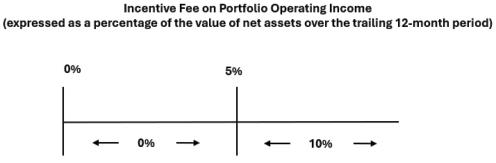
Portfolio Operating Income
means (1) the Fund’s share of Net Operating Income from the Fund’s real estate equity investments; plus
(2) the Fund’s net investment income (or loss) from debt, preferred equity investments and traded real estate-related securities; minus
(3) the Fund’s expenses (excluding the Incentive Fee and distribution and servicing fees).
Net Operating Income
means operating revenue net of operating expenses (inclusive of interest on investment level debt) for the
Fund’s operating entities that invest in real estate and excludes (i) gains or losses from sales of depreciable real property, (ii) impairment
write-downs on depreciable real property, (iii) real estate-related depreciation and amortization for each real estate operating venture and
(iv) adjustments for recognizing straight line rent.

 59

Total Return
for any 12-month period shall equal the sum of: (i) all distributions accrued or paid (without duplication) on the Common
Shares since the beginning of the applicable 12-month period plus (ii) the change in aggregate NAV of Common Shares since the
beginning of the year, before giving effect to (x) changes resulting solely from the proceeds of issuances of Common Shares, (y) any
allocation/accrual to the performance participation interest and (z) applicable distribution and servicing fee expenses.
Portfolio Operating Income does not include any component of capital gains or capital appreciation. The Manager is not entitled to any
incentive fee based on the capital gains or capital appreciation of the Fund or its investments.
The Management Agreement provides that PGIM Investments will not be liable for any error of judgment by PGIM Investments or for any
loss suffered by the Fund in connection with the matters to which the Management Agreement relates, except a loss resulting from a
breach of fiduciary duty with respect to the receipt of compensation for services (in which case any award of damages shall be limited to
the period and the amount set forth in Section 36(b)(3) of the Investment Company Act) or loss resulting from willful misfeasance, bad
faith or gross negligence or reckless disregard of duties. The Management Agreement provides that it will terminate automatically if
assigned (as defined in the Investment Company Act), and that it may be terminated without penalty by either PGIM Investments or the
Fund by the Board or vote of a majority of the outstanding voting securities of the Fund (as defined in the Investment Company Act)
upon not more than 60 days’, nor less than 30 days’, written notice. The Management Agreement will continue in effect for a period of
more than two years from the date of execution only so long as such continuance is specifically approved at least annually by the Board
in accordance with the requirements of the Investment Company Act.
A discussion of the basis for the Board's approval of the Management Agreement and Subadvisory Agreement is available in the Fund's
Semi-Annual Report to Shareholders for the period ended June 30, 2025.
Pursuant to an Expense Limitation and Reimbursement Agreement, the Manager has contractually agreed to waive its fees and/or
reimburse expenses of the Fund through August 15, 2028 (the
ELRA Period
) so that the Fund’s Specified Expenses will not exceed
0.50% of net assets (annualized). The Fund has agreed to repay these amounts, when and if requested by the Manager, but only if and
to the extent that Specified Expenses are less than 0.50% of net assets (annualized) (or, if a lower expense limit is then in effect, such
lower limit) within three years after the date the Manager waived or reimbursed such fees or expenses. This arrangement cannot be
terminated without the consent of the Fund’s Board prior to the end of the ELRA Period.
Specified Expenses
is defined to include all
expenses incurred in the business of the Fund, including organizational and offering costs (other than the Fund’s organizational and
offering expenses relating to the initial sale of Common Shares, which will be paid directly by PGIM and its affiliates), with the exception
of (i) the Management Fee, (ii) the Incentive Fee, (iii) the Servicing Fee, (iv) the Distribution Fee, (v) property level expenses,
(vi) brokerage costs or other investment-related out-of-pocket expenses, including with respect to unconsummated investments,
(vii) dividend/interest payments (including any dividend payments, interest expenses, commitment fees, or other expenses related to any
leverage incurred by the Fund), (viii) taxes, and (ix) extraordinary expenses (as determined in the sole discretion of the Manager).
Subadviser
The Manager has engaged PGIM as subadviser to provide day-to-day management of the Fund’s portfolio, primarily through PGIM Real
Estate and PGIM Credit. PGIM Real Estate, a manager of public and private real estate investing, is an investment group of PGIM. PGIM
Credit is the public and private fixed income investment group of PGIM. PGIM Fixed Income, a manager of private and public fixed
income investments, is an investment sub-group of PGIM Credit. The Manager is permitted to allocate portions of the Fund’s portfolio to
any of the investment groups within PGIM.
PGIM is an indirect, wholly-owned subsidiary of Prudential that was organized in 1984. PGIM is the global asset management business
of Prudential. As of December 31, 2025, PGIM managed approximately $1.47 trillion in assets. PGIM, Inc.’s predecessor companies
began managing fixed income portfolios for affiliates in 1875 and for unaffiliated institutional clients in 1928. PGIM's address is 655
Broad Street, Newark, New Jersey 07102.
For more information related to the Subadviser, please see Appendix A
Supplemental Performance Information of the Subadviser.
Subadvisory Agreement
The Manager has entered into a subadvisory agreement (the
Subadvisory Agreement
) with the Subadviser. The Subadvisory
Agreement provides that the Subadviser will furnish investment advisory services in connection with the management of the Fund.
Under the Subadvisory Agreement, the Subadviser, subject to the supervision of the Manager, is responsible for managing the assets of
the Fund in accordance with the Fund’s investment objectives, investment program and policies. The Subadviser generally determines
what properties, loans, joint ventures, securities and other instruments are purchased and sold for the Fund and is responsible for
obtaining and evaluating financial data relevant to the Fund. The Manager continues to have responsibility for all investment advisory
services pursuant to the Management Agreement and supervises the Subadviser’s performance of such services.

60

Subadvisory fees are paid by the Manager out of the management fee that it receives from the Fund. No subadvisory fees are paid by
the Fund directly to PGIM.
Because the Subadviser is an affiliate, the Manager may from time to time share certain of its profits with, or allocate other resources to,
the Subadviser. Any such payments by the Manager to the Subadviser will be from the Manager’s own resources.
Allocation of Investment Opportunities
The Fund is subject to the PGIM Real Estate U.S. Allocation Policy & Procedures, which state that the allocation of investment
opportunities (each, an
Investment
) is generally determined through a rotational process, with the applicable Investment being first
offered to any account pursuing a real estate investment will take part in PGIM Real Estate’s allocation queue for the respective region
(U.S., Latin America, Asia, Europe) (each, an
Eligible Account
) that is in the highest position in the relevant queue (e.g., stabilized or
non-stabilized queue, as described below) relative to the other Eligible Accounts in that queue (i.e., to the Eligible Account in such
queue for which the longest time period has passed since it received an allocation from that queue). Each Eligible Account in a queue
may accept or pass on the individual Investment offered. If an Eligible Account accepts the Investment, the Eligible Account will move to
the end of the relevant queue. There are limited exceptions to this process, such as certain debt, senior housing and affordable housing
and transformative development Investments, and Investments that could create conflicts of interest. The Global Chief Investment Risk
Officer for the U.S. (
CIRO
) has a veto over allocation should s/he believe that an investment is not appropriate for a particular
Eligible Account.
For purposes of allocating Investments, PGIM Real Estate will establish one or more queues based on investment strategy and
investment guidelines. PGIM Real Estate currently employs two distinct allocation queues: a stabilized Investments queue and a
non-stabilized Investments queue. For purposes of this policy, stabilized Investments shall generally include:
Office, retail, warehouse, storage, and residential properties that are 75% or more leased at the time of purchase, and hotels that are
operating at or near, market occupancy;
Properties undergoing a minor renovation or expansion that does not have a material impact on the property’s occupancy
or operation;
Build-to-suit properties that are 75% or more pre-leased and that have reasonable protection from completion and cost overrun
risk; and
Such other Investments as may be determined to be stabilized Investments by the CIRO in his/her reasonable discretion. The CIRO
also may determine that an investment that otherwise may be considered a stabilized Investment per the definition above should be
categorized as a non-stabilized Investment based on his/her reasonable discretion.
All Investments that are not stabilized Investments shall be deemed to be non-stabilized Investments.
At times, there may be an investment opportunity that is suitable to more than one portfolio. PGIM Real Estate utilizes its allocation
process, a rotation system to determine fund priority in deal allocation. Portfolio Managers represent their clients’ interest and only deals
selected by Portfolio Managers may be allocated to an account (there are no
forced deals
). Accounts that receive an allocation will be
moved to the end of the relevant queue in the rotation.
The Portfolio Managers are responsible for the selection of investment opportunities. This, coupled with the dedicated portfolio and asset
management team’s involvement in the initial underwriting and due diligence process, enhances the efficient and effective execution of
portfolio strategy and objectives.
The Fund’s adherence to its investment process is monitored through the PGIM Real Estate’s Investment Risk Management Group,
which is led by the Investment Risk Group, comprised of the Global Chief Investment Risk Officer together with a team of regional Chief
Underwriters who administer and run the global and regional Investment Committee processes as well as the regional allocation
processes. This team is independent from the PGIM Real Estate’s main Transactions and Portfolio Management group and as such
provides an impartial view on each transaction that is brought forward to Investment Committee. The Investment Risk Group processes
are designed to address the major layers of risk on a macro, portfolio and deal level throughout the entire investment process.
The Investment Risk Group runs the regional allocation process and the global and regional Investment Committees are responsible for
the allocation, underwriting review and authorization of investments for PGIM Real Estate-managed funds. This includes providing
oversight at the investment level to ensure all PGIM Real Estate-managed funds eligible to invest in a region have equal knowledge of all
prospective investment opportunities in that region while applying consistent risk/return evaluation to the underwriting analysis for all
investment proposals. Based on the suitability of a transaction for a portfolio’s investment strategy, the Chief Investment Risk Officer can
veto the allocation of a transaction to a portfolio.
Based on the suitability of a transaction for a portfolio’s investment strategy, the Chief Investment Risk Officer can veto the allocation of a
transaction to a portfolio.

 61

Certain other existing or future funds, investment vehicles and accounts managed by the Manager and its affiliates and PGIM affiliated
proprietary entities invest in securities, properties and other assets in which the Fund seeks to invest. The Manager’s allocation policy is
designed to fairly and equitably distribute investment opportunities over time among funds or pools of capital managed by the Manager
and its affiliates. Allocation of identified investment opportunities among the Fund, the Manager and other PGIM affiliated investment
vehicles presents inherent conflicts of interest where demand exceeds available supply. While the Manager believes it is likely that there
will be some overlap of investment opportunities for the Fund and other PGIM affiliated investment vehicles and PGIM affiliated
proprietary accounts from time to time, the Fund’s stock of investment opportunities may be materially affected by competition from
other PGIM affiliated investment vehicles and PGIM affiliated proprietary entities. Investors should note that the conflicts inherent in
making such allocation decisions will not always be resolved in favor of the Fund.
Portfolio Managers
The following individuals are jointly and primarily responsible for the day-to-day implementation of the Fund’s investment strategy.
Darin Bright, Senior Portfolio Manager.
Mr. Bright is Managing Director and Head of U.S. Core Plus at PGIM Real Estate. Based in
Newark, New Jersey, Mr. Bright is the senior portfolio manager for all core plus funds including PGIM Real Estate Fund Inc. and PGIM
Real Estate’s flagship U.S. Core Plus equity real estate fund, PRISA II. Mr. Bright is a member of the U.S. Management Council and
U.S. Investment Committee. Prior to joining PGIM Real Estate, Mr. Bright was a Vice President with Grubb & Ellis, a real estate asset
management and brokerage company, advising real estate equity strategies for institutional and corporate clients. Before this, Mr. Bright
was a commercial real estate appraiser with Richard E. Nichols Associates. Mr. Bright has been a portfolio manager of the Fund since
August 2022.
Caitlin O’Connor, Portfolio Manager.
Ms. O’Connor is a Managing Director at PGIM Real Estate and a member of the U.S. core plus
investment platform. Ms. O’Connor serves as a portfolio manager for both PGIM Real Estate Fund Inc. and PRISA II, PGIM Real Estate’s
flagship U.S. Core Plus equity real estate fund. Based in San Francisco, Ms. O’Connor has a leadership role in all aspects of fund
strategy, investment and management. Prior to that, Ms. O’Connor held multiple roles in acquisitions and asset management at PGIM
Real Estate during her 17 year tenure with the firm. Punctuating her time at PGIM Real Estate, Ms. O’Connor spent two years as a
development director at Lennar Multifamily Communities in the Northern California region. Ms. O’Connor has been a portfolio manager
of the Fund since August 2022.
Brandon Short, Portfolio Manager.
Mr. Short is an Executive Director at PGIM Real Estate and Portfolio Manager for PGIM Real Estate
Fund Inc. Based in Newark, New Jersey, Brandon joined the firm in 2021 and has a leadership role in all aspects of the funds’ strategy
and management. Prior to joining PGIM Real Estate, Brandon was M&A Director at Round Hill Capital, where he led the firm’s inorganic
growth strategy and managed corporate-level debt and equity financings. Before joining Round Hill, Brandon was a member of the
Cerberus European Capital Advisors team where he underwrote real estate assets associated with non-performing loans and developed
optimal business plans offering the most accretive property management and exit strategies. Prior to joining Cerberus, Brandon worked
at Goldman Sachs as a real estate investment banker based in both New York and Dubai. Mr. Short has been a portfolio manager of the
Fund since August 2022.
Jordan Cohen, Portfolio Manager.
Mr. Cohen is a Principal and CMBS portfolio manager on PGIM’s Securitized Products Team. Prior to
joining PGIM in 2024, Mr. Cohen was a Director at KKR, where he co-managed CMBS strategies within the Real Estate Credit
Investment team. Previously, Mr. Cohen held portfolio management and trading roles at Global Atlantic Financial Group, BlackRock, and
Capital One, gaining extensive experience across various credit markets. Mr. Cohen earned a B.A. in Economics and a B.S. in Business
Administration from Boston University. Mr. Cohen has been a portfolio manager of the Fund since April 2026.
Additional information about portfolio manager compensation, other accounts managed, and portfolio manager ownership of Fund
securities may be found in the SAI.

62

CONTROL PERSONS
A control person includes a person who beneficially owns more than 25% of the voting securities of a company. As of March 31, 2026,
the Fund could be deemed to be under control of Prudential, through its affiliated entities, which has voting authority with respect to
96.68% of the outstanding interests in the Fund. A control person's vote could have a more significant effect on matters presented to
shareholders for approval than the vote of other Fund shareholders.

 63

NET ASSET VALUE
Calculation of NAV
The Fund determines its NAV on each day on which the Fund is open for business, as of the close of regular trading on the New York
Stock Exchange (
NYSE
) (generally, 4:00 p.m. Eastern Time). The Fund determines the NAV per share of each class of Common
Shares by dividing the value of the Fund’s securities, cash and other assets (including interest accrued but not collected) less all its
liabilities (including accrued expenses, the liquidation preference of any outstanding Preferred Shares and dividends payable) by the
total number of shares of Common Shares outstanding.
The Fund’s portfolio investments are valued based upon market quotations or, if market quotations are not readily available, at fair value
as determined in good faith under valuation policies and procedures established by the Board. These valuation policies and procedures
include pricing methodologies for determining the fair value of certain types of securities and other assets held by the Fund that do not
have quoted market prices, and authorize the use of other pricing sources, such as bid prices supplied by a principal market maker and
evaluated prices supplied by pricing vendors that employ analytic methodologies that take into account the prices of similar securities or
investments and other market factors. The Fund expects that a significant portion of its portfolio will consist of interests in properties
required to be valued at fair value under these procedures.
Exchange-traded options, futures and options on futures are valued at the settlement price determined by the exchange.
The Fund may invest in foreign instruments that are denominated in currencies other than the U.S. dollar. Foreign currency exchange
rates are generally determined as of the close of business on the New York Stock Exchange.
The Board has designated the Manager as the
valuation designee
pursuant to the provisions of Rule 2a-5 under the Investment
Company Act (the
Valuation Designee
). If the Valuation Designee determines that a market quotation for an investment is not reliable
based on, among other things, events or market conditions that occur with respect to one or more securities held by the Fund or the
market as a whole, after the quotation is derived or after the closing of the primary market on which the security is traded, but before the
time that the Fund’s NAV is determined, the Fund may use
fair value pricing,
which is implemented by a valuation committee made
up of representation from the Valuation Designee. Specifically, representation from Compliance, Product Development, Fund Law and
Fund Administration (
Valuation Committee
). In addition, the Fund may use fair value pricing determined by the Valuation Committee if
the pricing source does not provide an evaluated price for an investment or provides an evaluated price that, in the judgment of the
Valuation Designee, does not represent fair value. Securities or other assets that are primarily traded outside the United States may also
be subject to a fair value pricing adjustment using a service provided by a pricing vendor.
The Subadviser often provides relevant information for the meetings of the Valuation Committee.
Different valuation methods may result in differing values for the same investment. The fair value of a portfolio investment that the Fund
uses to determine its NAV may differ from the investment’s quoted or published price of the investment.
Each month, the Valuation Designee and the Independent Valuation Advisor will determine the value of each real property, based on an
estimated month-end value. The Fund will use the values determined for purposes of calculating its NAV. For real estate debt and other
debt investments for which reliable market quotes are not readily available, the most recent monthly or interim valuation will be used for
purposes of calculating the Fund’s daily NAV. Any material changes to the valuation of real property investments and real estate and
other debt investments will be reflected as soon as possible in the Fund’s NAV calculation once deemed appropriate by the Valuation
Designee and Independent Valuation Advisor.
Fair value pricing procedures are designed to result in prices for the Fund’s securities and its NAV that are reasonable in light of the
circumstances which make or have made market quotations unavailable or unreliable. There is no assurance, however, that fair value
pricing will accurately reflect the market value of an investment.
At least annually, the Board, including a majority of the independent directors, reviews the appropriateness of the Fund’s valuation
policies and procedures.
Independent Valuation Advisor
With the approval of the Board, including a majority of the independent directors, the valuation process of the Fund’s real property
investments is managed by the Independent Valuation Advisor, SitusAMC, subject to the oversight of the Valuation Designee and the
Board. The Independent Valuation Advisor is engaged in the business of rendering opinions regarding the value of commercial real
estate properties, and is not affiliated with the Fund or the Valuation Designee. The Fund and/or the Valuation Designee, with the
approval of the Board, including a majority of the independent directors, may engage additional independent valuation firms in the
future as the Fund’s portfolio grows and diversifies globally. In addition, the Independent Valuation Advisor intends to engage third party

64

valuation firms to perform annual properties appraisals for the Fund’s properties. While the Independent Valuation Advisor provides
valuations of the Fund’s real property investments, and will engage third party valuation firms to perform annual property appraisals, it is
not responsible for, and does not calculate, the Fund’s daily NAV. Further, the Valuation Designee is ultimately responsible for
determining the fair value of our assets, subject to the oversight of the Board.
The Independent Valuation Advisor has provided, and is expected to continue to provide, real estate valuation advisory services to other
clients managed by the Valuation Designee or its affiliates, and has received, and is expected to continue to receive, fees in connection
with such services. The Independent Valuation Advisor and its affiliates may from time to time in the future perform other commercial
real estate and financial advisory services for other funds managed by the Valuation Designee or its affiliates, so long as such other
services do not adversely affect the independence of the Independent Valuation Advisor, as certified in the applicable appraisal report.
Valuation of Investments
Investments with Reliable Readily Available Market Prices
Securities for which the primary market is on an exchange will be valued at the last sale price on such exchange on the day of valuation,
which must be a day on which the New York Stock Exchange is open for trading (
Valuation Day
) or, if there was no sale on such day,
at the mean between the last bid and asked prices on such day, or at the last bid price on such day in the absence of an asked price or
if the mean price does not represent fair value, in the judgment of the Valuation Designee.
Securities for which its primary exchange designates an official closing price (
Official Closing Price
) (e.g., securities traded on the
London Stock Exchange) shall be valued at the Official Closing Price on the Valuation Day.
Investments in open-end, non-exchange-traded mutual funds will be valued at their net asset value as determined as of the close of the
NYSE on the Valuation Day.
Debt securities and
over the counter
securities will generally be valued at an evaluated bid price provided by an independent pricing
agent or, in the absence of a valuation provided by an independent pricing agent, at the bid price provided by a principal market maker
or primary market dealer. These securities include i) debt securities, including bonds, notes, debentures and other debt securities, and
money market instruments such as certificates of deposit, commercial paper, bankers’ acceptances and obligations of domestic and
foreign banks, for which market quotations are readily available, as well as ii) other securities that are traded in the over-the-counter
market, including listed securities and securities eligible for resale pursuant to Rule 144A under the Securities Act for which the primary
market is believed by the Valuation Designee to be over-the-counter.
Any other securities and investments with readily available market prices will be valued in accordance with the Fund’s valuation policies
and procedures.
If the prices described above, in the judgment of the Valuation Designee do not represent fair value, they may be valued as
fair value
securities pursuant to the Fund’s valuation policies and procedures.
Investments without Reliable Readily Available Market Prices
Fair value of the Fund’s investments that do not have reliable readily available market prices will be determined as described below.
Real Property Investments

Subject to the oversight of the Valuation Designee and the Board, the Independent Valuation Advisor will administer the real property
valuation process for the Fund on a monthly basis and will select (subject to the Valuation Designee’s approval) and manage the process
associated with third-party appraisal firms with respect to the annual valuation of the Fund’s real property investments.
Investments in newly acquired properties may initially be valued at cost. Each property will then be valued by an independent third-party
appraisal firm within the first six months (but typically three months) of acquisition and no less than annually thereafter. Upon
conclusion of the appraisal, the independent third-party appraisal firm prepares a written report.
Each third-party appraisal and review by the Independent Valuation Advisor is performed in accordance with the Code of Ethics &
Standards of Professional Practice of the Appraisal Institute and the Uniform Standards of Professional Appraisal Practice, or the similar
industry standard for the country where the property appraisal is conducted. Any appraisal provided by an independent third-party
appraisal firm will not be used in the valuation of the applicable property until the Independent Valuation Advisor has reviewed and
confirmed for reasonableness such appraisal.

 65

The Independent Valuation Advisor will cause approximately 1/12th of the Fund’s real property investments to be appraised by
third-party appraisers each month. Each asset will be appraised by a third-party appraiser other than the Independent Valuation Advisor
once per year. Each month the Independent Valuation Advisor (or, in the case of certain assets located outside of the United States, a
valuation firm designated by the Independent Valuation Advisor) will analyze the remaining approximately 11/12ths of the Fund’s real
properties for value changes that are not being appraised by a third-party appraiser that month.
In addition, the Valuation Designee will monitor the Fund’s properties for events that it believes may have a material impact on the most
recent estimated values of such property, and coordinate with the Independent Valuation Advisor to incorporate the impact of those
events in estimated fair values, as needed. Possible examples of such a material change include an unexpected termination or renewal
of a material lease, a material change in vacancies, an unanticipated structural or environmental event at a property, capital market
events, recent financial results or changes in the capital structure of the property, material changes in cap rates or discount rates, any
regulatory changes that affect the investment, or a significant industry event or adjustment to the industry outlook that may cause the
value of a property to change materially. Upon the occurrence of such a material event and provided that the Valuation Designee is
reasonably aware that such event has occurred, the Valuation Designee will promptly notify the Independent Valuation Advisor and
request that the Independent Valuation Advisor promptly provide an interim valuation adjustment.
The Independent Valuation Advisor will also monitor overall market conditions and communicate to the Valuation Designee any
conditions that it believes could materially impact any of the Fund’s appraisal values, and may perform an appraisal for any real property
outside the monthly valuation cycle if the Valuation Designee notifies it of a property-specific material event, as a result of certain capital
market material events, or if necessary to confirm any valuation previously communicated to the Valuation Designee.
The Independent Valuation Advisor will value the Fund’s real properties using the valuation methodology it deems most appropriate and
consistent with and in accordance with industry best practices and market conditions. The Valuation Designee expects the primary
methodology used to value the real properties will be the income approach, whereby value is derived by determining the present value of
an asset’s stream of future cash flows (for example, discounted cash flow analysis). Income related to each property will be accrued on
the basis of data extracted from (1) the annual budget for such property and (2) material, unbudgeted non-recurring income and
expense events such as capital expenditures, prepayment penalties, assumption fees, tenant buyouts, lease termination fees and tenant
turnover with respect to the Fund’s properties when the Valuation Designee becomes aware of such events and the relevant information
is available. Consistent with industry practices, the income approach incorporates subjective judgments regarding comparable rental
and operating expense data, the capitalization or discount rate and projections of future rent and expenses based on appropriate market
evidence. Other methodologies that may also be used to value properties include market and cost approaches.
Real estate appraisals are reported on a free and clear basis, excluding any property-level indebtedness that may be in place. Fund level
and property level debt will be valued separately in accordance with GAAP.
Properties held through joint ventures generally will be valued in a manner that is consistent with the methods described above. Once
the value of a property held by the joint venture is determined and the Fund determines the fair value of any other assets and liabilities
of the joint venture, the value of the Fund’s interest in the joint venture would then be determined by the Valuation Designee using a
hypothetical liquidation calculation to value the Fund’s interest in the joint venture.
As described above, each month, the Valuation Designee and the Independent Valuation Adviser will determine the value of each real
property, based on an estimated month-end value. The Fund will use the values determined for purposes of calculating its NAV.
Private Real Estate Debt

Private real-estate related debt investments, such as debt investments backed by real estate or real estate related companies acquired
from private issuers or in private transactions (
Private Realty Debt Investments
), owned directly or indirectly by the Fund will generally
be valued as
fair value
securities.
At origination, a Private Realty Debt Investment will be valued at cost until an Independent Appraisal (as described below) is available.
The Valuation Designee will retain an independent appraisal management firm (the
Appraisal Management Firm
) that will provide, or
arrange for another independent appraisal firm to provide, monthly independent appraisal of each Private Realty Debt Investment. The
value that the Appraisal Management Firm provides, or causes to provide, as noted above, will remain in effect and will be used in each
day’s calculation of the Fund’s net asset value until the next such independent appraisal of the Private Realty Debt Investment.
The Valuation Designee will monitor on an ongoing basis the value of Private Realty Debt Investments. On any day, independent of the
appraisal process, the Valuation Designee may adjust the value of a Private Realty Debt Investment based on market events or
issuer-specific events that have increased or decreased the realizable value of the Private Realty Debt Investment.

66

Real Estate-Related Securities and Other Securities

Real estate-related securities and other securities that do not have reliable readily available market quotations may be valued by one or
more third-party pricing services as fair value securities.

 67

DISTRIBUTIONS
The Fund intends to declare distributions and distribute them on a monthly basis. In addition, the Fund intends to distribute any net
capital gains it earns from the sale of portfolio securities to shareholders no less frequently than annually. Net short-term capital gain
distributions may be paid more frequently. The Fund intends to make distributions necessary to maintain its qualification as a REIT.
Cash distributions to holders of the Common Shares will automatically be reinvested under the DRIP in additional whole and fractional
shares unless you elect to receive your distributions in cash. Investors may terminate their participation in the DRIP with prior written
notice to the Fund. Under the DRIP, shareholders’ distributions are reinvested in Common Shares of the same class of Common Shares
owned by the shareholder for a purchase price equal to the NAV per share (for the class of Common Shares being purchased) on the
date that the distribution is paid. See
Distribution Reinvestment Plan.
If, for any monthly distribution, net investment income and net realized gains were less than the amount of the distribution, the
difference may be distributed from the Fund’s assets in the form of a return of capital which is applied against and reduces the
shareholder’s basis in his or her Common Shares. A
return of capital
merely represents a partial return of your original investment and
does not represent a gain on the Fund’s investments. When you sell the Common Shares in the Fund, the amount, if any, by which the
Fund’s sales price exceeds your basis in the Common Shares is gain subject to tax. Because a return of capital reduces your basis in the
Common Shares, it will increase the amount of your gain or decrease the amount of your loss when you sell the Common Shares, all
other things being equal. To the extent that the amount of any such distribution exceeds the shareholder’s basis in his or her Common
Shares, the excess will be treated by the shareholder as gain from a sale or exchange of the Common Shares. As a result, you may be
required to pay tax even if selling your investment in the Common Shares at a loss. In addition, in order to make such distributions, the
Fund might have to sell a portion of its investment portfolio at a time when independent investment judgment might not dictate such
action. The Fund’s final distribution for each calendar year may include any remaining net investment income and net realized gains
undistributed during the year. The Fund’s actual financial performance will likely vary significantly from month-to-month and from
year-to-year, and there may be extended periods of up to several years when the distribution rate will exceed the Fund’s actual total
returns. The Fund’s projected or actual distribution rate is not a prediction of what the Fund’s actual total returns will be over any
specific future period.
Various factors will affect the level of the Fund’s income, including the asset mix, the leases on the Fund’s real estate investments and
the amount of leverage utilized by the Fund. To permit the Fund to maintain a more stable monthly distribution, the Fund may from time
to time distribute less than the entire amount of income earned in a particular period. The undistributed income would be available to
supplement future distributions. As a result, the distributions paid by the Fund for any particular month may be more or less than the
amount of income actually earned by the Fund during that period. Undistributed income will add to the Fund’s net asset and,
correspondingly, distributions from undistributed income will reduce the Fund’s NAV.
In order to continue to qualify as a REIT, the Fund is required to distribute to its shareholders each year an amount equal to at least
(a) the sum of (i) 90% of the Fund’s
REIT taxable income
(computed without regard to its dividends-paid deduction and excluding net
capital gains) and (ii) the Fund’s net income, if any, (after tax) from foreclosure property, minus (b) the sum of specified items of
non-cash income. To the extent that the Fund distributes less than 100% of its
REIT taxable income,
as adjusted, the Fund will be
subject to tax at the regular corporate tax rates on the retained portion. If the Fund fails to distribute during each calendar year at least
the sum of: (i) 85% of the Fund’s REIT ordinary income for such year; (ii) 95% of the Fund’s REIT capital gain net income for such year;
and (iii) any undistributed taxable income from prior periods, the Fund would be subject to a 4% excise tax on the excess of such
required distribution over the sum of (a) the amounts actually distributed and (b) the amounts of income retained on which it has paid
corporate income tax. The Fund intends to make timely distributions sufficient to satisfy the REIT qualification requirements and, when
possible, to avoid material income and excise taxes.
The Manager has received an order from the SEC granting an exemption from Section 19(b) of the Investment Company Act and Rule
19b-1 thereunder to permit certain closed-end funds managed by the Manager to include realized long-term capital gains as a part of
their respective regular distributions to the common shareholders more frequently than would otherwise be permitted by the Investment
Company Act (which generally permits once per taxable year). The Fund may rely on this exemptive order.
Cash distributions to holders of the Common Shares will automatically be reinvested under the Fund’s Distribution Reinvestment Plan
(the
DRIP
) in additional whole and fractional shares unless you elect to receive your distributions in cash. Investors may terminate
their participation in the DRIP with prior written notice to the Fund. Under the DRIP, shareholders’ distributions are reinvested in
Common Shares of the same class of Common Shares owned by the shareholder for a purchase price equal to the NAV per share (for
the class of Common Shares being purchased) on the date that the distribution is paid. See
Distribution Reinvestment Plan.

68

DISTRIBUTION REINVESTMENT PLAN
Unless a shareholder elects to receive cash by contacting Prudential Mutual Fund Services LLC (the
Plan Administrator
), all
distributions declared on Common Shares, net of applicable withholding taxes, will be automatically reinvested by the Plan Administrator
pursuant to the Fund’s DRIP, in additional Common Shares. Shareholders who elect not to participate in the DRIP will receive all
dividends and other distributions (together, a
Distribution
) in cash directly to the shareholder of record (or, if the Common Shares is
held in street or other nominee name, then to such nominee) by the Plan Administrator as dividend disbursing agent. Participation in the
DRIP is completely voluntary and may be terminated or resumed at any time without penalty by notice if received and processed by the
Plan Administrator prior to the dividend record date; otherwise such termination or resumption will be effective with respect to any
subsequently declared Distributions. Such notice will be effective with respect to a particular Distribution. Some brokers may
automatically elect to receive cash on behalf of the Common Shareholders and may reinvest that cash in additional Common Shares.
The Plan Administrator will open an account for each Common Shareholder under the DRIP in the same name in which such common
Shareholder’s Common Shares is registered. Whenever the Fund declares a Distribution payable in cash, non-participants in the DRIP
will receive cash and participants in the DRIP will receive the equivalent in Common Shares. The Common Shares will be acquired by
the Plan Administrator for the participants’ accounts, depending upon the circumstances described below through receipt of additional
unissued but authorized Common Shares from the Fund (
Newly Issued Common Shares
). The number of shares of Newly Issued
Common Shares to be credited to each participant’s account will be determined by dividing the dollar amount of the Distribution by the
NAV per Common Shares on the payment date.
The Plan Administrator maintains all shareholder accounts in the DRIP and furnishes written confirmation of all transactions in the
accounts, including information needed by shareholders for tax records. Common Shares in the account of each plan participant will be
held by the Plan Administrator on behalf of the DRIP participant, and each shareholder proxy will include those shares purchased or
received pursuant to the DRIP.
The Plan Administrator will forward all proxy solicitation materials to participants and vote proxies for shares held under the DRIP in
accordance with the instructions of the participants.
In the case of the common shareholders such as banks, brokers or nominees that hold Common Shares for others who are the
beneficial owners, the Plan Administrator will administer the DRIP on the basis of the number of Common Shares certified from time to
time by the record shareholder’s name and held for the account of beneficial owners who participate in the DRIP.
There is no charge to participants for reinvesting regular distributions and capital gains distributions; however, the Fund reserves the
right to amend the DRIP to include a service charge payable by the participants. The fees of the Plan Administrator for handling the
reinvestment of regular distributions and capital gains distributions are included in the fee to be paid by the Fund to the transfer agent.
There are no brokerage charges with respect to Common Shares issued directly by us as a result of regular distributions or capital gains
distributions payable either in Common Shares or in cash.
There will be no brokerage charges with respect to Common Shares issued directly by the Fund. The automatic reinvestment of
Distributions will not relieve participants of any federal, state or local income tax that may be payable (or required to be withheld) on
such Distributions. See
Tax Matters.
Participants that request a sale of Common Shares through the Plan Administrator are subject to
brokerage commissions.
Each participant may terminate the participant’s account under the DRIP by so notifying the Plan Administrator via the Plan
Administrator’s website at www.pgim.com/investments, by filling out the transaction request form located at the bottom of the
participant’s Statement and sending it to the Plan Administrator or by calling the Plan Administrator. Such termination will be effective
immediately if the participant’s notice is received by the Plan Administrator prior to any Distribution record date. Upon any withdrawal or
termination, the Plan Administrator will cause to be delivered to each terminating participant a statement of holdings for the appropriate
number of the Fund’s whole book-entry Common Shares and a check for the cash adjustment of any fractional share at the market
value per Common Shares as of the close of business on the date the termination is effective less any applicable fees. In the event a
participant’s notice of termination is on or after a record date (but before payment date) for an account whose Distributions are
reinvested, the Plan Administrator, in its sole discretion, may either distribute such Distributions in cash or reinvest them in Common
Shares on behalf of the terminating participant. In the event reinvestment is made, the Plan Administrator will process the termination as
soon as practicable, but in no event later than five business days after the reinvestment is completed. The DRIP may be terminated by
the Fund upon notice in writing mailed to each participant at least 30 days prior to any record date for the payment of any Distribution
by the Fund.
The Fund reserves the right to amend or terminate the DRIP. There is no direct service charge to participants with regard to purchases
in the DRIP; however, the Fund reserves the right to amend the DRIP to include a service charge payable by the participants.

 69

All correspondence or questions concerning the DRIP should be directed to the Plan Administrator, at Prudential Mutual Fund Services
LLC, P.O. Box 219929, Kansas City, MO 64121-9929 or by calling the Plan Administrator (toll-free) at (844) 753-6354.

70

DESCRIPTION OF SHARES
The following description of the terms of the stock of the Fund is only a summary. For a complete description, please refer to the
Maryland General Corporation Law (the
MGCL
), and the Fund’s charter and bylaws. The Fund’s charter and bylaws are exhibits to the
Registration Statement, of which this prospectus forms a part.
The Fund’s authorized stock consists of 999,999,875 shares of Common Shares, par value $0.001 per share, and 125 shares of
Preferred Shares, par value $0.001 per share. Of the total shares of Common Shares authorized, 99,999,875 are designated as Class D
Shares, 550,000,000 are designated as Class I Shares, 100,000,000 are designated as Class S Shares, and 250,000,000 are
designated as Class T Shares. The Board has reclassified and designated 125 of the original 100,000,000 authorized but unissued
Class D Shares as 12.0% Series A Cumulative Preferred Shares, par value $0.001 per share (the
Series A Preferred Shares
).
There is currently no market for the Fund’s stock, and the Fund does not expect that a market for its stock will develop in the
foreseeable future, if ever. A majority of the entire Board may, without any action by the shareholders, amend the charter from time to
time to increase or decrease the aggregate number of shares of stock or the number of shares of stock of any class or series that the
Fund has authority to issue. Under Maryland law, the Fund’s shareholders generally will not be personally liable for the Fund’s debts
or obligations.
Outstanding Securities
 
Title of Class
Amount Authorized
Amount Held by
Fund for its Account
Amount Outstanding
as of March 31, 2026
Class D
99,999,875
1,115.554
Class I
550,000,000
9,734,205.423
Class S
100,000,000
1,096.993
Class T
250,000,000
1,096.993
Series A Preferred
125
125,000
Shares of Common Shares
General
All shares of Common Shares offered pursuant to this prospectus will be, upon issuance, duly authorized, fully paid and nonassessable.
The Fund currently offers four different classes of shares of Common Shares: Class I Shares, Class D Shares, Class S Shares and Class T
Shares. An investment in any share class of the Fund represents an investment in the same assets of the Fund. Each share class has
different fees, as set forth in
Summary of Fund Expenses.
Certain share class details are set forth in
Plan of Distribution.
Common
shareholders are entitled to receive distributions when, as and if authorized by the Board and declared by the Fund out of assets legally
available for the payment of distributions. Common shareholders have no preference, conversion, exchange, sinking fund or redemption
rights, have no preemptive rights to subscribe for any of the Fund’s securities and have no appraisal rights unless the Board determines
that appraisal rights apply, with respect to all or any classes of Common Shares, to one or more transactions occurring after the date of
such determination in connection with which common shareholders would otherwise be entitled to exercise appraisal rights. All shares of
Common Shares have equal earnings, assets, distribution, liquidation and other rights except as provided in the charter and any multiple
class plan adopted by the Fund. Shareholders are subject to transfer restrictions and there is no guarantee that they will be able to sell
their shares. See
Certain Provisions in the Charter and Bylaws — Transfer Restrictions
below.
Distributions
Distributions may be paid to common shareholders if, as and when authorized by the Board and declared by the Fund out of assets
legally available therefor. The amount of dividends and other distributions may vary among the classes of Common Shares based on
their NAV per share and differing fees and other expenses.
If any shares of Preferred Shares, such as the Series A Preferred Shares, are outstanding, common shareholders generally will not be
entitled to receive any distributions from the Fund unless (1) the Fund has paid all accumulated dividends on the Preferred Shares,
(2) the Fund has redeemed the full number of shares of Preferred Shares required to be redeemed by any provision for mandatory
redemption of such Preferred Shares, (3) immediately after such a distribution, the Fund has an asset coverage of at least 200%, (4) the
assets in the Fund’s portfolio meet any asset coverage requirements set forth by the Fund’s lenders or any applicable nationally
recognized statistical rating organization (
NRSRO
), in each case, after giving effect to such a distribution and (5) there is no event of
default existing under the terms of any of the Fund’s borrowings, in each case, after giving effect to such distributions.

 71

So long as senior securities representing indebtedness of the Fund are outstanding, shareholders ge
ner
ally will not be entitled to receive
any distributions from the Fund unless (1) there is no event of default existing under the terms of such indebtedness, (2) immediately
after such a distribution, the Fund has an asset coverage of at least 300% and (3) the assets in the Fund’s portfolio meet any asset
coverage requirements set forth by the Fund’s lenders or any applicable NRSRO, in each case, after giving effect to such a distribution.
Liquidation Rights
The Fund’s shareholders are entitled to the then-current NAV per share of the assets legally available for distribution to the Fund’s
shareholders in the event of the liquidation, dissolution or winding up of the Fund, after payment of or adequate provision for all of the
Fund’s known debts and liabilities, including any outstanding debt securities or other borrowings and any interest thereon. These rights
are subject to the preferential rights of outstanding shares of any other class or series of the Fund’s stock, including any
Preferred Shares.
Voting Rights
Each outstanding share of Common Shares generally entitles the holder to cast one vote on all matters submitted to a vote of the Fund’s
shareholders, including the election of directors. The presence in person or by proxy of shareholders entitled to cast a majority of all the
votes entitled to be cast (without regard to class) at a meeting of the Fund’s shareholders constitutes a quorum at the meeting, unless
applicable law or regulatory requirements or the Fund’s charter requires a separate vote of one or more classes of the Fund’s stock, in
which case the presence in person or by proxy of the shareholders entitled to cast a majority of all the votes entitled to be cast by
shareholders of each such class of stock on such a matter will constitute a quorum.
There is no cumulative voting in the election of directors. Consequently, at any meeting of the Fund’s shareholders called for the purpose
of electing directors, the holders of a majority of the outstanding shares Common Shares entitled to vote will be able to elect all of the
nominees for director, except that holders of a majority of the outstanding shares of Preferred Shares will have the right, voting as a
separate class, to elect two directors at all times.
Mandatory Redemptions
Shares of Common Shares are not redeemable at the option of a shareholder, except as permitted by Rule 23c-3. Shares of Common
Shares are redeemable at the option of the Fund without consent or other action by the shareholder or other person if the Fund
determines that:
the shares of Common Shares have been transferred in violation of the Fund’s charter, or have vested in any person other than by
operation of law as a result of the death, divorce, dissolution, bankruptcy, insolvency or adjudicated incompetence of the shareholder;
ownership of the shares of Common Shares by a shareholder or other person is likely to cause the Fund to be in violation of, or require
registration of the Common Shares under, or subject the Fund to additional registration or regulation under, the securities,
commodities, or other laws of the U.S. or any other relevant jurisdiction;
continued ownership of the shares of Common Shares by a shareholder may be harmful or injurious to the business or reputation of
the Fund, the Board, the Manager or any of their affiliates, or may subject the Fund or any shareholder to an undue risk of adverse tax
or other fiscal or regulatory consequences;
any of the representations and warranties made by a shareholder or other person in connection with the acquisition of Common
Shares were not true when made or have ceased to be true; or
with respect to a shareholder subject to special laws or compliance requirements, such as those imposed by ERISA, the Bank Holding
Company Act or certain Federal Communication Commission regulations (collectively,
Special Laws or Regulations
), the shareholder
is likely to be subject to additional regulatory or compliance requirements under these Special Laws or Regulations by virtue of
continuing to hold any shares of Common Shares.
Shares of Common Shares will be redeemed at the NAV per share of the class of Common Shares being redeemed.
Preferred Shares
The Fund’s charter authorizes the Board to classify and reclassify any unissued shares of Common Shares into shares of other classes or
series of stock, including Preferred Shares, without the approval of common shareholders. To date, the Board has reclassified and
designated 125 of the original 100,000 authorized but unissued Class D Shares as Series A Preferred Shares, all of which remain
outstanding. Common shareholders have no preemptive right to purchase any shares of Preferred Shares that the Fund may issue.
Prior to the issuance of shares of any class or series of stock, including Preferred Shares, the Board is required by Maryland law and by
the Fund’s charter to set the preferences, conversion and other rights, voting powers, restrictions, limitations as to dividends and other
distributions, qualifications and terms and conditions of redemption of each such class or series. Thus, the Board could authorize the
Fund to issue shares of Preferred Shares with terms that could have the effect of delaying, deferring or preventing a transaction or a
change in control that might involve a premium price for common shareholders or otherwise be in their best interests. Any issuance of
Preferred Shares, however, must comply with the requirements of the Investment Company Act. If the Fund elects to issue Preferred

72

Shares (and/or notes or other debt securities), its ability to make distributions to its common shareholders may be limited by the terms of
such Preferred Shares or debt securities, the asset coverage requirements and other limitations imposed by the Investment Company
Act, Maryland law and the Fund’s lenders.
Under the Investment Company Act, holders of the Preferred Shares are entitled to elect two directors of the Fund at all times, and to
elect a majority of the Fund’s directors if at any time dividends on the Preferred Shares are unpaid in an amount equal to two full years’
dividends. Holders of Preferred Shares continue to have the right to elect a majority of the Fund’s directors until all dividends in arrears
on Preferred Shares have been paid. In addition, holders of Preferred Shares are also entitled to vote separately as a class on certain
matters, which may at times give holders of Preferred Shares disproportionate influence over the Fund’s affairs.
Uncertificated Shares; Transfer Agent
The Fund does not issue certificates for shares of its Common Shares. Shares of Common Shares are held in
uncertificated
form,
which will eliminate the physical handling and safekeeping responsibilities inherent in owning transferable share certificates and
eliminate the need to return a duly executed share certificate to effect a transfer. The Transfer Agent acts as the Fund’s registrar and as
the Transfer Agent for shares of Common Shares. With respect to shares held by a financial intermediary on behalf of an investor, the
financial intermediary will be responsible for the functions of the registrar and transfer agent. Transfers can be effected simply by mailing
a transfer and assignment form, which the Fund will provide to you at no charge, to the Transfer Agent. See
Custodian and Transfer
Agent.

 73

CERTAIN PROVISIONS IN THE CHARTER AND BYLAWS
The MGCL and the Fund’s charter and bylaws contain provisions that could make it more difficult for a potential acquirer to acquire the
Fund by means of a tender offer, proxy contest or otherwise. These provisions are designed to discourage certain coercive takeover
practices and inadequate takeover bids and to encourage persons seeking to acquire control of the Fund to negotiate first with the
Board. The Fund believes that the benefits of these provisions outweigh the potential disadvantages of discouraging any such acquisition
proposals because, among other things, the negotiation of such proposals may improve their terms. The summary of the terms of the
Fund’s charter and bylaws below is qualified in its entirety by reference to the Fund’s charter and bylaws filed as exhibits to the
registration statement of which this prospectus forms a part.
Election of Directors
As permitted by the MGCL, the Fund’s bylaws provide that the Fund is not required to hold an annual meeting of shareholders in any
year in which the election of directors is not required to be acted on under the Investment Company Act. Accordingly, the Fund will not
hold an annual meeting of shareholders each year and directors will be elected to serve an indefinite term between annual meetings of
shareholders. The Fund’s bylaws provide that a director is elected by a plurality of all the votes cast at a meeting of shareholders at
which a quorum is present. Pursuant to the Fund’s charter and bylaws, the Board may amend the bylaws from time to time to alter the
vote required to elect a director.
Number of Directors; Vacancies; Removal
The Fund’s charter provides that the number of directors will be set only by the Board in accordance with the Fund’s charter or bylaws.
The Fund’s bylaws provide that a majority of the entire Board may at any time increase or decrease the number of directors. However,
the number of directors cannot be less than the minimum number required by the MGCL, which is one, or, unless the Fund’s bylaws are
amended, more than fifteen.
Except as may be provided by the Board in setting the terms of any class or series of Preferred Shares or required by the Investment
Company Act, any vacancy on the Board of Directors for any cause other than an increase in the number of directors may be filled by a
majority of the remaining directors, even if such majority is less than a quorum, any vacancy in the number of directors created by an
increase in the number of directors may be filled by a majority of the entire Board, and any director elected to fill a vacancy shall serve
until the next annual meeting of shareholders and until his or her successor is duly elected and qualifies.
The Fund’s charter provides that, subject to the rights of holders of Preferred Shares, a director may be removed only for cause, as
defined in the charter, and then only by the affirmative vote of at least two-thirds of the votes entitled to be cast generally in the election
of directors.
Action by Shareholders
Under the MGCL, shareholder action can be taken only at an annual or special meeting of shareholders or, unless the charter provides
for shareholder action by less than unanimous written consent (which the Fund’s charter does not), by unanimous written consent in
lieu of a meeting. These provisions, combined with the requirements of the Fund’s bylaws regarding the calling of a
shareholder-requested special meeting of shareholders discussed below, may have the effect of delaying consideration of a shareholder
proposal until the next annual meeting of shareholders.
Advance Notice Provisions for Shareholder Nominations and Shareholder Proposals
The Fund’s bylaws provide that, with respect to an annual meeting of shareholders, the nomination of individuals for election as directors
and the proposal of other business to be considered by the Fund’s shareholders may be made only (1) pursuant to the Fund’s notice of
the meeting, (2) by or at the direction of the Board or (3) by a shareholder who is a shareholder of record at the record date set by the
Board for the purpose of determining shareholders entitled to vote at the annual meeting, at the time the shareholder provides the notice
required by the Fund’s bylaws and at the time of the annual meeting (and any postponement or adjournment thereof), who is entitled to
vote at the meeting in the election of each individual so nominated or on such other business and who has complied with the advance
notice requirements of, and provided the information required by, the Fund’s bylaws. With respect to special meetings of the Fund’s
shareholders, only the business specified in the notice of the meeting may be brought before the meeting. Nominations of individuals for
election as directors at a special meeting of shareholders at which directors are to be elected may be made only (i) by or at the direction
of the Board or (ii) if the special meeting has been called in accordance with the Fund’s bylaws for the purpose of electing directors, by
any shareholder who is a shareholder of record at the record date set by the Board for the purpose of determining shareholders entitled
to vote at the special meeting, at the time the shareholder provides the notice required by the Fund’s bylaws and at the time of the
special meeting (and any postponement or adjournment thereof), who is entitled to vote at the meeting in the election of each individual
so nominated and who has complied with the advance notice requirements of, and provided the information required by, the
Fund’s bylaws.

74

Calling of Special Meetings of Shareholders
The Fund’s bylaws provide that special meetings of the Fund’s shareholders may be called by or at the request of the Board, the
chairman of the Board and certain of the Fund’s officers. The Fund’s bylaws also provide that, subject to the satisfaction of certain
procedural and informational requirements by the shareholders requesting the meeting, a special meeting of shareholders must be
called by the secretary of the Fund to act on any matter that may properly be considered at a meeting of shareholders upon the written
request of shareholders entitled to cast not less than a majority of all the votes entitled to be cast on such matter at such meeting. The
Fund’s secretary will inform the requesting shareholders of the reasonably estimated cost of preparing and mailing the notice of meeting
(including the Fund’s proxy materials), and the requesting shareholders must pay the estimated cost before the secretary may prepare
and mail notice of the special meeting.
Approval of Extraordinary Corporate Action; Amendment of the Fund’s Charter and Bylaws
Under Maryland law, a Maryland corporation generally cannot dissolve, amend its charter, merge, consolidate, convert into another form
of business entity, sell all or substantially all of its assets or engage in a statutory share exchange, unless approved by the affirmative vote
of shareholders entitled to cast at least two-thirds of the votes entitled to be cast on the matter. However, a Maryland corporation may
provide in its charter for approval of these matters by a lesser percentage, but not less than a majority of all of the votes entitled to be
cast on the matter.
The Fund’s charter generally provides, except for provisions related to removal of directors and as set forth below, for approval of charter
amendments and other extraordinary transactions by the affirmative vote of shareholders entitled to cast a majority of all the votes
entitled to be cast on the matter. The Fund’s charter provides that the following matters require the approval of shareholders entitled to
cast at least 80% of the votes entitled to be cast generally in the election of directors:
amendments to the provisions of the Fund’s charter relating to the power of the Board to fix the number of directors, remove directors,
fill vacancies on the Board, revoke the Fund’s REIT election and amend the bylaws or the restrictions on ownership and transfer of
shares of stock;
charter amendments or any other proposal that would convert the Fund, whether by merger or otherwise, from a closed-end company
to an open-end company (under the Investment Company Act) or make the Common Shares a
redeemable security
(within the
meaning of the Investment Company Act);
the liquidation or dissolution of the Fund or charter amendments to effect the liquidation or dissolution of the Fund;
amendments to the provisions of the Fund’s charter relating to the vote required to approve the dissolution of the Fund, charter
amendments and extraordinary transactions;
any merger, consolidation, conversion, statutory share exchange or sale or exchange of all or substantially all of the Fund’s assets that
the MGCL requires be approved by the Fund’s shareholders;
any sale, lease, exchange, mortgage, pledge, transfer or other disposition by the Fund (in one or a series of transactions in any
12-month period) to or with any person or entity of assets of the Fund having an aggregate fair market value of $5,000,000 or more
except for portfolio transactions (including sales of portfolio investments or pledges of portfolio securities in connection with
borrowings) in the ordinary course of business; or
any transaction between the Fund, on the one hand, and any person or group of persons acting together that is entitled to exercise or
direct the exercise, or acquire the right to exercise or direct the exercise, directly or indirectly (other than solely by virtue of a revocable
proxy), of one-tenth or more of the voting power in the election of directors generally, or any person controlling, controlled by or under
common control with any such person, or member of such group, on the other hand.
However, if such amendment, proposal or transaction is approved by at least three-quarters of the Fund’s continuing directors (in
addition to approval by the Board), the amendment, proposal or transaction may instead be approved by the affirmative vote of the
holders of a majority of the votes entitled to be cast on such amendment, proposal or transaction described in this section, except that
any amendment, proposal or transaction that would not otherwise require shareholder approval under the MGCL or the Investment
Company Act will not require further shareholder approval unless another provision of the Fund’s charter or bylaws requires such
approval. The
continuing directors
are defined in the Fund’s charter as its current directors and directors whose nomination for
election by the Fund’s shareholders or whose election by the directors to fill a vacancy on the Board is approved by a majority of the
continuing directors then serving on the Board.
The Fund’s charter and bylaws provide that the Board will have the exclusive power to adopt, alter or repeal any provision of the Fund’s
bylaws and to make new bylaws.
Transfer Restrictions
For the Fund to continue to qualify as a REIT, no more than 50% in value of the outstanding shares of the Fund’s stock may be owned,
directly or indirectly through the application of certain attribution rules under the Code, by any five or fewer individuals, as defined in the
Code to include specified entities, during the last half of any taxable year other than the Fund’s first taxable year. In addition, the
outstanding shares of the Fund’s stock must be owned by 100 or more persons independent of us and each other during at least 335
days of a 12-month taxable year or during a proportionate part of a shorter taxable year, excluding the Fund’s first taxable year for which

 75

the Fund elects to be taxed as a REIT. In addition, the Fund must meet requirements regarding the nature of the Fund’s gross income to
continue to qualify as a REIT. One of these requirements is that at least 75% of the Fund’s gross income for each calendar year must
consist of rents from real property and income from other real property investments.
To assist the Fund in preserving the Fund’s status as a REIT, among other purposes, the Fund’s charter contains limitations on the
transfer and ownership of shares of the Fund’s stock which prohibit: any person or group from owning or acquiring, directly, beneficially
or constructively, more than 9.8% in value or number of shares, whichever is more restrictive, of the aggregate of the Fund’s then
outstanding shares of capital stock of all classes and series or more than 9.8% in value or number of shares, whichever is more
restrictive, of the aggregate of the Fund’s then outstanding shares of Common Shares; (ii) any person or group from owning or acquiring,
directly, beneficially or constructively, shares of the Fund’s stock to the extent such ownership would result in the Fund’s being
closely
held
within the meaning of Section 856(h) of the Code (without regard to whether the ownership interest is held during the last half of a
taxable year) or otherwise failing to continue to qualify as a REIT; and (iii) any transfer of or other event or transaction with respect to
shares of capital stock that would result in the beneficial ownership of the Fund’s outstanding shares of capital stock by fewer than 100
persons (determined under the principles of Section 856(a)(5) of the Code). The Fund’s charter provides that any transfer of shares of
the Fund’s capital stock that, if effective, would result in a violation of the above restrictions, shall be automatically void and the intended
transferee shall acquire no rights in such shares of capital stock.
Any person who acquires or attempts or intends to acquire shares of the Fund’s capital stock in violation of the foregoing restrictions is
required to give immediate written notice to the Fund of such event, or, in the case of such a proposed or attempted transaction, 15
days’ prior written notice prior to such purported transaction. In both cases, such persons must provide to the Fund such other
information as the Fund may request to determine the effect, if any, of such event on the Fund’s status as a REIT.
The foregoing restrictions will continue to apply until the Board determines it is no longer in the Fund’s best interest to attempt to, or to
continue to, qualify as a REIT or that compliance with the restrictions is no longer required for us to continue to qualify as a REIT.
The ownership limits do not apply to a person or persons that the Board exempts from the ownership limit upon appropriate assurances
(including certain representations, covenants and undertakings from the intended transferee) that the Fund’s qualification as a REIT is
not jeopardized. In addition, the Fund’s charter exempts PGIM Investments, The Prudential Insurance Company of America and PGIM
Strategic Investments, Inc. from the Ownership Limit.
Every owner of 5% or more (or such lower percentage as required by the Code or the regulations promulgated thereunder) in the
number or value of the Fund’s outstanding stock is required, within 30 days after the end of each taxable year, to give the Fund written
notice stating his, her or its name and address, the number of shares of each class and series of the Fund’s stock which the shareholder
beneficially owns and a description of the manner in which the shares are held. Each such owner shall provide the Fund with such
additional information as the Fund may request in order to determine the effect, if any, of the shareholder’s beneficial ownership on the
Fund’s qualification as a REIT and to ensure compliance with the restrictions noted above. In addition, each shareholder (including the
shareholder of record) shall upon demand be required to provide the Fund with such information as the Fund may request in order to
determine the Fund’s qualification as a REIT and to comply with the requirements of any taxing authority or governmental authority or to
determine such compliance.
Exclusive Forum
The Fund’s bylaws provide that, unless the Fund consents in writing to the selection of an alternative forum, the sole and exclusive
forum for (a) any derivative action or proceeding brought on the Fund’s behalf, other than actions arising under federal securities laws,
(b) any action asserting a claim of breach of any duty owed by any director, officer or other employee of the Fund to the Fund or to its
shareholders, (c) any action asserting a claim against the Fund or any director, officer or other employee of the Fund arising pursuant to
any provision of the MGCL or the Fund’s charter or bylaws, or (d) any other action asserting a claim against the Fund or any director or
officer or other employee of the Fund that is governed by the internal affairs doctrine shall be the Circuit Court for Baltimore City,
Maryland, or, if that court does not have jurisdiction, the United States District Court for the District of Maryland, Northern Division.

76

PERIODIC REPURCHASE OFFERS
No Right of Redemption
The Fund is a closed-end interval fund and, to provide liquidity and the ability to receive NAV on a disposition of at least a portion of
Common Shares, makes periodic offers to repurchase Common Shares. No shareholder will have the right to require the Fund to
repurchase its Common Shares, except as permitted by the Fund’s interval structure. No public market for the Common Shares exists,
and none is expected to develop in the future. Consequently, shareholders generally will not be able to liquidate their investment other
than as a result of repurchases of their Common Shares by the Fund, and then only on a limited basis.
The Fund has adopted, pursuant to Rule 23c-3 under the Investment Company Act, a fundamental policy, which cannot be changed
without shareholder approval, requiring the Fund to offer to repurchase at least 5% and up to 25% of its Common Shares at NAV on a
regular schedule. Although the policy permits repurchases of between 5% and 25% of the Fund’s outstanding Common Shares, for
each quarterly repurchase offer, the Fund currently expect to offer to repurchase 5% of the Fund’s outstanding Common Shares (in the
aggregate across all share classes) at NAV subject to the approval of the Board. The schedule requires the Fund to make repurchase
offers every three months.
Repurchase Dates
The Fund makes quarterly repurchase offers. As discussed below, the date on which the repurchase price for Common Shares is
determined shall occur no later than the 14th day after the Repurchase Request Deadline (or the next business day, if the 14th day is
not a business day).
When a repurchase offer commences, the Fund sends, at least 21 days before the Repurchase Request Deadline, written notice to each
shareholder setting forth, among other things:
The percentage of outstanding Common Shares that the Fund is offering to repurchase and how the Fund will purchase Common
Shares on a pro rata basis if the offer is oversubscribed.
The date on which a shareholder’s repurchase request is due.
The date that will be used to determine the Fund’s NAV applicable to the repurchase offer (the
Repurchase Pricing Date
).
The date by which the Fund will pay to shareholders the proceeds from their Common Shares accepted for repurchase.
The NAV of the Common Shares as of a date no more than seven days before the date of the written notice and the means by which
shareholders may ascertain the NAV.
The procedures by which shareholders may tender their Common Shares and the right of shareholders to withdraw or modify their
tenders before the Repurchase Request Deadline.
The circumstances in which the Fund may suspend or postpone the repurchase offer.
This notice may be included in a shareholder report or other Fund document.
The Repurchase Request Deadline will be strictly observed.
If a shareholder fails to submit a repurchase request in good order by the Repurchase Request Deadline, the shareholder will be unable
to liquidate Common Shares until a subsequent repurchase offer, and will have to resubmit a request in the next repurchase offer.
Shareholders may withdraw or change a repurchase request with a proper instruction submitted in good form at any point before the
Repurchase Request Deadline. The Fund will be deemed to have received a repurchase request when a Selling Agent or, if applicable, a
Selling Agent's authorized designee, receives the order.
Determination of Repurchase Price and Payment for Shares
The Repurchase Pricing Date shall occur no later than the 14th day after the Repurchase Request Deadline (or the next business day, if
the 14th day is not a business day). The Fund expects to distribute payment to shareholders between one and three business days after
the Repurchase Pricing Date and will distribute such payment no later than seven (7) calendar days after such date. The Fund’s NAV
per share may change materially between the date a repurchase offer is mailed and the Repurchase Request Deadline, and it may also
change materially between the Repurchase Request Deadline and Repurchase Pricing Date. The method by which the Fund calculates
NAV is discussed below under
Net Asset Value.
During the period an offer to repurchase is open, shareholders may obtain the current
NAV by visiting www.pgim.com/realestatefund or calling the Fund’s transfer agent at (844) 753-6354.
Your financial adviser or other financial intermediary may charge service fees for handling Common Share repurchases. Please consult
your financial adviser or other financial intermediary for details.
Suspension or Postponement of Repurchase Offers
The Fund may suspend or postpone a repurchase offer in limited circumstances set forth in Rule 23c-3 under the Investment Company
Act, as described below, but only with the approval of a majority of the Board, including a majority of the Fund's Board members who
are not
interested persons
as defined by the Investment Company Act. The Fund may suspend or postpone a repurchase offer only:
(1) if making or effecting the repurchase offer would cause the Fund to lose its status as a regulated investment company under

 77

Subchapter M of the Internal Revenue Code; (2) for any period during which the NYSE or any other market in which the securities
owned by the Fund are principally traded is closed, other than customary weekend and holiday closings, or during which trading in such
market is restricted; (3) for any period during which an emergency exists as a result of which disposal by the Fund of securities owned
by it is not reasonably practicable, or during which it is not reasonably practicable for the Fund fairly to determine the value of its net
assets; or (4) for such other periods as the SEC may by order permit for the protection of shareholders of the Fund.
Oversubscribed Repurchase Offers
There is no minimum number of Common Shares that must be tendered before the Fund will honor repurchase requests. However, the
Fund’s Board set for each repurchase offer a maximum percentage of Common Shares that may be repurchased by the Fund, which is
currently expected to be 5% of the Fund’s outstanding Common Shares. In the event a repurchase offer by the Fund is oversubscribed,
the Fund may repurchase, but is not required to repurchase, additional Common Shares up to a maximum amount of 2% of the
outstanding Common Shares of the Fund. If the Fund determines not to repurchase additional Common Shares beyond the repurchase
offer amount, or if shareholders tender an amount of Common Shares greater than that which the Fund is entitled to repurchase, the
Fund will repurchase the Common Shares (in the aggregate across all share classes) tendered on a pro rata basis.
If any Common Shares that you wish to tender to the Fund are not repurchased because of proration, you will have to wait until the next
repurchase offer and resubmit a new repurchase request, and your repurchase request will not be given any priority over other
shareholders’ requests. Thus, there is a risk that the Fund may not purchase all of the Common Shares you wish to have repurchased in
a given repurchase offer or in any subsequent repurchase offer. In anticipation of the possibility of proration, some shareholders may
tender more Common Shares than they wish to have repurchased in a particular quarter, increasing the likelihood of proration.
There is no assurance that you will be able to tender your Common Shares when or in the amount that you desire.
Early Repurchase Fee
A 2.0% early repurchase fee payable to the Fund will be charged with respect to the repurchase of a shareholder’s Common Shares at
any time prior to the day immediately preceding the one-year anniversary of a shareholder’s purchase of the Common Shares (on a
first
in first out
basis) (
Early Repurchase Fee
).


The Fund may, from time to time, waive the Early Repurchase Fee in the following circumstances (subject to the conditions described
below):
repurchases of Common Shares acquired through the reinvestment of dividends and distributions;
repurchase requests submitted by discretionary model portfolio management programs (and similar arrangements) pursuant to
periodic rebalancing;
repurchase requests pursuant to an automatic non-discretionary rebalancing program;
repurchase requests from feeder funds (or other aggregated accounts) where imposing such a deduction is not feasible because of
administrative or system limitations;
repurchase requests arising from the death, divorce or qualified disability of the holder; or
otherwise as the Manager or the Fund may determine in their sole discretion, in circumstances where doing so is in the best
interests of the Fund.


The Early Repurchase Fee will be retained by the Fund for the benefit of remaining shareholders.
Consequences of Repurchase Offers
From the time the Fund distributes or publishes each repurchase offer notification until the Repurchase Pricing Date for that offer, the
Fund must maintain liquid assets at least equal to the percentage of its Common Shares subject to the repurchase offer. For this
purpose,
liquid assets
means assets that may be sold or otherwise disposed of in the ordinary course of business, at approximately the
price at which the Fund values them, within the period between the Repurchase Request Deadline and the repurchase payment
deadline, or which mature by the repurchase payment deadline. The Fund is also permitted to borrow up to the maximum extent
permitted under the Investment Company Act to meet repurchase requests.
If the Fund borrows to finance repurchases, interest on that borrowing will negatively affect shareholders who do not tender their
Common Shares by increasing the Fund’s expenses and reducing any net investment income. There is no assurance that the Fund will
be able sell a significant amount of additional Common Shares so as to mitigate these effects.

78

These and other possible risks associated with the Fund’s repurchase offers are described under
Risks—Repurchase Offers Risk
above. In addition, the repurchase of Common Shares by the Fund will be a taxable event to shareholders, potentially even to those
shareholders that do not participate in the repurchase. For a discussion of these tax consequences, see
Certain U.S. Federal Income
Tax Considerations
below and in the Statement of Additional Information.

 79

CERTAIN U.S. FEDERAL INCOME TAX CONSIDERATIONS
The following summary describes certain of the material U.S. federal income tax considerations relating to the ownership of the Fund’s
Common Shares as of the date hereof by U.S. holders and non-U.S. holders, each as defined below. Except where noted, this summary
deals only with Common Shares held as a capital asset and does not deal with special situations, such as those of dealers in securities or
currencies, financial institutions, regulated investment companies, tax-exempt entities (except as described in
— Taxation of
Tax-Exempt Holders of The Fund’s Common Shares
below), insurance companies, persons holding Common Shares as a part of a
hedging, integrated, conversion or constructive sale transaction or a straddle, traders in securities that elect to use a mark-to-market
method of accounting for their securities holdings, persons liable for alternative minimum tax, persons who are
foreign governments
within the meaning of Section 892 of the Code, investors in pass-through entities or U.S. holders of Common Shares whose
functional
currency
is not the U.S. dollar. Furthermore, the discussion below is based upon the provisions of the Code and regulations, rulings and
judicial decisions thereunder as of the date hereof, and such authorities may be repealed, revoked or modified, possibly with retroactive
effect, so as to result in U.S. federal income tax consequences different from those discussed below. No ruling on the U.S. federal, state,
or local tax considerations relevant to our operation or to the purchase, ownership or disposition of the Fund’s Common Shares has been
requested from the IRS or other tax authority. No assurance can be given that the IRS would not assert, or that a court would not
sustain, a position contrary to any of the tax consequences described below. The summary is also based upon the assumption that the
Fund and its subsidiaries and affiliated entities will operate in accordance with our and their applicable organizational documents.
The U.S. federal income tax treatment of holders of the Fund’s Common Shares depends in some instances on determinations of fact
and interpretations of complex provisions of U.S. federal income tax law for which no clear precedent or authority may be available. In
addition, the tax consequences to any particular shareholder of holding the Fund’s Common Shares will depend on the shareholder’s
particular tax circumstances. You are urged to consult your own tax advisors concerning the U.S. federal income tax consequences in
light of your particular situation as well as consequences arising under the laws of any other taxing jurisdiction.
Our Taxation as a REIT
The Fund has elected and has qualified, and intends to continue to qualify annually, as a REIT for U.S. federal income tax purposes
under the Code. Furthermore, the Fund intends to operate in such a manner as to qualify for taxation as a REIT under the applicable
provisions of the Code so long as the Board determines that REIT qualification remains in our best interest. We have not received, and
do not intend to seek, any rulings from the IRS regarding our status as a REIT or our satisfaction of the REIT requirements. The IRS may
challenge our status as a REIT, and a court could sustain any such challenge. Our qualification and taxation as a REIT depend upon our
ability to meet on a continuing basis, through actual annual operating results, certain qualification tests set forth in the U.S. federal tax
laws. Those qualification tests involve the percentage of income that the Fund earns from specified sources, the percentage of the
Fund’s assets that falls within specified categories, the diversity of the ownership of shares, and the percentage of our taxable income
that the Fund distributes. No assurance can be given that our actual results of operations for any particular taxable year will satisfy such
requirements. For a discussion of the tax consequences of our failure to continue to qualify as a REIT, see
— Failure to Qualify.
The sections of the Code and the corresponding regulations that govern the U.S. federal income tax treatment of a REIT and its
shareholders are highly technical and complex. The following discussion is qualified in its entirety by the applicable Code provisions,
rules and regulations promulgated thereunder, and administrative interpretations thereof.
Taxation of REITs in General
As indicated above, our qualification and taxation as a REIT depends upon our ability to meet, on a continuing basis, various
qualification requirements imposed upon REITs by the Code. The material qualification requirements are summarized below under
Requirements for Qualification as a REIT.
While The Fund intends to operate so that the Fund qualifies as a REIT, no assurance can be
given that the IRS will not challenge our qualification, or that the Fund will be able to operate in accordance with the REIT requirements
in the future. See
— Failure to Qualify.
Provided that the Fund qualifies as a REIT, generally the Fund will be entitled to a deduction for dividends that the Fund pays and
therefore will not be subject to U.S. federal corporate income tax on our net taxable income that is currently distributed to shareholders.
This treatment substantially eliminates the
double taxation
at the corporate and shareholder levels that generally results from an
investment in a C corporation (i.e., a corporation generally subject to U.S. federal corporate income tax). Double taxation means taxation
once at the corporate level when income is earned and once again at the shareholder level when the income is distributed. In general,
the income that we generate, to the extent declared as a dividend and subsequently paid to shareholders, is taxed only at the
shareholder level.
If the Fund qualifies as a REIT, we will nonetheless be subject to U.S. federal tax in the following circumstances:
We will pay U.S. federal income tax on our taxable income, including net capital gain, that the Fund does not distribute to
shareholders during, or within a specified time after, the calendar year in which the income is earned.

80

If we have net income from
prohibited transactions,
which are, in general, sales or other dispositions of property held primarily for
sale to customers in the ordinary course of business, other than foreclosure property, such income will be subject to a 100% tax.
If we elect to treat property that we acquire in connection with a foreclosure of a mortgage loan or from certain leasehold terminations
as
foreclosure property,
the Fund may thereby avoid (a) the 100% tax on gain from a resale of that property (if the sale would
otherwise constitute a prohibited transaction) and (b) the inclusion of any income from such property not qualifying for purposes of
the REIT gross income tests discussed below, but the income from the sale or operation of the property may be subject to
U.S. corporate income tax at the highest applicable rate.
If due to reasonable cause and not willful neglect the Fund fails to satisfy either the 75% gross income test or the 95% gross income
test discussed below, but nonetheless maintain our qualification as a REIT because other requirements are met, the Fund will be
subject to a 100% tax on the greater of the amount by which the Fund fails the 75% gross income test or the 95% gross income test,
multiplied in either case by a fraction intended to reflect our profitability.
If (i) the Fund fails to satisfy the asset tests (other than a de minimis failure of the 5% asset test or the 10% vote or value test, as
described below under
— Asset Tests
) due to reasonable cause and not to willful neglect, (ii) we dispose of the assets or otherwise
comply with such asset tests within six months after the last day of the quarter in which we identify such failure and (iii) we file a
schedule with the IRS describing the assets that caused such failure, we will pay a tax equal to the greater of $50,000 or the net
income from the nonqualifying assets during the period in which the Fund failed to satisfy such asset tests multiplied by the highest
corporate tax rate.
If the Fund fails to satisfy one or more requirements for REIT qualification, other than the gross income tests and the asset tests, and
the failure was due to reasonable cause and not to willful neglect, the Fund will be required to pay a penalty of $50,000 for each
such failure.
The Fund may be required to pay monetary penalties to the IRS in certain circumstances, including if the Fund fails to meet
recordkeeping requirements intended to monitor our compliance with rules relating to the composition of a REIT’s shareholders, as
described below in
— Requirements for Qualification as a REIT.
If the Fund fails to distribute during each calendar year at least the sum of:
85% of our ordinary income for such calendar year;
95% of our capital gain net income for such calendar year; and
any undistributed taxable income from prior taxable years, then we will pay a 4% nondeductible excise tax on the excess of the
required distribution over the amount we actually distributed, plus any retained amounts on which income tax has been paid at the
corporate level.
The Fund may elect to retain and pay income tax on our net long-term capital gain. In that case, a U.S. holder would include its
proportionate share of our undistributed long-term capital gain (to the extent the Fund makes a timely designation of such gain to the
shareholder) in its income, and would receive a credit or a refund for its proportionate share of the tax we paid.
The Fund will be subject to a 100% excise tax on amounts received by us from a taxable REIT subsidiary (or on certain expenses
deducted by a taxable REIT subsidiary) if certain arrangements between us and a taxable REIT subsidiary of ours, as further
described below, are not comparable to similar arrangements among unrelated parties.
If we acquire any assets from a non-REIT C corporation in a carry-over basis transaction, The Fund could be liable for specified tax
liabilities inherited from that non-REIT C corporation with respect to that corporation’s
built-in gain
in its assets. Built-in gain is the
amount by which an asset’s fair market value exceeds its adjusted tax basis at the time we acquire the asset. Applicable Treasury
regulations, however, allow us to avoid the recognition of gain and the imposition of corporate-level tax with respect to a built-in gain
asset acquired in a carry-over basis transaction from a non-REIT C corporation unless and until we dispose of that built-in gain asset
during the 5-year period following its acquisition, at which time the Fund would recognize, and would be subject to tax at the highest
regular corporate rate on, the built-in gain.
In addition, notwithstanding our status as a REIT, the Fund may also have to pay certain state and local income taxes, because not all
states and localities treat REITs in the same manner that they are treated for U.S. federal income tax purposes. Moreover, as further
described below, any domestic taxable REIT subsidiary in which the Fund owns an interest will be subject to U.S. federal corporate
income tax on its net income.
Requirements for Qualification as a REIT.
The Code defines a REIT as a corporation, trust or association:
(1)
that is managed by one or more trustees or directors;
(2)
the beneficial ownership of which is evidenced by transferable shares, or by transferable certificates of beneficial interest;
(3)
that would be taxable as a domestic corporation, but for its election to be subject to tax as a REIT;
(4)
that is neither a financial institution nor an insurance company subject to certain provisions of the Code;
(5)
the beneficial ownership of which is held by 100 or more persons;
(6)
of which not more than 50% in value of the outstanding shares are owned, directly or indirectly, by five or fewer individuals (as
defined in the Code to include certain entities) after applying certain attribution rules;

 81

(7)
that makes an election to be a REIT for the current taxable year or has made such an election for a previous taxable year, which
has not been terminated or revoked; and
(8)
that meets other tests described below regarding the nature of its income and assets.
Conditions (1) through (4), inclusive, must be met during the entire taxable year. Condition (5) must be met during at least 335 days of a
taxable year of 12 months, or during a proportionate part of a taxable year of less than 12 months other than the first taxable year for
which an election to become a REIT is made. Condition (6) must be met during the last half of each taxable year, but neither conditions
(5) nor (6) apply to the first taxable year for which an election to become a REIT is made. We believe that we will maintain sufficient
diversity of ownership to allow us to satisfy conditions (5) and (6) above. In addition, the Fund’s charter contains restrictions regarding
the ownership and transfer of our stock that are intended to assist us in continuing to satisfy the share ownership requirements
described in (5) and (6) above. The provisions of the Fund’s charter restricting the ownership and transfer of our stock are described in
Certain Provisions in the Charter and Bylaws — Transfer Restrictions.
These restrictions, however, may not ensure that the Fund will
be able to satisfy these share ownership requirements. If the Fund fails to satisfy these share ownership requirements, it will fail to
continue to qualify as a REIT.
If we comply with regulatory rules pursuant to which the Fund is required to send annual letters to holders of our stock requesting
information regarding the actual ownership of our stock (as discussed below), and the Fund does not know, or exercising reasonable
diligence would not have known, whether the Fund failed to meet requirement (6) above, the Fund will be treated as having met
the requirement.
To monitor compliance with the share ownership requirements, the Fund generally is required to maintain records regarding the actual
ownership of shares. To do so, the Fund must demand written statements each year from the record holders of significant percentages
of our stock pursuant to which the record holders must disclose the actual owners of the shares (i.e., the persons required to include our
dividends in their gross income). The Fund must maintain a list of those persons failing or refusing to comply with this demand as part of
our records. The Fund could be subject to monetary penalties if the Fund fails to comply with these record-keeping requirements. If you
fail or refuse to comply with the demands, you will be required by Treasury regulations to submit a statement with your tax return
disclosing your actual ownership of shares and other information. In addition, the Fund must satisfy all relevant filing and other
administrative requirements established by the IRS to elect and maintain REIT status, use a calendar year for U.S. federal income tax
purposes, and comply with the record keeping requirements of the Code and regulations promulgated thereunder.
Ownership of Partnership Interests.
In the case of a REIT that is a partner in an entity that is treated as a partnership for U.S. federal
income tax purposes, Treasury regulations provide that the REIT is deemed to own its proportionate share of the partnership’s assets and
to earn its proportionate share of the partnership’s gross income based on its ratable share of capital interests in the partnership for
purposes of the asset and gross income tests applicable to REITs, as described below. However, solely for purposes of the 10% value
test described below (see
— Asset Tests
), the determination of a REIT’s interest in a partnership’s assets will be based on the REIT’s
proportionate interest in any securities issued by the partnership, excluding for these purposes, certain excluded securities as described
in the Code. In addition, the assets and gross income of the partnership generally are deemed to retain the same character in the hands
of the REIT. Thus, our proportionate share of the assets and items of income of partnerships in which the Fund owns an equity interest
is treated as assets and items of income of our company for purposes of applying the REIT requirements described below. Consequently,
to the extent that the Fund directly or indirectly holds a preferred or other equity interest in a partnership, the partnership’s assets and
operations may affect our ability to continue to qualify as a REIT, even though the Fund may have no control or only limited influence
over the partnership.
Disregarded Subsidiaries
. If a REIT owns a corporate subsidiary that is a
qualified REIT subsidiary,
the separate existence of that
subsidiary is disregarded for U.S. federal income tax purposes. Generally, a qualified REIT subsidiary is a corporation, other than a
taxable REIT subsidiary, all of the stock of which is owned directly or indirectly by the REIT. Other entities that are wholly-owned by the
Fund, including single member limited liability companies that have not elected to be taxed as corporations for U.S. federal income tax
purposes, are also generally disregarded as separate entities for U.S. federal income tax purposes, including for purposes of the REIT
income and asset tests. All assets, liabilities and items of income, deduction and credit of qualified REIT subsidiaries and disregarded
subsidiaries will be treated as assets, liabilities and items of income, deduction and credit of the REIT itself. A qualified REIT subsidiary
of ours is not subject to U.S. federal corporate income taxation, although it may be subject to state and local taxation in some states.
In the event that a qualified REIT subsidiary or a disregarded subsidiary ceases to be wholly owned by the Fund (for example, if any
equity interest in the subsidiary is acquired by a person other than us or another disregarded subsidiary of us), the subsidiary’s separate
existence would no longer be disregarded for U.S. federal income tax purposes. Instead, it would have multiple owners and would be
treated as either a partnership or a taxable corporation. Such an event could, depending on the circumstances, adversely affect our

82

ability to satisfy the various asset and gross income tests applicable to REITs, including the requirement that REITs generally may not
own, directly or indirectly, more than 10% of the value or voting power of the outstanding securities of another corporation. See
Asset Tests
and
— Income Tests.
Taxable REIT Subsidiaries.
A
taxable REIT subsidiary
is an entity that is taxable as a corporation in which the Fund directly or indirectly
own stock and that elects with us to be treated as a taxable REIT subsidiary. The separate existence of a taxable REIT subsidiary is not
ignored for U.S. federal income tax purposes. Accordingly, a domestic taxable REIT subsidiary generally is subject to U.S. federal
corporate income tax on its earnings, which may reduce the cash flow that the Fund and its subsidiaries generate in the aggregate, and
may reduce our ability to make distributions to shareholders. In addition, if a taxable REIT subsidiary owns, directly or indirectly,
securities representing 35% or more of the vote or value of a subsidiary corporation, that subsidiary will also be treated as a taxable REIT
subsidiary. However, an entity will not qualify as a taxable REIT subsidiary if it directly or indirectly operates or manages a lodging or
health care facility or, generally, provides to another person, under a franchise, license or otherwise, rights to any brand name under
which any lodging facility or health care facility is operated. The Fund generally may not own more than 10%, as measured by voting
power or value, of the securities of a corporation that is not a qualified REIT subsidiary unless we and such corporation elect to treat
such corporation as a taxable REIT subsidiary. Overall, no more than 20% (25% for any taxable year beginning after December 31,
2025) of the value of a REIT’s assets may consist of stock or securities of one or more taxable REIT subsidiaries.
Income earned by a taxable REIT subsidiary is not attributable to the REIT. Rather, the stock issued by a taxable REIT subsidiary to the
Fund is an asset in the Fund’s hands, and the Fund treats dividends paid to it from such taxable REIT subsidiary, if any, as income. This
income can affect the Fund’s and asset tests calculations, as described below. As a result, income that might not be qualifying income
for purposes of the income tests applicable to REITs could be earned by a taxable REIT subsidiary without affecting our status as a REIT.
For example, the Fund may use taxable REIT subsidiaries to perform services or conduct activities that give rise to certain categories of
income such as management fees, or to conduct activities that, if conducted by us directly, would be treated in the Fund’s hands as
prohibited transactions.
Several provisions of the Code regarding the arrangements between a REIT and its taxable REIT subsidiaries ensure that a taxable REIT
subsidiary will be subject to an appropriate level of U.S. federal income taxation. For example, a taxable REIT subsidiary is limited in its
ability to deduct interest payments made to affiliated REITs. In addition, the Fund would be obligated to pay a 100% penalty tax on some
payments that it receive from, or on certain expenses deducted by, a taxable REIT subsidiary if the IRS were to assert successfully that
the economic arrangements between it and a taxable REIT subsidiary are not comparable to similar arrangements among
unrelated parties.
Deductions are disallowed for business interest expense (even if paid to third parties) in excess of the sum of a taxpayer’s business
interest income and 30% of the adjusted taxable income of the business, which is its taxable income computed without regard to
business interest income or expense, net operating losses or the pass-through income deduction (and for taxable years before 2022 or
after 2024, excludes depreciation and amortization). Such limitations may also impact the amount of U.S. federal income tax paid by
any of our taxable REIT subsidiaries.
Income Tests
To continue to qualify as a REIT, the Fund must satisfy two gross income requirements, each of which is applied on an annual basis.
First, at least 75% of the Fund’s gross income, excluding gross income from prohibited transactions and certain hedging and foreign
currency transactions, for each taxable year generally must be derived directly or indirectly from:
rents from real property;
interest on debt secured by mortgages on real property or on interests in real property;
dividends or other distributions on, and gain from the sale of, stock in other REITs;
gain from the sale of real property or mortgage loans;
abatements and refunds of taxes on real property;
income and gain derived from foreclosure property (as described below);
amounts (other than amounts the determination of which depends in whole or in part on the income or profits of any person) received
or accrued as consideration for entering into agreements (i) to make loans secured by mortgages on real property or on interests in
real property or (ii) to purchase or lease real property (including interests in real property and interests in mortgages on real
property); and
interest or dividend income from investments in stock or debt instruments attributable to the temporary investment of new capital
during the one-year period following our receipt of new capital that we raise through equity offerings or public offerings of debt
obligations with at least a five-year term.

 83

Second, at least 95% of the Fund’s gross income, excluding gross income from prohibited transactions and certain hedging
transactions, for each taxable year must be derived from sources that qualify for purposes of the 75% test, and from (i) dividends,
(ii) interest and (iii) gain from the sale or disposition of stock or securities, which need not have any relation to real property.
If the Fund fails to satisfy one or both of the 75% and 95% gross income tests for any taxable year, the Fund may nevertheless qualify as
a REIT for that year if it is entitled to relief under the Code. These relief provisions generally will be available if our failure to meet the
tests is due to reasonable cause and not due to willful neglect, and we attach a schedule of the sources of the Fund’s to our U.S. federal
income tax return. It is not possible, however, to state whether in all circumstances the Fund would be entitled to the benefit of these
relief provisions. For example, if the Fund fails to satisfy the gross income tests because nonqualifying income that it intentionally
recognizes exceeds the limits on nonqualifying income, the IRS could conclude that the failure to satisfy the tests was not due to
reasonable cause. If these relief provisions are inapplicable to a particular set of circumstances, the Fund will fail to continue to qualify
as a REIT. Even if these relief provisions apply, a penalty tax would be imposed based on the amount of nonqualifying income. See
Taxation of REITs in General.
Gross income from the Fund’s sale of property that the Fund holds primarily for sale to customers in the ordinary course of business is
excluded from both the numerator and the denominator in both gross income tests. In addition, certain foreign currency gains will be
excluded from gross income for purposes of one or both of the gross income tests. The subadviser will monitor the amount of the Fund’s
nonqualifying income, and will manage the Fund’s portfolio to comply at all times with the gross income tests. The following paragraphs
discuss some of the specific applications of the gross income tests to the Fund.
Dividends.
The Fund may directly or indirectly receive distributions from taxable REIT subsidiaries or other corporations that are not
REITs or qualified REIT subsidiaries. These distributions generally are treated as dividend income to the extent of earnings and profits of
the distributing corporation. The Fund’s dividend income from stock in any corporation (other than any REIT), including any taxable
REIT subsidiary, will be qualifying income for purposes of the 95% gross income test, but not the 75% gross income test. Dividends that
the Fund receives from any REITs in which the Fund owns stock and our gain on the sale of the stock in those REITs will be qualifying
income for purposes of both gross income tests. However, if a REIT in which the Fund owns stock fails to continue to qualify as a REIT in
any year, the Funds from such REIT would be qualifying income for purposes of the 95% gross income test, but not the 75% gross
income test.
Interest.
The term
interest,
as defined for purposes of both gross income tests, generally excludes any amount that is based in whole
or in part on the income or profits of any person; however, it generally includes the following: (i) an amount that is received or accrued
based on a fixed percentage or percentages of receipts or sales, and (ii) an amount that is based on the income or profits of a debtor, as
long as the debtor derives substantially all of its income from the real property securing the debt by leasing substantially all of its interest
in the property, and only to the extent that the amounts received by the debtor would be qualifying
rents from real property
if received
directly by a REIT.
Interest on debt secured by mortgages on real property or on interests in real property (including, for this purpose, prepayment
penalties, loan assumption fees and late payment charges that are not compensation for services) generally is qualifying income for
purposes of the 75% gross income test. However, if the highest principal amount of a loan outstanding during a taxable year exceeds the
fair market value of the real property securing the loan as of the date we agreed to originate or acquire the loan, a portion of the interest
income from such loan will not be qualifying income for purposes of the 75% gross income test but will be qualifying income for
purposes of the 95% gross income test. The portion of the interest income that will not be qualifying income for purposes of the 75%
gross income test will be equal to the portion of the principal amount of the loan that is not secured by real property — that is, the
amount by which the loan exceeds the value of the real estate that is security for the loan.
The Fund expects that the CMBS and RMBS in which the Fund invests generally will be treated either as interests in a grantor trust or as
interests in a real estate mortgage investment conduit (
REMIC
) for U.S. federal income tax purposes and that all interest income from
such CMBS and RMBS will be qualifying income for the 95% gross income test. In the case of CMBS and RMBS treated as interests in
grantor trusts, the Fund would be treated as owning an undivided beneficial ownership interest in the mortgage loans held by the grantor
trust. The interest on such mortgage loans would be qualifying income for purposes of the 75% gross income test to the extent that the
obligation is secured by real property, as discussed above. In the case of CMBS and RMBS treated as interests in a REMIC, income
derived from REMIC interests will generally be treated as qualifying income for purposes of the 75% and 95% gross income tests. If less
than 95% of the assets of the REMIC are real estate assets, however, then only a proportionate part of our interest in the REMIC and
income derived from the interest will qualify for purposes of the 75% gross income test. In addition, some REMIC securitizations include
imbedded interest swap or cap contracts or other derivative instruments that potentially could produce nonqualifying income for the
holder of the related REMIC securities.

84

Interest, original issue discount and market discount income that the Fund receives or accrues from mortgage-related assets generally
will be qualifying income for purposes of both gross income tests.
Hedging Transactions.
The Fund and its subsidiaries may enter into hedging transactions with respect to one or more of the Fund’s
assets or liabilities. Hedging transactions could take a variety of forms, including interest rate swap agreements, interest rate cap
agreements, options, futures contracts, forward rate agreements or similar financial instruments. Except to the extent provided by
Treasury regulations, any income from a hedging transaction we enter into (i) in the normal course of our business primarily to manage
risk of interest rate or price changes or currency fluctuations with respect to borrowings made or to be made, or ordinary obligations
incurred or to be incurred, to acquire or carry real estate assets, which is clearly identified as a hedge along with the risk that it hedges
within prescribed time periods specified in Treasury regulations, (ii) primarily to manage risk of currency fluctuations with respect to any
item of income or gain that would be qualifying income under the 75% or 95% income tests which is clearly identified as a hedge along
with the risk that it hedges within prescribed time periods, or (iii) in connection with the effective termination of certain hedging
transactions described above will be excluded from gross income for purposes of both the 75% or 95% gross income tests. To the extent
that we enter into other types of hedging transactions, the income from those transactions is likely to be treated as nonqualifying income
for purposes of both of the 75% and 95% gross income tests. Moreover, to the extent that a position in a hedging transaction has
positive value at any particular point in time, it may be treated as an asset that does not qualify for purposes of the asset tests described
below. The Fund intends to structure any hedging transactions in a manner that does not jeopardize our qualification as a REIT. No
assurance can be given, however, that our hedging activities will not give rise to income or assets that do not qualify for purposes of the
REIT tests, or that our hedging will not adversely affect our ability to satisfy the REIT qualification requirements.
The Fund may conduct some or all of its hedging activities through a taxable REIT subsidiary or other corporate entity, the income of
which may be subject to U.S. federal income tax, rather than by participating in the arrangements directly or through
pass-through subsidiaries.
Fee Income.
Any fee income that the Fund earns will generally not be qualifying income for purposes of either gross income test. Any
fees earned by a taxable REIT subsidiary will not be included for purposes of the gross income tests.
Rents from Real Property.
Rents the Fund receives will qualify as
rents from real property
in satisfying the gross income requirements
for a REIT described above only if several conditions described below are met. These conditions relate to the identity of the tenant, the
computation of the rent payable, and the nature of the property leased and any services provided in connection with the property. First,
the amount of rent must not be based in whole or in part on the income or profits of any person. However, an amount received or
accrued generally will not be excluded from rents from real property solely by reason of being based on a fixed percentage or
percentages of receipts or sales. Second, rents the Fund receives from a
related party tenant
will not qualify as rents from real property
in satisfying the gross income tests unless the tenant is a taxable REIT subsidiary, at least 90% of the property is leased to unrelated
tenants, the rent paid by the taxable REIT subsidiary is substantially comparable to the rent paid by the unrelated tenants for
comparable space and the rent is not attributable to an increase in rent due to a modification of a lease with a
controlled taxable REIT
subsidiary
(i.e., a taxable REIT subsidiary in which the Fund owns directly or indirectly more than 50% of the voting power or value of
the stock). A tenant is a related party tenant if the REIT, or an actual or constructive owner of 10% or more of the REIT, actually or
constructively owns 10% or more of the tenant. Whether rents paid by a taxable REIT subsidiary are substantially comparable to rents
paid by other tenants is determined at the time the lease with the taxable REIT subsidiary is entered into, extended, or modified, if such
modification increases the rents due under such lease. Third, if rent attributable to personal property leased in connection with a lease
of real property is greater than 15% of the total rent received under the lease, then the portion of rent attributable to the personal
property will not qualify as rents from real property. Finally, for rents to qualify as
rents from real property
for purposes of the gross
income tests, we are only allowed to provide services that are both usually or
customarily rendered
in connection with the rental of real
property and not otherwise considered
rendered to the occupant
of the property. Examples of these permitted services include the
provision of light, heat, or other utilities, trash removal and general maintenance of common areas. The Fund may, however, render
services to the Fund’s tenants through an
independent contractor
who is adequately compensated and from whom the Fund does not
derive revenue if certain requirements are satisfied. The Fund may also own an interest in a taxable REIT subsidiary which provides
non-customary services to tenants without tainting our rental income from the related properties.
Even if a REIT furnishes or renders services that are non-customary with respect to a property, if the greater of (i) the amounts received
or accrued, directly or indirectly, or deemed received by the REIT with respect to such services, or (ii) 150% of our direct cost in
furnishing or rendering the services during a taxable year is not more than 1% of all amounts received or accrued, directly or indirectly,
by the REIT with respect to the property during the same taxable year, then only the amounts with respect to such non-customary
services are not treated as rent for purposes of the REIT gross income tests.

 85

The Fund intends to cause any services that are not usually or
customarily rendered,
or that are for the benefit of a particular tenant in
connection with the rental of real property, to be provided through a taxable REIT subsidiary or through an
independent contractor
who is adequately compensated and from which the Fund does not derive revenue, and which meets certain other requirements.
However, no assurance can be given that the IRS will concur with the Fund’s determination as to whether a particular service is usual or
customary, or otherwise in this regard.
Prohibited Transactions Tax.
A REIT will incur a 100% tax on the net income derived from any sale or other disposition of property, other
than foreclosure property, that the REIT holds primarily for sale to customers in the ordinary course of a trade or business. Whether a
REIT holds an asset primarily for sale to customers in the ordinary course of a trade or business depends, however, on the facts and
circumstances in effect from time to time, including those related to a particular asset. Nevertheless, the Fund intends to conduct our
operations so that no asset that the Fund owns (or are treated as owning) will be treated as, or as having been, held for sale to
customers, and that a sale of any such asset will not be treated as having been in the ordinary course of our business. The Fund cannot
assure you that we will comply with certain safe harbor provisions or that we will avoid owning property that may be characterized as
property that we hold primarily for sale to customers in the ordinary course of a trade or business. The 100% tax will not apply to gains
from the sale of property that is held through a taxable REIT subsidiary or other taxable corporation, although such income will be
subject to tax in the hands of such corporation at regular corporate income tax rates. The Fund intends to structure our activities to avoid
prohibited transaction characterization.
Foreclosure Property.
Foreclosure property is any real property, including interests in real property, and any personal property incident to
such real property:
that is acquired by a REIT as the result of the REIT having bid on such property at foreclosure, or having otherwise reduced such
property to ownership or possession by agreement or process of law, after there was a default or default was imminent on a lease of
such property or on indebtedness that such property secured;
for which the related loan was acquired by the REIT at a time when the default was not imminent or anticipated; and
for which the REIT makes a proper election to treat the property as foreclosure property.
However, a REIT will not be considered to have foreclosed on a property where the REIT takes control of the property as a
mortgagee-in-possession and cannot receive any profit or sustain any loss except as a creditor of the mortgagor.
Property generally ceases to be foreclosure property at the end of the third taxable year following the taxable year in which the REIT
acquired the property, or longer if an extension is granted by the Secretary of the Treasury. This grace period terminates and foreclosure
property ceases to be foreclosure property on the first day:
on which a lease is entered into for the property that, by its terms, will give rise to income that does not qualify for purposes of the
75% gross income test, or any amount is received or accrued, directly or indirectly, pursuant to a lease entered into on or after such
day that will give rise to income that does not qualify for purposes of the 75% gross income test;
on which any construction takes place on the property, other than completion of a building or any other improvement, if more than
10% of the construction was completed before default became imminent; or
which is more than 90 days after the day on which the REIT acquired the property and the property is used in a trade or business that
is conducted by the REIT, other than through an independent contractor from whom the REIT itself does not derive or receive
any income.
The Fund will be subject to tax at the maximum corporate rate on any income from foreclosure property, including gain from the
disposition of the foreclosure property, other than income that otherwise would be qualifying income for purposes of the 75% gross
income test, less expenses directly connected with the production of that income. However, net income from foreclosure property,
including gain from the sale of foreclosure property held for sale in the ordinary course of a trade or business, will qualify for purposes of
the 75% and 95% gross income tests. Any gain from the sale of property for which a foreclosure property election has been made will
not be subject to the 100% tax on gains from prohibited transactions described above, even if the property would otherwise constitute
inventory or dealer property.
Phantom Income.
Due to the nature of the assets in which we will invest, the Fund may be required to recognize taxable income from
certain assets in advance of our receipt of cash flow from or proceeds from disposition of such assets, and may be required to report
taxable income that exceeds the economic income ultimately realized on such assets.
The Fund may acquire debt instruments in the secondary market for less than their face amount. The amount of such discount
generally will be treated as
market discount
for U.S. federal income tax purposes. Accrued market discount is reported as income
when, and to the extent that, any payment of principal of the debt instrument is made, unless we elect to include accrued market
discount in income as it accrues. Principal payments on certain debt instruments may be made monthly, and consequently accrued

86

market discount may have to be included in income each month as if the debt instrument were assured of ultimately being collected in
full. If we collect less on the debt instrument than our purchase price plus the market discount we had previously reported as income,
the Fund may not be able to benefit from any offsetting loss deductions.
The terms of the debt instruments that we hold may be modified under certain circumstances. These modifications may be considered
significant modifications
for U.S. federal income tax purposes that give rise to a deemed debt-for-debt exchange upon which the Fund
may recognize taxable income or gain without a corresponding receipt of cash.
Some of the debt securities that we acquire may have been issued with original issue discount. In general, the Fund will be required to
accrue non-de minimis original issue discount based on the constant yield to maturity of such debt securities, and to treat it as taxable
income in accordance with applicable U.S. federal income tax rules even though such yield may exceed cash payments, if any, received
on such debt instrument.
In addition, in the event that any debt instruments or debt securities acquired by us are delinquent as to mandatory principal and
interest payments, or in the event payments with respect to a particular debt instrument are not made when due, the Fund may
nonetheless be required to continue to recognize the unpaid interest as taxable income. Similarly, the Fund may be required to accrue
interest income with respect to subordinated mortgage-backed securities at the stated rate regardless of whether corresponding cash
payments are received.
Finally, the Fund may be required under the terms of indebtedness that we incur to use cash received from interest payments to make
principal payments on that indebtedness, with the effect of recognizing income but not having a corresponding amount of cash available
for distribution to shareholders.
As a result of each of these potential timing differences between income recognition or expense deduction and cash receipts or
disbursements, there is a risk that the Fund may have taxable income in excess of cash available for distribution. In that event, the Fund
may need to borrow funds or take other action to satisfy the REIT distribution requirements for the taxable year in which this
phantom
income
is recognized. See
— Annual Distribution Requirements Applicable to REITs.
Asset Tests
At the close of each quarter of our taxable year, the Fund must satisfy the following tests relating to the nature of the Fund’s assets:
At least 75% of the value of our total assets must be represented by the following:
interests in real property, including leaseholds and options to acquire real property and leaseholds;
interests in mortgages on real property;
stock in other REITs and debt instruments issued by publicly offered REITs;
cash and cash items (including certain receivables);
government securities;
investments in stock or debt instruments attributable to the temporary investment of new capital during the one-year period
following our receipt of new capital that we raise through equity offerings or public offerings of debt obligations with at least a
five-year term; and
regular or residual interests in a REMIC. However, if less than 95% of the assets of a REMIC consists of assets that are qualifying
real estate-related assets under U.S. federal income tax laws, determined as if we held such assets directly, the Fund will be treated
as holding directly our proportionate share of the assets of such REMIC.
Not more than 25% of our total assets may be represented by securities, other than those in the 75% asset class described above.
Except for securities in taxable REIT subsidiaries and the securities in the 75% asset class described in the first bullet point above, the
value of any one issuer’s securities owned by the Fund may not exceed 5% of the value of our total assets.
Except for securities in taxable REIT subsidiaries and the securities in the 75% asset class described in the first bullet point above, the
Fund may not own more than 10% of any one issuer’s outstanding voting securities.
Except for securities of taxable REIT subsidiaries and the securities in the 75% asset class described in the first bullet point above, the
Fund may not own more than 10% of the total value of the outstanding securities of any one issuer, other than securities that qualify
for the
straight debt
exception or other exceptions discussed below.
Not more than 20% (25% for any taxable year beginning after December 31, 2025) of the value of our total assets may be
represented by the securities of one or more taxable REIT subsidiaries.
Not more than 25% of the value of our total assets may be represented by nonqualified publicly offered REIT debt instruments.
Notwithstanding the general rule, as noted above, that for purposes of the REIT income and asset tests we are treated as owning our
proportionate share of the underlying assets of a subsidiary partnership, if we hold indebtedness issued by a partnership, the
indebtedness will be subject to, and may cause a violation of, the asset tests unless the indebtedness is a qualifying mortgage asset or

 87

other conditions are met. Similarly, although stock of another REIT is a qualifying asset for purposes of the REIT asset tests, any
non-mortgage debt that is issued by another REIT may not so qualify (although such debt will not be treated as
securities
for purposes
of the 10% value test, as explained below).
Securities, for purposes of the asset tests, may include debt we hold from other issuers. However, debt we hold in an issuer that does
not qualify for purposes of the 75% asset test will not be taken into account for purposes of the 10% value test if the debt securities
meet the straight debt safe harbor. Subject to certain exceptions, debt will meet the
straight debt
safe harbor if the debt is a written
unconditional promise to pay on demand or on a specified date a sum certain in money, the debt is not convertible, directly or indirectly,
into stock, and the interest rate and the interest payment dates of the debt are not contingent on the profits of any person, the borrower’s
discretion or similar factors. In the case of an issuer that is a corporation or a partnership, securities that otherwise would be considered
straight debt will not be so considered if we, and any of our
controlled taxable REIT subsidiaries
as defined in the Code, hold any
securities of the corporate or partnership issuer that (a) are not straight debt or other excluded securities (prior to the application of this
rule), and (b) have an aggregate value greater than 1% of the issuer’s outstanding securities (including, in the case of a partnership
issuer, our interest as a partner in the partnership).
In addition to straight debt, the Code provides that certain other securities will not violate the 10% asset test. Such securities include
(i) any loan made to an individual or an estate, (ii) certain rental agreements pursuant to which one or more payments are to be made in
subsequent years (other than agreements between a REIT and certain persons related to the REIT under attribution rules), (iii) any
obligation to pay rents from real property, (iv) securities issued by governmental entities that are not dependent in whole or in part on the
profits of (or payments made by) a non-governmental entity, (v) any security (including debt securities) issued by another REIT and
(vi) any debt instrument issued by a partnership if the partnership’s income is of such a nature that the partnership would satisfy the
75% gross income test described above under
— Income Tests.
In applying the 10% asset test, a debt security issued by a
partnership (other than straight debt or any other excluded security) is not taken into account to the extent, if any, of the REIT’s
proportionate interest as a partner in that partnership.
Any stock that we hold or acquire in other REITs will be a qualifying asset for purposes of the 75% asset test. However, if a REIT in which
the Fund owns stock fails to continue to qualify as a REIT in any year, the stock in such REIT will not be a qualifying asset for purposes
of the 75% asset test. Instead, the Fund would be subject to the second, third, fourth, and fifth asset tests described above with respect
to our investment in such a disqualified REIT. We will also be subject to those assets tests with respect to the Fund’s investments in any
non-REIT C corporations for which the Fund does not make a taxable REIT subsidiary election.
We will monitor the status of the Fund’s assets for purposes of the various asset tests and will seek to manage our portfolio to comply at
all times with such tests. There can be no assurances, however, that the Fund will be successful in this effort. Independent appraisals
may not have been obtained to support our conclusions as to the value of our total assets or the value of any particular security or
securities. Moreover, the values of some assets may not be susceptible to a precise determination, and values are subject to change in
the future. Furthermore, the proper classification of an instrument as debt or equity for U.S. federal income tax purposes may be
uncertain in some circumstances, which could affect the application of the REIT asset requirements. Accordingly, there can be no
assurance that the IRS will not contend that our interests in our subsidiaries or in the securities of other issuers will not cause a violation
of the REIT asset tests.
However, certain relief provisions are available to allow REITs to satisfy the asset requirements or to maintain REIT qualification
notwithstanding certain violations of the asset and other requirements. For example, if the Fund failed to satisfy the asset tests at the end
of a calendar quarter, such a failure would not cause us to lose our REIT qualification if (i) we satisfied the asset tests at the close of the
preceding calendar quarter and (ii) the discrepancy between the value of the Fund’s assets and the asset requirements was not wholly
or partly caused by an acquisition of nonqualifying assets, but instead arose from changes in the relative market values of the Fund’s
assets. If the condition described in (ii) were not satisfied, we could nevertheless avoid disqualification by eliminating any discrepancy
within 30 days after the close of the calendar quarter in which it arose or by making use of the relief provisions described above.
In the case of
de minimis
violations of the 10% and 5% asset tests, a REIT may maintain its qualification despite a violation of such
requirements if (i) the value of the assets causing the violation does not exceed the lesser of 1% of the REIT’s total assets and
$10,000,000 and (ii) the REIT either disposes of the assets causing the failure within six months after the last day of the quarter in
which it identifies the failure, or the relevant tests are otherwise satisfied within that time frame.
Even if the Fund did not qualify for the foregoing relief provisions, one additional provision allows a REIT which fails one or more of the
asset requirements for a particular tax quarter to nevertheless maintain its REIT qualification if (i) the REIT provides the IRS with a
description of each asset causing the failure, (ii) the failure is due to reasonable cause and not willful neglect, (iii) the REIT pays a tax

88

equal to the greater of (a) $50,000 per failure and (b) the product of the net income generated by the assets that caused the failure
multiplied by the highest applicable corporate tax rate and (iv) the REIT either disposes of the assets causing the failure within six
months after the last day of the quarter in which it identifies the failure, or otherwise satisfies the relevant asset tests within that
time frame.
Annual Distribution Requirements Applicable to REITs
To qualify for taxation as a REIT, the Fund generally must distribute dividends (other than capital gain dividends) to shareholders in an
amount at least equal to:
the sum of (i) 90% of our REIT taxable income, computed without regard to the dividends paid deduction and the Fund’s net capital
gain and (ii) 90% of the Fund’s net income after tax, if any, from foreclosure property; minus
the excess of the sum of specified items of non-cash income (including original issue discount on our mortgage loans) over 5% of our
REIT taxable income, computed without regard to the dividends paid deduction and the Fund’s net capital gain.
Distributions generally must be made during the taxable year to which they relate. Distributions may be made in the following year in two
circumstances. First, if we declare a dividend in October, November or December of any year with a record date in one of these months
and pay the dividend on or before January 31 of the following year, the Fund will be treated as having paid the dividend on December
31 of the year in which the dividend was declared. Second, distributions may be made in the following year if the dividends are declared
before we timely file our tax return for the year and if made before the first regular dividend payment made after such declaration. These
distributions are taxable to shareholders in the year in which paid, even though the distributions relate to the Fund’s prior taxable year
for purposes of the 90% distribution requirement. To the extent that the Fund does not distribute all of the Fund’s net capital gain or the
Fund distributes at least 90%, but less than 100% of our REIT taxable income, as adjusted, the Fund will be subject to tax on the
undistributed amount at regular corporate tax rates.
To the extent that in the future the Fund may have available net operating losses carried forward from prior tax years, such losses may
reduce the amount of distributions that the Fund must make in order to comply with the REIT distribution requirements. Such losses,
however, will generally not affect the tax treatment to shareholders of any distributions that are actually made.
If the Fund fails to distribute during a calendar year (or, in the case of distributions with declaration and record dates falling in the last
three months of the calendar year, by the end of January following such calendar year) at least the sum of (i) 85% of our ordinary
income for such year, (ii) 95% of our capital gain net income for such year and (iii) any undistributed taxable income from prior years,
the Fund will be subject to a 4% excise tax on the excess of such required distribution over the sum of (x) the amounts actually
distributed (taking into account excess distributions from prior years) and (y) the amounts of income retained on which we have paid
corporate income tax.
Although several types of non-cash income are excluded in determining the annual distribution requirement, we will incur corporate
income tax and the 4% nondeductible excise tax with respect to those non-cash income items if the Fund does not distribute those
items on a current basis. As a result of the foregoing, the Fund may not have sufficient cash to distribute all of its taxable income and
thereby avoid corporate income tax and the excise tax imposed on certain undistributed income. In such a situation, the Fund may need
to borrow funds or issue additional stock.
The Fund may elect to retain rather than distribute all or a portion of the Fund’s net capital gains and pay the tax on the gains. In that
case, the Fund may elect to have shareholders include their proportionate share of the undistributed net capital gains in income as
long-term capital gains and receive a credit for their share of the tax paid by the Fund. Shareholders would then increase the adjusted
basis of their stock by the difference between (i) the amounts of capital gain dividends that the Fund designated and that they include in
their taxable income, minus (ii) the tax that we paid on their behalf with respect to that income. For purposes of the 4% excise tax
described above, any retained amounts for which we elect this treatment would be treated as having been distributed.
The Fund intends to make timely distributions sufficient to satisfy the distribution requirements. However, it is possible that, from time to
time, the Fund may not have sufficient cash or other liquid assets to meet the distribution requirements due to timing differences
between the actual receipt of income and actual payment of deductible expenses, and the inclusion of items of income and deduction of
expenses by us for U.S. federal income tax purposes. In addition, the Fund may decide to retain our cash, rather than distribute it, in
order to repay debt, acquire assets or for other reasons. In the event that such timing differences occur, and in other circumstances, it
may be necessary in order to satisfy the distribution requirements to arrange for short-term, or possibly long-term, borrowings, or to pay
the dividends in the form of other property (including, for example, shares of our own stock).

 89

If our taxable income for a particular year is subsequently determined to have been understated, under some circumstances the Fund
may be able to rectify a failure to meet the distribution requirement for a year by paying deficiency dividends to shareholders in a later
year, which may be included in our deduction for dividends paid for the earlier year. Thus, the Fund may be able to avoid being taxed on
amounts distributed as deficiency dividends. However, the Fund will be required to pay interest based upon the amount of any
deduction taken for deficiency dividends.
Like-Kind Exchanges
The Fund may dispose of properties in transactions intended to qualify as like-kind exchanges under the Code. Such like-kind
exchanges are intended to result in the deferral of gain for U.S. federal income tax purposes. The failure of any such transaction to
qualify as a like-kind exchange could require us to pay U.S. federal income tax, possibly including the 100% prohibited transaction tax,
depending on the facts and circumstances surrounding the particular transaction.
Penalty Tax
Any redetermined rents, redetermined deductions, excess interest or redetermined taxable REIT subsidiary service income we generate
will be subject to a 100% penalty tax. In general, redetermined rents are rents from real property that are overstated as a result of any
services furnished to any of the Fund’s tenants by a taxable REIT subsidiary, and redetermined deductions and excess interest represent
any amounts that are deducted by a taxable REIT subsidiary for amounts paid to the Fund that are in excess of the amounts that would
have been deducted based on arm’s length negotiations. Rents that the Fund receives will not constitute redetermined rents if they
qualify for certain safe harbor provisions contained in the Code. Redetermined taxable REIT subsidiary service income is income earned
by a taxable REIT subsidiary that is attributable to services provided to the Fund, or on the Fund’s behalf to any of the Fund’s tenants,
that is less than the amounts that would have been charged based upon arms’ length negotiations.
Record Keeping Requirements
The Fund is required to comply with applicable record keeping requirements. Failure to comply could result in monetary fines. For
example, the Fund must request on an annual basis information from shareholders designed to disclose the actual ownership of our
outstanding Common Shares.
Failure to Qualify
If the Fund fails to satisfy one or more requirements of REIT qualification, other than the income tests or asset requirements, then the
Fund may still retain REIT qualification if the failure is due to reasonable cause and not willful neglect, and the Fund pays a penalty of
$50,000 for each failure.
If the Fund fails to continue to qualify for taxation as a REIT in any taxable year and the relief provisions do not apply, the Fund will be
subject to tax on the Fund’s taxable income as a corporation. This would significantly reduce both our cash available for distribution to
shareholders and our earnings. If the Fund fails to continue to qualify as a REIT, it will not be required to make any distributions to
shareholders and any distributions that are made will not be deductible by the Fund. Moreover, all distributions to shareholders would be
taxable as dividends to the extent of our current and accumulated earnings and profits, whether or not attributable to capital gains of
ours. Furthermore, subject to certain limitations in the Code, corporate distributees may be eligible for the dividends received deduction
with respect to those distributions, and individual, trust and estate distributees may be eligible for reduced U.S. federal income tax rates
on such dividends. Unless the Fund is entitled to relief under specific statutory provisions, the Fund also will be disqualified from
taxation as a REIT for the four taxable years following the year during which qualification was lost.
Tax Aspects of Our Operating Partnership and any Subsidiary Partnerships
General.
All or substantially all of the Fund’s property investments will be held through our operating partnership. In addition, our
operating partnership may hold certain investments indirectly through subsidiary partnerships and limited liability companies which are
treated as partnerships or disregarded entities for U.S. federal income tax purposes. In general, entities that are treated as partnerships
or disregarded entities for U.S. federal income tax purposes are
pass-through
entities which are not required to pay U.S. federal
income tax. Rather, partners or members of such entities are allocated their shares of the items of income, gain, loss, deduction and
credit of the partnership or limited liability company, and are potentially required to pay tax on this income, without regard to whether
they receive a distribution from the partnership or limited liability company. A partner in such entities that is a REIT will include in its
income its share of these partnership and limited liability company items for purposes of the various gross income tests, the computation
of its REIT taxable income, and the REIT distribution requirements. Pursuant to these rules, for purposes of the asset tests, we will
include our ratable share of assets held by our operating partnership, including our share of its subsidiary partnerships and limited
liability companies, based on its capital interest in each such entity.

90

Entity Classification
. Our interests in our operating partnership and the subsidiary partnerships and limited liability companies involve
special tax considerations, including the possibility that the IRS might challenge the status of these entities as partnerships (or
disregarded entities), as opposed to associations taxable as corporations for U.S. federal income tax purposes. For example, an entity
that would otherwise be classified as a partnership for U.S. federal income tax purposes may nonetheless be taxable as a corporation if it
is a
publicly traded partnership
and certain other requirements are met. A partnership or limited liability company would be treated as
a publicly traded partnership if its interests are traded on an established securities market or are readily tradable on a secondary market
or a substantial equivalent thereof, within the meaning of applicable Treasury regulations. If our operating partnership or a subsidiary
partnership or limited liability company were treated as an association rather than as a partnership, it would be taxable as a corporation
and would be required to pay an entity-level tax on its income. In this situation, the character of the Fund’s assets and items of gross
income would change and could prevent us from qualifying as a REIT. See
— Failure to Qualify
for a discussion of the effects of our
failure to meet the REIT asset and income tests. In addition, a change in the tax status of our operating partnership, a subsidiary
partnership or limited liability company might be treated as a taxable event. If so, we might incur a tax liability without any related cash
distributions. The Fund does not anticipate that our operating partnership or any subsidiary partnership or limited liability company will
be treated as a publicly traded partnership which is taxable as a corporation.
Legislation was enacted that significantly changes the rules for U.S. federal income tax audits of partnerships, such as our operating
partnership or any subsidiary partnerships or limited liability companies treated as partnerships for U.S. federal income tax purposes.
Such audits will continue to be conducted at the entity level and unless such entity qualifies for and affirmatively elects an alternative
procedure, any adjustments to the amount of tax due (including interest and penalties) will be payable by the entity itself. Under an
alternative procedure, if elected, a partnership would issue information returns to persons who were partners in the audited year, who
would then be required to take such adjustments into account in calculating their own tax liability, and the partnership would not be
liable for the adjustments. If any of the operating partnership or our subsidiary partnerships or limited liability companies is able to and
in fact elects the alternative procedure for a given adjustment, the amount of taxes for which such persons will be liable will be increased
by any applicable penalties and a special interest charge. There can be no assurance that any such entities will make such an election
for any given adjustment. Many issues and the overall effect of this new legislation on us are uncertain.
Allocations of Income, Gain, Loss and Deduction.
A partnership agreement (or, in the case of a limited liability company treated as a
partnership for U.S. federal income tax purposes, the limited liability company agreement) will generally determine the allocation of
partnership income and loss among partners. Generally, Section 704(b) of the Code and the Treasury regulations thereunder require that
partnership allocations respect the economic arrangement of the partners. If an allocation of partnership income or loss does not comply
with the requirements of Section 704(b) of the Code and the Treasury regulations thereunder, the item subject to the allocation will be
reallocated in accordance with the partners’ interests in the partnership. This reallocation will be determined by taking into account all of
the facts and circumstances relating to the economic arrangement of the partners with respect to such item. Our operating partnership’s
allocations of taxable income and loss are intended to comply with the requirements of Section 704(b) of the Code and the Treasury
regulations thereunder.
Tax Allocations with Respect to the Properties.
Under Section 704(c) of the Code, income, gain, loss and deduction attributable to
appreciated or depreciated property that is contributed to a partnership (including a limited liability company treated as a partnership for
U.S. federal income tax purposes) in exchange for an interest in the partnership must be allocated in a manner so that the contributing
partner is charged with the unrealized gain, or benefits from the unrealized loss, associated with the property at the time of the
contribution, as adjusted from time to time. The amount of the unrealized gain or unrealized loss generally is equal to the difference
between the fair market value or book value and the adjusted tax basis of the contributed property at the time of contribution (this
difference is referred to as a book-tax difference), as adjusted from time to time. These allocations are solely for U.S. federal income tax
purposes and do not affect the book capital accounts or other economic or legal arrangements among the partners.
Appreciated property may be contributed to our operating partnership in exchange for operating partnership units in connection with
future acquisitions. The partnership agreement requires that allocations be made in a manner consistent with Section 704(c) of the
Code. Treasury regulations issued under Section 704(c) of the Code provide partnerships with a choice of several methods of accounting
for book-tax differences. Any book-tax differences will be accounted for using any method approved under Section 704(c) of the Code
and the applicable Treasury regulations as chosen by the general partner under the partnership agreement. Any property acquired by
our operating partnership in a taxable transaction will initially have a tax basis equal to its fair market value, and Section 704(c) of the
Code will not apply.
Taxation of U.S. Holders of The Fund’s Common Shares
U.S. Holder.
As used in the remainder of this discussion, the term
U.S. holder
means a beneficial owner of the Fund’s Common
Shares that is for U.S. federal income tax purposes:
a citizen or resident of the United States;

 91

a corporation (or an entity treated as a corporation for U.S. federal income tax purposes) created or organized in or under the laws of
the United States, any State thereof or the District of Columbia;
an estate the income of which is subject to U.S. federal income taxation regardless of its source; or
a trust if it (i) is subject to the primary supervision of a court within the United States and one or more U.S. persons have the authority
to control all substantial decisions of the trust or (ii) has a valid election in effect under applicable Treasury regulations to be treated as
a U.S. person.
If a partnership (or an entity treated as a partnership for U.S. federal income tax purposes) holds the Fund’s Common Shares, the tax
treatment of a partner will generally depend upon the status of the partner and the activities of the partnership. If you are a partner of a
partnership holding Common Shares, you should consult your advisors. A
non-U.S. holder
is a beneficial owner of the Fund’s
Common Shares that is neither a U.S. holder nor a partnership (or an entity treated as a partnership for U.S. federal income
tax purposes).
Distributions Generally.
As long as the Fund qualifies as a REIT, distributions made by the Fund to its taxable U.S. holders out of our
current or accumulated earnings and profits that are not designated as capital gain dividends or
qualified dividend income
will be
taken into account by them as ordinary income taxable at ordinary income tax rates and will not qualify for the reduced capital gains
rates that currently generally apply to distributions by non-REIT C corporations to certain non-corporate U.S. holders. In determining the
extent to which a distribution constitutes a dividend for tax purposes, our earnings and profits will be allocated first to distributions with
respect to our preferred shares and then to the Fund’s Common Shares. Corporate shareholders will not be eligible for the dividends
received deduction with respect to these distributions. U.S. holders that are individuals, trusts and estates generally may deduct 20% of
qualified REIT dividends
(i.e., REIT dividends other than capital gain dividends and portions of REIT dividends designated as qualified
dividend income eligible for capital gain tax rates). The overall deduction is limited to 20% of the sum of the taxpayer’s taxable income
(less net capital gain) and certain cooperative dividends, subject to further limitations based on taxable income. The deduction, if
allowed in full, equates to a maximum effective U.S. federal income tax rate on ordinary REIT dividends of 29.6%.
Distributions in excess of both current and accumulated earnings and profits will not be taxable to a U.S. holder to the extent that the
distributions do not exceed the adjusted basis of the holder’s stock. Rather, such distributions will reduce the adjusted basis of the
stock. To the extent that distributions exceed the adjusted basis of a U.S. holder’s stock, the U.S. holder generally must include such
distributions in income as long-term capital gain if the shares have been held for more than one year, or short-term capital gain if the
shares have been held for one year or less.
Distributions will generally be taxable, if at all, in the year of the distribution. However, if we declare a dividend in October, November or
December of any year with a record date in one of these months and pay the dividend on or before January 31 of the following year, the
Fund will be treated as having paid the dividend, and the shareholder will be treated as having received the dividend, on December 31
of the year in which the dividend was declared.
The Fund will be treated as having sufficient earnings and profits to treat as a dividend any distribution the Fund pays up to the amount
required to be distributed in order to avoid imposition of the 4% excise tax discussed above. Moreover, any
deficiency dividend
will be
treated as an ordinary or capital gain dividend, as the case may be, regardless of our earnings and profits. As a result, U.S. holders may
be required to treat certain distributions that would otherwise result in a tax-free return of capital as taxable dividends.
Capital Gain Dividends.
The Fund may elect to designate distributions of the Fund’s net capital gain as
capital gain dividends
to the
extent that such distributions do not exceed our actual net capital gain for the taxable year. Capital gain dividends are taxed to
U.S. holders of our stock as gain from the sale or exchange of a capital asset held for more than one year. This tax treatment applies
regardless of the period during which the shareholders have held their stock. If the Fund designates any portion of a dividend as a
capital gain dividend, the amount that will be taxable to the shareholder as capital gain will be indicated to U.S. holders on IRS Form
1099-DIV. Corporate shareholders, however, may be required to treat up to 20% of capital gain dividends as ordinary income. Capital
gain dividends are not eligible for the dividends received deduction for corporations.
Instead of paying capital gain dividends, the Fund may elect to require shareholders to include our undistributed net capital gains in
their income. If the Fund makes such an election, U.S. holders (i) will include in their income as long-term capital gains their
proportionate share of such undistributed capital gains and (ii) will be deemed to have paid their proportionate share of the tax paid by
the Fund on such undistributed capital gains and thereby receive a credit or refund to the extent that the tax paid by the Fund exceeds
the U.S. holder’s tax liability on the undistributed capital gain. A U.S. holder of our stock will increase the basis in its stock by the
difference between the amount of capital gain included in its income and the amount of tax it is deemed to have paid. A U.S. holder that
is a corporation will appropriately adjust its earnings and profits for the retained capital gain in accordance with Treasury regulations to
be prescribed by the IRS. Our earnings and profits will be adjusted appropriately.
The Fund must classify portions of our designated capital gain dividend into the following categories:

92

a 20% gain distribution, which would be taxable to non-corporate U.S. holders of our stock at a federal rate of up to 20%; or
an unrecaptured Section 1250 gain distribution, which would be taxable to non-corporate U.S. holders of our stock at a maximum rate
of 25%.
The Fund must determine the maximum amounts that the Fund may designate as 20% and 25% capital gain dividends by performing
the computation required by the Code as if the REIT were an individual whose ordinary income were subject to a marginal tax rate of at
least 28%. The IRS currently requires that distributions made to different classes of stock be comprised proportionately of dividends of a
particular type.
Passive Activity Loss and Investment Interest Limitation.
Distributions that the Fund makes and gains arising from the disposition of the
Fund’s Common Shares by a U.S. holder will not be treated as passive activity income, and therefore U.S. holders will not be able to
apply any
passive activity losses
against such income. Dividends paid by the Fund, to the extent they do not constitute a return of
capital, will generally be treated as investment income for purposes of the investment income limitation on the deduction of the
investment interest.
Qualified Dividend Income.
Distributions that are treated as dividends may be taxed at capital gains rates, rather than ordinary income
rates, if they are distributed to an individual, trust or estate, are properly designated by us as qualified dividend income and certain other
requirements are satisfied. Dividends are eligible to be designated by us as qualified dividend income up to an amount equal to the sum
of the qualified dividend income received by us during the year of the distribution from other C corporations such as taxable REIT
subsidiaries, our
undistributed
REIT taxable income from the immediately preceding year, and any income attributable to the sale of a
built-in gain asset from the immediately preceding year (reduced by any U.S. federal income taxes that we paid with respect to such
REIT taxable income and built-in gain).
Dividends that the Fund receives will be treated as qualified dividend income to the Fund if certain criteria are met. The dividends must
be received from a domestic corporation (other than a REIT or a regulated investment company) or a qualifying foreign corporation. A
foreign corporation generally will be a qualifying foreign corporation if it is incorporated in a possession of the United States, the
corporation is eligible for benefits of an income tax treaty with the United States which the Secretary of Treasury determines is
satisfactory, or the stock on which the dividend is paid is readily tradable on an established securities market in the United States.
However, if a foreign corporation is a passive foreign investment company, then it will not be treated as a qualifying foreign corporation,
and the dividends the Fund receives from such an entity would not constitute qualified dividend income.
Furthermore, certain exceptions and special rules apply to determine whether dividends may be treated as qualified dividend income to
the Fund. These rules include certain holding requirements that the Fund would have to satisfy with respect to the stock on which the
dividend is paid, and special rules with regard to dividends received from regulated investment companies and other REITs.
In addition, even if the Fund designates certain dividends as qualified dividend income to shareholders, the shareholder will have to
meet certain other requirements for the dividend to qualify for taxation at capital gains rates. For example, the shareholder will only be
eligible to treat the dividend as qualifying dividend income if the shareholder is taxed at individual rates and meets certain holding
requirements. In general, in order to treat a particular dividend as qualified dividend income, a shareholder will be required to hold our
stock for more than 60 days during the 121-day period beginning on the date which is 60 days before the date on which the stock
becomes ex-dividend.
Other Tax Considerations.
To the extent that we have available net operating losses and capital losses carried forward from prior tax
years, such losses may reduce the amount of distributions that the Fund must make in order to comply with the REIT distribution
requirements. Such losses, however, are not passed through to shareholders and do not offset income of shareholders from other
sources, nor would such losses affect the character of any distributions that the Fund makes, which are generally subject to tax in the
hands of shareholders to the extent that we have current or accumulated earnings and profits.
Sales of The Fund’s Common Shares.
Upon any taxable sale or other disposition of the Fund’s Common Shares (except pursuant to a
repurchase by us, as described below), a U.S. holder of the Fund’s Common Shares will recognize gain or loss for U.S. federal income
tax purposes in an amount equal to the difference between:
the amount of cash and the fair market value of any property received on such disposition; and
the U.S. holder’s adjusted basis in such Common Shares for tax purposes.
Gain or loss will be capital gain or loss if the Common Shares has been held by the U.S. holder as a capital asset. The applicable tax rate
will depend on the holder’s holding period in the asset (generally, if an asset has been held for more than one year, it will produce
long-term capital gain) and the holder’s tax bracket.

 93

In general, any loss upon a sale or exchange of the Fund’s Common Shares by a U.S. holder who has held such stock for six months or
less (after applying certain holding period rules) will be treated as a long-term capital loss, but only to the extent of distributions from us
received by such U.S. holder that are required to be treated by such U.S. holder as long-term capital gains.
Repurchases of The Fund’s Common Shares.
A repurchase of the Fund’s Common Shares will be treated as a distribution in exchange
for the repurchased shares and taxed in the same manner as any other taxable sale or other disposition of the Fund’s Common Shares
discussed above, provided that the repurchase satisfies one of the tests enabling the repurchase to be treated as a sale or exchange. A
repurchase will generally be treated as a sale or exchange if it (i) results in a complete termination of the holder’s interest in the Fund’s
Common Shares, (ii) results in a substantially disproportionate repurchase with respect to the holder, or (iii) is not essentially equivalent
to a dividend with respect to the holder. In determining whether any of these tests has been met, Common Shares actually owned, as
well as Common Shares considered to be owned by the holder by reason of certain constructive ownership rules set forth in Section 318
of the Code, generally must be taken into account. The sale of Common Shares pursuant to a repurchase generally will result in a
substantially disproportionate
repurchase with respect to a holder if the percentage of our then outstanding voting stock owned by the
holder immediately after the sale is less than 80% of the percentage of our voting stock owned by the holder determined immediately
before the sale. The sale of Common Shares pursuant to a repurchase generally will be treated as not
essentially equivalent to a
dividend
with respect to a holder if the reduction in the holder’s proportionate interest in our stock as a result of our repurchase
constitutes a
meaningful reduction
of such holder’s interest.
A repurchase that does not qualify as an exchange under such tests will constitute a dividend equivalent repurchase that is treated as a
taxable distribution and taxed in the same manner as regular distributions, as described above under
— Distributions Generally.
In
addition, although guidance is sparse, the IRS could take the position that a holder who does not participate in any repurchase treated
as a dividend should be treated as receiving a constructive distribution of the Fund’s Common Shares taxable as a dividend in the
amount of their increased percentage ownership of the Fund’s Common Shares as a result of the repurchase, even though the holder
did not actually receive cash or other property as a result of the repurchase.
Medicare Tax.
Certain U.S. holders, including individuals and estates and trusts, are subject to an additional 3.8% Medicare tax on all or
a portion of their
net investment income,
which includes net gain from a sale or exchange of Common Shares and income from
dividends paid on Common Shares. U.S. holders are urged to consult their own tax advisors regarding the Medicare tax.
Taxation of Non-U.S. Holders of The Fund’s Common Shares
The rules governing the U.S. federal income taxation of non-U.S. holders are complex. This section is only a summary of such rules.
The
Fund urges non-U.S. holders to consult their own tax advisors to determine the impact of federal, state and local income tax laws on
ownership of the Common Shares, including any reporting requirements.
Distributions.
Distributions by the Fund to a non-U.S. holder on the Fund’s Common Shares that are neither attributable to gain from
sales or exchanges by us of
U.S. real property interests
nor designated by us as capital gains dividends will be treated as dividends of
ordinary income to the extent that they are made out of our current or accumulated earnings and profits. These distributions generally
will be subject to U.S. federal income tax on a gross basis at a rate of 30%, or a lower rate as may be specified under an applicable
income tax treaty, unless the dividends are treated as effectively connected with the conduct by the non-U.S. holder of a trade or
business within the United States. Under some treaties, however, lower rates generally applicable to dividends do not apply to dividends
from REITs. Further, reduced treaty rates are not available to the extent the income allocated to the non-U.S. holder is excess inclusion
income. Dividends that are effectively connected with the non-U.S. holder’s conduct of a trade or business within the United States
(and, if required by an applicable income tax treaty, are attributable to a U.S. permanent establishment) will be subject to tax on a net
basis, that is, after allowance for deductions, at graduated rates, in the same manner as U.S. holders are taxed with respect to these
dividends, and are generally not subject to withholding. Applicable certification and disclosure requirements must be satisfied to be
exempt from withholding under the effectively connected income exception. Any dividends received by a corporate non-U.S. holder that
is engaged in a trade or business within the United States may also be subject to an additional branch profits tax at a 30% rate, or lower
applicable treaty rate.
A non-U.S. holder of the Fund’s Common Shares who wishes to claim the benefit of an applicable treaty rate and avoid backup
withholding, as discussed below, for our ordinary dividends will be required to complete the applicable IRS Form W-8 and certify under
penalty of perjury that such holder is not a U.S. person as defined under the Code and is eligible for treaty benefits or (ii) if the Fund’s
Common Shares is held through certain foreign intermediaries, to satisfy the relevant certification requirements of applicable Treasury
regulations. Special certification and other requirements apply to certain non-U.S. holders that are pass-through entities rather than
corporations or individuals.
A non-U.S. holder of the Fund’s Common Shares eligible for a reduced rate of U.S. withholding tax pursuant to an income tax treaty may
obtain a refund of any excess amounts withheld by timely filing an appropriate claim for refund with the IRS.

94

Distributions that are neither attributable to gain from sales or exchanges of
U.S. real property interests
nor designated as capital gains
dividends and that are in excess of our current or accumulated earnings and profits that do not exceed the adjusted basis of the
non-U.S. holder in its Common Shares will reduce the non-U.S. holder’s adjusted basis in its Common Shares and will not be subject to
U.S. federal income tax. Distributions that are neither attributable to gain from sales or exchanges of
U.S. real property interests
nor
designated as capital gains dividends and that are in excess of current and accumulated earnings and profits that do exceed the
adjusted basis of the non-U.S. holder in its Common Shares will be treated as gain from the sale of its stock, the tax treatment of which
is described below under
— Sales of The Fund’s Common Shares.
Because the Fund generally cannot determine at the time the Fund
makes a distribution whether or not the distribution will exceed our current and accumulated earnings and profits, we normally will
withhold tax on the entire amount of any distribution at the same rate as the Fund would withhold on a dividend.
The Fund would be required to withhold at least 15% of any distribution to a non-U.S. holder in excess of our current and accumulated
earnings and profits if the Fund’s Common Shares constitutes a U.S. real property interest with respect to such non-U.S. holder, as
described below under
— Sales of The Fund’s Common Shares.
This withholding would apply even if a lower treaty rate otherwise
applies or the non-U.S. holder is not liable for tax on the receipt of that distribution. However, a non-U.S. holder may seek a refund of
these amounts from the IRS if the non-U.S. holder’s U.S. tax liability with respect to the distribution is less than the amount withheld.
Distributions to a non-U.S. holder that are designated by us at the time of the distribution as capital gain dividends, other than those
arising from the disposition of a U.S. real property interest, generally should not be subject to U.S. federal income taxation unless:
The investment in the Common Shares is effectively connected with the non-U.S. holder’s conduct of a trade or business in the
United States (and, if required by an applicable income tax treaty, is attributable to a U.S. permanent establishment of the
non-U.S. holder), in which case the non-U.S. holder will generally be subject to the same treatment as U.S. holders with respect to
any gain, except that a holder that is a foreign corporation also may be subject to the 30% branch profits tax, as discussed above; or
The non-U.S. holder is an individual who is present in the United States for 183 days or more during the taxable year of the
distribution and has a
tax home
in the United States, in which case the individual will be subject to a 30% tax on the individual’s
capital gains.
Under the Foreign Investment in Real Property Tax Act of 1980 (
FIRPTA
), distributions to a non-U.S. holder that are attributable to
gain from sales or exchanges by us of U.S. real property interests, whether or not designated as capital gain dividends, will cause the
non-U.S. holder to be treated as recognizing gain that is income effectively connected with the conduct of a trade or business in the
United States.
Non-U.S. holders will be taxed on this gain at the same rates applicable to U.S. holders, subject to a special alternative minimum tax in
the case of nonresident alien individuals. Also, this gain may be subject to a 30% (or lower applicable treaty rate) branch profits tax in
the hands of a non-U.S. holder that is a corporation. A distribution is not attributable to a U.S. real property interest if we held an interest
in the underlying asset solely as a creditor.
The Fund will be required to withhold and remit to the IRS the highest rate of U.S. federal income tax applicable to each
non-U.S. holder, based on the status of such holder, of any distributions to non-U.S. holders that are designated as capital gain
dividends, or, if greater, the highest rate of U.S. federal income tax applicable to each non-U.S. holder, based on the status of such
holder, of a distribution that could have been designated as a capital gain dividend, whether or not attributable to sales of U.S. real
property interests. Distributions can be designated as capital gain dividends to the extent of the Fund’s net capital gain for the taxable
year of the distribution. The amount withheld, which for individual non-U.S. holders may exceed the actual tax liability, is creditable
against the non-U.S. holder’s U.S. federal income tax liability.
However, the above withholding tax will not apply to any capital gain dividend with respect to (i) any class of our stock which is
regularly
traded
on an established securities market located in the United States if the non-U.S. holder did not own more than 10% of such class
of stock at any time during the one-year period ending on the date of such dividend or (ii) a
qualified shareholder
or a
qualified
foreign pension fund
. Instead, any capital gain dividend will be treated as a distribution subject to the rules discussed above under
Distributions.
Also, the branch profits tax would not apply to such a distribution. However, it is not anticipated that the Fund’s Common
Shares will be
regularly traded
on an established securities market.
Although the law is not clear on the matter, it appears that amounts the Fund designates as undistributed capital gains in respect of the
stock held by U.S. holders generally should be treated with respect to non-U.S. holders in the same manner as actual distributions by
the Fund of capital gain dividends. Under that approach, the non-U.S. holders would be able to offset as a credit against their
U.S. federal income tax liability resulting therefrom their proportionate share of the tax paid by the Fund on the undistributed capital
gains, and to receive from the IRS a refund to the extent that their proportionate share of this tax paid by the Fund were to exceed their
actual U.S. federal income tax liability. If we were to designate a portion of the Fund’s net capital gain as undistributed capital gain, a
non-U.S. holder is urged to consult its tax advisor regarding the taxation of such undistributed capital gain.

 95

Sales of The Fund’s Common Shares.
Subject to the discussion below under
— Repurchases of The Fund’s Common Shares,
gain
recognized by a non-U.S. holder upon the sale or exchange of our stock generally would not be subject to U.S. taxation unless:
the investment in the Fund’s Common Shares is effectively connected with the non-U.S. holder’s conduct of a trade or business in the
United States (and, if required by an applicable income tax treaty, is attributable to a U.S. permanent establishment of the
non-U.S. holder), in which case the non-U.S. holder will be subject to the same treatment as domestic holders with respect to
any gain;
the non-U.S. holder is a nonresident alien individual who is present in the United States for 183 days or more during the taxable year
and has a tax home in the United States, in which case the nonresident alien individual will be subject to a 30% tax on the individual’s
net capital gains for the taxable year; or
the non-U.S. holder is not a qualified shareholder or a qualified foreign pension fund (each as defined below) and the Fund’s
Common Shares constitutes a U.S. real property interest within the meaning of FIRPTA, as described below.
We anticipate that the Fund’s Common Shares will constitute a U.S. real property interest within the meaning of FIRPTA unless we are a
domestically-controlled REIT. The Fund will be a domestically-controlled REIT if, at all times during a specified testing period, less than
50% in value of our stock is held directly or indirectly by non-U.S. holders. No assurance can be given, however, that we are or will be a
domestically-controlled REIT.
Even if the Fund were not a domestically-controlled REIT, a sale of Common Shares by a non-U.S. holder would nevertheless not be
subject to taxation under FIRPTA as a sale of a U.S. real property interest if:
the Fund’s Common Shares were
regularly traded
on an established securities market within the meaning of applicable Treasury
regulations; and
the non-U.S. holder did not actually, or constructively under specified attribution rules under the Code, own more than 10% of the
Fund’s Common Shares at any time during the shorter of the five-year period preceding the disposition or the holder’s holding period.
However, it is not anticipated that the Fund’s Common Shares will be
regularly traded
on an established securities market. If gain on
the sale or exchange of the Fund’s Common Shares were subject to taxation under FIRPTA, the non-U.S. holder would be subject to
regular U.S. income tax with respect to any gain in the same manner as a taxable U.S. holder, subject to any applicable alternative
minimum tax and special alternative minimum tax in the case of nonresident alien individuals. In such a case, under FIRPTA the
purchaser of Common Shares may be required to withhold 10% of the purchase price and remit this amount to the IRS.
Qualified Shareholders.
Subject to the exception discussed below, a qualified shareholder who holds the Fund’s Common Shares directly
or indirectly (through one or more partnerships) will not be subject to FIRPTA withholding on distributions by the Fund or dispositions of
the Fund’s Common Shares. While a qualified shareholder will not be subject to FIRPTA withholding on distributions by the Fund or
dispositions of the Fund’s Common Shares, certain investors of a qualified shareholder (i.e., non-U.S. persons who hold interests in the
qualified shareholder (other than interests solely as a creditor), and hold more than 10% of the Fund’s Common Shares (whether or not
by reason of the investor’s ownership in the qualified shareholder)) may be subject to FIRPTA withholding.
A qualified shareholder is a non-U.S. person that (i) either is eligible for the benefits of a comprehensive income tax treaty which
includes an exchange of information program and whose principal class of interests is listed and regularly traded on one or more
recognized stock exchanges (as defined in such comprehensive income tax treaty), or is a foreign partnership that is created or
organized under foreign law as a limited partnership in a jurisdiction that has an agreement for the exchange of information with respect
to taxes with the United States and has a class of limited partnership units representing greater than 50% of the value of all the
partnership units that is regularly traded on the NYSE or NASDAQ markets, (ii) is a
qualified collective investment vehicle
(within the
meaning of Section 897(k)(3)(B) of the Code), and (iii) maintains records on the identity of each person who, at any time during the
foreign person’s taxable year, is the direct owner of 5% or more of the class of interests or units (as applicable) described in (i), above.
Qualified Foreign Pension Funds.
Any distribution to a qualified foreign pension fund (or an entity all of the interests of which are held by
a qualified foreign pension fund) who holds the Fund’s Common Shares directly or indirectly (through one or more partnerships) will not
be subject to FIRPTA withholding on distributions by the Fund or dispositions of the Fund’s Common Shares.
A qualified foreign pension fund is any trust, corporation, or other organization or arrangement (i) which is created or organized under
the law of a country other than the United States, (ii) which is established (a) by such country (or one or more political subdivisions
thereof) to provide retirement or pension benefits to participants or beneficiaries that are current or former employees (including
self-employed individuals) or persons designated by such employees, as a result of services rendered by such employees to their
employers or (b) by one or more employers to provide retirement or pension benefits to participants or beneficiaries that are current or
former employees (including self-employed individuals) or persons designated by such employees in consideration for services rendered
by such employees to such employers, (iii) which does not have a single participant or beneficiary with a right to more than 5% of its
assets or income, (iv) which is subject to government regulation and with respect to which annual information reporting about its
beneficiaries is provided, or is otherwise available, to the relevant tax authorities in the country in which it is established or operates, and

96

(v) with respect to which, under the laws of the country in which it is established or operates, (a) contributions to such organization or
arrangement that would otherwise be subject to tax under such laws are deductible or excluded from the gross income of such entity or
arrangement or taxed at a reduced rate, or (b) taxation of any investment income of such organization or arrangement is deferred or
such income is excluded from the gross income of such entity or arrangement or is taxed at a reduced rate.
The Fund urges non-U.S. holders to consult their own tax advisers to determine their eligibility for exemption from FIRPTA withholding and
their qualification as a qualified shareholder or a qualified foreign pension fund.
Repurchases of The Fund’s Common Shares.
A repurchase of the Fund’s Common Shares that is not treated as a sale or exchange will
be taxed in the same manner as regular distributions under the rules described above. See
— Taxation of U.S. Holders of The Fund’s
Common Shares — Repurchases of The Fund’s Common Shares
for a discussion of when a repurchase will be treated as a sale or
exchange and related matters.
A repurchase of the Fund’s Common Shares generally will be subject to tax under FIRPTA to the extent the distribution in the
repurchase is attributable to gains from our dispositions of U.S. real property interests. To the extent the distribution is not attributable to
gains from our dispositions of U.S. real property interests, the excess of the amount of money received in the repurchase over the
non-U.S. holder’s basis in the repurchased shares will be treated in the manner described above under
— Sales of The Fund’s
Common Shares.
The IRS has released an official notice stating that repurchase payments may be attributable to gains from
dispositions of U.S. real property interests (except when the 10% publicly traded exception would apply), but has not provided any
guidance to determine when and what portion of a repurchase payment is a distribution that is attributable to gains from our dispositions
of U.S. real property interests. Due to the uncertainty, the Fund may withhold at the highest rate of U.S. federal income tax applicable to
each non-U.S. holder, based on the status of such holder, from all or a portion of repurchase payments to non-U.S. holders other than
qualified shareholders or qualified foreign pension funds. To the extent the amount of tax we withhold exceeds the amount of a
non-U.S. holder’s U.S. federal income tax liability, the non-U.S. holder may file a U.S. federal income tax return and claim a refund.
U.S. Federal Income Tax Returns.
If a non-U.S. holder is subject to taxation under FIRPTA on proceeds from the sale of the Fund’s
Common Shares or on distributions the Fund makes, the non-U.S. holder will be required to file a U.S. federal income tax return.
Prospective non-U.S. holders are urged to consult their tax advisors to determine the impact of U.S. federal, state, local and foreign
income tax laws on their ownership of the Fund’s Common Shares, including any reporting requirements.
Taxation of Tax-Exempt Holders of The Fund’s Common Shares
Provided that a tax-exempt holder has not held its Common Shares as
debt-financed property
within the meaning of the Code and
shares of stock are not being used in an unrelated trade or business, dividend income from the Fund generally will not be unrelated
business taxable income (
UBTI
) to a tax-exempt holder. Similarly, income from the sale of the Fund’s Common Shares will not
constitute UBTI unless the tax-exempt holder has held its Common Shares as debt-financed property within the meaning of the Code or
has used the Common Shares in a trade or business.
Further, for a tax-exempt holder that is a social club, voluntary employee benefit association, supplemental unemployment benefit trust
or qualified group legal services plan exempt from U.S. federal income taxation under Sections 501(c)(7), (c)(9), (c)(17) and (c)(20) of
the Code, respectively, or a single parent title-holding corporation exempt under Section 501(c)(2) the income of which is payable to any
of the aforementioned tax-exempt organizations, income from an investment in the Fund’s Common Shares will constitute UBTI unless
the organization properly sets aside or reserves such amounts for purposes specified in the Code. These tax-exempt holders should
consult their own tax advisors concerning these
set aside
and reserve requirements.
Notwithstanding the above, however, a portion of the dividends paid by a
pension-held REIT
are treated as UBTI as to any trust which
is described in Section 401(a) of the Code, is tax-exempt under Section 501(a) of the Code, and holds more than 10%, by value, of the
interests in the REIT. Tax-exempt pension funds that are described in Section 401(a) of the Code are referred to below as
pension
trusts.
A REIT is a
pension-held REIT
if it meets the following two tests:
it would not have qualified as a REIT but for Section 856(h)(3) of the Code, which provides that stock owned by pension trusts will be
treated, for purposes of determining whether the REIT is closely held, as owned by the beneficiaries of the trust rather than by the
trust itself; and
either (i) at least one pension trust holds more than 25% of the value of the interests in the REIT, or (ii) a group of pension trusts each
individually holding more than 10% of the value of the REIT’s stock, collectively owns more than 50% of the value of the REIT’s stock.

 97

The percentage of any REIT dividend from a
pension-held REIT
that is treated as UBTI is equal to the ratio of the UBTI earned by the
REIT, treating the REIT as if it were a pension trust and therefore subject to tax on UBTI, to the total gross income of the REIT. An
exception applies where the percentage is less than 5% for any year, in which case none of the dividends would be treated as UBTI. The
provisions requiring pension trusts to treat a portion of REIT distributions as UBTI will not apply if the REIT is not a
pension-held REIT
(for example, if the REIT is able to satisfy the
not closely held requirement
without relying on the
look through
exception with respect
to pension trusts).
Dividend Reinvestment Plan
Holders who participate in the dividend reinvestment plan will recognize taxable income in the amount they would have received had
they elected not to participate, even though they receive no cash. These deemed distributions will be treated as actual distributions from
us to the participating holders and will retain the character and U.S. federal income tax effects applicable to all distributions. Stock
received under the plan will have a holding period beginning with the day after purchase, and a U.S. federal income tax basis equal to
its cost, which is the gross amount of the deemed distribution. Because of the Fund’s charter restrictions on the number of shares of our
stock that a person may own, the Fund does not anticipate that the Fund will become a
pension-held REIT.
Backup Withholding Tax and Information Reporting
U.S. Holders of Common Shares.
In general, information-reporting requirements will apply to payments of dividends and proceeds of the
sale of the Fund’s Common Shares held by U.S. holders, unless such U.S. holder is an exempt recipient. A backup withholding tax may
apply to such payments if such U.S. holder fails to provide a taxpayer identification number or certification of other exempt status or fails
to report in full dividend or interest income. In addition, the Fund may be required to withhold a portion of capital gain distributions to
any U.S. holders who fail to certify their U.S. status to the Fund. Any amounts withheld under the backup withholding rules will be
allowed as a credit against your U.S. federal income tax liability, provided that the required information is timely furnished to the IRS.
Brokers that are required to report the gross proceeds from a sale of the Fund’s Common Shares on IRS Form 1099-B will also be
required to report the customer’s adjusted basis in the Common Shares sold and whether any gain or loss with respect to such stock is
long-term or short-term. In some cases, there may be alternative methods of determining the basis in the Common Shares sold, in which
case your broker will apply a default method of its choosing if you do not indicate which method you choose to have applied.
U.S. holders should consult their own tax advisors regarding these reporting requirements and their election options.
Non-U.S. Holders of The Fund’s Common Shares.
The Fund must report annually to the IRS and to each non-U.S. holder the amount of
dividends paid to such holder and the tax withheld with respect to such dividends, regardless of whether withholding was required.
Copies of the information returns reporting such dividends and withholding may also be made available to the tax authorities in the
country in which the non-U.S. holder resides under the provisions of an applicable income tax treaty.
A non-U.S. holder will be subject to backup withholding for dividends paid to such holder unless such holder certifies under penalty of
perjury that it is a non-U.S. holder (and the payor does not have actual knowledge or reason to know that such holder is a
United States
person
as defined under the Code), or such holder otherwise establishes an exemption.
Information reporting and, depending on the circumstances, backup withholding will apply to the proceeds of a sale of the Fund’s
Common Shares within the United States or conducted through certain U.S.-related financial intermediaries, unless the beneficial owner
certifies under penalty of perjury that it is a non-U.S. holder (and the payor does not have actual knowledge or reason to know that the
beneficial owner is a
United States person
as defined under the Code), or such owner otherwise establishes an exemption.
Any amounts withheld under the backup withholding rules may be allowed as a refund or a credit against a non-U.S. holder’s
U.S. federal income tax liability provided the required information is timely furnished to the IRS.
Legislative or Other Actions Affecting REITs
The present U.S. federal income tax treatment of REITs may be modified, possibly with retroactive effect, by legislative, judicial or
administrative action at any time. The REIT rules are constantly under review by persons involved in the legislative process and by the
IRS and the Treasury, which may result in statutory changes as well as revisions to regulations and interpretations. Changes to the
U.S. federal tax laws and interpretations thereof could adversely affect an investment in the Fund’s Common Shares.
State and Local Taxes
We and shareholders may be subject to state or local taxation in various state or local jurisdictions, including those in which we or they
transact business or reside. Our state and local tax treatment and that of shareholders may not conform to the U.S. federal income tax
treatment discussed above. Consequently, prospective shareholders should consult their own tax advisors regarding the effect of state
and local tax laws on an investment in the Fund’s Common Shares.

98

Taxation of the Fund as a C Corporation
The Fund was taxed as a C corporation, and may be subject to U.S. federal income taxes and related state and local taxes, for its taxable
year ended December 31, 2022. For that taxable year, the Fund will not be required to make any distributions to shareholders and any
distributions that are made was not deductible by the Fund. All distributions to shareholders would be taxable as dividends to the extent
of our current and accumulated earnings and profits, whether or not attributable to capital gains of ours. Furthermore, subject to certain
limitations in the Code, corporate distributees may be eligible for the dividends received deduction with respect to those distributions,
and individual, trust and estate distributees may be eligible for reduced U.S. federal income tax rates on such dividends.
Non-U.S. holders of the Fund’s Common Shares in such taxable year will be subject to U.S. federal income tax as described under
Taxation of Non-U.S. Holders of the Fund’s Common Shares
above, except that the rules under FIRPTA relating to distributions
attributable to sales of U.S. real property interests, domestically-controlled REITs and qualified shareholders will not apply and the
ownership threshold for taxation under FIRPTA if the Fund were
regularly traded
on an established securities market would be 5%
rather than 10%. In addition, the
pension-held REIT
rules would not apply to tax-exempt holders of the Fund’s Common Shares.
Tax Shelter Reporting
If a shareholder recognizes a loss with respect to stock of $2 million or more for an individual shareholder or $10 million or more for a
corporate shareholder, the shareholder must file a disclosure statement with the IRS on Form 8886. Direct shareholders of portfolio
securities are in many cases exempt from this reporting requirement, but shareholders of a REIT currently are not excepted. The fact
that a loss is reportable under these regulations does not affect the legal determination of whether the taxpayer’s treatment of the loss is
proper. Shareholders should consult their tax advisors to determine the applicability of these regulations in light of their
individual circumstances.
Additional Withholding Requirements
Under Sections 1471 through 1474 of the Code (such Sections commonly referred to as
FATCA
), a 30% U.S. federal withholding tax
may apply to any ordinary dividends and other distributions that the Fund pays to (i) a
foreign financial institution
(as specifically
defined in the Code) which does not provide sufficient documentation, typically on IRS Form W-8BEN-E, evidencing either (x) an
exemption from FATCA, or (y) its compliance (or deemed compliance) with FATCA (which may alternatively be in the form of compliance
with an intergovernmental agreement with the United States) in a manner that avoids withholding, or (ii) a
non-financial foreign entity
(as specifically defined in the Code) which does not provide sufficient documentation, typically on IRS Form W-8BEN-E, evidencing
either (x) an exemption from FATCA, or (y) adequate information regarding certain substantial U.S. beneficial owners of such entity (if
any). If a dividend payment is both subject to withholding under FATCA and subject to withholding tax discussed above, the withholding
under FATCA may be credited against, and therefore reduce, such other withholding tax. Non-U.S. holders should consult their tax
advisors to determine the applicability of this legislation in light of their individual circumstances.

 99

CERTAIN ERISA CONSIDERATIONS
The following is a summary of certain considerations associated with the purchase of Common Shares by (i)
employee benefit plans
that are subject to Title I of the Employee Retirement Income Security Act of 1974, as amended (
ERISA
), (ii) plans, individual
retirement accounts (
IRAs
) and other arrangements that are subject to Section 4975 of the Code or provisions under any other federal,
state, local, non-U.S. or other laws or regulations that are similar to such provisions of the Code or ERISA (collectively,
Other Plan
Laws
), and (iii) entities whose underlying assets are considered to include
plan assets
of any of the foregoing described in clauses
(i) and (ii) pursuant to ERISA or other applicable law (each of the foregoing described in clauses (i), (ii) and (iii) referred to herein as a
Plan
).
General Fiduciary Matters
ERISA and the Code impose certain duties on persons who are fiduciaries of a Plan which is a Benefit Plan Investor (defined below) and
prohibit certain transactions involving the assets of Benefit Plan Investor and its fiduciaries or other interested parties. Under ERISA and
the Code, any person who exercises any discretionary authority or control over the administration of a Benefit Plan Investor or the
management or disposition of the assets of a Benefit Plan Investor, or who renders investment advice for a fee or other compensation to
a Benefit Plan Investor, is generally considered to be a fiduciary of the Benefit Plan Investor. The term
benefit plan investor
(
Benefit
Plan Investor
) is generally defined to include (a)
employee benefit plans
within the meaning of Section 3(3) of ERISA that are subject
to Title I of ERISA,
plans
within the meaning of, and subject to, Section 4975 of the Code (including
Keogh
plans and IRAs), and
(b) entities whose underlying assets are considered to include the assets of any of the foregoing described in clauses (a) and (b) above
(e.g., an entity of which 25% or more of the total value of any class of equity interests is held by Benefit Plan Investors and which does
not satisfy another exception under ERISA).
In considering an investment in Common Shares of a portion of the assets of any Plan, a fiduciary should determine whether the
investment is in accordance with the documents and instruments governing the Plan and the applicable provisions of ERISA, the Code
or any Other Plan Law relating to a fiduciary’s duties to the Plan including, without limitation, the prudence, diversification, delegation of
control and prohibited transaction provisions of ERISA, the Code and any applicable Other Plan Laws.
Prohibited Transaction Issues
Section 406 of ERISA and Section 4975 of the Code prohibit Benefit Plan Investors from engaging in specified transactions involving
plan assets with persons or entities who are
parties in interest,
within the meaning of ERISA, or
disqualified persons,
within the
meaning of Section 4975 of the Code, unless an exemption is available. A party in interest or disqualified person who engaged in a
non-exempt prohibited transaction may be subject to excise taxes and other penalties and liabilities under ERISA and the Code. In
addition, the fiduciary of the Benefit Plan Investor that engaged in such a non-exempt prohibited transaction may be subject to penalties
and liabilities under ERISA and the Code.
Whether or not the underlying assets of the Fund were deemed to include
plan assets,
as described below, the acquisition and/or
holding of Common Shares by a Benefit Plan Investor with respect to which the Fund, the Manager, the Distributor or a Subadviser is
considered a party in interest or a disqualified person may constitute or result in a direct or indirect prohibited transaction under Section
406 of ERISA and/or Section 4975 of the Code, unless the investment is acquired and is held in accordance with an applicable statutory,
class or individual prohibited transaction exemption. In this regard, the U.S. Department of Labor has issued prohibited transaction class
exemptions, or
PTCEs,
that may apply to the acquisition and holding of Common Shares. These class exemptions include, without
limitation, PTCE 84-14 respecting transactions determined by independent qualified professional asset managers, PTCE 90-1 respecting
insurance company pooled separate accounts, PTCE 91-38 respecting bank collective investment funds, PTCE 95-60 respecting life
insurance company general accounts and PTCE 96-23 respecting transactions determined by in-house asset managers. In addition,
Section 408(17) of ERISA and Section 4975(d)(20) of the Code provide relief from the prohibited transaction provisions of ERISA and
Section 4975 of the Code for certain transactions, provided that neither the issuer of the securities nor any of its affiliates (directly or
indirectly) have or exercise any discretionary authority or control or render any investment advice with respect to the assets of any
Benefit Plan Investor involved in the transaction and provided further that the Benefit Plan Investor pays no more than adequate
consideration in connection with the transaction. Each of the above-noted exemptions contains conditions and limitations on its
application. Fiduciaries of Benefit Plan Investors considering acquiring Common Shares in reliance on these or any other exemption
should carefully review the exemption in consultation with their legal advisors to assure it is applicable. There can be no assurance that
all of the conditions of any such exemptions will be satisfied.
Plan Assets
Under ERISA and the regulations promulgated thereunder, as modified by Section 3(42) of ERISA (the
Plan Assets Regulation
), when
a Benefit Plan Investor acquires an equity interest in an entity that is neither a
publicly-offered security
(within the meaning of the Plan
Assets Regulation) nor a security issued by an investment company registered under the Investment Company Act, the Benefit Plan
Investor’s assets include both the equity interest and an undivided interest in each of the underlying assets of the entity unless it is

100

established either that less than 25% of the total value of each class of equity interest in the entity is held by Benefit Plan Investors or
that the entity is an
operating company,
each as defined in the Plan Assets Regulation. Because the Fund is registered as an
investment company under the Investment Company Act, the underlying assets of the Fund will not be considered to be
plan assets
of
any Benefit Plan Investor investing in the Fund for purposes of the fiduciary responsibility and prohibited transaction rules under Title I
of ERISA or Section 4975 of the Code. Thus, none of the Fund, the Manager or the Subadviser(s) will be a fiduciary within the meaning
of ERISA or Section 4975 of the Code with respect to the assets of any Benefit Plan Investor that becomes a shareholder, solely as a
result of the Benefit Plan Investor’s investment in the Fund.
Other Plans
Certain Plans, such as governmental plans and non-U.S. plans, may not be subject to ERISA or Section 4975 of the Code, but may be
subject to provisions of Other Plan Laws which may restrict the type of investments such a Plan may make or otherwise have an impact
on such a Plan’s ability to invest the Fund. Accordingly, each Plan, including governmental and foreign plans, considering an investment
in Common Shares should consult with their legal advisors regarding their proposed investment in Common Shares.
Representation
By acceptance of Common Shares, each purchaser and subsequent transferee of Common Shares will be deemed to have represented
and warranted that either (i) no portion of the assets used by such purchaser or transferee to acquire and hold Common Shares
constitutes assets of any Plan or (ii) the purchase and holding of Common Shares by such purchaser or transferee will not constitute a
non-exempt prohibited transaction under Title I of ERISA or Section 4975 of the Code or similar violation under any applicable Other
Plan Laws.
Reporting of Indirect Compensation
Under ERISA’s general reporting and disclosure rules, certain Benefit Plan Investors subject to Title I of ERISA are required to file annual
reports (Form 5500) with the U.S. Department of Labor regarding their assets, liabilities and expenses. To facilitate a plan administrator’s
compliance with these requirements it is noted that the descriptions contained in this prospectus of fees and compensation, including
the Management Fee and Incentive Fee payable to the Manager and the Distribution and Servicing Fee payable to the Distributor, are
intended to satisfy the disclosure requirements for
eligible indirect compensation
for which the alternative reporting option on
Schedule C of Form 5500 may be available.
The foregoing discussion of ERISA, the Code and Other Plan Law issues should not be construed as legal advice. Fiduciaries of Plans
should consult their own legal advisors with respect to issues arising under ERISA, the Code and applicable Other Plan Laws make their
own independent decision regarding an investment in the Fund. The foregoing discussion is general in nature and is not intended to be
all-inclusive. Each Plan fiduciary should consult with its legal advisors concerning the considerations discussed above before making an
investment in the Fund. As indicated above, Other Plan Laws governing the investment and management of the assets of Plans that are
not subject to Title I of ERISA or Section 4975 of the Code, such as governmental plans and non-U.S. plans, may contain fiduciary
responsibility and prohibited transaction requirements similar to those under ERISA and Section 4975 of the Code. Accordingly, Plans,
in consultation with their legal advisors, should consider the impact of their respective laws and regulations on an investment in the
Fund and the considerations discussed above, if applicable.

 101

PLAN OF DISTRIBUTION
Shares
The Fund has obtained exemptive relief from the SEC that permits the Fund to issue multiple classes of Common Shares and to, among
other things, impose asset-based distribution fees and early repurchase fees. The Fund currently offers four classes of its Common
Shares on a continuous basis: Class I Shares, Class D Shares, Class S Shares and Class T Shares. The Fund may offer additional classes
of its Common Shares in the future.
Unlisted Closed-End Fund Structure; Limited Liquidity
The Fund does not currently intend to list its Common Shares for trading on any securities exchange or any other trading market in the
near future. There is currently no secondary market for its Common Shares and the Fund does not expect any secondary market to
develop for its Common Shares. Shareholders of the Fund are not able to have their Common Shares redeemed or otherwise sell their
Common Shares on a daily basis because the Fund is an unlisted closed-end fund. In order to provide liquidity to shareholders, the
Fund is structured as an
interval fund
and conducts periodic repurchase offers for a portion of its outstanding Common Shares, as
described herein. Investors should consider Common Shares of the Fund to be an illiquid investment. An investment in the Fund is
suitable only for investors who can bear the risks associated with the limited liquidity of the Common Shares, as described in
Interval
Fund/Repurchases
above. Investors should consider their investment goals, time horizons and risk tolerance before investing in
the Fund.
Distributor
PIMS is the principal underwriter and distributor of the Class I Shares, Class D Shares, Class S Shares and Class T Shares, and serves in
that capacity on a
best efforts
basis, subject to various conditions. The Distributor is an affiliate of PGIM. The Distributor is located at
655 Broad Street, Newark, New Jersey 07102-4410, and is a broker-dealer registered with the SEC and a member of FINRA.
Selling Agents may be appointed by the Distributor to assist in the sale of the Common Shares on a
best efforts
basis. Shares of
Common Shares are generally offered through Selling Agents that have entered into selling agreements with the Distributor. The Fund
has authorized one or more Selling Agents to receive on its behalf purchase and repurchase orders. Such Selling Agents are authorized
to designate other intermediaries to receive purchase and repurchase orders on the Fund's behalf.
The Distributor is not obligated to sell any specific amount of shares of Common Shares. The Distribution Agreement also provides that
the Fund will indemnify the Distributor and its affiliates and certain other persons against certain liabilities, including certain liabilities
arising under the Securities Act.
Sales Load
Class T Shares are subject to a sales load of up to 3.5% of the total offering price (including sales load). Class T sales loads are waived
for certain types of investors, including investors investing through certain group retirement plans (including defined contribution plans,
defined benefit plans and deferred compensation plans) available through a retirement plan recordkeeper or third party administrator, as
well as clients of financial intermediaries who (i) offer Class T Shares through a no-load network or platform, (ii) charge clients an
ongoing fee for advisory, investment, consulting or similar services, or (iii) offer self-directed brokerage accounts or other similar types of
accounts that may or may not charge transaction fees to customers. No sales load will be paid with respect to any Common Shares sold
pursuant to the DRIP.
The Distributor may reallow sales loads to participating broker-dealers. Selling Agents typically receive the sales load with respect to the
Class T Shares purchased by their customers. Sales loads may be reduced for certain categories of purchasers and for volume
discounts, as disclosed in this prospectus. Investors should consult with their Selling Agents about the sales load and any additional fees
or charges their Selling Agents might impose on each class of Common Shares.
Class I Shares, Class D Shares and Class S Shares are not subject to a sales load; however, investors could be required to pay brokerage
commissions to their Selling Agents on purchases and sales of such shares.
Ongoing Distribution and Servicing Fees
The Fund has a Distribution and Service Plan pursuant to Rule 12b-1 under the Investment Company Act, applicable to certain of the
Fund’s shares (the
12b-1 Plan
). Under this plan and the Fund’s Distribution Agreement with the Distributor, the Distributor pays the
expenses of distributing all share classes of the Fund. The Distributor also provides certain shareholder support services. Under the
12b-1 Plan, certain classes of the Fund pay distribution and other fees to the Distributor as compensation for its services, which the
Distributor generally pays (or
reallows
) to Selling Agents. These fees — known as 12b-1 fees — are set forth in the
Summary of Fund
Expenses
tables and are described in greater detail below.

102

The Fund pays the Distributor a Servicing Fee that is payable monthly and accrued daily at an annualized rate of 0.25% of the net
assets of the Fund attributable to Class S Shares, Class T Shares and Class D Shares. The Servicing Fee is for personal services provided
to shareholders and/or the maintenance of stockholder accounts and to reimburse the Distributor for related expenses incurred. The
Distributor generally will pay (or
reallow
) all or a portion of the Servicing Fee to the Selling Agents that sell Class S Shares, Class T
Shares and Class D Shares. The Servicing Fee is governed by the Fund’s Distribution and Service Plan.
The Fund also pays the Distributor a Distribution Fee that is payable monthly and accrued daily at an annualized rate of 0.60% of the
net assets of the Fund attributable to Class S Shares and Class T Shares. The Distribution Fee is for the sale and marketing of the
Class S Shares and Class T Shares and to reimburse the Distributor for related expenses incurred. All or a portion of the Distribution Fee
may be used to pay for sub-transfer agency, sub-accounting and certain other administrative services that are not required to be paid
pursuant to a service fee under FINRA rules. The Distributor generally will pay all or a portion of the Distribution Fee to the Selling
Agents that sell Class S and Class T Shares. Payment of the Distribution Fee is governed by the Fund’s Distribution and Service Plan.
Participating broker dealers will receive ongoing distribution and servicing fees of (a) 0.85% of NAV per annum for Class S Shares and
Class T Shares only (consisting of a 0.60% Distribution Fee and a 0.25% Servicing Fee, and (b) 0.25% for Class D Shares (all of which
constitutes a Servicing Fee) in each case accrued daily and payable monthly.
Class I Shares do not incur Distribution or Servicing Fees.
Because these fees are paid out of the Fund’s assets on an on-going basis, over time these fees will increase the cost of an investor’s
investment and may cost more than paying other types of sales charges.
Minimum Investment and Share Class Availability
Generally, the minimum initial investment is $2,500 for Class S Shares, Class D Shares and Class T Shares. The minimum initial
investment for Class I Shares is $1 million. The minimum subsequent investment is $500 for each class of Common Shares, except for
additional purchases pursuant to the DRIP, which are not subject to a minimum purchase amount. The minimum investment for each
class of Common Shares can be modified or waived in the sole discretion of the Fund or the Distributor (defined below), including for
certain financial firms that submit orders on behalf of their customers, the Fund’s officers and directors and certain employees of PGIM,
including its affiliates, vehicles controlled by such employees and their extended family members. See
Plan of Distribution — How to
Purchase Common Shares.
Each of the Fund or the Distributor may modify or waive minimum investment amounts in their
sole discretion.
Class S Shares and Class T Shares are available to the general public through Selling Agents and other financial intermediaries that
offer them.
Class D Shares are generally available for purchase only (1) through fee-based programs, also known as wrap accounts, that provide
access to Class D Shares, (2) through participating broker-dealers that have alternative fee arrangements with their clients to provide
access to Class D Shares, (3) through investment advisers that are registered under the Advisers Act or applicable state law and direct
clients to trade with a broker-dealer that offers Class D Shares, (4) through bank trust departments or any other organization or person
authorized to act in a fiduciary capacity for its clients or customers or (5) other categories of investors that we name in an amendment or
supplement to this prospectus.
Class I Shares are available only (1) through fee-based programs, known as wrap accounts, of investment dealers that provide access to
Class I Shares, (2) to participating broker-dealers and their affiliates, including their officers, directors, employees, and registered
representatives, as well as the immediate family members of such persons, as defined by FINRA Rule 5130, and through participating
broker-dealers that have alternative fee arrangements with their clients, (3) through certain registered investment advisers, (4) through
bank trust departments or any other organization or person authorized to act in a fiduciary capacity for its clients or customers, (5) to
endowments, foundations, pension funds and other institutional investors for purchase in this offering, (6) to other categories of investors
that are named in an amendment or supplement to the Fund’s prospectus or (7) certain directors or trustees, officers, current
employees (including their spouses, children and parents) and former employees (including their spouses, children and parents) of
Prudential and its affiliates, the PGIM Funds, and the subadvisers of the PGIM Funds.
How to Purchase Common Shares
The following section provides basic information about how to purchase Common Shares of the Fund.
The Distributor acts as the distributor of Common Shares for the Fund on a
best efforts
basis, subject to various conditions and
pursuant to the terms of the Distribution Agreement. The Distributor is not obligated to sell any specific amount of Common Shares of
the Fund. Shares of the Fund are continuously offered through the Distributor. As discussed below, the Fund may authorize one or
more Selling Agents to receive orders on its behalf.

 103

Class S Shares, Class D Shares, Class T Shares, Class I Shares are continuously offered at NAV per share calculated each regular
business day, plus any applicable sales load.
Selling Agents may establish different minimum investment requirements than the Fund and may also independently charge you
transaction fees and additional amounts (which may vary) in return for its services, which will reduce your return. Shares you
purchase through Selling Agents will normally be held in your account with that firm.
The Fund and the Distributor will have the sole right to accept orders to purchase Common Shares and reserve the right to reject any
order in whole or in part.
No market currently exists for the Common Shares. The Fund does not currently intend to list its Common Shares for trading on any
securities exchange in the near future. There is currently no secondary market for the Common Shares and the Fund does not
anticipate that a secondary market will develop for its Common Shares. Neither the Manager nor the Distributor intends to make a
market in the Common Shares.
Investors purchasing shares through a retirement plan or employee benefit plan may obtain additional information regarding the plan
from their plan sponsor.
Acceptance and Timing of Purchase Orders
A purchase order received by the Fund or its designee prior to the close of the NYSE, on a day the Fund is open for business, together
with payment made in one of the ways described above will be effected at that day’s NAV plus any applicable sales charge. An order
received after the close of the NYSE will be effected at the NAV determined on the next business day. However, orders received by
certain retirement plans and other financial firms on a business day prior to the close of the NYSE and communicated to the Fund or its
designee prior to such time as agreed upon by the Fund and financial firm will be effected at the NAV determined on the business day
the order was received by the financial firm. The Fund is
open for business
on each day the NYSE is open for trading, which generally
excludes the following holidays: New Year’s Day, Martin Luther King, Jr. Day, Presidents’ Day, Good Friday, Memorial Day, Juneteenth,
Independence Day, Labor Day, Thanksgiving Day and Christmas Day. If the NYSE is closed due to weather or other extenuating
circumstances on a day it would typically be open for business, the Fund reserves the right to treat such day as a business day and
accept purchase orders in accordance with applicable law. The Fund reserves the right to close if the primary trading markets of the
Fund’s portfolio instruments are closed and the Fund’s management believes that there is not an adequate market to meet purchase
requests. On any business day when the Securities Industry and Financial Markets Association recommends that the securities markets
close trading early, the Fund may close trading early. Purchase orders will be accepted only on days which the Fund is open
for business.
Investors may buy and sell shares of the Fund through Selling Agents that have made arrangements with the Fund and are authorized to
buy and sell shares of the Fund and receive purchase and repurchase orders on the Fund’s behalf. Orders will be priced at the
appropriate price next computed after it is received by a Selling Agent or the Selling Agent's authorized designee. A Selling Agent may
hold shares in an omnibus account in the Selling Agent’s name or the Selling Agent may maintain individual ownership records. Selling
Agents may charge fees for the services they provide in connection with processing your transaction order or maintaining an investor’s
account with them. Investors should check with their Selling Agent to determine if it is subject to these arrangements. Selling Agents are
responsible for placing orders correctly and promptly with the Fund and forwarding payment promptly. The Fund will be deemed to have
received a purchase order when a Selling Agent or, if applicable, a Selling Agent's authorized designee, receives the order. Purchase
orders must include the name and signature of an appropriate person designated on the account application, account name, account
number, name of the Fund and dollar amount. Payments received without order instructions could result in a processing delay or a
return of wire. Failure to send the accompanying payment on the same day may result in the cancellation of the order.
The Fund and the Distributor each reserves the right, in its sole discretion, to accept or reject any order for purchase of Common
Shares. The sale of Common Shares may be suspended during any period in which the NYSE is closed other than weekends or holidays,
or if permitted by the rules of the SEC, when trading on the NYSE is restricted or during an emergency which makes it impracticable for
the Fund to dispose of its securities or to determine fairly the value of its net assets, or during any other period as permitted by the SEC
for the protection of investors.
Purchasing Directly From the Fund
The following section provides additional information for investors wishing to purchase Class I Shares or Class D Shares directly from the
Fund. If you are investing through a financial intermediary, please contact your Selling Agent directly for more information.
Purchase by Mail.
To purchase shares of Common Shares by mail, simply complete and sign the account application and mail it, or for
subsequent purchases include name, fund name and account number along with a check made payable to PGIM Investments LLC:

104

Regular Mail
Overnight or Express Mail
PGIM Investments LLC
P.O. Box 219929
Kansas City, MO 64121-9929 
PGIM Investments LLC
801 Pennsylvania Ave, Suite 219929
Kansas City, MO 64105-1407
The Fund does not consider the U.S. Postal Service or other independent delivery services to be its agents. Therefore, deposit in the
mail or with such services, or receipt at U.S. Bank Global Fund Services post office box does not constitute receipt by the Transfer
Agent. Receipt is determined at the time the order is received at the Transfer Agent’s offices.
All purchase checks must be in U.S. dollars drawn on a domestic financial institution. The Fund will not accept payment in cash or
money orders. To prevent check fraud, the Fund will not accept third party checks, Treasury checks, credit card checks, traveler’s
checks or starter checks for the purchase of shares. The Fund is unable to accept post-dated checks, or any conditional order
or payment.
It is the policy of the Fund not to accept applications under certain circumstances or in amounts considered disadvantageous to
shareholders. The Fund reserves the right to reject any application. An account application to purchase Common Shares is subject to
acceptance by the Fund and is not binding until so accepted. Accounts opened by entities, such as credit unions, corporations, limited
liability companies, partnerships or trusts, will require additional documentation. Please note that if any information is missing, your
account application will be returned, and your account will not be opened.
Initial Investment — By wire.
To purchase by wire, the Transfer Agent must have a completed account application before your wire is
sent. A purchase order will not be accepted until the Fund has received the completed application and any requested documentation in
proper form. Wired funds must be received by 4:00 p.m. Eastern Time to be eligible for same day pricing. Call the Transfer Agent at
(844) 753-6354 between 8:00 a.m. and 5:00 p.m. Central Time on any day the New York Stock Exchange is open for business to advise
of your intent to wire. This will ensure proper credit.
Subsequent Investments — By wire.
Before sending your wire, please contact the Transfer Agent to advise them of your intent to wire
funds. This will ensure prompt and accurate credit upon receipt of your wire.
Wired Funds Disclaimer.
Wired funds must be received prior to 4:00 p.m. Eastern time to be eligible for same day pricing. The Fund and
the Transfer Agent are not responsible for the consequences of delays resulting from the banking or Federal Reserve wire system, or
from incomplete wiring instructions.
Lost Shareholders, Inactive Accounts and Unclaimed Property.
It is important that the Fund maintains a correct address for each investor.
An incorrect address may cause an investor’s account statements and other mailings to be returned to the Fund. Based upon statutory
requirements for returned mail, the Fund will attempt to locate the investor or rightful owner of the account. If the Fund is unable to
locate the investor, then the Fund will determine whether the investor’s account can legally be considered abandoned. Mutual fund
accounts may be transferred to the state government of an investor’s state of residence if no activity occurs within the account during
the
inactivity period
specified in the applicable state’s abandoned property laws, which varies by state. The Fund is legally obligated to
escheat (or transfer) abandoned property to the appropriate state’s unclaimed property administrator in accordance with statutory
requirements. The investor’s last known address of record determines which state has jurisdiction. Please proactively contact the
Transfer Agent toll-free at (844) 753-6354 at least annually to ensure your account remains in active status.
Signature Guarantees.
Signature guarantees will generally be accepted from domestic banks, brokers, dealers, credit unions, national
securities exchanges, registered securities associations, clearing agencies and savings associations, as well as from participants in the
New York Stock Exchange Medallion Signature Program and the Securities Transfer Agents Medallion Program (
STAMP
). A notary
public is not an acceptable signature guarantor.
A signature guarantee, from either a Medallion program member or a non-Medallion program member, is required in the
following situations:
If ownership is being changed on your account;
When repurchase proceeds are payable or sent to any person, address, or bank account not on record;
When a repurchase request is received by the Transfer Agent and the account address has changed within the last 15 calendar
days; or
For all repurchases in excess of $100,000 where proceeds are requested to be sent by check

 105

The Fund may waive any of the above requirements in certain instances. In addition to the situations described above, the Fund and/or
the Transfer Agent reserve the right to require a signature guarantee in other instances based on the circumstances relative to the
particular situation.
Non-financial transactions, including establishing or modifying certain services on an account, may require a signature guarantee,
signature verification from a Signature Validation Program member, or other acceptable form of authentication from a financial
institution source.
Anti-Money Laundering
In compliance with the USA Patriot Act of 2001, please note that the Transfer Agent will verify certain information on your account
application as part of the Fund’s Anti-Money Laundering Program. As requested on the account application, you must supply your full
name, date of birth, social security number and permanent street address. If you are opening the account in the name of a legal entity
(e.g., partnership, limited liability company, business trust, corporation, etc.), you must also supply the identity of the beneficial owners.
Mailing addresses containing only a P.O. Box will not be accepted. Please contact the Transfer Agent at (844) 753-6354 if you need
additional assistance when completing your account application.
If the Fund does not have a reasonable belief of the identity of a customer, the account will be rejected, or the customer will not be
allowed to perform a transaction on the account until such information is received. The Fund may also reserve the right to close the
account within 5 business days if clarifying information/documentation is not received.
Sales Load Reductions
This section includes important information about sales load and sales load reductions available to investors in the Fund’s
Class T Shares.
The public offering price of Class T Shares will be the NAV per share at the time of purchase, plus any applicable sales load. The initial
sales load varies depending on the size of your purchase, as set forth in the tables below. The actual sales load paid may vary among
and within Selling Agents, as described herein. No sales load will be paid with respect to any Common Shares sold pursuant to the DRIP.
It is the responsibility of you and/or your financial intermediary to ensure that you obtain the proper breakpoint sales load discount,
if any.
Because the offering price is calculated to two decimal places, the dollar amount of the sales charge as a percentage of the offering
price and your net amount invested for any particular purchase of Common Shares may be higher or lower depending on whether
downward or upward rounding was required during the calculation process.
Class T Shares of the Fund are sold subject to the following sales load:
Your investment
Sales Load as a %
of the offering price
Up to $149,999.99
3.50%
$150,000.00 to $499,999.99
3.00%
$500,000.00 to $999,999.99
2.50%
$1,000,000.00 and over
2.00%
A person eligible for a sales load reduction includes an individual, his or her spouse or equivalent, children under 21 years of age and
any corporation, partnership or sole proprietorship which is 100% owned, either alone or in combination, by any of the foregoing, a
director or other fiduciary purchasing for a single trust or for a single fiduciary account, or a
company
as defined in Section 2(a)(8) of
the Investment Company Act. Investors must notify the Fund or their Selling Agent at the time of the purchase order whenever a sales
load reduction is applicable to purchases and may be required to provide the Fund, or their Selling Agent, with certain information or
records to verify eligibility for a sales load reduction. Such information or records may include account statements or other records for
shares of the Fund of the investor and other eligible persons, as described above.
Upon such notification, an investor will pay the lowest applicable sales load. Sales load reductions may be modified or terminated at any
time. Selling Agents may, in their sole discretion and subject to applicable law, reduce or waive the sales load on a non-scheduled basis
in individual cases. For more information about sales load reductions, investors should contact the Distributor or their Selling Agent.

106

Qualifying for a Reduced Class T Sales Load
Investors in the Fund may reduce or eliminate sales charges applicable to purchases of Class T Shares through utilization of the Rights
of Accumulation, Letter of Intent or 90-Day Repurchase Privilege. These programs will apply to purchases of other closed-end funds that
the Manager or its affiliates may sponsor in the future as well as any open-end funds sponsored by the Manager or its affiliates
(collectively, the
Eligible Funds
). These programs are summarized below.
Rights of Accumulation
Any
purchaser
(as defined below) may buy Class T Shares at a reduced sales charge by aggregating the dollar amount of the new
purchase and the total net amount invested of all shares of the Fund then held by the purchaser and applying the sales charge
applicable to such aggregate. To obtain such discount, the purchaser must provide sufficient information at the time of purchase to
permit verification that the purchase qualifies for the reduced sales charge. The rights of accumulation is subject to modification or
discontinuance at any time with respect to all shares purchased thereafter.
For purposes of determining the applicable sales charge discount, a
purchaser
includes an individual, the individual’s spouse and the
individual’s children under the age of 21, purchasing Class T Shares for the individual’s own account or account with the individual’s
spouse and/or children; or a director or other fiduciary purchasing Class T Shares for a single fiduciary account although more than one
beneficiary may be involved; or employees of a common employer, provided that purchases are aggregated and submitted by a single
source and quarterly confirmation of such purchases can be provided to that single source; or an organized group, provided that the
purchases are made through a central administrator, or a single dealer.
Shareholder’s Responsibility With Respect to Breakpoint Discounts
To obtain the Class T Share sales charge discount set forth above, you must inform your financial intermediary of the existence of any
eligible amounts under any Rights of Accumulation in accounts held by family members at the time of purchase. You must inform your
financial intermediary of all shares of the Fund held (i) in your account(s) at the financial intermediary, (ii) in your account(s) by another
financial intermediary, and (iii) in any other accounts held at any financial intermediary belonging to family members. IF YOU FAIL TO
INFORM YOUR FINANCIAL INTERMEDIARY OR THE FUND OF ALL ELIGIBLE HOLDINGS OR PLANNED PURCHASES, YOU MAY NOT
RECEIVE A SALES CHARGE DISCOUNT TO WHICH YOU WOULD OTHERWISE BE ENTITLED. The Fund will require the names and
account numbers of all accounts claimed in connection with a request for a sales charge discount. You may also be required to provide
verification of holdings (such as account statements and/or copies of documents that reflect the original purchase cost of your holdings)
that qualify you for a sales charge reduction.
As such, it is very important that you retain all records that may be needed to substantiate an
original purchase price of your holdings, because the Fund, the Transfer Agent and financial intermediaries may not maintain this
information.
90-Day Repurchase Privilege
If you redeem Class T Shares, you may reinvest some or all of the proceeds in the same class of any Eligible Fund, other closed-end
funds that the Manager or its affiliates may sponsor in the future, as well as any open-end funds sponsored by the Manager or its
affiliates on or before the 90th day after the redemption without a sales charge unless the reinvestment would be prohibited by the
Manager’s frequent trading policy (if any). Special tax rules may apply. All accounts involved must have the same registration. This
privilege does not apply to purchases made through automatic investment services. The 90-day repurchase privilege only applies to your
Class T Shares if you previously paid a front-end sales charge in connection with your purchase of such Class T Shares.
Automatic Reinvestment
For your convenience, we will automatically reinvest your distributions in the Fund at NAV, without any sales charge. If you want your
distributions paid in cash, you can indicate this preference on your application, or by notifying your broker or the Transfer Agent in
writing (at the address below) at least five business days before the date we determine who receives dividends.
Prudential Mutual Fund Services LLC

P.O. Box 219929

Kansas City, MO 64121-9929
Payments to Financial Intermediaries
The Fund may pay service fees to Selling Agents for sub-administration, sub-transfer agency and other shareholders services associated
with shareholders whose Shares are held of record in omnibus accounts, other group accounts or accounts traded through registered
securities clearing agents. As a result, operating expenses of classes that incur new or additional fees relating to sub-administration,
sub-transfer agency or other shareholder services may increase over time.

 107

The Manager, out of its own resources and without additional cost to the Fund or its shareholders, may provide additional cash
payments to intermediaries, including affiliates of the Manager, for the sale of Common Shares and related services. These payments
and compensation are in addition to service fees paid by the Fund, if any. Payments are generally made to intermediaries that provide
shareholder servicing, marketing and related sales support or access to sales meetings, sales representatives and management
representatives of the intermediary. Payments may also be paid to intermediaries for inclusion of the Fund on a sales list, including a
preferred or select sales list or in other sales programs. Compensation may be paid as an expense reimbursement in cases in which the
intermediary provides shareholder services to the Fund. The Manager may also pay cash compensation in the form of finder’s fees that
vary depending on the dollar amount of the Common Shares sold. The level of such payments may be substantial and may be different
for different Selling Agents. These payments may create incentives on the part of a Selling Agents to view the Fund favorably compared
with investment funds that do not make these payments, or that make smaller payments.
Share Class Considerations
The Fund currently offers four classes of Common Shares: Class S Shares, Class D Shares, Class T Shares and Class I Shares. When
selecting a class of the Common Shares, you should consider the following:
Which classes of Common Shares are available to you;
The amount you intend to invest;
How long you expect to own the Common Shares; and
The total costs and expenses associates with a particular class of Common Shares.
Each investor’s financial considerations are different. You should speak with your Selling Agent to help you decide which class of
Common Shares is best for you. Not all Selling Agents offer all classes of Common Shares. In addition, Selling Agents may vary the
actual sales load charged, if applicable, as well as impose additional fees and charges on each class of Common Shares. If your Selling
Agent offers more than one class of Common Shares, you should carefully consider which class of Common Shares to purchase.
Distribution in Foreign Jurisdictions
The distribution of this prospectus and the offer and sale of Common Shares in certain jurisdictions may be restricted by law. It is the
responsibility of any persons wishing to purchase Common Shares to inform themselves of and to observe all applicable laws and
regulations of any relevant jurisdictions. Prospective investors should inform themselves as to the legal requirements and tax
consequences within the countries of their citizenship, residence, domicile and place of business with respect to the acquisition, holding
or disposal of Common Shares, and any foreign exchange restrictions that may be relevant thereto.
The shares described in this prospectus have not been registered and are not expected to be registered under the laws of any country or
jurisdiction outside of the United States except as otherwise described in this prospectus. To the extent you are a citizen of, or domiciled
in, a country or jurisdiction outside of the United States, please consult with your advisors before purchasing or disposing of shares.
Country-Specific Legends
Notice to Prospective Investors in the European Economic Area
In relation to each Member State of the European Economic Area which has implemented the Prospectus Directive (each, a
Relevant
Member State
), with effect from and including the date on which the Prospectus Directive is implemented in that Relevant Member
State no offer of shares which are the subject of the offering contemplated by this prospectus may be made to the public in that
Relevant Member State other than:
(a)
to any legal entity which is a
qualified investor
as defined in the Prospectus Directive; or
(b)
in any other circumstances falling within Article 3(2) of the Prospectus Directive, provided that no such offer of shares shall
result in a requirement for the Fund or the Intermediary Manager to publish a prospectus pursuant to Article 3 of the
Prospectus Directive or a supplemental prospectus pursuant to Article 16 of the Prospectus Directive and each person who
initially acquires any shares or to whom any offer is made will be deemed to have represented, warranted and agreed to and
with each of the Intermediary Manager and the Fund that it is a
qualified investor
within the meaning of the law in that
Relevant Member State implementing Article 2(1)(e) of the Prospectus Directive.
In the case of any shares being offered to a financial intermediary as that term is used in Article 3(2) of the Prospectus Directive, each
financial intermediary will also be deemed to have represented, warranted and agreed that the shares acquired by it in the offering have
not been acquired on a non-discretionary basis on behalf of, nor have they been acquired with a view to offering those shares to the
public, other than their offer or resale in a Relevant Member State to
qualified investors
as so defined or in circumstances in which the
prior consent of the Intermediary Manager has been obtained to each such proposed offer or resale.

108

The Fund, the Intermediary Manager and their affiliates will rely upon the truth and accuracy of the foregoing representations, warranties
and agreements.
For the purposes of this provision, the expression an
offer of shares to the public
in relation to any shares in any Relevant Member
State means the communication in any form and by any means of sufficient information on the terms of the offer and the shares to be
offered so as to enable an investor to decide to purchase or subscribe for the shares, as the same may be varied in that Relevant
Member State by any measure implementing the Prospectus Directive in that Relevant Member State. The expression
Prospectus
Directive
means Directive 2003/71/EC (as amended, including by Directive 2010/73/EU), and includes any relevant implementing
measure in the Relevant Member State.
Notice to Prospective Investors in the United Kingdom
In the United Kingdom, this prospectus and any other material in relation to the shares described herein are being distributed only to,
and are directed only at, persons who are
qualified investors
(as defined in the Prospectus Directive ) who are (i) persons having
professional experience in matters relating to investments falling within Article 19(5) of the Financial Services and Markets Act 2000
(Financial Promotion) Order 2005 (for purposes of this section, the
Order
), (ii) high net worth entities falling within Article 49(2)(a) to
(d) of the Order, or (iii) persons to whom it would otherwise be lawful to distribute them, all such persons together being referred to as
Relevant Persons.
The shares are only available to, and any invitation, offer or agreement to subscribe, purchase or otherwise acquire
such shares will be engaged in only with, Relevant Persons. This prospectus and its contents should not be distributed, published or
reproduced (in whole or in part) or disclosed by any recipients to any other person in the United Kingdom. Any person in the United
Kingdom that is not a Relevant Person should not act or rely on this prospectus or its contents. The shares are not being offered to the
public in the United Kingdom.
Notice to Prospective Investors in Switzerland
The shares may not be publicly offered in Switzerland and will not be listed on the SIX Swiss Exchange (
SIX
) or on any other stock
exchange or regulated trading facility in Switzerland. This document does not constitute a prospectus within the meaning of, and has
been prepared without regard to the disclosure standards for issuance prospectuses under art. 652a or art. 1156 of the Swiss Code of
Obligations or the disclosure standards for listing prospectuses under art. 27 ff. of the SIX Listing Rules or the listing rules of any other
stock exchange or regulated trading facility in Switzerland. Neither this document nor any other offering or marketing material relating to
the shares or the offering may be publicly distributed in Switzerland.
Neither this document nor any other offering or marketing material relating to the offering, the Fund, or the shares have been filed with
or approved by any Swiss regulatory authority. In particular, this document will not be filed with, and the offer of shares will not be
supervised by, the Swiss Financial Market Supervisory Authority FINMA (FINMA), and the offer of shares has not been and will not be
authorized under the Swiss Federal Act on Collective Investment Schemes (
CISA
). The investor protection afforded to acquirers of
interests in collective investment schemes under the CISA does not extend to acquirers of shares.
Notice to Prospective Investors in Hong Kong
WARNING The contents of this document have not been reviewed by any regulatory authority in Hong Kong. You are advised to exercise
caution in relation to the offer. If you are in any doubt about any of the contents of this document, you should obtain independent
professional advice.
This prospectus has not been registered by the Registrar of Companies in Hong Kong. The Fund is a collective investment scheme as
defined in the Securities and Futures Ordinance of Hong Kong (the
Ordinance
) but has not been authorized by the Securities and
Futures Commission pursuant to the Ordinance. Accordingly, the shares may only be offered or sold in Hong Kong to persons who are
professional investors
as defined in the Ordinance and any rules made under the Ordinance or in circumstances which are permitted
under the Companies (Winding Up and Miscellaneous Provisions) Ordinance of Hong Kong and the Ordinance. In addition, this
prospectus may not be issued or possessed for the purposes of issue, whether in Hong Kong or elsewhere, and the shares may not be
disposed of to any person unless such person is outside Hong Kong, such person is a
professional investor
as defined in the
Ordinance and any rules made under the Ordinance or as otherwise may be permitted by the Ordinance.
Notice to Prospective Investors in Singapore
The offer or invitation of the shares of the Fund, which is the subject of this prospectus, does not relate to a collective investment
scheme which is authorized under Section 286 of the Securities and Futures Act 2001 of Singapore (the
SFA
) or recognized under
Section 287 of the SFA. The Fund is not authorized or recognized by the Monetary Authority of Singapore (the
MAS
) and shares are

 109

not allowed to be offered to the retail public. Each of this prospectus and any other document or material issued in connection with the
offer or sale is not a prospectus as defined in the SFA. Accordingly, statutory liability under the SFA in relation to the content of
prospectuses would not apply. You should consider carefully whether the investment is suitable for you.
This prospectus has not been registered as a prospectus with the MAS. Accordingly, this prospectus and any other document or material
in connection with the offer or sale, or invitation for subscription or purchase, of shares may not be circulated or distributed, nor may
shares be offered or sold, or be made the subject of an invitation for subscription or purchase, whether directly or indirectly, to persons
in Singapore other than (i) to an institutional investor under Section 304 of the SFA, (ii) to a relevant person pursuant to Section 305(1),
or any person pursuant to Section 305(2), and in accordance with the conditions specified in Section 305 of the SFA, or (iii) otherwise
pursuant to, and in accordance with the conditions of, any other applicable provision of the SFA.
Where shares are subscribed or purchased under Section 305 by a relevant person which is: (a) a corporation (which is not an
accredited investor (as defined in Section 4A of the SFA)) the sole business of which is to hold investments and the entire share capital
of which is owned by one or more individuals, each of whom is an accredited investor; or (b) a trust (where the trustee is not an
accredited investor) whose sole purpose is to hold investments and each beneficiary of the trust is an individual who is an accredited
investor, securities (as defined in Section 2(1) of the SFA) of that corporation or the beneficiaries' rights and interest (howsoever
described) in that trust shall not be transferred within six months after that corporation or that trust has acquired the shares pursuant to
an offer made under Section 305 except:
to an institutional investor or to a relevant person defined in Section 305(5) of the SFA, or to any person arising from an offer
referred to in Section 275(1A) or Section 305A (3) (c) (ii) of the SFA;
where no consideration is or will be given for the transfer;
where the transfer is by operation of law;
as specified in Section 305A(5) of the SFA; or
as specified in Regulation 36A of the Securities and Futures (Offers of Investments) (Collective Investment Schemes) Regulations
2005 of Singapore.
Notice to Prospective Investors in Israel
The shares described in this prospectus have not been registered and are not expected to be registered under the Israeli Securities Law
1968 (the
Israeli Securities Law
) or under the Israeli Joint Investment Trust Law 1994. Accordingly, the shares described herein will
only be offered and sold in Israel pursuant to applicable private placement exemptions to
qualified investors
described in the first
addendum to the Israeli Securities Law. None of the Manager, the Intermediary Manager or any participating broker is a licensed
investment marketer or advisor under the provisions of the Regulation of Investment Advice, Marketing Investments and Portfolio
Management 1995.
Notice to Prospective Investors in Mexico
The offering of shares made pursuant to this prospectus does not constitute a public offering of securities under Mexican law and
therefore is not subject to obtaining the prior authorization of the Mexican National Banking and Securities Commission or the
registration of shares of the Fund with the Mexican National Registry of Securities. The shares described herein will only be offered and
sold in Mexico pursuant to applicable private placement exemptions to
Institutional Investors
or
Qualified Investors
under the
Mexican Securities Market Law.
Notice to Prospective Investors in Chile
This offer is subject to Norma de Caracter General N° 336 issued by the Superintendence of Securities and Insurance of Chile (
SVS
)
and commenced on August 31, 2016. This offer is on shares not registered in the Registry of Securities or in the Registry of Foreign
Securities of the SVS, and therefore, it is not subject to the SVS oversight. The issuer is under no obligation to release information on the
shares in Chile. These shares cannot be subject of a public offering if not previously registered in the pertinent registry of securities.

110

Esta oferta se realiza conforme a la Norma de Carácter General N° 336 de la Superintendencia de Valores y Seguros (
SVS
) y ha
comenzado en la fecha de este 31 agosto 2016. Esta oferta versa sobre valores no inscritos en el Registro de Valores o en el Registro de
Valores extranjeros que lleva la SVS y en consecuencia, estos valores no están sujetos a su fiscalización. No existe de parte del emisor
obligación de entregar en Chile información pública respecto de estos valores. Estos valores no podrán ser objeto de oferta pública
mientras no sean inscritos en el registro de valores correspondiente.
Notice to Prospective Investors in the People’s Republic of China
This prospectus and the related subscription agreement documents do not and are not intended to constitute a sale, an offer to sell or a
solicitation of an offer to buy, directly or indirectly, any securities in the People’s Republic of China (excluding Taiwan, the Special
Administrative Region of Hong Kong and the Special Administrative Region of Macao, the
PRC
).
No marketing activities, advertisements or public inducements have been or will be carried out by the Fund or the Intermediary Manager
to the general public within the PRC in relation to an investment in the Fund.
This prospectus is intended solely for the use of those qualified investors for the purpose of evaluating a possible investment by them in
the Fund and is not to be reproduced or distributed to any other persons (other than professional advisors of the prospective managing
directors, employees and consultants receiving this prospectus).
This prospectus has not been and will not be filed with or approved by the China Securities Regulatory Commission or any other
regulatory authorities or agencies of the PRC pursuant to relevant securities-related or other laws and regulations and may not be offered
or sold within the PRC through a public offering or in circumstances which require an examination or approval of or registration with any
securities or other regulatory authorities or agencies in the PRC unless otherwise in accordance with the laws and regulations of
the PRC.
Notice to Prospective Investors in Taiwan
The interests may be made available outside Taiwan to Taiwan resident investors for purchase outside Taiwan by such investors but are
not permitted to be marketed, offered or sold in Taiwan. No person or entity in Taiwan has been authorized to offer, sell, give advice
regarding or otherwise intermediate the offering and sale of the interests in Taiwan.
Notice to Prospective Investors in Argentina
This prospectus does not constitute an invitation to buy or a solicitation of an offer to sell securities or any other products or services in
Argentina and shares in the Fund are not and will not be offered or sold in Argentina, in compliance with Section No. 310 of the
Argentine Criminal Code, except in circumstances that do not constitute a public offering or distribution under Argentinean laws and
regulations. No application has been or will be made the Argentine Comisión Nacional de Valores, the Argentine securities governmental
authority, to publicly offer the Fund or the shares thereof in Argentina. This prospectus is being supplied or made available only to those
investors who have expressly requested them in Argentina or used in connection with an offer to sell or a solicitation of an offer to buy in
Argentina except in circumstances that do not constitute a public offering or distribution under Argentinean laws and regulations. This
prospectus is strictly confidential and may not be distributed to any legal or natural person or entity other than the intended
recipients thereof.
Notice to Prospective Investors in the Cayman Islands
This is not an offer to the public in the Cayman Islands to subscribe for interests, and applications originating from the Cayman Islands
will only be accepted from Cayman Islands exempted companies, trusts registered as exempted in the Cayman Islands, Cayman Islands
exempted limited partnerships, or companies incorporated in other jurisdictions and registered as foreign corporations in the Cayman
Islands or limited partnerships formed in other jurisdictions and registered as foreign limited partnerships in the Cayman Islands.
CUSTODIAN AND TRANSFER AGENT
The Bank of New York, 240 Greenwich Street, New York, New York 10286, serves as custodian for the Fund’s portfolio securities and
cash, and in that capacity, maintains certain financial accounting books and records pursuant to an agreement with the Fund.
Subcustodians provide custodial services for any non-U.S. assets held outside the United States.

 111

Prudential Mutual Fund Services LLC (
PMFS
), 655 Broad Street, Newark, New Jersey 07102, serves as the transfer and dividend
disbursing agent of the Fund. PMFS is an affiliate of the Manager. PMFS provides customary transfer agency services to the Fund,
including the handling of shareholder communications, the processing of shareholder transactions, the maintenance of shareholder
account records, the payment of dividends and distributions, and related functions. SS&C GIDS, Inc. (
SS&C
), 801 Pennsylvania Ave,
Suite 219929, Kansas City, MO 64105-1307, serves as sub-transfer agent to the Fund. PMFS has contracted with SS&C to provide
certain administrative functions to PMFS. PMFS will compensate SS&C for such services.
LEGAL MATTERS
Simpson Thacher & Bartlett LLP, New York, NY and Washington, D.C., serves as counsel to the Fund. Venable LLP, 750 East Pratt
Street, Suite 900, Baltimore, MD 21202, serves as Maryland counsel to the Fund.
REPORTS TO SHAREHOLDERS
The Fund makes available to its common shareholders unaudited semi-annual and audited annual reports, including a list of
investments held.
INDEPENDENT REGISTERED PUBLIC ACCOUNTING FIRM
PricewaterhouseCoopers LLP is the independent registered public accounting firm for the Fund providing audit related services. The
principal business address of PricewaterhouseCoopers LLP is 300 Madison Avenue New York, New York 10017.

112

APPENDIX A: SUPPLEMENTAL PERFORMANCE INFORMATION OF THE SUBADVISER
The Fund is a non-diversified, closed-end management investment company registered under the Investment Company Act. Because
the Fund has limited operating history and prior performance information available. Therefore, performance information is presented
below, solely for reference, for the PGIM Real Estate team. The information below is a composite of one commingled, private fund
account investing in core plus real estate.
This composite is prepared and maintained by the Subadviser and its affiliates since 1997, and independently verified each year by a
third party for compliance with Global Investment Performance Standards (GIPS
®
). This account is currently or previously advised or
sub-advised by the Subadviser or its affiliates, and has investment strategies that are substantially similar to the investment strategies of
the Fund (
Similar Account
). The Similar Account represents all funds and accounts managed by the Subadviser or its affiliates that
have substantially similar investment strategies to those of the Fund.
This supplemental performance information is provided to illustrate the past performance of the Subadviser and its affiliates in managing
funds and accounts with investment strategies that are substantially similar to the investment strategies of the Fund.
The performance of the Similar Account presented below is not the performance record of the Fund, and should not be considered a
substitute for the Fund’s own performance. Past returns do not guarantee and are not indicative of future performance.
The Similar Account is not subject to investment limitations, leverage restrictions, diversification requirements and other restrictions
imposed on
investment companies
by the Investment Company Act and REITs under the Code. If these accounts were operated as
investment companies and/or REITs, their returns might have been lower. The fees and expenses of the Fund may be higher than those
of the Similar Account. Had the Similar Account’s performance reflected the anticipated fees and expenses of the Fund, its performance
may have been lower. In addition, although the Similar Account has substantially similar investment strategies to the investment
strategies of the Fund, the Fund will not always make the same investments as the Similar Account would have made, and, therefore,
the investment performance of the Fund will differ from the investment performance of the Similar Account.
The following table sets forth the historical
net
and
gross
annualized total returns of the Similar Account for periods ending
December 31, 2025.
Similar Account
 
1 year
3 year
5 year
7 year
10 year
Since Inception
(July 1980)
Gross
5.29%
(3.02)%
3.79%
3.92%
5.53%
8.99%
Net
4.24%
(4.01)%
2.76%
2.88%
4.50%
7.89%
The net returns of the Similar Account are shown net of the actual fees and expenses incurred. Returns are calculated on a total return
basis, and include all dividends and interest, accrued income, and realized and unrealized gains and losses. Returns for periods over
one year are annualized. Returns are based on operating results and include interest income from short-term cash investments.
Beginning January 1, 2011, annual total, investment income, and appreciation (depreciation) returns are calculated for the Similar
Account by geometrically linking quarterly returns. For periods prior to January 1, 2011, component returns were adjusted such that the
sum of the income return, and the appreciation (depreciation) return equals the total return. As is typical in real estate investment funds,
all fund administrative costs (audit, valuation and legal fees) have been deducted from gross-of-fees returns.


PGIM REAL ESTATE FUND INC.

formerly, PGIM Private Real Estate Fund, Inc.
CLASS I COMMON SHARES

CLASS D COMMON SHARES

CLASS S COMMON SHARES

CLASS T COMMON SHARES
PROSPECTUS
All dealers that buy, sell or trade the Common Shares, whether or not participating in this offering, may be required to deliver a prospectus
in accordance with the terms of the dealers’ agreements with the Fund’s Distributor.
You should rely only on the information contained in or incorporated by reference into this prospectus. The Fund has not authorized anyone
to provide you with different information. If anyone provides you with different or inconsistent information, you should not rely on it. The
Fund is not making an offer of these securities in any jurisdiction where the offer is not permitted.
April 30, 2026


PGIM Real Estate Fund Inc.
formerly, PGIM Private Real Estate Fund, Inc.
Statement of Additional Information dated April 30, 2026
PGIM Real Estate Fund Inc., a Maryland corporation (the Fund, we, us, or our), is a non-diversified, closed-end management investment company with limited operating history that continuously offers its shares and is operated as an interval fund. This Statement of Additional Information (SAI) relating to the common stock, $0.001 par value per share (Common Shares), does not constitute a prospectus, but should be read in conjunction with the prospectus relating thereto dated April 30, 2026 (the Prospectus). This SAI, which is not a prospectus, does not include all information that a prospective investor should consider before purchasing Common Shares, and investors should obtain and read the Prospectus prior to purchasing such Common Shares. A copy of the Prospectus may be obtained without charge by calling (844) 753-6354. You may also obtain a copy of the Prospectus on the Securities and Exchange Commission’s (SEC) website (http://www.sec.gov). Capitalized terms used but not defined in this SAI have the meanings ascribed to them in the Prospectus.

INVESTMENT RESTRICTIONS
The Fund’s stated fundamental policies, which may only be changed by the affirmative vote of a majority of the outstanding voting securities of the Fund, are listed below. For purposes of this SAI, majority of the outstanding voting securities of the Fund means the vote, at an annual or special meeting of shareholders, duly called, (a) of 67% or more of the shares present at such meeting, if the holders of more than 50% of the outstanding shares are present or represented by proxy; or (b) of more than 50% of the outstanding shares, whichever is less.
Real Estate Fundamental Policy
The Fund has adopted a fundamental policy permitting it to invest in real estate or interests in real estate, securities that are secured by or represent interests in real estate (e.g., mortgage loans evidenced by notes or other writings defined to be a type of security), mortgage-related securities, investment funds that invest in real estate through entities that may qualify as real estate investment trusts (REITs), or in companies engaged in the real estate business or that have a significant portion of their assets in real estate (including REITs).
Fundamental Restrictions
The Fund may not:
(1)
Borrow money, except to the extent permitted by the Investment Company Act, or interpretations or modifications thereof by the SEC, SEC staff or other authority with appropriate jurisdiction, or exemptive or other relief or permission from the SEC, SEC staff or other authority. The Fund may borrow for investment purposes, for temporary liquidity, or to finance repurchases of its Common Shares.
(2)
Issue senior securities, except to the extent permitted by Section 18 of the Investment Company Act, or interpretations or modifications thereof by the SEC, SEC staff or other authority with appropriate jurisdiction, or exemptive or other relief or permission from the SEC, SEC staff or other authority.
(3)
Purchase securities on margin, but may sell securities short and write call options.
(4)
Underwrite securities of other issuers, except insofar as the Fund may be deemed an underwriter under the Securities Act in connection with the disposition of its portfolio securities. The Fund may invest in restricted securities (those that must be registered under the Securities Act before they may be offered or sold to the public) to the extent permitted by the Investment Company Act.
(5)
Invest more than 25% of its total assets in the securities of one or more issuers conducting their principal business activities in the same industry, except the real estate industry. This limitation does not apply to investment in the securities of the U.S. government, its agencies or instrumentalities. Under normal circumstances, the Fund will invest over 25% of its assets in the securities of companies or entities in the real estate industry.
(6)
Purchase or sell commodities, commodity contracts, including commodity futures contracts, unless acquired as a result of ownership of securities or other investments, except that the Fund may invest in securities or other instruments backed by or linked to commodities, and invest in companies that are engaged in a commodities business or have a significant portion of their assets in commodities, and may invest in commodity pools and other entities that purchase and sell commodities and commodity contracts.
(7)
Make loans except (a) through the purchase of debt securities or the origination of real estate-related loans in accordance with its investment objective and policies or (b) as otherwise permitted by the Investment Company Act, or interpretations or modifications thereof by the SEC, SEC staff or other authority with appropriate jurisdiction, or exemptive or other relief or permission from the SEC, SEC staff or other authority.
With respect to the limitation regarding the Fund’s ability to borrow set forth in subparagraph (1) above, the Investment Company Act of 1940 (the Investment Company Act) requires the Fund to maintain at all times an asset coverage of at least 300% of the amount of its borrowings. For the purpose of borrowing money, asset coverage means the ratio that the value of the Fund’s total assets, minus liabilities other than borrowings, bears to the aggregate amount of all borrowings.
With respect to the limitation regarding the issuance of senior securities set forth in subparagraph (2) above, senior securities are defined as any bond, debenture, note, or similar obligation or instrument constituting a security and evidencing indebtedness, and any stock of a class having priority over any other class as to distribution of assets or payment of dividends.

1

The ability of a closed-end fund to issue senior securities is circumscribed by complex regulatory constraints under the Investment Company Act that restrict, for instance, the amount, timing and form of senior securities that may be issued. Certain trading practices and investments, such as derivatives transactions, may be treated as senior securities under the Investment Company Act. Rule 18f-4 under the Investment Company Act provides an exemption from certain limitations on the issuance of senior securities for transactions in derivatives instruments where the Fund complies with the requirements of the rule. See also Investments in Publicly Traded Real Estate Securities — Derivatives below.
Under the Investment Company Act, a senior security does not include any promissory note or evidence of indebtedness where such loan is for temporary purposes only and in an amount not exceeding 5% of the value of the total assets of the issuer at the time the loan is made. A loan is presumed to be for temporary purposes if it is repaid within 60 days and is not extended or renewed.
With respect to the limitation regarding underwriting the securities of other issuers set forth in subparagraph (4) above, a technical provision of the Securities Act of 1933, as amended (the Securities Act) deems certain persons to be underwriters if they purchase a security from an issuer and later sell it to the public. Although it is not believed that the application of this Securities Act provision would cause a fund to be engaged in the business of underwriting, the policy set forth in subparagraph (4) will be interpreted not to prevent the Fund from engaging in transactions involving the acquisition or disposition of portfolio securities, regardless of whether the Fund may be considered to be an underwriter under the Securities Act. Under the Securities Act, an underwriter may be liable for material omissions or misstatements in an issuer’s registration statement or prospectus.
With respect to the limitation regarding the purchase or sale of commodities and commodities contracts set forth in subparagraph (6) above, the Investment Company Act does not prohibit a fund from owning commodities, whether physical commodities and contracts related to physical commodities (such as oil or grains and related futures contracts), or financial commodities and contracts related to financial commodities (such as currencies and, possibly, currency futures). The value of commodities and commodity-related instruments may be extremely volatile and may be affected either directly or indirectly by a variety of factors. There also may be storage charges and risks of loss associated with physical commodities.
All limitations applicable to the Fund’s investments (as stated above and elsewhere in this SAI) apply only at the time a transaction is entered into. Any subsequent change in the percentage of the Fund’s assets invested in certain securities or other instruments, resulting from market fluctuations or other changes in the Fund’s total assets, will not require the Fund to dispose of an investment until the investment adviser to the Fund, PGIM Investments LLC (PGIM Investments or the Manager), or the investment subadviser to the Fund, PGIM, Inc. (PGIM or the Subadviser), determines that it is practicable to sell or close out the investment without adverse market or tax consequences to the Fund.
In addition, the Fund has adopted the following fundamental policies with respect to repurchase offers, which may not be changed without the approval of the holders of a majority of the outstanding voting securities of the Fund:
On a quarterly basis, the Fund makes an offer to repurchase a designated percentage of the outstanding Common Shares from shareholders (a Repurchase Offer), pursuant to Rule 23c-3 under the Investment Company Act, as it may be amended from time to time.
The Fund will repurchase shares that are tendered by a specific date (the Repurchase Request Deadline). Each Repurchase Request Deadline will be determined in accordance with Rule 23c-3, as may be amended from time to time. Currently, Rule 23c-3 requires the repurchase request deadline to be no less than 21 and no more than 42 days after the Fund sends a notification to shareholders of the Repurchase Offer.
Each Repurchase Pricing Date (as defined in Rule 23c-3) will be determined in accordance with Rule 23c-3, as may be amended from time to time. Currently, Rule 23c-3 requires the Repurchase Pricing Date to be no later than the 14th day after a Repurchase Request Deadline, or the next business day if the 14th day is not a business day.
Non-Fundamental Restrictions
The Fund’s investment objectives and investment strategies are not fundamental and may be changed by the Board without shareholder approval. The Fund will provide shareholders with at least 60 days’ notice prior to changing the policy to invest, under normal circumstances, 80% of its net assets (plus the amount of its borrowings for investment purposes) in private real estate and publicly traded real estate securities.

 2

INVESTMENT POLICIES AND TECHNIQUES
The following information supplements the discussion of the Fund’s investment policies and techniques in the Prospectus.
The Fund invests, under normal circumstances, at least 80% of its net assets (plus the amount of its borrowings for investment purposes, if any) in private real estate and publicly traded real estate securities. The Fund expects to invest primarily in private real estate, which includes investments in property, equity investments in real estate or real estate-related companies and debt investments backed by real estate or real estate related companies acquired from private issuers or in private transactions. The Fund’s investments in publicly traded real estate-related securities may include commercial mortgage-backed securities (CMBS), residential mortgage-backed securities (RMBS), asset-backed securities (ABS), equity or debt securities issued by public REITs or real estate-related investment companies, as well as exchange-traded funds (ETFs), other pooled investment vehicles and other instruments that provide exposure to real estate for investment purposes. Publicly traded securities may be exchange-traded or traded over-the-counter (OTC). Generally, the Fund’s investments in CMBS, RMBS and real estate-related ABS are expected to be traded over-the-counter. Real estate-related investment companies are investment companies that primarily invest in real estate or activities relating to the ownership, construction, financing, management, servicing or sale of such real estate. PGIM Real Estate will utilize the fixed income expertise of PGIM Fixed Income (as defined below) to make investments in specific types of publicly traded real estate securities within investment guidelines set by PGIM Real Estate. PGIM Real Estate will have the ability to allocate the Fund’s portfolio between private real estate and publicly traded real estate securities as well as determine the portion of the publicly traded real estate securities or cash equivalents that will be managed by PGIM Fixed Income. The Fund may invest in derivative instruments which may include options contracts, futures contracts, options on futures contracts, indexed securities, credit linked notes, credit default swaps and other swap agreements for investment, hedging and risk management purposes. For purposes of the 80% policy, the Fund’s derivative investments will be valued based on their market value. The Fund may invest in securities of any credit quality, maturity and duration.
The Fund’s portfolio’s opportunity set is generally expected to be broadly diversified by property type and geography with a focus on U.S. markets, but with the potential to include non-U.S. markets where PGIM has expertise. The Fund generally seeks to target property investments that PGIM believes may benefit from long-term structural changes driven by demographics and technological shifts. Investments are generally expected to be in stabilized and income producing properties through which the Fund seeks to provide investors with consistent and reliable current income and the potential for capital appreciation through active asset management and research-led investing.
This real estate portfolio is generally expected to be weighted to investments in property sectors that PGIM considers primary, including housing, logistics, office, and retail, targeting investments that PGIM believes can benefit from long-term structural changes driven by demographics and technological shifts. PGIM also employs strategies that seek to capture value through cyclical opportunities and pricing dislocations in niche property sectors including, but not limited to self-storage, hotels, medical office, data centers, net lease (meaning for these purposes properties leased to long-term tenants where the tenants have agreed to pay substantially all expenses related to the property, including taxes, insurance and maintenance). Many of these property investments are expected to be structured through privately-owned operating entities that own and operate whole or partial interests in real properties. In addition to equity investments in these sectors, the Fund’s private real estate investments may also include mortgage debt, mezzanine debt, and preferred equity or common equity issued by or in connection with real estate-related operators or investments companies.
The Fund’s partial interest investments will generally be structured as joint ventures or co-investment arrangements with third parties and/or affiliates of the Manager and Subadviser. In these joint ventures, the Fund would generally share control with the third-party partner but may in some cases have minority control of an investment, and in many cases the third-party partner may provide operating services for the property. In some cases, the Fund may share control with a third-party partner even though the Fund holds a majority of the economic interests of the joint venture.
The Fund is expected, subject to any limitations and requirements relating to the Fund’s intention to qualify as a REIT, to hold up to 20% of its investments in securities, cash, cash equivalents and other short-term investments, including, without limitation, derivatives and other instruments for investment purposes. The Fund may invest in securities of any credit quality, maturity and duration. In addition, the Fund may seek to make opportunistic purchases of securities and other real estate-related short-term investments for investment purposes. Accordingly, at times the Fund’s investments in securities, including preferred equity in private real estate, traded real estate-related securities, minority investments in real estate owning vehicles, derivatives and other securities, may exceed 40% of the Fund’s assets.
The Fund has obtained exemptive relief from the SEC that will permit it to, among other things, co-invest with certain other persons, including certain affiliates of the Manager or Subadviser and certain public or private funds managed by the Manager or Subadviser and their affiliates, subject to certain terms and conditions.

3

Investments in Real Estate
Ground Leases
The Fund may invest from time to time in real estate properties that are subject to ground leases. As a lessee under a ground lease, the Fund may be exposed to the possibility of losing the property upon termination, or an earlier breach by us, of the ground lease, which may adversely impact the Fund’s investment performance. Furthermore, ground leases generally provide for certain provisions that limit the ability to sell certain properties subject to the lease. In order to assign or transfer rights and obligations under certain ground leases, the Fund will generally need to obtain consent of the landlord of such property, which, in turn, could adversely impact the price realized from any such sale.
Potential Investment Structures
The Fund’s property investments in each primary strategy are expected to be structured through privately-owned operating entities or private real estate operating companies which own and operate whole or partial interests in real properties. The Fund expects to pursue these investments through various transaction types, such as large single asset purchases, portfolio purchases, platform build-ups and public to private transactions. The Fund may also enter into joint ventures with third parties to make investments. The Fund may also make investments in partnerships or other co-ownership arrangements or participations arrangements with other investors, including affiliates, to acquire properties.
The Fund has obtained exemptive relief from the SEC that permits it to, among other things, co-invest with certain other persons, including certain affiliates of the Manager and certain public or private funds managed by the Manager and its affiliates, subject to certain terms and conditions. Any such exemptive order from the SEC with respect to co-investments imposes extensive conditions on the terms of any co-investment made by an affiliate of the Fund.
Wholly Owned Subsidiaries. The Fund intends to invest in commercial real estate through one or more wholly-owned operating entities. Commercial real estate investments through these wholly owned subsidiaries may include fee simple, leasehold ownership, debt instruments or a partnership/limited liability company interest in the underlying real estate. Unlike investments through joint venture entities, the Fund will maintain complete ownership of the underlying commercial real estate held by a wholly owned subsidiary and as a result, the Fund will bear all risks associated with the underlying commercial real estate. However, depending upon the investment structure, the Fund will have greater flexibility as to the renovation, redevelopment, repositioning, disposition, restructuring or payoff of an underlying commercial real estate investment held by the wholly owned subsidiary because the Fund will be in a position to exercise sole decision-making authority with respect to such underlying commercial real estate. Further, investments in real estate made through a wholly owned subsidiary will not be subject to the risk of bankruptcy of a third party or failure of such third party to fund any required capital contributions, or the risk of disputes between the Fund and its joint venture partners that could result in litigation or arbitration that would increase the Fund’s expenses. With regard to debt instruments, the collateral is subject to risks of delinquency, foreclosure and loss of principal. In certain structures, it is common for the rights of debt holders, to be governed by intercreditor or interlender agreements, which may limit the Fund’s ability to pursue remedies.
Joint Venture Entities. The Fund may enter into joint ventures with third parties, including partnerships, co-tenancies and other co-ownership arrangements or participations with mortgage or investment banks, financial institutions, real estate developers, owners, or other non-affiliated third parties for the purpose of owning or operating real estate through joint venture entities. In such event, the Fund would not be in a position to exercise sole decision-making authority regarding the underlying real estate held by the joint venture entity, and as a result the Fund may also be subject to the potential risk of impasses on decisions, such as a sale, foreclosure and restructuring because neither it nor its joint venture partners would have full control over the investments held by the joint venture entity. See Risks — Joint Venture Risk in the Prospectus. Unlike investments in a wholly owned subsidiary, investments in joint venture entities may, under certain circumstances, involve risks related to the involvement of a third party, including the possibility that the Fund’s joint venture partners might become bankrupt or fail to fund their required capital contributions. The Fund expects that the other unaffiliated third party joint venture partners that will invest alongside the Fund in a joint venture entity will generally be third-party or affiliated property managers or institutional investors such as public pension funds, corporate pension funds, investment funds and companies and qualified trusts forming part of an endowment or charitable foundation.
The Fund has not established safeguards it will apply to, or that will be required in, the joint venture entities. Any particular safeguards the Fund will require for investments in joint venture entities will be determined on a case-by-case basis after the Manager and/or Subadviser considers all facts it believes are relevant, such as the nature and attributes of the Fund’s potential joint venture entity partner, the proposed structure of the joint venture entity, the nature of the operations, liabilities and assets the joint venture entity may conduct or own, and the proportion of the size of the Fund’s interest when compared to the interests owned by other joint venture entity party. The Fund expects to consider specific safeguards to address potential consequences relating to:
The management of the joint venture, such as obtaining certain approval rights in joint ventures the Fund does not control or providing for procedures to address decisions in the event of an impasse if the Fund shares control of the joint venture.

 4

The Fund’s ability to exit a joint venture, such as requiring buy/sell rights, redemption rights or forced liquidation under certain circumstances.
The Fund’s ability to control transfers of interests held by other parties in the joint venture, such as requiring consent, right of first refusal or forced redemption rights in connection with transfers.
The Fund’s qualification as a REIT for U.S. federal income tax purposes.
Investments in Publicly Traded Real Estate Securities
MBS
The following describes certain characteristics of mortgage-backed securities (MBS), which includes RMBS and CMBS. It should be noted that new types of MBS are developed and marketed from time to time and that, consistent with its investment limitations, the Fund may invest in those new types of MBS that the Manager or the Subadviser believes may assist it in achieving the Fund’s investment objectives.
Yield Characteristics. Interest and principal payments on MBS are typically made monthly, and principal may be prepaid at any time because the underlying mortgage loans or other assets generally may be prepaid at any time. As a result, if the Fund purchases such a security at a premium, a prepayment rate that is faster than expected will reduce yield to maturity, while a prepayment rate that is slower than expected will have the opposite effect of increasing yield to maturity. Conversely, if the Fund purchases these securities at a discount, faster than expected prepayments will increase, while slower than expected prepayments will reduce, yield to maturity.
Prepayments on a pool of mortgage loans are influenced by a variety of economic, geographic, social and other factors, including changes in mortgagors’ housing needs, job transfers, unemployment, mortgagors’ net equity in the mortgaged properties and servicing decisions. Generally, however, prepayments on fixed rate mortgage loans will increase during a period of falling interest rates. Accordingly, amounts available for reinvestment by the Fund are likely to be greater during a period of relatively low interest rates and, as a result, are likely to be reinvested at lower interest rates than during a period of relatively high interest rates. MBS may decrease in value as a result of increases in interest rates and may benefit less than other fixed income securities from declining interest rates because of the risk of prepayment.
Guaranteed Mortgage Pass-Through Securities. Mortgage pass-through securities represent participation interests in pools of residential mortgage loans originated by U.S. governmental or private lenders and guaranteed, to the extent provided in such securities, by the U.S. government or one of its agencies or instrumentalities. Any guarantee of such securities runs only to principal and interest payments on the securities and not to the market value of such securities or the principal and interest payments on the underlying mortgages. In addition, the guarantee only runs to the portfolio securities held by the Fund and not to the purchase of Common Shares. Such securities, which are ownership interests in the underlying mortgage loans, differ from conventional debt securities, which provide for periodic payment of interest in fixed amounts (usually semi-annually) and principal payments at maturity or on specified call dates. Mortgage pass-through securities provide for monthly payments that are a pass-through of the monthly interest and principal payments (including any prepayments) made by the individual borrowers on the pooled mortgage loans, net of any fees paid to the guarantor of such securities and the servicer of the underlying mortgage loans. Guaranteed mortgage pass-through securities are often sold on a to-be-acquired or TBA basis. Such securities are typically sold one to three months in advance of issuance, prior to the identification of the underlying pools of mortgage securities but with the interest payment provisions fixed in advance. The underlying pools of mortgage securities are identified shortly before settlement and must meet certain parameters.
The guaranteed mortgage pass-through securities in which the Fund may invest may include those issued or guaranteed by the Government National Mortgage Association (Ginnie Mae Certificates), the Federal National Mortgage Association (Fannie Mae Certificates) and the Federal Home Loan Mortgage Corporation (Freddie Mac Certificates).
Ginnie Mae Certificates. Ginnie Mae is a wholly-owned United States corporation within the Department of Housing and Urban Development. The full faith and credit of the U.S. government is pledged to the payment of amounts that may be required to be paid under any guarantee, but not as to the market value of such securities. The Ginnie Mae Certificates will represent a ratable interest in one or more pools of the following types of mortgage loans: (i) fixed rate level payment mortgage loans; (ii) fixed rate graduated payment mortgage loans; (iii) fixed rate growing equity mortgage loans; (iv) fixed rate mortgage loans secured by manufactured (mobile) homes; (v) mortgage loans on multifamily residential properties under construction; (vi) mortgage loans on completed multifamily projects; (vii) fixed rate mortgage loans as to which escrowed funds are used to reduce the borrower’s monthly payments during the early years of the mortgage loans (buydown mortgage loans); (viii) mortgage loans that provide for adjustments in payments based on periodic changes in interest rates or in other payment terms of the mortgage loans; and (ix) mortgage-backed serial notes. All of these mortgage loans will be Federal Housing Administration Loans (FHA Loans) or Veterans’ Administration Loans (VA Loans) and, except as otherwise specified above, will be fully amortizing loans secured by first liens on one- to four-family housing units.

5

Fannie Mae Certificates. Fannie Mae is a government sponsored corporation which is subject to general regulation by the Secretary of Housing and Urban Development. Each Fannie Mae Certificate will entitle the registered holder thereof to receive amounts representing such holder’s ratable interest in scheduled principal payments and interest payments (at such Fannie Mae Certificate’s pass-through rate, which is net of any servicing and guarantee fees on the underlying mortgage loans), and any principal prepayments on the mortgage loans in the pool represented by such Fannie Mae Certificate and such holder’s proportionate interest in the full principal amount of any foreclosed or otherwise finally liquidated mortgage loan. The full and timely payment of principal of and interest on each Fannie Mae Certificate, but not the market value thereof, will be guaranteed by Fannie Mae, which guarantee is not backed by the full faith and credit of the U.S. government. Each Fannie Mae Certificate will represent a ratable interest in one or more pools of FHA Loans, VA Loans or conventional mortgage loans (i.e., mortgage loans that are not insured or guaranteed by any governmental agency) of the following types: (i) fixed rate level payment mortgage loans; (ii) fixed rate growing equity mortgage loans; (iii) fixed rate graduated payment mortgage loans; (iv) variable rate California mortgage loans; (v) other adjustable rate mortgage loans; and (vi) fixed rate mortgage loans secured by multifamily projects.
Freddie Mac Certificates. Freddie Mac is a shareholder owned corporation created pursuant to the Emergency Home Finance Act of 1970, as amended (the FHLMC Act), and subject to general regulation by the Department of Housing and Urban Development. Freddie Mac guarantees to each registered holder of a Freddie Mac Certificate ultimate collection of all principal of the related mortgage loans, without any offset or deduction, but does not, generally, guarantee the timely payment of scheduled principal or the market value of the securities. Freddie Mac may remit the amount due on account of its guarantee of collection of principal at any time after default on an underlying mortgage loan, but not later than 30 days following: (i) foreclosure sale; (ii) payment of a claim by any mortgage insurer; or (iii) the expiration of any right of redemption, whichever occurs later, but in any event no later than one year after demand has been made upon the mortgagor for accelerated payment of principal. The obligations of Freddie Mac under its guarantee are obligations solely of Freddie Mac and are not backed by the full faith and credit of the U.S. government.
Freddie Mac Certificates represent a ratable interest in a group of mortgage loans (a Freddie Mac Certificate group) purchased by Freddie Mac. The mortgage loans underlying the Freddie Mac Certificates will consist of fixed rate or adjustable rate mortgage loans with original terms to maturity of between ten and thirty years, substantially all of which are secured by first liens on one- to four-family residential properties or multifamily projects. Each mortgage loan must meet the applicable standards set forth in the FHLMC Act. A Freddie Mac Certificate group may include whole loans, participation interests in whole loans and undivided interests in whole loans and participations comprising another Freddie Mac Certificate group.
Although the U.S. government guarantees principal and interest payments on securities issued by the U.S. government and some of its agencies, such as securities issued by Ginnie Mae, this guarantee does not apply to losses resulting from declines in the market value of these securities. Some MBS that the Fund may hold are not guaranteed or backed by the full faith and credit of the U.S. government, such as those issued by Fannie Mae and Freddie Mac. Although the U.S. government has recently provided financial support to Fannie Mae and Freddie Mac, there can be no assurance that it will support these or other government-sponsored enterprises in the future.
Convertible Securities
Convertible securities entitle the holder to receive interest payments paid on corporate debt securities or the dividend preference on a preferred stock until such time as the convertible security matures or is redeemed or until the holder elects to exercise the conversion privilege. The characteristics of convertible securities make them appropriate investments for an investment company seeking long-term capital appreciation and/or total return. These characteristics include the potential for capital appreciation as the value of the underlying common shares increases, the relatively high yield received from dividend or interest payments as compared to common shares dividends and decreased risks of decline in value relative to the underlying common shares due to their fixed-income nature. As a result of the conversion feature, however, the interest rate or dividend preference on a convertible security is generally less than would be the case if the securities were issued in nonconvertible form.
In analyzing convertible securities, the Subadviser will consider both the yield on the convertible security relative to its credit quality and the potential capital appreciation that is offered by the underlying common shares, among other things. Convertible securities are issued and traded in a number of securities markets. Even in cases where a substantial portion of the convertible securities held by the Fund are denominated in U.S. dollars, the underlying equity securities may be quoted in the currency of the country where the issuer is domiciled. With respect to convertible securities denominated in a currency different from that of the underlying equity securities, the conversion price may be based on a fixed exchange rate established at the time the security is issued. As a result, fluctuations in the exchange rate between the currency in which the debt security is denominated and the currency in which the share price is quoted will affect the value of the convertible security. As described below, the Fund is authorized to enter into foreign currency hedging transactions in which the Fund may seek to reduce the effect of such fluctuations.

 6

Apart from currency considerations, the value of convertible securities is influenced by both the yield of nonconvertible securities of comparable issuers and by the value of the underlying common shares. The value of a convertible security viewed without regard to its conversion feature (i.e., strictly on the basis of its yield) is sometimes referred to as its investment value. To the extent interest rates change, the investment value of the convertible security typically will fluctuate. However, at the same time, the value of the convertible security will be influenced by its conversion value, which is the market value of the underlying common shares that would be obtained if the convertible security were converted. Conversion value fluctuates directly with the price of the underlying common shares. If, because of a low price of the common shares, the conversion value is substantially below the investment value of the convertible security, the price of the convertible security is governed principally by its investment value.
To the extent the conversion value of a convertible security increases to a point that approximates or exceeds its investment value, the price of the convertible security will be influenced principally by its conversion value. A convertible security will sell at a premium over the conversion value to the extent investors place value on the right to acquire the underlying common shares while holding a fixed-income security. The yield and conversion premium of convertible securities issued in Japan and Europe are frequently determined at levels that cause the conversion value to affect their market value more than the securities’ investment value.
Holders of convertible securities generally have a claim on the assets of the issuer prior to the common shareholders but may be subordinated to other debt securities of the same issuer. A convertible security may be subject to redemption at the option of the issuer at a price established in the charter provision, indenture or other governing instrument pursuant to which the convertible security was issued. If a convertible security held by the Fund is called for redemption, the Fund will be required to redeem the security, convert it into the underlying common shares or sell it to a third party. Certain convertible debt securities may provide a put option to the holder, which entitles the holder to cause the security to be redeemed by the issuer at a premium over the stated principal amount of the debt security under certain circumstances.
Synthetic convertible securities may be either (i) a debt security or preferred stock that may be convertible only under certain contingent circumstances or that may pay the holder a cash amount based on the value of shares of underlying common shares partly or wholly in lieu of a conversion right (a Cash-Settled Convertible), (ii) a combination of separate securities chosen by the Subadviser in order to create the economic characteristics of a convertible security, i.e., a fixed income security paired with a security with equity conversion features, such as an option or warrant (a Manufactured Convertible) or (iii) a synthetic security manufactured by another party.
Synthetic convertible securities may include either Cash-Settled Convertibles or Manufactured Convertibles. Cash-Settled Convertibles are instruments that are created by the issuer and have the economic characteristics of traditional convertible securities but may not actually permit conversion into the underlying equity securities in all circumstances. As an example, a private company may issue a Cash-Settled Convertible that is convertible into common shares only if the company successfully completes a public offering of its common shares prior to maturity and otherwise pays a cash amount to reflect any equity appreciation. Manufactured Convertibles are created by the Subadviser by combining separate securities that possess one of the two principal characteristics of a convertible security, i.e., fixed income (fixed income component) or a right to acquire equity securities (convertibility component). The fixed income component is achieved by investing in nonconvertible fixed income securities, such as nonconvertible bonds, preferred stocks and money market instruments. The convertibility component is achieved by investing in call options, warrants, or other securities with equity conversion features (equity features) granting the holder the right to purchase a specified quantity of the underlying stocks within a specified period of time at a specified price or, in the case of a stock index option, the right to receive a cash payment based on the value of the underlying stock index.
A Manufactured Convertible differs from traditional convertible securities in several respects. Unlike a traditional convertible security, which is a single security having a unitary market value, a Manufactured Convertible is comprised of two or more separate securities, each with its own market value. Therefore, the total market value of such a Manufactured Convertible is the sum of the values of its fixed-income component and its convertibility component.
More flexibility is possible in the creation of a Manufactured Convertible than in the purchase of a traditional convertible security. Because many corporations have not issued convertible securities, the Subadviser may combine a fixed income instrument and an equity feature with respect to the shares of the issuer of the fixed income instrument to create a synthetic convertible security otherwise unavailable in the market. The Subadviser may also combine a fixed income instrument of an issuer with an equity feature with respect to the shares of a different issuer when the Subadviser believes such a Manufactured Convertible would better promote the Fund’s objective(s) than alternate investments. For example, the Subadviser may combine an equity feature with respect to an issuer’s shares with a fixed income security of a different issuer in the same industry to diversify the Fund’s credit exposure, or with a U.S. Treasury instrument to create a Manufactured Convertible with a higher credit profile than a traditional convertible security issued by that issuer. A Manufactured Convertible also is a more flexible investment in that its two components may be purchased separately and, upon purchasing the separate securities, combined to create a Manufactured Convertible.

7

Corporate Loans
Commercial banks and other financial institutions make loans to companies. These loans may be variously referred to as corporate loans, bank loans, or bank floating rate loans (corporate loans). Borrowers generally pay interest on corporate loans at rates that change in response to changes in market interest rates such as the LIBOR or the prime rate of US banks. As a result, the value of corporate loan investments is generally responsive to shifts in market interest rates. Because the trading market for corporate loans is less developed than the secondary market for bonds and notes, the Fund may experience difficulties from time to time in selling its corporate loans. Borrowers frequently provide collateral to secure repayment of these obligations. Leading financial institutions often act as agent for a broader group of lenders, generally referred to as a syndicate. The syndicate’s agent arranges the corporate loans, holds collateral and accepts payments of principal and interest. If the agent develops financial problems, the Fund may not recover its investment, or there might be a delay in the Fund’s recovery. By investing in a corporate loan, the Fund becomes a member of the syndicate.
As in the case of junk bonds, the corporate loans in which the Fund may invest can be expected to provide higher yields than higher-rated fixed income securities but may be subject to greater risk of loss of principal and interest. There are, however, some significant differences between corporate loans and junk bonds. Corporate loans are frequently secured by pledges of liens and security interests in the assets of the borrower, and the holders of corporate loans are frequently the beneficiaries of debt service subordination provisions imposed on the borrower’s bondholders. These arrangements are designed to give corporate loan investors preferential treatment over junk bond investors in the event of a deterioration in the credit quality of the issuer. Even when these arrangements exist, however, there can be no assurance that the principal and interest owed on the corporate loans will be repaid in full. Corporate loans generally bear interest at rates set at a margin above a generally recognized base lending rate that may fluctuate on a day-to-day basis, in the case of the prime rate of a US bank, or that may be adjusted on set dates, typically 30 or 90 days but generally not more than one year, in the case of LIBOR. Consequently, the value of corporate loans held by the Fund may be expected to fluctuate significantly less than the value of fixed rate junk bond instruments as a result of changes in the interest rate environment. On the other hand, the secondary dealer market for corporate loans is not as well developed as the secondary dealer market for junk bonds, and therefore presents increased market risk relating to liquidity and pricing concerns.
The Fund may acquire interests in corporate loans by means of a novation, assignment or participation. In a novation, the Fund would succeed to all the rights and obligations of the assigning institution and become a contracting party under the credit agreement with respect to the debt obligation. As an alternative, the Fund may purchase an assignment, in which case the Fund may be required to rely on the assigning institution to demand payment and enforce its rights against the borrower but would otherwise typically be entitled to all of such assigning institution’s rights under the credit agreement. Participation interests in a portion of a debt obligation typically result in a contractual relationship only with the institution selling the participation interest and not with the borrower. In purchasing a loan participation, the Fund generally will have no right to enforce compliance by the borrower with the terms of the loan agreement, nor any rights of set-off against the borrower, and the Fund may not directly benefit from the collateral supporting the debt obligation in which it has purchased the participation. As a result, the Fund will assume the credit risk of both the borrower and the institution selling the participation to the Fund.
The Fund’s ability to receive payments of principal and interest and other amounts in connection with loans (whether through participations, assignments or otherwise) will depend primarily on the financial condition of the borrower. The failure by the Fund to receive scheduled interest or principal payments on a loan because of a default, bankruptcy or any other reason would adversely affect the income of the Fund and would likely reduce the value of its assets. Even with loans secured by collateral, there is the risk that the value of the collateral may decline, may be insufficient to meet the obligations of the borrower, or be difficult to liquidate. In the event of a default, the Fund may have difficulty collecting on any collateral and would not have the ability to collect on any collateral for an uncollateralized loan. Further, the Fund’s access to collateral, if any, may be limited by bankruptcy laws. Due to the nature of the private syndication of senior loans, including, for example, lack of publicly-available information, some senior loans are not as easily purchased or sold as publicly-traded securities. In addition, loan participations generally are subject to restrictions on transfer, and only limited opportunities may exist to sell loan participations in secondary markets. As a result, it may be difficult for the Fund to value loans or sell loans at an acceptable price when it wants to sell them. Loans trade in an over-the-counter market, and confirmation and settlement, which are effected through standardized procedures and documentation, may take significantly longer than seven days to complete. Floating rate loans are especially subject to liquidity and settlement risk due to the fact that they can take more than seven days to settle. Extended trade settlement periods may, in unusual market conditions with a high volume of shareholder redemptions, present a risk to shareholders regarding the Fund’s ability to pay redemption proceeds within the allowable time periods stated in the Prospectus. In some instances, loans and loan participations are not rated by independent credit rating agencies; in such instances, a decision by the Fund to invest in a particular loan or loan participation could depend exclusively on the Subadviser’s credit analysis of the borrower, or in the case of a loan participation, of the intermediary holding the portion of the loan that the Fund has purchased. To the extent the Fund invests in loans of non-US issuers, the risks of investing in non-US issuers are applicable.

 8

Loans may not be considered to be securities and as a result may not benefit from the protections of the federal securities laws, including anti-fraud protections and those with respect to the use of material non-public information, so that purchasers, such as the Fund, may not have the benefit of these protections. If the Fund is in possession of material non-public information about a borrower as a result of its investment in such borrower’s loan, the Fund may not be able to enter into a transaction with respect to a publicly-traded security of the borrower when it would otherwise be advantageous to do so.
Debt Securities
Debt securities, such as bonds, involve credit risk. This is the risk that the issuer will not make timely payments of principal and interest. The degree of credit risk depends on the issuer’s financial condition and on the terms of the bonds. Changes in an issuer’s credit rating or the market’s perception of an issuer’s creditworthiness may also affect the value of the Fund’s investment in that issuer. Credit risk is reduced to the extent the Fund invests its assets in U.S. Government securities. All debt securities are also subject to interest rate risk.
Depositary Receipts
The Fund may invest in the securities of foreign issuers in the form of Depositary Receipts or other securities convertible into securities of foreign issuers. Depositary Receipts may not necessarily be denominated in the same currency as the underlying securities into which they may be converted. American depositary receipt (ADRs) and American depositary shares (ADSs) are receipts or shares typically issued by an American bank or trust company that evidence ownership of underlying securities issued by a foreign corporation. European depositary receipts (EDRs) are receipts issued in Europe that evidence a similar ownership arrangement. Global depositary receipts (GDRs) are receipts issued throughout the world that evidence a similar arrangement.
Generally, ADRs and ADSs, in registered form, are designed for use in the U.S. securities markets, and EDRs, in bearer form, are designed for use in European securities markets. GDRs are tradable both in the United States and in Europe and are designed for use throughout the world.
The Fund may invest in unsponsored Depositary Receipts. The issuers of unsponsored Depositary Receipts are not obligated to disclose material information in the United States, and, therefore, there may be less information available regarding such issuers and there may not be a correlation between such information and the market value of the Depositary Receipts. Depositary Receipts are generally subject to the same risks as the foreign securities that they evidence or into which they may be converted or exchanged.
Exchange-Traded Funds
The Fund may invest in ETFs. ETFs, which may be unit investment trusts or mutual funds, typically hold portfolios of securities designed to track the performance of various broad securities indexes or sectors of such indexes. ETFs provide another means, in addition to futures and options on indexes, of including index exposure in the Fund’s investment strategies. The Fund will indirectly bear its proportionate share of any management fees and other expenses paid by such ETF. The Fund may invest in ETFs to a greater during its initial investment period.
Derivatives
The Fund may use instruments referred to as derivatives. Derivatives are financial instruments the value of which is derived from another security, a commodity (such as gold or oil), a currency or an index (a measure of value or rates, such as the S&P 500 Index or the prime lending rate). Derivatives allow the Fund to increase or decrease the level of risk to which the Fund is exposed more quickly and efficiently than transactions in other types of instruments. The Fund may use derivatives for hedging purposes. The Fund may also use derivatives to seek to enhance returns. The use of a derivative is speculative if the Fund is primarily seeking to achieve gains, rather than offset the risk of other positions. When the Fund invests in a derivative for speculative or hedging purposes, the Fund will be fully exposed to the risks of loss of that derivative, which may sometimes be greater than the derivative’s cost. The Fund may not use any derivative to gain exposure to an asset or class of assets that the Fund would be prohibited by its investment restrictions from purchasing directly.
The Fund has claimed an exclusion from the definition of the term commodity pool operator (CPO) under the Commodity Exchange Act of 1936, as amended (the CEA), pursuant to Rule 4.5 under the CEA promulgated by the U.S. Commodity Futures Trading Commission (CFTC). The Fund is not, therefore, subject to registration or regulation as a CPO under the CEA and the Fund is operated so as not to be deemed to be a commodity pool under the regulations of the CFTC.
Derivatives involve special risks, including possible default by the other party to the transaction, illiquidity and, to the extent the Manager’s or Subadviser’s view as to certain market movements are incorrect, the risk that the use of Derivatives could result in significantly greater losses than if they had not been used. The degree of the Fund’s use of Derivatives may be limited by certain provisions of the Internal Revenue Code of 1986, as amended (the Code). For instance, the Fund will use Derivatives only to the extent such Derivatives are consistent with the requirements of the Code for maintaining its qualification as a REIT for federal income tax purposes.

9

Rule 18f-4 limits a fund’s derivatives exposure through a value-at-risk test and requires the adoption and implementation of a derivatives risk management program for certain derivatives users. Subject to certain conditions, limited derivatives users (as defined in Rule 18f-4), however, are not subject to the full requirements of Rule 18f-4. Rule 18f-4 may limit the Fund’s ability to engage in certain derivatives transactions and/or increase the costs of such derivatives transactions.
Unlike other registered investment companies that use derivatives more significantly, limited derivatives users are not required to adopt a derivatives risk management program, comply with the value at risk limit on fund leverage risk, or comply with certain board oversight and reporting requirements. Limited derivatives users are required, however, to adopt and implement written policies and procedures reasonably designed to manage the regulated fund’s derivatives risk. In order to qualify as a limited derivatives user, the Fund’s derivatives exposure (as defined in Rule 18f-4) cannot exceed 10% of its net assets, excluding certain currency or interest rate derivatives used for hedging purposes in accordance with specific requirements set out in Rule 18f-4.
A discussion of the risk factors relating to derivatives is set out in the sub-section entitled Risk Factors Involving Derivatives.
Hedging
Hedging is a strategy in which a derivative or security is used to offset the risks associated with other Fund holdings. Losses on the other investment may be substantially reduced by gains on a derivative that reacts in an opposite manner to market movements. While hedging can reduce losses, it can also reduce or eliminate gains or cause losses if the market moves in a different manner than anticipated by the Fund or if the cost of the derivative outweighs the benefit of the hedge. Hedging also involves the risk that changes in the value of the derivative will not match those of the holdings being hedged as expected by the Fund, in which case any losses on the holdings being hedged may not be reduced or may be increased. The inability to close options and futures positions also could have an adverse impact on the Fund’s ability to hedge effectively its portfolio. There is also a risk of loss by the Fund of margin deposits or collateral in the event of bankruptcy of a broker with whom the Fund has an open position in an option, a futures contract or a related option.
There can be no assurance that the Fund’s hedging strategies will be effective or that hedging transactions will be available to the Fund. The Fund is not required to engage in hedging transactions and the Fund may choose not to do so from time to time.
Indexed and Inverse Securities
The Fund may invest in securities the potential return of which is based on an index or interest rate. As an illustration, the Fund may invest in a security whose value is based on changes in a specific index or that pays interest based on the current value of an interest rate index, such as the prime rate. The Fund may also invest in a debt security that returns principal at maturity based on the level of a securities index or a basket of securities, or based on the relative changes of two indices.
In addition, the Fund may invest in securities the potential return of which is based inversely on the change in an index or interest rate (that is, a security the value of which will move in the opposite direction of changes to an index or interest rate). For example, the Fund may invest in securities that pay a higher rate of interest when a particular index decreases and pay a lower rate of interest (or do not fully return principal) when the value of the index increases. Investing in such securities may subject the Fund to reduced or eliminated interest payments or loss of principal in the event of an adverse movement in the relevant interest rate, index or indices. Indexed and inverse securities may involve credit risk, and certain indexed and inverse securities may involve leverage risk, liquidity risk and currency risk. The Fund may invest in indexed and inverse securities for hedging purposes or to seek to increase returns. When used for hedging purposes, indexed and inverse securities involve correlation risk. (Furthermore, where such a security includes a contingent liability, in the event of such an adverse movement, the Fund may be required to pay substantial additional margin to maintain the position.)
Swap Agreements
The Fund may enter into swap transactions, including, but not limited to, equity, interest rate, index, credit default, total return and, to the extent that it invests in foreign currency-denominated securities, currency exchange rate swap agreements. In addition, the Fund may enter into options on swap agreements (swap options). These swap transactions are entered into in an attempt to obtain a particular return when it is considered desirable to do so, possibly at a lower cost to the Fund than if the Fund had invested directly in an instrument that yielded that desired return. Swap transactions are a type of derivative. Derivatives are further discussed in the sub-sections entitled Derivatives and Risk Factors Involving Derivatives.
Swap agreements are two party contracts entered into primarily by institutional investors. In a standard swap transaction, two parties agree to exchange the returns (or differentials in rates of return) earned or realized on or calculated with respect to particular predetermined investments or instruments, which may be adjusted for an interest factor. The gross returns to be exchanged or swapped between the parties are generally calculated with respect to a notional amount, that is, the return on or increase in value of a particular dollar amount invested at a particular interest rate or in a basket of securities representing a particular index or other investments or instruments. Most swap agreements entered into by the Fund would calculate the obligations of the parties to the

 10

agreement on a net basis. Consequently the Fund’s current obligations (or rights) under a swap agreement will generally be equal only to the net amount to be paid or received under the agreement based on the relative values of the positions held by each party to the agreement (the net amount). The Fund’s current obligations under a swap agreement that is not cleared through a central counterparty will be accrued daily (offset against any amounts owed to the Fund).
Since swaps are individually negotiated, the Fund expects to achieve an acceptable degree of correlation between its rights to receive a return on its portfolio securities and its rights and obligations to receive and pay a return pursuant to swaps. The Fund will enter into swaps that are not cleared through a central counterparty only with counterparties meeting certain creditworthiness standards (generally, such counterparties would have to be eligible counterparties under the terms of the Fund’s repurchase agreement guidelines approved by the Board).
Credit Default Swap Agreements and Similar Instruments
The Fund may enter into credit default swap agreements and similar agreements. The credit default swap agreement or similar instrument may have as reference obligations one or more securities that are not currently held by the Fund. The protection buyer in a credit default contract may be obligated to pay the protection seller an up-front or a periodic stream of payments over the term of the contract provided generally that no credit event on a reference obligation has occurred. If a credit event occurs, the seller generally must pay the buyer the par value (full notional value) of the swap in exchange for an equal face amount of deliverable obligations of the reference entity described in the swap, or the seller may be required to deliver the related net cash amount, if the swap is cash settled. The Fund may be either the buyer or seller in the transaction. If the Fund is a buyer and no credit event occurs, the Fund recovers nothing if the swap is held through its termination date. However, if a credit event occurs, the buyer may elect to receive the full notional value of the swap in exchange for an equal face amount of deliverable obligations of the reference entity that may have little or no value. As a seller, the Fund generally receives an up-front payment or a fixed rate of income throughout the term of the swap provided that there is no credit event. If a credit event occurs, generally the seller must pay the buyer the full notional value of the swap in exchange for an equal face amount of deliverable obligations of the reference entity that may have little or no value.
Credit default swaps and similar instruments involve greater risks than if the Fund had invested in the reference obligation directly, since, in addition to general market risks, they are subject to illiquidity risk, counterparty risk and credit risk. The Fund will enter into credit default swap agreements and similar instruments only with counterparties that are rated investment grade quality by at least one credit rating agency at the time of entering into such transaction or whose creditworthiness is believed by the Subadviser to be equivalent to such rating. If a credit event were to occur, the value of any deliverable obligation received by the seller, coupled with the up-front or periodic payments previously received, may be less than the full notional value it pays to the buyer, resulting in a loss of value to the Fund. When acting as a seller of a credit default swap or a similar instrument, the Fund is exposed to many of the same risks of leverage since, if a credit event occurs, the seller may be required to pay the buyer the full notional value of the contract net of any amounts owed by the buyer related to its delivery of deliverable obligations.
Credit Linked Securities
Among the income producing securities in which the Fund may invest are credit linked securities, which are issued by a limited purpose trust or other vehicle that, in turn, invests in a derivative instrument or basket of derivative instruments, such as credit default swaps, interest rate swaps and other securities, in order to provide exposure to certain fixed income markets. For instance, the Fund may invest in credit linked securities as a cash management tool in order to gain exposure to a certain market and/or to remain fully invested when more traditional income producing securities are not available. Like an investment in a bond, investments in these credit linked securities represent the right to receive periodic income payments (in the form of distributions) and payment of principal at the end of the term of the security. However, these payments are conditioned on the issuer’s receipt of payments from, and the issuer’s potential obligations to, the counterparties to the derivative instruments and other securities in which the issuer invests. For instance, the issuer may sell one or more credit default swaps, under which the issuer would receive a stream of payments over the term of the swap agreements provided that no event of default has occurred with respect to the referenced debt obligation upon which the swap is based. If a default occurs, the stream of payments may stop and the issuer would be obligated to pay the counterparty the par (or other agreed upon value) of the referenced debt obligation. This, in turn, would reduce the amount of income and principal that the Fund would receive. The Fund’s investments in these instruments are indirectly subject to the risks associated with derivative instruments, including, among others, credit risk, default or similar event risk, counterparty risk, interest rate risk, leverage risk and management risk. It is also expected that the securities will be exempt from registration under the Securities Act. Accordingly, there may be no established trading market for the securities and they may constitute illiquid investments.
Total Return Swap Agreements
The Fund may enter into total return swap agreements. Total return swap agreements are contracts in which one party agrees to make periodic payments based on the change in market value of the underlying assets, which may include a specified security, basket of securities or securities indices during the specified period, in return for periodic payments based on a fixed or variable interest rate or

11

the total return from other underlying assets. Total return swap agreements may be used to obtain exposure to a security or market without owning or taking physical custody of such security or market. Total return swap agreements may effectively add leverage to the Fund’s portfolio because, in addition to its total net assets, the Fund would be subject to investment exposure on the notional amount of the swap. Total return swap agreements entail the risk that a party will default on its payment obligations to the Fund thereunder. Swap agreements also bear the risk that the Fund will not be able to meet its obligation to the counterparty.
Options on Securities and Securities Indexes
Types of Options
The Fund may engage in transactions in options on individual securities, baskets of securities or securities indices, or particular measurements of value or rate (an index), such as an index of the price of treasury securities or an index representative of short term interest rates. Such investments may be made on exchanges and in OTC markets. In general, exchange-traded options have standardized exercise prices and expiration dates and require the parties to post margin against their obligations, and the performance of the parties’ obligations in connection with such options is guaranteed by the exchange or a related clearing corporation. OTC options have more flexible terms negotiated between the buyer and the seller, but generally do not require the parties to post margin and are subject to greater credit risk. OTC options also involve greater liquidity risk. See Additional Risk Factors of OTC Transactions; Limitations on the Use of OTC Derivatives.
Call Options
The Fund may purchase call options on any of the types of securities or instruments in which it may invest. A call option gives the Fund the right to buy, and obligates the seller to sell, the underlying security at the exercise price at any time during the option period. The Fund also may purchase and sell call options on indices. Index options are similar to options on securities except that, rather than taking or making delivery of securities underlying the option at a specified price upon exercise, an index option gives the holder the right to receive cash upon exercise of the option if the level of the index upon which the option is based is greater than the exercise price of the option.
The Fund may only write (i.e., sell) covered call options on the securities or instruments in which it may invest and enter into closing purchase transactions with respect to certain of such options. A covered call option is an option in which the Fund owns the underlying security or has an absolute and immediate right to acquire that security, without additional consideration (or for additional consideration held in a segregated account by its custodian), upon conversion or exchange of other securities currently held in its portfolio or with respect to which the Fund has established cover by segregating liquid instruments on its books. The principal reason for writing call options is the attempt to realize, through the receipt of premiums, a greater return than would be realized on the securities alone. By writing covered call options, the Fund gives up the opportunity, while the option is in effect, to profit from any price increase in the underlying security above the option exercise price. In addition, the Fund’s ability to sell the underlying security will be limited while the option is in effect unless the Fund enters into a closing purchase transaction. A closing purchase transaction cancels out the Fund’s position as the writer of an option by means of an offsetting purchase of an identical option prior to the expiration of the option it has written. Covered call options also serve as a partial hedge to the extent of the premium received against a decline in the price of the underlying security. Also, with respect to call options written by the Fund that are covered only by segregated portfolio securities, the Fund is exposed to the risk of loss equal to the amount by which the price of the underlying securities rises above the exercise price.
Put Options
The Fund may purchase put options to seek to hedge against a decline in the value of its securities or to enhance its return. By buying a put option, the Fund acquires a right to sell such underlying securities or instruments at the exercise price, thus limiting the Fund’s risk of loss through a decline in the market value of the securities or instruments until the put option expires. The amount of any appreciation in the value of the underlying securities or instruments will be partially offset by the amount of the premium paid for the put option and any related transaction costs. Prior to its expiration, a put option may be sold in a closing sale transaction and profit or loss from the sale will depend on whether the amount received is more or less than the premium paid for the put option plus the related transaction costs. A closing sale transaction cancels out the Fund’s position as the purchaser of an option by means of an offsetting sale of an identical option prior to the expiration of the option it has purchased. The Fund also may purchase uncovered put options.
The Fund may write (i.e., sell) put options on the types of securities or instruments that may be held by the Fund, provided that such put options are covered, meaning that such options are secured by segregated, liquid instruments. The Fund will receive a premium for writing a put option, which increases the Fund’s return.

 12

Futures
The Fund may engage in transactions in futures and options thereon. Futures are standardized, exchange-traded contracts which obligate a purchaser to take delivery, and a seller to make delivery, of a specific amount of an asset at a specified future date at a specified price. No price is paid upon entering into a futures contract. Rather, upon purchasing or selling a futures contract the Fund is required to deposit collateral (margin) equal to a percentage (generally less than 10%) of the contract value. Each day thereafter until the futures position is closed, the Fund will pay additional margin representing any loss experienced as a result of the futures position the prior day or be entitled to a payment representing any profit experienced as a result of the futures position the prior day. Futures involve substantial leverage risk.
The sale of a futures contract limits the Fund’s risk of loss through a decline in the market value of portfolio holdings correlated with the futures contract prior to the futures contract’s expiration date. In the event the market value of the portfolio holdings correlated with the futures contract increases rather than decreases, however, the Fund will realize a loss on the futures position and a lower return on the portfolio holdings than would have been realized without the purchase of the futures contract.
The purchase of a futures contract may protect the Fund from having to pay more for securities as a consequence of increases in the market value for such securities during a period when the Fund was attempting to identify specific securities in which to invest in a market the Fund believes to be attractive. In the event that such securities decline in value or the Fund determines not to complete an anticipatory hedge transaction relating to a futures contract, however, the Fund may realize a loss relating to the futures position. The Fund is also authorized to purchase or sell call and put options on futures contracts including financial futures and stock indices in connection with its hedging activities. Generally, these strategies would be used under the same market and market sector conditions (i.e., conditions relating to specific types of investments) in which the Fund entered into futures transactions. The Fund may purchase put options or write (i.e., sell) call options on futures contracts and stock indices rather than selling the underlying futures contract in anticipation of a decrease in the market value of its securities. Similarly, the Fund can purchase call options, or write put options on futures contracts and stock indices, as a substitute for the purchase of such futures to hedge against the increased cost resulting from an increase in the market value of securities which the Fund intends to purchase.
The Fund may only write covered put and call options on futures contracts. The Fund will be considered covered with respect to a call option written on a futures contract if the Fund owns the assets that are deliverable under the futures contract or an option to purchase that futures contract having a strike price equal to or less than the strike price of the covered option and having an expiration date not earlier than the expiration date of the covered option, or if it segregates for the term of the option cash or other liquid assets equal to the fluctuating value of the optioned future. The Fund will be considered covered with respect to a put option written on a futures contract if the Fund owns an option to sell that futures contract having a strike price equal to or greater than the strike price of the covered option, or if the Fund segregates for the term of the option cash or other liquid assets at all times equal in value to the exercise price of the put (less any initial margin deposited by the Fund with its futures custody manager or as otherwise permitted by applicable law with respect to such option). There is no limitation on the amount of the Fund’s assets that can be segregated.
Foreign Exchange Transactions
The Fund may engage in spot and forward foreign exchange transactions and currency swaps, purchase and sell options on currencies and purchase and sell currency futures and related options thereon (collectively, Currency Instruments) for purposes of hedging against the decline in the value of currencies in which its portfolio holdings are denominated against the U.S. dollar or to seek to enhance returns. Such transactions could be effected with respect to hedges on non-U.S. dollar denominated securities owned by the Fund, sold by the Fund but not yet delivered, or committed or anticipated to be purchased by the Fund.
As an illustration, the Fund may use such techniques to hedge the stated value in U.S. dollars of an investment in a yen-denominated security. In such circumstances, for example, the Fund may purchase a foreign currency put option enabling the Fund to sell a specified amount of yen for dollars at a specified price by a future date. To the extent the hedge is successful, a loss in the value of the yen relative to the dollar will tend to be offset by an increase in the value of the put option. To offset, in whole or in part, the cost of acquiring such a put option, the Fund may also sell a call option which, if exercised, requires the Fund to sell a specified amount of yen for dollars at a specified price by a future date (a technique called a straddle). By selling such a call option in this illustration, the Fund gives up the opportunity to profit without limit from increases in the relative value of the yen to the dollar. Straddles of the type that may be used by the Fund are considered to constitute hedging transactions and are consistent with the policies described above. The Fund will not attempt to hedge all of its foreign portfolio positions.
Forward Foreign Exchange Transactions
Forward foreign exchange transactions are OTC contracts to purchase or sell a specified amount of a specified currency or multinational currency unit at a price and future date set at the time of the contract. Spot foreign exchange transactions are similar but require current, rather than future, settlement. The Fund will enter into foreign exchange transactions for purposes of hedging either a specific

13

transaction or a portfolio position, or to seek to enhance returns. The Fund may enter into a foreign exchange transaction for purposes of hedging a specific transaction by, for example, purchasing a currency needed to settle a security transaction or selling a currency in which the Fund has received or anticipates receiving a dividend or distribution.
The Fund may enter into a foreign exchange transaction for purposes of hedging a portfolio position by selling forward a currency in which a portfolio position of the Fund is denominated or by purchasing a currency in which the Fund anticipates acquiring a portfolio position in the near future. The Fund may also hedge portfolio positions through currency swaps, which are transactions in which one currency is simultaneously bought for a second currency on a spot basis and sold for the second currency on a forward basis. Forward foreign exchange transactions involve substantial currency risk, and also involve credit and liquidity risk.
Currency Futures
The Fund may seek to enhance returns or hedge against the decline in the value of a currency against the U.S. dollar through use of currency futures or options thereon. Currency futures are similar to forward foreign exchange transactions except that futures are standardized, exchange-traded contracts. See the sub-section entitled Futures. Currency futures involve substantial currency risk, and also involve leverage risk.
Currency Options
The Fund may seek to enhance returns or hedge against the decline in the value of a currency against the U.S. dollar through the use of currency options. Currency options are similar to options on securities, but in consideration for an option premium the writer of a currency option is obligated to sell (in the case of a call option) or purchase (in the case of a put option) a specified amount of a specified currency on or before the expiration date for a specified amount of another currency. The Fund may engage in transactions in options on currencies either on exchanges or OTC markets. See Types of Options and Additional Risk Factors of OTC Transactions; Limitations on the Use of OTC Derivatives in this SAI. Currency options involve substantial currency risk, and may also involve credit, leverage or liquidity risk.
Limitations on Currency Hedging
The Fund may use currency hedging instruments to seek to enhance returns. Accordingly, the Fund will not hedge a currency in excess of the aggregate market value of the securities that it owns (including receivables for unsettled securities sales), or has committed to or anticipates purchasing, which are denominated in such currency. The Fund may, however, hedge a currency by entering into a transaction in a Currency Instrument denominated in a currency other than the currency being hedged (a cross-hedge). The Fund will only enter into a cross-hedge if the Subadviser believes that (i) there is a demonstrable high correlation between the currency in which the cross-hedge is denominated and the currency being hedged, and (ii) executing a cross-hedge through the currency in which the cross-hedge is denominated will be significantly more cost-effective or provide substantially greater liquidity than executing a similar hedging transaction by means of the currency being hedged.
Risk Factors in Hedging Foreign Currency
Hedging transactions involving Currency Instruments have substantial risks, including correlation risk. While the Fund’s use of Currency Instruments to effect hedging strategies is intended to reduce the volatility of the NAV of the Fund’s shares, the NAV of the Fund’s shares will fluctuate. Moreover, although Currency Instruments will be used with the intention of hedging against adverse currency movements, transactions in Currency Instruments involve the risk that anticipated currency movements will not be accurately predicted and that the Fund’s hedging strategies will be ineffective. To the extent that the Fund hedges against anticipated currency movements that do not occur, the Fund may realize losses and decrease its total return as the result of its hedging transactions. Furthermore, the Fund will only engage in hedging activities from time to time and may not be engaging in hedging activities when movements in currency exchange rates occur.
In connection with its trading in forward foreign currency contracts, the Fund will contract with a foreign or domestic bank, or foreign or domestic securities dealer, to make or take future delivery of a specified amount of a particular currency. There are no limitations on daily price moves in such forward contracts, and banks and dealers are not required to continue to make markets in such contracts. There have been periods during which certain banks or dealers have refused to quote prices for such forward contracts or have quoted prices with an unusually wide spread between the price at which the bank or dealer is prepared to buy and that at which it is prepared to sell. Governmental imposition of credit controls might limit any such forward contract trading. With respect to its trading of forward contracts, if any, the Fund will be subject to the risk of bank or dealer failure and the inability of, or refusal by, a bank or dealer to perform with respect to such contracts. Any such default would deprive the Fund of any profit potential or force the Fund to cover its commitments for resale, if any, at the then market price and could result in a loss to the Fund.
It may not be possible for the Fund to hedge against currency exchange rate movements, even if correctly anticipated, in the event that (i) the currency exchange rate movement is so generally anticipated that the Fund is not able to enter into a hedging transaction at an effective price, or (ii) the currency exchange rate movement relates to a market with respect to which Currency Instruments are not

 14

available and it is not possible to engage in effective foreign currency hedging. The cost to the Fund of engaging in foreign currency transactions varies with such factors as the currencies involved, the length of the contract period and the market conditions then prevailing. Since transactions in foreign currency exchange usually are conducted on a principal basis, no fees or commissions are involved.
Risk Factors Involving Derivatives
Derivatives are volatile and involve significant risks, including:
Counterparty Risk — the risk that the counterparty on a derivative transaction will be unable to honor its financial obligation to the Fund.
Currency Risk — the risk that changes in the exchange rate between two currencies will adversely affect the value (in U.S. dollar terms) of an investment.
Leverage Risk — the risk associated with certain types of investments or trading strategies (such as borrowing money to increase the amount of investments) that relatively small market movements may result in large changes in the value of an investment. Certain investments or trading strategies that involve leverage can result in losses that greatly exceed the amount originally invested.
Liquidity Risk — the risk that certain securities may be difficult or impossible to sell at the time that the seller would like or at the price that the seller believes the security is currently worth.
Regulatory Risk — the risk that new regulation of derivatives may make them more costly, may limit their availability, or may otherwise affect their value or performance.
The use of derivatives for hedging purposes involves correlation risk. If the value of the derivative moves more or less than the value of the hedged instruments, the Fund will experience a gain or loss that will not be completely offset by movements in the value of the hedged instruments.
The Fund intends to enter into transactions involving derivatives only if there appears to be a liquid secondary market for such instruments or, in the case of illiquid instruments traded in OTC transactions, such instruments satisfy the criteria set forth below under Additional Risk Factors of OTC Transactions; Limitations on the Use of OTC Derivatives. However, there can be no assurance that, at any specific time, either a liquid secondary market will exist for a derivative or the Fund will otherwise be able to sell such instrument at an acceptable price. It may therefore not be possible to close a position in a derivative without incurring substantial losses, if at all.
Additional Risk Factors of OTC Transactions; Limitations on the Use of OTC Derivatives
Certain derivatives traded in OTC markets, including indexed securities, swaps and OTC options, involve substantial liquidity risk. The absence of liquidity may make it difficult or impossible for the Fund to sell such instruments promptly at an acceptable price. The absence of liquidity may also make it more difficult for the Fund to ascertain a market value for such instruments. The Fund will, therefore, acquire illiquid OTC instruments (i) if the agreement pursuant to which the instrument is purchased contains a formula price at which the instrument may be terminated or sold, or (ii) for which the Subadviser anticipates the Fund can receive on each business day at least two independent bids or offers, unless a quotation from only one dealer is available, in which case that dealer’s quotation may be used.
Because derivatives traded in OTC markets are not guaranteed by an exchange or clearing corporation and generally do not require payment of margin, to the extent that the Fund has unrealized gains in such instruments or has deposited collateral with its counterparties, the Fund is at risk that its counterparties will become bankrupt or otherwise fail to honor their obligations. The Fund will attempt to minimize the risk that a counterparty will become bankrupt or otherwise fail to honor its obligations by engaging in transactions in derivatives traded in OTC markets only with financial institutions that appear to have substantial capital or that have provided the Fund with a third-party guaranty or other credit enhancement.
Equity And Equity-Related Securities
From time to time, the Fund may invest in or hold common shares and other equity and equity-related securities. Common shares represent an equity ownership interest in a company. Historical trends would indicate that common shares are subject to higher levels of volatility and market and issuer-specific risk than debt securities. The value of equity securities may be affected more rapidly, and to a greater extent, by company-specific developments and general market conditions. These risks may increase fluctuations in the Fund’s NAV. The equity interests held by the Fund, if any, may not pay dividends or otherwise generate income or appreciate in value and, in fact, may decline in value. Accordingly, the Fund may not be able to realize gains from its equity investments, and any gains that the Fund does realize may not be sufficient to contribute materially to the Fund’s investment objective. Equity securities held by the Fund may be illiquid.

15

Foreign Investments
The Fund may invest in foreign debt and/or equity securities. Foreign debt securities include certain foreign bank obligations and U.S. dollar or foreign currency-denominated obligations of foreign governments or their subdivisions, agencies and instrumentalities, international agencies and supranational entities.
Foreign Market Risk
Foreign securities offer the potential for more diversification than if the Fund invests only in the United States because securities traded on foreign markets have often (though not always) performed differently from securities in the United States. However, such investments involve special risks not present in U.S. investments that can increase the chances that the Fund will lose money. In particular, the Fund is subject to the risk that, because there are generally fewer investors on foreign exchanges and a smaller number of shares traded each day, it may be difficult for the Fund to buy and sell securities on those exchanges. In addition, prices of foreign securities may fluctuate more than prices of securities traded in the United States.
Foreign Economy Risk
The economies of certain foreign markets often do not compare favorably with that of the United States with respect to such issues as growth of gross national product, reinvestment of capital, resources, and balance of payments position. Certain such economies may rely heavily on particular industries or foreign capital and are more vulnerable to diplomatic developments, the imposition of economic sanctions against a particular country or countries, changes in international trading patterns, trade barriers, and other protectionist or retaliatory measures. Investments in foreign markets may also be adversely affected by governmental actions such as the imposition of capital controls, nationalization of companies or industries, expropriation of assets, or the imposition of punitive taxes. In addition, the governments of certain countries may prohibit or impose substantial restrictions on foreign investing in their capital markets or in certain industries. Any of these actions could severely affect security prices, impair the Fund’s ability to purchase or sell foreign securities or transfer the Fund’s assets or income back into the United States, or otherwise adversely affect the Fund’s operations. Other foreign market risks include foreign exchange controls, difficulties in pricing securities, defaults on foreign government securities, difficulties in enforcing favorable legal judgments in foreign courts, and political and social instability. Legal remedies available to investors in certain foreign countries may be less extensive than those available to investors in the United States or other foreign countries.
Currency Risk and Exchange Risk
Securities in which the Fund invests may be denominated or quoted in currencies other than the U.S. dollar. Changes in foreign currency exchange rates will affect the value of the Fund’s portfolio. Generally, when the U.S. dollar rises in value against a foreign currency, a security denominated in that currency loses value because the currency is worth fewer U.S. dollars. Conversely, when the U.S. dollar decreases in value against a foreign currency, a security denominated in that currency gains value because the currency is worth more U.S. dollars. This risk, generally known as currency risk, means that a stronger U.S. dollar will reduce returns for U.S. investors while a weak U.S. dollar will increase those returns.
Governmental Supervision and Regulation/Accounting Standards. Many foreign governments supervise and regulate stock exchanges, brokers and the sale of securities less rigorously than the United States. Some countries may not have laws to protect investors comparable to the U.S. securities laws. For example, some foreign countries may have no laws or rules against insider trading. Insider trading occurs when a person buys or sells a company’s securities based on nonpublic information about that company. Accounting standards in other countries are not necessarily the same as in the United States. If the accounting standards in another country do not require as much detail as U.S. accounting standards, it may be harder for Fund management to completely and accurately determine a company’s financial condition.
Certain Risks of Holding Fund Assets Outside the United States
The Fund generally holds its foreign securities and cash in foreign banks and securities depositories. Some foreign banks and securities depositories may be recently organized or new to the foreign custody business. In addition, there may be limited or no regulatory oversight over their operations. Also, the laws of certain countries may put limits on the Fund’s ability to recover its assets if a foreign bank or depository or issuer of a security or any of their agents goes bankrupt. In addition, it is often more expensive for the Fund to buy, sell and hold securities in certain foreign markets than in the United States. The increased expense of investing in foreign markets reduces the amount the Fund can earn on its investments and typically results in a higher operating expense ratio for the Fund as compared to investment companies that invest only in the United States.
Settlement Risk
Settlement and clearance procedures in certain foreign markets differ significantly from those in the United States. Foreign settlement procedures and trade regulations also may involve certain risks (such as delays in payment for or delivery of securities) not typically generated by the settlement of U.S. investments. Communications between the United States and emerging market countries may be unreliable, increasing the risk of delayed settlements or losses of security certificates. Settlements in certain foreign countries at times

 16

have not kept pace with the number of securities transactions; these problems may make it difficult for the Fund to carry out transactions. If the Fund cannot settle or there is a delay in settling a purchase of securities, the Fund may miss attractive investment opportunities and certain assets may be uninvested with no return earned thereon for some period. If the Fund cannot settle or there is a delay in settling a sale of securities, the Fund may lose money if the value of the security then declines or, if there is a contract to sell the security to another party, the Fund could be liable to that party for any losses incurred. Dividends or interest on, or proceeds from the sale of, foreign securities may be subject to foreign withholding taxes, thereby reducing the amount available for distribution to shareholders.
Illiquid Or Restricted Securities
To the extent consistent with the applicable liquidity requirements for interval funds under Rule 23c-3 of the Investment Company Act, the Fund may invest without limit in illiquid investments. Liquidity of a security relates to the ability to dispose easily of the security and the price to be obtained upon disposition of the security, which may be less than would be obtained for a comparable more liquid security. Illiquid securities may trade at a discount from comparable, more liquid investments. Investment of the Fund’s assets in illiquid securities may restrict the ability of the Fund to dispose of its investments in a timely fashion and for a fair price as well as its ability to take advantage of market opportunities. The risks associated with illiquidity will be particularly acute where the Fund’s operations require cash, such as when the Fund redeems shares or pays dividends, or in connection with repurchase offers, and could result in the Fund borrowing to meet short term cash requirements or incurring capital losses on the sale of illiquid investments. The Fund may invest in securities that are not registered (restricted securities) under the Securities Act.
Restricted securities may be sold in private placement transactions between issuers and their purchasers and may be neither listed on an exchange nor traded in other established markets. In many cases, privately placed securities may not be freely transferable under the laws of the applicable jurisdiction or due to contractual restrictions on resale. As a result of the absence of a public trading market, privately placed securities may be less liquid and more difficult to value than publicly traded securities. To the extent that privately placed securities may be resold in privately negotiated transactions, the prices realized from the sales, due to illiquidity, could be less than those originally paid by the Fund or less than their fair market value. In addition, issuers whose securities are not publicly traded may not be subject to the disclosure and other investor protection requirements that may be applicable if their securities were publicly traded. If any privately placed securities held by the Fund are required to be registered under the securities laws of one or more jurisdictions before being resold, the Fund may be required to bear the expenses of registration. Certain of the Fund’s investments in private placements may consist of direct investments and may include investments in smaller, less seasoned issuers, which may involve greater risks. These issuers may have limited product lines, markets or financial resources or they may be dependent on a limited management group. In making investments in such securities, the Fund may obtain access to material nonpublic information, which may restrict the Fund’s ability to conduct portfolio transactions in such securities.
The Fund may purchase restricted securities that can be offered and sold to qualified institutional buyers under Rule 144A under the Securities Act. This investment practice could have the effect of increasing the level of illiquidity in the Fund to the extent that qualified institutional buyers become for a time uninterested in purchasing these securities.
Investment In Emerging Markets
The Fund may invest in the securities of issuers domiciled in various countries with emerging capital markets. Specifically, a country with an emerging capital market is any country that the World Bank, the International Finance Corporation, the United Nations or its authorities has determined to have a low or middle income economy. Countries with emerging markets can be found in regions such as Asia, Latin America, Eastern Europe and Africa. Investments in the securities of issuers domiciled in countries with emerging capital markets involve certain additional risks not involved in investments in securities of issuers in more developed capital markets, such as (i) low or non-existent trading volume, resulting in a lack of liquidity and increased volatility in prices for such securities, as compared to securities of comparable issuers in more developed capital markets, (ii) uncertain national policies and social, political and economic instability, increasing the potential for expropriation of assets, confiscatory taxation, high rates of inflation or unfavorable diplomatic developments, (iii) possible fluctuations in exchange rates, differing legal systems and the existence or possible imposition of exchange controls, custodial restrictions or other foreign or U.S. governmental laws or restrictions applicable to such investments, (iv) national policies that may limit the Fund’s investment opportunities such as restrictions on investment in issuers or industries deemed sensitive to national interests, and (v) the lack or relatively early development of legal structures governing private and foreign investments and private property. In addition to withholding taxes on investment income, some countries with emerging markets may impose differential capital gains taxes on foreign investors.
Such capital markets are emerging in a dynamic political and economic environment brought about by events over recent years that have reshaped political boundaries and traditional ideologies. In such a dynamic environment, there can be no assurance that these capital markets will continue to present viable investment opportunities for the Fund. In the past, governments of such nations have

17

expropriated substantial amounts of private property, and most claims of the property owners have never been fully settled. There is no assurance that such expropriations will not reoccur. In such an event, it is possible that the Fund could lose the entire value of its investments in the affected markets.
Also, there may be less publicly available information about issuers in emerging markets than would be available about issuers in more developed capital markets, and such issuers may not be subject to accounting, auditing and financial reporting standards and requirements comparable to those to which U.S. companies are subject. In certain countries with emerging capital markets, reporting standards vary widely. As a result, traditional investment measurements used in the United States, such as price/earnings ratios, may not be applicable. Emerging market securities may be substantially less liquid and more volatile than those of mature markets, and companies may be held by a limited number of persons. This may adversely affect the timing and pricing of the Fund’s acquisition or disposal of securities.
Practices in relation to settlement of securities transactions in emerging markets involve higher risks than those in developed markets, in part because the Fund will need to use brokers and counterparties that are less well capitalized, and custody and registration of assets in some countries may be unreliable. The possibility of fraud, negligence, undue influence being exerted by the issuer or refusal to recognize ownership exists in some emerging markets, and, along with other factors, could result in ownership registration being completely lost. The Fund would absorb any loss resulting from such registration problems and may have no successful claim for compensation.
Investment In Other Investment Companies
The Fund may invest in other investment companies, including money market funds and ETFs. In accordance with the Investment Company Act, the Fund may invest up to 10% of its total assets in securities of other investment companies. In addition, under the Investment Company Act, the Fund may not own more than 3% of the total outstanding voting shares of any investment company and not more than 5% of the value of the Fund’s total assets may be invested in securities of any single investment company.
Notwithstanding the limits discussed above, the Fund may invest in other investment companies without regard to the limits set forth above provided that the Fund complies with Rules 12d1-1, 12d-2, 12d1-3, 12d1-4 (subject to effectiveness of the rule) promulgated by the SEC under the Investment Company Act and pursuant to the terms and conditions of exemptive orders granted by the SEC to certain ETFs. As with other investments, investments in other investment companies are subject to market and selection risk. In addition, if the Fund acquires shares in other investment companies, shareholders would bear both their proportionate share of expenses in the Fund (including management and advisory fees) and, indirectly, the expenses of such investment companies (including management and advisory fees).
Junk Bonds
Junk bonds are debt securities that are rated below investment grade by the major rating agencies or are unrated securities that the Subadviser believes are of comparable quality. Although junk bonds generally pay higher rates of interest than investment grade bonds, they are high risk investments that may cause income and principal losses for the Fund. The major risks in junk bond investments include the following:
Junk bonds are issued by less creditworthy issuers. These securities are vulnerable to adverse changes in the issuer’s economic condition and to general economic conditions. Issuers of junk bonds may be unable to meet their interest or principal payment obligations because of an economic downturn, specific issuer developments or the unavailability of additional financing.
The issuers of junk bonds may have a larger amount of outstanding debt relative to their assets than issuers of investment grade bonds. If the issuer experiences financial stress, it may be unable to meet its debt obligations.
Junk bonds are frequently ranked junior to claims by other creditors. If the issuer cannot meet its obligations, the senior obligations are generally paid off before the junior obligations.
Junk bonds frequently have redemption features that permit an issuer to repurchase the security from the Fund before it matures. If an issuer redeems the junk bonds, the Fund may have to invest the proceeds in bonds with lower yields and may lose income.
Prices of junk bonds are subject to extreme price fluctuations. Negative economic developments may have a greater impact on the prices of junk bonds than on other higher rated fixed income securities.
Junk bonds may be less liquid than higher rated fixed income securities even under normal economic conditions. There are fewer dealers in the junk bond market, and there may be significant differences in the prices quoted for junk bonds by the dealers. Because they are less liquid, judgment may play a greater role in valuing certain of the Fund’s portfolio securities than in the case of securities trading in a more liquid market.
The Fund may incur expenses to the extent necessary to seek recovery upon default or to negotiate new terms with a defaulting issuer.

 18

Money Market Instruments
The Fund may invest in money market instruments. Money market instruments include cash equivalents and short-term obligations of U.S. banks, certificates of deposit, short-term obligations issued or guaranteed by the U.S. Government or its agencies. Money market instruments also include bankers’ acceptances, commercial paper, certificates of deposit and Eurodollar obligations issued or guaranteed by bank holding companies in the U.S., their subsidiaries and foreign branches, by foreign banking institutions, and by the World Bank and other multinational instrumentalities, as well as commercial paper and other short-term obligations of, and variable amount master demand notes, variable rate notes and funding agreements issued by, U.S. and foreign corporations.
Preferred Shares
Preferred shares represents an equity or ownership interest in an issuer. Preferred shares normally pays dividends at a specified rate and has precedence over common shares in the event the issuer is liquidated or declares bankruptcy. However, in the event an issuer is liquidated or declares bankruptcy, the claims of owners of bonds take precedence over the claims of those who own preferred and common shares. Preferred shares, unlike common shares, often has a stated dividend rate payable from the corporation’s earnings. Preferred shares dividends may be cumulative or non-cumulative, participating, or auction rate. Cumulative dividend provisions require all or a portion of prior unpaid dividends to be paid before dividends can be paid to the issuer’s common shares.
Participating preferred shares may be entitled to a dividend exceeding the stated dividend in certain cases. If interest rates rise, the fixed dividend on preferred stocks may be less attractive, causing the price of such stocks to decline. Preferred shares may have mandatory sinking fund provisions, as well as provisions allowing the stock to be called or redeemed, which can limit the benefit of a decline in interest rates. Preferred shares is subject to many of the risks to which common shares and debt securities are subject.
Repurchase Agreements
The Fund may invest in securities pursuant to repurchase agreements. The Fund will enter into repurchase agreements only with parties meeting creditworthiness standards as set forth in the Fund’s repurchase agreement procedures.
Under such agreements, the other party agrees, upon entering into the contract with the Fund, to repurchase the security at a mutually agreed-upon time and price in a specified currency, thereby determining the yield during the term of the agreement. This results in a fixed rate of return insulated from market fluctuations during such period, although such return may be affected by currency fluctuations. In the case of repurchase agreements, the prices at which the trades are conducted do not reflect accrued interest on the underlying obligation. Such agreements usually cover short periods, such as under one week. Repurchase agreements may be construed to be collateralized loans by the purchaser to the seller secured by the securities transferred to the purchaser. In the case of a repurchase agreement, as a purchaser, the Fund will require all repurchase agreements to be fully collateralized at all times by cash or other liquid assets in an amount at least equal to the resale price. The seller is required to provide additional collateral if the market value of the securities falls below the repurchase price at any time during the term of the repurchase agreement. In the event of default by the seller under a repurchase agreement construed to be a collateralized loan, the underlying securities are not owned by the Fund but only constitute collateral for the seller’s obligation to pay the repurchase price. Therefore, the Fund may suffer time delays and incur costs or possible losses in connection with disposition of the collateral. The Fund may participate in a joint repurchase agreement account with other investment companies managed by the Manager pursuant to an order of the SEC. On a daily basis, any uninvested cash balances of the Fund may be aggregated with those of such investment companies and invested in one or more repurchase agreements. The Fund participates in the income earned or accrued in the joint account based on the percentage of its investment.
Reverse Repurchase Agreements And Dollar Rolls
The Fund may enter into reverse repurchase agreements. A reverse repurchase agreement involves the sale of a portfolio-eligible security by the Fund, coupled with its agreement to repurchase the instrument at a specified item and price. See Repurchase Agreements.
The Fund may enter into dollar rolls. In a dollar roll, the Fund sells securities for delivery in the current month and simultaneously contracts to repurchase substantially similar (same type and coupon) securities on a specified future date from the same party. During the roll period, the Fund forgoes principal and interest paid on the securities. The Fund is compensated by the difference between the current sale price and the forward price for the future purchase (often referred to as the drop) as well as by the interest earned on the cash proceeds of the initial sale.
Dollar rolls involve the risk that the market value of the securities retained by the Fund may decline below the price of the securities sold by the Fund but which the Fund is obligated to repurchase under the agreement. In the event the buyer of securities under a dollar roll files for bankruptcy or becomes insolvent, the Fund’s use of the proceeds of the agreement may be restricted pending a determination by the other party, or its trustee or receiver, whether to enforce the Fund’s obligation to repurchase the securities. Cash proceeds from dollar rolls may be invested in cash or other liquid assets.

19

Securities Of Smaller Or Emerging Growth Companies
Investment in debt issued by smaller or emerging growth companies involves greater risk than is customarily associated with investments in more established companies. The securities of smaller or emerging growth companies may be subject to more abrupt or erratic market movements than larger, more established companies or the market average in general. These companies may have limited product lines, markets or financial resources, or they may be dependent on a limited management group.
While the process of selection and continuous supervision by the subadviser does not, of course, guarantee successful investment results, it does provide access to an asset class not available to the average individual due to the time and cost involved. Careful initial selection is particularly important in this area as many new enterprises have promise but lack certain of the fundamental factors necessary to prosper. Investing in small cap and emerging growth companies requires specialized research and analysis. In addition, many investors cannot invest sufficient assets in such companies to provide wide diversification.
Equity securities of specific small cap issuers may present different opportunities for long-term capital appreciation during varying portions of economic or securities markets cycles, as well as during varying stages of their business development. The market valuation of small cap issuers tends to fluctuate during economic or market cycles, presenting attractive investment opportunities at various points during these cycles. Smaller companies, due to the size and kinds of markets that they serve, may be less susceptible than large companies to intervention from the federal government by means of price controls, regulations or litigation.
Short Sales And Short Sales Against-the-Box
The Fund may make short sales of securities, either as a hedge against potential declines in value of a portfolio security or to realize appreciation when a security that the Fund does not own declines in value. When the Fund makes a short sale, the security sold short is borrowed by the Fund and is delivered by the Fund to the broker-dealer through which the Fund made the short sale. The Fund may have to pay a fee to borrow particular securities and is often obligated to turn over any payments received on such borrowed securities to the lender of the securities. The Fund may not be able to limit any losses resulting from share price volatility if the security indefinitely continues to increase in value at such specified time. The Fund secures its obligation to replace the borrowed security by depositing collateral with the broker-dealer, usually in cash, U.S. Government securities or other liquid securities similar to those borrowed.
Because making short sales in securities not owned by the Fund exposes the Fund to the risks associated with those securities, such short sales involve speculative exposure risk. As a result, if the Fund makes short sales in securities that increase in value, the Fund will likely underperform similar investment companies that do not make short sales in securities they do not own. The Fund will incur a loss as a result of a short sale if the price of the security increases between the date of the short sale and the date on which the Fund replaces the borrowed security. The Fund will realize a gain if the security declines in price between those dates. There can be no assurance that the Fund will be able to close out a short sale position at any particular time or at a desired price. Although the Fund’s gain is limited to the price at which the Fund sold the security short, its potential loss is limited only by the maximum attainable price of the security, less the price at which the security was sold and may, theoretically, be unlimited.
The Fund may also make short sales against-the-box. A short sale against-the-box is a short sale in which the Fund owns an equal amount of the securities sold short, or securities convertible or exchangeable for, with or without payment of any further consideration, such securities.
Sovereign Debt
Investment in sovereign debt can involve a high degree of risk. The governmental entity that controls the repayment of sovereign debt may not be able or willing to repay the principal and/or interest when due in accordance with the terms of such debt. A governmental entity’s willingness or ability to repay principal and interest due in a timely manner may be affected by, among other factors, its cash flow situation, the extent of its foreign reserves, the availability of sufficient foreign exchange on the date a payment is due, the relative size of the debt service burden to the economy as a whole, the governmental entity’s policy towards the International Monetary Fund and the political constraints to which a governmental entity may be subject. Governmental entities may also be dependent on expected disbursements from foreign governments, multilateral agencies and others abroad to reduce principal and interest arrearages on their debt. The commitment on the part of these governments, agencies and others to make such disbursements may be conditioned on the implementation of economic reforms and/or economic performance and the timely service of such debtor’s obligations. Failure to implement such reforms, achieve such levels of economic performance or repay principal or interest when due may result in the cancellation of such third parties’ commitments to lend funds to the governmental entity, which may further impair such debtor’s ability or willingness to timely service its debts. Consequently, governmental entities may default on their sovereign debt. Holders of sovereign debt may be requested to participate in the rescheduling of such debt and to extend further loans to governmental entities. In the event of a default by a governmental entity, there may be few or no effective legal remedies for collecting on such debt.

 20

Supranational Entities
The Fund may invest in debt securities of supranational entities. Examples of supranational entities include the World Bank, the European Steel and Coal Community, the Asian Development Bank and the Inter-American Development Bank. The government members, or shareholders, usually make initial capital contributions to the supranational entity and in many cases are committed to make additional capital contributions if the supranational entity is unable to repay its borrowings.
Temporary Defensive Strategy and Short-Term Investments
The Fund may temporarily invest without limit in money market instruments, including commercial paper of U.S. corporations, certificates of deposit, bankers’ acceptances and other obligations of domestic banks, and obligations issued or guaranteed by the U.S. Government, its agencies or its instrumentalities, as part of a temporary defensive strategy.
The Fund may invest in money market instruments to maintain appropriate liquidity to meet anticipated redemptions. Money market instruments typically have a maturity of one year or less as measured from the date of purchase. The Fund also may temporarily hold cash or invest in money market instruments pending investment of proceeds from new sales of Fund shares or during periods of portfolio restructuring.
Variable- and Floating-Rate Securities
Variable- and floating-rate instruments are instruments that pay interest at rates that adjust whenever a specified interest rate (the reference rate) changes and/or that reset on predetermined dates (such as the last day of a month or calendar quarter). In addition to floating-rate loans, variable- and floating-rate instruments may include, without limitation, instruments such as catastrophe and other event-linked bonds, bank capital securities, unsecured bank loans, corporate bonds and money market instruments. Due to their variable- or floating-rate features, these instruments will generally pay higher levels of income in a rising interest rate environment and lower levels of income as interest rates decline. For the same reason, the market value of a variable- or floating-rate instrument is generally expected to have less sensitivity to fluctuations in market interest rates than a fixed-rate instrument, although the value of a variable- or floating-rate instrument may nonetheless decline as interest rates rise and due to other factors, such as changes in credit quality or because of an imperfect correlation between the securities interest rate adjustment mechanism and the level of interest rates generally.
The Fund also may engage in credit spread trades. A credit spread trade is an investment position relating to a difference in the prices or interest rates of two bonds or other securities, in which the value of the investment position is determined by changes in the difference between the prices or interest rates, as the case may be, of the respective securities.
When-Issued Securities, Delayed Delivery Securities and Forward Commitments
The Fund may purchase or sell securities that the Fund is entitled to receive on a when-issued basis. The Fund may also purchase or sell securities on a delayed delivery basis or through a forward commitment. These transactions involve the purchase or sale of securities by the Fund at an established price with payment and delivery taking place in the future. The Fund enters into these transactions to obtain what is considered an advantageous price to the Fund at the time of entering into the transaction. The Fund has not established any limit on the percentage of its assets that may be committed in connection with these transactions.
There can be no assurance that a security purchased on a when-issued basis will be issued or that a security purchased or sold through a forward commitment will be delivered. The value of securities in these transactions on the delivery date may be more or less than the Fund’s purchase price. The Fund may bear the risk of a decline in the value of the security in these transactions and may not benefit from an appreciation in the value of the security during the commitment period.
U.S. Government Securities
The Fund may invest in adjustable rate and fixed rate U.S. Government securities. U.S. Government securities are instruments issued or guaranteed by the U.S. Treasury or by an agency or instrumentality of the U.S. Government. U.S. Government guarantees do not extend to the yield or value of the securities or the Fund’s shares. Not all U.S. Government securities are backed by the full faith and credit of the United States. Some are supported only by the credit of the issuing agency. U.S. Treasury securities include bills, notes, bonds and other debt securities issued by the U.S. Treasury. These instruments are direct obligations of the U.S. Government and, as such, are backed by the full faith and credit of the United States. They differ primarily in their interest rates, the lengths of their maturities and the dates of their issuances.
Securities issued by agencies of the U.S. Government or instrumentalities of the U.S. Government, including those guaranteed by Federal agencies or instrumentalities, may or may not be backed by the full faith and credit of the United States. Obligations of Ginnie Mae, the Farmers Home Administration, and the Small Business Administration are backed by the full faith and credit of the United

21

States. In the case of securities not backed by the full faith and credit of the United States, the Fund must look principally to the agency issuing or guaranteeing the obligation for ultimate repayment and may not be able to assert a claim against the United States if the agency or instrumentality does not meet its commitments.
The Fund may also invest in component parts of U.S. Government securities, namely either the corpus (principal) of such obligations or one or more of the interest payments scheduled to be paid on such obligations. These obligations may take the form of (1) obligations from which the interest coupons have been stripped; (2) the interest coupons that are stripped; (3) book-entries at a Federal Reserve member bank representing ownership of obligation components; or (4) receipts evidencing the component parts (corpus or coupons) of U.S. Government obligations that have not actually been stripped. Such receipts evidence ownership of component parts of U.S. Government obligations (corpus or coupons) purchased by a third party (typically an investment banking firm) and held on behalf of the third party in physical or book-entry form by a major commercial bank or trust company pursuant to a custody agreement with the third party. The Fund may also invest in custodial receipts held by a third party that are not U.S. Government securities.
Yankee Obligations
The Fund may invest in U.S. dollar-denominated debt securities of foreign corporations issued in the United States and U.S. dollar-denominated debt securities issued or guaranteed as to payment of principal and interest by governments, quasi-governmental entities, government agencies, and other governmental entities of foreign countries and supranational entities, which securities are issued in the United States (Yankee obligations). Debt securities of quasi-governmental entities are issued by entities owned by either a national, state or equivalent government or are obligations of a political unit that is not backed by the national government’s full faith and credit and general taxing powers. These include, among others, the Province of Ontario and the City of Tokyo.
Zero Coupon Securities, Pay-In-Kind Securities and Deferred Payment Securities
The Fund may invest in zero coupon securities. Zero coupon securities are securities that are sold at a discount to par value and on which interest payments are not made during the life of the security. The discount approximates the total amount of interest the security will accrue and compound over the period until maturity on the particular interest payment date at a rate of interest reflecting the market rate of the security at the time of issuance. Upon maturity, the holder is entitled to receive the par value of the security. While interest payments are not made on such securities, holders of such securities are deemed to have received income (phantom income) annually, notwithstanding that cash may not be received currently. The effect of owning instruments that do not make current interest payments is that a fixed yield is earned not only on the original investment but also, in effect, on all discount accretion during the life of the obligations. This implicit reinvestment of earnings at the same rate eliminates the risk of being unable to invest distributions at a rate as high as the implicit yield on the zero coupon bond, but at the same time eliminates the holder’s ability to reinvest at higher rates in the future. For this reason, some of these securities may be subject to substantially greater price fluctuations during periods of changing market interest rates than are comparable securities that pay interest currently, which fluctuation increases the longer the period to maturity. These investments benefit the issuer by mitigating its need for cash to meet debt service, but also require a higher rate of return to attract investors who are willing to defer receipt of cash. The Fund accrues income with respect to these securities for federal income tax and accounting purposes prior to the receipt of cash payments. Pay-in-kind securities are securities that have interest payable by delivery of additional securities. Upon maturity, the holder is entitled to receive the aggregate par value of the securities. Deferred payment securities are securities that remain a zero coupon security until a predetermined date, at which time the stated coupon rate becomes effective and interest becomes payable at regular intervals. Zero coupon, pay-in-kind and deferred payment securities may be subject to greater fluctuation in value and lesser liquidity in the event of adverse market conditions than comparable rated securities paying cash interest at regular intervals.
In addition to the above described risks, there are certain other risks related to investing in zero coupon, pay-in-kind and deferred payment securities. During a period of severe market conditions, the market for such securities may become even less liquid. In addition, as these securities do not pay cash interest, the Fund’s investment exposure to these securities and their risks, including credit risk, will increase during the time these securities are held in the Fund’s portfolio. Further, to maintain its qualification for pass-through treatment under the federal tax laws, the Fund is required to distribute income to its shareholders and, consequently, may have to dispose of its portfolio securities under disadvantageous circumstances to generate the cash, or may have to leverage itself by borrowing the cash to satisfy these distributions, as they relate to the distribution of phantom income and the value of the paid-in-kind interest. The required distributions will result in an increase in the Fund’s exposure to such securities.
Environmental, Social, and Governance (ESG) Integration
Although the Fund does not seek to implement a specific ESG, impact or sustainability strategy unless specifically disclosed in its Prospectus, ESG considerations deemed by the Subadviser to be financially or otherwise material to the issuer may be taken into account in the Subadviser’s stock selection process. ESG considerations will vary depending on the Fund’s particular investment strategies, may not be determinative in deciding to include or exclude any particular investment in the portfolio and are not the sole consideration when making investment decisions for the Fund. Investors can differ in their views of what constitutes an ESG

 22

consideration — whether positive or negative — and, as a result, any ESG considerations employed in the investment process may differ from the views of a particular investor. ESG considerations may affect the Fund’s exposure to certain companies or industries. The Fund is not required to take ESG considerations into account in determining whether to include, maintain or exclude any potential investment unless specifically disclosed in its Prospectus.

23

DIRECTORS AND OFFICERS
The Fund’s Board of Directors (the Board of Directors, the Board, and the members thereof, the Directors) is responsible for the overall supervision of the business and affairs of the Fund and performs the various duties imposed on the directors of investment companies by the Investment Company Act and applicable Maryland law. The Board in turn elects the officers, who are responsible for administering the day-to-day operations of the Fund. Information about the Board and officers is set forth below. Directors who are not deemed to be interested persons of the Fund, as defined in the Investment Company Act, are referred to as Independent Directors. Directors who are not deemed to be Independent Directors are referred to as Interested Directors.
The Fund’s executive officers are elected by the Board to hold office until their respective successors are duly elected and qualify. Unless noted otherwise, the address of all Directors and Officers is c/o PGIM Investments LLC, 655 Broad Street, Newark, New Jersey 07102-4410.
Biographical Information of the Board of Directors. Certain biographical and other information relating to the Directors of the Fund is set out below.
Independent Directors
Name
Year of Birth
Position(s)
Portfolios Overseen
Principal Occupation(s)
During Past Five Years
Other Directorships
Held During
Past Five Years
Length of Board
Service
Morris L. McNair, III
1968
Board Member
Portfolios Overseen: 46
Chairman of SG Credit Partners, Inc. (lower middle
market lender) (August 2019–Present); Chief Executive
Officer of MidMark Financial Group, Inc. (specialty
finance business) (February 2019–Present); formerly,
Founding Partner of Virgo Investment Group
(middle-market opportunistic private equity fund)
(2010–2019); formerly, Investment Professional, Silver
Point Capital (2007–2009); formerly, Senior Managing
Director at CIT (2001–2007); formerly, Vice President
Wachovia’s Corporate Banking Group (1993–2001).
Formerly, Director, Lease Corporation of America (2013–
2022); formerly, Director, Stonegate Capital
(Co-Chairman) (2017–2019); formerly, Director;
AgResource Management/Agrifund (Chairman) (2016–
2019); formerly, Director, NOW Account Network
Corporation (2014–2019); formerly, Director, HPF Service
(Chairman) (2013–2019); formerly, Director, Zippy Shell
Incorporated (Chairman) (2015–2018); formerly, Director,
Ygrene Energy Fund (2014–2018).
Since March 2022
Mary Lee Schneider
1962
Board Member
Portfolios Overseen: 46
Formerly, President & Chief Executive Officer of SG360°
(direct marketing communications) (2015–2018);
formerly, President & Chief Executive Officer of Follett
Corp. (PreK-12 Educational Technology & Services)
(2012–2015); formerly, President, Digital Solutions &
Chief Technology Officer for RR Donnelley
(communications company for marketing, commercial
printing and related services) (1992–2012); formerly,
McGraw Hill’s Business Week Magazine (1987–1992);
Time Warner (1985–1987).
Independent Director, Propelis (formerly, SGS & Co.) (a
global brand agency) (2023-Present); Independent
Director, The Larry H. Miller Company (holding company
comprised of real estate, senior healthcare, sports/
entertainment businesses and various minority/majority
investments) (2015-Present); Trustee, Penn State
University’s Board of Trustees (2015-Present); Member,
Penn State Investment Council (2023-Present); Life
Director, Chicago Public Library Foundation
(2014-present); Mercy Home for Boys & Girls’ Leader
Council (2014-Present); Executive Service Corps of
Chicago (2025 to present).
Since March 2022
Thomas M. Turpin
1960
Board Member and
Independent Chair
Portfolios Overseen: 46
Formerly, Chief Operating Officer at Heitman LLC (global
real estate investment firm) (2013–2018); formerly,
Chief Operating Officer and Chief Executive Officer of Old
Mutual US Asset Management (institutional and retail
asset management business) (2002–2010); formerly,
Managing Director and Head of Defined Contribution
Plans, Putnam (2000–2001); formerly, Managing Director
and Chief Administrative Officer of the Institutional,
Retail and Defined Contributions Business; Putnam
Investments (1993-1999); formerly, Trust Accountant,
Financial Analyst, Controller of Institutional group;
formerly, Manager, Global Cash and Securities
Processing Group The Boston Company (now part of BNY
Mellon) (1982–1993).
Formerly, Director-Old Mutual Asset Management Trust
Co. (2009–2010); formerly, Trustee-Old Mutual Advisors
Fund II (2008–2010); formerly, Board Member of
numerous investment boutiques majority owned by Old
Mutual Asset Management (2004–2010).
Since March 2022

 24

Interested Director
Name
Year of Birth
Position(s)
Portfolios Overseen
Principal Occupation(s)
During Past Five Years
Other Directorships
Held During
Past Five Years
Length of Board
Service
Scott E. Benjamin
1973
Board Member & Vice
President
Portfolios Overseen: 147
Executive Vice President (since May 2009) of PGIM
Investments LLC; Vice President (since June 2012) of
Prudential Investment Management Services LLC;
Executive Vice President (since September 2009) of AST
Investment Services, Inc.; Managing Director, Board
Governance of PGIM-Global Wealth (since March 2026);
formerly Senior Vice President, Global Product
Management and Marketing (2006- 2026) of PGIM
Investments LLC; Vice President (since March 2022) of
the PGIM Alternatives Funds and (since March 2010) of
the PGIM Retail Funds; formerly Vice President of Product
Development and Product Management, PGIM
Investments LLC (2003-2006).
None
Since March 2022
Biographical Information of the Officers of the Fund. Certain biographical and other information relating to the officers of the Fund is set out below.
Fund Officers(a)
Name
Year of Birth
Fund Position
Principal Occupation(s) During Past Five Years
Length of Service as
Fund Officer
Stuart S. Parker
1962
President and Principal Executive
Officer
President, Chief Executive Officer and Officer in Charge (since January 2012) of PGIM Investments LLC; President
and Principal Executive Officer (since March 2022) of the PGIM Alternatives Funds and (since January 2012) of
the PGIM Retail Funds; formerly Chief Operating Officer for PGIM Investments LLC (January 2012-January 2024);
formerly Executive Vice President of Jennison Associates LLC and Head of Retail Distribution of PGIM
Investments LLC (June 2005-December 2011); Investment Company Institute - Board of Governors (since May
2012).
Since March 2022
Claudia DiGiacomo
1974
Chief Legal Officer
Chief Legal Officer, Executive Vice President and Secretary (since August 2020) of PGIM Investments LLC; Chief
Legal Officer (since January 2024) of PGIM DC Solutions LLC, (since July 2022) of the PGIM Alternatives Funds
and (since August 2020) of the PGIM Retail Funds, Prudential Annuities Funds, Prudential Mutual Fund Services
LLC, and PIFM Holdco, LLC; Vice President and Corporate Counsel (since January 2005) of Prudential; and
Corporate Counsel (since August 2020) of AST Investment Services, Inc.; formerly Vice President and Assistant
Secretary of PGIM Investments LLC (2005-2020); formerly Associate at Sidley Austin Brown & Wood LLP
(1999-2004).
Since July 2022
Dino Capasso
1974
Chief Compliance Officer
Vice President (since June 2024) of PGIM Investments LLC; Chief Compliance Officer (since July 2024) of the
PGIM Retail Funds, Prudential Annuities Funds and PGIM Alternatives Funds; formerly Chief Compliance Officer
and Vice President (May 2022-May 2024) of T. Rowe Price Associates, Inc., T. Rowe Price Investment
Management, Inc., and the T. Rowe Price mutual fund complex; formerly Chief Compliance Officer (September
2019-April 2022) of PGIM Investments LLC and AST Investment Services, Inc. (ASTIS); formerly Chief Compliance
Officer (July 2019–April 2022) of the PGIM Retail Funds and Prudential Annuities Funds and (March 2022–April
2022) of PGIM Real Estate Fund Inc.; formerly Vice President and Deputy Chief Compliance Officer (June
2017-September 2019) of PGIM Investments LLC and ASTIS.
Since July 2024
Andrew R. French
1962
Secretary
Vice President and Assistant Secretary (since January 2007) of PGIM Investments LLC; Secretary (since March
2022) of the PGIM Alternatives Funds and (since December 2018) of the PGIM Retail Funds and Prudential
Annuities Funds; Vice President and Assistant Secretary (since January 2007) of Prudential Mutual Fund Services
LLC; formerly Vice President and Corporate Counsel (2010-2018) of Prudential; formerly Director and Corporate
Counsel (2006-2010) of Prudential.
Since March 2022
Melissa Gonzalez
1980
Assistant Secretary
Vice President and Corporate Counsel (since September 2018) of Prudential; Vice President and Assistant
Secretary of DC Solutions (since August 2025); Vice President and Assistant Secretary (since August 2020) of
PGIM Investments LLC; Vice President and Assistant Secretary (since June 2025) of AST Investment Services,
Inc.; Assistant Secretary (since March 2022) of the PGIM Alternatives Funds, (since March 2020) of the PGIM
Retail Funds and (since March 2019) of the Prudential Annuities Funds; formerly Director and Corporate Counsel
(March 2014-September 2018) of Prudential.
Since March 2022
Patrick E. McGuinness
1986
Assistant Secretary
Vice President and Corporate Counsel (since March 2026) of Prudential; formerly Director and Corporate Counsel
(February 2017-March 2026) of Prudential; Vice President and Assistant Secretary (since August 2020) of PGIM
Investments LLC; Assistant Secretary (since March 2022) of the PGIM Alternatives Funds and (since June 2020)
of the PGIM Retail Funds and Prudential Annuities Funds.
Since March 2022

25

Name
Year of Birth
Fund Position
Principal Occupation(s) During Past Five Years
Length of Service as
Fund Officer
Debra Rubano
1975
Assistant Secretary
Vice President and Corporate Counsel (since November 2020) of Prudential; Assistant Secretary (since March
2022) of the PGIM Alternatives Funds and (since December 2020) of the PGIM Retail Funds and (since November
2020) of the Prudential Annuities Funds; formerly Director and Senior Counsel of Allianz Global Investors
U.S. Holdings LLC (2010-2020) and Assistant Secretary of numerous funds in the Allianz fund complex
(2015-2020).
Since March 2022
George Hoyt
1965
Assistant Secretary
Vice President and Corporate Counsel (since September 2023) of Prudential; Assistant Secretary (since March
2024) of the Prudential Annuities Funds, (since December 2023) of the PGIM Retail Funds, and (since September
2023) of the PGIM Alternatives Funds; formerly Associate General Counsel of Franklin Templeton and Secretary
and Chief Legal Officer of certain funds in the Franklin Templeton complex (2020-2023) and Managing Director
(2016-2020) and Associate General Counsel for Legg Mason, Inc. and its predecessors (2004-2020).
Since September 2023
Devan Goolsby
1991
Assistant Secretary
Vice President and Corporate Counsel (since May 2023) of Prudential; Assistant Secretary (since March 2024) of
the Prudential Annuities Funds, (since December 2023) of the PGIM Retail Funds and (since September 2023) of
the PGIM Alternatives Funds; formerly Associate at Eversheds Sutherland (US) LLP (2021-2023); Compliance
Officer at Bloomberg LP (2019-2021); and an Examiner at the Financial Industry Regulatory Authority
(2015-2019).
Since September 2023
Kelly A. Coyne
1968
Assistant Secretary
Director, Investment Operations (since 2010) of Prudential Mutual Fund Services LLC; Assistant Secretary (since
March 2022) of the PGIM Alternatives Funds and (since March 2015) of the PGIM Retail Funds.
Since March 2022
Christian J. Kelly
1975
Chief Financial Officer
Managing Director, Head of Registered Products Fund Operations (since March 2026); Chief Financial Officer
(since March 2023) of the PGIM Retail Funds and Prudential Annuities Funds and (since July 2022) of the PGIM
Alternatives Funds; formerly Vice President, Global Head of Investment Operations (2018-2026) of PGIM
Investments LLC; formerly Treasurer and Principal Financial Officer (January 2019-March 2023) of the PGIM
Retail Funds and Prudential Annuities Funds; formerly Treasurer and Principal Financial Officer (March 2022–
July 2022) of the PGIM Real Estate Fund Inc.
Since March 2022
Russ Shupak
1973
Treasurer and Principal Accounting
Officer
Executive Director, RIC Fund Administration (since March 2026); Treasurer and Principal Accounting Officer
(since September 2023) of the PGIM Credit Income Fund, (since March 2023) of the PGIM Retail Funds, and
(since July 2022) of the PGIM Real Estate Fund Inc.; Assistant Treasurer (since September 2023) of the PGIM
Rock ETF Trust, (since September 2022) of the PGIM Private Credit Fund and (since October 2019) of the
Prudential Annuities Funds; formerly Vice President (2017-2026) within PGIM Investments Fund Administration;
formerly Assistant Treasurer (March 2022–July 2022) of the PGIM Real Estate Fund Inc.
Since March 2022
Elyse M. McLaughlin
1974
Assistant Treasurer
Executive Director, RIC Fund Administration (since March 2026); Treasurer and Principal Accounting Officer
(since September 2023) of the PGIM Rock ETF Trust, (since March 2023) of the Prudential Annuities Funds, and
(since September 2022) of the PGIM Private Credit Fund; Assistant Treasurer (since September 2023) of the PGIM
Credit Income Fund, (since March 2022) of the PGIM Real Estate Fund Inc., and (since October 2019) of the PGIM
Retail Funds; formerly Vice President (2017-2026) within PGIM Investments Fund Administration.
Since March 2022
Robert W. McCormack
1973
Assistant Treasurer
Senior Director, RIC Fund Administration (since March 2026); Assistant Treasurer (since March 2023) of the PGIM
Retail Funds and Prudential Annuities Funds and (since March 2022) of the PGIM Alternatives Funds; formerly
Vice President (2019-2026) within PGIM Investments Fund Administration.
Since March 2022
(a)
Excludes Mr. Benjamin, Interested Director of the Fund, who also serves as Vice President of the Fund. See biography above.
Explanatory Notes to Tables:
Directors are deemed to be interested persons, as defined in the Investment Company Act, by reason of his or her affiliation with PGIM Investments LLC and/or an affiliate of PGIM Investments LLC.
Unless noted otherwise, the address of all Directors and Officers is c/o PGIM Investments LLC, 655 Broad Street, Newark, New Jersey 07102-4410.
Other Directorship Held includes only Directorships of companies required to register or file reports with the SEC under the Securities Exchange Act of 1934, as amended (the Exchange Act) (that is, public companies), or other investment companies registered under the Investment Company Act.
Portfolios Overseen includes such applicable investment companies managed by PGIM Investments LLC and overseen by the Board Member. The investment companies for which PGIM Investments LLC serves as manager include:
The PGIM Retail Funds (currently consisting of the PGIM Retail Mutual Funds, PGIM ETF Trust, PGIM High Yield Bond Fund, Inc., PGIM Global High Yield Fund, Inc. and PGIM Short Duration High Yield Opportunities Fund);
The Prudential Annuities Funds (currently consisting of The Prudential Series Fund, Prudential’s Gibraltar Fund, Inc. and the Advanced Series Trust); and
The PGIM Alternatives Funds (currently consisting of PGIM Rock ETF Trust, PGIM Real Estate Fund Inc., PGIM Private Credit Fund, and PGIM Credit Income Fund).
As used in the Fund Officers table, Prudential means The Prudential Insurance Company of America.

 26

Compensation of Directors and Officers. Pursuant to a Management Agreement (as defined below) with the Fund, the Manager pays all compensation of employees and officers of the Fund as well as the fees and expenses of all Interested Directors.
The Fund pays each of its Independent Directors annual compensation in addition to certain out-of-pocket expenses. Independent Directors who serve on Board Committees may receive additional compensation. The amount of annual compensation paid to each Independent Director may change as a result of the introduction of additional funds on whose board the Directors may be asked to serve.
The following table sets forth the estimated compensation to be paid by the Fund to the Independent Directors for service on the Board projected through the end of the Fund’s first full fiscal year, and the board of any other investment company in the Fund Complex (as defined below) for the most recently completed calendar year. Interested Directors do not receive compensation from funds in the Fund Complex and therefore are not shown in the following table.
Compensation Received by Independent Directors
Name
Aggregate Fiscal Year
Compensation from the Fund
Pension or Retirement Benefits
Accrued as Part of Fund Expenses
Estimated Annual Benefits
Upon Retirement
Total Compensation from Fund
and Fund Complex(1) for Most
Recent Calendar Year(2)(3)
Compensation Received by Independent Board Members
Morris L. McNair, III
$68,000
None
None
$252,000 (4/46)
Mary Lee Schneider
$68,000
None
None
$252,000 (4/46)
Thomas M. Turpin
$70,000
None
None
$260,000 (4/46)
Explanatory Notes to Compensation Table:
(1)
Fund Complex includes the Prudential Annuities Funds, the PGIM Retail Mutual Funds, the PGIM Alternatives Funds, and any other funds that are managed by PGIM Investments.
(2)
Compensation relates to portfolios that were in existence for any period during 2025.
(3)
No. of Portfolios Overseen represent those in existence as of December 31, 2025, and excludes funds/portfolios that have merged or liquidated during the year. Additionally, the number of funds/portfolios includes those that are approved as of December 31, 2025, which however, may commence operations after that date. No compensation is paid out from such funds/portfolios.
Board Committees. The Board has established two standing committees in connection with Fund governance — the Audit Committee and the Nominating and Governance Committee — and may establish additional committees from time to time, as necessary. Information on the membership of each standing committee and its functions is set forth below.
Audit Committee: The Board has determined that each member of the Audit Committee is an Independent Director. The responsibilities of the Audit Committee are to assist the Board in overseeing the Fund’s independent registered public accounting firm, accounting policies and procedures and other areas relating to the Fund’s auditing processes. The Audit Committee is responsible for pre-approving all audit services and any permitted non-audit services to be provided by the independent registered public accounting firm directly to the Fund. The Audit Committee is also responsible for pre-approving permitted non-audit services to be provided by the independent registered public accounting firm to (1) the Manager and (2) any entity in a control relationship with the Manager that provides ongoing services to the Fund, provided that the engagement of the independent registered public accounting firm relates directly to the operation and financial reporting of the Fund. The scope of the Audit Committee’s responsibilities is oversight. It is management’s responsibility to maintain appropriate systems for accounting and internal control and the independent registered public accounting firm’s responsibility to plan and carry out an audit in accordance with the standards of the Public Company Accounting Oversight Board (United States). During the year ended December 31, 2025, the Audit Committee met six times.
The membership of the Audit Committee is set forth below:
Morris L. McNair, III (Chair of the Audit Committee)
Mary Lee Schneider
Thomas M. Turpin
Nominating and Governance Committee: The Nominating and Governance Committee of the Board is responsible for nominating Directors and making recommendations to the Board concerning Board composition, committee structure and governance, and governance practices. The Board has determined that each member of the Nominating and Governance Committee is an Independent Director. During the year ended December 31, 2025, the Nominating and Governance Committee met four times.
The membership of the Nominating and Governance Committee is set forth below:

27

Mary Lee Schneider (Chair of the Nominating and Governance Committee)
Morris L. McNair, III
Thomas M. Turpin
Leadership Structure and Qualifications of Board of Directors. The Board is responsible for oversight of the business and affairs of the Fund. The Fund has engaged the Manager to manage the business and affairs of the Fund on a day-to-day basis. The Board oversees the Manager and certain other principal service providers in the operations of the Fund. The Board is currently composed of four directors, three of whom are Independent Directors and one of whom is an Interested Director. The Board meets at regularly scheduled meetings four times throughout the year. In addition, directors may meet in-person or by telephone at special meetings or on an informal basis at other times. As described above, the Board has established two standing committees — Audit and Nominating and Governance — and may establish ad hoc committees or working groups from time to time, to assist the Board in fulfilling its oversight responsibilities. The Independent Directors have also engaged independent legal counsel to assist them in fulfilling their responsibilities.
The Board is chaired by an individual who is an Independent Director (the Independent Chair). The current Independent Chair of the Board is Thomas M. Turpin. As Independent Chair, this Director leads the Board in its activities. The Directors have determined that the Board’s leadership and committee structure is appropriate because the Board believes it sets the proper tone to the relationships between the Fund, on the one hand, and the Manager, the Subadviser and certain other principal service providers, on the other, and facilitates the exercise of the Board’s independent judgment in evaluating and managing the relationships. In addition, the structure efficiently allocates responsibility among committees.
The Board has concluded that, based on each Director's experience, qualifications, attributes or skills on an individual basis and in combination with those of the other Directors, each Director should serve as a Director. Among other attributes common to all Directors are their ability to review critically, evaluate, question and discuss information provided to them, to interact effectively with the various service providers to the Fund, and to exercise reasonable business judgment in the performance of their duties as Directors. A Director's ability to perform his or her duties effectively may have been attained through a Director's educational background or professional training; business, consulting, public service or academic positions; experience from service as a Director of other funds, public companies, or non-profit entities or other organizations; or other experiences. Specific details about each Director's professional experience appear in the professional biography tables, above. In addition, set forth below is a brief discussion of the specific experience, qualifications, attributes or skills of each Director that led the Board to conclude that he or she should serve as a Director.
Morris L. McNair, III. Mr. McNair joined the Boards of the PGIM Real Estate Fund Inc. and PGIM Private Credit Fund in 2022 and PGIM Credit Income Fund and PGIM Rock ETF Trust in 2023. Mr. McNair has held senior executive positions in the financial services industry, including having served on an audit committee and has over 28 years of private credit markets and special situations investing experience.
Mary Lee Schneider. Ms. Schneider joined the Boards of the PGIM Real Estate Fund Inc. and PGIM Private Credit Fund in 2022 and PGIM Credit Income Fund and PGIM Rock ETF Trust in 2023. Ms. Schneider has served in a variety of senior leadership positions — including CEO and CTO — in the publishing, printing and educational services industries. She also has years of experience in the non-profit sector, including serving on Penn State University’s Board of Trustees and Mercy Home for Boys & Girls’ Leader Council.
Thomas M. Turpin. Mr. Turpin joined the Boards of the PGIM Real Estate Fund Inc. and PGIM Private Credit Fund in 2022 and PGIM Credit Income Fund and PGIM Rock ETF Trust in 2023. Mr. Turpin has worked in the asset management industry for over 30 years and served as a senior executive in an asset management firm.
Scott E. Benjamin. Mr. Benjamin, an Interested Director and Vice President of the PGIM Real Estate Fund Inc. and PGIM Private Credit Fund since 2022 and the PGIM Credit Income Fund and PGIM Rock ETF Trust since 2023 as well as other funds in the PGIM Investments Retail Fund Complex since 2009. Mr. Benjamin has held senior positions in PGIM Investments since 2003 and also serves as an Interested Board Member of the PGIM Investments Retail Funds since 2010.
Risk Oversight. Investing in general and the operation of a registered closed-end fund involve a variety of risks, such as investment risk, compliance risk, and operational risk, among others. The Board oversees risk as part of its oversight of the business and affairs of the Fund. Risk oversight is addressed as part of various regular Board and committee activities. The Board, directly or through its committees, reviews reports from among others, the Manager, the Subadviser, the Fund’s Chief Compliance Officer, the Fund’s independent registered public accounting firm, counsel, and internal auditors of the Manager or its affiliates, as appropriate, regarding risks faced by the Fund and the risk management programs of the Manager and certain service providers. The actual day-to-day risk management with respect to the Fund resides with the Manager and other service providers to the Fund.

 28

Although the risk management policies of the Manager and the service providers are designed to be effective, those policies and their implementation vary among service providers and over time, and there is no guarantee that they will be effective. Not all risks that may affect the Fund can be identified, or processes and controls developed to eliminate or mitigate their occurrence or effects, and some risks are simply beyond any control of the Fund or the Manager, its affiliates or other service providers.
Selection of Director Nominees. The Nominating and Governance Committee is responsible for considering nominees for Directors at such times as it considers electing new members to the Board. The Nominating and Governance Committee may consider recommendations by business and personal contacts of current Directors, and by executive search firms which the Nominating and Governance Committee may engage from time to time and will also consider shareholder recommendations. The Nominating and Governance Committee has not established specific, minimum qualifications that it believes must be met by a nominee. In evaluating nominees, the Nominating and Governance Committee considers, among other things, an individual’s background, skills and experience; whether the individual is an interested person as defined in the Investment Company Act; and whether the individual would be deemed an audit committee financial expert within the meaning of applicable SEC rules. The Nominating and Governance Committee also considers whether the individual’s background, skills and experience will complement the background, skills and experience of other nominees and will contribute to the diversity of the Board. There are no differences in the manner in which the Nominating and Governance Committee evaluates nominees for election as Directors based on whether the nominee is recommended by a shareholder.
A shareholder who wishes to recommend an individual for nomination should submit his or her recommendation in writing to the Independent Chair of the Board (Thomas M. Turpin) or the Chair of the Nominating and Governance Committee (Mary Lee Schneider), in either case in care of the Fund, at 655 Broad Street, Newark, NJ 07102-4410. At a minimum, the recommendation should include: the name, address and business, educational and/or other pertinent background of the person being recommended; a statement concerning whether the person is an interested person as defined in the Investment Company Act; any other information that the Fund would be required to include in a proxy statement concerning the person if he or she was nominated; and the name and address of the person submitting the recommendation, together with the number of Fund shares held by such person and the period for which the shares have been held. The recommendation also can include any additional information which the person submitting it believes would assist the Nominating and Governance Committee in evaluating the recommendation.
Shareholders should note that a person who owns securities issued by Prudential Financial, Inc. (Prudential) (the parent company of the Manager) would be deemed an interested person under the Investment Company Act. In addition, certain other relationships with Prudential or its subsidiaries, with registered broker-dealers, or with the Fund’s outside legal counsel may cause a person to be deemed an interested person. Before the Nominating and Governance Committee decides to nominate an individual for election to the Board, Committee members and other Directors customarily interview the individual in person. In addition, the individual customarily is asked to complete a detailed questionnaire which is designed to elicit information which must be disclosed under SEC and, if applicable, stock exchange rules, and to determine whether the individual is subject to any statutory disqualification from serving on the board of a registered investment company.
Share Ownership. Information relating to each Director's share ownership in the Fund as of December 31, 2025 and in all other registered funds in the Fund Complex that are overseen by the respective Directors as of December 31, 2025 is set forth in the chart below.
Name
Dollar Range
of Equity
Securities in
the Fund
Aggregate Dollar Range of Equity
Securities in All Registered
Investment Companies Overseen
by Director in the Family of
Registered Investment Companies(1)(2)(3)
Board Member Share Ownership: Independent Directors
 
 
Morris L. McNair, III
$50,001 - $100,000
Over $100,000
Mary Lee Schneider
$50,001 - $100,000
Over $100,000
Thomas M. Turpin (Independent Chair)
$10,001 - $50,000
Over $100,000
Board Member Share Ownership: Interested Director
 
 
Scott E. Benjamin
None
Over $100,000
(1)
Dollar ranges are as follows: None, $1 – $10,000, $10,001 – $50,000, $50,001 – $100,000, or over $100,000.
(2)
Dollar ranges were determined using the number of shares that are beneficially owned as of December 31, 2025.
(3)
The term Family of Registered Investment Companies refers to all registered investment companies advised by the Manager or an affiliate board.

29

Unless noted otherwise herein, none of the Independent Directors, or any member of his/her immediate family, owned beneficially or of record any securities in an investment adviser or principal underwriter of the Fund or a person (other than a registered investment company) directly or indirectly controlling, controlled by, or under common control with an investment adviser or principal underwriter of the Fund.
Shareholder Communications with Directors. Shareholders can communicate directly with Directors by writing to the Independent Chair of the Board, c/o the Fund, 655 Broad Street, Newark, NJ 07102-4410. Shareholders can communicate directly with an individual Director by writing to that Director, c/o the Fund, 655 Broad Street, Newark, NJ 07102-4410. Such communications to the Board or individual Directors are not screened before being delivered to the addressee.

 30

MANAGEMENT AND ADVISORY ARRANGEMENTS
The Manager
The Manager of the Fund is PGIM Investments, 655 Broad Street, Newark, NJ 07102-4410. PGIM Investments is a wholly-owned subsidiary of PIFM Holdco LLC, which is a wholly-owned subsidiary of PGIM Holding Company LLC, which is a wholly-owned subsidiary of Prudential Financial, Inc. (Prudential). PGIM Investments and its predecessors have served as manager or administrator to investment companies since 1987. PGIM Investments currently serves as manager to all of the other investment companies that, together with the Fund, comprise the Prudential Investments registered investment companies. As of December 31, 2025, PGIM Investments served as the investment manager to all of the Prudential U.S. and offshore open-end investment companies, and as manager and administrator to all of the Prudential U.S. closed-end investment companies. As of December 31, 2025, PGIM Investments had total assets under management of approximately $333.2 billion.
Pursuant to a management agreement with the Fund (the Management Agreement), PGIM Investments, subject to the supervision of the Fund’s Board and in conformity with the stated policies of the Fund, manages both the investment operations of the Fund and the composition of the Fund’s portfolio, including the purchase, retention, disposition and loan of securities and other assets. In connection therewith, PGIM Investments is obligated to keep certain books and records of the Fund. PGIM Investments will review the performance of the Subadviser and make recommendations to the Board with respect to the retention of subadvisers and the renewal of contracts. PGIM Investments also administers the Fund’s corporate affairs and, in connection therewith, furnishes the Fund with office facilities, together with those ordinary clerical and bookkeeping services which are not being furnished by the Fund’s custodian and transfer agent. The management services that PGIM Investments provides to the Fund are not exclusive under the terms of the Management Agreement and PGIM Investments is free to, and does, render management services to others.
The Management Agreement and a subadvisory agreement between the Manager and the Subadviser on behalf of the Fund (the Subadvisory Agreement) were most recently considered and approved by the Board, including a majority of the Independent Directors, at a meeting on June 26, 2025. A discussion regarding the basis for the Board’s approval of the Fund’s Management Agreement and Subadvisory Agreement was provided in the Fund’s semi-annual report to common shareholders for the period ended June 30, 2025. The basis for subsequent continuations of the Fund’s Management Agreement and Subadvisory Agreement will be provided in annual or semi-annual reports to the common shareholders for the periods during which such continuations occur.
For services it receives under the Management Agreement, the Fund pays PGIM Investments a base management fee and an incentive fee. The base management fee (the Management Fee) is payable at the end of each month at the annual rate of 1.00% of the average daily value of the Fund’s net assets.
The incentive fee (the Incentive Fee) is calculated and payable quarterly in arrears in an amount equal to 10% of the Fund’s Portfolio Operating Income for the immediately preceding quarter. No incentive fee on Portfolio Operating Income will be payable in any calendar quarter in which the Fund did not achieve a 5% Total Return over the trailing 12-month period.
Portfolio Operating Income means (1) the Fund’s share of Net Operating Income from the Fund’s real estate equity investments; plus (2) the Fund’s net investment income (or loss) from debt, preferred equity investments and traded real estate-related securities; minus (3) the Fund’s expenses (excluding the incentive fee and distribution and servicing fees).
Net Operating Income means operating revenue net of operating expenses (inclusive of interest on investment level debt) for the Fund’s operating entities that invest in real estate and excludes (i) gains or losses from sales of depreciable real property, (ii) impairment write-downs on depreciable real property, (iii) real estate-related depreciation and amortization for each real estate operating venture and (iv) adjustments for recognizing straight line rent.
Total Return for any 12-month period shall equal the sum of: (i) all distributions accrued or paid (without duplication) on the Common Shares since the beginning of the applicable 12-month period plus (ii) the change in aggregate NAV of such Common Shares since the beginning of the year, before giving effect to (x) changes resulting solely from the proceeds of issuances of Common Shares, (y) any allocation/accrual to the performance participation interest and (z) applicable distribution and servicing fee expenses.
Portfolio Operating Income does not include any component of capital gains or capital appreciation. The Manager is not entitled to any incentive fee based on the capital gains or capital appreciation of the Fund or its investments.
The investment advisory agreement continues in effect for successive periods of 12 months, provided that each continuance is specifically approved at least annually by both (1) the vote of a majority of the Board or the vote of a majority of the outstanding securities entitled to vote (as such term is defined in the Investment Company Act) and (2) by the vote of a majority of the Independent Directors, cast in person at a meeting called for the purpose of voting on such approval. The agreement may be terminated at any time, without the payment of any penalty, by the Fund (upon the vote of a majority of the Board or a majority of the outstanding securities

31

entitled to vote) or by the Manager, upon not more than 60 nor less than 30 days’ written notice by either party to the other which can be waived by the non-terminating party. The agreement will terminate automatically in the event of its assignment (as such term is defined in the Investment Company Act and the rules thereunder).
The investment advisory agreement provides that in the absence of willful misfeasance, bad faith, gross negligence or reckless disregard of its obligations thereunder, the Manager is not liable to the Fund or any of the Fund’s shareholders for any act or omission by the Manager in the supervision or management of its respective investment activities or for any loss sustained by the Fund or the Fund’s shareholders and provides for indemnification by the Fund of the Manager, its Directors, officers, employees, agents and control persons for liabilities incurred by them in connection with their services to the Fund, subject to certain limitations and conditions.
Although the professional staff of the Manager will devote as much time to the management of the Fund as the Manager deems appropriate to perform its duties in accordance with the investment advisory agreement and in accordance with reasonable commercial standards, the professional staff of the Manager may have conflicts in allocating its time and services among the Fund and the Manager’s other investment vehicles and accounts. The Manager has informed the Board that the services of the Manager are not exclusive, and the Manager provides similar services to other clients and may engage in other activities.
In connection with its management of the corporate affairs of the Fund, PGIM Investments bears the following expenses, among others: (i) the salaries and expenses of all of its and the Fund’s personnel, except the fees and expenses of Directors who are not affiliated persons of PGIM Investments or PGIM; (ii) all expenses incurred by PGIM Investments in connection with managing the ordinary course of the Fund’s business, other than those assumed by the Fund as described below; (iii) the fees, costs and expenses payable to the Subadviser pursuant to the Subadvisory Agreement and (iv) the Fund’s offering and organizational expenses (including the sales load), and all expenses incurred in connection with the registration and the offering and issuance of the shares, including the preparation and printing, as necessary, of the Registration Statement, the Fund’s prospectuses for filing under federal and state securities laws in connection with the initial registration of the Common Shares.
Under the terms of the Management Agreement, the Fund is responsible for the payment of the fees and expenses incurred by the Fund in connection with the management of the investment and reinvestment of the Fund’s assets payable to PGIM Investments; the fees and expenses of Directors who are not affiliated persons of PGIM Investments or PGIM; the fees and certain expenses of the custodian and transfer and dividend disbursing agent, including the cost of providing records to PGIM Investments in connection with its obligation of maintaining required records of the Fund and of pricing the Fund’s shares; the charges and expenses of the Fund’s legal counsel and independent auditors; brokerage commissions and any issue or transfer taxes chargeable to the Fund in connection with its securities (and futures, if applicable) transactions; all taxes and corporate fees payable by the Fund to governmental agencies; the fees of any trade associations of which the Fund may be a member; the cost of share certificates representing, and/or non-negotiable share deposit receipts evidencing, shares of the Fund; the cost of fidelity, Directors and officers and errors and omissions insurance; subsequent to the completion of the initial public offering of the shares, the fees and expenses involved in maintaining registration of the Fund and of its shares with the SEC and paying any notice filing fees under state securities laws, including the preparation and printing of the Fund’s registration statements and prospectuses for such purposes; ; allocable communications expenses with respect to investor services and all expenses of shareholder and Board meetings and of preparing, printing and mailing reports, proxy statements and notices to shareholders; litigation and indemnification expenses and other extraordinary expenses not incurred in the ordinary course of the Fund’s business; interest payable on debt and dividends and distributions on Preferred Shares, as applicable, if any, incurred to finance the Fund’s investments; the cost of office facilities, equipment and certain systems (including, but not limited to application licensing, development and maintenance, data licensing and reporting); the cost incurred to implement and monitor ISDA and other agreements governing the Fund’s financing or borrowing facilities; expenses related to the engagement of any third-party professionals, consultants, experts or specialists hired to perform work in respect of the Fund; all other expenses incurred by the Fund in connection with administering the Fund’s business; and such non-recurring or extraordinary expenses as may arise.
The Manager will provide, or oversee the performance of, administrative and compliance services, including, but not limited to, maintaining financial records, overseeing the calculation of NAV, compliance monitoring (including diligence and oversight of the Fund’s other service providers), preparing reports to shareholders and reports filed with the SEC, preparing materials and coordinating meetings of the Board, managing the payment of expenses and the performance of administrative and professional services rendered by others and providing office space, equipment and office services.
The table below sets forth information about the total Management Fee and Incentive Fee paid by the Fund to the Manager, and the Management Fee and/or Incentive Fee waived and/or reimbursed by the Manager, for the periods indicated:
Management and Incentive Fees Paid by the Fund


2025(1)
2024(1)
2023(1)
Gross Management Fee
$2,312,245
$1,021,215
$605,480

 32

Management and Incentive Fees Paid by the Fund


Gross Incentive Fee
$1,036,593
$462,243
$0
Amount Waived/Reimbursed by PGIM Investments
$(1,995,885)
$(2,644,450)
$(2,042,487)
Net Fee(2)
$1,352,953
$(1,160,992)
$(1,437,007)
(1) The Manager previously contractually agreed to waive its management fee and incentive fee from August 22, 2022 to June 30, 2025.
(2) Reflects the impact of the Expense Limitation and Reimbursement Agreement.
The Subadviser
The Manager has engaged PGIM, Inc. (PGIM or the Subadviser) as subadviser to provide day-to-day management of the Fund’s portfolio, primarily through the PGIM Real Estate investment group (PGIM Real Estate) and the PGIM Credit investment group (PGIM Credit). PGIM Real Estate, a manager of public and private real estate investing, is an investment group of PGIM. PGIM Credit is the public and private fixed income investment group of PGIM. PGIM Fixed Income, a manager of private and public fixed income investments, is an investment sub-group of PGIM Credit. The Manager is permitted to allocate management of portions of the Fund’s portfolio to any of the investment groups within PGIM.
PGIM is an indirect, wholly-owned subsidiary of Prudential Financial, Inc. (NYSE:PRU) (generally referred to in this SAI as Prudential) that was organized in 1984. PGIM is the global asset management business of Prudential. As of December 31, 2025, PGIM managed approximately $1.47 trillion in assets. PGIM, Inc.’s predecessor companies began managing fixed income portfolios for affiliates in 1875 and for unaffiliated institutional clients in 1928. PGIM’s address is 655 Broad Street, Newark, New Jersey 07102.
The Manager has entered into the Subadvisory Agreement relating to the Fund with the Subadviser. The Subadvisory Agreement provides that the Subadviser will furnish investment advisory services in connection with the management of the Fund. In connection therewith, the Subadviser is obligated to keep certain books and records of the Fund. Under the Subadvisory Agreement, the Subadviser, subject to the supervision of PGIM Investments, is responsible for managing the assets of the Fund in accordance with the Fund’s investment objective, investment program and policies. The Subadviser determines the securities and other instruments that are purchased and sold for the Fund and is responsible for obtaining and evaluating financial data relevant to the Fund. PGIM Investments continues to have responsibility for all investment advisory services pursuant to the Management Agreement and supervises the Subadviser’s performance of such services. The Subadvisory Agreement provides that it will terminate in the event of its assignment (as defined in the Investment Company Act) or upon the termination of the Management Agreement. The Subadvisory Agreement may be terminated by the Fund, PGIM Investments, or the Subadviser upon not more than 60 days’, nor less than 30 days’, written notice. The Subadvisory Agreement provides that it will continue in effect so long as such continuance is specifically approved at least annually in accordance with the requirements of the Investment Company Act.
Subadvisory fees are paid by the Manager out of the management fee that it receives from the Fund. No subadvisory fees are paid by the Fund directly to PGIM.
Because the Subadviser is an affiliate, the Manager may from time to time share certain of its profits with, or allocate other resources to, the Subadviser. Any such payments by the Manager to the Subadviser will be from the Manager’s own resources.
Portfolio Managers
The portfolio managers primarily responsible for the day-to-day management of the Fund also manage other registered investment companies, other pooled investment vehicles and other accounts, as indicated below. The following table identifies, as of December 31, 2025, unless otherwise noted: (i) the other registered investment companies, other pooled investment vehicles and other accounts managed by an investment committee (or equivalent body) on which the corresponding portfolio manager serves and (ii) the total assets under management (AUM) of such companies, vehicles and accounts, and (iii) the number and total AUM of such companies, vehicles and accounts with respect to which the advisory fee is based on performance. AUM is measured as gross assets under management, unless otherwise noted.
Darin Bright
(in USD Millions, Unless Otherwise Mentioned)
Account(s)
Managed
Assets of
Accounts
Number of Accounts
Subject to a
Performance Fee
Assets
Subject to a
Performance Fee
Registered Investment Companies
0
$0
0
$0
Pooled Investment Vehicles Other Than Registered Investment Companies
1
$14,747,458,258
0
$0
Other Accounts
3
$2,264,842,318
2
$1,229,000,000

33

Caitlin O’Connor
(in USD Millions, Unless Otherwise Mentioned)
Account(s)
Managed
Assets of
Accounts
Number of Accounts
Subject to a
Performance Fee
Assets
Subject to a
Performance Fee
Registered Investment Companies
0
$0
0
$0
Pooled Investment Vehicles Other Than Registered Investment Companies
1
$14,747,458,258
0
$0
Other Accounts
0
$0
0
$0
Brandon Short
(in USD Millions, Unless Otherwise Mentioned)
Account(s)
Managed
Assets of
Accounts
Number of Accounts
Subject to a
Performance Fee
Assets
Subject to a
Performance Fee
Registered Investment Companies
0
$0
0
$0
Pooled Investment Vehicles Other Than Registered Investment Companies
0
$0
0
$0
Other Accounts
0
$0
0
$0
Jordan Cohen
(in USD Millions, Unless Otherwise Mentioned)
Account(s)
Managed
Assets of
Accounts*
Number of Accounts
Subject to a
Performance Fee
Assets
Subject to a
Performance Fee*
Registered Investment Companies
34
$13,214,334,010
0
$0
Pooled Investment Vehicles Other Than Registered Investment Companies
20
$4,893,607,582
0
$0
Other Accounts
162
$20,617,757,903
8
$442,805,577
* AUM is measured as net assets under management.
Portfolio Manager Compensation
None of the portfolio managers receive any direct compensation from us. All compensation received by the portfolio managers is received from PGIM.
PGIM Real Estate:
PGIM Real Estate provides a competitive total compensation package that engages, motivates and retains top talent while aligning their interests with those of our clients. Portfolio managers are compensated based on the overall performance of the specific fund or funds they are responsible for managing.
Specifically, there are three elements of compensation: base salary, bonus and long term incentive compensation.
Base salary levels are reviewed annually in the first quarter of the year to determine if an individual should receive an increase based on performance, demands of the job and market compensation data which is provided by Prudential’s corporate compensation group.
Cash bonuses are awarded annually based on the scope of the individual’s responsibilities, their personal and portfolio performance for the prior year, and the size of the overall bonus pool available in a given year. The bonus pool is determined based on the financial performance of PGIM Real Estate and the investment performance of the portfolio managers specific fund or funds measured against each applicable benchmark or performance targets. An individual’s share of the pool is based on his or her contribution toward meeting these goals.
Portfolio management team members at the Vice President level and above also receive annual long-term incentive program compensation (LTIP). LTIP awards are based on the same factors as the annual cash bonus. The award, however, is not immediately paid to the individual and vests over three years as described below. Twenty percent (20%) of the LTIP award is made in the form of Prudential Financial restricted stock units which vest proportionately over three years with one-third of the grant vesting on each anniversary until fully vested. The remaining eighty percent (80%) is a deferred cash award which vests in its entirety on the third anniversary of the grant. Over the vesting period, the value of the deferred cash award increases or decreases based on the performance of the accounts on which the portfolio manager works directly.
There is no specific benchmark to measure performance.
PGIM Fixed Income:
The following information is provided with respect to the portfolio managers in the PGIM Fixed Income investment sub-group of PGIM.

 34

The base salary of an investment professional in the PGIM Fixed Income investment sub-group of PGIM is primarily based on market data relative to similar positions as well as the performance and scope of responsibility of the individual. PGIM Fixed Income is allocated an overall incentive pool based on the investment and financial performance of the business. Incentive compensation for investment professionals, including the annual cash bonus, the long-term equity grant and grants under PGIM Fixed Income’s long-term incentive plans, is primarily based on such person’s contribution to PGIM Fixed Income’s goal of providing investment performance to clients consistent with portfolio objectives, guidelines, risk parameters, and its compliance, risk management and other policies, as well as market-based data such as compensation trends and levels of overall compensation for similar positions in the asset management industry. In addition, an investment professional’s qualitative contributions to the organization and its commercial success are considered in determining incentive compensation. Incentive compensation is not solely based on the performance of, or value of assets in, any single account or group of client accounts.
An investment professional’s annual cash bonus is paid from an annual incentive pool. The pool is developed as a percentage of PGIM Fixed Income’s operating income and the percentage used to calculate the pool may be refined by factors such as:
business initiatives;
the number of investment professionals receiving a bonus and related peer group compensation;
financial metrics of the business relative to those of appropriate peer groups;
overall performance of PGIM; and
investment performance of portfolios: relative to appropriate peer groups; and/or as measured against relevant investment indices.
Long-term compensation consists of Prudential Financial, Inc. restricted stock and grants under the PGIM Fixed Income long-term incentive plan and targeted long-term incentive plan. Long-term compensation is intended to align compensation with investment performance. The targeted long-term incentive plan is intended to align the interests of certain PGIM Fixed Income’s investment professionals with the performance of the particular alternative investment strategies or commingled investment vehicles they manage. Grants under the long-term incentive plan and targeted long-term incentive plan are participation interests in notional accounts with a beginning value of a specified dollar amount. For the long-term incentive plan, the value attributed to these notional accounts increases or decreases over a defined period of time based on the performance of investment composites representing a number of PGIM Fixed Income’s investment strategies. With respect to targeted long-term incentive awards, the value attributed to the notional accounts increases or decreases over a defined period of time based (as applicable) on the performance of either a composite of particular alternative investment strategies or a commingled investment vehicle. An investment composite is an aggregation of accounts with similar investment strategies. The head of PGIM Fixed Income also receives performance shares which represent the right to receive shares of Prudential Financial, Inc. common stock conditioned upon, and subject to, the achievement of specified financial performance goals by Prudential Financial, Inc. Each of the restricted stock, grants under the long-term incentive plans, and performance shares is subject to vesting requirements.
Securities Ownership of Portfolio Managers
As of December 31, 2025, the portfolio managers beneficially owned the following shares of the Fund:
Portfolio Manager
Dollar Range of Equity Securities Owned*
Brandon Short
$1-$10,000
Cailtin O’Connor
$1-$10,000
Darin Bright
None
Jordan Cohen
None
*Dollar Ranges: None, $1-$10,000, $10,001-$50,000, $50,001-$100,000, $100,001-$500,000, $500,001-$1,000,000 or over $1,000,000.
Conflicts of Interest
PGIM Real Estate:
PGIM Real Estate is a division of PGIM, which is an indirect, wholly-owned subsidiary of Prudential and is part of a full scale global financial services organization, affiliated with insurance companies, investment advisers and broker-dealers. PGIM Real Estate’s portfolio managers are often responsible for managing multiple accounts, including accounts of affiliates, institutional accounts, mutual funds, insurance company separate accounts and various pooled investment vehicles, such as commingled trust funds and unregistered funds. These affiliations and portfolio management responsibilities may cause potential and actual conflicts of interest. PGIM Real Estate aims to conduct itself in a manner it considers to be the most fair and consistent with its fiduciary obligations to all of its clients, including the Fund.
Management of multiple accounts and funds side-by-side may raise potential conflicts of interest relating to the allocation of investment opportunities, the aggregation and allocation of trades and cross trading. PGIM Real Estate has developed policies and procedures designed to address these potential conflicts of interest.

35

There may be restrictions imposed by law, regulation or contract regarding how much, if any, of a particular investment PGIM Real Estate may purchase or sell on behalf of a Fund, and as to the timing of such purchase or sale. Such restrictions may come into play as a result of PGIM Real Estate’s relationship with Prudential Financial and its other affiliates. The Fund may be prohibited from engaging in transactions with its affiliates even when such transactions may be beneficial for the Fund. Certain affiliated transactions are permitted in accordance with applicable law and procedures adopted thereunder by the Fund and reviewed by the independent directors of the Fund.
PGIM Real Estate may come into possession of material, non-public information with respect to a particular issuer and as a result be unable to execute purchase or sale transactions in securities of such issuer for a Fund. PGIM Real Estate, on behalf of client portfolios, engages in real estate and other transactions with REITs and real estate operating companies and may thereby obtain material, non-public information about issuers, resulting in restrictions in trading in securities of such issuers. PGIM Real Estate generally is able to avoid certain other potential conflicts due to the possession of material, non-public information by maintaining information barriers to prevent the transfer of this information between investment groups of PGIM as well as between affiliates and PGIM. Additionally, in an effort to avoid potential conflicts of interest, PGIM Real Estate has procedures in place to carefully consider whether or not to accept material, non-public information with respect to certain issuers, where appropriate.
Certain affiliates of PGIM Real Estate develop and may publish credit research that is independent from the research developed within PGIM Real Estate. PGIM Real Estate may hold different opinions on the investment merits of a given security, issuer or industry such that PGIM Real Estate may be purchasing or holding a security for the Fund and an affiliated entity may be selling or recommending a sale of the same security or other securities of the issuer. Conversely, PGIM Real Estate may be selling a security for the Fund and an affiliated entity may be purchasing or recommending a buy of the same security or other securities of the same issuer. In addition, PGIM Real Estate’s affiliated broker-dealers or investment advisers may be executing transactions in the market in the same securities as the Fund at the same time. PGIM Real Estate may cause transactions to be executed for the Fund concurrently with authorizations to purchase or sell the same assets for other accounts managed by PGIM Real Estate, including proprietary accounts or accounts of affiliates. In these instances, the executions of purchases or sales, where possible, are allocated equitably among the various accounts (including the Fund).
PGIM Real Estate may buy or sell, or may direct or recommend that one client buy or sell, assets of the same kind or class that are purchased or sold for the Fund, at prices which may be different. In addition, PGIM Real Estate may, at any time, execute trades of assets of the same kind or class in one direction for an account and trade in the opposite direction or not trade for any other account, including the Fund, due to differences in investment strategy or client direction.
The fees charged to advisory clients by PGIM Real Estate may differ depending upon a number of factors including, but not limited to, the investment group providing the advisory services, the particular strategy, the size of a portfolio being managed, the relationship with the client, the origination and service requirements and the asset class involved. Fees may also differ based on account type (e.g., commingled accounts, trust accounts, insurance company separate accounts, and corporate, bank or trust-owned life insurance products). Fees are negotiable so one client with similar investment objectives or goals may be paying a higher fee than another client. Fees paid by certain clients may also be higher due to performance based fees which increase based on the performance of a portfolio above an established benchmark.
Large clients generate more revenue for PGIM Real Estate than do smaller accounts. A portfolio manager may be faced with a conflict of interest when allocating scarce investment opportunities given the benefit to PGIM Real Estate of favoring accounts that pay a higher fee or generate more income for PGIM. To address this conflict of interest, PGIM Real Estate has adopted allocation policies as well as supervisory procedures that are intended to fairly allocate investment opportunities among competing client accounts. PGIM Real Estate manages certain funds that are subject to incentive compensation on a side-by-side basis with other accounts including the Fund. PGIM Real Estate has implemented policies and procedures to address potential conflicts of interest arising out of such side-by-side management.
Conflicts of interest may also arise regarding proxy voting. A committee of senior business representatives together with relevant regulatory personnel oversees the proxy voting process and monitors potential conflicts of interest relating to proxy voting.
PGIM Real Estate and certain of its affiliates engage in various activities related to investment in real estate. For example, PGIM Real Estate or any of its affiliates may enter into financing arrangements with issuers of real estate securities, including the making of loans secured by the assets or by the credit of the issuer of the real estate securities and may, in certain circumstances, exercise of creditor or other remedies, against the issuer of such real estate securities in connection with such financing arrangements. In addition, PGIM Real Estate or any of its affiliates may buy or sell, or may direct or recommend that another person buy or sell, assets of the same kind or class, or from the same issuer as are purchased or sold for this or any other account under the direction of PGIM Real Estate or any of its affiliates. PGIM Real Estate or its affiliates, as a part of its direct investment in real estate on behalf of clients, may obtain material

 36

non-public information regarding an issuer of securities that the Fund may hold or wish to hold. As a consequence of these activities, PGIM Real Estate’s ability to purchase or sell, or to choose the timing of purchase or sale of, real estate securities of a given issuer may be restricted by contract or by applicable laws, including ERISA or federal securities laws.
Prudential and the general account of The Prudential Insurance Company of America (PICA) may at times have various levels of financial or other interests in companies whose securities may be purchased or sold in PGIM’s client accounts, including the Fund. These financial interests may at any time be in potential or actual conflict or may be inconsistent with positions held or actions taken by PGIM on behalf of the Fund. These interests can include loan servicing, debt or equity financing, services related to advising on merger and acquisition issues, strategic corporate relationships or investments and the offering of investment advice in various forms. Thus, PGIM may invest Fund assets in the securities of companies with which PGIM or an affiliate of PGIM has a financial relationship, including investment in the securities of companies that are advisory clients of PGIM.
PGIM Real Estate follows Prudential’s policies on business ethics, personal securities trading by investment personnel, and information barriers and has adopted a code of ethics, allocation policies, supervisory procedures and conflicts of interest policies, among other policies and procedures, which are designed to ensure that clients are not harmed by these potential and actual conflicts of interests; however, there is no guarantee that such policies and procedures will detect and will ensure avoidance or disclosure of each and every situation in which a conflict may arise.
The Manager and its affiliates have existing and potential relationships with a significant number of corporations, institutions and individuals in matters related to its other businesses and investments. As a result of these relationships, the Manager or Subadviser may face conflicts of interest in connection with any transactions involving an investment by the Fund with such persons, including with respect to the consideration offered by, and the obligations of, such persons. In determining whether to pursue a particular investment on behalf of the Fund, these relationships could be considered by the Manager or Subadviser, and there may be certain potential investments which will not be pursued on behalf of the Fund in view of such relationships. As a result, there can be no assurance that all potentially suitable investment opportunities that come to the attention of the Manager or Subadviser will be made available to the Fund.
PGIM Fixed Income:
Like other investment advisers, PGIM Fixed Income is subject to various conflicts of interest in the ordinary course of its business. PGIM Fixed Income strives to identify potential risks, including conflicts of interest, that are inherent in its business, and PGIM Fixed Income conducts annual conflict of interest reviews. However, it is not possible to identify every potential conflict that can arise. When actual or potential conflicts of interest are identified, PGIM Fixed Income seeks to address such conflicts through one or more of the following methods:
elimination of the conflict;
disclosure of the conflict; or
management of the conflict through the adoption of appropriate policies, procedures or other mitigants.
PGIM Fixed Income follows the policies of Prudential Financial, Inc. on business ethics, personal securities trading, and information barriers. PGIM Fixed Income has adopted a code of ethics, allocation policies and conflicts of interest policies, among others, and has adopted supervisory procedures to monitor compliance with its policies. PGIM Fixed Income cannot guarantee, however, that its policies and procedures will detect and prevent, or result in the disclosure of, each and every situation in which a conflict arises or could potentially arise.
Side-by-Side Management of Accounts and Related Conflicts of Interest. PGIM Fixed Income’s side-by-side management of multiple accounts can create conflicts of interest. Examples are detailed below, followed by a discussion of how PGIM Fixed Income addresses these conflicts.
Performance Fees – PGIM Fixed Income manages accounts with asset-based fees alongside accounts with performance-based fees. This side-by-side management creates an incentive for PGIM Fixed Income and its investment professionals to favor one account over another. Specifically, PGIM Fixed Income or its affiliates have an incentive to favor accounts for which PGIM Fixed Income or an affiliate receives performance fees, and possibly take greater investment risks in those accounts, in order to bolster performance and increase its fees.
Affiliated accounts – PGIM Fixed Income manages accounts on behalf of its affiliates as well as unaffiliated accounts. PGIM Fixed Income has an incentive to favor accounts of affiliates over others. Additionally, at times, PGIM Fixed Income’s affiliates provide initial funding or otherwise invest in vehicles managed by it, for example by providing seed capital for a fund or account. Managing seeded accounts alongside non-seeded accounts creates an incentive to favor the seeded accounts to establish a track record for a new strategy or product and possibly earn a higher return for our affiliate. Additionally, PGIM Fixed Income’s affiliated investment advisers from time to time allocate their asset allocation clients’ assets to PGIM Fixed Income. PGIM Fixed Income has an incentive to favor accounts used by its affiliates for their asset allocation clients to receive more assets from its affiliates.

37

Larger accounts/higher fee strategies – larger accounts and clients typically generate more revenue than do smaller accounts or clients and certain of PGIM Fixed Income’s strategies have higher fees than others. As a result, a portfolio manager could have an incentive when allocating scarce investment opportunities to favor accounts that pay a higher fee or generate more income for PGIM Fixed Income (or which it believes would generate more revenue in the future).
Long only and long/short accounts – PGIM Fixed Income manages accounts that only allow it to hold securities long as well as accounts that permit short selling. As a result, there are times when PGIM Fixed Income sells a security short in some client accounts while holding the same security long in other client accounts. These short sales could reduce the value of the securities held in the long only accounts. Conversely, purchases for long only accounts could have a negative impact on the short positions in long/short accounts. Consequently, PGIM Fixed Income has conflicts of interest in determining the timing and direction of investments.
Securities of the same kind or class – PGIM Fixed Income sometimes buys or sells, or directs or recommends that a client buy or sell, securities of the same kind or class that are purchased or sold for another client at prices that may be different. Although such pricing differences could appear as preferences for one client over another, PGIM Fixed Income’s trade execution in each case is driven by its consideration of a variety of factors consistent with its duty to seek best execution. There are times when PGIM Fixed Income executes trades in securities of the same kind or class in one direction for an account and in the opposite direction for another account, or it determines not to trade securities in one or more accounts while trading for others. While such trades (or a decision not to trade) could appear inconsistent in how PGIM Fixed Income views or treats a security for one client versus another, they generally result from differences in investment strategy, portfolio composition or client direction.
Investment at different levels of an issuer’s capital structure – There are times when PGIM Fixed Income invests client assets in the same issuer, but at different levels in the issuer’s capital structure. This could occur, for instance, when a client holds private securities or loans of an issuer and other clients hold publicly traded securities of the same issuer. In addition, there are times when PGIM Fixed Income invests client assets in a class or tranche of securities of a securitized finance vehicle (such as a collateralized loan obligation, asset-backed security or mortgage-backed security) and also, at the same or different time, invests the assets of another client (including affiliated clients) in a different class or tranche of securities of the same vehicle. These different securities can have different voting rights, dividend or repayment priorities, rights in bankruptcy or other features that conflict with one another. For some of these securities or other investments (particularly private securitized product investments for which clients own all or a significant portion of the outstanding securities or obligations), PGIM Fixed Income has had input regarding the characteristics and the relative rights and priorities of the various classes or tranches.
When PGIM Fixed Income invests client assets in different levels of an issuer’s capital structure, it is permitted to take actions with respect to the assets held by one client (including affiliated clients) that are potentially adverse to other clients, for example, by foreclosing on loans or by putting an issuer into default. In negotiating the terms and conditions of any such investments, or any subsequent amendments or waivers, PGIM Fixed Income could find that the interests of a client and the interests of one or more other clients (including affiliated clients) could conflict. In these situations, decisions over proxy voting, corporate reorganizations, how to exit an investment, bankruptcy matters (including, for example, whether to trigger an event of default or the terms of any workout) or other actions or inactions can result in conflicts of interest. Similarly, if an issuer in which a client and one or more other clients directly or indirectly hold different classes of securities encounters financial problems, decisions over the terms of any workout will raise conflicts of interest (including potential conflicts over proposed waivers and amendments to debt covenants). For example, a senior bond holder or lender might prefer a liquidation of the issuer in which it could be paid in full, whereas an equity or junior bond holder might prefer a reorganization that holds the potential to create value for the equity holders or junior bond holders. There will be times where PGIM Fixed Income refrains from taking certain actions (including participating in workouts and restructurings) or making investments on behalf of certain clients or where PGIM Fixed Income determine to sell investments for certain clients, in each case in order to mitigate conflicts of interest or legal, regulatory or other risks to PGIM Fixed Income This could potentially disadvantage the clients on whose behalf the actions are not taken, investments are not made, or investments are sold. Conversely, in other cases, PGIM Fixed Income will not refrain from taking such actions or making investments on behalf of some clients (including affiliated clients), which could potentially disadvantage other clients. Any of the foregoing (or similar) conflicts of interest will be resolved or managed on a case-by-case basis (including, where determined to be required, by escalating matters to, and seeking direction and guidance from, senior management). Any such resolution will take into consideration the interests of the relevant clients, the circumstances giving rise to the conflict and applicable laws.
Financial interests of investment professionals – PGIM Fixed Income investment professionals from time to time invest in certain investment vehicles that it manages, including ETFs, mutual funds and (through a retirement plan) collective investment trusts. Also, certain of these investment vehicles are options under the 401(k) and deferred compensation plans offered by Prudential Financial, Inc. In addition, the value of grants under PGIM Fixed Income’s long-term incentive plan and targeted long-term incentive plan is affected by the performance of certain client accounts. As a result, PGIM Fixed Income investment professionals have financial interests in accounts managed by PGIM Fixed Income and/or that are related to the performance of certain client accounts.
Non-discretionary/limited discretion accounts – PGIM Fixed Income provides non-discretionary and limited discretion investment advice to some clients and manages others on a fully discretionary basis. Trades in non-discretionary accounts or accounts where discretion is limited could occur before, in concert with, or after PGIM Fixed Income executes similar trades in its discretionary accounts. The non-discretionary/limited discretion clients may be disadvantaged if PGIM Fixed Income delivers investment advice to them after it initiates trading for the discretionary clients, or vice versa. Furthermore, a non-discretionary/limited discretion client may not be able to participate in trades if there is a delay in receiving such client’s direction or consent. In some cases, when such a client requests additional information prior to giving its direction or consent, PGIM Fixed Income is prohibited from sharing information because, for example, the information is non-public.

 38

How PGIM Fixed Income Addresses These Conflicts of Interest. PGIM Fixed Income has developed policies and procedures reasonably designed to address the conflicts of interest with respect to its different types of side-by-side management described above.
Each quarter, one or both of PGIM Fixed Income’s co-chief investment officers hold a series of meetings with the senior portfolio manager and team responsible for the management of each of PGIM Fixed Income’s investment strategies. During these meetings, they review and discuss the investment performance and performance attribution for client accounts managed in the strategy. These meetings generally are also attended by the CEO of PGIM Fixed Income, the head of quantitative analysis and risk management or his designee and a member of the compliance group, among others.
In keeping with PGIM Fixed Income’s fiduciary obligations, its policy with respect to trade allocation is to treat all of its client accounts fairly and equitably over time. PGIM Fixed Income’s trade management oversight committee, which generally meets quarterly, is responsible for providing oversight with respect to trade aggregation and allocation. Its compliance group periodically reviews a sampling of new issue allocations and related documentation to confirm compliance with the trade allocation policy. In addition, the compliance and investment risk management groups review forensic reports regarding new issue and secondary trade activity on a quarterly basis. This forensic analysis includes such data as the: number of new issues allocated in the strategy; size of new issue allocations to each portfolio in the strategy; profitability of new issue transactions; portfolio turnover; and metrics related to large trade activity, which includes block trades. The results of these analyses are reviewed and discussed at PGIM Fixed Income’s trade management oversight committee meetings. The procedures above are designed to detect patterns and anomalies in PGIM Fixed Income’s side-by-side management and trading so that it may assess and improve its processes.
PGIM Fixed Income has procedures that specifically address conflicts related to its side-by-side management of certain long/short and long only portfolios. These procedures address potential conflicts that could arise from differing positions between long/short and long only portfolios. In addition, lending opportunities with respect to securities for which the market is demanding a slight premium rate over normal market rates are allocated to long only accounts prior to allocating the opportunities to long/short accounts.
Conflicts Related to PGIM Fixed Income’s Affiliations. As an investment sub-group of PGIM, Inc., an indirect wholly-owned subsidiary of Prudential Financial, Inc., PGIM Fixed Income is part of a diversified, global financial services organization. PGIM Fixed Income is affiliated with many types of U.S. and non-U.S. financial service providers, including insurance companies, broker-dealers, commodity trading advisors, commodity pool operators and other investment advisers. Some of its employees are officers of and/or provide services to some of these affiliates.
Conflicts Related to Investment of Client Assets in Affiliated Funds. PGIM Fixed Income invests client assets in funds that it manages or subadvises for one or more affiliates. In choosing to invest client assets in such affiliated funds, PGIM Fixed Income could be considered to have a financial incentive to prefer investing client assets in such funds instead of in funds, investments or products managed or sponsored by parties that are not affiliated with PGIM Fixed Income. Investments in affiliated funds may, for example, benefit PGIM Fixed Income and/or its affiliates through increasing assets under management and/or fees. Under certain conditions, PGIM Fixed Income may offset, rebate or otherwise reduce its fees or other compensation with respect to investments in affiliated funds; however, this offset, reduction or rebate, if available, will not necessarily eliminate conflicts, as PGIM Fixed Income could nevertheless be considered to have a financial incentive to favor investing client assets in affiliated funds (because, for example, the fee applicable to the affiliated fund is higher than the amount of any fee waiver, investing in such funds would increase assets under management of such funds or could be viewed as being undertaken solely for the purposes of supporting the commercial growth of PGIM Fixed Income or its affiliates’ funds, products or lines of business). Further, if PGIM Fixed Income’s affiliates provide initial funding to or otherwise invest in affiliated funds, PGIM Fixed Income is incentivized to invest client assets in such funds in order to facilitate the redemption of all or part of its affiliates’ interest in such affiliated fund. PGIM Fixed Income also invests cash collateral from securities lending transactions in some of these funds. These investments benefit PGIM Fixed Income and/or its affiliate through increasing assets under management and/or fees.
Conflicts Related to Referral Fees to Affiliates. From time to time, PGIM Fixed Income has arrangements where PGIM Fixed Income compensates affiliated parties for client referrals. PGIM Fixed Income also has arrangements with an affiliated entity which provide for payments to an affiliate if certain investments by others are made in certain of PGIM Fixed Income’s products or if PGIM Fixed Income establishes certain other advisory relationships. These investments benefit both PGIM Fixed Income and its affiliates through increasing assets under management and fees.
Conflicts Related to Co-investment by Affiliates. PGIM Fixed Income affiliates provide initial funding to or otherwise invest in certain vehicles it manages. When certain of its affiliates provide seed capital or other capital for a fund, they generally do so with the intention of redeeming all or part of their interest at a future point in time or when they deem that sufficient additional capital has been invested in that fund.
The timing of a redemption by an affiliate could benefit the affiliate. For example, the fund may be more liquid at the time of the affiliate’s redemption than it is at times when other investors may wish to withdraw all or part of their interests.
In addition, a consequence of any withdrawal of a significant amount, including by an affiliate, is that investors remaining in the fund will bear a proportionately higher share of fund expenses following the redemption.
PGIM Fixed Income could also face a conflict if the interests of an affiliated investor in a fund it manages diverge from those of the fund or other investors. For example, PGIM Fixed Income affiliates, from time to time, hedge some or all of the risks associated with their investments in certain funds PGIM Fixed Income manages. PGIM Fixed Income may provide assistance in connection with this hedging activity.
Insurance Affiliate General Accounts. Because of the substantial size of the general accounts of PGIM Fixed Income’s affiliated insurance companies (the Insurance Affiliates), trading by these general accounts, including PGIM Fixed Income’s trades on behalf

39

of the accounts, may affect the market prices or limit the availability of the securities or instruments transacted. Although PGIM Fixed Income does not expect that the general accounts of affiliated insurers will execute transactions that will move a market frequently, and generally only in response to unusual market or issuer events, the execution of these transactions could have an adverse effect on transactions for or positions held by other clients.
PGIM Fixed Income believes that the conflicts related to its affiliations described above are mitigated by its allocation policies and procedures, its supervisory review of accounts and its procedures with respect to side-by-side management, including of long only and long/short accounts.
Conflicts Related to Financial Interests and the Financial Interests of Affiliates
Prudential Financial, the general accounts of the Insurance Affiliates, PGIM Fixed Income and other affiliates of PGIM at times have financial interests in, or relationships with, companies whose securities or related instruments PGIM Fixed Income holds, purchases or sells in its client accounts. Certain of these interests and relationships are material to PGIM Fixed Income or to the Prudential enterprise. At any time, these interests and relationships could be inconsistent or in potential or actual conflict with positions held or actions taken by PGIM Fixed Income on behalf of PGIM Fixed Income’s client accounts. For example:
PGIM Fixed Income invests in the securities of one or more clients for the accounts of other clients.
PGIM Fixed Income’s affiliates sell various products and/or services to certain companies whose securities PGIM Fixed Income purchases and sells for PGIM Fixed Income clients.
PGIM Fixed Income invests in the debt securities of companies whose equity is held by its affiliates.
PGIM Fixed Income’s affiliates hold public and private debt and equity securities of a large number of issuers. PGIM Fixed Income invests in some of the same issuers for other client accounts. For example:
Affiliated accounts have held and can in the future hold the senior debt of an issuer whose subordinated debt is held by PGIM Fixed Income’s clients or hold secured debt of an issuer whose public unsecured debt is held in client accounts. See Investment at different levels of an issuer’s capital structure above for additional information regarding conflicts of interest resulting from investment at different levels of an issuer’s capital structure.
To the extent permitted by applicable law, PGIM Fixed Income can also invest client assets in offerings of securities the proceeds of which are used to repay debt obligations held in affiliated accounts or other client accounts. PGIM Fixed Income’s interest in having the debt repaid creates a conflict of interest. PGIM Fixed Income has adopted a refinancing policy to address this conflict.
Certain of PGIM Fixed Income’s affiliates’ directors or officers are directors or officers of issuers in which PGIM Fixed Income invests from time to time. These issuers could also be service providers to PGIM Fixed Income or its affiliates.
In addition, PGIM Fixed Income can invest client assets in securities backed by commercial mortgage loans that were originated or are serviced by an affiliate.
In general, conflicts related to the financial interests described above are addressed by the fact that PGIM Fixed Income makes investment decisions for each client independently considering the best economic interests of such client under the circumstances.
Conflicts Arising Out of Legal and Regulatory Restrictions.
At times, PGIM Fixed Income is restricted by law, regulation, executive order, contract or other constraints as to how much, if any, of a particular security it can purchase or sell on behalf of a client, and as to the timing of such purchase or sale. Sometimes these restrictions apply as a result of its relationship with Prudential Financial and other affiliates. For example, PGIM Fixed Income does not purchase securities issued by Prudential Financial or other affiliates for client accounts.
In certain instances, PGIM Fixed Income’s ability to buy or sell or transact for one or more client accounts will be constrained as a result of its voluntary or involuntary receipt of material, non-public information (MNPI), various insider trading laws and related legal requirements. For example, PGIM Fixed Income would generally be unable to invest in, divest securities of or share investment analyses regarding companies for which it possesses MNPI, and such inability (which could last for an uncertain period of time until the information is no longer deemed material or non-public) can result in it being unable to buy, sell or transact for one or more client accounts or to take other actions that would otherwise be to the benefit of one or more clients.
PGIM Fixed Income faces conflicts of interest in determining whether to accept MNPI. For example, PGIM Fixed Income has sought with respect to the management of investments in certain loans for clients, to retain the ability to purchase and sell other securities in the borrower’s capital structure by remaining public on the loan. In such cases, PGIM Fixed Income will seek to avoid receiving MNPI about the borrowers to which an account can or expects to lend or has lent (through assignments, participations or otherwise), which could place an account at an information disadvantage relative to other accounts and lenders. Conversely, PGIM Fixed Income has chosen to receive MNPI about certain borrowers/issuers for its clients that invest in bank loans or private debt instruments, which has restricted its ability to trade in other securities of the borrowers/issuers for its clients that invest in corporate bonds or other public securities.
PGIM Fixed Income’s holdings of a security on behalf of its clients are required, under certain regulations, to be aggregated with the holdings of that security by other Prudential Financial affiliates. These holdings could, on an aggregate basis, exceed certain reporting

 40

or ownership thresholds. These aggregated holdings are centrally tracked and PGIM Fixed Income or Prudential Financial can choose to restrict purchases, sell existing positions, or otherwise restrict, forgo, or limit the exercise of rights to avoid crossing such thresholds because of the potential consequences to PGIM Fixed Income or Prudential Financial if such thresholds are exceeded.
Conflicts Related to Investment Consultants. Many of PGIM Fixed Income’s clients and prospective clients retain investment consultants (including discretionary investment managers and Outsourced Chief Investment Officer (OCIO) providers) to advise them on the selection and review of investment managers (including with respect to the selection of investment funds). PGIM Fixed Income has dealings with these investment consultants in their roles as discretionary managers or non-discretionary advisers to their clients. PGIM Fixed Income also has independent business relationships with investment consultants.
PGIM Fixed Income provides investment consultants with information about accounts that it manages for the consultant’s clients (and similarly, PGIM Fixed Income provides information about funds in which such clients are invested), in each case pursuant to authorization from the clients. PGIM Fixed Income also provides information regarding its investment strategies to investment consultants, who use that information in connection with searches that they conduct for their clients. PGIM Fixed Income often responds to requests for proposals in connection with those searches.
Other interactions PGIM Fixed Income has with investment consultants include the following:
it provides advisory services to the proprietary accounts of investment consultants and/or their affiliates, and advisory services to funds offered by investment consultants and/or their affiliates;
it invites investment consultants to events or other entertainment hosted by PGIM Fixed Income;
it purchases software applications, market data, access to databases, technology services and other products or services from certain investment consultants; and
it sometimes pays for the opportunity to participate in conferences organized by investment consultants.
PGIM Fixed Income will provide clients with information about its relationship with the client’s investment consultant upon request. In general, PGIM Fixed Income relies on the investment consultant to make the appropriate disclosure to its clients of any conflict that the investment consultant believes to exist due to its business relationships with PGIM Fixed Income.
A client’s relationship with an investment consultant could result in restrictions in the eligible securities or trading counterparties for the client’s account. For example, accounts of certain clients (including clients that are subject to the Employee Retirement Income Security Act of 1974, as amended (ERISA) can be restricted from investing in securities issued by the client’s consultant or its affiliates and from trading with, or participating in transactions involving, counterparties that are affiliated with the investment consultant. In some cases, these restrictions could have a material impact on account performance.
Conflicts Related to Service Providers. PGIM Fixed Income retains third party advisors and other service providers to provide various services for PGIM Fixed Income as well as for funds that PGIM Fixed Income manages or sub-advises. Some service providers provide services to PGIM Fixed Income or one of PGIM Fixed Income’s funds while also providing services to other PGIM units, other PGIM-advised funds, or affiliates of PGIM, and negotiate rates in the context of the overall relationship. PGIM Fixed Income can benefit from negotiated fee rates offered to its funds and vice versa. There is no assurance, however, that PGIM Fixed Income will be able to obtain or maintain advantageous fee rates from a given service provider negotiated by its affiliates based on their relationship with the service provider, or that PGIM Fixed Income will know of such negotiated fee rates.
Conflicts Related to Valuation and Fees. When client accounts hold illiquid or difficult to value investments, PGIM Fixed Income faces a conflict of interest when it makes recommendations regarding the value of such investments since its fees are generally based on the value of assets under management. PGIM Fixed Income could be viewed as having an incentive to value investments at higher valuations. PGIM Fixed Income has valuation policies and procedures that it believes mitigate this conflict effectively and enable it to value client assets fairly and in a manner that is consistent with the client’s best interests. This conflict generally does not exist and is further mitigated or eliminated in circumstances where fees are calculated from custodian and/or administrator pricing and not PGIM Fixed Income’s internal valuations.
Conflicts Related to Securities Lending and Reverse Repurchase Fees. In certain cases, when PGIM Fixed Income manages a client account and also serves as securities lending agent and/or engages in reverse repurchase transactions for the account, PGIM Fixed Income is compensated for its securities lending and reverse repurchase services by receiving a portion of the proceeds generated from the securities lending and reverse repurchase activities of the account. In cases where PGIM Fixed Income is compensated in this matter, it could, be considered to have an incentive to invest in securities that would generate higher securities lending and reverse repurchase returns, even if these investments were not otherwise in the best interest of the client account. In addition, if PGIM Fixed Income is acting as securities lending agent and providing reverse repurchase services for the same client, PGIM Fixed Income may be incented to select the option that generates higher proceeds for itself.

41

Conflicts Related to Long-Term Compensation. As a result of the long-term incentive plan and targeted long-term incentive plan, PGIM Fixed Income’s portfolio managers from time to time have financial interests related to the investment performance of some, but not all, of the accounts they manage. For example, the performance of some client accounts is not reflected in the calculation of changes in the value of participation interests under PGIM Fixed Income’s long-term incentive plan. This may be because the composite representing the strategy in which the account is managed is not one of the composites included in the calculation or because the account is excluded from a specified composite due to guideline restrictions or other factors. In addition, the performance of only a small number of its investment strategies is covered under PGIM Fixed Income’s targeted long-term incentive plan. Further, for certain PGIM Fixed Income investment professionals, participation interests in the targeted long-term incentive plan constitute a significant percentage of their total long-term compensation. To address potential conflicts related to these financial interests, PGIM Fixed Income has procedures, including trade allocation and supervisory review procedures, designed to confirm that each of its client accounts is managed in a manner that is consistent with PGIM Fixed Income’s fiduciary obligations, as well as with the account’s investment objectives, investment strategies and restrictions. For example, one or both of PGIM Fixed Income’s co-chief investment officers reviews performance among similarly managed accounts on a quarterly basis during a series of meetings with the senior portfolio manager and team responsible for the management of each investment strategy. These quarterly investment strategy review meetings generally are also attended the CEO of PGIM Fixed Income, the head of quantitative analysis and risk management or his designee and a member of the compliance group, among others.
Conflicts Related to the Offer and Sale of Securities. Certain of PGIM Fixed Income’s employees offer and sell securities of, and interests in, commingled funds that it manages. Employees offer and sell securities in connection with their roles as registered representatives of an affiliated broker-dealer, officers of an affiliated trust company, agents of the Insurance Affiliates, approved persons of an affiliated investment adviser or other roles related to such commingled funds. There is an incentive for PGIM Fixed Income’s employees to offer these securities to investors regardless of whether the investment is appropriate for such investor since increased assets in these vehicles will result in increased advisory fees to it. In addition, such sales could result in increased compensation to the employee.
Conflicts Related to Employee/Investment Professional Trading. Personal trading by PGIM Fixed Income employees creates a conflict when they are trading the same securities or types of securities as PGIM Fixed Income trades on behalf of its clients. This conflict is mitigated by PGIM Fixed Income’s personal trading standards and procedures.
Conflicts Related to Outside Business Activity. From time to time, certain of PGIM Fixed Income employees or officers engage in outside business activity, including outside directorships. Any outside business activity is subject to prior approval pursuant to PGIM Fixed Income’s personal conflicts of interest and outside business activities policy. Actual and potential conflicts of interest are analyzed during such approval process. PGIM Fixed Income could be restricted in trading the securities of certain issuers in client portfolios in the unlikely event that an employee or officer, as a result of outside business activity, obtains material, non-public information regarding an issuer.

 42

PORTFOLIO TRANSACTIONS
Subject to policies established by the Board, PGIM Investments is primarily responsible for the execution of the Fund’s portfolio transactions and the allocation of brokerage. The Fund has no obligation to deal with any dealer or group of dealers in the execution of transactions in portfolio securities of the Fund. When possible, the Fund deals directly with the dealers who make a market in the securities involved except in those circumstances where better prices and execution are available elsewhere. It is the policy of the Fund to obtain what are believed to be the best results in conducting portfolio transactions, taking into account such factors as price (including the applicable dealer spread or commission), the size, type and difficulty of the transaction involved, the firm’s general execution and operations facilities and the firm’s risk in positioning the securities involved. The cost of portfolio securities transactions of the Fund primarily consists of dealer or underwriter spreads and brokerage commissions. While reasonable competitive spreads or commissions are sought, the Fund will not necessarily be paying the lowest spread or commission available. Many of the Fund’s investments in real estate will not be investments in securities.
Subject to obtaining the best net results, dealers who provide supplemental investment research (such as quantitative and modeling information assessments and statistical data and other similar services) to PGIM Investments and/or the Subadviser may receive orders for transactions by the Fund. Information so received will be in addition to and not in lieu of the services required to be performed by PGIM Investments and/or the Subadviser and the expenses of PGIM Investments and/or the Subadviser will not necessarily be reduced as a result of the receipt of such supplemental information. Supplemental investment research obtained from such dealers might be used by PGIM Investments and/or the Subadviser in servicing all of its accounts and such research might not be used by PGIM Investments and/or the Subadviser in connection with the Fund.
Under the Investment Company Act, any affiliated person or promoter of or principal underwriter for the Fund and persons who are affiliated with such persons are prohibited from dealing with the Fund as principal in the purchase and sale of securities unless an exemptive order allowing such transactions is obtained from the SEC. Because transactions in the OTC market usually involve transactions with dealers acting as principal for their own accounts, affiliated persons of the Fund will not serve as the Fund’s dealer in such transactions and the underwriters will not serve as the Fund’s dealer in such transactions until permitted by applicable law. However, affiliated persons of the Fund may serve as its broker in listed or OTC transactions conducted on an agency basis provided that, among other things, the fee or commission received by such affiliated broker is reasonable and fair compared to the fee or commission received by non-affiliated brokers in connection with comparable transactions. In addition, the Fund may not purchase securities during the existence of any underwriting syndicate for such securities of which an affiliate is a member or in a private placement in which an affiliate serves as placement agent except pursuant to procedures adopted by the Board that either comply with rules adopted by the SEC or with interpretations of the SEC staff.
Section 11(a) of the Exchange Act generally prohibits members of the U.S. national securities exchanges from executing exchange transactions for their affiliates and institutional accounts that they manage unless the member (i) has obtained prior express authorization from the account to effect such transactions; (ii) at least annually furnishes the account with a statement setting out the aggregate compensation received by the member in effecting such transactions; and (iii) complies with any rules the SEC has prescribed with respect to the requirements of clauses (i) and (ii).
Securities may be held by, or be appropriate investments for, the Fund as well as other funds or investment advisory clients of PGIM Investments and/or the Subadviser or their affiliates. Because of different investment objectives or other factors, a particular security may be bought for one or more clients of PGIM Investments and/or the Subadviser or their affiliates when one or more clients of PGIM Investments and/or the Subadviser or their affiliates are selling the same security. If purchases or sales of securities arise for consideration at or about the same time that would involve the Fund or other clients or funds for which PGIM Investments and/or the Subadviser or their affiliates act as investment advisers, transactions in such securities will be made, insofar as feasible, for the respective funds and clients in a manner deemed equitable to all. To the extent that transactions on behalf of more than one client of PGIM or their affiliates during the same period may increase the demand for securities being purchased or the supply of securities being sold, there may be an adverse effect on price.

43

CODE OF ETHICS
The Board, including a majority of the Independent Directors, has adopted the code of ethics of the Fund pursuant to Rule 17j-1 under the Investment Company Act, and has also approved the Manager’s, Subadviser's and Prudential Investment Management Services LLC’s codes of ethics, which were adopted by each of them in accordance with Rule 17j-1 under the Investment Company Act and, in the case of the Manager and the Subadviser, Rule 204A-1 under the Investment Advisers Act of 1940, as amended. These codes of ethics establish procedures for personal investments and restrict certain personal securities transactions. Personnel subject to a code may invest in securities for their personal investment accounts, including securities that may be purchased or held by the Fund, so long as such investments are made in accordance with the code’s requirements.
The codes of ethics are available on the Edgar Database on the SEC’s website, http://www.sec.gov. You may also obtain copies of each code of ethics, after paying a duplicating fee, by electronic request at the following e-mail address: publicinfo@sec.gov.
PROXY VOTING POLICIES
The Board has delegated to the Manager the responsibility for voting any proxies and maintaining proxy recordkeeping with respect to the Fund. The Manager is authorized by the Fund to delegate, in whole or in part, its proxy voting authority to the Subadviser(s) or third party vendors consistent with the policies set forth below. The proxy voting process shall remain subject to the supervision of the Board, including any committee thereof established for that purpose.
The Manager and the Board view the proxy voting process as a component of the investment process and, as such, seek to ensure that all proxy proposals are voted with the primary goal of seeking the optimal benefit for the Fund. Consistent with this goal, the Board views the proxy voting process as a means to encourage strong corporate governance practices and ethical conduct by corporate management. The Manager and the Board maintain a policy of seeking to protect the best interests of the Fund should a proxy issue potentially implicate a conflict of interest between the Fund and the Manager or its affiliates.
The Manager delegates to PGIM the responsibility for voting proxies. PGIM is expected to identify and seek to obtain the optimal benefit for the Fund, and to adopt written policies that meet certain minimum standards, including that the policies be reasonably designed to protect the best interests of the Fund and delineate procedures to be followed when a proxy vote presents a conflict between the interests of the Fund and the interests of PGIM or its affiliates. The Manager and the Board expect that PGIM will notify the Manager and Board at least annually of any such conflicts identified and confirm how the issue was resolved.
PGIM Real Estate is a signatory to the United Nations Principles of Responsible Investment. As an investment manager signatory, PGIM Real Estate believes that environmental, social, and corporate governance (ESG) issues can affect the performance of investment portfolios to varying degrees across companies, sectors, regions, asset classes and through time. Subject to its fiduciary duty as an investment adviser, PGIM Real Estate seeks to incorporate and address ESG issues when voting portfolio proxies.
In addition, the Manager expects that PGIM will deliver to the Manager, or its appointed vendor, information required for filing the Form N-PX with the SEC. Information regarding how the Fund voted proxies relating to its portfolio securities during the most recent twelve-month period ending June 30 will be available without charge on the Fund’s website at www.pgim.com/realestatefund and on the SEC’s website at www.sec.gov.
A summary of the proxy voting policies of the Subadviser is attached as Appendix A.
CONTROL PERSONS AND PRINCIPAL HOLDERS OF SECURITIES
A control person includes a person who beneficially owns more than 25% of the voting securities of a company. As of March 31, 2026, the Fund could be deemed to be under control of Prudential, through its affiliated entities, which has voting authority with respect to 96.68% of the outstanding interests in the Fund. A control person's vote could have a more significant effect on matters presented to shareholders for approval than the vote of other Fund shareholders.

 44

A principal shareholder is any person who owns of record or beneficially 5% or more of any class of outstanding shares of the Fund. The table below sets forth the name, address, and percentage of ownership of each person or entity who to the knowledge of the Fund owned, of record or beneficially, 5% or more of any class of the Fund’s outstanding equity securities as of March 31, 2026:
Class I Shares
Name and Address
% Ownership
Type of Ownership(1)
Pruco Life Insurance Company
PLAZ Seed Account PI
Attn: Public Investment Ops
655 Broad Street, 13th Floor
Newark, NJ 07102-4419
62.875%
Both
The Prudential Insurance Company of America
PICA Seed Account
Attn: Public Investment Ops
655 Broad Street, 17th Floor
Newark, NJ 07102-4419
33.812%
Both
Class D Shares
Name and Address
% Ownership
Type of Ownership(1)
PGIM Strategic Investments Inc.
Attn: Kristen Pederson
655 Broad Street, 19th Floor
Newark, NJ 07102-4419
100%
Both
Class S Shares
Name and Address
% Ownership
Type of Ownership(1)
PGIM Strategic Investments Inc.
Attn: Kristen Pederson
655 Broad Street, 19th Floor
Newark, NJ 07102-4419
100%
Both
Class T Shares
Name and Address
% Ownership
Type of Ownership(1)
PGIM Strategic Investments Inc.
Attn: Kristen Pederson
655 Broad Street, 19th Floor
Newark, NJ 07102-4419
100%
Both
(1)
Record ownership means the shareholder of record, or the exact name of the shareholder on the account, e.g., ABC Brokerage, Inc. Beneficial ownership refers to the actual pecuniary, or financial, interest in the security e.g., Jane Doe Shareholder.

45

As of March 31, 2026, the Directors and officers of the Fund, as a group, owned less than 1% of the outstanding shares of the Fund.
INDEPENDENT REGISTERED PUBLIC ACCOUNTING FIRM
PricewaterhouseCoopers LLP, an independent registered public accounting firm, provides auditing services to the Fund and is located at 300 Madison Avenue New York, New York 10017.
CUSTODIAN
The Bank of New York (BNY), 240 Greenwich Street, New York, New York 10286, serves as custodian for the Fund’s portfolio securities and cash, and in that capacity, maintains certain financial accounting books and records pursuant to an agreement with the Fund. Subcustodians provide custodial services for any non-U.S. assets held outside the United States.
DIVIDEND PAYING AGENT
Prudential Mutual Fund Services LLC (PMFS) serves as the dividend paying agent of the Fund. The principal business address of PMFS is 655 Broad Street, Newark, New Jersey 07102.
TRANSFER AGENT AND REGISTRAR
PMFS, 655 Broad Street, Newark, New Jersey 07102, serves as the transfer and dividend disbursing agent of the Fund. PMFS is an affiliate of the Manager. PMFS provides customary transfer agency services to the Fund, including the handling of shareholder communications, the processing of shareholder transactions, the maintenance of shareholder account records, the payment of dividends and distributions, and related functions.
SS&C GIDS, Inc. (SS&C), 801 Pennsylvania Ave, Suite 219929, Kansas City, MO 64105-1307, serves as sub-transfer agent to the Fund. PMFS has contracted with SS&C to provide certain administrative functions to PMFS. PMFS will compensate SS&C for such services.
ADDITIONAL INFORMATION
A Registration Statement on Form N-2, including amendments thereto, relating to the Common Shares offered hereby has been filed by the Fund with the SEC in Washington, D.C. The Fund’s Prospectus and the SAI do not contain all of the information set forth in the Registration Statement that the Fund has filed with the SEC. You may obtain the complete Registration Statement from the SEC’s website at http://www.sec.gov. To obtain annual and semi-annual shareholder reports electronically, please visit the Fund’s website at www.pgim.com/realestatefund, which will also provide a link to the SEC’s website, or call (844) 753-6354 (toll-free). You may also call this number to request additional information or to make other inquiries pertaining to the Fund.
Statements contained in the Fund’s Prospectus and SAI as to the contents of any material contract or other documents referred to are not necessarily complete, and, in each instance, reference is made to the copy of such material contract or other document required by SEC rules to be filed as an exhibit to the Registration Statement of which this SAI forms a part, each such statement being qualified in all respects by such reference.
FINANCIAL STATEMENTS
The Fund’s financial statements as of and for the year ended December 31, 2025, which are incorporated by reference into this SAI from the Fund’s annual report on Form N-CSR for the year ended December 31, 2025 (the Annual Report) (File No. 811-23739), have been audited by PricewaterhouseCoopers LLP, an independent registered public accounting firm, as stated in their report which expresses an unqualified opinion on the financial statements.
In addition, the audited financial statements of PPREF/Post Ardent Owner, LLC as of December 31, 2025 and for the period from June 17, 2025 (commencement of operations) through December 31, 2025, are incorporated by reference into this SAI from the Fund’s Annual Report (File No. 811-23739). Further, the audited financial statements of PPREF/Ryan Shakopee Holdings LLC and Subsidiary as of December 31, 2025 and for the period from March 28, 2025 (commencement of operations) through December 31, 2025, are incorporated by reference into this SAI from the Fund’s Annual Report (File No. 811-23739).
The foregoing financial statements have been incorporated herein by reference in reliance upon such reports given upon the authority of such firms as experts in accounting and auditing.

 46

No other parts of the Annual Report are incorporated by reference herein. A copy of the Annual Report may be obtained upon request and without charge by calling (844) 753-6354 or by writing to the Fund at 655 Broad Street, Newark, NJ 07102.

47

APPENDIX A: PROXY VOTING POLICIES OF THE SUBADVISER
PGIM, INC.
The policy of each of PGIM’s investment groups is to vote proxies in the best interests of their respective clients based on the clients’ priorities. Client interests are placed ahead of any potential interest of PGIM or its investment groups.
Because the various investment groups manage distinct classes of assets with differing management styles, some investment groups will consider each proxy on its individual merits while other units may adopt a pre-determined set of voting guidelines. The specific voting approach of each investment group is noted below.
Relevant members of management and regulatory personnel oversee the proxy voting process and monitor potential conflicts of interest. In addition, should the need arise, senior members of management, as advised by Compliance and Law, are authorized to address any proxy matter involving an actual or apparent conflict of interest that cannot be resolved at the level of an individual investment group.
VOTING APPROACH
PGIM Real Estate. PGIM Real Estate is an investment group of PGIM. PGIM Real Estate’s proxy voting policy contains detailed voting guidelines on a wide variety of issues commonly voted upon by stockholders. These guidelines reflect PGIM Real Estate’s judgment of how to further the best long-range economic interest of our clients (i.e., the mutual interest of clients in seeing the appreciation in value of a common investment over time) through the stockholder voting process. PGIM Real Estate’s policy is generally to vote proxies on social or political issues on a case-by-case basis. Additionally, where issues are not addressed by our policy, or when circumstances suggest a vote not in accordance with our established guidelines, voting decisions are made on a case-by-case basis taking into consideration the potential economic impact of the proposal. With respect to international holdings, we take into account additional restrictions in some countries that might impair our ability to trade those securities or have other potentially adverse economic consequences, and generally vote foreign securities on a best efforts basis in accordance with the recommendations of the issuer’s management if we determine that voting is in the best economic interest of our clients.
PGIM Real Estate utilizes the services of a third party proxy voting facilitator, and upon receipt of proxies will direct the voting facilitator to vote in a manner consistent with PGIM Real Estate’s established proxy voting guidelines described above (assuming timely receipt of proxy materials from issuers and custodians). In accordance with its obligations under the Investment Advisers Act of 1940, PGIM Real Estate provides full disclosure of its proxy voting policy, guidelines and procedures to its clients upon their request, and will also provide to any client, upon request, the proxy voting records for that client’s securities.
PGIM Fixed Income. PGIM Fixed Income is an investment sub-group of PGIM. PGIM Fixed Income’s policy is to vote proxies in the best interests of its clients. In the case of pooled accounts, the policy is to vote proxies in the best interests of the pooled account. The proxy voting policy contains detailed voting guidelines on a wide variety of issues commonly voted upon by shareholders. These guidelines reflect PGIM Fixed Income’s judgment of how to further the best interests of its clients through the shareholder or debt-holder voting process.
PGIM Fixed Income invests primarily in debt securities, thus there are few traditional proxies voted by it. PGIM Fixed Income generally votes with management on routine matters such as the appointment of accountants or the election of directors. From time to time, ballot issues arise that are not addressed by the policy or circumstances may suggest a vote not in accordance with the established guidelines. In these cases, voting decisions are made on a case-by-case basis by the applicable portfolio manager taking into consideration the potential economic impact of the proposal. Not all ballots are received by PGIM Fixed Income in advance of voting deadlines, but when ballots are received in a timely fashion, PGIM Fixed Income strives to meet its voting obligations. It cannot, however, guarantee that every proxy will be voted prior to its deadline.
With respect to non-U.S. holdings, PGIM Fixed Income takes into account additional restrictions in some countries that might impair its ability to trade those securities or have other potentially adverse economic consequences. PGIM Fixed Income generally votes non-U.S. securities on a best efforts basis if it determines that voting is in the best interests of its clients.
Occasionally, a conflict of interest may arise in connection with proxy voting. For example, the issuer of the securities being voted may also be a client of PGIM Fixed Income. When PGIM Fixed Income identifies an actual or potential material conflict of interest between the firm and its clients with respect to proxy voting, the matter is presented to senior management who will resolve such issue in consultation with the compliance and legal departments. Proxy voting is reviewed by the trade management oversight committee.
Any client may obtain a copy of PGIM Fixed Income’s proxy voting policy, guidelines and procedures, as well as the proxy voting records for that client’s securities, by contacting the account management representative responsible for the client’s account.

 A-1


PART C
OTHER INFORMATION
Item 25: Financial Statements and Exhibits.
Part A: None
Exhibits
 
(a)(1)
(a)(2)
(b)
(c)
Not Applicable
(d)(1)
(d)(2)
(e)
(f)
Not Applicable
(g)(1)
(g)(2)
(h)(1)
(h)(2)
(h)(3)
(i)
Not Applicable
(j)(1)
(j)(1)(a)
C-1

Exhibits
 
(k)(1)
(k)(1)(a)
(k)(2)
(k)(3)
(k)(3)(a)
(k)(4)
(k)(5)
(k)(6)
(l)
(m)
Not Applicable
(n)(1)
(n)(2)
(o)
Not Applicable
(p)
(q)
Not Applicable
(r)(1)
(r)(2)
(r)(3)
C-2

Item 26: Marketing Arrangements.
The information contained under the heading Plan of Distribution in the prospectus is incorporated herein by reference.
Item 27: Other Expenses of Issuance and Distribution.
Not applicable.
Item 28: Persons Controlled by or Under Common Control with Registrant.
None.
Item 29: Number of Holders of Securities.
The following table shows the number of holders of securities of the Registrant as of March 31, 2026.
Title of Class
Number of Record Holders
Class S Shares
1
Class T Shares
1
Class D Shares
1
Class I Shares
67
Series A Preferred
125
Item 30: Indemnification
Maryland law permits a Maryland corporation to include a provision in its charter eliminating the liability of its directors and officers to the corporation and its stockholders for money damages, except for liability resulting from (a) actual receipt of an improper benefit or profit in money, property or services or (b) active and deliberate dishonesty that is established by a final judgment as being material to the cause of action. The Registrant’s charter contains a provision that eliminates its directors’ and officers’ liability to the maximum extent permitted by Maryland law and the Investment Company Act.
The Registrant’s charter requires it, to the maximum extent permitted by Maryland law and subject to the requirements of the Investment Company Act, to indemnify any present or former director or officer of the Registrant or any individual who, while a director or officer of the Registrant and at the request of the Registrant, serves or has served another corporation, real estate investment trust, partnership, joint venture, limited liability company, trust, employee benefit plan or other enterprise as a director, officer, partner, manager, member or trustee, from and
C-3

against any claim or liability to which that individual may become subject or which that individual may incur by reason of his or her service in any of the foregoing capacities and to pay or reimburse his or her reasonable expenses in advance of final disposition of a proceeding, without requiring a preliminary determination of the ultimate entitlement to indemnification. The Registrant’s charter also permits it to indemnify and advance expenses to any individual who served any predecessor of the Registrant in any of the capacities described above and any employee or agent of the Registrant or any predecessor of the Registrant. In accordance with the Investment Company Act, the Registrant will not indemnify any person for any liability to which such person would be subject by reason of such person’s willful misfeasance, bad faith, gross negligence or reckless disregard of the duties involved in the conduct of his office.
Maryland law requires a Maryland corporation (unless its charter provides otherwise, which the Registrant’s charter does not) to indemnify a director or officer who has been successful in the defense of any proceeding to which he or she is made or threatened to be made a party by reason of his or her service in that capacity. Maryland law permits a Maryland corporation to indemnify its present and former directors and officers, among others, against judgments, penalties, fines, settlements and reasonable expenses actually incurred by them in connection with any proceeding to or in which they may be made or threatened to be made a party to, or witness in, by reason of their service in those or other capacities unless it is established that (a) the act or omission of the director or officer was material to the matter giving rise to the proceeding and (i) was committed in bad faith or (ii) was the result of active and deliberate dishonesty, (b) the director or officer actually received an improper personal benefit in money, property or services or (c) in the case of any criminal proceeding, the director or officer had reasonable cause to believe that the act or omission was unlawful. A Maryland corporation may not indemnify a director or officer who has been adjudged liable in a suit by or in the right of the corporation or in which the director or officer was adjudged liable to the corporation or on the basis that a personal benefit was improperly received. A court may order indemnification if it determines that the director or officer is fairly and reasonably entitled to indemnification, even though the director or officer did not meet the prescribed standard of conduct, or was adjudged liable on the basis that personal benefit was improperly received; however, indemnification for an adverse judgment in a suit by or in the right of the corporation, or for a judgment of liability on the basis that personal benefit was improperly received, is limited to expenses.
In addition, Maryland law permits a Maryland corporation to advance reasonable expenses to a director or officer upon the corporation’s receipt of (a) a written affirmation by the director or officer of his or her good faith belief that he or she has met the standard of conduct necessary for indemnification by the corporation and (b) a written undertaking by him or her or on his or her behalf to repay the amount paid or reimbursed by the corporation if it is ultimately determined that the standard of conduct was not met.
The Registrant maintains insurance on behalf of any person who is or was an independent director, officer, employee, or agent of the Registrant against certain liability asserted against and incurred by, or arising out of, his or her position. However, in no event will the Registrant pay that portion of the premium, if any, for insurance to indemnify any such person for any act for which the Registrant itself is not permitted to indemnify.
Insofar as indemnification for liabilities arising under the Securities Act may be permitted to directors, officers and controlling persons of the Registrant pursuant to the provisions described above, or otherwise, the Registrant has been advised that in the opinion of the SEC such indemnification is against public policy as expressed in the Securities Act and is, therefore, unenforceable. In the event that a claim for indemnification against such liabilities (other than the payment by the Registrant of expenses incurred or paid by a director, trustee, officer or controlling person of the Registrant in the successful defense of any action, suit or proceeding) is asserted by such director, trustee, officer or controlling person in connection with the securities being registered, the Registrant will, unless in the opinion of its counsel the matter has been settled by controlling precedent, submit to a court of appropriate jurisdiction the question whether such indemnification by it is against public policy as expressed in the Securities Act and will be governed by the final adjudication of such issue.
C-4

Item 31: Business and Other Connections of Manager and Subadviser.
The description of the Manager and Subadviser under the caption Management and Advisory Arrangements in the prospectus, which forms part of this Registration Statement, is incorporated by reference herein. Information as to the directors and officers of the Manager and Subadviser, together with information as to any other business, profession, vocation or employment of a substantial nature engaged in by the directors and officers of the Manager and Subadviser in the last two years, is included in each of the Manager’s and Subadviser’s application for registration as an investment adviser on Form ADV (File No. 801-31104, File No. 801-22808 and File No. 801-73882, respectively) filed under the Investment Advisers Act of 1940, as amended, and is incorporated herein by reference. The Manager’s principal business address is 655 Broad Street, Newark, NJ 07102-4077. The principal business address of the Subadviser is 655 Broad Street, Newark, NJ 07102-4077.
Item 32: Location of Accounts and Records.
All accounts, books and other documents required to be maintained by Section 31(a) of the Investment Company Act of 1940, and the rules thereunder are maintained at the offices of:
the Registrant, PGIM Private Real Estate Fund, Inc., 655 Broad Street, Newark, NJ 07102; 
the Transfer Agent, Prudential Mutual Fund Services LLC, 655 Broad Street, Newark, New Jersey 07102; 
the Custodian, The Bank of New York, 240 Greenwich Street, New York, New York 10286; 
the Manager, PGIM Investments LLC, 655 Broad Street, Newark, NJ 07102; and 
the Subadviser, PGIM Inc., 655 Broad Street, Newark, NJ 07102.
Item 33: Management Services.
Not applicable.
Item 34: Undertakings.
1. Not applicable.
2. Not applicable.
3. The Registrant undertakes:
a. To file, during any period in which offers or sales are being made, a post-effective amendment to the registration statement:
i. to include any prospectus required by Section 10(a)(3) of the Securities Act;
ii. to reflect in the prospectus any facts or events after the effective date of the registration statement (or the most recent post- effective amendment thereof) which, individually or in the aggregate, represent a fundamental change in the information set forth in the registration statement. Notwithstanding the foregoing, any increase or decrease in volume of securities offered (if the total dollar value of securities offered would not exceed that which was registered) and any deviation from the low or high end of the estimated maximum offering range may be reflected in the form of prospectus filed with the Commission pursuant to Rule 424(b) if, in the aggregate, the changes in volume and price represent no more than 20% change in the maximum aggregate offering price set forth in the Calculation of Registration Fee table in the effective registration statement; and
iii. to include any material information with respect to the plan of distribution not previously disclosed in the registration statement or any material change to such information in the registration statement;
b. that, for the purpose of determining any liability under the Securities Act, each such post-effective amendment shall be deemed to be a new registration statement relating to the securities offered therein, and the offering of those securities at that time shall be deemed to be the initial bona fide offering thereof;
c. to remove from registration by means of a post-effective amendment any of the securities being registered which remain unsold at the termination of the offering;
C-5

d. that, for the purpose of determining liability under the Securities Act to any purchaser:
i. Not applicable;
ii. if the Registrant is subject to Rule 430C [17 CFR 230.430C]: each prospectus filed pursuant to Rule 424(b) under the Securities Act as part of a registration statement relating to an offering, other than registration statements relying on Rule 430B or prospectuses filed in reliance on Rule 430A under the Securities Act, shall be deemed to be part of and included in the registration statement as of the date it is first used after effectiveness. Provided, however, that no statement made in a registration statement or prospectus that is part of the registration statement or made in a document incorporated or deemed incorporated by reference into the registration statement or prospectus that is part of the registration statement will, as to a purchaser with a time of contract of sale prior to such first use, supersede or modify any statement that was made in the registration statement or prospectus that was part of the registration statement or made in any such document immediately prior to such date of first use; and
e. that for the purpose of determining liability of the Registrant under the Securities Act to any purchaser in the initial distribution of securities, the undersigned Registrant undertakes that in a primary offering of securities of the undersigned Registrant pursuant to this registration statement, regardless of the underwriting method used to sell the securities to the purchaser, if the securities are offered or sold to such purchaser by means of any of the following communications, the undersigned Registrant will be a seller to the purchaser and will be considered to offer or sell such securities to the purchaser:
i. any preliminary prospectus or prospectus of the undersigned Registrant relating to the offering required to be filed pursuant to Rule 424 under the Securities Act;
ii. free writing prospectus relating to the offering prepared by or on behalf of the undersigned Registrant or used or referred to by the undersigned Registrants;
iii. the portion of any advertisement pursuant to Rule 482 under the Securities Act [17 CFR 230.482] relating to the offering containing material information about the undersigned Registrant or its securities provided by or on behalf of the undersigned Registrant; and
iv. any other communication that is an offer in the offering made by the undersigned Registrant to the purchaser.
4. Not applicable.
5. Not applicable.
6. Insofar as indemnification for liabilities arising under the Securities Act of 1933 (the Act) may be permitted to directors, officers and controlling persons of the Registrant pursuant to the foregoing provisions, or otherwise, the Registrant has been advised that in the opinion of the Securities and Exchange Commission such indemnification is against public policy as expressed in the Act and is, therefore, unenforceable. In the event that a claim for indemnification against such liabilities (other than the payment by the Registrant of expenses incurred or paid by a director, officer or controlling person of the Registrant in the successful defense of any action, suit or proceeding) is asserted by such director, officer or controlling person in connection with the securities being registered, the Registrant will, unless in the opinion of its counsel the matter has been settled by controlling precedent, submit to a court of appropriate jurisdiction the question whether such indemnification by it is against public policy as expressed in the Act and will be governed by the final adjudication of such issue.
7. The Registrant undertakes to send by first class mail or other means designed to ensure equally prompt delivery, within two business days of receipt of a written or oral request, any prospectus or Statement of Additional Information.
C-6

SIGNATURES
Pursuant to the requirements of the Securities Act of 1933 (the Securities Act), and the Investment Company Act of 1940, as amended, the Registrant certifies that this Registration Statement on Form N-2 meets all of the requirements for effectiveness under Rule 486(b) under the Securities Act and has duly caused this Registration Statement to be signed on its behalf by the undersigned, thereunto duly authorized, in the City of Newark, State of New Jersey, on the 28th of April, 2026.
PGIM REAL ESTATE FUND INC.
By: /s/ Stuart S. Parker*
Name: Stuart S. Parker
Title: President and Principal Executive Officer
Pursuant to the requirements of the Securities Act of 1933, as amended, this Registration Statement has been signed by the following persons in the capacities and on the dates indicated.
Signature
Title
Date
By: /s/ Morris L. McNair, III*
Morris L. McNair, III
Director
April 28, 2026
By: /s/ Mary Lee Schneider*
Mary Lee Schneider
Director
April 28, 2026
By: /s/ Thomas M. Turpin*
Thomas M. Turpin
Director and Chairperson
April 28, 2026
By: /s/ Scott Benjamin*
Scott Benjamin
Director and Vice President
April 28, 2026
By: /s/ Stuart S. Parker*
Stuart S. Parker
President and Principal Executive Officer
April 28, 2026
By: /s/ Christian J. Kelly*
Christian J. Kelly
Chief Financial Officer (Principal Financial Officer)
April 28, 2026
By: /s/ Russ Shupak*
Russ Shupak
Treasurer and Principal Accounting Officer
April 28, 2026
*By: /s/ George Hoyt

George Hoyt
Agent or Attorney-in-Fact
April 28, 2026
The original powers of attorney authorizing Andrew French, Claudia DiGiacomo, Melissa Gonzalez, Patrick McGuinness, Debra Rubano, George Hoyt and Devan Goolsby to execute the Registration Statement, and any amendments thereto, for the directors and officers of the Registrant on whose behalf this Registration Statement is filed, have been executed and are incorporated by reference herein as Item 25, Exhibit (t).
C-7

PGIM REAL ESTATE FUND INC.
Exhibit Index
Exhibit Index
EX-101. SCH XBRL Taxonomy Extension Schema Document
EX-101. CAL XBRL Taxonomy Extension Calculation Linkbase
EX-101. DEF XBRL Taxonomy Extension Definition Linkbase
EX-101. LAB XBRL Taxonomy Extension Label Linkbase
EX-101.PRE XBRL Taxonomy Extension Presentation Linkbase
C-8


EX-99 2 f44996d2.htm (A)(2) ARTICLES OF AMENDMENT (a)(2) Articles of Amendment

PGIM PRIVATE REAL ESTATE FUND, INC.

ARTICLES OF AMENDMENT

PGIM Private Real Estate Fund, Inc., a Maryland corporation (the “Corporation”), hereby certifies to the State Department of Assessments and Taxation of Maryland that:

FIRST: Article II of the charter of the Corporation (the “Charter”) is hereby amended to change the name of the Corporation to:

PGIM Real Estate Fund Inc.

SECOND: The foregoing amendment to the Charter was approved by a majority of the entire Board of Directors of the Corporation and was limited to a change expressly authorized by Section 2-605(a)(1) of the Maryland General Corporation Law without action by the stockholders.

THIRD: These Articles of Amendment shall become effective on April 30, 2026 at 12:01 a.m., Eastern Time.

FOURTH: The undersigned officer of the Corporation acknowledges these Articles of Amendment to be the corporate act of the Corporation and, as to all matters or facts required to be verified under oath, the undersigned officer acknowledges that, to the best of such officer's knowledge, information and belief, these matters and facts are true in all material respects and that this statement is made under the penalties for perjury.

-Signature Page Follows-

IN WITNESS WHEREOF, the Corporation has caused these Articles of Amendment to be executed in its name and on its behalf by its Vice President and attested by its Secretary this 23rd day of April, 2026.

ATTEST:

PGIM PRIVATE REAL ESTATE FUND, INC.

/s/ Andrew French

By:_/s/ Scott Benjamin

Name: Andrew R. French

Name: Scott E. Benjamin

Title: Secretary

Title: Vice President


EX-99 3 f44996d3.htm (E) DISTRIBUTION REINVESTMENT PLAN (e) Distribution Reinvestment Plan

DISTRIBUTION REINVESTMENT PLAN

OF

PGIM PRIVATE REAL ESTATE FUND, INC.

PGIM Private Real Estate Fund, Inc., a Maryland corporation (the “Fund”), hereby adopts the following plan (the “Plan”) with respect to income dividends or capital gains or other distributions (each, a “Distribution” and collectively, “Distributions”), declared by its Board of Directors on shares of its common stock (the “Common Stock”):

1.Unless a stockholder specifically elects to receive cash as set forth below, all Distributions hereafter declared by the Board of Directors shall be payable in shares of the Common Stock of the Fund, and no action shall be required on such stockholder’s part to receive a Distribution in stock.

2.Such Distributions shall be payable on such date or dates as may be fixed from time to time by the Board of Directors to stockholders of record at the close of business on the record date(s) established by the Board of Directors for the Distribution involved.

3.Prudential Mutual Fund Services LLC, the plan administrator (the “Plan Administrator”), will set up an account for the Common Stock acquired pursuant to the Plan for each stockholder who has not elected to receive Distributions in cash (each a “Participant”). The Plan Administrator may hold each Participant’s shares, together with the shares of other Participants, in non-certificated form in the Plan Administrator’s name or that of its nominee. In the case of stockholders such as banks, brokers or nominees that hold the Common Stock of the Fund for others who are the beneficial owners, the Plan Administrator will administer the Plan on the basis of the number of Common Stock certified by the record stockholders as representing the total amount registered in such stockholder’s name and held for the account of Participants.

4.When the Fund declares a Distribution, the Plan Administrator, on the stockholder’s behalf, will receive additional authorized Common Stock from the Fund. The number of shares to be received when Distributions are reinvested will be determined by dividing the amount of the Distribution by the Fund’s net asset value per share. There will be no sales load charged on

Common Stock issued to a stockholder under the Plan. All Common Stock purchased under the Plan will be held in the name of each Participant.

5.The Fund expects to issue Common Stock pursuant to the Plan, immediately following each Distribution payment date and the Plan Administrator will make every reasonable effort to reinvest all Distributions on the day the Distribution is paid (except where necessary to comply with applicable securities laws) by the Fund. If, for any reason beyond the control of the Plan Administrator, reinvestment of the Distributions cannot be completed within 30 days after the applicable Distribution payment date, funds held by the Plan Administrator on behalf of a Participant will be distributed to that Participant.

6.A stockholder may, however, elect to receive Distributions in cash. To exercise this option, such stockholder must notify the Plan Administrator, in writing so that such notice is

received by the Plan Administrator three (3) days prior to the distribution date fixed by the Board of Directors for the Distribution involved.

7.The Plan Administrator will confirm to each Participant each acquisition made pursuant to the Plan as soon as practicable. Each Participant may from time to time have an undivided fractional interest (computed to three decimal places) in a share of Common Stock of the Fund. Distributions on fractional shares will be credited to each Participant’s account. In the event of termination of a Participant’s account under the Plan, the Plan Administrator will adjust for any such undivided fractional interest in cash at the net asset value of the Fund’s shares at the time of termination.

8.There will be no direct expenses to Participants for the administration of the Plan. There is no direct service charge to Participants with regard to purchases under the Plan; however, the Fund reserves the right to amend the Plan to include a service charge payable by the Participants. All fees associated with the Plan will be paid by the Fund.

9.Shares of Common Stock issued pursuant to the Plan will have the same voting rights as the shares of Common Stock issued pursuant to the Fund’s continuous offering.

10.Each Participant may terminate the Participant’s account under the Plan by so notifying the Plan Administrator via the Plan Administrator’s website at www.pgim.com/investments, by filling out the transaction request form located at the bottom of the Participant’s Statement and sending it to the Plan Administrator at PGIM Investments PO Box 219929, Kansas City, MO 64121-9929 or by calling the Plan Administrator at (844) 753-6354. Such termination will be effective immediately if the Participant’s notice is received by the Plan Administrator prior to any distribution record date. Upon any withdrawal or termination, the Plan Administrator will cause to be delivered to each terminating Participant a statement of holdings for the appropriate number of the Fund’s whole book-entry Common Stock and a check for the cash adjustment of any fractional share at the market value of the Fund’s Common Stock as of the close of business on the date the termination is effective less any applicable fees. In the event a Participant’s notice of termination is on or after a record date (but before payment date) for an account whose dividends are reinvested, the Plan Administrator, in its sole discretion, may either distribute such dividends in cash or reinvest them in Common Stock on behalf of the terminating Participant. In the event reinvestment is made, the Plan Administrator will process the termination as soon as practicable, but in no event later than five business days after the reinvestment is completed. The Plan may be terminated by the Fund upon notice in writing mailed to each Participant at least 30 days prior to any record date for the payment of any dividend or distribution by the Fund.

11.These terms and conditions may be amended or supplemented by the Fund at any time but, except when necessary or appropriate to comply with applicable law or the rules or policies of the Securities and Exchange Commission or any other regulatory authority, only by mailing to each Participant appropriate written notice at least 30 days prior to the effective date thereof. The amendment or supplement shall be deemed to be accepted by each Participant unless, prior to the effective date thereof, the Plan Administrator receives written notice of the termination of the

Participant’s account under the Plan. Any such amendment may include an appointment by the

Plan Administrator in its place and stead of a successor agent under these terms and conditions,

-2 -

with full power and authority to perform all or any of the acts to be performed by the Plan Administrator under these terms and conditions. Upon any such appointment of any agent for the purpose of receiving Distributions, the Fund will be authorized to pay to such successor agent, for each Participant’s account, all dividends and distributions payable on shares of the Fund held in the Participant’s name or under the Plan for retention or application by such successor agent as provided in these terms and conditions.

12.The Plan Administrator will at all times act in good faith and use its best efforts within reasonable limits to ensure its full and timely performance of all services to be performed by it under this Plan and to comply with applicable law, but assumes no responsibility and shall not be liable for loss or damage due to errors unless such error is caused by the Plan Administrator’s negligence, bad faith, or willful misconduct or that of its employees or agents.

13.The automatic reinvestment of dividends does not relieve Participants of any taxes which may be payable on dividends. Participants will receive tax information annually for their personal records and to help them prepare their federal income tax return. Specific cost basis information will also be included on a Participant’s statement in accordance with applicable law.

14.These terms and conditions of the Plan shall be governed by applicable federal securities laws and the laws of the State of New York.

Adopted: March 30, 2022

Amended: August 7, 2023

July 31, 2024

- 3 -


EX-99 4 f44996d4.htm (K)(6) MULTIPLE CLASS PLAN PURSUANT TO RULE 18F-3 (k)(6) Multiple Class Plan Pursuant to Rule 18f-3

PGIM PRIVATE REAL ESTATE FUND, INC.

MULTIPLE CLASS PLAN PURSUANT TO RULE 18F-3

WHEREAS, PGIM Private Real Estate Fund, Inc. (the “Fund”) engages in business as a closed-

end management investment company and is registered as such under the Investment Company Act of

1940, as amended (“1940 Act”);

WHEREAS, the Fund has received, and intends to rely upon, an exemptive order from the U.S.

Securities and Exchange Commission (“SEC”) that permits the Fund to offer multiple classes of shares

(each, a “Class”), subject to, among other conditions, the condition that the Fund will comply with Rule 18f-3 under the 1940 Act as if the rule applies to a closed-end management investment company;

WHEREAS, the Fund now desires to adopt a Multiple Class Plan pursuant to Rule 18f-3 under the

1940 Act (this “Plan”); and

WHEREAS, the Board of Directors of the Fund (the “Board,” and each member, a “Director”), including a majority of the Directors who are not “interested persons” (as defined by the 1940 Act) of the Fund (the “Independent Directors”), have determined that there is a reasonable likelihood that adoption

of the Plan is in the best interests of each Class individually and the Fund as a whole;

WHEREAS, any material amendment to this Plan is subject to prior approval of the Board, including a majority of the Independent Directors;

WHEREAS, the Fund employs PGIM Investments, LLC (the “Manager”) as its investment

adviser and Prudential Investment Management Services, LLC as its distributor.

NOW, THEREFORE, the Fund hereby adopts this Plan on the following terms and conditions:

CLASS CHARACTERISTICS

The Fund is authorized to issue from time to time its shares of common stock in the following classes: Class I; Class D; Class S; and Class T. Shares of each Class of the Fund shall represent an equal pro rata interest in the Fund and, generally, shall have identical voting, dividend, liquidation, and other rights, preferences, powers, restrictions, limitations, qualifications, and terms and conditions, except that:

(a)each Class shall have a different designation; (b) each Class of shares shall bear any Class Expenses (as defined below); and (c) each Class shall have (i) exclusive voting rights on any matter submitted to shareholders that relates solely to its arrangement and (ii) separate voting rights on any matter submitted to shareholders in which the interests of one Class differ from the interests of any other Class. In addition, shares of each Class of the Fund shall have the features described herein.

CLASS I SHARES:

Class I shares are not subject to an initial sales charge, stockholder servicing


fee (the “Servicing Fee”) or annual distribution fee (“Distribution Fee”).


CLASS D SHARES

Class D shares are not subject to an initial sales charge or Distribution Fee


but are subject to an ongoing Servicing Fee not to exceed 0.25% of the


average daily net asset value of such shares.


4856-2027-7270, v.2

CLASS S SHARES

Class S shares are not subject to an initial sales charge but are subject to an


ongoing Servicing Fee not to exceed 0.25% of the average daily net assets


of such shares and an ongoing Distribution Fee not to exceed 0.60% of the


average daily net assets of such shares.


CLASS T SHARES:

Class T shares are subject to an initial sales charge of up to 3.5% and an


ongoing Servicing Fee not to exceed 0.25% of the average daily net assets


of such shares and an ongoing Distribution Fee not to exceed 0.60% of the


average daily net assets of such shares. The initial sales charge may be


waived or reduced for certain eligible investors.


INCOME AND EXPENSE ALLOCATIONS

Income, realized gains and losses, unrealized appreciation and depreciation, and Fundwide Expenses (as defined below) shall be allocated based on one of the following methods (which method shall be applied on a consistent basis):

1)To each Class based on the net assets of that Class in relation to the net asset of the Fund

(“relative net assets”); or

2)To each Class based on the Settled Shares Method (as defined below), provided that the Fund may allocate income and Fundwide Expenses based on the Settled Shares Method and realized gains and losses and unrealized appreciation and depreciation based on relative net assets.

For these purposes:

Fundwide Expenses mean expenses of the Fund not allocated to a particular Class.

Settled Shares Method means allocating to each Class based on relative net assets, excluding the value of subscriptions receivable.

CLASS EXPENSES

Expenses attributable to a particular Class (“Class Expenses”) shall be limited to: (i) payments made pursuant to a Distribution and Service Plan and/or shareholder services agreement (such as the Distribution and Service Plan); (ii) transfer agent fees attributable to a specific Class; (iii) printing and postage expenses related to preparing and distributing materials such as shareholder reports, prospectuses and proxy materials to current shareholders of a specific Class; (iv) Blue Sky share registration or qualification fees incurred by a Class; (v) SEC registration fees incurred by a Class; (vi) the expense of administrative personnel and services to support the shareholders of a specific Class; (vii) litigation or other legal expenses relating solely to one Class; and (viii) Directors’ fees incurred as a result of issues relating to one Class.

Expenses of the Fund shall be apportioned to each Class of shares depending on the nature of the expense item. Class Expenses shall be allocated to the particular Class to which they are attributable. In addition, certain expenses may be allocated differently if their method of imposition changes. Thus, if a Class Expense can no longer be attributed to a Class, it shall be charged to the Fund for allocation among Classes, as determined by the Board. Any additional Class Expenses not specifically identified above which are subsequently identified and determined to be properly allocated to one Class of shares shall not

4856-2027-7270, v.2

be so allocated until approved by the Board in light of the requirements of the 1940 Act and the Internal Revenue Code of 1986, as amended.

DIVIDENDS AND DISTRIBUTIONS

Dividends and other distributions paid by the Fund to each Class of shares, to the extent paid, will be paid on the same day and at the same time, and will be determined in the same manner and will be in the same amount, except that the amount of the dividends and other distributions declared and paid by a particular Class of the Fund may be different from that paid by another Class of the Fund because of Distribution Fees, Servicing Fees and other Class Expenses.

EXCHANGE PRIVILEGE

Holders of Class I Shares, Class D Shares, Class S Shares and Class T Shares shall have such exchange privileges as set forth in the Fund’s current prospectus. Exchange privileges may vary among classes and among holders of a Class.

GENERAL

A.Each Class of shares shall have exclusive voting rights on any matter submitted to shareholders that relates solely to its arrangement and shall have separate voting rights on any matter submitted to shareholders in which the interests of one Class differ from the interests of any other Class.

B.Each Class of shares of the Fund shall be offered subject to the eligibility requirements and minimum initial or subsequent investment amount for the applicable Class of shares as set forth in the Fund’s prospectus from time to time.

C.On an ongoing basis, the Directors, pursuant to their fiduciary responsibilities under the 1940 Act and otherwise, will monitor the Fund for the existence of any material conflicts among the interests of its several classes. The Directors, including a majority of the Independent Directors, shall take such action as is reasonably necessary to eliminate any such conflicts that may develop. The Manager will be responsible for reporting any potential or existing conflicts to the Directors.

D.Fees and expenses may be waived or reimbursed by the Manager or any other service provider to the Fund without the prior approval of the Board.

E.The Directors and the shareholders of the Fund shall not be liable for any obligations of the Fund under this Plan, and any person, in asserting any rights or claims under this Plan, shall look only to the assets and property of the Fund in settlement of such right or claim, and not to such Directors or shareholders.

Approved: March 30, 2022

4856-2027-7270, v.2


EX-99 5 f44996d5.htm (N)(1) CONSENT OF INDEPENDENT REGISTERED PUBLIC ACCOUNTING FIRM (n)(1) Consent of Independent Registered Public Accounting Firm


CONSENT OF INDEPENDENT REGISTERED PUBLIC ACCOUNTING FIRM 


We hereby consent to the incorporation by reference in this Registration Statement on Form N-2 of PGIM Real Estate Fund Inc. (formerly known as PGIM Private Real Estate Fund, Inc.) of our report dated February 27, 2026, relating to the financial statements and financial highlights of PGIM Real Estate Fund Inc. (formerly known as PGIM Private Real Estate Fund, Inc.), which appears in PGIM Real Estate Fund Inc. (formerly known as PGIM Private Real Estate Fund, Inc.)’s Certified Shareholder Report on Form N-CSR for the year ended December 31, 2025. We also consent to the references to us under the headings "Financial Statements", "Independent Registered Public Accounting Firm" and "Financial Highlights" in such Registration Statement. 


/s/PricewaterhouseCoopers LLP 

New York, New York 

April 24, 2026 


EX-99 6 f44996d6.htm (N)(2) CONSENT OF INDEPENDENT AUDITORS OF PUBLIC ACCOUNTING FIRM OF PROPERTIES (n)(2) Consent of Independent Auditors of Public Accounting Firm of properties


CONSENT OF INDEPENDENT REGISTERED PUBLIC ACCOUNTING FIRM 


We hereby consent to the incorporation by reference in this Registration Statement on Form N-2 of PGIM Real Estate Fund Inc. (formerly known as PGIM Private Real Estate Fund, Inc.) of our reports dated March 4, 2026, relating to the financial statements of PPREF/Ryan Shakopee Holdings LLC  and Subsidiary and PPREF/Post Ardent Owner, LLC which appear in PGIM Real Estate Fund Inc. (formerly known as PGIM Private Real Estate Fund, Inc.)’s Certified Shareholder Report on Form N-CSR for the year ended December 31, 2025.  


/s/PricewaterhouseCoopers LLP 

New York, New York 

April 24, 2026 


EX-99 7 f44996d7.htm (T) POWER OF ATTORNEY (t) Power of Attorney

POWER OF ATTORNEY  

for PGIM Private Real Estate Fund, Inc. (the “Fund”)  

The undersigned directors and/or officers of the Fund hereby authorize Andrew French, Claudia DiGiacomo, Melissa Gonzalez, Patrick McGuinness, Debra Rubano, George Hoyt and Devan Goolsby, or any of them, as true and lawful attorneys-in-fact and agents, with full power and authority (acting separately and without the other) to execute in the name and on behalf of the undersigned directors and/or officers (and not in such director’s or officer’s personal individual capacity for personal financial or estate planning):  

(i)

the Registration Statement on Form N-2 of the Fund and any amendment thereto, including any pre-effective or post-effective amendments and any subsequent registration statement of the Fund pursuant to Rule 462(b) of the Securities Act of 1933, as amended (the “1933 Act”), and any and all supplements or other instruments in connection therewith, for or on behalf of the Fund, and to file the same under the 1933 Act and/or the Investment Company Act of 1940, as amended, or otherwise, with respect to the registration of the Fund or the registration or offering of the Fund’s common shares, preferred shares, debt securities, warrants, subscription rights and units, granting to such attorneys and agents and each of them, full power of substitution and revocation in the premises, and ratifying and confirming all that such attorneys and agents, or any of them, may do or cause to be done by virtue of these presents with all exhibits thereto, with the Securities and Exchange Commission; and  

(ii)

any and all statements of beneficial ownership on Forms 3, 4, or 5, or Schedules 13D or 13G, in connection with the undersigned’s beneficial ownership of securities of the Fund, that may be required of the undersigned pursuant to Section 16 of the Securities Exchange Act of 1934, as amended, and the rules and regulations promulgated thereunder, and to file the same, and all other documents in connection therewith, with the Securities and Exchange Commission. 

This Power of Attorney may be executed in multiple counterparts via facsimile, email or other means, each of which shall be deemed an original, but which taken together shall constitute one instrument.  

This Power of Attorney shall be valid from the date hereof until revoked by the undersigned. 


[Remainder of page intentionally left blank] 

IN WITNESS WHEREOF, the undersigned have executed this Power of Attorney as of the 26th day of March, 2026.  


Signature 

Title 

/s/ Scott Benjamin
Scott Benjamin 

Director and Vice President 

/s/ Christian J. Kelly
Christian J. Kelly 

Chief Financial Officer (Principal Financial Officer) 

/s/ Mack McNair
Mack McNair 

Director 

/s/ Stuart S. Parker
Stuart S. Parker 

President and Principal Executive Officer 

/s/ Russ Shupak
Russ Shupak 

Treasurer and Principal Accounting Officer 

/s/ Mary Lee Schneider
Mary Lee Schneider 

Director 

/s/ Thomas M. Turpin
Thomas M. Turpin 

Director and Chairperson 


EX-101.SCH 9 cik0001875084-20260428.xsd XBRL TAXONOMY EXTENSION SCHEMA 1001 - Disclosure - N-2 - [Fee Table] link:presentationLink link:definitionLink link:calculationLink 1002 - Disclosure - N-2 - [Investment Objectives] link:presentationLink link:definitionLink link:calculationLink 1003 - Disclosure - N-2 - [Risk Factors] link:presentationLink link:definitionLink link:calculationLink 1004 - Disclosure - N-2 - [Effects of Leverage] link:presentationLink link:definitionLink link:calculationLink 1005 - Disclosure - N-2 - [Share Price Table] link:presentationLink link:definitionLink link:calculationLink 1006 - Disclosure - N-2 - [Capital Stock] link:presentationLink link:definitionLink link:calculationLink 1007 - Disclosure - N-2 - [Outstanding Securities] link:presentationLink link:definitionLink link:calculationLink ABS Risk [Member] Affiliated Transactions Risk [Member] Allocation of Investment Opportunities Risk [Member] Anti-Takeover Provisions Risk [Member] Artificial Intelligence Technologies Development Risk [Member] Below Investment Grade (High Yield or Junk Bond) Instruments Risk [Member] Best Efforts Offering Risk [Member] Capital Markets Risk [Member] CMBS Risk [Member] Commercial Real Estate Industry Risk [Member] Competition Risk [Member] Cyber Security Risk [Member] Delay in Use of Proceeds Risk [Member] Derivatives Risk [Member] Distributions Risk [Member] Failure of Financial Institutions and Sustained Financial Market Illiquidity Risk [Member] Fixed Income Instruments Risk [Member] General, Market and Economic Risk [Member] Geopolitical Climate Risk [Member] Illiquid Investment Risk [Member] Incentive Fee Risk [Member] Inflation Risk [Member] Joint Venture Risk [Member] Leverage Risk [Member] Limited History of Operations Risk [Member] Liquidity Risk [Member] Mezzanine Loan Risk [Member] Mortgage Loan Risk [Member] Non-Diversification Risk [Member] Non-U.S. Investment Risk [Member] Potential Conflicts of Interest Risk [Member] Prime Single Tenant Risk [Member] Property Manager Risk [Member] Real Estate Investment Risk [Member] Real Estate Joint Venture Risk [Member] Recourse Financings Risk [Member] Reliance on Investment Professionals [Member] Repurchase Offers Risk [Member] Residential Real Estate Industry Risk [Member] Risks Related to the Fund's REIT Status1 [Member] Risks Related to the Fund's REIT Status [Member] RMBS Risk [Member] Selection Risk [Member] Tax Risks of Investing in the Fund1 [Member] Tax Risks of Investing in the Fund [Member] Valuation Risk [Member] Class D Shares [Member] Class I Shares [Member] Class S Shares [Member] Class T Shares [Member] Common Shares [Member] Preferred Shares [Member] Series A Preferred Shares [Member] GRAPHIC 10 pgimlogo2023.jpg GRAPHIC begin 644 pgimlogo2023.jpg M_]C_X 02D9)1@ ! 0$ 9 !D #_X@H@24-#7U!23T9)3$4 0$ H0 M (0 !M;G1R4D="(%A96B !A8W-P05!03 M ]M4 0 #3+ M ID97-C _ M 'QC<')T !> "AW='!T !H !1B:W!T !M !1R6%E: ! MR !1G6%E: !W !1B6%E: !\ !1R5%)# "! " QG5%)# M "! " QB5%)# "! " QD97-C ")!"!3;V9T=V%R92 R M,#$Q %A96B #S40 ! 1;,6%E:( !8 M65H@ ;Z( #CU #D%A96B !BF0 MX4 !C:6%E:( M "2@ /A ML]C=7)V ! % H #P 4 !D '@ C "@ M+0 R #< .P! $4 2@!/ %0 60!> &, : !M '( =P!\ ($ A@"+ ) E0": M )\ I "I *X L@"W +P P0#& ,L T #5 -L X #E .L \ #V /L! 0$' 0T! M$P$9 1\!)0$K 3(!. $^ 44!3 %2 5D!8 %G 6X!=0%\ 8,!BP&2 9H!H0&I M ;$!N0'! $!Z0'R ?H" P(, A0"'0(F B\". )! DL"5 )= F<" M<0)Z H0"C@*8 J("K *V L$"RP+5 N "ZP+U P #"P,6 R$#+0,X T,#3P-: M V8#<@-^ XH#E@.B ZX#N@/' ],#X /L _D$!@03!" $+00[!$@$501C!'$$ M?@2,!)H$J 2V!,0$TP3A!/ $_@4-!1P%*P4Z!4D%6 5G!7<%A@66!:8%M07% M!=4%Y07V!@8&%@8G!C<&2 99!FH&>P:,!IT&KP; !M$&XP;U!P<'&09!ZP'OP?2!^4'^ @+"!\(,@A&"%H(;@B"")8(J@B^"-((YPC[ M"1 ))0DZ"4\)9 EY"8\)I FZ"<\)Y0G["A$*)PH]"E0*:@J!"I@*K@K%"MP* M\PL+"R(+.0M1"VD+@ N8"[ +R OA"_D,$@PJ#$,,7 QU#(X,IPS #-D,\PT- M#28-0 U:#70-C@VI#<,-W@WX#A,.+@Y)#F0.?PZ;#K8.T@[N#PD/)0]!#UX/ M>@^6#[,/SP_L$ D0)A!#$&$0?A";$+D0UQ#U$1,1,1%/$6T1C!&J$)%ZX7TA?W M&!L80!AE&(H8KQC5&/H9(!E%&6L9D1FW&=T:!!HJ&E$:=QJ>&L4:[!L4&SL; M8QN*&[(;VAP"'"H<4AQ['*,0!YJ'I0>OA[I M'Q,?/A]I'Y0?OQ_J(!4@02!L()@@Q"#P(1PA2"%U(:$ASB'[(B--@U M$S5--8Y",$)R0K5"]T,Z0WU#P$0#1$=$BD3.11)%546: M1=Y&(D9G1JM&\$25^!8+UA]6,M9 M&EEI6;A:!UI66J9:]5M%6Y5;Y5PU7(9O5\/7V%?LV % M8%=@JF#\84]AHF'U8DEBG&+P8T-CEV/K9$!DE&3I93UEDF7G9CUFDF;H9SUG MDV?I:#]HEFCL:4-IFFGQ:DAJGVKW:T]KIVO_;%=LKVT(;6!MN6X2;FMNQ&\> M;WAOT7 K<(9PX'$Z<95Q\')+%V/G:;=OAW M5G>S>!%X;GC,>2IYB7GG>D9ZI7L$>V-[PGPA?(%\X7U!?:%^ 7YB?L)_(W^$ M?^6 1X"H@0J!:X'-@C""DH+T@U>#NH0=A("$XX5'A:N&#H9RAM>'.X>?B 2( M:8C.B3.)F8G^BF2*RHLPBY:+_(QCC,J-,8V8C?^.9H[.CS:/GI &D&Z0UI$_ MD:B2$9)ZDN.339.VE""4BI3TE5^5R98TEI^7"I=UE^"83)BXF229D)G\FFB: MU9M"FZ^<')R)G/>=9)W2GD">KI\=GXN?^J!IH-BA1Z&VHB:BEJ,&HW:CYJ16 MI,>E.*6IIAJFBZ;]IVZGX*A2J,2I-ZFIJARJCZL"JW6KZ:QK_UP'# [,%GP>/"7\+;PUC# MU,11Q,[%2\7(QD;&P\=!Q[_(/%$XIZ#+HO.E&Z=#J6^KEZW#K^^R&[1'MG.XH[K3O0._,\%CPY?%R\?_R MC/,9\Z?T-/3"]5#UWO9M]OOWBO@9^*CY./G'^E?ZY_MW_ ?\F/TI_;K^2_[< M_VW____; $, " 8&!P8%" <'!PD)" H,% T,"PL,&1(3#Q0=&A\>'1H<'" D M+B<@(BPC'!PH-RDL,#$T-#0?)SD].#(\+C,T,O_; $,!"0D)# L,& T-&#(A M'"$R,C(R,C(R,C(R,C(R,C(R,C(R,C(R,C(R,C(R,C(R,C(R,C(R,C(R,C(R M,C(R,C(R,O_ !$( $T Z0,!(@ "$0$#$0'_Q ? !!0$! 0$! 0 M 0(#! 4&!P@)"@O_Q "U$ " 0,# @0#!04$! 7T! @, !!$%$B$Q M008346$'(G$4,H&1H0@C0K'!%5+1\"0S8G*""0H6%Q@9&B4F)R@I*C0U-CH.$A8:'B(F*DI.4 ME9:7F)F:HJ.DI::GJ*FJLK.TM;:WN+FZPL/$Q<;'R,G*TM/4U=;7V-G:X>+C MY.7FY^CIZO'R\_3U]O?X^?K_Q ? 0 # 0$! 0$! 0$! 0(#! 4& M!P@)"@O_Q "U$0 " 0($! ,$!P4$! ! G< 0(#$00%(3$&$D%1!V%Q$R(R M@0@40I&AL<$)(S-2\!5B7J"@X2%AH>(B8J2DY25EI>8F9JB MHZ2EIJ>HJ:JRL[2UMK>XN;K"P\3%QL?(RKR M\_3U]O?X^?K_V@ , P$ A$#$0 _ /?Z**HZEJ=GI&GS7U_,D-O"-SNQQ0!= MSUKG-8\<^&M"8I?ZO;I)_P \U;>WY"N+2X\3_$R1VM)9=$\-YV^;C]]T$G]SI^M3 ?Q1V+ M$8]>M2V_Q<\*RR!+F:\LQ6KOA/QM->7YT#Q#;?8==C_A/" M3@?Q)2Y;JZ!/N=R*6D7I2U)04444 %%%% !1110 4444 %%%% !1110 4444 M %%%% !1110 4444 (:\GN5E^)OC>6SW'_A&='DQ*!TN9?2NR\?:T=!\$ZI? M(V)1"4C_ -YOEX]^2?PJ/X>Z&N@^#;&V8?OY$\^=O[SMR:I:*XGJ['2PPQ6T M"10HL<:*%5%& H':OG_XN>/7UB^N/#-F@2TMYPLLN[F1EX(QZ Y]>E>M^-?& M%AX2T::6XG07;QM]FA/)D;'IZ9Q7R?++)/*\TKEY'8LS,6/Q^M.!?:).A/ M5HI 0/P/-*5.=W9#C)-'50?$W3[&=;+Q/:7&C7O0^8A:)O=&'44OBG3-*\H_&N^7I42M?0I M;:C9"5!*C) .!ZUY;XB^+&J^%IXXM5\(2P>;DQL;U2' ZXPOTXKU6O%?V@O^ M/;0_]^7_ -EJJ:3E9BF[1T-G0/BEK/B>*>32?![7 @(#@7ZKC/U6GM\8+?3- M1%CXCT&^TJ8C/++(,>O&,CW&:P_V?^;'6?\ KHG\JV/CAI<%QX*&HLH$UI.F MU\SI#!$,L[G %?/GP:\3W>G^)X-"+G['?2$[#R%948\?4XJ?XU^*I-0U\:#;R MD6ED!YP'1I#_ (#BE[+W^4.?W;G8Q?%;4_$>K/I_A#03=!.6GN7VJ!ZD#I^> M:MW7CGQ1X7D23Q7H,']GL0K7=@Y8(3Z@DDC\JN_"+08](\"VMP4Q<7W[Z1B. M<= /RKM;^QM]2L)[.YC62"9"CJ1V(Q2ERJ5K%*]KG)^"?'T/C2_U2.UM&BMK M0KY^$.B3>'_$OB M?395;$,BHCD'#J"<8KK/BEC_ (5SJ^?^>?\ 6AJ//HA)OEN<5I_QQN=4OXK& MQ\*R3W4QVQQK>#D]>Z8Z GFO28M3UE_#C7SZ$4U(9QI_VI3GG ^?&.1STKYZ M^#Z_\7)TW(_AD_\ 0#7U%BG5BHRLD*FVUJ>.:E\<;C2;^6POO"DD-S$V&1KP M?_$5VW@/QO#XWTN>\2U^R20R^6T)DWD# (.<#KD_E7DOQ1T8ZEXU\03Q@E[' M3X;C ]-X#'\B:B^!VL?8?%L^F2-B*_AX'JZY(_0M5NG%PNA<[YK,^C!TKS#Q MG\7H?"GB*728])-XT:*SR"XV8)[8VGI7I-S,EM;R3R'"1J78^P&:^4?%D3%,_P!Q,!3^.?TK.E!2>I4Y-;'L/AWXL:MXHG>/2_!\DXBQYC_; M5"H#]4Z^U>I1DF-2PPQ'(]#7CGP!'_$FU;_KNO\ Z#7LM*HDI60XMM784445 M!1YS\8SGPG8QD[4?5($?CL=V:[^V 6VA5>@0 8^E<+\886?P))2P(48^KL!^%<'>V%U8-"ES'Y9EB29.^Y&&0?R-=GJFB7&F:!8I+)Y MFK^)ITE=0,;(]V0O_ F93^%5?B?'%:^-)+"#_56=M! O/'$:UU0=M$821QM! M8CDFCO01G@]ZU)/0-+T;3-+^&T?B74])6_DFU%8XT>1D!B ((R.GS"O0_#'B MGP7HEAI^J/I;:%)J&Y4!9F5E'!8\\K[D5-J7@.^U+X2Z)X?L@B7 EBFG+MMV MY!+_ (Y;@5YYXLLX];\>Z=X4TU?]#TY%M!@9"XYD8^U\B M62WFCE1@&#*P/!&1^A%61TKYW\'>)=5N_BK%I^GWTZZ6TS1+;ALIY4:X!QVR M$!_&OH<=*PG'E9I&5QU>*?M!?\>FB#U>7^2U[77BG[07_'KHG^]*?T6JI?&A M3^%A\ 2!8ZR2>/,4_I4GQM\66$FB1Z%:7,<]Q+*KRB-@=BKSR1WS7-?"7PS= MZ_;:B8-?U+2TB=5=;*3;OX[UZ+:?!OPY'=FZU&6\U28_Q74O7ZXQFM)M*I=D MJ[C8X_X-^!+D7:>);Y'@6)O]&1D(+@JP+<]OF&#]:\K\27;WWB+5+M\EI;AW M.?HQ6<,=Y]J4&9$ 8@AB03WK"*3 ME9FK=HF['\7_ :\F([R5I'XPML^3^E6/B1.EU\,-2G3<$D@##BR#(!SUQ7L7Q/18_AOJRHH55B '0(?!_P#Y*3IO^Y)_Z :^H>]?+WP?_P"2DZ=_N2?^@&OJ'O1B/C"GL>9Q6<6H M_%[Q+93#='/HJ1L/8OBO"K*>?PGXRBD?(ETZ[VR8ZG:V&_,9KWK37*_';5UQ MPVEQ@_\ ?5>3?%[1/[(\?7,B+B*^5;A<=,G(;]03^-:4WKR]T1+:Y[3\1]:^ MR> )Y+9_WU^J6\!'K)WKS#XLZ2FA^'?"6F(,""W92#_>X)_4FM'2]9_X3A?! M&A,YD^S[KB^]2(SM&?Q /XU+\?\ _6:'])/YBHIKEFHCEJKE[X _\@?5_P#K MNO\ Z#7L8Z5XY\ ?^0/J_P#UW7_T&O8QTJ*OQLN'PA111691F:[I<>M:%>Z; M+C;$7S-T\B+D'->_8]ZX'QKX>AM; M/5-;T_3KB:\NH5BNOLLPCD,0.3MRK\D\+SS"SC$5I;2WBF*W ZE5\OJ3SDY.:R/$'B70?$FM3ZI>Z;JWG3'[ MJW\851C !B/ KIA=;(Q9RD<4DLBQQ(SR,<*H&2:]2\/_#*/2-,;Q+XRE-M9 M6P\P6@^^_H&],GMU.>U9?A3QUX:\(R&:S\*S7%T3Q<7-XK.OL,1@"K/BKXF: M7XODLSJ.CZ@L%LVX6\5^HC./H31)S;LD.*6[.MN_'NHZ'X:;7YN= M2UQ@NG6);Y+>!>%;'JT55@M?MJ>3&%' \O('?KUJS916/Q2\922/INL"68YEF% M[&8X$]AY73T%1;EU8V^;8VO@3X<>2^O/$$J$1Q(;>'(^\QY8CZ 8_&O>!BL[ M0]%L] T>WTRQ39! NU<]3W)/N3S6E6$Y++B*75/$UO*L.X1(+7:$SC/0^PIT[*5V$]58 MI_L_D?8M9Y_Y:I_*O: .:\@\.?"WQ1X4FFDTGQ/!"9@!(#:[@V.G!->JZ9%= M0V$,=],LUTJ 2R*NT,WJ!3J6?O#ZY_G7TT:R/$7AO3O$VE26&HP[XVY5APR-Z@]C2ISY7<A&"#]>*WU^'VK>(M1AN_&FIQWD4&3'8VR[(L^I/4U7NJ7 M-O]:]5^*+ _#K5_^N?]:S_"'PV3PAXLOM1M+D-8S1[8 MH6'S)SG&?2CQGX.\3>*OM-I'X@AM]*E8%;?[/DX'8MG/6G*2E.X)-1L>0?"+ M ^)&G$'^"3_T U]09[UXCI?P5US1M3@U&P\1P0W4!RC_ &8G'4=SZ&O3HK#Q M$/"SVDFKP-K)SMO! HYX^3Z45FI2N@A=''Z3=))\>M74LN18K& #Z$&JOQV MT477AVSU>-?WEI+Y;X'\#^OT('YU5MOA-XGM?$+:[#XJC&HLY=IC;G+$^HST M]J]&U#0KC6?!\VCZI<)/<30^7),J;5+]0<>F<4N91DFF"5T[GE_P$T4XU+6W M4?-B"(D<2$H='@G5IXU8F8)@%VR M)O%-Y'=:MXF@FDC7:F+;:%'? !]JJ,TZG,PLU&POP".-'U8? M]/"_^@U[$O2O(_#/PP\4>$YI7TOQ-!&LV/,0VNX-CIU/'4UZU&"(U#$$@('_70C>A_$5]:[>>M&T"M85I1,W33/BE[:9"0T$H([ M&,U/::1J5_*(K2PN9I#T5(R2:^R9+&UF;=+;0NWJR G]:E6)$7:BA1Z 8JWB M/(7LCYT\,_!/6]3D2;6673[4]4/S2D?3M^->Z^'?#6F>&M-6STRW$2#[S=6< M^K'N:U]M+C%92J.1<8J.P 8&*6BBH*$QFC%+10 FV@#%+10 A&11CBEHH ;M M&C;2T4P$Q1M%+10 FVC;Z4M% ";1G-&VEHH 3;2]*** "BBB $@#__V0$! end GRAPHIC 11 prefincentivefeev1.jpg GRAPHIC begin 644 prefincentivefeev1.jpg M_]C_X 02D9)1@ ! 0$ 9 !D #_X@H@24-#7U!23T9)3$4 0$ H0 M (0 !M;G1R4D="(%A96B !A8W-P05!03 M ]M4 0 #3+ M ID97-C _ M 'QC<')T !> "AW='!T !H !1B:W!T !M !1R6%E: ! MR !1G6%E: !W !1B6%E: !\ !1R5%)# "! " QG5%)# M "! " QB5%)# "! " QD97-C ")!"!3;V9T=V%R92 R M,#$Q %A96B #S40 ! 1;,6%E:( !8 M65H@ ;Z( #CU #D%A96B !BF0 MX4 !C:6%E:( M "2@ /A ML]C=7)V ! % H #P 4 !D '@ C "@ M+0 R #< .P! $4 2@!/ %0 60!> &, : !M '( =P!\ ($ A@"+ ) E0": M )\ I "I *X L@"W +P P0#& ,L T #5 -L X #E .L \ #V /L! 0$' 0T! M$P$9 1\!)0$K 3(!. $^ 44!3 %2 5D!8 %G 6X!=0%\ 8,!BP&2 9H!H0&I M ;$!N0'! $!Z0'R ?H" P(, A0"'0(F B\". )! DL"5 )= F<" M<0)Z H0"C@*8 J("K *V L$"RP+5 N "ZP+U P #"P,6 R$#+0,X T,#3P-: M V8#<@-^ XH#E@.B ZX#N@/' ],#X /L _D$!@03!" $+00[!$@$501C!'$$ M?@2,!)H$J 2V!,0$TP3A!/ $_@4-!1P%*P4Z!4D%6 5G!7<%A@66!:8%M07% M!=4%Y07V!@8&%@8G!C<&2 99!FH&>P:,!IT&KP; !M$&XP;U!P<'&09!ZP'OP?2!^4'^ @+"!\(,@A&"%H(;@B"")8(J@B^"-((YPC[ M"1 ))0DZ"4\)9 EY"8\)I FZ"<\)Y0G["A$*)PH]"E0*:@J!"I@*K@K%"MP* M\PL+"R(+.0M1"VD+@ N8"[ +R OA"_D,$@PJ#$,,7 QU#(X,IPS #-D,\PT- M#28-0 U:#70-C@VI#<,-W@WX#A,.+@Y)#F0.?PZ;#K8.T@[N#PD/)0]!#UX/ M>@^6#[,/SP_L$ D0)A!#$&$0?A";$+D0UQ#U$1,1,1%/$6T1C!&J$)%ZX7TA?W M&!L80!AE&(H8KQC5&/H9(!E%&6L9D1FW&=T:!!HJ&E$:=QJ>&L4:[!L4&SL; M8QN*&[(;VAP"'"H<4AQ['*,0!YJ'I0>OA[I M'Q,?/A]I'Y0?OQ_J(!4@02!L()@@Q"#P(1PA2"%U(:$ASB'[(B--@U M$S5--8Y",$)R0K5"]T,Z0WU#P$0#1$=$BD3.11)%546: M1=Y&(D9G1JM&\$25^!8+UA]6,M9 M&EEI6;A:!UI66J9:]5M%6Y5;Y5PU7(9O5\/7V%?LV % M8%=@JF#\84]AHF'U8DEBG&+P8T-CEV/K9$!DE&3I93UEDF7G9CUFDF;H9SUG MDV?I:#]HEFCL:4-IFFGQ:DAJGVKW:T]KIVO_;%=LKVT(;6!MN6X2;FMNQ&\> M;WAOT7 K<(9PX'$Z<95Q\')+%V/G:;=OAW M5G>S>!%X;GC,>2IYB7GG>D9ZI7L$>V-[PGPA?(%\X7U!?:%^ 7YB?L)_(W^$ M?^6 1X"H@0J!:X'-@C""DH+T@U>#NH0=A("$XX5'A:N&#H9RAM>'.X>?B 2( M:8C.B3.)F8G^BF2*RHLPBY:+_(QCC,J-,8V8C?^.9H[.CS:/GI &D&Z0UI$_ MD:B2$9)ZDN.339.VE""4BI3TE5^5R98TEI^7"I=UE^"83)BXF229D)G\FFB: MU9M"FZ^<')R)G/>=9)W2GD">KI\=GXN?^J!IH-BA1Z&VHB:BEJ,&HW:CYJ16 MI,>E.*6IIAJFBZ;]IVZGX*A2J,2I-ZFIJARJCZL"JW6KZ:QK_UP'# [,%GP>/"7\+;PUC# MU,11Q,[%2\7(QD;&P\=!Q[_(/%$XIZ#+HO.E&Z=#J6^KEZW#K^^R&[1'MG.XH[K3O0._,\%CPY?%R\?_R MC/,9\Z?T-/3"]5#UWO9M]OOWBO@9^*CY./G'^E?ZY_MW_ ?\F/TI_;K^2_[< M_VW____; $, " 8&!P8%" <'!PD)" H,% T,"PL,&1(3#Q0=&A\>'1H<'" D M+B<@(BPC'!PH-RDL,#$T-#0?)SD].#(\+C,T,O_; $,!"0D)# L,& T-&#(A M'"$R,C(R,C(R,C(R,C(R,C(R,C(R,C(R,C(R,C(R,C(R,C(R,C(R,C(R,C(R M,C(R,C(R,O_ !$( *,!\ ,!(@ "$0$#$0'_Q ? !!0$! 0$! 0 M 0(#! 4&!P@)"@O_Q "U$ " 0,# @0#!04$! 7T! @, !!$%$B$Q M008346$'(G$4,H&1H0@C0K'!%5+1\"0S8G*""0H6%Q@9&B4F)R@I*C0U-CH.$A8:'B(F*DI.4 ME9:7F)F:HJ.DI::GJ*FJLK.TM;:WN+FZPL/$Q<;'R,G*TM/4U=;7V-G:X>+C MY.7FY^CIZO'R\_3U]O?X^?K_Q ? 0 # 0$! 0$! 0$! 0(#! 4& M!P@)"@O_Q "U$0 " 0($! ,$!P4$! ! G< 0(#$00%(3$&$D%1!V%Q$R(R M@0@40I&AL<$)(S-2\!5B7J"@X2%AH>(B8J2DY25EI>8F9JB MHZ2EIJ>HJ:JRL[2UMK>XN;K"P\3%QL?(RKR M\_3U]O?X^?K_V@ , P$ A$#$0 _ /?Z*** "BBB@ HHHH **** "BBB@ HH MHH **** "N?\0>)?[#U?1+(VXD34IWB:0OCR@J[LXQS705SGB7PU)KVJ:)=I M5E922^Y=N!Z4 1Z;\0?#&K3^3::F"WDO."\3HI1?O$%@ <=QVI;7X M@^&+RUN[F+4@(K6,32F2)T^0G 8!@"P)X!&GV-W:2E M(R#)YV,,.>,8I)/AYJFHZ#I)JQ+\ M/[O,<]MJ,*W4.N/JL1>(E,,NTH1GK[T :FD^.-/NY)(+R>&&X\RY$:H'*F.$ MX8EBH (!R1^6:='\0O#$DMM&NHG-P$*DP2!5W_Z$+. M'5%@NQJ%Q0!U!Q0!L>,O&EWX;UG2M-L[*QF>_CF?S+V]^S1IY>WC<5(YW?I5M/'.DVIM MK;5KJ&WOY$C:5("TT4>_[N90NT \8)QG-+KOA"#7O%.C:I>+;3VMA%.CVL\( MD$AD"X//'&VN?UWX6IJ>OSWMGI9ZC?"*=E#E1&S[%) MP&8J"%&>YQ7,0_##R/%AU..\@-H;\W^UX2TH8?+4GE#D8.&(YS0!IW/Q \,V>I-I\^I;;A)$C;$+E M59P"N6 P ?<^2JB, GG:>QK-N?AR\ MFFZQ907Z*E]<6N-'L[S4)C933JS/#L:7RPKE"Q91@+D=3BKFN?$30-$ M74(VGDN+NSM_M#6\,3ME2FY?F V@$8YSBLS6?AU)+=SMH%Y;:;;7=B+"X@:V MW@1@DY3!&#SW^M7(? 4<4.OVHNO]%U.PBL4!7YHU2'R\D]_6@"G!\4+*\UW2 M;"WM9%AN[0W<\UPDD8@0#W3!Z'G('O5R]^)&B_V%J-_I4PO)[*-93 ZO$71G M"A@67E>>HR*J0_#ZZGFMFU+4(9%CT5]*?R(BI().'&2>@Q^-5/\ A6=_=V-S M%J.L0R3#3%TVS:&W**D:LK N,G<L6MR9;2T5S-\A5D*#)4JP!!]C7+3_#R]NTO)Y= M4A6_EGM+N*1(3L26%"IRI/*G)XSQ6QHW@\VNE:S!JETMU6@W+M MPHYQ@>M &78_$#4F?2;K5?#_ -BTC5Y5BM+D7(=P6!*;TP,9 ]36Q8?$#PSJ M=ZEI;:CF5S(J[X7124SN&Y@!D8)QGIS6+9> =7+:19ZMKL5WI&CR++:P);;) M'* A/,;.#@'L*QO#7P^U:^T_3X]"ZF343Y=M$9W+0R#=&#@NN5^<9[KFF/\1?"Z)$[:@^R1=X86\F% M7=MW-\ORKGN>*Y.T^$4UM8W=K_:-K@V+64#K;MNP2#NX5UCD MRP4G(4XY/'KUZ5KGQ[X;76?[);4"+P7/V0H87VB7LI;&!GMSS6'>_#N[N%UV MH$MM56W9@T)+))'CG.>A /'O5B?P%/,UP1?QCS==CU8?NSPJ_P=>OO0!K M6WC?1K[6X=)LGGN+B1I%W)"PC&S[QWG (!X^7-4I/B#IUAK&N6NK 6=MIMS! M;)/\S^:TL8<9 ''<5R'@G0O$>F^,XY[O1RL)DN/,DE!"P*[%AY9WE22<9P@K MH[_X?SWNO7^HB_C5;K5+._"&,G:($VE>O4^M &O_ ,)_X;_LH:E_:!^SFX-L M!Y$GF&4#)79MW9QSTI+CX@>&;:PL[U]2!ANU9H?+B=V(4X8E0,@ ]<@8K&F^ M'MXM]/J5EJ<,6H#5Y-1MFDA+1JKQJA1AGG[N_^(OA;3)$2YU, O!'<@I"[KY3DA7RJD8X_ M#O4D'C[PS<6M_E/U3X9'5/[1\S4$7[3:V<46(S\CP9Y//(.>E '9Z-KNG M:_:R7&G3F5(Y#%(&1D9&'8JP!!Y':M&N8\&>%7\,6MX)IH))KN;S6^SQ%$7 MP ,DD_4FNGH **** "BBB@ HHHH **** "BBB@ HHHH **** .5U[Q)+IWBF MQT])%CMH[2?4+YBN3Y2# ^K']*Q+/XMZ?>VMU-'IMPS6\"W?EI,CEH"V"_R MDX*CDJ><5T&M>&FU'Q-8ZF@A:#[+-97LV>-8?*:Y&U8E;/E@;>AP 2><<9H :/B.L\&FRV.B7EV-3FFCL@CHIE6, M#Y^2,*><9]*;9_$NVU&XTN"RTF[FDO89)77<@^S^6X5]^3VSGC^M17OPV OM M'32]0NK33[.XN)R$FVO!YBC"PX7&W(/#9ZUL:1X#T?1;NQN;0W!>TMI;91(X M82"1@SL_&2Q(]OI0!A6/Q>T:],Y%K.(UMI;F HZ2-,L?)&Q3E#CD!JFC^*5B M_A>XUMM.F$<4T<.U9D927Y!+@X4#OGI5VR^&^DV"R1P7VJK;F)X8H!=;4@5^ MNS: <^A).*+?X<:7:VEY%'?ZF)[N6.62Z$RK(2@(4<*%(P3D$'.>: *-]\5- M.LM,T^Y-E(T]ZLKB SQKM6,X)WD[3D],=:KZU\3T?1YY- L;BZE&FB^:GW#_;T=PK2(@38<,-Q.&;/0#K70:MX.T_6+32 MH);B[A;2R#;2P2 .,+LYR"#D>WTQ67)\,-'DT>#2_MVJ+;1)(A43J?,5VW$, M"I&<]" "/6@#6\0^*8]!TNTO3:2SFZ=51-ZQAV7_ @#>+8[ M6=[=5R8,C?G=M(STZU;U;P9INKVFE6[2W5M_99!M7MY &7Y=F#D'/'XUF:OX M$ ^&UUX5T>8YASD\8ID'Q0M+RVLS9:5&1"5D10WWL[2"".?+VMC QD]0>O.:MV?@;3[.>PG-YJ%Q-9W,ER MLD\P8N[J%.>, 8' 7% %;3_'J:C=2-'H]\-*226,ZD &B!C!+$@'(7@@$]ZR MK+XO:3>PWLBV0J)48S1J<'A2=CVFMGM4B>X!6&-CDA1MZ\<%LXH MR-6^*-U;:'JEQ:Z#/%?6<<$ZQ73J5:*4X#_*WX8SGD>]:&I_$J#1;JUM]0TN M>)GCA><^:G[LR' "C.7QWVUI7?@/2+U+Y)WNBM[9164@#@82/E2..&SWZ>U4 M+WX7Z1?S2RSZCJI:9(5FQ,G[TQ8VLWR]>.<<>U $-U\3((M>_L^/3V\A+N6W MENI90-OE*6E(0 MP <9P#5KPG\1=.\5ZFUA# \$K0?:8=TJ/OCR!D[2=IY'! MYYK!M_ASK*>,;G4WN[7[+=7"K'PY=>? M;7NH3!8?(BBN)PR1)D'"@ >@Y.30!GGXBVO]J-;IIEV]F;QM/CO(+[P/K_B.ZLUDDMI)C:6XVJH6,L""0><8YSC..*W$^'VD) MK8U$37I1;LWRV1F_T<3G_EIMQG/XXK0TGPMI^C^'Y]$A,TEI.TS/YK L?-)+ M#( X^8T <1'\2-;2;3;F;19)8I]&:_FM8"F00W+[B>%VC..36CJ7Q8B&))/NC:3ECCD@5JVGP_P!,M(DC%Y?RA-.?35,LBDB%B3_= MZC.!_6H9?AIH[FW,5YJ5N8K:*UD,$X0SQQ_=W_+U]UQ0!H:QXOLM%O[2&YC? M[/=6LUS'<@C;^[7<5QUR5Y'TK!G^*=I:/8_:M*N84N(X9'9I4!02_=PN0.C0N W0@J20>"#@^M9VJ_#;1]7U*YO9+K4 M(32N?7 M@5!=?%C3;:RAE%E*T\UQ<1+"TR)@0L59BS$#DC@=36C<_#G2YY9Y4O\ 4[>2 M2_;4$:&=5,,K9WE/EX#9YSGVQ42_#'1HK&UMX+S4H9;:6:2.Z29?-_>G+J25 MP1GU&?>@"]<^.-.A\(V/B&&*:XBOS'':P( 'DD?@)SP#P<_0UR^O?$75)(K" MTT?39;749=4&GW,^$=.O_ W;:)+)="&V*/#. M)CYR.O(<.<_-U_.J5O\ #W28/LCFXOI;BWU#^T6GEE#/--M*_.=O(P>@Q0 > M(_&C>']0CL(](NM0G:R>\;R710J(<-G<:RM2^+FBZ?);@6\LL;VL=U,QD1#$ MC_=^5CESU) KJ-1\,V6IZL=1FDG68V4ECA& 7RWZGIU_SBL63X::.WD>3>:E M;&.VCM9&@G"F>-/NASM^O*X/- #_ OXNOM?\3Z[ITFG+'96#H(+A7!+JPR- MPSW'(P!COS4"_$JQ'B%]*EL+A &E1)-ZLSM&,G]V#N (!P3UK=T_PS9Z9KMY MJMK-:EB*:::.'SP$1I00^,+ MGOUSD>M %2P^*EA>Z#J.K#3KE8K.-9-JNCE@QP <'Y"#U!Z4LOQ3T^+1+6^: MR?SKJY:WBA^T1[6*KN+>9G;MP15RU^&VDVHO&%]JCW%U"D!N3< 2(BG5R0<@^V/:ET+P-IN@ZNVIQ7- M]-9W&V2S-U*H89A/F>6$/N7R/;&:U8_A]I$>LC4!->F- M;LWRV1F'V=9SG,@7&<\GOCVJ)/AIX?2+6HMMPR:LX>4%P/*(8N!'@?* Q)[T M 9\7Q5L9]/$T.FW$UW]OCL&M89HW.]T9D(8':0=I'6KWB'Q;JNDZ[X9L+?1Q M(NK.RS*\B[HR$+%0 ?>M/6_#=IKMQIUS-/6V=I$;S M54\Y53E#CG#5?@\!Z3!':QB6Z9+:_EOU#.OS229W _+]WYCQU]Z70? NF^'K MZ.XL[O4&CA1D@MI9\Q0JW4!0!G_@1.* ,"+XE7MN_B.34-$;[-I=^MI&8'!9 M]Q (RZU&6[U"-[J:*> M6**51&SQXVG!4GH.F<4 8UMXQU.37+"U6YWP3ZCJ%O+O@52%A0% ,'L>_>EL M_B1-!HVF[]-O-5NY]/DOGDC$<6$1R#D9P, =JW3\/]*\^"=+F^CFAO9KU'21 M0=TN-ZGY?ND#'K[TMIX TFSBACCGO"(=/DTY=SK_ *MR22?E^]R>>GM0!DZE M\4;:!(/L&FR7!EM[>;=)*L83SCA!CDMUYV@U;^(>O>(?#^@I?:3#:+&C1_:9 MI6W%-TB)M5<A:[H-OXCT*32;^2412F-G>$A6RCJXQD$=5% ')^*_$'B?1M:LY+66Q^QS MSP06]CY>^:\W8\PYS\FVMS7O&FG:-:136^-3D>[CM#!9RHSJ[[L9YX^Z>M5= M2^'UKJ/B0ZZ-;UFUN_+6)1;SH%11V7*$C/?GFM"^\&Z)>>08[.*S:*\CO2UI M$D9ED3.W>0OS#YC[\]: ,*Q^)<=U=V\,^A7UM&]\=.FF=XV6&<#.TX.3Q@Y' M'-26WQ+LKB9"=,NXK*Y$_P!BNW*[;EH0Q< 9ROW3C/7%:*>!-+3.)KHYU4ZM MRZ_Z[:%V_=^[@=.OO56V^&VBVUR)%N+]X8Q,+:V>8&*V,H(M & M3)\4Y)=)O)[?0+J&X&E/J=H+ATVRHO!)P<@#.>Q('%5?^%CZS!J%I-<:+++; MR:&NH36T!3*'S&!?<3]W: 0.3S74Q^ M(1;=2]TZ0:8^EA6=<-"_4G ^]QU_ M2H[?X?Z;!&5:]U"8G3#I>Z61"1"6+=EZC=@'T XH GU?QC!INC:1J4%E<7BZ MK)%';Q18#DR*67.>*Q+CXJV%M91F73YH]1:ZEM'LY9HT\MXQELR$[<8(QSSF MM#Q#X,DU'1O#^E6-R\,&EW,+&4R%9?+C0J"I ^]T/0"F_P#"M-'%K$J7>HI> M1W$ES]O$R^>TD@PY)*[3D=L4 5X/B3;:I+8PZ5IMW<&\L6N_-4H! BOL8L"> MQ].OXU5L_B,T.B::397>JWLE@;^Y,2I'Y<(8@N03C/!X&>E=!8>"M-TZ[CN8 MI[UY$L'L,RS;]R,XN/:J$WPTT>2SL[>*\U*W^S6ALC)!.%:: DDH M_P N",D] .M &5XD^)C+IE\WA^RGG:WMH9Y+PA?+@\W!4,I.22I[=,UT/AK7 M;N^UW6]*OF1I+-H9865^DB2$(2=L,:;5SD#YCDDX]J .BHHHH M**** "BBB@ HHHH **** "BBB@ HHHH **** "BBB@ HHHH **** "BBB@ H MHHH **** "BBB@ HHHH **** "BBB@ HHHH **** "BBB@ HHHH **** "BB MB@ HHHH **** "BBB@ HHHH **** "BBB@ HHHH **** "BBB@ HHHH **** M "BBB@ HHHH **** "BBB@ HHHH **** "BBB@ HHHH **** "BBB@ HHHH M**** "BBB@ HHHH **** "BBB@ HHHH **** "BBB@ HHHH **** "BBB@ H MHHH **** "BBB@ HHHH **** "BBB@ HHHH **** "D/2EHH \%TS4-6EU*T MN=-U*XE\0ZA-J4-W;M.2$" ^5\AX7!"XX'6M>/Q7K^FI'',EU);V5W*7^U7. MUW(B:01/( V%2I;:MXM MUNP\<36\]TUCHD4\,*ROI;2(Y8#(,VX!V6V0<$$'D$$$8/I5NL_1=(AT/2HK""2214+,9)""SLS%F)P .236A0 44 M44 %%%% !1110 4444 %%%% !1110 4444 %%%% !1110 4444 %%%% !111 M0 4444 %%%% !1110 4444 %%%% !1110 5!>7EMI]I)=7EQ';V\8R\LK!54 M>Y-3UR'Q2_Y)GKG_ %P'_H:T =?12#H*6@ HHHH **** "BBB@ HHHH **** M "BBB@ HHHH **** "BBB@ J"6\MH;N"UEN(TN+C<88F8!I-HRV!WP",U/7' M^(/^2E>#?^N=_P#^BTH ["BBB@ HHHH **** "BBB@ HHHH **** "BBB@ H MHHH **** "BBB@ HHHH **** "BBB@ HHHH **** "BBB@ HHHH **** "BB MB@ KD/BE_P DSUS_ *X#_P!#6NOKD/BE_P DSUS_ *X#_P!#6@#KQT%% Z"B M@ HHHH **** "BBB@ HHHH **** "BBB@ HHHH **** "BBB@ KC_$'_ "4K MP;_USO\ _P!%I785Q_B#_DI7@W_KG?\ _HM* .PHHHH **** "BBB@ HHHH M**** "BBB@ HHHH **** "BBB@ HHHH **** "BBB@ HHHH **** "BBB@ H MHHH **** "BBB@ HHHH *Y#XI?\ ),]<_P"N _\ 0UKKZY#XI\_#/7>_P"_B?\ Q- ' M745R/_"%W_\ T.6O?]_4_P#B:/\ A"KW_H<=?_[_ "?_ !- '745R/\ PA5[ M_P!#CK__ '^3_P")H_X0J]_Z''7_ /O\G_Q- '745R/_ A5[_T..O\ _?Y/ M_B:/^$*N^_C#Q!_X$+_\30!UU%U/ MB/79#<)>8F>[R\>U$/RG'&<\T >JT5R/_""R?]#9XD_\#O\ ZU'_ @LG_0V M>)/_ ._^M0!UU%)O_!@?\*/^$#?_ *&SQ-_X,#_A0!U]%S\$I97L%T/$7B.8Q.'\J?4G='P>C+W'M0!U- M%%% !1110 4444 %%%% !1110 4444 %%%% !1110 4444 %.@HH'044 %%%8OBCQ3IOA'1WU/4S+Y( M.T+%&7+'TXZ?4XH VJ*\W\-_&;P_K.G275ZMS8L)F2.(6TLV4 &&+(A )R>* MV/\ A:'A/_G^N_\ P77/_P ;H ["BN7L?B'X:U*^@LK6[N6GF<(BM8SH"3[E M !^)KJ* "BBO,?$WCC7-.\1:HUD;4:7HLELES#)&2\_FXR0V?EP#QQS0!Z=1 M7FLWQ.FM9=3BFM[7S(]XMD4L2C+*Z8E_X"ADXQQQZ5W>CZK;:SIR7=K)O7)1 MLHR$.IPP*MR,'L: +]%%% !17)2?$SPK%(T;WUR&4E2/L%P>1_P"F_\ "SO" M7_00N/\ P N/_B* .OHKSC2OC-X>U'Q5<:&Z3PL)=EO<>6Q648'48#+^(KT> M@ HHHH *X_Q!_P E*\&_]<[_ /\ 1:5V%F:M8:U9+>Z;=Q75LQ(66)MRDCKS5R@ HK M-UR^OM.TJ6XT[3S?W(P%A\P(/J2>P[]ZX2/XBZU?>'?#4PSGK MCBNG\,^)+;Q)8&>(QI.A_>VZR;FBR3M#<=<#\#D=J -NBBB@ HKG;WQYX4TV M]EL[W7[""YA;;)%)* RGT(J'_A8W@W_H9=-_[_B@#J**X.3XO^#X?$(TF34X M]KQJZ7:G="221M)'0\=^*[J.1)8UDC8.C@,K*<@@]Z '4444 %%%% !1110 M4444 %%%% !1110 4444 %%%% !1110 4444 %XI]% %#2M%T[0[>2WTRTBM8))3,T<0PNXXR0.W0=*OT44 %%%% !7*:M\/ M](UG7O[6N);Q'=HFGMXY0(;@QG*%UQSCV(KJZ* ,'4O".F:M=7=Q=B1GN+/&2<]!5S1-&@T+3S:02S3;I'E>68@N[L@:58:C=:A;6$$=[=/OFG"Y=C]?Z5I444 %%%% !7'^(/^ M2E>#?^N=_P#^BTKL*R;[0X[[Q#I.KM,ROIJSA8P.'\U0IR?;% &M1110 5S] MWX)\/7NO6NMR:9"NH6S[EFC&TMP1\P'#<'O7044 5_L-G_SZP?\ ?L4?8;/_ M )]8/^_8JQ10 V.-(DVQHJ+Z*,"G444 ,E3S8GCSC)"I+I)PZE2<K'ACPC'X:N+N5;Q[@S*D:!D"[(U+%1QU/SGGZ5TE% !1110! M]E:R.7>VA9CU+1@DTS^S;'_GRM_^_2_X5:HH YV7P+X;G\0#7)]+@EO5140N MH*(!G!"],\]:Z$ * , = *6B@ HHHH **** "BBB@ HHHH **** "BBB@ H MHHH **** "BBB@ HHHH **** "BBB@ HHHH **** "BBB@ HHHH **** "BB MB@ HHHH **** "BBB@ HHHH **** "BBB@ HHHH **** "BBB@ HHHH **** G "BBB@ HHHH **** "BBB@ HHHH **** "BBB@ HHHH **** /_9 end GRAPHIC 12 gj0d9tl7whxqwxt6bk7kj.jpg GRAPHIC begin 644 gj0d9tl7whxqwxt6bk7kj.jpg M_]C_X 02D9)1@ ! 0 0 ! #_VP!# $! 0$! 0$! 0$! 0$! 0$! 0$! M 0$! 0$! 0$! 0$! 0$! 0$! 0$! 0$! 0$! 0$! 0$! 0$! 0$! 0$! 0'_ MVP!# 0$! 0$! 0$! 0$! 0$! 0$! 0$! 0$! 0$! 0$! 0$! 0$! 0$! 0$! M 0$! 0$! 0$! 0$! 0$! 0$! 0$! 0'_P 1" ! K,# 2( A$! Q$!_\0 M'P 04! 0$! 0$ $" P0%!@<("0H+_\0 M1 @$# P($ P4% M! 0 %] 0(# 01!1(A,4$&$U%A!R)Q%#*!D:$((T*QP152T? D,V)R@@D* M%A<8&1HE)B7J#A(6&AXB)BI*3E)66EYB9FJ*CI*6FIZBIJK*SM+6VM[BYNL+#Q,7& MQ\C)RM+3U-76U]C9VN'BX^3EYN?HZ>KQ\O/T]?;W^/GZ_\0 'P$ P$! 0$! M 0$! 0 $" P0%!@<("0H+_\0 M1$ @$"! 0#! <%! 0 0)W $" M Q$$!2$Q!A)!40=A<1,B,H$(%$*1H;'!"2,S4O 58G+1"A8D-.$E\1<8&1HF M)R@I*C4V-S@Y.D-$149'2$E*4U155E=865IC9&5F9VAI:G-T=79W>'EZ@H.$ MA8:'B(F*DI.4E9:7F)F:HJ.DI::GJ*FJLK.TM;:WN+FZPL/$Q<;'R,G*TM/4 MU=;7V-G:XN/DY>;GZ.GJ\O/T]?;W^/GZ_]H # ,! (1 Q$ /P#_ #_Z*** M"BBB@ HHHH **** "BBB@ HHHH **** "BBB@ HHHH **** "BBB@ HHHH * M*** "BBB@ HHHH **** "BBB@ HHHH **** "BBB@ HHHH **** "BBB@ HH MHH **** "BBB@ HHHH **** "BBB@ HHHH **** "BBB@ HHHH **** "BBB H@ HHHH **** "BBB@ HHHH **** "BBB@ HHHH **** "BBB@#__V0$! end XML 14 R1.htm IDEA: XBRL DOCUMENT v3.26.1
N-2 - USD ($)
Apr. 28, 2026
Mar. 31, 2026
Dec. 31, 2025
Dec. 31, 2024
Dec. 31, 2023
Dec. 31, 2022
Cover [Abstract]            
Entity Central Index Key 0001875084          
Amendment Flag false          
Entity Inv Company Type N-2          
Securities Act File Number 333-286863          
Investment Company Act File Number 811-23739          
Document Type N-2          
Document Registration Statement true          
Post-Effective Amendment true          
Post-Effective Amendment Number 4          
Investment Company Act Registration true          
Investment Company Registration Amendment true          
Investment Company Registration Amendment Number 11          
Entity Registrant Name PGIM Private Real Estate Fund, Inc.          
Entity Address, Address Line One 655 Broad Street          
Entity Address, City or Town Newark          
Entity Address, State or Province NJ          
Entity Address, Postal Zip Code 07102-4410          
City Area Code 973          
Local Phone Number 802-5032          
Contact Personnel Name Claudia DiGiacomo, Esq.          
Approximate Date of Commencement of Proposed Sale to Public As soon as practicable after the effective date of this Registration Statement.          
Dividend or Interest Reinvestment Plan Only false          
Delayed or Continuous Offering true          
Primary Shelf [Flag] false          
Effective Upon Filing, 462(e) false          
Additional Securities Effective, 413(b) false          
Effective when Declared, Section 8(c) false          
Effective upon Filing, 486(b) false          
Effective on Set Date, 486(b) true          
Effective on Date, 486(b) Apr. 30, 2026          
Effective after 60 Days, 486(a) false          
Effective on Set Date, 486(a) false          
New Effective Date for Previous Filing false          
Additional Securities. 462(b) false          
No Substantive Changes, 462(c) false          
Exhibits Only, 462(d) false          
Registered Closed-End Fund [Flag] true          
Business Development Company [Flag] false          
Interval Fund [Flag] false          
Primary Shelf Qualified [Flag] false          
Entity Well-known Seasoned Issuer No          
Entity Emerging Growth Company false          
New CEF or BDC Registrant [Flag] false          
Fee Table [Abstract]            
Shareholder Transaction Expenses [Table Text Block]
 
Class I
Shares
Class D
Shares
Class S
Shares
Class T
Shares
Stockholder Transaction Expenses


Maximum Sales Load (as a percentage of the offering price)
(1)
None
None
None
3.5%
Repurchase Fee (on shares purchased and held for less than twelve months) (as a percentage of amount repurchased, if
applicable)
(2)
2.0%
2.0%
2.0%
2.0%
(1)
Prudential Investment Management Services LLC (the
Distributor
) is the principal underwriter and distributor of the Common Shares and serves in that capacity on a
best
efforts
basis, subject to various conditions. Shares may be offered through Selling Agents that have entered into selling agreements with the Distributor. Selling Agents typically
receive the sales load with respect to Class T Shares purchased by their clients. The Distributor does not retain any portion of the sales load. Class T Shares are subject to a sales
load of up to 3.5% of the total offering price (including sales load). Class I Shares, Class D Shares and Class S Shares are each not subject to a sales load; however, investors
could be required to pay brokerage commissions on purchases and sales of such shares to their Selling Agents. Investors should consult with their Selling Agents about the sales
load and any additional fees or charges their Selling Agents might impose on each class of Common Shares. See
Purchase of Shares — Sales Loads.
(2)
A 2.0% early repurchase fee payable to the Fund will be charged with respect to the repurchase of a shareholder’s shares by the Fund at any time prior to the day immediately
preceding the one-year anniversary of a shareholder’s purchase of the Common Shares (on a
first in-first out
basis). An early repurchase fee payable by a shareholder may be
waived by the Fund, in circumstances where the Board determines that doing so is in the best interests of the Fund and in a manner that will not discriminate unfairly against
any shareholder.
         
Other Transaction Expenses [Abstract]            
Annual Expenses [Table Text Block]
 
Annual Expenses (Percentage of Net Assets Attributable to Shares)


Management Fee
(3)
1.00%
1.00%
1.00%
1.00%
Incentive Fee
(4)
0.45%
0.45%
0.45%
0.45%
Servicing Fee
(5)
None
0.25%
0.25%
0.25%
Distribution Fee
(6)
None
None
0.60%
0.60%
Interest Payments on Borrowed Funds
(7)
0.32%
0.32%
0.32%
0.32%
Property Level Expenses
(8)
None
None
None
None
Other Expenses
(9)
0.74%
178.81%
181.74%
181.68%
Total Annual Fund Operating Expenses
2.51%
180.83%
184.36%
184.30%
Fees Waived and/or Expenses Reimbursed
(10)
(0.24)%
(178.31)%
(181.24)%
(181.18)%
Total Annual Fund Operating Expenses After Fee Waiver and/or Expense Reimbursement
2.27%
2.52%
3.12%
3.12%
(3)
Pursuant to an investment management agreement, the Manager receives a Management Fee, payable monthly in arrears at an annual rate of 1.00% of the average daily value
of the Fund’s net assets.
(4)
Pursuant to an investment management agreement, the Manager will receive an incentive fee calculated and payable quarterly in arrears in an amount equal to 10% of the
Fund’s Portfolio Operating Income for the immediately preceding quarter. No incentive fee on Portfolio Operating Income will be payable in any calendar quarter in which the Fund
did not achieve a 5% Total Return over the trailing 12-month period. Actual Portfolio Operating Income may be higher or lower. The Fund expects the Incentive Fee it pays to
increase to the extent the Fund earns greater income through its investments. See
Management and Advisory Arrangements
for more information concerning the Incentive Fee.
(5)
The Fund pays the Distributor a Servicing Fee pursuant to its 12b-1 Plan that is payable monthly and accrued daily at an annualized rate of 0.25% of the net assets of the Fund
attributable to Class S Shares, Class T Shares and Class D Shares. The Servicing Fee is for personal services provided to shareholders and/or the maintenance of shareholder
accounts and to reimburse the Distributor for related expenses incurred. The Distributor generally will pay (or
reallow
) all or a portion of the Servicing Fee to the Selling Agents
that sell Class S Shares, Class T Shares and Class D Shares. The Servicing Fee is governed by the Fund’s Distribution and Service Plan.
(6)
The Fund also pays the Distributor a Distribution Fee pursuant to its 12b-1 Plan that is payable monthly and accrued daily at an annualized rate of 0.60% of the net assets of the
Fund attributable to Class S Shares and Class T Shares. The Distribution Fee is for the sale and marketing of the Class S Shares and Class T Shares and to reimburse the
Distributor for related expenses incurred. All or a portion of the Distribution Fee may be used to pay for sub-transfer agency, sub-accounting and certain other administrative
services that are not required to be paid pursuant to a service fee under Financial Industry Regulatory Authority (
FINRA
) rules. The Distributor generally will pay all or a portion
of the Distribution Fee to the Selling Agents that sell Class S and Class T Shares. Payment of the Distribution Fee is governed by the Fund’s Distribution and Service Plan.
(7)
The table assumes the Fund (including by the Fund’s consolidated subsidiaries) does not use entity-level leverage. To the extent the Fund does use such leverage, the Fund would
bear interest and other costs associated with leverage (the figure in the table does include expenses associated with the Fund’s credit facility, such as the amortization of costs
obtaining borrowings and unused commitment fees). In addition, the Fund expects that its unconsolidated operating entities will use borrowings, the costs of which will be
indirectly borne by the Fund’s shareholders. See
Leverage.
(8)
Represents estimated fees and expenses related to property management, including real estate/property taxes, disposition expenses, any other expenses related to investments in
real property by the Fund’s consolidated subsidiaries, if applicable. In addition, the Fund expects that its unconsolidated operating entities will incur property management,
disposition and other expenses related to investments in real property, the costs of which will be indirectly borne by the Fund’s shareholders. The Fund’s real estate operating
subsidiaries expect in the future to hire affiliated loan servicing managers (who could also be joint venture partners for an investment) at prevailing market rates to perform
management and specialized services for the Fund’s loan investments.
(9)
Other Expenses
represent the annual other expenses of the Fund based on actual amounts of other expenses incurred during the fiscal year ended December 31, 2025, divided
by the Fund’s average net assets for the fiscal year ended December 31, 2025.
(10)
Pursuant to an Expense Limitation and Reimbursement Agreement, the Manager has contractually ag
re
ed to waive its fees and/or reimburse expenses of the Fund through August
15, 2028 (the
ELRA Period
) so that the Fund’s Specified Expenses will not exceed 0.50% of net assets (annualized). The Fund has agreed to repay these amounts, when and if
requested by the Manager, but only if and to the extent that Specified Expenses are less than 0.50% of net assets (annualized) (or, if a lower expense limit is then in effect, such
lower limit) within three years after the date the Manager waived or reimbursed such fees or expenses. This arrangement cannot be terminated without the consent of the Fund’s
Board prior to the end of the ELRA Period.
Specified Expenses
is defined to include all expenses incurred in the business of the Fund, including organizational and offering costs
(other than the Fund’s organizational and offering expenses relating to the initial sale of Common Shares, which will be paid directly by PGIM Investments and its affiliates), with
the exception of (i) the Management Fee, (ii) the Incentive Fee, (iii) the Servicing Fee, (iv) the Distribution Fee, (v) property level expenses, (vi) brokerage costs or other
investment-related out-of-pocket expenses, including with respect to unconsummated investments, (vii) dividend/interest payments (including any dividend payments, interest
expenses, commitment fees, or other expenses related to any leverage incurred by the Fund), (viii) taxes, and (ix) extraordinary expenses (as determined in the sole discretion of
the Manager).
         
Other Annual Expenses [Abstract]            
Purpose of Fee Table , Note [Text Block]
The purpose of the following table is to help you understand all fees and expenses common shareholders would bear directly
or indirectly.
         
Basis of Transaction Fees, Note [Text Block] as a percentage of the offering price          
Other Transaction Fees, Note [Text Block]
A 2.0% early repurchase fee payable to the Fund will be charged with respect to the repurchase of a shareholder’s shares by the Fund at any time prior to the day immediately
preceding the one-year anniversary of a shareholder’s purchase of the Common Shares (on a
first in-first out
basis). An early repurchase fee payable by a shareholder may be
waived by the Fund, in circumstances where the Board determines that doing so is in the best interests of the Fund and in a manner that will not discriminate unfairly against
any shareholder.
         
Other Expenses, Note [Text Block]
Other Expenses
represent the annual other expenses of the Fund based on actual amounts of other expenses incurred during the fiscal year ended December 31, 2025, divided
by the Fund’s average net assets for the fiscal year ended December 31, 2025.
         
Management Fee not based on Net Assets, Note [Text Block]
Pursuant to an investment management agreement, the Manager receives a Management Fee, payable monthly in arrears at an annual rate of 1.00% of the average daily value
of the Fund’s net assets.
         
General Description of Registrant [Abstract]            
Investment Objectives and Practices [Text Block]
INVESTMENT OBJECTIVES AND STRATEGIES
Investment Objectives
The Fund’s investment objectives are to provide current income and long-term capital appreciation. There can be no assurance that the
Fund will achieve its investment objectives. The Fund’s investment objectives are not fundamental and may be changed by the Fund’s
Board without Fund shareholder approval.
Market Opportunity
Real estate can provide investors with access to diversified, stable income streams and long-term growth potential throughout market
cycles. PGIM has a long track record of delivering income and growth to institutional investors by focusing on key structural drivers that
impact asset sectors, and by identifying markets with attractive fundamentals that drive growth. The Subadviser expects that changing
demographics, population growth and migration, shifting consumer behavior and technology advancements will benefit equity and debt
investments within housing, logistics, and dominant retail, with certain high growth markets benefiting disproportionately. More tactical
strategies, like self-storage, hotel, net lease, high yield debt, and other niche strategies may provide cyclical opportunities to capture
value through pricing dislocation. Over the medium term, the Subadviser believes that more tactical strategies may offer attractive
relative yields and potential inflationary pressures may help drive strong real estate returns.
Investment Strategies
The Fund invests, under normal circumstances, at least 80% of its net assets (plus the amount of its borrowings for investment
purposes, if any) in private real estate and publicly traded real estate securities. The Fund expects to invest primarily in private real
estate, which includes investments in property, equity investments in real estate or real estate related companies and debt investments
backed by real estate or real estate related companies acquired from private issuers or in private transactions. The Fund’s investments
in publicly traded real estate-related securities may include CMBS, RMBS, ABS, equity or debt securities issued by public REITs or real
estate-related investment companies, as well as ETFs, other pooled investment vehicles and other instruments that provide exposure to
real estate for investment purposes. Publicly traded securities may be exchange-traded or traded OTC. Generally, the Fund’s
investments in CMBS, RMBS and real estate-related ABS are expected to be traded over-the-counter. Real estate-related investment
companies are investment companies that primarily invest in real estate or activities relating to the ownership, construction, financing,
management, servicing or sale of such real estate. PGIM Real Estate will utilize the fixed income expertise of PGIM Fixed Income to
make investments in specific types of publicly traded real estate securities within investment guidelines set by PGIM Real Estate. PGIM
Real Estate will have the ability to allocate the Fund’s portfolio between private real estate and publicly traded real estate securities as
well as determine the portion of the publicly traded real estate securities or cash equivalents that will be managed by PGIM Fixed
Income. The Fund may invest in derivative instruments which may include options contracts, futures contracts, options on futures
contracts, indexed securities, credit linked notes, credit default swaps and other swap agreements for investment, hedging and risk
management purposes. For purposes of the 80% policy, the Fund’s derivative investments will be valued based on their market value.
The Fund may invest in securities of any credit quality, maturity and duration.
The portfolio’s opportunity set is generally expected to be broadly diversified by property type and geography with a focus on
U.S. markets, but with the potential to include non-U.S. markets where PGIM has expertise. The Fund generally seeks to target property
investments that PGIM believes may benefit from long-term structural changes driven by demographics and technological shifts.
Investments are generally expected to be in stabilized and income producing properties through which the Fund seeks to provide
investors with consistent and reliable current income and the potential for capital appreciation through active asset management and
research-led investing.
This real estate portfolio is generally expected to be weighted to investments in property sectors that PGIM considers primary, including
housing, logistics, and retail, targeting investments that PGIM believes can benefit from long-term structural changes driven by
demographics and technological shifts. PGIM also employs strategies that seek to capture value through cyclical opportunities and
pricing dislocations in niche property sectors including, but not limited to self-storage, hotels, data centers, net lease (meaning for these
purposes properties leased to long-term tenants where the tenants have agreed to pay substantially all expenses related to the property,
including taxes, insurance and maintenance). Many of these property investments are expected to be structured through
privately-owned operating entities that own and operate whole or partial interests in real properties. In addition to equity investments in
these sectors, the Fund’s private real estate investments may also include mortgage debt, mezzanine debt, and preferred equity or
common equity issued by or in connection with real estate related operators or investments companies.
The Fund’s partial interest investments will generally be structured as joint ventures or co-investment arrangements with third parties
and/or affiliates of the Manager and Subadviser. In these joint ventures, the Fund would generally share control with the third-party
partner but may in some cases have minority control of an investment, and in many cases the third-party partner may provide operating
services for the property. In some cases, the Fund may share control with a third-party partner even though the Fund holds a majority of
the economic interests of the joint venture.
The Fund is expected, subject to any limitations and requirements relating to the Fund’s intention to continue to qualify as a REIT, to
hold investments in securities, cash, cash equivalents and other short-term investments, including, without limitation, derivatives and
other instruments for investment purposes. The Fund may invest in securities of any credit quality, maturity and duration. In addition,
the Fund may seek to make opportunistic purchases of securities and other real estate-related short-term investments for investment
purposes. Accordingly, at times the Fund’s investments in securities, including preferred equity in private real estate, traded real
estate-related securities, minority investments in real estate owning vehicles, derivatives and other securities, may exceed 40% of the
Fund’s assets.
The Fund has obtained exemptive relief from the SEC that will permit it to, among other things, co-invest with certain other persons,
including certain affiliates of the Manager or Subadviser and certain public or private funds managed by the Manager or Subadviser and
their affiliates, subject to certain terms and conditions.
PGIM Real Estate Investment Process for Private Real Estate
PGIM Real Estate utilizes its scale and on-the-ground experience to identify high quality real estate assets that it expects to benefit over
the long term from structural shifts led by demographics, technology, consumer behavior and other fundamental factors. Investment
themes and high conviction strategies are developed collaboratively in a top down/bottom up process that involves the Fund’s portfolio
management team and PGIM Real Estate’s investment research, transactions and asset management teams.
Portfolio Management
The portfolio management team is responsible for all stages of the Fund’s strategy development, portfolio construction and execution. It
works closely with PGIM Real Estate’s investment research group, its regionally focused Transactions Team, its sector-aligned asset
management group and its extensive network of local and national operating partners to formulate its investment strategy and to source
new investments. PGIM Real Estate’s broad platform combines strong research capabilities with significant local knowledge and
relationships, which the portfolio manager believes is key to identifying, underwriting and exploiting the best market opportunities, often
on a less competitive off-market basis.
Investment Research
Investment research develops the firm’s outlook in connection with senior leaders of PGIM Real Estate with respect to general economic
conditions as well as specific property type and geographic exposures, acquisitions and dispositions, debt and other risk factors and the
projected sources and uses of capital. Given this set of assumptions, Investment research and the Fund’s portfolio management team
develop a plan to position the portfolio to maximize performance in the expected environment. Further, the Subadviser’s investment
research team works closely with the portfolio management team in an ongoing and cooperative fashion, developing portfolio strategy,
investment underwriting, sector and market targets, real estate cycle and market analysis, all in support of the Fund’s investment
program. This information helps the portfolio management team seek to reduce the portfolio risk through effective diversification and
enhance portfolio returns through tactical sector weightings and shifts, market targeting, property selection and pricing. Finally,
Investment Research also provides input into specific investment decisions and hold/ sell analysis. As an example, for each potential
investment identified by transactions, investment research analyzes market and sub-market economic and demographic trends, as well
as demand, supply, absorption, and capture models to forecast rental, vacancy and lease-up rates.
Transactions
The Subadviser’s acquisitions professionals are staffed across the country near major markets and possess in-depth knowledge of their
assigned geographic territory. Each of the professionals is responsible for developing an extensive network of relationships with the key
owners, brokers and developers who operate in their markets. The acquisition professionals have worked in their regions for an average
of 10 to 15 years and have negotiated and closed the purchase of multiple types of properties including office, multifamily, industrial,
retail and alternatives sectors.
Within the U.S., the Subadviser completed $27 billion* in transactions in 2025, including $11 billion in real estate equity investments
and dispositions, in addition to $16 billion* in real estate financing.
The process of identifying potential acquisitions begins with a clear understanding of the investment needs of the Fund, which is aided
by investment activity that the transactions team members are witnessing in specific markets. On a formal basis twice a year, and
continually on an informal basis, the Head of the transactions team meets with the portfolio management team to discuss and document
the portfolio’s investment needs. The needs are communicated to the field staff, detailing preferences for property type, location,
risk/reward expectations, deal size and structure. The acquisition professionals then compare the needs with the investment
opportunities available based on their knowledge of the markets.
Asset Management
The Fund’s portfolio management team works closely with and directs the asset management team in order to maximize each asset’s
contribution to the Fund’s objectives. The process begins during the due diligence period for each new investment and then continues
throughout the Fund’s ownership of an asset.
Asset managers are generally aligned by property type with a regional focus and are staffed across the country near major markets. The
leadership team includes Sector Heads with significant real estate experience and the function is managed by the Head of Americas
Asset Management and Global Head of ESG. The primary focus of the asset management process is the development and execution of a
strategic plan for each property, leveraging PGIM Real Estate’s deep knowledge of local real estate, with over 50 years of proprietary data
and research informing investment decisions.
PGIM Real Estate’s Investment Process involves:
Deal Sourcing:
PGIM Real Estate’s transactions team targets opportunities that are a fit with the Fund’s strategy. Opportunities are
sourced through a variety of channels, including joint venture partners, brokers, property owners and operators, and the legal and
financial community. This approach is made possible by the extensive experience and relationships of the real estate professionals that
PGIM Real Estate employs across the United States, coupled with the significant deal flow the transactions team sees as a result of
executing a significant volume of annual transactions.
Underwriting:
The transaction team will conduct an initial underwriting of an asset which includes creating a detailed cash flow model
with key assumptions informed by an analysis of primary sale and rent comparisons, market pricing expectations, tenancy review, and
capital needs. Investment research and the debt capital market teams provide guidance on rent growth and debt assumptions.
Investment research will also provide detailed insights as to real estate fundamentals within the market and submarket, including:
supply, demand, job growth, wage growth, educational attainment. Asset management advises on underwriting assumptions relative to
other assets the Fund may own in the market. The transactions team will assess initial returns to determine if the investment is a fit for
one of the funds managed by PGIM Real Estate.
Allocation Meetings:
Investments that are determined to offer attractive risk-adjusted returns will be presented by the transactions teams
at the bi-weekly Allocation Committee meetings where portfolio managers (on behalf of funds) will have an opportunity to ask questions
about the investment opportunity to ensure there is a strategy fit.
Once an investment has been presented on a preliminary basis, it will typically be formally allocated at a future Allocation Committee
meeting to an eligible fund. PGIM Real Estate employs a rotational queue system to provide fair and equitable deal flow to each of the
active accounts and funds managed by the Subadviser. See:
Allocation of Investment Opportunities Risk.
Due Diligence:
Due diligence kicks off once the transaction team professional determines there is fund interest and once PGIM Real
Estate has gained control of the investment opportunity. Due diligence includes, but is not limited to, a detailed review of legal, physical,
title, and environmental issues, as well as lease analysis, tenant credit and operating expenses.
Sustainability:
PGIM Real Estate’s overarching sustainability mission statement is that we believe doing the right thing for our people, the
environment, and our communities leads to better results for all stakeholders. While the Fund does not seek to implement a specific
ESG, impact or sustainability strategy we strive to generate returns for investors while considering sustainability factors and applying best
practices through our investment and asset management processes. Sustainability considerations are embedded through various stages
of PGIM Real Estate’s investment processes that target efficiency and screen for risks, and is applied to some degree across most of the
Fund’s investments. PGIM Real Estate performs upfront asset-level due diligence which informs prudent capital and operational
strategies that focus on efficiency measures that aim to reduce negative environmental impacts as well as operating expenses.
Additionally, assets are screened for transitional and physical climate risks, and appropriate mitigation measures are included in the
asset strategy to strengthen its resilience profile.
Investment Committee:
A comprehensive investment committee paper is presented by the deal team (portfolio management, regional
transactions professionals, asset manager, and investment research) to the investment committee, a 9-member board with 29 average
years of investment experience. The investment committee papers highlight key risks and mitigants of the investment opportunity, final
underwriting, notable issues discovered during due diligence, an ESG scorecard, a market analysis provided by investment research,
portfolio suitability, comps (rents, sale, land), and any other deal specific support for the investment thesis. The investment committee
reviews and approves investments based on a majority vote.
PGIM Fixed Income Investment Process for Publicly Traded Real Estate Securities
In managing the Fund’s assets, PGIM Fixed Income uses a combination of top-down economic analysis and bottom-up research in
conjunction with proprietary quantitative models and risk management systems. In the top-down economic analysis, PGIM Fixed Income
develops views on economic, policy and market trends. In its bottom-up research, PGIM Fixed Income develops an internal rating and
outlook based on the underlying collateral of the security, the origination and servicing of the collateral and the inherent structure of the
security. The rating and outlook are determined based on a thorough review of the financial health and trends of the investment. PGIM
Fixed Income may also consider investment factors such as a review of the financial health and trends of the issuer, expected total
return, yield, spread and potential for price appreciation as well as credit quality, maturity and risk. The Fund may invest in a security
based upon the expected total return rather than the yield of such security.
Competitive Advantages
Prudential’s investment management business, PGIM, is one of the top ten asset managers worldwide, managing more than $1.47
trillion of assets as of December 31, 2025 and providing deep asset class expertise to meet our clients’ investment objectives. PGIM
Real Estate pursues exceptional outcomes for investors and borrowers through a range of real estate equity and debt solutions across
the risk-return spectrum. PGIM Real Estate’s scope of insights, rigorous risk management and seamless execution are backed by more
than 140-years of experience investing in real estate through direct mortgage loan originations, and more than 50-years of history
managing open end real estate equity vehicles similar to the Fund. Please see below for a description of PGIM Real Estate’s
competitive advantages:
Always Value Driven; Research Led:
PGIM Real Estate builds clients’ real estate portfolios from the bottom up, finding and creating value
at the individual investment level. PGIM Real Estate is not a macro allocator nor a financial engineer, but rather an active investment
manager who builds and rebuilds real estate portfolios over time grounding our investment thesis in local market research and
understanding the impacts of macroeconomic and demographic trends on real estate. PGIM Real Estate is known for spotting value
early and many of our first-of-their-kind investment strategies are now industry standards.
Active Asset Management:
PGIM Real Estate asset managers are sector specific and regionally focused. They have experience working
on assets that sit along all points of the risk spectrum from core to value add. They have the knowledge and expertise to add value
through management of the on-site property teams, deep market knowledge, and by driving capital projects to capture additional value.
Rock Solid Risk Management:
From PGIM Real Estate’s earliest beginnings as an insurance led financial house, risk management has
always been and continues to be central to PGIM Real Estate’s DNA. PGIM Real Estate’s commitment to being a fiduciary first and
managing risk on behalf of our clients, has developed into a prudent, conservative, time-tested investment process weathering multiple
market cycles over fifty years. Focus is placed on minimizing downside risk as demonstrated by PGIM Real Estate delivering positive
returns to U.S. core real estate investors 45 out of the last 50 years.
50+ Year Track Record of Building High Quality, Income Driven Real Estate Portfolios:
PGIM Real Estate launched the industry’s first
institutional U.S. open-end, real estate fund in 1970 and its first core plus fund in 1980. Today PGIM Real Estate is both among the
largest, most tenured, and most well regarded institutional managers in the industry.
Do Business the Right Way — How we do business is just as an important as what we do:
PGIM Real Estate has a very long track record
and earned a reputation not only for delivering investment excellence, but also for doing the business the right way for its clients, people,
business partners and the communities that it operates and invests in.
Immense Market Visibility:
PGIM Real Estate leverages the knowledge, resources, and infrastructure afforded by $218 billion of gross
assets under management and administration as of December 31, 2025 ($139 billion net and $50 billion in assets under administration)
global platform. The Subadviser’s expertise spans across the globe, the capital stack, public and private markets, and across the risk
spectrum. In 2025 alone, PGIM Real Estate completed over $32 billion in transactions globally with $27 billion in the U.S. This scale is
among the largest within the real estate investment management space and provides the Fund with access and insights into macro and
micro real estate trends that translate into actionable real estate investment strategies and opportunities.
Portfolio Composition
The Fund’s portfolio will principally comprise the following types of investments. A more detailed description of the Fund’s investment
policies and restrictions and more detailed information about the Fund’s portfolio investments are contained in the SAI.
Investments in Properties
The Fund intends to make equity investments in stabilized and income producing properties through which the Fund seeks to provide
investors with consistent and reliable current income and the potential for capital appreciation through active asset management and
research-led investing. The Subadviser expects that changing demographics, population growth and migration, shifting consumer
behavior and technology advancements will benefit equity and debt investments within housing, logistics, and dominant retail, with
certain high growth markets benefiting disproportionately. More tactical strategies, like self-storage, hotel, net lease, high yield debt, and
other niche strategies may provide cyclical opportunities to capture value through pricing dislocation.
The portfolio’s opportunity set is generally expected to be broadly diversified by property type and geography with a focus on
U.S. markets, but with the potential to include non-U.S. markets where PGIM Real Estate has expertise.
Property Types
.
On behalf of the Fund, the Manager invests primarily in the following real estate property types:
Housing
. Housing can include single-family houses and multifamily properties, as well as more focused sectors such as student housing
or senior housing.
Logistics
. Logistics properties are generally categorized as warehouse/distribution centers, research and development facilities, or
flex space.
Office
. Office properties include conventional office properties as well as office properties for specialized use, such as medical or
laboratory use.
Retail
. Retail properties include shopping centers and malls.
Tactical Strategies
. Select specialty sectors include self-storage, hotel, net lease, high yield debt, and other niche strategies.
Ownership Structure
.
The Fund plans to own all or substantially all of the Fund’s property investments through its wholly-owned
operating partnership. The Fund’s property investments in each primary strategy are expected to be structured through privately-owned
operating entities or private real estate operating companies which own and operate whole or partial interests in real properties. The
Fund directly or through its subsidiaries may also enter into joint ventures with third parties to make investments. The Fund or its
subsidiaries may also make investments in partnerships or other co-ownership arrangements or participations arrangements with other
investors, including affiliates, to acquire properties. The Fund directly or through its subsidiaries will generally acquire fee simple
interests for the properties (in which the Fund owns both the land and the building improvements), but may consider leased fee and
leasehold interests if the Manager believes the investment is consistent with the Fund’s investment objectives and strategies. The Fund
and its wholly-owned subsidiaries will comply with Section 18 of the Investment Company Act on an aggregate basis. The Fund and its
subsidiaries will comply with Section 17 of the Investment Company Act. For any Controlled Subsidiary, the Fund will treat the entity’s
debt as its own under Section 18 of the Investment Company Act.
Investments in Private Real Estate Debt and Preferred Equity
In addition to equity investments in the property types listed above, the Fund may also invest in privately sourced debt and preferred
equity interests that offer current income secured or are backed by high quality real estate. The Fund intends to originate and/or
selectively acquire mezzanine loans, preferred equity, and to a lesser extent, senior mortgage loans.
The loans may vary in duration, bear interest at fixed or floating rates and amortize, if at all, over varying periods, often with a balloon
payment of principal at maturity and in the case of mezzanine and preferred equity may allow for interest to accrue and be added to the
principal amount rather than paid on a current basis and may include equity participation rights. The Fund as lender is responsible for
servicing a loan and may use PGIM Real Estate’s affiliate loan servicers, PGIM Real Estate Loan Services (
PGIM RELS
) or PGIM Real
Estate Asset Management, for such obligations, which will generally consist of collecting, or arranging for the collection of, interest
payments and, when applicable, enforcing the Fund’s rights under the loan documentation. There are no limits on the amount of loans
the Fund may originate; provided such transactions comply with the Fund’s 80% investment policy and do not impact the Fund’s ability
to maintain its status as a REIT. The Fund will only make loans to the extent permitted by the Investment Company Act and the rules
and regulations thereunder.
Mezzanine Loans
.
Mezzanine loans are a type of subordinate loan in which the loan is secured by one or more direct or indirect
ownership interests in an entity that directly or indirectly owns real estate. Mezzanine loans are subordinate to a first mortgage or other
senior debt. Investors in mezzanine loans are generally compensated for the increased credit risk from a pricing perspective and still
benefit from the right to foreclose on its security, in many instances more efficiently than the rights of foreclosure for first mortgage loans.
Upon a default by the borrower under a mezzanine loan, the mezzanine lender generally can take control of the property owning entity
on an expedited basis, subject to the rights of the holders of debt senior in priority on the property. Rights of holders of mezzanine loans
are usually governed by intercreditor or interlender agreements, which may limit the Fund’s ability to pursue remedies.
Preferred Equity
.
Preferred equity is a type of interest in an entity that owns real estate or real estate-related investments. Preferred
equity interests are generally senior with respect to the payments of dividends and other distributions, redemption rights and rights upon
liquidation to such entity’s common equity. Investors in preferred equity are typically compensated for their increased credit risk from a
pricing perspective with fixed payments but may also participate in capital appreciation. Upon a default by a general partner of a
preferred equity issuer, there typically is a change of control event and the limited partner assumes control of the entity. Rights of holders
of preferred equity are usually governed by partnership agreements.
Senior Mortgage Loans
.
Senior mortgage loans are generally loans secured by a first mortgage lien on a commercial property. Senior
mortgage loans generally provide for a higher recovery rate and lower defaults than other debt positions due to the lender’s favorable
control features which at times may mean control of the entire capital structure.
Subordinate Mortgage Loans
.
Subordinate mortgage loans are loans that have a lower priority to collateral claims. Investors in
subordinate mortgages are generally compensated for the increased risk from a pricing perspective as compared to first mortgage loans
but still benefit from a direct lien on the related property or a security interest in the entity that owns the real estate. Investors typically
receive principal and interest payments at the same time as senior debt unless a default occurs, in which case these payments are
made only after any senior debt is repaid in full. The rights of holders of subordinate mortgages are usually governed by participation
and other agreements.
Loan Selection
PGIM Real Estate is a global leader in debt strategies; with $135 billion in gross real estate debt assets under management and
administration (gross includes Debt and Agriculture. $81 billion net and $50 billion in assets under administration). PGIM Real Estate is
ranked #2 Capital Raised for Debt Securities.**
The Fund’s debt investments will seek to provide secure income returns from investing in a low to moderate risk portfolio of real estate
debt, with a focus on capital preservation and stability of income. The Fund benefits from PGIM’s fully integrated real estate investing
platform. As of December 31, 2025, PGIM managed approximately $1.47 trillion in assets. PGIM’s businesses offer a range of
investment solutions for retail and institutional investors around the world across a broad range of asset classes, including public fixed
income, private fixed income, fundamental equity, quantitative equity, real estate and alternatives. PGIM believes its competitive
advantages are its exceptional access to transaction flow, investment expertise, robust credit culture, and integrated loan servicing and
operations platform. PGIM’s platform today has capabilities that span the real estate spectrum to include core senior debt, value-add
senior debt, mezzanine debt, and preferred equity. The Fund’s debt investments are generally expected to be diversified geographically
and by sector with varied maturities and durations depending on the opportunity.
PGIM Real Estate has a network of borrowers and equity partners which includes specialist real estate investors, developers and
operators that provide extensive primary deal flow in every jurisdiction. PGIM Real Estate’s leading local market execution capabilities
delivers optimal returns from both direct primary origination and intermediary led transactions.
Integration of real estate capabilities and direct contact between manager and borrowers from a comprehensive loan servicing platform
allows investors to benefit from PGIM Real Estate’s full market experience and longstanding relationships with high quality borrowers and
market participants.
Underwriting Standards
Initial Analysis and Pricing
: Once a potential investment has been sourced, the Transactions team undertakes a preliminary underwriting
of the investment opportunity including a review of the market, property and borrower/sponsor factors, and the feasibility of borrower’s
business plan.
Loan Review
: Once the preliminary review has been completed, the deal team works in collaboration with Debt Capital Markets and
Portfolio Management to appropriately structure and price the transaction for the capital source being used. The Portfolio Management
team confirms that the quality of the loan meets the guidelines of the investor’s or Fund’s strategy and diversification goals.
Due Diligence and Full Underwriting
: Once a term sheet has been negotiated and executed, a more rigorous underwriting and due
diligence process begins that includes the following:
**PGIM Real Estate is ranked second out of 50 firms published in PERE’s Real Estate Deb
t 50
third-party capital raised survey published in May 2025. This ranking represents third-party
capital raised for real estate debt strategies from 1/1/20-12/31/24. Participation in the ranking is voluntary and no compensation is required to participate in the ranking.
Thorough analysis of property and market including operating history and projections
Review of third-party reports including appraisals, and engineering and environmental reports
In-depth analysis of borrower’s real estate experience, financial position and, if applicable, business plan for the property
Preparation of materials for Investment Committee review and approval
Site inspection including property, overall market, and relevant competition.
Loan Servicing
Post-closing the Fund currently expects that its loans would be serviced by PGIM Real Estate’s affiliate loan servicers, PGIM RELS or
PGIM Real Estate Asset Management. PGIM RELS or PGIM Real Estate Asset Management’s servicing obligations would generally
consist of collecting, or arranging for the collection of, interest payments and, when applicable, enforcing the Fund’s rights under the
loan documentation Because borrowers interact frequently with the loan servicer over the life of the loan, borrowers prefer to work with
lenders that retain servicing. Thus, the borrower expects that it will continue to work with PGIM Real Estate and its affiliates for the life of
the loan, and not a third-party servicer.
Perhaps more importantly, though, we value the risk management benefits of retaining loan servicing to allow us to closely monitor the
loans, mitigate any potential risks and act quickly if loans should become troubled. In addition, with a large portfolio of loans serviced by
PGIM RELS, Portfolio Management can access a wealth of market data on properties and real estate markets throughout the U.S.
Investments in Publicly Traded Real Estate-Related Securities
The Fund invests a portion of its portfolio in publicly traded real estate-related securities, which includes CMBS, RMBS, ABS,
collateralized mortgage obligations (
CMOs
), other equity or debt securities issued by public REITs or real estate-related investment
companies, ETFs and other pooled investment vehicles that provide exposure to real estate.
The Fund expects that its investments in publicly traded real estate-related securities will primarily be in U.S. securities, but it may also
invest in non-U.S. securities.
The Fund plans to primarily invest in the following publicly traded real estate-related securities:
The types of mortgage-backed securities in which the Fund may invest include interest-only, inverse-interest only, or principal only
RMBS, CMBS, CMOs, securities issued by Real Estate Mortgage Investment Conduits (
REMICs
), Re-securitized Real Estate Mortgage
Investment Conduits (
Re-REMICs
), pass-through certificates, credit linked notes, mortgage forwards or
to be announced
transactions, collateralized loan obligations backed by commercial loans and mortgage servicing rights securities. The Fund may invest
in a Re-REMIC in order to obtain exposure to mortgages with a specific risk profile that could not otherwise be obtained through the
purchase of existing REMICs. Pass-through certificates are fixed income securities whereby certificates are issued representing interests
in a pool of mortgages or mortgage-backed securities. The Fund may invest in various tranches or classes of MBS.
CMBS
.
CMBS are securities backed by obligations (including certificates of participation in obligations) that are principally secured by
commercial mortgages on real property or interests therein having a multifamily or commercial use, such as retail, office or industrial
properties, hotels, apartments, nursing homes and senior living facilities. CMBS are typically issued in multiple tranches whereby the
more senior classes are entitled to priority distributions from the trust’s income to make specified interest and principal payments on
such tranches. Losses and other shortfalls from expected amounts to be received on the mortgage pool are borne by the most
subordinate classes, which receive principal payments only after the more senior classes have received all principal payments to which
they are entitled. The credit quality of CMBS depends on the credit quality of the underlying mortgage loans, which is a function of
factors such as the principal amount of loans relative to the value of the related properties; the cash flow produced by the property; the
mortgage loan terms, such as principal amortization; market assessment and geographic location; construction quality of the property;
and the creditworthiness of the borrowers.
Agency RMBS
.
Agency RMBS are residential mortgage-backed securities for which a U.S. government agency such as Ginnie Mae, or a
federally chartered corporation such as Fannie Mae or Freddie Mac guarantees payments of principal and interest on the securities.
Although the U.S. government guarantees principal and interest payments on securities issued by the U.S. government and some of its
agencies, such as securities issued by Ginnie Mae, this guarantee does not apply to losses resulting from declines in the market value of
these securities. Some agency RMBS that the Fund may hold are not guaranteed or backed by the full faith and credit of the
U.S. government, such as those issued by Fannie Mae and Freddie Mac. Although the U.S. government in the past has provided
financial support to Fannie Mae and Freddie Mac, there can be no assurance that it will support these or other government-sponsored
enterprises in the future.
Agency RMBS differ from other forms of traditional debt securities, which normally provide for periodic payments of interest in fixed
amounts with principal payments at maturity or on specified call dates. Instead, agency RMBS provide for monthly payments, which
consist of both principal and interest. In effect, these payments are a
pass-through
of scheduled and prepaid principal payments and
the monthly interest made by the individual borrowers on the mortgage loans, net of any fees paid to the issuers, servicers or guarantors
of the securities. The principal may be prepaid at any time due to prepayments on the underlying mortgage loans or other assets. These
differences can result in significantly greater price and yield volatility than is the case with traditional fixed-income securities.
The Fund’s allocation of agency RMBS collateralized by fixed-rate mortgages (
FRMs
), adjustable rate mortgages (
ARMs
), or hybrid
adjustable-rate mortgages (
hybrid ARMs
) will depend on various factors including, but not limited to, relative value, expected future
prepayment trends, supply and demand, costs of hedging, costs of financing, expected future interest rate volatility and the overall
shape of the Treasury and interest rate swap yield curves. The Manager intends to take these factors into account when making
investments on behalf of the Fund. The Fund may also make investments in debentures that are issued and guaranteed by Freddie Mac
or Fannie Mae or mortgage-backed securities the collateral of which is guaranteed by Ginnie Mae, Freddie Mac, Fannie Mae or another
federally chartered corporation.
Non-Agency RMBS
.
Non-agency RMBS are residential mortgage-backed securities that are collateralized by pools of mortgage loans
assembled for sale to investors by commercial banks, savings and loan associations and specialty finance companies. Non-agency
RMBS are not issued or guaranteed by a U.S. government agency or federally chartered corporation. Like agency RMBS, non-agency
RMBS represent interests in pools of mortgage loans secured by residential real property.
The mortgage loan collateral for non-agency RMBS consists of residential mortgage loans that do not generally conform to underwriting
guidelines issued by a federally chartered corporation, such as Fannie Mae or Freddie Mac, or an agency of the U.S. government, such
as Ginnie Mae, due to certain factors, including mortgage balances in excess of agency underwriting guidelines, borrower
characteristics, loan characteristics and level of documentation, and therefore are not issued or guaranteed by an agency. The Fund
may also invest in credit risk transfer notes that, while not structured products, face similar risks as structured products because they
are debt securities issued by governmental agencies but their value depends in part on a pool of mortgage loans.
The non-agency and agency RMBS acquired by the Fund could be secured by FRMs, ARMs, hybrid ARMs or interest only mortgages.
FRMs have interest rates that are fixed for the term of the loan and do not adjust. The interest rates on ARMs generally adjust annually
(although some may adjust more frequently) to an increment over a specified interest rate index. Hybrid ARMs have interest rates that
are fixed for a specified period of time (typically three, five, seven or ten years) and, thereafter, adjust to an increment over a specified
interest rate index. ARMs and hybrid ARMs generally have periodic and lifetime constraints on how much the loan interest rate can
change on any predetermined interest rate reset date. Interest only securities are backed by mortgages where the borrower pays interest
only. Relative value analysis, including consideration of current market conditions, will determine the Fund’s allocation to FRMs, ARMs,
hybrid ARMs and interest only mortgages.
The Fund’s allocation of non-agency RMBS collateralized by FRMs, ARMs, hybrid ARMs or interest only mortgages will depend on
various factors including, but not limited to, relative value, expected future prepayment trends, home price appreciation trends, supply
and demand, availability of financing, expected future interest rate volatility and the overall state of the non-agency RMBS secondary
market. Borrowers of the underlying loans that secure the non-agency RMBS assets which the Fund may purchase can be divided into
prime, Alternative-A (
Alt-A
) and subprime borrowers based on their credit rating.
ABS
.
ABS represent participations in, or are secured by and payable from, assets such as, but not limited to, installment sales or loan
contracts, leases, franchise agreements, credit card receivables, Home Equity Line of Credit, data centers, time shares and other
categories of receivables. The underlying pools of assets are securitized through the use of trusts and special purpose entities (
SPEs
).
ABS are structured like mortgage-backed securities and are subject to many of the same risks, including prepayment risk, extension
risk, credit risk and interest rate risk.
Certain types of ABS may not have the benefit of a security interest in the related assets. For example, many securities backed by credit
card receivables are unsecured. Even when security interests are present, the ability of an issuer of certain types of ABS to enforce those
interests may be more limited than that of an issuer of MBS. For instance, automobile receivables generally are secured by automobiles
rather than by real property. Most issuers of automobile receivables permit loan servicers to retain possession of the underlying assets. In
addition, because of the large number of underlying vehicles involved in a typical issue of ABS and technical requirements under state
law, the trustee for the holders of the automobile receivables may not have a proper security interest in all of the automobiles. Therefore,
recoveries on repossessed automobiles may not be available to support payments on these securities. In addition, certain types of ABS
may experience losses on the underlying assets as a result of certain rights provided to consumer debtors under federal and state law.
In the case of certain consumer debt, such as credit card debt, debtors are entitled to the protection of a number of sta
te
and federal
consumer credit laws, many of which give such debtors the right to set off certain amounts owed on their credit cards (or other debt),
thereby reducing their balances due. For instance, a debtor may be able to offset certain damages for which a court has determined that
the creditor is liable to the debtor against amounts owed to the creditor by the debtor on his or her credit card. Additionally, an ABS is
subject to risks associated with the servicing agent’s or originator’s performance. For example, a servicing agent or originator’s
mishandling of documentation related to the underlying collateral (e.g., failure to properly document a security interest in the underlying
collateral) may affect the rights of the security holders in and to the underlying collateral.
Publicly Traded REITs
.
The Fund may invest in publicly traded REITs. REITs are investment vehicles that invest primarily in
income-producing real estate or mortgages and other real estate-related loans or interests.
Many public REITs are listed on major stock exchanges, such as the New York Stock Exchange and NASDAQ.
Pub
licly traded REITs
typically employ leverage, which magnifies the potential for gains and the risk of loss. They typically pay out all of their taxable income as
dividends to shareholders. In turn, shareholders pay the income taxes on those dividends.
ETFs and Other Pooled Investment Vehicles. The Fund may invest in ETFs, m
utu
al funds, private funds or other investment vehicles that
in turn provide exposure to REITs, direct real estate or real estate- related companies.
Variable- and Floating-Rate Securities
.
Variable- and floating-rate instruments are instruments that pay interest at rates that adjust
whenever a specified interest rate (the
reference rate
) changes and/or that reset on predetermined dates (such as the last day of a
month or calendar quarter). In addition to floating-rate loans, variable- and floating-rate instruments may include, without limitation,
instruments such as catastrophe and other event-linked bonds, bank capital securities, unsecured bank loans, corporate bonds and
money market instruments. Due to their variable- or floating-rate features, these instruments will generally pay higher levels of income in
a rising interest rate environment and lower levels of income as interest rates decline. For the same reason, the market value of a
variable- or floating-rate instrument is generally expected to have less sensitivity to fluctuations in market interest rates than a fixed-rate
instrument, although the value of a variable- or floating-rate instrument may nonetheless decline as interest rates rise and due to other
factors, such as changes in credit quality or because of an imperfect correlation between the securities interest rate adjustment
mechanism and the level of interest rates generally.
Ratings of Securities
.
The Fund may invest in debt securities that are rated investment grade, debt securities rated below investment
grade, and unrated debt securities. The Fund is not required to hold any minimum percentage of its NAV in debt securities rated
investment grade.
Derivatives
Derivatives are financial instruments whose value depends upon, or is derived from, the value of something else, such as one or more
underlying investments, indices or currencies. The Fund and Subadviser may use various derivative strategies to try to improve the
Fund’s returns by managing risks, such as by using hedging techniques to try to protect the Fund’s assets. A derivative contract will
obligate or entitle the Fund to deliver or receive an asset or cash payment based on the change in value of one or more investments,
indices or currencies. Derivatives may be traded on organized exchanges, or in individually negotiated transactions with other parties
(these are known as
over-the-counter
derivatives). The Fund may be limited in its use of derivatives by rules adopted by the SEC
governing derivatives transactions, such as Rule 18f-4 under the Investment Company Act, described below. Although the Fund has the
flexibility to make use of derivatives, it may choose not to for a variety of reasons, even under very volatile market conditions.
Rule 18f-4 limits a fund’s derivatives exposure through a value-at-risk test and requires the adoption and implementation of a derivatives
risk management program for certain derivatives users. Subject to certain conditions,
limited derivatives users
(as defined in Rule
18f-4), however, are not subject to the full requirements of Rule 18f-4.
The Fund intends to limit its engagement in derivative transactions such that it will qualify as a
limited derivatives user
for purposes of
Rule 18f-4 such that the Fund will be subject to substantially fewer substantive requirements under that rule than would be the case if it
did not so qualify. However, there is no guarantee that the Fund will meet or continue to meet such qualifications. If the Fund does not
meet these qualifications, it may become subject to the prescriptive requirements of Rule 18f-4 that are not otherwise applicable to
limited derivatives users.
Futures Contracts and Related Options.
The Fund may purchase and sell financial futures contracts and related options on financial
futures. A futures contract is an agreement to buy or sell a set quantity of an underlying asset at a future date, or to make or receive a
cash payment based on the value of a securities index, or some other asset, at a stipulated future date. The terms of futures contracts
are standardized. In the case of a financial futures contract based upon a broad index, there is no deliv
er
y of the sec
urit
ies comprising
the underlying index, margin is uniform, a clearing corporation or an exchange is the counterparty and the Fund makes daily margin
payments based on price movements in the index. An option gives the purchaser the right to buy or sell securities or currencies, or in
the case of an option on a futures contract, the right to buy or sell a futures contract in exchange for a premium.
Foreign Currency Forward Contracts.
The Fund may enter into foreign currency forward contracts to protect the value of its assets
against future changes in the level of foreign exchange rates or to enhance returns. A foreign currency forward contract is an obligation
to buy or sell a given currency on a future date and at a set price or to make or receive a cash payment based on the value of a given
currency at a future date. Delivery of the underlying currency is expected, the terms are individually negotiated, the counterparty is not a
clearing corporation or an exchange, and payment on the contract is made upon delivery, rather than daily.
Swap Transactions.
The Fund may enter into swap transactions. Swap agreements are two-party contracts entered into primarily by
institutional investors for periods typically ranging from a few weeks to more than one year. In a standard
swap
transaction, two parties
agree to exchange the returns (or differentials in rates of return) earned or realized on particular predetermined investments or
instruments, which may be adjusted for an interest factor. There are various types of swaps, including but not limited to credit default
swaps, interest rate swaps, total return swaps and index swaps.
Swap Options.
The Fund may enter into swap options. A swap option is a contract that gives a counterparty the right (but not the
obligation) to enter into a new swap agreement or to shorten, extend, cancel or otherwise modify an existing swap agreement, at some
designated future time on specified terms.
Options on Securities and Financial Indices.
The Fund may purchase and sell put and call options on securities, and financial indices
traded on US or non-US securities exchanges, on NASDAQ or in the over-the-counter market. An option gives the purchaser the right to
buy or sell securities in exchange for a premium.
Rule 18f-4 under the Investment Company Act may require the Fund to observe more stringent asset coverage and related requirements
than were previously imposed by the Investment Company Act, which could adversely affect the value or performance of the Fund.
Limits or restrictions applicable to the counterparties or issuers, as applicable, with which the Fund engages in derivative transactions
could also limit or prevent the Fund from using certain instruments.
Temporary Strategies
At times the Manager may judge that conditions in the markets make pursuing the Fund’s primary investment strategy inconsistent with
the best interests of its shareholders. During temporary periods or in order to keep the Fund’s cash fully invested until the net proceeds
of this offering of Common Shares can be invested in accordance with the Fund’s primary investment strategies, including during the
initial ramp-up of the Fund’s portfolio, the Fund may deviate from its investment policies and objectives. At such times the Manager may,
temporarily, use alternative strategies primarily designed to reduce fluctuations in the value of the Fund’s assets. If the Fund takes a
temporary position, it may be unable to achieve its investment objectives. While the Fund would seek to continue to qualify as a REIT
during such a period, there can be no guarantee it will be able to do so.
In implementing these temporary strategies, the Fund may invest all or a portion of its assets in fixed income securities; traded real
estate-related securities; U.S. government securities, including bills, notes and bonds differing as to maturity and rates of interest that
are either issued or guaranteed by the Treasury or by U.S. government agencies or instrumentalities; certificates of deposit issued
against funds deposited in a bank or a savings and loan association; commercial paper; bankers’ acceptances; bank time deposits;
shares of money market funds; securities issued or guaranteed by the federal government or any of its agencies, or any state or local
government; repurchase agreements with respect to any of the foregoing; or any other securities or cash equivalents that the Manager
considers consistent with this strategy.
It is impossible to predict when, or for how long, the Fund will use these temporary strategies. There can be no assurance that such
strategies will be successful.
Other Investments and Strategies
In addition to its principal investment strategies, the Fund also may use the following non-principal investment strategies to try to
increase its returns or protect its assets if market conditions warrant.
Other Fixed-Income Instruments.
The Fund may invest in fixed-income instruments, such as investment grade and high-yield corporate
debt securities, or junk bonds, or U.S. government debt securities. The issuer of a fixed-income instrument pays the investor a fixed- or
variable-rate of interest and normally must repay the amount borrowed on or before maturity. Certain bonds are
perpetual
in that they
have no maturity date. Holders of fixed-income bonds as creditors have a prior legal claim over common and preferred shareholders as
to both income and assets of the issuer for the principal and interest due them and may have a prior claim over other creditors but are
generally subordinate to any existing lenders in the issuer’s capital structure. Fixed-income instruments may be secured or unsecured.
The investment return of corporate bonds is generated by payments of interest on the security and changes in the market value of the
security. The market value of a corporate bond, especially a fixed-rate bond, will generally rise and fall inversely with interest rates. The
value of intermediate- and longer-term corporate bonds normally fluctuates more in response to changes in interest rates than does the
value of shorter-term corporate bonds. The market value of a corporate bond also may be affected by the credit rating of the corporation,
the corporation’s performance and perceptions of the corporation in the marketplace. There is a risk that the issuers of the securities
may not be able to meet their obligations on interest or principal payments at the time called for by an instrument. Corporate
fixed-income instruments usually yield more than government or agency bonds due to the presence of credit risk.
U.S. Government Securities.
U.S. Government securities are obligations of and, in certain cases, guaranteed by, the U.S. Government,
its agencies or instrumentalities. The U.S. Government does not guarantee the NAV of the Fund’s shares. Some U.S. Government
securities, such as Treasury bills, notes and bonds, are supported by the full faith and credit of the United States; others are supported
by the right of the issuer to borrow from the U.S. Department of the Treasury (the
U.S. Treasury
); others are supported by the
discretionary authority of the U.S. Government to purchase the agency’s obligations; and still others, such as those of the Student Loan
Marketing Association, are supported only by the credit of the instrumentality. U.S. Government securities may include zero coupon
securities, which do not distribute interest on a current basis and tend to be subject to greater risk than interest-paying securities of
similar maturities.
The Fund also may engage in credit spread trades. A credit spread trade is an investment position relating to a difference in the prices
or interest rates of two bonds or other securities, in which the value of the investment position is determined by changes in the
difference between the prices or interest rates, as the case may be, of the respective securities.
Foreign Currency Transactions.
Based on market conditions, the Fund expects to enter into foreign currency forward contracts (
forward
contracts
) for purposes of gaining exposure to the currency of an emerging market country or other foreign country or as a hedge
against fluctuations in future foreign currency exchange rates. The Fund may engage in foreign currency exchange transactions in
connection with its investments in foreign instruments. The Fund is not required to hedge its currency exposure, if any, and may choose
not to do so. The Fund generally will conduct its foreign currency exchange transactions either on a spot (i.e., cash) basis at the spot
rate prevailing in the foreign currency exchange market or through forward contracts to purchase or sell foreign currencies, including the
payment of dividends and the settlement of transactions that otherwise might require untimely dispositions of Fund investments.
A foreign currency forward contract involves an obligation to purchase or sell a specific currency at a future date, which may be any
fixed number of days (usually less than one year) from the date of the contract agreed upon by the parties, at a price and for an amount
set at the time of the contract. Presently, these contracts are traded in the interbank market conducted directly between currency
traders (usually large commercial banks) and their customers, but may be required to be traded on an exchange and cleared through a
central counterparty. Although foreign exchange dealers do not charge a fee for conversion, they do realize a profit based on the
difference (the spread) between the price at which they are buying and selling various currencies. At the consummation of a forward
contract, the Fund may either make delivery of the foreign currency or terminate its contractual obligation to deliver the foreign currency
by purchasing an offsetting contract obligating it to purchase, at the same maturity date, the same amount of such foreign currency. If
the Fund chooses to make delivery of the foreign currency, it may be required to obtain such currency through the sale of portfolio
securities denominated in such currency or through conversion of other assets of the Fund into such currency. If the Fund engages in
an offsetting transaction, the Fund will realize a gain or loss to the extent that there is a difference between the forward contract price
and the offsetting forward contract price.
It should be noted that this method of protecting the value of the Fund’s portfolio securities against a decline in the value of a currency
does not eliminate fluctuations in the underlying prices of the securities. Rather, it simply establishes a rate of exchange that can be
achieved at some future point in time. Additionally, although such contracts tend to minimize the risk of loss due to a decline in the
value of the hedged currency, at the same time they tend to limit any potential gain should the value of the currency increase.
At times, the Fund may enter into
cross-currency
hedging transactions involving currencies other than those in which securities held
or proposed to be purchased are denominated.
By entering into a forward contract for the purchase or sale, for a fixed amount of dollars or other currency, of the amount of foreign
currency involved in an underlying security transaction, the Fund may be able to protect itself against a possible loss resulting from an
adverse change in the relationship between the U.S. dollar and the currency that is being used for the security transaction.
Although the Fund values its assets daily in terms of U.S. dollars, it does not intend to actually convert its holdings of foreign currencies
into U.S. dollars on a daily basis. It will, however, do so with respect to a portion of the Fund’s assets from time to time, and investors
should be aware of the costs of currency conversion. A dealer may offer to sell a foreign currency to the Fund at one rate, while offering
a lesser rate of exchange should the Fund desire to resell that currency to the dealer.
The Fund may be limited in its ability to enter into hedging transactions by the Code requirements relating to qualification as a REIT.
High Yield Instruments or
Junk
Bonds.
High yield fixed income instruments that are rated below investment grade involve a greater
degree of risk (in particular, a greater risk of default) than, and special risks in addition to the risks associated with, investment grade
debt obligations. While offering a greater potential opportunity for capital appreciation and higher yields, high yield instruments typically
entail greater potential price volatility and may be less liquid than higher-rated instruments. High yield instruments may be regarded as
predominantly speculative with respect to the issuer’s continuing ability to make timely principal and interest payments. They also may
be more susceptible to real or perceived adverse economic and competitive industry conditions than higher-rated instruments. Fixed
income instruments in the lowest investment grade category also may be considered to possess some speculative characteristics by one
or more NRSROs (as defined below). The market values of high yield instruments tend to reflect individual developments of the issuer to
a greater extent than do higher quality securities, which tend to react mainly to fluctuations in the general level of interest rates. In
addition, lower quality fixed income instruments tend to be more sensitive to general economic conditions.
Securitized Credit, Structured Product and Related-Investments.
The Fund is permitted to invest in secured loans backed by
commercial or consumer loans, ABS (including collateralized debt obligations (
CDOs
) such as collateralized bond obligations (
CBOs
)
and collateralized loan obligations (
CLOs
)), and other similar securities and related instruments. Such investments may include
private, unregistered fixed income investments. Such investments generally are privately negotiated debt obligations where the principal
and/or interest is determined by reference to the performance of a benchmark asset, market or interest rate (an
embedded index
),
such as selected securities, an index of securities or specified interest rates, or the differential performance of two assets or markets,
such as indexes reflecting bonds. Structured instruments may be issued by corporations, including banks, as well as by governmental
agencies. Structured instruments frequently are assembled in the form of medium-term notes, but a variety of forms is available and
may be used in particular circumstances. The terms of such structured instruments normally provide that their principal and/or interest
payments are to be adjusted upwards or downwards (but ordinarily not below zero) to reflect changes in the embedded index while the
structured instruments are outstanding. As a result, the interest and/or principal payments that may be made on a structured product
may vary widely, depending on a variety of factors, including the volatility of the embedded index and the effect of changes in the
embedded index on principal and/or interest payments. The rate of return on structured notes may be determined by applying a
multiplier to the performance or differential performance of the referenced index(es) or other asset(s). Application of a multiplier involves
leverage that will serve to magnify the potential for gain and the risk of loss. The Fund’s investments in unregistered or privately issued
structured product securities (excluding structured products offered and sold in the United States in reliance on Rule 144A or
Regulation S under the Securities Act) include investments that, at the time of purchase, (i) are classified as illiquid and (ii) for which
there is no current market price.
Preferred Securities.
Preferred securities, like common shares or other equity securities, represents an equity ownership in an issuer.
Generally, preferred securities have a priority of claim over common shares or other equity securities in dividend payments and upon
liquidation of the issuer. Unlike common shares or other equity securities, preferred securities do not usually have voting rights.
Although they are equity securities, preferred securities have characteristics of both debt and common shares or other equity securities.
Like debt, their promised income is contractually fixed. Like common shares or other equity securities, they do not have rights to
participate in bankruptcy proceedings or collection activities in the event of missed payments. Other equity characteristics are their
subordinated position in an issuer’s capital structure and that their quality and value are heavily dependent on the profitability of the
issuer rather than on any legal claims to specific assets or cash flows. Preferred securities are also subject to deferral risk, which refers
to provisions typically contained in preferred securities that allow an issuer, under certain conditions, to skip (in the case of
non-cumulative preferred securities) or defer (in the case of cumulative preferred securities) dividend payments.
Distributions on preferred securities are declared by the board of directors of the issuer and may be subject to deferral, and thus may
not be automatically payable. Income payments on preferred securities may be cumulative, causing dividends and distributions to
accrue even if not declared by the board or otherwise made payable, or non-cumulative, so that skipped dividends and distributions do
not continue to accrue. There is no assurance that dividends on preferred securities in which the Fund invests will be declared or
otherwise made payable. The Fund is permitted to invest in non-cumulative preferred shares, although the Subadviser will consider,
among other factors, the non-cumulative nature in making any decision to purchase or sell such securities on behalf of the Fund.
Hybrid-Preferred Securities.
Hybrid-preferred securities are typically issued by corporations, generally in the form of interest-bearing
notes with preferred securities characteristics, as described below, or by an affiliated business trust of a corporation, generally in the
form of beneficial interests in subordinated debentures or similarly structured securities. The hybrid-preferred securities market consists
of both fixed- and adjustable coupon rate securities that are either perpetual in nature or have stated maturity dates.
Hybrid-preferred securities are typically junior and fully subordinated liabilities of an issuer or the beneficiary of a guarantee that is junior
and fully subordinated to the other liabilities of the guarantor. In addition, hybrid-preferred securities typically permit an issuer to defer
the payment of income for 18 months or more without triggering an event of default. Generally, the maximum deferral period is five
years. Because of their subordinated position in the capital structure of an issuer, the ability to defer payments for extended periods of
time without default consequences to the issuer, and certain other features (such as restrictions on common dividend payments by the
issuer or ultimate guarantor when full cumulative payments on the trust preferred securities have not been made), these
hybrid-preferred securities are often treated as close substitutes for traditional preferred securities, both by issuers and investors.
Hybrid-preferred securities have many of the key characteristics of equity because of their subordinated position in an issuer’s capital
structure and because their quality and value are heavily dependent on the profitability of the issuer rather than on any legal claims to
specific assets or cash flows. Hybrid-preferred securities include, but are not limited to, trust originated preferred securities; monthly
income preferred securities; quarterly income bond securities; quarterly income debt securities; quarterly income preferred securities;
corporate trust securities; public income notes; and other hybrid-preferred securities.
Hybrid-preferred securities are typically issued with a final maturity date, although some are perpetual in nature. In certain instances, a
final maturity date may be extended and/or the final payment of principal may be deferred at the issuer’s option for a specified time
without default. No redemption can typically take place unless all cumulative payment obligations have been met, although issuers may
be able to engage in open-market repurchases without regard to whether all payments have been paid.
Private Placements and Restricted Securities.
The Fund may invest in securities that are subject to restrictions on resale because they
have not been registered under the Securities Act, or that are otherwise not readily marketable. These securities are generally referred to
as private placements or restricted securities. Limitations on the resale of these securities may have an adverse effect on their
marketability, and may prevent the Fund from disposing of them promptly at reasonable prices. The Fund may have to bear the expense
of registering the securities for resale and the risk of substantial delays in effecting the registration.
Rule 144A permits the Fund to sell certain restricted securities to qualified institutional buyers without limitation. Offerings of Regulation
S securities may be conducted outside of the United States. However, investing in Rule 144A securities or Regulation S securities could
have the effect of increasing the level of Fund illiquidity to the extent the Fund, at a particular point in time, may be unable to find
qualified institutional buyers interested in purchasing such securities.
Convertible Securities.
Convertible securities entitle the holder to receive interest payments paid on corporate debt securities or the
dividend preference on a preferred shares until such time as the convertible security matures or is redeemed or until the holder elects to
exercise the conversion privilege. The characteristics of convertible securities make them appropriate investments for an investment
company seeking long-term capital appreciation and/or total return. These characteristics include the potential for capital appreciation
as the value of the underlying common shares increases, the relatively high yield received from dividend or interest payments as
compared to common shares dividends and decreased risks of decline in value relative to the underlying common shares due to their
fixed-income nature. As a result of the conversion feature, however, the interest rate or dividend preference on a convertible security is
generally less than would be the case if the securities were issued in nonconvertible form.
The value of convertible securities is influenced by both the yield of nonconvertible securities of comparable issuers and by the value of
the underlying common shares. The value of a convertible security viewed without regard to its conversion feature (i.e., strictly on the
basis of its yield) is sometimes referred to as its
investment value.
To the extent interest rates change, the investment value of the
convertible security typically will fluctuate. However, at the same time, the value of the convertible security will be influenced by its
conversion value,
which is the market value of the underlying common shares that would be obtained if the convertible security were
converted. Conversion value fluctuates directly with the price of the underlying common shares. If, because of a low price of the
common shares, the conversion value is substantially below the investment value of the convertible security, the price of the convertible
security is governed principally by its investment value.
To the extent the conversion value of a convertible security increases to a point that approximates or exceeds its investment value, the
price of the convertible security will be influenced principally by its conversion value. A convertible security will sell at a premium over
the conversion value to the extent investors place value on the right to acquire the underlying common shares while holding a
fixed-income security. The yield and conversion premium of convertible securities issued in Japan and the Euromarket are frequently
determined at levels that cause the conversion value to affect their market value more than the securities’ investment value.
Holders of convertible securities generally have a claim on the assets of the issuer prior to the common shareholders but may be
subordinated to other debt securities of the same issuer. A convertible security may be subject to redemption at the option of the issuer
at a price established in the charter provision, indenture or other governing instrument pursuant to which the convertible security was
issued. If a convertible security held by the Fund is called for redemption, the Fund will be required to redeem the security, convert it
into the underlying common shares or sell it to a third party. Certain convertible debt securities may provide a put option to the holder,
which entitles the holder to cause the security to be redeemed by the issuer at a premium over the stated principal amount of the debt
security under certain circumstances.
         
Risk Factors [Table Text Block]
RISKS
The Fund is designed primarily as a long-term investment and not as a trading vehicle. The Fund is not intended to be a complete
investment program and, due to the uncertainty inherent in all investments, there can be no assurance that the Fund will achieve its
investment objective(s). At any point in time your investment in the Fund may be worth less than you invested, even after taking into
account the reinvestment of Fund dividends, distributions or interest payments, as applicable.
Investing in the Fund involves risks, including the risk that a shareholder may receive little or no return on his or her investment or that a
shareholder may lose part or all of his or her investment. The Fund should be considered a speculative investment that entails
substantial risks, and a prospective investor should invest in the Fund only if they can sustain a complete loss of their investment. Below
is a summary of some of the principal risks of investing in the Fund.
Shareholders should consider carefully the following principal risks before investing in the Fund:
Limited History of Operations Risk.
The Fund is a non-diversified, closed-end management investment company with limited history of
operations or public trading and is subject to all of the business risks and uncertainties associated with any new business. As a result,
prospective investors have limited track record or history on which to base their investment decision.
General, Market and Economic Risk
. Investing in the Fund involves certain risks and the Fund may not be able to achieve its intended
results for a variety of reasons, including, among others, the possibility that the Fund may not be able to successfully implement its
investment strategy because of market, economic, regulatory, geopolitical and other conditions. International wars or conflicts (such as
those in the Middle East and Ukraine) and geopolitical developments in foreign countries, along with instability in regions such as Asia,
Eastern Europe, and the Middle East, possible terrorist attacks in the United States or around the world, public health epidemics and
pandemics such as the outbreak of infectious diseases like the COVID-19 pandemic, and other similar events could adversely affect the
U.S. and foreign financial markets, including increases in market volatility, reduced liquidity in the securities markets and government
intervention, and may cause further long-term economic uncertainties in the United States and worldwide generally. Relatively reduced
liquidity in credit and fixed income markets could adversely affect issuers worldwide. U.S. and foreign governments have taken a
number of unprecedented actions designed to support certain financial institutions and segments of the financial markets that have
experienced extreme volatility, and in some cases a lack of liquidity. The impact of these measures, as well as any additional future
regulatory actions, is not yet known and cannot be predicted.
Legislation or regulation may also change the way in which the Fund itself is regulated and could limit or preclude the Fund’s ability to
achieve its investment objective. Because the market price of the Common Shares will fluctuate, there is a risk that you will lose money.
Your investment will decline in value if, among other things, the market price of the Common Shares decreases. As with any security, a
complete loss of your investment is possible.
The extent and duration of such events and resulting market disruptions cannot be predicted, but could be substantial and could
magnify the impact of other risks to the Fund. These and other similar events could adversely affect the U.S. and foreign financial
markets and lead to increased market volatility, reduced liquidity in the securities markets, significant negative impacts on issuers and
the markets for certain securities and commodities and/or government intervention. They may also cause short- or long-term economic
uncertainties in the United States and worldwide. As a result, whether or not the Fund invests in securities of issuers located in or with
significant exposure to the countries directly affected, the value and liquidity of the Fund’s investments may be negatively impacted.
Further, due to closures of certain markets and restrictions on trading certain securities, the value of certain securities held by the Fund
could be significantly impacted, which could lead to such securities being valued at zero.
Geopolitical Climate Risk.
U.S. and global markets are experiencing volatility and disruption following the geopolitical instability resulting
from the ongoing Russia-Ukraine conflict, recent escalation of conflict in the Middle East and Southwest Asia and continued political and
social unrest in various countries, such as Venezuela and Mexico, which have led, and will continue to lead to disruptions in local,
regional, national, and global markets and economies. Most recently, on February 28, 2026, the United States and Israel launched a
major assault on Iran, triggering Iranian retaliation across the Gulf, including attacks against targets in Qatar, the United Arab Emirates
(UAE), Kuwait, Bahrain and Saudi Arabia. An escalation in this or other global conflicts may have a material adverse impact on the
Fund, its portfolio companies and the market generally, including as a result of intense regional and global military and/or economic
retaliation, major maritime disruptions in the Strait of Hormuz, and large-scale cyber warfare.
The extent and duration of the ongoing conflicts, and the resulting measures that have been taken, and could be taken in the future, by
NATO, the U.S., the United Kingdom, the European Union, Israel and its neighboring states and other countries have created global
security concerns that could have a lasting impact on regional and global economies. Although the length and impact of the ongoing
conflicts are highly unpredictable, they could lead to market disruptions, including significant volatility in commodity prices, credit and
capital markets, as well as supply chain interruptions and increased cyber-attacks against U.S. companies. Additionally, any sanctions
and related market disruptions are impossible to predict, but could adversely affect the global economy and financial markets,
particularly if current or new sanctions continue for an extended period of time, and could lead to instability, lack of liquidity in capital
markets and price volatility. Any such disruptions may also have the effect of heightening many of the other risks described in this
section. If these disruptions or other matters of global concern continue for an extensive period of time, to the extent that we, our
portfolio companies, third party service providers, investors, or related customer bases have material operations or assets in such conflict
zones, they may be materially adversely affected.
Real Estate Investment Risk.
The Fund’s investments are subject to the risks typically associated with real estate, including but not
limited to:
local, state, national or international economic conditions, including market disruptions caused by regional concerns, political
upheaval, sovereign debt crises and other factors;
lack of liquidity inherent in the nature of the asset;
reliance on tenants/operators/managers to operate their businesses in a sufficient manner and in compliance with their contractual
arrangements with the Fund;
ability and cost to replace a tenant/operator/manager upon default;
property management decisions;
property location and conditions;
property operating costs, including insurance premiums, real estate taxes and maintenance costs;
competition from comparable properties;
the occupancy rate of, and the rental rates charged at, the properties;
leasing market activity;
the ability to collect on a timely basis all rent;
the effects of any bankruptcies or insolvencies;
changes in interest rates and in the availability, cost and terms of mortgage financing;
changes in governmental rules, regulations and fiscal policies;
cost of compliance with applicable federal, state, and local laws and regulations;
acts of nature, including earthquakes, hurricanes and other natural disasters;
climate change and regulations intended to control its impact;
the potential for uninsured or underinsured property losses; and
other factors beyond the Fund’s control.
Commercial Real Estate Industry Risk.
The Fund’s business and operations are dependent on the commercial real estate industry
generally, which in turn is dependent upon broad economic conditions. Challenging economic and financial market conditions may
cause the Fund to experience an increase in the number of commercial real estate investments that result in losses, including
delinquencies, non-performing assets and a decrease in the value of the property or, in the case of traded real estate-related securities,
collateral which secures its investments, all of which could adversely affect the Fund’s results of operations.
Residential Real Estate Industry Risk.
Investments in apartment and residential real estate are subject to various changes in real estate
conditions, and any negative trends in real estate conditions may adversely affect the Fund’s investments through decreased revenues
or increased costs.
These conditions include:
changes in national, regional and local economic conditions, which may be negatively impacted by concerns about inflation, deflation,
government deficits, high unemployment rates, decreased consumer confidence and liquidity concerns;
fluctuations in interest rates;
the inability of residents and tenants to pay rent;
the existence and quality of the competition, including the attractiveness of properties based on considerations such as convenience
of location, rental rates, amenities and safety record;
increased operating costs, including increased real property taxes, maintenance, insurance and utilities costs;
oversupply of apartments, commercial space or single-family housing or a reduction in demand for real estate; and
changes in, or increased costs of compliance with, laws and/or governmental regulations, including those governing usage, zoning,
the environment and taxes.
Illiquid Investment Risk.
To the extent consistent with the applicable liquidity requirements for interval funds under Rule 23c-3 under the
1940 Act, the Fund may invest without limit in illiquid securities. A variety of factors could make it difficult for the Fund to dispose of any
of its illiquid assets on acceptable terms even if a disposition is in the best interests of the Fund’s shareholders. The Fund may not be
able to readily dispose of such securities at prices that approximate those at which the Fund could sell the securities if they were more
widely traded and, as a result of that illiquidity, the Fund may have to sell such securities at a loss or sell other investments or engage in
borrowing transactions if necessary to raise cash to meet its obligations. Limited liquidity can also affect the market price of securities,
thereby adversely affecting the Fund’s NAV and ability to make dividend distributions. The Fund may invest in privately-held companies,
below-investment-grade instruments (
junk
bonds), securities which are at risk of default as to the repayment of principal and/or
interest at the time of acquisition by the fund or are rated in the lower rating categories or are unrated, which may be difficult to value
and may be illiquid. The Fund may also invest in securities that have not been registered for public sale in the U.S. or relevant
non-U.S. jurisdictions, including, without limitation, securities eligible for purchase and sale pursuant to Rule 144A under the Securities
Act. Rule 144A permits certain qualified institutional buyers, such as the Fund, to trade in privately placed securities that have not been
registered for sale under the Securities Act. Rule 144A securities may be deemed illiquid, although the Fund may determine that certain
Rule 144A securities are liquid.
Distributions Risk.
There can be no assurance that the Fund will achieve investment results that will allow the Fund to make a specified
level of cash distributions or maintain certain levels of cash distributions. All distributions will be paid at the discretion of the Board and
may depend on the Fund’s earnings, the Fund’s net investment income, the Fund’s financial condition, compliance with applicable
regulations and such other factors as the Board may deem relevant from time to time. The distributions for any full or partial calendar
year might not be made in equal amounts, and one distribution may be larger than others. The Fund will make a distribution only if
authorized by the Board and declared by the Fund out of assets legally available for these distributions. This distribution policy may,
under certain circumstances, have certain adverse consequences to the Fund and its shareholders because it may result in a return of
capital, which would reduce the Fund’s NAV and, over time, potentially increase the Fund’s expense ratio. If the Fund distributes a
return of capital, it means that the Fund is returning to shareholders a portion of their investment rather than making a distribution that
is funded from the Fund’s earned income or other profits. The Fund’s distribution policy may be changed by the Board at any time
without shareholder approval.
Liquidity Risk.
In order to provide liquidity to shareholders, the Fund is structured as an
interval fund
and conducts periodic
repurchase offers for a portion of its outstanding Common Shares, as described herein.  The Fund is designed primarily for long-term
investors and an investment in the Common Shares should be considered illiquid. The Common Shares are not currently listed for
trading on any securities exchange. There is currently no public market for the Common Shares and none is expected to develop.
Although the Fund may offer to repurchase Common Shares from shareholders, no assurance can be given that these repurchases will
occur as scheduled or at all.
Reliance on Investment Professionals.
The success of the Fund’s investments will depend on the ability of the Manager and/or the
Subadviser and their respective affiliates to identify and consummate suitable investments and to, when relevant, exit investments of the
Fund prudently.
Selection Risk.
Selection risk is the risk that the investments selected by PGIM Real Estate will underperform the broader real estate
market, relevant indices, or other funds with similar investment objectives and investment strategies.
Delay in Use of Proceeds Risk.
Although the Fund currently intends to invest the proceeds from any sale of the Common Shares offered
hereby within three months from receipt thereof, such investments may be delayed if suitable investments are unavailable at the time.
Delays which the Fund encounters in the selection, due diligence and origination or acquisition of investments would likely limit its ability
to pay distributions and lower overall returns.
Competition Risk.
Identifying, completing and realizing attractive portfolio investments is competitive and involves a high degree of
uncertainty. In acquiring its target assets, the Fund will compete with a variety of institutional investors, including specialty finance
companies, public and private funds (including other funds managed by the Manager or the Subadviser), REITs, commercial and
investment banks, commercial finance and insurance companies and other financial institutions.
Non-Diversification Risk.
The Fund is
non-diversified,
which means that the Fund may invest a significant portion of its assets in the
securities of a smaller number of issuers than a diversified fund. Focusing investments in a small number of issuers increases risk. A
fund that invests in a relatively smaller number of issuers is more susceptible to risks associated with a single economic, political or
regulatory occurrence than a diversified fund might be. Some of those issuers also may present substantial credit or other risks.
Similarly, the Fund may be subject to increased economic, business or political risk to the extent that it invests a substantial portion of its
assets in a particular currency, in a group of related industries, in a particular issuer, in the bonds of similar projects or in a narrowly
defined geographic area outside the United States.
Joint Venture Risk.
The Fund may in the future enter into joint ventures with third parties and/or affiliates of the Manager or Subadviser
to make investments. The Fund may also make investments in partnerships or other co-ownership arrangements or participations. Such
investments may involve risks not otherwise present with other methods of investment. In addition, disputes between the Fund and its
joint venture partners may result in litigation or arbitration that would increase the Fund’s expenses and prevent the Fund’s officers and
directors from focusing their time and efforts on the Fund’s business. The Fund may at times enter into arrangements that provide for
unfunded commitments and, even when not contractually obligated to do so, may be incentivized to fund future commitments related to
its investments.
Real Estate Joint Venture Risk.
The Fund may enter into real estate joint ventures with third parties to make investments. The Fund may
also make investments in partnerships or other co-ownership arrangements or participations. Such investments may involve risks not
otherwise present with other methods of investment, including, for instance, the following risks and conflicts of interest:
the real estate joint venture partner in an investment could become insolvent or bankrupt;
the joint venture partner will typically have day-to-day control over the investment, and the Fund’s rights regarding certain major
decisions affecting the ownership of the real estate joint venture and the joint venture property, such as the sale of the property or the
making of additional capital contributions for the benefit of the property, will typically be limited. These factors may prevent the Fund
from taking actions that are opposed by its real estate joint venture partner; under certain real estate joint venture arrangements,
neither party may have the power to unilaterally direct certain activities of the venture and, under certain circumstances, an impasse
could result regarding cash distributions, reserves, or a proposed sale or refinancing of the investment, and this impasse could have
an adverse impact on the real estate joint venture, which could adversely impact the operations and profitability of the real estate joint
venture and/or the amount and timing of distributions the Fund receives from the real estate joint venture;
the real estate joint venture partner may at any time have economic or business interests or goals that are or that become in conflict
with the Fund’s business interests or goals, including, for instance, the operation of the properties;
the real estate joint venture partner may be structured differently than the Fund for tax purposes and this could create conflicts
of interest;
the Fund will typically rely upon its real estate joint venture partner to manage the day-to day operations of the real estate joint venture
and underlying assets, as well as to prepare financial information for the real estate joint venture and any failure to perform these
obligations appropriately may have a negative impact on the Fund’s performance and results of operations;
the real estate joint venture partner may experience a change of control, which could result in new management of the real estate joint
venture partner with less experience or conflicting interests to the Fund and be disruptive to the Fund’s business;
the real estate joint venture partner may be in a position to take action contrary to the Fund’s instructions or requests or contrary to
the Fund’s policies or objectives;
the terms of the real estate joint ventures could restrict the Fund’s ability to sell or transfer its interest to a third party when it desires
on advantageous terms, which could result in reduced liquidity;
the Fund or its real estate joint venture partner may have the right to cause the Fund to sell its interest, or acquire its partner’s
interest, at a time when the Fund otherwise would not have initiated such a transaction; and
the real estate joint venture partner may not have sufficient personnel or appropriate levels of expertise to adequately support the
Fund’s initiatives.
In addition, disputes between the Fund and its real estate joint venture partners may result in litigation or arbitration that would increase
the Fund’s expenses and prevent the Fund’s officers and directors from focusing their time and efforts on the Fund’s business. Any of
the above risks and conflicts of interest might subject the Fund to liabilities and thus reduce its returns on the investment with that real
estate joint venture partner.
Recourse Financings Risk.
In certain cases, financings for the Fund’s commercial real estate properties may be recourse to the Fund.
Lenders customarily require that a creditworthy parent entity enter into so-called
recourse carveout
guarantees to protect the lender
against certain bad-faith or other intentional acts of the borrower in violation of the loan documents. A
bad boy
guarantee typically
provides that the lender can recover losses from the guarantors for certain bad acts, such as fraud or intentional misrepresentation,
intentional waste, willful misconduct, criminal acts, misappropriation of funds, voluntary incurrence of prohibited debt and
environmental losses sustained by lender. The Fund’s
bad boy
guarantees could apply to actions of the joint venture partners
associated with the Fund’s investments. While the Manager expects to negotiate indemnities from such joint venture partners to protect
against such risks, there remains the possibility that the acts of such joint venture partner could result in liability to the Fund under
such guarantees.
Valuation Risk.
The value of certain of the Fund’s investments will be difficult to determine and the valuation determinations made by the
Manager, Subadviser, and Independent Valuation Advisor with respect to such investments will likely vary from the amounts the Fund
would receive upon sale or disposition of such investments. It is possible that the fair value determined for an investment may differ
materially from the value that could be realized upon the sale of the investment. Within the parameters of the Fund’s valuation policies
and procedures, the valuation methodologies used to value the Fund’s assets will involve subjective judgments and projections and that
ultimately may not materialize. Ultimate realization of the value of an asset depends to a great extent on economic, market and other
conditions beyond the Fund’s control and the control of the Manager and the Fund’s Independent Valuation Advisor and third-party
appraisers. Rapidly changing market conditions or material events may not be immediately reflected in the F
un
d’s daily NAV. The
resulting potential disparity in the Fund’s NAV may inure to the benefit of shareholders whose shares are repurchased or new purchasers
of the Common Shares, depending on whether the Fund’s published NAV per share for such class is overstated or understated. See
Net Asset Value.
Prime Single Tenant Risk.
The Fund depends on its tenants for revenue, and therefore the Fund’s revenue is dependent on the success
and economic viability of its tenants. The Fund’s reliance on single tenants in prime single tenant properties may decrease its ability to
lease vacated space and could adversely affect its income, performance, operations and ability to pay distributions. Certain of the Fund’s
investments in properties will be leased out to single tenants that the Subadviser believes have favorable credit profiles and/or
performance attributes supporting highly visible long-term cash flows. Adverse impacts to such tenants, businesses or operators,
including as a result of changes in market or economic conditions, natural disasters, outbreaks of an infectious disease, pandemic or
any other serious public health concern, political events or other factors that may impact the operation of these properties, may have
negative effects on the Fund’s business and financial results.
Mortgage Loan Risk.
The Fund may originate and selectively
acquire
senior mortgage loans which are generally loans secured by a first
mortgage lien on a commercial property and are subject to risks of delinquency and foreclosure and risks of loss that are greater than
similar risks associated with loans made on the security of single-family residential property. In addition, certain of the mortgage loans in
which the Fund invests may be structured so that all or a substantial portion of the principal will not be paid until maturity, which
increases the risk of default at that time. The ability of a borrower to repay a loan secured by an income-producing property typically is
dependent primarily upon the successful operation of such property rather than upon the existence of independent income or assets of
the borrower. In the event of any default under a mortgage loan held directly by the Fund, it will bear a risk of loss of principal to the
extent of any deficiency between the value of the collateral and the principal and accrued interest of the mortgage loan, which could
have a material adverse effect on the profitability of the Fund.
Mezzanine Loan Risk.
The Fund may invest in mezzanine loans that take the form of subordinated loans secured by a pledge of the
ownership interests of either the entity owning the real property or the entity that owns the interest in the entity owning the real property.
These types of investments involve a higher degree of risk than first mortgage loans secured by income producing real property because
the investment may become unsecured as a result of foreclosure by the senior lender. As a result, the Fund may not recover some or all
of its investment.
CMBS Risk.
CMBS are, generally, securities backed by obligations (including certificates of participation in obligations) that are
principally secured by mortgages on real property or interests therein having a multifamily or commercial use, such as regional malls,
other retail space, office buildings, industrial or warehouse properties, hotels, nursing homes and senior living centers. CMBS are
subject to particular risks, including lack of standardized terms, shorter maturities than residential mortgage loans and payment of all or
substantially all of the principal only at maturity rather than regular amortization of principal.
RMBS Risk.
The Fund’s investments in RMBS are subject to the risks of defaults, foreclosure timeline extension, fraud, home price
depreciation and unfavorable modification of loan principal amount, interest rate and amortization of principal accompanying the
underlying residential mortgage loans. In the event of defaults on the residential mortgage loans that underlie the Fund’s investments in
RMBS and the exhaustion of any underlying or any additional credit support, the Fund may not realize an anticipated return on
investments and may incur a loss on these investments. The Fund may also acquire non-agency RMBS, which are backed by residential
property but, in contrast to agency RMBS, their principal and interest are not guaranteed by federally chartered entities such as Fannie
Mae and Freddie Mac and, in the case of Ginnie Mae are guaranteed by the federal government and backed by the full faith and credit
of the United
States
.
ABS Risk.
Investments in ABS are subject to risks. The ability of an issuer of ABS to enforce its security interest in the underlying assets
or to otherwise recover from the underlying obligor may be limited. Certain asset-backed securities present a heightened level of risk
because in the event of default, the liquidation value of the underlying assets may be inadequate to pay any unpaid principal or interest.
The risk of non-payment is greater for asset-backed securities that are backed by pools that contain subprime loans, but a level of risk
exists for all loans. Market factors adversely affecting loan repayments may include a general economic turndown and
high unemployment.
Fixed Income Instruments Risk.
In addition to the other risks described herein, fixed income instruments are also subject to certain
risks, including:
Issuer Risk.
The value of fixed income instruments may decline for a number of reasons that directly relate to the issuer, such as
management performance, financial leverage and reduced demand for the issuer’s goods and services.
Interest Rate Risk.
The value of the Fund’s investments may go down when interest rates rise. A rise in rates tends to have a greater
impact on the prices of longer term or duration debt securities. When interest rates fall, the issuers of debt obligations may prepay
principal more quickly than expected, and the Fund may be required to reinvest the proceeds at a lower interest rate. This is referred
to as
prepayment risk.
When interest rates rise, debt obligations may be repaid more slowly than expected, and the value of the
Fund’s holdings may fall sharply. This is referred to as
extension risk.
The Fund may face a heightened level of interest rate risk as a
result of the U.S. Federal Reserve Board’s rate-setting policies. Interest rates are at or near historical lows, which may increase the
risks associated with rising interest rates in the future. The Fund may lose money if short-term or long-term interest rates rise sharply
or in a manner not anticipated by the Subadviser. Fluctuations in the market price of the Fund’s instruments will not affect interest
income derived from instruments already owned by the Fund, but will be reflected in the Fund’s NAV. The Fund may utilize certain
strategies, including investments in derivatives, for the purpose of reducing the interest rate sensitivity of the portfolio and decreasing
the Fund’s exposure to interest rate risk, although there is no assurance that it will do so or that such strategies, if utilized, will
be successful.
Duration Risk.
Duration measures the time-weighted expected cash flows of a security, which can determine the security’s sensitivity
to changes in the general level of interest rates (or yields). Securities with longer durations tend to be more sensitive to interest rate (or
yield) changes than securities with shorter durations. Various techniques may be used to shorten or lengthen the Fund’s duration. The
duration of a security will be expected to change over time with changes in market factors and time to maturity.
Floating-Rate and Fixed-to-Floating-Rate Securities Risk.
The market value of floating-rate securities is a reflection of discounted
expected cash flows based on expectations for future interest rate resets. The market value of such securities may fall in a declining
interest rate environment and may also fall in a rising interest rate environment if there is a lag between the rise in interest rates and
the reset. This risk may also be present with respect to fixed-to-floating-rate securities in which the Fund may invest. A secondary risk
associated with declining interest rates is the risk that income earned by the Fund on floating-rate and fixed-to-floating-rate securities
will decline due to lower coupon payments on floating-rate securities.
Prepayment Risk.
During periods of declining interest rates, the issuer of an instrument may exercise its option to prepay principal
earlier than scheduled, forcing the Fund to reinvest the proceeds from such prepayment in lower yielding instruments, which may
result in a decline in the Fund’s income and distributions to shareholders. This is known as prepayment or
call
risk. Fixed income
instruments frequently have call features that allow the issuer to redeem the instrument at dates prior to its stated maturity at a
specified price (typically greater than par) only if certain prescribed conditions are met (
call protection
). An issuer may choose to
redeem a fixed income instrument if, for example, the issuer can refinance the instrument at a lower cost due to declining interest
rates or an improvement in the credit standing of the issuer. For premium bonds (bonds acquired at prices that exceed their par or
principal value) purchased by the Fund, prepayment risk may be enhanced.
Extension Risk.
During periods of rising interest rates, an issuer could exercise its right to pay principal on an obligation held by the
Fund later than expected. Under these circumstances, the value of the obligation will decrease, and the Fund may be prevented from
reinvesting in higher yielding securities.
Reinvestment Risk.
Reinvestment risk is the risk that income from the Fund’s portfolio will decline if and when the Fund invests the
proceeds from matured, traded or called fixed income instruments at market interest rates that are below the portfolio’s current
earnings rate.
Spread Risk.
Wider credit spreads and decreasing market values typically represent a deterioration of the fixed income instrument’s
credit soundness and a perceived greater likelihood or risk of default by the issuer. Fixed income instruments generally compensate
for greater credit risk by paying interest at a higher rate. The difference (or
spread
) between the yield of a security and the yield of a
benchmark, such as a U.S. Treasury security with a comparable maturity, measures the additional interest paid for credit risk. As the
spread on a security widens (or increases), the price (or value) of the security generally falls. Spread widening may occur, among
other reasons, as a result of market concerns over the stability of the market, excess supply, general credit concerns in other markets,
security- or market-specific credit concerns or general reductions in risk tolerance.
Credit Risk.
Credit risk is the risk that one or more fixed income instruments in the Fund’s portfolio will decline in price or fail to pay
interest or principal when due because the issuer, the guarantor or the insurer of the instrument or any applicable counterparty may
be unable or unwilling to make timely principal and interest payments or to otherwise honor its obligations. Additionally, the
instruments could lose value due to a loss of confidence in the ability of the issuer, guarantor, insurer or counterparty to pay back
debt. The longer the maturity and the lower the credit quality of a bond, the more sensitive it is to credit risk.
Refinancing Risk.
This is the risk that one or more issuers of fixed income instruments in the Fund’s portfolio may not be able to pay
off their debt upon maturity. During times of extreme market stress, even creditworthy companies can have temporary trouble
accessing the markets to refinance their outstanding debt, potentially leading to an inability to pay off existing bondholders, including
the Fund. This could negatively affect the Fund’s NAV or overall return.
Below Investment Grade (High Yield or Junk Bond) Instruments Risk.
The Fund’s investments in below investment grade quality
securities and instruments are regarded as having predominantly speculative characteristics with respect to the issuer’s capacity to pay
interest and repay principal in accordance with the terms of the obligations and involve major risk exposure to adverse conditions. Below
investment grade instruments are often issued in connection with a corporate reorganization or restructuring or as part of a merger,
acquisition, takeover or similar event. They are also issued by less established companies seeking to expand. Such issuers are often
highly leveraged and generally less able than more established or less leveraged entities to make scheduled payments of principal and
interest in the event of adverse developments or business conditions. Fixed income instruments rated below investment grade generally
offer a higher current yield than that available from higher grade issuers, but typically involve greater risk. These investments are
especially sensitive to adverse changes in general economic conditions, to changes in the financial condition of their issuers and to price
fluctuation in response to changes in interest rates. During periods of economic downturn or rising interest rates, issuers of below
investment grade instruments may experience financial stress that could adversely affect their ability to make payments of principal and
interest on their obligations and increase the possibility of default. The secondary market for high yield instruments may not be as liquid
as the secondary market for more highly rated instruments, a factor that may have an adverse effect on the Fund’s ability to dispose of a
particular security. There are fewer dealers in the market for high yield instruments than for investment grade obligations. The prices
quoted by different dealers may vary significantly, and the spread between the bid and asked price is generally much larger for high
yield instruments than for higher quality instruments. Under continuing adverse market or economic conditions, the secondary market
for high yield instruments could contract further, independent of any specific adverse changes in the condition of a particular issuer, and
these instruments may become illiquid. In addition, adverse publicity and investor perceptions, whether or not based on fundamental
analysis, may also decrease the values and liquidity of below investment grade instruments, especially in a market characterized by a
low volume of trading. Default, or the market’s perception that an issuer is likely to default, could reduce the value and liquidity of
instruments held by the Fund, which could have a material adverse impact on the Fund’s business, financial condition and results of
operations. In addition, default may cause the Fund to incur expenses in seeking recovery of principal and/or interest on its portfolio
holdings. In any reorganization or liquidation proceeding relating to a portfolio company, the Fund may lose its entire investment or may
be required to accept cash or securities or other instruments with a value less than its original investment and/or may be subject to
restrictions on the sale of such securities or instruments. Among the risks inherent in investments in a troubled entity is the fact that it
frequently may be difficult to obtain information as to the true financial condition of such issuer. The Subadviser's judgment about the
credit quality of an issuer and the relative value of its instruments may prove to be wrong. Investments in below investment grade
instruments may present special tax issues for the Fund, particularly to the extent that the issuers of these instruments default on their
obligations pertaining thereto, and the U.S. federal income tax consequences to the Fund as a holder of such instruments, including
when the Fund may stop reporting interest income or claim a loss on such instruments, may not be clear. Lower rated high yield
instruments generally present the same type of risks as investments in higher rated high yield instruments. However, in most cases,
these risks are of a greater magnitude because of the uncertainties of investing in an issuer undergoing financial distress. In particular,
lower rated high yield instruments entail a higher risk of default. Such instruments present substantial credit risk and default is a real
possibility. Such instruments may be illiquid and the prices at which such instruments may be sold may represent a substantial discount
to what the Subadviser believes to be the ultimate value of such instruments.
Capital Markets Risk.
The Fund expects to fund a portion of its private real estate investments with property-level financing. There can
be no assurance that any financing will be available in the future on acceptable terms, if at all, or that it will be able to satisfy the
conditions precedent required to use its credit facilities, if entered into, which could reduce the number, or alter the type, of investments
that the Fund would make otherwise. Any failure to obtain financing could have a material adverse effect on the continued development
or growth of the Fund’s investments and harm the Fund’s ability to operate and make distributions.
Inflation Risk.
Globally, inflation and rapid fluctuations in inflation rates have in the past had negative effects on economies and financial
markets, particularly in emerging economies, and may do so in the future. Wages and prices of inputs increase during periods of
inflation, which can negatively impact returns on investments. In an attempt to stabilize inflation, governments may impose wage and
price controls, or otherwise intervene in the economy. Governmental efforts to curb inflation often have negative effects on levels of
economic activity.
In the United States, inflation has accelerated in recent years as a result of global supply chain disruptions, a rise in energy prices,
strong consumer spending, and other factors. Inflationary pressures have increased the costs of labor, energy, and raw materials, and
have adversely affected consumer spending, economic growth, and the operations of companies in the U.S. and globally, and have
resulted in a tightening of monetary policy by the U.S. Federal Reserve. Inflation may continue in the near to medium-term, particularly
in the U.S., with the possibility that monetary policy may tighten further in response. Inflation could become a serious problem in the
future and have an adverse impact on the Fund’s returns.
Continued inflation could have an adverse impact on the Fund’s borrowings and general and administrative expenses of the Fund, as
these costs could increase at a rate higher than the Fund’s rental and other revenue. Inflation could also have an adverse effect on
consumer spending, which could impact the Fund’s potential tenants’ revenues and, in turn, their ability to pay rent. In addition, leases
that have a long-term duration or that include renewal options that specify a maximum rate increase may result in below-market lease
rates over time, if the Fund does not accurately estimate inflation or market lease rates. Any provisions of the Fund’s leases designed to
mitigate the risk of inflation and unexpected increases in market lease rates, such as periodic rental increases, may not adequately
protect the Fund from the impact of inflation or unexpected increases in market lease rates. If subject to below-market lease rates on a
significant number of properties pursuant to long-term leases, and operating and other expenses are increasing faster than anticipated,
then the Fund’s business, financial condition, results of operations, cash flows and ability to satisfy debt ser
vic
e obligations or pay
distributions on Common Shares could be materially adversely affected.
pays to the buyer, resulting in a loss of value to the Fund. Further, in certain circumstances, the buyer can receive the notional
value
of a credit default swap only by delivering a physical security to the seller, and is at risk if such deliverable security is unavailable or
illiquid. Such a delivery
crunch
is a distinct risk of these investments.
The credit derivatives market is a rapidly evolving market. As a result, different participants in the credit derivatives markets may have
different practices or interpretations with respect to applicable terms and definitions, and ambiguities concerning such terms or
definitions, may be interpreted or resolved in ways that are adverse to the Fund. Additionally, there may be circumstances and market
conditions (including the possibility of a large number of buyers of credit default swaps being required to deliver the same physical
security in the same time frame) that have not yet been experienced that could have adverse effects on the Fund’s investments.
Leverage Risk.
Although the Fund may utilize leverage, there can be no assurance that the Fund will do so, or that, if utilized, it will be
successful during any period in which it is employed. Leverage is a speculative technique that exposes the Fund to greater risk and
higher costs than if it were not implemented.
Property level debt will be incurred by operating entities held by the Fund or by joint ventures entered into by one of the Fund’s
operating entities and secured by real estate owned by such operating entities. Such operating entities would own real estate assets and
would borrow from a lender using the owned property as mortgage collateral. In a non-recourse mortgage, if an operating entity were to
default on a loan, the lender’s recourse would be to the mortgaged property and the lender would typically not have a claim to seek
recovery from any unpaid portion of the loan from the other assets of the Fund or its subsidiaries. There are no limits under the
Investment Company Act on the amount of leverage an operating entity may incur. When such property level debt is not recourse to the
Fund, and the entity holding such debt was not formed for the purpose of avoiding the Investment Company Act limitations on leverage,
the Fund will not treat such borrowings as senior securities (as defined in the Investment Company Act) for purposes of complying with
the Investment Company Act’s limitations on leverage unless (i) the entity holding such debt is an entity that primarily engages in
investment activities in securities or other assets and is primarily controlled by the Fund, including a Controlled Subsidiary, or (ii) the
financial statements of the entity or joint venture holding such debt would be consolidated in the Fund’s financial statements. Property
level debt may include covenants restricting when an operating entity held by the Fund can make distributions to the Fund. Defaults on
the property level debt may result in the Fund losing its investment in the applicable property. Defaults on entity level debt may result in
limits or restrictions on the Fund’s operations, including the Fund’s ability to make distributions.
There can be no assurance that any property-level financing will be available in the future on acceptable terms, if at all, or that it will be
able to satisfy the conditions precedent required to use its credit facilities, if entered into, which could reduce the number, or alter the
type, of investments that the Fund would make otherwise. Any failure to obtain financing could have a material adverse effect on the
continued development or growth of the Fund’s investments and harm the Fund’s ability to operate and make distributions.
The Fund anticipates that any money borrowed from a bank or other financial institution for investment purposes will accrue interest
based on shorter-term interest rates that would be periodically reset. So long as the Fund’s portfolio provides a higher rate of return, net
of expenses, than the interest rate on borrowed money, as reset periodically, the leverage may cause the Fund to receive a higher
current rate of return than if the Fund were not leveraged. If, however, short-term rates rise, the interest rate on borrowed money could
exceed the rate of return on instruments held by the Fund, reducing returns to the Fund and the level of income available for dividends
or distributions made by the Fund. Developments in the credit markets may adversely affect the ability of the Fund to borrow for
investment purposes and may increase the costs of such borrowings, which would also reduce returns to the Fund. There is no
assurance that a leveraging strategy will be successful. The use of leverage to purchase additional investments creates an opportunity for
increased Common Shares dividends, but also creates special risks and considerations for the common shareholders, including:
the likelihood of greater volatility of NAV, market price and dividend rate of Common Shares than a comparable fund without leverage;
the risk that fluctuations in interest rates on borrowings and short-term debt or in dividend payments on, principal proceeds
distributed to, or redemption of any Preferred Shares and/or notes or other debt securities that the Fund has issued will reduce the
return to the Fund;
magnified interest rate risk, which is the risk that the prices of certain of the portfolio investments will fall (or rise) if market interest
rates for those types of investments rise (or fall). As a result, leverage may cause greater changes in the Fund’s NAV, which could have
a material adverse impact on the Fund’s business, financial condition and results of operations;
the effect of leverage in a declining market, which is likely to cause a greater decline in the NAV of the Common Shares than if the
Fund were not leveraged; and
leverage may increase expenses (which will be borne entirely by the common shareholders), which may reduce the Fund’s NAV and
the total return to common shareholders.
Potential Conflicts of Interest Risk.
The Manager and Subadviser serve as adviser or subadvisers to other vehicles that have the same or
similar investment objectives and investment strategies to those of the Fund. As a result, the Manager and the Fund’s portfolio managers
may devote unequal time and attention to the management of the Fund and those other funds and accounts. Conflicts of interest exist or
could arise in the future as a result of the relationships between the Fund and its affiliates, on the one hand, and the Fund’s
wholly-owned operating partnership or any partner thereof, on the other. For further information on potential conflicts of interest, see
Conflicts of Interest.
Allocation of Investment Opportunities Risk.
Certain other existing or future funds, investment vehicles and accounts managed by the
Manager and its affiliates and PGIM affiliated proprietary entities invest in securities, properties and other assets in which the Fund may
seek to invest. Allocation of identified investment opportunities among the Fund, the Manager and other PGIM affiliated investment
vehicles presents inherent conflicts of interest where demand exceeds available supply. While the Manager believes it is likely that there
will be some overlap of investment opportunities for the Fund and other PGIM affiliated investment vehicles and PGIM affiliated
proprietary accounts from time to time, the Fund’s stock of investment opportunities may be materially affected by competition from
other PGIM affiliated investment vehicles and PGIM affiliated proprietary entities. Investors should note that the conflicts inherent in
making such allocation decisions will not always be resolved in favor of the Fund.  See
Investment Objectives and Strategies —
Allocation of Investment Opportunities
and
Conflicts of Interest.
Best Efforts Offering Risk.
This offering is being made on a
best efforts
basis, meaning the Distributor and broker-dealers participating
in the offering are only required to use their best efforts to sell shares and have no firm commitment or obligation to sell any of the
shares. Even though the Fund has acquired the initial portfolio, such portfolio by itself is not diversified. Further, if the Distributor is
unable to raise substantial funds in this offering, the Fund’s Board may seek the approval of the Fund’s shareholders to sell all or
substantially all of the Fund’s assets and dissolve the Fund. In the event of the liquidation, dissolution or winding up of the Fund,
shareholders are entitled to receive the then-current NAV per share of the assets legally available for distribution to the Fund’s
shareholders, after payment of or adequate provision for all of the Fund’s known debts and liabilities, including any outstanding debt
securities or other borrowings and any interest thereon.
Repurchase Offers Risk.
As described under
Periodic Repurchase Offers
above, the Fund is an
interval fund
and, in order to provide
liquidity to shareholders, the Fund, subject to applicable law, will conduct quarterly repurchase offers of the Fund’s outstanding
Common Shares at NAV, with the size of the repurchase offer subject to approval of the Board. In all cases, such repurchase offers will
be for at least 5% and not more than 25% of its outstanding Common Shares at NAV, pursuant to Rule 23c-3 under the Investment
Company Act. The Fund currently expects to conduct quarterly repurchase offers for 5% of its outstanding Common Shares under
ordinary circumstances. The Fund believes that these repurchase offers are generally beneficial to the Fund’s shareholders, and
repurchases generally will be funded from available cash or sales of portfolio securities. However, repurchase offers and the need to
fund repurchase obligations may affect the ability of the Fund to be fully invested or force the Fund to maintain a higher percentage of
its assets in liquid investments, which may harm the Fund’s investment performance. Moreover, diminution in the size of the Fund
through repurchases may result in untimely sales of portfolio securities (with associated imputed transaction costs, which may be
significant), and may limit the ability of the Fund to participate in new investment opportunities or to achieve its investment objective.
The Fund may accumulate cash by holding back (i.e., not reinvesting) payments received in connection with the Fund’s investments.
The Fund believes that payments received in connection with the Fund’s investments will generate sufficient cash to meet the maximum
potential amount of the Fund’s repurchase obligations. If at any time cash and other cash equivalents held by the Fund are not sufficient
to meet the Fund’s repurchase obligations, the Fund intends, if necessary, to sell investments. If, as expected, the Fund employs
investment leverage, repurchases of Common Shares would compound the adverse effects of leverage in a declining market. In addition,
if the Fund borrows to finance repurchases, interest on that borrowing will negatively affect Common Shareholders who do not tender
their Common Shares by increasing the Fund’s expenses and reducing any net investment income. If a repurchase offer is
oversubscribed, the Fund may, but is not required to, determine to increase the amount repurchased by up to 2% of the Fund’s
outstanding shares as of the date of the Repurchase Request Deadline. In the event that the Fund determines not to repurchase more
than the repurchase offer amount, or if shareholders tender more than the repurchase offer amount plus 2% of the Fund’s outstanding
shares as of the date of the Repurchase Request Deadline, the Fund will repurchase the Common Shares tendered on a pro rata basis,
and shareholders will have to wait until the next repurchase offer to make another repurchase request. As a result, shareholders may be
unable to liquidate all or a given percentage of their investment in the Fund during a particular repurchase offer. Some shareholders, in
anticipation of proration, may tender more Common Shares than they wish to have repurchased in a particular quarter, thereby
increasing the likelihood that proration will occur. A shareholder may be subject to market and other risks, and the NAV of Common
Shares tendered in a repurchase offer may decline between the Repurchase Request Deadline and the date on which the NAV for
tendered Common Shares is determined. In addition, the repurchase of Common Shares by the Fund may be a taxable event to
shareholders. Substantial repurchases of Common Shares could result in a decrease in the Fund’s net assets, resulting in an increase in
the Fund’s total annual operating expense ratio.
Anti-Takeover Provisions Risk.
Certain provisions of the Fund’s charter and bylaws could have the effect of limiting the ability of other
entities or persons to acquire control of the Fund or to modify the Fund’s structure. These provisions may inhibit a change of control in
circumstances that could give the shareholders the opportunity to realize a premium over the value of the Common Shares.
Incentive Fee Risk.
The Incentive Fee may create an incentive for the Manager to make investments in order to maximize Portfolio
Operating Income under the Incentive Fee even if such investments may not benefit the Fund’s NAV, cause us to use more leverage
than it otherwise would in the absence of the Incentive Fee or to otherwise make riskier investments on the Fund’s behalf. While the
Board does not monitor specific investment decisions by the Manager and the particular timing of individual investment decisions as
they relate to the Incentive Fee, the Board, as part of its fiduciary duties and responsibilities under the Investment Company Act (relating
to future determinations as to whether to renew the investment management agreement with the Manager), considers whether the
Incentive Fee is fair and reasonable.
Non-U.S. Investment Risk.
The Fund may invest in real estate located outside of the United States and real estate debt issued in, and/or
backed by real estate in, countries outside the United States, including Asia, Europe and Latin America. Non-U.S. real estate and real
estate-related investments involve certain factors not typically associated with investing in real estate and real estate-related investments
in the U.S., including risks relating to (i) currency exchange matters; (ii) differences in conventions relating to documentation,
settlement, corporate actions, stakeholder rights and other matters; (iii) differences between U.S. and non-U.S. real estate markets,
including potential price volatility in and relative illiquidity of some non-U.S. markets; (iv) the absence of uniform accounting, auditing
and financial reporting standards, practices and disclosure requirements and differences in government supervision and regulation;
(v) certain economic, social and political risks; (vi) the possible imposition of non-U.S. taxes on income and gains and gross sales or
other proceeds recognized with respect to such investments; (vii) differing and potentially less well-developed or well-tested corporate
laws regarding stakeholder rights, creditors’ rights (including the rights of secured parties), fiduciary duties and the protection of
investors; (viii) different laws and regulations including differences in the legal and regulatory environment or enhanced legal and
regulatory compliance; (ix) political hostility to investments by foreign investors; (x) less publicly available information; (xi) obtaining or
enforcing a court judgement abroad; (xii) restrictions on foreign investment in other jurisdictions; and (xiii) difficulties in effecting
repatriation of capital.
Property Manager Risk.
The Manager will hire property managers to manage the Fund’s properties and leasing agents to lease vacancies
in the Fund’s properties. These property managers may be affiliates of partners in joint ventures that the Fund enter into. The property
managers have significant decision-making authority with respect to the management of the Fund’s properties. The Fund’s ability to
direct and control how its properties are managed on a day-to-day basis may be limited because it engages other parties to perform this
function. Thus, the success of the Fund’s business may depend in large part on the ability of its property managers to manage the
day-to-day operations and the ability of our leasing agents to lease vacancies in the Fund’s properties. Any adversity experienced by, or
problems in our relationship with, the Fund’s property managers or leasing agents could adversely impact the operation and profitability
of the Fund’s properties.
Cyber Security Risk.
The Fund is susceptible to operational, information security and other risks related to the use of technology,
computer systems and the Internet to conduct business. These risks, which are often collectively referred to as
cyber security
risks,
may include deliberate or malicious attacks, as well as unintentional events and occurrences. Cyber security is generally defined as the
technology, operations and related protocol surrounding and protecting a user’s computer hardware, network, systems and applications
and the data transmitted and stored therewith. These measures ensure the reliability of a user’s systems, as well as the security,
availability, integrity, and confidentiality of data assets.
Deliberate cyber attacks can include, but are not limited to, gaining unauthorized access to computer systems in order to misappropriate
and/or disclose sensitive or confidential information; deleting, corrupting or modifying data; and causing operational disruptions. Cyber
attacks may also be carried out in a manner that does not require gaining unauthorized access, such as causing denial-of-service
attacks on websites (in order to prevent access to computer networks). In addition to deliberate breaches engineered by external actors,
cyber security risks can also result from the conduct of malicious, exploited or careless insiders, whose actions may result in the
destruction, release or disclosure of confidential or proprietary information stored on an organization’s systems.
Cyber security failures or breaches, whether deliberate or unintentional, arising from the Fund’s third-party service providers (e.g.,
custodians, financial intermediaries, transfer agents), Subadviser, shareholder usage of unsecure systems to access personal accounts,
as well as breaches suffered by the issuers of securities in which the Fund invests, may cause significant disruptions in the business
operations of the Fund. Potential impacts may include, but are not limited to, potential financial losses for the Fund and the issuers’
securities, the inability of shareholders to conduct transactions with the Fund, an inability of the Fund to calculate NAV, and disclosures
of personal or confidential shareholder information.
In addition to direct impacts on Fund shareholders, cyber security failures by the Fund and/or its service providers and others may result
in regulatory inquiries, regulatory proceedings, regulatory and/or legal and litigation costs to the Fund, and reputational damage. The
Fund may incur reimbursement and other expenses, including the costs of litigation and litigation settlements and additional compliance
costs. The Fund may also incur considerable expenses in enhancing and upgrading computer systems and systems security following a
cyber security failure.
The rapid proliferation of technologies, as well as the incr
ea
sed sophistication and activities of organized crime, hackers, terrorists, and
others continue to pose new and significant cyber security threats. Although the Fund and its service providers and Subadviser may
have established business continuity plans and risk management systems to mitigate cyber security risks, there can be no guarantee or
assurance that such plans or systems will be effective, or that all risks that exist, or may develop in the future, have been completely
anticipated and identified or can be protected against. Furthermore, the Fund cannot control or assure the efficacy of the cyber security
plans and systems implemented by third-party service providers, the Subadviser, and the issuers in which the Fund invests.
Artificial Intelligence Technologies Development Risk.
Artificial intelligence, including machine learning technology and generative
artificial intelligence (collectively,
artificial intelligence
), is rapidly evolving. While the full extent of current or future risks related thereto
is not possible to predict, artificial intelligence could significantly disrupt the business models and markets in which the Fund invests
and subject the Fund or issuers in which it invests to increased competition, legal and regulatory risks and compliance costs, any of
which could have a material adverse effect on the Fund or the business, financial condition and results of operations of the issuers in
which it invests. The Fund, the Manager, the Subadviser, the Distributor, and other service providers, or the issuers of securities in which
the Fund invests may utilize artificial intelligence technologies in business operations. It is possible that the information provided through
the use of artificial intelligence could be insufficient, incomplete, inaccurate or biased, or constitute infringement of third-party
intellectual property rights, leading to adverse effects for the Fund, including, potentially, operational errors, cybersecurity vulnerabilities
and investment losses. Moreover, technological developments in, and the increasingly widespread use of, artificial intelligence
technologies may pose risks to the Manager and the Fund. For instance, the Fund may also be exposed to competitive risks related to
the adoption of artificial intelligence or other new technologies by others within the industry. In addition, investments in technology
systems and artificial intelligence by the Manager may not deliver the benefits the Fund expects. The economy may be significantly
impacted by the advanced development and increased regulation of artificial intelligence technologies. As artificial intelligence
technologies are used more widely, the profitability and growth of the Fund’s holdings may be impacted, which could significantly impact
the overall performance of the Fund. The legal and regulatory frameworks within which artificial intelligence technologies operate
continue to rapidly evolve, and it is not possible to predict the full extent of current or future risks related thereto.
Affiliated Transactions Risk.
The Fund is prohibited under the 1940 Act from participating in certain transactions with certain of its
affiliates without the prior approval of a majority of the independent members of the Board and, in some cases, the SEC. Any person that
owns, directly or indirectly, 5% or more of the Fund’s outstanding voting securities will be the Fund’s affiliate for purposes of the 1940
Act and generally the Fund will be prohibited from buying or selling any securities from or to such affiliate, absent the prior approval of
the Board. However, the Fund may under certain circumstances purchase any such affiliate’s loans or securities in the secondary
market, which could create a conflict for the Manager or the Subadvisers between the Fund’s interests and the interests of such affiliate,
in that the ability to recommend actions in the Fund’s best interest may be limited. The 1940 Act also prohibits certain
joint
transactions with certain of the Fund’s affiliates, which could include investments in the same portfolio company (whether at the same or
closely related times), without prior approval of the Board and, in some cases, the SEC. If a person acquires more than 25% of the
Fund’s voting securities, the Fund will be prohibited from buying or selling any security from or to such person or certain of that person’s
affiliates, or entering into prohibited joint transactions (including certain co-investments) with such persons, absent the prior approval of
the SEC. Similar restrictions limit the Fund’s ability to transact business with its officers, the Board, the Manager, the Subadvisers or their
affiliates. As a result of these restrictions, the Fund may be prohibited from buying or selling any security from or to any fund or any
portfolio company of a fund managed by the Manager, the Subadvisers or their affiliates, or entering into joint arrangements such as
certain co-investments with these companies or funds without the prior approval of the SEC, which may limit the scope of investment
opportunities that would otherwise be available to the Fund.
The Fund has received exemptive relief from the SEC that allows the Fund to engage in certain co-investment transactions with the
Manager and its affiliates, subject to certain terms and conditions (the
Order
). Pursuant to such Order, the Fund is generally permitted
to co-invest with the Manager and its affiliates if such co-investments are completed on the same terms and at the same time, as further
detailed in the Order. In addition, the Manager and its affiliates must adopt and implement policies and procedures reasonably designed
to ensure that: (i) opportunities to participate in co-investment transactions are allocated in a manner that is fair and equitable to the
Fund and (ii) the Manager or affiliate negotiating the co-investment transaction considers the interest in the transaction of the Fund.
Risks Related to the Fund’s REIT Status.
The Fund has elected and has qualified, and intends to continue to qualify annually, as a REIT
for U.S. federal income tax purposes under the Code. However, qualification as a REIT involves the application of highly technical and
complex Code provisions for which only a limited number of judicial or administrative interpretations exist. Notwithstanding the
availability of cure provisions in the Code, various compliance requirements could be failed and could jeopardize the Fund’s REIT status.
Tax Risks of Investing in the Fund.
Even if the Fund qualifies and maintains its status as a REIT, it may become subject to U.S. federal
income taxes and related state and local taxes.
Failure of Financial Institutions and Sustained Financial Market Illiquidity Risk.
The failure of certain financial institutions, namely banks,
may increase the possibility of a sustained deterioration of financial market liquidity, or illiquidity at clearing, cash management and/or
custodial financial institutions. The failure of a bank (or banks) with which we and/or our portfolio companies have a commercial
relationship could adversely affect, among other things, our and/or our portfolio companies’ ability to pursue key strategic initiatives,
including by affecting our ability to borrow from financial institutions on favorable terms. Our direct origination platform generally focuses
on mature companies backed by well-capitalized equity partners (e.g., private equity firms), typically with significant equity capital
invested. In the event a portfolio company, or potential portfolio company, has a commercial relationship with a bank that has failed or is
otherwise distressed, such portfolio company may experience delays or other issues in meeting certain obligations or
consummating transactions.
Additionally, if a portfolio company’s sponsor has a commercial relationship with a bank that has failed or is otherwise distressed, the
portfolio company may experience issues receiving financial support from a sponsor to support its operations or consummate
transactions, to the detriment of their business, financial condition and/or results of operations. In addition, such bank failure(s) could
affect, in certain circumstances, the ability of both affiliated and unaffiliated co-lenders, including syndicate banks or other fund
vehicles, to undertake and/or execute co-investment transactions with us, which in turn may result in fewer co-investment opportunities
being made available to us or impact our ability to provide additional follow-on support to portfolio companies. Our and our portfolio
companies’ ability to spread banking relationships among multiple institutions may be limited by certain contractual arrangements,
including liens placed on their respective assets as a result of a bank agreeing to provide financing.
Risks Related to the Fund’s REIT Status


If the Fund does not continue to qualify as a REIT, it will be subject to tax as a regular corporation and could face a substantial tax liability.
The Fund currently operates so as to continue to qualify as a REIT under the Code. However, qualification as a REIT involves the
application of highly technical and complex Code provisions for which only a limited number of judicial or administrative interpretations
exist. Notwithstanding the availability of cure provisions in the Code, various compliance requirements could be failed and could
jeopardize the Fund’s REIT status. Furthermore, new tax legislation, administrative guidance or court decisions, in each instance
potentially with retroactive effect, could make it more difficult or impossible for us to continue to qualify as a REIT. If the Fund fails to
continue to qualify as a REIT in any tax year, then:
the Fund would be taxed as a regular domestic corporation, which under current laws, among other things, means being unable to
deduct distributions to shareholders in computing taxable income and being subject to federal income tax on our taxable income at
regular corporate income tax rates;
any resulting tax liability could be substantial and could have a material adverse effect on the Fund’s book value;
unless the Fund were entitled to relief under applicable statutory provisions, it would be required to pay taxes, and therefore, our cash
available for distribution to shareholders would be reduced for each of the years during which the Fund does not qualify as a REIT and
for which it had taxable income; and
the Fund generally would not be eligible to requalify as a REIT for the subsequent four full taxable years.
To maintain the Fund’s REIT status, the Fund may have to borrow funds on a short-term basis during unfavorable market conditions.
To continue to qualify as a REIT, the Fund generally must distribute annually to shareholders a minimum of 90% of our net taxable
income, determined without regard to the dividends-paid deduction and excluding net capital gains. The Fund will be subject to regular
corporate income taxes on any undistributed REIT taxable income each year. Additionally, the Fund will be subject to a 4%
nondeductible excise tax on any amount by which distributions paid by the Fund in any calendar year are less than the sum of 85% of
our ordinary income, 95% of capital gain net income and 100% of undistributed income from previous years. Payments the Fund
makes to shareholders under the share repurchase plan will not be taken into account for purposes of these distribution requirements. If
the Fund does not have sufficient cash to make distributions necessary to preserve our REIT status for any year or to avoid taxation, the
Fund may be forced to borrow funds or sell assets even if the market conditions at that time are not favorable for these borrowings or
sales. These options could increase our costs or reduce the Fund’s equity.
Compliance with REIT requirements may cause the Fund to forego otherwise attractive opportunities, which may hinder or delay the Fund’s
ability to meet its investment objectives and reduce overall return.
To continue to qualify as a REIT, the Fund is required at all times to satisfy tests relating to, among other things, the sources of the
Fund’s, the nature and diversification of assets, the ownership of stock and the amounts distributed to shareholders. Compliance with
the REIT requirements may impair our ability to operate solely on the basis of maximizing profits. For example, the Fund may be
required to make distributions to shareholders at disadvantageous times or when the Fund does not have funds readily available
for distribution.
Compliance with REIT requirements may force the Fund to liquidate or restructure otherwise attractive investments.
To continue to qualify as a REIT, at the end of each calendar quarter, at least 75% of the value of the Fund’s assets must consist of cash,
cash items, government securities and qualified real estate assets. The remainder of the Fund’s investments in securities (other than
qualified real estate assets and government securities) generally cannot include more than 10% of the voting securities (other than
securities that qualify for the straight debt safe harbor) of any one issuer or more than 10% of the value of the outstanding securities of
more than any one issuer unless the Fund and such issuer jointly elect for such issuer to be treated as a
taxable REIT subsidiary
under the Code. Debt will generally meet the
straight debt
safe harbor if the debt is a written unconditional promise to pay on demand
or on a specified date a certain sum of money, the debt is not convertible, directly or indirectly, into stock, and the interest rate and the
interest payment dates of the debt are not contingent on the profits, the borrower’s discretion, or similar factors. Additionally, no more
than 5% of the value of the Fund’s assets (other than government securities and qualified real estate assets) can consist of the securities
of any one issuer, and no more than 20% (25% for any taxable year beginning after December 31, 2025) of the value of the Fund’s
assets may be represented by securities of one or more taxable REIT subsidiaries. If the Fund fails to comply with these requirements at
the end of any calendar quarter, the Fund must dispose of a portion of the Fund’s assets within 30 days after the end of the calendar
quarter or qualify for certain statutory relief provisions in order to avoid losing its REIT qualification and suffering adverse tax
consequences. In order to satisfy these requirements and maintain its qualification as a REIT, the Fund may be forced to liquidate assets
from our portfolio or not make otherwise attractive investments. These actions could have the effect of reducing the Fund’s and amounts
available for distribution to shareholders.
The Fund’s charter does not permit any person or group to own more than 9.8% in value or number of shares, whichever is more restrictive,
of the Fund’s outstanding Common Shares or of the aggregate of the outstanding capital stock of all classes or series, and attempts to
acquire the Fund’s Common Shares or the Fund’s capital stock of all other classes or series in excess of these 9.8% limits would not be
effective without an exemption (prospectively or retroactively) from these limits by the Board.
For the Fund to continue to qualify as a REIT under the Code, not more than 50% of the value of its outstanding stock may be owned,
directly or indirectly, by five or fewer individuals (including certain entities treated as individuals for this purpose) during the last half of a
taxable year. For the purpose of assisting the Fund’s qualification as a REIT for U.S. federal income tax purposes, among other
purposes, the Fund’s charter prohibits beneficial or constructive ownership by any person or group of more than 9.8%, in value or
number of shares, whichever is more restrictive, of the outstanding shares of the Fund’s outstanding Common Shares, or 9.8% in value
or number of shares, whichever is more restrictive, of the aggregate of the outstanding capital stock of all classes or series, which we
refer to as the
Ownership Limit.
The constructive ownership rules under the Code and the Fund’s charter are complex and may cause
shares of the outstanding Common Shares or capital stock owned by a group of related persons to be deemed to be constructively
owned by one person. As a result, the acquisition of less than 9.8% of the Fund’s outstanding Common Shares or the Fund’s capital
stock by a person could cause another person to constructively own in excess of 9.8% of our outstanding Common Shares or the Fund’s
capital stock, respectively, and thus violate the Ownership Limit. There can be no assurance that the Board, as permitted in the charter,
will not decrease this Ownership Limit in the future. Any attempt to own or transfer shares of the Common Shares or capital stock in
excess of the Ownership Limit without the consent of the Board will result in the transfer being void.
The Ownership Limit may have the effect of precluding a change in control of us by a third party, even if such change in control would
be in the best interests of shareholders or would result in receipt of a premium to the price of the Common Shares (and even if such
change in control would not reasonably jeopardize our REIT status). The exemptions to the Ownership Limit granted to date may limit
the Board’s power to increase the Ownership Limit or grant further exemptions in the future.
The Board is authorized to revoke our REIT election without shareholder approval, which may cause adverse consequences to
shareholders.
The Fund’s charter authorizes the Board to revoke or otherwise terminate our REIT election, without the approval of shareholders, if it
determines that changes to U.S. federal income tax laws and regulations or other considerations mean it is no longer in our best
interests to qualify, or attempt to qualify, as a REIT. The Board has certain statutory duties to the Fund and could only cause such
changes in our tax treatment if it determines in good faith that such changes are in our best interests. In this event, the Fund would
become subject to U.S. federal income tax on our taxable income and the Fund would no longer be required to distribute most of the
Fund’s net income to shareholders, which may cause a reduction in the total return to shareholders.
Tax Risks of Investing in the Fund


Non-U.S. holders may be subject to U.S. federal income tax upon their disposition of shares of the Fund’s Common Shares or upon their
receipt of certain distributions from us.
In addition to any potential withholding tax on ordinary dividends, a non-U.S. holder (as such term is defined below under
Certain
U.S. Federal Income Tax Considerations — Taxation of U.S. Holders of The Fund’s Common Shares
), other than a
qualified
shareholder
or a
qualified foreign pension fund,
that disposes of a
U.S. real property interest
(
USRPI
) (which includes shares of
stock of a U.S. corporation whose assets consist principally of USRPIs), is generally subject to U.S. federal income tax under the Foreign
Investment in Real Property Tax Act of 1980, as amended (
FIRPTA
), on the amount received from such disposition. Such tax does not
apply, however, to the disposition of stock in a REIT that is
domestically controlled.
Generally, a REIT is domestically controlled if less
than 50% of its stock, by value, has been owned directly or indirectly by non-U.S. persons during a continuous five-year period ending
on the date of disposition or, if shorter, during the entire period of the REIT’s existence, determined by looking through pass through
entities and certain U.S. corporations, among others. The Fund cannot assure you that it currently qualifies as a domestically controlled
REIT or that it will qualify as a domestically controlled REIT at any time in the future. If the Fund were to fail to so qualify, amounts
received by a non-U.S. holder on certain dispositions of shares of the Common Shares (including a repurchase) would be subject to tax
under FIRPTA, unless (i) shares of Common Shares were regularly traded on an established securities market and (ii) the
non-U.S. holder did not, at any time during a specified testing period, hold more than 10% of the Common Shares. See
Certain
U.S. Federal Income Tax Considerations — Taxation of Non-U.S. Holders of The Fund’s Common Shares — Sales of The Fund’s
Common Shares.
A non-U.S. holder other than a
qualified shareholder
or a
qualified foreign pension fund,
that receives a distribution from a REIT that
is attributable to gains from the disposition of a USRPI as described above, including in connection with a repurchase of the Common
Shares, is generally subject to U.S. federal income tax under FIRPTA to the extent such distribution is attributable to gains from such
disposition, regardless of whether the difference between the fair market value and the tax basis of the USRPI giving rise to such gains is
attributable to periods prior to or during such non-U.S. holder’s ownership of the Common Shares. In addition, a repurchase of the
Common Shares, to the extent not treated as a sale or exchange, may be subject to withholding as an ordinary dividend. See
Certain
U.S. Federal Income Tax Considerations — Taxation of Non-U.S. Holders of The Fund’s Common Shares — Distributions, and —
Repurchases of the Fund’s Common Shares.
The Manager and the Subadviser seek to act in the best interests of the Fund as a whole and not in consideration of the particular tax
consequences to any specific holder of our stock. Potential non-U.S. holders should inform themselves as to the U.S. tax consequences,
and the tax consequences within the countries of their citizenship, residence, domicile, and place of business, with respect to the
purchase, ownership and disposition of shares of the C
omm
on Sh
are
s.
Investments outside the United States may subject us to additional taxes and could present additional complications to our ability to satisfy
the REIT qualification requirements.
Non-U.S. investments may subject us to various non-U.S. tax liabilities, including withholding taxes. In addition, operating in functional
currencies other than the U.S. dollar and in environments in which real estate transactions are typically structured differently than they
are in the United States or are subject to different legal rules may present complications to our ability to structure non-U.S. investments
in a manner that enables us to satisfy the REIT qualification requirements.
The Fund may incur tax liabilities that would reduce our cash available for distribution to you.
Even if the Fund qualifies and maintains its status as a REIT, the Fund may become subject to U.S. federal income taxes and related
state and local taxes. For example, net income from the sale of properties that are
dealer
properties sold by a REIT (a
prohibited
transaction
under the Code) will be subject to a 100% tax. The Fund may not make sufficient distributions to avoid excise taxes
applicable to REITs. Similarly, if the Fund were to fail an income test (and did not lose our REIT status because such failure was due to
reasonable cause and not willful neglect) the Fund would be subject to tax on the income that does not meet the income test
requirements. The Fund also may decide to retain net capital gain the Fund earns from the sale or other disposition of the Fund’s
investments and pay income tax directly on such income. In that event, shareholders would be treated as if they earned that income and
paid the tax on it directly.
However, shareholders that are tax-exempt, such as charities or qualified pension plans, would have no benefit from their deemed
payment of such tax liability unless they file U.S. federal income tax returns and thereon seek a refund of such tax. The Fund also may
be subject to state and local taxes on the Fund’s or property, including franchise, payroll, mortgage recording and transfer taxes, either
directly or at the level of the other companies through which we indirectly own the Fund’s assets, such as our taxable REIT subsidiaries,
which are subject to full U.S. federal, state, local and foreign corporate-level income taxes. Any taxes the Fund pays directly or indirectly
will reduce our cash available for distribution to you.
You may have current tax liability on distributions you elect to reinvest in the Fund’s Common Shares.
If you participate in our distribution reinvestment plan, you will be deemed to have received, and for U.S. federal income tax purposes
will be taxed on, the amount reinvested in shares of the Common Shares to the extent the amount reinvested was not a tax-free return of
capital. Therefore, unless you are a tax-exempt entity, you may be required to use funds from other sources to pay your tax liability on
the reinvested dividends.
Generally, ordinary dividends payable by REITs do not qualify for reduced U.S. federal income tax rates.
Currently, the maximum tax rate applicable to qualified dividend income payable to certain non-corporate U.S. shareholders is 20%.
Dividends payable by REITs, however, generally are not eligible for the reduced rate. Although this does not adversely affect the taxation
of REITs or dividends payable by REITs, the more favorable rates applicable to regular corporate qualified dividends could cause certain
non-corporate investors to perceive investments in REITs to be relatively less attractive than investments in the stocks of non-REIT
corporations that pay dividends, which could adversely affect the value of the shares of REITs, including the Common Shares. However,
individual taxpayers may be entitled to claim a deduction in determining their taxable income of 20% of ordinary REIT dividends
(dividends other than capital gain dividends and dividends attributable to certain qualified dividend income received by us), which
temporarily reduces the effective tax rate on such dividends. See
Certain U.S. Federal Income Tax Considerations — Taxation of
U.S. Holders of The Fund’s Common Shares — Distributions Generally.
You are urged to consult with your tax advisor regarding the
effect of this change on your effective tax rate with respect to REIT dividends.
The Fund may be subject to adverse legislative or regulatory tax changes that could increase our tax liability, reduce our operating
flexibility and reduce the price of the Fund’s Common Shares.
In recent years, numerous legislative, judicial and administrative changes have been made in the provisions of U.S. federal income tax
laws applicable to investments similar to an investment in shares of the Common Shares. Additional changes to the tax laws are likely to
continue to occur, and the Fund cannot assure you that any such changes will not adversely affect the taxation of shareholders. Any
such changes could have an adverse effect on an investment in shares or on the market value or the resale potential of the Fund’s
assets. You are urged to consult with your tax advisor with respect to the impact of recent legislation on your investment in shares and
the status of legislative, regulatory or administrative developments and proposals and their potential effect on an investment in shares.
Although REITs generally receive certain tax advantages compared to entities taxed as regular corporations, it is possible that future
legislation would result in a REIT having fewer tax advantages, and it could become more advantageous for a company that invests in
real estate to elect to be treated for U.S. federal income tax purposes as a corporation. As a result, the Fund’s charter authorizes the
Board to revoke or otherwise terminate our REIT election, without the approval of shareholders, if it determines that changes to
U.S. federal income tax laws and regulations or other considerations mean it is no longer in our best interests to continue to qualify as a
REIT. The impact of tax reform on an investment in shares is uncertain. Prospective investors should consult their own tax advisors
regarding changes in tax laws.
In addition, unilateral or internationally agreed or disputed changes in international tax policy, laws or regulations or in the policies or
positions of relevant tax authorities, including U.S. tax authorities and the application of tariffs or other U.S. executive actions regarding
the dispute, application, administration or interpretation of tax laws, regulations or treaties, could also increase the taxes or levies
(including tariffs) payable by us or in respect of our assets and tenants, possibly with retroactive effect or could otherwise have a material
impact on international financial or governmental agreements and arrangements or international economic conditions, each of which
could negatively impact our business.
The failure of a mezzanine loan to qualify as a real estate asset could adversely affect our ability to continue to qualify as a REIT.
The Fund may acquire mezzanine loans, for which the United States Internal Revenue Service (the
IRS
) has provided a safe harbor
but not rules of substantive law. Pursuant to the safe harbor, if a mezzanine loan meets certain requirements, it will be treated by the IRS
as a real estate asset for purposes of the REIT asset tests, and interest derived from the mezzanine loan will be treated as qualifying
mortgage interest for purposes of the REIT 75% income test. The Fund may acquire mezzanine loans that do not meet all of the
requirements of this safe harbor. In the event the Fund owns a mezzanine loan that does not meet the safe harbor, the IRS could
challenge such loan’s treatment as a real estate asset for purposes of the REIT asset and income tests and, if such a challenge were
sustained, the Fund could fail to continue to qualify as a REIT.
If our operating partnership failed to continue to qualify as a partnership
or is not otherwise disregarded for U.S. federal income tax
purposes, the Fund would cease to continue to qualify as a REIT.
If the IRS were to successfully challenge the status of our operating partnership as a partnership or disregarded entity for U.S. federal
income tax purposes, it would be taxable as a corporation. In the event that this occurs, it would reduce the amount of distributions that
the Fund’s operating partnership could make to the Fund. This would also result in our failing to continue to qualify as a REIT and
becoming subject to a corporate-level tax on the Fund’s, which would substantially reduce our cash available to pay distributions and the
yield on your investment.
         
Effects of Leverage [Text Block]
Effects of Leverage
The following table illustrates the effect of leverage on Common Shares total return, assuming investment portfolio total returns
(comprised of income and changes in the value of securities held in the Fund’s portfolio) of -10%, -5%, 0%, 5% and 10%. These
assumed investment portfolio returns are hypothetical figures and are not necessarily indicative of the investment portfolio returns
experienced or expected to be experienced by the Fund. See
Risks—Leverage Risk.
As of December 31, 2025, the Fund did not have any borrowings outstanding in connection with the Credit Facility.
The table reflects
the issuance of leverage representing 0.04% of the Fund’s total assets for the period ended December 31, 2025 and the Fund’s
currently projected annual interest on its Series A Preferred Shares of 12%. To cover interest payments on such leverage, the Fund
would need to achieve a 0.01% annual return.


Assumed Portfolio Total Return (Net of Expenses)
(10.00)%
(5.00)%
0.00%
5.00%
10.00%
Common Shares Total Return
(10.01)%
(5.01)%
(0.01)%
5.00%
10.00%
 
Common Shares Total Return is composed of two elements: the Common Shares dividends and distributions paid by the Fund (the
amount of which is largely determined by the net investment income of the Fund after paying interest on its leverage) and gains or losses
on the value of the securities the Fund owns. As required by SEC rules, the table above assumes that the Fund is more likely to suffer
capital losses than to enjoy capital appreciation. For example, to assume a total return of 0% the Fund must assume that the return it
receives on its investments is entirely offset by losses in the value of those investments.
The Fund is a non-diversified, closed-end management investment company designed pri
m
arily as a long-term investment and not as a
trading vehicle. The Fund is not intended to be a complete investment program and, due to the uncertainty inherent in all investments,
there can be no assurance that the Fund will achieve its investment objective. Your securities at any point in time may be worth less than
you invested, even after taking into account the reinvestment of Fund dividends, distributions or interest payments, as applicable.
         
Annual Interest Rate [Percent] 12.00%          
Effects of Leverage [Table Text Block] The table reflects
the issuance of leverage representing 0.04% of the Fund’s total assets for the period ended December 31, 2025 and the Fund’s
currently projected annual interest on its Series A Preferred Shares of 12%. To cover interest payments on such leverage, the Fund
would need to achieve a 0.01% annual return.


Assumed Portfolio Total Return (Net of Expenses)
(10.00)%
(5.00)%
0.00%
5.00%
10.00%
Common Shares Total Return
(10.01)%
(5.01)%
(0.01)%
5.00%
10.00%
         
Return at Minus Ten [Percent] (10.01%)          
Return at Minus Five [Percent] (5.01%)          
Return at Zero [Percent] (0.01%)          
Return at Plus Five [Percent] 5.00%          
Return at Plus Ten [Percent] 10.00%          
Effects of Leverage, Purpose [Text Block]
The following table illustrates the effect of leverage on Common Shares total return, assuming investment portfolio total returns
(comprised of income and changes in the value of securities held in the Fund’s portfolio) of -10%, -5%, 0%, 5% and 10%. These
assumed investment portfolio returns are hypothetical figures and are not necessarily indicative of the investment portfolio returns
experienced or expected to be experienced by the Fund. See
Risks—Leverage Risk.
         
Capital Stock, Long-Term Debt, and Other Securities [Abstract]            
Capital Stock [Table Text Block]
DESCRIPTION OF SHARES
The following description of the terms of the stock of the Fund is only a summary. For a complete description, please refer to the
Maryland General Corporation Law (the
MGCL
), and the Fund’s charter and bylaws. The Fund’s charter and bylaws are exhibits to the
Registration Statement, of which this prospectus forms a part.
The Fund’s authorized stock consists of 999,999,875 shares of Common Shares, par value $0.001 per share, and 125 shares of
Preferred Shares, par value $0.001 per share. Of the total shares of Common Shares authorized, 99,999,875 are designated as Class D
Shares, 550,000,000 are designated as Class I Shares, 100,000,000 are designated as Class S Shares, and 250,000,000 are
designated as Class T Shares. The Board has reclassified and designated 125 of the original 100,000,000 authorized but unissued
Class D Shares as 12.0% Series A Cumulative Preferred Shares, par value $0.001 per share (the
Series A Preferred Shares
).
There is currently no market for the Fund’s stock, and the Fund does not expect that a market for its stock will develop in the
foreseeable future, if ever. A majority of the entire Board may, without any action by the shareholders, amend the charter from time to
time to increase or decrease the aggregate number of shares of stock or the number of shares of stock of any class or series that the
Fund has authority to issue. Under Maryland law, the Fund’s shareholders generally will not be personally liable for the Fund’s debts
or obligations.
Outstanding Securities
 
Title of Class
Amount Authorized
Amount Held by
Fund for its Account
Amount Outstanding
as of March 31, 2026
Class D
99,999,875
1,115.554
Class I
550,000,000
9,734,205.423
Class S
100,000,000
1,096.993
Class T
250,000,000
1,096.993
Series A Preferred
125
125,000
Shares of Common Shares
General
All shares of Common Shares offered pursuant to this prospectus will be, upon issuance, duly authorized, fully paid and nonassessable.
The Fund currently offers four different classes of shares of Common Shares: Class I Shares, Class D Shares, Class S Shares and Class T
Shares. An investment in any share class of the Fund represents an investment in the same assets of the Fund. Each share class has
different fees, as set forth in
Summary of Fund Expenses.
Certain share class details are set forth in
Plan of Distribution.
Common
shareholders are entitled to receive distributions when, as and if authorized by the Board and declared by the Fund out of assets legally
available for the payment of distributions. Common shareholders have no preference, conversion, exchange, sinking fund or redemption
rights, have no preemptive rights to subscribe for any of the Fund’s securities and have no appraisal rights unless the Board determines
that appraisal rights apply, with respect to all or any classes of Common Shares, to one or more transactions occurring after the date of
such determination in connection with which common shareholders would otherwise be entitled to exercise appraisal rights. All shares of
Common Shares have equal earnings, assets, distribution, liquidation and other rights except as provided in the charter and any multiple
class plan adopted by the Fund. Shareholders are subject to transfer restrictions and there is no guarantee that they will be able to sell
their shares. See
Certain Provisions in the Charter and Bylaws — Transfer Restrictions
below.
Distributions
Distributions may be paid to common shareholders if, as and when authorized by the Board and declared by the Fund out of assets
legally available therefor. The amount of dividends and other distributions may vary among the classes of Common Shares based on
their NAV per share and differing fees and other expenses.
If any shares of Preferred Shares, such as the Series A Preferred Shares, are outstanding, common shareholders generally will not be
entitled to receive any distributions from the Fund unless (1) the Fund has paid all accumulated dividends on the Preferred Shares,
(2) the Fund has redeemed the full number of shares of Preferred Shares required to be redeemed by any provision for mandatory
redemption of such Preferred Shares, (3) immediately after such a distribution, the Fund has an asset coverage of at least 200%, (4) the
assets in the Fund’s portfolio meet any asset coverage requirements set forth by the Fund’s lenders or any applicable nationally
recognized statistical rating organization (
NRSRO
), in each case, after giving effect to such a distribution and (5) there is no event of
default existing under the terms of any of the Fund’s borrowings, in each case, after giving effect to such distributions.
So long as senior securities representing indebtedness of the Fund are outstanding, shareholders ge
ner
ally will not be entitled to receive
any distributions from the Fund unless (1) there is no event of default existing under the terms of such indebtedness, (2) immediately
after such a distribution, the Fund has an asset coverage of at least 300% and (3) the assets in the Fund’s portfolio meet any asset
coverage requirements set forth by the Fund’s lenders or any applicable NRSRO, in each case, after giving effect to such a distribution.
Liquidation Rights
The Fund’s shareholders are entitled to the then-current NAV per share of the assets legally available for distribution to the Fund’s
shareholders in the event of the liquidation, dissolution or winding up of the Fund, after payment of or adequate provision for all of the
Fund’s known debts and liabilities, including any outstanding debt securities or other borrowings and any interest thereon. These rights
are subject to the preferential rights of outstanding shares of any other class or series of the Fund’s stock, including any
Preferred Shares.
Voting Rights
Each outstanding share of Common Shares generally entitles the holder to cast one vote on all matters submitted to a vote of the Fund’s
shareholders, including the election of directors. The presence in person or by proxy of shareholders entitled to cast a majority of all the
votes entitled to be cast (without regard to class) at a meeting of the Fund’s shareholders constitutes a quorum at the meeting, unless
applicable law or regulatory requirements or the Fund’s charter requires a separate vote of one or more classes of the Fund’s stock, in
which case the presence in person or by proxy of the shareholders entitled to cast a majority of all the votes entitled to be cast by
shareholders of each such class of stock on such a matter will constitute a quorum.
There is no cumulative voting in the election of directors. Consequently, at any meeting of the Fund’s shareholders called for the purpose
of electing directors, the holders of a majority of the outstanding shares Common Shares entitled to vote will be able to elect all of the
nominees for director, except that holders of a majority of the outstanding shares of Preferred Shares will have the right, voting as a
separate class, to elect two directors at all times.
Mandatory Redemptions
Shares of Common Shares are not redeemable at the option of a shareholder, except as permitted by Rule 23c-3. Shares of Common
Shares are redeemable at the option of the Fund without consent or other action by the shareholder or other person if the Fund
determines that:
the shares of Common Shares have been transferred in violation of the Fund’s charter, or have vested in any person other than by
operation of law as a result of the death, divorce, dissolution, bankruptcy, insolvency or adjudicated incompetence of the shareholder;
ownership of the shares of Common Shares by a shareholder or other person is likely to cause the Fund to be in violation of, or require
registration of the Common Shares under, or subject the Fund to additional registration or regulation under, the securities,
commodities, or other laws of the U.S. or any other relevant jurisdiction;
continued ownership of the shares of Common Shares by a shareholder may be harmful or injurious to the business or reputation of
the Fund, the Board, the Manager or any of their affiliates, or may subject the Fund or any shareholder to an undue risk of adverse tax
or other fiscal or regulatory consequences;
any of the representations and warranties made by a shareholder or other person in connection with the acquisition of Common
Shares were not true when made or have ceased to be true; or
with respect to a shareholder subject to special laws or compliance requirements, such as those imposed by ERISA, the Bank Holding
Company Act or certain Federal Communication Commission regulations (collectively,
Special Laws or Regulations
), the shareholder
is likely to be subject to additional regulatory or compliance requirements under these Special Laws or Regulations by virtue of
continuing to hold any shares of Common Shares.
Shares of Common Shares will be redeemed at the NAV per share of the class of Common Shares being redeemed.
Preferred Shares
The Fund’s charter authorizes the Board to classify and reclassify any unissued shares of Common Shares into shares of other classes or
series of stock, including Preferred Shares, without the approval of common shareholders. To date, the Board has reclassified and
designated 125 of the original 100,000 authorized but unissued Class D Shares as Series A Preferred Shares, all of which remain
outstanding. Common shareholders have no preemptive right to purchase any shares of Preferred Shares that the Fund may issue.
Prior to the issuance of shares of any class or series of stock, including Preferred Shares, the Board is required by Maryland law and by
the Fund’s charter to set the preferences, conversion and other rights, voting powers, restrictions, limitations as to dividends and other
distributions, qualifications and terms and conditions of redemption of each such class or series. Thus, the Board could authorize the
Fund to issue shares of Preferred Shares with terms that could have the effect of delaying, deferring or preventing a transaction or a
change in control that might involve a premium price for common shareholders or otherwise be in their best interests. Any issuance of
Preferred Shares, however, must comply with the requirements of the Investment Company Act. If the Fund elects to issue Preferred
Shares (and/or notes or other debt securities), its ability to make distributions to its common shareholders may be limited by the terms of
such Preferred Shares or debt securities, the asset coverage requirements and other limitations imposed by the Investment Company
Act, Maryland law and the Fund’s lenders.
Under the Investment Company Act, holders of the Preferred Shares are entitled to elect two directors of the Fund at all times, and to
elect a majority of the Fund’s directors if at any time dividends on the Preferred Shares are unpaid in an amount equal to two full years’
dividends. Holders of Preferred Shares continue to have the right to elect a majority of the Fund’s directors until all dividends in arrears
on Preferred Shares have been paid. In addition, holders of Preferred Shares are also entitled to vote separately as a class on certain
matters, which may at times give holders of Preferred Shares disproportionate influence over the Fund’s affairs.
Uncertificated Shares; Transfer Agent
The Fund does not issue certificates for shares of its Common Shares. Shares of Common Shares are held in
uncertificated
form,
which will eliminate the physical handling and safekeeping responsibilities inherent in owning transferable share certificates and
eliminate the need to return a duly executed share certificate to effect a transfer. The Transfer Agent acts as the Fund’s registrar and as
the Transfer Agent for shares of Common Shares. With respect to shares held by a financial intermediary on behalf of an investor, the
financial intermediary will be responsible for the functions of the registrar and transfer agent. Transfers can be effected simply by mailing
a transfer and assignment form, which the Fund will provide to you at no charge, to the Transfer Agent. See
Custodian and Transfer
Agent.
         
Outstanding Securities [Table Text Block]
Outstanding Securities
 
Title of Class
Amount Authorized
Amount Held by
Fund for its Account
Amount Outstanding
as of March 31, 2026
Class D
99,999,875
1,115.554
Class I
550,000,000
9,734,205.423
Class S
100,000,000
1,096.993
Class T
250,000,000
1,096.993
Series A Preferred
125
125,000
         
Limited History of Operations Risk [Member]            
General Description of Registrant [Abstract]            
Risk [Text Block]
Limited History of Operations Risk.
The Fund is a non-diversified, closed-end management investment company with limited history of
operations or public trading and is subject to all of the business risks and uncertainties associated with any new business. As a result,
prospective investors have limited track record or history on which to base their investment decision.
         
General, Market and Economic Risk [Member]            
General Description of Registrant [Abstract]            
Risk [Text Block]
General, Market and Economic Risk
. Investing in the Fund involves certain risks and the Fund may not be able to achieve its intended
results for a variety of reasons, including, among others, the possibility that the Fund may not be able to successfully implement its
investment strategy because of market, economic, regulatory, geopolitical and other conditions. International wars or conflicts (such as
those in the Middle East and Ukraine) and geopolitical developments in foreign countries, along with instability in regions such as Asia,
Eastern Europe, and the Middle East, possible terrorist attacks in the United States or around the world, public health epidemics and
pandemics such as the outbreak of infectious diseases like the COVID-19 pandemic, and other similar events could adversely affect the
U.S. and foreign financial markets, including increases in market volatility, reduced liquidity in the securities markets and government
intervention, and may cause further long-term economic uncertainties in the United States and worldwide generally. Relatively reduced
liquidity in credit and fixed income markets could adversely affect issuers worldwide. U.S. and foreign governments have taken a
number of unprecedented actions designed to support certain financial institutions and segments of the financial markets that have
experienced extreme volatility, and in some cases a lack of liquidity. The impact of these measures, as well as any additional future
regulatory actions, is not yet known and cannot be predicted.
Legislation or regulation may also change the way in which the Fund itself is regulated and could limit or preclude the Fund’s ability to
achieve its investment objective. Because the market price of the Common Shares will fluctuate, there is a risk that you will lose money.
Your investment will decline in value if, among other things, the market price of the Common Shares decreases. As with any security, a
complete loss of your investment is possible.
The extent and duration of such events and resulting market disruptions cannot be predicted, but could be substantial and could
magnify the impact of other risks to the Fund. These and other similar events could adversely affect the U.S. and foreign financial
markets and lead to increased market volatility, reduced liquidity in the securities markets, significant negative impacts on issuers and
the markets for certain securities and commodities and/or government intervention. They may also cause short- or long-term economic
uncertainties in the United States and worldwide. As a result, whether or not the Fund invests in securities of issuers located in or with
significant exposure to the countries directly affected, the value and liquidity of the Fund’s investments may be negatively impacted.
Further, due to closures of certain markets and restrictions on trading certain securities, the value of certain securities held by the Fund
could be significantly impacted, which could lead to such securities being valued at zero.
         
Geopolitical Climate Risk [Member]            
General Description of Registrant [Abstract]            
Risk [Text Block]
Geopolitical Climate Risk.
U.S. and global markets are experiencing volatility and disruption following the geopolitical instability resulting
from the ongoing Russia-Ukraine conflict, recent escalation of conflict in the Middle East and Southwest Asia and continued political and
social unrest in various countries, such as Venezuela and Mexico, which have led, and will continue to lead to disruptions in local,
regional, national, and global markets and economies. Most recently, on February 28, 2026, the United States and Israel launched a
major assault on Iran, triggering Iranian retaliation across the Gulf, including attacks against targets in Qatar, the United Arab Emirates
(UAE), Kuwait, Bahrain and Saudi Arabia. An escalation in this or other global conflicts may have a material adverse impact on the
Fund, its portfolio companies and the market generally, including as a result of intense regional and global military and/or economic
retaliation, major maritime disruptions in the Strait of Hormuz, and large-scale cyber warfare.
The extent and duration of the ongoing conflicts, and the resulting measures that have been taken, and could be taken in the future, by
NATO, the U.S., the United Kingdom, the European Union, Israel and its neighboring states and other countries have created global
security concerns that could have a lasting impact on regional and global economies. Although the length and impact of the ongoing
conflicts are highly unpredictable, they could lead to market disruptions, including significant volatility in commodity prices, credit and
capital markets, as well as supply chain interruptions and increased cyber-attacks against U.S. companies. Additionally, any sanctions
and related market disruptions are impossible to predict, but could adversely affect the global economy and financial markets,
particularly if current or new sanctions continue for an extended period of time, and could lead to instability, lack of liquidity in capital
markets and price volatility. Any such disruptions may also have the effect of heightening many of the other risks described in this
section. If these disruptions or other matters of global concern continue for an extensive period of time, to the extent that we, our
portfolio companies, third party service providers, investors, or related customer bases have material operations or assets in such conflict
zones, they may be materially adversely affected.
         
Real Estate Investment Risk [Member]            
General Description of Registrant [Abstract]            
Risk [Text Block]
Real Estate Investment Risk.
The Fund’s investments are subject to the risks typically associated with real estate, including but not
limited to:
local, state, national or international economic conditions, including market disruptions caused by regional concerns, political
upheaval, sovereign debt crises and other factors;
lack of liquidity inherent in the nature of the asset;
reliance on tenants/operators/managers to operate their businesses in a sufficient manner and in compliance with their contractual
arrangements with the Fund;
ability and cost to replace a tenant/operator/manager upon default;
property management decisions;
property location and conditions;
property operating costs, including insurance premiums, real estate taxes and maintenance costs;
competition from comparable properties;
the occupancy rate of, and the rental rates charged at, the properties;
leasing market activity;
the ability to collect on a timely basis all rent;
the effects of any bankruptcies or insolvencies;
changes in interest rates and in the availability, cost and terms of mortgage financing;
changes in governmental rules, regulations and fiscal policies;
cost of compliance with applicable federal, state, and local laws and regulations;
acts of nature, including earthquakes, hurricanes and other natural disasters;
climate change and regulations intended to control its impact;
the potential for uninsured or underinsured property losses; and
other factors beyond the Fund’s control.
         
Commercial Real Estate Industry Risk [Member]            
General Description of Registrant [Abstract]            
Risk [Text Block]
Commercial Real Estate Industry Risk.
The Fund’s business and operations are dependent on the commercial real estate industry
generally, which in turn is dependent upon broad economic conditions. Challenging economic and financial market conditions may
cause the Fund to experience an increase in the number of commercial real estate investments that result in losses, including
delinquencies, non-performing assets and a decrease in the value of the property or, in the case of traded real estate-related securities,
collateral which secures its investments, all of which could adversely affect the Fund’s results of operations.
         
Residential Real Estate Industry Risk [Member]            
General Description of Registrant [Abstract]            
Risk [Text Block]
Residential Real Estate Industry Risk.
Investments in apartment and residential real estate are subject to various changes in real estate
conditions, and any negative trends in real estate conditions may adversely affect the Fund’s investments through decreased revenues
or increased costs.
These conditions include:
changes in national, regional and local economic conditions, which may be negatively impacted by concerns about inflation, deflation,
government deficits, high unemployment rates, decreased consumer confidence and liquidity concerns;
fluctuations in interest rates;
the inability of residents and tenants to pay rent;
the existence and quality of the competition, including the attractiveness of properties based on considerations such as convenience
of location, rental rates, amenities and safety record;
increased operating costs, including increased real property taxes, maintenance, insurance and utilities costs;
oversupply of apartments, commercial space or single-family housing or a reduction in demand for real estate; and
changes in, or increased costs of compliance with, laws and/or governmental regulations, including those governing usage, zoning,
the environment and taxes.
         
Illiquid Investment Risk [Member]            
General Description of Registrant [Abstract]            
Risk [Text Block]
Illiquid Investment Risk.
To the extent consistent with the applicable liquidity requirements for interval funds under Rule 23c-3 under the
1940 Act, the Fund may invest without limit in illiquid securities. A variety of factors could make it difficult for the Fund to dispose of any
of its illiquid assets on acceptable terms even if a disposition is in the best interests of the Fund’s shareholders. The Fund may not be
able to readily dispose of such securities at prices that approximate those at which the Fund could sell the securities if they were more
widely traded and, as a result of that illiquidity, the Fund may have to sell such securities at a loss or sell other investments or engage in
borrowing transactions if necessary to raise cash to meet its obligations. Limited liquidity can also affect the market price of securities,
thereby adversely affecting the Fund’s NAV and ability to make dividend distributions. The Fund may invest in privately-held companies,
below-investment-grade instruments (
junk
bonds), securities which are at risk of default as to the repayment of principal and/or
interest at the time of acquisition by the fund or are rated in the lower rating categories or are unrated, which may be difficult to value
and may be illiquid. The Fund may also invest in securities that have not been registered for public sale in the U.S. or relevant
non-U.S. jurisdictions, including, without limitation, securities eligible for purchase and sale pursuant to Rule 144A under the Securities
Act. Rule 144A permits certain qualified institutional buyers, such as the Fund, to trade in privately placed securities that have not been
registered for sale under the Securities Act. Rule 144A securities may be deemed illiquid, although the Fund may determine that certain
Rule 144A securities are liquid.
         
Distributions Risk [Member]            
General Description of Registrant [Abstract]            
Risk [Text Block]
Distributions Risk.
There can be no assurance that the Fund will achieve investment results that will allow the Fund to make a specified
level of cash distributions or maintain certain levels of cash distributions. All distributions will be paid at the discretion of the Board and
may depend on the Fund’s earnings, the Fund’s net investment income, the Fund’s financial condition, compliance with applicable
regulations and such other factors as the Board may deem relevant from time to time. The distributions for any full or partial calendar
year might not be made in equal amounts, and one distribution may be larger than others. The Fund will make a distribution only if
authorized by the Board and declared by the Fund out of assets legally available for these distributions. This distribution policy may,
under certain circumstances, have certain adverse consequences to the Fund and its shareholders because it may result in a return of
capital, which would reduce the Fund’s NAV and, over time, potentially increase the Fund’s expense ratio. If the Fund distributes a
return of capital, it means that the Fund is returning to shareholders a portion of their investment rather than making a distribution that
is funded from the Fund’s earned income or other profits. The Fund’s distribution policy may be changed by the Board at any time
without shareholder approval.
         
Liquidity Risk [Member]            
General Description of Registrant [Abstract]            
Risk [Text Block]
Liquidity Risk.
In order to provide liquidity to shareholders, the Fund is structured as an
interval fund
and conducts periodic
repurchase offers for a portion of its outstanding Common Shares, as described herein.  The Fund is designed primarily for long-term
investors and an investment in the Common Shares should be considered illiquid. The Common Shares are not currently listed for
trading on any securities exchange. There is currently no public market for the Common Shares and none is expected to develop.
Although the Fund may offer to repurchase Common Shares from shareholders, no assurance can be given that these repurchases will
occur as scheduled or at all.
         
Reliance on Investment Professionals [Member]            
General Description of Registrant [Abstract]            
Risk [Text Block]
Reliance on Investment Professionals.
The success of the Fund’s investments will depend on the ability of the Manager and/or the
Subadviser and their respective affiliates to identify and consummate suitable investments and to, when relevant, exit investments of the
Fund prudently.
         
Selection Risk [Member]            
General Description of Registrant [Abstract]            
Risk [Text Block]
Selection Risk.
Selection risk is the risk that the investments selected by PGIM Real Estate will underperform the broader real estate
market, relevant indices, or other funds with similar investment objectives and investment strategies.
         
Delay in Use of Proceeds Risk [Member]            
General Description of Registrant [Abstract]            
Risk [Text Block]
Delay in Use of Proceeds Risk.
Although the Fund currently intends to invest the proceeds from any sale of the Common Shares offered
hereby within three months from receipt thereof, such investments may be delayed if suitable investments are unavailable at the time.
Delays which the Fund encounters in the selection, due diligence and origination or acquisition of investments would likely limit its ability
to pay distributions and lower overall returns.
         
Competition Risk [Member]            
General Description of Registrant [Abstract]            
Risk [Text Block]
Competition Risk.
Identifying, completing and realizing attractive portfolio investments is competitive and involves a high degree of
uncertainty. In acquiring its target assets, the Fund will compete with a variety of institutional investors, including specialty finance
companies, public and private funds (including other funds managed by the Manager or the Subadviser), REITs, commercial and
investment banks, commercial finance and insurance companies and other financial institutions.
         
Non-Diversification Risk [Member]            
General Description of Registrant [Abstract]            
Risk [Text Block]
Non-Diversification Risk.
The Fund is
non-diversified,
which means that the Fund may invest a significant portion of its assets in the
securities of a smaller number of issuers than a diversified fund. Focusing investments in a small number of issuers increases risk. A
fund that invests in a relatively smaller number of issuers is more susceptible to risks associated with a single economic, political or
regulatory occurrence than a diversified fund might be. Some of those issuers also may present substantial credit or other risks.
Similarly, the Fund may be subject to increased economic, business or political risk to the extent that it invests a substantial portion of its
assets in a particular currency, in a group of related industries, in a particular issuer, in the bonds of similar projects or in a narrowly
defined geographic area outside the United States.
         
Joint Venture Risk [Member]            
General Description of Registrant [Abstract]            
Risk [Text Block]
Joint Venture Risk.
The Fund may in the future enter into joint ventures with third parties and/or affiliates of the Manager or Subadviser
to make investments. The Fund may also make investments in partnerships or other co-ownership arrangements or participations. Such
investments may involve risks not otherwise present with other methods of investment. In addition, disputes between the Fund and its
joint venture partners may result in litigation or arbitration that would increase the Fund’s expenses and prevent the Fund’s officers and
directors from focusing their time and efforts on the Fund’s business. The Fund may at times enter into arrangements that provide for
unfunded commitments and, even when not contractually obligated to do so, may be incentivized to fund future commitments related to
its investments.
         
Real Estate Joint Venture Risk [Member]            
General Description of Registrant [Abstract]            
Risk [Text Block]
Real Estate Joint Venture Risk.
The Fund may enter into real estate joint ventures with third parties to make investments. The Fund may
also make investments in partnerships or other co-ownership arrangements or participations. Such investments may involve risks not
otherwise present with other methods of investment, including, for instance, the following risks and conflicts of interest:
the real estate joint venture partner in an investment could become insolvent or bankrupt;
the joint venture partner will typically have day-to-day control over the investment, and the Fund’s rights regarding certain major
decisions affecting the ownership of the real estate joint venture and the joint venture property, such as the sale of the property or the
making of additional capital contributions for the benefit of the property, will typically be limited. These factors may prevent the Fund
from taking actions that are opposed by its real estate joint venture partner; under certain real estate joint venture arrangements,
neither party may have the power to unilaterally direct certain activities of the venture and, under certain circumstances, an impasse
could result regarding cash distributions, reserves, or a proposed sale or refinancing of the investment, and this impasse could have
an adverse impact on the real estate joint venture, which could adversely impact the operations and profitability of the real estate joint
venture and/or the amount and timing of distributions the Fund receives from the real estate joint venture;
the real estate joint venture partner may at any time have economic or business interests or goals that are or that become in conflict
with the Fund’s business interests or goals, including, for instance, the operation of the properties;
the real estate joint venture partner may be structured differently than the Fund for tax purposes and this could create conflicts
of interest;
the Fund will typically rely upon its real estate joint venture partner to manage the day-to day operations of the real estate joint venture
and underlying assets, as well as to prepare financial information for the real estate joint venture and any failure to perform these
obligations appropriately may have a negative impact on the Fund’s performance and results of operations;
the real estate joint venture partner may experience a change of control, which could result in new management of the real estate joint
venture partner with less experience or conflicting interests to the Fund and be disruptive to the Fund’s business;
the real estate joint venture partner may be in a position to take action contrary to the Fund’s instructions or requests or contrary to
the Fund’s policies or objectives;
the terms of the real estate joint ventures could restrict the Fund’s ability to sell or transfer its interest to a third party when it desires
on advantageous terms, which could result in reduced liquidity;
the Fund or its real estate joint venture partner may have the right to cause the Fund to sell its interest, or acquire its partner’s
interest, at a time when the Fund otherwise would not have initiated such a transaction; and
the real estate joint venture partner may not have sufficient personnel or appropriate levels of expertise to adequately support the
Fund’s initiatives.
In addition, disputes between the Fund and its real estate joint venture partners may result in litigation or arbitration that would increase
the Fund’s expenses and prevent the Fund’s officers and directors from focusing their time and efforts on the Fund’s business. Any of
the above risks and conflicts of interest might subject the Fund to liabilities and thus reduce its returns on the investment with that real
estate joint venture partner.
         
Recourse Financings Risk [Member]            
General Description of Registrant [Abstract]            
Risk [Text Block]
Recourse Financings Risk.
In certain cases, financings for the Fund’s commercial real estate properties may be recourse to the Fund.
Lenders customarily require that a creditworthy parent entity enter into so-called
recourse carveout
guarantees to protect the lender
against certain bad-faith or other intentional acts of the borrower in violation of the loan documents. A
bad boy
guarantee typically
provides that the lender can recover losses from the guarantors for certain bad acts, such as fraud or intentional misrepresentation,
intentional waste, willful misconduct, criminal acts, misappropriation of funds, voluntary incurrence of prohibited debt and
environmental losses sustained by lender. The Fund’s
bad boy
guarantees could apply to actions of the joint venture partners
associated with the Fund’s investments. While the Manager expects to negotiate indemnities from such joint venture partners to protect
against such risks, there remains the possibility that the acts of such joint venture partner could result in liability to the Fund under
such guarantees.
         
Valuation Risk [Member]            
General Description of Registrant [Abstract]            
Risk [Text Block]
Valuation Risk.
The value of certain of the Fund’s investments will be difficult to determine and the valuation determinations made by the
Manager, Subadviser, and Independent Valuation Advisor with respect to such investments will likely vary from the amounts the Fund
would receive upon sale or disposition of such investments. It is possible that the fair value determined for an investment may differ
materially from the value that could be realized upon the sale of the investment. Within the parameters of the Fund’s valuation policies
and procedures, the valuation methodologies used to value the Fund’s assets will involve subjective judgments and projections and that
ultimately may not materialize. Ultimate realization of the value of an asset depends to a great extent on economic, market and other
conditions beyond the Fund’s control and the control of the Manager and the Fund’s Independent Valuation Advisor and third-party
appraisers. Rapidly changing market conditions or material events may not be immediately reflected in the F
un
d’s daily NAV. The
resulting potential disparity in the Fund’s NAV may inure to the benefit of shareholders whose shares are repurchased or new purchasers
of the Common Shares, depending on whether the Fund’s published NAV per share for such class is overstated or understated. See
Net Asset Value.
         
Prime Single Tenant Risk [Member]            
General Description of Registrant [Abstract]            
Risk [Text Block]
Prime Single Tenant Risk.
The Fund depends on its tenants for revenue, and therefore the Fund’s revenue is dependent on the success
and economic viability of its tenants. The Fund’s reliance on single tenants in prime single tenant properties may decrease its ability to
lease vacated space and could adversely affect its income, performance, operations and ability to pay distributions. Certain of the Fund’s
investments in properties will be leased out to single tenants that the Subadviser believes have favorable credit profiles and/or
performance attributes supporting highly visible long-term cash flows. Adverse impacts to such tenants, businesses or operators,
including as a result of changes in market or economic conditions, natural disasters, outbreaks of an infectious disease, pandemic or
any other serious public health concern, political events or other factors that may impact the operation of these properties, may have
negative effects on the Fund’s business and financial results.
         
Mortgage Loan Risk [Member]            
General Description of Registrant [Abstract]            
Risk [Text Block]
Mortgage Loan Risk.
The Fund may originate and selectively
acquire
senior mortgage loans which are generally loans secured by a first
mortgage lien on a commercial property and are subject to risks of delinquency and foreclosure and risks of loss that are greater than
similar risks associated with loans made on the security of single-family residential property. In addition, certain of the mortgage loans in
which the Fund invests may be structured so that all or a substantial portion of the principal will not be paid until maturity, which
increases the risk of default at that time. The ability of a borrower to repay a loan secured by an income-producing property typically is
dependent primarily upon the successful operation of such property rather than upon the existence of independent income or assets of
the borrower. In the event of any default under a mortgage loan held directly by the Fund, it will bear a risk of loss of principal to the
extent of any deficiency between the value of the collateral and the principal and accrued interest of the mortgage loan, which could
have a material adverse effect on the profitability of the Fund.
         
Mezzanine Loan Risk [Member]            
General Description of Registrant [Abstract]            
Risk [Text Block]
Mezzanine Loan Risk.
The Fund may invest in mezzanine loans that take the form of subordinated loans secured by a pledge of the
ownership interests of either the entity owning the real property or the entity that owns the interest in the entity owning the real property.
These types of investments involve a higher degree of risk than first mortgage loans secured by income producing real property because
the investment may become unsecured as a result of foreclosure by the senior lender. As a result, the Fund may not recover some or all
of its investment.
         
CMBS Risk [Member]            
General Description of Registrant [Abstract]            
Risk [Text Block]
CMBS Risk.
CMBS are, generally, securities backed by obligations (including certificates of participation in obligations) that are
principally secured by mortgages on real property or interests therein having a multifamily or commercial use, such as regional malls,
other retail space, office buildings, industrial or warehouse properties, hotels, nursing homes and senior living centers. CMBS are
subject to particular risks, including lack of standardized terms, shorter maturities than residential mortgage loans and payment of all or
substantially all of the principal only at maturity rather than regular amortization of principal.
         
RMBS Risk [Member]            
General Description of Registrant [Abstract]            
Risk [Text Block]
RMBS Risk.
The Fund’s investments in RMBS are subject to the risks of defaults, foreclosure timeline extension, fraud, home price
depreciation and unfavorable modification of loan principal amount, interest rate and amortization of principal accompanying the
underlying residential mortgage loans. In the event of defaults on the residential mortgage loans that underlie the Fund’s investments in
RMBS and the exhaustion of any underlying or any additional credit support, the Fund may not realize an anticipated return on
investments and may incur a loss on these investments. The Fund may also acquire non-agency RMBS, which are backed by residential
property but, in contrast to agency RMBS, their principal and interest are not guaranteed by federally chartered entities such as Fannie
Mae and Freddie Mac and, in the case of Ginnie Mae are guaranteed by the federal government and backed by the full faith and credit
of the United
States
.
         
ABS Risk [Member]            
General Description of Registrant [Abstract]            
Risk [Text Block]
ABS Risk.
Investments in ABS are subject to risks. The ability of an issuer of ABS to enforce its security interest in the underlying assets
or to otherwise recover from the underlying obligor may be limited. Certain asset-backed securities present a heightened level of risk
because in the event of default, the liquidation value of the underlying assets may be inadequate to pay any unpaid principal or interest.
The risk of non-payment is greater for asset-backed securities that are backed by pools that contain subprime loans, but a level of risk
exists for all loans. Market factors adversely affecting loan repayments may include a general economic turndown and
high unemployment.
         
Fixed Income Instruments Risk [Member]            
General Description of Registrant [Abstract]            
Risk [Text Block]
Fixed Income Instruments Risk.
In addition to the other risks described herein, fixed income instruments are also subject to certain
risks, including:
Issuer Risk.
The value of fixed income instruments may decline for a number of reasons that directly relate to the issuer, such as
management performance, financial leverage and reduced demand for the issuer’s goods and services.
Interest Rate Risk.
The value of the Fund’s investments may go down when interest rates rise. A rise in rates tends to have a greater
impact on the prices of longer term or duration debt securities. When interest rates fall, the issuers of debt obligations may prepay
principal more quickly than expected, and the Fund may be required to reinvest the proceeds at a lower interest rate. This is referred
to as
prepayment risk.
When interest rates rise, debt obligations may be repaid more slowly than expected, and the value of the
Fund’s holdings may fall sharply. This is referred to as
extension risk.
The Fund may face a heightened level of interest rate risk as a
result of the U.S. Federal Reserve Board’s rate-setting policies. Interest rates are at or near historical lows, which may increase the
risks associated with rising interest rates in the future. The Fund may lose money if short-term or long-term interest rates rise sharply
or in a manner not anticipated by the Subadviser. Fluctuations in the market price of the Fund’s instruments will not affect interest
income derived from instruments already owned by the Fund, but will be reflected in the Fund’s NAV. The Fund may utilize certain
strategies, including investments in derivatives, for the purpose of reducing the interest rate sensitivity of the portfolio and decreasing
the Fund’s exposure to interest rate risk, although there is no assurance that it will do so or that such strategies, if utilized, will
be successful.
Duration Risk.
Duration measures the time-weighted expected cash flows of a security, which can determine the security’s sensitivity
to changes in the general level of interest rates (or yields). Securities with longer durations tend to be more sensitive to interest rate (or
yield) changes than securities with shorter durations. Various techniques may be used to shorten or lengthen the Fund’s duration. The
duration of a security will be expected to change over time with changes in market factors and time to maturity.
Floating-Rate and Fixed-to-Floating-Rate Securities Risk.
The market value of floating-rate securities is a reflection of discounted
expected cash flows based on expectations for future interest rate resets. The market value of such securities may fall in a declining
interest rate environment and may also fall in a rising interest rate environment if there is a lag between the rise in interest rates and
the reset. This risk may also be present with respect to fixed-to-floating-rate securities in which the Fund may invest. A secondary risk
associated with declining interest rates is the risk that income earned by the Fund on floating-rate and fixed-to-floating-rate securities
will decline due to lower coupon payments on floating-rate securities.
Prepayment Risk.
During periods of declining interest rates, the issuer of an instrument may exercise its option to prepay principal
earlier than scheduled, forcing the Fund to reinvest the proceeds from such prepayment in lower yielding instruments, which may
result in a decline in the Fund’s income and distributions to shareholders. This is known as prepayment or
call
risk. Fixed income
instruments frequently have call features that allow the issuer to redeem the instrument at dates prior to its stated maturity at a
specified price (typically greater than par) only if certain prescribed conditions are met (
call protection
). An issuer may choose to
redeem a fixed income instrument if, for example, the issuer can refinance the instrument at a lower cost due to declining interest
rates or an improvement in the credit standing of the issuer. For premium bonds (bonds acquired at prices that exceed their par or
principal value) purchased by the Fund, prepayment risk may be enhanced.
Extension Risk.
During periods of rising interest rates, an issuer could exercise its right to pay principal on an obligation held by the
Fund later than expected. Under these circumstances, the value of the obligation will decrease, and the Fund may be prevented from
reinvesting in higher yielding securities.
Reinvestment Risk.
Reinvestment risk is the risk that income from the Fund’s portfolio will decline if and when the Fund invests the
proceeds from matured, traded or called fixed income instruments at market interest rates that are below the portfolio’s current
earnings rate.
Spread Risk.
Wider credit spreads and decreasing market values typically represent a deterioration of the fixed income instrument’s
credit soundness and a perceived greater likelihood or risk of default by the issuer. Fixed income instruments generally compensate
for greater credit risk by paying interest at a higher rate. The difference (or
spread
) between the yield of a security and the yield of a
benchmark, such as a U.S. Treasury security with a comparable maturity, measures the additional interest paid for credit risk. As the
spread on a security widens (or increases), the price (or value) of the security generally falls. Spread widening may occur, among
other reasons, as a result of market concerns over the stability of the market, excess supply, general credit concerns in other markets,
security- or market-specific credit concerns or general reductions in risk tolerance.
Credit Risk.
Credit risk is the risk that one or more fixed income instruments in the Fund’s portfolio will decline in price or fail to pay
interest or principal when due because the issuer, the guarantor or the insurer of the instrument or any applicable counterparty may
be unable or unwilling to make timely principal and interest payments or to otherwise honor its obligations. Additionally, the
instruments could lose value due to a loss of confidence in the ability of the issuer, guarantor, insurer or counterparty to pay back
debt. The longer the maturity and the lower the credit quality of a bond, the more sensitive it is to credit risk.
Refinancing Risk.
This is the risk that one or more issuers of fixed income instruments in the Fund’s portfolio may not be able to pay
off their debt upon maturity. During times of extreme market stress, even creditworthy companies can have temporary trouble
accessing the markets to refinance their outstanding debt, potentially leading to an inability to pay off existing bondholders, including
the Fund. This could negatively affect the Fund’s NAV or overall return.
         
Below Investment Grade (High Yield or Junk Bond) Instruments Risk [Member]            
General Description of Registrant [Abstract]            
Risk [Text Block]
Below Investment Grade (High Yield or Junk Bond) Instruments Risk.
The Fund’s investments in below investment grade quality
securities and instruments are regarded as having predominantly speculative characteristics with respect to the issuer’s capacity to pay
interest and repay principal in accordance with the terms of the obligations and involve major risk exposure to adverse conditions. Below
investment grade instruments are often issued in connection with a corporate reorganization or restructuring or as part of a merger,
acquisition, takeover or similar event. They are also issued by less established companies seeking to expand. Such issuers are often
highly leveraged and generally less able than more established or less leveraged entities to make scheduled payments of principal and
interest in the event of adverse developments or business conditions. Fixed income instruments rated below investment grade generally
offer a higher current yield than that available from higher grade issuers, but typically involve greater risk. These investments are
especially sensitive to adverse changes in general economic conditions, to changes in the financial condition of their issuers and to price
fluctuation in response to changes in interest rates. During periods of economic downturn or rising interest rates, issuers of below
investment grade instruments may experience financial stress that could adversely affect their ability to make payments of principal and
interest on their obligations and increase the possibility of default. The secondary market for high yield instruments may not be as liquid
as the secondary market for more highly rated instruments, a factor that may have an adverse effect on the Fund’s ability to dispose of a
particular security. There are fewer dealers in the market for high yield instruments than for investment grade obligations. The prices
quoted by different dealers may vary significantly, and the spread between the bid and asked price is generally much larger for high
yield instruments than for higher quality instruments. Under continuing adverse market or economic conditions, the secondary market
for high yield instruments could contract further, independent of any specific adverse changes in the condition of a particular issuer, and
these instruments may become illiquid. In addition, adverse publicity and investor perceptions, whether or not based on fundamental
analysis, may also decrease the values and liquidity of below investment grade instruments, especially in a market characterized by a
low volume of trading. Default, or the market’s perception that an issuer is likely to default, could reduce the value and liquidity of
instruments held by the Fund, which could have a material adverse impact on the Fund’s business, financial condition and results of
operations. In addition, default may cause the Fund to incur expenses in seeking recovery of principal and/or interest on its portfolio
holdings. In any reorganization or liquidation proceeding relating to a portfolio company, the Fund may lose its entire investment or may
be required to accept cash or securities or other instruments with a value less than its original investment and/or may be subject to
restrictions on the sale of such securities or instruments. Among the risks inherent in investments in a troubled entity is the fact that it
frequently may be difficult to obtain information as to the true financial condition of such issuer. The Subadviser's judgment about the
credit quality of an issuer and the relative value of its instruments may prove to be wrong. Investments in below investment grade
instruments may present special tax issues for the Fund, particularly to the extent that the issuers of these instruments default on their
obligations pertaining thereto, and the U.S. federal income tax consequences to the Fund as a holder of such instruments, including
when the Fund may stop reporting interest income or claim a loss on such instruments, may not be clear. Lower rated high yield
instruments generally present the same type of risks as investments in higher rated high yield instruments. However, in most cases,
these risks are of a greater magnitude because of the uncertainties of investing in an issuer undergoing financial distress. In particular,
lower rated high yield instruments entail a higher risk of default. Such instruments present substantial credit risk and default is a real
possibility. Such instruments may be illiquid and the prices at which such instruments may be sold may represent a substantial discount
to what the Subadviser believes to be the ultimate value of such instruments.
         
Capital Markets Risk [Member]            
General Description of Registrant [Abstract]            
Risk [Text Block]
Capital Markets Risk.
The Fund expects to fund a portion of its private real estate investments with property-level financing. There can
be no assurance that any financing will be available in the future on acceptable terms, if at all, or that it will be able to satisfy the
conditions precedent required to use its credit facilities, if entered into, which could reduce the number, or alter the type, of investments
that the Fund would make otherwise. Any failure to obtain financing could have a material adverse effect on the continued development
or growth of the Fund’s investments and harm the Fund’s ability to operate and make distributions.
         
Inflation Risk [Member]            
General Description of Registrant [Abstract]            
Risk [Text Block]
Inflation Risk.
Globally, inflation and rapid fluctuations in inflation rates have in the past had negative effects on economies and financial
markets, particularly in emerging economies, and may do so in the future. Wages and prices of inputs increase during periods of
inflation, which can negatively impact returns on investments. In an attempt to stabilize inflation, governments may impose wage and
price controls, or otherwise intervene in the economy. Governmental efforts to curb inflation often have negative effects on levels of
economic activity.
In the United States, inflation has accelerated in recent years as a result of global supply chain disruptions, a rise in energy prices,
strong consumer spending, and other factors. Inflationary pressures have increased the costs of labor, energy, and raw materials, and
have adversely affected consumer spending, economic growth, and the operations of companies in the U.S. and globally, and have
resulted in a tightening of monetary policy by the U.S. Federal Reserve. Inflation may continue in the near to medium-term, particularly
in the U.S., with the possibility that monetary policy may tighten further in response. Inflation could become a serious problem in the
future and have an adverse impact on the Fund’s returns.
Continued inflation could have an adverse impact on the Fund’s borrowings and general and administrative expenses of the Fund, as
these costs could increase at a rate higher than the Fund’s rental and other revenue. Inflation could also have an adverse effect on
consumer spending, which could impact the Fund’s potential tenants’ revenues and, in turn, their ability to pay rent. In addition, leases
that have a long-term duration or that include renewal options that specify a maximum rate increase may result in below-market lease
rates over time, if the Fund does not accurately estimate inflation or market lease rates. Any provisions of the Fund’s leases designed to
mitigate the risk of inflation and unexpected increases in market lease rates, such as periodic rental increases, may not adequately
protect the Fund from the impact of inflation or unexpected increases in market lease rates. If subject to below-market lease rates on a
significant number of properties pursuant to long-term leases, and operating and other expenses are increasing faster than anticipated,
then the Fund’s business, financial condition, results of operations, cash flows and ability to satisfy debt ser
vic
e obligations or pay
distributions on Common Shares could be materially adversely affected.
         
Derivatives Risk [Member]            
General Description of Registrant [Abstract]            
Risk [Text Block]
Derivatives Risk.
The Fund may invest in derivative instruments, such as options contracts, futures contracts, options on futures
contracts, indexed securities, credit linked notes, credit default swaps and other swap agreements for investment, hedging and risk
management
purposes
.
         
Leverage Risk [Member]            
General Description of Registrant [Abstract]            
Risk [Text Block]
Leverage Risk.
Although the Fund may utilize leverage, there can be no assurance that the Fund will do so, or that, if utilized, it will be
successful during any period in which it is employed. Leverage is a speculative technique that exposes the Fund to greater risk and
higher costs than if it were not implemented.
Property level debt will be incurred by operating entities held by the Fund or by joint ventures entered into by one of the Fund’s
operating entities and secured by real estate owned by such operating entities. Such operating entities would own real estate assets and
would borrow from a lender using the owned property as mortgage collateral. In a non-recourse mortgage, if an operating entity were to
default on a loan, the lender’s recourse would be to the mortgaged property and the lender would typically not have a claim to seek
recovery from any unpaid portion of the loan from the other assets of the Fund or its subsidiaries. There are no limits under the
Investment Company Act on the amount of leverage an operating entity may incur. When such property level debt is not recourse to the
Fund, and the entity holding such debt was not formed for the purpose of avoiding the Investment Company Act limitations on leverage,
the Fund will not treat such borrowings as senior securities (as defined in the Investment Company Act) for purposes of complying with
the Investment Company Act’s limitations on leverage unless (i) the entity holding such debt is an entity that primarily engages in
investment activities in securities or other assets and is primarily controlled by the Fund, including a Controlled Subsidiary, or (ii) the
financial statements of the entity or joint venture holding such debt would be consolidated in the Fund’s financial statements. Property
level debt may include covenants restricting when an operating entity held by the Fund can make distributions to the Fund. Defaults on
the property level debt may result in the Fund losing its investment in the applicable property. Defaults on entity level debt may result in
limits or restrictions on the Fund’s operations, including the Fund’s ability to make distributions.
There can be no assurance that any property-level financing will be available in the future on acceptable terms, if at all, or that it will be
able to satisfy the conditions precedent required to use its credit facilities, if entered into, which could reduce the number, or alter the
type, of investments that the Fund would make otherwise. Any failure to obtain financing could have a material adverse effect on the
continued development or growth of the Fund’s investments and harm the Fund’s ability to operate and make distributions.
The Fund anticipates that any money borrowed from a bank or other financial institution for investment purposes will accrue interest
based on shorter-term interest rates that would be periodically reset. So long as the Fund’s portfolio provides a higher rate of return, net
of expenses, than the interest rate on borrowed money, as reset periodically, the leverage may cause the Fund to receive a higher
current rate of return than if the Fund were not leveraged. If, however, short-term rates rise, the interest rate on borrowed money could
exceed the rate of return on instruments held by the Fund, reducing returns to the Fund and the level of income available for dividends
or distributions made by the Fund. Developments in the credit markets may adversely affect the ability of the Fund to borrow for
investment purposes and may increase the costs of such borrowings, which would also reduce returns to the Fund. There is no
assurance that a leveraging strategy will be successful. The use of leverage to purchase additional investments creates an opportunity for
increased Common Shares dividends, but also creates special risks and considerations for the common shareholders, including:
the likelihood of greater volatility of NAV, market price and dividend rate of Common Shares than a comparable fund without leverage;
the risk that fluctuations in interest rates on borrowings and short-term debt or in dividend payments on, principal proceeds
distributed to, or redemption of any Preferred Shares and/or notes or other debt securities that the Fund has issued will reduce the
return to the Fund;
magnified interest rate risk, which is the risk that the prices of certain of the portfolio investments will fall (or rise) if market interest
rates for those types of investments rise (or fall). As a result, leverage may cause greater changes in the Fund’s NAV, which could have
a material adverse impact on the Fund’s business, financial condition and results of operations;
the effect of leverage in a declining market, which is likely to cause a greater decline in the NAV of the Common Shares than if the
Fund were not leveraged; and
leverage may increase expenses (which will be borne entirely by the common shareholders), which may reduce the Fund’s NAV and
the total return to common shareholders.
         
Potential Conflicts of Interest Risk [Member]            
General Description of Registrant [Abstract]            
Risk [Text Block]
Potential Conflicts of Interest Risk.
The Manager and Subadviser serve as adviser or subadvisers to other vehicles that have the same or
similar investment objectives and investment strategies to those of the Fund. As a result, the Manager and the Fund’s portfolio managers
may devote unequal time and attention to the management of the Fund and those other funds and accounts. Conflicts of interest exist or
could arise in the future as a result of the relationships between the Fund and its affiliates, on the one hand, and the Fund’s
wholly-owned operating partnership or any partner thereof, on the other. For further information on potential conflicts of interest, see
Conflicts of Interest.
         
Allocation of Investment Opportunities Risk [Member]            
General Description of Registrant [Abstract]            
Risk [Text Block]
Allocation of Investment Opportunities Risk.
Certain other existing or future funds, investment vehicles and accounts managed by the
Manager and its affiliates and PGIM affiliated proprietary entities invest in securities, properties and other assets in which the Fund may
seek to invest. Allocation of identified investment opportunities among the Fund, the Manager and other PGIM affiliated investment
vehicles presents inherent conflicts of interest where demand exceeds available supply. While the Manager believes it is likely that there
will be some overlap of investment opportunities for the Fund and other PGIM affiliated investment vehicles and PGIM affiliated
proprietary accounts from time to time, the Fund’s stock of investment opportunities may be materially affected by competition from
other PGIM affiliated investment vehicles and PGIM affiliated proprietary entities. Investors should note that the conflicts inherent in
making such allocation decisions will not always be resolved in favor of the Fund.  See
Investment Objectives and Strategies —
Allocation of Investment Opportunities
and
Conflicts of Interest.
         
Best Efforts Offering Risk [Member]            
General Description of Registrant [Abstract]            
Risk [Text Block]
Best Efforts Offering Risk.
This offering is being made on a
best efforts
basis, meaning the Distributor and broker-dealers participating
in the offering are only required to use their best efforts to sell shares and have no firm commitment or obligation to sell any of the
shares. Even though the Fund has acquired the initial portfolio, such portfolio by itself is not diversified. Further, if the Distributor is
unable to raise substantial funds in this offering, the Fund’s Board may seek the approval of the Fund’s shareholders to sell all or
substantially all of the Fund’s assets and dissolve the Fund. In the event of the liquidation, dissolution or winding up of the Fund,
shareholders are entitled to receive the then-current NAV per share of the assets legally available for distribution to the Fund’s
shareholders, after payment of or adequate provision for all of the Fund’s known debts and liabilities, including any outstanding debt
securities or other borrowings and any interest thereon.
         
Repurchase Offers Risk [Member]            
General Description of Registrant [Abstract]            
Risk [Text Block]
Repurchase Offers Risk.
As described under
Periodic Repurchase Offers
above, the Fund is an
interval fund
and, in order to provide
liquidity to shareholders, the Fund, subject to applicable law, will conduct quarterly repurchase offers of the Fund’s outstanding
Common Shares at NAV, with the size of the repurchase offer subject to approval of the Board. In all cases, such repurchase offers will
be for at least 5% and not more than 25% of its outstanding Common Shares at NAV, pursuant to Rule 23c-3 under the Investment
Company Act. The Fund currently expects to conduct quarterly repurchase offers for 5% of its outstanding Common Shares under
ordinary circumstances. The Fund believes that these repurchase offers are generally beneficial to the Fund’s shareholders, and
repurchases generally will be funded from available cash or sales of portfolio securities. However, repurchase offers and the need to
fund repurchase obligations may affect the ability of the Fund to be fully invested or force the Fund to maintain a higher percentage of
its assets in liquid investments, which may harm the Fund’s investment performance. Moreover, diminution in the size of the Fund
through repurchases may result in untimely sales of portfolio securities (with associated imputed transaction costs, which may be
significant), and may limit the ability of the Fund to participate in new investment opportunities or to achieve its investment objective.
The Fund may accumulate cash by holding back (i.e., not reinvesting) payments received in connection with the Fund’s investments.
The Fund believes that payments received in connection with the Fund’s investments will generate sufficient cash to meet the maximum
potential amount of the Fund’s repurchase obligations. If at any time cash and other cash equivalents held by the Fund are not sufficient
to meet the Fund’s repurchase obligations, the Fund intends, if necessary, to sell investments. If, as expected, the Fund employs
investment leverage, repurchases of Common Shares would compound the adverse effects of leverage in a declining market. In addition,
if the Fund borrows to finance repurchases, interest on that borrowing will negatively affect Common Shareholders who do not tender
their Common Shares by increasing the Fund’s expenses and reducing any net investment income. If a repurchase offer is
oversubscribed, the Fund may, but is not required to, determine to increase the amount repurchased by up to 2% of the Fund’s
outstanding shares as of the date of the Repurchase Request Deadline. In the event that the Fund determines not to repurchase more
than the repurchase offer amount, or if shareholders tender more than the repurchase offer amount plus 2% of the Fund’s outstanding
shares as of the date of the Repurchase Request Deadline, the Fund will repurchase the Common Shares tendered on a pro rata basis,
and shareholders will have to wait until the next repurchase offer to make another repurchase request. As a result, shareholders may be
unable to liquidate all or a given percentage of their investment in the Fund during a particular repurchase offer. Some shareholders, in
anticipation of proration, may tender more Common Shares than they wish to have repurchased in a particular quarter, thereby
increasing the likelihood that proration will occur. A shareholder may be subject to market and other risks, and the NAV of Common
Shares tendered in a repurchase offer may decline between the Repurchase Request Deadline and the date on which the NAV for
tendered Common Shares is determined. In addition, the repurchase of Common Shares by the Fund may be a taxable event to
shareholders. Substantial repurchases of Common Shares could result in a decrease in the Fund’s net assets, resulting in an increase in
the Fund’s total annual operating expense ratio.
         
Anti-Takeover Provisions Risk [Member]            
General Description of Registrant [Abstract]            
Risk [Text Block]
Anti-Takeover Provisions Risk.
Certain provisions of the Fund’s charter and bylaws could have the effect of limiting the ability of other
entities or persons to acquire control of the Fund or to modify the Fund’s structure. These provisions may inhibit a change of control in
circumstances that could give the shareholders the opportunity to realize a premium over the value of the Common Shares.
         
Incentive Fee Risk [Member]            
General Description of Registrant [Abstract]            
Risk [Text Block]
Incentive Fee Risk.
The Incentive Fee may create an incentive for the Manager to make investments in order to maximize Portfolio
Operating Income under the Incentive Fee even if such investments may not benefit the Fund’s NAV, cause us to use more leverage
than it otherwise would in the absence of the Incentive Fee or to otherwise make riskier investments on the Fund’s behalf. While the
Board does not monitor specific investment decisions by the Manager and the particular timing of individual investment decisions as
they relate to the Incentive Fee, the Board, as part of its fiduciary duties and responsibilities under the Investment Company Act (relating
to future determinations as to whether to renew the investment management agreement with the Manager), considers whether the
Incentive Fee is fair and reasonable.
         
Non-U.S. Investment Risk [Member]            
General Description of Registrant [Abstract]            
Risk [Text Block]
Non-U.S. Investment Risk.
The Fund may invest in real estate located outside of the United States and real estate debt issued in, and/or
backed by real estate in, countries outside the United States, including Asia, Europe and Latin America. Non-U.S. real estate and real
estate-related investments involve certain factors not typically associated with investing in real estate and real estate-related investments
in the U.S., including risks relating to (i) currency exchange matters; (ii) differences in conventions relating to documentation,
settlement, corporate actions, stakeholder rights and other matters; (iii) differences between U.S. and non-U.S. real estate markets,
including potential price volatility in and relative illiquidity of some non-U.S. markets; (iv) the absence of uniform accounting, auditing
and financial reporting standards, practices and disclosure requirements and differences in government supervision and regulation;
(v) certain economic, social and political risks; (vi) the possible imposition of non-U.S. taxes on income and gains and gross sales or
other proceeds recognized with respect to such investments; (vii) differing and potentially less well-developed or well-tested corporate
laws regarding stakeholder rights, creditors’ rights (including the rights of secured parties), fiduciary duties and the protection of
investors; (viii) different laws and regulations including differences in the legal and regulatory environment or enhanced legal and
regulatory compliance; (ix) political hostility to investments by foreign investors; (x) less publicly available information; (xi) obtaining or
enforcing a court judgement abroad; (xii) restrictions on foreign investment in other jurisdictions; and (xiii) difficulties in effecting
repatriation of capital.
         
Property Manager Risk [Member]            
General Description of Registrant [Abstract]            
Risk [Text Block]
Property Manager Risk.
The Manager will hire property managers to manage the Fund’s properties and leasing agents to lease vacancies
in the Fund’s properties. These property managers may be affiliates of partners in joint ventures that the Fund enter into. The property
managers have significant decision-making authority with respect to the management of the Fund’s properties. The Fund’s ability to
direct and control how its properties are managed on a day-to-day basis may be limited because it engages other parties to perform this
function. Thus, the success of the Fund’s business may depend in large part on the ability of its property managers to manage the
day-to-day operations and the ability of our leasing agents to lease vacancies in the Fund’s properties. Any adversity experienced by, or
problems in our relationship with, the Fund’s property managers or leasing agents could adversely impact the operation and profitability
of the Fund’s properties.
         
Cyber Security Risk [Member]            
General Description of Registrant [Abstract]            
Risk [Text Block]
Cyber Security Risk.
The Fund is susceptible to operational, information security and other risks related to the use of technology,
computer systems and the Internet to conduct business. These risks, which are often collectively referred to as
cyber security
risks,
may include deliberate or malicious attacks, as well as unintentional events and occurrences. Cyber security is generally defined as the
technology, operations and related protocol surrounding and protecting a user’s computer hardware, network, systems and applications
and the data transmitted and stored therewith. These measures ensure the reliability of a user’s systems, as well as the security,
availability, integrity, and confidentiality of data assets.
Deliberate cyber attacks can include, but are not limited to, gaining unauthorized access to computer systems in order to misappropriate
and/or disclose sensitive or confidential information; deleting, corrupting or modifying data; and causing operational disruptions. Cyber
attacks may also be carried out in a manner that does not require gaining unauthorized access, such as causing denial-of-service
attacks on websites (in order to prevent access to computer networks). In addition to deliberate breaches engineered by external actors,
cyber security risks can also result from the conduct of malicious, exploited or careless insiders, whose actions may result in the
destruction, release or disclosure of confidential or proprietary information stored on an organization’s systems.
Cyber security failures or breaches, whether deliberate or unintentional, arising from the Fund’s third-party service providers (e.g.,
custodians, financial intermediaries, transfer agents), Subadviser, shareholder usage of unsecure systems to access personal accounts,
as well as breaches suffered by the issuers of securities in which the Fund invests, may cause significant disruptions in the business
operations of the Fund. Potential impacts may include, but are not limited to, potential financial losses for the Fund and the issuers’
securities, the inability of shareholders to conduct transactions with the Fund, an inability of the Fund to calculate NAV, and disclosures
of personal or confidential shareholder information.
In addition to direct impacts on Fund shareholders, cyber security failures by the Fund and/or its service providers and others may result
in regulatory inquiries, regulatory proceedings, regulatory and/or legal and litigation costs to the Fund, and reputational damage. The
Fund may incur reimbursement and other expenses, including the costs of litigation and litigation settlements and additional compliance
costs. The Fund may also incur considerable expenses in enhancing and upgrading computer systems and systems security following a
cyber security failure.
The rapid proliferation of technologies, as well as the incr
ea
sed sophistication and activities of organized crime, hackers, terrorists, and
others continue to pose new and significant cyber security threats. Although the Fund and its service providers and Subadviser may
have established business continuity plans and risk management systems to mitigate cyber security risks, there can be no guarantee or
assurance that such plans or systems will be effective, or that all risks that exist, or may develop in the future, have been completely
anticipated and identified or can be protected against. Furthermore, the Fund cannot control or assure the efficacy of the cyber security
plans and systems implemented by third-party service providers, the Subadviser, and the issuers in which the Fund invests.
         
Artificial Intelligence Technologies Development Risk [Member]            
General Description of Registrant [Abstract]            
Risk [Text Block]
Artificial Intelligence Technologies Development Risk.
Artificial intelligence, including machine learning technology and generative
artificial intelligence (collectively,
artificial intelligence
), is rapidly evolving. While the full extent of current or future risks related thereto
is not possible to predict, artificial intelligence could significantly disrupt the business models and markets in which the Fund invests
and subject the Fund or issuers in which it invests to increased competition, legal and regulatory risks and compliance costs, any of
which could have a material adverse effect on the Fund or the business, financial condition and results of operations of the issuers in
which it invests. The Fund, the Manager, the Subadviser, the Distributor, and other service providers, or the issuers of securities in which
the Fund invests may utilize artificial intelligence technologies in business operations. It is possible that the information provided through
the use of artificial intelligence could be insufficient, incomplete, inaccurate or biased, or constitute infringement of third-party
intellectual property rights, leading to adverse effects for the Fund, including, potentially, operational errors, cybersecurity vulnerabilities
and investment losses. Moreover, technological developments in, and the increasingly widespread use of, artificial intelligence
technologies may pose risks to the Manager and the Fund. For instance, the Fund may also be exposed to competitive risks related to
the adoption of artificial intelligence or other new technologies by others within the industry. In addition, investments in technology
systems and artificial intelligence by the Manager may not deliver the benefits the Fund expects. The economy may be significantly
impacted by the advanced development and increased regulation of artificial intelligence technologies. As artificial intelligence
technologies are used more widely, the profitability and growth of the Fund’s holdings may be impacted, which could significantly impact
the overall performance of the Fund. The legal and regulatory frameworks within which artificial intelligence technologies operate
continue to rapidly evolve, and it is not possible to predict the full extent of current or future risks related thereto.
         
Affiliated Transactions Risk [Member]            
General Description of Registrant [Abstract]            
Risk [Text Block]
Affiliated Transactions Risk.
The Fund is prohibited under the 1940 Act from participating in certain transactions with certain of its
affiliates without the prior approval of a majority of the independent members of the Board and, in some cases, the SEC. Any person that
owns, directly or indirectly, 5% or more of the Fund’s outstanding voting securities will be the Fund’s affiliate for purposes of the 1940
Act and generally the Fund will be prohibited from buying or selling any securities from or to such affiliate, absent the prior approval of
the Board. However, the Fund may under certain circumstances purchase any such affiliate’s loans or securities in the secondary
market, which could create a conflict for the Manager or the Subadvisers between the Fund’s interests and the interests of such affiliate,
in that the ability to recommend actions in the Fund’s best interest may be limited. The 1940 Act also prohibits certain
joint
transactions with certain of the Fund’s affiliates, which could include investments in the same portfolio company (whether at the same or
closely related times), without prior approval of the Board and, in some cases, the SEC. If a person acquires more than 25% of the
Fund’s voting securities, the Fund will be prohibited from buying or selling any security from or to such person or certain of that person’s
affiliates, or entering into prohibited joint transactions (including certain co-investments) with such persons, absent the prior approval of
the SEC. Similar restrictions limit the Fund’s ability to transact business with its officers, the Board, the Manager, the Subadvisers or their
affiliates. As a result of these restrictions, the Fund may be prohibited from buying or selling any security from or to any fund or any
portfolio company of a fund managed by the Manager, the Subadvisers or their affiliates, or entering into joint arrangements such as
certain co-investments with these companies or funds without the prior approval of the SEC, which may limit the scope of investment
opportunities that would otherwise be available to the Fund.
The Fund has received exemptive relief from the SEC that allows the Fund to engage in certain co-investment transactions with the
Manager and its affiliates, subject to certain terms and conditions (the
Order
). Pursuant to such Order, the Fund is generally permitted
to co-invest with the Manager and its affiliates if such co-investments are completed on the same terms and at the same time, as further
detailed in the Order. In addition, the Manager and its affiliates must adopt and implement policies and procedures reasonably designed
to ensure that: (i) opportunities to participate in co-investment transactions are allocated in a manner that is fair and equitable to the
Fund and (ii) the Manager or affiliate negotiating the co-investment transaction considers the interest in the transaction of the Fund.
         
Risks Related to the Fund's REIT Status [Member]            
General Description of Registrant [Abstract]            
Risk [Text Block]
Risks Related to the Fund’s REIT Status.
The Fund has elected and has qualified, and intends to continue to qualify annually, as a REIT
for U.S. federal income tax purposes under the Code. However, qualification as a REIT involves the application of highly technical and
complex Code provisions for which only a limited number of judicial or administrative interpretations exist. Notwithstanding the
availability of cure provisions in the Code, various compliance requirements could be failed and could jeopardize the Fund’s REIT status.
         
Tax Risks of Investing in the Fund [Member]            
General Description of Registrant [Abstract]            
Risk [Text Block]
Tax Risks of Investing in the Fund.
Even if the Fund qualifies and maintains its status as a REIT, it may become subject to U.S. federal
income taxes and related state and local taxes.
         
Failure of Financial Institutions and Sustained Financial Market Illiquidity Risk [Member]            
General Description of Registrant [Abstract]            
Risk [Text Block]
Failure of Financial Institutions and Sustained Financial Market Illiquidity Risk.
The failure of certain financial institutions, namely banks,
may increase the possibility of a sustained deterioration of financial market liquidity, or illiquidity at clearing, cash management and/or
custodial financial institutions. The failure of a bank (or banks) with which we and/or our portfolio companies have a commercial
relationship could adversely affect, among other things, our and/or our portfolio companies’ ability to pursue key strategic initiatives,
including by affecting our ability to borrow from financial institutions on favorable terms. Our direct origination platform generally focuses
on mature companies backed by well-capitalized equity partners (e.g., private equity firms), typically with significant equity capital
invested. In the event a portfolio company, or potential portfolio company, has a commercial relationship with a bank that has failed or is
otherwise distressed, such portfolio company may experience delays or other issues in meeting certain obligations or
consummating transactions.
Additionally, if a portfolio company’s sponsor has a commercial relationship with a bank that has failed or is otherwise distressed, the
portfolio company may experience issues receiving financial support from a sponsor to support its operations or consummate
transactions, to the detriment of their business, financial condition and/or results of operations. In addition, such bank failure(s) could
affect, in certain circumstances, the ability of both affiliated and unaffiliated co-lenders, including syndicate banks or other fund
vehicles, to undertake and/or execute co-investment transactions with us, which in turn may result in fewer co-investment opportunities
being made available to us or impact our ability to provide additional follow-on support to portfolio companies. Our and our portfolio
companies’ ability to spread banking relationships among multiple institutions may be limited by certain contractual arrangements,
including liens placed on their respective assets as a result of a bank agreeing to provide financing.
         
Risks Related to the Fund's REIT Status1 [Member]            
General Description of Registrant [Abstract]            
Risk [Text Block]
Risks Related to the Fund’s REIT Status


If the Fund does not continue to qualify as a REIT, it will be subject to tax as a regular corporation and could face a substantial tax liability.
The Fund currently operates so as to continue to qualify as a REIT under the Code. However, qualification as a REIT involves the
application of highly technical and complex Code provisions for which only a limited number of judicial or administrative interpretations
exist. Notwithstanding the availability of cure provisions in the Code, various compliance requirements could be failed and could
jeopardize the Fund’s REIT status. Furthermore, new tax legislation, administrative guidance or court decisions, in each instance
potentially with retroactive effect, could make it more difficult or impossible for us to continue to qualify as a REIT. If the Fund fails to
continue to qualify as a REIT in any tax year, then:
the Fund would be taxed as a regular domestic corporation, which under current laws, among other things, means being unable to
deduct distributions to shareholders in computing taxable income and being subject to federal income tax on our taxable income at
regular corporate income tax rates;
any resulting tax liability could be substantial and could have a material adverse effect on the Fund’s book value;
unless the Fund were entitled to relief under applicable statutory provisions, it would be required to pay taxes, and therefore, our cash
available for distribution to shareholders would be reduced for each of the years during which the Fund does not qualify as a REIT and
for which it had taxable income; and
the Fund generally would not be eligible to requalify as a REIT for the subsequent four full taxable years.
To maintain the Fund’s REIT status, the Fund may have to borrow funds on a short-term basis during unfavorable market conditions.
To continue to qualify as a REIT, the Fund generally must distribute annually to shareholders a minimum of 90% of our net taxable
income, determined without regard to the dividends-paid deduction and excluding net capital gains. The Fund will be subject to regular
corporate income taxes on any undistributed REIT taxable income each year. Additionally, the Fund will be subject to a 4%
nondeductible excise tax on any amount by which distributions paid by the Fund in any calendar year are less than the sum of 85% of
our ordinary income, 95% of capital gain net income and 100% of undistributed income from previous years. Payments the Fund
makes to shareholders under the share repurchase plan will not be taken into account for purposes of these distribution requirements. If
the Fund does not have sufficient cash to make distributions necessary to preserve our REIT status for any year or to avoid taxation, the
Fund may be forced to borrow funds or sell assets even if the market conditions at that time are not favorable for these borrowings or
sales. These options could increase our costs or reduce the Fund’s equity.
Compliance with REIT requirements may cause the Fund to forego otherwise attractive opportunities, which may hinder or delay the Fund’s
ability to meet its investment objectives and reduce overall return.
To continue to qualify as a REIT, the Fund is required at all times to satisfy tests relating to, among other things, the sources of the
Fund’s, the nature and diversification of assets, the ownership of stock and the amounts distributed to shareholders. Compliance with
the REIT requirements may impair our ability to operate solely on the basis of maximizing profits. For example, the Fund may be
required to make distributions to shareholders at disadvantageous times or when the Fund does not have funds readily available
for distribution.
Compliance with REIT requirements may force the Fund to liquidate or restructure otherwise attractive investments.
To continue to qualify as a REIT, at the end of each calendar quarter, at least 75% of the value of the Fund’s assets must consist of cash,
cash items, government securities and qualified real estate assets. The remainder of the Fund’s investments in securities (other than
qualified real estate assets and government securities) generally cannot include more than 10% of the voting securities (other than
securities that qualify for the straight debt safe harbor) of any one issuer or more than 10% of the value of the outstanding securities of
more than any one issuer unless the Fund and such issuer jointly elect for such issuer to be treated as a
taxable REIT subsidiary
under the Code. Debt will generally meet the
straight debt
safe harbor if the debt is a written unconditional promise to pay on demand
or on a specified date a certain sum of money, the debt is not convertible, directly or indirectly, into stock, and the interest rate and the
interest payment dates of the debt are not contingent on the profits, the borrower’s discretion, or similar factors. Additionally, no more
than 5% of the value of the Fund’s assets (other than government securities and qualified real estate assets) can consist of the securities
of any one issuer, and no more than 20% (25% for any taxable year beginning after December 31, 2025) of the value of the Fund’s
assets may be represented by securities of one or more taxable REIT subsidiaries. If the Fund fails to comply with these requirements at
the end of any calendar quarter, the Fund must dispose of a portion of the Fund’s assets within 30 days after the end of the calendar
quarter or qualify for certain statutory relief provisions in order to avoid losing its REIT qualification and suffering adverse tax
consequences. In order to satisfy these requirements and maintain its qualification as a REIT, the Fund may be forced to liquidate assets
from our portfolio or not make otherwise attractive investments. These actions could have the effect of reducing the Fund’s and amounts
available for distribution to shareholders.
The Fund’s charter does not permit any person or group to own more than 9.8% in value or number of shares, whichever is more restrictive,
of the Fund’s outstanding Common Shares or of the aggregate of the outstanding capital stock of all classes or series, and attempts to
acquire the Fund’s Common Shares or the Fund’s capital stock of all other classes or series in excess of these 9.8% limits would not be
effective without an exemption (prospectively or retroactively) from these limits by the Board.
For the Fund to continue to qualify as a REIT under the Code, not more than 50% of the value of its outstanding stock may be owned,
directly or indirectly, by five or fewer individuals (including certain entities treated as individuals for this purpose) during the last half of a
taxable year. For the purpose of assisting the Fund’s qualification as a REIT for U.S. federal income tax purposes, among other
purposes, the Fund’s charter prohibits beneficial or constructive ownership by any person or group of more than 9.8%, in value or
number of shares, whichever is more restrictive, of the outstanding shares of the Fund’s outstanding Common Shares, or 9.8% in value
or number of shares, whichever is more restrictive, of the aggregate of the outstanding capital stock of all classes or series, which we
refer to as the
Ownership Limit.
The constructive ownership rules under the Code and the Fund’s charter are complex and may cause
shares of the outstanding Common Shares or capital stock owned by a group of related persons to be deemed to be constructively
owned by one person. As a result, the acquisition of less than 9.8% of the Fund’s outstanding Common Shares or the Fund’s capital
stock by a person could cause another person to constructively own in excess of 9.8% of our outstanding Common Shares or the Fund’s
capital stock, respectively, and thus violate the Ownership Limit. There can be no assurance that the Board, as permitted in the charter,
will not decrease this Ownership Limit in the future. Any attempt to own or transfer shares of the Common Shares or capital stock in
excess of the Ownership Limit without the consent of the Board will result in the transfer being void.
The Ownership Limit may have the effect of precluding a change in control of us by a third party, even if such change in control would
be in the best interests of shareholders or would result in receipt of a premium to the price of the Common Shares (and even if such
change in control would not reasonably jeopardize our REIT status). The exemptions to the Ownership Limit granted to date may limit
the Board’s power to increase the Ownership Limit or grant further exemptions in the future.
The Board is authorized to revoke our REIT election without shareholder approval, which may cause adverse consequences to
shareholders.
The Fund’s charter authorizes the Board to revoke or otherwise terminate our REIT election, without the approval of shareholders, if it
determines that changes to U.S. federal income tax laws and regulations or other considerations mean it is no longer in our best
interests to qualify, or attempt to qualify, as a REIT. The Board has certain statutory duties to the Fund and could only cause such
changes in our tax treatment if it determines in good faith that such changes are in our best interests. In this event, the Fund would
become subject to U.S. federal income tax on our taxable income and the Fund would no longer be required to distribute most of the
Fund’s net income to shareholders, which may cause a reduction in the total return to shareholders.
         
Tax Risks of Investing in the Fund1 [Member]            
General Description of Registrant [Abstract]            
Risk [Text Block]
Tax Risks of Investing in the Fund


Non-U.S. holders may be subject to U.S. federal income tax upon their disposition of shares of the Fund’s Common Shares or upon their
receipt of certain distributions from us.
In addition to any potential withholding tax on ordinary dividends, a non-U.S. holder (as such term is defined below under
Certain
U.S. Federal Income Tax Considerations — Taxation of U.S. Holders of The Fund’s Common Shares
), other than a
qualified
shareholder
or a
qualified foreign pension fund,
that disposes of a
U.S. real property interest
(
USRPI
) (which includes shares of
stock of a U.S. corporation whose assets consist principally of USRPIs), is generally subject to U.S. federal income tax under the Foreign
Investment in Real Property Tax Act of 1980, as amended (
FIRPTA
), on the amount received from such disposition. Such tax does not
apply, however, to the disposition of stock in a REIT that is
domestically controlled.
Generally, a REIT is domestically controlled if less
than 50% of its stock, by value, has been owned directly or indirectly by non-U.S. persons during a continuous five-year period ending
on the date of disposition or, if shorter, during the entire period of the REIT’s existence, determined by looking through pass through
entities and certain U.S. corporations, among others. The Fund cannot assure you that it currently qualifies as a domestically controlled
REIT or that it will qualify as a domestically controlled REIT at any time in the future. If the Fund were to fail to so qualify, amounts
received by a non-U.S. holder on certain dispositions of shares of the Common Shares (including a repurchase) would be subject to tax
under FIRPTA, unless (i) shares of Common Shares were regularly traded on an established securities market and (ii) the
non-U.S. holder did not, at any time during a specified testing period, hold more than 10% of the Common Shares. See
Certain
U.S. Federal Income Tax Considerations — Taxation of Non-U.S. Holders of The Fund’s Common Shares — Sales of The Fund’s
Common Shares.
A non-U.S. holder other than a
qualified shareholder
or a
qualified foreign pension fund,
that receives a distribution from a REIT that
is attributable to gains from the disposition of a USRPI as described above, including in connection with a repurchase of the Common
Shares, is generally subject to U.S. federal income tax under FIRPTA to the extent such distribution is attributable to gains from such
disposition, regardless of whether the difference between the fair market value and the tax basis of the USRPI giving rise to such gains is
attributable to periods prior to or during such non-U.S. holder’s ownership of the Common Shares. In addition, a repurchase of the
Common Shares, to the extent not treated as a sale or exchange, may be subject to withholding as an ordinary dividend. See
Certain
U.S. Federal Income Tax Considerations — Taxation of Non-U.S. Holders of The Fund’s Common Shares — Distributions, and —
Repurchases of the Fund’s Common Shares.
The Manager and the Subadviser seek to act in the best interests of the Fund as a whole and not in consideration of the particular tax
consequences to any specific holder of our stock. Potential non-U.S. holders should inform themselves as to the U.S. tax consequences,
and the tax consequences within the countries of their citizenship, residence, domicile, and place of business, with respect to the
purchase, ownership and disposition of shares of the C
omm
on Sh
are
s.
Investments outside the United States may subject us to additional taxes and could present additional complications to our ability to satisfy
the REIT qualification requirements.
Non-U.S. investments may subject us to various non-U.S. tax liabilities, including withholding taxes. In addition, operating in functional
currencies other than the U.S. dollar and in environments in which real estate transactions are typically structured differently than they
are in the United States or are subject to different legal rules may present complications to our ability to structure non-U.S. investments
in a manner that enables us to satisfy the REIT qualification requirements.
The Fund may incur tax liabilities that would reduce our cash available for distribution to you.
Even if the Fund qualifies and maintains its status as a REIT, the Fund may become subject to U.S. federal income taxes and related
state and local taxes. For example, net income from the sale of properties that are
dealer
properties sold by a REIT (a
prohibited
transaction
under the Code) will be subject to a 100% tax. The Fund may not make sufficient distributions to avoid excise taxes
applicable to REITs. Similarly, if the Fund were to fail an income test (and did not lose our REIT status because such failure was due to
reasonable cause and not willful neglect) the Fund would be subject to tax on the income that does not meet the income test
requirements. The Fund also may decide to retain net capital gain the Fund earns from the sale or other disposition of the Fund’s
investments and pay income tax directly on such income. In that event, shareholders would be treated as if they earned that income and
paid the tax on it directly.
However, shareholders that are tax-exempt, such as charities or qualified pension plans, would have no benefit from their deemed
payment of such tax liability unless they file U.S. federal income tax returns and thereon seek a refund of such tax. The Fund also may
be subject to state and local taxes on the Fund’s or property, including franchise, payroll, mortgage recording and transfer taxes, either
directly or at the level of the other companies through which we indirectly own the Fund’s assets, such as our taxable REIT subsidiaries,
which are subject to full U.S. federal, state, local and foreign corporate-level income taxes. Any taxes the Fund pays directly or indirectly
will reduce our cash available for distribution to you.
You may have current tax liability on distributions you elect to reinvest in the Fund’s Common Shares.
If you participate in our distribution reinvestment plan, you will be deemed to have received, and for U.S. federal income tax purposes
will be taxed on, the amount reinvested in shares of the Common Shares to the extent the amount reinvested was not a tax-free return of
capital. Therefore, unless you are a tax-exempt entity, you may be required to use funds from other sources to pay your tax liability on
the reinvested dividends.
Generally, ordinary dividends payable by REITs do not qualify for reduced U.S. federal income tax rates.
Currently, the maximum tax rate applicable to qualified dividend income payable to certain non-corporate U.S. shareholders is 20%.
Dividends payable by REITs, however, generally are not eligible for the reduced rate. Although this does not adversely affect the taxation
of REITs or dividends payable by REITs, the more favorable rates applicable to regular corporate qualified dividends could cause certain
non-corporate investors to perceive investments in REITs to be relatively less attractive than investments in the stocks of non-REIT
corporations that pay dividends, which could adversely affect the value of the shares of REITs, including the Common Shares. However,
individual taxpayers may be entitled to claim a deduction in determining their taxable income of 20% of ordinary REIT dividends
(dividends other than capital gain dividends and dividends attributable to certain qualified dividend income received by us), which
temporarily reduces the effective tax rate on such dividends. See
Certain U.S. Federal Income Tax Considerations — Taxation of
U.S. Holders of The Fund’s Common Shares — Distributions Generally.
You are urged to consult with your tax advisor regarding the
effect of this change on your effective tax rate with respect to REIT dividends.
The Fund may be subject to adverse legislative or regulatory tax changes that could increase our tax liability, reduce our operating
flexibility and reduce the price of the Fund’s Common Shares.
In recent years, numerous legislative, judicial and administrative changes have been made in the provisions of U.S. federal income tax
laws applicable to investments similar to an investment in shares of the Common Shares. Additional changes to the tax laws are likely to
continue to occur, and the Fund cannot assure you that any such changes will not adversely affect the taxation of shareholders. Any
such changes could have an adverse effect on an investment in shares or on the market value or the resale potential of the Fund’s
assets. You are urged to consult with your tax advisor with respect to the impact of recent legislation on your investment in shares and
the status of legislative, regulatory or administrative developments and proposals and their potential effect on an investment in shares.
Although REITs generally receive certain tax advantages compared to entities taxed as regular corporations, it is possible that future
legislation would result in a REIT having fewer tax advantages, and it could become more advantageous for a company that invests in
real estate to elect to be treated for U.S. federal income tax purposes as a corporation. As a result, the Fund’s charter authorizes the
Board to revoke or otherwise terminate our REIT election, without the approval of shareholders, if it determines that changes to
U.S. federal income tax laws and regulations or other considerations mean it is no longer in our best interests to continue to qualify as a
REIT. The impact of tax reform on an investment in shares is uncertain. Prospective investors should consult their own tax advisors
regarding changes in tax laws.
In addition, unilateral or internationally agreed or disputed changes in international tax policy, laws or regulations or in the policies or
positions of relevant tax authorities, including U.S. tax authorities and the application of tariffs or other U.S. executive actions regarding
the dispute, application, administration or interpretation of tax laws, regulations or treaties, could also increase the taxes or levies
(including tariffs) payable by us or in respect of our assets and tenants, possibly with retroactive effect or could otherwise have a material
impact on international financial or governmental agreements and arrangements or international economic conditions, each of which
could negatively impact our business.
The failure of a mezzanine loan to qualify as a real estate asset could adversely affect our ability to continue to qualify as a REIT.
The Fund may acquire mezzanine loans, for which the United States Internal Revenue Service (the
IRS
) has provided a safe harbor
but not rules of substantive law. Pursuant to the safe harbor, if a mezzanine loan meets certain requirements, it will be treated by the IRS
as a real estate asset for purposes of the REIT asset tests, and interest derived from the mezzanine loan will be treated as qualifying
mortgage interest for purposes of the REIT 75% income test. The Fund may acquire mezzanine loans that do not meet all of the
requirements of this safe harbor. In the event the Fund owns a mezzanine loan that does not meet the safe harbor, the IRS could
challenge such loan’s treatment as a real estate asset for purposes of the REIT asset and income tests and, if such a challenge were
sustained, the Fund could fail to continue to qualify as a REIT.
If our operating partnership failed to continue to qualify as a partnership
or is not otherwise disregarded for U.S. federal income tax
purposes, the Fund would cease to continue to qualify as a REIT.
If the IRS were to successfully challenge the status of our operating partnership as a partnership or disregarded entity for U.S. federal
income tax purposes, it would be taxable as a corporation. In the event that this occurs, it would reduce the amount of distributions that
the Fund’s operating partnership could make to the Fund. This would also result in our failing to continue to qualify as a REIT and
becoming subject to a corporate-level tax on the Fund’s, which would substantially reduce our cash available to pay distributions and the
yield on your investment.
         
Business Contact [Member]            
Cover [Abstract]            
Entity Address, Address Line One 425 Lexington Avenue          
Entity Address, City or Town New York          
Entity Address, State or Province NY          
Entity Address, Postal Zip Code 10017          
Contact Personnel Name Simpson Thacher & Bartlett LLP          
Class I Shares [Member]            
Fee Table [Abstract]            
Sales Load [Percent] [1] 0.00%          
Other Transaction Expenses [Abstract]            
Other Transaction Expenses [Percent] [2] 2.00%          
Management Fees [Percent] [3] 1.00%          
Interest Expenses on Borrowings [Percent] [4] 0.32%          
Distribution/Servicing Fees [Percent] [5] 0.00%          
Incentive Fees [Percent] [6] 0.45%          
Other Annual Expenses [Abstract]            
Other Annual Expense 1 [Percent] [7] 0.00%          
Other Annual Expense 2 [Percent] [8] 0.00%          
Other Annual Expenses [Percent] [9] 0.74%          
Total Annual Expenses [Percent] 2.51%          
Waivers and Reimbursements of Fees [Percent] [10] (0.24%)          
Net Expense over Assets [Percent] 2.27%          
Expense Example [Table Text Block]
Class I Example
The following example illustrates the expenses that you would pay on a $1,000 investment in Class I Shares and assuming (i) total
annual expenses of net assets attributable to the Class I Shares remains the same, (ii) a 5% annual return, (iii) reinvestment of all
dividends and distributions at net asset value and (iv) application of the Expense Limitation and Reimbursement Agreement through the
ELRA Period:
 
 
1 Year
3 Years
5 Years
10 Years
Total Expenses Incurred
$43
$73
$129
$281
The example should not be considered a representation of future expenses. Actual expenses may be greater or less than those shown.
         
Expense Example, Year 01 $ 43          
Expense Example, Years 1 to 3 73          
Expense Example, Years 1 to 5 129          
Expense Example, Years 1 to 10 $ 281          
General Description of Registrant [Abstract]            
NAV Per Share     $ 30.27 $ 28.58 $ 26.86 $ 24.98
Capital Stock, Long-Term Debt, and Other Securities [Abstract]            
Outstanding Security, Title [Text Block]   Class I        
Outstanding Security, Authorized [Shares]   550,000,000        
Outstanding Security, Held [Shares]   0        
Outstanding Security, Not Held [Shares]   9,734,205.423        
Class D Shares [Member]            
Fee Table [Abstract]            
Sales Load [Percent] [1] 0.00%          
Other Transaction Expenses [Abstract]            
Other Transaction Expenses [Percent] [2] 2.00%          
Management Fees [Percent] [3] 1.00%          
Interest Expenses on Borrowings [Percent] [4] 0.32%          
Distribution/Servicing Fees [Percent] [5] 0.00%          
Incentive Fees [Percent] [6] 0.45%          
Other Annual Expenses [Abstract]            
Other Annual Expense 1 [Percent] [7] 0.25%          
Other Annual Expense 2 [Percent] [8] 0.00%          
Other Annual Expenses [Percent] [9] 178.81%          
Total Annual Expenses [Percent] 180.83%          
Waivers and Reimbursements of Fees [Percent] [10] (178.31%)          
Net Expense over Assets [Percent] 2.52%          
Expense Example [Table Text Block]
Class D Example
The following example illustrates the expenses that you would pay on a $1,000 investment in Class D Shares and assuming (i) total
annual expenses of net assets attributable to the Class D Shares remains the same, (ii) a 5% annual return, (iii) reinvestment of all
dividends and distributions at net asset value and (iv) application of the Expense Limitation and Reimbursement Agreement through the
ELRA Period:
 
 
1 Year
3 Years
5 Years
10 Years
Total Expenses Incurred
$46
$1,001
$1,001
$1,001
The example should not be considered a representation of future expenses. Actual expenses may be greater or less than those shown.
         
Expense Example, Year 01 $ 46          
Expense Example, Years 1 to 3 1,001          
Expense Example, Years 1 to 5 1,001          
Expense Example, Years 1 to 10 $ 1,001          
General Description of Registrant [Abstract]            
NAV Per Share     30.24 28.56 26.84 24.97
Capital Stock, Long-Term Debt, and Other Securities [Abstract]            
Outstanding Security, Title [Text Block]   Class D        
Outstanding Security, Authorized [Shares]   99,999,875        
Outstanding Security, Held [Shares]   0        
Outstanding Security, Not Held [Shares]   1,115.554        
Class T Shares [Member]            
Fee Table [Abstract]            
Sales Load [Percent] [1] 3.50%          
Other Transaction Expenses [Abstract]            
Other Transaction Expenses [Percent] [2] 2.00%          
Management Fees [Percent] [3] 1.00%          
Interest Expenses on Borrowings [Percent] [4] 0.32%          
Distribution/Servicing Fees [Percent] [5] 0.60%          
Incentive Fees [Percent] [6] 0.45%          
Other Annual Expenses [Abstract]            
Other Annual Expense 1 [Percent] [7] 0.25%          
Other Annual Expense 2 [Percent] [8] 0.00%          
Other Annual Expenses [Percent] [9] 181.68%          
Total Annual Expenses [Percent] 184.30%          
Waivers and Reimbursements of Fees [Percent] [10] (181.18%)          
Net Expense over Assets [Percent] 3.12%          
Expense Example [Table Text Block]
Class T Example
The following example illustrates the expenses that you would pay on a $1,000 investment in Class T Shares and assuming (i) the
maximum sales load (ii) total annual expenses of net assets attributable to the Class T Shares remains the same, (iii) a 5% annual
return, (iv) reinvestment of all dividends and distributions at net asset value and (v) application of the Expense Limitation and
Reimbursement Agreement through the ELRA Period:
 
 
1 Year
3 Years
5 Years
10 Years
Total Expenses Incurred
$85
$1,019
$1,019
$1,019
The example should not be considered a representation of future expenses. Actual expenses may be greater or less than those shown.
         
Expense Example, Year 01 $ 85          
Expense Example, Years 1 to 3 1,019          
Expense Example, Years 1 to 5 1,019          
Expense Example, Years 1 to 10 $ 1,019          
General Description of Registrant [Abstract]            
NAV Per Share     30.14 28.47 26.77 24.95
Capital Stock, Long-Term Debt, and Other Securities [Abstract]            
Outstanding Security, Title [Text Block]   Class T        
Outstanding Security, Authorized [Shares]   250,000,000        
Outstanding Security, Held [Shares]   0        
Outstanding Security, Not Held [Shares]   1,096.993        
Class S Shares [Member]            
Fee Table [Abstract]            
Sales Load [Percent] [1] 0.00%          
Other Transaction Expenses [Abstract]            
Other Transaction Expenses [Percent] [2] 2.00%          
Management Fees [Percent] [3] 1.00%          
Interest Expenses on Borrowings [Percent] [4] 0.32%          
Distribution/Servicing Fees [Percent] [5] 0.60%          
Incentive Fees [Percent] [6] 0.45%          
Other Annual Expenses [Abstract]            
Other Annual Expense 1 [Percent] [7] 0.25%          
Other Annual Expense 2 [Percent] [8] 0.00%          
Other Annual Expenses [Percent] [9] 181.74%          
Total Annual Expenses [Percent] 184.36%          
Waivers and Reimbursements of Fees [Percent] [10] (181.24%)          
Net Expense over Assets [Percent] 3.12%          
Expense Example [Table Text Block]
Class S Example
The following example illustrates the expenses that you would pay on a $1,000 investment in Class S Shares and assuming (i) total
annual expenses of net assets attributable to the Class S Shares remains the same, (ii) a 5% annual return, (iii) reinvestment of all
dividends and distributions at net asset value and (iv) application of the Expense Limitation and Reimbursement Agreement through the
ELRA Period:
 
 
1 Year
3 Years
5 Years
10 Years
Total Expenses Incurred
$51
$1,020
$1,020
$1,020
The example should not be considered a representation of future expenses. Actual expenses may be greater or less than those shown.
         
Expense Example, Year 01 $ 51          
Expense Example, Years 1 to 3 1,020          
Expense Example, Years 1 to 5 1,020          
Expense Example, Years 1 to 10 $ 1,020          
General Description of Registrant [Abstract]            
NAV Per Share     $ 30.14 $ 28.47 $ 26.77 $ 24.95
Capital Stock, Long-Term Debt, and Other Securities [Abstract]            
Outstanding Security, Title [Text Block]   Class S        
Outstanding Security, Authorized [Shares]   100,000,000        
Outstanding Security, Held [Shares]   0        
Outstanding Security, Not Held [Shares]   1,096.993        
Series A Preferred Shares [Member]            
Capital Stock, Long-Term Debt, and Other Securities [Abstract]            
Outstanding Security, Title [Text Block]   Series A Preferred        
Outstanding Security, Authorized [Shares]   125        
Outstanding Security, Held [Shares]   0        
Outstanding Security, Not Held [Shares]   125,000        
Common Shares [Member]            
Other Annual Expenses [Abstract]            
Basis of Transaction Fees, Note [Text Block] Percentage of Net Assets Attributable to Shares          
Capital Stock, Long-Term Debt, and Other Securities [Abstract]            
Security Title [Text Block] Shares of Common Shares          
Security Dividends [Text Block]
Distributions
Distributions may be paid to common shareholders if, as and when authorized by the Board and declared by the Fund out of assets
legally available therefor. The amount of dividends and other distributions may vary among the classes of Common Shares based on
their NAV per share and differing fees and other expenses.
If any shares of Preferred Shares, such as the Series A Preferred Shares, are outstanding, common shareholders generally will not be
entitled to receive any distributions from the Fund unless (1) the Fund has paid all accumulated dividends on the Preferred Shares,
(2) the Fund has redeemed the full number of shares of Preferred Shares required to be redeemed by any provision for mandatory
redemption of such Preferred Shares, (3) immediately after such a distribution, the Fund has an asset coverage of at least 200%, (4) the
assets in the Fund’s portfolio meet any asset coverage requirements set forth by the Fund’s lenders or any applicable nationally
recognized statistical rating organization (
NRSRO
), in each case, after giving effect to such a distribution and (5) there is no event of
default existing under the terms of any of the Fund’s borrowings, in each case, after giving effect to such distributions.
So long as senior securities representing indebtedness of the Fund are outstanding, shareholders ge
ner
ally will not be entitled to receive
any distributions from the Fund unless (1) there is no event of default existing under the terms of such indebtedness, (2) immediately
after such a distribution, the Fund has an asset coverage of at least 300% and (3) the assets in the Fund’s portfolio meet any asset
coverage requirements set forth by the Fund’s lenders or any applicable NRSRO, in each case, after giving effect to such a distribution.
         
Security Voting Rights [Text Block]
Voting Rights
Each outstanding share of Common Shares generally entitles the holder to cast one vote on all matters submitted to a vote of the Fund’s
shareholders, including the election of directors. The presence in person or by proxy of shareholders entitled to cast a majority of all the
votes entitled to be cast (without regard to class) at a meeting of the Fund’s shareholders constitutes a quorum at the meeting, unless
applicable law or regulatory requirements or the Fund’s charter requires a separate vote of one or more classes of the Fund’s stock, in
which case the presence in person or by proxy of the shareholders entitled to cast a majority of all the votes entitled to be cast by
shareholders of each such class of stock on such a matter will constitute a quorum.
There is no cumulative voting in the election of directors. Consequently, at any meeting of the Fund’s shareholders called for the purpose
of electing directors, the holders of a majority of the outstanding shares Common Shares entitled to vote will be able to elect all of the
nominees for director, except that holders of a majority of the outstanding shares of Preferred Shares will have the right, voting as a
separate class, to elect two directors at all times.
         
Security Liquidation Rights [Text Block]
Liquidation Rights
The Fund’s shareholders are entitled to the then-current NAV per share of the assets legally available for distribution to the Fund’s
shareholders in the event of the liquidation, dissolution or winding up of the Fund, after payment of or adequate provision for all of the
Fund’s known debts and liabilities, including any outstanding debt securities or other borrowings and any interest thereon. These rights
are subject to the preferential rights of outstanding shares of any other class or series of the Fund’s stock, including any
Preferred Shares.
         
Preferred Shares [Member]            
Capital Stock, Long-Term Debt, and Other Securities [Abstract]            
Security Title [Text Block] Preferred Shares          
[1] Prudential Investment Management Services LLC (the “Distributor”) is the principal underwriter and distributor of the Common Shares and serves in that capacity on a “best efforts” basis, subject to various conditions. Shares may be offered through Selling Agents that have entered into selling agreements with the Distributor. Selling Agents typically receive the sales load with respect to Class T Shares purchased by their clients. The Distributor does not retain any portion of the sales load. Class T Shares are subject to a sales load of up to 3.5% of the total offering price (including sales load). Class I Shares, Class D Shares and Class S Shares are each not subject to a sales load; however, investors could be required to pay brokerage commissions on purchases and sales of such shares to their Selling Agents. Investors should consult with their Selling Agents about the sales load and any additional fees or charges their Selling Agents might impose on each class of Common Shares. See “Purchase of Shares — Sales Loads.”
[2] A 2.0% early repurchase fee payable to the Fund will be charged with respect to the repurchase of a shareholder’s shares by the Fund at any time prior to the day immediately preceding the one-year anniversary of a shareholder’s purchase of the Common Shares (on a “first in-first out” basis). An early repurchase fee payable by a shareholder may be waived by the Fund, in circumstances where the Board determines that doing so is in the best interests of the Fund and in a manner that will not discriminate unfairly against any shareholder.
[3] Pursuant to an investment management agreement, the Manager receives a Management Fee, payable monthly in arrears at an annual rate of 1.00% of the average daily value of the Fund’s net assets.
[4] The table assumes the Fund (including by the Fund’s consolidated subsidiaries) does not use entity-level leverage. To the extent the Fund does use such leverage, the Fund would bear interest and other costs associated with leverage (the figure in the table does include expenses associated with the Fund’s credit facility, such as the amortization of costs obtaining borrowings and unused commitment fees). In addition, the Fund expects that its unconsolidated operating entities will use borrowings, the costs of which will be indirectly borne by the Fund’s shareholders. See “Leverage.”
[5] The Fund also pays the Distributor a Distribution Fee pursuant to its 12b-1 Plan that is payable monthly and accrued daily at an annualized rate of 0.60% of the net assets of the Fund attributable to Class S Shares and Class T Shares. The Distribution Fee is for the sale and marketing of the Class S Shares and Class T Shares and to reimburse the Distributor for related expenses incurred. All or a portion of the Distribution Fee may be used to pay for sub-transfer agency, sub-accounting and certain other administrative services that are not required to be paid pursuant to a service fee under Financial Industry Regulatory Authority (“FINRA”) rules. The Distributor generally will pay all or a portion of the Distribution Fee to the Selling Agents that sell Class S and Class T Shares. Payment of the Distribution Fee is governed by the Fund’s Distribution and Service Plan.
[6] Pursuant to an investment management agreement, the Manager will receive an incentive fee calculated and payable quarterly in arrears in an amount equal to 10% of the Fund’s Portfolio Operating Income for the immediately preceding quarter. No incentive fee on Portfolio Operating Income will be payable in any calendar quarter in which the Fund did not achieve a 5% Total Return over the trailing 12-month period. Actual Portfolio Operating Income may be higher or lower. The Fund expects the Incentive Fee it pays to increase to the extent the Fund earns greater income through its investments. See “Management and Advisory Arrangements” for more information concerning the Incentive Fee.
[7] The Fund pays the Distributor a Servicing Fee pursuant to its 12b-1 Plan that is payable monthly and accrued daily at an annualized rate of 0.25% of the net assets of the Fund attributable to Class S Shares, Class T Shares and Class D Shares. The Servicing Fee is for personal services provided to shareholders and/or the maintenance of shareholder accounts and to reimburse the Distributor for related expenses incurred. The Distributor generally will pay (or “reallow”) all or a portion of the Servicing Fee to the Selling Agents that sell Class S Shares, Class T Shares and Class D Shares. The Servicing Fee is governed by the Fund’s Distribution and Service Plan.
[8] Represents estimated fees and expenses related to property management, including real estate/property taxes, disposition expenses, any other expenses related to investments in real property by the Fund’s consolidated subsidiaries, if applicable. In addition, the Fund expects that its unconsolidated operating entities will incur property management, disposition and other expenses related to investments in real property, the costs of which will be indirectly borne by the Fund’s shareholders. The Fund’s real estate operating subsidiaries expect in the future to hire affiliated loan servicing managers (who could also be joint venture partners for an investment) at prevailing market rates to perform management and specialized services for the Fund’s loan investments.
[9] “Other Expenses” represent the annual other expenses of the Fund based on actual amounts of other expenses incurred during the fiscal year ended December 31, 2025, divided by the Fund’s average net assets for the fiscal year ended December 31, 2025.
[10] Pursuant to an Expense Limitation and Reimbursement Agreement, the Manager has contractually agreed to waive its fees and/or reimburse expenses of the Fund through August 15, 2028 (the “ELRA Period”) so that the Fund’s Specified Expenses will not exceed 0.50% of net assets (annualized). The Fund has agreed to repay these amounts, when and if requested by the Manager, but only if and to the extent that Specified Expenses are less than 0.50% of net assets (annualized) (or, if a lower expense limit is then in effect, such lower limit) within three years after the date the Manager waived or reimbursed such fees or expenses. This arrangement cannot be terminated without the consent of the Fund’s Board prior to the end of the ELRA Period. “Specified Expenses” is defined to include all expenses incurred in the business of the Fund, including organizational and offering costs (other than the Fund’s organizational and offering expenses relating to the initial sale of Common Shares, which will be paid directly by PGIM Investments and its affiliates), with the exception of (i) the Management Fee, (ii) the Incentive Fee, (iii) the Servicing Fee, (iv) the Distribution Fee, (v) property level expenses, (vi) brokerage costs or other investment-related out-of-pocket expenses, including with respect to unconsummated investments, (vii) dividend/interest payments (including any dividend payments, interest expenses, commitment fees, or other expenses related to any leverage incurred by the Fund), (viii) taxes, and (ix) extraordinary expenses (as determined in the sole discretion of the Manager).
XML 15 report.css IDEA: XBRL DOCUMENT /* Updated 2009-11-04 */ /* v2.2.0.24 */ /* DefRef Styles */ .report table.authRefData{ background-color: #def; border: 2px solid #2F4497; font-size: 1em; position: absolute; } .report table.authRefData a { display: block; font-weight: bold; } .report table.authRefData p { margin-top: 0px; } .report table.authRefData .hide { background-color: #2F4497; padding: 1px 3px 0px 0px; text-align: right; } .report table.authRefData .hide a:hover { background-color: #2F4497; } .report table.authRefData .body { height: 150px; overflow: auto; width: 400px; } .report table.authRefData table{ font-size: 1em; } /* Report Styles */ .pl a, .pl a:visited { color: black; text-decoration: none; } /* table */ .report { background-color: white; border: 2px solid #acf; clear: both; color: black; font: normal 8pt Helvetica, Arial, san-serif; margin-bottom: 2em; } .report hr { border: 1px solid #acf; } /* Top labels */ .report th { background-color: #acf; color: black; font-weight: bold; text-align: center; } .report th.void { background-color: transparent; color: #000000; font: bold 10pt Helvetica, Arial, san-serif; text-align: left; } .report .pl { text-align: left; vertical-align: top; white-space: normal; width: 200px; white-space: normal; /* word-wrap: break-word; */ } .report td.pl a.a { cursor: pointer; display: block; width: 200px; overflow: hidden; } .report td.pl div.a { width: 200px; } .report td.pl a:hover { background-color: #ffc; } /* Header rows... */ .report tr.rh { background-color: #acf; color: black; font-weight: bold; } /* Calendars... */ .report .rc { background-color: #f0f0f0; } /* Even rows... */ .report .re, .report .reu { background-color: #def; } .report .reu td { border-bottom: 1px solid black; } /* Odd rows... */ .report .ro, .report .rou { background-color: white; } .report .rou td { border-bottom: 1px solid black; } .report .rou table td, .report .reu table td { border-bottom: 0px solid black; } /* styles for footnote marker */ .report .fn { white-space: nowrap; } /* styles for numeric types */ .report .num, .report .nump { text-align: right; white-space: nowrap; } .report .nump { padding-left: 2em; } .report .nump { padding: 0px 0.4em 0px 2em; } /* styles for text types */ .report .text { text-align: left; white-space: normal; } .report .text .big { margin-bottom: 1em; width: 17em; } .report .text .more { display: none; } .report .text .note { font-style: italic; font-weight: bold; } .report .text .small { width: 10em; } .report sup { font-style: italic; } .report .outerFootnotes { font-size: 1em; } XML 16 Show.js IDEA: XBRL DOCUMENT // Edgar(tm) Renderer was created by staff of the U.S. Securities and Exchange Commission. Data and content created by government employees within the scope of their employment are not subject to domestic copyright protection. 17 U.S.C. 105. var Show={};Show.LastAR=null,Show.showAR=function(a,r,w){if(Show.LastAR)Show.hideAR();var e=a;while(e&&e.nodeName!='TABLE')e=e.nextSibling;if(!e||e.nodeName!='TABLE'){var ref=((window)?w.document:document).getElementById(r);if(ref){e=ref.cloneNode(!0); e.removeAttribute('id');a.parentNode.appendChild(e)}} if(e)e.style.display='block';Show.LastAR=e};Show.hideAR=function(){Show.LastAR.style.display='none'};Show.toggleNext=function(a){var e=a;while(e.nodeName!='DIV')e=e.nextSibling;if(!e.style){}else if(!e.style.display){}else{var d,p_;if(e.style.display=='none'){d='block';p='-'}else{d='none';p='+'} e.style.display=d;if(a.textContent){a.textContent=p+a.textContent.substring(1)}else{a.innerText=p+a.innerText.substring(1)}}} XML 18 FilingSummary.xml IDEA: XBRL DOCUMENT 3.26.1 html 75 90 1 true 54 0 false 4 false false R1.htm 995470 - Disclosure - N-2 Sheet http://xbrl.sec.gov/cef/role/N2 N-2 Cover 1 false false All Reports Book All Reports cik0001875084-20260428.xsd f44996d1.htm pgimlogo2023.jpg prefincentivefeev1.jpg http://fasb.org/us-gaap/2025 http://xbrl.sec.gov/cef/2025 http://xbrl.sec.gov/dei/2025 false false JSON 21 MetaLinks.json IDEA: XBRL DOCUMENT { "version": "2.2", "instance": { "f44996d1.htm": { "nsprefix": "cik0001875084", "nsuri": "http://pgim.com/20260428", "dts": { "schema": { "local": [ "cik0001875084-20260428.xsd" ], "remote": [ "http://www.xbrl.org/2003/xbrl-instance-2003-12-31.xsd", "http://www.xbrl.org/2003/xbrl-linkbase-2003-12-31.xsd", "http://www.xbrl.org/2003/xl-2003-12-31.xsd", "http://www.xbrl.org/2003/xlink-2003-12-31.xsd", "http://www.xbrl.org/2005/xbrldt-2005.xsd", "http://www.xbrl.org/2006/ref-2006-02-27.xsd", "http://www.xbrl.org/2006/xbrldi-2006.xsd", "http://www.xbrl.org/lrr/role/negated-2009-12-16.xsd", "http://www.xbrl.org/lrr/role/net-2009-12-16.xsd", "http://www.xbrl.org/lrr/role/reference-2009-12-16.xsd", "https://www.xbrl.org/2020/extensible-enumerations-2.0.xsd", "https://www.xbrl.org/dtr/type/2020-01-21/types.xsd", "https://www.xbrl.org/dtr/type/2024-01-31/types.xsd", "https://xbrl.fasb.org/srt/2025/elts/srt-2025.xsd", "https://xbrl.fasb.org/srt/2025/elts/srt-roles-2025.xsd", "https://xbrl.fasb.org/srt/2025/elts/srt-types-2025.xsd", "https://xbrl.fasb.org/us-gaap/2025/elts/us-gaap-2025.xsd", "https://xbrl.fasb.org/us-gaap/2025/elts/us-roles-2025.xsd", "https://xbrl.fasb.org/us-gaap/2025/elts/us-types-2025.xsd", "https://xbrl.sec.gov/cef/2025/cef-2025.xsd", "https://xbrl.sec.gov/cef/2025/cef-2025_pre.xsd", "https://xbrl.sec.gov/country/2025/country-2025.xsd", "https://xbrl.sec.gov/dei/2025/dei-2025.xsd", "https://xbrl.sec.gov/dei/2025/dei-2025_lab.xsd", "https://xbrl.sec.gov/stpr/2025/stpr-2025.xsd" ] }, "inline": { "local": [ "f44996d1.htm" ] } }, "keyStandard": 90, "keyCustom": 0, "axisStandard": 3, "axisCustom": 0, "memberStandard": 1, "memberCustom": 53, "hidden": { "total": 21, "http://xbrl.sec.gov/dei/2025": 16, "http://xbrl.sec.gov/cef/2025": 5 }, "contextCount": 75, "entityCount": 1, "segmentCount": 54, "elementCount": 247, "unitCount": 4, "baseTaxonomies": { "http://xbrl.sec.gov/cef/2025": 166, "http://xbrl.sec.gov/dei/2025": 42, "http://fasb.org/us-gaap/2025": 16 }, "report": { "R1": { "role": "http://xbrl.sec.gov/cef/role/N2", "longName": "995470 - Disclosure - N-2", "shortName": "N-2", "isDefault": "true", "groupType": "disclosure", "subGroupType": "", "menuCat": "Cover", "order": "1", "firstAnchor": { "contextRef": "P04_28_2026To04_28_2026", "name": "dei:EntityInvCompanyType", "unitRef": null, "xsiNil": "false", "lang": "en-US", "decimals": null, "ancestors": [ "div", "div", "div", "div", "div", "div", "div", "div", "div", "div", "div", "body", "html" ], "reportCount": 1, "baseRef": "f44996d1.htm", "first": true, "unique": true }, "uniqueAnchor": { "contextRef": "P04_28_2026To04_28_2026", "name": "dei:EntityInvCompanyType", "unitRef": null, "xsiNil": "false", "lang": "en-US", "decimals": null, "ancestors": [ "div", "div", "div", "div", "div", "div", "div", "div", "div", "div", "div", "body", "html" ], "reportCount": 1, "baseRef": "f44996d1.htm", "first": true, "unique": true } } }, "tag": { "cik0001875084_ABSRiskMember": { "xbrltype": "domainItemType", "nsuri": "http://pgim.com/20260428", "localname": "ABSRiskMember", "presentation": [ "http://xbrl.sec.gov/cef/role/N2" ], "lang": { "en-us": { "role": { "label": "ABS Risk [Member]" } } }, "auth_ref": [] }, "cef_AcquiredFundFeesAndExpensesNoteTextBlock": { "xbrltype": "textBlockItemType", "nsuri": "http://xbrl.sec.gov/cef/2025", "localname": "AcquiredFundFeesAndExpensesNoteTextBlock", "presentation": [ "http://xbrl.sec.gov/cef/role/N2" ], "lang": { "en-us": { "role": { "label": "Acquired Fund Fees and Expenses, Note [Text Block]" } } }, "auth_ref": [ "r120" ] }, "cef_AcquiredFundFeesAndExpensesPercent": { "xbrltype": "percentItemType", "nsuri": "http://xbrl.sec.gov/cef/2025", "localname": "AcquiredFundFeesAndExpensesPercent", "presentation": [ "http://xbrl.sec.gov/cef/role/N2" ], "lang": { "en-us": { "role": { "label": "Acquired Fund Fees and Expenses [Percent]" } } }, "auth_ref": [ "r121" ] }, "cef_AcquiredFundFeesEstimatedNoteTextBlock": { "xbrltype": "textBlockItemType", "nsuri": "http://xbrl.sec.gov/cef/2025", "localname": "AcquiredFundFeesEstimatedNoteTextBlock", "presentation": [ "http://xbrl.sec.gov/cef/role/N2" ], "lang": { "en-us": { "role": { "label": "Acquired Fund Fees Estimated, Note [Text Block]" } } }, "auth_ref": [ "r122" ] }, "cef_AcquiredFundIncentiveAllocationNoteTextBlock": { "xbrltype": "textBlockItemType", "nsuri": "http://xbrl.sec.gov/cef/2025", "localname": "AcquiredFundIncentiveAllocationNoteTextBlock", "presentation": [ "http://xbrl.sec.gov/cef/role/N2" ], "lang": { "en-us": { "role": { "label": "Acquired Fund Incentive Allocation, Note [Text Block]" } } }, "auth_ref": [ "r123" ] }, "cef_AcquiredFundTotalAnnualExpensesNoteTextBlock": { "xbrltype": "textBlockItemType", "nsuri": "http://xbrl.sec.gov/cef/2025", "localname": "AcquiredFundTotalAnnualExpensesNoteTextBlock", "presentation": [ "http://xbrl.sec.gov/cef/role/N2" ], "lang": { "en-us": { "role": { "label": "Acquired Fund Total Annual Expenses, Note [Text Block]" } } }, "auth_ref": [ "r124" ] }, "dei_AdditionalSecurities462b": { "xbrltype": "booleanItemType", "nsuri": "http://xbrl.sec.gov/dei/2025", "localname": "AdditionalSecurities462b", "presentation": [ "http://xbrl.sec.gov/cef/role/N2" ], "lang": { "en-us": { "role": { "label": "Additional Securities. 462(b)" } } }, "auth_ref": [ "r167" ] }, "dei_AdditionalSecurities462bFileNumber": { "xbrltype": "fileNumberItemType", "nsuri": "http://xbrl.sec.gov/dei/2025", "localname": "AdditionalSecurities462bFileNumber", "presentation": [ "http://xbrl.sec.gov/cef/role/N2" ], "lang": { "en-us": { "role": { "label": "Additional Securities, 462(b), File Number" } } }, "auth_ref": [ "r167" ] }, "dei_AdditionalSecuritiesEffective413b": { "xbrltype": "booleanItemType", "nsuri": "http://xbrl.sec.gov/dei/2025", "localname": "AdditionalSecuritiesEffective413b", "presentation": [ "http://xbrl.sec.gov/cef/role/N2" ], "lang": { "en-us": { "role": { "label": "Additional Securities Effective, 413(b)" } } }, "auth_ref": [ "r166" ] }, "dei_AddressTypeDomain": { "xbrltype": "domainItemType", "nsuri": "http://xbrl.sec.gov/dei/2025", "localname": "AddressTypeDomain", "presentation": [ "http://xbrl.sec.gov/cef/role/N2" ], "lang": { "en-us": { "role": { "label": "Address Type [Domain]", "documentation": "An entity may have several addresses for different purposes and this domain represents all such types." } } }, "auth_ref": [] }, "cik0001875084_AffiliatedTransactionsRiskMember": { "xbrltype": "domainItemType", "nsuri": "http://pgim.com/20260428", "localname": "AffiliatedTransactionsRiskMember", "presentation": [ "http://xbrl.sec.gov/cef/role/N2" ], "lang": { "en-us": { "role": { "label": "Affiliated Transactions Risk [Member]" } } }, "auth_ref": [] }, "cef_AllCoregistrantsMember": { "xbrltype": "domainItemType", "nsuri": "http://xbrl.sec.gov/cef/2025", "localname": "AllCoregistrantsMember", "presentation": [ "http://xbrl.sec.gov/cef/role/N2" ], "lang": { "en-us": { "role": { "label": "All Coregistrants [Member]" } } }, "auth_ref": [ "r93" ] }, "cef_AllRisksMember": { "xbrltype": "domainItemType", "nsuri": "http://xbrl.sec.gov/cef/2025", "localname": "AllRisksMember", "presentation": [ "http://xbrl.sec.gov/cef/role/N2" ], "lang": { "en-us": { "role": { "label": "All Risks:" } } }, "auth_ref": [ "r146" ] }, "cik0001875084_AllocationOfInvestmentOpportunitiesRiskMember": { "xbrltype": "domainItemType", "nsuri": "http://pgim.com/20260428", "localname": "AllocationOfInvestmentOpportunitiesRiskMember", "presentation": [ "http://xbrl.sec.gov/cef/role/N2" ], "lang": { "en-us": { "role": { "label": "Allocation of Investment Opportunities Risk [Member]" } } }, "auth_ref": [] }, "dei_AmendmentDescription": { "xbrltype": "stringItemType", "nsuri": "http://xbrl.sec.gov/dei/2025", "localname": "AmendmentDescription", "presentation": [ "http://xbrl.sec.gov/cef/role/N2" ], "lang": { "en-us": { "role": { "label": "Amendment Description", "documentation": "Description of changes contained within amended document." } } }, "auth_ref": [] }, "dei_AmendmentFlag": { "xbrltype": "booleanItemType", "nsuri": "http://xbrl.sec.gov/dei/2025", "localname": "AmendmentFlag", "presentation": [ "http://xbrl.sec.gov/cef/role/N2" ], "lang": { "en-us": { "role": { "label": "Amendment Flag", "documentation": "Boolean flag that is true when the XBRL content amends previously-filed or accepted submission." } } }, "auth_ref": [] }, "cef_AnnualCoverageReturnRatePercent": { "xbrltype": "percentItemType", "nsuri": "http://xbrl.sec.gov/cef/2025", "localname": "AnnualCoverageReturnRatePercent", "presentation": [ "http://xbrl.sec.gov/cef/role/N2" ], "lang": { "en-us": { "role": { "label": "Annual Coverage Return Rate [Percent]" } } }, "auth_ref": [ "r149" ] }, "cef_AnnualDividendPayment": { "xbrltype": "perShareItemType", "nsuri": "http://xbrl.sec.gov/cef/2025", "localname": "AnnualDividendPayment", "presentation": [ "http://xbrl.sec.gov/cef/role/N2" ], "lang": { "en-us": { "role": { "label": "Annual Dividend Payment" } } }, "auth_ref": [ "r148" ] }, "cef_AnnualDividendPaymentCurrent": { "xbrltype": "perShareItemType", "nsuri": "http://xbrl.sec.gov/cef/2025", "localname": "AnnualDividendPaymentCurrent", "presentation": [ "http://xbrl.sec.gov/cef/role/N2" ], "lang": { "en-us": { "role": { "label": "Annual Dividend Payment, Current" } } }, "auth_ref": [ "r148" ] }, "cef_AnnualDividendPaymentInitial": { "xbrltype": "perShareItemType", "nsuri": "http://xbrl.sec.gov/cef/2025", "localname": "AnnualDividendPaymentInitial", "presentation": [ "http://xbrl.sec.gov/cef/role/N2" ], "lang": { "en-us": { "role": { "label": "Annual Dividend Payment, Initial" } } }, "auth_ref": [ "r148" ] }, "cef_AnnualExpensesTableTextBlock": { "xbrltype": "textBlockItemType", "nsuri": "http://xbrl.sec.gov/cef/2025", "localname": "AnnualExpensesTableTextBlock", "presentation": [ "http://xbrl.sec.gov/cef/role/N2" ], "lang": { "en-us": { "role": { "label": "Annual Expenses [Table Text Block]" } } }, "auth_ref": [ "r128" ] }, "cef_AnnualInterestRateCurrentPercent": { "xbrltype": "percentItemType", "nsuri": "http://xbrl.sec.gov/cef/2025", "localname": "AnnualInterestRateCurrentPercent", "presentation": [ "http://xbrl.sec.gov/cef/role/N2" ], "lang": { "en-us": { "role": { "label": "Annual Interest Rate, Current [Percent]" } } }, "auth_ref": [ "r148" ] }, "cef_AnnualInterestRateInitialPercent": { "xbrltype": "percentItemType", "nsuri": "http://xbrl.sec.gov/cef/2025", "localname": "AnnualInterestRateInitialPercent", "presentation": [ "http://xbrl.sec.gov/cef/role/N2" ], "lang": { "en-us": { "role": { "label": "Annual Interest Rate, Initial [Percent]" } } }, "auth_ref": [ "r148" ] }, "cef_AnnualInterestRatePercent": { "xbrltype": "percentItemType", "nsuri": "http://xbrl.sec.gov/cef/2025", "localname": "AnnualInterestRatePercent", "presentation": [ "http://xbrl.sec.gov/cef/role/N2" ], "lang": { "en-us": { "role": { "label": "Annual Interest Rate [Percent]" } } }, "auth_ref": [ "r148" ] }, "cik0001875084_AntiTakeoverProvisionsMember": { "xbrltype": "domainItemType", "nsuri": "http://pgim.com/20260428", "localname": "AntiTakeoverProvisionsMember", "presentation": [ "http://xbrl.sec.gov/cef/role/N2" ], "lang": { "en-us": { "role": { "label": "Anti-Takeover Provisions Risk [Member]" } } }, "auth_ref": [] }, "dei_ApproximateDateOfCommencementOfProposedSaleToThePublic": { "xbrltype": "dateOrAsapItemType", "nsuri": "http://xbrl.sec.gov/dei/2025", "localname": "ApproximateDateOfCommencementOfProposedSaleToThePublic", "presentation": [ "http://xbrl.sec.gov/cef/role/N2" ], "lang": { "en-us": { "role": { "label": "Approximate Date of Commencement of Proposed Sale to Public", "documentation": "The approximate date of a commencement of a proposed sale of securities to the public. This element is disclosed in S-1, S-3, S-4, S-11, F-1, F-3 and F-10 filings." } } }, "auth_ref": [] }, "cik0001875084_ArtificialIntelligenceTechnologiesDevelopmentRiskMember": { "xbrltype": "domainItemType", "nsuri": "http://pgim.com/20260428", "localname": "ArtificialIntelligenceTechnologiesDevelopmentRiskMember", "presentation": [ "http://xbrl.sec.gov/cef/role/N2" ], "lang": { "en-us": { "role": { "label": "Artificial Intelligence Technologies Development Risk [Member]" } } }, "auth_ref": [] }, "cef_BasisOfTransactionFeesNoteTextBlock": { "xbrltype": "textBlockItemType", "nsuri": "http://xbrl.sec.gov/cef/2025", "localname": "BasisOfTransactionFeesNoteTextBlock", "presentation": [ "http://xbrl.sec.gov/cef/role/N2" ], "lang": { "en-us": { "role": { "label": "Basis of Transaction Fees, Note [Text Block]" } } }, "auth_ref": [ "r126" ] }, "cef_BdcFileNumber": { "xbrltype": "fileNumberItemType", "nsuri": "http://xbrl.sec.gov/cef/2025", "localname": "BdcFileNumber", "presentation": [ "http://xbrl.sec.gov/cef/role/N2" ], "lang": { "en-us": { "role": { "label": "BDC File Number" } } }, "auth_ref": [] }, "cik0001875084_BelowInvestmentGradeHighYieldOrJunkBondInstrumentsRiskMember": { "xbrltype": "domainItemType", "nsuri": "http://pgim.com/20260428", "localname": "BelowInvestmentGradeHighYieldOrJunkBondInstrumentsRiskMember", "presentation": [ "http://xbrl.sec.gov/cef/role/N2" ], "lang": { "en-us": { "role": { "label": "Below Investment Grade (High Yield or Junk Bond) Instruments Risk [Member]" } } }, "auth_ref": [] }, "cik0001875084_BestEffortsOfferingRiskMember": { "xbrltype": "domainItemType", "nsuri": "http://pgim.com/20260428", "localname": "BestEffortsOfferingRiskMember", "presentation": [ "http://xbrl.sec.gov/cef/role/N2" ], "lang": { "en-us": { "role": { "label": "Best Efforts Offering Risk [Member]" } } }, "auth_ref": [] }, "dei_BusinessContactMember": { "xbrltype": "domainItemType", "nsuri": "http://xbrl.sec.gov/dei/2025", "localname": "BusinessContactMember", "presentation": [ "http://xbrl.sec.gov/cef/role/N2" ], "lang": { "en-us": { "role": { "label": "Business Contact [Member]", "documentation": "Business contact for the entity" } } }, "auth_ref": [ "r90", "r91" ] }, "cef_BusinessDevelopmentCompanyFlag": { "xbrltype": "booleanItemType", "nsuri": "http://xbrl.sec.gov/cef/2025", "localname": "BusinessDevelopmentCompanyFlag", "presentation": [ "http://xbrl.sec.gov/cef/role/N2" ], "lang": { "en-us": { "role": { "label": "Business Development Company [Flag]" } } }, "auth_ref": [ "r93" ] }, "cik0001875084_CMBSRiskMember": { "xbrltype": "domainItemType", "nsuri": "http://pgim.com/20260428", "localname": "CMBSRiskMember", "presentation": [ "http://xbrl.sec.gov/cef/role/N2" ], "lang": { "en-us": { "role": { "label": "CMBS Risk [Member]" } } }, "auth_ref": [] }, "cik0001875084_CapitalMarketsRiskMember": { "xbrltype": "domainItemType", "nsuri": "http://pgim.com/20260428", "localname": "CapitalMarketsRiskMember", "presentation": [ "http://xbrl.sec.gov/cef/role/N2" ], "lang": { "en-us": { "role": { "label": "Capital Markets Risk [Member]" } } }, "auth_ref": [] }, "cef_CapitalStockLongTermDebtAndOtherSecuritiesAbstract": { "xbrltype": "stringItemType", "nsuri": "http://xbrl.sec.gov/cef/2025", "localname": "CapitalStockLongTermDebtAndOtherSecuritiesAbstract", "presentation": [ "http://xbrl.sec.gov/cef/role/N2" ], "lang": { "en-us": { "role": { "label": "Capital Stock, Long-Term Debt, and Other Securities [Abstract]" } } }, "auth_ref": [ "r94" ] }, "cef_CapitalStockTableTextBlock": { "xbrltype": "textBlockItemType", "nsuri": "http://xbrl.sec.gov/cef/2025", "localname": "CapitalStockTableTextBlock", "presentation": [ "http://xbrl.sec.gov/cef/role/N2" ], "lang": { "en-us": { "role": { "label": "Capital Stock [Table Text Block]" } } }, "auth_ref": [ "r95" ] }, "dei_CityAreaCode": { "xbrltype": "normalizedStringItemType", "nsuri": "http://xbrl.sec.gov/dei/2025", "localname": "CityAreaCode", "presentation": [ "http://xbrl.sec.gov/cef/role/N2" ], "lang": { "en-us": { "role": { "label": "City Area Code", "documentation": "Area code of city" } } }, "auth_ref": [] }, "cik0001875084_ClassDSharesMember": { "xbrltype": "domainItemType", "nsuri": "http://pgim.com/20260428", "localname": "ClassDSharesMember", "presentation": [ "http://xbrl.sec.gov/cef/role/N2" ], "lang": { "en-us": { "role": { "label": "Class D Shares [Member]" } } }, "auth_ref": [] }, "cik0001875084_ClassISharesMember": { "xbrltype": "domainItemType", "nsuri": "http://pgim.com/20260428", "localname": "ClassISharesMember", "presentation": [ "http://xbrl.sec.gov/cef/role/N2" ], "lang": { "en-us": { "role": { "label": "Class I Shares [Member]" } } }, "auth_ref": [] }, "us-gaap_ClassOfStockDomain": { "xbrltype": "domainItemType", "nsuri": "http://fasb.org/us-gaap/2025", "localname": "ClassOfStockDomain", "presentation": [ "http://xbrl.sec.gov/cef/role/N2" ], "lang": { "en-us": { "role": { "documentation": "Share of stock differentiated by the voting rights the holder receives. Examples include, but are not limited to, common stock, redeemable preferred stock, nonredeemable preferred stock, and convertible stock." } } }, "auth_ref": [ "r8", "r9", "r10", "r11", "r12", "r13", "r14", "r15", "r16", "r17", "r18", "r19", "r20", "r21", "r22", "r23", "r24", "r25", "r26", "r43", "r44", "r45", "r46", "r47", "r48", "r49", "r50", "r51", "r52", "r53", "r54", "r55", "r56", "r57", "r58", "r59", "r60", "r61", "r62", "r63", "r64", "r65", "r66", "r67", "r68", "r69", "r70", "r71", "r74", "r75", "r76", "r77", "r78", "r79", "r80", "r175", "r178", "r180", "r182" ] }, "cik0001875084_ClassSSharesMember": { "xbrltype": "domainItemType", "nsuri": "http://pgim.com/20260428", "localname": "ClassSSharesMember", "presentation": [ "http://xbrl.sec.gov/cef/role/N2" ], "lang": { "en-us": { "role": { "label": "Class S Shares [Member]" } } }, "auth_ref": [] }, "cik0001875084_ClassTSharesMember": { "xbrltype": "domainItemType", "nsuri": "http://pgim.com/20260428", "localname": "ClassTSharesMember", "presentation": [ "http://xbrl.sec.gov/cef/role/N2" ], "lang": { "en-us": { "role": { "label": "Class T Shares [Member]" } } }, "auth_ref": [] }, "cik0001875084_CommercialRealEstateIndustryRiskMember": { "xbrltype": "domainItemType", "nsuri": "http://pgim.com/20260428", "localname": "CommercialRealEstateIndustryRiskMember", "presentation": [ "http://xbrl.sec.gov/cef/role/N2" ], "lang": { "en-us": { "role": { "label": "Commercial Real Estate Industry Risk [Member]" } } }, "auth_ref": [] }, "cik0001875084_CommonSharesMember": { "xbrltype": "domainItemType", "nsuri": "http://pgim.com/20260428", "localname": "CommonSharesMember", "presentation": [ "http://xbrl.sec.gov/cef/role/N2" ], "lang": { "en-us": { "role": { "label": "Common Shares [Member]" } } }, "auth_ref": [] }, "cik0001875084_CompetitionRiskMember": { "xbrltype": "domainItemType", "nsuri": "http://pgim.com/20260428", "localname": "CompetitionRiskMember", "presentation": [ "http://xbrl.sec.gov/cef/role/N2" ], "lang": { "en-us": { "role": { "label": "Competition Risk [Member]" } } }, "auth_ref": [] }, "dei_ContactPersonnelName": { "xbrltype": "normalizedStringItemType", "nsuri": "http://xbrl.sec.gov/dei/2025", "localname": "ContactPersonnelName", "presentation": [ "http://xbrl.sec.gov/cef/role/N2" ], "lang": { "en-us": { "role": { "label": "Contact Personnel Name", "documentation": "Name of contact personnel" } } }, "auth_ref": [] }, "cef_CoregistrantAxis": { "xbrltype": "stringItemType", "nsuri": "http://xbrl.sec.gov/cef/2025", "localname": "CoregistrantAxis", "presentation": [ "http://xbrl.sec.gov/cef/role/N2" ], "lang": { "en-us": { "role": { "label": "Coregistrant [Axis]" } } }, "auth_ref": [ "r93" ] }, "dei_CoverAbstract": { "xbrltype": "stringItemType", "nsuri": "http://xbrl.sec.gov/dei/2025", "localname": "CoverAbstract", "presentation": [ "http://xbrl.sec.gov/cef/role/N2" ], "lang": { "en-us": { "role": { "label": "Cover [Abstract]", "documentation": "Cover page." } } }, "auth_ref": [] }, "cik0001875084_CyberSecurityRiskMember": { "xbrltype": "domainItemType", "nsuri": "http://pgim.com/20260428", "localname": "CyberSecurityRiskMember", "presentation": [ "http://xbrl.sec.gov/cef/role/N2" ], "lang": { "en-us": { "role": { "label": "Cyber Security Risk [Member]" } } }, "auth_ref": [] }, "us-gaap_DebtInstrumentAxis": { "xbrltype": "stringItemType", "nsuri": "http://fasb.org/us-gaap/2025", "localname": "DebtInstrumentAxis", "presentation": [ "http://xbrl.sec.gov/cef/role/N2" ], "lang": { "en-us": { "role": { "label": "Debt Instrument [Axis]", "documentation": "Information by type of debt instrument, including, but not limited to, draws against credit facilities." } } }, "auth_ref": [ "r0", "r3", "r4", "r6", "r7", "r27", "r28", "r29", "r30", "r31", "r32", "r33", "r34", "r35", "r36", "r37", "r38", "r39", "r40", "r41", "r42", "r81", "r82", "r83", "r84", "r85", "r86", "r176", "r177", "r179", "r181", "r183", "r184", "r185", "r187", "r188", "r189" ] }, "us-gaap_DebtInstrumentNameDomain": { "xbrltype": "domainItemType", "nsuri": "http://fasb.org/us-gaap/2025", "localname": "DebtInstrumentNameDomain", "presentation": [ "http://xbrl.sec.gov/cef/role/N2" ], "lang": { "en-us": { "role": { "documentation": "The name for the particular debt instrument or borrowing that distinguishes it from other debt instruments or borrowings, including draws against credit facilities." } } }, "auth_ref": [ "r0", "r27", "r28", "r29", "r30", "r31", "r32", "r33", "r34", "r35", "r36", "r37", "r38", "r39", "r40", "r41", "r42", "r81", "r82", "r83", "r84", "r85", "r86", "r176", "r177", "r179", "r181", "r183", "r184", "r185", "r187", "r188", "r189" ] }, "cik0001875084_DelayInUseOfProceedsRiskMember": { "xbrltype": "domainItemType", "nsuri": "http://pgim.com/20260428", "localname": "DelayInUseOfProceedsRiskMember", "presentation": [ "http://xbrl.sec.gov/cef/role/N2" ], "lang": { "en-us": { "role": { "label": "Delay in Use of Proceeds Risk [Member]" } } }, "auth_ref": [] }, "dei_DelayedOrContinuousOffering": { "xbrltype": "booleanItemType", "nsuri": "http://xbrl.sec.gov/dei/2025", "localname": "DelayedOrContinuousOffering", "presentation": [ "http://xbrl.sec.gov/cef/role/N2" ], "lang": { "en-us": { "role": { "label": "Delayed or Continuous Offering" } } }, "auth_ref": [ "r92", "r93", "r162" ] }, "cik0001875084_DerivativesRiskMember": { "xbrltype": "domainItemType", "nsuri": "http://pgim.com/20260428", "localname": "DerivativesRiskMember", "presentation": [ "http://xbrl.sec.gov/cef/role/N2" ], "lang": { "en-us": { "role": { "label": "Derivatives Risk [Member]" } } }, "auth_ref": [] }, "cef_DistributionServicingFeesPercent": { "xbrltype": "percentItemType", "nsuri": "http://xbrl.sec.gov/cef/2025", "localname": "DistributionServicingFeesPercent", "presentation": [ "http://xbrl.sec.gov/cef/role/N2" ], "lang": { "en-us": { "role": { "label": "Distribution/Servicing Fees [Percent]" } } }, "auth_ref": [ "r132" ] }, "cef_DistributionsMayReducePrincipalTextBlock": { "xbrltype": "textBlockItemType", "nsuri": "http://xbrl.sec.gov/cef/2025", "localname": "DistributionsMayReducePrincipalTextBlock", "presentation": [ "http://xbrl.sec.gov/cef/role/N2" ], "lang": { "en-us": { "role": { "label": "Distributions May Reduce Principal [Text Block]" } } }, "auth_ref": [ "r102" ] }, "cik0001875084_DistributionsRiskMember": { "xbrltype": "domainItemType", "nsuri": "http://pgim.com/20260428", "localname": "DistributionsRiskMember", "presentation": [ "http://xbrl.sec.gov/cef/role/N2" ], "lang": { "en-us": { "role": { "label": "Distributions Risk [Member]" } } }, "auth_ref": [] }, "cef_DividendAndInterestExpensesOnShortSalesPercent": { "xbrltype": "percentItemType", "nsuri": "http://xbrl.sec.gov/cef/2025", "localname": "DividendAndInterestExpensesOnShortSalesPercent", "presentation": [ "http://xbrl.sec.gov/cef/role/N2" ], "lang": { "en-us": { "role": { "label": "Dividend and Interest Expenses on Short Sales [Percent]" } } }, "auth_ref": [ "r132" ] }, "cef_DividendExpenseOnPreferredSharesPercent": { "xbrltype": "percentItemType", "nsuri": "http://xbrl.sec.gov/cef/2025", "localname": "DividendExpenseOnPreferredSharesPercent", "presentation": [ "http://xbrl.sec.gov/cef/role/N2" ], "lang": { "en-us": { "role": { "label": "Dividend Expenses on Preferred Shares [Percent]" } } }, "auth_ref": [ "r132" ] }, "dei_DividendOrInterestReinvestmentPlanOnly": { "xbrltype": "booleanItemType", "nsuri": "http://xbrl.sec.gov/dei/2025", "localname": "DividendOrInterestReinvestmentPlanOnly", "presentation": [ "http://xbrl.sec.gov/cef/role/N2" ], "lang": { "en-us": { "role": { "label": "Dividend or Interest Reinvestment Plan Only" } } }, "auth_ref": [ "r92", "r93", "r162" ] }, "cef_DividendReinvestmentAndCashPurchaseFees": { "xbrltype": "monetaryItemType", "nsuri": "http://xbrl.sec.gov/cef/2025", "localname": "DividendReinvestmentAndCashPurchaseFees", "presentation": [ "http://xbrl.sec.gov/cef/role/N2" ], "lang": { "en-us": { "role": { "label": "Dividend Reinvestment and Cash Purchase Fees" } } }, "auth_ref": [ "r118" ] }, "dei_DocumentRegistrationStatement": { "xbrltype": "booleanItemType", "nsuri": "http://xbrl.sec.gov/dei/2025", "localname": "DocumentRegistrationStatement", "presentation": [ "http://xbrl.sec.gov/cef/role/N2" ], "lang": { "en-us": { "role": { "label": "Document Registration Statement", "documentation": "Boolean flag that is true only for a form used as a registration statement." } } }, "auth_ref": [ "r88" ] }, "dei_DocumentType": { "xbrltype": "submissionTypeItemType", "nsuri": "http://xbrl.sec.gov/dei/2025", "localname": "DocumentType", "presentation": [ "http://xbrl.sec.gov/cef/role/N2" ], "lang": { "en-us": { "role": { "label": "Document Type", "documentation": "The type of document being provided (such as 10-K, 10-Q, 485BPOS, etc). The document type is limited to the same value as the supporting SEC submission type, or the word 'Other'." } } }, "auth_ref": [] }, "dei_EffectiveAfter60Days486a": { "xbrltype": "booleanItemType", "nsuri": "http://xbrl.sec.gov/dei/2025", "localname": "EffectiveAfter60Days486a", "presentation": [ "http://xbrl.sec.gov/cef/role/N2" ], "lang": { "en-us": { "role": { "label": "Effective after 60 Days, 486(a)" } } }, "auth_ref": [ "r171" ] }, "dei_EffectiveOnDate486a": { "xbrltype": "dateItemType", "nsuri": "http://xbrl.sec.gov/dei/2025", "localname": "EffectiveOnDate486a", "presentation": [ "http://xbrl.sec.gov/cef/role/N2" ], "lang": { "en-us": { "role": { "label": "Effective on Date, 486(a)" } } }, "auth_ref": [ "r171" ] }, "dei_EffectiveOnDate486b": { "xbrltype": "dateItemType", "nsuri": "http://xbrl.sec.gov/dei/2025", "localname": "EffectiveOnDate486b", "presentation": [ "http://xbrl.sec.gov/cef/role/N2" ], "lang": { "en-us": { "role": { "label": "Effective on Date, 486(b)" } } }, "auth_ref": [ "r172" ] }, "dei_EffectiveOnSetDate486a": { "xbrltype": "booleanItemType", "nsuri": "http://xbrl.sec.gov/dei/2025", "localname": "EffectiveOnSetDate486a", "presentation": [ "http://xbrl.sec.gov/cef/role/N2" ], "lang": { "en-us": { "role": { "label": "Effective on Set Date, 486(a)" } } }, "auth_ref": [ "r171" ] }, "dei_EffectiveOnSetDate486b": { "xbrltype": "booleanItemType", "nsuri": "http://xbrl.sec.gov/dei/2025", "localname": "EffectiveOnSetDate486b", "presentation": [ "http://xbrl.sec.gov/cef/role/N2" ], "lang": { "en-us": { "role": { "label": "Effective on Set Date, 486(b)" } } }, "auth_ref": [ "r172" ] }, "dei_EffectiveUponFiling462e": { "xbrltype": "booleanItemType", "nsuri": "http://xbrl.sec.gov/dei/2025", "localname": "EffectiveUponFiling462e", "presentation": [ "http://xbrl.sec.gov/cef/role/N2" ], "lang": { "en-us": { "role": { "label": "Effective Upon Filing, 462(e)" } } }, "auth_ref": [ "r170" ] }, "dei_EffectiveUponFiling486b": { "xbrltype": "booleanItemType", "nsuri": "http://xbrl.sec.gov/dei/2025", "localname": "EffectiveUponFiling486b", "presentation": [ "http://xbrl.sec.gov/cef/role/N2" ], "lang": { "en-us": { "role": { "label": "Effective upon Filing, 486(b)" } } }, "auth_ref": [ "r172" ] }, "dei_EffectiveWhenDeclaredSection8c": { "xbrltype": "booleanItemType", "nsuri": "http://xbrl.sec.gov/dei/2025", "localname": "EffectiveWhenDeclaredSection8c", "presentation": [ "http://xbrl.sec.gov/cef/role/N2" ], "lang": { "en-us": { "role": { "label": "Effective when Declared, Section 8(c)" } } }, "auth_ref": [ "r174" ] }, "cef_EffectsOfLeveragePurposeTextBlock": { "xbrltype": "textBlockItemType", "nsuri": "http://xbrl.sec.gov/cef/2025", "localname": "EffectsOfLeveragePurposeTextBlock", "presentation": [ "http://xbrl.sec.gov/cef/role/N2" ], "lang": { "en-us": { "role": { "label": "Effects of Leverage, Purpose [Text Block]" } } }, "auth_ref": [ "r150" ] }, "cef_EffectsOfLeverageTableTextBlock": { "xbrltype": "textBlockItemType", "nsuri": "http://xbrl.sec.gov/cef/2025", "localname": "EffectsOfLeverageTableTextBlock", "presentation": [ "http://xbrl.sec.gov/cef/role/N2" ], "lang": { "en-us": { "role": { "label": "Effects of Leverage [Table Text Block]" } } }, "auth_ref": [ "r150" ] }, "cef_EffectsOfLeverageTextBlock": { "xbrltype": "textBlockItemType", "nsuri": "http://xbrl.sec.gov/cef/2025", "localname": "EffectsOfLeverageTextBlock", "presentation": [ "http://xbrl.sec.gov/cef/role/N2" ], "lang": { "en-us": { "role": { "label": "Effects of Leverage [Text Block]" } } }, "auth_ref": [ "r147" ] }, "dei_EntityAddressAddressLine1": { "xbrltype": "normalizedStringItemType", "nsuri": "http://xbrl.sec.gov/dei/2025", "localname": "EntityAddressAddressLine1", "presentation": [ "http://xbrl.sec.gov/cef/role/N2" ], "lang": { "en-us": { "role": { "label": "Entity Address, Address Line One", "documentation": "Address Line 1 such as Attn, Building Name, Street Name" } } }, "auth_ref": [] }, "dei_EntityAddressAddressLine2": { "xbrltype": "normalizedStringItemType", "nsuri": "http://xbrl.sec.gov/dei/2025", "localname": "EntityAddressAddressLine2", "presentation": [ "http://xbrl.sec.gov/cef/role/N2" ], "lang": { "en-us": { "role": { "label": "Entity Address, Address Line Two", "documentation": "Address Line 2 such as Street or Suite number" } } }, "auth_ref": [] }, "dei_EntityAddressAddressLine3": { "xbrltype": "normalizedStringItemType", "nsuri": "http://xbrl.sec.gov/dei/2025", "localname": "EntityAddressAddressLine3", "presentation": [ "http://xbrl.sec.gov/cef/role/N2" ], "lang": { "en-us": { "role": { "label": "Entity Address, Address Line Three", "documentation": "Address Line 3 such as an Office Park" } } }, "auth_ref": [] }, "dei_EntityAddressCityOrTown": { "xbrltype": "normalizedStringItemType", "nsuri": "http://xbrl.sec.gov/dei/2025", "localname": "EntityAddressCityOrTown", "presentation": [ "http://xbrl.sec.gov/cef/role/N2" ], "lang": { "en-us": { "role": { "label": "Entity Address, City or Town", "documentation": "Name of the City or Town" } } }, "auth_ref": [] }, "dei_EntityAddressPostalZipCode": { "xbrltype": "normalizedStringItemType", "nsuri": "http://xbrl.sec.gov/dei/2025", "localname": "EntityAddressPostalZipCode", "presentation": [ "http://xbrl.sec.gov/cef/role/N2" ], "lang": { "en-us": { "role": { "label": "Entity Address, Postal Zip Code", "documentation": "Code for the postal or zip code" } } }, "auth_ref": [] }, "dei_EntityAddressStateOrProvince": { "xbrltype": "stateOrProvinceItemType", "nsuri": "http://xbrl.sec.gov/dei/2025", "localname": "EntityAddressStateOrProvince", "presentation": [ "http://xbrl.sec.gov/cef/role/N2" ], "lang": { "en-us": { "role": { "label": "Entity Address, State or Province", "documentation": "Name of the state or province." } } }, "auth_ref": [] }, "dei_EntityAddressesAddressTypeAxis": { "xbrltype": "stringItemType", "nsuri": "http://xbrl.sec.gov/dei/2025", "localname": "EntityAddressesAddressTypeAxis", "presentation": [ "http://xbrl.sec.gov/cef/role/N2" ], "lang": { "en-us": { "role": { "label": "Entity Addresses, Address Type [Axis]", "documentation": "The axis of a table defines the relationship between the domain members or categories in the table and the line items or concepts that complete the table." } } }, "auth_ref": [] }, "dei_EntityCentralIndexKey": { "xbrltype": "centralIndexKeyItemType", "nsuri": "http://xbrl.sec.gov/dei/2025", "localname": "EntityCentralIndexKey", "presentation": [ "http://xbrl.sec.gov/cef/role/N2" ], "lang": { "en-us": { "role": { "label": "Entity Central Index Key", "documentation": "A unique 10-digit SEC-issued value to identify entities that have filed disclosures with the SEC. It is commonly abbreviated as CIK." } } }, "auth_ref": [ "r89" ] }, "dei_EntityEmergingGrowthCompany": { "xbrltype": "booleanItemType", "nsuri": "http://xbrl.sec.gov/dei/2025", "localname": "EntityEmergingGrowthCompany", "presentation": [ "http://xbrl.sec.gov/cef/role/N2" ], "lang": { "en-us": { "role": { "label": "Entity Emerging Growth Company", "documentation": "Indicate if registrant meets the emerging growth company criteria." } } }, "auth_ref": [ "r89" ] }, "dei_EntityExTransitionPeriod": { "xbrltype": "booleanItemType", "nsuri": "http://xbrl.sec.gov/dei/2025", "localname": "EntityExTransitionPeriod", "presentation": [ "http://xbrl.sec.gov/cef/role/N2" ], "lang": { "en-us": { "role": { "label": "Entity Ex Transition Period", "documentation": "Indicate if an emerging growth company has elected not to use the extended transition period for complying with any new or revised financial accounting standards." } } }, "auth_ref": [ "r173" ] }, "dei_EntityFileNumber": { "xbrltype": "fileNumberItemType", "nsuri": "http://xbrl.sec.gov/dei/2025", "localname": "EntityFileNumber", "presentation": [ "http://xbrl.sec.gov/cef/role/N2" ], "lang": { "en-us": { "role": { "label": "Securities Act File Number", "documentation": "Commission file number. The field allows up to 17 characters. The prefix may contain 1-3 digits, the sequence number may contain 1-8 digits, the optional suffix may contain 1-4 characters, and the fields are separated with a hyphen." } } }, "auth_ref": [] }, "dei_EntityInvCompanyType": { "xbrltype": "invCompanyType", "nsuri": "http://xbrl.sec.gov/dei/2025", "localname": "EntityInvCompanyType", "presentation": [ "http://xbrl.sec.gov/cef/role/N2" ], "lang": { "en-us": { "role": { "label": "Entity Inv Company Type", "documentation": "One of: N-1A (Mutual Fund), N-1 (Open-End Separate Account with No Variable Annuities), N-2 (Closed-End Investment Company), N-3 (Separate Account Registered as Open-End Management Investment Company), N-4 (Variable Annuity UIT Separate Account), N-5 (Small Business Investment Company), N-6 (Variable Life UIT Separate Account), S-1 or S-3 (Face Amount Certificate Company), S-6 (UIT, Non-Insurance Product)." } } }, "auth_ref": [ "r164" ] }, "dei_EntityRegistrantName": { "xbrltype": "normalizedStringItemType", "nsuri": "http://xbrl.sec.gov/dei/2025", "localname": "EntityRegistrantName", "presentation": [ "http://xbrl.sec.gov/cef/role/N2" ], "lang": { "en-us": { "role": { "label": "Entity Registrant Name", "documentation": "The exact name of the entity filing the report as specified in its charter, which is required by forms filed with the SEC." } } }, "auth_ref": [ "r89" ] }, "dei_EntityWellKnownSeasonedIssuer": { "xbrltype": "yesNoItemType", "nsuri": "http://xbrl.sec.gov/dei/2025", "localname": "EntityWellKnownSeasonedIssuer", "presentation": [ "http://xbrl.sec.gov/cef/role/N2" ], "lang": { "en-us": { "role": { "label": "Entity Well-known Seasoned Issuer", "documentation": "Indicate 'Yes' or 'No' if the registrant is a well-known seasoned issuer, as defined in Rule 405 of the Securities Act. Is used on Form Type: 10-K, 10-Q, 8-K, 20-F, 6-K, 10-K/A, 10-Q/A, 20-F/A, 6-K/A, N-CSR, N-Q, N-1A." } } }, "auth_ref": [ "r165" ] }, "dei_ExhibitsOnly462d": { "xbrltype": "booleanItemType", "nsuri": "http://xbrl.sec.gov/dei/2025", "localname": "ExhibitsOnly462d", "presentation": [ "http://xbrl.sec.gov/cef/role/N2" ], "lang": { "en-us": { "role": { "label": "Exhibits Only, 462(d)" } } }, "auth_ref": [ "r169" ] }, "dei_ExhibitsOnly462dFileNumber": { "xbrltype": "fileNumberItemType", "nsuri": "http://xbrl.sec.gov/dei/2025", "localname": "ExhibitsOnly462dFileNumber", "presentation": [ "http://xbrl.sec.gov/cef/role/N2" ], "lang": { "en-us": { "role": { "label": "Exhibits Only, 462(d), File Number" } } }, "auth_ref": [ "r169" ] }, "cef_ExpenseExampleTableTextBlock": { "xbrltype": "textBlockItemType", "nsuri": "http://xbrl.sec.gov/cef/2025", "localname": "ExpenseExampleTableTextBlock", "presentation": [ "http://xbrl.sec.gov/cef/role/N2" ], "lang": { "en-us": { "role": { "label": "Expense Example [Table Text Block]" } } }, "auth_ref": [ "r118" ] }, "cef_ExpenseExampleYear01": { "xbrltype": "monetaryItemType", "nsuri": "http://xbrl.sec.gov/cef/2025", "localname": "ExpenseExampleYear01", "presentation": [ "http://xbrl.sec.gov/cef/role/N2" ], "lang": { "en-us": { "role": { "label": "Expense Example, Year 01" } } }, "auth_ref": [ "r125" ] }, "cef_ExpenseExampleYears1to10": { "xbrltype": "monetaryItemType", "nsuri": "http://xbrl.sec.gov/cef/2025", "localname": "ExpenseExampleYears1to10", "presentation": [ "http://xbrl.sec.gov/cef/role/N2" ], "lang": { "en-us": { "role": { "label": "Expense Example, Years 1 to 10" } } }, "auth_ref": [ "r125" ] }, "cef_ExpenseExampleYears1to3": { "xbrltype": "monetaryItemType", "nsuri": "http://xbrl.sec.gov/cef/2025", "localname": "ExpenseExampleYears1to3", "presentation": [ "http://xbrl.sec.gov/cef/role/N2" ], "lang": { "en-us": { "role": { "label": "Expense Example, Years 1 to 3" } } }, "auth_ref": [ "r125" ] }, "cef_ExpenseExampleYears1to5": { "xbrltype": "monetaryItemType", "nsuri": "http://xbrl.sec.gov/cef/2025", "localname": "ExpenseExampleYears1to5", "presentation": [ "http://xbrl.sec.gov/cef/role/N2" ], "lang": { "en-us": { "role": { "label": "Expense Example, Years 1 to 5" } } }, "auth_ref": [ "r125" ] }, "cik0001875084_FailureOfFinancialInstitutionsAndSustainedFinancialMarketIlliquidityRiskMember": { "xbrltype": "domainItemType", "nsuri": "http://pgim.com/20260428", "localname": "FailureOfFinancialInstitutionsAndSustainedFinancialMarketIlliquidityRiskMember", "presentation": [ "http://xbrl.sec.gov/cef/role/N2" ], "lang": { "en-us": { "role": { "label": "Failure of Financial Institutions and Sustained Financial Market Illiquidity Risk [Member]" } } }, "auth_ref": [] }, "cef_FeeTableAbstract": { "xbrltype": "stringItemType", "nsuri": "http://xbrl.sec.gov/cef/2025", "localname": "FeeTableAbstract", "presentation": [ "http://xbrl.sec.gov/cef/role/N2" ], "lang": { "en-us": { "role": { "label": "Fee Table [Abstract]" } } }, "auth_ref": [ "r118" ] }, "cef_FinancialHighlightsAbstract": { "xbrltype": "stringItemType", "nsuri": "http://xbrl.sec.gov/cef/2025", "localname": "FinancialHighlightsAbstract", "presentation": [ "http://xbrl.sec.gov/cef/role/N2" ], "lang": { "en-us": { "role": { "label": "Financial Highlights [Abstract]" } } }, "auth_ref": [ "r133" ] }, "cik0001875084_FixedIncomeInstrumentsRiskMember": { "xbrltype": "domainItemType", "nsuri": "http://pgim.com/20260428", "localname": "FixedIncomeInstrumentsRiskMember", "presentation": [ "http://xbrl.sec.gov/cef/role/N2" ], "lang": { "en-us": { "role": { "label": "Fixed Income Instruments Risk [Member]" } } }, "auth_ref": [] }, "cef_GeneralDescriptionOfRegistrantAbstract": { "xbrltype": "stringItemType", "nsuri": "http://xbrl.sec.gov/cef/2025", "localname": "GeneralDescriptionOfRegistrantAbstract", "presentation": [ "http://xbrl.sec.gov/cef/role/N2" ], "lang": { "en-us": { "role": { "label": "General Description of Registrant [Abstract]" } } }, "auth_ref": [ "r144" ] }, "cik0001875084_GeneralMarketAndEconomicRiskMember": { "xbrltype": "domainItemType", "nsuri": "http://pgim.com/20260428", "localname": "GeneralMarketAndEconomicRiskMember", "presentation": [ "http://xbrl.sec.gov/cef/role/N2" ], "lang": { "en-us": { "role": { "label": "General, Market and Economic Risk [Member]" } } }, "auth_ref": [] }, "cik0001875084_GeopoliticalClimateRiskMember": { "xbrltype": "domainItemType", "nsuri": "http://pgim.com/20260428", "localname": "GeopoliticalClimateRiskMember", "presentation": [ "http://xbrl.sec.gov/cef/role/N2" ], "lang": { "en-us": { "role": { "label": "Geopolitical Climate Risk [Member]" } } }, "auth_ref": [] }, "cef_HighestPriceOrBid": { "xbrltype": "perShareItemType", "nsuri": "http://xbrl.sec.gov/cef/2025", "localname": "HighestPriceOrBid", "presentation": [ "http://xbrl.sec.gov/cef/role/N2" ], "lang": { "en-us": { "role": { "label": "Highest Price or Bid" } } }, "auth_ref": [ "r151" ] }, "cef_HighestPriceOrBidNav": { "xbrltype": "perShareItemType", "nsuri": "http://xbrl.sec.gov/cef/2025", "localname": "HighestPriceOrBidNav", "presentation": [ "http://xbrl.sec.gov/cef/role/N2" ], "lang": { "en-us": { "role": { "label": "Highest Price or Bid, NAV" } } }, "auth_ref": [ "r155" ] }, "cef_HighestPriceOrBidPremiumDiscountToNavPercent": { "xbrltype": "percentItemType", "nsuri": "http://xbrl.sec.gov/cef/2025", "localname": "HighestPriceOrBidPremiumDiscountToNavPercent", "presentation": [ "http://xbrl.sec.gov/cef/role/N2" ], "lang": { "en-us": { "role": { "label": "Highest Price or Bid, Premium (Discount) to NAV [Percent]" } } }, "auth_ref": [ "r156" ] }, "cik0001875084_IlliquidInvestmentRiskMember": { "xbrltype": "domainItemType", "nsuri": "http://pgim.com/20260428", "localname": "IlliquidInvestmentRiskMember", "presentation": [ "http://xbrl.sec.gov/cef/role/N2" ], "lang": { "en-us": { "role": { "label": "Illiquid Investment Risk [Member]" } } }, "auth_ref": [] }, "cef_IncentiveAllocationMaximumPercent": { "xbrltype": "percentItemType", "nsuri": "http://xbrl.sec.gov/cef/2025", "localname": "IncentiveAllocationMaximumPercent", "presentation": [ "http://xbrl.sec.gov/cef/role/N2" ], "lang": { "en-us": { "role": { "label": "Incentive Allocation Maximum [Percent]" } } }, "auth_ref": [ "r123" ] }, "cef_IncentiveAllocationMinimumPercent": { "xbrltype": "percentItemType", "nsuri": "http://xbrl.sec.gov/cef/2025", "localname": "IncentiveAllocationMinimumPercent", "presentation": [ "http://xbrl.sec.gov/cef/role/N2" ], "lang": { "en-us": { "role": { "label": "Incentive Allocation Minimum [Percent]" } } }, "auth_ref": [ "r123" ] }, "cef_IncentiveAllocationPercent": { "xbrltype": "percentItemType", "nsuri": "http://xbrl.sec.gov/cef/2025", "localname": "IncentiveAllocationPercent", "presentation": [ "http://xbrl.sec.gov/cef/role/N2" ], "lang": { "en-us": { "role": { "label": "Incentive Allocation [Percent]" } } }, "auth_ref": [ "r123" ] }, "cik0001875084_IncentiveFeeRiskMember": { "xbrltype": "domainItemType", "nsuri": "http://pgim.com/20260428", "localname": "IncentiveFeeRiskMember", "presentation": [ "http://xbrl.sec.gov/cef/role/N2" ], "lang": { "en-us": { "role": { "label": "Incentive Fee Risk [Member]" } } }, "auth_ref": [] }, "cef_IncentiveFeesPercent": { "xbrltype": "percentItemType", "nsuri": "http://xbrl.sec.gov/cef/2025", "localname": "IncentiveFeesPercent", "presentation": [ "http://xbrl.sec.gov/cef/role/N2" ], "lang": { "en-us": { "role": { "label": "Incentive Fees [Percent]" } } }, "auth_ref": [ "r132" ] }, "cik0001875084_InflationRiskMember": { "xbrltype": "domainItemType", "nsuri": "http://pgim.com/20260428", "localname": "InflationRiskMember", "presentation": [ "http://xbrl.sec.gov/cef/role/N2" ], "lang": { "en-us": { "role": { "label": "Inflation Risk [Member]" } } }, "auth_ref": [] }, "cef_InterestExpensesOnBorrowingsPercent": { "xbrltype": "percentItemType", "nsuri": "http://xbrl.sec.gov/cef/2025", "localname": "InterestExpensesOnBorrowingsPercent", "presentation": [ "http://xbrl.sec.gov/cef/role/N2" ], "lang": { "en-us": { "role": { "label": "Interest Expenses on Borrowings [Percent]" } } }, "auth_ref": [ "r131" ] }, "us-gaap_InterestRateRiskMember": { "xbrltype": "domainItemType", "nsuri": "http://fasb.org/us-gaap/2025", "localname": "InterestRateRiskMember", "presentation": [ "http://xbrl.sec.gov/cef/role/N2" ], "lang": { "en-us": { "role": { "label": "Interest Rate Risk [Member]", "documentation": "The risk associated with changes in interest rates that effect the value of an interest-bearing asset or liability, and a servicing asset or liability." } } }, "auth_ref": [] }, "cef_IntervalFundFlag": { "xbrltype": "booleanItemType", "nsuri": "http://xbrl.sec.gov/cef/2025", "localname": "IntervalFundFlag", "presentation": [ "http://xbrl.sec.gov/cef/role/N2" ], "lang": { "en-us": { "role": { "label": "Interval Fund [Flag]" } } }, "auth_ref": [ "r93" ] }, "dei_InvestmentCompanyActFileNumber": { "xbrltype": "fileNumberItemType", "nsuri": "http://xbrl.sec.gov/dei/2025", "localname": "InvestmentCompanyActFileNumber", "presentation": [ "http://xbrl.sec.gov/cef/role/N2" ], "lang": { "en-us": { "role": { "label": "Investment Company Act File Number" } } }, "auth_ref": [ "r93", "r159", "r160", "r161" ] }, "dei_InvestmentCompanyActRegistration": { "xbrltype": "booleanItemType", "nsuri": "http://xbrl.sec.gov/dei/2025", "localname": "InvestmentCompanyActRegistration", "presentation": [ "http://xbrl.sec.gov/cef/role/N2" ], "lang": { "en-us": { "role": { "label": "Investment Company Act Registration" } } }, "auth_ref": [ "r163" ] }, "dei_InvestmentCompanyRegistrationAmendment": { "xbrltype": "booleanItemType", "nsuri": "http://xbrl.sec.gov/dei/2025", "localname": "InvestmentCompanyRegistrationAmendment", "presentation": [ "http://xbrl.sec.gov/cef/role/N2" ], "lang": { "en-us": { "role": { "label": "Investment Company Registration Amendment" } } }, "auth_ref": [ "r163" ] }, "dei_InvestmentCompanyRegistrationAmendmentNumber": { "xbrltype": "sequenceNumberItemType", "nsuri": "http://xbrl.sec.gov/dei/2025", "localname": "InvestmentCompanyRegistrationAmendmentNumber", "presentation": [ "http://xbrl.sec.gov/cef/role/N2" ], "lang": { "en-us": { "role": { "label": "Investment Company Registration Amendment Number" } } }, "auth_ref": [ "r163" ] }, "cef_InvestmentObjectivesAndPracticesTextBlock": { "xbrltype": "textBlockItemType", "nsuri": "http://xbrl.sec.gov/cef/2025", "localname": "InvestmentObjectivesAndPracticesTextBlock", "presentation": [ "http://xbrl.sec.gov/cef/role/N2" ], "lang": { "en-us": { "role": { "label": "Investment Objectives and Practices [Text Block]" } } }, "auth_ref": [ "r145" ] }, "cik0001875084_JointVentureRiskMember": { "xbrltype": "domainItemType", "nsuri": "http://pgim.com/20260428", "localname": "JointVentureRiskMember", "presentation": [ "http://xbrl.sec.gov/cef/role/N2" ], "lang": { "en-us": { "role": { "label": "Joint Venture Risk [Member]" } } }, "auth_ref": [] }, "cef_LatestPremiumDiscountToNavPercent": { "xbrltype": "percentItemType", "nsuri": "http://xbrl.sec.gov/cef/2025", "localname": "LatestPremiumDiscountToNavPercent", "presentation": [ "http://xbrl.sec.gov/cef/role/N2" ], "lang": { "en-us": { "role": { "label": "Latest Premium (Discount) to NAV [Percent]" } } }, "auth_ref": [ "r157" ] }, "cik0001875084_LeverageRiskMember": { "xbrltype": "domainItemType", "nsuri": "http://pgim.com/20260428", "localname": "LeverageRiskMember", "presentation": [ "http://xbrl.sec.gov/cef/role/N2" ], "lang": { "en-us": { "role": { "label": "Leverage Risk [Member]" } } }, "auth_ref": [] }, "cik0001875084_LimitedHistoryOfOperationsRiskMember": { "xbrltype": "domainItemType", "nsuri": "http://pgim.com/20260428", "localname": "LimitedHistoryOfOperationsRiskMember", "presentation": [ "http://xbrl.sec.gov/cef/role/N2" ], "lang": { "en-us": { "role": { "label": "Limited History of Operations Risk [Member]" } } }, "auth_ref": [] }, "cik0001875084_LiquidityRiskMember": { "xbrltype": "domainItemType", "nsuri": "http://pgim.com/20260428", "localname": "LiquidityRiskMember", "presentation": [ "http://xbrl.sec.gov/cef/role/N2" ], "lang": { "en-us": { "role": { "label": "Liquidity Risk [Member]" } } }, "auth_ref": [] }, "cef_LoanServicingFeesPercent": { "xbrltype": "percentItemType", "nsuri": "http://xbrl.sec.gov/cef/2025", "localname": "LoanServicingFeesPercent", "presentation": [ "http://xbrl.sec.gov/cef/role/N2" ], "lang": { "en-us": { "role": { "label": "Loan Servicing Fees [Percent]" } } }, "auth_ref": [ "r132" ] }, "dei_LocalPhoneNumber": { "xbrltype": "normalizedStringItemType", "nsuri": "http://xbrl.sec.gov/dei/2025", "localname": "LocalPhoneNumber", "presentation": [ "http://xbrl.sec.gov/cef/role/N2" ], "lang": { "en-us": { "role": { "label": "Local Phone Number", "documentation": "Local phone number for entity." } } }, "auth_ref": [] }, "cef_LongTermDebtDividendsAndCovenantsTextBlock": { "xbrltype": "textBlockItemType", "nsuri": "http://xbrl.sec.gov/cef/2025", "localname": "LongTermDebtDividendsAndCovenantsTextBlock", "presentation": [ "http://xbrl.sec.gov/cef/role/N2" ], "lang": { "en-us": { "role": { "label": "Long Term Debt, Dividends and Covenants [Text Block]" } } }, "auth_ref": [ "r109" ] }, "cef_LongTermDebtIssuanceAndSubstitutionTextBlock": { "xbrltype": "textBlockItemType", "nsuri": "http://xbrl.sec.gov/cef/2025", "localname": "LongTermDebtIssuanceAndSubstitutionTextBlock", "presentation": [ "http://xbrl.sec.gov/cef/role/N2" ], "lang": { "en-us": { "role": { "label": "Long Term Debt, Issuance and Substitution [Text Block]" } } }, "auth_ref": [ "r110" ] }, "cef_LongTermDebtPrincipal": { "xbrltype": "monetaryItemType", "nsuri": "http://xbrl.sec.gov/cef/2025", "localname": "LongTermDebtPrincipal", "presentation": [ "http://xbrl.sec.gov/cef/role/N2" ], "lang": { "en-us": { "role": { "label": "Long Term Debt, Principal" } } }, "auth_ref": [ "r107" ] }, "cef_LongTermDebtRightsLimitedByOtherSecuritiesTextBlock": { "xbrltype": "textBlockItemType", "nsuri": "http://xbrl.sec.gov/cef/2025", "localname": "LongTermDebtRightsLimitedByOtherSecuritiesTextBlock", "presentation": [ "http://xbrl.sec.gov/cef/role/N2" ], "lang": { "en-us": { "role": { "label": "Long Term Debt, Rights Limited by Other Securities [Text Block]" } } }, "auth_ref": [ "r111" ] }, "cef_LongTermDebtStructuringTextBlock": { "xbrltype": "textBlockItemType", "nsuri": "http://xbrl.sec.gov/cef/2025", "localname": "LongTermDebtStructuringTextBlock", "presentation": [ "http://xbrl.sec.gov/cef/role/N2" ], "lang": { "en-us": { "role": { "label": "Long Term Debt, Structuring [Text Block]" } } }, "auth_ref": [ "r108" ] }, "cef_LongTermDebtTableTextBlock": { "xbrltype": "textBlockItemType", "nsuri": "http://xbrl.sec.gov/cef/2025", "localname": "LongTermDebtTableTextBlock", "presentation": [ "http://xbrl.sec.gov/cef/role/N2" ], "lang": { "en-us": { "role": { "label": "Long Term Debt [Table Text Block]" } } }, "auth_ref": [ "r107" ] }, "cef_LongTermDebtTitleTextBlock": { "xbrltype": "textBlockItemType", "nsuri": "http://xbrl.sec.gov/cef/2025", "localname": "LongTermDebtTitleTextBlock", "presentation": [ "http://xbrl.sec.gov/cef/role/N2" ], "lang": { "en-us": { "role": { "label": "Long Term Debt, Title [Text Block]" } } }, "auth_ref": [ "r107" ] }, "cef_LowestPriceOrBid": { "xbrltype": "perShareItemType", "nsuri": "http://xbrl.sec.gov/cef/2025", "localname": "LowestPriceOrBid", "presentation": [ "http://xbrl.sec.gov/cef/role/N2" ], "lang": { "en-us": { "role": { "label": "Lowest Price or Bid" } } }, "auth_ref": [ "r151" ] }, "cef_LowestPriceOrBidNav": { "xbrltype": "perShareItemType", "nsuri": "http://xbrl.sec.gov/cef/2025", "localname": "LowestPriceOrBidNav", "presentation": [ "http://xbrl.sec.gov/cef/role/N2" ], "lang": { "en-us": { "role": { "label": "Lowest Price or Bid, NAV" } } }, "auth_ref": [ "r155" ] }, "cef_LowestPriceOrBidPremiumDiscountToNavPercent": { "xbrltype": "percentItemType", "nsuri": "http://xbrl.sec.gov/cef/2025", "localname": "LowestPriceOrBidPremiumDiscountToNavPercent", "presentation": [ "http://xbrl.sec.gov/cef/role/N2" ], "lang": { "en-us": { "role": { "label": "Lowest Price or Bid, Premium (Discount) to NAV [Percent]" } } }, "auth_ref": [ "r156" ] }, "cef_ManagementFeeNotBasedOnNetAssetsNoteTextBlock": { "xbrltype": "textBlockItemType", "nsuri": "http://xbrl.sec.gov/cef/2025", "localname": "ManagementFeeNotBasedOnNetAssetsNoteTextBlock", "presentation": [ "http://xbrl.sec.gov/cef/role/N2" ], "lang": { "en-us": { "role": { "label": "Management Fee not based on Net Assets, Note [Text Block]" } } }, "auth_ref": [ "r130" ] }, "cef_ManagementFeesPercent": { "xbrltype": "percentItemType", "nsuri": "http://xbrl.sec.gov/cef/2025", "localname": "ManagementFeesPercent", "presentation": [ "http://xbrl.sec.gov/cef/role/N2" ], "lang": { "en-us": { "role": { "label": "Management Fees [Percent]" } } }, "auth_ref": [ "r129" ] }, "cik0001875084_MezzanineLoanRiskMember": { "xbrltype": "domainItemType", "nsuri": "http://pgim.com/20260428", "localname": "MezzanineLoanRiskMember", "presentation": [ "http://xbrl.sec.gov/cef/role/N2" ], "lang": { "en-us": { "role": { "label": "Mezzanine Loan Risk [Member]" } } }, "auth_ref": [] }, "cik0001875084_MortgageLoanRiskMember": { "xbrltype": "domainItemType", "nsuri": "http://pgim.com/20260428", "localname": "MortgageLoanRiskMember", "presentation": [ "http://xbrl.sec.gov/cef/role/N2" ], "lang": { "en-us": { "role": { "label": "Mortgage Loan Risk [Member]" } } }, "auth_ref": [] }, "us-gaap_NetAssetValuePerShare": { "xbrltype": "perShareItemType", "nsuri": "http://fasb.org/us-gaap/2025", "localname": "NetAssetValuePerShare", "presentation": [ "http://xbrl.sec.gov/cef/role/N2" ], "lang": { "en-us": { "role": { "label": "NAV Per Share", "documentation": "Net asset value per share or per unit of investments in certain entities that calculate net asset value per share. Includes, but is not limited to, by unit, membership interest, or other ownership interest. Investment includes, but is not limited to, investment in certain hedge funds, venture capital funds, private equity funds, real estate partnerships or funds. Excludes fair value disclosure." } } }, "auth_ref": [ "r62", "r69", "r70", "r72", "r73", "r76", "r87" ] }, "cef_NetExpenseOverAssetsPercent": { "xbrltype": "percentItemType", "nsuri": "http://xbrl.sec.gov/cef/2025", "localname": "NetExpenseOverAssetsPercent", "presentation": [ "http://xbrl.sec.gov/cef/role/N2" ], "lang": { "en-us": { "role": { "label": "Net Expense over Assets [Percent]" } } }, "auth_ref": [ "r132" ] }, "cef_NewCefOrBdcRegistrantFlag": { "xbrltype": "booleanItemType", "nsuri": "http://xbrl.sec.gov/cef/2025", "localname": "NewCefOrBdcRegistrantFlag", "presentation": [ "http://xbrl.sec.gov/cef/role/N2" ], "lang": { "en-us": { "role": { "label": "New CEF or BDC Registrant [Flag]" } } }, "auth_ref": [ "r93" ] }, "dei_NewEffectiveDateForPreviousFiling": { "xbrltype": "booleanItemType", "nsuri": "http://xbrl.sec.gov/dei/2025", "localname": "NewEffectiveDateForPreviousFiling", "presentation": [ "http://xbrl.sec.gov/cef/role/N2" ], "lang": { "en-us": { "role": { "label": "New Effective Date for Previous Filing" } } }, "auth_ref": [ "r93", "r159", "r160", "r161" ] }, "cef_NoPublicTradingTextBlock": { "xbrltype": "textBlockItemType", "nsuri": "http://xbrl.sec.gov/cef/2025", "localname": "NoPublicTradingTextBlock", "presentation": [ "http://xbrl.sec.gov/cef/role/N2" ], "lang": { "en-us": { "role": { "label": "No Public Trading [Text Block]" } } }, "auth_ref": [ "r154" ] }, "dei_NoSubstantiveChanges462c": { "xbrltype": "booleanItemType", "nsuri": "http://xbrl.sec.gov/dei/2025", "localname": "NoSubstantiveChanges462c", "presentation": [ "http://xbrl.sec.gov/cef/role/N2" ], "lang": { "en-us": { "role": { "label": "No Substantive Changes, 462(c)" } } }, "auth_ref": [ "r168" ] }, "dei_NoSubstantiveChanges462cFileNumber": { "xbrltype": "fileNumberItemType", "nsuri": "http://xbrl.sec.gov/dei/2025", "localname": "NoSubstantiveChanges462cFileNumber", "presentation": [ "http://xbrl.sec.gov/cef/role/N2" ], "lang": { "en-us": { "role": { "label": "No Substantive Changes, 462(c), File Number" } } }, "auth_ref": [ "r168" ] }, "cef_NoTradingHistoryTextBlock": { "xbrltype": "textBlockItemType", "nsuri": "http://xbrl.sec.gov/cef/2025", "localname": "NoTradingHistoryTextBlock", "presentation": [ "http://xbrl.sec.gov/cef/role/N2" ], "lang": { "en-us": { "role": { "label": "No Trading History [Text Block]" } } }, "auth_ref": [ "r158" ] }, "cik0001875084_NonDiversificationRiskMember": { "xbrltype": "domainItemType", "nsuri": "http://pgim.com/20260428", "localname": "NonDiversificationRiskMember", "presentation": [ "http://xbrl.sec.gov/cef/role/N2" ], "lang": { "en-us": { "role": { "label": "Non-Diversification Risk [Member]" } } }, "auth_ref": [] }, "cik0001875084_NonUSInvestmentRisksMember": { "xbrltype": "domainItemType", "nsuri": "http://pgim.com/20260428", "localname": "NonUSInvestmentRisksMember", "presentation": [ "http://xbrl.sec.gov/cef/role/N2" ], "lang": { "en-us": { "role": { "label": "Non-U.S. Investment Risk [Member]" } } }, "auth_ref": [] }, "cef_OtherAnnualExpense1Percent": { "xbrltype": "percentItemType", "nsuri": "http://xbrl.sec.gov/cef/2025", "localname": "OtherAnnualExpense1Percent", "calculation": { "http://xbrl.sec.gov/cef/role/Item3Ae": { "parentTag": "cef_OtherAnnualExpensesPercent", "weight": 1.0, "order": 1.0 } }, "presentation": [ "http://xbrl.sec.gov/cef/role/N2" ], "lang": { "en-us": { "role": { "label": "Other Annual Expense 1 [Percent]" } } }, "auth_ref": [ "r132" ] }, "cef_OtherAnnualExpense2Percent": { "xbrltype": "percentItemType", "nsuri": "http://xbrl.sec.gov/cef/2025", "localname": "OtherAnnualExpense2Percent", "calculation": { "http://xbrl.sec.gov/cef/role/Item3Ae": { "parentTag": "cef_OtherAnnualExpensesPercent", "weight": 1.0, "order": 2.0 } }, "presentation": [ "http://xbrl.sec.gov/cef/role/N2" ], "lang": { "en-us": { "role": { "label": "Other Annual Expense 2 [Percent]" } } }, "auth_ref": [ "r132" ] }, "cef_OtherAnnualExpense3Percent": { "xbrltype": "percentItemType", "nsuri": "http://xbrl.sec.gov/cef/2025", "localname": "OtherAnnualExpense3Percent", "calculation": { "http://xbrl.sec.gov/cef/role/Item3Ae": { "parentTag": "cef_OtherAnnualExpensesPercent", "weight": 1.0, "order": 3.0 } }, "presentation": [ "http://xbrl.sec.gov/cef/role/N2" ], "lang": { "en-us": { "role": { "label": "Other Annual Expense 3 [Percent]" } } }, "auth_ref": [ "r132" ] }, "cef_OtherAnnualExpensesAbstract": { "xbrltype": "stringItemType", "nsuri": "http://xbrl.sec.gov/cef/2025", "localname": "OtherAnnualExpensesAbstract", "presentation": [ "http://xbrl.sec.gov/cef/role/N2" ], "lang": { "en-us": { "role": { "label": "Other Annual Expenses [Abstract]" } } }, "auth_ref": [ "r132" ] }, "cef_OtherAnnualExpensesPercent": { "xbrltype": "percentItemType", "nsuri": "http://xbrl.sec.gov/cef/2025", "localname": "OtherAnnualExpensesPercent", "calculation": { "http://xbrl.sec.gov/cef/role/Item3Ae": { "parentTag": null, "weight": null, "order": null, "root": true } }, "presentation": [ "http://xbrl.sec.gov/cef/role/N2" ], "lang": { "en-us": { "role": { "label": "Other Annual Expenses [Percent]" } } }, "auth_ref": [ "r132" ] }, "cef_OtherExpensesNoteTextBlock": { "xbrltype": "textBlockItemType", "nsuri": "http://xbrl.sec.gov/cef/2025", "localname": "OtherExpensesNoteTextBlock", "presentation": [ "http://xbrl.sec.gov/cef/role/N2" ], "lang": { "en-us": { "role": { "label": "Other Expenses, Note [Text Block]" } } }, "auth_ref": [ "r128" ] }, "cef_OtherFeederFundExpensesPercent": { "xbrltype": "percentItemType", "nsuri": "http://xbrl.sec.gov/cef/2025", "localname": "OtherFeederFundExpensesPercent", "presentation": [ "http://xbrl.sec.gov/cef/role/N2" ], "lang": { "en-us": { "role": { "label": "Other Feeder Fund Expenses [Percent]" } } }, "auth_ref": [ "r132" ] }, "cef_OtherMasterFundExpensesPercent": { "xbrltype": "percentItemType", "nsuri": "http://xbrl.sec.gov/cef/2025", "localname": "OtherMasterFundExpensesPercent", "presentation": [ "http://xbrl.sec.gov/cef/role/N2" ], "lang": { "en-us": { "role": { "label": "Other Master Fund Expenses [Percent]" } } }, "auth_ref": [ "r132" ] }, "cef_OtherSecuritiesTableTextBlock": { "xbrltype": "textBlockItemType", "nsuri": "http://xbrl.sec.gov/cef/2025", "localname": "OtherSecuritiesTableTextBlock", "presentation": [ "http://xbrl.sec.gov/cef/role/N2" ], "lang": { "en-us": { "role": { "label": "Other Securities [Table Text Block]" } } }, "auth_ref": [ "r112" ] }, "cef_OtherSecurityDescriptionTextBlock": { "xbrltype": "textBlockItemType", "nsuri": "http://xbrl.sec.gov/cef/2025", "localname": "OtherSecurityDescriptionTextBlock", "presentation": [ "http://xbrl.sec.gov/cef/role/N2" ], "lang": { "en-us": { "role": { "label": "Other Security, Description [Text Block]" } } }, "auth_ref": [ "r112" ] }, "cef_OtherSecurityTitleTextBlock": { "xbrltype": "textBlockItemType", "nsuri": "http://xbrl.sec.gov/cef/2025", "localname": "OtherSecurityTitleTextBlock", "presentation": [ "http://xbrl.sec.gov/cef/role/N2" ], "lang": { "en-us": { "role": { "label": "Other Security, Title [Text Block]" } } }, "auth_ref": [ "r112" ] }, "cef_OtherTransactionExpense1Percent": { "xbrltype": "percentItemType", "nsuri": "http://xbrl.sec.gov/cef/2025", "localname": "OtherTransactionExpense1Percent", "calculation": { "http://xbrl.sec.gov/cef/role/Item3Te": { "parentTag": "cef_OtherTransactionExpensesPercent", "weight": 1.0, "order": 1.0 } }, "presentation": [ "http://xbrl.sec.gov/cef/role/N2" ], "lang": { "en-us": { "role": { "label": "Other Transaction Expense 1 [Percent]" } } }, "auth_ref": [ "r127" ] }, "cef_OtherTransactionExpense2Percent": { "xbrltype": "percentItemType", "nsuri": "http://xbrl.sec.gov/cef/2025", "localname": "OtherTransactionExpense2Percent", "calculation": { "http://xbrl.sec.gov/cef/role/Item3Te": { "parentTag": "cef_OtherTransactionExpensesPercent", "weight": 1.0, "order": 2.0 } }, "presentation": [ "http://xbrl.sec.gov/cef/role/N2" ], "lang": { "en-us": { "role": { "label": "Other Transaction Expense 2 [Percent]" } } }, "auth_ref": [ "r127" ] }, "cef_OtherTransactionExpense3Percent": { "xbrltype": "percentItemType", "nsuri": "http://xbrl.sec.gov/cef/2025", "localname": "OtherTransactionExpense3Percent", "calculation": { "http://xbrl.sec.gov/cef/role/Item3Te": { "parentTag": "cef_OtherTransactionExpensesPercent", "weight": 1.0, "order": 3.0 } }, "presentation": [ "http://xbrl.sec.gov/cef/role/N2" ], "lang": { "en-us": { "role": { "label": "Other Transaction Expense 3 [Percent]" } } }, "auth_ref": [ "r127" ] }, "cef_OtherTransactionExpensesAbstract": { "xbrltype": "stringItemType", "nsuri": "http://xbrl.sec.gov/cef/2025", "localname": "OtherTransactionExpensesAbstract", "presentation": [ "http://xbrl.sec.gov/cef/role/N2" ], "lang": { "en-us": { "role": { "label": "Other Transaction Expenses [Abstract]" } } }, "auth_ref": [ "r127" ] }, "cef_OtherTransactionExpensesPercent": { "xbrltype": "percentItemType", "nsuri": "http://xbrl.sec.gov/cef/2025", "localname": "OtherTransactionExpensesPercent", "calculation": { "http://xbrl.sec.gov/cef/role/Item3Te": { "parentTag": null, "weight": null, "order": null, "root": true } }, "presentation": [ "http://xbrl.sec.gov/cef/role/N2" ], "lang": { "en-us": { "role": { "label": "Other Transaction Expenses [Percent]" } } }, "auth_ref": [ "r127" ] }, "cef_OtherTransactionFeesBasisMaximum": { "xbrltype": "monetaryItemType", "nsuri": "http://xbrl.sec.gov/cef/2025", "localname": "OtherTransactionFeesBasisMaximum", "presentation": [ "http://xbrl.sec.gov/cef/role/N2" ], "lang": { "en-us": { "role": { "label": "Other Transaction Fees Basis, Maximum" } } }, "auth_ref": [ "r127" ] }, "cef_OtherTransactionFeesBasisMaximumPercent": { "xbrltype": "percentItemType", "nsuri": "http://xbrl.sec.gov/cef/2025", "localname": "OtherTransactionFeesBasisMaximumPercent", "presentation": [ "http://xbrl.sec.gov/cef/role/N2" ], "lang": { "en-us": { "role": { "label": "Other Transaction Fees Basis, Maximum [Percent]" } } }, "auth_ref": [ "r127" ] }, "cef_OtherTransactionFeesBasisNoteTextBlock": { "xbrltype": "textBlockItemType", "nsuri": "http://xbrl.sec.gov/cef/2025", "localname": "OtherTransactionFeesBasisNoteTextBlock", "presentation": [ "http://xbrl.sec.gov/cef/role/N2" ], "lang": { "en-us": { "role": { "label": "Other Transaction Fees Basis, Note [Text Block]" } } }, "auth_ref": [ "r127" ] }, "cef_OtherTransactionFeesNoteTextBlock": { "xbrltype": "textBlockItemType", "nsuri": "http://xbrl.sec.gov/cef/2025", "localname": "OtherTransactionFeesNoteTextBlock", "presentation": [ "http://xbrl.sec.gov/cef/role/N2" ], "lang": { "en-us": { "role": { "label": "Other Transaction Fees, Note [Text Block]" } } }, "auth_ref": [ "r127" ] }, "cef_OutstandingSecuritiesTableTextBlock": { "xbrltype": "textBlockItemType", "nsuri": "http://xbrl.sec.gov/cef/2025", "localname": "OutstandingSecuritiesTableTextBlock", "presentation": [ "http://xbrl.sec.gov/cef/role/N2" ], "lang": { "en-us": { "role": { "label": "Outstanding Securities [Table Text Block]" } } }, "auth_ref": [ "r113" ] }, "cef_OutstandingSecurityAuthorizedShares": { "xbrltype": "sharesItemType", "nsuri": "http://xbrl.sec.gov/cef/2025", "localname": "OutstandingSecurityAuthorizedShares", "presentation": [ "http://xbrl.sec.gov/cef/role/N2" ], "lang": { "en-us": { "role": { "label": "Outstanding Security, Authorized [Shares]" } } }, "auth_ref": [ "r115" ] }, "cef_OutstandingSecurityHeldShares": { "xbrltype": "sharesItemType", "nsuri": "http://xbrl.sec.gov/cef/2025", "localname": "OutstandingSecurityHeldShares", "presentation": [ "http://xbrl.sec.gov/cef/role/N2" ], "lang": { "en-us": { "role": { "label": "Outstanding Security, Held [Shares]" } } }, "auth_ref": [ "r116" ] }, "cef_OutstandingSecurityNotHeldShares": { "xbrltype": "sharesItemType", "nsuri": "http://xbrl.sec.gov/cef/2025", "localname": "OutstandingSecurityNotHeldShares", "presentation": [ "http://xbrl.sec.gov/cef/role/N2" ], "lang": { "en-us": { "role": { "label": "Outstanding Security, Not Held [Shares]" } } }, "auth_ref": [ "r117" ] }, "cef_OutstandingSecurityTitleTextBlock": { "xbrltype": "textBlockItemType", "nsuri": "http://xbrl.sec.gov/cef/2025", "localname": "OutstandingSecurityTitleTextBlock", "presentation": [ "http://xbrl.sec.gov/cef/role/N2" ], "lang": { "en-us": { "role": { "label": "Outstanding Security, Title [Text Block]" } } }, "auth_ref": [ "r114" ] }, "dei_PostEffectiveAmendment": { "xbrltype": "booleanItemType", "nsuri": "http://xbrl.sec.gov/dei/2025", "localname": "PostEffectiveAmendment", "presentation": [ "http://xbrl.sec.gov/cef/role/N2" ], "lang": { "en-us": { "role": { "label": "Post-Effective Amendment" } } }, "auth_ref": [ "r88" ] }, "dei_PostEffectiveAmendmentNumber": { "xbrltype": "sequenceNumberItemType", "nsuri": "http://xbrl.sec.gov/dei/2025", "localname": "PostEffectiveAmendmentNumber", "presentation": [ "http://xbrl.sec.gov/cef/role/N2" ], "lang": { "en-us": { "role": { "label": "Post-Effective Amendment Number", "documentation": "Amendment number to registration statement under the Securities Act of 1933 after the registration becomes effective." } } }, "auth_ref": [ "r88" ] }, "cik0001875084_PotentialConflictsOfInterestRiskMember": { "xbrltype": "domainItemType", "nsuri": "http://pgim.com/20260428", "localname": "PotentialConflictsOfInterestRiskMember", "presentation": [ "http://xbrl.sec.gov/cef/role/N2" ], "lang": { "en-us": { "role": { "label": "Potential Conflicts of Interest Risk [Member]" } } }, "auth_ref": [] }, "dei_PreEffectiveAmendment": { "xbrltype": "booleanItemType", "nsuri": "http://xbrl.sec.gov/dei/2025", "localname": "PreEffectiveAmendment", "presentation": [ "http://xbrl.sec.gov/cef/role/N2" ], "lang": { "en-us": { "role": { "label": "Pre-Effective Amendment" } } }, "auth_ref": [ "r88" ] }, "dei_PreEffectiveAmendmentNumber": { "xbrltype": "sequenceNumberItemType", "nsuri": "http://xbrl.sec.gov/dei/2025", "localname": "PreEffectiveAmendmentNumber", "presentation": [ "http://xbrl.sec.gov/cef/role/N2" ], "lang": { "en-us": { "role": { "label": "Pre-Effective Amendment Number", "documentation": "Amendment number to registration statement under the Securities Act of 1933 before the registration becomes effective." } } }, "auth_ref": [ "r88" ] }, "cik0001875084_PreferredSharesMember": { "xbrltype": "domainItemType", "nsuri": "http://pgim.com/20260428", "localname": "PreferredSharesMember", "presentation": [ "http://xbrl.sec.gov/cef/role/N2" ], "lang": { "en-us": { "role": { "label": "Preferred Shares [Member]" } } }, "auth_ref": [] }, "us-gaap_PreferredStockLiquidationPreference": { "xbrltype": "perShareItemType", "nsuri": "http://fasb.org/us-gaap/2025", "localname": "PreferredStockLiquidationPreference", "presentation": [ "http://xbrl.sec.gov/cef/role/N2" ], "lang": { "en-us": { "role": { "label": "Preferred Stock Liquidating Preference", "documentation": "The per share liquidation preference (or restrictions) of nonredeemable preferred stock (or preferred stock redeemable solely at the option of the issuer) that has a preference in involuntary liquidation considerably in excess of the par or stated value of the shares. The liquidation preference is the difference between the preference in liquidation and the par or stated values of the share." } } }, "auth_ref": [ "r1", "r2", "r5", "r176", "r178", "r186" ] }, "cef_PreferredStockRestrictionsArrearageTextBlock": { "xbrltype": "textBlockItemType", "nsuri": "http://xbrl.sec.gov/cef/2025", "localname": "PreferredStockRestrictionsArrearageTextBlock", "presentation": [ "http://xbrl.sec.gov/cef/role/N2" ], "lang": { "en-us": { "role": { "label": "Preferred Stock Restrictions, Arrearage [Text Block]" } } }, "auth_ref": [ "r103" ] }, "cef_PreferredStockRestrictionsOtherTextBlock": { "xbrltype": "textBlockItemType", "nsuri": "http://xbrl.sec.gov/cef/2025", "localname": "PreferredStockRestrictionsOtherTextBlock", "presentation": [ "http://xbrl.sec.gov/cef/role/N2" ], "lang": { "en-us": { "role": { "label": "Preferred Stock Restrictions, Other [Text Block]" } } }, "auth_ref": [ "r104" ] }, "cef_PrimaryShelfFlag": { "xbrltype": "booleanItemType", "nsuri": "http://xbrl.sec.gov/cef/2025", "localname": "PrimaryShelfFlag", "presentation": [ "http://xbrl.sec.gov/cef/role/N2" ], "lang": { "en-us": { "role": { "label": "Primary Shelf [Flag]" } } }, "auth_ref": [ "r93" ] }, "cef_PrimaryShelfQualifiedFlag": { "xbrltype": "booleanItemType", "nsuri": "http://xbrl.sec.gov/cef/2025", "localname": "PrimaryShelfQualifiedFlag", "presentation": [ "http://xbrl.sec.gov/cef/role/N2" ], "lang": { "en-us": { "role": { "label": "Primary Shelf Qualified [Flag]" } } }, "auth_ref": [ "r93" ] }, "cik0001875084_PrimeSingleTenantRiskMember": { "xbrltype": "domainItemType", "nsuri": "http://pgim.com/20260428", "localname": "PrimeSingleTenantRiskMember", "presentation": [ "http://xbrl.sec.gov/cef/role/N2" ], "lang": { "en-us": { "role": { "label": "Prime Single Tenant Risk [Member]" } } }, "auth_ref": [] }, "cik0001875084_PropertyManagerRiskMember": { "xbrltype": "domainItemType", "nsuri": "http://pgim.com/20260428", "localname": "PropertyManagerRiskMember", "presentation": [ "http://xbrl.sec.gov/cef/role/N2" ], "lang": { "en-us": { "role": { "label": "Property Manager Risk [Member]" } } }, "auth_ref": [] }, "cef_ProspectusLineItems": { "xbrltype": "stringItemType", "nsuri": "http://xbrl.sec.gov/cef/2025", "localname": "ProspectusLineItems", "lang": { "en-us": { "role": { "label": "Prospectus [Line Items]" } } }, "auth_ref": [ "r93" ] }, "cef_ProspectusTable": { "xbrltype": "stringItemType", "nsuri": "http://xbrl.sec.gov/cef/2025", "localname": "ProspectusTable", "presentation": [ "http://xbrl.sec.gov/cef/role/N2" ], "lang": { "en-us": { "role": { "label": "Prospectus:" } } }, "auth_ref": [ "r93" ] }, "cef_PurposeOfFeeTableNoteTextBlock": { "xbrltype": "textBlockItemType", "nsuri": "http://xbrl.sec.gov/cef/2025", "localname": "PurposeOfFeeTableNoteTextBlock", "presentation": [ "http://xbrl.sec.gov/cef/role/N2" ], "lang": { "en-us": { "role": { "label": "Purpose of Fee Table , Note [Text Block]" } } }, "auth_ref": [ "r119" ] }, "cik0001875084_RMBSRiskMember": { "xbrltype": "domainItemType", "nsuri": "http://pgim.com/20260428", "localname": "RMBSRiskMember", "presentation": [ "http://xbrl.sec.gov/cef/role/N2" ], "lang": { "en-us": { "role": { "label": "RMBS Risk [Member]" } } }, "auth_ref": [] }, "cik0001875084_RealEstateInvestmentRiskMember": { "xbrltype": "domainItemType", "nsuri": "http://pgim.com/20260428", "localname": "RealEstateInvestmentRiskMember", "presentation": [ "http://xbrl.sec.gov/cef/role/N2" ], "lang": { "en-us": { "role": { "label": "Real Estate Investment Risk [Member]" } } }, "auth_ref": [] }, "cik0001875084_RealEstateJointVentureRiskMember": { "xbrltype": "domainItemType", "nsuri": "http://pgim.com/20260428", "localname": "RealEstateJointVentureRiskMember", "presentation": [ "http://xbrl.sec.gov/cef/role/N2" ], "lang": { "en-us": { "role": { "label": "Real Estate Joint Venture Risk [Member]" } } }, "auth_ref": [] }, "cik0001875084_RecourseFinancingsRiskMember": { "xbrltype": "domainItemType", "nsuri": "http://pgim.com/20260428", "localname": "RecourseFinancingsRiskMember", "presentation": [ "http://xbrl.sec.gov/cef/role/N2" ], "lang": { "en-us": { "role": { "label": "Recourse Financings Risk [Member]" } } }, "auth_ref": [] }, "cef_RegisteredClosedEndFundFlag": { "xbrltype": "booleanItemType", "nsuri": "http://xbrl.sec.gov/cef/2025", "localname": "RegisteredClosedEndFundFlag", "presentation": [ "http://xbrl.sec.gov/cef/role/N2" ], "lang": { "en-us": { "role": { "label": "Registered Closed-End Fund [Flag]" } } }, "auth_ref": [ "r93" ] }, "cik0001875084_RelianceOnInvestmentProfessionalsMember": { "xbrltype": "domainItemType", "nsuri": "http://pgim.com/20260428", "localname": "RelianceOnInvestmentProfessionalsMember", "presentation": [ "http://xbrl.sec.gov/cef/role/N2" ], "lang": { "en-us": { "role": { "label": "Reliance on Investment Professionals [Member]" } } }, "auth_ref": [] }, "cik0001875084_RepurchaseOffersRiskMember": { "xbrltype": "domainItemType", "nsuri": "http://pgim.com/20260428", "localname": "RepurchaseOffersRiskMember", "presentation": [ "http://xbrl.sec.gov/cef/role/N2" ], "lang": { "en-us": { "role": { "label": "Repurchase Offers Risk [Member]" } } }, "auth_ref": [] }, "cik0001875084_ResidentialRealEstateIndustryRiskMember": { "xbrltype": "domainItemType", "nsuri": "http://pgim.com/20260428", "localname": "ResidentialRealEstateIndustryRiskMember", "presentation": [ "http://xbrl.sec.gov/cef/role/N2" ], "lang": { "en-us": { "role": { "label": "Residential Real Estate Industry Risk [Member]" } } }, "auth_ref": [] }, "cef_ReturnAtMinusFivePercent": { "xbrltype": "percentItemType", "nsuri": "http://xbrl.sec.gov/cef/2025", "localname": "ReturnAtMinusFivePercent", "presentation": [ "http://xbrl.sec.gov/cef/role/N2" ], "lang": { "en-us": { "role": { "label": "Return at Minus Five [Percent]" } } }, "auth_ref": [ "r150" ] }, "cef_ReturnAtMinusTenPercent": { "xbrltype": "percentItemType", "nsuri": "http://xbrl.sec.gov/cef/2025", "localname": "ReturnAtMinusTenPercent", "presentation": [ "http://xbrl.sec.gov/cef/role/N2" ], "lang": { "en-us": { "role": { "label": "Return at Minus Ten [Percent]" } } }, "auth_ref": [ "r150" ] }, "cef_ReturnAtPlusFivePercent": { "xbrltype": "percentItemType", "nsuri": "http://xbrl.sec.gov/cef/2025", "localname": "ReturnAtPlusFivePercent", "presentation": [ "http://xbrl.sec.gov/cef/role/N2" ], "lang": { "en-us": { "role": { "label": "Return at Plus Five [Percent]" } } }, "auth_ref": [ "r150" ] }, "cef_ReturnAtPlusTenPercent": { "xbrltype": "percentItemType", "nsuri": "http://xbrl.sec.gov/cef/2025", "localname": "ReturnAtPlusTenPercent", "presentation": [ "http://xbrl.sec.gov/cef/role/N2" ], "lang": { "en-us": { "role": { "label": "Return at Plus Ten [Percent]" } } }, "auth_ref": [ "r150" ] }, "cef_ReturnAtZeroPercent": { "xbrltype": "percentItemType", "nsuri": "http://xbrl.sec.gov/cef/2025", "localname": "ReturnAtZeroPercent", "presentation": [ "http://xbrl.sec.gov/cef/role/N2" ], "lang": { "en-us": { "role": { "label": "Return at Zero [Percent]" } } }, "auth_ref": [ "r150" ] }, "cef_RightsLimitedByOtherSecuritiesTextBlock": { "xbrltype": "textBlockItemType", "nsuri": "http://xbrl.sec.gov/cef/2025", "localname": "RightsLimitedByOtherSecuritiesTextBlock", "presentation": [ "http://xbrl.sec.gov/cef/role/N2" ], "lang": { "en-us": { "role": { "label": "Rights Limited by Other Securities [Text Block]" } } }, "auth_ref": [ "r106" ] }, "cef_RightsSubjectToOtherThanMajorityVoteTextBlock": { "xbrltype": "textBlockItemType", "nsuri": "http://xbrl.sec.gov/cef/2025", "localname": "RightsSubjectToOtherThanMajorityVoteTextBlock", "presentation": [ "http://xbrl.sec.gov/cef/role/N2" ], "lang": { "en-us": { "role": { "label": "Rights Subject to Other than Majority Vote [Text Block]" } } }, "auth_ref": [ "r105" ] }, "cef_RiskAxis": { "xbrltype": "stringItemType", "nsuri": "http://xbrl.sec.gov/cef/2025", "localname": "RiskAxis", "presentation": [ "http://xbrl.sec.gov/cef/role/N2" ], "lang": { "en-us": { "role": { "label": "Risk [Axis]" } } }, "auth_ref": [ "r146" ] }, "cef_RiskFactorsTableTextBlock": { "xbrltype": "textBlockItemType", "nsuri": "http://xbrl.sec.gov/cef/2025", "localname": "RiskFactorsTableTextBlock", "presentation": [ "http://xbrl.sec.gov/cef/role/N2" ], "lang": { "en-us": { "role": { "label": "Risk Factors [Table Text Block]" } } }, "auth_ref": [ "r146" ] }, "cef_RiskTextBlock": { "xbrltype": "textBlockItemType", "nsuri": "http://xbrl.sec.gov/cef/2025", "localname": "RiskTextBlock", "presentation": [ "http://xbrl.sec.gov/cef/role/N2" ], "lang": { "en-us": { "role": { "label": "Risk [Text Block]" } } }, "auth_ref": [ "r146" ] }, "cik0001875084_RisksRelatedToTheFundsReitStatus1Member": { "xbrltype": "domainItemType", "nsuri": "http://pgim.com/20260428", "localname": "RisksRelatedToTheFundsReitStatus1Member", "presentation": [ "http://xbrl.sec.gov/cef/role/N2" ], "lang": { "en-us": { "role": { "label": "Risks Related to the Fund's REIT Status1 [Member]" } } }, "auth_ref": [] }, "cik0001875084_RisksRelatedToTheFundsReitStatusMember": { "xbrltype": "domainItemType", "nsuri": "http://pgim.com/20260428", "localname": "RisksRelatedToTheFundsReitStatusMember", "presentation": [ "http://xbrl.sec.gov/cef/role/N2" ], "lang": { "en-us": { "role": { "label": "Risks Related to the Fund's REIT Status [Member]" } } }, "auth_ref": [] }, "cef_SalesLoadPercent": { "xbrltype": "percentItemType", "nsuri": "http://xbrl.sec.gov/cef/2025", "localname": "SalesLoadPercent", "presentation": [ "http://xbrl.sec.gov/cef/role/N2" ], "lang": { "en-us": { "role": { "label": "Sales Load [Percent]" } } }, "auth_ref": [ "r118" ] }, "cef_SecurityDividendsTextBlock": { "xbrltype": "textBlockItemType", "nsuri": "http://xbrl.sec.gov/cef/2025", "localname": "SecurityDividendsTextBlock", "presentation": [ "http://xbrl.sec.gov/cef/role/N2" ], "lang": { "en-us": { "role": { "label": "Security Dividends [Text Block]" } } }, "auth_ref": [ "r96" ] }, "cef_SecurityLiabilitiesTextBlock": { "xbrltype": "textBlockItemType", "nsuri": "http://xbrl.sec.gov/cef/2025", "localname": "SecurityLiabilitiesTextBlock", "presentation": [ "http://xbrl.sec.gov/cef/role/N2" ], "lang": { "en-us": { "role": { "label": "Security Liabilities [Text Block]" } } }, "auth_ref": [ "r99" ] }, "cef_SecurityLiquidationRightsTextBlock": { "xbrltype": "textBlockItemType", "nsuri": "http://xbrl.sec.gov/cef/2025", "localname": "SecurityLiquidationRightsTextBlock", "presentation": [ "http://xbrl.sec.gov/cef/role/N2" ], "lang": { "en-us": { "role": { "label": "Security Liquidation Rights [Text Block]" } } }, "auth_ref": [ "r98" ] }, "cef_SecurityObligationsOfOwnershipTextBlock": { "xbrltype": "textBlockItemType", "nsuri": "http://xbrl.sec.gov/cef/2025", "localname": "SecurityObligationsOfOwnershipTextBlock", "presentation": [ "http://xbrl.sec.gov/cef/role/N2" ], "lang": { "en-us": { "role": { "label": "Security Obligations of Ownership [Text Block]" } } }, "auth_ref": [ "r101" ] }, "cef_SecurityPreemptiveAndOtherRightsTextBlock": { "xbrltype": "textBlockItemType", "nsuri": "http://xbrl.sec.gov/cef/2025", "localname": "SecurityPreemptiveAndOtherRightsTextBlock", "presentation": [ "http://xbrl.sec.gov/cef/role/N2" ], "lang": { "en-us": { "role": { "label": "Security Preemptive and Other Rights [Text Block]" } } }, "auth_ref": [ "r100" ] }, "cef_SecurityTitleTextBlock": { "xbrltype": "textBlockItemType", "nsuri": "http://xbrl.sec.gov/cef/2025", "localname": "SecurityTitleTextBlock", "presentation": [ "http://xbrl.sec.gov/cef/role/N2" ], "lang": { "en-us": { "role": { "label": "Security Title [Text Block]" } } }, "auth_ref": [ "r95" ] }, "cef_SecurityVotingRightsTextBlock": { "xbrltype": "textBlockItemType", "nsuri": "http://xbrl.sec.gov/cef/2025", "localname": "SecurityVotingRightsTextBlock", "presentation": [ "http://xbrl.sec.gov/cef/role/N2" ], "lang": { "en-us": { "role": { "label": "Security Voting Rights [Text Block]" } } }, "auth_ref": [ "r97" ] }, "cik0001875084_SelectionRiskMember": { "xbrltype": "domainItemType", "nsuri": "http://pgim.com/20260428", "localname": "SelectionRiskMember", "presentation": [ "http://xbrl.sec.gov/cef/role/N2" ], "lang": { "en-us": { "role": { "label": "Selection Risk [Member]" } } }, "auth_ref": [] }, "cef_SeniorSecuritiesAmt": { "xbrltype": "monetaryItemType", "nsuri": "http://xbrl.sec.gov/cef/2025", "localname": "SeniorSecuritiesAmt", "presentation": [ "http://xbrl.sec.gov/cef/role/N2" ], "lang": { "en-us": { "role": { "label": "Senior Securities Amount" } } }, "auth_ref": [ "r138" ] }, "cef_SeniorSecuritiesAverageMarketValuePerUnit": { "xbrltype": "perShareItemType", "nsuri": "http://xbrl.sec.gov/cef/2025", "localname": "SeniorSecuritiesAverageMarketValuePerUnit", "presentation": [ "http://xbrl.sec.gov/cef/role/N2" ], "lang": { "en-us": { "role": { "label": "Senior Securities Average Market Value per Unit" } } }, "auth_ref": [ "r140" ] }, "cef_SeniorSecuritiesAveragingMethodNoteTextBlock": { "xbrltype": "textBlockItemType", "nsuri": "http://xbrl.sec.gov/cef/2025", "localname": "SeniorSecuritiesAveragingMethodNoteTextBlock", "presentation": [ "http://xbrl.sec.gov/cef/role/N2" ], "lang": { "en-us": { "role": { "label": "Senior Securities Averaging Method, Note [Text Block]" } } }, "auth_ref": [ "r142" ] }, "cef_SeniorSecuritiesCvgPerUnit": { "xbrltype": "perShareItemType", "nsuri": "http://xbrl.sec.gov/cef/2025", "localname": "SeniorSecuritiesCvgPerUnit", "presentation": [ "http://xbrl.sec.gov/cef/role/N2" ], "lang": { "en-us": { "role": { "label": "Senior Securities Coverage per Unit" } } }, "auth_ref": [ "r139" ] }, "cef_SeniorSecuritiesHeadingsNoteTextBlock": { "xbrltype": "textBlockItemType", "nsuri": "http://xbrl.sec.gov/cef/2025", "localname": "SeniorSecuritiesHeadingsNoteTextBlock", "presentation": [ "http://xbrl.sec.gov/cef/role/N2" ], "lang": { "en-us": { "role": { "label": "Senior Securities Headings, Note [Text Block]" } } }, "auth_ref": [ "r143" ] }, "cef_SeniorSecuritiesHighlightsAnnualizedNoteTextBlock": { "xbrltype": "textBlockItemType", "nsuri": "http://xbrl.sec.gov/cef/2025", "localname": "SeniorSecuritiesHighlightsAnnualizedNoteTextBlock", "presentation": [ "http://xbrl.sec.gov/cef/role/N2" ], "lang": { "en-us": { "role": { "label": "Senior Securities Highlights Annualized, Note [Text Block]" } } }, "auth_ref": [ "r135", "r141" ] }, "cef_SeniorSecuritiesHighlightsAuditedNoteTextBlock": { "xbrltype": "textBlockItemType", "nsuri": "http://xbrl.sec.gov/cef/2025", "localname": "SeniorSecuritiesHighlightsAuditedNoteTextBlock", "presentation": [ "http://xbrl.sec.gov/cef/role/N2" ], "lang": { "en-us": { "role": { "label": "Senior Securities Highlights Audited, Note [Text Block]" } } }, "auth_ref": [ "r136", "r141" ] }, "cef_SeniorSecuritiesNoteTextBlock": { "xbrltype": "textBlockItemType", "nsuri": "http://xbrl.sec.gov/cef/2025", "localname": "SeniorSecuritiesNoteTextBlock", "presentation": [ "http://xbrl.sec.gov/cef/role/N2" ], "lang": { "en-us": { "role": { "label": "Senior Securities, Note [Text Block]" } } }, "auth_ref": [ "r134", "r141" ] }, "cef_SeniorSecuritiesTableTextBlock": { "xbrltype": "textBlockItemType", "nsuri": "http://xbrl.sec.gov/cef/2025", "localname": "SeniorSecuritiesTableTextBlock", "presentation": [ "http://xbrl.sec.gov/cef/role/N2" ], "lang": { "en-us": { "role": { "label": "Senior Securities [Table Text Block]" } } }, "auth_ref": [ "r137" ] }, "cik0001875084_SeriesAPreferredSharesMember": { "xbrltype": "domainItemType", "nsuri": "http://pgim.com/20260428", "localname": "SeriesAPreferredSharesMember", "presentation": [ "http://xbrl.sec.gov/cef/role/N2" ], "lang": { "en-us": { "role": { "label": "Series A Preferred Shares [Member]" } } }, "auth_ref": [] }, "us-gaap_SharePrice": { "xbrltype": "perShareItemType", "nsuri": "http://fasb.org/us-gaap/2025", "localname": "SharePrice", "presentation": [ "http://xbrl.sec.gov/cef/role/N2" ], "lang": { "en-us": { "role": { "label": "Share Price", "documentation": "Price of a single share of a number of saleable stocks of a company." } } }, "auth_ref": [] }, "cef_SharePriceTableTextBlock": { "xbrltype": "textBlockItemType", "nsuri": "http://xbrl.sec.gov/cef/2025", "localname": "SharePriceTableTextBlock", "presentation": [ "http://xbrl.sec.gov/cef/role/N2" ], "lang": { "en-us": { "role": { "label": "Share Price [Table Text Block]" } } }, "auth_ref": [ "r152" ] }, "cef_SharePricesNotActualTransactionsTextBlock": { "xbrltype": "textBlockItemType", "nsuri": "http://xbrl.sec.gov/cef/2025", "localname": "SharePricesNotActualTransactionsTextBlock", "presentation": [ "http://xbrl.sec.gov/cef/role/N2" ], "lang": { "en-us": { "role": { "label": "Share Prices Not Actual Transactions [Text Block]" } } }, "auth_ref": [ "r153" ] }, "cef_ShareholderTransactionExpensesTableTextBlock": { "xbrltype": "textBlockItemType", "nsuri": "http://xbrl.sec.gov/cef/2025", "localname": "ShareholderTransactionExpensesTableTextBlock", "presentation": [ "http://xbrl.sec.gov/cef/role/N2" ], "lang": { "en-us": { "role": { "label": "Shareholder Transaction Expenses [Table Text Block]" } } }, "auth_ref": [ "r118" ] }, "us-gaap_StatementClassOfStockAxis": { "xbrltype": "stringItemType", "nsuri": "http://fasb.org/us-gaap/2025", "localname": "StatementClassOfStockAxis", "presentation": [ "http://xbrl.sec.gov/cef/role/N2" ], "lang": { "en-us": { "role": { "label": "Class of Stock [Axis]", "documentation": "Information by the different classes of stock of the entity." } } }, "auth_ref": [ "r8", "r9", "r10", "r11", "r12", "r13", "r14", "r15", "r16", "r17", "r18", "r19", "r20", "r21", "r22", "r23", "r24", "r25", "r26", "r43", "r44", "r45", "r46", "r47", "r48", "r49", "r50", "r51", "r52", "r53", "r54", "r55", "r56", "r57", "r58", "r59", "r60", "r61", "r62", "r63", "r64", "r65", "r66", "r67", "r68", "r69", "r70", "r71", "r74", "r75", "r76", "r77", "r78", "r79", "r80", "r175", "r178", "r180", "r182" ] }, "cik0001875084_TaxRisksOfInvestingInTheFund1Member": { "xbrltype": "domainItemType", "nsuri": "http://pgim.com/20260428", "localname": "TaxRisksOfInvestingInTheFund1Member", "presentation": [ "http://xbrl.sec.gov/cef/role/N2" ], "lang": { "en-us": { "role": { "label": "Tax Risks of Investing in the Fund1 [Member]" } } }, "auth_ref": [] }, "cik0001875084_TaxRisksOfInvestingInTheFundMember": { "xbrltype": "domainItemType", "nsuri": "http://pgim.com/20260428", "localname": "TaxRisksOfInvestingInTheFundMember", "presentation": [ "http://xbrl.sec.gov/cef/role/N2" ], "lang": { "en-us": { "role": { "label": "Tax Risks of Investing in the Fund [Member]" } } }, "auth_ref": [] }, "cef_TotalAnnualExpensesPercent": { "xbrltype": "percentItemType", "nsuri": "http://xbrl.sec.gov/cef/2025", "localname": "TotalAnnualExpensesPercent", "presentation": [ "http://xbrl.sec.gov/cef/role/N2" ], "lang": { "en-us": { "role": { "label": "Total Annual Expenses [Percent]" } } }, "auth_ref": [ "r131" ] }, "cef_UnderwritersCompensationPercent": { "xbrltype": "percentItemType", "nsuri": "http://xbrl.sec.gov/cef/2025", "localname": "UnderwritersCompensationPercent", "presentation": [ "http://xbrl.sec.gov/cef/role/N2" ], "lang": { "en-us": { "role": { "label": "Underwriters Compensation [Percent]" } } }, "auth_ref": [ "r127" ] }, "cik0001875084_ValuationRiskMember": { "xbrltype": "domainItemType", "nsuri": "http://pgim.com/20260428", "localname": "ValuationRiskMember", "presentation": [ "http://xbrl.sec.gov/cef/role/N2" ], "lang": { "en-us": { "role": { "label": "Valuation Risk [Member]" } } }, "auth_ref": [] }, "cef_WaiversAndReimbursementsOfFeesPercent": { "xbrltype": "percentItemType", "nsuri": "http://xbrl.sec.gov/cef/2025", "localname": "WaiversAndReimbursementsOfFeesPercent", "presentation": [ "http://xbrl.sec.gov/cef/role/N2" ], "lang": { "en-us": { "role": { "label": "Waivers and Reimbursements of Fees [Percent]" } } }, "auth_ref": [ "r132" ] }, "cef_WarrantsOrRightsCalledAmount": { "xbrltype": "monetaryItemType", "nsuri": "http://xbrl.sec.gov/cef/2025", "localname": "WarrantsOrRightsCalledAmount", "presentation": [ "http://xbrl.sec.gov/cef/role/N2" ], "lang": { "en-us": { "role": { "label": "Warrants or Rights, Called Amount" } } }, "auth_ref": [ "r112" ] }, "cef_WarrantsOrRightsCalledPeriodDate": { "xbrltype": "dateItemType", "nsuri": "http://xbrl.sec.gov/cef/2025", "localname": "WarrantsOrRightsCalledPeriodDate", "presentation": [ "http://xbrl.sec.gov/cef/role/N2" ], "lang": { "en-us": { "role": { "label": "Warrants or Rights, Called Period [Date]" } } }, "auth_ref": [ "r112" ] }, "cef_WarrantsOrRightsCalledTitleTextBlock": { "xbrltype": "textBlockItemType", "nsuri": "http://xbrl.sec.gov/cef/2025", "localname": "WarrantsOrRightsCalledTitleTextBlock", "presentation": [ "http://xbrl.sec.gov/cef/role/N2" ], "lang": { "en-us": { "role": { "label": "Warrants or Rights, Called Title" } } }, "auth_ref": [ "r112" ] }, "cef_WarrantsOrRightsExercisePrice": { "xbrltype": "perShareItemType", "nsuri": "http://xbrl.sec.gov/cef/2025", "localname": "WarrantsOrRightsExercisePrice", "presentation": [ "http://xbrl.sec.gov/cef/role/N2" ], "lang": { "en-us": { "role": { "label": "Warrants or Rights, Exercise Price" } } }, "auth_ref": [ "r112" ] } } } }, "std_ref": { "r0": { "role": "http://fasb.org/us-gaap/role/ref/legacyRef", "Name": "Accounting Standards Codification", "Section": "S99", "Paragraph": "1", "Subparagraph": "(SX 210.5-02(22))", "SubTopic": "10", "Topic": "210", "Publisher": "FASB", "URI": "https://asc.fasb.org/1943274/2147480566/210-10-S99-1" }, "r1": { "role": "http://fasb.org/us-gaap/role/ref/legacyRef", "Name": "Accounting Standards Codification", "Topic": "505", "SubTopic": "10", "Section": "50", "Paragraph": "3", "Publisher": "FASB", "URI": "https://asc.fasb.org/1943274/2147481112/505-10-50-3" }, "r2": { "role": "http://fasb.org/us-gaap/role/ref/legacyRef", "Name": "Accounting Standards Codification", "Topic": "505", "SubTopic": "10", "Section": "50", "Paragraph": "4", "Publisher": "FASB", "URI": "https://asc.fasb.org/1943274/2147481112/505-10-50-4" }, "r3": { "role": "http://fasb.org/us-gaap/role/ref/legacyRef", "Topic": "210", "SubTopic": "10", "Name": "Accounting Standards Codification", "Section": "S99", "Paragraph": "1", "Subparagraph": "(SX 210.5-02(19))", "Publisher": "FASB", "URI": "https://asc.fasb.org/1943274/2147480566/210-10-S99-1" }, "r4": { "role": "http://fasb.org/us-gaap/role/ref/legacyRef", "Topic": "210", "SubTopic": "10", "Name": "Accounting Standards Codification", "Section": "S99", "Paragraph": "1", "Subparagraph": "(SX 210.5-02(20))", "Publisher": "FASB", "URI": "https://asc.fasb.org/1943274/2147480566/210-10-S99-1" }, "r5": { "role": "http://fasb.org/us-gaap/role/ref/legacyRef", "Topic": "210", "SubTopic": "10", "Name": "Accounting Standards Codification", "Section": "S99", "Paragraph": "1", "Subparagraph": "(SX 210.5-02(28))", "Publisher": "FASB", "URI": "https://asc.fasb.org/1943274/2147480566/210-10-S99-1" }, "r6": { "role": "http://fasb.org/us-gaap/role/ref/legacyRef", "Topic": "942", "SubTopic": "210", "Name": "Accounting Standards Codification", "Section": "S99", "Paragraph": "1", "Subparagraph": "(SX 210.9-03(13))", "Publisher": "FASB", "URI": "https://asc.fasb.org/1943274/2147478546/942-210-S99-1" }, "r7": { "role": "http://fasb.org/us-gaap/role/ref/legacyRef", "Topic": "942", "SubTopic": "210", "Name": "Accounting Standards Codification", "Section": "S99", "Paragraph": "1", "Subparagraph": "(SX 210.9-03(16))", "Publisher": "FASB", "URI": "https://asc.fasb.org/1943274/2147478546/942-210-S99-1" }, "r8": { "role": "http://www.xbrl.org/2003/role/disclosureRef", "Name": "Regulation S-K (SK)", "Number": "229", "Section": "1402", "Paragraph": "a", "Publisher": "SEC" }, "r9": { "role": "http://www.xbrl.org/2003/role/disclosureRef", "Topic": "210", "SubTopic": "10", "Name": "Accounting Standards Codification", "Section": "S99", "Paragraph": "1", "Subparagraph": "(SX 210.5-02(27)(b))", "Publisher": "FASB", "URI": "https://asc.fasb.org/1943274/2147480566/210-10-S99-1" }, "r10": { "role": "http://www.xbrl.org/2003/role/disclosureRef", "Topic": "210", "SubTopic": "10", "Name": "Accounting Standards Codification", "Section": "S99", "Paragraph": "1", "Subparagraph": "(SX 210.5-02(28))", "Publisher": "FASB", "URI": "https://asc.fasb.org/1943274/2147480566/210-10-S99-1" }, "r11": { "role": "http://www.xbrl.org/2003/role/disclosureRef", "Topic": "210", "SubTopic": "10", "Name": "Accounting Standards Codification", "Section": "S99", "Paragraph": "1", "Subparagraph": "(SX 210.5-02(29))", "Publisher": "FASB", "URI": "https://asc.fasb.org/1943274/2147480566/210-10-S99-1" }, "r12": { "role": "http://www.xbrl.org/2003/role/disclosureRef", "Topic": "235", "SubTopic": "10", "Name": "Accounting Standards Codification", "Section": "S50", "Paragraph": "1", "Publisher": "FASB", "URI": "https://asc.fasb.org/1943274/2147480738/235-10-S50-1" }, "r13": { "role": "http://www.xbrl.org/2003/role/disclosureRef", "Topic": "235", "SubTopic": "10", "Name": "Accounting Standards Codification", "Section": "S99", "Paragraph": "1", "Subparagraph": "(SX 210.4-08(g)(1)(ii))", "Publisher": "FASB", "URI": "https://asc.fasb.org/1943274/2147480678/235-10-S99-1" }, "r14": { "role": "http://www.xbrl.org/2003/role/disclosureRef", "Topic": "260", "SubTopic": "10", "Name": "Accounting Standards Codification", "Section": "45", "Paragraph": "2", "Publisher": "FASB", "URI": "https://asc.fasb.org/1943274/2147482689/260-10-45-2" }, "r15": { "role": "http://www.xbrl.org/2003/role/disclosureRef", "Topic": "260", "SubTopic": "10", "Name": "Accounting Standards Codification", "Section": "45", "Paragraph": "3", "Publisher": "FASB", "URI": "https://asc.fasb.org/1943274/2147482689/260-10-45-3" }, "r16": { "role": "http://www.xbrl.org/2003/role/disclosureRef", "Topic": "260", "SubTopic": "10", "Name": "Accounting Standards Codification", "Section": "45", "Paragraph": "60B", "Subparagraph": "(d)", "Publisher": "FASB", "URI": "https://asc.fasb.org/1943274/2147482689/260-10-45-60B" }, "r17": { "role": "http://www.xbrl.org/2003/role/disclosureRef", "Topic": "260", "SubTopic": "10", "Name": "Accounting Standards Codification", "Section": "50", "Paragraph": "1", "Subparagraph": "(a)", "Publisher": "FASB", "URI": "https://asc.fasb.org/1943274/2147482662/260-10-50-1" }, "r18": { "role": "http://www.xbrl.org/2003/role/disclosureRef", "Topic": "272", "SubTopic": "10", "Name": "Accounting Standards Codification", "Section": "50", "Paragraph": "1", "Publisher": "FASB", "URI": "https://asc.fasb.org/1943274/2147482987/272-10-50-1" }, "r19": { "role": "http://www.xbrl.org/2003/role/disclosureRef", "Topic": "272", "SubTopic": "10", "Name": "Accounting Standards Codification", "Section": "50", "Paragraph": "3", "Subparagraph": "(b)", "Publisher": "FASB", "URI": "https://asc.fasb.org/1943274/2147482987/272-10-50-3" }, "r20": { "role": "http://www.xbrl.org/2003/role/disclosureRef", "Topic": "323", "SubTopic": "10", "Name": "Accounting Standards Codification", "Section": "50", "Paragraph": "3", "Subparagraph": "(c)", "Publisher": "FASB", "URI": "https://asc.fasb.org/1943274/2147481687/323-10-50-3" }, "r21": { "role": "http://www.xbrl.org/2003/role/disclosureRef", "Topic": "470", "SubTopic": "10", "Name": "Accounting Standards Codification", "Section": "S99", "Paragraph": "1A", "Subparagraph": "(SX 210.13-01(a)(4)(i))", "Publisher": "FASB", "URI": "https://asc.fasb.org/1943274/2147480097/470-10-S99-1A" }, "r22": { "role": "http://www.xbrl.org/2003/role/disclosureRef", "Topic": "470", "SubTopic": "10", "Name": "Accounting Standards Codification", "Section": "S99", "Paragraph": "1A", "Subparagraph": "(SX 210.13-01(a)(4)(iv))", "Publisher": "FASB", "URI": "https://asc.fasb.org/1943274/2147480097/470-10-S99-1A" }, "r23": { "role": "http://www.xbrl.org/2003/role/disclosureRef", "Topic": "470", "SubTopic": "10", "Name": "Accounting Standards Codification", "Section": "S99", "Paragraph": "1A", "Subparagraph": "(SX 210.13-01(a)(5))", "Publisher": "FASB", "URI": "https://asc.fasb.org/1943274/2147480097/470-10-S99-1A" }, "r24": { "role": "http://www.xbrl.org/2003/role/disclosureRef", "Topic": "470", "SubTopic": "10", "Name": "Accounting Standards Codification", "Section": "S99", "Paragraph": "1B", "Subparagraph": "(SX 210.13-02(a)(4)(i))", "Publisher": "FASB", "URI": "https://asc.fasb.org/1943274/2147480097/470-10-S99-1B" }, "r25": { "role": "http://www.xbrl.org/2003/role/disclosureRef", "Topic": "470", "SubTopic": "10", "Name": "Accounting Standards Codification", "Section": "S99", "Paragraph": "1B", "Subparagraph": "(SX 210.13-02(a)(4)(iv))", "Publisher": "FASB", "URI": "https://asc.fasb.org/1943274/2147480097/470-10-S99-1B" }, "r26": { "role": "http://www.xbrl.org/2003/role/disclosureRef", "Topic": "470", "SubTopic": "10", "Name": "Accounting Standards Codification", "Section": "S99", "Paragraph": "1B", "Subparagraph": "(SX 210.13-02(a)(5))", "Publisher": "FASB", "URI": "https://asc.fasb.org/1943274/2147480097/470-10-S99-1B" }, "r27": { "role": "http://www.xbrl.org/2003/role/disclosureRef", "Topic": "470", "SubTopic": "20", "Name": "Accounting Standards Codification", "Section": "50", "Paragraph": "1B", "Subparagraph": "(a)", "Publisher": "FASB", "URI": "https://asc.fasb.org/1943274/2147481139/470-20-50-1B" }, "r28": { "role": "http://www.xbrl.org/2003/role/disclosureRef", "Topic": "470", "SubTopic": "20", "Name": "Accounting Standards Codification", "Section": "50", "Paragraph": "1B", "Subparagraph": "(b)", "Publisher": "FASB", "URI": "https://asc.fasb.org/1943274/2147481139/470-20-50-1B" }, "r29": { "role": "http://www.xbrl.org/2003/role/disclosureRef", "Topic": "470", "SubTopic": "20", "Name": "Accounting Standards Codification", "Section": "50", "Paragraph": "1B", "Subparagraph": "(c)", "Publisher": "FASB", "URI": "https://asc.fasb.org/1943274/2147481139/470-20-50-1B" }, "r30": { "role": "http://www.xbrl.org/2003/role/disclosureRef", "Topic": "470", "SubTopic": "20", "Name": "Accounting Standards Codification", "Section": "50", "Paragraph": "1B", "Subparagraph": "(e)", "Publisher": "FASB", "URI": "https://asc.fasb.org/1943274/2147481139/470-20-50-1B" }, "r31": { "role": "http://www.xbrl.org/2003/role/disclosureRef", "Topic": "470", "SubTopic": "20", "Name": "Accounting Standards Codification", "Section": "50", "Paragraph": "1B", "Subparagraph": "(f)", "Publisher": "FASB", "URI": "https://asc.fasb.org/1943274/2147481139/470-20-50-1B" }, "r32": { "role": "http://www.xbrl.org/2003/role/disclosureRef", "Topic": "470", "SubTopic": "20", "Name": "Accounting Standards Codification", "Section": "50", "Paragraph": "1B", "Subparagraph": "(h)", "Publisher": "FASB", "URI": "https://asc.fasb.org/1943274/2147481139/470-20-50-1B" }, "r33": { "role": "http://www.xbrl.org/2003/role/disclosureRef", "Topic": "470", "SubTopic": "20", "Name": "Accounting Standards Codification", "Section": "50", "Paragraph": "1D", "Subparagraph": "(a)", "Publisher": "FASB", "URI": "https://asc.fasb.org/1943274/2147481139/470-20-50-1D" }, "r34": { "role": "http://www.xbrl.org/2003/role/disclosureRef", "Topic": "470", "SubTopic": "20", "Name": "Accounting Standards Codification", "Section": "50", "Paragraph": "1D", "Subparagraph": "(b)", "Publisher": "FASB", "URI": "https://asc.fasb.org/1943274/2147481139/470-20-50-1D" }, "r35": { "role": "http://www.xbrl.org/2003/role/disclosureRef", "Topic": "470", "SubTopic": "20", "Name": "Accounting Standards Codification", "Section": "50", "Paragraph": "1D", "Subparagraph": "(c)", "Publisher": "FASB", "URI": "https://asc.fasb.org/1943274/2147481139/470-20-50-1D" }, "r36": { "role": "http://www.xbrl.org/2003/role/disclosureRef", "Topic": "470", "SubTopic": "20", "Name": "Accounting Standards Codification", "Section": "50", "Paragraph": "1E", "Subparagraph": "(a)", "Publisher": "FASB", "URI": "https://asc.fasb.org/1943274/2147481139/470-20-50-1E" }, "r37": { "role": "http://www.xbrl.org/2003/role/disclosureRef", "Topic": "470", "SubTopic": "20", "Name": "Accounting Standards Codification", "Section": "50", "Paragraph": "1E", "Subparagraph": "(c)", "Publisher": "FASB", "URI": "https://asc.fasb.org/1943274/2147481139/470-20-50-1E" }, "r38": { "role": "http://www.xbrl.org/2003/role/disclosureRef", "Topic": "470", "SubTopic": "20", "Name": "Accounting Standards Codification", "Section": "50", "Paragraph": "1E", "Subparagraph": "(d)", "Publisher": "FASB", "URI": "https://asc.fasb.org/1943274/2147481139/470-20-50-1E" }, "r39": { "role": "http://www.xbrl.org/2003/role/disclosureRef", "Topic": "470", "SubTopic": "20", "Name": "Accounting Standards Codification", "Section": "50", "Paragraph": "1F", "Subparagraph": "(a)", "Publisher": "FASB", "URI": "https://asc.fasb.org/1943274/2147481139/470-20-50-1F" }, "r40": { "role": "http://www.xbrl.org/2003/role/disclosureRef", "Topic": "470", "SubTopic": "20", "Name": "Accounting Standards Codification", "Section": "50", "Paragraph": "1F", "Subparagraph": "(b)", "Publisher": "FASB", "URI": "https://asc.fasb.org/1943274/2147481139/470-20-50-1F" }, "r41": { "role": "http://www.xbrl.org/2003/role/disclosureRef", "Topic": "470", "SubTopic": "20", "Name": "Accounting Standards Codification", "Section": "50", "Paragraph": "1F", "Subparagraph": "(b)(1)", "Publisher": "FASB", "URI": "https://asc.fasb.org/1943274/2147481139/470-20-50-1F" }, "r42": { "role": "http://www.xbrl.org/2003/role/disclosureRef", "Topic": "470", "SubTopic": "20", "Name": "Accounting Standards Codification", "Section": "50", "Paragraph": "1F", "Subparagraph": "(b)(2)", "Publisher": "FASB", "URI": "https://asc.fasb.org/1943274/2147481139/470-20-50-1F" }, "r43": { "role": "http://www.xbrl.org/2003/role/disclosureRef", "Topic": "480", "SubTopic": "10", "Name": "Accounting Standards Codification", "Section": "S45", "Paragraph": "1", "Publisher": "FASB", "URI": "https://asc.fasb.org/1943274/2147479887/480-10-S45-1" }, "r44": { "role": "http://www.xbrl.org/2003/role/disclosureRef", "Topic": "480", "SubTopic": "10", "Name": "Accounting Standards Codification", "Section": "S45", "Paragraph": "2", "Publisher": "FASB", "URI": "https://asc.fasb.org/1943274/2147479887/480-10-S45-2" }, "r45": { "role": "http://www.xbrl.org/2003/role/disclosureRef", "Topic": "480", "SubTopic": "10", "Name": "Accounting Standards Codification", "Section": "S50", "Paragraph": "1", "Publisher": "FASB", "URI": "https://asc.fasb.org/1943274/2147479857/480-10-S50-1" }, "r46": { "role": "http://www.xbrl.org/2003/role/disclosureRef", "Topic": "480", "SubTopic": "10", "Name": "Accounting Standards Codification", "Section": "S50", "Paragraph": "2", "Publisher": "FASB", "URI": "https://asc.fasb.org/1943274/2147479857/480-10-S50-2" }, "r47": { "role": "http://www.xbrl.org/2003/role/disclosureRef", "Topic": "480", "SubTopic": "10", "Name": "Accounting Standards Codification", "Section": "S99", "Paragraph": "1", "Subparagraph": "(01)", "Publisher": "FASB", "URI": "https://asc.fasb.org/1943274/2147480244/480-10-S99-1" }, "r48": { "role": "http://www.xbrl.org/2003/role/disclosureRef", "Topic": "480", "SubTopic": "10", "Name": "Accounting Standards Codification", "Section": "S99", "Paragraph": "1", "Subparagraph": "(04)", "Publisher": "FASB", "URI": "https://asc.fasb.org/1943274/2147480244/480-10-S99-1" }, "r49": { "role": "http://www.xbrl.org/2003/role/disclosureRef", "Topic": "505", "SubTopic": "10", "Name": "Accounting Standards Codification", "Section": "50", "Paragraph": "13", "Subparagraph": "(a)", "Publisher": "FASB", "URI": "https://asc.fasb.org/1943274/2147481112/505-10-50-13" }, "r50": { "role": "http://www.xbrl.org/2003/role/disclosureRef", "Topic": "505", "SubTopic": "10", "Name": "Accounting Standards Codification", "Section": "50", "Paragraph": "13", "Subparagraph": "(b)", "Publisher": "FASB", "URI": "https://asc.fasb.org/1943274/2147481112/505-10-50-13" }, "r51": { "role": "http://www.xbrl.org/2003/role/disclosureRef", "Topic": "505", "SubTopic": "10", "Name": "Accounting Standards Codification", "Section": "50", "Paragraph": "13", "Subparagraph": "(h)", "Publisher": "FASB", "URI": "https://asc.fasb.org/1943274/2147481112/505-10-50-13" }, "r52": { "role": "http://www.xbrl.org/2003/role/disclosureRef", "Topic": "505", "SubTopic": "10", "Name": "Accounting Standards Codification", "Section": "50", "Paragraph": "14", "Subparagraph": "(b)", "Publisher": "FASB", "URI": "https://asc.fasb.org/1943274/2147481112/505-10-50-14" }, "r53": { "role": "http://www.xbrl.org/2003/role/disclosureRef", "Topic": "505", "SubTopic": "10", "Name": "Accounting Standards Codification", "Section": "50", "Paragraph": "2", "Publisher": "FASB", "URI": "https://asc.fasb.org/1943274/2147481112/505-10-50-2" }, "r54": { "role": "http://www.xbrl.org/2003/role/disclosureRef", "Topic": "825", "SubTopic": "10", "Name": "Accounting Standards Codification", "Section": "50", "Paragraph": "28", "Subparagraph": "(f)", "Publisher": "FASB", "URI": "https://asc.fasb.org/1943274/2147482907/825-10-50-28" }, "r55": { "role": "http://www.xbrl.org/2003/role/disclosureRef", "Topic": "946", "SubTopic": "10", "Name": "Accounting Standards Codification", "Section": "S99", "Paragraph": "3", "Subparagraph": "(SX 210.6-03(i)(1))", "Publisher": "FASB", "URI": "https://asc.fasb.org/1943274/2147479886/946-10-S99-3" }, "r56": { "role": "http://www.xbrl.org/2003/role/disclosureRef", "Topic": "946", "SubTopic": "10", "Name": "Accounting Standards Codification", "Section": "S99", "Paragraph": "3", "Subparagraph": "(SX 210.6-03(i)(2)(i))", "Publisher": "FASB", "URI": "https://asc.fasb.org/1943274/2147479886/946-10-S99-3" }, "r57": { "role": "http://www.xbrl.org/2003/role/disclosureRef", "Topic": "946", "SubTopic": "10", "Name": "Accounting Standards Codification", "Section": "S99", "Paragraph": "3", "Subparagraph": "(SX 210.6-03(i)(2)(ii))", "Publisher": "FASB", "URI": "https://asc.fasb.org/1943274/2147479886/946-10-S99-3" }, "r58": { "role": "http://www.xbrl.org/2003/role/disclosureRef", "Topic": "946", "SubTopic": "10", "Name": "Accounting Standards Codification", "Section": "S99", "Paragraph": "3", "Subparagraph": "(SX 210.6-03(i)(2))", "Publisher": "FASB", "URI": "https://asc.fasb.org/1943274/2147479886/946-10-S99-3" }, "r59": { "role": "http://www.xbrl.org/2003/role/disclosureRef", "Topic": "946", "SubTopic": "205", "Name": "Accounting Standards Codification", "Section": "45", "Paragraph": "4", "Subparagraph": "(a)", "Publisher": "FASB", "URI": "https://asc.fasb.org/1943274/2147478009/946-205-45-4" }, "r60": { "role": "http://www.xbrl.org/2003/role/disclosureRef", "Topic": "946", "SubTopic": "205", "Name": "Accounting Standards Codification", "Section": "50", "Paragraph": "2", "Publisher": "FASB", "URI": "https://asc.fasb.org/1943274/2147478494/946-205-50-2" }, "r61": { "role": "http://www.xbrl.org/2003/role/disclosureRef", "Topic": "946", "SubTopic": "205", "Name": "Accounting Standards Codification", "Section": "50", "Paragraph": "27", "Publisher": "FASB", "URI": "https://asc.fasb.org/1943274/2147478494/946-205-50-27" }, "r62": { "role": "http://www.xbrl.org/2003/role/disclosureRef", "Topic": "946", "SubTopic": "205", "Name": "Accounting Standards Codification", "Section": "50", "Paragraph": "7", "Subparagraph": "(a)", "Publisher": "FASB", "URI": "https://asc.fasb.org/1943274/2147478494/946-205-50-7" }, "r63": { "role": "http://www.xbrl.org/2003/role/disclosureRef", "Topic": "946", "SubTopic": "205", "Name": "Accounting Standards Codification", "Section": "50", "Paragraph": "7", "Subparagraph": "(b)", "Publisher": "FASB", "URI": "https://asc.fasb.org/1943274/2147478494/946-205-50-7" }, "r64": { "role": "http://www.xbrl.org/2003/role/disclosureRef", "Topic": "946", "SubTopic": "205", "Name": "Accounting Standards Codification", "Section": "50", "Paragraph": "7", "Subparagraph": "(c)", "Publisher": "FASB", "URI": "https://asc.fasb.org/1943274/2147478494/946-205-50-7" }, "r65": { "role": "http://www.xbrl.org/2003/role/disclosureRef", "Topic": "946", "SubTopic": "205", "Name": "Accounting Standards Codification", "Section": "50", "Paragraph": "7", "Subparagraph": "(d)", "Publisher": "FASB", "URI": "https://asc.fasb.org/1943274/2147478494/946-205-50-7" }, "r66": { "role": "http://www.xbrl.org/2003/role/disclosureRef", "Topic": "946", "SubTopic": "205", "Name": "Accounting Standards Codification", "Section": "50", "Paragraph": "7", "Subparagraph": "(e)", "Publisher": "FASB", "URI": "https://asc.fasb.org/1943274/2147478494/946-205-50-7" }, "r67": { "role": "http://www.xbrl.org/2003/role/disclosureRef", "Topic": "946", "SubTopic": "205", "Name": "Accounting Standards Codification", "Section": "50", "Paragraph": "7", "Subparagraph": "(f)", "Publisher": "FASB", "URI": "https://asc.fasb.org/1943274/2147478494/946-205-50-7" }, "r68": { "role": "http://www.xbrl.org/2003/role/disclosureRef", "Topic": "946", "SubTopic": "205", "Name": "Accounting Standards Codification", "Section": "50", "Paragraph": "7", "Subparagraph": "(g)", "Publisher": "FASB", "URI": "https://asc.fasb.org/1943274/2147478494/946-205-50-7" }, "r69": { "role": "http://www.xbrl.org/2003/role/disclosureRef", "Topic": "946", "SubTopic": "205", "Name": "Accounting Standards Codification", "Section": "50", "Paragraph": "7", "Subparagraph": "(h)", "Publisher": "FASB", "URI": "https://asc.fasb.org/1943274/2147478494/946-205-50-7" }, "r70": { "role": "http://www.xbrl.org/2003/role/disclosureRef", "Topic": "946", "SubTopic": "210", "Name": "Accounting Standards Codification", "Section": "45", "Paragraph": "4", "Publisher": "FASB", "URI": "https://asc.fasb.org/1943274/2147477796/946-210-45-4" }, "r71": { "role": "http://www.xbrl.org/2003/role/disclosureRef", "Topic": "946", "SubTopic": "210", "Name": "Accounting Standards Codification", "Section": "S99", "Paragraph": "1", "Subparagraph": "(SX 210.6-04(16)(a))", "Publisher": "FASB", "URI": "https://asc.fasb.org/1943274/2147479170/946-210-S99-1" }, "r72": { "role": "http://www.xbrl.org/2003/role/disclosureRef", "Topic": "946", "SubTopic": "210", "Name": "Accounting Standards Codification", "Section": "S99", "Paragraph": "1", "Subparagraph": "(SX 210.6-04(19))", "Publisher": "FASB", "URI": "https://asc.fasb.org/1943274/2147479170/946-210-S99-1" }, "r73": { "role": "http://www.xbrl.org/2003/role/disclosureRef", "Topic": "946", "SubTopic": "210", "Name": "Accounting Standards Codification", "Section": "S99", "Paragraph": "2", "Subparagraph": "(SX 210.6-05(4))", "Publisher": "FASB", "URI": "https://asc.fasb.org/1943274/2147479170/946-210-S99-2" }, "r74": { "role": "http://www.xbrl.org/2003/role/disclosureRef", "Topic": "946", "SubTopic": "220", "Name": "Accounting Standards Codification", "Section": "50", "Paragraph": "3", "Publisher": "FASB", "URI": "https://asc.fasb.org/1943274/2147478297/946-220-50-3" }, "r75": { "role": "http://www.xbrl.org/2003/role/disclosureRef", "Topic": "946", "SubTopic": "220", "Name": "Accounting Standards Codification", "Section": "S99", "Paragraph": "3", "Subparagraph": "(SX 210.6-09(4)(b))", "Publisher": "FASB", "URI": "https://asc.fasb.org/1943274/2147479134/946-220-S99-3" }, "r76": { "role": "http://www.xbrl.org/2003/role/disclosureRef", "Topic": "946", "SubTopic": "505", "Name": "Accounting Standards Codification", "Section": "50", "Paragraph": "1", "Publisher": "FASB", "URI": "https://asc.fasb.org/1943274/2147478448/946-505-50-1" }, "r77": { "role": "http://www.xbrl.org/2003/role/disclosureRef", "Topic": "946", "SubTopic": "505", "Name": "Accounting Standards Codification", "Section": "50", "Paragraph": "2", "Subparagraph": "(a)", "Publisher": "FASB", "URI": "https://asc.fasb.org/1943274/2147478448/946-505-50-2" }, "r78": { "role": "http://www.xbrl.org/2003/role/disclosureRef", "Topic": "946", "SubTopic": "505", "Name": "Accounting Standards Codification", "Section": "50", "Paragraph": "2", "Subparagraph": "(b)", "Publisher": "FASB", "URI": "https://asc.fasb.org/1943274/2147478448/946-505-50-2" }, "r79": { "role": "http://www.xbrl.org/2003/role/disclosureRef", "Topic": "946", "SubTopic": "505", "Name": "Accounting Standards Codification", "Section": "50", "Paragraph": "2", "Subparagraph": "(c)", "Publisher": "FASB", "URI": "https://asc.fasb.org/1943274/2147478448/946-505-50-2" }, "r80": { "role": "http://www.xbrl.org/2003/role/disclosureRef", "Topic": "946", "SubTopic": "505", "Name": "Accounting Standards Codification", "Section": "50", "Paragraph": "2", "Subparagraph": "(d)", "Publisher": "FASB", "URI": "https://asc.fasb.org/1943274/2147478448/946-505-50-2" }, "r81": { "role": "http://www.xbrl.org/2003/role/exampleRef", "Topic": "470", "SubTopic": "20", "Name": "Accounting Standards Codification", "Section": "50", "Paragraph": "1B", "Subparagraph": "(d)", "Publisher": "FASB", "URI": "https://asc.fasb.org/1943274/2147481139/470-20-50-1B" }, "r82": { "role": "http://www.xbrl.org/2003/role/exampleRef", "Topic": "470", "SubTopic": "20", "Name": "Accounting Standards Codification", "Section": "55", "Paragraph": "69B", "Publisher": "FASB", "URI": "https://asc.fasb.org/1943274/2147481568/470-20-55-69B" }, "r83": { "role": "http://www.xbrl.org/2003/role/exampleRef", "Topic": "470", "SubTopic": "20", "Name": "Accounting Standards Codification", "Section": "55", "Paragraph": "69C", "Publisher": "FASB", "URI": "https://asc.fasb.org/1943274/2147481568/470-20-55-69C" }, "r84": { "role": "http://www.xbrl.org/2003/role/exampleRef", "Topic": "470", "SubTopic": "20", "Name": "Accounting Standards Codification", "Section": "55", "Paragraph": "69E", "Publisher": "FASB", "URI": "https://asc.fasb.org/1943274/2147481568/470-20-55-69E" }, "r85": { "role": "http://www.xbrl.org/2003/role/exampleRef", "Topic": "470", "SubTopic": "20", "Name": "Accounting Standards Codification", "Section": "55", "Paragraph": "69F", "Publisher": "FASB", "URI": "https://asc.fasb.org/1943274/2147481568/470-20-55-69F" }, "r86": { "role": "http://www.xbrl.org/2003/role/exampleRef", "Topic": "835", "SubTopic": "30", "Name": "Accounting Standards Codification", "Section": "55", "Paragraph": "8", "Publisher": "FASB", "URI": "https://asc.fasb.org/1943274/2147482949/835-30-55-8" }, "r87": { "role": "http://www.xbrl.org/2003/role/exampleRef", "Topic": "946", "SubTopic": "830", "Name": "Accounting Standards Codification", "Section": "55", "Paragraph": "12", "Publisher": "FASB", "URI": "https://asc.fasb.org/1943274/2147479168/946-830-55-12" }, "r88": { "role": "http://www.xbrl.org/2003/role/presentationRef", "Publisher": "SEC", "Name": "Exchange Act", "Number": "240", "Section": "12" }, "r89": { "role": "http://www.xbrl.org/2003/role/presentationRef", "Publisher": "SEC", "Name": "Exchange Act", "Number": "240", "Section": "12", "Subsection": "b-2" }, "r90": { "role": "http://www.xbrl.org/2003/role/presentationRef", "Publisher": "SEC", "Name": "Form 20-F", "Number": "249", "Section": "220", "Subsection": "f" }, "r91": { "role": "http://www.xbrl.org/2003/role/presentationRef", "Publisher": "SEC", "Name": "Form 40-F", "Number": "249", "Section": "240", "Subsection": "f" }, "r92": { "role": "http://www.xbrl.org/2003/role/presentationRef", "Publisher": "SEC", "Name": "Form F-3" }, "r93": { "role": "http://www.xbrl.org/2003/role/presentationRef", "Publisher": "SEC", "Name": "Form N-2" }, "r94": { "role": "http://www.xbrl.org/2003/role/presentationRef", "Publisher": "SEC", "Name": "Form N-2", "Section": "Item 10" }, "r95": { "role": "http://www.xbrl.org/2003/role/presentationRef", "Publisher": "SEC", "Name": "Form N-2", "Section": "Item 10", "Subsection": "1", "Paragraph": "a" }, "r96": { "role": "http://www.xbrl.org/2003/role/presentationRef", "Publisher": "SEC", "Name": "Form N-2", "Section": "Item 10", "Subsection": "1", "Paragraph": "a", "Subparagraph": "1" }, "r97": { "role": "http://www.xbrl.org/2003/role/presentationRef", "Publisher": "SEC", "Name": "Form N-2", "Section": "Item 10", "Subsection": "1", "Paragraph": "a", "Subparagraph": "2" }, "r98": { "role": "http://www.xbrl.org/2003/role/presentationRef", "Publisher": "SEC", "Name": "Form N-2", "Section": "Item 10", "Subsection": "1", "Paragraph": "a", "Subparagraph": "3" }, "r99": { "role": "http://www.xbrl.org/2003/role/presentationRef", "Publisher": "SEC", "Name": "Form N-2", "Section": "Item 10", "Subsection": "1", "Paragraph": "a", "Subparagraph": "4" }, "r100": { "role": "http://www.xbrl.org/2003/role/presentationRef", "Publisher": "SEC", "Name": "Form N-2", "Section": "Item 10", "Subsection": "1", "Paragraph": "a", "Subparagraph": "5" }, "r101": { "role": "http://www.xbrl.org/2003/role/presentationRef", "Publisher": "SEC", "Name": "Form N-2", "Section": "Item 10", "Subsection": "1", "Paragraph": "a", "Subparagraph": "6" }, "r102": { "role": "http://www.xbrl.org/2003/role/presentationRef", "Publisher": "SEC", "Name": "Form N-2", "Section": "Item 10", "Subsection": "1", "Paragraph": "a", "Subparagraph": "Instruction 2" }, "r103": { "role": "http://www.xbrl.org/2003/role/presentationRef", "Publisher": "SEC", "Name": "Form N-2", "Section": "Item 10", "Subsection": "1", "Paragraph": "b", "Subparagraph": "1" }, "r104": { "role": "http://www.xbrl.org/2003/role/presentationRef", "Publisher": "SEC", "Name": "Form N-2", "Section": "Item 10", "Subsection": "1", "Paragraph": "b", "Subparagraph": "2" }, "r105": { "role": "http://www.xbrl.org/2003/role/presentationRef", "Publisher": "SEC", "Name": "Form N-2", "Section": "Item 10", "Subsection": "1", "Paragraph": "c" }, "r106": { "role": "http://www.xbrl.org/2003/role/presentationRef", "Publisher": "SEC", "Name": "Form N-2", "Section": "Item 10", "Subsection": "1", "Paragraph": "d" }, "r107": { "role": "http://www.xbrl.org/2003/role/presentationRef", "Publisher": "SEC", "Name": "Form N-2", "Section": "Item 10", "Subsection": "2" }, "r108": { "role": "http://www.xbrl.org/2003/role/presentationRef", "Publisher": "SEC", "Name": "Form N-2", "Section": "Item 10", "Subsection": "2", "Paragraph": "a" }, "r109": { "role": "http://www.xbrl.org/2003/role/presentationRef", "Publisher": "SEC", "Name": "Form N-2", "Section": "Item 10", "Subsection": "2", "Paragraph": "b" }, "r110": { "role": "http://www.xbrl.org/2003/role/presentationRef", "Publisher": "SEC", "Name": "Form N-2", "Section": "Item 10", "Subsection": "2", "Paragraph": "c" }, "r111": { "role": "http://www.xbrl.org/2003/role/presentationRef", "Publisher": "SEC", "Name": "Form N-2", "Section": "Item 10", "Subsection": "2", "Paragraph": "e" }, "r112": { "role": "http://www.xbrl.org/2003/role/presentationRef", "Publisher": "SEC", "Name": "Form N-2", "Section": "Item 10", "Subsection": "3" }, "r113": { "role": "http://www.xbrl.org/2003/role/presentationRef", "Publisher": "SEC", "Name": "Form N-2", "Section": "Item 10", "Subsection": "5" }, "r114": { "role": "http://www.xbrl.org/2003/role/presentationRef", "Publisher": "SEC", "Name": "Form N-2", "Section": "Item 10", "Subsection": "5", "Paragraph": "1" }, "r115": { "role": "http://www.xbrl.org/2003/role/presentationRef", "Publisher": "SEC", "Name": "Form N-2", "Section": "Item 10", "Subsection": "5", "Paragraph": "2" }, "r116": { "role": "http://www.xbrl.org/2003/role/presentationRef", "Publisher": "SEC", "Name": "Form N-2", "Section": "Item 10", "Subsection": "5", "Paragraph": "3" }, "r117": { "role": "http://www.xbrl.org/2003/role/presentationRef", "Publisher": "SEC", "Name": "Form N-2", "Section": "Item 10", "Subsection": "5", "Paragraph": "4" }, "r118": { "role": "http://www.xbrl.org/2003/role/presentationRef", "Publisher": "SEC", "Name": "Form N-2", "Section": "Item 3", "Subsection": "1" }, "r119": { "role": "http://www.xbrl.org/2003/role/presentationRef", "Publisher": "SEC", "Name": "Form N-2", "Section": "Item 3", "Subsection": "1", "Paragraph": "Instruction 1" }, "r120": { "role": "http://www.xbrl.org/2003/role/presentationRef", "Publisher": "SEC", "Name": "Form N-2", "Section": "Item 3", "Subsection": "1", "Paragraph": "Instruction 10", "Subparagraph": "a" }, "r121": { "role": "http://www.xbrl.org/2003/role/presentationRef", "Publisher": "SEC", "Name": "Form N-2", "Section": "Item 3", "Subsection": "1", "Paragraph": "Instruction 10", "Subparagraph": "a, g, h" }, "r122": { "role": "http://www.xbrl.org/2003/role/presentationRef", "Publisher": "SEC", "Name": "Form N-2", "Section": "Item 3", "Subsection": "1", "Paragraph": "Instruction 10", "Subparagraph": "f" }, "r123": { "role": "http://www.xbrl.org/2003/role/presentationRef", "Publisher": "SEC", "Name": "Form N-2", "Section": "Item 3", "Subsection": "1", "Paragraph": "Instruction 10", "Subparagraph": "g" }, "r124": { "role": "http://www.xbrl.org/2003/role/presentationRef", "Publisher": "SEC", "Name": "Form N-2", "Section": "Item 3", "Subsection": "1", "Paragraph": "Instruction 10", "Subparagraph": "i" }, "r125": { "role": "http://www.xbrl.org/2003/role/presentationRef", "Publisher": "SEC", "Name": "Form N-2", "Section": "Item 3", "Subsection": "1", "Paragraph": "Instruction 11" }, "r126": { "role": "http://www.xbrl.org/2003/role/presentationRef", "Publisher": "SEC", "Name": "Form N-2", "Section": "Item 3", "Subsection": "1", "Paragraph": "Instruction 4" }, "r127": { "role": "http://www.xbrl.org/2003/role/presentationRef", "Publisher": "SEC", "Name": "Form N-2", "Section": "Item 3", "Subsection": "1", "Paragraph": "Instruction 5" }, "r128": { "role": "http://www.xbrl.org/2003/role/presentationRef", "Publisher": "SEC", "Name": "Form N-2", "Section": "Item 3", "Subsection": "1", "Paragraph": "Instruction 6" }, "r129": { "role": "http://www.xbrl.org/2003/role/presentationRef", "Publisher": "SEC", "Name": "Form N-2", "Section": "Item 3", "Subsection": "1", "Paragraph": "Instruction 7", "Subparagraph": "a" }, "r130": { "role": "http://www.xbrl.org/2003/role/presentationRef", "Publisher": "SEC", "Name": "Form N-2", "Section": "Item 3", "Subsection": "1", "Paragraph": "Instruction 7", "Subparagraph": "b" }, "r131": { "role": "http://www.xbrl.org/2003/role/presentationRef", "Publisher": "SEC", "Name": "Form N-2", "Section": "Item 3", "Subsection": "1", "Paragraph": "Instruction 8" }, "r132": { "role": "http://www.xbrl.org/2003/role/presentationRef", "Publisher": "SEC", "Name": "Form N-2", "Section": "Item 3", "Subsection": "1", "Paragraph": "Instruction 9" }, "r133": { "role": "http://www.xbrl.org/2003/role/presentationRef", "Publisher": "SEC", "Name": "Form N-2", "Section": "Item 4" }, "r134": { "role": "http://www.xbrl.org/2003/role/presentationRef", "Publisher": "SEC", "Name": "Form N-2", "Section": "Item 4", "Subsection": "1", "Paragraph": "Instruction 2" }, "r135": { "role": "http://www.xbrl.org/2003/role/presentationRef", "Publisher": "SEC", "Name": "Form N-2", "Section": "Item 4", "Subsection": "1", "Paragraph": "Instruction 3" }, "r136": { "role": "http://www.xbrl.org/2003/role/presentationRef", "Publisher": "SEC", "Name": "Form N-2", "Section": "Item 4", "Subsection": "1", "Paragraph": "Instruction 8" }, "r137": { "role": "http://www.xbrl.org/2003/role/presentationRef", "Publisher": "SEC", "Name": "Form N-2", "Section": "Item 4", "Subsection": "3" }, "r138": { "role": "http://www.xbrl.org/2003/role/presentationRef", "Publisher": "SEC", "Name": "Form N-2", "Section": "Item 4", "Subsection": "3", "Paragraph": "2" }, "r139": { "role": "http://www.xbrl.org/2003/role/presentationRef", "Publisher": "SEC", "Name": "Form N-2", "Section": "Item 4", "Subsection": "3", "Paragraph": "3", "Subparagraph": "Instruction 2" }, "r140": { "role": "http://www.xbrl.org/2003/role/presentationRef", "Publisher": "SEC", "Name": "Form N-2", "Section": "Item 4", "Subsection": "3", "Paragraph": "5" }, "r141": { "role": "http://www.xbrl.org/2003/role/presentationRef", "Publisher": "SEC", "Name": "Form N-2", "Section": "Item 4", "Subsection": "3", "Paragraph": "Instruction 1" }, "r142": { "role": "http://www.xbrl.org/2003/role/presentationRef", "Publisher": "SEC", "Name": "Form N-2", "Section": "Item 4", "Subsection": "3", "Paragraph": "Instruction 4" }, "r143": { "role": "http://www.xbrl.org/2003/role/presentationRef", "Publisher": "SEC", "Name": "Form N-2", "Section": "Item 4", "Subsection": "3", "Paragraph": "Instruction 5" }, "r144": { "role": "http://www.xbrl.org/2003/role/presentationRef", "Publisher": "SEC", "Name": "Form N-2", "Section": "Item 8" }, "r145": { "role": "http://www.xbrl.org/2003/role/presentationRef", "Publisher": "SEC", "Name": "Form N-2", "Section": "Item 8", "Subsection": "2", "Paragraph": "b, d" }, "r146": { "role": "http://www.xbrl.org/2003/role/presentationRef", "Publisher": "SEC", "Name": "Form N-2", "Section": "Item 8", "Subsection": "3", "Paragraph": "a" }, "r147": { "role": "http://www.xbrl.org/2003/role/presentationRef", "Publisher": "SEC", "Name": "Form N-2", "Section": "Item 8", "Subsection": "3", "Paragraph": "b" }, "r148": { "role": "http://www.xbrl.org/2003/role/presentationRef", "Publisher": "SEC", "Name": "Form N-2", "Section": "Item 8", "Subsection": "3", "Paragraph": "b", "Subparagraph": "1" }, "r149": { "role": "http://www.xbrl.org/2003/role/presentationRef", "Publisher": "SEC", "Name": "Form N-2", "Section": "Item 8", "Subsection": "3", "Paragraph": "b", "Subparagraph": "2" }, "r150": { "role": "http://www.xbrl.org/2003/role/presentationRef", "Publisher": "SEC", "Name": "Form N-2", "Section": "Item 8", "Subsection": "3", "Paragraph": "b", "Subparagraph": "3" }, "r151": { "role": "http://www.xbrl.org/2003/role/presentationRef", "Publisher": "SEC", "Name": "Form N-2", "Section": "Item 8", "Subsection": "5", "Paragraph": "b" }, "r152": { "role": "http://www.xbrl.org/2003/role/presentationRef", "Publisher": "SEC", "Name": "Form N-2", "Section": "Item 8", "Subsection": "5", "Paragraph": "b", "Subparagraph": "4" }, "r153": { "role": "http://www.xbrl.org/2003/role/presentationRef", "Publisher": "SEC", "Name": "Form N-2", "Section": "Item 8", "Subsection": "5", "Paragraph": "b", "Subparagraph": "Instruction 2" }, "r154": { "role": "http://www.xbrl.org/2003/role/presentationRef", "Publisher": "SEC", "Name": "Form N-2", "Section": "Item 8", "Subsection": "5", "Paragraph": "b", "Subparagraph": "Instruction 3" }, "r155": { "role": "http://www.xbrl.org/2003/role/presentationRef", "Publisher": "SEC", "Name": "Form N-2", "Section": "Item 8", "Subsection": "5", "Paragraph": "b", "Subparagraph": "Instruction 4" }, "r156": { "role": "http://www.xbrl.org/2003/role/presentationRef", "Publisher": "SEC", "Name": "Form N-2", "Section": "Item 8", "Subsection": "5", "Paragraph": "b", "Subparagraph": "Instructions 4, 5" }, "r157": { "role": "http://www.xbrl.org/2003/role/presentationRef", "Publisher": "SEC", "Name": "Form N-2", "Section": "Item 8", "Subsection": "5", "Paragraph": "c" }, "r158": { "role": "http://www.xbrl.org/2003/role/presentationRef", "Publisher": "SEC", "Name": "Form N-2", "Section": "Item 8", "Subsection": "5", "Paragraph": "e" }, "r159": { "role": "http://www.xbrl.org/2003/role/presentationRef", "Publisher": "SEC", "Name": "Form N-3" }, "r160": { "role": "http://www.xbrl.org/2003/role/presentationRef", "Publisher": "SEC", "Name": "Form N-4" }, "r161": { "role": "http://www.xbrl.org/2003/role/presentationRef", "Publisher": "SEC", "Name": "Form N-6" }, "r162": { "role": "http://www.xbrl.org/2003/role/presentationRef", "Publisher": "SEC", "Name": "Form S-3" }, "r163": { "role": "http://www.xbrl.org/2003/role/presentationRef", "Publisher": "SEC", "Name": "Investment Company Act", "Number": "270" }, "r164": { "role": "http://www.xbrl.org/2003/role/presentationRef", "Publisher": "SEC", "Name": "Regulation S-T", "Number": "232", "Section": "313" }, "r165": { "role": "http://www.xbrl.org/2003/role/presentationRef", "Publisher": "SEC", "Name": "Securities Act", "Number": "230", "Section": "405" }, "r166": { "role": "http://www.xbrl.org/2003/role/presentationRef", "Publisher": "SEC", "Name": "Securities Act", "Number": "230", "Section": "413", "Subsection": "b" }, "r167": { "role": "http://www.xbrl.org/2003/role/presentationRef", "Publisher": "SEC", "Name": "Securities Act", "Number": "230", "Section": "462", "Subsection": "b" }, "r168": { "role": "http://www.xbrl.org/2003/role/presentationRef", "Publisher": "SEC", "Name": "Securities Act", "Number": "230", "Section": "462", "Subsection": "c" }, "r169": { "role": "http://www.xbrl.org/2003/role/presentationRef", "Publisher": "SEC", "Name": "Securities Act", "Number": "230", "Section": "462", "Subsection": "d" }, "r170": { "role": "http://www.xbrl.org/2003/role/presentationRef", "Publisher": "SEC", "Name": "Securities Act", "Number": "230", "Section": "462", "Subsection": "e" }, "r171": { "role": "http://www.xbrl.org/2003/role/presentationRef", "Publisher": "SEC", "Name": "Securities Act", "Number": "230", "Section": "486", "Subsection": "a" }, "r172": { "role": "http://www.xbrl.org/2003/role/presentationRef", "Publisher": "SEC", "Name": "Securities Act", "Number": "230", "Section": "486", "Subsection": "b" }, "r173": { "role": "http://www.xbrl.org/2003/role/presentationRef", "Publisher": "SEC", "Name": "Securities Act", "Number": "7A", "Section": "B", "Subsection": "2" }, "r174": { "role": "http://www.xbrl.org/2003/role/presentationRef", "Publisher": "SEC", "Name": "Securities Act", "Section": "8", "Subsection": "c" }, "r175": { "role": "http://www.xbrl.org/2003/role/recommendedDisclosureRef", "Topic": "272", "SubTopic": "10", "Name": "Accounting Standards Codification", "Section": "45", "Paragraph": "3", "Publisher": "FASB", "URI": "https://asc.fasb.org/1943274/2147483014/272-10-45-3" }, "r176": { "role": "http://www.xbrl.org/2009/role/commonPracticeRef", "Topic": "235", "SubTopic": "10", "Name": "Accounting Standards Codification", "Section": "S50", "Paragraph": "1", "Publisher": "FASB", "URI": "https://asc.fasb.org/1943274/2147480738/235-10-S50-1" }, "r177": { "role": "http://www.xbrl.org/2009/role/commonPracticeRef", "Topic": "235", "SubTopic": "10", "Name": "Accounting Standards Codification", "Section": "S50", "Paragraph": "4", "Publisher": "FASB", "URI": "https://asc.fasb.org/1943274/2147480738/235-10-S50-4" }, "r178": { "role": "http://www.xbrl.org/2009/role/commonPracticeRef", "Topic": "235", "SubTopic": "10", "Name": "Accounting Standards Codification", "Section": "S99", "Paragraph": "1", "Subparagraph": "(SX 210.4-08(d))", "Publisher": "FASB", "URI": "https://asc.fasb.org/1943274/2147480678/235-10-S99-1" }, "r179": { "role": "http://www.xbrl.org/2009/role/commonPracticeRef", "Topic": "235", "SubTopic": "10", "Name": "Accounting Standards Codification", "Section": "S99", "Paragraph": "1", "Subparagraph": "(SX 210.4-08(f))", "Publisher": "FASB", "URI": "https://asc.fasb.org/1943274/2147480678/235-10-S99-1" }, "r180": { "role": "http://www.xbrl.org/2009/role/commonPracticeRef", "Topic": "235", "SubTopic": "10", "Name": "Accounting Standards Codification", "Section": "S99", "Paragraph": "1", "Subparagraph": "(SX 210.4-08(g)(1)(i))", "Publisher": "FASB", "URI": "https://asc.fasb.org/1943274/2147480678/235-10-S99-1" }, "r181": { "role": "http://www.xbrl.org/2009/role/commonPracticeRef", "Topic": "235", "SubTopic": "10", "Name": "Accounting Standards Codification", "Section": "S99", "Paragraph": "3", "Subparagraph": "(SX 210.12-04(a))", "Publisher": "FASB", "URI": "https://asc.fasb.org/1943274/2147480678/235-10-S99-3" }, "r182": { "role": "http://www.xbrl.org/2009/role/commonPracticeRef", "Topic": "260", "SubTopic": "10", "Name": "Accounting Standards Codification", "Section": "45", "Paragraph": "55", "Subparagraph": "(b)", "Publisher": "FASB", "URI": "https://asc.fasb.org/1943274/2147482689/260-10-45-55" }, "r183": { "role": "http://www.xbrl.org/2009/role/commonPracticeRef", "Topic": "405", "SubTopic": "40", "Name": "Accounting Standards Codification", "Section": "50", "Paragraph": "1", "Subparagraph": "(b)", "Publisher": "FASB", "URI": "https://asc.fasb.org/1943274/2147477092/405-40-50-1" }, "r184": { "role": "http://www.xbrl.org/2009/role/commonPracticeRef", "Topic": "405", "SubTopic": "40", "Name": "Accounting Standards Codification", "Section": "50", "Paragraph": "1", "Subparagraph": "(c)", "Publisher": "FASB", "URI": "https://asc.fasb.org/1943274/2147477092/405-40-50-1" }, "r185": { "role": "http://www.xbrl.org/2009/role/commonPracticeRef", "Topic": "405", "SubTopic": "40", "Name": "Accounting Standards Codification", "Section": "50", "Paragraph": "1", "Subparagraph": "(e)(2)", "Publisher": "FASB", "URI": "https://asc.fasb.org/1943274/2147477092/405-40-50-1" }, "r186": { "role": "http://www.xbrl.org/2009/role/commonPracticeRef", "Topic": "505", "SubTopic": "10", "Name": "Accounting Standards Codification", "Section": "50", "Paragraph": "13", "Subparagraph": "(h)", "Publisher": "FASB", "URI": "https://asc.fasb.org/1943274/2147481112/505-10-50-13" }, "r187": { "role": "http://www.xbrl.org/2009/role/commonPracticeRef", "Topic": "835", "SubTopic": "30", "Name": "Accounting Standards Codification", "Section": "45", "Paragraph": "2", "Publisher": "FASB", "URI": "https://asc.fasb.org/1943274/2147482925/835-30-45-2" }, "r188": { "role": "http://www.xbrl.org/2009/role/commonPracticeRef", "Topic": "835", "SubTopic": "30", "Name": "Accounting Standards Codification", "Section": "50", "Paragraph": "1", "Publisher": "FASB", "URI": "https://asc.fasb.org/1943274/2147482900/835-30-50-1" }, "r189": { "role": "http://www.xbrl.org/2009/role/commonPracticeRef", "Topic": "942", "SubTopic": "235", "Name": "Accounting Standards Codification", "Section": "S99", "Paragraph": "2", "Publisher": "FASB", "URI": "https://asc.fasb.org/1943274/2147477314/942-235-S99-2" } } } ZIP 22 0001875084-26-000014-xbrl.zip IDEA: XBRL DOCUMENT begin 644 0001875084-26-000014-xbrl.zip M4$L#!!0 ( "&*G%QYWZ,V51@ -"6 0 : 8VEK,# P,3@W-3 X-"TR M,#(V,#0R."YXM]\/. NLF3IN^H;V#M&E[-)^"6*;ASH/GT<4>22=\^IO MM[/(NR%)2F/V>C!ZM#_P" OBD++IZ\$BFPR?#_[VRU]>_>=P^($PDO@9";VK M.^_X_"4LSGP7$.XZ#Q8RPS!MZUUDV?[FW]_W[]T?AA+(TCA89 M[S]]%,2S/?[[%WD\[^+QHWW^D?]W\&)X-$]H-#S8/WCJ_3$Z>/GXZ]E?C(EV4=_1M*Y'Y#7@^)@\RF=Y?V+'O:?'#SG M0"(B''H?)[-C,O$74?9Z\(^%']$))>' X\A9^C*@W_;W]T?/GQWN/W_2U%O> M?-E 8/O^^%&<3'F3_='>[V>GX]S!LM^(LF^5UK=7252V?[PG?K[R4U(VOZVU M+WH?O7CQ8B__==F4=T0;NJ8%(^OMPVQIL-[X<$_^N/*BH=_?3]><6*3#J>_/ ME\TG?GJ5-RU^$ -WN!SC>,&RY*[J0DJ"1]/X9J_XL6JP2!(N0\BB^+5B$A*J M;LU_J#0DM\&UNJ7XI=*4^31(U6WSGRJ-4QJHF_(?*@WY"&5W_XSWOB9V'S9+@_&CX>+?5 )H 4R*0J'#(9\C$ M&XL?I0&?4CSOE<]8G/EB%M9%DR;+U0',[ (_ M"A91RP&+;\OAM!WE$W9#TDQ,[N=7_T>"C/*/Y8@K?VL9_0-@]%=]>:O.?C*Q MQL0%3;^)F2-.E@2L?]4R[H^!<1==>$4?/X=[;;C?329GYY)3P19L_7U;WVWB@&T9X\SI><9?<9H2%>01W"4GC$K9V MD.65-PXJ/?//(A1F?7W@'[X>19&X+*5G9'9%EEU% FI^@*_U1E_YJ.P_>S*H M#(21CY4@]K",64N?UG_Z>DIGE(OD5YJ*D-_YY'PN8OHB-B_\@7TV[D1@>OH4 MP+1.[U%2Q>E $:EL"$F7L?:SI.0I*\'HP&'L816 4BV! X86=<$J*;]B;.TOXUG M,Y($U(_6 8:+-$ON#.C7ZT:.TCYF&1@"5Y:&EF,J$K;"1^U%?S)E1J5E\XR^H%B:AXN.^< MK::C3TD\(6F:0VB(.]GT(^,;J-DW10I$3?G;#/*3F?<+T&A(1&%^I&<[EU0;TDUP0(\.YN6([O/>)"EY3QG?8U V-5FB-1G+$P+YO10-> #C[@;.OOC1PO3"K;"12Y@# MS/PVH0)H=3=:]BFA,S+F(HW()>%Z-8E_-]C* 4&]S])!!]#M;ACM+$ZRJ3\E MI[%O1DAGKMW0(,>+3%W9C8&?GG/WU&F3'!:CNY0$$]6[+OJ[ND'Q(_)+_2Z?7?*8G"\^2W!?OV)F:AG3*VZ5P.*>I[DSN!#RC*W?A8 M\6:U?'S>1"V0H=R2X+ZEU08-8-G=F-@)FT2F,3&%C5S#HC[+FU !M+H;$SLF M";WQ\YPW1@\>**SD(*".@S7C LAU-P)6)G3JP9B+AHUZX-X "7NYQ-^KU M*<[D,^IO8SX/T3P?T G+""?"*)ZMU8V\7*&.B1D"!?3@;HB,#TDLGZ00N)9I MT>;S.,D6+$^P8K)E-^E-GD2H'PBWPPN(Q-WXVQL.[-UDPD%Q]7,'*9L:[>H: MK&5P&75T3@\?0+J[P;H+,E\DP;4O'I[D_ID]M0"9BN%XMH_ZZ20-< #7[L;T MCO@E[M+_1F*^T/F4Q#=4//>N^YY D[$,2Z!>_6G! QAW-XYWP@*QKKDA[XG) M^EYM)I<_J"?Q%F O^Y&U3[&[/.X^CJB[OD,F^;#\03UV:P!#N#:W=@:GY7F M),GNSGS&=ZF)T6-)@*44/NHX6SLV@&AWHVUO[[C[9;9 DTBYVDX.!.K3N0T9 M0+&[,;>C)!/O-E _$E&&**)3PJ],ER2X9G$43_F&\IC&[Z ;]FO7-+B MWJ-OB1Q(Y.)NB.]H,J$1S1/])3Y+_<#T!?ZV#N30H([4:T,$V'/Q 6) M9'+-RVOR?L%"_@7-QIR4A?;+WUK=R#43ZF6"(5! #^[&[B[]VQQB&:"D;'K" M"IB:6FCO0H8V46\ #4 "&G WE/?>I]$B(>>3XCT;<2GD"#.9R.2(A>-%FOF4 MD7#90#YZ4.:U,5MN[O9P,H**>HZYIP$!=.ANF+%MKAWMZ.(T6C]A4=]^-$4* M2,+=.&33M*LK!XT^Y#F#^IDP$Y2 ##H/5U828ROK_^V1*$O+;U9ILHLOOKZ- M_)0CSJNN',D''D4G@I;OSZ%ZW M8N@X,MF( :$%;*$0=!P9!4(>QN8'%4?&6Y^'M(G!Q)3-%@80Z$.((V&B;HLH MTC/E)JVZI;GG'8^X9[K#W0[VZK[WE8*K4T%WD( +>-[H(3VIBX*R[9[3!<2Z M8Q8=?84>!;\[?(%^!+Q6O&.V>WE5%@67]B_*CCJ)$V%ZMP8%X??R9LVHDW@4 MSCR&&%1QCUD,1YV$P?K*=H*#7/M<)Z-N F2=II/$P)EE,LE1)[&R^TO1CH(: MDP3MHT[B87IU[;6"SNW=R!D#6+>C(- ,)ES*Z.$4C41"FWG)R$Y"0EVF>$#! ME%6"AU$G@9_^RN]B8&ZKXKL'G<1RNLI>C(,NB]S%G81MCBF_FM*KA6EP'+"3 MTSSBL$L;+KB\S\\WS>W?-,>@C$[?,S_H)!C3;[49%*1O66NFDZC,!\)(4JJ- M"_%=$+-X1@,#(MN[D(M"Q#.[ 42X<% 79,;S..)C&?C1VXC.^)[7B,<&:WE7 M'G& 5 \=7*2G@\ROQ5Q?38*I25Z3L9QH7'A6S38'K XXN/+.0TK:BX(NFY2] M!YU$<;JH=H2#(N-:1YU$;GZ+.?XO7#U\M6Q D=I,*@YQ$+L%%ESCYB&4(,) MD'D!HDX",Z=T1C,2_DI3WL?=^>1\SKTTC=+H="+1(K[?8 02+@_3!:7F01B% MC5PM(9X2FS#!E5SNGY\NB]9CX,FN9/WC3F(>9W&23?FL;4J5TDQ>C1%OKEI@ MP054.JF5<M)) M7&3]:4.+,'ZSN5P]([XEJ@D/KNW1)8&6LO'[E= M0AP2,\4)5Z?H@MNN:Q?C8-"RQ'3D*(=Q6F..&B M$#]6Y1<4W!KBA$LJ],_MCJA=#V AWE<:PH3K*71 K-F[F1?UEQF?(WZ\"( # M%T'H(E=91 +#^Q,*&_D8(N)SJ D37,C@QRAFA8&_[4M904]Y=\?G#NAG-782,O!(B7EDV8X%("YFD<\T$5OU3&H3&#(U28 M@#>T3]^H+9 M4B,"^A6V%0<3DL9\"TZ,T,NR#%5W_*MF=VYG$6_+IGS V?#S M>/ +_]T3#;P_9),_"Q+S#B'?#40,5\8(8A:0>3:LX%A3<3L'N8[;$#^ ;(T. MJ*@=8DU82Q-OW0:%V#0)!?1GQ^9#23WI@%@-P=>4N[3WXHFWZL&K=(%"R#8R M %2] PW@R+?I@(";H=7TRIL/R_;>R@"%0C58! 1I3N%#3AKJ@&JM!Z0FZ&5/ MWGI7WGI?WEIG*(2^G5R W?HR)>_0^ZOHTLO[ MY/MU3_3JB6[_QUOK&,.9LPLEJ4^?>Y 1EH2S+IP%S>#J,D\SKS#P2@L<^M5@ M$1*H.85N)\WM7W<-D#8E5S3UBK88Q-9&F%IGAFRYD^C7 3EMNE\3T1F."*N: M!T O.B3@S3[L@*ITX=;4MC3TA*4G3;W2%H40C:@&!+H-SZYF5W9"EDHP"A66 M[9 H#N8(%)@V02[G@79 4R"@FJI$2Z]LBD)8S60!TC)B"D_BZOZEU@IO4W&Y M@4>9QTW$O:#2"(/V]+A42]"*2%ST)O>92U M1O(XWMJ!,)P_]Z-']6G7B1AQ)8YWX(QJAU@[1X2))VVPW2#49110L!V=^++@ M]Z]++9B;RBR,_K>7Y*J]5QC@D*(& MB9 *S1G$49V@?_FU0-M47]E\_9$?!.+3(5"M/0OVW*VNX(#<(#@UH94-/=X2 MA<0:B0+$9<*2B[4@7!"4"DA=344K'$H"N8%DI$N,N_4J^E<2"&=33'E#KVB) M05#-1*DU9<22>]4U^I>3$L:FE,I&&%0$\Z)6D#8I.,M_.* P/:@US4DSK[ 3 MD>F5)0HA&E ,2-.>7Q<+F[@@19U[(:>8;F0T< .)JI=;"CLNOM*_EF! FWI: MMO1$4PRB:B%++2PSIMRM%N. M" X-645#?$(JY$H0%M4G%Q0'@ZKK3;;UBL8XQ-9"&B0U,\;P%*OJ7W*M\#9U5WUC%].Z4(]) MM02M:,15<\LE+6K?8UU7([K[K;J4MDFROWNP]U9!S 4Q-D*K"U$V]U;M<4BP MG4!(?L;L8:Z YH(@=0'7M2DMO9BM7[(KQL[KU(AM2++;4.U^C3<7--H JR[+ MLK%,E89DPFPC#M*>(6N8J].Y($1=P'55+BW19B77M&!ZPHV8QQ0\%9TXRTSZ+Y^MY4O;2HH.:+$M^>4%DN27:AX ]72>_')'Y1W[UXL:R*9HEJTP**>!&[5\ M](G!6(*R?XWI =W4'+?RY 5R6?)'I!>G;'F5='U99T"P6ICV[.*KK>FV3+=0 M*6*1;JO1[B2ZHXJA_8M0#613=D!>XRHH6*3M^/)U,2)*0 MT$A @%7?&H+ U!])+]KA4%(C1]"3Z/H$[3BZGE"2'MG)JMFX;W6U0*L'WD5S M[\A#IC8=!J%@O"Y]Z\A/^7_+G\H?^)\K/R7%]Z_V_/FX.)^#0L[8;BJ^'H8/AX M)-1?PC)QH01GZD)I9^S">E^'^:FAPO)0$CZ;QS5Y(*._FX%!] MP!1J+OX1\XSF(2M>AUFR)\X6T=&3X?Z(#Q1\]#;+_'-J 3P@$Q/@97/QCP'P MS3Z&\X1L==BOO(/*H4E$\J=PQ;%?#U1K7#DS\;$;YF/U,HQG/F4G&9E=\L\# MS[]*L\0/LM>#+%F(B9D[0%_.^6P1AY?2=B'3%0T\1B,^*XA93;:EX<;%1[G* M3A=7RSSY'Y)X,7\]D >AW D(B6*]U3$2A0=62!1!LQXX.=X1DI/>D9SL",FX M=R3C[9$<51_0Z!;$QL&M_(^B8@HL[W.)'\_G8D)=,)K1:O6DCO&9.6>%?S*A M$329\0DKS-T(HF_8'K<49.WQ1_'TU]WY(_)#\ M2J?7?ZG8W+#O9IOOFC>\47%UDVK,6$9O?2_D?B&))^2^(:*M_)Z6N4U^V*# M3N>IH&XQZGBT:Z0C]Z".ML&J?#"G6VQ*%VRP*!_Z[1:+T@4;+)O/OW<+8_/H M5@@TW__H&)FF5_>!N*>Y0]LM*\RZ+UEVC%G7+3O,\*O07<.$/;%#IIE@H&N8 MFF[986[* ](UT"9?[-"U)=GI&F&;/]NA5&>WZ@NCVAL;A TIY+H%U^"(':Z& M+(Q=(VMPQ0J;9HK3CF%J>F6#N"D#<;]NX;4X8X>/\5FG MN.-XQ,)W0PW1\KE#Z-^)1[/BD"%.*V MVK*3E _G>,'WO7RY$RX;R)$N3YU>%R^[]MYF!(_YXB*A5XN>ESJ@&U:8N!,W MOICP^T2D=L(.3^3?G;#/(JKZ*8D#0L)>@35[8_5$RATW'9-@D?1Z0H)NV$62 ME*\7=!U#4CIA=S>SZ:V);F$U^Z*![M6>?.K\E_\'4$L#!!0 ( "&*G%S_ M0&(8AO@% (/+.P , 9C0T.3DV9#$N:'1M[+UI5^-(LC#\_?Z*?)C;]\(Y MMO'.4MWU'!>X:IBI AY,3<^\7_JDI;2M*5ER:P$\O_Z-B$Q)*5LV-@7(BWSO M5 /6DK$O&1GQZ_]]&MOL07B^Y3J__6^M4OU?)AS#-2UG^-O_=GH75U?_^W\_ M_M>OHP N@TL=_]RVG!^_'8R"8')^?/SX^%AYZGMVQ?6&Q_5JM7&,7_>Y+P[4 MY?BM:<4WZ!>WC^67\:5SCWYLT+6UL[.S8_HVOM2WLBZ$A]:.__GM:\\8B3$O M6XX?<,=(K<5:LO;9ZRW?;=9K)\OND%=$-YAB!E)?&)6A^W ,7\ -]59TH6'] MJ,):3T]:U=-F?,MD:(TKACO&2]O59OTT>>[$$P8/A+EP+6?'W#,\UQ;'R<7Q MV]S0";QI]M+4E^GEA9X';+#H#O5MZA;Q9(RR+\=O4IFL-61K$1OSST]W7Y/(@^_KDTN/ XXX_ M<+TQ#T OX-OJY6J]7&OKDK0,+[-: %Y:!B!3=T1 +WMOK56NGI8;-?6K\?RUU_'(N ,'U 6?X;6PV\'%ZX3""@F-ZX+&Z:?ZK#\P8<<\7P6_?[S^705 7/A>><4RK^J]? M^ZXY97XPM<5O!V/N#2VG'+B3\VJE.@D^/%IF,#IOUQKP"*99-ES; M]HB>8%K^Q.;3<^:X#GSWJ_5TCN\1GOS1,DWAT(_P_74X%IYE M,(>/\4YAG7<=P,KT I;I$IN$,.O:TV_ZB?_H'*Z-Y-?CY@ M%J@AZ^FA7#]I5T\//B::[-?CU.L6O[TS%HX)_PL^VWSX@K>>'7P<<-L7*[]0 M@GLGAI:/3!9HK+RV2^O!@B68-]X5O-D3/KS; K[]L^O=>N+!-5379SPL(B&@6.[3?AA^OW5[81S\= ML7$QXLZ05I E$2MK\S79X6ED]:W 1ZT,;S:SWOSZHH":^5/H@ZOD^Y?B0=CN M!,W#A3N><&>Z0$^?5-]D'62G'KB-QF[1F]_>-OV_D-O6P!(+E_!&VH!."AX7/_GS]1_OLI%J5D? ]?,"^&]@04^V57L1;%OW.%#03_V@',7$LQS#FL S@>6%]PB:3WB,.R8SDYN8.Z"+@1)C MUV$]B!#@+7B1#Z^$'RT'ONA^1*36Q7XE>-.93UA>PB $XD2:\"2*(X0C M=%&L,X0 M@/?E D;\03!!WJ8)JX+G^NHJ/O0$H=6 :W[2GSA"% M)=,=/K=A0;;+3?D46-Y$ 7!A<]]G]]&B)Z$'D90/R^A/\5;+8X9MX:,K[#[] M;F:Z< /P #PNX(!+X'8V 70!%B+4)R^NS+X)_M$1R?5%PMWA!/_:J+1^B9X5 MN '0F]") ,+&((= A_8(>;'M/N/HI==J9>5U.^7.A/(/_7T]0ANC BB!0O[ MP$;N(RA[K\1D1.!Z2/K0-I'2'L:;1&J739#XGOM#>,#F<,EX;/F8U/.1QR(D M*V:DQP.0?@AO]^5JX!$2^VGZ5I0,X7O]$;T8.,\/[2!FC[E[&.^[83#+!_AF M)!B//0@V$+@.CT+IH?"S'S:VAJ. 6>.)ZPN$A5!F$"H!A)2H(7/&PGRK8,:K M%,;QFUK] ^O1JK["JOR*DC32.)&*6:QOVAGZIL/JE>HOL"Z/A"#"-4*'5.%] M6RCL4G (>+-MI)Z$>EY \$+M,;!\+HDTD%!N(3<=9CCB +K6*2,D]8M]/P0 M#"VI"HHO5+X^=%*AHD5+>'GX4HQ0@'4@8C6#E"ZGE &U]R M%?(&^%O,0_@ +;5*M1IK2K FI'9,;L&MX!B&0D==S#J.@$?YO@"]LB(&6AD8 M0+,0T&+A6> A^ F--.VLL4;\?E1=KFV9F!Q'E>M;(! >A#!'B6T)?;*,8)W+ M-KK9#/]%Z, >26$"'P;1%K^4;L7;2)]&EYN .WG(J M$7!Y &P(=S@BDPTT24S;C*\1J=>R"K7F B:5:L/VR3K[LZX4"&'\&Z+[,ZH] M3;@10;5ZOUQCF )42//G!)7LJF%X(2!0RI\NK]9_X,^1S%8K[41F$UE,:[E MKB@R6[-.2^S'W,=&-^6F19# 2@=H?Y030#="Y/9#$'TCT_'Y$[7@:4X\89N8F& (*B#!)0=X_!1Q$0_3[I!.;>&]] MM'B6F:(_C^XC@TAA!_L,]@7B$ IMS!!>,&40>H4 O@L_=L)@Y'H85QPJAOY\ M=7W7B6,9+[3GZ 4P E3 ]>C"DQ0AZ'Q5M"G_(BO&P(@BIG 6W]SR*>F,1<\& M%AJZ()!.VM#'8IRZ 5^@ CN2EU4-3)9']S,FEE 8A4)TLR$H5454A$C)""6S MXH(C6?XSY![8A;39I0 '-3*P&0-> :+#>FJ)!*>0<0N$&H F==E-K$6O0+V" M)QC)8;8#J-Y=8=?NS&(!JTN>&FG<" 85CP&$PC'!TJGGXM^EBD[L)3 Z"@ X M\I9 +#&(N>XIV+H30>@!MST(N620($IP@B(LD\)CL S+1<$V L3(D@4JB1Y! M_ !/ QS8$$IYDOUGS)' >Q3DQ'F!TMB$$B"''W/ZK/$'4D&,!;S );#TZBCT M1A6><$_:UF@.&+)"QWRP?!)BS\.<)MT0>!1 ML*IR_UE,O[F6KYYF\/D=ULGX!!((J#4F3%-*@CL:RB,:H%/@H8<*YC4Q R66 M1!R(9'P47'X<7QKP)T0-;M:[/CG$\:-+I#"EQY#U.DUSH!:EQ\?/72N\@55" M-#^9V):!4O+:_CEQ939V=+B3D&==:%_;Y;^?_5HCG0:ECD*%G"@$&X0!!F2P M[A&\G/'! .P4@6*[H,K\F,4E,D _'#Z.7)6ZHY 5OYO%_0$>P"0\5D3L)<. M7HF2GW([CE!! K,^*&,H_6A2DF2C8,%H%E+>">;Y8,&64JBQ_HJ<@13XM&;= M4*UH/K+2[TKCW!"ANXK0D2'S(IF3T:9,*OBL4LY33C@BH\LJ\6!-H\EJ:[R'H0S3O9'NF(DV8 5XIP2%DIN)"$CM)H M).J1XCLFLQ,9I4RB1-Y-)QQ"",)J+0+W-+65TOUZUV&WY*O%1L=WI6:90W,/ M&14W\F)^2?)JXLG M58K+>GX:J0X3!R&(\VM0W@3"('C.%'6%Q'WE# Q*!$( M:A'#,.#[A ,4WDH,; ZP'CKE@\A09A%6M1Y=MUHI*5VENYI MA'%F(Z75[A/*)NX,@?Y1Z1IY+5US1'D>4DL ,S$D+ )+)53F-Q#I $5F3G4R MF_*A43H^(CKBU$* 8H<4O'L'B0*Z2V92XSQ3E/!'>Z'%="DRRR1L*B\M'#.Z M5..82L1%\^B-% FLRQ0#RXELA\R"H5LSKQ&BU*[:/-?7IIMOUQMR1^6^4-70 MTM3>CS0]AU+G$&'GH%MV>]K>D7J2\%N.11N5E"*9WE) V(HC2)O+U#ZTACBR0/?&BI+U+Q!/U=?9%RW_"+AZ/, M^!V^@F]BKT F4Q/?Y_ !GJ?O6)%Q]Y1>3XQ1.?(1@,7*[J \<0TT?LF#$@K. M[J1(]R4<2]=.LV_T=GB]J2KOCN.T[$3F)'P]DXQ>6G1E?$$I2>4F2YE)A)82 M>+(\'GQNG.:-N56S0T=RG8AWZ45R2G$_':$.\KCKP?)PJR9^^"'WDTV.F/'! M@1-R?T+HOKY2"$>S9NHX73WJ"=Q.QOV4C[]B6>^Y3\7U=V+ J"3_/)A.Q&\' MOC6>V%CO2W\#533X[2!5Y5Z.BMHK3[Y)5;$S#Z=??3?TZ#>JU3]7)0-D+A>6 M#/P78^IRF;?'/\1_LJ@6 '2(QVCA(K,&^>+J[^DZUMF;Z27'LV]1[Y YB=1K MP97TJ%+L(ZZQ7 7P3Z/[D^_T.X"Y%EP??:,M(7IC]+O"TQIH^^."3\"5L+^1 M+^G?6?Z/;^2^&&* OW2>+/_]4)O@30Q1?.3?U%]->/L3QBY6()<(S P7T9$5 M*D1)UIOBN/-%(/YZG/E8M9#CN97L%N&QA$KT0+'9XAZ3%,%.TGX)E/M-_F^N M%PQ!\7^%F&\G*9\-X)X37?SG/^"=.CM,]6P(]YOL%]\^]7:2VFG ]IO(EQ!1 M3*^<[[ZX&=QZ+J9+=M.=6P[H?C-!3]CR:-!.4CX#NOTF]YVP+=Q>O'&2] ^( MQ$!0S2^W_9UC@14AWF^V^&K]&5HF'G3=12V0 =U^DUO/N.ZHR<^&<+_)_@]N MAWQG;7T&=/M-[CMAN+A+IVH_G>%NBOHR,/>= ;@MNTO\#0M&_B'K17:4"9:# MNM^,L//D+X@^3_1KU[FD0WF >V-WS?XR,/>; ?!6 MPKGO+$ G?6154\6#YX#=;V:@ P'"_*N%+5JF-P-U"G)7\\&K M@+O?#''E#.S=C1(SH-MO)%H&YGXSP)WP+=4 =T^RQRM"O-]L<3$%6%73]MUD@P40 M[C?9.QZB'7=6L&D[*$WL82?NA3%R7-L=6D)O)K^3;/%"#.PYV\0-;>ZQ^R$W M=C>G^!RH^\T(B ?_3C8MN'?O1P(;$\ ?K* '5C;_Q#8V/,6.Z;2*)*=(_\R,/>; >+N89_%;A8H90.XWT2_=IWOO71"=O=D M?C&0^TW\6]7H3[65VTFA7PCC?I/^4M @9)PLM)-DSX1OOTF^+"C>O8!O!6CW MFQT^<\L./0B"X@$UN#-O!?+@?LZ&/\W&$&5\@2WJC;=Q=W9-Z7<3L-Y-% MT[EVDE'F@=MO8M^Z@=S1OW"= 8 ?D/*5'9=WD@%6 WB_F:)CVZX\'!Q98H3S M9H)3;$*')I+L)&^L!?=^L\@G0$Y7#M&^4>WW=Y(EEL*YWRQP2UWE/6'*,0H2 M]M ?\X5B*^KO>>*.2P47.%?%EPQBX6"*_Q>P16S6"BXPK\ON&(6"_O-%9_4R+D+ MN)8;"G936%V"KF.:@"=?^.J'^^E$; MK !#GST&!UV1B8$^8HN/?.+7Z'XT: M,D.K<#)S<#(M!V@.MR$!RK5ZN5&+$:"^>47:%NK_7=7_N]*VU>%[5]H6 M(=Z[AGCO0]MF86_SM;?--Z=MH9/STLEO3]O"E\K+EWI[VA;V-B][^X:T;13V M-E][VWASVA;V-B][^_:T+>QM7O;V[6E;V-N\[.T;TK9>V-M\[6W]S6E;V-N\ M[.W;T[:PMWG9V[>G;6%O\[*WKTO;:D/1%3?UXY__Z,$CA-\IJHSCX>R+\?&> M._T-C?*K[/3KU_]L^4M!Z (U.$P#NOPS'.!'.] M%$.NMAJ=>S*>I;WE4N 8.F?)>Y82:/9%,X^+OHI 3&/)>CKWA!R#Y8^L"1MX M[OA.#/S?#CYS(_BCUFZVJJWVR=D!"USU]^L_VFK)P?&JMY]6?^[VVL_= M7O^YVT_F;V^O@?DU;C_+P/PZM[?G;J_5U[A]'G5KW3Z/NK5NGT?= M&K>?5)OSM[?6N+WU<[=G8'Z=VS,PO\;MM7FVJ377N'U>8->Z?5Y@U[J]\7.W M9W#=ZB)S4LO@NC5NKV=@?IW;,S"_SNT93-M8X_8,IEWG]@RF7>?V#,*M@R>X,=?4_\P M/YC:$+^-N3>TG'+@3LZKE>HD^/!HF<'HO%UKP,\'^DVX#_*?! ( M[YS;CWSJ?YBXOH50*_ ?Q$%JB88MN'?.^FXP^L#&_*D\$M9P%)RSZN0)EW@\ M"]/ =GEP;HM!\$&!AS^?MQ$\#5[6;L?P-L_J^"5\HQ[>/CF=!.EUV)8CHJ]K M=4(6AEYE;EM#YQS[^0IO9N6N[<+*O6'_L%IB^/]'']@ (K;R@(\M>WK..I[% M;?4WW_J/.&#Y6/DS>#_ M.Q//LEG]M,0P6%68U_]=CBX-^;7Z\^B;N3PGW&J8Z1@!^PQX8]=NA:&\.JY# M09YE,(=C.B0YV(C7P7=] (JI(!V$=N%ASP.2+NOIH5P_K9^T#SXV&@WXL7W: M;I H)V]2J&:_]KWC^-\\$).TDD(NF7!GNB*"DAO5?7#;3Z'KY.#C::U6KC? ML&1C:]>9=%T%\/WZZKY[R7KWG?MN3T=.G@RU+A"][L7WNZO[JVZ/=:XO6?>? M%W_M7'_ILHN;;]^N>KVKF^MMA>SW3N^O5]=?[F^N2^RR4PL%3YB_0,Z<''Q>^XM(U:)+L"Q]]=O#QNER?5U[/*K." M ]3U=]TO5[W[N\X]R+U4;-^ZU_?L^_5E]X[=_[7+='5Q<<]N/K/:6:.14@CK M+O$Y9K@30\L///+IX_V*%;ECX'IC'B"'!.<#''I=#KQ0I+CFM'KP\?"?1\]S MR3;IOMN[;KG[^7/WXO[J'UW6 2)>$B&O;RI;"])-[WX13(N5UJU+/1J%@2%1 M!SC'1.YYJ9-T"A%9;!Q]K MM44Y@-S >46N:VT!UUV,A/&#\3OME??>)N1[^!S?H"V6Z_/J?>%79 M%T;9>BJ/+-,4SKG\CTR&G[5/,IRM+U??V)W@-NOZZ'(S'+/"KARCLLCRYG4 M?[["/;47:/'VP<=VJ\4^>2XW62_PA @V6^-M' $NX,<;[]Y]7-7CT=%_0PI.C/ZX_?]9DPO7?$$B[/3LX&/UI%:MEYO-6G6S1>10@8R*^]8# MJEH3M#I/P@@Q]&4W@X%E"']/-/9A8KO^YR^G]=K)!Y_="UM,1JXCF'1_2VB' M[="$Y\%K!6?()$?G;!XK&ZOG#A>* 2HH!.IEC']6/?AX=C*WV7>T.#_TU36X M?8O8?6EL<58[^'@*HM:J-C)2ST6:X#UMG6IQ>PO*VW4<8:-'N"9%S\YRPM^% MS4&F.;NTOEC<<,=N"7SO/V-_>S;G*/],>IN<]23B]-G7KQ>;HM[7Y8I9_Z[$ MI,M!_U56F9%MVQ0(#RGLP'H/S9)UAKBC#XX'ZPGO 0S8GMBOM?=HL73FPIU@ M84C@GB]"SXO63\O7\*K^LAY 8(5K9ZT/RZDW6_\%> AXWQ;,$+8]X2::ZM\. MJ@?TNWHS_:[NUTA+IUL^,#&>!-,R77[NC]S'5 U6HUHY38JNX+=F3;[3BQZH M(.9AX.+?S>CO?6[\&'HNQ/)EB=*_?*;/![7(:#<$)1$//GB+EF!NI52-F4.9U_N?.IJ])S]4X_D7EZ\=K725B= MM18#MR)LZV>;7H4J[8./M6JU=K)Z#4)@%L[,%BB"OW'CSU#@+ZQK0O!F%M[, M;-'M"CY#@2MY?;81+K CKX]4O\R/X$],*=57C*2K\Z%T_06PL4*G;RV?W4VY MPVXK[),'[_Q1Z/-"G[\45V?5*ON29'K#%6+F'S'[FY[$Y<7YCL-NS;$ S=# 80;N#+ M4SA=%#%IC\0GW@SP4*> 4!"W7&X&T=-[W!;W[OU(R+>LN?E4:]>W!<,^\UW0 M>-QG$P\B0#"ZF/"F(\ET%E9$Q>O,5 0(1I;/WL O>6/#IQ5NLOCXR8S.6A+ M[K0LOK3FL-VJS3_XCS]TQ,EB42P0M0;$4*YC3YF?G"/N"RR \(@\P@.Y!OH0 MBWUVO3'CGE!7N"CG\/4D]/P0:P(#EYG4U,DQL?C40I,A_"#/^@D/5AJ? X:O M'/\9H[BAK$3O-(7A2GDY9^#("X^ ?%TV6WAF3,!UPKSQ,#%E.:$;^I&>?[UB MZ[.3@X__7%7HWXV'6$IB\"#YRL+R:-DV7!*+"NIU9DI4HH@8,3)9G_MPE^7D M*RVVQ<'RXCKO0K ZS5I+$&<55!;*'#+602=];K=1;B06B2"W])QFLI?^&&&C*LKI^R(NQE0R]=H7;]4!QIWM#&^!R5+8ME'WI\,F*H#/'X M-.G&T_9V4B+W%&3?&Z0D:5 &X[+]B]O%T([./P%RKH.0G\('[2.4QW#7" M)Y=-/BU/(3 OSQ9$GN'^'[98;52C%JLS99$[S/YY**)V_5E%U*XRH)>O]@>7 M:R%>D.%E9'@^@P)">HAB=+0MN/]+E3X?=*1+G")S= MA!_(5(@G'BPW],$G4+'?HN[UT-D">_SX20ARI$; M K.:*DZSI$)'S8E]?:R!6URB$Z89VUL+HGJ'3K-'+C:821L'CB5$7I0,<"4X M/IYI?7U 8H1:_IO)V2S-EZ1%YE,?,7&-!<1-D>+U$?1^Q-T>4IC[1XK]\796 M2?S(E*?@QHCRGI3XT4PYV#%CQ+$(36!QLD^(3?JHI%#ZJILHN8::AABV8_\!-2AI- M#%8^U_I*\,/!I?*5:^HK=B2/O-XPRHU\^#,7'GP^MXDU1/\O!)>;FLP>_AG_ MJ.<9%NQ#+ZQ)TO;V=P>7SR^.^^A I,=]UP$T7OE^"!@\!(5MBH&% M?^I/57A875SXNSMH>[YNJ@M>^1 CR"^>^T@=M92-S,!9K=XOU[.Q%@^L2^JF MFWM>-QVC),-0;ELT'=*)^=M 9I\W9!+R6NF>RQ>L'EC1$.0=#H-+!XR$@,?CM@!TPWS, RJ$U MMMVA6Z_6&Y5_3X9Q8U'UKE8RH[G6/I4\\*Q<$8B,8'Q.R,XJ)W,=8M3?=/2P M^VOGKMMCA[>W=]__>51P^0;0YC*#-I<%;3:" M-KT,VO0*VFP$;>XS:'._P[1A>C2PO :F46G-^-SM-6I@VJ]HW>1?\#'HNGIC MO.IGD28?9P4 BO'S.+X?25_BF:K>]Y,&MGC*8(EQ]HU[4YO3[JXW46$!.WR] MU\,I5E+5N:^VL_]"K>M22TN!ZY KG,+R'/@)<_%< M-IP"^@H9F&KJ./!"/WBMJJBM%8"[[M5][BC(63=2#XS M 7_"$A;L4^._>GNAEUHWN!I/N=X)FJ!"0Z.E+W#:+GR!V;PK("=W%.3,W17P M+2%J(N9U6::^1"V)BJ!$[$T68!R^6B?MEZW;Q-(DJQ^"TN8!W,QA/6?57Y#5 MK<"GY:)\4K=Z):YTLA!;B2!P>)$_XIX841K5WWM-KR,C=U3D+1.;F]K:KMV2 M-8',FG!>&"I8PC?*&.Q[7J=([LU)2.[HR-LW]R$^QSXXLAV %K_))!O9^MAK MB6+5/)8H&&^Z!WX9]$O6-!76 )>_Z!<1=[>0#-C/S@H%K6VX)%FZ! MNPFO@A5Z;CB4W<[GBD0T78XEY).]C]!F,90[.O*V_5%3*$+,A2=,*]^<1,&Q M61PK"9,[)O).*7JB3@?,[TS J^3>MK-LZW>C9 !' M<@+DE9246M)=SX"9NE-%&3OM84L^6>_Y3(_)-Q./(,P264%)$$O@%P#L1W1> M#0?@&I13>%"8KB2;=KDF%X7XX>M."V=]S^4F\^C0/29M"4S7\]6A8L.@0Z,T MPS$IX+ #CIO]OV:_QN;F;.6RJQYZR)O!NO%X:=*K)CQ%ZGJP?(KV!^L1V MG6$97CUF!I\@\JAYHC LJJBNY,KL]S@""=;E8&\NQX5@Q@\]FNVHQGLH'46S M/;@QLD!.*4.2B8S*.DC#M@IY@HZ5([CG2@2AXJ\I(D&V&Z%V+<$L,'V7>R:J M!=,"^I%2+')"!Q\_(5IRQT'>00^:1S<,I+QHFW:R5>H#MPL[\N9VI(>=?L70 MVD0[HE0A^(^R(D4BDQF69X1C[,$"CE4IV3,_3?;,'1&@8A;PX^'$#OUE_A6J M(S[&UB[1W7D"WW<]CSK[RY;N^O1459YSA-->L^*JQ!/'?)3'L32&OE_R4;Y-HD!+M66#7V*/(\L8H1MAAZ;0[:@O;\%ZT&!:8N+/$/WI M)9^96W4D4\N85YLT]T)_6RZ%1K^*J)4H-O9!#C!%/T@!@(TKI'7.@D/]NN23 M\1H#,(A%W0//'>>*B8@/+&JX1PU4->Z@GD^<&B(17ULR=XN'\E1.66H9GPUE M4T-[*5=(I2J[)"Y@+A0D*!T:-8'I]2L+8 M+E;I6X8ORUT]$7#++K$ K*.@=E$@U)BBK%+LV4 (S(O*XR1XR*6#)RY,;(& ;#3D@_A@-N^ MR\1X8KM3G_FQE958RCN!0?5Q? (H$ S\+"R24_L7QM2P"4YW@K(2.K)EF,IK MX0O E?=MUZ!0C)C? ;6[5(/,24?,A"76!_\O[[C&ML:6DFM?V(,R)F_X$"S* MR V$#6)A\H"K_D;P&SH7Z'$(=C@6H!$!)6HX@B^2(MKG\8%XI>?0FQ/N#(3# MG9S=D$>*$?&Z])_B/MZ1 MTJ%!H%+8EO((V3![6G8?L1>J/,R"R,FWXB.0^H"T&/:\1183 M[B%3T,D)#SWXV(M*6']IYD,:U2Q?-G^_JQSQMM8@&3,ARO%$/VDL/&H9.08- M.J1^;M('T^[8]_VTBV^?>KFC(/=*"! .\,](@\XQ2[X^0L&HT;&A@E&I9,<7 M0:'&YI;0*9@C3JB X:?D@\8>%)=3[D%M$>-A%G^#DBBQ,9\[O6Y1;M&'J!_W M<7SPYF2H6%;>"&Z&%/S?O?^\]X7;)>9") !>K^O::4YZ$"-P8%7XG&LC#5J@ M12,[I']-#GRT!0N1BNN'9R9]3_LBW^X)T:*4YDMVDVA[:7Z;!S<. M'J3B(O@I,27369B2\?R1-5F:S\+L>S0BJ10-DL"<9U+;'O?Q6?ZOOKV[>H/^ MZ-DY=^A/_EFO.7Y]VYOC9Y4G+*U'>,_XWGN0R7Q@=)_;5+GGA\9(%P)M*UCF MMR)!,04E)W%8L.Y2+/K(?5D]1>9.Y.8!'M''*;A^OOVL!B&F95/+B5;H.BSC M6\LQQ5/*MRDQ0Y8#PR-_+-&4CAMH%YMBP$,;(J9'/I%.HG34\/=<,4)Y?DG5 MM ]88B-A4M$IV3C+_Z&?U$DQC6UEDD8HJK!=686D3F6YP:*78H#[',3^KZEQ[&@W6'+BAQPP;$X)^ M5#"%6QXT+-XU?I38?X-/4*WA)I#:6YZ 2EORH%72IN!5G5=[A6Y;RB^]@E^2(^L2)?<%RRQEF?O"H\N=76="= IF&#=-2QW MG8EHTFQL4="O,D'%H:2W"8>OL?H6/&Z3>U.577EF?NVO<_PTE]]&:&J5)LX0 MG+AR_O.YS.8_B/0TV^QT<(J:U^IJIGG=":K2%3GMD M6 A-*6N%OB@MJC2F@RUJ%ZO->;#UK9M88%DLL4NV<];3"(U&H1'V42. D7&] M(7?@G>:2UI/C/D/ M@=M)7H##FH'E)J$'BIN:M*A$OD>NKAL&>(J'M+?B\.6?*+;+,(^RID0[3]6B M(]E;:.468$;!CCL:"K%R]!*'=+PV ML,9"'=)&20 1P@-ET^2IIO"MPEZ# D"F'+TIX]%J."J'BI*0QQS995GTZ1R'HA:#G MSY&=5&M*99OB5#%V)\#CVZ$5D)0G!7'4XG'DRJOH7#SA!9(IPZ/&(@[P$M/%?U$"!M3% M#6N(EW_2-HPZL_C@-AH8(,E4X@C"(H/[(P84>=Q&$T= J8X-A"^MM06HB*C@ M6G8H*S&MYQ>=C Q"CSH4J>:7$MW/> ZV2@( ,9)F1C*9A7X"$2<#\UN(W(0S MYM ,P*L$?T U['W;\D>@_E223+_\$8CQQ/>3160T!T%BQZS/+/W$MD/8(G0/M$0TXP](MTD_N8= #9*L2Z#%- "9S2 MA_"$&1I1 <5\%"M/"%%6B?*GY <\8D-Q( #U'+*SB^,+E;P+*GF+-'(/?01S M3BW344_LYB_FW3?RWDAO*RF()R&X7GS\B9O_#JDX FLJET<,H3 MVZETP0GV!/+>O@ M$2M%#TFAK=6OT93?N6++J*MPQ\M7E2VQD43!7!!QK9$+E'EU4OJS7L6&XS$G-^J!X.0UW M""?HQ8'4_C(;8UM+1_VPJ&\$:.BK 3F ^'A*H_(G:QR.&1\./3'$E@ST^"U4 MV0FJ2@0AS9NGD3F6H-ZF\*[$+"$":1?5$7H;;\1RH]+^A5G:A'L([+!OATI< MT&N,$79M]A<>UOTI/%GZ\.]JI?VBDZ6%27ESCKN*!JQE^I#(5:Y-W;G5#B4> MXP<)[ GQJO+U/L"F3WELT<+O$.O;M^ST88XM6C@XP2#+U*X;9 $[R6PAMS?K MV[=F6?>&PQ<\%[=!@_!U[5-MSCA5*VB[IGG-M#8N" M%R\Q7]J5594CD1O0AK#M"1Y=6X0?< W3TR7.(VCN! M_\U\U[9,]I=N"__O@_H^ZO6T\ *YI/FOQ7@23,NTG'-_Y#[JO9)P]7$?*H6^ M>EW^W8S^COUE7YG"1]3/JH&7Q'_$])$+UZ)O(1BAH$!2S708JW*"3Z#:0]A%#!@#C00Q*H49SYZ M?)+VPN"V=1V0__DS=(,/)#'LFN,FH_S+W(-9:MW5=S$CM78U2]34OX&Y,8QQ M5JLH#EZD!JKKL(5B@11?J+]IS_A*4:3&$Y(E=H@#J.<-/'BYNBTP-W_]K6<9 MXN46="7(6MF0985D!%BY(7L#9L+^TQ ?UHYT>%,] 67(2-R0'5YNDBYIGE1: MM4*7O+9$?)/9HD*5O#QU_-.F^!6DX^2D4C]Y6^EH[AN%;SW7$,+\B4S#ZL#- M9 AS@?>9!&/!'_,[BECJO%_N1/UGW8GCP,L(:&MRUYBV8U:FLW4XR1M+B,>E[B;@Q^^0([NE%\\7S, MNR9;[*K#=2$/0;/KSC^VG>;/QR8%S>,MD%H],WGU2O1^#7(^[TR_ CFWWEWJ MR,GOR%^7]S\[\ZR5^%HH4'L$D>P#OZ^H7]?UW[W]N5P+^P_IMB_3>+Z(7MWZ+0 MO[#\6V;Y-\W3+VS_6LW[B]B_, 3+K#^;V"'XB$LK*;:,#0I_8$4VP$-I12*@ M< =B=Z"U614 A3?P6MRA2@S93-GRMI7*'#:.WJ*&=K-8NO!B5F3J_ZZ7JM5J M]+^MIWOAMJQ*]Y/W('KAN[P?06NEL\:S-"6?Y9A.$:[9$037]!K]0#(HI9YR MNO[Y^C4*D]>O5F\':Y,9(3\.:["EF^-@8Y M&@,NO6-L44$]3%4^Y$73'M\,J)\8__AF:TKBB^X/X6%+!0.4A^7[U'KL&:0[+!I)]+(YV&^&>L2EQ 0PAFRNHSJL4-\-@[BAG6)I:B2(34*3L:74N,WU MHKX_,\M;_E&OVBC4C]&:,FL,OH9 #A&++5.%=5B]4OT%KID9< 5(0:Z,9G+, M#>N0R#(E<>!)49/L0'9D3>9DH40DTRKB1H6*&_K3S=,:!*<:(T*S0T![N%X$ MG FB:HW'PL36K("SB2<,$;+ 1NXXU/R7RP&9V4C0T33?8^B0AEQN M%&HVT1\86!X-B"C+'T#F-VIYF^@>R.ZH1\],87[+/L![% ?5WR$.VJ1 *)X1 MW@=J^W(\HC-TJ6=4Y(]%+5)+>FMP?DFXK3I()HG 'W<1Z: MX5E]@2NRW<<*NX5+<6H:O=1A7?6NK_%]*[QRH^3Y+@5_9^@)^JF4:JX.AH:B M4(\;04BC+3A>2/XG=:HG4D5=;(^?';05(SVF9GHXH^JDVPF'V*RQUBJQ>K5^ MR@XWSMYOHE'K?KWKL%L0%M?58U,%;OR]]E^'Z@7]4PD:R^'P:#!0_";1!HFXI M.6!M6!R3M+HKLF+/KJD7TU*9,W^CEK>9>H."61IT](3]/5BUTJK2L.4X*PNL M!Y$4-KFMA/FD&"8@[6\)F$@6SJ7&*/(^%$,\ P%23K)50\ MK&QVB?5#B&@<>[I9DFD-:.4J(@:WE&:YH :>9T-*H=G"]^5,LN=0_ SZ#EU, MIF$\#9YQ;X=7P_'%/TD+@@ M(.A(V=DN^&K\[_R6PUMSYM*G:V11-%"[[C1?)\6HT5-'7@:/IV^NRM(BG:KI M/T4%'?K?$,M-V;+V^..O_Z=<9K>=+UWVZ:[;^3LKEV<%[>.OG%GF;P=/3W_4 M^PVC7QNTRLU:K59NGC4&Y;-!W2B?G;0&7)STC;/!R1\-8)ICGJY?PF[.Y;XG M^(\R:;QS;C_RJ7^PF "+D;T4J;*^;::3//VN];K],(8OU,/;I\M+ZU1?^J75 M"YO;VOE:6&IDIV ]880>,+7:C.H^&6 SAS(Q+'>$4O'S"TQ2T6)^S87WNA?; MM^BM;3!_A..!:.?%#]"_\1.!2'9%I?,]@?A0^3O;!R?\(0%@H"('#5@ RA2P M -""@D*$F>;OY.IZ83 :A#;M7;KC"2Q95!9ZL3B]"\(4L+[@K,MD@?+?95+0 MF[(D ;!%F.3,\,"QQY0)>AW@WC[C0^BF Y8XVWU^QN$R %O"VQ9;3#=G]/D[(6!1XY+N@%Z<%7VL)5D0UG&UL58GX)>GGF.Z$ M3E(1$!SW]8"^VE2SB0L"3PL?\Q^"_1ER#]X859DN36[)S&54A-(7P:,0#FO] M0L%'/1D5EPLJ@&RT=QP&X HZM.61KH^9KYZML)ZVG3R9 &+D<%/^^-R6KO3& MR(D@I^B3RSVS!%!XLGXJ3TPD)$U55@TP01SOMQKR,"U8FWAME$N:+:3& EB=7Y82/]ZZUEZ$-:.( M#'2D*KGBXG<("@(03,<-:$H].>^P8&+,Q@UK+7U8)"AA\:P:.+0JHE)B\0,E.FXBQO;N)CKMC $EL7=[JH4&I6U(\*64_+^IUBCTO% M'KEC)F=YESO7)!C TE(P,NR=(('4!R2J7 M/D*M&8RH.EONU^*?-(98\IGE%=QD5B[%4[XJL!_Z\(./R9QI268!-3@!.5B[ MP)E^V5%J!NV^:@)9.6<9;-;\OZ@J9H<4 85!N>,@9S.!0X.9ZD(WSR&YH@?7 MECMY'&/O48@ZZP')#5,J! !+(:=QK[X/4*2&UT@- M?\4CC7SXW#[+.W),G 0>@UGTA?B!7K)PP#,P9.!@PY(IM8,9)94I8?"2@ M1)3_N$KRBDL^X*1-<(^V8P25-/+QE7GB A:.65Q);U/T@R@N=%RG/':]8(@' M;.D+E3>BI=/U1WHU=NC0;JQ8GC3$0Z[J,@/^L0(V@'7:<@]WX+EC%E6!YXF4 M@>6 )%BD2WW 3QB=C<%B<:H]00U+/-!WL2 ,$7 (Z[.!62S ##B?N1NE?'V& M3Q%>]MV!/"JIZ#'!B*SP15TBBZ$;C==9(%K@)2V[ZI5V>Q$ F9BKUC_4 M2;WU2M1;"/JR1HMY0D^[#GDN8&['(W#11$J"$^$=SN=Y)<>2>6V[R;[8WA@ M03NEA;[AQ+,>,$GF"6 -(6O0DKU67Z;-P7[B885EGL'$B\R%/@B3&*263)#,LSPC'NB1K"/ZJPVPR21KLH MX#=B4$'Z8,GG$:(*>UIV'QU9M_AOUP*M\0"H !=2PTWN'C3217%Y?"9)"I#F M\?:G*3&14,$?YVF\N"H1/E?8Y0+=\YAO(NF0)WWR]9UG@)FR1^$19YMBP+$[ M#37IL%WNE%2DZ>@=/F*8'J.V/THH(AC-6%5(?SQYAKHE5Y,YG6!+0277(_X@ M %;#YM:8M@PQT$8 P=!-9;2#QB]T)MP"L ! M4]-, &&Y#5+/J0A*"!15ED_ M4*XT4Z[5.6'?M\"<>L3319X]3@7ECH8BJYXW*Z2SZA%C,/QS)7?4Y,P>O^.A M5'*\L_Q"RU_H-N6;=XGLD;)\F!)%0TB 2/>'RZ5C^@@LV4 Y>9/0D[W'P'H_ MN%;<'&OMY&(Z0YFO(Y!D4=.]T!!^Y;Y+KRA,!IJ.GDR1QE&CO@7+CIVB&:I&F 7/@8+P0^MH.=N] ML%'%ZXE%M#0*@"!DA"C7PL)+1\9TEJ/7YW+,H4KBPQ?I,SXI9V?)A\L"]^15 M=&8'$[0I]SQ?=9$DSSF+/:4I IW4FTA/[M&1J1;U8<>/G04IHKV7"AT%BFCA07*]4Q M%_W/J[DEGSB:Q!ZIV"^>=KV5T<@3$:E<4A8:L,]KG'2+4RV<>B%E.4>XJ4C- M=HR("FW.[\ZV^5"3Z'.4Y_<+[1^\?$URJG$5S'I&QZ6PIB"TPM>8PC*F? M"_T8"&/D6%B>",HE-J]+/A[Z4CGOP6NE.3QJ12BW4DQ!Z77L-1AXW/'1-0(% M=B0=*>]Y(/-DJ2;L9LRVZE,7+=@'<](3M@%GNCQ=YH MUMYH$A)ASELRO[3H%%Y95,E$\95VK*W7O6!>:*M]RF$(;@!IM?]J8% MM:KCUN84P-U^N?JF1=U^:7YC;\[ >+(7/M946GY \TCTJ-5\L'RX)HP.Q.2J M0#7<=^3"?,H/87NILV:U./V"[;M#U.[S4L^6EX% MWG#KA2;&J-CZ(8K?\L7(E6-4]C[CDY E=T3D?73U\/I?O>[Y[=UW%3?@+H1J M@BQ=IMK9Z4F%=2CEZ#"6O4J =.JS0G.%%E2ZH>+$\0I;YV.-E]B@Z9$(!W M6 /6E35@Z%W1'R_H-$1E[@HY:$ZB"D!=])F$?> 6>EQ616:^NUQH..#*4NQP MQ;$)3GB=D!,%8%=T3*C6U%F #:RG)?Z9Y1CN6"QY2:Y."0+XF=9_1>N<(6\$ M(H$K(9?0SD'E1]A+P2(FSOR?%=2Q$.;% \M#(*:R@0IVS.TW7X4X.@N1]P^(B4_2VNV M.SD?7%@&>1)!4D$D>AAD'I[N^ZJO+N 4)U6* M8HG08$GEGP, MVY+9)62I^JG$V/]B7LWTD&ER5HKM5HM]\G"R:R_PA #K<"T>N?>#_LO^AINA M4U8]J57KQ;[(&T5DV)?*]>(T2I)9V: (+0F[M.I-W$USXCE:OAMZ!A6M1H?Z MP>Z#U /CC_D/BR9N:>[JDD^B1/,-V*(P#8]-)'JAI,TMHI[J..D6_C;$YAH! M(>"_:ZTJ&RMEJ9_B6O+!5J5X)$3?1:)^G#ZV5\+&E/DB0R?*(L1(=%"W54=O M0?+?M6J"#]R350RRY).J4TI-C0I](<]14?EPGBC!(E++":FH"ALW4.F9QOR2 MD-0P=X)F)G2B3OR.CUN&CIK-;06I[<4E'Y?V-J)]&-J4 0'#PS2_8_]9,#4/ M^4;WY.1KL!A8V2V(M4'M4_=-W!Q%&Q"E:ZCG,ESO)_7/&1NOKA>5P(P!>P0X M/37PW)P/_$FF'ZL^D'/+5T2:;J?Y?.,>]%=1,BBJO92MR)T'UWY 05%UCM2. MJ!15D?.+*N(7TZXK\HYY*_ MU5T7F< "/T0P<]P:(7(#%=)']:)QNVZI6M,] _U15!S[8(G'9QJX^'1XTQF6 ML9-P $F$Z;ED$GU2B1AG5R"*,RP@(^DA@,C:J*Q M(LMPJ+:;]1 M;*,&V]HA5U1%OGW+WMHQ5W(2?9Q53N8Z+=[(WSE?ZWYFHE5WV-BUF']:+S-*@\.TF@>I6@;FF&(FLX5 E-OA6?N,GUA.48 M.V"815DGIM MFP1#"0##]*+XS*T'VH ML,]T^GJ 4] -=S+-+$D8NSXUID!+ ZC 8 8GM6,+/(@G69$N@[(<>G>9H#@9!LJ5ULQNP7V-[GU56XV M:_!>;.4$=]MVF:@.RSX\;3:/V$FK46XW6DW$#I::!_.,H/%2G@ B T^&UKAB MN.-C#+QEW#U067;+3]RDB$+1RDU7R&8EFG)_3OK1[.AGMZ-GD>;-/4V]/&K8 MN7BAHQ=54>^Y(>5#2(K5D#S5"P.T8(E-.(X ]6FM9!(\;32'+*E7:))M/;? M2JOD:_#B+C/1M*8^%HQ:=HFI[H7Q3@TFD"E@0K:@O0I9QB2580H?2S[))#0$ M'<_K^P%$2R7]KW'CPWSK(4Q02+$[D-7-4E-;2U2'3(EBE!F!)2>M289"7,M1 M:X$U%G+X$IJ:7(M0L5K0#]1&HHJ2>)!AQ!( Y3)>46XRV@E=\HFVE#G3NZWCKH*@XL02 M/)2>,UEV&>N8!!+R)Y9\9KP+( $L-W&; M*)>#S\I7N_HCG3EFK09A*L,D4#3A2>9251+1(Y9\YOB-% X>Z9ZJ.F&:\IJO MP1D)FRH("730'6X(1L=*"4+$[I[;;DFFFM/'T%+TV_X)_)05 MI]0N_UYHTG6SV_-[LJ:;[IR.6D50^PH*W/L ?CS5E$ZEJQX>PY![')AJ^2XN MSNAU3/!^R&"7J':^S\'VQ1W6MF^'P')\:K*LT.12([6X9+.4PM) F*ID/;HK MZ@DGOV"7"M=+/E=X)W69N%#14=*N1CUE^Y!X)_!\MSHQ30H)3U401PRQ:[&L MX>%#B!=8V6M635KE9;?-RTQ@,RF>BQLN#5F,PJ X&-=XP_@A< MXX_:3AVF)%SI"MB@ADSKJMG_^3-T@P_$X^R:8_M/^9<4P]>J[Z%X.Y^^=MG- M9W9QI_=[-I9Z\-R?:.QOA3UC[_* M8C)#V/8$-T>=Z;[;)9,T[*S>9)N\P; MYJ!<;Y_4C#.S?=IJGJ'^O;V[Z=UV+^Z_]U 3+Q*!38: ];Y_^]:Y^Y>V_M2_ M@?G*O%4[H79HK\):A*89SKK#A[P^:\UA>V&'MC4>F@'VO'IEB\AR''@9&J%6 M+_3!JTM3NUIO#LZ,5MFH]XURTQ2#UDX!84V*+3!8GDZ.34;1JUFE.M589:;)ZUZN2_ R3X5(&AG M=6ZV6TV4IZOK?W1[]]^ZU_?LYM/?NA?W5_ [ZVQ>U+ J0*QW?]>Y[WZY*N*& M]55$LU 1^Z,B>/^T;50%+_?KU4&YV6BTRV" (1CGM6;KM'DZ,-H")>IK]Q_= MN\Z7;B%.:XI3X[00I_T1)[/>/VOT&R=E,$W5C7 M3ALH3G=7O;\7IFE=66K6"UG:'UEJ-%OM01\,TL!H\G+SM U^7JMIE$5=5,W^ MP&A4C1K*TK?.-1@F\E[!966=RW]<]6Y2VTA;!0[KW-UUKB5 A8I85T6TS@H5 ML3\J8G RJ L4HG[5:);!8:V6^TWXZ710/>LW#''*JP.4*:Q[N;OYNFDJ8=7E ML]ON7>_FNM &ZVJ#=I'NVB-MT*^W&TU>.RFW# '.-S=X^:Q5- M,*I]%*?K+G@*O5[W?M/TP:H L']TOGXO0O&UM4&1V=HC;B9. MRTTPIV!7ZZVR89HGC4;-K)W5J<+D\JIW?W?UZ?O]56%A7R!317IKCV0*;%"3 M5R%\%75NE)O-9K_ MQ=W5+>F&S:M!614*UOMKYZ[87EY;)YP4U>I[I!-.6E5AM&O-LFB<#,K-6K]9 M/CMMGI2;]98)YK7?.C/I[,=%]^Z^>AM7T;XJ*.#^?.[>%8IA;<50'&W9 M(\7 ^TU#G)[4RXVS/DA3@S?*IZ=G' +U@2D:IW71$J;N0WRO]"J;IA%6A8%] M[EYV[SI?P?NYN/G69?>=?VXM*!?@Q5TA-$5F]25*[K1:*+G]47*UDU;[A-?. MRM5*):A5Q2;F%%=8&ZZ][> MW-WWV/W-]NH$JLOXZ\W7RT(Q[)1BJ%:>:2]:*U3#&\K5U?5E][8+_US?L[ON M%PC5NW?=2W;[_=/7JPO6N;BX^7Y]?W7]97L5Q^>KNV\O4A@O8;S=4QC9RJRS1DS\+N: M+W9I^8;MXL21EY/TQ7,&ZN\ :*;KNK,&[G[!]+S2L^/SE GS5QO.7&)]]=NB M^9HXV"97O3DS)W3&#DL[37-D'BT?1Z1-N!=((&8L\&?/'C>_K<^#'T7("WG':NU2,HBIV=ZC,;[_RBK_9D_HT? M2"><5.KM-"0XWV>! FF]A@)104!:X[[3W*N%'/-^?%.N5U_*.;5FI5Y[=];! M;VG"%XC<.;BA('L/(I.9RO7*27.>F5; ]O8-NHI!R(#LOWY-OLR6I*H&5KN& M&O+@HW93/#MKU:DGNS,W2QD,C;U>-C<09('1M7\>>?)Q5@# &%E.(G@X\/^4S>#,#\< W%0-7U>_);/6E6-(@T"5 MCZ?[A32L6HNB*=#&(:M] 1<)-6T4HU U&_3VR]4W=B=>>1AA?MCLDA,MW:8K MQZBPP^"-$@?O#QN&$?7JA]T !BFT&Y 066H[0I:C"DNE61\L\4B*8HSJPQ2@ M?&QA+DZWSL1K-%55J9H>2B;-!P7%M1O8ZB31^96&D4+G;"8PO<[5;@"R6RJG MQ 2J"XL&+L]Z-& FP'W!OXX$QVW"0K V#Y@[R__AO\DVQ$[(UOSTVVKE["6Y MG\T::%NKMGXYR"@X:<[/LYW/T'RFSX>9@H#67$% *ZL@X-Z=Q-4 <_FY]/;! M6A4H[=>O0%%[,%I! .8)9H/JC*J-A;L)SU=9O!FV&\UGYG^O4W?Q;LA> [$?.,0B8;Z*@'_0L'5,&$V*MX9X-H[ GRDU?'.X0[PL(6IZ =X &Y-5W:8=]/57<(6!M(W M<%E?L( _*5HSW*MGU_3;QM6!%_H!.]QAQKWK7MWO,+L>4:4 ]FQA P&^ M I6(@"-!S,HF(3@O/NBK)("^0D'&7-6=>!!.*, DF4*:Y=,VF>45/_MBO1$_ MN\Q F<4DBP\2G+2?B^KX?T)/O'5,)W?S-S"H6XG&M78U*WY_+H)['Z7Z1X:;XP81>9NQ?VN?E@ M^86"VEX:(KON,/6.*.C15)$?\RS3SD1MFQXR^12L% M ]>VW!( :\&C+=J!!<=S.)HI#^O.)3S0/YWL= +A^>*X364!2:U=%EW*P\8L M>N$)TPKVD#LEX+M,Z,J<$L)-NLAI!*TV"?NV91 _@!)[0"WE;:/,IE+*$-#+ M/4=GGJD!9D1))N>VX5/#T6>"[8I@F^4>A27" MF$3> DSXI551.4MW6C& 48_ MRAE(X^]ZOFR-P@U#^#XF%4R]?,R7A9G*U? #\%O'J^_"@L=BNXA_X8W137N$ M%TU%B(#]Z=;A5)06L,2PL8]WU MR\,A+=$V .@@8V!DP93?(ZDR,JL*7D^0$+AP6FJ M',*B@8#;VU?^19@BM"F>DKL327Z;B2<\[:1PBFT? JMX8T6B+NA MV'W;D&FZ8\OA#K;(PA-Y)2EQ!IA?/!P\ J,:<5DDN0J7Q)CP-,]%IP!572#L M:85]P^-]*WX"E&JP\JA6X/:A)0"+MO5C^S+EOK '9=3R?"A*P!R BQ)S0!?: M@OOX%T3DU!*V9#S)*]2FACF6,1(:!JC#3&3]5_R@@2-$NK&+AD\"6V3P":CK M[4/H [=#$>\@3#S+4 QGNX;J('?SH,K1QL*TPC%#[T4VZM$T:A],NL#M8E*I M*W[HB&H&EAK7$N@O><&F;2\C1 M[_4L[.!6DBW9J!4JX K= ?#93/3:"&6$/,_R?P!?V\)#/R^S)>E]1/*!!]=CRJ *GTV2V M2._6PU,AAAB_NIXO2GZ+DM]<\/H)[K,HD^&F=8@WDY(#D4 _'F(DB,1'E$A2 M>F+"?8C70Z^/_2@]EYOE/KC]YJI:"'M4@H,[D5&]>J;,I6R;YC%L6#?E-7Q* M1]JA*;&&D0B>E >L@D+W5'0N3\>BDGDJQ8ZI/640M)/>9]1MGE/[8GCLBI_X M^!5ZK:C(G*W#HZZ]->6+BCQ)U6JY8?#XL#6K+P2VACY?3SDW3S;$"=]+];RQ M3K;>&^_EB&XU\?]>@NBS;#2?M1OUM]CWK-4KK5:F+,9[+ERJLC]#0$,P35<) M*4,15T*BHS2 ^V@7P(XJ*"DACNI]Q4]4"HZ*,DEKE#97G]4RJ28M 36MCY$Y M6XT5%Y/:JC_/@O.Q\.0 V_H03BAR"+#5,YB1ON6HOOA;AQY]QV@@1+S1(F1" M%CE&.",,=Y1-!)\!XB5,1]%)XKC; ^Z0J*.:*WX6=%K8,A1VC&#=B>8J,U.4. $LB1V8OK$F2>/MHO M4AGXV9B*LND?\!'K"6^]<%D+E[40X.4"')=KR01@L@5DA!Z-5])G5OCQ;AO' MO@]E,0 1MJCH./9%5OQ$N<5D5VG@;O"66;9#D83964IOW?1G_?E.=IDV<7ZP M7;'-E=$3ZZ;_;T&L[;^6,[(VXG?%F5;'W5R%L2AGAWOEM"-%KDZ\NT(E2-P882$"G>/.1[VP%1.-NC58+ MMWVH2I*S5.:6Y$52".B[7%5F6IXL*MSYT^Z?$.1=/H9'"0TLSB79\+$7WHBF M@<@=RP=N+[>MZ7&F\^O>@I%59%NW>6;5&N-JYPQ[!FH6M2>N93'"W+]+2;GI MDY"2?]8;6U3?]K%%VIWY-)>NU_:PN_1/S_M$(C.=#=A[C#75//U>7(VY6"UL M:_9BJVD:;[I+K]4OJ5T(V6R?&99GA&,05?"/?9I;BJ71 3NM_H(.'KK%6"]- M50_@Y4WL<.62?*J6& .!@^A)?1=!A57[[Y!YV!#\ZSMDJF5GB5DT9?L(:TJR M-BN3L^K8KL7C6/NE?[_B)QD[K35MCL^R1%4U^T&&I/U--LZCZB%5&^.GSJ#0 M+9AX#Z:EZ+#*"\ZHS-0N@03HO^X%&:B62)BJ'[ZEVFW/'?I!VQ#-$%Z(L.A9 M*WZT5QI4ZF2R N%PS)_9<,K:%E8>>B#8'BF0S+AJSRXMNGWH8O\9E4 MSH:L\@CK/'UY)+A@W+=?Y5W!N*_&N!2<1)RZ%R:F$,=77F6GD,;7DD85'X&' M26Z]QJKD?))7KQJQX0 /?\:MCUW(EP[9HM/JW&>/PG[K#;@-03JVHWZ2^W5E MY9/C)F2A&UYGE=W[SPL[MV_($K=&.9P+UOIA3)2M^X(7J M!O6 >_\X3:/DC&YDF1WPL)G]5K%7:WW&W5,LZ>R/YBQ8^R M?\D6!FW<1/L)>X']9 ^ BJ6ER9)'D[%EH)PMXSX"S_LC:U*BCA]4($U=U53# M#^P,EHQ,6+FI!XZVD9V.X/4^MVFHGA\:(UU4*OM!A[F)$51&&0:6#2\A(J3: M:R<' 557\U2O;G:X^E!"4P 1,7P4MOMXA!0?\Q]B5I7M!0U\T,%XDH<%TPE( M0=PC/WNW6'/Q5)<\O4E-:&%[36=U783M#R"$G^4#O8W_7A!!9_\1?Y"\S_L6 M'4'&0\DV]4032Z:R "\'CT*\K A@+Y"L\6Z4TH'_F@++U>$*=9R%&AU& W!6 M%(45/Z#PZ9P=9K4>0//'T:AJ8+D?9- .R<_I\$JZKT?BFYB"N!H/-NFQO*RS M6/&C;QZ[$WD>"L>.XXDI_ZV/VV\(\@=A0+W^-+@C5 #79WQK.:9X2L7VX [) M*2+PR!^KQ_2.&VCW@@'FH1TP_Y%/]$3-7A !@69\Z G5(2>=8"FQD3"'LLF! MZH.F3>9*LB^?X:YX<+/25UAI-P%K8&0%:GN!VY2B2+RY2,-2SU'0/=2ZR754 M"[^Q["%.7V:KH!4_H*DTL^!295[$\GN!?M4V!2.C -&@&C&'WDM.5+:WLZ$< M0RHR[7I&A?5,)R23E)RCP :3=M<:06RUG-V/M#9$L8;7CX-C:&7Y;!AE[F:S M;=3##OYL)C,F:#=5U:92."AG(PC9F7ZJ.O4S&ABP'^H,+,3W2J\2-48OL7X8 M)-UZDK/O5 M/4O'=.0UGDNQXB?.=6CV**$E]H#;$Q)@-@Z>(8*$ M-77#3O$3(3=N R[WGN0T *K*30XE:[,M5OS(_2M?]L1VWGZ^QX9@79]'D9Z] M(/NEXV )\$&U>>24EUZH;59OUXMC;BC_9])[5>H/:&^&QMN/LM@0]"M6IP;_ MJF.'#'7C ^=2 VB'\6>&"%&3:A_UD]J&L2TZ>K\X\E,M33+; M(<5M5&2O%=G'58O2),I]P3UC5$[*$^#M:[K M>JF-,\OO. =[:>TU;)Z/[+\ M!;TYESF_\BRJ_'5FTV?%3^R,J$E8FB,2S0?8$P=-;B5/2RQI +IHV[Z+A^QM=[KZ'EXR.X*'WHFH3I1/.!# M"!!@A1+C;M<1!>)A"3^V$?>P.@9PT6&6>5H%5V_*CV1EX9:&*P MQJ2H$ASQ0^0+Z.7@!PSXN^)^HEGTLX7R624Q.AXPHPAN3Y1 M$C20?&C-@M/H:BL)@M2+-RH=4!"A[B6=(&/'F$>X]N7T<^2NP M<0]V4E.30BTQD%$SS575BN3@KJXZP(,C(\8633I9U20M[>*Y(=C9CH,LO6YQ MD.55#K)HU983+/H,F(7#4_>D]H^/<9ZOK+/#TNTAEN.Y957AE!H*KHY60M!, M SJ3\"JZ@ \&EHV3RU8O?I45:M&P([#\V@CGO0G2(ORI0^L8$BC?5)ZRGID@ MM1A;LG M(1P=6Z;F:MV(O;*$(6>W$;10XL M2.88.HMDJ#!<9(32;50&8,'I%;S#]2UYPLX7A>?X*JO,')\A!PW&NS:5#8=-GC$YO<#P8/#R+P$7:(.^T@2H$LZ=RC!L>5@D]1B.@Y0D' M2^;M,"5(@Q[ $_WO:J5:K6&R6QZIP$!B9?<4GU'D#EZOJ:4D38](L^%KW9(L M0@D/#O&]B94"RPG=$/LH^Y9_SBY0]-F5$G;4 "D6*_J$O8[8*BP7EGP[COP[N5^*,A"0%]?0'N%@+Z#@/8*X_*:6TN85)&(O2_8]QW8][ZP+QNS MR"V1T9G6#I30B"OML'8^G=5(RZZLI5,M4K0GK?A94'ZQ%SP\5V/2O5!="&D3 MWD].->)Q'"PH8^/0#JP)C@I,:)*FQXH?VBMU2RQK\WLOD&_AOHJ(YQI@G;H^ M$IX-!!JF6KU?KM'/TI()[MDX,&D2>L8("^;QJS6W2\^*[=*-XH1BNW2CR)%. M\5 U?I)MB_+M> H^F-\WC<H1L)56Z)T6A"< MS;_2]JF?8&[%3Z1/A$@%:&K/]$I-8%-RQB9_OB,YH-EBZ%J<@O. MD#&2KF,))QJ(RP-7_:6L.D> M3:@'4,>R2196A,4JC]K SEK@RG.^$5\]P3KC76 XC1Z#=MQA3TIV$E?J QNY MC^(!W=:D.YSAAC8.OF">4)/+57N&ON?^$-@]@\KYY%D_Z@H>Y0#7RKG*542C M3=2&V+[T(I&'JZNJZ/H4@Z!90=.4WD9CD-=O!'0_/LT0NH*WL)3C(Z@U% M%8',EI>$R+"&L'/T]B(3&\=N=G3Q*->PDFGH>]%#C'GW1>6/SXP/91Y+F>@F M$^@"71:??R93U_S8BGC'-:C.1 EVI<2U4"GAF<*6@IV3/HS$*/H%-ONRQ+YU MQI4(0M]1+&N"$X#F(B'"P.>QY VXL*3'WEU0=SJ&6QE$50EDI4%D"NY7X#PT M&DC'^>V.QQ(V-4,*Z09:,2#DV/L$G*9E5;-2(KQ,5LW,MTH92U40D4J93P>^ MQ;K!QF]6!$^,PL$3!2(*E:H-=1,&&]JH>QX2LD-NOV. 992WF^3F/!?DX0W# MAZ/C!^; Q[T]L%7VP&.QJ;<(UK:9(5AV>IPCB5 @@$#)[A$]Y:UM 3[/UM3;AQ"OY6 M1:PZ]RERA#0R;R )SN E"\'Q&/^>P_OFW(>G]PG%V>ATO5C,RKOE]8".\];R M-S=C9/>@:-_OP0O_;D]7KWB.[X]/1X[5.0NG+*SJI?7>^W)' G3LLMY&>KZ',BEP=WMU,NI[IJRQT)O^!>]CQP<&+1@ :XK/$D, L47AT M>+Q,Y-9;I6&._Q[2[>@ +XMT__G KO MZ0OPBH<36#M70S&%]?M6I#=BH?>^SKJ@UWFEW]S>L'[^I] M?_G7[2_W\ \,E,Z#N\S[(K@GFP#M3Y'YZ:?OHI=%*:\55\'9294H M4]GPH:P3,]KI!X5(Z?#7 $=/C_H]YTGC_I;L6WZC.[*H.042E1*'ZU"/@!?" MM""18+F&,D\;M]X+?FP=7<35 &<_W1?F993-T@R]:0TQQ%12A8CQ,I&QU!K3 M]919H?@4Z01A?Q\&=3&REH!+KFC0#UHZ^1VBY^#;(ZUP],;X[,WI*HT-0[#* M&A1P@:/UDJ0$4B/73HZ/HV]Q,FT8M/U4E5*"O/XB;T1Y!?_]G^C@='QP.#PZ M&A^,H@NJ1O@>!'$^ 7%[/1Y$AP>'QX-5N6VDL^.QNAJH1"I-;0]"$/3W# *: MV4M#.Z93/4,0R[R0V5!2&L@-=EPG[5RQ+K0C9->4'?YJ>64%0?8XS;5,B+;K M"+J!X%ME4N4THQ-;XK39^CRNW00S@HG2OK=J3J-XHK^^?OUZ=!A-5)JJ+V5% M'H!VW$-H;D&(L\$%?W!HLZ]U>IHXVSW.]Y)?2E\V&5!QO^VJ';][]/*^%*%? ML(]FBO=]<(\9OW5CT,DQST'/77@5F<\2<_QU;S#M@L&TDA.F/R]P5"G^U5M1 M6\1;5Q]F1MZX@3C$3M8UZN9* M\U&O#-#;2K ;0DU"28E.9)K?;.@['O:^XU;QL/<=MXH=:*:LTU.]\?$$QLZ*V6&;+@NQH )J [DD*0G&+='4J68_$%E&2%G84P9?"&*W'(\.#APN M&S@=!)"0"+@- [VX;JR=@V=\ZD"'KW,C4KJ/4,S8][L':!CTT8NG,0O:/DIO M$#S>9$M+U]X>>"Q[ 'QP6-1QG<(&SR$W:QG\7HL2S@6;'N('E*44I842$',$ M## @FN"YCYOMLN,1A!W1L@\^N+&W_RC HJ@0( $.I]+:F1%VJGY7":*RS@* MC(;0^'7#!T*X:&N6/+OOK$&0>-F<)?E M)2GJ=/PB^DPE11V/C[*JRRS*KR6SKRK!1$0&C ^';$,'P0*0.Y4GO=';Q\-V MQ.SMXV'AFI!W[Y=;?N.[84]&O]1R7\.@\0H",,'$.H!@FCW5 M8VV&:(3UL<=03;!UV_^6W_).&5^YHVT)>WU62[O_-Q\T.Q28#&!=X)Z$ S"I MM@[!03/?K.AXL&41Q+:&]M*^"]NU-G^/R%C:I C>3E@S#>-0ODU+8Q?)2"!F M[$>70F4$UXT&G#1PH0Y7/1#B8NQ343B/:(6@IK !+ 9 (2"1FA="E=SC5^)S M)?D-@];?\\N.!UP KK#.]K/G)BLF"#Y0P=T<_&7U!S\URCL5"/@2W,@[Z!H< MDTLR_5)=[T\&'R251N:@<=]-&ZKI*6/ MQFT9.W;!%.1T"^=1MOQ6=\0$M)BX+@7%V1D,OJ6I3=C.$"!^#@;%6[(Y\!/? M2=>("%_6L.GEG7$-8$L&K8]8VSB\)*F+%!8IGFP_C,TRYUFG;8!B1D3!]R<2 M3I_AQF>KR@JB$%HJRZSB7I;R$K?F7R[^&8S1V)GP M"RG* ;P]1;2/2W5-EOIT:L#W7][N&U)V!E6!Z^'<>K1I\A0S]RZ2[28#A,($ MI;&C)9:K\W3 =%_L\V2B-,U9,[PB+<,%)$0N6=(<,61=(7"75P4;GAT/Y[Z2 M!?K'OK_(@J#__9%6Y_4_>A]('W#= 3N[#[A^S6QR,[Z8(FR)Y+*D?%[D&0T= MF4:Q*!2:OR[D8]_H>"#LCXU(\.P>KZ\.KQR$SO,;")'$[0HY;-!)HMP.HK^# MX#XE_=I^_ X" _ISIGK\E2"U9Q^EZ/%7MO@N@\5?>;,=QFF/O](9?\5BUY%X M]@ L6\AA^3K, MOC#(3Y)O-D@S5KC11TZ'^WE&T/^Z!NO/TOS1>Q'Z\&X?W@TVD.";N-CJ0[LQ M50I-%BT@2*P9,J;8$IH:UTY7%ANRLS70:BSDUWA>-"#!S$Z?@L5\ 2S>4/$=\ZX_8I/*.VY2664Y>6 ?2G6-'WM?O5\4 MUJ_[D]X+V"J%T'L!6\6.E=585V!._H%Y!!QBB5!='+S+AK C#YDC5*Q:*DEU MW'FD:&+C=!'-@()=;1]L=L!@2ZOADN.^UJT(POY!4L85Q:(F,I-@?3:896F. M 7%9SDVG:576<567<%-ZIJ;P(RRMFV (=XYQ[6*F8MVYF[*2\2P#2EPN!A@2 MT_4(YXOV&0']N#7[$JC^J"NS)T MTY6=I]=RS?2]PI7V>A&)2IK,SK).6Y<@"H*XX"M)4<;@R8*,9EJ0P.)T7-2S MK>D\&'>0D\H5W<*EKT@5 TUA)?2E@(\&DNLD\!\N14GD_]2HD2!DDQ;EX?D: MZ_]9ED(>'XZ.'Q2 &/=NR%:Y(8_#I&?EA&Q#5.%[W.X_86003WZ7!MTJ$;S; M3O%W:S9K*K@8E<04:/K4F8==@T:GB-!O6%\58^S312!U+O]H40B)P_%BG%8( MZQAL=Q%="W!>*QKTC/W$F4RI3,C" ;;*7:C;-9-E=\=J4N97]'T+<(-Q:W@C M()^*^NURI($=$YG*2^SE@E=-[4J9'F"\2:*($'FQ#_5V"H1',63J,QLE 7&*5PNBD('FBX;36%G1_T2()DG:;Y MC86A7U+M6O*(>6' "FC2TZV,:ZKT$I%_+O"'ZSD5QIC)3_[I[D^(O:JPU?YO M=^Z,*7B*;R.P9V;X_+<.SAV?KT%C]S?E-!<562;G/KV.D(+F#230&;QDF^=X MC'_/X7W;NWYZGPUT-CI=LH+(((4?S,H[K;/_YX".\Y:Q:^[&V&H'1?N&#U[X MMWNZ:GB=X_OCTQ&VVON/LO=JG0#3EU2.#IZ!2OLYPK.U]# MFG6>R?CL^/SUW7F2]'Q\NT;KU5 M&A[Y[R'YC@[PLDC>OPR'T8>+']]%WWY\=_'W:#CT;M[\(R*5?+-W>_O;F9PF M)Y/D9)B,X]/AT='IR5"\3J;#PY/3<7R6G+PY/CK[[0C8\DK 4WA/7XA+.9R MAKP:BBFL\K]OF.!G+Q9\1*\7S*5P%DA#(U8IJEQ0+[9.]BC MUT9=T6OS>T^V0=.7H-I U5>+(7W]K9[E-X[=QR_VUO7TO?ZR(]MGU';"E>TS M:EOJS%(?"L)G[HXO^WFM;4,5/7&>)75<\7QH>":XF]I[0+9F3$R:V[T,*D=G MNS,&Y6VLI4160J6AH.3'0L_8MISGB4S9RKZ2"Z1F#7J=.*$RK*CF3"$2&LS^ MA5;D&A2E@GM8$(8M>4CE!I#"B)<"CK2FE (G#/"$A&@4!/4Y=2M,4@5\3O!K M,:%]K>0->[XVG9(ATE@KH6A3,\Y!IO1+5\JWLC2"Y1G+ M+&QL-]6L261Y"V ]W4DU@0.<.\)U/)R&49G&_8V3RV"F1MXC>LQD.0Q MBSM9-,NARPW+PE]O1UEX[\KV^(G/T)&]<'BRT<]2XC:D=\2??>\-'G-I5J>\ M"= PGTYAXX2]N!14QQ.!+W0UY+D*-*.,E;[M:NEX%&BA9I5T36%!*/25?13V M.,9 F:CAC917Z2+RA GABQ5< (Q-(U:@^20F:UUA8,>#=Y)21R_AM%C]FD[M M-#Z]S[P+@@'4!R\RK\" &A"%OHI^KV$E,/+\!'M!EZR6I5_(3&/6O")VD*EB M"Q#09NE;N,/DIIJ9(%3F??L1 QY'0/-+1G.A1O>[ MRRRB,J]L"*/C 6JYEI%>@+$QQ\O9,-94J$ PHP@4!^?$4@+4J[/(>1*6G>;! MUAG"1]5VCBS[RIX;N=S*W?'H"^,??S&%,I##[P7PBQ:?9?U[/QAXNUC8QUF> M4YSE>[ $OE?P_%CJNB,1%KSGQ-YS=*7B*TQ)@_=MIT-Y,0$.K?N%JSYLH?,U MNQJO#"CIS2.B:P:QZ:R8H.@PX,P-,(,0&*_,4VLWK??Q1TN,L[4:W4@HIDI7$ @LVM5YIGI3,81 M7I+Z-Z,;26DF^+'0G;TV6_IABA4J+)Q)E%D";D9.$'QXX+BM\4$?D=HJ/O81 MJ>=FRWRJ-58W" 9C'>V&,7-G*Q]B>6"]$2I6W7JR:*[(EHGH![3-*I-KNL'1 MF*F2USBIS()BTS*.JEDP*IK*&^HR*F1>I ;>T-L/>8/$+]@^,FSX@_TP,6 J M>#'34\.(4HCIV_$ GES)&6&4Z5'TKQELV1Y"8QY*DSX::5K**T+YF0,7N,(H MTH6,L2>I;9\,(IU38Q\RYA(E/Z,:O9=;OGIW(T+V[M./6WZ'.S)G9("B#'XE MPGLNJ627JKP)Q!W$D;187D<5B#A1"G3BFMW,H"9U M=T42F@"\P%--T \OJ(R"H%5-HS;J]B"XX /-(UV62SH-*A+.JFA;1XXAPB3H M2\PI3622=,>?LM3&IOB\1KP <2G#&8O=!2S*T=^,YB$P!AQ,C@-$L.:?:IW! MF989+1LL!#*][]S6#K8; ;E-E$+?:K B !AF9P&$4IVI..WBC?H+@ N&&%"6"X(-3 M7:E+SB,[V49*FS!U8CL5>(]U]A[JYJJ4V25\EA'T*?P0E OI%@*%3^43YV7] MJ%%$8:-'B$ML%MT\[9.T6R36?9+V>04VO7H/5R^V([G:"VKV+>7,X"IYMG'L M2M\*4?!4DI42=BK-HA3NRXT+M(/8P1I?;P ;SR6; )_]FO@6:-/ =/VYJ9&X MU7OB]=$TN>YW);(9./(^,'QR[>T>@+Q7!!".Z5T!F(5D+E*(LS&6]:,_EQ?@C @#+DV MBD3G\H,LYW)1SJ6#!ZECC%2#LDIJBFNA7QD$%YSSC/HC>O?I1W!'\E+&(/VX M'EP;MX&+,/7%I-37Z)K!YKTWFDIW*9 UH U&1R^QF1_T6Q ,0-2-092"Y.^S M"A?9PK1CTX[ILBS8, _$C>S,4-4"I@?FL/IYO['Z:>K6N1PE((Q*(+C,$*?$1#+.LWP.YI S2=%888X-ZT#FY3C\ M*I5A\O??=<8%\N2N/M/T 9](]B%.$]L0=O TTDV(CMF)1II;V;[T)T$ M0?WUY*8&Z J+S=+(I-ZX,K!*\_RJL>E1;"EDP$4G-'<+?M8]V6:"$IK-A@57 M)(*3<&FU51!,H%H'65XST*.AB4=,"VBH,FS+R2C)1F/KY#(!V6LU+.MX^)Q= M@F1QC Z##4#*G"MWFE82@@%S\Q5F8.L:3$36-JMAM9&OQSJK(EI_"/U&^(FV M!BFX\6JVY(U&?AL$_TTY@5'($4 M>86#1['M'SP]A)Z5-$-$ LU)'WME&:;3R4P=1;S:BG20LXE8&74\'/8ABSS/ M;+1JS2BBN@A%%?',%2/ OF2B;I_1+%/!VR\)*LH^+1FW#VSF>+_9ENA:/\O] M_EGNW^7S0H(/@A[(17(-_@A6EMX?:^F#<5^[_I6K".%*ZRI?/4=Q4FOLMC:N MSP 3_1[X*%P FTI;MQIQV?CT>1(<'A\=3SI725+6/<$/< X6U M:I4V/ R#O'YVV U375=&7)>4ZY6WL2Q,?27X$&C%+K#)8K M178I@RF=]Q'/"8=IT>"OZSRM34\"EX!S"Z.^&AK3 ).;X!C.5_G51 JQ?KZB M>J)$8D0?6(6J"B/V00DZB9M1OQ&60+C'UW%>2*Y*83#Z ?:)HE^H5R)][+B+ M>2I)B]"$,32201OC7LN9?5+.I+?&1P=A4-=5]GC3 EDCH/Y560O9WZ[U1(&; M42&YJDLL#TIS!,]L8D'=\3 H)NBH?GS05!K-%"JE11A<<.8!"'0&RSR)UJB7 M:SE3,R; MM&;1VII!,,3+?,Z(WR2745U0G6<2#-X%#8RRD\RN21B$1=N&>U8)#GSU?!YJ M@USC[AAP+2QA ].[LQG" )RP8V8(E>$%KV4&SR4Q2AT$&Q"?S,0M<5H:@\>N MA$1*V$1R*^ \.,:QLC0XYW"]J M_1K>1E02(*PHD^<_X=O8BOV [SL&?!_=G3Q9S_3=F^SM'F'-D_VO_VH^7,^8 M ^^Q3L:OG1]G_MEL6/@Q_+8?%OZ?# L_VMUAX0_?4>Y4 F8/\73!FY55M';9 M]_T+#Z+LJNO=@=87;/#[#;9HA;Q=LZ$^$;=7+:^EI"HAATBL/6I:Q-@%N30@ M(XSU(A,J:EETM<-H!M336EN/3RTO:'^3EU?D+V7-G%+PH#4B'*_7-Q3S,%(%QS; MRW>.7!-);27 _*0&WI<+#EK9B!=GKDD06F-$O@8GM97E-;UU,'Y!^?C!C8'E:2YN.NXFM&-Y+B[E0D6*>5*E)I;8)X07E_ M"H]/U13L"RJ3Z-P_]0.!'R*,10H/36TBX#NKN?KCZ?-+CT]'[+S#G@L6.9*K M.0@&Q1#73D6'+Z0@,43:(M=<]>"-I?]U]*DS*R60GG6^;ZW'F$IL78'E6 MJJJ-FTA*&LOCAC)+!BT5;$::1>.STP-7-\OG('5=I+#[-5]Z)\#>* M72-9DY44\]SD?U/X&5!DP(#3E>^7;\DF\'T.ZM[4E:/,?R10OG^!7B!%='@>_7=^@\,PDKPI0(<5 M]^\:?1]VCN=8Y"((G#VZ,=.+DOQ/W0K(HXV P4]=._WX#T-QZHJVY)*W9(K& MBA([W+'!N*AY4#C5>.49Q?I+W[QOX5-BIHXA_CH>6/U$7=UT5C=\RC%_U^C9 M3,ZZ$4PJW!F=3VYG2[GG*T19991D,3 &_G I2B>HRF"\2].A0O3&;6/#G>++ M:-N]R]"[#%NT6[R?SW&@0?0SAV3^J;1B],X_U^Z7C-#+.YB7.RJESNLREG82 M2S8M18-%(J:@##88DS-91'\]'+_9.04X:?I.+ZD1SZ1&J7ARN3U,)!@4HSB2 MP4]8VZ':\7CYU_'KL\C>0";Y&G\]/G#O[1HQ5=8F7YM>^]%EFD\PW9>*"@?1 M,*;$IWHBDFNE9=GD&EQV%9ZAW2.)IS###FWV$.0\OMJ]8&]!T(NFG5E=TW0. MTAQF02XUAGH=H>\STPD-UI <>$N^XV$T W9XI1(CHA0V_NOK0R=X:O=DK_+A MX%G0P/@CW+>_'I[Z3X84I5C!YQG8ZAIVK?5N-AB2/*0L" MYJA(,JFZ\ XA\4N<:525!717FX_AWI(HRU=#@'F(>><7%W?@YP=P'_,$%/9' M\#'+>(:MM/^83L$7ZB,QC[UV/EL-0R"F:^J!G\Y=NG?4[5-83!6FJU,*/@^^ M\H/>/8OV"1P3$54+QF*@.#L-)!S@=HQN!G6JFPTF2M7OM4JPGQW'CLU$:2=- MQH[!+]Y>*? S.0D?+_ MV(1%%&1)T/.C*)BJQ=%%$?]S)2A[JM?Q7 MB5-8**:/U?P.^YS6T=UR&;WTRHPWC'%2\A4ND""T%I U]1"_LAZ86/1G2^-Z+SG'4#QY-;]H019;LG4^OX M[L624D4EP9AR ,-5N[D\F,&>(:;BP.5CR0K#T1:Q*B@'2\&S+,=?Y=@FO[ E MPQT/TK>F+MLEB'=:0XRBBQA+!\ >PGGCB[PFK&H4#-A7R-3'?05KH=KB$VH'\ *OETBM2CDR4YGR'=RY]"ROTZ0!MV]3RC/M38<$ MEL*D[-FW\/4_SVH]V(24JRO:GV].%1^[1DLJQ\'*EB$.:VB1YWWF&N$&J][2 M\LZF29"U]5X;=9"T#0,4;^R,W<&R1IJ&"AZZ?-X;.,U\M45F*Q%GZA(;_5E; M>=<*T VE1*:]04,-&@V*4:H3=5< M<>&F,QZ\B94X*0$MWX['15PUK@ Q$R]/T-@+P\-=HR6!AANO/\NSH0-6I@^$ MM]G3\^TO/;_*0%K;%.AXX/DQ31.G-05EZXS<#VFL"O/WKI'3C+N9BA@+]-"3 M8FP+4'D"+/NFA]GK@3!E.3R &LN72%(9YGZ#"5TO<188@_&C]_&,C9AO+6GT M60,,=O2UE2EW:A"XW/!P1 M&ME:?AX:GW6C8=2F=+-ES0 ;& 4B4F M5C]R?1?N!C*A3@ ,EX#_B8BCF>FJWK4EL,;" -/!&2G[D9K/89\0E43P3H2S MX\%H(GLY-0_L_.4=(0R774H'J^E!E.#TT7 M9MW%>5UR?L,9?GG)0%,K%#"#?;H2$T01"%'*.4J]W19VC8:Q*N-ZCJ4$L=1@ M#7]8(W@VDTC&<%4 DAR9NB$*(#CAMR$Q/893/FC9^:,-DL M74^T@GV^W+S2^LM-BGT[>]_._J<[>*2\%QQGI"4 =OM4TJ:G*P2?\U?%RV<< MD_C@GIL3B,\Y,L$J']PSE=/<9>KR:J5/1]%%MGMNVY)@+[/4^6\M-P2LVJ5' M_V\3;P?1[WBT4\\31 ?B%GCL;]\U*L)VF&-F0=H^+I"$AK)L4LP:$MWQ[)1V M)BA7(D)7 YFUS0KG=HV&.)Z>/ R. U"%-\7;15W-8-'](="?H^5@QH/N8A,X=G2#!J1> M^7I39^ZHPR#/.XHH_NQ1GMO$A,?&G-G5"9Q/7* 2S_)<T,9R!@4'C M-*4Y>;H)#IDB5-\2P2$87?6ZB5RZZU_C5IS(0GZ-&92/3\NZH/A;5A-V"[:E M"AP9HOUB!WQ>QF)OXG*6FFM@2\ (2_/\BJJD*5+'A=8-5):V.9^=#0%S9)'+ M2:AL%8P,BF5..35F)8L,XM(,V\30FT&(=T_?RC^:7R')#0K"PD7G=XU,0 8$ MQ)C6Z;,?1T=;3S^/[NYY="#@X[/C\^-U@K#R[[VLW/:Q=,T_F\V0.^EGR#V? M&7)?KTMXV4#.9!6#3N5@W,8I%E^T M*[QI"+)]AP)\9NDBF@BMND_>6-OAX]_%TQI 6T)^CZ 8B$8L!%L# M?RD44%U5A/*KFZRN1MPV3&59?'V_,;+J7(O5JKT'6Y6JWZ;4<4TX%F"Q/G4< M9$MX(+*LQG*!4?0+D!^VGK+BAC2?$TN+ 1U!,-(I!T\1PX9R'!/O>"P+/4'< MM"\5! \RBM9$!* (TAR+%'['21,._()\KX_OWG^^OQ5N2Y[J"T':+;G+ MUO9\9W?=EMSL@UKRWNQFM4J$RSKROA^1%1_Y*SOBI;U"Z2U>ZWWARQ8QXW,3 MZB.4N1(4L;JF-B>#4.<,CT_OOHLN2\18P)EW6"WKP,/P*Y\D07UVW?G&9R\G M^_?TO 6Q[6'9/=K5'VNPZ<9GD^$8R5%*AI%&;$"P0U13*Q^GN98)SODA-$%M M@+I=>:WA9.><);?P<.#70[@=!&-_FT>GFEZJ4V[@"-IV.!D>. 7"B*PJ"6V' M&]IP=E -+M.2Y=;Q,/6MIG7V*^(Z;0D/ENQG]CPXX$X5K#>*M( M*F\R Z8]8"A8C+P8[>^K'8N7^C >M*(R:FKF&03! \KCW4M3('S[;;-[\ 0F M')J*##3[QH"71L>#U=U.[X2>K4+#>.6M MN!27X.70P! U$%]4IG%K@B8UKU'0KK7%Z&RO83]N%89N_"@]7/0/*9C)]R)Z M;LE=[T@4]./[#UM^BU\HB-V2N]Q'F](:D7 Y;"WF23K3TDR#26U'5IU1V@FA M(65J8)%,! K??*!#_>0%O%M"Z1ATK8^EB4DI#%V J<0)6E52R((Q4;TI4"CK MW/U2E H,I1L/9SSNG+ORFO!'T:].1^/)GWHJV98PP(_5F&UI.6E>MG:RY6XL MNR%J 79JG J]IN>(6\R_2O_\]I&5:DI%U,+SEY'$I*"5/YPV@-$:^E7TTA:A M+E.SX^$:O3#(;2^;[%LG(@CZ)ZP^3 "F[?%JRGGWV=LTS''F]' M.K8OV[N_;._=;8%S?;GR"R1S/D%<#A3-!]?P]1GB,ZQXT2!K8X9FQR3848^6@%LW(R#V#)IL!:0$\V2 MF2J3(=K=/ R*EI##6@(E/Y$SD4Y]Z F)@;-N1H[Z*%!-1Q\ ME3;]+>$"82MRTR_.DC+]NZ*&98 9*P++R2X')ET+/A.&]%NSF@<\'5AAT\[ M"'C>?:0,>;D.UTT )W&:@L!.G\LG;T[?$B9H65XKAPW0*!8""D3MTDUMF-74 MH%]MP ('M[>Z_H)@P5HE0U1UE&E&'<,2B'^O%<.3:A1Z;<%*=5N@-TV5?-G. MZU,E?:HD6,/M/\,3 MDK+-O(SH?O3D8\>WA -%*:^%2G%W,3W+)<^.HL([A #Q]"3#0/+X&"H5LQN= MZWMN9:,W@V2C\$ MP0)3)TI01*:.EVCAP[3-9)KX2!,;6EI?'CG4-SCL@)W5A\>>L,$5L?LTEU)F MESFJ( ?B9]W$UG@>P9O]5(%:-%_ VKY-QLJ7?M#4G_4SP)A $,HOD3HNU00S MF BNM:%>&Q_U+N16L;-W(;>*'1] N=2"!X*#16$R-M%/3M.LYFZBB\M2FL"/ M'W/#YJ\8[J_DP%O:.0L@\'P4<[T16+>C0HDV3R7GQEZUXI@NY-B:!6N03R_J MRUI7T?B8@#S?].5[CW:7[W[Z>!%]@.T\3[;\3G>EBD_G=Z"6?7)F41#+W*7! M7X*&3.24\JADS.PWO5$X:@;>!BOA@$9-(9"'G2O%^!(8,MK?'!L"U7*C84N) M"92*@BI!$)^Q&_7 S2#'IB33+;6F[15SH#0*FT:G)#8G#A20=@QYQZ,1\J8, M L?%8;EJ.- H7Y+GZ&5>4I\8#G2Y 2O".DKDZV"U6(5\P]%*X&O%572EIIU(0I1Z9)[MA!N5B% M$ER*S$2S.QXQN&"'++*A=26WV#,W;XJYY= M,NHMO4>):*]HYBV_X=TP^!H4"(107BV<"*6I A?MI-:*AGUZZ]W'1\[+2Y&I M/X1I9J'QR.V!("]Y]A99"BL:X[Z?!T%C)UT\#!<1IUEQJDS1: :+<=?JA,"1 MPY@THG[U/$UY_#0/><2@ZMNN>]I+M>_MH[0;_B#E -XW'P3!A/=9C(,PKJ5[ M>//TGUR.SGQPS>^W*M7Y(_AD:;1IQZ.)N+^\ALM.ROR*D=EY^>!$4UI 07"B M200.;04C6%?#?#HL\AA3K@VU&AU$2\%++=89&BGU?$Z_[WAX* M$C/ZY15"+Y:(O %^-6=B7S8DQJ)>^TWWA4'D?M.PI>.!$#^*FSO00A\$)N=M MM<\1#:2Q-[BLF4AK=\U]4A&DF\2M'>OP4MWNT[1>D9? *L2-W%#QF&@..S6V M,#X0S:^Q(1?>C4OI#P\U;N5^7WL08H*NKSUX?&;\0,VKA&]&;06@;FC=U5I[ MZZ[E&TB_Z:I=/^!%;[!2H6_ ?*P*.;"98 ,!;E#$/8@MP(9.GF5_Z9?A?OO! M$%O18?H^XSE:J-W^:1NVH@NL5\W+!S>9]J4F3Z(F557KBY^_BSYB0?L[+FAO MF/;)%,,/HI]^^N[N4=I;\C [LC,9DF_Y;>Y&?'M_P%TNC<9Q+:)>)X&J11@B R/#**'N5Y&Q+(RJ"H-.;P]U+#$TJYKFA0Z:A.69*[5UGC M'@Q;ID*H=NPW];4/)42%"D30:>VC".IK]L@.*#.2XU>FA5UUNF;A1%> M;T=@NP\BW!]$^*[6%9A1@LM#/Y7/5#5=C&6YCN([ K7Y"_R)OJ_ M>7D5_0R[MO' )$U96=F88LO?4?2AK-%SPWO]N29X&')1;.R!0@_WG"D(]5C9 M!2!P ?0=)H\GONLTR[;>[([$9,#+^O2_Q;PX_R[Z\?WWGP;1^RP>>4L8MO7A MDD"W4(=[%-+'@NUO;:)!*,KV>GZ6B;"CPP?/2!_W5NQ7M6)=<>7C)[XV9F5O MMK9ZK!NCTQLXY]4.M\S//O/U*#1___.G+;_%W;"P(@--MN6WN1M2N:JCM_5. M=T,X]TV#*#;/93BC).513SB.!.W]4"S1I)$K-R&+IE>\-YTO _/Z^Z77G^RX M"B05O_79?:7C0:B&['!1#;2H$.4(;KRB^9Z!3!W<#04TH:Z#Z103OUM^J[NA M@:*)T*J=/K@6I)Y)7LWPAFYM0(\N"&*V^HMI MFHN* GSG_@,L5S?']\.L)>1O])]EZMVR?IRRO1[B]+ M"\E)2S1.1Z?4ANC3) *B?(6 \\G=8>:5?^^5"%<<<>!H-SXX>-'(4\-+%D"2 MOR6&C0Z/EWG6>JLTO/;?0UH<'>!ED4U_&0ZC#Q<_OHN^_?CNXN_1<.C=O/E' M1"KY9N_V]K')Z?C^"PY>7-\=/;;*=#T ME8"G\)Z^$)=R."FEN!H2^-1;D=Z(A=[[.LN,7M^QSD[>K,3LO5\RE?[V7Z0? MHAAL;I,.^&;O8(]>&S&CU^;WWAK1E2A!).6\J!9#^OI;/#T4U]$]7733Y_ +M;13[E(]-VZH.^[^C,R\ZVP'H$0MD'*B7.@0 ARK"[P M75AW+ZR74^45CM&R^$(\0+?CX6%A-)?9'[E0([\9A%>)3\[4-ZA[6(1K:X"K M1<&%_,K.XO9;7]R;YB\NV65 X(Z'O1"NMR)"V(:2;T:<*FKQ@*5BILJ)#09=8L6[3)0HL8D' MQV AD!=IMC!XL+05-!*8Y4/: #)9W6!1+0[Z2T6%8W<,JED,/T%T+4-_='_- M$(R.QU1RWX'@YFSJ[;/%$(% 1Q&^5EHQ &"D%=R *%WO*($Y,8@:BZ26Z73( MLRY1'3F$,^S"JS,&.>MXR)ICGT;1:WC85"KVN%C#89U&.0OO)D3! OX M\?V'1Q\,VD-&?K(=3^K!LAK:D=G8: MDP5^8K6S;EL4IB$=]BV)X* V:V:T9Q J;AE;LZG(^1R!^H-=1[NDJBK]K>:3 MQR*3A06/HXZ[0W+Z?F4L*GF9D[D;2I>X)6]I9D\#-:[SM)XS<)H9!H$]M? J MS;5%;E34#$X,JVG6IW6Y]8Q&Y78\C(GG<(:!N4OK* @FB(E%]_=6/K(#[1X[ M1!5NPXX98#-,KZ?8G/IP.QYJ7@!3,1DO13P#?T4P"K>."%@7EZ.YD&O]>J M#&60%IFLBQ;6^WRN" K50DZM[AX8V#4F ;.)60!; @VZT0_1E:?;X7[V.'B^LG=?G\9];>;6W<4Z&5$%EA])^EBG,AH?3H9C M[@$AZ]/KM^MX@)U8H)%Z@;/&1%&DP#/*UN1AZ%CK.:Y#>&)=V2-"/-I=LKBB M*&_YC>Y&F>O^*/K5+'UTYU,#1K BQRVEXJ89-[.!@ECH7HQPT)[.@\D_L3"( M>=XP8M=E1@B3:(.2-+!BS3 K$Y M76JPD6N[Q:'.AOH8%U8;C8=&@3I8W64X74G F"![81)0OB;I=Y8%Q1$1! M;+*U\(3Q;.5WX'2 ;[+!]'-::B_SLM]1'Z?*A#(=?=O(X_2!P<)HN].C,!3" M9P*5)@5(5L/A>70%-XU@G48!MSZCFDI9H9( $Z(]"6I;'W$WUO/R;)5^8NMC MMH5Q-3_E94""P>2*81L+:%0KF/X"@2(2"694RO"Z&X8"3_JTR5:QM$^;;!4[ MS*QMJ@@9K"TXB2P< I75V:(16URZXIIH%[KM>-!&C?9ULV_O1R\%%EE&!Z,W MQR_"4'4(F6N@V466U7-R:+X( @-\ $_F)58U*.X[P*I1H-O)P8NN#&BQ$*N M^_CAH\=P@AG!\8.46\Z3W3#]]MGJB[ A]D4[]N04;+]6'Q>GQLLY;OF][H@, M[YM9SA.SF:,H-]N:J\UXB;%J^ ('[()0D[AA5ZJJ*]S5V^GN??3NN#9.:&HF M*6MP^7AZB^"(,+F%<[BI6;JPS9H=#ULA$R4Y5;_01.YVQB4/I-NJ764PBKZ5 ML:BU-!/+R"Y%MYO:2+!<3$+80=EP-V2HVH&,XI"2JU+QU2C*C@Z O MB!;X[TS0*,XU49!&]'&=U)H1YRM4,"PG$@HQ;RGNX]BBN%#*U MJ1O&!<8'?8W0+M0(_0I_:.RO^XZ*P8?O0$!X)DA5UG&%'(I^4G.%7_E)_5ZK M1%6+OF)HBSCN*H:2'%8K-?7590F+'?8S;/G%"H \2@G##51IN^L.S86J%-04 M3DIV 08P_%Y5V#/1\9"WH".R2XD[&Y[!J!%SVB!T,9S@2CJ0O$R*,IK6N'HH MQP]J5FF/+5F.5,ZS!$/[YJWU"PR\[8WILN8.\&X$1@N6XQF8PX,:6W^MN!$9H M.\2M (1:NRG18>B"4MIN#T;18!-/1%A/9R;7XC8(_C:.G24#K:64N3?49<+1 M=E'9J*M"6&D;I,;"5@J?441I#Q6-/3:%3BGQJ%MML=U MB-:T%#H>ZVI'MI5(N[$M?K!J^V.CT8*0X7^0VMYR[NR*(3#)K^4:- .W+;%; MXBG?RURD:!UC5'F6E^J/W(#?H3:!2Z6RI&GM'8^)G&*0M<$M;!='/F])IAZ' MS<+&9]M23M;'C>^/&_^L,C6OYUZ'X3EOFR9==L$XCRK]3\+%?4W:4[#Z1]NB MP4& N>$D_(=F-/J6J([^>C@X/CA84RVU @'0\5@MLN(VJ" TXCVT;BCL4LA( M_C'P!UR&/&,JV1/H>J+E[_4&C;U+;+5,]5!B@N! X5CQ5C>QK)@^GO(/ UF MPCJX/MO]M&&4N 6%85D9EG4KY@A!U1;FI56P%KC(+ EV\*(Y> 93Q8'FCH=! MG;9CC,"0(P@LA.7EL$@0Y'>!!3/6M-4%V^!#^QAJ#<[P5)5S@Y4*D@PN- >< M.ZO^''DW$^G4N-L^\ML@++/8U6;DTZF*+5@;@]WFYI5E@)P7:;Z0'%'Z\./[ MGUO8Z A&#.=(,<0!5+R6H)BH; -NN\S3E''V".LE".HVU#))49 R>!Z9)8@Y M3_<3S>5\0FB#[U#5^'&ZU65!Y3(=#U)+"SP):1NGX((@O%]E-&=895:VP( E M==M/XGK225RN+W/526,,&?+3@A#*56?T.8PI6ZVV.SW\\J2@M<57X[X-;ZO: M\!Z'27W 8U4)?%K7WX6*T!M)PAZ>P; SVR2JMB-B7@8(+2')^(,Z2!4;WO< MR&@%,;*4'EA(PP-T/9H4-K7?C?=C0^SZ(]*[,H,M289Q(X>XS.-N' MP00X.Q;'SDEI>+C8=I2,5ZYU#T]>-SQ1&X/ZT*2^Q5BX8Z-0& M$O'"TN(BKJA@N<$XU!7XT%$J;CQGW&<35C1+9J'H2OK6DF'ZF[J<918'P8>7 M1XT<3T1V!32M=14E$A4-+Y%6$7E>7HI,_2%LXU0!E,.RT;JBY&SWJ0 8-_5PI4'!\$$-T3,B[_1\*7C?4/V]MR$II"(Y/=&1IF8 M2Z(E_ ^XEFRBC'+&=TL9=)!,+A4(X?T)"TNYGK8ANF+WK#-HV);I>. ,N;8U MX!A+? B"_M9PN=<0:C#.OS BAG:)KNJ'MGP_4-N$Y!$]_F M=F;/-"EE 8P \2234;)>KN;D7\"F;0*['0\3_W4@Z+RK\/G#H+Z=\;F( M?GC_R\<+1H\^'K\^&)BP>0?S?[U=W_% \_\NRS@(%IA-N&W:VY2/MP;\L+HQ M7>$WZ\VHCDY$R9= ;N!2C,3];L2$[MLI.YH95<4(TY7-T/.ZU=&F$B9B'XB0O M&_1K+/4E>(;&H"7_X73?:; FE4T=QK ^:(-OK!S3#>MEMX.@\:V1 M-/%,I0F0Q("0(''TOIWA!KK%H]3*23H>7[A6*$4P'\HZ@2?&*^'S+Y=0H)1C MF06)NAZXYFI=3UP@S=0,-%^[O\[Y%;7F_.TNZL:I%$"="6@N?+Q;FZ>AV]_[ MVYI,^33-145YFW.?'$=((/,&/O\9O.2,T/$8_Y[#^W;>V>E]&:*ST>E2CHC2 M=?"#F_5 M.OFD+Z_D)[\L?"1V+4D['9U29M(G2@14^0JEU:!=QV?'YZ=WETVO_'NO9+BJ MZ0-'PO'!P8M&KAJ6LB"2'"[Q;71XO,RZUENE8;G_'I+DZ OB]SZRW 8?;CX M\5WT[<=W%W^/AD/OYLT_(E+)-WNWM[^=R6ER,DE.ALDX/AT>'9V>#,7K9#H\ M/#D=QV?)R9OCH[/?W@!I7PEX"N_I"W$IAY-2BJNAF *3WHKT1BSTWM=9;O3Z MCO5V\F8E)>O]DJGTM__B%KX8?%R3[?UF[V"/7AMIH]?F]]Y2T158].>X152+ M(7W]K9[E-X[=QR_VUH'WOOYRU4#?;[$5_1:?"G +P)PRII=7TM-W5VP58S\W MZ3Q75<@IH\R5_>L>!B16Y-5 MF?^0&V%PP!,YY@&V6R,;F@Z+OX(1XIA L[K=4F@/2-JD$1ZGYM5:\K!E@@+$ M.FB5U53<@]@RX51">P1E:48JYS19J7<8IIP@)I%7@ 0H+'0"X^#5-X2AAM)1#%A,!A M:_#"4%2((.<(9UK:$U5E#CL$+ZL[(S-!4-<(Y&+#)N/C'IIR)TS>9O;-1X3R MZ%$GMXB9[Y<1#1A+++O.4]PN"'ME*."(\@$EHA:%H0#]O;J\B[2(AD>97$KV,1:X1RC?TOV\(?">@=.8 M2(>H@:97&+3'Q$>==TTF?H2_BW.N"+ 2/B=VU]T M/I<;3@\M2E!NJK",;;*'0:*\1#\0RAPABCLN8,-?K;7IKVX@N=:1"L\R0->[ M;PM\C+LD@^EYMKIM"T)0W^G6#YS;/G;<#746@U4XK;'9"O7M-,R MNR#+4$._W6RM'FV'H]VOU"?H20U[G?)K/"]*0CG'ZH''#Y#P!3"(J^+5K]NQ M'/^M<,&3'?N/0I9<03BZR_;<*I%LXOMDD6=Y-H1;E:4F=)^!C^0^%YG@6F'? MVT);$^M7*71J85T['D%8Y[-&.'(G'-1)99J;S90.89#@/80JCA2@ZI_4&LZF M35BG*WWQE'5F"@(IW;",Q8N<"X(+F;QQ1!Q%%RCKI=1U6@W61@(TE]5;>08> MQ5<8(RNF]S>>I1UC M\$@'T<\\M0?WC7?@MN1S1/^&'6=';)DOI$1<;P_#TOL3FS!*C_B0."+ X)"( M>$99\]Z6\;(=5)U@H-QX_[3C+:X19(1Q_'$F(K70N.33 ')['A#4^!=Y%HK M1H3J2F.*[-_'LR"8H&OJE^5(@IK;[I"ERA&;F7@TB:M3W -C?, MH( MT[FLZE+F10Y<0]7L=0P%07H<::/8NP-E8UHNJ9;J1G"C#7QC"CH6>/&2 MZIRH3S:WS5(R^EDE"PB"8@(BH>0E[ M?191)SVVCB&X$"H8KJ'*=&6PYB+3RHDNE^7'A59B0!P _D7OZA+*ZJ1P5R#KCSZ[R.?[[\?CL\IM;@U*:BC$!QH,Z(*4C=E0$)QH8DXH5-IQ2F0+Z/ M/HULFQPMRR!XT(#)\;;:*K:QDZ%I;?#G$5BAL%N@5L)]-ZGCUOPCU1E(A#KA MFA&QYNJ\,^! [BRBPRXP1V/ K0O6"@8W)C4E=F^YO(5J58$,J39W3BT\\%5L8O M#*)/@= ;F*T@]/ MW2-YXG[V"DX8LO7VQ)5R+1 !VFD?(=R\F2UXV*>QMDKZ^C36U*%# T(9:*N\HD2*2*!+(AMZ$8-"X M1\_ U7#D&]9.&GR>WGG?"L8^-^?=QTOZSQ;=FZ-!Q/]_)/:O#[]F M4\;X<'1\_( [3?,82QV,4G0)/(24;&7T7+2P2?KY$=XUH8BNEK\@?(3)PF2F M=C'>,'Z(C AP6'?:2E3)3($@ -%(3,![O4K;LX "^,5-[J4E/7@=VW%ONT@X*PQ M-K CFK+:8/8*G#N3)3=[9-RHS7<2A@GH3]^"DY=@T]581KAN#@%%0GIS+TR- MW9M[O2E>;BDY.6VN*@982O@/*4Q@M[I2XU>'@7^;H4$Y%G6YJ^WU9E_2V MWPYHDM[VZ_7(T@@X4!*@2+Q^9MN9V$>7 E42O;G1JXD[U 3F"Z@RD0T/FPOH MC8D0]41O3/1:8JV6,- >! NMEWM!=%U2C*G.D5S3+N?-Y(2LR/:)IF<\9=ZFDQG>CA)3LC9(@M45OE/2Z MHM6@C?W0<5P78$@LHI)'[C13%#%#CEB3U.<8S^"*"!E>&52.I],EO>VQ$]JD MMSUZ?;)4:".%]DH>!4+EJ6K1&QLAJH?>V.B5P[*Q85.S-.\O3;%!!>.E4:7F MV-D[ ?6A"K@A3Z-7&JU Z PK1:G^UL[M-*$,4U-+!LFU4*FQ2@9<+4;1#UG. M2=7,\[*Z%)?28FYDE[U5$J9ZZ:V27L'QC MQ([&WD@)58OT1DJO0]K96DT0:EY_#X];*>!E3$G;J4P8<]\THA/6%[:F1ZFX ML;AW3M7TYDF8BJ4W3WK5LM0&8Z(EW-OLUYE)45:SWVMQA6;*K"Y+A+5K02C0 M;Q S7FE"/^^ME2"52F^M]"JE9:VD:HY%(NSY+)L>S< 72N]D59FG/&R$8#(W M52&O1\T\[2-^?0S85Q6Z>NU/_8=+P61[&\&ZF>&MW+J;PTLUY_9^,4US M4=$*./=O_>A-6^I1RGAM'1-*PQS>;P/:W+'6SD:GZU?;K+Q;#1S0<=[2JN9F MC$HX*-KW>_#"O]O3U2N>T]H]'2%FKO\D>Z_6+7SZ\HJJ_[+HD-"TY.1T='JR M(BI E =(1HMM>(4;/MTD3V$5K'[_S3I)NN/?>R7"V7,'CG;C@X,7C3PUO&0! M)/E;8MCH\'B99ZVW2L-K_SVDQ=$!7A;9])?A,/IP\>.[Z-N/[R[^'@V'*X^P MYLG^UW\U'Z[G\X'W6"?CUVYK-?^(2"7?[-W>_G8FI\G))#D9)N/X='AT='HR M%*^3Z?#PY'0W[%T3]ZL[)/+A$&[BJ)+L4Q3LP5_LW>P1Z^-Y-)K\WMOV>D*W,?S2,Z+ M:C&DK[_5L_S&2=#QB[UUYMS1@\VYWBO<"7.N]PN#->=:N)O11"YR;V2J@Z@V M+N&&DY%.^LE(ST%I;&DH*70D_._R^5R6-$NF#8J?U+HJ%SL-B6\Q^#BNS6W7 ME(PO993( D-5&=4?HZ:*&T+X+==W/?HVR=%_3#IEN>VFUPU03\4SJI*J2YQN MXU&,D+(F92Z2==#7H^B[&9Q"9I>8:NAXN/-PH80=;Q0$]4VS3$-!;S2A&V%= MY9&\!1%6$E/$(G-3GAR";3V?P![,J60KR1T/7^#].1)!D)]&A?/@.*0E!YG\ M;%DBX9N_UUQ:/ !-G0V!$5-0V/@I806SBA&(#L5,Z7@8WEV+M';@PPU01(EW M$0H30 ,+GCU>E8*'QCNA')8RI5$ES0"M ?6/P)N8I61=11]B.59KO+GN/K Y M3?'R?++EF7-!<,$;K-?:2'EU4#*YV48W-.-?]T.MMHK7S\_[#]V4_RBU2DQ& M9==M^?>>%8+XV84H>427F?+J'M0W79;&7EV+DH:>!Z&ZO5IDGR3^1!HR4;)% M,[VR*L&@O^N';O:VAV"H*]O%E7,V?MH41>RZRVC6CV70+FLD-P M/;*R:2DW'#+6EU1MDSP\MSA8'SK_\YM([$"Q03/NJZGU7A-IZ4N]PU0A6VN! M]TKD3U(BT[3&\2C6O%CJ=^UKMT/4$KVAT>N(Y1"KRBP 3SYU;K0V'>\TW H= MYT(L>OR=@#5';U_TNF,-_LZMTI7)/B;1[[6P>L1DSRWH<&]MA*@S>FNCUQCM M>*F-@B[-.WCTL;J]4;$3"J(W*GH5L50TC(FENBA2LB)TRJ( M*YQ*GWP:K$E=K\$E&CC,H5?P_3;J60,$L&%IV/C++1Z]D;<3^F5K MC;S0:\/>IZGZO5:)5UBU2^5@G_.(0U"(&( 9<$VQJ(JQT@C'M<%+XR?%X%0I MX:]2V'\M,8"*4(CB#[6:2#M((>OX^%K&]GS!.8['"26+:*+ MV(P HLX$+!+CZBCB1EY7P(&YHF)Z9<6NX]'4=X]<.T_3E!(&]4FZ0>#TFM[P MK;I1+ \//B:9LZ#"O>L"#:RM>5W3'0=;SM=,5$XD1Y5(VJDB466Y15]DJ<) M:030 QKK(Z-$++1M>KJLO"&T )(6MK ,) V]R Y'C"G<2:9FF])YWLHZ'HHUX M$=W(4B(>/7IB"8D"-TH%P0/P. >1T!3MHU8],D^ VE:_$WY_RRB9B6N272(] M26N;D1T/02V!%(+$$S'4@5\.#I_(C&8$!,$)T#*3'*^ .@9$,-,B-H5GTRB3 ML#8TZG54&D)I:NN;X:NYE!7II'P"3VX"!=%/:"K*S@9B8]O#1A.)5.=^6X+I MI V"#:2&2 ][/9$HFW*RVK1!K%KNVX"]@7M"FIE<Z2O4+$&L\41.!=H3 M@DH?>>IQ(184\ :P,+/8E5P*\8K&T)"K2!XS\')A92_C&%GTFJ3-*2QW3'( M1(E,H'Y);>[&1P+% J9&$%RP%2+P^)=Y:4:Z(4'JC$AB\4APZYG@%C6=JAC9 M1GV>Z T)LS'!I]8D''5E1&MG(Z.BT?Q!D'_9BR?3F?UXF5$W$H+ 2\Z7%S48 M<'&D1>K 1WX=?1I%E$I/Y;6 E8,@&?1FQ^/?<'F=J-BTJCKPC8&+*0;!!PJ< MDFGYX(!,_-1>\ MB$GYC<]>OV:O:\ZXWD$PX2428\OW\-TPV=H2M>4WNQO&V_[(6^(%QOK P8AE M60E0Q524/55D0>A*537WDT:3>@'NX("#(&CHF/UN@!JCJX8P;DWC"H6A#>!5 MW$(>ZK!#DE9F_;NJ6#OOB0V?O8M; TC*>2CZV)ISL!.E: MGW*]WZH<:X'" =8 MEU0N1\K(*:H;T&*1B&=*7OL8BPY:C;Y-7^IXB#3-;UKXD$%L!A2A%I$N9,R6 M#CBP["Q%F6WE8"0HL1$M1ZL?I1AKJA9)2J+\[E<\[T@ M*-W@X3KLE\%] T.7!P^3V=^&:.^J9+3'4>:FG#=1GFF9S\-@ 45Y,3X,_^5, M6'OYH]6/I7'3&E/$983-+,0P\ 2R1)31 H0]FJ-U8+R&KBR8&[=+HG,7B3G8 M,I4!<\NS0%+./JVM!Y3"2YS8BK$'2P"3ZJ>B:$DHU=)ELHA; M**L8)-(SD-89S93JK/\GDF'(547+KD')QC(< H8/)4T8BP)]%YN'NJ&B+FH\ ME'=65@PB[(^A/6/03+M#!62QVU=-HENPEC3E 54^BMY/&SX&06:G'*1NR9@C M/TJB%)E>E9\BJLN6H"3*@@N ";:JP?1*^?5MA<\V= MIJ0U1CO1 EQKV%,0&JUV-(?8^"S*?*HJ;Y]V/VA=PBC[("AMC!GNPULV,BHR M*:)B+&JT=4/Y=(I6,86L?).7:O/K"MU,FGN$H^'@DT^X[C65 252 MQV"F=2_7Q^2(RD:\Q7WV5 :<"0@:2@:[*!6< _NGD.AICONR+.?&O\2<>VF ZF/S.[M%#VTR*UKBKBOSX?8Z]Q72*Z*7 CQ:(- M+MG \A8"%,K(Z/:+[V[9.A^97!](;W.&CD>6VZI)TZ)B0F1AT+\MPRCJ&8:N M%8<[8F0!V!<))N;R8A1=K*WR(*W%K8A.DW4\VML0U*H7YYPT=SZ.^@F:+A*.OH'E>3N=':;+! MH.D\S(X/93Z56E,=J-X15_1"VU*"!!NKZ6_8+, KQ;*/JO;=3U!5G"(5C#H" M^JF9A!J$EO=;D849NZ[K&/MP+1F;G"@UB$YS-P#9UF5XL/#XLN/QL\@$)F%- M:Q35NM83D5PKS>^&P0'.%8!M@=*)@]7$= KDQ-$;:+#PK+KIPKJ?NIX38("N M82U/TO;(7>)@WGEFZ-TE4F9BR24%+0_D91C)H.F[E!EB:)*&)=:9J ^ M*H348 :FHI6[SVDF+.S,O+]ZG^@*VXLO$7#NWOWB%>W4?[M39%,I@'2@:6;X M[+=61]"S@1"M_F*:YJ(BG7'NT^H(J>?!X2+\+&NC8P)ZGL/[;63\.[33V>AT M23_19@$_F)5W:\X#.LY;&Y&Y&Z-%#XKV#1^\\&_W=%4EGA.J[^D(^V?\1]E[ MM4YXZ>7QP\*(1A(8'+#DD.$N$'AT>+].Z]59I>.2_A^0[.L#+(GG_ M,AQ&'RY^?!=]^_'=Q=^CX="[>?./ .OTF[W;V]_.Y#0YF20GPV0GIR.X[/DY,WQT=EOXP/@RRL!C^$]?@$NP' "Z_5J**:PQ-^*]$8L M]-[762#T^HX5T^X03>5 MH-?DO*@60_KZ6SW+;QR_CU_LK0N"O7ZPG=D'PG;"SNQ#87^VG?F]3 F3-OJ5 MD0H_E'DL9;)3?66K29 FZ825 6CN5 ZG!+]4V*>D! U,(- M=X-YV6D3"0J"[JUP%T'\-*T#'JC2**)UK)?Q-&468P\,EC"8'+FV+EKGL%E2 M8V\"T,_-LPN"\CELY(JGC%,6SX.LPOH/CR]19J:DNQ-QT$<]WG"+9*9/D_XO(RC[YI)G;MD#[TW213"!*/> M5TF(<:AT,%:D_J!7554*SL%@8=LT3U7>TFM8O&,)<-TYSV6"1GE*$:0P]HH9 MK"^P42[1#(+-H M%+TQA4MAY8G(KMIS#"W'^(NV#*OC MX=C,;=_A-*(UR >>#MC4GCSM&YZVBJE]P.VYV92_Y-GP>X5]Z&H*%-\UV])O M3-CR>]V-UB5$_TVL/,ADL.6WNR/=2P8!>TWWNS>"34386$/+$.P0K[LG"'N! M8E0,2^)B@ZZ1 R%+(@T*,@7SJ2D255K7&$RDIG?L=G=R2Y9R=TPP!G+G!GEB MAK9(&0C&=!T,8NK=) ;]2O.+=*UC653*#I>"K8+XEL>*\.^-"\@COR,9YUD^ M5W'GZ"X""-#.SY#D!(:5EX%0GQHV2FD0"-=)M(&AFLA1]"F?FPP1SJZR;"($ M?-0I12DUNC,=#UU/L'F0@:]*F:BJ*= A'H_"8,$GKD!*EP=2X5"\FDJ1.'5G MARTW NYFVR&$F)-B*C;K>%2M2:FLC!I]%$CLRA?$I0;79G<0#-(6UU@L9M;, M8L"?H-M1X$](=W?O=U594F-*1.K!RB5X=0WLQA0$(VC2# VI,D5Y19FC_&N> M-@X$RN@&<+*@!&=?XK37_!(>:H:Q+%@?U)&,6 0T9B*C!H]/6!6X:13@39]5 MVB+!Z+-*SRL"\#^Y@NWFG[#G 'MVTO=G'\H,9**GD%AD@,4V>?1O>KQK?CQM MIXZK,F$%SX%9;('R.G\Z'J8^QP;6@]@6@%!>GYB=.^CEZ49K1C(M?X=F40#U M,S!99ZKH3G!KDL;Y,+\QOPZ#[G!V1#)P8TO9.E&%'<;Y:5U%DTE\&B\- 12( M?#B_AN_=ME_5X1C;2_Y;9T%?'- MHI(A=DJ=&0!*3+$JHZV"("_ARJ),V8"JY)'.!VXP M8A9C%?N@WQ'[9'5WK4W4\@M#C#_ OUSN.+3NEXW&7ZQ4$Y1_B7ZYW')LS M=4X->H.%IQ2"YJ$*@W!"\M,AY@I&K\ M$ DHY:4HJ>_'S@J;BW^#!DYDK#1W[$ZGV#C-@>JH\6E,3G)5[W<\+!\M#]K< M#8/Z19D70/;%LA#CZ$(&*MUP!SSL#>SGL/_U!G:_^VUN8)LLF9L'1ENAK1LE ML]I6CEKW?9-@U&4N4I-D0T .:NZ$O\-0U,Y)<6$0&U"](WGID=C2[M%5>>_, M[(0R[YV97IT_5)UC-T S."U1!$-%^%[4M^'*@#H>-%%&W$9%71:YK5XAW'R. MQ82AS+&FIY+K ]H;*NFCWMY^#BJZM[=[!;UV4L"27UYB?V9=Y!G5,GU9A5.& M'6NVNRIHGF>"P2O\3X31 4[^VG!+&!KZ;LKBAD6@Y^F"L)P,F)#0T8T$5@G- MHTEE@3Z*CPR"".EAJN], M<:WF(*L9G%QKGPEYZ5Q,@D#<-.9JNO1=FP_"02N-91&XCX;! 8\&*R'6FJYY.<28UV>^D M_"NL20:]%8:"%HG\O69O3]<%XJBL*FR5J4J1][=I.]3KOAWJ>6CLK?5KMF;U M/80=&_:(?U%%]OWB?;_X=M*X4[_XTUHJOIZ)2-$\0B/?AMG&#O.'U]K&_?3A M[=H.'X=)SVHSW([>X#BO2U#?/W#B*+O,8@P[==M"ZOCX0PQRF+F%<* BDN!+:BF%3,(!GB@(31 KY'C 8_6 X&< M(U5XJ&&NM;)#QRSFM3"%/?3[!S4FV+@!1\P;?(JUW2$-[@6JSJI'0ZQMO0K,-Z2PD7 M!CW8=*1>.X($8?)9 IA2OKE(Y-)$OX&'R'M'\S2Z087,USZ1(XMX69.+(RL)Z4I1GR?2W* M!4XXQU[4URW:RV+)98R$3E]%J$,M@>L17@O;P9J;Y,\5'TOL(I2!S6 MH-B3B6E,A2K-;N=VJXUZO]KX.W.:SHXM9? GG$Y1CT,07' RS-0D"ELX(C,J M&BA+HDD#PE \C57A@W3_"Q:/F0=0B%+,D2EZK?D1F"V!2P31*$< M+-E5C-,'-WZ)WZTUA_PL3Y9(:*;RD#ZR>(!F5!+JD7_7R658$,]V4 YW7MBQ M%&3[A(@VLS5CDZ\QFBU)D;6J'6M0>_&$_ M#H*VOHF[8OW9SN4R&6*P(=$]@_/XI")2#_5 2/)1.&)1T/CU]YLS42 MGKJ!(PV"_J@Y$ ]^/I>):>@JY30%A2,3.P6G)<2)@%N,?KGX)R/W<\8$R5_D MN$KPEO$BHL2TPKH3P$\-VJMI- M&UB7R7S^?=&QT_T=D'1H[R%U#= M%V1FX#8@G[C.ZY$]_XZE7:?]Y,&M8N'SZDP)/;7QH<1JV4^*1D5_EAF./=^Q M) <%V*R;90 H*GH2KNVBDN):NK \F&HX17L5W92_AWM78UZ'$I:@6$X=Q]BI MB71RX'C7KMS%C VI&UF4'D$3!4U[V/8DB7*\@&'09"DM=[WR^F"H#+%%:6I MA*=YRDTI44IO7HN83"9Z(#-= (-O(D%S"CT-1IVE7ZL,L?>Z#W9O\!4&/H!* M,+7R'K4+BO#BL.E);6:(7#")#0Z'=B%_(\/->'')PTR(@'FI-Y^>@6 LPM;- M87:66M(#60,$I$Q!!R"B4S--9&$09:*J2W:)A<:X\0#'6%-)D#:Q-941]')> M:_P6KISNJT!@/2K#?B)Z"T>BP$FDLP7! G+BXF@F15HA[@$HA#(;1!B:)K/+ M!G3?3Y[7V1V$[X47V1V)9Z4C_G976)@'8_Y6+G"L7<++<<5AT6.K'M M"08GYQ#1[HQ_KQ7X35IF"H/_]G%3>%QM('0P$G@I,]@0,%_>\> 3!*'WM8P) MKG8"Y 257NK*HZ.2&>X#PN\]Y;]7LLLYM.A M%QRGN;90=D%P@(D&U( ']S#;*3%+8U $^JYP6Z*T$]ZTSF-%3AF#&9&X4@V@ MV;4['L1\XTBS&VP(@%NZ2DP>* @N6+%>&N:^5*6ZI&)49K2,JZKB@A-./'8\ MVK#1.C M6FJ1#W .SL(M@T&D*ENX#5JKXR$<%T@3PG\;WIO\LBGA"((1#0L(^RA>M,!" M7%D/5Z"DV(.)$0I;==*0CO;I."[K[N6'%OYNK=JSZRP()G"HT^#BNNH2$_HT MOK+==&$+F8(IWL2F75_R9H[Q<9]>W"()Z-.+S\PIEG_\(3)L'=IIKY@-3;1 MY^Z!V"AENP5GGU,9.F)_4^'Z),?9@>0U\!>MZ]?Q( \Q"*5?I#*Y=)MK,T71 M&Q,UC:2B.#19)6"'HL:_R0SD$P-T.$\Y[VP">6/>D3-5LE%'VBYKG9I-_]_.VG7;)$ MOVO2 797'**T8?R20\I8/_5RRQ]C-PJJ43:V_!9WI7U:E'+0) ,'OJP:Z06[ MPI^0%(2-\;(I L-LAYHJK/?C^*O '4 57$R#:9"&./M-JLK%&A%8?&.GTFH0 M*CE9<9R"8$'C6%(Q,!!Z)JZI*B^:8UN626NL,*-R0(&%KI? %-3' MP(7N]7]<2U7*2JB4"SP'!M)#467PK*N]U07U>]5!(VRRN) MU,WJDM"=9V!E:U.6P$:ZNN9UA S5HZYLH/U_*9?.:Z]V6=]@V&"540HJF2)7 M%1!8E EU^2.0 I!"ST!I,!2"U>#DJ?MI:^>O=SS8K:=6;;&8VR08IV&#(+V7 MA,7BFC1=3<'F64ICZVW.-2J%B8(1\2])7 52WFM6=S_?T.\<'_2)D"T2CSX1 M\KRTP[UK=7_OE3[177[LO=)']$I]N\]6(Y$#%H3=88J,$ +? M"_%CY15^@6M^-%7C34M1)P,RN]&JB!%:JX"?*(-<2*C74W&=EX1XV_&8YPD[ MO<9>H=JFQN8)@@<,#S=H\HRE+;B^TYK#HJ)\7HAL8;-SWJQO7QEW9H.?7PNT MZ,ZN!5M3M-:A\?+\3'*UIG=X:7>DW=X6A\G;F0!GUW T" IC*9TGGZ;3SA;Z MPO7C4L+?=C#>VM0:@7(1CE9FPF+= UVE!(^)JNE]Q@AS_B!8 'JCQB)2KN[, M3,M="TRQ5>(B4IV['H\LSX8@^U@&B:)LBQ ['KC'-B'>8(O;HTE-.IXARX0F M@Z-%59Y7UBX>=7N"(#Y4S2R)3<*\4YF8)IQX)C!X [^F H]@6NUMK/8'I@1< MSJ@>UZ=U81H[4#'W?LICW.4/(LL48O+)+;_1G?%60"%8 ?YOM,.IBM))\'=Y M"=MG+\&/*,&@*!,5B!W\LXBWG!T[M$X'ME@4!\S96/Z/6!Z647JCWW^>_BY_ M5/W^\^C1,L_^-$UGQK@,0TE>-DL8=^/&KR%*U&F*V//5C*&:V*LUB__73*'+ M^@E!+S>%Z^BK0+=+"OHJT.>6D+O8K7S<^W: \6*UA(72&!S4\;HB$2M+ZUJ6 M^ )_!=^4V30OX\X1>RQG=]@%0;;&>*%,,VH!1P;G7-!UH[1TG0!N>H8?_<0R M/H)+IX'!J9HK0D'N>'QG0!'HRFM2K$%PH "9HRTX8H4G<;Q+*J]EZIJ';$^, M$ZV2C>#*6KW?JY)@N!H$%U0F$OE[CO4$:P+"R+?=2VH&N=#QH3,\=BX#2,T'PH!U<+_(\U79(3T9Z K8$AEJE MQ!6B5N*R::\5>:NT0$9@=:F M41@+*K$1TE2^-PB7F)%*\AM.G&.;)"P<.2_2?/& +K'#OEAOBV2B+]9[7K[! M#^H6U.M[[L%]GR%@%"_QG7(87+[=%CJ9_@,J=TJDCDLU@G3% M;E[CI)0R-9[J3@:JQ@]9$1SK M:SH5YS0>D1SNUO2'!DX<'<,2TY'HEI0RJ6.)TU3F!B&6(4;HK*[8\3+/DQV= M&O$@HFI97JOX2SF<5Q660?_MSJ692@&/!%O!#._IUBIQNB0LEM5?3,'!K$BI MG_O/ATA$ZM_RA[K]8)%7UYQ7QIWYTO*B0CYXU4 MG(YPHAB_<<-/,&QU"K\WO/>G6E2A!W\AY42V&]/6W>I;?.'X?O]A; M!TEY]&!/H _P[(0G\.>'>'I/8(<] 9N#_8CV[:XZ!/?VT*!3<)E'%"^_FG=BD8 AF&4@EMC@))M&LW,9'+XR&BR*(&'>*5K3CE#[TNMWNMT.R[U[]I,#!(HB MVB# QD67^?4G,ZL**/ BD10I 41Y8MP618) UE-9>7W2367%L,O'B99#VS@A M_3\KUF-B^WZC=GY6+/++($:=QPBQ.Z>\D)83G>'(R;]3S_GAWPL"!WXWIX'A MV5S*3>6?M>R,L>Z &G9<]'+K(7D,5A,9KR0!=SA'9Y1RG.$MCXK(7&ARFM!0 MQ>4:@@W_$.NIWK))R51BSJR+\!4_*!4X6E=6UI[PE:.;S-DOH1UI(T%M?#KX M$H^&W?M(KA\?>$RU;A@QLHSV<'2Q!WW_91-^:/*SY3$\CBT_:XSWZAKO[Y7Y M52&[/;OG&;>1+D*PI"-GA(R@87>I-&>P_V7*)G 6BUFM6>FH:B)V[(U+[UR. M1BLF!NIC62IQ94=HC'PK6<&RS%&5&67U70N&^2E8_/<>]]WXS&)7 M><&<'&5&GH'R"&KC.O& #.8Q%V:YDC#EBHH&7B:^LTSP8D3<@B0W_*.8]#*) M6^R_[8H.'MY1],XT\/Y.>58XF\;">Q&B"9@@7[].IGS%2%PE-V'69YYL0<^H M45BY1JJ-;R0@RJ@2';6SP*:F,68+I9NX#_!]("%%,KAE(>+P44/71*HK8>J: M2+4Q=O=?2(D).@3.5T5P1:65L)C-XJ\TRZ1"=C$>0E*EYG4NZKG(?M#L!*]. M8:()S8T61S/\VD&^LS5.PMA&"R!4 5%IB6+IR23%*:VY1;;A'Q&9X]B=8^E+ M5 _99T"D$B -?R+^":81]I+)BBN,RA4-7A[<>%&8]SMO,5J7:H3S;XB\N'#Y M>HA_28C>1-#,B_WOV]>%P:(J?[7@M:F, *%XX\3,MZD7BY!T1NB%PWMEZUP] MY$\6+SSQ7';%3M1YLUXO+XV5SB?^88IQPS\Q-OJX=G2OD@+%J>'UD/X:K4*' M7S;XF8HY92$HMZ,@IU,@Z<-)4%RK3=4/%BRN7NUZ"+\0DP MK(IJW90 MEKM3I^I<2>Q M,^5NZF.Y#)*7*!)LLAB0_&1E58Y4, O%B5D/Z5.20T [:\U1 M&3M$L*S\T'S'C&ECH8B/[#HTQN [DL@;I\*AIQ _S7GR79S6=/PU((\;1"8T M7@F3R(3&C5&T=Z/H@QJT46V;:#'*)PVBG'8,'$[?S0T@M&Q(RR@&H0W_Z%/1 M\.KU.)7SLF(VA?.Y$"?QJ>B[4$ILL3^1GTIR_3M>Y*0S'#+G*!M5!(G%N"ML1V5]BIU Y#YIQ12R=\?CK)-4 =%?!8K(*-@1V'>S<@(-54[GL_N.]-PY#L!T7D M+#FU53Q"A'HL4=Q95]G&JA<'A^Z%LSD/8JRGP$)&)4PI=4%7?H_AKT+L;'/K MRU8QAKS'V?4F$[A,X-3%^L76G)(KO&I,31**N.0W696)27IQ)P4 %YJ35#11 M^]T8-NT4C[VGS5RYAEZ?C+B MSI3EE4DH/R>Q6CRVF+1D27)X(F[X!X/QH0,7;>#<=)RT(@BN!6EHHR;B)W61 M$W-(^]D)P1*( (>B&1#%GVAC@9*L+:+!^)V#%B#.XO9AYZB.X@W_R.V3?9\7 MR&6HA_2%$ %L"MU-1J-^\-4F5J%[$\]9$A+:A%+,1+DJ2F0DASA\FP^_@K=N M.S3.I(M*9 N8=)$)%94E5/1.Z)\*A8K>::[R4HHH##AI621O6)O+6%6=N"Y] M5)=Z$F&:86NE[?FJ B'UO,R&("& M>:2LD'H(7JL'1XK[ !Q!L+9 <1.O,'7'1N#$@'&F:#$"^A6\.0T0JU3PC"P- M/P3QSN8T^/F2VI0NK%4[9M[GM#"P<1H&.*8.?Y-3-X+_EWF*: I+N&8J1=2R M;?C'#V-5<"4[L)"A,*:JN7H('\S=";IT3E8JON"!*'62J9)&KAVBXK;8KEH0 M;2HBYA2Q4<6 .LTC!#59 A5N$JT,-)Y>'*Q_IW8V(I:-0YQ?3^(I\B%Y-*<1 M6:>T(,F^F1!-#KL2;HG)81O'Y !U;'(2#9@W%?).]-M^W$71R**W\E;J<43E M/AF:OD&8H/E+QJ\\\\,)60M>)*BVJ7\]8RM3+0EH$Y.$0181GVT>575V\[=%[:2/Q@%+4=2=:YT4UR2'RJGN782C M A<:VY&(:Q8'5D=PL$78]6#':,Y0URH8/.$,#14<(HJYV=2GPV_3T].9VI'M M8.DIG,>.9'[6N,8J&<[>90T6YH$Z-GXN-UJR&+,8*5ID]4 &"<<)(Y?L11(A MDJRD M2(3$I)_?8.,TT2K7%7HWEKXH%A8%:=^HE5O7_ZC=:K$$I%B%EU1@Z,]V0LYK MKHIID(,15+RC[9*&/C1APS\R&),/2F6R$0&O5H]%6.#6T,*):PS! MQ?'JR \1>92(RS&]X1\1&1/*3\0,Y/[S*YA#VT7\,BXB=KT6GJ%4?)Y?GJQ+ MM(MYC!CNTJR:#?^("XGR6MEG&L=>GD25?3A6/5;BFR@BEC2[,G*+)=QX"LN3 M>A'Z*IX<,]_[._7('T@*U]GPC_9U%-3'[\2V-+*T:B'^ C.<+8>(",6 DA;3 M2(/L>.9BWX0K$AO:+L)OP4()RD-CJM]#KRS*RFD5I4TM) R03+P@Q9--25'" M#@2]VK;98$ML^&>YT 5O!QW>>@A_DD98'821=9?/.?P5)(+-4P0+J)![A>U) M116Z?5C \:;"EY4PLEXC7C[#:[$&8RY<65\HZ^,CB7R=H._X=FT8TN%WP<67/T'DW10ZOM#OO7=>+(S '(D(2O+^M5_K=#I>_\8+*.X969U!\DI/7 MJW8#O7DI0U*\.QTTA):+'!]#:XC?0R^("8=OQJ'O7JR0S!("VIU5"%CZ^\$U MS&IK6MG3MENM5SD"XZ_8[[*0IH()2LD\2D5 DU10B(21,H2Q MNGX>>3=B'A>&9T%+)<5H-B6 YE$X!]C=-\44VUJ8NED!(<7X(TZ%5V,.:,39 M02GU?\J4 S@@>;FAFFZ:)R)4M%I,2PLIO\;GXB"AM%J#^/'@0K[?8'5)H DN MP227EZPHC.W$BR?W1;<-<-@)-IDDE9QQMA/3GJ!@^C?7Q7>-/0=!GN@!R6%"]!:P MET-/Y.)"/R8;.V]CIRJ#&YX/XQ+0OJ])1<"OF>PPNC"9A)&(13AI--:T9SA) MN.QJ6J4M*>I0K#4"['HWF'[>DH'I48O/!$TK8?.9H.DAEN.3T%%_!AX6S5PE MLIXMVZ=3Y+)S'.YS459#U84.E>%R&\L0BU1WUV1,2>(Z3,G#^^$[HW0NJR/L M;+YZ+;0A%L%>WTM;I8&5>TB*""HM3L'RP2(&ZK441H\@Z1-%/'0@RT7 .A)D MVA;LF=+B%&: *X,-L:AW\^TQ,G;42+0-::O?9@$9:4&*,$U6%RE*!KF[2O;9 M$2-B,_E\*1%Z(-._+F9FWG4LK1=BO46!7&=^4B9>L>^%5K!9@OI3L(4BZ648 M\(20&X*O>*]XR>ER'[E+M>%?>8RF4DTLH]P[1IM2!0B5G -0IU3#RETOG34Q M2[#L+BD)-O(N';W\5!3^+0B^-I5*$G],5HWIA?":,EU9&"E=HU6%D=)=VM+J M')DX8XF08>*,)5J,=UEF)+\^BG+MJN ;_%V<7" M,Q6_%$7E]U6)'5#[@A_ Y;?&P< P#O!,L5Y_"B>U8/J6I!3D4[KPL.T#MA<3K^2U(4K!

RDRHY^ M[,^6\,9W3.PXF],-DO.P0S#A@FYSE:V1PJ>(BJP6\EW18MV0^H",J#PHTF". M'4_9!/ KIY7ENEK5=!$_''KYQ'*MM5LBLS4F^?1BCGH(&/;UNW &;CJ[FMH8 MT1.VP9AG(2R,5RU%KK8=5&[R'J5:=9/W.+9JE_><"JG!R:QDH?@Z)BLW>RR< M4AW$MAR%@V9A9K8H:R\)M52$&D69=]W70I\3@[SDDP<'CT?D##IA%'%I!^H3 MZ.0455G_Z6H84EF'%+NK?9I#J3%JT=@!4=O/505"+<2+,P%TN@TV \]#UJP@ MEE/1JJY+@!4)GQ?=FE !-PC=;'K-FP%.)L')L@5Z]=_9I^]CP MJ.?LM,\TX$F?E5$Q^R G31?E!=J34*IWM8V0-?;(23F@2RT12#!2UZ= M>HCW(8#IXX,J2%>QG0'2,<-<2J4_C\_/-T9(A8T0XDQU*FR +- Z\3OQ@G % M,\?ZE@K,\5'15Z;C<#&"FGO?-3DB3T%D5&[GAC[:"]1X?B;XL[2@CYEH7,?3 MQCB\YJS9\UGS&\=)+:":*W;64'000X9IS!O,GF&%OD@@)U.L,&M0%0[6^41\ MGD9P_F#UU'7$>=:J_QI\$*EE(_A/+#BQ*T@ZL=-!XZN%QP!XHHUTMO*SW([C M$)PSC+%2Z;(#*@6;0Y"1(B[&;QG5[O%K3Q7UB#@Z]3#&,QP%)(LEZB'=+-R] M4)@#8+M>8KT4]LW2$<_>27'KN1Z,1$1BU)4F\7H(59:"B2D &7ZQ8583X<+IMN0%&D1.GAP;VHJ0(@7.Y:[(IG1F9951^F_SJM Q]-3[Y+ M=::4_#9)F.VR"[.277<[SY*;1R&- 4I%9K7D:U.-[:C-^?J"W46*Z>$;=Z:! M]SN.>#S M,/;RHK\Q4NY-)MB'3 R&Q(83>S(!Z_@T*R1-F,QE8TN(N')]SB*-.=/W?M"8 M>2D-4:A7I-@<<]_C-SQ6_=MB3 4.@!83[L"5I!G@@7?I"$J6 M=9^K))7S3D=,E@%BT]!WB:9!\.9'6+.!&8ED_;38O\;>KCPRQ_" MNZ43@4<4M,6R>)71AJ=LZ"-$-!X%554?+]4:U./,+5@=E-T&81W_N7B^P5BT ME0Y.VYR+I3H7][-(YE0TIV+V]J_\&AR*)(PJ%9[/>06R<<_%IF4\U##@3DW+ MDK(>F\.0D$75^\/)>6M'KF3'J<<)&(1!T^6^AR5#F)W09! 53(5(X *#$]1L M3[;#^]!UFQ\C._C!_@>+#*^2B(,7^I6C$4)2?*?(W>HASB]1F'#1V'D)Q*G![K%"C)2>6)A;QTNHTLCT2K\,>W=_4JT%XX M7&YL^%;)-(V75M,KU9B=V=RG?ZLY*"0T\=8B?=T\"F^\6+'/UR=X7%21N'UZ](\H :>-$B"LKM4C=4B1BRL MD@VC+ .$ CRZ2,QK&F?\=JU/A9OU#0,_?HJW=,)QP82KWZ?%F\'KQ13)&M=_9 T7G'^*P\ 'IM':H,0_6O3GHA#CD7?&&6Z_TVQTNQQLN*)8PM#J#XJ.\5I?K+V,BR)JU,B.U6ZU4&K'Q- M!1 )APL+9W7ZBVM7>"F2:ZZ_AC+IM?!;<;G^H]ED7RY__?^?')W]WW$)^Y@[ Z:;ML9-GN]X:!I=]U)LS,8MIV1.SCO]T;?VSU\ M AMDH#W]W+[FS7'$[1]->P++],;V;^W[^.19]AO]O&;##-^GM;U@\#6\OF+@=4'/] M5Q-*1(TM M]FZ9+2S.6ERI?Q6'=U""E(I===)^'%JLNE>5T5H/6SYG7M,(VUQPUYW$OR\, MFD#+7LV9D?$-R2>Z@J M!YEI?@QZ5-11X"4Z,[&8\L<=&CH1A$3,@,8 5MP'H;I8/:2*(V$2%N)X#9HE MD1$%BE_< IX1'33IC.?5Z7!%(^5(^F M:GL.CB@0$8YYQ&^\,(W]^TQ6#=4=0WT$V?2D22H*0D4WHA ] ATL=A50H4U0 MP7$2.VI8C)7@?B522V++!B@*P6@1)@O^IL%]-.=(19L=+W+2&;@" 0U0S:0G MN1IH)<3\Q*+$ZR';<+*.)C3P:>2FC.936)3-I_8<8M-+/!^^)F/7(N,M$B1;8[37L$X[C:B\N]@?3<7=;LCBL*'& M-M*,PS$*5Z:_99C,DTXU M=OEYJGQCZX%L[;:9R%8J(!Q?^J'2^S*C8LU' +^;TASEN68\<6!UJH!N!82IE(] M%\GPU E"]/3@;8FRH 8+./&4J9&TC3Q>6!QNAM/B%,@)\U1711(O+$*CFCF: MG>;K*3.&ZM5LG/=6&.HF@X"9Z"6+SL(2+">]LC-=?8&+X?0&FX+P;RH9G]U% MNJ0#A 80&Q]L(6&K/X9,.;=6H\1=D#B2&FE%@E/N9_F%6HA6#'R*N)OBV_4* MP20_ZX3D$((^BLX+G' &8,Y"CGA\P0."=@EV2Y70A51]%J(]CW* M*YQG0TNI9E7$P45N5E"7K9P!HJ94AY."'A'@7FLN5+*-:A?1HMS43%>M%CB4 MR0 A)L&++]Q.8210]I:PSE>,1KA^O\+#+TPUU:GU M\]D#.=FISN?ND#.+2&7A' VP-$"8(Z!K(=Y\$'%QO'JF/<6X5P*JDA4&1?#6 M)'$ UBN 5H6WRQ'W)#VQ">B2,5YR2E6N<4T,A*SQ=,O)N(8&QY E-I M^=2\^(Y5E62M>C^X[TW#D-J"5!#U)L3HLC*M/E_^M^C$DMHW,FH%P)'5O:@++1LB^H97,BRHF?.DDJ+5*: MXE0(U6:1&2):1*6K!75*G4=@QWIS^*9Y%&+ *LX# M*40Y1JEF\%^QW4CV#%..ELEU@^"ZDOL'Q M5= 5"3(BWK"1'YS3SXP#B-0L^!I>!$7G:IKDNQG2F_C9;6(4CT4\:)CD=6+)6&"50M9 M6&V%Y+9L3QB8[H3C4,RE-9/KWMKW)<0YEGBO[\)@ F\1CNTG%9>I$$4]5JC] M;@>@[B-225?IV'9OO)CCR*X(PQTQ4R_@&*_LUU03*%(F-QSTNE_97,DN[4' :$F40,;82'4/^&UDS2.FE4,;NM!K6A1A=HBU1+82K MCL8U?2@S(0M1%^SR&]B,+ WXWRG<&8TLQL_;"6W1,$M5B4^I*?,+9=NX +40 MK6RO2@-)!6X[-&\WMHJ:+(LP\SLOIJ2S"(#:%$SV%#T.V"Q"04BLYL1$8B9# M//7F,1B)R2WG%?2XG]232EL>"94G$\_'$59Q0P6(0S"8IX)H>172;\'L\^^; MX2W.AY;!TN":QBH& 'N0*4VEQI2V>$FT8X>3"E8 [(1A*45\:HM]Q,R&H!L" M8-*8,9'U#T!EJ&/:607N!DZ>-%PO^[C+E6;0@7FR]\S]LJ%S-3*<*:5:PN.* M>=7=L;KT_=#))CU\RBWF/[(V:*^1?O2O,6B%S"@]S.K3(?");K*%[!YD[ MI1MH]3C:A9&>]9;JCFG1EJ*7OOSZZ??\-1?K >>1QQ,[NJ> )&%%"!9MUKRH MKT%OQ5U=IW9 4$[CKGHM%P8PXW>%([BSN=>(!^0OA^QY#1113ZYFUO8FO8L M%'-%F.B9K62$=Q?IZE@5DEZ$YZHM/D<^ -'YBC8\_&JEJ0IKA0D[E^.X'-FG M71.5D/=/Q^E\CDS._S/U?%[0#V/N>QSC+((W266%98D9""[KS<2.;&0>]I%9 M<[(>QK5IM2SXJYOC]C'UFQU;1.]"41F,P\!_:Z02"EY]G(3.CPK%H(=A=$*H/ DF8E#G7*:,<3C;@N5\"93O9P MP/ MM-MJ(5YB![#SH]_ECIQ>1WH4RT;$W!J$*QQ/.)> R.LF]DT8%2+96Q*KFE6HXK$Z[8S40 M7J. ?.?Q87 KH[UM8S.4RF;8SR(=E<50AI#\+QA^^C"9P%$7LS_ (272Z@I% MX+]-/=2"\L8]=%I$+X%+3(BV.7#V<9=CJA81,"GYK5;$%AK;L1\W>6VCT5?6/,B2*4],8B*:D'4]L99?30Q*>)_IUY$ M?!!,\LQZ&"C.48J_P7%)&AV$:/ ,0C;QHED]I(OEYIZ,1D;Z'#DE':PSDA$= M(2B+?;CA*/;BH CDC+ =)73BG/6H]B8KW&L(VLE:B#6O5AS?8^J2^Q-!F)D@ M=PO@F-)H^J"TR=(.%Q.K,/.!W,@V5M[%Z1@'J)%<11$?;0#M@*MK>/V7T([T M'":RP\Z1S-OV]8!D'H[7^BMRK,/_19&SDC(&X?W55Y")U-KH87B!(KU:F?(G MH7WE&$LA(S%3C71(@XG/"/9^$.RM%Z =S]*Y+M%&<3%0A5.PWA?:NQ;"U>@A9DF41 M!P$84"Z6C"?(0!+>4'Z#Q+=NN_^ QPN('4KL>=\3[--43I(QJXKC,DU0?]#/ M1"=5"^EJG%D9F=8"F1D*)RMI$$7+P<,IHM<)XOKM6D_3YS8(8 S?AD]PI]Q\ MNL.3%1^8^*&=D-=_H3]P#T6@-9QBAY^()_2IVV\&KQ>;GM?$%T;6<'6$81JM M#7S\HT5_+@IQ)'DS,@S2FA?OM_5*O]OA\C=>4-OLT.H,BD]R\GH5 .G-2\&M MQ]%%N"I :6@-*:RERX2!4/81I[@5EQN3YEI^?[NW"DF+?Z_P]I%9_F4SS_WYY.[N^XA/W,'8'33=MC-L]GK#0=/NNI-F9S!L.R-W M<-[OC;ZW^_@$-LA >_JY? 2>0(O&_2V]]@.<#M!1.W MP]JM_JL+5&#N(F9/5E$AM+J/AZ%-\KH2@6B3O"YI*/HKSP8G4""Z4H7@VLV' MXN95\U? A:-#=-F1]K8L&"-'H*P=?%(+^S*;[H(U\^CVB"HP[)&+T')WBL.D M9C98FC81",EI4N!&.6#^([,%EN$EL58++;Q6G3=/L5740K8(+_ *9\MNCSY MAT?47A8G ; TD8Z$ SBIUZ%K<:%.:.N! :_.XLIRF7 M<2ZJ%G7"(. "S83X6DCV 04;:\+..AJH+'DC\3UTY1J-2+WF 2?FX3B=@"[T MJ*<&L8HV >>))(.X\V;I3.L0MV?8K[ R\K?:),,)DTR.M*7^AEI(ER29MXK0 MCYAIO8$3;7$RI&@KD3R#VFKH"[&!H!OYQ6HA8@R0BI;0"1Q3.$K.CG!(K,Q1 M%?0%#CFU8^)FPSX1351B=GSAY%*\;HV"'0:(KX58B\.*Q*1#[*D)4^F&*3)G M04,:/\Y#2ODO-<&O4:#7%''OFG3HH>M*W-9HRBP;(/M(..[P M&VVFI[Y&*AUX.PV9&Y(.P7TAV$Z\FF2LBJ =9W2,GM9CFZG/C*%1\&W+6;5X M/@5$&I\I C&9UBID;^M#W57,_ M(S<";S>=X1PNA&F4>G M"HIB]4Y7#DRKA7SQ@;5@UUVB^_0SB@Y6R9[J\;.K'B+:7G$B'L; M$[4X\L!6I7&U*;TH0):D)OCG0G9K@]N+<05?AA+ODF7X4C3L!_*B":M->T,D M5F>!<:Y^0I41E+S>2I6Q<%449+-K#^O>BE%$<185=&N.;S<5-8DR^) B/V M M1+N(0("77G62Q:M2"C,(?-)DD]RSH#&^.4&:Y&]?HQV\H"Z#IY?VMN! %%SW MBFCO$0V<"54<2SH1"(J9QLDHR=9"J$54>3$(% ?NP2^W;6#N&7:P$JVK80<[ MKOSO)=@YS6]@R6#BB7U197N52@,K/K!Y?O>KW G0W%$BV83&][Y]&^LCJ!:F MI6#N0WF$M5#86HY'\JHIMJ^0TKPQBI52.-2/@*'R) H+=9TRR3,+76]RORS_ M.(EP4&LD$B QU]>K-IE++YAZ8_ O;":FI-&0/BE*3$!XD9/.T.MU5*)"8/1: M53(776WLT\GR;#2T)^(@FG]SOVHV#YR7B6# U/*Q9NG49\T)HWA5+#L=V*.:,ZJI\)& M>AX9F4PC5_WR#BR/?]?$YOB2E>K\D5&R?Z) .DM56F)!T!A9Q[00M3WJ4L05 MP(3&F =\XJW(A-+D43'2+HUKTP2%CTN1^"SO)N;6)<+*N\4.2)&XDU$V>QQS M3#O)$[0H?6'@Y9\D+&-8R>-1835J(=N5LVGYU/8G.J&FZ*)T0RY:5<$>\; 3 M-9YS!PO+]$!G3@JW@JR7YC?7+.B98!WDM6!XA'OT7)Q'LE)@-AG#]V),!E<] M>@7T-O+EH P_"E-5K4X\3.TAIZ&;DM-3"_'*(<)S$*"G&N\*FC<3-!C2<\QZ M7H)[?"I&D:!S'"K&;17=DZ75-BG8VRDG3Y*\$JP.K(TSK4%4FY%C7T=<_"LK M+I,;_*R!3F#LR>R\%-N2^O4 J+87R62T#2XYIE:V)83LFX!JB:!B JK'Y=1\ M#H/FG]:5I6O/BKDV66ERSO./424&_\:SE:@;L7X@35!C*4OQ3[!K.+(]9K,$ M] _5IV?;B^.4\J>4:7T-IAYN74$XK4L$WT"$WA$%6:4PER2I-\)?QI[=8!]2 M'+1 $OX-SV%V.>,1;&ZK'O+--I@NS 6X-849Z"[XV3?$M>'(=,'$=HBQFLK@ M[N>H'K%L+N\1H5,ZJ[C';5 + 6\O5X%:6!,=K%1MP'1;\=0[8X*#P[G'@0LB M #[#L8)1?%$/X9YZ( 37PSH#3C%^T75P(P8K%N7EADZ*(I;$+S%\DT_V(RJ. M:!Y22;[H70(U 0OT0Q6#D,44:Z4?M9!MAB00\H*451D'*0X42[!*BXB*F8+* MS;L9YJ!C.0,5 LM!F3*LD*E+M9R )79N^:**2Z8*:?A')DLI/UR F[/%:%(: M>-CJJ,98$*^6G;HBS8J"% 7/'DWNQI265YO9 %CD:DQ( PK>Z?AA MC ZVY-X3&E?\KJ!#KC'+%XA)N.F<1Y)]1^COZU3,#H6%@751YU\M9,M!N88S MSP']&!*V4"+S$&,=#B(-#RD4BR?P.@_CV,-R16\&__040WF&\,2^0V,MD/7> M=+5K$*98$_#/XEAVHM9"NADIT3P*Q?RD" 1^'5I:QDX#T?\4L6D82TLLFZY7H^33^!Z3RQQNO@!1D!5I MS7DZ]CVG0&2H37+&-P*2PS$: IZ8G,24<+^2ET5N1Y'H>W6Q46[ MPUV.* .+7^QIP6.H"5OU)8C3[Z\4[ A7OOF"P(P7D;H"$W9R;*:L,"3WF,]M M^()L"(ICSS&DN&4P__'1R:9(J1+1?%.D5-)X_A_E>H:%H;Z^;)2%]P9)?:IH\+&QM-3! $5NS:V1E%;?O"!H MV:2ES5Q&PB*PNP/\+5SUK]"C 8P!9M7C?(!B+:0L2!:PPQUED82"NV59BE2O MKQ$S964@33E1TDZ3:1BA9;CH@PJBDBPC7Z?^X8? NL#"/L[,:A<4AB-Z"%65 M^C2\I9(973-$2JJRJ]BU[^&P:KH(=^PKKD]]_YB+WA',]W%1;>@E .IK$$ZL M@B7"T28*+<'_)N8-3-* 3$AS!A8-GFM/.0VBH2@^#8,\!J!WPZ0UB3@MG^W;'GN7P;VD?$'9 M(7=&Y''R\L?W#>HCBD+P1&>BYCF-9+8+!#_UYO40,AY(C;52U- *TEI8$-$( M)"EUD*MS!M^9R!X@B6 10HW""9BSRZ1]V=?50M0:,K>LD&N9^8>E6DDS__"X M?.K+?)S\MYQ_5?8A*%L^4):RH) MF^C/7Q_*3O7XBC0Z=XA1!F&:R$R,ARPQVLPI&[[Z+^':R7/-"X112+76?#:F MLW.B=5[8. T)OHI*%>HA7,$5AR*X^O!.8T#%>7(9W2F_PT$-6-,1(3'J1 !5 M?DA$'FS?1\8]G?-7>#(Z@NLATK"I!?Z7-^UBLTX1U V=EB?;^3R:Q'/6""1EK M4^;8[Y0D8LQ$IAXVT099^VHMI%K0G")42-E]GHA@(06Y;#B:9[?D\ZU>E15J@C:U-Q/P!D,U20*/MAG,1O?50Y&+D1.A[CLKG M4-V62[F&K*$,R<\PNL[E@4_UAV@/O*F'4+%,O3B\8'G6P0/V "(<#2='%LJ3 MS1H$Y!8 LO4>/JSI3!0[8FU *SC,L4;"DU67"L9H["L$(Y5QF'AVQL*T5N1: MZZ1P""1%LE00^CMK(5\MX'?L@R IZF4F0>XC8O/()$@P5=NC_D6[OPI1BW_7 M>B#DP R$/-! R(&9!UFRH\:4NQU;:/XK=6U^E6V>JT:=?_WPZ1OU)J=QA"OHELSCW@B M*U7XG8G^(-"V$AY52X'[[%.,# M2<:PRV_LR O36&LZ*79;BC7#&OX9J S_7A9B_,7#.;9AU86L;_5!$(N# >W M94)& 3^N4QM8&">HY\8<&RO)R*1?JWXW5= BWE4+*1='..2-?[+?%,34H/%# M%$ 6W:A".C2<2)2VR=$Z+BH/;YQF$::L3VC+>IB.(8PJ$4(,8=1Q6=S?[#LF MK&XXJC_I;#.KHWAEQ27[(*E9LW- FHTRU:"&A\>4J1#GQL)I(-HC2-$I)5@+ MI0^ZF=@%)MS%[**F[#,F+>&/Y:0\F%_PQ3OVKLV?*8:RL:H0ZKSRJ[QMR)4@ M\5%"0M(BH[)X)],=PA%8'XDU(9B7K O$6BONTPA9VK#XLU*(KAC"):?2KK64 M@R#%4H.&YG&CH[Q*5=1#30+XYRE8Q'&!II:"%=OIP(&Q:$NTKL:B+=%B+'4# M+@3_L P4?/6%2*"HP85=.5]%BJXU%-*4S29PN)>UZ0NRG82 M)#,/L\$'8E H$OC( M&BX)$**$8.0#P#B)H[M"(/06/\L:?G1U@Y3^*"LHUZ:4+H \!@6)J[1 MP.<)&":B]!DKZS.985I6R9^F&M7D[#-F7.,THD2+8P<8 M_1=CH&O(=D&L+)*+.DM(46R_D()"MP^C_DH%WL.)M7>7QY3.5,+I,7&;0RR' MGK]4P9AX?=XR[P.A'3P6)=^WHF3&Q501I$D"L0<<^7X0P'4A5[-O0@_3@_ 9_+9UF]\.9*O=;.[? MYWUV(ORD U)?*^,L'=99J@5 C\0C--4^=7(33&[D$(I ="(B*QK6U>H:L6A' MY:'E.Z2>C-FGKU?L(S+]M5NC4?/]I_^F,TVCY&Y@Z8P\NL Q@),.;6(NVM%K MH68+QM$D1']*530CZ1\(G-O.=)?81]O$/DJUTB;V4:KE,":RR2?LRWI\7-4^ MB_5H:@L?KBW\%[\'@-J"99QXU="/WKF6T!B;!S$V9:"TD?7;B>88,8J=&%FV MW)Q#8P>5:8F/SP[2*2^>M@'/>PTF_K^G!1KMM$"C0;?SG&9'NV/U^SN5DY'G M&$N6;)#%5 >93TL#:JXX541XA3"D6" M;PP&Q\1+I$F(//(\QG9J2ARJ"1^Z'L%,["3TO7#;(+.Q1(Y#F1A+Q*B3A3 N M5;%YDA5$D2L4$NBR;D-P,^3S4FW]76+ZD"I50$Y0'(>1L%'KE6(-)Y^HN MQFX5SXB<8#$+G1Y;X%61!(&=D9))C[#D2 M/05$-V;H_?\\OVW^#NP"Z'"U#;!_$3(7M\Y$DZ?]G/GG,T MBJY5:L<* VI:C7'9(X9K-R<.H_ VL-B5Z(IU!(5')57HKFUM2Z+-^CS$U!02 MWJ+@J.(-PX^.L)I"6A%8B=1! DR?Q,IFH1A&$;"1=?X*M>R-[:>\,;J'IDTR0A#WX6S&2S#E4!U&*D/V-?7$;_&DU"^4 OQ MKA63ZJPA:Y_"XX!HQ\<\&DDMYJ+K73\:X%4==S+NM*48K) MV$L"Q0W.[[0)V#$7&Y^XP@XY,))]1G0P3M0(VYJTNCDAKB%W,EHM-Y M%")#@U*BF A.HM"6+YRQ\7T^+9&:F?+/"D*^;/:2X!AU%?+I[S1;G!4CB1-\8/C4,ZWWV_@4N1#6RD MOARA&!IX9%%/:3;1MA:217.5)]N,_%H;$+!6A@16Y*5T691_7)B,;)AI88>. MA[4'ZX->^=]'.B9LT.KT)B.GWW0Z8Z?9<_FD.6YUSYN J_ZD[3C]2;_UO8T/ M4.$I83JHSJUAMPA[I''CT=,A+*]\:+A>_?G[[Y=?_Y?]\9%]_//S>_;A_W[Y M\/GJP]4*X*Y3F6UKT%M(=6\:5E5O?CEQB4?S[N","SZG,_"\'1;8,[P+/GGS M15@\?TP^.?_>:74&W\+\ MWR<,#G![#A=,HI2?T$[Q[FZ:_=YY[\4>&P/!TII31H?6=2JRW6383;D_9_=A M*H@_*"1$,8L)E_3LV.0;8-S"$1&>0B>K&G%B1\SU(O##\V3YRSPWN*U>H&XE M,Q<*J__"2#SV#?=MBL 2"//]E&8\R>* 94QI 5R1?$0D2MXX)XTP&(.OC--[ MP3,.L"M&&G=RA9>?M;UD2[2LT2[&A!PENL5:6ZWB2F]:)2;?^YCEJKU;3;Q< MIPNO\IW]+9\K_$&N%6G'IVE&Q3WF7B8_G^"EKHA$'K[D>WO0Z[?ZY_V1KC]' M_9,#SN<4EL#& SH[GP*/>11GO,)G$/JV-5^SQ MV0K'(JW4\S\N>_A ->A8\/G(-C**8WV]=DV!(=3&>Z,V##:,TC!*8QNE<664 MAL'&L2N-)2?XA71,KVXX$CKFF]$Q!AL[Z9@U;29=2GL^$K83G:5+:J=-F__) MH3IU.8J+E2U8UVZOKH98!\;>(AB%MUTO..8]D4R+DS,5*-_],-P_$/4#<$,@ M[B^R*\.XIJN]1FL^,"MN5MRL> E7?&^NS1X TJLA0-98J+W'^Z W\>BF6%N"T?;;>FSEDR.\IVFROUM"V&NAJ%6.X M,7%??A$;8J,-]IUB?9]$5.=WCBW?:7QMV_,K9-U$@A%ZPQ\3;V7[\\TGGA,&61;DUX9]BZ@QN6A #=]X$Z>P6T!#S M0&SFC_ 8LMYL,!R=O/T=T5G#O==(@WQ ML=LSP!K"?BHV<5H4N0F:?%C%+8]G_NP<<8^ MKVS H+,R8+#/ 'D5K,IZ10'^0.Z0%1UC+QL4>,H!.SQYV[%:FQ^P=<)VG3RF M_2%[GW&!IR#[W"#;('NOR-YG:. IR!X=';)-.*!2&Z$DT8%1:\N-4.3.6J#* M6)=MO0R"U/:?E1M@T-*X 0;MP5I6! &&(DV2;.LOE&@(9H'#,P>4HL:CVS^W MSDW@I3H::\NJ9+$ALR+D9RB4^"Z(6+;2>FM+*]J@M;X48D.?><(N:9(KNTS$ M7!K:KTG(5$/ ZB*+$N8"NGVK;0JQ7[X&[T6+[#I6QY3I&@08!-08 6!!F<+M MB@'F"87;!X@C&#N^6G;\[S18G(;^@IE=U;1>MRQIO3U;TB:Q]U!L+,H@O MF\[K/2$B-CAY"^M$^!]'G9 M(?VBSIO)X1UN!^PS<_>4'3#:=@>4N*?8^*G5VEV? MPT.%^RPFYJ;R4PZT==MK;[@:3<36>[.[[Z8I'-QZ^L\J>;-\D7&OHO%(S M0J&TOEU19J5AI[]'K@Z3H*H]JDOBN78&:,QT]F3:&US7'M=E<5F'9<>U\5*/ M>1N4Q5<]WW8;F!2L<5SWM,7>>['H<\/]56'?=6"RL'5W9'4H9_&8E\_([N[. MMJO$J&I\@"H"O134P<-VE3A6#="K"/22N+SM#MKZ@ST5')LL;5W]WSWNC))X MP>WNMCO#9&R-X_N4VF-X-X\3]L6^1ZC'##;8+R%^)W?91P!+7%5?>&CRN#5T M?Q6@%1O3'X% ,URUNC7)K1Z>"MU.>5,$QANH)L!+DMMM]0W #< / ?"2>+RM M0=D!;IS<6NR'DOBYK>&V^\%D>XW3NZ>]]B4*Y["B]^PW?L-SXM:J.KKG)NE; M=Z]WN1"H4]5T;Z=*">"GFQ0Z[E:IE,+[O,>^( M?;J\3]@1G2UWA$GL&A]W]SU%.Z?RKNW(Y'"--_OR TV?$.CL4J!SV"MOX-_8 M]Y7"=4DRMEWDC!V"3= VR#;(W@NR2Y*J[2(7['F[U#K;.*S'O!%*DJ/MM<1& M&)R;+*WQ8)]]DWT+$_@2.5P3*Y'9'W,>@3,97"_ZM:6*)AI7\1GU+8&DPJZB MG,':I1'J_3W9TB8E9/!=$I=1XEN8$BWKO&L0;A"^?X2_H.NH$-Y&A/>L[J B M"##7>9';BOPSS_R;YR;S9. MHYB[54V%MELF%WJT#N[I^N. !W%EX&;89@:M?^8O#RI4_%DB$'V\*\MHXQ] M8CSH+ ?;STH3;3?.0&71?CC7=T>T]T3:M+L^R"&5 M6K\;5[@NV^-P;O&.VV,@MD=[.<6Z?GNL\9+[Y$Z8)*OQF?><9&67$[@DTB(+ M[SI:\*Y986^6,=AI/-9GC%]^YHJJX ]8ELLXYDFIW-2- YA#S,EVAA6)YQNC MO5H +T%2]IR*#O;$26, ;@!>MISLZ.1MUVI7!>#WJ_?#R*=E^:]O]0*[F MZ\0>^_RM^M3G=,8CSU'O@Q=1!!YX$"0V_+YO() K[G.ZNO1US_LCL?A%!/C< MCMX V*<*3;A [1:!,4N=99DSL57:K=:K(I F?F@GA-B+ JA;JT MKW(^3PZ' MQFU#(.UBJ&>U6B5ZX"]1ZN* 9;CNI^"&QPGN O:['=C7 MM"&8H/,&Y_.WW]ZQTV3*V<$2M[O<_W_^X[S3:5V4ZIXR-O0P*M5]D:S:Y9+5 M&?-BAJB:1U[@>'.X/ASU/+J-O$0$.)B;BY.%$WKSNW V Q4G%#F]*0:8PC^] M 'YO)\RQ\?N3>V31M@UB'[NG,3*/E^J.^ 0.T^1P_?+'LG_8V(Z]N,'B=/P7 M'//P3G9C1UZ8QF@0N71LQY;:*3/[GHTY[*()C[@+6P4,Z^LIZ'C?QT#CY34Q MS],.FMHWG'&BO'1A6\%U8_DN^SKB(OH/%G,RI0VIJ3QKZ7+W<[2V_?MR(2SB M#@=3AFX_!A,N9G# N^*10%9S*4VR"-DW)4$P )VI'8-,QO?X42]BCN_A^GZ)!I#WZFGOR3?/*&_/F]KM_%2U>Z M<+CM3$F\*Z2$%[Y@T_"6@Z/0 /RB:1-&)1.?$Z:^BQLRXG^G'NW($%Q6V*-1 M^(-'8(+!)I[-O#C&78QGF8*?//3H64'B<0JBB(5HX!("E\5M:$G[#H403^F+ M04'$J9]DNWCI,\P>AVFB ;54TB/PH1AP7Z&?CQL+OF2"Y8>P_4!0T36/5S_9 M#(UWYLW M>$H6 *30R #>1;L"U1HQNI]W).0T$3YR5V*M]GN7+ K L]OL%ZQ M5:I[+I[H:QP_X1HS\HU75I'.[#OE#=+7G"Q=:@-7NW:>=J=FGG8>ILEC-XL- MZ]\B.XA%+ CK*CZ'"<<0SB]^Z/S8*,)UPG@,O@]<,XE2G@>=^N?GH])(XI)U MK-8K4+D1V(015V<:*FX\_3#()4\QD0F_]7P?3TFAT)=--'RC=AG0/[8X#*>A M#ZXD::'A1:P.2&&XB4N#H8NG1^+-R .%4T->SX53V)O-N.O9"2^;Z3I'VY7, M*+S5$+;(/0@3GB2@*AT[NE\O!%U,RZ[TJ?&7-[FGB1>!PPQ:2/P#C*12W5YY M'54P]B^#AW<^;,\"#.5[DI+,XL0.,F-Z"1A?^Y2^A M';G,Y? 5,[B =+'=D#RA$$-@%+B"A^>$*S%H(E9[5*BJ /UPD,T,]CF(A2Y! MJA%](+A#)_+@XJ"N6!I,; ]%;%^#WUFVT XJ7&U]E46XF-4HQ\T>UC1\O9"T MV2*+,V@)@P#>R=W+9.%=E_,Y#]S\O=_;&^=\:F>(=HTAJANB>>X'3%"P0'_! M:->B(3K'HW2$4Z?*8E4P'V-4SL04:1 1HPH S;+DV%9Z+-!>EF(*F(R ME!B#Q:F\&W\;]0W<#_M7-&42JD4 MM,F7,$HFH>^%6CW\I\ )P5^?H+<.-Z^[Z;EG+ 5AL<_A@N3 JGK@JBK8H 0J M\S98Y!.XX&3+Z^+KMU//F>8&>JF$Z'HN^06V,_4XXH?U7S'19/"5)VD4L/"& M"_DE$1PO*(%VITG'% .9>*$+KIJ3(%8>D);TS::P5^%JL"!^>(M"_Z:$PN\P M2B-2_)^R9< 6!B]!&5.^HE22 [# KHFS$!0H&MRDV3+#C@IB!EO6%C @.:A, MJI?$VB8WJ8/-[DDSFE"77;HW7AQ&]^PRBNQ _,)4 CP:8$%]. LC5%FB$!'] M1S#/'1X%*E98V(*6,8%>P 3JU\P$RHX"H>T7:B1L66"( ,538:X93*A,VYUQ ML\V^^+8L[/+B)9>*4L". ZZE*STEW;."^W8S[ZIE=?(2A=Q1*<392K6I[41( M2N5$BF40C:6:D:Q2XGV6O$;Y%V4,,D1= 6=Y3 GS6)5XSJ/PQG-%&8(6H8M5 MGR'*:&9C>#+ ""=5'FB!VG))SG'0W!4R@>>)5&_D$@11%J1VN#!7J-42SO44 MK&=WN:KGF@=@!&$Y$YF*6*YQ&I;LXFMZ[1:PF*F9?,5\QV*,'I*I3%D4<9#1H^F++X5E,626*6=H\H7Z8, MK!^<(ABJ_N&QBZ\V($HEM2VLF>BL^;TMZB G$0&#B=5/,F@6BU8J-X6GO6=?^34&:2F8D2;3,,*>E--2/7\9 M;<6/GSY_O2S5'9734HQ2?TG[K791EFS*4CW).B6TVL9=-BM7'0E?['N***Z[ MMK$F*V=-#FMH30HK"*"=SD0O@[ OM5::5>#%U@[D'B S ([GV',]._)X?)9W M)<'1C@U><"*!9&ZXS_!OK#< A;(Z]4$?Q8]1OXEZ>T.KU*6^DE*IEC%6QJJ* M.MK'PB1Q0BRP [F&CD=2HJIB]4RBTWGB7:<43Q=Y,EH)DH$0/L\-K,7K+"\( MV!)>PB9PTSY(O"%$:(L5M6>HE/]M*X-,W%NIQ!B.T9PCN(5X6?B7L(S3@$Q$ MZE,2F6WLOSG#=J.L*4=#2)X/1+\&_I$&!:R&68:1H.EA&26>88BZ_)O%!868 M0%XB$:LRMZ62FQ>X8$8Z"9S%"EX M^^OLK8E]A_%:_'8)I>S2#2J,$:?IJJ_3ZB#P""W51J5GS1YR*PL*1#9A]GSN M>PX:!/L^Z"A4LWJI2B5!'1&Y5;4!#@JB?_ @W^'L_+;X:PW4FLA+)4D=7!(V MRN2.UYG:4!/A.C.852A+/,(0,.N5&EH.)4"F%D:E*"Z2'=27E$IY>1HD= M\2 ]3\:_L\">"@(7@$$"U$NUS*'] H?VJ&:']B9-P(KN>9^-%N?]THB@C-X$ MR7UQF'$Y;JV,@6=LW12VIPA?B!:6!0M KZD:$V,.6@JBHEB4HM-[%CZE,E7, M32-5M#CQD&.148\S#[ ^Z3UWB+V1==L-!LCOHX4J2I=*):A5!HMJZM$RL>J MVN!!Z]Q3L]PM^?!7K+W+_IY M-;*&"T& D*0)A8V(B']K=.GKAM]P*RXW)NM_ MI>ILC_H7[>$*6"[]O4)Q+&-#"K]/-DC!*!,?SM=TV;Y3"R>6KO!2)-=< M?PUETB/+!Y?K/YI-]N7RUP_LEZ\?+O_%FLT5IJ;VPO]9,CZ7+$[Q*(-V%_ZM M-0J__:=--L3=W?=!J].;C)Q^T^F,G6;/Y9/FN-4];P),^Y.VX_0G_=;W#@K" M!E%JWS4'7=<<@QOVHVGC^(HWMG]KW\OWJ6/$+77UJ_,IOWLQ+["PB4IC&PBY7-_E- M;0HU)9&PC(BS07_*%9$K(6<16R$>"@HOJLB_4KE>J^RJCUW*&5"L4CEVRR:\P;#3Q8$]ELY8R M9A5^YW#X!1AAHHI2L]M/\VK+,ZWG$?QI(#2.4A#J)+(0HT R'6%&+&>SN.3"9S.,HU>*@F*&Z<;/J-B (KE AK(KP.)T! O MP3&6\&+'MV 5TC6X*YY0<5HJ?8YH\U"Z68,DD' MK2"JL %*)4'!EE2@8^.!J^Y;4WE6N>Z[C ?$\I8LU>V5\9Q -0/^C1>H])6H M]<$*RN4PE>+M2F/D]2K867IN-8RN[4!6^&#\B^ LN9%+6.US*J)RI+.7=,5# MSU+,_U$ 3VQ@+_!HR 05XB\R[#86$G]4;9WG_N[9EU\__:[-IQ I;K1ZLXQ8 M?-80E5>EDJ,X(!T^5Y5=I]Z9IO%SFJ!33_ZBT*!-K\M?%%JA\!D-7$^GEZ;,:R3#L*427IZ<:ZIL,AQES7#2G(<.9B;SI\HW MVB(WJ,BZIS-1'J'E^T@4( L1-P:_*:L1G(O"X5BOL<1*!_7.[ V-O*ZP5(++ MY;)0E=?(5WI5HAX?,BN S#2<%L,^$T)#1(JR$)LJ4>_.T J,[# "62'Y:';Q M4SO.60\S91F'6$>)A(5<[8M2R4\SRS7W^#6M/ MMLL.[C+/'O-LM:S LQN%6I6A7CC13;WYZW/G<&G:?(<:L1A?( M95D;8UXGJ[8UZ"W(:AM1O:"DT-V=A-C2+0Y^>GX&)WA*?5ZR6#U3!>0@WH>I MK!%'GYBXAG]J-UJMELZ,!5JB.!!"-#MB!3Q^$QVA1&2TB]+8V^/+I*<>8-.< MVL46QKS3,'NHB".50BS;$V?*"""B)D4*2$Q-R@H GS 7$O([^R\L G4@QL4Q M332K A8[$X=D+A2'!1@GLGA.;S_<+H2:13!WC1'N302:,_IF/S?27DJ6M:S1 M+MDRF?W:0A?I47F\[HJ(_%I-1"F)__Q'>]"Z6/==BUDGN);8'P[W?3FH\^<3 MI+6%G^53TL_R\]JMQ(D=)<5I]?I\SG]\Z./_+@HS.1]X@[BEY5_SV3RY;]+M MO(FGX6TA;PIWGV7[E 3%R?7 \-)_?*0_BW-:EZ!?^/N1H;8*%_M8=EK5A\RS;=9$D'AQP;:L_\WM;E=S:9'%I:O:R ME=9[S$JS_YU&_*(X 'X#^_)1*TX.H-^W&;?MR/C>(GS$(5]I EJXRSM_$E& M+W?8]ILN_E[6]C%;;*E($4[_$NR[&"I-W@3IK.F&25.^-8^A=LZ[_?;)VUY7 ME7*KY]OEJ'I6S#YJIVP)VN.S5+:";-Q.PFZ54-LY>3LTJ#6H#?M50FT7C,;. MJ'*P?=1Q>"IL*^\Z; W;=JM*N.V=O.V_:/)1 MI1SE-'-9_(CE'A[L3)R+D_I/(/D,I_?XRI_/[MB:C?[QK:S+Z)J-O,OJU ML-8.E]'?+A9Z@$#]" ZIZN673&+T13/Z+XW:08O22YV6 :X![C89_1<';KNJ MP#49_9?-Z+\XS/8OI/M?]/GS6H.;U:4&NV3[MTKV MO^CC;U)I8)+])MEODOTFV6^2_17R#$VR_VBC52;9;];6)/N/?VU-LM\D^TVR MOQ;6VN&2_=N%20\0P^^>O#WO5R[U9'*F+YKL?W'4]BCSU*X>J[D![HLF^U\< MN/VJ M0#"-\P4 E3A/Y=GNF!9SQ9\8&) M']H)+<-%P8\[+ZX;:Z,,M1S%Q0Q^(R_>&3ZD04;6<>N5?K_#Y6^\($@-KI4A*E]+@4 "X,*"69W^XIH57E*Q#OTU ME$5/I/1@F?ZCV61?+G_]P'[Y^N'R7ZS9U.Y=_F63Q0>PBZ4H<_N:-\>P.7\T[0FLSAO;O[7O MXY-GV6?T\YIM-CCO;;?/'%!+/'HZ@I\'K!\_?;[\_.[3Y6_LOS[]^E^_P?^_ M%1YUNV^_VK:2YMP:C83$JWI:Q=SG3@*GDFLG-IPP?GC+J& $;(%$U!3,X;R) MT>!@(?P3CJS@&E\C8R%P1!D%OAS2A^@C]VC5,'G(<==B5+?C!?!^-+Z\0%@: M>/C=VO$+4T3 J7@# IA$X8R>11[<<-K"?G:Q,@@.[[_20!ARMYX4R\?L<3+; M*U;E(Q]3+!Z"_W\.94U2Q).P@4EH9\I0E%[@A-$\Q)HE^*K[ERZLF< -XEIZ M =4&>;AX83P':*2BF :?ZNKRTT,K.865'',>,#MU/?E87\#BX+=HLH!08_XN M1 C%[+??OC0R0?WG/\X[[>'%"\/ "UP.MI:+%341O_;BA(RU>3KV/8?9C@.6 M!D%_XD4S7$FTN=+@;[#2O(D'[P2C#K8,UI?%*2QR#H\'_FC( 9$O8F)A65Y4 M/&K]]WP3NGF3*=-M[VU/DBE1I=/0:FUSB@Q-L9->[ 2+#T\0_'S2/UGO+.RO MK@GNR%HZQG=/IBYEPQ;*F*L7#-FMO/F3K$M=A^A]/F)AU]-R/?VIV2ICRBZZRZ6W DGXJ6+[K96V^M*YF3L-=,K MW5ROK ^XRFC$4L!UAS5L]_>:;V\O:IB%ZO]W8O6>4\<<6*-@E)5] ./.?19M M^Y0Y%?UFTW7D@[[DL7PJZ"+Q:[JG.R1N_MM&?ZG:>7,ASUGO@M3%SET6IW.@7<18I7-P]A#/QDNQWWPF&^X?(IF5^![Y8,^^?%.[;,: M+Z[JC:FQ"([CM'B"%G_<1ELH66N_*II'7>L<7EH\E!8/EPU!-(Y>%U,'%8+2 M,ZC*0QHTC0OOM3SK*6Y7Q;5&O\):PR"O MRLCK&>09Y+T(\KH51]YCS4JKLBQ[*#_M;0+1QQ(N3VU JEW*Y0OXAY1N87]D M-1Y?\AJ/YXB/+#_S2T5,QF?/L76??8W?O)!">NY,6KNWY,;M0S')EY[DZ#U9 M,77KII@^\X1=$F?/?R-G3X/]PN$& M1/X40RW1P=KI\=N,]K]'W%%U\.MNV. MU=NE!.JGSKG5/Z^L/6= 54Y0#:SS@0&5 =4*4/4MXK#<'E,]:V04U>:8VD.I MP(.HZI0*52-KN$L(Y*=.WVJU*HNJQWV% P4T-E)J)J"Q9[_A4^"$,\Y._3". MST1OA\X7*H(<81 ;I]@XQ2\.;G1R"US$&G:/")G&6#RH!S*R^KMX(&VK.ZKL MJ6X@54Y(]8Q+:R"U)D[2V<6G;5GG0P,IX]&N#;[U=EBPTY;5ZCR_A64L_5I; M^A&'N_\W%P0!:9#]>&U[@7)8PT!S"&+C YC3]< &V\ 8; 92>X94QT#*0&J/ M/D#;ZA@?P/@ JT'5:5O=]@X+1NQ#G8O*XLHX 95S MX7!M,A9]H7HGI"OBDJ MPIU24BL6::MLC!W1]7 [PN(WXQ*8PW;#P_;)E[>M5K]RBI& ZF20LIT@1A([3,%T[':/0,IXQ:8,JQMO +3 M651B#V';SJ+?<.[:>^_&_(;4)445,.N 94!U2I0#:WA+B.] %/MH<&4\7Q- M0LS8_96V^[_9=RSB21K1W'''GGN8('-U#]:8_>8P/:R%UK;:;7.:&E#MV>P? M&+/?@&K/9G]K9#!ES'YC]ANSO]IF?RC,?#UM98Q^,Z-&)X#IC]&_0^+P>7;)B$FD1W$.%#L M#?/#6QXY=LRW?J+"P!_CJQ@+X/&*Y)VFLOS3NX,[#3Y&MH/>,0OL&=QG&C>O M;7O^!O85S:2BD50 22KN/&$.W H\^E<^^?GDRV7\1]#N?.^VO^/\V^_O?-B( MG^B-\>\TCSV-\5I7B9UP++FC-_PQN4I"Y\?EG1>?L#3PQ+7^A']\__/J_?7

PDLY,VWTF]TNVD\Y.W2IVR;:5A"[:2F %W+%O)1!\J M%WW8MK%.I"B_4FWB@3OD^JL?\*4&CKMFX+B)UAC+>"3DL34M=,L:#5]5]F0S MF"HCID".YP93!E.K,#788:G.K4'7X,DXLFL0975V22EC>?+Y675A=2#FE"<1 MHM %-P<6ZVF+*:#%.EG.4UR!X3LOF(XN)N"U).T2NW,%'L0]+:7M_+B.PC1P MF^)1U0H:=IRRK/JV/M]7I-6,7U^E\[E/D2^XQ?=V8A^?+V@B4I4#2$W;::K7,,&[C(FR:Y.ONE.3KG'<:HU&[LA:=05494=7NCAH=,S_9 MH&IU:8_5WZ5,_J?S7F-D0&5B&NMC&CL5C/5&C5%K5%E8&;>@;+0WQR17V6\_K-Q&L64PSXBP!KC^I!X/+=V M,8) BNW#%7'U]WFX3 POCD'^_I#?LH8'K-PWR#?(+VM:@?*#:JS*]KJXR-1Y?=3V^,9^$$3YD^7:,!6 @M5](X1%L M(&4@I=9J6_2<=RIB/4ZK:ST:U^GE<5Z9D-,!O:2]WJ=7W?UHO+G*>7.?5TVJ M9Z=^&,>F8M?80PL\YW:78T@#(.U#I(C:Q^KUZ0 M,DY)Y9R2*QYY/&:7[$O$)SR*N,MH](SA-3'GYS;*;K@;>_Y/[4Z_LNK.0,I MRD"J2I ZWW$T:=, RECYJR,176N7>0P51I0Q\H_'R"?^$N:$DM(D0I*3JN8C M?AAOQ=@!&RIM:["+9=GI#!K]X0%KWX_/&#"H>IS3H]UN#%H&5095JWV6EM7; MI1#G/_]QWFEW+@RLC.>R!EA]JS6J([#6.#!]LC:-!U-I#V;.(_93N]%JM0!! M?Z>>BQY-P&YL/ZULH95Q;(RQL+>FQI\ZCFUU'*:T(4K06@+YPD="04 M#A+QRH[[H;WI 2*VPZ#J,893^S@=[:>BY)']O#%,Z"$KCQ(< ,X#AZ@?<>AW M..?B@(VM(T*/44 OH8#&1@$9!?2H K)])_7MA+M@],?P=QAD,XGBJ1WQF(5I M M9T@/)E;AKA?Y(I!<>]T#5JRJBIIZDIQZ@IHZ8>$_CE+$S!0J*0!,U-^S>/ MPN/7/5VC>PZJ>URC>XSN>4S@W\($OB3BR+/"W! LHB#$(H$@]EP>D2W$)Q/N M)#%ZB(=0(3CM83[&G;AW\X8$U=\[C!O FS@WN+%:[KP1MR4\R.XW2& MAI;-YFD$GXPY7ML6)AG::/BM$R^*$^;:]SA1 '\)WZ-^]TB(]3A6QK?E\X-L MN.U,I4T*,IV'$)[@V^#B2>2-4W*^5R]2 M#'=\#_^>^+#8S';_2L7%Z$ "/$S":(;__/7R\LOB)^%W]5@3L00Q?"P&N4SM M ! )4$U]G]US.V*(7]P_=A"D\(S_YL:%,,?X$X_Q0X^>- O=+W6LKJ=5_1J"_EY MI3[S<"09?H;?T3>X;!*%LTS-44W^\")&FS:);"4T,W&Z[P3JM3I^D"O_H-<#(C^?@$H" _/OC/QN,-7O8L^$%>(3- MV5 UE%QF[G.#W7J)L%%!G7,1>@+5[X @;3!A@Q"V!G?2*!(:7QP.1DT9-?4T M-?4"T]",FJH:2C(3UE[00W)\4F+?@2D:\(F7"'.U-7A5L#$734QI?74;FFO^ MNQW8U_"[J8U!7B=,YXL6K=%V1ML]3=N]P*PYH^VJAI)-M)URX86V&^7:3N:N M5NN[3H/>MT[GR0'B;HT4GHE0'E;A'>E #J/P]EH:(=7-_Q>S^>IY- N%#>"/ MVHX31JX=.%PXKA&_QE^&$:;6_TZ]B(KA8^'6AFF";[ C%Q/K260'L>U0BAYS M,:%_@]HUGL)W-^&^9]J 3KB \H!=T*PW1)D0UR-$*FC\\^&]!9J>BK.', M8I\F+$[Q+-%_?P_H*C^-V3J*GP:S$Q$KQ13: M1+>\13V8R\;W].KV5[ >5"8[MH>+_M3:=HBT,4L[T:1/TFK M/ X<@DP!)4-K.%@""DAEAYU=6#?\AEMQN7'H@Q&W%C'MT:J=M^;O!Z$A9=\G MN@MY0K=:KS)/H -)Y7V\'/[FC?'$;=_-.T)+-(;V[^U[^.39]EM]/.:[38X M?]@F6DU%4FB!7PWW/7%*2$X6N;++C"SR]U&^LU>_0=S2\J^WYJSH*)L4=B\\ M0?#S2?]DO>99S1O373))NJM,D@4:HI&4Z%[LDB6>P4[5#95MU=D['TP8]IY= M4>/EVA.PJO;PFAZGT3)5Y@(X>T)7;H?.1WDPMZ4.Z6G2D9PMW45KS>%8JO72 M?"+[YFC)]$HWUROKB:FD:;/D\^RPANU^]SF9SMZ)U2LQ6]ZV&N5_,87Z 5,* MSZ)-#OLPA:S("VG'/<8&X(O%KNJ^!S>"!2UNHU5ZU,7 M.6!:\<"[B'B)]\1.MJI=BF7+^ ?4KJ%_2&H=X-K!J\AE0^6*#Y'?.1@LYZVCIB,SYYC MZS[[&K^I22;-3,T^(L7TF2?LDL;1_3?6N#78+QQN($#]%$Y017GA\^1T7J9B MTDQ2.L DI<^ RH!J!:CZ5GN7*=4_=7K6:&@P M9<:^K435R!KN-N2T;[6J.^#T<5_A0 &-C92:"6CLV6_X)%K-3_TPCL\$"X9. M>YS-%S).L7&*7QS% /9&3U=_% VE;WO+*GNH%4.2'5 M:QM(&4BMCI-T=O%I6];0>+3&HUT??.OML&"G+:O5?7X+RUCZM;;T(RX8:XDY M.PVR'Z^1I$<>4[!M([1=27:MERK ,I/:9@NE8+:.EC%M@RK!,9U%=.XM^ MXTA.3T-R C>F(JYB0N=1C\+T'!G'^,5AGR.8G.-@50O2$2'4F),'/?G[5FN7 MGF(X^=OGU3WY#:A*"JK!P(#*@&H5J(;6<)>);*BHV@93QO,U"3%C]U?:[O]F MW[&(X_AJ)-!S[+F'"3)7]V"-V6\.T\-::&USFAI0'<#LKW 4V8"JG&9_:V0P M9 Z8_1OT/B\'EVR8A)I$=Q#A0[ WSPUL>.7;,MWZB MPL ?XZL8"^#QBN2=IK+\T[N#.PT^1K:#WC$+[!G<9QHWKVU[_@;V%/-;#_^ M^:1SPF)8:[B]U@FC@7W)SR?>7?(F2&=--TR:\JTGS'/Q%S?-SGEWV#YYVP4[ MI_?/U\4G??ZJ5+.3S$[:?"?U2K>3.B=OY6 PLY/,3GI\)^TZU&G/&ZE;NHW4 MA8TDAJ&9C61<\4VVTJZ3K/:\E3JEVTH]V$IB!MRQ;"43?:A<]&';QCJ1HOQ* MM8D'[I#KKW[ EQHX[IJ!XR9:8RSCD9#'UK30+6MP_JJR)YO!5!DQU;;Z;8,I M@ZE5F!KLL%3G5K=O\&0MIB M"FBQ3I;S%%=@^,X+IJ.+"7@M2;O$[ER!!W%/2VD[/ZZC, WP2W#LITZ_LI@R;D#EW(!+D)]]S8GS4KH#QKHW9^O>6/>'S5":[-7S6/HB&X41?GO)YJ]H<>DI/["?\F2A MOSDB/\IX]Y7;\Q_NYCR(>]&;C-(HI1WU$ M@#5F]2'Q>+Z3F]:VSH>'*]+J[_-PF1C>&X/\_2&_!5ZH0;Y!?I61OXO+VP(9 M5K:_VX[2Z]J-QGEX:YWVK MVZL(S@_H)^WU/KWJ[D?CSU7.G_N\:A8]._7#.#8UNL8>VK@";I>,1<\:'O#P M.#[CPT!J WND;;PV ZF])9> M&$!M4/IB &4 M=(E[UGGN\SX-( R#M0Z2(VL?J]>D#).2>6>3QFE^Q+ MQ"<\BKC+:+B,83(QY^:7DL^A1C',B]-O=V3;-K+2%[YY>*.7>Z$%-4/ MU,O;>WOM4;\XKGD90OCYEB21)YDRA_N^A/3/)ZT3^EE^)_TL/Z^)-4[L"!Z$ MS^;)?9/>_B:>AK60_;PP3>LC*HP1'?// (?)''.L=SKDX8&/KB-!C%-!+**"Q44!& M 3VJ@&S?27T[X2X8_3'\'0;95*)X:D<\9F&:@#4=H'R9FT;XGV1*P7$O=(V: M,FKJ:6K*,6K*J*G'!'XY"U.PD"@D09/3_LVC\/AU3]?HGH/J'M?H'J-['A/X MMS"!+XDX\JPP-P2+* BQ2""(/9='9 OQR80[28P>7,1=##IBG<#D_['WKMUM M&TG^\/O]%%A-LFOO0](D=;TMJH,L&UD&FT1+4[)320T\@^GT@I 3-D[@:$B_2%.6 M^*P2GM5.ZJ6=Z->_2Y=3)/C1 /GI# MBC@3/J7H,1>31-B$&V@/. #)>DV0"=G3"%%RV4/_#[PWDV]K$!=8K]](U.ITV-!SRB3EMW%@HB)]&; _#)]_$KG?*4[ M<*7]UFF=K]$ZCQ2=Y&NYQ&D=F^ ?Y2*5&15>$10/VM*QS!F]!V155&3>.HB? MGB=RCI5B"FUJ6]Y<#Q9XDR6]>O\[#%J%R8;MX=R?^F2[PU>E020%+ U.T@Q9 MZ8MY-+SE0<,7IE$BM!K.$;S,:@Y_-8?7M:MQVG;XS@>GS<=O M9K1'2; ^[\Q?AG2]JC0QJX?16 ^+ZO,.O[>?]G3U%U\1UL/I8'Q27# M+U]^.QF.CZ;G_G'?'T_\_E$@I_W)\/"L#^QY/!WY_O'T>/C;,1)"@*:S?FLA MKF1_DDKQN2^FL,LO170CEMG!-SFM]/>:XWIRUFY3-4.95%KH6TCZ]9@4"M-% M<<@JHHMZ/RU%0_,'^)%6W[XWYL58V[1P_&$%\0\'QP?K15=M^)HWA=ZY,BBCL)\.:Q;>[[$4J^N\4BVC?%BY,IA*5?6 ULIVVC% M9]I@#T?'A]\2*>TU[]X.H^W=5Z+\'Z9@WV)*XIM(DX==3"6KTI%TW&)L 7Z8 M3]7X8(W"ATP+?G IXAPC;>$?'S?Y94 M3D]Q<_,9&/U7LZ?,WX]#6WR%%+_=1K.-H^/!Z>C[&E#\X Q>JBNENG*Y(Q-- MTA?5 ,0>L=(W$)4/:7#8=[SGGK1MJV95FV /-_=!<6O2WA\K6CH9Y4;O%^9>C>^,J#UQ *"$LMY/TIX@!CE4S)%$14FWR:GTTW%I9O$] "3F,8;3F(: MGPV.3O?6GG-,M9M,=3(X=4SEF*J)J8X'HTVF7'\W/AJ<'SN>DWNXK/%! XTY"S04TMNPWO.-6]6=1DF7/&47#ADTV\XF<4^R< MXLZ9&YU.Y;:-DL=.99R+-4<)QEO MXM,.!R#0?#XV]O83E+_TE;^JEDQ%M"WBYB\^<5@OPH MAS6);0P@YP,X[?K !MOQ^=Z*0<=2.\I29XZE'$MMT0<8#0Y=I,+Y ,U,-0;N M&&VP830E9MR F+(G?.6<@+US M[8,SH]!$2VL-FP"'=&2:V,TU9FHB?!]4B1 M8O&;6"PBH"_Z5GGBO4[F\R2N>&'K$%6=O^5T M[A;CY>/!J4O!.);:+DN=C1U+.9;::@KFW)5A.;? E6&YSJ*GVEGT#YEEWAL: MLA,'&15Q51,ZMWH4KN?(.<:=LWW)P>0>T65D3_. M5W$6P.TUR1O-9?EK^ 6>-/XI%3YZQUXLYO"<1=:_$F+Q$LX53:6BH53 DE3> M>>#Y\"BP](]R^L/!AXOLUW@T_NUP]!M.P/WM=00'\9(^F+VGB>Q%AO>ZS$4N ML>B./O#K]#)/_,\77\+LP"OBD._U3_C';_^\?//;0J:_J=\*I!_.193]<# ^ M\#+8:WB\X8%'(_OR'P["+_G+N)CW@R3OJX\>>&& ;USWQV>'I\<'?SL<#D9' M?WU17>FWKTMU)\F=I+N?I*.=.TDG!W]3H\'<27(GZ?:3M.E8IRT?I,.=.TBG M<)!X')H[2,X5O\M1VG26U9:/TGCGCM(9'"6> O=8CI*+/NQ=].&^K762ILZ'C*<=3 M33QULL%6G0Y.1XZ?G".[AJ,&XTU2RL^&@_'P^?ZRU0-AIWP5) K=\.Z,Y1U9 MF\FLY8U-SI/OX.$G7WDV=WG,7BO4WF%WKH*$N*6M%/[GJS0IXJ#/2]4[Z/!Q M=F77[^OS?41@S>S%9;%81!3Y@D=\(W+Q^'Q!%Y':.V8V]3!W@&DRQ3(+*CGQ MG@V'0S>.V[D(=R\2W"0S<7BXM\:<8ZB=9"@W,\TQ5&-!S^'@?)/9*-^-3QU' MN3#&NGD[)YL$Q[X;'^\M3SDW8._<@ N@G[B2A'JIW %GW3O=^0V,,8>>[AAJ MFPPU=D.V'4-MU[H_<1SEK'MGW3]LAM)EK[Z-I<_9*(SPBQ6;?T^+2Y_)!_93 MOIKH+Q^1'^6\^[T[\V^_+&2/4B23W)[\(9#.>3(LTH M1_V(&-:9U0_)CV<;N6GCP=')PQ5I'6]3N4P=[HWC_.UQ_FAP?.XXWW'^/G/^ M)B[O:'#H.E)<(&4-1QUM%D=Y6*;:JC"]VE]AZCR^_?7X)G*:I-*Y?$[];[4U M9Q-9?78T.'Q T_?QF0".IV[EJC(\93C*;U7]]N8HP=M0=VJ_3C;7_O1 M.4]=\_GQX-SY2=M]SG!_SZ/SY_;.G_NE:1J]]RQ*LLS5Z#I[Z,X5<)MD+(X& M(Q>Y=2RU798Z'CN632>'#HH@#./UIG< W&FP27GHV JQX02FA?W";G MCCAWI#YS)DGS*5 ^\1"9-@%J>JG(Y;[6#__N?"AGG=RQ+6T\&&T2@7.)+\=0 M6V4H!\7J&*K9)3\:G&TRX],QE'.@UK'4^>#XZ&FQE'-*]LXIN91I*#/OPON0 MRJE,4QEX-%S&(9DX_7D?87>Z&3[^=Z,];NIV+.58RK'4/K'4V8;#1_N.H9R5 MWQR).!QL,G%ACSG*&?F/Q\@G!!//3Q2H28HP)_N:C_CLO!5G!]Q1: ].-K$L MQ^.3WO&IJ\%Q7+5-KAJ-1KV3H>,JQU7-/LMP<+1)(]T[.;Y.!;:D(5&O='HI#<<.8AOQT(NS>*WNC\^/JN.95%L+O#Q6(/-'4\V44*9;^X6!X0'^KWZ2_U?*J=FT_)0MUD=+2=B=UJ/O=) MG3'P"X]\/O<=J'P\;)5,]QV,_A2IO"9$,:PQ>DV3D$JH*!)^9L$ MIA*M)SC3(H)_^&!-7Y;P@?*$TQD67%' TMX2V*%+Z92;RW M8),,;33\U6F89KD7B"7.%, WX7?T>[>$6!_'SD1"K1]H(X4_4S8IT'21I$1' MH$L8^U$1P :DTH+OA&_ JF #49_@Q^#F>1I."G*^FSPK^G$6RV)X+? M"[X9*23@AVF2SO&?/U]4LI4@_Y M%\^/B.,"UOBG="Z$4^-?J<8?>OBL4^./@$O>:,VM%(*>P$-:&U4FN!8RC9:H M=J?D9H0QYH5 K>"[/Q6D2U"!/('8[-A)K >56!W,=702:]^XY)VV7,,8O@:" MQPP-0X,U :F4>I,$'X%D%GH;^(8MUX:#P\/OZ=7A8'STO9)G(0XEP^_(+_0+ M@3=-D[D11'8N?0ULN\\!ZAB^_D;Z<3^03,7 / M1SUO/!P?$U7A'T<],/*S!;@$0*!H^?AU@[-F'U8W=( C['3#OG')A7&?>]Y- MF+.-"N)<"Y"^; "[Y$.Y' ";ZNE$4K<_&?F+9KGT=0*&\ ?%;Z?I(&(?9BDN@:I6LV@]_NPW// MK0&=< /M 0<@6:\),B%[&B%*+GOH?P[A_RLT>\9E#<\'WKNIEQ6H2^RW;V0J M=7HLZ!EETK*[6! QD=X,F%^FCU_IG*]T!ZZTWSJM\S5:YY&BDWPMESBM8Q/\ MHURD,J/"*X+B05LZECFC]X"LBHK,6P?QT_-$SK%23*%-;4?( MBU;#.8*76_#Q<]OO1\_OKWX'Z_?MYY=_4=X M8?##P9"'T]'OG\\/1[^=H(+$*!: MK,4OP.'O3U(I/O?%%,[52Q'=B&5V\$V.!_V]YGR]6;^W!(( MA )143N["J&BWD_+H]C\ 7ZDU;?O#3(QUD8D'#=80?S#P?'!>E'1#/1RN&)# M'#;9$#7XN?D,C/ZKV5/F[\>A+;Y"BM]NH]G&T?'@=/1]#9E]< 8O MU9527;GX=,9D\_Q9']YOO M\;>!H#11^,-1Q^-SP9'IWMKSSFFVDVF.AF<.J9R3-7$5,>#T29CI;\;'PW.CQU/ MN3EMC5QU/CC=;"KI\6"XOQ-);_<5'BB@<2>AY@(:6_8;WG%O^+,HR;+G#%MA MXQ2;@4#.*79.<>?,C4ZNQ9VAS;N/B#.=L?B@'LCYX'@3#V0T<'/&'4MMFZ6. M'$LYEFJ.DXPW\6F'@Y.18RGGT:X-OAUML&'/AH/A\;>WL)RE_Z0M_50RQ"Q! M71>Q^?,*4764PYK$-NB.\P&<=GU@@^WX?&_%H&.I'66I,\=2CJ6VZ .,!H(A!;8&A8A#NCI%;& M:2LS0I/@>J1(L?C-N01.V=Y1V9X-QN<[*!>WV1/?Q;1[Q_V.^QWW.^[?:>X_ M&9RLY:-';!,[7\OY6L[7*G'B M-$+H^6(18HHLL'U89_@[=?JP-MIH,'*&OV.J;1O^)X>.J1Q3-3'5Z>#T=,,( MA7,FG=GOS'YG]N^YV9^PF6\GKIS1[U3IMS7ZQTZ7.J9R3.68RAG]CXBGG-'O MC'YG].^@T8]X8X+&YUSS^!PP_3'J_[ \N/K81,0\%7&&(\5>>E%R(U-?9/+> M*ZJ,_'&^BK, ;J])WF@NRU_#+_"D\4^I\-$[]F(QA^CWW "[F^O(SB(G^B#V7N:R%YD M>*_+7.02B^[H [].+_/$_WSQ)G[P MM\/A8'3TUQ?5E7[[NE1WDMQ)NOM).MJUDW0V//B;&@WF3I([2;>?I$W'.FWY M(!WNW$$:P4'B<6CN(#E7_"Y':=-95EL^2N.=.TIC.$H\!>ZQ'"47?=B[Z,-] M6^LX1?F1:A,?N$?NN'F!78T<#]S(<1>M<9;Q.=/CWJ@$V$#^_=YJ-L=3N\E3 M9T/'4XZGFGCJ9(.M.AVZ\QL8 M8PX]W3'4-AEJ[(9L.X;:KG5_XCC*6??.NG_8#*7+7GT;2Y^S41CA%RLV_YX6 MESZ3#^RG?#717SXB/\IY]WMWYM]^6<@XDYDGIO U[T; 24L)\.I%DGJ2WX4S M&,XG19I1COH1,:PSJQ^2'\\V;\35S>T>#0=:2X0,H:CCK:+([RL$RU56%ZM;_"U'E\^^OQ3>0T2:5S M^9SZWVIKSB:R^NQH<'CH3 #'4UODJ,KQE-ZK^VW,T8.VH&[5?ISM MK_WHG*>N^?QX<.[\I.T^9[B_Y]'Y>Q8E6>9J=)T]=.<*N$TR M%D>#D8O<.I;:+DL=.Z_-L=36DDOCP>&1XR?G'ZTQN ;C38)+ST; 50\();0O M;I-S1YP[4I\YDZ3Y%"B?>(A,FP UO53DC#:)P#U@ MS=?C,T\<0]V^70Z*U3%4LTM^-#C;9,:G8RCG0*UCJ?/!\='38BGGE.R=4W(I MTU!FWH7W(953F:8R\&BXC$,R]S4[5C*L91CJ7UBJ;,- MAX_V'4,Y*[\Y$G$XV&3BPAYSE#/R'X^13P@FGI\H4),484[V-1_QV7DKS@ZX MH] >G&QB68[')[WC4U>#X[AJFUPU&HUZ)T/'58ZKFGV6X>!HDT*<__C+V7@T M?N78RGDN:QCK>## M3>Q=BZC8VT(KY]@X8V%K38W?C7OCD^/>Z=C-\W$LM"$+C7JCT4EO.'(0WXZ% M7)K%.2M[D&9I=@)>Y#BX\V^K7%?E%/QA>PPS$:CRP/21<@HQCF5>F7J[)=J, M5CFY\?+*%(L_XK?MMP)?%4.S>?DH6ZR>AH M.Q.[U7SNDSICX!<>^7SN.U#Y>-@JF>X[&/TI4GE-B&)88_2:)B&54%$D_,J& MYV%T5P7"Q^%DWV,,S\3C=+2_EDMN.<]W9A-:Y-YS"8[XEK%/X(\XUCM92%:P MV> 1<8\30%T(H(D30$X W2J 1.07D4N1@3<=( M7R\H4OR_?$;!\3 )G)AR8NKKQ)3OQ)034[<1_&*>%& A44B")J?]*=/D\ M0R=['E3V!$[V.-ES&\$_)3G\2"H19\4+$K"(X@2+!.(L#&1*MI"<3J6?9^C! MI3+ H"/6"4PE6D]PID4$__#!FKJ26<\+IYZ(EP.O9B($C@56+ M*/*64J0>\B^>'Q''!:SQ3^E<"*?&OU*-/_3P6:?&'P&7O-&:6RD$/8&'M#:J M3' M9!HM4>U.R@ GD"L=FQDU@/*K$ZF.OH)-:^<-A^-CHBK\XZ@'1GZV )< "!0M'[]N<-;LP^J&#G"$G6[8-RZY M,.YSS[L)<[9109Q+#CV!Z/>!D ),V#B!HR'](DU9XK-R<&+*B:FO$U,=3$-S M8FK?N,28L*(FA]3XI%Q\ 5,TEM,P9W-U>/)]Q<:LFYC*^CKL6:[Y>Q&+*WAO M)C#(ZR?%HF[1.FGGI-W72;L.9LTY:;=O7'(7::==>)9VYZ6T4[FK9GDW[M'G MULD\-4(\>$("ST4H'U;@/=*!'$[@;;4T0HF;_\R\1?,\FEIA _BCPO>3-!"Q M+]EQ3>45OIFDF%K_HPA3*H;/V*U-BAP_(-( $^MY*N),^)2BQUQ,$EVC=,UF M\-M]>.ZY-: 3;J ]X DZS5!)F1/(T3)90_]SR'\?X5FS[BLX?G >S?UL@)U MB?WVC4RE3H\%/:-,6G87"R(FTIL!\\OT\2N=\Y7NP)7V6Z=UOD;K/%)TDJ_E M$J=U;()_E(M49E1X15 \:$O',F?T'I!549%YZR!^>I[(.5:**;2I;7ES/5C@ M39;TZOWO,&@5)G=J#Q\-US3:KU%;?B0%[ OPU0P)^\7P-A+NH.$+TR@1.=WT ME;T/1[@S5OLU0GE9K=*OYO"Z-KQ/VUCQ?'#:O("9D:5EHO0[I>55IZ MU<-HY(-%]7F'W]M/>[KZBZ\(^>!T,#ZIKN3@Q;J.\]'*$:L^G&(7ZI M49A1I"I$KKR4JLVQ7T.Z'7&K/M#UW_M][\/%SV^]'S^^O?@?K]]?64'EA7_[ M:_ER\Y8,K?6$%P8_''SY\MODS!^/SOVC_FAZ?-(_.AI.^I/3 M\_/^R>1D.!V>!?+T_.RW$5)#@+2V?FL!/G1_DDKQN2^F(()>BNA&++.#^YPQ M;^-#1G^O.64G9ZV&P=G@M(;"YDLL$KBOU&9&KHAHOO-]97)E^;5C(-,&S^'O M;[V?_OG+FW9.KV&0G!Q5"7AGO:<_W!EY/ID*,AT<"K"<(@NG(5K:?I1D,NBC M1IE38(=JE*UR93^9+\!P1U\HS+ 8)/!:+JID(\7TKKS%:W6+"S\?>.9Y-C&W MMD85K"\)XR(IL@AKN$'+@EL'&AR[HI/8N^3^0\%DX]9H*HZ'E[I]<*R0&1O MA6Z>@8J"P/ZA8L6-7*_MDF/4+3E*EKX1V'5Q)6+,CA.W>.]%NHR0C_PD72@( M&^R4Z/2)_[L KL=,UG@X'EE'$D.Z$EL,5 ,#_OT')OM95K!SGTO5"*?.D,1_ MMUQ\@Z4JNX^6/2;,Q[?O/E%D^9^#RX$WE2 W@*-4N+I3ZF"L?%' ;F$E6RG0 M7B>!K-$J"NA3^&I*/%9KN3> MR?&Q]V.:"#3U4RGSGO>+O!$IV/R=TN*7__:&IZ/A&$R;T9 9 )M.@$D6,^RN MB O*%'QT?>LSR)HOX4EO*\R3EYC)KV]=U4*;IV08@J MAS/%P#QQRY=:KO)^SWS26Q'U"+''"(=29-TRS[R@^DTJ:7^. =A\!IQ^1XN# MR)10V3PVMDE*J8=I&STRS'J%.7Y3.'1W[(XK-1-8=PI7N>4"R0%.TPT;>TF1J[^85<':PQ^)0I33W1*FC(.7 MQ!AX%Q%F*JXX,\M"P(!G3&\_:G<2+M3W"3YJ#/HNRQ50A\V+G=)%?O%G(KZ2 M9=+ ZI0M0!3&.8A%-EN0-W -I,2JU*)<>"H(:J3EPJ7#2;(6KW\?VVWQ+2Z. MU[?J5OZ"_2!S%KR@JK&F:0HB.94[H)'O$MM2RUY9UX>?W[VW_,L,MB/%#)O( M:*$6?\]5K0)F\#1W:,-6QE?P'ALT;;(3K+4HA./?\^AWX9L@:41P'69\XT6: M8/1V[59_S4H#L00J]K'1V#K 2FA7S4LM'GIH:<(&P,_ IU(2#O3@'R7HXK=9 MCI(,:4 OO@8]$H(0_(B\B\#F M/8IK< @>!?PE\)QR9:9&[ <1 M#U,VN)7!Z2OQ4G^HSA899>]!YC%];PTW?)0@7QL#I.0$ P $@ASE?5D[#9 G"G\"Q- @65G,!N;B>B];: MO5#_I@%-PQDVM@*9@%1N00<&^,77)@R&/M$5$?A)H*P@JXB*"%B#!Z;NPS*' M/;' S141L]*/"1:$X-RV06_@0$!NR/0*?1M\":&Z5;0I548)H4004(@* M4@G;!VBY.+B%#(P^/]QOGJ!-2#=MM,>[)0[I9LJFKE@*JN+QLM3@M*PLA&<0 M:0LKM5PEEV5E%:1W@68BUKGH3>DZWGT/CKA)BBC0-5&L--,P*<\"?J7ERLU! M 8(W,O/3T 0:.*G2/56Z3A>(KI-?N\ ;KU6%Y >TG#)55FGC M1W7T6,"C.>I2V*,?ER"4-FM7?""&O8-IIW['-M9J$S":TO6UC^]-+O^?EV^] M7W_R/GS\]?7;MV\N[U+"\NCL8+!@HDA9+BK0DZ-#XDL99&4S&D.T31NRW V5 MT2N*<+UAU'%0M#2]R%$"LT)&R8WE]UW)&#.+T9(\)I\ATRQJK5*JY:)* 4+' M@]]+,!B(B3TL8B8KYI5JD^&D80S&%=A*W=I]8>H7Y A-I7O.C5:>8 >6\1B-V2] MK[ -B[C(*#,-1BB8ZAZ\/H,'I#R %55&IR\7GZ57+)!X6?A%$PPLXRB),;31 M9A0G!$6W;.<]S6 =9V$^2 ;=MH[]HDB!2G%NQU+OX8+W5D63,IC-F5+..-^+ M.S:Z%2YED$K.T?!/E]5P&_:^+%RYEAN-E>TKBWJH.MDM%J-3$;.K1E]?C:XFM(T/'[ H77-"QU7IY7], M(?GI67#HCT9^?SR40?_H]'C?CE99S$OQ1S M4/.^%XLY/I"'@P_#H MM_'9;^/A^.134O[[ !2C+Q9P[SPMY(&I3@PN\A\.\%:75-D(LOBWT_GI_=M?/GF__OC?;U]_>@=_>Q>_O/$N M/WV\^/3VYW=OFYSG=6[S<'!RVAYD:'>;]RG$8-6QEVRZC4##?0BV V&&VVS] M5-J)4%5YH[/4: JBB\36,!S3D#)P"S!^_) ,)#*,4DDE5Q,T& B)/B6C@&JQ M.G<7RU@+VVARO8764/Z[GFIH&]V2EU1]@;MCVG%V1SL]1)G&G*F3*8TRY3T[ M2[\NT(DIXC!?/B&!\M%R8O&T:Y%QMU*)C,?R*KF2Y6#XS-OKMRJB!^SM&[CY M(L%<)#8,JQ(I9&/EPG8;DUIBNE&5!"&$NI]3>0$5+%0OC! M=:K548#3KBAIN4JJ@Y"9)GZ1X3W!K_X,3CV0M_#S ALS@I1V@65QM]U'<_B@ M:KG&> ,^/ <;8 4X5B,/ITN.)^%^:G;*"4\8%F$+6[6>EHO6K0C+8MVJ'3 1 M92H61F'=>]@B2&<&%]Q4I" 'R.H6B$78:2 3G5L&S%'-#U;+LU_BAA(97RF-%&A M*Q" T7+@O<=:FIQS"!UG"^"\PT-=4?0N"C]CPT$T[:-X$%A@/0.I";3 ("[X MDQF^@I18AC+B_>U9\.!QZ+<']&.)V1/E@WN/"*E5TV_UA*0@F57[IT-O]?I< O!Y1E!N+1<>(P% MCX14WS9S$+B)Y [EX]\F>Z4Z6/5 ,6K :RJT+RO+FQ--94IGT$88LPVK:?:R M(:'^"-UV#JE.!S69HAQY49H)]+R8Q,F7/6W,U-ZW2=5R 6=491JCTEE=5MI& MLN_?*7TP/\'!!_O);U^(KPH\*9^EMYL:&%/*E5M,8&/ M09-.B8%/O+Z(]+7 M1+#:PE"MZ7%/K]__>-GS/M)_+_ _BI/:V868P;HC49"V0_6!8 =]9O9C!XZ2 MH4-333BU_=](#)]EWMM//\$+;"@NDB2J?N=:SKCJMN4J#4UT==-"34-$8TI; MDB"($K0Q4!)U;!>5YZ6F(K24!H^_QE\U7II(TVG85Y]0'8OPKU\_O1YX/^M" MI]Z.!0MK K,\#;2)3>?H M]+9;U82:\;[.L^++'OHQK&CN66ZV/#[7=%15=; M;!L;*11#E_J3%&I-[:"SCN8_Y 9;)9N&"6T8HVD-A@2EZ MOSYYQAUWL.JFQQXU>;*WI0;;H@%&]606+58[&3D@4>0ACBRYK="DTEJWTF%5 MZ=/K7*K,L1:M=K9P&%0X!=V0+Q?]C2;SB1^8V47VL\=X[&H75O(#$@ :]Q MW52MC.IN:]$572V75>S%4DP%!E5S:]F>Q8>J4]+PB:[59I6RMD1QKA@;[#?8 MAAZ#:I33Z]I;[;IM3#]:"$[UEXI= DJ#>Z[AP^@HQ$EN MO1C(J2@BL&!OQ"*SS+66"S_JB:M4JE!RU5;J>3,97''A&S!FF'WN6OZ:AOS2 MBOL)'ME@1ZDSA9$&*F=KLLPJO&7'I_FP4+@1SHK(&'>#,7!4IHK>[+A2>,V1 ML64%A1\T6ZCFYAY\/L=/J.1 P0F)I]3#;!2,X84RXKTDQ1IF*]T+QA:F/G-X MV4J.DFNHHA5D '!.4'(^:*GR8)SDZQR"CBJB58:DYTV*O&P\L9*SB1&MV+UM M?\)!TP49AT+&[N3&UVFM:<#)5!.9MZ?"LI0V?2P MNT%!3H3:YUL\)IWHJ4WC7@%^V %F,943! B04;,U.]A12#43#359U>,V);.. M:[-:+KMLRQ!(Y9\X*V^IQLY;Q!"O7:3^K%\&F;"_YLDHFC"K&/&E6].F73CE MQ'_67,R6RXA.595A22X-4I&I8,;2ZI[IEC_6E0#HS#^KA6HS5*-,YLI%ELDM MUYW%]:1C%71'A<"@6%&6>'*^B))E9N>HB4PH+.W\?D_='8E]A)42BY:+JB^ .0.1"X_KSS.K&,-[-I94JO8[6M!6 NOE"B-M85SUP#3*"%^/?S 8)G:\6>E(1!HUIWN[;2NDS3OS\Z#:0J-9>U1S$*J(@ MJNJMN?SS3Y0ATJKF6AA$8440('7761,$+]#;8[*BG%D&0R/F-A\]XVTU5\VL MD^AL=$D?DW=Y.N9AG8-JAV@U*%7:C%4A C[X[TE(V=N8(Y?H321]*V\@4L+% M*RLP@8/#-. ?[3K4";S^ A-I&N[3A.\T;"$>AK* C\0%G\?JLBW$@):+$;:L M* 1V3W D.(G*4 C1IX_TZ=@8Q$>(L6R1ZN2ID"=#)Q(Q%)2BGH=Q0@$]O0H* M_%4"N.R(HWO8JLGYIO7UZT>PBT5+)=%Q.SRF)C6*L&5A$)>4A*JA231LNJ@L MN>72U,#F<<_"@.;9! F57\*/_,Y;T@+A^JT4ER=AH:JWYNCDKCBM3W?ZSO#+Q;@, ;E M9W]KZ0G7PJ95N'0TYTN[>CU[* (JW1*>)E-!KG+L\4IU4*T4DZ+$[!K9DW_, M>!\]U*?7>64,JK^5RA@[;2VR66\%DL;*4:\;Z[S>FVP% K*G0'<>O%HMFEQ; MDGCGW.Y:0^Y..=\J%%#G=DIIGJFX)15:F1 DAHB11OY,J!R_7>-C6*BIK''= MU95T:+EHW)A=9=C^&UWK MF]"..54,-KUZ5 RL6L#N8C6YOP%*?@GO\U)UZ %]\$D"Q#8@@^ E-_ 1B;ZZ M>9)_"DL:0G_-)"&[4-AJIOR B((9J^$/BNVLCSXIK.$5.JEZ>AZ:F_E8C4]J M*J;&#(XU<$U6* G")S'0#-PTWG(US3]1[9DD.!%7H.PQU"EW[ KI_# KL ZT MY$C@6]E]SI=[$2UC)(%-11&D9B02("7R#04^!-> $;4"XZ@(!3O0AU39HWX M.HFNF^S1LNYE5XJ&I662OKY29PZ.:L&R!-5E8&(@:#NLE@/NN9//T+75,E_J QXB"S&!/\?)#9@$5[)[7X3#O\#%LW"1 M]:R*Y[H8+V#*10E_$G]L@NZLZF^IE/WU MU S:;H.G:(1$:&Y@J8C$NJ1K0K#OJT>>B"QTNK>*2O-1'8A]IB0&E- MMDNG83HO>WZ*/$J2STVE2YF,T?R/I-#SQ1IZFZG$"=M^*62@"DK*7'O7W8,J M7&%C/Y@>Y?6]2O"F!F_ :FP$%,G4C6Z1)O@,B?ILCR$TK)@\]@PJY\BT/W1< M])C\SD69K +YL0J56%"]& /OYY"K/$)NN,:L2P9.XD(MLXGC&L?9K;<(.ZXT MI].!0QTB00E&O8DP6AMTL6638]VMP<&2*);9/U$66S7[?%2 1J?TY2T#63@ MF9_1IEKG<62S2;9QT5-VMBJ8)A7,#1MP+.SX$>&JVI\"ZD5+T-4]\GPP0U60 MM='H_>P*BX"X /DXQ\QLB$]%!X#."2+H9;=PB,YGIC(H?%G[<,M%8E/7B,OI ME,&KR\Y3[H#HWH"5\8RD0;DHA1QH'KZ$462NX<(A@FX3!&&-(;I>E9&(RUHN MJ]U#59'HT>+XT"!^PIA!>7:D<]*88UP)KBHID9L6!0;0T!W3&MKB>[ *U9A& MH0H,7[11)2-EK\[8P+N@Z>/RBY@O(MFC@(,4OHW#O"O21?DQJIW:#K;U&H,# MM,8_J257R96 1JNK/ULN8Z,Q\IN)!\./RCBP\+*Z+8M&B((YS?%%"4E)_TF6 MI NNUN 93]S7-4\"&67*\9<^@BRF%)#N>=<"?%Z?_7WJ >H7"P\5B_.5,%AG M<=F^DF.#^&2#+58Q]4$T3<'5IN 39P= EX/Z">!C:9*QNB,,L'3IQ7 6Y22Y8@S MBQX-,5S+@&NY2! W1/PJ\9_2XL3X3KTLX M!$I!"]K(8O.NL%Q!@$8!ETCRDULSM;HG,MRDE7E3)%W/I?S M":FWE,*Z,6HI ITHW;&6RRB\7V.">"+H/E-B!WEI!QZW7OIND\#%DQ_ER+0N]M$*YE;)DJ;OEH;#:'!0IE?9,JB2/S"#O#4V\_L]I(' M;PM;T^TR.FGK P-Y#XS5=9FW<_A]_%$G^BGC>^T4@OC^_4CT &W#_?]VAPZQA;?8& MC$X&1PT;K=9[='XT&&Z@&1YLQ>\TKKZX2D,?+,0B;:J=7'>6#'=XACU:SM<> M-VVZ^\([ 8A5C%1#4&Z:[D M"VNX:=>PFX0$68,3KL=$C3>Q?V[L%J/R%U2R^20KA^]8--)0H\!1E%1-Q6S M ]6U"DF*,[KL@@Y*"-+G=V-L">&RA)-"QW]6J@+J\YYU/$1%.H(BU46-08'I M_FS MEBJ$EZOX1"GH%;':%@)38BEDGK$:.*J-&G2$=V/^K,^%@&69B 'LC"3EW%"P MKJW/#Z1<5&T:KK6O( H0WU'/X/%0Y?\M6L M@"K\K ^.QI0+JE;A89NP\=$:V]L&WJ]5EZGK<=-<%EY"] KO6J" (D@_! R/ M"1.Z3,96L/1,HY:IGKA;*2.;=1;,+L'-ZI+R2%ZIUK!.2:-RK@BH_1P!5F_%CH0'3O_*\TB&I_= M,B#_&1,,^67.X!-@3RZP0=T<$MLPHQA*RS6-DILU^;I,\OPS-'LS' K5-1ZE M,GJP4+ZR1E 8Q5RR,X,YRNJ 6J='[JI'_FG5Z.^$&OE4Y4L5OT $'FQ2*OR< M$]$AU2U4VAO5JJ7U_)=E\[SLV$139?&Z M3/[W9*(V$KQ,+ _5?V#;C>ZE%SE".W&#VL4]G'FNUJ/Q;14I99]BG2CO'(>3 MNRX-=(\%K8A#'"J;.ZA+Z,P2T4+7<+-X;KE,PT]BC3D-5XK'T$8D;V#:]3"# M)#9)EQ76,PB3LWTCY.5IZ MUK:]!I\NA+M)*O:C%CT>$+2"1I%YSY*8T+*BUM)U.&9TQ)Y;TZ"Q8]8:NHDH MR=EG[X\"A\0AD;HEST3G7"S157M-$^11K!EL%9!O>RLQ[DFI7]E_ MM^F$:)P3GMJM3P&!=RP0CQ,.&]JRJMXT5%B<^7*!S:$\V:3EXFI5GC&5EL MJ]AA8W J0N[+IDI_JCN@$ +'"1*.[.\";*T>7>E3.HW#7HT@HO;TETLI.[8[ M,7@Y'K[J-I-5\CKLI.4D5,.H'T&%#;HGUNC5OLK##C(!<-S?Z)*%G;"=WE2* M*#Z'_F<,3$Q!K"LP@Y7XCAV1+:VLK-26;4*>1BGH*5B,;>I+2UIV2@PEJE') M73'@M#5T:;W%,*@144>R>#!ERP6TJHZM[-F!+0[<4*(54P,];S%;9JA*NT;S M#W-$&R =5"+"X'0S'!IG==@+-9G20@7A&91Z@D&9"='A*YPKN;?FU;<7)Y?@ MO0"C,A[>/0%'4I@-'>I4?&\(-%U7U0" MSG#M%&I("L1E3P@#HW.SQSH2?$;PZ70J30UK#13$,MY8Y6Y4]S/#A7Z6B 0B M$6OX?V<@"]IDB D !8ED<:(!:4+L/.6"E++9K5OY>OES#Q\+M E"QM>XP+A8 M-S0!487:N/:+)E>PBU[.[TC:H3)OB'1Z1'8#V]F890*CC?@90DKL&(Z(\'1D M";"#+%0K95PI55+U2%@U694*A@+B=JBW%/V4B0P"*S>.F?&DP&0^P=AVW95_ M%XQ90PO5&4H5#(BQ%/J8E&; E R4D.1J*(P%J4P\Y[FC4$V1QAF#@<19R3J_ M.T^R?"?\JW5S81I\3P7JEGG%8@JR*6?NZ6/55U2KHM6Y./[\(BT"2DBI5(RE ML,GZVXFR-KW-JI0OMC=Z#O8'34WEL& XMY"Z8K"JR$6M6C%M]AJ)K@KL8H/Y MTG$5I.JM9W0LE24@E!?B=\D5TF34ASIK@H@NRK;T?+!&2=R69Z)-8BRXM@^_ M 49L>,5>JR$[_K RAS7@1^? ,-)"2LX)BD_&5U0:SEC4&1P&KB@'1P=4B+-' M[VR/6J$*$Z3;":OT@G+JJ9RI B5+6?@FFK@0"YSAEJV&^"G"1L[OLSMA^Y5Z MN5>6I'?KM-E)BDI-5:]B2Z1ZG/!*8OJY[M:PWFNY#%G1ISWO,PZ#-TFPBXRJ M),;GNX'T8ZJ4K765]6N<05W/+AF-WHC((\&Z#Q*;K1(3<[4D*>-R5&]S7*%' M "B&<=JQ$QY4(OW'7T8GPUO"?/O0#>Y&^-XRPO?$=8&OZP(_VLLN\/NWO<'9D3C=.'NHTWE*C4E%$,>:HL&DR9]RSE&;U8H-CS(M!>S]E"P &U7(G$ M7> ZP*0!G]==Y'U451[\27"V:S5MM^WO%(8W42+82EF=PVK:O@4W"V+,Y3JI M%Q;MK&6JO49$=BNDRG495*I\&R#:>@HU4;E3TIBA M*2S6DO*99O;L2B;2OEU#L:V;W3Z*2L(H8/:N&RJE$MON=93!>W:M%=. M;\F3O.L@%*?P>MX2X9# IERDV);/@.(:W91QD A;$XPM,"K5<2I#[JIX0,VS MO:5!)B=6->*=>=84S*LYWS0$5;-UQPBG=%B*15*;O<.[QP3$,\<#RP5_BNB) M&T^L9,[G/4R=X>#DM&;JC.]CZHP[-'56K$HKZB'3U<^_MF;,70378 M@8G,; MUN%]*-9EMS]G]>!N3A<:NS GX ZWFJX>,,X8NBX :$ M7:^T0.<)55,#NWXW&AR==AT*5]#9//!+:9H6XGM6M!&W6NJ2H:X2"D,(K_X M;-B&5FZZ\+(D*-=6.,^T=PS.I M%A$E^LY@E&+,-EY%>8YHD2L1[W#QFD-)]5 MYKF4&\?6,\Q"Y,2.%;61;;#IX$)1Z^X*A'.!4AA)\7J0UX!IS$U9&9 MI"*WY(9+P. T9'X:+K3SO9;?.G:P2R4JC!)UF##WZ*7#3('W+Q%A23A6N\6O MRB%B_Y#!3N3-5TJ))D48!5E=QU4 .W0X&11'FLRY%XW"!A[.^P:O)M .HVGG MOR8J[$+7'#X=J'L$J; 4-U5*-116J0)N#/R"SM*=2W"*@8?:))VPG#L9 TM+ M=-6P6ER9]@@3P/TSNP)ZJH=4XV @Q02,5Z#^6,,"A 66AW/JURYXZVOEC"T7 M9P90OS#6F I*5? ".J5*==0&,9"J$<,10,@4M\RC8Y "0[I!&S6:V \!V;B( M,0,?>E<.$^Q.I,.(,8$JX9Y/0R!5/YGV"1^W_SFL%II8]7QH!\'"]+0CK V& MFXDT<,T!]] P+$#JL(B[J5?$*NJGFB9J,HLL;JY4;2.7>\J (CK+MF-#+'!JPM!3-H4IFV4*.#ES9SGS,?$_>Y>@[@/J2-TU4?,3'IBU M3A1JJA!CP 0O'1,B@E#9J:Q("6((F_&L/ 3X\[*WXM'/NH:_Y=(C[L[G.>4: MYYIZC3P?GA*S2_#76FJ\^>6B)<#!!1E4Y*X-<> QFT_EP0CLMJ#XMU( MLN@I"JI'0G9,'A*3-+I=V>?3< JRE.(K ^\G:J/ JJ5(^)RXFXG\JH<+ZGPT@?C<^Z$UEGA]4@4L3^3.K//?HT1K2PZ.WUDT'=YF!?* M""+VQ]!F7R+Z6AUJ#EWRT?GID)L%*,>Z4^)$V$*8@5J@]K]6#]2J+@K&, M* R:Q.26I[9>KS35^'!*N)H:0YU4&#-M#Y263?\3>_\9 0#L7LYZ9G5>H;!P\N'N?8?S.?;>@NM)MNV_PBS< M84@,/6Z#,7/L@$4J&9E>-Z/'TU24Q7]B.DU(O[2;V=^-1V=F/#B84E?=9]-5 MJ(NBY?4TN C0O2 /0A5Z-99B//MN='ANEA7+=CQ7N.]W8(Y;0](KCU#]S>?= M$N>*1]3 BSEVW7.)6@F*5H8J3*@.[AQ7 .?Q%@K\1 >Y@-/\SR .J31>%;*$ MU]2GS;.,5!M'>1/RZ+JM+#5%%N]B58 #ZD_V5D\0II_AYNB>H@/[W>'8WNM* MLVO+Q9370]:^&Y]6;H) _F@%T_"#S!?4+-3Q.3+6L#)(;3SG53^U7L^%/R.M MHJ9VL'6#+,.SM7P*9[!84C#4%#-1J<_.HSXA/D:E#(43; P!@AP1,64PSD.\ M0?U?:ZAF)Z,(],("WG.%EWLZ]K9CY](._OAO=K9CUK:V94J?[!V]F_O-M]7P=LX^R!H/W 6?DNM MM7NFY*E[,68DQ[GX;$I^PRJ-,FZH_U,&RG2F_ 68WY@TI1'PFH;MICA71# Z MFS',$>F1'D"#@W><0-"Y,7(8J.4MR[6;CP#Q9'#[14I-C8H4.C!6[0#37FR; MCV^WAYDV! 4Z7D='[-P]T26+_%K=5]?]7LIIP4'$5YQXXDI&\0(9[(H M>&A>JV];#CV:AU<#L H+D0'-4S;'M MML >I *8M 0OI3=316XT,8@UX'L@0L R1H88'1R!D<2: %QMJH4Z''#\/=ADC]'1@JQA D,8A%:?OLV-RI MA2)6.A E:A-,R^(OKGG3,D2/4X/?TC#\>QN*WT"Y&2^K1&ZVAJ.@7 TS:R*[ MU:&*54:3-!$!O!Q@ B@+IV'3L';DFBO)(FVI1[<;^,Y.^8DB?B9"BFDJ,[6S MU% (KLR@EF"HQ7W[.VJ<3F-&SP1P]Y:=FDS4#O%A-%-]PJC)0V1ZOKU)OA8T MZ%LFK'ZU:^:TMJ#42G*7F )?R^CKR4L2P[LMIR543#_G:0;?$8_)VM ME$YY8."IIP E&1MIAR]$4OT:5\*J6!Z6-JJ72Y>F,@JBY:)(H*KG5V7_)2Q& MEC,&M;+=.C8W4GB^&"U6]3A[*\JWR*__T,9TQQQKGL/VJC$\7%HK.%?L*DG9 M'P?>A'>)B^'!,3H]X39L+)6^;:I[I0=-E1%K6!"%JYS M&;!KU#&C1F*"&XQ=_<4>V\=;9-:/%(GHF%GY(9J8-9N!5TCF P91?M; M_;[%S?ND@R^7)B31\4YRRD,+ G+DV"!M8YF%\5SM(+2.(H84 M"P)G>-F'&\NNPZ1F3(VN2 :^*L'PVI<$GCU-E65?WQK41?.BJO$_4ZT:V/'4 M:XI,[Q8AT-0BE<: @]<\8ZP,692?Q%H=$>-'.?]&C&(F(;4&-Y #)/T"D#TD M4!&>?9D9T*12N?)^=$H>GB1'N$W ^ 357;(SGHHP"$6J(^Q4P4_ZG\OJ?L>^ M=0^-6!K^0Y'3EBN?A6G E)%E'K52^61.J2KS[[8\M7']]8?&C;4.&?$7ZTD_ MH1/ ,EVD!)C&7VFY-.]@X9BJG;*_233FV^]&\K>G+ IJ#@8_)<+94#CY$ZLN M_RC"5*YP_%JF:[E6^)&RA*6CKW]K*C%J->^\Z[8\]QH WS*JGP'+U%+[V&;+ M'7!<[1L')E,^T:V1;>29$U ]\A8<>&D+QVDE MVJQF@&;UR0%A9I<9F$S-NF+($G^1 ?A*B[7DP\Z[JU8,AU4VI^IWE3B[Y$HF M;W2F;93J$*X% O"T7!8Q$$WT8^V.]%U/AM,6,L!: ML;\]I>$5KQ,:[8SU&)?ZU@K'6U6]PT_DB%#&2+QH+BQW WR/*A]$1GN"Q@@W MM=R)$Y $^UJ^OH<%Y%JH^DDNY=;%!W MT#IHKI^S-*7*$'I12%@;8I)<2^N\HGYKN=*B?BWAB],9T> M*W)".YBB!+01L%E,[>1LNE$>B:*APU-"N9"R^Z MCA9G7+][+2U#;R[__!.W)@_+3@F\X( M%'%>F5"P$*$:_Z'%%MF7*F.P-!%H19B*M]M&)FJ:J)BIH!LDF4(AS?%=H&N M)4>(ZBNN273I]%,6L=D;3'.6I,22>32,T0!R[G MD$@ML*/\?92P.#()[0 LZ&ZYR"I*52F]CK[H[U('9:\4LKN@9D@TXO(1R6^Q MP.+E"4*:2&R1]#4@2B7(P;)0.8*Y4NE>D/@%3;6G&F84E(@B0=BZ8$7/R7UD MI:7$-A"5;8%.R5 QZ8WE^:H8KAYP%"0'7,&9S MPYP\!A'IF!H88@ZIOY6CGK"=!8-4@H1[]\E2@'14"(6'@M*\ECWQHA%"\/56&\O M__R^ZJ^26!;<'D&#O"9)&K#'3:*\DB'@5S+C]\-YQ;E,[3J0V^UY) NY%>K? MW:9C33ZLDA@5L8JW4O*;H[N. I% :TB%2K$&D M&)\Y*(IU4!0G3P2*XNA>4!3'+5 4RF)],"B*^S9-+BB\%\BI**).+..-7*@47D6 M,HX$!\,#*Q&T;U:J$?QK1LE%^I,'([+^YZ15DK8%CY-JPFS 0+D\-*^\:]UL MZ-:%2W'J?$$[?H7Y@)@-6K('V1)!,TS%P163B*M4,3) MH#&78#-BWT.]4-FYAQMTX+;DL)U_^%6@L?6$$69,C']HXI6KSE+=*\*S<[?4 M;S^5D:B.L_3Z[*Q#' MN2J'Z>,C#PCKH<*XZ7^82EM<@Q5,;@%YU@CDAN!TA:"4KG"1\*$EH M$;E!'*J,.KI9-$]5J&-O C,(*I=$Z$6AQ>='(IQGK09CQ0+ONK]B9>GW2RDU M)8S:Y+^=2^(2#I%R06-3]J3KB3ZY2G95\DU"9U2U\N-!#.Q&EP%)U!PZ^53Z M[BV7JB5=\>MK6JGN-U?DM9;=MY,0];3)LY4#O?J]2=[:#*@U6J MZ0GU-E11J[@\VP5*Q>*SR+*8=])4:"#0Z/+8G O$@K9;+CKJJ'KWU&FJ$C\KF]0NKD"/@_1%,][[[FQ4&LKTZLJIS7,QR>-U% M\_P^U;/",C"@@'KR)9QS"^9WH\'1J9>G]6E]@RHA]%1-FI TI9*"5(>F=P#\ M@N>&)1%GBTA.,)R\'IIFS00N9R4(JI$B6_@F22,SD:_E$HRR72Z>QQV MXFT ML0$XU/0_SGAT3")D^)Y!VN%'TJ_BM&A!G0J1Z=;\HT )NQ=N);FQ3MB"E,O M8@3/%]/7%2.5,!(T,19]V7P'AL[3L(/<6.GX;#@J=Z%810W>PY!AV?& S9IT704N#D1*)D6[>ZER=4JS]XR+I@2,U6Y&/6M=6RL*B@E/52EH*J)!OPPW MP7'BB+8.@I@%KAFUBV,S5R8EZIF3-J@[C3&W7+,>3PCHBZ!C0E2>J2SC*0'Y MZOFJ!HBO%8U=#?'4\+P""\=?0_;O0IB!6F UBB$KX6N$!@ET3ZX>.Z<[F7'A M6&&'#*WB--9<@[V-47^M/\23QL&:!^7S&76)KMICZED]N33&FL,KQD_0N++M MTF;57B&<* 6:K']J!R0,A=%04FB[E9JF,A7.(NR[ ->"PI=0\2@%]#NP6Q;P M9,-51\:<._0VD?EPIDBDQD7 #X!ES)C3MKCJV*ZEZ>TX]R.'14=5>YTPJ530 M4Q-%]^AI4Y>B?5ABAV\BP([=J_=4CMH[I4_5D$[[$%3V6ACP,QYC"?\_@>,H M9:RL99Z.5)[+EDO%I&FXJ)PIUJUI1!NM'&.Y-:'2+X>5W.",+CMX%."!+C=7Q@5-ZG9Z4E]ZO=-BM M84R6#X3&S 0%I\)TXA:#3W:C>"[%G F#+01H^[1<"QQ:B)/A$);>YIJNR])J M,(CV@"X+?1-$X'4H;W1]!DN97IF6M-7*"T)+P<8UX;-YILO[IE)D81FYTE_8 M#20\'1(B%.>]M2RV.HL%E/U'VO==.*C(L61YJ 2;H/,]5$EZYJ.*+HC M5!-!Y10319FVPTH:G@+S.F#_7HUDZUR_?S#QZQ+TA!J.,0H*1K0"HM,%4\J3 M#Q7]*F$?57318OM,PG2O_"Y>H[30E MO4XB265TD>4@R3HA?D7:-P$=S? M#7YJDB9%5M7F+1='D+I.-)GM '%!P>")!#Y29\4$8RK3]YKFZ'WS5O-UO>4G M;;WE<+*.'Z"W_/#>O>7\]">JZYD7?O^FW^-[-?V>M,Z?OU7 W,Z4__%'D>2O MB#6]7P2:.AQ[*>TE-PA*GBZ'IXHT$<_>FGT8,II^ZQ(K^6R^I/OQ9*2DZ@9U<-R MY("2MSS-P]QP$Q'P8-2NKVZJF_SLZA-K'C*%5$8O1B_&P_YH_.(0_G$T\#[< M"6I1U2)JZ@"AKI.HB'.TYU ^QDE9%TIG NO8")25D@BUEJHVZT7]Q*!;J?4P M !E4QN<0,M8C9,#9'YT?OQJ?.Z",=4 9IT\$*./D7CKS]*"D:,.VZLZ;EQP0 MOI85CEBSYIKB);.MV3Y8%L-"VILK7KESB$ MD]1MU5G" V&$CD=2:Z85QE(1]#+X54YO LU.N.S"&@SS# M0BV'J'K$U\L9DK6#0Z2'8]&]9]&/5JBUM$'!DDS2/+.#LHL%FFPB4A%6B;"T M4J:ZSD;&UV&:Q*H62GW?\:KCU:UFION!7.15<;H2U[?=B3+/V@/7+18Q]?9J M5F"X8H3UM\"**Y%YKS;TJFG8B>-HQ]$;!]BQ<:JLM<"R8KPU%^%688P)_5CJ M1 05BF(4_EI$CB<=3VYQD9GN*3SKCI56+7/I2/WSF=F>1_1;NU9!'JZBZDAUOD) M^ ]]?-ELM+4ZUDC M,10%RV+MKG%"FB9QW&OL,Z158WWG%./C?%3, MQ(H*D_-@K):+<;>FTLZ.]ZR?XCX #+]373?]2K<$(J@;)1*H+#7A%;/WTJJ-1&JHR7P@=OXH M0O\SMI+J*3_93&ED:LO-TZ0 J1O<@E=CAG::WM<(6$56FW0U6EBIYW= 3X,2 M[C77/R&DM.JS$\!/(L*AZE,=50Y$+K!GR)K8S89Z&2"9JU(S-;D<$]W(&O\< M7+I"[@8(1#593,V=J6MQN<();KLP0NE=O&GO]_D!:G-9RD:?$O9FP%@RXP.W1%*E(942T"RWHZQU T,#GC).X M7WO6)\;Q]A4(/LFO,7?2%(+#9$ #L]:VQYO5;__17'T30I M,#MH8O!F*[FT."A0CCGKZ./;]^]>._L([*./LJ^9Z<^J"U;R4*?/Z!BXN7JI M[WA8\_!"9%E?!7(\'P,^U"6&-I/"38+/HB*)$WK1N(S3)+W!5O+.TU*[P%(, M'R3B."EB7P;=TV/KC&492YZVEN[=Q]%QLL%JC>]YM5 (1<+M,(BRGR9+>\"# M D>/K=!):UA(!]95_LZR\DLP1,L(Z]@KP1GK2C:BL9BD 6?5D@EEL&S?ML1: M5F%Q D<"T:$P+--D&D:MQ"'/T*>0/.9]R,V^"3&%*-4/8D>-$DR=9QX61>K/ M$&<;3&SY)6002M8BV%FT1H82VI@-_G=7GQ8G$R'GU>^E#%;3L\5(HGI(6/?L M@V$2VPO)/&O2RJI+TGP*X$Z(;H:=JWAD_1G?1B$^XNW!FM];-WFWJGK0,5I; M:+57^92=F*B!Y.1AZ^4Y+Q5))5LA53CGV>MRI49$\WA$*<]H0!LL)E7D1 *7HR_&3+9?U:@2BA M-!Y09 JCMH>0NH@X03\7%#CW4'0\V;W,M_:\&=C:U#.!K* FO\9%2A5HLV2N M4K(*'S,*B3I3^)E(257#AFWZUYI[1TH%I\0C?1>1+.6NUD2=*^"YA5*J-0&N MD(:&1*KY5@^FJ4RRY'9@QA:!G38U54HCHS&#\Y65 2.M\1T*F43%LLK)FIW/ MKL$8GMJA@?>/A(EAR2 M?D>R3Y(TEGKV]3SIVG:U)X089&@.=JZ.:+$VTHPG4:M<8;&6BV8B&2(*SD+4 M?P)KTN@QNBZS6E9."QM>RL&WL&=(<#!T;*:!8U<_=0LF#QLO2Q1*U:%&)CF. MZ?@I>,HZ']\I<10&F%$1W+ECYOG0F2FK?'29N9YJQ\58BBAW*!4HQ?PKIJ[( M9@RQ"N\$A:H?LKN'7NV$\"VWD;!HLE*E5F@%*_N3S)%7NIZ(SE%F!H&4L,IM M5$+86+X+UMT25!2R2HT'2PIU2AV-'<<'Y09H,.-F,/68IE#5^2Q;L?0O$!YH M234USG79FNMB4954!5A .#P\MPWVAJ0BEA.KD9F<=>=Y6[>5>0C^-2U#?@[C M.)3>>R&YI+YCC2 #/0)P!@:X1/<)^'RA^J$&"? MY1((9$R!EHL:_!LGR"D=;(=,.B7-1<2%R*;@T]YO>]6W#,1#*MXI%%:F:)M^ MD=P@M.)545^W>@!YFOPWS2"-J6:;UW-$8C)D\X($/DE5\(M%M+RE[#]BNQ_H MBEX;>H!H[(-$9J! 53RAM+ Q4[JV0[,J,U_BY@E+]!A$1!,5Q$& ))&0,(96 M 1XY)8Y:+L4W!*,]%12JQN8M-FF5?NZ4)#6.[EEF:)))BVTL84,XA:6T&7B5 M4]ERU8^/XI&%R!A64%6Q=0P@6O;<9P5A_>)!6+_\'L>)J*Q]@ER")F>![K$T M[30M%X_PTC]$# JZPAX\5KNSLB<"5G=X+KNRL%?KTI '1H+,R2ML! M"D(:N4<6%:L"'"+"'GTJN",,]%.M(%['M]AK! -NW:6KQ=%Y0JR9) A]RS:> ME@8S#D?N?IZ=#AQ3KK\ARBER/8B*\C)HW)MH.N88L*D,K;UW<99+@0C%3.MU M%^V!3:0Y+&$6+GNV-?=A>HINP:M M>V)T7)-' \_]F0R*2 %[+]2@]*:#US78/^=-^' :H46SWY7G%<;P8&%0P%.7 M#?LJJE'/#N"895C]N@N[?:<<4@D#'7\G!RFELFX%F8$22+F)&-;OE#S*PZQ7 MO)0[B0[N1)HMQOP]K#(/P2L.N/&?WBJC)NLN_)FUB9?2H]&C9C^1(.J4-JQC M$68M(]^- QFH\3*P!:@@@D CKL!^PA0=SXA CE^&,@H0EQEL%LH'@)M'2,PJ MH2(5T(2EJ4F)]E>*L-9&7GN=OPY6''![P4.^HX0+]WQ2-6;<#S"/<2I-UM.TK!K#\:PJA-G]6=0 M^^,X%CF6X\%< H/VEJY$UE4BIFR3>XHQ)X'SOGB&=*\L#Z&$2Z^LO6JY.(#; M=?6AMC+!;,+JGQ[%Q",U/TK.";+,3S*.3X![!#J5E MT>F:"HT9V6UUV4PL3(W/)S!'LT)!K%>?/[L1"V6<^CB 15G[[]5@6_PPUE6U MI_5P4J.*$Y0\A\!,OD^52 0;-Q;5[LF)R+^C 8%M7%D:G@Y M@M!E60(?X"K]EHNJ?#"A(*)\J2P-Z1FPGH&]*9V#39A2%:6GRFBD4E.K=7+J MT7$><8-T;+ELP>G](_Q<*:7I$;K,SI#%]"Q:#3X(!+2&O:VV)?MX5;J%]E99 M;!##JY9@6Q8#'L"X)I149DKA@*X*IS:>8O*3K H2KKDR",PXMQ9$/9[UW9D0 M;@W'+:NE1.-1LLY+[Y8JSI:+3"NRI\S)G395)ZJ?Z%A05ZQ#E5/ CD/LZ#;C MS\MF1,,B$Q$)BLU3Y[>OZMEO2=QZ7I4QRKTI\9H[3MH",\"J98H]W#X\%I^G MZJNLHN2U)(.\@G1M1L6G9BJ(ES=7H7*#P03^LZKC?,LAI^2@K-T&$$X MVS:VKP:LJIPR#V HYRL82P$3,ST*9+9RGA7PM!N.N1_01(8[KK3'M7"/827( M9+D17!BD\=RQ*ZLR/IX"=ZS!.?K="G7]:;;R0\"81*)2__-]$.>FZ'XBPS.A MJYZI X"$%S\?-7*68P>>$ZXYS:1)&0&;!@Z(II;?EBOEF;Z!_#+P_FYQT-H] MZEQ2E0QBKY4+SHA5L,S@6=D(GL]223//KK%C'M0?8L 8\7>4HHT>]Y&'8H/ MDUJD2D>='+R=]!W',.WXK=IIVB-+(9Q*HB4W*X)E=4N[ M3^S-DAMO7OC6-(SJHV!!1-=V4HS T#&#[(. E2AA")6G^JCHU1%LO,12-UN4 M6DKR%C.IQ,BP@(6HJK\R)6,AEEGYZ]W&>&&! ^]C)=UC1@S:!C7Y8H$LY[6I MR4&Z,P=GQ8<*DTKEGA2A5\? 6+4;V!)A:;M=22#6N]KSGJ] M[,;>V+O9*O6L9:?LL*V4J19>*+>"K*KY8SVIVWC"N4ZKB M6H #- EU7WM3'O4NR=(VTEAY5$8G569BG1-!7H,P$FG'Y&'!./!^+.M%I_7Z M1BM*Q?9_XX*XVE%EU&ZAD,E3&J@WU5!&]:NL]3K> ;#@@%Q%\*:8ST[]P M]2O8D]R_Z)X*G5>N4)JDF!"76,76$^#E0)5K ]"897^2G==URE&.@&N/64A#*U92 P! X55R!^Z[:H]0I]T4:*(PJI V\ M\7>TC][R2)=_H)/1IDEO93@N-NQ7R!,X^)T1K!6W:USJ9,.>1HH5-FT1G$\>%2T52,Q.A- S MW36X#C[?VP4E,U@]#&\-AJ^C48T?8XX9T$H49F* M/=:B*/I(ONM8,I=#=G6J7RV%\G437#& L-*QQ&W&( MWOHP436']&2-ST2@!C*4W.=T:S8DU\; WW5$2Z M4-S71J!&*8_1PY7?8>N:2V$Z3D+ BC'(&6I4<<7XV"E@R0)-"YS6PI%7+EW5 M %!W:;7V/&\5R*PR*KI1;'=>VH/Q9* /ULXJ[#C5A[\B$; 01^B&;$L-J3$F M!B8,2\G *2_FDH>#8K2?3XVJOF.7B4X0,/'=,*KV$CF**..@H]9#1X%O-CH_ M?G4X>OP(4A:.U,K*_LW"EVK>H*&UK),1GO6#S4&ISA\(E&K',*G.[H5)=;X_ MF%3OXA+3PI+#%:%;5C+;03]^1POE^J0$A9Z=2P/!+BPK"P2VO=Y5T!?)^T_2 M74OZKN.B3! ]LT[<9#T3Q>#\WQ7FF(E4FBKDN.*^DP5 X#,EC37F57+3D#WQ M:?+=,P.K@G=\WK$!E*M1'?"$!0T=XR1I.95,!ZQ^0,YIQ;$$?4[K;E#MQ9PF($/'D3XD/6B?A.^ M4DQ@&<16I\TS.;@:]!!&.%)3\-B5BI;F;FTA,NNF'? MLG4FN2CWE/E=;$$18'1&&6LP4Z M%[]CLW6>^)^Q(X\*M+->96[1+_+&^[\D_>Q=TJ?>JD\1R7^YN'QS\?\&7JMI M#W* *;S*EAT;=J9+08+1D2RI/2\%?M)0L&"B(FB@@M18@&_#/:]HM)*]9S!E M*/5' YTRCE\NK6%X"SB?29%;X4ZPH7/QARD%[^^DGYH9?20I]2!)TB]^5HO9? M2M2NG4^+=P#_LO4H%7G!-$0F+*CX&*3U-8I#^K,$Y5PKY#L6Z,1*!H?9'O], M J$'G).BZ5B3]+94-Y9UB=:PKTRV6P;;OT#K$YP=C\/ Z!O\2O\C[L&ER4L\ M$@MN!PPXKTKPJ2:X:AS#+PQ(&N;8GDI;X MK/-).;M0XI9*!5E,1.F>'%T7NWG*"L4S\8*2TLCU/H&#+!..BM1L2FRDY/ MI2 @0SWIP:8GM>B5!4NH$F9@Y@ M"6E$S?T@ [UK7UZ@CX0^?%4'R/@Z3)-R M\EY$3;DK3___L_>NS6U<2;;H]_,KZGBF9Z0(D"U2E"RU[DR$+-O=FO'KBG9/ MS/W244!MD&45JM#U( W_^INY,O>C"H4B*5/:D 2<.#T6"8"U7[GSL7*MM$D& M[? J2B=I8Z06 1PU:<,[?DRF+K(UF%ABOZ3@:'3KZ;KU:)\ :5,P94[#P->6 M JQV(Z:#0;FNE<'OM2%[ $.9 O;U/3$*LR0-E>:"U;K=A GZIC3T8L0R,:PQQ573SA6(J,G#:^@3&VO MC1DJ? X.G?B'F+ZXQM'P>/-FY?(HCB!IL';N3!Q"O7L)?][@,,'"'B*[]Q#9 M['.].C81&D+2YX"SI;.L#\KZY87'WX-UQR?+D4?D(=Z4\X."Q@YQ7 M+F*T"HJ5FPUBK"5Y27F9K[H55X6Y+8PIJU2#]X>7?Q^;/OECD2^R_I+=#H]X M]Y+ER:.[U2Q/)FJ6CXZ??CFPBZ=WL8NG[]LNOE\#L?7V '=HZNWW?VV08LVO M!A;R#UU$=YGOB&GM8.S*#V9U='MA"'+^?2JZ;EU)6VW./AE]"Y-.H(VVY^8Q MSU9[R7$!.?S&.T+DT6F%+[*G&D 2 H[Y&43(%M+#*^P[B[ZA8W-XWLW3[(K< M3D%#=9@D(3+)W,1R6QTWFN(^H'BPAE=/WEU=:;M47,ZXD'6F-IR^!Q?SBA4( M4).57CV[<',>)_]<]1RT$^*?76]X"A0

9Z>R_R MC3>Z\4-+H= _K?0R&+2^(#^?.Z&#(C/J\8&8'P6\I;FH6D&4@1DT74A8"WB9 MQ&OHW8_=@?5 4C%L$=^6U749O7R[#XEL;I4YHHDY@JB(J>-/2&S936_"FH># MNN_<]S/R(>#6,(GL@\^@N:]#CVA6K5M/5GK^S:O(+C]8:=FZAX\;'EE_(;RA M$20GSY9'9]K'PR,("N.O4,7=)"\7 )IB?ZXB9O" M_)9K[VVK$C3;"TA>@B2H%I<5>T@<^7#&#NR9[ D8(>B2K"6]'?R8,DLTP1M+ MR&6VB?T^VCS(77G^_>[!>>$FLF7H,(0;T,,)E&\CED&Q/,2YE-RHRCJ7&%'.61]\+"T)1G!<^Z1 MVT&[AZ.(C&^H(]],WP@IG3 M1@G:$_A0+[MBT'M-1]E;D\_%?OK$FU>*PW:'SV'*"VM*>I:C[WTW0BK,"&$- MP5"46&ZDIS?^(=E3\Q%_8F);#[Z7E-4*YR_JTP2NA-_1SJW$OI[W&(OH/[FK MC2&_!S*C#$["%BE0U* XOYK*RC@.BYS3FC'AOIF8C K>XZ/D[]9 M:XJ./\G2>VF1L:E:&KB&O7G];J@OZ0-A'MIMC[> MV.+#UQ*^[41D])5F* 5Q]$8!RC^N1V*U?:A(.CYB<&D8.LX^L;_4(2UZ0[*8 M:XF4@/3W'XD;BLOSI_LZ:$WD(SF>9[56L-Q[8;?9!W(;O14.W#8[N&T> MG[Y'4IO]X+3Q_W,W AKT8W\&##0G)W>#?)Q^/!PT@UY_-;(RHVQENS)G7@BF M@<":"2& $]I4I4Q;2^1/B.8YZDY<(=PX1*'Z/&\9,IQR4[/^E:C7E*.$<_>T MR(NLJBOC-.RENU+DHTIUO, XH^VHZL/5?M=;67N/3JJ0.SJKC MP]4[O)AGNX>X_685%Y6=(:46BME6>;?:Z826[9W-;L#,2G:(**3&?<'F7J69D>A.45J;61)R*<,_."2_;GU5G%^G M:R;W<96BO;X9&G[:L*YUG& 7N($!Z.]KHYDX_L; ]]BY;H\/(B38!"PF-''A,!N%"R_XZN3;F+>Y#0 QQ!AASR,JLTJ'J MZ[EP952 M9VFI[WJ8T)YGC(-RC0"K6I6J%-6QG/Q0K];AV 0O$]Q:8[OC%>D<_H'C>L--1?]A6+9CX M03Z#GZE."T77\N_#M7^W:W]O2UO#&U\+5AP!!?]&K..=0Q1K);62]KU?GWAX M8/=_=/"IC] >2JSG1IR2*W\MX_1%+PF"FLNJ;DVIRDGDZ"\X0"P<8Q2JTZLJ M ZR'G>J\X1;1P9>A-(1Z45P(@VGHF(6E*MC_:.O[)[W MA;R^=16SU]+[L7^G?KN@O>X$Z;L ZYX?6\@A EJ5H*--&EOB9CUMUIU9Q9M55/BYQ&^KL@7@'. 5HWJ3)[6KQ'#^$4N5[ @#HC"FA7 M[*LR0^V*L86N,6976XDXQ0N@\=*,ADF[J\=2K6F_.F0DMYDUGKS("HS?2>L# M@A->-@7F]L%D@\R=5GU4"6P&K*Y[O_!$Z;RX'2)PX&8*"QPW"2@+6#06PUPA M++L"M,<. OD-:4&US0XA[](=K,6A3_Y.??(_FQ5G9NM-.-'__VF47"J3UO3?VTI8[NI%*!5W*39>+V$:_.5I2CYL@^6";QT$ M1U_(Q,YE*X<[>G5W+JPG2KEM2VQ]L8E+\6BJ&C==E;PU9KT] M(:CC<*>'G1.&;Y5M7N"M)>I U<*8+++APDW"6A^1D]>XY7: =^LS-YE.DWO7]AHI0)- M"AXZ%#Z=:.OBI(O+G*[[X?J'2_X_EWE(R2 =&(TQ;Q-1%G3-"KT>)B:?CIS2 MD#,J7=-J!2WN5(U#KR7#MF(%$DM9E335YQ(.O2Y]JZX:M\8$]TAH"7N&1-FX MD!9 &$D&1SM] P1(7@I7HB6@])'H"\MK 4[RJ'MF(',1/N,OQ^?'B;3IR\40 MI#V"E#[M(/I!6;5J/(4U5:HE@H 7 $4KJCV(#&WEQ&7:X_/*0XLN%^)[CG=0 MQW%GQ86'/W.C?5<+F>)F:XY89VIAPR87,C#](J:4HPEI$Y+Q9P;&RO[%/<$, M8?WDR:Q^,0ARL=>;] JT?\*T*L0TD/"B _""<>%*T,CW274S)BUXJ:6*+6.G!8%N@=+9Q]N$B MP%!":=YJ%!35(K9!\$_]@N6*75+40QS@2=(TK;6E34>&H5>UN:CHS[QP0\:) M&J!(V>7FI- 5DUI;,OK0M8J<(J @" (EPW (#K@-ESZ;6Q+ )V3)FES=!"YD MYTRF=6F$H8W3J9?5-6W@\B*X+.%>L&.Z^VJU!63OH)!!Z6K$+-@7<&?B6@7O M2?L67[)C34-QXT>;#?JCF9\;4CDB8O,ZP#B SN[FM,ZGE] 9$/7GT"HG#RI? M.\S55N3MCA!2E9;Z3VQL4537[%EQ8>>&+PKX\B*'[0MVG"3LLJ@:I%X%11VZ MSH9C(9AWF@,!,,GR M@0T9C MD\.8Y4;;?03#Z=X;'5OF2/BQ(F'4Q\LFIX&;JEAOB#Q.%843%62:JKJV6M?@ MKV<7TT63Q\DKK<^H5D=LJM=]@)E2V+4F"YL6\6Q-/(N%XR-/=9 M8MLIMP4VJZ1&-MC)JD5&//U\V1,J5^@^739#A36\;F&^D:LS<&A>S[D9W9E69* MND9:VB67Y/M:!_6\"_3':[7;"7&"W-$H]-<>!-H*!^*06^0LD0W[JY]FWT2R M%_G*X>,%IY@#R]YQ84*:; 811DN7GC:< ^S5BR7//_C>V.(L085Z%,8@-\1P M,APE:TCY:B"[-H8CDTK[<7+.IV_X7?O@-"%A:Q/.#O4QCG81!O&F6S,0* " M,'_X,F5_"-ZB6 .=C5]*H"O.N?3?O)!L13/XGKA--&'G8C]%@U0.YV4%2NGV M\->&NP;$0B[[<)F#4+LS<'9.XL]&;)WV'=M>=U[T'D%+P;MWK1KR656 M@M<1DPU,A(7*H'H![\!9N^!J>"']A2T'4S)Z;V9:B.#IGSAONXR_^CL&646= MB^_AXK(O_])CO88VKRJ%SB0( *S1Z%T@%(Q.W*.!#GWRNZD9;@NVG;VY$:3= M*:MPU=$[VSJ?=Y"3]GF"5.F3P N5RSW!#=.PFSTV\ LR!=Q@:8,%[V0?D5\- M,&^ G(I,?M_D](5I;4L86U[91^3:OJL"AHMZI%N K[0O*">MI<[\DUP]IJ5J<$IY\Y)5[;27B&WB3L-_A=H MMV)MX,@W@NN8&'30*9_,UCGNTZP>#TF'K$>Q^W.]-OK8Y,NT^4NIEVK)I]=0 MUX0C"9OG_:B5%53I(> =RZ+R-P6#E_TS8V!H6FYF#OBABIA1)T'E.*5MS@_- M5\E0-&/CWRG*]9:KJZU(B"::-?V5!_FQ.9ZA=^*AC2LDXXY?1YT%)/.912'- M"R%C=]T@XT/5PPZDC\ALCG,LVY#:DKD,OG'0BA;=173$L4MRX:_R#&IYED6^ MH>\JC$N.A8N-,E% H864FR5?X6;T%1=6^<^IIPP+JYI\[L1]M/[C7?D1;O:0 M>%JJ EQL/3;JL3V56L*OA?^^;;V>/B=B&1E-*'VE9;>:"RXX8_3O UNX*DS3 M]*E8'_I$;:8@W!ZS,;J[5+9&:<)U. OUM="0&+GN'NG9&YW#1(3?=7A MPM,)-6$/)@^G>6A-4,X"#DU;K9!T9#RD[N?P"IZ[>0&5I7+% M&:B6^8#K?5\R$@_$$>!&V6#OSSN1)U.N._YO2]_J+U>P7^B1 M:KK5*M"SWJOX:]">K[X3F'"R M5+&;.DTQ7IH]0G_F?J\5G^!"7*X83 $J0 MZ+@>[ $)#)1VX!9[("0*"4UA-4?A'L-UZVQ-G\Q+@5O'$<[$O@]=K8!(M/*=V3"\.A=0RS(.+N M&^.!"A1A;)UC"& \3MY _P1&M&$^';J FS:ERZ:Y!"V4;?L+F/69P4[Z_>.> M$N&"RAPCM89\ZRH7.7L.*\@)TN9M]K%GS+$E[J780Y^OT HO32=-Z>\J(,"% M71H[K(NB!+=VQWZ @OE)D'_+@HLQ= P08\&!M$,5!DV.AM=5*\H(8D_UJ&T= M(2\KI/W@GXOYL9R.0T_55WWBEQ B5W06-9V1([M#XD]'[-Y5/HL#+Z;1O%;N M%;H #&F=_I0@B%S5/;B;+AG,'!L_0->KD"U+HL$&(!E"TL!G_5S,PE=J B1I MCKMARTUS_;!AXC)E_N6E[_(/HK.L*HJT#O 8WIJK%?;OM9%0W(/O+P4D;85R MK*>B[KJNQEUZFY9U[$2.5,04R\ K&(%:4M% MBA3BDEWFZU[4 1"=K+4K,01!:@K6IKGAX76-]F+T&MB"J1P[;I]&3_1!(_P& MC?"S0R_TKE[HT\^D%_KQW7JASSZ>7FA7"7 W!:*1)J2;$D5OMK80-J5+,;"L M#:):%RQSB4@B'\D/%QM-H$EIGYDVP(T9W*R!FQ:9@(N>.AR90 MD]( 3'">O MA0]XQDQ^%!932 ]5[ Q^H!.TLI_/#CZV=P/O+!_%=7OOTT1M+/)'WD@TF^ D'$/L#K<9RE0;_' ML1_V\>."XLM=B5U,45UO4T=JTH$K@=J,%;29F+=AXZ35Y7".DY\+ M7WVHT([8E7SY M&C3$;I>ET;[5QT;*'T26PA\O(O_7[J;2$G?1YU*KAU,B]& MABN59MK -+#"LA)9EX11@$5.'D4FN6$9\E&MH( DOVW\=$[2,1%6C,@+#:# M(+..(T/,D#[L\JX0K9MAA#+&:24A+C:.]\Z #U%\[0["04MP GCWQK< Q@7\ M6 '&K@%'C68^H2TV8DI$7'N&!+6/-C8NJWO28BRS5OU0D.#W,AP:EX'![,5"0 M_'4R.PU98OCL',[%KJ9@!_SPYOS-CTWR(&70SU(:)_FF>[A-Y(3(=I>ET\1& M;98%T&:[RC$%PF;FB+UP[2K0^$43D\-7:1 _98;8M:]X1-]%)W^[@]N-- M(7::<_LZ-]^-H""TFX,>[HK5K@-2.&WD>1V]=)"IXA7O?C_LW:Z1[T87,V+* M1LP!-Z7K<)W)\);A$'#>VEFVW$6_TPJ\0B_XC-4/A$\Q2WZJ*[0$L3E^(^)+ M1Z]W]7)$ MAOGJL&%HPT0' ]V*M3:#CNUMU._.^S4_WSX4-)&RMZB+#\AK)DE&U4@LA<( MGK-)#'N^0_JFR*D"EIXWLZ0K:W/!&F[LI0S\8>]M;8_$=W!S!E&_COY54A#9 M2M)LRU6X1JM V],NB&T$_AP2TVSQZT I @T-EKTTX, %7'U.O[WD(%+JNK.@ M=;L7!5$ &CD(V@=[8E9SDTE/:69^BS\=L2U+9"I3Z[(U0+/TY&UGPL1%JX2. MMIX^I?:#FRP94CHIALXV DD.MG]DF!#+=E#5>EJ:/9D'C-1 MZ4@&6-5.F9#+$V#W58"YT1B45]> 0R!'Y@F3HQO""]O0NF.@2RZ]HU4<]IX7 M<#4O?',XKS!D82F0[U9"G X26.FC3M$\:X0?DM\+48&4^3 2N4;-.H$6!GT M1H;D2TK)(J\7W:H125[)&3HD%/9-,SYCCAE_75=,=>&ZY?*ZGTGOW4#[0,^A MS?_(?J79KUW3@OJ 4=>&T$5V_X\3O^.Y==MMN*$NU#7 M^+^XUHQ7]'-PQ8RNU[1EN9LK,XQO9!.&YPV/<;I@G-J08"8HMFDN?+#6%HQM MH(H ,-D>L1@.'I8&O?NP]BI?#B%F=53*<'&%$%N7O^]CINNU@/@CDT6L&.R_ M+G(I6VPYN_7TK0XHOCK+.GD/3//0=UG@SG_0/*330P.V4"WXT,%?=KPT4:>" M"QEU:CLQT1#=F%JR_ZOTHLR7R@'C"LU<2T=GG]W=86.C)[YRU=8!$5@O"A/[ MH?&4NA;[8A:MD0HR;@X1\L# 2+_*VQ^IDB2^&M.@-R!_7CVHC$"Q3-[1O(930U>K2D=TWJXY$% MT/YJRQW0EPY4X+0Z4I9,FGJ>.Y\(/)C M."'#39-*]CV/[%(%NIM9P&T?W N[A3;5OW:9%(OD26WO&@9Y:=(KSD=(\(JY MLFQO3%%G\8W[($&I0+$Z]1P%0. R2Z63L,:^=2R)T@0Q)8/*:OR:-&M+*9R;* (I[%^6X]^XR>W7)#/ MY>;]VHK06)W&T2TD!!MTVFHOL#2OF&@"9,7,;UK50WAG@"8?.6 S-59=$Q\/ M;44LN[9BEDHY6+03./O.^$SFF MBT7=R:W)).E0)AI?ZCIDF>8DK4X1*EO] SKCSE\8'C8E:[#@[IZ"+/(4@,Y5 M$/["L84I"0192U3ENAH9& S+#V?7=NB)UP1LVXVDS.;!B8J=QAE?UN/;0#AW MVV6XH0'A&1)#W3S-Z XCZV"I[8&@CUSA3,EOOK"*$39QS\\[&%V9PLO*69?E MK7"ELANUP*69UG1WN;&];GV^D\^WAM%QK& M0P8'H!&GZ3BG[1R=\D-*M>B8'!WL(*L"4$]FF@4Y>[:W#.ZB"+NGRV5>"!YR MSIXRI"?JKFF5[=;/T,@$19T'NSIS>JIECFX1NU"-<&8':9S,T-O8=1" F&!D MN0G55P3#'"2[79<3&\HK3#0Y_[FXOJ/F6I&)/()S+[ 80)=4@!75_ZV4!*=Y MA6R?G,NU 6<^NY3B9=%,(3?9M)C#'K'\[D/_R03FM[ MH^.%A)YJP+H,D$4CN@TL#/=I3X%=> #U#\0&(X^-3K$8XKH/AHKF2QE,5:/- MTG85 <,F14-3QLR81F%ID%$'K?VRS"[GPY.+)F$&/\EY9&W'_AOH7.O4$M./CG\F]_I<7=:ZZ3/P12Z53EV/6+@5YV;T M%GAKMLM]S%8GA<#YK>W([A+\U(KO,QHQ-P.,Q$76)^(VQK0R3*+#3PP<.,.A$#]_8X^8&[9C*S MD@=F'2"_*5KFXZ+/+UA[" QFZ:CWU^N[A;<@+AYWJ+I=8[V>Z-7I0)O RWQ7 M9!*.-!%4&UMW:EPX(+1K_!ER@Z7%H CZ;?R@UVG^\0IFQ$ GH_<@^8EWF0>K MOM&H:?\RTSVNX0'USB 9%Z TAE$@_9O5"@/?,O*AZ =G07_(KBX$;;_5H?J* MMXC(4RA$]D/.DZM]-V9X__@4^P"7MDB%@F3G,$'8V0#TU,GNMTV&P?HM M92.DA<6&^MXKY -2:=#*3,$:X&079''M-\DW2P7FH[TD[MK3Y+JK)/W;^$UD M^?JMOSAZQ!+/N*Z=LIQTD3S+O-NP2V$OZ<*=Q>/D1R6F168BZ*N*NKG.Q_!M M3MB-8JWK0R$7#HY1*J"WK4^:T*ODRRL)T)'(/Y5T^_)50%" M>TP19NV-*V^*DX M9"\G/4! ?;16Y,.[FJ]$' ;LO'OF5(:/%AQ6;O=ME:J Y6RD8E8;L EO=X8C M]I :@TW6#')-MD@9ETKF L%C(XDVD78VK)NP4C$< MU7(X@Z'OL$SDL,*)#HO8"EUP?STZFF?7P9<;U3WGCK-PE9MKK87T4[\\\>KQ]?0L]4U9CP@0I%BWJ M->G*: 9ART,;_6K;B=8WLH>SY98"=A/S.(L_(['/EK0SYHTB1+TTS(U1@#"% M6?>HFMN.]:FMR8[2'NR EODU7@TV@S^$C;8_XW2J;R*Z6C?,R7'R>CD+L6NI5V):IB>O<[V,CHWDBEL";IK9YC@1X6 M)%?Z>10%KMW*ZGX:K?1Z QPZZ7=TTC]^>FBAW]5"?_:>6NA'K,T]]M#?X"UM MGXUWP%T_C0=U1FUOJCSF4\Q*M:GTFF(+;9-#KT5CUPLDG?86#F_02WT*[GM0 MT,'^L-_1\PHB?ZLJO/3I#LO(N<-/XD'M>LT'D$>'*M9TBH*B^U,N6:EY8J M?NBJ4&BK3T+N?>RVH)NJC):T*!?_F]ZP^O(]>M_) MWKK?Z?S9T\4CDQ[-3Q\MC\X>/WYZ]'QQMCR:IR=G3YZ=/5LNGII_G'Q*WK<: MD&"_+@P7V:+YT5N@RF 'FWJ$8_N;OXRKS^]9O/)8,;-CDPM$TZ MS2Z5[#* -R-#J>H66R2FDKZ$/S'QZD4=R(>-X=O:R]IQ1G9[T&%A)6]F8<" MJ0F[:>2V]CKLR2O%"[YDHD7^0!=+7[(1J=>*.&]DE176N7TZ-)P]D$6 M$*EG]DS+P ,LG_44N$&U5)8LAQYO@J9KD;T#F51=5]<\RHG7 TL ?P49KOBE MV,HR3YBP.0ZA\_.I4WC#W> MZ&(].GUQ$GO'?'GZY)YVS)/=HY]:G*@3\*>0"-BUXPMD7%-\#UPG>TAP)F0\ M?#.8#+R)TLBJZD(2D(Y?1>XV>YCD*Y8D%2VUN(DM=H*E<\+;LN#.A$P#]ULN MK%BDX[$2M\3VP))+72 WUNY.3^"2]4T&R.1TK,KX.PAPUO3-X7Z.!+7*+2EN;%>]F:_I[*8J'+ 2RO;Z^- _G%D?GFGS48G/$ MRER[X"^'PHX_\V;# M5NCE*_03'L'I%)=L-0L;VZOMKY!BGZ(9FZM=4=;% I& M(H8EE6?GX$9K# "Z=?6Z4M#?595G-P0[NX/*?OA9!F%J]".$C0##RA, ,D*9 M&!??H96+?)4<90L;7TUF< M'>MJ68U8''5RX^6B+BF_QN5/_M%*9,B%0ZB)?E<'T)V^AEN__;=G95+5(G&# M@1I>A0K>?#*KXEOO?1HE]29J,R+70C=AY(HF^_Q@Y%JEOSJ132#[121RI"3N M!_0@=F 7/2ORRF^.,N8^K@B5;_>71BZO'!MN7>1JPGV]]@_=CXP8Z-K:PL8LE"I'>"N>9 MPF7#'9*VD U%M[%!KE6JU$71HT"<>+F02MJYQWPUA1"%OEKTJQ8*2\FYB>PR M[H-!?(-.=.SETQ?)&[M*W]K\1I/P._:IB_!3K[WU1 G:L$+$9:_ 15JE)1UG M_&=K%I=E_L^.G67OS##A&2_FQ,OS1";I16T"^D(*53E]%IW9GTQ4V:1"._A0 M++!H@(ADBC(P(7+PL0YC%\5UL\S-@R(=!0/FHN)).B3B#XGXG8EX'W1QSDJV MFO@1B!YSU,/C0M3 =KRF9UG@OC__YE52=X56 RY8K)Z>\9B,2,U1$S=/#*P* M&1L?3=+QF'@AJTYNQ)(\JJI7D6>,&R:#W$2OR!67J,ZRS8"H\N*".1!:$^#H MNC4/]\FC]UIOB3H%=RKV!/46NYJ?2\/BCR4Y@VMR_N>&!7-F"1G?L^"80"TC MDWSTOYX\>I2LF- /'+A757$%V&P/[#"9=\"1/6]I]S GQRM!:-/7?Y66;RE^ MK_%]L9'3:;;*2R7ZY-ST!6^B!]&SK/O@,K^2I?Y6ESK^?,3.'@1%V5[AE'?+ M8+*0A=6*8\#Q9_.R82INZA[:$_(WGZ0,8E\TJ8H3*%?$=56#&DYA;3);.B\O MK=.-M"5%V\W4N!==PW+D-2FKOK6CX6_,;/ MR$7[K[3LV/:=?+GEH&E3/# ,%6VAD],GKH-I2?\Z)B?_W-3@_0_%/R9> 9-K M6RW>SI)_?73\Z-$)]SYI(_J:W67^(Y$Q0/$=D,@.F5O90 L:BQ]_9F*[9I96 MW";Y'"G)OY[,'E$@X_;P#)Z9#Y,OZJJ!A12.%7SB] E_9A+9(TFWVJS2V+7D MT$8F06ZJV+K@$L*5TLZFX:$\>660%$=H(4RPDA M"D;%L)IF;/B!M%)?B;\@X@N]?N= DN!K"(5TQ04JB[LD9CZ7Z_DU7,U2.!4\ M[9F;1-I2.P]=<(^G6;7FZ7S)*@BYBAY"[([NF M3Q-UO@TVBHZT''ED!A7['1U0KRLR?GJ2=(ZU6C"X('F^H!H-F7%+-!6L1V3W M]Y"4'> 8OK/UK -XX0^.5G[$W_.A-&Y\LT_R($5CPF;KR#Y4# "@PK!+S)OQ M2EJ-];+EQ7]*S!^/AX6Q9'U=[#1N08OO!_:D,[YO>;[SPW:)J ,)H M*F[8=C*\O?%/1HX\-YJK^VE<5E_E0:>_:2]JN M6AGIIAV4H,7<5=IOVDK1D0BL-8 D+%.U7J6%G:-="_NYA$<]OWUQ656J,LJY M[,;XA1;T)1R8QC>3>,B"1_TWT_%VR&C%?_.*8Z3,,-<=TN5KU+*C[I>R0[F= M1K5,X<&%Z>\@5>\+ #H=Y]T\S:[R)M2J[MJBJMZZF,$2H>HGY+SVT+N*$!9F MA;2)/1E>*0< #+O.?2 R6=>N5@J.,2"R?@I(:"[1]))E[TV37 1XD['2'[JR9\LYT4/M0JWIC4K!EG5D;% *Y,VO.!+"#>0 M=R*,$7_/37U]\' MC<4<4T2.$D5 7<'1 6Z]2*]W9FP^N3#0V675^?'W7"-,L!S=(49#RR4X;BP+ M7MJZD,9Q,/2B0H;5N9X>A9IYFV#C@;C 0'(#:J_A8&V]V]R+RYR&A,Q]7]RE M"165/#2!_QW=71XHT'PX5ZM,+143+D;? %T27=@F4%0W>[16$ONZ&VJ5'IO%$' ?(IJ,^[ MAI0\-'2[W 9[ *)[AW-R\.CZ%S(4QRC/ZD>H:7MYZ/-+88QAVF?=,BASSDU[ M;4SO"-%@ RKO@"'!F@MG*NCJA=\\0!CWK6+40 W3 H%!( @U:F?(GM M+9M[H.U8DQV5C?##R[_;&>Z[AK$U@\6VRU$=:D%_+LE15ZQCX2]=M[>-R^6- M'.*A=UCD;VF#7%85Y'\O\#5U\7"X)+!'WY4%)7HZ(JV^ZC<=%I MY6;KNI;RB9.$ND5T*+UY5F_=4S0@%6SY0.6R92.S?9W&;7JNP@M@6T]/!<5H M#4>YDM&[S:$F>Q"A]V0=0RW/+3L.H^ASQK_=W1"1[:(X=Z&KZ]N[MQ9K<'%8 M"P /,P]NO\M.QQ.DP?ERQ^S&/1#ATCJG<&)9D6.2M56FM*9; MLJMA!,6X<"H3XU-KG8G "=H;/^9^">CZEJ4AN1$*Q>_]9WM'?)*+5F=(KE@$07N%/DZH6L[ MY 5D8[+%!Y3+@VTCD]O:4QOC&F":(29$M&B M^"(Q.=XH]T+CIB:@3(X?2:9.4U1N-I\5&4HK]3QF6?PP8Q2DSAIC0_0MOY1N MX:I JLIB@Z*'DV5CP@M+@5F* ]G16[FLZ=!4*]^2&V!G^P&S["+?B*MKJ3JI?Y*'B0SB3$ _%+C-@C[,. M(G#0_8(C:$"3ANY$V]3DJ*,D'$RA2H?#W#M/O>U"VZQ"-0FRA!CXPF!P,P7]FZ^@:@6S&.;AC1LQ,C1V' M_)LW(7'+KKSGQ8#Y8M+,@1##M" 6/LO!_7$YB#-XXS-ML3U,GA[%YILQ@]=V M#R%K"9PN7/.] " M&":FIH@N(H>.82S;#R35(1YDQCW)!NLS!8!FSQS&;O+ 15X7)NL#=O:!G%VH M]T<]Y,7.$W(\&CS+#[,*T89'WK@ LS'!%H&"+$^U8A BVT"R[6FFV:Y@U^9U MN%6%5G)[-X=U-NZ-JVI0R_F*;._=P;51P9* 10HGKN!,5&Q'\6\6B99U5C]@ M:N4&G'ES)) 6LN4+\IY ,-S+R3F$1BIP#30S MQ?/QH=)_7?3JK#(>' F/;KG*S342:.Y/# Q';/Q!>+GI\>\=4\X>!6/,^680 MQ H3*AK^%IB*JD26F"N1R0]OSM_\&%P*H"1)I.K0>-"7K\+$O0X@">#$OK'? M1QM93$\=&^M(*QQ, \:*"=++WMZW_)7CUVMDI'UPM[O3B"7D'5!>2(T%T!0> M5+#X/ N[I!Q?.U42?R=D.R^%R'1#;O$DSENM36:V+SN;)4;) ;>"38/>S[T0 M-VDZ?BE])F%!SQK[9,Y6P]DP?T+[.Y3@&(JZCQ@13@E8:HS7>[+VP<'M<4CA M^'J (J? 8<2W#*-JKMS GCJHGHG&4[E/(1%28AP4ITV;G#YZ]"?4D!1Y+E,3 M_ZK:A^[R_LT6?SHBTTHI-B=OG&[5RJ2EI/W8XZD"W1SA2M-T40^>3C^+GB<5 MG_>=V9VWM*IF:%5V0>\8[?2VOE5D?TA'A.QP.-XPQ0=2E/Z('&+QJBHZ(>&Q MD9"0N%B>FUV-TA(4Q(:@WO3P^"^_H+*,;;C#MZX')S[CF%Q-[ *BSF?*OJ MY3#UV[\5=P!4>S!R7':QG;PR=EUF_RW!C,6-A.G)FJ7HP=+2L0\P#.."@$F] MG(RQ!:T-!H+>)8 )P[FL!^QQZ#_Q71_6.;R'CN1]:$A&'^NA(WEW1S+Y+B?/ MG[QX_/P]-B9_W'W)CP]]R1%$-FO;\V?]JG1IOWMAB5GGO2\E.H 8G)06V"&\LL*Q?_%TNT[S>34/VR>021_-[XRDVSVDP MFFP#%T\8@O:Q!9*2G&\CO.*&D$%Z=) /G8TE"H%+%S]Z*C\XFJ)[?$C1'5)T M'SA%]RY9LOU(:-UGBNY66;+!/;H?*1VMMUNE7FWY"/ >(]F9[72(9VZI%F^W MTB']WXZE0R+S-MXV%\.J,-LF^('C(?#K_G#+,-^0'(D,>%@,U_7&U,S/.V]T MKU5%<\5@V+5U'$-V)[G;PRZJR"V5? QTLRN[QABU[ CJP?8%#@K9@1$8WS?# MZIH]$7'G0;.3X6&X35I/%G%@XH*)D7EC^U\>K;LY;:/^%#T0YI]TM2Z,9?"* MVRO!_1^\CDASL["21[4FH10$1S-US5W86<@HI RWR3PMWSZ<\7#4U%I,51A M;G55A&8SKFF S:9S6]K5'.9_X2V,F,!D2:LQG0_".YW"=[!/9@;+S/6PYM2P,QO%ED(0=TA_1+Y4%Q9EBVS M3!D9#IM)9R)S:9!J@1[#S(+&Y2-V6+N+!PW:3O)E+A\]5Q#NR;,'Z<.]H.O; ML5\M6'-E/ALUEY^'.YX#5/H@=C1?I$(XMJI*LY$(8!PGLP3)A.\?<>1N V9C MVW&DWZLM-'1-Q&\J%,YD-G\KWA".JIB??L7-/XP/I*TOI\9KSH?X9R$GGCE& MC[XF8Y^YXS@Y=TR]MCLG3K$,S&5A.3)U7,(:R;W)@2 UY M2-7&9)^;L>&Q9X99,0U4D>CY*MP, MZ"YK%.D":_,)2M' M!8!S337R#BLSN]S7D MOCQ5"'W$T_ M4.#_0[>B*VV1E.F*'\PL__(-FLR:'Y>6Y.UGNI*^*BCD_ +Q,?WKC5G^QQ<_ M/3K[Q^FS?YP^.GWZ<^7_^XO$-!0ETY>U=6>^<"%U]K+]CR_XJ\Y1AZ5]_(^3 MIV=/'CUY]N7)%P!"#YE=BML ;V[R,NXR73%GZXZ[]">)5/[89@VV(?TRIGNUK(I"&I]; M84DOBDY\5"D(&6D%#8D MH@_0DJZ&5R+E=AI[[^X1J#PO9&]BP=\Y]7@/,+] MXBB!E%?17C2N!A9D=2Y-D847T7;+$RG%T\NA/,_W/)_:_Z$?, MS;M8,S6W)C2B297[1U;:75?,AI>&0 M1ISTG"+:A?")>%CX[N^/SI%3YXS<$&;9@(%U+F3;]K>]QL>#RJ+U051D<7\U M%GMF/O*5\X&B=WDS9YY+C_F,,_"7<#*^)NL ?:_')[.$;L M'OX>6@&:J*RZEB^A8#@;+!P]R?QM3A_CSY(34+TU1X+OE=]?7^:MP6>"T6_A MV#&SIT]H5>W_/-3'R?M@A;VE]QZQG'E7\?39XV>/Q6<33ZTV2WY[LV74=,O3 M3_4O2"67OVCG7]G]+"_7G,[U[_W'2524=HBI[6M;:^J6[X;VLM M7/L=_Q)?^5J_\0T%!#^)A-8M]SISY.$=O]!__&--)O$+!A;D9#2:__CB](N$ MS@+/W!'])ZC#6M[G[5_*;G6453CH_-[^ 3C[XC]/3NV&MP_]GW\"#[90%V\E MO7@N>L*)^])?):V I1'_TN9<4]Z_)W^R*ZH7O<111X>Z$)W,I+3=O'$.G[4=^J>W,&G0X-6 M;_9WC7;\\]*A]"[CYQ')W;,P1;%FK$]Y\1]?//H"_]8UPK_UKP9#(L^MIO6< M0\#/=E314)*&PK\L^9=OGO#_>Z&_KWT+W/@;9"#;OS:K=;LYPN/\I;FLKEW_ MUQ/N_VI=YY=MXWN,J6BSW5UYW^)U\X,Q,S8'Q#K>K]!(IG_^\:.SX^?/IQJB MI-OO-EL 4Y?@Q/9ZT9(GQU\^"7Z*0P+_?\1?''ARUW6Z'K,4]W?3]Q[^T1\U M-[W_;;/WOX!GSXZW^B+_R/(-UNJP@N]_!1\?5O"P@H<5C+F"C[\\?K)5ZCDL MX0=>PLDS1I[I!UBAL\]U>?[Z!EX!*8=T?1W"J'M^7,T!>_@0:O?;K_C M1%;(_I1'!D/[!QW:D]-;=/CWV 6&Y JZ=292W]_Q'@FWB.R0/=H-+[6D]I.K M<_V,'-0;D0MX\(-!:?4;U69X^ ['>J_VQ4U^\IUW17\3?#H;X\$)A>&/'O[I MHU_P&YRRPX+;!7]R6._/:;WY>'_TJWVCPWY8;EWN)^]YN>_E[-[DW-_+:MX M5]C_I3R9/+H[//@O;^'!#V+H]WNX]4<')_Z/;X@^V#%TX/]X(B7Z)CAX[+=U MX':7RF4SO&R_S\NN^=F4]UDH/^L5RKD%BO[K#A7S)V+03K:*YN_DB^[=[CVX MH_>[>[_-K^X5Y_%'M^]3N%:'W7O8O3?LWO_/U-4^;=PO$0)^HAOW$!?>&NI] MX\;]J7C?5O?6>_:9Q+';^+KWNF7OQY0>8MO[VX[OU86]]6Y\KJ'X[; MZ9"4[4'TMG5/D:;\'4U2T&9APK#,,%M%7OHNLM*T?>8"="+V.,-!2[!.-TI+ MT$-Y6V#S0TS-!=CWJCHI*B@[QZ57''10\C^"+DHWONJZ9%Z'QNO%TM2DRM9&8H, (N@R)_"SK=*FDZ5NB.C-=7*C==#]$/9(;L M7ZN-XWD+E]J;WN69[/1W\*2"ZZIK7O=/.B;XU-J$=C,\S= MX;GB @G-!FSA-2]9M5PR1Q@MOL[6L 57A1?]Q\>H<$8;8GHCWW_!$+UL#GHA M._1"SA[MY"C8T5?YT0F%N!&,#.S__#_#X0T1_CJ@IR<>(*7_L5^)OI&''8#G*PJ/-S*V:R]TL.=D-OV5U]JGG)T^NPT6YP\7LY/GCU&-_U'Z5Z-TB0PW\NWPH/[(0@2 MOGS^..32>OSEV6YKH)8X.)H+T+Q_-#1M;UZ?__?YAZ6.^=2(7R=>GRTG[,3K M4Z"+?= \_*.$L1.O Y?LN+OXR1JFUV,LM"+>S>E-L-7VI>D,?FB9P!NN9HB M!#:9)D8G]UC>MH7A12@KE_HM$];OHI]=FMXF=F(1D95#!L/DE !MG1H/R(:( M]MSH ((HN;FT6NGD!S2T,[DL,/%*(2+1%<(U&,P))L2P+%$1V4 UW9P9S)BN MRFX5T":R+>>'#YZ<141D N3?O?U6E4RLB'+*YB8#WG2-J&_X&XQSZUJ-R?N3 M_Q4$6^(:<;ZYFVY%)Q[*J4U0"R,/H%SD:SM[.VFA/Q=K=.Z/66.WBSTLM/BU M88E=J3%ZGM?A),[-LG*J%(.)_,O(1$[Y_G?S]__QG2C/_2WG_;[Y>)L/<PA_%K5@N3WYA,Z[)H?NCAQD?J]W_CG?.75;-DW%]6:K/<4S5YIK M]YVHQJ?D;S1=T4;.%H_=CJJ2;=>9YFOQEKVIJ@9UKUM<*Z#"81P+&@[O/."4 M6.W@-H7D>S1]?Q69WN^A9/.RS+ZA#U6K?'%'PW?VZ!;UJ\_5\/W52B'++.. MV'F&W=L#LW>I BCDK7"^8K)F>HP)J\75%=H8FL&WI/G7P M*X;U,G=L"UF(B10![% M+AD_==6UJ+U(=+E$P:%C &I#5HF&S^A" :C^^/?77Q^=/$_L]TSO&W<&&_)9 MBK06=4Q&P7+8EF;LZT)05A0WHD-8?SD^/\93V_.QS,N4(DHDN^J]: MYBTSO9O7 M$'K'J5XN8I^7HG8;%"FLF1ZXZ/T3-O'2P\=_!N?JFHX1V35X.,7F.'EC)/-5 M;-Q<1YV=WFHNA)/&_!D"6=KP_J-HM%"F[[E MO'SE*!OT:9NUG#N^%!(&NW@779,VL]0[YZ\U03]#6:G M,1=*A2UQX]9!5EUCGJ*H4Q,JK%",PN+ /2,BFJB2$ES V*1)P8$?D\';_28I M9/+C:$*G9D8F@\[JBNP6*S:@I'%MN*+5(!ZV8N:LB7Y26ZN*JFNKGHQCZ'?E@32&83W)&=,IR:/32M!5-I>I.XJ"D M&R^QZD.OEFS0DJ=6/PZ"_4R-%#(.R-30V:7+SVS+ P1RMI$K?CM+2.3Y\M?7"/%=Z +J-U9M6J!(!KM"XG>-$7=*ZOTHLR74FS2RY>F1 Z,Y*X4GR*:::)W M=T-0-/$:C9K'4P8X>BGM3*NE Z_"&X&WL 6 MY?"R<''%!58$^YR"B(K]>6MO7%J/S"^Y;*TS&6Q5?7,ASJ8[;F/R46'3H@+$ M[)F2Q'$*3SON3'PKB0>'".2R:2>*3^Y0A>:(05WDNVC]L72%Q^T#.)G=ZC5I MCAQ>Z*6&+=J1_1I[C_I]$RSA3","=?C58.-V#X8T-\"6\J S[BSYW=35!R\B M^K3V*PI,Z$S>JGYXL_+]*N/C"6#U?GES,:J,06U!5V%_4!7.);HHJGF0 M\6&I7I=NP49V[H=E6%!7-8 .W7!W]*HL87'$.\)1)V-95RM)\9<7%3_-FXYB ME_1(2T6NOC4#+).O$N8M<>Z]_?6@XC3Q_P8MC(Z&SU9]"-U'#FP_[ZBF93]5)!G M3UOI6S.O.T8WGCZ;G!\V\;,=SM[KIDY-D10I.8>7?/_$#G!^Y=)?TZ1TSGF, MK^NTI&>O\XL+,C%TU/@'>&!L!"HMD;)N-U^,GWBQFRI2R@E?2S7R!1(YNR"]C%]J M9(]PAC2E%X07.)\-_()4FZMY]?:+CWBD;MNRH,;4U-C3W#O"?%WQR=38HZK9?D M!1SR=CV7P!TK#Y8(TGA:*9)T]L0+9VYN3"DEQUF0I)O;,J0NEU269AP<1=UE M/[S\^<>9RZ+UC.A_T^>S:B4_$R@)67+Z)6](O8E2*9Q01$Q;95[!YD^\&G^5 MB57S43KFCG-C_*?U8,9UBC0=SWN#0MM2EU^64ZUKD2J$SQG5,?L2N 43KY=% M>UEU%U*1*DQY@;) %F15PPT;.9"VEQ#'$Y>T]!1&HZS-:6L&V,VD2:4?2F^G MPT-;/K5M@CQ/$+ PPD S@QLIQ= 7!IB#O>#_P)(7SIK M+K5NFR.&R3ZZ@U>$N,_=H>14N%IV@4+Z)FG24M,^-R020^@0*,5_Y[8%SEM6PAM+4=#N+$H VW%E5Y>6G&UCQ^!)Z'V] M-Q5CP99X=XK(X8[L%NZUQN$PY91[M6*GP#J70=D^,\VB MSN=2[4,J(K8W+O7=UQ:_%TZ"RY*L4OY6E+U\PH2]]_%-U4PUX0]WFQ86-9I$ M,'!-/V9L3-QSM9T\8?<[KS/TWC.PJ+[BO;2N*Z9ZJ.%V:S_=3/!R8JD6'?UL M-=$O,@?Z$CO-)9;ZC8QITVA6#CO5)<^CSM#O5:ETPAM;PK6/S]9U8&>W8)-; M+&CW6,M[8]+B&X3%KUV=^:[-@%\^.Y3I=I7I>'X3F>#$S_#^%.I^GH(;L)L0 M] !;5I$F:3=KKAR!$ZG?T%OS> W&&P;7[%4P#"1R;X!V[59C! /C@67HUHLH MQ&,.;LAU0ES[EUK['_I$ON-><.]V/3/SF:)_/_W-E'_]B_/ MGSX^?7&+:&EL2$-EOAU#?,2B'Q$SLUK;TZWJN@XMZY#[@/>-?3 M+^"^@$IQN3J;X9L%1=FXV*_UI4FO,#V,+\5T"(' M^R 7JTV9DDOT9XDVR.+]6>A@:@#,Y:>6YL.2F0AL-H4<2+[(>?-.O^@K2U/; M?C.T0<@#P+62+V>GGB6)NMAW1%K7W-$DGJ)]0/B2AW-X.(?WNM/F'B"X8%Q3 MRXR$])X%Q&EP,MW!M.#+WS8 M;.]GLZ']!0A& ?)J-'K8;X?]]E[VFV;6 4]KAKPKEIE[79M5WJV:69CZ2]KT M-TT3K%*@(O%>?,UANQZVZWUWBYLVEYX1;K5 %:H&S9INY=P<=MUAU]U[YW"U M6'1K,FR;!,%_M0S!NR4D,P$W75PR"IJ[]91!\+ K#[OR_:1-3=H$10GFZ[FB MR/FPS0[;[+Z-7\ V1'^Y, (_3X%5*3:,U& :GJ* *3QLP,,&O.\-*# S0*T8 M0C9/R[=<@5V ,X*+N TS&9>+PS5[V'[W'7* RPW5':=05+O.(BU0IE=I7CC, M)_+6\ Y-O<*F755U>Y%>.%[$\N*P30_;]#UM4T]7Q%%)5YC&\7:[MI]ESGV: M@* _K-+W[+9O.SJFEM!>S X?(9)_O,&W/>'S7G8G/=K M/97A26F$!Z:PIQL+A%!5"/\NFK\[_%Y7W(;$#3CLV(N!>\=0_;\; =[U/*+D2B)W.SJ0*Y*M?8HF;Q!N*9/[SYMA@+ M[K%9BVF\3W&?'6M>#+T0#9]1I\=H)H+0EC\\+F'!GL:5O M<9T23OEEYVK[EK^)%SJ.E>P,W(A\GX=A4M19R0S]QS\[2?C/(.1*DT*^R4J( MVAK;UYXZ_0,[08Y!."C.;\B1F:1)U,^R'@P^6J?L?@?3>F2[FD,NX[@;IRKX MB3A.E?.$)^,$84^I@[F"1.TUY",>9;[O&1ZKJ\C\^\[L?&!JXC>&5:CAE_[Q M*_+Q7:_(S^A^#"9ZSR_(UX%UXW8=ZS"]$%M6?48VIHNT&;XO(.+[N93'UX>[64-!CEK8'E^KTS9Q>9 13G8 M<9HQ"/4SHI]L>HLJM[4Y-, ?PN:@/.B9I7O\D5)[&6V %]=@6X]B^F6E#KC[ MW=%:IO.J8X]R62C9;&;+BWS8!=,-P<3PHKB](3 M.H6[)ET:*.8LJOK WW XI?>L6&\]X\F.4I\S8!2B3<.BDW06MI'.@NY3WKL= M^$EY)Q_Z2P^[]_YM*&? A#"?6PUL^I"I_GTYA;_,,/:!VZ\*HT^17%8=^K&8 MF%345:VX3F96JA@;IM\.Z(C#_GU_:9Y9LIT('4'DSAS:MB]TBQ2Y@YQ-%L>0 M!_?.%NNNR_?PO[LFO2 C_GO%_XJ=JKCSU_?("03)3([#+L)^]OCTP<<4R#_W1,;@$NWRY2\7&AO/B 5G-:6NA:F M@]/3X Y&2LVNJB_K'RAYYTZ0JFT%7:<:.7K!00\'FM%5M* '0T+&J MJ]\$S"TW(_/XHYHR\7*;0G9.PT)._+/@[^1+(9B_IEGEYL+(,\22\#0QBHM) M66EQH):(Z;#;"4V2O0,H>A*5C!63.O'JSW<*3-")1GAX)]V"?94B J"0P7'V>&QW[?C?R:WQ MJ0I2/?XT!:E&I*;N(DQU>B=AJM./1YAJ7M6UJKK7:=FD*KE$EU=IZ(YL6 :7 M[]4T;P"NO(1PHS$MG(]J3B-08&'RG)K>U]0 MFGQ9F?DV],K6+7INT@\O_R[(+L_& J^2'ITK<1D[)FV=SSN=LY]'7%RZ FD6 MKL@A*3:T;8HLU/&).A5S4U371_[B/KI@;P)B6G4G-_F#J _(ZW#ZZ$749_BU M*]_&GX23N)- UP#%F ]GH2,H3C4C.1FW3H$W'W,EA&9?U"K:F'4J0!Z4 /-R MD:\GXEE-BT4=K8-UI&++H,G-,>*"+)Y&6V1!1.>Y1$\>3T,-.+K&8'2R6&M- MJS'TFXNJGJI\ZG=T);YE #S$2S L@RGCQN>J86C1[,!QL#VX3KP!C#8-@A+ M$'Q(H&E$5)F[NB"HT\)-$7BB7VFP M#>L]#M1L9OU\AQ:.@\DQ=/]",E+&6R\NTPF]>ZDL,P]G5S<=#Y^V!S) )V=G M+X,$T+G_"U$GZ.6B/0X><&WJ%;L="U.W+)4,<,$RQR%JVKSM5")HWFV@:F?K M__::AF;?KE>K=YF_?!-0VF-IEJ@K13#>U/U^SKT^N[8]O+EX[-# MV\NNG'YO8O4W M3;S2@GR'7IH:(4>:-&NS$/,8=3;HIC5H7T/XV N ^"H&DH1MA;49>'\S_H'C MY.7T9/2_'E-'2[!..4$N$T_O6-0&/IDFNK^JTAHIT=ABOQMMH[7=P+W0TJ0H MUS:S[5^5'([[W4/N0P6!VN'[?!NM:QV83?$_Q;[:>G1HN,S[U )ZMW;)FED8..#6V( M9,6W@*W K-2!,>P7)>FJZJ1Y%!NJ/SA[ZQ?,A,W. IDJS&USXQQYPZ5FIO>] M52EBWG'#C8YDQ):82Y$2U48(]6[GG@Y M >I^:H?;XL.Y 9,?%(E@ZI#TG[?)YBRWHV]>Y$@4R@2KRYE'A=QM17Z/ !ZR8V9GO MFR6,IE%=<,?$PR?!]OYOF_/?R-(W2 +DE94QESEUFX;=U=A&V*Z)FQ9>.9.6 MS<"5R1M=0.1%J_ZJIPF+DNN5.WV0\KKG"*4P^+!/9&Y '= _5'B*N-F?!ED= M#L%PX8Q=W A1^5;VTO3KNEK2R3G>9@S983387@MX;&C66EQ3N.DBUY@E61&L MO=37K])1GI_W2#SPG2TVW#7:>G(@&=@9;;E)W9](ZS69E!KYCHI/%%=9@D+3 MP [->N:*BQ:+%J1HC(2(G*S8A]*% X^Q/8L_&[%K&%;6K6,B4F;TJ3(R2Y'O M8Y?DK99+OEH1I(37*^JR7''$2,'8MAIT'1(=P3_N!,0Q M;T;(0,##FQO7/1:D0>5VGGCUOXN3BQR,+;J:N[MH9@I.STIR-FX5NTZQ&Z!6 MN.F5$'X3I^)8LU:TPO[QR\I64;0^;Q&1.NZ)EYT26H62P\]FA6\X$9'YT,W)OA;FK>*BRY= MT"9@8]$L+BGV*81)E#W-XD.[X:67YYU_:,K+*CRDM&4R@:GK- MJ+&K4^S_S7QU):?P @ECE]&2OB(4D9J<_GS:2^558.\C V95F=QO*!!GO%,^ MWN7W'H_RUX:&^+K\I3$_+NF66QB3W;DZ_^R0+]I=G>?YY:CK%VG%L7.\/X=\ MV__WL8]H.,@E*\ TY:.5,2 $0"S%H!N]%F\=%B'$B%V95V0SGUB$QK7A3J6R MO=31U69A\C7&71N6TT4--C1Z#CQ$W\MA\V1V?]0E$1"C+[4%$,K(L2%VKX6M MNOUAR@7753GUHNF$QEX4LR3KN Q(!]OQWU1U3J=9&@:FBX@A6)33.*$/BPQ% MD;\UR"B@\Y&G3OW8N(D%89/J5\Z%K) !K5P7$]51K@U]: /_RM,-W=FN/S_8 M]0DR?B?QOC>F_+4&0H#- M1B@*466F$:R._XEV.90LYT615YU3MKG/ZRP[N: M3.2H%\.JIESA!!%E9B[8B,:N87>E%O#;S3&72&!;:M#Z,*J,01^MHAV"F@B< M5!F\Q0*Y/NJ)%XQ5"+]U*=B03PA@M+2@KQ(44G0J9M=2HPG.%#$EH+_JR3[P M3Q\ZN"OD"UP-UJ8/IF9(X;@NL'\X2]Y\\_KG9B:9]X"X)CH*+?#+6<*W3ZMC METZVODUVNKD,!-@\U"S8&Q_:_/]0E5_G#&#)E[FPKMWU%GC^[' +[+H%:':/ M!M.[/[=!6+"*7\F,7-?E/I/,KI3)9O$G)'9I5[NE1G!,02-FFG"A$YN;K.&@ MQ*I808T!HHXF*.8QB#%I5JRP4P=",WG3=!RQ $?% "JW%W"G'2??5@MA1KME MMAB /?R=D;]B06\-LF7,QA)U>M!R)^06&%QCX8:%)4G?/6%D/4#=T70-(A8W=4BQS]?>I("1&=(V^? =C5YDSH'KLVK$CKJMXD*/O51CL5QO:* M0H[G%)V?5RM-?#!MBITR=/)-O/B K6O3(//7S1FG(*CJVF04V+IL(B8R<@K@ M7-*8Q9 +9=Y3(_$4;GYUG>H7X\;=2B-[//%J>RQ0LF?]MDU[\S6P1W$!U\X8 MIH*27W2<_=6]M)G);YC79"V\U(6VOD*<)A?9JOYGIXP/=MK,L1=QJS$H S3I MO*XK7II&Z/7H:\N420Z*R)D2UBQ@V,R%J2[J='W),0?M&X!U&+:&_M02% KG MG.__T-[R?U44+_Z=-EY7F_LAJ'M^VB.H>W9RZ&3;Z4UC]A.=_CWTH\4OTAYV M/*/A+"AGR:OD5SS\E3Q\8SGK\CJ3$VT<>V50NYYX#0KS]+F@)AX[VRDL<=Y- M&FMD'[X';<4T$R5=D)?YNO&WW*(ZJJ[UQU-30A:,05J.+DLL9;ZVY"OGG)G? MD\1!8YUH3HVI0\2H.(SXFHED[/V/C2(3L3+D1H@=]]\TV8S$>:W,=K'QXZ!A M8F[::V-\_YSK4/F,:,744!Y8Q=XWJ]C9V8%.;)I.[.PSH1,[O1.=V.,[T(FQ M$_71T(GU' %WY0U:_3@:NG ET;2>YZTH=FB_.ZJ=-W;.-9JQ9W+3$1W$BAEP MC,+ X_K]>6VD7QE%]:5-M0BP#UU;_(QFN:2(KAGM_;;1Y-#7:/'Q)G3%>HX" MYM.VQ43'H'>E]LEQ12&W]7_NG@1!+9"'0,_37^(B78<62N684]1XE335S'$) ME0NN^5VATW0KW6\&_;.)3>$M=UZNO]?D!B$B_*>^?H+XCKS@YQW02H MVJ, /X88+S E(?;PY@AO-#2:>/7^:MSLU1\(V6Z*RR9>YV-@JNVH*6X;R)U# MMAY[F3#2"[6 I%"7%;/5\/6GB7)!K2_I[+3Z3<*E=U#$/4BE"!WD#B-D3R=2 MO+TVOX4V]*'?GK8?'Z@2E05&--3=^J![>-BH][Y1QS] M#MH.U9K%/8# RW$6;K@B7B@GYO3+'J2)S1DX>Y$IG$J3"XM,RMO:ZW/P[@#P MFMSQKLPYOJVQ-20+X8F=& /K,"/M=),[O8+S.4LF^:/X+EZMN2(<&^$IQ$W( M.@7FRJVO-\ X8PH6FBN+&/ Y.P>G-*#4_KAHR?-(SL",=@EBV-"S&21 M3%X@[(9#SB*5:1'>U[7\MPO)7,@?GZ]L=[(]5$33(=V0W'#F;>"HT2U[.-R' MPQWG<#-6T3.=L3*$T097(#S=337]0B22_L;* >P;-=ZM$6> BW6M"5)Y<=.6 M/H]X.'B'@W??!\]WR_G0NV9'N%MS(?\V(:F42QC?=L/! V4Y$D;\?T(/^L9< M2N3H(I,XL=@@AM=FP[1)KED#4O1^UBSV0T\:=HLQ!89V2^^RF%Z9='$)7F6JVG%0K;X\R!+P50 MM%%P8!%,254[GTG:KVS(,219AZI7P\6K7'1X=\8MAZ-^..K10@UIX[$2X[Q- M(1(A1%H"[!)%T1'2/@E3K"X,2]O;X#O\8%S\_];ER_3LR*+7 CN!] M;SNF5K[9Z;?Q.%\B=;X8 <8&TK2BQEZ+]"]3W@H04<4L&4P:8+PV M#,6Q! MU[&E 2M4+]*R)2>@ZAJ9GKXWX?T%D>_(/#/\X8 >#NA[R0I4]2WC_U[)%J . M/G BCN.^S9[1\%Q*D1*$/@:_T&]T!SQR%YA]2L[]2TD!=L//D(,4"M"?,8Z8 MB+RD4P \ML X0D7R%^P#'\[LX:D"*ZIRM+@ @WR-S?$ ML%[<$$%@R^> +]J,1=N0_6FZ-;?VQ\ M@CM.YQW;56_R58$=Z>=J !IK07TM)7M&G62IL[*!U>LH "D M;LRW%C5V5U;IYX>.JJF.*IG=Q$_O_O12O?8ZQ@NFP)HE2_^4MJ#5,S4!O6)H M\SUTQ*;6:CON('L6F1_I.U-"WY$,;%NI%A3G[3@T$?2/TCI=DZ6]W/!Q9+/! M39MMK]6LJ8ZXC#K1QDFOJ$/=!QX_MP,6:7UEJJZ-/R.QB?PNNI2BQ-88K2=7 MK;WX"NS-R$7PBY33VLXDS-.,_@@ZZ&PW(5CFM0D@77B!E7G%G%72WG255X7# ME4U>W#3L*BV3C%P>[<",3+ZW#\>&9IVFGGEH6 M26-KQVU11=4T(8!:1U&I^&%PMG" 9E,GQ#8(+>NTDV1=5,;[7--)4Z+ MGDNSSW:=-JV1?I]EAT=59-?^72$V@P05\^2JZKH:&CU9*,0 MQ8&6 I(^25]TF<]!2I>9>1N?3<.45WE=E6S=:,BZ-QKR/U*0Z\TWNH5&=)7C M&X"#(=PS0VC+971B"I3$;*^9WL([,B]QG8H!M^R4_-UQ\C^7>6%Z='JBP@E_ MJ307%7+N3,5I5J6D!T3N%=X5J1&9J)50W?'BG^E_7!-D]NB MI[UGK*LU,LR)ETT*#^N+-KG20S9HFUS4&<+P_&[_P'F0OZ=%=WO:_9OI1$^> M]Y(D7QZDMW8F2=S4[T]JA._C*WHL@?^IUW8K^4Y@WSC#R\<-VL%<[:>O=>WB M5VZX]G>*K%VEF;%*'5&'K]9W%E"92F_HZU+423DQXE?M);^E4M"@BG^B'#PD MC9EX8>Y4->J*O3[G0DL'8]"F&+<-2ZTI.B4%0V\[;_F]E1?%&H[^.'G=,D>[ MF/C">/L^\:( O-:-Z#:2*'3W:416D+6"%'1DO@!Z=XY@S2V@/#Y&:]E.5.2( MAH(9'%(@A*2J_V,%WW"GDX6'G-G84?3GR@'=HG<50($OZZ!FWS_[0DA$3\-: MDDG7"+6;G:LA#DHXRW%(+.N2%DYX&_[:91>.H]5']XK M $5N_B^EU,H5UDTU1J1BJ5?L%>*H6+94H;<_.VVSM36NSHX$-W>ST_7), \# MR'2@'GZ'';OEW]U /4Q[\>3YDQ=G3\9VUX[_G=P:'P\#,?[G;C3$3SX3&N+' M=Z(A/KL+#?')+00Q]X6&F!.@*;O8Y"&^2==Y1K/EWR4]&+B=R M_H*G9%TATTS#YS>E-6-+6"P6SF59H$;TCE,D M9=9=3;+EM[XV+^:_DC6TO)I*OD2O>??YMOX V M#UR(T%[523:TOP]<]B^0BYIXS6E'&>9F [9_F5Y5=]') M]9*&VNR*#0>1[\A;QFITIPU4/5&3XPH#J :PC]3CIZ=VAL=[_S.ZM=NN%M^7 M41;U-(2$MAZ"QD83:'D)JEON0:0OX.U)1S/EO:GJ_((+F^(A-)*@@8#Q9!)">T5E(/2Q,N=\AQTOXT4;;9OFJ/6"HGEA M#);?0%Q:@%4I[7X*6"-7P]R#YZ;D\YJ&"'I'] TGJ.[)]$KO#%.UTKU?_K-C M9=J;6F'8QUX456/II-QW,/#,$URB+(+< &V>N( /U< =EZ&6)45-W(8$HAV^ M$?U<]J;TF=B^Y9EFA29>=L:/^WJ,@_K^8+OED6=)MKNK?EN!Y6VZQ*;211:B MA)T*S#>4G"DZ*5D4IA _5A.+ZS1GD%";%YQ^Q#)8 H/8+I7JMTMO>O-63LTR M9= $ 4M/>A7=%N Y@%//Z5,G6Q2VKWDB#DTKYY(-^TL$V<-*T*WIEX\1F>,3&) M!HDI?Z7=MC#4 #+;(ZAIZ[@H9JV@N^E 5_EBT^L'=F5Z*4\72N;O2M)^2#?< M8NEB0:YO'2[=4URAZ/IKA)9UQ^>I\>M?G] M][2D)W\7E_KQTT/.=J=/;B=VGYUR\1V097"/*TZ.W)),?]9"^*Q>R25 IC&# M&Y\-7.R)%[SO=6&R"V<0XM;+G*)/0)*^3%24!/9>>CSIC58%"-VM0R4>?1OF M:N)%7],HC$U-F)8G;_@SD?MC?T;>@]P6,U#):QSD+$7BCB8M,Q1%8'5Q=<$O MD'AKX#Q/O )'2KT"[T7UIW]NA&HHNJ,P %RJ1$!7VJ$,LGIA0*:>@4:TMNUG MXO72?]?,>_^VU&_[S1KK3161&0VT)!(@-S\L?/_5]U^=W_4^.SO<9SOO,Y[/ M_;G%\#0IB_JXE,_,I@.XXL+ /3$E(5/U Y]OYQ _)\M\45N>.L*"_AZN21+(R/?%<6(9,78&LVE3-UL=9B_ MZKAZ8)M4:W.AC:GT4+'K+%(,J$V;YH74*6?*NI/,N[S@'0%YE*SC4F.*=,DU MT$#=(/5_6;6FF*ZQE%T-QI[+:J5T-=;(YU>R]7C>N9*IFSAVEY5+,LI.[UP* M+E",20HZ47 !6QH1RY$Q6%]Y*YM+VF>@&VOM 9QXP3D($W0#%P&0]71CR;$U M>Q5[CFSBC,O9A0-:^RBV*@MH$=ED6"]%0H?,.M^N3 M+S_9R_'-7EV.6^B3 3+AC;4[P=&WR=(FR)8VLY['RCE3_A/20=$@4PXJ@AE, M'6_F161;EC$#PD*I T3$PR,C5E4F-[X>/J3K@C04VLIF/DBK;R!$1)5FUX'F MM%6U6J?EQH9V<1MNO)C);LN[G>ZT&\&+*^ZTVO"#Y,_D(\BNP1:,.AFR_S4/ M:7Z[I%C2KA\G-(.Y0C_,IB=U*_ :A:X$@=C$R\=H:&]"XU*I+J7)E*&.IWAO MX$NIRP^1*XD:2&/W0!-&O0'43;3XBJ9R]+YTUQS1_N#$\,2+%V,6E'"]YQYN MMMA$+YIWZ& ?E-%?6<9EA#(,(6GLI[:=/4DQ)ZWO:+\I:;8TF5:S%YFW B M-!NB(TXN.)A)_LEQ(T-)-8AW.&TS?R MM!^X#/#R[N[<@=-T%,/0/_A3]$[# M"F>+2;>(LWX.F#',>&^)JD4^G*CT>U)WFT5UK>JA+\!9G\IIQ3@Q>HM'QGB. MU!Y-O((LE=)U<1H=Y\9P+S](METF/2[EDN;9\W&W4+P?D:40#[A7]-U>ZQL MF%#@L63B%OTM'AG0)D&P[9-7\8LDKEK/#H]-7.2-PU4M+;C!;HY@![CLH;_' M)E[KJK+*Q&S4>=?1*9;N 7CAC'/F[;1'>PC(#^D"X;R)!AK?"ZC9PG.'K0)( M.%5(G.B$-M8?+;IL.BJS&6$/EV;W.JNNR_C\;UPMH]UL5NNBVMRV*++=M_5^ M;]WP6>[>Q'MVIR;>)_>;EOHV_\UDKU$\? U%+FR=^R%P>G9VUO-_GAU8KG?Z M/UB'1!8B"59BGYPB%]7;])<6"9 $RVASU/F9/?_,LZW,$(F,*(HPR02!T69_5.4^?#'_K6$"WMSR'ND M;3L/L+97(K4--R4I.[XLX#^9M*EL=M.A.J=?. *.8$!"*%\7CPV8 MOC&(/<>:L[HBQBS*\-G<3PLU631A*W51)8AC1,LRK%,U[+<8)LSG_PO52/RT14<^F2)% M)=N8-&ZEH2<'C[*AMB653%J&OE^F3^QJRXHY;X.@F6F!M\<__5I2[#D+C)>6 M.>E[0WP0S_%:^C[>LP4;4JA],AQJ&M8<*-3>-X7:V=//B#OM#SS\+2C9[L;& M]G3OV-B2L[/W0#O?1\C^C9?!9ZQ1PV_^SR MQ=MB(S@O8:S%^.SX^3;Q7W\\9P"LDD7U5I'9"GT<,?-?1' MA.U3J-P9K-@S)\C#M\+-F=8)':6VJD$*Q.Q1%F*F543A4HMN&,:)+NBG/-*! MN=0B_+)C>XZM$;ML;5)T> 8#*VB()0O7 M,'@N!$XJZ,OSI=%&*IC\0F\2G3$ET!)X\GB:Q2>#'<6%Y:RSV!X2J\&5="&SM!)ZN=%F 48$&#YY[8)@ ?\N(-MU;4Y *M[4;-J6/;; M7* +Q[>E#'#%F"%1>I^Y?/6ZJ]>5(!"1T;:([)U'I6P=TJ$LF'RD18"R[: M2S/B2]AOW .A %=&ZFU^YQ.Y8^*V%ICN<9ADEK:Y6!ULD;<#OX\^:_L^#[7O MP_VU9_?7MSP1]+U';RS])O!YM%&.^K\*S./>7'4_^PC.0WGL4ZN#[IXZ%XZ4 MI98;4.1EL>FN;&.GQL>NX[G0@=NDIMXR'+9(E#_TV@VCZ(_#*9E^N0D3?]W/ MDTL](KP6\%/T^*4_V$ JV[4C F;IGWLL3]+[W/0K7_K )TV*]*+'7V=Q% -W M(CJ$7-MP3:OI8B3UW.0P,:L MU!F_Z6"84?,[?)A4"VA")=Z53 O=J8-,R@VS0X>X/Z_"MWW3E$>=)0GL%?F8 M=7!CI,A(%I-)/5WOQ=;H C3._\_>NS:Y;1WKPM_/KT#E/7GW3!5GHM'-5GS. MKE)D.]&N)%9)RMZU/^T"B44.+!!@<)D1_>M//]V]+@!!<$:1O2@-4978G@L' M:*S5JR]//\\IWCG%.\<5[[SQ[=>C"6,H8^?N!80,,D6?C?ND$*;F5!ILJ9=] MKOD(PJ5F<@PJD4',:F,G'!37YM$+<:.A%#01RH[3+*Y-UA4H'6*ZU)9GV>L. MH1(.$L$U<"4E=J_[X DF[HUS8[&\JZ&'#:)C:(\%D9D9+=?K2<45Z% A1W)T M+V7GV\H?2AZ":T*+Q2Y3'$-[&:S<\8T0NZ?,K77)#.W:BIP.^/[6$M I^K=" M=5?PQI*E0(S-FK=2KSH5.7YCSX-"0/*6,A_- NP@?.G(O M!F3%;8=17)\OW 6/; %A>+_(,I\NNJ8A\ZU-G4Z-J6 M$J:O'_=Y7B_G"RYU2FG0>HYJ'M22K 745/SH]+R4DO3R&:X1:=!J9W5-DN7+ M)7T?%:?H$-%CJ+3*YHIOAM@%UA[VB'.< 5[59FO!]R*/6)2+:_A 3VV5RC#? M^YI!Z=L0:PM";M[$J6HQ.,G@'H+]0&71T_"[7<9#PMB5P6Z\A%9:]+A35K:( M? >6R$PIH'0G5'P^\SPX_!TM1^IQX7[7>\/I"P"YYC+1,Y7_HIQ7VZ1:T&?- MH%H1&^QG%9F87FTV%,K3LW51D9^LR5Z"R(8QAI*I\I,SKBXWATK34&V 4)B= M&= UX_X,M+WXON138ZM6V3=_D53VEBZT[;?8N7<<3/I8/.3F1B EMZL*PU-= MI^#_%/P?6?#_2E;RT03_KX*X;J<^4I4LK\GC/WLK!F-PG7VUD](.)M<0KBAL M+(4B'1<3X6"+'O2$NT#Z-TQ-(/T*[9*G3M:>#J\EPI.%0[@-3G>[ MNJ8OM^YF?L75_26CNPID=+$5RN:M9(*6[?#:!+ B#?(%6A#TZ/_9I4Z6@YOQ M\JX'4X@YZPY@D"T(AD\'_NG /ZX#_ZV";N SC^;4MR#9_<=]P!SZB2>_%8*; MP]$5YBC.^FJY5$P.,W'QW(>;9;5M>YQH_."T)FNS=N-G]."4=I: M!Z""!6?TOEMCI6+)&68:&DQ?C/*WIY^N"[P:ED_!)\#I*Z([Y#^)/HN&I:X0 M?S\OJ(D:+5H+ M_?$LS/\L%E6=\5G#C\8<+U!5,7-9":Y3G^V[;J0'DH%N()I@,M$ M-DMD"PW6\'"]5$M0D?!+SE29M=39?]=TJ!%7\/A\5:\HZE"UYHD+%C+X0XM6 MXA]6< -H613I$SHQ5LA+(X!;%1V<35&/-!(QI:0"D._W?H_]CHV+^5J,9!XY7C M+Y$SR7A_^ X*/[O$X !>A'_.\[X=V)RQ: W$!C4.Q9#NI!Q^%Y MALJ.U@]D8%.J-JY0->\H%H9!0@?1Z]M/7.&FK86YA'DUTU*VPQKB)%E^M/JIV0W"/VBQX9,&DE\MT472"/S_5!PF_=77"P9 MMZ#X<7K\5^X(\71).TJ,?O7,DH#*:](LBIFQ D7N(_00I!3,N1Z9%Y9Z>ER8 MB*V83/O$,M&@^P+J\1/7'*NCV'J@\K%/#S4A^E1J$CR MM0B2\,C 29'D$Q;Q3FYU0)&$@NRK%\^^>_K-V.K:\_^32^,+$";1_[N?@L@W M1Z<@PO_]V05$GM]+0.2;>PF(/#M>R@JZ;A(HWE8Z:9Z#:=UG^ MQJKF<$U#NN'[L"7Z1K7-8W-961B8/ESP$)RW:*HCD76/T215IDI917@TD8$K M7;!F9,54(VV+8/W@GI1 .S+J$"EXC@)0[7!Q_.Z1W0*18= WS4Q:(-SI\[]/ MO/1]%\?Z2\;J#;9PKP?_WJO8137./[M*:?$MRKAUML#+O\'J:<@? D#&Y30_ M!*AHQ1"%.L_WDYXQ*KSYX-@G\A"LO48]@%X1VMO.ZE$ML_O*W:O5M,T61X.? ML5.8>B(AL+;;Y@#[(@@'1E.>L7T<'<^^9U/(H8.'1Y$U678UD"KH/64&1[>M M&)12E&50HK7/OFO W=S+Y=(DV-P6^!']>&HU >^?$',CG=]"#HC+4$Y\YJRP MZ>;0*E%TU3#OOLJ84J:7=H:_%CR+JN$SVE\*U#R(B_.]6]-\G.7K60YS:NNC8]6'@'7ND/7)D86 M8.0Y5_*VV0D(F5MK"N5%EK^M*X0!K^\$UCB:4ULUT7F@6<.OI$T_BIF$K#Z@ MRG(1O 0KW%L$&='^;<7;Q",U++9A$'3;<](5B>(>YT&%:B.4BHH4K$U;^:2: MQR&7JFVH?5+8;H%F$/8EDZ-5DZ./?$SQ>)R@__PN"R/F(P$$]BE L'0HX]D MVT)G4 M'%E8%]N-45HLEH0<'C;!)/G^LLQX*G^9_(7L[(&8>$"@Z>1\2NRR_5Y M:ZTNVO;W.EV5>=ME?MI(,4]=J22F,?6:)Q3UDHMG3J2?@[]S:2[0?!+;IC_/23Z"*UF%6>B M*Z7=VJ/5!V$(-W)R!7SLS"7;I#>:(^T>R,6$#N2W U*_2C< [_Y- /=W DE[ M^/.3QX_O"7]^0-AGM6RBICT^.+/2'_+27'9".X.P0?=83AF:^"2X1 M"+H1<.')^4F0MS%[^LRIN^9>,=B.*36TTYOE$5!F!G3EY'T7AML087VDTV*. MGEV4BN. L"*UAN-/GL:M;/UQXMJIL98=G!&;*BU:G=%$Z#;SH8BLQK' M;I);?@H& ;AI8Q!Z;WGB7!'@6@KP"VV\+#MQC?>4'0(DQ)1&EQ5?U=4M^8IQ M-? ;%G" O4(%6+0'9?BKE&5L@^F+\BF@N[0.YNCGLK%$]D28!T54RK_1GAR&3_H2?4 M)J7,\SJ=E%*STX/J1;@BH+UT[2;ZK"VJ71Q%4*_F14]J,!P"!^IN>^8$#$5% MO7=@7R;_E:[TT28NS5KXD-ET7!+09FNV@QJ.7.[0!1#*2P<*%<\0N MZ$3PR+VX5FE[JBHW?(C:#2@KU&B$8%"/(G&;D\Y6XM9&@ .49(%91JPQTZ/O MUD7$S1& E"1(=_!@@0&+MM/07&Z+203L>Q4>HG" KLE/":J;XBX'C]>Y2$'B MYIO(N:)L"-DN:=+"30@5(A@&J]*TO#XJ"L2V%I?"S_*C=FS>F@8..5A04W9A M"(U.!F!3+MJM+Y"-#P*&R&>U>^B9'S$.(=8"'![8"D^JUK2PP'#* M:9+NUYM2\DM%TH$BD^*7#EE]-2_,VEHP;O=<2BIN-0? Z0E8DH8V#^7L>N42 M_'SP;N]A,W*QY(^8HCX8U!68<;;.2V34&K58-%20NS-_Z!'TLN3,D(=W\3GS M0'.!0'LT.D&ZLVHXNO/'&2NQ=#WOHW,@P%KN!_+'+L\-3YP0Y*>M]\;;A&Z^J6647?0X,_!6TQ_22=EVCUKN4!76YCR7'U@72: M%O5-P'+RQ@8U.\M.ET=F,!0AY>.X-05:MBL\G",AXWP_K+ITI16)\@32W-7? ML8#R,V?0HJ T?=N>6;O*%F*3/Y0/:W=BPXUX3 ZO[5;6F1"!Y!VGQ MQD7O+@]&WKF3@=ZE^;$+)_CMVB%?)*.!/N2)T.#7)C1X^NU#83((^ R"+_RO M@.%@_!4_"A[H^171E[\=;B2.G0Z1FV;!UE=$ M+@^QR\N>#:;W+']?8LTZ4]D%>1T#IBP[F>N*,Y%IZ":XQ#%.[/P*[;BR274. MCJM+/@!49Z]4'D&RJ9-S<7$157+]%-L2X2L%#I7KL8)5X/M M9#'"OV QOO[\7U 0F+B<'$MO;23KZL8H1@%+5"<2XJ9H@ZTP]M9YO"*8#Q)& M0M1UBGS-W>:V^N-X.#L28XW(.B X/\DZG&0=T @*!%>.*BKS>@[2V0_NDUO# MV:@K=2!HU?JAW20B/-,7P,>^E.3+.G;03QI6L0&P[8Y9:F.%2>TP,TPS$IN% M%,.!Y:8OMN5 ^\)+&HW92TJOT7O O>-WJ"FT=^EX2K:L1!&]-^'N/6^'I'7BXEA'/6 AJ,T*1.U5O;7X?&5>\J'( M@36#W\)HE] P<;ZTR.M%M\:H%6.2^JLX5/EU( M)S%)[P;8+"R,BI/;1$8HA:%*CRO,*ETI&U=7VMM%3_""WN^%/M6>G790\C/' M"O5_+Q5["*E[0#(2.;X%"*:1=Y^W'<(R6,.DTCD?^!QKHL BCJ;+]LD%#S"S MVFA&!789>V1<>QV1/F(#V(C#YN@=FN!)&GG^X,%;ID8HJNH#"AZ>8L"]TNL* M<3E,%S[9],5R3J/'CYN:;MUTV#SR:;0[';;[_'*\ /[,!420B<$9V<;40$(P M#$M.6G%?7U+QA><4S+V_.-I\8D!H:#[*%Z1DX,H6MY6*""Q0B>#=>)C,5ZY M0DO&L\_H3S%*-:L*1. \X7D>O5*5AG,<)S_R]?F1+]R1_-46@H_*D;AV$1_; M*5.22?;47@,,.V, )/"=M=ET-3D7 $I]RT-IV=053%]UA?2,A3HR7Q='-A9[ M6CDH:COO2E%.11$9(F$&IBOI"\]:-\)PXH)?Q@:;56X4+6DW^D'GVJPA/ZA@ M+E?@'4 FF<@X_,Y$?I=(O1X_^B[J/5AG&-\0 M5W$-X2:3ZXI5 [LF_C#7,2R00"'S#69^[.SU>[.X+O-_H@'')82K[Y*W>D!% MO=^W_G1\V3L=D^_E:'R+PR_^:SV2YI1M9QC7/';H<=I\/ Q4#-5&D.N95BZU 77#'ODX&>?/C) MAQ^7#W\5X,R.U8OOR\##C>HP#A0M+626/OB]Z:OWJ>(#K9J!U4>0.XEJ%;B= MN>%.D\E6HI-L[]>+]VA!Q:L3<*-.')?SO%"R:)P&^21G0 (6;*890$ J7?]P MXJICA,2RBRX09: ?%.##$S#V.<1/Z/"!_%_V!@-Q'\O>RB [ M11HY4+>70ZU#+-OTE0H7K-7UWCFTPZ@],EY/=$5N>TG6)H56G6\3R'S.$$:^ M8 I^5_B?V84V?;G,2O[@UH/\T*"RRG#T9U6F+#I@0=\4[E4. M(KYTLR%_H7S+6'RGH^MT=!W7T?76 VZ/YOSZ?A>BV)]&P=F"^A5/HRB%)P\ MSBQD9HM2]&U:9\I1,7V557F1F2*'[\)F#7ZWCEP "PYAQ4;C&!'8)5S,]U66 M7?Q8I^6'Y+_0EW[7UH9B^+<&QSL_^BO+KO1&N%#P^R_I$\_B=S8B-ZP"VY%! MXILC;,6Y>K#K*:\I]>5?2^L_7#13D;_+Y)WXAD]S OSYMB O?^=H4/&N4LOO[:?WKVP.#[\5N(Z;E/XZ[WP= MNPB'*PZ545ZO*<)A'F$KJ]%>V_F-/NM/7$#0#FU7?W]C_=#[9)4"A3Z#KZK, MY/13P,LLT!V;OEC;J%IT/4!(& M&.] DGA$9^^@G68AU[!J/PM$U3)ZQTY\K,ZV"]T9V=[G!<27F<^(.X<_*G'" M>S4+OI,W6'_)V>'$)_YA$_GL??7C^U?QC1#]Q%4?W21:MFTTT,L;D9PY@DW! MD _/W]P/1)4!&6^318%$@\DER/Q03K\[^+P#+D-KV"9G)WJ6G^OOTB&>T;&U M0&>WBGS>4$:OMS(3S(LPUS%W^*+.YT8 LX75H0KEJ*6<@?''G4;_P3BE@D'( M(JHE@<\VQ9)Y&7$"LC,*+!T97RF=&NVX]/7A9-6\[2C6>GKY#"7)M:CD>@'I M\4TQ?>U;M2H9RGWNHFNBS^\Y)LK,+"F0LA%$?*<8^618N"-V4U6%$BA6=7R[ MQ,;A^:3?1R$_V-FA4T;/4<4/+^/;('I0P:T7$.MK]B>G\DS/!^.SV;BE]'"^ M'_GJV@@3=U7S.J_T1)AJ<44@Z\$?.![B]MEJAIL.\[CD+ 6AU"UZ"PO!UWJT; MK_,Y?=%>@3CLO,B;:]YVX5;+*H9HZ;C0L]]'#]3P^+L)Q23YVRQA,M2D33]( MBH"382&BTUT)=5RZ(=BM6N8Z!Z'S6O3Y_!(ALA%Y7 M?>E&_0Q?'XM>D/7";GOB;>XB<,3-380@IAZK9DQ?ZEM93B+^!CDJ?W$J>@R* M'M%C+6S>4 G%52U[^UNH"/;L':2XY$64&&K)H/3IJ^]O5,U,9&H"_W,Z<$\; MZ&Y50UK#JKAH1/GH1.%UPB4>*2[QE5#(?J\4LHS@883B$0 4+Y-78^(#EOR$ MF4W 9.X*A@)UT+*WU"(6;3!]>9+=@!C8-A\OX_K^ "&!<\IJ<&I.J$3B MXUH-?8A2X6:R#QB#B7X R9(/Q7]3W)[,NZUHE^G7-Q[MR-J74:T$Q O/9 \; MG"6/&K"4(<4&UYR47/,$0EG9)X&:);EKR!GR](+C5YZ^Y-=NC71?^==GN\,' M?FW%'67V"UM'+UQ6U)BB )_FHNHVA1TLT1D6D2%T4QF;VMQ #[C8ND\Y%&/I M,#T/0SN-54P%#FM)>9O\RJ?D]"<>J:X8ZT=]R<)B]N["=2W+VJ]JE1/C+P3R M7]^-F&8L"+QZ\>R[IR]&WO7DV__R!,'\_]U/P^O%EZKA%2H0\A-#N^N=*>3< M>;G!].[_7#U_2@'9-R^>_,\WOW. R^QE>^BGOYT0YWIT^?R;P5M\L;M)HLGQ MD$-V\%$^EZTDIM3) W)[\:TAF["=VIZ%\*@1!G;ZVV3+\@ZX8A]>,9.C%1):7R3O63K,W'7GJ_RAJ)G57+J[C MFR%VB81'.>G+Y)X6K1.ZLCAW1XNY,QMWJFE\R36-3Y"88+$5'C 7K*SEJ5#]A!J/E!::8FE^$:UTDZB(EF.>WU/%]UHMM&81:%#J7K M\@^DB:>SC/#BD$U00^+"T"U'4:Q10SF\M#Y"=_-E> M0*7C0+R0(Q?Q54*] 6.] [<)N5N3>]Z;5 F6O6(]AX--4/^QT=#T):4H82=R M0"$RL08)$ARE:^-#I[C3P"[(*OVM,7W?LJ9_/9?EPFX #>NM 7&."96E=#A# M6"[X!^W"$O&7QK(,[9/3_+5[!9]1&MDR%M]3%_G9BZO#NL@]Y5,YY.,HI?[V MI?GC8\5_68 /8!40A3$]?IL#!!5RDH22/..J.'<"/F55TE0B"DN_-T,^I'\L MZS'H1&8.L QGD*:50=VM%DWY>&%NKYQC%[/>%-465.?NY7)$@P.Z*Y2;QM(X M3UE&<)H?&5OK[8G&0- 4B3];?DU[F8?+>YIDS<8J8=JEDRM96;N%S(=QN#5X)J\M-:QGECR$>'6M2E.#RG& 9=R"RN[3I:7*DK< MN%C(+7'WO&I-%];;APR-IY \-;+\1KO=(!JE9!/>2N(X.PI3,4UF; 0_-S6W MND+HX.E*$(DQ>CI@D8"%/'90.!-TI0>N(9G6ST53%2J(>9:G->^Z]WS0"^)* M6(*: @3N6'NNK^O>#QUR[-[EMM354B67D)E;*DCO&&??)G\U[691%H*UGO$ MMRNHU2U%78%1C2-36';%Z\,JE:TM.>-82N7>P7&DJI><),I0#R>(-Y5,0D]< M^)4];\,32W$^Y"/(Z$!$'Y_" "VB*C&,>.0T>AGG7Z*26Z.; M)I)=ZPLV*3C'[*^_LXYY>T130UZ[M;&J)N[ T;=+]]J+7\?"'BOT&O%,].!<>P;S:0TN+>QRG#9C)U*8 DQ< M0K&:@H?J@^&>2YW/NUU-60O\XVT:W:N,'9]]O3?GFHN*@^ !SFN7#W3BLG^M M;P2U\]X[B#^LW&@!6Q:+NMB=K: KAVO@_1IO[\<"JO;=I?)04O+WT_4JKN?H M8KF0A:&.AL]C2=U])_XPUG3)G%:+NC.>XCTN444*NC1,:%]7-7Z1IR/=O=7>6"[VM"AH+@;1 M3P%O\*ZB. 2!>+.[(+U$C-+!H,ZO]7!>GK36A95QQB/UL>%M:%V6C:#^%)[= MLP>LY=8++Q]FFV1+](PS.W3ZN6R0F3%3'!!A!\/"#)VUXGHL43@;O++=:1/7 MT;!/!U;+Y8RRF5M\828K3=;9Q"4KK\X;5=(Y\ K4\T?FGG/:O@,CL0Z#IR\= M=B]FJ!/*V)I<2\WD"W V M*A0?S=-'4UM+HL;!4I,7( D 5VHCA]B#S,.ZD]Q+A&\#X1C;>9:!:"6P"N7C MG?+NU(KQ&K-AK"5*(XU4(7":=246TQ$L&UD:F=#SE[X5.?G_"I M7P,^50B,/I@BOZXJ)NRVD(N;"N_4>MR_O_S/F07[B:8J8RUUD;JCLK^&E=HV M(.-?2A]"=3AT9W\WG<.:]K+:2Z+;M%VZAA9BJJ7%KD@5'I@ &WX MT)8+IM-=Y 34P7XC>*FO$LR9Y&LI5RV0-"&LC!R[N<"-:UDS*;QF9KVQO77D MTF]XMA>E*MW%9),_5#QH'+: V#1!;VCZZE>,Z BGZ*3IC/8D@PI89/B!9$,^ MECJYII-K^KP3_:LR7^92!PY28;@K&__G4G[Q'DQZ23(4L?2:,LL[<$#XLDT8 M"_.F6T+WZ:QB;*4Y1_9OAU*.HJ8EWED"6: S4(ANAH5HW#H_ Q[F?# Q,U*8 ML;'-0'"O5^GB2">LS\S5!%L]SW)E9%*(")3XG<'VZ-<>4OM#;TJMSUSRR=-B MGW'R[4T%766R^:NJ7!;YHFU^6K[6:/!.TW#[>4J4H>3;IR_"F;GGWSS]:N?= MG#$39TV<2-:>QS,&-T$^2O]#Z]+IC"'];]RWN>L@U0"E2=8N\\3%P;2;08U= M?&]R^L"TU^:OF%J.9^09WNJ_HPT+U862K"1DP^QG'T,ZY(F.^EI^+')Q"$X\ M,S>T:I.N-/_L:.'RB# /R;>\EBM7&Y%;%H,%[3AY4#8,+XN)"Y5@,;'RST/9 M*]PH+@TUY&C:8*GL\:7^RR&_TA?*CZ:^_42/MH<>[=FC$R_:/EZTJT0S_7$G:J0D[3DFT=?;P+F MK25KS@7R/8,=3Q[VRC9VV/MPU LGQAZ)W3F'S+,P)7%I5QA':W ^J5QV#-(Q M87;4/W/X2V_^_/IO_FLRV5[GIDWKK2<]$%OTQQ0G6;]T\,42-/3&&1V[28\/ M)C)SD_F G$N>DU+,WIH&Y*"U[42?P?:6=[JN@D&I2=L,4U8QSO ]'(M(M%O[ M4,Y6J.FUD,B-'L080JPA-+3&LPG,MPDPMDVWV8 7?^+ZK^N\,#TSS4V1&]0* MA!#'-B^T:UM'WF$.60DT,8@5"E"\+O/G,!5W7BM@C:@T/*;UNWCV/.I:Y%H9)QVZCUO9A9YHX24RJ@@ MV33>?$C%N$QOJKI?(YRX_O__[^KYH^_>G;*%'MO)3_UZ[#M?A.5=^?B[N-:Z M6Y 9_X7&)DN.W@(\AF5]]$GPY[J'(%%.;*9\[R4S7>\?64W1\_,_T>O\84E! M%!JG2Z;/OV\^_OCY5YN/PSJ)FB>Q]CF>]/O]=8Y]J;>56WI?'F]C6K;X^S2R M^YIS-TY>8'QCQ#[1YFF3@Y#;I*6E(OG>XNLK2:#G=?6!/C(S:8'VKJ-FY[I. MY*DSJ7K;Y9XR?P>/@O>Y+NBG,N4M5GN++$\E*RV%2IVB^00RQ3:57HBT]WF9!6YU M)*7^4Y764FB36I?P'=7535J,\F>$>"V_;.A_T;$D_NF1]1?CMQ\PI]$G<*H8 M9(>O95NJ=)]R7;(.#6^3F?Y.9_5\;_.2>9"Z3?C'(O,-]MX0' M7!PK3HT-@ M1-ZU*2\L(P%P@AM CJ[9%\G3J+4*LQ*C#@;B_1AZ.+-S'"W)_LPM]]SM/&C78BGR?_.< M5N0:]BZ!X&#D#C?MZK32FBTOI\+_(PS^WQH[G-Q/U' MU'1["7K39D%^A/S3$:C&'T.<_\8JI.Z\M_BFB1WUI_/J)N@,*+5K?+M$7C+L MO&\T[HMOC>BK1)AMZ;QC\G!'FA6;;M-J92-N[L4G/G0,M+4#WM$BO9U)MP.3 MA!U]GT(74(UQRNB\1"7>?2Q\"6.2R$780S1DINNJ-C) ]YB^ MBC9HVW^QX[:=N.CQFXZ2)ECT;4<+[?&3Q<63@'3_]9&@#0):<&$G$DIB25Y MX_UQPS)8/%AT>(5,]6OD8>A[YYZT2:N3#-ZA8[R4H1 ?'.Y5MSP2(_3/VW_Y ML>0F,4\H_2OZIL5!M:*:Y;#=[.'0P0UC0HF1>D^9*AU%#J=LJ# M'F(ZD310*4HC-VI"PFAZ>5@CHCM45^^=D MM]EM\(./?W^$4IY!QFTA#JZDE2G/*?X]J(Z_)5-@&;AT/*J0?57*;4N*" M9*[0$L7'=GD/,\W[R7]EU],7$-4T0Y_(+W+'J0BYC? 'AJ0' M$]YZ_.[$%2;!NLK2I$T_ MLJ>3 "AV';I'\L;:HA:G.)D+6GTV6X?D=$XBVS'F6(3Y4LR=Z2\QDIR5+UU( M'-N_[MRU\.*E90G&IT"@4[*9A!W+EX;%>DDO]ST%$/,<#RC+,B%L_+V-)02T;7%&"]1^6Z2W37 MXRWJXSHR@XI;4XV*VBK"W&HJ#X7M<4I76;[<[MH%&E4+,$9P)[8QH1V% ?0Z MG^>0XQ$>;%'DEK\2VSWU.LD2W<@[75G4<#^YQ!!#(.?#&3,M^U\,9T9FG7=K MGGSGG[Q)B\XE:CU7?Q<']Y50RS$CV8E;;C^W'.VCJQ?/OGMV=:*8VTLQ=_5 M*.9>W(MBCIGW/F,8\[I$)8 HJAVD%&_ MK-+N!D5?.<8862J5SW1 %==;JJ MC9D$0CE8C*ZY\YF3UVS\7XJ]F?IN(J>%D.:UOOR4GE]7"H3$_$IJ5 M78L]9(^Y?Y#SA\9@ZP@?^9??>?AP>O=EDZ>SY(<.+)53MH"]_@J_G+SDW9=>)FZ=A+?@[!JWPL4W M[3(T"J-?3C!9_:V%'UIF(\JL"V,4O54E2L?4ZNAH3DKJ%= M[FX8VR3D'27S3R/;2^7L8^/XW%KQ %C1: XTG',K_2=B14E>^'% :-$C-7// M.''I(\.<-^?#_*4KI>E@'YB'=$FO3 MCZ*^+&A(_D,KN@6Q\*JF3[;C'K&GW-B-. 7GFFRT*ND#]2Q"KJ4SHG1*=TP17&1F1M34$# ?1_^2BNC4-X5QITK1N>-EG-:9[JE M!MYXAHI7AF2_T=J$==-GWG1'69-"%77M' M #>O:GWSP7'3)FRE_L9O@F,^]"D:"3#MS=02"3ZM8A;>F[RN2DNO9B)U?9%BRFXIK.%E)/1!@7TL7/ @C/+GCOQZII_#^J/\^;IZ4653KGWMIT<_S.GX M3NG!'49PD6Z0/7]I*)4WHD6PU3K3?3L\3UY\M34/:QE7]CVJ@H>]*<$V Z.Q ML??KI/Q:*^NW6Y4?2% 4"NRDGRV%0*!@H-A-ND"T:HXC*]WS! '"9& BP3T MHAX \ZH@$WS)SU7.%/,ERKJ>(4"'QS!NA*&C2M@$W.='YH/7AV. 43"=ZWH) M%TH9GW;M=57C%!O&B#(L.::>N,^\ P+!N3L=H]HBHW6_$(BPQ0Y=5[?&V?5J<5LG1+'NHBP^K O()=)XS/.J!98Z3'E[>T/%;TD8T>;1HC\NBSC, + MZV1LZ@,^4/$*.YVNI/P TY2C+WW>-9C[:12J#&0!4P*04S?:\+'M0@=>"XR] MU_7$723^;2NRM"I]X!["\+KZ#H[PD"]Z66YU6!,?"P1KG1L.@>?;6?2XCNZ4 M0L\U/P:>-Y3B8SG$5:O' MS:FGW=X7%LB]VE+0]DZ(*+:?1RC[^=637K#W[/%7&^RQ]1)KON,*]2S'7],U M"[-I*G:1Q3=';)Y%75Z1DX*MEO'0FR[RN9"E5.@\D;_+JPY,>&VZ MX $Z*>GBGUW)/!OB161.2MM6"VWN'2 !>]5;#/!2GH L,TL,>3$\)G80&'JR M011HO2)*N!7=$OG9FH'HKE:NM5TNAI%GK/WPAW5+UVF=W9)KF6'^ZK:J/\QZ MGDI)+.5O1F]!Z=!@*KQ3E/+@Z7EHNJU43: VB 6M UU3K,?YL2FY%R5S>I;[ MFV/G@6'TX7MKC9,/72BQ)\2E!LMW+[0B*[DKS227(FJ9VJ=C:\E4W6\2%H[' M6 G_],CC1U/]'AE%N*NZ.<>6=X2UT\_^S]5A)/FGVO7SQJ[W-.'WWEO+P:IN M.ED(,ALN71A/++>3K5* \62E[8*NU&+/+]/A72JY/P=+@X@J9 I>YPU3RVY0 MWX[LN15:I:UPN) 23=X;/MW"O=KOI] I:*3WOZCJNMM8&6.95SN VL%^EQX$ MJCW\FS[8QJWP!S)CEQR <2VD*X;9YXJ&^2H7:5WG GB3H6'*W45R/FT]^EE! M!9^XC)0_.&VA-T#-=5,N+!C"#1>REHX;!<+R9TZHQW.P-&;%E-'QD6^@Y MWISW9M2GC *XDM_,F$%:7/.927[&\"3\'/4@Y"OHA#+$+'9:U8_>)$N$X^%E MI#/GHDE[;5Q^10>BBRIGJ' 5%3LD[$=R4MSNG+ARA3$C(\.&5@35@&XS>L28 M&1EA9> 9GHHI">H0DR,CJ]X!575/D+:7DTMHQ44P^KE56N:_\'>&(=/ER)GZ M-9Y[@\1A20$9AYAD0[MU9@[HWD]I>DD+Q6RT;.%\W#KM,PMP%RN+F-OPHX61Y:G !%Z=!ASW:T-?;UF<1V.U9FDB@NNYS,P2*39 M3=Z ("8D6>D:E-TG+L;(";;%G?X\Z\U.4*:_V4.)*'7L6-UG$,ZG@M[2>E2> ML@ 2N_:8G=QB!3PGBI)* I/03++!\VP<]WAZO35_YEOOY)HE<8O8/IGM:3R_ M<2A,*<7;J?L# :4';_JE2-ZN&=-E#RQO$561 ;KVU<]T]B9(4(>2;?8P"[B7 MFSX9+;+!Z7-L#_7Q(BT60@#,0X%](&?LY;+T&WP8/X=.)#B['LJ)%(9YB.6D MMVQW#WV1WV^?J&RQYQ13OS1QV5V$W 8MU-VSR57O>Z%1;!Q& *#+2V0/O-V" MKRI&E3ZN_W5]5H\#!-A.E32/4:2V'MMM5G7*1G/9VL05UF'MO_L-6Q6%$ A'EE8> M=R1CKG>7 >;7=<;3?_N+9)_1QSZ1S^PAGWGV^,0ZLY=UYO$#89VY>G0_VIFK M>_^5.Y;U?S6"F$\0N*C33G'WM-9AI@*0KAJ+G4Y'0_B#:%THXX(AJ%P;M8G!S7N3- M-2H8MHJ@IH(%Z%=L;SIO/H1(W:!S)2K?I;*B9CH$ AG42KL:H+"6"C;_I_E(6V%_I:>R M?+P\UF9K.L+O,1-L]1RSMQPZFQ9 H..@I-9>O63MR]S6W?E]*E(!/\)CC.TE M[9L:KQQ,1 'U._T\*C][EXZ"J<$(WKB6O\$<3KIP]8[! HN+:W5;QO4S\=ZP M:6R9<*(.+)8)"ZJ#^M;^6N(N'N S!^>?DY&VQHI!30^PN8+^"@ ^[X/#ZWO9 M#I;^Y!Z30"^^8O83;[ M*B53T**\A89[7 <4KKZU!!V\\.59DI&E6*9)Z._:=G[)@J\VK: :WUSJ&?M^Z& V4I M46@SK:H7W'=27E:3( Y=>5;E/\%\%YM'0!X](#,'B(@^@!DY>FIT(>]CHEU" MNQS"GO;$A79<[E)>Z75(OKO3WPS>SA'8QR\-7]>>A8ZG\.J>,V&NX0P5_P[Q60N3F;CF.=S7 M3#O #7FPCJGBEN"'"6:"?T(.Y"CZ9A42J<1+:T+!:Z9TH4-13)#R$(0 M\T[B/P)FG%D/]LGE-=OS=5GO35<@/G8DI]$/M%!ME($;H0RWWUF@.RQS8 ?VI*% [9H93^4 M.+RY$RY$E(PUHA ZM*T33^L%YW'],F-C/ R/W*^0/06.18J5+F+VO%-3:VUJ M 04K3X06C][A &?7X>&9#AX^$T>+LH8%P_#*.7?;7H^2,ZB*O&.KL-:WDZUC MN9N.X4=W,#A]4)]7:HPTH)H71_O>48T-LJ1EG:X-(_&M=Y&GG7*_=PDKY62/ MCH?Q[;%>9<+,M*>5[,_B_X6:Q5V&V#YGW=GR[V3O [3E?0O,3Y]]*2-@$2K4 MSL)):.+C*42'/ ;D]5C[BV[64_]?O7CZB,G^&<8OR@JLP"KJA98;M ?7G;@8 MR6M_25EJXH;FGH,*]X:Y+#D!,,T M!PA.G5(#O C+Z3*U[B)M+#;ZW0^OA*I&T,"2(\=%#-QB $)0M^0&.?"V_S5+ MGOU>AO=J,WHVAK+<-Y60ZOI2B&T:[_R:>RF<*6ZZ&O&Z*S3QDHQJDY=*;N5G MZET*8I\IV$R\<^;=5B<=&YQ\#)G6;"K[QOR48/+WBM M7R9_J6[-C:VPN41-?(SU!7UM/ZS\.M/).#/$O$"X,Q9WT/WUELNFI$ONU44!5,,34;+9[SAT.JR8NCKA>([[3D$NU=1N):EB? M[3'"G&7\V>?>,MB)IV;_8A2RW0DTU")5W5^/M%KD.^Y>CB2$GPFU>2M\^F"( M#2T@I+*]O190S+M I+H(-M#YP60F,%1S[/$8K_5W=&I"&J]'$,Y'Z8BK\>>T MM9OO^HG:#D<:RWSAX'HJ13?1:FTTQLEC(UO=PI&*I9WEDZV.3D1@HD'TNG]S M35QWV'?X^E+[]?CWN.C-G1.#$^&E&$&8>_LU]HE7'6[3:1OU=[!LV[2N4^V! M-H[?).XY->HPW*QR8]1HJMX.HQVJ,4Q6_IND37U8J7@_W:2"\$ M02_?X>FKVZ8WV2Z4UU/+)RC5]=;KGCG[J(LG;/GB> D=AX.%5;[T:.JUQ6LI M6(D.]NA/<0PIWT\@5(IOA=@(T\OD35W1&>'=D=3B![<"*ASVG!2)/T8560+/I=%>:&+8^VD<-:ROA*;"HH<@"% M<6+9_%('Z(4#)EMW9%N&6?!WISRHG5MA/:*%5>A@6H6,R26MHXL*YM%#5S &Q7:A #&J[-CSTHV?4(FJ4 MJVQ=4(;U;8C2K"C;5OE+9H388Z5 #3JLQMH5&OYDV&??PR=PK(K,+,'\5NHS M[RN*9/ 0](6\A6IM=Q]UYA??/OEJN[]LIN2M!Y3MY-=O?WC]/A&;'5<[&$$I M#X?K6"/^^Y\=/28F&Q4$ ;*WS)(V.;R$_!10,V4G8,TIGX&LFXT0];G1@F'A MR:4!S4EA=2?;]*/O/OJ>^*LJ,T%72^UB1\/=(TT=)J)L+$XB8*&&4[BF?8V. M(E Q# >-/C0NP<-'?FX!:#=\(,!LDHY6)13T'&-9V6'_XV%^[C)!_,"=9NN\ M!+Y>IM8FS4.WMZE-JQ,&/#,,%>L689#K*$<_/4*^:H7Y] RD7A]VFR4W:%'3>C#%Z0L7>&EY!,:%_,1=-NE7 M0N?$@R G/J?]?$[DQ*]>//ONV9,3K=->6JI^M$Z//X6@Z;,CB'\4 M/KR?EC_:8=+7.K:&^.=EF;WK&GA^D[D?^!N#HEX714ZQ3W97331WW#]Y=/4T M(C?5;Q\"J(D1 #@;)J&5E4M)[1S\D%@Z"4S]Z^&.1^WR.9 Y][36SH\'/MG4 M(Z'+M*/]C?M!2_^N;7B@@TB!JW.C.# MUF[E*=K\\PE:,G&+=9(C*@\6==HF[.Q%521MKD-F+J6WC9L_*Y-\L>=M"H Q M>/DIO]?D#*3[>,'G4OZ77/O6V(?::Y^NW@%[(197M@#&6]9\%U'-TM,X'0J5 MICPJ/$O2=07 $C<;,&8$]F(\GYI@SZ-:WO, O[)!"\@D'\PVX1*$6='AEZ,. MSN6(V)O( Y'F]N$9J85']0\QK^JZNI6F\/A:0A-GF=Y40M:[-X%"=^\FL:*86@4,#M>$$Q Q\- M(&+D3L/6ZXJKJ,2FSF^0F.FW]UW+G$QT/DO:[095N$+5ND."1/T$_9NQUP^* M P!#OY;B@"KH[*(^&23G]01&OG_-N?F^*W ?.RK%UG-QUP8EHC$P3/F%'[5F9H_](QMT;*\-JUQYW.2\4#[P M)C[ EFZB6Z^UFQ5T^/9&AE\-Z.:EXUY'8R)?CNT/K_RS(9M4M6Z'3U_VXRLO M>O'ZX*K752[8)%;R<2=.TW$;60ZBU%EJXF+@A?P20T8#^B A.^$5&7L\/-@, M,]NPHY 5C+Z6>P50QC$2I1Y3$D(32Y8TL%J;HB. MO5]F8&I4Z]P8BM$+(ZN'.X9M^L$%[.:C68#1YQ $KW.3'0=8.[JZ'.BS+JT8\NGW\S,-;CKZM$>]^B MX[UP0;O+-/D_\_H/OV'E5E_@KVQ$//NCQ]^-/.B]TY'[;,4O&Q]PWY7W.NC1 M.[7A4?16KSMOQPD#]#V@4>IUP0F$D*/>V+JNAZXLR7-S 7B.\) +#OA-IU$_ MZH6_\B34@>R4%0BL&L)Z1#EGQ?(D>R!U#EHVQ*)-7 =A:CTL6MS4X@Y N'MC MT2:N.\'4AEBTJ!:: ,+]JUBTB>N.,+6X[ 9WQ,CUA3>8,Q'^R*SR1N+IV7 ! MK+H\2Y5ID1ZT!G_@0HS*63"T;QT99>R2CN-(E422EFU=I1(J&TW(4A]RS'!"\'SYR$65*SY71-ISOLJ7BTWATY6#)-=&;-:=>*X85RRZMB:U*9 M$2K_.'XTC0!.0EP-GS273X /(I-R[OI'2=MN3 ^DLP>%,@BC^6&'8"<%HDP< M9]\^G27ROU]QRNO%\R?]V.T>C]0#V^Q_Q$?/+A_%/+8]N8+U@ #T9?TH**O6 MP&@NPG#(UG*4\$BI (OT=GH0FJZQYN?:@/9(ZBA=:>LGD>>P6+(YL]SI?-Z@ M8A%J.^>ERH+R@95^Y#M7["3.$'FB.X _$Z[HC"#U$35T]T VYT<2YT@FP&WW=%1/3H[J:W!4.+ZD%J9;S:=;/GH+,S(?PMU= M3\(SN:[Z3R7CL5H#[CH6_-DO.'7#6,-KL&$:0-%@/C^"=$SAX M/CJOP5J#EA2R%QU%1;P[V:^D*^N8F64@&^1J2;OQ=/3I-5\9R-&X MPY/G.GFN7R-5\ ZV7S8(A"@H#NVK.%P-L,]8RE!<4C3MY$N+.%NF%7<+E_> MK0?8>2@\XO>M\[^OW-#=9#EL M0&K&X5\ ,V7**A2+Z2"IZO8"L-%DGC9Y8\^!KO1@4P5P>Q:>!UG[6.,U?/&+"2OB,DEZ)=1FQN_H5V&-X!&#- MTP"6#8UR9+!W6L!5CDX]+;V+39IC9 #5!=M6,A\M-@ /-G%95"X++GL-N+%> MEDW1(UF"3=%UU=#("^LWA7;_^Q&MG'C"S3T.I\(&+%& S6@@P M(]/=: *2*C&2;*YOA0TV+IJY T,-[0.0G-N=]4)N+%SYO$N"*AN"2/Q,?SWI M#TQS6'7VKE+],F]V1RT.<7):^QF7 MZI7".IDN%KRZIFRRJTU@,;XV!0L[9]P*B0MOW4G7^,#WLH62S[:5=(?Z^ZDT M"]H,6&XB=0/=R\DE@R4:A!IL+NPRWEQ*=GI3Y9*/>;*N^'10BI>C^UU(#: ? M#@F'JT6>F8#Z8"< 0O%YXA(Z_!Q;DQ8FWH#$4Q-,/(3:; RX,("IW"&\8J\M6&T"\3WG49!X%^7A;L15^7-$,X%" 3I9F M"1!1,SV*(241Q@J/#YUR!$'.;>&%B*(?57:#R=V5,AN)991!W[+Q:"]@HOF\ MDI^L;C$0B>DEB,2TU>*#TX^1H+I)PO!P$%)=)D/O$CVJ&7=O&"?(Z^$X@548 M;*H"@\;:TY*J!IECG7[,U_DO!YC<12&R$25:\S$%*&V7(3YRX]EW,4;BN6&< MG'(%@J5"VW1E$.;++N+RN8H/35PC@:4$3)A:R ')1J9G3T]43'NIF)X^%"JFQ_>C8GIR[[\B#8_[M$<^B>[IP<38 M=\MV.*'O93O"(8-@H%(]G&[!,=1H_A-PJN^/R!]F+*X<\5#QHQ"*2]&NF$H_ M7K<80* ?(D?0M,DW7DZ+@4/C*F=27^'6")-J-Z*DG#;7D<<3N4B60WQ^EJR0 MJ96RF<:U]-XA M\@MKB?D0]/LL"05-=AR7;-+PNU-6JKC,SQJLBMR.:H%C$(FQ?42IU7?S)L_R MM-[&M\M)*70,$]D?_/L>WH-;6 &: &7&Z/6I8UC:/2<;WQJ1=9#"4\:VK/CT MR>$';VM('I7D>UW_"NQ@=;7FMKL@82FSR2AJB=WI!>$+HY(V9B$!2*:BVDIL MH9WZ-9TIVUGO077@F>(2AA4$RO83UT#TGAO$7#9UH&"O]%);TN_H.]#=TD;Z M]&PD5[QF@]B^HX3W*VY(E"I.R 5.,9ZT($WM@E/Z6XO:2-,6IZ]*BBXI4ZI0 M(.XC4,I*PI?(96**,^Z1>(21Y*=%^><(;\/OO[<;?0,,B4I6Q?E<@> M4SAY!NUCV[H/H:<42%%R6B*DY,H/'44+)A9)GES-Z%CB@;$$PCS. MG39NWD0G4OIC]U7-,9N%NQ15N<N+M#T6+/J$&^Z@WY9!E/#B\MO?P\WI*5\'M"K\/BU4""PTB,#Y M-YVR^HV9/6AXT-CY&);K7E5KRF*2=VQ)9KJ47TA7*Z#FV]$:GT4 "[0#YW%1 M)(L"OE !C'5N)QK)YT!R.J3E>) O(EWP\;3[-G;>P,Y/C)I;TH<=HS-CS$= M:3UDF'<0\Q4U_3FQA_P^Y%C#46BG1-+2RJ/3ZSBC&,NR0 +%4X=<-\7VW FG M-\::5HM<*--\\:ZD7JJWB<*XI)C/^J,78W^5%-,1G$3UUT#/*<8%!F) MNM0"R!&03!Y#7^HGM^W_BM#D,KY!8K>FD)+N\8QU5^RH;[L&RZCK354A"#RA MJ9:'9-0E;C>RY^LFD[S!_D: Q">$/Q6LR.S$)6=)HZ"'S)BUCK/U34U!3USW M:9\.17:YY\ODI2=T5T$)I&?"7X'']X.Y?!#<.XO>F\-%[E?C=?.+UD! :GVR M>--2(A_]ED3PX6M$7::77EK;\+3PO/B%QV?M6\?#N(3^RG,9-]5W7 7>51X;>]N8W@$T^VBOV^%J1O?M?N)M?-KIN;%K9 ZDA85< M-"X5L.-5F*+BV_4KBX6U-BI80L9;Y]T:^W+B$F1&OC#C6_&,&5)"H\7UXWO> M&!P7O%8%^MIM$E!W#S@#S@4H[:I^DQ.+@C&[ZVS MOW%'[@8(&]QF3TMW^#A<&8#XY%)XS$/C]-W]0YIKXW&HTV#;_L$V6F57+YY] M]^S9:;YM[WS;LX3%!+ M<%\.E%^\CX,D\BY8FF\@*2>!9[$F1U+CM/8MX55P:U?!HO+J@X6 M5@XL><4(8(;\TC(+08L[@&WZKKR8/RC(? ):1H'.,C9[@DN0$^)P[1 5;6I98NZ M"Y!R-^W[C *D[]./K'#YT_(U@UC)&*_+]Z)#^EG$1Z]"\=''3Y^>Q$?O$WG2 M7A,!4MH$[@79A81WM+M>3HJC!^*]^X1[#PMK_/>JO&"7;PNA"OJZPXG0;9SB MLXR6N.[?!&IDIS<1?,I#3G&"8K.-Q/I\8(R7[!XD9SO%3U9;GE$JP&%9)47. M7[!VK982H[.4>#FS3.44]])[[ZWTJ3CEC.)ACON84!]L^F;)A.AS4U2WBG6( M#PJ)C))YI>LTZDWP&_U1G=-K<4XX0E_UDSOV/X^_P[<9[.3: M/5\5_W5'Q@"=SY)@Y/9$S!'0Z\2'+8E/B_]*8N/44/4XK4R_,L$738=[LC$E MYEV9\G,6WSZQEPE7=G0>NCD"R/XQ+!H^#IDE85.#@[?=NAI6?-O$7C!G\4T0 M>WF\>_OF=7PKQ Z"DC/5*A1*O";(=8\ FLJ>C#=RH&^=W%YC\$4 MX:7 Y*Y>?/M(^B3THQF=H:>]_^/KMV_>OXQOAMB;?V;9EU3:BHLV-PBS4)SA MBD%0";M,WG$-@9:6&]R/2^ZPV0"A?5W=8O!I9MMWP^*=!0GKZ!_'2GEDR/DQ M[(*,_%K3Y@MA1A7$9&&RTW10\F=[8,SLHD'-;-Q<:+KR=,@1L(W)D#1F0'64 M8;Z5@<49M\3GQI0ZW#,^?XR?=V7%B@#2U).9 M)"L65?5!/J:NNM5ULDEY?DC^(^ZT@IT89X"#ECR'(59_]CF4LU0&91YB,)=C8%5R<0*/C@T;$1@C\RT?N]&:W49: MOW:#Z#TZ09FD"1)CSBRW]%E^'CQ]_\GY?:LH+$1XZQ1A M.C.P,OM%'>4>([55J$" MXG]G_.OWYB7O69HB6',:!__B&UVNQW_G9I?[F'=0E!S]^;AOI+=*XR_0JQY* M)0!Q>Q6O0[)G=L@DM_8FBN= MBF9:O=Y6D_U2F7XY\4%$CW<7AL]4+&"0)&-(A EHNVM4>G2 M):1@-1<3TC!D9).9BYC7*Q"6>/"=4"![)VP+(Y&QT0QU/^#X;[ F4RWH*4%"U3UC&5\9P M9B,8Y8DK!(CB\T;PH:<\]Z'GN=^'6&LA,;+?BEM;=1OW#G#Z8TV$O\:4$>OJ M;VF98IC-#L&]Z^9I=D.'#@@>S0?&JB_:_00T?G82;F[*A9'_,JK_TFK(Y#># M_2B0\N0+%$7CUW2'T^NH6VJE_+QH3.RGWZ,"?NIJE1VM>!,CM8=2E*DD"PS%%3 M>->RS"9J"+: T$F,ZD0Q$9=9Q,]DZ*F2A.&O,K&U"BCPQR+&3>=YD;?;)!!= M>\C#SA87-I";"!7H'A;-DZM*L2^O[L8EKQ,59*_F%&J[KN!TN-/37:5D:!2P:D-Q" MP* )O?.G>JB(^>']@X[']PHZGGPIX(_C/_\<.A@;CERV$I,%GES6IF6DSKJ% M)ZW#7UUCB M09$!B3P;:#7OBVIAHUM1!C,?4^BPS$*",]?KE\;;TLX#NV5Y@ 4O?A]\JIZ=<%/_;@7H8GN'(!*._TYB+]F^C-6YS++TH09I M@EHJG&@PYH-CPPF&0P0^ITRE; <<7M-1M,C/FX^+O+%'2/1Q40I\%:F"?8N! M@)S^"L8N9KW3MC>" [)N@N4I^PH3.(L]DRP^'6G%+>!F M(HP:>:Y'13*,DX"2I\2R678%G:HKA-/G0X[4W0F>*U,4+= M'!H\LDV"%,EOD+1H*MXEF5EP00Y4U8PV0>1A!8H TO*V,FD=0@\M#DC2_T$[ M\+@4LL)TE_NN$N=;1*"?)BUE89"E&-FLD)2H7Z7Y) V M@4==6[3UQ$5_&J@F62:L#%56*GO;NOT%&D_1((R\-K9KU?QJ+'V"38RW=CJ0 M5_8R+\Q>T*UP+3=W )'6!KL0>!W@)(%9#__VF N+:I_^T3&:VMG#I"^W6#M> MI[!,O(2TWG4.N 59'G.Y,\P,MJMTA1G+!6,E5P)QLBIK_$=FBGL[9A/6'+\)0PYTB5.Z>9-G>2J" MOE&-(0\UJ/12&%+T=LE,%LU,5PS>K!W7>L'/SU%I7Y4I^'QUV#_N^J\4*(2+@P. MFVK(P0SZ!GXW$KY*E!=2LT_CE6)A9A[8W,MATM= ^QO="<\GSP5TPZ_-*B55$UG:*!.+. MXT3CGXY$FNE)..!062SU6T] M$!A!K33%,BAH96JD*7D;MMJT&+AIU#9 8C$[[)S%*=?[$)U/$?&0'- MU2[%/-8)!Q#SK=3*DJSBO669<."3).S(]F\OXV[T[_>NL(#* MSP^DI@R[((=(;SRW :TX"UE[>-9)MK*7!13A5MQ^WYS\=("(IP.'(S[QVB.35\E)'=X',*VN UARDY[++-:S# MC,SPNA)AY%(V6Z*3XA)9)A )XJ"KD AK4:0YF RR4/O,DOSI$^:^=C)QJ2LG M*ST67BIWV/):\=LLJEW._'T$>,1>(\/_A'3 W'\-AL"MBYBX]I]X(;=NQ(8[[8#X^/4TBQW.8O\+X]#QQ[C_Q3EL MSRM[3)/-D9 )_ZU9;U>OU.&2A;JBE0%.EZ#R #)G&N#?L"=+U%N772_'8]ZH MEBHV/M_TB$\8CJ3VW?ZO58F]^]00?GIB:.BX$K'C3ZM[()H!UD;%T NSRAN) M01-9W)!SAD@Q3U!;)6B6A3X\*[X ;L,D.S6=6=@6\$,0#WE29UF8C[E6O 3/ MR@9BNH$Z7YB[DU(\I&K&ZY+#LK)-0.Q-<7X)#DA,[@0+>9;\3*'_(M<>7)HA M3J;33U:Y7=-<]V8B\HEKG69N\@,*[GEC"83W%9JB'@@BR]Y+N<,TL1&(F=!& M!-\Y4 N?KFD$ WI>-]Y"4.2&Z' M\@]([6+CRNPYQ+,UBT57S_I"VWM(Q9ED M(Y0KYR9#OW8S<8V5=2S1@M6JYDYO7#![^( +CV@!4Z>>%C;@*/>OG]IB)'J, M8ZY2QE SKS%Z=/@R025]T@> !HI.]V,^ >JDV W*NK347+87I(4#9G7@=KYN BC%Q6=E5> M*?3Y K(6%%Q50A=06K:I;#E:,-I5<]H(TL6GWS+('XN?G*9R\+:;4(IQ$M5)^F0E9)5/6,'W M30EI.UZ]>/;=LV_NQ%/T%; 5^?^[)[70-U\DM= G$.X\N_>O20GM/@6WYQ$Y M;SZE]CUR\$F:R544#D$E2:\=2+E7T5^;M-3HJ-P/9BBJ$@R4"JT;4$Q*/N R MR9XD4]1#$R>A .LU^T""Q:!]IG&<2-S(&EVID>DEY#LYEYEJ1/MFM])(VA1) M G8&??L4*;I0E*W:VV-< W LG/TKV4J-1QTWU>U M 7!2!L$ZQ)R!R7H_/151<3Q:%?EB.Y/MZ:O+=G?:NAI^2H=OX@[(A )A-?E+ M) VRAB4N'C(!.::@X/NNGJ1EN/; !!%OT#I?+@.'Q9]K/II%QQO0DNGX-1R] M J!+8Q8^Y:R7\K.@H2R7#>81W3BA[KE9;S5,&:B6W(=MKU 1S NY;H.6U60! MT4O+8R.0 Y$X?;7G(62JLXO?UHN4KE=EI'G]F)*6'CVOIN^3U46M/;5UI<@A M6R"IU5P^;9)Z'@4^]#AY;-XI>T(-G6TE;7?%AEE3(1)1?N$3 M&OE7;9O:@7A68EF;7WY)2_HF185IN1/QA54;WL3[$&T#-J^](21'<0^PN]?K M5Z<+'C(8&)\V*BI@LDEW^=A>BPLHDK<8].XF*X/O3'V#1NM9]%+7,<"B7K]] M%]\&L67H69R:^[S0/85 RA*'9CV/'9K..Y%O$39!GJ*>D\,I^;RG<(HRMJYN M.HY7*^5T<+?.!AF!2N;H>D"S:/4H<880[Q2('J%AP(.Z'! M 0GR77J9WCZUVTCBA[@QZ#6](0,\(>,"\'2N7<1KF^M'G[;E4@^RYMV'+["3 M$BZ Q/]M9C^*C(IHX 4Q_^I1(OQZK"CZ_<.XSX"IO$/1]CA"P.,/]U\O![!$ MC%9;?12\9 < &7_-P8__>H#&<>[\^T*='QK($D4!\;>^!D(_)(6T \WTAPQ. MM;X[\'D"U5A(Q>V4NXYY$7MZ6\H^.LT6IFG $[,-SK0^@FJ_ZYFXAGY'J_5N M7F40@C$?43Y=-0:X,_S\ %^M; UD_#X) M27R5X%UNJ=&5(?$',V)JMH=?0I!.1KGU)7(/K,(JPU'&->D#NS<^QI!17:+4 M&I"##CF4 G+'T&9V3D_LX/)D1>#M(R=2.HK^@K"MG*C&V.8&-?P=4.C=(LNO M!(3TI6N;?3$8I&??/F#PT9.GSYXOYT^>7RP73].+I]\^__;BVV=/%Q?FL7F4 MS9>+)X\6$)3Z$K%'>W::^J1@W0..;NIH8=1]U^O?7OZ=7N[??OC[^^3EW[]/ M7G[_GZ_?_?3VOY.7;]^^_+M\X]T](M!'E\^_&42@C^\3@3Z.&('>UW0"L*4H MZ'MF#ZSJYG,$[/>Q5N16DQ@@;[@1#XQ82.J"OC-JE$VW09^H"=B0;0M6FM!+ MBJMD$GOB\H+$F'PP-=!8C3) QCSIIZW\ M^^^]4EC]RX7BS!VT?)HN-AA:^UM:;PLF7D5?P[\H#FGCLN%P/S?@XO1Q.GCI M&3M^>\WA-:@Z^)GM^I'4(TO!W. 6D(;W"CGR@?Q+6A:+M%QL;8 K%M QWJ@V M6.9%X7L^;HG, @+A/>O!-I*4L4(KFYP#EPSOYU$-Y:RP*X_^3F],[N3+QX]! M$4Q_8 [/J4%,^6AAI^*OY2R@'RQO8"@=FPM(DN7O(4]WKS^\6_,$K*H MDK_^]95-BG?O>?!K>,B_J(+AQ&6W]5T_.C:)V9NZRV1\\'+W1Y_89*K%]]^$WE6<<<6"TL7 M*,_.HV3VR5&%*08$X*./-V61ZQ2!0;4R_.N,7;1[=\8?4=NS,JYAW(+IF:?& M\"*:Y]GHD_.<'2)J6D;K.3W?DZM9\OC1XVO,:3]+<8[BJ 8%%."BS(_04>;/R8 \H;F_?]?S]Y\N3R<3*G MR!#5^@?2\ D!5ZF&(OQZ7EJ44^7+TAK8@R(9C\Z7LYF,H]-D03\2[AGP5CG'9EE\% M0=C;#,%Z7'8U?=9UJ*+#AI6R7;*D&RUTNB_N%AKD1:S;:#EZ%X6IH;O-A=\@Z'4/ MR2B-G36CH'VW>^204$M,7.8C^>4&*'HO4 K:#^>#@G@E+JN0BRKQIL8<+(N, MM)4D3 :XW09Y@[>C)6<)%_N(-D]#0A1;O?T>6O9F)K@Q8_%I@$$CH6W=BP_ M<:7)''"YP/Q+(YIR(N1J9'XC;CW?&-EK8[=Z2ED&* M#H3<,.G$L]\G[[FL_59U\&YLN%TK,/GJ\86<'62#O,H^DS3!U0Z2\M'EBT^! M4BH]V_0I$#AQ@2#^^_\1-9*%*8H-.'C*U?_]W:/?\7_K7^;_UM\/3HBF)>-^ MET"$;WO!/_['YKJZ[4$!O_'0OR?/G\B?<[!*?=ZT:RM\/?-H1;X-"[*\8JBL M_2(?/_P5>C\M\DV]G??59O"7@L>^R\'&-_QDB-U\LIF$:/P5X$=:6ZWA]V3^ M6%:W=;H!+=IZE:1%^W]_EY#QZ@4]5FV6;M/1GKNYNOQYL_K=P!I75X')GGTC M(-%]KY%O.>&=T;MI^5)PFPF#-)/P1A.YT]Y:5 RO!R_CIW8 'Y^RRBTZN#.11D;[T M^/[X$<_ E%4US;D\;&;F[0QAS-+4@#;L/I\M#V*X++#$!>O7 >KC>A3DC)C"?-R8$@/I9UST<\V87ERO@F*!D#*#.+EN))S4ICE_*)G@,;BXL2UZ M+JBD^!M(% M%!QO9_3+]-M@9\OK^"V"VQK19\;,)%5YX+;IOL<BSI6?YS7F29C]W]F03]>A%M2KS7[B;AGR47#?'TNB@ MC$]:[CS"%S!%>:)R_ZVIW%^^BB"1+SJP22M8YEN9S.U*F M$F]1[:$:M3(.P:.5AK8ABUK;'J&?"QS:C#-N#L!TSA#D*OLNE,U7*Q"D4%CR M]Y?_B<_O"^7ZFXC,?3&P (0.9V28)0#UJYR5D93AN:V2LX_GCIY=Z#XXAJD* M-"9<)6/O*JFKA3$"N,L;P)D7$O+V3$/QXO:%(H5=\HD9K-=0N>)LTZ.UJP@XQ>F'PC?HF<%/EO7YQPV+^) MZ\PULA= PV%=I+?*DI&E:QY2D%"-%^,Z5SA[;-R]#8F<]HB@+)2*E>Q$S_5. MU]"3YV?SR[-BARE0:@@A9\/3%O@V//X53,71W@RW7U3];V99]%8!SXF\B!/VC1T:M B/DO)!NB?\V3K!(O#N55,EJ=32@KW?),%0YN.T,9, M"]K"Y.A,SGCW,<\9U^9@E]5T8DEGC%@ M7['('&:;17I;GI&SF&ER2YQY^5)=B"B< H$'&>F4A?0 SDCJ5O ^$N6_$=7 M&O(_,G3_4!92;SR]3'Z0:D;R5P2MOKOWUN3K.?WDZ-"+3/ZOGB8G+?7-0NWO^Q6'?G1JV>\9+X]X=_Y M'G[XZ]N7R1O>6/%M$1W]WE26B'H ,WHGAS/M@1_L&G,E#"3:L7FB'ET^$\R] MGVRAJ).]*GUL=AYHO6#C^_U<&S DT_,V-L%DNCLS.8;,E !+/NCI5/?%#?4M ME!]VK81#T"B*#0[0,@+Y=TTA>TY9Y\R),Q75+7E:]4I26L Y MW,*\+N:=2: 8N52%&^4;/.= C@,$C)Y*U,L=6Q_VAN<('PB9I-WJAS-YHHF+ MSXZJ]N5X83D/M!^3!5E;ZH-Q%X_/@6VBRS7BBFY;:N5[:#,VY%)K6\+223K\ M:^!P(X_H'\/QL[L1XYLD=CLY]\4"IIK3'DT16>G!!5=T1UU=^U*&)SX-Z5\\ M-TI5K])2$65*=%"A*([O+2HH19T)_8FDVCLLK+N_'IGT0^_=&81+[KF(, C1 M3<[4:< :CO1=58%AM>9\YI-OJ?I'IXVA MIS[3'GY_T'KFF_L]B+:%+S*?BFO9ZC=NS@^5V;X/V[[R6_1+%ANI.%?[PB+S M@9S=T'/.Z^J##$K+%G RX;Z)Z.";=.A<5,N+3;7X8-K@*?P6F[B&'96NQ-G5 MK=?\T7G(317;*F06^MMY1J?E'UR/G\)3J20% MPH']F?=#\P\[@ ;Z*)"_P\ M>6M9$>AGW2OH;^PC:5AC"=>B\ZCN-^@HGF.]R_Z!9KI4\\_RC^>(>NO4LO"8F'Q-/L^9_N @/]"JF:D5*:$BJD2F+# MU6]'B@49'FF@H5M =WY!_PA920[0K%$H30\-1@=;R^$_\M;$%K_ZP4\>\!V] MHFV9MY?![9%OI#A^CJ_P4>$^/J)2]PUW=J,Z[F],0\@OC>6 M[EGO(:IUQ!J:\(X]]#+_:)QFZ($G^9%_=N(2;-/0TOJ7^*_*#<@?C8T]ZC]Q M,_(Z:?]<] SA5M< 6K6!$V_M,25P.L/;9\BON+NWHL,<<*SJ'0X70&,+$;P* M'DJ!'R_:K@4)_6>3U.Z>J)D+6[>I2YCD6+]Z\>W3PPSXND=7136W%,6A?W89 M7NR<(F1\G^9?EKO/!HS*__OJ\NDW"64*3&K,^&&EW,0OS>!$+OTN\-OQ61H6699C;5!:PB*#%'MLT<.PMPF_P&1EZW(0CP49_*CE5_)F;I7 M&H1!3M/G+J4XJV AV,:81*2I\X_)RU.-\EVW(!.@TE\'9MVA@OU, M1#>?I9!Y2MC&$[8>0N)!YVY6_8)I[YO /*D#D)SZY8>6SC%L]5B= #CP@ M9RJAP:+>X[[9A &#-]?EE5\YS$G<0WBZV7TH_K&ZQD.).?[A>'='=\IL)^B8 M%D0X4/9W@(,1O4<7)3-V7EKXL1&EX03(&'2REZ6'>@EL(Q ;S\(OTT)>U>E: MRALJPM#?=?0N5J9DTVT-\/T[!!%H'_\7-$!9$DEH)4QII& MI*3NE+^H]JH+TZ06& 2D8,!!"9W($V.+#&@L)7>XC(O::T@ MT<_2-D483]\LW;ZQ6O'^8+?HZFGEKDHTT9P-0)F_E022_."8_XMJ'N=\-P$2 M7)B!_EM M\A-!:->*,>EC- $JL '60!_ 3H$Y+85]5X]3D>F1FZF_?AR1E\/3T,&QVUGX M&D/R/YE%VJG\9A 72I?!58+[TP&8 )37FZ\-G['XIU!L6H6GB0O,$Z+?LLQ; M:>0POL*UIR26HZCC_['WKLUM'$FZ\/?S*_KU.=XE(T":5U&T]CB"EN49O6M+ M"E+VQ'YR-+H+9%M -]P74IA??_)6M^Y&@Y0I%2@ NS,CDB#8E965E998R%LMDNTNMTO>@BGZ[\\+0PB" M6N3TC;V=8X6CR2D@V+!DG1Z"W0J6VS@#'M;J2/ =!H6+Z#_BV?Q%] YY8=+& MP2 .O/CS3((D]G9E78;7%JY*1#O(*8#0IVV6TAZ;\*((GIJ$<].3 [&-81!, M%[6&%Q-Y4E4YB%J'7.CUO4A5941;5E:ACX=0CPA\$1-.2"!!H3-E&#S8D7.H MF=T QQ@B\5(D& S7TI@[S3$,?S6JL;,T!'*:47+A.C@@>0=-XRCZ!9,IT<6, MANZ-HHLJ@_]^U6 N:G=K0!QD&]R)E!"[8*4)+Y#@9H3#HDIC96_ KR!\LI[N M*M\WB3D^#CMJ_QKT#@X-IM;^S9U205>2%_F>\SCTF*.(\,!54F9C1!:K:7&W M*WT-MTJ[&^RTMU5C,+](0HF-,+)]!<*0CVM_$+XY?"NY'KY 8J4\TL0@Q+"5&3/<($DN! MA'#]FC4-X6JW68IM_,XU*5?0?O1Z0@WK[77Q9PVGJ#WZB%&_ZM"--2M85X,' MDDZ[GV\.*$./A-FE99HR'3LRYC2KK!.RJH\2>_@E&N=Q#Y7*L>WPID#$'M<0 M(,+'.A-*2W\[,.13SZ1E\ SL68KM.<6<-,:;EH[O=0F$Z*3 CD_3* '?I:9& MS FX9\,JY'#CW"N?\XJ0UYY*I;NA85-\1X>Z4YK/19FM MZ#<0.B9B7VVFH0?3M:W^IF J$,<)01MXFDQMHG>=&%T=:]E)!]&MB.'=>(IH MEB(G>CR"A Z\Z*:J+">JVY10X\S7ZT7X+ERW6Z#)4H7?KKJ=-Q'URN68[U>S M^;185,3EA2S!X+35]_326"+?(S3..L[NO<2>&=VV:^7<=YYQ/VHK$SLLV/:)(KTI'_??_YZ:G9N99*.T_XQUF=U[/2]CC2\,N>20EXK,TYB:I>= MI98W<&:?GXPB_L]GO#+.GQT?O5AFGE8LR:M7+E_BP>G^04C;Q/X*#J4'+W0Z MBNZ(MZNI%"I3@0VK[,6![Y7I3A4+_9$;"NS1V>FW][%-441T>$R,A_X1A634 M4\Y\EB!5;;JWV;^"V!^Y1\6PX)X *#VY$$E>:I-PMZ!;XC24QC,!W,)&TXLQE M>00QT7<,4#+GU-*B< J1/BAL(G5:%20%(X*^A ]]BP1XEU5*2PTY@, ?Q^JP M%]0.OYQ,Z5SS 2)3&1? XC'FWR4/%9JW#U%FUT5)BZ*DV=+(V"8ZAG?]\QNV M>R>NV+H]B=S5Q73:S>#C/8G^Y6"Z@0I"6UQW3@D.NA^01ZLFI-3;M0,1&=S:$%/?*F:F8!/5&U MJ&HUPW5;(SEI1#"_B@$=%A(0LT1Z-+Q-L"ZFCXCEB.3;E3T)7ML0UX MZMM]D=2>2R:E"P/VD+B#?$-(]#S"&OY\*IS*XD>F&5LA2TY%]13B(@J,>3'M M,;6*9VY_;C&]E>D:&@3#S*^4<<-A.!J$D3;H2^H95>:F4OD-3^J;[ M%ID<',^4,V$F4[,6Y49Q5EL?9 M]'D:'U,7UXJR F1!8CJ9^-F,-3:?'%0^OVDK@!;U[@8,6@H.:%8AES[5Q)K< MHUVC,ID\OC\PB0C^C-T8;NF&:/=.39'%3:XY^<0U<],-Z3_M'.%J4X6D4]2& MJ%NHEAZ-&6+>WB.,+$YD?C:R<+9N,H=.DB^3-0"8&O81C-MFA*V!Y=UFZ@YS M$#07L[;K,C'DQ[00_24JDB?4W8!5Z%+U6.A-NKWZ MU0 LTG*KH>\Q/8_4,5L#KT&+UN]H!L?OVD6/?%>N5'1.R98T]0WF%WN:XIB MT9JN@1=;M3W-5HFI"6T7!613"5U1<-PNEIDJ5'X-O7 .D)RS LY6U90\K*)M MNOU%1DJ#^09>-/X"_PCCWZ6/B"IHZB]$FG_(BSMP/JZ5P.*"6W;3\[0L-C(= M$;(8\*&FW&.VX'D8< XJ&E2$]NV[4M5-.8A-TQ0Q>%5PC-L*/N+I0D\:#"XA MW^;.BRJ>@KK_Z$Y?YUPET]#01%;W,A0\JC;T?51).C+A1H%^A+=V(I/0K5Z$ MY.WVU_J+)DX^FXW=D$LJJ%(LW9>P5].#E.))TA01'WZB8#T7(<$NLJ MA'8NQ\OGV+KL+=TA6G:*AT..'MJ=G)>9JFEP#\2LXCYJ?]BR(XY<()IE2A3. MRRQW.EF)2*12ZD-EG6N/-K"OL9^[ S )$50>;F)@$F?EE+//.&TU31%H/)X5 Y.S.$C!7HFBF%*^(8GG&3* .YKF:E3PGDI?G3T:&(Q. M"7Q/DQ:7RH8E8D?XW?<@L;JUS\ZZD,08>R$%?#P1E*ROG>91IT,4I]]2&FI& MVD7#?=W9Z172P2^6U[C^11&=*R-IQT.T!&7+LP]JNC#<.J';$W21ML(A$G@\ MIO%\J+H7=3A4^_=_V6N9*5];VVONF XAVJA+VEO51?)A4'P"N]"@>K1B5.IC MDX*%$E5G%O$;-N>SZF0/[F#?!;;\W' \5I25AA#FA'L'N*V(__;])9G\TSBVZ)<3A*^S(7;)#:X+C1APYC? M8/'3X@[5S!)L<-:JIT_ M@>) M<^(EXD3?39L*T_WM7+[.V0Z\0AOG[O"G44L(C&>B/;.E0ST\4*?+$^KC03%P M1#"X8CV?MH.7)5<)AXO9>S*H"2;6!?Z/*<>_Q*\J21;@TG>]&!]9 M,MU1A\'O63)8S7JG>Z 9L_*/LAF/A9KSU72:,7#9D?)Z0=]PM]RAU3@/#XX4 MD=]R:=0^N:B,7!\Z9O#'R0V\N+.MA$-)# Z,M 9AJPECUU%4CO3#1D^T]3A+ M6I4TG<';P?F\C(4;&';\,DMN$+KQ:C]Z __$O,)%516)!.S.D@9>2 $S5BIW MT__NR%.;Y2%6LJ#"N6BN&PBHCPZ.-F;FWD-=B)=Q5L,_H[=BAU\6>5Z4HW7U M(D!-_2=E@]_C3W2=!N%'Z;D<["6[-M7I:5PC/]E^WY)Q.(BJN*VLWW/ G/]* M+T"NSRYOC[F2PS8\/,P?T"XAZ/)5G$<_ESBMIDJ*49\$F<=J"OXF>&;X-TJ< M/)]1\P#(%4$4E).C5IVP/32FCXRU@MJ)_P6H*O]),ZPSB+UIM MQ3.@0)C<*U@Y<'?WVJW7RUV,TJ;$@XYYH<.S:*%B6+C*L51CL/R3# _.._#R M:AE>=&.2[EVST"LO4 &$V]\5]!?DK 6N/EB.PM2Q:;A3+T69O"2#YL1['@8VTM^Y27_(QC#M ##> .; MN;9W.[B?]( R&>05MYWF=!= D.A4+M3PFZ='LOFRNL+WN@=Q%#0I4: M2X=O!^4_9.*I>UYL],N84- -I*:A)G@=L?=B6QX&:ZE@(/0K1;,7GL)<(G0G M^B=FPE]R!74D%38D5G;DZ"0@>8)]$E86UV5Q!Q>:U^FD:[\F.MUCY"N2[]IB M]$(/Z\NO;=BJ)3CPLJ+RQ=KVF8.*Y:4JX5' #V36_#C7VQI=\.0GZ>@P>RQP M5"SF=+(;>+%+ #R83"37 @D 9%8?"I*&1@K4GZ[FT#7#8@XN#BQPC"3+")2' M'^<54V!G4EB?(6%/G!"GQ*VET(I:B1;U,:N=],E@0V7GC.H=#6E\]WE.@/_ M_=^7SNV?%*8GA$3BY(M7W 425;D>Y,M2I5G@9+!32ZAEG]1M5C35=.'*A9(! M[?TWMA^$0$4D3A(,O-"B<@O610TW30T.T\]F2+#TW?XXC9,/ET7R812^W*+] MA+3'+$DFTP/>OZ/L_ZNLZ;*I<6H.9MI*A/S^"LP#__BW/ MJ/6J7KA+?V =X&)>9E,\H<\VY5JY2--,:DU9+K,FF*6LJ7M$1L"KO)*N/T'0 MMM#%RR&1421#V#L[<9=+) A[\G/X=*8=J2XXM$DA\^AIFN7%ZZ^FE60[\?I+ M3;P^VN 6DLG9Y$AAS\CX(#G9.SE]?K W/H%_/9\_1.]>75Z]?7.U*=(;4Q>Q:W1;TBF>7<--0Y*8B1_>B"OO%K7"8W MT?'AB'R2-1C^3'=SHKE+/>9)RF 9\<'#ORL;F64P,D0^7OO%8#)+0Z'U%%[T MY$2>0BI0+SCC)3,T@P=ZY\_VGSTW>P_^$X1<>E(-P=O4EB?ZH9F7J"QD39['*YT M&T_YU,AQ(8H"=BO9+7=^ZZOQN;;MNU^Z??=X@WVO\=&SXY/X\&SO-%$'>R=Q M$N^=GQZD>\_29\?IR6E\G!R,M[[76OE>;UZ]CRZNKN"_?[_XY;=7#_"]-JGK MY64\Q7%[ND7CS<7O&];U0C>D86QFFFF0@B%(PU:6HM/7G%4X^(4)0701CB8; M#[S$ITFF1:6$/Y &'>HLK!"0F-I34$_CBIH+7WU,P*^X5MNQH#^\^9^K5^&% M$)J,.=HQH_E&T%;Q EOF=S570M@@ MO\#B4]YH)$W%3VSU6);@+'U32B4=.F-;QW!9#=$^T,%*!9G1S"D@IT&&?S7" MG(ZL&:,HF_3\0,_] ,\[1:"L(54883$3.3WDX(9%JE3N4*$LCZZ+(L6GJV\D M%60I]X@:1=.N$$%FVJ 2F:&[PY0T$9-I_%C$94H6NE+W^/# 31*4-L268WQ_ M-%/U39'"WS=]7EIXVA8[^XHT*L+X4R_F?/J<1.' JV.EJ8@N=H6N-1E=2 H6 M5$*4WD*M5ZD^ R@L)?/L-7$HQM01NX?X@*"%N*D]N9BI+1#GX*D=O&3I@ ML&R\R LSV82'5]+?1OW+8(%QZ26L X/L/:-K%%^V<1(CFJ9R'#J\V!,S6\G+ MFZ(A7S'<&KE*:M?D$VN%$)&ZQ#B4XW68IH**J$2D;6E2]'(M^;<(&^N:K*HU MGYMRJ>LP<0]#6:32G-,E/!)F-=&LN5S9N?UVZ8J3F^3KFEDC^-BXUZ-88"5_ M;%.$:\X>HB@L)QLBO>'!J=6Y;%H3S\ G+D!H0J$CD^GI?N?S/63#="&!>O' M]('!HE'N]-?DDQ9F%P(?3:;3@Q7;B?&.QL15)^EB$-/M;(N?\-@DY2*7D$J# M3'O' [I_L!@3@SQ34L%INVRF M*CJ*]T[M!>FR8(3%B#)*(+I(> #=5K]_-_K]TU:_,SU][C7?(%WA^-E-\H?; M>0BNT7M#,P=>624I"\RN30,KI!Y5.Q*N3G8<$ ]_C=/$;LGA*$RH $Y\*LWE M/ 8X 5?!AY8,.1T%C0C5P\R=^*@3>PO16&"N&EHS]1S+F8KPIB?T%% ;74JJ8A1>)J'=#3,'SK +ZAR4 M=\^>M01-SUVZ.K'3L^'2K%_NFPY53[EYY9U56']-+EO56ISB;&AD6 M.5.69RBUJYJR4:B5\;0*C!1&EO6&AN7R_)Z>,Q*G?S:B) WYHS'1C66)TAIC MRSM.I6234F-7S9A8)ZF,7ZO<'B4STMMM^-,LR#.E$&-OLH\]MF=3I/A3-IDP MA;IUT+BHQB<%CFHSI81VFFGV"E)32_Y?Q3.7L6'%R.]V$3CN11CX@4E@'Q%G MH<(A-7>6P2"B@%@LUF>T:S#AE!2 T=(W&@G )ESTSQ'>AJC=*P26S>!C;D;+ MLC=ZMNAK9QBP?9LPS'"%TN[,P,O#@A&PC1A'-._**-(9E2CT*$#0A6Q&%SU) M: \6KZ])4VRB=:-S99;E054FI&SEO*BXLCWP2C3"&$%NK-A43_((60RK$=_, M0<5#S](>L-P-;X4JN@V>/6Z=(,$*N7./>N#$9J8:(TVF6XUDO#H#&QS#RM"0'BS_[7I8 MVB4XW8>HP29UMPW>11O4Z/8OS9=M^L5%QS_] /EN&ZGBDJ/C^W-K@W;-O$FN M*R/!4725U4UU\>O+D9M96Q$0%D2GY=S$ X%H4,G8OH 5 3&(3>77)#9Q8"VD M#GUWQ/E0<7N>Y72-#P8^U_!7.XU4[1$GH8-E=+@M&)FA]8+5<&@X#">]"U/H MJ_ -.R]FUN5W2S]B9/]6V.Z51S,FF.ABK1J23NS2K-G/L58(N9T-/4C8XCV/ ME!;DY)*&)Z1]-GUL:"+-?$]$BCGWM5+U6G,R\IE8XL$HBR_HF*\%-B!V[ M^^1Y/[9<:U^*:^UDR_7! M:79O\"POU=3_=?JT;V2VDX[^N:$Q.4O+0[!0G+,STPD9?]9MX +%4-=KT6AD M@Q>H]$8C[/5_]=FCU5$-=K]HT(-Q\+G9D5.T2#*7Y0W-8Y]IB M_G,+#;2@D[<&)2\9?-D.B'N.!?J9+OV@&!J4'Y:Q$.S,WQEX#8A6/F,4311/ MM((?YO#.X(DWBKBH1UIOW7V"99VGM^*B4&<5C).ATP7_KX0S$E%H,\U*XT3* M@5MD_:+W M^FS;TZH')XC72FC\+?R<[T'IRAF^[>\*DC\.1RMDR=!,BDJF$&NXQ*4 (RY, M0>]7KFJ]HWKG!F7B'1RJA96X74!2[LLJ00J91FL-*O ;YJ?Q,+8$3K_28+"< M#:+Y1&F!)H:[B?52 C,D2X$81Q/!:N,N =^2EFV/DT]SZFT["AP?+EZ$ET;H M7@+-&%433 #'!N4%'Q)]/$#? I\ .=HSG'@W5O4=CEXQ9QU)>'A\[P?+:^,] M.\\_\GYAX.7;AI0X)MB1&%>6ILW]<^$Y:R96/L(2,@3^7]K#T%.\M M1-0\<@N9.\)00M"@UF+"A/VFA97%O[6R;[5@7HI@R+$)+Y;@YG9'[5_OCUSL MFFZ@68,JW2\%STKV_(A=I&OL<[7Z]U@OQ+MG-\6.N!X_&%ETOQ!-/J(!JJK% M"C5K:LPL<]3?Z\UF@\Q$.;7<5P8+YY,G]G#]!-:/WX"9'1+=QJ>*,8 M^*[ +#PK*E($JC*\0$)W]3L:0G;!DGEY%L+K435DE'ZS8NY!0U;XO6C$PWKZ MU]RB.^ISNGUXW;(EFF[.:VKP'WC)-;9$<,M(/,,>E;*=%TD5Q&JE)K!U%$>3 MQ6:[W(_ADF];1-(8;OQJ4$IY05ED^ R0IR4OM(T>[@<'MV>S(E+S(^>D"6CZ6:'[&*'![BA$X(,:@?ZLY$ATO5G=?2%.CIQCM/%[ M\(\]L?'KP%?DGH-I5J$1;5W-SI<*-MM4N^$44!K1X7H;>!'IV^')R85#^N8$ MG,BWUI_Z7 ,981)Q#&M7MX-54&:";6_RIGAUV,G'9Z3=DM0N '3.FL]2W8X" MX/ @<3+.7$^4#ZCM:<0PO1!AK_!/;L1XRBKPVE"745E354F9C=%+&Q>W#TFX MZ8JHS=L-O-R4'GS<0L\5UAYB8$U8A]C"BBB\*!X]JG QL/KT/#C6"(T$, :S MS9RZRLI])1U?X:EGN0YJZ=[L[_X(Z> TOPGTO?#]Q9^\/\+V* MNR=[B=)?315X,'1VOV<'F.3[T-VX1$35.PW"[8!2HO\:E]^%TI2K%:C2@1XW M:1%J8YL&7DLH66)A#I3X8HUZ#+M-D2XDG5 =ANIC'%=999':E:*N[YT6;+CM*=24#6,LNL<. M(!$AL/$VZG5I*AJ'.,'$;D1Y<"+M!5V M(G<^I9N:=+<[>*.BU352-8VJS\, ^FJBA>0L8>$*M0?O1;_/0L.:DP)10Y9PM(ZM1IV%S M^?'%L7YSGLH7W95(<)=_ N;T*1]".CK] F+6(J2;N%>C.::@!.6MAF'T_=F2 MET5*'MPK>)JDBOXCGLU?A)XE"R* >Y_RQN#33.!4H[L(([75> MU5G=U-9U^"W/"/EN/VW@U?Y#]H/UGQSI%FT]E"LP,4':5#7"Y&5UQFF@W"+\ MX(X :W*UMUJS4&60@+_!E@IFVK(_&W@-E)76UW;#S8-QA^9"$T/>\1$<'+P1 M&$@R&Q3(ZL/)C2YXF%4:OO0!FXY2$4HX2P!%= Q< M+BZS/$3[(!G!I]MQW@ M7Z O ESLP_/3%\].MXW@PXW@Q]M&\)#-FSQ%,D:V4HJ'/^JNW\]'GS'P=TD<>6-#%[V$LKX:9%05D.SP(N&>43P(Q#[ MFB2BR'-RAOO=)PS9E3P;3L*5 <*EFL7<==XZ9GS.!A@*@LK!R8"@E\0I;D- MJ_$;[%/JQ:T\.O1[?/R^^MBVPT/4D^ E90%Y9/4P_P9M@4P/(QEFM09<<(** MZ@FQ90K.9O"4M4;1$I5RX%9G(FNV'-I"CHWCG1LG?<;@L*0HD. ,^Z)-@-Y_ M[ 9>VF#5R& / ?\8\E45^C60'5&F@K=\@'68R)%K(IY' M/%$8_AH\(H]P+S7+16 _L%372&N#7 K^Y>52"&@WEKL O?GL)L7$RC"L/LYL M&*G%F%\'GV=:%!_D!@2+S9YW\&8+=^*']NN1783/E=YOY-6CM#M5+A.99ZWZ MK _+:4A(C,C@%)H9*-+/)12:GH,30^#!W!%8%1^6F\%ID9C5$F&DPU<\K'#U2%PI;+)?3+=P?-GI?JKP7GJ9O-64H+QXIT)7-U1#?;L;$KQXYXA.DW% MTCXBH@:PS:X[/W8%>Q "UYN<$.W+"^3AS75[(*[KY\+%,DT=DZ3=.'SHOAC* MYL"-)R7C[RQKFUN1HZ.U6"=0A#LN38,?G(F=BP2'%BQ%CY!!H2:/VC?P>Y5, MRQQ2&-^@CWALKXQ<<$)^[4^L PK=?^2*;G,03ZX0TX%0>:;-HK@>=]K%G*C; MK&@JD*]S4-+E)V5KHSP;Q5[$8+H0%9$'YOF%)QYK!BNZ7J"BXM26B@-6=W)+ M\#LO01[#JD894$C*P/U.*=GX>V.\(.=2-:W$\K1L]DI2ZYY#S=%:M48=(,[^ M46D1SHQ5A[8&Z$0K^\9PUB3Y'"=)/YD9T0XO+U-[*@Q\<:U#=SI MP.E/.Y"F!J',\+F$G"Z)JYMH,D56ZQW*\W!L/S+!%"S3O(=3BZ"*--^5!%BJ MJ396RH,BF:QVDI0-DP<$SLDKP>YA)UQ[%B),J7O*' M6"0)0,)O#:LT39E3[W'[TIZ?/$UJ8D9OTROYMDIM>GDJG)/YDRM15HQG%;--X5OQ-^7N5,ZK2 M\5S6(T^8$4'F?O26:I3VSC;-N&;^LD8(F6O<.58Z;RQKXE2]]M1 O3:GD^_2 MI6ZU-.K<*8T(3E$$N-<$QT^@!;[^1D@4I8=]Y L;EX'-48-(*\2:C>&S MLQLUQ6NH+)KKF^C/(D-G5O,J6):/GC9@[&7(=9TU&[3P[8"&N>%XQ'2K,Q7, M!NY(<-^Q+U=-HI+*O"'DGV$^>-\0\*>J?H_8Y?FNS&[1\2(G[!4[8_699Q7L01B6XI45]?!W2%JP"[9?D#YA.9*'47%'=I.GHL(;C&ID_E* M/!5K?:W_'/2YMP0L&T/ \LFTCD_VKG_XF/*BS*XE_8SXOF&KUT.#2VDH;E0# M5^R>) FVO7&G2Z>Q&_D9UZ!*L:082'(H%17B6YV(%M? ] 8S!@B6LV@G..9L M'2R.W?M?K7Q^!OF$ETSH&Y6S1QJWQC/;0G>LQ&5)@$0&Z7 .IE_=2KA_GE)!8CIP=86 M@JXSG-9PLCA]QB3#H/))XX7)[;@9H+Z$6)LNG>\4?%L.5RE';/V:))^V0ELV MY$H?NK ,EI$NK2*_+HACF( !7KJG)?B2;@JV0)>&PN1KVO;-.G^M4 M;;ENK(;HIW-5@S7#*H9<@^UKZT6/:)92U)Q]QHML/>ZQGDLG/DR>'20GYWL' MY^KYWLEQHO:>3XY.]Y(T/3L^/DP/SX\._CC\BBX=L2".MF*WL"J?S*3IGUY? MO;]\_>-O[U^_?7.U00$T%:T0C(*CW^H"@YXI(@SAS769C1O;^&>^0\B"60]= M+G8+M/@H.A]O/P1#YSPT:E4#X*_C+*PWNH&/FL/\1B1^]<#IZ^\[19O M8QYG"#0!;; KO\M7K]]O M2MKJ);;9^+(""6D=DJS"RV(VP_F7-T3=RCVZ#5QD<2WTMV/T&QG. 0ZA'>?S MT^7K=P33E&,(VG4'G\V@J4G)H(?0X*:*E]7D=%P611,QO3;( 6DFL", OEFV MI$2=H-7-OJ17BI(557>5D%D"7Q-=46;E0/42>!V)A3"HX*-B1Z%0X085 S;/ M)J95&L_4?O2;MY,CS\#H^5\MVUQZJ@ +]I5'-*J*9SB ,Z[H._Y;PD)*[QRT MI[-XAGHRGT'IHD;VY^)THQNBWN+&-6C'Z5\D<4OKSTMVU&'2; MLN)*6<7=66(;!@N\#\'OMICZPT^N:"Z51;)%[Z9QOA]>/J:D^K5?8*\G(T-D MH/T_5W%'Y-8Y&^0T0>)/.),.9YZ=KCMD3[9T[-2;.:.^*;%<_F>'/['99**8 MFD;\).O4IM9S]&DB&,JOJ>V1%X(J+*7"UD.&X;(K* /?*V9)1N )2:D6KO*T M25057@:.F39KY.(:+/$FHTH/YK\\ [P?76S-6&?'PTLD-!AM!J=INK"#YC @ M(">.2,:TN,@A% C7U+4NP7NKTT)5K5%Y,8=TXF LF]:T'_T+VU[0_ZT4C^UH MN2R9_8"18QE'2#D"YG>$;I.=UAE4"MXB,6RNM,?V,5$JK7@#C9'H66O%0G-' M[,0?]Z,?E1 (]UA+;1"[GQU4%M["1IA6H A.5Y=;=QP]/.N++3KWO6=:5-)V MOEQE1A%2-X5UZ(6C&-ZKG6[RVO>C]^RV@Y/#@PS$Z[7+1)>"X"^>(ZPUJ!4@ MW.?F"2H(O2.\9AKZ9+A)8)/K_K GEG- GD0L&2AD[!"^O+X, 5RMECII1.HA MODEP$C=J"$$ &(;J\4?"7*#Y0O5%U2#-]IS%'MM _)BH_JT4(YT9"I@E!]51 MGFH-/$;*ELUH#AM5_C!O2$.M*:TH*+&L=N\&)^%(:Z\S<*#IZ+M (^?]9J K M_QV\CM(LH48=DDE8,!)EG6SJT)S<"5WFWF$G=AJ$\R6@^#APA0C$94*6II1= M.(S7#PHV@HH!5NY$"FE3:C8AIDCO2 ?$UA#:5%.N"J><]*Y/L>_T@R*^-IQ/ M8QE%X5MD/;A)L"[VF'B=4X#P_:!2P,7B,^'_CG0O9VF"*;HDP-OST1B=O4Z3:(!@^L?-]P M2L.V&E4'! M#^$43OU<&6P5N%B.G.0"Q$*F9NS@DDB#L]3D4)'-\>\C^3WF8T!&-P-'@F<( M:QB:^7PJW45L&CP/K^7\MN\$SJ)[39HZ>^G(A6](N8-(5> ]OJ3#NE#M_66# M#CHL&^VNS[@6<6TV_+?>S>:!O8:$=$F;0HSIA[!U^J)$6C:DM08)J@N\*GS'7P\$DA)E)*X-.RO*&#S<7XA2W#N[@-O!ML!.<"0 J* M5SST SGMY*LCY('5U53K0!'Q!@J,]MB)F?NQ:BC_OI/M1N<'W_9>JN'3LH$3 MU:@+&+#3#<"'*;Q,0J>J=Y#LHM%3LXNF%KY"?2#@L9 %+ZWVZ,Y)T>XPRH4X M_+1_MEZP)YY0OI-EN_UW@/$O)>>\0\A$U(U=-KQPG:ID6E3DM!O>FAF8&)S: M[!TY\?'1/M=(PAR:.1?96HGWEA>Y-$7)UZHQ@)7C&B 452=PPI^0];,:H_!" M"6TV\'*E#CL]P\-2A81.T?K5EDC4G2?:E)$ST@I^*!-XN)XV! [M &?XI7V)/?6PSNP9NI[<@V>G_:[!J3C/#RL7&@_TQ!(XX)>L#4] M'_H #_MIS6S[@\(&'7PO9+L4+?G^M7_((\VZ5.@0LW(U7<>4CK;%T"5F M%2N7J)74231E\GJ4+[S<&R7+7"]2G$IV>2L;F+G2(DF._3?:6,Z<)?AX 8#P MY!_R(D('7F(!Y%FI)KL4 XRYBE9>!=G&)Y,LR61D5177625#B.@D^'A@$;I) M08TXTQN6C$]&XHU(<6^+S(Z(<>L-5ILWAU<'-8$I(/0$=L+OIM1V3P&G041= MO7H979WUF_HP-L)ELLE72]IT.HN8(^:KPN"$=SA@1HK$:LW M(=4<"0=$MF%7Z;-PJ/D2; M8DT^;V^$YX0-XXD#YZF"IYO7(9;$!HCP0@C.E'6/9I[/U$^S!G?+@YIY/E<_ M3>@+YF'-/(_;3Q-:!Q[:S+/MI_FJ^VF>(E7$4Z=.^MQ,$<^>;R)%Q,EI?!(? MG,1[ZBA.]DY.3L9[X_,CM7;W5U?O M?WWUYGWT[I>+-QL2H?W&/F;L>1;D;5:NNTDUM?&"H ;HIL)=_:YL$+2,.;-? M&P(C4NA[I;F"?OGEY98WF/GX,0"]2''<*-S1,7CFX442.@Q:@[X6/TP0HA3* MV;+'C1.0HN55"9K)32MKDU5*>I%0U,YXK@>4# M[N\23!D/7::Y,I+2RB9N82W5G,[VEE@S?T42@]UN2BT]U/@@_" M@O.X+#XH2=F&!8EX#DPG\4R6KL#ACC?Q=-)7P]'.0&P*8>P#<1I/T'G+/8H- M";S>]UM+4J0"+ :AKA,>.&UZ*+MB[J$*,PEEM-?X#2YCTJE,UJ6-NM7RW;D( M2W6-DV;AV#&K@KIUBG[Z2&+\4%S2]E"L@HJ!<\# MID-!%\&R9_7>3L"JOYKL%E%W=8%)P M%<#XWA0EP47\_?-XB+8S#G]XH^[@=GK-DO-$%5XTH0,2/O]Y,QMSX%&96J,G MM34J@X)_ ;8IP;[GFIN3Z+ISC(#3^,QWHC9H_H1I.TEB'A9GF[#IRX! ^BS.U,,:D5'QVGM2/6 MDY&TF'3^2333,\D4E$V4!7TNR7[<@-2F.H0)[(,X*$(J8'W")I/)%(&EAC%9 M*8GY.EPNXN:04SY!YY[K1$$%P0<"%P(G@F\/)"[B3:\ZJ?YV,I.B;5,0JNZRFH>K-P.8$L#2-\HLZG#I\?1%(21F."B(7B9[1KA%IH.!P-V\]<8?Z5:)QQZF&>PB ]_F7N']9N8:5%*U MS$PZKR^Y61+2.IY.EV^[H$]CL"^30H>U*TJ MG8J8^1ALEG,L3 OCN&# M3%$7N^<\VD' Q%@A6YU7)]V-F _6EHJIQ/-3)RNQ%LD532'6M0<$O"=:3CP7 M\ %)J=A^H%\A<;?#Q]6-/PPRV%Z>"A8U2WG+3%S+37V@N ,H9.I M&C:N@K/M'*(X<&JE*O@AYF2XZ-R." ^$7&*%+!?GTI?,J#+!PV[,0QHO*CDA MG _WQ:*!S))$(.>RBV%>!SP8)0 )T:7=@IPJ]Z@&LSB;]D-#+-W<\0'+PO,3 M7)-AT64+][[P7(FP\9.3\MF0J,F0YGBI_U;V'??-"Z2H'A.YE0I.F[4S\NW" MA63@-,FK+O@'/O].D6EE4>2QZQ)?25<^B67;EK^\+1]9-&J&\TSRK9= MIU\;_\\G(4O=M_NQ_]6'R,C@[/SX_.1]%_8Y:KBEYF2+'] MZ]OHV$>_NQ>>2!L3)U.]R8E]N"!!':>GYSL1F>GQWO/CD]/5K@03\"J M;[E6AHWZV<$F6G-U-A['DWBR=WR4I'LGR?/#O>=GDW3O /X[?O;L#'3_^=/D M6LD^?I\7^9MFILHL(?@2/(^:?/^280!7=9%\>(^NW'O0V!^G\-4WQ,D!7UVJ MR?_]YMW!R1]'S_\X.CAZ]KZP__XF4E42S^'#ZK)1WYB)(>E%_7^_P8^ZHCX_ ML,1_'#X[.3TX?7YP_@U)._MXNW=X?MS=/7/B\M7 M5QL4?4W@"BGN\)+AMJFY1L?K-(GEJ4/]T31+ C U5%Z::?;J3.3^/;XGZ6/^MH(Z?!@ M];NO[,AWV/.CUN>'A7[V/.Y[K]O\QP(SJC(Q '_.'0,Q->N;7T9%%N\!=OR: MID5[HK%'":L?IC4Z;*NJJ)TMU!X>[1]\BVD%;!^ZB%XVLV8:4P'V(<=CZUKP M@=)B;,LNO&1"^QL;=*5R&2=I8/^)="7T0Q5$HQ8H.&XA))&!:"]N%LS.(_P2[6 M"VT]94HP6]U9O!@9LBE"?R1N=[O;"C=RJD;:(UVSKBZN8Y44)\*>I4K^33"F MZVNLW=7][ 82G9:M;K;.&[CH*T3D)=;*,MT!&%P/2)/Q&I6KL"8V.;H&-?F] M"5DAB!CU' VW\]'.+C&P?)Z^4B$Z"KX]S5CE^@Y9JL:A9R B''(,UBNNEP&) MEV7,WC8UDL$@#.Y*@5W):MCD+Y(Z.SSU4F=G9]_X24C/;!_L/SMKF>VCAYCM MHX!F^Z%Y-F=+(KLG2ZL3G["00UJ%(]_H8/_\[ LL38JK]TG >]N_?^!O_ND# M]IY*#O_QOP^?';3^KG]7I_A_+^3GI2WE]+^! M%]#],0Y96NS1XWQ?W11WIIQQBN6,VA0R=#6*3T^=+J\N_4ROU0\FXM %D6,J M0^EOXN/R=VZQESJ)IR*6'^G=\I3'8 RP1C!0U+VO1\?UAW;YY73_K*5?OV#- MXNXFJQ6=# 5ZO#LV?ZSP\=3 ]GUC=>$"Z*!8GMY8?(,3T(CSL!+V"K$ MYU&(Z)],-?3I;LC]E^AY)K1I7W[5T;!WLE64_IB,[<8$&]OP'QFR4I(EX1Z# MOVU&'L-*'.X??^9[XV33MEYLA!.Y;.W$5E/ZY!6+00!7\]>X3&ZBX\-1A F$ M8=/P75WV!":'QX24&HY-XG\WI=+^AP%B?4)0U;(]A[R=CQZ\<+"[X>'+_=-5 M"PI=EB:KCO\X/M3)*O/O/RC*^8GK)[\JS( VU74W#HQ=?4LHUT.'C3[+7Q]_\<#@Z/#S=/ST]N;?RK:W'_30\[M>/Y'&?:(_[]2-XW.NFL%NG>\V<[H=I[>=QND^_ M^<%!TCZ&1[)N:K]UO-?%\?Y"^K[,\7[VJ([W_=7\<;1XZWNOB^_]N&K\:;[W MV3<_G(_.CD]&1P>G^R='QU_ __Z"V92M]_VDO.^K1_*^GVOO^^IIY;NWOO?3 M\[T?IK.?Q_<^_^8'I_GJB66\MY[W$_*\OY"V]WO>)P<':YKRWOK=3\GO?EPE M_A2_^^3@$'/>!^?/]L_/OX3/O6ZYE*W7O3Y>]_M'\;I/#HZTU_U^F_/>^B"? MV^]^F-9^#K_[Y.#XFQ^.MCGOK=9_"<_["^G[,L_[9)OSWOK>C^![/ZX:?YKO M??J(OO?I>N&[MZ[W4W&]F2WGPG#E/)(3_JR/AV>;!=_Z)9_-&_];BOQY_/(S M,/!'3PWYO?7&GX8W'D;?E_GES[<9\:U7_G>\\C4TW^=DOA^44B'O_#LBM6'> M')<*9Q5WSR91-RUU:^_GR_8R:_W!-+"/X\$>'MAIC>G?WWS^.!PPD"5_7U>$27UYW_.@L'MX+!\BZX!G"D?<+.,X+B83FN,Z M;\JJP9EU1/?MDVG+ -\13\!#RK\X3^#+M$%^?8=(@<]\\SIA?%U0;CHFJ M*C1C^V'Y^LPP-\OD24M'JO &IU62'&#]Q+XHK(S],ON^0Z+L$_&.6K3)) M- M3;P&%-'[T07LHC.)D6<2,_6OD$].W!EO,D$ICR.7H+G'X..N J=*OC6E.X TZT2K<5H8X^&ER9] M0&11RPA;F75OIS?3#+R[&Y63M<2;+)MX;/A,YCM#\A.X+\S\AN MS+?$5%T3Q6]0,<2W<'0]BF%G]JZW_'V];9[D;F(04UZ GZ3H3D&'"&*+6_@9 M#112'Y.;.+^&[U99_@&992<-SXL%X2 =:/"1OI10@%O060D]UZV,@[%'79B%$VSOYHL ME<'MN99Z<9NE(!%QH-T!3*A3LV9:9_-I8+YW]G#F>(_':3&O M?8N^S^)QKQ&P%'_* 2%EQT%J($"0CVB]S$0P<[&OFQC>5RME&.X7.M2,R#"C M^5'P=6#+H#*9BP)J>J6V@U%^T*[P.U3DBO965/FEH\H_\BPQR>9'[[5.7#HZ M$5Z4H3W"L9H6=P\9'Z#SFC]E:$3RM/K2N+B1[X)1GAO?IJFYA@$+BR%4HR%Z*G7.5<'N M3E=V006P<]1:!68:X$[GJ5I8G.D=/M5>!?P:Q#$E"W*L[*> 841YSK7;1RF! M&6A)7!=EX'2.DU3!Q:&F=W=GYW@WRF:PE SV$TTI1=]\+%JQG"='C('P!H"3 M< M:?TV!.H0L.#.ZCHX.#KZ%SS[9#3^D2^XI\<:]%,V\*.M),A^;"IRLD*2!8$\R190G<29PW"I_? !37NJ"+83 MX0AAN"N*\CJ&'W*HOA,^"@DQ+/ "RDH5E]-/U8X9!L MF3K8E]8=%P@%XY37_47C)\_[PI,V[*47!N.*"PPMB&L,GATBT#[:(6JPXF]Z M?F$R+>*:G+47'K#_N>_=G<.7C-T[/<1_S^#[>@+7V1"2[WS_K.484I8/?N'& M=%1TFX0.Z/5"/H-PB/II-#9Q[C_PP;?NXYYU?=$7Y'>>[1\]\Y?RS7=+G=33 M?B=5/YVKA:R$5@?/]L_P[[0#U1<]HEDVB.[L<$74>H^]%&&=$II2#U([^-8H M@MT#5AS2FY:@J7?XKIC3(QX]_J+/Q.)[$D[WCHR3=.TF>'^X]/YND>P?PW_&S9V?/CD^? M_W&$"XC]D8QSN)CWQJ6*/^S1D?L^GM[%B^J;+W(\Z.LEY^/9\Y.'3>D[.!]* M'5W,(5I+[7O_.'S(9Q\>#4VRE*AN,(K[DAB+(IIBT$W@DSRC.:^F>F; -FA7 MLQP'G:HT5RU(3B=":X5F[LHZ?Q_B-M:(3O36%T"%=6$GEP5 Y<.3L^?/MNGYQTK/._L:\<9N7([^?0<;,H0W(E-\H_(]@>6V M,KQRZ;5P0SYTQXO#Y".]!U@?M)586W,_X1<.:(#P!%4QY:7 TB#THIG4S=R] M_K6A(ZS*)'QFRMN1#WEQE\L4=YH7G\7C;$H>$-KD9-K0 MLBDL=49SXR^XSA+.8*=OCPM3 ].7LNB4DLQBD]&>!QH6,+D@M^"V*^^,_*83M]+ [ MB,Q$M$()3E+)BT"SM8LQ8$R1'!4^^BX(5PI@,"%4KAO\.W'T5U.4S2QB=)[^ MD)&.N\->HC:8F\9WC*N^QD(MEB*]&%'@W=Z:->92WHAKK=0\+M&!TH? A>\Z MZ(CE%VQ8@0@J%R)9[5<'YJWOJ$$[!<"<>!'0MO-?#$%-M3^&[:VFBST I* M5,^&D--@5O>-ZF\*>N2]DSX3P -F_VX+240.V=J7(#8X1M14.2)S@R#F>QL< M4"O0(M.$T93SH@IL9E%U:*T8=.B%CIQ[E=UP[W3@#WO<=?^R=@\-F9DVWIG^ M[-H$;7F!K1FJDCB;!3'24'9";3]4'GUX$Q("X>SQERCZ&6G5P\QF8*.B[P6R M(2.[2_5=8;6#]!X-9#:[5T"SO%RQC1(>%"7\:O!'EP8"M'G1PA*&"#_J_+4UZ&JGI0XMTU1+ MM*>,USWESW0:21AII)+@",6^13RIS/FXP.@.TS^'YOC[?F7OJ1:[-7'F-SK& MTC[,4I(P\<$2>GXPB_L]G1!F=/SL^>K', M%JQ84ILB\P!7;)CI7+3HE5R']IM5DSC]DEI1TLC/ ?T M$<@!P;](@% )+^B$@!KFP0.! A[)+ ?#0W(C0 )8#985IBJN;S#E?EN4Q&9B M<^^C:!SG'\IF7B<+#.S@^[<02RTXS_YGDT+@R>M/BMD/! M-LS!B\S)6P[E>.#!/MX>[*_A8!=W.1RTFVSNJ5I?Q\;"O].[UU<53;,/"&V@ M2+^1E %=9QS.MTS"B/,KE"L)C>N]QGJ?9ZO\U1/&@Q[8U%BE-@=#]U8:3R)&9'J<=2Y/#;_M6^QCI([S%$*K?(ZO0GK*%* MN>MR:Y:V9NE1]5) ?=&G&RAIY8/OS"8-D2MD.:ILT52Z0CINJHR!<*C6\Z8V M)B!T7YH4Y4TW(?\3XM+XFFVOA5=G\,5DDDT16,:G&%?>L5/R.ZZ$T'2176HP M0U)]H, M1;81L-WQQ\#NEK9&DPSI,5O)^$3G!Q-5;6W/UO8\,D!4;(U!SL:6 M;>(N+I%A I$1LSA5]W",NF0GA#]*P/-A95FSI,>=D@0/(A&XQYE6J@.U1%'W M+CMU^)X7\*/M&=R>P4>L.[;9D;P3YN"<\!T(;V*7M<2VXCGG@SZ/ETP8>\A&/]C6_N#RHV_[,^#<#^@ VH+;K*R;\(QI$OT0'*F@:FB+ MAL&+?%; "1[AZKTW,H'OWR-A%%O]MAOVG6Q'N]&$8FD'-@>3R<&JX8#994.14*N?+ M!<[%J"I,\2S+Z&0Y.GCFAPXZG7'Z@1$<&AS?P<)W.4)T=9CBOCDV4\0$QNDA MP=F/WA?$V^DD?X1W1:27*>:6"EPCKD!3J6!U>'1JL#EE!FH*:SOD::\>-Q:L MWVRY3VZ/?OD0=Q CEQB+"+=Z'!H5Z4"05O+X>NRW>"3F30FGIE(KF)4,?R5G M[S"E1[+;%/#@NQ*[F"5/J\=#^!Q#ABO7;U:YQWFT)RMSF(G ?PU+A=3ZA[" M^FZ>!B\Z+P49$X]I[?7Y)+@T2Q?=H8LU^+=Y<4>H=Y=)%9EF9YE)=%&*/.WA M? MK==R^[5&$!+I@#Q,G.\/2.?I4./P;;@#/L%W8.IS:C0R-;I6^S?2M6'_.'6.4_)Q%G]H3RY!6UA7 MO7>)8 [(E;*LOX87)FS$VL=?B9)HR6!DZ1&6\#A:;]#U&9V:RI++)>CRX68; M=?W[9?0N^U]]@/6;H2WJ=P-&;AM.'S%MAW>CKX/%8YARNEE&+/TB,+LO=T9U M>HP\C;"+R2:Z$PW7L)JZER34Y,3[2[!FS:?-HS\PN 5A$8?N LQ_)7\R=(PE MJ]JG4J@H0&=I&J%%%0JOS^X MM^ PYZ8LY1V;7H6(IU71;=K3'6%(18.X<@E,T?21(.KSG,3N%) M1FXK-;AH_+2R0 8P+-O5&&%-I@WCVV]53R-U/)G$6=L&;PLGUG*C3G#BPTC9 M&89R<0W:M8%5B2@M5$7 )0Y5'2EQMZE-EJ#_YA=1N_UGSI&]4=,T>"_^.F H M&D_UPHLC]*0='-<>&%K#%IG*U@K=<;*PE!:^653$3WX#KM:429K2J(HGZH-2 M:4NN"7*7W2N--5HW90Y M,BSB/&GU$:*;6I<:W060L\*9T-BLE:E>?'N*C9R5'G3AW5:ZY4.&K04?.MAY MOUI(.WDC63R"MDY N#F!9B@52@RF"+C)P0&ZB:<3KL3(#.="&ER" MBF#)$UMDAVB],Z9S H;-U HX7>INJID]%Z- ]XV D6DB)Y9;4B%4L(S2KB"Y M69Q-@^,(8^?123FQ:CL3I9AI=\[I8@81R2A!5(9%T:"?A_P=H!8X=U0*[*GCL\G>R>'X9._\^O+M]?O'X3O;M\^_OKJ]=OWUQ%\-7[?[Z*7O[SXO+]J\OHXLU/T8__ M\\O%OZXV!(R#[O"O_WCY2W_*W)TU/.8!K6C5,6DUM]-<'0P"U52RFEGP<-A> MEB"' E$+1_.B%LI:ZI JI4^1_QW>N20_"=T[%>?"4%53R0#^/<'J.U/A$5:U MJCUP@:8+=H2"T0A#Z3AL@3\'(J**B\[[)07.M\8$*TB-\F5!US\O$0622.0' MGK:FB#:/-\X$,(2A5:Z7P\UP2*ZO/@BP7>^IQG"XM0+X<:ZNBQJ;6B$$*4&4 M!LH0=/V$"N( D54!XD]UZ^+UQBI7D\R@+/P-+YJ:S ]'Z$;5X<_$*3;5@Z@J MIL(31=#DRMR_Y/0,!M:"8EY4\12Q[L3U,)*IGYJO):/Y3AR1\S:Z4_3LKQ.N M<88"4H*ZH6(I"[AJ9C.*-2=^&36X$JPR?S2 &;&%@E!C6AO4"=SO4M44(1K8 MGHZJ5GWL),.*08QSWV^R<5:;/O;U8<^H-,C>(G9!&6@^/:48&LK$(D0OFL/Z MMBG^?A_DE<.*^9,NDVU02O^B1117BP,RZIX3.1LF:^'!IK-*F.KL\%%IIX+_ MS[$(ZW"*ML^X707I)8#S!66LVG]J M#9 [?G_(?4Y ;$2 VJ$73PG=^13\BFDO_S(3-+>XO?U9*X&U@8^"(1&GFX48 M&O:C=TV)V-SZGK>I"_*F>C8<"PYN]&U+8\$0Z($?*/\;3VLY2T'%0) !][QK MP(7>]>W%VG^QOC&SJLVU^B+Z/4ZP8(!%]$LUP^:L#;IJE_;TB3UQ(AL[Z+MK M7Q$M6.1<^G#::W(<=@YW"V'F3037^_>(21Y/WG[8LW5/^]J&-K%G[QH4!RJ6 MY4F)K"D,MY1_+Q$IXJX$R1^\DMBWXW!69+8C#6P@;DY\[PQNTAG89/D=MZW* MNF]LOS-$-BGDJC)S'Y;Y=7%H^5(6\6>+.< MA+1SUL$(U'J(2NT.@NYIT^M#(K=UQO%7UX6.943KN:4;8Z&!GRP ]U+A9":N MG)@P'1I;\CO% L@,A+Y3)J*&D'^J';? "$#?W'$?;FN8 3:,(4J6DCSF-Y#, MPU@*[;KY"GX 0ED1)XXO UAR^! M86"(U^7LWL=Z56@6TU1=_ W,!"&+& ^?34 I.#YAD(ZL&]^N\V8/PH ^91M[ M/R]LU![Q9Z?Z#0!P1VXT*/I9HI]+Z0&0/'5&2A8W,'R) G).EQ+!BB8)E\)3 M[OF82'M9SLQ4&7\Z<7U7[-4W69F:E/'R&4-VWEE[*DU8Z+GK%6X#NMZ [L+, M5[AR;,X&Q6^VCX<];)?#2QJV!:2&%3HY0!2;:+N-;IGP8BTSX2U'O6.$G+O^A)RG9C=_#M? 0B57ZC.75 MIJ)N12S5C>A:'*!&H%W.4F< 1+P^9'FZFAH]R"W;7BA++A2LPRE,@S &< M*5.[1SOC7#+P#@*>&^X1]V?O=(5[@VZB^R3.F O+HW9=5=H1&($1-O7OY"DV M"C8((9CHF(DX;]RVPK!Y(ZDFF--I*,P,Z[QXH&):;-IC^6!#\=Z9CADO\IW# M76246E[XR%F-0Y>P*$&H1[WN'.WB4C%#PHEEWC)G^H8D5,IHYWBWR[!]=X-L M)&W:;23YP52S_E#Y"KG4*#LMP@V/'HK::M@W/Y5B'%F=?V9& M^MMA._>>HM2C2C92MV=/H$!%G/BURP)S12J6A* M[G7 4Z>*R>Y(:XXKU/!U/'\2AV%3O_X=V$&#RI3(MN2P"-.A 0R M^O@^A5>-<^C>1GV#BD,S(;:'U_PM)^!OW,-AW2C?"6AIP<.]@+]Q$8>UE"WU M__MNP"?>Q&&EX+H!][OL'^>^71_PM5SV]XFRGT KX99Y< 7SX,FVA7!)"^'1 M5]1"J/.-ZT(A^. .0IL=UP-'?G6"CA6%JLU,#-XO/.M+AHG'ZWGP4@GPTDEK M<'4E-S$6K%MI+F*KEFZ_OD47V" Y"/TF2C$_S=H""E1PDU>3V/@Q:\$J!D^< MJ!31Z-),:%P.&N[CN"CBGGK;+WNL2U+6!UX9)A)!\CBT+ABUI94A*+1VFMW, M;&$L1'$O"I.P\6E!W1"_W\P%LJ;+E\'S@'),ER8]":"!@%,7 M0^9"JOP6ACYXATZ/B0#1V-"73IUTC5Q:JPJ$K>93X5JU3FQJ('EQ!4=GC%@J M>->,PH*D8/G.2R08U"Q0FIS&3R)II0DJBQT[N*%C";FW&A>&?PW9>G6599EH MZ*C/8SYD+:DXB3$K-X1CRZI>>Y3G,OT9S1^H=.P M)@-/M\L"O"LU9;[:@J:1XC0@[.-'9!4/*R(6<:30)L"KRJ]CGE<14X=T0S,+ MF8Q.?>1I%@9@Q0.BK&O003F&EL;P5?U) $QQ2OB"=AI@EN@:&NG0GBOYVM+5 MK[%B!/IW+$]- "PAS^4Z-FXQSX9&6IP8]QTG8ZUR<(8D&-B-[6S?ID.VK274 M*?<1GG+LH9D4IKV3,@'G//VP'Q3WY O&-L),/EDBSUN/'ZG/&6 M,P$5_1K.PO/S<=1X]7%9A]=(>F?<[X2%OV.6X%:WL'LMB?BLM\4'U17'Y:O7 M[QW4)-XS;?X#*8Z[0P+QPXL[.*/533;WF7%# PPMP3'-?^RC&UU6]/BTH=CW M,S?'6W/S-9@;0Q]BS8[T][*;8T"^='O?$72>B!"CN(6!'G+VR_NXIS*: ,:/CVFME>,X_<)3'-(,A+8SUIE[.HC=L< M0:5!;-GN7DIVFL7]/VJKPUL=7L?(K,-Q)HEQ@6CWZO)H+5-ARY-@V[.W/7N/ MC)'GR,(MK=%40HY&*OKWLA(45;/B*?VO_=YDL-#5.'1'@3_]0W6/;,BW<7K')Z9VA.H;8.F M W"IO-:%'2F?.T[O37S+"*8HOKY&1@H<#A!GF&4H/Z@ZNHVG#5FL_W,Z.C@X MP/]0#J((#>9QRW^PW1,PS(6_2P[L"?6$UFW?FIGPDQ)/K"BM]]@)WA&-CZ2E(,N?UR4)96RJEU=V3'N$(XYX-XKC;)X 3_<6M^M]7U5IM96ICSB]A8E?@QY!KE9Q M456>:437AC-8QX[O=IZZ]Q?YFU."W&,WG'RUX_!<@O.IF*KM-BMK-LLQU:,2 MRGF&QN]\7.R.B),#M!K'L-R8F\*6J7%[N4 X5(^V9>N1K@J(ULADFRGATO47 MIE>!\^=A:_2,Q]S%-::!&TIIG2=5#Z"1T%>VAHT_'8K(#^/(+9OC>* MB&WWDP 2&;2;9DXUZ8.1PQY3>A8L\W&"%G1W4RJU]U=#29 E^9:")BYZ[=WD M2(9-F:0IN[56K..T+^?H 1\'+#0Z4OTL8N[JS MX1Y22565E-E8DT=DU&C N0'Q3L.'[&AZ[K$4I\B*N$E3034 *8\-4"M3XQ$E M:GC#&E),V\$K>CV3IB0;NV1=#!O.32F:LZV#R59#MF^S(Z1(8;=?EK0&'3GK M4"#N,]3AA1*Z0LPC$SV6X/Y)+Q5#LYN2)MK[H%IG?L4-,G\X['+KPW^SD@VN M*.7QV[]BE]>=Q6P\[MR9%-B9AL;;31>+ MI3G]F$R;"MT@CG'0\TJ+.8XXF,H=4:JYHN[5 ((GT<;K78)HEAGQ5 MC-F&OP98,Y:^MBORQ2->*9'0NX@6XIE311G$I)-=D:!O?"4 M%("3\"J>)@^"Z,"*31N^Z%3>='Y4ARW.,=A2MQIVP@X(C;$E2)9D\PX M/CX-?#;BA83DIH#E[[!]9@Y62R*OJ!4-M]4TX07=SNXOCOCN[6]R[ZH&^:1, M;'@? _T$B*XHT[QENEK.= 7:<'A^^N+L=.F&KR[8?-V$5\=?$^&5N%'K0GAE M_"(*+#51.9@D'C_./E'/A46_0W HW)9A^LO\DTM!R MJ#)FDBEI?=2K4F)PR#1$]4(XG'@=^%.^U/WW.$"&_:\_4B\0Q))5[D#RG <6 M<_JBQYN"U[C)BGMJJA_1:YP!07\$WKZ)I-LMJS?"\!IZUP311 M;[CI(=3=RT/.)7L^H$(WV3@#.]U7EF>%N^.6#5W5IK*KCF@@&E$YA!H)PQ?# M^M:T41!V-PF6H?#A;'!YOO_>@N%/9>T&?TOQ0Q0&#AKF5?U=F@;N_/FG#^F7F]=:]8*+P MAYV2M4A!M(YHSRE9:2ND=P!N!XPR>2B",39<,H0/:*9U;^U@K(+3GZU%X0D; M4$/;R!LU3]Q=>S>?6[B\4+RMW3A8GXO+()/ MDHH[>F*#2IWT\QQ4.Y/RM%7'2BIXGXO_]!WM(&@9 M-X:2O]%6ECBZS8JI2?"3+S+&5CN7_&,D\Z<14M74!2*H$KJG;XLL-42<:%;R M-/B<#-DFI>2A- #YK-N>. M[5B M1F('9+4$8NAI(/KE;?5"YM7K NV-QR^3!:XDN^VFUUBURF8SE6;HDFO"9*%C M=6;M&5@L72$C&I:KYU?'W-K (#T!M/',+I&N2MT+9Q0=KD')0_81K2@6'OR% M\S=QGA9AA#$E4;9609E!S*_2^M%P6#BQIN35 5'C,X(LZ B<$>?Q)63V(P7 MAE@>GMM;_\^!,^Q77EL/*\<.;:,HS% M2!XA7F@SP*I/B_S:XO1;45U56W<7/Y6/'OR3P.VA_3IGP:.N\\I 57 _>*B/ M/\^K;3RM((PEPY1R4ZWTD3=)^ZPS3%G2*DH+@MNRMJ&".)D3;;9:4"KUD>]& M2JG4W0]EIGT"UX'%Q LDKJJFQ.T+?,9' ^;E@X>'GD M\4QQNVB:@A75\\I;!0BS8BIE>(6,%84O_*';^!$6:NLEZ.]RX:B6[J*Y&^+- MXCQGCZRU#A[*BCG'_>@5BL2FZ25:M_!EK0?H\*Q!@XK<#;$>RS(<)" Y0YDR MLGIEM-#:9L=[[4OBK8&)N-<-+YALA1>A6NW"PE%#B GFGEJ7,9T=]QBTYL2$ MS\RV1]#NBC*3(YBJ&<'S?4:K 3U_J'Z%31IXROT0Q2"-6+C:X TFU:!:@E@V M]8WTII31-6@(CW7%]@3W)^LC"]I'J_+;1H3^1H17I@WEYZ)L9AO4@M"I._1T M[YBQ,,8"8$V<(68Y^4<.95[E\A,@2P[V\>3G2D4^4$:U0LE.?0^[ELLJ#HUZ[+C0H;LI.LD$E\C:"WVEO&ITA"*\B\ M*:LFSL/7?'L[[]S^]>'N;LIO[J2[#E7Y)\LP.(7-/9596'C80[!1."6 T7./ M)T@9ADF_!!S/7-FR)@7K69DT&;(\-R43=OT(5C2CJ/\ES?X**@,]#DNJ3!.= M&L:'30M%'C1W>/X)-JU*L\3FLG[+,_2NKR".A3?^E+'?[:P4WV2^#3*U?^Q- M000$.?R857$[<7TS^E#.GGWU#2A.&TIG8?_+:4_IWY@#9U7/#O%(?]/;TZ). M#H[&SPZ.]\#I>+9W>G#_?2^-GI^/GSY\=')R/_SC\3#TM/3;K\S>U M/.^PWF&.5)5/)C!Y]^KR]=N?7K^$@/7=;Y M%-$E4CZC?. &!G3$J^'.<2'G \EZ)N1EXI7JI'^8IS^3%AI&7V53 M_!K>-/ "OTQAB/3FXG>:$>[1Q&)PH'N/XDA:4X.#U3RD^HBX&BHAAKUN"8?7!%O#0@008&7H;MPI ;NE/T=/@3&'1DUHIQ5TM$0LX5 MDYAF6 [I)Z\V*L: ^:94)*MY,YZ"9(4@5WMY_C >]1&"Q_8WU]$5,RX=2:.G"[89A%9 MG8JK[$%D*4^YLFL,]0T*%$EOL&+I1OV7#>C$T7&R=^S BONG .&88K3KL:2C M!U[S @[C0IJ1]*!L)/,C+O# H%G=.=#',C<2L^EV+:*8R&*W#+:Y=DZ_'9(% M(4OF^+M'W!K;,7[X2>9N"VRBL6P/<4IRHU+0C/WH8HK"$H(4WE8QT%7[5&JV M85@EKOEH22.P6TYOW0'A.G%#?-F:.>(B&M"CN:J6MFO&?LO[Z1K7'@@ME&0&&!EY:WRQ+HWOX MB.G*D6GH[!R-'R;,#-'01L28LB7@6A(M7=J-^PDS O+3"@TN&7AQ6=E\[KQ$, ]:5-^^A,8B.GU,G) N$K"EA.B- M:Y='ZO"DOD%(E8.HDLR.1 ,YJ(R9OH ?+9EEYV^%E@[! M<[UGW-T47_5?Z*_'G:.!R )P.!.7#B*JL$EG9#VPHT,&WXW5I)"0U]&5@5=; MC48]_2_D%*Q+E1"67E,Y:X*E"I\W W&(U]NQ\:O:G3=@$ A>/ Y8%_M_ESJ< M'I0=#2 =.T%;E/BGJ%1, PIHKN>56%,(6=2=X0F,=Z&8?9L[&"Z\4T9E,AX*WM_>P4F>($BY32 M;6S-W%:!MPK\V I,!2%-W^/IH%!UDX9[=/T5DC!T$B'TON&7_)U6ZD.#-)"0 MJ[)G:5TR(17U",65;NZN66C;L[@]BX^>2L&+(6T$9L#'H*.)Q!)0]E\;;T?UIH]M*K]?D4Y4B=1N,L$06AC9$-O M)Y,?:[&.2D5:IQY,PAIT UY/6MJ"K*<5$["-D6@H[LV'YM%U4:32'RX8P$\M M_;49*$PB+ \_R=N#;?K>!=.&Q2@G@8KV )?BW!N+5Q"XDN0Z5-1QY6PJZ!W3 MN09E'=<1<]TE!ASVZPY/ 9>9#31)F1BX0; #+Q9:S>:-5 _Y"R*A39T765Z[ M'M&Z)!P[[I@A@S5:GBHUXX0OJ8B [E-?=@,O(U:NXU\IF@]7.XS7!HS=>G--'G/'CP9CD4!UU(Q ME_? :T5&@WTJ<* H#3FM0K.K#@IC*%3!92Q1K?TA^;RGW##(5TB0ZKSW[/CT9%,PS/]3@/\V M 2\X)R+#. 7)NDPN]D?4QDJ<^^5"7V;E-5);E;<$W%=@.=%-'GB!Q4^G;4"G MVY6U'[U#?+0B+BULI0RJ;(M/$PX*(54U9H.VP5=_\'5%2>Y*^,/>29Y[)@.H MG;O]+36;;%C,-5@+Z',0<],L[%<8*NXLKP?;<."W[]M3&_0T)*%=1#HTD\SA7.OOEW>R%?>R/@,O-DQX*K\/ MS-IXN(N)HAD-2<"ER+0M<0H[MI0G<"5Q4_E$)$@90XWP,AUFR&8P%03QR5/: MW<@Z$5E[P=S]R[B/R1_UB%1M!!+9$O'4I3(3?R)PU84M^@%P-R]GN$333\ M0.934CJR+F-"A51"&.8Q%R=-A:,6(=R[4^J#RH>3LS?%-,,J 7X0MKP2_:LO M6/AC^)6>?AA4-GK?*C,$0*6@&\?#N@%2@1"NO%9YLA#J*H\6:;FO(!_ +&F@ MD^ZN(+S0J@SO6E#AP,/IX68(+8C!QXS'4V0#1@9?J16WMW?5;RP5CB8&(UD@ M/RX/PO);G,PH&!I[H@*' 4BW4E^TV&FI2[4?_+.Z0B6<4'FSCY<,YG2'Y(B:0 MZ(1&F OY2-+S._7[),C(2OL1J4]W)T8QL O0IL1B,-'XX1Q8-!('W\Y#17M2 M=.Z-UFG7#TSPZ,&/[9-S8LW<6G8XCOL69_"2KP8#+^:6L]H4SR!2I,3OD9%[ M6-=P*?6$>^5$KQUR>V?R*8JKQ;MGA33P:K%#JD6AFS#6B4A,=HL\G*S=^<$- M)#\.4"@>+#2V"O1(/YK763WM:F%PC;&X1&>SNIUPFBKO/FQU MYO+IH?_8E.KD:YZCTG/!+(H&Y%W=4 >_]#$5?BC'9LNY@!1G]09>H*\@Z#+F MT0S\-QP$\EV,XV/-S&."I 55N^X5#6LW..D8GO"NQPMA'! 5-WM QD,'TJ'F MQ7&0.8>".'><"B2WJEP'/E[7)NF)Z=8!>W_3,#$7^X1P5V?5AQ:G$%Z$N$YK MP:>&'])71EK$$_(+K%X-Z"58Y+$ \1T I5(I45,<37!89I M]D%-LQMJ^7 $LBD6_!.ZE$RL9N9RNR:?H?^&O(6WD&R9OX4$ZB_,W'EQ2,P' M(6*^[.WQW*80S/R_&)--3N;@9Z4V*&UP$1WM'WP+L7"+_W2B"+;M\@=Y;2F, MBY*1H:"*\0G/.9S11?\WH=A'B?$>"I5I3)5(DR(U\+ MV'^<&PVW1YYAI(MI\J7K=272XS*'YQA?!UC#)"NKP)H EI2? L+C\/L1&E-! M<=ANM!->$H$U<^"6V%SUT QAT7^-R^\>[R$>I6DZ6MM'PYT[T#P0_'R/_)2? MCL4<"<<67H5X"<+_CC A($.,^DZ!F8Q33*?%'5Z./CISX+73&E*0%#FG$%WX M8]@J*&(O=[_O S'U8Y@^&W?S89<&Y/PK8SKI6>+ITB6>G =F.FE-66D3TNE" MPDUIQK24RIWH-(G@N;,4&=,I4V6:!%'_7PP=FRA:HH]?GK5GJ]M?N6Z;E*+# ML#!>4-]>J:C:@WTR1:JF-.,/+H$,!\/D\37W. *J#):! M\5198L\D_C[XGFLS"]N,"2S5.)YB2TQ^_6)[$K#8J9 M%_F>?S(=5=5'<7NU;!5ZS12:8HZ)4D0OU:!#M&.Z#TT1.4667TQOPYUPQ_GS MV9QPIBL4FE!Y,404J= ("=AC@O4+3&_JDFGHX;1QBK@M\ ))U3&M7RVJ6LVX M[2T6QW![/K?G\PN?S[C,Z)QI_FTX2S$..8(G+,J$-/6O!I8RR13%,;&MC=;# M P8C HUC728J>EN%MJJ]5>U'0W;AA7*7(="!4=F_4IQ"0 $/%&%AYYS;RL 2 M%W!16-\*"^#WSW-%D=Q8:8''J"KP"I*TV5B%KWAP+VD?U'P-TZ?;S.Z#,KN] M*5M=Q"V1OZ'=(*1[$L8J5Y-,YGS/X'VDNPZV)10W;Q\Z@8WV5PE0,*/F$\XT M;G*3P\_: ^$*A<$E&X*UBOJXF_$TJV[@BWZ(/Q(C3[(D7D4J:D&0RRC>^*S$ MM3N'.CQ$ESH[\,02X1'STT;/H271FB( X]1D=/AMO6 RY<:%B1R&[ES4Q'&4=RW MHDPSRK0E15-R#F'@I>DK:40NT;=\S&:,+0IN.7@P- MLG+IC5W!9CCP\H@.6Z9#,V0&E4AJ&"5!"U@JL%E-J;2[U// :9?(&>'72$/) M+9^8R!IX86=6499(A3C7)E5W$,']'%PF=A&#%$H7?"',E*I[T/>;U-EASA%O M*S'C,J.:1PDWBG08AITP9(;X%ZBYFCH2, L*?C/8BH%73+PO/@0=:9O2@CNV MW&$X016IU0>V:"/*O99$;%S,*YG84V(B%]^&BI83\8+1/_B08L:';QG VD>R M!D:7,,2[4E,:% #*3'XI-E>:UK*EO8=507D,[/:MLVL>$ZK@D#'U3^\9&X[1 MUI1X1X[WEG=G">_.V?.E.[TZG?>5$^X<;PEW/FMZJ6+O33@OJ"UJJJC7C%SJ M(LFH*HCC\.LNU M'7C^PTN9S/K;_A5(%5$7X%N^)L\YK'#>PWYAMCO#1R*X0_B]"IV>XKD(--*" MC\05,K]K"/&%#0Y>YSCQZCYMM_^/O3=M;B/)LD2_SZ\(>],Y1II!-$I*94F5 M9F.FSJ5*,[5U2OWJO4_/@H"#C%(@ A,+*?2O?W?U)18'F!+EH(BPZ>E.B@0B M;KA?O\NYYSR&H/_$MGD@V^:;)QG\YU??+\WK/[QX]O+-%03_+_.7SUZ_?I,_ MNWJS7IF7KU^85V;U_SW_EH+_UR-E6VS8F.;QM#%_^>W#VW=_DU/GEY]_^>WM M7[)W?_OI[W_])?OP]O_)?OK[W]Z_PY]^> ?_UQ,I$'X(!J?:?D-R::]*;:3Q%]'5 _,+1B%Y**P MF@?_#=$Q/;@&CW@J(N;9_^&">[YYM&=I><+Q<+W(?OFT--M.,#H0B2)7&74L M]86D;D.4K4?]'UKJQI0KYA]=YMNB0P$/$@ZBD:):B+KP(_B/<4Z_B#-TM477 M\_I9"':VE;0!9Y90?*8A])+/5YHX36>*NV6!(;XO5])V\"SR*!&JS@85 !%S%GME%PXLFD&I(385S#-F%5"HR".8MGT[JK.+9+_QB_^PX54L&V2F[!X\@[SK$MI=T3;Z^(Y@3YW#%]('DC3.:9#2/I<]R8%1STU]Q>NVYR M\NUP2B)?A^CRX)G)$L.W)FMSY#M!V:QSX2 .JF!1"D0WQ2/5Q#0N]8>H?J#EJVD)X]DRGP@\)-&!S!4'OJ&9\E[ZD M>Q2;IZ^64@H[AEATE_Z%I XA9,X.-P*MX!4DNCD"0OL&^X7(2,@=$:^FS^5. M^,LKXA_LMW6E!/FHAHG'16RON&TG4!&*^24!Z$L\ON@?DAKF7_VJH 1E!;D8 M/Q,1=7*_HD0[LFZC[F5"7$DC:RW\D^9([=SO-)>5:@1 MC&O1N09;)$W*X / 9"9QVBNP0GA]=D+QW6_OG8(I6DBWS8Y>KL.$+?/*$?U: M@%CDPD]F^31T;EAL:9@GG/XX)R!PY_U&VEYKWV+]<($)F;Y56"N0Q30[I@^P M4YKC310J4#*B52MBD4OQK@,/CB:''+RH/3.G'Y5@K7AB-X$-5.1-(2C#?+TN M2D:OV"B-.O*\EZA#C1E3LZ)E1/X3MYJ F2%URK?;4F1OZN8:PL3_RB4^6=7+ MGJ+[IX*#_3#PH+[C[I L7_N9$Z(W,YYG9;9$G839-GX4%OMX$!-^1PB1JZHSZF()9RF9 MMW%.4".'_#8O2ERBA%-)S'[@@V1&WDB%(=.E,@H<'V1+N85X\>K9/ MT;6F!=F[AR0[^'/&%]G_6_=4+NF)?Q?LHBKBQ \-ASF?=RCCC3DG_.O2--4> MGHQAC#,;6J4N<9?H#?%]T]/ZRT';%A@RWA&BN@UO76D,W.0";"?:;D[+#YX7 M?^5?/?PN1.GW)3%_2L39?P?[VR(_U7Q_^^7=AR+THAFKO="\@23]KY1[TM6+0HOXQC+4Q. MP5IEGN(21Q#.G](U/KB='&5$*?YPC*SPGO'07CVP%HI@5_C MDA/\HF)P#C92QWR9K#((:6$Q+B&1ITX;1T'H@VL:*V-3MU]4MW4IM,\#=@ Y M:X)A.D@UXBZ(MBRA3X@EJH5E0HCL\> 18 >R*LHUV8:>>PX?'W:-P_^(((-GA6_9X-O:6T:@8PGM+MA(] MW]86*6.+1?67@T2(C$**&Y3$L=O>'8&0='A.S,PIC%,I>=UK2,%QJ-P/#2.7 M'S4ZGW\:;/"@1[\ZB_X'F^HB^7VY;MQ3*/:UW MO1QTYIOEO4#"H9NE1KT?' MCH/1#^,C,W+-E1,E/-$B[_&,/6']Y@9>-1)_F.5-52PI!%EI.9"C38<,]KQ) MX>66<9O0,V/QNC'=3D?+O"2(7HI+1A+WLR"VMP/^;D7 [6WZDOE?79-48MR0 M+W587.VX=7HJW\QHT'GX3-PE5-K[DZEPKSVA(LY;?.X5QKY8O,&1S06=RO?( M>UJ7^&CN$3^_,2U9S.4EMWE3U'UB9S6L,+CXAEF7M;''"T=<"U=Z/OAS"N'G M1*[@*] [Q*!(+ZYTT!1^V' M2,6SK0>YM![O05$G(+*)7)*()7WH 9B"$!,JJAP6KP+_X% 4HQGXR*4*E9&^ M_&1!+S7I+HMF]<@G=I&]/Z5OI_3M.-*W?V!"L*)P>Z]3NN9PL9Q@K2#03,D- MZMCN]709U@0_4TVL\.NW^>X(D)N44B!*/Q")]QA0@X05G-"V%I]D\U,)%)&W M;!^M1Y8%M59(_!A;W)4[KQ*W&A)_7"0>M\+!29>%(["JRRT-"4I95'G'A)(G ME[>J>SJ^)+5(;X_4X9+L>;=U"/?L(7U*5)BI8Z2X*KX+^ZIDYF-X1NQ2SD?3#^E?MPSXT2 D[>0^)2F'>/M,[O MC-P8@LX%OBUDL"NS+',4FJ1364]/F1:XXEY#%Z<,W>;%Z Q9H'%@J>"\ Z> M'P->=^0%G@IZUF>1G0S#[FP\ F'%C2E-V\;B$@Q#XJ*]?YRV[ 1)RH.IYUR. M^$X>O5K.Y5@M9X+.41_Q,K%:SC]E44'D/8LUDV V;%CCP..R[*FY@V&N\E)< MTR!"_!JTFRU_A77366H5T*"-L^H;&BY'1#:C G(/%T :%<0RQ+B 95Z";\X; M[F'#+SNF]>%Q]]#2*H^2$^Q$!!RG!'M]>>("F^,">_%8N<#FSMS3"?OH3UB( MZ^X4@FN4NYY3V/2%@,2%D6U3WQ17!96W'!M+NTAOF-05$@X:\H;B+)>P(G%- MZT9>O3%> N& /;>FZ7;,%[9M"FRN0F*WCL.CL\0GE*JKX= MEV_IH*A,[O:F%GOR);4I26.TKBKAE:%69AZLZ+C:5(;ME4W==-<(+@;[T?@_ MG2^*:4OF5HN.6.N0W1() MY::CI7,J Y]=G6N)H>P5CX[@>CG_XA>/;>!Q:2V&!1E!H"M7G)TY3,WU:)$> MUTW=MK9411,M Y*7!00,G5]\L4-EO%!\UI3X)1AG:R#5#W0!15*;4/%NLAZHH6VS'O1$$*W@K'XNB>M.PZ1 MK"9U7I0$FM.A'U-0C!^_\,__\.J[L3-0Q? _)NX7;_JR*\!W,P.U;(TE"@QA> 0'F\PV,_B4$4.-6=,6(Q:- MIEX7G6#73V[_Y/:_L-L_*\XCKES(P1 01W':F5>^07@@DP87K1V4/"@:@VWJ M/E0W[W-P'+=U1]$=Z1K+[DV=<@ZHUDZS#B$@^"V]R ^X.I+?3^H<^'QO$ 7_ M-HBC%K #80O>605S>U3R#>5+H*PJ<%_B[,ZP,41!!@.855=H=/FZHDHOR[$MFL<]$A,=]\N M;\RJ+[VY!QR^$/>B[&@^I0$MG57P5 Y/A-"/^$7:A)G!,%2!:5XT]F^O+A>7 MEY?J?:O47/?#1!_":J^0(69A3(=2,Z#$?8#4L&?87F@[7 %%@;]8O8A-ANH+_0[#OPP?8]?5];:Y-+0Z^?@^ZJ\9 H;=>/X%DA< M*W$IP!U5)^]T\DX/PNAHB?7#;;'!.ARB#GAW%,Q+JV$6MFNEKQJ@J?>!7AU< MMICRCD1BEI::P^ \[4=CMDS8XK,!>"4EL$[18;;0-\QC4K@17&;W&.H1XF]Y M9/-\F+]_LT/:1?KZU??*>V@15!J503<-G/#^HOT MV_26IP5Y+ ORC5N0_IQ8 (B?7IB8_IX6YVEQ/JADRPY;<3[51DC-2Y7D;5/4 M(3\M\P!701T]S[[_#@O.0G>RA_<#+O-IB0T7#^> BM-M>Q04R38QML:A%.Y6 MF?89@D%0YHZ$#?Q)^T6V+9&Q' G=#:;+.+Y.?[&W%:65> _$9B7(:([]& ;5 M!X0&IR+5-^65DB<<09'*CA+P3J*:,+J;:<8AU)=XADC_X+"]V+/KWE7:*T2U MP-R7HQ5,-%>P3'J27<3@U@W)K'7"#J+A1>C(IRV1G87L&EU<"A N>1$?D9"! M!K[1U9D6UHPE5Z78A3Y=/OQ8YM?/E2-8Y_9Q\? +%3D09*D!+U^P>!ABQBC+ MA?_ /YLQMG*=@_='EWQR?R?W]R#N;WYP+PR=-+10B1OLN/=*%74("1M=]XT>74M==LKT]UA'-6+ M .;O- V[6R[8KUGU*;59@L+]@C#.1$5:;[9YH_RA;0'?BU4YWR:P=D@PCMR% M6;$@A=FGVWGR:2>?]CO&0G7L$Q,C 2.)DX*\\1GMLY!*COAFEK!@=\\H]2(& M<7\";%_GT?I2EHD"9UH6M!^HYN*(;)*+%14,3B](@!(\2N&)/>?=G'U$U!P? MA,=M*8IUOW <:I_'T,B[ZHNR>U;PR&1Z:Z2>,Y6XF#?A1?;OOG6(&2]U%#^< M<4&H/-ZL7='KO&C@F&D^0M;'2'>L'AD43,8'6_VK;Z6>)5Y#"B?$6>7Y(HN. MNLC>NO' #XA%ZIO$.GB>3L@"\M$[;* M-/_I0 CQB^2:I;;SC#DE*=$9N)D\"[93ZFEZA+;)ZUSM/S+V'#E]14-H\0L- M"\NS*$>0$/$]/^I5G?P1D^A\2DT_J*A,?@(JPP/ M61LZ6\35S0J^>MA7+)#F95LSQY9@^ Z0\X0+/Y41MF6]#$@O$<^GX[681<)Y MD[BBUQ&?NKU7#I.96L8*.S&OP<:HJK(2;>XH&Z9?-ES9H^IN_(JH3E]D?ZT; M4_-)?+0% $BP5G#G;5N]?P9GK9^UE:V:/GH:PF7^$G_-'V//-!G_M<^79^..P]5 L/T-A:=:@7[DD M2V*"*[-&"C:KN]B&-/?@FIN>IW$A[JN7!?WT,\BF+[\4V_3SV#$/7_/F3<(C M\.SY^7W/^.<34)*+RPE-/@NU^#[M,:\*)W \Y==,RT&!;=;^#U8G*<% M^347Y _?_H*TZP[+E)Q&(1?"J\OOL+C%74%QB'7?V:(JA[%4%\0UO%I(QA57 M$J70/*;Z)'P>UQ'[AV__B*5T1>#_U3!IEBKX6NC/1+PY MF!3#PQ$'F#;YRO"@0/SROV1-F/QM8VZ+NF^#CUW(P9_TA,7G8H5LE%T5>0D4 M%$7*X=OZHUD=T0SG$XEZ7S^5+6D0/2M$LLS^/Z!O:X)7 MQ#ONLR]BZ-V8P*]%@0GVV[*S5^=3'VKY-EZ^?(5LH"US#B5UDN%AL,Z>OQ#V M4FHCZ(T/1JUP"H'O??CG^\!YE #:[_"%LHATKFC:P?F$ATQ2 UE\:WBX\@;E M [;@\_/"7P$_3*X RP4;N6[R9D'V#-R65/_$VM=96%NG40YX5VL.D';K[$0A@%/VCP?7$P#'ID'DVQ- M#F&Z'E!8&2B]MXJ&)7Y?-.Q5?6M((-YAT1069"'7RQLF%8;/0 O@P!G.F[)P MH7?>I/4W-\:S B&@I4^I<[)M5R\_\DO-28/,$;S!85C FNI;42;KBJK')XHY MG)#G789$[0T$7')' A(KJJEW_X$5?@:-A,D%8-^[>)Q#[(UF"6XA_1!&XI&4 MGZ3 ]@]G=*W5B9W1FO^^*_.[-E,BN@]JW-^\O7=,K'-I[@%7;VL"A^1-3"!, M%A,U4Y'>7*C!3EX][6P2'$PZH^E<21MW)N"L8TS#T1!IWV=#\,I21?2Y66I] M+W'$9""A,Q\S+O[>;..QI!H\0>D+!,AT4-WLA'QTVS=MGU?,EQPB>XLVH'IM MX<2++9&\JI#PGF^1UI6PE(8^'3\281:IS_RB6B-FE5L40=K+[#QAJ]+=/_9H M!G)4YTP2$=\^;--5;;C^\[%"S#5R1W\RS1)<.7'(6B[KQ-$AK&M#++4$E,'[ MI6$!O.D*RVA&4J01\S_1\GINP04+T;&?D:Z68N_!V/#-:)Q-ZHDH'IBS3_94 M?,@'1V$\I"_>%[MZ0R>BR UNJ(BFXK[#L5D3,RVWT]LTZ9H(? 2WB"$HKF&; M9VWMS]Q@UKTR&YIM:PKXCHJ':3C&IZR:DU&<,]RS4=@<_J8&3P)6PE\:XFCD2-7'+.+9![2I3\K+LS%0M5*6LXTW<+2 M=C;>7NHT'&&S*PWBBR;08SB_<%P$9!N[(_*LQ)R3GAIMI4^)CGA/[DF-AG7? M"N&X'QQT-T6KJQ09XR-7: Q.#O"KGTVQ MO%,PO:O[M/:A8%O?J1F_42,O%)PQWJN>KW8[7.W28KF\2Y^OB2?"]T7U-Q74*Z\%!-HIIO+!PHK05N=PNU70*9R ; M4YI;]'MKWICNB]+.OZ]0/A#R7FK%A 4G",XA!"W:&R?#A#H.\-:95B^G&5)Q M1#P?2,.FT0"/E%D&3-]VKG)BX:,-([_^]-_?_8W[#SB<]#_?R;#(H".9J*KTCNMQI#1KY3LR MA7#G=*Q6++.7"Y1N9__9RWOL;](S1J[1/CJ6R5FWCR:/&"HK4 MF2E;$O;73_*6I2Z&0&637M&4!)ECU0$;TKP^3?M9+;UB42D*(% MAC=!TK<$^4V[3DCC?(#%.&M-XMLZAH;'2>UV0NUV(8&]XL>FE:(L(P,EC!$_ MJ4F!=3/JC(^#"B[TG,%3X6B36?:-D."U;>^"5N^!%\CS)6IBZ 8B%Z=][N1R M9*94,UCYWQ:T MRR<,/*./KCIVN/>&1ZJ= ]F3*U.@%R1.HX/])X@0L5-4T=1,ZB@N8#_W&\%V M""@8\Z&*9LLXY+5I&L;WX>G+/_@+/_GHN4^#[S1]TH\!:?M$:3V5/&5?)[]N$=7Y9%DN5P_?:B: M.'P7:6IXEP,FL45ZTZ2&'U'$9)!LOR+"<*O'=!D>;CL(\&G#]:&YR*&R"7Y M# >O?^<@0@9P'2+U#D*.,OT/^(JF-\-A>>"K.V(^N8('T#-;.0M_[W&-% MKK BZU[,5%V,%O8QE)'MM!$7!B^RM[##.!!>9#X!_D2VLLA$5JZN]N&S5,]G MGRJS=$K.AB^X*D>> M,]G/.NK<@YPZ>2EI2M%1%A*"#H:,N/IWF-:U^$',0_MHX__[\Q)3JGQK,^4\ MLC)H5-??4-Z_+4V._FBOU^=S+PO./;&F8F'2M3B1^;/& M=1#S+!TP(Q=_(^)\5\&GY:LH"J%0ZC>*+C9]V16P.A1>%A#/IXTOG1NWC%]^E98VC@:A M7KAS 1FSS+'1#B28%'KXK6$6F\@E9?]ET2S[#=+>+"DV6>&@&+;/O#+/(0P< MCX%_1?SHB7YEAG[E]8L3[\H<[\KWCY5W)19S1&.,KPE/)W9Y)/@(#YX36,&!%9+>Q DIX=58DS?+CFE9OF,_^<&'2A[# MVGA$^?#7[X=]\&O-?D/L*,"N;T^[:Z89D-XNJ7UOT4X!G'W&]8%LZP J<_]. M2>JX3&DK2$(QE]Y%RZ,#3*DRJ-'.Z2SQJ%/DFNX;SGZ>UC_3EO2OP6,>7,]Y MN\0Q"VP:40]Q6IDJ9B'W\,'PZ5P).#%;P;C^K'AO1)##9[1*7XA)2(,U>Z-S M!C?9&@'#(3(IH[9 >92[O2=H)<=M:8;6-:=+F0S;U\]9UE4]=, ML.XX$52:ZSRHN?O=]LA%"\W[.^H^40J\%,UP[, M(3,[K",L=0!N4BPRFF=#;0K4GK@IVCCE P2[IFJ-!4;>T1]0)4\^?9==->AZ M*D05\XG>SKXQSTK9I/40]<'O?.5-+Q\$LM9:$X85056'!F$V-$_%;2*I MZJ1%,W!)23S+PH)@PL)1$/!949,ZWB6,7**[?,<=6&(*]K^!YU41ODNRGXG] MS^#FXN'?WV]IA:"XJ_?V7UQ^EYV] +>^9X@!UVC <7AE8+U6-(!,A/T_FR7C M<%X^3WQXO;A\\>I\4*@<3;((\AFWQ!*.>*$^$(15,UAE@4+>I'U'R?,C*D#< MNR%/X23&D-I3WI,BJ'2#5M =].RW'/WT7AX??BUN%F?^&^73D\/4)%/EMH*$ MOP&'X0T3*'!>)TZ$CF'"]: M"R(B)-D O]W<0A1(X3!RS/;+:%"=@RUN/=CK-5%7%,)Z(G-Z*"9Y73=R%AS# M;B(_D*N(*S47UT84,7E0AAY\\'3D(>3?>"GU;>823J=@*.G6K-O*4FL*06"/RO0GV4,X=^)[%\Z,E=( M"6A:CS9"-DIV1L.ZQ=IF.-U-T5CKG6?,CH!_JE6??F.[4; U36,C$OLEB0,S MB\"V0R8O'5PJ7_VK;\GKR58(Z1+T&19NL@M/B-AF"#\'=U"/GZ]Q/L< 66K* M[/$*T =O="TLL@HR/QD AXUPQ 1\H&-BI$+E8[1%X IV&V0 LR@BM,L?I[?: M!%Q_I(SXI801+V/"B#-C'V3]UW .\?\\((CLS0\O7\R"-/<\4C"J,/^(EZ_2 M"B,VE);0+FD,EVD@NNEV1Z([?_'RY6F=?0OKS,;4<-RLS%7'34NN[&+0>$U@ M$-(B\5:AE"X"9L_3,CTMTZ^@2& )RT)T'8W$(X8%8P9RFTS\AV.TZX4V?W5D MF4J0IS5Z6J-?\B$GE][8;ZI7S>"AJ],B/"W"+]R3L>H]3/2_[LEKKHF':'R2 MG];?:?T]$#\2^4--=\DO8OZ.TB?8\K4N\6P,SCD_K) SQ^\P3I7CE_T,@M?X?SPV7&H8%=TH? '?7CZY>SW?']GOD;YR)[ M=>(B>TC\-J+PO7;\FZ_:CD\+&SV@\S[LM_/L$QR'2YW34'!';&AQ.&N#F << MM.%F WTFYD"V/9%X:I$2$QLTX2W"3^!'4Z5IZJ#H>38SMZA8PLJ8%:%LB: 4 M$U@^_C#-K<.D9Y;^YYO!J[Z;4F]6()!,>:+K\M<,O@K MA$KD?("0"$+AINA&FE=,7MN3M+$ M%6\[^7=\LG5?PDN_QA%R=D(X9=YUZ/_RK%V"?^Y+BPE6?S=U+J",:7^D"JTL MTWV1O;.3^."HVN(*QV-NE"7#TIS?W1C1R":ABX J.+9D[$:RDR7^TB1,-2RJ MM>66;Q,OE]%^N @'AR9EY7VBT@GO$[FN#"_"JJ[&4[ ZT8*'345*=;CU$IMG M65]7\ DMX?[-BFN[A'.F8MG4@RSLI Q/R4)012!J?L ]B\=S*+Z9V;)W>>OO MW=05S,"QD&)4-^-D<0BCJ,)!8N;Y+G"D&N.#J&50^C=DZW8;#5TS6BV;D6)+ M>VRY$>9?9+1DUD:H*+@@)GPWT' MU=& =\7#]7#HB*C4\5&7?KLQ^)]&R>LHOE$ CNVDA#QT+(6Y;0IXI$)DN.E/ MT#-![@@?W%C%SJ? M$6$B;I8$ 6WU:.=T^4?X.5]/1%7J9$=!$OW!+Z3,S./HQ'Z(-N839Y9+)A;Q M*7PY4 .T'2;D6O8TPTEK6'W*A+[6=H!8G]69' MUHWU.2K=2YX8N33:]9CN2,B\-?)E$R_G&*I]PY4Q&Y5:[4GV7GFZ%P7E?#^'' H> S@COL$O:;DX)%+29ZY0FOQW:E1 MV HN/PP^_J/KA16=KR91B2VB!O R\S\2B,%BXJUU+#K= X@G-1&_+F3&R-8% MRJJ#(9:0*F#IHFZ\_VIY](YPCY3.8'PD5+D$DG />_ JB;X40CPB*7WJWCMJ MU>)-<,4/[TD@,*RKT>40\G"65A)G8=&-ZZ@ABCUR,5)$0*B$^;S:$1P)?Q;Y M.@&H)':]3 XEC\EKHZ[*W2 +M65C'1BQNT)DG<7*'(M%KB,*OH_AZ)MCN$AO MF-0G8;$^DKD@6P4CQFCJC#[6B/O>_/0/0HL120*0H$3(VRB MB<=]J-]-T$ <^$)>T7ZSY4DQ8[A.ARR6R@";+6_@E9I!B1,;":9JN>(5N:@I M)VSUG3&F]8V$V#1B1J57\G 7[N![4*=%Z@OU'PTG9/4&,<;05 ABTQ_Z]^M@U>M+(=6];)S7.R!#V31I\ @UI!X:9\CAVT_DZ2-[I M%^Y5!>7(+R_2.QEY$KA35QNFY_'=X-C[&(:2ZD,+!'XG)S%_Q%,)?FQ?%-EU METI?3NCLO_[[>SKB?\/_8UQ_YTG)=@*,'?/4TBHT!76^\C8,H'+8Y9!%XGMH M>AX%39UC#^[/7T"6W<<;&B6YC*++SM*G-HESOM]^^>N[G]);(7&"=YX=(C7K MY'JQ=#(\PR@\2/H4%)N$#B$>/40.[7=[^YO+G&%WX1=Z*(/CH8L(W%6 ?AZ* MXV!<>\?R=Q7.P%#S>B53!TNX'?QGT[0WQ38>Q-FU05\6,HQE-Z:TM2J]M\3C M>[U&:C[])"VHP;T?VN",7+%D;*[4=R23ZS82F0B]6-2,D6RXE*[J6V,WTFBW M1*[H1L*J#[AL*Y"6MASECW+2?7DW2[['Q1WA+OLBJV=^AH_&*4OZ+#885&#]>X=_QIZIN3,5E\)S6&F<,^*N1BYM6/&4W]$;RO:FUNN5] M!6LH2 YI ?DSP7O+.9'+'FL.+DUH4S:&#MC^E\#_I&&7V$";*[-:&<=3\"*IB0.C(!IA9SHMJ:QL'UBPCQS!N#]FN#]>?__MDWYXU!^C)_MO'B7(])NY M]![KA^>XY?ZOW\\C\L,3Y1$Y9!F+0YMM8"VT"EZR]#&%C%0ARPGX3L5X^S._ M0#J&K\[&2(H.D7:NQO#/U%%*(.*BLSEG_CE/?#CZ> YCFK*P=X\G/P#M]V=A M:?DP(6SZ18WN9BA4!C08A,#!"B*/9.9()8\)V&5H@ B6ZE;$-7V=]/M,47W. M8VBDW&1EP:J6-.;PYZG[Y9BE0\K+/+O%YR1"-%QEF]8'ZD#?\;PZT$>VOO&>JMD.GT'Z6;KXCUJ1M^A#AS=C$?^B;U9T5)<@X.IJ& 1 M?6@;)%YDOWQ:FNTP_Z8!ZY6)*H=]SA-_P#GXOL%,^MH3!Z]V054MGUJGV'3T M5O(9\>SL*UHQM-<;&L7\R Z.NME3HE"E^;N'>.JF:#\2]"I8581?*R#J7MZ@ M#":+7>L$Y[KLEUV?3V_0J[II"#8839Q)^)6EI,$IXW^QX*E.TOK\? _QU/!& M\6E6[A[T)\09%%M-+@HDXJD,CIUT/#!%(P2XAN"3"(YG9R3I M52AU!OW&PSP\?B%B21O+JXW#FL(.V>JP(R-?IS<%@22#%1I]U[1X=:$=MHQP MVSW(B^_,AI>[XC1IA(:;OO/E1$=!1+IF#152#DOTV_%"B:V&AWKALRLLOAH6 MPFC,'@W\?F66^W Y]NO,>HV_?_#)\ I M+HR]ZW!Q3 X\!^?9@SRTL+9ZAY%,#.ZV_!A34=;"ARY+[0MGPP(31BY2'O]H MV!.$M=7)JLU#//GDZSJP/OM7B"9K98WRWE#T;9,FO67(HVKX5&1P$VE'?\[S M\C??*EH![P:A_XZ'9UL7%9=9"YSEAPV/\7;X=ABB9[J]?$:KVC#6(U8"E8\B MG^EY*51P\#/\(#P&SY\AVIZ/D/F*FO4O@(1Z=9AEEI$^BU.V'9#%B[ZT/ E^J*L1P#F^:Q4QN1R0]YC_@(AS=L%)TQD0O^SHAP*L\3)P4W]2T+)&2C% C,=.TQ_I;ZSV+)( M^/[\#1(#S(TXW?4)(M2$#^+V?;7RWRM5G7[%'E"E^M68C'6F'Z8V]1:.A[4Q MTU5-9)88=8T/ WU&+J2L8!C;!,KE[0-E/ 2\Q^?ARDD^PTRR"T#$TG,<#UO. M:1>Y_U>E ZA$,'G3N8%7-_L-1&6">&>2Q!,8IUUF(02,7$BA$%(]4TPG9L M3*?T/)'+^Q#NT6A:Q'4++F@SE6F55UT*,S'^( '>X[$=!'99 M>F?R[()\F+9%]"3BTDM?$=C0.6BLS\V&?5%.+2Q&7^,>46XG.O7VN>>>W"=B MT(P]Y^B>9.HJT"RCC@DN@X:$!FFRN++LXGGL<3?URM5 B*R"Q0I9%NNQN1GJ M3-T<7WPWA*OS)_)ELR0?:!_9.\5OP[4W<##_T1?9/$ M,>MV2<;DH?(DO6WI>(F31@$5$?#%7("+/-3BI,E-Y^MB1TGD8LT:TS VNEYP M\VB%2 (R]HH:O33/3S,L#_'D@0_74Z"U1P9+R' /FX?&\=\Q$RP:OC,Z+0Y5 MP41M6\H6_'!'0H&)M$D/E(=X<(J@_=LH4-(,^UM2UWWN!AZZ&G4MZ4EM1N/Z M^G2/,N 0>_9P3GIL-YVE5@,]R$+7I[U/0(H9*^FP,(&(9!>.VC)RG4I/J0[J M^?+K Z&B//H\)-)HI,24(Q<<1_I2(7'5%,O=0BWWOGW0<^TA0T?2=6!$4X,> M'%SZ8ULO,U4KW YYF:FW?%"?I*ID= K?8:]9)>,?*#E\6#?"]RU>O5XN^^TC M+%P,4G<$V)(JF/J4E@ZL3=%A.&PW=F'%KA[F\+:*27@7)7:'%MD-G-T+UT?N M.X%;+Q#"T2)$<%/?(B5)9>N%V28G_ >A(R(7XL[JS0:K?1@?700,_QZ2@E_Z MPV2,UF6R;Y>ZFIOQPA>0X MG9$$A@C)I)E <07\FM,5<@"IA[@E'DN%A7EKD(^\< #*H/=$F1>5!R'A");G4/Z1SN M?B=F3P?=F+)4,GUV@(\.+C$RCRK0J99JWU1%>\,X??9?[42 %AIU"+F.)0 > ML4"A42AG6>!5<=QAD@+U03(^2S:\F"E'T?&QPCF4539D8V5>_,,?G+)E-:1B MH<\AJ^1B%BXY_EKP$3S4_B -8'Z]M,CU_6H#P+[E:7H_*193S8<3XN_V,0>6 MY?A-'F+U!P%Z1EY;T(Q8.5+ -M^8L2BRT!;LPW3)@P^_B]9!N'T>-#Y0*DP/ MJTNEAJE\D(QS&";G4!\?N <@J'G;U[]^/K5MS]W[OZ_^PV)_^&) M#HE_749 #X:O"N6[R3"D.Z1,]&1X[Z8*3R?)#XOUQR6C/"^>Y'H@.JW-N\3D M;@?4WEP@S;-2%G!V3^!]B+H_H&;P9+;3_:H0CW@_>4="IF?"O7=94KL<7&H) MH BVUA+61191+CN9#C$XS:35DUIZWM[<3UI[6/!E56?3$U]N3N'=;T*I"6M\ MV3?.X83RDL8?O68QM=!9W/RD]EF6JX<3-T$&LPA^:'KO%DE MI65Y+/)N_VCJF^*JP#WE<[YD'_)/1Z'X]E83?**RQ<6<9YAV$..M8)HK8PF( M I8^"C%SAD$+\QQ\OH[E1BY/_'TA?YG4"E2=0;7T95FWB&;W(@7=\V2F@[7I M(Q!,GJ*==*D]L&=)$PC; M<'.[M8FL_FEL9]W6Q4IIOVUQF_Y:!IM1,0E\#AR!_\7&3VJ=\!;A =%!?Y9; MCNZKT=F$2\5&"HX(8+ME+A+D]DEL(=N#U"T5FJP0!O:9[']JMCYF(?E;3S(> MMG6)C5(:%T<:(HZAU(TEM8TWI(_O3Y8%Q$$K:F[0_7J/@N!=IJ'R"08\<03\ M;U@4D2O.&$)\$1X50BW[,?46T^#=YY7Q_ 9YP@:VH\E'?K5"[*'@]U)\Z!? M)Z)_JH]4(WI_%\7-ZPG&1[MD*':,Y$;5)RJ>I0Y-:/\'3_3'Z44^T;'Q^U*T M9B]>8G]-$\,_4M0+6630Y)IIXP1[YY*?9=@LE$Y.9&.\_GZ1\?\\8)GQS0\O M7_PXMY3W/%+0K9I_Q$MJ#B9K-NFI*12-*Z<^JKK&L!GZL@NZXQJ@%BLK)>+P MJE$<5);Y.3G%\_)AKB(%=]$O$3@9&^_XRN%8[8G#8#1:0_S>$M82[:4TK3(B MOL04%S&8^1V$"VL>G@"GDMWET=%Q=",HRYZ3O1O[?^*?%1L@36R=3&:]3*1U?$\O]O+DQ;Z, M%TOHPS KNC;KPB@MITK.W8WA0-G?;ICVN"V'8XO"905+%\_Z MT_+]QI;OQ67*4SA)T7J=-[T#9+LY[?&6EZY3]P\(9WZ>S"2S,=(;UNF[4?4 M$,2'F?2H5Y4)\PS>CQ?]Y*ZL*.!6SH*()X=(6/J6:GGXTQ(QE8:YZ.F1EF#% M A7RY('E6^KFT6;?]S2KILL>5\]29HT)S3*UIW7FVF!U749QWOQLH:4!N;V1DQI(Z3XBW(N%'HHONL']O8)%U M5/!;[]N)2LY.D]ST24LE[K:,VR(5ZK^8XTA1]J\;;;$AT5:VRD_9_RGP^)^U M;GC-*0?T"Q8I&)39%[B[D <-=P6.-A.QIR5#CE_PH3Y'Z$%4V$FWV*28J9"9 M[)34K;CG=$?\@N=O^YQKAOIF@M>"0YZ-U!;2UTG F4C'*EP(O^=53UK[5"XX MN;V'<7O5SF,APA.2 G'X[:71 W,(:R)D$?6KC2/YBE]7?5&N9-X,OY(_J-A@ M5YLJAS0'Z*;*DN[FYXY9*C -UD7DL8D%%8,,6S2Y,DN<$].:R8^9A0B?]NQI MSWX9<+/(_KAM\N82X]C6U=CQ/[-ZE,1,YA'[I+JS;,3/V LETP2NCT^XM$#] M5@%B8:TS\%O>9,,TL'\PC1^_R+H0")IR/8*1TV@MEP32)I%6<>Y4#?N\>30% MN0QP)E*/ .L4FW[C04E8^JX::?[YV6DL")[HSI.ZF,4 I0UZ/5RT')?3<&-O M]_G1L&MX6J&TR+5?:#4,GA./#'EY$K'GFD\XAF(\RDN9[3*K@ Q\);$&/4^N M$/4H!LD->3A(^VB9N;>1VC"3"UG!;)-UFQ#@.@3[1:XH$'T1RB$,5U-B[/Y^ MD3'4]Y@VHC6ET';>((4@OF4^,1K[$Z_N MLKZN4)]..R3^V9)VQD#P\>[)\]4MC38*]E]4$(BB#5G>UBA80O>M "6S$@]Q M^'27FUN0V8:A/%$=ATQ$>FOAGXJGI3+*T6;=D5&YZ617 D MS0$HJHT?]]$ZCM\;Z!/#F6@V(YS+5Q/7 *0E60V,0.#V/QKFTA&E!,HS31'% MUJ^)B)^*YSQWX!1:R/1P=TOZ0=+%--!0">=TTL_ )Z8&D#>OKRJ]/5)S;. > MF-%'M-$UA*XBT#,P'_>0T('R\MJOAYV8; "G[VC(+5#YY08AJ^?N&!6+,3G" MX+>YQ;8,W K5]4BV/G*)$@OJ,9<2^RJG:AZ:-'5A0-ZG3?CQ;79RD[ _F&M M(29J\<318WWD<=$=1ZXKP[G)!N[\!GN+!,J!@!P.9OA[I)L6ZQQ"8O48*,SD M"#TQF,TPF+W^8?9-[V\1?./49:]/U&5?+2 @ST40288E61E4YQE-CC0RZ+G( M24X?#G/7'<(K>:*8L'!>*,^"=$N4+J(B8VHJJW5?EA?9NS6>7G)7'"W7U>0C M4Q"-N1R$#(<9XC-;5'W+64YPQ@C<54T MR-"EOJ7B'\I09LE)ZO4:::XESI5W\S5%, _U,I2$/<+I!0>^I%*3>DVT\5T?3@\(F()Y.ZU0VU&#:% @*M+580Y2)4DW\P]BB MT4,3#NI*(?E> 5E+0'[%,S$^'O,Z(M+&_*^HBDW1#I_71@)6G=5'Y&)CXE+DBC.7WS7)7_"\PFZQG]+_:Z$@W=MT4<13 M\2[OL&_"RNP+K6KCRQ8**PPV1_$5=15#1^2/E\8.)&:A7QGX=JK+"'OD!K9. M3AU+5R-+SG]F)4W'9G)P*94U]]EQ*'?5FT'[+G'G MO3)"SS8\!1 ^5U2]&30.2>689#2M03W'> "VY3TX=#!CN8NT,='D? X5=A6A@F&:[Z2\?+; M'/Q.\N@-TT;X(P.;",L;IGDRC?FW+*^M/#Q4,W5*@S6VW>";D,X" MW^6J@#72&*(NO3+='=-(T@*1-;,7[=$H8-.5UV346W?6EH.AU(VV*T0X2H3" M'#LL15ZT'P=$I*X4':;>2.[Z21E[(M=@7PR7)J6,C#6YI7F>XZDZ5(:C!#A_ M&\0!]<0'V-"HDX"3<\LMP8)W'E%*L/\"?;S(I5.C<\/EQ0D\\3^W@K$[@OPX M_;M(7:#D\5V.VU<7V7N3^.0[A@5*H@5A4*&/SL.X+??$?PUI52P(.@ MU[ G\S$LJ4.B@\N+'_XPB Y>W")$P.AAA>SVX@&FFH@GDGOZ ,/I#H '[ MHJC[F"EE#,6Q /'TV"#J__1Y(ZJ;V&L=J1Q*Z-!#XN ?C!Z#"C&%\H@8_N<4 M0#D0$&%$Z8EZXS3/^K8C8H>.)EUDJ=SF96]1W%V-0E<"\J8U2$GS%A(!XU/< MV-4XLZH>^<2U_SK?/.45^_V;']*NV!@ULIML([82%1999?66 0-4IN167?"G M]$ON;[Y-IH_3&C[*-:QE:*JZ!:ORM Q/R_!!L4)=O?R86U M-\B)T^PR]S&Q_DE&4+O*W('7W>*0?K:"92Z,O378D!HJ0DV;N$6KI;#!X+E_ M\]K ;W("]@H%%9:0.XEFX .H)\4QSE[3V+]8L_UK^*MK0:8SND^+*XEYL]>P M]_EE(;3AVY4../FI8_%3JNA&]&MML>H)T^HEOJ%"+WRC"D.3!PF=^U M"ZO_+=-3-,X5OXB]R2.3R!P'\ A8KMP":4'E+4T/,9)$R8M[IM&I&_06"+PC M&,Y@H2@ZG-?7-^GGGJQ?2]XN^1M"@RWSYPOV4N,VB4(+@RZ)/ZD0<&%B+U!0 MS<0W1IW199FW(XJLTW(^+> -NMIEY]V^6F7?_T1 7^WPC[V#GHAHY_9_G7?X10C!:NW-4%PG-U.F_FT MF1]^,^.1Q%37]#9S:.#X%?J&(,(?SHLKVW'RJ9;D;^D8 M ,9MU^3H"*B&F]X:J3'HK(Q8L+03+V+[HY;&^/NV)>65LKX['6ZGP^T!RRO@ MJ,^PQK(6P:)@D.?*P!-5-#9(PBL_FZ797,'_\?+Y O[TQ:OS_4Y[#]J5RSB) M*\4CI&UX*N&9 ^9AJ\V% *=]>MJG#UX&/6@S#=9S55<<#2$SV"2T;-3:/NGG M_-Y7ACUI&]OBVQ)R(:*8660L.._4&"A6G=)W8;VEO;S F'9P\=Y$KX!5PT,H\ M_*SDT7EPFV/9)<>_O\R1\"#/;HNZS$4Y9^%ZT5:BT M?*X;_3[<)1PIF3!QT)[8A.?9A"$Y>O[FU8^O_S#[QO>?N-\XJ?";$ZGP ]*4 M":=/Q5Q=S**S,=V%3X^4ETK1QL \+!D[;/W(GG.3=9H]>SZDRQ7W24P)Y M_ZQ?IF"-F6."D\VW@E;EVMI6PLZQ M@JV3]%9DWV+-F7,CEB/,28RPS G#1:6T\V^?./J]!X"9E-2^VR,458^KV*?M?D:R>6;J[J!L]@)$NI,D*M>+[P# MA#YL3RJ2WH^F/E).K1'_5/%66J@1@6'='6R1SB36=^@K&Z#R&/%&.,RWK$B^ M,AN:AF]($#E#6DPNO:VP\(%EC8W=-S297)E=5 S)MP'Z(OAZ<+9=<84%)0?< M1=HMASA.7-1 ?C$,SQ>V,6YY&8G-<_1359!"(X6B!\H6R\RKUR0S5:E&Z;J0 M:A&*4,$QA02_^$_,@.;A1Y+: SMZC=&&7\NY#.KB=36>K.^$J#L7"=_PT*25 MKU+;\A%1E=N@P#7LBT]H41^+LD-XY/A';UO[-TGU/UY8+!.2OKAY# <)[H\& M]696\SVJ]$9*?;[D"+%94TH@ )N?:A2CHX@U>9X_0!L1>S]O?&I >CL[H%GK 6DW>MY]MFZ)N=*A1&/2=7GMJ5D=LIIRS"SB[.F>V3W"; M^?4UTD1WVB.[IM*%((2>VP9:!%KHF\".OEO.>.NA@S>1]JA5*%3?!-3C]A;U MWKT[/G\J;+H>[S\QGOI;8V$W/\81MW"VR FIL1EO#F]!T(D4N7#W<7?&V'3/ MY9*8-RUO0GP@9]Y)U\]9<4YNKZQS$;['_+:B6/*69PH)&"*3= O8%O 7C@NB MHO8S;#1AB(2+'Y;MW8<#WET>R'UM8MC];A;F:T!.[$&ZQV$[U7J%U7VU@_=(LCZ!&>A9T6JW_)K%<#N?CR5R#4I*YW-= M@N3J(V>WLH['(L&3#7LM"7@_LL>XLGR[Z=1@5!]I]BC, )9D,J> M\PR[8)>E]9'>OO3/UU$R0PG_9-:R.]?ZV$2A/M M=^)<7L/W. I%(4@J$L_G MG>_+GDH\_Q:/0NKZ!^JGN"Z$<'3 LZ> J@ 1,-'YCUR3C:&04B-7M)Z$M4F7 MD)V)K>\@Y&1KK?.B)%Y67[U*VV"TN/0!<'\Y3FS^Z\A55,H# 7_N5^SV&?P8 M^L7#5_H.P@^3KWRV#BV1.D">HL/KBGZQ:%;89^V;[B9:P\=(:UVLNYL K3<\ MW0,EK;2KJ):*@N6PTE>=XWR*PQ/CF[_(_FGX[>=E6X_LA=0+2A+#(-6!8-B( M.GW P)4\T<'XG);X3WXAOJ4E/5">I18WB]M]Q&TP78K=909UP5%-YHFX;ETA MF[HJ.AF+PXI";RN=$^3YDRWZV[Q!>?-@(^5*K=,:\S%CK46$2A&;#1RHZ[HL M:G: &XB/D#0L+?-.21I.1O8";2QZD@N4X&ZPTECA/JIJ%KTGY6XL4LNA$PH> M[2M,T89S08#6*!<:$MXRU"3''6VLJV:]/5E1^H2\09AW 71JZ# M),^/83$76"C^C*T0;+0[GM&D9E*9NL/&F(]2QO^D@\/5+IZZ)0)F'?#U1B@7 M)!%<<$D#W!*^6>K+<91FV6ET9A<\2_,13.%"R)'I4A_1R-J6O5-8C$ P0\(< M6AAW1J$PNN 7N/PYK*G0@W>B[1ZY\MNZ6'FE#MEH5YBY%QP-HZVQ=>6MP:0F M0O\+-GAYF:WR72N,#:-]/=I0MFQ9=+).8-7!>Q!*;#P@6]KX!,(CDXX-^>7RXN+^E_PE.?WKHI*'K$ MOQK--X5&L6$5^\?(U1:?L$ )8:SG/4L4%UCE._T&SV^F=??JM LLW6$UOO4? M=Z'U+/#:YA8161+K-<8#@;N84*S#"7"QP6@AWSP9C_[++;:,O9QB57 $[@^+ MD77KQES7N+1&I^&"\&P*.(R7'.U?<8)H6W#\4KE?YZ/CCB$HGXB5B33*+Y)B MS4LW".0L0;05^&AZVL@5^G#/!=(?>HA-+=5@:RWQE <%0UL]14AV6'C&Q]YH MX=R9^J<"XBENS38F;V$%80DAT+?" MYR'NY$3G,4/G\?KUB<=CCL?C^>6)R./A7*%!]ZW-.)W"0 !L?I[]VRL.Z; / MHZY/!SFD1;/JEYT>>97I]O%@,<66Q][G2])(X<1WM&E;FWW9%=NR<'=[ Z^0 M4%[<9D&O[Z9^T%_;B4D"4<]&P'/7P9$QAK]I;7./V/N0\-?%N7.7QK]M&"H' ME&I>8)RVL3D3E<_YA,N+'_XPB,=?W"<>?Y$P'A]5,+RSSS13R, */<[/1>NF M)7[S(]6W;G.!6Z)^S"$'XKX$YS[V3&C.#W68R.2?.*ZVV#\/]":$A>4NV_2X M^]2D6&W'H+M:V1F8R$7P754%O,:HW_[U.75JD #PAMZF8+P2)S<; @I;-4$] MP?XXO3X.8V+%R.W$Q/KHF5BI7=]O*("!E.K-I56DHG-8(7XTR9K_-FI>&0VT7;'%L,!J,=VHS2DPJ:+A6EC[R-DFX0VL.V#/?&\?N/;E>B M-3G%\T\.;T\-**R@8$<" P^=#_L1"]#]E$>>"[Q/#,JG?7O(OL7R=VNKP[*+ M'2<+JYQS#_49ZY[SZO4&[6I(3PNLYQ$\)W;HP87=0#I):@8&6=8^'+"%HP_! M>IF3M$NZI;^N]T(')4;P!4#&B^Q7%,U1IN@5'#>$R[*+%V_Y[\NNOD+P MS=]@2Y*F0>WI&\15#71*1LO.<*#5C1 \(2"PTH(]9)Z2TZ8-;N&1<3S;W\ 9 M,PE=&3R/L_^50_[4[+*7S]55AB]Y*&$;N4+*T)O\%C^#G,7PZZVUDQK'/;*N M9C?28>_VCA#!M(Y6%]E[F?]9S>Z4R#6SB=8#]XHK5K\QK8%DB2>3,A$JCM>:K@[%IFY)?0:4?0*N,W[4';)P/F9N?0C*#H<@P"7])/UYEM79 "C M,$[/B;)C>A'-+K%DL_H7'/P(:XMS.3!OCT&:@RX/6L6."UL"49=Q+@, M_F2PYA,[0@^.7C@M/.U;)L"RN'/X>Q/N7I MUJLP[XV@E.7#\$L3(Z0@\6 KR+J!31-ZS-"-4*Q,0YGD%E8,4)!Y0(KC]FPF M%LJ9<6&MT#NQ>1+3;]HQ0=KZ+EU )^J-]>"KI4B-CMCA024#E\4AZPMLF'"XG)U01_42W["(85^$CVXA37H6N.G)11+*SCJ'Y <6-F"%T+,.W>\ZK9L=/&%LW\O!@#UDHD.?Q ':M60O2KV#<0;E] M8NI;C1/=Z.U3.93>6E47//.Q9[G;FLF2-I[;EC4)&[(RV*U5PYQ[Z(?N&R_Z MH?D:VK'P5;T?MQ^#MT5?H=5I\"!@%JE:HQOT_,F8E@2'8896C%S<3 A0Q!.Y M*W]L6L-PUP/)*N%U(6EC=I6W!G$K)9P]H/!V'[6@,;,J_V"7EK:!B@S4/OK'% M0Y],9/ R#MH6).Z(HCTK$2P#\DHUBIK&5WWP>_$'?54G/ '__T0 MM0_#N'E*/.\LH=UP]1-\GAG?#BIH\5B.UO*]*(C^4:0$4@/5,,D9K%EK$_88 M8464:9#A]XLFFY$)C5SX/>$N&QN-*"_8LR1NQ91U=?T,S]V)UXI#SSB*"UX9 M MBBTZ(ZF"702R5B$0RZ)(V*7/@"+K+WOKUYNAS^CFR"HP921I&J8N)F YY# M\J#XW,1 =Z6M*](L1IX.'?;6J1 O7IT&G<574%!O-BTX&^Y?*><'M4YUH:8> M_&++#.O"!*!Q0R54W!&21%HK["<*[/C=Y.4ZC'9BQJFU^LCGTZ\3Q?TP+SN" M(1P[D7*'7$%L."WSD7RT M;<$P]?2BP@$QQ^](,%J?<),D<6#]M4QC!8M3D&4$D.X2(Q'P)@Z(E"D<5HAZ M5A;PJ"L[MU!G5H?M]QA+Q\@Z)"JX]MQFXK//9^C@J@H?>=O.JS.0K __HW9_ ML5[J9VQ;4U&1'7\UZM8-^^Q6HBL+]O*^R@&8OO@@_WUG9N2Y\+3KV47M8Q6C M>$]C[L&B6YEE$0ROOK*/S6=E/Q M%*73U\+^NK32F'"1MT?D\G=.O814F=><)1D>T*<5B>-N :!4!BN!6.OV.UVS M'CCP'%A0;!KB\=LC;MG>0)A.D2R-VH@_1B$1"7 7DB/"G;<+H:_:IFX;AA@; M"\5I-HZ$33')@0#0VJ>EHF"\M9V%NXK#U$E9G4/K-ZG =L';44+ "]HY@WI&!AFUF9.Q CC=*G[,V6>H]B=NTAS MA-2?5@L1(!F3A[K@XQB.0(7>H1HJ<=S;4=?9V-H[!L6.9+RK>>I7.,PHO#8< MTR]WWLDR->&6E30&G=0^W'#FU%=L)66-E5*9NH@8S; *\?X*\X2/*0O#"VP> M3/[AIF\'8:GWXRK%KT&^EENL 3P+'[Y))R+ M3VG@.$A%F:$ %[0$UX404$*FT>9++AAQ58EWC:=-4J(=/Q;Q5-^HB>5\PEV$ MTHZ*RK.?D3C#U[O,&Q,\KW1<)1^!#68:3/G!8%3%CM4"(I;!CTSLBU&F@282)6^%6^/.41B*M7U#J9H^EL_/Y9[H/F7KI^2X_V&JO(3T M_T/^Z0DY[+?4)O%2 Y+R7(0_L]$ _(/@S6P,4S?A[VIJ$KF&FCBM:6Z+IWKE*+X2Q"*V5Q;9#ENJ!A!K4;AY<)DP&5HT]D6 A]ONJY+!X?FHW)SBSN]T&@ZBY MN;;[BVH+L,-:>;#)'78*""<#PM]XVN9_&[/%B-JG%7M" :)#?[1!@B8#"H%3, +8X69B U"SMX<(KZ3E64CX%?INX[JP?T4[V! M%\=(Q).GF?$TO[HFQ7]PC/"$',SD=*6B%GPN]% 6:SVAA[3(#N,G%(0058R( MZQ,#\!'+^8+!LLFGY6T]%>+;LE3LSH0:E$R@1'G%F3P\%C3WJ/FNO 2('C!PNH\9@9NJ7IM MY]15]R#R(%&^OJ$L$&%;5FYK_X+RF&0C5]$%*O%^',EZV6/&@6.S3X04@5B* M_.?S4*LRPL#S&)'+"?KB?-#(%NUXDB/U=M*]@HUR'__@T9?H7+O,&C+$=]EO M^I*JF;K<>+:IJ=<%'KJ1Z^[&T/D.FXF\S* 6$$[6I#Z3X,G;@1*Q+YHL]1\4 ME>MR[83:4L_"FSUTJ(0XFXO +, G7Q?J4L/ MT6.)O6LPRZ)*,%7%/\L^[+97LUU6XAY*O(YD,-2#H/QG)04AEYHC%WY7:E>9 MCF6!;#'GZ3)#8_5=W43[HKZJD?WXO&QK>X2OK#2B$<*@Y%YH$,PXR:8^9$=# M<+TRC5@R-B%O86A4&$\C^1]DVMTI;9U.6S_ !GE+FY>\[=_!W'^W[%/_R)M. MBQ)Z?KYW]5SOGQ]U-8U_A)_SM50;_\2]QEGDU=?4;'S+L\Q8I^\@#BZ(+V6. MI,]V-HOJ%ERWJ.Z*6[DQ-)S:$*4%P>OM2MJZI3(8?$E?Z9JZ269F@SUC#WG_ M@?$H0WAJN;./Z[4YO(^)R]3"CJ+0P>#_SJ^*LNAV5#G-*P19L3O+4XO>>$.4 MP9-Q-L0,TQ@(XN&%MWW8\%/D\GOQ]E-MH#YW.XGGFWZ_+=*_8=S=+RY_3'H/ MV[QMG\EF2F^,YVF-X1:0\P&8+/DY]P@^=R1T/1?9;S2'N+#;DXJ_1!;MF+[L M Q(A(01T2]K4'F%"U'7*T308"EU0UK@@(L?%@-X^+:D&4T+(7?O'3-W,'@$" MHT$#;6M,Q?EDMFL@>K9OYW%H!&4VG@^_A^$NLK?Z MNS$K%=5@+5I\@NBY"BF6$D<@U]$Q;#*\#Y]3I TM$PLK=K)E I;G_?OL-F^* MNF^SZZ9NVZ#KPADFZT[DZ8L1PD@U3;XL!>]]7+#_Z)NVSRLI9IAXIZ7I2YP> MGF+-#N3.E6,M]?JAM8PA-X2\9!V[D&0*FV+XJ]U\^+[P<-?X2Y'+?C:MV)D MV5^N:=E]QB'XPB'<"I)?Y-JDA2TB9@\[5*30&]\C/C-Y6E^>'9^ M^,5I?OBHZT^_D*_*?BK!Z]M:Z1$4HRZH *G^M=6QUND2C1[HAYPL<]=4W:6H M;NOR-G6C&TO^R @+,3S"HHN5X?YUZQ_ %!73J!0_A 58O_OM?;;!U8M8TA(! MH_-A#-D0&PNM"RA=?C8HLYRE1NQ-U5G.25JCWC*#)R*"V[9>"C0V\YJ<'@[ M*\[,7=$"UJ\^JTA>R?&?.HNR8&(GGWP%\;GLX"T0VI2;9H=PN?74I=:FMOX)# 6O738Z[R%L-Z6V3NO)&$YE2\E?H]QTMC+A[^G$;+6 M+/N&CY!YY]%\-#1\R.-U^:J0;R8'0A37+:FUX=$NOYVZS)_[C3)4FBYN4>J" M3MW&U.N%TYS'E9(30SNFUPY>_P&AG'VS$ZDDF9":NX0M9CH$LC+ERY6QR6\FT$ >G+K2FU=LL[ MSK*+4REWP"V.PT+YLF/ARU'#5LHZ!,#1:CF7\5*7HFA,F,PA) 'D>ND'VX;Y M_GJ9MQ6@(@GT:'D6E1Q/?3.ZA^\%G.5% X:].WRB-*R$;2T6J/ M8LYFBMN**M1X=.7!BI"(NQ8O4=A_A:<)I;AA&N1E45SJG9&/80T4^G/OJ[1IQGS4#'PE<'CJ3-AA+)DG)A0NP2!E66Q)@Q$S MPW@<$8E4IRLL>P[YY.V.X9*(!;?<9R_:V=#A,)*LQSQ_\A=S7;2E0TV:*E]R M3QY)=X-!":5"HOD1[(#-5A$B%^FP]*N"';%?9!*Y2BSI!"OVF/P1TS!-%QXC M^X+:S+(H(]>PZG88IBJI?8BL2]XG[7U_T@1K4)#',6N$E"BE8,;A+IYS/2.B MO69:S$0*8&;C$%)BO2YH,O<6&>U)&8!SBQ*>HZ*?)UY"3;TTJ[X190,6[;#< MS2%[(+Y9G/QS1,:N[4BC%C2UA[7/F)$4F0D91NY-LHAUX56998JUOPJD< TK%QR\L#B1?Y4-JN:MS$&1[C JR##.'C^FA-2"U>26(K6 M,BQ7I=U,/,SD2;\,TD=D=Q2/Z:VH0& 0'FF9ETNJ-G#;H(AV[I$7.PB!''QB M_ 9D8"IY\]X;E_$,0;&?QQ R&P#A6>-Y]-C2N8>SQY*SH: MR5!3FTX2I^L"1>V=*1=C%Q5'#SFE%EJ==L>)4Y)WIO^I@D9'P&"#SMG5ZZRK MY5,FT]:<]<=,UT(1>(/3V;1#*^I"]0W2^L6,Q,!F)75TP$^TRL;M[(K?6O(B MUEIBG^'BN,C^2O R],:M=18UR5J6DG'S%BQ0&>T.OM>%F_#_>JXG]Y44WQ_M MU/?7;^:_9?@L]33!PN\$[_8GPL+^!4M]^#I^5CBLC1-3+J.P?9)?-X;9NZ?T MMO-(ENDE>)$K<=/OONU6=K3S#VW-M3_V0SMD&/R8G[E+1P M-[5W4%]D?]+'663OQ1O^X?+[LZMS/=UQ[C:Z$L0Q3?5@N(7#$Y=*59M>D#'8 M)]Y.MR.W&,]#8" M -8@Z!?^#/NI_G-ZQ(:8:4XHGI9@UGZ9:KN4HI4'[RS1N+3%+'ATF X MVV3&81MTB7/N('284')F-SR@//=YXT8[+^Y5[K,I$V^;*8]P"DL/#DMILMQ; M7[1:?O.)(DSV#RLI+/]D,#KT 9N0Z,XLXEIX(K1&AK+5G0E]AB "?OI+-4J-\ M<660(,B-]'F_Q5.;L34D&"'_6^Q:%=N0C*SLV+0CG_8E49^^=1+=@=PM_F]N MW7IUM;'ULKB>X\"*7M:'K#+8*5&'Z\EP)^[-.CG9=5XT"N^[S\HRKNOXH M_Z5Q@;4@;D%?:SQP4)%K;K'X[RH[HPI5XL:^?4D4::.BC.+:P26@:9Y1?\C^ MWOG>)1:Y/A#BWP\%,=YKZQ+;:+%Z16(4L](G$.2! 0]<9L1W2^M'!_8D^VB= M:+.-ZS&E-=?X.R[ U[I#D#X_UL#OOH6Y[40@(*Q;@SA@'DXR/!4CU_0']!4# M'_$K*PG'R.>GK7WW'79'2+>X+3S8S70M4[(BY2[Q]M>5\ T6T1J,/?QI_JG#R<9%K):Q!1#^LP MCK[4F9!6%,(60IH2N1;8^#XJ^%@\/I$#5F SGE2B=&BM;#R'/O M$HU,V)S>%JF'*7"6C;)/JN$0 (842R:GCL1WI 6D,HN8%C$/:;S_ M<=K!33!4^$0Y!'3!A';S(DW:)XW"'SD\S>O?GSS M_$0?-$L?]/*QT@?-G12G<^&+G MICP5OCOR,6WTR1Q$T,/U?.R3FB&+XX%K* MAV/INKG.*^KR<$?(%3S*_"Z]6,;H@.0Q%_J_E1XA$X#^SS2[R)#@G^JRWUP5 M^4.?IP='K.SGAYP;V:7ZD 1\DV5HLU,9)9UWRQA MR=7-:UNP7/698&H?)LLZ*\\$Z9./X MQ;Z:]<,\I4;:$3JR0V5D'HKK;NHF/=$9"YDU=4F(4I^29V66HF,G.1L;%![K MK !SWM A?0MO?N4F:N)]."R-=ST>4B?O3>XIC'\)=W5P1YQ] MUJ-HBB-R/@2]S<=_]QWV.*<*8SM;0^,RUL+2>Z3==_BDBH&VSSH>-=F:2G3+ M1^22]H^T[Q>YL*=UR_-P8^Y\&FC8U3U+"-B/I1L[!E0 M,/D1N Q4Q]YALR]?@3^O<5CC[:G\7M75LU,)WBO!%P?7WQ,W9+VU;NOOE2D( M>27G$;]3[,<=Y%IC3N)0KYO6<_HN_]&"R;Y^*_7G0$75SO\=2UNUK)F3SNHL M.EH23U4W8&IBZ)>G*:N0"X5S1"YOZR YCE5G30MU%FE8W+A[E&&=C!=B-58& M:84T=/*57V,V6%DIU-3C <=P2#H=3[6+N+OTEDE]7![%]"62LU3A#"1O_0WQ M6S40'6(N[Y6! M],$E$@3F0O<8.M K(AU_1C2)/X6<[O&)*R5VQK]VVLR^4R5^11UC58;]I"82 M&6X2ZB(MN%"["-,'B)1Z*N$X'T#O/* 4\+7A]RTA]=86@VIGDM9%TW;C-Y(> MF^V-W^*3;NW4A(C)2;99:1%M/M6^@/_4I1%*MGOJ\!&![L1F&*F#CP6ZS5"@ M^R(,+.PA[22[XY-95&)K/3UO?P0)AP?X;K(7E]\E[U(=UZ$M8F2R=M(;)O69 M?59&WT!)L9&M.IN,.&TD:=@ZWX#I[\>;BA^\>;>GBGG8- MZPX\T"8-8&R/:+C*E'#[LEZ*'"*7!!5VGJ,>5,F4C$1"01T$3^RB? /) "8: MR0RF=8-)77X@ZV;:KEY^=(K!1)PRC"S!=)RY1#XVJ27D(3Z,7U+X*%'C!"\\ MM _W?OSUX 57U"P674\RWQ$M"M3,%289KI0]H[F"X/PJY"SB*)WZS%2&Z?S,#QS^/M[I:WWZ&S@\^[P*%^6W$#T8J[L[\NNOL)?^AO$ M4ZA-/AXW&HY/%*GAV MQV?LI?BC#XA<[K-MRAU^/EC0OC,P7-HYTK7;+[! N) 4+ 4D_)>ML'HJGL<* M9LROF[9?8Z\5#_3I=D;-?\3-GD,V%N[=H(!GNT"P/=NLWPZHX!-7DQS+^)7G M8Q6!++%I?EO#]BHVBAA2+_']=QCSH 8E#[?3C.&>;74%#OI2T7&T=P(5.YL\#ZLTWK'3.FYCIE59#/#%L5/9 MK^%[?N@"6]$8!R"2:!$6<_%+$E,]A6H%Y"^U;A,F#)/ZM?Q4EO'@V;HQ1C0> MB+Q).7Y=J B3:Z/:=Q*1-FEQI06K<=K*$I M.-2P=I@0;+1<93$O; 0(%% MJK]$KK7.0P1U)B'!QK#60:)I+L D;P#[L01!IDU3U*MLU3>8T;C<+^AM4T&* M;-&1-I#4--^M]T&T67%0?7%+\;HTXMC<-BG*DXNOSX1D7K;% 8BF@ZX'"UR$7?X^1M5@5C*'30T LX):E M>":,@./ CA-8Z3(>:B//SXPP4,!/L^K7 S/2.I3I!Z< M+AHG\[WVK?#1M",%J$&&AU."0OO&SQS'S_K?-M^8:>7WTD[2-+6<)=85$=$C MVB-\J>&M8VI,TWY.F,)LV$M%+CH#M5)<--G,M^L@%OUF:H9 NU+ NQQD%IK# MO]JI=\)X"/QWT3';S;J/5R]G&M&^.>P=<72:.!P:=$Y]?(O'1"]EV'G;X3R6 MWX -XD[=>Z1>Q^3#U-7%EF,G/5RU3.+NK.65]OFW'?-XV"YE;[+2Y_!$0;R_ MBERB8EK0^(_;@7:;#8V:7FNI&!)XT*LE'M5M@YS(I:JVDD4F6P(.;8T%KGBU M>V#OD3;/W'AQZGK>MC'M$O:)L3L> E@6NYG'OUQYL(? I$\E"G)U+%Q RQ(2 M4(3G^[!%="H>('$R2N)A@K +BXG%==T4TQ1VCY)(3-[CB4=LAD?LS8MOGT#, MXT 9/=E_\^C%IM_,I?=8/SS''>N1=-V;D^S[$R?9B2WFZ-ABL-!R/6RD+:3* MQYVTL)(U/_HT**9V$ HI3IC!P6M7W#DQ'YW6\I=GZT(9(PAY4&3#,/S:LP$4/T^?E!K"]>+5/O3]B;_GD,@[5$+65\SY;.N*&K8,Z3K->4L. M-X\72> ]S8TI0;:T-0VDB)ODDB2LF[79]IV2W#G1"RL, @\LJ&D:![E#?7N2 MN%O)7"!LPQI5NK5F'[FD?D"?XY [)<;)%,+SZWC45-+A/Q2VF*5O27; $2OA9^:^4/Y!P! MSU&Q[,N\R;K=UCS:-/[K@VW^@:G_K,K_5+ON+"HF^JVY-R^WD=ZHC^1<[ ML784<)R?QY"M0;\"'T0JSK"0T=/9ECQ^W EFAPW/CT&CGXPG,+RY[\]W-]6 M7F:N+U,U8FVY?6WY%*=&R35L23M&2$P+)[ MN;7!^T1)37,"1F4Y[6D!)&FW M\F=[( T;0(M1M\CL%+GD6"MBIV+NP3R/ 3BRF!I/N)G<,#T/BH_0$10M)@G9D +]'C/F+GPXM'-LP$Z$L MZ$]86;#<^;V=R 5.M&]#-HK5@!#"YSY@=HQC&!02\5Q,\,!IM7CG_@F!_V ! M4S)2Y PR\=21:V@0+DW"RY"^=*!ZC4P7J:LW>!_S[]."Q=@* M:,#;G&C$/A M-B^+ 3\60XGOLESU1=D] S;F%H9^-(#FSU>MMU[,RGH M01L69>1L::?FG.=/)-D%D8L^'"(CR\'4%'"[14[G_,9TPI7D@D2,C%)#E^Q! M2WLHAX1T Y%:L1S(.[EPE#E\B=Q685B$B3LDB\-2+NR]<_YKX>.D>EC=P(*K M_"]-3OD^<4]>JFLA7'L>0Y1+"L8+2A,N&LG18.>6:BRME]<.E*22I[K!,[8A M\)\YV3LNRE>>"^6MMF/7.7JJF%7RX[Z"YZ'$3>R8 +3(NIR9HK4^[;M M(G'YN0KI4]J)TXL>,;5Q:%)\@O0!;0V1DU MEPJW!)6-,*[BQ4=P]LB%@3(YR-T4$^^4GTP\(Q ZZ<7$:I'GP$%3[G2/1MYH MKTY&2^S+"A4-1N](G3D\NK3%SB "UXRWVR1;6[2 M1'7%39^TW !>!95G;@.#V$5"1_UPE?ATB_)D17R44DOZ'N:GL8*!^+K:D<\\ MFE(TL?E+#K,(**N$M2OS,"QC"P;;+'+9AO\DF9P_(XW_E+[&R6=.R&SPPV6V M0@(RK_+\_,7S9_ S)1"X,N _21-!6Y$(U>)C*V: M!.-VGUS93H).\'(YD!?6\1#I%?>)SMEBS%=Z11"A%O=Z64=T8KQWYO'X+I3O M ;-THOILZO[Z9AA9T6)918?,\4/J];HU%B2"V$__,[SF7=I3@C2NP0BHT<>Y MCK]T>A5IV" 43]1ZG^A6\!CFM/BD0 _)'+/[NILQ@0:C+H@Z@P MESS9HD-]24]D,LO*; U3975C*2(M7DJU2S(,QEN=V42$N[B*PPI--TT5NL"& M+7T].&G*M-/.-4ZRO9W;(V:")^L*DCLX<:9VYZ-DEB%"DA.US#RU#+S]YV]> M_?CFY;?/,./^OWO2P;QZK'0PL1,P>MQ]W1ZI[=I@>$N'5T_)\R2I\Y[\<3S) M>5.3[R:W38&):XFTQ2<534JM^40LSF>TE!BA051?@V:;G%?4F3^?@GCF'L/G MW.47N!?95=]QJS,L9HW*PE2I[),37KO)"7J5(TI!K"0.E&S4/%-_,T^).EM# M.M7C/$RVK0$]EJKCE[6&=0W M-Q4B3\'G1J[!IX7NAI;*\ !+#OSV;C,%\TL%3XN1:EU==0;;"OP\(HP.S>L"_V.*I M/1,1E!J^%;ZV:)EL'A:Q?AV>9[?P.E)+Q%'3P8)DIA"._#0$Q5%T*0M1,+Z4 M'(VJ5?(^BUPVX]Z8;C%P,JR!@CPY=Y5AJ:VT-0=3DBQ5>)=+ 4?86(3N5NLN M$H,007?>\JYQ&N<5'#(]ZWA'+OS IKTIM@+7I(DQ6)=(VF!IU5X^?WT4([%( M,[48"AK3*/E'A$8BU2VR(O>55)9T*B\TJNV!Q3=7[F_*P6R++S.6?N8R\01J MW+6E-T_JD=0YWTYK3'&55GYG"5XZYTP5L7\TQ5'W'5J84KC;NML350A*W/<4 M:;$/\HC>^"FGJ79P%HXL2E^I%OJ:Y6"FS?&[GEYNP(XKK()[28PBM"A'M,1! M;FN/;XI<88B&44+ZW9G8>GA$1HFI7]#J?WG/J?96):C8K)9$T;:?@X1 MR,&I)*JZ&F^')9XEU6&UY)IHQ[!A-R;'E&#=E^[%IS=*ZCVB0D MTPY!=8[Y5FO#)YT._K#XLBU*]!5Z$K(=YY-TAAY*.6=S6>_H&-X!2C_Z=9'4 M8#-1/?9*D/O*>SR;UX0%_0%<+V8F+*2)H=/OU,3NB[;FBQ\'A&E_TA#N(OG- M)7=E[Q(C_-W 95YV-X35(A>I=OC\1/Y+6/JWO^-H;2ZKOG!RWV3!1R\-"5.!V]G<" MU%N%7WD,>'Z'N>Q4(9$4W59!SFIK:_L?=1" AIT!F?V5U>BEM(DS%&93L*54 ME0DD&*IM_EBX:?01'VV$\O6;IG\U* [<&!R?.XJ>Z$]2<_99JQ="DH!.P$T# MO$NR/WE:V[ M]/*HQQ#\5#3(-B ^7J0W2^J0AX?8A%6DI=%2)TX_C6(:G!YN:)_^)G(=15%+ M.)W@ 4*$1TA\CSNZ;ZZY^85Q!)XJO9T8[?+J(;=$/-YAG2.^U M:!E>AQ""S4:8W:A>0?>4F*_LWHO.!>Z/Z;9IXAA=43M^J_M]4T"5Q4RL<)_[ MY)!E92TRBI;(Q9?U,EAJ69G?X?)XC"8=)4<#"(T+'R4)QFAJP+%UT)3!*77P M65^]JM-1Y YA'MFAG2#(BUR1_AG [AO,*#E61?A;Q*JB-S,2=5/C(KALRF=0Z(_+D!=RC M0(E\@MB!%HTA.IKB%N$_$+M5\!]&\*B1B]AKZ@I[SGI0C8XG9.U%>F*3O/YT MU;=(^,P$G--,Q__)O4^R(!JG"%B,W%KP-T/D\N=X?:)/D?%RM+'V7]+..V ( MP&RBF9#@+C+501 J;B$O%#XG1_XU$BL[@%@3S ?ANP@!32T>) K_M,171K%O MFYSK:BS;9H.KR Z:>#0;JNGV"??)WJ6:U@QG.>K3%>M ]39T@A-^"*TT##UE ML! "FDU>[9$#L-3EF.FX6;T!MQ7Y?*P7IO4U>-PL%.ZP$'@G+O@[:INN*6 1 ML [^>P?G5+[J:3>H:M88>A#;3.VX5,@0AHFI@M0(+NOP1&4F("M#Q^*]5+Q] MF=:\R-ZZ%8:X?CB$E_D^.2=BE2O:95FWO9ME9$)7H(-.?GWH4>F!9W6!>,@V75^S=B< M>_E,C-[RLJT'7B.Z=/S.VE4#>_=&@V2N:&% "8$D[=D%,X7_4 N&?)J'%=5Y01>;X"098?O6-"OA_#".7W&K<2!I M(^O#*=LT/ %93"S%XQG3_/_9>]?FMI$L3?C[_@K$;/>.%$&I)-FRK:IY.T+E M2[=F;)?'PD!G^.IX[NM!"-6@HL4T+1804RYA[HUT%C6["WVAWX M&AF*[TS'+"L7V#+:FV%[X^F*U,38.C-%%W,]/Z%YL]U.?5.RT+V)F[B&*RU;H@N[R'(N:^&AJWT:U:K5*F<8M8!V]^E;K54>G1NXJ[%/HV^M4'[Y#JF-HD4HQW"KE@BY) M- ?PZ1V?TQRZD3W=!V>F&X7N.KGG$"O!'-4O;6EDDJ2VV MSM("G0F+QA9*1\S,V,_'Y;? N59=DE#-?P>J'>^?P4WNOZ.*$%7G>J:_185. MX$E.Y ,?V""5:@<6WF1?.@,G-A E/,>XE'*WR:)6_BE6FIC:WRL-:A^N&>K1Y*H 2%W! MQ<;;+#:(BVJU'(T/@#?1,N=9:HKBUDP1WF@EK <8ESCJ,Z@Q_V9&BJY](=:_ M:J4^>P6HN-Q"A+33A2\3A2 ^(NL-=\Q9H9]1/QN(+\NSYJZ7'-BS.AYGI#,& M31?<'DM!MI-TZFN:,F'V>M.(X_Y*2.H).; ZH;V-[">:"IY?3!G]X%99C?K& M;,BYST8?M-(NV[!0W:QG(X.-P-R/,,YJ',???:(V 8?]HF>^6A9L3OD-T/I= M($WR\:E?!JNGMB8GCQY>?9A[#UB_BY65?0+#X0MN9T!X*%^2 M<#QLDX!=.'W7^L95X!!PHHF9"-:[0ZVF2193@]MS8%J,@-:-;+Z$$,B\#G+N MP$B)O/ '.$KWP-Z,LU!'8["-,>B)(0CJ-A=0(0&U,R0P5K5C,7PUBJ'&\8LG MR3R]"_8\P-(C)^=MI3E,-,,>#I_<"5VX1DQZ'9\T=1<2#F@#K\$8QA=$[$1" MWRGHLYCN.5IOGN,^%B=&MQ_?#:AZ8)C<[V)]M@Z,']"PXY]-Z\(;<0TN//_[ M(\9\'W3,]PDVPSE[T,=G+XZ2O?AG+;+2>7/Q\<.G\_ABB*QRP"&?WR/+TL7Y M1+WW($[3$,Z$$#63;O4QL(:A'VY^B"G638UVEV*O9&T&7Z5FY561_0L])GH0 M'6_H_M/><#VP3"3_T"+VQY)1?=]E>#, '&HP)W\A$PQ.M[Q<=U@P?$K<4$#N MNB:U=%ZE.=QW038\P4EXRW9)+DL6N0^*=J\,0(4#!&H"CS9HOSQ3A=<5E9Q# M_#UQ!+8>BK,G%EA[IL^XOR5UOZ]5>1=$!%J6"98&C 4E+9QD!0[W[-8XJ#5S MRX27S78-E)RS!6(ZJ!TI+>R/(Y.,T FBNC(/K4YK'$)8ESE-"B,956J>-67U M6#2016;TM"A;8 9\H%++S"2TL-)&^PXD@._5:[ +K!XN*5^+J30V/G -%S$E MLGV)W9 ADQT9I[%YT@=6(=_MBUI3 Z[-;C0K(!\#Y=.OR'FI)L-[(?S"PQJ& M]L*]7D=4\;A[H0-;PC?+TSNNTQO%DV+]MYSVN[!!0]YQEKO!0*T!(U9/QV4( M6//WNWT,,S 5T^#^GUM^*(\7JZ\S&+F*O%_68\=U)C*J--PTJ _2^+2.,)A( MQFGA=8*O$P0'%GI#;M"MB2S!68\*^>)XC'1XHK- MQ>VCIS&J)+ T=<]8)+)?I!K<;-X6Z.J+>A(2\K51!? M+ *!X[^;R%OT,+D )U6E\TG0G5KKJNP$B-N1)C9F.DP'-#2V2OBM$E%OXE7? MX(O'>T),6E[UY[F^M>\3Q.+H@Z_LD#OL' MM4O^<-Z=J12]$OI&^M/ZT\9Z$@7O&.1$3&?7D[XD8RVV*;"FF&OC7'NY6& E MT2DA)DX",_9 UHUY4IF5+(%^I70#4\8SE7FZ+,;W%)ZB>#>XJ<2KB7,WW3%; MI:F_]ARWZ- EH MD@._.>6>7%#I7S^!T<))=TSQAFI-4#%/8B<&>@#U:_-C#9<]3V?L#(YUYW>2 MSSO\M-\,)RM1>8ZDK,.DK' S[M7P;7-Z&F F"5 3]#LM(0O"M]ITVO20$ 4*KD9%@9"38GI%@ MOY '0K_-:=X&$9/L#>\&Y:KEY#4>/[&EE+1C7UQZ@IGA_8BY=CN)C] MIS[ 4K)'327.S$&*\_>%(WYW!PC>C^Q5U-52I04A-!<)]]N GJ^IRCR'W84#[P]- MCLA8OS0)_0+$1,&>)RS;PG40FEQK[T&ZF'G*-%X9?L80Y8E#W!E51J=@Y>%M MWJ1YV\FLZ,F@?*"D]W"C MP$W0Z9%<7US-T&R6"R_ Z))#@DJEI=]F&S;CUZ7?'8 M0!(/BWMC6L/$][*@+D);7C;E"V*)!EWG, M\RR.3LU,-X?SKX]9@-_6>/\%?2EC:\CH;/SVUA"$VQ+,)':GTQ"(9!M'>U-X MUXO0M\/$=F5NI&^$O["5D<]P8?05P +*9 MMEQY^7'GZ/A\DOUQD:A*']L+6\-@DE;A6A\T;"0IDD,U4U;(D1 MJ%A60J+:+Z.][% =3JP? J%3C=^CSY)EMML)R.' 0S@ST^S]]G&@[G-''#U9 M;P0=T!I['7+"J(*88H-C6MO.,_VVS; F]K[M MV@/'1*/)W$/"H3"RQ:F,]@6"?>'Y,C/#$@DB5*&(&B*DDA?$9+QSA7-V7'#H:Q8H/-"QGI5E5=5NJ13=DOC"\&'*S!YD%M"/7M& M PM'5().5IJJUX^D466[EG)7.A*X FZ'!.PYN)Q,W/8-KWJ?4HAAR=AQ78Z+ M8'BQ9](C']MRE=55RF+A"$7?,_(@D%K.LR6A#]V'P#[9Y!]ME=7S;&:Y9@F] M&)ZI>54I13!I??B&-JD7O,9U<"@[H&K;#^"#ZBUNTQR>/IFU!:J82@F6=8,+ M*!3';/M.K>TS4 Z"H\0V]>O/I[=WGR[ VWW_]\O7N.??GU^^.O]OR2:!0T24 M?%F8,F/,55K#-T,4!M4NW&:7&P46*!]':($?:(NAB"L="9?$^C5?L0KRI^X@K2Q6QX:#'C ]X^F?C5X@,>UP7^ 2K)33Q M-CVY[X!189. >SAA1KL'ZT+'S%+IR6,?!/",X=ENI*O..[,1N/5A$U0;\=S@ M//,I0S-KHK1ZL M-OD- 7GOD:*QK^@)MCAOWID'1%%4*0D;BD/238 +/)U5A1$#>3P8VAO&=R>F MZH8UT5.D&$])$J$MFNHNY ^;!W-KL7OI/F[+P)( EK\&U9EW+LL\ M(S@O'@4L9=6TF6/+IU+E8A]/Y:HJD30-W)X&] OW"U=F.YE4#7X2- Q!'@JV M]/QOLRRMLC "V4R\F;55)5^ @2>\#K56=PJ0 9U)0*\2%(*M\<2"W-7>K MC_LL%TX%.[-+8&_0!C"/,N$XGKG6-I"HU:JZR68*O4X\-GV7D^)/;&(PN9^* M7OW>E,Z$N\_MOV^_J4)[9M-^Z]M4L9WKP1W]Q9LJL.P7906!ZS)D:R-UCKF> M]9T5.S>_OJW=GU2LA(T6GI>*@58T2BE-:OB67+F;(B0<;[O<<28)CB3:?OQB M6^8XI4P/;L:X3B-.J*O9S\/4)\KBQC%(CAMU!7%35="9LM!>SBV[*;SPV1*? MN2A:XO>S:RZ[=9#9OD)LURC#J5S=X%8A.$K;7)>"J@HLC4@1>VZ:OQGZYWH&:.E7JF(' E_ -@QN#X&_ M3US?D;YO@+[O[-G@F]Z,]?[6>?M>C+Q]OY\VW$.CT($9DGJ:.(!X"'U,M+R% M&@O84*O>, JB;D1W["79;R^0C.V$N:$J][\2>-3:B&D7A:H;$?!12' \FA-Y MIK(0^1+#7['V.[<,PJ C:S/'6Q.^2F9KET2#M4 :/8T^-.PE>%KX"[[JB7;O M7=Y:3"9X%%_Z^896[\9P;R"C"K"JJAVHR-+-RC/AT;CO6^T(EKF>^V0[F*/] M9C)3:SEMQ[*J*C"6&$F5ZW5N=H=EF4-@[/(Q7,ORB;F"6P25KN0S@<50%.9" M7] )ANB#0R9\V3T9RC6W[F$(EB4A:<*9A CU;Z%4V8J<>GIN ME&\P^M,P\\W8/PT]P"#=FWFUUAY"U8C8E0A6ROVM&+JCPR]&6(]*QG&9(B87 M+T.:YE*-K5Z&3_B3XTN0?O^;Z/>^<[%#;$Q?Q(<<7>+1P2 +,B<.R385:55! M[I!1,+WC\K3JB)OJUGJ+098YW1[/(WI$-<9[V0*'.+J'M-5$6;H=JS-;Q1^- MOA.@>N?INW2\F(-EBD3T&9'BJ5NF#M#2A)O8/FT0C+0>=^XFJJ!^@R@FIJFI M-OD*:60++/@@;#QUI^?W&)ON;M@;,=Q113-$8SU-ZZQ>OVMQR>LUS:A)1MA= MZ7@ANU!OWR5?8W@LQ>XX%N.X4'H[.&_KFKSO7-'^3]%5H&(/@9>PS[5N4IE7 MEC;N"5^E=YAP,>VSVQ*F^\I[IWK80JHRV>/>3_:C4!M@?]:JG4+H:3'?@65; M1SDC2G-8]R<)B(S> =H575FC?%]Q]#'W<-I)-7L:K5FD_JRVD_1&'"QAX'1XA@O&2"L#/BW2 MZF$BT^S6G@EQ#BE!;->$,-D=(SQ!ZVO;(U"]M+5)ZNK/T LG*&KES[,+K#[E MU#>#T\&A[4AO@Y,)) A".!$(>VO=3=W*;2..#&4W'4\]K-T+T&'>2:=MXT3$ M?O(2/&4+;L@>ND*EFK9BQ3;+TVQI9E ^V%CSCT^VDFS?B&PO6+:?0+8?2;:[ MD5Z]6/00L?K8GG[24VXAY;-BBE*:!'67V+. 2/5@+99-]1#;Y/DKUZ/#9 M\XY2/;F/4CUY2*58)TLNGB$ M2&@9,>T+H75(A;E^JO!6VYKSE2FZ,+ITLC:I;P(^ 9X@;%5BQ1]8QN,AKZ%3 M:! F(_M=<:O,>A*A[JB5I]N+OZTCG_:??_QT$5\(D<_V/O?#KIF+P^0R@Z]" M]H:)WC*;_?P>>MGH#9_.V!M\XWJ C MHYN*=&=9:+ND-5V$NV'K=K7**2Z J[8%7X>RQ_I*U$,;FS'(R4/'$,#_AY*WM&Z-<9=;D<&H$W.ET1FOQ;2L<+9N3?>$JT.!@ MT[*U2N]T%CQZ/447US'6Q^T-#X"*R)XT%ZM=^T8H+9)[C7?NSC]S#4'T;>)A MTMER@"M)O76/B$*3'-\S!7+>P7!('9L06!):+"G4GST>H> M(U@CWS_6XZ*;[0&,-::=X)]GJBJ$PJ8>@8U_@0W#^R6^)&+'JXR1HQ/SQ7FV MA^R]O"\;=#SK!@2A29X(F.-,XO-*B(SJXO 7K43&0^''0R5%Q@.*"7#<77R) M1#]/)5.:UMJE8-]T%TA0:Y_@2_M(3\%'2CW.M8FT1QUX[I;K4_'G \M> M2K,6USYM\03/$_$V3G9B!M :6[1,3+52\,KKEMDB)-/ \M*%%6IE:;2#;4-L M\6/^V6J;R"XIGN"=@@-^Z^;Z7,8/UZ/%'2UNC\7-D PF62K5<-IR4>:@,$9$*YO#)_(Y* M T2E9AXSO.QD 4T6)$)F-[E*+>Y26";CFWXL?:A\,,WD*X3 M] 7V5S1$U^>IBK7HZ>1TG?A^:RK>)'$#'"8203ZW5(H6<*V.HB* =N38;"Y4 M?*AQI"S0.P3'DP<^H$E_DS*>. SQ2-A[6[AR[1LHT'^=WWM ZX/D(R,:JY&0 M;)B0#/;0\=GI#V?/1UZR05ZRLY&7[/?3HX@-7:EJAI5TGBV#"4IRZ72N6ZJ) M8]0]1MUK4;=&>'1SW4C'A8&5X?/$PJTVGO0).)H2'43WZ-GKH4?0A2 Z / P MG%6@&CI#<]I4R* I#%FYB5 $.@1&4RB*0QI6/#0*HB4NEMF,S.D.SN,"O.1 M9SIA9,^D\%P_Q.-^Y5$4:]N=XT^.$/+P 2I_Q?WI1MZTS^,"OHQ M*&C'ETBT,W%OM1UWJ^PQ@U^Z7"'C\K+\G,C(H?C"B+U+'"*-79J8Z3L,^]M1 MS3ZF_L97.@S]J!PXZX<\+1Y1YZ+NYL0)9&:21J-TWM:$ZI4K(T*7D^-H9OIV M&YPVIX2%WP'^>"?..%7-#(?7=1H9 TMWIC"#J[BJUW@BFB3JAIAW:/ :?5CN M'3Z,$#NO..7!U8?#^*LP:#7OT1\PJ)6SR)R!(.&TK2QTPP2VB?( M-L/\\]=I!8^#-*OPKWU]"8&%(;!:+."=U!U>&>1F\<1SF%Q2332J@,QNMLRQ M]O#('!M=9("P-RLQ) 6]P+50/>UXGMXEE(U,-*',)"0DE.LP^0%SS9DD2MQB M2X-8TRRD/ M,;7-J\CF%!="3MM5.LAE<"R2Q92WA4/29*8@I851UO0[YA.B/C8=I3&L7P_K M'QKN[C&Y:S^FL\_M*OG%H>)'/A]4=A?.N*J/FN/C(3MQ_"/B-_HCZ9(<:H_= MXZ*_*'2K_\2=3W;03^K"6I!SFN2W"?\:PHU,#GB##3442[N &=^RZUL//';9 MA":ZV8[:USI<4[9/%'R5;)6!E Z3\V3*I\T=?('. ]JCJ&(P;Y2>Q;S6;+'^ M<(LTR[W9D]1)#+^"#TXSW,T@C,#2KD*5(&6B_17T& A0(]+3O('Z>V.'_WPL M,-A:M.0:2R!' P49NR->X2$>K70^S[@#VJ.#W)YRRQ)'N@6)6;K*J!"%WG^' M]BNR[XEE)(]S"T-@?'=$N47O^D[Z'^EC\H(EWD$)'=)X<]T.2@+ TQ=8-@KH M.5\\4F(GH)HI0IPU<'4&+S\#?Y.83YOD#AWE+;@/5QXG$A-;RTYRQTNBRY\M M,?^\:*N"YX^)C"\^7CZ6GL$?J_(S#2_2G3Y&5O8HV\C(Y_Y+MV4$@3\AP?(; MD'UR?'1V=O"C6,F\+J-ON8$'GK40%BT=ULUT_@_X$1;X7[$/#(>'(!ED75W7A97!PB(QINMKT$0]#?2TC6>,RQV,TUB MI0S9=0Z?*0CQERSAFDYP_ YL/B)Y7+XNW0M2CAQ]H; "_/( M5)*>&1/Z@ T=_)6Z2BO=GERK 6I$C46!*U BE*SZBM-K#U4S__&QU7O-[KDU M=>).!%R?C"-(W1*LDWE -+O@8J-YDY1)'[EVA\DYL*(^Z]SOOM<&09Y!#@&S M56LOK]>"F.L$\[-\]G*9<:)ME.L*WJ:U\0 BZY:7Y0&18]I;/0U FN*)FWN3.XV@+;.O.Y=& FT-DJWC[H8]@BU:3D5 (OO(EBL M6\EP?&DJ_]P]6#U[[S;<(!< MW46GM%JIZA]M=2? 6&$_ZXIL3ZNJ57J'%57[*O= MIPXT=P_;*>!V_+F3$L4:XR-1OQ>>8=<&'=3)!(0).G#NX-]F635KE\AO-,- MM$ZA]R3 67!8Z#I^06H> 2F:=#B;$#33W, M9*7(3QE8E(U=JCFW*$]LF:ZMH-\[2QYN*6 M7'[W:LMC@IZ\55=9S?WTN&%^HGS-N4#*S@F.B)L-$42/:>H)M?@BTV?1#!8$ M*8E!H&%I3S.G<5G.B1UG@JP%=3;-F:\]Y!)4JJG*E$0^)&K,E4P!S>Q*K*:S[$4UR6C0@#59LE;K) MU"US^J#E#/I,67%3YLX 9$98DSF&&_F$_APXD!H'BEL$-A;6 M+^!)J/+>E.!?\A1V:FJ\51ABU"2?6@,*@GOGJLU3Z8FD,2-PLRO$)0M:^*5< M6]3A[JAZ,P*KY[:Y"HA "Y[A.K^!38+J/:7C<5^J[M$ ]!L \EU)_F]I2MJG M]-='-=_J%WYX;RRHJ'$G.TN#Y+C$/N-]*TY'D=Q <%NVM?U(8/%O0SR9U7/! M;;N#W)IK+,":E/LM78[:+^)"KJJTJ'&^GAGY4^K<_V'R4UO)HZ,8C7@GM9<0Z8XLGCTD\(_S=JZUM/J0?'""P9?5:'1(]B0 M&8OH":*WKAU8X9*W^ \\M0I?3&0LFKLK]+S#KZ"\'R2YDZC!D=MI@-OI[,5( MZC1$ZG1R]$V1.HF3M2ND3O?UF]P1H@973.F7EZ"[S*B=1^%#&3@-@CM S2LC M"6?H$%/8K[M6 S8]G$'G01QU$\9>V!3 MYQ8U3IC ,KV+5'#"Q+E"1RQ\RU 5R(SPGG#WV4 MJ!*2'LY96U7:HTYGLW;9\@E 7C"X3*U;>Q:P[R<&?06;BYHJ&Q:21AX%EMO: MH!M(:]BF/+L.F3XG[@G6!<*XV.)LF>G,@3.,:F)4D++[1-G$N0+-2KMJP:'6 M=BU4IO=9MF67((.V#L9RWM:@ Z2(C -]WA]-O[C3(Y!%<5=V'YQH*55-W? SG0>-7#".745U?J@]1''XE M\<47O>#*([B8K<=I2J+4.^^Q-Q"Y"QW20)W&CVO^ ML5A>7V5GU5CO^/3/D?OGG&D6QT=_[FGJC?]"=XWN([Y$8F]Q MZ3DV@VLL9G-]+NU&'V.L'@YFP4!""ELTOPUZDOM6^@GR:_T'RQJ'^:_^?EP> M9[1(_G22P-WDY/=6/#]C$2X?4M5$!W#>U\+O_>GXJ/=ZD6&:-OQV[I>UMOL MU(BWR# '0V4T$%V+%.$8F%*-R#"&(;@BL.#IJ0O\Q8L7SPZ35UF%8O<\/ 3U MPD9=E""JR,0GUN9BPBM#4JSBCKN@O1'WS756]_>Q3FCNUK8)+T*H$RQ'4DGH MX5:*]"-'#]B4A^G<11J=YY/9PN@,F:>G ,' (JFYUV)?+'\8%T %)H3D@M(L M;J),=Q:79DXQFM\#=M%%Y![BFG@*@ [9( 4KQUYI& ,]>7JFH-<=>8RK#&^6 M=1G#'LU1:;EL8Q^=QOA'9+U_=@>0HYW+T9S]%W*4CBWJ+U,ZNXR5T24I$%Z757:<%GFG">NIW)@$%EG43?)7& M]HV' T?B@+9T.NNP8R-K6@=&\'@/3;('NA5C***I0Y:.N"5KZ6]R*HW[@MHT M7JCFYJO;!;;.$4"P!!<%Y_](ZNIN)0\3)NHSU%:_'+SX\?7[@]=(T(W'$.\U MT=,O?]W' #&J6$S;%HE6I3I#K M-1;NXR.E&!L62H BZ4V9A4O4CCUQIY/&5R31Q\(4!U;%:J6+E)G-77SAC*./ M>D8?=37_UU&^@>7IY;#RC:MN/XW<*R2= M]-?#9 UO,YB_BMS?N%WRC-(#-,=1>A&Y(ZB3(+M/CNI!-C6,$ZNWG%A]]BB; M&XZ?GSY[GAZ?'1P].5XS%VEZMC@Y^[_'WU)O@Z@= M9[_BT%=5/9@T\N/YY\NX$^/A)"#BF E MTFH0O2Z6<^MVN<0<& :5XB^AX-+(7[YA')9I DF MKG<=&6-J=G0ZFS&1T[AE+SZ>?XO:^IX[UJF5I56%7"Q,0=^G,:7 G#P]>W[J MU9_+RF57#BP.ZZEJ1U\I%<;(W4>$Y)IPB^;$LI"50@(GS "5!S:Q\LG@;M+* MT!]O)XB.]-B9W9MAC\",RP619;(+)Y09OS[DL4M';^']QW\9L34%Y]O OH&! MHRPJ8@-OJ960CC4/:XU7B-K)]B!C)YCAN-C+&D: @? #V,7"NV[0@J\BZVQ@+9ZH V(UDC^9S M!)XOL)Q'AV\7W](>0A?=A5EPK,2.U+=P#Q_L,/G'>[3V1YQI?P+QKSS.-'D# MD=DLPZ39NQ2_\#&A2UEGZ092\D*SY0I-NSENR[^#M:P),'-2(9GTA. M=)^:T4P<'I!$_\,1M4$3# 8\B6H[HGN)%=:%*WP9APF#@NW+BYQ3TS06:,%E MFC0$C)N.K_K!!!()6Z.BG$9]74"R_L*;B'"NOGH)[F% M"]E$915?*K%CDC$UJ@]5="_>'-OXKR2V.^^K1NTQ.8F5O70LRCZ>HNP]=9HS M5FFI4II,# 94)_2?[#W9Q[^S9[F6^H_K9GJ56KK#,37^EW%;#V_KB8>*;?J;"BZ=<).S[8&U M12(>70W*0\.=$7H\LH#4X=7AA/H,&-U/+ J8=#HY_;,A')%SWY38UW23YJW2 M\H#'XJ'0V&KNTK@%@^XZ(4:CZ5U_+"N#F&WK1^36HB;!V+]>(&\<9P285<-R MM)%MO5?:^"&#*"\L0I*.49?UWP<]4J*&.$YZ!&=;N2'HY3-Y7\G9L'=6YT4V98)Z"=FID_I5O< M/6.OHXJF9.2*@TIXF]YZM)7.*S:,+9)(%\;F#YQJ$:=C0B(MVR:Q%,$3&=S: M8AN7FF!WD*IJ:C#C?YXK)([1&S$R@1(G<(7;F7+F:'QLMGS#^]0CSF^+.@-D.+&I>5,55>D7 M^T+W?OI[WJT010\2M94BW:U+>67E.93D/,;W_&.'U%QEP]>J'BQV,/>]R%;0,_L'3-/NF[B5V/5L9]FFSGV:]#48A$.7*3MD+MGR7CR2;\(L_T 8??SU'5W;9[X5C:$1']_JLHQ7U)[(0.HY54CK[ M9YL)H@B.VW>Q'3%-LM'7+#R$T^J23W.J5!^0, D.?.@=0:R$KOF5IOEC_%>: M7+938LI (%UD5>EDY5/K1;BN0MKK+*#NI[GDR+.G9*ZMS.8.65FX&!%+ETSO M07\>,"^M2S(:5TK=^!VW]$:'#7_@)RSI8)"HBS"T7K+W/0E.U#\V'66FH$3%TX/CI]KT4NG"35Z:HA35-D'=J!5"D$%36!,56#CC$70S M$WF3(YO/C@Z.W6^/7.^JVXJ4/P*D"ECD-'0(-2=-;I65>W_WQ MP9,7[NU/T^)S8CMWP_O"V*H%V%YSR=.#9T?N)4'*TJ84>GA'<+]O7U.*C5 ;K+=B+T-=',]$2F;.&+H0RDIPZ]#6"\V;D&YPQ M)8749^%?L-\F72RR/*/1GGOL!>=WT=T"[9#G=_O@4]V05Z_;9;;NEJFD)X1^ M83MM(VTAZX-@NRB&G8"=^W$B%],LIZI[$J3PS+MHP3. +.8M_)?<*O1?&7X RO> M6K*W=I QWD@3.PO)<1H_\AN_+W&@NNMA?BA8Q#_Y28O@F2+]39:Q+&0(3>E2 MFM@*0EQ.$V$OA0=:M#G- KG)U*V,#3=%CD+SFZ;>9LJJA*<3N72C@05*!$=B M91R#F^B9?&<$)L(KF.(H)_X@28].:=S=D^?ZB#C[7!0ADP7;TV+&*!.(#GS@ M$9@R $S!\W;NTEL\!AA*MS.79AP[=$%@I)9M?D7TBT193*DW(I%;EG,.JL ' MM@T93T_V0P?.^'U[T2NL.Y'JL)LN^6C$'E\LL9O&)@@LC5U,'6J,YU0ME]U] MX#6E90V:FRP%V!4=(*2A@Q'_G<_O! M3 :7&_7NUK37/D>TYOWI!#R6U#RPNL[05$CUWM [Y\).8-&T4GN)EW*)\UDS M68G:, M9_O?_N+\TOU(]D^^)9)]'<@$(Y<_LC):XW3BK+[&#%!FDV121 1)'@V[NE8N=F#4Y0WO'L0W?+CB3.-:9NYO$R1C+R7P@")CEC?KJ M#T$/8&FBQ,$L#O MU==;YW H-'NTU1C;3?V8JC$O!6[R@>>P<">.)B>0R<:6Y\4,?%CQQQ$J*'Z( MTW@36!O/\R29MHUNYHE;%G8ZB3P44:?M7M#X>,L8YU79C,.CYFY%RMJ>OV"Y M7'J@Z+)XK67ZV5*2WB+HA5 PF,\$'S(VU5A9N#=L$XYBF*E-!Q_;ZAOP>1$\ M#A?'@1T4&3 /B.65\L=ILS- K[X]J!=+1@Z$?D0;_\0Z!IFK5,-*F@\F6HZ;'%U::\*U6_VQQ M>Y%OC-4O]U<#2[:X=A]M6QYIITJ_!!498DF$4C2EJ=&@23UF.\-JT0!!45MS MU8C'$QF9H5MHY1182&S#M5H#E._HANC@..Z1JGLHF6C(.$[+\.9=A@#_**I- M)FU(BB:'X31N[7R7MQ\W;A6?!!;\FAZ)=9.5,GG:SOU:8_J)CQL9:8:"!@AU M"A^3"]U.^-+ADG]$1LD!>1GG4+=%5$90J%L0QIV7A(FDW,S$(. 'ZA_]SK!(U..:*6;-Y"B>C<60]N+!*YQ*:S>K0?WBCU M?_[W\;.C'XAJM< IY-@]!3]& "$E\Z52@QE6:9F_= 1!8EZJZR?#V^B[L M=(U/XG-@84V5I@GC)$FAZJ3=X>@2=RLM8M=,=Z$LHL!B9/A*3:O[;-TV/>)* MR8*FR&ABA32'7RY2.FC68)7<"Q"[8^%R=JWF8"R3EZC+C$G1:3-+QO1(*&4^ M^3S,H 5::JL=XM'L\)(26M"D;22?&5@4L50MEZ1M2F>FUCIK**NZ&]TMDHQB M1Z*\+;JYJ&X=180"CU*C4!W6HHU\(Y:O=)"KE-.;?#-Q$YFWA=>X/53N,8M=@X\S?,#\HEJT(/2*D?O<(V? MV4MV8K=;9WO!O\^$[GC#[O$Z^&HM5#QL1)\^52APW#_R;G8%^.%MC/.:S.R, MNECHQB=K1\ G@':N%%BX3]R):5UZ;58X9BQ)Y'1*$PS6@E6@WD)48(5K5!(I M.-LV=OG6A3&$X JN&^O,3V_L; .1YH9-,PPM\.HR4@:,74_9KM-RXBJ?3,.M MI#S&SYA5AFTAS#=!@^M14&XK&@5-/GK]/?GJ3O+JX_/3Q MXL>?/UW\]'XL-/2*BFMOCZB8\$F#0Y%;KYQ*SE<8!V[6:8(N7[]D%WB%=$I- M;=&E.JX->0)+<#RR52XT9AS'^U5/,K[E)$GA9[$ADM*A I\%=T@&DU,X<#!- MT0^8NQE@D_4&!48\%Z;*B__"X6Q@D0AG;56!:D&&(.R:Q>1J6[FR0H&+O.(F MR60<$9*'H_^?%6W9U@F():N_3UY2F\Z%04GPWU]U_G[IOG+^46!]1AGV[, %HT08 M;E(POXPE+@LL]2MHLN*J0S&D+P6B^:QV(WXK0/GJ$R:D/UGMB*@H\8G+8HYI M"KEOE,JZK'00N$EEF_> =>)9HX7J?T7L.?=S=:/R0?6+X@*R4X-@]O6ZL\WX44=6>\'MJS>0I?P:8,>Q76NN:HF5^T MU(RU%!Z[!>4F+X+IZ;*B1$II2!ASK<*HVNJ\ADG\LZ2?M]::ETHRL9/"NU#M MI;;C&W V\)W'ET;LXBY#/8HY[)(:PX*LG&'8: MJ8C"C.#8:JDS==F^#I1DQ3[CK(61&$'MEF2@^3\Z&J6?0I M W6;-60MR@*4Z,*T(E(5]+H4"KZ4L\E55G\FL&PYRZB88U!;N;AX5C^&M*K. MN'N[QYM9D8U:ZR\76FM%MRK??32Z8>PBYFI"2(&PF^0<^*LRS=%#R)8J06+> M?VEB5#Q0\%6Y8F[+P))*K]JQ0)1X?&%$=N^4"0[<=$B-RGXZ*U+J\U954?'2*!KV.L) M__+7BW<;\]B=:^2EP'0B]Y$^.SU-?JS*E!*)2C63Y+VZ3:O/]-_D/R$\47?) MT?/CHY.#IT^/CR8:-)8FTZK\#%\T5RF859X?RBYA/%7RJKO%1 TY5ME?72><8D66GC"NA#9@Y-$@ M4YH[B.78GY"U#\9'VIX$)YQZ6:"P;> MD_XY,EK?Z]4@M\^63L]GS9BW& !4 MI<@)]Q8\[T>4MO#S!616G/ K)6<78R,(1T"OM"O\Z9/#+OXYU95%L[F M[=F#8R^]?VCR%O:'?#.W:783V[YY\]CN5H)OTDE05Q?8"H)-5VJ?25\!\!G;R<,+L+>%W5 ME3*W$[M87A;KD3 76%$D LOE:8RCZH!V^,Z0YBBH<"";J-BT, >BKCQ:@04G(INE/"J/@SN='C-[:YV4 M-6Z.PU>E.OC4>;^LP= YCBI.^.WN&A]#;X9'IPW#_0(K"\ M61<.$PCZI#HCMXCO&:!8#">:)%+'2:$TUXM>.VZ)^**(/1WT,/E9MC\Z1D2J M)\T7WOX92*CW5;@F:^EK&JD>?>=I+D$\G+9Y$"MV$"[2^7";_7PJ'"\9[Q41 M0KZR* .GM0",W HQV"; M^*/+!U[)BQ/98\XR-V8=[4LIQ5T8-Y]_8&%V2,W MAZ9[9&S^PQ*7116/^SRVB$P;>V_DX$/B%XK+1PC$/IX W^#Y_T;E2RX.0XYIW:@M6\7MMAENUQB6Q\"O*+#)UZ+,8G_5F)# M?JCCA$,YW+=>VP?X"2GBA.<*[ G2ZH.*^&:X>L;IN9NFYYZ,'#U#'#WCJ-L_ M(BE@ @_/?^\00E/9"8,?(89>PO=?YTQ>E\YF1(&EI:/^T"'U.?"C[)-9]HQ5_=O3GG4CIHPMQ;RO>TT1YN Z2#BS'=IMF(:9K1GZ= MC.<"19?-QH?NM] ;+7%@62-]/J#UUG9J5!$)Y(-FP4GE&!^Y;J<'>GY9 C%( M,;NCCL4#\6TR&6CDP\T=,.(&!F+CYQGV;JR)NS5LC4S:*3[],N'],[E<5][L*]H!K]=8_BA!]66 M"*J-]YEMS#*#&GRQU<;YH QS:#\NDKUT'XS="PY9WY__#X9J9!"7I"=Z-.P. M:/Q/MA\53M\>$7?4VBJE8KS7]A^W#'-\;AVTP()?XK[DO>F^_)Z5B<$ [9'[ MNY"J560PCC,2TW="]S$WRX N:EOSW2#.F[A^U&,Y;S[ *YF7,K8$K+R_@VC M@XNX>2P2^M%2\NF"%MIS,MZ(?'2\4CLZ6QQ6&CE0%@>LJ808 6T <^DXEY1N MN!E$U>*ESLNT9";7NRREM+C.ESI6U3,Z:4.4_EQ-8^&\!1.B:P)(7B1HY[ML\P+V_W MW=[+Z)M&1_RVK6^154L= [;39=8X+ =""V'F$YG&D\FZ4U N%A#-2=\(-ZV5 ME=_5KI:KO+Q3,F_PKQ?OHD]O,CVQ7BO^)+E1<&+(GF,/:YGG'-02H-T^A> J M03!@8'@07F#Q[0NI$?4PC1 @'M4.N\%SQC5JZF_E;1*;Z_N#UHN]#3*/MR[$ M Q9=)=FC"=%Y)HU[9_1MG^%@N[(A,;L+].8=&_%88L0M$O&5^\L$'FH"ST^XPMW<<-=+A_7=GCEOGN;++>[@) AACF)4GG' M^V87+)22L3^KJKRJTN4&AG(L'AJ$[6V5K@Q.8R(#E&0&0.S.=U77MF)G&5+W M3NRSAWJ;'9XR=ZYWR*_ Y&=5X4 1GZ0,'39A3G!F).RJ?)Y8^;BF 2D6C%AP MJSF4D5S%"2S40N?Z"N7KK^*RQ@Q?SOG >@>"KPYY.YPOW(6\<;2%-65VF1_2O5"5*&>47>0)9.#L/7 M&1%>ILZP7,/=JQM/#)>)$[X0!\?IOCQG8/G-\;9OE][ +833Z5+1'<#_!PG. MN4(6VTMI88MS-Q=98K\__E$9J8M^!V4K:S1D;0++[)$ESV=W-+I6OU8#[D"E M[<(W3V'6#2?<=4-E&T2'%7%6F13!Q.8')C:OSD:"("[_,9HHIF M*X=E"Z_$-_HA+2SY(V=O]+@(ONV+*R$TO%]F70<,7&#=T_9-R/+%UC]@*\O; M)>^"!3;8\%3P28(8+>H;A9^Y$6 FM6].>%M+[$49@:698C0+((CA&8F!+S]D MZ".3B6IT5;KD1'77S^B:^DY.UII]\GB>[YNC9!.T-,00-@=I8*NA9\NPZR^=PJP)SP)M&SCXF+X(-G_1>)+"VNGYLBK4/53N' M.\&,R#J5+&?G,<%.VZ'6EH1H,TU$);D[^[&Q:-U?M)8T='\F^!&5J+'LMRBQ M*X*84163]QG>!,1_S$!)X;%CJ\;<6=_;DY(>A M3;;AD;Q&P>%'/#H]/(K=+>"U!N 01'&YY\[/U^J[&LO.I8AQD,4XR.(+YO;$ M1\!V\1M8[*A[,=>&LJ=WV)#/R1]>&QC[U_1U9)]8L_CT3 EQI\2^QM:>+$] M,T'61G>\!(!#%,! $*_?CL](?CHR1OC][U M@_>NPV#A+CG$I NW'32OX94VIO5(2/G2?-9*4R:BB"IUU2)[?5QON:WA#_"X M\_1NDJSRMF:*9Z=<;&A^?V^KN774^V2,>K^%<]DS\1%B-]AT67T-'BB=,G#& M>Z!STG.[U(V[ (K,$Y52L$L!8-G&J9T'!7MI%=_>Z("&KQLZAW M#1O<8W@[/@V$='?4"U>IIJWZV"?#BZ\DC9A(HX]2J.1J)N2(+AF32QN8=4@/ M4& >#B%94Y5XV/7]*? ML58\'L3Q('[-AWQ?"J^+KNF"25"_PF&T2?/.*$YS=.>EXE2B_4VB3=LBHYC3 M,&KXCIXT?952#9;ZAR.?PMI.G52_@I8IKI1N""O@6"2+%BR_(I%4Q'%A)5%@ MVA1SQPB]$ DOPN382;(N;H^=W4H\+LJR$*R1$#&EZT]*&GRN;E1>KHR;U=E' M[U7&/=+A&?>PWJ5%>@6?+'J:2'C'D258II]5[,J./+]LDON,S1DU]ZBY[_60 M=I*5N$!4=^].6.R,XD1/0D->O$F7%""%5SDE<) 38[GE_$I=I96&X/ EHY[$ M154N!:U#-U.ORJ(NJS_@%&X-B>&C^$VB8L[)32<"5;1@G[*E,/08G,Q/Y,$_ M(H#,>>)/BM>5-X\0*Q%;R=/HX8RNJ@RM'M=[::Z=KFF^__OEZS#>''$.\]2Y M."(<5XH3'SJC.8&+7RFRQ%'/*^4;5D(CML3N%J2>*\SC8BG$89M/I^6-8C]C MJA#'P&-0TX9]$GAL@W.D]/)@QI;S68?)>2&O)3*P7/8$58#Z7_K 4RMZT+E" M4 #AR MW,SV"JSM=IXG^NBX$#[=MVF]IGC]YW5=M6 M4A"N;947$8N<[ M["TJDKW*I4>'[%;Q _3[D#OUBRK9NVR)K^]MOXCA(BW M-(K6CLL&\]#G26K%*;GU\.QM-^_>X.0@MECXC33F=.+FD)!_Y=5.59^I&\W3&0'_I^MJG$(W$^

VU*H3AV62600^U(";>XF^,*_). M7N]Y79?P@TVD[>#3@'?*J5"16N*DK_5FBSYQ:%,& MD]-]FPU I"0=V=@G MH\E7F&;)"GBZ;-Z")2IO(7RIK[,5&9EJ3NR$NS.@@.P&@]((!V;FEM@Q%.K. M,&S@F..R**0]D9..58FL&_@\A(!RD66<-""R.A9,1L,Q=HR5NH/94LO#Q.K8 M^II\]]FUFGUV>1;\EP]JSR1PT.,,+#YZ3JL44WF[:O:PJZU1R4;VRZ@ E!GN ML9Q^3ZM*V-?8\J[Y\"M0-@T-]^A:"_C=6ZES!9;.8^L+.4& UKAS[,\BRSMT:!3FLZYIU@EO$QCF3[D?^/+9HA(% W#!5GW&@96#-29G":VUS( M3QSU/5=P?SQI)_)Y(GPQ#@;)$!_T)LURW![42RG!+[[!Y0HB1+QQK2_$8ZM1 MH',RQW?.LU(U"/,,>9ZZ+-1\6AY)\!!$CDK#2#?-@CQ4C/3V*5HG#J(TL&A, MF,&%\G[U^2M-'VS4;>!?88W"KUF1(1("*=7(Z$ ,5IC=[<<;2#9A6J^_ M+'@_\5,UG(@M&XD?7#:HD2"G'PKTP:+37F7B9+\1$ =I DC, K2, MK8GG;C.(Q1%FMUWO0Z=+;+90T\S.RK M:0&%VOP=N,.;<)A_8#G_DW.0;,+5=YRFE!K+)Q#K+5?8!0F^.WR/C?^\P"UD M_&Q,)UV6&6SBAJQA=#? &8MDAP;ID)<#3V1>M)&O"4HI$DS2O(2#)JS4G'"B MY+R>+X@\:4@H9P=\UV;/4_P&^I?5_ M5LM5>J<'[MYL).V*/#E\SD>GF0\?\3>T]'>;'?<%MR]"T]G.3D].UP[[QT':UM_RG3J>,?DE&_"N7W+T!\1: M'X4K!3VL86W6S+_25MG-G2 OWML,3Q_;3O@)AZT3Q R_(EU]O<6V^*ZI M>C3,T],M-$SZK[92HW[YIG=5G_<>]I1&$79%>/C38?)C^6MR MTOLOA&;4RR5/G"5BBB8@T<62:D$.:N%)- M6*SKXK Z$3^S]H!?4_)>G$N9IYZ7L78_O_?KV10Y;W(]MK4ANVDB1L?C-YN( M483P^1='Q\D'513U77Z3%EF:G-^H27+9PB/?VVJ, NVW&D>G!\=/CYYOX0U_ M1^F"!U4.^%)(A67T0:C<7!J0?SZ\/$P^E'4#+_:2096V=\DA!T3X308*]\Y" M+P.K*1&)0*-)KA@R2"PZB[*"O0[71.X%#7J)3.F2Y32@&-/:U*%D^0)+Z>(' M Y4V+*@?<;K37_-R"M(BH5YJ8< C-3)#)R28*?B&WHN@R4;*?)&4PS\A2G41 MNU^=BFJ'R4>YMZQVVX %34XMR+8#UX5MRR?,L_A099;5;VZ+V-J(1S^(YWEN M2U%4/Q'8X92 R[2_&%<'"G<"N M4VG=5O8'LTK-0>G,TFIN?M94Z8W*U8X O65/X&POS$7C:#+^B<&F.)"TNDO8 M!B>O+70A;C/L#?75P9PPJUH:,J/.S,3 [H#XI!D(Q>/M^GA4Q04I6WKE$!G- M[CS\+6Y\^XJ=DG,M4Y$UF8;?\!M83$"I.76U>X PJQ.Y^"E-F#%<5Q*[/8I MVO37Y ?6X=9;G^W3$1)QP?1@L$/R&1YAY;=*Q&X3T:1,70H0::^=8MM/<06[ MI &GIRY-CR7(1$;<4L\DH_)PQ!P" X,L1.0Q@?,MRK4M>)+CK*Q69:7G.N;9 M,FMB#W7-LW2:Y3@ADY'9]&1H,J3]R4Y#A)\+"S3Q:[NXK7DYHX;G=*/I_3OLIK>?:3519'1Y$>;@TG(>3GY(?GQCAL2=A-[->6[F_2$!.P%\QAA@[V: MWU=)3RFZY,V)WQ2=WZ>FX&F-&,X],*;)G56R4=K7+H\1-888J016%WV&^D88 M"]"6N[H+[7U4X6 /%3=:+ ^37S)T-GCLKXZ(W.;?I]\?'26K0_CDZQ2'0!=( M.:@DR:! 25#C7V"A VW:;K#M&&[Q,'F9YGG?=DPC=U[MO7CZ=#]Y?OKDX-F3 MTZ?PC,VM4D7R J60HA3PY9X:F;R$>ZY )9!,A%C9D!V@$R=^DX;&18X$%GV_B!2:7BUNP/N%X9SI8JJBQ%TNV%[LEHT'Z'0W2 MI465NG6!W35*/[*=P%8]TQ3.EJF#+^_1#/888!]VHK=C8/D[-7*+"TUZ[CTL M2XPD&?+;5MC9JAWZ%9'_UF6GQF:H/DC9HC\V#R46:=D(:I[T#4RTGTE"X]2U:85@JX M.;QMMQ-\U"&_HPYYB_6H2R=?-@'[C$VIL%%,M@=/T,\%ZY=Y\H&,Z]ZZP\BUM().@W^3Q&Z3 MML3QM,XZHP/@&F(V(;BR=,A8N(3OK46=Z@R-RUR,YT M;E%6]L:Y \NO\:1P;71-<*A,.>.9),H(B@JT> @6;1Y2FT1QI%/H(E1#\+E> M.XF;IEQ_3!)*T9&,[=.^O59FTLK@%IK!_LK5E6;W=%+\*1B4>8EIN^1=VR C M%#6![4(JTC :-&)C*[N_Z4PD5R4"H9E<8]%[AOAS\(]"93LC_J,"<]^@"C$= M7*++R]1QF=_H)_WKT5V,J#>P"RS566'>%E,(Q)=(;);J>J5FV2)3SW/:/H"9>MR9=+:_P>\SOI',>L@H.:-E(2[9#_[J 1Y1>VIO=RB+B2 MSP68/N-LD!+$Y['&0[.FLI;$K/,_0.?5\VS&!2ZI8H& V'.DWFB;'8DJA+74 M3)X?+"JE,'W;R:#"3_!!,,51M+2A87=(\L,K9H%,R9VD5T^N,KWQ,5+Y73.( MAF#MKVT*+[51F\>I_8&:UM[>E;D]]L$L\[];RJ' UX"V,%P'73NMRL\4@\U5 MFM,? JM33"]2J3Y'KF:M34NLD=?O*L/4CIJ[5$*I9;5&, #V"A,1$)(E93+V ML$YO*'P)+/\RH)QND347_DLBQMH]32I$1W$7H*2FUM(IJ+Q3<]@D6'2S6PE" M[:LJ71J:,XWQD0R7])0-24^> K^2 +Q41KA#5 M95$6!^N?""S^Y0DCLG28L;*F9:W^??].Z*&:Z)ETBI0@XZ33KS+I M-";4=>%0D&=(88];A$TGT>FZ#OJ&!M!QRNX#W'LQ-]\OF%AU1BL0V[":,Z.Y MYK7"^J0N_C.3:DV4S1Q64Z4-O7Q+EU42U2_'VN..'7?L5]^QJ;MG!>'7'9C1 M5YMVR*D)6"F)H?#"K)!6QTZ2G!),QZ?)#.)9G X?>3YF>E?_ "=Q/&WC:?N: M=*7H@E,K@,N8B D02:C^"5[FY.CH"*MP5<=^6.@MEVC)B$RE(>UWWJCA*^XH ME2'5YLWW@:%37V;4\+VR!0#O]53VPDMQ+C)09F' M0WKJFV'=>%\6![9AWQDZ5D^$0(@IE.]$63[/%C0S1I\:0[81;GY* M34_K1,;*!'99Y'$=]HYN5)4M=,<2)453IT;R/RE.%VG;$.;S"@W=$&?$VI99W^)9M MO*!-VN4^ HLZ897[ 3,+3"$FG\OSY$/:5%G9).Z4']G>/UQ)J*"MUDH M AM7.&];K([ PHY!'N)AY22)(CT_+F4T&?,*1"Y8[JG#JT.O_=^R%'2) M NXF3ALD\@-X] :31#6SP_T@GL/LD32O2[U1"*X[%V'(#IVJ0H$]S,Q8ULB8 M]7>,,=>;0=6,_N(YJ31\.TT,XVE?7[-!D&G46&#U-^)VD%P9[\9"Q::3<$@A MTKK.V//F 6/2\F*:"WOTQH,=17/_XIX)T@SKF33Z(S]3R:#[J M(6YIJ:O%XQ'1F?_MZ, P0B!=U!NATLR_^'&C._883,FIU<*8[$=-,(.84L(E M1QS?=8@.:NG'$P&-/G4_"#/%88EORW2>?%1S:=![1#XU-47KD6TR%,EM/'// M6SK%R;8U22Q'B3&>T?RU,@),TALPH;JQR$YYRXIUCS3J8>.I<9^$UNJQF*=/ MQ*E'V+5RL> 0 -N,>;:J)Q)C5HA5X_Q_4&$S!Y]'A!E8<$E=1,*0K*U=9C)" MRID=I#']3/43-UECM[5TBC C;&8GJ.+U#3> ?<04SU.#N9?F6F]XRM0$"\[@ M"I2W_/Q@ [$=S;F#59JQ\;I!R&.Z+&-W9Z6%J8E[@P@9KFP3UE@4O18%,9CU[C:X"8S"L6GH:M!JZ/HZS9EH J-3OYX\2%R &%Y#$T_/(=6 MI425G+CGH+EWZJ/3J4&IB\#""Y932D_((%<\HU3V6959X6ELN%/)EL;-^1$I MW&-1MS\J[G4FMF!?W^*HZ33'*H'4RYM;G$4\RY:P'^ JQ,>,O^<-GM^@;IMK MK51!)557"L]DBHI[IHC1TDQ8U_<2MTY"@C#\>CAF69Z2_09L+1&&5J>DTC.E MW)D&'E2TR35L*8898QA2^9I=MQ7'A?64M\4M$O;"/;8K^A.A ? >;U,'X"RM MNA3FR3X2N#0B-1[+ >NX+"YI+#HJ9"4'J/ M-TC8CC785\\'O]&!@RA,2Y/GYX=G@4A$K]Y MSI?_^]_^O(R_,X.>YFH;!A%M.4GP*[SE9V>':\'_E[]D?J>/>RB*D\\AK^?/ M8>TYBF^-:'+=2PV?E/[ABL=/"/SVNPQ7W*AP>R9G?0V-^Q5F*S[T_?3S"AVH M/QT_/9N %(_ZU&3H=#\]_/UF,W_)\=YB M,-YXOK?8"W\Z/B5<_^'1$1WTIV>_X:#_P2.7Q[.^S5D_^CW.^A]HR,>3_I5. M^NF1=]+/?LM)_T,GG([G?//;/?D"FWZZA<<^&O4'N!G^=(P'71]VHE(%F8X& M_=LXZ)L,^K<_Z?5+SM?-T0P>[ZP" B>:A MS+EN7&4*<3KX8R9(!*%@=R3!^G]O<"RW0K MT6]&??)=(#03J'E\.<3FM278S"(KF+3J4@!Y)WOI_MZ+?3PUT9L\GEB;<]$6QJ)NX?(@,K968H.G 9 M1U9Y>AM43B098@YCD@2+1"/!T5QW)'9$,O-YFR-C$[A7D?5WY@8".!<>J1K> M4%#M3I@X*/?ZNFSSN<<8_@K9U;-I*XYFCP;O.[,/DLU&E,5(9C- M9G-\]&QDL1EBL7GV3;'82"/5KK#8W!<,\M^@#Z7/C-TTZI "I6WPE@9L\RAZ MI2[Z^IB$=D3;/87MU 5-W7 0V,,A0R(85;.9_-VJ6@D"?)6_I]O,4+'@<* CH[.G@%$OMHB1P_5&!["[>PP?!=4BK:257Q)Q$ZW[SGY=M(<^YS*:>^Z/A?F<,2_F_M==5C1NKJJU%5* MG">!M=[ )UY;H6YC3S 1)TQS9#=ED^:]37A8S 0GI"=926,ZKU5.;L8&,9@] MR&/7T8'3#6R><'>!3$N<=4HOZC>-3FJIVVWI7VQ+K?]\5 W1J?V0D]8ND/M( M=5&Q!Q$B8U;6^!2&AES-W.4_*73$MGD]!+SO"'&_>V!5QFZECMW" M$HN3G^3DZVPWJAVT&PI0""T1(TD&F-ZBU^F.>55[FK3IK^NQV4S& ?;?\B5R+6 M;J\#+:(#P1W\)\AP:0$J';=%J]V>2])L5*F+EI:FS?!I]OQ*W/*H>4/(F:$% M\@,C:+:$[W2D$U@#D!Y#9II*.;JN<5 I\"Z7*>%/.+T,6P2\T0HI'MW!T()9$T'P0-<\%LP*5IT&(>!_7!87HL_@/?5G]S38]SIPSHXY]L2.OFP M@N\//P^3OW>$3)*,*IKAUSB0KR!I[&7[*"*7J7:OWM?/'5C]7S>!"_9?D8#/ M97Q.H:'[1NL(]\XW3_4E/6' V3L2QPZ(.K PN59<42Q7=K;?87+Q)OG[3S\G M;\XOWB:??HI,V?;^S4\?W^']?$S>7+P_?__RXOQMOKIX_]=+_-"'M^?O MW[]^%1++AY\_OOS;^>7KRPE)X-WYWY/W/WV**X&/KU^^OOB?U\EYGGMR %D,?'7RXN7R<_ODY> MO_]T\>GMZU>'EG WL*BVJ\=U:+[T>@=Z)?0TRY9UI*@10HZ<<[]#44A M0&T*GE(SD]!%M8K9"BQMT42Y:I+B 91P5.EX:3\0#;HX&8ZSW^,L:=V'N-61 M6[G*),4C3,7U1F[#2BUR)1BZL@(3B,3C)LLX*^O&,'#J6]F/7>2')^+T)TU% MZ-L+#L8YZKW>UZL]KRE:FB09\5O"9KASJ(+IR?&)*T5^' \0%/ W_IO$IDAB MSUL:0D8DD&\0@A#:!1!.#2(B=U=:Z_O5<.QZ&W8"0K$$D=P ,##%-+!Z37,F MN!)D E_".Q'_VB)N'Y(\G>K(5F#91QM\!B!6CRB@E $NH&N56G82@!(K$G*/ M"YQ)72X)P(=:2W<=Z:FF$I0&5HW#7F;T'1(M>OB=R3HH+6XL8!%Q7PA*FW11 M:8'5 :QM0J7%=?_LLW,U<:H6I7BH9T?@Y,W1/M6ZX0UYQ9H5 IC I8HG"O.09+'].DZ M=L/(2FM3.]NE!XGJIU3;ID33-7,(*,V,PXW#2T"ASTE7N9Z$W */(\(:J:(> MN_CYF$ZM1487K2IUDY5MG=\Q[WN*8PCAJU31@=7T!%8>P[[)V7_Y[(;'Y R< MFYWW46U!?OKM^0%O--$^[*H;5628TIV Z>(,A#F88/<=;X!^8:Z;MJC5S\7\ M!Q:8U/?G_S.QY@!LHX]Y$]-1!^@<7R)S4YG@,-)+Q5!MN"$]-*/9L)/H[U=E"$OX&PG7J7 M3CKTWP\'!/2A:FGZ&?@*[UH:?T+G[%)/ 7[[]B6+(_F/:?5=M+O4,_].CL_. M3LYVX([^"V>FU., TOGXLT9K[I!UA,O,[APZ@]H6 MRFL[]!L<.YS9VL2>=DG>IW>+H+?!!=78<%#O5!X#EY0SG33(?EF /369\%H' M_X0#"0I'!T.E4W[#V(I (QQ(<"RDJMB2D6&Z&'10ZRWND93V" T1QE)(W>;( M<[12%0/DU:\K50C(DU(E2E(060'7"@D&8?(H$SM[E+9GI7*^,J>2US9E7 &Y M)T*VO<&H.5O*;GKA+:EH<"PR]%'U_9OA!2 L]T@,,$P,(.->CH^>C_P 0_P MS[\I?@#Q&W:%'^"3S<6"WFZIM(H)600,@SHG>"-7Z$UP:S4RU6)EN)(F_L)? M'EJN59VP^R$%;O>B$(9&SO4Y_J)?6)L(TIPLGY,U7K@Y[8D!8F,.P!E6-K2T M9U',V;QAQXQ)$TH'K+ZEN(GR8DX3O\&D2\,2D>68MT=&V74F*;4PO7.*G#(% M,#$^^:!C!)<&"PJ.!"9I.+':?1T"7MX%D,2Z=2>B2U :GWD\NO=V*3=4MRLL MHXOGARF$1H_,7"KZI7HXL<*?J]0*QUK3_.<;0S:'NY"2S5$ETKTW0V]F063. M-G 1,+1KUE\VGJJA1<>R=K@Q6!T5EF<.?$3O],8N)V ^K6+VL%H1WL7>J'"I MBM](/]8M\(=$Q&@.H, K2&*#)XG:8L03QW3G\03OLIRG0R^VOTBI.' M,I2S7?=[SX[I80":KBJ:W83A+1D43VWIJB9B66&_+++"Q6QS&!R=.83F_JX- M(.YM*5X?D,OBR-6-RFV_PR:5*YO)(G1RE[URGBTH!1Q9+*@%[*WXJ8HU:XFW MCL%5@WH'&QQ8$\G0W+0B"0Z>FVXB!-DL,PA+C7Y9I#=EE4ZIP60)EXL=H%/J MPBDV.B7_>2F H,^4G7:$-.$L?"K_6"_!X,(1TO]\.*83^_H\I!+Y$IL[YHJS M#X\RB3AK*SR)^1T/D$,SC74WR?5T)_5^+W*[-* <_OLK\_? ZK(T%)J5[$+7 M@Y-?D)8@$33$BL MRIJ\\N\Y9W:CO*3 0-C;.=4D@FYV12+?P.Y[\722\/_]CGW'9\^>G/RP17JD M[Y&ZXS\&'O'H]/ H9HGL%W+)A@X3=V3>I%FN:2M@4VT8'>SE1,P.21) M[KD%GXQ;\.MLPZU;VVOQ55W?RMO$VP=H\V& 2MW MR6(NIJE@FOITK3N_,(#,9BW&X\;3\_;H M!FC/U]B?6U,#\29]$,"@U^E,A[&EDY8QR(V9%W21%V0R MQ/)XYUO5+I9P=. MZH\C 9/>@8())24BIXB3&<$%W-(^1EG*?4%0Q[E-2Q@TUJMU@ % M5-,0PN; 0O*4U-T;_D$7@*?=8E'EP_M;XG&?M*;__OUP%'ZR:'.F3>' M',N M_*WI(.!'0'9_RNB5 [C%[/,;>"?PA,E_ME56S[/98\P>N2!DSI$0SK@DI;@DQ/P,1%2+&R$]SY'G%%!K!W@ :=YC_8B7MJ#)9*27U:]PJ(HK MJR%HQ[D-[6;;$7EG4SX6YD[4W$*O8P>0Z09S1WM3-Q]6G*9*%2Z"E41=\;]Q MB*^"O36-D&*8"UA21-))H@9XJ]]%YX)UM1#BJ?" Z0K SP6U=5XV%$3"'E.K M!K4+U?E!IZN@2,,=@Z7P5]'(#73F*#>LCSO< 97Y]"F/K,8SG-;FOK*MI38! MW:28!J1 K+$3W*7SFZQ&'2\]. X3I#G\])>%;.#16>UW5E_R>SF@1MY%-DO> MJBMEYU$\2/^4?X37^1XT3[7$C_U6,?+EL@:>9;;^<8C/$08'ZLOU1-;&";UN MJW*E(#A[#3L:3R<\A$J_AJ@?C$FY*"3EQ0!""K/?$5T8'WJM"/I%);'I-4?X M.;EE&RS*M3+O!"S5*V*3Q9>SAU\]4DLC+9CV;N)R#SB;(/XKB3T,1\;]*@B' MP=%>5.62?"D+:31-IZ6+Y>O=Z=G6AR43IG^S(^2E1)4%JX6BE-R L>CRV*ET MX.IY :(_Z,,H*"3K1R;DU)!L9,$ T'%K]>Q7@2/S_(-I3AP/.X 9[+XET9^$ M(\44X&_ E!Q]+5#)\7I)Z*3'5IGK'CX]BVB<]M+]^]:\>A[P[/"TQ_611WSZ M_&G<64KBR?89&B1& MWXT:?3SU=195?4V_COHZVF'UY5$8S[)JUBX1OXZYT$7*U3C)B9YCO3Y7R9.] MDWWM%?1MVR *E1T"A]:_D'%176<$_I/GL?/EE"1!";EI:].@IIOV\,\7;M^% M;J2@"@/X-S7A':RH-LBGK>HVY1*[D;D6>%2!]'K#3-;:KL0A1O9.^[&^9SE^ MUK-[PLM^&X%*,,;E:@ZQPD3.QF78ZX&48C/:(DSNITG4:1/ 32[YE-$FSX3J MC.B4L#=$J273NU+>-[Q,8QC6ZV_3JDH+/4\DO:H47R=ZJ8F#K93.]?#YT$5* MF8F'Q ;-Z#6-7M. U^34YI8J+20=+;6,70XA3;: \$"B!D_VCO?W5-"2[A8" M[MD#2HE2_5:H#QUU/%6\:19**.+3H0$-J29[A1\EX01'6[,;O[U_1(HQ;A]@ M_U,SP9\T$G?,TF;#$UB&.%=>A-A*2B!EC0Z"3(Z)OC"J@$SQU=PIM4,797& MPPRKK;AKY<6P]:E[0/SH]PKW\?ERZ M.]WVJRJC,1U%K6P_>:^KBQ4V4@0\LHOU*MD![BZO2L37SKLGZ)OALA)O8:2R M&J"R.CYZ,?BJ-Z>@'@B'E9-S7'NR_[66BW2N?>0\T;-C/*G_9G.7]V7$>C$R M8OW^G>V3C5$_N L."90,M\KODG8E#!--U:(_%""/QA'G53HS P@1N715HLOD MTN> =C8.*Z(YXS9?:'?Y'O00#QF>\D;RH^Z\<@W-N\EJ@K@R]@Y?&'$0I9$Y M"';!,^QFP[UJ>7SIQ/81,Q_TY$3X4L[80< %IJQJ 98OEVVA9\+)'1.D'K4# M3;^\DX\3^] "1U4SWY29YQ2*([7^!-5;>_ -DW"UNVH:V8/6N1AP^;E30!74 M,4$<^AP3X4^EP]!MV6!>94;\FI),O9D'):WMG!0!I-P@1=I\':VS,_@M9U/4 M;=5)* [CE+K/$UCNMS']E:.1XRNPA9Q^+A\;YGQ= I/>'E2++0&_155<AHI%9K+775IS4C?ZMM)F8GM0KTOZ1'P] M/J; =\^V[6V'#TSVS3[:R_;-WKI.;Z*;)- ""W8>$13[*]P:31'#IP$]T""S M@CN+PK)N#J+. NOX;._45%SMB!HS"@F/XSNBDJZ3\UF#KL)17/'LV;N$%[LL M41?N)S]5V)L)=W>:[&% LY8SJ7G$WR1^X6,75 >)*[X4XG>V[&5P^J_!K4@* MA;-0*\1>(1 ]&P9Q/CW;.]G?2_>CUV'WYN;HT@NE3EMX(D>A:01=I@>]VI;? M*6%_%FU.20+C"(2T!=(63(B@@2MOYDNN%/DI[%08AO&&$A/QM]FN]+1]8'D= MQI=(;"OM-/.C"68?S^$3M<0(8-ZR1D8LF0*OJ0(D/(R)_=M@ZLK-?=DS(-"2 MV,.;9M>FCTQPK:JX2J_8A2'AH J:)&L[B><3=^*&T" 46-2$AMZ"4)(P7,<- M!28:>LT@@LA 3N#6]DC\$*9*T$V( O>OK38\ZQSG>L#)R];99HZW<91 M GP.K-X ]3 Y-QPXG4]$E8WJ,P)@+% U( M4^^=P^X)YDW400A&=[7<#LFUE_I0$PX[F=6Y! 7U+U7E_=2H#TBZ7\Y*@P41 MT:6\[S0S/:MQ1T(RU0HTO7P>1Z\P3!+WZ>7%_X^?KNODM68#VHOO,D1VHD H M\640.UXAY\5M.H/S-_L<5\<:QBHR+,22AMJ_2JEPL("+$)&SP@V"+*_!A:$2+'F0'8DHK8R'%>\$J M!*(TY_!//'(*-$"+J$WG8<.)7B:H J_H,'EV>I*2IXQ_.3X^-7UCK%A>EDQS M%#<) 4KR2G/J56%9H(;$-^N)PGG>D^?)8A$DJM+/#\KUK5SL8YLK\]7Z&RK^ MX<(Y97&C SKB7WC*WJM,<.;N:0LLA-_;!S4Z8MLEOQZ$CKD;@L_7OBBU\\2CMX[/A*$V<4HP25V.34@BZOX,P1=;4E9)]TY&K>Z$4[9?+V;5:PA..'O_+ MB\OS^$*([?)SIL7@^4 K-5S)0@1X6\L($ T8K!$C&J"0M/I9XTXX#4Q<8S9.<=1X M#[="8%EZ8-BDRZR)#AUP8B]CGO=^ 5<+LWH_KQCWF=4SE>=IH4HP^1]TTVF] M/V3. DOGM!QMX$U\(R\P]F%QN98EEX0U&%8YJQ*'VJ&SONCIRZ7/3> ],Q!. MJZ; (HG!E51>JUL$YD^Z+8;.;<1U<6B"!1%L:#B-8&':(L=!/ X8$#TV/4;# M;(Q)]Q.AC3*J[5ZU'5\JNZ>U=\-KO8?)\$;NZ,J4,0CBWUD5^5"#RYU,=5W" MUZ:KLE*/*M7UR19/*@=+JW,TNFBZ<*ISAH!];9*!EP,(HFU-+I>22/1BAN+X MN)4L3B)8SOEN]>92DNTG+RR"HC_$E^Z8XY!8X IF&X[!/^.ZWHQ%GGU&=G%?B]GWS\V^?W-^Z&7F"%%L#XS_#&+,WI6%:E*O^CN>CWM169Q?QI=! M]/-!0W@MVGP;$_X0F/V(#VZD]ANF]H/==WQV^L/QT=G@*Q]X_0^/X<_^S_TX M^&MS_$YS#L-DOMN70Y'S@% M17"*HA"[3""YZ ;21!;,6*P[D-SG7@O:R8WP*@$UQ"0M5=+S+)6YXT/+P52] M.>^K4DO5.3H.Q@,JW]H.K-4JO^/ZOU2Y$?&>X4/-P+(M6IR&H;.(S;47*6$7 M>PL!'+9(8@[RKFR_?1+$;2O/R%O4[0I@#_3\LK/? BM\;'N/9V2T5:]2\,[E MI!/Z+RS[VXIS 97IC@T*Q\(OG13;LD.SF2)T=/=:P86*"WA7:!DD*&$TRJ V[YV%[X=.]X/S(QD>#C-]SFB:%$ M0X9=T#F4^C4'$PXK5[Q E?.0ZXU#4)VK.Y&X0_5@,\J1>VV-1+85 ;=I:>V* MIC&;D74S!+=N[N&19&Q_P5J@&^P:?H.YJUVZ"4K<'@A-7#M0G-L,[;'Z^P39 M3#!!6X$*8*6W9W*BY+9$)K*$C02J.VL3TQX\68&P:?*^D1\0\A">$;F.*N::JV;G"_*)E^3#]0:H?W#I%_ MU;(OI(P?>N4DKJDJ%+()8S8S))>%%8*(UHJ>L$EK\HYL_%DF$Z3(TH6-@;.% M<[?UJ6ZB9T'-]R)^X82 MF-\LS]@4)[BITJ(6TB-I1ZZS7^'<%^O0&3?JK B2*:HT4K?S@BE+#M5 MUU-+4%;/F?NH]V=_QG@0[[#T8,?3L1SU8K'*35,>0)"L^54$K M)JF;Z$XD&K.F)-4/OF;V4N!ZH:VT5.L')ROV[W_8%?)MW[0J?DXMLE"\>)U- MUG^<5;KD>C!:J*/3#JS(D[\D3,:6_^4Z;7'_26BZ\8[W_@8-)Q,%J)_(? MK>/>2QC;19[Y(O[A,&S2Y#54YM$Z?5V]8-/D!B2G.!<7+YE7O,V&HD2?]0"3 M=>+EC^R+_CJ@99A=OW%['GY9'AQ HX/U]B'^1PK^MJU-KLG? MQ ,]/3DYV%RP9:YARQ_9;(#LT(<-C#>>_2O'\M/D9!^L.9]X9OSL*8A*)63%XU]YLX0WT)Q&L5/_:[C(SC^TSK M[R<8 'KXZGI,BXLY)>]XI@JB JO!Y"B1[&'(S=05&+]2XJ-F],:7H>>6/[_Y MR0=\),[<$O]6=;\,(SYPU)C91=0LUXN8+/17??:2FH18:LP4.]E(U@Q?V[IM M,C ?%O0DK5N6)I]EW0XF+/9JLU,V%X,9J\S8AVX*T8?#\=_:OQD.ACX8QBA^ M6!-52GU+ATE"4O1D'JM=U4N#]>PVBG^TDFI,L,YEYM RR=[@GH")X)WYF1^@ MN_A2),3X^N;O_SD]/GKF[>\?J7(.1>:$!+F(>D%^.^93J>6,0 F5F>):H=4> MN&%_O?ICJ(K<>6C0#]:N+!9X;*EUR6EY@]'C_>G(V]N='LD6#_JB4"I0R$_S'E2;X8:=NA$WY MUAT[^6$OO1-9CM*2BZY;_I!$H35F]9N@=ZA:*^ C$5N$K<^B9(XBBOVF'E"H MR/.@M A--->^%BAP":^S*S.4@Z^]^&A.*[A$@M:TS.-5P]D"&5O *Q-U[OBD M&.>_R21XE 7%4FL.]<0;ZHFGT]VAD'A3(?%T=Z@D_GK"[CPO?) Z((E\D#P@ MB&!,_\::"Q+*&+J,_8H)^??_W-L[?+;1C@RQ?6O-?HSHNW_X,"D0H"M0EC<(3A UC1+9(-^?CX45"QWU3^X*D#;][T-51 P.1!2[? MGP+O[E\E7'3$AM-U!\-PA:/&G >8+W3G1[AX\$EK5> '+#[ Z"[_%/A;6+O2 MFT=Y0'(GB.#W!_O/$LSKPOO08,+I8U(6_Q)[8D%ISH=%;I 9J\=*YR0IJ'T: M+@)[P]*J-9]:PE\.=Y^AF8BX>HI;I/*,F66BTU5=M64:9GK9,-L[PZ7SJ%4: MG<'*DQ]T91;8W3:C6G@8*I<7R'O 9SJSSK2:8I!FN!Q8@ G?%H^0/*"7(3#T M,-Z)=!D+E/+3XVWHI> 5.[LG+0 MX#;;_%\V?ZB*I)(+9O8#7>J"O<(%INNRAV:9S5,X&Q85HSW$6;D:;60,0-R, ME;/>\O!Y3\3'("Z)V_G:C^[]1#;M0@#[0Q>NGH9@T\M\[AV'@K#9:GS3#$]C*9E2O0T?Y0S55?P46Z4,-;4@^)2!8=E+D&C6&+? M@ G6'VSYHRKTX3G@!\4E(T9]HN2/9G&%)(L/W0)WY:&Q6WSR?4.6JNI*8.7P MAM49DU2]+M.A*&:@)Q8A3]L:U9M3Y6FFDP]+RW1=X*W#]7O8NGHR:6"(X+PN MEG&Z$C+=B09<&1<^"A_XB !Q11BWRH'[881W*_M9O>^IU3ZWUL&6^GR0)6@E MIEK^7)KF=E7L7T]Z8CEG-^C%;*]C!*QX_V#Q8&$9_H!RWXGA.OW[_PH)A"R:A;$RX,K M*/\&7XI"MJ]M4['ECZ)&JS\3%"#U'S(/PBY[#]XACE +NOD+VX:RT C)*=>; MW?%T*& O*5VP?512(%^N_G7; J'U4&\JB*4$^*H1Q<9&1!/O37249>K$PX)%E$5K,,?A8H1A)EK1U(YR8 MX&1&I*G430O EC]VH"&BQGT(%-1#X8*W'O23M:Q@TG.R6HG&K+67%8G4Y,W6 MJJ;@K^I<\!MX+X5$3-I_5/N"=:UN$'298!SIH;,BNJ<\LT333F,ZB+-$M:BJ MO%V$+,5>E-:-D2A<2UZUW2!<8#Q)>8GKSI>P;J]AK1L%3=.'9APV]ARR:E*D M6GQ<2.5%Z/Y/ 7RY>Z$&GYTR)? M*E?\ND]M7[&: V9'>5>$Y9'[@?G&6GRG(60;@[%*!R+QBS)K+[)=L]VM *^R M6RF2_L"2.(B6$>6 I%P9C&?7H)$S?[7PD8,FAA.6_WA6M"&(UB*3^RK+-&3# M(I'P583H%!#0;EZK<4A0$F-,H*T(=@%9J6QR.P M>>M2-,^W\6&-A^43](2F;JQ?GE][IR_,WUS^8\!=$-8+V\AMQ[_TKS3Z,O+V# M7>]E!@[>/2:=K@KX:S&R?J_^YDUW]YX>C2C4(:C#6 "R+@W![]=@ O2.-!YN MJ7F3\FII[<,BX?W\5C=*87)X'[^*+M_"!ZT&_P]30]PQ?&!.+<')& V"M$R8 M,RM-/Z@[BZFE5@E?(0&Q89NFRQG>C-S)M8"[U/]*#;AK;F,@"5I M,GX_N9K ,<@%XI5$'.KX/T[J?4)BZPH\M.^HSF]H'+IEX]#I=*CWVUCO-QWJ M_;XBR#8K5?S@=5E@[Q<*V5TI"?;JU=E0E_?KN]_X!!K=8>;O'8/K8AD^EC0': 2'V&1(M_LP#@_[R&5@AE*R]D4U:C>&! M1T'U1IK/HY@RO%6^4?DA:1=(PV_1UI#)K [B=U;&@)"Q!GSU S<6!!=5UF;@ M@&YA&V.;"?&6O FBVB@3%;X8*5AG@)C/]4^W+HRXOG5R/O M(@DF@PC^5:W*PR_$PXOAI[M3[YU(DGP5W_E)Y'NG=^*!Q<-5"0Z,MS<].=D[ M&7G_#^]O[IV1F_CZK7=T,-T]'$_W=X]MO9"7LW%%\A6VO-M,=DG2%?.LV$6; M.*PDGEC?'$Q&2J_L8;UGZ1?[U5(P?=DI]@ZSD1J#@JD8%12P?+"<>C[X MU8IAJZ+8'RMN]>K\Y>DK[_7I]?7YY=4V+M1W$ZBZBA9+S-5=W_H!!DOIT'B_ M^5F!#P(3_ETE0/4O4CS_]/-;>'B1)B/O^>1L4HE4@4[+16MZL')1_P#-C%EW M>M/QX:YW[N>%]PY.^P.3QBLKE:73R2Z\[#<_+J(%$5N]?@X":Z]JJ[X&,RWF M"@]> WNB0\BX^>I=GK][>WE]Y5V_]:Y^/[T\__WMJ^<_VB6\5FB7A?\!CY*& MHF#3P"(GRUB1R['EBD1H?LF]57.QB,9^DI0RCZ]^WO)'?CH3&#@&:](8Z-B: M("\>')]OMZ?%@.=P?39RD+,HVS1!P>A(?'LX.]__VN M,A?K=Z-)!W^.!(0G?P,M>_H.=>S%_WBGOWA7[]^]>W7^&A0NN(SOSB]?O+U\ M??KF[-R[>$-_O;YX^\9[^\*[_OTIRA:EK& >R M_"(EPL@+XC07X5B0J:M[+%G)_8R3F>ZPP_) MR7>6;+@J8)H^PJN>O+QXYRA=?4C6K$?;!=?S%TDP="?D/,;[D^/#35-M2)], MCP\>FE"+JSGTU<3T;);QJ4"Q;0C:^=R%#]Y&"-,D:BSKMP*QY95+P<<=U92E MDRGU /I8%=*T_,&*1\2N([D-S 6(@=U%_L:^-[\V(>.-FD%/:1*K^1^G?(9 M?_CU>.B,*9L9M64AABNRG^#VQ#&9"YRFE[(AE_9MTZUK^;-V(?G&/>@*4-5A M\Z7>("14Z:2-??F1;!2J+16RQK;5!*.T:=,':6:M#.^(KM8BNRO]FT& M,FUQ5!F2QJP):1F'JNP4:W/A0I!%OSGRV]_EI$/*M<6-91KI?6(OV,1[A]<\ M$T69)9H2^J;T,SCH0E3(H9$B.6 $""SBO(2O5!9_*]S_=W/.FU3R>I\I2RQ0 MU$4!"V,!+APH9R1@HFIH_G'+'QW$DD0-DB_.-"Y7W&KF>0^;:\D=\1#!> MK6^WY(B[A4<;2H0')QII5OP3[W<_;/J%*3RLJ/]Y+ +)1^*AK88Y9@(HJ\5J M6I$1F:KV@QYT)7!_UG;\ F&8(86QP&Z)8<.08;3)5+IE;&J#K=KRI\6/JABW M#QM*:K2L1W9'>DEQQ5E) C,Q>8^_L*>AZSI:_M27]9[,1-H79.LAXW%D-YI\ M\/B1M4T-%K59H# B(@A-R-#^O?J%_('LNWD:P^VCHA'"PE'Q*ZR/+.7EK!D8 M9 ],8]4'"R<10Z#NX[N3D M6X"-9&'_)P=T)KO573_\A$TG!.#&D)OU00:\_?I_62<'(HZ7:!DG-__UT^Y/ M]&^Y+/1O^7UK%& 89["$LS2#N2NH';R=6 9#[S_/#_'_GLG?9P86V?P!'M+Z MKY$^:36FX?R2WZ;W%2 DC%YC A6TDP]]$6Z&:KZ@/_61':V]6JZ'PA;N4Q9< M_1#'RS^ASD1@OYO[LW.5B[AO9F,U)TF]VE)?;0$O0J8$;OD)%S MUC,\@@!B2X1"T.DF-KG[S%]6KS9\[5,%Q-__*M/B&5TR[XV?9>D]_V3MP5YE MV+O?Y+I-CW8WW[:?BW"K<^%DVR=':U#_/SKJ]ML/6'@Y;^[UN[7%_MI;1A\/6.E.U MN[W9VT,P?9Y^Q;T]^-'V]HJPTA<)4O1&:?+Y;O;V]3%Z:46D/T4=;+O5;G:RR\S[Q(W\'EWOP\G> MR=_ZOI%=3O8G[N/W9]4]V9_L[NWT?A]=7\CO;R/!?>G_=1RVL7L;3_9ZOXV= MKO(/OXV'D\/]OF]CMU?\I=OXZ'V>IY.3S4)U@]]RN(7?4DL>?EW/1?YH<%V^ M]#2\$<5G7.GM]]K15@Z^2^=.'DSV#CY'/'_KO1S[CV G!U>F/)T\[7)F?"1 M)*+H0G\3O\ M%F?CA^6'_( Z&JV7KK76<1$?4#CQ+N4;\=%PAH.2.6"1PZV" M2']@\C4_CW)%<84,T(+83,)*XQ'5?7:$%9]929TU@W0A5 \2B;/'?Y2)_F?+ MGQMJ^X>?C],\1T)&*_4=";>"^O(,_ECD=HKV_*'%YT(\1*FL.8E MHGIL/_RSS(EV&EM_$(U*\="TTWFY4-)5GG4>,A\,$KHMAT,*3 &+&,N^8"1( M.P_-Q#NE1MS%:DGE@E%BLR?:YY2X:1ZXEE312=7[O@0I=KM^0ISB(^_.CTO) M"8IR5-Q(5;5CU2Z'(BP#W5&;*L/&Z7Q,&DV=O\U(C6;(RW?!OWRP]]3?%WN[ MXX.G>\'X8#\\&<]VIX?CX[UP.@N"O6#OX.3Q\R_;A1W,MOS,,W8[5G8PS"=: MW&!)^W_]]).79P%,\B9:Q.E-NK>[MS_YW@&>8#4KL-5A6K # ML^SG+>X,3546FG058.U-CO9/ULNPK)]7K.3Q]%A23JY-DZM<0N0G\IF+DG_\ M&;6-N]-GFRY' ^-UI:YNLKL%";;S2KQOPY#-%+WGIZ^\\ZOKT^MS[\7[-\^] MBS=G%1'C;7E*MIN1?2B^S2R=DE)]FR$CHP":'"-F47XG"8YM-F7F<@9]: M<_BCG?*S5Z=75]Z%=_;V]>NW;[AAT=5PP'NP)\^'/>G=GEP->]*[/;G>O"># MP&\P:R[?7KT[/[M^[Z8AW=I2]3=V^JDK=8J!0S JL%44A1MFY0J;(\*/,:B1 M^:&0+'+4R^X*>]F!KWU_*X@Z$3Z#U%%(8,^T81@O:0V6P=,B#.G.10:?'2EB M-4G-2*2ZH8B1N-'SD6HW7XJ@*//'R"N*76 #Y%8U?/X4_Q#90@>UY=I+9C;/ MO\F$Y*?4GZ]PD3Y7_:33S UWZ'=\MO^5EHJI-L,V)6E"_R,C68;3&7L*6AY8Y!W4/&2)9*XO;-).A]Q7&JA_A MP;9Z+:]@C>FD,D$:AXWUTA+OI)RG_$;>])7V'GVX'TF.C86J3Q_1HRPN8KG+ M7E14NO4]IJ5579AP.@N?PL]^PN)2BHP<.=6",HN*B G"D?SS3_AW'C*'+0KG MC*4V?T\^;@ER)X+!-])J#^:#K127611[^[M$XG3TZ:M56ZQ-,K:I3O'["-VJ M]S_S3.SU%\^_2Z/PITJ$E]R)VLPK/_B/__B/UE"N9*U\]I/^?/W!_\%"1/[G M_UH_,C]5OS#!YN X$+.C^71\,-T_&1_XQV+\='XR&\^F_M.]X^E!&(1S%6S^ M#UM85?ZQ512Z\HWZ$VH/,1NJM_M3ONXN9%U_2\.+:^]N$!4-W\ O86A[0TR; M(MZ>CFW+,1V:GIG3HZ=\/$$V)%5)H_MBFD6PI4V]1:84>IOE("V=BEY;469\ M\Z_->].]2EUBMUGF-B_DAN5ME<\MR]:]5G79JN++M:"EC%G2.C6/$8=)-]CQ M<#XQJMJ^D\,6TYI>X;)1'A;LDU-)MTP]RXR%'9(I75>K7W]YI_N3PYIL.VK2 MQ X6]^B+U[;MMHS &7[M9ZL8\\;*.Z%L.\,#>"F_[.V:"-7%P^@:.1S7U,FX MGC4<#E"D?5S >_%HEJ^'JU?F_5L]6"GJ*]B[Q4K+K(>+M3/J[D;LYDWM/8TI M5+&Y_2\%33&"%"4E-Y$DISO?:-C '^RG#X>./^GA(" IYYS/* M:=+#\\)-/K>Q1I[T<'FO3B]ZN*8[LODKLOES6XN \P!P]H,/(^__8&ACBN%_ M@K91:RL^V8Z..FC;PP%1SSP\"I;&UF9U-&WJPL5.24LB]^R(VJ MDS_+1$815?[!?*U-INF#XF82U",$J7Z>"QD&V20-)B_BX); M%1BNG@Q]=NS: CM=(GN;NAB3>3-B95GYIIDZF*JO()S0.750+[/@UL_QD-72 MD8S9YV^WGE+YY'2&"1]5"1%Z[LZ3.0(&%VZ-FV#=E<%/O%.8Z'*E$H+6 S@U MVC8=GH<(Z;*F<*7A/=F-P*050MC=7<'X7@6^@RUAS]UZ&:U.SG[";9*EKM:EFC9'@*]/?WMU[KU]X9V] M?7-]_N;ZRGOQ]M*[_OW<(TSY:_@1_O;T^?.+ZXNW;TY?>1=OX!.O3_%?GW'- MMQQ8-5JU^]F1OH;7=;Y-RGEN"/-%":'U)BZ?%*R63=CX6:WM5;JZPFQ.U6S. MX:PW;-GG9%F;9FC[G57,[H)P>A<^<]PUGHXA>9W9G2W3#9_P0J_QC+!(W]^V M!/[S%.OQY/AH3;'H61:9G^3H*OQ2+IX= MAO/]\=[T<'=\<#(+QB?'H1@?'IW,GQX>!K.#*276+][\<7YUC;(#=<"7&0/? M:LS>)0SY\N(,Y=J5/>Q-=[^RH9T?(A* ?MR'D8/^[N3AT(FKWYA('XO[B M_/3KU,E97E\M6[M]B_-&;!0N= *GI?MQK@>-\.VEZ][)_.#(/YR/??_P9'P0 MS/?&_H$X'ON[X6XP/YD>3X]K&L%[]_;5Q=G%^95W^N;YPZN';2?@79^?_?[F MXK_?GP_*H6M$7F_NT#=5#ON#GUV_O>R)2MAVV-[;%R\NSLXO!X70-2*O-_?F MFRJ$O8-!(PP:8= (1K0^W3\Y"0^/PK'8.S@>'YR(Z7@F#@_&A\>SZ<'4?^H? M[%'JX/7IF].7''P&E>"=/O_CXNKMY;\>7C=L.P'O]/+R] U/8= /72/R>G.+ MOJW#,(23!OTPZ =;O.X%T_WI_N[X>#H] ?%Z\'3L!U,TPI_N'>Z&\]G^[AZ* MUW=O+Z]?O'UU\;8'&F'+(7O7H!"N3H?\PE8C\GIS;[ZI1C@88DB#1A@T@B5> M]X]/3J;AWN%XOO=T?WP0SO;&_O%O9V^<(8WEX?;#M M@+WSZ]\OS@9-T#4BKS?WY=MJ@B%V-&B"01-\AF!]=_GV?_[E_?'V^N+-RT>D M#E1:?% ('2/R>G-M!H6PZ1.#0OB<(7F].=G?E4) 9/OEVU?>N_/+J[=O*,GL MO;N\>'-V\>[TE??[VU?/X1>/RW>X.C][?WEQ/:B+[A%YO;E4@[K8](E!77S. MD+S>G.SO1UWL(U3U^?F[<_B?-]?>Y?G+BZOK\\MST!CO?P,#W3L].WO[_LTC M\BU@1MZ+B\O7@Z+H&)'7F^OT;17%T: H!D4Q*(I/%ZMG[Z^NWSZ_.'TSB-:. M$7F].8"#:-WTB4&T?LZ0O-Z<[.]*M#Z_^.,"#'"PND__];A,[=.7M:KG02%L M&%0_KLV@$#9]8E (GS,DKS?'%^R?*U'W5B6^L$CB)=GEX.>J%C M1%YO;L^@%S9]8M +GS,DKSW9M 'FS[Q;?3![M=B(YT. M&N%Q:(2I_U0(D*?38'X\/IB?'(]G?C ='QP<'X4G)T_W=Y\23\_I.X3S7/R/ M=_J+9Q<'&":ZMR^0\;@'"F/+&7E7[W\C3HSSQQ-2^IQ;-2B,SU88IRY.\D^_ MCMT\9MH3%0._0D[MIM\Z:5FYQMU>:19=?]*GD]1_&XY[I+7?0'&_MTG'?<(J MK5\[4C>?2(YN^BB B/QPDZ5E$HZK)U.^CPR%>HN%NIC^F[T Q^N;^(R:L!Y/ M]HZJBU-IMK#%L-?% CV83)DOTSJMI/96_Q+DM8^<]=)HF.FW/[#CO=VO>V2G M!Y.]Z?:JX@&.+/YVF>;4,N\7[N=U)QH/\7AO^JE\_7XJV[+3#[U4 M-K[8VWQMGTZ.:_;6Y_12L42M?&!=U%;XK:M]!-K%[*>(H.GDZ*"Z?M-/L%X_ M31WM?H$ZXC7ZZ=?K6^Z!K1N#45OLD'J0^MCETX^]91I'081=X+BI';8E2Y,8 M6Z=YW&$LQ'YHV C*G\\CZF)W)[R[M!#8J\R'+_R99E&A.Y>E90&O2=#'P$]] M>1,U-9O<-$"3K^)F\]@N,XYRG-A,Q.G]Q'N19M@U#H2Q^JQJW.=F)$X:HZF' M;;%^S3-W.)F'D8MR7('_0#5 _&8P0X7V-773Y(2#BPV.%R* #L++82@ M]8%%H:ZIMR (1(9-&,N86_AAP^,G_@Y^XNCX;_#=-I]F@5T2Y0++_L)+^!_L MA@LCH-Z#\HTC+YH[G*4<-[Z;QE# O?,.=__6="14XV-LZ"@'!RN2"?D/OJW+ M+/VX>M8V5_C.D]G.5F]T='MEKTF2,N).9-@^,Q;YYS:5:Q:H+6[AT7%-=.]] M+=&]]\6BNT&]70HX\.;?8%#Q,E]0? M?%WWK;#K\B(J2))$!?90Y%ZHV$4QPU47O.KMPH,:?,,G\]K71K;TIMZO>'7I M9WQ7W5PO6P9L'(OW1$QN)B.\\L4-&*D>&(D@KL5=%(HDX.$D(''SCKFFV%[8 MN\=)8?M)U;\25FZ&C9*+U9+DJ)SX:L>5WE7C'I-W!6\T2SNR>\_C'LO%;M[* MXA8\OYM;#SY,WVZ;+#T&K:*_0/M$\Q7VF+>?9;VWR$I<=#>3_<(FKE_%5KD\ MO[C^PN;,7\7N@!,&%X Z<"_@07C51((G1395%94=FY4YG-<<3SGO+C9;A7.; M@PR+YE'@)T7;@5C"*<1&SJPJHPP.1"[6[YJC4\!MI%$VT>+O#.IR*W5IJ\A+ MV)$LHK;L^: H-RM*%'(@_G]QO4:?/='U')RXF!#GDQWMDO6N)B*'1TZF>PV'%0YNX.3@\FNBZC$;RGV@P4C M)!&KD2<^!F)9R,[5\*\"%:FTR$SHX<(HV3,2\2OO-"BDU =C!RP?$+IXP3LR M6_"%11J2E*>/X],S :)ZSGMD]Y"%9L9T2\*F&>:^=G*BZ._RBB$IXRZ=Q$.#%B= M/IBM:/B660!F/L='(F%;FNG8K7:\^;?I*X6Y-M&X/ ;6\=Y+$; M>;SW7(<7<"JE7AR/B\5W.,K"PBM PR8PE$ M29[.?0QXZ20D6_G""X588'P]Z="(I7YCQG]G;65>#O8 1M+ MQW>%4:Z.J_(6,*(W3^,HM5:AYLCH.'*G$\:QIDIPVGL"2C<7,I1LIS%4; C_]DQU4_SU0<9 M^L/*T,/O6H;R<;?2Z'N'?U."I4@Q_FSR X0LJ K:1'!,"KXMQ6W'M0.9%I8! M92LY_0!^21)$2WB13FSX\/L[?H=\JZ,DOK_ A%<((BRS8G>U_(KZ (I03/)' M(!_(_?+"%$:4I 4Z5#%(B[1CKE;,J''U\"?O)U<3[R:]$UF"'W25:\3M\V]$ M$M"KT#^%*96<49 *@K0G3"=;P-R#* O*!8(F O2=M7Z\C\".Y'ET.8L(BK . M3]NQ<:4>5;8,'569"VW*F.D='83XCRK$C[YK(:Z=1@J!P8T-,/0;RD"8^L<* MA6^1@70EO(%*S)I?S\NB1'26^5BG.1RSO/ZKC- >0Z@*VI!E7+B[YNE] FKE M-EI:H QYZ:6=K\6L%?5#6[5H-(&M9W3'O]0;E/3,/43>L[4(OX;M_^#, @:S MM;)OZ,V;41MIIV$X%DC M[^J-6GW_-:Q VT 6=RNSK)ZO:8\[A,TSBG3_ V M:!E/*Z"R)OB!CHG6[P0]L^%:# KBAU40Q]^U@GCM?]!P.1:0""M6.#+VG94* MF7NAF!4U24NHVBR"8?M2.'1&$K3]I?%N/ "45D&09B%E/RFPX2[G:9GQ/ M#)[J)K!<:0JW.:!.@"3GK=U'DAG<+X1 M$N'[D=A;E^RP).YMU()U=B??W*"8*^SSAP?;.CD/!>3M=<'G)ZD.##>3!4E1@1KZQVB.]J*7FE+9 MTTJEAY=V;9)]O+<8EG#S*%66@S&E!*&86"P+G@FHN3*#'4JHMA(7!$Y([(-E M.(,C+;T3.V2#[GU>1$6)28>VX^#KDA_R&&1=$=55)>@2B1!C*ARRP"$YVM8B M#3YP+7(0@_3"D R^$^QT65B+@75\'XL>_I!/PB:,,%T[*U6\AH5?:^T36.O^ MBOTCWYQ_IF=<'M\O_4PG#]3 .=(3SI&]@7.DY<5>M]FV M)EX<%$HI%UNJ&W!9PC'(?RHYI=+A9C U%KO+#'$ ^H;C9)B0B,7'C=H&S+4R M]HLT6[$&SM#-RRW8E.6W.BMXT*X_.0P*SC22)1R1&U@X^%S%ET1W&I MW".J2)^+!D=JA 5@[LF0D+W#$>B,8 R MBL*?EJYP!ILPV3C-*P$'/L[3/OHU9H\I-_".0'SQRKN&^P.'E9@CW+Q)\D]8 M^$(*'NP]\YZ;K>BC5\7$0#\R%]3[#I$ 7ED?SW95G*SZ>+8TJ(T1(8)<31"P MF-%!W9T055:F:38HF&KYPU)<2P-(>D<'R.M$ .NCD4$^_44[-& M%I1RH?E(-BQ"A!%M_'@FEGX4DFZ ]3C:;9MJ""8UKUPNUZL XX]QU)E(Q#V8 M+T-@\DL"D[H^0$4I6^H2VG:J)?%UH&.4/AR,X#9![FM'QY'LJMR ?^I0?/CI M]&1_?T1!N06?G;YFQ:I#[Z'DW:&JDUQ;K$LX$U3C2?>^ARMJ%;_TTDIB4KN5 M!0QS2]VX8@^#Q#0K!A"EB&R1H,NHJ!:B@%2/BUM"V+"L1ID[0]3$G6A%K.ED M%^+,)7+$$$%6KZ2YLO=I&;N"(@9^2>NGX@(S46# 7^=4=L5<[$#GE9M+4T1P[X5WT^\+?3^$X)=<*[ MJAJLK%Z2IF=3U1L,8V( MNO8&@[@\%/55632PU9XQT1T3WT0-TS,#^)J6G60E(R?B7'!4B(Q%9B_?D563'+ZQ0BJ^;6JAF>SF MH!!//]FK10J6.(AKT!&Y^*LD2 A1PRM;%GMI867D33.P3->_X+39 E8^6W,Y MDKZ-(UD,Y8Z'FK0*[/\'5'YQ"?:) 9I+? A-3==!MD#DR,A&U27S"150)ANU M#+I,[$K6,@%IXM#ZMA[MA^#*B,P^="/OW>+\ID?P5D*)KT]Z3W MDP2K^95/?3^BKC& U]0TCF78X^D;]R9-QD/ON$^VQ!M2VX8^+/>J%7<> <;$ M323[&.-%L8.C%LZBUH'\M]3/0ATEMZP+5Y6!,LAID;^31);E:'^[OA;C _F1Y/C^?_.QW(&5I>[&V6,D_77,N @&;N3;F+-W^<7UV_ M/G]S[;U[^^KB[.+\RCM]\]R[/C_[__]2N(S..62.8VAFS2,OIT^MK09>9 M?Y^K_Q$L+S(JE%BD67%#NI]6:;MRMEX"%L]>_W;5Q^P3X<.15J&(G-W=VJ[U M?6LN>[LUI(D>R2J>]G41I6; *ME:4P&FRT+1R]+*NSR_N,ZU['6IR+3,LVP" M+2YA3-.XNN)W JR)6-@- M7=R7OW%G&!GO!,,IS:@,NXGFGFHU//EDU-0GE=Q5SP[SAKE+ M6B$/[!B6;1R@U0NKU\=C^?;ZK(^GZT%;6 ]H;4P\E QR4+7 M=>/I%'^7"6F:ZV+ZK[K?$Z9"VT*DT=":?M%).F$[%JH?4\TRMIHS.BS2I=P" M0_9UOZ^1Y(TL99,26<*+'!,+JA;BAHFYR.XX&RNKRSL0VE3R:TUJPB5FM+B2 M(8ZR)F41Q3!.AR4E\^@C[1CL!Q^=K(BXQ(Y&\()^?<&_MK/L1/^VPZT2/M@[ MV[JA6)ZH(&/%:LD,1&U^J5.R%%4=$%6*!V]*D,LQU9E@^3XH__K:;]H-:E16 M6!2FL!IPG=. ?*SZC38MD1WYB:*X%^)+W7W+TFC;.(V>D-DVNQW;M]U +/;Q M\UNRXN[@9FD-JX >? ]#O9'V$3;.;MMDJ[W?#"5FC1%3%8JXLAC8V4V77#QK M]45<[X&H/X44H^N_12Z\C]MZQR#2,A%&A6H+C,XDA/$X*-RA7-].H M' RCK=4Y),J%$"LAT/!*9.-"61Y&OVQLB-XE/BOD;0B/EQOU5XE==%>HAPIF MAG*W66')=#1#D'DKQ(:6]/HGZ1)_5B:X+:ADHMR[4<9?W6";9:D?PH]AQ&!S M@*J4'JF,;)+>I MQ(U+BEE&=U.#V!"6)!#<[3VV@^;QB-YFR,&R_R[20 2(* M +/D2M)D;']'LG"2$+XE1U9:%]N%F,T"Y4)\X.I)Y-DHS%*XKO:7FH1&+$G1 ME"N5@-U3<&PU3I.;,:I#CPU!N!RQIC@(02:(5F(QV,M0+'CKHL#*[,# ;X@< M! S->0%RS3V7,1KA&P]>1'13,[(P0PDP(KL/UCLL ^8-IY7O--NYAR.K2 L8 M+;=1^<(NMR]5\"%B$\L+XFY@2B!F]F+.G$+-B5:]DH=_Q(H.&%GP6W8Q/!@ T9!'*S0"826F.$&M.[3?!R MJIO_676_6R%:2AB!9J93:$2((K;+I0^[LEM-?^%$\DI*3\]*MTB[PVX77)PI"E':NK*VM9";-AJB>Q&(9IZO&PV&T:I=T^"T'W.GW M('AOTUAP&[",5#%1K")>H\,9(AEO3LO$LP@D<+(RT^/>3&3X32[476SP,9O" M,O8CT*PD.:7,9Y4DI:P47L=__QMOB/HWA70R,1>9NXTSF;" *^<5:$+GP1@W M (HL$KXS8UK.V_,/VUYDEAMP)&R-#;N+$UTC!-U)2SP6?!24LPEY'(KN*RF.=0'8DL M'4?[9F9<80)IW ;?'GNKEI/30L9M3U*9&ZJ@-*;:6YL]QY6. ST*(TX746#T MDSJ\E;,Y"+-V*&:N#1+L$T8E390Y 3.GPOA)[HO55:J>E*OE2\F/9[U/L=#Y MBEI"$(9CA#_%P^&52_SKWN[?7&5$&>A9,PXJT74_OQVMYRRL(/@M:'XV;>T> M:NVVCS;]5>F66;I1I8N7._=DC4IT,VBA(:[=&+QNE6J;XMJ5B+17X0QS=]>- MK)+N(J4YM>>'KK:F$,^Y2YM)J>FM;3"46I,RC2?AZT*')]XIU4+#84(@ K+@ M4J_[+D2"?<2-/V,L5(V_;;*$1Y54X5?!5=GCTZIV,QI8T:(K1%#E$K7& \T] MMM_HKV3K)^]@5S=^PX5ZT%- X6G)NYG MM3 4K0Z=Q+<<]@/7K.X/Q:J/I%AUZ"3>]F*OQ8B0E"9N.XFO7:^U%KX6>,]E MC6H304O?V5GHR[]@GCL*&A;N)0EK[Q5F7@:"EA:KTO)MU\B;ZMZ%E=+25(K& M>FDSM5AWN=F-9F)1 M6:ARF;(Y%B4R+)%F[8Z4!Q(.+/+,0UD9W*)=65(^FQY($SI<^2#0%4.J>)\ZAX$0\;R@F_C_W^'RNZ=AG]9Q--7*F\VJ+]M MDI)-L(,(A3G=)P(^*1#.J@./\ E(@M15J5Y3HMZ\SQ0PL<;Y>MB%)FX%HDMW MQE].:=0J_HN7&YOFI:$<8((/-0R\<*YZC#WZU2TF#OS.>] M9>P7J$&]61G%X;A<.H51<22+@*9M? <&@D$@)^K*5L^2FSQX5TXRX@8O]6JH MIM>YLEJJ;Z)0.R='L5+-;K^6CG4!6S7-K\YM$"U95;<::&L 941D@!<]_!& M.]B'Q@AS7-C79@A\NPQ\<\P[KP2]>9?;\=[]#GJWAKFKL>P.X'[]J;A6&P+2 MCB@GV\+:LH,D"&BSM6RX5W;VOMH6N37G:B."O-U=G0DC M.'%^JJ*I@DM:^. W8;_?TTC9]&M-N:U9A:YJ9LZ: M!]MD.[%5Q4/VV%K-K<6UB8Q:,VH"K:O%,A8C]HP)K6+5G1-7B7MR"L3BV6;# MSPI"CF4S'#\(9!\>"W5(EX^\^G@5M>=%*U7M[Y,X^M"\CA7#RUV_79F/KX8' M"&#-X0!<\<(J\%>2Q4RN?G+;)BO/R:V(98.4YG/!&!9")SFK#BKCHC[-F? S MPK5S4^IZ,^HOG>;$^SV]%WHH:CV1Y6/JK M=#YW!SB$[V[>G'6!I,\<3G?#J6LO[ G\,A=K)XB:)7AJW@2J_X@#<58(DJ/_ M'(J (J%C<&JHWKLL;AFQ4S->V-SI7)C6"E,9L!VUH8'(Z%"BR=&&;A0&NNGU M3-0CLE3T#F=JYBJ1(M=D5FH8^?LJXK:F$+7+",I7-(EL4B[BW( M QF-)HV7S:*" 83.;%B$#=%+0=EG5"BUED%0Y443[Y]\JF^0>Q\;FS.3I-6C M';\+HZ#^'!A4JH3J69SC\B%O"76778TPM2"P#:X[]8E[ ]DDA:0(-50PN B,CP8#IIF7$." M72:I$YFKJ6H."KL%+&=DUO;12JS( !U"E,,A'+&U+_(/NM5_2&/O7%GOKAT1 M0F%N$=M3 ;P*DM4*I;5:">"M%?KK2(QN'[KC^>@JLBIF&/5'KNFJVJT[ M%$11H22VK16EX437E('YV5#$@GMYH>U$B1=9<+8910K$K:+NTOR-55OO I35I5DEQ@8IOQ MKHBYV)1.1,3Q<:S-SM:M&6.R\%D@/V9>QK&I"+OCQH+MM]48L5V[.?&N1#\[ M=))%XVY@T[UG7E7'X!MZR +90.3?%"0A^;#!?:C[,6V'I5G4X25T==&K4(\: MP3X,-(WOA#1@:^7Q\I<+"<_P;4^E4C)?@Q^1Z;UFH_%,WT2>R[:NILJXL$TM3NO)CC'>X05B9"@D9W/61F@&) M3HQ4I_-*WV^EUZ@(IX8"9KNX(:$+G/U1//G:_/'5')%N0ZD2F4%" M5RXB^KTDI-P7F"19A\51^XYEGW$2BO,["G#@3O-R/202B8&RR[FB;*&,7%EW M#-Y4>L^7+T,2%S OB#=ICF"M@?UMNUPKFG-H6<$)R6]12OMS<5."A48I53K@ M_G*)3)FIC(58Q)5*4K1K^]$F[4XV*V8$V2TH8S^SW_\U8'9RQ+4"15)7&S3- M>C?6U@0/BA$L(!_/5F/\+[(I1G;'92L9^[,S3\2J7C(43AA'GR.])NZDIDM" M.!/H,7'G$^VO%!$XLL0OE)'I%RSP36:Z1A>H[-PFF\TM(<%(8W0)S:OC-XV% M[-H'L.8C/R>=+;2QVS90)9&4:RP[Z6QZDT,Z54Q4P]3(,;Q/1H;O#:=>8:_% MKVUHPR3S7?>W@E-%?F:;*YH#X%[&J5@K?^5-7#4CQ=1!-?S*UMU'Z$P89M@S MUQPV@L)2\+"]P-4JN__%M09PW]_[:.CO[6@JW[B_-QYJBSFQ21X9 >QT0KNNKW?'IC7,=+*W':FEMRF>+C^#=^IO,+O;WT8*9E:N?J:B0S2U&52VH M*87.^6=HYP0$)82O<0Q)E@*Z!4=7HLR/S9YI?N77<8[V!^?(T51Z=&65<:^* M<"G(9*(3*BO_/J_>W.CL/-?T5D3-/XSB]I_83(@^R M:(9Q0V5@W_K864YDW&($S8!'UM*[MQV]&6PL"\1RT^$5&[Y.O(L".6$1'#9S MA=O"]GXA)YX3<6^Z<+Z6[6,5QC.4K2BPE1=VG5YC..*,FM]>0F-U8R+3KT P]@.8_ZO"#V?LZKH<@4QOU"Y86[+(6LCL A,HK,3?:'@ MO&%?G7C%144+>-@M,2W;WVR[0Y*!:YF)I1\AFH#J=>@.N@6LU@H"-90I3AK)/ E+(-6J->*3A\1@C!M.8EZY$[9^+H<]*^SV%C# MH'6[8F0Q!TM=>&(^1[PUQ0NH: FW?6WD$^\L322W53LA5N,>%JI1CJ9'+YQM M:1CEU(E\U+Q79J5SA5CDVBRU&7+)*]]J!?#5'\@'8=2P:(.4;MBO=];ZI5SS MP&GIFJSA9O'SF- ILI0:28H$TPVJ1APCW0,5_MZV;U3X'%O5.8CD^BJ,-:K] M';9MX3G!:Z19X,EN?41*!^_^,YV96-8(1"^WK./>+^O?QA9LAE4?;YI:M=#F M]/.IU:;J/^^J^9Z$)4R\ETKLCV ZLOQ[6=U6[BE/LJVVKY5+V%K"P049/M+& M1"GQ\\WAI=S 4*I>?($SQH=J$X0%"A58RCL_BB4*%I'<=D'5RJI5A=.*D'W" M=5+Q(A>C?^($5=0$'@-BJ39/W-81!G]<%2,KQ;LV>#5-0:8&"\C:6$A>UF;0 MBN.L3.X69-?:+J*UA'8$G#2NGHU9R$T>[^,CH.[ZHZRM=:?J+;*L\92D[ MHH[>ZC(.9ZD\\IY@:C&#EFHO=&O%29"/JIDR=W-02=LY#B]+-K63!HPG"NW G]'@1XC55AHG6 8!.Q S!RS]I%GU:>![FM0)GF?-D0 M"THPS[9SZHB'KNXF1#?(^,MJF^+37,N-1Y!S/8IYBRNX^<+=Z$5O5>02?$N$ M5(5BU:5Z$^9"M5JP2 GML!>ZF0LC2^):HNELW$T?4FS1%+$%;C8:'#"15<;&B$D4JX^!X5D=US%*V'W=E*] MX+9P;BL3J0_!*^*7-#N%RT\+K2E3%86G-4B966T^KS69A+:!R MCG#QSI@PX8J0FJZLF:OZ9> P(^IZ4TY>D1VMOC]RWX"KV&K0D(H+T%%,9.D4 ML5JL#\)M]W>"TI(!@C59TJVV$N X-[9'E5'WI,Q+;@8I%M'83Q+ZU\[V\1A] M2OW"-"4C@:# ]U3M!Y9NZ-)"[=01-L>XC#*9L6K6>5>NM]/PO#VE'L;IE4VE M5C5JCOXYEL-/C&^*03/+R=K1I(AJ38>MYKGI^I!P MG(-=X8[8*N0@1Y&.9V(LR6M#=P4%3J_@]6^G?;QY5/ W\:[JQZ026)=+S;FI MVTS(F\IU\^$=-59'G9"#Y(>_M_-5@R[)W!YXML4U@F/]1&O#71]2:ZK80ECS M]2G)LX5^LOM+L 8TJ\$U9,[-J]9Y4$Q/K@0FC+'7)95Y(R<'?+ H8B[](?^[ M!.FZ$*)UHIK3%^[_ @M*A]S8QO2^\:^Z)2$L*9MJ%986F4O=DL^4\ZVRD3Q< M*.O]3AVSE\8G>^-+PU-;2J>2\1)O71]1"2^C)(DP]RR\,XS>DH@PX)X>R>$= MR7\DD6:/;ZE?^'JI'5$$]WS#M"6E]NQWC$F^ I/);-J9)*WH[::!N132K@6] MOR"#ZMDRNMHL\UQ%4JW'(U%$A4O<>Y\0M?5506'WP#K]:&#)*,AS@2%6%4?X MG5-V72&L]]G,=^4X/#?TQ&RG$2?8W$<;D!ABN#&Z-"/KD4F8]1)H4"!1'1H[B+.#)$KZ)(FRK<#HR.R=#%*9GB;.R*-O#R\Y6W3JQ\V ME;M7,74?$S&4Y[/#1HYH#2UB>VT?%Q7 I4:D53W;7[PGT8Z=3(WQ8&RSG=7G M/(/G5!]TD_EA22%ZY2M\C50 O;?^8IZQ3&.O?_YNIRE[W#97SCK0F6#; M _N3M2=1LT(:?11[MG5JY"T%@] M-'-JJ[=#QQ?/26U5N9N0%9#VPS_+2J,JN>,S/^_D@-+Q?><0G5HBGM)WNE*. M):/N3+-^=IZ1.GX2?=SJ_AJD/(X+%1WE!F-%RY%;CWWX<7OISRZ'MZ''3PS?V#L"<:G@%J/9F7_Z//"$N!)? S$LG"' M>Z*[?4_$RCI5Y\_ >A[I>X+6]@K-85#9_\:+LF9A< EL'(FDBXD8C+\Q\8&F M92:'ID& )3@CGQNP'$AP/M_;'3APU*7X% Z(J!6=&A? F^9TITU';TBXL0*TUF9'D/=A@H8_K81D4G M$SI7"-TML*&1,W]-V:HFQ%8)CIUCB^GFQ61U3NR;L9 ]P&ZP$K&-8)=[T."G M,X%&.7JO@<"^ERHZIF-&[I*F%-/B-VO'N"DWX$K'HK'>K!E&]P2<,'I\ M\QH9!EH[$>B(V@.>/S('RT*5F-J$"NZ3T2;KP+_.&! [HEQ/QS@9O3K5L@1W M2<>:LQL9K(TY(&PJMJP^%VHT;+ZAJ.46;]6NBQ0,=HTYXN.M<3^R209G;HW) MC-UCT#96?$YV+AE7PHI6^RW4E%C]9X(^E>92/ +K**>RC[SS)*"U$2;PO!9R MEI+ . ?5-#8_;^-$X3WJ"IAC'C&[J P&2-%):^8($+E=GF +X:F/\L8)-L?- M&R/>VHEWU6A"^:Y$5V_#3NOQO6@B)J/&^!2&*7$OH@3[P6P^L&OP!F +6+^]*R-D]P8DM^8.W *=VS.!6#-'YTO>O49\N"D M61+YZY^&#\OJ9 HTXI7?5N7X5;6&G*AK"]YT1@1\K7;P) N#, M5K:>3\8R429+0Y"SQK:E'%!E7\A]__Q$(_K/%R(C&= 6#2($Q@MJP2:\4RZ\ M=C.-ZQ&D, &-^7K MEV#9AUAK*DK/D?%D/!_EX5!_I0U7RT.AM.CH9 -CC"4E'SZK8I*J D39WNEK M)#5&!-A(2Z;"2.?S7%!-5HC)1B[I09M.<;F/#%G%R#+%<)1LC&X#IT7X08,+ M)HN=*F:CHUCUO%:'-:EL&6(TD,."S59IP8>(DT!FFD 9]%B?IJ?<@0&I[JI5 M;691CG#OE5#,?2RE=8610'K[31!_8Y]3.UPNQ=W?]4)_E1L4A32/3'^_U@([ M/Q;21+*VU_>"V(\6RL)S?'#9RLR>X8EAJXHK&9=1IG'AU(A9,6T:+DSI16"Q MO9<&+EABY\V<3(53FR2+A,1;>$ MUY0&G!$. A%C%QD+AE)M-(S>9#J+9>/FUB8EZ&%8=X-Q%I6CS_4=YFD.VY?' MJ_K[? M/I9 %8N""$(3]#@E6-:(FHH5/*#5,>3,4A51-*]XU$YNS MX8TI;U=LT8V8.@PU-?G1'."J++PI*V*;:;D$'[,U5 !_<(5":J.%1B9H+J0Q M9(6FO9F)=_H53/FUZVL7WQ"R65=M;F:%:)N:]0@Z'257DHJP\H2UC[D*_%2Z MER.H,8ND&\6AG-:U@(XU1C&[1S6TC--QR#3TA%QE*V0=!N&L-XN7M,#,J4 6+P4V;:@;O*ENG&V(XRIYSB3!U'[ M+L/F8ZCTZU!U9X#5O.H"7N%R5JA+=84>.O?:[+0BUB AM1':15?Q*;4&KD+Y MIFVF53.HTRN4G,"Q5)1ZZT$':Z)MGIC430K6%2SNYA240\62ETM,OJ$&DZ]W MQ-ZP/HD1IY>\ )X[PTU#9LTRH^@@#O$')Y/W "),UH4?FI&O773X .85$44LY[B\!FWF@S6 M%V3%AKN$H><4_A&+#G!\)E]@K:"(54]8\5%D022)??F-U'[9XA(T4W+AE-L?BF?'6UB M?!6*K(#YJ&3G4,V3.#(Q?8O%D6EOY865)/'Z@J6&-W([.J6\TF2Y.A!7?,$\ M-O9C%-=D2&2)=&2E58?ZD9=9S5@E^JSUY@&VNHX\=@S*\]^ M-3'CP^=N)%H%J\YO, M7 *+J^/7P7O[>%7(F6P?A\9K[[ D@&E5W(U/)1DF5SK*U14@$>_H=G+?B35C MMDD-T-JKEE1H.,3I_LP!P1F[< M&='$ZN\'^H0TT&FANU*KCS?M.,A?M(_94"?X976"!*H8"@6_0:'@W__SZ?3D M\-G14"_X2.H%#X=ZP987>]V.G=MZP9]^/<7,J.335NI)N59VKSRM.C=8>VB^ MZ!XZ;<5[=7=M7O>5[2BJJ\P6AWH8B4.&,<=DI"NP*<95\;(X\*@^VE*ETNA> MWD7BGLP:!I)FXL;/0N5K.K=;9?1%E:/D!5A7F(*2T#BBN5594MJ&':K'3!<" M35:,!G-8>7-5%::/'([=*2C)"M?2=CE"[[NEMKFN]);X*CU:V+I7D;?JFK09 MP1;7,9GARC04F^&"OZLHG_1\YVE-)5 U>%<]5N7CT]IM9]I?49 M]?&8ZIK:)M1!F[ADUUW'7],9DB>W2!1'5[_E5%.$5OX&O>RSVOJ;'V+H_65W=CX)_P!W:=!#)]KVKM?S?.LJHC?L08?%47-9X9+EAHW #=W R- M F^91NUQ/2Z&Q5SL1RK\H0PT,B^),*]W;&:YZ##DU7V>&E1(P[$RZ],V53Y9 MWFG+FW(1QY46L1X>9H>IAK6=+&J&!RYVFB&/JQ]H3'X+9R-XFN -]& M7<#]3Q$RP$W\')4LV\E-$\&[UKX%84514VERJO.2=TKVLY8BB)W15L""W2'$OE6W24S%*X DC-J3DIA?7@QYP[7 $YS8^CS+#8*.AA=:^F8L*M@31V:\B72I=W( M1.:UG-TL7]H8=OI&9ED06X,Q?-W:!!OX8DT NM:Z03E;']QH4S7C:]U0JYC; M1.J;-82S^CB56;K8J,;74J-@6*$/B$ ;:D=KR@/51UK!_E*-VJ3>C#&SI0]8 M>7(P"#]UY?UO L\H;033(;4;L6ZC,I60BAJP^[AL\V(MTJ?@_O F*B9:.%IP M-^7QE8/B6^O*%Y!\R QLS&O(1J,GC&,O>^XRUD^W].(KA9>A71)9!@H]MN!R M2H/NU\0^.EWHV,&7E-9JCZ(L*!?HR 1BZ,;3N')7JP3VHHB"S?A(4ATB(F&& M5VX)X0[BO\X$J7MCI'YQY9Z/VM$SV"IQU?4 M<2NTH4<]#'?MC+A,']=V,4,32%H>.3)P($K"NCD!%I!HC@X+GH:L5!D+X:_/ MQL$<,>S2P8% E$X3.KI9ZX-!0PD"7_=L0U]J*[C*TB>U3K6EONW4PK\E/,5'@F >,AL;5=%K>6S/;5+1%TQK@$36DI$MD :I:C^38 MSK$,BMEO:*M;$=D6U'OB;5(+#,=V:2.$#:;*;"4M'5S7)B.'6ZM037+.7)OS MKBAP<9]:/F&G+>(Z;<06C6W/]+(;1F6 >-IA<9->$M41P\AZ+F!=IO5QF?5) MBV(V27N\T)+1F Z&JUA8]7@1@#FXC<2=1$90R)]CEVLE2_8!M9#V'2*.[6/PT,O6XC:H^+&930FJOTNJK_ES'ACKCRG88XN)Z-"-^--J8LQ,IEK56W(X6-(1#G MUUY2+DO#0/B^3^+H QZ.CF>OW"9$F%H9#D7?,?@ 6V%AWQ [.8X.U:95 M:D<%*"HIP3^T>U M7MC%&EQ<&<=@[8@NL^+)W;S[!*?I+M?55@0]K4L83AP=FM\D4G2!<0F+5S[G MF!LUHV!4TY9U]QU #HXDB%HVP3+'9=<3G63/#_.T^[MZ BLXLGF%>,D M3^*UK;@C0Z^^;[XI%M>CN955RG8<2\3HQ>6=XEH!T@L)[%FD,GF&@!;=%,D1 M*PJ!FL Z?I+OL*3P8WAM4B,@FG@O" $K([OK=\[L9/L68'!&[9F>BE-&&YGM M:PH-K#;LECRLC!-+PC)'F@(8*& 495[#_D>(FP=3.?6H,C=8DC42#&.9E91G'*^Z[2YSMC@#>_!+ETG]% M&]QQF))N>-A'(WB;2S$P!@R=A;<;]@,3!AP/3 &/A"G@:& *:'FQU^*/2^[; MK]U9>.W"(?.JI$KE;HE?N::NUQ2TBP72H8*--_.3#[F!$5CLSVAX1D7)+CGQ ME,IVD:F$2T22=2#?HC^(-+*PAV%:YO%*U_#+6GW-8NNV,Q;.3K4%(.9O^"== M!+3 N'$D-\;LI=&EEB2V3VN/;*^=B?=;FF7I/0;I35W1DK!BIFEM;2*8^F$> M 3+679()H > [B:<6*HVXY]28D G7RM,!H9M'63"Q6]O+Q4S\C*+VI&F3!$Z M]]Y?\16JT:)54D)?XSS8+GJ57E0N@"2+S&^C>;%Y!5I!72I"1T%Z] NQ&QD_ MA7AY:_OJC,R/"%)#[AJ($L(J"DRQ_=1@!T-A,HV$3=>RO^EO%(<$Q#!(;*KLGKV5;*J-56Q3H!7M/.]/O:^*]$KR=&\1].JR(YYK19R3U!US.!6$09H(*EF)2B>NQ1#F6%=S^&MS)K^V*-9&9P,@F M1<*$8JQU!V18/]-#=LZ&*VB64X50^;,$HU)BR!INTP;*2]YL['?247R,&BR0 MM 'SSF1I0;('9V2;?='YB"N\+-3YR1'4AM.%;7/0JDB$P)8D:J_%>I M#F7O!>++QE/"M^X&3>E&ZYN(261K *( =\68"U>)[3I45/KL66^5&\K-;#FU MA;P>D>K-;G "%DU\5ZG*K>%*(+9SERH2*A(5EF>/TL) MN6B;Q$$*HNO?*$'\=F,?#6H=X]!UQII"C'G"0W\%BG$N55;O=@L^<5!ZC?0Y&%KFB8 J0#X\B,W%L M$/C2(ADE(DICD5723^5XQ58I(??IQIN2=1A&3@^>!]DG+@L M:*FA]UTJ3%GCI)_Y4!HPHM'EJ."8-T@? M,T>359CIIMF:N S/:?,YFWCO-G:9)IK)S,!S:P?'FJ54CL[(5\Q=*:D57\S7 M\#9:3PZ\FT>K#2919.&=?':<'*DQ>YS6M3,& M'QGW$DALZH'4N:7Z[8B92+_+=[<"MK+9KCH=]8.LI94S=C0X*Q80;^U$ M-B396+GA9J._N!#V;463IL/GU73_>I/50FZZ(E_A "L-@W,9[*HVN\ID,61M MA%7CUYU1L& .S(X@+;(D$=2>B"^X1 3):;4(PE;7P@AV5(KSD%G&%FK M-TST"Y.G-_XI)JK0TJA$0UU94_KT530K615Z*+P+@MT3\FKL?;%. BCDMOEJ MHB%+M,DG-SQ6MGYV5;UCGDS113QH$YAPAH?*S-Y(7Z+"42-4)S#"HIR5/@-Q MM(@DK8NYO%[LW\-Q?VZ8OKGMKQ4GO'.' E.Y3$V3ER!_CDQR,YT5[-J(5E-7 MN,1^0 DLYO6)5V.[M D[Y;+1V5I+SQDS\S;**5M52<:$;K7ZLQHK,O?PX6N=>-3R;Z[,4G(]U&EP M-%FR2[%46I&344Z"L3&@-YLF1BB>*H"HAMIJ]C$,;#%AH"MWN27/-*&4TAA^.::F MK.WLWKQ*(\54/X_DX9?)2J3>8I_'97D\GBWN_D@N %M?R$$&&Q>2>%IF:0#Z M% O'J'5Y&E#$63J#N$T%PE4KL?!VO9K3*V*T0WG/O-.4M;G):$"-K<R .$[OZ9H3"%$MF*2U MEA]ZEZ44I"Q9M#N:CRK$)=Z_D06#:)*K2K5EBL0-R4[0;<&E9D^\(\=#X2'0 M.V NYL](3F.$SAH 6F(!9?>5M^+H.DK!+<$X'+JCV96QSZK;DRJ\%AH+R*23 M[IGX")8$ FZ-@V9*9.MUH]1.7C:X6[-QG44"[72DWS"!D4[XHPY8P,A0*ZH6 M*&2)F1"FBG)U$FMK95B)XTQJW>3TIURB[TB_2]5+/1O'[Z]4,T5%"I1_8-Z+ M&JV8]4DZS/YR">:3/]0--KW6^Y2ZP:'3\#?N-/QTJ!]\)/6#QT/]8,N+O>[8 MM>M.P^PIJ@-L.<@736O\AM 8+V[/M8@$!X?PL$9!;79*-DU"T=Z-W3@46V+*B:RYZV+,53S)3"=).]R M6^ZA>2WL.2/,L427S"3@G#&O6N"S6N=&Y6.L88-KI1:6.&!/#%/(!?'&<&\F M#'3Y5O+()KM9B\.YY9*N.Q F#E1#51"L\@[.,VB1M"0O/P1'/W7:5%16==NV MS][7RBCN?7%&4?Z@O5S\.::[K]8D[+=.S/:XCOQYM;V8D542P0@W+HWO*OEX MS#U&>7.>JKO=("5%"2D$VWY%O(FJ^2XD--@G3YUXB &%9#%*[ M Z1L0I\2M6YU4$7<.8Q>!\?DA]!VPU^;U6Z[ FHC&NGGUUJT6+]SAO>L36/B M-1P3;>DE E/;#+;!9)_ IC^)%7)OS?LBC2!, L*5\IFM\G ;:YJW6#56<1W M5>MLB*'7TP58WYCU" JNK$12IOWOCU>[G>3SO[=VVSZ/4'Q=;0H1]6Z>\168315VISD@QD1VPU:DO63*'+H M;5ATC?1V^DUN3E'3>+5J3(B2+<6SWN!\,!Y?>5ED<>C/MYV%)C]& MH7$DT)IC'6&4!W'J[#SHD+X=QZ^<8'E,1YZJT+;ZO2 WDD0(8\#(>D8KXE2# M< W BF%""KFAJJ7IZ6XFJD+_:+VI:CI-$R-!2E8F0U8.V6UC5-3KTWSE9A<5 MM]84N+DJY=5Q*/+_T8%EH(ST7I7]6F^Z2>ZFL9ZD>P:^9'^ ; M"9;O,/AU+E=P?,W9)I1#0_AK:QE]?OT"ZW#@?T^65I_NVM7DF$U ^7814:BBJ[K7#'Q,A5C M-3 5BH]" M@#(AM2-=/R5ZVDD\I+H M7# PPID7ZFOOL[?AS86:,:TO1#^GYWYH,*IZ&[(4W>)?/;2#$U1C6@V-"N)9IC^ M!S/@;<,]:C^\DO[4[1_I'>BF(0!*"4FWZ) 16:V+14KU(T]48OX&]0]F8J)X MASZBDA5<3\CR\0DRB_HYE^6US53.+&,&LRI4Z>KO_F+Y[)UWN+OK77"'5HM: MVQE3M*$YVZEM%Y9/5,JS%.41#B04\N^$;4?R)MR@+L( G;*QD5"D39!'"2MJ M_BJCX ,W#G+51T[5T<8KKM>Q,$>4DN/3 R:&[.I8;R]=.?C6Z6Z;*,8/;D5X M0Y0[9883K#^-TMCN8@S6P+@,27Q@M-4M62R9 "V?R#%8U>'J2[@1B+PJ8_G/ MSMIBM7VFMA[?*;FO9-MMCZ@V1GB\;E6!F*NTY#R7)=&*,)7WD=P^1MS]4W62 MJV(3DNK$<:NLF7=4Q]5FU):)9Z,QW#!0EE=RQ5>A>201,KB9D+3PR@\+Q,-8D-[@CW @N=1#[ M/$F))*E6R*A.?VW[!;;@;3131=0U"&.EYI84B?,694TZ%D*\^ LJ-R;!,4]")8);[X /V,'_3RUS7V;NW M/5RJ'8O([$QOL(H7.3J&IP$!K:>GU!FVC&]4P:U.D)G-?2&C(M?%$L F)W7F'$\W8.1UERA M8-Q*58T@N3;8&[%X@*B@B:"HDO=)R5;IF1'U;#?CAN6?P\/C"HG'J %Y[N: MO*;@L 'F@XAHX""XB\0]!6A2+Q!9X9NV8(OTSFI_@)1F&1K_IG3>^"_2_;:7 MEND07-.95LG,E0\84]D9NX+1G#.*MWXHZ[3 92Z9M['66$HCL8"6("M=I/Y"V[](JU ^ZUE3I5D5\9! M5Y\RS'6;(4'*Q%Q[HO>$,M#S*.$*!+/:.\[[;2FD: T"B.F?-7/$C&-B_9TL M9II+*]>=2&Y\[LWR_JP<+V:'#)*IDFVTONJ4$N&Q^8R4?9JF?A<14 MFU/G#D=\,*1G5$,+6\1-O%>M1U$=0ZL?J3J0K9AU6WUY]UE48%?M91HCH".7 M;;4TE:VK4C DO?=G\:K2PY)/MQT_1/C1)KW-1!T7&&BFJ&,J_

Y2;[FT# M4[C[R]K#.ZC,G#Y>O\T&!7(!HXP5'ZF9UW3W;XHH*<%.E 1:&'$VFZ*C\G*V M'7@;35:EM7!_#C#*UXA3(H1,$,#1)>00"18*^8).JAHV,,-6N$Q95)=L"+$W M)GZIO*CDW)\,79%&1>KIE!B135-!>PB@+ M+G'F+^3,+RCC@%.W8H"3KR(F!L!T"V#ZIU]_9R$Q8*/7SI%<&;R-OJIX6)G6 M7A6L8:K)6U;X^5)"^VI@QE9D*>B5-(C(_"#)S-X&XZB8?1JM,4[QI':S5Y=D MT62/F1;VF"3 >@3=IX>2/X3]E(V2+=0?^CU@9 42BMG>=VE)<$XL"4P2-J3J MZ3:$>4:Q*P6I="'R7,B60YPN&R$Q(/Z48+OR5UAVA[8W+"@JG->H+KNF MARLJ)IZZ);1\,I%FV;:Z2#!-'#--@9A8 M5<_HMDE;JSJJ]2-%&&UJN:G5,SBS)]F7YG?-G@ &Y#0F-9&;B5J MMXJ=.#-ROBJ8=WW*E98R]96Z^$"?=ZX6@F^K#U\-^A,'([.Y\JS00W8+Q(6-X. M%+Z?7@U?H7O 9C (5R'0'!5B5:H99]3%+DUT 6%'#5(E,J3:J,.%+A6^M4; M[=+R9PM5.S'W9#:QC67/Q#+E?!,\BDP9(W*T^ZM63T=/4S^5S%,*D5GL(+[I ML^U*9:$Y3V.M5F1RX24O^GHIG[T^-FTM4^.U3536YMG5EJ[4 M;S?2N^$^O^@\\&.GG?MQE0:2U9 M.)(K[;NA>OJJR\4%+9$115\K$OU$3W A.%#M:<_P5+NE&PG5VPB' 6BPZ@%V@Y/8\T?Y]U0OBBUX+-:BY'LW9:S MSFK\:)6L6XZOCM2XZYLF%]'PYV>Z,-?(\KI;AS$DZ MVY%]GEFR>K8%YT[SXW K='RKIN8$LM.IS$)'UDC6G]&UG>KQM8RW*0<@?YW> MI[)F[J!,-05O+F_[G)KS:6E[39$IUM> &UVM3R7L:YDZ9X7*LH2]8U)ZHRT2 M-UZD)[+%]8*JK>[1C6V;*AM35@B<*D=03E'H ::&ER&.9!1GY#82J&\@#V/] M&M:4[DQ4/-8EBQ@5ZVZ-T4LMSNU8,7!$@6L&H4N]S5&:R<[@EV[EEU[=^TOO M%*M12-0.CFB[(VHU6S@2J5S^ZPL2/LK2$J1CCP\]$4[\JQ)"XV4)I#5 M7XCQ*8QEJJJW'%YH50.&EJ2BF".?4Y.&2\TPMML0V"Z-5AV*/K%5!Q.C&"ZG MKP]BK2'\5S T _D![@J-A?K>]\JM;"/=J(@BZ2.2$H6!799 MICSEC 18Q1IU%26F,Z(Z<$6YW3T0<5B9"E)2?&^D2@U7U--=6K>4N;+BF.VI M*5W]IF+H"JB);U3D=+P$KLPH12S$1W85B9A:>S.'2TZ*AA=BXEW5=XY;WQ!- M$>HPD\EJ91-^L3Z,R=[3Y@<]1GOYY4HUN]HG=^V9Z"!00DVQT7!DEB/*%-Y1:!)X !E'Q#5(;'WTJ1U/ M^%G",1+P/F-X>JOF9/J,P(\#B8*N]^UT;APLX1@+)'R2(%R%0,H]6:(LZ?IJ MO,-^^&=)VGRNN!FES8!UL I&@@[*.A-+_ M9^]+F]M&LFR_OU^!5Q,](450*DG>RS,=H?)6GBF7'9:[.^9]F0#)I(0R"+"Q M2&;_^I=WR"(ZO"%[$J8(?[2*OP#6@5M#DX??+@Z>G)2*]P M1^@5GHST"CT/CH;#[M#T"O:"H<:#'?0?H#E0^Q#)5\J5?*$/\4Q?H^J?M:%+ M;P!/#?A*WKD08^(I+0U-:MRXZPG$X?Q\B*.@'Y9HHP+5 ^BJQ\Y+\C0I8$-! M#XQL9PHE QP/H'N_3E331K\#G67G:UC<^Y5*L:="Q3H&-61W 9.K[GUWE8VF*%.7 M.HB'E(.HW5&73REU#&)LB5:K"LI0_=@KPYC8)7D'K2-D*PF^] M3A<9%"+"P[T$*B")O2]?BJ!CO05#B_,2C,LXT4VY)U'##)?G8OBY;_0$7^F3498V,:YOPTLGV1J0 M%_5PZ1L;N* M\Y)Z#9%YM?&#[K:#_*F]M#PC6"B6+)!7XF6=S!6<>[U)5D"\&:R.QZ'^KT!1 M,FR91O@+PE^>$;+B.?/J-M P>%@O6%3YM0?I;W7@/%[ M7?O8!VR6R"O&9^^@ISJMUVHG13D"9KT;F\\V=W)YS!,X!G!CM?.K5JHTW)%9070NPFX\V9DU M=0R'S="-:QL(;"K.9V@!YOW0 .A&\C\4?HUK3K1FXC66=;!&+;-K\33O*L&< M=L4H9;"+^_8 V2IM(1/?\]!L2;RN4*"+H05<2*?DS2+6^X5S+0A(2Q, Z@_$ M1QW5FE#!C]G#B#M#]K99D4P=Q V&,S$BBKPM.W#>/) M&C+0>$+.8Q:75Z8( M;$"%-'DE?4]'ZH"$"]Y8S:^ODNJ*#P =!>29P0'RV 4*Y1@.K(UUD;4&?ZDW MTLOF;/6.E5G&FF<&KPCK.J8)[%K8 M3'KM\?U";>!SY$K"'2HVD+LC>+)+[U[E^Y/NUT4"#2NNGPT8^?LKQ;AC@"NM M>?/B9-O[$J<@&$:="$8:1^>XY\J4U[6S4C5UF0V5PMT]V&'6-^ZM0(U_M]^A M@]NP-^K8L$-'S&C'XCQKQZ%^3"LEETV[E]&+(='1)F"^?VT$EC[)&HLL?$R# MLP^6*TM0K"1Q+1FH,DIGRC!ML6Q1!;HW$.@*_FZI-H3MAKW!O4PKNF9$UPWY MU;.@MTA:R 7>E (=)"I *M^X\BFM+XMXKHC?MD)XL3Z[J8J!1"P+%M;PI!(- M9GR)+3O,C(,L+]J2X.Q2YS"DH2%K*KP>L!%$5M%,WO:V.0&E5@H5 )OA<*)0 MG'H-1(&KMYTV8(J3Z/#V--JNR^)&D5HN7AH3OZT:"D&W]L5=>70J+QX@\*Y7 MJ<%CAG/69:QL(V4;'Z\*=9WD=>D<@?G$BDM!NMVJ&'O77-]0F:&$2$=,;0RO MRPFK;G'/>6P[N.E7@E:G*3N&/;VP*V$K.T>(6#VZCC0Z/.V#W&N/(U= M+D$BI YW*@**+9-J*'Z>\\#,2!A!.35A.9(!7+K M\32\"!V2>DVE-G? &Q[)D[@^/8PU)!(C@-1PK@9=:8J83D9.D M:;8#8SU+6GP'0D3#60B(AIZ?5>55D8#B9&MBG[F:BP1DKWF6$^"?"L2Z :^J5R+OM.N%K6F]ZPW*^#*7JO3BW MK ]B)! 82%HVTIY9[DARS$!E&;#5EN>XYMKY:APH7DE9+A_@;40U8J*85S9#8K4MHC,!I#FP$_B"TT:3 9F^K1%?,'ARKOX5GJP/!V M7F.>Z6'0)U-Z-.3Z* !NJBIL\O($FD;[?2 MCQ/;0SE(8L-4:I)9#5=2^%,L8559@O1 >2YFT'=;17@'EL3Z$S+.((DSZ>@5 M;#4LG/%BJUOD?%8=ZW^!EI%>,\@S4TV&,PY@[TJ ]";E%;P2.&'!Z-78DUS8 M@K,'PL7L,Q);Y\S&H&SV66[I,36P76K@ U)-O2<\\D@6]KDP2(^QJT5U]:'G MNT-U T=,8ET[<*_(?.''E)2@_!@J-=!.+/M$TI;KED^JESA$2Y.N*4=+2F[X MTKTP\=A2&CK6:Q>Z:NOC>)6#1U9YX2=VD TTFM=8$D$#9-^')@8] %[+A'-'N:R MA< 0\&/Y308# ;\^_HA$SU?K,IE!HUE=5OE\;3F&VZ_BCWOC +OF0RI9Q7.A M!!VTR=@+K5T+X52AJET+6H, 3!R1U+QM9 "F/L;&04?LPK%+UB!4"IN7A3D= MV'8*")I3FQ;@7IA(].':F'SSVF'OI4DX^[V5=EXP"L5#P4R?P1-[&+)/M<%J MC,8MC=&_@]9BYE:%/D=\?_?>&X?)PY%9B*!MQG<_)'WKV'HO_.!?_)78^K]- MB'KWI_3#>D7,"SRW8V0_%-D;E36/2CC)))6T:XCW2L@4JY8#U;:A"!0;+H(S M0BY5#/<&ETL,5BMG@9.#8)3-01N!D'9M!YN #AUX(;8".4QN4B0S2HD4../K MQGK;G[=UW7[JE A+!^65]BNHN/45!2H#E9<]WC[V/SWO M"? @>99Q;RK6:'#3FEE/RNBRCK61JY3#X]D6!T10&EP>QG%(YY 7VL/EHAAL M ?-A80:%&P%KQXM4?4)V!B)A<*0C'BDJH0?-)!L$+@@TV*:0W@IK+D4VNU;? M+K%^!*1D@W&^&]?>= QX&'@YL5+]V?ZT#[G7IU?U&I =M.SG3N_%HT@'1T6/ M_H.X>Y]&OP,.+@ZYT3AZ^AL)6,,3[S8C^]WW4Y_IPSKZJ-OYJ)9\9@:3)OQ2 M 56OC-_ONQ^B-+\5EBBI!%#Q.#J7CXPN$Z-('U# Q4.Y:0,_D91+_#A&P:,. M6)I.FN4GFT2BZ+W?)9$N E(LZSG$!AE1".+Q4KV' !7A!A &LC]7#]N6FO\M1@(^R&"PJ](<2M]ZKF>/++ M<'>@U:@E]#F\K8_VZ@T/^*-,B1'\.O83;-=/8YL'S1*.,O5;FFUJ(BQ B?4@ M.5;'$SSCAQ%R *AYZ[ W,#!?:KTI_!'\36E>!I5&)-OEI4V:Z$>#&3?I?AXM M7BSM61CH,XPSN_=;31GY358VKX6@ *L4%Q1 B">EGD*<"2,C9=+[G*KF$D\39X82LEGX1(+7@%E(742ZHM+5E;LP2:47F)7R*1NA.A=T5RF+; M/=K82;#&$O*&^Q3&;F8$MI9%H6UU/IEN J8"@VXX M$8&N8!?[(VS5"=6QCLW$$H40)-:!Z NU3.HEJD_;-O?^DES$FG&VI&6TZU 9^:/C4W M9R%WJS>]^CVXG]DPS\*%5M*-%ML[K>LVPDNFY_MZCV0SE>J+MJ[:J': MIBG?DCR#M#NXD.;0N?S\USR!>J^EH+G9\G_D%/ $>4HNADNR;Y#&IJ$_*2XB M"(XZ&(PG@;$.C?YX6RS7MRB7H&V=[7K$?+@&!<&?A M&J9M3+=ME6Y[IVW-6^T?3FD!AP>(V,RCA%G' G;9!C'H"6#0UGTN_?#4]HIZIQ,> M49?D+Y@LCT^L#88D6($,S9$C-V\L3!>&??-XM!5+>B]:M&QV,NF.5>S>.W 6 MB@ZL]$T&K5/AXC2YUSKP^)N'95PXOG[3-?L;?2/E^\H-2ES.I!YB.GC$?(33 MYX4IM(0ATGW+L=/UG?%TX-PX3P?B%O$Z7-[6<3M$;0.-[NPTEG'J.XS4R8>N MOGXD[C9T^7$GP0^'0E$BC&Z%?=>H^%T9[DI> ^OVZ*L9RZ?P.A[M3W-Y;K&3 M5VE=TQ9>5UBQAJ#8_31[X2:.['*];>(.PV1]J+L,- M,L$C07>Q>:!758(A$CS$A1F3CGS7H#:P@] Z$1=CE1;!I(%-WD<:>T.O8_(O M98??0?[5V'7U15U7H^SEMY:]/!N[K^Y*]]7IV'W5\^!H.-L2MONJ*RGRLM:W MP'!GP9[D/38CX1/J[S0?9]?;_!Y4:YM8"()+/M;%X 1$52*%C(1DL(18!Z2D H&.UM M6S-P%V>]PZ"2QR> !A)W%%:SB"#93$_K?<(-E?(*\QCA*%.6 TCI.,2VJ;(Y M().U:KYW?VFM=TC>R[A;(%1ZD_#O93V%*P4+A1X5TYC;V'2=V]16VQAC&KXK M&);5O*W3YZ[T"+A*O=%*J^<:G@V]-18OO];\KAU9H_D'<1"8D+LV_)I=18'O M.S*7M9# 7+T8]-6)?BG'D^EE61!LTW^HB;D]ZS[2Y >E^N,-U,?\:"@P1&M> M!5X(>X&FT.EC84.&3D#F>!L&J;]NSG[-:"PV& L/8-(V&)A^)KE#M]FPXJ$7 M"W.(1.9('5S]1886.;$.(K3W07(G"['K@X*EO.,-64=).I$X]B>C1DBLQ>Y@ MP:L29HZ'2^6"1:^+8&*%;AIQ0^\04L>2AVG?FQ4Y2M;?T$. ]41RR(8%-#E@ M.25D]P< Q[:?V#YTKDAG3)$"/*!?\N4J58B3#58+K!+ 359YL3;0(5$U(C5Q M6JGV?NXRG0,22M:HDN64G]]E0H.WBAAFR;C6EK! HPAGSA[;0K2-8'72KUXT M9V 1<[$G=$BR>)L!DZ7C/S+*I]]M+1I2:@E;?:L@HL"*XO'$C8M[LKCZ)53 M#:^0P!0I+]6E$_O6.QUH;P8A1EROM9SMS.N)?]3G0.\MQS<=RJ/E&I/X7+F7 MK,6PI2;1FGW8 7?'4+Y_J!CDF_63&1U19/3@+J'Q)5@DZVI_:+0]M#9I>[?U M'E'A)9E,1 ,.T>%CA;9'7-N-K:.VR6WVH3_'1I.VLAK:A7BF9WCD $H4N$7DFH-6TA MMYN+* EY_8,)/ O9O)16>G0_;],IM8/Y.RZ=[V "#X\Z2NH-V=2FT-Y4V?ZA M8!SK^S+I39!W,#5ZT6IML.+$']NZOX0\L>U\(VHYBRC?5N+.N42MQQ!]#;]1 ML&99UXL!;]IZ*(>6,?AWH-M"A0R;J&XAW>C'>JL5X5L ]F6K"S"G69=,9M7" M/ ;K81 S*NT()7X?LY? &Q?Q\Q<1'<0$'%"'["JMAR9U5'C1L9G=JG$P HR, MS-\G@U(LC/OQ\^V;W1F?;^5Z01[D98&/!=LL62K3 M 6>3HD'9AMM,'@:N?X!^$%1WDRS!$BF7LQD6H3RHL4VN]0W.'AAF:2:QFP(= MP9*FZ ;?!1*]%3\A4-2]6J7)#&EVT_BF96,$4/D0S3Q*9X(\36K)PDRURF]4 M\3N=A8\,J11H";$PY[&7<$O87%[HL631"\/T(-G;QN["_E2'0]F5JYR"=VV= M;N("_XOS:ADT/!P>AOG(D3'KKSZ1[%Z;6TJD!_ASDF" #:H]M-BL^'6],H*I MHS> A-$!H+@,?7LO>' ';\=G9J2O78?$#EZ5AR1C0_+"6&!BS/#N"5^X=*HU&CE@V(]UD[K(/5WV<4+ND M="* :A4"];6J3'X)0'98,5NR2X!9(RZ+4+URZBH O;Z5>-*8-.]LF"3^Z32M MC=Y?0V"ZAKHH[D8UN\JT,TL8 *Z48\R"BT*GL;\15APCTT(IA"D0O;!6V9'< MDV$9MQ"L@*.9)<6L7I*:K;[;%D@S%0.XH#%^=P?9VW2;.U/V<6? _"1ZU6U( M*8'<@QC: &71QFNP3G(_3Z6=28H1"FASYS0E=- MGBIJW,3V=R/17!)D'RD0 M+&(5]\U$FW #N5^7!P7WF)?[@0)Q#(FLA/VU<& MO0_TF?;LU\T[+=!.WF:_1@>QLTLX:'BS773GP+K.YZG:11<.24$,T(%WF=Q M>%Z 0JO[EK ,:"$)02V/FB!#,^!-C,^I/M\"^5G#($]WWR:'W>L9$>U\\5J5 MD@G9Z[I&+:PPPY6^$$MVFAHJXMVL4*WQJULAG/VM$FTVS-(@-X/VBF>$S"MG M13*%4P-T2,UT-SAFH8ZSY0ED#$::&O"*N5>=OV[0;Z,2[_8)% SXQT3*+8.2 M[1(E^H0!P[]#*G5!)L5UM65/G[C?;&(#**X1@11S1U&@9+OY?#"JY PR7WGF M-Q%RCR&:/> P;_1G:>L(22:>KVT:,MM3:835(?0SRADA1]E@(*?1 5:PJE*4 M+VJ:.4%IW-P(O994#FQ3&D0E^":NWW,4YAV%>;=[[>\MS'MOI(:X*]009R,U M1,^#HV%_);@PK^@A02&LMG,[::226TG@1I6GZB$^-_WW/6Y,ZX8*Q>_.C16B MY4 \=+IN)-=$HW_LO)Y,J;GB1 /9'8L?=QR9Z#40**XW!NXB4+ O!_W^ MS'HCQ 9[NXY(K1!^I2%%.&9\MLKX6'S EI13>YC<\>S/!B\+-7A:36$;D :] M:1UW&C8A!XR-J\N X,X6(@:0ATU&K61"OQ #V]HS6]X @>H%4K3V.Q#U M_$ 7Q"C2<-];X2O-&Z%3Y)&%L4@5W0G&]\&^OX<^0-S@9?_!,'$T#/(N7?KA+O#OI_4>YI%2,;Y7ZWT7E]$@=B[.7W>8^BT=.9NU MV3J^OOY<68'?@LYZ^Q>^T6^(VRIJ,OV.\+@O-E3X3)-$O1H[ZRS?EL MEA?0;C#0=%*UH%;L9WKI:(BLRU"@2DX]QY?&BQ?M-UBR([$$A25$80-]_1+M0W1A6N1ZAF=89\H]<4)1?88=FX[IZ1F^I)T"_/LJZ\PG] MX_SOG9P(Y97VKE@UNO]G0NI;&DX?=1R]T;L\1UK>.(6>$6V[.Y?-6%7LY[ T M[#C^H ._S3/^N_HP4:+QUR#]S-R^#QL,U"]NMTK%+S<)I*V,NOG;O8BSXJ[DY MVBY5[VS0[\[S@/TO.4QNXCX:J=;=*B:N5=>5K0/UGV)4B8LZ]I5WWS=1%PTWE.QY:9L<)7:I;#V_ ML4-[O77^'7J2@Q)B6^I2E?JT1],X^X@I!_'-0&R#YA$>YWV<(B\\JW\!UA?^ M:WIM6 RLV0=$E9F!BRU9#0ZYE[#0GPR)#8_$*"!E\SQ.T/)#XQ"O<>B/0&4:G$6G M'4(R#E;7@6*^F2HJ?9/P^&"7\?#P]PJU0(]"O_,_Z[P:IA(MG9)$:R(I2:8_ M%3\J5'F&'TO')8OJK"YKE.>ZP1Z_ '\S@8@!BM:5$XS(6$6<\3\MH"2:7NXR! M#*US708:P\#*:1>_0=$B3:!^\"(H?E,9Q!OW*2Q6?B+FH5'/?EOK2=_?VP:OBM-P_?&IN&>!T?# M;DOHIN'X6CO>> N"^T;Q$%P"UL_ R]'DUMS-U4JA\*6YF0#R@^$I$QX?! (R M]];ZU*^0P[Z.B\2$H11F<M2>FM5F .=5OJG]G@-_)B;N2%J.)6OBJ M%MIIZ$&'"JT5K",&@!<)0(.::?O6S%KWPD3AS.DTKR'!OG%XV!.HW98,/*Z4 MN@(GD/Q9*(+%8OB@]TXXU3EX,;,20=N8?["2ZVM;+^R BH[%5KN?Q.S@IN]JH-A)EE'@BFJJY M76POG+-5V,Q$@%=YEE,:Q0F'[B MV3#LI'J/ETOH.V-'U-6L"1=@,K9ZK_=3T#4.F\5Q^QLZ>L:S%F:$PU-.N/%F M]R[(HXBQ$>H!?G00FIBBBZP4>>]FAG5\K6\'<)?IC;X5.O '.+H6Y_GUKP/> M>J(TSB2Z\V2Q@!HVJD)B1'=7[T$]F@%Q$7 M/*'3:-QBF_JW&#HK5W?![?MP05GZ,+Z9R@Y0[NN%NT@'4#C$ V C&L+#X/YI M*SE<)P1WXHBFM&:Y7WV"K)>"!%0<02D2WRLO^7J6L,Y9#N1\ .OL'[-1 M4_ P=MX P_E1[0&.&[^W<5$(Q8L*Z@84NSPCB/RD3B' CZU6*BZ&8 * !38* MKD15%A=KX\Y:,%,H?]/51?/"UKP-^8+>Q_0>7H,F<0/I'X5V;3D)$WRUWG*T M^)Q2SU&Y(([^&5)6)#%R9"_@M@>W(+]AP>L=[(B[5=_\UAWO.TE7]!OW9_(N M9BG&+(<(LBZP0Q?,'D)F0O67K@7GJ?92)X[L>]/)8,..0NY)QQ4I M!][?>T"2'SI.UWXVZ9.X)AL*(0D-A>JI8W?8=M[WU[$+8WFC=6A,XD5>M_[5 MQ'AFV2J6Z.ODD]

T*M".Z^(BT-46-M&?8-!(DV*&2F& &ZXS0'&I4F) M&,A8WTC)L;8.E?2&_7;R8"UFQI1/F#A8.0<+]I><>@ ))H92HE"$B=-15EE# MI#\HNWH&S4U!B<*S,P-KKH(&P M'.YW77-]/X;8L5'8[4 942021TJK6'_DM"ZUO0M&^3&/\62D*@:TQTV.UF4% M_9UZK--D3H2ABX4JM,VH,U( QUX#"HNQ70LC!.!39APWD 48K,K$=<+/*),. MO7/X<[:#SWUQK+&B@ 4<" MN*V!/KQ97JQR)IV#XKW#!',C95BIGU6\QN.J;3%-WL24A;O[/^-2[V[NN)QC M.L3U$ F;UIO_(+8:?7S DT4+E0+^5X_2=;B%POW;VGFB9&8G025/E]N$1_H_ M;,KILWQ)+3I%O:H&@@L73D#KAZO 4Q+25=Z;ETYX<3AM<[6[^:]6][*/)M@P M1#>.OL'Z0X0)% ,DRAX'@OLZ?=O#QQ(M+FXJAX!(6 L0/J7_4H49PS0.CK/) M33"+5Q (8.T.?A1_(!3V#9E'YC)T>FQJUG;%3 <64VE]NR+\ M78_D6M#LG_[Z0AM9/;7G>NKICT?OL4EA'EW8<&(,U%H;]V6S*[W1JT\5YHB2 MZ" GC]A*8,HO]K>U4NW7 MGZ+"ZS\$#BF@'%+7*@VH1R182HA7 /-NB"8LRUH51S9E9VX7,,?3REN"#UMR M.O-,MFO;5,33"XO!8*$-[AP*BC&'@('&:FB;R..9P-W%B^=&.8?YS5?<5>3\ MLC8&&H==TJU;\J9G=(RA5C'W5XO-)4KFU+T"344$ B,X$Y&17^J@@Y A&2KL@SJC5+I#0BO8$Z,4%C3@^ MR">/]"V086#AK*HA#T%/MM?=09UD/8=V4BUZAR5;LC7[PU^!Q$4[_RB*12\K MQE'6D"!)%"4*$*@/ZECP,UAD@WUC,\\'8EW=7^O+NCWUY/0^.AN.YL'UY6X5=AE?QM;M=O[+( MXPX'4Q^Z(R?3]H;NMO8\?LZ+M@=];"DJ&UYY?ST(:F?*@DW-DXA^1&1WPND; MR'8$P2EE6OJ./%E'\09$^X(_>VDI:+@EU??TN:?F">J4,AE, MO1TH91@*>Z-MBM6B]YY9UJLBMM]"F:U$?2.0UEU/W#B#\8;", F"'=,R+H3@ M61*./=:J".]MN7B@(,=E5^@APEY!ZA2#\#Z1@JMHC?K3_ B'8Z!#AHG^BPKK M=E.NJDB&?,K>AN+RMK;!Y($Q-YOKBSV+#IC)%*E2\)(_-+!@_090<%:,1,>0 M;UO+V1[GL0-3<7G$]7L$ZR A; )D*0Q;+H7QG*8R#5_RV913PM86T;4SPYSQ M<$+N5AS#E9JGB HMG?T81 &/XWPGJ( MHPV;$1;&#F(S@X'^1Z];S$"FB>'1$]=K(RMGZ8%#90)(;"O.Q*/;AJ'S?(U7 MY*VNR!>S7/M2Z_&.W.QM*YPBNAY;7K"M*>(UPM5X3!074/"]SD'O86WXK_O; M\1CB[]^+G2Q\F&Y'(H]0R>[\AA@_+D$F(;*>YZK(@2=CHM] )@<7ILX)WRCS MNI@I2TJ:PI4Q,$P&&)06M^K:*'%\;LJI9S,8>_*5BJ\3Q-M(FM^!0G]HP3N" M*G=Z(U5$6 SX[&#LP(4">T:];DOMMJ#BKTP41!UGU:(*(>7?:(SO)\V=KD5@ M"5N#)]IT0;?7-A!DA;>BH5&=V!.:_,LVWE%YBC>QV](@ZJQG7U^D]B?CLE0# MU(CL5?B#6=7:-"'#1/R)YEDX">%J&U[L[DRNW:VX@'I(5\DT<9#7AD:$@M'/ M#+*ZMXC#VX,,'&-3*"M@YMU:^0*)SP-W?)N5(DI5N@4 U<]O3U2C)00-@L#! M]LF2AS2!28B3HEW4,1RRVEQ9^55 78)_V.'.!3N:B,LQX:3_1KC]:#(99C3[ MR!U5S?MOXI4;NWDLO _/5RR=JZ?S+9H>,\A012K,*5!497)CYA$6U^<.JO74 MB6<+EPM[+1P O?_N0&Y=&:$($^3!V)M/"J4W $R\\,;&FP'6@4M]*/ZLYYP.0W_$9A=+Q-R;%+'T;,DN8N"WX:13C M$,9FJJCI%,$ );$;QR:@VOQJ;C?WC90=/0O8:KW"&--\!@\/[KD7YCR.X4WG M;G>P-5]R3:;S;,I!)MT+PYB?> K2@WK7MFM;I/BU[^^BK7N]C&3 J(C'G7 M+G>N#8*WI!';P#\UU6/+OE]B(B3 MV7-T^%KE.@RRZ?E05>9ID7]$<2#FYP61BT8^'7W;(KG,B[PNT[6XI?W2U04$ M:]8M[;.H!HR();8TOD'F#,X!B2,03,AC%=N*W7I8GK2X M(6;F\WU55D(_!C$;AG$+J^^(7J) M_T+9-!D0FO!#9GC MU4X-N]NO'BEA4/D:PU"@MJ,<9P>T))132B2DT#N>I]Y)$ G=9MF.\&:=CNF' M'IV**+*QU)P'IQR#<$./PSPKU-4/D60IB74]>@H5%QELOZ22O3?LJJ]7D#I/ M#64Q.2I]H^2F/SX->EQFL'@X_-4,ED)@J,/5*C)*"1D<8FPD]V,O#1\LQXV51+;,_)]U1+?#AV9=Z5KLP'8U=FSX.C M8>\LM%HBYNWA-O^H5L#_H!THAC KV>W@0?(%K2D!V+2+HF^U)=Z7&^^B-H=E M,^R2_,4R&D'Z*"\HLE+Z>QP,!1LGK>%D4]/1U*,\,C\$6_B*4^8(4^8$ MY71-A?T^++O(TSA0'TS6/"F)0B4_OK8\ MN47TGK'=(^_:0.7#X^S4%JG4VQC^:*_R>+72TTV87D=?305+B@T7YL!?0RNP M-BV]=0\2:WA?Z\\[NS<[NF<@=:XA Z)S*!5&Y]!5%$ZRI4F)8,CM26((NEJ< MDH7(%3BQ+B_'WC=&HI4K3?U$5 JTE< ^!(C@4Y.@=U=&.'Z$R@IRD5I(/H5K M71^'>J7M$[V&;=J0[S!AC*?$-$-:O6^\-^8JL4\A=06!NL"Z 4]OV#M.^Q*I MTWN0UI\27@CET@/&? 5=0.Z])MZ+>>O^VFMFV]2A(+=-T'&YSC:R9-Y.$B\D M=Q64+!IU@J&* "1NH-DY+J\,]HG6;@&=(K2#XC*ZP6(,%43%=@ZT5\&_C^?7 M<5:!3B%1"D,ZS7-/B9J.,I--64JS!(DCIQ7]; !OF &WV0TZ7SW]((%)DJ%& M/+&=7Q;^BLNF/0T%@0^W@X.3!#E6RZ$W,9U$>98I(]1;];*Y%\IU[S"C>&P= M/:?\&+C!WLEZ G^PTLM67NE50P9WJI)[MP6U]+":B&F>,FG*K->SUO\8I[W; M5&\@O@E^+@D?R@BD0EW"G0D%KH/"N1TRYTUW'I+5NP_1M]L(U>R:Z/==DVC= M^1P94,$R70,B?4@(D5HUI9+LH8N"):+9KP=VT >JL6 MYQ!:L[$SSW2Z(9"0032C 4K2S(9R,YOKT;&!T:%BXX6[S)P M"Z"=D7:,N/TG(JT13L1#=/()U>-5G/@4ITW=26U2T(MB;X8I9F5'='];#9HN M[3;D/N>1N7C,Y@A+@N1QQ'J\.>!#ZXNZ+I1HVC= ;=&][]_W0XP6AK'9V87$ MH);$F&_ <;,##H>55I2*!)/:=W9;;+:P!CS,.4=8S@\8#G]%P&6PYV"=0.+% M4&F%&:.TL7 KHDC<5('EHX/:R'E.F\.*"S8EB!/"MZ2!DL?L2#FZ8J1&(!+4 MQKJ;GTP/YRZP%JY?W_80.+@44VIC-[;_9KW7)A$X3>AHESIPSR' Y=,IHV4# MH@A++HX!C^$&-S;!M"!8+"63L$28:YY(,@*+L^Z/')BAA;/O:]?1:;2*(#BT MCPME:@Q.'3AEZA6[-Q\)<.=M'8RA-F;J*>V VF/ED'*JX;?N[FPPZQG.EGKQ M^R8 *4#@8?EL*VE3-[8Y 6/D,$A\:F/ASJ#,L=E-.5I6<^8@2.?A4AM!VR?_ MJ5WB9)&P*C-+T>B=/*W7VBCL8CNE2/:>WK]_'CRR:(33U!$KJJ0KK)S.%'N% M:#+Q.J.^;H3X>G JE,/HLR B]T!L_EXBKNEUNQ4+)\7<7' HH.2CP(/TO,D15ONYU2:WR_2M]<( 8E/=BPU#1AGEYQKN,)POMC)F0/A M69+2%KZ.BR2O2X$Z',J&6FQF@Z'I.+I@<18B:HAM3Q^FDL,E=[J?C[5_R.#P M0RTYZC_R0INH7^/LXX0+8I)C[26Z<;VYT6=. 7 B<<9_&.KK(J!"7ESK>-A$ M1P@1YH;!N=4\T^YB?H/Q3#*?IU;CA:CLU@#"O?52&K^6[^U%3B0D&))(DK5 M\NUE$D^BWZ%3(CK7KZ!WS"1Z$4.0IT]\7>0KBH3/%_"M%J?U-[_$0K!<^H8DX%Z:#5(CU'ZD/M^]#8&[C%/=)@XW[ECJ&^T0@XKL4RU M5DY8!C1Q& U"\/^1RG>6RP!2N[6&>^*WJ9W2PFJ0QC'4X^D7I,&U5=@ M0DM!&=:"R/L\Y9N8#B$&6R3EC%H1J_A3/)BA@VXJ9@M"3W*1QB:776>."LTQ M@ 9#LTFR4+T^>H&!W>9H?6F[5@7L[Z+_DJ'%ATUNLH4, M;! LGBXQ&#@O"7Y!4:V]3#^JL3=AAZVU ?^(:4>VHE#QO0+)74U^G";'*<+@>?P$1 M<@1759)11=+(:%P3M'JCQ99]#$-:"^C*Z.!C$C7(CW&^,K[Q/3'IL0]OPY-' M5<36E'P75<1'8__=7>F_>SCVW_4\.!KV44+WW[E %OQVP6M/[2EX-31]T@E# MCLHJFJ5QLK2P+/,#F]O44*V.;U+:NTVU<#$H8ZM^98I:;NIBQ4!J-Q MBY/TAPSA^?8E)";2W@DG(B.7QU#8F)BUI[M'*E51T0C;P##\U=-;B":P<,G4 MI)TX= KFG+7^RG*6.^TU6\8F02(%: P+"'*M6&V60I'J:H9*_>ZD?F/;V. > MT/K0@&B=GBP<*3X:79_"PW *G):C"M2_4H.'W:_+@F&Q9>(K%#BG/O=AN #9 M@X4U"3GQD.6,OL $CN,'@OB(QXAGNT77M7V,W)I7-^30I)77,9:4YBH%:?H3=7CZPD=J>2-._##)-WGLN3 M';L2*->Y.ELQS26ESVP#"-N+$419)4JE>[H*V"H"V2#_H(1DK!3O;U" #@?E M^MR)8M60EI,4C44-RQU">D]YS4]CWF: MKKEZQ\"1DJJ+G-C'1FW)++2!W>"V=XVIO#$]&U7;Q#9/,E&@L3L]'*(R+BJ/ MP][I=&:*RE'P'RJ(S@P#$O4142>HFVV6Q3Z,IT CEWO5:B 3 #*5*.[H;W!@<(\X6W5 M)WUM.8HJP]L(F;A%#<KRWRD M!;@%5DNV?/@KPI9ACN&\)",22A3E@ M'KU %S% O0);?'KR%Q/E5SDJ.=J.;Q]6,:AHU#5A#67$T,#836P*WG#!B0>Q M&">E?.\OQAVE(>M0%P.:@2CR.J>@D5N9J9^F->J0] ;PZNZU']C7WJS2Y*TA MW_J6U*BUIO"V "#QBS=&ZV!TF3N6Y(^\@C-K]@O5]HD^&SK'ZA(BVGB:7ZON M4]=A7_J]#A.=&1X/?:'KP-O L/G1I4*VL'# 3A@ N O0IC]O)0RU6V+A>N]1 M^./T;'YZ=#J!_QZ=3>BO]_B_]X%B%?,: TTKA%=/KA70KIOM#<(BA_ JRSJ] M-.RGX=A#+EX\$V:IVZ!0(%L791UGMD\0@* F2F!EAR%$H/:-ERN$G>0@95%& MESJ:$LXRO NTR035<:1;Y[R4_JZ'\FFD93???C)#-=A^A-Y9)ZR>="XB* >0_V9?2.%!#WDU?(,98O@LVB= MN8TP/ W%@7! 7%\9RIK,KY,20'T+!60,&.@D&34)ILR()OL;&W"O[8S0YL<' MLCO>(,:8X#-C@O^JLX_1K]HLC5Y_>X_AY$QS=-@1$SRM6AUSV/A,EXT"*+4P M'I>D[$X6>QG_V4,%J?]A 0)0IIBQJ#1\=IW1IS>?&[!GK)[B8<(2IKZMK]E^ M^P!I[-P"$-]Y"M[%Y57TIYL=)Q.S@GP 9NT&QFHPPLR+R$(5S;G+D?@GV!V^ MQH$13!EXPN6%9E&FE/;CY@Q.3.LE63E:'D8I]8T0 4R8A<&%M]K7;M:\AX?* MYE$S=X4:-6F*+$2_A#[8GWTZVU@0/*C']P ?8S#3OQC8JP6@G#XY/0H0X#0.) M*5ST43'M/2N4]MY0K75MRK2F<;]!WW%=IYFRU4^N%$4SIW'L,L0V@ W<,6%] M7/19,B@#C)!@ U@4&Q@M/<@U47&// M+@<]MZC'0FT\-1O,3LO(; 12]3WUF]G%>Z-=##24;VP7/URYCK*VA3#-H/J= M],%B\F3(F[KD(OF:9LFUK1@R)J1J1LD\\J70ST@2US.9@+BQB*! M J!4M"PK;=L\B4XRD=8(8E),#WG(AC@+-MJ-T6[LE-T([TXM "!&2I1%G'W4 MGI4V) G"-B/_0 X<*%8:L&=0'+ )]VOC$Z7K$"A_HP.9W] 3KED$2,\]\^O":QL>A-0G& ,(O:YB>^9!_-&D>KPA&U$1& M(--@\DDT0\>#^"L# \4R1IK?Z$>N$Y7.'>M=FML,SVA31INR4S8E"%@3D9I^ MY"%*TQ8N23FSJ>08]B_GR1?$)< V9U;X'VC<;C/Q[_+QW*]W,I.DBV\9!LMQ!I.]./GE]0D$R,_\UJ8VR)' ME!9BO[#'IX>1V!&L^@5&JQH_(_4,^>UP;-.6WT&*SM *CH9Y-,P_G&%NP(CU MB7) &Y\M-5, I8>..>RQ41^!GR1'_7 2K%*+N$X'\Z48&5JU ?VG&T:C86P4 M3DT27P9/,X9X=^WPCDP?H^+V=U+$M E&,\ M5 %95=!#AJ2NRZ4JL"B_BE<@X[)AAG"E@--YGJ=I7&R8I$#2+G*J\?4CPPOI M .44CTMDWGB2/0,Z>(4&'*N5'^;[G3M?EX_DF)1*R? S DH652 VQHB9*,VVER]ON&Y)VP\;S1$8))',$:@.@_A699( M"ZYWTQ*>D>5(QV$?56 T E^D=:L)]1)?%HKY/BR6L'<-\=S)E9\YSO=1RN%S M+\UWA5HH4+>/+K U9FP-Z"BQF"GB[J%",<=EB8!*?>4!4T(AFO\MQ!,R7J88 M>AS93^K;Y_P0RK,2S%Y(XY*D,R,V]2OAZ0I5M9VCG,$*Z%'GQ'4-9&=@B?), MM$YA[N*:A%XL&BPQ"4M,,X.DI9JE\0!7,1CCHEY5L_5Q]%M^ ]QJ$_\)KI2< MA,I&=K^F>!@XSI-/BI_82?ZW2J5X0Z(@0,+YL=L.]IF>B>B1;= F&!'52;B9>. M PVF=?K<4>!L_ZS6]VK,'90H;N"^,F$I[&05$S%8?V-.7'-3HAYNJ $$E<%Z M9D>VBY)7=KM@CW 9$$)FM,FU1<1NJ8@[+)GH$54'$%CF=@8 M*1F_R!?X;&IO>OO;'?R6.ZBWM[U;1#;'V &1,(0+&9Q9T ]0GP2X8+ MH&E.$TOD-Q!1,RS+^A/435FY%T0_@VXOHC=$0R/D[:8JDPMDHK$N4/59W!"2:)( M;IJ.*4Y*B1)";75#KT L;,Q)V3M4SSD$'Z;9.BL9+,K!NC$AL*RK&K,%@5(!,(#Y$;X_JJH: MTE9%&!Z7?] O >"J-5-43]=6#='0G6#FE24>PY)> M(*3?@[$M:KM#.RRD92'$ NP7Q+F&RTU*B_$;XSZ 'K@M]I\WE=@S6J0XV H@M(=4"!IH)&*B"0C=(\SBPFT;Q,82+: M4CNS,% P%)9.JG=[-AA]V5ODC[.?W]I+H8YCUYY$MSQV#Q>M(TC2*Q,#G7NZ MU[[BI)*.0V-JP:KJCP3CAS.,U,%5"$LX5JDU[+@T<$N*7%L!"EC%E'7KT MQ"AOM3_)KS-SX(*(OA5$/+?->[%K]6>N+\GN/1/(MR.9C&[FOT@2_P.5F]T_ M;_"OA1= 00=.,71?+@R+X7'T%O7]8OUVT30N$ZR[K_4FMERDH23JM*V>QBGB M("04WCI=EY= F E/9*I=%E1HT-^YV1BJODLV5? 00/D;4LYB'0-ZYLU 56PB MQZ##BN-QD5$JROE@U$:!^XPW0W^-#LA+V6'3_A)()^J=8/B!W6R-V9W/SNX0 M!U)GEBZ32BU=[*]# M*A5J1$&+1^]#6UEW_(Z_2BUJ3*IM<7H9C5B T2.&8/DEX1V"HUD*![AO;R\0 M\I$FV%YC^MXP[P*DZAETRL G)@#5BS.5UV6PI)I)^Y6-T^E+0^E')S#&@S+6 MUW>U7BDC.K/*LT./JKVW>"B3=(L:=:( \^+ &_CYF*\\CIY3>!6.0!M6R*;& M[$+IR;_,52E8[\AWXJ00,<-DC4 1_9R^D>)')Z43#G%.JVO^U&Y?=0.JC>'2 M3F;;N)C<=*+"0&^ CYT[[CD@XF6P"W] B!M;ENNG_HKIMID7^>I0UBJ-IHZ9 M1>/Q!1TJ>-26DX,]Z@2$G('Q2X]_+!=T3=MS8<<)6IKSIN7TZW;$J4% J M EMATZT9-65@EUZQQ?G&IY?:!0V;_B!ZF5JFC\T1Y1P 93V$"71<^UZN9FBX M#H0XK=>D12=&9O(OXM((5C=(F1K8@08AQ)HJB+E@J4M8ZDR(CM@T"#-Q>B0W MS8J'B5/A/.ME@_G2EHU@T[:^0JF4H"LG:E@3T]>@G48=V"H",\Q4@A#-FRN% M/PKD(B Z.E/M@?KYGN[J%9KW9YYQP?LI$!9"'K\.V1.3T^W(QGZF/1N;2T<9 M^6\L(_]D;"J]*TVEC\>FTIX'1\-)O^_05'KA_(FWB^@"6C+T7?&V<)*_KXK\ M1H>-6TOJ_;AI.*&3A*JMTTK0Q)<\=?J^M0*PE2M/ MA%FB->'Y\11\SW!E:1V&:H=M9@*297ZMK&!&QB36DYZA&[)X(_2D?45MQ?H3 MJ889UJ@%^(,.B VNM7:TP202@0'#77!40067EV*P9>Y=E>Q*P:'M#9+,%?@ MB6/U>"#]8IXG))' J5F-H7)GO^P5R9MS5$1*;TXEC!75JB2K\QI@RRM5$$+; MY#]*)VTSS[%_KNHMGZ/D35T D-[V)$M9VR2T]";CUY 9?4Y9,(9BX#.YGHKA M!W2+E3B$B%47B#\=@T0Z5*CBI7^]CGLAJJ#3;*3I#(X/JMS&TLXA_ (1YM2F MM,]=0.IR2MTF_8;DB;!3L&V8[0[L/FM\X M\9OO/4;H]&:N,9W+X!!H/XV+&26KM7U)UV72E%4-UC=AD-0P[N$J!=S$AZ.S MA))Y(<=MKN?96LI; Y@HV6Z/@95.Q(?-KQ@7T M%JTR;8H&J&MA;G(N^(W,^'F5!T2)78>6O,>\_0!58.!H@.MT!5B04&;10?7 MF\/7/K:!DQ#9%%<3_#Z:LH])1NE0L^R0(Q_( L,Q*: 53;:HE74)3"A8@G?. M:[C^:F? 1Z7\20L@DQ%Z=(8(/ M\)%9OZ\T53*LP*,O;.=;]E?D <$6J<)*9ZNVVYA9B(B2/>=3".<8"3<\ Y<;IF]AN M)JYC3EJ\=#)XZ$=HR_*G1 8P$@E//P"DS=C'F*UKS0P5O+;I&(Z(:])O0>YN MS5"?]!YB1"D;W2&C2EWZS70WK96\EO%(!$KK>*,B0 L<-D/ @Z, D!.\VW%T M7F+_"]B5B3$/XN+#3^O->71,'U[%K:/?[ L+E3/^"+8+D20K5>@X>6F/16?3 M!+X<-S^VO"5O'(-1#7^*WBF-EG1N>8G1;H=R?MQ"D=/EWMNL6Q> :&T7HO0 M=H TW*(I1#S$(.<0HX@.F(<="M9@"(:\[+;DS6DV[F4<@1/;NMVV=&1IVMSD MP.&<$R$'=CH9+J(LE$>@[4$-G)BJX;3BF,3]/T-EK+RN_-6V34W);.*! O*&X!*6MJIBF5-,IV-@OZ#?[GC0,<8(7OPU& M^I8.#Y=X(#:\L<%>QI^29;V$-(M^+9Q0>SK"N77FU2>4TM@P7#O FYC!?*Q\ MAA8Q+Y1>/7 4^OE1%7+"X4C'VWTP#D8*WI9YCT4R89I_@OX2:>#\[PZT[/H& MN&4.]:5@N">#56R<.'$70I2/CY^+ND"W%%I,$\BEA2QJ4(RPO3#8F$G; (Z!: .Y>)^K:35F MSP80,:6=+L3&S%!YB7SH&%6Z]-%S9S+)I ML79GJ_$.H8J$?G8!CW6:8AD@I^>;Z\OU??R<%ZYI ?-M4!& 'NC9+"_FX,$, MVH^*^0!*V[P+HP++Z\U:('0,SKWU:WB$6$<"IVA*21 [X U-+F:0Z$VED%/- M,J &;]'!3( + BA-T YRZ9H<& 0N+P#9'\@>)LP30U$4ZQ)Q@Z^AVX;"4W&M MF"2&<0DT9IQ\6PKF7^A;/'-3F"X5]/IC>P= (M*$=$;IAXI$01TL9JHKKM%# MKXNYRJPT$U;@UI3*OKG*36*VXS *?35M)6$#W" #%_SX:UAU2_@.P@ 5X 5L MQC50-6)K-'_;XQ_KJ!:*$SU$!&H=35+%Q' M_SPIIX#5H0PKYB#-MG3C C 7)#!-YLPH,CAZ_!(0"YM*;6$.H M;"0=0[>1)R-!>#_3IG73">-2>&+:^OEZ,V56BKA5]-05X@8]ND./!EAKOJNC-F71=E[!B MG+9)PC;\Z1=,4[M..)SJ*BGFALK02(ZXK8J[#FH1B+FR*G<=AL>PH<+;&T% UB2]>8Q.^Z1C)&P#>Q%XS#!D;87O M@0'O?3IG>GGWK7 &Q?62Z7&4G#IIL,[0/5O.KK3A0Z]-'BDZ=CEY!;U\-F8I MB99,_TKGA#5(F((!;&([U=-U]WW''(5F1A;JA@CC(X5>%S@9J;I$^.]2S;? M3$&9!GX19BP3_N?8//9%S6.C,N$W5B8\.QF;R.Y*$]F3L8FLY\'1< +N>S21 MU:LBMF'@"[X(][=1S$NF.YKN)G,\>B%RYIP+\>)3# YX^V>V"EN->AYX(4ZH M+:2B JCIK93^A(M**0H@G^5Z!,^TMPP 7-88.B^3&)*G%H7L%.-L^N#H?*D* MT++O&UKS(YJIPV#$X\NI*J@K:@=YH!"7=$7^]&07140,: =K1Z;AQN#M,6F; M3$F2T$*CVP=@S?D([)?I[1_$NCP1,T.0QLY_J)SO1Y]%MG,4IFC>-8H$*#I, M-1H#X=Y2NH[*J&2/ZE)CR>;SKJ(/"MJO( GY7"U45D+0G-K_*I&O$4 :2I*:&=9-C9"4C]?%4 YI%AJT,U4?W+"AK2,Y/UFJ,R MTW+%Z>&O+-E)&A@72!:]5C.0 )*]50J-0B:3]MJ%H"T2= M(5@2.#8&JOCVZ2HQ'6S1HGS)U,XP&U;]%$"^2G (^1^HX M8RV'<#5"UWB"1%S0I SJ/W<(X=S\KH:K0V MHC]Q"S-Q!:7OA31\X?\=L2 K-+"F>,EJ<(,(DGC^9\V%)N!(]NA$/6&YZ"#< M-1TT&$1:3:3^A-?".NB)'1B9&FS[ 7V0 M>;PF[P3):P?JA_H.4J /%OU3^UGZHP\]RH!PL:&_0[$8J=(^K)XH[3!<*>&B!H($00GK2%N6C^"Q@C@T><@V&I9M M&'5FI7C@1WA:C/>NZ/?[V\SF&^]7X/ U_=3! ENR8 =QUNQA0(7AM% I;^" MB#1G6A\2,$=T&U0&L2 ^X,>P<@&"I(JD9.DT87%4=IT4.>6UPJEFI_F-?4/Q M&G'95%^UFJ4OC= ),"E#%X0!4-'R] U3M+?V3++@; _6_>G6Q6)T]*Y!OY0Z MYR&RJ9)KQK)YNF>8<^*=)Z=DX#:!A42IM>:HG&H:3IN8E*^^?\74$GHQ T;3 ME$@AB#NWO?+% <-RI_2,6R@]JPQ8HL/77LHWAAHI( #Y\;H*?>A(9 :8!6J M@.HV&!K"T@%GDNC5$0EW;[B] T7O@&9/P9B2N-J&?BJ[)+XHL^-*[5D !@XE_0 KV_%UL#<$3^9@K6\WV)8AVE^$^HTE M^3IC3%A9,!B.IW$\ 1YWD],]ZGA]Y17L=5)X?-NW'"FVREOG#/3AW,$.YP]O MH*_G:6Q-P,1XABC,1RB7B=-# P>^&DI:C4T1@U&N%],"U E*P0\<_"Y,?#MSQ): G%L0DK35E.P;8_2IQ-K3*DAFD=& M!@BJ>G5O(-@],HRE,3*JM=N^Y%L$H\KSQI*CT@GO'ZM5@B]$;)3$NQ%;E0D' MP602S5Y_#)0]XYEQZ)PF@3>]+&DDWBJ\1 VF'I$HM3>R(+9:^O?VSFHJ+6> MV!B208H5TML0BXB\@J458BZ5/QO!XM]\BGGJ&^Q4+VT/&\B*0KA]':."&C)O MX8BYUFMFQ6"<$3C,ZM&]I5$C+"U&(T:M%Q6[<^1,!VH9!/(0+&]ME(=C7D \ MGQ9>;HK1;5G%_DBBN6*C"[C!:'IMY8V&<,%J9([\G&Q.R_Z9GO'>S6>+=SV? M7IB&;#)=@79?AP&T7>Z6R(@.@O7UO&BG8TOUYB:X6#T+3(7GX^B/G#3B!]8*^A'<7(+8?+2( M$Q8:Y-1+T+;6OV5(6')1$RN\.Y50M=.]56L(V&]=A 04U8F7+J>DCM-R+#3FVAM7",PT"R8SI,"TJ," MD#10G^C8VC NS+Y GG>"'QLH7MIN\W0L^P?DD,($$K@*2X--&_"PDW92B7*Z MV65U993*DL(@6$PZ(V#.RZ;RZ&5*4!N??:M\U%WS]2^ZMKX#MG5OUI;%;OQL MWQ;Q0'0&MLBT5O[-$=VMH/#L=.QGO2"?CV8&Y= N0PS?./CA$C75OA(PHW Z&S.K)5!* MLUC5971@M_VAI>#P>FE"Y7B@YP#<94Q:&P $1WV6R)[Y0*B&.@4*HL21VGOL M.H-%1SD(;$> YD$T'\"HK-_@X/30^Z& :68'^+!#G.7U"IZ"J+'>\!;V.+H@GB9_F/V[5DY?Q_'_^B/K MFE)75D.>&T?*M(X.;*-1?Y0KFW!@U\!>623%\A!OMBO,B4+U\"I.0XV2K8Q\ M6R#'OEJ72%H'265S6M9D%7!TR_A/'+MM?<1-#EE9D*4?:)=<(7]U74 &J2), M&NK$SB%%4BC%!4/FD0R5@+4#[$*/B.L$WX3$1GE/XL0W%W6X4Z.@?=]3:1CK M8Y]7'_L?:'95,NLSUL6VK8OA=IR#C@EHE@#Y789]EQTD'X;*438R;P$YX'JQ M[T*'*S!L.X#.[N6X9 $BU^BX!<6?QS.I#8%'\Q@,*%XF1YW$;)+@SN9;)Z)G MIO.W!HHE;FUKXPA![V8GK8NA!0P%J_-+ICV;YH /NKAZ#X^1T]K?J7UC[9E8 M^?SIVGTYT,UJI&2,^EID)G:B/Q3E- H@BD^NH?NKDHL,M,6%:K;K]V(D'<\L MT-C0#91T)0;LZ@:J2MNWMG78[M0#_)%[!'28\0GQ@M#94[KZ'_>6"7IE3D*\ M Z':C"A%W^HE+)+<)MR?<6'[0_YQG8\WZF?>J/]/%7GT#%U9#R[]+EX?O=G>:QGX)CYA M$I#Z*ZH<]9&M8(9]$0^R%FBH &B,9[.B-NKM.@Y%#9!K3AX1"$[;XRI)!;.$ MXXUF^1[SEKWFG<\8$;+#:B**28ZQ4 M#>NIZ'0.V>+6@?PU$M$$$'$=_@UUK M!DP6G,B_9 - [^9UO0$\5]WH0U#T3%*1$PK$+]&Y;4V&3283KP1'L/\]@K! M+#O$:HX)$BM.R=VM!SO8N+^ZTDYTON17W,G&_5#P^0PS58B1@CR$=M0JX@R@UT[O?8%4E*3"2/V8DSQW62#K0(-=@BI5<>?^]6V>5(:C#@!) E] M!VJEJT"O+"WS7FTA?>'1I$P0V*X-J+V3P)(J MJ6@OKX=P&+Q&>ER/$0CCDUD"]M.GP('! Z6=L7/438Y][M!;D0TW6#NX]Q2+ M6(Y5CQV .2!#+">?,^O!M -1O(:;#^U &5Q):RD=$( "3F@EQ9#1OKLA"W/> M(H)'N\UC@]0OD0M0$V@2RL>@ZB9U$%&G?U+:+O\R7YI;PA/;;$AJP)OJ/\*Y M!JK'_KSLI?[PBM!Z.@3Q&N_;#$?8;QI.<+:SK9][]XD_4E^.N*N:37<>O8RU M3/W27^B]B0$*%4D\CCHN\WV;@*R5E7/^2MGV6]H6!X.#50AT7NJQ7E)7,U1* M,\CN(/<[6.?^&Q?+JU)D9F+-%]+Q)X41?N+=&\X&:1L'PM60\ZZJ(IY5/-)< M.Q$W5SDNJI!H D*[PB2B<7OIT4D>,?0_!Z0NT:' =#KW&D>VS4YL&IB[!9?! M0C&MX9-UL(\.,LA'U53_6M4%B>KJ(Y47!DC0&*:-'HXQ"M6QV,>D7^=@8Z D M*E'A[U \?2@VS>U'D*IQ_*LRJ@OM&,>7VC:!)/I&%QD?&V:H-MXWL.ZU?2&:>\Z_ $2: 'KHK"(YM:<- M.4"D)8(G0I^-TH:E5LJ(+S-QD86+6#W5=#V18'K0LGBT:ZU%&P'M'?/9X"-# MZS/-KR'&+6?:AX6^*I ]-UHNZ)VH ONMJ4I!JNA(13(8$].E2 Q3TG[T')2@ M,9%G/I^3DQ<;IP>A=]671@<0K$TX-=:S264/H7Z"@ M@!?1<)+X3@!'G> [>@?%80&MSR^")2LNW^57<)X^*= M1.A%*&GNB\;+Z9?&ZCZ7G_R.7D,SJN,,4E":>'2WX'8BOQ/R,1M8XBHNRZ.P M#=45&&:<:12\)X 6NVK@7:7QC41K8CB$7BPZZ#;(5,87'#A[%;?2F>06]E#- M/,4MV*OH3@4+ /1;KO+2TA,XBE>Q6C1Z_9,>5<,L*6;ULF2R:[C'L,K43Y3% M.-JKB>E.,:,!DJP">9FJ4J4+<.PLNWW ):C%!UA5TFY6//.]/(!YH2NV68: MLRM_""O8E);;(@8P)3//403TH+6HYKQ3B!$JY.&]Z&<[\*0ZB;S8!9N=AU': MF%$F>LNBGU?B>^'8&:$$?9$#;HM@!(1.0BJ*((GGCJ<'S$1WC>WBU==\[S ) MZHY//T0IF4O"UHQ5TY;M.)4EH%;BEPAC(=T6.:9E:FWS]XI:6 MR.08J8C$\(V+>JIOOP3B,$)_+Q(XN)C$M-QZ-P-\F% QA9=+T)-JSP=>'- MV]9#PN0:5RHQ(Y('BZ*]J2=UVR5Q?8D7@D&6N#0+01^H M#E&@<)VH&TRF(U$7ZF8G54TH0MP18]?K%W6]CCJ>WUK'\VSL?KTKW:^G8_=K MSX.C8=K?P?A]7[V%.XBS"H2\^\U7JL9U$+@S^:'#/M+S('F!&_<#I]" M:2\+A'S+2J)H=IWT0N1Z2=L*>P8 OJ7PC,TOA,X%V9Q>Q)5%BULTW%-ORJO M%!;WPWM_6\4&SJOOST^,7LG(Q?&-N3CNC=[(]_=&%@]G]V>SZ>G1_/'#A]H; M.=%^B3H].U+S>X\>QP]F\8/YZ?^.SDC?@Z/-YH4S;N( SY"Q.7Q:]?GK]R^> M?7C[_B(Z_^-Y]/;ER]?/7KR_&,D:A$?R:PYDP-K!>8Z4?I 1V%5QLO:K[J1> M]2[/WDY.F"E]L5 Z@13R14AI^: S:;??#D[FX;__V^G#DZ=89BZ!^R !V([) M_05JGKQ&,2%H2 6(9LFU3GC U'#K8=YSL8B3PK(D$BA2_Q_$E?)B67*]LTCR MNA(#^R@BCF?$:=D_$*P-N( MCWH3%^L4X5CQ#05P9+0&P%@ .\7\.LU)OM"1"S98&MAIN[@$KS.J6,'KVZUXO'/+\+3#^]1+$PI&W'D&O=/3.4]W9HWM,?O* M2SS"4_MB#O5)S6I*#)L; 380WH"NFDY7"NAL0IH($L%F M*\YKD.KDCX/KF*" ZU!P^[]1DA%8VN>NJD\.:SR?%_!-R!EK)TF<$?T>;\4- M./LYC]Z]>OU&&,Y>-^CWWY]-HHNI(QCJB=Y,5>%R8_K M%P8,43*/_NW% _C?4_Y^X4HIW3] +]/^MEJNJO713*5I^4MYE=_8%/^#O_P4 MP9=7T):07?[G3R?T=[W\,_[[AF%M'!D.SE8&>+'OWSM^]&#S' U\'G[D?'.I MZ27^8R;!EAX^8QYY'LQGG.);VZ_BF:[+R\8Y'J@_)P MG!4Q*XQC+:.WV"*J!H'PWL '?^@_?J[F/[[=/WUT=OSXQS+\O%5W?/L:_M#H M[6Q6K^)O?<#OQ"1Q!^V[N*RBEY!+@2MBD"70&_YXS,=C_AUW\%M,_'T9O9'W%23*+7KU_O2=*B8SI.GSQ\O+^CIYKB&T1.[N\L=.2I?HGN M/[PC_MP.F>\QA/TF^_79E;;;RQB1 1>OHF?$M?4N+JH,89^OL]EQ=)""!$>T M3.9SP1GPXP=N'?/%I&TI5+Z+P^C@O+X$U=.SD],G""HZ??J.!/P.GT;/KA*U MB%Y8B-%>3QSCC6"?O4GF;_0TZG"7.4FB5]H(KK.]5-.B!DJ3SNT&R!I5 ._:7L_;2[C/*(^,1@QVW-^3XC*7L&#<6RR7[?W#ZY,D]-Z.GAX/83V]*QCAMC-.^G5=C3KHQ"Y/H=Z1!?>9D M5\'5.=<_IA<*K,6IV=M[;0W.3L[./%/I)O"BRC,21C"WTU[/U,&S_,CD PYQ M SW:Y/"8.7RZWS-V?OE>E7E=S!3Y+,@P^O/Y99& QQP=^+/Y<#R.[WW#7.WKWAJ?M_ MR6JUCBZN5+KG]\#KS$BYJY8->^#F\?&&>=SKN?N?RT)E*GJ1J>)R3403C9/[ M^(>+,D9LSZXA6+H *ZB,_B8N9E<1N,1W$[ER=G]XH_P0"-X1O?+UT2M02?E= MJ>AB=I4IX!S=7]C"Z9.'M[((/];H1^C*W8>N[)3U'I.BWS@IZBH?_QXO5VWH MA4 ?7+RZ]_#DW__M]-'#/4]>'1!O'>L0HM)>OES6&MK^^^CT+'HQKVF3Z8_XH+3[I1^CPV6:2TY?E2/@X/3, M';X'7K;%[C](O%QBZ>(B3UDSCZ9QKR>/SJ/86N9 F7E^_?1\SS+E#Z7>XXQ M._ M/@M K'&6[+4PP7M!%8C4V^OI6A4)*=,#H961*"ZMN0(X@3BQ9R,FSX;: MLU=%?!/]EJ2IH_LV!+W_ (F^-_%E_"_]=YC$QZ;L"/.Y[S['!U D_D=< )(1 MYN:!G9O'C^Y,)GD,SO8O..LBB /')5^I-"FC X'Z>W5AW.C\6)O1>+]/_&6: M3_6/3PMD]+Y4V6R-H=C9O2,']I:SN]>SY;86D+O^KG]K'?UV'+W15XVVF(;^ M^0"86SG$Q2_L]9S!)!0),M@OM!^C?U.5E79F)MJ900#NE?Y:=36+"_@2X,++ MG_=[QE 5!HA-$>-M6C(44>FR<$"T3+*\2*KUS\OX3_S#?L^94T(PJ21AOSX4 M=5DIO;W>J2R++F#W[?=L_2U+(.FN=TU;$(WU1"%PYV@E3ELQ MT\Y%OB3EDU_SMX_0,7.D>IH>*31;AV(G0/'?+C*EW$9 MO3F./M3%*KD5^?"/-1.G3QZ>[._H)50,@O_]G0F9@<0>@?V=BKN-G-NABVPL MS7QCW!SA)-Z2P&9V:6$2<17]II(*B*%^__U9=, UB;V.T42B7*J\+I)BV>HQ M>SS6_GTH3L<6R^9]L+FWZ7R_Y^U-7=7ZQ_]V$9V7('/F&HRC@R0KJZ2J&4%' M:)0J3O;\@,8X3TLW3X(ZZ^SD1$!S3L;CZ;I@F&O'T204;NJ_;4[O7,.8-_SFK?<"/X5I_4FX5Q MV_/3^9[,.DQ=UU%T*+JG9D?N]70)_5HB=SK2__+[_;&6:F@F8@!0[_6,.0[. M#]Q@.<)G](GT3F,$@>.^8\L;!A[J[Z\H/'H6EU=X5B^T0ULD5:+* M_9ZJ=T4.8MB.<>T#B@^7E?8B+#1+OT&TBHL*92;^^)_]GK$W*DWS#+'DC\\< M#/K>G2D$CMFD?=NR;6JZ(PC>.7YM!:]T >_U(7^6'V/D\&131,J +V\>Y]=) M">+H>SUS2*CS^C7.WN--L^?5:/8=69+5>E8 G2I2EM-<^W/_K+5W8I&J^0W$ M%M/UF'?;9+=@R]V76^Y'NY%'8,X(S/E<8([^5CQ-5==WNY_:_=763XEEF:4J M+G[1F_/JI[]^QJ\OTCRN<,=XTWI?S#-L\2?ZK[29'YS"GY?ZZ[S_SAYMV-M= M@]ZPAY\=K/#^'EXSLWXS-EO[JR_R EXU#YB3_'L M/SH^>^A/SD\_W^ZUVV<,/QA-QFT.BS@ECXX?P4OA%Z1B7WO.?_JKMMVG3QX\ M/;L_=&:VWK'-+S7_+K[3NQ-Y81Z@?>/8Y>3D+QW[7'RBVP3N9#17&N%O#3-R MUC)H_M=@3>Z3M9'K^Q__]^@H>G?^ZD7TZ_L7Y_\='1WY$_A_W$ WSL!?_R.. MDOE__O3IT_\N'L[NSV;3TZ/YXXX\>QP]F\8/YZ?^> MZ7WQ<^S/N;\ 8EI7^J(^FA8J_G@4+RJE[[WT)EZ7[:/U_8T,_GV#E7GX^/Z7 MFYG3D^.''0?YLX_9X^-']SJ.&21<]4QKMU+[CB;X,Z?K\YYT.G2:3XZ?/!*G M>>@LWV;2CD_\97JPO;=Q*XN'!F_S;?RY8Q%/8&?A5N^*%[B]5\A;9)/Q&=D; M_@%ZF?:WU7)5K8]F*DW+7\HK[?@8J_?@+S]%\&5V.__SIQ/Z.[A6_/<@V.#[ M]]"S&YDDMQEKM%M.^??%_[6L4X>7_D>\O)4T\ \^'2!ICMG]I*BNQGD1N-$R M@<+:07DXSDH?FO:.9%IVRNZ/U8_OM'V+))LE*_T1;V>S>A5_ZP-^)R;I>5V0 M1&-912\! P171#D>\_&8WY4=_+:Z4H4->LNK9'6K[?OC3]!O*IU'=,['B?$N MB!_SP%73WPI_NLC&B_R8;UG4=H_%RBAX')6.LUA%@= _!)W[W MZO6;_89%RM:JWW]_]G3#K/U7G:D(R>_W'GG[KJAA9N!7!"^E0)0:H1.:S[V> MJZ'#>*%6%?D;]DB>7WS8[SD3F\KLI(G>:;/CI^W.8P.*W^L)>Y7K.Q?:'94Q MZ4?#A$>VGT9>XA2_A4.ZC,P'$"+AQSM,*C!C!DCG;LI[\^5]FOT3/26XJF\AW '\D1>)6(MT$E3HBTJAQ?(^]XK2@I^_80]'J'>?&\ MKJ*I=J!N!MV ('N,&[WD5CB[C<6YW2X[^QJ[#)?';*4O6X0'V.[: G6L&&?_ M"^V4:X4=K4>F!>@@/ORRQX9N6OLZW6Q?;5N,_6S?OY_MWM[TLYV>/O[1'+;= M[\D9&]K&AK8MY@6OU)H]*7[]Q']XXI M//BQ-^YN0=,=:-_(*<;?MPMIMZ9'1I8[DG/JF_&V5_]P'Z#[HT/_#3*P50T, MRQ?'^B8K/M[N-/Q8,W'ZY.&M\L\_UNA=N9M*N\;IQN%06FQUG->B[6W@VP#B&IXC^:6&VG"G9:R#( M)CMJ5J$;R]8#Y]IV003JJ[6P>[TB0[BO38)T^@?H]UK8'I[?;5<&EN'(K:O]^Q_J2Q+RCP#YNU\EL05-49XJV^2V[FQ1_>'LT8_1$UHS(]] T6>-*[G2:P]BU=)/,N7 M^?ZF04Z?/!IDR/]Q1T_!P>_J$BJ!=RHAM%,V:TP)?;?M.MD<9;$T)6B%Z\B4 M'?'S^A($V;0?@#UCVSKT79'R4XZM]]JO]Q:CG:$YN^^:0)\_BR[RE)5\]?Q- M'(M"NK;)HFU7I*]%<*]71&3*&IL]ZLP532)!W7">934IN;:^M^W"L*(85J,M MY\->KPCN=S?-+9"HRBX7FQRHNX4OI/=5:JM'VJ3AX9)XJ_36]A,G62=)?]?ME3.GVCSR?ZX>]V^^U !7Y)]#7 M>__.Y.I&U-_P Z,[EZVS+N&=3-8]_HK)NAU"0HRINF_ 3Y%D>?0L7L7ZMMO? M/-68I5M@73)-D,_K;J7J=LABC8FZ;[-C>]DR94YH0TJMO=>W]>D;*:7[-N^Q MUW[]K9(^E*KH3JVY^&O;!=FTH/N](##%S4-"%+QG9T?\!]J['XZC]_D-_"#\ MN$,+42)B8KZ_?0H"/D8D-O9Z&23+%TTG+ R8"W_:EY337$!.S< M%M]V+6S6W/&][O5JG)VG3QNKU%E8X*:+WFOFP,%RO$_>ZUGW-_][!4CK MLH),)Q95.A+0CX* MBK==C,[8>:^7HI$XZ$3-W>JLC)C&$)C&_AQ$!] .A#J.[/&0L,3;%A6,T%/C M27N](F*:3QX>65$4-\UW)2LQ(KJ&'QC=N;S$'>^_?#A"NK8=:K1;YV'GPM$W M*DW*,HY>Y=F_XE3]:W\#\],GCT_V=_0=+NL=N:%WR&"-Z8GOEI[8V$KCUIE>G"X;;1\2X!=LUUJKQ>D&\IXRRP%@R,?W*8) M=B,(9J^7@P 2/7/]9FMZ.M.CO'6BR'QRH^%VK]>C!0IJRK<^<9.U$2XDLDTF M^W.;JZ-]6>WUDECG]H][K^JXDC48HRY@RXD'N2LKH_H/CLQ',LNU@H]TZ M$CN7+7@75T4R^QB].([>S%[529:I\MNI7^S<=)P^>?QP?T=_=U-'.V6WQN31 M[B6/[*7_<&.5> P @0 +]6T,#3JCXYZ9OU6:8RM$Q>-]-$8)+?21T'R%[[!KUA#S\Y?O3E@N57Q>;CSAO,2K2+W6O.?G-C_46._U'[[5!7_O31\=E# M?VY^^OEVK]T^8OC!F%'X3(WZ1\>/X*5:LHGM*?_IKV45(Q-Z(JY_\I6-_BT]TJ^].1'.),2/5,!]G+4/F?PT6XSY9&;FP__%_ MCXZB=^>O7D2_OG]Q_M_1T9$_@?_'#73C#/SU/^(HF?_G3Y\^_>_BX>S^;#8] M/9H_?OCPZ/[L9'$4J].S(S6_]^AQ_& 6/YB?_N\]O2%^COTY]Q= 3.LJOE1' MTT+%'X_BA7:,?HG3FWA=ML_4]S\[L^D?_.6G"+[,[L9__G1"?X<; ME?\>)%E[[QY>Z&.R=JO!1KOEC.V^5/P?\5+M2;IRF^D 67&(7']-BFI?VC*W MF1=L,'F7EPG >7ZX0'+,Z&[]S)U*CFRS5V ZN"[ MN*RBER#2 $?_5G6K.[&UQQS)SN5(MMFUOZOLLKJ"FXBA!U] M![+1<'0B8\_.=D.-=LMR[%S!_;F:%G'TOI[&V7[3, _FRG[VR_(JS:?Z<03Z )WPO5Z-OQU?'*,NFKY%_C][;]K< M-G(M#'^_OZ+O9'FD6Q M4IME)U,E>SP3Y\YX_%J>I.ZG%$@T2<0@P,$BF?GU M[SFG%S1 +)3$MM&4=PZG$!EY,4&75FSE@8 MTWW>\"[,KL[/^Q[PU.6@K<>2QN+J/AZM!^+Q)+%T';+K8?J4*&)P1N=//$D7 M'(3C)G^^EO?X_-3Y'1ZAWV%0W,IY'H;G>3!+CR='SO5P1Z;N\0ZFKM?D>CCZ M9M>#9_H>W)P;=2-'?#^B&=[T27)T& M46&BA'8S/>L+04?$:=7]TT("0"5X:0LXP2R)Y?0G_$J89VR=\@"X&7PYW;D2 M"MNG'C\N'XA+4^E?D#TZ+TA5-W*>D.'&-)T?Y#X2,*[@H3\E291-;V3^/JUC M&)^?CY\O](_7$S(@;N7\(,/S@\B)OQT>D%LWZM3!E&/7I].6!Z3,JKCA933X MN]R%W, !XN?L'3"V;,GA^"\+^'H:D7_IM\M]]O//'\G\'@OS>^?I1V[8;W78 M+QSRFRA)$$T73)SI^!S/=+S_FM@8+/WN*ZP0BP^31R2,X0!#2FD)BBQ/-T J MBR+R\V1WCG4!%YJD8?[,O5$J"V-\_F@\$"X+P_D?#$"'XG\X;,L[Z0SGAF-3/ 4\7@BH :+?4; MI*^.7QZ4@QR>_4ULS570U_ YY7X&DBN5)*$:V&WSEKV_^[&:E7$N9F7L>A_; MQ/BL;^,&G.AV-U5:EW_^P\O)>/SZ61]W"VO^Q.$9[[(<4RI(-&/6_!-3-IU+ MR+F$GH!+:%!1&^<4N@<)6609NUP6:__+\_6'C,_/;I1Q\K2@;U-W+F8SX PY MFMW/]W >EVML4.S;.6S DU_PSOVZ?U;H6I?!*LP#K-3>:X/H;/N9VVF>!(\<\_PLD66>XUUJG4+@GXT165, F:H7NZ MN=/X5V"+XOGC<_W\9WT5.WG":D5E>S2\5WA[K\-\&<;BC@RGYTTR@VK"Z?7S MOA"S_FB;_VPY&I^@K\TE8/4OR)RW37_"-95POC;VB'P)[Z)-!O0P8K_,?O:+ MQ1(.Z/DZ5L;G9\?/%_H&&?](A/2 >)9S,#D'TS,T%'9P,+78V4W.)6T&[GP= M]386SLMT*R]&EZ-IU[OHPH%G?26[>%AWL9P]6[XF=R6F:_J;7$Q-QN#A< M.I%S<$@@A^+@.#H935P^T:[ LF&1Q. ,VT\H^G+V3W1RO 4>#PCQ?*W\YYU7 M]'A]'(/B6L[+<4_"7 Q9O)V+X]M-N;9B*F-.[K:LV?;9]@RWK&O&)::I:$?.VP]<[<$W M0Q431T9G1[ O>N%:['V:1 'BS3KR8^JDS#XD.6! GK#/R*&R5WU7]]#\:G1T M^F OOO^SW\X/SV:[%A?; .4NF^A!;3#D]&WHV'9 M.1#X3K_#GOD&W9X-CZ<'!P?PS$[,G9D M_-3(V*H:\BNR@9+PL)=^ MO."H0B$0X_.C8P^5+A\8:P @[-E;UBK>F!L?(++LX\'Y.0@L;XBGMRZF43@K M47:()^@AR9"6 )2G5?Z2RNPLDY:]%TLR:S8QG#!WPMP)\TZK%R3;/(G")&._ MXM YSN,! M)'X:6.)?OU#N](A]7K9L'\>]7R]# +1Q]Z6'7,#9UQ9 GEVO&Y4Y7OA O-!D M(.?/D3<>GY_:X8V?AZGZ;C4H'B*/W0,3(P4N Y;2+(DQLPB+GQI:+!M#,JA_Z^V^ !#ULZ?]",!J!L<:!# ': 4/43] F5,MAV(M<32R$'Q%Y/?BI MRR6(0/9#(?.LC$__ND:[KXC)[NJ!!I^\OPM=.1;K6.S=@?:,66QKCMZCXK6? MJ].[+WFJX/",UZD;R]GKC/T43E,_ROVTSMKL^8 N@BL<&QVHO1";%T.2';MS M[,ZQNX?3*+<',#PJ7M=8--Y5%6L6-??H8[(4UPX(@K=JC7&[S'>G&>:.%3I' MX[>!Q]G8']BGK@* M7@![O%B!PC7S'QMK:7YUZU.-Z[>NUO5U@V@J!&+DXR,G0C5($L@8?U_!ZY*^ M)F]710!G M#1R#6/39:'):/9SO7EC)%&YELCL0S-GH[+0A4_CU]ID3A8[/3UY/3F^7*=SP M:OVE^M_&.YV8*"^&LE4K(J_KB242;,M470XT.:E?=N4E51MJOH9W__XK,P^.MW7[_^:WXZ.Y[- MIN.#X.7IZ<'Q['!^X//QY( '1V/'"KYYY]0*,8UW["WXP M3;G_Y<"?@\;[RH^N_4VV35H/SV3H[Q8N<_KR^-O9C,KTW\KLMYV0CX*(QYEP MBH(T:D[O&UF2BA^+-"NPD#5/F,]H\"*GJ-C%(N7BMSTCKWC*H^1:5/\9-23X MVR\](;$U( ZE*]K9^*QV2GRUCI(-Y^*4$J4L&=4I&+>[YK !^(FOS=6'^5=\ M4H>C6>99-I32] \[OP6&/9):$F&AT\G2W7)_ML2C"O,,CBK@:TR* O0Q\3?& M\$7EZD#%Q;))^CU/NFQ+N,_J+*F'1PK=XY%4A3] M9;!-$9(&,EV%>$]8<9C$UC,^UFGR;U@)TTN7H-(O)&@D(?3F MM4]_'J99#J@,O'X>9C- ZPVH+IYVZPO4)1+=M&7;;2I&.\KRB'\E$6H'HIH@ MQO/#U58)[!QYD/3VX;)T=WX$T/HI03)J%&%=%QR3OOPJ MS&%_LSZ]\Y.X<2+R1LK]MFL>]QF8AZ/S,\/ O*L[-8Y9-@VXT85)QBG]!J)M MA#0);]$[2'Y ;&;[;=!P\\W!##38[!42@+9J3_[T'<.79?^)OWYW*/Z&(YO) MO^UTCCNB#@]/MG/<&_J\.M:CL]'I^&EUZ!A8P]X.?YY-1JU=C M5WC9L-!SB!V0+A:+E"] #?[S'\:GAZ]_%&KA_X$R=0L!V+QJ5:]HWD99:OTL M^U"]W=([E;KIN,?MI-OAZ6CLV,?=3UT#K"5G28HIO* [DZ7XAL=@Q>6WT:$= M"[DM(Y_-TH*3$_BCGY)+B\S5=])_Z!C)K1C)R],GIR4/$7O?:6?_U^2[#8-'1ZM!'A0_/I$T17V M5D54K#D!;H=CD_V](X5F_:>\TU74;D,D[LADNAU$F'S"HYJ&,G[P8:]6I.[) M^.7H',4N@\41)?[ZWOB/_<@4G])TC3,V,\X/>B#'Z8>>__^_9.SJUQ J.??8W("_/'TI0=/ M<$CJX@X#QM(/2>P"Z\ZC[3!TUP-T'M1GY9LL/M([%HF*S]COXS8YR)=A_$C MXSP@G_:XY4*"'Z\JO8KE3V8=,].&B M,:K8),N8PVY-&VV\GE5O.;*KY=CB@L"&(]@"PM : M\-2TN/;7ZS2Y$MU)&H^N!P QLW:97'.X($]T\4U6*[J-!-@3,;>,40]WL2J> MV@@,AUHSYDQT=DV*SB;%C%D\+JI-Z.EST:9J@]3[8MEK2?]9-@)= M#Z!M@B$;9DMLXGN=P'.!C2"MS\H&W,!^9DD<<]&9FIK3DR&QP&G2,8UWH2:_ MD]=$ZQ<%3I'2&[?4LE9U"?Z0K$+4Y&&+^-)/Y1[*%=5N\ -(K1K(6O]P!:#H M>1:N.&HF^--#5@$ \RSST\W(6D]PT&E6LJ>^Z*Z[$O6JRW!-7?:Q__CV#1 < MV/<=2'@F> VPDHQW MJ#;:=8H*L=F_6?W%T/*/] M.,X9$,J.4BLJG<)#HZX[Y0O4?%(XGG4!1#QC_FR&??[QF_,P77GF"Y;ZFH. MG(5R?@7H#C,."I":?4$. 0 ,KDX(,X0@V0;"Q[/ -^D!&0U1^-Q\F?I2(F'V M@/9W()06>S#AB W:DFH(GVD?QQKQ+T<]+T[B@]J'9$=ZW$O =5?Z<#?R-]\W1,73=>Y-] MNG+TI^743-]'V9ZG2=1]CY%0DTZL'$MB30H&''B\0>VII'6T[$T2=, M2XNA PLU6D>/T^A@(EW UH]2>2U,5,4%M.IO4<.9AZC+H#H/-B!(<&-2?8G3 MV0R6;I$-FOUL,7K ?.*Y*-]&['V.+ZST0*+F[UDDRY4?QC1@AJAL#9_* 9(- MW,I*S*DPCIWTG9A2$$]/NFCV+H^W.$2&=8G#9;-]6SKK M#U7+'X=[X'2+;>]#D_A?<1 DX5=2J?OMS6>HA8I1,54CH$7A W7?U.FM1QYW M.$URCTT.']/Q-K9 87MOE_![RV'W=OWZRS1]\[ M< 7A\1E:5YMFQ2Q?L8NMJ(MLU X8+[@SN'!Y#,-I+=4*E%BPR#C M9P 3?DZ]L%(N0\]PA&1Y6LQRL,4Z];>*:\JK_6UM])4_RU$Q'=WJ4A)LJ";LKKAOLP.W'? MK\7U=+68G0RKG[D?2"7G4JGZA(__7P'?F(B[A2U)V]W4/7")]*=V[LM?$R7.IY@ M5"#P-W#U!P'.CO:SL&+GR-B=+2NQ'J30H\@IU+8&6V06KOU(3S*6WO]43\8U MDG $B%W0E<>I+WE6I&DYVC?)."$66266Q@HK'$63*17F^C6P!@J0MDUSATW$ MY2>5U:\A5@KC@.H/;)9UY$?@K 9K,E#XK(VE!P7 ($2&;8H\%E3GE^ RXU@.XT2R).[$TI?@:C_AZB0<%H&5K3K$3O1$D6'3/ MPQ,I]2*R!"E1!*XH4%28KNP"K?]LEH93S#6; I5XAH]CUVP;E;PBW)*(!NVR MV0XT7>DR;)G,S-W!B5XG*7ETT)!9-R;/M(3\YT4T#Z,(OXO9+"4KK<>J;/DQ M/K<.1J=41PH$*U9JAI4BOJ# 4Q%G/*I"L^I"R2J,\&G0K[9@S+W]I4WC7E?Y69)Z;:XQUN5W30\;%_("BD) MV=:6[:HT^JKK^C$QT:W%D8W"A_5%@_$79!7>TDF5*/=F.2"1X"T(9XT3U)VV MEB'54>BHU&])T=EV;!-^&Q'R*9_Y1<8-8*<\"OD5!O0Q2R<7YX!?(!TPYLJS M;N9LV-+4ICR_Q@3U,A-#YC'BNDL?7U!A>JG0"0EX64S]X"K,FA2\KJOKT/W* MI?$A8ET[0,[]&?)J4:F"J25?>3J#O5=B+(VY:O\N@@6EH&#"_I4?%:70)M5< M.=4K5U-3AT2&@,(&.Q#Q^1SSV4C#]:,HF1%LM90(?Y54%!$GJ+H%%>IS&+?" MD@/!-CRTE-!VB$741S&9_P>*WU0[:9)$+Q2O[ II% MIC5:+1:E-DI),Y8P!M!@2CJG2O@6)162 H36^T-IU%3 91FH^U% )$OE*GYI MD'0FMQ "ROS*$G#$2"3U!%'7?H0RY5)1\\N,IY1?A?R:@29/O1.BC:?(F:X/ M].,P$5D_09C-BBQ3]@6^WLW/5-X:\>@5J'3'OI.1XF.6:Q%CI7CH43";78VH#SM.Q4*',7)YS4% ZFI\9 MGAMV81*+I9LM[U/N@Z$2 ?B)""9W81XYFCZD#4Q1Q $&^E(A( N6^;M8W$CJ M02%(FRA3Q7L8Y9@FVUP)[+F=DAUK9(U7JY1**V7M<:+X/MP6QZC1(;X \2M!]*8@T% M;Q3+)^D"/OD?7\*E7R\!!%R[1"_!O#L'-*!R\@RM^"+?XN9W<)'&%8#ZAT%W MZ=NJK#4-DT7JKY> U4B46*>.;H::"J$COET04C"8M$TVA87GBI51<8I@\YD\ M*.L@;LG %D$WKPD6TLTCZ?>)DT*[H^ %&\RU!7%\[Q]_%L1%*,WOZ8AE?XUMN4]V3P MTY>!XB:'DTGY?3O@B-5Q:\E*;E.O\"F9?6'O/O_(/J=%ELL='(W,$T ]<\D) M6^,P05[&9P6*K$[)JYB[8B-E8KG.J <-$M9,0;FQ Z0IY _*^6^;![Q]]RM!\/;SKWH-I=(4%%T0"FH:EC4?INI< M9U/DNKM<2J\] JLYAJ$[R17L &.HFADI!QXKX:/]H;T:LX\\CD7=!?LM#BFJ MD6^T@T@'JNGVN*R[^P4LK W[&UXVAI7?)!NX"G^U?LU^"M,HD]]F(B#.WH() M,0LCQW=VXSM;7F6+>HEXXG/62^0)( EB*%#P&P3=SWIJTLMR,ZU\Z*0*=G0H M*=H>9Y7LD!3\NO9$3#(6>S8WAE5CCLYVH[/+69+G[-V(O>'QO^'+5@E-/=.K MYCV4UB#BR3_0%_$1W@D#H_2SD0:[$+.+/"UF\8!VBD)*$[/>ZPU(43_BJ--Q M#+3)L>([JW2PDX1JD8D8#>M4#SZSR:#>[N'YJ'*K6V:-UDAZ NSU-GGE"D5:#J/19@2=L"Q/EO(XZLD0L=1%ZH:ZG<*P&2>Z,+D(Q$J M+*%W;)G?Z":-0O*UB\=2!ID""BO*Q:MEE*4YIP\_AMM<^VFG, ? JED\]YP0 M22A2KHZ>S"!(L=%&H+:/RZKXB4Q[D]!6H^]&=D 7Q/JPO+(7 'DE18 3\/: M5,#C=^U)9->*-N+C+M MRJMV 2#W49+NDN"I4DGA:BCU \"+,)MPJB=#;W9V7S M#RW,*?"/.&LHF["51>JO-'TT9,'N$HS1T3Q!T(#.&!8V,GAI75M]'/3N*4:) M601 "F8H\G7W? <.5KWU2^1I5$KG[M'NK7@(N.ST]> M3UZZ,K9'4L9VZLK8.A9F_?:&[:JUBRA?DFK5*#M5D[8&V4G1ZZU4%[^C;P"( M*]BVR,R9\C(OQ).93Y66<"*1Q9)VA'8R B1LCRL,F0CUK@& 6.CIJD>EV(I( M&HT3MBC\U >%J1U*E=R*^4515 $4V]7FE&(EE!CZ**;$6#*B:9U219C!PV!Y MU5;A[78( MFW6H7N7H6?D0+GDD6]8:58*BF,9R.]T=.S'4:PDQ40OO#;\7RVWA&[LDFE'U MD24O.?HE1+663UGE:E\9$R>(V^/7J@-%I7/+J!O^SJ!JV1V$&FJ+-:TU2*QV MFP%CK.*7$.5ELKL$-EM1WX MFKNL8.T6E3-M%V71VL3TR4&JCSM; K]: KUT)^+7SK/QVN\0,G06QR">S/HY ME9WF ;./PU6QJB65"0G6'5[3M10K=*U/1<$)H:^>#:?5-::YY*J;-W3V70_34@.Y?;X69>NBC5&F!!5ECZ M\@4C&&!!%J->4G.*,LNP31E>4+TBV<4L%W6;+5=@9R_7E"TYQ3HI4%6#@=YJ M/<.L3'DC7,V'>,GH(0M5*W@_ENU>_?4:K U*N[]\]Y:E1<2;6:[U4F"C=;BE$(\XU"!??#H,KT=*UE:6E(>CEE'BN])E 9/)5Z+SK^ MGKYSH/B#%1:$8%Z0K:'CK6"UQIPRNDNUP Z0N\@.5;J2591,IK5CLQ)#5##U M-(PUE" )+&AH;C@::.7Q#PBJI&^1@TI$Y5,\DYJ)6-F2TBX M494/7TP!9[!,IJ?Q MY^524DY$Y#LQO^'15/5UM=[M5SO?:56=W1WJ@+ND82 MVMO.9-VWES;->$CT-//%K*<9STY(2]21,?.SRGG.<>^\"O_?0+ M_/P[.SP;'TX.CH_'AR-VT:GQ^DI;]F0E:N42)1[(04JO+/9WB7WR6(D(K3"K M=,&2F?8)[[S093LHM>$S^(^U'R<"D,4 M6C#)3G'%B&G&$*D=ZWY+M6_[:,.\=$/8-->,#CP[^2A4&(:9^@T\K<*)WM-DV3+SP]"+@?B>8UAMBLY-PE18XNEUH/ M,@J14",@S5-$H%KBEZUV_8\"2RV%[NRBZ1L.F@#?6=P&?$8IA=5M,F^9X^K+I SQ\#7V\U#LK-%V_'L"$I1^VO*&SI1\ON' FZTXONO%91PP'&-N_ M988GLERT; JX_\Y!50!B)1HG I)&S22Y?U5EI&]_+)Z19"\EO5-@=RSJ0I66 M_7H=BU)A>[47):68:(&N\N<<)DSC56(FIOV5',US2VO3O>P6OH,S"+-:].#;_?$ M<:W%^N'H_,Q(C[T7HAS59I:=W!%%4FJQ_;GFQ@HB4?9F>Z5603J#.TE!Y*CD M7-@PRY(H#-@?WIW@?Z_E^VF9SMW\ ;&9[;?Y:IUO#F8\BK)78 ]?5Q*X&;Z^ M1D$?+_[ZW:'X&^Y_)O]NGW[6^L9?BNG9*AL2G@FTJF#: MZ:#P[(/)F;0>GHJP.JVCVO&@4.UBL< 2Z1SL5$-HL?OG ME0,_IPJG9!=1Q#YI!X$[(W%&6]$;/*U?I6?DV4B7@5_2=%-62BF7%CT8:-Z= MD3BCDK2W(Y* TU90^62GO;Q639->"8_J%:?:^8,CJK#^[ON]\?[>9'_OJ'>D M_3:TXE<;J2.]"0_+_4Z1<>95T+7VO;Z[7 M[S0>G0W0\22\L<_']=3 02H-Q&KQEE?-$\L>B;*_*RK;P-0[]ER)7B;/QW75 M@*=__L/X]+ W1%.!['F@WET;H@^ >P^H= T"\^RI"L>C.],4:A&HN]45Y$M. M67A89:%K*/K0>?+N^&H%'>\ZEO4 V#@TE>"/)X?>X>&8'; _C@_QUT.'B@_B MJGX 7!R6BH"NPP=!PD>A*=RC3\'I"Z6PO:WN*ON/A%<[S\)."[)'I#:,M=IP\IBT!N=8 MV&U!YO2&IZ W.,?"<],:^K(5MB;S/1+&_93\#BY9X;DF*PQ 97#9"H\X6^'D M#A,;G8_A^6D+6S.!'PE'=@Z%G19DCT^XDH!,Z',$0? KR%G4": MWKUI9Y*6%5K6W:H5,6<'BDY&+=4LYG#"6V@[QL+&J+QJ15@3ILIU7]ZTOU(C M>E 9SFXH8 $2$Q?'DU;0CL^/1X4QU>_<:+>.*F](0F)VB8F)FGU-O5BW21U(XS=PD^; MS7XLD]03IZC)Q]U# M/5AKCS%'8,^3P(Z>-H%AJW>DI]NTRVMYY.U[WK8\4!=>L_NH."YAN%5+W)8' MLI3/Y93S\Y=X/I'\E@^C,WF+YC8=;.7NYJ,/UO<81#=W#2AVR+?@UR"\>B M\3#VX/58#_!JK.;WA$C;R/;J\-E6F;8,LQ#XEU0,+\\J[8VH3;T6WD)DIV)Z>QC/PC4H ]37',?!\=0<9-8*))Z&FFNP MIT;;HLAOT1CLM7X'\/990/D9&6:#XUJ*&(]3)KN3].OK:;HE?%! M.&9JIE?E)596UT;EN#9IT> Q7;JQGHAH#ZODU(G9B\285KCSJ,(Z^%V;;S^9 MZF1+W;[*V@C2RF'[)1>_+=A=4%[B(+19%?7, 1^*0UD=[URBEAAAF[-L!@ ( MZ4)33<0HQ8!'.!M7#,# +S/XU=L9/Q\*L MG@XQG'9%TKFE1%;_KEX@/@Q"_O/GQF%Q]^8!<__./]Y:^?_H]=?/IT M\4&\<6E3]3P.6FLMGCM:[A;_!KH9)WJOIR1N.NCK8T0;IQGZH:6WNIA^Z-M[*29 M5O!S#:HXGX$"CJH[#3/& 6N,#'C='!,6@0M_69&RU.8H4CS= MK%CC1-$,9TI:=Y;KB2[-9[8UR!"XE\Q/,531XZR3-Y[#UQ(.MS:(B4,EEZR*= M+?V,>R"UNPQ7"<- M.45%QYHVC0^^+*8J6H0;7_E?..U^!?L(FMS$*;LH3K.PKT!VM+,[/G<#\5&/4F?"L\, M#)D7*3QKRE(X+Z *HXD!8:6K.(IUB:0:>+Z(CX MB51'\Y%GF/%)UIKRQ@OONX)!9T=53P2'9(,=)Z@2+BC.YM:FW0(#B_,10[O< M$'QZMQ05V;I%4#"NU(CSDK4)D+HPD'\%)I3A;%RAN.0R54_S2$. V0%/BT$Z MNR9N,HI;'4DR\*^>:V,Y- JDG^-F.,_E!/N_ M%S%GDU.9)L\N4#4"+IR) ><+/]6*U-3/D(\.S#'FNM=97P5'OAQC 'HE*/ZB"Q>YL%D9DA?@0QZ49@$#&_&EB>53O_H M4)W^Y\HQHU.3_UX(&QU4'MCJEI;==,@['0_J?%-;C,$\:'FDN/^M$]92M/^8 M.R?)!Z"D U8*_2(3R0:5 YJ!&N]D4]-5_4@7(T5\*%A:B*[*4DUI0B6O%"AK M?[,=P>BZ+1]QNJ)SS4$/(;Z).2_(4E%/LH.*\&A-1UMK#E46&B?^([_--.6[ M%X+ D^#BL?(610B>(R?/*.,^D!\0,Z8PB3<4R:-A Q\8CPX/_Z1XEG_%4P#5 MTB4$/I:6@-PI>"-3C'FNK'?'#%H4U9( ATPA[_4N!TP@8 S/BHC<-;Y@E$0O MOQ=^"J8?8"J*QS3E?JHRD/U54@#1@Y0'@@'9."XII8+('Y5WR]+=_"I<=B!# MX6"3%=?"5^=GPV[7*!M(_9,0C-B'I(8O(,3UWKIDP-:"2@%1AT3GL<$C1%^0 M+9-?;AR?+I0%+<6",""O!'"OD ,P/COY$_M, 8=//"_26%1HD]F> IO!K8\G M!\3HN@ 5VHMC-WM ;('L+A\T$OWQOL-A@CU(@2J_P#2:ILPTV2U M_1W@(1'CY+%'YH%V9>F0SUZS=538"L3M31KVC(+5B "$8J][P$2B),OVQ:X# M/@6]<4VUDV@I;V]4>?G0=#! .J "1$SKT.[XUVP%ZKTUF(X:8.)?P>C.0!/> M(]^=MGNK#(]<9QAO#:>%#A\(A9K0J.T5N M$@6NR:.02 15$83[;.&'>"Z"7_!,,(P,A#]Y-P*.ND=(B@$]9IWB>OG&@R_# MM\/5V@]3BQXE*E4Z"))KW%3H7_$9_%6R(KRCRQ M\GP!84 ?$6=HB?V%5_O,#_Y=*#:,.\! W"(._T,1'%1Y@,DP9#@8(\@=2[MS MEF8JGT-D97-9[*FT8.4/!?T%5'EIPE ZPPIH^!61.;YC2DN0^+-96F"Y:6;+MC0TEDLT+<.9/[AXA\B6 WD+T':VHRE$K Z2!NP M0SU5&K4(KXB7S^4&8)LSJ>E;#VL>N@N%:\%\M8Y'#[OUGW[QL M$WD[&7I="]0"W7'.FUEO%)@FTUR$S[CP"V#Z3RS3_F;^&HM?2R5"OM!Y0>M2 M.@L'L0JRAF(U4F,BD6EC#Q^KQ@/ZI /%P=J@J&RU$LK%JLEN5[MA6SF\:_=X M5HO7JW%X&4D230(D/Q31N!DFJ>-5R@@5.;E&)/(I?\15(ESUE3!U'X/7E;S5 M)PS0>5P#BH%. 4IV3!:^I8/7CHHA:FXF:Z.+VO,SH7)0\S! OX#/J2>?#)1O MM>?:L(M9OB\$Y&2_"RMD!D0K1MUM=L/,%[:G;,)1279 J@ 0=9BY2->4SS;' MSLI:CY-OK>OD.3@(R465<^_TWE\ZYGV#U5SQ^-7=G\(RF; MG[BR^8Z%6;]F;KMG6%V7V$<)46UTZ3$2/&A4K="W0#VP3@_AA911PS%ZX>B0 M!7 YTJ%,[6ER3M_"7'9X(@\I]1QM]8TRXD5!A@CE8J,A:QELUWYHY&_&"=R2 ME.4HXV@/HYK,IPBVEOC,+X#>_%PJWV&[MX!R9ZZD\,8"6!^LBD5,SVQ5S&Q9 MHQWJ75DE442BQ"#EE!36'\]ZWA9C62(@ B#"83C-.-IV<,>(*/,B8JLPFX,= MAB:?UZE"^Z"E^E3Q 1(=&_3Q!1R,>!PYZK\0&05A)C)T[57I(#K*FB-1C:.1 MP*LDIDN?221")&9IA'02-R6Q;&5[X@=]0#SL]P>'0SG'D@)MYM6EZDXJA7;U M6M*0ZIJIU AM?//*\16AX<*WU,8Q< 5/S+ :JUK-HFSB"O"6[$SS""G'2.'> M7+34XJN8' "Y<99B3_,JBT9P2\.INY8*JXO0NN*K=91L.-4S+W3\7O8,E#:7 M+4@1'D0O6=&$SL""L@@$4*M:E92J8@Q3LX#%*&"4-9>=N?>)KJZ+PE682QJ0 M, 94+>C<:LT9^1&:I@N17P4X.>=$S7Z$5:7S>0W[A.@,.)FEV"*!)!Y8RNK* M2LK"8@L$1AR7:B93[$ABB[&@.0^B)/-VO$+T>%"S#BPECL)9+HY!AE^Z M6[K@T=%UEU$3++A=)3+CY@[*A^6VR_2%O-9DXXJ#4AG)NE\\^0)]Z)5 P=)' M&/'R>6 4J9+4)_&B(*D=E2J M .)+BST]!&IA;0PR(!]X>0-DQ4*B&=1J!DW M7B&/%WYON%*606LQZ'A@,9M6BRAMLTF)54VM]-$>S61I. MJ:4JH-MKF0ZE;A"[!V5Y[2)5AK>4[7:K1Y'K&2U-S&+9:L$;A2XP[VGK%$"_ MY51.1AT?TH4?R\0L/ZIGY>F<4)&I%B5^L&_+NT]RIQ&_FC5=V80IU?EF GD, M8#J14&9D*-:3R6R,6N^,E*]]8P5;U8(AQCX7'F)43*V_ -T]M95/)ER7F Q7 M+4 K.0D8QVBN%9FT?^8B35]4LLTY_+_L3B!2ZHQ(1>1?D[YBJS?)]NV$<4B- MERJW)"&L9, X8=H\FJ"O:4)3:6(H3'@LSD:.HT-](EBV@RVQ+89J=J?%5-HV MNMY6&$Q#@AJ^F,UW&OBZ[)AE,-ZZ?'IM$9;;B>X.H=MY3TH>5VY+F>WF#NP! MV-*41%0"H,(M2@*F((>(\RX(*:N<%.4B[DJHZ#WVD>KHTW!Q34@36FNZ5KK^ M<*\K.%(\5I&W_GL1IKS>;:@TU0@VD?W6[/B3.#>#WQ<-"+/UI8@OK%FW:,UE M/)*&=9E_X,,%(9*^9M,T^2(J4]&T%KY(:0O&&Y*6Y'M5E]_I1O*_ D@"SBWW MZ)U>GR'@]G#K\P(3QU&JSXV>0_69&BYOC:8C-A MV>6B; ZQCKBI,"EE:ET @YJ52FY->54XUN=;,X3[51)="16[RNVVE3:+@E_R M2R1\>8=:^%^^>ZMJAX46OU$14:G<$@T)#9>TVBY8:PIOGW:O]/([M#@K!YLI MW5Z',JKJ/ 5"99H6<)#7TKNH_)_&;!%]H?6&<4)1LC9&I?15UHTUQ4GDV!U\ M7W@'9?995@I)/'2B7W7>?>BZDN7'LH<*I9-^W=2/SPZ$ ME(]3!C3:\9AF$6 M):[40TWZ(,JVB6!:I+YR9G3!J+\KD[ZUU=OD#;F[!IG*&_*Z+ A0(HY*PJ9Y M1>7+MDI!J73LHRYW504.?F8(7R&+XXU7 IK;*NJ?4Y=RODUU85WQ5Q*BH7$@ MZGEK;6HHQ3K;9#E&5$HWB ?GEA1'X54+M.TB^B;E2P;U.OZ621Z'"6 M'*?%:&]0O>VEY!H]/ANOKN0KY(I"H88:8XK".94W6N&5!C/-2'GUL1^[\Q/U M#=F@J+*,@=%H0R2GC/.M\J]D[IE]TS'=0Y@^0/4A?J);J1(Z@*%--?%"6Z1D MJJ5S-89"6>&> E&[&60'&JFW?KCXAV> I1@9?MIP: >ARBXBWH9/I.+?)@7. MDFI(Y"I/4EU9FNU[I7ID=HS;RGI1[X%.S$4/W$Y^+O1J\^'8,1[WIFQ>07JD M_&J%S:H6+#M"5@(]1@Y_17W:1M<:MO8IC-7HO=)91:M7P11%3-!BY$+[M91. M 8]$N5Q5)]1[BPBM,G=X325)/1ON7; MPF*L( H-;K9701^J] 6X-T]5<0-L&,O4 :'_\.X$_WLMWT_+.ICF#XC-;+_- M5^M\'K:S] WO?7[P[%W\C\Y-\M<+6"1M#IN@YUVY/V M$^IY&#TO:*\2^I'^U<_H=.L0)(BJKN2(RHG4BWARXI4K=*2"%B+1\ U]6A[8 MT=G):'+>!TD/,*QKH-[N-'"#Y5@CYHJJCGH=SM" 1DL1G[6&/[?8RK>G8[N4,0. <^.GSF>P;NI':WRB*I^[T:Q]/]3I%RIE;H8 MN5#T 6#ZIZ#H(.>H[/!G+:P+V[%?QCX0AP.J:)BSA,Y18> MGNT%3W9:\+4:)?B*(F]@7E&?C /%7O?&^XXNG@%=#%PC!JHX=E31]N6A4,6= MJN^#H(IAZ>] %4?/ERKLV1(G=VA+U)S4=VM-R)<>U)'] &0Z-'OB)^I\TCP8 M:^#R8G=TM8*-3T^1>E #HP$7_SCQCL83;W)\XC#P>6#@ ZKR3?@W]@XG8V\R M=OCGE.:'P+_3PQ/O^.7A0#13> O3/UR'V8:5NSO,$BZY%K/WT&)6IH(=35RG MV4?2:?;(=9KM6)BUDI1+W]N"SJ7O=?USZ7LN?<\E50W0\S',=)>>\W28MON2 M _%P.#QSZ7O/%\]<^M[P-$\7;Y/QMHJ&^4BXKTM:>K0:9TNLX^C4.SD_T>]H437NLZT00D]'KFTKYL S(9%!$-30R]6.'B# M_9.Z/[SX5&G[4.^%^TBXM$O&V65!]HA4U+VQ=WY^XKU\>?)84M@=#NZR('LT M>NK>Q#L]/O:.3PX=!CIU]8$P\/!XXAV_/',%"P_I/75ZZR#TU@^\4J$PA$JB MR6,1#?;<&,]2-1F<>CSVCDXFWOG)\W.C/4O\&YIJ//;&IX=@H#G^YQ3CA\&_ MXZ,S[_!P,(KQC>LEV,U:D1[6>Y$.J+]NLW;57X1]FTZWC3A2;5&^3OE5F!19 MM!%CT_U97OA1).="4]]=:GQ;GQP[EQU]PUTZ^N*'YVFR8A?%HLAR-IEX;'(X MF>#3_U[$G!T=T@LG]]-_^;"9)=S]+98"X-LOD7WB\XCCE&N:1[0"1J(;I+\3 MS;O9SWIH/-V5=EY7QQ7V'OK-SO;TK$9[D[NBOLFH$<92S7!^J'_A= M'9GE 01#FC^AT M[3Q*@#W$ZQEMH;Z'0R^E\,#9*'N4DG-,\FQ$DD73KFUJW+ M.;ZC*FYD%KEMP^[GX5>:%#=+5@UD7MW2C_39]_19XURZ@!0S;6DE6E5LH+*H M'=", 6WR[$UH@.\>5""2QSMBIG( 7UOS%#10-8N-AB7F]7G2-!--SDF]:PY- MVX@W#6.L"1PQKC&,Q2VY63!M?$LA1$!37#VG+. ?> MI'\UBJZ**J,NA+@0X]SYC&8GLZ.QA20V BKGV(\/VT9QK#8@*>\PR4/!QX!F<#L_8E,,QE4.W*IQ;WIRPMZDB1^PRSSE''C!!W[MIU_H)_L[CH+;L,.S\>'$L=/=C.F18QWHB+.F,.#85]+H0.VL@OU%&"TJF:JXGS:2_\J-"]H;ZPO8*,1Q\Z5_Q$B*<0;P18A3X3"=_@[5LRL[&'J5%8,=3.Q7X*@PM,5@ MYBO),S'8 V0(\I*^OF=-PPXXX%(Y2[W$"?:6="38]"S?1Z=H 1U=)B@."81^GA^C+S.3M M>_!NRB)4O.C=H]J[URE:VO0,0 >!#781<1><4C2)-\SG^;8)0CEG#G?5>F_.#U6GF\MT*PP#'0E#O(XZXPU8YRY%#T?$ATE M:-R -2U02%;A$4'_?^*<2*W']8;/_"+C#1HS/%4;I5X%.Y!1B[L-5YS4"_Q) M@[B55MWC.46AAH.H\:?0V(5Z()R20BD#!2(!Y8E4"EL#TZM0CM@%< MBA'+< M=E8GA)KIIZRE*2^16WY4*P;)=5SN_;ZR*!YYI/^C]@K+T^RMWWNFT?[2?2Y# M%)D1Z*P;$8B=71'8+B(5QDF4J84T42["3/E%M."U94-(UYPG%ULG251=Z(HO MPUE4L=U03RA(D?.-(=YB/'JO(@I'"1\C[PUUG0S)ZSFG/?C;SDT[< H7:1&3 M_DA 7 -G0661!Z_87KA/%]=UWO63Z@+S1H=H"4+E^05F6HU6P<8I",79'N G M:G-@V9+S.0DV8&O$[!KV)I0]4/\$0@<]CHHMFB [3,*W%\KSS)-<>;UM@5F0 M_\<@JR%&MR]^&V*NS;ZVF0U3S;[N:<5/E5[6!W_F9T5[\7NZGGMU] M@Q:"-[H<2MIMW_)M87&MJF]2%GOT)%I53UX>[U#=VP,,1/!O0J;\JF7*+ZAX)S$/'DMAELV^KD>CPR?5.WWPG:HOA+JVEUFK M ND6S>.M42=B'XS=!-N?]IT(S\\S;%1_G=&Z9]$,Z;9,YN@W-/^60NRZ0NWYV).)./1HK-XVDY;I$] MG8Y'_>.A>K;*!LV>AC7P06@&S\8D&/AM-+%$=R?/EB6[V2C#"CR"TV[)Y_J*1(RNQ@G[$Z[FE8 M2/<]H\(927>-O6.'>I >^,?>V?&9=WSRTIN^1, MIT;3Z?F,A'*6T]U3@3"/'EGBW?W.(G$&T%TCH9O!Y,R?!U )M[D]-A[>3SQ MCL:/Q?JY5Q1TML\=H^#$89VS?!YB]N%DNE:_I,2/$7Y=;3ZDPG_V?;N:.35^&PT.:V>S72@IO;JJ3MC:OVE^M_&.YT8*&_DA%B:.-GQX>&?&O#; M>&)Y^R5%U*^8#.\:\S!?4J:_^1I>QK'@,>;%_N6_#P[8QXN?WK$WG]Y=_"\[ M.*@>X'^5@+:>P/=_\5D8_/6[KU__]?+H_#PX.0T.^.3X[.#XG(\/IOSD^.#D M;#H^'OLO_>/)[%_'@! O_.J95R_ .-:UO^ 'TY3[7P[\>>N'.2S,?I7]ZMXF<9Q\XU0IVYU) M;G)NK@&):T"RR\/8C:(,K@%)[XJ#\:ZZ!B2N = Q!E 3@4POSP4O'/FSY-2 'H. M;C!HY^P=Q^Q33P E!7J>\J]5VEOJO4']3)N$K]096% M]ARKJ]3??<6!N%%=I?YCNPU7J3^\.W&5^FPP25<#<'6ZG"M7J3\X=Z?+P7J& M:0D/[V8;0E:"2\'27QX(UKD,+,?J7*7^C@NR0=I%#\[J7*7^+9(0G>WC*O5O M>OH#JAAT1I+3'!X&\YR=]*24AYZ#&Q#B.5/),3Q7G+_[@LQ92RWONN)\9RP- MSEARQ?G.YG$J@/GEH>"=LWB>E +0U^99J\R:[TOQG6YI_UVT;']Y4&A:BN=+\EM+\_WE^M.=J\UUM_C!.QM7F#ZH0M.=8 M[ZLV_YC<7T^8/0VK\MC5Y@_I-EQM_O#NI,:2[U5E=,7Y@_-UNI0K5YL_.'^G M2\'Z_NC8X9V;CW+_XR&/O,GXV#LZ.O8.Q\\O,^;A_4W/'@4=TMV_%V$(2.>R ML?K.]'E7ZCM#R!7JW_#T!U0]Z"RF.\?>R6/1'.X9]9S1=-?*P['W\OS(.ST\ M\TY>3AP2.K/)F4U#P3MG.3G+Z9E7[3O#R17M/W@]H;-_[AP)QZ>/1?>\5\QS MYL]=:P"30^]T?.:=G9QYYX='#@>=]7/O./C289VS?1[ \7,\\5X>GG@G9V<# ML8+NOIJ_\0*\T8RF?\?"*,S_>L"!,,8EY9APHFZ?)BA79B%U$ M4>6=+JJ6#PW8=-.V+N#_M_684/#IM6BG'W]Z_TLOP3A*(DJ"HV*?./"I=UGN MY_R5(YXMY*J?$5NGR548\(SY@ACR,$?JR9/#9&GD'<1T"H>$J@'"%AA:DE(@ICC'-G M('VNPWP)CTXR8AI)D;)9%,+JP $^;E.QG_(2:J1W/X/_!^AA$MP@GB*^3+EG/&(]!2L4ZZ0P"M"!Y;YD9_" MUZ9)7&2$VU$2+[JP W!QQ4+ B9B(RWRF]?NY]1G/(NZGP$KS9>4>1T>HNJ^3 M+*0C2'GD(Q#24AD?'O[I5@UNC(7G4>+GA""U@B#!Z&M(I)Q#;5APG1I+=9DSU0ZI[P%M .3T:'-K#\38FM+.)7/,HDJ[@*^36JZ7%<( 4 M:A*GFH=IEK/?"S_-1:$POK@!K, RL( C%@-0/292.(?GPA/A5,( 'L^R95)$ M@:&7(26D'/Q[0(D&C]Z,]_>#D9G[W.X)LI:'\H.BO/0&?!NI>86;<)>2,BW2)) MFTVZ['.1(\=%+(%R RYB@8F\];.E$'5^!F>9SP'F(SFIE45$UAP#+"B MK\4.M#5]=$O]5Y"'93YH@PJ[;>[V -RB\Y8.H@7: KDE(+D/G-M?KR-0Z/!V MICR>+9'1X\HF.#E0#D?-_R)NPLULB?BM818WI:]G"7_ \S!>/(,MI.&T(,Z? M)T@0ED!9<;# A"T$\G&1^%'FA(H3*D]-J-0M;V(\.?=7P"*P2PU(FIRH\!\A MD.U'$!HAZF%"BR6FY4\35":C+%&:90]+$N**3+6#FCT&&M\BA;7MD'!%+=RS M\TQD49/#UW8>]O/G]Q\M;FML:5O[(X8[$_J%4#6JFH6_ OGHS_($T2.CU^2E MSK2.,B)92X_P>A!BF5P#-H'T![X>)[9D4;A:\2 $T0J*T=H/ S2=JJH0H>\5 M^:90QY ^!U0C"*R 9S.0+:@8\"BY[E4MK@&)-RCE$)O9WN3P3_M*A)7'2=$9 M/R#%Q9KC"?U,*](JM)7$?M3Z"WK?TG"&3K0L3V9?6!&'Z(XC,PO!1[)#Q0+( MA(ZK!]"MLR+'7@*<+%^& *&$&0@9C@&?CV(TL06N4#'B&-A%FJ$]70"\$:@U MJ #C:CP0J)>"V1F2.Y/XJW$S+_%F0G2T!GS.4U"#>B FK!;75YY:AE>(!XD' MGG)80)*'K6O%LS0!-<]UQ'X5M\#U"0-X81)XXC4_*K3^=',@E5N U*R JS\J M3.!.M&+B)#(%$!<2I]VH^++K)/V2R*$O1#;9:@LJ]P:>MN[$-.6S8GI CDEE^]\2T9M?W?I4(]MJ95)=7S>,E8IA M\K**!^?KW.S$_WH%KTNLF;3E3]T \\Y'9[4H%J4NW1#5EKJ"8;ND1N*5'B)Q M4L*GCL],&QO)Z^\SU M((W^9CH[8VS]I?K?QCN=F"@OA@SABJNAZXDE$FS[,G0VX>2D?MF5EU2UB?D: MWLFQ2&HS[__/2.O?GT[N)_V<%!]0#_JP2T]02^_XO/PN"OWWW] M^J^71^?GP.%7S[QZ M <:QKH&_'4Q!P_MRX,_!''_E1]?^)MLFK8=G,O1W"Y92'YW64,L$N>M,JA+3DC9%T(IQB: 0(9?+.CQ%/4 M3JG"*$.S$#[OITSIR61.7_,H4MX"4^U'(US'*BI!B79#="NJ,6HZ+E@6I/^, MTD?L0 K?5=$(PVF%_NF*;63<+$)7AA*VS9U6$*=%!IB992,$IR%=@7)+C(4L MV6,&(F8> AD5@72#;_MXA+%9.O+X[P76=;MV0=OXR@LJ5@$+'IC$D@)X&OZ=A]H6M_=1?8;0K$W$V]%T@1D4AQ>E;,9&^ M;'B'\;L)5>NM8=$9A0X-^K84?B$&=2#NBA@,W9:?58D@3SF&LRCU1^158&J9 M)-$ZN;1SS2U^)7DPY4V;L-O*B0N*+$\W2-L,"Q)P4:]#)FBD^QT(,,Q]R0U* M5,V4Z9*D"S\._R-@-FYYQ5/B0'"*,QPZA$Y=B]@84"\;.#453A7TT)AGU<;0 MI/5U=SZ MQY;5=]&/R5O"A)@T^NDIV]J/U2>J@E;X=LO@/= \J Y4Z. K#R_FQBKUQ\[U M-PH 6#?UBH[&>M],BE%2M$O)R MW\@FIXL&WKSF7 EZ4V-Q!.,(YLD13.FL %LQ#6H]QP..]P_JGA?'M:NO8^9J\JHJ%-(B"%O.AP MQHE_?D...CR=7Z%KV=@,A@!F_ FE9C^5])^?M4^_XN23ONNL+5O10R_+:#MG M$9"F"V,J@8;FZ%D99+#E$M1^J<@7OE91U<"#YMQF^-2(M1Q+B)9XSF'[G6 B M6>%=5[],00#[H2 C*XN<;KW0F5"46Q4!,54$CHY2GF(!>D=HY6[#6JH0O>X^ M%B_YV RHP&B '\&F8\'/S%2>'&L.%V%WH7V2DM>=W,6!^?4KU0Z>"L9%:&%D M"E,[82L&";I@%&<5KB4*ZSN&NXV37 2S=38G';IO"= IG'],,8;2 MW:^2##%>E$1T@2M<>L1^3+I/P^M+[1*+^+D(MW"52@Z6SS:<9>ZLI6I:,P.7 M4J\I;9E\QB+EEU W7/&NT,@NN0/P#]D*"C>.5MX:;A-/B9PBI0_%(%L[$+83 M?TEJ(_;/>IY>%_:*R@4S%WKK\AJNSII<:$J>WN7J]C"*H:OG]G?H=E&[91Y2 M7-8O+Y(TM)*G64J#Z..,"+K?S0!EZ=^-L))2.H M+18I7PBN@Y1?83%V(%01 MX19D1'&XY'Y0HP>I:9BU4)EY15U 4LFCJLK0Q$>82NEFB+:JEO:91>8;4)&)EV8X,D+L-:OJKP(71228DI.*IJH MN-SZG7+K+_FL2*DBGOUZ'?,T6X8BFZ[>'JZW2?4SS+F_('[R _ I4A>.QAZ; M'$Y.O+:T^BF/02 B(48;EEPC8\DK:?N"1CHU;4&U/P)UOOHV.L*#-<_^<'1^ M9F1 W\MUCPZKEWUR1Y=-/B_[7@MC!=G@\T9[I<:;.DE?M'B5^=>]K?];/R V ML_TV7ZWSS<&,1U'V*ELFUY4^F&4AS'[548:WB9QG#PVQ?F>QIXX]NS8<_5K]\J>AS7\T3'G MNR>&'_P46/,;VLLC82[QT$<9_,X6?%=#N)UJO+SX\9_AYN$I[Y- MEKQW[E4%/J<@WP0>-BPL=/SX@4<"#K.\OVW6H!D-R%XQO"V/E48-_HZ_P LG MZH43^<+XL/R(_HQXJ>OZY(?P ?19^!\FFE%F7?G2PZ6YW(1D!Y#H\C:)YU$X M$TG9[V7V[D,=WMV=W9,><#?@8VL8<2=Z+H=78293-_$37CGP1XXKPHZ^^"HP MF,V!2 K*BFD6!J&?=C:GKJ8R4O>;C+)?18(X]HAF&4ATSA91,K4VVJ-,7LQX M>H7E2)4V/![SY_,P"JF47-9J9$5**8"8V@H?Y-1KJVP:%L 14>]] &&:)E] MHPG@'.&ET=;D$)TX7:97V6K!9(SB2^8YCUMGV[%5$>7ANNR,4^D=IE[KN3I] M2O3E+ _SHI:A[<$Z.?:$H2$FGK6$[>IM;. :L5=6;O2BID[Q?AHF U7L<6F1']&(D!$ MBH/IY@!_$LJG?FBB?(G,/7Q,X;FLAL5+$A4GLANEE'W6B]R2-9(S#G=0T[PJ ME1)$EI4=Y*E/\V81Y=,DR^@%G%1:$F@7J))VE[[9ATNU!!3L)4UF/"A2:\50 ML%U ,5E=& 0IMJ,0A5@-UU3A.:[=]@WH?+O=]BV(VG7;5MA[DV[;1R>NS?8C M:;-]ZMIL=RS,^M6(.VBSG?*RKZ*HXA+M7+& 4#19C/QK#]Y<8#=&DH-RB"!H MK/BRGY):M4RN05F8+=O]431==^,)R]*HL#3$>JGFVI%^4N B@.LBG2VQHSAL M/\/&NP#)E"]]4'=I0Z@2BH(S7[>&S<,536*:R\;'\A&M$.*C?2S4O"RH)-$X M3[((1$MR>/@Z@C^M=?[%5N(9Z&E-4S*-X:7B^J@XBS3QQM%7J@&N:%=<&IBB M@A,/2:$+J"I+L'C01*?^HSQ>",O6WIPNL#$S7QZ@-A[*/3&.0TROEUPVIJY\ M7NZR+)?J[&>LC0+V5O9:,#P0E>?Z8OS.*LQST;_7TAV">HTA)+"I1=U_.1(4 MZ*^N&_I!LLY%Y5?*19$E$*H"0G;B$Y.R6T&67PCAVVML0 'D)QQ)V% 5,,G> MK+6=K*UO-:J&;%)M6>\U;@"6A.BU0187?""E.MLXB0_6!5C(L\HL'L2/+BO# M*/FO\MDL*WBJ6)QF&E-;SH0B)G2%9?E7/BNPB9')<]&)6*$DH)VL+(103%;N M$GUE?A>4@EKK)^M5V;KL,%TV7++E3B!FQPF&%%?GY4ABP3FW>=>G=^\_JR:9 MY3=T2^0>!YCP>T7/-^*:)1X%A'*5A('NLZ-Z]6\;R$'!RY%7 M?53;!:UYK%/L:@.?-5F,?E)JB30(AZ5PT*[D*W\\58]\CM:FWHY!U $$Z2[ M[7%W>-OHAFX:0^:&<1>@H-')P16@((C1FLIMBAH*(12P-&S7CUN:S?C:EA=K M)X%A2@6%YIJ0K\D,,-K//9QO=,AB?$LUS)HT;N7:T[R:;B1;LEG* =GQ(L F MI2&=?J>[G.BQ5,Y(R9;=-L0#2A\BWK U5;0.4 ,G1K"6212 QC@'_D&^XC5P M+^3]VQ-]5H">_;$LM@A1G9?" KF!T 1H:(^8_B$$A"W%U,^; 9MJQ86,OY0@ M%3V=U.9(/:FHVWXG=S","61"^48MA):H7 54;QPZ$LNE+#4X0:U+]GN@(=0: M DP#(:Y4U<'HZNC@P11*8IRDRY$UW\2_78.M^]ALV4]M)UR]RMHA3XM-V^ET MHFO+P=$SU.E5!M58G*S19-P;T%>#WZPZ\DJ'R>7A"$6= BXUS9QB?&+D61AO M'1"IHIG%J<8"(?)R(>SQU<)X1&"ULF$1EY1F1]!IZ;/2V$<)#> @^P)Q+NZ5$'VD2 F5QPVV:.CF=V*B4DSWF.D=9R2+2Q MA#4SWW04O8]EA E3$M"C(4-K$ME(1LRU;9@IXU#K(:A88[Y$9V8;NF'*674T M1@TL@@UV,)0Q7I5\8+E9W=YV)'G?J4L[>SV(XPH:H.%3^)IP.U78,RE'H$IP M9<*+[W5AA'BD)">3(7\)T2I/X4D^!3_AP?9F>2DTIA4R5(E,&>U1=]^AHLT<2IN:H>IT!B4I]:%Y=.4X41/$(_>5+GEW:6)>,KF5U8>E) MQ=EMCC4TQYW8G,-! NVD"Y6= +I) I)*C7YLD'N27>!%,&$9X55A8\5.66'T M8E43P_1%>\!:8$IE0IZ'K:SE1M4=@BRZCRDSS-\(D6P)'0_\_QSQ#ZKLM&+U8U5;?;P*/ M9B<"EU'^,,5X-%K!ON1VI PP>Y$*9",N1J*]V]LKFAIW-ISVK>56\E*7P%XL%(=!=J^1H)S^0 UAK"5^]13A]5USABG\WDR#"K M''=#A&#''$\5I3=R2,MD3]OCG[-BC0*6= DC:J'-'7/,!.9MHZTL[>?6N^Y4 MJLC0IJD:A#;U8;YWE;(NJ"333%ND(FLPC8[.S<.423VHI"YWB]XLE/';FG>F M(:'\CKQ\A$OA:AV1SM21,6RD^'Y##K:?AL);6N0Z)FNK17PE7UREF3LYU!AL M:HI2EJH)WA(WTN\ #;YNV%624S;ZA:B9R7-.[#;C<=BMBQFC"F4??3'A%G!J M(8*7,H@HYTG900B95$@LBZ=9$L<\HN+4C(MQ+Q6P!*IG,@DB 1:%AIRE:H/* M^3F$W,6=1P:,RIB8;^7F488,>DI*1RR@E- AY)C83B=]4AU:9F;-B $U_*N/ M3-&[JZQ1Y6?: @V)$#EQ*M*W9#$C:C-IBK7=PK05"8LBQ-Z#D69"4!EA\6HR M9N5_D=FH4>+'UO0&7$]$&;0A3CYY^8*,6E="@^7/2D9@QI"A'>,Q;?R!LO+?'.@!-Q\>IC.YS'EEPRZ#6B[>L4"2,02[F.:9F+ M6'?4AQEKJJ";GQ37N]N MQOY2&RVTE05SPF)3_5\;CJL7NH'I.32HY.71'9(RDB.W-% M9!T+LWZ+PW8164O6:6F;^K&I6I6:%&D5.AE'YQ1V6*K7F$<)*C=^#JS<3'A& M,_Y[P)!Z6K<&@YOBVZ::L[1,V0+40J6*4O/OT_O*"]"X>8&+^+C8 /N-Y MUP)5V^T@4LBZ!AVUA.O& +GQR?85SOK+)+9LX,CB.R3P]>6 M*.G]VPN+VQI;VM:^\*WEE$J3L:5_5::019AH;3&?IFQ_I+/^*K. RWJ?ZR5R M#H,55+-:#6M&CH?6?*GFCZ\[$X3#V@XXHE5."50)BSQ2E:&$.P]CPV5'N8B5 MOC?2"NWT58H CNHX(QPM:L(\W!PG&<)T;JC_A5.-C45!4#&$RN/\+-,>%?@S M:L^%Q\[)9R-S("CK).!3 I92%SOAU=X#K^R6)1UH.F^&A$J,F?880;04/::N M1+ ]<;)"]&#')CG6=5:F+U222FI)QV621X))&CTIJ]4V+PC;K.)$1/V"BI$+ MNZ(=,54L+)/3A=="Y3Y79+%!GHAZ(K%/X(7(>E/V=P^@]!4*%!K$8YZD_:RV MJDNU"S0=4=O*RY([=U[RG;SD8C!G9DASH_V6 %TFUZ#1I)XH(\9"LSAAB\+'HZ2^H/K* M$8F$67780!N7Q526:EFT]#&AK(6K;L>TA,Y>+0K#M%SES]DI?&#V)!'IHL14 M2%Y5+!*+:,437!2"RP'0ERO95 ME;=P!(&JW-KER%(DL\D&\9K0"PZAB##Q4Y]&&>]M1+KNRJM8]IU1MJB*XY;T M;XLT2Q-",&\2.RA>A04,9QPTFV)D,83\VHCE&N?1G9%9$K*2CVC&35&NHU4@ M_3!"/8YLP:K/+L(BYU!,]6Y-P10J!Z8PJCZ9.7U=-JDLK[63%578#!WM%.\T M0#GMAY%JYG*__5*;NL0_JA[Q9 #\&'X%U'Q/::8/UNE\P'W.?PZ_<.WXVJI. MEKD0YB&BCFJD=BIOP(U3OJ31FV!@ JMB@3.F(M4$Q;P2\%8S.2M@H*-=I-6Q MD,S!^<;4F\+L2T4N-KL"VRF.HD30J2''5 MK5?)NT/>#*?\-V6'A+DP0G)=_&N>4*=E0>;"=A*@Y)'HC2$5G_V3TMR%=64M M]:2GJ8RX" %%B/57V\>>JU\P:^$U+_BE?!YZPFWOM$2S*W)+9(' M]20)&<]M8YDGQ_C?CL&.\].CR>N^&[ '2GW<5@MHAR>C0QOF)L?RR]@WE1B% MZKL W?7>C=!I"WE:8_Y=J]X;OA\Y?+<$RCWC>]7]54%WMM.098?Q#N._#91[ MQOA59;"$B?%:E1$5\W!IKQFY!*2M'C51I5L4:X["LN4U6JEJC^8Q=4$J3Q#L/#0>=0C+8T:( MR\\KC[:8'=$1$9-M5CU11T&-EJ7OH2+XO5K@J]/\ZXQFD9F;B>;\Z.VU[Y=T ML;).+R!]^568P_YFWWU_*6M=\2>KCE2Z,"0MP:@1>R<*^S(9<<_],**^%2 5/"D=*(#1&:4@.BMT M?V8<3['->:73Q1I3$,$7#99U8G'^$J=-M[*QO8P>E&?&*\>L&ZE&M MIB\ Q9LX=&-UQ_ BT#6(PU0\:[6^,C]M+2@W;V9O@/W)\JNH2H;NZ5%F$ M3'W8+>+-J.GF7/2%QYP"ZK9QA89(S,L$[RN+29JDQHW8Y9K/*+TBTNUZ*W!L MU0:*#([*":C-]D"HKQ%/S,A^K*]GO[DOEJ1R"J"8O9,0;3R9@D+1@PTE_;(% MW7(EQ$01EIY6[@RC*$E6GS 9CZ*[!1%I< M04YXM0JOB[*#M2*[^Y=?E5R2&KQ5B<'DT&)B#[9LDOW8:9?78::272AQ1\Z&-AM@ MA[E'TD;V_,"7RCZ: RQRRCCL>^:O$;T'6.PDFNA2[RRC'_A(&*H#/E(>#/$P MR]'(6M,=X/EAF>XC.,-&U5QS/'O)#<\--[%@074!!=+'$M\OU.$EM26N!$^) M^34S&V++GK)5]1STN;CL])CRO$A%S_"D,(9.UH77#B(KL)]GJV=FB.XRHMD\,B/'-:IQ4\[O>2%T?];M1JP'LR(JFN*@F.EU&S6PHW>TOV] MK=&[S8Z&H6Z<8'18[0CCZG,27OWR"#.Q7>T-,JN;_(;F\R)Y0(4&K/FTI09[ MTU[SVYXNU2>^+T1A=I'OZ_]^%X4>>SHT$F*Y&EPH1BVNZ72;T4JFA\P+,(9X M_T@Q-BR-N'E)Y_9WO+^;]U,B6HS91<#KT'WV(EOBW.:'"P+(R7-R/L(U$P,N MJ#.=D2Z(6[4_Q*'&YK"V.&?B0.0TU5%3@2KFR8BV5<1@MX#L89;XZ,PM9[%O3)42K)7DT.#U22*X>2%,>%#,N MQT-&13D:M[Q8:A\E>;$=2*,2Q_7VS=&ZY21,%$C;GZ[(9)S'1/RN!])PM:8> M?K+)#YU3V2,+X#-HS2[N$G"B)6/>G(J CJW6/@1&27UOD%[W4T3F4>G%;/9F M<)+42=*G+TDOFZ=15^9TWKDP17DA!-&TV&2J#ZIHSB[H,ZLTEE=MQJI37F7S M5(OS#7K.I:R:;NX27YU!UV=ZZ(FO]-3M@:\74;ZD:A?1:22EAH"6H#6'E JQ MX:_70/RHHJQ3KM^;RXPT>>Z4,2"A[(JSB FL>I S\FO*7Y]1QE+&@I2:U,I8 M@K62\DH'%\ 6+/_G^<:V (%_GW?2J]3 M76OIPV)N+RI>NV#M#E-W^[0$V0YA>^2NB?9ZQB[E$-K"5"GGN:C[QY :(5=U MTH99VUYFCY+JJ)KAZR?;PSZ!JU#!Q[HZB:_A_Y=-"[Y8L2Z%PG'WN MTSPBV3-<3EC_(W6/6TU.9DYOZ/_35ZJ"4;/:=T^O^SM+!++ MD*J*&;H++2MV.TH_0=]EJ^E*RUQ+VELYR$<,ZFXZ([EBWR&ATR!4:E$R XXJ M<@JQLR!F<7O2/:W@0=\$:DWAE;WIE:9<3^4<+_.*R9(UE)[$?(5H(V13 ML..T+<8JVH-8HC9VJM +&Q\FX8XTN5AH0>7,:2UV9%D-ZG_OY/=U$H4SVS MN#++H3H*>KH*9?2EO:R-5F7Q!0=_J>_NB M_6N4)2)+MWO6._RC*R6[2I$#7J"GS]B]TW? ,\EI>JG(#E"@:^6%+>X,OD=RO7D+,H*0A3AA+'V>N\!3[ZDBGW*14[4/M@O OT_3%MV[VGS=4-&ZI+JF&8IS##=F.9:#SZEM,PMY@*9X:Q6B)=Q13&=]@/GHQ!=M"KN6'5RW]*X76.0_5,$U2 M6%5?]W[9IY52U;6X'#("[U8Z %ILB*_X;P]F"MB4=**[E-)#=:Q 02F=++W MHBO2G,;L5<:,).G"C\/_J*>B \5:6C3_&N;5YM:>(;-U;_#R-&IT9'2 SH'3 M]O3?)>QEU"4$[U!2 I-%#H3\"I^OD_0+2*5]VV-P%;Q5>&?+*X4>I6@CP-1_D5U5TTZ%,#2$/H_) MYTCI_WI$"V#G-.*K[AY#C)4H+Y"Z[5I%[QA+PL8/L[8F[P85-_8ME82W3C#\ M(5G9#CYD@P420Y^BH@I8C>VV]FN3NJUI;S30GDT3;%T$]R@:F$> M;(WKB!K@JO)"(56$RT(TSE(WC ,(1;L5D?+0[T+&[TMXQ-)9'2[Y\DAZBE3S M<$L:J_)#P).W!2F G^+(;EF.(V:BJR1)Q<-,5"<#)5R37K$#?Q(T*71D&HQ( M*B-\-]L7L\F^V(O6F59/=;:R&HVN#*"T]3QT'$5$NKKGL!",54NKMI17B^G9 M\@7I]@FB%5];\Q]!Q@ML[ 8&$IB5.?8/TZ:G:-\@"ZAZ *V@M[\7NU86I]S#CE%+:N M9AB5:5289F1U;EKEE/5\!DFD%1H5'KA2XY"4M#ML%0HQ,M/:]%.K=[FOID#U M(%%%@1FQ"S&JDQ)[0;]9)/U,"&.2F5"O]EN(1/%;^".)KD2R@AUH5B$XN&+/' M^RPCTO9<(HM"3J%"],2ABB38RO9 ^^+>Y. 0..)"CL6!4RZ%'V#8R#^HQ?%WEUD==!15[O M)/#Z8\.\VNKTT4HGKSO/G6M;N*'NO.R5HK0WV_IHV81%]D]5>?*5^=^??X2_ M5P7-U,!>(D)KWE/=G-%&R8%_[](T+?+C?0K-(;>_JIP&J. 9R5**C5GBCV55 M52Z']FZ#CLJ4Z$6-/7\":<(?'X[WOHAH78"F& [3PE06'F>[B *$-#,&D;6T M-;;606@[W%NFOB^P6ZZ"K3WK#U/%#U#*&[T($ SAC,1*.E2W6C\56JN.^/_9 M>]/FMI4L3?A[_XJ8YK"7L/RV*5E<:_!/IF MS($EV]W&U^NV.:Z\97\1@Z(+45XJN8U]<:4KFUOD4<5>K>YJJP(874]7Z8'B M %-SK%:5&#BUZ+OW5#H$923EASFKB* -=U8JIFY<.?JBJ/RFPO72";ANS\+! MOBOG7$7J^KY-"T,1Y_!%,&G98U6H,N2DPM+,O[%#:",@QYFZ%,SQ$VYA9HU. M5Z!&2T=L/'#XEM:#R_3ZXF.>('UC:JHMV>/=Y4P=3O55XU#UM,XBW,T=Y8JN M)L6H;ZQW#SV<(*^PFTQPCM=FS#ZKH2ZA: =UKYSIKE .)5*Y((?V]-YJ*;8NOY0J+49,@>Z?!B.Z.O*]TZB44O56 (^ MUG[&<^F7!F39TYFP2@,L"(0>==6]B 7$'&510V1*:97E?%U&F21=!\JVBBG; M7\P;RM\QUUDSQ0(6,4Z"$8*0C^*;]M%,CQ83Z8;*N-K*(X]H/,7"CS]R\"&P MWTH5YN$%-\./C>.M\320I>1)/)F (Y6H_B7LW4E4K?E,2DP(JR)KAE^A#&S1 M&NHRF[>74'CJ/K MTG11M"AC/!M;HG#Y6-QG0O\GIU\KKXE=IZGT?/BZ99- YU$&RHTR%;#!<($5 M#E3W%:3?2H21B*FS+(92'7Q%'M#*;(3EBWHBJIF)B+;^O#RK\:EY?M6O[.+P MGAEW ME/&!.)MX0:*0[:B2KTHUN.J[:$/K."/DL[(X1)46Q+Z" M9V6-F+JK*L?H&VUJ0F,,J$S<6K$N"N;\JA^/<[P;57Y-!6&3()E9BV[9H;%_ M5LB4R;DB=>\*D\0<*T\[+LU'L^F.3CW5M@>F08 *QMCI"K9:6C0QMJ5UBM.D MVCYLV4(^5AO'D@^JGH^S8"8&8]B^EWG8)0Y'_59$ MN=;,9OFMY;=J(,2*I?1.X.K*A.4HKV.1)\[X0 .V,*17EH$U#"B)@C!@ *5B M/=CLF:H"W7=M=0/F#3BZ X7 .TX+2C SQZE=A$!0R^JF7:6RF%ZT!#1W.(*C M^*9R'ISGXJJ/M*CSX8M7Q3U,UN@_%T8U_BMK%@V#GQ^$#CRUI'#9-WIK)S:6S5FRVH5S;EI08S MU#D\%I%. K_J[.'.'GYV]G!UC-/B?N*0U!KW:B*01?31DK]!:V-%PQ!P71!F M(S,[J\,OH&Z-.C'(OK:T4[NK:EI4N!@$L8;E[2T[I60N1UZY#5(#XHYD=BOE MRCYIA8X:H);W6;+ML'61+,\2_/VR26TUIK;'<%@W>C+9KR0+86V&8U<+]Y336IW(%!*LWQO346.1A-[3+U<)E[,)\ MM,7>IXHX]G 9_1[_&-><8)\?2.*M^!:-,02( />8(A6-44A'C7B5%>2\QHH^ M@Y2*A!A5PJ>"+% DV*]U'<8CK.37SVA:>2J3&P*YM9N0JZ;8N:S^UIU])!=G MV$)/N3/QR&(.NPYB[DW?P622>AQA7UQ MR4A.C3L$1I.S>1@OI.YWT&D;PBB@RG(]!-ALNQ>EJ M*S^[#ZQ2Y9S9B4QQPN'A8X,[94TK_XA]3P]7WU +?<7]5DO=6!:6^BL.%+:6CV(DC.@"=W!RU>NYFM, MK+9 :_"J@MW@#1+DQ _LD>\,\48Y06GNL=S_7TS-=76AIJT;+A8#^;'J/:-J M86GAWV,U\;*BK1A6>[9VTSZV,2W=+(9VENI=7=721G(25 3OM"9;&G"K^Q3A MHK% B+0N7R=WQ!6N1WH,JCI?32[ MD'YD1A,-%' 6/H8!JMJZ,HJS41):[90'\2G&EV6V=Q_;G]BOCI-"C^GT ]X\ M+I(60(@PB.(BPX4I4YKG"0)SK0$5F.84"S'(HCAI)2': 2?VEDNY'DH2K8I_); P[KNG4@N5VM3%JW+$F]JD0JYWF-#/NC!-*QZR#T+:2 M4\;%G9O>JDP/8WDXFZ_:8K^4+)1G$P;MDF;/PJM_1+?^@@ [,$XJ.4UPO!IS MNJ<+_W$9K:5N J('"XF8/>O1#MW5^Y"=+U-;.&OO;U),WTG4 :6U0GMYZ>OX M#5Y)8:)&S!8J/Z45^,09A)G"X*?KM5^,-H7VRDJ"?:&;V-$!1LP]&UBGL1;< M-F>J+!97N,0IE@X&Z12'NNEU,8 O!XD7"N$=--HTF#>I+R[FORMZ(A5@5/O. MCZG!.O75J:\7K;Y.XBTKTP."R[WZJI#Z]=Y6NY^DQ%6+L'&S=H/;5<3#^X(F M2EC"?$F,Z1VY60$JAN'V.SZKHMTJ>!5WV6>%]05+XJ#1M=I+C%! QCP,>PTCFVAH%-3+B MC>&K5!E6COE2]M<+G I](E,*[#B;I\5LI8N+X>WD77?Z<%/UH:U$CEZB?MP] MVG=3$WE5C'JGLA4K2C5:E*U\'5ME<[<47BX/(VB+QTTY&*31CRCUR;,$U'PV M)38F#D6:6:IQ,:R=4C"/?CEKG;UF"B;KQN%S# M,&HB9V"6JNR4PRP;BBV%$8^CWWFJ"\VX@X7@Z!O.KB&J%6V=?D%^QQ@1A8/" M,+[5^:-" '4RHI,1SUY&U"7[*?8Y\;!CLL#.#R:KR/[E6*?F]36J9%3NNZCE MHMK<:ZGPOVF.B%-C@]ZW--4SQL+1TLBFIH! ;Q6;O,VLFDK_6JJ<6Z);L$G. MT&@7+TWCL55[Y P_(RC/+;4BO)Q8K:JJ42&$RH*;MC8[%5> _00\A4&AAT8* MH-#I[K!@ LZ5O%_5&]D)ZXT5UB]..#]@F/3,E.B;4*CXC<-.XM@I4G-?O.?B M*#.*.A\A9U,@5#=WX^ M:5!F^*%T]99MOZ"E>=R>]?;$I'0'Y?KC?70=DJOFJ[L@N>X<=1"N3P3"=;#= M8;@VO%C4RQSNWL1Y!J746@6S05!V[47R>J,Y.GH; O\.E]08V MAF$;=7%EK2U)Y>DX1%65Y*C:2^GC."?P:;&$Y(& 1X0?T_",C");M$,5MZ^R MT$H^.U@E6 ]$(30UJJ%VAZ5R4GH%_=J,$%KTB4X2GA>/H%R.,@7@NQ?Y56JA M)T!_:N\A;SR/\C0O.O#Q)GCL,8T<5],&>7><0ZW?(ED\I8UR4(2[$S"J2J-& MA612<@:.7WHEM:$E%F;#5(:^J=XR(S=_$ 1W[9;ZS>VGKPI>C20764@63O%1[HIA\0+I?NWRJ6+BXYF) MV!+Z%+!%U7=PK:M^:7?PK<@3=3H6/Z]R^=<=T6)5HZKRUZ*02P=93&:<=).C M0'G%I- @ZG'SH55WJZ9"%7$7'OYM]:#HWVC>IVTQ5=2.@ZN$K51Y,I[B#!YW MPY]Q>KR90;4R1?%D=62FS43ED^!2:OB^!4:D"MU%,/X/4HM%7Q+?-D>,I[ZC M[1YGE//E&OWV+9FF/9#[V*.99@H:.H@*:*JFO=( ,YJ5:A)(I(:6+!K^,38G MJ1/047-TU>S(TDCU!GSW95JP,D1O.ZR.+M[_:%!XNF50XYI:HG52 JG0L^MT M_ZRFW9:\'3[E3NZ$V*P ;?4KNS1:QU9-;%7568W&@+CQDB#.K48GU4=JH* 0 M]MH@7=2:/0_5&%780 PKC>8+,GQ%$4?'SAT[OQ1V7M:2OAQE2ZIRF5EI/L&" MD#? !FU1DCK&LSY>F^C8JF.K^V[E9[-5E9:DX58\EE7-G MNL :%6,X,_E@L M<9^G0/&+"0,"%2CX!*Z.4<8;>LWQ]T^$3'[%T9\$-N[1'* M@"V 1Q/!I(@BA6B0L<>$_JO:A*B=D&2!-QFT% -1-0>0X+ M?D\5XRYU&J-#_/!Q=[9KI\Z>O3J[BE6U1Z;FA-*$(5(I%AQCZ-U6HNYBA4>! MUW97E,E83=L@AK3LX$S/-))^Z@Z3D%&%,/V4IYSU3>3<6R@-5HP--!K*J]#T M]79PTUS8 @4/+(7 V> 0X\'C1@(P/'!X(8:\BC22)6FK/ B";/+C.>T1(9XX MG]DZM4T-52R-N Z**3.=Y-Q8R?GB)*4;>/A??CU9!_9K%0*3AX!@2R^*#CU" M@0:T57Y3>/PH+EAFU8?Q'.)AVJUZ!B9,K<1J=!S)U:$9E;GZMG3:,AYL)S,Z MF?'<9$8)5J#:?*I%]BW,(6P*88NL0&QNX:Y9G&37WC48;K%GBH\11S).@FL5 M07!6'(3"3,D$?QETY?EP]=I5>1L]68MH4E7@]:HK?BEN55'79@I_K>I>9?TU M%ZUQ9QRVR*M*^ZJVZ6_.1I18OK\OQT%J2L1I *YBM"#RY5Q&/E7>&V1]C6PQ M0I;$4<3Q+!@71]!8PJ60W-7S&:22JJJ#9)S/N-.[*]*]>2< MXK&J3JX9%Y H$F<-2^&8A!F ; O5K',C>08 2?8L\5IG/EOS7K"R&/P;M,G) MH)_&MV(&$HW'IT2+'JPD?R>C2*[Q0\D \+@[G:E\WNTPLN431-)Q;37$6#'EKS%&[ MEEB-5:JHG2]JV]O":]8,KA:X%M,&Y[;FRK9=R8/D!%75I@S]68GS G.\;:?/ M;GIKYSEV^J PTPM(>F4]5O!P$7E2#;@@#T?YHA">B>G.7)G6MQ3"UKAPA2[@ M^4.N9'Y9ZMW$(;R4YN 2_I+Y9R+',IC3S^DVD1Z-;E4992NWV"(?7FU@-OGS ME_.S#4SCONZ9@MZ 72&#:P*VAM7S B01D@GNBB;^R(.$QT6TJBN>S%6T-@.I MYI&>%F: Q=M@QH#C\0>7^@,TY&'@/-L?>>$"ZY#M/+BNL$2.Y! O&#\@IE/T MI5.!1,(&#IDKH"T5<[^B'V[9( =K0R]ECH?%YY$6)7/@IYCF2U*X%U@N<'65 M#'=7Y/T#-"VH^54F!(LM?-X%2[\FNT^)!^HQXYEG+?LL[AX$7F]M<>?H M6JV$()J@WC>I+9E2PS_=10%_/S*3[30,L6E.:8_H=;7JG<'S? V>57F/F)II M3=40B E?9EBM0""YMU-)S(<)Z?%8@OF ,K3?PE,M^@:3XRGBD+@2&LN34AE8 MQ1X&60-$R5'\PC%"B XL7UAC@ 9UN!6VH?'1=%N,DEJVR^8,HP/%7)PD\6U3 ME17ZA@7:\0::;*RD-M!H$S$7F2)UT+QM#D!CUU.E^83F?2KE-^*2FSCPV=9V M6)""3(?9@9P!1?3E4Y1&E=]$VM\@I4\,B.Q /X)S&*G U*.9C!FB$](LJ?:* M(I!*,V8,#BT%>T*8H?WPH;6/"3HWV)?.$S3NW^B8L_(.>HBAW>[5BK%2:4$A- F<4 M9K9:V7^$\ M9$JOW8"=5><.K)P 5W;I)ZT32^CAR:""T_L""9T&*6:=QC2)S!R%GB[^Q,1) MAUVKV)!@1#OPVD< KP59-#C:>[>[W6'8/A4,VT&'8=OP8E$O9QX-PQ:LY-L( MC&],I(/G*%,"1-,JSU++1H^B9A]++)7 A )63&"E)7I:C8.0ES')*I4N^K?@ M/L7.R@G("6,7I>?"J_LT>>B;7<<]@^-9N4H' )N. M)QL0?Z9%\&"=R.U.PTF*WM PF#S M1K;/T7RIM7D6@*;5)0O?8R;'RK'Z1C>"5VPR8+^ZT<[DUXH5_S+(V!D6$[)]- 3NQ3_,H-(4WV M^:NO)V=?7Q=M&*^Y'^L&^1589J;C@\X@(-6 (DX&:RS=JLU9)U$5\S:/:BFH MM1Y-HYA>U[6PN=FA+X' 42MHKRV5=03#[?U!(I(8QTI[Z=*-ZY-HW"#G0,N_ MR->7Z+JVH(";>Z@.?V[KP5.T:J+%* ?1CGU]JS"F-6?2E3:OE]52[)K6D98Z MXB)ZS+%6DW#F4&$Q"T[#&!;/6!&*K]P!3Z=@,H1>4AUVMK:VO'P>I68ZVJQ2 M^48>*4HRI/\:<;55$;]'"!-)FN/X36 51TG]/)O&2? O7K@:KB>7.'"5=RJW M;O(LU6WL3J,+@4W9#RUH.*I M8P)A_YHVIPAS1825335PCO1P F>F(QG*8"&F"N63AIRF'B,8+V\N4Y"$O,5. MBE4=Z%4JV(&_2# L67W ND!\EV&,%= N"A$@!84Z=%,]E5V"MD MXY,JG(EY$D@J/;41Z:N)N#U%^\9(/7L8*C4K5"V!]:(;L4=P&FK01C4+UJQO M'1+8I'A]]2N[]%_'_67N!RX(LGI+&]B/!QX5^74:)8"1 OIAL Q4PU5C-)#_ MV+JP8ZB.H9XC0Q6HVBD8[K?4 Z>)A4UJI9]83K")/A+SV(GCHDO796EZR?OA0/!7.>BY (345Q,JE M,L'%FGAE=6=S$4ZST/$JA*W(YQ1#HR .U3:[D>P&^61U((QQ;*B>IFB0=*FMOH#J,W,8'U")65,?8\X9"S\W M*VL*^K=9P/99=D&T2H2'9"&EN "5Q;VCFH- MDS'*5XA;*>-X%5@(%6+0NNP5:#PR@1VB(VN2X*&$&" O>B9XU:7QNM2=C5TB MO64BTE?4F,(I4%2-"J@D "3I%E<8I(QY4W$0VKYS MO,6Z0BUJ?FZJ[.%MWTZ#L)1NI<(SZ^&J^AT?@_X*EK\Y[)C!YZJ3\WE%)#=7 MI\QRJ#^2UW&&GXO$XP"D3M$C*ZN2ML:[NB&,@Y*)4$7NK(&XD]PA%JQ9/VQ6 MZDWH]((R%OE><+=$0-B-YE&I92)5[[^7JH&^C9 ,T_@6#-*D5T?9&I5$-_L[ MRI6,&,PW$=AY2G\W+7K(X,6VZ4 \<0U>8K3"+M9)->UQ92P6=E @!*U MP*T&?^0!-=?B, R$7B-[^@868YMC=QVXS2WZKA""JE#KL;4_XGJG;X2B0ABX MD:_:>PM4%608WHXF76M;35L!GQ>X@T2:E%SY:V',6'SJ:)=FD0KLE_O)"AR M2CFO)TQCU27#,JE) N0R8@D[R*>F759=-K8J3X'9G*G)&TW;E;4^6"!B?H)' M" 32E.R.I9\GLJAOTY&*IDW-P+&BAK32] $A05-1^2\"[N&D-4:*"1R6BO%9 MEE&;)UZ0J#>B.L$KC:02M;P\/1J\+A8VXOY?!3>+VM3>5D&5!KB/0SCT1F=@ M\'E"AI,^6Q(:$EL%:G78;TA89%%C&\,[8"Q'8T7C#XSS-8C_P&HM]56&" MYR.>!Y7!<>?WF$G$L2RT0@==P VZ^\&S_^FA IAPJ!GBA:;=LEBM!+\ MUSYE8\+/QN\#G:TL MCY8#=H4S:*XID5F>8*T"UOY@Z]=RHT?*DQ)0XQ3M<\J#+RGHENZ50K^7"*$8 M"!%,'I(UD1SQ+)O%CA5-:6#0-5ZL!F>NDK8$V.@JMX6TR/3)S40J74VR M@0PN36:IIC,C*I2+ M=C?(+2S VM[*ISBZWKJ2R4R<:',+E(DKK^2XC/O/L'WP0H2PM$RK>>AQ7### M*?"$MESS4_4Q]8=VD]$$G\1A$!?]OBL#Y-AJK)HBM#1HR,H$6]E6"N'!.\$< MS3.RQ+PP=)40+AOG*?>S\5:6"A;(PUA=U7*,M?8F @[2)'*")HHVWHL0B7)D MP-:*KHLLD>,H8PD/T;H(#CO6Y]WJ"$]%I90]IU$:.+TUH\(Z,B'A)?A+3F>= MJO[(1=%':EVDH$7A+?KZX%5NL;0VTX=6']ZNNJ6DM%/KE6YV)[_SFG2V"=OE M@TF X%KF4%6AUG4.OAG*S7)-@VEAP#%;<9+68]^6?) *$H\C#&**=(8)R"B? MC9R%AQ6L6G7'*_FY-^1UMI%FJW $/N8H9H]!0PQ*-DXAHIB88JC,#/ MX59P7$2H#(%.3+%Z MK0L-XU5L>XTV V,Q*'8U&R]R:9BSC M./Y % OP34BZ\[R0@&BX=EM)D'XK'5LBT"93 HC!W8'9)>ENEVJ A'X8$)5B M\&;>4\1*MD=[NJS+BM'-?\52*KJE2R\D15WDREQYG&O-*Y>JEEI5=Q53 4H0 MUSV5T];6BZL@;H\&&@,_AKJJ;AG=IF^JO9M66$+U:,Q *'%G S+[#+H41)_D\D6PDU1-98U^KW\@UF2XVAH&A>TZ''07B>7FHMS M5.&=.+8Q"+!AY08>"ZHF)9=A^7W.&T\4FE7AG/"I6\8@ P$M48%51EA*/%66 MR5;0,I:#$K&XK""W$UTZ 18GN@(I1,,7#M0,(BG'-H)TW7ZA"97I&A6(_^+Z MI&B<2"I&*F:$NYQ5>2/!H<;+H1) :QA3\5Z-7S%19QPL)[1HW3A04Y78-R=U M5]]@>Q1:5.I;[2HQ[J%SM!!]8P$,GEN>JKCBCA!G=?DD8>"YNM-$02B4?;B" M89$ ,B[%T,5.K@9UR(@#?&CFZ=68=.52I]1BSD+?^MBK0#IJJ<3PN8NP$DI^ MN:3+G9=GJK6JCKJ(W2Y?#!9Q^2"_ELOP.G:[![LAKB>V4+S7_93'7!JR<,5? M'Y?C[3T3XZHR]VPS+RGL#2XW$LTCI&*U%T>@OOI$5+',PHZYZ%?Y02(IAHG= MIWUQC-BOZJN5WV]:.C"7U3H(JAF2A/$COR56# 43+@(7C]$D>A<$WK!\FA"#5Z!@91K+XJ+<\T[N65AO; M8+@A)6V=>6M5O#OS3?A8NVJ8;GC&FLO>D.$9PZXJ9@.J8H;CP%P;]N?C':VA__H9FR5R]!S&MJ]JT1A(+_JFU2N5)S04TWB7Z$S=>$%(CG0Q3 M28_KBS.*8?" %O12['-UA^:MNK5O-2*,Z@WTU< ]4YG/1KA.""!6((_$T?=O M4T:C-9YYWQ@)A0=*4[$/>3ZJN@9M?CI#]Z-#%+84@BKB62L.2N<)90L3#I93 MW.XU4RH^J$?!*[I/T]]K[L+:M2$6_E4L13 "1Z5$G54T:;XF]W:.Q?C+P MLJB2Z1;68JZ0=VTDK76=#25;\.>_" # ^4Q=[-2L#P+*#&B'QV[2GE8JV(( M)AJ#;DE&RA)@C5TD,0# 9P"L./<6^L+"^!9YLHIR"UE2S/9948"NLU&JKPXH M')5X)HL]C,KM/Z6NIBX0VF(:L6S6ETYB.))&%/=*"E%CRZ0Y"#@J7: ZKW70 M(C$QBR,:Q"N.0*7+91.^F,54&.DJ,%+"-$Q3H/*9&3&%!(0#U\:P?@2WM:&% MN&S']$Z]-A'&L_7P" J0=@''K%.H6&^K1W#'"2'U..KW9HRX0DHJLY8MHS/K M$%(S!-PWJ"Q!D?^CZ5/C5 M)ZVU$@ZFC]("VJ?B5QM-B/)3ZP0F[#@?.PL\>ZMM!G1E\\R@8BSQGKG>/JSV MQ[F2I8 N8*87:<:?H8ASU_N7IU:2J_TV PW:0[5Q< B=$9I):X2!VOL9W6"C>+63E55'.GO5$R.9U2:44@U-9A2Z9&C:E7!<+9& M\-R@69QQ"1WC4418RUT_2!+^V!:?=O3)8J*TC:J\05WHL.YP"6&12%:_"E\# M^Y@&H\!TQZM!=V7J42Y-^PZ5'UOTO:,^5&5LEN6=1U03X[F"[@6'8C;/C/JC MT,5M,7ZTY/.G2_*(>.CTI"_>ZR8.Z\?7V.O7JQ/MQ>=I3F6CR@=YB) %78N6 MGD4;M[D<:[)6?&O0*K'":YF(2V&.0@41(@4^W*4 H2OI&FSL.#*OO/%BTU>W";%VH]PX0D1Q>1CY,\9%&#N':"GKOQ[&I2 M*GDT)>@)MY^ "+O![QRU3(3>F.O?33]@:04%\$[QDPQ\H2*E=@U(4?K4Z)OY M\3Q;"OVK7IZ 6(7JXQ=,)8Z@2W(J5"Z_&)09'JK"WD=$9@2^-5$N_2/@IDY^ M%.5"/&^S\%+Q\V#PRGNMS^ST._?BHEUHM8AH^RE5]&S.^/?^95]$=.[--I/% MC_*[[OUZF@]SC<@&,!5>^$=+!!6"#L,0?-@74]$-EUC67:> M1)CU2TLO8=!^B@:Q>$EEEJE2-H?)'N_Z&JM^,EFND+9UEW7Z."27 1"KC.-W M;0XOG T<#O?YR%3/)5@(ED-:LDS)()7I. E&SBR/JEGA*BPTTZT/XQ -^)1H M# D8K[*3<#423LLVCC4\IUS"%B- MH\#S=U1 *\6(S Z"3F#O+-.E MQBT=)E9&V^XS(::$7V1#!5%VDYF$2YD,QIR\TT""F*19+',H_Z\AYCD.NCT@,;*%'XP$('E%9E8A@C04@ M7=5TAR&XWK)_-H;@3E]@(K>.I+0 7 L1D8,"6\RUV(/?0.8Z:0: T3 +^!N?&45'9[%ZEAOSO]A2/$]R7[7R68__ M7&"[7.H"&3?[^/3IQ((W\MG5X2/M*=> X*^M@+.&J8(-SI24DMU\T:T!"E?Q*TK]FIEO@O)LYYK08ZULNU+#H8*D1G1TL.J-\2\@ MM3R;B&(7Z*Y6\9:6B=;0V"(>VL4]ZQ32DF1;ZE]0XYQ._6LO$1\\X"Z2(9&. M;IO#OI4CA-X$-95E\[=OWMS>WO:!P/K7\4U?_#W.B81(ZJL.A7$\5\TE)#1= M18M\:4MI,O-TI;4'_C>5.E"X?R(1,Q=$-@+.)G$4C/40;:&&2T]B53?3Q!YR M:P9GI0$=WPIN0\9BP?]/;_\Q2$]97S:!#*O-.Q>T-W0$$%'NJKOX^M]_%W_[ M>G7VY3=Q_O73V*,<&O4'DUR-YO4LY-<9R5C'+;.<*M*WI36"NATIFR MI'ZXV8Z/HL=E#G$H53T%9AH:NY@P8\U;T\?#+X$S4Z=:&$BOTM<<8,.YN8[J M,VCZ[@U82-@Q537^S+15II(2&O#Q2()XXM,I+5TA330:,%,>F8HWNSPT7$.W M6MV6RFEQ-I%$NS[1@JNCLDQ*CB*B[+;Z1B=Z_B98'O,X[:"M:N7!LCW/\H&0 M/+,: F$T#D+-CE3\.RMAL351D'D&&G[*5 ,+4,IO5$^ L'HJ*>,*,314F\!, M;)QBMRF:*K E>UPZ=YDMQ'7LA1SWEM]TR!UGWLR\4$\!;JQAL,J1^^"5+?,C M2"%\0V_IJ%UYGLTW-I->E/(I@U%/K7$I6C#7<)? )30QZAKQP2,RCN<)NB8,6ZVRYB:I "U3@XR:DR+VB,A2 M%"2=4J;04Z=,J"ZN1+G&&\+*YQG;F]*&:[/!AT8RNY6,NU:4OMLZG *4TT6"H*59:+R>RHDDVP247!*8.%J)JU)LNS52UG$/7"FKXB7=O*$5GP,GF+8N*Y[C9 6EZ.&KK9*K]XI6/) *,8IM\1WXK*N=N$"6[]/N?6;BM.1A7'0 ML/&&?H^H1^J+*J0^YX8;50YT82&X%%'CQM*B8X5?; *6&E3?O+GGLG+*WJ"> MGJV*TZ.; &PI;NW$D.:8$.:8VBJLJU>GE[^]9L)K;DOA>GLMMY8&R3@?_&"! M_=$X\X0B8+Z\3FCX]#B)TU3!90>(>)WJ+!-B?*MY%>AICD/JYVX7(0F6VE$I M%G;'&H>29L6;@1A^#OK5<]CIMEH2IJPW $]JY\ MG!:KOQ+!Q2HOF\6$\3-V)U' Q@&MN36#+Z:Z<$V-R/UK'DFQLVT*"HOT 1X( MUFJ.ISB^2><-2MV**G& )@#F#.;7P:P/@ND-PH\P^LA$&S^Q2QNK(GFAU_"8 M@?LGQ]/'8)/-*,92#!:W A7:"="M558[?HH37[SQE(#YQ?$<:QR"[^*X2Y"L M6TCSY>KBZR=Q?GIQ^?7+I3C^\D&<7YQ].3D[/_XD_O+UTP?X BMM@+1_OSB[ MZM(G=10,?D.6Q*'&+U!C#M'059\@Z@ [YV..Y,2W"#ALJH:'>W_2%,Z$OV:U M 'HU>DH)33J%#SX37,;.H">&V\-]5U%VHV(,N+0JJF;OE\LZ]#F@'VF*:WK& MFBOYE(U*%W\S(T.2ZV(P+[622'F8--'1?G__T-P&(DIC $-!TI5G"'(T=_GZ M_U?*KCT?%$YC;8X&$!78G(:6L>;^P;TES4TP)&A]*_383-G,6 M=&PJ1/$MBF]#Z5_+4J3>T?!66*'?J[^;GG4Y*Y>PXF?;MT*-=8NEX4TKINA; MA[7Z2IT^ ?=+K90_P%]6 XRJ'#(Z[#-Q241^OTL?M"G'[?[1@:4<'\6SZR_= MV=X#N75D6-0O^4?W8KV!U>3=ULK21=MO!*6F53,L6*1Q&/CBWT_W\#_OU/=) M81@]SZ\W=3_2G^4SVE\Y!+5%;17MD$VL/\23XT]N9$)X MLHH,W]-/JP/;.3HB2[-Y)RV;$0T\<8?0QAU>)RHIEVV292MPK[]D^G]",P8< M[TQN(5'(MZ"4$F]^-Q$HOGA) G1GZ:$JD50V48FIOF K,RK88]:V;:*IM.G6 M'_J/-YG_H%3I@.CVMOO$I\^&YIC$2E2WOU$T]R?Q5=MO+X_<]H_ZVW6^Q[I+ M%9M$;OO+Q+:[4<1VA0,CP#Q>(;E[O7UOK;>_T\,=WG)V\$92D&=KAT(!O_SZ M:O!:K:;]^->Z(U'E9ZO8UQK\HY[P&,P(WR9.+)\]?9@/P??>O_)$:M/'A'M: M#G[W8PSC.LNBM..>!I59;]=?YG6SG9W4F^WM[XGT2>[ZXS!(ILYX8 M[#A3LW?6JMG4R;MK]BH^AG&1;3WSYJ]@^&&P/MW9W!T=/Q(I? M5YN[4-8/[57^!%W]4_W**JDS[!\>[/VI([Y']S%_ O']1"^S@O3@M*>/27?N MO*6]!_26ED+%#^LOJ8\ZA^GGV@.8#RYA.RTY31AZ.9[)!.[HQ=I,YV1.<\K>4\'633SLUXLF[&^FK0B9;K/(T'I\:=G?[A8/A4/(U'IK_.V7@Y MS@9\A74U#U6S](P+S3Z\H$*SNS!L5VK6E9IUI69KOTYLJ G?E9IM0E+@91GJ M7:E95VJV4<36E9H][U*SW59FZNK,[ UOD$>_:?%-@LVYS!#-Z+H4"D_A[^/6 M;N]G>RZ<(/C/A!!;Q;GTJ:WOQ1Y'16[@J"NL>I97_90S'EUA5?L+Q89Z416D MB*@('>5UB8XNT=$E.NZ) MCB[1L5'$UB4ZND1'PR*[1$>7Z.@2'5VBXYZ)CJX)HDL);(2WT:4$NI1 EQ+H M4@)=2N#'4@)774K@_E?6I02ZE$"7$MA$R[U+"6R"D?ZR3/0N)="E!#:*V+J4 M0)<2:%ADEQ+H4@)=2J!+"72]#UWO0Y?HZ!(=F^%%=8F.37&GND3'LTQT_'#@ M>W78*D\0KU'5]C37'_!VK!=;LT7+_GX5@:KW'MXUF5))%;:?VG*[#G9BD^!R MHLG:VN[1;O_.8]MKMH?3+(?;[US94;_\>D&3-=T]CQ8X<+A :T[I3'I12H,] M[8FN9CQH#V>!XK?RNS?.: "J'@1:^OGZ":?\!W_!8Y#9'QI&WQ LE-]O_PJ M^]=]=P?E;JT/0&;'[T_0$?DF$^]:]DH^ZL;1W+OE("40X2:?[7LS$G=CC[3$ MQHF3(+(B_!L>B+ U+],,_@+"P6>_KOH M>-S- __J15)\B"57*K"T?3@N;]#N3=_=R6Q:,9+N7CUP]\GLCS/8'6>YU\QU M'Q[4."EWK\2Y7Q''-*GUVS3QF+(5*R"EW;AE)^%/]OX/*LPU,H\/^L/]\MG\ M\L9)N=#>/S]6M5/QZ?)'R_^VOFFD0'4C7-AC^QE- M3RQN?]61,9[Z<#40:7^D$QWV9W@9N^PQVA?['_]C:TN<'_]V*MY?G![_I]C: M*A_@OQ4;K3V!7__#$X'_YU^^?__'SL'1T< ?[FU-AH<[6[O^:+CE'4SDUI'T M=H:#P<'8GVS_8P<(XHU7/O/R!5C'.@?+:6N42._;EC(W/'%Z%,TUIO(YO" M4@=_TL^(\RS-X.%!=,W^2NGIK2F=.YP>[_8IE$FJE:X619Y]^7!Z?@K_[\N5 MN#C][>SRZO3B](,X__W]I[,3<7QR\O7W+U=G7WX3'\\N/C]*%:.BR%*DY8'* M& =WCB94D/IY A1\Z\$U3^,\E2=Q/$>"_O3I' @Y AO9EW,9X4P:,-BO,9^6 M $'/>>R(1+?!+ZL)W;XX^5^0+^2RN0&7FY< *1O8JL@%6$\ MAC7!/[,?,74K]KFSO0T,[0=I'(GC&QGE4GR1M^+O,25+U-\$J"/0_(]!*,^ M^4Y^O[SZ^N'L^$O'6!4$A].AKY>N2'F'_?9*A[V_LO?':[JAX(% M%0][#5IW=UO\ED@9W0:@AW7FNI)KAX>@GU&>@#0!]3O.TRSV WC_1,4"4;;@ M^@8'[U(QCY-L$H=![$BVJ A"(-DJ&'OIM,>"#",,(,+&'A9/9XN>F'E!E,%_ M88TRP;\4D0E+FC:)SU$Z!@ 8Y"MOPKN&@:!34;9!-:?=N MMDGVA[C,1^9X4RWPS8F'A53'H\>I95$<;?W>O^S#Q:0R2\54ACY9.?![31O% MA?\>!:@%+C-0!FDGE]>3RQ_._G8&%A&80<=_1]L'G)DO5YV,KC1^S+2]SSG% M'\D&N=0D_.G3R4:*[///'R\W469;(ABY%VX.>!P.=.XMT. #SQ6DDNW-"-22 M\R0 3B'TQ_E*9!3"@_@TOXF\0"/<7>8:'*N%DF96AI0-'\%JU@NN*:F$T3K M":*KB^,OEQ]/+U@"B6,02>RD71Q?=/*HAA1[=R#$WA+#90GHY(E,R#S0W-?$ M1. /CLYDTF01B +M?O^>Q%\-Y$O4I[CVQ-P.$NK!W!\L:+ M99^Q:6\%@0OP'O-].!KO9WCB>S?(H ,\UB*.4 T:P)UAN M6O%.VIHWMGZ6C$,9T+ M9VLT)(]]DD>\IT>1DD^.Q2\O_ZN":@+<@AH.CH^%13_PGLEV!CO; M![;83//1EA8RC5Q&XE%%JESZ4R3YINBTP@\D( ^ A\AQ,Y0"+S5NEG(:/7\6 M1,B#E(XL> Y^MFD3^"[UQML@#.&5L[F$4X)3,V]#M\V16YR#VZX%=F)CW$R$U^V MAK8!X,&7/C?' !,G,HM[K+7(.FBU)TY N^-K=$YF0I%P?-!H00P\DA+#.2%\ M.OJA:I**/9JXN(GE7)Z>8%SIO[QT"NO.XJ@G/O1/V),J1;G.DSB=RW&6L\JF MWST^$WXLHC@C:4.2!,2 ,L:""'A_QH>9R@PE ;Q35UM/Y7C_G5\ ]<1ZW5Z4821!;R#5,Z"+?5OVQ1,)(8D4R%#N*\D1A,R M#$%KP=Z\5(J; -:[&L;4^W"6(\$-S*^#61^.]4TBO5"F>)(3,J1OIQB%);7A MA6FADCP!0N2;UHP5YTSU5[@A\>IP=_>U.-C;V=K?V=L5K[(X#+X83OJ/'&N_L&(?:04NPB;[F'YHYGT# QQE!'SY1QXD M&-F=L^IMB:*$"/$D7&C33I$GL8YB[B59CX^0[4GSN)%$O?T'R-)@ M$C 1N1,;H.*1^%(\/WJON;7.D%W/D/UX]N7XR\D9V+&75\=7IY]/OUQ==A*Q M)E%G'-^/T*#]+@K&);E:%B2U%@3:# MV&='\:]YY$K(# ZTX,*D $I;;0(A-W""X#4L((GSZVF5_+Z+Y*Z6N0\@X"J% M21]>FZ#U>9?+O%AXC?UWEU/O&YR4%'\!8P)8GG/QY CDX%7ZV-CCRH&G9:U/ M)5P6/#Q+=O7JNHGJ2ZR"DAC",TU,99NBV9&$_AQB0N'W,7J/>6DAU@2,*7MTE@91M5QTM65'S5;G"E$NRO MZY0B=HJSZSI^Y*[C@TYA;H#"''B'$L3HUF \.=C:G1P=; $1#[9V=P_V_:.C MPYWMP\$_!IW";'BQJ!OU,YZ M_O73V547/[^_OC#W\XN3UOKJN]B&&SW]P_FC5DH=W[W@^2@ M$!ZW)\Z^G/RT.,5#'9>C*,4\#H,Q!00HPXKA.3@R$P *#)XP][.GF+(&V^4F MSJBR^3L61JCD_8@A=1A;1YM[%)*G3"J6*8[#@((?(R_%^+DJX>$/U3L=F6;S M)(BY(Z\O3N@%UM+0Z)R'WAC3UU/I^;J(8!YGJAG(0 2I P'KK2GT$F051]6% MQBJ;3>78RU-)-W_CP2WE550VH[8 JC('[P"L:YQ]Q$ (JHF0*L/\ (OP6BIR M^%GT=%IUVA-I/),5;Z7:)E>= !&V-R;,5L@I"Z1W)A0JI4=790:+Q[U,,;#* MOE(>X2=4".7'\PP+(!*YY4N@QQGZ,8W%(9((%I@378SK'!: M))R;2!R83 ) MQOI[1S[0'#:G1(>J+?!"E'"DZPU*HU M,(X;_>3=61^HN"&EQ.ER)M8=9//[& M5>*LQ\%VLIZ8R F6C-=O^)^Y?^VV$7 :WZ+HG'#.OS#]PSBZWDJ\".PV"4<: MS\#4L.WH.$^, _ JZ,N^ZGFDOOM&Z]IZB'Y @!T*4G=UHA$"Q@W7F\)7-UZ8 MN\J@HSA5EV,3'&I>D04S611Q$)9H<5U+JKB)*)D.@:BO9203+/U?<;)B5RVX M:4RI:%+Z84 @]9H$B3S'X)MMC19;^+_HJ 6P\F-3+(]-";<8EM>_ XJLZ>Y0 MB2DERRH;J8#W2VT!\*Q(C(-DG,^X/-I5V4J:7U]3G3\?(ZY#I:43G_IKR8' MU6"/PR@,TBDLL."LGKX^'P@KQ6*.1@6<2*[DKCE"D7G?\&%4=.'6PV"B)P/0 M&'$%_\WFWM@T=0,MS>/4"_OBOW#SRC%'4B,6BSR^XZ:-3E4U#E"!Q$VI.A+= M@FQU53@KP\Z20/4V(M.CYT;OHIX,LI5FJ(%HJT%"-^J-@A#+'##)DE!]_31. M#3606)X\5C9SC6*/EEV"HH MQXW:-$;G-E;"12S;17D&E/\OJ<#Q-50"J;!L&B0^I6(792MHXHV17="U[+6Y M42J).I;!G&Y(:R>*G/@$C"CW@""1T=0V 409(0YWPIP*M:/6M+ M^M(16 :5+]-Q$HS0'QV!CA>O/&"2&1D:H.S#A;U[QQXC]?2D7(K'K*G@Q S: MUNN^.%OE< P8Q;"O:\7=>=0"&($W5$R* ^V.#C6\[)A5Q>!H=[MGG:*;;2H* M-1 ?DYQ()AV'<9HGA'>!&ZDPT'OV_>"!D$7EPR\U"G)4:]ADIBQ&709'$6FJ M F!AN]K0Z*CO,*:H K^^5RH_Z*W&:S24&]>;8@" ?L^0;B'[.TFXOBOZ,?@. MC'P6@?9SZXO:#UYU1A%2HLHAM7^KPOAORJNXJ@:VLC,6ZI-#2Z_18&#(%LY4Q3I^_AT]]*;M+CGO18MWE?/NRD2V M0@"5)&;' .J\]SK2*'NW]OBU)W!C'N0 M@>OPE<(:-Y\'@,M:W)7HL6CWI-6HXC@%ZBE:Z*LV1@9]R,U1X#Y M1QXE_&\/W*TPC)V)91U*"5+E).$%K81.+!F,@ JEH DF#,LAC[:H3(VK6!T- M<9@ RD@*HJ*IB+&T!U+4.< UPT'@:+U&PC4XOTQ 22D.LQI!<630KQ^'^8)W M#/8GDQ-OGQR,&]5*:9BL:9M&#&"(0H/'F:/U?!70&N49Q]O<;+-RS>27*4]I M@@@UF.E;%148U+EA)(&9E!DI'%YP8VBF<'+ 8M%)LA[J-'F#[6?7N9< JTO% M1?BAV[P>.0LCJ20A%9EH/T,?=*>TJHYO.>!H,*&+@.(JE6!\,:T+,#81RIVC MAGB!CNHAVF*/=PDPVJ'!?M.&FY0QJU%76"?JVM:)1:(=643_TNKP7].N&@W3 MCL^J+NCK&'2ER=1XU14&5%U$Q@;[TAFM]*9FF5H@63&\P0LQ^QV2:3:%Z?A9+D*!3T#,+JBC(I> MFBO(N/BF,+=OIS%K/56'PL8V7352C[L42!YF7D&%!MN-JGMH[Z&\AA/W)8:P M&5P!(:**$%J V?";0-Z2Z=1FZK-PMOT*E+VD$]#/#^#D.E5> PB@HYHV&)^G M6[2:0EUWBNU2L=>MQ.AL6A\P=01:TQIV[5%K%T:0QIDI.U!&B45%B52LQKBL MR)[H98"?8J $EEZA@U]=9_2]&KRZSNA'[HP^WAITG5ZN.[W^[=\:>ZX$-UV] M^T7_RK]QW]7._=K']G>V#\7A[:WO?EUN[@X.CK<,C3V[)W:/=/6^\:[X M1A:4:SUY#GX*]FU^B2/9'5#= ;U_:TQX3TP3.?GS+XBFG9;AM-\<)^,I1HS? M2/_:2][X7N:]&1P>[&T?[KZ!]PT&1SN#X=YP?_MH?V=O^XV_-]S;V_:C<9KT MI]EL::GK+.ZJ!;!,1%$V RO?#&U<1JK0CH$A$F_#SJ(9:!3C_PH$OQ;) MHV_O[5YRJH+BP3BXIQLX6'KP=O_HP#)U'X5[^TMFR=X#L2ZY"?5+_M&]6&]@ MF_=N:\6DH]3/DK-YMM@:@^N?ODVG\:UVEG8.^CLH> 1^-<=40'3]YU^V^=\I M3MCD?]>\NO;MM #C!6@W=:]_L%>_CY;GT2/]PAJFM6IW8L!^@OZ4!"I_=",3 MJLA7E_Z>?EX;IX/^WD[;@EK6)!H(<%B# M3RO/8WBDI*89=IOUEA?4+C_78* M4G@+[U>^C>+;Q)LOR;!1G/@R*9PU.$EL",+R3U6O53:]#W)"[Y-G,A5$.+#!Y*KP_YZA'P5SQ])IM8AJVV^3+VS M859!I:^\UZ\&KY^$$/P!TGE@ ?C8M',_$7@O?V5[=W_O:+BSO3?8W]MYD\V& MX+\<'0S\P3_D]Z,C;_A#;DL501[C78;<$7.LAX%1*.-"&M<.TXKR!H%)L(:) MZH3C2!S/DR 40T;UWBF2E'K4B971*4T_L1V?=3C@WM?WC*ZK!N0Y%TO8V.4YK .M:S]8>)N8H\_Z13F3U.8PZ>J,-LHI].7 M%0)XLKM[=+3O/["*ZXN/I,=0#*+F>KJ"<*C=IM7. LT1 MVB%78;B^JU R=Y^MW_ 8%];Y"ALAZSH5^9 J M>&GAU[T?+*$G3AL?E[[&\63$(>33APV_MD4NNE" MH.;;K@RB45+Z]:PN&EWKDVY4675W2JM_EY[6\43T7U=O'N MYJ\WA70V6/4Z;(;)1S3Y% ? 5BM0?-6US.^0*7[H.F+ M3N&*3N&^7(4[[7S=IT(Z/UWAUI7[3-UY1:5KOFMN$+IWD'C-G0?*!2/A2QESSM M757R=7IR0^_MI>K)KB2S^7GM;Q1/0D\&G9)L_+,I=-.59)IOW0BXW5;BZ 1< MZT\\ 0'WSRY-]51(YY$= ;0B=P9H4&X?[6T/=K:W\?]V]P_?^&A%7O>S[\M# M4WZ,!D_R-(O]A1T7.ZLU''$0,1:#H#T/=OU8X-B52":I^#K'\2-Y%&1WJ<+$ M02:I.(_3;.MT,L')L3?/)B?U:#=8@ 6@%W"D+ZDU%S4X5N[<3>")TP^_'5^8 M3.$=KG!G&YW [1W+$>DN\&X7B([;T=[A[M'KI^N2[>SU'VS 26>S;)S-\LI[ M&F;+W8FG,UON(S./#D&0#2D.QG\=[A.Q';ZA_N,]E^#$1NV!POL1*X9F2Y\D MT@\R-5SZCI;+LP3G?\0;K"Z0J;-)=/72_G+(\V!W>W=WHU0G?(6AAZIO-WOR M]O(X6YP#73?.ELHD-O/M">>3NAF)/S2\:)5Z%-);W15&1NF1'Z><#+F#&JU2R"]%@[J[RM5$4X5AX<[K%#(W17^2(G&DS=A MNO:RYN>UOU$\%1.F:\-N_GI32.?GM9?M'^X<[N\,][9!I@V.0&(.CHZ.'";W M3[_/991*\2F8!9EG.LLN9# ;Y4FZ!/99W62FC!BJ,!SN-;:9/1.5]H@7='>L MDL-]6%!+;]D=#).GWH76102:G]?^1O%4U&G7K=W\]::0SN.JTX/!P2%(9DM8 M8R'\_M'@S60PW-G;\_?=(9F@OWCLSX*HD-DHAX_'XSB/,KCN]6#%KN"C]U[T M3<23.TCJ+_)6_#U.OHG/,@SCZ+DXD(]X?XUICO,D]^'>X%G"PD0_CY-L$H=! MG/8P:M 7@]VE3ID[W& YFG1X]+R".8]XD??IJM&A&-NPVMX>;AT.CP[VN[A" M9P@]!4.H2XT\$>K9M-3(WL-T?MS%,FIH"KF#+JUH'WD>:O0Q[]!1'F0INW$7 MF_:Y%"9TVK?Y>>UO%$]%^^YVJK?QSZ:0SN:"QGUS6*#@@]/JYS.M#^^FB+L9 M(AMVG1V:>'Y*]J&O M<.FRBJNRC:4;256=]R^$>([=#H][66X*(9Z\F=.![#8_K_V-XJF8.?N=F=/X M9U-(QXV90['G.=)FGL*)R$=PTXT-O[9%+K9- _0G73].@8HQ-P+TC 14\82*F3<3\>%'%7X&:9ZF>1+^Y'V1Q0CGM\_.+TX]O ML/])'"?T[=?;2"8]\>G3"3G5_ ,7"UC+Y=3[%L_E7:J!_Q*'2!.I>=QFQSZ< MW\!E/DH#/_"2Q?/1/YVMWOR\]C>*)Z%_XD[Y-/[9%+KI@A'FV\[ KES1AA#J MI@FX>2?@&O]L"MUL;MO'W*&I/IL%#%#P26:93)K0)O"CSU[D7[+)>=*-WIQ:;G]?^1O%4U&*7P&[^>E-(9]- S1Y:+9KH MV6-/LW]V70"/>)4O>D[:SE[_P:8X=VISP]3F$\%%OSOE=&KS01T4V/_#ZLW+ M?.3Y-T%:EWCJW,F?Y@>_M/%1=I/7&:K%[] MT@.W>51VF;_LC]A4*'^&A[[+;/C&WMO_V-H2Y\>_G8KW%Z?'_RFVMLKG]&_% M1FM/ (5.X/_YE^_?_[&SO[-],!YO;VWO^W)K=W!PM'5XY,DMN7NTN^>-=XX. M#@[_L?,+<6_IS,L78!WK'!R@K5$BO6];W@1HY*T7WGJ+=)4B?SX7[6_7<]'^ M?ETTJ86-K.+K;$,P_1M.HUOU6+W=@[Z.\CE K]2 M=M*??]GF?Z-^4?]VDTX'V^K!7(3A>F/EW]///Y*?,'RR?L(H3GR9%&('3E)< M)W%\(X66RNO+Z$.RN>G?MWPRHSCT5ZT$7J8OQS$;76_S"!:!)XI3Y:;!*,C2 M)^)V_! U/K#O0;?X1#R/!Z;%"@/U?_[[8'_[W=/,XA\0<3U.QJ*:D+O8RR/% M7M*G$7CY ;KI(B\/BG7CL&G/"\=YR&&1>()=8]3"+*6X0I,S?2A4HN<<>'FP MRWK9J$0[74JB^7GM;Q1/0BUF3T,M=OD(EWWH!\ZDY'E\*Q-49L=P34DD-[H9 M^LZQ9W&GB*TF"?N&]MU!A0:NY\X6(XK_/+K&1@,8KC_5GSVDF^2 M!] D8&%C,[8-NI]&^?L/1_D/*$$.WHJO<%6)./T^EU$J*IC'VY(*S5M^Q76S7U'5'6$&74D>+=2/'HK?B2TW AD(((FR03-71HG"=! M%LC.L&HPK"; N?$MFDXJ+SN-;U,R!")SJ-/B4%-SJ*M],L)+F_P*^'FP>\=3 ML3/@0M/^_0R)P5)YQ7;_Z$!918.CO=:,B9,[[R]7K0P>[L8'9*4YWX_+;+[* MB"D/%O-A:1P&OOCWTSW\SSOU?5*D_:I_@!>S^G5=M0 6"SU2J8"K#IR1-_YV MG<3@P6PIDO](?]K/:"ETL[,2NMFI"MV4,KH[1_O]P7.+WEC"EP^/JSI^0B"P MO:( 9&^0A50F2B-J-C-(6$NC#DAP,#CL'];5\:V[5K%A)%BF.*;"%9M@8TBP ML)HNL+3%U\;3DZPU&#JL-5BA>^]?>2+?5=5[W%&_K83=#S90>#]R==B&">^J MQ#)-$;M$&-=$/A59O2[-NB#)!Q?F/X,D-T>85Y#DX&D*Z4-G>>\V^_EAI;3Z MJ!/3FR>FKYZ6F%Z?;)U092>I.TE=\6N/*JD?T9KNY/3&RND/2W+:69O=4B#> M?K,03T0KN#/>.YW0Z80GH!,ZZ[W3"J@5SCKKO9/4&R2I]P^>IJ@^>A[1\$Y2 M;Z"DOI0)UG\<8SO51":)])^(M.ZLZK7>*)ZHK!X,]S9$6'>=$.M4[NULOZ7I MBK,HF 7V77Q7:%>J5#OLYAD&LR#RJ#T%"_S"P!L%89 ML%( G^&F M_M\/$CFF89JX@W@")( UA@H\U-X1]8+">],L'G_3M8B3.!&S.)(+X7LS[UJF MO<8]?1]+$//X2\5VP,W(0]KF)(EGCK;URGLMO'&6>R$\?RR#.0T1A2<&,[B, M.8TGBN0DR+!2&C[!O\'=T%9Z@G\DHS+J5"8W<";--96)>#6B%P8W7/GOP_6- M)/9K.+NG= J+@]^'B_$R; J!?X!X@\^YY-L3$Z"74/PS]Z^I(=I+89-XKC-8 M!C[6W*J7IU3TA N.H[ZXJFZT5E3J: >J7R@M\0/M19,Z6#-(8(8DU4)*E*D_ M*^A';6KF?0]F^0QH+,/-,WNJEF7#H6YV@NROQUB=13=P#W3>)_$,'KL0Q^.N MKKZAU+F!T!+Y1PZ7CV30N].]ZAM)\]$_@7;T[[JY;K4J:@[4Y=;5U]YCL<^Z M%#@2/IW#=@B=($&Q-X--:O)N$2B*X"OJN]WL"EZ!ZX/5!C>!CX+R=AKWX/\A M#H!G5MF\%#QS8&#\%$\)CJ1Q5\N_WR/IBD7LB9AZKE0:/1/6%<74G67IL!ZL M$C:*@C/#9D9SAUF2I[":.9!A!$)F&LQ[XI]Q -_1UC#["V,,6'>HH(],V!EU! M_D\B@]DH3]+ZL1'66_C5U(OD2.7IUFI:QVF@D:;(KQA+ MB>'!'G6ZQGFF;$K<(GZO7(UD4;L;7V9H8D8&P,J=(8EN+OIBJ*FQ[X1-C\)B M5-&75G_,"]/8Q!^";-GH],U)F=-SLWYXSZK)*(RY1<:N#]YVFL95QF*9] J" M:[B*=)R &PT/'\7*L<8G.+:FT!*^)AM]9\IOFW!M+, M\AW<[*3L@91W-DMH:YQBL3@/U>%7>TVTAPDH?KUVS@/P1$KQ-\# MR##K?881<%.3'(1GD$[@!_'8>V+D^6+BP2'W$/XS344DKT%'$%(9R;'QMQ"N M$*4&"#TO\?55^CF)/7 'XA IV&MXX+Y1@$V. 92< M=N/QUX117^4179H5-.7HD8]>([H]M^#O](R"?H0XEA_#JX&C7B_)W4J7&07D ME )Q,D)21B&"E*NHPY<3%- M3C.+(*W:"GMD2H3MR&E&=)\4S!&?'II-@0,S MB>@^\+J1Y"\\B!*KAV80_D\J,V5-\&HM*\Q8 M !P,#Y6QF7#\#)8Z@P\:[RF.(DEA8E9@2[3HS+ "@*J,6R\4,;UF@29Q3TR MO8,L(FD1-5Y4B7SA94&)64@"N-HAWD*%2*\VY![_;%<;5*0&FS9"7?-5!?4O6. MMN*C]E"1Y9"==[ B@DQ!/*E+HWB7\:NL72T)U3OO",/(2TMP*C^6UAKS=D9> M&J1,%9YA&L,9N"C-4A:GPB6J>QHV>46P<25V9^9"(),"]*N8AG8 M)$@^W$1):2]T>,"OB TTI]=O))Y@G%^7K]M=QD@OW0]\8I>9E)F2]\97!XT6 M^JNDQ]C+GKA-T*J$ MDX"%:)!:=G+JLMF6ZWH=Q]H0);MDPOS@9C/LJ*.+C0;"3,G,"D$I(@HSPDT1 MWRX+'K4;ZT@:_5$TO$S2S.L9K# T5B)QD:C9D?*;80>Q)G1XGZAQ:MN#-4'J\*? M6/6SR;*IG,P &RQ0=6#PWSSAC$ZDB41'NU1\&4QJIB,R'B)B"!!-/FBR)D*I MJ'QPFS/H-24-=.1GC P"BK[0MUX*OA>JQ2+CV$CP5JR&WP@N-C(BV>TK6 M:6IPYF*44QYVXD+G/=!7G.B<[4J^*DLED&3 _&T*SUJ4HGEI)PVJ+94TGG@) M5BA5F=6:5R@/K:B]@)4"O2V> M!Y'%ZY>G)\Q>*VYU:D3=/!^%P;CQLF+X 122:'^"/YERA-"=:[1$/E30GM+Q M)1(K(7I :A(G'(PE89%C8A??SL)/!22X0*3".FLTQ=0AT"'9-.ZHVIV#S+!" M-3S 6Y"SIPPF.Z$]$59)A=(N6 */AMC(CGHUTI\I"#3&=")L!G"5Z4B*(/U2 M)0&98T4^3272M/W A>T]CI5QA;^*8+YNU$=IH:)'2F,4MH0C7[;EZ-2F@V@E M]4);+DB8:_L3.A4@8+_YPE:K GHF$^$NYU&2#)2S!3,?M*BPL@5%.I325G32 MI0- [PXM/+R^T:PYFD)>* ?W\.KG&(V U3EKN_@GG';J!WP+N DJE* MC"!-\Q^%QN_*?W]"^>]N5_Z[6>6_>UWY;\.+Q6.7_]:VQ0[>BO=Y&E!! 0I+ MGO5S8I1RRJ,4J(^"?N R'[&MG+SH^JXKJFM"7V9NQP.J3\IR[L8>__P&S@[C MM<]TB= QKCU.%J6Q<1L\2\R1-6XFDNER.RR52JD"AR\YJ)O-VUN986:/'6LR MA]2(6?#$BL%S7NHV"UW3 MU(M]CI=\T&(-GFUF"\%NM.%5&SQS92 L99;5@2 M3R25/?3$33PVF76.6^H$("8I1QC+SK B*/*PP4W(Z-J[5C4YY:1)8QJHZ<@< M%4&4!8:BZ= #JSJ[C<4"=%NJ"0S[[6D+T@/Z+"_'9(_*#RP^YB%D)A3EJI#9 M8@@=Q#;UWWI3\!U-8C[^\#=K$O/A]F!K9S#8WNV)TF?#X>'V8=NEF-]PLP]\ M[\'.X>$0>RA)#@0W,ER\5A.\"S%N5;[1(#["?G,J=C?VQ/OD]@#8LH2*4'(?9&W7O(- M_O>O8OM@L#WE<$D3^O$XYPIFU1)0U/D&>LXL<.RE M"HCM#%YYC:&\^CY]=R&40J0I,(@D#ZGH"X0*"T0O*6U I9%97R+/OG5-*3]\ MVZON-@-L[2"/ZK3@VT2&'@K^DC]?>PVU7]1XETODO0(P-3A:I6\]>ZR_5\OS M>[OXGS7-[Z/]G6'KT+J'V=YN?[?"O=4N]=YA?WO; 1LN(S"<_W;V69PGP0T& M32\0'N&4X1$^ @GWN'CD+!KW>XW:I(D5X0_IFG?\L#4.M^F[.Y'R"N&Z'-W7 M\5K':^V\=@5LEH*9*8ZQ7$0QU'F28X8#W:_/.:%4(;>!=E.5^9\^G33P6PNS MP4^)OV)EZJ+CNX[O7BK?G>1I%ON!%RF60R_LO1=]0ZL-.>3O,6JNX>ZV^ V8 M*[K%@);%9^I[_37TRVWTK?B\Z;CKZJJ2O05]L"(EM]#$-NV-:YYAVEG'8A.YYDZGSN/VZ M)_90!W:/\SKL'^Q0GA[.*Z9T<$_X.2/N<2M7$/L%#D$\F5"I0")2+Z0N#VE@ MRGWX50^;D+(M"3]&.>;&'#'FD36*'F."6-GV5)>?_+3;VDCZUO<5]$M#"AC7 M1U7X%$FX(N?&#MQ@^Y7W^M6.ZBK56>=28T6K5?\RCYO/.Y&3$)'R5!F+=>1X M Q-OG!%O4,L)?(8UG]R#HOE!^)B#)B,^JBQ*0D9[IYY M4;W-8IT6,.E6+ FC7F$]O,/@K/84@N88N^VI*]R7 M_/>F?<(;;^(PG]&]6RT@)$LEPBLQ'V8QGH2;7?IQ&'J)N/'"O.ZU#/^(S9$X MV$.WB+&8QX;=HC?E=5NG*YZ*+V\"57Z%,.-4Y17?4A6CJADJ%LA^E=+CB^Y8/ZX>) M3(-.E150M>"C(&^G^2LU_ZJI9?#X;$5%,D)55YH&81KQ,$$,\112+(!V'L=5+5F,6N*$8U55O-J>$ 6Q%=VU<3F=!5A:L]DG! M,EP"T4:>S&-N>M5H)=KK*C GZKKG>U0CW41*#)A0B.1M':ERD)IQ<)=:8I5ATJRHJ(:XJ-DSJH1L"SQ.5RB+9EF>:AX'3,<2Y8 '.Y,>MVLM!QK:@Z8NK:Z*DY?YK9?BZ:AO LE%@WC0.3=UHQ6 "32$_2!E=1^Y/Z,AM'H_: M=>0^>D?N?M>1V_!BT:XJ7'7DFMC#FI9.NY6CVNUJY3@\&(S4%*[Q);;L6J'@ M=1^63?WQ_W M3F^VN JI+@.=4YP4I;$)2V\^;O"HEFS[QEV3V6^.%9L=K?95=U=9Z1BD M= *#U4R"),U$CM$"3CP8.QE;#?OBG >O-/=M&M1D32+7>ZN[I)U:P*SV], M=][Q !I# .:9C!BE^M<+M:F&@K!KZRB(-&$X*(\[[#!+C&%>M 14',G0*2)$ M(5Z6Y!DAL]@W8(]FX6V#:'@ZAB]; F0/(&Y4NL2[,VUJ,,NU2'0&%!DPI&WY M%'4>D4_3S>;@3KHX<"UX+%NUZQNUJ\!W5:JGZ?8+"]AB69,BY7"3L_GT)CY= M3A=RIHE6GL*E2+^ZI,;@2^*8QF#6-*)1B%+4KA0 = AX4K/D,H1GD-9P+":Q M<MF_MZ&4B3<87 MJW8P(*5EB/G%QD"9'8 KHFQN-C2)PS"^I0FF\6R61PK!HYGJ-.Z=1T.UTS TWUM4VU3BT:FZGGO=J6T1E^TB1 M8PVI:+^FQ98O91*6$ S8IWC@9'^M5]*Y\G6N_"214FB16ZI]*R>8K&(#"98: MV_0\Y:! K5]'O*]2%SR%A#R-0("W:*)QY3/4$W;:T45]KAX%;(%F3X#"..LG M"U(VQFLB,H?#6BYLHHW_,SC@!YQ\O."_4+3H>5U%+\3=\"I"L9429TH -Z!OY= MDR&YI HNSKJ^)BJPJ&?9ENGZ$*KLP=VN76.=8]KKCFF=8]I'+$UW(SB:)](. MCG9VQ"MWSIY34%=8_@9BMK[65<>ET26N8C35 U!^;'2)J6EOU?DI.^2K0TO< M;&MI],G:0TNL$ <SBGL/NN+>AA>+=IWF MG''H@Q+&S>79;U^.KWZ_.+U\B56X6GB<+SG8*HW(A9"52 N,0+[!,9;R,1NTKJKTZ_6/8*<5XTV.*Z%*9AGHYHCDW0*)$O6T.PT22"2(#A M[+3FHD28&"4HU8FJ8"'FQ<3NX?ZKT>OZ\"&>/3A639OQ3>,$GMQ<(JL\FQ-5XZ6Q_V@5 M[FS) @:Z)Y07.#S,:"K.,;B)X (/MX?[/\,](GTVW-U_TKAL!.<(5LPG<7IY M=7QU*C[^_N6#./MRLCDGNE/9F^/@1/'!]U9W[Q=OG5 Z[]#'T2LD$]X2A^)A M_?+KF_0-L%6.Y;67?7$.;":3_ZU>6LNA_S%*WMR;^4#(OUUY]6.\^2K(0GCU M>2*Q,DU-K#LW@X-.OX,$IM;7KQS(Z\(C3DVQ90V_I+#6BR>86*.C5G169SI@ M9BHF=:Y'Z:.Q-_?&14)$Z0PL$Z=$(4;7I-^_WY(&2X[S=O_H0!EU@Z.]QZE) MZB]Y4EN5J'H__"[KR>P!WXVJ&71%/4O.YMEB:RS#,'V;3N-;[?#M#_L'*(,% M?C7W? S___F7;?YWBM?(__X13.7,Q 3T@>WW#_;J]]'R/'JDKQ\Y\L;?KI,8 M1/26(IJ/].>=VH2..@PXG* _98AL^HCJL,9>J"[K*I[K:,?N0;]UF2TK%0UD M,ZSI=6UY7OL;127]<%AEO[\4N_I$2-73()-;>,_R;13?)MY\2>*-X@1T8!'" M@8<(.'8$2-!<>F\3:"DDQ(8T+)'&2:X'[*TVW_I#__$F\S><^H8[^_W!SO,A M/XXY]5?B?(/#IT2/9 R].%H\..H/!L^,%)\6W7T 4^DQR0Z^39SH^AVFK8?1 M]=Z_0#,LT_=>?],4?36H1ANPCR-+F"=FF[DBO,XXZXRS#3'.UG0W.M.L,\U>=LSP:AK/O%1\[HNK M/)D'41\A/1D%ULL6413\9V.YD&@A_GRS%W(['.&:"QOMU0;).A3:/5>9V7^;$EX?"UY(/,QW& 2R<46_,!';_S2*+$S*U^\60E?(8ARU;]?6DS@01M_Y%9/= M9 ,)^=25D08+DZA388W;74ZIQ]G M9K[;(<.)HF[FS\/'F'A,::2,NF '& UB&WOTH5:67W[4[L(;'>C1]]W07HB9 M13X"GNH"G]17]F[-+N1BF#:,(J%-UBE>M)7G6B(1G0935.&=UY=RO:(=^U*Q M]ZN<*)=U]$-(E$ID$Y&)RBA3#QT1ES6_'^,W$&WL$\@= 5X 3);5#V;,$2KZ MT@

?$QLN2YE,2IID;S\B.1=:9$\DBF1O)86 MR9,,C [:#J8EDG>\X)#:OR,D):DC*F<4I)&<-4)RFSY@FXYRMR,JM&K=),T2M5 M6W?N#?E[+R?LU.I+D*K\G7O4Q/?<';DRJ;_268U=*M0::3H M0SJMV8B-D;::4T0H377J&6M^4..+'W17@^V4N6^+(S0/[*?"\5G$I:*1T>S: M;YM.V@1X:MOY'@5B- Y@1,^;U]:5C5,;1=,VBCG2>,_A=X"Z]]M(1^'&: MPWECO^:IJ,^0AX T\Z7*?)!7VMMA-IKU)*S74,9Z719[(';,HP\#(-X;A!$/ M0/1=[&GZT_27;?J;E(J7F@&EGZR8CE(&;"ICP.?8CVA5<7P0 MTVOUUNBBH=E0LV&VV= K%>N:#:6?K)B.4C8TE;%AQ_="GKHXXN&G&3T'LQ]% MD@H$X%!NM%TR7*V7>2#!-+_-[]SY#FQ@V#9I<;<^LBU-QX/#=>ILV- M[=@A+#'PU\^64;^Z89?[_4'OH=KW0WHUX#?]^>=!4$:6U1%UA_R&P8(^TLL8 M3_P9L$Q)E[WP\/]-AU+JM^$^+[POL1T2A^!@D=_%Q&@HJXK;F7JOEY-S+B=1 M/M:2@\U&KR42LKM21G9]EOC/0TU)WG^6.$^7;'Q.H>^]7M1K]0IZZ?Q&K_<# M"_W%<]_SIPO4FT?@A3QS?SB&*49=?QA/]^@OGQJ.'\U-LHQDIVUM1;*#W6'L MBGH(BW@3&X>@X93"V>T];(6S"R/B$8WF_FA:[?NM:%K8!E<#N1>0](RS%4?6 M^IC2I(ION2X:.D/14$L7#1U9-%0H2,MWD*C?N?FQ_)."*"&R@VKRF]NJ[3N+ MN\)ME6Y&W;MW4$L#!!0 ( "&*G%Q' 7[;#@8 "4: , 9C0T.3DV M9#(N:'1M[5E;<]HX%'[>G=G_H,G.;)L9'&R#(1C*#$V@9:8E':#MXXYLR5BI ML;V2"+"_?H]DFW!Q$FBW#\GN \92I*/OG/.=BT(GE/.H^]NOG9!BTNU()B/: M?8W/7]OGJ,\F(#%TX*%V=:7@ ,$5^A(6 $TT42',#0-*5-'#$9K$;T4 6,@TU<"U' MB2S<%T,5TBGLQQ_*JM#R'43SC6 MRBYBP!HQ@*H>1DC9+(336@KOIW?#C^C3>/BE-^VC<;_W ?4G4_4^^#RZKJ#A MZ.JB4TV[.RI9H))UG$JV:>^JI"!_CTZ'R'OCZ?#J0W^";@:H][$_NH;/] "K M#5CM)[%R+5/ L[/,&M'+2\ !K*V0?>8F%,B93 <3X!?2ES7+5(6&@Z5N92)_1!L2WDQ MO'K(;=FRPF6(B<)I6&4^2I3+0%8\HUI.#--E,F5RZ);Z46[) M.VCO+*=W![ MG].:T@=8G9,H9+X("DWZ5S>CZPV'IN#2(.%TEH"JF?MU;.8QFS,%+3'$9YIR M*%4$*9Z@.;Y-.)/K@A>PB7&*WB:8$S5W#2-?)ER4$4=%M1(9L3F3&=UP03BZ M2CGDA @.6<@0SO@[.W("XM1>VVB8CBK:UGDA>I,IWM&8&"$1XBA" M'HB%U$"#0#GG#I)$C'HI9Q&JF14$A;>!L$26[9H6PA=S*"I]+(!/,9H"S$.; M-T^QN;5?UI]G0 YN/H^G[W<"4B\7H#=5H10POSRE8_];G"PC2F:JR#[B+ @O M+\OD12&G*A0>B$RH_+IF*P?/L01W@3B. M@A$*=_+2"R22X3.E=5XTD&&258 MAA4MLTR%/;Q85HHTXU&AT8B%'Q;+7PFT65Y!+(8L-;_/'AZ-& TJN=H%3/67 M#">&7"3Y@L+&0A& "JD!^K&5K[7+W7IYFZAXD$5Q5Q+]\2&[,*ERFNKMWJZ9M^Y9CU8S :5I&O>&T# \F#*?> M:!#GDC2#IO,#=ZMFTSSN;M6PRN]6K8=2UNU"0/^[?OHN]8,):CA"7X?347\R M05_?]\?]FT'E(*I#B&@?+X2*VR?S!%U1?Z&J,H0.@T#1W9^*EB0;>Q1R?Z"* MJ!I]@5B%JP053"F@UZE@%#*KVFH)5&Y.)=3H+-3LVAYYG#WR6$]K7E?^.G!V M;M2&,@MT(3FW"-9-BJY+65$J8E=B#]IGGT91[OLW9W!-5F.18G\SSG!NW: S M1CBMO:*O@#_FO#-])H?G+QU)-G*YB22Y%YZKJ'OC;4KFS%6OV?GVI2++G;IF M^3C*69>9 )+ UE79?+2J/LG/90@]FJ$L0B$@EARG)S*T-YW"A5Y?%3I524KU MMT[7OV8^$_V/_/]&;AOXX@\0Q2HC2L-\,42I_O1F2U11+R8<-@\XC?UPJ_R4 M4M,JH^;3%G\VU'R[_NDF=_^L@M4G/J!&;VE\B^:_Z72J^N>A?P!02P,$% @ (8J<7%."K@<0 M#P X#T P !F-#0Y.39D,RYH=&W-6UUSV[H1?>],_P,FG6F=&78 429&*7"NW?DAL2R"PP.Z> M/;M87BVS5?CFCW^X6BH9O+G*=!:J-T?JM?A%FRS5LSS3<20^*QW=*Y.M5)2) M3Z&,KD[LR*L3?@[/S^+@$3_Q6Z#OA0Y^>H6?_F@NY4P-^H- G??',_^\/POD MM#\;CP?#D1>,UE[=1G?JW0>QNN+I0X"%5VN M9+K0T<5TDCR( ?YY(_I_>I8\7"8R"'2TN, 'E[,X#51Z$<61NESK(%M>3(;X M_!6+!P$3X8?2&*PX$/-L4 J0J8>L+T.]B"Y"-<^*.?OTQX4WH:FM!/TL3BXJ M?\[B+(M7_,D\CC 6$HF_9'JEC(C46J3Q2D9_N0QUI/I+I1=+#)F20+_W'WZ[N?OR_N;#%_'IW?6'JY/D34U<#^)Z^XD[&@P/*NXY MB?OQURV1AD\XP=/SPY_@I[_>OA>?/M_^=OWE!B=X_4[@!.GW7[]^^*4G;C^\ M/=Z2>;27S*E=Q6N9@G/)4-R8C'[_-8\"2!WYQSTAQ7N9/L+9 M N'':1*GDGWQ*%LJ\><_G0^'@TL:SK]ZEZ][8JE2-7L4,HB3S @:-H]#N ]V M(Q+,4WN4O+AX5*QUMA2I,HGR,Y'%0D=^O%("'JSA=X$1<2I\F>@,DBZDCOB# M&+.E&+/!"2..E/27)+I;I8HB;C5A-Q2&6 M.'C[VV@:;S;8"!<6E*A#8F\;& M?HYE&HAX#HA*,4><0II(F"7&&/J8QD#\%7V8Q?ZWVK;?VB_NZ(MBB8LM"QD_ MP4*F#:LF(WBV@5S1\$*\WG-F'QA':UO<#7*%3&0-]\ MTLLX!/ *,B,]U[X,PT>A2,^&C K*4E X#,DLA33"J P&FL+R9@I6"JL)PUK8 M,6S1OZX MA4C3NL&-3E^.P0U_M,'=D1;J1K*E]T)9 2$J@(I^&K*XE7RD<7/] )7.L:@@ M$4AW_+/;M#"BHGFV)WP%FB%DQL_X86P4?3S+#60V#$GTA1M&(AR9UP(<"B)J ML]QIR? *_JIA1_=Q>*^"3CLZVXL=.",:# Z+6N1.UB \*6,E2>QG@(Y]0-PM[W%;ZCV$$;PLY7]'W6*E.Y M-W9. MWOBN ,(ZXLT9U@SVR]_-5*2P&3*T>!WAVU['7JRY%):FTLTPAR,S:709QZ)\ M-<,8_%43R)W=!EH<^-3VC.VF*H$^R % #&E<%A.QDRNVT%0M6 1,HW=$/3YT M"IM+%0:E61=F#M&J6M[FX).G@)7GU<%JZ+TH!4=G\$4^9"T4 MX MEX/][&>8 @/7]*_CAHI ?C M Y"UFC:T,;D%_SH+QU%4<.187&.SM0<1;+!7@V?K0\MS8<]V\&LQ=KX%_]N> M/7W.Z1PDNSX0ESW]T5SV2^'4ZB$IDB36YI:>MD@!PN9JI0*-,(D<:Y/FLWIJ MG@%2S%4[)L.$U[L"T$I^4T+=J_01KBD-4(#XM)I3FF;IA?77EE3-X4P@'UNH M*R5).@#_>/!5DA$:P/TB@(,Q$FMA9B3L"7;"G$$F20@&0$L;Y>-$&CFFUKMF"*P:\(2**-5-60F6A M*EO"+48#VBV ;%X$[(K@G3J Q#E55-BYW&Y:U,%;(7@FL635XS9(62QAO9^9 M2MTSV^'+VZ_JZ3QTV/300P#8@3ST[$=[Z'4-4<&!>^"":W*0GF7=W^7>LQ7\+2ZUD\0 M0-_4:_)CY9]-)MZD/YT''M7D@_Y4G?O]\YF<#_Q@.O/'ZADU^;/Q\TKRGO>4 MVMLD.7A%N>0LW)K5Z1#<)AK9)?06I/2V \X)[?&#\C8P3[:'-$"O,"8) M)8+H:X(%:J::4'E?!JUC.()5E5]3]W!M?-R MJ;V:VW30T>CE..CY[^"@]30L8%!D/AP9FT56RPB;,L/&+IR!;?(<.ZDVE?F, M+>RYU&YK5G?[M2!DQG=%7F0:=GFYB?UE.DYUE/1>V=LVUB@G8F![%:)M+]3" M/*"[@88L17&G?;YE*LM;W!VV"KQ M(:US^L.O&LJR95N^W1H.6!T,ZEQSH9SY/F:RQ@?*U;=Z172?J6O01%F-CO(X MI\?G*L7DW2M5+@&MX#ET4IQ[F)6 M*B/CKC/I%E/9F+D286QKZRZV6=#J<]\7<2SXBW.D-.]?YC<05P-O:&7I^&4!4>^Z)+ MY!TGB)6.SL?CUV)R.NJ?C4['QX)O"*OTH\!(!7?AEH-:[41W[[S,J<0>.4&9 M!! KJ24!E2O 8_$U(;88V4I'D,HU70VD57EWTQ]?YD:YZFJ@0@B55BA:.0U. MK&K,5!DLM A54[Z)(95XFB1IC!V0J6]*N5O8L\:#9#+QMSYF2A\;MU@P#XFX MIJA$[":VQ(LI6[$X;;[).@MKA*-^VTG,Z@N6%R*=UZ]!X;Q5@X!"-[9@^Q<@ M4Z5X0S&W06G;":RSD ;?U;P\62=7AF35 L01K +*PP&I6EWHM:.T):3@L$VU M!:=>+^\N^(/NT@68(57!#D'CK541H"E=[]E1[J*\7*3@RA"EK/7A$;Z%JV<5 MU?I4[8#KIM]/PF?6_0]Z]>5W]3:=/YX##ULLW MJ-Y8A1O7MQ;9Z[&RF82YOF(-F!P0PB#;L R9L;9LDTF>]<2F#AY5RN#D_Q4@ M[JZ*AW(MG$&D.5U<4?R)\:W>]#K=;2KG)/C- Q*.:&&O%L SM4,HB&4OY9'_ MY"&YW6-Q[T>1.8ZP/+9"1LQAN,V**S*3T6>J=(-N V=(*$&X@.E4Q7/K;WRL MUM2K![MI]@D4/@A<) 1FXCSMJ6_)EW./6F^?M3NAR!$ T]Q@$_S*9+23DD]V M4O**HQVBJVM_RHIDLZBF;(Z>3+S,7"-2=*PCBY#6O+>WM_MN]-#-O]N*]/;KP\AY][(4Z-!?S29J/YX"@(O)TKU)Y/9 M_&PP"J8S^9QW YY[#S%\RBW9M%$G.81Q,^C/((N05."AVUTG.E MA%:D9Y5N$]J4K'9ZVH= M/EB)9]=UD+0M#79:N ^I81''@9A+YEY$[Z$3"BTSRHEL2X0I6@$JS1*A7FGK M?2HR>6J?83?FY@LL $;EO%)&ED)(;A5US:$VN:^.!)DT\8V3J]@H"+(F8RJ-*7K2DNG MK"'S1YPM45EB!\94FK(6L$Z%C4- Z<$X"[)0,/O>S9D^GPE[C1V7Y M+GN.Z2Q]#I]R2^HU0_5+JG-[7>W0!W4,H"_& ^6V>F(V$!K$RC8<(PAK9-?U M6Q07"3+Y0#1YJ6$>+D6J &TYV7'S"J;2@H@IX'_L(#;5CZ*TEH4VA3=M:3AJPF[>X:+?Q/ND-M<'X!1MO5WOL(8VW M*T.O-GZ5>>."B*/K+JV5_*R!-!K.RHXY_J-(K?E5/?SQ 9+^,TZ[7^T9[KYM M._1MRS6]^:>""WIQ$.XW&O3$<# <_I^SM&M;(;D0U_F"KNXG+-5H^[#VNZUB M8SB;'IYP_RT'Q(P\EFZ\+=W9,U*_\6B7>O=.VL2(\JIF0O7F:I:*DS?VHZL3 M]R+VU0F_V?U?4$L#!!0 ( "&*G%SJVMY=61( .%R , 9C0T.3DV M9#0N:'1M[5WK<^)(DO]\%W'_0T5/W*X= 382F(?MZ0B/3<\0X78[C'MWOQ92 M 34M)(T>V-Q??YE9I2?"!@S]F&9CMLU#*F5E9?[R497)Y32:.>__Y[\OIX+; M[R\C&3GB_=&7XZ/V,?L8.Y'T'<&N'1Z&[-[A+KN/@S#F;L0BCSW$\)W1'=>; MEZ?JQLM3&@:&&WGV O["*UO.F;1_?0=_K59O9 K+JI_A/RWSS*AWQ\U.W6B8 MW;-F4PC#%.]8&"T<\>L[WPME)#WW/! .C^1<7'AS$8P=[^E\*FU;N!][K^,^L ?]OM>&?WIG_?.%SVY;NY!P^O1AY@2V"<]=SQ<63M*/I><I)^ M._*BR)O1)V//C>%(UU1GPHYF<*8':3J M_O?!1W;_,/C7U6.?/?2O;EE_^(BO/WR^NZFQP=WUR>6I_[Y N+$!XW5<,CN;Z_NV/WGA^'GJ[M']OB)/7R&[XSN!Q27T@1, MF("QW@1:O1+]G=7TKTWZ)5Z>4)/GY19L^/4IWON^QM2"!G+.(\$> M!'=8/XSP]8?8M6%!7>N$'453P?[Q2][I 4?H0FAT8V+8R;<"9_ C=)E MHSB$6T"U.?P'C_1"8=>7%J>Y_N(8Q;5I[F!IA&LS^ I(G@G@BW3G(HSHI>7- M?.XN&(''V!K7L?N=JB5*!ZL&F'&7'$F!A M0!U)F-P(F!^BB0/;LV"Q[[GX#1//8N:C*6)D4]@8GD8#?3X9+J/RM]6;H;#B M PH7(=SZC];4^Y.!(K_3(8A&-:]R-:P?UT&G&C*(^:+8":C,&,[,-<;CX&) ML\3+( )@?&_,PBD/1+C$T39PM%G%T3_C,)+CQ3)3DP\"(K'7WJG&=G'"1X); M4Y".%?!M;LE,&IO\KA([:P!MHS^%A1X8/';FN1/F 5<#P$/7)H\I5-*=OE(]I.,ICD_+H>8"4@@&,DQ?13@==SW'10J6+_49+R*T6ENRII>3MQK3_$%Y^\WC@8W0 M>0/29D5>0#B:2N(+#N:;2*'')H*OUXGL#:(BFXG92 2KP?%-CTXFNH2/TK6< M&!<8GCOC?WI@!1<),S+N/$U!(0,!.AHEU*'=!U6-P.T"@1Q!X<[A'+Q9APLMJ6"G./ZF3 "&%XRU" ME2?(XE1PXFYOK_>6&?A([EH9/,G9B\*=137?_EUCCRAU'SX]]"OB7D!/ ML&4$_&%.Q3V%L6//<;PG5%\T)RJ(S"*,\V4 W2 ):1KK@>46LU:YQ^L_KAZN MKA_[#X/AX^!ZN$SL!@G'"JCO^.ND(+>'>IK)8[)0:+KC: H ^G^"XF8(WV.A MDP\P#B$T_D7Q5I$SXBR$7A ,*&Z< Y6YMW?>#)$%<&PH?+4/LP7_(76&&P$AX+>,13BYU0HXPR)D$GPA4! M&NR:'H8\&4GJ;<$0T MW_>>P)VK,7QV("T=(CMR)B.NWR"A<@S/TN_);ZB0^QH3SY;P(W*:*I1@0W0L MR56W*%':5.6@Q]K!"D-V"D-6$V7GH4"3IA#19HW$ZJ< M!'!8\3$M9$2!],2E!0*'?'1 !^3/JZ_XS.!N86BKX\0)40<64 M[,@J#)>CX$@>XY([<8AI/R6'6LH0*;7/!**"?A$(5*14E*@!3Q.B]U YV+2+ MA02"^PF.*:HQ#,&# +-R,Z4P0(B$YX7"YP'N$&SW.-"NIZF$R:".%;QDSTUR M#HJM60*S88[@48QWP ):8'F%,CW2/4DD M2FE11'&))1Q':\6O[\"SM*H/;VV>58"Y>;+NO*.GAG O_]U M&=GIN$²V>"X(*VPJZJU'?*F>;W30I,U%0("EE5YI+2AA#B&VS]M4PP$L M=23JR")Q[GI/ ?=GW^@I\ M4(8PD>\D-Y +=S#^<24YG"%WX!H++IV(FK*Q2OU >='I!';D& E_@F\D;LC5 M[AZX^CI3D:?_^,5H-RY^6I$:"[&W &Z8R!G[($0YC,.HW'71^4K#'=P'('KV M0,M-_B'+Y)RLIPH&2(-9EH9F>H(C69E?&O0_AB((QE3:.]24WK?0E.8:FH*\ M:>Z<-QLITG?$FQ>$R*S$T\[?W7S?:/.]4H#,2JA]E2\_#-3JZ'5SZXU8N8Q? M!]/]DYMN$ 82HJ( >>[$0Y-;,+XD:/ ]9@8@N&FIC+6/39<]&7:+^VNF4@LL$F. EG2B!92V>J>M>MFP^S4.V:G M46/S$U.G@$YM.7]?/#+>;)V9C8;HU;MVKUEO6>UFO0L?U'FSU6TWC=8(/MGB MR'CS34?&-TM59>B33U5MF9IJ5=I<+=RX-/O2^N_4\1V^YO@BT\YVS+0?QOCH MK9PMO.)*_^?@SOST[LRF'C!;X?^$AQCKIX^QBLXO[7_E8JQR4+XD9.W&([>IZ._%)6]G+OGCJUO)K4K#]BIG-@.C;X1& M[MDHL4^N-P_GBS]W7%I79>; M/=(!PPJ#-^,+-CKLMAY@Z8EC]3UNQ0?"CBUX.8;7%A#.IXN_[TL<^N[FY8_S_W_;LAO+Z] M_71]]3CX=%=1XM)=I=-K%C0:C?7*7#;3](%K>3.!M1A #-:S3$##E2/B>%B1 M4F.QFWZ)I87"DG3HGZZQ1?:!JM(HG6,T2B61,H*AK,TZYH HBZQF0!]F7"X= M2&L-&/SQ+(YG\4<\1!QSZ:B]=L>SHIN9B*:>';(C=3Y?O2<;[(5 MGIMIUD\!J^?+=&,=7WL#NDNH89@EU*CN+Y8OCJN;K71ZZQ8D[4CVS%6R5ZK6 M7T'7R[+7?D7V5CSZK!K!UN7,4$21 P_1!7L?%- Y M3X -B[D!MBL!]XWDK@3<(JN^(H]PDBO-$[U-1J)A38C<;WL#QTF<;MZ[_W87+V9>UG@MI]Z0_SU6V8$LGL/75!\CFZ MN['#DX*Y9:YM>'JF[(F5FDWNH>7A6SGYHD8A-\.$:U127@V*%5I24]67U$<" MUR!W;'*$Y834M"1IX(:^>P7SSS:H3.^46&V<[-4,T0X(-30,53 *A*G>/*-W%0]UBZ(4!P>>B$M\H M (W "EP^P0'&HI*GH0^69 QJ2/.F6W$V@71)BW!P@.D(DW I5JDZ8UNU9\%" MXN3*K!(,(Q'=YT4WRN1A88IPGQ>H,GH/:8CBQ/+!!\^+W-WP%"L.J#Z[4(., M5<05Y,^/V6^HO\,O"W6][MH9*',)G"X4XBN^@.^!CZ#.2SP="X8:]J^+][]T M.3)]FO*)"+1GTM4W ^:HED^N<&BBZ2IC=77L(S_H_C5F.<=%-HA!R7=Z%R4YLE5:ZX0N='SPU: MXP8]=JI@I[&QM_\6V%DN,U=A,ZP.<%I)?65; -5N"-F1Q'U4E)X,F$@%H,;L MI-PTH"+,UP'A$N;!YVGI_8*V??-*72JD3].;R8-4.CSWF+3Y 4B'ZL$H@R1K M@"L]2PX\,]7BM'">BGTR#68!FK@=>+%P7T&,T98D70Y?#K5$V896F M3Z=+;,?$;&+)$>"H 27=B[D;"B_2_F.Z51HUA#IA5]BK5\\>]*#$93J7JE6) M6G>I[A]C3(CPD0<*JCBK]])#\5>L&9.[COSOK/V9AY, R +5=A;%Y60VK/C;:W7JKU^7U;JO5J#<:9PW>$$:; M6YFF;]M>O7Q*H^JL?*.RO;JY7KHJR2.4D&47.1&0AM#+R4$,@N/H_F4E<<7\ MCX.W)A 1@, !#BL_0G^6]4C5;>8&V$8#A?M!S(4;8[==FT#&Z'7;^;[.%=V" M-^D^WVNN!;O;E'(/_C6XZ=_=#"G1?#,8/CX,?OM9NQDFX^JF9LF5^:\!8T%2"ZV'U#D/^CP11OO5J=L"5B[0 M.)GPH<)SSUM9;9.R-CRZ90R/LA'<7+.8PLTC8?%8.5OEHP7 W\)YECS51T MRMB3?L( EC5WNI=\!CJQ(AUL>5MP'%%X,.LPBV?ID2@OR 4T^>;YVKZ/55I> M;0];E!TJT_8JYF98N]PW9W*3'7>Y>83V[^'"5MV->* M#<=KA;RC"N7'THXMB28.%M''#7^2&?QYA:H?8D@GNP)(3H:F_7TY]Y<\!RMD(%"8+RY-U]8*,J"8 M\Z/M&IXH)ZWLR-&I\^(]"23J1M4U?7I]H3/W"$JT:9@I=^*+!3AC.0N7AU!T M.)[W!-GZ*9:,KMH;R-'>83)>>= Y8OTTQ1]^@0]?9_[ M:8["EM)J4&F]?(AHAP!"8G*E,V'GH&P!$-QLU)C9,,UENHR7\Z'Y&.6E$Y"[ MR7^^OQP%[/2]^NCR5/_TY.4I_;3E_P-02P,$% @ (8J<7!GV\;S7[VS2EF[5UFZTG:;QP23W^MSY[NP$B+ILG?(,-0QQ 6.9,;'B:?X56PVKZ85/=QJO MZNW5&OAYN.;7F64IGXM61*91M7\+R96W=6#/^BA)E3U;41?(YXEI364:MV&= M(J3*6-J.9"I5:Z?N?G>PZT*Y,.+0&<6$GA&!J )74N=,<4:0H13TPL#2KR4B MQD@J9K@4K8("5"DG;2_LG PGW>$IG/1@,#SLCKJTT.NXVQ],3KOC[B&,SMX> M#3IPT.F/Y%$\]GX7N$A*;N=$E@5X/92# ) A?4PWG9 MQD!\A3,2%)%ED037YEO!9R(4 IE?2(\7/K>3W6A6GMF>MRD(1(L)G("9V##V-!NOVQHZJ R?<G6X#G]FO-UKO+#?-L,G5!R;VY+FL;Z>E-71C^!;^WG>.?"DUEN+R? M*]&:GQ1GIKP1/?28];5/31GA@HI-);+0V)$R1^KPHZ/1YC;B5V$]3O"V(CY( M];D"%T_W$3'\[.IZXXF^B=@.>_9#\!E!+ P04 " ABIQ<^RS$BAT# ",#0 M# &8T-#DY-F0V+FAT;>U7;6_:,!#^7JG_X42UODC0 -NZ"=)(+ 6&U (" MJFF?)I,Y(JF:(R'+7K%%I=)[=!MJ8RS.A_>VO+34&;+,;C4L+4G(O*5!HCDT8U M-0VA47S5G4IC*C"4\SAH3GJ"&/BYA)!,FBC/-OV*C9B5+ MWNY.[:C:+%;72;TUN[E:%O.Y: 2D&E7S44ANK:T#V^NB)%&V5U"7R.>1:4QE M'#9AG2*D2EC<#&0L56.GFO\>H#=WY49)CLXH)O2,"$056'!=,<4908858\ES M+?U.($(,I&*&2]%8D(,JYB1=\OQ!?]SN3V#0@5[_I#ULTT+;4;O;&T_:H_8) M#,\_G/9\:/G^X+P_Z?6[T.F-SES'6O">,O#W2X$?PO\<.?$?VM\"[:% X+&5 M>+>>_ZPX&0B6$/@OMFU2:SV.#N<7X?Q:TYG#O$\($2J<9@2VZ--&@HD0N* : M3E=E#'2N<$:,(K!'Q,$UC'#.M5EQC TSF.2-7D"'S$._4L^;>[=W1JPLAK:V M/-"AGD"C(#B$?0N?VD,&ET(N!3!=< \5O[*4,7(A8I6#;; 4J,I6%)81)T@L39$I M&[7-AV)WYWV]]JZIP;=3I/9TUP@UNS$.#.K^\-S-R5' M.Y37 2XIFU4D%QI]:>]YMN"&FWL1OW/K99RW&?%9JLLRW#P]A3^?? M)GQKI8K'4%\UX9]'HIL5.W77&($WDS_/O=JU>=F&DS"^#M3LC56,BJB>+6 M06S:V5"UW2B(5.M[GICH99.G7TF*EHQ4 MR(-T.:.XU"-LP%8)::\)5X(C_RSKN-.]O7G?NV,W?78Z'-[<7??^S?[Q?>/D MH-VIQ]W/UC>]IW'WCOHG-=;Z.A-.RVXO+*W:KQ(0;8'? M ];3AI[[B?0J[%*Z-;9G?$"%OFDV#]K4;!\;[?U/*KG1_*26CVO-HW6*_BW1 M1HQF;?9YBLU,E"GLB^OZ9+6NWZPF-0[6T#(;#5'UJ')0&K4!'O.$ AO6(4L1(N$BF7$%V(@,Q'Q0X,X;*\B.%FF"GTE.HH;X"Z?H5=A;PQ!.)PR5. M=P&1&@/[*9H9XA2I$RYQ\BC0SJS"UF@*9>)REHD35AC7S*@$["P!GXZ2@/$L M)VKT(O0#-UV"C]&A=(5-A?$9=@M8;).HI:6:,#.VA]V%'#,-,5?HZ,',=J!! M46*L"B/\4/O,1 P^@)M@, AI"<2R[1U)YH#/@U&N]>>9:)T3[-&\,C*TEDY< MOYB&HJWQNHT&+F8JFM9Y3HPK1A(#&B--3(27X*/+8^Z2%BCTBPXC(;ET!3YA M*Z3A'P=<2M33?FLNRG$F9@/S[4X ([.#388[ 3 G4JB!MSL'.\R%(-"TCAP7 MWV/N>?GW+$^D(ZH8UP&/-;3RAS;:PC,^!B]F8+N H@^/3;*%,;,4DZ1=TR0R M]86!*JU,83U5/-YY65Y:2!P;E'*H/9=C8[C:Z]2)LJ''MH*;Y?&VEF&FD2DCCG (K+)D%S$Y[A*A;P..RLT;M[B M@8-R%,Z +'&%>8BP&_F;JT1L%U*4P%)?3*0@\IBZT;K(MP5)!1(L(4#["!RI M!88LH4%LHT5P,YW81:BS@DGDIL)E2 ^9#E%;.O4Y$GPT2\/((Z\9"17:KSBM M\;E9S4R%+>+9D,^8%U&SRQ,-)(H#V"(11,W81"B#8#?MK2TCV@JU+EU9DQ(O M\,$7#FKJ,3M8TD+P$7>]#Z[/)2)T]#J45*/L;4MX1'NV+.&'H@\">?@7\=\6 M!6Y18!D%"O$W S/-DY> A+F:E%=-NUMW0 )NY^R^:RIQ,^:+. <'FF%=/++) MX]A^#EP?/"RIFC4.SZFA<7A16:AA1:R7=J-%5EZ^VJB4A^?KG$UKE*L<2O^_ M)X(R^)+=;KGF#S)&&B=+2GZ1<1YK_]%FMXL%]FHA:);*52>UGTOT/%IS!5:9"(X&W%7"V0?#0:@4Y1RS.SX@D$#3 M4M4$#"="JCA H%9Y4&%.8K)NAC\ VC@:@YTJ'8763XL_%ED))418^\+'F7_@ M5'WSC+LT_[W.CR:7&KXP#N5_CXTP;&U<>72L1/&&G='\:&2"70]H/H0]"UFE MMLX4)=4O'.BON=Q84-S33)^N^-5=8.YB(;6:,$AR/_-F8=XG7N !_[FCB+1[ M9/V!'43M?XG3H^=C$*[5;DBBNZ!V@> M-$\^G?=.OOA-XN:8ITAP_]Z^%E_[)W?C\\??=+KSA)>9H>_I1- M$,OT;F%EH]8X_F'EQFA^+V2)CUA\-=%BE\7-U;"TN9I#ML>U(S1"WF0WZ MM M>2[.OY<\9M4N8+E_E25_XF^Y)SS;X38FG\[MXNPX#]PH/5IIV:00"!R]TQV@ M);A)%&0;B070N;77AMEK2*]GK+)5/8VPA3![9[7W)UJN\1FFV\CL_5SCU'4= MM] H,7L'\C?D5N9'%HYB]>X\:5VDA<+S O@V@FT3+7:>W6K;O?6_A OL5H$6 MQ/@V:#8P:,Y\)7!3BCOLGVOLGPA?9G.!\Y2\#9[_G^7.? $CUB]>U[A)7P=A M>[=*8$N,34^(^]NPVL"PNN+VQ:IK+M1KLEJL'F ^J1>(VLKZ630NL9^'?8]7JV;,O>@?E M)G_#<5NT-B[([A*MV]M&;ZML M8VMS8^N*JQG[!8 N^B5@CES$A8OD;:1M+#SS;=D> M+W./=/%./?MA9:=N?YSY/U!+ P04 " ABIQ<8D4YA4X: D' $ M '!G:6UL;V=O,C R,RYJ<&>=5@=05$V7?9,9T@ #2$Y#C@Z2,R)9)"@Y9V$$ M) ?)(D@0!!0D"((B41 D2) <120'025+5!F"#$%F\?MW]_MK=_^JW3VONOO4 M[5O]^MS[^O4ESA 7 "H=#6T- 0" 4[G#T!<(N705E.S-3#2U]"^JGX^ 0"D M5, YP.>]AZ>?CY'F90XS%_[7/OP2I MD[.OX_EX>MY"'6_[^ $ *.B<\P?ZW?[#GYUS6@?<7[SV#_+FZWG/]IP_\GYW\!/^<@OS^CFM?M8!\WUYM^'/]M4?&+ M6"SP=R[V#/^*,8C^PW_-SQ_\;?,J! "9 P" //S;YI % WW (!A]F\;]WE< M43$ 4#_LZ.\3\ \;]$\' T@!%$ +, )L ;@!T0 <4 :D =4 '5 !] ';@#F M@ W@"-P$/ ?(! (!:* 6" 1> @\!K*!?. %4 I4 C5 ] "= "]P" P DP" M<\ "L IL 3O +^#D_(-$@"A :! CB!W$ Q("B8-D0$H@==!5D!'('&0'<@5Y M@OQ!H:"[H$10&B@;5 J!56#&D$=H '0*.@3:!&T =H%'8,A8'(P+9@5S L6 M \N 5<&ZX!M@:[ KV!L< HX!)X.?@ O!%>!Z< =X$#P)7@!O@0\@ (0,0@_A MA(A 9"!J$'V(!<0%X@,)AR1 ,B"%D$I($Z0/,@Y9@&Q#CJ!P*!K* 16!RD.U MH,901Z@W-!R:!,V&ED#KH=W0<>@B= =Z!J. L<"$8'(P;9@9S!46"(N%9 MPNI@/;!)V"KL%QP.IX?SP:7A6G!SN#O\#CP)_A1>!6^'C\*7X0<(!((1(810 M1.@C[!%^B%A$%J("T8880ZPB""1D).PDXB0:)!8DGB31)!DD922M)&,D:R0G M2"HD#U(.J8]T0@8C4Y OD$W(8>0J\H24FI2/5)'T!JD[:13I$])*TA[2SZ1[ M9&1D7&2R9(9D;F219$_(7I/UDRV2'9'3D N2JY%;D?N3)Y,7D[>3?R+?HZ"@ MX*50H;"@\*-(IBBEZ*+X2D&@1%.*4FI3.E%&4.90UE..4?Y (5$\*%64#2H$ ME8%Z@QI&;5,AJ7BIU*CLJ<*IA56C@M'ZTVK3MM(NTKVH^T.W0T M=!)T)G1!=#ET[^@6Z"'TO/3:]+?H4^AKZ*?HCR^P7E"]X'PA_D+EA;$+APS, M#"H,S@P)#%4,DPS'C!R,ZHPXQE3&!L8O3% F029#ID"F/*8>IFUF6F9Y9D?F M!.8:YED6,(L@BQ'+'9;G+!]8#EC96#59;[-FL7:Q;K/1LZFPN;,]8FMEVV!' MLRNQN[$_8F]CW^2@XU#EN,7QA*.;8X>3A5.+TY^S@/,CYPD7'Y83IQ.QPLW/K<8=REW//\B!Y9'AN\F3R]/$<\O+QFO+&\3;PKO,Q M\&GSA?"5\WWFI^!7YO?F+^2?$( +R C@!)X*C B"!24%;PKF" X+@86DA-R$ MG@J-"L.$984]A0N%IT7(151% D3*119%Z46OBD:+-HC^$.,6LQ!+%>L3.[LH M>?'6Q1<7Y[ T6!UL-+8)NRLN*.XHGB,^<8GBDL:EB$MO+^$EA"2<)?(D9B31 MDGJ2<9*=DK^EI*5\I"JE-J2YI>VD M4L&H.*F\5%E3%5!U5ZU0_7'YXF6?RW67#]7DU,+4VJ] KFA>2;CR49U&W5@] M6_VK!I>&JT:YQHZFI.8=S78MF):N5JK6M#:KMJ-VJ?:.CK1.F$ZW+KGN==UL MW:6K@E=]KC;I@?5T]-+U/E_CN>9YK4$?T-?63]?_8L!GX&W0; @W-##,,?QF MA#4*->J[CKYN>[WL^J\;EV^DW)@SYC?V-^XT09E8F92:')I>,4TS73 3,PLS M&S1G,G&EQ8*EN^=ARU4K2*M9JRIK/.LAZP(;)YI;-.UN4K;WM M&SN8G:E=F=VIO;Y]H?V!@[9#KL..HYICIN.6DXK3(Z<-9T7G-.-F\HW,VYNNZFY9;OAW;7<\]T/;5Y#7Z&VAV[&W%[SEO!][[_CH^KST!?E:^[[UHSV_%#_X\_O?\U\,4 K( M"2 $F@2^":(.\@SZ$"P8'!^\%J(14G0'>L?Q3FA]]WN?XR_%)\5?Y;@E/ ^\6)B1N)IDF/2^P?8!T\>$)-=DC^F2*7D/80_ M]'PXE:J<6I)&G1:2MIRNEU[_B.-1PJ/]Q[:/!S(D,O(S23/],Q>>7'WR-HL[ MZV'6:?;-[,FCN6IY%7FL^8GYA\_K[:JG:G1K.M_(O*FLY:G-K4/7)=2#ZH/K M=QIN-BR\-7\[VJC3V-DDWU37+-I_EZ-WJX^U;ZV?L7^E@&Y@<;W,N\;!J4&ZS]( M?J@;DARJ^RCUL7Y8>OCMB.Q(TZC":.N8\EC'^)7QW@GMB<'):Y.C4\93,]-6 MTPLS3C/KGVY]PL\&S)[,17Z&?4[X0O4EXRO+U\)Y@?FJ!:F%=XM7%C\L75^: M6W9OVULEV['?J[[D_^'_4 M_E3Y^6'';&<5[X,G[B;M,>X5[TOL=QX8''S]Y?'KY#"!P$@H.9(YZCLV/5X[ M"3Q%G#[Y+?"[Z4SW[#/1@T@DS@%J D 6Y>/@$L:PL/!+"PA?Q$I(2+#SR2K*B"N(7I(0_[,("(E$ MDI.1,U!0,(B?_RS%_\\@M@/4)( >L $!<0%@:A"$&D3L!MC/*R 8Z"_\1^D# M D.@,#B"!$E*=NY01P6 01 (& J!P:#G]0PH['P>@%+#:#BQJG"TH3V"RYM6 M/"JU@ 1SN;J#SFATA_N2@T\TDI3^ @,C$P\O'[^ H(2DE+2,K)S:%74-32UM MG>LWC$U,SPLG1R=G%]>;;NZ^?OX!@4'!(7=C[L7&W8]/2$M_]#@C\TE6=N'S M%T4OBTM*RVK>U-;5-[QM;.KLZN[I[>L?>#\V/C$Y-3WS:79Q:7EE]=O:^L8F M?G=O_^#7(>'H^(\N$ !_0?^1UW4Y[K 4"@$BOBC"P0._.- #85Q8N$TJH8( M>V\TEW@4">WEU(+J#B3FDM$.G8//*"D]M\0B#_Z/M+^4_>^$1?^_E/VGL+]U MS0+D$-!Y\B#4@#)P>,Q?)I=1[/K";<_6]L/#N4YI^>H>P'K88DTRA86 N^R0 M>?RN29L(*$PV-*P()>JFH$^OILZ.F?OI4ZQYY:3,6Z5XJ5HN=[&A=T3C_P)E*GV-2)M/4,DPYR MZ&95"?OJEE[0;!D?41 M$9BUH6I)UYI IS)57QS8-JDDZ/>.V]@^A71+S=M/.YZA.Z\A\#RBEN7/]!L_ M)UBH;^@:&1BJTP+_FQ;;DK?J3,A9#KYUR$[0\ O&\K.*.N]7#O;-CHZ$HLML M,0Z&2"TB\-4K,R5<^U10.:Z):5V)HKK>_N0(/?RTK>7[0)F%4/SFMM_K+KI: M)"U_=6\"G:$&.&JV-8+0N#P])5:I<,DE2D1DC4RXN3$U,QJ[3AD68OJ*,-U+ MST8S^C)CR>^"%W-8-GH@M7IC(]=T8'>0>[=EK#&8-?$2=H#[\%5)Y\^LK(G' MM9H3K=#FR3H498]SE1L7U\-[YFJ8'H6@90:^W( >J:V.PR:)GV&+9!TN*S_2 M]3-%/,1>L[>']03EQX0+;(6CJZ4,^UB_/Y.]\C3EQV\53%U@AC+[*YD+L]SK M^B8)*BJG*(FB:X$!:DGIFL:([B]*O?XU>,6BW@=W1H[N6_ >:K"JBR7X#0GU MR>E8K1_?>[,YE?_N36.T@3F#[]V[#RD,;!-:H=,Q(0/2)+80C_?F2I!39Z5\$N M'L%X&I&'JV!)%HKRM]GDR=+8DN(B>=F7F2LWTK26P\X< ";SM+ M=J98JWRX2@0^N9>^6'41:-94=)OD[QY!I'] MH2MFA!35UK&7&(6:?NQ6K[AB+P[U*^);GSD1J(P_+7=O:#$F/TAV_X=(KK-3TDK$0>EL1I%;D=E@ M\!TY-:B:\(_;L-"C'5SW84A$_,)(8G[UO-:UKGZ3&XY]$TO%A.FE4DF*T)M2 MNZEN3HA*26_Z5QI@=O>1W/5G$<$2.!]D-GY*W^*F%[09F? MY_YE.CG4<#&81I]N_6*$:S7I= "E&:?2LS2MT[*?G2)P14Q[?0,,ZQUVLL&0 M[#V">M]L><(07 1C:HO=%.-HJ7&Y^=&@8ZH'8@=9W#R8A MW.56JZ1YBZ M2V%2QK?4N IE$93/""Y)5O/-2#AQEBM3Q.RCM5Q4/L.*[UAK M"$&I#>_C]SEE,9T(J$@>T M,)B15/"RMGRI.=K=E\93(.;HEUB+ +8V58F3: MB<#3S06A>G<(\[IY>)'P 6[Q(P]D>C $N)M+V:C\.%BLAY5ATT82#\5'V_3I MQRY#QH/(([C]9#!98$_)[LIP>-%K[I%Y6RRYN9#3%]\?E#QM2N/F>G1M',"2C[2+,G=3#T M>7>Z:WAI,/8J$?"^2'LF^UM(SL HY+&L9/6V$BNANCRH,#!%=R2:F)'SA(+8\;R3;5M-1&!=);ZF^8+) 7$*5"[6Q'Y5_YWW&(Z;0013Q!U[?[N1H@_AYAG<6?(_-!@1NY*?-K-Y>K.>F;VH"!^??>W\=-:*C$%;Z;I&ZRU&C2:S*H. MLKS)^]1YJ)")]!&)=\Q7Q\Z8-9>L];4MCW@G3&1&5YS@'"083/$'H9%3[%(^ M;#V#*;SDV/*FD3OS8Y"+LS,+O<)NZ\J-VINX"OWGKSR__^0R M%_F6?,..0?RU G7J,;6)IL[1?,=7GDG/,\&>XHW#\UCA6(63?XVP-4U8;@1/5B+Z7]Q5M;%?JOOLOY==>. U9S_^I$Z%>5H0O MT%^TWX%&.5:D!>W1GCWFZYVG-],NU"RPL.I3[*XI?X^Q"Q#<&V#=LYKNM"7_ MLO5K-OZN[41M;?RD]:T7OB>*_4!;.UNZ$^>NP31[1D O^T.Q>5]/2IFTKZ3'E3PPW]W Y0KH/F<\]+"" M*_UQ5GE ?#-[#Q& MSQ)WC5))73.*>EOF"AQ7\NT)9<4&+^MS4$N+8!(_VR: M&GIA3%C2]H(5V8G9#WH&Z<)^<="PE6EUJ+YZRF)K14F!L0, &O$UY2\9XN;^ M21\4UT$$C@3DO$[2(M;AK04_;<5"V8E 6GIQ1"/?621NDVW?0>EB MDE,;O,BC+C_?]5)FE .ABK0F+P))>"_ SF4M]_/6D\V >N8]QJJ0<:NJ/@]K M[RXW[[M$(,PT/=1F5+E&(WB7#B$LH(KEUX48VTM^NUPK+--MCE_?LC,10I@M%:]; MCN]OQ5>)%IA5M@Y>3%:CDI7W>37P,]G;%#&2A1D*-:U0\UUJ##7*T4O.-IG6 M3631%PR$G)1=T_X%>1=\UN!/.U:SA,-QO/2*CV*_TRFXVFAJ?8D_(( M!F.&=H A!=QD[U^#=15@,=+EZJ.YU-]'^LPI^T ,=2J>HC7.W-TJ_FC.W!)U MT0+5>A;U3OR.O^QW\W!:_'1L"X8S>[CSC94UNJ=G:.E-U>MN.](W2U7QV;:) M*V_DDE-*A.F'WEKVA!=*R[*\WCU:3BF0T!YJYI8I:I:;:V/;E&./S;'->:IK M9=?D'^^5]A6V:,E6+'LXY#L[\;P]'(7%FN UZLDST42 %MM@H*@H)/JS[YCU M,,'#?^XI?%>SUMA,)'PV[ZJ])H 2XPCKF)->$>I1O8G+TT"RG8RFCN%EG M2$U&^[* ]:59\ MHISZ2\0U_\@]__V[9Y2X?@79G88>-MIL-XE\= ?R"8A#JOFN8S%TNFPCU5K- MGCQP7'A:)U*7JW)D:!,FE^'31"OZ..M6,NI5Z" ^KBMM_0R;?8H)2S?D-;XM M\S5\YWCM:'I;*$>=W"/K/ID]S%/"]4K- MBB#* 4AIWDA8GO$P1W+<;D5^LE$9@8G'09JY&^0[<&1177%V@=#<*1?SAG#= MIF%WI=WIK963:P$#Q^^@5P>$L/*@1,/8G[W9N8&IJNFL#VJV$Y5>'$C:;&9* M#DQG]$%V6-9Z&N8/MG[C)L/Y7RM3UD4R4Z1WL@FW3GB(JID-L/S[[;H+575SFHND7CLEYK1-9PH74,X?!JV\$E[] ,IRGMU6$DQR%UZ==?3TZ3Y.VO]5 MI3$A(?3 M6/OYG%1I[ZWA))5NJ"'T6_5OI?>NED:VB^1UO)YMCMH=9F)N@;# M/0>2>)8D'ZTSVWO2RWL".6J,:S3>A(3]\RO>K45DD=\OB,\D3]+!!1EI7>.; MZFX3S [EXR))?[07CBEE@[Y@&["?O^ M3MLQQ1V:_2K,SG 7BC;HFINM+EZ"NF)FCVKV!T7R4WU6O9 )N_L36&C4 -U3 MC=P<=34@]:PZKTGV\A/CMAPEA[S:=:@[>TA@1,C-Y=/6+Q'""S:P3MP1-M#S# MD+[;"W?3W?NOA$5='N[?2$K#;6<)>[AXC,U=_K[9C_SM;AQ/'5!XCRW2X=62 MPKWME*<*EW;T+2=6M.LRK)4F#M3V=#3'&Y9MMA;G*=SRF,9-AJ\V4'.<#$WF M'E?_P-EZB&+-=9ZG>BA7:PZQ^/IMS7547,VR[QX&!G=W=PB!X"[!(5@(+@D0&-P]0" 07 ,A0/#@ M$H*[6W!/< T0W"?8W,GWG7O/.?>][ZYSW[KKO3]>S:K=M;NKJ_M7W;NZ>@W\ M&WP5P%-14%8 0" 08(GX ?!U##IE.3DS36T-!64U>40# &#@ 0A"0CP='-U= MM15EZ?0-#.F ?Z#G%F[.,IJ::L!?TN4, /I=3G']M=#I.+]V]GKM:T;G]]@3"5W2: MKDXOH?96_S#A_Y;R7Y"[E;?[[U+.R=G'%6IMXT[WOQCE>\C+"_Q]+%7W#< 4#=FX>'J M^6<=\N\'"H !X )$ #E S "; WP <( 6* -" /J :P%/ # %+ ;P %P M!;P ?^ U$ 9$ ?% ,I &9 'Y0#%0 7P!ZH$6H!/H X: <6 &6 !6@2U@#S@& M+H$;Q(9$!6&#"$'D(%H0,X@3Q <2!DF"Y$%J(&V0 <@<9 UR!'F _$$AH"A0 M(B@-E ,J!E6!&D&=H$'0!.@[: VT"SH%72.!D;"0B)"HD5B0>)"$D6205)&> M(ID@62.Y(/DBO4&*14I%RD4J0ZI#ZD0:0II!6D7:0[H V!,, F8'LP-%@;+ M@37 AN"78%=P #@2G +.!5> F\#]X"GP*G@?_ L9@DR(3(?,C2R&K(2LBVR! M[((<@!R-G(9.C.Z*+H&NB6Z#WH<>CYZ$_H8^A;Z#08^!BN&!,93#%N,UQBI&!48O1B+ M&&>8F)@,F"*86IA0S"#,5,S/F .8:YB_L BP.+#DL(RQ/+!BL0JQ.K"^8YUA M8V.S8$MC&V*[8\=B%V-W8R]CPW (<1[@*.-8X@3BI./4X4SB'.*BXS+CRN": MXOKBIN!6XX[A[N.AX['@R>$]QPO 2\=KQ)O#N\ GQ.?%U\!WP(_&+\$?Q-\A M0"5@(9 GL"1X0Y!'T$VP00@F9"24([0@#"',)^PEW"*"$+$2*1/9$D41E1.- M$AT3$Q#S$S\C]B9.)VXE7B4!D["0*)/8D\21?"&9);DFI2:5(;4BC2"M()TD MO2*C)),FLR*+)*LDFR&[)JW(T\@KR=?HD"FX*#0HO"BR*3HI=BG)*(4 MH[2@C*3\0CE/A43%0:5-Y4>51S5,=4%-0ZU([4S]@;J;>I^&A$::QI;F'4T; MS2XM(:TD+93V'6T[[4\Z8CH9.GNZ5+H>NF-Z*GHE>@_Z'/I1^AL&5@9=AF"& M2H8E1@Q&8<:7C.\8NQB/F6B9U)G\F4J9YIG1F869;9C?,_>T#R0.U!\(/Z!X<\3#R&/ D\ M_3SW#P4>VC_,?[C 2\"KPAO,V\1[RL?!9\&7SC?]"/N1PJ/ 1PV/3O@Y^:WX M,_F_"1 *J N\%>@2N!,4$G05K!#<%6(2,A?*$)H3)A+6%(X6'A!!$9$5"11I M$?DE*BCJ+OI%]$B,6\Q.K$1L1YQ5W$H\7WQ#@D'BN42.Q*HDG:2Y9+;DJA2] MU'.I7*EU:49I2^D"Z6T9=AE;F3*90]F'LJZRM;)7HMZJ M/H_^*_TA PH#J$&#(:KA,\,"PPLC>:-DHRUC >,PXUD35A-ODT%3"E-[TU8S M7+/G9M7F*.9ZYB7FM\\UGN<^OWBA_"+CQ;&%G,5[BSU+:V2K99ME=V&G:%=G![/?M*!S0')QHG;Z<)9T[G,.=5%U&79)=C5U77 C>0FXE;@SL1XE <]F#S"/58 M\Y3T3/>$>3WSJO;&]W;T'O;A\(GPV?95\/WDA^QGX=?E3^__VG_ME!6T&*046O,5[;O1X)?AB<&'P>HA?2](;Z3=";C5#%T-(PG##7 ML+FW8F^SPI'#H>&C$8\B/D3<1UI&?HUZ&)42=1MM$?TUAC^S)V-$XP M+C,>$N\8/YL@E5"4B)_HF[B1I)Y4]X[N7>2[\V2SY,$4_I2L]QCO/=ZOIJJE M-GQ@^A#_X3;-)FTF73:],H,J(R+CZJ/EQ\E,Z9]Z/_&?Y_9^$/Q474!1$%=P5.A:N%FD7]10+%1>74)7$E2*5>I3N MEAF7C9<_+F^HX*[(J22IC/H,?/;X_+/*O&KVB^J7KFKAZHH:YIJ,6L+:R#I0 MG4_=<;U-_6J#0<-$HTIC5Y-84VWS@^;"%OJ6]%;BUK@VC+8W;?!VW_:+#N>. M_4[KSHTNLZZ%;OWNZ1ZMGM%>U=Z!/H6^[GZ9_O8!B8&60='!QJ_"7^N'!(?J MA@6&:T<$1FI'!4?KQH3&&L9%QILFQ"?:)J4F.Z<>3_5-*T\/S3R9F9C5G?TV M9SRW^LWRV\YW^^\G\Y[S-PM!BRB+D4MX2RG+5,NY*^PKE:N"JZUKC]>&UW76 M%S8L-O8VW39OM][\P/Z1LDV[7;S#M].RJ[ [_M/HY]:>\][-?M@!_D'&(=MA MS9'TT?"Q_O'6B>L)_#3ZC/RL\)S_O.M"\V+YTN'RYBH21@XK^B7\J_]:[WK[ MQNL6]3;UCOVNZ5[U?A'N (?#%P Y T"086@H"%.)G1T- PL(FPL3$PL<@)" M7")J"EH::@HJ*CJF!ZQT#%R,5%1L0NQ<#WGY^?EI644DA/G$'SSBY_MM!(2. MCHZ%B46&C4W&APB6?/]M@G< ^&A 'N@8#&( D/!!8'P0O >@161 ** _Z-]3 M'Q 2&!D%@HJ&CH&)4*C% Y! 8# 2,A@%!1F1SX!>(=H!9'P4 GI>&0BAUG-4 M!AGG[^(:\"0U[&QX1F9CT+CGE?>J' MM-R\_$\%A47%)5^J:VKKZAL:F[JZ>WK[^@<&OTY.3<_,SGW[/K^VOK&Y]6-[ M9_?GR>G9^<7E%>S7]6]<( ,^G?ZW^+"1^!"0D8&(Z/^Q@5"\OJM@(^,0L\+ M(9#10GWN0LC ]QJ-2#8AIZH3G?&1]C'Q"]<)#!(F_C7FD]_0_D#VKP$+_C]" M]A_ _HYK'L "@Q"+!\8'I("K:[;<((R_XNU;F76S?0FSQU\$UQ]/%WJGR<). M@ROV-ZCF9(RW(_P%6%I+;-Y#7>-C1*V3D]\EWKQW1/T$*!;X>D#+HN>GVIA(6M10T;-J;5T#+71ZNR)K!KQ&1!0$!?Z*G[& M+(6_@/74N:I8C(R:[ZN8I?Q/C'2#VQ98(AMD^4EK/XJ+=H1$GY57UA#&& MHJ7;)^,Y#DP+KW)_/>EI M?5N"^>MDE1ZT>;[>")&?RJ4$MU+-PVX+M@_+IT4W?E:1AK_K?C#YQKJR%;"% M2@I/'6XF8@ZNA6T,-^*7H')8O%F+>)&-!!JD38%.W,H>]R0N*#1%C'3(YG?2 MZ:Y<"5$W&%^.>2^2-=S: M>L,/W3K8<-$66;K6K3D93;)U**^U*W(XVE2:?QI4,Z'8?OA#LUE:W#S#FK_I MZ W=7(M.GNW[* >)\C?-C:/%*EI@A8U0.%8$F,,.TS':)@X\CY:VUXV]4 ML5*V6JK(,)#-\;+-0<$X8IJH3]MXQXV,[_M)5W8SH2$T1O9GP.@(;*%Y021_ M5MPJ>X>TV+IH!:W0"N>IPEB5!M6O< M;*ZN3WG%I,?\K9UE1PO^5Z>?*J*FNI?R_I.A$SXA<@( M %V\E3X>RS.F2,:?_.3J.7 M!JWVY%ECWM)/)/:RLL>YJE"B^^,&P!67C)$?I/$$5KBV%T,S>J:9^EU=M%I< MC,*,B_,=EX$"TJ:'<&G:=H\Z^+&)K&"F:E2S6&"-0 NOF)6*HUDJ=C9^K%OD M\&P M3+WXD&VJ1&T;LZ3H6L=4K>,;)[TKI-,_.IZ9L ?A4IS[S)W[XY4YW-D M+\@L34#)OR5I93:(O?-$]NN9R:0]]X&EON,!]N*9,5-".!ZN>^>.SP#-A>O5 MND+476C1RJX.YN!^GH$:3B6^NS4&&8FI7F8>0XG<\?5/G_)T[6GZ!(L),Y5 M!H;\X"=4EIDAM#%/X4"H=:"7A1M)7ID<4[>:B>!(3CU;,<67SP_XO*B*SH^D M*?C&9P]JEX%0O\UQ2W4/+=2T9)IH$[>G^*DVY"L]Z4DAXG#-/RUDC3XQHA * M&:E(+NLL,>&>&:UF'/0\84T)<3WHBG5YO2=-[BF%)\#RBF5/]Q@.?*N),=6- MG-PT?NNL3Y ^!28'3\_VONW!Q?KI50QU*/JAQ\=Q%#JAK'9(F0I*"';)S)CE M?A_DX3HOGUE>T>N5;W/*5?>9N6Z0*IM>O&\4![3/2=EMAEMK=R"E$6?<2'+Y MS$LO2?'EYW7-2?Y(=/_5F/(&E^4@,>$V.MA+[P<%ZH]_>4Z0+];P84^$!.\E M_^KSJX#&G9!V[22(V>)^D5\F,QH,-5GP$AHZK?#+Y$RJ@K=;RA.;?MQ*,?P[W\5>PY454UVG>I",!'HYAM'?.(:*4G9'WBD+;[-JD?:9?5 2%_&+\YVC[FWZ? M#CH:2>,9=DFZW5F*OD:[4I"U0\%BIWW2[=B/FJJWY(AXK4>_^A&SQ]B/S M2)$3/7%C.%%3MJ.B]VV*5S)3AC4:9UX[+%#BL#6P* HVXUBK*G8H@]:@)KJA68V=-A*<-M,G%C'37,H8SKR$P; M0EG[\NU0Q%*X3ABS] !P,4!6!FVC6>8^OTY.*<0R#)K9G'9(4U)5*#DI(7J> M&7#HRO[ 'Z44#N28&MD-7.=[)LX;CWE +A*87O3;(#MT,N&TO @2.+IG@!FI M)1!LZP M^(O!\LOOAGWC3\L\R8<>_Y1V"Z7# M3T$^[W,SWO/GL=EW*N>N)<9?M#F!%EE&)Y)35;F-R66^N]-92YB1JO$?D2$] M$*QSD0\?&SBV3AJCV_X$>/H*-A?:77XQADY]T!;!TH8H*"A01WY&IE&TG:BP MZ,PD#L0R7$8O"%:N^'%FM']")-_1 69*NF!I\@785(K--Z% +BEM)-57/?T-K:0GU?]K0VT@."23ONQ)@=FTP.J)J=B^46RL>#ZFHLG,MZ,PL M?]_0]R]HI'S&;/_+W&''&<2:X9(&V,!BJSL+ABQR34UBGD#SOJ#M%.A&XV8E M/BS,L)Y,MSYYL*#5,+GZ9=+Q1^(E.;/'8LC^O5'HJU\2U9E2Y?)^Q]\P#ZCY M6V5_3FE4-S1DO$FWZ_S!UM4=VK<8TFU=;@^E 4^<&S53ILLYFT[.&UD1"#^G M2P@1DR+G4KJ\UH00Q_4>4)R/RI>M"]2E_$"*3>0?HF6RUWDGO DISH-]>G%/ MVC"[\"15D6BBN_:E@K99O&I(*+C-5W>!)^Q:/7B0BG2^9"$UDRR;U$@;):!9 M,,AM1UDX=V6M[[T=U(?(ZSHU\U!_*W%'K92>#4VK*Y01>1//+=,&*>:J5UUT M2&WJ4/U=C,3/K^M@<;M:"V%6'[$G&FH>)==S/>>O:'SX,2FCBA72>-*<21T^ MVXW),FN> A"7P!LU.;9JVS^U!)PEMK8J$Y MG![!U8-";4>RL3Z:CI/UR42Q<%%J86*14RF<\'DW=L]:N@2P9P(I7SV0TJ^9 MS$Y9/R29'!"<[*3#>=@L,D"WZ?>*U\#5_^'$YL3JY/U2"7>-,@,Q8?$9\8(+ M%D9"QCD=DH0-V*A'DCU.9O* 1SV_.KU0]_%R5>C V/"P]>) M&2POZ;%@Q?Q:JHD^WWMVX02!-K46)#M.+AD%6L4[F"Y+DP>8I(J@B@<(?"B% MX>&&S9D23_P0<;EI?+!Y:.8RJ'5Q((VWZ/_DR]1:NXFJ>M.7UII$(I+$)L>D MD='N9C&]G%$-L@*9$]G)T_GA[U ](3TO(5>#=&]+V6>/-5?\Q)3H8MWT<+M- M*)1X2'YL:S4V-B:R8R].A:4]HO%O+8_&LKQ K10I]0R 3.UO?\Y8MB4E-%@< M=/VB\?#%X4^B[6C0ZPYC310'J?[BHB6EB9VK;A5EYNB?TI!PLDXN)51Z;SK" MY2]E;3Q0H<_+ W5N/$DOK^*+DLE&*#)HB#[&#*S.]K9WMY*L/+W13SQ9,V!. M$V--%SQI"7K+T3!&EPG[D5,/@^8;S1O/8]YI'134^3V-. 3I6U@D$CGL]:-4 M1P(#,VUL2T8VOI]Z*T+$]69=.D5[W7_JYKY;E?JZ$O8H4['5QC:0('O"L=SA M ON!]X>-T&U)VX#] 6>DZ*V3%0>H"0Q7J55U\^-AY/)W>2LZ' B!Y--88?NK MW8.G/ &DNZ1GJES7L26&EJ$O>P9OID@$J_U;O;>I_#21AI7BIQ;>*ODVH^ M%B9T;J=UUL/J_MJ.8Z;D_0/U*&BJF-_?C, MY3^IBA4D_"L&<,&_59J==!#\X4"B_")+P>Y7N3E[O)SK3<2:9_1&DJ'H^]X1 M2HVT)?F6R;[+\26UY1?T$4PW>5 1BU@EXE(H(NU0JXE@)'U_^F8J2UV'*U(I M-$)JZ>>CUW>VY $4-H<.PWIIR8V1\YP&6(1O'O73+JV<7EP9:T+"JM9ON$GN M)RE35_:OGE4;][NB+=S4+NI1N^HEG)>1W[//&TK$S=>4IFJO"UMZ0C6)".X6 M'[C>XCT1?=F$2P@34SMY^=')HHA\4LP'G">[*B2+D2BS&A*R9S!?V>U JS== MX639-$TOQ$+(I?DUAZPWJ!!%>0?HX%:!A/\KP#-6.[)!CV-#^699ZTO)?'"'?^OFC'J0UKS-T]-7KMQ%756N:E MPYN UQ-W%?!,Q&TZGK-HVO^15?'/?JTTY5D+*^98_" S[NO,CX&CG"0:86EB M/C3J/S[96]3%SBH$.Q=X3QV^%0MHJ<#E!^ )JSIQNQ$LKE0N9#+\QE.,&:H MLVHI5DRW1#\C8-$N@'2K4D5#_XK#"/,-Z-/C)-]J,06^0$^<5314Y(OR):EN M0=^7S3XE\R.NE3X43./O(8)L#RG)1O==9JL\E1XX*)-DVB9CW U2T\2'3-.^^W.I, MK4]P.Z4-WNZ5IM1'TM8HUD96K"^_]#SH)':=6ZM+LN4A,[.-<_' D'94[R!@ M8%_,YBL:'/,";N4@?:7N% J=>EZ1D[8G'06]K:_0X6GR# MM8=%T(+S5QRMUAC]J(XF=T*H3J]7$7=?>@M3WZLQCO9E/2:JD(,X6Q/,CGG' MD-*Z0N*1BY&)-QWE'FRNX4:>? !KYKYR-@;M<57YD_SQ@@^>LU+VB*BQ7]'? M:'R;.BH]P.C)J\L,J_HD7RCC/>M%:5DMI%WT/%7CP]8;R:U3B:JTF;BURP2: M+P(@@=V8/R+&V^^S;AD#I.1CK&T2)4PPZ-IYE&&40S=+V=H62L=I^(M5Q=>G M03V9YZ LTEXC\O,3?E&'GKE I]C.\N=I0F)+Y/%AJ%!4*+7M5;B_4Y"\//T2&^EJ@F/KPJ3;?HV.UXEUX-U"#WG<25D?;I"LO@:[$UKC,(\X2! MKDL]R+D_"'15+N'4[9EVT/?1C?_J(2(G_'5YNM"@C4Y&MXDG@PH)$H8#./X* MC2EK#K7IY"W%M92E^D[Q;'&\U0[JV=N'L0WEM%BW:I,MZF6*A9V8/8Z,/@X? M\Q7.=#5$=$7D8IUG G!!NP\5[#'C+ DOT<[QF3-"U?(>W!T0D?I M528P>?3 @]WPQS7_-$OLNK=%@J=/N P62%M&&#C3L@W$X8_1T6N:MFJ>9O0K MSLW4STU^;'^R >W4]L7YT M8&'GWZR09?ZXU^GBL4?23Y/3H]=/04)#T0S^: MNUW[>R9U2$S!T923@%'C^2^>3*4>E^?X R+D'1W4I>ZW4I,M,%;5])T?89=V MT^X),DL/A(I_!>R":=K.ZQ"SLE\/$]YN8:"65!?Q$H4#I:[*K%LWBYF^?IJ0 M)Y].%.:10_8I[-]#C/Q\ZI4Y^@A'A65B53VV;02U[;)YWNO65-A-;6RG:6QS-=Y/7%[;VII?K7PS\-@".?ET MX,6KR+DK:147>NEQ%C)-!;?/I+#/)6?93K>^N;Z*OMM/&VXX=(WPVR?;7JVTJ M&5NYH00*5@F/ZGTPSW!3;\YF@QZ6!3#W>W@Y85T37]0X^;OO%GC%I)!WC$Z% M)/7A*%)-IZP0[%>PR+H/-915/(8#+YI=FQT-\7H[R+_>345?]-H4ON:O&65I M$IEY4CY4>7V0XWFWTOQZJK)5MP[FD+M@'$&R?K<6K<9=GFG^HHXOF*J/MU,L M3MMW'**61;3Y7KDE-^88ZCL.&],JL[R&T23"A M6,;*Q;NI+$'1B4@?1RW2P"V3DV!CO3RT]MU+$TF;"Y*FE(G]K33^TV7>E.$W M!WUH_>(_:L3E5@<%J"F[KW5CAKHA[]TPR=5"K4XW9+.+P4?N$D !XAY;,]%; MIO+>-])4T85Y;*%G:+LF$4N$J6(J88$(9(H;(3B?7_=PU]!AJ;.ERJY=0 6$ MQ+G_HB.S?ZIR0]?^GI%?E"5-/7FYU(_Y=7LC+X?B5A=9\"9A]+$W^:X)RMO@ MFB710['4PE8?@L[]1UP+5XS"KCT)B=]I&BY+"/WY)S:KJ^LCS[3K;P1ROO#) M"#]+0U)F@P,/T 81EP!I;)GUL9!_Q\N@BZ0J8=UJ666PN+\)\,/_2@%'X9 MS,82/.MXC:]I1[W^I5[A93N3%/IUSJN;Z_T1V=@6,2Z&BB6^]:(*J0[ M%:D&0K+LB#?S"(R9.)@"2T%)RH)1G\9L9Z>@LXG2D^1IK*$J[UF9JZ*MDT8 M=0OW^OE7M>N<'&,$7TN6I,UQ<+>?L0,8 ( ]KC('DBS?^*4=-ME[EG]\5= M!%JNU"URY<4?EE5^J@G?"AIXY AR?8(*^4#;RXY,RN#G9Y71A.DA.XSWZ$L" M'=66[#:X8@N<9#0?UWT@IC-KU99R>6>>:=G04*6LF,0?$5,F0[XOBC]9O@+C M49M^P'/(Q,=4;Q->3J;Y?+[S-,.#*SO1+0-G&E15\%-POBZ+^""CS9X@I+8N M>9,*3P9Q/))))CM6GYLP4..J1':A,R5H5I,ST557\[YD!7"4!7*D48BT_F=8 MQL?'H7!>VJ][M_><:8*]?1AZ<_5_\T_./O'$K P>8.3O; M+T;AB"18_I,G\?]] (5CW1)>&0&K@3MVTM3..^QV\328T[QP@#&E%0X$$L*! M"$2?-SR:<"!GR!0.M$? @9YQ5!-Y5ZGCT!4X,+Y5&;@R#0?6;1!:'%?W;ZD# M[^$ *QP@E*;V(!Y Q'1B/\10L>T(8TD(8WGW>*4KUU0><.#F-NM6'?"8UF.$ M VBZ1W#@YTA/YM,):C^S X M@!>X*@L'3OA!X]\A%<."[#;@BMY$' M)OL@<,?QA/0>!?>/H?[A+4ATGC,189EA^S[L"#]P%8%Y'2JUAM: P-[<8P8C MDH*E 7M%%8KW>#[M.PXGM/>0P N$Y34_HIPX'76G>V_*\"!O]8HC3M! MO7U7"8$#C8%P('<2L=AH_*VW!NL:M]AP8$^/MPPFOW:R$GJ@$7[Q';O+](5U M\U!_+=YM(96U^#AJR00"*=V7P/'O"'T'M+ M%^L+J^YI#_U%.QD'DUZY#QLC#%SM@ .A@,>Y'CVB"R5B];ZO.]V2T1XC/"6$ M %G=LP)[*+4F3?V*>""P"[)TJ_X^+(L(#JS.[""@!=+>84NR MPX'.TG'4Y_(N<."X! 7 M?6KU?R60N=(2M6]^V,NZZ$!\*R:O_NE5FMI[ARW;_7?$)XY:CR/:;<.?6-&9 M'FY3$I/M)7?MGXK-THD$YG-;5KH#R5NDRG8G34S+1Z+0/S"&&ZD*:H+"N,*E M65DCOR$PY*Q)_;IO1F#P&(,#E-DX79%;^P'T,#OMMN"OLX=;A1^Z&&JC=] E MMP#:B(K?D:22]T0H5F!$K,X8@T6O.4?[*Z&6::7]=EYPF#4QT3Z-%'_MG6J^GS?GN&5II M_KN!KP%;;@/W39FX'"3N\B)YZ:NZ,PY#"'#W0\+7(LX0.-JIT+LG,0L.W+&> MDCJ"Y?V#G(U3$EE88#M+,9.XO%OO8F+$2V\54<_.6"G@&H3!*63$1;5Y MC,H/VJW1R]QM)SJHE,\X,T#CVHS .B-OC%10I@IJV%)\URVR%\M9>#P6P=VB M;&X=WI>4^O2<1"@GC.E*@P MJ2C7'\#9%/LX12!1$"<6S,D^0'>5C:KU>Z'^!=;[IZ.W=FY6+\)=Z59Y;6&) MQB"-J$DZ3)Z<7BR63=4"^X02D=39@XU+\L M;IEQ3NSV>")[O.8,BERMWJ28O)4:?+COJMP!/B7^]*=]LOQY"11N(E"Z=3;T M&47,;([#HTV:-?6M[O 3U"MOTWC/VVL?4Z6&[G8FQ[1)Q53?&UIU:'1 M.+0CFH6LB M&^>^$S?AN)=A?PJ_2<,\5&E^18W^38M,WN8A_!NIV]IN3D0?T M;K"S;J\[X4! +^WS:CB0I2]U]*V42!-L$<.@7I6;>\W648@8EN_IV0OOLYBO M>E*&:[C=3''=\RQ9T+(Q!Z_\?B9>4R8.U?P,T616JK@ SK;<(!'>8SB@9.1 M\?U%W-*7X>36F(E@*4TAZAZO4AJRX^@ BH;F9">:U>%B"HAT,Z-VKR*U MQJC/M9[RGR"E+Y]]$?&J"TV]X"9CFI*JM@_<_KIR?\<#TRUA W]\W]%&F=4# M-LY2#3::D7_\(#L7E('7^FC,<$<: P #[D@I_^\S_+]B^/=_ U!+ 0(4 Q0 M ( "&*G%QYWZ,V51@ -"6 0 : " 0 !C:6LP,# Q M.# XML 23 f44996d1_htm.xml IDEA: XBRL DOCUMENT 0001875084 2026-04-28 2026-04-28 0001875084 cik0001875084:CapitalMarketsRiskMember 2026-04-28 2026-04-28 0001875084 cik0001875084:PrimeSingleTenantRiskMember 2026-04-28 2026-04-28 0001875084 cik0001875084:MortgageLoanRiskMember 2026-04-28 2026-04-28 0001875084 cik0001875084:MezzanineLoanRiskMember 2026-04-28 2026-04-28 0001875084 cik0001875084:CMBSRiskMember 2026-04-28 2026-04-28 0001875084 cik0001875084:DelayInUseOfProceedsRiskMember 2026-04-28 2026-04-28 0001875084 cik0001875084:SelectionRiskMember 2026-04-28 2026-04-28 0001875084 cik0001875084:RelianceOnInvestmentProfessionalsMember 2026-04-28 2026-04-28 0001875084 cik0001875084:LiquidityRiskMember 2026-04-28 2026-04-28 0001875084 cik0001875084:DistributionsRiskMember 2026-04-28 2026-04-28 0001875084 cik0001875084:ValuationRiskMember 2026-04-28 2026-04-28 0001875084 cik0001875084:RecourseFinancingsRiskMember 2026-04-28 2026-04-28 0001875084 cik0001875084:RealEstateJointVentureRiskMember 2026-04-28 2026-04-28 0001875084 cik0001875084:JointVentureRiskMember 2026-04-28 2026-04-28 0001875084 cik0001875084:NonDiversificationRiskMember 2026-04-28 2026-04-28 0001875084 cik0001875084:CompetitionRiskMember 2026-04-28 2026-04-28 0001875084 cik0001875084:CommercialRealEstateIndustryRiskMember 2026-04-28 2026-04-28 0001875084 cik0001875084:RealEstateInvestmentRiskMember 2026-04-28 2026-04-28 0001875084 cik0001875084:GeopoliticalClimateRiskMember 2026-04-28 2026-04-28 0001875084 cik0001875084:GeneralMarketAndEconomicRiskMember 2026-04-28 2026-04-28 0001875084 cik0001875084:LimitedHistoryOfOperationsRiskMember 2026-04-28 2026-04-28 0001875084 cik0001875084:InflationRiskMember 2026-04-28 2026-04-28 0001875084 cik0001875084:RMBSRiskMember 2026-04-28 2026-04-28 0001875084 cik0001875084:ABSRiskMember 2026-04-28 2026-04-28 0001875084 cik0001875084:FixedIncomeInstrumentsRiskMember 2026-04-28 2026-04-28 0001875084 cik0001875084:BelowInvestmentGradeHighYieldOrJunkBondInstrumentsRiskMember 2026-04-28 2026-04-28 0001875084 cik0001875084:IlliquidInvestmentRiskMember 2026-04-28 2026-04-28 0001875084 cik0001875084:ResidentialRealEstateIndustryRiskMember 2026-04-28 2026-04-28 0001875084 cik0001875084:CyberSecurityRiskMember 2026-04-28 2026-04-28 0001875084 cik0001875084:ArtificialIntelligenceTechnologiesDevelopmentRiskMember 2026-04-28 2026-04-28 0001875084 cik0001875084:AffiliatedTransactionsRiskMember 2026-04-28 2026-04-28 0001875084 cik0001875084:RisksRelatedToTheFundsReitStatusMember 2026-04-28 2026-04-28 0001875084 cik0001875084:TaxRisksOfInvestingInTheFundMember 2026-04-28 2026-04-28 0001875084 cik0001875084:RisksRelatedToTheFundsReitStatus1Member 2026-04-28 2026-04-28 0001875084 cik0001875084:RepurchaseOffersRiskMember 2026-04-28 2026-04-28 0001875084 cik0001875084:AntiTakeoverProvisionsMember 2026-04-28 2026-04-28 0001875084 cik0001875084:IncentiveFeeRiskMember 2026-04-28 2026-04-28 0001875084 cik0001875084:NonUSInvestmentRisksMember 2026-04-28 2026-04-28 0001875084 cik0001875084:PropertyManagerRiskMember 2026-04-28 2026-04-28 0001875084 cik0001875084:DerivativesRiskMember 2026-04-28 2026-04-28 0001875084 cik0001875084:TaxRisksOfInvestingInTheFund1Member 2026-04-28 2026-04-28 0001875084 cik0001875084:FailureOfFinancialInstitutionsAndSustainedFinancialMarketIlliquidityRiskMember 2026-04-28 2026-04-28 0001875084 cik0001875084:LeverageRiskMember 2026-04-28 2026-04-28 0001875084 cik0001875084:PotentialConflictsOfInterestRiskMember 2026-04-28 2026-04-28 0001875084 cik0001875084:AllocationOfInvestmentOpportunitiesRiskMember 2026-04-28 2026-04-28 0001875084 cik0001875084:BestEffortsOfferingRiskMember 2026-04-28 2026-04-28 0001875084 cik0001875084:PreferredSharesMember 2026-04-28 2026-04-28 0001875084 cik0001875084:CommonSharesMember 2026-04-28 2026-04-28 0001875084 cik0001875084:ClassISharesMember 2026-04-28 2026-04-28 0001875084 cik0001875084:ClassDSharesMember 2026-04-28 2026-04-28 0001875084 cik0001875084:ClassSSharesMember 2026-04-28 2026-04-28 0001875084 cik0001875084:ClassTSharesMember 2026-04-28 2026-04-28 0001875084 dei:BusinessContactMember 2026-04-28 2026-04-28 0001875084 cik0001875084:ClassISharesMember 2025-12-31 0001875084 cik0001875084:ClassTSharesMember 2025-12-31 0001875084 cik0001875084:ClassSSharesMember 2025-12-31 0001875084 cik0001875084:ClassDSharesMember 2025-12-31 0001875084 cik0001875084:ClassISharesMember 2024-12-31 0001875084 cik0001875084:ClassSSharesMember 2024-12-31 0001875084 cik0001875084:ClassTSharesMember 2024-12-31 0001875084 cik0001875084:ClassDSharesMember 2024-12-31 0001875084 cik0001875084:ClassISharesMember 2023-12-31 0001875084 cik0001875084:ClassSSharesMember 2023-12-31 0001875084 cik0001875084:ClassTSharesMember 2023-12-31 0001875084 cik0001875084:ClassDSharesMember 2023-12-31 0001875084 cik0001875084:ClassISharesMember 2022-12-31 0001875084 cik0001875084:ClassSSharesMember 2022-12-31 0001875084 cik0001875084:ClassTSharesMember 2022-12-31 0001875084 cik0001875084:ClassDSharesMember 2022-12-31 0001875084 cik0001875084:SeriesAPreferredSharesMember 2026-03-31 2026-03-31 0001875084 cik0001875084:ClassTSharesMember 2026-03-31 2026-03-31 0001875084 cik0001875084:ClassSSharesMember 2026-03-31 2026-03-31 0001875084 cik0001875084:ClassISharesMember 2026-03-31 2026-03-31 0001875084 cik0001875084:ClassDSharesMember 2026-03-31 2026-03-31 shares pure iso4217:USD iso4217:USD shares 0001875084 false PGIM Private Real Estate Fund, Inc. false false false false false false false false false false false false false false false No false false 333-286863 811-23739 N-2 N-2 true 4 true true 11 true 655 Broad Street Newark NJ 07102-4410 973 802-5032 Claudia DiGiacomo, Esq. Simpson Thacher & Bartlett LLP 425 Lexington Avenue New York NY 10017 As soon as practicable after the effective date of this Registration Statement. true true 2026-04-30 true <div style="color: rgb(0, 0, 0); font-family: Arial; font-size: 8.73pt; letter-spacing: 0px; top: 0px;display:inline;">The purpose of the following table is to help you understand all fees and expenses common shareholders would bear directly </div><div style="color: rgb(0, 0, 0); font-family: Arial; font-size: 8.73pt; letter-spacing: 0px; top: 0px;display:inline;">or indirectly.</div> <table cellpadding="0" cellspacing="0" style="text-align:start; empty-cells: show; width: 519pt; border-spacing: 0px;"><tr style="height:22pt"><td style="background-color: rgb(255, 255, 255); padding-bottom: 3.5pt; padding-top: 3.5pt; vertical-align: bottom; width: 40%; border-top: 0.75pt solid rgb(229, 229, 229); border-left: 0.75pt solid rgb(229, 229, 229); border-right: 0.6pt solid rgb(229, 229, 229);"><div style="line-height:0.5pt;text-align:left"><div style="margin-left: 4pt; margin-right: 5.7pt; text-align: left; white-space: nowrap; font-size: 8pt;"><div style="color: rgb(0, 0, 0); font-family: &quot;Arial Narrow&quot;; font-size: 8pt; margin-left: 0pt; letter-spacing: 0px; top: 0px;display:inline;"><div style="font-weight:bolder;display:inline;"> </div></div></div></div></td><td style="background-color: rgb(255, 255, 255); padding-bottom: 3.5pt; padding-top: 3.5pt; vertical-align: bottom; width: 15%; border-top: 0.75pt solid rgb(229, 229, 229);"><div style="line-height:10pt;text-align:left"><div style="margin-left:5.7pt;margin-right:6pt;text-align:Left;white-space:nowrap"><div style="color: rgb(0, 0, 0); font-family: &quot;Arial Narrow&quot;; font-size: 8pt; margin-left: 0pt; letter-spacing: 0px; top: 0px;display:inline;"><div style="font-weight:bolder;display:inline;">Class I</div></div><div style="color: rgb(0, 0, 0); font-family: &quot;Arial Narrow&quot;; font-size: 8pt; line-height: 10pt; margin-left: 0pt; letter-spacing: 0px; top: 0px;display:inline;"><div style="font-weight:bolder;display:inline;"> </div></div></div><div style="margin-left:5.7pt;margin-right:6pt;text-align:Left;white-space:nowrap"><div style="color: rgb(0, 0, 0); font-family: &quot;Arial Narrow&quot;; font-size: 8pt; margin-left: 0pt; letter-spacing: 0px; top: 0px;display:inline;"><div style="font-weight:bolder;display:inline;">Shares</div></div></div></div></td><td style="background-color: rgb(255, 255, 255); padding-bottom: 3.5pt; padding-top: 3.5pt; vertical-align: bottom; width: 15%; border-top: 0.75pt solid rgb(229, 229, 229);"><div style="line-height:10pt;text-align:left"><div style="margin-left:6pt;margin-right:6pt;text-align:Left;white-space:nowrap"><div style="color: rgb(0, 0, 0); font-family: &quot;Arial Narrow&quot;; font-size: 8pt; margin-left: 0pt; letter-spacing: 0px; top: 0px;display:inline;"><div style="font-weight:bolder;display:inline;">Class D</div></div><div style="color: rgb(0, 0, 0); font-family: &quot;Arial Narrow&quot;; font-size: 8pt; line-height: 10pt; margin-left: 0pt; letter-spacing: 0px; top: 0px;display:inline;"><div style="font-weight:bolder;display:inline;"> </div></div></div><div style="margin-left:6pt;margin-right:6pt;text-align:Left;white-space:nowrap"><div style="color: rgb(0, 0, 0); font-family: &quot;Arial Narrow&quot;; font-size: 8pt; margin-left: 0pt; letter-spacing: 0px; top: 0px;display:inline;"><div style="font-weight:bolder;display:inline;">Shares</div></div></div></div></td><td style="background-color: rgb(255, 255, 255); padding-bottom: 3.5pt; padding-top: 3.5pt; vertical-align: bottom; width: 15%; border-top: 0.75pt solid rgb(229, 229, 229);"><div style="line-height:10pt;text-align:left"><div style="margin-left:6pt;margin-right:6pt;text-align:Left;white-space:nowrap"><div style="color: rgb(0, 0, 0); font-family: &quot;Arial Narrow&quot;; font-size: 8pt; margin-left: 0pt; letter-spacing: 0px; top: 0px;display:inline;"><div style="font-weight:bolder;display:inline;">Class S</div></div><div style="color: rgb(0, 0, 0); font-family: &quot;Arial Narrow&quot;; font-size: 8pt; line-height: 10pt; margin-left: 0pt; letter-spacing: 0px; top: 0px;display:inline;"><div style="font-weight:bolder;display:inline;"> </div></div></div><div style="margin-left:6pt;margin-right:6pt;text-align:Left;white-space:nowrap"><div style="color: rgb(0, 0, 0); font-family: &quot;Arial Narrow&quot;; font-size: 8pt; margin-left: 0pt; letter-spacing: 0px; top: 0px;display:inline;"><div style="font-weight:bolder;display:inline;">Shares</div></div></div></div></td><td style="background-color: rgb(255, 255, 255); padding-bottom: 3.5pt; padding-top: 3.5pt; vertical-align: bottom; width: 15%; border-top: 0.75pt solid rgb(229, 229, 229); border-right: 0.75pt solid rgb(229, 229, 229);"><div style="line-height:10pt;text-align:left"><div style="margin-left:6pt;margin-right:4pt;text-align:Left;white-space:nowrap"><div style="color: rgb(0, 0, 0); font-family: &quot;Arial Narrow&quot;; font-size: 8pt; margin-left: 0pt; letter-spacing: 0px; top: 0px;display:inline;"><div style="font-weight:bolder;display:inline;">Class T</div></div><div style="color: rgb(0, 0, 0); font-family: &quot;Arial Narrow&quot;; font-size: 8pt; line-height: 10pt; margin-left: 0pt; letter-spacing: 0px; top: 0px;display:inline;"><div style="font-weight:bolder;display:inline;"> </div></div></div><div style="margin-left:6pt;margin-right:4pt;text-align:Left;white-space:nowrap"><div style="color: rgb(0, 0, 0); font-family: &quot;Arial Narrow&quot;; font-size: 8pt; margin-left: 0pt; letter-spacing: 0px; top: 0px;display:inline;"><div style="font-weight:bolder;display:inline;">Shares</div></div></div></div></td></tr><tr style="height:13.25pt"><td style="background-color: azure; padding-bottom: 1.75pt; padding-top: 3.5pt; vertical-align: bottom; width: 40%; border-bottom: 0.5pt solid rgb(229, 229, 229); border-left: 0.75pt solid rgb(229, 229, 229); border-right: 0.6pt solid rgb(229, 229, 229);"><div style="line-height:11.0pt;text-align:left"><div style="margin-left:4pt;margin-right:5.7pt;text-align:Left;white-space:nowrap"><div style="color: rgb(0, 0, 0); font-family: &quot;Arial Narrow&quot;; font-size: 8pt; margin-left: 0pt; letter-spacing: 0px; top: 0px;display:inline;"><div style="font-weight:bolder;display:inline;">Stockholder Transaction Expenses</div></div></div></div></td><td style="background-color: azure; padding-bottom: 1.75pt; padding-top: 3.5pt; vertical-align: bottom; width: 15%; border-bottom: 0.5pt solid rgb(229, 229, 229);"><div style="line-height:0.5pt;text-align:left"><div style="margin-left: 5.7pt; margin-right: 6pt; text-align: left; white-space: nowrap; font-size: 8pt;"><div style="color: rgb(0, 0, 0); font-family: &quot;Arial Narrow&quot;; font-size: 8pt; margin-left: 0pt; letter-spacing: 0px; top: 0px;display:inline;"> </div></div></div></td><td style="background-color: azure; padding-bottom: 1.75pt; padding-top: 3.5pt; vertical-align: bottom; width: 15%; border-bottom: 0.5pt solid rgb(229, 229, 229);"><div style="line-height:0.5pt;text-align:left"><div style="margin-left: 6pt; margin-right: 6pt; text-align: left; white-space: nowrap; font-size: 8pt;"><div style="color: rgb(0, 0, 0); font-family: &quot;Arial Narrow&quot;; font-size: 8pt; margin-left: 0pt; letter-spacing: 0px; top: 0px;display:inline;"> </div></div></div></td><td style="background-color: azure; padding-bottom: 1.75pt; padding-top: 3.5pt; vertical-align: bottom; width: 15%; border-bottom: 0.5pt solid rgb(229, 229, 229);"><div style="line-height:0.5pt;text-align:left"><div style="margin-left: 6pt; margin-right: 6pt; text-align: left; white-space: nowrap; font-size: 8pt;"><div style="color: rgb(0, 0, 0); font-family: &quot;Arial Narrow&quot;; font-size: 8pt; margin-left: 0pt; letter-spacing: 0px; top: 0px;display:inline;"> </div></div></div></td><td style="background-color: azure; padding-bottom: 1.75pt; padding-top: 3.5pt; vertical-align: bottom; width: 15%; border-bottom: 0.5pt solid rgb(229, 229, 229); border-right: 0.75pt solid rgb(229, 229, 229);"><div style="line-height:0.5pt;text-align:left"><div style="margin-left: 6pt; margin-right: 4pt; text-align: left; white-space: nowrap; font-size: 8pt;"><div style="color: rgb(0, 0, 0); font-family: &quot;Arial Narrow&quot;; font-size: 8pt; margin-left: 0pt; letter-spacing: 0px; top: 0px;display:inline;"> </div></div></div></td></tr><tr style="height:14.5pt"><td style="background-color: rgb(255, 255, 255); padding-bottom: 1.75pt; padding-top: 1.75pt; vertical-align: bottom; width: 40%; border-bottom: 0.5pt solid rgb(229, 229, 229); border-left: 0.75pt solid rgb(229, 229, 229); border-right: 0.6pt solid rgb(229, 229, 229);"><div style="line-height:11.0pt;text-align:left"><div style="margin-left:4pt;margin-right:5.7pt;text-align:Left;white-space:nowrap"><div style="letter-spacing: 0px; top: 0px;display:inline;"><div style="display:inline;"><div style="letter-spacing: 0px; top: 0px;display:inline;"><div style="display:inline;"><div style="letter-spacing: 0px; top: 0px;display:inline;"><div style="color: rgb(0, 0, 0); font-family: &quot;Arial Narrow&quot;; font-size: 8pt; margin-left: 0pt; letter-spacing: 0px; top: 0px;display:inline;">Maximum Sales Load (as a percentage of the offering price)</div><div style="color: rgb(0, 0, 0); font-family: &quot;Arial Narrow&quot;; font-size: 5pt; margin-left: 0pt; position: relative; top: -3.25pt; letter-spacing: 0px;display:inline;">(1)</div></div></div></div></div></div></div></div></td><td style="background-color: rgb(255, 255, 255); padding-bottom: 1.75pt; padding-top: 1.75pt; vertical-align: bottom; width: 15%; border-bottom: 0.5pt solid rgb(229, 229, 229);"><div style="line-height:11.0pt;text-align:left"><div style="margin-left:5.7pt;margin-right:6pt;text-align:Left;white-space:nowrap"><div style="color: rgb(0, 0, 0); font-family: &quot;Arial Narrow&quot;; font-size: 8pt; margin-left: 0pt; letter-spacing: 0px; top: 0px;display:inline;">None</div></div></div></td><td style="background-color: rgb(255, 255, 255); padding-bottom: 1.75pt; padding-top: 1.75pt; vertical-align: bottom; width: 15%; border-bottom: 0.5pt solid rgb(229, 229, 229);"><div style="line-height:11.0pt;text-align:left"><div style="margin-left:6pt;margin-right:6pt;text-align:Left;white-space:nowrap"><div style="color: rgb(0, 0, 0); font-family: &quot;Arial Narrow&quot;; font-size: 8pt; margin-left: 0pt; letter-spacing: 0px; top: 0px;display:inline;">None</div></div></div></td><td style="background-color: rgb(255, 255, 255); padding-bottom: 1.75pt; padding-top: 1.75pt; vertical-align: bottom; width: 15%; border-bottom: 0.5pt solid rgb(229, 229, 229);"><div style="line-height:11.0pt;text-align:left"><div style="margin-left:6pt;margin-right:6pt;text-align:Left;white-space:nowrap"><div style="color: rgb(0, 0, 0); font-family: &quot;Arial Narrow&quot;; font-size: 8pt; margin-left: 0pt; letter-spacing: 0px; top: 0px;display:inline;">None</div></div></div></td><td style="background-color: rgb(255, 255, 255); padding-bottom: 1.75pt; padding-top: 1.75pt; vertical-align: bottom; width: 15%; border-bottom: 0.5pt solid rgb(229, 229, 229); border-right: 0.75pt solid rgb(229, 229, 229);"><div style="line-height:11.0pt;text-align:left"><div style="margin-left:6pt;margin-right:4pt;text-align:Left;white-space:nowrap"><div style="color: rgb(0, 0, 0); font-family: &quot;Arial Narrow&quot;; font-size: 8pt; margin-left: 0pt; letter-spacing: 0px; top: 0px;display:inline;">3.5%</div></div></div></td></tr><tr style="height:24.5pt"><td style="background-color: azure; padding-bottom: 1.75pt; padding-top: 1.75pt; vertical-align: bottom; width: 40%; border-bottom: 0.5pt solid rgb(229, 229, 229); border-left: 0.75pt solid rgb(229, 229, 229); border-right: 0.6pt solid rgb(229, 229, 229);"><div style="line-height:11.0pt;text-align:left"><div style="margin-left:4pt;margin-right:5.7pt;text-align:Left;white-space:nowrap"><div style="color: rgb(0, 0, 0); font-family: &quot;Arial Narrow&quot;; font-size: 8pt; margin-left: 8pt; letter-spacing: 0px; top: 0px;display:inline;">Repurchase Fee (on shares purchased and held for less than twelve months) (as a percentage of amount repurchased, if </div></div><div style="margin-left:4pt;margin-right:5.7pt;text-align:Left;white-space:nowrap"><div style="color: rgb(0, 0, 0); font-family: &quot;Arial Narrow&quot;; font-size: 8pt; margin-left: 8pt; letter-spacing: 0px; top: 0px;display:inline;">applicable)</div><div style="color: rgb(0, 0, 0); font-family: &quot;Arial Narrow&quot;; font-size: 5pt; margin-left: 0pt; position: relative; top: -3.25pt; letter-spacing: 0px;display:inline;">(2)</div></div></div></td><td style="background-color: azure; padding-bottom: 1.75pt; padding-top: 1.75pt; vertical-align: bottom; width: 15%; border-bottom: 0.5pt solid rgb(229, 229, 229);"><div style="line-height:11.0pt;text-align:left"><div style="margin-left:5.7pt;margin-right:6pt;text-align:Left;white-space:nowrap"><div style="color: rgb(0, 0, 0); font-family: &quot;Arial Narrow&quot;; font-size: 8pt; margin-left: 0pt; letter-spacing: 0px; top: 0px;display:inline;">2.0%</div></div></div></td><td style="background-color: azure; padding-bottom: 1.75pt; padding-top: 1.75pt; vertical-align: bottom; width: 15%; border-bottom: 0.5pt solid rgb(229, 229, 229);"><div style="line-height:11.0pt;text-align:left"><div style="margin-left:6pt;margin-right:6pt;text-align:Left;white-space:nowrap"><div style="color: rgb(0, 0, 0); font-family: &quot;Arial Narrow&quot;; font-size: 8pt; margin-left: 0pt; letter-spacing: 0px; top: 0px;display:inline;">2.0%</div></div></div></td><td style="background-color: azure; padding-bottom: 1.75pt; padding-top: 1.75pt; vertical-align: bottom; width: 15%; border-bottom: 0.5pt solid rgb(229, 229, 229);"><div style="line-height:11.0pt;text-align:left"><div style="margin-left:6pt;margin-right:6pt;text-align:Left;white-space:nowrap"><div style="color: rgb(0, 0, 0); font-family: &quot;Arial Narrow&quot;; font-size: 8pt; margin-left: 0pt; letter-spacing: 0px; top: 0px;display:inline;">2.0%</div></div></div></td><td style="background-color: azure; padding-bottom: 1.75pt; padding-top: 1.75pt; vertical-align: bottom; width: 15%; border-bottom: 0.5pt solid rgb(229, 229, 229); border-right: 0.75pt solid rgb(229, 229, 229);"><div style="line-height:11.0pt;text-align:left"><div style="margin-left:6pt;margin-right:4pt;text-align:Left;white-space:nowrap"><div style="color: rgb(0, 0, 0); font-family: &quot;Arial Narrow&quot;; font-size: 8pt; margin-left: 0pt; letter-spacing: 0px; top: 0px;display:inline;">2.0%</div></div></div></td></tr></table><div><div style="clear:both;margin-top:10.0pt;position:relative;width:100%"><div style="float:left;line-height:10.0pt;text-align:left;width:8pt"><div style="color: rgb(0, 0, 0); font-family: &quot;Arial Narrow&quot;; font-size: 8pt; letter-spacing: 0px; top: 0px;display:inline;">(1)</div></div><div style="float:left;line-height:10.0pt;margin-left:12pt;text-align:left;width:494.00pt"><div style="color: rgb(0, 0, 0); font-family: &quot;Arial Narrow&quot;; font-size: 8pt; letter-spacing: 0px; top: 0px;display:inline;">Prudential Investment Management Services LLC (the </div><div style="color: rgb(0, 0, 0); font-family: &quot;Arial Narrow&quot;; font-size: 8pt; letter-spacing: 0px; top: 0px;display:inline;">“</div><div style="color: rgb(0, 0, 0); font-family: &quot;Arial Narrow&quot;; font-size: 8pt; letter-spacing: 0px; top: 0px;display:inline;">Distributor</div><div style="color: rgb(0, 0, 0); font-family: &quot;Arial Narrow&quot;; font-size: 8pt; letter-spacing: 0px; top: 0px;display:inline;">”</div><div style="color: rgb(0, 0, 0); font-family: &quot;Arial Narrow&quot;; font-size: 8pt; letter-spacing: 0px; top: 0px;display:inline;">) is the principal underwriter and distributor of the Common Shares and serves in that capacity on a </div><div style="color: rgb(0, 0, 0); font-family: &quot;Arial Narrow&quot;; font-size: 8pt; letter-spacing: 0px; top: 0px;display:inline;">“</div><div style="color: rgb(0, 0, 0); font-family: &quot;Arial Narrow&quot;; font-size: 8pt; letter-spacing: 0px; top: 0px;display:inline;">best </div><div style="color: rgb(0, 0, 0); font-family: &quot;Arial Narrow&quot;; font-size: 8pt; letter-spacing: 0px; top: 0px;display:inline;">efforts</div><div style="color: rgb(0, 0, 0); font-family: &quot;Arial Narrow&quot;; font-size: 8pt; letter-spacing: 0px; top: 0px;display:inline;">”</div><div style="color: rgb(0, 0, 0); font-family: &quot;Arial Narrow&quot;; font-size: 8pt; letter-spacing: 0px; top: 0px;display:inline;"> basis, subject to various conditions. Shares may be offered through Selling Agents that have entered into selling agreements with the Distributor. Selling Agents typically </div><div style="color: rgb(0, 0, 0); font-family: &quot;Arial Narrow&quot;; font-size: 8pt; letter-spacing: 0px; top: 0px;display:inline;">receive the sales load with respect to Class T Shares purchased by their clients. The Distributor does not retain any portion of the sales load. Class T Shares are subject to a sales </div><div style="color: rgb(0, 0, 0); font-family: &quot;Arial Narrow&quot;; font-size: 8pt; letter-spacing: 0px; top: 0px;display:inline;">load of up to 3.5% of the total offering price (including sales load). Class I Shares, Class D Shares and Class S Shares are each not subject to a sales load; however, investors </div><div style="color: rgb(0, 0, 0); font-family: &quot;Arial Narrow&quot;; font-size: 8pt; letter-spacing: 0px; top: 0px;display:inline;">could be required to pay brokerage commissions on purchases and sales of such shares to their Selling Agents. Investors should consult with their Selling Agents about the sales </div><div style="color: rgb(0, 0, 0); font-family: &quot;Arial Narrow&quot;; font-size: 8pt; letter-spacing: 0px; top: 0px;display:inline;">load and any additional fees or charges their Selling Agents might impose on each class of Common Shares. See </div><div style="color: rgb(0, 0, 0); font-family: &quot;Arial Narrow&quot;; font-size: 8pt; letter-spacing: 0px; top: 0px;display:inline;">“</div><div style="color: rgb(0, 0, 0); font-family: &quot;Arial Narrow&quot;; font-size: 8pt; letter-spacing: 0px; top: 0px;display:inline;">Purchase of Shares — Sales Loads.</div><div style="color: rgb(0, 0, 0); font-family: &quot;Arial Narrow&quot;; font-size: 8pt; letter-spacing: 0px; top: 0px;display:inline;">”</div></div></div><div style="clear: both; position: relative; max-height: 0px;"></div></div><div><div style="clear:both;margin-top:0.0pt;position:relative;width:100%"><div style="float:left;line-height:10.0pt;text-align:left;width:8pt"><div style="color: rgb(0, 0, 0); font-family: &quot;Arial Narrow&quot;; font-size: 8pt; letter-spacing: 0px; top: 0px;display:inline;">(2)</div></div><div style="float:left;line-height:10.0pt;margin-left:12pt;text-align:left;width:494.00pt"><div style="color: rgb(0, 0, 0); font-family: &quot;Arial Narrow&quot;; font-size: 8pt; letter-spacing: 0px; top: 0px;display:inline;"></div><div style="color: rgb(0, 0, 0); font-family: &quot;Arial Narrow&quot;; font-size: 8pt; letter-spacing: 0px; top: 0px;display:inline;">A 2.0% early repurchase fee payable to the Fund will be charged with respect to the repurchase of a shareholder’s shares by the Fund at any time prior to the day immediately </div><div style="color: rgb(0, 0, 0); font-family: &quot;Arial Narrow&quot;; font-size: 8pt; letter-spacing: 0px; top: 0px;display:inline;">preceding the one-year anniversary of a shareholder’s purchase of the Common Shares (on a </div><div style="color: rgb(0, 0, 0); font-family: &quot;Arial Narrow&quot;; font-size: 8pt; letter-spacing: 0px; top: 0px;display:inline;">“</div><div style="color: rgb(0, 0, 0); font-family: &quot;Arial Narrow&quot;; font-size: 8pt; letter-spacing: 0px; top: 0px;display:inline;">first in-first out</div><div style="color: rgb(0, 0, 0); font-family: &quot;Arial Narrow&quot;; font-size: 8pt; letter-spacing: 0px; top: 0px;display:inline;">”</div><div style="color: rgb(0, 0, 0); font-family: &quot;Arial Narrow&quot;; font-size: 8pt; letter-spacing: 0px; top: 0px;display:inline;"> basis). An early repurchase fee payable by a shareholder may be </div><div style="color: rgb(0, 0, 0); font-family: &quot;Arial Narrow&quot;; font-size: 8pt; letter-spacing: 0px; top: 0px;display:inline;">waived by the Fund, in circumstances where the Board determines that doing so is in the best interests of the Fund and in a manner that will not discriminate unfairly against </div><div style="color: rgb(0, 0, 0); font-family: &quot;Arial Narrow&quot;; font-size: 8pt; letter-spacing: 0px; top: 0px;display:inline;">any shareholder.</div><div style="color: rgb(0, 0, 0); font-family: &quot;Arial Narrow&quot;; font-size: 8pt; letter-spacing: 0px; top: 0px;display:inline;"></div></div></div><div style="clear: both; position: relative; max-height: 0px;"></div></div> as a percentage of the offering price 0 0 0 0.035 0.02 0.02 0.02 0.02 <div style="margin-top: 0px; margin-bottom: 0px;"> </div><table style="text-align:start; empty-cells: show; width: 519pt; border-spacing: 0px;"><tr style="height:14.5pt"><td style="background-color: rgb(255, 255, 255); padding-bottom: 1.75pt; padding-top: 1.75pt; vertical-align: bottom; width: 358.8%; border-bottom: 0.5pt solid rgb(229, 229, 229); border-left: 0.75pt solid rgb(229, 229, 229); border-right: 0.6pt solid rgb(229, 229, 229);"><div style="line-height:11.0pt;text-align:left"><div style="margin-left:4pt;margin-right:5.7pt;text-align:Left;white-space:nowrap"><div style="color: rgb(0, 0, 0); font-family: &quot;Arial Narrow&quot;; font-size: 8pt; margin-left: 0pt; letter-spacing: 0px; top: 0px;display:inline;"><div style="font-weight:bolder;display:inline;">Annual Expenses (Percentage of Net Assets Attributable to Shares)</div></div></div></div></td><td style="background-color: rgb(255, 255, 255); padding-bottom: 1.75pt; padding-top: 1.75pt; vertical-align: bottom; width: 35.1%; border-bottom: 0.5pt solid rgb(229, 229, 229);"><div style="line-height:0.5pt;text-align:left"><div style="margin-left: 5.7pt; margin-right: 6pt; text-align: left; white-space: nowrap; font-size: 8pt;"><div style="color: rgb(0, 0, 0); font-family: &quot;Arial Narrow&quot;; font-size: 8pt; margin-left: 0pt; letter-spacing: 0px; top: 0px;display:inline;"> </div></div></div></td><td style="background-color: rgb(255, 255, 255); padding-bottom: 1.75pt; padding-top: 1.75pt; vertical-align: bottom; width: 42.2%; border-bottom: 0.5pt solid rgb(229, 229, 229);"><div style="line-height:0.5pt;text-align:left"><div style="margin-left: 6pt; margin-right: 6pt; text-align: left; white-space: nowrap; font-size: 8pt;"><div style="color: rgb(0, 0, 0); font-family: &quot;Arial Narrow&quot;; font-size: 8pt; margin-left: 0pt; letter-spacing: 0px; top: 0px;display:inline;"> </div></div></div></td><td style="background-color: rgb(255, 255, 255); padding-bottom: 1.75pt; padding-top: 1.75pt; vertical-align: bottom; width: 42.2%; border-bottom: 0.5pt solid rgb(229, 229, 229);"><div style="line-height:0.5pt;text-align:left"><div style="margin-left: 6pt; margin-right: 6pt; text-align: left; white-space: nowrap; font-size: 8pt;"><div style="color: rgb(0, 0, 0); font-family: &quot;Arial Narrow&quot;; font-size: 8pt; margin-left: 0pt; letter-spacing: 0px; top: 0px;display:inline;"> </div></div></div></td><td style="background-color: rgb(255, 255, 255); padding-bottom: 1.75pt; padding-top: 1.75pt; vertical-align: bottom; width: 40.7%; border-bottom: 0.5pt solid rgb(229, 229, 229); border-right: 0.75pt solid rgb(229, 229, 229);"><div style="line-height:0.5pt;text-align:left"><div style="margin-left: 6pt; margin-right: 4pt; text-align: left; white-space: nowrap; font-size: 8pt;"><div style="color: rgb(0, 0, 0); font-family: &quot;Arial Narrow&quot;; font-size: 8pt; margin-left: 0pt; letter-spacing: 0px; top: 0px;display:inline;"> </div></div></div></td></tr><tr style="height:14.5pt"><td style="background-color: azure; padding-bottom: 1.75pt; padding-top: 1.75pt; vertical-align: bottom; width: 358.8%; border-bottom: 0.5pt solid rgb(229, 229, 229); border-left: 0.75pt solid rgb(229, 229, 229); border-right: 0.6pt solid rgb(229, 229, 229);"><div style="line-height:11.0pt;text-align:left"><div style="margin-left:4pt;margin-right:5.7pt;text-align:Left;white-space:nowrap"><div style="color: rgb(0, 0, 0); font-family: &quot;Arial Narrow&quot;; font-size: 8pt; margin-left: 0pt; letter-spacing: 0px; top: 0px;display:inline;">Management Fee</div><div style="color: rgb(0, 0, 0); font-family: &quot;Arial Narrow&quot;; font-size: 5pt; margin-left: 0pt; position: relative; top: -3.25pt; letter-spacing: 0px;display:inline;">(3)</div></div></div></td><td style="background-color: azure; padding-bottom: 1.75pt; padding-top: 1.75pt; vertical-align: bottom; width: 35.1%; border-bottom: 0.5pt solid rgb(229, 229, 229);"><div style="line-height:11.0pt;text-align:left"><div style="margin-left:5.7pt;margin-right:6pt;text-align:Left;white-space:nowrap"><div style="color: rgb(0, 0, 0); font-family: &quot;Arial Narrow&quot;; font-size: 8pt; margin-left: 0pt; letter-spacing: 0px; top: 0px;display:inline;">1.00%</div></div></div></td><td style="background-color: azure; padding-bottom: 1.75pt; padding-top: 1.75pt; vertical-align: bottom; width: 42.2%; border-bottom: 0.5pt solid rgb(229, 229, 229);"><div style="line-height:11.0pt;text-align:left"><div style="margin-left:6pt;margin-right:6pt;text-align:Left;white-space:nowrap"><div style="color: rgb(0, 0, 0); font-family: &quot;Arial Narrow&quot;; font-size: 8pt; margin-left: 0pt; letter-spacing: 0px; top: 0px;display:inline;">1.00%</div></div></div></td><td style="background-color: azure; padding-bottom: 1.75pt; padding-top: 1.75pt; vertical-align: bottom; width: 42.2%; border-bottom: 0.5pt solid rgb(229, 229, 229);"><div style="line-height:11.0pt;text-align:left"><div style="margin-left:6pt;margin-right:6pt;text-align:Left;white-space:nowrap"><div style="color: rgb(0, 0, 0); font-family: &quot;Arial Narrow&quot;; font-size: 8pt; margin-left: 0pt; letter-spacing: 0px; top: 0px;display:inline;">1.00%</div></div></div></td><td style="background-color: azure; padding-bottom: 1.75pt; padding-top: 1.75pt; vertical-align: bottom; width: 40.7%; border-bottom: 0.5pt solid rgb(229, 229, 229); border-right: 0.75pt solid rgb(229, 229, 229);"><div style="line-height:11.0pt;text-align:left"><div style="margin-left:6pt;margin-right:4pt;text-align:Left;white-space:nowrap"><div style="color: rgb(0, 0, 0); font-family: &quot;Arial Narrow&quot;; font-size: 8pt; margin-left: 0pt; letter-spacing: 0px; top: 0px;display:inline;">1.00%</div></div></div></td></tr><tr style="height:14.5pt"><td style="background-color: rgb(255, 255, 255); padding-bottom: 1.75pt; padding-top: 1.75pt; vertical-align: bottom; width: 358.8%; border-bottom: 0.5pt solid rgb(229, 229, 229); border-left: 0.75pt solid rgb(229, 229, 229); border-right: 0.6pt solid rgb(229, 229, 229);"><div style="line-height:11.0pt;text-align:left"><div style="margin-left:4pt;margin-right:5.7pt;text-align:Left;white-space:nowrap"><div style="color: rgb(0, 0, 0); font-family: &quot;Arial Narrow&quot;; font-size: 8pt; margin-left: 0pt; letter-spacing: 0px; top: 0px;display:inline;">Incentive Fee</div><div style="color: rgb(0, 0, 0); font-family: &quot;Arial Narrow&quot;; font-size: 5pt; margin-left: 0pt; position: relative; top: -3.25pt; letter-spacing: 0px;display:inline;">(4)</div></div></div></td><td style="background-color: rgb(255, 255, 255); padding-bottom: 1.75pt; padding-top: 1.75pt; vertical-align: bottom; width: 35.1%; border-bottom: 0.5pt solid rgb(229, 229, 229);"><div style="line-height:11.0pt;text-align:left"><div style="margin-left:5.7pt;margin-right:6pt;text-align:Left;white-space:nowrap"><div style="color: rgb(0, 0, 0); font-family: &quot;Arial Narrow&quot;; font-size: 8pt; margin-left: 0pt; letter-spacing: 0px; top: 0px;display:inline;">0.45%</div></div></div></td><td style="background-color: rgb(255, 255, 255); padding-bottom: 1.75pt; padding-top: 1.75pt; vertical-align: bottom; width: 42.2%; border-bottom: 0.5pt solid rgb(229, 229, 229);"><div style="line-height:11.0pt;text-align:left"><div style="margin-left:6pt;margin-right:6pt;text-align:Left;white-space:nowrap"><div style="color: rgb(0, 0, 0); font-family: &quot;Arial Narrow&quot;; font-size: 8pt; margin-left: 0pt; letter-spacing: 0px; top: 0px;display:inline;">0.45%</div></div></div></td><td style="background-color: rgb(255, 255, 255); padding-bottom: 1.75pt; padding-top: 1.75pt; vertical-align: bottom; width: 42.2%; border-bottom: 0.5pt solid rgb(229, 229, 229);"><div style="line-height:11.0pt;text-align:left"><div style="margin-left:6pt;margin-right:6pt;text-align:Left;white-space:nowrap"><div style="color: rgb(0, 0, 0); font-family: &quot;Arial Narrow&quot;; font-size: 8pt; margin-left: 0pt; letter-spacing: 0px; top: 0px;display:inline;">0.45%</div></div></div></td><td style="background-color: rgb(255, 255, 255); padding-bottom: 1.75pt; padding-top: 1.75pt; vertical-align: bottom; width: 40.7%; border-bottom: 0.5pt solid rgb(229, 229, 229); border-right: 0.75pt solid rgb(229, 229, 229);"><div style="line-height:11.0pt;text-align:left"><div style="margin-left:6pt;margin-right:4pt;text-align:Left;white-space:nowrap"><div style="color: rgb(0, 0, 0); font-family: &quot;Arial Narrow&quot;; font-size: 8pt; margin-left: 0pt; letter-spacing: 0px; top: 0px;display:inline;">0.45%</div></div></div></td></tr><tr style="height:14.5pt"><td style="background-color: azure; padding-bottom: 1.75pt; padding-top: 1.75pt; vertical-align: bottom; width: 358.8%; border-bottom: 0.5pt solid rgb(229, 229, 229); border-left: 0.75pt solid rgb(229, 229, 229); border-right: 0.6pt solid rgb(229, 229, 229);"><div style="line-height:11.0pt;text-align:left"><div style="margin-left:4pt;margin-right:5.7pt;text-align:Left;white-space:nowrap"><div style="color: rgb(0, 0, 0); font-family: &quot;Arial Narrow&quot;; font-size: 8pt; margin-left: 0pt; letter-spacing: 0px; top: 0px;display:inline;">Servicing Fee</div><div style="color: rgb(0, 0, 0); font-family: &quot;Arial Narrow&quot;; font-size: 5pt; margin-left: 0pt; position: relative; top: -3.25pt; letter-spacing: 0px;display:inline;">(5)</div></div></div></td><td style="background-color: azure; padding-bottom: 1.75pt; padding-top: 1.75pt; vertical-align: bottom; width: 35.1%; border-bottom: 0.5pt solid rgb(229, 229, 229);"><div style="line-height:11.0pt;text-align:left"><div style="margin-left:5.7pt;margin-right:6pt;text-align:Left;white-space:nowrap"><div style="color: rgb(0, 0, 0); font-family: &quot;Arial Narrow&quot;; font-size: 8pt; margin-left: 0pt; letter-spacing: 0px; top: 0px;display:inline;">None</div></div></div></td><td style="background-color: azure; padding-bottom: 1.75pt; padding-top: 1.75pt; vertical-align: bottom; width: 42.2%; border-bottom: 0.5pt solid rgb(229, 229, 229);"><div style="line-height:11.0pt;text-align:left"><div style="margin-left:6pt;margin-right:6pt;text-align:Left;white-space:nowrap"><div style="color: rgb(0, 0, 0); font-family: &quot;Arial Narrow&quot;; font-size: 8pt; margin-left: 0pt; letter-spacing: 0px; top: 0px;display:inline;">0.25%</div></div></div></td><td style="background-color: azure; padding-bottom: 1.75pt; padding-top: 1.75pt; vertical-align: bottom; width: 42.2%; border-bottom: 0.5pt solid rgb(229, 229, 229);"><div style="line-height:11.0pt;text-align:left"><div style="margin-left:6pt;margin-right:6pt;text-align:Left;white-space:nowrap"><div style="color: rgb(0, 0, 0); font-family: &quot;Arial Narrow&quot;; font-size: 8pt; margin-left: 0pt; letter-spacing: 0px; top: 0px;display:inline;">0.25%</div></div></div></td><td style="background-color: azure; padding-bottom: 1.75pt; padding-top: 1.75pt; vertical-align: bottom; width: 40.7%; border-bottom: 0.5pt solid rgb(229, 229, 229); border-right: 0.75pt solid rgb(229, 229, 229);"><div style="line-height:11.0pt;text-align:left"><div style="margin-left:6pt;margin-right:4pt;text-align:Left;white-space:nowrap"><div style="color: rgb(0, 0, 0); font-family: &quot;Arial Narrow&quot;; font-size: 8pt; margin-left: 0pt; letter-spacing: 0px; top: 0px;display:inline;">0.25%</div></div></div></td></tr><tr style="height:14.5pt"><td style="background-color: rgb(255, 255, 255); padding-bottom: 1.75pt; padding-top: 1.75pt; vertical-align: bottom; width: 358.8%; border-bottom: 0.5pt solid rgb(229, 229, 229); border-left: 0.75pt solid rgb(229, 229, 229); border-right: 0.6pt solid rgb(229, 229, 229);"><div style="line-height:11.0pt;text-align:left"><div style="margin-left:4pt;margin-right:5.7pt;text-align:Left;white-space:nowrap"><div style="color: rgb(0, 0, 0); font-family: &quot;Arial Narrow&quot;; font-size: 8pt; margin-left: 0pt; letter-spacing: 0px; top: 0px;display:inline;">Distribution Fee</div><div style="color: rgb(0, 0, 0); font-family: &quot;Arial Narrow&quot;; font-size: 5pt; margin-left: 0pt; position: relative; top: -3.25pt; letter-spacing: 0px;display:inline;">(6)</div></div></div></td><td style="background-color: rgb(255, 255, 255); padding-bottom: 1.75pt; padding-top: 1.75pt; vertical-align: bottom; width: 35.1%; border-bottom: 0.5pt solid rgb(229, 229, 229);"><div style="line-height:11.0pt;text-align:left"><div style="margin-left:5.7pt;margin-right:6pt;text-align:Left;white-space:nowrap"><div style="color: rgb(0, 0, 0); font-family: &quot;Arial Narrow&quot;; font-size: 8pt; margin-left: 0pt; letter-spacing: 0px; top: 0px;display:inline;">None</div></div></div></td><td style="background-color: rgb(255, 255, 255); padding-bottom: 1.75pt; padding-top: 1.75pt; vertical-align: bottom; width: 42.2%; border-bottom: 0.5pt solid rgb(229, 229, 229);"><div style="line-height:11.0pt;text-align:left"><div style="margin-left:6pt;margin-right:6pt;text-align:Left;white-space:nowrap"><div style="color: rgb(0, 0, 0); font-family: &quot;Arial Narrow&quot;; font-size: 8pt; margin-left: 0pt; letter-spacing: 0px; top: 0px;display:inline;">None</div></div></div></td><td style="background-color: rgb(255, 255, 255); padding-bottom: 1.75pt; padding-top: 1.75pt; vertical-align: bottom; width: 42.2%; border-bottom: 0.5pt solid rgb(229, 229, 229);"><div style="line-height:11.0pt;text-align:left"><div style="margin-left:6pt;margin-right:6pt;text-align:Left;white-space:nowrap"><div style="color: rgb(0, 0, 0); font-family: &quot;Arial Narrow&quot;; font-size: 8pt; margin-left: 0pt; letter-spacing: 0px; top: 0px;display:inline;">0.60%</div></div></div></td><td style="background-color: rgb(255, 255, 255); padding-bottom: 1.75pt; padding-top: 1.75pt; vertical-align: bottom; width: 40.7%; border-bottom: 0.5pt solid rgb(229, 229, 229); border-right: 0.75pt solid rgb(229, 229, 229);"><div style="line-height:11.0pt;text-align:left"><div style="margin-left:6pt;margin-right:4pt;text-align:Left;white-space:nowrap"><div style="color: rgb(0, 0, 0); font-family: &quot;Arial Narrow&quot;; font-size: 8pt; margin-left: 0pt; letter-spacing: 0px; top: 0px;display:inline;">0.60%</div></div></div></td></tr><tr style="height:14.5pt"><td style="background-color: azure; padding-bottom: 1.75pt; padding-top: 1.75pt; vertical-align: bottom; width: 358.8%; border-bottom: 0.5pt solid rgb(229, 229, 229); border-left: 0.75pt solid rgb(229, 229, 229); border-right: 0.6pt solid rgb(229, 229, 229);"><div style="line-height:11.0pt;text-align:left"><div style="margin-left:4pt;margin-right:5.7pt;text-align:Left;white-space:nowrap"><div style="color: rgb(0, 0, 0); font-family: &quot;Arial Narrow&quot;; font-size: 8pt; margin-left: 0pt; letter-spacing: 0px; top: 0px;display:inline;">Interest Payments on Borrowed Funds</div><div style="color: rgb(0, 0, 0); font-family: &quot;Arial Narrow&quot;; font-size: 5pt; margin-left: 0pt; position: relative; top: -3.25pt; letter-spacing: 0px;display:inline;">(7)</div></div></div></td><td style="background-color: azure; padding-bottom: 1.75pt; padding-top: 1.75pt; vertical-align: bottom; width: 35.1%; border-bottom: 0.5pt solid rgb(229, 229, 229);"><div style="line-height:11.0pt;text-align:left"><div style="margin-left:5.7pt;margin-right:6pt;text-align:Left;white-space:nowrap"><div style="color: rgb(0, 0, 0); font-family: &quot;Arial Narrow&quot;; font-size: 8pt; margin-left: 0pt; letter-spacing: 0px; top: 0px;display:inline;">0.32%</div></div></div></td><td style="background-color: azure; padding-bottom: 1.75pt; padding-top: 1.75pt; vertical-align: bottom; width: 42.2%; border-bottom: 0.5pt solid rgb(229, 229, 229);"><div style="line-height:11.0pt;text-align:left"><div style="margin-left:6pt;margin-right:6pt;text-align:Left;white-space:nowrap"><div style="color: rgb(0, 0, 0); font-family: &quot;Arial Narrow&quot;; font-size: 8pt; margin-left: 0pt; letter-spacing: 0px; top: 0px;display:inline;">0.32%</div></div></div></td><td style="background-color: azure; padding-bottom: 1.75pt; padding-top: 1.75pt; vertical-align: bottom; width: 42.2%; border-bottom: 0.5pt solid rgb(229, 229, 229);"><div style="line-height:11.0pt;text-align:left"><div style="margin-left:6pt;margin-right:6pt;text-align:Left;white-space:nowrap"><div style="color: rgb(0, 0, 0); font-family: &quot;Arial Narrow&quot;; font-size: 8pt; margin-left: 0pt; letter-spacing: 0px; top: 0px;display:inline;">0.32%</div></div></div></td><td style="background-color: azure; padding-bottom: 1.75pt; padding-top: 1.75pt; vertical-align: bottom; width: 40.7%; border-bottom: 0.5pt solid rgb(229, 229, 229); border-right: 0.75pt solid rgb(229, 229, 229);"><div style="line-height:11.0pt;text-align:left"><div style="margin-left:6pt;margin-right:4pt;text-align:Left;white-space:nowrap"><div style="color: rgb(0, 0, 0); font-family: &quot;Arial Narrow&quot;; font-size: 8pt; margin-left: 0pt; letter-spacing: 0px; top: 0px;display:inline;">0.32%</div></div></div></td></tr><tr style="height:14.5pt"><td style="background-color: rgb(255, 255, 255); padding-bottom: 1.75pt; padding-top: 1.75pt; vertical-align: bottom; width: 358.8%; border-bottom: 0.5pt solid rgb(229, 229, 229); border-left: 0.75pt solid rgb(229, 229, 229); border-right: 0.6pt solid rgb(229, 229, 229);"><div style="line-height:11.0pt;text-align:left"><div style="margin-left:4pt;margin-right:5.7pt;text-align:Left;white-space:nowrap"><div style="color: rgb(0, 0, 0); font-family: &quot;Arial Narrow&quot;; font-size: 8pt; margin-left: 0pt; letter-spacing: 0px; top: 0px;display:inline;">Property Level Expenses</div><div style="color: rgb(0, 0, 0); font-family: &quot;Arial Narrow&quot;; font-size: 5pt; margin-left: 0pt; position: relative; top: -3.25pt; letter-spacing: 0px;display:inline;">(8)</div></div></div></td><td style="background-color: rgb(255, 255, 255); padding-bottom: 1.75pt; padding-top: 1.75pt; vertical-align: bottom; width: 35.1%; border-bottom: 0.5pt solid rgb(229, 229, 229);"><div style="line-height:11.0pt;text-align:left"><div style="margin-left:5.7pt;margin-right:6pt;text-align:Left;white-space:nowrap"><div style="color: rgb(0, 0, 0); font-family: &quot;Arial Narrow&quot;; font-size: 8pt; margin-left: 0pt; letter-spacing: 0px; top: 0px;display:inline;">None</div></div></div></td><td style="background-color: rgb(255, 255, 255); padding-bottom: 1.75pt; padding-top: 1.75pt; vertical-align: bottom; width: 42.2%; border-bottom: 0.5pt solid rgb(229, 229, 229);"><div style="line-height:11.0pt;text-align:left"><div style="margin-left:6pt;margin-right:6pt;text-align:Left;white-space:nowrap"><div style="color: rgb(0, 0, 0); font-family: &quot;Arial Narrow&quot;; font-size: 8pt; margin-left: 0pt; letter-spacing: 0px; top: 0px;display:inline;">None</div></div></div></td><td style="background-color: rgb(255, 255, 255); padding-bottom: 1.75pt; padding-top: 1.75pt; vertical-align: bottom; width: 42.2%; border-bottom: 0.5pt solid rgb(229, 229, 229);"><div style="line-height:11.0pt;text-align:left"><div style="margin-left:6pt;margin-right:6pt;text-align:Left;white-space:nowrap"><div style="color: rgb(0, 0, 0); font-family: &quot;Arial Narrow&quot;; font-size: 8pt; margin-left: 0pt; letter-spacing: 0px; top: 0px;display:inline;">None</div></div></div></td><td style="background-color: rgb(255, 255, 255); padding-bottom: 1.75pt; padding-top: 1.75pt; vertical-align: bottom; width: 40.7%; border-bottom: 0.5pt solid rgb(229, 229, 229); border-right: 0.75pt solid rgb(229, 229, 229);"><div style="line-height:11.0pt;text-align:left"><div style="margin-left:6pt;margin-right:4pt;text-align:Left;white-space:nowrap"><div style="color: rgb(0, 0, 0); font-family: &quot;Arial Narrow&quot;; font-size: 8pt; margin-left: 0pt; letter-spacing: 0px; top: 0px;display:inline;">None</div></div></div></td></tr><tr style="height:14.5pt"><td style="background-color: azure; padding-bottom: 1.75pt; padding-top: 1.75pt; vertical-align: bottom; width: 358.8%; border-bottom: 0.5pt solid rgb(229, 229, 229); border-left: 0.75pt solid rgb(229, 229, 229); border-right: 0.6pt solid rgb(229, 229, 229);"><div style="line-height:11.0pt;text-align:left"><div style="margin-left:4pt;margin-right:5.7pt;text-align:Left;white-space:nowrap"><div style="color: rgb(0, 0, 0); font-family: &quot;Arial Narrow&quot;; font-size: 8pt; margin-left: 0pt; letter-spacing: 0px; top: 0px;display:inline;">Other Expenses</div><div style="color: rgb(0, 0, 0); font-family: &quot;Arial Narrow&quot;; font-size: 5pt; margin-left: 0pt; position: relative; top: -3.25pt; letter-spacing: 0px;display:inline;">(9)</div></div></div></td><td style="background-color: azure; padding-bottom: 1.75pt; padding-top: 1.75pt; vertical-align: bottom; width: 35.1%; border-bottom: 0.5pt solid rgb(229, 229, 229);"><div style="line-height:11.0pt;text-align:left"><div style="margin-left:5.7pt;margin-right:6pt;text-align:Left;white-space:nowrap"><div style="color: rgb(0, 0, 0); font-family: &quot;Arial Narrow&quot;; font-size: 8pt; margin-left: 0pt; letter-spacing: 0px; top: 0px;display:inline;">0.74%</div></div></div></td><td style="background-color: azure; padding-bottom: 1.75pt; padding-top: 1.75pt; vertical-align: bottom; width: 42.2%; border-bottom: 0.5pt solid rgb(229, 229, 229);"><div style="line-height:11.0pt;text-align:left"><div style="margin-left:6pt;margin-right:6pt;text-align:Left;white-space:nowrap"><div style="color: rgb(0, 0, 0); font-family: &quot;Arial Narrow&quot;; font-size: 8pt; margin-left: 0pt; letter-spacing: 0px; top: 0px;display:inline;">178.81%</div></div></div></td><td style="background-color: azure; padding-bottom: 1.75pt; padding-top: 1.75pt; vertical-align: bottom; width: 42.2%; border-bottom: 0.5pt solid rgb(229, 229, 229);"><div style="line-height:11.0pt;text-align:left"><div style="margin-left:6pt;margin-right:6pt;text-align:Left;white-space:nowrap"><div style="color: rgb(0, 0, 0); font-family: &quot;Arial Narrow&quot;; font-size: 8pt; margin-left: 0pt; letter-spacing: 0px; top: 0px;display:inline;">181.74%</div></div></div></td><td style="background-color: azure; padding-bottom: 1.75pt; padding-top: 1.75pt; vertical-align: bottom; width: 40.7%; border-bottom: 0.5pt solid rgb(229, 229, 229); border-right: 0.75pt solid rgb(229, 229, 229);"><div style="line-height:11.0pt;text-align:left"><div style="margin-left:6pt;margin-right:4pt;text-align:Left;white-space:nowrap"><div style="color: rgb(0, 0, 0); font-family: &quot;Arial Narrow&quot;; font-size: 8pt; margin-left: 0pt; letter-spacing: 0px; top: 0px;display:inline;">181.68%</div></div></div></td></tr><tr style="height:14.5pt"><td style="background-color: rgb(255, 255, 255); padding-bottom: 1.75pt; padding-top: 1.75pt; vertical-align: bottom; width: 358.8%; border-bottom: 0.5pt solid rgb(229, 229, 229); border-left: 0.75pt solid rgb(229, 229, 229); border-right: 0.6pt solid rgb(229, 229, 229);"><div style="line-height:11.0pt;text-align:left"><div style="margin-left:4pt;margin-right:5.7pt;text-align:Left;white-space:nowrap"><div style="color: rgb(0, 0, 0); font-family: &quot;Arial Narrow&quot;; font-size: 8pt; margin-left: 0pt; letter-spacing: 0px; top: 0px;display:inline;">Total Annual Fund Operating Expenses</div></div></div></td><td style="background-color: rgb(255, 255, 255); padding-bottom: 1.75pt; padding-top: 1.75pt; vertical-align: bottom; width: 35.1%; border-bottom: 0.5pt solid rgb(229, 229, 229);"><div style="line-height:11.0pt;text-align:left"><div style="margin-left:5.7pt;margin-right:6pt;text-align:Left;white-space:nowrap"><div style="color: rgb(0, 0, 0); font-family: &quot;Arial Narrow&quot;; font-size: 8pt; margin-left: 0pt; letter-spacing: 0px; top: 0px;display:inline;">2.51%</div></div></div></td><td style="background-color: rgb(255, 255, 255); padding-bottom: 1.75pt; padding-top: 1.75pt; vertical-align: bottom; width: 42.2%; border-bottom: 0.5pt solid rgb(229, 229, 229);"><div style="line-height:11.0pt;text-align:left"><div style="margin-left:6pt;margin-right:6pt;text-align:Left;white-space:nowrap"><div style="color: rgb(0, 0, 0); font-family: &quot;Arial Narrow&quot;; font-size: 8pt; margin-left: 0pt; letter-spacing: 0px; top: 0px;display:inline;">180.83%</div></div></div></td><td style="background-color: rgb(255, 255, 255); padding-bottom: 1.75pt; padding-top: 1.75pt; vertical-align: bottom; width: 42.2%; border-bottom: 0.5pt solid rgb(229, 229, 229);"><div style="line-height:11.0pt;text-align:left"><div style="margin-left:6pt;margin-right:6pt;text-align:Left;white-space:nowrap"><div style="color: rgb(0, 0, 0); font-family: &quot;Arial Narrow&quot;; font-size: 8pt; margin-left: 0pt; letter-spacing: 0px; top: 0px;display:inline;">184.36%</div></div></div></td><td style="background-color: rgb(255, 255, 255); padding-bottom: 1.75pt; padding-top: 1.75pt; vertical-align: bottom; width: 40.7%; border-bottom: 0.5pt solid rgb(229, 229, 229); border-right: 0.75pt solid rgb(229, 229, 229);"><div style="line-height:11.0pt;text-align:left"><div style="margin-left:6pt;margin-right:4pt;text-align:Left;white-space:nowrap"><div style="color: rgb(0, 0, 0); font-family: &quot;Arial Narrow&quot;; font-size: 8pt; margin-left: 0pt; letter-spacing: 0px; top: 0px;display:inline;">184.30%</div></div></div></td></tr><tr style="height:14.5pt"><td style="background-color: azure; padding-bottom: 1.75pt; padding-top: 1.75pt; vertical-align: bottom; width: 358.8%; border-bottom: 0.5pt solid rgb(229, 229, 229); border-left: 0.75pt solid rgb(229, 229, 229); border-right: 0.6pt solid rgb(229, 229, 229);"><div style="line-height:11.0pt;text-align:left"><div style="margin-left:4pt;margin-right:5.7pt;text-align:Left;white-space:nowrap"><div style="color: rgb(0, 0, 0); font-family: &quot;Arial Narrow&quot;; font-size: 8pt; margin-left: 0pt; letter-spacing: 0px; top: 0px;display:inline;">Fees Waived and/or Expenses Reimbursed</div><div style="color: rgb(0, 0, 0); font-family: &quot;Arial Narrow&quot;; font-size: 5pt; margin-left: 0pt; position: relative; top: -3.25pt; letter-spacing: 0px;display:inline;">(10)</div></div></div></td><td style="background-color: azure; padding-bottom: 1.75pt; padding-top: 1.75pt; vertical-align: bottom; width: 35.1%; border-bottom: 0.5pt solid rgb(229, 229, 229);"><div style="line-height:11.0pt;text-align:left"><div style="margin-left:5.7pt;margin-right:6pt;text-align:Left;white-space:nowrap"><div style="color: rgb(0, 0, 0); font-family: &quot;Arial Narrow&quot;; font-size: 8pt; margin-left: 0pt; letter-spacing: 0px; top: 0px;display:inline;">(0.24)%</div></div></div></td><td style="background-color: azure; padding-bottom: 1.75pt; padding-top: 1.75pt; vertical-align: bottom; width: 42.2%; border-bottom: 0.5pt solid rgb(229, 229, 229);"><div style="line-height:11.0pt;text-align:left"><div style="margin-left:6pt;margin-right:6pt;text-align:Left;white-space:nowrap"><div style="color: rgb(0, 0, 0); font-family: &quot;Arial Narrow&quot;; font-size: 8pt; margin-left: 0pt; letter-spacing: 0px; top: 0px;display:inline;">(178.31)%</div></div></div></td><td style="background-color: azure; padding-bottom: 1.75pt; padding-top: 1.75pt; vertical-align: bottom; width: 42.2%; border-bottom: 0.5pt solid rgb(229, 229, 229);"><div style="line-height:11.0pt;text-align:left"><div style="margin-left:6pt;margin-right:6pt;text-align:Left;white-space:nowrap"><div style="color: rgb(0, 0, 0); font-family: &quot;Arial Narrow&quot;; font-size: 8pt; margin-left: 0pt; letter-spacing: 0px; top: 0px;display:inline;">(181.24)%</div></div></div></td><td style="background-color: azure; padding-bottom: 1.75pt; padding-top: 1.75pt; vertical-align: bottom; width: 40.7%; border-bottom: 0.5pt solid rgb(229, 229, 229); border-right: 0.75pt solid rgb(229, 229, 229);"><div style="line-height:11.0pt;text-align:left"><div style="margin-left:6pt;margin-right:4pt;text-align:Left;white-space:nowrap"><div style="color: rgb(0, 0, 0); font-family: &quot;Arial Narrow&quot;; font-size: 8pt; margin-left: 0pt; letter-spacing: 0px; top: 0px;display:inline;">(181.18)%</div></div></div></td></tr><tr style="height:15.25pt"><td style="background-color: rgb(255, 255, 255); padding-bottom: 1.75pt; padding-top: 1.75pt; vertical-align: bottom; width: 358.8%; border-bottom: 0.5pt solid rgb(229, 229, 229); border-left: 0.75pt solid rgb(229, 229, 229); border-right: 0.6pt solid rgb(229, 229, 229);"><div style="line-height:11.0pt;text-align:left"><div style="margin-left:4pt;margin-right:5.7pt;text-align:Left;white-space:nowrap"><div style="color: rgb(0, 0, 0); font-family: &quot;Arial Narrow&quot;; font-size: 8pt; margin-left: 0pt; letter-spacing: 0px; top: 0px;display:inline;">Total Annual Fund Operating Expenses After Fee Waiver and/or Expense Reimbursement</div></div></div></td><td style="background-color: rgb(255, 255, 255); padding-bottom: 1.75pt; padding-top: 1.75pt; vertical-align: bottom; width: 35.1%; border-bottom: 0.5pt solid rgb(229, 229, 229);"><div style="line-height:11.0pt;text-align:left"><div style="margin-left:5.7pt;margin-right:6pt;text-align:Left;white-space:nowrap"><div style="color: rgb(0, 0, 0); font-family: &quot;Arial Narrow&quot;; font-size: 8pt; margin-left: 0pt; letter-spacing: 0px; top: 0px;display:inline;">2.27%</div></div></div></td><td style="background-color: rgb(255, 255, 255); padding-bottom: 1.75pt; padding-top: 1.75pt; vertical-align: bottom; width: 42.2%; border-bottom: 0.5pt solid rgb(229, 229, 229);"><div style="line-height:11.0pt;text-align:left"><div style="margin-left:6pt;margin-right:6pt;text-align:Left;white-space:nowrap"><div style="color: rgb(0, 0, 0); font-family: &quot;Arial Narrow&quot;; font-size: 8pt; margin-left: 0pt; letter-spacing: 0px; top: 0px;display:inline;">2.52%</div></div></div></td><td style="background-color: rgb(255, 255, 255); padding-bottom: 1.75pt; padding-top: 1.75pt; vertical-align: bottom; width: 42.2%; border-bottom: 0.5pt solid rgb(229, 229, 229);"><div style="line-height:11.0pt;text-align:left"><div style="margin-left:6pt;margin-right:6pt;text-align:Left;white-space:nowrap"><div style="color: rgb(0, 0, 0); font-family: &quot;Arial Narrow&quot;; font-size: 8pt; margin-left: 0pt; letter-spacing: 0px; top: 0px;display:inline;">3.12%</div></div></div></td><td style="background-color: rgb(255, 255, 255); padding-bottom: 1.75pt; padding-top: 1.75pt; vertical-align: bottom; width: 40.7%; border-bottom: 0.5pt solid rgb(229, 229, 229); border-right: 0.75pt solid rgb(229, 229, 229);"><div style="line-height:11.0pt;text-align:left"><div style="margin-left:6pt;margin-right:4pt;text-align:Left;white-space:nowrap"><div style="color: rgb(0, 0, 0); font-family: &quot;Arial Narrow&quot;; font-size: 8pt; margin-left: 0pt; letter-spacing: 0px; top: 0px;display:inline;">3.12%</div></div></div></td></tr></table><div><div style="clear:both;margin-top:0.0pt;position:relative;width:100%"><div style="float:left;line-height:10.0pt;text-align:left;width:8pt"><div style="color: rgb(0, 0, 0); font-family: &quot;Arial Narrow&quot;; font-size: 8pt; letter-spacing: 0px; top: 0px;display:inline;">(3)</div></div><div style="float:left;line-height:10.0pt;margin-left:12pt;text-align:left;width:494.00pt"><div style="color: rgb(0, 0, 0); font-family: &quot;Arial Narrow&quot;; font-size: 8pt; letter-spacing: 0px; top: 0px;display:inline;"></div><div style="color: rgb(0, 0, 0); font-family: &quot;Arial Narrow&quot;; font-size: 8pt; letter-spacing: 0px; top: 0px;display:inline;">Pursuant to an investment management agreement, the Manager receives a Management Fee, payable monthly in arrears at an annual rate of 1.00% of the average daily value </div><div style="color: rgb(0, 0, 0); font-family: &quot;Arial Narrow&quot;; font-size: 8pt; letter-spacing: 0px; top: 0px;display:inline;">of the Fund’s net assets.</div><div style="color: rgb(0, 0, 0); font-family: &quot;Arial Narrow&quot;; font-size: 8pt; letter-spacing: 0px; top: 0px;display:inline;"></div></div></div><div style="clear: both; position: relative; max-height: 0px;"></div></div><div><div style="clear:both;margin-top:0.0pt;position:relative;width:100%"><div style="float:left;line-height:10.0pt;text-align:left;width:8pt"><div style="color: rgb(0, 0, 0); font-family: &quot;Arial Narrow&quot;; font-size: 8pt; letter-spacing: 0px; top: 0px;display:inline;">(4)</div></div><div style="float:left;line-height:10.0pt;margin-left:12pt;text-align:left;width:494.00pt"><div style="color: rgb(0, 0, 0); font-family: &quot;Arial Narrow&quot;; font-size: 8pt; letter-spacing: 0px; top: 0px;display:inline;">Pursuant to an investment management agreement, the Manager will receive an incentive fee calculated and payable quarterly in arrears in an amount equal to 10% of the </div><div style="color: rgb(0, 0, 0); font-family: &quot;Arial Narrow&quot;; font-size: 8pt; letter-spacing: 0px; top: 0px;display:inline;">Fund’s Portfolio Operating Income for the immediately preceding quarter. No incentive fee on Portfolio Operating Income will be payable in any calendar quarter in which the Fund </div><div style="color: rgb(0, 0, 0); font-family: &quot;Arial Narrow&quot;; font-size: 8pt; letter-spacing: 0px; top: 0px;display:inline;">did not achieve a 5% Total Return over the trailing 12-month period. Actual Portfolio Operating Income may be higher or lower. The Fund expects the Incentive Fee it pays to </div><div style="color: rgb(0, 0, 0); font-family: &quot;Arial Narrow&quot;; font-size: 8pt; letter-spacing: 0px; top: 0px;display:inline;">increase to the extent the Fund earns greater income through its investments. See </div><div style="color: rgb(0, 0, 0); font-family: &quot;Arial Narrow&quot;; font-size: 8pt; letter-spacing: 0px; top: 0px;display:inline;">“</div><div style="color: rgb(0, 0, 0); font-family: &quot;Arial Narrow&quot;; font-size: 8pt; letter-spacing: 0px; top: 0px;display:inline;">Management and Advisory Arrangements</div><div style="color: rgb(0, 0, 0); font-family: &quot;Arial Narrow&quot;; font-size: 8pt; letter-spacing: 0px; top: 0px;display:inline;">”</div><div style="color: rgb(0, 0, 0); font-family: &quot;Arial Narrow&quot;; font-size: 8pt; letter-spacing: 0px; top: 0px;display:inline;"> for more information concerning the Incentive Fee.</div></div></div><div style="clear: both; position: relative; max-height: 0px;"></div></div><div><div style="clear:both;margin-top:0.0pt;position:relative;width:100%"><div style="float:left;line-height:10.0pt;text-align:left;width:8pt"><div style="color: rgb(0, 0, 0); font-family: &quot;Arial Narrow&quot;; font-size: 8pt; letter-spacing: 0px; top: 0px;display:inline;">(5)</div></div><div style="float:left;line-height:10.0pt;margin-left:12pt;text-align:left;width:494.00pt"><div style="color: rgb(0, 0, 0); font-family: &quot;Arial Narrow&quot;; font-size: 8pt; letter-spacing: 0px; top: 0px;display:inline;">The Fund pays the Distributor a Servicing Fee pursuant to its 12b-1 Plan that is payable monthly and accrued daily at an annualized rate of 0.25% of the net assets of the Fund </div><div style="color: rgb(0, 0, 0); font-family: &quot;Arial Narrow&quot;; font-size: 8pt; letter-spacing: 0px; top: 0px;display:inline;">attributable to Class S Shares, Class T Shares and Class D Shares. The Servicing Fee is for personal services provided to shareholders and/or the maintenance of shareholder </div><div style="color: rgb(0, 0, 0); font-family: &quot;Arial Narrow&quot;; font-size: 8pt; letter-spacing: 0px; top: 0px;display:inline;">accounts and to reimburse the Distributor for related expenses incurred. The Distributor generally will pay (or </div><div style="color: rgb(0, 0, 0); font-family: &quot;Arial Narrow&quot;; font-size: 8pt; letter-spacing: 0px; top: 0px;display:inline;">“</div><div style="color: rgb(0, 0, 0); font-family: &quot;Arial Narrow&quot;; font-size: 8pt; letter-spacing: 0px; top: 0px;display:inline;">reallow</div><div style="color: rgb(0, 0, 0); font-family: &quot;Arial Narrow&quot;; font-size: 8pt; letter-spacing: 0px; top: 0px;display:inline;">”</div><div style="color: rgb(0, 0, 0); font-family: &quot;Arial Narrow&quot;; font-size: 8pt; letter-spacing: 0px; top: 0px;display:inline;">) all or a portion of the Servicing Fee to the Selling Agents </div><div style="color: rgb(0, 0, 0); font-family: &quot;Arial Narrow&quot;; font-size: 8pt; letter-spacing: 0px; top: 0px;display:inline;">that sell Class S Shares, Class T Shares and Class D Shares. The Servicing Fee is governed by the Fund’s Distribution and Service Plan.</div></div></div><div style="clear: both; position: relative; max-height: 0px;"></div></div><div><div style="clear:both;margin-top:0.0pt;position:relative;width:100%"><div style="float:left;line-height:10.0pt;text-align:left;width:8pt"><div style="color: rgb(0, 0, 0); font-family: &quot;Arial Narrow&quot;; font-size: 8pt; letter-spacing: 0px; top: 0px;display:inline;">(6)</div></div><div style="float:left;line-height:10.0pt;margin-left:12pt;text-align:left;width:494.00pt"><div style="color: rgb(0, 0, 0); font-family: &quot;Arial Narrow&quot;; font-size: 8pt; letter-spacing: 0px; top: 0px;display:inline;">The Fund also pays the Distributor a Distribution Fee pursuant to its 12b-1 Plan that is payable monthly and accrued daily at an annualized rate of 0.60% of the net assets of the </div><div style="color: rgb(0, 0, 0); font-family: &quot;Arial Narrow&quot;; font-size: 8pt; letter-spacing: 0px; top: 0px;display:inline;">Fund attributable to Class S Shares and Class T Shares. The Distribution Fee is for the sale and marketing of the Class S Shares and Class T Shares and to reimburse the </div><div style="color: rgb(0, 0, 0); font-family: &quot;Arial Narrow&quot;; font-size: 8pt; letter-spacing: 0px; top: 0px;display:inline;">Distributor for related expenses incurred. All or a portion of the Distribution Fee may be used to pay for sub-transfer agency, sub-accounting and certain other administrative </div><div style="color: rgb(0, 0, 0); font-family: &quot;Arial Narrow&quot;; font-size: 8pt; letter-spacing: 0px; top: 0px;display:inline;">services that are not required to be paid pursuant to a service fee under Financial Industry Regulatory Authority (</div><div style="color: rgb(0, 0, 0); font-family: &quot;Arial Narrow&quot;; font-size: 8pt; letter-spacing: 0px; top: 0px;display:inline;">“</div><div style="color: rgb(0, 0, 0); font-family: &quot;Arial Narrow&quot;; font-size: 8pt; letter-spacing: 0px; top: 0px;display:inline;">FINRA</div><div style="color: rgb(0, 0, 0); font-family: &quot;Arial Narrow&quot;; font-size: 8pt; letter-spacing: 0px; top: 0px;display:inline;">”</div><div style="color: rgb(0, 0, 0); font-family: &quot;Arial Narrow&quot;; font-size: 8pt; letter-spacing: 0px; top: 0px;display:inline;">) rules. The Distributor generally will pay all or a portion </div><div style="color: rgb(0, 0, 0); font-family: &quot;Arial Narrow&quot;; font-size: 8pt; letter-spacing: 0px; top: 0px;display:inline;">of the Distribution Fee to the Selling Agents that sell Class S and Class T Shares. Payment of the Distribution Fee is governed by the Fund’s Distribution and Service Plan.</div></div></div><div style="clear: both; position: relative; max-height: 0px;"></div></div><div><div style="clear:both;margin-top:0.0pt;position:relative;width:100%"><div style="float:left;line-height:10.0pt;text-align:left;width:8pt"><div style="color: rgb(0, 0, 0); font-family: &quot;Arial Narrow&quot;; font-size: 8pt; letter-spacing: 0px; top: 0px;display:inline;">(7)</div></div><div style="float:left;line-height:10.0pt;margin-left:12pt;text-align:left;width:494.00pt"><div style="color: rgb(0, 0, 0); font-family: &quot;Arial Narrow&quot;; font-size: 8pt; letter-spacing: 0px; top: 0px;display:inline;">The table assumes the Fund (including by the Fund’s consolidated subsidiaries) does not use entity-level leverage. To the extent the Fund does use such leverage, the Fund would </div><div style="color: rgb(0, 0, 0); font-family: &quot;Arial Narrow&quot;; font-size: 8pt; letter-spacing: 0px; top: 0px;display:inline;">bear interest and other costs associated with leverage (the figure in the table does include expenses associated with the Fund’s credit facility, such as the amortization of costs </div><div style="color: rgb(0, 0, 0); font-family: &quot;Arial Narrow&quot;; font-size: 8pt; letter-spacing: 0px; top: 0px;display:inline;">obtaining borrowings and unused commitment fees). In addition, the Fund expects that its unconsolidated operating entities will use borrowings, the costs of which will be </div><div style="color: rgb(0, 0, 0); font-family: &quot;Arial Narrow&quot;; font-size: 8pt; letter-spacing: 0px; top: 0px;display:inline;">indirectly borne by the Fund’s shareholders. See </div><div style="color: rgb(0, 0, 0); font-family: &quot;Arial Narrow&quot;; font-size: 8pt; letter-spacing: 0px; top: 0px;display:inline;">“</div><div style="color: rgb(0, 0, 0); font-family: &quot;Arial Narrow&quot;; font-size: 8pt; letter-spacing: 0px; top: 0px;display:inline;">Leverage.</div><div style="color: rgb(0, 0, 0); font-family: &quot;Arial Narrow&quot;; font-size: 8pt; letter-spacing: 0px; top: 0px;display:inline;">”</div></div></div><div style="clear: both; position: relative; max-height: 0px;"></div></div><div><div style="clear:both;margin-top:0.0pt;position:relative;width:100%"><div style="float:left;line-height:10.0pt;text-align:left;width:8pt"><div style="color: rgb(0, 0, 0); font-family: &quot;Arial Narrow&quot;; font-size: 8pt; letter-spacing: 0px; top: 0px;display:inline;">(8)</div></div><div style="float:left;line-height:10.0pt;margin-left:12pt;text-align:left;width:494.00pt"><div style="color: rgb(0, 0, 0); font-family: &quot;Arial Narrow&quot;; font-size: 8pt; letter-spacing: 0px; top: 0px;display:inline;">Represents estimated fees and expenses related to property management, including real estate/property taxes, disposition expenses, any other expenses related to investments in </div><div style="color: rgb(0, 0, 0); font-family: &quot;Arial Narrow&quot;; font-size: 8pt; letter-spacing: 0px; top: 0px;display:inline;">real property by the Fund’s consolidated subsidiaries, if applicable. In addition, the Fund expects that its unconsolidated operating entities will incur property management, </div><div style="color: rgb(0, 0, 0); font-family: &quot;Arial Narrow&quot;; font-size: 8pt; letter-spacing: 0px; top: 0px;display:inline;">disposition and other expenses related to investments in real property, the costs of which will be indirectly borne by the Fund’s shareholders. The Fund’s real estate operating </div><div style="color: rgb(0, 0, 0); font-family: &quot;Arial Narrow&quot;; font-size: 8pt; letter-spacing: 0px; top: 0px;display:inline;">subsidiaries expect in the future to hire affiliated loan servicing managers (who could also be joint venture partners for an investment) at prevailing market rates to perform </div><div style="color: rgb(0, 0, 0); font-family: &quot;Arial Narrow&quot;; font-size: 8pt; letter-spacing: 0px; top: 0px;display:inline;">management and specialized services for the Fund’s loan investments.</div></div></div><div style="clear: both; position: relative; max-height: 0px;"></div></div><div><div style="clear:both;margin-top:0.0pt;position:relative;width:100%"><div style="float:left;line-height:10.0pt;text-align:left;width:8pt"><div style="color: rgb(0, 0, 0); font-family: &quot;Arial Narrow&quot;; font-size: 8pt; letter-spacing: 0px; top: 0px;display:inline;">(9)</div></div><div style="float:left;line-height:10.0pt;margin-left:12pt;text-align:left;width:494.00pt"><div style="color: rgb(0, 0, 0); font-family: &quot;Arial Narrow&quot;; font-size: 8pt; letter-spacing: 0px; top: 0px;display:inline;"></div><div style="color: rgb(0, 0, 0); font-family: &quot;Arial Narrow&quot;; font-size: 8pt; letter-spacing: 0px; top: 0px;display:inline;">“</div><div style="color: rgb(0, 0, 0); font-family: &quot;Arial Narrow&quot;; font-size: 8pt; letter-spacing: 0px; top: 0px;display:inline;">Other Expenses</div><div style="color: rgb(0, 0, 0); font-family: &quot;Arial Narrow&quot;; font-size: 8pt; letter-spacing: 0px; top: 0px;display:inline;">”</div><div style="color: rgb(0, 0, 0); font-family: &quot;Arial Narrow&quot;; font-size: 8pt; letter-spacing: 0px; top: 0px;display:inline;"> represent the annual other expenses of the Fund based on actual amounts of other expenses incurred during the fiscal year ended December 31, 2025, divided </div><div style="color: rgb(0, 0, 0); font-family: &quot;Arial Narrow&quot;; font-size: 8pt; letter-spacing: 0px; top: 0px;display:inline;">by the Fund’s average net assets for the fiscal year ended December 31, 2025.</div><div style="color: rgb(0, 0, 0); font-family: &quot;Arial Narrow&quot;; font-size: 8pt; letter-spacing: 0px; top: 0px;display:inline;"></div></div></div><div style="clear: both; position: relative; max-height: 0px;"></div></div><div><div style="clear:both;position:relative;width:100%"><div style="float:left;line-height:10.0pt;text-align:left;width:11.55pt"><div style="color: rgb(0, 0, 0); font-family: &quot;Arial Narrow&quot;; font-size: 8pt; letter-spacing: 0px; top: 0px;display:inline;">(10)</div></div><div style="float:left;line-height:10.0pt;margin-left:8.45pt;text-align:left;width:494.00pt"><div style="color: rgb(0, 0, 0); font-family: &quot;Arial Narrow&quot;; font-size: 8pt; letter-spacing: 0px; top: 0px;display:inline;">Pursuant to an Expense Limitation and Reimbursement Agreement, the Manager has contractually ag<div style="display:inline;">re</div>ed to waive its fees and/or reimburse expenses of the Fund through August </div><div style="color: rgb(0, 0, 0); font-family: &quot;Arial Narrow&quot;; font-size: 8pt; letter-spacing: 0px; top: 0px;display:inline;">15, 2028 (the </div><div style="color: rgb(0, 0, 0); font-family: &quot;Arial Narrow&quot;; font-size: 8pt; letter-spacing: 0px; top: 0px;display:inline;">“</div><div style="color: rgb(0, 0, 0); font-family: &quot;Arial Narrow&quot;; font-size: 8pt; letter-spacing: 0px; top: 0px;display:inline;">ELRA Period</div><div style="color: rgb(0, 0, 0); font-family: &quot;Arial Narrow&quot;; font-size: 8pt; letter-spacing: 0px; top: 0px;display:inline;">”</div><div style="color: rgb(0, 0, 0); font-family: &quot;Arial Narrow&quot;; font-size: 8pt; letter-spacing: 0px; top: 0px;display:inline;">) so that the Fund’s Specified Expenses will not exceed 0.50% of net assets (annualized). The Fund has agreed to repay these amounts, when and if </div><div style="color: rgb(0, 0, 0); font-family: &quot;Arial Narrow&quot;; font-size: 8pt; letter-spacing: 0px; top: 0px;display:inline;">requested by the Manager, but only if and to the extent that Specified Expenses are less than 0.50% of net assets (annualized) (or, if a lower expense limit is then in effect, such </div><div style="color: rgb(0, 0, 0); font-family: &quot;Arial Narrow&quot;; font-size: 8pt; letter-spacing: 0px; top: 0px;display:inline;">lower limit) within three years after the date the Manager waived or reimbursed such fees or expenses. This arrangement cannot be terminated without the consent of the Fund’s </div><div style="color: rgb(0, 0, 0); font-family: &quot;Arial Narrow&quot;; font-size: 8pt; letter-spacing: 0px; top: 0px;display:inline;">Board prior to the end of the ELRA Period. </div><div style="color: rgb(0, 0, 0); font-family: &quot;Arial Narrow&quot;; font-size: 8pt; letter-spacing: 0px; top: 0px;display:inline;">“</div><div style="color: rgb(0, 0, 0); font-family: &quot;Arial Narrow&quot;; font-size: 8pt; letter-spacing: 0px; top: 0px;display:inline;">Specified Expenses</div><div style="color: rgb(0, 0, 0); font-family: &quot;Arial Narrow&quot;; font-size: 8pt; letter-spacing: 0px; top: 0px;display:inline;">”</div><div style="color: rgb(0, 0, 0); font-family: &quot;Arial Narrow&quot;; font-size: 8pt; letter-spacing: 0px; top: 0px;display:inline;"> is defined to include all expenses incurred in the business of the Fund, including organizational and offering costs </div><div style="color: rgb(0, 0, 0); font-family: &quot;Arial Narrow&quot;; font-size: 8pt; letter-spacing: 0px; top: 0px;display:inline;">(other than the Fund’s organizational and offering expenses relating to the initial sale of Common Shares, which will be paid directly by PGIM Investments and its affiliates), with </div><div style="color: rgb(0, 0, 0); font-family: &quot;Arial Narrow&quot;; font-size: 8pt; letter-spacing: 0px; top: 0px;display:inline;">the exception of (i) the Management Fee, (ii) the Incentive Fee, (iii) the Servicing Fee, (iv) the Distribution Fee, (v) property level expenses, (vi) brokerage costs or other </div><div style="color: rgb(0, 0, 0); font-family: &quot;Arial Narrow&quot;; font-size: 8pt; letter-spacing: 0px; top: 0px;display:inline;">investment-related out-of-pocket expenses, including with respect to unconsummated investments, (vii) dividend/interest payments (including any dividend payments, interest </div><div style="color: rgb(0, 0, 0); font-family: &quot;Arial Narrow&quot;; font-size: 8pt; letter-spacing: 0px; top: 0px;display:inline;">expenses, commitment fees, or other expenses related to any leverage incurred by the Fund), (viii) taxes, and (ix) extraordinary expenses (as determined in the sole discretion of </div><div style="color: rgb(0, 0, 0); font-family: &quot;Arial Narrow&quot;; font-size: 8pt; letter-spacing: 0px; top: 0px;display:inline;">the Manager).</div></div></div><div style="clear: both; position: relative; max-height: 0px;"></div></div> Percentage of Net Assets Attributable to Shares 0.01 0.01 0.01 0.01 0.0045 0.0045 0.0045 0.0045 0 0.0025 0.0025 0.0025 0 0 0.006 0.006 0.0032 0.0032 0.0032 0.0032 0 0 0 0 0.0074 1.7881 1.8174 1.8168 0.0251 1.8083 1.8436 1.843 -0.0024 -1.7831 -1.8124 -1.8118 0.0227 0.0252 0.0312 0.0312 <div style="color: rgb(0, 0, 0); font-family: &quot;Arial Narrow&quot;; font-size: 8pt; letter-spacing: 0px; top: 0px;display:inline;">A 2.0% early repurchase fee payable to the Fund will be charged with respect to the repurchase of a shareholder’s shares by the Fund at any time prior to the day immediately </div><div style="color: rgb(0, 0, 0); font-family: &quot;Arial Narrow&quot;; font-size: 8pt; letter-spacing: 0px; top: 0px;display:inline;">preceding the one-year anniversary of a shareholder’s purchase of the Common Shares (on a </div><div style="color: rgb(0, 0, 0); font-family: &quot;Arial Narrow&quot;; font-size: 8pt; letter-spacing: 0px; top: 0px;display:inline;">“</div><div style="color: rgb(0, 0, 0); font-family: &quot;Arial Narrow&quot;; font-size: 8pt; letter-spacing: 0px; top: 0px;display:inline;">first in-first out</div><div style="color: rgb(0, 0, 0); font-family: &quot;Arial Narrow&quot;; font-size: 8pt; letter-spacing: 0px; top: 0px;display:inline;">”</div><div style="color: rgb(0, 0, 0); font-family: &quot;Arial Narrow&quot;; font-size: 8pt; letter-spacing: 0px; top: 0px;display:inline;"> basis). An early repurchase fee payable by a shareholder may be </div><div style="color: rgb(0, 0, 0); font-family: &quot;Arial Narrow&quot;; font-size: 8pt; letter-spacing: 0px; top: 0px;display:inline;">waived by the Fund, in circumstances where the Board determines that doing so is in the best interests of the Fund and in a manner that will not discriminate unfairly against </div><div style="color: rgb(0, 0, 0); font-family: &quot;Arial Narrow&quot;; font-size: 8pt; letter-spacing: 0px; top: 0px;display:inline;">any shareholder.</div> <div style="color: rgb(0, 0, 0); font-family: &quot;Arial Narrow&quot;; font-size: 8pt; letter-spacing: 0px; top: 0px;display:inline;">Pursuant to an investment management agreement, the Manager receives a Management Fee, payable monthly in arrears at an annual rate of 1.00% of the average daily value </div><div style="color: rgb(0, 0, 0); font-family: &quot;Arial Narrow&quot;; font-size: 8pt; letter-spacing: 0px; top: 0px;display:inline;">of the Fund’s net assets.</div> <div style="color: rgb(0, 0, 0); font-family: &quot;Arial Narrow&quot;; font-size: 8pt; letter-spacing: 0px; top: 0px;display:inline;">“</div><div style="color: rgb(0, 0, 0); font-family: &quot;Arial Narrow&quot;; font-size: 8pt; letter-spacing: 0px; top: 0px;display:inline;">Other Expenses</div><div style="color: rgb(0, 0, 0); font-family: &quot;Arial Narrow&quot;; font-size: 8pt; letter-spacing: 0px; top: 0px;display:inline;">”</div><div style="color: rgb(0, 0, 0); font-family: &quot;Arial Narrow&quot;; font-size: 8pt; letter-spacing: 0px; top: 0px;display:inline;"> represent the annual other expenses of the Fund based on actual amounts of other expenses incurred during the fiscal year ended December 31, 2025, divided </div><div style="color: rgb(0, 0, 0); font-family: &quot;Arial Narrow&quot;; font-size: 8pt; letter-spacing: 0px; top: 0px;display:inline;">by the Fund’s average net assets for the fiscal year ended December 31, 2025.</div> <div style="line-height:10.67pt;margin-top:12pt;text-align:left"><div style="margin-top:12pt"><div style="color: rgb(0, 0, 0); font-family: Arial; font-size: 8.73pt; letter-spacing: 0px; top: 0px;display:inline;"><div style="font-weight:bolder;display:inline;">Class I Example</div></div></div></div><div style="line-height:11.64pt;margin-top:1pt;text-align:left"><div style="margin-top:1pt"><div style="color: rgb(0, 0, 0); font-family: Arial; font-size: 8.73pt; letter-spacing: 0px; top: 0px;display:inline;">The following example illustrates the expenses that you would pay on a $1,000 investment in Class I Shares and assuming (i) total </div><div style="color: rgb(0, 0, 0); font-family: Arial; font-size: 8.73pt; letter-spacing: 0px; top: 0px;display:inline;">annual expenses of net assets attributable to the Class I Shares remains the same, (ii) a 5% annual return, (iii) reinvestment of all </div><div style="color: rgb(0, 0, 0); font-family: Arial; font-size: 8.73pt; letter-spacing: 0px; top: 0px;display:inline;">dividends and distributions at net asset value and (iv) application of the Expense Limitation and Reimbursement Agreement through the </div><div style="color: rgb(0, 0, 0); font-family: Arial; font-size: 8.73pt; letter-spacing: 0px; top: 0px;display:inline;">ELRA Period:</div><div style="color: rgb(0, 0, 0); font-family: Arial; font-size: 1pt; line-height: 0.97pt; letter-spacing: 0px; top: 0px;display:inline;"> </div></div></div><div style="line-height:1.0pt;margin-top:5pt;text-align:left"><div style="margin-top:5pt"> </div></div><div style="margin-top:0.0pt"><table cellpadding="0" cellspacing="0" style="text-align:start; border-left:0.5pt solid #E5E5E5;border-right:0.5pt solid #E5E5E5;border-top:0.5pt solid #E5E5E5;empty-cells:show;width:519pt"><tr style="height:12pt"><td style="background-color:#FFFFFF;border-right:0.6pt solid #E5E5E5;padding-bottom:3.5pt;padding-top:3.5pt;vertical-align:Bottom;width:385.63pt"><div style="line-height:0.5pt;text-align:left"><div style="margin-left: 4pt; margin-right: 5.7pt; text-align: left; white-space: nowrap; font-size: 8pt;"><div style="color: rgb(0, 0, 0); font-family: &quot;Arial Narrow&quot;; font-size: 8pt; margin-left: 0pt; letter-spacing: 0px; top: 0px;display:inline;"><div style="font-weight:bolder;display:inline;"> </div></div></div></div></td><td style="background-color:#FFFFFF;padding-bottom:3.5pt;padding-top:3.5pt;vertical-align:Bottom;width:30.5pt"><div style="line-height:10pt;text-align:left"><div style="margin-left:5.7pt;margin-right:6pt;text-align:Left;white-space:nowrap"><div style="color: rgb(0, 0, 0); font-family: &quot;Arial Narrow&quot;; font-size: 8pt; margin-left: 0pt; letter-spacing: 0px; top: 0px;display:inline;"><div style="font-weight:bolder;display:inline;">1 Year</div></div></div></div></td><td style="background-color:#FFFFFF;padding-bottom:3.5pt;padding-top:3.5pt;vertical-align:Bottom;width:33.61pt"><div style="line-height:10pt;text-align:left"><div style="margin-left:6pt;margin-right:6pt;text-align:Left;white-space:nowrap"><div style="color: rgb(0, 0, 0); font-family: &quot;Arial Narrow&quot;; font-size: 8pt; margin-left: 0pt; letter-spacing: 0px; top: 0px;display:inline;"><div style="font-weight:bolder;display:inline;">3 Years</div></div></div></div></td><td style="background-color:#FFFFFF;padding-bottom:3.5pt;padding-top:3.5pt;vertical-align:Bottom;width:33.61pt"><div style="line-height:10pt;text-align:left"><div style="margin-left:6pt;margin-right:6pt;text-align:Left;white-space:nowrap"><div style="color: rgb(0, 0, 0); font-family: &quot;Arial Narrow&quot;; font-size: 8pt; margin-left: 0pt; letter-spacing: 0px; top: 0px;display:inline;"><div style="font-weight:bolder;display:inline;">5 Years</div></div></div></div></td><td style="background-color:#FFFFFF;padding-bottom:3.5pt;padding-top:3.5pt;vertical-align:Bottom;width:35.66pt"><div style="line-height:10pt;text-align:left"><div style="margin-left:6pt;margin-right:4pt;text-align:Left;white-space:nowrap"><div style="color: rgb(0, 0, 0); font-family: &quot;Arial Narrow&quot;; font-size: 8pt; margin-left: 0pt; letter-spacing: 0px; top: 0px;display:inline;"><div style="font-weight:bolder;display:inline;">10 Years</div></div></div></div></td></tr><tr style="height:14pt"><td style="background-color:azure;border-bottom:0.5pt solid #E5E5E5;border-right:0.6pt solid #E5E5E5;padding-bottom:1.75pt;padding-top:3.5pt;vertical-align:Bottom;width:385.63pt"><div style="line-height:11.0pt;text-align:left"><div style="margin-left:4pt;margin-right:5.7pt;text-align:Left;white-space:nowrap"><div style="color: rgb(0, 0, 0); font-family: &quot;Arial Narrow&quot;; font-size: 8pt; margin-left: 0pt; letter-spacing: 0px; top: 0px;display:inline;">Total Expenses Incurred</div></div></div></td><td style="background-color:azure;border-bottom:0.5pt solid #E5E5E5;padding-bottom:1.75pt;padding-top:3.5pt;vertical-align:Bottom;width:30.5pt"><div style="line-height:11.0pt;text-align:left"><div style="margin-left:5.7pt;margin-right:6pt;text-align:Left;white-space:nowrap"><div style="color: rgb(0, 0, 0); font-family: &quot;Arial Narrow&quot;; font-size: 8pt; margin-left: 0pt; letter-spacing: 0px; top: 0px;display:inline;">$43</div></div></div></td><td style="background-color:azure;border-bottom:0.5pt solid #E5E5E5;padding-bottom:1.75pt;padding-top:3.5pt;vertical-align:Bottom;width:33.61pt"><div style="line-height:11.0pt;text-align:left"><div style="margin-left:6pt;margin-right:6pt;text-align:Left;white-space:nowrap"><div style="color: rgb(0, 0, 0); font-family: &quot;Arial Narrow&quot;; font-size: 8pt; margin-left: 0pt; letter-spacing: 0px; top: 0px;display:inline;">$73</div></div></div></td><td style="background-color:azure;border-bottom:0.5pt solid #E5E5E5;padding-bottom:1.75pt;padding-top:3.5pt;vertical-align:Bottom;width:33.61pt"><div style="line-height:11.0pt;text-align:left"><div style="margin-left:6pt;margin-right:6pt;text-align:Left;white-space:nowrap"><div style="color: rgb(0, 0, 0); font-family: &quot;Arial Narrow&quot;; font-size: 8pt; margin-left: 0pt; letter-spacing: 0px; top: 0px;display:inline;">$129</div></div></div></td><td style="background-color:azure;border-bottom:0.5pt solid #E5E5E5;padding-bottom:1.75pt;padding-top:3.5pt;vertical-align:Bottom;width:35.66pt"><div style="line-height:11.0pt;text-align:left"><div style="margin-left:6pt;margin-right:4pt;text-align:Left;white-space:nowrap"><div style="color: rgb(0, 0, 0); font-family: &quot;Arial Narrow&quot;; font-size: 8pt; margin-left: 0pt; letter-spacing: 0px; top: 0px;display:inline;">$281</div></div></div></td></tr></table></div><div style="line-height:11.64pt;margin-top:10pt;text-align:left"><div style="margin-top:10pt"><div style="color: rgb(0, 0, 0); font-family: Arial; font-size: 8.73pt; letter-spacing: 0px; top: 0px;display:inline;">The example should not be considered a representation of future expenses. Actual expenses may be greater or less than those shown.</div></div></div> 43 73 129 281 <div style="line-height:10.67pt;margin-top:12pt;text-align:left"><div style="margin-top:12pt"><div style="color: rgb(0, 0, 0); font-family: Arial; font-size: 8.73pt; letter-spacing: 0px; top: 0px;display:inline;"><div style="font-weight:bolder;display:inline;">Class D Example</div></div></div></div><div style="line-height:11.64pt;margin-top:1pt;text-align:left"><div style="margin-top:1pt"><div style="color: rgb(0, 0, 0); font-family: Arial; font-size: 8.73pt; letter-spacing: 0px; top: 0px;display:inline;">The following example illustrates the expenses that you would pay on a $1,000 investment in Class D Shares and assuming (i) total </div><div style="color: rgb(0, 0, 0); font-family: Arial; font-size: 8.73pt; letter-spacing: 0px; top: 0px;display:inline;">annual expenses of net assets attributable to the Class D Shares remains the same, (ii) a 5% annual return, (iii) reinvestment of all </div><div style="color: rgb(0, 0, 0); font-family: Arial; font-size: 8.73pt; letter-spacing: 0px; top: 0px;display:inline;">dividends and distributions at net asset value and (iv) application of the Expense Limitation and Reimbursement Agreement through the </div><div style="color: rgb(0, 0, 0); font-family: Arial; font-size: 8.73pt; letter-spacing: 0px; top: 0px;display:inline;">ELRA Period:</div><div style="color: rgb(0, 0, 0); font-family: Arial; font-size: 1pt; line-height: 0.97pt; letter-spacing: 0px; top: 0px;display:inline;"> </div></div></div><div style="line-height:1.0pt;margin-top:5pt;text-align:left"><div style="margin-top:5pt"> </div></div><div style="margin-top:0.0pt"><table cellpadding="0" cellspacing="0" style="text-align:start; border-left:0.5pt solid #E5E5E5;border-right:0.5pt solid #E5E5E5;border-top:0.5pt solid #E5E5E5;empty-cells:show;width:519pt"><tr style="height:12pt"><td style="background-color:#FFFFFF;border-right:0.6pt solid #E5E5E5;padding-bottom:3.5pt;padding-top:3.5pt;vertical-align:Bottom;width:385.63pt"><div style="line-height:0.5pt;text-align:left"><div style="margin-left: 4pt; margin-right: 5.7pt; text-align: left; white-space: nowrap; font-size: 8pt;"><div style="color: rgb(0, 0, 0); font-family: &quot;Arial Narrow&quot;; font-size: 8pt; margin-left: 0pt; letter-spacing: 0px; top: 0px;display:inline;"><div style="font-weight:bolder;display:inline;"> </div></div></div></div></td><td style="background-color:#FFFFFF;padding-bottom:3.5pt;padding-top:3.5pt;vertical-align:Bottom;width:30.5pt"><div style="line-height:10pt;text-align:left"><div style="margin-left:5.7pt;margin-right:6pt;text-align:Left;white-space:nowrap"><div style="color: rgb(0, 0, 0); font-family: &quot;Arial Narrow&quot;; font-size: 8pt; margin-left: 0pt; letter-spacing: 0px; top: 0px;display:inline;"><div style="font-weight:bolder;display:inline;">1 Year</div></div></div></div></td><td style="background-color:#FFFFFF;padding-bottom:3.5pt;padding-top:3.5pt;vertical-align:Bottom;width:33.61pt"><div style="line-height:10pt;text-align:left"><div style="margin-left:6pt;margin-right:6pt;text-align:Left;white-space:nowrap"><div style="color: rgb(0, 0, 0); font-family: &quot;Arial Narrow&quot;; font-size: 8pt; margin-left: 0pt; letter-spacing: 0px; top: 0px;display:inline;"><div style="font-weight:bolder;display:inline;">3 Years</div></div></div></div></td><td style="background-color:#FFFFFF;padding-bottom:3.5pt;padding-top:3.5pt;vertical-align:Bottom;width:33.61pt"><div style="line-height:10pt;text-align:left"><div style="margin-left:6pt;margin-right:6pt;text-align:Left;white-space:nowrap"><div style="color: rgb(0, 0, 0); font-family: &quot;Arial Narrow&quot;; font-size: 8pt; margin-left: 0pt; letter-spacing: 0px; top: 0px;display:inline;"><div style="font-weight:bolder;display:inline;">5 Years</div></div></div></div></td><td style="background-color:#FFFFFF;padding-bottom:3.5pt;padding-top:3.5pt;vertical-align:Bottom;width:35.66pt"><div style="line-height:10pt;text-align:left"><div style="margin-left:6pt;margin-right:4pt;text-align:Left;white-space:nowrap"><div style="color: rgb(0, 0, 0); font-family: &quot;Arial Narrow&quot;; font-size: 8pt; margin-left: 0pt; letter-spacing: 0px; top: 0px;display:inline;"><div style="font-weight:bolder;display:inline;">10 Years</div></div></div></div></td></tr><tr style="height:14pt"><td style="background-color:azure;border-bottom:0.5pt solid #E5E5E5;border-right:0.6pt solid #E5E5E5;padding-bottom:1.75pt;padding-top:3.5pt;vertical-align:Bottom;width:385.63pt"><div style="line-height:11.0pt;text-align:left"><div style="margin-left:4pt;margin-right:5.7pt;text-align:Left;white-space:nowrap"><div style="color: rgb(0, 0, 0); font-family: &quot;Arial Narrow&quot;; font-size: 8pt; margin-left: 0pt; letter-spacing: 0px; top: 0px;display:inline;">Total Expenses Incurred</div></div></div></td><td style="background-color:azure;border-bottom:0.5pt solid #E5E5E5;padding-bottom:1.75pt;padding-top:3.5pt;vertical-align:Bottom;width:30.5pt"><div style="line-height:11.0pt;text-align:left"><div style="margin-left:5.7pt;margin-right:6pt;text-align:Left;white-space:nowrap"><div style="color: rgb(0, 0, 0); font-family: &quot;Arial Narrow&quot;; font-size: 8pt; margin-left: 0pt; letter-spacing: 0px; top: 0px;display:inline;">$46</div></div></div></td><td style="background-color:azure;border-bottom:0.5pt solid #E5E5E5;padding-bottom:1.75pt;padding-top:3.5pt;vertical-align:Bottom;width:33.61pt"><div style="line-height:11.0pt;text-align:left"><div style="margin-left:6pt;margin-right:6pt;text-align:Left;white-space:nowrap"><div style="color: rgb(0, 0, 0); font-family: &quot;Arial Narrow&quot;; font-size: 8pt; margin-left: 0pt; letter-spacing: 0px; top: 0px;display:inline;">$1,001</div></div></div></td><td style="background-color:azure;border-bottom:0.5pt solid #E5E5E5;padding-bottom:1.75pt;padding-top:3.5pt;vertical-align:Bottom;width:33.61pt"><div style="line-height:11.0pt;text-align:left"><div style="margin-left:6pt;margin-right:6pt;text-align:Left;white-space:nowrap"><div style="color: rgb(0, 0, 0); font-family: &quot;Arial Narrow&quot;; font-size: 8pt; margin-left: 0pt; letter-spacing: 0px; top: 0px;display:inline;">$1,001</div></div></div></td><td style="background-color:azure;border-bottom:0.5pt solid #E5E5E5;padding-bottom:1.75pt;padding-top:3.5pt;vertical-align:Bottom;width:35.66pt"><div style="line-height:11.0pt;text-align:left"><div style="margin-left:6pt;margin-right:4pt;text-align:Left;white-space:nowrap"><div style="color: rgb(0, 0, 0); font-family: &quot;Arial Narrow&quot;; font-size: 8pt; margin-left: 0pt; letter-spacing: 0px; top: 0px;display:inline;">$1,001</div></div></div></td></tr></table></div><div style="line-height:11.64pt;margin-top:10pt;text-align:left"><div style="margin-top:10pt"><div style="color: rgb(0, 0, 0); font-family: Arial; font-size: 8.73pt; letter-spacing: 0px; top: 0px;display:inline;">The example should not be considered a representation of future expenses. Actual expenses may be greater or less than those shown.</div></div></div> 46 1001 1001 1001 <div style="line-height:10.67pt;margin-top:12pt;text-align:left"><div style="margin-top:12pt"><div style="color: rgb(0, 0, 0); font-family: Arial; font-size: 8.73pt; letter-spacing: 0px; top: 0px;display:inline;"><div style="font-weight:bolder;display:inline;">Class S Example</div></div></div></div><div style="line-height:11.64pt;margin-top:1pt;text-align:left"><div style="margin-top:1pt"><div style="color: rgb(0, 0, 0); font-family: Arial; font-size: 8.73pt; letter-spacing: 0px; top: 0px;display:inline;">The following example illustrates the expenses that you would pay on a $1,000 investment in Class S Shares and assuming (i) total </div><div style="color: rgb(0, 0, 0); font-family: Arial; font-size: 8.73pt; letter-spacing: 0px; top: 0px;display:inline;">annual expenses of net assets attributable to the Class S Shares remains the same, (ii) a 5% annual return, (iii) reinvestment of all </div><div style="color: rgb(0, 0, 0); font-family: Arial; font-size: 8.73pt; letter-spacing: 0px; top: 0px;display:inline;">dividends and distributions at net asset value and (iv) application of the Expense Limitation and Reimbursement Agreement through the </div><div style="color: rgb(0, 0, 0); font-family: Arial; font-size: 8.73pt; letter-spacing: 0px; top: 0px;display:inline;">ELRA Period:</div><div style="color: rgb(0, 0, 0); font-family: Arial; font-size: 1pt; line-height: 0.97pt; letter-spacing: 0px; top: 0px;display:inline;"> </div></div></div><div style="line-height:1.0pt;margin-top:5pt;text-align:left"><div style="margin-top:5pt"> </div></div><div style="margin-top:0.0pt"><table cellpadding="0" cellspacing="0" style="text-align:start; border-left:0.5pt solid #E5E5E5;border-right:0.5pt solid #E5E5E5;border-top:0.5pt solid #E5E5E5;empty-cells:show;width:519pt"><tr style="height:12pt"><td style="background-color:#FFFFFF;border-right:0.6pt solid #E5E5E5;padding-bottom:3.5pt;padding-top:3.5pt;vertical-align:Bottom;width:385.63pt"><div style="line-height:0.5pt;text-align:left"><div style="margin-left: 4pt; margin-right: 5.7pt; text-align: left; white-space: nowrap; font-size: 8pt;"><div style="color: rgb(0, 0, 0); font-family: &quot;Arial Narrow&quot;; font-size: 8pt; margin-left: 0pt; letter-spacing: 0px; top: 0px;display:inline;"><div style="font-weight:bolder;display:inline;"> </div></div></div></div></td><td style="background-color:#FFFFFF;padding-bottom:3.5pt;padding-top:3.5pt;vertical-align:Bottom;width:30.5pt"><div style="line-height:10pt;text-align:left"><div style="margin-left:5.7pt;margin-right:6pt;text-align:Left;white-space:nowrap"><div style="color: rgb(0, 0, 0); font-family: &quot;Arial Narrow&quot;; font-size: 8pt; margin-left: 0pt; letter-spacing: 0px; top: 0px;display:inline;"><div style="font-weight:bolder;display:inline;">1 Year</div></div></div></div></td><td style="background-color:#FFFFFF;padding-bottom:3.5pt;padding-top:3.5pt;vertical-align:Bottom;width:33.61pt"><div style="line-height:10pt;text-align:left"><div style="margin-left:6pt;margin-right:6pt;text-align:Left;white-space:nowrap"><div style="color: rgb(0, 0, 0); font-family: &quot;Arial Narrow&quot;; font-size: 8pt; margin-left: 0pt; letter-spacing: 0px; top: 0px;display:inline;"><div style="font-weight:bolder;display:inline;">3 Years</div></div></div></div></td><td style="background-color:#FFFFFF;padding-bottom:3.5pt;padding-top:3.5pt;vertical-align:Bottom;width:33.61pt"><div style="line-height:10pt;text-align:left"><div style="margin-left:6pt;margin-right:6pt;text-align:Left;white-space:nowrap"><div style="color: rgb(0, 0, 0); font-family: &quot;Arial Narrow&quot;; font-size: 8pt; margin-left: 0pt; letter-spacing: 0px; top: 0px;display:inline;"><div style="font-weight:bolder;display:inline;">5 Years</div></div></div></div></td><td style="background-color:#FFFFFF;padding-bottom:3.5pt;padding-top:3.5pt;vertical-align:Bottom;width:35.66pt"><div style="line-height:10pt;text-align:left"><div style="margin-left:6pt;margin-right:4pt;text-align:Left;white-space:nowrap"><div style="color: rgb(0, 0, 0); font-family: &quot;Arial Narrow&quot;; font-size: 8pt; margin-left: 0pt; letter-spacing: 0px; top: 0px;display:inline;"><div style="font-weight:bolder;display:inline;">10 Years</div></div></div></div></td></tr><tr style="height:14pt"><td style="background-color:azure;border-bottom:0.5pt solid #E5E5E5;border-right:0.6pt solid #E5E5E5;padding-bottom:1.75pt;padding-top:3.5pt;vertical-align:Bottom;width:385.63pt"><div style="line-height:11.0pt;text-align:left"><div style="margin-left:4pt;margin-right:5.7pt;text-align:Left;white-space:nowrap"><div style="color: rgb(0, 0, 0); font-family: &quot;Arial Narrow&quot;; font-size: 8pt; margin-left: 0pt; letter-spacing: 0px; top: 0px;display:inline;">Total Expenses Incurred</div></div></div></td><td style="background-color:azure;border-bottom:0.5pt solid #E5E5E5;padding-bottom:1.75pt;padding-top:3.5pt;vertical-align:Bottom;width:30.5pt"><div style="line-height:11.0pt;text-align:left"><div style="margin-left:5.7pt;margin-right:6pt;text-align:Left;white-space:nowrap"><div style="color: rgb(0, 0, 0); font-family: &quot;Arial Narrow&quot;; font-size: 8pt; margin-left: 0pt; letter-spacing: 0px; top: 0px;display:inline;">$51</div></div></div></td><td style="background-color:azure;border-bottom:0.5pt solid #E5E5E5;padding-bottom:1.75pt;padding-top:3.5pt;vertical-align:Bottom;width:33.61pt"><div style="line-height:11.0pt;text-align:left"><div style="margin-left:6pt;margin-right:6pt;text-align:Left;white-space:nowrap"><div style="color: rgb(0, 0, 0); font-family: &quot;Arial Narrow&quot;; font-size: 8pt; margin-left: 0pt; letter-spacing: 0px; top: 0px;display:inline;">$1,020</div></div></div></td><td style="background-color:azure;border-bottom:0.5pt solid #E5E5E5;padding-bottom:1.75pt;padding-top:3.5pt;vertical-align:Bottom;width:33.61pt"><div style="line-height:11.0pt;text-align:left"><div style="margin-left:6pt;margin-right:6pt;text-align:Left;white-space:nowrap"><div style="color: rgb(0, 0, 0); font-family: &quot;Arial Narrow&quot;; font-size: 8pt; margin-left: 0pt; letter-spacing: 0px; top: 0px;display:inline;">$1,020</div></div></div></td><td style="background-color:azure;border-bottom:0.5pt solid #E5E5E5;padding-bottom:1.75pt;padding-top:3.5pt;vertical-align:Bottom;width:35.66pt"><div style="line-height:11.0pt;text-align:left"><div style="margin-left:6pt;margin-right:4pt;text-align:Left;white-space:nowrap"><div style="color: rgb(0, 0, 0); font-family: &quot;Arial Narrow&quot;; font-size: 8pt; margin-left: 0pt; letter-spacing: 0px; top: 0px;display:inline;">$1,020</div></div></div></td></tr></table></div><div style="line-height:11.64pt;margin-top:10pt;text-align:left"><div style="margin-top:10pt"><div style="color: rgb(0, 0, 0); font-family: Arial; font-size: 8.73pt; letter-spacing: 0px; top: 0px;display:inline;">The example should not be considered a representation of future expenses. Actual expenses may be greater or less than those shown.</div></div></div> 51 1020 1020 1020 <div style="line-height:10.67pt;margin-top:12pt;text-align:left"><div style="margin-top:12pt"><div style="color: rgb(0, 0, 0); font-family: Arial; font-size: 8.73pt; letter-spacing: 0px; top: 0px;display:inline;"><div style="font-weight:bolder;display:inline;">Class T Example</div></div></div></div><div style="line-height:11.64pt;margin-top:1pt;text-align:left"><div style="margin-top:1pt"><div style="color: rgb(0, 0, 0); font-family: Arial; font-size: 8.73pt; letter-spacing: 0px; top: 0px;display:inline;">The following example illustrates the expenses that you would pay on a $1,000 investment in Class T Shares and assuming (i) the </div><div style="color: rgb(0, 0, 0); font-family: Arial; font-size: 8.73pt; letter-spacing: 0px; top: 0px;display:inline;">maximum sales load (ii) total annual expenses of net assets attributable to the Class T Shares remains the same, (iii) a 5% annual </div><div style="color: rgb(0, 0, 0); font-family: Arial; font-size: 8.73pt; letter-spacing: 0px; top: 0px;display:inline;">return, (iv) reinvestment of all dividends and distributions at net asset value and (v) application of the Expense Limitation and </div><div style="color: rgb(0, 0, 0); font-family: Arial; font-size: 8.73pt; letter-spacing: 0px; top: 0px;display:inline;">Reimbursement Agreement through the ELRA Period:</div><div style="color: rgb(0, 0, 0); font-family: Arial; font-size: 1pt; line-height: 0.97pt; letter-spacing: 0px; top: 0px;display:inline;"> </div></div></div><div style="line-height:1.0pt;margin-top:5pt;text-align:left"><div style="margin-top:5pt"> </div></div><div style="margin-top:0.0pt"><table cellpadding="0" cellspacing="0" style="text-align:start; border-left:0.5pt solid #E5E5E5;border-right:0.5pt solid #E5E5E5;border-top:0.5pt solid #E5E5E5;empty-cells:show;width:519pt"><tr style="height:12pt"><td style="background-color:#FFFFFF;border-right:0.6pt solid #E5E5E5;padding-bottom:3.5pt;padding-top:3.5pt;vertical-align:Bottom;width:385.63pt"><div style="line-height:0.5pt;text-align:left"><div style="margin-left: 4pt; margin-right: 5.7pt; text-align: left; white-space: nowrap; font-size: 8pt;"><div style="color: rgb(0, 0, 0); font-family: &quot;Arial Narrow&quot;; font-size: 8pt; margin-left: 0pt; letter-spacing: 0px; top: 0px;display:inline;"><div style="font-weight:bolder;display:inline;"> </div></div></div></div></td><td style="background-color:#FFFFFF;padding-bottom:3.5pt;padding-top:3.5pt;vertical-align:Bottom;width:30.5pt"><div style="line-height:10pt;text-align:left"><div style="margin-left:5.7pt;margin-right:6pt;text-align:Left;white-space:nowrap"><div style="color: rgb(0, 0, 0); font-family: &quot;Arial Narrow&quot;; font-size: 8pt; margin-left: 0pt; letter-spacing: 0px; top: 0px;display:inline;"><div style="font-weight:bolder;display:inline;">1 Year</div></div></div></div></td><td style="background-color:#FFFFFF;padding-bottom:3.5pt;padding-top:3.5pt;vertical-align:Bottom;width:33.61pt"><div style="line-height:10pt;text-align:left"><div style="margin-left:6pt;margin-right:6pt;text-align:Left;white-space:nowrap"><div style="color: rgb(0, 0, 0); font-family: &quot;Arial Narrow&quot;; font-size: 8pt; margin-left: 0pt; letter-spacing: 0px; top: 0px;display:inline;"><div style="font-weight:bolder;display:inline;">3 Years</div></div></div></div></td><td style="background-color:#FFFFFF;padding-bottom:3.5pt;padding-top:3.5pt;vertical-align:Bottom;width:33.61pt"><div style="line-height:10pt;text-align:left"><div style="margin-left:6pt;margin-right:6pt;text-align:Left;white-space:nowrap"><div style="color: rgb(0, 0, 0); font-family: &quot;Arial Narrow&quot;; font-size: 8pt; margin-left: 0pt; letter-spacing: 0px; top: 0px;display:inline;"><div style="font-weight:bolder;display:inline;">5 Years</div></div></div></div></td><td style="background-color:#FFFFFF;padding-bottom:3.5pt;padding-top:3.5pt;vertical-align:Bottom;width:35.66pt"><div style="line-height:10pt;text-align:left"><div style="margin-left:6pt;margin-right:4pt;text-align:Left;white-space:nowrap"><div style="color: rgb(0, 0, 0); font-family: &quot;Arial Narrow&quot;; font-size: 8pt; margin-left: 0pt; letter-spacing: 0px; top: 0px;display:inline;"><div style="font-weight:bolder;display:inline;">10 Years</div></div></div></div></td></tr><tr style="height:14pt"><td style="background-color:azure;border-bottom:0.5pt solid #E5E5E5;border-right:0.6pt solid #E5E5E5;padding-bottom:1.75pt;padding-top:3.5pt;vertical-align:Bottom;width:385.63pt"><div style="line-height:11.0pt;text-align:left"><div style="margin-left:4pt;margin-right:5.7pt;text-align:Left;white-space:nowrap"><div style="color: rgb(0, 0, 0); font-family: &quot;Arial Narrow&quot;; font-size: 8pt; margin-left: 0pt; letter-spacing: 0px; top: 0px;display:inline;">Total Expenses Incurred</div></div></div></td><td style="background-color:azure;border-bottom:0.5pt solid #E5E5E5;padding-bottom:1.75pt;padding-top:3.5pt;vertical-align:Bottom;width:30.5pt"><div style="line-height:11.0pt;text-align:left"><div style="margin-left:5.7pt;margin-right:6pt;text-align:Left;white-space:nowrap"><div style="color: rgb(0, 0, 0); font-family: &quot;Arial Narrow&quot;; font-size: 8pt; margin-left: 0pt; letter-spacing: 0px; top: 0px;display:inline;">$85</div></div></div></td><td style="background-color:azure;border-bottom:0.5pt solid #E5E5E5;padding-bottom:1.75pt;padding-top:3.5pt;vertical-align:Bottom;width:33.61pt"><div style="line-height:11.0pt;text-align:left"><div style="margin-left:6pt;margin-right:6pt;text-align:Left;white-space:nowrap"><div style="color: rgb(0, 0, 0); font-family: &quot;Arial Narrow&quot;; font-size: 8pt; margin-left: 0pt; letter-spacing: 0px; top: 0px;display:inline;">$1,019</div></div></div></td><td style="background-color:azure;border-bottom:0.5pt solid #E5E5E5;padding-bottom:1.75pt;padding-top:3.5pt;vertical-align:Bottom;width:33.61pt"><div style="line-height:11.0pt;text-align:left"><div style="margin-left:6pt;margin-right:6pt;text-align:Left;white-space:nowrap"><div style="color: rgb(0, 0, 0); font-family: &quot;Arial Narrow&quot;; font-size: 8pt; margin-left: 0pt; letter-spacing: 0px; top: 0px;display:inline;">$1,019</div></div></div></td><td style="background-color:azure;border-bottom:0.5pt solid #E5E5E5;padding-bottom:1.75pt;padding-top:3.5pt;vertical-align:Bottom;width:35.66pt"><div style="line-height:11.0pt;text-align:left"><div style="margin-left:6pt;margin-right:4pt;text-align:Left;white-space:nowrap"><div style="color: rgb(0, 0, 0); font-family: &quot;Arial Narrow&quot;; font-size: 8pt; margin-left: 0pt; letter-spacing: 0px; top: 0px;display:inline;">$1,019</div></div></div></td></tr></table></div><div style="line-height:11.64pt;margin-top:10pt;text-align:left"><div style="margin-top:10pt"><div style="color: rgb(0, 0, 0); font-family: Arial; font-size: 8.73pt; letter-spacing: 0px; top: 0px;display:inline;">The example should not be considered a representation of future expenses. Actual expenses may be greater or less than those shown.</div></div></div> 85 1019 1019 1019 30.27 28.58 26.86 24.98 30.24 28.56 26.84 24.97 30.14 28.47 26.77 24.95 30.14 28.47 26.77 24.95 <div style="line-height:8.73pt;text-align:center"><div style="color: rgb(0, 0, 0); font-family: Arial; font-size: 8.73pt; letter-spacing: 0px; top: 0px;display:inline;"><div style="font-weight:bolder;display:inline;">INVESTMENT OBJECTIVES AND STRATEGIES</div></div></div><div style="line-height:10.67pt;margin-top:12pt;text-align:left"><div style="margin-top:12pt"><div style="color: rgb(0, 0, 0); font-family: Arial; font-size: 8.73pt; letter-spacing: 0px; top: 0px;display:inline;"><div style="font-weight:bolder;display:inline;">Investment Objectives</div></div></div></div><div style="line-height:11.64pt;margin-top:1pt;text-align:left"><div style="margin-top:1pt"><div style="color: rgb(0, 0, 0); font-family: Arial; font-size: 8.73pt; letter-spacing: 0px; top: 0px;display:inline;">The Fund’s investment objectives are to provide current income and long-term capital appreciation. There can be no assurance that the </div><div style="color: rgb(0, 0, 0); font-family: Arial; font-size: 8.73pt; letter-spacing: 0px; top: 0px;display:inline;">Fund will achieve its investment objectives. The Fund’s investment objectives are not fundamental and may be changed by the Fund’s </div><div style="color: rgb(0, 0, 0); font-family: Arial; font-size: 8.73pt; letter-spacing: 0px; top: 0px;display:inline;">Board without Fund shareholder approval.</div></div></div><div style="line-height:10.67pt;margin-top:12pt;text-align:left"><div style="margin-top:12pt"><div style="color: rgb(0, 0, 0); font-family: Arial; font-size: 8.73pt; letter-spacing: 0px; top: 0px;display:inline;"><div style="font-weight:bolder;display:inline;">Market Opportunity</div></div></div></div><div style="line-height:11.64pt;margin-top:1pt;text-align:left"><div style="margin-top:1pt"><div style="color: rgb(0, 0, 0); font-family: Arial; font-size: 8.73pt; letter-spacing: 0px; top: 0px;display:inline;">Real estate can provide investors with access to diversified, stable income streams and long-term growth potential throughout market </div><div style="color: rgb(0, 0, 0); font-family: Arial; font-size: 8.73pt; letter-spacing: 0px; top: 0px;display:inline;">cycles. PGIM has a long track record of delivering income and growth to institutional investors by focusing on key structural drivers that </div><div style="color: rgb(0, 0, 0); font-family: Arial; font-size: 8.73pt; letter-spacing: 0px; top: 0px;display:inline;">impact asset sectors, and by identifying markets with attractive fundamentals that drive growth. The Subadviser expects that changing </div><div style="color: rgb(0, 0, 0); font-family: Arial; font-size: 8.73pt; letter-spacing: 0px; top: 0px;display:inline;">demographics, population growth and migration, shifting consumer behavior and technology advancements will benefit equity and debt </div><div style="color: rgb(0, 0, 0); font-family: Arial; font-size: 8.73pt; letter-spacing: 0px; top: 0px;display:inline;">investments within housing, logistics, and dominant retail, with certain high growth markets benefiting disproportionately. More tactical </div><div style="color: rgb(0, 0, 0); font-family: Arial; font-size: 8.73pt; letter-spacing: 0px; top: 0px;display:inline;">strategies, like self-storage, hotel, net lease, high yield debt, and other niche strategies may provide cyclical opportunities to capture </div><div style="color: rgb(0, 0, 0); font-family: Arial; font-size: 8.73pt; letter-spacing: 0px; top: 0px;display:inline;">value through pricing dislocation. Over the medium term, the Subadviser believes that more tactical strategies may offer attractive </div><div style="color: rgb(0, 0, 0); font-family: Arial; font-size: 8.73pt; letter-spacing: 0px; top: 0px;display:inline;">relative yields and potential inflationary pressures may help drive strong real estate returns.</div></div></div><div style="line-height:10.67pt;margin-top:12pt;text-align:left"><div style="margin-top:12pt"><div style="color: rgb(0, 0, 0); font-family: Arial; font-size: 8.73pt; letter-spacing: 0px; top: 0px;display:inline;"><div style="font-weight:bolder;display:inline;">Investment Strategies</div></div></div></div><div style="line-height:11.64pt;margin-top:1pt;text-align:left"><div style="margin-top:1pt"><div style="color: rgb(0, 0, 0); font-family: Arial; font-size: 8.73pt; letter-spacing: 0px; top: 0px;display:inline;">The Fund invests, under normal circumstances, at least 80% of its net assets (plus the amount of its borrowings for investment </div><div style="color: rgb(0, 0, 0); font-family: Arial; font-size: 8.73pt; letter-spacing: 0px; top: 0px;display:inline;">purposes, if any) in private real estate and publicly traded real estate securities. The Fund expects to invest primarily in private real </div><div style="color: rgb(0, 0, 0); font-family: Arial; font-size: 8.73pt; letter-spacing: 0px; top: 0px;display:inline;">estate, which includes investments in property, equity investments in real estate or real estate related companies and debt investments </div><div style="color: rgb(0, 0, 0); font-family: Arial; font-size: 8.73pt; letter-spacing: 0px; top: 0px;display:inline;">backed by real estate or real estate related companies acquired from private issuers or in private transactions. The Fund’s investments </div><div style="color: rgb(0, 0, 0); font-family: Arial; font-size: 8.73pt; letter-spacing: 0px; top: 0px;display:inline;">in publicly traded real estate-related securities may include CMBS, RMBS, ABS, equity or debt securities issued by public REITs or real </div><div style="color: rgb(0, 0, 0); font-family: Arial; font-size: 8.73pt; letter-spacing: 0px; top: 0px;display:inline;">estate-related investment companies, as well as ETFs, other pooled investment vehicles and other instruments that provide exposure to </div><div style="color: rgb(0, 0, 0); font-family: Arial; font-size: 8.73pt; letter-spacing: 0px; top: 0px;display:inline;">real estate for investment purposes. Publicly traded securities may be exchange-traded or traded OTC. Generally, the Fund’s </div><div style="color: rgb(0, 0, 0); font-family: Arial; font-size: 8.73pt; letter-spacing: 0px; top: 0px;display:inline;">investments in CMBS, RMBS and real estate-related ABS are expected to be traded over-the-counter. Real estate-related investment </div><div style="color: rgb(0, 0, 0); font-family: Arial; font-size: 8.73pt; letter-spacing: 0px; top: 0px;display:inline;">companies are investment companies that primarily invest in real estate or activities relating to the ownership, construction, financing, </div><div style="color: rgb(0, 0, 0); font-family: Arial; font-size: 8.73pt; letter-spacing: 0px; top: 0px;display:inline;">management, servicing or sale of such real estate. PGIM Real Estate will utilize the fixed income expertise of PGIM Fixed Income to </div><div style="color: rgb(0, 0, 0); font-family: Arial; font-size: 8.73pt; letter-spacing: 0px; top: 0px;display:inline;">make investments in specific types of publicly traded real estate securities within investment guidelines set by PGIM Real Estate. PGIM </div><div style="color: rgb(0, 0, 0); font-family: Arial; font-size: 8.73pt; letter-spacing: 0px; top: 0px;display:inline;">Real Estate will have the ability to allocate the Fund’s portfolio between private real estate and publicly traded real estate securities as </div><div style="color: rgb(0, 0, 0); font-family: Arial; font-size: 8.73pt; letter-spacing: 0px; top: 0px;display:inline;">well as determine the portion of the publicly traded real estate securities or cash equivalents that will be managed by PGIM Fixed </div><div style="color: rgb(0, 0, 0); font-family: Arial; font-size: 8.73pt; letter-spacing: 0px; top: 0px;display:inline;">Income. The Fund may invest in derivative instruments which may include options contracts, futures contracts, options on futures </div><div style="color: rgb(0, 0, 0); font-family: Arial; font-size: 8.73pt; letter-spacing: 0px; top: 0px;display:inline;">contracts, indexed securities, credit linked notes, credit default swaps and other swap agreements for investment, hedging and risk </div><div style="color: rgb(0, 0, 0); font-family: Arial; font-size: 8.73pt; letter-spacing: 0px; top: 0px;display:inline;">management purposes. For purposes of the 80% policy, the Fund’s derivative investments will be valued based on their market value. </div><div style="color: rgb(0, 0, 0); font-family: Arial; font-size: 8.73pt; letter-spacing: 0px; top: 0px;display:inline;">The Fund may invest in securities of any credit quality, maturity and duration.</div></div></div><div style="line-height:11.64pt;margin-top:10pt;text-align:left"><div style="margin-top:10pt"><div style="color: rgb(0, 0, 0); font-family: Arial; font-size: 8.73pt; letter-spacing: 0px; top: 0px;display:inline;">The portfolio’s opportunity set is generally expected to be broadly diversified by property type and geography with a focus on </div><div style="color: rgb(0, 0, 0); font-family: Arial; font-size: 8.73pt; letter-spacing: 0px; top: 0px;display:inline;">U.S. markets, but with the potential to include non-U.S. markets where PGIM has expertise. The Fund generally seeks to target property </div><div style="color: rgb(0, 0, 0); font-family: Arial; font-size: 8.73pt; letter-spacing: 0px; top: 0px;display:inline;">investments that PGIM believes may benefit from long-term structural changes driven by demographics and technological shifts. </div><div style="color: rgb(0, 0, 0); font-family: Arial; font-size: 8.73pt; letter-spacing: 0px; top: 0px;display:inline;">Investments are generally expected to be in stabilized and income producing properties through which the Fund seeks to provide </div><div style="color: rgb(0, 0, 0); font-family: Arial; font-size: 8.73pt; letter-spacing: 0px; top: 0px;display:inline;">investors with consistent and reliable current income and the potential for capital appreciation through active asset management and </div><div style="color: rgb(0, 0, 0); font-family: Arial; font-size: 8.73pt; letter-spacing: 0px; top: 0px;display:inline;">research-led investing.</div></div></div><div style="line-height:11.64pt;margin-top:10pt;text-align:left"><div style="margin-top:10pt"><div style="color: rgb(0, 0, 0); font-family: Arial; font-size: 8.73pt; letter-spacing: 0px; top: 0px;display:inline;">This real estate portfolio is generally expected to be weighted to investments in property sectors that PGIM considers primary, including </div><div style="color: rgb(0, 0, 0); font-family: Arial; font-size: 8.73pt; letter-spacing: 0px; top: 0px;display:inline;">housing, logistics, and retail, targeting investments that PGIM believes can benefit from long-term structural changes driven by </div><div style="color: rgb(0, 0, 0); font-family: Arial; font-size: 8.73pt; letter-spacing: 0px; top: 0px;display:inline;">demographics and technological shifts. PGIM also employs strategies that seek to capture value through cyclical opportunities and </div><div style="color: rgb(0, 0, 0); font-family: Arial; font-size: 8.73pt; letter-spacing: 0px; top: 0px;display:inline;">pricing dislocations in niche property sectors including, but not limited to self-storage, hotels, data centers, net lease (meaning for these </div><div style="color: rgb(0, 0, 0); font-family: Arial; font-size: 8.73pt; letter-spacing: 0px; top: 0px;display:inline;">purposes properties leased to long-term tenants where the tenants have agreed to pay substantially all expenses related to the property, </div><div style="color: rgb(0, 0, 0); font-family: Arial; font-size: 8.73pt; letter-spacing: 0px; top: 0px;display:inline;">including taxes, insurance and maintenance). Many of these property investments are expected to be structured through </div><div style="color: rgb(0, 0, 0); font-family: Arial; font-size: 8.73pt; letter-spacing: 0px; top: 0px;display:inline;">privately-owned operating entities that own and operate whole or partial interests in real properties. In addition to equity investments in </div><div style="color: rgb(0, 0, 0); font-family: Arial; font-size: 8.73pt; letter-spacing: 0px; top: 0px;display:inline;">these sectors, the Fund’s private real estate investments may also include mortgage debt, mezzanine debt, and preferred equity or </div><div style="color: rgb(0, 0, 0); font-family: Arial; font-size: 8.73pt; letter-spacing: 0px; top: 0px;display:inline;">common equity issued by or in connection with real estate related operators or investments companies.</div></div></div><div style="line-height:11.64pt;margin-top:10pt;text-align:left"><div style="margin-top:10pt"><div style="color: rgb(0, 0, 0); font-family: Arial; font-size: 8.73pt; letter-spacing: 0px; top: 0px;display:inline;">The Fund’s partial interest investments will generally be structured as joint ventures or co-investment arrangements with third parties </div><div style="color: rgb(0, 0, 0); font-family: Arial; font-size: 8.73pt; letter-spacing: 0px; top: 0px;display:inline;">and/or affiliates of the Manager and Subadviser. In these joint ventures, the Fund would generally share control with the third-party </div><div style="color: rgb(0, 0, 0); font-family: Arial; font-size: 8.73pt; letter-spacing: 0px; top: 0px;display:inline;">partner but may in some cases have minority control of an investment, and in many cases the third-party partner may provide operating </div><div style="color: rgb(0, 0, 0); font-family: Arial; font-size: 8.73pt; letter-spacing: 0px; top: 0px;display:inline;">services for the property. In some cases, the Fund may share control with a third-party partner even though the Fund holds a majority of </div><div style="color: rgb(0, 0, 0); font-family: Arial; font-size: 8.73pt; letter-spacing: 0px; top: 0px;display:inline;">the economic interests of the joint venture.</div></div></div><div style="line-height:11.64pt;text-align:left"><div style="color: rgb(0, 0, 0); font-family: Arial; font-size: 8.73pt; letter-spacing: 0px; top: 0px;display:inline;">The Fund is expected, subject to any limitations and requirements relating to the Fund’s intention to continue to qualify as a REIT, to </div><div style="color: rgb(0, 0, 0); font-family: Arial; font-size: 8.73pt; letter-spacing: 0px; top: 0px;display:inline;">hold investments in securities, cash, cash equivalents and other short-term investments, including, without limitation, derivatives and </div><div style="color: rgb(0, 0, 0); font-family: Arial; font-size: 8.73pt; letter-spacing: 0px; top: 0px;display:inline;">other instruments for investment purposes. The Fund may invest in securities of any credit quality, maturity and duration. In addition, </div><div style="color: rgb(0, 0, 0); font-family: Arial; font-size: 8.73pt; letter-spacing: 0px; top: 0px;display:inline;">the Fund may seek to make opportunistic purchases of securities and other real estate-related short-term investments for investment </div><div style="color: rgb(0, 0, 0); font-family: Arial; font-size: 8.73pt; letter-spacing: 0px; top: 0px;display:inline;">purposes. Accordingly, at times the Fund’s investments in securities, including preferred equity in private real estate, traded real </div><div style="color: rgb(0, 0, 0); font-family: Arial; font-size: 8.73pt; letter-spacing: 0px; top: 0px;display:inline;">estate-related securities, minority investments in real estate owning vehicles, derivatives and other securities, may exceed 40% of the </div><div style="color: rgb(0, 0, 0); font-family: Arial; font-size: 8.73pt; letter-spacing: 0px; top: 0px;display:inline;">Fund’s assets.</div></div><div style="line-height:11.64pt;margin-top:10pt;text-align:left"><div style="margin-top:10pt"><div style="color: rgb(0, 0, 0); font-family: Arial; font-size: 8.73pt; letter-spacing: 0px; top: 0px;display:inline;">The Fund has obtained exemptive relief from the SEC that will permit it to, among other things, co-invest with certain other persons, </div><div style="color: rgb(0, 0, 0); font-family: Arial; font-size: 8.73pt; letter-spacing: 0px; top: 0px;display:inline;">including certain affiliates of the Manager or Subadviser and certain public or private funds managed by the Manager or Subadviser and </div><div style="color: rgb(0, 0, 0); font-family: Arial; font-size: 8.73pt; letter-spacing: 0px; top: 0px;display:inline;">their affiliates, subject to certain terms and conditions.</div></div></div><div style="line-height:11.64pt;margin-top:10pt;text-align:left"><div style="margin-top:10pt"><div style="color: rgb(0, 0, 0); font-family: Arial; font-size: 8.73pt; font-style: normal; text-decoration: underline; letter-spacing: 0px; top: 0px;display:inline;"><div style="font-style:italic;display:inline;">PGIM Real Estate Investment Process for Private Real Estate</div></div></div></div><div style="line-height:11.64pt;margin-top:10pt;text-align:left"><div style="margin-top:10pt"><div style="color: rgb(0, 0, 0); font-family: Arial; font-size: 8.73pt; letter-spacing: 0px; top: 0px;display:inline;">PGIM Real Estate utilizes its scale and on-the-ground experience to identify high quality real estate assets that it expects to benefit over </div><div style="color: rgb(0, 0, 0); font-family: Arial; font-size: 8.73pt; letter-spacing: 0px; top: 0px;display:inline;">the long term from structural shifts led by demographics, technology, consumer behavior and other fundamental factors. Investment </div><div style="color: rgb(0, 0, 0); font-family: Arial; font-size: 8.73pt; letter-spacing: 0px; top: 0px;display:inline;">themes and high conviction strategies are developed collaboratively in a top down/bottom up process that involves the Fund’s portfolio </div><div style="color: rgb(0, 0, 0); font-family: Arial; font-size: 8.73pt; letter-spacing: 0px; top: 0px;display:inline;">management team and PGIM Real Estate’s investment research, transactions and asset management teams.</div></div></div><div style="line-height:11.64pt;margin-top:10pt;text-align:left"><div style="margin-top:10pt"><div style="color: rgb(0, 0, 0); font-family: Arial; font-size: 8.73pt; text-decoration: underline; letter-spacing: 0px; top: 0px;display:inline;">Portfolio Management</div></div></div><div style="line-height:11.64pt;margin-top:10pt;text-align:left"><div style="margin-top:10pt"><div style="color: rgb(0, 0, 0); font-family: Arial; font-size: 8.73pt; letter-spacing: 0px; top: 0px;display:inline;">The portfolio management team is responsible for all stages of the Fund’s strategy development, portfolio construction and execution. It </div><div style="color: rgb(0, 0, 0); font-family: Arial; font-size: 8.73pt; letter-spacing: 0px; top: 0px;display:inline;">works closely with PGIM Real Estate’s investment research group, its regionally focused Transactions Team, its sector-aligned asset </div><div style="color: rgb(0, 0, 0); font-family: Arial; font-size: 8.73pt; letter-spacing: 0px; top: 0px;display:inline;">management group and its extensive network of local and national operating partners to formulate its investment strategy and to source </div><div style="color: rgb(0, 0, 0); font-family: Arial; font-size: 8.73pt; letter-spacing: 0px; top: 0px;display:inline;">new investments. PGIM Real Estate’s broad platform combines strong research capabilities with significant local knowledge and </div><div style="color: rgb(0, 0, 0); font-family: Arial; font-size: 8.73pt; letter-spacing: 0px; top: 0px;display:inline;">relationships, which the portfolio manager believes is key to identifying, underwriting and exploiting the best market opportunities, often </div><div style="color: rgb(0, 0, 0); font-family: Arial; font-size: 8.73pt; letter-spacing: 0px; top: 0px;display:inline;">on a less competitive off-market basis.</div></div></div><div style="line-height:11.64pt;margin-top:10pt;text-align:left"><div style="margin-top:10pt"><div style="color: rgb(0, 0, 0); font-family: Arial; font-size: 8.73pt; text-decoration: underline; letter-spacing: 0px; top: 0px;display:inline;">Investment Research</div></div></div><div style="line-height:11.64pt;margin-top:10pt;text-align:left"><div style="margin-top:10pt"><div style="color: rgb(0, 0, 0); font-family: Arial; font-size: 8.73pt; letter-spacing: 0px; top: 0px;display:inline;">Investment research develops the firm’s outlook in connection with senior leaders of PGIM Real Estate with respect to general economic </div><div style="color: rgb(0, 0, 0); font-family: Arial; font-size: 8.73pt; letter-spacing: 0px; top: 0px;display:inline;">conditions as well as specific property type and geographic exposures, acquisitions and dispositions, debt and other risk factors and the </div><div style="color: rgb(0, 0, 0); font-family: Arial; font-size: 8.73pt; letter-spacing: 0px; top: 0px;display:inline;">projected sources and uses of capital. Given this set of assumptions, Investment research and the Fund’s portfolio management team </div><div style="color: rgb(0, 0, 0); font-family: Arial; font-size: 8.73pt; letter-spacing: 0px; top: 0px;display:inline;">develop a plan to position the portfolio to maximize performance in the expected environment. Further, the Subadviser’s investment </div><div style="color: rgb(0, 0, 0); font-family: Arial; font-size: 8.73pt; letter-spacing: 0px; top: 0px;display:inline;">research team works closely with the portfolio management team in an ongoing and cooperative fashion, developing portfolio strategy, </div><div style="color: rgb(0, 0, 0); font-family: Arial; font-size: 8.73pt; letter-spacing: 0px; top: 0px;display:inline;">investment underwriting, sector and market targets, real estate cycle and market analysis, all in support of the Fund’s investment </div><div style="color: rgb(0, 0, 0); font-family: Arial; font-size: 8.73pt; letter-spacing: 0px; top: 0px;display:inline;">program. This information helps the portfolio management team seek to reduce the portfolio risk through effective diversification and </div><div style="color: rgb(0, 0, 0); font-family: Arial; font-size: 8.73pt; letter-spacing: 0px; top: 0px;display:inline;">enhance portfolio returns through tactical sector weightings and shifts, market targeting, property selection and pricing. Finally, </div><div style="color: rgb(0, 0, 0); font-family: Arial; font-size: 8.73pt; letter-spacing: 0px; top: 0px;display:inline;">Investment Research also provides input into specific investment decisions and hold/ sell analysis. As an example, for each potential </div><div style="color: rgb(0, 0, 0); font-family: Arial; font-size: 8.73pt; letter-spacing: 0px; top: 0px;display:inline;">investment identified by transactions, investment research analyzes market and sub-market economic and demographic trends, as well </div><div style="color: rgb(0, 0, 0); font-family: Arial; font-size: 8.73pt; letter-spacing: 0px; top: 0px;display:inline;">as demand, supply, absorption, and capture models to forecast rental, vacancy and lease-up rates.</div></div></div><div style="line-height:11.64pt;margin-top:10pt;text-align:left"><div style="margin-top:10pt"><div style="color: rgb(0, 0, 0); font-family: Arial; font-size: 8.73pt; text-decoration: underline; letter-spacing: 0px; top: 0px;display:inline;">Transactions</div></div></div><div style="line-height:11.64pt;margin-top:10pt;text-align:left"><div style="margin-top:10pt"><div style="color: rgb(0, 0, 0); font-family: Arial; font-size: 8.73pt; letter-spacing: 0px; top: 0px;display:inline;">The Subadviser’s acquisitions professionals are staffed across the country near major markets and possess in-depth knowledge of their </div><div style="color: rgb(0, 0, 0); font-family: Arial; font-size: 8.73pt; letter-spacing: 0px; top: 0px;display:inline;">assigned geographic territory. Each of the professionals is responsible for developing an extensive network of relationships with the key </div><div style="color: rgb(0, 0, 0); font-family: Arial; font-size: 8.73pt; letter-spacing: 0px; top: 0px;display:inline;">owners, brokers and developers who operate in their markets. The acquisition professionals have worked in their regions for an average </div><div style="color: rgb(0, 0, 0); font-family: Arial; font-size: 8.73pt; letter-spacing: 0px; top: 0px;display:inline;">of 10 to 15 years and have negotiated and closed the purchase of multiple types of properties including office, multifamily, industrial, </div><div style="color: rgb(0, 0, 0); font-family: Arial; font-size: 8.73pt; letter-spacing: 0px; top: 0px;display:inline;">retail and alternatives sectors.</div></div></div><div style="line-height:11.64pt;margin-top:10pt;text-align:left"><div style="margin-top:10pt"><div style="color: rgb(0, 0, 0); font-family: Arial; font-size: 8.73pt; letter-spacing: 0px; top: 0px;display:inline;">Within the U.S., the Subadviser completed $27 billion* in transactions in 2025, including $11 billion in real estate equity investments </div><div style="color: rgb(0, 0, 0); font-family: Arial; font-size: 8.73pt; letter-spacing: 0px; top: 0px;display:inline;">and dispositions, in addition to $16 billion* in real estate financing.</div></div></div><div style="line-height:11.64pt;margin-top:10pt;text-align:left"><div style="margin-top:10pt"><div style="color: rgb(0, 0, 0); font-family: Arial; font-size: 8.73pt; letter-spacing: 0px; top: 0px;display:inline;">The process of identifying potential acquisitions begins with a clear understanding of the investment needs of the Fund, which is aided </div><div style="color: rgb(0, 0, 0); font-family: Arial; font-size: 8.73pt; letter-spacing: 0px; top: 0px;display:inline;">by investment activity that the transactions team members are witnessing in specific markets. On a formal basis twice a year, and </div><div style="color: rgb(0, 0, 0); font-family: Arial; font-size: 8.73pt; letter-spacing: 0px; top: 0px;display:inline;">continually on an informal basis, the Head of the transactions team meets with the portfolio management team to discuss and document </div></div></div><div style="line-height:11.64pt;text-align:left"><div style="color: rgb(0, 0, 0); font-family: Arial; font-size: 8.73pt; letter-spacing: 0px; top: 0px;display:inline;">the portfolio’s investment needs. The needs are communicated to the field staff, detailing preferences for property type, location, </div><div style="color: rgb(0, 0, 0); font-family: Arial; font-size: 8.73pt; letter-spacing: 0px; top: 0px;display:inline;">risk/reward expectations, deal size and structure. The acquisition professionals then compare the needs with the investment </div><div style="color: rgb(0, 0, 0); font-family: Arial; font-size: 8.73pt; letter-spacing: 0px; top: 0px;display:inline;">opportunities available based on their knowledge of the markets.</div></div><div style="line-height:11.64pt;margin-top:10pt;text-align:left"><div style="margin-top:10pt"><div style="color: rgb(0, 0, 0); font-family: Arial; font-size: 8.73pt; text-decoration: underline; letter-spacing: 0px; top: 0px;display:inline;">Asset Management</div></div></div><div style="line-height:11.64pt;margin-top:10pt;text-align:left"><div style="margin-top:10pt"><div style="color: rgb(0, 0, 0); font-family: Arial; font-size: 8.73pt; letter-spacing: 0px; top: 0px;display:inline;">The Fund’s portfolio management team works closely with and directs the asset management team in order to maximize each asset’s </div><div style="color: rgb(0, 0, 0); font-family: Arial; font-size: 8.73pt; letter-spacing: 0px; top: 0px;display:inline;">contribution to the Fund’s objectives. The process begins during the due diligence period for each new investment and then continues </div><div style="color: rgb(0, 0, 0); font-family: Arial; font-size: 8.73pt; letter-spacing: 0px; top: 0px;display:inline;">throughout the Fund’s ownership of an asset.</div></div></div><div style="line-height:11.64pt;margin-top:10pt;text-align:left"><div style="margin-top:10pt"><div style="color: rgb(0, 0, 0); font-family: Arial; font-size: 8.73pt; letter-spacing: 0px; top: 0px;display:inline;">Asset managers are generally aligned by property type with a regional focus and are staffed across the country near major markets. The </div><div style="color: rgb(0, 0, 0); font-family: Arial; font-size: 8.73pt; letter-spacing: 0px; top: 0px;display:inline;">leadership team includes Sector Heads with significant real estate experience and the function is managed by the Head of Americas </div><div style="color: rgb(0, 0, 0); font-family: Arial; font-size: 8.73pt; letter-spacing: 0px; top: 0px;display:inline;">Asset Management and Global Head of ESG. The primary focus of the asset management process is the development and execution of a </div><div style="color: rgb(0, 0, 0); font-family: Arial; font-size: 8.73pt; letter-spacing: 0px; top: 0px;display:inline;">strategic plan for each property, leveraging PGIM Real Estate’s deep knowledge of local real estate, with over 50 years of proprietary data </div><div style="color: rgb(0, 0, 0); font-family: Arial; font-size: 8.73pt; letter-spacing: 0px; top: 0px;display:inline;">and research informing investment decisions.</div></div></div><div style="line-height:11.64pt;margin-top:10pt;text-align:left"><div style="margin-top:10pt"><div style="color: rgb(0, 0, 0); font-family: Arial; font-size: 8.73pt; letter-spacing: 0px; top: 0px;display:inline;">PGIM Real Estate’s Investment Process involves:</div></div></div><div style="line-height:11.64pt;margin-top:10pt;text-align:left"><div style="margin-top:10pt"><div style="color: rgb(0, 0, 0); font-family: Arial; font-size: 8.73pt; font-style: normal; letter-spacing: 0px; top: 0px;display:inline;"><div style="font-style:italic;display:inline;">Deal Sourcing:</div></div><div style="color: rgb(0, 0, 0); font-family: Arial; font-size: 8.73pt; letter-spacing: 0px; top: 0px;display:inline;"> PGIM Real Estate’s transactions team targets opportunities that are a fit with the Fund’s strategy. Opportunities are </div><div style="color: rgb(0, 0, 0); font-family: Arial; font-size: 8.73pt; letter-spacing: 0px; top: 0px;display:inline;">sourced through a variety of channels, including joint venture partners, brokers, property owners and operators, and the legal and </div><div style="color: rgb(0, 0, 0); font-family: Arial; font-size: 8.73pt; letter-spacing: 0px; top: 0px;display:inline;">financial community. This approach is made possible by the extensive experience and relationships of the real estate professionals that </div><div style="color: rgb(0, 0, 0); font-family: Arial; font-size: 8.73pt; letter-spacing: 0px; top: 0px;display:inline;">PGIM Real Estate employs across the United States, coupled with the significant deal flow the transactions team sees as a result of </div><div style="color: rgb(0, 0, 0); font-family: Arial; font-size: 8.73pt; letter-spacing: 0px; top: 0px;display:inline;">executing a significant volume of annual transactions.</div></div></div><div style="line-height:11.64pt;margin-top:10pt;text-align:left"><div style="margin-top:10pt"><div style="color: rgb(0, 0, 0); font-family: Arial; font-size: 8.73pt; font-style: normal; letter-spacing: 0px; top: 0px;display:inline;"><div style="font-style:italic;display:inline;">Underwriting:</div></div><div style="color: rgb(0, 0, 0); font-family: Arial; font-size: 8.73pt; letter-spacing: 0px; top: 0px;display:inline;"> The transaction team will conduct an initial underwriting of an asset which includes creating a detailed cash flow model </div><div style="color: rgb(0, 0, 0); font-family: Arial; font-size: 8.73pt; letter-spacing: 0px; top: 0px;display:inline;">with key assumptions informed by an analysis of primary sale and rent comparisons, market pricing expectations, tenancy review, and </div><div style="color: rgb(0, 0, 0); font-family: Arial; font-size: 8.73pt; letter-spacing: 0px; top: 0px;display:inline;">capital needs. Investment research and the debt capital market teams provide guidance on rent growth and debt assumptions. </div><div style="color: rgb(0, 0, 0); font-family: Arial; font-size: 8.73pt; letter-spacing: 0px; top: 0px;display:inline;">Investment research will also provide detailed insights as to real estate fundamentals within the market and submarket, including: </div><div style="color: rgb(0, 0, 0); font-family: Arial; font-size: 8.73pt; letter-spacing: 0px; top: 0px;display:inline;">supply, demand, job growth, wage growth, educational attainment. Asset management advises on underwriting assumptions relative to </div><div style="color: rgb(0, 0, 0); font-family: Arial; font-size: 8.73pt; letter-spacing: 0px; top: 0px;display:inline;">other assets the Fund may own in the market. The transactions team will assess initial returns to determine if the investment is a fit for </div><div style="color: rgb(0, 0, 0); font-family: Arial; font-size: 8.73pt; letter-spacing: 0px; top: 0px;display:inline;">one of the funds managed by PGIM Real Estate.</div></div></div><div style="line-height:11.64pt;margin-top:10pt;text-align:left"><div style="margin-top:10pt"><div style="color: rgb(0, 0, 0); font-family: Arial; font-size: 8.73pt; font-style: normal; letter-spacing: 0px; top: 0px;display:inline;"><div style="font-style:italic;display:inline;">Allocation Meetings:</div></div><div style="color: rgb(0, 0, 0); font-family: Arial; font-size: 8.73pt; letter-spacing: 0px; top: 0px;display:inline;"> Investments that are determined to offer attractive risk-adjusted returns will be presented by the transactions teams </div><div style="color: rgb(0, 0, 0); font-family: Arial; font-size: 8.73pt; letter-spacing: 0px; top: 0px;display:inline;">at the bi-weekly Allocation Committee meetings where portfolio managers (on behalf of funds) will have an opportunity to ask questions </div><div style="color: rgb(0, 0, 0); font-family: Arial; font-size: 8.73pt; letter-spacing: 0px; top: 0px;display:inline;">about the investment opportunity to ensure there is a strategy fit.</div></div></div><div style="line-height:11.64pt;margin-top:10pt;text-align:left"><div style="margin-top:10pt"><div style="color: rgb(0, 0, 0); font-family: Arial; font-size: 8.73pt; letter-spacing: 0px; top: 0px;display:inline;">Once an investment has been presented on a preliminary basis, it will typically be formally allocated at a future Allocation Committee </div><div style="color: rgb(0, 0, 0); font-family: Arial; font-size: 8.73pt; letter-spacing: 0px; top: 0px;display:inline;">meeting to an eligible fund. PGIM Real Estate employs a rotational queue system to provide fair and equitable deal flow to each of the </div><div style="color: rgb(0, 0, 0); font-family: Arial; font-size: 8.73pt; letter-spacing: 0px; top: 0px;display:inline;">active accounts and funds managed by the Subadviser. See: </div><div style="color: rgb(0, 0, 0); font-family: Arial; font-size: 8.73pt; letter-spacing: 0px; top: 0px;display:inline;">“</div><div style="color: rgb(0, 0, 0); font-family: Arial; font-size: 8.73pt; letter-spacing: 0px; top: 0px;display:inline;">Allocation of Investment Opportunities Risk.</div><div style="color: rgb(0, 0, 0); font-family: Arial; font-size: 8.73pt; letter-spacing: 0px; top: 0px;display:inline;">”</div></div></div><div style="line-height:11.64pt;margin-top:10pt;text-align:left"><div style="margin-top:10pt"><div style="color: rgb(0, 0, 0); font-family: Arial; font-size: 8.73pt; font-style: normal; letter-spacing: 0px; top: 0px;display:inline;"><div style="font-style:italic;display:inline;">Due Diligence:</div></div><div style="color: rgb(0, 0, 0); font-family: Arial; font-size: 8.73pt; letter-spacing: 0px; top: 0px;display:inline;"> Due diligence kicks off once the transaction team professional determines there is fund interest and once PGIM Real </div><div style="color: rgb(0, 0, 0); font-family: Arial; font-size: 8.73pt; letter-spacing: 0px; top: 0px;display:inline;">Estate has gained control of the investment opportunity. Due diligence includes, but is not limited to, a detailed review of legal, physical, </div><div style="color: rgb(0, 0, 0); font-family: Arial; font-size: 8.73pt; letter-spacing: 0px; top: 0px;display:inline;">title, and environmental issues, as well as lease analysis, tenant credit and operating expenses.</div></div></div><div style="line-height:11.64pt;margin-top:10pt;text-align:left"><div style="margin-top:10pt"><div style="color: rgb(0, 0, 0); font-family: Arial; font-size: 8.73pt; font-style: normal; letter-spacing: 0px; top: 0px;display:inline;"><div style="font-style:italic;display:inline;">Sustainability:</div></div><div style="color: rgb(0, 0, 0); font-family: Arial; font-size: 8.73pt; letter-spacing: 0px; top: 0px;display:inline;"> PGIM Real Estate’s overarching sustainability mission statement is that we believe doing the right thing for our people, the </div><div style="color: rgb(0, 0, 0); font-family: Arial; font-size: 8.73pt; letter-spacing: 0px; top: 0px;display:inline;">environment, and our communities leads to better results for all stakeholders. While the Fund does not seek to implement a specific </div><div style="color: rgb(0, 0, 0); font-family: Arial; font-size: 8.73pt; letter-spacing: 0px; top: 0px;display:inline;">ESG, impact or sustainability strategy we strive to generate returns for investors while considering sustainability factors and applying best </div><div style="color: rgb(0, 0, 0); font-family: Arial; font-size: 8.73pt; letter-spacing: 0px; top: 0px;display:inline;">practices through our investment and asset management processes. Sustainability considerations are embedded through various stages </div><div style="color: rgb(0, 0, 0); font-family: Arial; font-size: 8.73pt; letter-spacing: 0px; top: 0px;display:inline;">of PGIM Real Estate’s investment processes that target efficiency and screen for risks, and is applied to some degree across most of the </div><div style="color: rgb(0, 0, 0); font-family: Arial; font-size: 8.73pt; letter-spacing: 0px; top: 0px;display:inline;">Fund’s investments. PGIM Real Estate performs upfront asset-level due diligence which informs prudent capital and operational </div><div style="color: rgb(0, 0, 0); font-family: Arial; font-size: 8.73pt; letter-spacing: 0px; top: 0px;display:inline;">strategies that focus on efficiency measures that aim to reduce negative environmental impacts as well as operating expenses. </div><div style="color: rgb(0, 0, 0); font-family: Arial; font-size: 8.73pt; letter-spacing: 0px; top: 0px;display:inline;">Additionally, assets are screened for transitional and physical climate risks, and appropriate mitigation measures are included in the </div><div style="color: rgb(0, 0, 0); font-family: Arial; font-size: 8.73pt; letter-spacing: 0px; top: 0px;display:inline;">asset strategy to strengthen its resilience profile.</div></div></div><div style="line-height:11.64pt;margin-top:10pt;text-align:left"><div style="margin-top:10pt"><div style="color: rgb(0, 0, 0); font-family: Arial; font-size: 8.73pt; font-style: normal; letter-spacing: 0px; top: 0px;display:inline;"><div style="font-style:italic;display:inline;">Investment Committee:</div></div><div style="color: rgb(0, 0, 0); font-family: Arial; font-size: 8.73pt; letter-spacing: 0px; top: 0px;display:inline;"> A comprehensive investment committee paper is presented by the deal team (portfolio management, regional </div><div style="color: rgb(0, 0, 0); font-family: Arial; font-size: 8.73pt; letter-spacing: 0px; top: 0px;display:inline;">transactions professionals, asset manager, and investment research) to the investment committee, a 9-member board with 29 average </div><div style="color: rgb(0, 0, 0); font-family: Arial; font-size: 8.73pt; letter-spacing: 0px; top: 0px;display:inline;">years of investment experience. The investment committee papers highlight key risks and mitigants of the investment opportunity, final </div></div></div><div style="line-height:11.64pt;text-align:left"><div style="color: rgb(0, 0, 0); font-family: Arial; font-size: 8.73pt; letter-spacing: 0px; top: 0px;display:inline;">underwriting, notable issues discovered during due diligence, an ESG scorecard, a market analysis provided by investment research, </div><div style="color: rgb(0, 0, 0); font-family: Arial; font-size: 8.73pt; letter-spacing: 0px; top: 0px;display:inline;">portfolio suitability, comps (rents, sale, land), and any other deal specific support for the investment thesis. The investment committee </div><div style="color: rgb(0, 0, 0); font-family: Arial; font-size: 8.73pt; letter-spacing: 0px; top: 0px;display:inline;">reviews and approves investments based on a majority vote.</div></div><div style="line-height:11.64pt;margin-top:10pt;text-align:left"><div style="margin-top:10pt"><div style="color: rgb(0, 0, 0); font-family: Arial; font-size: 8.73pt; font-style: normal; text-decoration: underline; letter-spacing: 0px; top: 0px;display:inline;"><div style="font-style:italic;display:inline;">PGIM Fixed Income Investment Process for Publicly Traded Real Estate Securities</div></div></div></div><div style="line-height:11.64pt;margin-top:10pt;text-align:left"><div style="margin-top:10pt"><div style="color: rgb(0, 0, 0); font-family: Arial; font-size: 8.73pt; letter-spacing: 0px; top: 0px;display:inline;">In managing the Fund’s assets, PGIM Fixed Income uses a combination of top-down economic analysis and bottom-up research in </div><div style="color: rgb(0, 0, 0); font-family: Arial; font-size: 8.73pt; letter-spacing: 0px; top: 0px;display:inline;">conjunction with proprietary quantitative models and risk management systems. In the top-down economic analysis, PGIM Fixed Income </div><div style="color: rgb(0, 0, 0); font-family: Arial; font-size: 8.73pt; letter-spacing: 0px; top: 0px;display:inline;">develops views on economic, policy and market trends. In its bottom-up research, PGIM Fixed Income develops an internal rating and </div><div style="color: rgb(0, 0, 0); font-family: Arial; font-size: 8.73pt; letter-spacing: 0px; top: 0px;display:inline;">outlook based on the underlying collateral of the security, the origination and servicing of the collateral and the inherent structure of the </div><div style="color: rgb(0, 0, 0); font-family: Arial; font-size: 8.73pt; letter-spacing: 0px; top: 0px;display:inline;">security. The rating and outlook are determined based on a thorough review of the financial health and trends of the investment. PGIM </div><div style="color: rgb(0, 0, 0); font-family: Arial; font-size: 8.73pt; letter-spacing: 0px; top: 0px;display:inline;">Fixed Income may also consider investment factors such as a review of the financial health and trends of the issuer, expected total </div><div style="color: rgb(0, 0, 0); font-family: Arial; font-size: 8.73pt; letter-spacing: 0px; top: 0px;display:inline;">return, yield, spread and potential for price appreciation as well as credit quality, maturity and risk. The Fund may invest in a security </div><div style="color: rgb(0, 0, 0); font-family: Arial; font-size: 8.73pt; letter-spacing: 0px; top: 0px;display:inline;">based upon the expected total return rather than the yield of such security.</div></div></div><div style="line-height:10.67pt;margin-top:12pt;text-align:left"><div style="margin-top:12pt"><div style="color: rgb(0, 0, 0); font-family: Arial; font-size: 8.73pt; letter-spacing: 0px; top: 0px;display:inline;"><div style="font-weight:bolder;display:inline;">Competitive Advantages</div></div></div></div><div style="line-height:11.64pt;margin-top:1pt;text-align:left"><div style="margin-top:1pt"><div style="color: rgb(0, 0, 0); font-family: Arial; font-size: 8.73pt; letter-spacing: 0px; top: 0px;display:inline;">Prudential’s investment management business, PGIM, is one of the top ten asset managers worldwide, managing more than $1.47 </div><div style="color: rgb(0, 0, 0); font-family: Arial; font-size: 8.73pt; letter-spacing: 0px; top: 0px;display:inline;">trillion of assets as of December 31, 2025 and providing deep asset class expertise to meet our clients’ investment objectives. PGIM </div><div style="color: rgb(0, 0, 0); font-family: Arial; font-size: 8.73pt; letter-spacing: 0px; top: 0px;display:inline;">Real Estate pursues exceptional outcomes for investors and borrowers through a range of real estate equity and debt solutions across </div><div style="color: rgb(0, 0, 0); font-family: Arial; font-size: 8.73pt; letter-spacing: 0px; top: 0px;display:inline;">the risk-return spectrum. PGIM Real Estate’s scope of insights, rigorous risk management and seamless execution are backed by more </div><div style="color: rgb(0, 0, 0); font-family: Arial; font-size: 8.73pt; letter-spacing: 0px; top: 0px;display:inline;">than 140-years of experience investing in real estate through direct mortgage loan originations, and more than 50-years of history </div><div style="color: rgb(0, 0, 0); font-family: Arial; font-size: 8.73pt; letter-spacing: 0px; top: 0px;display:inline;">managing open end real estate equity vehicles similar to the Fund. Please see below for a description of PGIM Real Estate’s </div><div style="color: rgb(0, 0, 0); font-family: Arial; font-size: 8.73pt; letter-spacing: 0px; top: 0px;display:inline;">competitive advantages:</div></div></div><div style="line-height:11.64pt;margin-top:10pt;text-align:left"><div style="margin-top:10pt"><div style="color: rgb(0, 0, 0); font-family: Arial; font-size: 8.73pt; font-style: normal; letter-spacing: 0px; top: 0px;display:inline;"><div style="font-style:italic;display:inline;">Always Value Driven; Research Led:</div></div><div style="color: rgb(0, 0, 0); font-family: Arial; font-size: 8.73pt; letter-spacing: 0px; top: 0px;display:inline;"> PGIM Real Estate builds clients’ real estate portfolios from the bottom up, finding and creating value </div><div style="color: rgb(0, 0, 0); font-family: Arial; font-size: 8.73pt; letter-spacing: 0px; top: 0px;display:inline;">at the individual investment level. PGIM Real Estate is not a macro allocator nor a financial engineer, but rather an active investment </div><div style="color: rgb(0, 0, 0); font-family: Arial; font-size: 8.73pt; letter-spacing: 0px; top: 0px;display:inline;">manager who builds and rebuilds real estate portfolios over time grounding our investment thesis in local market research and </div><div style="color: rgb(0, 0, 0); font-family: Arial; font-size: 8.73pt; letter-spacing: 0px; top: 0px;display:inline;">understanding the impacts of macroeconomic and demographic trends on real estate. PGIM Real Estate is known for spotting value </div><div style="color: rgb(0, 0, 0); font-family: Arial; font-size: 8.73pt; letter-spacing: 0px; top: 0px;display:inline;">early and many of our first-of-their-kind investment strategies are now industry standards.</div></div></div><div style="line-height:11.64pt;margin-top:10pt;text-align:left"><div style="margin-top:10pt"><div style="color: rgb(0, 0, 0); font-family: Arial; font-size: 8.73pt; font-style: normal; letter-spacing: 0px; top: 0px;display:inline;"><div style="font-style:italic;display:inline;">Active Asset Management:</div></div><div style="color: rgb(0, 0, 0); font-family: Arial; font-size: 8.73pt; letter-spacing: 0px; top: 0px;display:inline;"> PGIM Real Estate asset managers are sector specific and regionally focused. They have experience working </div><div style="color: rgb(0, 0, 0); font-family: Arial; font-size: 8.73pt; letter-spacing: 0px; top: 0px;display:inline;">on assets that sit along all points of the risk spectrum from core to value add. They have the knowledge and expertise to add value </div><div style="color: rgb(0, 0, 0); font-family: Arial; font-size: 8.73pt; letter-spacing: 0px; top: 0px;display:inline;">through management of the on-site property teams, deep market knowledge, and by driving capital projects to capture additional value.</div></div></div><div style="line-height:11.64pt;margin-top:10pt;text-align:left"><div style="margin-top:10pt"><div style="color: rgb(0, 0, 0); font-family: Arial; font-size: 8.73pt; font-style: normal; letter-spacing: 0px; top: 0px;display:inline;"><div style="font-style:italic;display:inline;">Rock Solid Risk Management:</div></div><div style="color: rgb(0, 0, 0); font-family: Arial; font-size: 8.73pt; letter-spacing: 0px; top: 0px;display:inline;"> From PGIM Real Estate’s earliest beginnings as an insurance led financial house, risk management has </div><div style="color: rgb(0, 0, 0); font-family: Arial; font-size: 8.73pt; letter-spacing: 0px; top: 0px;display:inline;">always been and continues to be central to PGIM Real Estate’s DNA. PGIM Real Estate’s commitment to being a fiduciary first and </div><div style="color: rgb(0, 0, 0); font-family: Arial; font-size: 8.73pt; letter-spacing: 0px; top: 0px;display:inline;">managing risk on behalf of our clients, has developed into a prudent, conservative, time-tested investment process weathering multiple </div><div style="color: rgb(0, 0, 0); font-family: Arial; font-size: 8.73pt; letter-spacing: 0px; top: 0px;display:inline;">market cycles over fifty years. Focus is placed on minimizing downside risk as demonstrated by PGIM Real Estate delivering positive </div><div style="color: rgb(0, 0, 0); font-family: Arial; font-size: 8.73pt; letter-spacing: 0px; top: 0px;display:inline;">returns to U.S. core real estate investors 45 out of the last 50 years.</div></div></div><div style="line-height:11.64pt;margin-top:10pt;text-align:left"><div style="margin-top:10pt"><div style="color: rgb(0, 0, 0); font-family: Arial; font-size: 8.73pt; font-style: normal; letter-spacing: 0px; top: 0px;display:inline;"><div style="font-style:italic;display:inline;">50+ Year Track Record of Building High Quality, Income Driven Real Estate Portfolios:</div></div><div style="color: rgb(0, 0, 0); font-family: Arial; font-size: 8.73pt; letter-spacing: 0px; top: 0px;display:inline;"> PGIM Real Estate launched the industry’s first </div><div style="color: rgb(0, 0, 0); font-family: Arial; font-size: 8.73pt; letter-spacing: 0px; top: 0px;display:inline;">institutional U.S. open-end, real estate fund in 1970 and its first core plus fund in 1980. Today PGIM Real Estate is both among the </div><div style="color: rgb(0, 0, 0); font-family: Arial; font-size: 8.73pt; letter-spacing: 0px; top: 0px;display:inline;">largest, most tenured, and most well regarded institutional managers in the industry.</div></div></div><div style="line-height:11.64pt;margin-top:10pt;text-align:left"><div style="margin-top:10pt"><div style="color: rgb(0, 0, 0); font-family: Arial; font-size: 8.73pt; font-style: normal; letter-spacing: 0px; top: 0px;display:inline;"><div style="font-style:italic;display:inline;">Do Business the Right Way — How we do business is just as an important as what we do:</div></div><div style="color: rgb(0, 0, 0); font-family: Arial; font-size: 8.73pt; letter-spacing: 0px; top: 0px;display:inline;"> PGIM Real Estate has a very long track record </div><div style="color: rgb(0, 0, 0); font-family: Arial; font-size: 8.73pt; letter-spacing: 0px; top: 0px;display:inline;">and earned a reputation not only for delivering investment excellence, but also for doing the business the right way for its clients, people, </div><div style="color: rgb(0, 0, 0); font-family: Arial; font-size: 8.73pt; letter-spacing: 0px; top: 0px;display:inline;">business partners and the communities that it operates and invests in.</div></div></div><div style="line-height:11.64pt;margin-top:10pt;text-align:left"><div style="margin-top:10pt"><div style="color: rgb(0, 0, 0); font-family: Arial; font-size: 8.73pt; font-style: normal; letter-spacing: 0px; top: 0px;display:inline;"><div style="font-style:italic;display:inline;">Immense Market Visibility:</div></div><div style="color: rgb(0, 0, 0); font-family: Arial; font-size: 8.73pt; letter-spacing: 0px; top: 0px;display:inline;"> PGIM Real Estate leverages the knowledge, resources, and infrastructure afforded by $218 billion of gross </div><div style="color: rgb(0, 0, 0); font-family: Arial; font-size: 8.73pt; letter-spacing: 0px; top: 0px;display:inline;">assets under management and administration as of December 31, 2025 ($139 billion net and $50 billion in assets under administration) </div><div style="color: rgb(0, 0, 0); font-family: Arial; font-size: 8.73pt; letter-spacing: 0px; top: 0px;display:inline;">global platform. The Subadviser’s expertise spans across the globe, the capital stack, public and private markets, and across the risk </div><div style="color: rgb(0, 0, 0); font-family: Arial; font-size: 8.73pt; letter-spacing: 0px; top: 0px;display:inline;">spectrum. In 2025 alone, PGIM Real Estate completed over $32 billion in transactions globally with $27 billion in the U.S. This scale is </div><div style="color: rgb(0, 0, 0); font-family: Arial; font-size: 8.73pt; letter-spacing: 0px; top: 0px;display:inline;">among the largest within the real estate investment management space and provides the Fund with access and insights into macro and </div><div style="color: rgb(0, 0, 0); font-family: Arial; font-size: 8.73pt; letter-spacing: 0px; top: 0px;display:inline;">micro real estate trends that translate into actionable real estate investment strategies and opportunities.</div></div></div><div style="line-height:10.67pt;margin-top:12pt;text-align:left"><div style="margin-top:12pt"><div style="color: rgb(0, 0, 0); font-family: Arial; font-size: 8.73pt; letter-spacing: 0px; top: 0px;display:inline;"><div style="font-weight:bolder;display:inline;">Portfolio Composition</div></div></div></div><div style="line-height:11.64pt;margin-top:1pt;text-align:left"><div style="margin-top:1pt"><div style="color: rgb(0, 0, 0); font-family: Arial; font-size: 8.73pt; letter-spacing: 0px; top: 0px;display:inline;">The Fund’s portfolio will principally comprise the following types of investments. A more detailed description of the Fund’s investment </div><div style="color: rgb(0, 0, 0); font-family: Arial; font-size: 8.73pt; letter-spacing: 0px; top: 0px;display:inline;">policies and restrictions and more detailed information about the Fund’s portfolio investments are contained in the SAI.</div></div></div><div style="line-height:10.67pt;text-align:left"><div style="color: rgb(0, 0, 0); font-family: Arial; font-size: 8.73pt; font-style: normal; letter-spacing: 0px; top: 0px;display:inline;"><div style="font-style:italic;display:inline;"><div style="font-weight:bolder;display:inline;">Investments in Properties</div></div></div></div><div style="line-height:11.64pt;margin-top:1pt;text-align:left"><div style="margin-top:1pt"><div style="color: rgb(0, 0, 0); font-family: Arial; font-size: 8.73pt; letter-spacing: 0px; top: 0px;display:inline;">The Fund intends to make equity investments in stabilized and income producing properties through which the Fund seeks to provide </div><div style="color: rgb(0, 0, 0); font-family: Arial; font-size: 8.73pt; letter-spacing: 0px; top: 0px;display:inline;">investors with consistent and reliable current income and the potential for capital appreciation through active asset management and </div><div style="color: rgb(0, 0, 0); font-family: Arial; font-size: 8.73pt; letter-spacing: 0px; top: 0px;display:inline;">research-led investing. The Subadviser expects that changing demographics, population growth and migration, shifting consumer </div><div style="color: rgb(0, 0, 0); font-family: Arial; font-size: 8.73pt; letter-spacing: 0px; top: 0px;display:inline;">behavior and technology advancements will benefit equity and debt investments within housing, logistics, and dominant retail, with </div><div style="color: rgb(0, 0, 0); font-family: Arial; font-size: 8.73pt; letter-spacing: 0px; top: 0px;display:inline;">certain high growth markets benefiting disproportionately. More tactical strategies, like self-storage, hotel, net lease, high yield debt, and </div><div style="color: rgb(0, 0, 0); font-family: Arial; font-size: 8.73pt; letter-spacing: 0px; top: 0px;display:inline;">other niche strategies may provide cyclical opportunities to capture value through pricing dislocation.</div></div></div><div style="line-height:11.64pt;margin-top:10pt;text-align:left"><div style="margin-top:10pt"><div style="color: rgb(0, 0, 0); font-family: Arial; font-size: 8.73pt; letter-spacing: 0px; top: 0px;display:inline;">The portfolio’s opportunity set is generally expected to be broadly diversified by property type and geography with a focus on </div><div style="color: rgb(0, 0, 0); font-family: Arial; font-size: 8.73pt; letter-spacing: 0px; top: 0px;display:inline;">U.S. markets, but with the potential to include non-U.S. markets where PGIM Real Estate has expertise.</div></div></div><div style="line-height:11.64pt;margin-top:10pt;text-align:left"><div style="margin-top:10pt"><div style="color: rgb(0, 0, 0); font-family: Arial; font-size: 8.73pt; font-style: normal; text-decoration: underline; letter-spacing: 0px; top: 0px;display:inline;"><div style="font-style:italic;display:inline;">Property Types</div></div><div style="color: rgb(0, 0, 0); font-family: Arial; font-size: 8.73pt; font-style: normal; letter-spacing: 0px; top: 0px;display:inline;"><div style="font-style:italic;display:inline;">.</div></div><div style="color: rgb(0, 0, 0); font-family: Arial; font-size: 8.73pt; letter-spacing: 0px; top: 0px;display:inline;"> On behalf of the Fund, the Manager invests primarily in the following real estate property types:</div></div></div><div style="line-height:11.64pt;margin-top:10pt;text-align:left"><div style="margin-top:10pt"><div style="color: rgb(0, 0, 0); font-family: Arial; font-size: 8.73pt; text-decoration: underline; letter-spacing: 0px; top: 0px;display:inline;">Housing</div><div style="color: rgb(0, 0, 0); font-family: Arial; font-size: 8.73pt; letter-spacing: 0px; top: 0px;display:inline;">. Housing can include single-family houses and multifamily properties, as well as more focused sectors such as student housing </div><div style="color: rgb(0, 0, 0); font-family: Arial; font-size: 8.73pt; letter-spacing: 0px; top: 0px;display:inline;">or senior housing.</div></div></div><div style="line-height:11.64pt;margin-top:10pt;text-align:left"><div style="margin-top:10pt"><div style="color: rgb(0, 0, 0); font-family: Arial; font-size: 8.73pt; text-decoration: underline; letter-spacing: 0px; top: 0px;display:inline;">Logistics</div><div style="color: rgb(0, 0, 0); font-family: Arial; font-size: 8.73pt; letter-spacing: 0px; top: 0px;display:inline;">. Logistics properties are generally categorized as warehouse/distribution centers, research and development facilities, or </div><div style="color: rgb(0, 0, 0); font-family: Arial; font-size: 8.73pt; letter-spacing: 0px; top: 0px;display:inline;">flex space.</div></div></div><div style="line-height:11.64pt;margin-top:10pt;text-align:left"><div style="margin-top:10pt"><div style="color: rgb(0, 0, 0); font-family: Arial; font-size: 8.73pt; text-decoration: underline; letter-spacing: 0px; top: 0px;display:inline;">Office</div><div style="color: rgb(0, 0, 0); font-family: Arial; font-size: 8.73pt; letter-spacing: 0px; top: 0px;display:inline;">. Office properties include conventional office properties as well as office properties for specialized use, such as medical or </div><div style="color: rgb(0, 0, 0); font-family: Arial; font-size: 8.73pt; letter-spacing: 0px; top: 0px;display:inline;">laboratory use.</div></div></div><div style="line-height:11.64pt;margin-top:10pt;text-align:left"><div style="margin-top:10pt"><div style="color: rgb(0, 0, 0); font-family: Arial; font-size: 8.73pt; text-decoration: underline; letter-spacing: 0px; top: 0px;display:inline;">Retail</div><div style="color: rgb(0, 0, 0); font-family: Arial; font-size: 8.73pt; letter-spacing: 0px; top: 0px;display:inline;">. Retail properties include shopping centers and malls.</div></div></div><div style="line-height:11.64pt;margin-top:10pt;text-align:left"><div style="margin-top:10pt"><div style="color: rgb(0, 0, 0); font-family: Arial; font-size: 8.73pt; text-decoration: underline; letter-spacing: 0px; top: 0px;display:inline;">Tactical Strategies</div><div style="color: rgb(0, 0, 0); font-family: Arial; font-size: 8.73pt; letter-spacing: 0px; top: 0px;display:inline;">. Select specialty sectors include self-storage, hotel, net lease, high yield debt, and other niche strategies.</div></div></div><div style="line-height:11.64pt;margin-top:10pt;text-align:left"><div style="margin-top:10pt"><div style="color: rgb(0, 0, 0); font-family: Arial; font-size: 8.73pt; font-style: normal; text-decoration: underline; letter-spacing: 0px; top: 0px;display:inline;"><div style="font-style:italic;display:inline;">Ownership Structure</div></div><div style="color: rgb(0, 0, 0); font-family: Arial; font-size: 8.73pt; font-style: normal; letter-spacing: 0px; top: 0px;display:inline;"><div style="font-style:italic;display:inline;">.</div></div><div style="color: rgb(0, 0, 0); font-family: Arial; font-size: 8.73pt; letter-spacing: 0px; top: 0px;display:inline;"> The Fund plans to own all or substantially all of the Fund’s property investments through its wholly-owned </div><div style="color: rgb(0, 0, 0); font-family: Arial; font-size: 8.73pt; letter-spacing: 0px; top: 0px;display:inline;">operating partnership. The Fund’s property investments in each primary strategy are expected to be structured through privately-owned </div><div style="color: rgb(0, 0, 0); font-family: Arial; font-size: 8.73pt; letter-spacing: 0px; top: 0px;display:inline;">operating entities or private real estate operating companies which own and operate whole or partial interests in real properties. The </div><div style="color: rgb(0, 0, 0); font-family: Arial; font-size: 8.73pt; letter-spacing: 0px; top: 0px;display:inline;">Fund directly or through its subsidiaries may also enter into joint ventures with third parties to make investments. The Fund or its </div><div style="color: rgb(0, 0, 0); font-family: Arial; font-size: 8.73pt; letter-spacing: 0px; top: 0px;display:inline;">subsidiaries may also make investments in partnerships or other co-ownership arrangements or participations arrangements with other </div><div style="color: rgb(0, 0, 0); font-family: Arial; font-size: 8.73pt; letter-spacing: 0px; top: 0px;display:inline;">investors, including affiliates, to acquire properties. The Fund directly or through its subsidiaries will generally acquire fee simple </div><div style="color: rgb(0, 0, 0); font-family: Arial; font-size: 8.73pt; letter-spacing: 0px; top: 0px;display:inline;">interests for the properties (in which the Fund owns both the land and the building improvements), but may consider leased fee and </div><div style="color: rgb(0, 0, 0); font-family: Arial; font-size: 8.73pt; letter-spacing: 0px; top: 0px;display:inline;">leasehold interests if the Manager believes the investment is consistent with the Fund’s investment objectives and strategies. The Fund </div><div style="color: rgb(0, 0, 0); font-family: Arial; font-size: 8.73pt; letter-spacing: 0px; top: 0px;display:inline;">and its wholly-owned subsidiaries will comply with Section 18 of the Investment Company Act on an aggregate basis. The Fund and its </div><div style="color: rgb(0, 0, 0); font-family: Arial; font-size: 8.73pt; letter-spacing: 0px; top: 0px;display:inline;">subsidiaries will comply with Section 17 of the Investment Company Act. For any Controlled Subsidiary, the Fund will treat the entity’s </div><div style="color: rgb(0, 0, 0); font-family: Arial; font-size: 8.73pt; letter-spacing: 0px; top: 0px;display:inline;">debt as its own under Section 18 of the Investment Company Act.</div></div></div><div style="line-height:10.67pt;margin-top:12pt;text-align:left"><div style="margin-top:12pt"><div style="color: rgb(0, 0, 0); font-family: Arial; font-size: 8.73pt; font-style: normal; letter-spacing: 0px; top: 0px;display:inline;"><div style="font-style:italic;display:inline;"><div style="font-weight:bolder;display:inline;">Investments in Private Real Estate Debt and Preferred Equity</div></div></div></div></div><div style="line-height:11.64pt;margin-top:1pt;text-align:left"><div style="margin-top:1pt"><div style="color: rgb(0, 0, 0); font-family: Arial; font-size: 8.73pt; letter-spacing: 0px; top: 0px;display:inline;">In addition to equity investments in the property types listed above, the Fund may also invest in privately sourced debt and preferred </div><div style="color: rgb(0, 0, 0); font-family: Arial; font-size: 8.73pt; letter-spacing: 0px; top: 0px;display:inline;">equity interests that offer current income secured or are backed by high quality real estate. The Fund intends to originate and/or </div><div style="color: rgb(0, 0, 0); font-family: Arial; font-size: 8.73pt; letter-spacing: 0px; top: 0px;display:inline;">selectively acquire mezzanine loans, preferred equity, and to a lesser extent, senior mortgage loans.</div></div></div><div style="line-height:11.64pt;margin-top:10pt;text-align:left"><div style="margin-top:10pt"><div style="color: rgb(0, 0, 0); font-family: Arial; font-size: 8.73pt; letter-spacing: 0px; top: 0px;display:inline;">The loans may vary in duration, bear interest at fixed or floating rates and amortize, if at all, over varying periods, often with a balloon </div><div style="color: rgb(0, 0, 0); font-family: Arial; font-size: 8.73pt; letter-spacing: 0px; top: 0px;display:inline;">payment of principal at maturity and in the case of mezzanine and preferred equity may allow for interest to accrue and be added to the </div><div style="color: rgb(0, 0, 0); font-family: Arial; font-size: 8.73pt; letter-spacing: 0px; top: 0px;display:inline;">principal amount rather than paid on a current basis and may include equity participation rights. The Fund as lender is responsible for </div><div style="color: rgb(0, 0, 0); font-family: Arial; font-size: 8.73pt; letter-spacing: 0px; top: 0px;display:inline;">servicing a loan and may use PGIM Real Estate’s affiliate loan servicers, PGIM Real Estate Loan Services (</div><div style="color: rgb(0, 0, 0); font-family: Arial; font-size: 8.73pt; letter-spacing: 0px; top: 0px;display:inline;">“</div><div style="color: rgb(0, 0, 0); font-family: Arial; font-size: 8.73pt; letter-spacing: 0px; top: 0px;display:inline;">PGIM RELS</div><div style="color: rgb(0, 0, 0); font-family: Arial; font-size: 8.73pt; letter-spacing: 0px; top: 0px;display:inline;">”</div><div style="color: rgb(0, 0, 0); font-family: Arial; font-size: 8.73pt; letter-spacing: 0px; top: 0px;display:inline;">) or PGIM Real </div><div style="color: rgb(0, 0, 0); font-family: Arial; font-size: 8.73pt; letter-spacing: 0px; top: 0px;display:inline;">Estate Asset Management, for such obligations, which will generally consist of collecting, or arranging for the collection of, interest </div><div style="color: rgb(0, 0, 0); font-family: Arial; font-size: 8.73pt; letter-spacing: 0px; top: 0px;display:inline;">payments and, when applicable, enforcing the Fund’s rights under the loan documentation. There are no limits on the amount of loans </div><div style="color: rgb(0, 0, 0); font-family: Arial; font-size: 8.73pt; letter-spacing: 0px; top: 0px;display:inline;">the Fund may originate; provided such transactions comply with the Fund’s 80% investment policy and do not impact the Fund’s ability </div><div style="color: rgb(0, 0, 0); font-family: Arial; font-size: 8.73pt; letter-spacing: 0px; top: 0px;display:inline;">to maintain its status as a REIT. The Fund will only make loans to the extent permitted by the Investment Company Act and the rules </div><div style="color: rgb(0, 0, 0); font-family: Arial; font-size: 8.73pt; letter-spacing: 0px; top: 0px;display:inline;">and regulations thereunder.</div></div></div><div style="line-height:11.64pt;margin-top:10pt;text-align:left"><div style="margin-top:10pt"><div style="color: rgb(0, 0, 0); font-family: Arial; font-size: 8.73pt; font-style: normal; text-decoration: underline; letter-spacing: 0px; top: 0px;display:inline;"><div style="font-style:italic;display:inline;">Mezzanine Loans</div></div><div style="color: rgb(0, 0, 0); font-family: Arial; font-size: 8.73pt; font-style: normal; letter-spacing: 0px; top: 0px;display:inline;"><div style="font-style:italic;display:inline;">.</div></div><div style="color: rgb(0, 0, 0); font-family: Arial; font-size: 8.73pt; letter-spacing: 0px; top: 0px;display:inline;"> Mezzanine loans are a type of subordinate loan in which the loan is secured by one or more direct or indirect </div><div style="color: rgb(0, 0, 0); font-family: Arial; font-size: 8.73pt; letter-spacing: 0px; top: 0px;display:inline;">ownership interests in an entity that directly or indirectly owns real estate. Mezzanine loans are subordinate to a first mortgage or other </div><div style="color: rgb(0, 0, 0); font-family: Arial; font-size: 8.73pt; letter-spacing: 0px; top: 0px;display:inline;">senior debt. Investors in mezzanine loans are generally compensated for the increased credit risk from a pricing perspective and still </div><div style="color: rgb(0, 0, 0); font-family: Arial; font-size: 8.73pt; letter-spacing: 0px; top: 0px;display:inline;">benefit from the right to foreclose on its security, in many instances more efficiently than the rights of foreclosure for first mortgage loans. </div></div></div><div style="line-height:11.64pt;text-align:left"><div style="color: rgb(0, 0, 0); font-family: Arial; font-size: 8.73pt; letter-spacing: 0px; top: 0px;display:inline;">Upon a default by the borrower under a mezzanine loan, the mezzanine lender generally can take control of the property owning entity </div><div style="color: rgb(0, 0, 0); font-family: Arial; font-size: 8.73pt; letter-spacing: 0px; top: 0px;display:inline;">on an expedited basis, subject to the rights of the holders of debt senior in priority on the property. Rights of holders of mezzanine loans </div><div style="color: rgb(0, 0, 0); font-family: Arial; font-size: 8.73pt; letter-spacing: 0px; top: 0px;display:inline;">are usually governed by intercreditor or interlender agreements, which may limit the Fund’s ability to pursue remedies.</div></div><div style="line-height:11.64pt;margin-top:10pt;text-align:left"><div style="margin-top:10pt"><div style="color: rgb(0, 0, 0); font-family: Arial; font-size: 8.73pt; font-style: normal; text-decoration: underline; letter-spacing: 0px; top: 0px;display:inline;"><div style="font-style:italic;display:inline;">Preferred Equity</div></div><div style="color: rgb(0, 0, 0); font-family: Arial; font-size: 8.73pt; font-style: normal; letter-spacing: 0px; top: 0px;display:inline;"><div style="font-style:italic;display:inline;">.</div></div><div style="color: rgb(0, 0, 0); font-family: Arial; font-size: 8.73pt; letter-spacing: 0px; top: 0px;display:inline;"> Preferred equity is a type of interest in an entity that owns real estate or real estate-related investments. Preferred </div><div style="color: rgb(0, 0, 0); font-family: Arial; font-size: 8.73pt; letter-spacing: 0px; top: 0px;display:inline;">equity interests are generally senior with respect to the payments of dividends and other distributions, redemption rights and rights upon </div><div style="color: rgb(0, 0, 0); font-family: Arial; font-size: 8.73pt; letter-spacing: 0px; top: 0px;display:inline;">liquidation to such entity’s common equity. Investors in preferred equity are typically compensated for their increased credit risk from a </div><div style="color: rgb(0, 0, 0); font-family: Arial; font-size: 8.73pt; letter-spacing: 0px; top: 0px;display:inline;">pricing perspective with fixed payments but may also participate in capital appreciation. Upon a default by a general partner of a </div><div style="color: rgb(0, 0, 0); font-family: Arial; font-size: 8.73pt; letter-spacing: 0px; top: 0px;display:inline;">preferred equity issuer, there typically is a change of control event and the limited partner assumes control of the entity. Rights of holders </div><div style="color: rgb(0, 0, 0); font-family: Arial; font-size: 8.73pt; letter-spacing: 0px; top: 0px;display:inline;">of preferred equity are usually governed by partnership agreements.</div></div></div><div style="line-height:11.64pt;margin-top:10pt;text-align:left"><div style="margin-top:10pt"><div style="color: rgb(0, 0, 0); font-family: Arial; font-size: 8.73pt; font-style: normal; text-decoration: underline; letter-spacing: 0px; top: 0px;display:inline;"><div style="font-style:italic;display:inline;">Senior Mortgage Loans</div></div><div style="color: rgb(0, 0, 0); font-family: Arial; font-size: 8.73pt; font-style: normal; letter-spacing: 0px; top: 0px;display:inline;"><div style="font-style:italic;display:inline;">.</div></div><div style="color: rgb(0, 0, 0); font-family: Arial; font-size: 8.73pt; letter-spacing: 0px; top: 0px;display:inline;"> Senior mortgage loans are generally loans secured by a first mortgage lien on a commercial property. Senior </div><div style="color: rgb(0, 0, 0); font-family: Arial; font-size: 8.73pt; letter-spacing: 0px; top: 0px;display:inline;">mortgage loans generally provide for a higher recovery rate and lower defaults than other debt positions due to the lender’s favorable </div><div style="color: rgb(0, 0, 0); font-family: Arial; font-size: 8.73pt; letter-spacing: 0px; top: 0px;display:inline;">control features which at times may mean control of the entire capital structure.</div></div></div><div style="line-height:11.64pt;margin-top:10pt;text-align:left"><div style="margin-top:10pt"><div style="color: rgb(0, 0, 0); font-family: Arial; font-size: 8.73pt; font-style: normal; text-decoration: underline; letter-spacing: 0px; top: 0px;display:inline;"><div style="font-style:italic;display:inline;">Subordinate Mortgage Loans</div></div><div style="color: rgb(0, 0, 0); font-family: Arial; font-size: 8.73pt; font-style: normal; letter-spacing: 0px; top: 0px;display:inline;"><div style="font-style:italic;display:inline;">.</div></div><div style="color: rgb(0, 0, 0); font-family: Arial; font-size: 8.73pt; letter-spacing: 0px; top: 0px;display:inline;"> Subordinate mortgage loans are loans that have a lower priority to collateral claims. Investors in </div><div style="color: rgb(0, 0, 0); font-family: Arial; font-size: 8.73pt; letter-spacing: 0px; top: 0px;display:inline;">subordinate mortgages are generally compensated for the increased risk from a pricing perspective as compared to first mortgage loans </div><div style="color: rgb(0, 0, 0); font-family: Arial; font-size: 8.73pt; letter-spacing: 0px; top: 0px;display:inline;">but still benefit from a direct lien on the related property or a security interest in the entity that owns the real estate. Investors typically </div><div style="color: rgb(0, 0, 0); font-family: Arial; font-size: 8.73pt; letter-spacing: 0px; top: 0px;display:inline;">receive principal and interest payments at the same time as senior debt unless a default occurs, in which case these payments are </div><div style="color: rgb(0, 0, 0); font-family: Arial; font-size: 8.73pt; letter-spacing: 0px; top: 0px;display:inline;">made only after any senior debt is repaid in full. The rights of holders of subordinate mortgages are usually governed by participation </div><div style="color: rgb(0, 0, 0); font-family: Arial; font-size: 8.73pt; letter-spacing: 0px; top: 0px;display:inline;">and other agreements.</div></div></div><div style="line-height:10.67pt;margin-top:12pt;text-align:left"><div style="margin-top:12pt"><div style="color: rgb(0, 0, 0); font-family: Arial; font-size: 8.73pt; font-style: normal; text-decoration: underline; letter-spacing: 0px; top: 0px;display:inline;"><div style="font-style:italic;display:inline;">Loan Selection</div></div></div></div><div style="line-height:11.64pt;margin-top:1pt;text-align:left"><div style="margin-top:1pt"><div style="color: rgb(0, 0, 0); font-family: Arial; font-size: 8.73pt; letter-spacing: 0px; top: 0px;display:inline;">PGIM Real Estate is a global leader in debt strategies; with $135 billion in gross real estate debt assets under management and </div><div style="color: rgb(0, 0, 0); font-family: Arial; font-size: 8.73pt; letter-spacing: 0px; top: 0px;display:inline;">administration (gross includes Debt and Agriculture. $81 billion net and $50 billion in assets under administration). PGIM Real Estate is </div><div style="color: rgb(0, 0, 0); font-family: Arial; font-size: 8.73pt; letter-spacing: 0px; top: 0px;display:inline;">ranked #2 Capital Raised for Debt Securities.**</div></div></div><div style="line-height:11.64pt;margin-top:10pt;text-align:left"><div style="margin-top:10pt"><div style="color: rgb(0, 0, 0); font-family: Arial; font-size: 8.73pt; letter-spacing: 0px; top: 0px;display:inline;">The Fund’s debt investments will seek to provide secure income returns from investing in a low to moderate risk portfolio of real estate </div><div style="color: rgb(0, 0, 0); font-family: Arial; font-size: 8.73pt; letter-spacing: 0px; top: 0px;display:inline;">debt, with a focus on capital preservation and stability of income. The Fund benefits from PGIM’s fully integrated real estate investing </div><div style="color: rgb(0, 0, 0); font-family: Arial; font-size: 8.73pt; letter-spacing: 0px; top: 0px;display:inline;">platform. As of December 31, 2025, PGIM managed approximately $1.47 trillion in assets. PGIM’s businesses offer a range of </div><div style="color: rgb(0, 0, 0); font-family: Arial; font-size: 8.73pt; letter-spacing: 0px; top: 0px;display:inline;">investment solutions for retail and institutional investors around the world across a broad range of asset classes, including public fixed </div><div style="color: rgb(0, 0, 0); font-family: Arial; font-size: 8.73pt; letter-spacing: 0px; top: 0px;display:inline;">income, private fixed income, fundamental equity, quantitative equity, real estate and alternatives. PGIM believes its competitive </div><div style="color: rgb(0, 0, 0); font-family: Arial; font-size: 8.73pt; letter-spacing: 0px; top: 0px;display:inline;">advantages are its exceptional access to transaction flow, investment expertise, robust credit culture, and integrated loan servicing and </div><div style="color: rgb(0, 0, 0); font-family: Arial; font-size: 8.73pt; letter-spacing: 0px; top: 0px;display:inline;">operations platform. PGIM’s platform today has capabilities that span the real estate spectrum to include core senior debt, value-add </div><div style="color: rgb(0, 0, 0); font-family: Arial; font-size: 8.73pt; letter-spacing: 0px; top: 0px;display:inline;">senior debt, mezzanine debt, and preferred equity. The Fund’s debt investments are generally expected to be diversified geographically </div><div style="color: rgb(0, 0, 0); font-family: Arial; font-size: 8.73pt; letter-spacing: 0px; top: 0px;display:inline;">and by sector with varied maturities and durations depending on the opportunity.</div></div></div><div style="line-height:11.64pt;margin-top:10pt;text-align:left"><div style="margin-top:10pt"><div style="color: rgb(0, 0, 0); font-family: Arial; font-size: 8.73pt; letter-spacing: 0px; top: 0px;display:inline;">PGIM Real Estate has a network of borrowers and equity partners which includes specialist real estate investors, developers and </div><div style="color: rgb(0, 0, 0); font-family: Arial; font-size: 8.73pt; letter-spacing: 0px; top: 0px;display:inline;">operators that provide extensive primary deal flow in every jurisdiction. PGIM Real Estate’s leading local market execution capabilities </div><div style="color: rgb(0, 0, 0); font-family: Arial; font-size: 8.73pt; letter-spacing: 0px; top: 0px;display:inline;">delivers optimal returns from both direct primary origination and intermediary led transactions.</div></div></div><div style="line-height:11.64pt;margin-top:10pt;text-align:left"><div style="margin-top:10pt"><div style="color: rgb(0, 0, 0); font-family: Arial; font-size: 8.73pt; letter-spacing: 0px; top: 0px;display:inline;">Integration of real estate capabilities and direct contact between manager and borrowers from a comprehensive loan servicing platform </div><div style="color: rgb(0, 0, 0); font-family: Arial; font-size: 8.73pt; letter-spacing: 0px; top: 0px;display:inline;">allows investors to benefit from PGIM Real Estate’s full market experience and longstanding relationships with high quality borrowers and </div><div style="color: rgb(0, 0, 0); font-family: Arial; font-size: 8.73pt; letter-spacing: 0px; top: 0px;display:inline;">market participants.</div></div></div><div style="line-height:10.67pt;margin-top:12pt;text-align:left"><div style="margin-top:12pt"><div style="color: rgb(0, 0, 0); font-family: Arial; font-size: 8.73pt; font-style: normal; letter-spacing: 0px; top: 0px;display:inline;"><div style="font-style:italic;display:inline;"><div style="font-weight:bolder;display:inline;">Underwriting Standards</div></div></div></div></div><div style="line-height:11.64pt;margin-top:1pt;text-align:left"><div style="margin-top:1pt"><div style="color: rgb(0, 0, 0); font-family: Arial; font-size: 8.73pt; text-decoration: underline; letter-spacing: 0px; top: 0px;display:inline;">Initial Analysis and Pricing</div><div style="color: rgb(0, 0, 0); font-family: Arial; font-size: 8.73pt; letter-spacing: 0px; top: 0px;display:inline;">: Once a potential investment has been sourced, the Transactions team undertakes a preliminary underwriting </div><div style="color: rgb(0, 0, 0); font-family: Arial; font-size: 8.73pt; letter-spacing: 0px; top: 0px;display:inline;">of the investment opportunity including a review of the market, property and borrower/sponsor factors, and the feasibility of borrower’s </div><div style="color: rgb(0, 0, 0); font-family: Arial; font-size: 8.73pt; letter-spacing: 0px; top: 0px;display:inline;">business plan.</div></div></div><div style="line-height:11.64pt;margin-top:10pt;text-align:left"><div style="margin-top:10pt"><div style="color: rgb(0, 0, 0); font-family: Arial; font-size: 8.73pt; text-decoration: underline; letter-spacing: 0px; top: 0px;display:inline;">Loan Review</div><div style="color: rgb(0, 0, 0); font-family: Arial; font-size: 8.73pt; letter-spacing: 0px; top: 0px;display:inline;">: Once the preliminary review has been completed, the deal team works in collaboration with Debt Capital Markets and </div><div style="color: rgb(0, 0, 0); font-family: Arial; font-size: 8.73pt; letter-spacing: 0px; top: 0px;display:inline;">Portfolio Management to appropriately structure and price the transaction for the capital source being used. The Portfolio Management </div><div style="color: rgb(0, 0, 0); font-family: Arial; font-size: 8.73pt; letter-spacing: 0px; top: 0px;display:inline;">team confirms that the quality of the loan meets the guidelines of the investor’s or Fund’s strategy and diversification goals.</div></div></div><div style="line-height:11.64pt;margin-top:10pt;text-align:left"><div style="margin-top:10pt"><div style="color: rgb(0, 0, 0); font-family: Arial; font-size: 8.73pt; text-decoration: underline; letter-spacing: 0px; top: 0px;display:inline;">Due Diligence and Full Underwriting</div><div style="color: rgb(0, 0, 0); font-family: Arial; font-size: 8.73pt; letter-spacing: 0px; top: 0px;display:inline;">: Once a term sheet has been negotiated and executed, a more rigorous underwriting and due </div><div style="color: rgb(0, 0, 0); font-family: Arial; font-size: 8.73pt; letter-spacing: 0px; top: 0px;display:inline;">diligence process begins that includes the following:</div></div></div><div style="line-height:10.0pt;text-align:left"><div style="color: rgb(0, 0, 0); font-family: &quot;Arial Narrow&quot;; font-size: 8pt; letter-spacing: 0px; top: 0px;display:inline;">**PGIM Real Estate is ranked second out of 50 firms published in PERE’s Real Estate Deb<div style="display:inline;">t 50</div> third-party capital raised survey published in May 2025. This ranking represents third-party</div><div style="color: rgb(0, 0, 0); font-family: &quot;Arial Narrow&quot;; font-size: 8pt; letter-spacing: 0px; top: 0px;display:inline;"> capital raised for real estate debt strategies from 1/1/20-12/31/24. Participation in the ranking is voluntary and no compensation is required to participate in the ranking.</div></div><div><div style="clear:both;position:relative;width:100%"><div style="float:left;line-height:10.73pt;text-align:left;width:5pt"><div style="color: rgb(84, 84, 84); font-family: Arial; font-size: 8.73pt; letter-spacing: 0px; top: 0px;display:inline;">■</div></div><div style="float:left;line-height:10.73pt;margin-left:4pt;text-align:left;width:505.00pt"><div style="color: rgb(0, 0, 0); font-family: Arial; font-size: 8.73pt; letter-spacing: 0px; top: 0px;display:inline;">Thorough analysis of property and market including operating history and projections</div></div></div><div style="clear: both; position: relative; max-height: 0px;"> </div></div><div><div style="clear:both;margin-top:1.33pt;position:relative;width:100%"><div style="float:left;line-height:10.73pt;text-align:left;width:5pt"><div style="color: rgb(84, 84, 84); font-family: Arial; font-size: 8.73pt; letter-spacing: 0px; top: 0px;display:inline;">■</div></div><div style="float:left;line-height:10.73pt;margin-left:4pt;text-align:left;width:505.00pt"><div style="color: rgb(0, 0, 0); font-family: Arial; font-size: 8.73pt; letter-spacing: 0px; top: 0px;display:inline;">Review of third-party reports including appraisals, and engineering and environmental reports</div></div></div><div style="clear: both; position: relative; max-height: 0px;"> </div></div><div><div style="clear:both;margin-top:1.33pt;position:relative;width:100%"><div style="float:left;line-height:10.73pt;text-align:left;width:5pt"><div style="color: rgb(84, 84, 84); font-family: Arial; font-size: 8.73pt; letter-spacing: 0px; top: 0px;display:inline;">■</div></div><div style="float:left;line-height:10.73pt;margin-left:4pt;text-align:left;width:505.00pt"><div style="color: rgb(0, 0, 0); font-family: Arial; font-size: 8.73pt; letter-spacing: 0px; top: 0px;display:inline;">In-depth analysis of borrower’s real estate experience, financial position and, if applicable, business plan for the property</div></div></div><div style="clear: both; position: relative; max-height: 0px;"> </div></div><div><div style="clear:both;margin-top:1.33pt;position:relative;width:100%"><div style="float:left;line-height:10.73pt;text-align:left;width:5pt"><div style="color: rgb(84, 84, 84); font-family: Arial; font-size: 8.73pt; letter-spacing: 0px; top: 0px;display:inline;">■</div></div><div style="float:left;line-height:10.73pt;margin-left:4pt;text-align:left;width:505.00pt"><div style="color: rgb(0, 0, 0); font-family: Arial; font-size: 8.73pt; letter-spacing: 0px; top: 0px;display:inline;">Preparation of materials for Investment Committee review and approval</div></div></div><div style="clear: both; position: relative; max-height: 0px;"> </div></div><div><div style="clear:both;margin-top:1.33pt;position:relative;width:100%"><div style="float:left;line-height:10.73pt;text-align:left;width:5pt"><div style="color: rgb(84, 84, 84); font-family: Arial; font-size: 8.73pt; letter-spacing: 0px; top: 0px;display:inline;">■</div></div><div style="float:left;line-height:10.73pt;margin-left:4pt;text-align:left;width:505.00pt"><div style="color: rgb(0, 0, 0); font-family: Arial; font-size: 8.73pt; letter-spacing: 0px; top: 0px;display:inline;">Site inspection including property, overall market, and relevant competition.</div></div></div><div style="clear: both; position: relative; max-height: 0px;"> </div></div><div style="line-height:10.67pt;margin-top:12.33pt;text-align:left"><div style="margin-top:12pt"><div style="color: rgb(0, 0, 0); font-family: Arial; font-size: 8.73pt; font-style: normal; text-decoration: underline; letter-spacing: 0px; top: 0px;display:inline;"><div style="font-style:italic;display:inline;">Loan Servicing</div></div></div></div><div style="line-height:11.64pt;margin-top:1pt;text-align:left"><div style="margin-top:1pt"><div style="color: rgb(0, 0, 0); font-family: Arial; font-size: 8.73pt; letter-spacing: 0px; top: 0px;display:inline;">Post-closing the Fund currently expects that its loans would be serviced by PGIM Real Estate’s affiliate loan servicers, PGIM RELS or </div><div style="color: rgb(0, 0, 0); font-family: Arial; font-size: 8.73pt; letter-spacing: 0px; top: 0px;display:inline;">PGIM Real Estate Asset Management. PGIM RELS or PGIM Real Estate Asset Management’s servicing obligations would generally </div><div style="color: rgb(0, 0, 0); font-family: Arial; font-size: 8.73pt; letter-spacing: 0px; top: 0px;display:inline;">consist of collecting, or arranging for the collection of, interest payments and, when applicable, enforcing the Fund’s rights under the </div><div style="color: rgb(0, 0, 0); font-family: Arial; font-size: 8.73pt; letter-spacing: 0px; top: 0px;display:inline;">loan documentation Because borrowers interact frequently with the loan servicer over the life of the loan, borrowers prefer to work with </div><div style="color: rgb(0, 0, 0); font-family: Arial; font-size: 8.73pt; letter-spacing: 0px; top: 0px;display:inline;">lenders that retain servicing. Thus, the borrower expects that it will continue to work with PGIM Real Estate and its affiliates for the life of </div><div style="color: rgb(0, 0, 0); font-family: Arial; font-size: 8.73pt; letter-spacing: 0px; top: 0px;display:inline;">the loan, and not a third-party servicer.</div></div></div><div style="line-height:11.64pt;margin-top:10pt;text-align:left"><div style="margin-top:10pt"><div style="color: rgb(0, 0, 0); font-family: Arial; font-size: 8.73pt; letter-spacing: 0px; top: 0px;display:inline;">Perhaps more importantly, though, we value the risk management benefits of retaining loan servicing to allow us to closely monitor the </div><div style="color: rgb(0, 0, 0); font-family: Arial; font-size: 8.73pt; letter-spacing: 0px; top: 0px;display:inline;">loans, mitigate any potential risks and act quickly if loans should become troubled. In addition, with a large portfolio of loans serviced by </div><div style="color: rgb(0, 0, 0); font-family: Arial; font-size: 8.73pt; letter-spacing: 0px; top: 0px;display:inline;">PGIM RELS, Portfolio Management can access a wealth of market data on properties and real estate markets throughout the U.S.</div></div></div><div style="line-height:10.67pt;margin-top:12pt;text-align:left"><div style="margin-top:12pt"><div style="color: rgb(0, 0, 0); font-family: Arial; font-size: 8.73pt; font-style: normal; letter-spacing: 0px; top: 0px;display:inline;"><div style="font-style:italic;display:inline;"><div style="font-weight:bolder;display:inline;">Investments in Publicly Traded Real Estate-Related Securities</div></div></div></div></div><div style="line-height:11.64pt;margin-top:1pt;text-align:left"><div style="margin-top:1pt"><div style="color: rgb(0, 0, 0); font-family: Arial; font-size: 8.73pt; letter-spacing: 0px; top: 0px;display:inline;">The Fund invests a portion of its portfolio in publicly traded real estate-related securities, which includes CMBS, RMBS, ABS, </div><div style="color: rgb(0, 0, 0); font-family: Arial; font-size: 8.73pt; letter-spacing: 0px; top: 0px;display:inline;">collateralized mortgage obligations (</div><div style="color: rgb(0, 0, 0); font-family: Arial; font-size: 8.73pt; letter-spacing: 0px; top: 0px;display:inline;">“</div><div style="color: rgb(0, 0, 0); font-family: Arial; font-size: 8.73pt; letter-spacing: 0px; top: 0px;display:inline;">CMOs</div><div style="color: rgb(0, 0, 0); font-family: Arial; font-size: 8.73pt; letter-spacing: 0px; top: 0px;display:inline;">”</div><div style="color: rgb(0, 0, 0); font-family: Arial; font-size: 8.73pt; letter-spacing: 0px; top: 0px;display:inline;">), other equity or debt securities issued by public REITs or real estate-related investment </div><div style="color: rgb(0, 0, 0); font-family: Arial; font-size: 8.73pt; letter-spacing: 0px; top: 0px;display:inline;">companies, ETFs and other pooled investment vehicles that provide exposure to real estate.</div></div></div><div style="line-height:11.64pt;margin-top:10pt;text-align:left"><div style="margin-top:10pt"><div style="color: rgb(0, 0, 0); font-family: Arial; font-size: 8.73pt; letter-spacing: 0px; top: 0px;display:inline;">The Fund expects that its investments in publicly traded real estate-related securities will primarily be in U.S. securities, but it may also </div><div style="color: rgb(0, 0, 0); font-family: Arial; font-size: 8.73pt; letter-spacing: 0px; top: 0px;display:inline;">invest in non-U.S. securities.</div></div></div><div style="line-height:11.64pt;margin-top:10pt;text-align:left"><div style="margin-top:10pt"><div style="color: rgb(0, 0, 0); font-family: Arial; font-size: 8.73pt; letter-spacing: 0px; top: 0px;display:inline;">The Fund plans to primarily invest in the following publicly traded real estate-related securities:</div></div></div><div style="line-height:11.64pt;margin-top:10pt;text-align:left"><div style="margin-top:10pt"><div style="color: rgb(0, 0, 0); font-family: Arial; font-size: 8.73pt; letter-spacing: 0px; top: 0px;display:inline;">The types of mortgage-backed securities in which the Fund may invest include interest-only, inverse-interest only, or principal only </div><div style="color: rgb(0, 0, 0); font-family: Arial; font-size: 8.73pt; letter-spacing: 0px; top: 0px;display:inline;">RMBS, CMBS, CMOs, securities issued by Real Estate Mortgage Investment Conduits (</div><div style="color: rgb(0, 0, 0); font-family: Arial; font-size: 8.73pt; letter-spacing: 0px; top: 0px;display:inline;">“</div><div style="color: rgb(0, 0, 0); font-family: Arial; font-size: 8.73pt; letter-spacing: 0px; top: 0px;display:inline;">REMICs</div><div style="color: rgb(0, 0, 0); font-family: Arial; font-size: 8.73pt; letter-spacing: 0px; top: 0px;display:inline;">”</div><div style="color: rgb(0, 0, 0); font-family: Arial; font-size: 8.73pt; letter-spacing: 0px; top: 0px;display:inline;">), Re-securitized Real Estate Mortgage </div><div style="color: rgb(0, 0, 0); font-family: Arial; font-size: 8.73pt; letter-spacing: 0px; top: 0px;display:inline;">Investment Conduits (</div><div style="color: rgb(0, 0, 0); font-family: Arial; font-size: 8.73pt; letter-spacing: 0px; top: 0px;display:inline;">“</div><div style="color: rgb(0, 0, 0); font-family: Arial; font-size: 8.73pt; letter-spacing: 0px; top: 0px;display:inline;">Re-REMICs</div><div style="color: rgb(0, 0, 0); font-family: Arial; font-size: 8.73pt; letter-spacing: 0px; top: 0px;display:inline;">”</div><div style="color: rgb(0, 0, 0); font-family: Arial; font-size: 8.73pt; letter-spacing: 0px; top: 0px;display:inline;">), pass-through certificates, credit linked notes, mortgage forwards or </div><div style="color: rgb(0, 0, 0); font-family: Arial; font-size: 8.73pt; letter-spacing: 0px; top: 0px;display:inline;">“</div><div style="color: rgb(0, 0, 0); font-family: Arial; font-size: 8.73pt; letter-spacing: 0px; top: 0px;display:inline;">to be announced</div><div style="color: rgb(0, 0, 0); font-family: Arial; font-size: 8.73pt; letter-spacing: 0px; top: 0px;display:inline;">”</div><div style="color: rgb(0, 0, 0); font-family: Arial; font-size: 8.73pt; line-height: 11.64pt; letter-spacing: 0px; top: 0px;display:inline;"> </div><div style="color: rgb(0, 0, 0); font-family: Arial; font-size: 8.73pt; letter-spacing: 0px; top: 0px;display:inline;">transactions, collateralized loan obligations backed by commercial loans and mortgage servicing rights securities. The Fund may invest </div><div style="color: rgb(0, 0, 0); font-family: Arial; font-size: 8.73pt; letter-spacing: 0px; top: 0px;display:inline;">in a Re-REMIC in order to obtain exposure to mortgages with a specific risk profile that could not otherwise be obtained through the </div><div style="color: rgb(0, 0, 0); font-family: Arial; font-size: 8.73pt; letter-spacing: 0px; top: 0px;display:inline;">purchase of existing REMICs. Pass-through certificates are fixed income securities whereby certificates are issued representing interests </div><div style="color: rgb(0, 0, 0); font-family: Arial; font-size: 8.73pt; letter-spacing: 0px; top: 0px;display:inline;">in a pool of mortgages or mortgage-backed securities. The Fund may invest in various tranches or classes of MBS.</div></div></div><div style="line-height:11.64pt;margin-top:10pt;text-align:left"><div style="margin-top:10pt"><div style="color: rgb(0, 0, 0); font-family: Arial; font-size: 8.73pt; font-style: normal; text-decoration: underline; letter-spacing: 0px; top: 0px;display:inline;"><div style="font-style:italic;display:inline;">CMBS</div></div><div style="color: rgb(0, 0, 0); font-family: Arial; font-size: 8.73pt; font-style: normal; letter-spacing: 0px; top: 0px;display:inline;"><div style="font-style:italic;display:inline;">.</div></div><div style="color: rgb(0, 0, 0); font-family: Arial; font-size: 8.73pt; letter-spacing: 0px; top: 0px;display:inline;"> CMBS are securities backed by obligations (including certificates of participation in obligations) that are principally secured by </div><div style="color: rgb(0, 0, 0); font-family: Arial; font-size: 8.73pt; letter-spacing: 0px; top: 0px;display:inline;">commercial mortgages on real property or interests therein having a multifamily or commercial use, such as retail, office or industrial </div><div style="color: rgb(0, 0, 0); font-family: Arial; font-size: 8.73pt; letter-spacing: 0px; top: 0px;display:inline;">properties, hotels, apartments, nursing homes and senior living facilities. CMBS are typically issued in multiple tranches whereby the </div><div style="color: rgb(0, 0, 0); font-family: Arial; font-size: 8.73pt; letter-spacing: 0px; top: 0px;display:inline;">more senior classes are entitled to priority distributions from the trust’s income to make specified interest and principal payments on </div><div style="color: rgb(0, 0, 0); font-family: Arial; font-size: 8.73pt; letter-spacing: 0px; top: 0px;display:inline;">such tranches. Losses and other shortfalls from expected amounts to be received on the mortgage pool are borne by the most </div><div style="color: rgb(0, 0, 0); font-family: Arial; font-size: 8.73pt; letter-spacing: 0px; top: 0px;display:inline;">subordinate classes, which receive principal payments only after the more senior classes have received all principal payments to which </div><div style="color: rgb(0, 0, 0); font-family: Arial; font-size: 8.73pt; letter-spacing: 0px; top: 0px;display:inline;">they are entitled. The credit quality of CMBS depends on the credit quality of the underlying mortgage loans, which is a function of </div><div style="color: rgb(0, 0, 0); font-family: Arial; font-size: 8.73pt; letter-spacing: 0px; top: 0px;display:inline;">factors such as the principal amount of loans relative to the value of the related properties; the cash flow produced by the property; the </div><div style="color: rgb(0, 0, 0); font-family: Arial; font-size: 8.73pt; letter-spacing: 0px; top: 0px;display:inline;">mortgage loan terms, such as principal amortization; market assessment and geographic location; construction quality of the property; </div><div style="color: rgb(0, 0, 0); font-family: Arial; font-size: 8.73pt; letter-spacing: 0px; top: 0px;display:inline;">and the creditworthiness of the borrowers.</div></div></div><div style="line-height:11.64pt;margin-top:10pt;text-align:left"><div style="margin-top:10pt"><div style="color: rgb(0, 0, 0); font-family: Arial; font-size: 8.73pt; font-style: normal; text-decoration: underline; letter-spacing: 0px; top: 0px;display:inline;"><div style="font-style:italic;display:inline;">Agency RMBS</div></div><div style="color: rgb(0, 0, 0); font-family: Arial; font-size: 8.73pt; font-style: normal; letter-spacing: 0px; top: 0px;display:inline;"><div style="font-style:italic;display:inline;">.</div></div><div style="color: rgb(0, 0, 0); font-family: Arial; font-size: 8.73pt; letter-spacing: 0px; top: 0px;display:inline;"> Agency RMBS are residential mortgage-backed securities for which a U.S. government agency such as Ginnie Mae, or a </div><div style="color: rgb(0, 0, 0); font-family: Arial; font-size: 8.73pt; letter-spacing: 0px; top: 0px;display:inline;">federally chartered corporation such as Fannie Mae or Freddie Mac guarantees payments of principal and interest on the securities. </div><div style="color: rgb(0, 0, 0); font-family: Arial; font-size: 8.73pt; letter-spacing: 0px; top: 0px;display:inline;">Although the U.S. government guarantees principal and interest payments on securities issued by the U.S. government and some of its </div><div style="color: rgb(0, 0, 0); font-family: Arial; font-size: 8.73pt; letter-spacing: 0px; top: 0px;display:inline;">agencies, such as securities issued by Ginnie Mae, this guarantee does not apply to losses resulting from declines in the market value of </div><div style="color: rgb(0, 0, 0); font-family: Arial; font-size: 8.73pt; letter-spacing: 0px; top: 0px;display:inline;">these securities. Some agency RMBS that the Fund may hold are not guaranteed or backed by the full faith and credit of the </div><div style="color: rgb(0, 0, 0); font-family: Arial; font-size: 8.73pt; letter-spacing: 0px; top: 0px;display:inline;">U.S. government, such as those issued by Fannie Mae and Freddie Mac. Although the U.S. government in the past has provided </div><div style="color: rgb(0, 0, 0); font-family: Arial; font-size: 8.73pt; letter-spacing: 0px; top: 0px;display:inline;">financial support to Fannie Mae and Freddie Mac, there can be no assurance that it will support these or other government-sponsored </div><div style="color: rgb(0, 0, 0); font-family: Arial; font-size: 8.73pt; letter-spacing: 0px; top: 0px;display:inline;">enterprises in the future.</div></div></div><div style="line-height:11.64pt;text-align:left"><div style="color: rgb(0, 0, 0); font-family: Arial; font-size: 8.73pt; letter-spacing: 0px; top: 0px;display:inline;">Agency RMBS differ from other forms of traditional debt securities, which normally provide for periodic payments of interest in fixed </div><div style="color: rgb(0, 0, 0); font-family: Arial; font-size: 8.73pt; letter-spacing: 0px; top: 0px;display:inline;">amounts with principal payments at maturity or on specified call dates. Instead, agency RMBS provide for monthly payments, which </div><div style="color: rgb(0, 0, 0); font-family: Arial; font-size: 8.73pt; letter-spacing: 0px; top: 0px;display:inline;">consist of both principal and interest. In effect, these payments are a </div><div style="color: rgb(0, 0, 0); font-family: Arial; font-size: 8.73pt; letter-spacing: 0px; top: 0px;display:inline;">“</div><div style="color: rgb(0, 0, 0); font-family: Arial; font-size: 8.73pt; letter-spacing: 0px; top: 0px;display:inline;">pass-through</div><div style="color: rgb(0, 0, 0); font-family: Arial; font-size: 8.73pt; letter-spacing: 0px; top: 0px;display:inline;">”</div><div style="color: rgb(0, 0, 0); font-family: Arial; font-size: 8.73pt; letter-spacing: 0px; top: 0px;display:inline;"> of scheduled and prepaid principal payments and </div><div style="color: rgb(0, 0, 0); font-family: Arial; font-size: 8.73pt; letter-spacing: 0px; top: 0px;display:inline;">the monthly interest made by the individual borrowers on the mortgage loans, net of any fees paid to the issuers, servicers or guarantors </div><div style="color: rgb(0, 0, 0); font-family: Arial; font-size: 8.73pt; letter-spacing: 0px; top: 0px;display:inline;">of the securities. The principal may be prepaid at any time due to prepayments on the underlying mortgage loans or other assets. These </div><div style="color: rgb(0, 0, 0); font-family: Arial; font-size: 8.73pt; letter-spacing: 0px; top: 0px;display:inline;">differences can result in significantly greater price and yield volatility than is the case with traditional fixed-income securities.</div></div><div style="line-height:11.64pt;margin-top:10pt;text-align:left"><div style="margin-top:10pt"><div style="color: rgb(0, 0, 0); font-family: Arial; font-size: 8.73pt; letter-spacing: 0px; top: 0px;display:inline;">The Fund’s allocation of agency RMBS collateralized by fixed-rate mortgages (</div><div style="color: rgb(0, 0, 0); font-family: Arial; font-size: 8.73pt; letter-spacing: 0px; top: 0px;display:inline;">“</div><div style="color: rgb(0, 0, 0); font-family: Arial; font-size: 8.73pt; letter-spacing: 0px; top: 0px;display:inline;">FRMs</div><div style="color: rgb(0, 0, 0); font-family: Arial; font-size: 8.73pt; letter-spacing: 0px; top: 0px;display:inline;">”</div><div style="color: rgb(0, 0, 0); font-family: Arial; font-size: 8.73pt; letter-spacing: 0px; top: 0px;display:inline;">), adjustable rate mortgages (</div><div style="color: rgb(0, 0, 0); font-family: Arial; font-size: 8.73pt; letter-spacing: 0px; top: 0px;display:inline;">“</div><div style="color: rgb(0, 0, 0); font-family: Arial; font-size: 8.73pt; letter-spacing: 0px; top: 0px;display:inline;">ARMs</div><div style="color: rgb(0, 0, 0); font-family: Arial; font-size: 8.73pt; letter-spacing: 0px; top: 0px;display:inline;">”</div><div style="color: rgb(0, 0, 0); font-family: Arial; font-size: 8.73pt; letter-spacing: 0px; top: 0px;display:inline;">), or hybrid </div><div style="color: rgb(0, 0, 0); font-family: Arial; font-size: 8.73pt; letter-spacing: 0px; top: 0px;display:inline;">adjustable-rate mortgages (</div><div style="color: rgb(0, 0, 0); font-family: Arial; font-size: 8.73pt; letter-spacing: 0px; top: 0px;display:inline;">“</div><div style="color: rgb(0, 0, 0); font-family: Arial; font-size: 8.73pt; letter-spacing: 0px; top: 0px;display:inline;">hybrid ARMs</div><div style="color: rgb(0, 0, 0); font-family: Arial; font-size: 8.73pt; letter-spacing: 0px; top: 0px;display:inline;">”</div><div style="color: rgb(0, 0, 0); font-family: Arial; font-size: 8.73pt; letter-spacing: 0px; top: 0px;display:inline;">) will depend on various factors including, but not limited to, relative value, expected future </div><div style="color: rgb(0, 0, 0); font-family: Arial; font-size: 8.73pt; letter-spacing: 0px; top: 0px;display:inline;">prepayment trends, supply and demand, costs of hedging, costs of financing, expected future interest rate volatility and the overall </div><div style="color: rgb(0, 0, 0); font-family: Arial; font-size: 8.73pt; letter-spacing: 0px; top: 0px;display:inline;">shape of the Treasury and interest rate swap yield curves. The Manager intends to take these factors into account when making </div><div style="color: rgb(0, 0, 0); font-family: Arial; font-size: 8.73pt; letter-spacing: 0px; top: 0px;display:inline;">investments on behalf of the Fund. The Fund may also make investments in debentures that are issued and guaranteed by Freddie Mac </div><div style="color: rgb(0, 0, 0); font-family: Arial; font-size: 8.73pt; letter-spacing: 0px; top: 0px;display:inline;">or Fannie Mae or mortgage-backed securities the collateral of which is guaranteed by Ginnie Mae, Freddie Mac, Fannie Mae or another </div><div style="color: rgb(0, 0, 0); font-family: Arial; font-size: 8.73pt; letter-spacing: 0px; top: 0px;display:inline;">federally chartered corporation.</div></div></div><div style="line-height:11.64pt;margin-top:10pt;text-align:left"><div style="margin-top:10pt"><div style="color: rgb(0, 0, 0); font-family: Arial; font-size: 8.73pt; font-style: normal; text-decoration: underline; letter-spacing: 0px; top: 0px;display:inline;"><div style="font-style:italic;display:inline;">Non-Agency RMBS</div></div><div style="color: rgb(0, 0, 0); font-family: Arial; font-size: 8.73pt; font-style: normal; letter-spacing: 0px; top: 0px;display:inline;"><div style="font-style:italic;display:inline;">.</div></div><div style="color: rgb(0, 0, 0); font-family: Arial; font-size: 8.73pt; letter-spacing: 0px; top: 0px;display:inline;"> Non-agency RMBS are residential mortgage-backed securities that are collateralized by pools of mortgage loans </div><div style="color: rgb(0, 0, 0); font-family: Arial; font-size: 8.73pt; letter-spacing: 0px; top: 0px;display:inline;">assembled for sale to investors by commercial banks, savings and loan associations and specialty finance companies. Non-agency </div><div style="color: rgb(0, 0, 0); font-family: Arial; font-size: 8.73pt; letter-spacing: 0px; top: 0px;display:inline;">RMBS are not issued or guaranteed by a U.S. government agency or federally chartered corporation. Like agency RMBS, non-agency </div><div style="color: rgb(0, 0, 0); font-family: Arial; font-size: 8.73pt; letter-spacing: 0px; top: 0px;display:inline;">RMBS represent interests in pools of mortgage loans secured by residential real property.</div></div></div><div style="line-height:11.64pt;margin-top:10pt;text-align:left"><div style="margin-top:10pt"><div style="color: rgb(0, 0, 0); font-family: Arial; font-size: 8.73pt; letter-spacing: 0px; top: 0px;display:inline;">The mortgage loan collateral for non-agency RMBS consists of residential mortgage loans that do not generally conform to underwriting </div><div style="color: rgb(0, 0, 0); font-family: Arial; font-size: 8.73pt; letter-spacing: 0px; top: 0px;display:inline;">guidelines issued by a federally chartered corporation, such as Fannie Mae or Freddie Mac, or an agency of the U.S. government, such </div><div style="color: rgb(0, 0, 0); font-family: Arial; font-size: 8.73pt; letter-spacing: 0px; top: 0px;display:inline;">as Ginnie Mae, due to certain factors, including mortgage balances in excess of agency underwriting guidelines, borrower </div><div style="color: rgb(0, 0, 0); font-family: Arial; font-size: 8.73pt; letter-spacing: 0px; top: 0px;display:inline;">characteristics, loan characteristics and level of documentation, and therefore are not issued or guaranteed by an agency. The Fund </div><div style="color: rgb(0, 0, 0); font-family: Arial; font-size: 8.73pt; letter-spacing: 0px; top: 0px;display:inline;">may also invest in credit risk transfer notes that, while not structured products, face similar risks as structured products because they </div><div style="color: rgb(0, 0, 0); font-family: Arial; font-size: 8.73pt; letter-spacing: 0px; top: 0px;display:inline;">are debt securities issued by governmental agencies but their value depends in part on a pool of mortgage loans.</div></div></div><div style="line-height:11.64pt;margin-top:10pt;text-align:left"><div style="margin-top:10pt"><div style="color: rgb(0, 0, 0); font-family: Arial; font-size: 8.73pt; letter-spacing: 0px; top: 0px;display:inline;">The non-agency and agency RMBS acquired by the Fund could be secured by FRMs, ARMs, hybrid ARMs or interest only mortgages. </div><div style="color: rgb(0, 0, 0); font-family: Arial; font-size: 8.73pt; letter-spacing: 0px; top: 0px;display:inline;">FRMs have interest rates that are fixed for the term of the loan and do not adjust. The interest rates on ARMs generally adjust annually </div><div style="color: rgb(0, 0, 0); font-family: Arial; font-size: 8.73pt; letter-spacing: 0px; top: 0px;display:inline;">(although some may adjust more frequently) to an increment over a specified interest rate index. Hybrid ARMs have interest rates that </div><div style="color: rgb(0, 0, 0); font-family: Arial; font-size: 8.73pt; letter-spacing: 0px; top: 0px;display:inline;">are fixed for a specified period of time (typically three, five, seven or ten years) and, thereafter, adjust to an increment over a specified </div><div style="color: rgb(0, 0, 0); font-family: Arial; font-size: 8.73pt; letter-spacing: 0px; top: 0px;display:inline;">interest rate index. ARMs and hybrid ARMs generally have periodic and lifetime constraints on how much the loan interest rate can </div><div style="color: rgb(0, 0, 0); font-family: Arial; font-size: 8.73pt; letter-spacing: 0px; top: 0px;display:inline;">change on any predetermined interest rate reset date. Interest only securities are backed by mortgages where the borrower pays interest </div><div style="color: rgb(0, 0, 0); font-family: Arial; font-size: 8.73pt; letter-spacing: 0px; top: 0px;display:inline;">only. Relative value analysis, including consideration of current market conditions, will determine the Fund’s allocation to FRMs, ARMs, </div><div style="color: rgb(0, 0, 0); font-family: Arial; font-size: 8.73pt; letter-spacing: 0px; top: 0px;display:inline;">hybrid ARMs and interest only mortgages.</div></div></div><div style="line-height:11.64pt;margin-top:10pt;text-align:left"><div style="margin-top:10pt"><div style="color: rgb(0, 0, 0); font-family: Arial; font-size: 8.73pt; letter-spacing: 0px; top: 0px;display:inline;">The Fund’s allocation of non-agency RMBS collateralized by FRMs, ARMs, hybrid ARMs or interest only mortgages will depend on </div><div style="color: rgb(0, 0, 0); font-family: Arial; font-size: 8.73pt; letter-spacing: 0px; top: 0px;display:inline;">various factors including, but not limited to, relative value, expected future prepayment trends, home price appreciation trends, supply </div><div style="color: rgb(0, 0, 0); font-family: Arial; font-size: 8.73pt; letter-spacing: 0px; top: 0px;display:inline;">and demand, availability of financing, expected future interest rate volatility and the overall state of the non-agency RMBS secondary </div><div style="color: rgb(0, 0, 0); font-family: Arial; font-size: 8.73pt; letter-spacing: 0px; top: 0px;display:inline;">market. Borrowers of the underlying loans that secure the non-agency RMBS assets which the Fund may purchase can be divided into </div><div style="color: rgb(0, 0, 0); font-family: Arial; font-size: 8.73pt; letter-spacing: 0px; top: 0px;display:inline;">prime, Alternative-A (</div><div style="color: rgb(0, 0, 0); font-family: Arial; font-size: 8.73pt; letter-spacing: 0px; top: 0px;display:inline;">“</div><div style="color: rgb(0, 0, 0); font-family: Arial; font-size: 8.73pt; letter-spacing: 0px; top: 0px;display:inline;">Alt-A</div><div style="color: rgb(0, 0, 0); font-family: Arial; font-size: 8.73pt; letter-spacing: 0px; top: 0px;display:inline;">”</div><div style="color: rgb(0, 0, 0); font-family: Arial; font-size: 8.73pt; letter-spacing: 0px; top: 0px;display:inline;">) and subprime borrowers based on their credit rating.</div></div></div><div style="line-height:11.64pt;margin-top:10pt;text-align:left"><div style="margin-top:10pt"><div style="color: rgb(0, 0, 0); font-family: Arial; font-size: 8.73pt; font-style: normal; text-decoration: underline; letter-spacing: 0px; top: 0px;display:inline;"><div style="font-style:italic;display:inline;">ABS</div></div><div style="color: rgb(0, 0, 0); font-family: Arial; font-size: 8.73pt; font-style: normal; letter-spacing: 0px; top: 0px;display:inline;"><div style="font-style:italic;display:inline;">. </div></div><div style="color: rgb(0, 0, 0); font-family: Arial; font-size: 8.73pt; letter-spacing: 0px; top: 0px;display:inline;">ABS represent participations in, or are secured by and payable from, assets such as, but not limited to, installment sales or loan </div><div style="color: rgb(0, 0, 0); font-family: Arial; font-size: 8.73pt; letter-spacing: 0px; top: 0px;display:inline;">contracts, leases, franchise agreements, credit card receivables, Home Equity Line of Credit, data centers, time shares and other </div><div style="color: rgb(0, 0, 0); font-family: Arial; font-size: 8.73pt; letter-spacing: 0px; top: 0px;display:inline;">categories of receivables. The underlying pools of assets are securitized through the use of trusts and special purpose entities (</div><div style="color: rgb(0, 0, 0); font-family: Arial; font-size: 8.73pt; letter-spacing: 0px; top: 0px;display:inline;">“</div><div style="color: rgb(0, 0, 0); font-family: Arial; font-size: 8.73pt; letter-spacing: 0px; top: 0px;display:inline;">SPEs</div><div style="color: rgb(0, 0, 0); font-family: Arial; font-size: 8.73pt; letter-spacing: 0px; top: 0px;display:inline;">”</div><div style="color: rgb(0, 0, 0); font-family: Arial; font-size: 8.73pt; letter-spacing: 0px; top: 0px;display:inline;">). </div><div style="color: rgb(0, 0, 0); font-family: Arial; font-size: 8.73pt; letter-spacing: 0px; top: 0px;display:inline;">ABS are structured like mortgage-backed securities and are subject to many of the same risks, including prepayment risk, extension </div><div style="color: rgb(0, 0, 0); font-family: Arial; font-size: 8.73pt; letter-spacing: 0px; top: 0px;display:inline;">risk, credit risk and interest rate risk.</div></div></div><div style="line-height:11.64pt;margin-top:10pt;text-align:left"><div style="margin-top:10pt"><div style="color: rgb(0, 0, 0); font-family: Arial; font-size: 8.73pt; letter-spacing: 0px; top: 0px;display:inline;">Certain types of ABS may not have the benefit of a security interest in the related assets. For example, many securities backed by credit </div><div style="color: rgb(0, 0, 0); font-family: Arial; font-size: 8.73pt; letter-spacing: 0px; top: 0px;display:inline;">card receivables are unsecured. Even when security interests are present, the ability of an issuer of certain types of ABS to enforce those </div><div style="color: rgb(0, 0, 0); font-family: Arial; font-size: 8.73pt; letter-spacing: 0px; top: 0px;display:inline;">interests may be more limited than that of an issuer of MBS. For instance, automobile receivables generally are secured by automobiles </div><div style="color: rgb(0, 0, 0); font-family: Arial; font-size: 8.73pt; letter-spacing: 0px; top: 0px;display:inline;">rather than by real property. Most issuers of automobile receivables permit loan servicers to retain possession of the underlying assets. In </div><div style="color: rgb(0, 0, 0); font-family: Arial; font-size: 8.73pt; letter-spacing: 0px; top: 0px;display:inline;">addition, because of the large number of underlying vehicles involved in a typical issue of ABS and technical requirements under state </div><div style="color: rgb(0, 0, 0); font-family: Arial; font-size: 8.73pt; letter-spacing: 0px; top: 0px;display:inline;">law, the trustee for the holders of the automobile receivables may not have a proper security interest in all of the automobiles. Therefore, </div><div style="color: rgb(0, 0, 0); font-family: Arial; font-size: 8.73pt; letter-spacing: 0px; top: 0px;display:inline;">recoveries on repossessed automobiles may not be available to support payments on these securities. In addition, certain types of ABS </div><div style="color: rgb(0, 0, 0); font-family: Arial; font-size: 8.73pt; letter-spacing: 0px; top: 0px;display:inline;">may experience losses on the underlying assets as a result of certain rights provided to consumer debtors under federal and state law.</div></div></div><div style="line-height:11.64pt;text-align:left"><div style="color: rgb(0, 0, 0); font-family: Arial; font-size: 8.73pt; letter-spacing: 0px; top: 0px;display:inline;">In the case of certain consumer debt, such as credit card debt, debtors are entitled to the protection of a number of sta<div style="display:inline;">te</div> and federal </div><div style="color: rgb(0, 0, 0); font-family: Arial; font-size: 8.73pt; letter-spacing: 0px; top: 0px;display:inline;">consumer credit laws, many of which give such debtors the right to set off certain amounts owed on their credit cards (or other debt), </div><div style="color: rgb(0, 0, 0); font-family: Arial; font-size: 8.73pt; letter-spacing: 0px; top: 0px;display:inline;">thereby reducing their balances due. For instance, a debtor may be able to offset certain damages for which a court has determined that </div><div style="color: rgb(0, 0, 0); font-family: Arial; font-size: 8.73pt; letter-spacing: 0px; top: 0px;display:inline;">the creditor is liable to the debtor against amounts owed to the creditor by the debtor on his or her credit card. Additionally, an ABS is </div><div style="color: rgb(0, 0, 0); font-family: Arial; font-size: 8.73pt; letter-spacing: 0px; top: 0px;display:inline;">subject to risks associated with the servicing agent’s or originator’s performance. For example, a servicing agent or originator’s </div><div style="color: rgb(0, 0, 0); font-family: Arial; font-size: 8.73pt; letter-spacing: 0px; top: 0px;display:inline;">mishandling of documentation related to the underlying collateral (e.g., failure to properly document a security interest in the underlying </div><div style="color: rgb(0, 0, 0); font-family: Arial; font-size: 8.73pt; letter-spacing: 0px; top: 0px;display:inline;">collateral) may affect the rights of the security holders in and to the underlying collateral.</div></div><div style="line-height:11.64pt;margin-top:10pt;text-align:left"><div style="margin-top:10pt"><div style="color: rgb(0, 0, 0); font-family: Arial; font-size: 8.73pt; font-style: normal; text-decoration: underline; letter-spacing: 0px; top: 0px;display:inline;"><div style="font-style:italic;display:inline;">Publicly Traded REITs</div></div><div style="color: rgb(0, 0, 0); font-family: Arial; font-size: 8.73pt; font-style: normal; letter-spacing: 0px; top: 0px;display:inline;"><div style="font-style:italic;display:inline;">. </div></div><div style="color: rgb(0, 0, 0); font-family: Arial; font-size: 8.73pt; letter-spacing: 0px; top: 0px;display:inline;">The Fund may invest in publicly traded REITs. REITs are investment vehicles that invest primarily in </div><div style="color: rgb(0, 0, 0); font-family: Arial; font-size: 8.73pt; letter-spacing: 0px; top: 0px;display:inline;">income-producing real estate or mortgages and other real estate-related loans or interests.</div></div></div><div style="line-height:11.64pt;margin-top:10pt;text-align:left"><div style="margin-top:10pt"><div style="color: rgb(0, 0, 0); font-family: Arial; font-size: 8.73pt; letter-spacing: 0px; top: 0px;display:inline;">Many public REITs are listed on major stock exchanges, such as the New York Stock Exchange and NASDAQ. <div style="display:inline;">Pub</div>licly traded REITs </div><div style="color: rgb(0, 0, 0); font-family: Arial; font-size: 8.73pt; letter-spacing: 0px; top: 0px;display:inline;">typically employ leverage, which magnifies the potential for gains and the risk of loss. They typically pay out all of their taxable income as </div><div style="color: rgb(0, 0, 0); font-family: Arial; font-size: 8.73pt; letter-spacing: 0px; top: 0px;display:inline;">dividends to shareholders. In turn, shareholders pay the income taxes on those dividends.</div></div></div><div style="line-height:11.64pt;margin-top:10pt;text-align:left"><div style="margin-top:10pt"><div style="color: rgb(0, 0, 0); font-family: Arial; font-size: 8.73pt; letter-spacing: 0px; top: 0px;display:inline;">ETFs and Other Pooled Investment Vehicles. The Fund may invest in ETFs, m<div style="display:inline;">utu</div>al funds, private funds or other investment vehicles that </div><div style="color: rgb(0, 0, 0); font-family: Arial; font-size: 8.73pt; letter-spacing: 0px; top: 0px;display:inline;">in turn provide exposure to REITs, direct real estate or real estate- related companies.</div></div></div><div style="line-height:11.64pt;margin-top:10pt;text-align:left"><div style="margin-top:10pt"><div style="color: rgb(0, 0, 0); font-family: Arial; font-size: 8.73pt; font-style: normal; text-decoration: underline; letter-spacing: 0px; top: 0px;display:inline;"><div style="font-style:italic;display:inline;">Variable- and Floating-Rate Securities</div></div><div style="color: rgb(0, 0, 0); font-family: Arial; font-size: 8.73pt; font-style: normal; letter-spacing: 0px; top: 0px;display:inline;"><div style="font-style:italic;display:inline;">.</div></div><div style="color: rgb(0, 0, 0); font-family: Arial; font-size: 8.73pt; letter-spacing: 0px; top: 0px;display:inline;"> Variable- and floating-rate instruments are instruments that pay interest at rates that adjust </div><div style="color: rgb(0, 0, 0); font-family: Arial; font-size: 8.73pt; letter-spacing: 0px; top: 0px;display:inline;">whenever a specified interest rate (the </div><div style="color: rgb(0, 0, 0); font-family: Arial; font-size: 8.73pt; letter-spacing: 0px; top: 0px;display:inline;">“</div><div style="color: rgb(0, 0, 0); font-family: Arial; font-size: 8.73pt; letter-spacing: 0px; top: 0px;display:inline;">reference rate</div><div style="color: rgb(0, 0, 0); font-family: Arial; font-size: 8.73pt; letter-spacing: 0px; top: 0px;display:inline;">”</div><div style="color: rgb(0, 0, 0); font-family: Arial; font-size: 8.73pt; letter-spacing: 0px; top: 0px;display:inline;">) changes and/or that reset on predetermined dates (such as the last day of a </div><div style="color: rgb(0, 0, 0); font-family: Arial; font-size: 8.73pt; letter-spacing: 0px; top: 0px;display:inline;">month or calendar quarter). In addition to floating-rate loans, variable- and floating-rate instruments may include, without limitation, </div><div style="color: rgb(0, 0, 0); font-family: Arial; font-size: 8.73pt; letter-spacing: 0px; top: 0px;display:inline;">instruments such as catastrophe and other event-linked bonds, bank capital securities, unsecured bank loans, corporate bonds and </div><div style="color: rgb(0, 0, 0); font-family: Arial; font-size: 8.73pt; letter-spacing: 0px; top: 0px;display:inline;">money market instruments. Due to their variable- or floating-rate features, these instruments will generally pay higher levels of income in </div><div style="color: rgb(0, 0, 0); font-family: Arial; font-size: 8.73pt; letter-spacing: 0px; top: 0px;display:inline;">a rising interest rate environment and lower levels of income as interest rates decline. For the same reason, the market value of a </div><div style="color: rgb(0, 0, 0); font-family: Arial; font-size: 8.73pt; letter-spacing: 0px; top: 0px;display:inline;">variable- or floating-rate instrument is generally expected to have less sensitivity to fluctuations in market interest rates than a fixed-rate </div><div style="color: rgb(0, 0, 0); font-family: Arial; font-size: 8.73pt; letter-spacing: 0px; top: 0px;display:inline;">instrument, although the value of a variable- or floating-rate instrument may nonetheless decline as interest rates rise and due to other </div><div style="color: rgb(0, 0, 0); font-family: Arial; font-size: 8.73pt; letter-spacing: 0px; top: 0px;display:inline;">factors, such as changes in credit quality or because of an imperfect correlation between the securities interest rate adjustment </div><div style="color: rgb(0, 0, 0); font-family: Arial; font-size: 8.73pt; letter-spacing: 0px; top: 0px;display:inline;">mechanism and the level of interest rates generally.</div></div></div><div style="line-height:11.64pt;margin-top:10pt;text-align:left"><div style="margin-top:10pt"><div style="color: rgb(0, 0, 0); font-family: Arial; font-size: 8.73pt; font-style: normal; text-decoration: underline; letter-spacing: 0px; top: 0px;display:inline;"><div style="font-style:italic;display:inline;">Ratings of Securities</div></div><div style="color: rgb(0, 0, 0); font-family: Arial; font-size: 8.73pt; font-style: normal; letter-spacing: 0px; top: 0px;display:inline;"><div style="font-style:italic;display:inline;">.</div></div><div style="color: rgb(0, 0, 0); font-family: Arial; font-size: 8.73pt; letter-spacing: 0px; top: 0px;display:inline;"> The Fund may invest in debt securities that are rated investment grade, debt securities rated below investment </div><div style="color: rgb(0, 0, 0); font-family: Arial; font-size: 8.73pt; letter-spacing: 0px; top: 0px;display:inline;">grade, and unrated debt securities. The Fund is not required to hold any minimum percentage of its NAV in debt securities rated </div><div style="color: rgb(0, 0, 0); font-family: Arial; font-size: 8.73pt; letter-spacing: 0px; top: 0px;display:inline;">investment grade.</div></div></div><div style="line-height:10.67pt;margin-top:12pt;text-align:left"><div style="margin-top:12pt"><div style="color: rgb(0, 0, 0); font-family: Arial; font-size: 8.73pt; font-style: normal; letter-spacing: 0px; top: 0px;display:inline;"><div style="font-style:italic;display:inline;"><div style="font-weight:bolder;display:inline;">Derivatives</div></div></div></div></div><div style="line-height:11.64pt;margin-top:1pt;text-align:left"><div style="margin-top:1pt"><div style="color: rgb(0, 0, 0); font-family: Arial; font-size: 8.73pt; letter-spacing: 0px; top: 0px;display:inline;">Derivatives are financial instruments whose value depends upon, or is derived from, the value of something else, such as one or more </div><div style="color: rgb(0, 0, 0); font-family: Arial; font-size: 8.73pt; letter-spacing: 0px; top: 0px;display:inline;">underlying investments, indices or currencies. The Fund and Subadviser may use various derivative strategies to try to improve the </div><div style="color: rgb(0, 0, 0); font-family: Arial; font-size: 8.73pt; letter-spacing: 0px; top: 0px;display:inline;">Fund’s returns by managing risks, such as by using hedging techniques to try to protect the Fund’s assets. A derivative contract will </div><div style="color: rgb(0, 0, 0); font-family: Arial; font-size: 8.73pt; letter-spacing: 0px; top: 0px;display:inline;">obligate or entitle the Fund to deliver or receive an asset or cash payment based on the change in value of one or more investments, </div><div style="color: rgb(0, 0, 0); font-family: Arial; font-size: 8.73pt; letter-spacing: 0px; top: 0px;display:inline;">indices or currencies. Derivatives may be traded on organized exchanges, or in individually negotiated transactions with other parties </div><div style="color: rgb(0, 0, 0); font-family: Arial; font-size: 8.73pt; letter-spacing: 0px; top: 0px;display:inline;">(these are known as </div><div style="color: rgb(0, 0, 0); font-family: Arial; font-size: 8.73pt; letter-spacing: 0px; top: 0px;display:inline;">“</div><div style="color: rgb(0, 0, 0); font-family: Arial; font-size: 8.73pt; letter-spacing: 0px; top: 0px;display:inline;">over-the-counter</div><div style="color: rgb(0, 0, 0); font-family: Arial; font-size: 8.73pt; letter-spacing: 0px; top: 0px;display:inline;">”</div><div style="color: rgb(0, 0, 0); font-family: Arial; font-size: 8.73pt; letter-spacing: 0px; top: 0px;display:inline;"> derivatives). The Fund may be limited in its use of derivatives by rules adopted by the SEC </div><div style="color: rgb(0, 0, 0); font-family: Arial; font-size: 8.73pt; letter-spacing: 0px; top: 0px;display:inline;">governing derivatives transactions, such as Rule 18f-4 under the Investment Company Act, described below. Although the Fund has the </div><div style="color: rgb(0, 0, 0); font-family: Arial; font-size: 8.73pt; letter-spacing: 0px; top: 0px;display:inline;">flexibility to make use of derivatives, it may choose not to for a variety of reasons, even under very volatile market conditions.</div></div></div><div style="line-height:11.64pt;margin-top:10pt;text-align:left"><div style="margin-top:10pt"><div style="color: rgb(0, 0, 0); font-family: Arial; font-size: 8.73pt; letter-spacing: 0px; top: 0px;display:inline;">Rule 18f-4 limits a fund’s derivatives exposure through a value-at-risk test and requires the adoption and implementation of a derivatives </div><div style="color: rgb(0, 0, 0); font-family: Arial; font-size: 8.73pt; letter-spacing: 0px; top: 0px;display:inline;">risk management program for certain derivatives users. Subject to certain conditions, </div><div style="color: rgb(0, 0, 0); font-family: Arial; font-size: 8.73pt; letter-spacing: 0px; top: 0px;display:inline;">“</div><div style="color: rgb(0, 0, 0); font-family: Arial; font-size: 8.73pt; letter-spacing: 0px; top: 0px;display:inline;">limited derivatives users</div><div style="color: rgb(0, 0, 0); font-family: Arial; font-size: 8.73pt; letter-spacing: 0px; top: 0px;display:inline;">”</div><div style="color: rgb(0, 0, 0); font-family: Arial; font-size: 8.73pt; letter-spacing: 0px; top: 0px;display:inline;"> (as defined in Rule </div><div style="color: rgb(0, 0, 0); font-family: Arial; font-size: 8.73pt; letter-spacing: 0px; top: 0px;display:inline;">18f-4), however, are not subject to the full requirements of Rule 18f-4.</div></div></div><div style="line-height:11.64pt;margin-top:10pt;text-align:left"><div style="margin-top:10pt"><div style="color: rgb(0, 0, 0); font-family: Arial; font-size: 8.73pt; letter-spacing: 0px; top: 0px;display:inline;">The Fund intends to limit its engagement in derivative transactions such that it will qualify as a </div><div style="color: rgb(0, 0, 0); font-family: Arial; font-size: 8.73pt; letter-spacing: 0px; top: 0px;display:inline;">“</div><div style="color: rgb(0, 0, 0); font-family: Arial; font-size: 8.73pt; letter-spacing: 0px; top: 0px;display:inline;">limited derivatives user</div><div style="color: rgb(0, 0, 0); font-family: Arial; font-size: 8.73pt; letter-spacing: 0px; top: 0px;display:inline;">”</div><div style="color: rgb(0, 0, 0); font-family: Arial; font-size: 8.73pt; letter-spacing: 0px; top: 0px;display:inline;"> for purposes of </div><div style="color: rgb(0, 0, 0); font-family: Arial; font-size: 8.73pt; letter-spacing: 0px; top: 0px;display:inline;">Rule 18f-4 such that the Fund will be subject to substantially fewer substantive requirements under that rule than would be the case if it </div><div style="color: rgb(0, 0, 0); font-family: Arial; font-size: 8.73pt; letter-spacing: 0px; top: 0px;display:inline;">did not so qualify. However, there is no guarantee that the Fund will meet or continue to meet such qualifications. If the Fund does not </div><div style="color: rgb(0, 0, 0); font-family: Arial; font-size: 8.73pt; letter-spacing: 0px; top: 0px;display:inline;">meet these qualifications, it may become subject to the prescriptive requirements of Rule 18f-4 that are not otherwise applicable to </div><div style="color: rgb(0, 0, 0); font-family: Arial; font-size: 8.73pt; letter-spacing: 0px; top: 0px;display:inline;">limited derivatives users.</div></div></div><div style="line-height:11.64pt;margin-top:10pt;text-align:left"><div style="margin-top:10pt"><div style="color: rgb(0, 0, 0); font-family: Arial; font-size: 8.73pt; font-style: normal; letter-spacing: 0px; top: 0px;display:inline;"><div style="font-style:italic;display:inline;">Futures Contracts and Related Options.</div></div><div style="color: rgb(0, 0, 0); font-family: Arial; font-size: 8.73pt; letter-spacing: 0px; top: 0px;display:inline;"> The Fund may purchase and sell financial futures contracts and related options on financial </div><div style="color: rgb(0, 0, 0); font-family: Arial; font-size: 8.73pt; letter-spacing: 0px; top: 0px;display:inline;">futures. A futures contract is an agreement to buy or sell a set quantity of an underlying asset at a future date, or to make or receive a </div><div style="color: rgb(0, 0, 0); font-family: Arial; font-size: 8.73pt; letter-spacing: 0px; top: 0px;display:inline;">cash payment based on the value of a securities index, or some other asset, at a stipulated future date. The terms of futures contracts </div><div style="color: rgb(0, 0, 0); font-family: Arial; font-size: 8.73pt; letter-spacing: 0px; top: 0px;display:inline;">are standardized. In the case of a financial futures contract based upon a broad index, there is no deliv<div style="display:inline;">er</div>y of the sec<div style="display:inline;">urit</div>ies comprising </div></div></div><div style="line-height:11.64pt;text-align:left"><div style="color: rgb(0, 0, 0); font-family: Arial; font-size: 8.73pt; letter-spacing: 0px; top: 0px;display:inline;">the underlying index, margin is uniform, a clearing corporation or an exchange is the counterparty and the Fund makes daily margin </div><div style="color: rgb(0, 0, 0); font-family: Arial; font-size: 8.73pt; letter-spacing: 0px; top: 0px;display:inline;">payments based on price movements in the index. An option gives the purchaser the right to buy or sell securities or currencies, or in </div><div style="color: rgb(0, 0, 0); font-family: Arial; font-size: 8.73pt; letter-spacing: 0px; top: 0px;display:inline;">the case of an option on a futures contract, the right to buy or sell a futures contract in exchange for a premium.</div></div><div style="line-height:11.64pt;margin-top:10pt;text-align:left"><div style="margin-top:10pt"><div style="color: rgb(0, 0, 0); font-family: Arial; font-size: 8.73pt; font-style: normal; letter-spacing: 0px; top: 0px;display:inline;"><div style="font-style:italic;display:inline;">Foreign Currency Forward Contracts.</div></div><div style="color: rgb(0, 0, 0); font-family: Arial; font-size: 8.73pt; letter-spacing: 0px; top: 0px;display:inline;"> The Fund may enter into foreign currency forward contracts to protect the value of its assets </div><div style="color: rgb(0, 0, 0); font-family: Arial; font-size: 8.73pt; letter-spacing: 0px; top: 0px;display:inline;">against future changes in the level of foreign exchange rates or to enhance returns. A foreign currency forward contract is an obligation </div><div style="color: rgb(0, 0, 0); font-family: Arial; font-size: 8.73pt; letter-spacing: 0px; top: 0px;display:inline;">to buy or sell a given currency on a future date and at a set price or to make or receive a cash payment based on the value of a given </div><div style="color: rgb(0, 0, 0); font-family: Arial; font-size: 8.73pt; letter-spacing: 0px; top: 0px;display:inline;">currency at a future date. Delivery of the underlying currency is expected, the terms are individually negotiated, the counterparty is not a </div><div style="color: rgb(0, 0, 0); font-family: Arial; font-size: 8.73pt; letter-spacing: 0px; top: 0px;display:inline;">clearing corporation or an exchange, and payment on the contract is made upon delivery, rather than daily.</div></div></div><div style="line-height:11.64pt;margin-top:10pt;text-align:left"><div style="margin-top:10pt"><div style="color: rgb(0, 0, 0); font-family: Arial; font-size: 8.73pt; font-style: normal; letter-spacing: 0px; top: 0px;display:inline;"><div style="font-style:italic;display:inline;">Swap Transactions.</div></div><div style="color: rgb(0, 0, 0); font-family: Arial; font-size: 8.73pt; letter-spacing: 0px; top: 0px;display:inline;"> The Fund may enter into swap transactions. Swap agreements are two-party contracts entered into primarily by </div><div style="color: rgb(0, 0, 0); font-family: Arial; font-size: 8.73pt; letter-spacing: 0px; top: 0px;display:inline;">institutional investors for periods typically ranging from a few weeks to more than one year. In a standard </div><div style="color: rgb(0, 0, 0); font-family: Arial; font-size: 8.73pt; letter-spacing: 0px; top: 0px;display:inline;">“</div><div style="color: rgb(0, 0, 0); font-family: Arial; font-size: 8.73pt; letter-spacing: 0px; top: 0px;display:inline;">swap</div><div style="color: rgb(0, 0, 0); font-family: Arial; font-size: 8.73pt; letter-spacing: 0px; top: 0px;display:inline;">”</div><div style="color: rgb(0, 0, 0); font-family: Arial; font-size: 8.73pt; letter-spacing: 0px; top: 0px;display:inline;"> transaction, two parties </div><div style="color: rgb(0, 0, 0); font-family: Arial; font-size: 8.73pt; letter-spacing: 0px; top: 0px;display:inline;">agree to exchange the returns (or differentials in rates of return) earned or realized on particular predetermined investments or </div><div style="color: rgb(0, 0, 0); font-family: Arial; font-size: 8.73pt; letter-spacing: 0px; top: 0px;display:inline;">instruments, which may be adjusted for an interest factor. There are various types of swaps, including but not limited to credit default </div><div style="color: rgb(0, 0, 0); font-family: Arial; font-size: 8.73pt; letter-spacing: 0px; top: 0px;display:inline;">swaps, interest rate swaps, total return swaps and index swaps.</div></div></div><div style="line-height:11.64pt;margin-top:10pt;text-align:left"><div style="margin-top:10pt"><div style="color: rgb(0, 0, 0); font-family: Arial; font-size: 8.73pt; font-style: normal; letter-spacing: 0px; top: 0px;display:inline;"><div style="font-style:italic;display:inline;">Swap Options.</div></div><div style="color: rgb(0, 0, 0); font-family: Arial; font-size: 8.73pt; letter-spacing: 0px; top: 0px;display:inline;"> The Fund may enter into swap options. A swap option is a contract that gives a counterparty the right (but not the </div><div style="color: rgb(0, 0, 0); font-family: Arial; font-size: 8.73pt; letter-spacing: 0px; top: 0px;display:inline;">obligation) to enter into a new swap agreement or to shorten, extend, cancel or otherwise modify an existing swap agreement, at some </div><div style="color: rgb(0, 0, 0); font-family: Arial; font-size: 8.73pt; letter-spacing: 0px; top: 0px;display:inline;">designated future time on specified terms.</div></div></div><div style="line-height:11.64pt;margin-top:10pt;text-align:left"><div style="margin-top:10pt"><div style="color: rgb(0, 0, 0); font-family: Arial; font-size: 8.73pt; font-style: normal; letter-spacing: 0px; top: 0px;display:inline;"><div style="font-style:italic;display:inline;">Options on Securities and Financial Indices.</div></div><div style="color: rgb(0, 0, 0); font-family: Arial; font-size: 8.73pt; letter-spacing: 0px; top: 0px;display:inline;"> The Fund may purchase and sell put and call options on securities, and financial indices </div><div style="color: rgb(0, 0, 0); font-family: Arial; font-size: 8.73pt; letter-spacing: 0px; top: 0px;display:inline;">traded on US or non-US securities exchanges, on NASDAQ or in the over-the-counter market. An option gives the purchaser the right to </div><div style="color: rgb(0, 0, 0); font-family: Arial; font-size: 8.73pt; letter-spacing: 0px; top: 0px;display:inline;">buy or sell securities in exchange for a premium.</div></div></div><div style="line-height:11.64pt;margin-top:10pt;text-align:left"><div style="margin-top:10pt"><div style="color: rgb(0, 0, 0); font-family: Arial; font-size: 8.73pt; letter-spacing: 0px; top: 0px;display:inline;">Rule 18f-4 under the Investment Company Act may require the Fund to observe more stringent asset coverage and related requirements </div><div style="color: rgb(0, 0, 0); font-family: Arial; font-size: 8.73pt; letter-spacing: 0px; top: 0px;display:inline;">than were previously imposed by the Investment Company Act, which could adversely affect the value or performance of the Fund. </div><div style="color: rgb(0, 0, 0); font-family: Arial; font-size: 8.73pt; letter-spacing: 0px; top: 0px;display:inline;">Limits or restrictions applicable to the counterparties or issuers, as applicable, with which the Fund engages in derivative transactions </div><div style="color: rgb(0, 0, 0); font-family: Arial; font-size: 8.73pt; letter-spacing: 0px; top: 0px;display:inline;">could also limit or prevent the Fund from using certain instruments.</div></div></div><div style="line-height:10.67pt;margin-top:12pt;text-align:left"><div style="margin-top:12pt"><div style="color: rgb(0, 0, 0); font-family: Arial; font-size: 8.73pt; font-style: normal; letter-spacing: 0px; top: 0px;display:inline;"><div style="font-style:italic;display:inline;"><div style="font-weight:bolder;display:inline;">Temporary Strategies</div></div></div></div></div><div style="line-height:11.64pt;margin-top:1pt;text-align:left"><div style="margin-top:1pt"><div style="color: rgb(0, 0, 0); font-family: Arial; font-size: 8.73pt; letter-spacing: 0px; top: 0px;display:inline;">At times the Manager may judge that conditions in the markets make pursuing the Fund’s primary investment strategy inconsistent with </div><div style="color: rgb(0, 0, 0); font-family: Arial; font-size: 8.73pt; letter-spacing: 0px; top: 0px;display:inline;">the best interests of its shareholders. During temporary periods or in order to keep the Fund’s cash fully invested until the net proceeds </div><div style="color: rgb(0, 0, 0); font-family: Arial; font-size: 8.73pt; letter-spacing: 0px; top: 0px;display:inline;">of this offering of Common Shares can be invested in accordance with the Fund’s primary investment strategies, including during the </div><div style="color: rgb(0, 0, 0); font-family: Arial; font-size: 8.73pt; letter-spacing: 0px; top: 0px;display:inline;">initial ramp-up of the Fund’s portfolio, the Fund may deviate from its investment policies and objectives. At such times the Manager may, </div><div style="color: rgb(0, 0, 0); font-family: Arial; font-size: 8.73pt; letter-spacing: 0px; top: 0px;display:inline;">temporarily, use alternative strategies primarily designed to reduce fluctuations in the value of the Fund’s assets. If the Fund takes a </div><div style="color: rgb(0, 0, 0); font-family: Arial; font-size: 8.73pt; letter-spacing: 0px; top: 0px;display:inline;">temporary position, it may be unable to achieve its investment objectives. While the Fund would seek to continue to qualify as a REIT </div><div style="color: rgb(0, 0, 0); font-family: Arial; font-size: 8.73pt; letter-spacing: 0px; top: 0px;display:inline;">during such a period, there can be no guarantee it will be able to do so.</div></div></div><div style="line-height:11.64pt;margin-top:10pt;text-align:left"><div style="margin-top:10pt"><div style="color: rgb(0, 0, 0); font-family: Arial; font-size: 8.73pt; letter-spacing: 0px; top: 0px;display:inline;">In implementing these temporary strategies, the Fund may invest all or a portion of its assets in fixed income securities; traded real </div><div style="color: rgb(0, 0, 0); font-family: Arial; font-size: 8.73pt; letter-spacing: 0px; top: 0px;display:inline;">estate-related securities; U.S. government securities, including bills, notes and bonds differing as to maturity and rates of interest that </div><div style="color: rgb(0, 0, 0); font-family: Arial; font-size: 8.73pt; letter-spacing: 0px; top: 0px;display:inline;">are either issued or guaranteed by the Treasury or by U.S. government agencies or instrumentalities; certificates of deposit issued </div><div style="color: rgb(0, 0, 0); font-family: Arial; font-size: 8.73pt; letter-spacing: 0px; top: 0px;display:inline;">against funds deposited in a bank or a savings and loan association; commercial paper; bankers’ acceptances; bank time deposits; </div><div style="color: rgb(0, 0, 0); font-family: Arial; font-size: 8.73pt; letter-spacing: 0px; top: 0px;display:inline;">shares of money market funds; securities issued or guaranteed by the federal government or any of its agencies, or any state or local </div><div style="color: rgb(0, 0, 0); font-family: Arial; font-size: 8.73pt; letter-spacing: 0px; top: 0px;display:inline;">government; repurchase agreements with respect to any of the foregoing; or any other securities or cash equivalents that the Manager </div><div style="color: rgb(0, 0, 0); font-family: Arial; font-size: 8.73pt; letter-spacing: 0px; top: 0px;display:inline;">considers consistent with this strategy.</div></div></div><div style="line-height:11.64pt;margin-top:10pt;text-align:left"><div style="margin-top:10pt"><div style="color: rgb(0, 0, 0); font-family: Arial; font-size: 8.73pt; letter-spacing: 0px; top: 0px;display:inline;">It is impossible to predict when, or for how long, the Fund will use these temporary strategies. There can be no assurance that such </div><div style="color: rgb(0, 0, 0); font-family: Arial; font-size: 8.73pt; letter-spacing: 0px; top: 0px;display:inline;">strategies will be successful.</div></div></div><div style="line-height:10.67pt;margin-top:12pt;text-align:left"><div style="margin-top:12pt"><div style="color: rgb(0, 0, 0); font-family: Arial; font-size: 8.73pt; letter-spacing: 0px; top: 0px;display:inline;"><div style="font-weight:bolder;display:inline;">Other Investments and Strategies</div></div></div></div><div style="line-height:11.64pt;margin-top:1pt;text-align:left"><div style="margin-top:1pt"><div style="color: rgb(0, 0, 0); font-family: Arial; font-size: 8.73pt; letter-spacing: 0px; top: 0px;display:inline;">In addition to its principal investment strategies, the Fund also may use the following non-principal investment strategies to try to </div><div style="color: rgb(0, 0, 0); font-family: Arial; font-size: 8.73pt; letter-spacing: 0px; top: 0px;display:inline;">increase its returns or protect its assets if market conditions warrant.</div></div></div><div style="line-height:11.64pt;margin-top:10pt;text-align:left"><div style="margin-top:10pt"><div style="color: rgb(0, 0, 0); font-family: Arial; font-size: 8.73pt; font-style: normal; letter-spacing: 0px; top: 0px;display:inline;"><div style="font-style:italic;display:inline;">Other Fixed-Income Instruments.</div></div><div style="color: rgb(0, 0, 0); font-family: Arial; font-size: 8.73pt; letter-spacing: 0px; top: 0px;display:inline;"> The Fund may invest in fixed-income instruments, such as investment grade and high-yield corporate </div><div style="color: rgb(0, 0, 0); font-family: Arial; font-size: 8.73pt; letter-spacing: 0px; top: 0px;display:inline;">debt securities, or junk bonds, or U.S. government debt securities. The issuer of a fixed-income instrument pays the investor a fixed- or </div><div style="color: rgb(0, 0, 0); font-family: Arial; font-size: 8.73pt; letter-spacing: 0px; top: 0px;display:inline;">variable-rate of interest and normally must repay the amount borrowed on or before maturity. Certain bonds are </div><div style="color: rgb(0, 0, 0); font-family: Arial; font-size: 8.73pt; letter-spacing: 0px; top: 0px;display:inline;">“</div><div style="color: rgb(0, 0, 0); font-family: Arial; font-size: 8.73pt; letter-spacing: 0px; top: 0px;display:inline;">perpetual</div><div style="color: rgb(0, 0, 0); font-family: Arial; font-size: 8.73pt; letter-spacing: 0px; top: 0px;display:inline;">”</div><div style="color: rgb(0, 0, 0); font-family: Arial; font-size: 8.73pt; letter-spacing: 0px; top: 0px;display:inline;"> in that they </div><div style="color: rgb(0, 0, 0); font-family: Arial; font-size: 8.73pt; letter-spacing: 0px; top: 0px;display:inline;">have no maturity date. Holders of fixed-income bonds as creditors have a prior legal claim over common and preferred shareholders as </div><div style="color: rgb(0, 0, 0); font-family: Arial; font-size: 8.73pt; letter-spacing: 0px; top: 0px;display:inline;">to both income and assets of the issuer for the principal and interest due them and may have a prior claim over other creditors but are </div></div></div><div style="line-height:11.64pt;text-align:left"><div style="color: rgb(0, 0, 0); font-family: Arial; font-size: 8.73pt; letter-spacing: 0px; top: 0px;display:inline;">generally subordinate to any existing lenders in the issuer’s capital structure. Fixed-income instruments may be secured or unsecured. </div><div style="color: rgb(0, 0, 0); font-family: Arial; font-size: 8.73pt; letter-spacing: 0px; top: 0px;display:inline;">The investment return of corporate bonds is generated by payments of interest on the security and changes in the market value of the </div><div style="color: rgb(0, 0, 0); font-family: Arial; font-size: 8.73pt; letter-spacing: 0px; top: 0px;display:inline;">security. The market value of a corporate bond, especially a fixed-rate bond, will generally rise and fall inversely with interest rates. The </div><div style="color: rgb(0, 0, 0); font-family: Arial; font-size: 8.73pt; letter-spacing: 0px; top: 0px;display:inline;">value of intermediate- and longer-term corporate bonds normally fluctuates more in response to changes in interest rates than does the </div><div style="color: rgb(0, 0, 0); font-family: Arial; font-size: 8.73pt; letter-spacing: 0px; top: 0px;display:inline;">value of shorter-term corporate bonds. The market value of a corporate bond also may be affected by the credit rating of the corporation, </div><div style="color: rgb(0, 0, 0); font-family: Arial; font-size: 8.73pt; letter-spacing: 0px; top: 0px;display:inline;">the corporation’s performance and perceptions of the corporation in the marketplace. There is a risk that the issuers of the securities </div><div style="color: rgb(0, 0, 0); font-family: Arial; font-size: 8.73pt; letter-spacing: 0px; top: 0px;display:inline;">may not be able to meet their obligations on interest or principal payments at the time called for by an instrument. Corporate </div><div style="color: rgb(0, 0, 0); font-family: Arial; font-size: 8.73pt; letter-spacing: 0px; top: 0px;display:inline;">fixed-income instruments usually yield more than government or agency bonds due to the presence of credit risk.</div></div><div style="line-height:11.64pt;margin-top:10pt;text-align:left"><div style="margin-top:10pt"><div style="color: rgb(0, 0, 0); font-family: Arial; font-size: 8.73pt; font-style: normal; letter-spacing: 0px; top: 0px;display:inline;"><div style="font-style:italic;display:inline;">U.S. Government Securities.</div></div><div style="color: rgb(0, 0, 0); font-family: Arial; font-size: 8.73pt; letter-spacing: 0px; top: 0px;display:inline;"> U.S. Government securities are obligations of and, in certain cases, guaranteed by, the U.S. Government, </div><div style="color: rgb(0, 0, 0); font-family: Arial; font-size: 8.73pt; letter-spacing: 0px; top: 0px;display:inline;">its agencies or instrumentalities. The U.S. Government does not guarantee the NAV of the Fund’s shares. Some U.S. Government </div><div style="color: rgb(0, 0, 0); font-family: Arial; font-size: 8.73pt; letter-spacing: 0px; top: 0px;display:inline;">securities, such as Treasury bills, notes and bonds, are supported by the full faith and credit of the United States; others are supported </div><div style="color: rgb(0, 0, 0); font-family: Arial; font-size: 8.73pt; letter-spacing: 0px; top: 0px;display:inline;">by the right of the issuer to borrow from the U.S. Department of the Treasury (the </div><div style="color: rgb(0, 0, 0); font-family: Arial; font-size: 8.73pt; letter-spacing: 0px; top: 0px;display:inline;">“</div><div style="color: rgb(0, 0, 0); font-family: Arial; font-size: 8.73pt; letter-spacing: 0px; top: 0px;display:inline;">U.S. Treasury</div><div style="color: rgb(0, 0, 0); font-family: Arial; font-size: 8.73pt; letter-spacing: 0px; top: 0px;display:inline;">”</div><div style="color: rgb(0, 0, 0); font-family: Arial; font-size: 8.73pt; letter-spacing: 0px; top: 0px;display:inline;">); others are supported by the </div><div style="color: rgb(0, 0, 0); font-family: Arial; font-size: 8.73pt; letter-spacing: 0px; top: 0px;display:inline;">discretionary authority of the U.S. Government to purchase the agency’s obligations; and still others, such as those of the Student Loan </div><div style="color: rgb(0, 0, 0); font-family: Arial; font-size: 8.73pt; letter-spacing: 0px; top: 0px;display:inline;">Marketing Association, are supported only by the credit of the instrumentality. U.S. Government securities may include zero coupon </div><div style="color: rgb(0, 0, 0); font-family: Arial; font-size: 8.73pt; letter-spacing: 0px; top: 0px;display:inline;">securities, which do not distribute interest on a current basis and tend to be subject to greater risk than interest-paying securities of </div><div style="color: rgb(0, 0, 0); font-family: Arial; font-size: 8.73pt; letter-spacing: 0px; top: 0px;display:inline;">similar maturities.</div></div></div><div style="line-height:11.64pt;margin-top:10pt;text-align:left"><div style="margin-top:10pt"><div style="color: rgb(0, 0, 0); font-family: Arial; font-size: 8.73pt; letter-spacing: 0px; top: 0px;display:inline;">The Fund also may engage in credit spread trades. A credit spread trade is an investment position relating to a difference in the prices </div><div style="color: rgb(0, 0, 0); font-family: Arial; font-size: 8.73pt; letter-spacing: 0px; top: 0px;display:inline;">or interest rates of two bonds or other securities, in which the value of the investment position is determined by changes in the </div><div style="color: rgb(0, 0, 0); font-family: Arial; font-size: 8.73pt; letter-spacing: 0px; top: 0px;display:inline;">difference between the prices or interest rates, as the case may be, of the respective securities.</div></div></div><div style="line-height:11.64pt;margin-top:10pt;text-align:left"><div style="margin-top:10pt"><div style="color: rgb(0, 0, 0); font-family: Arial; font-size: 8.73pt; font-style: normal; letter-spacing: 0px; top: 0px;display:inline;"><div style="font-style:italic;display:inline;">Foreign Currency Transactions.</div></div><div style="color: rgb(0, 0, 0); font-family: Arial; font-size: 8.73pt; letter-spacing: 0px; top: 0px;display:inline;"> Based on market conditions, the Fund expects to enter into foreign currency forward contracts (</div><div style="color: rgb(0, 0, 0); font-family: Arial; font-size: 8.73pt; letter-spacing: 0px; top: 0px;display:inline;">“</div><div style="color: rgb(0, 0, 0); font-family: Arial; font-size: 8.73pt; letter-spacing: 0px; top: 0px;display:inline;">forward </div><div style="color: rgb(0, 0, 0); font-family: Arial; font-size: 8.73pt; letter-spacing: 0px; top: 0px;display:inline;">contracts</div><div style="color: rgb(0, 0, 0); font-family: Arial; font-size: 8.73pt; letter-spacing: 0px; top: 0px;display:inline;">”</div><div style="color: rgb(0, 0, 0); font-family: Arial; font-size: 8.73pt; letter-spacing: 0px; top: 0px;display:inline;">) for purposes of gaining exposure to the currency of an emerging market country or other foreign country or as a hedge </div><div style="color: rgb(0, 0, 0); font-family: Arial; font-size: 8.73pt; letter-spacing: 0px; top: 0px;display:inline;">against fluctuations in future foreign currency exchange rates. The Fund may engage in foreign currency exchange transactions in </div><div style="color: rgb(0, 0, 0); font-family: Arial; font-size: 8.73pt; letter-spacing: 0px; top: 0px;display:inline;">connection with its investments in foreign instruments. The Fund is not required to hedge its currency exposure, if any, and may choose </div><div style="color: rgb(0, 0, 0); font-family: Arial; font-size: 8.73pt; letter-spacing: 0px; top: 0px;display:inline;">not to do so. The Fund generally will conduct its foreign currency exchange transactions either on a spot (i.e., cash) basis at the spot </div><div style="color: rgb(0, 0, 0); font-family: Arial; font-size: 8.73pt; letter-spacing: 0px; top: 0px;display:inline;">rate prevailing in the foreign currency exchange market or through forward contracts to purchase or sell foreign currencies, including the </div><div style="color: rgb(0, 0, 0); font-family: Arial; font-size: 8.73pt; letter-spacing: 0px; top: 0px;display:inline;">payment of dividends and the settlement of transactions that otherwise might require untimely dispositions of Fund investments.</div></div></div><div style="line-height:11.64pt;margin-top:10pt;text-align:left"><div style="margin-top:10pt"><div style="color: rgb(0, 0, 0); font-family: Arial; font-size: 8.73pt; letter-spacing: 0px; top: 0px;display:inline;">A foreign currency forward contract involves an obligation to purchase or sell a specific currency at a future date, which may be any </div><div style="color: rgb(0, 0, 0); font-family: Arial; font-size: 8.73pt; letter-spacing: 0px; top: 0px;display:inline;">fixed number of days (usually less than one year) from the date of the contract agreed upon by the parties, at a price and for an amount </div><div style="color: rgb(0, 0, 0); font-family: Arial; font-size: 8.73pt; letter-spacing: 0px; top: 0px;display:inline;">set at the time of the contract. Presently, these contracts are traded in the interbank market conducted directly between currency </div><div style="color: rgb(0, 0, 0); font-family: Arial; font-size: 8.73pt; letter-spacing: 0px; top: 0px;display:inline;">traders (usually large commercial banks) and their customers, but may be required to be traded on an exchange and cleared through a </div><div style="color: rgb(0, 0, 0); font-family: Arial; font-size: 8.73pt; letter-spacing: 0px; top: 0px;display:inline;">central counterparty. Although foreign exchange dealers do not charge a fee for conversion, they do realize a profit based on the </div><div style="color: rgb(0, 0, 0); font-family: Arial; font-size: 8.73pt; letter-spacing: 0px; top: 0px;display:inline;">difference (the spread) between the price at which they are buying and selling various currencies. At the consummation of a forward </div><div style="color: rgb(0, 0, 0); font-family: Arial; font-size: 8.73pt; letter-spacing: 0px; top: 0px;display:inline;">contract, the Fund may either make delivery of the foreign currency or terminate its contractual obligation to deliver the foreign currency </div><div style="color: rgb(0, 0, 0); font-family: Arial; font-size: 8.73pt; letter-spacing: 0px; top: 0px;display:inline;">by purchasing an offsetting contract obligating it to purchase, at the same maturity date, the same amount of such foreign currency. If </div><div style="color: rgb(0, 0, 0); font-family: Arial; font-size: 8.73pt; letter-spacing: 0px; top: 0px;display:inline;">the Fund chooses to make delivery of the foreign currency, it may be required to obtain such currency through the sale of portfolio </div><div style="color: rgb(0, 0, 0); font-family: Arial; font-size: 8.73pt; letter-spacing: 0px; top: 0px;display:inline;">securities denominated in such currency or through conversion of other assets of the Fund into such currency. If the Fund engages in </div><div style="color: rgb(0, 0, 0); font-family: Arial; font-size: 8.73pt; letter-spacing: 0px; top: 0px;display:inline;">an offsetting transaction, the Fund will realize a gain or loss to the extent that there is a difference between the forward contract price </div><div style="color: rgb(0, 0, 0); font-family: Arial; font-size: 8.73pt; letter-spacing: 0px; top: 0px;display:inline;">and the offsetting forward contract price.</div></div></div><div style="line-height:11.64pt;margin-top:10pt;text-align:left"><div style="margin-top:10pt"><div style="color: rgb(0, 0, 0); font-family: Arial; font-size: 8.73pt; letter-spacing: 0px; top: 0px;display:inline;">It should be noted that this method of protecting the value of the Fund’s portfolio securities against a decline in the value of a currency </div><div style="color: rgb(0, 0, 0); font-family: Arial; font-size: 8.73pt; letter-spacing: 0px; top: 0px;display:inline;">does not eliminate fluctuations in the underlying prices of the securities. Rather, it simply establishes a rate of exchange that can be </div><div style="color: rgb(0, 0, 0); font-family: Arial; font-size: 8.73pt; letter-spacing: 0px; top: 0px;display:inline;">achieved at some future point in time. Additionally, although such contracts tend to minimize the risk of loss due to a decline in the </div><div style="color: rgb(0, 0, 0); font-family: Arial; font-size: 8.73pt; letter-spacing: 0px; top: 0px;display:inline;">value of the hedged currency, at the same time they tend to limit any potential gain should the value of the currency increase.</div></div></div><div style="line-height:11.64pt;margin-top:10pt;text-align:left"><div style="margin-top:10pt"><div style="color: rgb(0, 0, 0); font-family: Arial; font-size: 8.73pt; letter-spacing: 0px; top: 0px;display:inline;">At times, the Fund may enter into </div><div style="color: rgb(0, 0, 0); font-family: Arial; font-size: 8.73pt; letter-spacing: 0px; top: 0px;display:inline;">“</div><div style="color: rgb(0, 0, 0); font-family: Arial; font-size: 8.73pt; letter-spacing: 0px; top: 0px;display:inline;">cross-currency</div><div style="color: rgb(0, 0, 0); font-family: Arial; font-size: 8.73pt; letter-spacing: 0px; top: 0px;display:inline;">”</div><div style="color: rgb(0, 0, 0); font-family: Arial; font-size: 8.73pt; letter-spacing: 0px; top: 0px;display:inline;"> hedging transactions involving currencies other than those in which securities held </div><div style="color: rgb(0, 0, 0); font-family: Arial; font-size: 8.73pt; letter-spacing: 0px; top: 0px;display:inline;">or proposed to be purchased are denominated.</div></div></div><div style="line-height:11.64pt;margin-top:10pt;text-align:left"><div style="margin-top:10pt"><div style="color: rgb(0, 0, 0); font-family: Arial; font-size: 8.73pt; letter-spacing: 0px; top: 0px;display:inline;">By entering into a forward contract for the purchase or sale, for a fixed amount of dollars or other currency, of the amount of foreign </div><div style="color: rgb(0, 0, 0); font-family: Arial; font-size: 8.73pt; letter-spacing: 0px; top: 0px;display:inline;">currency involved in an underlying security transaction, the Fund may be able to protect itself against a possible loss resulting from an </div><div style="color: rgb(0, 0, 0); font-family: Arial; font-size: 8.73pt; letter-spacing: 0px; top: 0px;display:inline;">adverse change in the relationship between the U.S. dollar and the currency that is being used for the security transaction.</div></div></div><div style="line-height:11.64pt;text-align:left"><div style="color: rgb(0, 0, 0); font-family: Arial; font-size: 8.73pt; letter-spacing: 0px; top: 0px;display:inline;">Although the Fund values its assets daily in terms of U.S. dollars, it does not intend to actually convert its holdings of foreign currencies </div><div style="color: rgb(0, 0, 0); font-family: Arial; font-size: 8.73pt; letter-spacing: 0px; top: 0px;display:inline;">into U.S. dollars on a daily basis. It will, however, do so with respect to a portion of the Fund’s assets from time to time, and investors </div><div style="color: rgb(0, 0, 0); font-family: Arial; font-size: 8.73pt; letter-spacing: 0px; top: 0px;display:inline;">should be aware of the costs of currency conversion. A dealer may offer to sell a foreign currency to the Fund at one rate, while offering </div><div style="color: rgb(0, 0, 0); font-family: Arial; font-size: 8.73pt; letter-spacing: 0px; top: 0px;display:inline;">a lesser rate of exchange should the Fund desire to resell that currency to the dealer.</div></div><div style="line-height:11.64pt;margin-top:10pt;text-align:left"><div style="margin-top:10pt"><div style="color: rgb(0, 0, 0); font-family: Arial; font-size: 8.73pt; letter-spacing: 0px; top: 0px;display:inline;">The Fund may be limited in its ability to enter into hedging transactions by the Code requirements relating to qualification as a REIT.</div></div></div><div style="line-height:11.64pt;margin-top:10pt;text-align:left"><div style="margin-top:10pt"><div style="color: rgb(0, 0, 0); font-family: Arial; font-size: 8.73pt; font-style: normal; letter-spacing: 0px; top: 0px;display:inline;"><div style="font-style:italic;display:inline;">High Yield Instruments or </div></div><div style="color: rgb(0, 0, 0); font-family: Arial; font-size: 8.73pt; font-style: normal; letter-spacing: 0px; top: 0px;display:inline;"><div style="font-style:italic;display:inline;">“</div></div><div style="color: rgb(0, 0, 0); font-family: Arial; font-size: 8.73pt; font-style: normal; letter-spacing: 0px; top: 0px;display:inline;"><div style="font-style:italic;display:inline;">Junk</div></div><div style="color: rgb(0, 0, 0); font-family: Arial; font-size: 8.73pt; font-style: normal; letter-spacing: 0px; top: 0px;display:inline;"><div style="font-style:italic;display:inline;">”</div></div><div style="color: rgb(0, 0, 0); font-family: Arial; font-size: 8.73pt; font-style: normal; letter-spacing: 0px; top: 0px;display:inline;"><div style="font-style:italic;display:inline;"> Bonds.</div></div><div style="color: rgb(0, 0, 0); font-family: Arial; font-size: 8.73pt; letter-spacing: 0px; top: 0px;display:inline;"> High yield fixed income instruments that are rated below investment grade involve a greater </div><div style="color: rgb(0, 0, 0); font-family: Arial; font-size: 8.73pt; letter-spacing: 0px; top: 0px;display:inline;">degree of risk (in particular, a greater risk of default) than, and special risks in addition to the risks associated with, investment grade </div><div style="color: rgb(0, 0, 0); font-family: Arial; font-size: 8.73pt; letter-spacing: 0px; top: 0px;display:inline;">debt obligations. While offering a greater potential opportunity for capital appreciation and higher yields, high yield instruments typically </div><div style="color: rgb(0, 0, 0); font-family: Arial; font-size: 8.73pt; letter-spacing: 0px; top: 0px;display:inline;">entail greater potential price volatility and may be less liquid than higher-rated instruments. High yield instruments may be regarded as </div><div style="color: rgb(0, 0, 0); font-family: Arial; font-size: 8.73pt; letter-spacing: 0px; top: 0px;display:inline;">predominantly speculative with respect to the issuer’s continuing ability to make timely principal and interest payments. They also may </div><div style="color: rgb(0, 0, 0); font-family: Arial; font-size: 8.73pt; letter-spacing: 0px; top: 0px;display:inline;">be more susceptible to real or perceived adverse economic and competitive industry conditions than higher-rated instruments. Fixed </div><div style="color: rgb(0, 0, 0); font-family: Arial; font-size: 8.73pt; letter-spacing: 0px; top: 0px;display:inline;">income instruments in the lowest investment grade category also may be considered to possess some speculative characteristics by one </div><div style="color: rgb(0, 0, 0); font-family: Arial; font-size: 8.73pt; letter-spacing: 0px; top: 0px;display:inline;">or more NRSROs (as defined below). The market values of high yield instruments tend to reflect individual developments of the issuer to </div><div style="color: rgb(0, 0, 0); font-family: Arial; font-size: 8.73pt; letter-spacing: 0px; top: 0px;display:inline;">a greater extent than do higher quality securities, which tend to react mainly to fluctuations in the general level of interest rates. In </div><div style="color: rgb(0, 0, 0); font-family: Arial; font-size: 8.73pt; letter-spacing: 0px; top: 0px;display:inline;">addition, lower quality fixed income instruments tend to be more sensitive to general economic conditions.</div></div></div><div style="line-height:11.64pt;margin-top:10pt;text-align:left"><div style="margin-top:10pt"><div style="color: rgb(0, 0, 0); font-family: Arial; font-size: 8.73pt; font-style: normal; letter-spacing: 0px; top: 0px;display:inline;"><div style="font-style:italic;display:inline;">Securitized Credit, Structured Product and Related-Investments.</div></div><div style="color: rgb(0, 0, 0); font-family: Arial; font-size: 8.73pt; letter-spacing: 0px; top: 0px;display:inline;"> The Fund is permitted to invest in secured loans backed by </div><div style="color: rgb(0, 0, 0); font-family: Arial; font-size: 8.73pt; letter-spacing: 0px; top: 0px;display:inline;">commercial or consumer loans, ABS (including collateralized debt obligations (</div><div style="color: rgb(0, 0, 0); font-family: Arial; font-size: 8.73pt; letter-spacing: 0px; top: 0px;display:inline;">“</div><div style="color: rgb(0, 0, 0); font-family: Arial; font-size: 8.73pt; letter-spacing: 0px; top: 0px;display:inline;">CDOs</div><div style="color: rgb(0, 0, 0); font-family: Arial; font-size: 8.73pt; letter-spacing: 0px; top: 0px;display:inline;">”</div><div style="color: rgb(0, 0, 0); font-family: Arial; font-size: 8.73pt; letter-spacing: 0px; top: 0px;display:inline;">) such as collateralized bond obligations (</div><div style="color: rgb(0, 0, 0); font-family: Arial; font-size: 8.73pt; letter-spacing: 0px; top: 0px;display:inline;">“</div><div style="color: rgb(0, 0, 0); font-family: Arial; font-size: 8.73pt; letter-spacing: 0px; top: 0px;display:inline;">CBOs</div><div style="color: rgb(0, 0, 0); font-family: Arial; font-size: 8.73pt; letter-spacing: 0px; top: 0px;display:inline;">”</div><div style="color: rgb(0, 0, 0); font-family: Arial; font-size: 8.73pt; letter-spacing: 0px; top: 0px;display:inline;">) </div><div style="color: rgb(0, 0, 0); font-family: Arial; font-size: 8.73pt; letter-spacing: 0px; top: 0px;display:inline;">and collateralized loan obligations (</div><div style="color: rgb(0, 0, 0); font-family: Arial; font-size: 8.73pt; letter-spacing: 0px; top: 0px;display:inline;">“</div><div style="color: rgb(0, 0, 0); font-family: Arial; font-size: 8.73pt; letter-spacing: 0px; top: 0px;display:inline;">CLOs</div><div style="color: rgb(0, 0, 0); font-family: Arial; font-size: 8.73pt; letter-spacing: 0px; top: 0px;display:inline;">”</div><div style="color: rgb(0, 0, 0); font-family: Arial; font-size: 8.73pt; letter-spacing: 0px; top: 0px;display:inline;">)), and other similar securities and related instruments. Such investments may include </div><div style="color: rgb(0, 0, 0); font-family: Arial; font-size: 8.73pt; letter-spacing: 0px; top: 0px;display:inline;">private, unregistered fixed income investments. Such investments generally are privately negotiated debt obligations where the principal </div><div style="color: rgb(0, 0, 0); font-family: Arial; font-size: 8.73pt; letter-spacing: 0px; top: 0px;display:inline;">and/or interest is determined by reference to the performance of a benchmark asset, market or interest rate (an </div><div style="color: rgb(0, 0, 0); font-family: Arial; font-size: 8.73pt; letter-spacing: 0px; top: 0px;display:inline;">“</div><div style="color: rgb(0, 0, 0); font-family: Arial; font-size: 8.73pt; letter-spacing: 0px; top: 0px;display:inline;">embedded index</div><div style="color: rgb(0, 0, 0); font-family: Arial; font-size: 8.73pt; letter-spacing: 0px; top: 0px;display:inline;">”</div><div style="color: rgb(0, 0, 0); font-family: Arial; font-size: 8.73pt; letter-spacing: 0px; top: 0px;display:inline;">), </div><div style="color: rgb(0, 0, 0); font-family: Arial; font-size: 8.73pt; letter-spacing: 0px; top: 0px;display:inline;">such as selected securities, an index of securities or specified interest rates, or the differential performance of two assets or markets, </div><div style="color: rgb(0, 0, 0); font-family: Arial; font-size: 8.73pt; letter-spacing: 0px; top: 0px;display:inline;">such as indexes reflecting bonds. Structured instruments may be issued by corporations, including banks, as well as by governmental </div><div style="color: rgb(0, 0, 0); font-family: Arial; font-size: 8.73pt; letter-spacing: 0px; top: 0px;display:inline;">agencies. Structured instruments frequently are assembled in the form of medium-term notes, but a variety of forms is available and </div><div style="color: rgb(0, 0, 0); font-family: Arial; font-size: 8.73pt; letter-spacing: 0px; top: 0px;display:inline;">may be used in particular circumstances. The terms of such structured instruments normally provide that their principal and/or interest </div><div style="color: rgb(0, 0, 0); font-family: Arial; font-size: 8.73pt; letter-spacing: 0px; top: 0px;display:inline;">payments are to be adjusted upwards or downwards (but ordinarily not below zero) to reflect changes in the embedded index while the </div><div style="color: rgb(0, 0, 0); font-family: Arial; font-size: 8.73pt; letter-spacing: 0px; top: 0px;display:inline;">structured instruments are outstanding. As a result, the interest and/or principal payments that may be made on a structured product </div><div style="color: rgb(0, 0, 0); font-family: Arial; font-size: 8.73pt; letter-spacing: 0px; top: 0px;display:inline;">may vary widely, depending on a variety of factors, including the volatility of the embedded index and the effect of changes in the </div><div style="color: rgb(0, 0, 0); font-family: Arial; font-size: 8.73pt; letter-spacing: 0px; top: 0px;display:inline;">embedded index on principal and/or interest payments. The rate of return on structured notes may be determined by applying a </div><div style="color: rgb(0, 0, 0); font-family: Arial; font-size: 8.73pt; letter-spacing: 0px; top: 0px;display:inline;">multiplier to the performance or differential performance of the referenced index(es) or other asset(s). Application of a multiplier involves </div><div style="color: rgb(0, 0, 0); font-family: Arial; font-size: 8.73pt; letter-spacing: 0px; top: 0px;display:inline;">leverage that will serve to magnify the potential for gain and the risk of loss. The Fund’s investments in unregistered or privately issued </div><div style="color: rgb(0, 0, 0); font-family: Arial; font-size: 8.73pt; letter-spacing: 0px; top: 0px;display:inline;">structured product securities (excluding structured products offered and sold in the United States in reliance on Rule 144A or </div><div style="color: rgb(0, 0, 0); font-family: Arial; font-size: 8.73pt; letter-spacing: 0px; top: 0px;display:inline;">Regulation S under the Securities Act) include investments that, at the time of purchase, (i) are classified as illiquid and (ii) for which </div><div style="color: rgb(0, 0, 0); font-family: Arial; font-size: 8.73pt; letter-spacing: 0px; top: 0px;display:inline;">there is no current market price.</div></div></div><div style="line-height:11.64pt;margin-top:10pt;text-align:left"><div style="margin-top:10pt"><div style="color: rgb(0, 0, 0); font-family: Arial; font-size: 8.73pt; font-style: normal; letter-spacing: 0px; top: 0px;display:inline;"><div style="font-style:italic;display:inline;">Preferred Securities.</div></div><div style="color: rgb(0, 0, 0); font-family: Arial; font-size: 8.73pt; letter-spacing: 0px; top: 0px;display:inline;"> Preferred securities, like common shares or other equity securities, represents an equity ownership in an issuer. </div><div style="color: rgb(0, 0, 0); font-family: Arial; font-size: 8.73pt; letter-spacing: 0px; top: 0px;display:inline;">Generally, preferred securities have a priority of claim over common shares or other equity securities in dividend payments and upon </div><div style="color: rgb(0, 0, 0); font-family: Arial; font-size: 8.73pt; letter-spacing: 0px; top: 0px;display:inline;">liquidation of the issuer. Unlike common shares or other equity securities, preferred securities do not usually have voting rights.</div></div></div><div style="line-height:11.64pt;margin-top:10pt;text-align:left"><div style="margin-top:10pt"><div style="color: rgb(0, 0, 0); font-family: Arial; font-size: 8.73pt; letter-spacing: 0px; top: 0px;display:inline;">Although they are equity securities, preferred securities have characteristics of both debt and common shares or other equity securities. </div><div style="color: rgb(0, 0, 0); font-family: Arial; font-size: 8.73pt; letter-spacing: 0px; top: 0px;display:inline;">Like debt, their promised income is contractually fixed. Like common shares or other equity securities, they do not have rights to </div><div style="color: rgb(0, 0, 0); font-family: Arial; font-size: 8.73pt; letter-spacing: 0px; top: 0px;display:inline;">participate in bankruptcy proceedings or collection activities in the event of missed payments. Other equity characteristics are their </div><div style="color: rgb(0, 0, 0); font-family: Arial; font-size: 8.73pt; letter-spacing: 0px; top: 0px;display:inline;">subordinated position in an issuer’s capital structure and that their quality and value are heavily dependent on the profitability of the </div><div style="color: rgb(0, 0, 0); font-family: Arial; font-size: 8.73pt; letter-spacing: 0px; top: 0px;display:inline;">issuer rather than on any legal claims to specific assets or cash flows. Preferred securities are also subject to deferral risk, which refers </div><div style="color: rgb(0, 0, 0); font-family: Arial; font-size: 8.73pt; letter-spacing: 0px; top: 0px;display:inline;">to provisions typically contained in preferred securities that allow an issuer, under certain conditions, to skip (in the case of </div><div style="color: rgb(0, 0, 0); font-family: Arial; font-size: 8.73pt; letter-spacing: 0px; top: 0px;display:inline;">non-cumulative preferred securities) or defer (in the case of cumulative preferred securities) dividend payments.</div></div></div><div style="line-height:11.64pt;margin-top:10pt;text-align:left"><div style="margin-top:10pt"><div style="color: rgb(0, 0, 0); font-family: Arial; font-size: 8.73pt; letter-spacing: 0px; top: 0px;display:inline;">Distributions on preferred securities are declared by the board of directors of the issuer and may be subject to deferral, and thus may </div><div style="color: rgb(0, 0, 0); font-family: Arial; font-size: 8.73pt; letter-spacing: 0px; top: 0px;display:inline;">not be automatically payable. Income payments on preferred securities may be cumulative, causing dividends and distributions to </div><div style="color: rgb(0, 0, 0); font-family: Arial; font-size: 8.73pt; letter-spacing: 0px; top: 0px;display:inline;">accrue even if not declared by the board or otherwise made payable, or non-cumulative, so that skipped dividends and distributions do </div><div style="color: rgb(0, 0, 0); font-family: Arial; font-size: 8.73pt; letter-spacing: 0px; top: 0px;display:inline;">not continue to accrue. There is no assurance that dividends on preferred securities in which the Fund invests will be declared or </div><div style="color: rgb(0, 0, 0); font-family: Arial; font-size: 8.73pt; letter-spacing: 0px; top: 0px;display:inline;">otherwise made payable. The Fund is permitted to invest in non-cumulative preferred shares, although the Subadviser will consider, </div><div style="color: rgb(0, 0, 0); font-family: Arial; font-size: 8.73pt; letter-spacing: 0px; top: 0px;display:inline;">among other factors, the non-cumulative nature in making any decision to purchase or sell such securities on behalf of the Fund.</div></div></div><div style="line-height:11.64pt;text-align:left"><div style="color: rgb(0, 0, 0); font-family: Arial; font-size: 8.73pt; font-style: normal; letter-spacing: 0px; top: 0px;display:inline;"><div style="font-style:italic;display:inline;">Hybrid-Preferred Securities.</div></div><div style="color: rgb(0, 0, 0); font-family: Arial; font-size: 8.73pt; letter-spacing: 0px; top: 0px;display:inline;"> Hybrid-preferred securities are typically issued by corporations, generally in the form of interest-bearing </div><div style="color: rgb(0, 0, 0); font-family: Arial; font-size: 8.73pt; letter-spacing: 0px; top: 0px;display:inline;">notes with preferred securities characteristics, as described below, or by an affiliated business trust of a corporation, generally in the </div><div style="color: rgb(0, 0, 0); font-family: Arial; font-size: 8.73pt; letter-spacing: 0px; top: 0px;display:inline;">form of beneficial interests in subordinated debentures or similarly structured securities. The hybrid-preferred securities market consists </div><div style="color: rgb(0, 0, 0); font-family: Arial; font-size: 8.73pt; letter-spacing: 0px; top: 0px;display:inline;">of both fixed- and adjustable coupon rate securities that are either perpetual in nature or have stated maturity dates.</div></div><div style="line-height:11.64pt;margin-top:10pt;text-align:left"><div style="margin-top:10pt"><div style="color: rgb(0, 0, 0); font-family: Arial; font-size: 8.73pt; letter-spacing: 0px; top: 0px;display:inline;">Hybrid-preferred securities are typically junior and fully subordinated liabilities of an issuer or the beneficiary of a guarantee that is junior </div><div style="color: rgb(0, 0, 0); font-family: Arial; font-size: 8.73pt; letter-spacing: 0px; top: 0px;display:inline;">and fully subordinated to the other liabilities of the guarantor. In addition, hybrid-preferred securities typically permit an issuer to defer </div><div style="color: rgb(0, 0, 0); font-family: Arial; font-size: 8.73pt; letter-spacing: 0px; top: 0px;display:inline;">the payment of income for 18 months or more without triggering an event of default. Generally, the maximum deferral period is five </div><div style="color: rgb(0, 0, 0); font-family: Arial; font-size: 8.73pt; letter-spacing: 0px; top: 0px;display:inline;">years. Because of their subordinated position in the capital structure of an issuer, the ability to defer payments for extended periods of </div><div style="color: rgb(0, 0, 0); font-family: Arial; font-size: 8.73pt; letter-spacing: 0px; top: 0px;display:inline;">time without default consequences to the issuer, and certain other features (such as restrictions on common dividend payments by the </div><div style="color: rgb(0, 0, 0); font-family: Arial; font-size: 8.73pt; letter-spacing: 0px; top: 0px;display:inline;">issuer or ultimate guarantor when full cumulative payments on the trust preferred securities have not been made), these </div><div style="color: rgb(0, 0, 0); font-family: Arial; font-size: 8.73pt; letter-spacing: 0px; top: 0px;display:inline;">hybrid-preferred securities are often treated as close substitutes for traditional preferred securities, both by issuers and investors. </div><div style="color: rgb(0, 0, 0); font-family: Arial; font-size: 8.73pt; letter-spacing: 0px; top: 0px;display:inline;">Hybrid-preferred securities have many of the key characteristics of equity because of their subordinated position in an issuer’s capital </div><div style="color: rgb(0, 0, 0); font-family: Arial; font-size: 8.73pt; letter-spacing: 0px; top: 0px;display:inline;">structure and because their quality and value are heavily dependent on the profitability of the issuer rather than on any legal claims to </div><div style="color: rgb(0, 0, 0); font-family: Arial; font-size: 8.73pt; letter-spacing: 0px; top: 0px;display:inline;">specific assets or cash flows. Hybrid-preferred securities include, but are not limited to, trust originated preferred securities; monthly </div><div style="color: rgb(0, 0, 0); font-family: Arial; font-size: 8.73pt; letter-spacing: 0px; top: 0px;display:inline;">income preferred securities; quarterly income bond securities; quarterly income debt securities; quarterly income preferred securities; </div><div style="color: rgb(0, 0, 0); font-family: Arial; font-size: 8.73pt; letter-spacing: 0px; top: 0px;display:inline;">corporate trust securities; public income notes; and other hybrid-preferred securities.</div></div></div><div style="line-height:11.64pt;margin-top:10pt;text-align:left"><div style="margin-top:10pt"><div style="color: rgb(0, 0, 0); font-family: Arial; font-size: 8.73pt; letter-spacing: 0px; top: 0px;display:inline;">Hybrid-preferred securities are typically issued with a final maturity date, although some are perpetual in nature. In certain instances, a </div><div style="color: rgb(0, 0, 0); font-family: Arial; font-size: 8.73pt; letter-spacing: 0px; top: 0px;display:inline;">final maturity date may be extended and/or the final payment of principal may be deferred at the issuer’s option for a specified time </div><div style="color: rgb(0, 0, 0); font-family: Arial; font-size: 8.73pt; letter-spacing: 0px; top: 0px;display:inline;">without default. No redemption can typically take place unless all cumulative payment obligations have been met, although issuers may </div><div style="color: rgb(0, 0, 0); font-family: Arial; font-size: 8.73pt; letter-spacing: 0px; top: 0px;display:inline;">be able to engage in open-market repurchases without regard to whether all payments have been paid.</div></div></div><div style="line-height:11.64pt;margin-top:10pt;text-align:left"><div style="margin-top:10pt"><div style="color: rgb(0, 0, 0); font-family: Arial; font-size: 8.73pt; font-style: normal; letter-spacing: 0px; top: 0px;display:inline;"><div style="font-style:italic;display:inline;">Private Placements and Restricted Securities.</div></div><div style="color: rgb(0, 0, 0); font-family: Arial; font-size: 8.73pt; letter-spacing: 0px; top: 0px;display:inline;"> The Fund may invest in securities that are subject to restrictions on resale because they </div><div style="color: rgb(0, 0, 0); font-family: Arial; font-size: 8.73pt; letter-spacing: 0px; top: 0px;display:inline;">have not been registered under the Securities Act, or that are otherwise not readily marketable. These securities are generally referred to </div><div style="color: rgb(0, 0, 0); font-family: Arial; font-size: 8.73pt; letter-spacing: 0px; top: 0px;display:inline;">as private placements or restricted securities. Limitations on the resale of these securities may have an adverse effect on their </div><div style="color: rgb(0, 0, 0); font-family: Arial; font-size: 8.73pt; letter-spacing: 0px; top: 0px;display:inline;">marketability, and may prevent the Fund from disposing of them promptly at reasonable prices. The Fund may have to bear the expense </div><div style="color: rgb(0, 0, 0); font-family: Arial; font-size: 8.73pt; letter-spacing: 0px; top: 0px;display:inline;">of registering the securities for resale and the risk of substantial delays in effecting the registration.</div></div></div><div style="line-height:11.64pt;margin-top:10pt;text-align:left"><div style="margin-top:10pt"><div style="color: rgb(0, 0, 0); font-family: Arial; font-size: 8.73pt; letter-spacing: 0px; top: 0px;display:inline;">Rule 144A permits the Fund to sell certain restricted securities to qualified institutional buyers without limitation. Offerings of Regulation </div><div style="color: rgb(0, 0, 0); font-family: Arial; font-size: 8.73pt; letter-spacing: 0px; top: 0px;display:inline;">S securities may be conducted outside of the United States. However, investing in Rule 144A securities or Regulation S securities could </div><div style="color: rgb(0, 0, 0); font-family: Arial; font-size: 8.73pt; letter-spacing: 0px; top: 0px;display:inline;">have the effect of increasing the level of Fund illiquidity to the extent the Fund, at a particular point in time, may be unable to find </div><div style="color: rgb(0, 0, 0); font-family: Arial; font-size: 8.73pt; letter-spacing: 0px; top: 0px;display:inline;">qualified institutional buyers interested in purchasing such securities.</div></div></div><div style="line-height:11.64pt;margin-top:10pt;text-align:left"><div style="margin-top:10pt"><div style="color: rgb(0, 0, 0); font-family: Arial; font-size: 8.73pt; font-style: normal; letter-spacing: 0px; top: 0px;display:inline;"><div style="font-style:italic;display:inline;">Convertible Securities.</div></div><div style="color: rgb(0, 0, 0); font-family: Arial; font-size: 8.73pt; letter-spacing: 0px; top: 0px;display:inline;"> Convertible securities entitle the holder to receive interest payments paid on corporate debt securities or the </div><div style="color: rgb(0, 0, 0); font-family: Arial; font-size: 8.73pt; letter-spacing: 0px; top: 0px;display:inline;">dividend preference on a preferred shares until such time as the convertible security matures or is redeemed or until the holder elects to </div><div style="color: rgb(0, 0, 0); font-family: Arial; font-size: 8.73pt; letter-spacing: 0px; top: 0px;display:inline;">exercise the conversion privilege. The characteristics of convertible securities make them appropriate investments for an investment </div><div style="color: rgb(0, 0, 0); font-family: Arial; font-size: 8.73pt; letter-spacing: 0px; top: 0px;display:inline;">company seeking long-term capital appreciation and/or total return. These characteristics include the potential for capital appreciation </div><div style="color: rgb(0, 0, 0); font-family: Arial; font-size: 8.73pt; letter-spacing: 0px; top: 0px;display:inline;">as the value of the underlying common shares increases, the relatively high yield received from dividend or interest payments as </div><div style="color: rgb(0, 0, 0); font-family: Arial; font-size: 8.73pt; letter-spacing: 0px; top: 0px;display:inline;">compared to common shares dividends and decreased risks of decline in value relative to the underlying common shares due to their </div><div style="color: rgb(0, 0, 0); font-family: Arial; font-size: 8.73pt; letter-spacing: 0px; top: 0px;display:inline;">fixed-income nature. As a result of the conversion feature, however, the interest rate or dividend preference on a convertible security is </div><div style="color: rgb(0, 0, 0); font-family: Arial; font-size: 8.73pt; letter-spacing: 0px; top: 0px;display:inline;">generally less than would be the case if the securities were issued in nonconvertible form.</div></div></div><div style="line-height:11.64pt;margin-top:10pt;text-align:left"><div style="margin-top:10pt"><div style="color: rgb(0, 0, 0); font-family: Arial; font-size: 8.73pt; letter-spacing: 0px; top: 0px;display:inline;">The value of convertible securities is influenced by both the yield of nonconvertible securities of comparable issuers and by the value of </div><div style="color: rgb(0, 0, 0); font-family: Arial; font-size: 8.73pt; letter-spacing: 0px; top: 0px;display:inline;">the underlying common shares. The value of a convertible security viewed without regard to its conversion feature (i.e., strictly on the </div><div style="color: rgb(0, 0, 0); font-family: Arial; font-size: 8.73pt; letter-spacing: 0px; top: 0px;display:inline;">basis of its yield) is sometimes referred to as its </div><div style="color: rgb(0, 0, 0); font-family: Arial; font-size: 8.73pt; letter-spacing: 0px; top: 0px;display:inline;">“</div><div style="color: rgb(0, 0, 0); font-family: Arial; font-size: 8.73pt; letter-spacing: 0px; top: 0px;display:inline;">investment value.</div><div style="color: rgb(0, 0, 0); font-family: Arial; font-size: 8.73pt; letter-spacing: 0px; top: 0px;display:inline;">”</div><div style="color: rgb(0, 0, 0); font-family: Arial; font-size: 8.73pt; letter-spacing: 0px; top: 0px;display:inline;"> To the extent interest rates change, the investment value of the </div><div style="color: rgb(0, 0, 0); font-family: Arial; font-size: 8.73pt; letter-spacing: 0px; top: 0px;display:inline;">convertible security typically will fluctuate. However, at the same time, the value of the convertible security will be influenced by its </div><div style="color: rgb(0, 0, 0); font-family: Arial; font-size: 8.73pt; letter-spacing: 0px; top: 0px;display:inline;">“</div><div style="color: rgb(0, 0, 0); font-family: Arial; font-size: 8.73pt; letter-spacing: 0px; top: 0px;display:inline;">conversion value,</div><div style="color: rgb(0, 0, 0); font-family: Arial; font-size: 8.73pt; letter-spacing: 0px; top: 0px;display:inline;">”</div><div style="color: rgb(0, 0, 0); font-family: Arial; font-size: 8.73pt; letter-spacing: 0px; top: 0px;display:inline;"> which is the market value of the underlying common shares that would be obtained if the convertible security were </div><div style="color: rgb(0, 0, 0); font-family: Arial; font-size: 8.73pt; letter-spacing: 0px; top: 0px;display:inline;">converted. Conversion value fluctuates directly with the price of the underlying common shares. If, because of a low price of the </div><div style="color: rgb(0, 0, 0); font-family: Arial; font-size: 8.73pt; letter-spacing: 0px; top: 0px;display:inline;">common shares, the conversion value is substantially below the investment value of the convertible security, the price of the convertible </div><div style="color: rgb(0, 0, 0); font-family: Arial; font-size: 8.73pt; letter-spacing: 0px; top: 0px;display:inline;">security is governed principally by its investment value.</div></div></div><div style="line-height:11.64pt;margin-top:10pt;text-align:left"><div style="margin-top:10pt"><div style="color: rgb(0, 0, 0); font-family: Arial; font-size: 8.73pt; letter-spacing: 0px; top: 0px;display:inline;">To the extent the conversion value of a convertible security increases to a point that approximates or exceeds its investment value, the </div><div style="color: rgb(0, 0, 0); font-family: Arial; font-size: 8.73pt; letter-spacing: 0px; top: 0px;display:inline;">price of the convertible security will be influenced principally by its conversion value. A convertible security will sell at a premium over </div><div style="color: rgb(0, 0, 0); font-family: Arial; font-size: 8.73pt; letter-spacing: 0px; top: 0px;display:inline;">the conversion value to the extent investors place value on the right to acquire the underlying common shares while holding a </div><div style="color: rgb(0, 0, 0); font-family: Arial; font-size: 8.73pt; letter-spacing: 0px; top: 0px;display:inline;">fixed-income security. The yield and conversion premium of convertible securities issued in Japan and the Euromarket are frequently </div><div style="color: rgb(0, 0, 0); font-family: Arial; font-size: 8.73pt; letter-spacing: 0px; top: 0px;display:inline;">determined at levels that cause the conversion value to affect their market value more than the securities’ investment value.</div></div></div><div style="color: rgb(0, 0, 0); font-family: Arial; font-size: 8.73pt; letter-spacing: 0px; top: 0px;display:inline;">Holders of convertible securities generally have a claim on the assets of the issuer prior to the common shareholders but may be </div><div style="color: rgb(0, 0, 0); font-family: Arial; font-size: 8.73pt; letter-spacing: 0px; top: 0px;display:inline;">subordinated to other debt securities of the same issuer. A convertible security may be subject to redemption at the option of the issuer </div><div style="color: rgb(0, 0, 0); font-family: Arial; font-size: 8.73pt; letter-spacing: 0px; top: 0px;display:inline;">at a price established in the charter provision, indenture or other governing instrument pursuant to which the convertible security was </div><div style="color: rgb(0, 0, 0); font-family: Arial; font-size: 8.73pt; letter-spacing: 0px; top: 0px;display:inline;">issued. If a convertible security held by the Fund is called for redemption, the Fund will be required to redeem the security, convert it </div><div style="color: rgb(0, 0, 0); font-family: Arial; font-size: 8.73pt; letter-spacing: 0px; top: 0px;display:inline;">into the underlying common shares or sell it to a third party. Certain convertible debt securities may provide a put option to the holder, </div><div style="color: rgb(0, 0, 0); font-family: Arial; font-size: 8.73pt; letter-spacing: 0px; top: 0px;display:inline;">which entitles the holder to cause the security to be redeemed by the issuer at a premium over the stated principal amount of the debt </div><div style="color: rgb(0, 0, 0); font-family: Arial; font-size: 8.73pt; letter-spacing: 0px; top: 0px;display:inline;">security under certain circumstances.</div> <div style="line-height:10.67pt;margin-top:12pt;text-align:left"><div style="margin-top:12pt"><div style="color: rgb(0, 0, 0); font-family: Arial; font-size: 8.73pt; letter-spacing: 0px; top: 0px;display:inline;"><div style="font-weight:bolder;display:inline;">Effects of Leverage</div></div></div></div><div style="line-height:11.64pt;margin-top:1pt;text-align:left"><div style="margin-top:1pt"><div style="color: rgb(0, 0, 0); font-family: Arial; font-size: 8.73pt; letter-spacing: 0px; top: 0px;display:inline;"></div><div style="color: rgb(0, 0, 0); font-family: Arial; font-size: 8.73pt; letter-spacing: 0px; top: 0px;display:inline;">The following table illustrates the effect of leverage on Common Shares total return, assuming investment portfolio total returns </div><div style="color: rgb(0, 0, 0); font-family: Arial; font-size: 8.73pt; letter-spacing: 0px; top: 0px;display:inline;">(comprised of income and changes in the value of securities held in the Fund’s portfolio) of -10%, -5%, 0%, 5% and 10%. These </div><div style="color: rgb(0, 0, 0); font-family: Arial; font-size: 8.73pt; letter-spacing: 0px; top: 0px;display:inline;">assumed investment portfolio returns are hypothetical figures and are not necessarily indicative of the investment portfolio returns </div><div style="color: rgb(0, 0, 0); font-family: Arial; font-size: 8.73pt; letter-spacing: 0px; top: 0px;display:inline;">experienced or expected to be experienced by the Fund. See </div><div style="color: rgb(0, 0, 0); font-family: Arial; font-size: 8.73pt; letter-spacing: 0px; top: 0px;display:inline;">“</div><div style="color: rgb(0, 0, 0); font-family: Arial; font-size: 8.73pt; letter-spacing: 0px; top: 0px;display:inline;">Risks—Leverage Risk.</div><div style="color: rgb(0, 0, 0); font-family: Arial; font-size: 8.73pt; letter-spacing: 0px; top: 0px;display:inline;">”</div><div style="color: rgb(0, 0, 0); font-family: Arial; font-size: 8.73pt; letter-spacing: 0px; top: 0px;display:inline;"></div></div></div><div style="line-height:11.64pt;margin-top:10pt;text-align:left"><div style="margin-top:10pt;text-indent: 0px;"><div style="color: rgb(0, 0, 0); font-family: Arial; font-size: 8.73pt; letter-spacing: 0px; top: 0px;display:inline;">As of December 31, 2025, the Fund did not have any borrowings outstanding in connection with the Credit Facility. </div> <div style="color: rgb(0, 0, 0); font-family: Arial; font-size: 11.64px; font-style: normal; font-variant-ligatures: normal; font-variant-caps: normal; font-weight: 400; letter-spacing: normal; orphans: 2; text-align: left; text-indent: 0px; text-transform: none; widows: 2; word-spacing: 0px; -webkit-text-stroke-width: 0px; white-space: normal; background-color: rgb(255, 255, 255); text-decoration-thickness: initial; text-decoration-style: initial; text-decoration-color: initial; float: none; display: inline !important; top: 0px;display:inline;">The table reflects</div> <div style="color: rgb(0, 0, 0); font-family: Arial; font-size: 8.73pt; letter-spacing: 0px; top: 0px;display:inline;">the issuance of leverage representing 0.04% of the Fund’s total assets for the period ended December 31, 2025 and the Fund’s </div><div style="color: rgb(0, 0, 0); font-family: Arial; font-size: 8.73pt; letter-spacing: 0px; top: 0px;display:inline;">currently projected annual interest on its Series A Preferred Shares of 12%. To cover interest payments on such leverage, the Fund </div><div style="color: rgb(0, 0, 0); font-family: Arial; font-size: 8.73pt; letter-spacing: 0px; top: 0px;display:inline;">would need to achieve a 0.01% annual return.</div><div style="color: rgb(0, 0, 0); font-family: Arial; font-size: 8.73pt; line-height: 11.64pt; letter-spacing: 0px; top: 0px;display:inline;"> </div><div style="color: rgb(0, 0, 0); font-family: Arial; font-size: 1pt; line-height: 0.97pt; letter-spacing: 0px; top: 0px;display:inline;"> </div></div></div><div style="line-height:1.0pt;margin-top:5pt;text-align:left"><div style="margin-top:5pt"> </div></div><div style="margin-top:0.0pt"><table cellpadding="0" cellspacing="0" style="text-align:start; border-left:0.5pt solid #E5E5E5;border-right:0.5pt solid #E5E5E5;border-top:0.5pt solid #E5E5E5;empty-cells:show;width:105%"><tr style="height:23pt"><td style="background-color:#FFFFFF;border-right:0.5pt solid #E5E5E5;vertical-align:Bottom;width:304.99pt"><div style="line-height:0.5pt;text-align:left"><div style="margin-left: 4pt; margin-right: 5.75pt; margin-top: 10pt; text-align: left; white-space: nowrap; font-size: 8.73pt;"><div style="color: rgb(0, 0, 0); font-family: Arial; font-size: 8.73pt; margin-left: 0pt; letter-spacing: 0px; top: 0px;display:inline;"> </div></div></div></td><td style="background-color:#FFFFFF;border-right:0.5pt solid #E5E5E5;vertical-align:Bottom;width:48.5pt"><div style="line-height:0.5pt;text-align:left"><div style="margin-left: 5.75pt; margin-right: 5.75pt; margin-top: 10pt; text-align: left; white-space: nowrap; font-size: 8.73pt;"><div style="color: rgb(0, 0, 0); font-family: Arial; font-size: 8.73pt; margin-left: 0pt; letter-spacing: 0px; top: 0px;display:inline;"> </div></div></div></td><td style="background-color:#FFFFFF;border-right:0.5pt solid #E5E5E5;vertical-align:Bottom;width:43.5pt"><div style="line-height:0.5pt;text-align:left"><div style="margin-left: 5.75pt; margin-right: 5.75pt; margin-top: 10pt; text-align: left; white-space: nowrap; font-size: 8.73pt;"><div style="color: rgb(0, 0, 0); font-family: Arial; font-size: 8.73pt; margin-left: 0pt; letter-spacing: 0px; top: 0px;display:inline;"> </div></div></div></td><td style="background-color:#FFFFFF;border-right:0.5pt solid #E5E5E5;vertical-align:Bottom;width:43.5pt"><div style="line-height:0.5pt;text-align:left"><div style="margin-left: 5.75pt; margin-right: 5.75pt; margin-top: 10pt; text-align: left; white-space: nowrap; font-size: 8.73pt;"><div style="color: rgb(0, 0, 0); font-family: Arial; font-size: 8.73pt; margin-left: 0pt; letter-spacing: 0px; top: 0px;display:inline;"> </div></div></div></td><td style="background-color:#FFFFFF;border-right:0.5pt solid #E5E5E5;vertical-align:Bottom;width:37.51pt"><div style="line-height:0.5pt;text-align:left"><div style="margin-left: 5.75pt; margin-right: 5.75pt; margin-top: 10pt; text-align: left; white-space: nowrap; font-size: 8.73pt;"><div style="color: rgb(0, 0, 0); font-family: Arial; font-size: 8.73pt; margin-left: 0pt; letter-spacing: 0px; top: 0px;display:inline;"> </div></div></div></td><td style="background-color:#FFFFFF;vertical-align:Bottom;width:41.01pt"><div style="line-height:0.5pt;text-align:left"><div style="margin-left: 5.75pt; margin-right: 4pt; margin-top: 10pt; text-align: left; white-space: nowrap; font-size: 8.73pt;"><div style="color: rgb(0, 0, 0); font-family: Arial; font-size: 8.73pt; margin-left: 0pt; letter-spacing: 0px; top: 0px;display:inline;"> </div></div></div></td></tr><tr style="height:24.25pt"><td style="background-color:azure;border-bottom:0.5pt solid #E5E5E5;border-right:0.5pt solid #E5E5E5;padding-bottom:1.75pt;padding-top:3.5pt;vertical-align:Bottom;width:304.99pt"><div style="line-height:12.64pt;text-align:left"><div style="margin-left:4pt;margin-right:5.75pt;margin-top:10pt;text-align:Left;white-space:nowrap"><div style="color: rgb(0, 0, 0); font-family: Arial; font-size: 8.73pt; margin-left: 0pt; letter-spacing: 0px; top: 0px;display:inline;">Assumed Portfolio Total Return (Net of Expenses)</div></div></div></td><td style="background-color:azure;border-bottom:0.5pt solid #E5E5E5;border-right:0.5pt solid #E5E5E5;padding-bottom:1.75pt;padding-top:3.5pt;vertical-align:Bottom;width:48.5pt"><div style="line-height:12.64pt;text-align:left"><div style="margin-left:5.75pt;margin-right:5.75pt;margin-top:10pt;text-align:Left;white-space:nowrap"><div style="color: rgb(0, 0, 0); font-family: Arial; font-size: 8.73pt; margin-left: 0pt; letter-spacing: 0px; top: 0px;display:inline;">(10.00)%</div></div></div></td><td style="background-color:azure;border-bottom:0.5pt solid #E5E5E5;border-right:0.5pt solid #E5E5E5;padding-bottom:1.75pt;padding-top:3.5pt;vertical-align:Bottom;width:43.5pt"><div style="line-height:12.64pt;text-align:left"><div style="margin-left:5.75pt;margin-right:5.75pt;margin-top:10pt;text-align:Left;white-space:nowrap"><div style="color: rgb(0, 0, 0); font-family: Arial; font-size: 8.73pt; margin-left: 0pt; letter-spacing: 0px; top: 0px;display:inline;">(5.00)%</div></div></div></td><td style="background-color:azure;border-bottom:0.5pt solid #E5E5E5;border-right:0.5pt solid #E5E5E5;padding-bottom:1.75pt;padding-top:3.5pt;vertical-align:Bottom;width:43.5pt"><div style="line-height:12.64pt;text-align:left"><div style="margin-left:5.75pt;margin-right:5.75pt;margin-top:10pt;text-align:Left;white-space:nowrap"><div style="color: rgb(0, 0, 0); font-family: Arial; font-size: 8.73pt; margin-left: 0pt; letter-spacing: 0px; top: 0px;display:inline;">0.00%</div></div></div></td><td style="background-color:azure;border-bottom:0.5pt solid #E5E5E5;border-right:0.5pt solid #E5E5E5;padding-bottom:1.75pt;padding-top:3.5pt;vertical-align:Bottom;width:37.51pt"><div style="line-height:12.64pt;text-align:left"><div style="margin-left:5.75pt;margin-right:5.75pt;margin-top:10pt;text-align:Left;white-space:nowrap"><div style="color: rgb(0, 0, 0); font-family: Arial; font-size: 8.73pt; margin-left: 0pt; letter-spacing: 0px; top: 0px;display:inline;">5.00%</div></div></div></td><td style="background-color:azure;border-bottom:0.5pt solid #E5E5E5;padding-bottom:1.75pt;padding-top:3.5pt;vertical-align:Bottom;width:41.01pt"><div style="line-height:12.64pt;text-align:left"><div style="margin-left:5.75pt;margin-right:4pt;margin-top:10pt;text-align:Left;white-space:nowrap"><div style="color: rgb(0, 0, 0); font-family: Arial; font-size: 8.73pt; margin-left: 0pt; letter-spacing: 0px; top: 0px;display:inline;">10.00%</div></div></div></td></tr><tr style="height:27.25pt"><td style="background-color:#FFFFFF;border-bottom:0.5pt solid #E5E5E5;border-right:0.5pt solid #E5E5E5;padding-bottom:1.75pt;padding-top:1.75pt;vertical-align:Bottom;width:304.99pt"><div style="line-height:12.64pt;text-align:left"><div style="margin-left:4pt;margin-right:5.75pt;margin-top:10pt;text-align:Left;white-space:nowrap"><div style="color: rgb(0, 0, 0); font-family: Arial; font-size: 8.73pt; margin-left: 0pt; letter-spacing: 0px; top: 0px;display:inline;">Common Shares Total Return</div></div></div></td><td style="background-color:#FFFFFF;border-bottom:0.5pt solid #E5E5E5;border-right:0.5pt solid #E5E5E5;padding-bottom:1.75pt;padding-top:1.75pt;vertical-align:Bottom;width:48.5pt"><div style="line-height:12.64pt;text-align:left"><div style="margin-left:5.75pt;margin-right:5.75pt;margin-top:10pt;text-align:Left;white-space:nowrap"><div style="color: rgb(0, 0, 0); font-family: Arial; font-size: 8.73pt; margin-left: 0pt; letter-spacing: 0px; top: 0px;display:inline;">(10.01)%</div></div></div></td><td style="background-color:#FFFFFF;border-bottom:0.5pt solid #E5E5E5;border-right:0.5pt solid #E5E5E5;padding-bottom:1.75pt;padding-top:1.75pt;vertical-align:Bottom;width:43.5pt"><div style="line-height:12.64pt;text-align:left"><div style="margin-left:5.75pt;margin-right:5.75pt;margin-top:10pt;text-align:Left;white-space:nowrap"><div style="color: rgb(0, 0, 0); font-family: Arial; font-size: 8.73pt; margin-left: 0pt; letter-spacing: 0px; top: 0px;display:inline;">(5.01)%</div></div></div></td><td style="background-color:#FFFFFF;border-bottom:0.5pt solid #E5E5E5;border-right:0.5pt solid #E5E5E5;padding-bottom:1.75pt;padding-top:1.75pt;vertical-align:Bottom;width:43.5pt"><div style="line-height:12.64pt;text-align:left"><div style="margin-left:5.75pt;margin-right:5.75pt;margin-top:10pt;text-align:Left;white-space:nowrap"><div style="color: rgb(0, 0, 0); font-family: Arial; font-size: 8.73pt; margin-left: 0pt; letter-spacing: 0px; top: 0px;display:inline;">(0.01)%</div></div></div></td><td style="background-color:#FFFFFF;border-bottom:0.5pt solid #E5E5E5;border-right:0.5pt solid #E5E5E5;padding-bottom:1.75pt;padding-top:1.75pt;vertical-align:Bottom;width:37.51pt"><div style="line-height:12.64pt;text-align:left"><div style="margin-left:5.75pt;margin-right:5.75pt;margin-top:10pt;text-align:Left;white-space:nowrap"><div style="color: rgb(0, 0, 0); font-family: Arial; font-size: 8.73pt; margin-left: 0pt; letter-spacing: 0px; top: 0px;display:inline;">5.00%</div></div></div></td><td style="background-color:#FFFFFF;border-bottom:0.5pt solid #E5E5E5;padding-bottom:1.75pt;padding-top:1.75pt;vertical-align:Bottom;width:41.01pt"><div style="line-height:12.64pt;text-align:left"><div style="margin-left:5.75pt;margin-right:4pt;margin-top:10pt;text-align:Left;white-space:nowrap"><div style="color: rgb(0, 0, 0); font-family: Arial; font-size: 8.73pt; margin-left: 0pt; letter-spacing: 0px; top: 0px;display:inline;">10.00%</div></div></div></td></tr></table></div><div style="line-height:11.64pt;margin-top:10pt;text-align:left"><div style="margin-top:10pt"><div style="color: rgb(0, 0, 0); font-family: Arial; font-size: 8.73pt; line-height: 11.64pt; letter-spacing: 0px; top: 0px;display:inline;"> </div><div style="color: rgb(0, 0, 0); font-family: Arial; font-size: 8.73pt; letter-spacing: 0px; top: 0px;display:inline;">Common Shares Total Return is composed of two elements: the Common Shares dividends and distributions paid by the Fund (the </div><div style="color: rgb(0, 0, 0); font-family: Arial; font-size: 8.73pt; letter-spacing: 0px; top: 0px;display:inline;">amount of which is largely determined by the net investment income of the Fund after paying interest on its leverage) and gains or losses </div><div style="color: rgb(0, 0, 0); font-family: Arial; font-size: 8.73pt; letter-spacing: 0px; top: 0px;display:inline;">on the value of the securities the Fund owns. As required by SEC rules, the table above assumes that the Fund is more likely to suffer </div><div style="color: rgb(0, 0, 0); font-family: Arial; font-size: 8.73pt; letter-spacing: 0px; top: 0px;display:inline;">capital losses than to enjoy capital appreciation. For example, to assume a total return of 0% the Fund must assume that the return it </div><div style="color: rgb(0, 0, 0); font-family: Arial; font-size: 8.73pt; letter-spacing: 0px; top: 0px;display:inline;">receives on its investments is entirely offset by losses in the value of those investments.</div></div></div><div style="line-height:11.64pt;text-align:left"><div style="color: rgb(0, 0, 0); font-family: Arial; font-size: 8.73pt; letter-spacing: 0px; top: 0px;display:inline;"></div><div style="color: rgb(0, 0, 0); font-family: Arial; font-size: 8.73pt; letter-spacing: 0px; top: 0px;display:inline;">The Fund is a non-diversified, closed-end management investment company designed pri<div style="display:inline;">m</div>arily as a long-term investment and not as a </div><div style="color: rgb(0, 0, 0); font-family: Arial; font-size: 8.73pt; letter-spacing: 0px; top: 0px;display:inline;">trading vehicle. The Fund is not intended to be a complete investment program and, due to the uncertainty inherent in all investments, </div><div style="color: rgb(0, 0, 0); font-family: Arial; font-size: 8.73pt; letter-spacing: 0px; top: 0px;display:inline;">there can be no assurance that the Fund will achieve its investment objective. Your securities at any point in time may be worth less than </div><div style="color: rgb(0, 0, 0); font-family: Arial; font-size: 8.73pt; letter-spacing: 0px; top: 0px;display:inline;">you invested, even after taking into account the reinvestment of Fund dividends, distributions or interest payments, as applicable.</div></div> <div style="color: rgb(0, 0, 0); font-family: Arial; font-size: 8.73pt; letter-spacing: 0px; top: 0px;display:inline;">The following table illustrates the effect of leverage on Common Shares total return, assuming investment portfolio total returns </div><div style="color: rgb(0, 0, 0); font-family: Arial; font-size: 8.73pt; letter-spacing: 0px; top: 0px;display:inline;">(comprised of income and changes in the value of securities held in the Fund’s portfolio) of -10%, -5%, 0%, 5% and 10%. These </div><div style="color: rgb(0, 0, 0); font-family: Arial; font-size: 8.73pt; letter-spacing: 0px; top: 0px;display:inline;">assumed investment portfolio returns are hypothetical figures and are not necessarily indicative of the investment portfolio returns </div><div style="color: rgb(0, 0, 0); font-family: Arial; font-size: 8.73pt; letter-spacing: 0px; top: 0px;display:inline;">experienced or expected to be experienced by the Fund. See </div><div style="color: rgb(0, 0, 0); font-family: Arial; font-size: 8.73pt; letter-spacing: 0px; top: 0px;display:inline;">“</div><div style="color: rgb(0, 0, 0); font-family: Arial; font-size: 8.73pt; letter-spacing: 0px; top: 0px;display:inline;">Risks—Leverage Risk.</div><div style="color: rgb(0, 0, 0); font-family: Arial; font-size: 8.73pt; letter-spacing: 0px; top: 0px;display:inline;">”</div> The table reflects<div style="color: rgb(0, 0, 0); font-family: Arial; font-size: 8.73pt; letter-spacing: 0px; top: 0px;display:inline;">the issuance of leverage representing 0.04% of the Fund’s total assets for the period ended December 31, 2025 and the Fund’s </div><div style="color: rgb(0, 0, 0); font-family: Arial; font-size: 8.73pt; letter-spacing: 0px; top: 0px;display:inline;">currently projected annual interest on its Series A Preferred Shares of 12%. To cover interest payments on such leverage, the Fund </div><div style="color: rgb(0, 0, 0); font-family: Arial; font-size: 8.73pt; letter-spacing: 0px; top: 0px;display:inline;">would need to achieve a 0.01% annual return.</div><div style="color: rgb(0, 0, 0); font-family: Arial; font-size: 8.73pt; line-height: 11.64pt; letter-spacing: 0px; top: 0px;display:inline;"> </div><div style="color: rgb(0, 0, 0); font-family: Arial; font-size: 1pt; line-height: 0.97pt; letter-spacing: 0px; top: 0px;display:inline;"> </div><div style="line-height:1.0pt;margin-top:5pt;text-align:left"><div style="margin-top:5pt"> </div></div><table cellpadding="0" cellspacing="0" style="text-align:start; border-left:0.5pt solid #E5E5E5;border-right:0.5pt solid #E5E5E5;border-top:0.5pt solid #E5E5E5;empty-cells:show;width:105%"><tr style="height:23pt"><td style="background-color:#FFFFFF;border-right:0.5pt solid #E5E5E5;vertical-align:Bottom;width:304.99pt"><div style="line-height:0.5pt;text-align:left"><div style="margin-left: 4pt; margin-right: 5.75pt; margin-top: 10pt; text-align: left; white-space: nowrap; font-size: 8.73pt;"><div style="color: rgb(0, 0, 0); font-family: Arial; font-size: 8.73pt; margin-left: 0pt; letter-spacing: 0px; top: 0px;display:inline;"> </div></div></div></td><td style="background-color:#FFFFFF;border-right:0.5pt solid #E5E5E5;vertical-align:Bottom;width:48.5pt"><div style="line-height:0.5pt;text-align:left"><div style="margin-left: 5.75pt; margin-right: 5.75pt; margin-top: 10pt; text-align: left; white-space: nowrap; font-size: 8.73pt;"><div style="color: rgb(0, 0, 0); font-family: Arial; font-size: 8.73pt; margin-left: 0pt; letter-spacing: 0px; top: 0px;display:inline;"> </div></div></div></td><td style="background-color:#FFFFFF;border-right:0.5pt solid #E5E5E5;vertical-align:Bottom;width:43.5pt"><div style="line-height:0.5pt;text-align:left"><div style="margin-left: 5.75pt; margin-right: 5.75pt; margin-top: 10pt; text-align: left; white-space: nowrap; font-size: 8.73pt;"><div style="color: rgb(0, 0, 0); font-family: Arial; font-size: 8.73pt; margin-left: 0pt; letter-spacing: 0px; top: 0px;display:inline;"> </div></div></div></td><td style="background-color:#FFFFFF;border-right:0.5pt solid #E5E5E5;vertical-align:Bottom;width:43.5pt"><div style="line-height:0.5pt;text-align:left"><div style="margin-left: 5.75pt; margin-right: 5.75pt; margin-top: 10pt; text-align: left; white-space: nowrap; font-size: 8.73pt;"><div style="color: rgb(0, 0, 0); font-family: Arial; font-size: 8.73pt; margin-left: 0pt; letter-spacing: 0px; top: 0px;display:inline;"> </div></div></div></td><td style="background-color:#FFFFFF;border-right:0.5pt solid #E5E5E5;vertical-align:Bottom;width:37.51pt"><div style="line-height:0.5pt;text-align:left"><div style="margin-left: 5.75pt; margin-right: 5.75pt; margin-top: 10pt; text-align: left; white-space: nowrap; font-size: 8.73pt;"><div style="color: rgb(0, 0, 0); font-family: Arial; font-size: 8.73pt; margin-left: 0pt; letter-spacing: 0px; top: 0px;display:inline;"> </div></div></div></td><td style="background-color:#FFFFFF;vertical-align:Bottom;width:41.01pt"><div style="line-height:0.5pt;text-align:left"><div style="margin-left: 5.75pt; margin-right: 4pt; margin-top: 10pt; text-align: left; white-space: nowrap; font-size: 8.73pt;"><div style="color: rgb(0, 0, 0); font-family: Arial; font-size: 8.73pt; margin-left: 0pt; letter-spacing: 0px; top: 0px;display:inline;"> </div></div></div></td></tr><tr style="height:24.25pt"><td style="background-color:azure;border-bottom:0.5pt solid #E5E5E5;border-right:0.5pt solid #E5E5E5;padding-bottom:1.75pt;padding-top:3.5pt;vertical-align:Bottom;width:304.99pt"><div style="line-height:12.64pt;text-align:left"><div style="margin-left:4pt;margin-right:5.75pt;margin-top:10pt;text-align:Left;white-space:nowrap"><div style="color: rgb(0, 0, 0); font-family: Arial; font-size: 8.73pt; margin-left: 0pt; letter-spacing: 0px; top: 0px;display:inline;">Assumed Portfolio Total Return (Net of Expenses)</div></div></div></td><td style="background-color:azure;border-bottom:0.5pt solid #E5E5E5;border-right:0.5pt solid #E5E5E5;padding-bottom:1.75pt;padding-top:3.5pt;vertical-align:Bottom;width:48.5pt"><div style="line-height:12.64pt;text-align:left"><div style="margin-left:5.75pt;margin-right:5.75pt;margin-top:10pt;text-align:Left;white-space:nowrap"><div style="color: rgb(0, 0, 0); font-family: Arial; font-size: 8.73pt; margin-left: 0pt; letter-spacing: 0px; top: 0px;display:inline;">(10.00)%</div></div></div></td><td style="background-color:azure;border-bottom:0.5pt solid #E5E5E5;border-right:0.5pt solid #E5E5E5;padding-bottom:1.75pt;padding-top:3.5pt;vertical-align:Bottom;width:43.5pt"><div style="line-height:12.64pt;text-align:left"><div style="margin-left:5.75pt;margin-right:5.75pt;margin-top:10pt;text-align:Left;white-space:nowrap"><div style="color: rgb(0, 0, 0); font-family: Arial; font-size: 8.73pt; margin-left: 0pt; letter-spacing: 0px; top: 0px;display:inline;">(5.00)%</div></div></div></td><td style="background-color:azure;border-bottom:0.5pt solid #E5E5E5;border-right:0.5pt solid #E5E5E5;padding-bottom:1.75pt;padding-top:3.5pt;vertical-align:Bottom;width:43.5pt"><div style="line-height:12.64pt;text-align:left"><div style="margin-left:5.75pt;margin-right:5.75pt;margin-top:10pt;text-align:Left;white-space:nowrap"><div style="color: rgb(0, 0, 0); font-family: Arial; font-size: 8.73pt; margin-left: 0pt; letter-spacing: 0px; top: 0px;display:inline;">0.00%</div></div></div></td><td style="background-color:azure;border-bottom:0.5pt solid #E5E5E5;border-right:0.5pt solid #E5E5E5;padding-bottom:1.75pt;padding-top:3.5pt;vertical-align:Bottom;width:37.51pt"><div style="line-height:12.64pt;text-align:left"><div style="margin-left:5.75pt;margin-right:5.75pt;margin-top:10pt;text-align:Left;white-space:nowrap"><div style="color: rgb(0, 0, 0); font-family: Arial; font-size: 8.73pt; margin-left: 0pt; letter-spacing: 0px; top: 0px;display:inline;">5.00%</div></div></div></td><td style="background-color:azure;border-bottom:0.5pt solid #E5E5E5;padding-bottom:1.75pt;padding-top:3.5pt;vertical-align:Bottom;width:41.01pt"><div style="line-height:12.64pt;text-align:left"><div style="margin-left:5.75pt;margin-right:4pt;margin-top:10pt;text-align:Left;white-space:nowrap"><div style="color: rgb(0, 0, 0); font-family: Arial; font-size: 8.73pt; margin-left: 0pt; letter-spacing: 0px; top: 0px;display:inline;">10.00%</div></div></div></td></tr><tr style="height:27.25pt"><td style="background-color:#FFFFFF;border-bottom:0.5pt solid #E5E5E5;border-right:0.5pt solid #E5E5E5;padding-bottom:1.75pt;padding-top:1.75pt;vertical-align:Bottom;width:304.99pt"><div style="line-height:12.64pt;text-align:left"><div style="margin-left:4pt;margin-right:5.75pt;margin-top:10pt;text-align:Left;white-space:nowrap"><div style="color: rgb(0, 0, 0); font-family: Arial; font-size: 8.73pt; margin-left: 0pt; letter-spacing: 0px; top: 0px;display:inline;">Common Shares Total Return</div></div></div></td><td style="background-color:#FFFFFF;border-bottom:0.5pt solid #E5E5E5;border-right:0.5pt solid #E5E5E5;padding-bottom:1.75pt;padding-top:1.75pt;vertical-align:Bottom;width:48.5pt"><div style="line-height:12.64pt;text-align:left"><div style="margin-left:5.75pt;margin-right:5.75pt;margin-top:10pt;text-align:Left;white-space:nowrap"><div style="color: rgb(0, 0, 0); font-family: Arial; font-size: 8.73pt; margin-left: 0pt; letter-spacing: 0px; top: 0px;display:inline;">(10.01)%</div></div></div></td><td style="background-color:#FFFFFF;border-bottom:0.5pt solid #E5E5E5;border-right:0.5pt solid #E5E5E5;padding-bottom:1.75pt;padding-top:1.75pt;vertical-align:Bottom;width:43.5pt"><div style="line-height:12.64pt;text-align:left"><div style="margin-left:5.75pt;margin-right:5.75pt;margin-top:10pt;text-align:Left;white-space:nowrap"><div style="color: rgb(0, 0, 0); font-family: Arial; font-size: 8.73pt; margin-left: 0pt; letter-spacing: 0px; top: 0px;display:inline;">(5.01)%</div></div></div></td><td style="background-color:#FFFFFF;border-bottom:0.5pt solid #E5E5E5;border-right:0.5pt solid #E5E5E5;padding-bottom:1.75pt;padding-top:1.75pt;vertical-align:Bottom;width:43.5pt"><div style="line-height:12.64pt;text-align:left"><div style="margin-left:5.75pt;margin-right:5.75pt;margin-top:10pt;text-align:Left;white-space:nowrap"><div style="color: rgb(0, 0, 0); font-family: Arial; font-size: 8.73pt; margin-left: 0pt; letter-spacing: 0px; top: 0px;display:inline;">(0.01)%</div></div></div></td><td style="background-color:#FFFFFF;border-bottom:0.5pt solid #E5E5E5;border-right:0.5pt solid #E5E5E5;padding-bottom:1.75pt;padding-top:1.75pt;vertical-align:Bottom;width:37.51pt"><div style="line-height:12.64pt;text-align:left"><div style="margin-left:5.75pt;margin-right:5.75pt;margin-top:10pt;text-align:Left;white-space:nowrap"><div style="color: rgb(0, 0, 0); font-family: Arial; font-size: 8.73pt; margin-left: 0pt; letter-spacing: 0px; top: 0px;display:inline;">5.00%</div></div></div></td><td style="background-color:#FFFFFF;border-bottom:0.5pt solid #E5E5E5;padding-bottom:1.75pt;padding-top:1.75pt;vertical-align:Bottom;width:41.01pt"><div style="line-height:12.64pt;text-align:left"><div style="margin-left:5.75pt;margin-right:4pt;margin-top:10pt;text-align:Left;white-space:nowrap"><div style="color: rgb(0, 0, 0); font-family: Arial; font-size: 8.73pt; margin-left: 0pt; letter-spacing: 0px; top: 0px;display:inline;">10.00%</div></div></div></td></tr></table> 0.12 -0.1001 -0.0501 -0.0001 0.05 0.10 <div style="line-height:8.73pt;text-align:center"><div style="color: rgb(0, 0, 0); font-family: Arial; font-size: 8.73pt; letter-spacing: 0px; top: 0px;display:inline;"><div style="font-weight:bolder;display:inline;">RISKS</div></div></div><div style="line-height:11.64pt;margin-top:10pt;text-align:left"><div style="margin-top:10pt"><div style="color: rgb(0, 0, 0); font-family: Arial; font-size: 8.73pt; letter-spacing: 0px; top: 0px;display:inline;">The Fund is designed primarily as a long-term investment and not as a trading vehicle. The Fund is not intended to be a complete </div><div style="color: rgb(0, 0, 0); font-family: Arial; font-size: 8.73pt; letter-spacing: 0px; top: 0px;display:inline;">investment program and, due to the uncertainty inherent in all investments, there can be no assurance that the Fund will achieve its </div><div style="color: rgb(0, 0, 0); font-family: Arial; font-size: 8.73pt; letter-spacing: 0px; top: 0px;display:inline;">investment objective(s). At any point in time your investment in the Fund may be worth less than you invested, even after taking into </div><div style="color: rgb(0, 0, 0); font-family: Arial; font-size: 8.73pt; letter-spacing: 0px; top: 0px;display:inline;">account the reinvestment of Fund dividends, distributions or interest payments, as applicable.</div></div></div><div style="line-height:11.64pt;margin-top:10pt;text-align:left"><div style="margin-top:10pt"><div style="color: rgb(0, 0, 0); font-family: Arial; font-size: 8.73pt; letter-spacing: 0px; top: 0px;display:inline;">Investing in the Fund involves risks, including the risk that a shareholder may receive little or no return on his or her investment or that a </div><div style="color: rgb(0, 0, 0); font-family: Arial; font-size: 8.73pt; letter-spacing: 0px; top: 0px;display:inline;">shareholder may lose part or all of his or her investment. The Fund should be considered a speculative investment that entails </div><div style="color: rgb(0, 0, 0); font-family: Arial; font-size: 8.73pt; letter-spacing: 0px; top: 0px;display:inline;">substantial risks, and a prospective investor should invest in the Fund only if they can sustain a complete loss of their investment. Below </div><div style="color: rgb(0, 0, 0); font-family: Arial; font-size: 8.73pt; letter-spacing: 0px; top: 0px;display:inline;">is a summary of some of the principal risks of investing in the Fund.</div></div></div><div style="line-height:11.64pt;margin-top:10pt;text-align:left"><div style="margin-top:10pt"><div style="color: rgb(0, 0, 0); font-family: Arial; font-size: 8.73pt; letter-spacing: 0px; top: 0px;display:inline;">Shareholders should consider carefully the following principal risks before investing in the Fund:</div></div></div><div style="line-height:11.64pt;margin-top:10pt;text-align:left"><div style="margin-top:10pt"><div style="color: rgb(0, 0, 0); font-family: Arial; font-size: 8.73pt; font-style: normal; letter-spacing: 0px; top: 0px;display:inline;"><div style="font-style:italic;display:inline;">Limited History of Operations Risk.</div></div><div style="color: rgb(0, 0, 0); font-family: Arial; font-size: 8.73pt; letter-spacing: 0px; top: 0px;display:inline;"> The Fund is a non-diversified, closed-end management investment company with limited history of </div><div style="color: rgb(0, 0, 0); font-family: Arial; font-size: 8.73pt; letter-spacing: 0px; top: 0px;display:inline;">operations or public trading and is subject to all of the business risks and uncertainties associated with any new business. As a result, </div><div style="color: rgb(0, 0, 0); font-family: Arial; font-size: 8.73pt; letter-spacing: 0px; top: 0px;display:inline;">prospective investors have limited track record or history on which to base their investment decision.</div></div></div><div style="line-height:11.64pt;margin-top:10pt;text-align:left"><div style="margin-top:10pt"><div style="color: rgb(0, 0, 0); font-family: Arial; font-size: 8.73pt; font-style: normal; letter-spacing: 0px; top: 0px;display:inline;"><div style="font-style:italic;display:inline;">General, Market and Economic Risk</div></div><div style="color: rgb(0, 0, 0); font-family: Arial; font-size: 8.73pt; letter-spacing: 0px; top: 0px;display:inline;">. Investing in the Fund involves certain risks and the Fund may not be able to achieve its intended </div><div style="color: rgb(0, 0, 0); font-family: Arial; font-size: 8.73pt; letter-spacing: 0px; top: 0px;display:inline;">results for a variety of reasons, including, among others, the possibility that the Fund may not be able to successfully implement its </div><div style="color: rgb(0, 0, 0); font-family: Arial; font-size: 8.73pt; letter-spacing: 0px; top: 0px;display:inline;">investment strategy because of market, economic, regulatory, geopolitical and other conditions. International wars or conflicts (such as </div><div style="color: rgb(0, 0, 0); font-family: Arial; font-size: 8.73pt; letter-spacing: 0px; top: 0px;display:inline;">those in the Middle East and Ukraine) and geopolitical developments in foreign countries, along with instability in regions such as Asia, </div><div style="color: rgb(0, 0, 0); font-family: Arial; font-size: 8.73pt; letter-spacing: 0px; top: 0px;display:inline;">Eastern Europe, and the Middle East, possible terrorist attacks in the United States or around the world, public health epidemics and </div><div style="color: rgb(0, 0, 0); font-family: Arial; font-size: 8.73pt; letter-spacing: 0px; top: 0px;display:inline;">pandemics such as the outbreak of infectious diseases like the COVID-19 pandemic, and other similar events could adversely affect the </div><div style="color: rgb(0, 0, 0); font-family: Arial; font-size: 8.73pt; letter-spacing: 0px; top: 0px;display:inline;">U.S. and foreign financial markets, including increases in market volatility, reduced liquidity in the securities markets and government </div><div style="color: rgb(0, 0, 0); font-family: Arial; font-size: 8.73pt; letter-spacing: 0px; top: 0px;display:inline;">intervention, and may cause further long-term economic uncertainties in the United States and worldwide generally. Relatively reduced </div><div style="color: rgb(0, 0, 0); font-family: Arial; font-size: 8.73pt; letter-spacing: 0px; top: 0px;display:inline;">liquidity in credit and fixed income markets could adversely affect issuers worldwide. U.S. and foreign governments have taken a </div><div style="color: rgb(0, 0, 0); font-family: Arial; font-size: 8.73pt; letter-spacing: 0px; top: 0px;display:inline;">number of unprecedented actions designed to support certain financial institutions and segments of the financial markets that have </div><div style="color: rgb(0, 0, 0); font-family: Arial; font-size: 8.73pt; letter-spacing: 0px; top: 0px;display:inline;">experienced extreme volatility, and in some cases a lack of liquidity. The impact of these measures, as well as any additional future </div><div style="color: rgb(0, 0, 0); font-family: Arial; font-size: 8.73pt; letter-spacing: 0px; top: 0px;display:inline;">regulatory actions, is not yet known and cannot be predicted.</div></div></div><div style="line-height:11.64pt;margin-top:10pt;text-align:left"><div style="margin-top:10pt"><div style="color: rgb(0, 0, 0); font-family: Arial; font-size: 8.73pt; letter-spacing: 0px; top: 0px;display:inline;">Legislation or regulation may also change the way in which the Fund itself is regulated and could limit or preclude the Fund’s ability to </div><div style="color: rgb(0, 0, 0); font-family: Arial; font-size: 8.73pt; letter-spacing: 0px; top: 0px;display:inline;">achieve its investment objective. Because the market price of the Common Shares will fluctuate, there is a risk that you will lose money. </div><div style="color: rgb(0, 0, 0); font-family: Arial; font-size: 8.73pt; letter-spacing: 0px; top: 0px;display:inline;">Your investment will decline in value if, among other things, the market price of the Common Shares decreases. As with any security, a </div><div style="color: rgb(0, 0, 0); font-family: Arial; font-size: 8.73pt; letter-spacing: 0px; top: 0px;display:inline;">complete loss of your investment is possible.</div></div></div><div style="line-height:11.64pt;margin-top:10pt;text-align:left"><div style="margin-top:10pt"><div style="color: rgb(0, 0, 0); font-family: Arial; font-size: 8.73pt; letter-spacing: 0px; top: 0px;display:inline;">The extent and duration of such events and resulting market disruptions cannot be predicted, but could be substantial and could </div><div style="color: rgb(0, 0, 0); font-family: Arial; font-size: 8.73pt; letter-spacing: 0px; top: 0px;display:inline;">magnify the impact of other risks to the Fund. These and other similar events could adversely affect the U.S. and foreign financial </div><div style="color: rgb(0, 0, 0); font-family: Arial; font-size: 8.73pt; letter-spacing: 0px; top: 0px;display:inline;">markets and lead to increased market volatility, reduced liquidity in the securities markets, significant negative impacts on issuers and </div><div style="color: rgb(0, 0, 0); font-family: Arial; font-size: 8.73pt; letter-spacing: 0px; top: 0px;display:inline;">the markets for certain securities and commodities and/or government intervention. They may also cause short- or long-term economic </div><div style="color: rgb(0, 0, 0); font-family: Arial; font-size: 8.73pt; letter-spacing: 0px; top: 0px;display:inline;">uncertainties in the United States and worldwide. As a result, whether or not the Fund invests in securities of issuers located in or with </div><div style="color: rgb(0, 0, 0); font-family: Arial; font-size: 8.73pt; letter-spacing: 0px; top: 0px;display:inline;">significant exposure to the countries directly affected, the value and liquidity of the Fund’s investments may be negatively impacted. </div><div style="color: rgb(0, 0, 0); font-family: Arial; font-size: 8.73pt; letter-spacing: 0px; top: 0px;display:inline;">Further, due to closures of certain markets and restrictions on trading certain securities, the value of certain securities held by the Fund </div><div style="color: rgb(0, 0, 0); font-family: Arial; font-size: 8.73pt; letter-spacing: 0px; top: 0px;display:inline;">could be significantly impacted, which could lead to such securities being valued at zero.</div></div></div><div style="line-height:11.64pt;margin-top:10pt;text-align:left"><div style="margin-top:10pt"><div style="color: rgb(0, 0, 0); font-family: Arial; font-size: 8.73pt; font-style: normal; letter-spacing: 0px; top: 0px;display:inline;"><div style="font-style:italic;display:inline;">Geopolitical Climate Risk.</div></div><div style="color: rgb(0, 0, 0); font-family: Arial; font-size: 8.73pt; letter-spacing: 0px; top: 0px;display:inline;"> U.S. and global markets are experiencing volatility and disruption following the geopolitical instability resulting </div><div style="color: rgb(0, 0, 0); font-family: Arial; font-size: 8.73pt; letter-spacing: 0px; top: 0px;display:inline;">from the ongoing Russia-Ukraine conflict, recent escalation of conflict in the Middle East and Southwest Asia and continued political and </div><div style="color: rgb(0, 0, 0); font-family: Arial; font-size: 8.73pt; letter-spacing: 0px; top: 0px;display:inline;">social unrest in various countries, such as Venezuela and Mexico, which have led, and will continue to lead to disruptions in local, </div><div style="color: rgb(0, 0, 0); font-family: Arial; font-size: 8.73pt; letter-spacing: 0px; top: 0px;display:inline;">regional, national, and global markets and economies. Most recently, on February 28, 2026, the United States and Israel launched a </div><div style="color: rgb(0, 0, 0); font-family: Arial; font-size: 8.73pt; letter-spacing: 0px; top: 0px;display:inline;">major assault on Iran, triggering Iranian retaliation across the Gulf, including attacks against targets in Qatar, the United Arab Emirates </div><div style="color: rgb(0, 0, 0); font-family: Arial; font-size: 8.73pt; letter-spacing: 0px; top: 0px;display:inline;">(UAE), Kuwait, Bahrain and Saudi Arabia. An escalation in this or other global conflicts may have a material adverse impact on the </div><div style="color: rgb(0, 0, 0); font-family: Arial; font-size: 8.73pt; letter-spacing: 0px; top: 0px;display:inline;">Fund, its portfolio companies and the market generally, including as a result of intense regional and global military and/or economic </div><div style="color: rgb(0, 0, 0); font-family: Arial; font-size: 8.73pt; letter-spacing: 0px; top: 0px;display:inline;">retaliation, major maritime disruptions in the Strait of Hormuz, and large-scale cyber warfare.</div></div></div><div style="line-height:11.64pt;margin-top:10pt;text-align:left"><div style="margin-top:10pt"><div style="color: rgb(0, 0, 0); font-family: Arial; font-size: 8.73pt; letter-spacing: 0px; top: 0px;display:inline;">The extent and duration of the ongoing conflicts, and the resulting measures that have been taken, and could be taken in the future, by </div><div style="color: rgb(0, 0, 0); font-family: Arial; font-size: 8.73pt; letter-spacing: 0px; top: 0px;display:inline;">NATO, the U.S., the United Kingdom, the European Union, Israel and its neighboring states and other countries have created global </div><div style="color: rgb(0, 0, 0); font-family: Arial; font-size: 8.73pt; letter-spacing: 0px; top: 0px;display:inline;">security concerns that could have a lasting impact on regional and global economies. Although the length and impact of the ongoing </div><div style="color: rgb(0, 0, 0); font-family: Arial; font-size: 8.73pt; letter-spacing: 0px; top: 0px;display:inline;">conflicts are highly unpredictable, they could lead to market disruptions, including significant volatility in commodity prices, credit and </div><div style="color: rgb(0, 0, 0); font-family: Arial; font-size: 8.73pt; letter-spacing: 0px; top: 0px;display:inline;">capital markets, as well as supply chain interruptions and increased cyber-attacks against U.S. companies. Additionally, any sanctions </div></div></div> <div style="line-height:11.64pt;text-align:left"><div style="color: rgb(0, 0, 0); font-family: Arial; font-size: 8.73pt; letter-spacing: 0px; top: 0px;display:inline;">and related market disruptions are impossible to predict, but could adversely affect the global economy and financial markets, </div><div style="color: rgb(0, 0, 0); font-family: Arial; font-size: 8.73pt; letter-spacing: 0px; top: 0px;display:inline;">particularly if current or new sanctions continue for an extended period of time, and could lead to instability, lack of liquidity in capital </div><div style="color: rgb(0, 0, 0); font-family: Arial; font-size: 8.73pt; letter-spacing: 0px; top: 0px;display:inline;">markets and price volatility. Any such disruptions may also have the effect of heightening many of the other risks described in this </div><div style="color: rgb(0, 0, 0); font-family: Arial; font-size: 8.73pt; letter-spacing: 0px; top: 0px;display:inline;">section. If these disruptions or other matters of global concern continue for an extensive period of time, to the extent that we, our </div><div style="color: rgb(0, 0, 0); font-family: Arial; font-size: 8.73pt; letter-spacing: 0px; top: 0px;display:inline;">portfolio companies, third party service providers, investors, or related customer bases have material operations or assets in such conflict </div><div style="color: rgb(0, 0, 0); font-family: Arial; font-size: 8.73pt; letter-spacing: 0px; top: 0px;display:inline;">zones, they may be materially adversely affected.</div></div><div style="line-height:11.64pt;margin-top:10pt;text-align:left"><div style="margin-top:10pt"><div style="color: rgb(0, 0, 0); font-family: Arial; font-size: 8.73pt; font-style: normal; letter-spacing: 0px; top: 0px;display:inline;"><div style="font-style:italic;display:inline;">Real Estate Investment Risk.</div></div><div style="color: rgb(0, 0, 0); font-family: Arial; font-size: 8.73pt; letter-spacing: 0px; top: 0px;display:inline;"> The Fund’s investments are subject to the risks typically associated with real estate, including but not </div><div style="color: rgb(0, 0, 0); font-family: Arial; font-size: 8.73pt; letter-spacing: 0px; top: 0px;display:inline;">limited to:</div></div></div><div><div style="clear:both;margin-top:1.36pt;position:relative;width:100%"><div style="float:left;line-height:10.73pt;text-align:left;width:5pt"><div style="color: rgb(84, 84, 84); font-family: Arial; font-size: 8.73pt; letter-spacing: 0px; top: 0px;display:inline;">■</div></div><div style="float:left;line-height:10.73pt;margin-left:4pt;text-align:left;width:505.00pt"><div style="color: rgb(0, 0, 0); font-family: Arial; font-size: 8.73pt; letter-spacing: 0px; top: 0px;display:inline;">local, state, national or international economic conditions, including market disruptions caused by regional concerns, political </div><div style="color: rgb(0, 0, 0); font-family: Arial; font-size: 8.73pt; letter-spacing: 0px; top: 0px;display:inline;">upheaval, sovereign debt crises and other factors;</div></div></div><div style="clear: both; position: relative; max-height: 0px;"> </div></div><div><div style="clear:both;margin-top:1.33pt;position:relative;width:100%"><div style="float:left;line-height:10.73pt;text-align:left;width:5pt"><div style="color: rgb(84, 84, 84); font-family: Arial; font-size: 8.73pt; letter-spacing: 0px; top: 0px;display:inline;">■</div></div><div style="float:left;line-height:10.73pt;margin-left:4pt;text-align:left;width:505.00pt"><div style="color: rgb(0, 0, 0); font-family: Arial; font-size: 8.73pt; letter-spacing: 0px; top: 0px;display:inline;">lack of liquidity inherent in the nature of the asset;</div></div></div><div style="clear: both; position: relative; max-height: 0px;"> </div></div><div><div style="clear:both;margin-top:1.33pt;position:relative;width:100%"><div style="float:left;line-height:10.73pt;text-align:left;width:5pt"><div style="color: rgb(84, 84, 84); font-family: Arial; font-size: 8.73pt; letter-spacing: 0px; top: 0px;display:inline;">■</div></div><div style="float:left;line-height:10.73pt;margin-left:4pt;text-align:left;width:505.00pt"><div style="color: rgb(0, 0, 0); font-family: Arial; font-size: 8.73pt; letter-spacing: 0px; top: 0px;display:inline;">reliance on tenants/operators/managers to operate their businesses in a sufficient manner and in compliance with their contractual </div><div style="color: rgb(0, 0, 0); font-family: Arial; font-size: 8.73pt; letter-spacing: 0px; top: 0px;display:inline;">arrangements with the Fund;</div></div></div><div style="clear: both; position: relative; max-height: 0px;"> </div></div><div><div style="clear:both;margin-top:1.33pt;position:relative;width:100%"><div style="float:left;line-height:10.73pt;text-align:left;width:5pt"><div style="color: rgb(84, 84, 84); font-family: Arial; font-size: 8.73pt; letter-spacing: 0px; top: 0px;display:inline;">■</div></div><div style="float:left;line-height:10.73pt;margin-left:4pt;text-align:left;width:505.00pt"><div style="color: rgb(0, 0, 0); font-family: Arial; font-size: 8.73pt; letter-spacing: 0px; top: 0px;display:inline;">ability and cost to replace a tenant/operator/manager upon default;</div></div></div><div style="clear: both; position: relative; max-height: 0px;"> </div></div><div><div style="clear:both;margin-top:1.33pt;position:relative;width:100%"><div style="float:left;line-height:10.73pt;text-align:left;width:5pt"><div style="color: rgb(84, 84, 84); font-family: Arial; font-size: 8.73pt; letter-spacing: 0px; top: 0px;display:inline;">■</div></div><div style="float:left;line-height:10.73pt;margin-left:4pt;text-align:left;width:505.00pt"><div style="color: rgb(0, 0, 0); font-family: Arial; font-size: 8.73pt; letter-spacing: 0px; top: 0px;display:inline;">property management decisions;</div></div></div><div style="clear: both; position: relative; max-height: 0px;"> </div></div><div><div style="clear:both;margin-top:1.33pt;position:relative;width:100%"><div style="float:left;line-height:10.73pt;text-align:left;width:5pt"><div style="color: rgb(84, 84, 84); font-family: Arial; font-size: 8.73pt; letter-spacing: 0px; top: 0px;display:inline;">■</div></div><div style="float:left;line-height:10.73pt;margin-left:4pt;text-align:left;width:505.00pt"><div style="color: rgb(0, 0, 0); font-family: Arial; font-size: 8.73pt; letter-spacing: 0px; top: 0px;display:inline;">property location and conditions;</div></div></div><div style="clear: both; position: relative; max-height: 0px;"> </div></div><div><div style="clear:both;margin-top:1.33pt;position:relative;width:100%"><div style="float:left;line-height:10.73pt;text-align:left;width:5pt"><div style="color: rgb(84, 84, 84); font-family: Arial; font-size: 8.73pt; letter-spacing: 0px; top: 0px;display:inline;">■</div></div><div style="float:left;line-height:10.73pt;margin-left:4pt;text-align:left;width:505.00pt"><div style="color: rgb(0, 0, 0); font-family: Arial; font-size: 8.73pt; letter-spacing: 0px; top: 0px;display:inline;">property operating costs, including insurance premiums, real estate taxes and maintenance costs;</div></div></div><div style="clear: both; position: relative; max-height: 0px;"> </div></div><div><div style="clear:both;margin-top:1.33pt;position:relative;width:100%"><div style="float:left;line-height:10.73pt;text-align:left;width:5pt"><div style="color: rgb(84, 84, 84); font-family: Arial; font-size: 8.73pt; letter-spacing: 0px; top: 0px;display:inline;">■</div></div><div style="float:left;line-height:10.73pt;margin-left:4pt;text-align:left;width:505.00pt"><div style="color: rgb(0, 0, 0); font-family: Arial; font-size: 8.73pt; letter-spacing: 0px; top: 0px;display:inline;">competition from comparable properties;</div></div></div><div style="clear: both; position: relative; max-height: 0px;"> </div></div><div><div style="clear:both;margin-top:1.33pt;position:relative;width:100%"><div style="float:left;line-height:10.73pt;text-align:left;width:5pt"><div style="color: rgb(84, 84, 84); font-family: Arial; font-size: 8.73pt; letter-spacing: 0px; top: 0px;display:inline;">■</div></div><div style="float:left;line-height:10.73pt;margin-left:4pt;text-align:left;width:505.00pt"><div style="color: rgb(0, 0, 0); font-family: Arial; font-size: 8.73pt; letter-spacing: 0px; top: 0px;display:inline;">the occupancy rate of, and the rental rates charged at, the properties;</div></div></div><div style="clear: both; position: relative; max-height: 0px;"> </div></div><div><div style="clear:both;margin-top:1.33pt;position:relative;width:100%"><div style="float:left;line-height:10.73pt;text-align:left;width:5pt"><div style="color: rgb(84, 84, 84); font-family: Arial; font-size: 8.73pt; letter-spacing: 0px; top: 0px;display:inline;">■</div></div><div style="float:left;line-height:10.73pt;margin-left:4pt;text-align:left;width:505.00pt"><div style="color: rgb(0, 0, 0); font-family: Arial; font-size: 8.73pt; letter-spacing: 0px; top: 0px;display:inline;">leasing market activity;</div></div></div><div style="clear: both; position: relative; max-height: 0px;"> </div></div><div><div style="clear:both;margin-top:1.33pt;position:relative;width:100%"><div style="float:left;line-height:10.73pt;text-align:left;width:5pt"><div style="color: rgb(84, 84, 84); font-family: Arial; font-size: 8.73pt; letter-spacing: 0px; top: 0px;display:inline;">■</div></div><div style="float:left;line-height:10.73pt;margin-left:4pt;text-align:left;width:505.00pt"><div style="color: rgb(0, 0, 0); font-family: Arial; font-size: 8.73pt; letter-spacing: 0px; top: 0px;display:inline;">the ability to collect on a timely basis all rent;</div></div></div><div style="clear: both; position: relative; max-height: 0px;"> </div></div><div><div style="clear:both;margin-top:1.33pt;position:relative;width:100%"><div style="float:left;line-height:10.73pt;text-align:left;width:5pt"><div style="color: rgb(84, 84, 84); font-family: Arial; font-size: 8.73pt; letter-spacing: 0px; top: 0px;display:inline;">■</div></div><div style="float:left;line-height:10.73pt;margin-left:4pt;text-align:left;width:505.00pt"><div style="color: rgb(0, 0, 0); font-family: Arial; font-size: 8.73pt; letter-spacing: 0px; top: 0px;display:inline;">the effects of any bankruptcies or insolvencies;</div></div></div><div style="clear: both; position: relative; max-height: 0px;"> </div></div><div><div style="clear:both;margin-top:1.33pt;position:relative;width:100%"><div style="float:left;line-height:10.73pt;text-align:left;width:5pt"><div style="color: rgb(84, 84, 84); font-family: Arial; font-size: 8.73pt; letter-spacing: 0px; top: 0px;display:inline;">■</div></div><div style="float:left;line-height:10.73pt;margin-left:4pt;text-align:left;width:505.00pt"><div style="color: rgb(0, 0, 0); font-family: Arial; font-size: 8.73pt; letter-spacing: 0px; top: 0px;display:inline;">changes in interest rates and in the availability, cost and terms of mortgage financing;</div></div></div><div style="clear: both; position: relative; max-height: 0px;"> </div></div><div><div style="clear:both;margin-top:1.33pt;position:relative;width:100%"><div style="float:left;line-height:10.73pt;text-align:left;width:5pt"><div style="color: rgb(84, 84, 84); font-family: Arial; font-size: 8.73pt; letter-spacing: 0px; top: 0px;display:inline;">■</div></div><div style="float:left;line-height:10.73pt;margin-left:4pt;text-align:left;width:505.00pt"><div style="color: rgb(0, 0, 0); font-family: Arial; font-size: 8.73pt; letter-spacing: 0px; top: 0px;display:inline;">changes in governmental rules, regulations and fiscal policies;</div></div></div><div style="clear: both; position: relative; max-height: 0px;"> </div></div><div><div style="clear:both;margin-top:1.33pt;position:relative;width:100%"><div style="float:left;line-height:10.73pt;text-align:left;width:5pt"><div style="color: rgb(84, 84, 84); font-family: Arial; font-size: 8.73pt; letter-spacing: 0px; top: 0px;display:inline;">■</div></div><div style="float:left;line-height:10.73pt;margin-left:4pt;text-align:left;width:505.00pt"><div style="color: rgb(0, 0, 0); font-family: Arial; font-size: 8.73pt; letter-spacing: 0px; top: 0px;display:inline;">cost of compliance with applicable federal, state, and local laws and regulations;</div></div></div><div style="clear: both; position: relative; max-height: 0px;"> </div></div><div><div style="clear:both;margin-top:1.33pt;position:relative;width:100%"><div style="float:left;line-height:10.73pt;text-align:left;width:5pt"><div style="color: rgb(84, 84, 84); font-family: Arial; font-size: 8.73pt; letter-spacing: 0px; top: 0px;display:inline;">■</div></div><div style="float:left;line-height:10.73pt;margin-left:4pt;text-align:left;width:505.00pt"><div style="color: rgb(0, 0, 0); font-family: Arial; font-size: 8.73pt; letter-spacing: 0px; top: 0px;display:inline;">acts of nature, including earthquakes, hurricanes and other natural disasters;</div></div></div><div style="clear: both; position: relative; max-height: 0px;"> </div></div><div><div style="clear:both;margin-top:1.33pt;position:relative;width:100%"><div style="float:left;line-height:10.73pt;text-align:left;width:5pt"><div style="color: rgb(84, 84, 84); font-family: Arial; font-size: 8.73pt; letter-spacing: 0px; top: 0px;display:inline;">■</div></div><div style="float:left;line-height:10.73pt;margin-left:4pt;text-align:left;width:505.00pt"><div style="color: rgb(0, 0, 0); font-family: Arial; font-size: 8.73pt; letter-spacing: 0px; top: 0px;display:inline;">climate change and regulations intended to control its impact;</div></div></div><div style="clear: both; position: relative; max-height: 0px;"> </div></div><div><div style="clear:both;margin-top:1.33pt;position:relative;width:100%"><div style="float:left;line-height:10.73pt;text-align:left;width:5pt"><div style="color: rgb(84, 84, 84); font-family: Arial; font-size: 8.73pt; letter-spacing: 0px; top: 0px;display:inline;">■</div></div><div style="float:left;line-height:10.73pt;margin-left:4pt;text-align:left;width:505.00pt"><div style="color: rgb(0, 0, 0); font-family: Arial; font-size: 8.73pt; letter-spacing: 0px; top: 0px;display:inline;">the potential for uninsured or underinsured property losses; and</div></div></div><div style="clear: both; position: relative; max-height: 0px;"> </div></div><div><div style="clear:both;margin-top:1.33pt;position:relative;width:100%"><div style="float:left;line-height:10.73pt;text-align:left;width:5pt"><div style="color: rgb(84, 84, 84); font-family: Arial; font-size: 8.73pt; letter-spacing: 0px; top: 0px;display:inline;">■</div></div><div style="float:left;line-height:10.73pt;margin-left:4pt;text-align:left;width:505.00pt"><div style="color: rgb(0, 0, 0); font-family: Arial; font-size: 8.73pt; letter-spacing: 0px; top: 0px;display:inline;">other factors beyond the Fund’s control.</div></div></div><div style="clear: both; position: relative; max-height: 0px;"> </div></div> <div style="line-height:11.64pt;margin-top:10.33pt;text-align:left"><div style="margin-top:10pt"><div style="color: rgb(0, 0, 0); font-family: Arial; font-size: 8.73pt; font-style: normal; letter-spacing: 0px; top: 0px;display:inline;"><div style="font-style:italic;display:inline;">Commercial Real Estate Industry Risk.</div></div><div style="color: rgb(0, 0, 0); font-family: Arial; font-size: 8.73pt; letter-spacing: 0px; top: 0px;display:inline;"> The Fund’s business and operations are dependent on the commercial real estate industry </div><div style="color: rgb(0, 0, 0); font-family: Arial; font-size: 8.73pt; letter-spacing: 0px; top: 0px;display:inline;">generally, which in turn is dependent upon broad economic conditions. Challenging economic and financial market conditions may </div><div style="color: rgb(0, 0, 0); font-family: Arial; font-size: 8.73pt; letter-spacing: 0px; top: 0px;display:inline;">cause the Fund to experience an increase in the number of commercial real estate investments that result in losses, including </div><div style="color: rgb(0, 0, 0); font-family: Arial; font-size: 8.73pt; letter-spacing: 0px; top: 0px;display:inline;">delinquencies, non-performing assets and a decrease in the value of the property or, in the case of traded real estate-related securities, </div><div style="color: rgb(0, 0, 0); font-family: Arial; font-size: 8.73pt; letter-spacing: 0px; top: 0px;display:inline;">collateral which secures its investments, all of which could adversely affect the Fund’s results of operations.</div></div></div><div style="line-height:11.64pt;margin-top:10pt;text-align:left"><div style="margin-top:10pt"><div style="color: rgb(0, 0, 0); font-family: Arial; font-size: 8.73pt; font-style: normal; letter-spacing: 0px; top: 0px;display:inline;"><div style="font-style:italic;display:inline;">Residential Real Estate Industry Risk.</div></div><div style="color: rgb(0, 0, 0); font-family: Arial; font-size: 8.73pt; letter-spacing: 0px; top: 0px;display:inline;"> Investments in apartment and residential real estate are subject to various changes in real estate </div><div style="color: rgb(0, 0, 0); font-family: Arial; font-size: 8.73pt; letter-spacing: 0px; top: 0px;display:inline;">conditions, and any negative trends in real estate conditions may adversely affect the Fund’s investments through decreased revenues </div><div style="color: rgb(0, 0, 0); font-family: Arial; font-size: 8.73pt; letter-spacing: 0px; top: 0px;display:inline;">or increased costs.</div></div></div><div style="line-height:11.64pt;margin-top:10pt;text-align:left"><div style="margin-top:10pt"><div style="color: rgb(0, 0, 0); font-family: Arial; font-size: 8.73pt; letter-spacing: 0px; top: 0px;display:inline;">These conditions include:</div></div></div><div><div style="clear:both;margin-top:1.36pt;position:relative;width:100%"><div style="float:left;line-height:10.73pt;text-align:left;width:5pt"><div style="color: rgb(84, 84, 84); font-family: Arial; font-size: 8.73pt; letter-spacing: 0px; top: 0px;display:inline;">■</div></div><div style="float:left;line-height:10.73pt;margin-left:4pt;text-align:left;width:505.00pt"><div style="color: rgb(0, 0, 0); font-family: Arial; font-size: 8.73pt; letter-spacing: 0px; top: 0px;display:inline;">changes in national, regional and local economic conditions, which may be negatively impacted by concerns about inflation, deflation, </div><div style="color: rgb(0, 0, 0); font-family: Arial; font-size: 8.73pt; letter-spacing: 0px; top: 0px;display:inline;">government deficits, high unemployment rates, decreased consumer confidence and liquidity concerns;</div></div></div><div style="clear: both; position: relative; max-height: 0px;"> </div></div><div><div style="clear:both;margin-top:1.33pt;position:relative;width:100%"><div style="float:left;line-height:10.73pt;text-align:left;width:5pt"><div style="color: rgb(84, 84, 84); font-family: Arial; font-size: 8.73pt; letter-spacing: 0px; top: 0px;display:inline;">■</div></div><div style="float:left;line-height:10.73pt;margin-left:4pt;text-align:left;width:505.00pt"><div style="color: rgb(0, 0, 0); font-family: Arial; font-size: 8.73pt; letter-spacing: 0px; top: 0px;display:inline;">fluctuations in interest rates;</div></div></div><div style="clear: both; position: relative; max-height: 0px;"> </div></div><div><div style="clear:both;margin-top:1.33pt;position:relative;width:100%"><div style="float:left;line-height:10.73pt;text-align:left;width:5pt"><div style="color: rgb(84, 84, 84); font-family: Arial; font-size: 8.73pt; letter-spacing: 0px; top: 0px;display:inline;">■</div></div><div style="float:left;line-height:10.73pt;margin-left:4pt;text-align:left;width:505.00pt"><div style="color: rgb(0, 0, 0); font-family: Arial; font-size: 8.73pt; letter-spacing: 0px; top: 0px;display:inline;">the inability of residents and tenants to pay rent;</div></div></div><div style="clear: both; position: relative; max-height: 0px;"> </div></div><div><div style="clear:both;margin-top:1.33pt;position:relative;width:100%"><div style="float:left;line-height:10.73pt;text-align:left;width:5pt"><div style="color: rgb(84, 84, 84); font-family: Arial; font-size: 8.73pt; letter-spacing: 0px; top: 0px;display:inline;">■</div></div><div style="float:left;line-height:10.73pt;margin-left:4pt;text-align:left;width:505.00pt"><div style="color: rgb(0, 0, 0); font-family: Arial; font-size: 8.73pt; letter-spacing: 0px; top: 0px;display:inline;">the existence and quality of the competition, including the attractiveness of properties based on considerations such as convenience </div><div style="color: rgb(0, 0, 0); font-family: Arial; font-size: 8.73pt; letter-spacing: 0px; top: 0px;display:inline;">of location, rental rates, amenities and safety record;</div></div></div><div style="clear: both; position: relative; max-height: 0px;"> </div></div><div><div style="clear:both;margin-top:1.33pt;position:relative;width:100%"><div style="float:left;line-height:10.73pt;text-align:left;width:5pt"><div style="color: rgb(84, 84, 84); font-family: Arial; font-size: 8.73pt; letter-spacing: 0px; top: 0px;display:inline;">■</div></div><div style="float:left;line-height:10.73pt;margin-left:4pt;text-align:left;width:505.00pt"><div style="color: rgb(0, 0, 0); font-family: Arial; font-size: 8.73pt; letter-spacing: 0px; top: 0px;display:inline;">increased operating costs, including increased real property taxes, maintenance, insurance and utilities costs;</div></div></div><div style="clear: both; position: relative; max-height: 0px;"> </div></div><div><div style="clear:both;margin-top:1.33pt;position:relative;width:100%"><div style="float:left;line-height:10.73pt;text-align:left;width:5pt"><div style="color: rgb(84, 84, 84); font-family: Arial; font-size: 8.73pt; letter-spacing: 0px; top: 0px;display:inline;">■</div></div><div style="float:left;line-height:10.73pt;margin-left:4pt;text-align:left;width:505.00pt"><div style="color: rgb(0, 0, 0); font-family: Arial; font-size: 8.73pt; letter-spacing: 0px; top: 0px;display:inline;">oversupply of apartments, commercial space or single-family housing or a reduction in demand for real estate; and</div></div></div><div style="clear: both; position: relative; max-height: 0px;"> </div></div><div><div style="clear:both;margin-top:1.33pt;position:relative;width:100%"><div style="float:left;line-height:10.73pt;text-align:left;width:5pt"><div style="color: rgb(84, 84, 84); font-family: Arial; font-size: 8.73pt; letter-spacing: 0px; top: 0px;display:inline;">■</div></div><div style="float:left;line-height:10.73pt;margin-left:4pt;text-align:left;width:505.00pt"><div style="color: rgb(0, 0, 0); font-family: Arial; font-size: 8.73pt; letter-spacing: 0px; top: 0px;display:inline;">changes in, or increased costs of compliance with, laws and/or governmental regulations, including those governing usage, zoning, </div><div style="color: rgb(0, 0, 0); font-family: Arial; font-size: 8.73pt; letter-spacing: 0px; top: 0px;display:inline;">the environment and taxes.</div></div></div><div style="clear: both; position: relative; max-height: 0px;"> </div></div> <div style="line-height:11.64pt;margin-top:10.33pt;text-align:left"><div style="margin-top:10pt"><div style="color: rgb(0, 0, 0); font-family: Arial; font-size: 8.73pt; font-style: normal; letter-spacing: 0px; top: 0px;display:inline;"><div style="font-style:italic;display:inline;">Illiquid Investment Risk.</div></div><div style="color: rgb(0, 0, 0); font-family: Arial; font-size: 8.73pt; letter-spacing: 0px; top: 0px;display:inline;"> To the extent consistent with the applicable liquidity requirements for interval funds under Rule 23c-3 under the </div><div style="color: rgb(0, 0, 0); font-family: Arial; font-size: 8.73pt; letter-spacing: 0px; top: 0px;display:inline;">1940 Act, the Fund may invest without limit in illiquid securities. A variety of factors could make it difficult for the Fund to dispose of any </div><div style="color: rgb(0, 0, 0); font-family: Arial; font-size: 8.73pt; letter-spacing: 0px; top: 0px;display:inline;">of its illiquid assets on acceptable terms even if a disposition is in the best interests of the Fund’s shareholders. The Fund may not be </div><div style="color: rgb(0, 0, 0); font-family: Arial; font-size: 8.73pt; letter-spacing: 0px; top: 0px;display:inline;">able to readily dispose of such securities at prices that approximate those at which the Fund could sell the securities if they were more </div><div style="color: rgb(0, 0, 0); font-family: Arial; font-size: 8.73pt; letter-spacing: 0px; top: 0px;display:inline;">widely traded and, as a result of that illiquidity, the Fund may have to sell such securities at a loss or sell other investments or engage in </div></div></div> <div style="line-height:11.64pt;text-align:left"><div style="color: rgb(0, 0, 0); font-family: Arial; font-size: 8.73pt; letter-spacing: 0px; top: 0px;display:inline;">borrowing transactions if necessary to raise cash to meet its obligations. Limited liquidity can also affect the market price of securities, </div><div style="color: rgb(0, 0, 0); font-family: Arial; font-size: 8.73pt; letter-spacing: 0px; top: 0px;display:inline;">thereby adversely affecting the Fund’s NAV and ability to make dividend distributions. The Fund may invest in privately-held companies, </div><div style="color: rgb(0, 0, 0); font-family: Arial; font-size: 8.73pt; letter-spacing: 0px; top: 0px;display:inline;">below-investment-grade instruments (</div><div style="color: rgb(0, 0, 0); font-family: Arial; font-size: 8.73pt; letter-spacing: 0px; top: 0px;display:inline;">“</div><div style="color: rgb(0, 0, 0); font-family: Arial; font-size: 8.73pt; letter-spacing: 0px; top: 0px;display:inline;">junk</div><div style="color: rgb(0, 0, 0); font-family: Arial; font-size: 8.73pt; letter-spacing: 0px; top: 0px;display:inline;">”</div><div style="color: rgb(0, 0, 0); font-family: Arial; font-size: 8.73pt; letter-spacing: 0px; top: 0px;display:inline;"> bonds), securities which are at risk of default as to the repayment of principal and/or </div><div style="color: rgb(0, 0, 0); font-family: Arial; font-size: 8.73pt; letter-spacing: 0px; top: 0px;display:inline;">interest at the time of acquisition by the fund or are rated in the lower rating categories or are unrated, which may be difficult to value </div><div style="color: rgb(0, 0, 0); font-family: Arial; font-size: 8.73pt; letter-spacing: 0px; top: 0px;display:inline;">and may be illiquid. The Fund may also invest in securities that have not been registered for public sale in the U.S. or relevant </div><div style="color: rgb(0, 0, 0); font-family: Arial; font-size: 8.73pt; letter-spacing: 0px; top: 0px;display:inline;">non-U.S. jurisdictions, including, without limitation, securities eligible for purchase and sale pursuant to Rule 144A under the Securities </div><div style="color: rgb(0, 0, 0); font-family: Arial; font-size: 8.73pt; letter-spacing: 0px; top: 0px;display:inline;">Act. Rule 144A permits certain qualified institutional buyers, such as the Fund, to trade in privately placed securities that have not been </div><div style="color: rgb(0, 0, 0); font-family: Arial; font-size: 8.73pt; letter-spacing: 0px; top: 0px;display:inline;">registered for sale under the Securities Act. Rule 144A securities may be deemed illiquid, although the Fund may determine that certain </div><div style="color: rgb(0, 0, 0); font-family: Arial; font-size: 8.73pt; letter-spacing: 0px; top: 0px;display:inline;">Rule 144A securities are liquid.</div></div><div style="line-height:11.64pt;margin-top:10pt;text-align:left"><div style="margin-top:10pt"><div style="color: rgb(0, 0, 0); font-family: Arial; font-size: 8.73pt; font-style: normal; letter-spacing: 0px; top: 0px;display:inline;"><div style="font-style:italic;display:inline;">Distributions Risk.</div></div><div style="color: rgb(0, 0, 0); font-family: Arial; font-size: 8.73pt; letter-spacing: 0px; top: 0px;display:inline;"> There can be no assurance that the Fund will achieve investment results that will allow the Fund to make a specified </div><div style="color: rgb(0, 0, 0); font-family: Arial; font-size: 8.73pt; letter-spacing: 0px; top: 0px;display:inline;">level of cash distributions or maintain certain levels of cash distributions. All distributions will be paid at the discretion of the Board and </div><div style="color: rgb(0, 0, 0); font-family: Arial; font-size: 8.73pt; letter-spacing: 0px; top: 0px;display:inline;">may depend on the Fund’s earnings, the Fund’s net investment income, the Fund’s financial condition, compliance with applicable </div><div style="color: rgb(0, 0, 0); font-family: Arial; font-size: 8.73pt; letter-spacing: 0px; top: 0px;display:inline;">regulations and such other factors as the Board may deem relevant from time to time. The distributions for any full or partial calendar </div><div style="color: rgb(0, 0, 0); font-family: Arial; font-size: 8.73pt; letter-spacing: 0px; top: 0px;display:inline;">year might not be made in equal amounts, and one distribution may be larger than others. The Fund will make a distribution only if </div><div style="color: rgb(0, 0, 0); font-family: Arial; font-size: 8.73pt; letter-spacing: 0px; top: 0px;display:inline;">authorized by the Board and declared by the Fund out of assets legally available for these distributions. This distribution policy may, </div><div style="color: rgb(0, 0, 0); font-family: Arial; font-size: 8.73pt; letter-spacing: 0px; top: 0px;display:inline;">under certain circumstances, have certain adverse consequences to the Fund and its shareholders because it may result in a return of </div><div style="color: rgb(0, 0, 0); font-family: Arial; font-size: 8.73pt; letter-spacing: 0px; top: 0px;display:inline;">capital, which would reduce the Fund’s NAV and, over time, potentially increase the Fund’s expense ratio. If the Fund distributes a </div><div style="color: rgb(0, 0, 0); font-family: Arial; font-size: 8.73pt; letter-spacing: 0px; top: 0px;display:inline;">return of capital, it means that the Fund is returning to shareholders a portion of their investment rather than making a distribution that </div><div style="color: rgb(0, 0, 0); font-family: Arial; font-size: 8.73pt; letter-spacing: 0px; top: 0px;display:inline;">is funded from the Fund’s earned income or other profits. The Fund’s distribution policy may be changed by the Board at any time </div><div style="color: rgb(0, 0, 0); font-family: Arial; font-size: 8.73pt; letter-spacing: 0px; top: 0px;display:inline;">without shareholder approval.</div></div></div><div style="line-height:11.64pt;margin-top:10pt;text-align:left"><div style="margin-top:10pt"><div style="color: rgb(0, 0, 0); font-family: Arial; font-size: 8.73pt; font-style: normal; letter-spacing: 0px; top: 0px;display:inline;"><div style="font-style:italic;display:inline;">Liquidity Risk.</div></div><div style="color: rgb(0, 0, 0); font-family: Arial; font-size: 8.73pt; letter-spacing: 0px; top: 0px;display:inline;"> In order to provide liquidity to shareholders, the Fund is structured as an </div><div style="color: rgb(0, 0, 0); font-family: Arial; font-size: 8.73pt; letter-spacing: 0px; top: 0px;display:inline;">“</div><div style="color: rgb(0, 0, 0); font-family: Arial; font-size: 8.73pt; letter-spacing: 0px; top: 0px;display:inline;">interval fund</div><div style="color: rgb(0, 0, 0); font-family: Arial; font-size: 8.73pt; letter-spacing: 0px; top: 0px;display:inline;">”</div><div style="color: rgb(0, 0, 0); font-family: Arial; font-size: 8.73pt; letter-spacing: 0px; top: 0px;display:inline;"> and conducts periodic </div><div style="color: rgb(0, 0, 0); font-family: Arial; font-size: 8.73pt; letter-spacing: 0px; top: 0px;display:inline;">repurchase offers for a portion of its outstanding Common Shares, as described herein.  The Fund is designed primarily for long-term </div><div style="color: rgb(0, 0, 0); font-family: Arial; font-size: 8.73pt; letter-spacing: 0px; top: 0px;display:inline;">investors and an investment in the Common Shares should be considered illiquid. The Common Shares are not currently listed for </div><div style="color: rgb(0, 0, 0); font-family: Arial; font-size: 8.73pt; letter-spacing: 0px; top: 0px;display:inline;">trading on any securities exchange. There is currently no public market for the Common Shares and none is expected to develop. </div><div style="color: rgb(0, 0, 0); font-family: Arial; font-size: 8.73pt; letter-spacing: 0px; top: 0px;display:inline;">Although the Fund may offer to repurchase Common Shares from shareholders, no assurance can be given that these repurchases will </div><div style="color: rgb(0, 0, 0); font-family: Arial; font-size: 8.73pt; letter-spacing: 0px; top: 0px;display:inline;">occur as scheduled or at all.</div></div></div><div style="line-height:11.64pt;margin-top:10pt;text-align:left"><div style="margin-top:10pt"><div style="color: rgb(0, 0, 0); font-family: Arial; font-size: 8.73pt; font-style: normal; letter-spacing: 0px; top: 0px;display:inline;"><div style="font-style:italic;display:inline;">Reliance on Investment Professionals.</div></div><div style="color: rgb(0, 0, 0); font-family: Arial; font-size: 8.73pt; letter-spacing: 0px; top: 0px;display:inline;"> The success of the Fund’s investments will depend on the ability of the Manager and/or the </div><div style="color: rgb(0, 0, 0); font-family: Arial; font-size: 8.73pt; letter-spacing: 0px; top: 0px;display:inline;">Subadviser and their respective affiliates to identify and consummate suitable investments and to, when relevant, exit investments of the </div><div style="color: rgb(0, 0, 0); font-family: Arial; font-size: 8.73pt; letter-spacing: 0px; top: 0px;display:inline;">Fund prudently.</div></div></div><div style="line-height:11.64pt;margin-top:10pt;text-align:left"><div style="margin-top:10pt"><div style="color: rgb(0, 0, 0); font-family: Arial; font-size: 8.73pt; font-style: normal; letter-spacing: 0px; top: 0px;display:inline;"><div style="font-style:italic;display:inline;">Selection Risk.</div></div><div style="color: rgb(0, 0, 0); font-family: Arial; font-size: 8.73pt; letter-spacing: 0px; top: 0px;display:inline;"> Selection risk is the risk that the investments selected by PGIM Real Estate will underperform the broader real estate </div><div style="color: rgb(0, 0, 0); font-family: Arial; font-size: 8.73pt; letter-spacing: 0px; top: 0px;display:inline;">market, relevant indices, or other funds with similar investment objectives and investment strategies.</div></div></div><div style="line-height:11.64pt;margin-top:10pt;text-align:left"><div style="margin-top:10pt"><div style="color: rgb(0, 0, 0); font-family: Arial; font-size: 8.73pt; font-style: normal; letter-spacing: 0px; top: 0px;display:inline;"><div style="font-style:italic;display:inline;">Delay in Use of Proceeds Risk.</div></div><div style="color: rgb(0, 0, 0); font-family: Arial; font-size: 8.73pt; letter-spacing: 0px; top: 0px;display:inline;"> Although the Fund currently intends to invest the proceeds from any sale of the Common Shares offered </div><div style="color: rgb(0, 0, 0); font-family: Arial; font-size: 8.73pt; letter-spacing: 0px; top: 0px;display:inline;">hereby within three months from receipt thereof, such investments may be delayed if suitable investments are unavailable at the time. </div><div style="color: rgb(0, 0, 0); font-family: Arial; font-size: 8.73pt; letter-spacing: 0px; top: 0px;display:inline;">Delays which the Fund encounters in the selection, due diligence and origination or acquisition of investments would likely limit its ability </div><div style="color: rgb(0, 0, 0); font-family: Arial; font-size: 8.73pt; letter-spacing: 0px; top: 0px;display:inline;">to pay distributions and lower overall returns.</div></div></div><div style="line-height:11.64pt;margin-top:10pt;text-align:left"><div style="margin-top:10pt"><div style="color: rgb(0, 0, 0); font-family: Arial; font-size: 8.73pt; font-style: normal; letter-spacing: 0px; top: 0px;display:inline;"><div style="font-style:italic;display:inline;">Competition Risk.</div></div><div style="color: rgb(0, 0, 0); font-family: Arial; font-size: 8.73pt; letter-spacing: 0px; top: 0px;display:inline;"> Identifying, completing and realizing attractive portfolio investments is competitive and involves a high degree of </div><div style="color: rgb(0, 0, 0); font-family: Arial; font-size: 8.73pt; letter-spacing: 0px; top: 0px;display:inline;">uncertainty. In acquiring its target assets, the Fund will compete with a variety of institutional investors, including specialty finance </div><div style="color: rgb(0, 0, 0); font-family: Arial; font-size: 8.73pt; letter-spacing: 0px; top: 0px;display:inline;">companies, public and private funds (including other funds managed by the Manager or the Subadviser), REITs, commercial and </div><div style="color: rgb(0, 0, 0); font-family: Arial; font-size: 8.73pt; letter-spacing: 0px; top: 0px;display:inline;">investment banks, commercial finance and insurance companies and other financial institutions.</div></div></div><div style="line-height:11.64pt;margin-top:10pt;text-align:left"><div style="margin-top:10pt"><div style="color: rgb(0, 0, 0); font-family: Arial; font-size: 8.73pt; font-style: normal; letter-spacing: 0px; top: 0px;display:inline;"><div style="font-style:italic;display:inline;">Non-Diversification Risk.</div></div><div style="color: rgb(0, 0, 0); font-family: Arial; font-size: 8.73pt; letter-spacing: 0px; top: 0px;display:inline;"> The Fund is </div><div style="color: rgb(0, 0, 0); font-family: Arial; font-size: 8.73pt; letter-spacing: 0px; top: 0px;display:inline;">“</div><div style="color: rgb(0, 0, 0); font-family: Arial; font-size: 8.73pt; letter-spacing: 0px; top: 0px;display:inline;">non-diversified,</div><div style="color: rgb(0, 0, 0); font-family: Arial; font-size: 8.73pt; letter-spacing: 0px; top: 0px;display:inline;">”</div><div style="color: rgb(0, 0, 0); font-family: Arial; font-size: 8.73pt; letter-spacing: 0px; top: 0px;display:inline;"> which means that the Fund may invest a significant portion of its assets in the </div><div style="color: rgb(0, 0, 0); font-family: Arial; font-size: 8.73pt; letter-spacing: 0px; top: 0px;display:inline;">securities of a smaller number of issuers than a diversified fund. Focusing investments in a small number of issuers increases risk. A </div><div style="color: rgb(0, 0, 0); font-family: Arial; font-size: 8.73pt; letter-spacing: 0px; top: 0px;display:inline;">fund that invests in a relatively smaller number of issuers is more susceptible to risks associated with a single economic, political or </div><div style="color: rgb(0, 0, 0); font-family: Arial; font-size: 8.73pt; letter-spacing: 0px; top: 0px;display:inline;">regulatory occurrence than a diversified fund might be. Some of those issuers also may present substantial credit or other risks. </div><div style="color: rgb(0, 0, 0); font-family: Arial; font-size: 8.73pt; letter-spacing: 0px; top: 0px;display:inline;">Similarly, the Fund may be subject to increased economic, business or political risk to the extent that it invests a substantial portion of its </div><div style="color: rgb(0, 0, 0); font-family: Arial; font-size: 8.73pt; letter-spacing: 0px; top: 0px;display:inline;">assets in a particular currency, in a group of related industries, in a particular issuer, in the bonds of similar projects or in a narrowly </div><div style="color: rgb(0, 0, 0); font-family: Arial; font-size: 8.73pt; letter-spacing: 0px; top: 0px;display:inline;">defined geographic area outside the United States.</div></div></div><div style="line-height:11.64pt;margin-top:10pt;text-align:left"><div style="margin-top:10pt"><div style="color: rgb(0, 0, 0); font-family: Arial; font-size: 8.73pt; font-style: normal; letter-spacing: 0px; top: 0px;display:inline;"><div style="font-style:italic;display:inline;">Joint Venture Risk.</div></div><div style="color: rgb(0, 0, 0); font-family: Arial; font-size: 8.73pt; letter-spacing: 0px; top: 0px;display:inline;"> The Fund may in the future enter into joint ventures with third parties and/or affiliates of the Manager or Subadviser </div><div style="color: rgb(0, 0, 0); font-family: Arial; font-size: 8.73pt; letter-spacing: 0px; top: 0px;display:inline;">to make investments. The Fund may also make investments in partnerships or other co-ownership arrangements or participations. Such </div><div style="color: rgb(0, 0, 0); font-family: Arial; font-size: 8.73pt; letter-spacing: 0px; top: 0px;display:inline;">investments may involve risks not otherwise present with other methods of investment. In addition, disputes between the Fund and its </div></div></div> <div style="line-height:11.64pt;text-align:left"><div style="color: rgb(0, 0, 0); font-family: Arial; font-size: 8.73pt; letter-spacing: 0px; top: 0px;display:inline;">joint venture partners may result in litigation or arbitration that would increase the Fund’s expenses and prevent the Fund’s officers and </div><div style="color: rgb(0, 0, 0); font-family: Arial; font-size: 8.73pt; letter-spacing: 0px; top: 0px;display:inline;">directors from focusing their time and efforts on the Fund’s business. The Fund may at times enter into arrangements that provide for </div><div style="color: rgb(0, 0, 0); font-family: Arial; font-size: 8.73pt; letter-spacing: 0px; top: 0px;display:inline;">unfunded commitments and, even when not contractually obligated to do so, may be incentivized to fund future commitments related to </div><div style="color: rgb(0, 0, 0); font-family: Arial; font-size: 8.73pt; letter-spacing: 0px; top: 0px;display:inline;">its investments.</div></div><div style="line-height:11.64pt;margin-top:10pt;text-align:left"><div style="margin-top:10pt"><div style="color: rgb(0, 0, 0); font-family: Arial; font-size: 8.73pt; font-style: normal; letter-spacing: 0px; top: 0px;display:inline;"><div style="font-style:italic;display:inline;">Real Estate Joint Venture Risk.</div></div><div style="color: rgb(0, 0, 0); font-family: Arial; font-size: 8.73pt; letter-spacing: 0px; top: 0px;display:inline;"> The Fund may enter into real estate joint ventures with third parties to make investments. The Fund may </div><div style="color: rgb(0, 0, 0); font-family: Arial; font-size: 8.73pt; letter-spacing: 0px; top: 0px;display:inline;">also make investments in partnerships or other co-ownership arrangements or participations. Such investments may involve risks not </div><div style="color: rgb(0, 0, 0); font-family: Arial; font-size: 8.73pt; letter-spacing: 0px; top: 0px;display:inline;">otherwise present with other methods of investment, including, for instance, the following risks and conflicts of interest:</div></div></div><div><div style="clear:both;margin-top:1.36pt;position:relative;width:100%"><div style="float:left;line-height:10.73pt;text-align:left;width:5pt"><div style="color: rgb(84, 84, 84); font-family: Arial; font-size: 8.73pt; letter-spacing: 0px; top: 0px;display:inline;">■</div></div><div style="float:left;line-height:10.73pt;margin-left:4pt;text-align:left;width:505.00pt"><div style="color: rgb(0, 0, 0); font-family: Arial; font-size: 8.73pt; letter-spacing: 0px; top: 0px;display:inline;">the real estate joint venture partner in an investment could become insolvent or bankrupt;</div></div></div><div style="clear: both; position: relative; max-height: 0px;"> </div></div><div><div style="clear:both;margin-top:1.33pt;position:relative;width:100%"><div style="float:left;line-height:10.73pt;text-align:left;width:5pt"><div style="color: rgb(84, 84, 84); font-family: Arial; font-size: 8.73pt; letter-spacing: 0px; top: 0px;display:inline;">■</div></div><div style="float:left;line-height:10.73pt;margin-left:4pt;text-align:left;width:505.00pt"><div style="color: rgb(0, 0, 0); font-family: Arial; font-size: 8.73pt; letter-spacing: 0px; top: 0px;display:inline;">the joint venture partner will typically have day-to-day control over the investment, and the Fund’s rights regarding certain major </div><div style="color: rgb(0, 0, 0); font-family: Arial; font-size: 8.73pt; letter-spacing: 0px; top: 0px;display:inline;">decisions affecting the ownership of the real estate joint venture and the joint venture property, such as the sale of the property or the </div><div style="color: rgb(0, 0, 0); font-family: Arial; font-size: 8.73pt; letter-spacing: 0px; top: 0px;display:inline;">making of additional capital contributions for the benefit of the property, will typically be limited. These factors may prevent the Fund </div><div style="color: rgb(0, 0, 0); font-family: Arial; font-size: 8.73pt; letter-spacing: 0px; top: 0px;display:inline;">from taking actions that are opposed by its real estate joint venture partner; under certain real estate joint venture arrangements, </div><div style="color: rgb(0, 0, 0); font-family: Arial; font-size: 8.73pt; letter-spacing: 0px; top: 0px;display:inline;">neither party may have the power to unilaterally direct certain activities of the venture and, under certain circumstances, an impasse </div><div style="color: rgb(0, 0, 0); font-family: Arial; font-size: 8.73pt; letter-spacing: 0px; top: 0px;display:inline;">could result regarding cash distributions, reserves, or a proposed sale or refinancing of the investment, and this impasse could have </div><div style="color: rgb(0, 0, 0); font-family: Arial; font-size: 8.73pt; letter-spacing: 0px; top: 0px;display:inline;">an adverse impact on the real estate joint venture, which could adversely impact the operations and profitability of the real estate joint </div><div style="color: rgb(0, 0, 0); font-family: Arial; font-size: 8.73pt; letter-spacing: 0px; top: 0px;display:inline;">venture and/or the amount and timing of distributions the Fund receives from the real estate joint venture;</div></div></div><div style="clear: both; position: relative; max-height: 0px;"> </div></div><div><div style="clear:both;margin-top:1.33pt;position:relative;width:100%"><div style="float:left;line-height:10.73pt;text-align:left;width:5pt"><div style="color: rgb(84, 84, 84); font-family: Arial; font-size: 8.73pt; letter-spacing: 0px; top: 0px;display:inline;">■</div></div><div style="float:left;line-height:10.73pt;margin-left:4pt;text-align:left;width:505.00pt"><div style="color: rgb(0, 0, 0); font-family: Arial; font-size: 8.73pt; letter-spacing: 0px; top: 0px;display:inline;">the real estate joint venture partner may at any time have economic or business interests or goals that are or that become in conflict </div><div style="color: rgb(0, 0, 0); font-family: Arial; font-size: 8.73pt; letter-spacing: 0px; top: 0px;display:inline;">with the Fund’s business interests or goals, including, for instance, the operation of the properties;</div></div></div><div style="clear: both; position: relative; max-height: 0px;"> </div></div><div><div style="clear:both;margin-top:1.33pt;position:relative;width:100%"><div style="float:left;line-height:10.73pt;text-align:left;width:5pt"><div style="color: rgb(84, 84, 84); font-family: Arial; font-size: 8.73pt; letter-spacing: 0px; top: 0px;display:inline;">■</div></div><div style="float:left;line-height:10.73pt;margin-left:4pt;text-align:left;width:505.00pt"><div style="color: rgb(0, 0, 0); font-family: Arial; font-size: 8.73pt; letter-spacing: 0px; top: 0px;display:inline;">the real estate joint venture partner may be structured differently than the Fund for tax purposes and this could create conflicts </div><div style="color: rgb(0, 0, 0); font-family: Arial; font-size: 8.73pt; letter-spacing: 0px; top: 0px;display:inline;">of interest;</div></div></div><div style="clear: both; position: relative; max-height: 0px;"> </div></div><div><div style="clear:both;margin-top:1.33pt;position:relative;width:100%"><div style="float:left;line-height:10.73pt;text-align:left;width:5pt"><div style="color: rgb(84, 84, 84); font-family: Arial; font-size: 8.73pt; letter-spacing: 0px; top: 0px;display:inline;">■</div></div><div style="float:left;line-height:10.73pt;margin-left:4pt;text-align:left;width:505.00pt"><div style="color: rgb(0, 0, 0); font-family: Arial; font-size: 8.73pt; letter-spacing: 0px; top: 0px;display:inline;">the Fund will typically rely upon its real estate joint venture partner to manage the day-to day operations of the real estate joint venture </div><div style="color: rgb(0, 0, 0); font-family: Arial; font-size: 8.73pt; letter-spacing: 0px; top: 0px;display:inline;">and underlying assets, as well as to prepare financial information for the real estate joint venture and any failure to perform these </div><div style="color: rgb(0, 0, 0); font-family: Arial; font-size: 8.73pt; letter-spacing: 0px; top: 0px;display:inline;">obligations appropriately may have a negative impact on the Fund’s performance and results of operations;</div></div></div><div style="clear: both; position: relative; max-height: 0px;"> </div></div><div><div style="clear:both;margin-top:1.33pt;position:relative;width:100%"><div style="float:left;line-height:10.73pt;text-align:left;width:5pt"><div style="color: rgb(84, 84, 84); font-family: Arial; font-size: 8.73pt; letter-spacing: 0px; top: 0px;display:inline;">■</div></div><div style="float:left;line-height:10.73pt;margin-left:4pt;text-align:left;width:505.00pt"><div style="color: rgb(0, 0, 0); font-family: Arial; font-size: 8.73pt; letter-spacing: 0px; top: 0px;display:inline;">the real estate joint venture partner may experience a change of control, which could result in new management of the real estate joint </div><div style="color: rgb(0, 0, 0); font-family: Arial; font-size: 8.73pt; letter-spacing: 0px; top: 0px;display:inline;">venture partner with less experience or conflicting interests to the Fund and be disruptive to the Fund’s business;</div></div></div><div style="clear: both; position: relative; max-height: 0px;"> </div></div><div><div style="clear:both;margin-top:1.33pt;position:relative;width:100%"><div style="float:left;line-height:10.73pt;text-align:left;width:5pt"><div style="color: rgb(84, 84, 84); font-family: Arial; font-size: 8.73pt; letter-spacing: 0px; top: 0px;display:inline;">■</div></div><div style="float:left;line-height:10.73pt;margin-left:4pt;text-align:left;width:505.00pt"><div style="color: rgb(0, 0, 0); font-family: Arial; font-size: 8.73pt; letter-spacing: 0px; top: 0px;display:inline;">the real estate joint venture partner may be in a position to take action contrary to the Fund’s instructions or requests or contrary to </div><div style="color: rgb(0, 0, 0); font-family: Arial; font-size: 8.73pt; letter-spacing: 0px; top: 0px;display:inline;">the Fund’s policies or objectives;</div></div></div><div style="clear: both; position: relative; max-height: 0px;"> </div></div><div><div style="clear:both;margin-top:1.33pt;position:relative;width:100%"><div style="float:left;line-height:10.73pt;text-align:left;width:5pt"><div style="color: rgb(84, 84, 84); font-family: Arial; font-size: 8.73pt; letter-spacing: 0px; top: 0px;display:inline;">■</div></div><div style="float:left;line-height:10.73pt;margin-left:4pt;text-align:left;width:505.00pt"><div style="color: rgb(0, 0, 0); font-family: Arial; font-size: 8.73pt; letter-spacing: 0px; top: 0px;display:inline;">the terms of the real estate joint ventures could restrict the Fund’s ability to sell or transfer its interest to a third party when it desires </div><div style="color: rgb(0, 0, 0); font-family: Arial; font-size: 8.73pt; letter-spacing: 0px; top: 0px;display:inline;">on advantageous terms, which could result in reduced liquidity;</div></div></div><div style="clear: both; position: relative; max-height: 0px;"> </div></div><div><div style="clear:both;margin-top:1.33pt;position:relative;width:100%"><div style="float:left;line-height:10.73pt;text-align:left;width:5pt"><div style="color: rgb(84, 84, 84); font-family: Arial; font-size: 8.73pt; letter-spacing: 0px; top: 0px;display:inline;">■</div></div><div style="float:left;line-height:10.73pt;margin-left:4pt;text-align:left;width:505.00pt"><div style="color: rgb(0, 0, 0); font-family: Arial; font-size: 8.73pt; letter-spacing: 0px; top: 0px;display:inline;">the Fund or its real estate joint venture partner may have the right to cause the Fund to sell its interest, or acquire its partner’s </div><div style="color: rgb(0, 0, 0); font-family: Arial; font-size: 8.73pt; letter-spacing: 0px; top: 0px;display:inline;">interest, at a time when the Fund otherwise would not have initiated such a transaction; and</div></div></div><div style="clear: both; position: relative; max-height: 0px;"> </div></div><div><div style="clear:both;margin-top:1.33pt;position:relative;width:100%"><div style="float:left;line-height:10.73pt;text-align:left;width:5pt"><div style="color: rgb(84, 84, 84); font-family: Arial; font-size: 8.73pt; letter-spacing: 0px; top: 0px;display:inline;">■</div></div><div style="float:left;line-height:10.73pt;margin-left:4pt;text-align:left;width:505.00pt"><div style="color: rgb(0, 0, 0); font-family: Arial; font-size: 8.73pt; letter-spacing: 0px; top: 0px;display:inline;">the real estate joint venture partner may not have sufficient personnel or appropriate levels of expertise to adequately support the </div><div style="color: rgb(0, 0, 0); font-family: Arial; font-size: 8.73pt; letter-spacing: 0px; top: 0px;display:inline;">Fund’s initiatives.</div></div></div><div style="clear: both; position: relative; max-height: 0px;"> </div></div><div style="line-height:11.64pt;margin-top:10.33pt;text-align:left"><div style="margin-top:10pt"><div style="color: rgb(0, 0, 0); font-family: Arial; font-size: 8.73pt; letter-spacing: 0px; top: 0px;display:inline;">In addition, disputes between the Fund and its real estate joint venture partners may result in litigation or arbitration that would increase </div><div style="color: rgb(0, 0, 0); font-family: Arial; font-size: 8.73pt; letter-spacing: 0px; top: 0px;display:inline;">the Fund’s expenses and prevent the Fund’s officers and directors from focusing their time and efforts on the Fund’s business. Any of </div><div style="color: rgb(0, 0, 0); font-family: Arial; font-size: 8.73pt; letter-spacing: 0px; top: 0px;display:inline;">the above risks and conflicts of interest might subject the Fund to liabilities and thus reduce its returns on the investment with that real </div><div style="color: rgb(0, 0, 0); font-family: Arial; font-size: 8.73pt; letter-spacing: 0px; top: 0px;display:inline;">estate joint venture partner.</div></div></div><div style="line-height:11.64pt;margin-top:10pt;text-align:left"><div style="margin-top:10pt"><div style="color: rgb(0, 0, 0); font-family: Arial; font-size: 8.73pt; font-style: normal; letter-spacing: 0px; top: 0px;display:inline;"><div style="font-style:italic;display:inline;">Recourse Financings Risk.</div></div><div style="color: rgb(0, 0, 0); font-family: Arial; font-size: 8.73pt; letter-spacing: 0px; top: 0px;display:inline;"> In certain cases, financings for the Fund’s commercial real estate properties may be recourse to the Fund. </div><div style="color: rgb(0, 0, 0); font-family: Arial; font-size: 8.73pt; letter-spacing: 0px; top: 0px;display:inline;">Lenders customarily require that a creditworthy parent entity enter into so-called </div><div style="color: rgb(0, 0, 0); font-family: Arial; font-size: 8.73pt; letter-spacing: 0px; top: 0px;display:inline;">“</div><div style="color: rgb(0, 0, 0); font-family: Arial; font-size: 8.73pt; letter-spacing: 0px; top: 0px;display:inline;">recourse carveout</div><div style="color: rgb(0, 0, 0); font-family: Arial; font-size: 8.73pt; letter-spacing: 0px; top: 0px;display:inline;">”</div><div style="color: rgb(0, 0, 0); font-family: Arial; font-size: 8.73pt; letter-spacing: 0px; top: 0px;display:inline;"> guarantees to protect the lender </div><div style="color: rgb(0, 0, 0); font-family: Arial; font-size: 8.73pt; letter-spacing: 0px; top: 0px;display:inline;">against certain bad-faith or other intentional acts of the borrower in violation of the loan documents. A </div><div style="color: rgb(0, 0, 0); font-family: Arial; font-size: 8.73pt; letter-spacing: 0px; top: 0px;display:inline;">“</div><div style="color: rgb(0, 0, 0); font-family: Arial; font-size: 8.73pt; letter-spacing: 0px; top: 0px;display:inline;">bad boy</div><div style="color: rgb(0, 0, 0); font-family: Arial; font-size: 8.73pt; letter-spacing: 0px; top: 0px;display:inline;">”</div><div style="color: rgb(0, 0, 0); font-family: Arial; font-size: 8.73pt; letter-spacing: 0px; top: 0px;display:inline;"> guarantee typically </div><div style="color: rgb(0, 0, 0); font-family: Arial; font-size: 8.73pt; letter-spacing: 0px; top: 0px;display:inline;">provides that the lender can recover losses from the guarantors for certain bad acts, such as fraud or intentional misrepresentation, </div><div style="color: rgb(0, 0, 0); font-family: Arial; font-size: 8.73pt; letter-spacing: 0px; top: 0px;display:inline;">intentional waste, willful misconduct, criminal acts, misappropriation of funds, voluntary incurrence of prohibited debt and </div><div style="color: rgb(0, 0, 0); font-family: Arial; font-size: 8.73pt; letter-spacing: 0px; top: 0px;display:inline;">environmental losses sustained by lender. The Fund’s </div><div style="color: rgb(0, 0, 0); font-family: Arial; font-size: 8.73pt; letter-spacing: 0px; top: 0px;display:inline;">“</div><div style="color: rgb(0, 0, 0); font-family: Arial; font-size: 8.73pt; letter-spacing: 0px; top: 0px;display:inline;">bad boy</div><div style="color: rgb(0, 0, 0); font-family: Arial; font-size: 8.73pt; letter-spacing: 0px; top: 0px;display:inline;">”</div><div style="color: rgb(0, 0, 0); font-family: Arial; font-size: 8.73pt; letter-spacing: 0px; top: 0px;display:inline;"> guarantees could apply to actions of the joint venture partners </div><div style="color: rgb(0, 0, 0); font-family: Arial; font-size: 8.73pt; letter-spacing: 0px; top: 0px;display:inline;">associated with the Fund’s investments. While the Manager expects to negotiate indemnities from such joint venture partners to protect </div><div style="color: rgb(0, 0, 0); font-family: Arial; font-size: 8.73pt; letter-spacing: 0px; top: 0px;display:inline;">against such risks, there remains the possibility that the acts of such joint venture partner could result in liability to the Fund under </div><div style="color: rgb(0, 0, 0); font-family: Arial; font-size: 8.73pt; letter-spacing: 0px; top: 0px;display:inline;">such guarantees.</div></div></div><div style="line-height:11.64pt;margin-top:10pt;text-align:left"><div style="margin-top:10pt"><div style="color: rgb(0, 0, 0); font-family: Arial; font-size: 8.73pt; font-style: normal; letter-spacing: 0px; top: 0px;display:inline;"><div style="font-style:italic;display:inline;">Valuation Risk.</div></div><div style="color: rgb(0, 0, 0); font-family: Arial; font-size: 8.73pt; letter-spacing: 0px; top: 0px;display:inline;"> The value of certain of the Fund’s investments will be difficult to determine and the valuation determinations made by the </div><div style="color: rgb(0, 0, 0); font-family: Arial; font-size: 8.73pt; letter-spacing: 0px; top: 0px;display:inline;">Manager, Subadviser, and Independent Valuation Advisor with respect to such investments will likely vary from the amounts the Fund </div><div style="color: rgb(0, 0, 0); font-family: Arial; font-size: 8.73pt; letter-spacing: 0px; top: 0px;display:inline;">would receive upon sale or disposition of such investments. It is possible that the fair value determined for an investment may differ </div><div style="color: rgb(0, 0, 0); font-family: Arial; font-size: 8.73pt; letter-spacing: 0px; top: 0px;display:inline;">materially from the value that could be realized upon the sale of the investment. Within the parameters of the Fund’s valuation policies </div><div style="color: rgb(0, 0, 0); font-family: Arial; font-size: 8.73pt; letter-spacing: 0px; top: 0px;display:inline;">and procedures, the valuation methodologies used to value the Fund’s assets will involve subjective judgments and projections and that </div><div style="color: rgb(0, 0, 0); font-family: Arial; font-size: 8.73pt; letter-spacing: 0px; top: 0px;display:inline;">ultimately may not materialize. Ultimate realization of the value of an asset depends to a great extent on economic, market and other </div><div style="color: rgb(0, 0, 0); font-family: Arial; font-size: 8.73pt; letter-spacing: 0px; top: 0px;display:inline;">conditions beyond the Fund’s control and the control of the Manager and the Fund’s Independent Valuation Advisor and third-party </div></div></div> <div style="line-height:11.64pt;text-align:left"><div style="color: rgb(0, 0, 0); font-family: Arial; font-size: 8.73pt; letter-spacing: 0px; top: 0px;display:inline;">appraisers. Rapidly changing market conditions or material events may not be immediately reflected in the F<div style="display:inline;">un</div>d’s daily NAV. The </div><div style="color: rgb(0, 0, 0); font-family: Arial; font-size: 8.73pt; letter-spacing: 0px; top: 0px;display:inline;">resulting potential disparity in the Fund’s NAV may inure to the benefit of shareholders whose shares are repurchased or new purchasers </div><div style="color: rgb(0, 0, 0); font-family: Arial; font-size: 8.73pt; letter-spacing: 0px; top: 0px;display:inline;">of the Common Shares, depending on whether the Fund’s published NAV per share for such class is overstated or understated. See </div><div style="color: rgb(0, 0, 0); font-family: Arial; font-size: 8.73pt; letter-spacing: 0px; top: 0px;display:inline;">“</div><div style="color: rgb(0, 0, 0); font-family: Arial; font-size: 8.73pt; letter-spacing: 0px; top: 0px;display:inline;">Net Asset Value.</div><div style="color: rgb(0, 0, 0); font-family: Arial; font-size: 8.73pt; letter-spacing: 0px; top: 0px;display:inline;">”</div></div><div style="line-height:11.64pt;margin-top:10pt;text-align:left"><div style="margin-top:10pt"><div style="color: rgb(0, 0, 0); font-family: Arial; font-size: 8.73pt; font-style: normal; letter-spacing: 0px; top: 0px;display:inline;"><div style="font-style:italic;display:inline;">Prime Single Tenant Risk.</div></div><div style="color: rgb(0, 0, 0); font-family: Arial; font-size: 8.73pt; letter-spacing: 0px; top: 0px;display:inline;"> The Fund depends on its tenants for revenue, and therefore the Fund’s revenue is dependent on the success </div><div style="color: rgb(0, 0, 0); font-family: Arial; font-size: 8.73pt; letter-spacing: 0px; top: 0px;display:inline;">and economic viability of its tenants. The Fund’s reliance on single tenants in prime single tenant properties may decrease its ability to </div><div style="color: rgb(0, 0, 0); font-family: Arial; font-size: 8.73pt; letter-spacing: 0px; top: 0px;display:inline;">lease vacated space and could adversely affect its income, performance, operations and ability to pay distributions. Certain of the Fund’s </div><div style="color: rgb(0, 0, 0); font-family: Arial; font-size: 8.73pt; letter-spacing: 0px; top: 0px;display:inline;">investments in properties will be leased out to single tenants that the Subadviser believes have favorable credit profiles and/or </div><div style="color: rgb(0, 0, 0); font-family: Arial; font-size: 8.73pt; letter-spacing: 0px; top: 0px;display:inline;">performance attributes supporting highly visible long-term cash flows. Adverse impacts to such tenants, businesses or operators, </div><div style="color: rgb(0, 0, 0); font-family: Arial; font-size: 8.73pt; letter-spacing: 0px; top: 0px;display:inline;">including as a result of changes in market or economic conditions, natural disasters, outbreaks of an infectious disease, pandemic or </div><div style="color: rgb(0, 0, 0); font-family: Arial; font-size: 8.73pt; letter-spacing: 0px; top: 0px;display:inline;">any other serious public health concern, political events or other factors that may impact the operation of these properties, may have </div><div style="color: rgb(0, 0, 0); font-family: Arial; font-size: 8.73pt; letter-spacing: 0px; top: 0px;display:inline;">negative effects on the Fund’s business and financial results.</div></div></div><div style="line-height:11.64pt;margin-top:10pt;text-align:left"><div style="margin-top:10pt"><div style="color: rgb(0, 0, 0); font-family: Arial; font-size: 8.73pt; font-style: normal; letter-spacing: 0px; top: 0px;display:inline;"><div style="font-style:italic;display:inline;">Mortgage Loan Risk.</div></div><div style="color: rgb(0, 0, 0); font-family: Arial; font-size: 8.73pt; letter-spacing: 0px; top: 0px;display:inline;"> The Fund may originate and selectively <div style="display:inline;">acquire</div> senior mortgage loans which are generally loans secured by a first </div><div style="color: rgb(0, 0, 0); font-family: Arial; font-size: 8.73pt; letter-spacing: 0px; top: 0px;display:inline;">mortgage lien on a commercial property and are subject to risks of delinquency and foreclosure and risks of loss that are greater than </div><div style="color: rgb(0, 0, 0); font-family: Arial; font-size: 8.73pt; letter-spacing: 0px; top: 0px;display:inline;">similar risks associated with loans made on the security of single-family residential property. In addition, certain of the mortgage loans in </div><div style="color: rgb(0, 0, 0); font-family: Arial; font-size: 8.73pt; letter-spacing: 0px; top: 0px;display:inline;">which the Fund invests may be structured so that all or a substantial portion of the principal will not be paid until maturity, which </div><div style="color: rgb(0, 0, 0); font-family: Arial; font-size: 8.73pt; letter-spacing: 0px; top: 0px;display:inline;">increases the risk of default at that time. The ability of a borrower to repay a loan secured by an income-producing property typically is </div><div style="color: rgb(0, 0, 0); font-family: Arial; font-size: 8.73pt; letter-spacing: 0px; top: 0px;display:inline;">dependent primarily upon the successful operation of such property rather than upon the existence of independent income or assets of </div><div style="color: rgb(0, 0, 0); font-family: Arial; font-size: 8.73pt; letter-spacing: 0px; top: 0px;display:inline;">the borrower. In the event of any default under a mortgage loan held directly by the Fund, it will bear a risk of loss of principal to the </div><div style="color: rgb(0, 0, 0); font-family: Arial; font-size: 8.73pt; letter-spacing: 0px; top: 0px;display:inline;">extent of any deficiency between the value of the collateral and the principal and accrued interest of the mortgage loan, which could </div><div style="color: rgb(0, 0, 0); font-family: Arial; font-size: 8.73pt; letter-spacing: 0px; top: 0px;display:inline;">have a material adverse effect on the profitability of the Fund.</div></div></div><div style="line-height:11.64pt;margin-top:10pt;text-align:left"><div style="margin-top:10pt"><div style="color: rgb(0, 0, 0); font-family: Arial; font-size: 8.73pt; font-style: normal; letter-spacing: 0px; top: 0px;display:inline;"><div style="font-style:italic;display:inline;">Mezzanine Loan Risk.</div></div><div style="color: rgb(0, 0, 0); font-family: Arial; font-size: 8.73pt; letter-spacing: 0px; top: 0px;display:inline;"> The Fund may invest in mezzanine loans that take the form of subordinated loans secured by a pledge of the </div><div style="color: rgb(0, 0, 0); font-family: Arial; font-size: 8.73pt; letter-spacing: 0px; top: 0px;display:inline;">ownership interests of either the entity owning the real property or the entity that owns the interest in the entity owning the real property. </div><div style="color: rgb(0, 0, 0); font-family: Arial; font-size: 8.73pt; letter-spacing: 0px; top: 0px;display:inline;">These types of investments involve a higher degree of risk than first mortgage loans secured by income producing real property because </div><div style="color: rgb(0, 0, 0); font-family: Arial; font-size: 8.73pt; letter-spacing: 0px; top: 0px;display:inline;">the investment may become unsecured as a result of foreclosure by the senior lender. As a result, the Fund may not recover some or all </div><div style="color: rgb(0, 0, 0); font-family: Arial; font-size: 8.73pt; letter-spacing: 0px; top: 0px;display:inline;">of its investment.</div></div></div><div style="line-height:11.64pt;margin-top:10pt;text-align:left"><div style="margin-top:10pt"><div style="color: rgb(0, 0, 0); font-family: Arial; font-size: 8.73pt; font-style: normal; letter-spacing: 0px; top: 0px;display:inline;"><div style="font-style:italic;display:inline;">CMBS Risk.</div></div><div style="color: rgb(0, 0, 0); font-family: Arial; font-size: 8.73pt; letter-spacing: 0px; top: 0px;display:inline;"> CMBS are, generally, securities backed by obligations (including certificates of participation in obligations) that are </div><div style="color: rgb(0, 0, 0); font-family: Arial; font-size: 8.73pt; letter-spacing: 0px; top: 0px;display:inline;">principally secured by mortgages on real property or interests therein having a multifamily or commercial use, such as regional malls, </div><div style="color: rgb(0, 0, 0); font-family: Arial; font-size: 8.73pt; letter-spacing: 0px; top: 0px;display:inline;">other retail space, office buildings, industrial or warehouse properties, hotels, nursing homes and senior living centers. CMBS are </div><div style="color: rgb(0, 0, 0); font-family: Arial; font-size: 8.73pt; letter-spacing: 0px; top: 0px;display:inline;">subject to particular risks, including lack of standardized terms, shorter maturities than residential mortgage loans and payment of all or </div><div style="color: rgb(0, 0, 0); font-family: Arial; font-size: 8.73pt; letter-spacing: 0px; top: 0px;display:inline;">substantially all of the principal only at maturity rather than regular amortization of principal.</div></div></div><div style="line-height:11.64pt;margin-top:10pt;text-align:left"><div style="margin-top:10pt"><div style="color: rgb(0, 0, 0); font-family: Arial; font-size: 8.73pt; font-style: normal; letter-spacing: 0px; top: 0px;display:inline;"><div style="font-style:italic;display:inline;">RMBS Risk.</div></div><div style="color: rgb(0, 0, 0); font-family: Arial; font-size: 8.73pt; letter-spacing: 0px; top: 0px;display:inline;"> The Fund’s investments in RMBS are subject to the risks of defaults, foreclosure timeline extension, fraud, home price </div><div style="color: rgb(0, 0, 0); font-family: Arial; font-size: 8.73pt; letter-spacing: 0px; top: 0px;display:inline;">depreciation and unfavorable modification of loan principal amount, interest rate and amortization of principal accompanying the </div><div style="color: rgb(0, 0, 0); font-family: Arial; font-size: 8.73pt; letter-spacing: 0px; top: 0px;display:inline;">underlying residential mortgage loans. In the event of defaults on the residential mortgage loans that underlie the Fund’s investments in </div><div style="color: rgb(0, 0, 0); font-family: Arial; font-size: 8.73pt; letter-spacing: 0px; top: 0px;display:inline;">RMBS and the exhaustion of any underlying or any additional credit support, the Fund may not realize an anticipated return on </div><div style="color: rgb(0, 0, 0); font-family: Arial; font-size: 8.73pt; letter-spacing: 0px; top: 0px;display:inline;">investments and may incur a loss on these investments. The Fund may also acquire non-agency RMBS, which are backed by residential </div><div style="color: rgb(0, 0, 0); font-family: Arial; font-size: 8.73pt; letter-spacing: 0px; top: 0px;display:inline;">property but, in contrast to agency RMBS, their principal and interest are not guaranteed by federally chartered entities such as Fannie </div><div style="color: rgb(0, 0, 0); font-family: Arial; font-size: 8.73pt; letter-spacing: 0px; top: 0px;display:inline;">Mae and Freddie Mac and, in the case of Ginnie Mae are guaranteed by the federal government and backed by the full faith and credit </div><div style="color: rgb(0, 0, 0); font-family: Arial; font-size: 8.73pt; letter-spacing: 0px; top: 0px;display:inline;">of the United <div style="display:inline;">States</div>.</div></div></div><div style="line-height:11.64pt;margin-top:10pt;text-align:left"><div style="margin-top:10pt"><div style="color: rgb(0, 0, 0); font-family: Arial; font-size: 8.73pt; font-style: normal; letter-spacing: 0px; top: 0px;display:inline;"><div style="font-style:italic;display:inline;">ABS Risk.</div></div><div style="color: rgb(0, 0, 0); font-family: Arial; font-size: 8.73pt; letter-spacing: 0px; top: 0px;display:inline;"> Investments in ABS are subject to risks. The ability of an issuer of ABS to enforce its security interest in the underlying assets </div><div style="color: rgb(0, 0, 0); font-family: Arial; font-size: 8.73pt; letter-spacing: 0px; top: 0px;display:inline;">or to otherwise recover from the underlying obligor may be limited. Certain asset-backed securities present a heightened level of risk </div><div style="color: rgb(0, 0, 0); font-family: Arial; font-size: 8.73pt; letter-spacing: 0px; top: 0px;display:inline;">because in the event of default, the liquidation value of the underlying assets may be inadequate to pay any unpaid principal or interest. </div><div style="color: rgb(0, 0, 0); font-family: Arial; font-size: 8.73pt; letter-spacing: 0px; top: 0px;display:inline;">The risk of non-payment is greater for asset-backed securities that are backed by pools that contain subprime loans, but a level of risk </div><div style="color: rgb(0, 0, 0); font-family: Arial; font-size: 8.73pt; letter-spacing: 0px; top: 0px;display:inline;">exists for all loans. Market factors adversely affecting loan repayments may include a general economic turndown and </div><div style="color: rgb(0, 0, 0); font-family: Arial; font-size: 8.73pt; letter-spacing: 0px; top: 0px;display:inline;">high unemployment.</div></div></div><div style="line-height:11.64pt;margin-top:10pt;text-align:left"><div style="margin-top:10pt"><div style="color: rgb(0, 0, 0); font-family: Arial; font-size: 8.73pt; font-style: normal; letter-spacing: 0px; top: 0px;display:inline;"><div style="font-style:italic;display:inline;">Fixed Income Instruments Risk.</div></div><div style="color: rgb(0, 0, 0); font-family: Arial; font-size: 8.73pt; letter-spacing: 0px; top: 0px;display:inline;"> In addition to the other risks described herein, fixed income instruments are also subject to certain </div><div style="color: rgb(0, 0, 0); font-family: Arial; font-size: 8.73pt; letter-spacing: 0px; top: 0px;display:inline;">risks, including:</div></div></div><div><div style="clear:both;margin-top:1.36pt;position:relative;width:100%"><div style="float:left;line-height:10.73pt;text-align:left;width:5pt"><div style="color: rgb(84, 84, 84); font-family: Arial; font-size: 8.73pt; letter-spacing: 0px; top: 0px;display:inline;">■</div></div><div style="float:left;line-height:10.73pt;margin-left:4pt;text-align:left;width:505.00pt"><div style="color: rgb(0, 0, 0); font-family: Arial; font-size: 8.73pt; font-style: normal; letter-spacing: 0px; top: 0px;display:inline;"><div style="font-style:italic;display:inline;">Issuer Risk.</div></div><div style="color: rgb(0, 0, 0); font-family: Arial; font-size: 8.73pt; letter-spacing: 0px; top: 0px;display:inline;"> The value of fixed income instruments may decline for a number of reasons that directly relate to the issuer, such as </div><div style="color: rgb(0, 0, 0); font-family: Arial; font-size: 8.73pt; letter-spacing: 0px; top: 0px;display:inline;">management performance, financial leverage and reduced demand for the issuer’s goods and services.</div></div></div><div style="clear: both; position: relative; max-height: 0px;"> </div></div><div><div style="clear:both;margin-top:1.33pt;position:relative;width:100%"><div style="float:left;line-height:10.73pt;text-align:left;width:5pt"><div style="color: rgb(84, 84, 84); font-family: Arial; font-size: 8.73pt; letter-spacing: 0px; top: 0px;display:inline;">■</div></div><div style="float:left;line-height:10.73pt;margin-left:4pt;text-align:left;width:505.00pt"><div style="color: rgb(0, 0, 0); font-family: Arial; font-size: 8.73pt; font-style: normal; letter-spacing: 0px; top: 0px;display:inline;"><div style="font-style:italic;display:inline;">Interest Rate Risk.</div></div><div style="color: rgb(0, 0, 0); font-family: Arial; font-size: 8.73pt; letter-spacing: 0px; top: 0px;display:inline;"> The value of the Fund’s investments may go down when interest rates rise. A rise in rates tends to have a greater </div><div style="color: rgb(0, 0, 0); font-family: Arial; font-size: 8.73pt; letter-spacing: 0px; top: 0px;display:inline;">impact on the prices of longer term or duration debt securities. When interest rates fall, the issuers of debt obligations may prepay </div></div></div><div style="clear: both; position: relative; max-height: 0px;"> </div></div> <div style="line-height:10.67pt;margin-left:9pt;text-align:left"><div style="color: rgb(0, 0, 0); font-family: Arial; font-size: 8.73pt; letter-spacing: 0px; top: 0px;display:inline;">principal more quickly than expected, and the Fund may be required to reinvest the proceeds at a lower interest rate. This is referred </div><div style="color: rgb(0, 0, 0); font-family: Arial; font-size: 8.73pt; letter-spacing: 0px; top: 0px;display:inline;">to as </div><div style="color: rgb(0, 0, 0); font-family: Arial; font-size: 8.73pt; letter-spacing: 0px; top: 0px;display:inline;">“</div><div style="color: rgb(0, 0, 0); font-family: Arial; font-size: 8.73pt; letter-spacing: 0px; top: 0px;display:inline;">prepayment risk.</div><div style="color: rgb(0, 0, 0); font-family: Arial; font-size: 8.73pt; letter-spacing: 0px; top: 0px;display:inline;">”</div><div style="color: rgb(0, 0, 0); font-family: Arial; font-size: 8.73pt; letter-spacing: 0px; top: 0px;display:inline;"> When interest rates rise, debt obligations may be repaid more slowly than expected, and the value of the </div><div style="color: rgb(0, 0, 0); font-family: Arial; font-size: 8.73pt; letter-spacing: 0px; top: 0px;display:inline;">Fund’s holdings may fall sharply. This is referred to as </div><div style="color: rgb(0, 0, 0); font-family: Arial; font-size: 8.73pt; letter-spacing: 0px; top: 0px;display:inline;">“</div><div style="color: rgb(0, 0, 0); font-family: Arial; font-size: 8.73pt; letter-spacing: 0px; top: 0px;display:inline;">extension risk.</div><div style="color: rgb(0, 0, 0); font-family: Arial; font-size: 8.73pt; letter-spacing: 0px; top: 0px;display:inline;">”</div><div style="color: rgb(0, 0, 0); font-family: Arial; font-size: 8.73pt; letter-spacing: 0px; top: 0px;display:inline;"> The Fund may face a heightened level of interest rate risk as a </div><div style="color: rgb(0, 0, 0); font-family: Arial; font-size: 8.73pt; letter-spacing: 0px; top: 0px;display:inline;">result of the U.S. Federal Reserve Board’s rate-setting policies. Interest rates are at or near historical lows, which may increase the </div><div style="color: rgb(0, 0, 0); font-family: Arial; font-size: 8.73pt; letter-spacing: 0px; top: 0px;display:inline;">risks associated with rising interest rates in the future. The Fund may lose money if short-term or long-term interest rates rise sharply </div><div style="color: rgb(0, 0, 0); font-family: Arial; font-size: 8.73pt; letter-spacing: 0px; top: 0px;display:inline;">or in a manner not anticipated by the Subadviser. Fluctuations in the market price of the Fund’s instruments will not affect interest </div><div style="color: rgb(0, 0, 0); font-family: Arial; font-size: 8.73pt; letter-spacing: 0px; top: 0px;display:inline;">income derived from instruments already owned by the Fund, but will be reflected in the Fund’s NAV. The Fund may utilize certain </div><div style="color: rgb(0, 0, 0); font-family: Arial; font-size: 8.73pt; letter-spacing: 0px; top: 0px;display:inline;">strategies, including investments in derivatives, for the purpose of reducing the interest rate sensitivity of the portfolio and decreasing </div><div style="color: rgb(0, 0, 0); font-family: Arial; font-size: 8.73pt; letter-spacing: 0px; top: 0px;display:inline;">the Fund’s exposure to interest rate risk, although there is no assurance that it will do so or that such strategies, if utilized, will </div><div style="color: rgb(0, 0, 0); font-family: Arial; font-size: 8.73pt; letter-spacing: 0px; top: 0px;display:inline;">be successful.</div></div><div><div style="clear:both;margin-top:1.33pt;position:relative;width:100%"><div style="float:left;line-height:10.73pt;text-align:left;width:5pt"><div style="color: rgb(84, 84, 84); font-family: Arial; font-size: 8.73pt; letter-spacing: 0px; top: 0px;display:inline;">■</div></div><div style="float:left;line-height:10.73pt;margin-left:4pt;text-align:left;width:505.00pt"><div style="color: rgb(0, 0, 0); font-family: Arial; font-size: 8.73pt; font-style: normal; letter-spacing: 0px; top: 0px;display:inline;"><div style="font-style:italic;display:inline;">Duration Risk.</div></div><div style="color: rgb(0, 0, 0); font-family: Arial; font-size: 8.73pt; letter-spacing: 0px; top: 0px;display:inline;"> Duration measures the time-weighted expected cash flows of a security, which can determine the security’s sensitivity </div><div style="color: rgb(0, 0, 0); font-family: Arial; font-size: 8.73pt; letter-spacing: 0px; top: 0px;display:inline;">to changes in the general level of interest rates (or yields). Securities with longer durations tend to be more sensitive to interest rate (or </div><div style="color: rgb(0, 0, 0); font-family: Arial; font-size: 8.73pt; letter-spacing: 0px; top: 0px;display:inline;">yield) changes than securities with shorter durations. Various techniques may be used to shorten or lengthen the Fund’s duration. The </div><div style="color: rgb(0, 0, 0); font-family: Arial; font-size: 8.73pt; letter-spacing: 0px; top: 0px;display:inline;">duration of a security will be expected to change over time with changes in market factors and time to maturity.</div></div></div><div style="clear: both; position: relative; max-height: 0px;"> </div></div><div><div style="clear:both;margin-top:1.33pt;position:relative;width:100%"><div style="float:left;line-height:10.73pt;text-align:left;width:5pt"><div style="color: rgb(84, 84, 84); font-family: Arial; font-size: 8.73pt; letter-spacing: 0px; top: 0px;display:inline;">■</div></div><div style="float:left;line-height:10.73pt;margin-left:4pt;text-align:left;width:505.00pt"><div style="color: rgb(0, 0, 0); font-family: Arial; font-size: 8.73pt; font-style: normal; letter-spacing: 0px; top: 0px;display:inline;"><div style="font-style:italic;display:inline;">Floating-Rate and Fixed-to-Floating-Rate Securities Risk.</div></div><div style="color: rgb(0, 0, 0); font-family: Arial; font-size: 8.73pt; letter-spacing: 0px; top: 0px;display:inline;"> The market value of floating-rate securities is a reflection of discounted </div><div style="color: rgb(0, 0, 0); font-family: Arial; font-size: 8.73pt; letter-spacing: 0px; top: 0px;display:inline;">expected cash flows based on expectations for future interest rate resets. The market value of such securities may fall in a declining </div><div style="color: rgb(0, 0, 0); font-family: Arial; font-size: 8.73pt; letter-spacing: 0px; top: 0px;display:inline;">interest rate environment and may also fall in a rising interest rate environment if there is a lag between the rise in interest rates and </div><div style="color: rgb(0, 0, 0); font-family: Arial; font-size: 8.73pt; letter-spacing: 0px; top: 0px;display:inline;">the reset. This risk may also be present with respect to fixed-to-floating-rate securities in which the Fund may invest. A secondary risk </div><div style="color: rgb(0, 0, 0); font-family: Arial; font-size: 8.73pt; letter-spacing: 0px; top: 0px;display:inline;">associated with declining interest rates is the risk that income earned by the Fund on floating-rate and fixed-to-floating-rate securities </div><div style="color: rgb(0, 0, 0); font-family: Arial; font-size: 8.73pt; letter-spacing: 0px; top: 0px;display:inline;">will decline due to lower coupon payments on floating-rate securities.</div></div></div><div style="clear: both; position: relative; max-height: 0px;"> </div></div><div><div style="clear:both;margin-top:1.33pt;position:relative;width:100%"><div style="float:left;line-height:10.73pt;text-align:left;width:5pt"><div style="color: rgb(84, 84, 84); font-family: Arial; font-size: 8.73pt; letter-spacing: 0px; top: 0px;display:inline;">■</div></div><div style="float:left;line-height:10.73pt;margin-left:4pt;text-align:left;width:505.00pt"><div style="color: rgb(0, 0, 0); font-family: Arial; font-size: 8.73pt; font-style: normal; letter-spacing: 0px; top: 0px;display:inline;"><div style="font-style:italic;display:inline;">Prepayment Risk.</div></div><div style="color: rgb(0, 0, 0); font-family: Arial; font-size: 8.73pt; letter-spacing: 0px; top: 0px;display:inline;"> During periods of declining interest rates, the issuer of an instrument may exercise its option to prepay principal </div><div style="color: rgb(0, 0, 0); font-family: Arial; font-size: 8.73pt; letter-spacing: 0px; top: 0px;display:inline;">earlier than scheduled, forcing the Fund to reinvest the proceeds from such prepayment in lower yielding instruments, which may </div><div style="color: rgb(0, 0, 0); font-family: Arial; font-size: 8.73pt; letter-spacing: 0px; top: 0px;display:inline;">result in a decline in the Fund’s income and distributions to shareholders. This is known as prepayment or </div><div style="color: rgb(0, 0, 0); font-family: Arial; font-size: 8.73pt; letter-spacing: 0px; top: 0px;display:inline;">“</div><div style="color: rgb(0, 0, 0); font-family: Arial; font-size: 8.73pt; letter-spacing: 0px; top: 0px;display:inline;">call</div><div style="color: rgb(0, 0, 0); font-family: Arial; font-size: 8.73pt; letter-spacing: 0px; top: 0px;display:inline;">”</div><div style="color: rgb(0, 0, 0); font-family: Arial; font-size: 8.73pt; letter-spacing: 0px; top: 0px;display:inline;"> risk. Fixed income </div><div style="color: rgb(0, 0, 0); font-family: Arial; font-size: 8.73pt; letter-spacing: 0px; top: 0px;display:inline;">instruments frequently have call features that allow the issuer to redeem the instrument at dates prior to its stated maturity at a </div><div style="color: rgb(0, 0, 0); font-family: Arial; font-size: 8.73pt; letter-spacing: 0px; top: 0px;display:inline;">specified price (typically greater than par) only if certain prescribed conditions are met (</div><div style="color: rgb(0, 0, 0); font-family: Arial; font-size: 8.73pt; letter-spacing: 0px; top: 0px;display:inline;">“</div><div style="color: rgb(0, 0, 0); font-family: Arial; font-size: 8.73pt; letter-spacing: 0px; top: 0px;display:inline;">call protection</div><div style="color: rgb(0, 0, 0); font-family: Arial; font-size: 8.73pt; letter-spacing: 0px; top: 0px;display:inline;">”</div><div style="color: rgb(0, 0, 0); font-family: Arial; font-size: 8.73pt; letter-spacing: 0px; top: 0px;display:inline;">). An issuer may choose to </div><div style="color: rgb(0, 0, 0); font-family: Arial; font-size: 8.73pt; letter-spacing: 0px; top: 0px;display:inline;">redeem a fixed income instrument if, for example, the issuer can refinance the instrument at a lower cost due to declining interest </div><div style="color: rgb(0, 0, 0); font-family: Arial; font-size: 8.73pt; letter-spacing: 0px; top: 0px;display:inline;">rates or an improvement in the credit standing of the issuer. For premium bonds (bonds acquired at prices that exceed their par or </div><div style="color: rgb(0, 0, 0); font-family: Arial; font-size: 8.73pt; letter-spacing: 0px; top: 0px;display:inline;">principal value) purchased by the Fund, prepayment risk may be enhanced.</div></div></div><div style="clear: both; position: relative; max-height: 0px;"> </div></div><div><div style="clear:both;margin-top:1.33pt;position:relative;width:100%"><div style="float:left;line-height:10.73pt;text-align:left;width:5pt"><div style="color: rgb(84, 84, 84); font-family: Arial; font-size: 8.73pt; letter-spacing: 0px; top: 0px;display:inline;">■</div></div><div style="float:left;line-height:10.73pt;margin-left:4pt;text-align:left;width:505.00pt"><div style="color: rgb(0, 0, 0); font-family: Arial; font-size: 8.73pt; font-style: normal; letter-spacing: 0px; top: 0px;display:inline;"><div style="font-style:italic;display:inline;">Extension Risk.</div></div><div style="color: rgb(0, 0, 0); font-family: Arial; font-size: 8.73pt; letter-spacing: 0px; top: 0px;display:inline;"> During periods of rising interest rates, an issuer could exercise its right to pay principal on an obligation held by the </div><div style="color: rgb(0, 0, 0); font-family: Arial; font-size: 8.73pt; letter-spacing: 0px; top: 0px;display:inline;">Fund later than expected. Under these circumstances, the value of the obligation will decrease, and the Fund may be prevented from </div><div style="color: rgb(0, 0, 0); font-family: Arial; font-size: 8.73pt; letter-spacing: 0px; top: 0px;display:inline;">reinvesting in higher yielding securities.</div></div></div><div style="clear: both; position: relative; max-height: 0px;"> </div></div><div><div style="clear:both;margin-top:1.33pt;position:relative;width:100%"><div style="float:left;line-height:10.73pt;text-align:left;width:5pt"><div style="color: rgb(84, 84, 84); font-family: Arial; font-size: 8.73pt; letter-spacing: 0px; top: 0px;display:inline;">■</div></div><div style="float:left;line-height:10.73pt;margin-left:4pt;text-align:left;width:505.00pt"><div style="color: rgb(0, 0, 0); font-family: Arial; font-size: 8.73pt; font-style: normal; letter-spacing: 0px; top: 0px;display:inline;"><div style="font-style:italic;display:inline;">Reinvestment Risk.</div></div><div style="color: rgb(0, 0, 0); font-family: Arial; font-size: 8.73pt; letter-spacing: 0px; top: 0px;display:inline;"> Reinvestment risk is the risk that income from the Fund’s portfolio will decline if and when the Fund invests the </div><div style="color: rgb(0, 0, 0); font-family: Arial; font-size: 8.73pt; letter-spacing: 0px; top: 0px;display:inline;">proceeds from matured, traded or called fixed income instruments at market interest rates that are below the portfolio’s current </div><div style="color: rgb(0, 0, 0); font-family: Arial; font-size: 8.73pt; letter-spacing: 0px; top: 0px;display:inline;">earnings rate.</div></div></div><div style="clear: both; position: relative; max-height: 0px;"> </div></div><div><div style="clear:both;margin-top:1.33pt;position:relative;width:100%"><div style="float:left;line-height:10.73pt;text-align:left;width:5pt"><div style="color: rgb(84, 84, 84); font-family: Arial; font-size: 8.73pt; letter-spacing: 0px; top: 0px;display:inline;">■</div></div><div style="float:left;line-height:10.73pt;margin-left:4pt;text-align:left;width:505.00pt"><div style="color: rgb(0, 0, 0); font-family: Arial; font-size: 8.73pt; font-style: normal; letter-spacing: 0px; top: 0px;display:inline;"><div style="font-style:italic;display:inline;">Spread Risk.</div></div><div style="color: rgb(0, 0, 0); font-family: Arial; font-size: 8.73pt; letter-spacing: 0px; top: 0px;display:inline;"> Wider credit spreads and decreasing market values typically represent a deterioration of the fixed income instrument’s </div><div style="color: rgb(0, 0, 0); font-family: Arial; font-size: 8.73pt; letter-spacing: 0px; top: 0px;display:inline;">credit soundness and a perceived greater likelihood or risk of default by the issuer. Fixed income instruments generally compensate </div><div style="color: rgb(0, 0, 0); font-family: Arial; font-size: 8.73pt; letter-spacing: 0px; top: 0px;display:inline;">for greater credit risk by paying interest at a higher rate. The difference (or </div><div style="color: rgb(0, 0, 0); font-family: Arial; font-size: 8.73pt; letter-spacing: 0px; top: 0px;display:inline;">“</div><div style="color: rgb(0, 0, 0); font-family: Arial; font-size: 8.73pt; letter-spacing: 0px; top: 0px;display:inline;">spread</div><div style="color: rgb(0, 0, 0); font-family: Arial; font-size: 8.73pt; letter-spacing: 0px; top: 0px;display:inline;">”</div><div style="color: rgb(0, 0, 0); font-family: Arial; font-size: 8.73pt; letter-spacing: 0px; top: 0px;display:inline;">) between the yield of a security and the yield of a </div><div style="color: rgb(0, 0, 0); font-family: Arial; font-size: 8.73pt; letter-spacing: 0px; top: 0px;display:inline;">benchmark, such as a U.S. Treasury security with a comparable maturity, measures the additional interest paid for credit risk. As the </div><div style="color: rgb(0, 0, 0); font-family: Arial; font-size: 8.73pt; letter-spacing: 0px; top: 0px;display:inline;">spread on a security widens (or increases), the price (or value) of the security generally falls. Spread widening may occur, among </div><div style="color: rgb(0, 0, 0); font-family: Arial; font-size: 8.73pt; letter-spacing: 0px; top: 0px;display:inline;">other reasons, as a result of market concerns over the stability of the market, excess supply, general credit concerns in other markets, </div><div style="color: rgb(0, 0, 0); font-family: Arial; font-size: 8.73pt; letter-spacing: 0px; top: 0px;display:inline;">security- or market-specific credit concerns or general reductions in risk tolerance.</div></div></div><div style="clear: both; position: relative; max-height: 0px;"> </div></div><div><div style="clear:both;margin-top:1.33pt;position:relative;width:100%"><div style="float:left;line-height:10.73pt;text-align:left;width:5pt"><div style="color: rgb(84, 84, 84); font-family: Arial; font-size: 8.73pt; letter-spacing: 0px; top: 0px;display:inline;">■</div></div><div style="float:left;line-height:10.73pt;margin-left:4pt;text-align:left;width:505.00pt"><div style="color: rgb(0, 0, 0); font-family: Arial; font-size: 8.73pt; font-style: normal; letter-spacing: 0px; top: 0px;display:inline;"><div style="font-style:italic;display:inline;">Credit Risk.</div></div><div style="color: rgb(0, 0, 0); font-family: Arial; font-size: 8.73pt; letter-spacing: 0px; top: 0px;display:inline;"> Credit risk is the risk that one or more fixed income instruments in the Fund’s portfolio will decline in price or fail to pay </div><div style="color: rgb(0, 0, 0); font-family: Arial; font-size: 8.73pt; letter-spacing: 0px; top: 0px;display:inline;">interest or principal when due because the issuer, the guarantor or the insurer of the instrument or any applicable counterparty may </div><div style="color: rgb(0, 0, 0); font-family: Arial; font-size: 8.73pt; letter-spacing: 0px; top: 0px;display:inline;">be unable or unwilling to make timely principal and interest payments or to otherwise honor its obligations. Additionally, the </div><div style="color: rgb(0, 0, 0); font-family: Arial; font-size: 8.73pt; letter-spacing: 0px; top: 0px;display:inline;">instruments could lose value due to a loss of confidence in the ability of the issuer, guarantor, insurer or counterparty to pay back </div><div style="color: rgb(0, 0, 0); font-family: Arial; font-size: 8.73pt; letter-spacing: 0px; top: 0px;display:inline;">debt. The longer the maturity and the lower the credit quality of a bond, the more sensitive it is to credit risk.</div></div></div><div style="clear: both; position: relative; max-height: 0px;"> </div></div><div><div style="clear:both;margin-top:1.33pt;position:relative;width:100%"><div style="float:left;line-height:10.73pt;text-align:left;width:5pt"><div style="color: rgb(84, 84, 84); font-family: Arial; font-size: 8.73pt; letter-spacing: 0px; top: 0px;display:inline;">■</div></div><div style="float:left;line-height:10.73pt;margin-left:4pt;text-align:left;width:505.00pt"><div style="color: rgb(0, 0, 0); font-family: Arial; font-size: 8.73pt; font-style: normal; letter-spacing: 0px; top: 0px;display:inline;"><div style="font-style:italic;display:inline;">Refinancing Risk.</div></div><div style="color: rgb(0, 0, 0); font-family: Arial; font-size: 8.73pt; letter-spacing: 0px; top: 0px;display:inline;"> This is the risk that one or more issuers of fixed income instruments in the Fund’s portfolio may not be able to pay </div><div style="color: rgb(0, 0, 0); font-family: Arial; font-size: 8.73pt; letter-spacing: 0px; top: 0px;display:inline;">off their debt upon maturity. During times of extreme market stress, even creditworthy companies can have temporary trouble </div><div style="color: rgb(0, 0, 0); font-family: Arial; font-size: 8.73pt; letter-spacing: 0px; top: 0px;display:inline;">accessing the markets to refinance their outstanding debt, potentially leading to an inability to pay off existing bondholders, including </div><div style="color: rgb(0, 0, 0); font-family: Arial; font-size: 8.73pt; letter-spacing: 0px; top: 0px;display:inline;">the Fund. This could negatively affect the Fund’s NAV or overall return.</div></div></div><div style="clear: both; position: relative; max-height: 0px;"> </div></div><div style="line-height:11.64pt;margin-top:10.33pt;text-align:left"><div style="margin-top:10pt"><div style="color: rgb(0, 0, 0); font-family: Arial; font-size: 8.73pt; font-style: normal; letter-spacing: 0px; top: 0px;display:inline;"><div style="font-style:italic;display:inline;">Below Investment Grade (High Yield or Junk Bond) Instruments Risk.</div></div><div style="color: rgb(0, 0, 0); font-family: Arial; font-size: 8.73pt; letter-spacing: 0px; top: 0px;display:inline;"> The Fund’s investments in below investment grade quality </div><div style="color: rgb(0, 0, 0); font-family: Arial; font-size: 8.73pt; letter-spacing: 0px; top: 0px;display:inline;">securities and instruments are regarded as having predominantly speculative characteristics with respect to the issuer’s capacity to pay </div><div style="color: rgb(0, 0, 0); font-family: Arial; font-size: 8.73pt; letter-spacing: 0px; top: 0px;display:inline;">interest and repay principal in accordance with the terms of the obligations and involve major risk exposure to adverse conditions. Below </div><div style="color: rgb(0, 0, 0); font-family: Arial; font-size: 8.73pt; letter-spacing: 0px; top: 0px;display:inline;">investment grade instruments are often issued in connection with a corporate reorganization or restructuring or as part of a merger, </div><div style="color: rgb(0, 0, 0); font-family: Arial; font-size: 8.73pt; letter-spacing: 0px; top: 0px;display:inline;">acquisition, takeover or similar event. They are also issued by less established companies seeking to expand. Such issuers are often </div><div style="color: rgb(0, 0, 0); font-family: Arial; font-size: 8.73pt; letter-spacing: 0px; top: 0px;display:inline;">highly leveraged and generally less able than more established or less leveraged entities to make scheduled payments of principal and </div><div style="color: rgb(0, 0, 0); font-family: Arial; font-size: 8.73pt; letter-spacing: 0px; top: 0px;display:inline;">interest in the event of adverse developments or business conditions. Fixed income instruments rated below investment grade generally </div><div style="color: rgb(0, 0, 0); font-family: Arial; font-size: 8.73pt; letter-spacing: 0px; top: 0px;display:inline;">offer a higher current yield than that available from higher grade issuers, but typically involve greater risk. These investments are </div><div style="color: rgb(0, 0, 0); font-family: Arial; font-size: 8.73pt; letter-spacing: 0px; top: 0px;display:inline;">especially sensitive to adverse changes in general economic conditions, to changes in the financial condition of their issuers and to price </div><div style="color: rgb(0, 0, 0); font-family: Arial; font-size: 8.73pt; letter-spacing: 0px; top: 0px;display:inline;">fluctuation in response to changes in interest rates. During periods of economic downturn or rising interest rates, issuers of below </div></div></div> <div style="line-height:11.64pt;text-align:left"><div style="color: rgb(0, 0, 0); font-family: Arial; font-size: 8.73pt; letter-spacing: 0px; top: 0px;display:inline;">investment grade instruments may experience financial stress that could adversely affect their ability to make payments of principal and </div><div style="color: rgb(0, 0, 0); font-family: Arial; font-size: 8.73pt; letter-spacing: 0px; top: 0px;display:inline;">interest on their obligations and increase the possibility of default. The secondary market for high yield instruments may not be as liquid </div><div style="color: rgb(0, 0, 0); font-family: Arial; font-size: 8.73pt; letter-spacing: 0px; top: 0px;display:inline;">as the secondary market for more highly rated instruments, a factor that may have an adverse effect on the Fund’s ability to dispose of a </div><div style="color: rgb(0, 0, 0); font-family: Arial; font-size: 8.73pt; letter-spacing: 0px; top: 0px;display:inline;">particular security. There are fewer dealers in the market for high yield instruments than for investment grade obligations. The prices </div><div style="color: rgb(0, 0, 0); font-family: Arial; font-size: 8.73pt; letter-spacing: 0px; top: 0px;display:inline;">quoted by different dealers may vary significantly, and the spread between the bid and asked price is generally much larger for high </div><div style="color: rgb(0, 0, 0); font-family: Arial; font-size: 8.73pt; letter-spacing: 0px; top: 0px;display:inline;">yield instruments than for higher quality instruments. Under continuing adverse market or economic conditions, the secondary market </div><div style="color: rgb(0, 0, 0); font-family: Arial; font-size: 8.73pt; letter-spacing: 0px; top: 0px;display:inline;">for high yield instruments could contract further, independent of any specific adverse changes in the condition of a particular issuer, and </div><div style="color: rgb(0, 0, 0); font-family: Arial; font-size: 8.73pt; letter-spacing: 0px; top: 0px;display:inline;">these instruments may become illiquid. In addition, adverse publicity and investor perceptions, whether or not based on fundamental </div><div style="color: rgb(0, 0, 0); font-family: Arial; font-size: 8.73pt; letter-spacing: 0px; top: 0px;display:inline;">analysis, may also decrease the values and liquidity of below investment grade instruments, especially in a market characterized by a </div><div style="color: rgb(0, 0, 0); font-family: Arial; font-size: 8.73pt; letter-spacing: 0px; top: 0px;display:inline;">low volume of trading. Default, or the market’s perception that an issuer is likely to default, could reduce the value and liquidity of </div><div style="color: rgb(0, 0, 0); font-family: Arial; font-size: 8.73pt; letter-spacing: 0px; top: 0px;display:inline;">instruments held by the Fund, which could have a material adverse impact on the Fund’s business, financial condition and results of </div><div style="color: rgb(0, 0, 0); font-family: Arial; font-size: 8.73pt; letter-spacing: 0px; top: 0px;display:inline;">operations. In addition, default may cause the Fund to incur expenses in seeking recovery of principal and/or interest on its portfolio </div><div style="color: rgb(0, 0, 0); font-family: Arial; font-size: 8.73pt; letter-spacing: 0px; top: 0px;display:inline;">holdings. In any reorganization or liquidation proceeding relating to a portfolio company, the Fund may lose its entire investment or may </div><div style="color: rgb(0, 0, 0); font-family: Arial; font-size: 8.73pt; letter-spacing: 0px; top: 0px;display:inline;">be required to accept cash or securities or other instruments with a value less than its original investment and/or may be subject to </div><div style="color: rgb(0, 0, 0); font-family: Arial; font-size: 8.73pt; letter-spacing: 0px; top: 0px;display:inline;">restrictions on the sale of such securities or instruments. Among the risks inherent in investments in a troubled entity is the fact that it </div><div style="color: rgb(0, 0, 0); font-family: Arial; font-size: 8.73pt; letter-spacing: 0px; top: 0px;display:inline;">frequently may be difficult to obtain information as to the true financial condition of such issuer. The Subadviser's judgment about the </div><div style="color: rgb(0, 0, 0); font-family: Arial; font-size: 8.73pt; letter-spacing: 0px; top: 0px;display:inline;">credit quality of an issuer and the relative value of its instruments may prove to be wrong. Investments in below investment grade </div><div style="color: rgb(0, 0, 0); font-family: Arial; font-size: 8.73pt; letter-spacing: 0px; top: 0px;display:inline;">instruments may present special tax issues for the Fund, particularly to the extent that the issuers of these instruments default on their </div><div style="color: rgb(0, 0, 0); font-family: Arial; font-size: 8.73pt; letter-spacing: 0px; top: 0px;display:inline;">obligations pertaining thereto, and the U.S. federal income tax consequences to the Fund as a holder of such instruments, including </div><div style="color: rgb(0, 0, 0); font-family: Arial; font-size: 8.73pt; letter-spacing: 0px; top: 0px;display:inline;">when the Fund may stop reporting interest income or claim a loss on such instruments, may not be clear. Lower rated high yield </div><div style="color: rgb(0, 0, 0); font-family: Arial; font-size: 8.73pt; letter-spacing: 0px; top: 0px;display:inline;">instruments generally present the same type of risks as investments in higher rated high yield instruments. However, in most cases, </div><div style="color: rgb(0, 0, 0); font-family: Arial; font-size: 8.73pt; letter-spacing: 0px; top: 0px;display:inline;">these risks are of a greater magnitude because of the uncertainties of investing in an issuer undergoing financial distress. In particular, </div><div style="color: rgb(0, 0, 0); font-family: Arial; font-size: 8.73pt; letter-spacing: 0px; top: 0px;display:inline;">lower rated high yield instruments entail a higher risk of default. Such instruments present substantial credit risk and default is a real </div><div style="color: rgb(0, 0, 0); font-family: Arial; font-size: 8.73pt; letter-spacing: 0px; top: 0px;display:inline;">possibility. Such instruments may be illiquid and the prices at which such instruments may be sold may represent a substantial discount </div><div style="color: rgb(0, 0, 0); font-family: Arial; font-size: 8.73pt; letter-spacing: 0px; top: 0px;display:inline;">to what the Subadviser believes to be the ultimate value of such instruments.</div></div><div style="line-height:11.64pt;margin-top:10pt;text-align:left"><div style="margin-top:10pt"><div style="color: rgb(0, 0, 0); font-family: Arial; font-size: 8.73pt; font-style: normal; letter-spacing: 0px; top: 0px;display:inline;"><div style="font-style:italic;display:inline;">Capital Markets Risk.</div></div><div style="color: rgb(0, 0, 0); font-family: Arial; font-size: 8.73pt; letter-spacing: 0px; top: 0px;display:inline;"> The Fund expects to fund a portion of its private real estate investments with property-level financing. There can </div><div style="color: rgb(0, 0, 0); font-family: Arial; font-size: 8.73pt; letter-spacing: 0px; top: 0px;display:inline;">be no assurance that any financing will be available in the future on acceptable terms, if at all, or that it will be able to satisfy the </div><div style="color: rgb(0, 0, 0); font-family: Arial; font-size: 8.73pt; letter-spacing: 0px; top: 0px;display:inline;">conditions precedent required to use its credit facilities, if entered into, which could reduce the number, or alter the type, of investments </div><div style="color: rgb(0, 0, 0); font-family: Arial; font-size: 8.73pt; letter-spacing: 0px; top: 0px;display:inline;">that the Fund would make otherwise. Any failure to obtain financing could have a material adverse effect on the continued development </div><div style="color: rgb(0, 0, 0); font-family: Arial; font-size: 8.73pt; letter-spacing: 0px; top: 0px;display:inline;">or growth of the Fund’s investments and harm the Fund’s ability to operate and make distributions.</div></div></div><div style="line-height:11.64pt;margin-top:10pt;text-align:left"><div style="margin-top:10pt"></div></div><div style="line-height:11.64pt;margin-top:10pt;text-align:left"><div style="margin-top:10pt"><div style="color: rgb(0, 0, 0); font-family: Arial; font-size: 8.73pt; font-style: normal; letter-spacing: 0px; top: 0px;display:inline;"><div style="font-style:italic;display:inline;">Inflation Risk.</div></div><div style="color: rgb(0, 0, 0); font-family: Arial; font-size: 8.73pt; letter-spacing: 0px; top: 0px;display:inline;"> Globally, inflation and rapid fluctuations in inflation rates have in the past had negative effects on economies and financial </div><div style="color: rgb(0, 0, 0); font-family: Arial; font-size: 8.73pt; letter-spacing: 0px; top: 0px;display:inline;">markets, particularly in emerging economies, and may do so in the future. Wages and prices of inputs increase during periods of </div><div style="color: rgb(0, 0, 0); font-family: Arial; font-size: 8.73pt; letter-spacing: 0px; top: 0px;display:inline;">inflation, which can negatively impact returns on investments. In an attempt to stabilize inflation, governments may impose wage and </div><div style="color: rgb(0, 0, 0); font-family: Arial; font-size: 8.73pt; letter-spacing: 0px; top: 0px;display:inline;">price controls, or otherwise intervene in the economy. Governmental efforts to curb inflation often have negative effects on levels of </div><div style="color: rgb(0, 0, 0); font-family: Arial; font-size: 8.73pt; letter-spacing: 0px; top: 0px;display:inline;">economic activity.</div></div></div><div style="line-height:11.64pt;margin-top:10pt;text-align:left"><div style="margin-top:10pt"><div style="color: rgb(0, 0, 0); font-family: Arial; font-size: 8.73pt; letter-spacing: 0px; top: 0px;display:inline;">In the United States, inflation has accelerated in recent years as a result of global supply chain disruptions, a rise in energy prices, </div><div style="color: rgb(0, 0, 0); font-family: Arial; font-size: 8.73pt; letter-spacing: 0px; top: 0px;display:inline;">strong consumer spending, and other factors. Inflationary pressures have increased the costs of labor, energy, and raw materials, and </div><div style="color: rgb(0, 0, 0); font-family: Arial; font-size: 8.73pt; letter-spacing: 0px; top: 0px;display:inline;">have adversely affected consumer spending, economic growth, and the operations of companies in the U.S. and globally, and have </div><div style="color: rgb(0, 0, 0); font-family: Arial; font-size: 8.73pt; letter-spacing: 0px; top: 0px;display:inline;">resulted in a tightening of monetary policy by the U.S. Federal Reserve. Inflation may continue in the near to medium-term, particularly </div><div style="color: rgb(0, 0, 0); font-family: Arial; font-size: 8.73pt; letter-spacing: 0px; top: 0px;display:inline;">in the U.S., with the possibility that monetary policy may tighten further in response. Inflation could become a serious problem in the </div><div style="color: rgb(0, 0, 0); font-family: Arial; font-size: 8.73pt; letter-spacing: 0px; top: 0px;display:inline;">future and have an adverse impact on the Fund’s returns.</div></div></div><div style="line-height:11.64pt;margin-top:10pt;text-align:left"><div style="margin-top:10pt"><div style="color: rgb(0, 0, 0); font-family: Arial; font-size: 8.73pt; letter-spacing: 0px; top: 0px;display:inline;">Continued inflation could have an adverse impact on the Fund’s borrowings and general and administrative expenses of the Fund, as </div><div style="color: rgb(0, 0, 0); font-family: Arial; font-size: 8.73pt; letter-spacing: 0px; top: 0px;display:inline;">these costs could increase at a rate higher than the Fund’s rental and other revenue. Inflation could also have an adverse effect on </div><div style="color: rgb(0, 0, 0); font-family: Arial; font-size: 8.73pt; letter-spacing: 0px; top: 0px;display:inline;">consumer spending, which could impact the Fund’s potential tenants’ revenues and, in turn, their ability to pay rent. In addition, leases </div><div style="color: rgb(0, 0, 0); font-family: Arial; font-size: 8.73pt; letter-spacing: 0px; top: 0px;display:inline;">that have a long-term duration or that include renewal options that specify a maximum rate increase may result in below-market lease </div><div style="color: rgb(0, 0, 0); font-family: Arial; font-size: 8.73pt; letter-spacing: 0px; top: 0px;display:inline;">rates over time, if the Fund does not accurately estimate inflation or market lease rates. Any provisions of the Fund’s leases designed to </div><div style="color: rgb(0, 0, 0); font-family: Arial; font-size: 8.73pt; letter-spacing: 0px; top: 0px;display:inline;">mitigate the risk of inflation and unexpected increases in market lease rates, such as periodic rental increases, may not adequately </div><div style="color: rgb(0, 0, 0); font-family: Arial; font-size: 8.73pt; letter-spacing: 0px; top: 0px;display:inline;">protect the Fund from the impact of inflation or unexpected increases in market lease rates. If subject to below-market lease rates on a </div><div style="color: rgb(0, 0, 0); font-family: Arial; font-size: 8.73pt; letter-spacing: 0px; top: 0px;display:inline;">significant number of properties pursuant to long-term leases, and operating and other expenses are increasing faster than anticipated, </div><div style="color: rgb(0, 0, 0); font-family: Arial; font-size: 8.73pt; letter-spacing: 0px; top: 0px;display:inline;">then the Fund’s business, financial condition, results of operations, cash flows and ability to satisfy debt ser<div style="display:inline;">vic</div>e obligations or pay </div><div style="color: rgb(0, 0, 0); font-family: Arial; font-size: 8.73pt; letter-spacing: 0px; top: 0px;display:inline;">distributions on Common Shares could be materially adversely affected.</div></div></div><div style="line-height:10.67pt;margin-left:9pt;text-align:left"><div style="color: rgb(0, 0, 0); font-family: Arial; font-size: 8.73pt; letter-spacing: 0px; top: 0px;display:inline;">pays to the buyer, resulting in a loss of value to the Fund. Further, in certain circumstances, the buyer can receive the notional <div style="display:inline;"><div style="letter-spacing: 0px; top: 0px;display:inline;">value </div></div></div><div style="color: rgb(0, 0, 0); font-family: Arial; font-size: 8.73pt; letter-spacing: 0px; top: 0px;display:inline;">of a credit default swap only by delivering a physical security to the seller, and is at risk if such deliverable security is unavailable or </div><div style="color: rgb(0, 0, 0); font-family: Arial; font-size: 8.73pt; letter-spacing: 0px; top: 0px;display:inline;">illiquid. Such a delivery </div><div style="color: rgb(0, 0, 0); font-family: Arial; font-size: 8.73pt; letter-spacing: 0px; top: 0px;display:inline;">“</div><div style="color: rgb(0, 0, 0); font-family: Arial; font-size: 8.73pt; letter-spacing: 0px; top: 0px;display:inline;">crunch</div><div style="color: rgb(0, 0, 0); font-family: Arial; font-size: 8.73pt; letter-spacing: 0px; top: 0px;display:inline;">”</div><div style="color: rgb(0, 0, 0); font-family: Arial; font-size: 8.73pt; letter-spacing: 0px; top: 0px;display:inline;"> is a distinct risk of these investments.</div></div><div><div style="clear:both;margin-top:1.33pt;position:relative;width:100%"><div style="float:left;line-height:10.73pt;text-align:left;width:5pt"><div style="color: rgb(84, 84, 84); font-family: Arial; font-size: 8.73pt; letter-spacing: 0px; top: 0px;display:inline;">■</div></div><div style="float:left;line-height:10.73pt;margin-left:4pt;text-align:left;width:505.00pt"><div style="color: rgb(0, 0, 0); font-family: Arial; font-size: 8.73pt; letter-spacing: 0px; top: 0px;display:inline;">The credit derivatives market is a rapidly evolving market. As a result, different participants in the credit derivatives markets may have </div><div style="color: rgb(0, 0, 0); font-family: Arial; font-size: 8.73pt; letter-spacing: 0px; top: 0px;display:inline;">different practices or interpretations with respect to applicable terms and definitions, and ambiguities concerning such terms or </div><div style="color: rgb(0, 0, 0); font-family: Arial; font-size: 8.73pt; letter-spacing: 0px; top: 0px;display:inline;">definitions, may be interpreted or resolved in ways that are adverse to the Fund. Additionally, there may be circumstances and market </div><div style="color: rgb(0, 0, 0); font-family: Arial; font-size: 8.73pt; letter-spacing: 0px; top: 0px;display:inline;">conditions (including the possibility of a large number of buyers of credit default swaps being required to deliver the same physical </div><div style="color: rgb(0, 0, 0); font-family: Arial; font-size: 8.73pt; letter-spacing: 0px; top: 0px;display:inline;">security in the same time frame) that have not yet been experienced that could have adverse effects on the Fund’s investments.</div></div></div><div style="clear: both; position: relative; max-height: 0px;"> </div></div><div style="line-height:11.64pt;margin-top:10.33pt;text-align:left"><div style="margin-top:10pt"><div style="color: rgb(0, 0, 0); font-family: Arial; font-size: 8.73pt; font-style: normal; letter-spacing: 0px; top: 0px;display:inline;"><div style="font-style:italic;display:inline;">Leverage Risk.</div></div><div style="color: rgb(0, 0, 0); font-family: Arial; font-size: 8.73pt; letter-spacing: 0px; top: 0px;display:inline;"> Although the Fund may utilize leverage, there can be no assurance that the Fund will do so, or that, if utilized, it will be </div><div style="color: rgb(0, 0, 0); font-family: Arial; font-size: 8.73pt; letter-spacing: 0px; top: 0px;display:inline;">successful during any period in which it is employed. Leverage is a speculative technique that exposes the Fund to greater risk and </div><div style="color: rgb(0, 0, 0); font-family: Arial; font-size: 8.73pt; letter-spacing: 0px; top: 0px;display:inline;">higher costs than if it were not implemented.</div></div></div><div style="line-height:11.64pt;margin-top:10pt;text-align:left"><div style="margin-top:10pt"><div style="color: rgb(0, 0, 0); font-family: Arial; font-size: 8.73pt; letter-spacing: 0px; top: 0px;display:inline;">Property level debt will be incurred by operating entities held by the Fund or by joint ventures entered into by one of the Fund’s </div><div style="color: rgb(0, 0, 0); font-family: Arial; font-size: 8.73pt; letter-spacing: 0px; top: 0px;display:inline;">operating entities and secured by real estate owned by such operating entities. Such operating entities would own real estate assets and </div><div style="color: rgb(0, 0, 0); font-family: Arial; font-size: 8.73pt; letter-spacing: 0px; top: 0px;display:inline;">would borrow from a lender using the owned property as mortgage collateral. In a non-recourse mortgage, if an operating entity were to </div><div style="color: rgb(0, 0, 0); font-family: Arial; font-size: 8.73pt; letter-spacing: 0px; top: 0px;display:inline;">default on a loan, the lender’s recourse would be to the mortgaged property and the lender would typically not have a claim to seek </div><div style="color: rgb(0, 0, 0); font-family: Arial; font-size: 8.73pt; letter-spacing: 0px; top: 0px;display:inline;">recovery from any unpaid portion of the loan from the other assets of the Fund or its subsidiaries. There are no limits under the </div><div style="color: rgb(0, 0, 0); font-family: Arial; font-size: 8.73pt; letter-spacing: 0px; top: 0px;display:inline;">Investment Company Act on the amount of leverage an operating entity may incur. When such property level debt is not recourse to the </div><div style="color: rgb(0, 0, 0); font-family: Arial; font-size: 8.73pt; letter-spacing: 0px; top: 0px;display:inline;">Fund, and the entity holding such debt was not formed for the purpose of avoiding the Investment Company Act limitations on leverage, </div><div style="color: rgb(0, 0, 0); font-family: Arial; font-size: 8.73pt; letter-spacing: 0px; top: 0px;display:inline;">the Fund will not treat such borrowings as senior securities (as defined in the Investment Company Act) for purposes of complying with </div><div style="color: rgb(0, 0, 0); font-family: Arial; font-size: 8.73pt; letter-spacing: 0px; top: 0px;display:inline;">the Investment Company Act’s limitations on leverage unless (i) the entity holding such debt is an entity that primarily engages in </div><div style="color: rgb(0, 0, 0); font-family: Arial; font-size: 8.73pt; letter-spacing: 0px; top: 0px;display:inline;">investment activities in securities or other assets and is primarily controlled by the Fund, including a Controlled Subsidiary, or (ii) the </div><div style="color: rgb(0, 0, 0); font-family: Arial; font-size: 8.73pt; letter-spacing: 0px; top: 0px;display:inline;">financial statements of the entity or joint venture holding such debt would be consolidated in the Fund’s financial statements. Property </div><div style="color: rgb(0, 0, 0); font-family: Arial; font-size: 8.73pt; letter-spacing: 0px; top: 0px;display:inline;">level debt may include covenants restricting when an operating entity held by the Fund can make distributions to the Fund. Defaults on </div><div style="color: rgb(0, 0, 0); font-family: Arial; font-size: 8.73pt; letter-spacing: 0px; top: 0px;display:inline;">the property level debt may result in the Fund losing its investment in the applicable property. Defaults on entity level debt may result in </div><div style="color: rgb(0, 0, 0); font-family: Arial; font-size: 8.73pt; letter-spacing: 0px; top: 0px;display:inline;">limits or restrictions on the Fund’s operations, including the Fund’s ability to make distributions.</div></div></div><div style="line-height:11.64pt;margin-top:10pt;text-align:left"><div style="margin-top:10pt"><div style="color: rgb(0, 0, 0); font-family: Arial; font-size: 8.73pt; letter-spacing: 0px; top: 0px;display:inline;">There can be no assurance that any property-level financing will be available in the future on acceptable terms, if at all, or that it will be </div><div style="color: rgb(0, 0, 0); font-family: Arial; font-size: 8.73pt; letter-spacing: 0px; top: 0px;display:inline;">able to satisfy the conditions precedent required to use its credit facilities, if entered into, which could reduce the number, or alter the </div><div style="color: rgb(0, 0, 0); font-family: Arial; font-size: 8.73pt; letter-spacing: 0px; top: 0px;display:inline;">type, of investments that the Fund would make otherwise. Any failure to obtain financing could have a material adverse effect on the </div><div style="color: rgb(0, 0, 0); font-family: Arial; font-size: 8.73pt; letter-spacing: 0px; top: 0px;display:inline;">continued development or growth of the Fund’s investments and harm the Fund’s ability to operate and make distributions.</div></div></div><div style="line-height:11.64pt;margin-top:10pt;text-align:left"><div style="margin-top:10pt"><div style="color: rgb(0, 0, 0); font-family: Arial; font-size: 8.73pt; letter-spacing: 0px; top: 0px;display:inline;">The Fund anticipates that any money borrowed from a bank or other financial institution for investment purposes will accrue interest </div><div style="color: rgb(0, 0, 0); font-family: Arial; font-size: 8.73pt; letter-spacing: 0px; top: 0px;display:inline;">based on shorter-term interest rates that would be periodically reset. So long as the Fund’s portfolio provides a higher rate of return, net </div><div style="color: rgb(0, 0, 0); font-family: Arial; font-size: 8.73pt; letter-spacing: 0px; top: 0px;display:inline;">of expenses, than the interest rate on borrowed money, as reset periodically, the leverage may cause the Fund to receive a higher </div><div style="color: rgb(0, 0, 0); font-family: Arial; font-size: 8.73pt; letter-spacing: 0px; top: 0px;display:inline;">current rate of return than if the Fund were not leveraged. If, however, short-term rates rise, the interest rate on borrowed money could </div><div style="color: rgb(0, 0, 0); font-family: Arial; font-size: 8.73pt; letter-spacing: 0px; top: 0px;display:inline;">exceed the rate of return on instruments held by the Fund, reducing returns to the Fund and the level of income available for dividends </div><div style="color: rgb(0, 0, 0); font-family: Arial; font-size: 8.73pt; letter-spacing: 0px; top: 0px;display:inline;">or distributions made by the Fund. Developments in the credit markets may adversely affect the ability of the Fund to borrow for </div><div style="color: rgb(0, 0, 0); font-family: Arial; font-size: 8.73pt; letter-spacing: 0px; top: 0px;display:inline;">investment purposes and may increase the costs of such borrowings, which would also reduce returns to the Fund. There is no </div><div style="color: rgb(0, 0, 0); font-family: Arial; font-size: 8.73pt; letter-spacing: 0px; top: 0px;display:inline;">assurance that a leveraging strategy will be successful. The use of leverage to purchase additional investments creates an opportunity for </div><div style="color: rgb(0, 0, 0); font-family: Arial; font-size: 8.73pt; letter-spacing: 0px; top: 0px;display:inline;">increased Common Shares dividends, but also creates special risks and considerations for the common shareholders, including:</div></div></div><div><div style="clear:both;margin-top:1.36pt;position:relative;width:100%"><div style="float:left;line-height:10.73pt;text-align:left;width:5pt"><div style="color: rgb(84, 84, 84); font-family: Arial; font-size: 8.73pt; letter-spacing: 0px; top: 0px;display:inline;">■</div></div><div style="float:left;line-height:10.73pt;margin-left:4pt;text-align:left;width:505.00pt"><div style="color: rgb(0, 0, 0); font-family: Arial; font-size: 8.73pt; letter-spacing: 0px; top: 0px;display:inline;">the likelihood of greater volatility of NAV, market price and dividend rate of Common Shares than a comparable fund without leverage;</div></div></div><div style="clear: both; position: relative; max-height: 0px;"> </div></div><div><div style="clear:both;margin-top:1.33pt;position:relative;width:100%"><div style="float:left;line-height:10.73pt;text-align:left;width:5pt"><div style="color: rgb(84, 84, 84); font-family: Arial; font-size: 8.73pt; letter-spacing: 0px; top: 0px;display:inline;">■</div></div><div style="float:left;line-height:10.73pt;margin-left:4pt;text-align:left;width:505.00pt"><div style="color: rgb(0, 0, 0); font-family: Arial; font-size: 8.73pt; letter-spacing: 0px; top: 0px;display:inline;">the risk that fluctuations in interest rates on borrowings and short-term debt or in dividend payments on, principal proceeds </div><div style="color: rgb(0, 0, 0); font-family: Arial; font-size: 8.73pt; letter-spacing: 0px; top: 0px;display:inline;">distributed to, or redemption of any Preferred Shares and/or notes or other debt securities that the Fund has issued will reduce the </div><div style="color: rgb(0, 0, 0); font-family: Arial; font-size: 8.73pt; letter-spacing: 0px; top: 0px;display:inline;">return to the Fund;</div></div></div><div style="clear: both; position: relative; max-height: 0px;"> </div></div><div><div style="clear:both;margin-top:1.33pt;position:relative;width:100%"><div style="float:left;line-height:10.73pt;text-align:left;width:5pt"><div style="color: rgb(84, 84, 84); font-family: Arial; font-size: 8.73pt; letter-spacing: 0px; top: 0px;display:inline;">■</div></div><div style="float:left;line-height:10.73pt;margin-left:4pt;text-align:left;width:505.00pt"><div style="color: rgb(0, 0, 0); font-family: Arial; font-size: 8.73pt; letter-spacing: 0px; top: 0px;display:inline;">magnified interest rate risk, which is the risk that the prices of certain of the portfolio investments will fall (or rise) if market interest </div><div style="color: rgb(0, 0, 0); font-family: Arial; font-size: 8.73pt; letter-spacing: 0px; top: 0px;display:inline;">rates for those types of investments rise (or fall). As a result, leverage may cause greater changes in the Fund’s NAV, which could have </div><div style="color: rgb(0, 0, 0); font-family: Arial; font-size: 8.73pt; letter-spacing: 0px; top: 0px;display:inline;">a material adverse impact on the Fund’s business, financial condition and results of operations;</div></div></div><div style="clear: both; position: relative; max-height: 0px;"> </div></div><div><div style="clear:both;margin-top:1.33pt;position:relative;width:100%"><div style="float:left;line-height:10.73pt;text-align:left;width:5pt"><div style="color: rgb(84, 84, 84); font-family: Arial; font-size: 8.73pt; letter-spacing: 0px; top: 0px;display:inline;">■</div></div><div style="float:left;line-height:10.73pt;margin-left:4pt;text-align:left;width:505.00pt"><div style="color: rgb(0, 0, 0); font-family: Arial; font-size: 8.73pt; letter-spacing: 0px; top: 0px;display:inline;">the effect of leverage in a declining market, which is likely to cause a greater decline in the NAV of the Common Shares than if the </div><div style="color: rgb(0, 0, 0); font-family: Arial; font-size: 8.73pt; letter-spacing: 0px; top: 0px;display:inline;">Fund were not leveraged; and</div></div></div><div style="clear: both; position: relative; max-height: 0px;"> </div></div><div><div style="clear:both;margin-top:1.33pt;position:relative;width:100%"><div style="float:left;line-height:10.73pt;text-align:left;width:5pt"><div style="color: rgb(84, 84, 84); font-family: Arial; font-size: 8.73pt; letter-spacing: 0px; top: 0px;display:inline;">■</div></div><div style="float:left;line-height:10.73pt;margin-left:4pt;text-align:left;width:505.00pt"><div style="color: rgb(0, 0, 0); font-family: Arial; font-size: 8.73pt; letter-spacing: 0px; top: 0px;display:inline;">leverage may increase expenses (which will be borne entirely by the common shareholders), which may reduce the Fund’s NAV and </div><div style="color: rgb(0, 0, 0); font-family: Arial; font-size: 8.73pt; letter-spacing: 0px; top: 0px;display:inline;">the total return to common shareholders.</div></div></div><div style="clear: both; position: relative; max-height: 0px;"> </div></div> <div style="line-height:11.64pt;margin-top:10.33pt;text-align:left"><div style="margin-top:10pt"><div style="color: rgb(0, 0, 0); font-family: Arial; font-size: 8.73pt; font-style: normal; letter-spacing: 0px; top: 0px;display:inline;"><div style="font-style:italic;display:inline;">Potential Conflicts of Interest Risk.</div></div><div style="color: rgb(0, 0, 0); font-family: Arial; font-size: 8.73pt; letter-spacing: 0px; top: 0px;display:inline;"> The Manager and Subadviser serve as adviser or subadvisers to other vehicles that have the same or </div><div style="color: rgb(0, 0, 0); font-family: Arial; font-size: 8.73pt; letter-spacing: 0px; top: 0px;display:inline;">similar investment objectives and investment strategies to those of the Fund. As a result, the Manager and the Fund’s portfolio managers </div><div style="color: rgb(0, 0, 0); font-family: Arial; font-size: 8.73pt; letter-spacing: 0px; top: 0px;display:inline;">may devote unequal time and attention to the management of the Fund and those other funds and accounts. Conflicts of interest exist or </div></div> </div><div style="line-height:11.64pt;text-align:left"><div style="color: rgb(0, 0, 0); font-family: Arial; font-size: 8.73pt; letter-spacing: 0px; top: 0px;display:inline;">could arise in the future as a result of the relationships between the Fund and its affiliates, on the one hand, and the Fund’s </div><div style="color: rgb(0, 0, 0); font-family: Arial; font-size: 8.73pt; letter-spacing: 0px; top: 0px;display:inline;">wholly-owned operating partnership or any partner thereof, on the other. For further information on potential conflicts of interest, see </div><div style="color: rgb(0, 0, 0); font-family: Arial; font-size: 8.73pt; letter-spacing: 0px; top: 0px;display:inline;">“</div><div style="color: rgb(0, 0, 0); font-family: Arial; font-size: 8.73pt; letter-spacing: 0px; top: 0px;display:inline;">Conflicts of Interest.</div><div style="color: rgb(0, 0, 0); font-family: Arial; font-size: 8.73pt; letter-spacing: 0px; top: 0px;display:inline;">”</div></div><div style="line-height:11.64pt;margin-top:10pt;text-align:left"><div style="margin-top:10pt"><div style="color: rgb(0, 0, 0); font-family: Arial; font-size: 8.73pt; font-style: normal; letter-spacing: 0px; top: 0px;display:inline;"><div style="font-style:italic;display:inline;">Allocation of Investment Opportunities Risk.</div></div><div style="color: rgb(0, 0, 0); font-family: Arial; font-size: 8.73pt; letter-spacing: 0px; top: 0px;display:inline;"> Certain other existing or future funds, investment vehicles and accounts managed by the </div><div style="color: rgb(0, 0, 0); font-family: Arial; font-size: 8.73pt; letter-spacing: 0px; top: 0px;display:inline;">Manager and its affiliates and PGIM affiliated proprietary entities invest in securities, properties and other assets in which the Fund may </div><div style="color: rgb(0, 0, 0); font-family: Arial; font-size: 8.73pt; letter-spacing: 0px; top: 0px;display:inline;">seek to invest. Allocation of identified investment opportunities among the Fund, the Manager and other PGIM affiliated investment </div><div style="color: rgb(0, 0, 0); font-family: Arial; font-size: 8.73pt; letter-spacing: 0px; top: 0px;display:inline;">vehicles presents inherent conflicts of interest where demand exceeds available supply. While the Manager believes it is likely that there </div><div style="color: rgb(0, 0, 0); font-family: Arial; font-size: 8.73pt; letter-spacing: 0px; top: 0px;display:inline;">will be some overlap of investment opportunities for the Fund and other PGIM affiliated investment vehicles and PGIM affiliated </div><div style="color: rgb(0, 0, 0); font-family: Arial; font-size: 8.73pt; letter-spacing: 0px; top: 0px;display:inline;">proprietary accounts from time to time, the Fund’s stock of investment opportunities may be materially affected by competition from </div><div style="color: rgb(0, 0, 0); font-family: Arial; font-size: 8.73pt; letter-spacing: 0px; top: 0px;display:inline;">other PGIM affiliated investment vehicles and PGIM affiliated proprietary entities. Investors should note that the conflicts inherent in </div><div style="color: rgb(0, 0, 0); font-family: Arial; font-size: 8.73pt; letter-spacing: 0px; top: 0px;display:inline;">making such allocation decisions will not always be resolved in favor of the Fund.  See </div><div style="color: rgb(0, 0, 0); font-family: Arial; font-size: 8.73pt; letter-spacing: 0px; top: 0px;display:inline;">“</div><div style="color: rgb(0, 0, 0); font-family: Arial; font-size: 8.73pt; letter-spacing: 0px; top: 0px;display:inline;">Investment Objectives and Strategies — </div><div style="color: rgb(0, 0, 0); font-family: Arial; font-size: 8.73pt; letter-spacing: 0px; top: 0px;display:inline;">Allocation of Investment Opportunities</div><div style="color: rgb(0, 0, 0); font-family: Arial; font-size: 8.73pt; letter-spacing: 0px; top: 0px;display:inline;">”</div><div style="color: rgb(0, 0, 0); font-family: Arial; font-size: 8.73pt; letter-spacing: 0px; top: 0px;display:inline;"> and </div><div style="color: rgb(0, 0, 0); font-family: Arial; font-size: 8.73pt; letter-spacing: 0px; top: 0px;display:inline;">“</div><div style="color: rgb(0, 0, 0); font-family: Arial; font-size: 8.73pt; letter-spacing: 0px; top: 0px;display:inline;">Conflicts of Interest.</div><div style="color: rgb(0, 0, 0); font-family: Arial; font-size: 8.73pt; letter-spacing: 0px; top: 0px;display:inline;">”</div><div style="color: rgb(0, 0, 0); font-family: Arial; font-size: 8.73pt; line-height: 11.64pt; letter-spacing: 0px; top: 0px;display:inline;"> </div></div> </div><div style="line-height:11.64pt;margin-top:10pt;text-align:left"><div style="margin-top:10pt"><div style="color: rgb(0, 0, 0); font-family: Arial; font-size: 8.73pt; font-style: normal; letter-spacing: 0px; top: 0px;display:inline;"><div style="font-style:italic;display:inline;">Best Efforts Offering Risk.</div></div><div style="color: rgb(0, 0, 0); font-family: Arial; font-size: 8.73pt; letter-spacing: 0px; top: 0px;display:inline;"> This offering is being made on a </div><div style="color: rgb(0, 0, 0); font-family: Arial; font-size: 8.73pt; letter-spacing: 0px; top: 0px;display:inline;">“</div><div style="color: rgb(0, 0, 0); font-family: Arial; font-size: 8.73pt; letter-spacing: 0px; top: 0px;display:inline;">best efforts</div><div style="color: rgb(0, 0, 0); font-family: Arial; font-size: 8.73pt; letter-spacing: 0px; top: 0px;display:inline;">”</div><div style="color: rgb(0, 0, 0); font-family: Arial; font-size: 8.73pt; letter-spacing: 0px; top: 0px;display:inline;"> basis, meaning the Distributor and broker-dealers participating </div><div style="color: rgb(0, 0, 0); font-family: Arial; font-size: 8.73pt; letter-spacing: 0px; top: 0px;display:inline;">in the offering are only required to use their best efforts to sell shares and have no firm commitment or obligation to sell any of the </div><div style="color: rgb(0, 0, 0); font-family: Arial; font-size: 8.73pt; letter-spacing: 0px; top: 0px;display:inline;">shares. Even though the Fund has acquired the initial portfolio, such portfolio by itself is not diversified. Further, if the Distributor is </div><div style="color: rgb(0, 0, 0); font-family: Arial; font-size: 8.73pt; letter-spacing: 0px; top: 0px;display:inline;">unable to raise substantial funds in this offering, the Fund’s Board may seek the approval of the Fund’s shareholders to sell all or </div><div style="color: rgb(0, 0, 0); font-family: Arial; font-size: 8.73pt; letter-spacing: 0px; top: 0px;display:inline;">substantially all of the Fund’s assets and dissolve the Fund. In the event of the liquidation, dissolution or winding up of the Fund, </div><div style="color: rgb(0, 0, 0); font-family: Arial; font-size: 8.73pt; letter-spacing: 0px; top: 0px;display:inline;">shareholders are entitled to receive the then-current NAV per share of the assets legally available for distribution to the Fund’s </div><div style="color: rgb(0, 0, 0); font-family: Arial; font-size: 8.73pt; letter-spacing: 0px; top: 0px;display:inline;">shareholders, after payment of or adequate provision for all of the Fund’s known debts and liabilities, including any outstanding debt </div><div style="color: rgb(0, 0, 0); font-family: Arial; font-size: 8.73pt; letter-spacing: 0px; top: 0px;display:inline;">securities or other borrowings and any interest thereon.</div></div></div><div style="line-height:11.64pt;margin-top:10pt;text-align:left"><div style="margin-top:10pt"><div style="color: rgb(0, 0, 0); font-family: Arial; font-size: 8.73pt; font-style: normal; letter-spacing: 0px; top: 0px;display:inline;"><div style="font-style:italic;display:inline;">Repurchase Offers Risk.</div></div><div style="color: rgb(0, 0, 0); font-family: Arial; font-size: 8.73pt; letter-spacing: 0px; top: 0px;display:inline;"> As described under </div><div style="color: rgb(0, 0, 0); font-family: Arial; font-size: 8.73pt; letter-spacing: 0px; top: 0px;display:inline;">“</div><div style="color: rgb(0, 0, 0); font-family: Arial; font-size: 8.73pt; letter-spacing: 0px; top: 0px;display:inline;">Periodic Repurchase Offers</div><div style="color: rgb(0, 0, 0); font-family: Arial; font-size: 8.73pt; letter-spacing: 0px; top: 0px;display:inline;">”</div><div style="color: rgb(0, 0, 0); font-family: Arial; font-size: 8.73pt; letter-spacing: 0px; top: 0px;display:inline;"> above, the Fund is an </div><div style="color: rgb(0, 0, 0); font-family: Arial; font-size: 8.73pt; letter-spacing: 0px; top: 0px;display:inline;">“</div><div style="color: rgb(0, 0, 0); font-family: Arial; font-size: 8.73pt; letter-spacing: 0px; top: 0px;display:inline;">interval fund</div><div style="color: rgb(0, 0, 0); font-family: Arial; font-size: 8.73pt; letter-spacing: 0px; top: 0px;display:inline;">”</div><div style="color: rgb(0, 0, 0); font-family: Arial; font-size: 8.73pt; letter-spacing: 0px; top: 0px;display:inline;"> and, in order to provide </div><div style="color: rgb(0, 0, 0); font-family: Arial; font-size: 8.73pt; letter-spacing: 0px; top: 0px;display:inline;">liquidity to shareholders, the Fund, subject to applicable law, will conduct quarterly repurchase offers of the Fund’s outstanding </div><div style="color: rgb(0, 0, 0); font-family: Arial; font-size: 8.73pt; letter-spacing: 0px; top: 0px;display:inline;">Common Shares at NAV, with the size of the repurchase offer subject to approval of the Board. In all cases, such repurchase offers will </div><div style="color: rgb(0, 0, 0); font-family: Arial; font-size: 8.73pt; letter-spacing: 0px; top: 0px;display:inline;">be for at least 5% and not more than 25% of its outstanding Common Shares at NAV, pursuant to Rule 23c-3 under the Investment </div><div style="color: rgb(0, 0, 0); font-family: Arial; font-size: 8.73pt; letter-spacing: 0px; top: 0px;display:inline;">Company Act. The Fund currently expects to conduct quarterly repurchase offers for 5% of its outstanding Common Shares under </div><div style="color: rgb(0, 0, 0); font-family: Arial; font-size: 8.73pt; letter-spacing: 0px; top: 0px;display:inline;">ordinary circumstances. The Fund believes that these repurchase offers are generally beneficial to the Fund’s shareholders, and </div><div style="color: rgb(0, 0, 0); font-family: Arial; font-size: 8.73pt; letter-spacing: 0px; top: 0px;display:inline;">repurchases generally will be funded from available cash or sales of portfolio securities. However, repurchase offers and the need to </div><div style="color: rgb(0, 0, 0); font-family: Arial; font-size: 8.73pt; letter-spacing: 0px; top: 0px;display:inline;">fund repurchase obligations may affect the ability of the Fund to be fully invested or force the Fund to maintain a higher percentage of </div><div style="color: rgb(0, 0, 0); font-family: Arial; font-size: 8.73pt; letter-spacing: 0px; top: 0px;display:inline;">its assets in liquid investments, which may harm the Fund’s investment performance. Moreover, diminution in the size of the Fund </div><div style="color: rgb(0, 0, 0); font-family: Arial; font-size: 8.73pt; letter-spacing: 0px; top: 0px;display:inline;">through repurchases may result in untimely sales of portfolio securities (with associated imputed transaction costs, which may be </div><div style="color: rgb(0, 0, 0); font-family: Arial; font-size: 8.73pt; letter-spacing: 0px; top: 0px;display:inline;">significant), and may limit the ability of the Fund to participate in new investment opportunities or to achieve its investment objective. </div><div style="color: rgb(0, 0, 0); font-family: Arial; font-size: 8.73pt; letter-spacing: 0px; top: 0px;display:inline;">The Fund may accumulate cash by holding back (i.e., not reinvesting) payments received in connection with the Fund’s investments. </div><div style="color: rgb(0, 0, 0); font-family: Arial; font-size: 8.73pt; letter-spacing: 0px; top: 0px;display:inline;">The Fund believes that payments received in connection with the Fund’s investments will generate sufficient cash to meet the maximum </div><div style="color: rgb(0, 0, 0); font-family: Arial; font-size: 8.73pt; letter-spacing: 0px; top: 0px;display:inline;">potential amount of the Fund’s repurchase obligations. If at any time cash and other cash equivalents held by the Fund are not sufficient </div><div style="color: rgb(0, 0, 0); font-family: Arial; font-size: 8.73pt; letter-spacing: 0px; top: 0px;display:inline;">to meet the Fund’s repurchase obligations, the Fund intends, if necessary, to sell investments. If, as expected, the Fund employs </div><div style="color: rgb(0, 0, 0); font-family: Arial; font-size: 8.73pt; letter-spacing: 0px; top: 0px;display:inline;">investment leverage, repurchases of Common Shares would compound the adverse effects of leverage in a declining market. In addition, </div><div style="color: rgb(0, 0, 0); font-family: Arial; font-size: 8.73pt; letter-spacing: 0px; top: 0px;display:inline;">if the Fund borrows to finance repurchases, interest on that borrowing will negatively affect Common Shareholders who do not tender </div><div style="color: rgb(0, 0, 0); font-family: Arial; font-size: 8.73pt; letter-spacing: 0px; top: 0px;display:inline;">their Common Shares by increasing the Fund’s expenses and reducing any net investment income. If a repurchase offer is </div><div style="color: rgb(0, 0, 0); font-family: Arial; font-size: 8.73pt; letter-spacing: 0px; top: 0px;display:inline;">oversubscribed, the Fund may, but is not required to, determine to increase the amount repurchased by up to 2% of the Fund’s </div><div style="color: rgb(0, 0, 0); font-family: Arial; font-size: 8.73pt; letter-spacing: 0px; top: 0px;display:inline;">outstanding shares as of the date of the Repurchase Request Deadline. In the event that the Fund determines not to repurchase more </div><div style="color: rgb(0, 0, 0); font-family: Arial; font-size: 8.73pt; letter-spacing: 0px; top: 0px;display:inline;">than the repurchase offer amount, or if shareholders tender more than the repurchase offer amount plus 2% of the Fund’s outstanding </div><div style="color: rgb(0, 0, 0); font-family: Arial; font-size: 8.73pt; letter-spacing: 0px; top: 0px;display:inline;">shares as of the date of the Repurchase Request Deadline, the Fund will repurchase the Common Shares tendered on a pro rata basis, </div><div style="color: rgb(0, 0, 0); font-family: Arial; font-size: 8.73pt; letter-spacing: 0px; top: 0px;display:inline;">and shareholders will have to wait until the next repurchase offer to make another repurchase request. As a result, shareholders may be </div><div style="color: rgb(0, 0, 0); font-family: Arial; font-size: 8.73pt; letter-spacing: 0px; top: 0px;display:inline;">unable to liquidate all or a given percentage of their investment in the Fund during a particular repurchase offer. Some shareholders, in </div><div style="color: rgb(0, 0, 0); font-family: Arial; font-size: 8.73pt; letter-spacing: 0px; top: 0px;display:inline;">anticipation of proration, may tender more Common Shares than they wish to have repurchased in a particular quarter, thereby </div><div style="color: rgb(0, 0, 0); font-family: Arial; font-size: 8.73pt; letter-spacing: 0px; top: 0px;display:inline;">increasing the likelihood that proration will occur. A shareholder may be subject to market and other risks, and the NAV of Common </div><div style="color: rgb(0, 0, 0); font-family: Arial; font-size: 8.73pt; letter-spacing: 0px; top: 0px;display:inline;">Shares tendered in a repurchase offer may decline between the Repurchase Request Deadline and the date on which the NAV for </div><div style="color: rgb(0, 0, 0); font-family: Arial; font-size: 8.73pt; letter-spacing: 0px; top: 0px;display:inline;">tendered Common Shares is determined. In addition, the repurchase of Common Shares by the Fund may be a taxable event to </div><div style="color: rgb(0, 0, 0); font-family: Arial; font-size: 8.73pt; letter-spacing: 0px; top: 0px;display:inline;">shareholders. Substantial repurchases of Common Shares could result in a decrease in the Fund’s net assets, resulting in an increase in </div><div style="color: rgb(0, 0, 0); font-family: Arial; font-size: 8.73pt; letter-spacing: 0px; top: 0px;display:inline;">the Fund’s total annual operating expense ratio.</div></div></div><div style="line-height:11.64pt;margin-top:10pt;text-align:left"><div style="margin-top:10pt"><div style="color: rgb(0, 0, 0); font-family: Arial; font-size: 8.73pt; font-style: normal; letter-spacing: 0px; top: 0px;display:inline;"><div style="font-style:italic;display:inline;">Anti-Takeover Provisions Risk.</div></div><div style="color: rgb(0, 0, 0); font-family: Arial; font-size: 8.73pt; letter-spacing: 0px; top: 0px;display:inline;"> Certain provisions of the Fund’s charter and bylaws could have the effect of limiting the ability of other </div><div style="color: rgb(0, 0, 0); font-family: Arial; font-size: 8.73pt; letter-spacing: 0px; top: 0px;display:inline;">entities or persons to acquire control of the Fund or to modify the Fund’s structure. These provisions may inhibit a change of control in </div><div style="color: rgb(0, 0, 0); font-family: Arial; font-size: 8.73pt; letter-spacing: 0px; top: 0px;display:inline;">circumstances that could give the shareholders the opportunity to realize a premium over the value of the Common Shares.</div></div></div><div style="line-height:11.64pt;text-align:left"><div style="color: rgb(0, 0, 0); font-family: Arial; font-size: 8.73pt; font-style: normal; letter-spacing: 0px; top: 0px;display:inline;"><div style="font-style:italic;display:inline;">Incentive Fee Risk.</div></div><div style="color: rgb(0, 0, 0); font-family: Arial; font-size: 8.73pt; letter-spacing: 0px; top: 0px;display:inline;"> The Incentive Fee may create an incentive for the Manager to make investments in order to maximize Portfolio </div><div style="color: rgb(0, 0, 0); font-family: Arial; font-size: 8.73pt; letter-spacing: 0px; top: 0px;display:inline;">Operating Income under the Incentive Fee even if such investments may not benefit the Fund’s NAV, cause us to use more leverage </div><div style="color: rgb(0, 0, 0); font-family: Arial; font-size: 8.73pt; letter-spacing: 0px; top: 0px;display:inline;">than it otherwise would in the absence of the Incentive Fee or to otherwise make riskier investments on the Fund’s behalf. While the </div><div style="color: rgb(0, 0, 0); font-family: Arial; font-size: 8.73pt; letter-spacing: 0px; top: 0px;display:inline;">Board does not monitor specific investment decisions by the Manager and the particular timing of individual investment decisions as </div><div style="color: rgb(0, 0, 0); font-family: Arial; font-size: 8.73pt; letter-spacing: 0px; top: 0px;display:inline;">they relate to the Incentive Fee, the Board, as part of its fiduciary duties and responsibilities under the Investment Company Act (relating </div><div style="color: rgb(0, 0, 0); font-family: Arial; font-size: 8.73pt; letter-spacing: 0px; top: 0px;display:inline;">to future determinations as to whether to renew the investment management agreement with the Manager), considers whether the </div><div style="color: rgb(0, 0, 0); font-family: Arial; font-size: 8.73pt; letter-spacing: 0px; top: 0px;display:inline;">Incentive Fee is fair and reasonable.</div></div><div style="line-height:11.64pt;margin-top:10pt;text-align:left"><div style="margin-top:10pt"><div style="color: rgb(0, 0, 0); font-family: Arial; font-size: 8.73pt; font-style: normal; letter-spacing: 0px; top: 0px;display:inline;"><div style="font-style:italic;display:inline;">Non-U.S. Investment Risk.</div></div><div style="color: rgb(0, 0, 0); font-family: Arial; font-size: 8.73pt; letter-spacing: 0px; top: 0px;display:inline;"> The Fund may invest in real estate located outside of the United States and real estate debt issued in, and/or </div><div style="color: rgb(0, 0, 0); font-family: Arial; font-size: 8.73pt; letter-spacing: 0px; top: 0px;display:inline;">backed by real estate in, countries outside the United States, including Asia, Europe and Latin America. Non-U.S. real estate and real </div><div style="color: rgb(0, 0, 0); font-family: Arial; font-size: 8.73pt; letter-spacing: 0px; top: 0px;display:inline;">estate-related investments involve certain factors not typically associated with investing in real estate and real estate-related investments </div><div style="color: rgb(0, 0, 0); font-family: Arial; font-size: 8.73pt; letter-spacing: 0px; top: 0px;display:inline;">in the U.S., including risks relating to (i) currency exchange matters; (ii) differences in conventions relating to documentation, </div><div style="color: rgb(0, 0, 0); font-family: Arial; font-size: 8.73pt; letter-spacing: 0px; top: 0px;display:inline;">settlement, corporate actions, stakeholder rights and other matters; (iii) differences between U.S. and non-U.S. real estate markets, </div><div style="color: rgb(0, 0, 0); font-family: Arial; font-size: 8.73pt; letter-spacing: 0px; top: 0px;display:inline;">including potential price volatility in and relative illiquidity of some non-U.S. markets; (iv) the absence of uniform accounting, auditing </div><div style="color: rgb(0, 0, 0); font-family: Arial; font-size: 8.73pt; letter-spacing: 0px; top: 0px;display:inline;">and financial reporting standards, practices and disclosure requirements and differences in government supervision and regulation; </div><div style="color: rgb(0, 0, 0); font-family: Arial; font-size: 8.73pt; letter-spacing: 0px; top: 0px;display:inline;">(v) certain economic, social and political risks; (vi) the possible imposition of non-U.S. taxes on income and gains and gross sales or </div><div style="color: rgb(0, 0, 0); font-family: Arial; font-size: 8.73pt; letter-spacing: 0px; top: 0px;display:inline;">other proceeds recognized with respect to such investments; (vii) differing and potentially less well-developed or well-tested corporate </div><div style="color: rgb(0, 0, 0); font-family: Arial; font-size: 8.73pt; letter-spacing: 0px; top: 0px;display:inline;">laws regarding stakeholder rights, creditors’ rights (including the rights of secured parties), fiduciary duties and the protection of </div><div style="color: rgb(0, 0, 0); font-family: Arial; font-size: 8.73pt; letter-spacing: 0px; top: 0px;display:inline;">investors; (viii) different laws and regulations including differences in the legal and regulatory environment or enhanced legal and </div><div style="color: rgb(0, 0, 0); font-family: Arial; font-size: 8.73pt; letter-spacing: 0px; top: 0px;display:inline;">regulatory compliance; (ix) political hostility to investments by foreign investors; (x) less publicly available information; (xi) obtaining or </div><div style="color: rgb(0, 0, 0); font-family: Arial; font-size: 8.73pt; letter-spacing: 0px; top: 0px;display:inline;">enforcing a court judgement abroad; (xii) restrictions on foreign investment in other jurisdictions; and (xiii) difficulties in effecting </div><div style="color: rgb(0, 0, 0); font-family: Arial; font-size: 8.73pt; letter-spacing: 0px; top: 0px;display:inline;">repatriation of capital.</div></div></div><div style="line-height:11.64pt;margin-top:10pt;text-align:left"><div style="margin-top:10pt"><div style="color: rgb(0, 0, 0); font-family: Arial; font-size: 8.73pt; font-style: normal; letter-spacing: 0px; top: 0px;display:inline;"><div style="font-style:italic;display:inline;">Property Manager Risk.</div></div><div style="color: rgb(0, 0, 0); font-family: Arial; font-size: 8.73pt; letter-spacing: 0px; top: 0px;display:inline;"> The Manager will hire property managers to manage the Fund’s properties and leasing agents to lease vacancies </div><div style="color: rgb(0, 0, 0); font-family: Arial; font-size: 8.73pt; letter-spacing: 0px; top: 0px;display:inline;">in the Fund’s properties. These property managers may be affiliates of partners in joint ventures that the Fund enter into. The property </div><div style="color: rgb(0, 0, 0); font-family: Arial; font-size: 8.73pt; letter-spacing: 0px; top: 0px;display:inline;">managers have significant decision-making authority with respect to the management of the Fund’s properties. The Fund’s ability to </div><div style="color: rgb(0, 0, 0); font-family: Arial; font-size: 8.73pt; letter-spacing: 0px; top: 0px;display:inline;">direct and control how its properties are managed on a day-to-day basis may be limited because it engages other parties to perform this </div><div style="color: rgb(0, 0, 0); font-family: Arial; font-size: 8.73pt; letter-spacing: 0px; top: 0px;display:inline;">function. Thus, the success of the Fund’s business may depend in large part on the ability of its property managers to manage the </div><div style="color: rgb(0, 0, 0); font-family: Arial; font-size: 8.73pt; letter-spacing: 0px; top: 0px;display:inline;">day-to-day operations and the ability of our leasing agents to lease vacancies in the Fund’s properties. Any adversity experienced by, or </div><div style="color: rgb(0, 0, 0); font-family: Arial; font-size: 8.73pt; letter-spacing: 0px; top: 0px;display:inline;">problems in our relationship with, the Fund’s property managers or leasing agents could adversely impact the operation and profitability </div><div style="color: rgb(0, 0, 0); font-family: Arial; font-size: 8.73pt; letter-spacing: 0px; top: 0px;display:inline;">of the Fund’s properties.</div></div></div><div style="line-height:11.64pt;margin-top:10pt;text-align:left"><div style="margin-top:10pt"><div style="color: rgb(0, 0, 0); font-family: Arial; font-size: 8.73pt; font-style: normal; letter-spacing: 0px; top: 0px;display:inline;"><div style="font-style:italic;display:inline;">Cyber Security Risk.</div></div><div style="color: rgb(0, 0, 0); font-family: Arial; font-size: 8.73pt; letter-spacing: 0px; top: 0px;display:inline;"> The Fund is susceptible to operational, information security and other risks related to the use of technology, </div><div style="color: rgb(0, 0, 0); font-family: Arial; font-size: 8.73pt; letter-spacing: 0px; top: 0px;display:inline;">computer systems and the Internet to conduct business. These risks, which are often collectively referred to as </div><div style="color: rgb(0, 0, 0); font-family: Arial; font-size: 8.73pt; letter-spacing: 0px; top: 0px;display:inline;">“</div><div style="color: rgb(0, 0, 0); font-family: Arial; font-size: 8.73pt; letter-spacing: 0px; top: 0px;display:inline;">cyber security</div><div style="color: rgb(0, 0, 0); font-family: Arial; font-size: 8.73pt; letter-spacing: 0px; top: 0px;display:inline;">”</div><div style="color: rgb(0, 0, 0); font-family: Arial; font-size: 8.73pt; letter-spacing: 0px; top: 0px;display:inline;"> risks, </div><div style="color: rgb(0, 0, 0); font-family: Arial; font-size: 8.73pt; letter-spacing: 0px; top: 0px;display:inline;">may include deliberate or malicious attacks, as well as unintentional events and occurrences. Cyber security is generally defined as the </div><div style="color: rgb(0, 0, 0); font-family: Arial; font-size: 8.73pt; letter-spacing: 0px; top: 0px;display:inline;">technology, operations and related protocol surrounding and protecting a user’s computer hardware, network, systems and applications </div><div style="color: rgb(0, 0, 0); font-family: Arial; font-size: 8.73pt; letter-spacing: 0px; top: 0px;display:inline;">and the data transmitted and stored therewith. These measures ensure the reliability of a user’s systems, as well as the security, </div><div style="color: rgb(0, 0, 0); font-family: Arial; font-size: 8.73pt; letter-spacing: 0px; top: 0px;display:inline;">availability, integrity, and confidentiality of data assets.</div></div></div><div style="line-height:11.64pt;margin-top:10pt;text-align:left"><div style="margin-top: 10pt; font-size: 8.73pt;"><div style="color: rgb(0, 0, 0); font-family: Arial; font-size: 8.73pt; letter-spacing: 0px; top: 0px;display:inline;"></div></div></div><div style="line-height:11.64pt;margin-top:10pt;text-align:left"><div style="margin-top:10pt"><div style="color: rgb(0, 0, 0); font-family: Arial; font-size: 8.73pt; letter-spacing: 0px; top: 0px;display:inline;">Deliberate cyber attacks can include, but are not limited to, gaining unauthorized access to computer systems in order to misappropriate </div><div style="color: rgb(0, 0, 0); font-family: Arial; font-size: 8.73pt; letter-spacing: 0px; top: 0px;display:inline;">and/or disclose sensitive or confidential information; deleting, corrupting or modifying data; and causing operational disruptions. Cyber </div><div style="color: rgb(0, 0, 0); font-family: Arial; font-size: 8.73pt; letter-spacing: 0px; top: 0px;display:inline;">attacks may also be carried out in a manner that does not require gaining unauthorized access, such as causing denial-of-service </div><div style="color: rgb(0, 0, 0); font-family: Arial; font-size: 8.73pt; letter-spacing: 0px; top: 0px;display:inline;">attacks on websites (in order to prevent access to computer networks). In addition to deliberate breaches engineered by external actors, </div><div style="color: rgb(0, 0, 0); font-family: Arial; font-size: 8.73pt; letter-spacing: 0px; top: 0px;display:inline;">cyber security risks can also result from the conduct of malicious, exploited or careless insiders, whose actions may result in the </div><div style="color: rgb(0, 0, 0); font-family: Arial; font-size: 8.73pt; letter-spacing: 0px; top: 0px;display:inline;">destruction, release or disclosure of confidential or proprietary information stored on an organization’s systems.</div></div></div><div style="line-height:11.64pt;margin-top:10pt;text-align:left"><div style="margin-top:10pt"><div style="color: rgb(0, 0, 0); font-family: Arial; font-size: 8.73pt; letter-spacing: 0px; top: 0px;display:inline;">Cyber security failures or breaches, whether deliberate or unintentional, arising from the Fund’s third-party service providers (e.g., </div><div style="color: rgb(0, 0, 0); font-family: Arial; font-size: 8.73pt; letter-spacing: 0px; top: 0px;display:inline;">custodians, financial intermediaries, transfer agents), Subadviser, shareholder usage of unsecure systems to access personal accounts, </div><div style="color: rgb(0, 0, 0); font-family: Arial; font-size: 8.73pt; letter-spacing: 0px; top: 0px;display:inline;">as well as breaches suffered by the issuers of securities in which the Fund invests, may cause significant disruptions in the business </div><div style="color: rgb(0, 0, 0); font-family: Arial; font-size: 8.73pt; letter-spacing: 0px; top: 0px;display:inline;">operations of the Fund. Potential impacts may include, but are not limited to, potential financial losses for the Fund and the issuers’ </div><div style="color: rgb(0, 0, 0); font-family: Arial; font-size: 8.73pt; letter-spacing: 0px; top: 0px;display:inline;">securities, the inability of shareholders to conduct transactions with the Fund, an inability of the Fund to calculate NAV, and disclosures </div><div style="color: rgb(0, 0, 0); font-family: Arial; font-size: 8.73pt; letter-spacing: 0px; top: 0px;display:inline;">of personal or confidential shareholder information.</div></div></div><div style="line-height:11.64pt;margin-top:10pt;text-align:left"><div style="margin-top:10pt"><div style="color: rgb(0, 0, 0); font-family: Arial; font-size: 8.73pt; letter-spacing: 0px; top: 0px;display:inline;">In addition to direct impacts on Fund shareholders, cyber security failures by the Fund and/or its service providers and others may result </div><div style="color: rgb(0, 0, 0); font-family: Arial; font-size: 8.73pt; letter-spacing: 0px; top: 0px;display:inline;">in regulatory inquiries, regulatory proceedings, regulatory and/or legal and litigation costs to the Fund, and reputational damage. The </div><div style="color: rgb(0, 0, 0); font-family: Arial; font-size: 8.73pt; letter-spacing: 0px; top: 0px;display:inline;">Fund may incur reimbursement and other expenses, including the costs of litigation and litigation settlements and additional compliance </div><div style="color: rgb(0, 0, 0); font-family: Arial; font-size: 8.73pt; letter-spacing: 0px; top: 0px;display:inline;">costs. The Fund may also incur considerable expenses in enhancing and upgrading computer systems and systems security following a </div><div style="color: rgb(0, 0, 0); font-family: Arial; font-size: 8.73pt; letter-spacing: 0px; top: 0px;display:inline;">cyber security failure.</div></div></div><div style="line-height:11.64pt;margin-top:10pt;text-align:left"><div style="margin-top:10pt"></div></div><div style="line-height:11.64pt;text-align:left"><div style="color: rgb(0, 0, 0); font-family: Arial; font-size: 8.73pt; letter-spacing: 0px; top: 0px;display:inline;">The rapid proliferation of technologies, as well as the incr<div style="display:inline;">ea</div>sed sophistication and activities of organized crime, hackers, terrorists, and </div><div style="color: rgb(0, 0, 0); font-family: Arial; font-size: 8.73pt; letter-spacing: 0px; top: 0px;display:inline;">others continue to pose new and significant cyber security threats. Although the Fund and its service providers and Subadviser may </div><div style="color: rgb(0, 0, 0); font-family: Arial; font-size: 8.73pt; letter-spacing: 0px; top: 0px;display:inline;">have established business continuity plans and risk management systems to mitigate cyber security risks, there can be no guarantee or </div><div style="color: rgb(0, 0, 0); font-family: Arial; font-size: 8.73pt; letter-spacing: 0px; top: 0px;display:inline;">assurance that such plans or systems will be effective, or that all risks that exist, or may develop in the future, have been completely </div><div style="color: rgb(0, 0, 0); font-family: Arial; font-size: 8.73pt; letter-spacing: 0px; top: 0px;display:inline;">anticipated and identified or can be protected against. Furthermore, the Fund cannot control or assure the efficacy of the cyber security </div><div style="color: rgb(0, 0, 0); font-family: Arial; font-size: 8.73pt; letter-spacing: 0px; top: 0px;display:inline;">plans and systems implemented by third-party service providers, the Subadviser, and the issuers in which the Fund invests.</div></div><div style="line-height:11.64pt;margin-top:10pt;text-align:left"><div style="margin-top:10pt"><div style="color: rgb(0, 0, 0); font-family: Arial; font-size: 8.73pt; font-style: normal; letter-spacing: 0px; top: 0px;display:inline;"><div style="font-style:italic;display:inline;">Artificial Intelligence Technologies Development Risk.</div></div><div style="color: rgb(0, 0, 0); font-family: Arial; font-size: 8.73pt; letter-spacing: 0px; top: 0px;display:inline;"> Artificial intelligence, including machine learning technology and generative </div><div style="color: rgb(0, 0, 0); font-family: Arial; font-size: 8.73pt; letter-spacing: 0px; top: 0px;display:inline;">artificial intelligence (collectively, </div><div style="color: rgb(0, 0, 0); font-family: Arial; font-size: 8.73pt; letter-spacing: 0px; top: 0px;display:inline;">“</div><div style="color: rgb(0, 0, 0); font-family: Arial; font-size: 8.73pt; letter-spacing: 0px; top: 0px;display:inline;">artificial intelligence</div><div style="color: rgb(0, 0, 0); font-family: Arial; font-size: 8.73pt; letter-spacing: 0px; top: 0px;display:inline;">”</div><div style="color: rgb(0, 0, 0); font-family: Arial; font-size: 8.73pt; letter-spacing: 0px; top: 0px;display:inline;">), is rapidly evolving. While the full extent of current or future risks related thereto </div><div style="color: rgb(0, 0, 0); font-family: Arial; font-size: 8.73pt; letter-spacing: 0px; top: 0px;display:inline;">is not possible to predict, artificial intelligence could significantly disrupt the business models and markets in which the Fund invests </div><div style="color: rgb(0, 0, 0); font-family: Arial; font-size: 8.73pt; letter-spacing: 0px; top: 0px;display:inline;">and subject the Fund or issuers in which it invests to increased competition, legal and regulatory risks and compliance costs, any of </div><div style="color: rgb(0, 0, 0); font-family: Arial; font-size: 8.73pt; letter-spacing: 0px; top: 0px;display:inline;">which could have a material adverse effect on the Fund or the business, financial condition and results of operations of the issuers in </div><div style="color: rgb(0, 0, 0); font-family: Arial; font-size: 8.73pt; letter-spacing: 0px; top: 0px;display:inline;">which it invests. The Fund, the Manager, the Subadviser, the Distributor, and other service providers, or the issuers of securities in which </div><div style="color: rgb(0, 0, 0); font-family: Arial; font-size: 8.73pt; letter-spacing: 0px; top: 0px;display:inline;">the Fund invests may utilize artificial intelligence technologies in business operations. It is possible that the information provided through </div><div style="color: rgb(0, 0, 0); font-family: Arial; font-size: 8.73pt; letter-spacing: 0px; top: 0px;display:inline;">the use of artificial intelligence could be insufficient, incomplete, inaccurate or biased, or constitute infringement of third-party </div><div style="color: rgb(0, 0, 0); font-family: Arial; font-size: 8.73pt; letter-spacing: 0px; top: 0px;display:inline;">intellectual property rights, leading to adverse effects for the Fund, including, potentially, operational errors, cybersecurity vulnerabilities </div><div style="color: rgb(0, 0, 0); font-family: Arial; font-size: 8.73pt; letter-spacing: 0px; top: 0px;display:inline;">and investment losses. Moreover, technological developments in, and the increasingly widespread use of, artificial intelligence </div><div style="color: rgb(0, 0, 0); font-family: Arial; font-size: 8.73pt; letter-spacing: 0px; top: 0px;display:inline;">technologies may pose risks to the Manager and the Fund. For instance, the Fund may also be exposed to competitive risks related to </div><div style="color: rgb(0, 0, 0); font-family: Arial; font-size: 8.73pt; letter-spacing: 0px; top: 0px;display:inline;">the adoption of artificial intelligence or other new technologies by others within the industry. In addition, investments in technology </div><div style="color: rgb(0, 0, 0); font-family: Arial; font-size: 8.73pt; letter-spacing: 0px; top: 0px;display:inline;">systems and artificial intelligence by the Manager may not deliver the benefits the Fund expects. The economy may be significantly </div><div style="color: rgb(0, 0, 0); font-family: Arial; font-size: 8.73pt; letter-spacing: 0px; top: 0px;display:inline;">impacted by the advanced development and increased regulation of artificial intelligence technologies. As artificial intelligence </div><div style="color: rgb(0, 0, 0); font-family: Arial; font-size: 8.73pt; letter-spacing: 0px; top: 0px;display:inline;">technologies are used more widely, the profitability and growth of the Fund’s holdings may be impacted, which could significantly impact </div><div style="color: rgb(0, 0, 0); font-family: Arial; font-size: 8.73pt; letter-spacing: 0px; top: 0px;display:inline;">the overall performance of the Fund. The legal and regulatory frameworks within which artificial intelligence technologies operate </div><div style="color: rgb(0, 0, 0); font-family: Arial; font-size: 8.73pt; letter-spacing: 0px; top: 0px;display:inline;">continue to rapidly evolve, and it is not possible to predict the full extent of current or future risks related thereto.</div></div></div><div style="line-height:11.64pt;margin-top:10pt;text-align:left"><div style="margin-top:10pt"><div style="color: rgb(0, 0, 0); font-family: Arial; font-size: 8.73pt; font-style: normal; letter-spacing: 0px; top: 0px;display:inline;"><div style="font-style:italic;display:inline;">Affiliated Transactions Risk.</div></div><div style="color: rgb(0, 0, 0); font-family: Arial; font-size: 8.73pt; letter-spacing: 0px; top: 0px;display:inline;"> The Fund is prohibited under the 1940 Act from participating in certain transactions with certain of its </div><div style="color: rgb(0, 0, 0); font-family: Arial; font-size: 8.73pt; letter-spacing: 0px; top: 0px;display:inline;">affiliates without the prior approval of a majority of the independent members of the Board and, in some cases, the SEC. Any person that </div><div style="color: rgb(0, 0, 0); font-family: Arial; font-size: 8.73pt; letter-spacing: 0px; top: 0px;display:inline;">owns, directly or indirectly, 5% or more of the Fund’s outstanding voting securities will be the Fund’s affiliate for purposes of the 1940 </div><div style="color: rgb(0, 0, 0); font-family: Arial; font-size: 8.73pt; letter-spacing: 0px; top: 0px;display:inline;">Act and generally the Fund will be prohibited from buying or selling any securities from or to such affiliate, absent the prior approval of </div><div style="color: rgb(0, 0, 0); font-family: Arial; font-size: 8.73pt; letter-spacing: 0px; top: 0px;display:inline;">the Board. However, the Fund may under certain circumstances purchase any such affiliate’s loans or securities in the secondary </div><div style="color: rgb(0, 0, 0); font-family: Arial; font-size: 8.73pt; letter-spacing: 0px; top: 0px;display:inline;">market, which could create a conflict for the Manager or the Subadvisers between the Fund’s interests and the interests of such affiliate, </div><div style="color: rgb(0, 0, 0); font-family: Arial; font-size: 8.73pt; letter-spacing: 0px; top: 0px;display:inline;">in that the ability to recommend actions in the Fund’s best interest may be limited. The 1940 Act also prohibits certain </div><div style="color: rgb(0, 0, 0); font-family: Arial; font-size: 8.73pt; letter-spacing: 0px; top: 0px;display:inline;">“</div><div style="color: rgb(0, 0, 0); font-family: Arial; font-size: 8.73pt; letter-spacing: 0px; top: 0px;display:inline;">joint</div><div style="color: rgb(0, 0, 0); font-family: Arial; font-size: 8.73pt; letter-spacing: 0px; top: 0px;display:inline;">”</div><div style="color: rgb(0, 0, 0); font-family: Arial; font-size: 8.73pt; line-height: 11.64pt; letter-spacing: 0px; top: 0px;display:inline;"> </div><div style="color: rgb(0, 0, 0); font-family: Arial; font-size: 8.73pt; letter-spacing: 0px; top: 0px;display:inline;">transactions with certain of the Fund’s affiliates, which could include investments in the same portfolio company (whether at the same or </div><div style="color: rgb(0, 0, 0); font-family: Arial; font-size: 8.73pt; letter-spacing: 0px; top: 0px;display:inline;">closely related times), without prior approval of the Board and, in some cases, the SEC. If a person acquires more than 25% of the </div><div style="color: rgb(0, 0, 0); font-family: Arial; font-size: 8.73pt; letter-spacing: 0px; top: 0px;display:inline;">Fund’s voting securities, the Fund will be prohibited from buying or selling any security from or to such person or certain of that person’s </div><div style="color: rgb(0, 0, 0); font-family: Arial; font-size: 8.73pt; letter-spacing: 0px; top: 0px;display:inline;">affiliates, or entering into prohibited joint transactions (including certain co-investments) with such persons, absent the prior approval of </div><div style="color: rgb(0, 0, 0); font-family: Arial; font-size: 8.73pt; letter-spacing: 0px; top: 0px;display:inline;">the SEC. Similar restrictions limit the Fund’s ability to transact business with its officers, the Board, the Manager, the Subadvisers or their </div><div style="color: rgb(0, 0, 0); font-family: Arial; font-size: 8.73pt; letter-spacing: 0px; top: 0px;display:inline;">affiliates. As a result of these restrictions, the Fund may be prohibited from buying or selling any security from or to any fund or any </div><div style="color: rgb(0, 0, 0); font-family: Arial; font-size: 8.73pt; letter-spacing: 0px; top: 0px;display:inline;">portfolio company of a fund managed by the Manager, the Subadvisers or their affiliates, or entering into joint arrangements such as </div><div style="color: rgb(0, 0, 0); font-family: Arial; font-size: 8.73pt; letter-spacing: 0px; top: 0px;display:inline;">certain co-investments with these companies or funds without the prior approval of the SEC, which may limit the scope of investment </div><div style="color: rgb(0, 0, 0); font-family: Arial; font-size: 8.73pt; letter-spacing: 0px; top: 0px;display:inline;">opportunities that would otherwise be available to the Fund.</div></div></div><div style="line-height:11.64pt;margin-top:10pt;text-align:left"><div style="margin-top:10pt"><div style="color: rgb(0, 0, 0); font-family: Arial; font-size: 8.73pt; letter-spacing: 0px; top: 0px;display:inline;">The Fund has received exemptive relief from the SEC that allows the Fund to engage in certain co-investment transactions with the </div><div style="color: rgb(0, 0, 0); font-family: Arial; font-size: 8.73pt; letter-spacing: 0px; top: 0px;display:inline;">Manager and its affiliates, subject to certain terms and conditions (the </div><div style="color: rgb(0, 0, 0); font-family: Arial; font-size: 8.73pt; letter-spacing: 0px; top: 0px;display:inline;">“</div><div style="color: rgb(0, 0, 0); font-family: Arial; font-size: 8.73pt; letter-spacing: 0px; top: 0px;display:inline;">Order</div><div style="color: rgb(0, 0, 0); font-family: Arial; font-size: 8.73pt; letter-spacing: 0px; top: 0px;display:inline;">”</div><div style="color: rgb(0, 0, 0); font-family: Arial; font-size: 8.73pt; letter-spacing: 0px; top: 0px;display:inline;">). Pursuant to such Order, the Fund is generally permitted </div><div style="color: rgb(0, 0, 0); font-family: Arial; font-size: 8.73pt; letter-spacing: 0px; top: 0px;display:inline;">to co-invest with the Manager and its affiliates if such co-investments are completed on the same terms and at the same time, as further </div><div style="color: rgb(0, 0, 0); font-family: Arial; font-size: 8.73pt; letter-spacing: 0px; top: 0px;display:inline;">detailed in the Order. In addition, the Manager and its affiliates must adopt and implement policies and procedures reasonably designed </div><div style="color: rgb(0, 0, 0); font-family: Arial; font-size: 8.73pt; letter-spacing: 0px; top: 0px;display:inline;">to ensure that: (i) opportunities to participate in co-investment transactions are allocated in a manner that is fair and equitable to the </div><div style="color: rgb(0, 0, 0); font-family: Arial; font-size: 8.73pt; letter-spacing: 0px; top: 0px;display:inline;">Fund and (ii) the Manager or affiliate negotiating the co-investment transaction considers the interest in the transaction of the Fund.</div></div></div><div style="line-height:11.64pt;margin-top:10pt;text-align:left"><div style="margin-top:10pt"><div style="color: rgb(0, 0, 0); font-family: Arial; font-size: 8.73pt; font-style: normal; letter-spacing: 0px; top: 0px;display:inline;"><div style="font-style:italic;display:inline;">Risks Related to the Fund’s REIT Status.</div></div><div style="color: rgb(0, 0, 0); font-family: Arial; font-size: 8.73pt; letter-spacing: 0px; top: 0px;display:inline;"> The Fund has elected and has qualified, and intends to continue to qualify annually, as a REIT </div><div style="color: rgb(0, 0, 0); font-family: Arial; font-size: 8.73pt; letter-spacing: 0px; top: 0px;display:inline;">for U.S. federal income tax purposes under the Code. However, qualification as a REIT involves the application of highly technical and </div><div style="color: rgb(0, 0, 0); font-family: Arial; font-size: 8.73pt; letter-spacing: 0px; top: 0px;display:inline;">complex Code provisions for which only a limited number of judicial or administrative interpretations exist. Notwithstanding the </div><div style="color: rgb(0, 0, 0); font-family: Arial; font-size: 8.73pt; letter-spacing: 0px; top: 0px;display:inline;">availability of cure provisions in the Code, various compliance requirements could be failed and could jeopardize the Fund’s REIT status.</div></div></div><div style="line-height:11.64pt;margin-top:10pt;text-align:left"><div style="margin-top:10pt"><div style="color: rgb(0, 0, 0); font-family: Arial; font-size: 8.73pt; font-style: normal; letter-spacing: 0px; top: 0px;display:inline;"><div style="font-style:italic;display:inline;">Tax Risks of Investing in the Fund.</div></div><div style="color: rgb(0, 0, 0); font-family: Arial; font-size: 8.73pt; letter-spacing: 0px; top: 0px;display:inline;"> Even if the Fund qualifies and maintains its status as a REIT, it may become subject to U.S. federal </div><div style="color: rgb(0, 0, 0); font-family: Arial; font-size: 8.73pt; letter-spacing: 0px; top: 0px;display:inline;">income taxes and related state and local taxes.</div></div></div><div style="line-height:11.64pt;text-align:left"></div><div style="line-height:11.64pt;text-align:left"><div style="color: rgb(0, 0, 0); font-family: Arial; font-size: 8.73pt; font-style: normal; letter-spacing: 0px; top: 0px;display:inline;"><div style="font-style:italic;display:inline;">Failure of Financial Institutions and Sustained Financial Market Illiquidity Risk.</div></div><div style="color: rgb(0, 0, 0); font-family: Arial; font-size: 8.73pt; font-style: normal; line-height: 11.64pt; letter-spacing: 0px; top: 0px;display:inline;"><div style="font-style:italic;display:inline;"><div style="font-weight:bolder;display:inline;"> </div></div></div><div style="color: rgb(0, 0, 0); font-family: Arial; font-size: 8.73pt; letter-spacing: 0px; top: 0px;display:inline;">The failure of certain financial institutions, namely banks, </div><div style="color: rgb(0, 0, 0); font-family: Arial; font-size: 8.73pt; letter-spacing: 0px; top: 0px;display:inline;">may increase the possibility of a sustained deterioration of financial market liquidity, or illiquidity at clearing, cash management and/or </div><div style="color: rgb(0, 0, 0); font-family: Arial; font-size: 8.73pt; letter-spacing: 0px; top: 0px;display:inline;">custodial financial institutions. The failure of a bank (or banks) with which we and/or our portfolio companies have a commercial </div><div style="color: rgb(0, 0, 0); font-family: Arial; font-size: 8.73pt; letter-spacing: 0px; top: 0px;display:inline;">relationship could adversely affect, among other things, our and/or our portfolio companies’ ability to pursue key strategic initiatives, </div><div style="color: rgb(0, 0, 0); font-family: Arial; font-size: 8.73pt; letter-spacing: 0px; top: 0px;display:inline;">including by affecting our ability to borrow from financial institutions on favorable terms. Our direct origination platform generally focuses </div><div style="color: rgb(0, 0, 0); font-family: Arial; font-size: 8.73pt; letter-spacing: 0px; top: 0px;display:inline;">on mature companies backed by well-capitalized equity partners (e.g., private equity firms), typically with significant equity capital </div><div style="color: rgb(0, 0, 0); font-family: Arial; font-size: 8.73pt; letter-spacing: 0px; top: 0px;display:inline;">invested. In the event a portfolio company, or potential portfolio company, has a commercial relationship with a bank that has failed or is </div><div style="color: rgb(0, 0, 0); font-family: Arial; font-size: 8.73pt; letter-spacing: 0px; top: 0px;display:inline;">otherwise distressed, such portfolio company may experience delays or other issues in meeting certain obligations or </div><div style="color: rgb(0, 0, 0); font-family: Arial; font-size: 8.73pt; letter-spacing: 0px; top: 0px;display:inline;">consummating transactions.</div></div><div style="line-height:11.64pt;margin-top:10pt;text-align:left"><div style="margin-top:10pt"><div style="color: rgb(0, 0, 0); font-family: Arial; font-size: 8.73pt; letter-spacing: 0px; top: 0px;display:inline;">Additionally, if a portfolio company’s sponsor has a commercial relationship with a bank that has failed or is otherwise distressed, the </div><div style="color: rgb(0, 0, 0); font-family: Arial; font-size: 8.73pt; letter-spacing: 0px; top: 0px;display:inline;">portfolio company may experience issues receiving financial support from a sponsor to support its operations or consummate </div><div style="color: rgb(0, 0, 0); font-family: Arial; font-size: 8.73pt; letter-spacing: 0px; top: 0px;display:inline;">transactions, to the detriment of their business, financial condition and/or results of operations. In addition, such bank failure(s) could </div><div style="color: rgb(0, 0, 0); font-family: Arial; font-size: 8.73pt; letter-spacing: 0px; top: 0px;display:inline;">affect, in certain circumstances, the ability of both affiliated and unaffiliated co-lenders, including syndicate banks or other fund </div><div style="color: rgb(0, 0, 0); font-family: Arial; font-size: 8.73pt; letter-spacing: 0px; top: 0px;display:inline;">vehicles, to undertake and/or execute co-investment transactions with us, which in turn may result in fewer co-investment opportunities </div><div style="color: rgb(0, 0, 0); font-family: Arial; font-size: 8.73pt; letter-spacing: 0px; top: 0px;display:inline;">being made available to us or impact our ability to provide additional follow-on support to portfolio companies. Our and our portfolio </div><div style="color: rgb(0, 0, 0); font-family: Arial; font-size: 8.73pt; letter-spacing: 0px; top: 0px;display:inline;">companies’ ability to spread banking relationships among multiple institutions may be limited by certain contractual arrangements, </div><div style="color: rgb(0, 0, 0); font-family: Arial; font-size: 8.73pt; letter-spacing: 0px; top: 0px;display:inline;">including liens placed on their respective assets as a result of a bank agreeing to provide financing.</div></div></div><div style="line-height:11.64pt;margin-top:10pt;text-align:left"><div style="margin-top:10pt"></div></div><div style="line-height:10.67pt;margin-top:12pt;text-align:left"><div style="color: rgb(0, 0, 0); font-family: Arial; font-size: 8.73pt; font-style: normal; letter-spacing: 0px; top: 0px;display:inline;"><div style="font-style:italic;display:inline;"><div style="font-weight:bolder;display:inline;">Risks Related to the Fund’s REIT Status</div></div></div> <br/><div style="color: rgb(0, 0, 0); font-family: Arial; font-size: 8.73pt; font-style: normal; line-height: 10.67pt; letter-spacing: 0px; top: 0px;display:inline;"><div style="font-style:italic;display:inline;"> </div></div> <br/></div><div style="line-height:11.64pt;margin-top:1pt;text-align:left"><div style="margin-top:1pt"><div style="color: rgb(0, 0, 0); font-family: Arial; font-size: 8.73pt; font-style: normal; letter-spacing: 0px; top: 0px;display:inline;"><div style="font-style:italic;display:inline;"><div style="font-weight:bolder;display:inline;">If the Fund does not continue to qualify as a REIT, it will be subject to tax as a regular corporation and could face a substantial tax liability.</div></div></div></div></div><div style="line-height:11.64pt;margin-top:10pt;text-align:left"><div style="margin-top:10pt"><div style="color: rgb(0, 0, 0); font-family: Arial; font-size: 8.73pt; letter-spacing: 0px; top: 0px;display:inline;">The Fund currently operates so as to continue to qualify as a REIT under the Code. However, qualification as a REIT involves the </div><div style="color: rgb(0, 0, 0); font-family: Arial; font-size: 8.73pt; letter-spacing: 0px; top: 0px;display:inline;">application of highly technical and complex Code provisions for which only a limited number of judicial or administrative interpretations </div><div style="color: rgb(0, 0, 0); font-family: Arial; font-size: 8.73pt; letter-spacing: 0px; top: 0px;display:inline;">exist. Notwithstanding the availability of cure provisions in the Code, various compliance requirements could be failed and could </div><div style="color: rgb(0, 0, 0); font-family: Arial; font-size: 8.73pt; letter-spacing: 0px; top: 0px;display:inline;">jeopardize the Fund’s REIT status. Furthermore, new tax legislation, administrative guidance or court decisions, in each instance </div><div style="color: rgb(0, 0, 0); font-family: Arial; font-size: 8.73pt; letter-spacing: 0px; top: 0px;display:inline;">potentially with retroactive effect, could make it more difficult or impossible for us to continue to qualify as a REIT. If the Fund fails to </div><div style="color: rgb(0, 0, 0); font-family: Arial; font-size: 8.73pt; letter-spacing: 0px; top: 0px;display:inline;">continue to qualify as a REIT in any tax year, then:</div></div></div><div><div style="clear:both;margin-top:1.36pt;position:relative;width:100%"><div style="float:left;line-height:10.73pt;text-align:left;width:5pt"><div style="color: rgb(84, 84, 84); font-family: Arial; font-size: 8.73pt; letter-spacing: 0px; top: 0px;display:inline;">■</div></div><div style="float:left;line-height:10.73pt;margin-left:4pt;text-align:left;width:505.00pt"><div style="color: rgb(0, 0, 0); font-family: Arial; font-size: 8.73pt; letter-spacing: 0px; top: 0px;display:inline;">the Fund would be taxed as a regular domestic corporation, which under current laws, among other things, means being unable to </div><div style="color: rgb(0, 0, 0); font-family: Arial; font-size: 8.73pt; letter-spacing: 0px; top: 0px;display:inline;">deduct distributions to shareholders in computing taxable income and being subject to federal income tax on our taxable income at </div><div style="color: rgb(0, 0, 0); font-family: Arial; font-size: 8.73pt; letter-spacing: 0px; top: 0px;display:inline;">regular corporate income tax rates;</div></div></div><div style="clear: both; position: relative; max-height: 0px;"> </div></div><div><div style="clear:both;margin-top:1.33pt;position:relative;width:100%"><div style="float:left;line-height:10.73pt;text-align:left;width:5pt"><div style="color: rgb(84, 84, 84); font-family: Arial; font-size: 8.73pt; letter-spacing: 0px; top: 0px;display:inline;">■</div></div><div style="float:left;line-height:10.73pt;margin-left:4pt;text-align:left;width:505.00pt"><div style="color: rgb(0, 0, 0); font-family: Arial; font-size: 8.73pt; letter-spacing: 0px; top: 0px;display:inline;">any resulting tax liability could be substantial and could have a material adverse effect on the Fund’s book value;</div></div></div><div style="clear: both; position: relative; max-height: 0px;"> </div></div><div><div style="clear:both;margin-top:1.33pt;position:relative;width:100%"><div style="float:left;line-height:10.73pt;text-align:left;width:5pt"><div style="color: rgb(84, 84, 84); font-family: Arial; font-size: 8.73pt; letter-spacing: 0px; top: 0px;display:inline;">■</div></div><div style="float:left;line-height:10.73pt;margin-left:4pt;text-align:left;width:505.00pt"><div style="color: rgb(0, 0, 0); font-family: Arial; font-size: 8.73pt; letter-spacing: 0px; top: 0px;display:inline;">unless the Fund were entitled to relief under applicable statutory provisions, it would be required to pay taxes, and therefore, our cash </div><div style="color: rgb(0, 0, 0); font-family: Arial; font-size: 8.73pt; letter-spacing: 0px; top: 0px;display:inline;">available for distribution to shareholders would be reduced for each of the years during which the Fund does not qualify as a REIT and </div><div style="color: rgb(0, 0, 0); font-family: Arial; font-size: 8.73pt; letter-spacing: 0px; top: 0px;display:inline;">for which it had taxable income; and</div></div></div><div style="clear: both; position: relative; max-height: 0px;"> </div></div><div><div style="clear:both;margin-top:1.33pt;position:relative;width:100%"><div style="float:left;line-height:10.73pt;text-align:left;width:5pt"><div style="color: rgb(84, 84, 84); font-family: Arial; font-size: 8.73pt; letter-spacing: 0px; top: 0px;display:inline;">■</div></div><div style="float:left;line-height:10.73pt;margin-left:4pt;text-align:left;width:505.00pt"><div style="color: rgb(0, 0, 0); font-family: Arial; font-size: 8.73pt; letter-spacing: 0px; top: 0px;display:inline;">the Fund generally would not be eligible to requalify as a REIT for the subsequent four full taxable years.</div></div></div><div style="clear: both; position: relative; max-height: 0px;"> </div></div> <div style="line-height:11.64pt;margin-top:10.33pt;text-align:left"><div style="margin-top:10pt"><div style="color: rgb(0, 0, 0); font-family: Arial; font-size: 8.73pt; font-style: normal; letter-spacing: 0px; top: 0px;display:inline;"><div style="font-style:italic;display:inline;"><div style="font-weight:bolder;display:inline;">To maintain the Fund’s REIT status, the Fund may have to borrow funds on a short-term basis during unfavorable market conditions.</div></div></div></div></div><div style="line-height:11.64pt;margin-top:10pt;text-align:left"><div style="margin-top:10pt"><div style="color: rgb(0, 0, 0); font-family: Arial; font-size: 8.73pt; letter-spacing: 0px; top: 0px;display:inline;">To continue to qualify as a REIT, the Fund generally must distribute annually to shareholders a minimum of 90% of our net taxable </div><div style="color: rgb(0, 0, 0); font-family: Arial; font-size: 8.73pt; letter-spacing: 0px; top: 0px;display:inline;">income, determined without regard to the dividends-paid deduction and excluding net capital gains. The Fund will be subject to regular </div><div style="color: rgb(0, 0, 0); font-family: Arial; font-size: 8.73pt; letter-spacing: 0px; top: 0px;display:inline;">corporate income taxes on any undistributed REIT taxable income each year. Additionally, the Fund will be subject to a 4% </div><div style="color: rgb(0, 0, 0); font-family: Arial; font-size: 8.73pt; letter-spacing: 0px; top: 0px;display:inline;">nondeductible excise tax on any amount by which distributions paid by the Fund in any calendar year are less than the sum of 85% of </div><div style="color: rgb(0, 0, 0); font-family: Arial; font-size: 8.73pt; letter-spacing: 0px; top: 0px;display:inline;">our ordinary income, 95% of capital gain net income and 100% of undistributed income from previous years. Payments the Fund </div><div style="color: rgb(0, 0, 0); font-family: Arial; font-size: 8.73pt; letter-spacing: 0px; top: 0px;display:inline;">makes to shareholders under the share repurchase plan will not be taken into account for purposes of these distribution requirements. If </div><div style="color: rgb(0, 0, 0); font-family: Arial; font-size: 8.73pt; letter-spacing: 0px; top: 0px;display:inline;">the Fund does not have sufficient cash to make distributions necessary to preserve our REIT status for any year or to avoid taxation, the </div><div style="color: rgb(0, 0, 0); font-family: Arial; font-size: 8.73pt; letter-spacing: 0px; top: 0px;display:inline;">Fund may be forced to borrow funds or sell assets even if the market conditions at that time are not favorable for these borrowings or </div><div style="color: rgb(0, 0, 0); font-family: Arial; font-size: 8.73pt; letter-spacing: 0px; top: 0px;display:inline;">sales. These options could increase our costs or reduce the Fund’s equity.</div></div></div><div style="line-height:11.64pt;margin-top:10pt;text-align:left"><div style="margin-top:10pt"><div style="color: rgb(0, 0, 0); font-family: Arial; font-size: 8.73pt; font-style: normal; letter-spacing: 0px; top: 0px;display:inline;"><div style="font-style:italic;display:inline;"><div style="font-weight:bolder;display:inline;">Compliance with REIT requirements may cause the Fund to forego otherwise attractive opportunities, which may hinder or delay the Fund’s </div></div></div><div style="color: rgb(0, 0, 0); font-family: Arial; font-size: 8.73pt; font-style: normal; letter-spacing: 0px; top: 0px;display:inline;"><div style="font-style:italic;display:inline;"><div style="font-weight:bolder;display:inline;">ability to meet its investment objectives and reduce overall return.</div></div></div></div></div><div style="line-height:11.64pt;margin-top:10pt;text-align:left"><div style="margin-top:10pt"><div style="color: rgb(0, 0, 0); font-family: Arial; font-size: 8.73pt; letter-spacing: 0px; top: 0px;display:inline;">To continue to qualify as a REIT, the Fund is required at all times to satisfy tests relating to, among other things, the sources of the </div><div style="color: rgb(0, 0, 0); font-family: Arial; font-size: 8.73pt; letter-spacing: 0px; top: 0px;display:inline;">Fund’s, the nature and diversification of assets, the ownership of stock and the amounts distributed to shareholders. Compliance with </div><div style="color: rgb(0, 0, 0); font-family: Arial; font-size: 8.73pt; letter-spacing: 0px; top: 0px;display:inline;">the REIT requirements may impair our ability to operate solely on the basis of maximizing profits. For example, the Fund may be </div><div style="color: rgb(0, 0, 0); font-family: Arial; font-size: 8.73pt; letter-spacing: 0px; top: 0px;display:inline;">required to make distributions to shareholders at disadvantageous times or when the Fund does not have funds readily available </div><div style="color: rgb(0, 0, 0); font-family: Arial; font-size: 8.73pt; letter-spacing: 0px; top: 0px;display:inline;">for distribution.</div></div></div><div style="line-height:11.64pt;text-align:left"><div style="color: rgb(0, 0, 0); font-family: Arial; font-size: 8.73pt; font-style: normal; letter-spacing: 0px; top: 0px;display:inline;"><div style="font-style:italic;display:inline;"><div style="font-weight:bolder;display:inline;">Compliance with REIT requirements may force the Fund to liquidate or restructure otherwise attractive investments.</div></div></div></div><div style="line-height:11.64pt;margin-top:10pt;text-align:left"><div style="margin-top:10pt"><div style="color: rgb(0, 0, 0); font-family: Arial; font-size: 8.73pt; letter-spacing: 0px; top: 0px;display:inline;">To continue to qualify as a REIT, at the end of each calendar quarter, at least 75% of the value of the Fund’s assets must consist of cash, </div><div style="color: rgb(0, 0, 0); font-family: Arial; font-size: 8.73pt; letter-spacing: 0px; top: 0px;display:inline;">cash items, government securities and qualified real estate assets. The remainder of the Fund’s investments in securities (other than </div><div style="color: rgb(0, 0, 0); font-family: Arial; font-size: 8.73pt; letter-spacing: 0px; top: 0px;display:inline;">qualified real estate assets and government securities) generally cannot include more than 10% of the voting securities (other than </div><div style="color: rgb(0, 0, 0); font-family: Arial; font-size: 8.73pt; letter-spacing: 0px; top: 0px;display:inline;">securities that qualify for the straight debt safe harbor) of any one issuer or more than 10% of the value of the outstanding securities of </div><div style="color: rgb(0, 0, 0); font-family: Arial; font-size: 8.73pt; letter-spacing: 0px; top: 0px;display:inline;">more than any one issuer unless the Fund and such issuer jointly elect for such issuer to be treated as a </div><div style="color: rgb(0, 0, 0); font-family: Arial; font-size: 8.73pt; letter-spacing: 0px; top: 0px;display:inline;">“</div><div style="color: rgb(0, 0, 0); font-family: Arial; font-size: 8.73pt; letter-spacing: 0px; top: 0px;display:inline;">taxable REIT subsidiary</div><div style="color: rgb(0, 0, 0); font-family: Arial; font-size: 8.73pt; letter-spacing: 0px; top: 0px;display:inline;">”</div><div style="color: rgb(0, 0, 0); font-family: Arial; font-size: 8.73pt; line-height: 11.64pt; letter-spacing: 0px; top: 0px;display:inline;"> </div><div style="color: rgb(0, 0, 0); font-family: Arial; font-size: 8.73pt; letter-spacing: 0px; top: 0px;display:inline;">under the Code. Debt will generally meet the </div><div style="color: rgb(0, 0, 0); font-family: Arial; font-size: 8.73pt; letter-spacing: 0px; top: 0px;display:inline;">“</div><div style="color: rgb(0, 0, 0); font-family: Arial; font-size: 8.73pt; letter-spacing: 0px; top: 0px;display:inline;">straight debt</div><div style="color: rgb(0, 0, 0); font-family: Arial; font-size: 8.73pt; letter-spacing: 0px; top: 0px;display:inline;">”</div><div style="color: rgb(0, 0, 0); font-family: Arial; font-size: 8.73pt; letter-spacing: 0px; top: 0px;display:inline;"> safe harbor if the debt is a written unconditional promise to pay on demand </div><div style="color: rgb(0, 0, 0); font-family: Arial; font-size: 8.73pt; letter-spacing: 0px; top: 0px;display:inline;">or on a specified date a certain sum of money, the debt is not convertible, directly or indirectly, into stock, and the interest rate and the </div><div style="color: rgb(0, 0, 0); font-family: Arial; font-size: 8.73pt; letter-spacing: 0px; top: 0px;display:inline;">interest payment dates of the debt are not contingent on the profits, the borrower’s discretion, or similar factors. Additionally, no more </div><div style="color: rgb(0, 0, 0); font-family: Arial; font-size: 8.73pt; letter-spacing: 0px; top: 0px;display:inline;">than 5% of the value of the Fund’s assets (other than government securities and qualified real estate assets) can consist of the securities </div><div style="color: rgb(0, 0, 0); font-family: Arial; font-size: 8.73pt; letter-spacing: 0px; top: 0px;display:inline;">of any one issuer, and no more than 20% (25% for any taxable year beginning after December 31, 2025) of the value of the Fund’s </div><div style="color: rgb(0, 0, 0); font-family: Arial; font-size: 8.73pt; letter-spacing: 0px; top: 0px;display:inline;">assets may be represented by securities of one or more taxable REIT subsidiaries. If the Fund fails to comply with these requirements at </div><div style="color: rgb(0, 0, 0); font-family: Arial; font-size: 8.73pt; letter-spacing: 0px; top: 0px;display:inline;">the end of any calendar quarter, the Fund must dispose of a portion of the Fund’s assets within 30 days after the end of the calendar </div><div style="color: rgb(0, 0, 0); font-family: Arial; font-size: 8.73pt; letter-spacing: 0px; top: 0px;display:inline;">quarter or qualify for certain statutory relief provisions in order to avoid losing its REIT qualification and suffering adverse tax </div><div style="color: rgb(0, 0, 0); font-family: Arial; font-size: 8.73pt; letter-spacing: 0px; top: 0px;display:inline;">consequences. In order to satisfy these requirements and maintain its qualification as a REIT, the Fund may be forced to liquidate assets </div><div style="color: rgb(0, 0, 0); font-family: Arial; font-size: 8.73pt; letter-spacing: 0px; top: 0px;display:inline;">from our portfolio or not make otherwise attractive investments. These actions could have the effect of reducing the Fund’s and amounts </div><div style="color: rgb(0, 0, 0); font-family: Arial; font-size: 8.73pt; letter-spacing: 0px; top: 0px;display:inline;">available for distribution to shareholders.</div></div></div><div style="line-height:11.64pt;margin-top:10pt;text-align:left"><div style="margin-top:10pt"><div style="color: rgb(0, 0, 0); font-family: Arial; font-size: 8.73pt; font-style: normal; letter-spacing: 0px; top: 0px;display:inline;"><div style="font-style:italic;display:inline;"><div style="font-weight:bolder;display:inline;">The Fund’s charter does not permit any person or group to own more than 9.8% in value or number of shares, whichever is more restrictive, </div></div></div><div style="color: rgb(0, 0, 0); font-family: Arial; font-size: 8.73pt; font-style: normal; letter-spacing: 0px; top: 0px;display:inline;"><div style="font-style:italic;display:inline;"><div style="font-weight:bolder;display:inline;">of the Fund’s outstanding Common Shares or of the aggregate of the outstanding capital stock of all classes or series, and attempts to </div></div></div><div style="color: rgb(0, 0, 0); font-family: Arial; font-size: 8.73pt; font-style: normal; letter-spacing: 0px; top: 0px;display:inline;"><div style="font-style:italic;display:inline;"><div style="font-weight:bolder;display:inline;">acquire the Fund’s Common Shares or the Fund’s capital stock of all other classes or series in excess of these 9.8% limits would not be </div></div></div><div style="color: rgb(0, 0, 0); font-family: Arial; font-size: 8.73pt; font-style: normal; letter-spacing: 0px; top: 0px;display:inline;"><div style="font-style:italic;display:inline;"><div style="font-weight:bolder;display:inline;">effective without an exemption (prospectively or retroactively) from these limits by the Board.</div></div></div></div></div><div style="line-height:11.64pt;margin-top:10pt;text-align:left"><div style="margin-top:10pt"><div style="color: rgb(0, 0, 0); font-family: Arial; font-size: 8.73pt; letter-spacing: 0px; top: 0px;display:inline;">For the Fund to continue to qualify as a REIT under the Code, not more than 50% of the value of its outstanding stock may be owned, </div><div style="color: rgb(0, 0, 0); font-family: Arial; font-size: 8.73pt; letter-spacing: 0px; top: 0px;display:inline;">directly or indirectly, by five or fewer individuals (including certain entities treated as individuals for this purpose) during the last half of a </div><div style="color: rgb(0, 0, 0); font-family: Arial; font-size: 8.73pt; letter-spacing: 0px; top: 0px;display:inline;">taxable year. For the purpose of assisting the Fund’s qualification as a REIT for U.S. federal income tax purposes, among other </div><div style="color: rgb(0, 0, 0); font-family: Arial; font-size: 8.73pt; letter-spacing: 0px; top: 0px;display:inline;">purposes, the Fund’s charter prohibits beneficial or constructive ownership by any person or group of more than 9.8%, in value or </div><div style="color: rgb(0, 0, 0); font-family: Arial; font-size: 8.73pt; letter-spacing: 0px; top: 0px;display:inline;">number of shares, whichever is more restrictive, of the outstanding shares of the Fund’s outstanding Common Shares, or 9.8% in value </div><div style="color: rgb(0, 0, 0); font-family: Arial; font-size: 8.73pt; letter-spacing: 0px; top: 0px;display:inline;">or number of shares, whichever is more restrictive, of the aggregate of the outstanding capital stock of all classes or series, which we </div><div style="color: rgb(0, 0, 0); font-family: Arial; font-size: 8.73pt; letter-spacing: 0px; top: 0px;display:inline;">refer to as the </div><div style="color: rgb(0, 0, 0); font-family: Arial; font-size: 8.73pt; letter-spacing: 0px; top: 0px;display:inline;">“</div><div style="color: rgb(0, 0, 0); font-family: Arial; font-size: 8.73pt; letter-spacing: 0px; top: 0px;display:inline;">Ownership Limit.</div><div style="color: rgb(0, 0, 0); font-family: Arial; font-size: 8.73pt; letter-spacing: 0px; top: 0px;display:inline;">”</div><div style="color: rgb(0, 0, 0); font-family: Arial; font-size: 8.73pt; letter-spacing: 0px; top: 0px;display:inline;"> The constructive ownership rules under the Code and the Fund’s charter are complex and may cause </div><div style="color: rgb(0, 0, 0); font-family: Arial; font-size: 8.73pt; letter-spacing: 0px; top: 0px;display:inline;">shares of the outstanding Common Shares or capital stock owned by a group of related persons to be deemed to be constructively </div><div style="color: rgb(0, 0, 0); font-family: Arial; font-size: 8.73pt; letter-spacing: 0px; top: 0px;display:inline;">owned by one person. As a result, the acquisition of less than 9.8% of the Fund’s outstanding Common Shares or the Fund’s capital </div><div style="color: rgb(0, 0, 0); font-family: Arial; font-size: 8.73pt; letter-spacing: 0px; top: 0px;display:inline;">stock by a person could cause another person to constructively own in excess of 9.8% of our outstanding Common Shares or the Fund’s </div><div style="color: rgb(0, 0, 0); font-family: Arial; font-size: 8.73pt; letter-spacing: 0px; top: 0px;display:inline;">capital stock, respectively, and thus violate the Ownership Limit. There can be no assurance that the Board, as permitted in the charter, </div><div style="color: rgb(0, 0, 0); font-family: Arial; font-size: 8.73pt; letter-spacing: 0px; top: 0px;display:inline;">will not decrease this Ownership Limit in the future. Any attempt to own or transfer shares of the Common Shares or capital stock in </div><div style="color: rgb(0, 0, 0); font-family: Arial; font-size: 8.73pt; letter-spacing: 0px; top: 0px;display:inline;">excess of the Ownership Limit without the consent of the Board will result in the transfer being void.</div></div></div><div style="line-height:11.64pt;margin-top:10pt;text-align:left"><div style="margin-top:10pt"><div style="color: rgb(0, 0, 0); font-family: Arial; font-size: 8.73pt; letter-spacing: 0px; top: 0px;display:inline;">The Ownership Limit may have the effect of precluding a change in control of us by a third party, even if such change in control would </div><div style="color: rgb(0, 0, 0); font-family: Arial; font-size: 8.73pt; letter-spacing: 0px; top: 0px;display:inline;">be in the best interests of shareholders or would result in receipt of a premium to the price of the Common Shares (and even if such </div><div style="color: rgb(0, 0, 0); font-family: Arial; font-size: 8.73pt; letter-spacing: 0px; top: 0px;display:inline;">change in control would not reasonably jeopardize our REIT status). The exemptions to the Ownership Limit granted to date may limit </div><div style="color: rgb(0, 0, 0); font-family: Arial; font-size: 8.73pt; letter-spacing: 0px; top: 0px;display:inline;">the Board’s power to increase the Ownership Limit or grant further exemptions in the future.</div></div></div><div style="line-height:11.64pt;text-align:left"><div style="color: rgb(0, 0, 0); font-family: Arial; font-size: 8.73pt; font-style: normal; letter-spacing: 0px; top: 0px;display:inline;"><div style="font-style:italic;display:inline;"><div style="font-weight:bolder;display:inline;">The Board is authorized to revoke our REIT election without shareholder approval, which may cause adverse consequences to </div></div></div><div style="color: rgb(0, 0, 0); font-family: Arial; font-size: 8.73pt; font-style: normal; letter-spacing: 0px; top: 0px;display:inline;"><div style="font-style:italic;display:inline;"><div style="font-weight:bolder;display:inline;">shareholders.</div></div></div></div><div style="line-height:11.64pt;margin-top:10pt;text-align:left"><div style="margin-top:10pt"><div style="color: rgb(0, 0, 0); font-family: Arial; font-size: 8.73pt; letter-spacing: 0px; top: 0px;display:inline;">The Fund’s charter authorizes the Board to revoke or otherwise terminate our REIT election, without the approval of shareholders, if it </div><div style="color: rgb(0, 0, 0); font-family: Arial; font-size: 8.73pt; letter-spacing: 0px; top: 0px;display:inline;">determines that changes to U.S. federal income tax laws and regulations or other considerations mean it is no longer in our best </div><div style="color: rgb(0, 0, 0); font-family: Arial; font-size: 8.73pt; letter-spacing: 0px; top: 0px;display:inline;">interests to qualify, or attempt to qualify, as a REIT. The Board has certain statutory duties to the Fund and could only cause such </div><div style="color: rgb(0, 0, 0); font-family: Arial; font-size: 8.73pt; letter-spacing: 0px; top: 0px;display:inline;">changes in our tax treatment if it determines in good faith that such changes are in our best interests. In this event, the Fund would </div><div style="color: rgb(0, 0, 0); font-family: Arial; font-size: 8.73pt; letter-spacing: 0px; top: 0px;display:inline;">become subject to U.S. federal income tax on our taxable income and the Fund would no longer be required to distribute most of the </div><div style="color: rgb(0, 0, 0); font-family: Arial; font-size: 8.73pt; letter-spacing: 0px; top: 0px;display:inline;">Fund’s net income to shareholders, which may cause a reduction in the total return to shareholders.</div></div></div><div style="line-height:10.67pt;margin-top:12pt;text-align:left"><div style="color: rgb(0, 0, 0); font-family: Arial; font-size: 8.73pt; font-style: normal; letter-spacing: 0px; top: 0px;display:inline;"><div style="font-style:italic;display:inline;"><div style="font-weight:bolder;display:inline;">Tax Risks of Investing in the Fund</div></div></div> <br/><div style="color: rgb(0, 0, 0); font-family: Arial; font-size: 8.73pt; font-style: normal; line-height: 10.67pt; letter-spacing: 0px; top: 0px;display:inline;"><div style="font-style:italic;display:inline;"> </div></div> <br/></div><div style="line-height:11.64pt;margin-top:1pt;text-align:left"><div style="margin-top:1pt"><div style="color: rgb(0, 0, 0); font-family: Arial; font-size: 8.73pt; font-style: normal; letter-spacing: 0px; top: 0px;display:inline;"><div style="font-style:italic;display:inline;"><div style="font-weight:bolder;display:inline;">Non-U.S. holders may be subject to U.S. federal income tax upon their disposition of shares of the Fund’s Common Shares or upon their </div></div></div><div style="color: rgb(0, 0, 0); font-family: Arial; font-size: 8.73pt; font-style: normal; letter-spacing: 0px; top: 0px;display:inline;"><div style="font-style:italic;display:inline;"><div style="font-weight:bolder;display:inline;">receipt of certain distributions from us.</div></div></div></div></div><div style="line-height:11.64pt;margin-top:10pt;text-align:left"><div style="margin-top:10pt"><div style="color: rgb(0, 0, 0); font-family: Arial; font-size: 8.73pt; letter-spacing: 0px; top: 0px;display:inline;">In addition to any potential withholding tax on ordinary dividends, a non-U.S. holder (as such term is defined below under </div><div style="color: rgb(0, 0, 0); font-family: Arial; font-size: 8.73pt; letter-spacing: 0px; top: 0px;display:inline;">“</div><div style="color: rgb(0, 0, 0); font-family: Arial; font-size: 8.73pt; letter-spacing: 0px; top: 0px;display:inline;">Certain </div><div style="color: rgb(0, 0, 0); font-family: Arial; font-size: 8.73pt; letter-spacing: 0px; top: 0px;display:inline;">U.S. Federal Income Tax Considerations — Taxation of U.S. Holders of The Fund’s Common Shares</div><div style="color: rgb(0, 0, 0); font-family: Arial; font-size: 8.73pt; letter-spacing: 0px; top: 0px;display:inline;">”</div><div style="color: rgb(0, 0, 0); font-family: Arial; font-size: 8.73pt; letter-spacing: 0px; top: 0px;display:inline;">), other than a </div><div style="color: rgb(0, 0, 0); font-family: Arial; font-size: 8.73pt; letter-spacing: 0px; top: 0px;display:inline;">“</div><div style="color: rgb(0, 0, 0); font-family: Arial; font-size: 8.73pt; letter-spacing: 0px; top: 0px;display:inline;">qualified </div><div style="color: rgb(0, 0, 0); font-family: Arial; font-size: 8.73pt; letter-spacing: 0px; top: 0px;display:inline;">shareholder</div><div style="color: rgb(0, 0, 0); font-family: Arial; font-size: 8.73pt; letter-spacing: 0px; top: 0px;display:inline;">”</div><div style="color: rgb(0, 0, 0); font-family: Arial; font-size: 8.73pt; letter-spacing: 0px; top: 0px;display:inline;"> or a </div><div style="color: rgb(0, 0, 0); font-family: Arial; font-size: 8.73pt; letter-spacing: 0px; top: 0px;display:inline;">“</div><div style="color: rgb(0, 0, 0); font-family: Arial; font-size: 8.73pt; letter-spacing: 0px; top: 0px;display:inline;">qualified foreign pension fund,</div><div style="color: rgb(0, 0, 0); font-family: Arial; font-size: 8.73pt; letter-spacing: 0px; top: 0px;display:inline;">”</div><div style="color: rgb(0, 0, 0); font-family: Arial; font-size: 8.73pt; letter-spacing: 0px; top: 0px;display:inline;"> that disposes of a </div><div style="color: rgb(0, 0, 0); font-family: Arial; font-size: 8.73pt; letter-spacing: 0px; top: 0px;display:inline;">“</div><div style="color: rgb(0, 0, 0); font-family: Arial; font-size: 8.73pt; letter-spacing: 0px; top: 0px;display:inline;">U.S. real property interest</div><div style="color: rgb(0, 0, 0); font-family: Arial; font-size: 8.73pt; letter-spacing: 0px; top: 0px;display:inline;">”</div><div style="color: rgb(0, 0, 0); font-family: Arial; font-size: 8.73pt; letter-spacing: 0px; top: 0px;display:inline;"> (</div><div style="color: rgb(0, 0, 0); font-family: Arial; font-size: 8.73pt; letter-spacing: 0px; top: 0px;display:inline;">“</div><div style="color: rgb(0, 0, 0); font-family: Arial; font-size: 8.73pt; letter-spacing: 0px; top: 0px;display:inline;">USRPI</div><div style="color: rgb(0, 0, 0); font-family: Arial; font-size: 8.73pt; letter-spacing: 0px; top: 0px;display:inline;">”</div><div style="color: rgb(0, 0, 0); font-family: Arial; font-size: 8.73pt; letter-spacing: 0px; top: 0px;display:inline;">) (which includes shares of </div><div style="color: rgb(0, 0, 0); font-family: Arial; font-size: 8.73pt; letter-spacing: 0px; top: 0px;display:inline;">stock of a U.S. corporation whose assets consist principally of USRPIs), is generally subject to U.S. federal income tax under the Foreign </div><div style="color: rgb(0, 0, 0); font-family: Arial; font-size: 8.73pt; letter-spacing: 0px; top: 0px;display:inline;">Investment in Real Property Tax Act of 1980, as amended (</div><div style="color: rgb(0, 0, 0); font-family: Arial; font-size: 8.73pt; letter-spacing: 0px; top: 0px;display:inline;">“</div><div style="color: rgb(0, 0, 0); font-family: Arial; font-size: 8.73pt; letter-spacing: 0px; top: 0px;display:inline;">FIRPTA</div><div style="color: rgb(0, 0, 0); font-family: Arial; font-size: 8.73pt; letter-spacing: 0px; top: 0px;display:inline;">”</div><div style="color: rgb(0, 0, 0); font-family: Arial; font-size: 8.73pt; letter-spacing: 0px; top: 0px;display:inline;">), on the amount received from such disposition. Such tax does not </div><div style="color: rgb(0, 0, 0); font-family: Arial; font-size: 8.73pt; letter-spacing: 0px; top: 0px;display:inline;">apply, however, to the disposition of stock in a REIT that is </div><div style="color: rgb(0, 0, 0); font-family: Arial; font-size: 8.73pt; letter-spacing: 0px; top: 0px;display:inline;">“</div><div style="color: rgb(0, 0, 0); font-family: Arial; font-size: 8.73pt; letter-spacing: 0px; top: 0px;display:inline;">domestically controlled.</div><div style="color: rgb(0, 0, 0); font-family: Arial; font-size: 8.73pt; letter-spacing: 0px; top: 0px;display:inline;">”</div><div style="color: rgb(0, 0, 0); font-family: Arial; font-size: 8.73pt; letter-spacing: 0px; top: 0px;display:inline;"> Generally, a REIT is domestically controlled if less </div><div style="color: rgb(0, 0, 0); font-family: Arial; font-size: 8.73pt; letter-spacing: 0px; top: 0px;display:inline;">than 50% of its stock, by value, has been owned directly or indirectly by non-U.S. persons during a continuous five-year period ending </div><div style="color: rgb(0, 0, 0); font-family: Arial; font-size: 8.73pt; letter-spacing: 0px; top: 0px;display:inline;">on the date of disposition or, if shorter, during the entire period of the REIT’s existence, determined by looking through pass through </div><div style="color: rgb(0, 0, 0); font-family: Arial; font-size: 8.73pt; letter-spacing: 0px; top: 0px;display:inline;">entities and certain U.S. corporations, among others. The Fund cannot assure you that it currently qualifies as a domestically controlled </div><div style="color: rgb(0, 0, 0); font-family: Arial; font-size: 8.73pt; letter-spacing: 0px; top: 0px;display:inline;">REIT or that it will qualify as a domestically controlled REIT at any time in the future. If the Fund were to fail to so qualify, amounts </div><div style="color: rgb(0, 0, 0); font-family: Arial; font-size: 8.73pt; letter-spacing: 0px; top: 0px;display:inline;">received by a non-U.S. holder on certain dispositions of shares of the Common Shares (including a repurchase) would be subject to tax </div><div style="color: rgb(0, 0, 0); font-family: Arial; font-size: 8.73pt; letter-spacing: 0px; top: 0px;display:inline;">under FIRPTA, unless (i) shares of Common Shares were regularly traded on an established securities market and (ii) the </div><div style="color: rgb(0, 0, 0); font-family: Arial; font-size: 8.73pt; letter-spacing: 0px; top: 0px;display:inline;">non-U.S. holder did not, at any time during a specified testing period, hold more than 10% of the Common Shares. See </div><div style="color: rgb(0, 0, 0); font-family: Arial; font-size: 8.73pt; letter-spacing: 0px; top: 0px;display:inline;">“</div><div style="color: rgb(0, 0, 0); font-family: Arial; font-size: 8.73pt; letter-spacing: 0px; top: 0px;display:inline;">Certain </div><div style="color: rgb(0, 0, 0); font-family: Arial; font-size: 8.73pt; letter-spacing: 0px; top: 0px;display:inline;">U.S. Federal Income Tax Considerations — Taxation of Non-U.S. Holders of The Fund’s Common Shares — Sales of The Fund’s </div><div style="color: rgb(0, 0, 0); font-family: Arial; font-size: 8.73pt; letter-spacing: 0px; top: 0px;display:inline;">Common Shares.</div><div style="color: rgb(0, 0, 0); font-family: Arial; font-size: 8.73pt; letter-spacing: 0px; top: 0px;display:inline;">”</div></div></div><div style="line-height:11.64pt;margin-top:10pt;text-align:left"><div style="margin-top:10pt"></div></div><div style="line-height:11.64pt;margin-top:10pt;text-align:left"><div style="margin-top:10pt"><div style="color: rgb(0, 0, 0); font-family: Arial; font-size: 8.73pt; letter-spacing: 0px; top: 0px;display:inline;">A non-U.S. holder other than a </div><div style="color: rgb(0, 0, 0); font-family: Arial; font-size: 8.73pt; letter-spacing: 0px; top: 0px;display:inline;">“</div><div style="color: rgb(0, 0, 0); font-family: Arial; font-size: 8.73pt; letter-spacing: 0px; top: 0px;display:inline;">qualified shareholder</div><div style="color: rgb(0, 0, 0); font-family: Arial; font-size: 8.73pt; letter-spacing: 0px; top: 0px;display:inline;">”</div><div style="color: rgb(0, 0, 0); font-family: Arial; font-size: 8.73pt; letter-spacing: 0px; top: 0px;display:inline;"> or a </div><div style="color: rgb(0, 0, 0); font-family: Arial; font-size: 8.73pt; letter-spacing: 0px; top: 0px;display:inline;">“</div><div style="color: rgb(0, 0, 0); font-family: Arial; font-size: 8.73pt; letter-spacing: 0px; top: 0px;display:inline;">qualified foreign pension fund,</div><div style="color: rgb(0, 0, 0); font-family: Arial; font-size: 8.73pt; letter-spacing: 0px; top: 0px;display:inline;">”</div><div style="color: rgb(0, 0, 0); font-family: Arial; font-size: 8.73pt; letter-spacing: 0px; top: 0px;display:inline;"> that receives a distribution from a REIT that </div><div style="color: rgb(0, 0, 0); font-family: Arial; font-size: 8.73pt; letter-spacing: 0px; top: 0px;display:inline;">is attributable to gains from the disposition of a USRPI as described above, including in connection with a repurchase of the Common </div><div style="color: rgb(0, 0, 0); font-family: Arial; font-size: 8.73pt; letter-spacing: 0px; top: 0px;display:inline;">Shares, is generally subject to U.S. federal income tax under FIRPTA to the extent such distribution is attributable to gains from such </div><div style="color: rgb(0, 0, 0); font-family: Arial; font-size: 8.73pt; letter-spacing: 0px; top: 0px;display:inline;">disposition, regardless of whether the difference between the fair market value and the tax basis of the USRPI giving rise to such gains is </div><div style="color: rgb(0, 0, 0); font-family: Arial; font-size: 8.73pt; letter-spacing: 0px; top: 0px;display:inline;">attributable to periods prior to or during such non-U.S. holder’s ownership of the Common Shares. In addition, a repurchase of the </div><div style="color: rgb(0, 0, 0); font-family: Arial; font-size: 8.73pt; letter-spacing: 0px; top: 0px;display:inline;">Common Shares, to the extent not treated as a sale or exchange, may be subject to withholding as an ordinary dividend. See </div><div style="color: rgb(0, 0, 0); font-family: Arial; font-size: 8.73pt; letter-spacing: 0px; top: 0px;display:inline;">“</div><div style="color: rgb(0, 0, 0); font-family: Arial; font-size: 8.73pt; letter-spacing: 0px; top: 0px;display:inline;">Certain </div><div style="color: rgb(0, 0, 0); font-family: Arial; font-size: 8.73pt; letter-spacing: 0px; top: 0px;display:inline;">U.S. Federal Income Tax Considerations — Taxation of Non-U.S. Holders of The Fund’s Common Shares — Distributions, and — </div><div style="color: rgb(0, 0, 0); font-family: Arial; font-size: 8.73pt; letter-spacing: 0px; top: 0px;display:inline;">Repurchases of the Fund’s Common Shares.</div><div style="color: rgb(0, 0, 0); font-family: Arial; font-size: 8.73pt; letter-spacing: 0px; top: 0px;display:inline;">”</div></div></div><div style="line-height:11.64pt;margin-top:10pt;text-align:left"><div style="margin-top:10pt"><div style="color: rgb(0, 0, 0); font-family: Arial; font-size: 8.73pt; letter-spacing: 0px; top: 0px;display:inline;">The Manager and the Subadviser seek to act in the best interests of the Fund as a whole and not in consideration of the particular tax </div><div style="color: rgb(0, 0, 0); font-family: Arial; font-size: 8.73pt; letter-spacing: 0px; top: 0px;display:inline;">consequences to any specific holder of our stock. Potential non-U.S. holders should inform themselves as to the U.S. tax consequences, </div><div style="color: rgb(0, 0, 0); font-family: Arial; font-size: 8.73pt; letter-spacing: 0px; top: 0px;display:inline;">and the tax consequences within the countries of their citizenship, residence, domicile, and place of business, with respect to the </div><div style="color: rgb(0, 0, 0); font-family: Arial; font-size: 8.73pt; letter-spacing: 0px; top: 0px;display:inline;">purchase, ownership and disposition of shares of the C<div style="display:inline;">omm</div>on Sh<div style="display:inline;">are</div>s.</div></div></div><div style="line-height:11.64pt;margin-top:10pt;text-align:left"><div style="margin-top:10pt"></div></div><div style="line-height: 11.64pt; text-align: left; font-size: 8.73pt;"></div><div style="line-height:11.64pt;text-align:left"><div style="color: rgb(0, 0, 0); font-family: Arial; font-size: 8.73pt; font-style: normal; letter-spacing: 0px; top: 0px;display:inline;"><div style="font-style:italic;display:inline;"><div style="font-weight:bolder;display:inline;">Investments outside the United States may subject us to additional taxes and could present additional complications to our ability to satisfy </div></div></div><div style="color: rgb(0, 0, 0); font-family: Arial; font-size: 8.73pt; font-style: normal; letter-spacing: 0px; top: 0px;display:inline;"><div style="font-style:italic;display:inline;"><div style="font-weight:bolder;display:inline;">the REIT qualification requirements.</div></div></div></div><div style="line-height:11.64pt;margin-top:10pt;text-align:left"><div style="margin-top:10pt"><div style="color: rgb(0, 0, 0); font-family: Arial; font-size: 8.73pt; letter-spacing: 0px; top: 0px;display:inline;">Non-U.S. investments may subject us to various non-U.S. tax liabilities, including withholding taxes. In addition, operating in functional </div><div style="color: rgb(0, 0, 0); font-family: Arial; font-size: 8.73pt; letter-spacing: 0px; top: 0px;display:inline;">currencies other than the U.S. dollar and in environments in which real estate transactions are typically structured differently than they </div><div style="color: rgb(0, 0, 0); font-family: Arial; font-size: 8.73pt; letter-spacing: 0px; top: 0px;display:inline;">are in the United States or are subject to different legal rules may present complications to our ability to structure non-U.S. investments </div><div style="color: rgb(0, 0, 0); font-family: Arial; font-size: 8.73pt; letter-spacing: 0px; top: 0px;display:inline;">in a manner that enables us to satisfy the REIT qualification requirements.</div></div></div><div style="line-height:11.64pt;margin-top:10pt;text-align:left"><div style="margin-top:10pt"></div></div><div style="line-height:11.64pt;margin-top:10pt;text-align:left"><div style="margin-top:10pt"><div style="color: rgb(0, 0, 0); font-family: Arial; font-size: 8.73pt; font-style: normal; letter-spacing: 0px; top: 0px;display:inline;"><div style="font-style:italic;display:inline;"><div style="font-weight:bolder;display:inline;">The Fund may incur tax liabilities that would reduce our cash available for distribution to you.</div></div></div></div></div><div style="line-height:11.64pt;margin-top:10pt;text-align:left"><div style="margin-top:10pt"><div style="color: rgb(0, 0, 0); font-family: Arial; font-size: 8.73pt; letter-spacing: 0px; top: 0px;display:inline;">Even if the Fund qualifies and maintains its status as a REIT, the Fund may become subject to U.S. federal income taxes and related </div><div style="color: rgb(0, 0, 0); font-family: Arial; font-size: 8.73pt; letter-spacing: 0px; top: 0px;display:inline;">state and local taxes. For example, net income from the sale of properties that are </div><div style="color: rgb(0, 0, 0); font-family: Arial; font-size: 8.73pt; letter-spacing: 0px; top: 0px;display:inline;">“</div><div style="color: rgb(0, 0, 0); font-family: Arial; font-size: 8.73pt; letter-spacing: 0px; top: 0px;display:inline;">dealer</div><div style="color: rgb(0, 0, 0); font-family: Arial; font-size: 8.73pt; letter-spacing: 0px; top: 0px;display:inline;">”</div><div style="color: rgb(0, 0, 0); font-family: Arial; font-size: 8.73pt; letter-spacing: 0px; top: 0px;display:inline;"> properties sold by a REIT (a </div><div style="color: rgb(0, 0, 0); font-family: Arial; font-size: 8.73pt; letter-spacing: 0px; top: 0px;display:inline;">“</div><div style="color: rgb(0, 0, 0); font-family: Arial; font-size: 8.73pt; letter-spacing: 0px; top: 0px;display:inline;">prohibited </div><div style="color: rgb(0, 0, 0); font-family: Arial; font-size: 8.73pt; letter-spacing: 0px; top: 0px;display:inline;">transaction</div><div style="color: rgb(0, 0, 0); font-family: Arial; font-size: 8.73pt; letter-spacing: 0px; top: 0px;display:inline;">”</div><div style="color: rgb(0, 0, 0); font-family: Arial; font-size: 8.73pt; letter-spacing: 0px; top: 0px;display:inline;"> under the Code) will be subject to a 100% tax. The Fund may not make sufficient distributions to avoid excise taxes </div><div style="color: rgb(0, 0, 0); font-family: Arial; font-size: 8.73pt; letter-spacing: 0px; top: 0px;display:inline;">applicable to REITs. Similarly, if the Fund were to fail an income test (and did not lose our REIT status because such failure was due to </div><div style="color: rgb(0, 0, 0); font-family: Arial; font-size: 8.73pt; letter-spacing: 0px; top: 0px;display:inline;">reasonable cause and not willful neglect) the Fund would be subject to tax on the income that does not meet the income test </div><div style="color: rgb(0, 0, 0); font-family: Arial; font-size: 8.73pt; letter-spacing: 0px; top: 0px;display:inline;">requirements. The Fund also may decide to retain net capital gain the Fund earns from the sale or other disposition of the Fund’s </div><div style="color: rgb(0, 0, 0); font-family: Arial; font-size: 8.73pt; letter-spacing: 0px; top: 0px;display:inline;">investments and pay income tax directly on such income. In that event, shareholders would be treated as if they earned that income and </div><div style="color: rgb(0, 0, 0); font-family: Arial; font-size: 8.73pt; letter-spacing: 0px; top: 0px;display:inline;">paid the tax on it directly.</div></div></div><div style="line-height:11.64pt;margin-top:10pt;text-align:left"><div style="margin-top:10pt"><div style="color: rgb(0, 0, 0); font-family: Arial; font-size: 8.73pt; letter-spacing: 0px; top: 0px;display:inline;">However, shareholders that are tax-exempt, such as charities or qualified pension plans, would have no benefit from their deemed </div><div style="color: rgb(0, 0, 0); font-family: Arial; font-size: 8.73pt; letter-spacing: 0px; top: 0px;display:inline;">payment of such tax liability unless they file U.S. federal income tax returns and thereon seek a refund of such tax. The Fund also may </div><div style="color: rgb(0, 0, 0); font-family: Arial; font-size: 8.73pt; letter-spacing: 0px; top: 0px;display:inline;">be subject to state and local taxes on the Fund’s or property, including franchise, payroll, mortgage recording and transfer taxes, either </div><div style="color: rgb(0, 0, 0); font-family: Arial; font-size: 8.73pt; letter-spacing: 0px; top: 0px;display:inline;">directly or at the level of the other companies through which we indirectly own the Fund’s assets, such as our taxable REIT subsidiaries, </div><div style="color: rgb(0, 0, 0); font-family: Arial; font-size: 8.73pt; letter-spacing: 0px; top: 0px;display:inline;">which are subject to full U.S. federal, state, local and foreign corporate-level income taxes. Any taxes the Fund pays directly or indirectly </div><div style="color: rgb(0, 0, 0); font-family: Arial; font-size: 8.73pt; letter-spacing: 0px; top: 0px;display:inline;">will reduce our cash available for distribution to you.</div></div></div><div style="line-height:11.64pt;margin-top:10pt;text-align:left"><div style="margin-top:10pt"><div style="color: rgb(0, 0, 0); font-family: Arial; font-size: 8.73pt; font-style: normal; letter-spacing: 0px; top: 0px;display:inline;"><div style="font-style:italic;display:inline;"><div style="font-weight:bolder;display:inline;">You may have current tax liability on distributions you elect to reinvest in the Fund’s Common Shares.</div></div></div></div></div><div style="line-height:11.64pt;margin-top:10pt;text-align:left"><div style="margin-top:10pt"><div style="color: rgb(0, 0, 0); font-family: Arial; font-size: 8.73pt; letter-spacing: 0px; top: 0px;display:inline;">If you participate in our distribution reinvestment plan, you will be deemed to have received, and for U.S. federal income tax purposes </div><div style="color: rgb(0, 0, 0); font-family: Arial; font-size: 8.73pt; letter-spacing: 0px; top: 0px;display:inline;">will be taxed on, the amount reinvested in shares of the Common Shares to the extent the amount reinvested was not a tax-free return of </div><div style="color: rgb(0, 0, 0); font-family: Arial; font-size: 8.73pt; letter-spacing: 0px; top: 0px;display:inline;">capital. Therefore, unless you are a tax-exempt entity, you may be required to use funds from other sources to pay your tax liability on </div><div style="color: rgb(0, 0, 0); font-family: Arial; font-size: 8.73pt; letter-spacing: 0px; top: 0px;display:inline;">the reinvested dividends.</div></div></div><div style="line-height:11.64pt;margin-top:10pt;text-align:left"><div style="margin-top:10pt"><div style="color: rgb(0, 0, 0); font-family: Arial; font-size: 8.73pt; font-style: normal; letter-spacing: 0px; top: 0px;display:inline;"><div style="font-style:italic;display:inline;"><div style="font-weight:bolder;display:inline;">Generally, ordinary dividends payable by REITs do not qualify for reduced U.S. federal income tax rates.</div></div></div></div></div><div style="line-height:11.64pt;margin-top:10pt;text-align:left"><div style="margin-top:10pt"><div style="color: rgb(0, 0, 0); font-family: Arial; font-size: 8.73pt; letter-spacing: 0px; top: 0px;display:inline;">Currently, the maximum tax rate applicable to qualified dividend income payable to certain non-corporate U.S. shareholders is 20%. </div><div style="color: rgb(0, 0, 0); font-family: Arial; font-size: 8.73pt; letter-spacing: 0px; top: 0px;display:inline;">Dividends payable by REITs, however, generally are not eligible for the reduced rate. Although this does not adversely affect the taxation </div><div style="color: rgb(0, 0, 0); font-family: Arial; font-size: 8.73pt; letter-spacing: 0px; top: 0px;display:inline;">of REITs or dividends payable by REITs, the more favorable rates applicable to regular corporate qualified dividends could cause certain </div><div style="color: rgb(0, 0, 0); font-family: Arial; font-size: 8.73pt; letter-spacing: 0px; top: 0px;display:inline;">non-corporate investors to perceive investments in REITs to be relatively less attractive than investments in the stocks of non-REIT </div><div style="color: rgb(0, 0, 0); font-family: Arial; font-size: 8.73pt; letter-spacing: 0px; top: 0px;display:inline;">corporations that pay dividends, which could adversely affect the value of the shares of REITs, including the Common Shares. However, </div><div style="color: rgb(0, 0, 0); font-family: Arial; font-size: 8.73pt; letter-spacing: 0px; top: 0px;display:inline;">individual taxpayers may be entitled to claim a deduction in determining their taxable income of 20% of ordinary REIT dividends </div><div style="color: rgb(0, 0, 0); font-family: Arial; font-size: 8.73pt; letter-spacing: 0px; top: 0px;display:inline;">(dividends other than capital gain dividends and dividends attributable to certain qualified dividend income received by us), which </div><div style="color: rgb(0, 0, 0); font-family: Arial; font-size: 8.73pt; letter-spacing: 0px; top: 0px;display:inline;">temporarily reduces the effective tax rate on such dividends. See </div><div style="color: rgb(0, 0, 0); font-family: Arial; font-size: 8.73pt; letter-spacing: 0px; top: 0px;display:inline;">“</div><div style="color: rgb(0, 0, 0); font-family: Arial; font-size: 8.73pt; letter-spacing: 0px; top: 0px;display:inline;">Certain U.S. Federal Income Tax Considerations — Taxation of </div><div style="color: rgb(0, 0, 0); font-family: Arial; font-size: 8.73pt; letter-spacing: 0px; top: 0px;display:inline;">U.S. Holders of The Fund’s Common Shares — Distributions Generally.</div><div style="color: rgb(0, 0, 0); font-family: Arial; font-size: 8.73pt; letter-spacing: 0px; top: 0px;display:inline;">”</div><div style="color: rgb(0, 0, 0); font-family: Arial; font-size: 8.73pt; letter-spacing: 0px; top: 0px;display:inline;"> You are urged to consult with your tax advisor regarding the </div><div style="color: rgb(0, 0, 0); font-family: Arial; font-size: 8.73pt; letter-spacing: 0px; top: 0px;display:inline;">effect of this change on your effective tax rate with respect to REIT dividends.</div></div></div><div style="line-height:11.64pt;margin-top:10pt;text-align:left"><div style="margin-top:10pt"><div style="color: rgb(0, 0, 0); font-family: Arial; font-size: 8.73pt; font-style: normal; letter-spacing: 0px; top: 0px;display:inline;"><div style="font-style:italic;display:inline;"><div style="font-weight:bolder;display:inline;">The Fund may be subject to adverse legislative or regulatory tax changes that could increase our tax liability, reduce our operating </div></div></div><div style="color: rgb(0, 0, 0); font-family: Arial; font-size: 8.73pt; font-style: normal; letter-spacing: 0px; top: 0px;display:inline;"><div style="font-style:italic;display:inline;"><div style="font-weight:bolder;display:inline;">flexibility and reduce the price of the Fund’s Common Shares.</div></div></div></div></div><div style="line-height:11.64pt;margin-top:10pt;text-align:left"><div style="margin-top:10pt"><div style="color: rgb(0, 0, 0); font-family: Arial; font-size: 8.73pt; letter-spacing: 0px; top: 0px;display:inline;">In recent years, numerous legislative, judicial and administrative changes have been made in the provisions of U.S. federal income tax </div><div style="color: rgb(0, 0, 0); font-family: Arial; font-size: 8.73pt; letter-spacing: 0px; top: 0px;display:inline;">laws applicable to investments similar to an investment in shares of the Common Shares. Additional changes to the tax laws are likely to </div><div style="color: rgb(0, 0, 0); font-family: Arial; font-size: 8.73pt; letter-spacing: 0px; top: 0px;display:inline;">continue to occur, and the Fund cannot assure you that any such changes will not adversely affect the taxation of shareholders. Any </div><div style="color: rgb(0, 0, 0); font-family: Arial; font-size: 8.73pt; letter-spacing: 0px; top: 0px;display:inline;">such changes could have an adverse effect on an investment in shares or on the market value or the resale potential of the Fund’s </div><div style="color: rgb(0, 0, 0); font-family: Arial; font-size: 8.73pt; letter-spacing: 0px; top: 0px;display:inline;">assets. You are urged to consult with your tax advisor with respect to the impact of recent legislation on your investment in shares and </div><div style="color: rgb(0, 0, 0); font-family: Arial; font-size: 8.73pt; letter-spacing: 0px; top: 0px;display:inline;">the status of legislative, regulatory or administrative developments and proposals and their potential effect on an investment in shares. </div><div style="color: rgb(0, 0, 0); font-family: Arial; font-size: 8.73pt; letter-spacing: 0px; top: 0px;display:inline;">Although REITs generally receive certain tax advantages compared to entities taxed as regular corporations, it is possible that future </div><div style="color: rgb(0, 0, 0); font-family: Arial; font-size: 8.73pt; letter-spacing: 0px; top: 0px;display:inline;">legislation would result in a REIT having fewer tax advantages, and it could become more advantageous for a company that invests in </div><div style="color: rgb(0, 0, 0); font-family: Arial; font-size: 8.73pt; letter-spacing: 0px; top: 0px;display:inline;">real estate to elect to be treated for U.S. federal income tax purposes as a corporation. As a result, the Fund’s charter authorizes the </div><div style="color: rgb(0, 0, 0); font-family: Arial; font-size: 8.73pt; letter-spacing: 0px; top: 0px;display:inline;">Board to revoke or otherwise terminate our REIT election, without the approval of shareholders, if it determines that changes to </div></div></div><div style="line-height:11.64pt;text-align:left"><div style="color: rgb(0, 0, 0); font-family: Arial; font-size: 8.73pt; letter-spacing: 0px; top: 0px;display:inline;">U.S. federal income tax laws and regulations or other considerations mean it is no longer in our best interests to continue to qualify as a </div><div style="color: rgb(0, 0, 0); font-family: Arial; font-size: 8.73pt; letter-spacing: 0px; top: 0px;display:inline;">REIT. The impact of tax reform on an investment in shares is uncertain. Prospective investors should consult their own tax advisors </div><div style="color: rgb(0, 0, 0); font-family: Arial; font-size: 8.73pt; letter-spacing: 0px; top: 0px;display:inline;">regarding changes in tax laws.</div></div><div style="line-height:11.64pt;margin-top:10pt;text-align:left"><div style="margin-top:10pt"><div style="color: rgb(0, 0, 0); font-family: Arial; font-size: 8.73pt; letter-spacing: 0px; top: 0px;display:inline;">In addition, unilateral or internationally agreed or disputed changes in international tax policy, laws or regulations or in the policies or </div><div style="color: rgb(0, 0, 0); font-family: Arial; font-size: 8.73pt; letter-spacing: 0px; top: 0px;display:inline;">positions of relevant tax authorities, including U.S. tax authorities and the application of tariffs or other U.S. executive actions regarding </div><div style="color: rgb(0, 0, 0); font-family: Arial; font-size: 8.73pt; letter-spacing: 0px; top: 0px;display:inline;">the dispute, application, administration or interpretation of tax laws, regulations or treaties, could also increase the taxes or levies </div><div style="color: rgb(0, 0, 0); font-family: Arial; font-size: 8.73pt; letter-spacing: 0px; top: 0px;display:inline;">(including tariffs) payable by us or in respect of our assets and tenants, possibly with retroactive effect or could otherwise have a material </div><div style="color: rgb(0, 0, 0); font-family: Arial; font-size: 8.73pt; letter-spacing: 0px; top: 0px;display:inline;">impact on international financial or governmental agreements and arrangements or international economic conditions, each of which </div><div style="color: rgb(0, 0, 0); font-family: Arial; font-size: 8.73pt; letter-spacing: 0px; top: 0px;display:inline;">could negatively impact our business.</div></div></div><div style="line-height:11.64pt;margin-top:10pt;text-align:left"><div style="margin-top:10pt"><div style="color: rgb(0, 0, 0); font-family: Arial; font-size: 8.73pt; font-style: normal; letter-spacing: 0px; top: 0px;display:inline;"><div style="font-style:italic;display:inline;"><div style="font-weight:bolder;display:inline;">The failure of a mezzanine loan to qualify as a real estate asset could adversely affect our ability to continue to qualify as a REIT.</div></div></div></div></div><div style="line-height:11.64pt;margin-top:10pt;text-align:left"><div style="margin-top:10pt"><div style="color: rgb(0, 0, 0); font-family: Arial; font-size: 8.73pt; letter-spacing: 0px; top: 0px;display:inline;">The Fund may acquire mezzanine loans, for which the United States Internal Revenue Service (the </div><div style="color: rgb(0, 0, 0); font-family: Arial; font-size: 8.73pt; letter-spacing: 0px; top: 0px;display:inline;">“</div><div style="color: rgb(0, 0, 0); font-family: Arial; font-size: 8.73pt; letter-spacing: 0px; top: 0px;display:inline;">IRS</div><div style="color: rgb(0, 0, 0); font-family: Arial; font-size: 8.73pt; letter-spacing: 0px; top: 0px;display:inline;">”</div><div style="color: rgb(0, 0, 0); font-family: Arial; font-size: 8.73pt; letter-spacing: 0px; top: 0px;display:inline;">) has provided a safe harbor </div><div style="color: rgb(0, 0, 0); font-family: Arial; font-size: 8.73pt; letter-spacing: 0px; top: 0px;display:inline;">but not rules of substantive law. Pursuant to the safe harbor, if a mezzanine loan meets certain requirements, it will be treated by the IRS </div><div style="color: rgb(0, 0, 0); font-family: Arial; font-size: 8.73pt; letter-spacing: 0px; top: 0px;display:inline;">as a real estate asset for purposes of the REIT asset tests, and interest derived from the mezzanine loan will be treated as qualifying </div><div style="color: rgb(0, 0, 0); font-family: Arial; font-size: 8.73pt; letter-spacing: 0px; top: 0px;display:inline;">mortgage interest for purposes of the REIT 75% income test. The Fund may acquire mezzanine loans that do not meet all of the </div><div style="color: rgb(0, 0, 0); font-family: Arial; font-size: 8.73pt; letter-spacing: 0px; top: 0px;display:inline;">requirements of this safe harbor. In the event the Fund owns a mezzanine loan that does not meet the safe harbor, the IRS could </div><div style="color: rgb(0, 0, 0); font-family: Arial; font-size: 8.73pt; letter-spacing: 0px; top: 0px;display:inline;">challenge such loan’s treatment as a real estate asset for purposes of the REIT asset and income tests and, if such a challenge were </div><div style="color: rgb(0, 0, 0); font-family: Arial; font-size: 8.73pt; letter-spacing: 0px; top: 0px;display:inline;">sustained, the Fund could fail to continue to qualify as a REIT.</div></div></div><div style="line-height:11.64pt;margin-top:10pt;text-align:left"><div style="margin-top:10pt"><div style="color: rgb(0, 0, 0); font-family: Arial; font-size: 8.73pt; font-style: normal; letter-spacing: 0px; top: 0px;display:inline;"><div style="font-style:italic;display:inline;"><div style="font-weight:bolder;display:inline;">If our operating partnership failed to continue to qualify as a partnership</div></div></div><div style="color: rgb(0, 0, 0); font-family: Arial; font-size: 8.73pt; line-height: 11.64pt; letter-spacing: 0px; top: 0px;display:inline;"> </div><div style="color: rgb(0, 0, 0); font-family: Arial; font-size: 8.73pt; font-style: normal; letter-spacing: 0px; top: 0px;display:inline;"><div style="font-style:italic;display:inline;"><div style="font-weight:bolder;display:inline;">or is not otherwise disregarded for U.S. federal income tax </div></div></div><div style="color: rgb(0, 0, 0); font-family: Arial; font-size: 8.73pt; font-style: normal; letter-spacing: 0px; top: 0px;display:inline;"><div style="font-style:italic;display:inline;"><div style="font-weight:bolder;display:inline;">purposes, the Fund would cease to continue to qualify as a REIT.</div></div></div></div></div><div style="line-height:11.64pt;margin-top:10pt;text-align:left"><div style="margin-top:10pt"><div style="color: rgb(0, 0, 0); font-family: Arial; font-size: 8.73pt; letter-spacing: 0px; top: 0px;display:inline;">If the IRS were to successfully challenge the status of our operating partnership as a partnership or disregarded entity for U.S. federal </div><div style="color: rgb(0, 0, 0); font-family: Arial; font-size: 8.73pt; letter-spacing: 0px; top: 0px;display:inline;">income tax purposes, it would be taxable as a corporation. In the event that this occurs, it would reduce the amount of distributions that </div><div style="color: rgb(0, 0, 0); font-family: Arial; font-size: 8.73pt; letter-spacing: 0px; top: 0px;display:inline;">the Fund’s operating partnership could make to the Fund. This would also result in our failing to continue to qualify as a REIT and </div><div style="color: rgb(0, 0, 0); font-family: Arial; font-size: 8.73pt; letter-spacing: 0px; top: 0px;display:inline;">becoming subject to a corporate-level tax on the Fund’s, which would substantially reduce our cash available to pay distributions and the </div><div style="color: rgb(0, 0, 0); font-family: Arial; font-size: 8.73pt; letter-spacing: 0px; top: 0px;display:inline;">yield on your investment.</div></div></div> <div style="line-height:11.64pt;margin-top:10pt;text-align:left"><div style="margin-top:10pt"><div style="color: rgb(0, 0, 0); font-family: Arial; font-size: 8.73pt; font-style: normal; letter-spacing: 0px; top: 0px;display:inline;"><div style="font-style:italic;display:inline;">Limited History of Operations Risk.</div></div><div style="color: rgb(0, 0, 0); font-family: Arial; font-size: 8.73pt; letter-spacing: 0px; top: 0px;display:inline;"> The Fund is a non-diversified, closed-end management investment company with limited history of </div><div style="color: rgb(0, 0, 0); font-family: Arial; font-size: 8.73pt; letter-spacing: 0px; top: 0px;display:inline;">operations or public trading and is subject to all of the business risks and uncertainties associated with any new business. As a result, </div><div style="color: rgb(0, 0, 0); font-family: Arial; font-size: 8.73pt; letter-spacing: 0px; top: 0px;display:inline;">prospective investors have limited track record or history on which to base their investment decision.</div></div></div> <div style="line-height:11.64pt;margin-top:10pt;text-align:left"><div style="margin-top:10pt"><div style="color: rgb(0, 0, 0); font-family: Arial; font-size: 8.73pt; font-style: normal; letter-spacing: 0px; top: 0px;display:inline;"><div style="font-style:italic;display:inline;">General, Market and Economic Risk</div></div><div style="color: rgb(0, 0, 0); font-family: Arial; font-size: 8.73pt; letter-spacing: 0px; top: 0px;display:inline;">. Investing in the Fund involves certain risks and the Fund may not be able to achieve its intended </div><div style="color: rgb(0, 0, 0); font-family: Arial; font-size: 8.73pt; letter-spacing: 0px; top: 0px;display:inline;">results for a variety of reasons, including, among others, the possibility that the Fund may not be able to successfully implement its </div><div style="color: rgb(0, 0, 0); font-family: Arial; font-size: 8.73pt; letter-spacing: 0px; top: 0px;display:inline;">investment strategy because of market, economic, regulatory, geopolitical and other conditions. International wars or conflicts (such as </div><div style="color: rgb(0, 0, 0); font-family: Arial; font-size: 8.73pt; letter-spacing: 0px; top: 0px;display:inline;">those in the Middle East and Ukraine) and geopolitical developments in foreign countries, along with instability in regions such as Asia, </div><div style="color: rgb(0, 0, 0); font-family: Arial; font-size: 8.73pt; letter-spacing: 0px; top: 0px;display:inline;">Eastern Europe, and the Middle East, possible terrorist attacks in the United States or around the world, public health epidemics and </div><div style="color: rgb(0, 0, 0); font-family: Arial; font-size: 8.73pt; letter-spacing: 0px; top: 0px;display:inline;">pandemics such as the outbreak of infectious diseases like the COVID-19 pandemic, and other similar events could adversely affect the </div><div style="color: rgb(0, 0, 0); font-family: Arial; font-size: 8.73pt; letter-spacing: 0px; top: 0px;display:inline;">U.S. and foreign financial markets, including increases in market volatility, reduced liquidity in the securities markets and government </div><div style="color: rgb(0, 0, 0); font-family: Arial; font-size: 8.73pt; letter-spacing: 0px; top: 0px;display:inline;">intervention, and may cause further long-term economic uncertainties in the United States and worldwide generally. Relatively reduced </div><div style="color: rgb(0, 0, 0); font-family: Arial; font-size: 8.73pt; letter-spacing: 0px; top: 0px;display:inline;">liquidity in credit and fixed income markets could adversely affect issuers worldwide. U.S. and foreign governments have taken a </div><div style="color: rgb(0, 0, 0); font-family: Arial; font-size: 8.73pt; letter-spacing: 0px; top: 0px;display:inline;">number of unprecedented actions designed to support certain financial institutions and segments of the financial markets that have </div><div style="color: rgb(0, 0, 0); font-family: Arial; font-size: 8.73pt; letter-spacing: 0px; top: 0px;display:inline;">experienced extreme volatility, and in some cases a lack of liquidity. The impact of these measures, as well as any additional future </div><div style="color: rgb(0, 0, 0); font-family: Arial; font-size: 8.73pt; letter-spacing: 0px; top: 0px;display:inline;">regulatory actions, is not yet known and cannot be predicted.</div></div></div><div style="line-height:11.64pt;margin-top:10pt;text-align:left"><div style="margin-top:10pt"><div style="color: rgb(0, 0, 0); font-family: Arial; font-size: 8.73pt; letter-spacing: 0px; top: 0px;display:inline;">Legislation or regulation may also change the way in which the Fund itself is regulated and could limit or preclude the Fund’s ability to </div><div style="color: rgb(0, 0, 0); font-family: Arial; font-size: 8.73pt; letter-spacing: 0px; top: 0px;display:inline;">achieve its investment objective. Because the market price of the Common Shares will fluctuate, there is a risk that you will lose money. </div><div style="color: rgb(0, 0, 0); font-family: Arial; font-size: 8.73pt; letter-spacing: 0px; top: 0px;display:inline;">Your investment will decline in value if, among other things, the market price of the Common Shares decreases. As with any security, a </div><div style="color: rgb(0, 0, 0); font-family: Arial; font-size: 8.73pt; letter-spacing: 0px; top: 0px;display:inline;">complete loss of your investment is possible.</div></div></div><div style="line-height:11.64pt;margin-top:10pt;text-align:left"><div style="margin-top:10pt"><div style="color: rgb(0, 0, 0); font-family: Arial; font-size: 8.73pt; letter-spacing: 0px; top: 0px;display:inline;">The extent and duration of such events and resulting market disruptions cannot be predicted, but could be substantial and could </div><div style="color: rgb(0, 0, 0); font-family: Arial; font-size: 8.73pt; letter-spacing: 0px; top: 0px;display:inline;">magnify the impact of other risks to the Fund. These and other similar events could adversely affect the U.S. and foreign financial </div><div style="color: rgb(0, 0, 0); font-family: Arial; font-size: 8.73pt; letter-spacing: 0px; top: 0px;display:inline;">markets and lead to increased market volatility, reduced liquidity in the securities markets, significant negative impacts on issuers and </div><div style="color: rgb(0, 0, 0); font-family: Arial; font-size: 8.73pt; letter-spacing: 0px; top: 0px;display:inline;">the markets for certain securities and commodities and/or government intervention. They may also cause short- or long-term economic </div><div style="color: rgb(0, 0, 0); font-family: Arial; font-size: 8.73pt; letter-spacing: 0px; top: 0px;display:inline;">uncertainties in the United States and worldwide. As a result, whether or not the Fund invests in securities of issuers located in or with </div><div style="color: rgb(0, 0, 0); font-family: Arial; font-size: 8.73pt; letter-spacing: 0px; top: 0px;display:inline;">significant exposure to the countries directly affected, the value and liquidity of the Fund’s investments may be negatively impacted. </div><div style="color: rgb(0, 0, 0); font-family: Arial; font-size: 8.73pt; letter-spacing: 0px; top: 0px;display:inline;">Further, due to closures of certain markets and restrictions on trading certain securities, the value of certain securities held by the Fund </div><div style="color: rgb(0, 0, 0); font-family: Arial; font-size: 8.73pt; letter-spacing: 0px; top: 0px;display:inline;">could be significantly impacted, which could lead to such securities being valued at zero.</div></div></div> <div style="line-height:11.64pt;margin-top:10pt;text-align:left"><div style="margin-top:10pt"><div style="color: rgb(0, 0, 0); font-family: Arial; font-size: 8.73pt; font-style: normal; letter-spacing: 0px; top: 0px;display:inline;"><div style="font-style:italic;display:inline;">Geopolitical Climate Risk.</div></div><div style="color: rgb(0, 0, 0); font-family: Arial; font-size: 8.73pt; letter-spacing: 0px; top: 0px;display:inline;"> U.S. and global markets are experiencing volatility and disruption following the geopolitical instability resulting </div><div style="color: rgb(0, 0, 0); font-family: Arial; font-size: 8.73pt; letter-spacing: 0px; top: 0px;display:inline;">from the ongoing Russia-Ukraine conflict, recent escalation of conflict in the Middle East and Southwest Asia and continued political and </div><div style="color: rgb(0, 0, 0); font-family: Arial; font-size: 8.73pt; letter-spacing: 0px; top: 0px;display:inline;">social unrest in various countries, such as Venezuela and Mexico, which have led, and will continue to lead to disruptions in local, </div><div style="color: rgb(0, 0, 0); font-family: Arial; font-size: 8.73pt; letter-spacing: 0px; top: 0px;display:inline;">regional, national, and global markets and economies. Most recently, on February 28, 2026, the United States and Israel launched a </div><div style="color: rgb(0, 0, 0); font-family: Arial; font-size: 8.73pt; letter-spacing: 0px; top: 0px;display:inline;">major assault on Iran, triggering Iranian retaliation across the Gulf, including attacks against targets in Qatar, the United Arab Emirates </div><div style="color: rgb(0, 0, 0); font-family: Arial; font-size: 8.73pt; letter-spacing: 0px; top: 0px;display:inline;">(UAE), Kuwait, Bahrain and Saudi Arabia. An escalation in this or other global conflicts may have a material adverse impact on the </div><div style="color: rgb(0, 0, 0); font-family: Arial; font-size: 8.73pt; letter-spacing: 0px; top: 0px;display:inline;">Fund, its portfolio companies and the market generally, including as a result of intense regional and global military and/or economic </div><div style="color: rgb(0, 0, 0); font-family: Arial; font-size: 8.73pt; letter-spacing: 0px; top: 0px;display:inline;">retaliation, major maritime disruptions in the Strait of Hormuz, and large-scale cyber warfare.</div></div></div><div style="line-height:11.64pt;margin-top:10pt;text-align:left"><div style="margin-top:10pt"><div style="color: rgb(0, 0, 0); font-family: Arial; font-size: 8.73pt; letter-spacing: 0px; top: 0px;display:inline;">The extent and duration of the ongoing conflicts, and the resulting measures that have been taken, and could be taken in the future, by </div><div style="color: rgb(0, 0, 0); font-family: Arial; font-size: 8.73pt; letter-spacing: 0px; top: 0px;display:inline;">NATO, the U.S., the United Kingdom, the European Union, Israel and its neighboring states and other countries have created global </div><div style="color: rgb(0, 0, 0); font-family: Arial; font-size: 8.73pt; letter-spacing: 0px; top: 0px;display:inline;">security concerns that could have a lasting impact on regional and global economies. Although the length and impact of the ongoing </div><div style="color: rgb(0, 0, 0); font-family: Arial; font-size: 8.73pt; letter-spacing: 0px; top: 0px;display:inline;">conflicts are highly unpredictable, they could lead to market disruptions, including significant volatility in commodity prices, credit and </div><div style="color: rgb(0, 0, 0); font-family: Arial; font-size: 8.73pt; letter-spacing: 0px; top: 0px;display:inline;">capital markets, as well as supply chain interruptions and increased cyber-attacks against U.S. companies. Additionally, any sanctions </div></div></div><div style="line-height:11.64pt;text-align:left"><div style="color: rgb(0, 0, 0); font-family: Arial; font-size: 8.73pt; letter-spacing: 0px; top: 0px;display:inline;">and related market disruptions are impossible to predict, but could adversely affect the global economy and financial markets, </div><div style="color: rgb(0, 0, 0); font-family: Arial; font-size: 8.73pt; letter-spacing: 0px; top: 0px;display:inline;">particularly if current or new sanctions continue for an extended period of time, and could lead to instability, lack of liquidity in capital </div><div style="color: rgb(0, 0, 0); font-family: Arial; font-size: 8.73pt; letter-spacing: 0px; top: 0px;display:inline;">markets and price volatility. Any such disruptions may also have the effect of heightening many of the other risks described in this </div><div style="color: rgb(0, 0, 0); font-family: Arial; font-size: 8.73pt; letter-spacing: 0px; top: 0px;display:inline;">section. If these disruptions or other matters of global concern continue for an extensive period of time, to the extent that we, our </div><div style="color: rgb(0, 0, 0); font-family: Arial; font-size: 8.73pt; letter-spacing: 0px; top: 0px;display:inline;">portfolio companies, third party service providers, investors, or related customer bases have material operations or assets in such conflict </div><div style="color: rgb(0, 0, 0); font-family: Arial; font-size: 8.73pt; letter-spacing: 0px; top: 0px;display:inline;">zones, they may be materially adversely affected.</div></div> <div style="line-height:11.64pt;margin-top:10pt;text-align:left"><div style="margin-top:10pt"><div style="color: rgb(0, 0, 0); font-family: Arial; font-size: 8.73pt; font-style: normal; letter-spacing: 0px; top: 0px;display:inline;"><div style="font-style:italic;display:inline;">Real Estate Investment Risk.</div></div><div style="color: rgb(0, 0, 0); font-family: Arial; font-size: 8.73pt; letter-spacing: 0px; top: 0px;display:inline;"> The Fund’s investments are subject to the risks typically associated with real estate, including but not </div><div style="color: rgb(0, 0, 0); font-family: Arial; font-size: 8.73pt; letter-spacing: 0px; top: 0px;display:inline;">limited to:</div></div></div><div><div style="clear:both;margin-top:1.36pt;position:relative;width:100%"><div style="float:left;line-height:10.73pt;text-align:left;width:5pt"><div style="color: rgb(84, 84, 84); font-family: Arial; font-size: 8.73pt; letter-spacing: 0px; top: 0px;display:inline;">■</div></div><div style="float:left;line-height:10.73pt;margin-left:4pt;text-align:left;width:505.00pt"><div style="color: rgb(0, 0, 0); font-family: Arial; font-size: 8.73pt; letter-spacing: 0px; top: 0px;display:inline;">local, state, national or international economic conditions, including market disruptions caused by regional concerns, political </div><div style="color: rgb(0, 0, 0); font-family: Arial; font-size: 8.73pt; letter-spacing: 0px; top: 0px;display:inline;">upheaval, sovereign debt crises and other factors;</div></div></div><div style="clear: both; position: relative; max-height: 0px;"> </div></div><div><div style="clear:both;margin-top:1.33pt;position:relative;width:100%"><div style="float:left;line-height:10.73pt;text-align:left;width:5pt"><div style="color: rgb(84, 84, 84); font-family: Arial; font-size: 8.73pt; letter-spacing: 0px; top: 0px;display:inline;">■</div></div><div style="float:left;line-height:10.73pt;margin-left:4pt;text-align:left;width:505.00pt"><div style="color: rgb(0, 0, 0); font-family: Arial; font-size: 8.73pt; letter-spacing: 0px; top: 0px;display:inline;">lack of liquidity inherent in the nature of the asset;</div></div></div><div style="clear: both; position: relative; max-height: 0px;"> </div></div><div><div style="clear:both;margin-top:1.33pt;position:relative;width:100%"><div style="float:left;line-height:10.73pt;text-align:left;width:5pt"><div style="color: rgb(84, 84, 84); font-family: Arial; font-size: 8.73pt; letter-spacing: 0px; top: 0px;display:inline;">■</div></div><div style="float:left;line-height:10.73pt;margin-left:4pt;text-align:left;width:505.00pt"><div style="color: rgb(0, 0, 0); font-family: Arial; font-size: 8.73pt; letter-spacing: 0px; top: 0px;display:inline;">reliance on tenants/operators/managers to operate their businesses in a sufficient manner and in compliance with their contractual </div><div style="color: rgb(0, 0, 0); font-family: Arial; font-size: 8.73pt; letter-spacing: 0px; top: 0px;display:inline;">arrangements with the Fund;</div></div></div><div style="clear: both; position: relative; max-height: 0px;"> </div></div><div><div style="clear:both;margin-top:1.33pt;position:relative;width:100%"><div style="float:left;line-height:10.73pt;text-align:left;width:5pt"><div style="color: rgb(84, 84, 84); font-family: Arial; font-size: 8.73pt; letter-spacing: 0px; top: 0px;display:inline;">■</div></div><div style="float:left;line-height:10.73pt;margin-left:4pt;text-align:left;width:505.00pt"><div style="color: rgb(0, 0, 0); font-family: Arial; font-size: 8.73pt; letter-spacing: 0px; top: 0px;display:inline;">ability and cost to replace a tenant/operator/manager upon default;</div></div></div><div style="clear: both; position: relative; max-height: 0px;"> </div></div><div><div style="clear:both;margin-top:1.33pt;position:relative;width:100%"><div style="float:left;line-height:10.73pt;text-align:left;width:5pt"><div style="color: rgb(84, 84, 84); font-family: Arial; font-size: 8.73pt; letter-spacing: 0px; top: 0px;display:inline;">■</div></div><div style="float:left;line-height:10.73pt;margin-left:4pt;text-align:left;width:505.00pt"><div style="color: rgb(0, 0, 0); font-family: Arial; font-size: 8.73pt; letter-spacing: 0px; top: 0px;display:inline;">property management decisions;</div></div></div><div style="clear: both; position: relative; max-height: 0px;"> </div></div><div><div style="clear:both;margin-top:1.33pt;position:relative;width:100%"><div style="float:left;line-height:10.73pt;text-align:left;width:5pt"><div style="color: rgb(84, 84, 84); font-family: Arial; font-size: 8.73pt; letter-spacing: 0px; top: 0px;display:inline;">■</div></div><div style="float:left;line-height:10.73pt;margin-left:4pt;text-align:left;width:505.00pt"><div style="color: rgb(0, 0, 0); font-family: Arial; font-size: 8.73pt; letter-spacing: 0px; top: 0px;display:inline;">property location and conditions;</div></div></div><div style="clear: both; position: relative; max-height: 0px;"> </div></div><div><div style="clear:both;margin-top:1.33pt;position:relative;width:100%"><div style="float:left;line-height:10.73pt;text-align:left;width:5pt"><div style="color: rgb(84, 84, 84); font-family: Arial; font-size: 8.73pt; letter-spacing: 0px; top: 0px;display:inline;">■</div></div><div style="float:left;line-height:10.73pt;margin-left:4pt;text-align:left;width:505.00pt"><div style="color: rgb(0, 0, 0); font-family: Arial; font-size: 8.73pt; letter-spacing: 0px; top: 0px;display:inline;">property operating costs, including insurance premiums, real estate taxes and maintenance costs;</div></div></div><div style="clear: both; position: relative; max-height: 0px;"> </div></div><div><div style="clear:both;margin-top:1.33pt;position:relative;width:100%"><div style="float:left;line-height:10.73pt;text-align:left;width:5pt"><div style="color: rgb(84, 84, 84); font-family: Arial; font-size: 8.73pt; letter-spacing: 0px; top: 0px;display:inline;">■</div></div><div style="float:left;line-height:10.73pt;margin-left:4pt;text-align:left;width:505.00pt"><div style="color: rgb(0, 0, 0); font-family: Arial; font-size: 8.73pt; letter-spacing: 0px; top: 0px;display:inline;">competition from comparable properties;</div></div></div><div style="clear: both; position: relative; max-height: 0px;"> </div></div><div><div style="clear:both;margin-top:1.33pt;position:relative;width:100%"><div style="float:left;line-height:10.73pt;text-align:left;width:5pt"><div style="color: rgb(84, 84, 84); font-family: Arial; font-size: 8.73pt; letter-spacing: 0px; top: 0px;display:inline;">■</div></div><div style="float:left;line-height:10.73pt;margin-left:4pt;text-align:left;width:505.00pt"><div style="color: rgb(0, 0, 0); font-family: Arial; font-size: 8.73pt; letter-spacing: 0px; top: 0px;display:inline;">the occupancy rate of, and the rental rates charged at, the properties;</div></div></div><div style="clear: both; position: relative; max-height: 0px;"> </div></div><div><div style="clear:both;margin-top:1.33pt;position:relative;width:100%"><div style="float:left;line-height:10.73pt;text-align:left;width:5pt"><div style="color: rgb(84, 84, 84); font-family: Arial; font-size: 8.73pt; letter-spacing: 0px; top: 0px;display:inline;">■</div></div><div style="float:left;line-height:10.73pt;margin-left:4pt;text-align:left;width:505.00pt"><div style="color: rgb(0, 0, 0); font-family: Arial; font-size: 8.73pt; letter-spacing: 0px; top: 0px;display:inline;">leasing market activity;</div></div></div><div style="clear: both; position: relative; max-height: 0px;"> </div></div><div><div style="clear:both;margin-top:1.33pt;position:relative;width:100%"><div style="float:left;line-height:10.73pt;text-align:left;width:5pt"><div style="color: rgb(84, 84, 84); font-family: Arial; font-size: 8.73pt; letter-spacing: 0px; top: 0px;display:inline;">■</div></div><div style="float:left;line-height:10.73pt;margin-left:4pt;text-align:left;width:505.00pt"><div style="color: rgb(0, 0, 0); font-family: Arial; font-size: 8.73pt; letter-spacing: 0px; top: 0px;display:inline;">the ability to collect on a timely basis all rent;</div></div></div><div style="clear: both; position: relative; max-height: 0px;"> </div></div><div><div style="clear:both;margin-top:1.33pt;position:relative;width:100%"><div style="float:left;line-height:10.73pt;text-align:left;width:5pt"><div style="color: rgb(84, 84, 84); font-family: Arial; font-size: 8.73pt; letter-spacing: 0px; top: 0px;display:inline;">■</div></div><div style="float:left;line-height:10.73pt;margin-left:4pt;text-align:left;width:505.00pt"><div style="color: rgb(0, 0, 0); font-family: Arial; font-size: 8.73pt; letter-spacing: 0px; top: 0px;display:inline;">the effects of any bankruptcies or insolvencies;</div></div></div><div style="clear: both; position: relative; max-height: 0px;"> </div></div><div><div style="clear:both;margin-top:1.33pt;position:relative;width:100%"><div style="float:left;line-height:10.73pt;text-align:left;width:5pt"><div style="color: rgb(84, 84, 84); font-family: Arial; font-size: 8.73pt; letter-spacing: 0px; top: 0px;display:inline;">■</div></div><div style="float:left;line-height:10.73pt;margin-left:4pt;text-align:left;width:505.00pt"><div style="color: rgb(0, 0, 0); font-family: Arial; font-size: 8.73pt; letter-spacing: 0px; top: 0px;display:inline;">changes in interest rates and in the availability, cost and terms of mortgage financing;</div></div></div><div style="clear: both; position: relative; max-height: 0px;"> </div></div><div><div style="clear:both;margin-top:1.33pt;position:relative;width:100%"><div style="float:left;line-height:10.73pt;text-align:left;width:5pt"><div style="color: rgb(84, 84, 84); font-family: Arial; font-size: 8.73pt; letter-spacing: 0px; top: 0px;display:inline;">■</div></div><div style="float:left;line-height:10.73pt;margin-left:4pt;text-align:left;width:505.00pt"><div style="color: rgb(0, 0, 0); font-family: Arial; font-size: 8.73pt; letter-spacing: 0px; top: 0px;display:inline;">changes in governmental rules, regulations and fiscal policies;</div></div></div><div style="clear: both; position: relative; max-height: 0px;"> </div></div><div><div style="clear:both;margin-top:1.33pt;position:relative;width:100%"><div style="float:left;line-height:10.73pt;text-align:left;width:5pt"><div style="color: rgb(84, 84, 84); font-family: Arial; font-size: 8.73pt; letter-spacing: 0px; top: 0px;display:inline;">■</div></div><div style="float:left;line-height:10.73pt;margin-left:4pt;text-align:left;width:505.00pt"><div style="color: rgb(0, 0, 0); font-family: Arial; font-size: 8.73pt; letter-spacing: 0px; top: 0px;display:inline;">cost of compliance with applicable federal, state, and local laws and regulations;</div></div></div><div style="clear: both; position: relative; max-height: 0px;"> </div></div><div><div style="clear:both;margin-top:1.33pt;position:relative;width:100%"><div style="float:left;line-height:10.73pt;text-align:left;width:5pt"><div style="color: rgb(84, 84, 84); font-family: Arial; font-size: 8.73pt; letter-spacing: 0px; top: 0px;display:inline;">■</div></div><div style="float:left;line-height:10.73pt;margin-left:4pt;text-align:left;width:505.00pt"><div style="color: rgb(0, 0, 0); font-family: Arial; font-size: 8.73pt; letter-spacing: 0px; top: 0px;display:inline;">acts of nature, including earthquakes, hurricanes and other natural disasters;</div></div></div><div style="clear: both; position: relative; max-height: 0px;"> </div></div><div><div style="clear:both;margin-top:1.33pt;position:relative;width:100%"><div style="float:left;line-height:10.73pt;text-align:left;width:5pt"><div style="color: rgb(84, 84, 84); font-family: Arial; font-size: 8.73pt; letter-spacing: 0px; top: 0px;display:inline;">■</div></div><div style="float:left;line-height:10.73pt;margin-left:4pt;text-align:left;width:505.00pt"><div style="color: rgb(0, 0, 0); font-family: Arial; font-size: 8.73pt; letter-spacing: 0px; top: 0px;display:inline;">climate change and regulations intended to control its impact;</div></div></div><div style="clear: both; position: relative; max-height: 0px;"> </div></div><div><div style="clear:both;margin-top:1.33pt;position:relative;width:100%"><div style="float:left;line-height:10.73pt;text-align:left;width:5pt"><div style="color: rgb(84, 84, 84); font-family: Arial; font-size: 8.73pt; letter-spacing: 0px; top: 0px;display:inline;">■</div></div><div style="float:left;line-height:10.73pt;margin-left:4pt;text-align:left;width:505.00pt"><div style="color: rgb(0, 0, 0); font-family: Arial; font-size: 8.73pt; letter-spacing: 0px; top: 0px;display:inline;">the potential for uninsured or underinsured property losses; and</div></div></div><div style="clear: both; position: relative; max-height: 0px;"> </div></div><div><div style="clear:both;margin-top:1.33pt;position:relative;width:100%"><div style="float:left;line-height:10.73pt;text-align:left;width:5pt"><div style="color: rgb(84, 84, 84); font-family: Arial; font-size: 8.73pt; letter-spacing: 0px; top: 0px;display:inline;">■</div></div><div style="float:left;line-height:10.73pt;margin-left:4pt;text-align:left;width:505.00pt"><div style="color: rgb(0, 0, 0); font-family: Arial; font-size: 8.73pt; letter-spacing: 0px; top: 0px;display:inline;">other factors beyond the Fund’s control.</div></div></div><div style="clear: both; position: relative; max-height: 0px;"> </div></div> <div style="line-height:11.64pt;margin-top:10.33pt;text-align:left"><div style="margin-top:10pt"><div style="color: rgb(0, 0, 0); font-family: Arial; font-size: 8.73pt; font-style: normal; letter-spacing: 0px; top: 0px;display:inline;"><div style="font-style:italic;display:inline;">Commercial Real Estate Industry Risk.</div></div><div style="color: rgb(0, 0, 0); font-family: Arial; font-size: 8.73pt; letter-spacing: 0px; top: 0px;display:inline;"> The Fund’s business and operations are dependent on the commercial real estate industry </div><div style="color: rgb(0, 0, 0); font-family: Arial; font-size: 8.73pt; letter-spacing: 0px; top: 0px;display:inline;">generally, which in turn is dependent upon broad economic conditions. Challenging economic and financial market conditions may </div><div style="color: rgb(0, 0, 0); font-family: Arial; font-size: 8.73pt; letter-spacing: 0px; top: 0px;display:inline;">cause the Fund to experience an increase in the number of commercial real estate investments that result in losses, including </div><div style="color: rgb(0, 0, 0); font-family: Arial; font-size: 8.73pt; letter-spacing: 0px; top: 0px;display:inline;">delinquencies, non-performing assets and a decrease in the value of the property or, in the case of traded real estate-related securities, </div><div style="color: rgb(0, 0, 0); font-family: Arial; font-size: 8.73pt; letter-spacing: 0px; top: 0px;display:inline;">collateral which secures its investments, all of which could adversely affect the Fund’s results of operations.</div></div></div> <div style="line-height:11.64pt;margin-top:10pt;text-align:left"><div style="margin-top:10pt"><div style="color: rgb(0, 0, 0); font-family: Arial; font-size: 8.73pt; font-style: normal; letter-spacing: 0px; top: 0px;display:inline;"><div style="font-style:italic;display:inline;">Residential Real Estate Industry Risk.</div></div><div style="color: rgb(0, 0, 0); font-family: Arial; font-size: 8.73pt; letter-spacing: 0px; top: 0px;display:inline;"> Investments in apartment and residential real estate are subject to various changes in real estate </div><div style="color: rgb(0, 0, 0); font-family: Arial; font-size: 8.73pt; letter-spacing: 0px; top: 0px;display:inline;">conditions, and any negative trends in real estate conditions may adversely affect the Fund’s investments through decreased revenues </div><div style="color: rgb(0, 0, 0); font-family: Arial; font-size: 8.73pt; letter-spacing: 0px; top: 0px;display:inline;">or increased costs.</div></div></div><div style="line-height:11.64pt;margin-top:10pt;text-align:left"><div style="margin-top:10pt"><div style="color: rgb(0, 0, 0); font-family: Arial; font-size: 8.73pt; letter-spacing: 0px; top: 0px;display:inline;">These conditions include:</div></div></div><div><div style="clear:both;margin-top:1.36pt;position:relative;width:100%"><div style="float:left;line-height:10.73pt;text-align:left;width:5pt"><div style="color: rgb(84, 84, 84); font-family: Arial; font-size: 8.73pt; letter-spacing: 0px; top: 0px;display:inline;">■</div></div><div style="float:left;line-height:10.73pt;margin-left:4pt;text-align:left;width:505.00pt"><div style="color: rgb(0, 0, 0); font-family: Arial; font-size: 8.73pt; letter-spacing: 0px; top: 0px;display:inline;">changes in national, regional and local economic conditions, which may be negatively impacted by concerns about inflation, deflation, </div><div style="color: rgb(0, 0, 0); font-family: Arial; font-size: 8.73pt; letter-spacing: 0px; top: 0px;display:inline;">government deficits, high unemployment rates, decreased consumer confidence and liquidity concerns;</div></div></div><div style="clear: both; position: relative; max-height: 0px;"> </div></div><div><div style="clear:both;margin-top:1.33pt;position:relative;width:100%"><div style="float:left;line-height:10.73pt;text-align:left;width:5pt"><div style="color: rgb(84, 84, 84); font-family: Arial; font-size: 8.73pt; letter-spacing: 0px; top: 0px;display:inline;">■</div></div><div style="float:left;line-height:10.73pt;margin-left:4pt;text-align:left;width:505.00pt"><div style="color: rgb(0, 0, 0); font-family: Arial; font-size: 8.73pt; letter-spacing: 0px; top: 0px;display:inline;">fluctuations in interest rates;</div></div></div><div style="clear: both; position: relative; max-height: 0px;"> </div></div><div><div style="clear:both;margin-top:1.33pt;position:relative;width:100%"><div style="float:left;line-height:10.73pt;text-align:left;width:5pt"><div style="color: rgb(84, 84, 84); font-family: Arial; font-size: 8.73pt; letter-spacing: 0px; top: 0px;display:inline;">■</div></div><div style="float:left;line-height:10.73pt;margin-left:4pt;text-align:left;width:505.00pt"><div style="color: rgb(0, 0, 0); font-family: Arial; font-size: 8.73pt; letter-spacing: 0px; top: 0px;display:inline;">the inability of residents and tenants to pay rent;</div></div></div><div style="clear: both; position: relative; max-height: 0px;"> </div></div><div><div style="clear:both;margin-top:1.33pt;position:relative;width:100%"><div style="float:left;line-height:10.73pt;text-align:left;width:5pt"><div style="color: rgb(84, 84, 84); font-family: Arial; font-size: 8.73pt; letter-spacing: 0px; top: 0px;display:inline;">■</div></div><div style="float:left;line-height:10.73pt;margin-left:4pt;text-align:left;width:505.00pt"><div style="color: rgb(0, 0, 0); font-family: Arial; font-size: 8.73pt; letter-spacing: 0px; top: 0px;display:inline;">the existence and quality of the competition, including the attractiveness of properties based on considerations such as convenience </div><div style="color: rgb(0, 0, 0); font-family: Arial; font-size: 8.73pt; letter-spacing: 0px; top: 0px;display:inline;">of location, rental rates, amenities and safety record;</div></div></div><div style="clear: both; position: relative; max-height: 0px;"> </div></div><div><div style="clear:both;margin-top:1.33pt;position:relative;width:100%"><div style="float:left;line-height:10.73pt;text-align:left;width:5pt"><div style="color: rgb(84, 84, 84); font-family: Arial; font-size: 8.73pt; letter-spacing: 0px; top: 0px;display:inline;">■</div></div><div style="float:left;line-height:10.73pt;margin-left:4pt;text-align:left;width:505.00pt"><div style="color: rgb(0, 0, 0); font-family: Arial; font-size: 8.73pt; letter-spacing: 0px; top: 0px;display:inline;">increased operating costs, including increased real property taxes, maintenance, insurance and utilities costs;</div></div></div><div style="clear: both; position: relative; max-height: 0px;"> </div></div><div><div style="clear:both;margin-top:1.33pt;position:relative;width:100%"><div style="float:left;line-height:10.73pt;text-align:left;width:5pt"><div style="color: rgb(84, 84, 84); font-family: Arial; font-size: 8.73pt; letter-spacing: 0px; top: 0px;display:inline;">■</div></div><div style="float:left;line-height:10.73pt;margin-left:4pt;text-align:left;width:505.00pt"><div style="color: rgb(0, 0, 0); font-family: Arial; font-size: 8.73pt; letter-spacing: 0px; top: 0px;display:inline;">oversupply of apartments, commercial space or single-family housing or a reduction in demand for real estate; and</div></div></div><div style="clear: both; position: relative; max-height: 0px;"> </div></div><div><div style="clear:both;margin-top:1.33pt;position:relative;width:100%"><div style="float:left;line-height:10.73pt;text-align:left;width:5pt"><div style="color: rgb(84, 84, 84); font-family: Arial; font-size: 8.73pt; letter-spacing: 0px; top: 0px;display:inline;">■</div></div><div style="float:left;line-height:10.73pt;margin-left:4pt;text-align:left;width:505.00pt"><div style="color: rgb(0, 0, 0); font-family: Arial; font-size: 8.73pt; letter-spacing: 0px; top: 0px;display:inline;">changes in, or increased costs of compliance with, laws and/or governmental regulations, including those governing usage, zoning, </div><div style="color: rgb(0, 0, 0); font-family: Arial; font-size: 8.73pt; letter-spacing: 0px; top: 0px;display:inline;">the environment and taxes.</div></div></div><div style="clear: both; position: relative; max-height: 0px;"> </div></div> <div style="line-height:11.64pt;margin-top:10.33pt;text-align:left"><div style="margin-top:10pt"><div style="color: rgb(0, 0, 0); font-family: Arial; font-size: 8.73pt; font-style: normal; letter-spacing: 0px; top: 0px;display:inline;"><div style="font-style:italic;display:inline;">Illiquid Investment Risk.</div></div><div style="color: rgb(0, 0, 0); font-family: Arial; font-size: 8.73pt; letter-spacing: 0px; top: 0px;display:inline;"> To the extent consistent with the applicable liquidity requirements for interval funds under Rule 23c-3 under the </div><div style="color: rgb(0, 0, 0); font-family: Arial; font-size: 8.73pt; letter-spacing: 0px; top: 0px;display:inline;">1940 Act, the Fund may invest without limit in illiquid securities. A variety of factors could make it difficult for the Fund to dispose of any </div><div style="color: rgb(0, 0, 0); font-family: Arial; font-size: 8.73pt; letter-spacing: 0px; top: 0px;display:inline;">of its illiquid assets on acceptable terms even if a disposition is in the best interests of the Fund’s shareholders. The Fund may not be </div><div style="color: rgb(0, 0, 0); font-family: Arial; font-size: 8.73pt; letter-spacing: 0px; top: 0px;display:inline;">able to readily dispose of such securities at prices that approximate those at which the Fund could sell the securities if they were more </div><div style="color: rgb(0, 0, 0); font-family: Arial; font-size: 8.73pt; letter-spacing: 0px; top: 0px;display:inline;">widely traded and, as a result of that illiquidity, the Fund may have to sell such securities at a loss or sell other investments or engage in </div></div></div><div style="line-height:11.64pt;text-align:left"><div style="color: rgb(0, 0, 0); font-family: Arial; font-size: 8.73pt; letter-spacing: 0px; top: 0px;display:inline;">borrowing transactions if necessary to raise cash to meet its obligations. Limited liquidity can also affect the market price of securities, </div><div style="color: rgb(0, 0, 0); font-family: Arial; font-size: 8.73pt; letter-spacing: 0px; top: 0px;display:inline;">thereby adversely affecting the Fund’s NAV and ability to make dividend distributions. The Fund may invest in privately-held companies, </div><div style="color: rgb(0, 0, 0); font-family: Arial; font-size: 8.73pt; letter-spacing: 0px; top: 0px;display:inline;">below-investment-grade instruments (</div><div style="color: rgb(0, 0, 0); font-family: Arial; font-size: 8.73pt; letter-spacing: 0px; top: 0px;display:inline;">“</div><div style="color: rgb(0, 0, 0); font-family: Arial; font-size: 8.73pt; letter-spacing: 0px; top: 0px;display:inline;">junk</div><div style="color: rgb(0, 0, 0); font-family: Arial; font-size: 8.73pt; letter-spacing: 0px; top: 0px;display:inline;">”</div><div style="color: rgb(0, 0, 0); font-family: Arial; font-size: 8.73pt; letter-spacing: 0px; top: 0px;display:inline;"> bonds), securities which are at risk of default as to the repayment of principal and/or </div><div style="color: rgb(0, 0, 0); font-family: Arial; font-size: 8.73pt; letter-spacing: 0px; top: 0px;display:inline;">interest at the time of acquisition by the fund or are rated in the lower rating categories or are unrated, which may be difficult to value </div><div style="color: rgb(0, 0, 0); font-family: Arial; font-size: 8.73pt; letter-spacing: 0px; top: 0px;display:inline;">and may be illiquid. The Fund may also invest in securities that have not been registered for public sale in the U.S. or relevant </div><div style="color: rgb(0, 0, 0); font-family: Arial; font-size: 8.73pt; letter-spacing: 0px; top: 0px;display:inline;">non-U.S. jurisdictions, including, without limitation, securities eligible for purchase and sale pursuant to Rule 144A under the Securities </div><div style="color: rgb(0, 0, 0); font-family: Arial; font-size: 8.73pt; letter-spacing: 0px; top: 0px;display:inline;">Act. Rule 144A permits certain qualified institutional buyers, such as the Fund, to trade in privately placed securities that have not been </div><div style="color: rgb(0, 0, 0); font-family: Arial; font-size: 8.73pt; letter-spacing: 0px; top: 0px;display:inline;">registered for sale under the Securities Act. Rule 144A securities may be deemed illiquid, although the Fund may determine that certain </div><div style="color: rgb(0, 0, 0); font-family: Arial; font-size: 8.73pt; letter-spacing: 0px; top: 0px;display:inline;">Rule 144A securities are liquid.</div></div> <div style="line-height:11.64pt;margin-top:10pt;text-align:left"><div style="margin-top:10pt"><div style="color: rgb(0, 0, 0); font-family: Arial; font-size: 8.73pt; font-style: normal; letter-spacing: 0px; top: 0px;display:inline;"><div style="font-style:italic;display:inline;">Distributions Risk.</div></div><div style="color: rgb(0, 0, 0); font-family: Arial; font-size: 8.73pt; letter-spacing: 0px; top: 0px;display:inline;"> There can be no assurance that the Fund will achieve investment results that will allow the Fund to make a specified </div><div style="color: rgb(0, 0, 0); font-family: Arial; font-size: 8.73pt; letter-spacing: 0px; top: 0px;display:inline;">level of cash distributions or maintain certain levels of cash distributions. All distributions will be paid at the discretion of the Board and </div><div style="color: rgb(0, 0, 0); font-family: Arial; font-size: 8.73pt; letter-spacing: 0px; top: 0px;display:inline;">may depend on the Fund’s earnings, the Fund’s net investment income, the Fund’s financial condition, compliance with applicable </div><div style="color: rgb(0, 0, 0); font-family: Arial; font-size: 8.73pt; letter-spacing: 0px; top: 0px;display:inline;">regulations and such other factors as the Board may deem relevant from time to time. The distributions for any full or partial calendar </div><div style="color: rgb(0, 0, 0); font-family: Arial; font-size: 8.73pt; letter-spacing: 0px; top: 0px;display:inline;">year might not be made in equal amounts, and one distribution may be larger than others. The Fund will make a distribution only if </div><div style="color: rgb(0, 0, 0); font-family: Arial; font-size: 8.73pt; letter-spacing: 0px; top: 0px;display:inline;">authorized by the Board and declared by the Fund out of assets legally available for these distributions. This distribution policy may, </div><div style="color: rgb(0, 0, 0); font-family: Arial; font-size: 8.73pt; letter-spacing: 0px; top: 0px;display:inline;">under certain circumstances, have certain adverse consequences to the Fund and its shareholders because it may result in a return of </div><div style="color: rgb(0, 0, 0); font-family: Arial; font-size: 8.73pt; letter-spacing: 0px; top: 0px;display:inline;">capital, which would reduce the Fund’s NAV and, over time, potentially increase the Fund’s expense ratio. If the Fund distributes a </div><div style="color: rgb(0, 0, 0); font-family: Arial; font-size: 8.73pt; letter-spacing: 0px; top: 0px;display:inline;">return of capital, it means that the Fund is returning to shareholders a portion of their investment rather than making a distribution that </div><div style="color: rgb(0, 0, 0); font-family: Arial; font-size: 8.73pt; letter-spacing: 0px; top: 0px;display:inline;">is funded from the Fund’s earned income or other profits. The Fund’s distribution policy may be changed by the Board at any time </div><div style="color: rgb(0, 0, 0); font-family: Arial; font-size: 8.73pt; letter-spacing: 0px; top: 0px;display:inline;">without shareholder approval.</div></div></div> <div style="line-height:11.64pt;margin-top:10pt;text-align:left"><div style="margin-top:10pt"><div style="color: rgb(0, 0, 0); font-family: Arial; font-size: 8.73pt; font-style: normal; letter-spacing: 0px; top: 0px;display:inline;"><div style="font-style:italic;display:inline;">Liquidity Risk.</div></div><div style="color: rgb(0, 0, 0); font-family: Arial; font-size: 8.73pt; letter-spacing: 0px; top: 0px;display:inline;"> In order to provide liquidity to shareholders, the Fund is structured as an </div><div style="color: rgb(0, 0, 0); font-family: Arial; font-size: 8.73pt; letter-spacing: 0px; top: 0px;display:inline;">“</div><div style="color: rgb(0, 0, 0); font-family: Arial; font-size: 8.73pt; letter-spacing: 0px; top: 0px;display:inline;">interval fund</div><div style="color: rgb(0, 0, 0); font-family: Arial; font-size: 8.73pt; letter-spacing: 0px; top: 0px;display:inline;">”</div><div style="color: rgb(0, 0, 0); font-family: Arial; font-size: 8.73pt; letter-spacing: 0px; top: 0px;display:inline;"> and conducts periodic </div><div style="color: rgb(0, 0, 0); font-family: Arial; font-size: 8.73pt; letter-spacing: 0px; top: 0px;display:inline;">repurchase offers for a portion of its outstanding Common Shares, as described herein.  The Fund is designed primarily for long-term </div><div style="color: rgb(0, 0, 0); font-family: Arial; font-size: 8.73pt; letter-spacing: 0px; top: 0px;display:inline;">investors and an investment in the Common Shares should be considered illiquid. The Common Shares are not currently listed for </div><div style="color: rgb(0, 0, 0); font-family: Arial; font-size: 8.73pt; letter-spacing: 0px; top: 0px;display:inline;">trading on any securities exchange. There is currently no public market for the Common Shares and none is expected to develop. </div><div style="color: rgb(0, 0, 0); font-family: Arial; font-size: 8.73pt; letter-spacing: 0px; top: 0px;display:inline;">Although the Fund may offer to repurchase Common Shares from shareholders, no assurance can be given that these repurchases will </div><div style="color: rgb(0, 0, 0); font-family: Arial; font-size: 8.73pt; letter-spacing: 0px; top: 0px;display:inline;">occur as scheduled or at all.</div></div></div> <div style="line-height:11.64pt;margin-top:10pt;text-align:left"><div style="margin-top:10pt"><div style="color: rgb(0, 0, 0); font-family: Arial; font-size: 8.73pt; font-style: normal; letter-spacing: 0px; top: 0px;display:inline;"><div style="font-style:italic;display:inline;">Reliance on Investment Professionals.</div></div><div style="color: rgb(0, 0, 0); font-family: Arial; font-size: 8.73pt; letter-spacing: 0px; top: 0px;display:inline;"> The success of the Fund’s investments will depend on the ability of the Manager and/or the </div><div style="color: rgb(0, 0, 0); font-family: Arial; font-size: 8.73pt; letter-spacing: 0px; top: 0px;display:inline;">Subadviser and their respective affiliates to identify and consummate suitable investments and to, when relevant, exit investments of the </div><div style="color: rgb(0, 0, 0); font-family: Arial; font-size: 8.73pt; letter-spacing: 0px; top: 0px;display:inline;">Fund prudently.</div></div></div> <div style="line-height:11.64pt;margin-top:10pt;text-align:left"><div style="margin-top:10pt"><div style="color: rgb(0, 0, 0); font-family: Arial; font-size: 8.73pt; font-style: normal; letter-spacing: 0px; top: 0px;display:inline;"><div style="font-style:italic;display:inline;">Selection Risk.</div></div><div style="color: rgb(0, 0, 0); font-family: Arial; font-size: 8.73pt; letter-spacing: 0px; top: 0px;display:inline;"> Selection risk is the risk that the investments selected by PGIM Real Estate will underperform the broader real estate </div><div style="color: rgb(0, 0, 0); font-family: Arial; font-size: 8.73pt; letter-spacing: 0px; top: 0px;display:inline;">market, relevant indices, or other funds with similar investment objectives and investment strategies.</div></div></div> <div style="line-height:11.64pt;margin-top:10pt;text-align:left"><div style="margin-top:10pt"><div style="color: rgb(0, 0, 0); font-family: Arial; font-size: 8.73pt; font-style: normal; letter-spacing: 0px; top: 0px;display:inline;"><div style="font-style:italic;display:inline;">Delay in Use of Proceeds Risk.</div></div><div style="color: rgb(0, 0, 0); font-family: Arial; font-size: 8.73pt; letter-spacing: 0px; top: 0px;display:inline;"> Although the Fund currently intends to invest the proceeds from any sale of the Common Shares offered </div><div style="color: rgb(0, 0, 0); font-family: Arial; font-size: 8.73pt; letter-spacing: 0px; top: 0px;display:inline;">hereby within three months from receipt thereof, such investments may be delayed if suitable investments are unavailable at the time. </div><div style="color: rgb(0, 0, 0); font-family: Arial; font-size: 8.73pt; letter-spacing: 0px; top: 0px;display:inline;">Delays which the Fund encounters in the selection, due diligence and origination or acquisition of investments would likely limit its ability </div><div style="color: rgb(0, 0, 0); font-family: Arial; font-size: 8.73pt; letter-spacing: 0px; top: 0px;display:inline;">to pay distributions and lower overall returns.</div></div></div> <div style="line-height:11.64pt;margin-top:10pt;text-align:left"><div style="margin-top:10pt"><div style="color: rgb(0, 0, 0); font-family: Arial; font-size: 8.73pt; font-style: normal; letter-spacing: 0px; top: 0px;display:inline;"><div style="font-style:italic;display:inline;">Competition Risk.</div></div><div style="color: rgb(0, 0, 0); font-family: Arial; font-size: 8.73pt; letter-spacing: 0px; top: 0px;display:inline;"> Identifying, completing and realizing attractive portfolio investments is competitive and involves a high degree of </div><div style="color: rgb(0, 0, 0); font-family: Arial; font-size: 8.73pt; letter-spacing: 0px; top: 0px;display:inline;">uncertainty. In acquiring its target assets, the Fund will compete with a variety of institutional investors, including specialty finance </div><div style="color: rgb(0, 0, 0); font-family: Arial; font-size: 8.73pt; letter-spacing: 0px; top: 0px;display:inline;">companies, public and private funds (including other funds managed by the Manager or the Subadviser), REITs, commercial and </div><div style="color: rgb(0, 0, 0); font-family: Arial; font-size: 8.73pt; letter-spacing: 0px; top: 0px;display:inline;">investment banks, commercial finance and insurance companies and other financial institutions.</div></div></div> <div style="line-height:11.64pt;margin-top:10pt;text-align:left"><div style="margin-top:10pt"><div style="color: rgb(0, 0, 0); font-family: Arial; font-size: 8.73pt; font-style: normal; letter-spacing: 0px; top: 0px;display:inline;"><div style="font-style:italic;display:inline;">Non-Diversification Risk.</div></div><div style="color: rgb(0, 0, 0); font-family: Arial; font-size: 8.73pt; letter-spacing: 0px; top: 0px;display:inline;"> The Fund is </div><div style="color: rgb(0, 0, 0); font-family: Arial; font-size: 8.73pt; letter-spacing: 0px; top: 0px;display:inline;">“</div><div style="color: rgb(0, 0, 0); font-family: Arial; font-size: 8.73pt; letter-spacing: 0px; top: 0px;display:inline;">non-diversified,</div><div style="color: rgb(0, 0, 0); font-family: Arial; font-size: 8.73pt; letter-spacing: 0px; top: 0px;display:inline;">”</div><div style="color: rgb(0, 0, 0); font-family: Arial; font-size: 8.73pt; letter-spacing: 0px; top: 0px;display:inline;"> which means that the Fund may invest a significant portion of its assets in the </div><div style="color: rgb(0, 0, 0); font-family: Arial; font-size: 8.73pt; letter-spacing: 0px; top: 0px;display:inline;">securities of a smaller number of issuers than a diversified fund. Focusing investments in a small number of issuers increases risk. A </div><div style="color: rgb(0, 0, 0); font-family: Arial; font-size: 8.73pt; letter-spacing: 0px; top: 0px;display:inline;">fund that invests in a relatively smaller number of issuers is more susceptible to risks associated with a single economic, political or </div><div style="color: rgb(0, 0, 0); font-family: Arial; font-size: 8.73pt; letter-spacing: 0px; top: 0px;display:inline;">regulatory occurrence than a diversified fund might be. Some of those issuers also may present substantial credit or other risks. </div><div style="color: rgb(0, 0, 0); font-family: Arial; font-size: 8.73pt; letter-spacing: 0px; top: 0px;display:inline;">Similarly, the Fund may be subject to increased economic, business or political risk to the extent that it invests a substantial portion of its </div><div style="color: rgb(0, 0, 0); font-family: Arial; font-size: 8.73pt; letter-spacing: 0px; top: 0px;display:inline;">assets in a particular currency, in a group of related industries, in a particular issuer, in the bonds of similar projects or in a narrowly </div><div style="color: rgb(0, 0, 0); font-family: Arial; font-size: 8.73pt; letter-spacing: 0px; top: 0px;display:inline;">defined geographic area outside the United States.</div></div></div> <div style="line-height:11.64pt;margin-top:10pt;text-align:left"><div style="margin-top:10pt"><div style="color: rgb(0, 0, 0); font-family: Arial; font-size: 8.73pt; font-style: normal; letter-spacing: 0px; top: 0px;display:inline;"><div style="font-style:italic;display:inline;">Joint Venture Risk.</div></div><div style="color: rgb(0, 0, 0); font-family: Arial; font-size: 8.73pt; letter-spacing: 0px; top: 0px;display:inline;"> The Fund may in the future enter into joint ventures with third parties and/or affiliates of the Manager or Subadviser </div><div style="color: rgb(0, 0, 0); font-family: Arial; font-size: 8.73pt; letter-spacing: 0px; top: 0px;display:inline;">to make investments. The Fund may also make investments in partnerships or other co-ownership arrangements or participations. Such </div><div style="color: rgb(0, 0, 0); font-family: Arial; font-size: 8.73pt; letter-spacing: 0px; top: 0px;display:inline;">investments may involve risks not otherwise present with other methods of investment. In addition, disputes between the Fund and its </div></div></div><div style="line-height:11.64pt;text-align:left"><div style="color: rgb(0, 0, 0); font-family: Arial; font-size: 8.73pt; letter-spacing: 0px; top: 0px;display:inline;">joint venture partners may result in litigation or arbitration that would increase the Fund’s expenses and prevent the Fund’s officers and </div><div style="color: rgb(0, 0, 0); font-family: Arial; font-size: 8.73pt; letter-spacing: 0px; top: 0px;display:inline;">directors from focusing their time and efforts on the Fund’s business. The Fund may at times enter into arrangements that provide for </div><div style="color: rgb(0, 0, 0); font-family: Arial; font-size: 8.73pt; letter-spacing: 0px; top: 0px;display:inline;">unfunded commitments and, even when not contractually obligated to do so, may be incentivized to fund future commitments related to </div><div style="color: rgb(0, 0, 0); font-family: Arial; font-size: 8.73pt; letter-spacing: 0px; top: 0px;display:inline;">its investments.</div></div> <div style="line-height:11.64pt;margin-top:10pt;text-align:left"><div style="margin-top:10pt"><div style="color: rgb(0, 0, 0); font-family: Arial; font-size: 8.73pt; font-style: normal; letter-spacing: 0px; top: 0px;display:inline;"><div style="font-style:italic;display:inline;">Real Estate Joint Venture Risk.</div></div><div style="color: rgb(0, 0, 0); font-family: Arial; font-size: 8.73pt; letter-spacing: 0px; top: 0px;display:inline;"> The Fund may enter into real estate joint ventures with third parties to make investments. The Fund may </div><div style="color: rgb(0, 0, 0); font-family: Arial; font-size: 8.73pt; letter-spacing: 0px; top: 0px;display:inline;">also make investments in partnerships or other co-ownership arrangements or participations. Such investments may involve risks not </div><div style="color: rgb(0, 0, 0); font-family: Arial; font-size: 8.73pt; letter-spacing: 0px; top: 0px;display:inline;">otherwise present with other methods of investment, including, for instance, the following risks and conflicts of interest:</div></div></div><div><div style="clear:both;margin-top:1.36pt;position:relative;width:100%"><div style="float:left;line-height:10.73pt;text-align:left;width:5pt"><div style="color: rgb(84, 84, 84); font-family: Arial; font-size: 8.73pt; letter-spacing: 0px; top: 0px;display:inline;">■</div></div><div style="float:left;line-height:10.73pt;margin-left:4pt;text-align:left;width:505.00pt"><div style="color: rgb(0, 0, 0); font-family: Arial; font-size: 8.73pt; letter-spacing: 0px; top: 0px;display:inline;">the real estate joint venture partner in an investment could become insolvent or bankrupt;</div></div></div><div style="clear: both; position: relative; max-height: 0px;"> </div></div><div><div style="clear:both;margin-top:1.33pt;position:relative;width:100%"><div style="float:left;line-height:10.73pt;text-align:left;width:5pt"><div style="color: rgb(84, 84, 84); font-family: Arial; font-size: 8.73pt; letter-spacing: 0px; top: 0px;display:inline;">■</div></div><div style="float:left;line-height:10.73pt;margin-left:4pt;text-align:left;width:505.00pt"><div style="color: rgb(0, 0, 0); font-family: Arial; font-size: 8.73pt; letter-spacing: 0px; top: 0px;display:inline;">the joint venture partner will typically have day-to-day control over the investment, and the Fund’s rights regarding certain major </div><div style="color: rgb(0, 0, 0); font-family: Arial; font-size: 8.73pt; letter-spacing: 0px; top: 0px;display:inline;">decisions affecting the ownership of the real estate joint venture and the joint venture property, such as the sale of the property or the </div><div style="color: rgb(0, 0, 0); font-family: Arial; font-size: 8.73pt; letter-spacing: 0px; top: 0px;display:inline;">making of additional capital contributions for the benefit of the property, will typically be limited. These factors may prevent the Fund </div><div style="color: rgb(0, 0, 0); font-family: Arial; font-size: 8.73pt; letter-spacing: 0px; top: 0px;display:inline;">from taking actions that are opposed by its real estate joint venture partner; under certain real estate joint venture arrangements, </div><div style="color: rgb(0, 0, 0); font-family: Arial; font-size: 8.73pt; letter-spacing: 0px; top: 0px;display:inline;">neither party may have the power to unilaterally direct certain activities of the venture and, under certain circumstances, an impasse </div><div style="color: rgb(0, 0, 0); font-family: Arial; font-size: 8.73pt; letter-spacing: 0px; top: 0px;display:inline;">could result regarding cash distributions, reserves, or a proposed sale or refinancing of the investment, and this impasse could have </div><div style="color: rgb(0, 0, 0); font-family: Arial; font-size: 8.73pt; letter-spacing: 0px; top: 0px;display:inline;">an adverse impact on the real estate joint venture, which could adversely impact the operations and profitability of the real estate joint </div><div style="color: rgb(0, 0, 0); font-family: Arial; font-size: 8.73pt; letter-spacing: 0px; top: 0px;display:inline;">venture and/or the amount and timing of distributions the Fund receives from the real estate joint venture;</div></div></div><div style="clear: both; position: relative; max-height: 0px;"> </div></div><div><div style="clear:both;margin-top:1.33pt;position:relative;width:100%"><div style="float:left;line-height:10.73pt;text-align:left;width:5pt"><div style="color: rgb(84, 84, 84); font-family: Arial; font-size: 8.73pt; letter-spacing: 0px; top: 0px;display:inline;">■</div></div><div style="float:left;line-height:10.73pt;margin-left:4pt;text-align:left;width:505.00pt"><div style="color: rgb(0, 0, 0); font-family: Arial; font-size: 8.73pt; letter-spacing: 0px; top: 0px;display:inline;">the real estate joint venture partner may at any time have economic or business interests or goals that are or that become in conflict </div><div style="color: rgb(0, 0, 0); font-family: Arial; font-size: 8.73pt; letter-spacing: 0px; top: 0px;display:inline;">with the Fund’s business interests or goals, including, for instance, the operation of the properties;</div></div></div><div style="clear: both; position: relative; max-height: 0px;"> </div></div><div><div style="clear:both;margin-top:1.33pt;position:relative;width:100%"><div style="float:left;line-height:10.73pt;text-align:left;width:5pt"><div style="color: rgb(84, 84, 84); font-family: Arial; font-size: 8.73pt; letter-spacing: 0px; top: 0px;display:inline;">■</div></div><div style="float:left;line-height:10.73pt;margin-left:4pt;text-align:left;width:505.00pt"><div style="color: rgb(0, 0, 0); font-family: Arial; font-size: 8.73pt; letter-spacing: 0px; top: 0px;display:inline;">the real estate joint venture partner may be structured differently than the Fund for tax purposes and this could create conflicts </div><div style="color: rgb(0, 0, 0); font-family: Arial; font-size: 8.73pt; letter-spacing: 0px; top: 0px;display:inline;">of interest;</div></div></div><div style="clear: both; position: relative; max-height: 0px;"> </div></div><div><div style="clear:both;margin-top:1.33pt;position:relative;width:100%"><div style="float:left;line-height:10.73pt;text-align:left;width:5pt"><div style="color: rgb(84, 84, 84); font-family: Arial; font-size: 8.73pt; letter-spacing: 0px; top: 0px;display:inline;">■</div></div><div style="float:left;line-height:10.73pt;margin-left:4pt;text-align:left;width:505.00pt"><div style="color: rgb(0, 0, 0); font-family: Arial; font-size: 8.73pt; letter-spacing: 0px; top: 0px;display:inline;">the Fund will typically rely upon its real estate joint venture partner to manage the day-to day operations of the real estate joint venture </div><div style="color: rgb(0, 0, 0); font-family: Arial; font-size: 8.73pt; letter-spacing: 0px; top: 0px;display:inline;">and underlying assets, as well as to prepare financial information for the real estate joint venture and any failure to perform these </div><div style="color: rgb(0, 0, 0); font-family: Arial; font-size: 8.73pt; letter-spacing: 0px; top: 0px;display:inline;">obligations appropriately may have a negative impact on the Fund’s performance and results of operations;</div></div></div><div style="clear: both; position: relative; max-height: 0px;"> </div></div><div><div style="clear:both;margin-top:1.33pt;position:relative;width:100%"><div style="float:left;line-height:10.73pt;text-align:left;width:5pt"><div style="color: rgb(84, 84, 84); font-family: Arial; font-size: 8.73pt; letter-spacing: 0px; top: 0px;display:inline;">■</div></div><div style="float:left;line-height:10.73pt;margin-left:4pt;text-align:left;width:505.00pt"><div style="color: rgb(0, 0, 0); font-family: Arial; font-size: 8.73pt; letter-spacing: 0px; top: 0px;display:inline;">the real estate joint venture partner may experience a change of control, which could result in new management of the real estate joint </div><div style="color: rgb(0, 0, 0); font-family: Arial; font-size: 8.73pt; letter-spacing: 0px; top: 0px;display:inline;">venture partner with less experience or conflicting interests to the Fund and be disruptive to the Fund’s business;</div></div></div><div style="clear: both; position: relative; max-height: 0px;"> </div></div><div><div style="clear:both;margin-top:1.33pt;position:relative;width:100%"><div style="float:left;line-height:10.73pt;text-align:left;width:5pt"><div style="color: rgb(84, 84, 84); font-family: Arial; font-size: 8.73pt; letter-spacing: 0px; top: 0px;display:inline;">■</div></div><div style="float:left;line-height:10.73pt;margin-left:4pt;text-align:left;width:505.00pt"><div style="color: rgb(0, 0, 0); font-family: Arial; font-size: 8.73pt; letter-spacing: 0px; top: 0px;display:inline;">the real estate joint venture partner may be in a position to take action contrary to the Fund’s instructions or requests or contrary to </div><div style="color: rgb(0, 0, 0); font-family: Arial; font-size: 8.73pt; letter-spacing: 0px; top: 0px;display:inline;">the Fund’s policies or objectives;</div></div></div><div style="clear: both; position: relative; max-height: 0px;"> </div></div><div><div style="clear:both;margin-top:1.33pt;position:relative;width:100%"><div style="float:left;line-height:10.73pt;text-align:left;width:5pt"><div style="color: rgb(84, 84, 84); font-family: Arial; font-size: 8.73pt; letter-spacing: 0px; top: 0px;display:inline;">■</div></div><div style="float:left;line-height:10.73pt;margin-left:4pt;text-align:left;width:505.00pt"><div style="color: rgb(0, 0, 0); font-family: Arial; font-size: 8.73pt; letter-spacing: 0px; top: 0px;display:inline;">the terms of the real estate joint ventures could restrict the Fund’s ability to sell or transfer its interest to a third party when it desires </div><div style="color: rgb(0, 0, 0); font-family: Arial; font-size: 8.73pt; letter-spacing: 0px; top: 0px;display:inline;">on advantageous terms, which could result in reduced liquidity;</div></div></div><div style="clear: both; position: relative; max-height: 0px;"> </div></div><div><div style="clear:both;margin-top:1.33pt;position:relative;width:100%"><div style="float:left;line-height:10.73pt;text-align:left;width:5pt"><div style="color: rgb(84, 84, 84); font-family: Arial; font-size: 8.73pt; letter-spacing: 0px; top: 0px;display:inline;">■</div></div><div style="float:left;line-height:10.73pt;margin-left:4pt;text-align:left;width:505.00pt"><div style="color: rgb(0, 0, 0); font-family: Arial; font-size: 8.73pt; letter-spacing: 0px; top: 0px;display:inline;">the Fund or its real estate joint venture partner may have the right to cause the Fund to sell its interest, or acquire its partner’s </div><div style="color: rgb(0, 0, 0); font-family: Arial; font-size: 8.73pt; letter-spacing: 0px; top: 0px;display:inline;">interest, at a time when the Fund otherwise would not have initiated such a transaction; and</div></div></div><div style="clear: both; position: relative; max-height: 0px;"> </div></div><div><div style="clear:both;margin-top:1.33pt;position:relative;width:100%"><div style="float:left;line-height:10.73pt;text-align:left;width:5pt"><div style="color: rgb(84, 84, 84); font-family: Arial; font-size: 8.73pt; letter-spacing: 0px; top: 0px;display:inline;">■</div></div><div style="float:left;line-height:10.73pt;margin-left:4pt;text-align:left;width:505.00pt"><div style="color: rgb(0, 0, 0); font-family: Arial; font-size: 8.73pt; letter-spacing: 0px; top: 0px;display:inline;">the real estate joint venture partner may not have sufficient personnel or appropriate levels of expertise to adequately support the </div><div style="color: rgb(0, 0, 0); font-family: Arial; font-size: 8.73pt; letter-spacing: 0px; top: 0px;display:inline;">Fund’s initiatives.</div></div></div><div style="clear: both; position: relative; max-height: 0px;"> </div></div><div style="line-height:11.64pt;margin-top:10.33pt;text-align:left"><div style="margin-top:10pt"><div style="color: rgb(0, 0, 0); font-family: Arial; font-size: 8.73pt; letter-spacing: 0px; top: 0px;display:inline;">In addition, disputes between the Fund and its real estate joint venture partners may result in litigation or arbitration that would increase </div><div style="color: rgb(0, 0, 0); font-family: Arial; font-size: 8.73pt; letter-spacing: 0px; top: 0px;display:inline;">the Fund’s expenses and prevent the Fund’s officers and directors from focusing their time and efforts on the Fund’s business. Any of </div><div style="color: rgb(0, 0, 0); font-family: Arial; font-size: 8.73pt; letter-spacing: 0px; top: 0px;display:inline;">the above risks and conflicts of interest might subject the Fund to liabilities and thus reduce its returns on the investment with that real </div><div style="color: rgb(0, 0, 0); font-family: Arial; font-size: 8.73pt; letter-spacing: 0px; top: 0px;display:inline;">estate joint venture partner.</div></div></div> <div style="line-height:11.64pt;margin-top:10pt;text-align:left"><div style="margin-top:10pt"><div style="color: rgb(0, 0, 0); font-family: Arial; font-size: 8.73pt; font-style: normal; letter-spacing: 0px; top: 0px;display:inline;"><div style="font-style:italic;display:inline;">Recourse Financings Risk.</div></div><div style="color: rgb(0, 0, 0); font-family: Arial; font-size: 8.73pt; letter-spacing: 0px; top: 0px;display:inline;"> In certain cases, financings for the Fund’s commercial real estate properties may be recourse to the Fund. </div><div style="color: rgb(0, 0, 0); font-family: Arial; font-size: 8.73pt; letter-spacing: 0px; top: 0px;display:inline;">Lenders customarily require that a creditworthy parent entity enter into so-called </div><div style="color: rgb(0, 0, 0); font-family: Arial; font-size: 8.73pt; letter-spacing: 0px; top: 0px;display:inline;">“</div><div style="color: rgb(0, 0, 0); font-family: Arial; font-size: 8.73pt; letter-spacing: 0px; top: 0px;display:inline;">recourse carveout</div><div style="color: rgb(0, 0, 0); font-family: Arial; font-size: 8.73pt; letter-spacing: 0px; top: 0px;display:inline;">”</div><div style="color: rgb(0, 0, 0); font-family: Arial; font-size: 8.73pt; letter-spacing: 0px; top: 0px;display:inline;"> guarantees to protect the lender </div><div style="color: rgb(0, 0, 0); font-family: Arial; font-size: 8.73pt; letter-spacing: 0px; top: 0px;display:inline;">against certain bad-faith or other intentional acts of the borrower in violation of the loan documents. A </div><div style="color: rgb(0, 0, 0); font-family: Arial; font-size: 8.73pt; letter-spacing: 0px; top: 0px;display:inline;">“</div><div style="color: rgb(0, 0, 0); font-family: Arial; font-size: 8.73pt; letter-spacing: 0px; top: 0px;display:inline;">bad boy</div><div style="color: rgb(0, 0, 0); font-family: Arial; font-size: 8.73pt; letter-spacing: 0px; top: 0px;display:inline;">”</div><div style="color: rgb(0, 0, 0); font-family: Arial; font-size: 8.73pt; letter-spacing: 0px; top: 0px;display:inline;"> guarantee typically </div><div style="color: rgb(0, 0, 0); font-family: Arial; font-size: 8.73pt; letter-spacing: 0px; top: 0px;display:inline;">provides that the lender can recover losses from the guarantors for certain bad acts, such as fraud or intentional misrepresentation, </div><div style="color: rgb(0, 0, 0); font-family: Arial; font-size: 8.73pt; letter-spacing: 0px; top: 0px;display:inline;">intentional waste, willful misconduct, criminal acts, misappropriation of funds, voluntary incurrence of prohibited debt and </div><div style="color: rgb(0, 0, 0); font-family: Arial; font-size: 8.73pt; letter-spacing: 0px; top: 0px;display:inline;">environmental losses sustained by lender. The Fund’s </div><div style="color: rgb(0, 0, 0); font-family: Arial; font-size: 8.73pt; letter-spacing: 0px; top: 0px;display:inline;">“</div><div style="color: rgb(0, 0, 0); font-family: Arial; font-size: 8.73pt; letter-spacing: 0px; top: 0px;display:inline;">bad boy</div><div style="color: rgb(0, 0, 0); font-family: Arial; font-size: 8.73pt; letter-spacing: 0px; top: 0px;display:inline;">”</div><div style="color: rgb(0, 0, 0); font-family: Arial; font-size: 8.73pt; letter-spacing: 0px; top: 0px;display:inline;"> guarantees could apply to actions of the joint venture partners </div><div style="color: rgb(0, 0, 0); font-family: Arial; font-size: 8.73pt; letter-spacing: 0px; top: 0px;display:inline;">associated with the Fund’s investments. While the Manager expects to negotiate indemnities from such joint venture partners to protect </div><div style="color: rgb(0, 0, 0); font-family: Arial; font-size: 8.73pt; letter-spacing: 0px; top: 0px;display:inline;">against such risks, there remains the possibility that the acts of such joint venture partner could result in liability to the Fund under </div><div style="color: rgb(0, 0, 0); font-family: Arial; font-size: 8.73pt; letter-spacing: 0px; top: 0px;display:inline;">such guarantees.</div></div></div> <div style="line-height:11.64pt;margin-top:10pt;text-align:left"><div style="margin-top:10pt"><div style="color: rgb(0, 0, 0); font-family: Arial; font-size: 8.73pt; font-style: normal; letter-spacing: 0px; top: 0px;display:inline;"><div style="font-style:italic;display:inline;">Valuation Risk.</div></div><div style="color: rgb(0, 0, 0); font-family: Arial; font-size: 8.73pt; letter-spacing: 0px; top: 0px;display:inline;"> The value of certain of the Fund’s investments will be difficult to determine and the valuation determinations made by the </div><div style="color: rgb(0, 0, 0); font-family: Arial; font-size: 8.73pt; letter-spacing: 0px; top: 0px;display:inline;">Manager, Subadviser, and Independent Valuation Advisor with respect to such investments will likely vary from the amounts the Fund </div><div style="color: rgb(0, 0, 0); font-family: Arial; font-size: 8.73pt; letter-spacing: 0px; top: 0px;display:inline;">would receive upon sale or disposition of such investments. It is possible that the fair value determined for an investment may differ </div><div style="color: rgb(0, 0, 0); font-family: Arial; font-size: 8.73pt; letter-spacing: 0px; top: 0px;display:inline;">materially from the value that could be realized upon the sale of the investment. Within the parameters of the Fund’s valuation policies </div><div style="color: rgb(0, 0, 0); font-family: Arial; font-size: 8.73pt; letter-spacing: 0px; top: 0px;display:inline;">and procedures, the valuation methodologies used to value the Fund’s assets will involve subjective judgments and projections and that </div><div style="color: rgb(0, 0, 0); font-family: Arial; font-size: 8.73pt; letter-spacing: 0px; top: 0px;display:inline;">ultimately may not materialize. Ultimate realization of the value of an asset depends to a great extent on economic, market and other </div><div style="color: rgb(0, 0, 0); font-family: Arial; font-size: 8.73pt; letter-spacing: 0px; top: 0px;display:inline;">conditions beyond the Fund’s control and the control of the Manager and the Fund’s Independent Valuation Advisor and third-party </div></div></div><div style="line-height:11.64pt;text-align:left"><div style="color: rgb(0, 0, 0); font-family: Arial; font-size: 8.73pt; letter-spacing: 0px; top: 0px;display:inline;">appraisers. Rapidly changing market conditions or material events may not be immediately reflected in the F<div style="display:inline;">un</div>d’s daily NAV. The </div><div style="color: rgb(0, 0, 0); font-family: Arial; font-size: 8.73pt; letter-spacing: 0px; top: 0px;display:inline;">resulting potential disparity in the Fund’s NAV may inure to the benefit of shareholders whose shares are repurchased or new purchasers </div><div style="color: rgb(0, 0, 0); font-family: Arial; font-size: 8.73pt; letter-spacing: 0px; top: 0px;display:inline;">of the Common Shares, depending on whether the Fund’s published NAV per share for such class is overstated or understated. See </div><div style="color: rgb(0, 0, 0); font-family: Arial; font-size: 8.73pt; letter-spacing: 0px; top: 0px;display:inline;">“</div><div style="color: rgb(0, 0, 0); font-family: Arial; font-size: 8.73pt; letter-spacing: 0px; top: 0px;display:inline;">Net Asset Value.</div><div style="color: rgb(0, 0, 0); font-family: Arial; font-size: 8.73pt; letter-spacing: 0px; top: 0px;display:inline;">”</div></div> <div style="line-height:11.64pt;margin-top:10pt;text-align:left"><div style="margin-top:10pt"><div style="color: rgb(0, 0, 0); font-family: Arial; font-size: 8.73pt; font-style: normal; letter-spacing: 0px; top: 0px;display:inline;"><div style="font-style:italic;display:inline;">Prime Single Tenant Risk.</div></div><div style="color: rgb(0, 0, 0); font-family: Arial; font-size: 8.73pt; letter-spacing: 0px; top: 0px;display:inline;"> The Fund depends on its tenants for revenue, and therefore the Fund’s revenue is dependent on the success </div><div style="color: rgb(0, 0, 0); font-family: Arial; font-size: 8.73pt; letter-spacing: 0px; top: 0px;display:inline;">and economic viability of its tenants. The Fund’s reliance on single tenants in prime single tenant properties may decrease its ability to </div><div style="color: rgb(0, 0, 0); font-family: Arial; font-size: 8.73pt; letter-spacing: 0px; top: 0px;display:inline;">lease vacated space and could adversely affect its income, performance, operations and ability to pay distributions. Certain of the Fund’s </div><div style="color: rgb(0, 0, 0); font-family: Arial; font-size: 8.73pt; letter-spacing: 0px; top: 0px;display:inline;">investments in properties will be leased out to single tenants that the Subadviser believes have favorable credit profiles and/or </div><div style="color: rgb(0, 0, 0); font-family: Arial; font-size: 8.73pt; letter-spacing: 0px; top: 0px;display:inline;">performance attributes supporting highly visible long-term cash flows. Adverse impacts to such tenants, businesses or operators, </div><div style="color: rgb(0, 0, 0); font-family: Arial; font-size: 8.73pt; letter-spacing: 0px; top: 0px;display:inline;">including as a result of changes in market or economic conditions, natural disasters, outbreaks of an infectious disease, pandemic or </div><div style="color: rgb(0, 0, 0); font-family: Arial; font-size: 8.73pt; letter-spacing: 0px; top: 0px;display:inline;">any other serious public health concern, political events or other factors that may impact the operation of these properties, may have </div><div style="color: rgb(0, 0, 0); font-family: Arial; font-size: 8.73pt; letter-spacing: 0px; top: 0px;display:inline;">negative effects on the Fund’s business and financial results.</div></div></div> <div style="margin-top:10pt"><div style="color: rgb(0, 0, 0); font-family: Arial; font-size: 8.73pt; font-style: normal; letter-spacing: 0px; top: 0px;display:inline;"><div style="font-style:italic;display:inline;">Mortgage Loan Risk.</div></div><div style="color: rgb(0, 0, 0); font-family: Arial; font-size: 8.73pt; letter-spacing: 0px; top: 0px;display:inline;"> The Fund may originate and selectively <div style="display:inline;">acquire</div> senior mortgage loans which are generally loans secured by a first </div><div style="color: rgb(0, 0, 0); font-family: Arial; font-size: 8.73pt; letter-spacing: 0px; top: 0px;display:inline;">mortgage lien on a commercial property and are subject to risks of delinquency and foreclosure and risks of loss that are greater than </div><div style="color: rgb(0, 0, 0); font-family: Arial; font-size: 8.73pt; letter-spacing: 0px; top: 0px;display:inline;">similar risks associated with loans made on the security of single-family residential property. In addition, certain of the mortgage loans in </div><div style="color: rgb(0, 0, 0); font-family: Arial; font-size: 8.73pt; letter-spacing: 0px; top: 0px;display:inline;">which the Fund invests may be structured so that all or a substantial portion of the principal will not be paid until maturity, which </div><div style="color: rgb(0, 0, 0); font-family: Arial; font-size: 8.73pt; letter-spacing: 0px; top: 0px;display:inline;">increases the risk of default at that time. The ability of a borrower to repay a loan secured by an income-producing property typically is </div><div style="color: rgb(0, 0, 0); font-family: Arial; font-size: 8.73pt; letter-spacing: 0px; top: 0px;display:inline;">dependent primarily upon the successful operation of such property rather than upon the existence of independent income or assets of </div><div style="color: rgb(0, 0, 0); font-family: Arial; font-size: 8.73pt; letter-spacing: 0px; top: 0px;display:inline;">the borrower. In the event of any default under a mortgage loan held directly by the Fund, it will bear a risk of loss of principal to the </div><div style="color: rgb(0, 0, 0); font-family: Arial; font-size: 8.73pt; letter-spacing: 0px; top: 0px;display:inline;">extent of any deficiency between the value of the collateral and the principal and accrued interest of the mortgage loan, which could </div><div style="color: rgb(0, 0, 0); font-family: Arial; font-size: 8.73pt; letter-spacing: 0px; top: 0px;display:inline;">have a material adverse effect on the profitability of the Fund.</div></div> <div style="line-height:11.64pt;margin-top:10pt;text-align:left"><div style="margin-top:10pt"><div style="color: rgb(0, 0, 0); font-family: Arial; font-size: 8.73pt; font-style: normal; letter-spacing: 0px; top: 0px;display:inline;"><div style="font-style:italic;display:inline;">Mezzanine Loan Risk.</div></div><div style="color: rgb(0, 0, 0); font-family: Arial; font-size: 8.73pt; letter-spacing: 0px; top: 0px;display:inline;"> The Fund may invest in mezzanine loans that take the form of subordinated loans secured by a pledge of the </div><div style="color: rgb(0, 0, 0); font-family: Arial; font-size: 8.73pt; letter-spacing: 0px; top: 0px;display:inline;">ownership interests of either the entity owning the real property or the entity that owns the interest in the entity owning the real property. </div><div style="color: rgb(0, 0, 0); font-family: Arial; font-size: 8.73pt; letter-spacing: 0px; top: 0px;display:inline;">These types of investments involve a higher degree of risk than first mortgage loans secured by income producing real property because </div><div style="color: rgb(0, 0, 0); font-family: Arial; font-size: 8.73pt; letter-spacing: 0px; top: 0px;display:inline;">the investment may become unsecured as a result of foreclosure by the senior lender. As a result, the Fund may not recover some or all </div><div style="color: rgb(0, 0, 0); font-family: Arial; font-size: 8.73pt; letter-spacing: 0px; top: 0px;display:inline;">of its investment.</div></div></div> <div style="line-height:11.64pt;margin-top:10pt;text-align:left"><div style="margin-top:10pt"><div style="color: rgb(0, 0, 0); font-family: Arial; font-size: 8.73pt; font-style: normal; letter-spacing: 0px; top: 0px;display:inline;"><div style="font-style:italic;display:inline;">CMBS Risk.</div></div><div style="color: rgb(0, 0, 0); font-family: Arial; font-size: 8.73pt; letter-spacing: 0px; top: 0px;display:inline;"> CMBS are, generally, securities backed by obligations (including certificates of participation in obligations) that are </div><div style="color: rgb(0, 0, 0); font-family: Arial; font-size: 8.73pt; letter-spacing: 0px; top: 0px;display:inline;">principally secured by mortgages on real property or interests therein having a multifamily or commercial use, such as regional malls, </div><div style="color: rgb(0, 0, 0); font-family: Arial; font-size: 8.73pt; letter-spacing: 0px; top: 0px;display:inline;">other retail space, office buildings, industrial or warehouse properties, hotels, nursing homes and senior living centers. CMBS are </div><div style="color: rgb(0, 0, 0); font-family: Arial; font-size: 8.73pt; letter-spacing: 0px; top: 0px;display:inline;">subject to particular risks, including lack of standardized terms, shorter maturities than residential mortgage loans and payment of all or </div><div style="color: rgb(0, 0, 0); font-family: Arial; font-size: 8.73pt; letter-spacing: 0px; top: 0px;display:inline;">substantially all of the principal only at maturity rather than regular amortization of principal.</div></div></div> <div style="margin-top:10pt"><div style="color: rgb(0, 0, 0); font-family: Arial; font-size: 8.73pt; font-style: normal; letter-spacing: 0px; top: 0px;display:inline;"><div style="font-style:italic;display:inline;">RMBS Risk.</div></div><div style="color: rgb(0, 0, 0); font-family: Arial; font-size: 8.73pt; letter-spacing: 0px; top: 0px;display:inline;"> The Fund’s investments in RMBS are subject to the risks of defaults, foreclosure timeline extension, fraud, home price </div><div style="color: rgb(0, 0, 0); font-family: Arial; font-size: 8.73pt; letter-spacing: 0px; top: 0px;display:inline;">depreciation and unfavorable modification of loan principal amount, interest rate and amortization of principal accompanying the </div><div style="color: rgb(0, 0, 0); font-family: Arial; font-size: 8.73pt; letter-spacing: 0px; top: 0px;display:inline;">underlying residential mortgage loans. In the event of defaults on the residential mortgage loans that underlie the Fund’s investments in </div><div style="color: rgb(0, 0, 0); font-family: Arial; font-size: 8.73pt; letter-spacing: 0px; top: 0px;display:inline;">RMBS and the exhaustion of any underlying or any additional credit support, the Fund may not realize an anticipated return on </div><div style="color: rgb(0, 0, 0); font-family: Arial; font-size: 8.73pt; letter-spacing: 0px; top: 0px;display:inline;">investments and may incur a loss on these investments. The Fund may also acquire non-agency RMBS, which are backed by residential </div><div style="color: rgb(0, 0, 0); font-family: Arial; font-size: 8.73pt; letter-spacing: 0px; top: 0px;display:inline;">property but, in contrast to agency RMBS, their principal and interest are not guaranteed by federally chartered entities such as Fannie </div><div style="color: rgb(0, 0, 0); font-family: Arial; font-size: 8.73pt; letter-spacing: 0px; top: 0px;display:inline;">Mae and Freddie Mac and, in the case of Ginnie Mae are guaranteed by the federal government and backed by the full faith and credit </div><div style="color: rgb(0, 0, 0); font-family: Arial; font-size: 8.73pt; letter-spacing: 0px; top: 0px;display:inline;">of the United <div style="display:inline;">States</div>.</div></div> <div style="line-height:11.64pt;margin-top:10pt;text-align:left"><div style="margin-top:10pt"><div style="color: rgb(0, 0, 0); font-family: Arial; font-size: 8.73pt; font-style: normal; letter-spacing: 0px; top: 0px;display:inline;"><div style="font-style:italic;display:inline;">ABS Risk.</div></div><div style="color: rgb(0, 0, 0); font-family: Arial; font-size: 8.73pt; letter-spacing: 0px; top: 0px;display:inline;"> Investments in ABS are subject to risks. The ability of an issuer of ABS to enforce its security interest in the underlying assets </div><div style="color: rgb(0, 0, 0); font-family: Arial; font-size: 8.73pt; letter-spacing: 0px; top: 0px;display:inline;">or to otherwise recover from the underlying obligor may be limited. Certain asset-backed securities present a heightened level of risk </div><div style="color: rgb(0, 0, 0); font-family: Arial; font-size: 8.73pt; letter-spacing: 0px; top: 0px;display:inline;">because in the event of default, the liquidation value of the underlying assets may be inadequate to pay any unpaid principal or interest. </div><div style="color: rgb(0, 0, 0); font-family: Arial; font-size: 8.73pt; letter-spacing: 0px; top: 0px;display:inline;">The risk of non-payment is greater for asset-backed securities that are backed by pools that contain subprime loans, but a level of risk </div><div style="color: rgb(0, 0, 0); font-family: Arial; font-size: 8.73pt; letter-spacing: 0px; top: 0px;display:inline;">exists for all loans. Market factors adversely affecting loan repayments may include a general economic turndown and </div><div style="color: rgb(0, 0, 0); font-family: Arial; font-size: 8.73pt; letter-spacing: 0px; top: 0px;display:inline;">high unemployment.</div></div></div> <div style="line-height:11.64pt;margin-top:10pt;text-align:left"><div style="margin-top:10pt"><div style="color: rgb(0, 0, 0); font-family: Arial; font-size: 8.73pt; font-style: normal; letter-spacing: 0px; top: 0px;display:inline;"><div style="font-style:italic;display:inline;">Fixed Income Instruments Risk.</div></div><div style="color: rgb(0, 0, 0); font-family: Arial; font-size: 8.73pt; letter-spacing: 0px; top: 0px;display:inline;"> In addition to the other risks described herein, fixed income instruments are also subject to certain </div><div style="color: rgb(0, 0, 0); font-family: Arial; font-size: 8.73pt; letter-spacing: 0px; top: 0px;display:inline;">risks, including:</div></div></div><div><div style="clear:both;margin-top:1.36pt;position:relative;width:100%"><div style="float:left;line-height:10.73pt;text-align:left;width:5pt"><div style="color: rgb(84, 84, 84); font-family: Arial; font-size: 8.73pt; letter-spacing: 0px; top: 0px;display:inline;">■</div></div><div style="float:left;line-height:10.73pt;margin-left:4pt;text-align:left;width:505.00pt"><div style="color: rgb(0, 0, 0); font-family: Arial; font-size: 8.73pt; font-style: normal; letter-spacing: 0px; top: 0px;display:inline;"><div style="font-style:italic;display:inline;">Issuer Risk.</div></div><div style="color: rgb(0, 0, 0); font-family: Arial; font-size: 8.73pt; letter-spacing: 0px; top: 0px;display:inline;"> The value of fixed income instruments may decline for a number of reasons that directly relate to the issuer, such as </div><div style="color: rgb(0, 0, 0); font-family: Arial; font-size: 8.73pt; letter-spacing: 0px; top: 0px;display:inline;">management performance, financial leverage and reduced demand for the issuer’s goods and services.</div></div></div><div style="clear: both; position: relative; max-height: 0px;"> </div></div><div><div style="clear:both;margin-top:1.33pt;position:relative;width:100%"><div style="float:left;line-height:10.73pt;text-align:left;width:5pt"><div style="color: rgb(84, 84, 84); font-family: Arial; font-size: 8.73pt; letter-spacing: 0px; top: 0px;display:inline;">■</div></div><div style="float:left;line-height:10.73pt;margin-left:4pt;text-align:left;width:505.00pt"><div style="color: rgb(0, 0, 0); font-family: Arial; font-size: 8.73pt; font-style: normal; letter-spacing: 0px; top: 0px;display:inline;"><div style="font-style:italic;display:inline;">Interest Rate Risk.</div></div><div style="color: rgb(0, 0, 0); font-family: Arial; font-size: 8.73pt; letter-spacing: 0px; top: 0px;display:inline;"> The value of the Fund’s investments may go down when interest rates rise. A rise in rates tends to have a greater </div><div style="color: rgb(0, 0, 0); font-family: Arial; font-size: 8.73pt; letter-spacing: 0px; top: 0px;display:inline;">impact on the prices of longer term or duration debt securities. When interest rates fall, the issuers of debt obligations may prepay </div></div></div><div style="clear: both; position: relative; max-height: 0px;"> </div></div><div style="line-height:10.67pt;margin-left:9pt;text-align:left"><div style="color: rgb(0, 0, 0); font-family: Arial; font-size: 8.73pt; letter-spacing: 0px; top: 0px;display:inline;">principal more quickly than expected, and the Fund may be required to reinvest the proceeds at a lower interest rate. This is referred </div><div style="color: rgb(0, 0, 0); font-family: Arial; font-size: 8.73pt; letter-spacing: 0px; top: 0px;display:inline;">to as </div><div style="color: rgb(0, 0, 0); font-family: Arial; font-size: 8.73pt; letter-spacing: 0px; top: 0px;display:inline;">“</div><div style="color: rgb(0, 0, 0); font-family: Arial; font-size: 8.73pt; letter-spacing: 0px; top: 0px;display:inline;">prepayment risk.</div><div style="color: rgb(0, 0, 0); font-family: Arial; font-size: 8.73pt; letter-spacing: 0px; top: 0px;display:inline;">”</div><div style="color: rgb(0, 0, 0); font-family: Arial; font-size: 8.73pt; letter-spacing: 0px; top: 0px;display:inline;"> When interest rates rise, debt obligations may be repaid more slowly than expected, and the value of the </div><div style="color: rgb(0, 0, 0); font-family: Arial; font-size: 8.73pt; letter-spacing: 0px; top: 0px;display:inline;">Fund’s holdings may fall sharply. This is referred to as </div><div style="color: rgb(0, 0, 0); font-family: Arial; font-size: 8.73pt; letter-spacing: 0px; top: 0px;display:inline;">“</div><div style="color: rgb(0, 0, 0); font-family: Arial; font-size: 8.73pt; letter-spacing: 0px; top: 0px;display:inline;">extension risk.</div><div style="color: rgb(0, 0, 0); font-family: Arial; font-size: 8.73pt; letter-spacing: 0px; top: 0px;display:inline;">”</div><div style="color: rgb(0, 0, 0); font-family: Arial; font-size: 8.73pt; letter-spacing: 0px; top: 0px;display:inline;"> The Fund may face a heightened level of interest rate risk as a </div><div style="color: rgb(0, 0, 0); font-family: Arial; font-size: 8.73pt; letter-spacing: 0px; top: 0px;display:inline;">result of the U.S. Federal Reserve Board’s rate-setting policies. Interest rates are at or near historical lows, which may increase the </div><div style="color: rgb(0, 0, 0); font-family: Arial; font-size: 8.73pt; letter-spacing: 0px; top: 0px;display:inline;">risks associated with rising interest rates in the future. The Fund may lose money if short-term or long-term interest rates rise sharply </div><div style="color: rgb(0, 0, 0); font-family: Arial; font-size: 8.73pt; letter-spacing: 0px; top: 0px;display:inline;">or in a manner not anticipated by the Subadviser. Fluctuations in the market price of the Fund’s instruments will not affect interest </div><div style="color: rgb(0, 0, 0); font-family: Arial; font-size: 8.73pt; letter-spacing: 0px; top: 0px;display:inline;">income derived from instruments already owned by the Fund, but will be reflected in the Fund’s NAV. The Fund may utilize certain </div><div style="color: rgb(0, 0, 0); font-family: Arial; font-size: 8.73pt; letter-spacing: 0px; top: 0px;display:inline;">strategies, including investments in derivatives, for the purpose of reducing the interest rate sensitivity of the portfolio and decreasing </div><div style="color: rgb(0, 0, 0); font-family: Arial; font-size: 8.73pt; letter-spacing: 0px; top: 0px;display:inline;">the Fund’s exposure to interest rate risk, although there is no assurance that it will do so or that such strategies, if utilized, will </div><div style="color: rgb(0, 0, 0); font-family: Arial; font-size: 8.73pt; letter-spacing: 0px; top: 0px;display:inline;">be successful.</div></div><div><div style="clear:both;margin-top:1.33pt;position:relative;width:100%"><div style="float:left;line-height:10.73pt;text-align:left;width:5pt"><div style="color: rgb(84, 84, 84); font-family: Arial; font-size: 8.73pt; letter-spacing: 0px; top: 0px;display:inline;">■</div></div><div style="float:left;line-height:10.73pt;margin-left:4pt;text-align:left;width:505.00pt"><div style="color: rgb(0, 0, 0); font-family: Arial; font-size: 8.73pt; font-style: normal; letter-spacing: 0px; top: 0px;display:inline;"><div style="font-style:italic;display:inline;">Duration Risk.</div></div><div style="color: rgb(0, 0, 0); font-family: Arial; font-size: 8.73pt; letter-spacing: 0px; top: 0px;display:inline;"> Duration measures the time-weighted expected cash flows of a security, which can determine the security’s sensitivity </div><div style="color: rgb(0, 0, 0); font-family: Arial; font-size: 8.73pt; letter-spacing: 0px; top: 0px;display:inline;">to changes in the general level of interest rates (or yields). Securities with longer durations tend to be more sensitive to interest rate (or </div><div style="color: rgb(0, 0, 0); font-family: Arial; font-size: 8.73pt; letter-spacing: 0px; top: 0px;display:inline;">yield) changes than securities with shorter durations. Various techniques may be used to shorten or lengthen the Fund’s duration. The </div><div style="color: rgb(0, 0, 0); font-family: Arial; font-size: 8.73pt; letter-spacing: 0px; top: 0px;display:inline;">duration of a security will be expected to change over time with changes in market factors and time to maturity.</div></div></div><div style="clear: both; position: relative; max-height: 0px;"> </div></div><div><div style="clear:both;margin-top:1.33pt;position:relative;width:100%"><div style="float:left;line-height:10.73pt;text-align:left;width:5pt"><div style="color: rgb(84, 84, 84); font-family: Arial; font-size: 8.73pt; letter-spacing: 0px; top: 0px;display:inline;">■</div></div><div style="float:left;line-height:10.73pt;margin-left:4pt;text-align:left;width:505.00pt"><div style="color: rgb(0, 0, 0); font-family: Arial; font-size: 8.73pt; font-style: normal; letter-spacing: 0px; top: 0px;display:inline;"><div style="font-style:italic;display:inline;">Floating-Rate and Fixed-to-Floating-Rate Securities Risk.</div></div><div style="color: rgb(0, 0, 0); font-family: Arial; font-size: 8.73pt; letter-spacing: 0px; top: 0px;display:inline;"> The market value of floating-rate securities is a reflection of discounted </div><div style="color: rgb(0, 0, 0); font-family: Arial; font-size: 8.73pt; letter-spacing: 0px; top: 0px;display:inline;">expected cash flows based on expectations for future interest rate resets. The market value of such securities may fall in a declining </div><div style="color: rgb(0, 0, 0); font-family: Arial; font-size: 8.73pt; letter-spacing: 0px; top: 0px;display:inline;">interest rate environment and may also fall in a rising interest rate environment if there is a lag between the rise in interest rates and </div><div style="color: rgb(0, 0, 0); font-family: Arial; font-size: 8.73pt; letter-spacing: 0px; top: 0px;display:inline;">the reset. This risk may also be present with respect to fixed-to-floating-rate securities in which the Fund may invest. A secondary risk </div><div style="color: rgb(0, 0, 0); font-family: Arial; font-size: 8.73pt; letter-spacing: 0px; top: 0px;display:inline;">associated with declining interest rates is the risk that income earned by the Fund on floating-rate and fixed-to-floating-rate securities </div><div style="color: rgb(0, 0, 0); font-family: Arial; font-size: 8.73pt; letter-spacing: 0px; top: 0px;display:inline;">will decline due to lower coupon payments on floating-rate securities.</div></div></div><div style="clear: both; position: relative; max-height: 0px;"> </div></div><div><div style="clear:both;margin-top:1.33pt;position:relative;width:100%"><div style="float:left;line-height:10.73pt;text-align:left;width:5pt"><div style="color: rgb(84, 84, 84); font-family: Arial; font-size: 8.73pt; letter-spacing: 0px; top: 0px;display:inline;">■</div></div><div style="float:left;line-height:10.73pt;margin-left:4pt;text-align:left;width:505.00pt"><div style="color: rgb(0, 0, 0); font-family: Arial; font-size: 8.73pt; font-style: normal; letter-spacing: 0px; top: 0px;display:inline;"><div style="font-style:italic;display:inline;">Prepayment Risk.</div></div><div style="color: rgb(0, 0, 0); font-family: Arial; font-size: 8.73pt; letter-spacing: 0px; top: 0px;display:inline;"> During periods of declining interest rates, the issuer of an instrument may exercise its option to prepay principal </div><div style="color: rgb(0, 0, 0); font-family: Arial; font-size: 8.73pt; letter-spacing: 0px; top: 0px;display:inline;">earlier than scheduled, forcing the Fund to reinvest the proceeds from such prepayment in lower yielding instruments, which may </div><div style="color: rgb(0, 0, 0); font-family: Arial; font-size: 8.73pt; letter-spacing: 0px; top: 0px;display:inline;">result in a decline in the Fund’s income and distributions to shareholders. This is known as prepayment or </div><div style="color: rgb(0, 0, 0); font-family: Arial; font-size: 8.73pt; letter-spacing: 0px; top: 0px;display:inline;">“</div><div style="color: rgb(0, 0, 0); font-family: Arial; font-size: 8.73pt; letter-spacing: 0px; top: 0px;display:inline;">call</div><div style="color: rgb(0, 0, 0); font-family: Arial; font-size: 8.73pt; letter-spacing: 0px; top: 0px;display:inline;">”</div><div style="color: rgb(0, 0, 0); font-family: Arial; font-size: 8.73pt; letter-spacing: 0px; top: 0px;display:inline;"> risk. Fixed income </div><div style="color: rgb(0, 0, 0); font-family: Arial; font-size: 8.73pt; letter-spacing: 0px; top: 0px;display:inline;">instruments frequently have call features that allow the issuer to redeem the instrument at dates prior to its stated maturity at a </div><div style="color: rgb(0, 0, 0); font-family: Arial; font-size: 8.73pt; letter-spacing: 0px; top: 0px;display:inline;">specified price (typically greater than par) only if certain prescribed conditions are met (</div><div style="color: rgb(0, 0, 0); font-family: Arial; font-size: 8.73pt; letter-spacing: 0px; top: 0px;display:inline;">“</div><div style="color: rgb(0, 0, 0); font-family: Arial; font-size: 8.73pt; letter-spacing: 0px; top: 0px;display:inline;">call protection</div><div style="color: rgb(0, 0, 0); font-family: Arial; font-size: 8.73pt; letter-spacing: 0px; top: 0px;display:inline;">”</div><div style="color: rgb(0, 0, 0); font-family: Arial; font-size: 8.73pt; letter-spacing: 0px; top: 0px;display:inline;">). An issuer may choose to </div><div style="color: rgb(0, 0, 0); font-family: Arial; font-size: 8.73pt; letter-spacing: 0px; top: 0px;display:inline;">redeem a fixed income instrument if, for example, the issuer can refinance the instrument at a lower cost due to declining interest </div><div style="color: rgb(0, 0, 0); font-family: Arial; font-size: 8.73pt; letter-spacing: 0px; top: 0px;display:inline;">rates or an improvement in the credit standing of the issuer. For premium bonds (bonds acquired at prices that exceed their par or </div><div style="color: rgb(0, 0, 0); font-family: Arial; font-size: 8.73pt; letter-spacing: 0px; top: 0px;display:inline;">principal value) purchased by the Fund, prepayment risk may be enhanced.</div></div></div><div style="clear: both; position: relative; max-height: 0px;"> </div></div><div><div style="clear:both;margin-top:1.33pt;position:relative;width:100%"><div style="float:left;line-height:10.73pt;text-align:left;width:5pt"><div style="color: rgb(84, 84, 84); font-family: Arial; font-size: 8.73pt; letter-spacing: 0px; top: 0px;display:inline;">■</div></div><div style="float:left;line-height:10.73pt;margin-left:4pt;text-align:left;width:505.00pt"><div style="color: rgb(0, 0, 0); font-family: Arial; font-size: 8.73pt; font-style: normal; letter-spacing: 0px; top: 0px;display:inline;"><div style="font-style:italic;display:inline;">Extension Risk.</div></div><div style="color: rgb(0, 0, 0); font-family: Arial; font-size: 8.73pt; letter-spacing: 0px; top: 0px;display:inline;"> During periods of rising interest rates, an issuer could exercise its right to pay principal on an obligation held by the </div><div style="color: rgb(0, 0, 0); font-family: Arial; font-size: 8.73pt; letter-spacing: 0px; top: 0px;display:inline;">Fund later than expected. Under these circumstances, the value of the obligation will decrease, and the Fund may be prevented from </div><div style="color: rgb(0, 0, 0); font-family: Arial; font-size: 8.73pt; letter-spacing: 0px; top: 0px;display:inline;">reinvesting in higher yielding securities.</div></div></div><div style="clear: both; position: relative; max-height: 0px;"> </div></div><div><div style="clear:both;margin-top:1.33pt;position:relative;width:100%"><div style="float:left;line-height:10.73pt;text-align:left;width:5pt"><div style="color: rgb(84, 84, 84); font-family: Arial; font-size: 8.73pt; letter-spacing: 0px; top: 0px;display:inline;">■</div></div><div style="float:left;line-height:10.73pt;margin-left:4pt;text-align:left;width:505.00pt"><div style="color: rgb(0, 0, 0); font-family: Arial; font-size: 8.73pt; font-style: normal; letter-spacing: 0px; top: 0px;display:inline;"><div style="font-style:italic;display:inline;">Reinvestment Risk.</div></div><div style="color: rgb(0, 0, 0); font-family: Arial; font-size: 8.73pt; letter-spacing: 0px; top: 0px;display:inline;"> Reinvestment risk is the risk that income from the Fund’s portfolio will decline if and when the Fund invests the </div><div style="color: rgb(0, 0, 0); font-family: Arial; font-size: 8.73pt; letter-spacing: 0px; top: 0px;display:inline;">proceeds from matured, traded or called fixed income instruments at market interest rates that are below the portfolio’s current </div><div style="color: rgb(0, 0, 0); font-family: Arial; font-size: 8.73pt; letter-spacing: 0px; top: 0px;display:inline;">earnings rate.</div></div></div><div style="clear: both; position: relative; max-height: 0px;"> </div></div><div><div style="clear:both;margin-top:1.33pt;position:relative;width:100%"><div style="float:left;line-height:10.73pt;text-align:left;width:5pt"><div style="color: rgb(84, 84, 84); font-family: Arial; font-size: 8.73pt; letter-spacing: 0px; top: 0px;display:inline;">■</div></div><div style="float:left;line-height:10.73pt;margin-left:4pt;text-align:left;width:505.00pt"><div style="color: rgb(0, 0, 0); font-family: Arial; font-size: 8.73pt; font-style: normal; letter-spacing: 0px; top: 0px;display:inline;"><div style="font-style:italic;display:inline;">Spread Risk.</div></div><div style="color: rgb(0, 0, 0); font-family: Arial; font-size: 8.73pt; letter-spacing: 0px; top: 0px;display:inline;"> Wider credit spreads and decreasing market values typically represent a deterioration of the fixed income instrument’s </div><div style="color: rgb(0, 0, 0); font-family: Arial; font-size: 8.73pt; letter-spacing: 0px; top: 0px;display:inline;">credit soundness and a perceived greater likelihood or risk of default by the issuer. Fixed income instruments generally compensate </div><div style="color: rgb(0, 0, 0); font-family: Arial; font-size: 8.73pt; letter-spacing: 0px; top: 0px;display:inline;">for greater credit risk by paying interest at a higher rate. The difference (or </div><div style="color: rgb(0, 0, 0); font-family: Arial; font-size: 8.73pt; letter-spacing: 0px; top: 0px;display:inline;">“</div><div style="color: rgb(0, 0, 0); font-family: Arial; font-size: 8.73pt; letter-spacing: 0px; top: 0px;display:inline;">spread</div><div style="color: rgb(0, 0, 0); font-family: Arial; font-size: 8.73pt; letter-spacing: 0px; top: 0px;display:inline;">”</div><div style="color: rgb(0, 0, 0); font-family: Arial; font-size: 8.73pt; letter-spacing: 0px; top: 0px;display:inline;">) between the yield of a security and the yield of a </div><div style="color: rgb(0, 0, 0); font-family: Arial; font-size: 8.73pt; letter-spacing: 0px; top: 0px;display:inline;">benchmark, such as a U.S. Treasury security with a comparable maturity, measures the additional interest paid for credit risk. As the </div><div style="color: rgb(0, 0, 0); font-family: Arial; font-size: 8.73pt; letter-spacing: 0px; top: 0px;display:inline;">spread on a security widens (or increases), the price (or value) of the security generally falls. Spread widening may occur, among </div><div style="color: rgb(0, 0, 0); font-family: Arial; font-size: 8.73pt; letter-spacing: 0px; top: 0px;display:inline;">other reasons, as a result of market concerns over the stability of the market, excess supply, general credit concerns in other markets, </div><div style="color: rgb(0, 0, 0); font-family: Arial; font-size: 8.73pt; letter-spacing: 0px; top: 0px;display:inline;">security- or market-specific credit concerns or general reductions in risk tolerance.</div></div></div><div style="clear: both; position: relative; max-height: 0px;"> </div></div><div><div style="clear:both;margin-top:1.33pt;position:relative;width:100%"><div style="float:left;line-height:10.73pt;text-align:left;width:5pt"><div style="color: rgb(84, 84, 84); font-family: Arial; font-size: 8.73pt; letter-spacing: 0px; top: 0px;display:inline;">■</div></div><div style="float:left;line-height:10.73pt;margin-left:4pt;text-align:left;width:505.00pt"><div style="color: rgb(0, 0, 0); font-family: Arial; font-size: 8.73pt; font-style: normal; letter-spacing: 0px; top: 0px;display:inline;"><div style="font-style:italic;display:inline;">Credit Risk.</div></div><div style="color: rgb(0, 0, 0); font-family: Arial; font-size: 8.73pt; letter-spacing: 0px; top: 0px;display:inline;"> Credit risk is the risk that one or more fixed income instruments in the Fund’s portfolio will decline in price or fail to pay </div><div style="color: rgb(0, 0, 0); font-family: Arial; font-size: 8.73pt; letter-spacing: 0px; top: 0px;display:inline;">interest or principal when due because the issuer, the guarantor or the insurer of the instrument or any applicable counterparty may </div><div style="color: rgb(0, 0, 0); font-family: Arial; font-size: 8.73pt; letter-spacing: 0px; top: 0px;display:inline;">be unable or unwilling to make timely principal and interest payments or to otherwise honor its obligations. Additionally, the </div><div style="color: rgb(0, 0, 0); font-family: Arial; font-size: 8.73pt; letter-spacing: 0px; top: 0px;display:inline;">instruments could lose value due to a loss of confidence in the ability of the issuer, guarantor, insurer or counterparty to pay back </div><div style="color: rgb(0, 0, 0); font-family: Arial; font-size: 8.73pt; letter-spacing: 0px; top: 0px;display:inline;">debt. The longer the maturity and the lower the credit quality of a bond, the more sensitive it is to credit risk.</div></div></div><div style="clear: both; position: relative; max-height: 0px;"> </div></div><div><div style="clear:both;margin-top:1.33pt;position:relative;width:100%"><div style="float:left;line-height:10.73pt;text-align:left;width:5pt"><div style="color: rgb(84, 84, 84); font-family: Arial; font-size: 8.73pt; letter-spacing: 0px; top: 0px;display:inline;">■</div></div><div style="float:left;line-height:10.73pt;margin-left:4pt;text-align:left;width:505.00pt"><div style="color: rgb(0, 0, 0); font-family: Arial; font-size: 8.73pt; font-style: normal; letter-spacing: 0px; top: 0px;display:inline;"><div style="font-style:italic;display:inline;">Refinancing Risk.</div></div><div style="color: rgb(0, 0, 0); font-family: Arial; font-size: 8.73pt; letter-spacing: 0px; top: 0px;display:inline;"> This is the risk that one or more issuers of fixed income instruments in the Fund’s portfolio may not be able to pay </div><div style="color: rgb(0, 0, 0); font-family: Arial; font-size: 8.73pt; letter-spacing: 0px; top: 0px;display:inline;">off their debt upon maturity. During times of extreme market stress, even creditworthy companies can have temporary trouble </div><div style="color: rgb(0, 0, 0); font-family: Arial; font-size: 8.73pt; letter-spacing: 0px; top: 0px;display:inline;">accessing the markets to refinance their outstanding debt, potentially leading to an inability to pay off existing bondholders, including </div><div style="color: rgb(0, 0, 0); font-family: Arial; font-size: 8.73pt; letter-spacing: 0px; top: 0px;display:inline;">the Fund. This could negatively affect the Fund’s NAV or overall return.</div></div></div><div style="clear: both; position: relative; max-height: 0px;"> </div></div> <div style="line-height:11.64pt;margin-top:10.33pt;text-align:left"><div style="margin-top:10pt"><div style="color: rgb(0, 0, 0); font-family: Arial; font-size: 8.73pt; font-style: normal; letter-spacing: 0px; top: 0px;display:inline;"><div style="font-style:italic;display:inline;">Below Investment Grade (High Yield or Junk Bond) Instruments Risk.</div></div><div style="color: rgb(0, 0, 0); font-family: Arial; font-size: 8.73pt; letter-spacing: 0px; top: 0px;display:inline;"> The Fund’s investments in below investment grade quality </div><div style="color: rgb(0, 0, 0); font-family: Arial; font-size: 8.73pt; letter-spacing: 0px; top: 0px;display:inline;">securities and instruments are regarded as having predominantly speculative characteristics with respect to the issuer’s capacity to pay </div><div style="color: rgb(0, 0, 0); font-family: Arial; font-size: 8.73pt; letter-spacing: 0px; top: 0px;display:inline;">interest and repay principal in accordance with the terms of the obligations and involve major risk exposure to adverse conditions. Below </div><div style="color: rgb(0, 0, 0); font-family: Arial; font-size: 8.73pt; letter-spacing: 0px; top: 0px;display:inline;">investment grade instruments are often issued in connection with a corporate reorganization or restructuring or as part of a merger, </div><div style="color: rgb(0, 0, 0); font-family: Arial; font-size: 8.73pt; letter-spacing: 0px; top: 0px;display:inline;">acquisition, takeover or similar event. They are also issued by less established companies seeking to expand. Such issuers are often </div><div style="color: rgb(0, 0, 0); font-family: Arial; font-size: 8.73pt; letter-spacing: 0px; top: 0px;display:inline;">highly leveraged and generally less able than more established or less leveraged entities to make scheduled payments of principal and </div><div style="color: rgb(0, 0, 0); font-family: Arial; font-size: 8.73pt; letter-spacing: 0px; top: 0px;display:inline;">interest in the event of adverse developments or business conditions. Fixed income instruments rated below investment grade generally </div><div style="color: rgb(0, 0, 0); font-family: Arial; font-size: 8.73pt; letter-spacing: 0px; top: 0px;display:inline;">offer a higher current yield than that available from higher grade issuers, but typically involve greater risk. These investments are </div><div style="color: rgb(0, 0, 0); font-family: Arial; font-size: 8.73pt; letter-spacing: 0px; top: 0px;display:inline;">especially sensitive to adverse changes in general economic conditions, to changes in the financial condition of their issuers and to price </div><div style="color: rgb(0, 0, 0); font-family: Arial; font-size: 8.73pt; letter-spacing: 0px; top: 0px;display:inline;">fluctuation in response to changes in interest rates. During periods of economic downturn or rising interest rates, issuers of below </div></div></div><div style="line-height:11.64pt;text-align:left"><div style="color: rgb(0, 0, 0); font-family: Arial; font-size: 8.73pt; letter-spacing: 0px; top: 0px;display:inline;">investment grade instruments may experience financial stress that could adversely affect their ability to make payments of principal and </div><div style="color: rgb(0, 0, 0); font-family: Arial; font-size: 8.73pt; letter-spacing: 0px; top: 0px;display:inline;">interest on their obligations and increase the possibility of default. The secondary market for high yield instruments may not be as liquid </div><div style="color: rgb(0, 0, 0); font-family: Arial; font-size: 8.73pt; letter-spacing: 0px; top: 0px;display:inline;">as the secondary market for more highly rated instruments, a factor that may have an adverse effect on the Fund’s ability to dispose of a </div><div style="color: rgb(0, 0, 0); font-family: Arial; font-size: 8.73pt; letter-spacing: 0px; top: 0px;display:inline;">particular security. There are fewer dealers in the market for high yield instruments than for investment grade obligations. The prices </div><div style="color: rgb(0, 0, 0); font-family: Arial; font-size: 8.73pt; letter-spacing: 0px; top: 0px;display:inline;">quoted by different dealers may vary significantly, and the spread between the bid and asked price is generally much larger for high </div><div style="color: rgb(0, 0, 0); font-family: Arial; font-size: 8.73pt; letter-spacing: 0px; top: 0px;display:inline;">yield instruments than for higher quality instruments. Under continuing adverse market or economic conditions, the secondary market </div><div style="color: rgb(0, 0, 0); font-family: Arial; font-size: 8.73pt; letter-spacing: 0px; top: 0px;display:inline;">for high yield instruments could contract further, independent of any specific adverse changes in the condition of a particular issuer, and </div><div style="color: rgb(0, 0, 0); font-family: Arial; font-size: 8.73pt; letter-spacing: 0px; top: 0px;display:inline;">these instruments may become illiquid. In addition, adverse publicity and investor perceptions, whether or not based on fundamental </div><div style="color: rgb(0, 0, 0); font-family: Arial; font-size: 8.73pt; letter-spacing: 0px; top: 0px;display:inline;">analysis, may also decrease the values and liquidity of below investment grade instruments, especially in a market characterized by a </div><div style="color: rgb(0, 0, 0); font-family: Arial; font-size: 8.73pt; letter-spacing: 0px; top: 0px;display:inline;">low volume of trading. Default, or the market’s perception that an issuer is likely to default, could reduce the value and liquidity of </div><div style="color: rgb(0, 0, 0); font-family: Arial; font-size: 8.73pt; letter-spacing: 0px; top: 0px;display:inline;">instruments held by the Fund, which could have a material adverse impact on the Fund’s business, financial condition and results of </div><div style="color: rgb(0, 0, 0); font-family: Arial; font-size: 8.73pt; letter-spacing: 0px; top: 0px;display:inline;">operations. In addition, default may cause the Fund to incur expenses in seeking recovery of principal and/or interest on its portfolio </div><div style="color: rgb(0, 0, 0); font-family: Arial; font-size: 8.73pt; letter-spacing: 0px; top: 0px;display:inline;">holdings. In any reorganization or liquidation proceeding relating to a portfolio company, the Fund may lose its entire investment or may </div><div style="color: rgb(0, 0, 0); font-family: Arial; font-size: 8.73pt; letter-spacing: 0px; top: 0px;display:inline;">be required to accept cash or securities or other instruments with a value less than its original investment and/or may be subject to </div><div style="color: rgb(0, 0, 0); font-family: Arial; font-size: 8.73pt; letter-spacing: 0px; top: 0px;display:inline;">restrictions on the sale of such securities or instruments. Among the risks inherent in investments in a troubled entity is the fact that it </div><div style="color: rgb(0, 0, 0); font-family: Arial; font-size: 8.73pt; letter-spacing: 0px; top: 0px;display:inline;">frequently may be difficult to obtain information as to the true financial condition of such issuer. The Subadviser's judgment about the </div><div style="color: rgb(0, 0, 0); font-family: Arial; font-size: 8.73pt; letter-spacing: 0px; top: 0px;display:inline;">credit quality of an issuer and the relative value of its instruments may prove to be wrong. Investments in below investment grade </div><div style="color: rgb(0, 0, 0); font-family: Arial; font-size: 8.73pt; letter-spacing: 0px; top: 0px;display:inline;">instruments may present special tax issues for the Fund, particularly to the extent that the issuers of these instruments default on their </div><div style="color: rgb(0, 0, 0); font-family: Arial; font-size: 8.73pt; letter-spacing: 0px; top: 0px;display:inline;">obligations pertaining thereto, and the U.S. federal income tax consequences to the Fund as a holder of such instruments, including </div><div style="color: rgb(0, 0, 0); font-family: Arial; font-size: 8.73pt; letter-spacing: 0px; top: 0px;display:inline;">when the Fund may stop reporting interest income or claim a loss on such instruments, may not be clear. Lower rated high yield </div><div style="color: rgb(0, 0, 0); font-family: Arial; font-size: 8.73pt; letter-spacing: 0px; top: 0px;display:inline;">instruments generally present the same type of risks as investments in higher rated high yield instruments. However, in most cases, </div><div style="color: rgb(0, 0, 0); font-family: Arial; font-size: 8.73pt; letter-spacing: 0px; top: 0px;display:inline;">these risks are of a greater magnitude because of the uncertainties of investing in an issuer undergoing financial distress. In particular, </div><div style="color: rgb(0, 0, 0); font-family: Arial; font-size: 8.73pt; letter-spacing: 0px; top: 0px;display:inline;">lower rated high yield instruments entail a higher risk of default. Such instruments present substantial credit risk and default is a real </div><div style="color: rgb(0, 0, 0); font-family: Arial; font-size: 8.73pt; letter-spacing: 0px; top: 0px;display:inline;">possibility. Such instruments may be illiquid and the prices at which such instruments may be sold may represent a substantial discount </div><div style="color: rgb(0, 0, 0); font-family: Arial; font-size: 8.73pt; letter-spacing: 0px; top: 0px;display:inline;">to what the Subadviser believes to be the ultimate value of such instruments.</div></div> <div style="line-height:11.64pt;margin-top:10pt;text-align:left"><div style="margin-top:10pt"><div style="color: rgb(0, 0, 0); font-family: Arial; font-size: 8.73pt; font-style: normal; letter-spacing: 0px; top: 0px;display:inline;"><div style="font-style:italic;display:inline;">Capital Markets Risk.</div></div><div style="color: rgb(0, 0, 0); font-family: Arial; font-size: 8.73pt; letter-spacing: 0px; top: 0px;display:inline;"> The Fund expects to fund a portion of its private real estate investments with property-level financing. There can </div><div style="color: rgb(0, 0, 0); font-family: Arial; font-size: 8.73pt; letter-spacing: 0px; top: 0px;display:inline;">be no assurance that any financing will be available in the future on acceptable terms, if at all, or that it will be able to satisfy the </div><div style="color: rgb(0, 0, 0); font-family: Arial; font-size: 8.73pt; letter-spacing: 0px; top: 0px;display:inline;">conditions precedent required to use its credit facilities, if entered into, which could reduce the number, or alter the type, of investments </div><div style="color: rgb(0, 0, 0); font-family: Arial; font-size: 8.73pt; letter-spacing: 0px; top: 0px;display:inline;">that the Fund would make otherwise. Any failure to obtain financing could have a material adverse effect on the continued development </div><div style="color: rgb(0, 0, 0); font-family: Arial; font-size: 8.73pt; letter-spacing: 0px; top: 0px;display:inline;">or growth of the Fund’s investments and harm the Fund’s ability to operate and make distributions.</div></div></div> <div style="line-height:11.64pt;margin-top:10pt;text-align:left"><div style="margin-top:10pt"><div style="color: rgb(0, 0, 0); font-family: Arial; font-size: 8.73pt; font-style: normal; letter-spacing: 0px; top: 0px;display:inline;"><div style="font-style:italic;display:inline;">Inflation Risk.</div></div><div style="color: rgb(0, 0, 0); font-family: Arial; font-size: 8.73pt; letter-spacing: 0px; top: 0px;display:inline;"> Globally, inflation and rapid fluctuations in inflation rates have in the past had negative effects on economies and financial </div><div style="color: rgb(0, 0, 0); font-family: Arial; font-size: 8.73pt; letter-spacing: 0px; top: 0px;display:inline;">markets, particularly in emerging economies, and may do so in the future. Wages and prices of inputs increase during periods of </div><div style="color: rgb(0, 0, 0); font-family: Arial; font-size: 8.73pt; letter-spacing: 0px; top: 0px;display:inline;">inflation, which can negatively impact returns on investments. In an attempt to stabilize inflation, governments may impose wage and </div><div style="color: rgb(0, 0, 0); font-family: Arial; font-size: 8.73pt; letter-spacing: 0px; top: 0px;display:inline;">price controls, or otherwise intervene in the economy. Governmental efforts to curb inflation often have negative effects on levels of </div><div style="color: rgb(0, 0, 0); font-family: Arial; font-size: 8.73pt; letter-spacing: 0px; top: 0px;display:inline;">economic activity.</div></div></div><div style="line-height:11.64pt;margin-top:10pt;text-align:left"><div style="margin-top:10pt"><div style="color: rgb(0, 0, 0); font-family: Arial; font-size: 8.73pt; letter-spacing: 0px; top: 0px;display:inline;">In the United States, inflation has accelerated in recent years as a result of global supply chain disruptions, a rise in energy prices, </div><div style="color: rgb(0, 0, 0); font-family: Arial; font-size: 8.73pt; letter-spacing: 0px; top: 0px;display:inline;">strong consumer spending, and other factors. Inflationary pressures have increased the costs of labor, energy, and raw materials, and </div><div style="color: rgb(0, 0, 0); font-family: Arial; font-size: 8.73pt; letter-spacing: 0px; top: 0px;display:inline;">have adversely affected consumer spending, economic growth, and the operations of companies in the U.S. and globally, and have </div><div style="color: rgb(0, 0, 0); font-family: Arial; font-size: 8.73pt; letter-spacing: 0px; top: 0px;display:inline;">resulted in a tightening of monetary policy by the U.S. Federal Reserve. Inflation may continue in the near to medium-term, particularly </div><div style="color: rgb(0, 0, 0); font-family: Arial; font-size: 8.73pt; letter-spacing: 0px; top: 0px;display:inline;">in the U.S., with the possibility that monetary policy may tighten further in response. Inflation could become a serious problem in the </div><div style="color: rgb(0, 0, 0); font-family: Arial; font-size: 8.73pt; letter-spacing: 0px; top: 0px;display:inline;">future and have an adverse impact on the Fund’s returns.</div></div></div><div style="line-height:11.64pt;margin-top:10pt;text-align:left"><div style="margin-top:10pt"><div style="color: rgb(0, 0, 0); font-family: Arial; font-size: 8.73pt; letter-spacing: 0px; top: 0px;display:inline;">Continued inflation could have an adverse impact on the Fund’s borrowings and general and administrative expenses of the Fund, as </div><div style="color: rgb(0, 0, 0); font-family: Arial; font-size: 8.73pt; letter-spacing: 0px; top: 0px;display:inline;">these costs could increase at a rate higher than the Fund’s rental and other revenue. Inflation could also have an adverse effect on </div><div style="color: rgb(0, 0, 0); font-family: Arial; font-size: 8.73pt; letter-spacing: 0px; top: 0px;display:inline;">consumer spending, which could impact the Fund’s potential tenants’ revenues and, in turn, their ability to pay rent. In addition, leases </div><div style="color: rgb(0, 0, 0); font-family: Arial; font-size: 8.73pt; letter-spacing: 0px; top: 0px;display:inline;">that have a long-term duration or that include renewal options that specify a maximum rate increase may result in below-market lease </div><div style="color: rgb(0, 0, 0); font-family: Arial; font-size: 8.73pt; letter-spacing: 0px; top: 0px;display:inline;">rates over time, if the Fund does not accurately estimate inflation or market lease rates. Any provisions of the Fund’s leases designed to </div><div style="color: rgb(0, 0, 0); font-family: Arial; font-size: 8.73pt; letter-spacing: 0px; top: 0px;display:inline;">mitigate the risk of inflation and unexpected increases in market lease rates, such as periodic rental increases, may not adequately </div><div style="color: rgb(0, 0, 0); font-family: Arial; font-size: 8.73pt; letter-spacing: 0px; top: 0px;display:inline;">protect the Fund from the impact of inflation or unexpected increases in market lease rates. If subject to below-market lease rates on a </div><div style="color: rgb(0, 0, 0); font-family: Arial; font-size: 8.73pt; letter-spacing: 0px; top: 0px;display:inline;">significant number of properties pursuant to long-term leases, and operating and other expenses are increasing faster than anticipated, </div><div style="color: rgb(0, 0, 0); font-family: Arial; font-size: 8.73pt; letter-spacing: 0px; top: 0px;display:inline;">then the Fund’s business, financial condition, results of operations, cash flows and ability to satisfy debt ser<div style="display:inline;">vic</div>e obligations or pay </div><div style="color: rgb(0, 0, 0); font-family: Arial; font-size: 8.73pt; letter-spacing: 0px; top: 0px;display:inline;">distributions on Common Shares could be materially adversely affected.</div></div></div> <div style="line-height:11.64pt;text-align:left"><div style="color: rgb(0, 0, 0); font-family: Arial; font-size: 8.73pt; font-style: normal; letter-spacing: 0px; top: 0px;display:inline;"><div style="font-style:italic;display:inline;">Derivatives Risk.</div></div><div style="color: rgb(0, 0, 0); font-family: Arial; font-size: 8.73pt; letter-spacing: 0px; top: 0px;display:inline;"> The Fund may invest in derivative instruments, such as options contracts, futures contracts, options on futures </div><div style="color: rgb(0, 0, 0); font-family: Arial; font-size: 8.73pt; letter-spacing: 0px; top: 0px;display:inline;">contracts, indexed securities, credit linked notes, credit default swaps and other swap agreements for investment, hedging and risk </div><div style="color: rgb(0, 0, 0); font-family: Arial; font-size: 8.73pt; letter-spacing: 0px; top: 0px;display:inline;">management <div style="display:inline;">purposes</div>.</div></div> <div style="line-height:11.64pt;margin-top:10.33pt;text-align:left"><div style="margin-top:10pt"><div style="color: rgb(0, 0, 0); font-family: Arial; font-size: 8.73pt; font-style: normal; letter-spacing: 0px; top: 0px;display:inline;"><div style="font-style:italic;display:inline;">Leverage Risk.</div></div><div style="color: rgb(0, 0, 0); font-family: Arial; font-size: 8.73pt; letter-spacing: 0px; top: 0px;display:inline;"> Although the Fund may utilize leverage, there can be no assurance that the Fund will do so, or that, if utilized, it will be </div><div style="color: rgb(0, 0, 0); font-family: Arial; font-size: 8.73pt; letter-spacing: 0px; top: 0px;display:inline;">successful during any period in which it is employed. Leverage is a speculative technique that exposes the Fund to greater risk and </div><div style="color: rgb(0, 0, 0); font-family: Arial; font-size: 8.73pt; letter-spacing: 0px; top: 0px;display:inline;">higher costs than if it were not implemented.</div></div></div><div style="line-height:11.64pt;margin-top:10pt;text-align:left"><div style="margin-top:10pt"><div style="color: rgb(0, 0, 0); font-family: Arial; font-size: 8.73pt; letter-spacing: 0px; top: 0px;display:inline;">Property level debt will be incurred by operating entities held by the Fund or by joint ventures entered into by one of the Fund’s </div><div style="color: rgb(0, 0, 0); font-family: Arial; font-size: 8.73pt; letter-spacing: 0px; top: 0px;display:inline;">operating entities and secured by real estate owned by such operating entities. Such operating entities would own real estate assets and </div><div style="color: rgb(0, 0, 0); font-family: Arial; font-size: 8.73pt; letter-spacing: 0px; top: 0px;display:inline;">would borrow from a lender using the owned property as mortgage collateral. In a non-recourse mortgage, if an operating entity were to </div><div style="color: rgb(0, 0, 0); font-family: Arial; font-size: 8.73pt; letter-spacing: 0px; top: 0px;display:inline;">default on a loan, the lender’s recourse would be to the mortgaged property and the lender would typically not have a claim to seek </div><div style="color: rgb(0, 0, 0); font-family: Arial; font-size: 8.73pt; letter-spacing: 0px; top: 0px;display:inline;">recovery from any unpaid portion of the loan from the other assets of the Fund or its subsidiaries. There are no limits under the </div><div style="color: rgb(0, 0, 0); font-family: Arial; font-size: 8.73pt; letter-spacing: 0px; top: 0px;display:inline;">Investment Company Act on the amount of leverage an operating entity may incur. When such property level debt is not recourse to the </div><div style="color: rgb(0, 0, 0); font-family: Arial; font-size: 8.73pt; letter-spacing: 0px; top: 0px;display:inline;">Fund, and the entity holding such debt was not formed for the purpose of avoiding the Investment Company Act limitations on leverage, </div><div style="color: rgb(0, 0, 0); font-family: Arial; font-size: 8.73pt; letter-spacing: 0px; top: 0px;display:inline;">the Fund will not treat such borrowings as senior securities (as defined in the Investment Company Act) for purposes of complying with </div><div style="color: rgb(0, 0, 0); font-family: Arial; font-size: 8.73pt; letter-spacing: 0px; top: 0px;display:inline;">the Investment Company Act’s limitations on leverage unless (i) the entity holding such debt is an entity that primarily engages in </div><div style="color: rgb(0, 0, 0); font-family: Arial; font-size: 8.73pt; letter-spacing: 0px; top: 0px;display:inline;">investment activities in securities or other assets and is primarily controlled by the Fund, including a Controlled Subsidiary, or (ii) the </div><div style="color: rgb(0, 0, 0); font-family: Arial; font-size: 8.73pt; letter-spacing: 0px; top: 0px;display:inline;">financial statements of the entity or joint venture holding such debt would be consolidated in the Fund’s financial statements. Property </div><div style="color: rgb(0, 0, 0); font-family: Arial; font-size: 8.73pt; letter-spacing: 0px; top: 0px;display:inline;">level debt may include covenants restricting when an operating entity held by the Fund can make distributions to the Fund. Defaults on </div><div style="color: rgb(0, 0, 0); font-family: Arial; font-size: 8.73pt; letter-spacing: 0px; top: 0px;display:inline;">the property level debt may result in the Fund losing its investment in the applicable property. Defaults on entity level debt may result in </div><div style="color: rgb(0, 0, 0); font-family: Arial; font-size: 8.73pt; letter-spacing: 0px; top: 0px;display:inline;">limits or restrictions on the Fund’s operations, including the Fund’s ability to make distributions.</div></div></div><div style="line-height:11.64pt;margin-top:10pt;text-align:left"><div style="margin-top:10pt"><div style="color: rgb(0, 0, 0); font-family: Arial; font-size: 8.73pt; letter-spacing: 0px; top: 0px;display:inline;">There can be no assurance that any property-level financing will be available in the future on acceptable terms, if at all, or that it will be </div><div style="color: rgb(0, 0, 0); font-family: Arial; font-size: 8.73pt; letter-spacing: 0px; top: 0px;display:inline;">able to satisfy the conditions precedent required to use its credit facilities, if entered into, which could reduce the number, or alter the </div><div style="color: rgb(0, 0, 0); font-family: Arial; font-size: 8.73pt; letter-spacing: 0px; top: 0px;display:inline;">type, of investments that the Fund would make otherwise. Any failure to obtain financing could have a material adverse effect on the </div><div style="color: rgb(0, 0, 0); font-family: Arial; font-size: 8.73pt; letter-spacing: 0px; top: 0px;display:inline;">continued development or growth of the Fund’s investments and harm the Fund’s ability to operate and make distributions.</div></div></div><div style="line-height:11.64pt;margin-top:10pt;text-align:left"><div style="margin-top:10pt"><div style="color: rgb(0, 0, 0); font-family: Arial; font-size: 8.73pt; letter-spacing: 0px; top: 0px;display:inline;">The Fund anticipates that any money borrowed from a bank or other financial institution for investment purposes will accrue interest </div><div style="color: rgb(0, 0, 0); font-family: Arial; font-size: 8.73pt; letter-spacing: 0px; top: 0px;display:inline;">based on shorter-term interest rates that would be periodically reset. So long as the Fund’s portfolio provides a higher rate of return, net </div><div style="color: rgb(0, 0, 0); font-family: Arial; font-size: 8.73pt; letter-spacing: 0px; top: 0px;display:inline;">of expenses, than the interest rate on borrowed money, as reset periodically, the leverage may cause the Fund to receive a higher </div><div style="color: rgb(0, 0, 0); font-family: Arial; font-size: 8.73pt; letter-spacing: 0px; top: 0px;display:inline;">current rate of return than if the Fund were not leveraged. If, however, short-term rates rise, the interest rate on borrowed money could </div><div style="color: rgb(0, 0, 0); font-family: Arial; font-size: 8.73pt; letter-spacing: 0px; top: 0px;display:inline;">exceed the rate of return on instruments held by the Fund, reducing returns to the Fund and the level of income available for dividends </div><div style="color: rgb(0, 0, 0); font-family: Arial; font-size: 8.73pt; letter-spacing: 0px; top: 0px;display:inline;">or distributions made by the Fund. Developments in the credit markets may adversely affect the ability of the Fund to borrow for </div><div style="color: rgb(0, 0, 0); font-family: Arial; font-size: 8.73pt; letter-spacing: 0px; top: 0px;display:inline;">investment purposes and may increase the costs of such borrowings, which would also reduce returns to the Fund. There is no </div><div style="color: rgb(0, 0, 0); font-family: Arial; font-size: 8.73pt; letter-spacing: 0px; top: 0px;display:inline;">assurance that a leveraging strategy will be successful. The use of leverage to purchase additional investments creates an opportunity for </div><div style="color: rgb(0, 0, 0); font-family: Arial; font-size: 8.73pt; letter-spacing: 0px; top: 0px;display:inline;">increased Common Shares dividends, but also creates special risks and considerations for the common shareholders, including:</div></div></div><div><div style="clear:both;margin-top:1.36pt;position:relative;width:100%"><div style="float:left;line-height:10.73pt;text-align:left;width:5pt"><div style="color: rgb(84, 84, 84); font-family: Arial; font-size: 8.73pt; letter-spacing: 0px; top: 0px;display:inline;">■</div></div><div style="float:left;line-height:10.73pt;margin-left:4pt;text-align:left;width:505.00pt"><div style="color: rgb(0, 0, 0); font-family: Arial; font-size: 8.73pt; letter-spacing: 0px; top: 0px;display:inline;">the likelihood of greater volatility of NAV, market price and dividend rate of Common Shares than a comparable fund without leverage;</div></div></div><div style="clear: both; position: relative; max-height: 0px;"> </div></div><div><div style="clear:both;margin-top:1.33pt;position:relative;width:100%"><div style="float:left;line-height:10.73pt;text-align:left;width:5pt"><div style="color: rgb(84, 84, 84); font-family: Arial; font-size: 8.73pt; letter-spacing: 0px; top: 0px;display:inline;">■</div></div><div style="float:left;line-height:10.73pt;margin-left:4pt;text-align:left;width:505.00pt"><div style="color: rgb(0, 0, 0); font-family: Arial; font-size: 8.73pt; letter-spacing: 0px; top: 0px;display:inline;">the risk that fluctuations in interest rates on borrowings and short-term debt or in dividend payments on, principal proceeds </div><div style="color: rgb(0, 0, 0); font-family: Arial; font-size: 8.73pt; letter-spacing: 0px; top: 0px;display:inline;">distributed to, or redemption of any Preferred Shares and/or notes or other debt securities that the Fund has issued will reduce the </div><div style="color: rgb(0, 0, 0); font-family: Arial; font-size: 8.73pt; letter-spacing: 0px; top: 0px;display:inline;">return to the Fund;</div></div></div><div style="clear: both; position: relative; max-height: 0px;"> </div></div><div><div style="clear:both;margin-top:1.33pt;position:relative;width:100%"><div style="float:left;line-height:10.73pt;text-align:left;width:5pt"><div style="color: rgb(84, 84, 84); font-family: Arial; font-size: 8.73pt; letter-spacing: 0px; top: 0px;display:inline;">■</div></div><div style="float:left;line-height:10.73pt;margin-left:4pt;text-align:left;width:505.00pt"><div style="color: rgb(0, 0, 0); font-family: Arial; font-size: 8.73pt; letter-spacing: 0px; top: 0px;display:inline;">magnified interest rate risk, which is the risk that the prices of certain of the portfolio investments will fall (or rise) if market interest </div><div style="color: rgb(0, 0, 0); font-family: Arial; font-size: 8.73pt; letter-spacing: 0px; top: 0px;display:inline;">rates for those types of investments rise (or fall). As a result, leverage may cause greater changes in the Fund’s NAV, which could have </div><div style="color: rgb(0, 0, 0); font-family: Arial; font-size: 8.73pt; letter-spacing: 0px; top: 0px;display:inline;">a material adverse impact on the Fund’s business, financial condition and results of operations;</div></div></div><div style="clear: both; position: relative; max-height: 0px;"> </div></div><div><div style="clear:both;margin-top:1.33pt;position:relative;width:100%"><div style="float:left;line-height:10.73pt;text-align:left;width:5pt"><div style="color: rgb(84, 84, 84); font-family: Arial; font-size: 8.73pt; letter-spacing: 0px; top: 0px;display:inline;">■</div></div><div style="float:left;line-height:10.73pt;margin-left:4pt;text-align:left;width:505.00pt"><div style="color: rgb(0, 0, 0); font-family: Arial; font-size: 8.73pt; letter-spacing: 0px; top: 0px;display:inline;">the effect of leverage in a declining market, which is likely to cause a greater decline in the NAV of the Common Shares than if the </div><div style="color: rgb(0, 0, 0); font-family: Arial; font-size: 8.73pt; letter-spacing: 0px; top: 0px;display:inline;">Fund were not leveraged; and</div></div></div><div style="clear: both; position: relative; max-height: 0px;"> </div></div><div><div style="clear:both;margin-top:1.33pt;position:relative;width:100%"><div style="float:left;line-height:10.73pt;text-align:left;width:5pt"><div style="color: rgb(84, 84, 84); font-family: Arial; font-size: 8.73pt; letter-spacing: 0px; top: 0px;display:inline;">■</div></div><div style="float:left;line-height:10.73pt;margin-left:4pt;text-align:left;width:505.00pt"><div style="color: rgb(0, 0, 0); font-family: Arial; font-size: 8.73pt; letter-spacing: 0px; top: 0px;display:inline;">leverage may increase expenses (which will be borne entirely by the common shareholders), which may reduce the Fund’s NAV and </div><div style="color: rgb(0, 0, 0); font-family: Arial; font-size: 8.73pt; letter-spacing: 0px; top: 0px;display:inline;">the total return to common shareholders.</div></div></div><div style="clear: both; position: relative; max-height: 0px;"> </div></div> <div style="margin-top:10pt"><div style="color: rgb(0, 0, 0); font-family: Arial; font-size: 8.73pt; font-style: normal; letter-spacing: 0px; top: 0px;display:inline;"><div style="font-style:italic;display:inline;">Potential Conflicts of Interest Risk.</div></div><div style="color: rgb(0, 0, 0); font-family: Arial; font-size: 8.73pt; letter-spacing: 0px; top: 0px;display:inline;"> The Manager and Subadviser serve as adviser or subadvisers to other vehicles that have the same or </div><div style="color: rgb(0, 0, 0); font-family: Arial; font-size: 8.73pt; letter-spacing: 0px; top: 0px;display:inline;">similar investment objectives and investment strategies to those of the Fund. As a result, the Manager and the Fund’s portfolio managers </div><div style="color: rgb(0, 0, 0); font-family: Arial; font-size: 8.73pt; letter-spacing: 0px; top: 0px;display:inline;">may devote unequal time and attention to the management of the Fund and those other funds and accounts. Conflicts of interest exist or </div></div><div style="line-height:11.64pt;text-align:left"><div style="color: rgb(0, 0, 0); font-family: Arial; font-size: 8.73pt; letter-spacing: 0px; top: 0px;display:inline;">could arise in the future as a result of the relationships between the Fund and its affiliates, on the one hand, and the Fund’s </div><div style="color: rgb(0, 0, 0); font-family: Arial; font-size: 8.73pt; letter-spacing: 0px; top: 0px;display:inline;">wholly-owned operating partnership or any partner thereof, on the other. For further information on potential conflicts of interest, see </div><div style="color: rgb(0, 0, 0); font-family: Arial; font-size: 8.73pt; letter-spacing: 0px; top: 0px;display:inline;">“</div><div style="color: rgb(0, 0, 0); font-family: Arial; font-size: 8.73pt; letter-spacing: 0px; top: 0px;display:inline;">Conflicts of Interest.</div><div style="color: rgb(0, 0, 0); font-family: Arial; font-size: 8.73pt; letter-spacing: 0px; top: 0px;display:inline;">”</div></div> <div style="margin-top:10pt"><div style="color: rgb(0, 0, 0); font-family: Arial; font-size: 8.73pt; font-style: normal; letter-spacing: 0px; top: 0px;display:inline;"><div style="font-style:italic;display:inline;">Allocation of Investment Opportunities Risk.</div></div><div style="color: rgb(0, 0, 0); font-family: Arial; font-size: 8.73pt; letter-spacing: 0px; top: 0px;display:inline;"> Certain other existing or future funds, investment vehicles and accounts managed by the </div><div style="color: rgb(0, 0, 0); font-family: Arial; font-size: 8.73pt; letter-spacing: 0px; top: 0px;display:inline;">Manager and its affiliates and PGIM affiliated proprietary entities invest in securities, properties and other assets in which the Fund may </div><div style="color: rgb(0, 0, 0); font-family: Arial; font-size: 8.73pt; letter-spacing: 0px; top: 0px;display:inline;">seek to invest. Allocation of identified investment opportunities among the Fund, the Manager and other PGIM affiliated investment </div><div style="color: rgb(0, 0, 0); font-family: Arial; font-size: 8.73pt; letter-spacing: 0px; top: 0px;display:inline;">vehicles presents inherent conflicts of interest where demand exceeds available supply. While the Manager believes it is likely that there </div><div style="color: rgb(0, 0, 0); font-family: Arial; font-size: 8.73pt; letter-spacing: 0px; top: 0px;display:inline;">will be some overlap of investment opportunities for the Fund and other PGIM affiliated investment vehicles and PGIM affiliated </div><div style="color: rgb(0, 0, 0); font-family: Arial; font-size: 8.73pt; letter-spacing: 0px; top: 0px;display:inline;">proprietary accounts from time to time, the Fund’s stock of investment opportunities may be materially affected by competition from </div><div style="color: rgb(0, 0, 0); font-family: Arial; font-size: 8.73pt; letter-spacing: 0px; top: 0px;display:inline;">other PGIM affiliated investment vehicles and PGIM affiliated proprietary entities. Investors should note that the conflicts inherent in </div><div style="color: rgb(0, 0, 0); font-family: Arial; font-size: 8.73pt; letter-spacing: 0px; top: 0px;display:inline;">making such allocation decisions will not always be resolved in favor of the Fund.  See </div><div style="color: rgb(0, 0, 0); font-family: Arial; font-size: 8.73pt; letter-spacing: 0px; top: 0px;display:inline;">“</div><div style="color: rgb(0, 0, 0); font-family: Arial; font-size: 8.73pt; letter-spacing: 0px; top: 0px;display:inline;">Investment Objectives and Strategies — </div><div style="color: rgb(0, 0, 0); font-family: Arial; font-size: 8.73pt; letter-spacing: 0px; top: 0px;display:inline;">Allocation of Investment Opportunities</div><div style="color: rgb(0, 0, 0); font-family: Arial; font-size: 8.73pt; letter-spacing: 0px; top: 0px;display:inline;">”</div><div style="color: rgb(0, 0, 0); font-family: Arial; font-size: 8.73pt; letter-spacing: 0px; top: 0px;display:inline;"> and </div><div style="color: rgb(0, 0, 0); font-family: Arial; font-size: 8.73pt; letter-spacing: 0px; top: 0px;display:inline;">“</div><div style="color: rgb(0, 0, 0); font-family: Arial; font-size: 8.73pt; letter-spacing: 0px; top: 0px;display:inline;">Conflicts of Interest.</div><div style="color: rgb(0, 0, 0); font-family: Arial; font-size: 8.73pt; letter-spacing: 0px; top: 0px;display:inline;">”</div><div style="color: rgb(0, 0, 0); font-family: Arial; font-size: 8.73pt; line-height: 11.64pt; letter-spacing: 0px; top: 0px;display:inline;"> </div></div> <div style="margin-top:10pt"><div style="color: rgb(0, 0, 0); font-family: Arial; font-size: 8.73pt; font-style: normal; letter-spacing: 0px; top: 0px;display:inline;"><div style="font-style:italic;display:inline;">Best Efforts Offering Risk.</div></div><div style="color: rgb(0, 0, 0); font-family: Arial; font-size: 8.73pt; letter-spacing: 0px; top: 0px;display:inline;"> This offering is being made on a </div><div style="color: rgb(0, 0, 0); font-family: Arial; font-size: 8.73pt; letter-spacing: 0px; top: 0px;display:inline;">“</div><div style="color: rgb(0, 0, 0); font-family: Arial; font-size: 8.73pt; letter-spacing: 0px; top: 0px;display:inline;">best efforts</div><div style="color: rgb(0, 0, 0); font-family: Arial; font-size: 8.73pt; letter-spacing: 0px; top: 0px;display:inline;">”</div><div style="color: rgb(0, 0, 0); font-family: Arial; font-size: 8.73pt; letter-spacing: 0px; top: 0px;display:inline;"> basis, meaning the Distributor and broker-dealers participating </div><div style="color: rgb(0, 0, 0); font-family: Arial; font-size: 8.73pt; letter-spacing: 0px; top: 0px;display:inline;">in the offering are only required to use their best efforts to sell shares and have no firm commitment or obligation to sell any of the </div><div style="color: rgb(0, 0, 0); font-family: Arial; font-size: 8.73pt; letter-spacing: 0px; top: 0px;display:inline;">shares. Even though the Fund has acquired the initial portfolio, such portfolio by itself is not diversified. Further, if the Distributor is </div><div style="color: rgb(0, 0, 0); font-family: Arial; font-size: 8.73pt; letter-spacing: 0px; top: 0px;display:inline;">unable to raise substantial funds in this offering, the Fund’s Board may seek the approval of the Fund’s shareholders to sell all or </div><div style="color: rgb(0, 0, 0); font-family: Arial; font-size: 8.73pt; letter-spacing: 0px; top: 0px;display:inline;">substantially all of the Fund’s assets and dissolve the Fund. In the event of the liquidation, dissolution or winding up of the Fund, </div><div style="color: rgb(0, 0, 0); font-family: Arial; font-size: 8.73pt; letter-spacing: 0px; top: 0px;display:inline;">shareholders are entitled to receive the then-current NAV per share of the assets legally available for distribution to the Fund’s </div><div style="color: rgb(0, 0, 0); font-family: Arial; font-size: 8.73pt; letter-spacing: 0px; top: 0px;display:inline;">shareholders, after payment of or adequate provision for all of the Fund’s known debts and liabilities, including any outstanding debt </div><div style="color: rgb(0, 0, 0); font-family: Arial; font-size: 8.73pt; letter-spacing: 0px; top: 0px;display:inline;">securities or other borrowings and any interest thereon.</div></div> <div style="margin-top:10pt"><div style="color: rgb(0, 0, 0); font-family: Arial; font-size: 8.73pt; font-style: normal; letter-spacing: 0px; top: 0px;display:inline;"><div style="font-style:italic;display:inline;">Repurchase Offers Risk.</div></div><div style="color: rgb(0, 0, 0); font-family: Arial; font-size: 8.73pt; letter-spacing: 0px; top: 0px;display:inline;"> As described under </div><div style="color: rgb(0, 0, 0); font-family: Arial; font-size: 8.73pt; letter-spacing: 0px; top: 0px;display:inline;">“</div><div style="color: rgb(0, 0, 0); font-family: Arial; font-size: 8.73pt; letter-spacing: 0px; top: 0px;display:inline;">Periodic Repurchase Offers</div><div style="color: rgb(0, 0, 0); font-family: Arial; font-size: 8.73pt; letter-spacing: 0px; top: 0px;display:inline;">”</div><div style="color: rgb(0, 0, 0); font-family: Arial; font-size: 8.73pt; letter-spacing: 0px; top: 0px;display:inline;"> above, the Fund is an </div><div style="color: rgb(0, 0, 0); font-family: Arial; font-size: 8.73pt; letter-spacing: 0px; top: 0px;display:inline;">“</div><div style="color: rgb(0, 0, 0); font-family: Arial; font-size: 8.73pt; letter-spacing: 0px; top: 0px;display:inline;">interval fund</div><div style="color: rgb(0, 0, 0); font-family: Arial; font-size: 8.73pt; letter-spacing: 0px; top: 0px;display:inline;">”</div><div style="color: rgb(0, 0, 0); font-family: Arial; font-size: 8.73pt; letter-spacing: 0px; top: 0px;display:inline;"> and, in order to provide </div><div style="color: rgb(0, 0, 0); font-family: Arial; font-size: 8.73pt; letter-spacing: 0px; top: 0px;display:inline;">liquidity to shareholders, the Fund, subject to applicable law, will conduct quarterly repurchase offers of the Fund’s outstanding </div><div style="color: rgb(0, 0, 0); font-family: Arial; font-size: 8.73pt; letter-spacing: 0px; top: 0px;display:inline;">Common Shares at NAV, with the size of the repurchase offer subject to approval of the Board. In all cases, such repurchase offers will </div><div style="color: rgb(0, 0, 0); font-family: Arial; font-size: 8.73pt; letter-spacing: 0px; top: 0px;display:inline;">be for at least 5% and not more than 25% of its outstanding Common Shares at NAV, pursuant to Rule 23c-3 under the Investment </div><div style="color: rgb(0, 0, 0); font-family: Arial; font-size: 8.73pt; letter-spacing: 0px; top: 0px;display:inline;">Company Act. The Fund currently expects to conduct quarterly repurchase offers for 5% of its outstanding Common Shares under </div><div style="color: rgb(0, 0, 0); font-family: Arial; font-size: 8.73pt; letter-spacing: 0px; top: 0px;display:inline;">ordinary circumstances. The Fund believes that these repurchase offers are generally beneficial to the Fund’s shareholders, and </div><div style="color: rgb(0, 0, 0); font-family: Arial; font-size: 8.73pt; letter-spacing: 0px; top: 0px;display:inline;">repurchases generally will be funded from available cash or sales of portfolio securities. However, repurchase offers and the need to </div><div style="color: rgb(0, 0, 0); font-family: Arial; font-size: 8.73pt; letter-spacing: 0px; top: 0px;display:inline;">fund repurchase obligations may affect the ability of the Fund to be fully invested or force the Fund to maintain a higher percentage of </div><div style="color: rgb(0, 0, 0); font-family: Arial; font-size: 8.73pt; letter-spacing: 0px; top: 0px;display:inline;">its assets in liquid investments, which may harm the Fund’s investment performance. Moreover, diminution in the size of the Fund </div><div style="color: rgb(0, 0, 0); font-family: Arial; font-size: 8.73pt; letter-spacing: 0px; top: 0px;display:inline;">through repurchases may result in untimely sales of portfolio securities (with associated imputed transaction costs, which may be </div><div style="color: rgb(0, 0, 0); font-family: Arial; font-size: 8.73pt; letter-spacing: 0px; top: 0px;display:inline;">significant), and may limit the ability of the Fund to participate in new investment opportunities or to achieve its investment objective. </div><div style="color: rgb(0, 0, 0); font-family: Arial; font-size: 8.73pt; letter-spacing: 0px; top: 0px;display:inline;">The Fund may accumulate cash by holding back (i.e., not reinvesting) payments received in connection with the Fund’s investments. </div><div style="color: rgb(0, 0, 0); font-family: Arial; font-size: 8.73pt; letter-spacing: 0px; top: 0px;display:inline;">The Fund believes that payments received in connection with the Fund’s investments will generate sufficient cash to meet the maximum </div><div style="color: rgb(0, 0, 0); font-family: Arial; font-size: 8.73pt; letter-spacing: 0px; top: 0px;display:inline;">potential amount of the Fund’s repurchase obligations. If at any time cash and other cash equivalents held by the Fund are not sufficient </div><div style="color: rgb(0, 0, 0); font-family: Arial; font-size: 8.73pt; letter-spacing: 0px; top: 0px;display:inline;">to meet the Fund’s repurchase obligations, the Fund intends, if necessary, to sell investments. If, as expected, the Fund employs </div><div style="color: rgb(0, 0, 0); font-family: Arial; font-size: 8.73pt; letter-spacing: 0px; top: 0px;display:inline;">investment leverage, repurchases of Common Shares would compound the adverse effects of leverage in a declining market. In addition, </div><div style="color: rgb(0, 0, 0); font-family: Arial; font-size: 8.73pt; letter-spacing: 0px; top: 0px;display:inline;">if the Fund borrows to finance repurchases, interest on that borrowing will negatively affect Common Shareholders who do not tender </div><div style="color: rgb(0, 0, 0); font-family: Arial; font-size: 8.73pt; letter-spacing: 0px; top: 0px;display:inline;">their Common Shares by increasing the Fund’s expenses and reducing any net investment income. If a repurchase offer is </div><div style="color: rgb(0, 0, 0); font-family: Arial; font-size: 8.73pt; letter-spacing: 0px; top: 0px;display:inline;">oversubscribed, the Fund may, but is not required to, determine to increase the amount repurchased by up to 2% of the Fund’s </div><div style="color: rgb(0, 0, 0); font-family: Arial; font-size: 8.73pt; letter-spacing: 0px; top: 0px;display:inline;">outstanding shares as of the date of the Repurchase Request Deadline. In the event that the Fund determines not to repurchase more </div><div style="color: rgb(0, 0, 0); font-family: Arial; font-size: 8.73pt; letter-spacing: 0px; top: 0px;display:inline;">than the repurchase offer amount, or if shareholders tender more than the repurchase offer amount plus 2% of the Fund’s outstanding </div><div style="color: rgb(0, 0, 0); font-family: Arial; font-size: 8.73pt; letter-spacing: 0px; top: 0px;display:inline;">shares as of the date of the Repurchase Request Deadline, the Fund will repurchase the Common Shares tendered on a pro rata basis, </div><div style="color: rgb(0, 0, 0); font-family: Arial; font-size: 8.73pt; letter-spacing: 0px; top: 0px;display:inline;">and shareholders will have to wait until the next repurchase offer to make another repurchase request. As a result, shareholders may be </div><div style="color: rgb(0, 0, 0); font-family: Arial; font-size: 8.73pt; letter-spacing: 0px; top: 0px;display:inline;">unable to liquidate all or a given percentage of their investment in the Fund during a particular repurchase offer. Some shareholders, in </div><div style="color: rgb(0, 0, 0); font-family: Arial; font-size: 8.73pt; letter-spacing: 0px; top: 0px;display:inline;">anticipation of proration, may tender more Common Shares than they wish to have repurchased in a particular quarter, thereby </div><div style="color: rgb(0, 0, 0); font-family: Arial; font-size: 8.73pt; letter-spacing: 0px; top: 0px;display:inline;">increasing the likelihood that proration will occur. A shareholder may be subject to market and other risks, and the NAV of Common </div><div style="color: rgb(0, 0, 0); font-family: Arial; font-size: 8.73pt; letter-spacing: 0px; top: 0px;display:inline;">Shares tendered in a repurchase offer may decline between the Repurchase Request Deadline and the date on which the NAV for </div><div style="color: rgb(0, 0, 0); font-family: Arial; font-size: 8.73pt; letter-spacing: 0px; top: 0px;display:inline;">tendered Common Shares is determined. In addition, the repurchase of Common Shares by the Fund may be a taxable event to </div><div style="color: rgb(0, 0, 0); font-family: Arial; font-size: 8.73pt; letter-spacing: 0px; top: 0px;display:inline;">shareholders. Substantial repurchases of Common Shares could result in a decrease in the Fund’s net assets, resulting in an increase in </div><div style="color: rgb(0, 0, 0); font-family: Arial; font-size: 8.73pt; letter-spacing: 0px; top: 0px;display:inline;">the Fund’s total annual operating expense ratio.</div></div> <div style="margin-top:10pt"><div style="color: rgb(0, 0, 0); font-family: Arial; font-size: 8.73pt; font-style: normal; letter-spacing: 0px; top: 0px;display:inline;"><div style="font-style:italic;display:inline;">Anti-Takeover Provisions Risk.</div></div><div style="color: rgb(0, 0, 0); font-family: Arial; font-size: 8.73pt; letter-spacing: 0px; top: 0px;display:inline;"> Certain provisions of the Fund’s charter and bylaws could have the effect of limiting the ability of other </div><div style="color: rgb(0, 0, 0); font-family: Arial; font-size: 8.73pt; letter-spacing: 0px; top: 0px;display:inline;">entities or persons to acquire control of the Fund or to modify the Fund’s structure. These provisions may inhibit a change of control in </div><div style="color: rgb(0, 0, 0); font-family: Arial; font-size: 8.73pt; letter-spacing: 0px; top: 0px;display:inline;">circumstances that could give the shareholders the opportunity to realize a premium over the value of the Common Shares.</div></div> <div style="line-height:11.64pt;text-align:left"><div style="color: rgb(0, 0, 0); font-family: Arial; font-size: 8.73pt; font-style: normal; letter-spacing: 0px; top: 0px;display:inline;"><div style="font-style:italic;display:inline;">Incentive Fee Risk.</div></div><div style="color: rgb(0, 0, 0); font-family: Arial; font-size: 8.73pt; letter-spacing: 0px; top: 0px;display:inline;"> The Incentive Fee may create an incentive for the Manager to make investments in order to maximize Portfolio </div><div style="color: rgb(0, 0, 0); font-family: Arial; font-size: 8.73pt; letter-spacing: 0px; top: 0px;display:inline;">Operating Income under the Incentive Fee even if such investments may not benefit the Fund’s NAV, cause us to use more leverage </div><div style="color: rgb(0, 0, 0); font-family: Arial; font-size: 8.73pt; letter-spacing: 0px; top: 0px;display:inline;">than it otherwise would in the absence of the Incentive Fee or to otherwise make riskier investments on the Fund’s behalf. While the </div><div style="color: rgb(0, 0, 0); font-family: Arial; font-size: 8.73pt; letter-spacing: 0px; top: 0px;display:inline;">Board does not monitor specific investment decisions by the Manager and the particular timing of individual investment decisions as </div><div style="color: rgb(0, 0, 0); font-family: Arial; font-size: 8.73pt; letter-spacing: 0px; top: 0px;display:inline;">they relate to the Incentive Fee, the Board, as part of its fiduciary duties and responsibilities under the Investment Company Act (relating </div><div style="color: rgb(0, 0, 0); font-family: Arial; font-size: 8.73pt; letter-spacing: 0px; top: 0px;display:inline;">to future determinations as to whether to renew the investment management agreement with the Manager), considers whether the </div><div style="color: rgb(0, 0, 0); font-family: Arial; font-size: 8.73pt; letter-spacing: 0px; top: 0px;display:inline;">Incentive Fee is fair and reasonable.</div></div> <div style="margin-top:10pt"><div style="color: rgb(0, 0, 0); font-family: Arial; font-size: 8.73pt; font-style: normal; letter-spacing: 0px; top: 0px;display:inline;"><div style="font-style:italic;display:inline;">Non-U.S. Investment Risk.</div></div><div style="color: rgb(0, 0, 0); font-family: Arial; font-size: 8.73pt; letter-spacing: 0px; top: 0px;display:inline;"> The Fund may invest in real estate located outside of the United States and real estate debt issued in, and/or </div><div style="color: rgb(0, 0, 0); font-family: Arial; font-size: 8.73pt; letter-spacing: 0px; top: 0px;display:inline;">backed by real estate in, countries outside the United States, including Asia, Europe and Latin America. Non-U.S. real estate and real </div><div style="color: rgb(0, 0, 0); font-family: Arial; font-size: 8.73pt; letter-spacing: 0px; top: 0px;display:inline;">estate-related investments involve certain factors not typically associated with investing in real estate and real estate-related investments </div><div style="color: rgb(0, 0, 0); font-family: Arial; font-size: 8.73pt; letter-spacing: 0px; top: 0px;display:inline;">in the U.S., including risks relating to (i) currency exchange matters; (ii) differences in conventions relating to documentation, </div><div style="color: rgb(0, 0, 0); font-family: Arial; font-size: 8.73pt; letter-spacing: 0px; top: 0px;display:inline;">settlement, corporate actions, stakeholder rights and other matters; (iii) differences between U.S. and non-U.S. real estate markets, </div><div style="color: rgb(0, 0, 0); font-family: Arial; font-size: 8.73pt; letter-spacing: 0px; top: 0px;display:inline;">including potential price volatility in and relative illiquidity of some non-U.S. markets; (iv) the absence of uniform accounting, auditing </div><div style="color: rgb(0, 0, 0); font-family: Arial; font-size: 8.73pt; letter-spacing: 0px; top: 0px;display:inline;">and financial reporting standards, practices and disclosure requirements and differences in government supervision and regulation; </div><div style="color: rgb(0, 0, 0); font-family: Arial; font-size: 8.73pt; letter-spacing: 0px; top: 0px;display:inline;">(v) certain economic, social and political risks; (vi) the possible imposition of non-U.S. taxes on income and gains and gross sales or </div><div style="color: rgb(0, 0, 0); font-family: Arial; font-size: 8.73pt; letter-spacing: 0px; top: 0px;display:inline;">other proceeds recognized with respect to such investments; (vii) differing and potentially less well-developed or well-tested corporate </div><div style="color: rgb(0, 0, 0); font-family: Arial; font-size: 8.73pt; letter-spacing: 0px; top: 0px;display:inline;">laws regarding stakeholder rights, creditors’ rights (including the rights of secured parties), fiduciary duties and the protection of </div><div style="color: rgb(0, 0, 0); font-family: Arial; font-size: 8.73pt; letter-spacing: 0px; top: 0px;display:inline;">investors; (viii) different laws and regulations including differences in the legal and regulatory environment or enhanced legal and </div><div style="color: rgb(0, 0, 0); font-family: Arial; font-size: 8.73pt; letter-spacing: 0px; top: 0px;display:inline;">regulatory compliance; (ix) political hostility to investments by foreign investors; (x) less publicly available information; (xi) obtaining or </div><div style="color: rgb(0, 0, 0); font-family: Arial; font-size: 8.73pt; letter-spacing: 0px; top: 0px;display:inline;">enforcing a court judgement abroad; (xii) restrictions on foreign investment in other jurisdictions; and (xiii) difficulties in effecting </div><div style="color: rgb(0, 0, 0); font-family: Arial; font-size: 8.73pt; letter-spacing: 0px; top: 0px;display:inline;">repatriation of capital.</div></div> <div style="margin-top:10pt"><div style="color: rgb(0, 0, 0); font-family: Arial; font-size: 8.73pt; font-style: normal; letter-spacing: 0px; top: 0px;display:inline;"><div style="font-style:italic;display:inline;">Property Manager Risk.</div></div><div style="color: rgb(0, 0, 0); font-family: Arial; font-size: 8.73pt; letter-spacing: 0px; top: 0px;display:inline;"> The Manager will hire property managers to manage the Fund’s properties and leasing agents to lease vacancies </div><div style="color: rgb(0, 0, 0); font-family: Arial; font-size: 8.73pt; letter-spacing: 0px; top: 0px;display:inline;">in the Fund’s properties. These property managers may be affiliates of partners in joint ventures that the Fund enter into. The property </div><div style="color: rgb(0, 0, 0); font-family: Arial; font-size: 8.73pt; letter-spacing: 0px; top: 0px;display:inline;">managers have significant decision-making authority with respect to the management of the Fund’s properties. The Fund’s ability to </div><div style="color: rgb(0, 0, 0); font-family: Arial; font-size: 8.73pt; letter-spacing: 0px; top: 0px;display:inline;">direct and control how its properties are managed on a day-to-day basis may be limited because it engages other parties to perform this </div><div style="color: rgb(0, 0, 0); font-family: Arial; font-size: 8.73pt; letter-spacing: 0px; top: 0px;display:inline;">function. Thus, the success of the Fund’s business may depend in large part on the ability of its property managers to manage the </div><div style="color: rgb(0, 0, 0); font-family: Arial; font-size: 8.73pt; letter-spacing: 0px; top: 0px;display:inline;">day-to-day operations and the ability of our leasing agents to lease vacancies in the Fund’s properties. Any adversity experienced by, or </div><div style="color: rgb(0, 0, 0); font-family: Arial; font-size: 8.73pt; letter-spacing: 0px; top: 0px;display:inline;">problems in our relationship with, the Fund’s property managers or leasing agents could adversely impact the operation and profitability </div><div style="color: rgb(0, 0, 0); font-family: Arial; font-size: 8.73pt; letter-spacing: 0px; top: 0px;display:inline;">of the Fund’s properties.</div></div> <div style="margin-top:10pt"><div style="color: rgb(0, 0, 0); font-family: Arial; font-size: 8.73pt; font-style: normal; letter-spacing: 0px; top: 0px;display:inline;"><div style="font-style:italic;display:inline;">Cyber Security Risk.</div></div><div style="color: rgb(0, 0, 0); font-family: Arial; font-size: 8.73pt; letter-spacing: 0px; top: 0px;display:inline;"> The Fund is susceptible to operational, information security and other risks related to the use of technology, </div><div style="color: rgb(0, 0, 0); font-family: Arial; font-size: 8.73pt; letter-spacing: 0px; top: 0px;display:inline;">computer systems and the Internet to conduct business. These risks, which are often collectively referred to as </div><div style="color: rgb(0, 0, 0); font-family: Arial; font-size: 8.73pt; letter-spacing: 0px; top: 0px;display:inline;">“</div><div style="color: rgb(0, 0, 0); font-family: Arial; font-size: 8.73pt; letter-spacing: 0px; top: 0px;display:inline;">cyber security</div><div style="color: rgb(0, 0, 0); font-family: Arial; font-size: 8.73pt; letter-spacing: 0px; top: 0px;display:inline;">”</div><div style="color: rgb(0, 0, 0); font-family: Arial; font-size: 8.73pt; letter-spacing: 0px; top: 0px;display:inline;"> risks, </div><div style="color: rgb(0, 0, 0); font-family: Arial; font-size: 8.73pt; letter-spacing: 0px; top: 0px;display:inline;">may include deliberate or malicious attacks, as well as unintentional events and occurrences. Cyber security is generally defined as the </div><div style="color: rgb(0, 0, 0); font-family: Arial; font-size: 8.73pt; letter-spacing: 0px; top: 0px;display:inline;">technology, operations and related protocol surrounding and protecting a user’s computer hardware, network, systems and applications </div><div style="color: rgb(0, 0, 0); font-family: Arial; font-size: 8.73pt; letter-spacing: 0px; top: 0px;display:inline;">and the data transmitted and stored therewith. These measures ensure the reliability of a user’s systems, as well as the security, </div><div style="color: rgb(0, 0, 0); font-family: Arial; font-size: 8.73pt; letter-spacing: 0px; top: 0px;display:inline;">availability, integrity, and confidentiality of data assets.</div></div><div style="line-height:11.64pt;margin-top:10pt;text-align:left"><div style="margin-top:10pt"><div style="color: rgb(0, 0, 0); font-family: Arial; font-size: 8.73pt; letter-spacing: 0px; top: 0px;display:inline;">Deliberate cyber attacks can include, but are not limited to, gaining unauthorized access to computer systems in order to misappropriate </div><div style="color: rgb(0, 0, 0); font-family: Arial; font-size: 8.73pt; letter-spacing: 0px; top: 0px;display:inline;">and/or disclose sensitive or confidential information; deleting, corrupting or modifying data; and causing operational disruptions. Cyber </div><div style="color: rgb(0, 0, 0); font-family: Arial; font-size: 8.73pt; letter-spacing: 0px; top: 0px;display:inline;">attacks may also be carried out in a manner that does not require gaining unauthorized access, such as causing denial-of-service </div><div style="color: rgb(0, 0, 0); font-family: Arial; font-size: 8.73pt; letter-spacing: 0px; top: 0px;display:inline;">attacks on websites (in order to prevent access to computer networks). In addition to deliberate breaches engineered by external actors, </div><div style="color: rgb(0, 0, 0); font-family: Arial; font-size: 8.73pt; letter-spacing: 0px; top: 0px;display:inline;">cyber security risks can also result from the conduct of malicious, exploited or careless insiders, whose actions may result in the </div><div style="color: rgb(0, 0, 0); font-family: Arial; font-size: 8.73pt; letter-spacing: 0px; top: 0px;display:inline;">destruction, release or disclosure of confidential or proprietary information stored on an organization’s systems.</div></div></div><div style="line-height:11.64pt;margin-top:10pt;text-align:left"><div style="margin-top:10pt"><div style="color: rgb(0, 0, 0); font-family: Arial; font-size: 8.73pt; letter-spacing: 0px; top: 0px;display:inline;">Cyber security failures or breaches, whether deliberate or unintentional, arising from the Fund’s third-party service providers (e.g., </div><div style="color: rgb(0, 0, 0); font-family: Arial; font-size: 8.73pt; letter-spacing: 0px; top: 0px;display:inline;">custodians, financial intermediaries, transfer agents), Subadviser, shareholder usage of unsecure systems to access personal accounts, </div><div style="color: rgb(0, 0, 0); font-family: Arial; font-size: 8.73pt; letter-spacing: 0px; top: 0px;display:inline;">as well as breaches suffered by the issuers of securities in which the Fund invests, may cause significant disruptions in the business </div><div style="color: rgb(0, 0, 0); font-family: Arial; font-size: 8.73pt; letter-spacing: 0px; top: 0px;display:inline;">operations of the Fund. Potential impacts may include, but are not limited to, potential financial losses for the Fund and the issuers’ </div><div style="color: rgb(0, 0, 0); font-family: Arial; font-size: 8.73pt; letter-spacing: 0px; top: 0px;display:inline;">securities, the inability of shareholders to conduct transactions with the Fund, an inability of the Fund to calculate NAV, and disclosures </div><div style="color: rgb(0, 0, 0); font-family: Arial; font-size: 8.73pt; letter-spacing: 0px; top: 0px;display:inline;">of personal or confidential shareholder information.</div></div></div><div style="line-height:11.64pt;margin-top:10pt;text-align:left"><div style="margin-top:10pt"><div style="color: rgb(0, 0, 0); font-family: Arial; font-size: 8.73pt; letter-spacing: 0px; top: 0px;display:inline;">In addition to direct impacts on Fund shareholders, cyber security failures by the Fund and/or its service providers and others may result </div><div style="color: rgb(0, 0, 0); font-family: Arial; font-size: 8.73pt; letter-spacing: 0px; top: 0px;display:inline;">in regulatory inquiries, regulatory proceedings, regulatory and/or legal and litigation costs to the Fund, and reputational damage. The </div><div style="color: rgb(0, 0, 0); font-family: Arial; font-size: 8.73pt; letter-spacing: 0px; top: 0px;display:inline;">Fund may incur reimbursement and other expenses, including the costs of litigation and litigation settlements and additional compliance </div><div style="color: rgb(0, 0, 0); font-family: Arial; font-size: 8.73pt; letter-spacing: 0px; top: 0px;display:inline;">costs. The Fund may also incur considerable expenses in enhancing and upgrading computer systems and systems security following a </div><div style="color: rgb(0, 0, 0); font-family: Arial; font-size: 8.73pt; letter-spacing: 0px; top: 0px;display:inline;">cyber security failure.</div></div></div><div style="line-height:11.64pt;text-align:left"><div style="color: rgb(0, 0, 0); font-family: Arial; font-size: 8.73pt; letter-spacing: 0px; top: 0px;display:inline;">The rapid proliferation of technologies, as well as the incr<div style="display:inline;">ea</div>sed sophistication and activities of organized crime, hackers, terrorists, and </div><div style="color: rgb(0, 0, 0); font-family: Arial; font-size: 8.73pt; letter-spacing: 0px; top: 0px;display:inline;">others continue to pose new and significant cyber security threats. Although the Fund and its service providers and Subadviser may </div><div style="color: rgb(0, 0, 0); font-family: Arial; font-size: 8.73pt; letter-spacing: 0px; top: 0px;display:inline;">have established business continuity plans and risk management systems to mitigate cyber security risks, there can be no guarantee or </div><div style="color: rgb(0, 0, 0); font-family: Arial; font-size: 8.73pt; letter-spacing: 0px; top: 0px;display:inline;">assurance that such plans or systems will be effective, or that all risks that exist, or may develop in the future, have been completely </div><div style="color: rgb(0, 0, 0); font-family: Arial; font-size: 8.73pt; letter-spacing: 0px; top: 0px;display:inline;">anticipated and identified or can be protected against. Furthermore, the Fund cannot control or assure the efficacy of the cyber security </div><div style="color: rgb(0, 0, 0); font-family: Arial; font-size: 8.73pt; letter-spacing: 0px; top: 0px;display:inline;">plans and systems implemented by third-party service providers, the Subadviser, and the issuers in which the Fund invests.</div></div> <div style="margin-top:10pt"><div style="color: rgb(0, 0, 0); font-family: Arial; font-size: 8.73pt; font-style: normal; letter-spacing: 0px; top: 0px;display:inline;"><div style="font-style:italic;display:inline;">Artificial Intelligence Technologies Development Risk.</div></div><div style="color: rgb(0, 0, 0); font-family: Arial; font-size: 8.73pt; letter-spacing: 0px; top: 0px;display:inline;"> Artificial intelligence, including machine learning technology and generative </div><div style="color: rgb(0, 0, 0); font-family: Arial; font-size: 8.73pt; letter-spacing: 0px; top: 0px;display:inline;">artificial intelligence (collectively, </div><div style="color: rgb(0, 0, 0); font-family: Arial; font-size: 8.73pt; letter-spacing: 0px; top: 0px;display:inline;">“</div><div style="color: rgb(0, 0, 0); font-family: Arial; font-size: 8.73pt; letter-spacing: 0px; top: 0px;display:inline;">artificial intelligence</div><div style="color: rgb(0, 0, 0); font-family: Arial; font-size: 8.73pt; letter-spacing: 0px; top: 0px;display:inline;">”</div><div style="color: rgb(0, 0, 0); font-family: Arial; font-size: 8.73pt; letter-spacing: 0px; top: 0px;display:inline;">), is rapidly evolving. While the full extent of current or future risks related thereto </div><div style="color: rgb(0, 0, 0); font-family: Arial; font-size: 8.73pt; letter-spacing: 0px; top: 0px;display:inline;">is not possible to predict, artificial intelligence could significantly disrupt the business models and markets in which the Fund invests </div><div style="color: rgb(0, 0, 0); font-family: Arial; font-size: 8.73pt; letter-spacing: 0px; top: 0px;display:inline;">and subject the Fund or issuers in which it invests to increased competition, legal and regulatory risks and compliance costs, any of </div><div style="color: rgb(0, 0, 0); font-family: Arial; font-size: 8.73pt; letter-spacing: 0px; top: 0px;display:inline;">which could have a material adverse effect on the Fund or the business, financial condition and results of operations of the issuers in </div><div style="color: rgb(0, 0, 0); font-family: Arial; font-size: 8.73pt; letter-spacing: 0px; top: 0px;display:inline;">which it invests. The Fund, the Manager, the Subadviser, the Distributor, and other service providers, or the issuers of securities in which </div><div style="color: rgb(0, 0, 0); font-family: Arial; font-size: 8.73pt; letter-spacing: 0px; top: 0px;display:inline;">the Fund invests may utilize artificial intelligence technologies in business operations. It is possible that the information provided through </div><div style="color: rgb(0, 0, 0); font-family: Arial; font-size: 8.73pt; letter-spacing: 0px; top: 0px;display:inline;">the use of artificial intelligence could be insufficient, incomplete, inaccurate or biased, or constitute infringement of third-party </div><div style="color: rgb(0, 0, 0); font-family: Arial; font-size: 8.73pt; letter-spacing: 0px; top: 0px;display:inline;">intellectual property rights, leading to adverse effects for the Fund, including, potentially, operational errors, cybersecurity vulnerabilities </div><div style="color: rgb(0, 0, 0); font-family: Arial; font-size: 8.73pt; letter-spacing: 0px; top: 0px;display:inline;">and investment losses. Moreover, technological developments in, and the increasingly widespread use of, artificial intelligence </div><div style="color: rgb(0, 0, 0); font-family: Arial; font-size: 8.73pt; letter-spacing: 0px; top: 0px;display:inline;">technologies may pose risks to the Manager and the Fund. For instance, the Fund may also be exposed to competitive risks related to </div><div style="color: rgb(0, 0, 0); font-family: Arial; font-size: 8.73pt; letter-spacing: 0px; top: 0px;display:inline;">the adoption of artificial intelligence or other new technologies by others within the industry. In addition, investments in technology </div><div style="color: rgb(0, 0, 0); font-family: Arial; font-size: 8.73pt; letter-spacing: 0px; top: 0px;display:inline;">systems and artificial intelligence by the Manager may not deliver the benefits the Fund expects. The economy may be significantly </div><div style="color: rgb(0, 0, 0); font-family: Arial; font-size: 8.73pt; letter-spacing: 0px; top: 0px;display:inline;">impacted by the advanced development and increased regulation of artificial intelligence technologies. As artificial intelligence </div><div style="color: rgb(0, 0, 0); font-family: Arial; font-size: 8.73pt; letter-spacing: 0px; top: 0px;display:inline;">technologies are used more widely, the profitability and growth of the Fund’s holdings may be impacted, which could significantly impact </div><div style="color: rgb(0, 0, 0); font-family: Arial; font-size: 8.73pt; letter-spacing: 0px; top: 0px;display:inline;">the overall performance of the Fund. The legal and regulatory frameworks within which artificial intelligence technologies operate </div><div style="color: rgb(0, 0, 0); font-family: Arial; font-size: 8.73pt; letter-spacing: 0px; top: 0px;display:inline;">continue to rapidly evolve, and it is not possible to predict the full extent of current or future risks related thereto.</div></div> <div style="line-height:11.64pt;margin-top:10pt;text-align:left"><div style="margin-top:10pt"><div style="color: rgb(0, 0, 0); font-family: Arial; font-size: 8.73pt; font-style: normal; letter-spacing: 0px; top: 0px;display:inline;"><div style="font-style:italic;display:inline;">Affiliated Transactions Risk.</div></div><div style="color: rgb(0, 0, 0); font-family: Arial; font-size: 8.73pt; letter-spacing: 0px; top: 0px;display:inline;"> The Fund is prohibited under the 1940 Act from participating in certain transactions with certain of its </div><div style="color: rgb(0, 0, 0); font-family: Arial; font-size: 8.73pt; letter-spacing: 0px; top: 0px;display:inline;">affiliates without the prior approval of a majority of the independent members of the Board and, in some cases, the SEC. Any person that </div><div style="color: rgb(0, 0, 0); font-family: Arial; font-size: 8.73pt; letter-spacing: 0px; top: 0px;display:inline;">owns, directly or indirectly, 5% or more of the Fund’s outstanding voting securities will be the Fund’s affiliate for purposes of the 1940 </div><div style="color: rgb(0, 0, 0); font-family: Arial; font-size: 8.73pt; letter-spacing: 0px; top: 0px;display:inline;">Act and generally the Fund will be prohibited from buying or selling any securities from or to such affiliate, absent the prior approval of </div><div style="color: rgb(0, 0, 0); font-family: Arial; font-size: 8.73pt; letter-spacing: 0px; top: 0px;display:inline;">the Board. However, the Fund may under certain circumstances purchase any such affiliate’s loans or securities in the secondary </div><div style="color: rgb(0, 0, 0); font-family: Arial; font-size: 8.73pt; letter-spacing: 0px; top: 0px;display:inline;">market, which could create a conflict for the Manager or the Subadvisers between the Fund’s interests and the interests of such affiliate, </div><div style="color: rgb(0, 0, 0); font-family: Arial; font-size: 8.73pt; letter-spacing: 0px; top: 0px;display:inline;">in that the ability to recommend actions in the Fund’s best interest may be limited. The 1940 Act also prohibits certain </div><div style="color: rgb(0, 0, 0); font-family: Arial; font-size: 8.73pt; letter-spacing: 0px; top: 0px;display:inline;">“</div><div style="color: rgb(0, 0, 0); font-family: Arial; font-size: 8.73pt; letter-spacing: 0px; top: 0px;display:inline;">joint</div><div style="color: rgb(0, 0, 0); font-family: Arial; font-size: 8.73pt; letter-spacing: 0px; top: 0px;display:inline;">”</div><div style="color: rgb(0, 0, 0); font-family: Arial; font-size: 8.73pt; line-height: 11.64pt; letter-spacing: 0px; top: 0px;display:inline;"> </div><div style="color: rgb(0, 0, 0); font-family: Arial; font-size: 8.73pt; letter-spacing: 0px; top: 0px;display:inline;">transactions with certain of the Fund’s affiliates, which could include investments in the same portfolio company (whether at the same or </div><div style="color: rgb(0, 0, 0); font-family: Arial; font-size: 8.73pt; letter-spacing: 0px; top: 0px;display:inline;">closely related times), without prior approval of the Board and, in some cases, the SEC. If a person acquires more than 25% of the </div><div style="color: rgb(0, 0, 0); font-family: Arial; font-size: 8.73pt; letter-spacing: 0px; top: 0px;display:inline;">Fund’s voting securities, the Fund will be prohibited from buying or selling any security from or to such person or certain of that person’s </div><div style="color: rgb(0, 0, 0); font-family: Arial; font-size: 8.73pt; letter-spacing: 0px; top: 0px;display:inline;">affiliates, or entering into prohibited joint transactions (including certain co-investments) with such persons, absent the prior approval of </div><div style="color: rgb(0, 0, 0); font-family: Arial; font-size: 8.73pt; letter-spacing: 0px; top: 0px;display:inline;">the SEC. Similar restrictions limit the Fund’s ability to transact business with its officers, the Board, the Manager, the Subadvisers or their </div><div style="color: rgb(0, 0, 0); font-family: Arial; font-size: 8.73pt; letter-spacing: 0px; top: 0px;display:inline;">affiliates. As a result of these restrictions, the Fund may be prohibited from buying or selling any security from or to any fund or any </div><div style="color: rgb(0, 0, 0); font-family: Arial; font-size: 8.73pt; letter-spacing: 0px; top: 0px;display:inline;">portfolio company of a fund managed by the Manager, the Subadvisers or their affiliates, or entering into joint arrangements such as </div><div style="color: rgb(0, 0, 0); font-family: Arial; font-size: 8.73pt; letter-spacing: 0px; top: 0px;display:inline;">certain co-investments with these companies or funds without the prior approval of the SEC, which may limit the scope of investment </div><div style="color: rgb(0, 0, 0); font-family: Arial; font-size: 8.73pt; letter-spacing: 0px; top: 0px;display:inline;">opportunities that would otherwise be available to the Fund.</div></div></div><div style="line-height:11.64pt;margin-top:10pt;text-align:left"><div style="margin-top:10pt"><div style="color: rgb(0, 0, 0); font-family: Arial; font-size: 8.73pt; letter-spacing: 0px; top: 0px;display:inline;">The Fund has received exemptive relief from the SEC that allows the Fund to engage in certain co-investment transactions with the </div><div style="color: rgb(0, 0, 0); font-family: Arial; font-size: 8.73pt; letter-spacing: 0px; top: 0px;display:inline;">Manager and its affiliates, subject to certain terms and conditions (the </div><div style="color: rgb(0, 0, 0); font-family: Arial; font-size: 8.73pt; letter-spacing: 0px; top: 0px;display:inline;">“</div><div style="color: rgb(0, 0, 0); font-family: Arial; font-size: 8.73pt; letter-spacing: 0px; top: 0px;display:inline;">Order</div><div style="color: rgb(0, 0, 0); font-family: Arial; font-size: 8.73pt; letter-spacing: 0px; top: 0px;display:inline;">”</div><div style="color: rgb(0, 0, 0); font-family: Arial; font-size: 8.73pt; letter-spacing: 0px; top: 0px;display:inline;">). Pursuant to such Order, the Fund is generally permitted </div><div style="color: rgb(0, 0, 0); font-family: Arial; font-size: 8.73pt; letter-spacing: 0px; top: 0px;display:inline;">to co-invest with the Manager and its affiliates if such co-investments are completed on the same terms and at the same time, as further </div><div style="color: rgb(0, 0, 0); font-family: Arial; font-size: 8.73pt; letter-spacing: 0px; top: 0px;display:inline;">detailed in the Order. In addition, the Manager and its affiliates must adopt and implement policies and procedures reasonably designed </div><div style="color: rgb(0, 0, 0); font-family: Arial; font-size: 8.73pt; letter-spacing: 0px; top: 0px;display:inline;">to ensure that: (i) opportunities to participate in co-investment transactions are allocated in a manner that is fair and equitable to the </div><div style="color: rgb(0, 0, 0); font-family: Arial; font-size: 8.73pt; letter-spacing: 0px; top: 0px;display:inline;">Fund and (ii) the Manager or affiliate negotiating the co-investment transaction considers the interest in the transaction of the Fund.</div></div></div> <div style="margin-top:10pt"><div style="color: rgb(0, 0, 0); font-family: Arial; font-size: 8.73pt; font-style: normal; letter-spacing: 0px; top: 0px;display:inline;"><div style="font-style:italic;display:inline;">Risks Related to the Fund’s REIT Status.</div></div><div style="color: rgb(0, 0, 0); font-family: Arial; font-size: 8.73pt; letter-spacing: 0px; top: 0px;display:inline;"> The Fund has elected and has qualified, and intends to continue to qualify annually, as a REIT </div><div style="color: rgb(0, 0, 0); font-family: Arial; font-size: 8.73pt; letter-spacing: 0px; top: 0px;display:inline;">for U.S. federal income tax purposes under the Code. However, qualification as a REIT involves the application of highly technical and </div><div style="color: rgb(0, 0, 0); font-family: Arial; font-size: 8.73pt; letter-spacing: 0px; top: 0px;display:inline;">complex Code provisions for which only a limited number of judicial or administrative interpretations exist. Notwithstanding the </div><div style="color: rgb(0, 0, 0); font-family: Arial; font-size: 8.73pt; letter-spacing: 0px; top: 0px;display:inline;">availability of cure provisions in the Code, various compliance requirements could be failed and could jeopardize the Fund’s REIT status.</div></div> <div style="margin-top:10pt"><div style="color: rgb(0, 0, 0); font-family: Arial; font-size: 8.73pt; font-style: normal; letter-spacing: 0px; top: 0px;display:inline;"><div style="font-style:italic;display:inline;">Tax Risks of Investing in the Fund.</div></div><div style="color: rgb(0, 0, 0); font-family: Arial; font-size: 8.73pt; letter-spacing: 0px; top: 0px;display:inline;"> Even if the Fund qualifies and maintains its status as a REIT, it may become subject to U.S. federal </div><div style="color: rgb(0, 0, 0); font-family: Arial; font-size: 8.73pt; letter-spacing: 0px; top: 0px;display:inline;">income taxes and related state and local taxes.</div></div> <div style="line-height:11.64pt;text-align:left"><div style="color: rgb(0, 0, 0); font-family: Arial; font-size: 8.73pt; font-style: normal; letter-spacing: 0px; top: 0px;display:inline;"><div style="font-style:italic;display:inline;">Failure of Financial Institutions and Sustained Financial Market Illiquidity Risk.</div></div><div style="color: rgb(0, 0, 0); font-family: Arial; font-size: 8.73pt; font-style: normal; line-height: 11.64pt; letter-spacing: 0px; top: 0px;display:inline;"><div style="font-style:italic;display:inline;"><div style="font-weight:bolder;display:inline;"> </div></div></div><div style="color: rgb(0, 0, 0); font-family: Arial; font-size: 8.73pt; letter-spacing: 0px; top: 0px;display:inline;">The failure of certain financial institutions, namely banks, </div><div style="color: rgb(0, 0, 0); font-family: Arial; font-size: 8.73pt; letter-spacing: 0px; top: 0px;display:inline;">may increase the possibility of a sustained deterioration of financial market liquidity, or illiquidity at clearing, cash management and/or </div><div style="color: rgb(0, 0, 0); font-family: Arial; font-size: 8.73pt; letter-spacing: 0px; top: 0px;display:inline;">custodial financial institutions. The failure of a bank (or banks) with which we and/or our portfolio companies have a commercial </div><div style="color: rgb(0, 0, 0); font-family: Arial; font-size: 8.73pt; letter-spacing: 0px; top: 0px;display:inline;">relationship could adversely affect, among other things, our and/or our portfolio companies’ ability to pursue key strategic initiatives, </div><div style="color: rgb(0, 0, 0); font-family: Arial; font-size: 8.73pt; letter-spacing: 0px; top: 0px;display:inline;">including by affecting our ability to borrow from financial institutions on favorable terms. Our direct origination platform generally focuses </div><div style="color: rgb(0, 0, 0); font-family: Arial; font-size: 8.73pt; letter-spacing: 0px; top: 0px;display:inline;">on mature companies backed by well-capitalized equity partners (e.g., private equity firms), typically with significant equity capital </div><div style="color: rgb(0, 0, 0); font-family: Arial; font-size: 8.73pt; letter-spacing: 0px; top: 0px;display:inline;">invested. In the event a portfolio company, or potential portfolio company, has a commercial relationship with a bank that has failed or is </div><div style="color: rgb(0, 0, 0); font-family: Arial; font-size: 8.73pt; letter-spacing: 0px; top: 0px;display:inline;">otherwise distressed, such portfolio company may experience delays or other issues in meeting certain obligations or </div><div style="color: rgb(0, 0, 0); font-family: Arial; font-size: 8.73pt; letter-spacing: 0px; top: 0px;display:inline;">consummating transactions.</div></div><div style="line-height:11.64pt;margin-top:10pt;text-align:left"><div style="margin-top:10pt"><div style="color: rgb(0, 0, 0); font-family: Arial; font-size: 8.73pt; letter-spacing: 0px; top: 0px;display:inline;">Additionally, if a portfolio company’s sponsor has a commercial relationship with a bank that has failed or is otherwise distressed, the </div><div style="color: rgb(0, 0, 0); font-family: Arial; font-size: 8.73pt; letter-spacing: 0px; top: 0px;display:inline;">portfolio company may experience issues receiving financial support from a sponsor to support its operations or consummate </div><div style="color: rgb(0, 0, 0); font-family: Arial; font-size: 8.73pt; letter-spacing: 0px; top: 0px;display:inline;">transactions, to the detriment of their business, financial condition and/or results of operations. In addition, such bank failure(s) could </div><div style="color: rgb(0, 0, 0); font-family: Arial; font-size: 8.73pt; letter-spacing: 0px; top: 0px;display:inline;">affect, in certain circumstances, the ability of both affiliated and unaffiliated co-lenders, including syndicate banks or other fund </div><div style="color: rgb(0, 0, 0); font-family: Arial; font-size: 8.73pt; letter-spacing: 0px; top: 0px;display:inline;">vehicles, to undertake and/or execute co-investment transactions with us, which in turn may result in fewer co-investment opportunities </div><div style="color: rgb(0, 0, 0); font-family: Arial; font-size: 8.73pt; letter-spacing: 0px; top: 0px;display:inline;">being made available to us or impact our ability to provide additional follow-on support to portfolio companies. Our and our portfolio </div><div style="color: rgb(0, 0, 0); font-family: Arial; font-size: 8.73pt; letter-spacing: 0px; top: 0px;display:inline;">companies’ ability to spread banking relationships among multiple institutions may be limited by certain contractual arrangements, </div><div style="color: rgb(0, 0, 0); font-family: Arial; font-size: 8.73pt; letter-spacing: 0px; top: 0px;display:inline;">including liens placed on their respective assets as a result of a bank agreeing to provide financing.</div></div></div> <div style="line-height:10.67pt;margin-top:12pt;text-align:left"><div style="color: rgb(0, 0, 0); font-family: Arial; font-size: 8.73pt; font-style: normal; letter-spacing: 0px; top: 0px;display:inline;"><div style="font-style:italic;display:inline;"><div style="font-weight:bolder;display:inline;">Risks Related to the Fund’s REIT Status</div></div></div> <br/><div style="color: rgb(0, 0, 0); font-family: Arial; font-size: 8.73pt; font-style: normal; line-height: 10.67pt; letter-spacing: 0px; top: 0px;display:inline;"><div style="font-style:italic;display:inline;"> </div></div> <br/></div><div style="line-height:11.64pt;margin-top:1pt;text-align:left"><div style="margin-top:1pt"><div style="color: rgb(0, 0, 0); font-family: Arial; font-size: 8.73pt; font-style: normal; letter-spacing: 0px; top: 0px;display:inline;"><div style="font-style:italic;display:inline;"><div style="font-weight:bolder;display:inline;">If the Fund does not continue to qualify as a REIT, it will be subject to tax as a regular corporation and could face a substantial tax liability.</div></div></div></div></div><div style="line-height:11.64pt;margin-top:10pt;text-align:left"><div style="margin-top:10pt"><div style="color: rgb(0, 0, 0); font-family: Arial; font-size: 8.73pt; letter-spacing: 0px; top: 0px;display:inline;">The Fund currently operates so as to continue to qualify as a REIT under the Code. However, qualification as a REIT involves the </div><div style="color: rgb(0, 0, 0); font-family: Arial; font-size: 8.73pt; letter-spacing: 0px; top: 0px;display:inline;">application of highly technical and complex Code provisions for which only a limited number of judicial or administrative interpretations </div><div style="color: rgb(0, 0, 0); font-family: Arial; font-size: 8.73pt; letter-spacing: 0px; top: 0px;display:inline;">exist. Notwithstanding the availability of cure provisions in the Code, various compliance requirements could be failed and could </div><div style="color: rgb(0, 0, 0); font-family: Arial; font-size: 8.73pt; letter-spacing: 0px; top: 0px;display:inline;">jeopardize the Fund’s REIT status. Furthermore, new tax legislation, administrative guidance or court decisions, in each instance </div><div style="color: rgb(0, 0, 0); font-family: Arial; font-size: 8.73pt; letter-spacing: 0px; top: 0px;display:inline;">potentially with retroactive effect, could make it more difficult or impossible for us to continue to qualify as a REIT. If the Fund fails to </div><div style="color: rgb(0, 0, 0); font-family: Arial; font-size: 8.73pt; letter-spacing: 0px; top: 0px;display:inline;">continue to qualify as a REIT in any tax year, then:</div></div></div><div><div style="clear:both;margin-top:1.36pt;position:relative;width:100%"><div style="float:left;line-height:10.73pt;text-align:left;width:5pt"><div style="color: rgb(84, 84, 84); font-family: Arial; font-size: 8.73pt; letter-spacing: 0px; top: 0px;display:inline;">■</div></div><div style="float:left;line-height:10.73pt;margin-left:4pt;text-align:left;width:505.00pt"><div style="color: rgb(0, 0, 0); font-family: Arial; font-size: 8.73pt; letter-spacing: 0px; top: 0px;display:inline;">the Fund would be taxed as a regular domestic corporation, which under current laws, among other things, means being unable to </div><div style="color: rgb(0, 0, 0); font-family: Arial; font-size: 8.73pt; letter-spacing: 0px; top: 0px;display:inline;">deduct distributions to shareholders in computing taxable income and being subject to federal income tax on our taxable income at </div><div style="color: rgb(0, 0, 0); font-family: Arial; font-size: 8.73pt; letter-spacing: 0px; top: 0px;display:inline;">regular corporate income tax rates;</div></div></div><div style="clear: both; position: relative; max-height: 0px;"> </div></div><div><div style="clear:both;margin-top:1.33pt;position:relative;width:100%"><div style="float:left;line-height:10.73pt;text-align:left;width:5pt"><div style="color: rgb(84, 84, 84); font-family: Arial; font-size: 8.73pt; letter-spacing: 0px; top: 0px;display:inline;">■</div></div><div style="float:left;line-height:10.73pt;margin-left:4pt;text-align:left;width:505.00pt"><div style="color: rgb(0, 0, 0); font-family: Arial; font-size: 8.73pt; letter-spacing: 0px; top: 0px;display:inline;">any resulting tax liability could be substantial and could have a material adverse effect on the Fund’s book value;</div></div></div><div style="clear: both; position: relative; max-height: 0px;"> </div></div><div><div style="clear:both;margin-top:1.33pt;position:relative;width:100%"><div style="float:left;line-height:10.73pt;text-align:left;width:5pt"><div style="color: rgb(84, 84, 84); font-family: Arial; font-size: 8.73pt; letter-spacing: 0px; top: 0px;display:inline;">■</div></div><div style="float:left;line-height:10.73pt;margin-left:4pt;text-align:left;width:505.00pt"><div style="color: rgb(0, 0, 0); font-family: Arial; font-size: 8.73pt; letter-spacing: 0px; top: 0px;display:inline;">unless the Fund were entitled to relief under applicable statutory provisions, it would be required to pay taxes, and therefore, our cash </div><div style="color: rgb(0, 0, 0); font-family: Arial; font-size: 8.73pt; letter-spacing: 0px; top: 0px;display:inline;">available for distribution to shareholders would be reduced for each of the years during which the Fund does not qualify as a REIT and </div><div style="color: rgb(0, 0, 0); font-family: Arial; font-size: 8.73pt; letter-spacing: 0px; top: 0px;display:inline;">for which it had taxable income; and</div></div></div><div style="clear: both; position: relative; max-height: 0px;"> </div></div><div><div style="clear:both;margin-top:1.33pt;position:relative;width:100%"><div style="float:left;line-height:10.73pt;text-align:left;width:5pt"><div style="color: rgb(84, 84, 84); font-family: Arial; font-size: 8.73pt; letter-spacing: 0px; top: 0px;display:inline;">■</div></div><div style="float:left;line-height:10.73pt;margin-left:4pt;text-align:left;width:505.00pt"><div style="color: rgb(0, 0, 0); font-family: Arial; font-size: 8.73pt; letter-spacing: 0px; top: 0px;display:inline;">the Fund generally would not be eligible to requalify as a REIT for the subsequent four full taxable years.</div></div></div><div style="clear: both; position: relative; max-height: 0px;"> </div></div><div style="line-height:11.64pt;margin-top:10.33pt;text-align:left"><div style="margin-top:10pt"><div style="color: rgb(0, 0, 0); font-family: Arial; font-size: 8.73pt; font-style: normal; letter-spacing: 0px; top: 0px;display:inline;"><div style="font-style:italic;display:inline;"><div style="font-weight:bolder;display:inline;">To maintain the Fund’s REIT status, the Fund may have to borrow funds on a short-term basis during unfavorable market conditions.</div></div></div></div></div><div style="line-height:11.64pt;margin-top:10pt;text-align:left"><div style="margin-top:10pt"><div style="color: rgb(0, 0, 0); font-family: Arial; font-size: 8.73pt; letter-spacing: 0px; top: 0px;display:inline;">To continue to qualify as a REIT, the Fund generally must distribute annually to shareholders a minimum of 90% of our net taxable </div><div style="color: rgb(0, 0, 0); font-family: Arial; font-size: 8.73pt; letter-spacing: 0px; top: 0px;display:inline;">income, determined without regard to the dividends-paid deduction and excluding net capital gains. The Fund will be subject to regular </div><div style="color: rgb(0, 0, 0); font-family: Arial; font-size: 8.73pt; letter-spacing: 0px; top: 0px;display:inline;">corporate income taxes on any undistributed REIT taxable income each year. Additionally, the Fund will be subject to a 4% </div><div style="color: rgb(0, 0, 0); font-family: Arial; font-size: 8.73pt; letter-spacing: 0px; top: 0px;display:inline;">nondeductible excise tax on any amount by which distributions paid by the Fund in any calendar year are less than the sum of 85% of </div><div style="color: rgb(0, 0, 0); font-family: Arial; font-size: 8.73pt; letter-spacing: 0px; top: 0px;display:inline;">our ordinary income, 95% of capital gain net income and 100% of undistributed income from previous years. Payments the Fund </div><div style="color: rgb(0, 0, 0); font-family: Arial; font-size: 8.73pt; letter-spacing: 0px; top: 0px;display:inline;">makes to shareholders under the share repurchase plan will not be taken into account for purposes of these distribution requirements. If </div><div style="color: rgb(0, 0, 0); font-family: Arial; font-size: 8.73pt; letter-spacing: 0px; top: 0px;display:inline;">the Fund does not have sufficient cash to make distributions necessary to preserve our REIT status for any year or to avoid taxation, the </div><div style="color: rgb(0, 0, 0); font-family: Arial; font-size: 8.73pt; letter-spacing: 0px; top: 0px;display:inline;">Fund may be forced to borrow funds or sell assets even if the market conditions at that time are not favorable for these borrowings or </div><div style="color: rgb(0, 0, 0); font-family: Arial; font-size: 8.73pt; letter-spacing: 0px; top: 0px;display:inline;">sales. These options could increase our costs or reduce the Fund’s equity.</div></div></div><div style="line-height:11.64pt;margin-top:10pt;text-align:left"><div style="margin-top:10pt"><div style="color: rgb(0, 0, 0); font-family: Arial; font-size: 8.73pt; font-style: normal; letter-spacing: 0px; top: 0px;display:inline;"><div style="font-style:italic;display:inline;"><div style="font-weight:bolder;display:inline;">Compliance with REIT requirements may cause the Fund to forego otherwise attractive opportunities, which may hinder or delay the Fund’s </div></div></div><div style="color: rgb(0, 0, 0); font-family: Arial; font-size: 8.73pt; font-style: normal; letter-spacing: 0px; top: 0px;display:inline;"><div style="font-style:italic;display:inline;"><div style="font-weight:bolder;display:inline;">ability to meet its investment objectives and reduce overall return.</div></div></div></div></div><div style="line-height:11.64pt;margin-top:10pt;text-align:left"><div style="margin-top:10pt"><div style="color: rgb(0, 0, 0); font-family: Arial; font-size: 8.73pt; letter-spacing: 0px; top: 0px;display:inline;">To continue to qualify as a REIT, the Fund is required at all times to satisfy tests relating to, among other things, the sources of the </div><div style="color: rgb(0, 0, 0); font-family: Arial; font-size: 8.73pt; letter-spacing: 0px; top: 0px;display:inline;">Fund’s, the nature and diversification of assets, the ownership of stock and the amounts distributed to shareholders. Compliance with </div><div style="color: rgb(0, 0, 0); font-family: Arial; font-size: 8.73pt; letter-spacing: 0px; top: 0px;display:inline;">the REIT requirements may impair our ability to operate solely on the basis of maximizing profits. For example, the Fund may be </div><div style="color: rgb(0, 0, 0); font-family: Arial; font-size: 8.73pt; letter-spacing: 0px; top: 0px;display:inline;">required to make distributions to shareholders at disadvantageous times or when the Fund does not have funds readily available </div><div style="color: rgb(0, 0, 0); font-family: Arial; font-size: 8.73pt; letter-spacing: 0px; top: 0px;display:inline;">for distribution.</div></div></div><div style="line-height:11.64pt;text-align:left"><div style="color: rgb(0, 0, 0); font-family: Arial; font-size: 8.73pt; font-style: normal; letter-spacing: 0px; top: 0px;display:inline;"><div style="font-style:italic;display:inline;"><div style="font-weight:bolder;display:inline;">Compliance with REIT requirements may force the Fund to liquidate or restructure otherwise attractive investments.</div></div></div></div><div style="line-height:11.64pt;margin-top:10pt;text-align:left"><div style="margin-top:10pt"><div style="color: rgb(0, 0, 0); font-family: Arial; font-size: 8.73pt; letter-spacing: 0px; top: 0px;display:inline;">To continue to qualify as a REIT, at the end of each calendar quarter, at least 75% of the value of the Fund’s assets must consist of cash, </div><div style="color: rgb(0, 0, 0); font-family: Arial; font-size: 8.73pt; letter-spacing: 0px; top: 0px;display:inline;">cash items, government securities and qualified real estate assets. The remainder of the Fund’s investments in securities (other than </div><div style="color: rgb(0, 0, 0); font-family: Arial; font-size: 8.73pt; letter-spacing: 0px; top: 0px;display:inline;">qualified real estate assets and government securities) generally cannot include more than 10% of the voting securities (other than </div><div style="color: rgb(0, 0, 0); font-family: Arial; font-size: 8.73pt; letter-spacing: 0px; top: 0px;display:inline;">securities that qualify for the straight debt safe harbor) of any one issuer or more than 10% of the value of the outstanding securities of </div><div style="color: rgb(0, 0, 0); font-family: Arial; font-size: 8.73pt; letter-spacing: 0px; top: 0px;display:inline;">more than any one issuer unless the Fund and such issuer jointly elect for such issuer to be treated as a </div><div style="color: rgb(0, 0, 0); font-family: Arial; font-size: 8.73pt; letter-spacing: 0px; top: 0px;display:inline;">“</div><div style="color: rgb(0, 0, 0); font-family: Arial; font-size: 8.73pt; letter-spacing: 0px; top: 0px;display:inline;">taxable REIT subsidiary</div><div style="color: rgb(0, 0, 0); font-family: Arial; font-size: 8.73pt; letter-spacing: 0px; top: 0px;display:inline;">”</div><div style="color: rgb(0, 0, 0); font-family: Arial; font-size: 8.73pt; line-height: 11.64pt; letter-spacing: 0px; top: 0px;display:inline;"> </div><div style="color: rgb(0, 0, 0); font-family: Arial; font-size: 8.73pt; letter-spacing: 0px; top: 0px;display:inline;">under the Code. Debt will generally meet the </div><div style="color: rgb(0, 0, 0); font-family: Arial; font-size: 8.73pt; letter-spacing: 0px; top: 0px;display:inline;">“</div><div style="color: rgb(0, 0, 0); font-family: Arial; font-size: 8.73pt; letter-spacing: 0px; top: 0px;display:inline;">straight debt</div><div style="color: rgb(0, 0, 0); font-family: Arial; font-size: 8.73pt; letter-spacing: 0px; top: 0px;display:inline;">”</div><div style="color: rgb(0, 0, 0); font-family: Arial; font-size: 8.73pt; letter-spacing: 0px; top: 0px;display:inline;"> safe harbor if the debt is a written unconditional promise to pay on demand </div><div style="color: rgb(0, 0, 0); font-family: Arial; font-size: 8.73pt; letter-spacing: 0px; top: 0px;display:inline;">or on a specified date a certain sum of money, the debt is not convertible, directly or indirectly, into stock, and the interest rate and the </div><div style="color: rgb(0, 0, 0); font-family: Arial; font-size: 8.73pt; letter-spacing: 0px; top: 0px;display:inline;">interest payment dates of the debt are not contingent on the profits, the borrower’s discretion, or similar factors. Additionally, no more </div><div style="color: rgb(0, 0, 0); font-family: Arial; font-size: 8.73pt; letter-spacing: 0px; top: 0px;display:inline;">than 5% of the value of the Fund’s assets (other than government securities and qualified real estate assets) can consist of the securities </div><div style="color: rgb(0, 0, 0); font-family: Arial; font-size: 8.73pt; letter-spacing: 0px; top: 0px;display:inline;">of any one issuer, and no more than 20% (25% for any taxable year beginning after December 31, 2025) of the value of the Fund’s </div><div style="color: rgb(0, 0, 0); font-family: Arial; font-size: 8.73pt; letter-spacing: 0px; top: 0px;display:inline;">assets may be represented by securities of one or more taxable REIT subsidiaries. If the Fund fails to comply with these requirements at </div><div style="color: rgb(0, 0, 0); font-family: Arial; font-size: 8.73pt; letter-spacing: 0px; top: 0px;display:inline;">the end of any calendar quarter, the Fund must dispose of a portion of the Fund’s assets within 30 days after the end of the calendar </div><div style="color: rgb(0, 0, 0); font-family: Arial; font-size: 8.73pt; letter-spacing: 0px; top: 0px;display:inline;">quarter or qualify for certain statutory relief provisions in order to avoid losing its REIT qualification and suffering adverse tax </div><div style="color: rgb(0, 0, 0); font-family: Arial; font-size: 8.73pt; letter-spacing: 0px; top: 0px;display:inline;">consequences. In order to satisfy these requirements and maintain its qualification as a REIT, the Fund may be forced to liquidate assets </div><div style="color: rgb(0, 0, 0); font-family: Arial; font-size: 8.73pt; letter-spacing: 0px; top: 0px;display:inline;">from our portfolio or not make otherwise attractive investments. These actions could have the effect of reducing the Fund’s and amounts </div><div style="color: rgb(0, 0, 0); font-family: Arial; font-size: 8.73pt; letter-spacing: 0px; top: 0px;display:inline;">available for distribution to shareholders.</div></div></div><div style="line-height:11.64pt;margin-top:10pt;text-align:left"><div style="margin-top:10pt"><div style="color: rgb(0, 0, 0); font-family: Arial; font-size: 8.73pt; font-style: normal; letter-spacing: 0px; top: 0px;display:inline;"><div style="font-style:italic;display:inline;"><div style="font-weight:bolder;display:inline;">The Fund’s charter does not permit any person or group to own more than 9.8% in value or number of shares, whichever is more restrictive, </div></div></div><div style="color: rgb(0, 0, 0); font-family: Arial; font-size: 8.73pt; font-style: normal; letter-spacing: 0px; top: 0px;display:inline;"><div style="font-style:italic;display:inline;"><div style="font-weight:bolder;display:inline;">of the Fund’s outstanding Common Shares or of the aggregate of the outstanding capital stock of all classes or series, and attempts to </div></div></div><div style="color: rgb(0, 0, 0); font-family: Arial; font-size: 8.73pt; font-style: normal; letter-spacing: 0px; top: 0px;display:inline;"><div style="font-style:italic;display:inline;"><div style="font-weight:bolder;display:inline;">acquire the Fund’s Common Shares or the Fund’s capital stock of all other classes or series in excess of these 9.8% limits would not be </div></div></div><div style="color: rgb(0, 0, 0); font-family: Arial; font-size: 8.73pt; font-style: normal; letter-spacing: 0px; top: 0px;display:inline;"><div style="font-style:italic;display:inline;"><div style="font-weight:bolder;display:inline;">effective without an exemption (prospectively or retroactively) from these limits by the Board.</div></div></div></div></div><div style="line-height:11.64pt;margin-top:10pt;text-align:left"><div style="margin-top:10pt"><div style="color: rgb(0, 0, 0); font-family: Arial; font-size: 8.73pt; letter-spacing: 0px; top: 0px;display:inline;">For the Fund to continue to qualify as a REIT under the Code, not more than 50% of the value of its outstanding stock may be owned, </div><div style="color: rgb(0, 0, 0); font-family: Arial; font-size: 8.73pt; letter-spacing: 0px; top: 0px;display:inline;">directly or indirectly, by five or fewer individuals (including certain entities treated as individuals for this purpose) during the last half of a </div><div style="color: rgb(0, 0, 0); font-family: Arial; font-size: 8.73pt; letter-spacing: 0px; top: 0px;display:inline;">taxable year. For the purpose of assisting the Fund’s qualification as a REIT for U.S. federal income tax purposes, among other </div><div style="color: rgb(0, 0, 0); font-family: Arial; font-size: 8.73pt; letter-spacing: 0px; top: 0px;display:inline;">purposes, the Fund’s charter prohibits beneficial or constructive ownership by any person or group of more than 9.8%, in value or </div><div style="color: rgb(0, 0, 0); font-family: Arial; font-size: 8.73pt; letter-spacing: 0px; top: 0px;display:inline;">number of shares, whichever is more restrictive, of the outstanding shares of the Fund’s outstanding Common Shares, or 9.8% in value </div><div style="color: rgb(0, 0, 0); font-family: Arial; font-size: 8.73pt; letter-spacing: 0px; top: 0px;display:inline;">or number of shares, whichever is more restrictive, of the aggregate of the outstanding capital stock of all classes or series, which we </div><div style="color: rgb(0, 0, 0); font-family: Arial; font-size: 8.73pt; letter-spacing: 0px; top: 0px;display:inline;">refer to as the </div><div style="color: rgb(0, 0, 0); font-family: Arial; font-size: 8.73pt; letter-spacing: 0px; top: 0px;display:inline;">“</div><div style="color: rgb(0, 0, 0); font-family: Arial; font-size: 8.73pt; letter-spacing: 0px; top: 0px;display:inline;">Ownership Limit.</div><div style="color: rgb(0, 0, 0); font-family: Arial; font-size: 8.73pt; letter-spacing: 0px; top: 0px;display:inline;">”</div><div style="color: rgb(0, 0, 0); font-family: Arial; font-size: 8.73pt; letter-spacing: 0px; top: 0px;display:inline;"> The constructive ownership rules under the Code and the Fund’s charter are complex and may cause </div><div style="color: rgb(0, 0, 0); font-family: Arial; font-size: 8.73pt; letter-spacing: 0px; top: 0px;display:inline;">shares of the outstanding Common Shares or capital stock owned by a group of related persons to be deemed to be constructively </div><div style="color: rgb(0, 0, 0); font-family: Arial; font-size: 8.73pt; letter-spacing: 0px; top: 0px;display:inline;">owned by one person. As a result, the acquisition of less than 9.8% of the Fund’s outstanding Common Shares or the Fund’s capital </div><div style="color: rgb(0, 0, 0); font-family: Arial; font-size: 8.73pt; letter-spacing: 0px; top: 0px;display:inline;">stock by a person could cause another person to constructively own in excess of 9.8% of our outstanding Common Shares or the Fund’s </div><div style="color: rgb(0, 0, 0); font-family: Arial; font-size: 8.73pt; letter-spacing: 0px; top: 0px;display:inline;">capital stock, respectively, and thus violate the Ownership Limit. There can be no assurance that the Board, as permitted in the charter, </div><div style="color: rgb(0, 0, 0); font-family: Arial; font-size: 8.73pt; letter-spacing: 0px; top: 0px;display:inline;">will not decrease this Ownership Limit in the future. Any attempt to own or transfer shares of the Common Shares or capital stock in </div><div style="color: rgb(0, 0, 0); font-family: Arial; font-size: 8.73pt; letter-spacing: 0px; top: 0px;display:inline;">excess of the Ownership Limit without the consent of the Board will result in the transfer being void.</div></div></div><div style="line-height:11.64pt;margin-top:10pt;text-align:left"><div style="margin-top:10pt"><div style="color: rgb(0, 0, 0); font-family: Arial; font-size: 8.73pt; letter-spacing: 0px; top: 0px;display:inline;">The Ownership Limit may have the effect of precluding a change in control of us by a third party, even if such change in control would </div><div style="color: rgb(0, 0, 0); font-family: Arial; font-size: 8.73pt; letter-spacing: 0px; top: 0px;display:inline;">be in the best interests of shareholders or would result in receipt of a premium to the price of the Common Shares (and even if such </div><div style="color: rgb(0, 0, 0); font-family: Arial; font-size: 8.73pt; letter-spacing: 0px; top: 0px;display:inline;">change in control would not reasonably jeopardize our REIT status). The exemptions to the Ownership Limit granted to date may limit </div><div style="color: rgb(0, 0, 0); font-family: Arial; font-size: 8.73pt; letter-spacing: 0px; top: 0px;display:inline;">the Board’s power to increase the Ownership Limit or grant further exemptions in the future.</div></div></div><div style="line-height:11.64pt;text-align:left"><div style="color: rgb(0, 0, 0); font-family: Arial; font-size: 8.73pt; font-style: normal; letter-spacing: 0px; top: 0px;display:inline;"><div style="font-style:italic;display:inline;"><div style="font-weight:bolder;display:inline;">The Board is authorized to revoke our REIT election without shareholder approval, which may cause adverse consequences to </div></div></div><div style="color: rgb(0, 0, 0); font-family: Arial; font-size: 8.73pt; font-style: normal; letter-spacing: 0px; top: 0px;display:inline;"><div style="font-style:italic;display:inline;"><div style="font-weight:bolder;display:inline;">shareholders.</div></div></div></div><div style="line-height:11.64pt;margin-top:10pt;text-align:left"><div style="margin-top:10pt"><div style="color: rgb(0, 0, 0); font-family: Arial; font-size: 8.73pt; letter-spacing: 0px; top: 0px;display:inline;">The Fund’s charter authorizes the Board to revoke or otherwise terminate our REIT election, without the approval of shareholders, if it </div><div style="color: rgb(0, 0, 0); font-family: Arial; font-size: 8.73pt; letter-spacing: 0px; top: 0px;display:inline;">determines that changes to U.S. federal income tax laws and regulations or other considerations mean it is no longer in our best </div><div style="color: rgb(0, 0, 0); font-family: Arial; font-size: 8.73pt; letter-spacing: 0px; top: 0px;display:inline;">interests to qualify, or attempt to qualify, as a REIT. The Board has certain statutory duties to the Fund and could only cause such </div><div style="color: rgb(0, 0, 0); font-family: Arial; font-size: 8.73pt; letter-spacing: 0px; top: 0px;display:inline;">changes in our tax treatment if it determines in good faith that such changes are in our best interests. In this event, the Fund would </div><div style="color: rgb(0, 0, 0); font-family: Arial; font-size: 8.73pt; letter-spacing: 0px; top: 0px;display:inline;">become subject to U.S. federal income tax on our taxable income and the Fund would no longer be required to distribute most of the </div><div style="color: rgb(0, 0, 0); font-family: Arial; font-size: 8.73pt; letter-spacing: 0px; top: 0px;display:inline;">Fund’s net income to shareholders, which may cause a reduction in the total return to shareholders.</div></div></div> <div style="line-height:10.67pt;margin-top:12pt;text-align:left"><div style="color: rgb(0, 0, 0); font-family: Arial; font-size: 8.73pt; font-style: normal; letter-spacing: 0px; top: 0px;display:inline;"><div style="font-style:italic;display:inline;"><div style="font-weight:bolder;display:inline;">Tax Risks of Investing in the Fund</div></div></div> <br/><div style="color: rgb(0, 0, 0); font-family: Arial; font-size: 8.73pt; font-style: normal; line-height: 10.67pt; letter-spacing: 0px; top: 0px;display:inline;"><div style="font-style:italic;display:inline;"> </div></div> <br/></div><div style="line-height:11.64pt;margin-top:1pt;text-align:left"><div style="margin-top:1pt"><div style="color: rgb(0, 0, 0); font-family: Arial; font-size: 8.73pt; font-style: normal; letter-spacing: 0px; top: 0px;display:inline;"><div style="font-style:italic;display:inline;"><div style="font-weight:bolder;display:inline;">Non-U.S. holders may be subject to U.S. federal income tax upon their disposition of shares of the Fund’s Common Shares or upon their </div></div></div><div style="color: rgb(0, 0, 0); font-family: Arial; font-size: 8.73pt; font-style: normal; letter-spacing: 0px; top: 0px;display:inline;"><div style="font-style:italic;display:inline;"><div style="font-weight:bolder;display:inline;">receipt of certain distributions from us.</div></div></div></div></div><div style="line-height:11.64pt;margin-top:10pt;text-align:left"><div style="margin-top:10pt"><div style="color: rgb(0, 0, 0); font-family: Arial; font-size: 8.73pt; letter-spacing: 0px; top: 0px;display:inline;">In addition to any potential withholding tax on ordinary dividends, a non-U.S. holder (as such term is defined below under </div><div style="color: rgb(0, 0, 0); font-family: Arial; font-size: 8.73pt; letter-spacing: 0px; top: 0px;display:inline;">“</div><div style="color: rgb(0, 0, 0); font-family: Arial; font-size: 8.73pt; letter-spacing: 0px; top: 0px;display:inline;">Certain </div><div style="color: rgb(0, 0, 0); font-family: Arial; font-size: 8.73pt; letter-spacing: 0px; top: 0px;display:inline;">U.S. Federal Income Tax Considerations — Taxation of U.S. Holders of The Fund’s Common Shares</div><div style="color: rgb(0, 0, 0); font-family: Arial; font-size: 8.73pt; letter-spacing: 0px; top: 0px;display:inline;">”</div><div style="color: rgb(0, 0, 0); font-family: Arial; font-size: 8.73pt; letter-spacing: 0px; top: 0px;display:inline;">), other than a </div><div style="color: rgb(0, 0, 0); font-family: Arial; font-size: 8.73pt; letter-spacing: 0px; top: 0px;display:inline;">“</div><div style="color: rgb(0, 0, 0); font-family: Arial; font-size: 8.73pt; letter-spacing: 0px; top: 0px;display:inline;">qualified </div><div style="color: rgb(0, 0, 0); font-family: Arial; font-size: 8.73pt; letter-spacing: 0px; top: 0px;display:inline;">shareholder</div><div style="color: rgb(0, 0, 0); font-family: Arial; font-size: 8.73pt; letter-spacing: 0px; top: 0px;display:inline;">”</div><div style="color: rgb(0, 0, 0); font-family: Arial; font-size: 8.73pt; letter-spacing: 0px; top: 0px;display:inline;"> or a </div><div style="color: rgb(0, 0, 0); font-family: Arial; font-size: 8.73pt; letter-spacing: 0px; top: 0px;display:inline;">“</div><div style="color: rgb(0, 0, 0); font-family: Arial; font-size: 8.73pt; letter-spacing: 0px; top: 0px;display:inline;">qualified foreign pension fund,</div><div style="color: rgb(0, 0, 0); font-family: Arial; font-size: 8.73pt; letter-spacing: 0px; top: 0px;display:inline;">”</div><div style="color: rgb(0, 0, 0); font-family: Arial; font-size: 8.73pt; letter-spacing: 0px; top: 0px;display:inline;"> that disposes of a </div><div style="color: rgb(0, 0, 0); font-family: Arial; font-size: 8.73pt; letter-spacing: 0px; top: 0px;display:inline;">“</div><div style="color: rgb(0, 0, 0); font-family: Arial; font-size: 8.73pt; letter-spacing: 0px; top: 0px;display:inline;">U.S. real property interest</div><div style="color: rgb(0, 0, 0); font-family: Arial; font-size: 8.73pt; letter-spacing: 0px; top: 0px;display:inline;">”</div><div style="color: rgb(0, 0, 0); font-family: Arial; font-size: 8.73pt; letter-spacing: 0px; top: 0px;display:inline;"> (</div><div style="color: rgb(0, 0, 0); font-family: Arial; font-size: 8.73pt; letter-spacing: 0px; top: 0px;display:inline;">“</div><div style="color: rgb(0, 0, 0); font-family: Arial; font-size: 8.73pt; letter-spacing: 0px; top: 0px;display:inline;">USRPI</div><div style="color: rgb(0, 0, 0); font-family: Arial; font-size: 8.73pt; letter-spacing: 0px; top: 0px;display:inline;">”</div><div style="color: rgb(0, 0, 0); font-family: Arial; font-size: 8.73pt; letter-spacing: 0px; top: 0px;display:inline;">) (which includes shares of </div><div style="color: rgb(0, 0, 0); font-family: Arial; font-size: 8.73pt; letter-spacing: 0px; top: 0px;display:inline;">stock of a U.S. corporation whose assets consist principally of USRPIs), is generally subject to U.S. federal income tax under the Foreign </div><div style="color: rgb(0, 0, 0); font-family: Arial; font-size: 8.73pt; letter-spacing: 0px; top: 0px;display:inline;">Investment in Real Property Tax Act of 1980, as amended (</div><div style="color: rgb(0, 0, 0); font-family: Arial; font-size: 8.73pt; letter-spacing: 0px; top: 0px;display:inline;">“</div><div style="color: rgb(0, 0, 0); font-family: Arial; font-size: 8.73pt; letter-spacing: 0px; top: 0px;display:inline;">FIRPTA</div><div style="color: rgb(0, 0, 0); font-family: Arial; font-size: 8.73pt; letter-spacing: 0px; top: 0px;display:inline;">”</div><div style="color: rgb(0, 0, 0); font-family: Arial; font-size: 8.73pt; letter-spacing: 0px; top: 0px;display:inline;">), on the amount received from such disposition. Such tax does not </div><div style="color: rgb(0, 0, 0); font-family: Arial; font-size: 8.73pt; letter-spacing: 0px; top: 0px;display:inline;">apply, however, to the disposition of stock in a REIT that is </div><div style="color: rgb(0, 0, 0); font-family: Arial; font-size: 8.73pt; letter-spacing: 0px; top: 0px;display:inline;">“</div><div style="color: rgb(0, 0, 0); font-family: Arial; font-size: 8.73pt; letter-spacing: 0px; top: 0px;display:inline;">domestically controlled.</div><div style="color: rgb(0, 0, 0); font-family: Arial; font-size: 8.73pt; letter-spacing: 0px; top: 0px;display:inline;">”</div><div style="color: rgb(0, 0, 0); font-family: Arial; font-size: 8.73pt; letter-spacing: 0px; top: 0px;display:inline;"> Generally, a REIT is domestically controlled if less </div><div style="color: rgb(0, 0, 0); font-family: Arial; font-size: 8.73pt; letter-spacing: 0px; top: 0px;display:inline;">than 50% of its stock, by value, has been owned directly or indirectly by non-U.S. persons during a continuous five-year period ending </div><div style="color: rgb(0, 0, 0); font-family: Arial; font-size: 8.73pt; letter-spacing: 0px; top: 0px;display:inline;">on the date of disposition or, if shorter, during the entire period of the REIT’s existence, determined by looking through pass through </div><div style="color: rgb(0, 0, 0); font-family: Arial; font-size: 8.73pt; letter-spacing: 0px; top: 0px;display:inline;">entities and certain U.S. corporations, among others. The Fund cannot assure you that it currently qualifies as a domestically controlled </div><div style="color: rgb(0, 0, 0); font-family: Arial; font-size: 8.73pt; letter-spacing: 0px; top: 0px;display:inline;">REIT or that it will qualify as a domestically controlled REIT at any time in the future. If the Fund were to fail to so qualify, amounts </div><div style="color: rgb(0, 0, 0); font-family: Arial; font-size: 8.73pt; letter-spacing: 0px; top: 0px;display:inline;">received by a non-U.S. holder on certain dispositions of shares of the Common Shares (including a repurchase) would be subject to tax </div><div style="color: rgb(0, 0, 0); font-family: Arial; font-size: 8.73pt; letter-spacing: 0px; top: 0px;display:inline;">under FIRPTA, unless (i) shares of Common Shares were regularly traded on an established securities market and (ii) the </div><div style="color: rgb(0, 0, 0); font-family: Arial; font-size: 8.73pt; letter-spacing: 0px; top: 0px;display:inline;">non-U.S. holder did not, at any time during a specified testing period, hold more than 10% of the Common Shares. See </div><div style="color: rgb(0, 0, 0); font-family: Arial; font-size: 8.73pt; letter-spacing: 0px; top: 0px;display:inline;">“</div><div style="color: rgb(0, 0, 0); font-family: Arial; font-size: 8.73pt; letter-spacing: 0px; top: 0px;display:inline;">Certain </div><div style="color: rgb(0, 0, 0); font-family: Arial; font-size: 8.73pt; letter-spacing: 0px; top: 0px;display:inline;">U.S. Federal Income Tax Considerations — Taxation of Non-U.S. Holders of The Fund’s Common Shares — Sales of The Fund’s </div><div style="color: rgb(0, 0, 0); font-family: Arial; font-size: 8.73pt; letter-spacing: 0px; top: 0px;display:inline;">Common Shares.</div><div style="color: rgb(0, 0, 0); font-family: Arial; font-size: 8.73pt; letter-spacing: 0px; top: 0px;display:inline;">”</div></div></div><div style="line-height:11.64pt;margin-top:10pt;text-align:left"><div style="margin-top:10pt"><div style="color: rgb(0, 0, 0); font-family: Arial; font-size: 8.73pt; letter-spacing: 0px; top: 0px;display:inline;">A non-U.S. holder other than a </div><div style="color: rgb(0, 0, 0); font-family: Arial; font-size: 8.73pt; letter-spacing: 0px; top: 0px;display:inline;">“</div><div style="color: rgb(0, 0, 0); font-family: Arial; font-size: 8.73pt; letter-spacing: 0px; top: 0px;display:inline;">qualified shareholder</div><div style="color: rgb(0, 0, 0); font-family: Arial; font-size: 8.73pt; letter-spacing: 0px; top: 0px;display:inline;">”</div><div style="color: rgb(0, 0, 0); font-family: Arial; font-size: 8.73pt; letter-spacing: 0px; top: 0px;display:inline;"> or a </div><div style="color: rgb(0, 0, 0); font-family: Arial; font-size: 8.73pt; letter-spacing: 0px; top: 0px;display:inline;">“</div><div style="color: rgb(0, 0, 0); font-family: Arial; font-size: 8.73pt; letter-spacing: 0px; top: 0px;display:inline;">qualified foreign pension fund,</div><div style="color: rgb(0, 0, 0); font-family: Arial; font-size: 8.73pt; letter-spacing: 0px; top: 0px;display:inline;">”</div><div style="color: rgb(0, 0, 0); font-family: Arial; font-size: 8.73pt; letter-spacing: 0px; top: 0px;display:inline;"> that receives a distribution from a REIT that </div><div style="color: rgb(0, 0, 0); font-family: Arial; font-size: 8.73pt; letter-spacing: 0px; top: 0px;display:inline;">is attributable to gains from the disposition of a USRPI as described above, including in connection with a repurchase of the Common </div><div style="color: rgb(0, 0, 0); font-family: Arial; font-size: 8.73pt; letter-spacing: 0px; top: 0px;display:inline;">Shares, is generally subject to U.S. federal income tax under FIRPTA to the extent such distribution is attributable to gains from such </div><div style="color: rgb(0, 0, 0); font-family: Arial; font-size: 8.73pt; letter-spacing: 0px; top: 0px;display:inline;">disposition, regardless of whether the difference between the fair market value and the tax basis of the USRPI giving rise to such gains is </div><div style="color: rgb(0, 0, 0); font-family: Arial; font-size: 8.73pt; letter-spacing: 0px; top: 0px;display:inline;">attributable to periods prior to or during such non-U.S. holder’s ownership of the Common Shares. In addition, a repurchase of the </div><div style="color: rgb(0, 0, 0); font-family: Arial; font-size: 8.73pt; letter-spacing: 0px; top: 0px;display:inline;">Common Shares, to the extent not treated as a sale or exchange, may be subject to withholding as an ordinary dividend. See </div><div style="color: rgb(0, 0, 0); font-family: Arial; font-size: 8.73pt; letter-spacing: 0px; top: 0px;display:inline;">“</div><div style="color: rgb(0, 0, 0); font-family: Arial; font-size: 8.73pt; letter-spacing: 0px; top: 0px;display:inline;">Certain </div><div style="color: rgb(0, 0, 0); font-family: Arial; font-size: 8.73pt; letter-spacing: 0px; top: 0px;display:inline;">U.S. Federal Income Tax Considerations — Taxation of Non-U.S. Holders of The Fund’s Common Shares — Distributions, and — </div><div style="color: rgb(0, 0, 0); font-family: Arial; font-size: 8.73pt; letter-spacing: 0px; top: 0px;display:inline;">Repurchases of the Fund’s Common Shares.</div><div style="color: rgb(0, 0, 0); font-family: Arial; font-size: 8.73pt; letter-spacing: 0px; top: 0px;display:inline;">”</div></div></div><div style="line-height:11.64pt;margin-top:10pt;text-align:left"><div style="margin-top:10pt"><div style="color: rgb(0, 0, 0); font-family: Arial; font-size: 8.73pt; letter-spacing: 0px; top: 0px;display:inline;">The Manager and the Subadviser seek to act in the best interests of the Fund as a whole and not in consideration of the particular tax </div><div style="color: rgb(0, 0, 0); font-family: Arial; font-size: 8.73pt; letter-spacing: 0px; top: 0px;display:inline;">consequences to any specific holder of our stock. Potential non-U.S. holders should inform themselves as to the U.S. tax consequences, </div><div style="color: rgb(0, 0, 0); font-family: Arial; font-size: 8.73pt; letter-spacing: 0px; top: 0px;display:inline;">and the tax consequences within the countries of their citizenship, residence, domicile, and place of business, with respect to the </div><div style="color: rgb(0, 0, 0); font-family: Arial; font-size: 8.73pt; letter-spacing: 0px; top: 0px;display:inline;">purchase, ownership and disposition of shares of the C<div style="display:inline;">omm</div>on Sh<div style="display:inline;">are</div>s.</div></div></div><div style="line-height:11.64pt;text-align:left"><div style="color: rgb(0, 0, 0); font-family: Arial; font-size: 8.73pt; font-style: normal; letter-spacing: 0px; top: 0px;display:inline;"><div style="font-style:italic;display:inline;"><div style="font-weight:bolder;display:inline;">Investments outside the United States may subject us to additional taxes and could present additional complications to our ability to satisfy </div></div></div><div style="color: rgb(0, 0, 0); font-family: Arial; font-size: 8.73pt; font-style: normal; letter-spacing: 0px; top: 0px;display:inline;"><div style="font-style:italic;display:inline;"><div style="font-weight:bolder;display:inline;">the REIT qualification requirements.</div></div></div></div><div style="line-height:11.64pt;margin-top:10pt;text-align:left"><div style="margin-top:10pt"><div style="color: rgb(0, 0, 0); font-family: Arial; font-size: 8.73pt; letter-spacing: 0px; top: 0px;display:inline;">Non-U.S. investments may subject us to various non-U.S. tax liabilities, including withholding taxes. In addition, operating in functional </div><div style="color: rgb(0, 0, 0); font-family: Arial; font-size: 8.73pt; letter-spacing: 0px; top: 0px;display:inline;">currencies other than the U.S. dollar and in environments in which real estate transactions are typically structured differently than they </div><div style="color: rgb(0, 0, 0); font-family: Arial; font-size: 8.73pt; letter-spacing: 0px; top: 0px;display:inline;">are in the United States or are subject to different legal rules may present complications to our ability to structure non-U.S. investments </div><div style="color: rgb(0, 0, 0); font-family: Arial; font-size: 8.73pt; letter-spacing: 0px; top: 0px;display:inline;">in a manner that enables us to satisfy the REIT qualification requirements.</div></div></div><div style="line-height:11.64pt;margin-top:10pt;text-align:left"><div style="margin-top:10pt"><div style="color: rgb(0, 0, 0); font-family: Arial; font-size: 8.73pt; font-style: normal; letter-spacing: 0px; top: 0px;display:inline;"><div style="font-style:italic;display:inline;"><div style="font-weight:bolder;display:inline;">The Fund may incur tax liabilities that would reduce our cash available for distribution to you.</div></div></div></div></div><div style="line-height:11.64pt;margin-top:10pt;text-align:left"><div style="margin-top:10pt"><div style="color: rgb(0, 0, 0); font-family: Arial; font-size: 8.73pt; letter-spacing: 0px; top: 0px;display:inline;">Even if the Fund qualifies and maintains its status as a REIT, the Fund may become subject to U.S. federal income taxes and related </div><div style="color: rgb(0, 0, 0); font-family: Arial; font-size: 8.73pt; letter-spacing: 0px; top: 0px;display:inline;">state and local taxes. For example, net income from the sale of properties that are </div><div style="color: rgb(0, 0, 0); font-family: Arial; font-size: 8.73pt; letter-spacing: 0px; top: 0px;display:inline;">“</div><div style="color: rgb(0, 0, 0); font-family: Arial; font-size: 8.73pt; letter-spacing: 0px; top: 0px;display:inline;">dealer</div><div style="color: rgb(0, 0, 0); font-family: Arial; font-size: 8.73pt; letter-spacing: 0px; top: 0px;display:inline;">”</div><div style="color: rgb(0, 0, 0); font-family: Arial; font-size: 8.73pt; letter-spacing: 0px; top: 0px;display:inline;"> properties sold by a REIT (a </div><div style="color: rgb(0, 0, 0); font-family: Arial; font-size: 8.73pt; letter-spacing: 0px; top: 0px;display:inline;">“</div><div style="color: rgb(0, 0, 0); font-family: Arial; font-size: 8.73pt; letter-spacing: 0px; top: 0px;display:inline;">prohibited </div><div style="color: rgb(0, 0, 0); font-family: Arial; font-size: 8.73pt; letter-spacing: 0px; top: 0px;display:inline;">transaction</div><div style="color: rgb(0, 0, 0); font-family: Arial; font-size: 8.73pt; letter-spacing: 0px; top: 0px;display:inline;">”</div><div style="color: rgb(0, 0, 0); font-family: Arial; font-size: 8.73pt; letter-spacing: 0px; top: 0px;display:inline;"> under the Code) will be subject to a 100% tax. The Fund may not make sufficient distributions to avoid excise taxes </div><div style="color: rgb(0, 0, 0); font-family: Arial; font-size: 8.73pt; letter-spacing: 0px; top: 0px;display:inline;">applicable to REITs. Similarly, if the Fund were to fail an income test (and did not lose our REIT status because such failure was due to </div><div style="color: rgb(0, 0, 0); font-family: Arial; font-size: 8.73pt; letter-spacing: 0px; top: 0px;display:inline;">reasonable cause and not willful neglect) the Fund would be subject to tax on the income that does not meet the income test </div><div style="color: rgb(0, 0, 0); font-family: Arial; font-size: 8.73pt; letter-spacing: 0px; top: 0px;display:inline;">requirements. The Fund also may decide to retain net capital gain the Fund earns from the sale or other disposition of the Fund’s </div><div style="color: rgb(0, 0, 0); font-family: Arial; font-size: 8.73pt; letter-spacing: 0px; top: 0px;display:inline;">investments and pay income tax directly on such income. In that event, shareholders would be treated as if they earned that income and </div><div style="color: rgb(0, 0, 0); font-family: Arial; font-size: 8.73pt; letter-spacing: 0px; top: 0px;display:inline;">paid the tax on it directly.</div></div></div><div style="line-height:11.64pt;margin-top:10pt;text-align:left"><div style="margin-top:10pt"><div style="color: rgb(0, 0, 0); font-family: Arial; font-size: 8.73pt; letter-spacing: 0px; top: 0px;display:inline;">However, shareholders that are tax-exempt, such as charities or qualified pension plans, would have no benefit from their deemed </div><div style="color: rgb(0, 0, 0); font-family: Arial; font-size: 8.73pt; letter-spacing: 0px; top: 0px;display:inline;">payment of such tax liability unless they file U.S. federal income tax returns and thereon seek a refund of such tax. The Fund also may </div><div style="color: rgb(0, 0, 0); font-family: Arial; font-size: 8.73pt; letter-spacing: 0px; top: 0px;display:inline;">be subject to state and local taxes on the Fund’s or property, including franchise, payroll, mortgage recording and transfer taxes, either </div><div style="color: rgb(0, 0, 0); font-family: Arial; font-size: 8.73pt; letter-spacing: 0px; top: 0px;display:inline;">directly or at the level of the other companies through which we indirectly own the Fund’s assets, such as our taxable REIT subsidiaries, </div><div style="color: rgb(0, 0, 0); font-family: Arial; font-size: 8.73pt; letter-spacing: 0px; top: 0px;display:inline;">which are subject to full U.S. federal, state, local and foreign corporate-level income taxes. Any taxes the Fund pays directly or indirectly </div><div style="color: rgb(0, 0, 0); font-family: Arial; font-size: 8.73pt; letter-spacing: 0px; top: 0px;display:inline;">will reduce our cash available for distribution to you.</div></div></div><div style="line-height:11.64pt;margin-top:10pt;text-align:left"><div style="margin-top:10pt"><div style="color: rgb(0, 0, 0); font-family: Arial; font-size: 8.73pt; font-style: normal; letter-spacing: 0px; top: 0px;display:inline;"><div style="font-style:italic;display:inline;"><div style="font-weight:bolder;display:inline;">You may have current tax liability on distributions you elect to reinvest in the Fund’s Common Shares.</div></div></div></div></div><div style="line-height:11.64pt;margin-top:10pt;text-align:left"><div style="margin-top:10pt"><div style="color: rgb(0, 0, 0); font-family: Arial; font-size: 8.73pt; letter-spacing: 0px; top: 0px;display:inline;">If you participate in our distribution reinvestment plan, you will be deemed to have received, and for U.S. federal income tax purposes </div><div style="color: rgb(0, 0, 0); font-family: Arial; font-size: 8.73pt; letter-spacing: 0px; top: 0px;display:inline;">will be taxed on, the amount reinvested in shares of the Common Shares to the extent the amount reinvested was not a tax-free return of </div><div style="color: rgb(0, 0, 0); font-family: Arial; font-size: 8.73pt; letter-spacing: 0px; top: 0px;display:inline;">capital. Therefore, unless you are a tax-exempt entity, you may be required to use funds from other sources to pay your tax liability on </div><div style="color: rgb(0, 0, 0); font-family: Arial; font-size: 8.73pt; letter-spacing: 0px; top: 0px;display:inline;">the reinvested dividends.</div></div></div><div style="line-height:11.64pt;margin-top:10pt;text-align:left"><div style="margin-top:10pt"><div style="color: rgb(0, 0, 0); font-family: Arial; font-size: 8.73pt; font-style: normal; letter-spacing: 0px; top: 0px;display:inline;"><div style="font-style:italic;display:inline;"><div style="font-weight:bolder;display:inline;">Generally, ordinary dividends payable by REITs do not qualify for reduced U.S. federal income tax rates.</div></div></div></div></div><div style="line-height:11.64pt;margin-top:10pt;text-align:left"><div style="margin-top:10pt"><div style="color: rgb(0, 0, 0); font-family: Arial; font-size: 8.73pt; letter-spacing: 0px; top: 0px;display:inline;">Currently, the maximum tax rate applicable to qualified dividend income payable to certain non-corporate U.S. shareholders is 20%. </div><div style="color: rgb(0, 0, 0); font-family: Arial; font-size: 8.73pt; letter-spacing: 0px; top: 0px;display:inline;">Dividends payable by REITs, however, generally are not eligible for the reduced rate. Although this does not adversely affect the taxation </div><div style="color: rgb(0, 0, 0); font-family: Arial; font-size: 8.73pt; letter-spacing: 0px; top: 0px;display:inline;">of REITs or dividends payable by REITs, the more favorable rates applicable to regular corporate qualified dividends could cause certain </div><div style="color: rgb(0, 0, 0); font-family: Arial; font-size: 8.73pt; letter-spacing: 0px; top: 0px;display:inline;">non-corporate investors to perceive investments in REITs to be relatively less attractive than investments in the stocks of non-REIT </div><div style="color: rgb(0, 0, 0); font-family: Arial; font-size: 8.73pt; letter-spacing: 0px; top: 0px;display:inline;">corporations that pay dividends, which could adversely affect the value of the shares of REITs, including the Common Shares. However, </div><div style="color: rgb(0, 0, 0); font-family: Arial; font-size: 8.73pt; letter-spacing: 0px; top: 0px;display:inline;">individual taxpayers may be entitled to claim a deduction in determining their taxable income of 20% of ordinary REIT dividends </div><div style="color: rgb(0, 0, 0); font-family: Arial; font-size: 8.73pt; letter-spacing: 0px; top: 0px;display:inline;">(dividends other than capital gain dividends and dividends attributable to certain qualified dividend income received by us), which </div><div style="color: rgb(0, 0, 0); font-family: Arial; font-size: 8.73pt; letter-spacing: 0px; top: 0px;display:inline;">temporarily reduces the effective tax rate on such dividends. See </div><div style="color: rgb(0, 0, 0); font-family: Arial; font-size: 8.73pt; letter-spacing: 0px; top: 0px;display:inline;">“</div><div style="color: rgb(0, 0, 0); font-family: Arial; font-size: 8.73pt; letter-spacing: 0px; top: 0px;display:inline;">Certain U.S. Federal Income Tax Considerations — Taxation of </div><div style="color: rgb(0, 0, 0); font-family: Arial; font-size: 8.73pt; letter-spacing: 0px; top: 0px;display:inline;">U.S. Holders of The Fund’s Common Shares — Distributions Generally.</div><div style="color: rgb(0, 0, 0); font-family: Arial; font-size: 8.73pt; letter-spacing: 0px; top: 0px;display:inline;">”</div><div style="color: rgb(0, 0, 0); font-family: Arial; font-size: 8.73pt; letter-spacing: 0px; top: 0px;display:inline;"> You are urged to consult with your tax advisor regarding the </div><div style="color: rgb(0, 0, 0); font-family: Arial; font-size: 8.73pt; letter-spacing: 0px; top: 0px;display:inline;">effect of this change on your effective tax rate with respect to REIT dividends.</div></div></div><div style="line-height:11.64pt;margin-top:10pt;text-align:left"><div style="margin-top:10pt"><div style="color: rgb(0, 0, 0); font-family: Arial; font-size: 8.73pt; font-style: normal; letter-spacing: 0px; top: 0px;display:inline;"><div style="font-style:italic;display:inline;"><div style="font-weight:bolder;display:inline;">The Fund may be subject to adverse legislative or regulatory tax changes that could increase our tax liability, reduce our operating </div></div></div><div style="color: rgb(0, 0, 0); font-family: Arial; font-size: 8.73pt; font-style: normal; letter-spacing: 0px; top: 0px;display:inline;"><div style="font-style:italic;display:inline;"><div style="font-weight:bolder;display:inline;">flexibility and reduce the price of the Fund’s Common Shares.</div></div></div></div></div><div style="line-height:11.64pt;margin-top:10pt;text-align:left"><div style="margin-top:10pt"><div style="color: rgb(0, 0, 0); font-family: Arial; font-size: 8.73pt; letter-spacing: 0px; top: 0px;display:inline;">In recent years, numerous legislative, judicial and administrative changes have been made in the provisions of U.S. federal income tax </div><div style="color: rgb(0, 0, 0); font-family: Arial; font-size: 8.73pt; letter-spacing: 0px; top: 0px;display:inline;">laws applicable to investments similar to an investment in shares of the Common Shares. Additional changes to the tax laws are likely to </div><div style="color: rgb(0, 0, 0); font-family: Arial; font-size: 8.73pt; letter-spacing: 0px; top: 0px;display:inline;">continue to occur, and the Fund cannot assure you that any such changes will not adversely affect the taxation of shareholders. Any </div><div style="color: rgb(0, 0, 0); font-family: Arial; font-size: 8.73pt; letter-spacing: 0px; top: 0px;display:inline;">such changes could have an adverse effect on an investment in shares or on the market value or the resale potential of the Fund’s </div><div style="color: rgb(0, 0, 0); font-family: Arial; font-size: 8.73pt; letter-spacing: 0px; top: 0px;display:inline;">assets. You are urged to consult with your tax advisor with respect to the impact of recent legislation on your investment in shares and </div><div style="color: rgb(0, 0, 0); font-family: Arial; font-size: 8.73pt; letter-spacing: 0px; top: 0px;display:inline;">the status of legislative, regulatory or administrative developments and proposals and their potential effect on an investment in shares. </div><div style="color: rgb(0, 0, 0); font-family: Arial; font-size: 8.73pt; letter-spacing: 0px; top: 0px;display:inline;">Although REITs generally receive certain tax advantages compared to entities taxed as regular corporations, it is possible that future </div><div style="color: rgb(0, 0, 0); font-family: Arial; font-size: 8.73pt; letter-spacing: 0px; top: 0px;display:inline;">legislation would result in a REIT having fewer tax advantages, and it could become more advantageous for a company that invests in </div><div style="color: rgb(0, 0, 0); font-family: Arial; font-size: 8.73pt; letter-spacing: 0px; top: 0px;display:inline;">real estate to elect to be treated for U.S. federal income tax purposes as a corporation. As a result, the Fund’s charter authorizes the </div><div style="color: rgb(0, 0, 0); font-family: Arial; font-size: 8.73pt; letter-spacing: 0px; top: 0px;display:inline;">Board to revoke or otherwise terminate our REIT election, without the approval of shareholders, if it determines that changes to </div></div></div><div style="line-height:11.64pt;text-align:left"><div style="color: rgb(0, 0, 0); font-family: Arial; font-size: 8.73pt; letter-spacing: 0px; top: 0px;display:inline;">U.S. federal income tax laws and regulations or other considerations mean it is no longer in our best interests to continue to qualify as a </div><div style="color: rgb(0, 0, 0); font-family: Arial; font-size: 8.73pt; letter-spacing: 0px; top: 0px;display:inline;">REIT. The impact of tax reform on an investment in shares is uncertain. Prospective investors should consult their own tax advisors </div><div style="color: rgb(0, 0, 0); font-family: Arial; font-size: 8.73pt; letter-spacing: 0px; top: 0px;display:inline;">regarding changes in tax laws.</div></div><div style="line-height:11.64pt;margin-top:10pt;text-align:left"><div style="margin-top:10pt"><div style="color: rgb(0, 0, 0); font-family: Arial; font-size: 8.73pt; letter-spacing: 0px; top: 0px;display:inline;">In addition, unilateral or internationally agreed or disputed changes in international tax policy, laws or regulations or in the policies or </div><div style="color: rgb(0, 0, 0); font-family: Arial; font-size: 8.73pt; letter-spacing: 0px; top: 0px;display:inline;">positions of relevant tax authorities, including U.S. tax authorities and the application of tariffs or other U.S. executive actions regarding </div><div style="color: rgb(0, 0, 0); font-family: Arial; font-size: 8.73pt; letter-spacing: 0px; top: 0px;display:inline;">the dispute, application, administration or interpretation of tax laws, regulations or treaties, could also increase the taxes or levies </div><div style="color: rgb(0, 0, 0); font-family: Arial; font-size: 8.73pt; letter-spacing: 0px; top: 0px;display:inline;">(including tariffs) payable by us or in respect of our assets and tenants, possibly with retroactive effect or could otherwise have a material </div><div style="color: rgb(0, 0, 0); font-family: Arial; font-size: 8.73pt; letter-spacing: 0px; top: 0px;display:inline;">impact on international financial or governmental agreements and arrangements or international economic conditions, each of which </div><div style="color: rgb(0, 0, 0); font-family: Arial; font-size: 8.73pt; letter-spacing: 0px; top: 0px;display:inline;">could negatively impact our business.</div></div></div><div style="line-height:11.64pt;margin-top:10pt;text-align:left"><div style="margin-top:10pt"><div style="color: rgb(0, 0, 0); font-family: Arial; font-size: 8.73pt; font-style: normal; letter-spacing: 0px; top: 0px;display:inline;"><div style="font-style:italic;display:inline;"><div style="font-weight:bolder;display:inline;">The failure of a mezzanine loan to qualify as a real estate asset could adversely affect our ability to continue to qualify as a REIT.</div></div></div></div></div><div style="line-height:11.64pt;margin-top:10pt;text-align:left"><div style="margin-top:10pt"><div style="color: rgb(0, 0, 0); font-family: Arial; font-size: 8.73pt; letter-spacing: 0px; top: 0px;display:inline;">The Fund may acquire mezzanine loans, for which the United States Internal Revenue Service (the </div><div style="color: rgb(0, 0, 0); font-family: Arial; font-size: 8.73pt; letter-spacing: 0px; top: 0px;display:inline;">“</div><div style="color: rgb(0, 0, 0); font-family: Arial; font-size: 8.73pt; letter-spacing: 0px; top: 0px;display:inline;">IRS</div><div style="color: rgb(0, 0, 0); font-family: Arial; font-size: 8.73pt; letter-spacing: 0px; top: 0px;display:inline;">”</div><div style="color: rgb(0, 0, 0); font-family: Arial; font-size: 8.73pt; letter-spacing: 0px; top: 0px;display:inline;">) has provided a safe harbor </div><div style="color: rgb(0, 0, 0); font-family: Arial; font-size: 8.73pt; letter-spacing: 0px; top: 0px;display:inline;">but not rules of substantive law. Pursuant to the safe harbor, if a mezzanine loan meets certain requirements, it will be treated by the IRS </div><div style="color: rgb(0, 0, 0); font-family: Arial; font-size: 8.73pt; letter-spacing: 0px; top: 0px;display:inline;">as a real estate asset for purposes of the REIT asset tests, and interest derived from the mezzanine loan will be treated as qualifying </div><div style="color: rgb(0, 0, 0); font-family: Arial; font-size: 8.73pt; letter-spacing: 0px; top: 0px;display:inline;">mortgage interest for purposes of the REIT 75% income test. The Fund may acquire mezzanine loans that do not meet all of the </div><div style="color: rgb(0, 0, 0); font-family: Arial; font-size: 8.73pt; letter-spacing: 0px; top: 0px;display:inline;">requirements of this safe harbor. In the event the Fund owns a mezzanine loan that does not meet the safe harbor, the IRS could </div><div style="color: rgb(0, 0, 0); font-family: Arial; font-size: 8.73pt; letter-spacing: 0px; top: 0px;display:inline;">challenge such loan’s treatment as a real estate asset for purposes of the REIT asset and income tests and, if such a challenge were </div><div style="color: rgb(0, 0, 0); font-family: Arial; font-size: 8.73pt; letter-spacing: 0px; top: 0px;display:inline;">sustained, the Fund could fail to continue to qualify as a REIT.</div></div></div><div style="line-height:11.64pt;margin-top:10pt;text-align:left"><div style="margin-top:10pt"><div style="color: rgb(0, 0, 0); font-family: Arial; font-size: 8.73pt; font-style: normal; letter-spacing: 0px; top: 0px;display:inline;"><div style="font-style:italic;display:inline;"><div style="font-weight:bolder;display:inline;">If our operating partnership failed to continue to qualify as a partnership</div></div></div><div style="color: rgb(0, 0, 0); font-family: Arial; font-size: 8.73pt; line-height: 11.64pt; letter-spacing: 0px; top: 0px;display:inline;"> </div><div style="color: rgb(0, 0, 0); font-family: Arial; font-size: 8.73pt; font-style: normal; letter-spacing: 0px; top: 0px;display:inline;"><div style="font-style:italic;display:inline;"><div style="font-weight:bolder;display:inline;">or is not otherwise disregarded for U.S. federal income tax </div></div></div><div style="color: rgb(0, 0, 0); font-family: Arial; font-size: 8.73pt; font-style: normal; letter-spacing: 0px; top: 0px;display:inline;"><div style="font-style:italic;display:inline;"><div style="font-weight:bolder;display:inline;">purposes, the Fund would cease to continue to qualify as a REIT.</div></div></div></div></div><div style="line-height:11.64pt;margin-top:10pt;text-align:left"><div style="margin-top:10pt"><div style="color: rgb(0, 0, 0); font-family: Arial; font-size: 8.73pt; letter-spacing: 0px; top: 0px;display:inline;">If the IRS were to successfully challenge the status of our operating partnership as a partnership or disregarded entity for U.S. federal </div><div style="color: rgb(0, 0, 0); font-family: Arial; font-size: 8.73pt; letter-spacing: 0px; top: 0px;display:inline;">income tax purposes, it would be taxable as a corporation. In the event that this occurs, it would reduce the amount of distributions that </div><div style="color: rgb(0, 0, 0); font-family: Arial; font-size: 8.73pt; letter-spacing: 0px; top: 0px;display:inline;">the Fund’s operating partnership could make to the Fund. This would also result in our failing to continue to qualify as a REIT and </div><div style="color: rgb(0, 0, 0); font-family: Arial; font-size: 8.73pt; letter-spacing: 0px; top: 0px;display:inline;">becoming subject to a corporate-level tax on the Fund’s, which would substantially reduce our cash available to pay distributions and the </div><div style="color: rgb(0, 0, 0); font-family: Arial; font-size: 8.73pt; letter-spacing: 0px; top: 0px;display:inline;">yield on your investment.</div></div></div> <div style="line-height:8.73pt;text-align:center"><div style="color: rgb(0, 0, 0); font-family: Arial; font-size: 8.73pt; letter-spacing: 0px; top: 0px;display:inline;"><div style="font-weight:bolder;display:inline;">DESCRIPTION OF SHARES</div></div></div><div style="line-height:11.64pt;margin-top:10pt;text-align:left"><div style="margin-top:10pt"><div style="color: rgb(0, 0, 0); font-family: Arial; font-size: 8.73pt; letter-spacing: 0px; top: 0px;display:inline;">The following description of the terms of the stock of the Fund is only a summary. For a complete description, please refer to the </div><div style="color: rgb(0, 0, 0); font-family: Arial; font-size: 8.73pt; letter-spacing: 0px; top: 0px;display:inline;">Maryland General Corporation Law (the </div><div style="color: rgb(0, 0, 0); font-family: Arial; font-size: 8.73pt; letter-spacing: 0px; top: 0px;display:inline;">“</div><div style="color: rgb(0, 0, 0); font-family: Arial; font-size: 8.73pt; letter-spacing: 0px; top: 0px;display:inline;">MGCL</div><div style="color: rgb(0, 0, 0); font-family: Arial; font-size: 8.73pt; letter-spacing: 0px; top: 0px;display:inline;">”</div><div style="color: rgb(0, 0, 0); font-family: Arial; font-size: 8.73pt; letter-spacing: 0px; top: 0px;display:inline;">), and the Fund’s charter and bylaws. The Fund’s charter and bylaws are exhibits to the </div><div style="color: rgb(0, 0, 0); font-family: Arial; font-size: 8.73pt; letter-spacing: 0px; top: 0px;display:inline;">Registration Statement, of which this prospectus forms a part.</div></div></div><div style="line-height:11.64pt;margin-top:10pt;text-align:left"><div style="margin-top:10pt"><div style="color: rgb(0, 0, 0); font-family: Arial; font-size: 8.73pt; letter-spacing: 0px; top: 0px;display:inline;">The Fund’s authorized stock consists of 999,999,875 shares of Common Shares, par value $0.001 per share, and 125 shares of </div><div style="color: rgb(0, 0, 0); font-family: Arial; font-size: 8.73pt; letter-spacing: 0px; top: 0px;display:inline;">Preferred Shares, par value $0.001 per share. Of the total shares of Common Shares authorized, 99,999,875 are designated as Class D </div><div style="color: rgb(0, 0, 0); font-family: Arial; font-size: 8.73pt; letter-spacing: 0px; top: 0px;display:inline;">Shares, 550,000,000 are designated as Class I Shares, 100,000,000 are designated as Class S Shares, and 250,000,000 are </div><div style="color: rgb(0, 0, 0); font-family: Arial; font-size: 8.73pt; letter-spacing: 0px; top: 0px;display:inline;">designated as Class T Shares. The Board has reclassified and designated 125 of the original 100,000,000 authorized but unissued </div><div style="color: rgb(0, 0, 0); font-family: Arial; font-size: 8.73pt; letter-spacing: 0px; top: 0px;display:inline;">Class D Shares as 12.0% Series A Cumulative Preferred Shares, par value $0.001 per share (the </div><div style="color: rgb(0, 0, 0); font-family: Arial; font-size: 8.73pt; letter-spacing: 0px; top: 0px;display:inline;">“</div><div style="color: rgb(0, 0, 0); font-family: Arial; font-size: 8.73pt; letter-spacing: 0px; top: 0px;display:inline;">Series A Preferred Shares</div><div style="color: rgb(0, 0, 0); font-family: Arial; font-size: 8.73pt; letter-spacing: 0px; top: 0px;display:inline;">”</div><div style="color: rgb(0, 0, 0); font-family: Arial; font-size: 8.73pt; letter-spacing: 0px; top: 0px;display:inline;">).</div></div></div><div style="line-height:11.64pt;margin-top:10pt;text-align:left"><div style="margin-top:10pt"><div style="color: rgb(0, 0, 0); font-family: Arial; font-size: 8.73pt; letter-spacing: 0px; top: 0px;display:inline;">There is currently no market for the Fund’s stock, and the Fund does not expect that a market for its stock will develop in the </div><div style="color: rgb(0, 0, 0); font-family: Arial; font-size: 8.73pt; letter-spacing: 0px; top: 0px;display:inline;">foreseeable future, if ever. A majority of the entire Board may, without any action by the shareholders, amend the charter from time to </div><div style="color: rgb(0, 0, 0); font-family: Arial; font-size: 8.73pt; letter-spacing: 0px; top: 0px;display:inline;">time to increase or decrease the aggregate number of shares of stock or the number of shares of stock of any class or series that the </div><div style="color: rgb(0, 0, 0); font-family: Arial; font-size: 8.73pt; letter-spacing: 0px; top: 0px;display:inline;">Fund has authority to issue. Under Maryland law, the Fund’s shareholders generally will not be personally liable for the Fund’s debts </div><div style="color: rgb(0, 0, 0); font-family: Arial; font-size: 8.73pt; letter-spacing: 0px; top: 0px;display:inline;">or obligations.</div></div></div> <div style="line-height:10.67pt;margin-top:12pt;text-align:left"><div style="margin-top:12pt"><div style="color: rgb(0, 0, 0); font-family: Arial; font-size: 8.73pt; letter-spacing: 0px; top: 0px;display:inline;"><div style="font-weight:bolder;display:inline;">Outstanding Securities</div></div><div style="color: rgb(0, 0, 0); font-family: Arial; font-size: 1pt; line-height: 0.97pt; letter-spacing: 0px; top: 0px;display:inline;"><div style="font-weight:bolder;display:inline;"> </div></div></div></div><div style="line-height:1.0pt;margin-top:5pt;text-align:left"><div style="margin-top:5pt"> </div></div><div style="margin-top:0.0pt"><table cellpadding="0" cellspacing="0" style="text-align:start; border-left:0.5pt solid #E5E5E5;border-right:0.5pt solid #E5E5E5;border-top:0.5pt solid #E5E5E5;empty-cells:show;width:105%"><tr style="height:22pt"><td style="background-color:#FFFFFF;border-right:0.5pt solid #E5E5E5;padding-bottom:3.5pt;padding-top:3.5pt;vertical-align:Bottom;width:310.48pt"><div style="line-height:10pt;text-align:left"><div style="margin-left:4pt;margin-right:5.75pt;text-align:Left;white-space:nowrap"><div style="color: rgb(0, 0, 0); font-family: &quot;Arial Narrow&quot;; font-size: 8pt; margin-left: 0pt; letter-spacing: 0px; top: 0px;display:inline;"><div style="font-weight:bolder;display:inline;">Title of Class</div></div></div></div></td><td style="background-color:#FFFFFF;border-right:0.5pt solid #E5E5E5;padding-bottom:3.5pt;padding-top:3.5pt;vertical-align:Bottom;width:66.61pt"><div style="line-height:10pt;text-align:left"><div style="margin-left:5.75pt;margin-right:5.75pt;text-align:Left;white-space:nowrap"><div style="color: rgb(0, 0, 0); font-family: &quot;Arial Narrow&quot;; font-size: 8pt; margin-left: 0pt; letter-spacing: 0px; top: 0px;display:inline;"><div style="font-weight:bolder;display:inline;">Amount Authorized</div></div></div></div></td><td style="background-color:#FFFFFF;border-right:0.5pt solid #E5E5E5;padding-bottom:3.5pt;padding-top:3.5pt;vertical-align:Bottom;width:70.6pt"><div style="line-height:10pt;text-align:left"><div style="margin-left:5.75pt;margin-right:5.75pt;text-align:Left;white-space:nowrap"><div style="color: rgb(0, 0, 0); font-family: &quot;Arial Narrow&quot;; font-size: 8pt; margin-left: 0pt; letter-spacing: 0px; top: 0px;display:inline;"><div style="font-weight:bolder;display:inline;">Amount Held by</div></div><div style="color: rgb(0, 0, 0); font-family: &quot;Arial Narrow&quot;; font-size: 8pt; line-height: 10pt; margin-left: 0pt; letter-spacing: 0px; top: 0px;display:inline;"><div style="font-weight:bolder;display:inline;"> </div></div></div><div style="margin-left:5.75pt;margin-right:5.75pt;text-align:Left;white-space:nowrap"><div style="color: rgb(0, 0, 0); font-family: &quot;Arial Narrow&quot;; font-size: 8pt; margin-left: 0pt; letter-spacing: 0px; top: 0px;display:inline;"><div style="font-weight:bolder;display:inline;">Fund for its Account</div></div></div></div></td><td style="background-color:#FFFFFF;padding-bottom:3.5pt;padding-top:3.5pt;vertical-align:Bottom;width:71.31pt"><div style="line-height:10pt;text-align:left"><div style="margin-left:5.75pt;margin-right:4pt;text-align:Left;white-space:nowrap"><div style="color: rgb(0, 0, 0); font-family: &quot;Arial Narrow&quot;; font-size: 8pt; margin-left: 0pt; letter-spacing: 0px; top: 0px;display:inline;"><div style="font-weight:bolder;display:inline;">Amount Outstanding</div></div><div style="color: rgb(0, 0, 0); font-family: &quot;Arial Narrow&quot;; font-size: 8pt; line-height: 10pt; margin-left: 0pt; letter-spacing: 0px; top: 0px;display:inline;"><div style="font-weight:bolder;display:inline;"> </div></div></div><div style="margin-left:5.75pt;margin-right:4pt;text-align:Left;white-space:nowrap"><div style="color: rgb(0, 0, 0); font-family: &quot;Arial Narrow&quot;; font-size: 8pt; margin-left: 0pt; letter-spacing: 0px; top: 0px;display:inline;"><div style="font-weight:bolder;display:inline;">as of March 31, 2026</div></div></div></div></td></tr><tr style="height:13.25pt"><td style="background-color:azure;border-bottom:0.5pt solid #E5E5E5;border-right:0.5pt solid #E5E5E5;padding-bottom:1.75pt;padding-top:3.5pt;vertical-align:Bottom;width:310.48pt"><div style="line-height:11.0pt;text-align:left"><div style="margin-left:4pt;margin-right:5.75pt;text-align:Left;white-space:nowrap"><div style="color: rgb(0, 0, 0); font-family: &quot;Arial Narrow&quot;; font-size: 8pt; margin-left: 0pt; letter-spacing: 0px; top: 0px;display:inline;">Class D</div></div></div></td><td style="background-color:azure;border-bottom:0.5pt solid #E5E5E5;border-right:0.5pt solid #E5E5E5;padding-bottom:1.75pt;padding-top:3.5pt;vertical-align:Bottom;width:66.61pt"><div style="line-height:11.0pt;text-align:left"><div style="margin-left:5.75pt;margin-right:5.75pt;text-align:Left;white-space:nowrap"><div style="color: rgb(0, 0, 0); font-family: &quot;Arial Narrow&quot;; font-size: 8pt; margin-left: 0pt; letter-spacing: 0px; top: 0px;display:inline;">99,999,875</div></div></div></td><td style="background-color:azure;border-bottom:0.5pt solid #E5E5E5;border-right:0.5pt solid #E5E5E5;padding-bottom:1.75pt;padding-top:3.5pt;vertical-align:Bottom;width:70.6pt"><div style="line-height:11.0pt;text-align:left"><div style="margin-left:5.75pt;margin-right:5.75pt;text-align:Left;white-space:nowrap"><div style="color: rgb(0, 0, 0); font-family: &quot;Arial Narrow&quot;; font-size: 8pt; margin-left: 0pt; letter-spacing: 0px; top: 0px;display:inline;">—</div></div></div></td><td style="background-color:azure;border-bottom:0.5pt solid #E5E5E5;padding-bottom:1.75pt;padding-top:3.5pt;vertical-align:Bottom;width:71.31pt"><div style="line-height:11.0pt;text-align:left"><div style="margin-left:5.75pt;margin-right:4pt;text-align:Left;white-space:nowrap"><div style="color: rgb(0, 0, 0); font-family: &quot;Arial Narrow&quot;; font-size: 8pt; margin-left: 0pt; letter-spacing: 0px; top: 0px;display:inline;">1,115.554</div></div></div></td></tr><tr style="height:14.5pt"><td style="background-color:#FFFFFF;border-bottom:0.5pt solid #E5E5E5;border-right:0.5pt solid #E5E5E5;padding-bottom:1.75pt;padding-top:1.75pt;vertical-align:Bottom;width:310.48pt"><div style="line-height:11.0pt;text-align:left"><div style="margin-left:4pt;margin-right:5.75pt;text-align:Left;white-space:nowrap"><div style="color: rgb(0, 0, 0); font-family: &quot;Arial Narrow&quot;; font-size: 8pt; margin-left: 0pt; letter-spacing: 0px; top: 0px;display:inline;">Class I</div></div></div></td><td style="background-color:#FFFFFF;border-bottom:0.5pt solid #E5E5E5;border-right:0.5pt solid #E5E5E5;padding-bottom:1.75pt;padding-top:1.75pt;vertical-align:Bottom;width:66.61pt"><div style="line-height:11.0pt;text-align:left"><div style="margin-left:5.75pt;margin-right:5.75pt;text-align:Left;white-space:nowrap"><div style="color: rgb(0, 0, 0); font-family: &quot;Arial Narrow&quot;; font-size: 8pt; margin-left: 0pt; letter-spacing: 0px; top: 0px;display:inline;">550,000,000</div></div></div></td><td style="background-color:#FFFFFF;border-bottom:0.5pt solid #E5E5E5;border-right:0.5pt solid #E5E5E5;padding-bottom:1.75pt;padding-top:1.75pt;vertical-align:Bottom;width:70.6pt"><div style="line-height:11.0pt;text-align:left"><div style="margin-left:5.75pt;margin-right:5.75pt;text-align:Left;white-space:nowrap"><div style="color: rgb(0, 0, 0); font-family: &quot;Arial Narrow&quot;; font-size: 8pt; margin-left: 0pt; letter-spacing: 0px; top: 0px;display:inline;">—</div></div></div></td><td style="background-color:#FFFFFF;border-bottom:0.5pt solid #E5E5E5;padding-bottom:1.75pt;padding-top:1.75pt;vertical-align:Bottom;width:71.31pt"><div style="line-height:11.0pt;text-align:left"><div style="margin-left:5.75pt;margin-right:4pt;text-align:Left;white-space:nowrap"><div style="color: rgb(0, 0, 0); font-family: &quot;Arial Narrow&quot;; font-size: 8pt; margin-left: 0pt; letter-spacing: 0px; top: 0px;display:inline;">9,734,205.423</div></div></div></td></tr><tr style="height:14.5pt"><td style="background-color:azure;border-bottom:0.5pt solid #E5E5E5;border-right:0.5pt solid #E5E5E5;padding-bottom:1.75pt;padding-top:1.75pt;vertical-align:Bottom;width:310.48pt"><div style="line-height:11.0pt;text-align:left"><div style="margin-left:4pt;margin-right:5.75pt;text-align:Left;white-space:nowrap"><div style="color: rgb(0, 0, 0); font-family: &quot;Arial Narrow&quot;; font-size: 8pt; margin-left: 0pt; letter-spacing: 0px; top: 0px;display:inline;">Class S</div></div></div></td><td style="background-color:azure;border-bottom:0.5pt solid #E5E5E5;border-right:0.5pt solid #E5E5E5;padding-bottom:1.75pt;padding-top:1.75pt;vertical-align:Bottom;width:66.61pt"><div style="line-height:11.0pt;text-align:left"><div style="margin-left:5.75pt;margin-right:5.75pt;text-align:Left;white-space:nowrap"><div style="color: rgb(0, 0, 0); font-family: &quot;Arial Narrow&quot;; font-size: 8pt; margin-left: 0pt; letter-spacing: 0px; top: 0px;display:inline;">100,000,000</div></div></div></td><td style="background-color:azure;border-bottom:0.5pt solid #E5E5E5;border-right:0.5pt solid #E5E5E5;padding-bottom:1.75pt;padding-top:1.75pt;vertical-align:Bottom;width:70.6pt"><div style="line-height:11.0pt;text-align:left"><div style="margin-left:5.75pt;margin-right:5.75pt;text-align:Left;white-space:nowrap"><div style="color: rgb(0, 0, 0); font-family: &quot;Arial Narrow&quot;; font-size: 8pt; margin-left: 0pt; letter-spacing: 0px; top: 0px;display:inline;">—</div></div></div></td><td style="background-color:azure;border-bottom:0.5pt solid #E5E5E5;padding-bottom:1.75pt;padding-top:1.75pt;vertical-align:Bottom;width:71.31pt"><div style="line-height:11.0pt;text-align:left"><div style="margin-left:5.75pt;margin-right:4pt;text-align:Left;white-space:nowrap"><div style="color: rgb(0, 0, 0); font-family: &quot;Arial Narrow&quot;; font-size: 8pt; margin-left: 0pt; letter-spacing: 0px; top: 0px;display:inline;">1,096.993</div></div></div></td></tr><tr style="height:14.5pt"><td style="background-color:#FFFFFF;border-bottom:0.5pt solid #E5E5E5;border-right:0.5pt solid #E5E5E5;padding-bottom:1.75pt;padding-top:1.75pt;vertical-align:Bottom;width:310.48pt"><div style="line-height:11.0pt;text-align:left"><div style="margin-left:4pt;margin-right:5.75pt;text-align:Left;white-space:nowrap"><div style="color: rgb(0, 0, 0); font-family: &quot;Arial Narrow&quot;; font-size: 8pt; margin-left: 0pt; letter-spacing: 0px; top: 0px;display:inline;">Class T</div></div></div></td><td style="background-color:#FFFFFF;border-bottom:0.5pt solid #E5E5E5;border-right:0.5pt solid #E5E5E5;padding-bottom:1.75pt;padding-top:1.75pt;vertical-align:Bottom;width:66.61pt"><div style="line-height:11.0pt;text-align:left"><div style="margin-left:5.75pt;margin-right:5.75pt;text-align:Left;white-space:nowrap"><div style="color: rgb(0, 0, 0); font-family: &quot;Arial Narrow&quot;; font-size: 8pt; margin-left: 0pt; letter-spacing: 0px; top: 0px;display:inline;">250,000,000</div></div></div></td><td style="background-color:#FFFFFF;border-bottom:0.5pt solid #E5E5E5;border-right:0.5pt solid #E5E5E5;padding-bottom:1.75pt;padding-top:1.75pt;vertical-align:Bottom;width:70.6pt"><div style="line-height:11.0pt;text-align:left"><div style="margin-left:5.75pt;margin-right:5.75pt;text-align:Left;white-space:nowrap"><div style="color: rgb(0, 0, 0); font-family: &quot;Arial Narrow&quot;; font-size: 8pt; margin-left: 0pt; letter-spacing: 0px; top: 0px;display:inline;">—</div></div></div></td><td style="background-color:#FFFFFF;border-bottom:0.5pt solid #E5E5E5;padding-bottom:1.75pt;padding-top:1.75pt;vertical-align:Bottom;width:71.31pt"><div style="line-height:11.0pt;text-align:left"><div style="margin-left:5.75pt;margin-right:4pt;text-align:Left;white-space:nowrap"><div style="color: rgb(0, 0, 0); font-family: &quot;Arial Narrow&quot;; font-size: 8pt; margin-left: 0pt; letter-spacing: 0px; top: 0px;display:inline;">1,096.993</div></div></div></td></tr><tr style="height:15.25pt"><td style="background-color:azure;border-bottom:0.5pt solid #E5E5E5;border-right:0.5pt solid #E5E5E5;padding-bottom:1.75pt;padding-top:1.75pt;vertical-align:Bottom;width:310.48pt"><div style="line-height:11.0pt;text-align:left"><div style="margin-left:4pt;margin-right:5.75pt;text-align:Left;white-space:nowrap"><div style="color: rgb(0, 0, 0); font-family: &quot;Arial Narrow&quot;; font-size: 8pt; margin-left: 0pt; letter-spacing: 0px; top: 0px;display:inline;">Series A Preferred</div></div></div></td><td style="background-color:azure;border-bottom:0.5pt solid #E5E5E5;border-right:0.5pt solid #E5E5E5;padding-bottom:1.75pt;padding-top:1.75pt;vertical-align:Bottom;width:66.61pt"><div style="line-height:11.0pt;text-align:left"><div style="margin-left:5.75pt;margin-right:5.75pt;text-align:Left;white-space:nowrap"><div style="color: rgb(0, 0, 0); font-family: &quot;Arial Narrow&quot;; font-size: 8pt; margin-left: 0pt; letter-spacing: 0px; top: 0px;display:inline;">125</div></div></div></td><td style="background-color:azure;border-bottom:0.5pt solid #E5E5E5;border-right:0.5pt solid #E5E5E5;padding-bottom:1.75pt;padding-top:1.75pt;vertical-align:Bottom;width:70.6pt"><div style="line-height:11.0pt;text-align:left"><div style="margin-left:5.75pt;margin-right:5.75pt;text-align:Left;white-space:nowrap"><div style="color: rgb(0, 0, 0); font-family: &quot;Arial Narrow&quot;; font-size: 8pt; margin-left: 0pt; letter-spacing: 0px; top: 0px;display:inline;">—</div></div></div></td><td style="background-color:azure;border-bottom:0.5pt solid #E5E5E5;padding-bottom:1.75pt;padding-top:1.75pt;vertical-align:Bottom;width:71.31pt"><div style="line-height:11.0pt;text-align:left"><div style="margin-left:5.75pt;margin-right:4pt;text-align:Left;white-space:nowrap"><div style="color: rgb(0, 0, 0); font-family: &quot;Arial Narrow&quot;; font-size: 8pt; margin-left: 0pt; letter-spacing: 0px; top: 0px;display:inline;">125,000</div></div></div></td></tr></table></div><div style="line-height:10.67pt;margin-top:12pt;text-align:left"><div style="margin-top:12pt"><div style="color: rgb(0, 0, 0); font-family: Arial; font-size: 8.73pt; letter-spacing: 0px; top: 0px;display:inline;"><div style="font-weight:bolder;display:inline;">Shares of Common Shares</div></div></div></div><div style="line-height:10.67pt;margin-top:12pt;text-align:left"><div style="margin-top:12pt"><div style="color: rgb(0, 0, 0); font-family: Arial; font-size: 8.73pt; font-style: normal; letter-spacing: 0px; top: 0px;display:inline;"><div style="font-style:italic;display:inline;"><div style="font-weight:bolder;display:inline;">General</div></div></div></div></div><div style="line-height:11.64pt;margin-top:1pt;text-align:left"><div style="margin-top:1pt"><div style="color: rgb(0, 0, 0); font-family: Arial; font-size: 8.73pt; letter-spacing: 0px; top: 0px;display:inline;">All shares of Common Shares offered pursuant to this prospectus will be, upon issuance, duly authorized, fully paid and nonassessable. </div><div style="color: rgb(0, 0, 0); font-family: Arial; font-size: 8.73pt; letter-spacing: 0px; top: 0px;display:inline;">The Fund currently offers four different classes of shares of Common Shares: Class I Shares, Class D Shares, Class S Shares and Class T </div><div style="color: rgb(0, 0, 0); font-family: Arial; font-size: 8.73pt; letter-spacing: 0px; top: 0px;display:inline;">Shares. An investment in any share class of the Fund represents an investment in the same assets of the Fund. Each share class has </div><div style="color: rgb(0, 0, 0); font-family: Arial; font-size: 8.73pt; letter-spacing: 0px; top: 0px;display:inline;">different fees, as set forth in </div><div style="color: rgb(0, 0, 0); font-family: Arial; font-size: 8.73pt; letter-spacing: 0px; top: 0px;display:inline;">“</div><div style="color: rgb(0, 0, 0); font-family: Arial; font-size: 8.73pt; letter-spacing: 0px; top: 0px;display:inline;">Summary of Fund Expenses.</div><div style="color: rgb(0, 0, 0); font-family: Arial; font-size: 8.73pt; letter-spacing: 0px; top: 0px;display:inline;">”</div><div style="color: rgb(0, 0, 0); font-family: Arial; font-size: 8.73pt; letter-spacing: 0px; top: 0px;display:inline;"> Certain share class details are set forth in </div><div style="color: rgb(0, 0, 0); font-family: Arial; font-size: 8.73pt; letter-spacing: 0px; top: 0px;display:inline;">“</div><div style="color: rgb(0, 0, 0); font-family: Arial; font-size: 8.73pt; letter-spacing: 0px; top: 0px;display:inline;">Plan of Distribution.</div><div style="color: rgb(0, 0, 0); font-family: Arial; font-size: 8.73pt; letter-spacing: 0px; top: 0px;display:inline;">”</div><div style="color: rgb(0, 0, 0); font-family: Arial; font-size: 8.73pt; letter-spacing: 0px; top: 0px;display:inline;"> Common </div><div style="color: rgb(0, 0, 0); font-family: Arial; font-size: 8.73pt; letter-spacing: 0px; top: 0px;display:inline;">shareholders are entitled to receive distributions when, as and if authorized by the Board and declared by the Fund out of assets legally </div><div style="color: rgb(0, 0, 0); font-family: Arial; font-size: 8.73pt; letter-spacing: 0px; top: 0px;display:inline;">available for the payment of distributions. Common shareholders have no preference, conversion, exchange, sinking fund or redemption </div><div style="color: rgb(0, 0, 0); font-family: Arial; font-size: 8.73pt; letter-spacing: 0px; top: 0px;display:inline;">rights, have no preemptive rights to subscribe for any of the Fund’s securities and have no appraisal rights unless the Board determines </div><div style="color: rgb(0, 0, 0); font-family: Arial; font-size: 8.73pt; letter-spacing: 0px; top: 0px;display:inline;">that appraisal rights apply, with respect to all or any classes of Common Shares, to one or more transactions occurring after the date of </div><div style="color: rgb(0, 0, 0); font-family: Arial; font-size: 8.73pt; letter-spacing: 0px; top: 0px;display:inline;">such determination in connection with which common shareholders would otherwise be entitled to exercise appraisal rights. All shares of </div><div style="color: rgb(0, 0, 0); font-family: Arial; font-size: 8.73pt; letter-spacing: 0px; top: 0px;display:inline;">Common Shares have equal earnings, assets, distribution, liquidation and other rights except as provided in the charter and any multiple </div><div style="color: rgb(0, 0, 0); font-family: Arial; font-size: 8.73pt; letter-spacing: 0px; top: 0px;display:inline;">class plan adopted by the Fund. Shareholders are subject to transfer restrictions and there is no guarantee that they will be able to sell </div><div style="color: rgb(0, 0, 0); font-family: Arial; font-size: 8.73pt; letter-spacing: 0px; top: 0px;display:inline;">their shares. See </div><div style="color: rgb(0, 0, 0); font-family: Arial; font-size: 8.73pt; letter-spacing: 0px; top: 0px;display:inline;">“</div><div style="color: rgb(0, 0, 0); font-family: Arial; font-size: 8.73pt; letter-spacing: 0px; top: 0px;display:inline;">Certain Provisions in the Charter and Bylaws — Transfer Restrictions</div><div style="color: rgb(0, 0, 0); font-family: Arial; font-size: 8.73pt; letter-spacing: 0px; top: 0px;display:inline;">”</div><div style="color: rgb(0, 0, 0); font-family: Arial; font-size: 8.73pt; letter-spacing: 0px; top: 0px;display:inline;"> below.</div></div></div><div style="line-height:10.67pt;margin-top:12pt;text-align:left"><div style="margin-top:12pt"><div style="color: rgb(0, 0, 0); font-family: Arial; font-size: 8.73pt; font-style: normal; letter-spacing: 0px; top: 0px;display:inline;"><div style="font-style:italic;display:inline;"><div style="font-weight:bolder;display:inline;">Distributions</div></div></div></div></div><div style="line-height:11.64pt;margin-top:1pt;text-align:left"><div style="margin-top:1pt"><div style="color: rgb(0, 0, 0); font-family: Arial; font-size: 8.73pt; letter-spacing: 0px; top: 0px;display:inline;">Distributions may be paid to common shareholders if, as and when authorized by the Board and declared by the Fund out of assets </div><div style="color: rgb(0, 0, 0); font-family: Arial; font-size: 8.73pt; letter-spacing: 0px; top: 0px;display:inline;">legally available therefor. The amount of dividends and other distributions may vary among the classes of Common Shares based on </div><div style="color: rgb(0, 0, 0); font-family: Arial; font-size: 8.73pt; letter-spacing: 0px; top: 0px;display:inline;">their NAV per share and differing fees and other expenses.</div></div></div><div style="line-height:11.64pt;margin-top:10pt;text-align:left"><div style="margin-top:10pt"><div style="color: rgb(0, 0, 0); font-family: Arial; font-size: 8.73pt; letter-spacing: 0px; top: 0px;display:inline;">If any shares of Preferred Shares, such as the Series A Preferred Shares, are outstanding, common shareholders generally will not be </div><div style="color: rgb(0, 0, 0); font-family: Arial; font-size: 8.73pt; letter-spacing: 0px; top: 0px;display:inline;">entitled to receive any distributions from the Fund unless (1) the Fund has paid all accumulated dividends on the Preferred Shares, </div><div style="color: rgb(0, 0, 0); font-family: Arial; font-size: 8.73pt; letter-spacing: 0px; top: 0px;display:inline;">(2) the Fund has redeemed the full number of shares of Preferred Shares required to be redeemed by any provision for mandatory </div><div style="color: rgb(0, 0, 0); font-family: Arial; font-size: 8.73pt; letter-spacing: 0px; top: 0px;display:inline;">redemption of such Preferred Shares, (3) immediately after such a distribution, the Fund has an asset coverage of at least 200%, (4) the </div><div style="color: rgb(0, 0, 0); font-family: Arial; font-size: 8.73pt; letter-spacing: 0px; top: 0px;display:inline;">assets in the Fund’s portfolio meet any asset coverage requirements set forth by the Fund’s lenders or any applicable nationally </div><div style="color: rgb(0, 0, 0); font-family: Arial; font-size: 8.73pt; letter-spacing: 0px; top: 0px;display:inline;">recognized statistical rating organization (</div><div style="color: rgb(0, 0, 0); font-family: Arial; font-size: 8.73pt; letter-spacing: 0px; top: 0px;display:inline;">“</div><div style="color: rgb(0, 0, 0); font-family: Arial; font-size: 8.73pt; letter-spacing: 0px; top: 0px;display:inline;">NRSRO</div><div style="color: rgb(0, 0, 0); font-family: Arial; font-size: 8.73pt; letter-spacing: 0px; top: 0px;display:inline;">”</div><div style="color: rgb(0, 0, 0); font-family: Arial; font-size: 8.73pt; letter-spacing: 0px; top: 0px;display:inline;">), in each case, after giving effect to such a distribution and (5) there is no event of </div><div style="color: rgb(0, 0, 0); font-family: Arial; font-size: 8.73pt; letter-spacing: 0px; top: 0px;display:inline;">default existing under the terms of any of the Fund’s borrowings, in each case, after giving effect to such distributions.</div></div></div> <div style="line-height:11.64pt;text-align:left"><div style="color: rgb(0, 0, 0); font-family: Arial; font-size: 8.73pt; letter-spacing: 0px; top: 0px;display:inline;">So long as senior securities representing indebtedness of the Fund are outstanding, shareholders ge<div style="display:inline;">ner</div>ally will not be entitled to receive </div><div style="color: rgb(0, 0, 0); font-family: Arial; font-size: 8.73pt; letter-spacing: 0px; top: 0px;display:inline;">any distributions from the Fund unless (1) there is no event of default existing under the terms of such indebtedness, (2) immediately </div><div style="color: rgb(0, 0, 0); font-family: Arial; font-size: 8.73pt; letter-spacing: 0px; top: 0px;display:inline;">after such a distribution, the Fund has an asset coverage of at least 300% and (3) the assets in the Fund’s portfolio meet any asset </div><div style="color: rgb(0, 0, 0); font-family: Arial; font-size: 8.73pt; letter-spacing: 0px; top: 0px;display:inline;">coverage requirements set forth by the Fund’s lenders or any applicable NRSRO, in each case, after giving effect to such a distribution.</div></div><div style="line-height:10.67pt;margin-top:12pt;text-align:left"><div style="margin-top:12pt"><div style="color: rgb(0, 0, 0); font-family: Arial; font-size: 8.73pt; font-style: normal; letter-spacing: 0px; top: 0px;display:inline;"><div style="font-style:italic;display:inline;"><div style="font-weight:bolder;display:inline;">Liquidation Rights</div></div></div></div></div><div style="line-height:11.64pt;margin-top:1pt;text-align:left"><div style="margin-top:1pt"><div style="color: rgb(0, 0, 0); font-family: Arial; font-size: 8.73pt; letter-spacing: 0px; top: 0px;display:inline;">The Fund’s shareholders are entitled to the then-current NAV per share of the assets legally available for distribution to the Fund’s </div><div style="color: rgb(0, 0, 0); font-family: Arial; font-size: 8.73pt; letter-spacing: 0px; top: 0px;display:inline;">shareholders in the event of the liquidation, dissolution or winding up of the Fund, after payment of or adequate provision for all of the </div><div style="color: rgb(0, 0, 0); font-family: Arial; font-size: 8.73pt; letter-spacing: 0px; top: 0px;display:inline;">Fund’s known debts and liabilities, including any outstanding debt securities or other borrowings and any interest thereon. These rights </div><div style="color: rgb(0, 0, 0); font-family: Arial; font-size: 8.73pt; letter-spacing: 0px; top: 0px;display:inline;">are subject to the preferential rights of outstanding shares of any other class or series of the Fund’s stock, including any </div><div style="color: rgb(0, 0, 0); font-family: Arial; font-size: 8.73pt; letter-spacing: 0px; top: 0px;display:inline;">Preferred Shares.</div></div></div><div style="line-height:10.67pt;margin-top:12pt;text-align:left"><div style="margin-top:12pt"><div style="color: rgb(0, 0, 0); font-family: Arial; font-size: 8.73pt; font-style: normal; letter-spacing: 0px; top: 0px;display:inline;"><div style="font-style:italic;display:inline;"><div style="font-weight:bolder;display:inline;">Voting Rights</div></div></div></div></div><div style="line-height:11.64pt;margin-top:1pt;text-align:left"><div style="margin-top:1pt"><div style="color: rgb(0, 0, 0); font-family: Arial; font-size: 8.73pt; letter-spacing: 0px; top: 0px;display:inline;">Each outstanding share of Common Shares generally entitles the holder to cast one vote on all matters submitted to a vote of the Fund’s </div><div style="color: rgb(0, 0, 0); font-family: Arial; font-size: 8.73pt; letter-spacing: 0px; top: 0px;display:inline;">shareholders, including the election of directors. The presence in person or by proxy of shareholders entitled to cast a majority of all the </div><div style="color: rgb(0, 0, 0); font-family: Arial; font-size: 8.73pt; letter-spacing: 0px; top: 0px;display:inline;">votes entitled to be cast (without regard to class) at a meeting of the Fund’s shareholders constitutes a quorum at the meeting, unless </div><div style="color: rgb(0, 0, 0); font-family: Arial; font-size: 8.73pt; letter-spacing: 0px; top: 0px;display:inline;">applicable law or regulatory requirements or the Fund’s charter requires a separate vote of one or more classes of the Fund’s stock, in </div><div style="color: rgb(0, 0, 0); font-family: Arial; font-size: 8.73pt; letter-spacing: 0px; top: 0px;display:inline;">which case the presence in person or by proxy of the shareholders entitled to cast a majority of all the votes entitled to be cast by </div><div style="color: rgb(0, 0, 0); font-family: Arial; font-size: 8.73pt; letter-spacing: 0px; top: 0px;display:inline;">shareholders of each such class of stock on such a matter will constitute a quorum.</div></div></div><div style="line-height:11.64pt;margin-top:10pt;text-align:left"><div style="margin-top:10pt"><div style="color: rgb(0, 0, 0); font-family: Arial; font-size: 8.73pt; letter-spacing: 0px; top: 0px;display:inline;">There is no cumulative voting in the election of directors. Consequently, at any meeting of the Fund’s shareholders called for the purpose </div><div style="color: rgb(0, 0, 0); font-family: Arial; font-size: 8.73pt; letter-spacing: 0px; top: 0px;display:inline;">of electing directors, the holders of a majority of the outstanding shares Common Shares entitled to vote will be able to elect all of the </div><div style="color: rgb(0, 0, 0); font-family: Arial; font-size: 8.73pt; letter-spacing: 0px; top: 0px;display:inline;">nominees for director, except that holders of a majority of the outstanding shares of Preferred Shares will have the right, voting as a </div><div style="color: rgb(0, 0, 0); font-family: Arial; font-size: 8.73pt; letter-spacing: 0px; top: 0px;display:inline;">separate class, to elect two directors at all times.</div></div></div> <div style="line-height:10.67pt;margin-top:12pt;text-align:left"><div style="margin-top:12pt"><div style="color: rgb(0, 0, 0); font-family: Arial; font-size: 8.73pt; font-style: normal; letter-spacing: 0px; top: 0px;display:inline;"><div style="font-style:italic;display:inline;"><div style="font-weight:bolder;display:inline;">Mandatory Redemptions</div></div></div></div></div><div style="line-height:11.64pt;margin-top:1pt;text-align:left"><div style="margin-top:1pt"><div style="color: rgb(0, 0, 0); font-family: Arial; font-size: 8.73pt; letter-spacing: 0px; top: 0px;display:inline;">Shares of Common Shares are not redeemable at the option of a shareholder, except as permitted by Rule 23c-3. Shares of Common </div><div style="color: rgb(0, 0, 0); font-family: Arial; font-size: 8.73pt; letter-spacing: 0px; top: 0px;display:inline;">Shares are redeemable at the option of the Fund without consent or other action by the shareholder or other person if the Fund </div><div style="color: rgb(0, 0, 0); font-family: Arial; font-size: 8.73pt; letter-spacing: 0px; top: 0px;display:inline;">determines that:</div></div></div><div><div style="clear:both;margin-top:1.36pt;position:relative;width:100%"><div style="float:left;line-height:10.73pt;text-align:left;width:5pt"><div style="color: rgb(84, 84, 84); font-family: Arial; font-size: 8.73pt; letter-spacing: 0px; top: 0px;display:inline;">■</div></div><div style="float:left;line-height:10.73pt;margin-left:4pt;text-align:left;width:505.00pt"><div style="color: rgb(0, 0, 0); font-family: Arial; font-size: 8.73pt; letter-spacing: 0px; top: 0px;display:inline;">the shares of Common Shares have been transferred in violation of the Fund’s charter, or have vested in any person other than by </div><div style="color: rgb(0, 0, 0); font-family: Arial; font-size: 8.73pt; letter-spacing: 0px; top: 0px;display:inline;">operation of law as a result of the death, divorce, dissolution, bankruptcy, insolvency or adjudicated incompetence of the shareholder;</div></div></div><div style="clear: both; position: relative; max-height: 0px;"></div></div><div><div style="clear:both;margin-top:1.33pt;position:relative;width:100%"><div style="float:left;line-height:10.73pt;text-align:left;width:5pt"><div style="color: rgb(84, 84, 84); font-family: Arial; font-size: 8.73pt; letter-spacing: 0px; top: 0px;display:inline;">■</div></div><div style="float:left;line-height:10.73pt;margin-left:4pt;text-align:left;width:505.00pt"><div style="color: rgb(0, 0, 0); font-family: Arial; font-size: 8.73pt; letter-spacing: 0px; top: 0px;display:inline;">ownership of the shares of Common Shares by a shareholder or other person is likely to cause the Fund to be in violation of, or require </div><div style="color: rgb(0, 0, 0); font-family: Arial; font-size: 8.73pt; letter-spacing: 0px; top: 0px;display:inline;">registration of the Common Shares under, or subject the Fund to additional registration or regulation under, the securities, </div><div style="color: rgb(0, 0, 0); font-family: Arial; font-size: 8.73pt; letter-spacing: 0px; top: 0px;display:inline;">commodities, or other laws of the U.S. or any other relevant jurisdiction;</div></div></div><div style="clear: both; position: relative; max-height: 0px;"></div></div><div><div style="clear:both;margin-top:1.33pt;position:relative;width:100%"><div style="float:left;line-height:10.73pt;text-align:left;width:5pt"><div style="color: rgb(84, 84, 84); font-family: Arial; font-size: 8.73pt; letter-spacing: 0px; top: 0px;display:inline;">■</div></div><div style="float:left;line-height:10.73pt;margin-left:4pt;text-align:left;width:505.00pt"><div style="color: rgb(0, 0, 0); font-family: Arial; font-size: 8.73pt; letter-spacing: 0px; top: 0px;display:inline;">continued ownership of the shares of Common Shares by a shareholder may be harmful or injurious to the business or reputation of </div><div style="color: rgb(0, 0, 0); font-family: Arial; font-size: 8.73pt; letter-spacing: 0px; top: 0px;display:inline;">the Fund, the Board, the Manager or any of their affiliates, or may subject the Fund or any shareholder to an undue risk of adverse tax </div><div style="color: rgb(0, 0, 0); font-family: Arial; font-size: 8.73pt; letter-spacing: 0px; top: 0px;display:inline;">or other fiscal or regulatory consequences;</div></div></div><div style="clear: both; position: relative; max-height: 0px;"></div></div><div><div style="clear:both;margin-top:1.33pt;position:relative;width:100%"><div style="float:left;line-height:10.73pt;text-align:left;width:5pt"><div style="color: rgb(84, 84, 84); font-family: Arial; font-size: 8.73pt; letter-spacing: 0px; top: 0px;display:inline;">■</div></div><div style="float:left;line-height:10.73pt;margin-left:4pt;text-align:left;width:505.00pt"><div style="color: rgb(0, 0, 0); font-family: Arial; font-size: 8.73pt; letter-spacing: 0px; top: 0px;display:inline;">any of the representations and warranties made by a shareholder or other person in connection with the acquisition of Common </div><div style="color: rgb(0, 0, 0); font-family: Arial; font-size: 8.73pt; letter-spacing: 0px; top: 0px;display:inline;">Shares were not true when made or have ceased to be true; or</div></div></div><div style="clear: both; position: relative; max-height: 0px;"></div></div><div><div style="clear:both;margin-top:1.33pt;position:relative;width:100%"><div style="float:left;line-height:10.73pt;text-align:left;width:5pt"><div style="color: rgb(84, 84, 84); font-family: Arial; font-size: 8.73pt; letter-spacing: 0px; top: 0px;display:inline;">■</div></div><div style="float:left;line-height:10.73pt;margin-left:4pt;text-align:left;width:505.00pt"><div style="color: rgb(0, 0, 0); font-family: Arial; font-size: 8.73pt; letter-spacing: 0px; top: 0px;display:inline;">with respect to a shareholder subject to special laws or compliance requirements, such as those imposed by ERISA, the Bank Holding </div><div style="color: rgb(0, 0, 0); font-family: Arial; font-size: 8.73pt; letter-spacing: 0px; top: 0px;display:inline;">Company Act or certain Federal Communication Commission regulations (collectively, </div><div style="color: rgb(0, 0, 0); font-family: Arial; font-size: 8.73pt; letter-spacing: 0px; top: 0px;display:inline;">“</div><div style="color: rgb(0, 0, 0); font-family: Arial; font-size: 8.73pt; letter-spacing: 0px; top: 0px;display:inline;">Special Laws or Regulations</div><div style="color: rgb(0, 0, 0); font-family: Arial; font-size: 8.73pt; letter-spacing: 0px; top: 0px;display:inline;">”</div><div style="color: rgb(0, 0, 0); font-family: Arial; font-size: 8.73pt; letter-spacing: 0px; top: 0px;display:inline;">), the shareholder </div><div style="color: rgb(0, 0, 0); font-family: Arial; font-size: 8.73pt; letter-spacing: 0px; top: 0px;display:inline;">is likely to be subject to additional regulatory or compliance requirements under these Special Laws or Regulations by virtue of </div><div style="color: rgb(0, 0, 0); font-family: Arial; font-size: 8.73pt; letter-spacing: 0px; top: 0px;display:inline;">continuing to hold any shares of Common Shares.</div></div></div><div style="clear: both; position: relative; max-height: 0px;"></div></div><div style="line-height:11.64pt;margin-top:10.33pt;text-align:left"><div style="margin-top:10pt"><div style="color: rgb(0, 0, 0); font-family: Arial; font-size: 8.73pt; letter-spacing: 0px; top: 0px;display:inline;">Shares of Common Shares will be redeemed at the NAV per share of the class of Common Shares being redeemed.</div></div></div><div style="line-height:10.67pt;margin-top:12pt;text-align:left"><div style="margin-top:12pt"><div style="color: rgb(0, 0, 0); font-family: Arial; font-size: 8.73pt; letter-spacing: 0px; top: 0px;display:inline;"><div style="font-weight:bolder;display:inline;">Preferred Shares</div></div></div></div><div style="line-height:11.64pt;margin-top:1pt;text-align:left"><div style="margin-top:1pt"><div style="color: rgb(0, 0, 0); font-family: Arial; font-size: 8.73pt; letter-spacing: 0px; top: 0px;display:inline;">The Fund’s charter authorizes the Board to classify and reclassify any unissued shares of Common Shares into shares of other classes or </div><div style="color: rgb(0, 0, 0); font-family: Arial; font-size: 8.73pt; letter-spacing: 0px; top: 0px;display:inline;">series of stock, including Preferred Shares, without the approval of common shareholders. To date, the Board has reclassified and </div><div style="color: rgb(0, 0, 0); font-family: Arial; font-size: 8.73pt; letter-spacing: 0px; top: 0px;display:inline;">designated 125 of the original 100,000 authorized but unissued Class D Shares as Series A Preferred Shares, all of which remain </div><div style="color: rgb(0, 0, 0); font-family: Arial; font-size: 8.73pt; letter-spacing: 0px; top: 0px;display:inline;">outstanding. Common shareholders have no preemptive right to purchase any shares of Preferred Shares that the Fund may issue.</div></div></div><div style="line-height:11.64pt;margin-top:10pt;text-align:left"><div style="margin-top:10pt"><div style="color: rgb(0, 0, 0); font-family: Arial; font-size: 8.73pt; letter-spacing: 0px; top: 0px;display:inline;">Prior to the issuance of shares of any class or series of stock, including Preferred Shares, the Board is required by Maryland law and by </div><div style="color: rgb(0, 0, 0); font-family: Arial; font-size: 8.73pt; letter-spacing: 0px; top: 0px;display:inline;">the Fund’s charter to set the preferences, conversion and other rights, voting powers, restrictions, limitations as to dividends and other </div><div style="color: rgb(0, 0, 0); font-family: Arial; font-size: 8.73pt; letter-spacing: 0px; top: 0px;display:inline;">distributions, qualifications and terms and conditions of redemption of each such class or series. Thus, the Board could authorize the </div><div style="color: rgb(0, 0, 0); font-family: Arial; font-size: 8.73pt; letter-spacing: 0px; top: 0px;display:inline;">Fund to issue shares of Preferred Shares with terms that could have the effect of delaying, deferring or preventing a transaction or a </div><div style="color: rgb(0, 0, 0); font-family: Arial; font-size: 8.73pt; letter-spacing: 0px; top: 0px;display:inline;">change in control that might involve a premium price for common shareholders or otherwise be in their best interests. Any issuance of </div><div style="color: rgb(0, 0, 0); font-family: Arial; font-size: 8.73pt; letter-spacing: 0px; top: 0px;display:inline;">Preferred Shares, however, must comply with the requirements of the Investment Company Act. If the Fund elects to issue Preferred </div></div></div> <div style="line-height:11.64pt;text-align:left"><div style="color: rgb(0, 0, 0); font-family: Arial; font-size: 8.73pt; letter-spacing: 0px; top: 0px;display:inline;">Shares (and/or notes or other debt securities), its ability to make distributions to its common shareholders may be limited by the terms of </div><div style="color: rgb(0, 0, 0); font-family: Arial; font-size: 8.73pt; letter-spacing: 0px; top: 0px;display:inline;">such Preferred Shares or debt securities, the asset coverage requirements and other limitations imposed by the Investment Company </div><div style="color: rgb(0, 0, 0); font-family: Arial; font-size: 8.73pt; letter-spacing: 0px; top: 0px;display:inline;">Act, Maryland law and the Fund’s lenders.</div></div><div style="line-height:11.64pt;margin-top:10pt;text-align:left"><div style="margin-top:10pt"><div style="color: rgb(0, 0, 0); font-family: Arial; font-size: 8.73pt; letter-spacing: 0px; top: 0px;display:inline;">Under the Investment Company Act, holders of the Preferred Shares are entitled to elect two directors of the Fund at all times, and to </div><div style="color: rgb(0, 0, 0); font-family: Arial; font-size: 8.73pt; letter-spacing: 0px; top: 0px;display:inline;">elect a majority of the Fund’s directors if at any time dividends on the Preferred Shares are unpaid in an amount equal to two full years’ </div><div style="color: rgb(0, 0, 0); font-family: Arial; font-size: 8.73pt; letter-spacing: 0px; top: 0px;display:inline;">dividends. Holders of Preferred Shares continue to have the right to elect a majority of the Fund’s directors until all dividends in arrears </div><div style="color: rgb(0, 0, 0); font-family: Arial; font-size: 8.73pt; letter-spacing: 0px; top: 0px;display:inline;">on Preferred Shares have been paid. In addition, holders of Preferred Shares are also entitled to vote separately as a class on certain </div><div style="color: rgb(0, 0, 0); font-family: Arial; font-size: 8.73pt; letter-spacing: 0px; top: 0px;display:inline;">matters, which may at times give holders of Preferred Shares disproportionate influence over the Fund’s affairs.</div></div></div><div style="line-height:10.67pt;margin-top:12pt;text-align:left"><div style="margin-top:12pt"><div style="color: rgb(0, 0, 0); font-family: Arial; font-size: 8.73pt; letter-spacing: 0px; top: 0px;display:inline;"><div style="font-weight:bolder;display:inline;">Uncertificated Shares; Transfer Agent</div></div></div></div><div style="line-height:11.64pt;margin-top:1pt;text-align:left"><div style="margin-top:1pt"><div style="color: rgb(0, 0, 0); font-family: Arial; font-size: 8.73pt; letter-spacing: 0px; top: 0px;display:inline;">The Fund does not issue certificates for shares of its Common Shares. Shares of Common Shares are held in </div><div style="color: rgb(0, 0, 0); font-family: Arial; font-size: 8.73pt; letter-spacing: 0px; top: 0px;display:inline;">“</div><div style="color: rgb(0, 0, 0); font-family: Arial; font-size: 8.73pt; letter-spacing: 0px; top: 0px;display:inline;">uncertificated</div><div style="color: rgb(0, 0, 0); font-family: Arial; font-size: 8.73pt; letter-spacing: 0px; top: 0px;display:inline;">”</div><div style="color: rgb(0, 0, 0); font-family: Arial; font-size: 8.73pt; letter-spacing: 0px; top: 0px;display:inline;"> form, </div><div style="color: rgb(0, 0, 0); font-family: Arial; font-size: 8.73pt; letter-spacing: 0px; top: 0px;display:inline;">which will eliminate the physical handling and safekeeping responsibilities inherent in owning transferable share certificates and </div><div style="color: rgb(0, 0, 0); font-family: Arial; font-size: 8.73pt; letter-spacing: 0px; top: 0px;display:inline;">eliminate the need to return a duly executed share certificate to effect a transfer. The Transfer Agent acts as the Fund’s registrar and as </div><div style="color: rgb(0, 0, 0); font-family: Arial; font-size: 8.73pt; letter-spacing: 0px; top: 0px;display:inline;">the Transfer Agent for shares of Common Shares. With respect to shares held by a financial intermediary on behalf of an investor, the </div><div style="color: rgb(0, 0, 0); font-family: Arial; font-size: 8.73pt; letter-spacing: 0px; top: 0px;display:inline;">financial intermediary will be responsible for the functions of the registrar and transfer agent. Transfers can be effected simply by mailing </div><div style="color: rgb(0, 0, 0); font-family: Arial; font-size: 8.73pt; letter-spacing: 0px; top: 0px;display:inline;">a transfer and assignment form, which the Fund will provide to you at no charge, to the Transfer Agent. See </div><div style="color: rgb(0, 0, 0); font-family: Arial; font-size: 8.73pt; letter-spacing: 0px; top: 0px;display:inline;">“</div><div style="color: rgb(0, 0, 0); font-family: Arial; font-size: 8.73pt; letter-spacing: 0px; top: 0px;display:inline;">Custodian and Transfer </div><div style="color: rgb(0, 0, 0); font-family: Arial; font-size: 8.73pt; letter-spacing: 0px; top: 0px;display:inline;">Agent.</div><div style="color: rgb(0, 0, 0); font-family: Arial; font-size: 8.73pt; letter-spacing: 0px; top: 0px;display:inline;">”</div></div></div> <div style="line-height:10.67pt;margin-top:12pt;text-align:left"><div style="margin-top:12pt"><div style="color: rgb(0, 0, 0); font-family: Arial; font-size: 8.73pt; letter-spacing: 0px; top: 0px;display:inline;"><div style="font-weight:bolder;display:inline;">Outstanding Securities</div></div><div style="color: rgb(0, 0, 0); font-family: Arial; font-size: 1pt; line-height: 0.97pt; letter-spacing: 0px; top: 0px;display:inline;"><div style="font-weight:bolder;display:inline;"> </div></div></div></div><div style="line-height:1.0pt;margin-top:5pt;text-align:left"><div style="margin-top:5pt"> </div></div><table cellpadding="0" cellspacing="0" style="text-align:start; border-left:0.5pt solid #E5E5E5;border-right:0.5pt solid #E5E5E5;border-top:0.5pt solid #E5E5E5;empty-cells:show;width:105%"><tr style="height:22pt"><td style="background-color:#FFFFFF;border-right:0.5pt solid #E5E5E5;padding-bottom:3.5pt;padding-top:3.5pt;vertical-align:Bottom;width:310.48pt"><div style="line-height:10pt;text-align:left"><div style="margin-left:4pt;margin-right:5.75pt;text-align:Left;white-space:nowrap"><div style="color: rgb(0, 0, 0); font-family: &quot;Arial Narrow&quot;; font-size: 8pt; margin-left: 0pt; letter-spacing: 0px; top: 0px;display:inline;"><div style="font-weight:bolder;display:inline;">Title of Class</div></div></div></div></td><td style="background-color:#FFFFFF;border-right:0.5pt solid #E5E5E5;padding-bottom:3.5pt;padding-top:3.5pt;vertical-align:Bottom;width:66.61pt"><div style="line-height:10pt;text-align:left"><div style="margin-left:5.75pt;margin-right:5.75pt;text-align:Left;white-space:nowrap"><div style="color: rgb(0, 0, 0); font-family: &quot;Arial Narrow&quot;; font-size: 8pt; margin-left: 0pt; letter-spacing: 0px; top: 0px;display:inline;"><div style="font-weight:bolder;display:inline;">Amount Authorized</div></div></div></div></td><td style="background-color:#FFFFFF;border-right:0.5pt solid #E5E5E5;padding-bottom:3.5pt;padding-top:3.5pt;vertical-align:Bottom;width:70.6pt"><div style="line-height:10pt;text-align:left"><div style="margin-left:5.75pt;margin-right:5.75pt;text-align:Left;white-space:nowrap"><div style="color: rgb(0, 0, 0); font-family: &quot;Arial Narrow&quot;; font-size: 8pt; margin-left: 0pt; letter-spacing: 0px; top: 0px;display:inline;"><div style="font-weight:bolder;display:inline;">Amount Held by</div></div><div style="color: rgb(0, 0, 0); font-family: &quot;Arial Narrow&quot;; font-size: 8pt; line-height: 10pt; margin-left: 0pt; letter-spacing: 0px; top: 0px;display:inline;"><div style="font-weight:bolder;display:inline;"> </div></div></div><div style="margin-left:5.75pt;margin-right:5.75pt;text-align:Left;white-space:nowrap"><div style="color: rgb(0, 0, 0); font-family: &quot;Arial Narrow&quot;; font-size: 8pt; margin-left: 0pt; letter-spacing: 0px; top: 0px;display:inline;"><div style="font-weight:bolder;display:inline;">Fund for its Account</div></div></div></div></td><td style="background-color:#FFFFFF;padding-bottom:3.5pt;padding-top:3.5pt;vertical-align:Bottom;width:71.31pt"><div style="line-height:10pt;text-align:left"><div style="margin-left:5.75pt;margin-right:4pt;text-align:Left;white-space:nowrap"><div style="color: rgb(0, 0, 0); font-family: &quot;Arial Narrow&quot;; font-size: 8pt; margin-left: 0pt; letter-spacing: 0px; top: 0px;display:inline;"><div style="font-weight:bolder;display:inline;">Amount Outstanding</div></div><div style="color: rgb(0, 0, 0); font-family: &quot;Arial Narrow&quot;; font-size: 8pt; line-height: 10pt; margin-left: 0pt; letter-spacing: 0px; top: 0px;display:inline;"><div style="font-weight:bolder;display:inline;"> </div></div></div><div style="margin-left:5.75pt;margin-right:4pt;text-align:Left;white-space:nowrap"><div style="color: rgb(0, 0, 0); font-family: &quot;Arial Narrow&quot;; font-size: 8pt; margin-left: 0pt; letter-spacing: 0px; top: 0px;display:inline;"><div style="font-weight:bolder;display:inline;">as of March 31, 2026</div></div></div></div></td></tr><tr style="height:13.25pt"><td style="background-color:azure;border-bottom:0.5pt solid #E5E5E5;border-right:0.5pt solid #E5E5E5;padding-bottom:1.75pt;padding-top:3.5pt;vertical-align:Bottom;width:310.48pt"><div style="line-height:11.0pt;text-align:left"><div style="margin-left:4pt;margin-right:5.75pt;text-align:Left;white-space:nowrap"><div style="color: rgb(0, 0, 0); font-family: &quot;Arial Narrow&quot;; font-size: 8pt; margin-left: 0pt; letter-spacing: 0px; top: 0px;display:inline;">Class D</div></div></div></td><td style="background-color:azure;border-bottom:0.5pt solid #E5E5E5;border-right:0.5pt solid #E5E5E5;padding-bottom:1.75pt;padding-top:3.5pt;vertical-align:Bottom;width:66.61pt"><div style="line-height:11.0pt;text-align:left"><div style="margin-left:5.75pt;margin-right:5.75pt;text-align:Left;white-space:nowrap"><div style="color: rgb(0, 0, 0); font-family: &quot;Arial Narrow&quot;; font-size: 8pt; margin-left: 0pt; letter-spacing: 0px; top: 0px;display:inline;">99,999,875</div></div></div></td><td style="background-color:azure;border-bottom:0.5pt solid #E5E5E5;border-right:0.5pt solid #E5E5E5;padding-bottom:1.75pt;padding-top:3.5pt;vertical-align:Bottom;width:70.6pt"><div style="line-height:11.0pt;text-align:left"><div style="margin-left:5.75pt;margin-right:5.75pt;text-align:Left;white-space:nowrap"><div style="color: rgb(0, 0, 0); font-family: &quot;Arial Narrow&quot;; font-size: 8pt; margin-left: 0pt; letter-spacing: 0px; top: 0px;display:inline;">—</div></div></div></td><td style="background-color:azure;border-bottom:0.5pt solid #E5E5E5;padding-bottom:1.75pt;padding-top:3.5pt;vertical-align:Bottom;width:71.31pt"><div style="line-height:11.0pt;text-align:left"><div style="margin-left:5.75pt;margin-right:4pt;text-align:Left;white-space:nowrap"><div style="color: rgb(0, 0, 0); font-family: &quot;Arial Narrow&quot;; font-size: 8pt; margin-left: 0pt; letter-spacing: 0px; top: 0px;display:inline;">1,115.554</div></div></div></td></tr><tr style="height:14.5pt"><td style="background-color:#FFFFFF;border-bottom:0.5pt solid #E5E5E5;border-right:0.5pt solid #E5E5E5;padding-bottom:1.75pt;padding-top:1.75pt;vertical-align:Bottom;width:310.48pt"><div style="line-height:11.0pt;text-align:left"><div style="margin-left:4pt;margin-right:5.75pt;text-align:Left;white-space:nowrap"><div style="color: rgb(0, 0, 0); font-family: &quot;Arial Narrow&quot;; font-size: 8pt; margin-left: 0pt; letter-spacing: 0px; top: 0px;display:inline;">Class I</div></div></div></td><td style="background-color:#FFFFFF;border-bottom:0.5pt solid #E5E5E5;border-right:0.5pt solid #E5E5E5;padding-bottom:1.75pt;padding-top:1.75pt;vertical-align:Bottom;width:66.61pt"><div style="line-height:11.0pt;text-align:left"><div style="margin-left:5.75pt;margin-right:5.75pt;text-align:Left;white-space:nowrap"><div style="color: rgb(0, 0, 0); font-family: &quot;Arial Narrow&quot;; font-size: 8pt; margin-left: 0pt; letter-spacing: 0px; top: 0px;display:inline;">550,000,000</div></div></div></td><td style="background-color:#FFFFFF;border-bottom:0.5pt solid #E5E5E5;border-right:0.5pt solid #E5E5E5;padding-bottom:1.75pt;padding-top:1.75pt;vertical-align:Bottom;width:70.6pt"><div style="line-height:11.0pt;text-align:left"><div style="margin-left:5.75pt;margin-right:5.75pt;text-align:Left;white-space:nowrap"><div style="color: rgb(0, 0, 0); font-family: &quot;Arial Narrow&quot;; font-size: 8pt; margin-left: 0pt; letter-spacing: 0px; top: 0px;display:inline;">—</div></div></div></td><td style="background-color:#FFFFFF;border-bottom:0.5pt solid #E5E5E5;padding-bottom:1.75pt;padding-top:1.75pt;vertical-align:Bottom;width:71.31pt"><div style="line-height:11.0pt;text-align:left"><div style="margin-left:5.75pt;margin-right:4pt;text-align:Left;white-space:nowrap"><div style="color: rgb(0, 0, 0); font-family: &quot;Arial Narrow&quot;; font-size: 8pt; margin-left: 0pt; letter-spacing: 0px; top: 0px;display:inline;">9,734,205.423</div></div></div></td></tr><tr style="height:14.5pt"><td style="background-color:azure;border-bottom:0.5pt solid #E5E5E5;border-right:0.5pt solid #E5E5E5;padding-bottom:1.75pt;padding-top:1.75pt;vertical-align:Bottom;width:310.48pt"><div style="line-height:11.0pt;text-align:left"><div style="margin-left:4pt;margin-right:5.75pt;text-align:Left;white-space:nowrap"><div style="color: rgb(0, 0, 0); font-family: &quot;Arial Narrow&quot;; font-size: 8pt; margin-left: 0pt; letter-spacing: 0px; top: 0px;display:inline;">Class S</div></div></div></td><td style="background-color:azure;border-bottom:0.5pt solid #E5E5E5;border-right:0.5pt solid #E5E5E5;padding-bottom:1.75pt;padding-top:1.75pt;vertical-align:Bottom;width:66.61pt"><div style="line-height:11.0pt;text-align:left"><div style="margin-left:5.75pt;margin-right:5.75pt;text-align:Left;white-space:nowrap"><div style="color: rgb(0, 0, 0); font-family: &quot;Arial Narrow&quot;; font-size: 8pt; margin-left: 0pt; letter-spacing: 0px; top: 0px;display:inline;">100,000,000</div></div></div></td><td style="background-color:azure;border-bottom:0.5pt solid #E5E5E5;border-right:0.5pt solid #E5E5E5;padding-bottom:1.75pt;padding-top:1.75pt;vertical-align:Bottom;width:70.6pt"><div style="line-height:11.0pt;text-align:left"><div style="margin-left:5.75pt;margin-right:5.75pt;text-align:Left;white-space:nowrap"><div style="color: rgb(0, 0, 0); font-family: &quot;Arial Narrow&quot;; font-size: 8pt; margin-left: 0pt; letter-spacing: 0px; top: 0px;display:inline;">—</div></div></div></td><td style="background-color:azure;border-bottom:0.5pt solid #E5E5E5;padding-bottom:1.75pt;padding-top:1.75pt;vertical-align:Bottom;width:71.31pt"><div style="line-height:11.0pt;text-align:left"><div style="margin-left:5.75pt;margin-right:4pt;text-align:Left;white-space:nowrap"><div style="color: rgb(0, 0, 0); font-family: &quot;Arial Narrow&quot;; font-size: 8pt; margin-left: 0pt; letter-spacing: 0px; top: 0px;display:inline;">1,096.993</div></div></div></td></tr><tr style="height:14.5pt"><td style="background-color:#FFFFFF;border-bottom:0.5pt solid #E5E5E5;border-right:0.5pt solid #E5E5E5;padding-bottom:1.75pt;padding-top:1.75pt;vertical-align:Bottom;width:310.48pt"><div style="line-height:11.0pt;text-align:left"><div style="margin-left:4pt;margin-right:5.75pt;text-align:Left;white-space:nowrap"><div style="color: rgb(0, 0, 0); font-family: &quot;Arial Narrow&quot;; font-size: 8pt; margin-left: 0pt; letter-spacing: 0px; top: 0px;display:inline;">Class T</div></div></div></td><td style="background-color:#FFFFFF;border-bottom:0.5pt solid #E5E5E5;border-right:0.5pt solid #E5E5E5;padding-bottom:1.75pt;padding-top:1.75pt;vertical-align:Bottom;width:66.61pt"><div style="line-height:11.0pt;text-align:left"><div style="margin-left:5.75pt;margin-right:5.75pt;text-align:Left;white-space:nowrap"><div style="color: rgb(0, 0, 0); font-family: &quot;Arial Narrow&quot;; font-size: 8pt; margin-left: 0pt; letter-spacing: 0px; top: 0px;display:inline;">250,000,000</div></div></div></td><td style="background-color:#FFFFFF;border-bottom:0.5pt solid #E5E5E5;border-right:0.5pt solid #E5E5E5;padding-bottom:1.75pt;padding-top:1.75pt;vertical-align:Bottom;width:70.6pt"><div style="line-height:11.0pt;text-align:left"><div style="margin-left:5.75pt;margin-right:5.75pt;text-align:Left;white-space:nowrap"><div style="color: rgb(0, 0, 0); font-family: &quot;Arial Narrow&quot;; font-size: 8pt; margin-left: 0pt; letter-spacing: 0px; top: 0px;display:inline;">—</div></div></div></td><td style="background-color:#FFFFFF;border-bottom:0.5pt solid #E5E5E5;padding-bottom:1.75pt;padding-top:1.75pt;vertical-align:Bottom;width:71.31pt"><div style="line-height:11.0pt;text-align:left"><div style="margin-left:5.75pt;margin-right:4pt;text-align:Left;white-space:nowrap"><div style="color: rgb(0, 0, 0); font-family: &quot;Arial Narrow&quot;; font-size: 8pt; margin-left: 0pt; letter-spacing: 0px; top: 0px;display:inline;">1,096.993</div></div></div></td></tr><tr style="height:15.25pt"><td style="background-color:azure;border-bottom:0.5pt solid #E5E5E5;border-right:0.5pt solid #E5E5E5;padding-bottom:1.75pt;padding-top:1.75pt;vertical-align:Bottom;width:310.48pt"><div style="line-height:11.0pt;text-align:left"><div style="margin-left:4pt;margin-right:5.75pt;text-align:Left;white-space:nowrap"><div style="color: rgb(0, 0, 0); font-family: &quot;Arial Narrow&quot;; font-size: 8pt; margin-left: 0pt; letter-spacing: 0px; top: 0px;display:inline;">Series A Preferred</div></div></div></td><td style="background-color:azure;border-bottom:0.5pt solid #E5E5E5;border-right:0.5pt solid #E5E5E5;padding-bottom:1.75pt;padding-top:1.75pt;vertical-align:Bottom;width:66.61pt"><div style="line-height:11.0pt;text-align:left"><div style="margin-left:5.75pt;margin-right:5.75pt;text-align:Left;white-space:nowrap"><div style="color: rgb(0, 0, 0); font-family: &quot;Arial Narrow&quot;; font-size: 8pt; margin-left: 0pt; letter-spacing: 0px; top: 0px;display:inline;">125</div></div></div></td><td style="background-color:azure;border-bottom:0.5pt solid #E5E5E5;border-right:0.5pt solid #E5E5E5;padding-bottom:1.75pt;padding-top:1.75pt;vertical-align:Bottom;width:70.6pt"><div style="line-height:11.0pt;text-align:left"><div style="margin-left:5.75pt;margin-right:5.75pt;text-align:Left;white-space:nowrap"><div style="color: rgb(0, 0, 0); font-family: &quot;Arial Narrow&quot;; font-size: 8pt; margin-left: 0pt; letter-spacing: 0px; top: 0px;display:inline;">—</div></div></div></td><td style="background-color:azure;border-bottom:0.5pt solid #E5E5E5;padding-bottom:1.75pt;padding-top:1.75pt;vertical-align:Bottom;width:71.31pt"><div style="line-height:11.0pt;text-align:left"><div style="margin-left:5.75pt;margin-right:4pt;text-align:Left;white-space:nowrap"><div style="color: rgb(0, 0, 0); font-family: &quot;Arial Narrow&quot;; font-size: 8pt; margin-left: 0pt; letter-spacing: 0px; top: 0px;display:inline;">125,000</div></div></div></td></tr></table> Class D 99999875 0 1115.554 Class I 550000000 0 9734205.423 Class S 100000000 0 1096.993 Class T 250000000 0 1096.993 Series A Preferred 125 0 125000 Shares of Common Shares <div style="line-height:10.67pt;margin-top:12pt;text-align:left"><div style="margin-top:12pt"><div style="color: rgb(0, 0, 0); font-family: Arial; font-size: 8.73pt; font-style: normal; letter-spacing: 0px; top: 0px;display:inline;"><div style="font-style:italic;display:inline;"><div style="font-weight:bolder;display:inline;">Distributions</div></div></div></div></div><div style="line-height:11.64pt;margin-top:1pt;text-align:left"><div style="margin-top:1pt"><div style="color: rgb(0, 0, 0); font-family: Arial; font-size: 8.73pt; letter-spacing: 0px; top: 0px;display:inline;">Distributions may be paid to common shareholders if, as and when authorized by the Board and declared by the Fund out of assets </div><div style="color: rgb(0, 0, 0); font-family: Arial; font-size: 8.73pt; letter-spacing: 0px; top: 0px;display:inline;">legally available therefor. The amount of dividends and other distributions may vary among the classes of Common Shares based on </div><div style="color: rgb(0, 0, 0); font-family: Arial; font-size: 8.73pt; letter-spacing: 0px; top: 0px;display:inline;">their NAV per share and differing fees and other expenses.</div></div></div><div style="line-height:11.64pt;margin-top:10pt;text-align:left"><div style="margin-top:10pt"><div style="color: rgb(0, 0, 0); font-family: Arial; font-size: 8.73pt; letter-spacing: 0px; top: 0px;display:inline;">If any shares of Preferred Shares, such as the Series A Preferred Shares, are outstanding, common shareholders generally will not be </div><div style="color: rgb(0, 0, 0); font-family: Arial; font-size: 8.73pt; letter-spacing: 0px; top: 0px;display:inline;">entitled to receive any distributions from the Fund unless (1) the Fund has paid all accumulated dividends on the Preferred Shares, </div><div style="color: rgb(0, 0, 0); font-family: Arial; font-size: 8.73pt; letter-spacing: 0px; top: 0px;display:inline;">(2) the Fund has redeemed the full number of shares of Preferred Shares required to be redeemed by any provision for mandatory </div><div style="color: rgb(0, 0, 0); font-family: Arial; font-size: 8.73pt; letter-spacing: 0px; top: 0px;display:inline;">redemption of such Preferred Shares, (3) immediately after such a distribution, the Fund has an asset coverage of at least 200%, (4) the </div><div style="color: rgb(0, 0, 0); font-family: Arial; font-size: 8.73pt; letter-spacing: 0px; top: 0px;display:inline;">assets in the Fund’s portfolio meet any asset coverage requirements set forth by the Fund’s lenders or any applicable nationally </div><div style="color: rgb(0, 0, 0); font-family: Arial; font-size: 8.73pt; letter-spacing: 0px; top: 0px;display:inline;">recognized statistical rating organization (</div><div style="color: rgb(0, 0, 0); font-family: Arial; font-size: 8.73pt; letter-spacing: 0px; top: 0px;display:inline;">“</div><div style="color: rgb(0, 0, 0); font-family: Arial; font-size: 8.73pt; letter-spacing: 0px; top: 0px;display:inline;">NRSRO</div><div style="color: rgb(0, 0, 0); font-family: Arial; font-size: 8.73pt; letter-spacing: 0px; top: 0px;display:inline;">”</div><div style="color: rgb(0, 0, 0); font-family: Arial; font-size: 8.73pt; letter-spacing: 0px; top: 0px;display:inline;">), in each case, after giving effect to such a distribution and (5) there is no event of </div><div style="color: rgb(0, 0, 0); font-family: Arial; font-size: 8.73pt; letter-spacing: 0px; top: 0px;display:inline;">default existing under the terms of any of the Fund’s borrowings, in each case, after giving effect to such distributions.</div></div></div> <div style="line-height:11.64pt;text-align:left"><div style="color: rgb(0, 0, 0); font-family: Arial; font-size: 8.73pt; letter-spacing: 0px; top: 0px;display:inline;">So long as senior securities representing indebtedness of the Fund are outstanding, shareholders ge<div style="display:inline;">ner</div>ally will not be entitled to receive </div><div style="color: rgb(0, 0, 0); font-family: Arial; font-size: 8.73pt; letter-spacing: 0px; top: 0px;display:inline;">any distributions from the Fund unless (1) there is no event of default existing under the terms of such indebtedness, (2) immediately </div><div style="color: rgb(0, 0, 0); font-family: Arial; font-size: 8.73pt; letter-spacing: 0px; top: 0px;display:inline;">after such a distribution, the Fund has an asset coverage of at least 300% and (3) the assets in the Fund’s portfolio meet any asset </div><div style="color: rgb(0, 0, 0); font-family: Arial; font-size: 8.73pt; letter-spacing: 0px; top: 0px;display:inline;">coverage requirements set forth by the Fund’s lenders or any applicable NRSRO, in each case, after giving effect to such a distribution.</div></div> <div style="line-height:10.67pt;margin-top:12pt;text-align:left"><div style="margin-top:12pt"><div style="color: rgb(0, 0, 0); font-family: Arial; font-size: 8.73pt; font-style: normal; letter-spacing: 0px; top: 0px;display:inline;"><div style="font-style:italic;display:inline;"><div style="font-weight:bolder;display:inline;">Liquidation Rights</div></div></div></div></div><div style="line-height:11.64pt;margin-top:1pt;text-align:left"><div style="margin-top:1pt"><div style="color: rgb(0, 0, 0); font-family: Arial; font-size: 8.73pt; letter-spacing: 0px; top: 0px;display:inline;">The Fund’s shareholders are entitled to the then-current NAV per share of the assets legally available for distribution to the Fund’s </div><div style="color: rgb(0, 0, 0); font-family: Arial; font-size: 8.73pt; letter-spacing: 0px; top: 0px;display:inline;">shareholders in the event of the liquidation, dissolution or winding up of the Fund, after payment of or adequate provision for all of the </div><div style="color: rgb(0, 0, 0); font-family: Arial; font-size: 8.73pt; letter-spacing: 0px; top: 0px;display:inline;">Fund’s known debts and liabilities, including any outstanding debt securities or other borrowings and any interest thereon. These rights </div><div style="color: rgb(0, 0, 0); font-family: Arial; font-size: 8.73pt; letter-spacing: 0px; top: 0px;display:inline;">are subject to the preferential rights of outstanding shares of any other class or series of the Fund’s stock, including any </div><div style="color: rgb(0, 0, 0); font-family: Arial; font-size: 8.73pt; letter-spacing: 0px; top: 0px;display:inline;">Preferred Shares.</div></div></div> <div style="line-height:10.67pt;margin-top:12pt;text-align:left"><div style="margin-top:12pt"><div style="color: rgb(0, 0, 0); font-family: Arial; font-size: 8.73pt; font-style: normal; letter-spacing: 0px; top: 0px;display:inline;"><div style="font-style:italic;display:inline;"><div style="font-weight:bolder;display:inline;">Voting Rights</div></div></div></div></div><div style="line-height:11.64pt;margin-top:1pt;text-align:left"><div style="margin-top:1pt"><div style="color: rgb(0, 0, 0); font-family: Arial; font-size: 8.73pt; letter-spacing: 0px; top: 0px;display:inline;">Each outstanding share of Common Shares generally entitles the holder to cast one vote on all matters submitted to a vote of the Fund’s </div><div style="color: rgb(0, 0, 0); font-family: Arial; font-size: 8.73pt; letter-spacing: 0px; top: 0px;display:inline;">shareholders, including the election of directors. The presence in person or by proxy of shareholders entitled to cast a majority of all the </div><div style="color: rgb(0, 0, 0); font-family: Arial; font-size: 8.73pt; letter-spacing: 0px; top: 0px;display:inline;">votes entitled to be cast (without regard to class) at a meeting of the Fund’s shareholders constitutes a quorum at the meeting, unless </div><div style="color: rgb(0, 0, 0); font-family: Arial; font-size: 8.73pt; letter-spacing: 0px; top: 0px;display:inline;">applicable law or regulatory requirements or the Fund’s charter requires a separate vote of one or more classes of the Fund’s stock, in </div><div style="color: rgb(0, 0, 0); font-family: Arial; font-size: 8.73pt; letter-spacing: 0px; top: 0px;display:inline;">which case the presence in person or by proxy of the shareholders entitled to cast a majority of all the votes entitled to be cast by </div><div style="color: rgb(0, 0, 0); font-family: Arial; font-size: 8.73pt; letter-spacing: 0px; top: 0px;display:inline;">shareholders of each such class of stock on such a matter will constitute a quorum.</div></div></div><div style="line-height:11.64pt;margin-top:10pt;text-align:left"><div style="margin-top:10pt"><div style="color: rgb(0, 0, 0); font-family: Arial; font-size: 8.73pt; letter-spacing: 0px; top: 0px;display:inline;">There is no cumulative voting in the election of directors. Consequently, at any meeting of the Fund’s shareholders called for the purpose </div><div style="color: rgb(0, 0, 0); font-family: Arial; font-size: 8.73pt; letter-spacing: 0px; top: 0px;display:inline;">of electing directors, the holders of a majority of the outstanding shares Common Shares entitled to vote will be able to elect all of the </div><div style="color: rgb(0, 0, 0); font-family: Arial; font-size: 8.73pt; letter-spacing: 0px; top: 0px;display:inline;">nominees for director, except that holders of a majority of the outstanding shares of Preferred Shares will have the right, voting as a </div><div style="color: rgb(0, 0, 0); font-family: Arial; font-size: 8.73pt; letter-spacing: 0px; top: 0px;display:inline;">separate class, to elect two directors at all times.</div></div></div> Preferred Shares Prudential Investment Management Services LLC (the “Distributor”) is the principal underwriter and distributor of the Common Shares and serves in that capacity on a “best efforts” basis, subject to various conditions. Shares may be offered through Selling Agents that have entered into selling agreements with the Distributor. Selling Agents typically receive the sales load with respect to Class T Shares purchased by their clients. The Distributor does not retain any portion of the sales load. Class T Shares are subject to a sales load of up to 3.5% of the total offering price (including sales load). Class I Shares, Class D Shares and Class S Shares are each not subject to a sales load; however, investors could be required to pay brokerage commissions on purchases and sales of such shares to their Selling Agents. Investors should consult with their Selling Agents about the sales load and any additional fees or charges their Selling Agents might impose on each class of Common Shares. See “Purchase of Shares — Sales Loads.” A 2.0% early repurchase fee payable to the Fund will be charged with respect to the repurchase of a shareholder’s shares by the Fund at any time prior to the day immediately preceding the one-year anniversary of a shareholder’s purchase of the Common Shares (on a “first in-first out” basis). An early repurchase fee payable by a shareholder may be waived by the Fund, in circumstances where the Board determines that doing so is in the best interests of the Fund and in a manner that will not discriminate unfairly against any shareholder. Pursuant to an investment management agreement, the Manager receives a Management Fee, payable monthly in arrears at an annual rate of 1.00% of the average daily value of the Fund’s net assets. The table assumes the Fund (including by the Fund’s consolidated subsidiaries) does not use entity-level leverage. To the extent the Fund does use such leverage, the Fund would bear interest and other costs associated with leverage (the figure in the table does include expenses associated with the Fund’s credit facility, such as the amortization of costs obtaining borrowings and unused commitment fees). In addition, the Fund expects that its unconsolidated operating entities will use borrowings, the costs of which will be indirectly borne by the Fund’s shareholders. See “Leverage.” The Fund also pays the Distributor a Distribution Fee pursuant to its 12b-1 Plan that is payable monthly and accrued daily at an annualized rate of 0.60% of the net assets of the Fund attributable to Class S Shares and Class T Shares. The Distribution Fee is for the sale and marketing of the Class S Shares and Class T Shares and to reimburse the Distributor for related expenses incurred. All or a portion of the Distribution Fee may be used to pay for sub-transfer agency, sub-accounting and certain other administrative services that are not required to be paid pursuant to a service fee under Financial Industry Regulatory Authority (“FINRA”) rules. The Distributor generally will pay all or a portion of the Distribution Fee to the Selling Agents that sell Class S and Class T Shares. Payment of the Distribution Fee is governed by the Fund’s Distribution and Service Plan. Pursuant to an investment management agreement, the Manager will receive an incentive fee calculated and payable quarterly in arrears in an amount equal to 10% of the Fund’s Portfolio Operating Income for the immediately preceding quarter. No incentive fee on Portfolio Operating Income will be payable in any calendar quarter in which the Fund did not achieve a 5% Total Return over the trailing 12-month period. Actual Portfolio Operating Income may be higher or lower. The Fund expects the Incentive Fee it pays to increase to the extent the Fund earns greater income through its investments. See “Management and Advisory Arrangements” for more information concerning the Incentive Fee. The Fund pays the Distributor a Servicing Fee pursuant to its 12b-1 Plan that is payable monthly and accrued daily at an annualized rate of 0.25% of the net assets of the Fund attributable to Class S Shares, Class T Shares and Class D Shares. The Servicing Fee is for personal services provided to shareholders and/or the maintenance of shareholder accounts and to reimburse the Distributor for related expenses incurred. The Distributor generally will pay (or “reallow”) all or a portion of the Servicing Fee to the Selling Agents that sell Class S Shares, Class T Shares and Class D Shares. The Servicing Fee is governed by the Fund’s Distribution and Service Plan. Represents estimated fees and expenses related to property management, including real estate/property taxes, disposition expenses, any other expenses related to investments in real property by the Fund’s consolidated subsidiaries, if applicable. In addition, the Fund expects that its unconsolidated operating entities will incur property management, disposition and other expenses related to investments in real property, the costs of which will be indirectly borne by the Fund’s shareholders. The Fund’s real estate operating subsidiaries expect in the future to hire affiliated loan servicing managers (who could also be joint venture partners for an investment) at prevailing market rates to perform management and specialized services for the Fund’s loan investments. “Other Expenses” represent the annual other expenses of the Fund based on actual amounts of other expenses incurred during the fiscal year ended December 31, 2025, divided by the Fund’s average net assets for the fiscal year ended December 31, 2025. Pursuant to an Expense Limitation and Reimbursement Agreement, the Manager has contractually agreed to waive its fees and/or reimburse expenses of the Fund through August 15, 2028 (the “ELRA Period”) so that the Fund’s Specified Expenses will not exceed 0.50% of net assets (annualized). The Fund has agreed to repay these amounts, when and if requested by the Manager, but only if and to the extent that Specified Expenses are less than 0.50% of net assets (annualized) (or, if a lower expense limit is then in effect, such lower limit) within three years after the date the Manager waived or reimbursed such fees or expenses. This arrangement cannot be terminated without the consent of the Fund’s Board prior to the end of the ELRA Period. “Specified Expenses” is defined to include all expenses incurred in the business of the Fund, including organizational and offering costs (other than the Fund’s organizational and offering expenses relating to the initial sale of Common Shares, which will be paid directly by PGIM Investments and its affiliates), with the exception of (i) the Management Fee, (ii) the Incentive Fee, (iii) the Servicing Fee, (iv) the Distribution Fee, (v) property level expenses, (vi) brokerage costs or other investment-related out-of-pocket expenses, including with respect to unconsummated investments, (vii) dividend/interest payments (including any dividend payments, interest expenses, commitment fees, or other expenses related to any leverage incurred by the Fund), (viii) taxes, and (ix) extraordinary expenses (as determined in the sole discretion of the Manager).