Benjamin C. Wells, Esq. | Jacqueline Edwards, Esq. Simpson Thacher & Bartlett LLP 425 Lexington Avenue New York, New York 10017 | Ryan P. Brizek, Esq. Simpson Thacher & Bartlett LLP 900 G Street, N.W. Washington, D.C. 20001 |

Offering Price (1) | Maximum Sales Load | Proceeds to Fund (2) | |
Class I Common Shares, par value $0.001 per share | Current NAV | — | Amount Invested at NAV |
Class D Common Shares, par value $0.001 per share | Current NAV | — | Amount Invested at NAV |
Class S Common Shares, par value $0.001 per share | Current NAV | — | Amount Invested at NAV |
Class T Common Shares, par value $0.001 per share | Current NAV plus Sales Load | 3.5% | Amount Invested at NAV |
Maximum Offering (3) | $2,000,000,000 | $70,000,000 | $1,930,000,000 |
1 | |
17 | |
23 | |
23 | |
24 | |
38 | |
42 | |
59 | |
63 | |
64 | |
68 | |
69 | |
71 | |
74 | |
77 | |
80 | |
100 | |
102 | |
111 | |
112 | |
112 | |
112 |
The Fund | The Fund, a Maryland corporation, is a non-diversified, closed-end management investment company registered under the Investment Company Act of 1940, as amended (the “ Investment Company Act ” ). The Fund continuously offers its Common Shares and is operated as an “ interval fund. ” The Fund has elected to be taxed as a real estate investment trust ( “ REIT ” ) for U.S. federal income tax purposes under the Internal Revenue Code of 1986, as amended (the “ Code ” ). |
PGIM Investments LLC (the “ Manager ” or “ PGIM Investments ” ) serves as the investment manager to the Fund. The Manager has engaged its affiliate, PGIM, Inc. (the “ Subadviser ” or “ PGIM ” ), as investment subadviser to provide day-to-day management of the Fund’s portfolio, primarily through the PGIM Real Estate investment group ( “ PGIM Real Estate ” ) and the PGIM Credit investment group ( “ PGIM Credit ” ). PGIM Real Estate, a manager of public and private real estate investing, is an investment group of PGIM. PGIM Credit is the public and private fixed income investment group of PGIM. PGIM Fixed Income, a manager of private and public fixed income investments, is an investment sub-group of PGIM Credit. | |
See “ The Fund. ” | |
Market Opportunity | Real estate can provide investors with access to diversified, stable income streams and long-term growth potential throughout market cycles. PGIM has a long track record of delivering income and growth to institutional investors by focusing on key structural drivers that impact asset sectors, and by identifying markets with attractive fundamentals that drive growth. The Subadviser expects that changing demographics, population growth and migration, shifting consumer behavior and technology advancements will benefit equity and debt investments within housing, logistics, and dominant retail, with certain high growth markets benefiting disproportionately. More tactical strategies, like self-storage, hotel, net lease, high yield debt, and other niche strategies may provide cyclical opportunities to capture value through pricing dislocation. Over the medium term, the Subadviser believes that more tactical strategies may offer attractive relative yields and potential inflationary pressures may help drive strong real estate returns. |
Who May Want to Invest | Investors should consider their financial situations and needs, other investments, investment goals, investment experience, time horizons, liquidity needs and risk tolerance before investing in the Fund. An investment in the Fund is not appropriate for all investors, and the Fund is not intended to be a complete investment program. |
Barriers to investing in real estate can be high, which has in the past curbed broad-based participation in the asset class. These include high capital requirements and complex, relatively illiquid transactions. The Fund may be an appropriate investment for long-term investors who are seeking: | |
■ access to a high quality private real estate portfolio professionally managed by the Manager and Subadviser, including access to PGIM Real Estate’s leading real estate investment platform and expertise combining an institutional fee structure with the enhanced transparency of a registered fund under the Investment Company Act; | |
■ the operating cash flow, capital appreciation and portfolio diversification benefits that real estate can offer; and | |
■ the opportunity for attractive current distributions through a tax-efficient structure and the potential for long-term capital appreciation. | |
Investment Objectives | The Fund’s investment objectives are to provide current income and long-term capital appreciation. There can be no assurance that the Fund will achieve its investment objectives. The Fund’s investment objectives are not fundamental and may be changed by the Fund’s board of directors (the “ Board ” ) without Fund shareholder approval. |
Investment Strategies | The Fund invests, under normal circumstances, at least 80% of its net assets (plus the amount of its borrowings for investment purposes, if any) in private real estate and publicly traded real estate securities. The Fund expects to invest primarily in private real estate, which includes investments in property, equity investments in real estate or real estate related companies and debt investments backed by real estate or real estate related companies acquired from private issuers or in private transactions. The Fund’s investments in publicly traded real estate-related securities may include commercial mortgage-backed securities ( “ CMBS ” ), residential mortgage-backed securities ( “ RMBS ” ), asset-backed securities ( “ ABS ” ), equity or debt securities issued by public REITs or real estate-related investment companies, as well as exchange-traded funds ( “ ETFs ” ), other pooled investment vehicles and other instruments that provide exposure to real estate for investment purposes. Publicly traded securities may be exchange-traded or traded over-the-counter ( “ OTC ” ). Generally, the Fund’s investments in CMBS, RMBS and real estate-related ABS are expected to be traded over-the-counter. Real estate-related investment companies are investment companies that primarily invest in real estate or activities relating to the ownership, construction, financing, management, servicing or sale of such real estate. PGIM Real Estate will utilize the fixed income expertise of PGIM Fixed Income (as defined below) to make investments in specific types of publicly traded real estate securities within investment guidelines set by PGIM Real Estate. PGIM Real Estate will have the ability to allocate the Fund’s portfolio between private real estate and publicly traded real estate securities as well as determine the portion of the publicly traded real estate securities or cash equivalents that will be managed by PGIM Fixed Income. The Fund may invest in derivative instruments which may include options contracts, futures contracts, options on futures contracts, indexed securities, credit linked notes, credit default swaps and other swap agreements for investment, hedging and risk management purposes. For purposes of the 80% policy, the Fund’s derivative investments will be valued based on their market value. The Fund may invest in securities of any credit quality, maturity and duration. |
The portfolio’s opportunity set is generally expected to be broadly diversified by property type and geography with a focus on U.S. markets, but with the potential to include non-U.S. markets where PGIM has expertise. The Fund generally seeks to target property investments that PGIM believes may benefit from long-term structural changes driven by demographics and technological shifts. Investments are generally expected to be in stabilized and income producing properties through which the Fund seeks to provide investors with consistent and reliable current income and the potential for capital appreciation through active asset management and research-led investing. | |
This real estate portfolio is generally expected to be weighted to investments in property sectors that PGIM considers primary, including housing, logistics, and retail, targeting investments that PGIM believes can benefit from long-term structural changes driven by demographics and technological shifts. PGIM also employs strategies that seek to capture value through cyclical opportunities and pricing dislocations in niche property sectors including, but not limited to self-storage, hotels, data centers, net lease (meaning for these purposes properties leased to long-term tenants where the tenants have agreed to pay substantially all expenses related to the property, including taxes, insurance and maintenance). Many of these property investments are expected to be structured through privately-owned operating entities that own and operate whole or partial interests in real properties. In addition to equity investments in these sectors, the Fund’s private real estate investments may also include mortgage debt, mezzanine debt, and preferred equity or common equity issued by or in connection with real estate related operators or investments companies. | |
The Fund has obtained exemptive relief from the Securities and Exchange Commission (the “ SEC ” ) that will permit it to, among other things, co-invest with certain other persons, including certain affiliates of the Manager or Subadviser and certain public or private funds managed by the Manager or Subadviser and their affiliates, subject to certain terms and conditions. | |
For a more complete discussion of the Fund’s portfolio composition, see “ Investment Objectives and Strategies. ” | |
The Offering | The Fund currently offers four classes of its common shares, $0.001 par value per share (the “ Common Shares ” ), on a continuous basis: Class I shares of Common Shares ( “ Class I Shares ” ), Class D shares of Common Shares ( “ Class D Shares ” ), Class S shares of Common Shares ( “ Class S Shares ” ) and Class T shares of Common Shares ( “ Class T Shares ” ). The Fund may offer additional classes of its Common Shares in the future. The Fund has obtained exemptive relief from the SEC that permits the Fund to issue multiple classes of Common Shares and to, among other things, impose asset-based distribution fees (12b-1 fees) and early repurchase fees. |
Class I Shares are continuously offered at the Fund’s net asset value ( “ NAV ” ) per share, plus, in the case of Class T Shares, a maximum sales load of up to 3.5% of the offering price. Holders of Class I Shares, Class D Shares, Class S Shares and Class T Shares have equal rights and privileges with each other, except that Class I Shares, Class D Shares and Class S Shares do not pay a sales load, and that the Fund does not pay any servicing or distribution fees with respect to Class I Shares. See “ — Ongoing Distribution and Servicing Fees ” and “ Summary of Fund Expenses ” for information on servicing and distribution fees. Class I Shares, Class D Shares and Class S Shares are not subject to a sales load; however, investors could be required to pay brokerage commissions on purchases and sales of such shares to their selling agents. Investors should consult with their selling agents about the sales load and any additional fees or charges their selling agents might impose on each class of Common Shares. | |
Proceeds from the offering will be held by the Fund’s custodian and available to fund investments. No arrangements have been made to place such proceeds in an escrow, trust or similar account. The Fund generally expects to invest the proceeds from the offering within three months from receipt thereof, subject to the availability of appropriate investment opportunities consistent with the Fund’s investment objectives and market conditions. | |
The Fund reserves the right to reject a purchase order for Common Shares for any reason. |
Investment Manager | PGIM Investments LLC (previously defined as “ PGIM Investments ” or the “ Manager ” ), an indirect wholly-owned subsidiary of Prudential Financial, Inc. (previously defined as “ Prudential ” ) and a registered investment adviser under the Advisers Act, is the Fund’s investment manager. PGIM Investments and its predecessors have served as a manager or administrator to registered investment companies since 1987. PGIM Investments’ principal address is 655 Broad Street, Newark, NJ 07102-4410. As of December 31, 2025, PGIM Investments served as investment manager to all of the Prudential U.S. and offshore open-end management investment companies, and as manager and administrator to closed-end investment companies. As of December 31, 2025, PGIM Investments’ total assets under management were approximately $333.2 billion. |
Subadviser | PGIM, an indirect wholly-owned subsidiary of PGIM, serves as the Fund’s investment subadviser. |
See “ Management and Advisory Arrangements. ” | |
Investment Management Agreement | The Fund and the Manager have entered into a management agreement (the “ Management Agreement ” ) pursuant to which the Manager is entitled to receive a base management fee and an incentive fee from the Fund, as described below. |
The base management fee (the “ Management Fee ” ) will be payable at the end of each month at the annual rate of 1.00% of the average daily value of the Fund’s net assets. | |
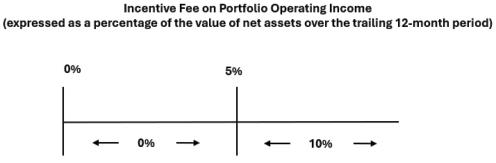
The incentive fee (the “ Incentive Fee ” ) is calculated and payable quarterly in arrears in an amount equal to 10% of the Fund’s Portfolio Operating Income for the immediately preceding quarter. No incentive fee on Portfolio Operating Income will be payable in any calendar quarter in which the Fund did not achieve a 5% Total Return over the trailing 12-month period. | |
“ Portfolio Operating Income ” means (1) the Fund’s share of Net Operating Income from the Fund’s real estate equity investments; plus (2) the Fund’s net investment income (or loss) (i.e., net of fund level expenses) from debt, preferred equity investments and traded real estate-related securities; minus (3) the Fund’s expenses (excluding the Incentive Fee and distribution and servicing fees). | |
“ Net Operating Income ” means operating revenue net of operating expenses (inclusive of interest on investment level debt) for the Fund’s operating entities that invest in real estate and excludes (i) gains or losses from sales of depreciable real property, (ii) impairment write-downs on depreciable real property, (iii) real estate-related depreciation and amortization for each real estate operating venture and (iv) adjustments for recognizing straight line rent. | |
“ Total Return ” for any 12-month period shall equal the sum of: (i) all distributions accrued or paid (without duplication) on the Common Shares since the beginning of the applicable 12-month period plus (ii) the change in aggregate NAV of Common Shares since the beginning of the year, before giving effect to (x) changes resulting solely from the proceeds of issuances of Common Shares, (y) any allocation/accrual to the performance participation interest and (z) applicable distribution and servicing fee expenses. | |
Portfolio Operating Income does not include any component of capital gains or capital appreciation. The Manager is not entitled to any incentive fee based on the capital gains or capital appreciation of the Fund or its investments. | |
See “ Management and Advisory Arrangements. ” | |
Investment Subadvisory Agreement | The Manager has entered into a subadvisory agreement (the “ Subadvisory Agreement ” ) with the Subadviser which provides that the Subadviser will furnish investment advisory services in connection with the management of the Fund. Under the Subadvisory Agreement, the Subadviser, subject to the supervision of the Manager, is responsible for managing the assets of the Fund in accordance with the Fund’s investment objectives, investment program and policies. The Subadviser generally determines what properties, loans, joint ventures, securities and other instruments are purchased and sold for the Fund and is responsible for obtaining and evaluating financial data relevant to the Fund. The Manager continues to have responsibility for all investment advisory services pursuant to the Management Agreement and supervises the Subadviser’s performance of such services. |
Subadvisory fees are paid by the Manager out of the management fee that it receives from the Fund. No subadvisory fees are paid by the Fund directly to PGIM. Because the Subadviser is an affiliate, the Manager may from time to time share certain of its profits with, or allocate other resources to, the Subadviser. Any such payments by the Manager to the Subadviser will be from the Manager’s own resources. | |
Investment Process | PGIM Real Estate Investment Process for Private Real Estate |
PGIM Real Estate utilizes its scale and on-the-ground experience to identify high quality real estate assets that it expects to benefit over the long term from structural shifts led by demographics, technology, consumer behavior and other fundamental factors. Investment themes and high conviction strategies are developed collaboratively in a top down/bottom up process that involves the Fund’s portfolio management team and PGIM Real Estate’s investment research, transactions, asset management and debt capital markets teams. See “ Investment Objectives and Strategies — Investment Process. ” | |
Deal Sourcing: PGIM Real Estate’s transactions team targets opportunities that are a fit with the Fund’s strategy. Opportunities are sourced through a variety of channels, including joint venture partners, brokers, property owners and operators, and the legal and financial community. This approach is made possible by the extensive experience and relationships of the real estate professionals that PGIM Real Estate employs across the United States, coupled with the significant deal flow the transactions team sees as a result of executing a significant volume of annual transactions. |
Underwriting: The transactions team will conduct an initial underwriting of an asset which includes creating a detailed cash flow model with key assumptions informed by an analysis of primary sale and rent comparisons, market pricing expectations, tenancy review, and capital needs. Investment research and the debt capital market teams provide guidance on rent growth and debt assumptions. Investment research will also provide detailed insights as to real estate fundamentals within the market and submarket, including: supply, demand, job growth, wage growth, educational attainment. Asset management advises on underwriting assumptions relative to other assets the Fund may own in the market. The transactions team will assess initial returns to determine if the investment is a fit for one of the funds managed by PGIM Real Estate. | |
Allocation Meetings: Investments that are determined to offer attractive risk-adjusted returns will be presented by the transactions teams at the bi-weekly Allocation Committee meetings where portfolio managers (on behalf of funds) will have an opportunity to ask questions about the investment opportunity to ensure there is a strategy fit. | |
Once an investment has been presented on a preliminary basis, it will typically be formally allocated at a future Allocation Committee meeting to an eligible fund. PGIM Real Estate employs a rotational queue system to provide fair and equitable deal flow to each of the active accounts and funds managed by the Subadviser. See “ Allocation of Investment Opportunities. ” | |
Due Diligence: Due diligence kicks off once the transaction team professional determines there is fund interest and once PGIM Real Estate has gained control of the investment opportunity. Due diligence includes, but is not limited to, a detailed review of legal, physical, title, and environmental issues, as well as lease analysis, tenant credit and operating expenses. | |
Sustainability. PGIM Real Estate’s overarching sustainability mission statement is that we believe doing the right thing for our people, the environment, and our communities leads to better results for all stakeholders. While the Fund does not seek to implement a specific environmental, social and governance ( “ ESG ” ), impact or sustainability strategy we strive to generate returns for investors while considering sustainability factors and applying best practices through our investment and asset management processes. Sustainability considerations are embedded through various stages of PGIM Real Estate’s investment processes that target efficiency and screen for risks, and is applied to some degree across most of the Fund’s investments. PGIM Real Estate performs upfront asset-level due diligence which informs prudent capital and operational strategies that focus on efficiency measures that aim to reduce negative environmental impacts as well as operating expenses. Additionally, assets are screened for transitional and physical climate risks, and appropriate mitigation measures are included in the asset strategy to strengthen its resilience profile. | |
Investment Committee: A comprehensive investment committee paper is presented by the deal team (portfolio management, regional Transactions professionals, Asset Manager, and Investment Research) to the Investment Committee, a 9-member board with 29 average years of investment experience. The investment committee papers highlight key risks and mitigants of the investment opportunity, final underwriting, notable issues discovered during due diligence, an ESG scorecard, a market analysis provided by Investment Research, portfolio suitability, comps (rents, sale, land), and any other deal specific support for the investment thesis. The Investment Committee reviews and approves investments based on a majority vote. | |
PGIM Fixed Income Investment Process for Publicly Traded Real Estate Securities | |
In managing the Fund’s assets, PGIM Fixed Income uses a combination of top-down economic analysis and bottom-up research in conjunction with proprietary quantitative models and risk management systems. In the top-down economic analysis, PGIM Fixed Income develops views on economic, policy and market trends. In its bottom-up research, PGIM Fixed Income develops an internal rating and outlook based on the underlying collateral of the security, the origination and servicing of the collateral and the inherent structure of the security. The rating and outlook are determined based on a thorough review of the financial health and trends of the investment. PGIM Fixed Income may also consider investment factors such as a review of the financial health and trends of the issuer, expected total return, yield, spread and potential for price appreciation as well as credit quality, maturity and risk. The Fund may invest in a security based upon the expected total return rather than the yield of such security. | |
Competitive Advantages | Prudential’s investment management business, PGIM, is one of the top ten asset managers worldwide, managing more than $1.47 trillion of assets as of December 31, 2025 and providing deep asset class expertise to meet our clients’ investment objectives. PGIM Real Estate pursues exceptional outcomes for investors and borrowers through a range of real estate equity and debt solutions across the risk-return spectrum. PGIM Real Estate’s and its predecessor entities’ and business units’ scope of insights, rigorous risk management and seamless execution are backed by more than 140 years of experience investing in real estate through direct mortgage loan originations, and more than 50 years of history managing open end real estate equity vehicles similar to the Fund. Please see below for PGIM Real Estate’s competitive advantages: |
Always Value Driven; Research Led: PGIM Real Estate builds clients’ real estate portfolios from the bottom up, finding and creating value at the individual investment level. PGIM Real Estate is not a macro allocator nor a financial engineer, but rather an active investment manager who builds and rebuilds real estate portfolios over time grounding our investment thesis in local market research and understanding the impacts of macroeconomic and demographic trends on real estate. PGIM Real Estate is known for spotting value early and many of our first-of-their-kind investment strategies are now industry standards. |
Active Asset Management: PGIM Real Estate asset managers are sector specific and regionally focused. They have experience working on assets that sit along all points of the risk spectrum from core to value add. They have the knowledge and expertise to add value through management of the on-site property teams, deep market knowledge, and by driving capital projects to capture additional value. | |
Rock Solid Risk Management: From PGIM Real Estate’s earliest beginnings as an insurance led financial house, risk management has always been and continues to be central to PGIM Real Estate’s DNA. PGIM Real Estate’s commitment to being a fiduciary first and managing risk on behalf of our clients, has developed into a prudent, conservative, time-tested investment process weathering multiple market cycles over fifty years. Focus is placed on minimizing downside risk as demonstrated by PGIM Real Estate delivering positive returns to U.S. core real estate investors 45 out of the last 50 years. | |
50+ Year Track Record of Building High Quality, Income Driven Real Estate Portfolios: PGIM Real Estate launched the industry’s first institutional U.S. open-end, real estate fund in 1970 and its first core plus fund in 1980. Today PGIM Real Estate is among the largest, most tenured, and most well regarded institutional managers in the industry. | |
Do Business the Right Way — How we do business is just as an important as what we do: PGIM Real Estate has a very long track record and earned a reputation not only for delivering investment excellence, but also for doing the business the right way for its clients, people, business partners and the communities that it operates and invests in. | |
Immense Market Visibility: PGIM Real Estate leverages the knowledge, resources, and infrastructure afforded by $218 billion of gross assets under management and administration as of December 31, 2025 ($139 billion net and $50 billion in assets under administration) global platform. The Subadviser’s expertise spans across the globe, the capital stack, public and private markets, and across the risk spectrum. In 2025 alone, PGIM Real Estate completed over $32 billion in transactions globally with $27 billion in the U.S. This scale is among the largest within the real estate investment management space and provides the Fund with access and insights into macro and micro real estate trends that translate into actionable real estate investment strategies and opportunities. | |
Periodic Repurchase Offers | The Fund is an “ interval fund, ” a type of fund which, in order to provide liquidity to shareholders, has adopted a fundamental investment policy to make quarterly offers to repurchase between 5% and 25% of its outstanding Common Shares at NAV, reduced by any applicable redemption fee. Subject to applicable law and approval of the Board, for each quarterly repurchase offer, the Fund currently expects to offer to repurchase 5% of the Fund’s outstanding Common Shares at NAV on the repurchase request deadline at the net asset value per Common Share as of the repurchase pricing date. Written notification of each quarterly repurchase offer (the “ Repurchase Offer Notice ” ) will be sent to shareholders at least 21 days before the repurchase request deadline (i.e., the date by which shareholders can tender their Common Shares in response to a repurchase offer) (the “ Repurchase Request Deadline ” ). The Fund’s Common Shares are not listed on any securities exchange, and the Fund anticipates that no secondary market will develop for its Common Shares. Accordingly, you may not be able to sell Common Shares when and/or in the amount that you desire. Investors should consider Common Shares of the Fund to be an illiquid investment. Thus, the Common Shares are appropriate only as a long-term investment. In addition, the Fund’s repurchase offers may subject the Fund and shareholders to special risks. See “ Risks — Repurchase Offers Risk. ” |
Leverage | The Fund may seek to enhance the level of its current distributions to its common shareholders and capital appreciation through the use of leverage, subject to the limitations of the Investment Company Act. The Fund may use entity level debt (i.e., non-mortgage debt at the Fund level). The Fund may incur entity level debt, including unsecured and secured credit facilities from certain financial institutions, and other forms of borrowing (collectively, “ Borrowings ” ), which Borrowings are limited to 33 1 ∕ 3 % of the Fund’s total assets (less all liabilities and indebtedness not represented by Investment Company Act leverage) immediately after such Borrowings. The Fund also expects that certain of its private real estate investments will utilize property level debt financing (mortgages on the Fund's or operating entities' properties that are generally not recourse to the Fund or the operating entities except in extremely limited circumstances). Property level debt will be incurred by wholly-owned or joint venture operating entities utilized by the Fund and secured by real estate owned operating entities. In a non-recourse mortgage, if an operating entity were to default on a loan, the lender’s recourse would be to the mortgaged property, and the lender would typically not have a claim to seek recovery from any unpaid portion of the loan from the other assets of the Fund or its subsidiaries. |
Borrowings and any shares of preferred stock of the Fund ( “ Preferred Shares ” ) have seniority over Common Shares. Any Borrowings and Preferred Shares leverage investments in Common Shares. Holders of Common Shares bear the costs associated with any Borrowings, and holders of Common Shares bear the offering costs of the Preferred Shares issuances. The Board may authorize the use of leverage through Borrowings and Preferred Shares without the approval of the holders of Common Shares. On January 17, 2024, the Fund issued $125,000 total liquidation preference of Preferred Shares entitled to cumulative preferential dividends of 12%. For more information, see “ Leverage ” below in this prospectus. | |
The Fund may choose not to use leverage at all times, and the amount of leverage used by the Fund may vary depending upon a number of factors, including the Manager’s and the Subadviser’s outlook for the market and the costs that the Fund would incur as a result of such leverage. There is no assurance that the Fund’s leveraging strategy will be successful. |
Distributions | The Fund intends to declare distributions and distribute them on a monthly basis. In addition, the Fund intends to distribute any net capital gains it earns from the sale of portfolio securities to shareholders no less frequently than annually. Net short-term capital gain distributions may be paid more frequently. The Fund intends to make distributions necessary to maintain its qualification as a REIT. See “ Distributions. ” |
The Manager has received an order from the SEC granting an exemption from Section 19(b) of the Investment Company Act and Rule 19b-1 thereunder to permit certain closed-end funds managed by the Manager, which includes the Fund, to include realized long-term capital gains as a part of their respective regular distributions to the common shareholders more frequently than would otherwise be permitted by the Investment Company Act (which generally permits once per taxable year). The Fund may, but will not necessarily, rely on this exemptive order in the future. The Board may, at the request of the Manager or upon its own action, adopt a managed distribution policy in the future. In addition, if under such a managed distribution policy, a distribution included a return of capital, this would merely represent a return of a shareholder’s original investment, and would not represent a gain or income on the Fund’s investments. | |
Cash distributions to holders of the Common Shares will automatically be reinvested under the Fund’s Distribution Reinvestment Plan (the “ DRIP ” ) in additional whole and fractional shares unless you elect to receive your distributions in cash. Investors may terminate their participation in the DRIP with prior written notice to the Fund. Under the DRIP, shareholders’ distributions are reinvested in Common Shares of the same class of Common Shares owned by the shareholder for a purchase price equal to the NAV per share (for the class of Common Shares being purchased) on the date that the distribution is paid. See “ Distribution Reinvestment Plan. ” | |
Expenses and Reimbursement | Subject to the terms and conditions outlined in this prospectus, the Fund will pay directly or reimburse the Manager for any actual third-party expenses incurred on behalf of the Fund. Such expenses will include, but are not limited to, costs related to valuation, audit, reporting, regulatory, administration, compliance, directors and financing as well as legal services. The Fund will also pay directly or reimburse the Manager for actual operating and property expenses incurred on behalf of the Fund for property management, acquisitions, dispositions and financings. |
The Subadviser may hire third-party property managers (who could also be joint venture partners for an investment) at prevailing market rates to perform management and specialized services for the Fund’s private real estate investments. These property managers may be affiliates of partners in joint ventures into which the Fund enters. In addition, the Subadviser may hire affiliated or unaffiliated third-parties at prevailing market rates to perform loan servicing with respect to certain loan investments held by the Fund. | |
The Fund bears its ongoing offering expenses, subject to a specified expense cap and reimbursement limitations, as described below. | |
Pursuant to an Expense Limitation and Reimbursement Agreement, the Manager has contractually agreed to waive its fees and/or reimburse expenses of the Fund through August 15, 2028 (the “ ELRA Period ” ) so that the Fund’s Specified Expenses (as defined below) will not exceed 0.50% of net assets (annualized). The Fund has agreed to repay these amounts, when and if requested by the Manager, but only if and to the extent that Specified Expenses are less than 0.50% of net assets (annualized) (or, if a lower expense limit is then in effect, such lower limit) within three years after the date the Manager waived or reimbursed such fees or expenses. This arrangement cannot be terminated without the consent of the Fund’s Board prior to the end of the ELRA Period. “ Specified Expenses ” includes all expenses incurred in the business of the Fund, including organizational and offering costs (other than the Fund’s organizational and offering expenses relating to the initial sale of Common Shares), with the following exceptions: (i) the Management Fee, (ii) the Incentive Fee, (iii) the Servicing Fee, (iv) the Distribution Fee, (v) property level expenses, (vi) brokerage costs or other investment-related out-of-pocket expenses, including with respect to unconsummated investments, (vii) dividend/interest payments (including any dividend payments, interest expenses, commitment fees, or other expenses related to any leverage incurred by the Fund), (viii) taxes, and (ix) extraordinary expenses (as determined in the sole discretion of the Manager). | |
For a more complete discussion of the Fund’s expenses and reimbursement arrangements, see “ Summary of Fund Expenses. ” | |
Independent Valuation Advisor | SitusAMC Real Estate Valuation Services, LLC ( “ SitusAMC ” ), an independent valuation services firm, provides valuation services to the Fund in respect of the Fund’s investments in real property, including providing valuations of these investments and periodically coordinating and reviewing third party appraisal reports, in accordance with valuation policies and procedures approved by the Board. SitusAMC assists the Manager in determining the estimated values of the Fund’s real estate investments and the Manager uses the estimated values provided, as well as inputs from other sources, as appropriate, in its calculation of the Fund’s daily NAV per share. While SitusAMC provides certain assistance in valuing certain assets, the Valuation Designee (as defined below) is ultimately responsible for determining the fair value of our assets, subject to the oversight of the Board. |
Custodian and Transfer Agent | The Bank of New York Mellon serves as the Fund’s custodian. Prudential Mutual Fund Services LLC serves as the Fund’s transfer agent (the “ Transfer Agent ” ). SS&C GIDS, Inc. serves as sub-transfer agent to the Fund. See “ Custodian and Transfer Agent. ” |
Distributor | Prudential Investment Management Services LLC ( “ PIMS ” or the “ Distributor ” ) is the principal underwriter and distributor of the Class I Shares, Class D Shares, Class S Shares and Class T Shares, and serves in that capacity on a “ best efforts ” basis, subject to various conditions. Other broker-dealers ( “ Selling Agents ” ) may be appointed by the Distributor to assist in the sale of the Common Shares on a “ best efforts ” basis. See “ Plan of Distribution. ” |
Sales Loads | Class T Shares are subject to a sales load of up to 3.5% of the total offering price (including sales load). Class T sales loads are waived for certain types of investors, including investors investing through certain group retirement plans (including defined contribution plans, defined benefit plans and deferred compensation plans) available through a retirement plan recordkeeper or third party administrator, as well as clients of financial intermediaries who (i) offer Class T Shares through a no-load network or platform, (ii) charge clients an ongoing fee for advisory, investment, consulting or similar services, or (iii) offer self-directed brokerage accounts or other similar types of accounts that may or may not charge transaction fees to customers. No sales load will be paid with respect to any Common Shares sold pursuant to the DRIP. |
The Distributor may reallow sales loads to participating broker-dealers. Selling Agents typically receive the sales load with respect to the Class T purchased by their customers. Sales loads may be reduced for certain categories of purchasers and for volume discounts, as disclosed in this prospectus. Investors should consult with their Selling Agents about the sales load and any additional fees or charges their Selling Agents might impose on each class of Common Shares. | |
Class I Shares, Class D Shares and Class S Shares are not subject to a sales load; however, investors could be required to pay brokerage commissions to their Selling Agents on purchases and sales of such shares. | |
Ongoing Distribution and Servicing Fees | The Fund has a Distribution and Service Plan pursuant to Rule 12b-1 under the Investment Company Act, applicable to certain of the Fund’s shares (the “ 12b-1 Plan ” ). Under this plan and the Fund’s Distribution Agreement with the Distributor, the Distributor pays the expenses of distributing all share classes of the Fund. The Distributor also provides certain shareholder support services. Under the 12b-1 Plan, certain classes of the Fund pay distribution and other fees to the Distributor as compensation for its services, which the Distributor generally pays (or “ reallows ” ) to Selling Agents. These fees — known as 12b-1 fees — are set forth in the “ Summary of Fund Expenses ” table and are described in greater detail below. |
Specifically, participating broker dealers will receive ongoing distribution and servicing fees (or 12b-1 fees) (a) of 0.85% of NAV per annum for Class S Shares and Class T Shares only (consisting of a 0.60% distribution fee (the “ Distribution Fee ” ) and a 0.25% shareholder servicing fee (the “ Servicing Fee ” )), and (b) of 0.25% for Class D Shares (all of which constitutes a Servicing Fee) in each case accrued daily and payable monthly. Class I Shares do not incur Distribution or Servicing Fees. Because these fees are paid out of the Fund’s assets on an on-going basis, over time these fees will increase the cost of an investor’s investment and may cost more than paying other types of sales charges. | |
Unlisted Closed-End Fund Structure; Limited Liquidity | The Fund does not currently intend to list its Common Shares for trading on any securities exchange or any other trading market in the near future. There is currently no secondary market for its Common Shares and the Fund does not expect any secondary market to develop for its Common Shares. Shareholders of the Fund are not able to have their Common Shares redeemed or otherwise sell their Common Shares on a daily basis because the Fund is an unlisted closed-end fund. In order to provide liquidity to shareholders, the Fund is structured as an “ interval fund ” and conducts periodic repurchase offers for a portion of its outstanding Common Shares, as described herein. Investors should consider Common Shares of the Fund to be an illiquid investment. An investment in the Fund is suitable only for investors who can bear the risks associated with the limited liquidity of the Common Shares, as described in “ Periodic Repurchase Offers ” above. Investors should consider their investment goals, time horizons and risk tolerance before investing in the Fund. |
Minimum Investment; Share Class Availability | Generally, the minimum initial investment is $2,500 for Class S Shares, Class D Shares and Class T Shares. The minimum initial investment for Class I Shares is $1 million. The minimum subsequent investment is $500 for each class of Common Shares, except for additional purchases pursuant to the DRIP, which are not subject to a minimum purchase amount. The minimum investment for each class of Common Shares can be modified or waived in the sole discretion of the Fund or the Distributor, including for certain financial firms that submit orders on behalf of their customers, the Fund’s officers and directors and certain employees of PGIM, including its affiliates, vehicles controlled by such employees and their extended family members. Each of the Fund or the Distributor may modify or waive minimum investment amounts in their sole discretion. See “ Plan of Distribution — Minimum Investment and Share Class Availability. ” |
Class S and Class T Shares are available to the general public through Selling Agents and other financial intermediaries. Class D Shares are generally available for purchase only (1) through fee-based programs, also known as wrap accounts, that provide access to Class D Shares, (2) through participating broker-dealers that have alternative fee arrangements with their clients to provide access to Class D Shares, (3) through investment advisers that are registered under the Advisers Act or applicable state law and direct clients to trade with a broker-dealer that offers Class D Shares, (4) through bank trust departments or any other organization or person authorized to act in a fiduciary capacity for its clients or customers or (5) other categories of investors that we name in an amendment or supplement to this prospectus. Class I Shares are available only (1) through fee-based programs, known as wrap accounts, of investment dealers that provide access to Class I Shares, to participating broker-dealers and their affiliates, including their officers, directors, employees, and registered representatives, as well as the immediate family members of such persons, as defined by FINRA Rule 5130, and through participating broker-dealers that have alternative fee arrangements with their clients, (3) through certain registered investment advisers, (4) through bank trust departments or any other organization or person authorized to act in a fiduciary capacity for its clients or customers, (5) to endowments, foundations, pension funds and other institutional investors for purchase in this offering, (6) to other categories of investors that are named in an amendment or supplement to the Fund’s prospectus or (7) certain directors or trustees, officers, current employees (including their spouses, children and parents) and former employees (including their spouses, children and parents) of Prudential and its affiliates, the PGIM Funds, and the subadvisers of the PGIM Funds. |
Sponsors’ Investment | To provide the Fund with an initial source of capital to begin making investments, Prudential, through its affiliates, agreed to commit an aggregate of $150 million to the Fund as a seed investment. Subsequently, Prudential, through its affiliates, committed an additional $100 million in capital to the Fund. The Fund has used and will continue to use such capital to invest in opportunities consistent with its investment objectives and strategies. We believe this investment creates a significant alignment of interests with our investors and demonstrates a strong commitment to the Fund’s strategy. |
Summary of Risks | Investing in the Fund involves risks, including the risk that a shareholder may receive little or no return on his or her investment or that a shareholder may lose part or all of his or her investment. The Fund should be considered a speculative investment that entails substantial risks, and a prospective investor should invest in the Fund only if they can sustain a complete loss of their investment. Below is a summary of some of the principal risks of investing in the Fund. For a more complete discussion of the risks of investing in the Fund, see “ Risks. ” |
Investors should consider carefully the following principal risks before investing in the Fund: | |
Limited History of Operations. The Fund is a non-diversified, closed-end management investment company with limited history of operations or public trading and is subject to all of the business risks and uncertainties associated with any new business. As a result, prospective investors have limited track record or history on which to base their investment decision. | |
General, Market and Economic Risk. Investing in the Fund involves certain risks and the Fund may not be able to achieve its intended results for a variety of reasons, including, among others, the possibility that the Fund may not be able to successfully implement its investment strategy because of market, economic, regulatory, geopolitical and other conditions. International wars or conflicts (such as those in the Middle East and Ukraine) and geopolitical developments in foreign countries, along with instability in regions such as Asia, Eastern Europe, and the Middle East, possible terrorist attacks in the United States or around the world, public health epidemics and pandemics such as the outbreak of infectious diseases like the COVID-19 pandemic, and other similar events could adversely affect the U.S. and foreign financial markets, including increases in market volatility, reduced liquidity in the securities markets and government intervention, and may cause further long-term economic uncertainties in the United States and worldwide generally. | |
The extent and duration of such events and resulting market disruptions cannot be predicted, but could be substantial and could magnify the impact of other risks to the Fund. These and other similar events could adversely affect the U.S. and foreign financial markets and lead to increased market volatility, reduced liquidity in the securities markets, significant negative impacts on issuers and the markets for certain securities and commodities and/or government intervention. | |
Real Estate Investment Risk. The Fund’s investments are subject to the risks typically associated with real estate, including but not limited to: | |
■ local, state, national or international economic conditions, including market disruptions caused by regional concerns, political upheaval, sovereign debt crises and other factors; | |
■ lack of liquidity inherent in the nature of the asset; | |
■ reliance on tenants/operators/managers to operate their businesses in a sufficient manner and in compliance with their contractual arrangements with the Fund; | |
■ ability and cost to replace a tenant/operator/manager upon default; | |
■ property management decisions; | |
■ property location and conditions; | |
■ property operating costs, including insurance premiums, real estate taxes and maintenance costs; | |
■ competition from comparable properties; | |
■ the occupancy rate of, and the rental rates charged at, the properties; | |
■ leasing market activity; | |
■ the ability to collect on a timely basis all rent; | |
■ the effects of any bankruptcies or insolvencies; | |
■ changes in interest rates and in the availability, cost and terms of mortgage financing; | |
■ changes in governmental rules, regulations and fiscal policies; | |
■ cost of compliance with applicable federal, state, and local laws and regulations; | |
■ acts of nature, including earthquakes, hurricanes and other natural disasters; | |
■ climate change and regulations intended to control its impact; | |
■ the potential for uninsured or underinsured property losses; and |
■ other factors beyond the Fund’s control. | |
Commercial Real Estate Industry Risk. The Fund’s business and operations are dependent on the commercial real estate industry generally, which in turn is dependent upon broad economic conditions. Challenging economic and financial market conditions may cause the Fund to experience an increase in the number of commercial real estate investments that result in losses, including delinquencies, non-performing assets and a decrease in the value of the property or, in the case of traded real estate-related securities, collateral which secures its investments, all of which could adversely affect the Fund’s results of operations. | |
Residential Real Estate Industry Risk. Investments in apartment and residential real estate are subject to various changes in real estate conditions, and any negative trends in real estate conditions may adversely affect the Fund’s investments through decreased revenues or increased costs. These conditions include: | |
■ changes in national, regional and local economic conditions; | |
■ fluctuations in interest rates; | |
■ the inability of residents and tenants to pay rent; | |
■ the existence and quality of the competition; | |
■ increased operating costs; | |
■ oversupply of apartments, commercial space or single-family housing or a reduction in demand for real estate; and | |
■ changes in, or increased costs of compliance with, laws and/or governmental regulations. | |
Illiquid Investment Risk. To the extent consistent with the applicable liquidity requirements for interval funds under Rule 23c-3 of the Investment Company Act, the Fund may invest without limit in illiquid securities. The Fund generally considers “ illiquid securities ” to be securities that cannot be sold within seven days in the ordinary course of business at approximately the value used by the Fund in determining its NAV. The Fund may not be able to readily dispose of such securities at prices that approximate those at which the Fund could sell the securities if they were more widely traded and, as a result of that illiquidity, the Fund may have to sell such securities at a loss or sell other investments or engage in borrowing transactions if necessary to raise cash to meet its obligations. Limited liquidity can also affect the market price of securities, thereby adversely affecting the Fund’s NAV and ability to make dividend distributions. The Fund may invest in privately-held companies, below-investment-grade instruments ( “ junk ” bonds), securities which are at risk of default as to the repayment of principal and/or interest at the time of acquisition by the fund or are rated in the lower rating categories or are unrated, which may be difficult to value and may be illiquid. The Fund may also invest in securities that have not been registered for public sale in the U.S. or relevant non-U.S. jurisdictions, including, without limitation, securities eligible for purchase and sale pursuant to Rule 144A under the Securities Act of 1933, as amended (the “ Securities Act ” ). Rule 144A permits certain qualified institutional buyers, such as the Fund, to trade in privately placed securities that have not been registered for sale under the Securities Act. Rule 144A securities may be deemed illiquid, although the Fund may determine that certain Rule 144A securities are liquid. | |
Distributions Risk. There can be no assurance that the Fund will achieve investment results that will allow the Fund to make a specified level of cash distributions or maintain certain levels of cash distributions. All distributions will be paid at the discretion of the Board and may depend on the Fund’s earnings, the Fund’s net investment income, the Fund’s financial condition, compliance with applicable regulations and such other factors as the Board may deem relevant from time to time. The distributions for any full or partial calendar year might not be made in equal amounts, and one distribution may be larger than others. The Fund will make a distribution only if authorized by the Board and declared by the Fund out of assets legally available for these distributions. This distribution policy may, under certain circumstances, have certain adverse consequences to the Fund and its shareholders because it may result in a return of capital, which would reduce the Fund’s NAV and, over time, potentially increase the Fund’s expense ratio. If the Fund distributes a return of capital, it means that the Fund is returning to shareholders a portion of their investment rather than making a distribution that is funded from the Fund’s earned income or other profits. The Fund’s distribution policy may be changed by the Board at any time without shareholder approval. | |
Liquidity Risk. In order to provide liquidity to shareholders, the Fund is structured as an “ interval fund ” and conducts periodic repurchase offers for a portion of its outstanding Common Shares, as described herein. The Fund is designed primarily for long-term investors and an investment in the Common Shares should be considered illiquid. The Common Shares are not currently listed for trading on any securities exchange. There is currently no public market for the Common Shares and none is expected to develop. Although the Fund may offer to repurchase Common Shares from shareholders, no assurance can be given that these repurchases will occur as scheduled or at all. | |
Reliance on Investment Professionals. As of the date of this prospectus, the Fund has made a limited number of investments and the success of the Fund will therefore depend on the ability of the Manager and/or the Subadviser and their respective affiliates to identify and consummate suitable investments and to, when relevant, exit investments of the Fund prudently. | |
Selection Risk. Selection risk is the risk that the investments selected by PGIM Real Estate will underperform the broader real estate market, relevant indices, or other funds with similar investment objectives and investment strategies. |
Delay in Use of Proceeds Risk. Although the Fund currently intends to invest the proceeds from any sale of the Common Shares offered hereby within three months from receipt thereof, such investments may be delayed if suitable investments are unavailable at the time. Delays which the Fund encounters in the selection, due diligence and origination or acquisition of investments would likely limit its ability to pay distributions and lower overall returns. | |
Competition Risk. Identifying, completing and realizing attractive portfolio investments is competitive and involves a high degree of uncertainty. In acquiring its target assets, the Fund will compete with a variety of institutional investors, including specialty finance companies, public and private funds (including other funds managed by the Manager or the Subadviser), REITs, commercial and investment banks, commercial finance and insurance companies and other financial institutions. | |
Non-Diversification Risk. The Fund is “ non-diversified, ” which means that the Fund may invest a significant portion of its assets in the securities of a smaller number of issuers than a diversified fund. A fund that invests in a relatively smaller number of issuers is more susceptible to risks associated with a single economic, political or regulatory occurrence than a diversified fund might be. Some of those issuers also may present substantial credit or other risks. Similarly, the Fund may be subject to increased economic, business or political risk to the extent that it invests a substantial portion of its assets in a particular currency, in a group of related industries, in a particular issuer, in the bonds of similar projects or in a narrowly defined geographic area outside the United States. | |
Joint Venture Risk. The Fund may in the future enter into joint ventures with third parties and/or affiliates of the Manager or Subadviser to make investments. The Fund may also make investments in partnerships or other co-ownership arrangements or participations. Such investments may involve risks not otherwise present with other methods of investment. In addition, disputes between the Fund and its joint venture partners may result in litigation or arbitration that would increase the Fund’s expenses and prevent the Fund’s officers and directors from focusing their time and efforts on the Fund’s business. The Fund may at times enter into arrangements that provide for unfunded commitments and, even when not contractually obligated to do so, may be incentivized to fund future commitments related to its investments. | |
Real Estate Joint Venture Risk. The Fund may enter into real estate joint ventures with third parties to make investments. The Fund may also make investments in partnerships or other co-ownership arrangements or participations. Such investments may involve risks not otherwise present with other methods of investment, including, for instance, the following risks and conflicts of interest: | |
■ the real estate joint venture partner in an investment could become insolvent or bankrupt; | |
■ the joint venture partner will typically have day-to-day control over the investment, and the Fund’s rights regarding certain major decisions affecting the ownership of the real estate joint venture and the joint venture property will typically be limited; | |
■ the real estate joint venture partner may at any time have economic or business interests or goals that are or that become in conflict with the Fund’s business interests or goals; | |
■ the real estate joint venture partner may be structured differently than the Fund for tax purposes and this could create conflicts of interest; | |
■ the Fund will typically rely upon its real estate joint venture partner to manage the day-to day operations of the real estate joint venture and underlying assets, as well as to prepare financial information for the real estate joint venture and any failure to perform these obligations appropriately may have a negative impact on the Fund’s performance and results of operations; | |
■ the real estate joint venture partner may experience a change of control, which could result in new management of the real estate joint venture partner with less experience or conflicting interests to the Fund and be disruptive to the Fund’s business; and | |
■ the real estate joint venture partner may not have sufficient personnel or appropriate levels of expertise to adequately support the Fund’s initiatives. | |
In addition, disputes between the Fund and its real estate joint venture partners may result in litigation or arbitration that would increase the Fund’s expenses and prevent the Fund’s officers and directors from focusing their time and efforts on the Fund’s business. | |
Recourse Financings Risk. In certain cases, financings for the Fund’s commercial real estate properties may be recourse to the Fund. While the Manager expects to negotiate indemnities from joint venture partners to protect against risks related to such financings, there remains the possibility that the acts of such joint venture partner could result in liability to the Fund under certain guarantees. |
Valuation Risk. The value of certain of the Fund’s investments will be difficult to determine and the valuation determinations made by the Manager, Subadviser, and the Fund’s independent valuation advisor (the “ Independent Valuation Advisor ” ) with respect to such investments will likely vary from the amounts the Fund would receive upon sale or disposition of such investments. It is possible that the fair value determined for an investment may differ materially from the value that could be realized upon the sale of the investment. Within the parameters of the Fund’s valuation policies and procedures, the valuation methodologies used to value the Fund’s assets will involve subjective judgments and projections and that ultimately may not materialize. Ultimate realization of the value of an asset depends to a great extent on economic, market and other conditions beyond the Fund’s control and the control of the Manager and the Independent Valuation Advisor and third-party appraisers. Rapidly changing market conditions or material events may not be immediately reflected in the Fund’s daily NAV. The resulting potential disparity in the Fund’s NAV may inure to the benefit of shareholders whose shares are repurchased or new purchasers of the Common Shares, depending on whether the Fund’s published NAV per share for such class is overstated or understated. See “ Net Asset Value. ” | |
Prime Single Tenant Risk. The Fund depends on its tenants for revenue, and therefore the Fund’s revenue is dependent on the success and economic viability of its tenants. The Fund’s reliance on single tenants in prime single tenant properties may decrease its ability to lease vacated space and could adversely affect its income, performance, operations and ability to pay distributions. Adverse impacts to such tenants, businesses or operators, including as a result of changes in market or economic conditions, natural disasters, outbreaks of an infectious disease, pandemic or any other serious public health concern, political events or other factors that may impact the operation of these properties, may have negative effects on the Fund’s business and financial results. | |
Mortgage Loan Risk. The Fund may originate and selectively acquire senior mortgage loans which are generally loans secured by a first mortgage lien on a commercial property and are subject to risks of delinquency and foreclosure and risks of loss that are greater than similar risks associated with loans made on the security of single-family residential property. In addition, certain of the mortgage loans in which the Fund invests may be structured so that all or a substantial portion of the principal will not be paid until maturity, which increases the risk of default at that time. In the event of any default under a mortgage loan held directly by the Fund, it will bear a risk of loss of principal to the extent of any deficiency between the value of the collateral and the principal and accrued interest of the mortgage loan, which could have a material adverse effect on the profitability of the Fund. | |
Mezzanine Loan Risk. The Fund may invest in mezzanine loans that take the form of subordinated loans secured by a pledge of the ownership interests of either the entity owning the real property or the entity that owns the interest in the entity owning the real property. These types of investments involve a higher degree of risk than first mortgage loans secured by income producing real property because the investment may become unsecured as a result of foreclosure by the senior lender. As a result, the Fund may not recover some or all of its investment. | |
CMBS Risk. Commercial mortgage-backed securities ( “ CMBS ” ) are, generally, securities backed by obligations (including certificates of participation in obligations) that are principally secured by mortgages on real property or interests therein having a multifamily or commercial use, such as regional malls, other retail space, office buildings, industrial or warehouse properties, hotels, nursing homes and senior living centers. CMBS are subject to particular risks, including lack of standardized terms, shorter maturities than residential mortgage loans and payment of all or substantially all of the principal only at maturity rather than regular amortization of principal. | |
RMBS Risk. The Fund’s investments in residential mortgage-backed securities ( “ RMBS ” ) are subject to the risks of defaults, foreclosure timeline extension, fraud, home price depreciation and unfavorable modification of loan principal amount, interest rate and amortization of principal accompanying the underlying residential mortgage loans. In the event of defaults on the residential mortgage loans that underlie the Fund’s investments in RMBS and the exhaustion of any underlying or any additional credit support, the Fund may not realize an anticipated return on investments and may incur a loss on these investments. The Fund may also acquire non-agency RMBS, which are backed by residential property but, in contrast to agency RMBS, their principal and interest are not guaranteed by federally chartered entities such as Federal National Mortgage Association ( “ Fannie Mae ” ) and Federal Home Loan Mortgage Corporation ( “ Freddie Mac ” ) and, in the case of the Government National Mortgage Association ( “ Ginnie Mae ” ) are guaranteed by the federal government and backed by the full faith and credit of the United States. | |
ABS Risk. Investments in ABS are subject to risks. The ability of an issuer of ABS to enforce its security interest in the underlying assets or to otherwise recover from the underlying obligor may be limited. Certain asset-backed securities present a heightened level of risk because in the event of default, the liquidation value of the underlying assets may be inadequate to pay any unpaid principal or interest. The risk of non-payment is greater for asset-backed securities that are backed by pools that contain subprime loans, but a level of risk exists for all loans. Market factors adversely affecting loan repayments may include a general economic turndown and high unemployment. | |
Fixed Income Instruments Risk. In addition to the other risks described herein, fixed income instruments are also subject to certain risks, including: | |
■ Issuer Risk. The value of fixed income instruments may decline for a number of reasons that directly relate to the issuer, such as management performance, financial leverage and reduced demand for the issuer’s goods and services. |
■ Interest Rate Risk. The value of the Fund’s investments may go down when interest rates rise. A rise in rates tends to have a greater impact on the prices of longer term or duration debt securities. When interest rates fall, the issuers of debt obligations may prepay principal more quickly than expected, and the Fund may be required to reinvest the proceeds at a lower interest rate. The Fund may face a heightened level of interest rate risk as a result of the U.S. Federal Reserve Board’s rate-setting policies. | |
■ Duration Risk. Duration measures the time-weighted expected cash flows of a security, which can determine the security’s sensitivity to changes in the general level of interest rates (or yields). Securities with longer durations tend to be more sensitive to interest rate (or yield) changes than securities with shorter durations. Various techniques may be used to shorten or lengthen the Fund’s duration. The duration of a security will be expected to change over time with changes in market factors and time to maturity. | |
■ Floating-Rate and Fixed-to-Floating-Rate Securities Risk. The market value of floating-rate securities is a reflection of discounted expected cash flows based on expectations for future interest rate resets. The market value of such securities may fall in a declining interest rate environment and may also fall in a rising interest rate environment if there is a lag between the rise in interest rates and the reset. This risk may also be present with respect to fixed-to-floating-rate securities in which the Fund may invest. A secondary risk associated with declining interest rates is the risk that income earned by the Fund on floating-rate and fixed-to-floating-rate securities will decline due to lower coupon payments on floating-rate securities. | |
■ Prepayment Risk. During periods of declining interest rates, the issuer of an instrument may exercise its option to prepay principal earlier than scheduled, forcing the Fund to reinvest the proceeds from such prepayment in lower yielding instruments, which may result in a decline in the Fund’s income and distributions to shareholders. | |
■ Extension Risk. During periods of rising interest rates, an issuer could exercise its right to pay principal on an obligation held by the Fund later than expected. Under these circumstances, the value of the obligation will decrease, and the Fund may be prevented from reinvesting in higher yielding securities. | |
■ Reinvestment Risk. Reinvestment risk is the risk that income from the Fund’s portfolio will decline if and when the Fund invests the proceeds from matured, traded or called fixed income instruments at market interest rates that are below the portfolio’s current earnings rate. | |
■ Spread Risk. Wider credit spreads and decreasing market values typically represent a deterioration of the fixed income instrument’s credit soundness and a perceived greater likelihood or risk of default by the issuer. Fixed income instruments generally compensate for greater credit risk by paying interest at a higher rate. The difference (or “ spread ” ) between the yield of a security and the yield of a benchmark, such as a U.S. Treasury security with a comparable maturity, measures the additional interest paid for credit risk. As the spread on a security widens (or increases), the price (or value) of the security generally falls. Spread widening may occur, among other reasons, as a result of market concerns over the stability of the market, excess supply, general credit concerns in other markets, security- or market-specific credit concerns or general reductions in risk tolerance. | |
■ Credit Risk. Credit risk is the risk that one or more fixed income instruments in the Fund’s portfolio will decline in price or fail to pay interest or principal when due because the issuer, the guarantor or the insurer of the instrument or any applicable counterparty may be unable or unwilling to make timely principal and interest payments or to otherwise honor its obligations. Additionally, the instruments could lose value due to a loss of confidence in the ability of the issuer, guarantor, insurer or counterparty to pay back debt. The longer the maturity and the lower the credit quality of a bond, the more sensitive it is to credit risk. | |
■ Refinancing Risk. Refinancing risk is the risk that one or more issuers of fixed income instruments in the Fund’s portfolio may not be able to pay off their debt upon maturity. During times of extreme market stress, even creditworthy companies can have temporary trouble accessing the markets to refinance their outstanding debt, potentially leading to an inability to pay off existing bondholders, including the Fund. This could negatively affect the Fund’s NAV or overall return. | |
Below Investment Grade (High Yield or Junk Bond) Instruments Risk. The Fund’s investments in below investment grade quality securities and instruments are regarded as having predominantly speculative characteristics with respect to the issuer’s capacity to pay interest and repay principal in accordance with the terms of the obligations and involve major risk exposure to adverse conditions. Fixed income instruments rated below investment grade generally offer a higher current yield than that available from higher grade issuers, but typically involve greater risk. These investments are especially sensitive to adverse changes in general economic conditions, to changes in the financial condition of their issuers and to price fluctuation in response to changes in interest rates. During periods of economic downturn or rising interest rates, issuers of below investment grade instruments may experience financial stress that could adversely affect their ability to make payments of principal and interest on their obligations and increase the possibility of default. The secondary market for high yield instruments may not be as liquid as the secondary market for more highly rated instruments, a factor that may have an adverse effect on the Fund’s ability to dispose of a particular security. Under continuing adverse market or economic conditions, the secondary market for high yield instruments could contract further, independent of any specific adverse changes in the condition of a particular issuer, and these instruments may become illiquid. |
Capital Markets Risk. The Fund expects to fund a portion of its private real estate investments with property-level financing. There can be no assurance that any financing will be available in the future on acceptable terms, if at all, or that it will be able to satisfy the conditions precedent required to use its credit facilities, if entered into, which could reduce the number, or alter the type, of investments that the Fund would make otherwise. Any failure to obtain financing could have a material adverse effect on the continued development or growth of the Fund’s investments and harm the Fund’s ability to operate and make distributions. | |
Inflation Risk. Globally, inflation and rapid fluctuations in inflation rates have in the past had negative effects on economies and financial markets, particularly in emerging economies, and may do so in the future. Wages and prices of inputs increase during periods of inflation, which can negatively impact returns on investments. In an attempt to stabilize inflation, governments may impose wage and price controls, or otherwise intervene in the economy. Governmental efforts to curb inflation often have negative effects on levels of economic activity. | |
In the United States, inflation has accelerated in recent years as a result of global supply chain disruptions, a rise in energy prices, strong consumer spending, and other factors. Inflationary pressures have increased the costs of labor, energy, and raw materials, and have adversely affected consumer spending, economic growth, and the operations of companies in the U.S. and globally, and have resulted in a tightening of monetary policy by the U.S. Federal Reserve. Inflation may continue in the near to medium-term, particularly in the U.S., with the possibility that monetary policy may tighten further in response. Inflation may have an adverse impact on the Fund’s returns. | |
Continued inflation could have an adverse impact on the Fund’s borrowings and general and administrative expenses of the Fund, as these costs could increase at a rate higher than the Fund’s rental and other revenue. Inflation could also have an adverse effect on consumer spending, which could impact the Fund’s potential tenants’ revenues and, in turn, their ability to pay rent. In addition, leases that have a long-term duration or that include renewal options that specify a maximum rate increase may result in below-market lease rates over time, if the Fund does not accurately estimate inflation or market lease rates. If subject to below-market lease rates on a significant number of properties pursuant to long-term leases, and operating and other expenses are increasing faster than anticipated, then the Fund’s business, financial condition, results of operations, cash flows and ability to satisfy debt service obligations or pay distributions on Common Shares could be materially adversely affected. | |
Derivatives Risk. The Fund’s investments in derivative transactions may subject the Fund to increased risk of principal loss due to imperfect correlation between the values of the derivatives and the underlying securities or unexpected price or interest rate movements. The use of derivatives may subject the Fund to risks, including, but not limited to: | |
■ Counterparty Risk. The risk that the counterparty in a derivative transaction will be unable to honor its financial obligation to the Fund, or the risk that the reference entity in a credit default swap or similar derivative will not be able to honor its financial obligations. | |
■ Currency Risk. The risk that changes in the exchange rate between two currencies will adversely affect the value (in U.S. dollar terms) of an investment. | |
■ Leverage Risk. The Fund may use, among other things, reverse repurchase agreements and/or dollar rolls to add leverage to its portfolio. The risk associated with certain types of derivative strategies that relatively small market movements may result in large changes in the value of an investment. Certain investments or trading strategies that involve leverage can result in losses that greatly exceed the amount originally invested. See “ Leverage ” in the prospectus and “ Investment Policies and Techniques – Reverse Repurchase Agreements and Dollar Rolls ” in the Statement of Additional Information for more information. | |
■ Liquidity Risk. The risk that certain derivative positions may be difficult or impossible to close out at the time that the Fund would like or at the price that the Fund believes the position is currently worth. This risk is heightened to the extent the Fund engages in over-the-counter derivative transactions, which are generally less liquid than exchange-traded instruments. | |
■ Correlation Risk. The risk that changes in the value of a derivative will not match the changes in the value of the portfolio holdings that are being hedged or of the particular market or security to which the Fund seeks exposure. | |
■ Index Risk. If the derivative is linked to the performance of an index, it will be subject to the risks associated with changes in that index. | |
■ Regulatory Risk. Derivative contracts, including, without limitation, swaps, currency forwards, and non-deliverable forwards, are subject to regulation under the Dodd-Frank Wall Street Reform and Consumer Protection Act ( “ Dodd-Frank Act ” ) in the U.S. and under comparable regimes in Europe, Asia and other non-U.S. jurisdictions. Swaps, non-deliverable forwards and certain other derivatives traded in the OTC market are subject to variation margin requirements. Implementation of the margining and other provisions of the Dodd-Frank Act regarding clearing, mandatory trading, reporting and documentation of swaps and other derivatives have impacted and may continue to impact the costs to the Fund of trading these instruments and, as a result, may affect returns to investors in the Fund. |
■ Credit Default Swaps Risk . Credit default swaps involve greater risks than if the Fund had invested in the reference obligation directly. In addition to general market risks, credit default swaps are subject to liquidity risk and credit risk. A buyer of credit protection also may lose its investment and recover nothing should no credit event occur. If a credit event were to occur, the value of the reference obligation received by the seller, coupled with the periodic payments previously received, may be less than the full notional value it pays to the buyer, resulting in a loss of value to the Fund. Further, in certain circumstances, the buyer can receive the notional value of a credit default swap only by delivering a physical security to the seller, and is at risk if such deliverable security is unavailable or illiquid. Such a delivery “ crunch ” is a distinct risk of these investments. | |
Leverage Risk . Although the Fund may utilize leverage, there can be no assurance that the Fund will do so, or that, if utilized, it will be successful during any period in which it is employed. Leverage is a speculative technique that exposes the Fund to greater risk and higher costs than if it were not implemented. | |
The Fund anticipates that any money borrowed from a bank or other financial institution for investment purposes will accrue interest based on shorter-term interest rates that would be periodically reset. So long as the Fund’s portfolio provides a higher rate of return, net of expenses, than the interest rate on borrowed money, as reset periodically, the leverage may cause the Fund to receive a higher current rate of return than if the Fund were not leveraged. If, however, short-term rates rise, the interest rate on borrowed money could exceed the rate of return on instruments held by the Fund, reducing returns to the Fund and the level of income available for dividends or distributions made by the Fund. Developments in the credit markets may adversely affect the ability of the Fund to borrow for investment purposes and may increase the costs of such borrowings, which would also reduce returns to the Fund. There is no assurance that a leveraging strategy will be successful. The use of leverage to purchase additional investments creates an opportunity for increased Common Shares dividends, but also creates special risks and considerations for the common shareholders, including: | |
■ the likelihood of greater volatility of NAV and dividend rate of Common Shares than a comparable fund without leverage; | |
■ the risk that fluctuations in interest rates on borrowings and short-term debt or in dividend payments on, principal proceeds distributed to, or redemption of any preferred shares and/or notes or other debt securities that the Fund has issued will reduce the return to the Fund; | |
■ magnified interest rate risk, which is the risk that the prices of certain of the portfolio investments will fall (or rise) if market interest rates for those types of investments rise (or fall). As a result, leverage may cause greater changes in the Fund’s NAV, which could have a material adverse impact on the Fund’s business, financial condition and results of operations; | |
■ the effect of leverage in a declining market, which is likely to cause a greater decline in the NAV of the Common Shares than if the Fund were not leveraged; and | |
■ leverage may increase expenses (which will be borne entirely by the common shareholders), which may reduce the Fund’s NAV and the total return to common shareholders. | |
Potential Conflicts of Interest Risk. The Manager and Subadviser serve as adviser or subadvisers to other vehicles that have the same or similar investment objectives and investment strategies to those of the Fund. As a result, the Manager and the Fund’s portfolio managers may devote unequal time and attention to the management of the Fund and those other funds and accounts. Conflicts of interest exist or could arise in the future as a result of the relationships between the Fund and its affiliates, on the one hand, and the Fund’s wholly-owned operating partnership or any partner thereof, on the other. For further information on potential conflicts of interest, see “ Conflicts of Interest. ” | |
Allocation of Investment Opportunities Risk. Certain other existing or future funds, investment vehicles and accounts managed by the Manager and its affiliates and PGIM affiliated proprietary entities invest in securities, properties and other assets in which the Fund may seek to invest. Allocation of identified investment opportunities among the Fund, the Manager and other PGIM affiliated investment vehicles presents inherent conflicts of interest where demand exceeds available supply. While the Manager believes it is likely that there will be some overlap of investment opportunities for the Fund and other PGIM affiliated investment vehicles and PGIM affiliated proprietary accounts from time to time, the Fund’s stock of investment opportunities may be materially affected by competition from other PGIM affiliated investment vehicles and PGIM affiliated proprietary entities. Investors should note that the conflicts inherent in making such allocation decisions will not always be resolved in favor of the Fund. | |
See “ Investment Objectives and Strategies — Allocation of Investment Opportunities ” and “ Conflicts of Interest. ” | |
Best Efforts Offering Risk. This offering is being made on a “ best efforts ” basis, meaning the Distributor and broker-dealers participating in the offering are only required to use their best efforts to sell shares and have no firm commitment or obligation to sell any of the shares. Even though the Fund has acquired the initial portfolio, such portfolio by itself is not diversified. Further, if the Distributor is unable to raise substantial funds in this offering, the Fund’s Board may seek the approval of the Fund’s shareholders to sell all or substantially all of the Fund’s assets and dissolve the Fund. In the event of the liquidation, dissolution or winding up of the Fund, shareholders are entitled to receive the then-current NAV per share of the assets legally available for distribution to the Fund’s shareholders, after payment of or adequate provision for all of the Fund’s known debts and liabilities, including any outstanding debt securities or other borrowings and any interest thereon. |
Repurchase Offers Risk. Repurchase offers and the need to fund repurchase obligations may affect the ability of the Fund to be fully invested or force the Fund to maintain a higher percentage of its assets in liquid investments, which may harm the Fund’s investment performance. Moreover, diminution in the size of the Fund through repurchases may result in untimely sales of portfolio securities (with associated imputed transaction costs, which may be significant), and may limit the ability of the Fund to participate in new investment opportunities or to achieve its investment objective. The Fund may accumulate cash by holding back (i.e., not reinvesting) payments received in connection with the Fund’s investments. The Fund believes that payments received in connection with the Fund’s investments will generate sufficient cash to meet the maximum potential amount of the Fund’s repurchase obligations. If at any time cash and other cash equivalents held by the Fund are not sufficient to meet the Fund’s repurchase obligations, the Fund intends, if necessary, to sell investments. If, as expected, the Fund employs investment leverage, repurchases of Common Shares would compound the adverse effects of leverage in a declining market. In addition, if the Fund borrows to finance repurchases, interest on that borrowing will negatively affect Common Shareholders who do not tender their Common Shares by increasing the Fund’s expenses and reducing any net investment income.In the event that shareholders tender more than the repurchase offer amount plus 2% of the Fund’s outstanding shares as of the date of the Repurchase Request Deadline, the Fund will repurchase the Common Shares tendered on a pro rata basis, and shareholders will have to wait until the next repurchase offer to make another repurchase request. As a result, shareholders may be unable to liquidate all or a given percentage of their investment in the Fund during a particular repurchase offer. A shareholder may be subject to market and other risks, and the NAV of Common Shares tendered in a repurchase offer may decline between the Repurchase Request Deadline and the date on which the NAV for tendered Common Shares is determined. | |
Anti-Takeover Provisions Risk. Certain provisions of the Fund’s charter and bylaws could have the effect of limiting the ability of other entities or persons to acquire control of the Fund or to modify the Fund’s structure. These provisions may inhibit a change of control in circumstances that could give the shareholders the opportunity to realize a premium over the value of the Common Shares. | |
Incentive Fee Risk. The Incentive Fee may create an incentive for the Manager to make investments in order to maximize Portfolio Operating Income under the Incentive Fee even if such investments may not benefit the Fund’s NAV, cause us to use more leverage than it otherwise would in the absence of the Incentive Fee or to otherwise make riskier investments on the Fund’s behalf. While the Board does not monitor specific investment decisions by the Manager and the particular timing of individual investment decisions as they relate to the Incentive Fee, the Board, as part of its fiduciary duties and responsibilities under the Investment Company Act (relating to future determinations as to whether to renew the investment management agreement with the Manager), considers whether the Incentive Fee is fair and reasonable. | |
Non-U.S. Investment Risk. The Fund may invest in real estate located outside of the United States and real estate debt issued in, and/or backed by real estate in, countries outside the United States, including Asia, Europe and Latin America. Non-U.S. real estate and real estate-related investments involve certain factors not typically associated with investing in real estate and real estate-related investments in the U.S., including risks relating to (i) currency exchange matters; (ii) differences in conventions relating to documentation, settlement, corporate actions, stakeholder rights and other matters; (iii) differences between U.S. and non-U.S. real estate markets, including potential price volatility in and relative illiquidity of some non-U.S. markets; (iv) the absence of uniform accounting, auditing and financial reporting standards, practices and disclosure requirements and differences in government supervision and regulation; (v) certain economic, social and political risks; (vi) the possible imposition of non-U.S. taxes on income and gains and gross sales or other proceeds recognized with respect to such investments; (vii) differing and potentially less well-developed or well-tested corporate laws regarding stakeholder rights, creditors’ rights (including the rights of secured parties), fiduciary duties and the protection of investors; (viii) different laws and regulations including differences in the legal and regulatory environment or enhanced legal and regulatory compliance; (ix) political unrest or hostility to investments by foreign investors; (x) less publicly available information; (xi) obtaining or enforcing a court judgement abroad; (xii) restrictions on foreign investment in other jurisdictions; and (xiii) difficulties in effecting repatriation of capital. | |
Property Manager Risk. The Manager will hire property managers to manage the Fund’s properties and leasing agents to lease vacancies in the Fund’s properties. These property managers may be affiliates of partners in joint ventures that the Fund enters into. The property managers have significant decision-making authority with respect to the management of the Fund’s properties. The Fund’s ability to direct and control how its properties are managed on a day-to-day basis may be limited because it engages other parties to perform this function. Thus, the success of the Fund’s business may depend in large part on the ability of its property managers to manage the day-to-day operations and the ability of our leasing agents to lease vacancies in the Fund’s properties. Any adversity experienced by, or problems in our relationship with, the Fund’s property managers or leasing agents could adversely impact the operation and profitability of the Fund’s properties. | |
Affiliated Transactions Risk. The Fund is prohibited under the 1940 Act from participating in certain transactions with certain of its affiliates without the prior approval of a majority of the independent members of the Board and, in some cases, the SEC. The Fund has received exemptive relief from the SEC that allows the Fund to engage in certain co-investment transactions with the Manager and its affiliates, subject to certain terms and conditions (the “ Order ” ). Pursuant to such Order, the Fund is generally permitted to co-invest with the Manager and its affiliates if such co-investments are completed on the same terms and at the same time, as further detailed in the Order. In addition, the Manager and its affiliates must adopt and implement policies and procedures reasonably designed to ensure that: (i) opportunities to participate in co-investment transactions are allocated in a manner that is fair and equitable to the Fund and (ii) the Manager or affiliate negotiating the co-investment transaction considers the interest in the transaction of the Fund. |
Risks Related to the Fund’s REIT Status. The Fund currently operates so as to continue to qualify as a REIT under the Code. However, qualification as a REIT involves the application of highly technical and complex Code provisions for which only a limited number of judicial or administrative interpretations exist. Notwithstanding the availability of cure provisions in the Code, the Fund may fail to satisfy various compliance requirements which ultimately could jeopardize the Fund’s REIT status. If the Fund fails to continue to qualify as a REIT, it would be taxable as a corporation and would be subject to corporate income tax, any such taxes would reduce the amount distributable to investors. | |
Tax Risks of Investing in the Fund. Even if the Fund qualifies and maintains its status as a REIT, it may become subject to U.S. federal income taxes and related state and local taxes. | |
U.S. Federal Income Tax Considerations | The Fund has elected and has qualified, and intends to continue to qualify annually, as a REIT for U.S. federal income tax purposes under the Code. |
The Fund’s qualification and taxation as a REIT depends upon the Fund’s ability to meet on a continuing basis, through actual operating results, certain qualification tests set forth in the U.S. federal tax laws. Those qualification tests involve the percentage of income that the Fund earns from specified sources, the percentage of the Fund’s assets that falls within specified categories, the diversity of the ownership of shares, and the percentage of the Fund’s taxable income that it distributes. See “ Certain U.S. Federal Income Tax Considerations. ” No assurance can be given that the Fund will in fact satisfy such requirements for any taxable year. | |
If the Fund continues to qualify as a REIT, it generally will be allowed to deduct dividends paid to shareholders and, as a result, it generally will not be subject to U.S. federal income tax on that portion of the Fund’s ordinary income and net capital gain that the Fund annually distributes to shareholders, as long as the Fund meets the minimum distribution requirements under the Code. The Fund intends to make distributions to shareholders on a regular basis as necessary to avoid material U.S. federal income tax and to comply with the REIT distribution requirements. See “ Certain U.S. Federal Income Tax Considerations. ” | |
In the case of certain U.S. shareholders, the Fund expects IRS Form 1099-DIV tax information, if required, to be sent to shareholders following the end of each year. | |
See “ Certain U.S. Federal Income Tax Considerations. ” | |
Key Features of a REIT | In general, a REIT is a company that: |
■ acquires or provides financing for real estate assets; | |
■ offers the benefits of a professionally managed real estate portfolio; | |
■ satisfies the various requirements of the Code, including a requirement to distribute at least 90% of its REIT taxable income each year to its shareholders; and | |
■ is generally not subject to U.S. federal corporate income taxes on its net taxable income that it currently distributes to its stockholders, which substantially eliminates the “ double taxation ” (i.e., taxation at both the corporate and shareholder levels) that generally results from investments in a C corporation. | |
Limitation on Ownership Level | The Fund’s charter contains restrictions on the number of shares any one person or group may own. Specifically, the Fund’s charter will not permit any person or group to beneficially or constructively own more than 9.8% in value or number of shares, whichever is more restrictive, of the Fund’s outstanding Common Shares or of the aggregate of the Fund’s outstanding capital stock of all classes or series, and attempts to acquire the Common Shares or the Fund’s capital stock of all other classes or series in excess of these 9.8% limits would not be effective without an exemption from these limits (prospectively or retroactively) by the Board. These limits may be further reduced if the Board waives these limits for certain holders. See “ Certain Provisions of the Charter — Transfer Restrictions. ” These restrictions are designed, among other purposes, to enable us to comply with ownership restrictions imposed on REITs by the Code. Attempted acquisitions in excess of the restrictions described above will, pursuant to the charter, be void from the outset. |
Class I Shares | Class D Shares | Class S Shares | Class T Shares | |
Stockholder Transaction Expenses | ||||
Maximum Sales Load ( (1) | ||||
Repurchase Fee (on shares purchased and held for less than twelve months) (as a percentage of amount repurchased, if applicable) (2) |
Annual Expenses ( | ||||
Management Fee (3) | ||||
Incentive Fee (4) | ||||
Servicing Fee (5) | ||||
Distribution Fee (6) | ||||
Interest Payments on Borrowed Funds (7) | ||||
Property Level Expenses (8) | ||||
Other Expenses (9) | ||||
Total Annual Fund Operating Expenses | ||||
Fees Waived and/or Expenses Reimbursed (10) | ( | ( | ( | ( |
Total Annual Fund Operating Expenses After Fee Waiver and/or Expense Reimbursement |
1 Year | 3 Years | 5 Years | 10 Years | |
Total Expenses Incurred | $ | $ | $ | $ |
1 Year | 3 Years | 5 Years | 10 Years | |
Total Expenses Incurred | $ | $ | $ | $ |
1 Year | 3 Years | 5 Years | 10 Years | |
Total Expenses Incurred | $ | $ | $ | $ |
1 Year | 3 Years | 5 Years | 10 Years | |
Total Expenses Incurred | $ | $ | $ | $ |
Class I Shares | ||||
Year Ended December 31, | November 03, 2022 (a) through December 31, 2022 | |||
2025 | 2024 | 2023 | ||
Per Share Operating Performance (b) : | ||||
Net Asset Value, Beginning of Period | $28.58 | $26.86 | $24.98 | $25.00 |
Income (loss) from investment operations: | ||||
Net investment income (loss) | 1.39 | 1.46 | 0.87 | (0.02) |
Net realized and unrealized gain (loss) on investments | 1.66 | 1.62 | 1.27 | — |
Distributions for Preferred Shareholders from distributable earnings | — (c) | — (c) | — | — |
Total from investment operations applicable to Common Shareholders | 3.05 | 3.08 | 2.14 | (0.02) |
Less Dividends and Distributions applicable to Common Shareholders: | ||||
Dividends from net investment income | (0.25) | (0.73) | (0.17) | — |
Tax return of capital distributions | (1.11) | (0.63) | (0.09) | — |
Total dividends and distributions | (1.36) | (1.36) | (0.26) | — |
Net asset value, end of Period | $ | $ | $ | $ |
Total Return (d) : | 10.97% | 11.78% | 8.63% | (0.08)% |
Ratios/Supplemental Data: | ||||
Net assets applicable to Common Shareholders, end of period (000) | $282,991 | $139,287 | $84,987 | $49,909 |
Average net assets (000) | $231,131 | $102,038 | $60,469 | $39,948 |
Ratios to average net assets (e) : | ||||
Expenses after waivers and/or expense reimbursement | 1.71% (f) | 0.77% (f) | 0.50% | 0.50% (g) |
Expenses before waivers and/or expense reimbursement | 2.50% | 3.25% | 3.82% (h) | 3.77% (g) (i) |
Net investment income (loss) | 4.76% | 5.28% | 3.27% | (0.37)% (g) |
Portfolio turnover rate (j) | 9% | 0% | 0% | 0% |
Series A Preferred Stock (000) | $125 | $125 | $- | $- |
Series A Preferred Stock asset coverage ratio (k) | 226,572% | 111,602% | —% | —% |
Series A Preferred Stock asset coverage per $1,000 liquidation value (k) | $2,265,720 | $1,116,016 | $- | $- |
(a) | Commencement of operations. |
(b) | Calculated based on average shares outstanding during the period. |
(c) | Amount rounds to zero. |
(d) | Total return does not consider the effects of redemption fees or sales charges, if any. Total return is calculated assuming a purchase of a share on the first day and a sale on the last day of each period reported and includes reinvestment of dividends and distributions, if any. Total returns may reflect adjustments to conform to GAAP. Total returns for periods less than one full year are not annualized. |
(e) | Does not include expenses of the underlying funds in which the Fund invests. |
(f) | Includes interest expense and other borrowing fees and expenses of 0.32% and 0.27% which is being excluded from the Fund’s contractual waiver for the years ended December 31, 2025 and 2024, respectively. |
(g) | Annualized, with the exception of certain non-recurring expenses. |
(h) | Includes a non-recurring income tax benefit of 0.06% for the year ended December 31, 2023, which the Manager has recouped from the Fund. |
(i) | Includes a non-recurring income tax expense of 0.09% for the period ended December 31, 2022, for which the Manager has reimbursed the Fund. |
(j) | The Fund's portfolio turnover rate is calculated in accordance with regulatory requirements, without regard to transactions involving short-term investments, certain derivatives and in-kind transactions (if any). If such transactions were included, the Fund's portfolio turnover rate may be higher. |
(k) | Represents value of net assets plus Series A Preferred Stock, at the end of the period divided by the Series A Preferred Stock, at the end of the period. |
Class D Shares | ||||
Year Ended December 31, | November 03, 2022 (a) through December 31, 2022 | |||
2025 | 2024 | 2023 | ||
Per Share Operating Performance (b) : | ||||
Net Asset Value, Beginning of Period | $28.56 | $26.84 | $24.97 | $25.00 |
Income (loss) from investment operations: | ||||
Net investment income (loss) | 1.38 | 1.41 | 0.77 | (0.03) |
Net realized and unrealized gain (loss) on investments | 1.59 | 1.60 | 1.30 | — |
Distributions for Preferred Shareholders from distributable earnings | — (c) | — (c) | — | — |
Total from investment operations applicable to Common Shareholders | 2.97 | 3.01 | 2.07 | (0.03) |
Less Dividends and Distributions applicable to Common Shareholders: | ||||
Dividends from net investment income | (0.18) | (0.66) | (0.11) | — |
Tax return of capital distributions | (1.11) | (0.63) | (0.09) | — |
Total dividends and distributions | (1.29) | (1.29) | (0.20) | — |
Net asset value, end of Period | $ | $ | $ | $ |
Total Return (d) : | 10.68% | 11.51% | 8.35% | (0.12)% |
Ratios/Supplemental Data: | ||||
Net assets applicable to Common Shareholders, end of period (000) | $33 | $30 | $27 | $25 |
Average net assets (000) | $31 | $28 | $26 | $25 |
Ratios to average net assets (e) : | ||||
Expenses after waivers and/or expense reimbursement | 1.87% (f) | 0.99% (f) | 0.75% | 0.75% (g) |
Expenses before waivers and/or expense reimbursement | 180.87% | 135.22% | 4.11% (h) | 5.34% (g) (i) |
Net investment income (loss) | 4.74% | 5.12% | 2.94% | (0.74)% (g) |
Portfolio turnover rate (j) | 9% | 0% | 0% | 0% |
Series A Preferred Stock (000) | $125 | $125 | $- | $- |
Series A Preferred Stock asset coverage ratio (k) | 226,572% | 111,602% | —% | —% |
Series A Preferred Stock asset coverage per $1,000 liquidation value (k) | $2,265,720 | $1,116,016 | $- | $- |
(a) | Commencement of operations. |
(b) | Calculated based on average shares outstanding during the period. |
(c) | Amount rounds to zero. |
(d) | Total return does not consider the effects of redemption fees or sales charges, if any. Total return is calculated assuming a purchase of a share on the first day and a sale on the last day of each period reported and includes reinvestment of dividends and distributions, if any. Total returns may reflect adjustments to conform to GAAP. Total returns for periods less than one full year are not annualized. |
(e) | Does not include expenses of the underlying funds in which the Fund invests. |
(f) | Includes interest expense and other borrowing fees and expenses of 0.34% and 0.24% which is being excluded from the Fund’s contractual waiver for the years ended December 31, 2025 and 2024, respectively. |
(g) | Annualized, with the exception of certain non-recurring expenses. |
(h) | Includes a non-recurring income tax benefit of 0.06% for the year ended December 31, 2023, which the Manager has recouped from the Fund. |
(i) | Includes a non-recurring income tax expense of 0.09% for the period ended December 31, 2022, for which the Manager has reimbursed the Fund. |
(j) | The Fund's portfolio turnover rate is calculated in accordance with regulatory requirements, without regard to transactions involving short-term investments, certain derivatives and in-kind transactions (if any). If such transactions were included, the Fund's portfolio turnover rate may be higher. |
(k) | Represents value of net assets plus Series A Preferred Stock, at the end of the period divided by the Series A Preferred Stock, at the end of the period. |
Class S Shares | ||||
Year Ended December 31, | November 03, 2022 (a) through December 31, 2022 | |||
2025 | 2024 | 2023 | ||
Per Share Operating Performance (b) : | ||||
Net Asset Value, Beginning of Period | $28.47 | $26.77 | $24.95 | $25.00 |
Income (loss) from investment operations: | ||||
Net investment income (loss) | 1.20 | 1.24 | 0.61 | (0.05) |
Net realized and unrealized gain (loss) on investments | 1.59 | 1.58 | 1.30 | — |
Distributions for Preferred Shareholders from distributable earnings | — (c) | — (c) | — | — |
Total from investment operations applicable to Common Shareholders | 2.79 | 2.82 | 1.91 | (0.05) |
Less Dividends and Distributions applicable to Common Shareholders: | ||||
Dividends from net investment income | (0.01) | (0.49) | — | — |
Tax return of capital distributions | (1.11) | (0.63) | (0.09) | — |
Total dividends and distributions | (1.12) | (1.12) | (0.09) | — |
Net asset value, end of Period | $ | $ | $ | $ |
Total Return (d) : | 10.05% | 10.80% | 7.71% | (0.20)% |
Ratios/Supplemental Data: | ||||
Net assets applicable to Common Shareholders, end of period (000) | $33 | $30 | $27 | $25 |
Average net assets (000) | $31 | $28 | $26 | $25 |
Ratios to average net assets (e) : | ||||
Expenses after waivers and/or expense reimbursement | 2.46% (f) | 1.59% (f) | 1.35% | 1.35% (g) |
Expenses before waivers and/or expense reimbursement | 184.39% | 137.14% | 4.71% (h) | 5.95% (g) (i) |
Net investment income (loss) | 4.15% | 4.52% | 2.34% | (1.34)% (g) |
Portfolio turnover rate (j) | 9% | 0% | 0% | 0% |
Series A Preferred Stock (000) | $125 | $125 | $- | $- |
Series A Preferred Stock asset coverage ratio (k) | 226,572% | 111,602% | —% | —% |
Series A Preferred Stock asset coverage per $1,000 liquidation value (k) | $2,265,720 | $1,116,016 | $- | $- |
(a) | Commencement of operations. |
(b) | Calculated based on average shares outstanding during the period. |
(c) | Amount rounds to zero. |
(d) | Total return does not consider the effects of redemption fees or sales charges, if any. Total return is calculated assuming a purchase of a share on the first day and a sale on the last day of each period reported and includes reinvestment of dividends and distributions, if any. Total returns may reflect adjustments to conform to GAAP. Total returns for periods less than one full year are not annualized. |
(e) | Does not include expenses of the underlying funds in which the Fund invests. |
(f) | Includes interest expense and other borrowing fees and expenses of 0.33% and 0.24% which is being excluded from the Fund’s contractual waiver for the years ended December 31, 2025 and 2024, respectively. |
(g) | Annualized, with the exception of certain non-recurring expenses. |
(h) | Includes a non-recurring income tax benefit of 0.06% for the year ended December 31, 2023, which the Manager has recouped from the Fund. |
(i) | Includes a non-recurring income tax expense of 0.09% for the period ended December 31, 2022, for which the Manager has reimbursed the Fund. |
(j) | The Fund's portfolio turnover rate is calculated in accordance with regulatory requirements, without regard to transactions involving short-term investments, certain derivatives and in-kind transactions (if any). If such transactions were included, the Fund's portfolio turnover rate may be higher. |
(k) | Represents value of net assets plus Series A Preferred Stock, at the end of the period divided by the Series A Preferred Stock, at the end of the period. |
Class T Shares | ||||
Year Ended December 31, | November 03, 2022 (a) through December 31, 2022 | |||
2025 | 2024 | 2023 | ||
Per Share Operating Performance (b) : | ||||
Net Asset Value, Beginning of Period | $28.47 | $26.77 | $24.95 | $25.00 |
Income (loss) from investment operations: | ||||
Net investment income (loss) | 1.20 | 1.24 | 0.61 | (0.05) |
Net realized and unrealized gain (loss) on investments | 1.59 | 1.58 | 1.30 | — |
Distributions for Preferred Shareholders from distributable earnings | — (c) | — (c) | — | — |
Total from investment operations applicable to Common Shareholders | 2.79 | 2.82 | 1.91 | (0.05) |
Less Dividends and Distributions applicable to Common Shareholders: | ||||
Dividends from net investment income | (0.01) | (0.49) | — | — |
Tax return of capital distributions | (1.11) | (0.63) | (0.09) | — |
Total dividends and distributions | (1.12) | (1.12) | (0.09) | — |
Net asset value, end of Period | $ | $ | $ | $ |
Total Return (d) : | 10.05% | 10.80% | 7.71% | (0.20)% |
Ratios/Supplemental Data: | ||||
Net assets applicable to Common Shareholders, end of period (000) | $33 | $30 | $27 | $25 |
Average net assets (000) | $31 | $28 | $26 | $25 |
Ratios to average net assets (e) : | ||||
Expenses after waivers and/or expense reimbursement | 2.46% (f) | 1.59% (f) | 1.35% | 1.35% (g) |
Expenses before waivers and/or expense reimbursement | 184.33% | 137.12% | 4.71% (h) | 5.95% (g) (i) |
Net investment income (loss) | 4.15% | 4.52% | 2.34% | (1.34)% (g) |
Portfolio turnover rate (j) | 9% | 0% | 0% | 0% |
Series A Preferred Stock (000) | $125 | $125 | $- | $- |
Series A Preferred Stock asset coverage ratio (k) | 226,572% | 111,602% | —% | —% |
Series A Preferred Stock asset coverage per $1,000 liquidation value (k) | $2,265,720 | $1,116,016 | $- | $- |
(a) | Commencement of operations. |
(b) | Calculated based on average shares outstanding during the period. |
(c) | Amount rounds to zero. |
(d) | Total return does not consider the effects of redemption fees or sales charges, if any. Total return is calculated assuming a purchase of a share on the first day and a sale on the last day of each period reported and includes reinvestment of dividends and distributions, if any. Total returns may reflect adjustments to conform to GAAP. Total returns for periods less than one full year are not annualized. |
(e) | Does not include expenses of the underlying funds in which the Fund invests. |
(f) | Includes interest expense and other borrowing fees and expenses of 0.33% and 0.24% which is being excluded from the Fund’s contractual waiver for the years ended December 31, 2025 and 2024, respectively. |
(g) | Annualized, with the exception of certain non-recurring expenses. |
(h) | Includes a non-recurring income tax benefit of 0.06% for the year ended December 31, 2023, which the Manager has recouped from the Fund. |
(i) | Includes a non-recurring income tax expense of 0.09% for the period ended December 31, 2022, for which the Manager has reimbursed the Fund. |
(j) | The Fund's portfolio turnover rate is calculated in accordance with regulatory requirements, without regard to transactions involving short-term investments, certain derivatives and in-kind transactions (if any). If such transactions were included, the Fund's portfolio turnover rate may be higher. |
(k) | Represents value of net assets plus Series A Preferred Stock, at the end of the period divided by the Series A Preferred Stock, at the end of the period. |
Assumed Portfolio Total Return (Net of Expenses) | (10.00)% | (5.00)% | 0.00% | 5.00% | 10.00% |
Common Shares Total Return | ( | ( | ( |
![]() |
Title of Class | Amount Authorized | Amount Held by Fund for its Account | Amount Outstanding as of March 31, 2026 |
Regular Mail | Overnight or Express Mail |
PGIM Investments LLC P.O. Box 219929 Kansas City, MO 64121-9929 | PGIM Investments LLC 801 Pennsylvania Ave, Suite 219929 Kansas City, MO 64105-1407 |
Your investment | Sales Load as a % of the offering price |
Up to $149,999.99 | 3.50% |
$150,000.00 to $499,999.99 | 3.00% |
$500,000.00 to $999,999.99 | 2.50% |
$1,000,000.00 and over | 2.00% |
1 year | 3 year | 5 year | 7 year | 10 year | Since Inception (July 1980) | |
Gross | 5.29% | (3.02)% | 3.79% | 3.92% | 5.53% | 8.99% |
Net | 4.24% | (4.01)% | 2.76% | 2.88% | 4.50% | 7.89% |

|
1
|
|
|
3
|
|
|
24
|
|
|
31
|
|
|
43
|
|
|
44
|
|
|
44
|
|
|
44
|
|
|
46
|
|
|
46
|
|
|
46
|
|
|
46
|
|
|
46
|
|
|
46
|
|
|
A-1
|
|
Name
Year of Birth
Position(s)
Portfolios Overseen
|
Principal Occupation(s)
During Past Five Years
|
Other Directorships
Held During
Past Five Years
|
Length of Board
Service
|
|
Morris L. McNair, III
1968
Board Member
Portfolios Overseen: 46
|
Chairman of SG Credit Partners, Inc. (lower middle
market lender) (August 2019–Present); Chief Executive
Officer of MidMark Financial Group, Inc. (specialty
finance business) (February 2019–Present); formerly,
Founding Partner of Virgo Investment Group
(middle-market opportunistic private equity fund)
(2010–2019); formerly, Investment Professional, Silver
Point Capital (2007–2009); formerly, Senior Managing
Director at CIT (2001–2007); formerly, Vice President
Wachovia’s Corporate Banking Group (1993–2001).
|
Formerly, Director, Lease Corporation of America (2013–
2022); formerly, Director, Stonegate Capital
(Co-Chairman) (2017–2019); formerly, Director;
AgResource Management/Agrifund (Chairman) (2016–
2019); formerly, Director, NOW Account Network
Corporation (2014–2019); formerly, Director, HPF Service
(Chairman) (2013–2019); formerly, Director, Zippy Shell
Incorporated (Chairman) (2015–2018); formerly, Director,
Ygrene Energy Fund (2014–2018).
|
Since March 2022
|
|
Mary Lee Schneider
1962
Board Member
Portfolios Overseen: 46
|
Formerly, President & Chief Executive Officer of SG360°
(direct marketing communications) (2015–2018);
formerly, President & Chief Executive Officer of Follett
Corp. (PreK-12 Educational Technology & Services)
(2012–2015); formerly, President, Digital Solutions &
Chief Technology Officer for RR Donnelley
(communications company for marketing, commercial
printing and related services) (1992–2012); formerly,
McGraw Hill’s Business Week Magazine (1987–1992);
Time Warner (1985–1987).
|
Independent Director, Propelis (formerly, SGS & Co.) (a
global brand agency) (2023-Present); Independent
Director, The Larry H. Miller Company (holding company
comprised of real estate, senior healthcare, sports/
entertainment businesses and various minority/majority
investments) (2015-Present); Trustee, Penn State
University’s Board of Trustees (2015-Present); Member,
Penn State Investment Council (2023-Present); Life
Director, Chicago Public Library Foundation
(2014-present); Mercy Home for Boys & Girls’ Leader
Council (2014-Present); Executive Service Corps of
Chicago (2025 to present).
|
Since March 2022
|
|
Thomas M. Turpin
1960
Board Member and
Independent Chair
Portfolios Overseen: 46
|
Formerly, Chief Operating Officer at Heitman LLC (global
real estate investment firm) (2013–2018); formerly,
Chief Operating Officer and Chief Executive Officer of Old
Mutual US Asset Management (institutional and retail
asset management business) (2002–2010); formerly,
Managing Director and Head of Defined Contribution
Plans, Putnam (2000–2001); formerly, Managing Director
and Chief Administrative Officer of the Institutional,
Retail and Defined Contributions Business; Putnam
Investments (1993-1999); formerly, Trust Accountant,
Financial Analyst, Controller of Institutional group;
formerly, Manager, Global Cash and Securities
Processing Group The Boston Company (now part of BNY
Mellon) (1982–1993).
|
Formerly, Director-Old Mutual Asset Management Trust
Co. (2009–2010); formerly, Trustee-Old Mutual Advisors
Fund II (2008–2010); formerly, Board Member of
numerous investment boutiques majority owned by Old
Mutual Asset Management (2004–2010).
|
Since March 2022
|
|
Name
Year of Birth
Position(s)
Portfolios Overseen
|
Principal Occupation(s)
During Past Five Years
|
Other Directorships
Held During
Past Five Years
|
Length of Board
Service
|
|
Scott E. Benjamin
1973
Board Member & Vice
President
Portfolios Overseen: 147
|
Executive Vice President (since May 2009) of PGIM
Investments LLC; Vice President (since June 2012) of
Prudential Investment Management Services LLC;
Executive Vice President (since September 2009) of AST
Investment Services, Inc.; Managing Director, Board
Governance of PGIM-Global Wealth (since March 2026);
formerly Senior Vice President, Global Product
Management and Marketing (2006- 2026) of PGIM
Investments LLC; Vice President (since March 2022) of
the PGIM Alternatives Funds and (since March 2010) of
the PGIM Retail Funds; formerly Vice President of Product
Development and Product Management, PGIM
Investments LLC (2003-2006).
|
None
|
Since March 2022
|
|
Name
Year of Birth
Fund Position
|
Principal Occupation(s) During Past Five Years
|
Length of Service as
Fund Officer
|
|
Stuart S. Parker
1962
President and Principal Executive
Officer
|
President, Chief Executive Officer and Officer in Charge (since January 2012) of PGIM
Investments LLC; President
and Principal Executive Officer (since March 2022) of the PGIM Alternatives Funds
and (since January 2012) of
the PGIM Retail Funds; formerly Chief Operating Officer for PGIM Investments LLC (January
2012-January 2024);
formerly Executive Vice President of Jennison Associates LLC and Head of Retail Distribution
of PGIM
Investments LLC (June 2005-December 2011); Investment Company Institute - Board of
Governors (since May
2012).
|
Since March 2022
|
|
Claudia DiGiacomo
1974
Chief Legal Officer
|
Chief Legal Officer, Executive Vice President and Secretary (since August 2020) of
PGIM Investments LLC; Chief
Legal Officer (since January 2024) of PGIM DC Solutions LLC, (since July 2022) of
the PGIM Alternatives Funds
and (since August 2020) of the PGIM Retail Funds, Prudential Annuities Funds, Prudential
Mutual Fund Services
LLC, and PIFM Holdco, LLC; Vice President and Corporate Counsel (since January 2005)
of Prudential; and
Corporate Counsel (since August 2020) of AST Investment Services, Inc.; formerly Vice
President and Assistant
Secretary of PGIM Investments LLC (2005-2020); formerly Associate at Sidley Austin
Brown & Wood LLP
(1999-2004).
|
Since July 2022
|
|
Dino Capasso
1974
Chief Compliance Officer
|
Vice President (since June 2024) of PGIM Investments LLC; Chief Compliance Officer
(since July 2024) of the
PGIM Retail Funds, Prudential Annuities Funds and PGIM Alternatives Funds; formerly
Chief Compliance Officer
and Vice President (May 2022-May 2024) of T. Rowe Price Associates, Inc., T. Rowe
Price Investment
Management, Inc., and the T. Rowe Price mutual fund complex; formerly Chief Compliance
Officer (September
2019-April 2022) of PGIM Investments LLC and AST Investment Services, Inc. (ASTIS);
formerly Chief Compliance
Officer (July 2019–April 2022) of the PGIM Retail Funds and Prudential Annuities Funds and (March 2022–April
2022) of PGIM Real Estate Fund Inc.; formerly Vice President and Deputy Chief Compliance
Officer (June
2017-September 2019) of PGIM Investments LLC and ASTIS.
|
Since July 2024
|
|
Andrew R. French
1962
Secretary
|
Vice President and Assistant Secretary (since January 2007) of PGIM Investments LLC;
Secretary (since March
2022) of the PGIM Alternatives Funds and (since December 2018) of the PGIM Retail
Funds and Prudential
Annuities Funds; Vice President and Assistant Secretary (since January 2007) of Prudential
Mutual Fund Services
LLC; formerly Vice President and Corporate Counsel (2010-2018) of Prudential; formerly
Director and Corporate
Counsel (2006-2010) of Prudential.
|
Since March 2022
|
|
Melissa Gonzalez
1980
Assistant Secretary
|
Vice President and Corporate Counsel (since September 2018) of Prudential; Vice President
and Assistant
Secretary of DC Solutions (since August 2025); Vice President and Assistant Secretary
(since August 2020) of
PGIM Investments LLC; Vice President and Assistant Secretary (since June 2025) of
AST Investment Services,
Inc.; Assistant Secretary (since March 2022) of the PGIM Alternatives Funds, (since
March 2020) of the PGIM
Retail Funds and (since March 2019) of the Prudential Annuities Funds; formerly Director
and Corporate Counsel
(March 2014-September 2018) of Prudential.
|
Since March 2022
|
|
Patrick E. McGuinness
1986
Assistant Secretary
|
Vice President and Corporate Counsel (since March 2026) of Prudential; formerly Director
and Corporate Counsel
(February 2017-March 2026) of Prudential; Vice President and Assistant Secretary (since
August 2020) of PGIM
Investments LLC; Assistant Secretary (since March 2022) of the PGIM Alternatives Funds
and (since June 2020)
of the PGIM Retail Funds and Prudential Annuities Funds.
|
Since March 2022
|
|
Name
Year of Birth
Fund Position
|
Principal Occupation(s) During Past Five Years
|
Length of Service as
Fund Officer
|
|
Debra Rubano
1975
Assistant Secretary
|
Vice President and Corporate Counsel (since November 2020) of Prudential; Assistant
Secretary (since March
2022) of the PGIM Alternatives Funds and (since December 2020) of the PGIM Retail
Funds and (since November
2020) of the Prudential Annuities Funds; formerly Director and Senior Counsel of Allianz
Global Investors
U.S. Holdings LLC (2010-2020) and Assistant Secretary of numerous funds in the Allianz
fund complex
(2015-2020).
|
Since March 2022
|
|
George Hoyt
1965
Assistant Secretary
|
Vice President and Corporate Counsel (since September 2023) of Prudential; Assistant
Secretary (since March
2024) of the Prudential Annuities Funds, (since December 2023) of the PGIM Retail
Funds, and (since September
2023) of the PGIM Alternatives Funds; formerly Associate General Counsel of Franklin
Templeton and Secretary
and Chief Legal Officer of certain funds in the Franklin Templeton complex (2020-2023)
and Managing Director
(2016-2020) and Associate General Counsel for Legg Mason, Inc. and its predecessors
(2004-2020).
|
Since September 2023
|
|
Devan Goolsby
1991
Assistant Secretary
|
Vice President and Corporate Counsel (since May 2023) of Prudential; Assistant Secretary
(since March 2024) of
the Prudential Annuities Funds, (since December 2023) of the PGIM Retail Funds and
(since September 2023) of
the PGIM Alternatives Funds; formerly Associate at Eversheds Sutherland (US) LLP (2021-2023);
Compliance
Officer at Bloomberg LP (2019-2021); and an Examiner at the Financial Industry Regulatory
Authority
(2015-2019).
|
Since September 2023
|
|
Kelly A. Coyne
1968
Assistant Secretary
|
Director, Investment Operations (since 2010) of Prudential Mutual Fund Services LLC;
Assistant Secretary (since
March 2022) of the PGIM Alternatives Funds and (since March 2015) of the PGIM Retail
Funds.
|
Since March 2022
|
|
Christian J. Kelly
1975
Chief Financial Officer
|
Managing Director, Head of Registered Products Fund Operations (since March 2026);
Chief Financial Officer
(since March 2023) of the PGIM Retail Funds and Prudential Annuities Funds and (since
July 2022) of the PGIM
Alternatives Funds; formerly Vice President, Global Head of Investment Operations
(2018-2026) of PGIM
Investments LLC; formerly Treasurer and Principal Financial Officer (January 2019-March
2023) of the PGIM
Retail Funds and Prudential Annuities Funds; formerly Treasurer and Principal Financial Officer (March 2022–
July 2022) of the PGIM Real Estate Fund Inc.
|
Since March 2022
|
|
Russ Shupak
1973
Treasurer and Principal Accounting
Officer
|
Executive Director, RIC Fund Administration (since March 2026); Treasurer and Principal
Accounting Officer
(since September 2023) of the PGIM Credit Income Fund, (since March 2023) of the PGIM
Retail Funds, and
(since July 2022) of the PGIM Real Estate Fund Inc.; Assistant Treasurer (since September
2023) of the PGIM
Rock ETF Trust, (since September 2022) of the PGIM Private Credit Fund and (since
October 2019) of the
Prudential Annuities Funds; formerly Vice President (2017-2026) within PGIM Investments
Fund Administration;
formerly Assistant Treasurer (March 2022–July 2022) of the PGIM Real Estate Fund Inc.
|
Since March 2022
|
|
Elyse M. McLaughlin
1974
Assistant Treasurer
|
Executive Director, RIC Fund Administration (since March 2026); Treasurer and Principal
Accounting Officer
(since September 2023) of the PGIM Rock ETF Trust, (since March 2023) of the Prudential
Annuities Funds, and
(since September 2022) of the PGIM Private Credit Fund; Assistant Treasurer (since
September 2023) of the PGIM
Credit Income Fund, (since March 2022) of the PGIM Real Estate Fund Inc., and (since
October 2019) of the PGIM
Retail Funds; formerly Vice President (2017-2026) within PGIM Investments Fund Administration.
|
Since March 2022
|
|
Robert W. McCormack
1973
Assistant Treasurer
|
Senior Director, RIC Fund Administration (since March 2026); Assistant Treasurer (since
March 2023) of the PGIM
Retail Funds and Prudential Annuities Funds and (since March 2022) of the PGIM Alternatives
Funds; formerly
Vice President (2019-2026) within PGIM Investments Fund Administration.
|
Since March 2022
|
|
Name
|
Aggregate Fiscal Year
Compensation from the Fund
|
Pension or Retirement Benefits
Accrued as Part of Fund Expenses
|
Estimated Annual Benefits
Upon Retirement
|
Total Compensation from Fund
and Fund Complex(1) for Most
Recent Calendar Year(2)(3)
|
|
Compensation Received by Independent Board Members
|
||||
|
Morris L. McNair, III
|
$68,000
|
None
|
None
|
$252,000 (4/46)
|
|
Mary Lee Schneider
|
$68,000
|
None
|
None
|
$252,000 (4/46)
|
|
Thomas M. Turpin
|
$70,000
|
None
|
None
|
$260,000 (4/46)
|
|
Name
|
Dollar Range
of Equity
Securities in
the Fund
|
Aggregate Dollar Range of Equity
Securities in All Registered
Investment Companies Overseen
by Director in the Family of
Registered Investment Companies(1)(2)(3)
|
|
Board Member Share Ownership: Independent Directors
|
|
|
|
Morris L. McNair, III
|
$50,001 - $100,000
|
Over $100,000
|
|
Mary Lee Schneider
|
$50,001 - $100,000
|
Over $100,000
|
|
Thomas M. Turpin (Independent Chair)
|
$10,001 - $50,000
|
Over $100,000
|
|
Board Member Share Ownership: Interested Director
|
|
|
|
Scott E. Benjamin
|
None
|
Over $100,000
|
|
Management and Incentive Fees Paid by the Fund
|
|
|
|
|
|
2025(1)
|
2024(1)
|
2023(1)
|
|
Gross Management Fee
|
$2,312,245
|
$1,021,215
|
$605,480
|
|
Management and Incentive Fees Paid by the Fund
|
|
|
|
|
Gross Incentive Fee
|
$1,036,593
|
$462,243
|
$0
|
|
Amount Waived/Reimbursed by PGIM Investments
|
$(1,995,885)
|
$(2,644,450)
|
$(2,042,487)
|
|
Net Fee(2)
|
$1,352,953
|
$(1,160,992)
|
$(1,437,007)
|
|
(in USD Millions, Unless Otherwise Mentioned)
|
Account(s)
Managed
|
Assets of
Accounts
|
Number of Accounts
Subject to a
Performance Fee
|
Assets
Subject to a
Performance Fee
|
|
Registered Investment Companies
|
0
|
$0
|
0
|
$0
|
|
Pooled Investment Vehicles Other Than Registered Investment Companies
|
1
|
$14,747,458,258
|
0
|
$0
|
|
Other Accounts
|
3
|
$2,264,842,318
|
2
|
$1,229,000,000
|
|
(in USD Millions, Unless Otherwise Mentioned)
|
Account(s)
Managed
|
Assets of
Accounts
|
Number of Accounts
Subject to a
Performance Fee
|
Assets
Subject to a
Performance Fee
|
|
Registered Investment Companies
|
0
|
$0
|
0
|
$0
|
|
Pooled Investment Vehicles Other Than Registered Investment Companies
|
1
|
$14,747,458,258
|
0
|
$0
|
|
Other Accounts
|
0
|
$0
|
0
|
$0
|
|
(in USD Millions, Unless Otherwise Mentioned)
|
Account(s)
Managed
|
Assets of
Accounts
|
Number of Accounts
Subject to a
Performance Fee
|
Assets
Subject to a
Performance Fee
|
|
Registered Investment Companies
|
0
|
$0
|
0
|
$0
|
|
Pooled Investment Vehicles Other Than Registered Investment Companies
|
0
|
$0
|
0
|
$0
|
|
Other Accounts
|
0
|
$0
|
0
|
$0
|
|
(in USD Millions, Unless Otherwise Mentioned)
|
Account(s)
Managed
|
Assets of
Accounts*
|
Number of Accounts
Subject to a
Performance Fee
|
Assets
Subject to a
Performance Fee*
|
|
Registered Investment Companies
|
34
|
$13,214,334,010
|
0
|
$0
|
|
Pooled Investment Vehicles Other Than Registered Investment Companies
|
20
|
$4,893,607,582
|
0
|
$0
|
|
Other Accounts
|
162
|
$20,617,757,903
|
8
|
$442,805,577
|
|
Portfolio Manager
|
Dollar Range of Equity Securities Owned*
|
|
Brandon Short
|
$1-$10,000
|
|
Cailtin O’Connor
|
$1-$10,000
|
|
Darin Bright
|
None
|
|
Jordan Cohen
|
None
|
|
Name and Address
|
% Ownership
|
Type of Ownership(1)
|
|
Pruco Life Insurance Company
PLAZ Seed Account PI
Attn: Public Investment Ops
655 Broad Street, 13th Floor
Newark, NJ 07102-4419
|
62.875%
|
Both
|
|
The Prudential Insurance Company of America
PICA Seed Account
Attn: Public Investment Ops
655 Broad Street, 17th Floor
Newark, NJ 07102-4419
|
33.812%
|
Both
|
|
Name and Address
|
% Ownership
|
Type of Ownership(1)
|
|
PGIM Strategic Investments Inc.
Attn: Kristen Pederson
655 Broad Street, 19th Floor
Newark, NJ 07102-4419
|
100%
|
Both
|
|
Name and Address
|
% Ownership
|
Type of Ownership(1)
|
|
PGIM Strategic Investments Inc.
Attn: Kristen Pederson
655 Broad Street, 19th Floor
Newark, NJ 07102-4419
|
100%
|
Both
|
|
Name and Address
|
% Ownership
|
Type of Ownership(1)
|
|
PGIM Strategic Investments Inc.
Attn: Kristen Pederson
655 Broad Street, 19th Floor
Newark, NJ 07102-4419
|
100%
|
Both
|
|
Exhibits
|
|
|
(a)(1)
|
|
|
(a)(2)
|
|
|
(b)
|
|
|
(c)
|
Not Applicable
|
|
(d)(1)
|
|
|
(d)(2)
|
|
|
(e)
|
|
|
(f)
|
Not Applicable
|
|
(g)(1)
|
|
|
(g)(2)
|
|
|
(h)(1)
|
|
|
(h)(2)
|
|
|
(h)(3)
|
|
|
(i)
|
Not Applicable
|
|
(j)(1)
|
|
|
(j)(1)(a)
|
|
Exhibits
|
|
|
(k)(1)
|
|
|
(k)(1)(a)
|
|
|
(k)(2)
|
|
|
(k)(3)
|
|
|
(k)(3)(a)
|
|
|
(k)(4)
|
|
|
(k)(5)
|
|
|
(k)(6)
|
|
|
(l)
|
|
|
(m)
|
Not Applicable
|
|
(n)(1)
|
|
|
(n)(2)
|
|
|
(o)
|
Not Applicable
|
|
(p)
|
|
|
(q)
|
Not Applicable
|
|
(r)(1)
|
|
|
(r)(2)
|
|
|
(r)(3)
|
|
Exhibits
|
|
|
(s)
|
|
|
(t)
|
|
Title of Class
|
Number of Record Holders
|
|
Class S Shares
|
1
|
|
Class T Shares
|
1
|
|
Class D Shares
|
1
|
|
Class I Shares
|
67
|
|
Series A Preferred
|
125
|
|
Signature
|
Title
|
Date
|
|
By: /s/ Morris L. McNair, III*
Morris L. McNair, III
|
Director
|
April 28, 2026
|
|
By: /s/ Mary Lee Schneider*
Mary Lee Schneider
|
Director
|
April 28, 2026
|
|
By: /s/ Thomas M. Turpin*
Thomas M. Turpin
|
Director and Chairperson
|
April 28, 2026
|
|
By: /s/ Scott Benjamin*
Scott Benjamin
|
Director and Vice President
|
April 28, 2026
|
|
By: /s/ Stuart S. Parker*
Stuart S. Parker
|
President and Principal Executive Officer
|
April 28, 2026
|
|
By: /s/ Christian J. Kelly*
Christian J. Kelly
|
Chief Financial Officer (Principal Financial Officer)
|
April 28, 2026
|
|
By: /s/ Russ Shupak*
Russ Shupak
|
Treasurer and Principal Accounting Officer
|
April 28, 2026
|
|
*By: /s/ George Hoyt
George Hoyt
|
Agent or Attorney-in-Fact
|
April 28, 2026
|
|
|
|
|
(a)(2)
|
|
|
(e)
|
|
|
(k)(6)
|
|
|
(n)(1)
|
|
|
(n)(2)
|
|
|
(t)
|