Table of Contents

Filed Pursuant to Rule 424(b)(5)
Registration No. 333-293649-01


Prospectus Supplement

(To Prospectus dated February 23, 2026)

$905,038,000



LOGO

2026-1A PASS THROUGH TRUST

PASS THROUGH CERTIFICATES, SERIES 2026-1A


American Airlines, Inc. is creating a pass through trust that will issue American Airlines, Inc. Class A Pass Through Certificates, Series 2026-1. American Airlines, Inc. may offer Class B Pass Through Certificates, Series 2026-1 and/or other class of pass through trust certificates on or after the date of this prospectus supplement, pursuant to a separate prospectus supplement or a separate offering memorandum (each referred to as “offering materials”), in addition to any other additional classes of American Airlines, Inc. Pass Through Certificates, Series 2026-1 that may subsequently be offered, as provided herein. None of the Class B Pass Through Certificates nor any other additional classes of pass through trust certificates are being offered pursuant to this prospectus supplement. A separate trust will be established for each class of certificates that are issued.

Each certificate will represent an interest in the assets of the related pass through trust. The proceeds from the sale of the Class A Certificates will initially be held in escrow, except to the extent that American directs such proceeds to be used to acquire equipment notes issued in respect of any Owned Aircraft (as defined herein) or, at its direction, certain of the New Delivery Aircraft (as defined herein) owned by American, on the Issuance Date, and will thereafter be used by the Class A pass through trust to acquire the related series of equipment notes to be issued by American on a full recourse basis. Payments on the equipment notes held in each pass through trust will be passed through to the holders of the related certificates of such trust. Distributions on the certificates will be subject to certain subordination provisions described herein. The certificates do not represent interests in, or obligations of, American or any of its affiliates.

Subject to the distribution provisions described herein, the Class A Certificates will rank generally senior to any Class B Certificates that may be issued; and any Class B Certificates that may be issued will rank generally junior to the Class A Certificates.

The equipment notes expected to be held by the Class A pass through trust will be issued to finance the following 32 aircraft: (a) eleven newly manufactured Boeing 737 MAX 8 aircraft, delivered or currently scheduled for delivery to American during the period from January 2026 to April 2026, (b) six newly manufactured Airbus A321 XLR aircraft, delivered or currently scheduled for delivery to American during the period from July 2025 to July 2026, (c) twelve Airbus A321-200 aircraft, delivered new to American during the period from October 2013 to November 2015, and (d) three Boeing 777-300ER aircraft, delivered new to American during the period from April 2013 to June 2013. The equipment notes issued for each aircraft will be secured by a security interest in all such aircraft. Interest on the issued and outstanding equipment notes will be payable semiannually on May 10 and November 10 of each year, commencing on November 10, 2026, and principal on such equipment notes is scheduled for payment on May 10 and November 10 of each year, commencing on November 10, 2026.

Initially, Natixis, a joint stock company with a board of directors organized and existing under the laws of France, acting through its New York Branch, will provide a Liquidity Facility for the Class A Certificates in an amount sufficient to make three successive semiannual interest distributions on the outstanding balance of the Class A Certificates. Any Class B Certificates, if issued, may have the benefit of a separate Liquidity Facility as described in the offering materials for such class of certificates.

The Class A Certificates will not be listed on any national securities exchange.

Investing in the Class A Certificates involves risks. See “Risk Factors” beginning on page S-24.

Neither the Securities and Exchange Commission nor any state securities commission has approved or disapproved of these securities or determined if this prospectus supplement or the accompanying prospectus is truthful or complete. Any representation to the contrary is a criminal offense.


Pass Through Certificates

   Aggregate Face
Amount
     Interest
Rate
    Final Expected
Distribution Date
     Price to
Public(1)

Class A

   $ 905,038,000        5.25     November 10, 2038      100%
 
(1)

Plus accrued interest, if any, from the date of issuance.

The underwriters will purchase all of the Class A Certificates if any are purchased. The aggregate proceeds from the sale of the Class A Certificates will be $905,038,000. American will pay the underwriters a commission of $9,050,380. The underwriters expect delivery of the Class A Certificates will be made in book-entry form on or about May 11, 2026 through the facilities of the Depository Trust Company against payment in immediately available funds.


Joint Lead Bookrunners


Goldman Sachs & Co. LLC

Joint Structuring Agent


MUFG

Joint Structuring Agent

  Morgan Stanley& Co. LLC

Joint Bookrunners


BofA Securities   Barclays   BNP Paribas   Citigroup   Credit Agricole Securities   Deutsche Bank Securities   J.P. Morgan   SMBC Nikko


Loop Capital Markets   CIBC Capital Markets   ICBC Standard Bank   Mizuho   Natixis


 NatWest     US Bancorp   BOK Financial Securities, Inc.        

Prospectus Supplement dated April 27, 2026.
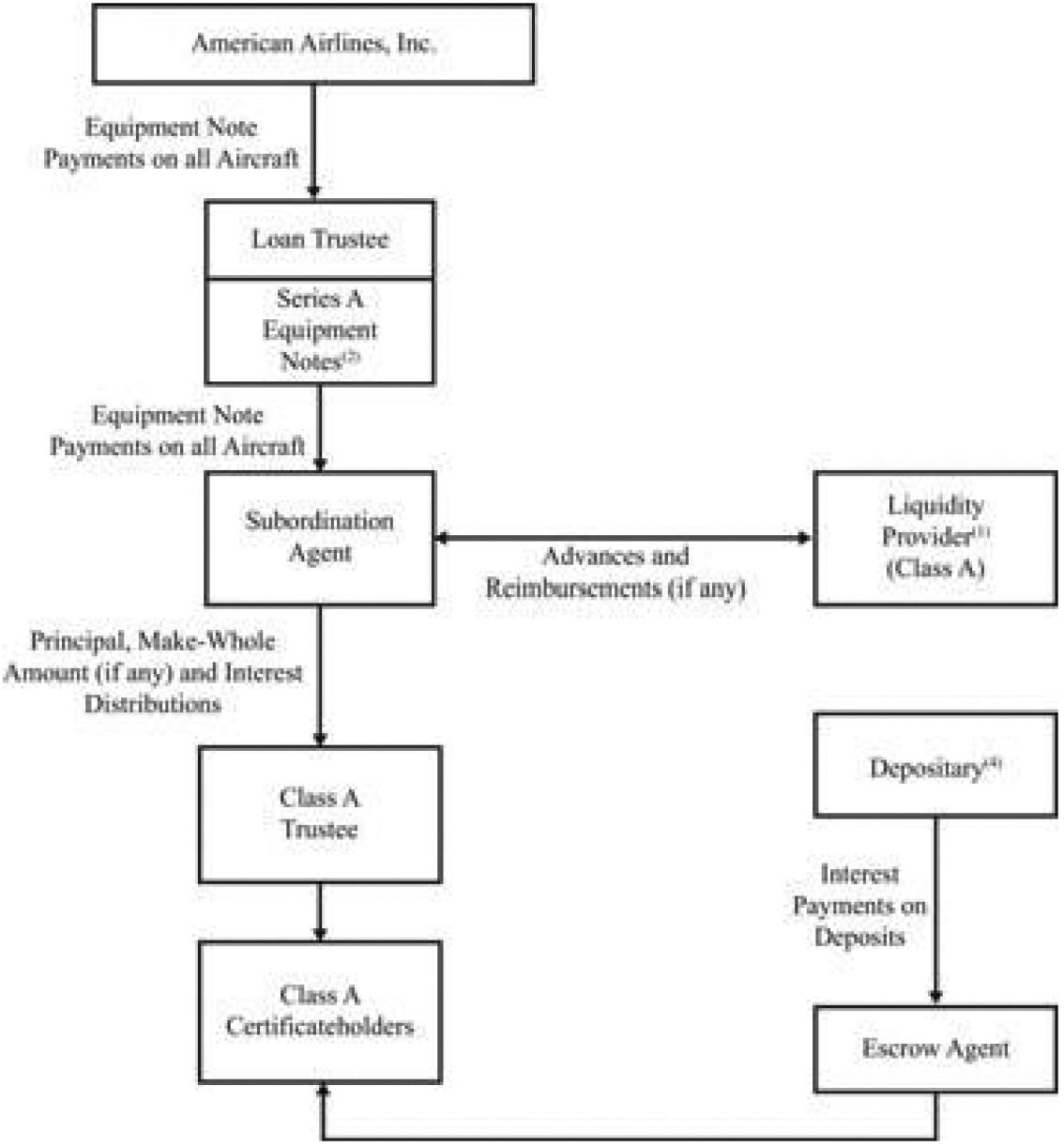

Table of Contents

TABLE OF CONTENTS

Prospectus Supplement


PRESENTATION OF INFORMATION

     S-v  

SPECIAL NOTE REGARDING FORWARD -LOOKING STATEMENTS

     S-vi  

CERTAIN VOLCKER RULE CONSIDERATIONS

     S-vi  

INFORMATION RELATED TO CLASS  B CERTIFICATES

     S-vi  

PROSPECTUS SUPPLEMENT SUMMARY

     S-1  

The Company

     S-1  

Summary of Terms of Certificates

     S-1  

Equipment Notes and the Aircraft

     S-2  

Loan to Aircraft Value Ratios

     S-4  

Cash Flow Structure

     S-6  

Summary Historical Consolidated Financial Data

     S-23  

RISK FACTORS

     S-24  

Risks Relating to the Class A Certificates and the Offering

     S-24  

USE OF PROCEEDS

     S-32  

DESCRIPTION OF THE CERTIFICATES

     S-33  

General

     S-33  

Payments and Distributions

     S-34  

Subordination

     S-38  

Pool Factors

     S-38  

Reports to Certificateholders

     S-40  

Indenture Events of Default and Certain Rights Upon an Indenture Event of Default

     S-41  

Certificate Buyout Right of Certificateholders

     S-43  

PTC Event of Default

     S-44  

Merger, Consolidation and Transfer of Assets

     S-44  

Modification of the Pass Through Trust Agreements and Certain Other Agreements

     S-45  

Obligation to Purchase Equipment Notes

     S-50  

Termination of the Trusts

     S-52  

The Trustees

     S-52  

Book-Entry Registration; Delivery and Form

     S-53  

DESCRIPTION OF THE DEPOSIT AGREEMENT

     S-57  

General

     S-57  

Withdrawal of Deposits to Purchase Equipment Notes

     S-57  

Other Withdrawals and Return of Deposits

     S-57  

Replacement of Depositary

     S-59  

Limitation on Damages

     S-60  

Depositary

     S-60  

DESCRIPTION OF THE ESCROW AGREEMENT

     S-61  

General

     S-61  

Certain Modifications of the Escrow Agreement and Note Purchase Agreement

     S-62  

The Escrow Agent

     S-62  

The Paying Agent

     S-63  

DESCRIPTION OF THE LIQUIDITY FACILITY FOR THE CLASS A TRUST

     S-64  

General

     S-64  

Drawings

     S-64  

Replacement of Liquidity Facilities

     S-65  

Reimbursement of Drawings

     S-68  

Liquidity Events of Default

     S-70  

Liquidity Provider

     S-70  


S-i


Table of Contents

DESCRIPTION OF THE INTERCREDITOR AGREEMENT

     S-71  

Intercreditor Rights

     S-71  

Post Default Appraisals

     S-74  

Priority of Distributions

     S-75  

Voting of Equipment Notes

     S-78  

Certain Communications with Certificateholders

     S-79  

Reports

     S-79  

The Subordination Agent

     S-80  

DESCRIPTION OF THE AIRCRAFT AND THE APPRAISALS

     S-81  

The Aircraft

     S-81  

The Appraisals

     S-81  

Deliveries of Aircraft

     S-83  

Substitute Aircraft

     S-84  

DESCRIPTION OF THE EQUIPMENT NOTES

     S-85  

General

     S-85  

Subordination

     S-86  

Principal and Interest Payments

     S-87  

Redemption

     S-88  

Security

     S-89  

Loan to Value Ratios of Equipment Notes

     S-91  

Limitation of Liability

     S-92  

Indenture Events of Default, Notice and Waiver

     S-92  

Remedies

     S-93  

Modification of Indentures

     S-94  

Indemnification

     S-96  

Certain Provisions of the Indentures

     S-96  

POSSIBLE ISSUANCE OF ADDITIONAL CERTIFICATES AND REFINANCING AND REISSUANCE OF CERTIFICATES

     S-103  

Issuance of Additional Certificates

     S-103  

Refinancing or Reissuance of Certificates

     S-104  

Additional Liquidity Facilities

     S-104  

MATERIAL U.S. FEDERAL INCOME TAX CONSEQUENCES

     S-106  

General

     S-106  

Tax Status of the Class A Trust

     S-106  

Taxation of Class A Certificateholders Generally

     S-107  

Sale or Other Disposition of the Class A Certificates

     S-107  

Foreign Class A Certificateholders

     S-108  

Information Reporting and Backup Withholding

     S-109  

Foreign Account Tax Compliance Act

     S-109  

CERTAIN DELAWARE TAXES

     S-110  

CERTAIN ERISA CONSIDERATIONS

     S-111  

General Fiduciary Issues

     S-111  

Plan Assets Issues

     S-111  

Prohibited Transaction Exemptions

     S-112  

Plan Representations

     S-113  

Special Considerations Applicable to Insurance Company General Accounts

     S-113  

UNDERWRITING

     S-114  

Selling Restrictions

     S-116  

Notice to Canadian Residents

     S-116  

Representations of Canadian Purchasers

     S-116  

Conflicts of Interest

     S-117  

Statutory Rights of Action

     S-117  


S-ii


Table of Contents

Enforcement of Legal Rights

     S-117  

Taxation and Eligibility for Investment

     S-117  

European Economic Area

     S-117  

United Kingdom

     S-118  

Switzerland

     S-118  

Hong Kong

     S-118  

Singapore

     S-119  

Japan

     S-119  

VALIDITY OF THE CERTIFICATES

     S-120  

EXPERTS

     S-120  

APPRAISALS

     S-120  

WHERE YOU CAN FIND MORE INFORMATION

     S-121  

APPENDIX I—INDEX OF DEFINED TERMS

     I-1  

APPENDIX II—APPRAISAL LETTERS

     II-1  

APPENDIX III—SUMMARY OF APPRAISED VALUES

     III-1  

APPENDIX IV—LOAN TO VALUE RATIO TABLES

     IV-1  

APPENDIX V—EQUIPMENT NOTE PRINCIPAL AMOUNTS AND AMORTIZATION SCHEDULES

     V-1  


S-iii


Table of Contents

Prospectus

We have not, and Goldman Sachs & Co. LLC and MUFG Securities Americas Inc., and the other underwriters referred to under the caption “Underwriting” (the “Underwriters”) have not, authorized anyone to provide you with information other than the information contained in this prospectus supplement, the accompanying prospectus, any related free writing prospectus issued by us (which we refer to as a “company free writing prospectus”) and the documents incorporated by reference in this prospectus supplement and the accompanying prospectus or to which we have referred you. This prospectus supplement, the accompanying prospectus and any related company free writing prospectus do not constitute an offer to sell, or a solicitation of an offer to purchase, the securities offered by this prospectus supplement, the accompanying prospectus and any related company free writing prospectus in any jurisdiction to or from any person to whom or from whom it is unlawful to make such offer or solicitation of an offer in such jurisdiction. You should not assume that the information contained in this prospectus supplement, the accompanying prospectus and any related company free writing prospectus or any document incorporated by reference is accurate as of any date other than the date on the front cover of the applicable document. Neither the delivery of this prospectus supplement, the accompanying prospectus and any related company free writing prospectus nor any distribution of securities pursuant to this prospectus supplement and the accompanying prospectus shall, under any circumstances, create any implication that there has been no change in our business, financial condition, results of operations or prospects, or in the affairs of the Class A Trust, the Depositary or the Liquidity Provider (each as defined herein), since the date of this prospectus supplement.


S-iv


Table of Contents

PRESENTATION OF INFORMATION

These offering materials consist of two documents: (a) this prospectus supplement, which describes the terms of the American Airlines, Inc. Class A Pass Through Certificates, Series 2026-1 (collectively, the “Class A Certificates”, and each, a “Class A Certificate” and, individually or collectively with any other class of certificates issued from time to time, if any, the “Certificates”) that we are currently offering, and (b) the accompanying prospectus, which provides general information about us and our pass through certificates, some of which may not apply to the Certificates that we are currently offering. The information in this prospectus supplement replaces any inconsistent information included in the accompanying prospectus. To the extent the description of this offering varies between this prospectus supplement and the accompanying prospectus, you should rely on the information contained in or incorporated by reference in this prospectus supplement. See “About this Prospectus” in the accompanying prospectus.

In this prospectus supplement, unless otherwise specified, references to “American,” the “Company,” “we,” “us” and “our” refer to American Airlines, Inc.; and references to “AAG” refer to our parent, American Airlines Group Inc.

We have given certain capitalized terms specific meanings for purposes of this prospectus supplement. The “Index of Defined Terms” attached as Appendix I to this prospectus supplement lists the page in this prospectus supplement on which we have defined each such term.

At varying places in this prospectus supplement, we refer you to other sections for additional information by indicating the caption heading of such other sections. The page on which each principal caption included in this prospectus supplement can be found is listed in the foregoing Table of Contents. All such cross-references in this prospectus supplement are to captions contained in this prospectus supplement and not the accompanying prospectus, unless otherwise stated.


S-v


Table of Contents

SPECIAL NOTE REGARDING FORWARD-LOOKING STATEMENTS

Certain of the statements contained in this prospectus supplement, the accompanying prospectus, any related company free writing prospectus and the documents incorporated by reference herein and therein should be considered forward-looking statements within the meaning of the Securities Act of 1933, as amended (the “Securities Act”), the Securities Exchange Act of 1934, as amended (the “Exchange Act”), and the Private Securities Litigation Reform Act of 1995. These forward-looking statements may be identified by words such as “may,” “will,” “expect,” “intend,” “anticipate,” “believe,” “estimate,” “plan,” “project,” “could,” “should,” “would,” “continue,” “seek,” “target,” “guidance,” “outlook,” “if current trends continue,” “optimistic,” “forecast” and other similar words. Such statements include, but are not limited to, statements about our plans, objectives, expectations, intentions, estimates and strategies for the future, and other statements that are not historical facts. These forward-looking statements are based on our current objectives, beliefs and expectations, and they are subject to significant risks and uncertainties that may cause actual results and financial position and timing of certain events to differ materially from the information in the forward-looking statements. These risks and uncertainties include, but are not limited to, those described below under “Risk Factors”, Part I, Item 1A—Risk Factors in the Company’s Annual Report on Form 10-K for the year ended December 31, 2025, Part I, Item 2—Management’s Discussion and Analysis of Financial Condition and Results of Operations and Part II, Item 1A—Risk Factors in the Company’s Quarterly Report on Form 10-Q for the quarterly period ended March 31, 2026, and other risks and uncertainties listed from time to time in our filings with the Securities and Exchange Commission (the “SEC”).

All of the forward-looking statements in this prospectus supplement, the accompanying prospectus, any related company free writing prospectus and the documents incorporated by reference herein and therein are qualified in their entirety by reference to the factors discussed below under “Risk Factors” and elsewhere in this prospectus supplement and based upon information available to us on the date of this prospectus supplement or such document. There may be other factors of which we are not currently aware that may affect matters discussed in the forward-looking statements and may also cause actual results to differ materially from those discussed. We do not assume any obligation to publicly update or supplement any forward-looking statement to reflect actual results, changes in assumptions or changes in other factors affecting such statements other than as required by law.

Forward-looking statements speak only as of the date of this prospectus supplement or as of the dates indicated in the statements.

CERTAIN VOLCKER RULE CONSIDERATIONS

The Class A Trust is not and, immediately after the issuance of the Class A Certificates pursuant to the related Trust Supplement (as defined herein), will not be a “covered fund” as defined in the final regulations issued December 10, 2013 implementing the “Volcker Rule” (Section 619 of the Dodd-Frank Wall Street Reform and Consumer Protection Act). In making the foregoing determination, the Class A Trust is relying upon the exemption from registration set forth in Rule 3a-7 under the Investment Company Act of 1940, as amended, although additional exemptions or exclusions may be available to such Trust.

INFORMATION RELATED TO CLASS B CERTIFICATES

Class B Certificates are not being offered pursuant to this prospectus supplement. All statements in this prospectus supplement relating to the Class B Certificates are for informational purposes only.


S-vi


Table of Contents

PROSPECTUS SUPPLEMENT SUMMARY

This summary highlights basic information about us and this offering. Because it is a summary, it does not contain all of the information that you should consider before investing. You should read this entire prospectus supplement, the accompanying prospectus and any related company free writing prospectus carefully, including the section entitled “Risk Factors” and the “Special Note Regarding Forward-Looking Statements” in this prospectus supplement, as well as the materials filed with the SEC that are considered to be a part of this prospectus supplement, the accompanying prospectus and any related company free writing prospectus before making an investment decision. See “Where You Can Find More Information” in this prospectus supplement.

The Company

American was founded in 1934 and is the principal wholly-owned subsidiary of AAG, a Delaware corporation formerly named “AMR Corporation.” American operates principally through its hubs in Charlotte, Chicago, Dallas/Fort Worth, Los Angeles, Miami, New York, Philadelphia, Phoenix and Washington, D.C. and partner gateways, including in London, Madrid, Seattle/Tacoma, Sydney and Tokyo (among others). American is a founding member of the oneworld® alliance. American’s cargo division provides a wide range of freight and mail services, with facilities and interline connections available across the globe.

American’s principal executive office is located at 1 Skyview Drive, Fort Worth, Texas 76155. American’s telephone number is 682-278-9000.

Summary of Terms of Certificates


     Class A
Certificates

Aggregate Face Amount

   $905,038,000

Interest Rate

   5.25%

Initial Loan to Aircraft Value Ratio (cumulative)(1)

   59.5%

Expected Maximum Loan to Aircraft Value Ratio (cumulative)(2)

   59.5%

Expected Principal Distribution Window (in years from Issuance Date)(3)

   0.5 – 12.5

Initial Average Life (in years from Issuance Date)

   7.7

Regular Distribution Dates

   May 10 and November 10

Final Expected Regular Distribution Date(3)

   November 10, 2038

Final Legal Distribution Date(4)

   May 10, 2040

Minimum Denomination(5)

   $1,000

Section 1110 Protection

   Yes

Liquidity Facility Coverage

   3 semiannual interest payments


(1)

This percentage is calculated assuming that each of the Aircraft, including each New Delivery Aircraft, listed under “—Equipment Notes and the Aircraft” in this prospectus supplement summary has been subjected to an Indenture and that the Class A Trust has purchased the related Equipment Notes for each such Aircraft as of the Issuance Date. In calculating this percentage, we used an aggregate Assumed Aircraft Value of all such Aircraft of $1,521,076,938.86 as of such date. See “Description of the Aircraft and the Appraisals.”


S-1


Table of Contents
(2)

See “Description of the Equipment Notes—Loan to Aircraft Value Ratios” in this prospectus supplement summary for the method and assumptions we used in calculating the loan to Aircraft value ratios and a discussion of certain ways that such loan to Aircraft value ratios could change. In calculating the aggregate Assumed Aircraft Value, we assumed that the appraised value of each Aircraft determined as described under “Description of the Aircraft and the Appraisals” declines in accordance with the Depreciation Assumption described under “Description of the Equipment Notes—Loan to Value Ratios of Equipment Notes.” Other rates or methods of depreciation could result in materially different LTVs. We cannot assure you that the depreciation rate and method assumed for purposes of the above table are the ones most likely to occur or predict the actual future value of any Aircraft. See “Risk Factors—Risks Relating to the Class A Certificates and the Offering—Appraisals are only estimates of values and should not be relied upon as a measure of realizable value of the Aircraft.”

(3)

The Series A Equipment Notes will mature on the final expected Regular Distribution Date for the Class A Certificates.

(4)

The Final Legal Distribution Date for the Class A Certificates is the date that is 18 months after the final expected Regular Distribution Date for the Class A Certificates, which represents the period corresponding to the applicable Liquidity Facility coverage of three successive semiannual interest payments.

(5)

The Class A Certificates will be issued in minimum denominations of $1,000 (or such other denomination that is the lowest integral multiple of $1,000 that is, at the time of issuance, equal to at least $1,000) and integral multiples of $1,000 in excess thereof, except that one Class A Certificate may be issued in a different denomination.

Equipment Notes and the Aircraft

The Class A Trust is expected to hold Series A Equipment Notes issued for, and secured by:

(a) eleven newly manufactured Boeing 737 MAX 8 aircraft, delivered or currently scheduled for delivery to American during the period from January 2026 to April 2026 (the “New Delivery Boeing Aircraft”),

(b) six newly manufactured Airbus A321 XLR aircraft, delivered or currently scheduled for delivery to American during the period from July 2025 to July 2026 (the “New Delivery Airbus Aircraft” and, together with the New Delivery Boeing Aircraft, the “New Delivery Aircraft”),

(c) twelve Airbus A321-200 aircraft, delivered new to American or to US Airways, Inc. (which was acquired by AAG in 2013) during the period from October 2013 to November 2015 (the “Owned Airbus Aircraft”), and

(d) three Boeing 777-300ER aircraft, delivered new to American during the period from April 2013 to June 2013 (the “Owned Boeing Aircraft” and, together with the Owned Airbus Aircraft, the “Owned Aircraft” and, the New Delivery Aircraft and the Owned Aircraft are each referred to as an “Aircraft”, and, collectively, the “Aircraft”).

Each Aircraft is or will be owned by American. See “Description of the Aircraft and the Appraisals” for a description of each Aircraft. Set forth below is certain information about the Series A Equipment Notes expected to be held in the Class A Trust and each of the Aircraft expected to secure such Equipment Notes.

On and subject to the terms and conditions of the Note Purchase Agreement and the forms of financing agreements attached to the Note Purchase Agreement, American agrees to enter into a secured debt financing with respect to (i) each Owned Aircraft, on or prior to June 30, 2027 and (ii) each New Delivery Aircraft, on or prior to the Delivery Period Termination Date. See “Description of the Aircraft and the Appraisals—Deliveries of Aircraft.”


S-2


Table of Contents

Each of the New Delivery Aircraft was delivered or is currently scheduled to be delivered by Airbus S.A.S. and The Boeing Company to American during the period from July 2025 to July 2026 under the applicable aircraft purchase agreement. Pursuant to the Note Purchase Agreement, American has certain rights to finance a Substitute Aircraft in lieu of any New Delivery Aircraft if (a) the delivery of such New Delivery Aircraft is delayed more than 30 days after the last day of its currently scheduled delivery month or (b) as a result of any law, rule, regulation, order or other action by the FAA or other government of the country of registry, the use of such New Delivery Aircraft in the normal business of air transportation shall have been prohibited by virtue of a condition affecting all aircraft of the same type. See “Description of the Aircraft and the Appraisals—Substitute Aircraft.”


Aircraft Model

  Actual or
Expected
Registration
Number(1)
  Actual or Expected
Manufacturer’s
Serial Number(1)
  Actual or
Scheduled
Month of
Delivery(1)
  Initial
Principal
Amount of

Series A
Equipment

Notes
    Appraised
LMM Value(2)
    Latest Equipment
Note Maturity Date(3)
 

Boeing 737 MAX 8

  N324VL   44529   April 2026   $ 34,022,000     $ 57,180,356       November 10, 2038  

Boeing 737 MAX 8

  N325VM   44531   April 2026   $ 34,022,000     $ 57,180,356       November 10, 2038  

Boeing 737 MAX 8

  N326VN   44532   April 2026   $ 34,022,000     $ 57,180,356       November 10, 2038  

Boeing 737 MAX 8

  N327VP   44533   April 2026   $ 34,022,000     $ 57,180,356       November 10, 2038  

Boeing 737 MAX 8

  N317VE   69520   January 2026   $ 33,415,000     $ 56,160,000       November 10, 2038  

Boeing 737 MAX 8

  N316VD   69423   January 2026   $ 33,415,000     $ 56,160,000       November 10, 2038  

Boeing 737 MAX 8

  N319VF   44534   February 2026   $ 33,659,000     $ 56,570,000       November 10, 2038  

Boeing 737 MAX 8

  N321VH   44526   February 2026   $ 33,659,000     $ 56,570,000       November 10, 2038  

Boeing 737 MAX 8

  N320VG   44527   March 2026   $ 33,885,000     $ 56,950,000       November 10, 2038  

Boeing 737 MAX 8

  N322VJ   44528   March 2026   $ 33,885,000     $ 56,950,000       November 10, 2038  

Boeing 737 MAX 8

  N323VK   44530   March 2026   $ 33,885,000     $ 56,950,000       November 10, 2038  

Airbus A321 XLR

  N304NY   12448   May 2026   $ 44,250,000     $ 74,370,000       November 10, 2038  

Airbus A321 XLR

  N306XR   12573   June 2026   $ 44,286,000     $ 74,430,000       November 10, 2038  

Airbus A321 XLR

  N308NY   12605   July 2026   $ 44,322,000     $ 74,490,000       November 10, 2038  

Airbus A321 XLR

  N300NY   11520   July 2025   $ 42,303,000     $ 71,097,727       November 10, 2038  

Airbus A321 XLR

  N302NY   12368   August 2025   $ 42,490,000     $ 71,412,207       November 10, 2038  

Airbus A321 XLR

  N301NY   12348   December 2025   $ 43,237,000     $ 72,666,793       November 10, 2038  

Airbus A321-200

  N981UY   5800   October 2013   $ 12,972,000     $ 21,801,325       May 10, 2033  

Airbus A321-200

  N572UW   5899   December 2013   $ 12,825,000     $ 21,553,820       May 10, 2034  

Airbus A321-200

  N573UW   5939   January 2014   $ 13,656,000     $ 22,951,296       May 10, 2033  

Airbus A321-200

  N575UW   5980   February 2014   $ 12,338,000     $ 20,735,746       May 10, 2034  

Airbus A321-200

  N576UW   6027   March 2014   $ 13,502,000     $ 22,692,118       May 10, 2034  

Airbus A321-200

  N578UW   6035   March 2014   $ 14,681,000     $ 24,674,050       May 10, 2034  

Airbus A321-200

  N579UW   6100   May 2014   $ 15,821,000     $ 26,590,556       May 10, 2034  

Airbus A321-200

  N580UW   6133   June 2014   $ 14,014,000     $ 23,552,437       May 10, 2034  

Airbus A321-200

  N581UW   6152   June 2014   $ 15,161,000     $ 25,480,596       May 10, 2034  

Airbus A321-200

  N147AA   6802   October 2015   $ 19,970,000     $ 33,563,842       May 10, 2035  

Airbus A321-200

  N149AN   6812   October 2015   $ 18,816,000     $ 31,623,972       May 10, 2035  

Airbus A321-200

  N150NN   6828   November 2015   $ 18,032,000     $ 30,306,589       May 10, 2035  

Boeing 777-300ER

  N722AN   31547   April 2013   $ 27,437,000     $ 46,112,197       May 10, 2033  

Boeing 777-300ER

  N723AN   33125   May 2013   $ 32,179,000     $ 54,082,541       May 10, 2033  

Boeing 777-300ER

  N724AN   31548   June 2013   $ 30,855,000     $ 51,857,704       May 10, 2033  


Total

        $ 905,038,000     $ 1,521,076,939    


(1)

The indicated registration number, manufacturer’s serial number and scheduled delivery month for each New Delivery Aircraft not delivered prior to the date of this prospectus supplement reflect our current expectations, although these may differ for the actual aircraft delivered under the applicable aircraft purchase agreement between American and Airbus S.A.S. or American and Boeing, as applicable, and, in each case, financed under this offering. The actual delivery date of any New Delivery Aircraft not previously delivered may differ from its currently scheduled delivery month and is subject to delay or acceleration. See “Description of the Aircraft and the Appraisals—Deliveries of Aircraft.” In addition, American has certain rights to finance a Substitute Aircraft in lieu of any New Delivery Aircraft if (x) the delivery of such New Delivery Aircraft is delayed for more than 30 days after the last day of its currently scheduled delivery month or (y) as a result of any law, rule, regulation, order or other action by the FAA or other government of the country of registry, the use of any New Delivery Aircraft in the normal business of air transportation shall have been prohibited by virtue of a condition affecting all aircraft of the same type. See “Description of the Aircraft and the Appraisals—Deliveries of Aircraft.”


S-3


Table of Contents
(2)

The appraised value of each Aircraft set forth above is the lesser of the average and median appraised values of each such Aircraft as appraised by three independent appraisal and consulting firms (Aircraft Information Services, Inc. (“AISI”), BK Associates, Inc. (“BK”) and mba Aviation (“mba,” and together with AISI and BK, the “Appraisers”)). The AISI appraisal is dated April 13, 2026, the BK appraisal is dated April 14, 2026 and the mba appraisal is dated April 15, 2026. The appraised values provided by each of AISI, BK and mba are presented as of April 1, 2026. In the case of each Owned Aircraft, such appraisals indicate the appraised base value of each Aircraft, adjusted to reflect the maintenance status of such Aircraft or otherwise take such maintenance status into account at or around such date, and in the case of each New Delivery Aircraft, in the case of each of AISI and mba, such appraisals indicate the appraised base value projected at delivery, in the case of previously delivered New Delivery Aircraft or as of the currently scheduled delivery month and year for such Aircraft at the time of the related appraisal, in the case of undelivered New Delivery Aircraft, and, in the case of BK, such appraisal indicates the appraised base value as of April 1, 2026. These appraisals are based upon varying assumptions and methodologies. An appraisal is only an estimate of value and should not be relied upon as a measure of realizable value. See “Risk Factors—Risks Relating to the Class A Certificates and the Offering—Appraisals are only estimates of values and should not be relied upon as a measure of realizable value of the Aircraft.”
(3)

The Latest Equipment Note Final Maturity Dates correspond to the Series A Equipment Notes.

Loan to Aircraft Value Ratios

The following table provides loan to Aircraft value ratios (“LTVs”) for the Class A Certificates as of (i) the Issuance Date and (ii) each Regular Distribution Date thereafter, assuming that each of the Aircraft has been subjected to an Indenture and that the Class A Trust has purchased the Series A Equipment Notes for each such Aircraft, including each New Delivery Aircraft, as of the Issuance Date. The table is not a forecast or prediction of expected or likely LTVs, but simply a mathematical calculation based upon one set of assumptions. See “Risk Factors—Risks Relating to the Class A Certificates and the Offering—Appraisals are only estimates of values and should not be relied upon as a measure of realizable value of the Aircraft.”

We compiled the following table on an aggregate basis. However, the Equipment Notes issued under an Indenture are entitled only to certain specified cross-collateralization provisions as described under “Description of the Equipment Notes—Security.” The relevant LTVs in a default situation for the Equipment Notes issued under a particular Indenture would depend on various factors, including the extent to which the debtor or trustee in bankruptcy agrees to perform American’s obligations under the Indentures. Therefore, the following aggregate LTVs are presented for illustrative purposes only and should not be interpreted as indicating the degree of cross-collateralization available to the holders of the Certificates.


Date

   Aggregate Assumed Aircraft
Value(1)
     Pool Balance(2)      LTV(3)  
   Class A Certificates      Class A Certificates  

At Issuance

   $ 1,521,076,939      $ 905,038,000.00        59.5

November 10, 2026

   $ 1,494,242,881      $ 884,824,995.00        59.2

May 10, 2027

   $ 1,467,408,823      $ 857,215,975.00        58.4

November 10, 2027

   $ 1,440,574,765      $ 829,606,955.00        57.6

May 10, 2028

   $ 1,413,740,707      $ 801,997,935.00        56.7

November 10, 2028

   $ 1,385,660,318      $ 774,388,915.00        55.9

May 10, 2029

   $ 1,357,049,477      $ 746,779,895.00        55.0

November 10, 2029

   $ 1,327,315,781      $ 719,170,875.00        54.2

May 10, 2030

   $ 1,297,582,084      $ 691,561,855.00        53.3

November 10, 2030

   $ 1,267,848,388      $ 663,952,835.00        52.4

May 10, 2031

   $ 1,237,417,652      $ 636,343,815.00        51.4

November 10, 2031

   $ 1,206,986,916      $ 608,734,795.00        50.4

May 10, 2032

   $ 1,176,556,181      $ 581,125,775.00        49.4

November 10, 2032

   $ 1,146,125,445      $ 553,516,755.00        48.3

May 10, 2033

   $ 1,001,957,954      $ 475,686,700.00        47.5

November 10, 2033

   $ 977,944,628      $ 452,854,677.50        46.3

May 10, 2034

   $ 863,951,001      $ 386,752,175.00        44.8


S-4


Table of Contents

Date

   Aggregate Assumed Aircraft
Value(1)
     Pool Balance(2)      LTV(3)  
   Class A Certificates      Class A Certificates  

November 10, 2034

   $ 845,118,819      $ 367,362,122.50        43.5

May 10, 2035

   $ 774,705,719      $ 326,949,410.00        42.2

November 10, 2035

   $ 758,661,695      $ 309,547,987.50        40.8

May 10, 2036

   $ 742,617,670      $ 292,146,565.00        39.3

November 10, 2036

   $ 726,573,646      $ 274,745,142.50        37.8

May 10, 2037

   $ 710,529,622      $ 257,343,720.00        36.2

November 10, 2037

   $ 694,485,598      $ 239,942,297.50        34.5

May 10, 2038

   $ 678,441,574      $ 222,540,875.00        32.8

November 10, 2038

     —         —         —   
 
(1)

In calculating the aggregate Assumed Aircraft Value, we assumed that the appraised value of each Aircraft determined as described under “Description of the Aircraft and the Appraisals” declines in accordance with the Depreciation Assumption described under “Description of the Equipment Notes—Loan to Value Ratios of Equipment Notes.” Other rates or methods of depreciation could result in materially different LTVs. We cannot assure you that the depreciation rate and method assumed for purposes of the above table are the ones most likely to occur or predict the actual future value of any Aircraft. See “Risk Factors—Risks Relating to the Class A Certificates and the Offering—Appraisals are only estimates of values and should not be relied upon as a measure of realizable value of the Aircraft.”

(2)

The “pool balance” for the Class A Certificates indicates, as of any date, after giving effect to any principal distributions expected to be made on such date, the portion of the original face amount of the Class A Certificates that has not been distributed to the Class A Certificateholders.

(3)

We obtained the LTVs for the Class A Certificates for each Regular Distribution Date by dividing (i) the expected outstanding pool balance of the Class A Certificates after giving effect to the principal distributions expected to be made on such date, by (ii) the aggregate Assumed Aircraft Value of all of the Aircraft expected to be included in the collateral pool on such date based on the assumptions described above. The outstanding pool balances and LTVs for any date will change if, among other things, (a) any Equipment Notes are redeemed or purchased, (b) a default in payment on any Equipment Notes occurs, (c) any Aircraft is not subjected to an Indenture and the related Equipment Notes are not acquired by the Class A Trust, (d) any Aircraft is not financed on or before June 30, 2027, (e) any Aircraft becomes subjected to an Indenture other than in the delivery month currently scheduled therefor as described under “Description of the Aircraft and the Appraisals” or (f) a Substitute Aircraft is financed in lieu of any New Delivery Aircraft to be financed pursuant to this offering.


S-5


Table of Contents

Cash Flow Structure

This diagram illustrates the structure for the offering of the Certificates and certain cash flows.(1)


LOGO

 
(1)

Class B Certificates are not reflected in the diagram above. Class B Certificates are not being offered under this prospectus supplement, but Class B Certificates may be offered at any time on or after the date of this prospectus supplement. Any Class B Certificates, if issued, may have the benefit of a liquidity facility as described in the offering materials for such class of certificates.

(2)

American will issue Series A Equipment Notes and may issue Series B Equipment Notes in respect of any or all Aircraft. The Equipment Notes with respect to each Aircraft will be issued under a separate Indenture.

(3)

The Liquidity Facility for the Class A Certificates is expected to cover up to three successive semiannual interest distributions on the Class A Certificates, except that the Liquidity Facility will not cover interest on the Deposits. Initially, Natixis, a joint stock company with a board of directors organized and existing under the laws of France, acting through its New York Branch, will act as the Liquidity Provider for the Class A Certificates.

(4)

The proceeds of the offering of the Class A Certificates will initially be held in escrow and deposited with the Depositary, except to the extent that American directs such proceeds to be used to acquire Equipment Notes issued in respect of any Owned Aircraft or, at its direction, certain of the New Delivery Aircraft owned by American, on the Issuance Date, pending the financing of each Aircraft under the related Indenture. The Depositary will hold the deposited funds as interest-bearing Deposits. The Class A Trust will withdraw funds from the Deposits relating to such Trust to purchase from American the Series A Equipment Notes with respect to each Aircraft from time to time as such Aircraft is subjected to the related Indenture. The Scheduled Payments of interest on the Equipment Notes held by, and on the Deposits relating to, the Class A Trust, taken together, will be sufficient to pay accrued interest on the outstanding Class A Certificates. Under certain circumstances, funds in Deposits will be withdrawn prior to the Delivery Period


S-6


Table of Contents
 

Termination Date and distributed to the holders of Class A Certificates, together with accrued and unpaid interest thereon, but without any premium.

See “Description of the Deposit Agreement—Other Withdrawals and Return of Deposits.” If any funds remain as Deposits with respect to the Class A Trust as of the Delivery Period Termination Date, such remaining funds will be distributed, with accrued and unpaid interest on such remaining funds, but without any premium, to the holders of the Class A Certificates. See “Description of the Deposit Agreement—Other Withdrawals and Return of Deposits.” No interest will accrue with respect to the Deposits after they have been fully withdrawn. The Liquidity Facility will not cover interest on the Deposits.


S-7


Table of Contents

The Offering


Trusts and Certificates

The Class A Trust will be formed pursuant to a trust supplement entered into between American and Wilmington Trust Company to a basic pass through trust agreement between American and Wilmington Trust Company, as Trustee under the Class A Trust.


If American elects to offer Class B Certificates on or after the date of this prospectus supplement, a Class B pass through trust will be formed in order to issue such Class B Certificates. Class B Certificates are not being offered under this prospectus supplement.


Each class of certificates will represent fractional undivided interests in the related Trust.


Certificates Offered

Class A Certificates.


Use of Proceeds

The proceeds from the sale of the Class A Certificates will initially be held in escrow and deposited with the Depositary, except to the extent that American directs such proceeds to be used to acquire Equipment Notes issued in respect of any Owned Aircraft or, at its direction, certain of the New Delivery Aircraft owned by American, on the Issuance Date, pending the financing of each Aircraft under a related Indenture. With respect to any Aircraft delivered to American on or prior to the Issuance Date and that were not financed on the Issuance Date, the Class A Trust will withdraw funds from the escrow account relating to the Class A Trust to acquire from American the Series A Equipment Notes with respect to each such Aircraft as such Aircraft is subjected to the related Indenture.


The Series A Equipment Notes will be full recourse obligations of American. American will use the proceeds from the issuance of the Series A Equipment Notes issued with respect to each New Delivery Aircraft to finance, in part, the acquisition of such New Delivery Aircraft. American will use the proceeds from the issuance of the Series A Equipment Notes issued with respect to each Owned Aircraft to refinance such Owned Aircraft. Any remaining proceeds will be used for general corporate purposes and to pay fees and expenses relating to this offering.


Subordination Agent, Trustee, Paying Agent and Loan Trustee

Wilmington Trust Company.


Escrow Agent

Wilmington Trust, National Association.


Depositary

Sumitomo Mitsui Banking Corporation, acting through its New York Branch.


Liquidity Provider for the Class A Certificates

Initially, Natixis, a joint stock company with a board of directors organized and existing under the laws of France, acting through its New York Branch.


Trust Property

The property of each Trust will include:


subject to the Intercreditor Agreement, the Equipment Notes acquired by such Trust prior to the Delivery Period Termination


S-8


Table of Contents
 

Date, all monies at any time paid thereon and all monies due and to become due thereunder;


the rights of such Trust to acquire the related series of Equipment Notes under the Note Purchase Agreement;


the rights of such Trust under the applicable Escrow Agreement to request the Escrow Agent to withdraw from the Depositary funds sufficient to enable such Trust to purchase the related series of Equipment Notes upon the financing of an Aircraft under the related Indenture prior to the Delivery Period Termination Date;


the rights of such Trust under the Intercreditor Agreement (including all monies receivable in respect of such rights);


all monies receivable under the separate Liquidity Facility for such Trust; and


funds from time to time deposited with the applicable Trustee in accounts relating to such Trust.


Regular Distribution Dates

May 10 and November 10 of each year, commencing on November 10, 2026.
 

Record Dates

The fifteenth day preceding the related Distribution Date.


Distributions

The Trustee of each Trust will distribute payments of principal, Make-Whole Amount (if any) and interest received on the Equipment Notes held in such Trust to the holders of the Certificates of such Trust, subject to the subordination provisions set forth in the Intercreditor Agreement.


Subject to the subordination provisions set forth in the Intercreditor Agreement,


scheduled Payments of principal and interest made on the Equipment Notes will be distributed on the applicable Regular Distribution Dates; and


payments (other than Scheduled Payments) in respect of, or any proceeds of, any Equipment Notes or the Collateral under any Indenture, including payments resulting from any early redemption of such Equipment Notes, will be distributed on a Special Distribution Date after not less than 15 days’ notice to Certificateholders.


See “—Escrowed Funds” and “—Withdrawal and Return of Escrowed Funds” below for a description of various distributions relating to the Deposits under certain circumstances.


Intercreditor Agreement

The Trustees, the Liquidity Providers and the Subordination Agent will enter into the Intercreditor Agreement. The Intercreditor Agreement prescribes how payments made on the Equipment Notes held by the Subordination Agent and made under each Liquidity Facility will be distributed. The Intercreditor Agreement also sets forth agreements among the Trustees and the Liquidity Providers relating to who will control the exercise of remedies under the Equipment Notes and the Indentures.


S-9


Table of Contents

Subordination

Under the Intercreditor Agreement, after payment of certain fees and expenses, distributions on the Certificates generally will be made in the following order:


first, to the holders of the Class A Certificates to make distributions in respect of interest on the Class A Certificates;


second, if Class B Certificates have been issued and remain outstanding, to the holders of the Class B Certificates to make distributions in respect of interest on the Eligible B Pool Balance;


third, to the holders of the Class A Certificates to make distributions in respect of the Pool Balance of the Class A Certificates;


fourth, if Class B Certificates have been issued and remain outstanding, to the holders of the Class B Certificates to make distributions in respect of interest on the Pool Balance of the Class B Certificates not previously distributed under clause “second” above; and


fifth, if Class B Certificates have been issued and remain outstanding, to the holders of the Class B Certificates to make distributions in respect of the Pool Balance of the Class B Certificates.


Certain distributions to the Liquidity Providers will be made prior to distributions on the Class A Certificates and, if any Class B Certificates are outstanding, Class B Certificates, as discussed under “Description of the Intercreditor Agreement—Priority of Distributions.” In addition, if any class of Additional Certificates are issued, the priority of distribution may be revised. See “Possible Issuance of Additional Certificates and Refinancing and Reissuance of Certificates.”


Control of Loan Trustee

The holders of at least a majority of the outstanding principal amount of Equipment Notes issued under each Indenture will be entitled to direct the Loan Trustee under such Indenture in taking action as long as no Indenture Event of Default has occurred and is continuing thereunder. If an Indenture Event of Default has occurred and is continuing under an Indenture, subject to certain conditions, the Controlling Party will be entitled to direct the Loan Trustee under such Indenture in taking action (including in exercising remedies, such as accelerating such Equipment Notes or foreclosing the lien on the Aircraft with respect to which such Equipment Notes were issued).


The Controlling Party will be:


if Final Distributions have not been paid in full to the holders of the Class A Certificates, the Class A Trustee;


if Final Distributions have been paid in full to the holders of the Class A Certificates, but, if Class B Certificates have been issued and remain outstanding, not to the holders of the Class B Certificates, the Class B Trustee;


S-10


Table of Contents
   

if Final Distributions have been paid in full to the holders of the Class A Certificates and the Class B Certificates (if any Class B Certificates have been issued and remain outstanding), but, if any class or classes of Additional Certificates have been issued and remain outstanding, not to the holders of the most senior in priority of payment among all classes of Additional Certificates then outstanding, the trustee for the Additional Trust related to such most senior class of Additional Certificates; and


under certain circumstances, and notwithstanding the foregoing, the Liquidity Provider with the greatest amount owed to it.


Limitation on Sale of Aircraft or Equipment Notes

In exercising remedies during the nine months after the earlier of (a) the acceleration of the Equipment Notes issued pursuant to any Indenture and (b) the bankruptcy or insolvency of American, the Controlling Party may not, without the consent of each Trustee (other than the Trustee of any Trust all of the Certificates of which are held or beneficially owned by American or American’s affiliates), direct the sale of such Equipment Notes or the Aircraft subject to the lien of such Indenture for less than certain specified minimum amounts. See “Description of the Intercreditor Agreement—Intercreditor Rights—Limitation on Exercise of Remedies” for a description of such minimum amounts and certain other limitations on the exercise of remedies.


Right to Buy Other Classes of Certificates

If an American Bankruptcy Event has occurred and is continuing and certain other specified events have occurred:


if Class B Certificates are outstanding, the Class B Certificateholders (other than American or any of its affiliates) will have the right to purchase all, but not less than all, of the Class A Certificates then outstanding; and


if one or more classes of Additional Certificates are outstanding, the holders (other than American or any of its affiliates) of any such class of Additional Certificates will have the right to purchase all, but not less than all, of the Class A Certificates and, if any Class B Certificates have been issued and remain outstanding, the Class B Certificates and, if applicable, any other class of Additional Certificates ranking senior in priority of payment to such class of Additional Certificates.


The purchase price, in each case described above, of any class of Certificates will be the outstanding Pool Balance of such class of Certificates plus accrued and undistributed interest, without any premium, but including any other amounts then due and payable to the Certificateholders of such class.


Liquidity Facilities

Under the Liquidity Facility for the Class A Trust, the Liquidity Provider is required, if necessary, to make advances in an aggregate amount sufficient to pay interest distributions on the Class A Certificates on up to three successive semiannual Regular


S-11


Table of Contents
 

Distribution Dates (without regard to any expected future distributions of principal on the Class A Certificates) at the applicable interest rate for the Class A Certificates. Drawings under the Liquidity Facility for the Class A Trust cannot be used to pay any amount in respect of the Class A Certificates other than such interest and will not cover interest payable on amounts held in escrow as Deposits with the Depositary. See “Description of the Liquidity Facility for the Class A Trust” for a description of the terms of the Liquidity Facility, including the threshold rating requirements applicable to the Liquidity Provider.


Notwithstanding the subordination provisions under the Intercreditor Agreement, the holders of the Certificates issued by the Class A Trust will be entitled to receive and retain the proceeds of drawings under the Liquidity Facility for such Trust.


Upon each drawing under any Liquidity Facility to pay interest distributions on the related class of certificates, the Subordination Agent will be obligated to reimburse the applicable Liquidity Provider for the amount of such drawing, together with interest on that drawing at the interest rate provided in such Liquidity Facility. Such reimbursement obligation and all interest, fees and other amounts owing to the applicable Liquidity Provider under each Liquidity Facility and certain other agreements will rank equally with comparable obligations relating to the other Liquidity Facility (provided claims for fees, interest, expenses, reimbursement of advances and other obligations arising from the credit support for any class of Additional Certificates shall be subordinated to the Administration Expenses and the Liquidity Obligations relating to each of the Class A Certificates, the Class B Certificates, if any, and any more senior, in priority of payment of “Expected Distributions” under the Intercreditor Agreement, Class of Additional Certificates) and will rank senior to all of the Certificates in right of payment.


If Class B Certificates are issued, such Class B Certificates may have the benefit of a separate liquidity facility or other interest payment support and, if so, the terms of such liquidity facility or other support will be described in the offering materials for such Class B Certificates.


Escrowed Funds

Funds held in escrow for the Class A Certificateholders will be held by the Depositary as Deposits relating to the Class A Trust. Subject to certain conditions, the Class A Trustee may withdraw such escrowed funds from time to time to purchase the Series A Equipment Notes in respect of an Aircraft prior to the Delivery Period Termination Date. On each Regular Distribution Date, the Depositary will pay interest accrued on the Deposits relating to the Class A Trust at a rate per annum equal to the interest rate applicable to the Class A Certificates. The Deposits relating to the Class A Trust and interest paid thereon will not be subject to the subordination provisions under the Intercreditor Agreement. The Deposits cannot be used to pay any other amount in respect of the Certificates. See “Description of the Deposit Agreement”


S-12


Table of Contents
 

for a description of the terms of the deposit arrangements, including the threshold rating requirements applicable to the Depositary.


Withdrawal and Return of Escrowed Funds

Under certain circumstances, less than all of the Deposits held in escrow may have been used to purchase Equipment Notes to be issued with respect to the Aircraft by the Delivery Period Termination Date. This could occur because of delays in the delivery of any Aircraft or for other reasons. See “Description of the Certificates—Obligation to Purchase Equipment Notes” and “Description of the Aircraft and the Appraisals—Deliveries of Aircraft.” If any funds remain as Deposits with respect to the Class A Trust as of the Delivery Period Termination Date, such remaining funds will be withdrawn by the Escrow Agent and distributed by the Paying Agent, with accrued and unpaid interest on such remaining funds, but without any premium, to the Class A Certificateholders on a date no earlier than 15 days after the Paying Agent has received notice of the event requiring such distribution or, under certain circumstances, such remaining funds will be automatically returned by the Depositary to the Paying Agent on the Delivery Period Termination Date, and the Paying Agent will distribute such funds to such Certificateholders as promptly as practicable thereafter.


In addition, if a Triggering Event occurs prior to the Delivery Period Termination Date, any Deposits held in escrow will also be withdrawn and distributed to the Class A Certificateholders with accrued but unpaid interest thereon, but without any premium. See “Description of the Deposit Agreement—Other Withdrawals and Return of Deposits.” If any of certain events of loss occurs with respect to an Aircraft before such Aircraft is financed pursuant to this offering, any Deposits relating to such Aircraft held in escrow with respect to the Class A Trust will be similarly withdrawn and distributed to the Class A Certificateholders with accrued but unpaid interest thereon, but without any premium. See “Description of the Deposit Agreement—Other Withdrawals and Return of Deposits.”


Obligation to Purchase Equipment Notes

The Class A Trustee will be obligated to purchase the Series A Equipment Notes issued in respect of (i) each Owned Aircraft, on the Issuance Date and (ii) each New Delivery Aircraft, on or prior to the Delivery Period Termination Date pursuant to the terms and conditions of the Note Purchase Agreement and the forms of financing agreements attached to the Note Purchase Agreement. On and subject to the terms and conditions of the Note Purchase Agreement and such forms of financing agreements, American agrees to enter into a secured debt financing with respect to each Aircraft on or prior to the Delivery Period Termination Date (or later under certain circumstances), in each case, with the relevant parties pursuant to financing agreements that are substantially in the forms attached to the Note Purchase Agreement. See “Description of the Certificates—Obligation to Purchase Equipment Notes.”


S-13


Table of Contents
 

American may use financing agreements modified in any material respect from the forms attached to the Note Purchase Agreement so long as American obtains written confirmation from each Rating Agency to the effect that the use of such modified financing agreements will not result in a withdrawal, suspension or downgrading of the rating of each class of certificates then rated by such Rating Agency and that remains outstanding. The terms of such financing agreements also must in any event comply with the Required Terms set forth in the Note Purchase Agreement. In addition, American, subject to certain exceptions, is obligated to certify to the Class A Trustee that any substantive modifications do not materially and adversely affect the Class A Certificateholders or any Liquidity Provider.


Under the Note Purchase Agreement, the Class A Trustee will not be obligated to purchase the Series A Equipment Notes to be issued with respect to any Aircraft not yet financed if a Triggering Event occurs or certain specified conditions are not met. In addition, if certain events of loss occur with respect to an Aircraft before such Aircraft is financed pursuant to this offering, the Class A Trustee will not be obligated to purchase the Series A Equipment Notes to be issued with respect to such Aircraft. The Class A Trustee will have no right or obligation to purchase the Series A Equipment Notes to be issued with respect to any Aircraft after the Delivery Period Termination Date. See “Description of the Certificates—Obligation to Purchase Equipment Notes.”


Possible Issuance of Class B Certificates

On or after the Issuance Date, Class B Certificates, which would evidence fractional undivided ownership interests in equipment notes secured by Aircraft, may be issued. If any Class B Certificates are issued and outstanding, under certain circumstances, the holders of the Class B Certificates will have certain rights to purchase all, but not less than all, of the Class A Certificates. See “Description of the Certificates—Certificate Buyout Right of Certificateholders.”


If Class B Certificates are issued after the Issuance Date, such issuance of Class B Certificates will be subject to satisfaction of certain conditions, including receipt of confirmation from each Rating Agency to the effect that such transaction will not result in a withdrawal, suspension or downgrading of the rating for each class of certificates then rated by such Rating Agency and that remains outstanding. The issuance of Class B Certificates in compliance with such conditions will not require the consent of any Trustee or any holders of any class of certificates. See “Possible Issuance of Additional Certificates and Refinancing and Reissuance of Certificates.”


Possible Issuance of Additional Certificates

Under certain circumstances, additional pass through certificates of one or more separate pass through trusts, which will evidence fractional undivided ownership interests in a related new series of


S-14


Table of Contents
 

subordinated equipment notes with respect to any or all of the Aircraft, may be issued at any time and from time to time in the future. Consummation of any such transaction will be subject to satisfaction of certain conditions, including receipt of confirmation from each Rating Agency to the effect that such transaction will not result in a withdrawal, suspension or downgrading of the rating for each class of certificates then rated by such Rating Agency and that remains outstanding. The issuance of any additional pass through certificates in compliance with such conditions will not require the consent of any Trustee or any holders of any class of certificates. See “Possible Issuance of Additional Certificates and Refinancing and Reissuance of Certificates.”


If any class of Additional Certificates is outstanding, under certain circumstances, the holders of such class of Additional Certificates will have certain rights to purchase all, but not less than all, of the Class A Certificates and, if any Class B Certificates have been issued and remain outstanding, the Class B Certificates and, if applicable, any class of Additional Certificates ranking senior in priority of distribution, in the manner provided in the Intercreditor Agreement, to such class of Additional Certificates. See “Description of the Certificates—Certificate Buyout Right of Certificateholders.”


In addition, if any class of Additional Certificates is outstanding, the priority of distributions in the Intercreditor Agreement may be revised such that certain obligations relating to interest on the Additional Certificates may rank ahead of certain obligations with respect to the Class A Certificates and, if any Class B Certificates have been issued and remain outstanding, the Class B Certificates. See “Possible Issuance of Additional Certificates and Refinancing and Reissuance of Certificates.”


Possible Refinancing or Reissuance of Certificates

If Series B Equipment Notes (or any series of Additional Equipment Notes) are issued, American may at any time and from time to time:


redeem all (but not less than all) of the Series B Equipment Notes (or any series of Additional Equipment Notes) then outstanding and issue, with respect to any or all of the Aircraft, new equipment notes with the same series designation as, but with terms that may be the same as or different from those of, the redeemed Equipment Notes; or


following the payment in full at maturity or otherwise of all (but not less than all) of the Series B Equipment Notes (or any series of Additional Equipment Notes) then outstanding, issue, with respect to any or all of the Aircraft, new equipment notes with the same series designation as, but with terms that may be the same as or different from those of, the repaid Equipment Notes.


In either such case, American will fund the sale of any such series of new equipment notes through the sale of pass through certificates issued by a related pass through trust.


S-15


Table of Contents
 

Consummation of any such transaction will be subject to satisfaction of certain conditions, including receipt of confirmation from each Rating Agency to the effect that such transaction will not result in a withdrawal, suspension or downgrading of the rating for each class of certificates then rated by such Rating Agency and that remains outstanding. The issuance of any such series of new equipment notes in compliance with such conditions will not require the consent of any Trustee or any holders of any class of Certificates. See “Possible Issuance of Additional Certificates and Refinancing and Reissuance of Certificates.” If American elects to refinance any series of Equipment Notes prior to the payment in full at maturity, it will be required to pay any applicable Make-Whole Amount in connection with the redemption of such series of Equipment Notes. See “Description of the Equipment Notes—Redemption.”

Equipment Notes


(a) Issuer

Under each Indenture, American will issue Series A Equipment Notes and (if any Class B Certificates are issued) Series B Equipment Notes with respect to each Aircraft, which will be acquired, respectively, by the Class A Trust and (if any Class B Certificates are issued) the Class B Trust.


(b) Interest

The issued and outstanding Series A Equipment Notes held in the Class A Trust will accrue interest at the rate per annum applicable to the Class A Certificates set forth on the cover page of this prospectus supplement. Interest on the issued and outstanding Equipment Notes will be payable in arrears on May 10 and November 10 of each year, commencing on November 10, 2026 and will be calculated on the basis of a 360-day year consisting of twelve 30-day months.


(c) Principal

Principal payments on the issued and outstanding Series A Equipment Notes are scheduled to be paid in specified amounts on May 10 and November 10 in each year, (i) commencing on November 10, 2026 and (ii) ending on November 10, 2038. If Series B Equipment Notes are issued, principal payments on the issued and outstanding Series B Equipment Notes shall be scheduled to be paid in specified amounts as specified in the offering materials for such Class B Certificates.


(d) Rankings

The following subordination provisions will be applicable to the Equipment Notes issued under each Indenture:


if American issues any Series B Equipment Notes under an Indenture, the indebtedness evidenced by the Series B Equipment Notes issued under such Indenture, will be, to the extent and in the manner provided in such Indenture, subordinate and subject in right of payment to the Series A Equipment Notes issued under such Indenture;


if American issues any Additional Equipment Notes under an Indenture, (i) the indebtedness evidenced by the series of Additional Equipment Notes ranked most senior in priority of payment among all series of Additional Equipment Notes will be, to the extent and in the manner provided in such Indenture (as may


S-16


Table of Contents
 

be amended in connection with the issuance of such most senior series of Additional Equipment Notes), subordinate and subject in right of payment to the Series A Equipment Notes and, if any Series B Equipment Notes are issued, the Series B Equipment Notes issued under such Indenture and (ii) the indebtedness evidenced by any series of Additional Equipment Notes (other than the series of Additional Equipment Notes ranked most senior in priority of payment among all series of Additional Equipment Notes) will be, to the extent and in the manner provided in such Indenture (as may be amended in connection with the issuance of such series of Additional Equipment Notes), subordinate and subject in right of payment to the Series A Equipment Notes, any Series B Equipment Notes and each series of Additional Equipment Notes that ranks senior in priority of payment to such series of Additional Equipment Notes issued under such Indenture (see “Possible Issuance of Additional Certificates and Refinancing and Reissuance of Certificates”); and


the indebtedness evidenced by the Series A Equipment Notes, if American issues any Series B Equipment Notes, such Series B Equipment Notes under an Indenture, and, if American issues any Additional Equipment Notes, such Additional Equipment Notes issued under an Indenture will be, to the extent and in the manner provided in the other Indentures, subordinate and subject in right of payment under such other Indentures to the Equipment Notes issued under such other Indentures.


By virtue of the Intercreditor Agreement, all of the Equipment Notes held by the Subordination Agent will be effectively cross-subordinated. This means that payments received on a junior series of Equipment Notes issued in respect of one Aircraft may be applied in accordance with the priority of payment provisions set forth in the Intercreditor Agreement to make distributions on a more senior class of Certificates. See “Description of the Intercreditor Agreement—Priority of Distributions.”


(e) Redemption

Aircraft Event of Loss. Under an Indenture, if an Event of Loss occurs with respect to an Aircraft, American will either:


substitute for such Aircraft under the related financing agreements an aircraft meeting certain requirements; or


redeem all of the outstanding Equipment Notes issued with respect to such Aircraft.


The redemption price in such case will be the unpaid principal amount of such Equipment Notes to be redeemed, together with accrued and unpaid interest, but without any premium.


Optional Redemption. American may elect to redeem at any time prior to maturity all of the outstanding Equipment Notes issued with respect to an Aircraft; provided that all outstanding Equipment Notes issued with respect to all other Aircraft are simultaneously redeemed. In addition, American may elect to redeem all of the outstanding


S-17


Table of Contents
 

Series B Equipment Notes (if any are issued and then outstanding) or any series of outstanding Additional Equipment Notes issued with respect to all Aircraft, in each case, either in connection with a refinancing of such series or without any such refinancing. See “Possible Issuance of Additional Certificates and Refinancing and Reissuance of Certificates—Refinancing or Reissuance of Certificates.” The redemption price in each such case will be the unpaid principal amount of the Equipment Notes being redeemed, together with accrued and unpaid interest, plus the Make-Whole Amount (if any). See “Description of the Equipment Notes—Redemption.”


(f) Security and Cross-collateralization

The outstanding Equipment Notes issued with respect to each Aircraft will be secured by, among other things, a security interest in such Aircraft.


In addition, the Equipment Notes will be cross-collateralized to the extent described under “Description of the Equipment Notes—Security” and “Description of the Equipment Notes — Subordination.” This means, among other things, that any excess proceeds from the sale of any Aircraft by the Loan Trustee or other exercise of remedies under the related Indenture following an Indenture Event of Default under such Indenture will (after all of the Equipment Notes issued under such Indenture have been paid off, and subject to the provisions of the United States Bankruptcy Code (the “Bankruptcy Code”)) be available for application to shortfalls with respect to the Equipment Notes issued under the other Indentures and the other obligations secured by the other Indentures that are due at the time of such application. In the absence of any such shortfall at the time of such application, such excess proceeds will be held by the Loan Trustee under such Indenture as additional collateral for the Equipment Notes issued under each of the other Indentures and will be applied to the payments in respect of the Equipment Notes issued under such other Indentures as they come due. However, if any Equipment Note ceases to be held by the Subordination Agent (as a result of sale during the exercise of remedies by the Controlling Party or otherwise), such Equipment Note will cease to be entitled to the benefits of cross-collateralization. Any cash Collateral held as a result of the cross-collateralization of the Equipment Notes would not be entitled to the benefits of Section 1110 of the Bankruptcy Code (“Section 1110”). See “Description of the Equipment Notes—Indenture Events of Default, Notice and Waiver.”


If the Equipment Notes issued under any Indenture are repaid in full in the case of an Event of Loss with respect to the related Aircraft, the lien on such Aircraft under such Indenture will be released. At any time on or after the latest Final Maturity Date of the Equipment Notes issued in respect of an Aircraft, if all obligations secured under all of the Indentures that are then due have been paid, the lien on such Aircraft will be released and such Aircraft will cease to be included in


S-18


Table of Contents
 

the collateral pool. Once the lien on any Aircraft is released, such Aircraft will no longer secure the amounts that may be owing under any Indenture.


(g) Airframe Substitution

American may, at any time and from time to time, elect to release any Airframe from the security interest of the related Indenture and substitute for it (1) an airframe of the same model or a comparable or improved model of the same manufacturer of the Aircraft, or (2) one or more airframes with a different model (other than as referred to in clause (1) of this sentence) and/or manufacturer than such Airframe, so long as:


no Indenture Event of Default has occurred and is continuing at the time of substitution;


the substitute airframe has a date of manufacture no earlier than one year prior to the date of manufacture of the Airframe subject to the lien of such related Indenture on the date of the issuance of the Series A Equipment Notes under such related Indenture (each such date of manufacture, in each case, to be deemed to be the date of original delivery of the applicable airframe to a customer by the manufacturer of such airframe);


the substitute airframe has an “appraised current market value”, adjusted for its maintenance status, (or, in the case of multiple substitute airframes, the sum of such current market values of such substitute airframes shall be) at least equal to the sum of the current market values of each released Airframe;


in the case of any substitute airframe referred to in clause (2) above in this sentence, American shall have obtained written confirmation from each Rating Agency that substituting such substitute airframe for such released Airframe(s) will not result in a withdrawal, suspension or downgrading of the ratings of any class of Certificates.


if any airframe will be substituted other than a one for one basis with an Airframe, prior to the effectiveness of such substitution the applicable Indenture will be amended to allocate among such substitute airframes the principal amount of the Series A Equipment Notes issued under each applicable Indenture and remaining amortization schedules in a manner consistent with, and as would preserve the aggregate amortization profile of, the original Series A Equipment Notes.


American may elect to release any Engine from the security interest of the related Indenture and substitute for it a replacement engine on substantially the same terms as if an Event of Loss had occurred with respect to such Engine alone. (Indentures, Section 4.04(e)). See “Certain Provisions of the Indentures—Events of Loss.”


If American elects to substitute an Airframe, American is required to provide to the relevant Loan Trustee opinions of counsel (i) to the


S-19


Table of Contents
 

effect that the Loan Trustee will be entitled to the benefits of Section 1110 with respect to the substitute airframe (unless, as a result of a change in law or governmental or judicial interpretation, such benefits were not available with respect to the Aircraft immediately prior to such substitution), and (ii) as to the due registration of the aircraft of which such substitute airframe is a part, the due recordation by the FAA of a supplement to the Indenture relating to such substitute airframe and the registration of the lien of the Indenture of such substitute airframe with the international registry under the Cape Town Treaty, if applicable (Indentures, Section 4.04(f)).


See “Description of the Equipment Notes—Security—Substitution of Airframe and Engine.”


(h) Substitute Aircraft

If (x) the delivery date for any New Delivery Aircraft is delayed more than 30 days beyond the last day of its currently scheduled delivery month or (y) as a result of any law, rule, regulation, order or other action by the FAA or other government of the country of registry, the use of any New Delivery Aircraft in the normal business of air transportation shall have been prohibited by virtue of a condition affecting all aircraft of the same type, American may substitute therefor an aircraft meeting the following conditions (each, a “Substitute Aircraft”).


In the case of a Substitute Aircraft that is of the same model as the Aircraft being replaced, American will be obligated to obtain written confirmation from each Rating Agency that substituting such Substitute Aircraft for the replaced Aircraft will not result in a withdrawal, suspension or downgrading of the expected ratings of any class of Certificates.


In the case of Substitute Aircraft that consist of one or more Aircraft of a different model and/or manufacturer from the Aircraft being replaced, the following conditions must be satisfied:


Each Substitute Aircraft shall have a date of manufacture no earlier than one year prior to the date of manufacture of the aircraft being replaced (each such date of manufacture, in each case, to be deemed to be the date of original delivery of the applicable airframe to a customer by the applicable airframe manufacturer);


American will be obligated to obtain written confirmation from each Rating Agency that substituting such Substitute Aircraft for the replaced aircraft will not result in a withdrawal, suspension or downgrading of the expected ratings of any class of Certificates; and


the Substitute Aircraft shall have an appraised current market value, adjusted for its maintenance status, (or, in the case of multiple Substitute Aircraft, the sum of their current market values shall be), at least equal to the sum of the current market values of the aircraft being replaced.


S-20


Table of Contents
 

If any Substitute Aircraft will be substituted on other than a one for one basis with an aircraft, prior to the effectiveness of such substitution the Note Purchase Agreement and affected Indenture (or forms thereof) will be modified to allocate among such Substitute Aircraft the amortization schedules with respect to the aircraft being replaced in a manner consistent with, and as would preserve the aggregate amortization profile of, the original amortization schedules.


See “Description of the Equipment Notes—Security—Substitute Aircraft.”


(i) Cross-default

There will be cross-default provisions in the Indentures. This means that if the Equipment Notes issued with respect to one Aircraft are in a continuing default, the Equipment Notes issued with respect to the remaining Aircraft also will be in default, and remedies will be exercisable with respect to all Aircraft.


(j) Section 1110 Protection

Counsel to American will provide an opinion to the Class A Trustee stating that the benefits of Section 1110 will be available for each of the Aircraft. See “Description of the Equipment Notes—Remedies.”


Material U.S. Federal Income Tax Consequences

The Class A Trust will not be treated as a corporation or other entity taxable as a corporation for United States federal income tax purposes. Each person subject to U.S. federal income taxation acquiring an interest in Class A Certificates generally should report on its federal income tax return its pro rata share of income from the relevant Deposits and income from the Equipment Notes and other property held by the Class A Trust. See “Material U.S. Federal Income Tax Consequences.”


Certain ERISA Considerations

Each person who acquires a Class A Certificate or an interest therein will be deemed to have:


represented that either (a) no assets of a Plan or of any trust established with respect to a Plan have been used to purchase or hold such Class A Certificate or an interest therein or (b) the purchase and holding of such Class A Certificate or an interest therein by such person are exempt from the prohibited transaction restrictions of the Employee Retirement Income Security Act of 1974, as amended (“ERISA”) and Internal Revenue Code of 1986, as amended (the “Code”) or provisions of Similar Law (as defined below) pursuant to one or more prohibited transaction statutory or administrative exemptions or similar exemptions under Similar Law;


directed the Class A Trustee to invest in the assets held in the Class A Trust pursuant to the terms and conditions described herein; and


if it is an ERISA Plan (as defined below), it represents and warrants that none of American or any of its agents or affiliates has acted as the ERISA Plan’s fiduciary (within the meaning of ERISA or the Code), or has undertaken to provide impartial investment advice or


S-21


Table of Contents
 

given advice in a fiduciary capacity, with respect to the decision to acquire the Class A Certificates or any interest therein (unless a statutory or administrative exemption applies (all of the applicable conditions of which are satisfied) or the transaction is not otherwise prohibited) and none of American or any of its agents or affiliates has at any time been relied upon as the ERISA Plan’s fiduciary with respect to any decision to acquire the Class A Certificates or any interest therein.


See “Certain ERISA Considerations.”


Governing Law

The Class A Certificates and the Series A Equipment Notes are governed by the laws of the State of New York.

Threshold Ratings for the Depositary for the Class A Trust


Standard & Poor’s


Fitch

  A- (Long-Term Rating)    BBB (Long-Term Rating) or F2 (Short-Term Rating)


Depositary Rating

The Depositary for the Class A Trust meets the Depositary Threshold Rating requirement.

Threshold Ratings for the Liquidity Provider for the Class A Trust


Standard & Poor’s


Fitch

  BBB    BBB


Liquidity Provider Rating

The Liquidity Provider for the Class A Trust meets the Liquidity Threshold Rating requirement.


S-22


Table of Contents

Summary Historical Consolidated Financial Data

The following tables present summary historical consolidated financial data of American. We derived the summary historical financial data as of December 31, 2025 and for the years ended December 31, 2025, 2024, and 2023 from American’s audited consolidated financial statements appearing in American’s Annual Report on Form 10-K for the year ended December 31, 2025, which is incorporated by reference into this prospectus supplement. We derived the summary historical consolidated financial data as of March 31, 2026 and for the three-month periods ending March 31, 2026 and 2025 from American’s unaudited condensed consolidated financial statements appearing in American’s Quarterly Report on Form 10-Q for the quarterly period ended March 31, 2026, which is incorporated by reference into this prospectus supplement.

The historical financial information is not necessarily indicative of American’s future performance. The summary historical consolidated financial data should be read in conjunction with (i) Part I, Item 1A—Risk Factors, Part II, Item 7—Management’s Discussion and Analysis of Financial Condition and Results of Operations, and the financial statements and notes to those financial statements, which appear in American’s Annual Report on Form 10-K for the year ended December 31, 2025, which is incorporated by reference into this prospectus supplement, and (ii) Part I, Item 2—Management’s Discussion and Analysis of Financial Condition and Results of Operations, Part II, Item 1A—Risk Factors, and the financial statements and notes to those financial statements, which appear in American’s Quarterly Report on Form 10-Q for the quarterly period ended March 31, 2026, which is incorporated by reference into this prospectus supplement, and the accompanying prospectus. See “Where You Can Find More Information” in this prospectus supplement.


     Three Months Ended March 31,     Year Ended December 31,  
    2026       2025       2025        2024        2023   
     (in millions)  

Consolidated Statements of Operations data:


Total operating revenues

   $ 13,911     $ 12,549     $ 54,626      $ 54,204      $ 52,784  

Total operating expenses

     13,947       12,817       53,115        51,550        49,715  

Operating income (loss)

     (36     (268     1,511        2,654        3,069  

Net income (loss)

     (274     (384     564        1,262        1,188  


     March 31,
2026
     December 31,
2025
 
     (in millions)  

Consolidated Balance Sheet data (at end of period):


Total assets

   $ 72,311      $ 70,247  

Debt and finance leases

     23,954        25,259  

Pension and postretirement benefits(1)

     1,332        1,678  

Operating lease liabilities

     6,763        6,908  

Stockholder’s equity

     8,793        9,028  
 
(1)

Substantially all defined benefit pension plans were frozen effective November 1, 2012. See Note 8 to American’s Consolidated Financial Statements in Part II, Item 8B of its Annual Report on Form 10-K for the year ended December 31, 2025 for further information on pension and postretirement benefits.


S-23


Table of Contents

RISK FACTORS

You should carefully consider the risks and uncertainties described below, together with all of the other information included in or incorporated by reference into this prospectus supplement, including the “Risk Factors” sections contained in our most recent Annual Report on Form 10-K and our most recent Quarterly Report on Form 10-Q, as updated by other reports filed by us with the Commission (which are incorporated by reference herein) before purchasing the Certificates. If any of these risks actually occurs, our business, financial condition or results of operations could be materially adversely affected. As a result, the market value of the Certificates could decline and you could lose part or all of your investment.

Unless the context otherwise requires, references in this “Risk Factors” section and “The Company” section to “the Company”, “we”, “us” and “our” mean American Airlines, Inc. and references to “AAG” refer to our parent, American Airlines Group Inc.

Risks Relating to the Class A Certificates and the Offering

Appraisals are only estimates of values and should not be relied upon as a measure of realizable value of the Aircraft.

Three independent appraisal and consulting firms have prepared appraisals of the Aircraft. The appraisal letters provided by these firms are annexed to this prospectus supplement as Appendix II. The AISI appraisal is dated April 13, 2026, the BK appraisal is dated April 14, 2026 and the mba appraisal is dated April 15, 2026. The appraised values provided by each of AISI, BK and mba are presented as of April 1, 2026. The appraisals do not purport to, and do not, reflect the current market value of the Aircraft. Such appraisals of the Aircraft are subject to a number of significant assumptions and methodologies (which differ among the appraisers) and were prepared without a physical inspection of the Aircraft. The appraisals take into account “base value,” which is the theoretical value for an aircraft assuming a balanced market, while current market value is the value for an aircraft in the actual market. In the case of each Aircraft not yet delivered to American as of the respective dates of the appraisals, the appraisals indicate the appraised base value of such Aircraft as a new aircraft, projected as of the scheduled delivery month and year for such Aircraft at the time of the related appraisal. In the case of Owned Aircraft, the appraisals include an adjustment for the maintenance status of the aircraft. A different maintenance status may result in different valuations in the case of each Aircraft already delivered to American as of the respective dates of the appraisals. Appraisals that are more current or that are based on other assumptions and methodologies (or a physical inspection of the Aircraft) may result in valuations that are materially different from those contained in such appraisals of the Aircraft. See “Description of the Aircraft and the Appraisals—The Appraisals.”
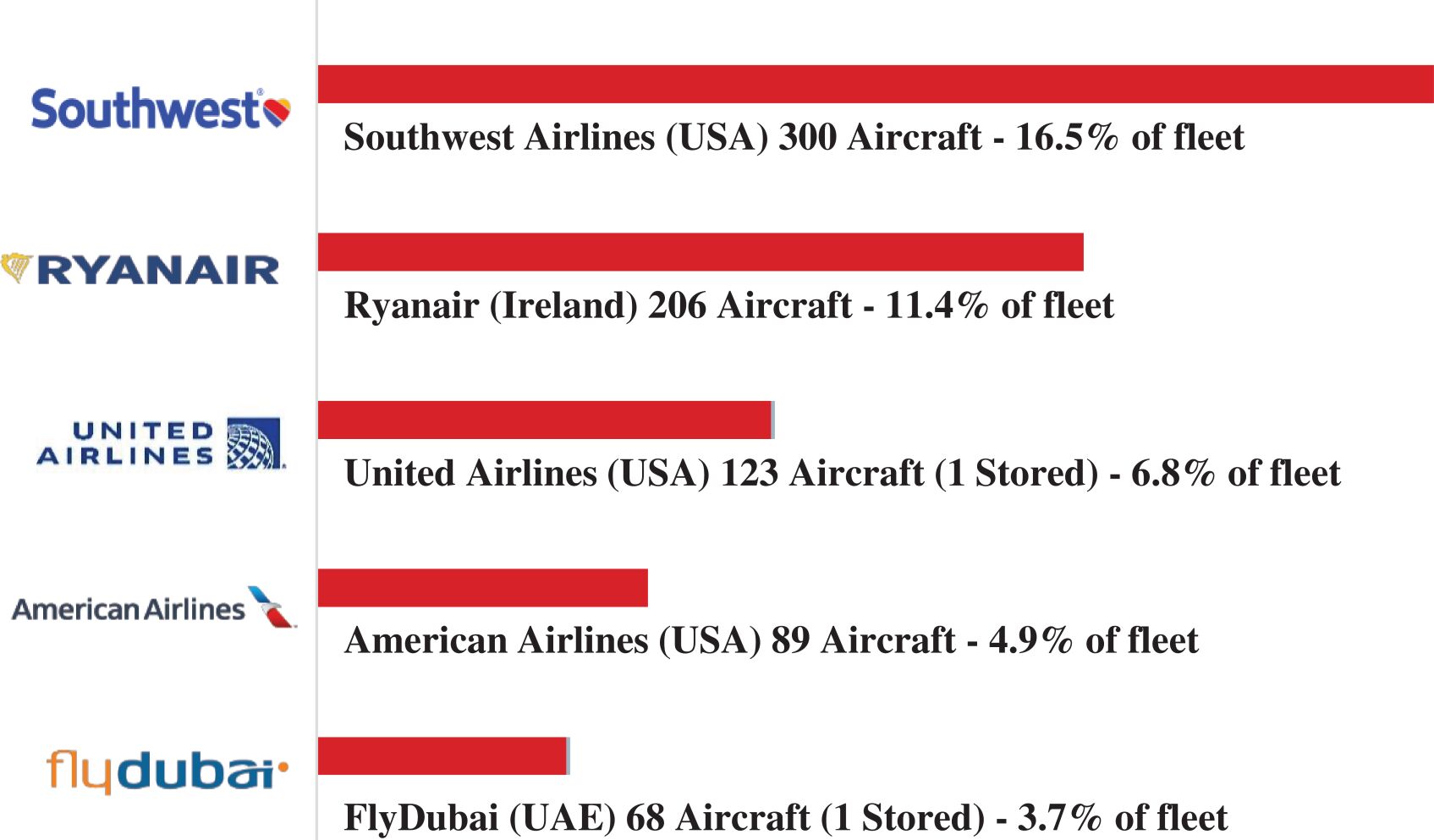
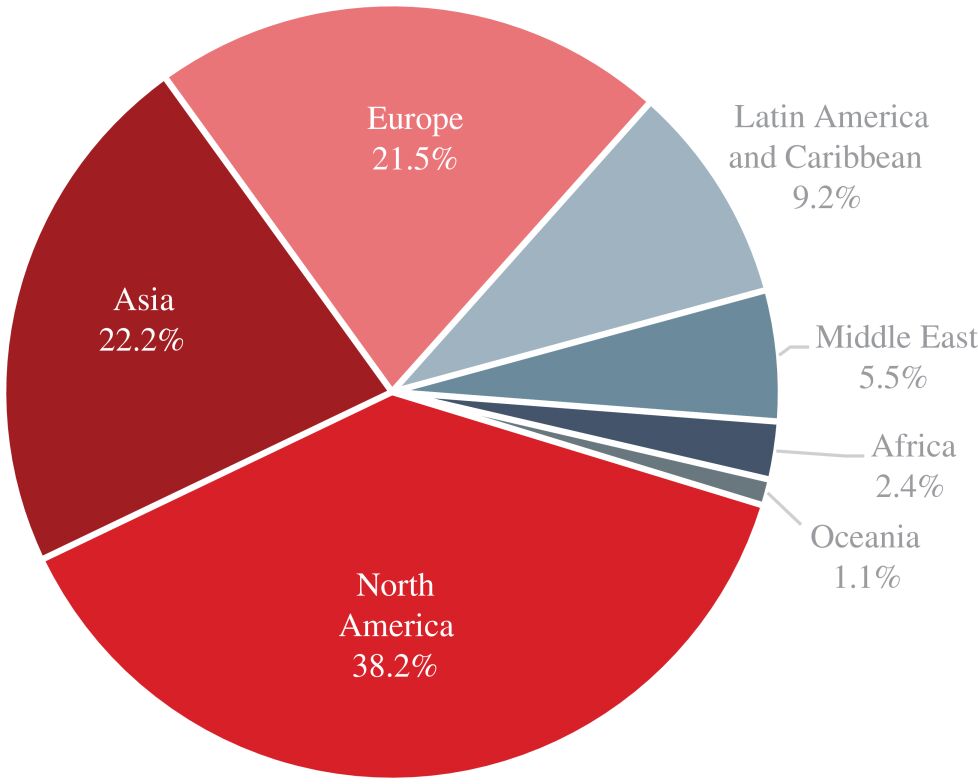
An appraisal is only an estimate of value. It does not necessarily indicate the price at which an aircraft may be purchased or sold in the market. In particular, the appraisals of the Aircraft are estimates of the values of the Aircraft assuming the Aircraft are in a certain condition, which may not be the case. Additionally, the appraisals of the Aircraft that had not been delivered to American prior to the date of such appraisals are estimates of values as of the future delivery dates. An appraisal should not be relied upon as a measure of realizable value. The proceeds realized upon the exercise of remedies with respect to any Aircraft, including a sale of such Aircraft, may be less than its appraised value. The value of an Aircraft if remedies are exercised under the applicable Indenture will depend on various factors, including market, economic and airline industry conditions; the supply of similar aircraft; the availability of buyers; the condition of the Aircraft; the time period in which the Aircraft is sought to be sold; and whether the Aircraft is sold separately or as part of a block.

Accordingly, we cannot assure you that the proceeds realized upon any exercise of remedies with respect to the Aircraft would be sufficient to satisfy in full payments due on the Series A Equipment Notes relating to the Aircraft or the full amount of distributions expected on the Class A Certificates.


S-24


Table of Contents

If we fail to perform maintenance responsibilities, the value of the Aircraft may deteriorate.

To the extent described in the Indentures, we will be responsible for the maintenance, service, repair and overhaul of the Aircraft. If we fail to perform these responsibilities adequately, the value of the Aircraft may be reduced. In addition, the value of the Aircraft may deteriorate even if we fulfill our maintenance responsibilities. As a result, it is possible that upon a liquidation, there will be less proceeds than anticipated to repay the holders of Equipment Notes. See “Description of the Equipment Notes—Certain Provisions of the Indentures—Maintenance and Operation.”

Inadequate levels of insurance may result in insufficient proceeds to repay holders of related Equipment Notes.

To the extent described in the Indentures, we must maintain all-risk aircraft hull insurance on the Aircraft. If we fail to maintain adequate levels of insurance, the proceeds which could be obtained upon an Event of Loss of an Aircraft may be insufficient to repay the holders of the related Equipment Notes. In addition, under certain circumstances, American is permitted to replace Aircraft that have been damaged or destroyed and may use the insurance proceeds received in respect of such Aircraft to do so. Inflation, changes in applicable regulations, environmental considerations and other factors may make the insurance proceeds insufficient to repair or replace Aircraft if they are damaged or destroyed. See “Description of the Equipment Notes—Certain Provisions of the Indentures—Insurance.”

Repossession of Aircraft may be difficult, time-consuming and expensive.

There will be no general geographic restrictions on our ability to operate the Aircraft. In addition, although we do not currently intend to do so, we are permitted to register the Aircraft in certain foreign jurisdictions, to lease the Aircraft and to enter into interchange, borrowing or pooling arrangements with respect to the Aircraft, in each case with unrelated third parties and subject to the restrictions in the Indentures and the Participation Agreements. It may be difficult, time-consuming and expensive for the Loan Trustee under an Indenture to exercise its repossession rights, particularly if the related Aircraft is located outside the United States, is registered in a foreign jurisdiction or is leased to or in the possession of a foreign or domestic operator. Additional difficulties may exist if such a lessee or other operator is the subject of a bankruptcy, insolvency or similar event. See “Description of the Equipment Notes—Certain Provisions of the Indentures—Registration, Leasing and Possession.”

In addition, some foreign jurisdictions may allow for other liens or other third-party rights to have priority over a Loan Trustee’s security interest in an Aircraft to a greater extent than is permitted under United States law. As a result, the benefits of a Loan Trustee’s security interest in an Aircraft may be less than they would be if the Aircraft were located or registered in the United States.

In connection with the repossession of an Aircraft from American, payment of mechanics’ liens, hangarkeepers’ liens, airport charges, and navigation fees and other amounts secured by statutory or other liens on the repossessed Aircraft may be required. Moreover, American or the Loan Trustee may be subject to delays and additional expense in taking possession of an Aircraft from any third party maintenance provider, including if it must arrange alternative means to have the maintenance work completed or if such third party maintenance provider is the subject of a bankruptcy, reorganization, insolvency or similar event. Such circumstances could result in a reduced value of the Aircraft and a lesser amount of proceeds to repay the holders of the Equipment Notes.

Upon repossession of an Aircraft, such Aircraft may need to be stored and insured. The costs of storage and insurance can be significant and the incurrence of such costs could reduce the proceeds available to repay the Class A Certificateholders. In addition, at the time of foreclosing on the lien on an Aircraft under the related Indenture, the Airframe subject to such Indenture might not be equipped with the Engines subject to the same


S-25


Table of Contents

Indenture. If American fails to transfer title to engines not owned by American that are attached to a repossessed Airframe, it could be difficult, expensive and time-consuming to assemble an Aircraft consisting of an Airframe and Engines subject to the same Indenture.

The Liquidity Providers, the Subordination Agent and the Trustees will receive certain payments before the Certificateholders do.

Under the Intercreditor Agreement, each Liquidity Provider will receive payment of all amounts owed to it, including reimbursement of drawings made to pay interest on the applicable class of Certificates, before the holders of any class of Certificates receive any funds. In addition, the Subordination Agent and the Trustees will receive certain payments before the holders of any class of Certificates receive distributions. See “Description of the Intercreditor Agreement—Priority of Distributions.”

Payments of principal on the Certificates are subordinated to payments of interest on the Certificates, subject to certain limitations, and to certain other payments, including those described above. Consequently, a payment default under any Equipment Note or a Triggering Event may cause the distribution of interest on the Certificates, or distributions in respect of such other payments to be made under the Intercreditor Agreement from payments received with respect to principal on Equipment Notes issued under one or more related Indentures. If this occurs, the interest accruing on the remaining Equipment Notes may be less than the amount of interest expected to be distributed from time to time on the remaining Certificates. This is because the interest on the Certificates may be based on a Pool Balance that exceeds the outstanding principal balance of the remaining Equipment Notes. As a result of this possible interest shortfall, the holders of the Certificates may not receive the full amount expected after a payment default under any Equipment Note or a Triggering Event even if all Equipment Notes are eventually paid in full. For a more detailed discussion of the subordination provisions of the Intercreditor Agreement, see “Description of the Intercreditor Agreement—Priority of Distributions.”

In addition, the subordination provisions applicable to the Certificates permit, if Class B Certificates are issued, certain distributions to be made on Class B Certificates prior to making distributions in full on the Class A Certificates and, if Additional Certificates are issued, on Additional Certificates prior to making distributions in full on the Class A Certificates and Class B Certificates, as applicable. See “Possible Issuance of Additional Certificates and Refinancing and Reissuance of Certificates.”

Certain Certificateholders (including the Class A Certificateholders) may not participate in controlling the exercise of remedies in a default scenario.

If an Indenture Event of Default is continuing under an Indenture, subject to certain conditions, the Loan Trustee under such Indenture will be directed by the Controlling Party in exercising remedies under such Indenture, including accelerating the applicable Equipment Notes or foreclosing the lien on the Aircraft with respect to which such Equipment Notes were issued. See “Description of the Certificates—Indenture Events of Default and Certain Rights Upon an Indenture Event of Default.”

The Controlling Party will be:


if Final Distributions have not been paid in full to the holders of the Class A Certificates, the Class A Trustee;


if Final Distributions have been paid in full to the holders of the Class A Certificates, and any Class B Certificates have been issued and remain outstanding but Final Distributions have not been paid in full to the holders of the Class B Certificates, the Class B Trustee;


if Final Distributions have been paid in full to the holders of the Class A Certificates and the Class B Certificates (if any Class B Certificates have been issued), but, if any class or classes of Additional Certificates have been issued and remain outstanding, not to the holders of the most senior in priority of payment among all classes of Additional Certificates then outstanding, the trustee for the Additional Trust related to such most senior class of Additional Certificates; and


S-26


Table of Contents
   

under certain circumstances, and notwithstanding the foregoing, the Liquidity Provider with the greatest amount owed to it.

As a result of the foregoing, if the Trustee for a class of Certificates is not the Controlling Party with respect to an Indenture, the Certificateholders of that class will have no rights to participate in directing the exercise of remedies under such Indenture.

The proceeds from the disposition of any Aircraft or Equipment Notes may not be sufficient to pay all amounts distributable to the Certificateholders, and the exercise of remedies over Equipment Notes may result in shortfalls without further recourse.

During the continuation of any Indenture Event of Default under an Indenture, the Equipment Notes issued under such Indenture or the related Aircraft may be sold in the exercise of remedies with respect to that Indenture, subject to certain limitations. See “Description of the Intercreditor Agreement—Intercreditor Rights—Limitation on Exercise of Remedies.” The market for Aircraft or Equipment Notes during the continuation of any Indenture Event of Default may be very limited, and there can be no assurance as to whether they could be sold or the price at which they could be sold. Some Certificateholders will receive a smaller amount of principal distributions than anticipated and will not have any claim for the shortfall against us (except in circumstances described in the second bullet point below), any Loan Trustee, any Liquidity Provider or any Trustee if the Controlling Party takes the following actions:


it sells any Equipment Notes for less than their outstanding principal amount; or


it sells any Aircraft for less than the outstanding principal amount of the related Equipment Notes.

The Equipment Notes will be cross-collateralized to the extent described under “Description of the Equipment Notes—Security” and “Description of the Equipment Notes—Subordination” and the Indentures will be cross-defaulted. Any default arising under an Indenture solely by reason of the cross-default in such Indenture may not be of a type required to be cured under Section 1110. In such circumstances, if the Equipment Notes issued under one or more Indentures are in default and the only default under the remaining Indentures is the cross-default, no remedies may be exercisable under such remaining Indentures. Any cash collateral held as a result of the cross-collateralization of the Equipment Notes also would not be entitled to the benefits of Section 1110.

Any credit ratings assigned to the Class A Certificates are not a recommendation to buy and may be lowered or withdrawn in the future.

Any credit rating assigned to the Class A Certificates is not a recommendation to purchase, hold or sell the Class A Certificates, because such rating does not address market price or suitability for a particular investor. A rating may change during any given period of time and may be lowered or withdrawn entirely by a rating agency if in its judgment circumstances in the future (including the downgrading of American, the Depositary or a Liquidity Provider) so warrant. Moreover, any change in a rating agency’s assessment of the risks of aircraft-backed debt (and similar securities such as the Class A Certificates) could adversely affect the credit rating issued by such rating agency with respect to the Class A Certificates.

Any credit ratings assigned to the Class A Certificates would be expected to be based primarily on the default risk of the Series A Equipment Notes and the Depositary, the availability of the Liquidity Facility for the benefit of the holders of the Class A Certificates, the collateral value provided by the Aircraft relating to the Series A Equipment Notes, the cross-collateralization provisions applicable to the Indentures and the subordination provisions applicable to the Certificates under the Intercreditor Agreement. Such credit ratings would be expected to address the likelihood of timely payment of interest (at the applicable Stated Interest Rate and without any premium) when due on the Class A Certificates and the ultimate payment of principal distributable under the Class A Certificates by the applicable Final Legal Distribution Date. Such credit ratings


S-27


Table of Contents

would not be expected to address the possibility of certain defaults, optional redemptions or other circumstances (such as an Event of Loss to an Aircraft), which could result in the payment of the outstanding principal amount of the Class A Certificates prior to the applicable final expected Regular Distribution Date.

The reduction, suspension or withdrawal of any credit ratings assigned to the Class A Certificates would not, by itself, constitute an Indenture Event of Default.

The Certificates will not provide any protection against highly leveraged or extraordinary transactions, including acquisitions and other business combinations.

The Certificates, the Equipment Notes and the underlying agreements do not and will not contain any financial or other covenants or “event risk” provisions protecting the Certificateholders in the event of a highly leveraged or other extraordinary transaction, including an acquisition or other business combination, affecting us or our affiliates. We regularly assess and explore opportunities presented by various types of transactions, and we may conduct our business in a manner that could cause the market price or liquidity of the Certificates to decline, could have a material adverse effect on our financial condition or the credit ratings of the Certificates or otherwise could restrict or impair our ability to pay amounts due under the Equipment Notes and/or the related agreements, including by entering into a highly leveraged or other extraordinary transaction.

The Equipment Notes will not be obligations of AAG.

The Equipment Notes are and will be the obligations of American and are not and will not be guaranteed by AAG. You should not expect AAG or any of its subsidiaries (other than American) to participate in making payments in respect of the Equipment Notes.

There are no restrictive covenants in the transaction documents relating to our ability to incur future indebtedness.

The Certificates, the Equipment Notes and the underlying agreements will not (i) require us to maintain any financial ratios or specified levels of net worth, revenues, income, cash flow or liquidity and therefore do not protect Certificateholders in the event that we experience significant adverse changes in our financial condition or results of operations, (ii) limit our ability to incur additional indebtedness, pay dividends, repurchase AAG common stock or take other actions that may affect our financial condition or (iii) restrict our ability to pledge our assets. In light of the absence of such restrictions, we may conduct our business in a manner that could cause the market price or liquidity of the Certificates to decline, could have a material adverse effect on our financial condition or the credit ratings of the Certificates or otherwise could restrict or impair our ability to pay amounts due under the Equipment Notes and/or the related agreements.

Escrowed funds will be withdrawn and returned to holders of Class A Certificates, without any premium, if they are not used to purchase Equipment Notes.

Under certain circumstances, less than all of the funds held in escrow as Deposits may be used to purchase Equipment Notes to the Class A Trust to be issued with respect to the Aircraft by the Delivery Period Termination Date. This could occur because of delays in the delivery of any Aircraft or for other reasons. See “Description of the Certificates—Obligation to Purchase Equipment Notes” and “Description of the Aircraft and the Appraisals—Deliveries of Aircraft.” If any funds remain as Deposits with respect to the Class A Trust as of the Delivery Period Termination Date, such remaining funds will be withdrawn by the Escrow Agent and distributed by the Paying Agent, with accrued and unpaid interest on such remaining funds, but without any premium, to the Class A Certificateholders on a date no earlier than 15 days after the Paying Agent has received notice of the event requiring such distribution. Also, under certain circumstances, such remaining funds will be automatically returned by the Depositary to the Paying Agent on the Delivery Period Termination Date, and the Paying Agent will distribute such funds to such Certificateholders as promptly as practicable thereafter. In


S-28


Table of Contents

addition, if a Triggering Event occurs prior to the Delivery Period Termination Date, any Deposits held in escrow with respect to the Class A Trust will also be withdrawn and distributed to the Class A Certificateholders with accrued and unpaid interest thereon but without any premium. See “Description of the Deposit Agreement—Other Withdrawals and Return of Deposits.” If any of certain events of loss occurs with respect to an Aircraft before such Aircraft is financed pursuant to this offering, any Deposits relating to such Aircraft will be similarly withdrawn and distributed to the Class A Certificateholders. See “Description of the Deposit Agreement—Other Withdrawals and Return of Deposits.” If any of these circumstances were to occur, you will not receive the full amount expected in connection with your investment in the Class A Certificates.

The holders of the Class A Certificates are exposed to the credit risk of the Depositary.

The holders of the Class A Certificates may suffer losses or delays in repayment in the event that the Depositary fails to pay when due the Deposits or accrued interest thereon for any reason, including by reason of the insolvency of the Depositary. American is not required to indemnify against any failure on the part of the Depositary to repay the Deposits or accrued interest thereon in full on a timely basis. Amounts deposited with the Depositary under the Escrow Agreement and the Deposit Agreement are not property of American and are not entitled to the benefits of Section 1110.

Because there is no current market for the Class A Certificates, you may have a limited ability to resell Class A Certificates.

The Class A Certificates are a new issue of securities. Prior to this offering of the Class A Certificates, there has been no trading market for the Class A Certificates. Neither American nor any Trust intends to apply for listing of the Class A Certificates on any securities exchange. The Underwriters may assist in resales of the Class A Certificates, but they are not required to do so, and any market-making activity may be discontinued at any time without notice at the sole discretion of each Underwriter. A secondary market for the Class A Certificates therefore may not develop. If a secondary market does develop, it might not continue or it might not be sufficiently liquid to allow you to resell any of your Class A Certificates. If an active trading market does not develop, the market price and liquidity of the Class A Certificates may be adversely affected. Neither the Class A Certificates nor the related Escrow Receipts may be separately assigned or transferred.

The liquidity of, and trading market for, the Class A Certificates also may be adversely affected by general declines in the markets or by declines in the market for similar securities. Such declines may adversely affect such liquidity and trading markets independent of American’s financial performance and prospects. See also “—The market for Class A Certificates could be negatively affected by legislative and regulatory changes.”

The market for Class A Certificates could be negatively affected by legislative and regulatory changes.

The Class A Certificates are sold to investors under an exemption to the Investment Company Act of 1940, as amended (the “Investment Company Act”), that permits the Class A Trust to issue the Class A Certificates to investors without registering as an investment company; provided that the Class A Certificates have an investment grade credit rating at the time of original sale. Recent events in the debt markets, including defaults on asset-backed securities that had an investment grade credit rating at the time of issuance, have prompted a number of broad based legislative and regulatory reviews, including a review of the regulations that permit the issuance of certain asset-backed securities based upon the credit ratings of such securities. In particular, the SEC is required under the Dodd-Frank Wall Street Reform and Consumer Protection Act (the “Dodd Frank Act”) to adopt rule changes generally to remove any reference to credit ratings in its regulations. The SEC has previously requested comments on alternatives to the investment grade credit rating exemption under the Investment Company Act relied upon by the Class A Trust to sell the Class A Certificates to investors generally, and on other conditions to using the rule. Adoption by the SEC of any such alternatives or additional conditions is likely to eliminate or significantly modify this exemption. Unless a different exemption becomes available, there is no other exemption currently that would allow the Class A Trust to sell the Class A Certificates to investors


S-29


Table of Contents

generally. If the SEC adopts rule changes that eliminate the investment grade credit rating exemption, or if other legislative or regulatory changes are enacted that affect the ability of the Class A Trust to issue the Class A Certificates to investors generally or affect the ability of such investors to continue to hold or purchase the Class A Certificates, or to re-sell their Class A Certificates to other investors generally, the secondary market (if any) for the Class A Certificates could be negatively affected and, as a result, the market price of the Class A Certificates could decrease.

Credit risk retention regulation in Europe and the United Kingdom may adversely impact an investment in or the liquidity of the Class A Certificates.

In Europe there is increased political and regulatory scrutiny of the asset-backed securities industry. This has resulted in a number of measures for increased regulation which are currently at various stages of implementation and which may have an adverse impact on the regulatory capital charge to certain investors in securitization exposures or the incentives for certain investors to hold asset-backed securities, and may thereby affect the price and liquidity of such securities.

Neither American nor any of its affiliates nor any Underwriter: (i) makes any representation as to compliance of the transactions contemplated herein with (x) Regulation (EU) 2017/2402 (the “EU Securitization Regulation”), which has applied since January 1, 2019, or any guidelines or other materials published by the European Supervisory Authorities (jointly or individually) in relation thereto, applicable regulatory and/or implementing technical standards or delegated regulation made under the EU Securitization Regulation (including any applicable transitional provisions) and any applicable laws, regulations, rules, guidance or other applicable national implementing measures in any EU member state or other jurisdiction what has implemented the EU Securitization Regulation, in each case as amended from time to time (including, but not limited to, pursuant to Regulation (EU) 2021/557 of the European Parliament and of the Council of 31 March 2021) (the “EU Securitization Laws”), or (y) UK framework for the regulation of securitization comprising: the Securitization Sourcebook of the handbook of rules and guidance adopted by the UK’s Financial Conduct Authority (the “FCA”); (ii) the UK’s Securitization Regulations 2024 (SI 2024/102); (iii) the Securitization Part of the rulebook of published policy of the Prudential Regulation Authority of the Bank of England (the “PRA”); (iv) the relevant provisions of the Financial Services and Markets Act 2000 (“FSMA”); (v) other rules, directions and other requirements made or imposed pursuant to, in accordance with, or in relation to, the SR 2024 by the PRA, the FCA or the UK’s pensions regulator (each, a “UK Supervisory Authority”), and (vi) official binding guidance published in relation to any of the foregoing (including by the PRA or the FCA), in each case (except as otherwise stated) as amended and in effect from time to time (in each case, as amended, supplemented or replaced from time to time, the “UK Securitization Framework”), or regarding the regulatory capital treatment of the investment in the Class A Certificates on the Issuance Date or at any time in the future; or (ii) undertakes to retain a material net economic interest in the Class A Certificates in accordance with the EU Securitization Laws or UK Securitization Framework, to provide any additional information or to take any other action that may be required to enable an affected investor to comply with any EU Securitization Laws or UK Securitization Framework or comply or enable compliance with the other requirements of the EU Securitization Laws or UK Securitization Framework; or (iii) accepts any responsibility to investors for the regulatory treatment of their investments in the Class A Certificates by any regulatory authority in any jurisdiction. If the regulatory treatment of an investment in the Class A Certificates is relevant to any investor’s decision whether or not to invest, the investor should consult with its own legal, accounting and other advisors or its national regulator in determining its own regulatory position. Were the Class A Certificates considered to be a “securitization position” for the purposes of the EU Securitization Laws and/or UK Securitization Framework, they may not be a suitable investment for any investor which is subject to the EU Securitization Laws and/or UK Securitization Framework (as applicable), including credit institutions, authorized alternative investment fund managers, investment fund managers, investment firms, insurance or reinsurance undertakings, institutions for occupational retirement schemes and UCITS funds. This may affect that investor’s ability to resell the Class A Certificates and may also affect the price and liquidity of the Class A Certificates in the secondary market. Investors must be prepared to bear the risk of holding Class A Certificates until maturity.


S-30


Table of Contents

Certain of the regulatory or legislative provisions described above if applicable to certain investors may have the effect of limiting or restricting their ability to hold or acquire the Class A Certificates, which, in turn, may adversely affect the ability of investors in the Class A Certificates who are not subject to those provisions to resell their Class A Certificates in the secondary market. No representation is made as to the proper characterization of the Class A Certificates for legal, investment, financial institution regulatory, financial reporting or other purposes, as to the ability of particular investors to purchase the Class A Certificates under applicable legal investment or other restrictions or as to the consequences of an investment in the Class A Certificates for such purposes or under such restrictions.

Investors are themselves responsible for monitoring and assessing any changes to EU Securitization Laws and/or the UK Securitization Framework as may be applicable to them. There can be no assurances as to whether the transactions described herein will be affected by a change in law or regulation relating to the EU Securitization Laws or UK Securitization Framework, including as a result of any changes recommended in future reports or reviews. Investors should therefore make themselves aware of the EU Securitization Laws and the UK Securitization Framework (including any related implementing rules of the relevant regulators), in addition to any other regulatory requirements that are (or may become) applicable to them or with respect to their investment in the Class A Certificates.


S-31


Table of Contents

USE OF PROCEEDS

The proceeds from the sale of the Class A Certificates will initially be held in escrow and deposited with the Depositary, except to the extent that American directs such proceeds to be used to acquire Equipment Notes issued in respect of any Owned Aircraft or, at its direction, certain of the New Delivery Aircraft owned by American, on the Issuance Date, pending the financing of each Aircraft under a related Indenture. With respect to any Aircraft delivered to American on or prior to the Issuance Date and that were not financed on the Issuance Date, the Class A Trust will withdraw funds from the escrow account relating to the Class A Trust to acquire from American the Series A Equipment Notes with respect to each such Aircraft as such Aircraft is subjected to the related Indenture.

The Series A Equipment Notes will be full recourse obligations of American. American will use the proceeds from the issuance of the Series A Equipment Notes issued with respect to each New Delivery Aircraft to finance, in part, the acquisition of such New Delivery Aircraft. American will use the proceeds from the issuance of the Series A Equipment Notes issued with respect to each Owned Aircraft to refinance such Owned Aircraft. Any remaining proceeds will be used for general corporate purposes and to pay fees and expenses relating to this offering.


S-32


Table of Contents

DESCRIPTION OF THE CERTIFICATES

The following summary of particular material terms of the Certificates supplements (and, to the extent inconsistent therewith, replaces) the description of the general terms and provisions of pass through certificates set forth in the prospectus accompanying this prospectus supplement. The summary does not purport to be complete and is qualified in its entirety by reference to all of the provisions of the Basic Agreement, which was filed with the SEC as an exhibit to a Current Report on Form 8-K, filed on September 17, 2014, and to all of the provisions of the Certificates, the Trust Supplement, the Liquidity Facility, the Deposit Agreement, the Escrow Agreement, the Note Purchase Agreement and the Intercreditor Agreement, copies of which will be filed as exhibits to a Current Report on Form 8-K to be filed by American with the SEC.

Except as otherwise indicated, the following summary relates to each of the Trusts and the Certificates issued by each Trust. The terms and conditions governing each of the Trusts will be generally analogous, except as otherwise indicated herein (including as described under “—Subordination” below and elsewhere in this prospectus supplement), and except that the principal amount and scheduled principal repayments of the Equipment Notes held by each Trust and the interest rate and maturity date of the Equipment Notes held by each Trust will differ.

General

Each Certificate will represent a fractional undivided interest in one of the following American Airlines 2026-1 Pass Through Trusts: the “Class A Trust” and, if any Class B Certificates are issued, the “Class B Trust,” and, collectively, the “Trusts.” The Trusts will be formed pursuant to a pass through trust agreement between American and Wilmington Trust Company, as trustee, dated as of September 16, 2014 (the “Basic Agreement”), and one trust supplement (or, if any Class B Certificates are issued concurrently with the Class A Certificates, two separate supplements) thereto to be dated as of the Issuance Date (each, a “Trust Supplement” and, together with the Basic Agreement, collectively, the “Pass Through Trust Agreements”). The trustee under the Class A Trust and, if any Class B Certificates are issued, the Class B Trust is referred to herein, respectively, as the “Class A Trustee” and the “Class B Trustee,” and collectively as the “Trustees.” The Certificates to be issued by the Class A Trust are referred to herein, as the “Class A Certificates”. The Certificates that may be issued by a Class B Trust are referred to herein as the “Class B Certificates.” The Class A Trust will purchase all of the Series A Equipment Notes and, if any Class B Certificates are issued, the Class B Trust will purchase all of the Series B Equipment Notes, respectively, issued with respect to each Aircraft. The holders of the Class A Certificates and, if any Class B Certificates are issued, the Class B Certificates, are referred to herein, respectively, as the “Class A Certificateholders” and the “Class B Certificateholders,” and collectively as the “Certificateholders.” Assuming all of the Equipment Notes expected to be issued with respect to the Aircraft are issued, the sum of the initial principal balance of the Equipment Notes held by each Trust will equal the initial aggregate face amount of the Certificates issued by such Trust.

The Certificates to be issued by the Class B Trust, if any, will be offered pursuant to separate offering materials and are not being offered under this prospectus supplement.

Each Certificate will represent a fractional undivided interest in the Trust created by the applicable Pass Through Trust Agreement. The property of each Trust (the “Trust Property”) will consist of:


subject to the Intercreditor Agreement, the Equipment Notes acquired by such Trust on or prior to the Delivery Period Termination Date, all monies at any time paid thereon and all monies due and to become due thereunder;


the rights of such Trust to acquire the related series of Equipment Notes under the Note Purchase Agreement;


the rights of such Trust under the applicable Escrow Agreement to request the Escrow Agent to withdraw from the Depositary funds sufficient to enable such Trust to purchase the related series of


S-33


Table of Contents

Equipment Notes upon the financing of an Aircraft under the related Indenture on or prior to the Delivery Period Termination Date;


the rights of such Trust under the Intercreditor Agreement (including all rights to receive monies receivable in respect of such rights);


all monies receivable under the separate Liquidity Facility for such Trust; and


funds from time to time deposited with the applicable Trustee in accounts relating to such Trust. (Trust Supplements, Section 1.01)

The Certificates of a Trust represent fractional undivided interests in such Trust only, and all payments and distributions thereon will be made only from the Trust Property of such Trust. (Basic Agreement, Sections 2.01 and 3.09; Trust Supplements, Section 3.01) The Certificates do not represent indebtedness of the Trusts, and references in this prospectus supplement to interest accruing on the Certificates are included for purposes of computation only. (Basic Agreement, Section 3.09; Trust Supplements, Section 3.01) The Certificates do not represent an interest in or obligation of American, the Trustees, the Subordination Agent, any of the Loan Trustees or any affiliate of any thereof. Each Certificateholder by its acceptance of a Certificate agrees to look solely to the income and proceeds from the Trust Property of the related Trust for payments and distributions on such Certificate. (Basic Agreement, Section 3.09)

Pursuant to the Escrow Agreement applicable to the Class A Trust, the Class A Certificateholders, as holders of the Escrow Receipts affixed to the Class A Certificates, are entitled to certain rights with respect to the Deposits relating to such Trust. Accordingly, any transfer of a Class A Certificate will have the effect of transferring the corresponding rights with respect to the Deposits, and rights with respect to the Deposits may not be separately transferred by the Certificateholders. (Escrow Agreement, Section 1.03) In addition, the Class A Certificates and the related Escrow Receipts may not be separately assigned or transferred. Rights with respect to the Deposits and the Escrow Agreement relating to the Class A Trust, except for the right to direct withdrawals for the purchase of Series A Equipment Notes, will not constitute Trust Property. (Trust Supplements, Section 1.01) Payments to the Class A Certificateholders in respect of the Deposits and the Escrow Receipts relating to the Class A Trust will constitute payments to such Class A Certificateholders solely in their capacity as holders of the related Escrow Receipts.

The Certificates of each Trust will be issued in fully registered form only and will be subject to the provisions described below under “—Book-Entry Registration; Delivery and Form.” The Certificates will be issued only in minimum denominations of $1,000 (or such other denomination that is the lowest integral multiple of $1,000, that is, at the time of issuance, equal to at least $1,000) and integral multiples of $1,000 in excess thereof, except that one Certificate of each class may be issued in a different denomination. (Trust Supplements, Section 4.01(a))

Payments and Distributions

The following description of distributions on the Certificates should be read in conjunction with the description of the Intercreditor Agreement because the Intercreditor Agreement may alter the following provisions in a default situation. See “—Subordination” and “Description of the Intercreditor Agreement.”

Payments of interest on the Deposits with respect to each Trust and payments of principal, Make-Whole Amount (if any) and interest on the Equipment Notes or with respect to other Trust Property held in each Trust will be distributed by the Paying Agent (in the case of Deposits) or by the Trustee (in the case of Trust Property of such Trust) to Certificateholders of such Trust on the date receipt of such payment is confirmed, except in the case of certain types of Special Payments.

May 10 and November 10 of each year, commencing on November 10, 2026 are referred to herein as “Regular Distribution Dates” (each Regular Distribution Date and Special Distribution Date, a “Distribution Date”).


S-34


Table of Contents

Interest

The Deposits held with respect to the Class A Trust will accrue interest at the applicable rate per annum for the Class A Certificates, payable on each Regular Distribution Date commencing on November 10, 2026 except as described under “Description of the Deposit Agreement—Other Withdrawals and Return of Deposits.” The issued and outstanding series of Equipment Notes held in a Trust will accrue interest at the rate per annum applicable to the class of Certificates to be issued by such Trust, payable on each Regular Distribution Date after the respective Equipment Notes are issued, except as described under “Description of the Equipment Notes—Redemption.” Accrued interest will be payable in arrears on each Regular Distribution Date.

The interest rate per annum applicable to the Class A Certificates is set forth on the cover page of this prospectus supplement. If Class B Certificates are issued, the interest rate per annum applicable to the Class B Certificates shall be determined at the time of issuance of the Class B Certificates. The interest rate per annum applicable to the Class A Certificates shown on the cover page of this prospectus supplement and the Class B Certificates described in the immediately preceding sentence is referred to as the “Stated Interest Rate” for such Trust. Interest payments will be distributed to the Certificateholders of such Trust on each Regular Distribution Date until the final Distribution Date for such Trust, subject to the Intercreditor Agreement. Interest on the Deposits and on the Equipment Notes will be calculated on the basis of a 360-day year, consisting of twelve 30-day months.

Distributions of interest on the Class A Certificates will be supported by a Liquidity Facility to be provided by the applicable Liquidity Provider for the benefit of the holders of the Class A Certificates. Such Liquidity Facility is expected to provide an aggregate amount sufficient to distribute interest on the Pool Balance of the Class A Certificates at the Stated Interest Rate for such Certificates on up to three successive semiannual Regular Distribution Dates (without regard to any future distributions of principal on such Certificates), except that no Liquidity Facility will cover interest payable by the Depositary on the Deposits. The Liquidity Facility for any class of Certificates does not provide for drawings thereunder to pay for principal or Make-Whole Amount (if any) with respect to such Certificates, any interest with respect to such Certificates in excess of the Stated Interest Rate therefor, or, notwithstanding the subordination provisions of the Intercreditor Agreement, principal, interest, or Make-Whole Amount (if any) with respect to the Certificates of any other class. Therefore, only the holders of the Class A Certificates and Class B Certificates (if any, and if entitled to the benefit of a liquidity facility) will be entitled to receive and retain the proceeds of drawings under the applicable Liquidity Facility. See “Description of the Liquidity Facility for the Class A Trust.” The Class B Certificates, if any, may be entitled to the benefit of a separate liquidity facility or other interest payment support and, if so, the terms of such liquidity facility or other support will be described in the offering materials for such Class B Certificates.

Principal

Payments of principal on the issued and outstanding Series A Equipment Notes are scheduled to be made in specified amounts on May 10 and November 10 in each year, (i) commencing on November 10, 2026 and (ii) ending on November 10, 2038. If Series B Equipment Notes are issued, principal payments on the issued and outstanding Series B Equipment Notes shall be scheduled to be paid as specified in the offering materials for such Class B Certificates.

If any Class B Certificates are issued, the Regular Distribution Date on which scheduled payments of interest and principal on such Class B Certificates will commence will be as specified in the offering materials for such Class B Certificates.

Distributions

Payments of interest on the Deposits (other than as part of any withdrawals described in “Description of the Deposit Agreement—Other Withdrawals and Return of Deposits”) and payments of interest on or principal of the


S-35


Table of Contents

Equipment Notes (including drawings made under a Liquidity Facility in respect of a shortfall of interest payable on any Certificate) scheduled to be made on a Regular Distribution Date are referred to herein as “Scheduled Payments.” See “Description of the Equipment Notes—Principal and Interest Payments.” The “Final Legal Distribution Date” for the Class A Certificates is May 10, 2040.

The Paying Agent with respect to the Escrow Agreement will distribute on each Regular Distribution Date to the Certificateholders of the Trust to which such Escrow Agreement relates all Scheduled Payments received in respect of the related Deposits, the receipt of which is confirmed by the Paying Agent on such Regular Distribution Date. Subject to the Intercreditor Agreement, on each Regular Distribution Date, the Trustee of each Trust will distribute to the Certificateholders of such Trust all Scheduled Payments received in respect of the Equipment Notes held on behalf of such Trust, the receipt of which will be confirmed by such Trustee on such Regular Distribution Date. Each Certificateholder of each Trust will be entitled to receive its proportionate share, based upon its fractional undivided interest in such Trust, of any distribution in respect of Scheduled Payments of interest on Deposits relating to such Trust, and, subject to the Intercreditor Agreement, each Certificateholder of each Trust will be entitled to receive its proportionate share, based upon its fractional undivided interest in such Trust, of any distribution in respect of Scheduled Payments of principal of or interest on the Equipment Notes held on behalf of such Trust. Each such distribution of Scheduled Payments will be made by the applicable Paying Agent or the applicable Trustee, as the case may be, to the Certificateholders of record of the relevant Trust on the record date applicable to such Scheduled Payment (generally, 15 days prior to each Regular Distribution Date), subject to certain exceptions. (Basic Agreement, Sections 1.01 and 4.02(a); Escrow Agreement, Section 2.03(a)) If a Scheduled Payment is not received by the applicable Paying Agent or the applicable Trustee, as the case may be, on a Regular Distribution Date but is received within five days thereafter, it will be distributed on the date received to such holders of record. If amounts are received after such five-day period, such amounts will be treated as a Special Payment and distributed as described below. (Intercreditor Agreement, Section 1.01; Escrow Agreement, Section 2.03(d))

Any payment in respect of, or any proceeds of, any Equipment Note or the collateral under any Indenture (the “Collateral”) other than a Scheduled Payment (each, a “Special Payment”) will be distributed on, in the case of an early redemption or purchase of any Equipment Note, the date of such early redemption or purchase (which will be a Business Day), and otherwise on the Business Day specified for distribution of such Special Payment pursuant to a notice delivered by each Trustee (as described below) as soon as practicable after the Class A Trustee has received notice of such Special Payment, or has received the funds for such Special Payment (each, a “Special Distribution Date”). Any such distribution will be subject to the Intercreditor Agreement. (Basic Agreement, Sections 4.02(b) and (c); Trust Supplements, Section 7.01(d))

Any Deposits withdrawn because a Triggering Event occurs, and any unused Deposits remaining as of the Delivery Period Termination Date, will be distributed, together with accrued and unpaid interest thereon, but without any premium (each, also a “Special Payment”), on a date no earlier than 15 days after the Paying Agent has received notice of the event requiring such distribution (also, a “Special Distribution Date”). However, if the day scheduled for such withdrawal is within 10 days before or after a Regular Distribution Date, the Escrow Agent will request that such withdrawal be made on such Regular Distribution Date. Any such distribution will not be subject to the Intercreditor Agreement. (Escrow Agreement, Sections 1.02(f), 2.03(b) and 2.06)

Triggering Event” means (i) the occurrence of an Indenture Event of Default under all of the Indentures resulting in a PTC Event of Default with respect to the most senior class of Certificates then outstanding, (ii) the acceleration of all of the outstanding Equipment Notes (provided that, with respect to the period prior to the Delivery Period Termination Date, the aggregate principal amount thereof exceeds $550 million) or (iii) certain bankruptcy or insolvency events involving American. (Intercreditor Agreement, Section 1.01)

Any Deposits withdrawn because an Aircraft suffers a Delivery Period Event of Loss (or an event that would constitute such a Delivery Period Event of Loss but for the requirement that notice be given or time elapse or both) before such Aircraft is financed pursuant to this offering will be distributed, together with accrued and


S-36


Table of Contents

unpaid interest thereon, but without any premium (each, also a “Special Payment”), on a date no earlier than 15 days after the Paying Agent has received notice of the event requiring such distribution (also, a “Special Distribution Date”). Any such distribution will not be subject to the Intercreditor Agreement. (Escrow Agreement, Sections 1.02(e), 2.03(b) and 2.07)

Each Paying Agent, in the case of Deposits, and each Trustee, in the case of Trust Property, will mail (or, in the case of Global Certificates, send electronically in accordance with DTC’s applicable procedures) a notice to the Certificateholders of the applicable Trust stating the scheduled Special Distribution Date, the related record date, the amount of the Special Payment and, in the case of a distribution under the applicable Pass Through Trust Agreement, the reason for the Special Payment. In the case of a redemption or purchase of the Equipment Notes held in the related Trust or any withdrawal or return of Deposits described under “Description of the Deposit Agreement—Other Withdrawals and Return of Deposits,” such notice will be mailed (or, in the case of Global Certificates, sent electronically in accordance with DTC’s applicable procedures) not less than 15 days prior to the date such Special Payment is scheduled to be distributed, and in the case of any other Special Payment, such notice will be mailed (or, in the case of Global Certificates, sent electronically in accordance with DTC’s applicable procedures) as soon as practicable after the Trustee has confirmed that it has received funds for such Special Payment. (Basic Agreement, Section 4.02(c); Trust Supplements, Section 7.01(d); Escrow Agreement, Sections 2.06 and 2.07) Each distribution of a Special Payment, other than a Final Distribution, on a Special Distribution Date for any Trust will be made by the Paying Agent or the Trustee, as applicable, to the Certificateholders of record of such Trust on the record date applicable to such Special Payment. (Basic Agreement, Section 4.02(b); Escrow Agreement, Section 2.03(b)) See “—Indenture Events of Default and Certain Rights Upon an Indenture Event of Default” and “Description of the Equipment Notes—Redemption.”

Each Pass Through Trust Agreement requires that the relevant Trustee establish and maintain, for the related Trust and for the benefit of the Certificateholders of such Trust, one or more non-interest bearing accounts (the “Certificate Account”) for the deposit of payments representing Scheduled Payments received by such Trustee. (Basic Agreement, Section 4.01) Each Pass Through Trust Agreement requires that such Trustee establish and maintain, for the related Trust and for the benefit of the Certificateholders of such Trust, one or more accounts (the “Special Payments Account”) for the deposit of payments representing Special Payments received by such Trustee, which will be non-interest bearing except in certain limited circumstances where such Trustee may invest amounts in such account in certain Permitted Investments. (Basic Agreement, Section 4.01 and Section 4.04; Trust Supplements, Section 7.01(c)) Pursuant to the terms of each Pass Through Trust Agreement, the Trustee is required to deposit any Scheduled Payments relating to the applicable Trust received by it in the Certificate Account of such Trust and to deposit any Special Payments received by it in the Special Payments Account of such Trust. (Basic Agreement, Section 4.01; Trust Supplements, Section 7.01(c))

All amounts so deposited will be distributed by such Trustee on a Regular Distribution Date or a Special Distribution Date, as appropriate. (Basic Agreement, Section 4.02)

The Escrow Agreement requires that the Paying Agent establish and maintain, for the benefit of the applicable Receiptholders, an account (the “Paying Agent Account”), which will be non-interest bearing, and the Paying Agent is under no obligation to invest any amounts held in the Paying Agent Account. (Escrow Agreement, Section 2.02) Pursuant to the terms of the Deposit Agreement, the Depositary agrees to pay interest payable on Deposits and amounts withdrawn from the Deposits as described under “Description of the Deposit Agreement—Other Withdrawals and Return of Deposits,” in accordance with the applicable Deposit Agreement, directly into the related Paying Agent Account. (Deposit Agreement, Section 4) All amounts so deposited in the Paying Agent Accounts will be distributed by the Paying Agent on a Regular Distribution Date or Special Distribution Date, as appropriate. See “Description of the Deposit Agreement.” The Final Distribution for each Trust will be made only upon presentation and surrender of the Certificates for such Trust at the office or agency of the relevant Trustee specified in the notice given by the Trustee of such Final Distribution. (Basic Agreement, Section 11.01) See “—Termination of the Trusts” below. Distributions in respect of Certificates issued in global form will be made as described in “—Book-Entry Registration; Delivery and Form” below.


S-37


Table of Contents

If any Regular Distribution Date or Special Distribution Date is not a Business Day, distributions scheduled to be made on such Regular Distribution Date or Special Distribution Date will be made on the next succeeding Business Day and interest will not be added for such additional period. (Basic Agreement, Section 12.11; Trust Supplements, Sections 3.02(c) and 3.02(d))

Business Day” means, with respect to Certificates of any class, any day (a) other than a Saturday, a Sunday or a day on which commercial banks are required or authorized to close in New York, New York; Fort Worth, Texas; Wilmington, Delaware; or, so long as any Certificate of such class is outstanding, the city and state in which the relevant Trustee, the Subordination Agent or any related Loan Trustee maintains its corporate trust office or receives and disburses funds, and (b) solely with respect to drawings under any Liquidity Facility, which is also a “Business Day” as defined in such Liquidity Facility. (Intercreditor Agreement, Section 1.01)

Subordination

The Certificates are subject to subordination terms set forth in the Intercreditor Agreement. See “Description of the Intercreditor Agreement—Priority of Distributions.”

Pool Factors

The “Pool Balance” of the Certificates issued by any Trust indicates, as of any date, the original aggregate face amount of the Certificates of such Trust less the aggregate amount of all distributions made as of such date in respect of the Certificates of such Trust or in respect of the Deposits relating to such Trust, other than distributions made in respect of interest or Make-Whole Amount (if any) or reimbursement of any costs and expenses incurred in connection therewith. The Pool Balance of the Certificates issued by any Trust as of any date will be computed after giving effect to any distribution with respect to unused Deposits relating to such Trust, payment of principal, if any, on the Equipment Notes held by such Trust or payment with respect to other Trust Property held in such Trust and the distribution thereof to be made on such date. (Trust Supplements, Section 1.01; Intercreditor Agreement, Section 1.01)

The “Pool Factor” for each Trust as of any Distribution Date is the quotient (rounded to the seventh decimal place) computed by dividing (i) the Pool Balance of such Trust by (ii) the original aggregate face amount of the Certificates of such Trust. The Pool Factor for each Trust as of any Distribution Date will be computed after giving effect to any distribution with respect to unused Deposits relating to such Trust, payment of principal, if any, on the Equipment Notes held by such Trust or payments with respect to other Trust Property held in such Trust and the distribution thereof to be made on that date. (Trust Supplements, Section 1.01) The Pool Factor of each Trust will be 1.0000000 on the date of issuance of the related Certificates (the “Issuance Date”); thereafter, the Pool Factor for each Trust will decline as described herein to reflect reductions in the Pool Balance of such Trust. The amount of a Certificateholder’s pro rata share of the Pool Balance of a Trust can be determined by multiplying the original denomination of the Certificateholder’s Certificate of such Trust by the Pool Factor for such Trust as of the applicable Distribution Date. Notice of the Pool Factor and the Pool Balance for each Trust will be mailed (or, in the case of Global Certificates, sent electronically in accordance with DTC’s applicable procedures) to Certificateholders of such Trust on each Distribution Date. (Trust Supplements, Section 5.01(a))

The following table sets forth the expected aggregate principal amortization schedule (the “Assumed Amortization Schedule”) for the Series A Equipment Notes to be held in the Class A Trust and resulting Pool Factors with respect to the Class A Trust, assuming that (i) each Aircraft has been subjected to an Indenture on or prior to November 10, 2026 and (ii) all of the Series A Equipment Notes with respect to such Aircraft have been acquired by the Class A Trust by such date. The actual aggregate principal amortization schedule applicable to the Class A Trust and the resulting Pool Factors with respect to such Trust may differ from the Assumed Amortization Schedule because the scheduled distribution of principal payments for the Class A Trust may be affected if, among other things, any Series A Equipment Notes held in the Class A Trust are redeemed or


S-38


Table of Contents

purchased, if a default in payment on any Series A Equipment Note occurs, or if any Aircraft is not subjected to an Indenture and the Series A Equipment Notes are not acquired by the Class A Trust.


Date

   Class A  
   Scheduled
Principal Payments
     Expected Pool Factor  

At Issuance

   $ 0.00        1.000000000000000  

November 10, 2026

   $ 20,213,005.00        0.977666125621245  

May 10, 2027

   $ 27,609,020.00        0.947160202113060  

November 10, 2027

   $ 27,609,020.00        0.916654278604876  

May 10, 2028

   $ 27,609,020.00        0.886148355096692  

November 10, 2028

   $ 27,609,020.00        0.855642431588508  

May 10, 2029

   $ 27,609,020.00        0.825136508080324  

November 10, 2029

   $ 27,609,020.00        0.794630584572140  

May 10, 2030

   $ 27,609,020.00        0.764124661063955  

November 10, 2030

   $ 27,609,020.00        0.733618737555771  

May 10, 2031

   $ 27,609,020.00        0.703112814047587  

November 10, 2031

   $ 27,609,020.00        0.672606890539403  

May 10, 2032

   $ 27,609,020.00        0.642100967031219  

November 10, 2032

   $ 27,609,020.00        0.611595043523034  

May 10, 2033

   $ 77,830,055.00        0.525598593650211  

November 10, 2033

   $ 22,832,022.50        0.500370898790990  

May 10, 2034

   $ 66,102,502.50        0.427332526369058  

November 10, 2034

   $ 19,390,052.50        0.405907953588689  

May 10, 2035

   $ 40,412,712.50        0.361254897584411  

November 10, 2035

   $ 17,401,422.50        0.342027613757654  

May 10, 2036

   $ 17,401,422.50        0.322800329930898  

November 10, 2036

   $ 17,401,422.50        0.303573046104141  

May 10, 2037

   $ 17,401,422.50        0.284345762277385  

November 10, 2037

   $ 17,401,422.50        0.265118478450629  

May 10, 2038

   $ 17,401,422.50        0.245891194623872  

November 10, 2038

   $ 222,540,875.00        —   

If the Pool Factor and Pool Balance of the Class A Trust differ from the Assumed Amortization Schedule for such Trust, notice thereof will be provided to the Class A Certificateholders as described hereafter. The Pool Factor and Pool Balance of each Trust will be recomputed if there has been an early redemption, purchase or default in the payment of principal or interest in respect of one or more of the Equipment Notes held in a Trust, as described in “—Indenture Events of Default and Certain Rights Upon an Indenture Event of Default,” “Possible Issuance of Additional Certificates and Refinancing and Reissuance of Certificates” and “Description of the Equipment Notes—Redemption,” or a special distribution of unused Deposits attributable to (a) the occurrence of a Delivery Period Event of Loss (or an event that would constitute such a Delivery Period Event of Loss but for the requirement that notice be given or time elapse or both) with respect to an Aircraft before such Aircraft is financed pursuant to this offering, (b) the occurrence of a Triggering Event or (c) unused Deposits remaining after the Delivery Period Termination Date, in each case as described in “Description of the Deposit Agreement—Other Withdrawals and Return of Deposits.” If the aggregate principal payments scheduled for a Regular Distribution Date prior to the Delivery Period Termination Date will not be as set forth in the Assumed Amortization Schedule for a Trust, notice thereof will be mailed (or, in the case of Global Certificates, sent electronically in accordance with DTC’s applicable procedures) to the Certificateholders of such Trust by no later than the 15th day prior to such Regular Distribution Date. Promptly following (i) the Delivery Period Termination Date or, if applicable, the date any unused Deposits are withdrawn following the Delivery Period Termination Date, if there has been, on or prior to such date, (x) any change in the Pool Factor and the scheduled payments from the Assumed Amortization Schedule or (y) any such redemption, purchase, default or special


S-39


Table of Contents

distribution and (ii) the date of any such redemption, purchase, default or special distribution occurring after the Delivery Period Termination Date or, if applicable the date any unused Deposits are withdrawn following the Delivery Period Termination Date, the Pool Factor, Pool Balance and expected principal payment schedule of each Trust will be recomputed after giving effect thereto and notice thereof will be mailed (or, in the case of Global Certificates, sent electronically in accordance with DTC’s applicable procedures) to the Certificateholders of such Trust. (Trust Supplements, Sections 5.01(c) and 5.01(d)) See “—Reports to Certificateholders,” “—Certificate Buyout Right of Certificateholders,” and “Description of the Deposit Agreement.”

Reports to Certificateholders

On each Distribution Date, the applicable Trustee will include with each distribution by it of a Scheduled Payment or Special Payment to the Certificateholders of the related Trust a statement, giving effect to such distribution to be made on such Distribution Date, setting forth the following information (per $1,000 aggregate principal amount of Certificates as to items (2), (3), (4) and (5) below):

(1) the aggregate amount of funds distributed on such Distribution Date under the related Pass Through Trust Agreement and under the related Escrow Agreement, indicating the amount, if any, allocable to each source, including any portion thereof paid by the applicable Liquidity Provider;

(2) the amount of such distribution under the related Pass Through Trust Agreement allocable to principal and the amount allocable to Make-Whole Amount (if any);

(3) the amount of such distribution under the related Pass Through Trust Agreement allocable to interest, indicating any portion thereof paid by the applicable Liquidity Provider;


  (4)

the amount of such distribution under the related Escrow Agreement allocable to interest, if any;


  (5)

the amount of such distribution under the related Escrow Agreement allocable to unused Deposits, if any; and


  (6)

the Pool Balance and the Pool Factor for such Trust. (Trust Supplements, Section 5.01)

As long as the Certificates are registered in the name of The Depository Trust Company (“DTC”) or its nominee (including Cede & Co. (“Cede”)), on the record date prior to each Distribution Date, the applicable Trustee will request that DTC post on its Internet bulletin board a securities position listing setting forth the names of all DTC Participants reflected on DTC’s books as holding interests in the applicable Certificates on such record date. On each Distribution Date, the applicable Trustee will send electronically in accordance with DTC’s applicable procedures to each such DTC Participant the statement described above and will make available additional copies as requested by such DTC Participant for forwarding to Certificate Owners. (Trust Supplements, Section 5.01(a))

In addition, after the end of each calendar year, the applicable Trustee will furnish to each person who at any time during the preceding calendar year was a Certificateholder of record of the applicable Trust a report containing the sum of the amounts determined pursuant to clauses (1), (2), (3), (4) and (5) above with respect to such Trust for such calendar year or, if such person was a Certificateholder during only a portion of such calendar year, for the applicable portion of such calendar year, and such other items as are readily available to such Trustee and which a Certificateholder reasonably requests as necessary for the purpose of such Certificateholder’s preparation of its U.S. federal income tax returns or foreign income tax returns. (Trust Supplements, Section 5.01(b)) Such report and such other items will be prepared on the basis of information supplied to the applicable Trustee by the DTC Participants and will be delivered by such Trustee to such DTC Participants to be available for forwarding by such DTC Participants to Certificate Owners. (Trust Supplements, Section 5.01(b))


S-40


Table of Contents

At such time, if any, as Certificates are issued in the form of Definitive Certificates, the applicable Trustee will prepare and deliver the information described above to each Certificateholder of record of the applicable Trust as the name and period of record ownership of such Certificateholder appears on the records of the registrar of the applicable Certificates.

Indenture Events of Default and Certain Rights Upon an Indenture Event of Default

If any Class B Certificates and Series B Equipment Notes are issued, the Equipment Notes issued under an Indenture will be held in more than one Trust and a continuing Indenture Event of Default would affect the Equipment Notes held by each such Trust. See “Description of the Equipment Notes—Indenture Events of Default, Notice and Waiver” for a list of Indenture Events of Default.

Upon the occurrence and during the continuation of an Indenture Event of Default under an Indenture, the Controlling Party may direct the Loan Trustee under such Indenture to accelerate the Equipment Notes issued thereunder and may direct the Loan Trustee under such Indenture in the exercise of remedies thereunder and may sell all (but not less than all) of such Equipment Notes or foreclose and sell all or any portion of the Collateral under such Indenture to any person, subject to certain limitations. See “Description of the Intercreditor Agreement—Intercreditor Rights—Limitation on Exercise of Remedies.” The proceeds of any such sale will be distributed pursuant to the provisions of the Intercreditor Agreement. Any such proceeds so distributed to any Trustee upon any such sale will be deposited in the applicable Special Payments Account and will be distributed to the Certificateholders of the applicable Trust on a Special Distribution Date. (Basic Agreement, Sections 4.01 and 4.02; Trust Supplements, Sections 7.01(c) and 7.01(d))

The market for Aircraft or Equipment Notes during the continuation of any Indenture Event of Default may be limited and there can be no assurance as to whether they could be sold or the price at which they could be sold. If any Equipment Notes are sold for less than their outstanding principal amount, or any Aircraft are sold for less than the outstanding principal amount of the related Equipment Notes, certain Certificateholders will receive a smaller amount of principal distributions than anticipated and will not have any claim for the shortfall against American (except in the case that Aircraft are sold for less than the outstanding principal amount of the related Equipment Notes), any Liquidity Provider or any Trustee. Neither the Trustee of the Trust holding such Equipment Notes nor the Certificateholders of such Trust, furthermore, could take action with respect to any remaining Equipment Notes held in such Trust as long as no Indenture Event of Default existed with respect thereto.

Any amount, other than Scheduled Payments received on a Regular Distribution Date or within five days thereafter, distributed to the Trustee of any Trust by the Subordination Agent on account of the Equipment Notes or other Trust Property held in such Trust following an Indenture Event of Default under any Indenture will be deposited in the Special Payments Account for such Trust and will be distributed to the Certificateholders of such Trust on a Special Distribution Date. (Basic Agreement, Section 4.02(b); Trust Supplements, Sections 1.01 and 7.01(c); Intercreditor Agreement, Sections 1.01, 2.03(b) and 2.04)

Any funds representing payments received with respect to any defaulted Equipment Notes, or the proceeds from the sale of any Equipment Notes, held by the relevant Trustee in the Special Payments Account for such Trust will, to the extent practicable, be invested and reinvested by such Trustee in certain Permitted Investments pending the distribution of such funds on a Special Distribution Date. (Basic Agreement, Section 4.04) “Permitted Investments” are defined as obligations of the United States or agencies or instrumentalities thereof the payment of which is backed by the full faith and credit of the United States and which mature in not more than 60 days after they are acquired or such lesser time as is required for the distribution of any Special Payments on a Special Distribution Date. (Basic Agreement, Section 1.01)

Each Pass Through Trust Agreement provides (or will provide, as the case may be) that the Trustee of the related Trust will, within 90 days after the occurrence of a default (as defined below) known to it, notify the


S-41


Table of Contents

Certificateholders of such Trust by mail (or, in the case of Global Certificates, by electronic transmission in accordance with DTC’s applicable procedures) of such default, unless such default has been cured or waived; provided that, (i) in the case of defaults not relating to the payment of money, such Trustee will not give notice until the earlier of the time at which such default becomes an Indenture Event of Default and the expiration of 60 days from the occurrence of such default, and (ii) except in the case of default in a payment of principal, Make-Whole Amount (if any), or interest on any of the Equipment Notes held in such Trust, the applicable Trustee will be protected in withholding such notice if it in good faith determines that the withholding of such notice is in the interests of such Certificateholders. (Basic Agreement, Section 7.02) For the purpose of the provision described in this paragraph only, the term “default” with respect to a Trust means an event that is, or after notice or lapse of time or both would become, an event of default with respect to such Trust or a Triggering Event under the Intercreditor Agreement, and the term “event of default” with respect to a Trust means an Indenture Event of Default under any Indenture pursuant to which Equipment Notes held by such Trust were issued.

Each Pass Through Trust Agreement contains (or will contain) a provision entitling the Trustee of the related Trust, subject to the duty of such Trustee during a default to act with the required standard of care, to be offered reasonable security or indemnity by the holders of the Certificates of such Trust before proceeding to exercise any right or power under such Pass Through Trust Agreement or the Intercreditor Agreement at the request of such Certificateholders. (Basic Agreement, Section 7.03(e))

Subject to certain qualifications set forth in each Pass Through Trust Agreement and to certain limitations set forth in the Intercreditor Agreement, the Certificateholders of each Trust holding Certificates evidencing fractional undivided interests aggregating not less than a majority in interest in such Trust will have the right to direct the time, method and place of conducting any proceeding for any remedy available to the Trustee with respect to such Trust or pursuant to the terms of the Intercreditor Agreement or the applicable Liquidity Facility, or exercising any trust or power conferred on such Trustee under such Pass Through Trust Agreement, the Intercreditor Agreement, or such Liquidity Facility, including any right of such Trustee as Controlling Party under the Intercreditor Agreement or as a Noteholder. (Basic Agreement, Section 6.04) See “Description of the Intercreditor Agreement—Intercreditor Rights—Controlling Party.”

Subject to the Intercreditor Agreement, the holders of the Certificates of a Trust evidencing fractional undivided interests aggregating not less than a majority in interest of such Trust may on behalf of the holders of all of the Certificates of such Trust waive any past Indenture Event of Default or “default” under the related Pass Through Trust Agreement and its consequences or, if the Trustee of such Trust is the Controlling Party, may direct such Trustee to so instruct the applicable Loan Trustee; provided, however, that the consent of each holder of a Certificate of a Trust is required to waive (i) a default in the deposit of any Scheduled Payment or Special Payment or in the distribution thereof, (ii) a default in payment of the principal, Make-Whole Amount (if any) or interest with respect to any of the Equipment Notes held in such Trust or (iii) a default in respect of any covenant or provision of the related Pass Through Trust Agreement that cannot be modified or amended without the consent of each Certificateholder of such Trust affected thereby. (Basic Agreement, Section 6.05) Each Indenture will provide that, with certain exceptions, the holders of the majority in aggregate unpaid principal amount of the Equipment Notes issued thereunder may on behalf of all such holders waive any past default or Indenture Event of Default thereunder. (Indentures, Section 4.05) Notwithstanding such provisions of the Indentures, pursuant to the Intercreditor Agreement only the Controlling Party will be entitled to waive any such past default or Indenture Event of Default. See “Description of the Intercreditor Agreement—Intercreditor Rights—Controlling Party.”

If the same institution acts as Trustee of multiple Trusts, such Trustee could be faced with a potential conflict of interest upon an Indenture Event of Default. In such event, each Trustee has indicated that it would resign as Trustee of one or all such Trusts, and a successor trustee would be appointed in accordance with the terms of the applicable Pass Through Trust Agreement. Wilmington Trust Company will be the initial Trustee under each Trust. (Basic Agreement, Sections 7.08 and 7.09)


S-42


Table of Contents

Certificate Buyout Right of Certificateholders

After the occurrence and during the continuation of a Certificate Buyout Event, if Class B Certificates have been issued and remain outstanding, with ten days’ prior written irrevocable notice to the Class A Trustee, the Class B Trustee and each other Class B Certificateholder, and so long as no holder of Additional Certificates (if any) shall have elected to exercise its Additional Holder Buyout Right and given notice of such election, each Class B Certificateholder (other than American or any of its affiliates) will have the right (the “Class B Buyout Right”) to purchase all, but not less than all, of the Class A Certificates on the third Business Day next following the expiry of such ten-day notice period; provided that, with respect to such Certificate Buyout Event, such Class B Buyout Right shall terminate upon notification of an election to exercise an Additional Holder Buyout Right, but shall be revived if the exercise of such Additional Holder Buyout Right is not consummated on the purchase date proposed therefor.

If any Additional Certificates are issued, the holders of such Additional Certificates (other than American or any of its affiliates) will have the right (the “Additional Holder Buyout Right”)—regardless of the exercise of purchase rights by any Class B Certificateholder (if any) or Senior Additional Certificateholders (if any)—to purchase all, but not less than all, of the Class A Certificates and the Class B Certificates (if any) and each Senior Additional Certificateholder (if any), so long as no Junior Additional Certificateholder (if any) shall have elected to exercise its Additional Holder Buyout Right and given notice of such election; provided that, with respect to such Certificate Buyout Event, such Additional Holder Buyout Right shall terminate upon notification of an election to exercise an Additional Holder Buyout Right by any Junior Additional Certificateholders (if any), but shall be revived if the exercise of Additional Holder Buyout Right by such Junior Additional Certificateholders is not consummated on the purchase date proposed therefor. (Trust Supplements, Section 6.01)

If Reissued Certificates are issued, holders of such Reissued Certificates will have the same right (subject to the same terms and conditions) to purchase Certificates as the holders of the Certificates that such Reissued Certificates refinanced or otherwise replaced. See “Possible Issuance of Additional Certificates and Refinancing and Reissuance of Certificates.”

In each case, the purchase price will be equal to the Pool Balance of the relevant class or classes of Certificates plus accrued and unpaid interest thereon to the date of purchase, without any premium, but including any other amounts then due and payable to the Certificateholders of such class or classes under the related Pass Through Trust Agreement, the Intercreditor Agreement, the related Escrow Agreement, any Equipment Note held as part of the related Trust Property or the related Indenture and Participation Agreement or on or in respect of such Certificates; provided, however, that if such purchase occurs after (i) a record date specified in the related Escrow Agreement relating to the distribution of unused Deposits and/or accrued and unpaid interest on Deposits and prior to or on the related distribution date under such Escrow Agreement, such purchase price will be reduced by the aggregate amount of unused Deposits and/or interest to be distributed under such Escrow Agreement (which deducted amounts will remain distributable to, and may be retained by, the Certificateholders of such class or classes as of such record date), or (ii) the record date under the related Pass Through Trust Agreement relating to any Distribution Date, such purchase price will be reduced by the amount to be distributed thereunder on such related Distribution Date (which deducted amounts will remain distributable to, and may be retained by, the Certificateholders of such class or classes as of such record date). Such purchase right may be exercised by any Certificateholder of the class or classes entitled to such right.

In each case, if prior to the end of the ten-day notice period, any other Certificateholder(s) of the same class notifies the purchasing Certificateholder that such other Certificateholder(s) want(s) to participate in such purchase, then such other Certificateholder(s) (other than American or any of its affiliates) may join with the purchasing Certificateholder to purchase the applicable senior Certificates pro rata based on the interest in the Trust with respect to such class held by each purchasing Certificateholder of such class. Upon consummation of such a purchase, no other Certificateholder of the same class as the purchasing Certificateholder will have the right to purchase the Certificates of the applicable class or classes during the continuance of such Certificate


S-43


Table of Contents

Buyout Event. If American or any of its affiliates is a Certificateholder, it will not have the purchase rights described above. (Trust Supplements, Section 6.01)

A “Certificate Buyout Event” means that an American Bankruptcy Event has occurred and is continuing and either of the following events has occurred: (A) (i) the 60-day period specified in Section 1110(a)(2)(A) of the Bankruptcy Code (the “60-Day Period”) has expired and (ii) American has not entered into one or more agreements under Section 1110(a)(2)(A) of the Bankruptcy Code to perform all of its obligations under all of the Indentures and has not cured defaults thereunder in accordance with Section 1110(a)(2)(B) of the Bankruptcy Code or, if it has entered into such agreements, has at any time thereafter failed to cure any default under any of the Indentures in accordance with Section 1110(a)(2)(B) of the Bankruptcy Code; or (B) if prior to the expiry of the 60-Day Period, American will have abandoned any Aircraft. (Intercreditor Agreement, Section 1.01)

Junior Additional Certificateholder” means each holder of Junior Additional Certificates.

Junior Additional Certificates” means with respect to any holder of Additional Certificates exercising its Additional Holder Buyout Right, any class or classes of Additional Certificates that generally rank junior in priority of payment under the Intercreditor Agreement to the class of Additional Certificates held by such holder exercising its Additional Holder Buyout Right.

Senior Additional Certificateholder” means each holder of Senior Additional Certificates.

Senior Additional Certificates” means, with respect to any holder of Additional Certificates exercising its Additional Holder Buyout Right, any class or classes of Additional Certificates that generally rank senior in priority of payment to the class of Additional Certificates held by such holder exercising its Additional Holder Buyout Right.

PTC Event of Default

A “PTC Event of Default” with respect to each Pass Through Trust Agreement and the related class of Certificates means the failure to distribute within ten Business Days after the applicable Distribution Date either:


the outstanding Pool Balance of such class of Certificates on the Final Legal Distribution Date for such class; or


the interest scheduled for distribution on such class of Certificates on any Distribution Date (unless the Subordination Agent has made an Interest Drawing, or a withdrawal from the Cash Collateral Account for such class of Certificates, in an aggregate amount sufficient to pay such interest and has distributed such amount to the Trustee entitled thereto). (Intercreditor Agreement, Section 1.01)

Any failure to make expected principal distributions with respect to any class of Certificates on any Regular Distribution Date (other than the Final Legal Distribution Date) will not constitute a PTC Event of Default with respect to such Certificates.

A PTC Event of Default with respect to the most senior outstanding class of Certificates resulting from an Indenture Event of Default under all Indentures will constitute a Triggering Event.

Merger, Consolidation and Transfer of Assets

American will be prohibited from consolidating with or merging into any other entity where American is not the surviving entity or conveying, transferring, or leasing substantially all of its assets as an entirety to any other entity unless:


the successor or transferee entity is organized and validly existing under the laws of the United States or any state thereof or the District of Columbia;


S-44


Table of Contents
   

the successor or transferee entity is, if and to the extent required under Section 1110 in order that the Loan Trustee continues to be entitled to any benefits of Section 1110 with respect to an Aircraft, a “citizen of the United States” (as defined in Title 49 of the United States Code relating to aviation (the “Transportation Code”)) holding an air carrier operating certificate issued by the Secretary of Transportation pursuant to Chapter 447 of the Transportation Code;


the successor or transferee entity expressly assumes all of the obligations of American contained in the Basic Agreement and any Trust Supplement, the Note Purchase Agreement, the Equipment Notes, the Indentures and the Participation Agreements;


if the Aircraft are, at the time, registered with the FAA or such person is located in a “Contracting State” (as such term is used in the Cape Town Treaty), the transferor or successor entity makes such filings and recordings with the FAA pursuant to the Transportation Code and registrations under the Cape Town Treaty, or, if the Aircraft are, at the time, not registered with the FAA, the transferor or successor entity makes such filings and recordings with the applicable aviation authority, as are necessary to evidence such consolidation, merger, conveyance, transfer or lease; and


except in a case where American is the surviving entity, American has delivered a certificate and, if required by any Trustee of a related Trust, an opinion of counsel indicating that such transaction, in effect, complies with such conditions.

In addition, after giving effect to such transaction, no Indenture Event of Default shall have occurred and be continuing. (Basic Agreement, Section 5.02; Trust Supplements, Section 8.01; Participation Agreements, Section 6.02(e); Note Purchase Agreement, Section 4(a)(iii))

None of the Certificates, the Equipment Notes or the underlying agreements will contain any covenants or provisions which may afford the applicable Trustee or Certificateholders protection in the event of a highly leveraged transaction, including transactions effected by management or affiliates, which may or may not result in a change in control of American or AAG.

Modification of the Pass Through Trust Agreements and Certain Other Agreements

Each Pass Through Trust Agreement contains (or will contain) provisions permitting American and the Trustee thereof to enter into one or more agreements supplemental to such Pass Through Trust Agreement or, at the request of American, permitting or requesting, the execution of amendments or agreements supplemental to the related Deposit Agreement, the related Escrow Agreement, the Intercreditor Agreement, the Note Purchase Agreement, any of the Participation Agreements, any Liquidity Facility or, if applicable, any liquidity facility with respect to any Additional Certificates or Reissued Certificates, or any Parent Guarantee, without the consent of the holders of any of the Certificates of such Trust to, among other things:


make appropriate provisions for a guarantee (a “Parent Guarantee”) of any obligations of American under such Pass Through Trust Agreement, any other Pass Through Trust Agreement, any pass through trust agreement related to the issuance or refinancing of Additional Certificates, any Certificate, the Intercreditor Agreement, any Liquidity Facility, any liquidity facility with respect to any Additional Certificates or Reissued Certificates (if applicable), any operative document with respect to any Aircraft, the Note Purchase Agreement or any agreement related to any of the foregoing, by AAG or any other person or entity that has the direct or indirect power to direct or cause the direction of the management and policy of American (whether through the ownership of voting securities or by contract or otherwise) in each case together with its successors and assigns (the “Guarantor”);


evidence the succession of another corporation or entity to American and the assumption by such corporation or entity of the covenants of American contained in such Pass Through Trust Agreement or of American’s obligations under the Intercreditor Agreement, the Note Purchase Agreement, any Participation Agreement, any Liquidity Facility or any liquidity facility with respect to any Additional


S-45


Table of Contents
 

Certificates or any Reissued Certificates (if applicable) or, if applicable, to evidence the succession of another corporation or entity to the Guarantor and the assumption by such corporation or entity of the covenants contained in such Pass Through Trust Agreement or of the Guarantor’s obligations under any Parent Guarantee;


add to the covenants of American or the Guarantor, if any, for the benefit of holders of any Certificates or surrender any right or power conferred upon American or the Guarantor, if any, in such Pass Through Trust Agreement, the Intercreditor Agreement, the Note Purchase Agreement, any Participation Agreement, any Liquidity Facility or, if applicable, any liquidity facility with respect to any Additional Certificates or Reissued Certificates, or any Parent Guarantee;


cure any ambiguity or correct any mistake or inconsistency contained in any Certificates, the Basic Agreement, any related Trust Supplement, the related Deposit Agreement, the related Escrow Agreement, the Intercreditor Agreement, the Note Purchase Agreement, any Participation Agreement, any Liquidity Facility or, if applicable, any liquidity facility with respect to any Additional Certificates or Reissued Certificates, or any Parent Guarantee;


make or modify any other provision with respect to matters or questions arising under any Certificates, the Basic Agreement, any related Trust Supplement, the related Deposit Agreement, the related Escrow Agreement, the Intercreditor Agreement, the Note Purchase Agreement, any Participation Agreement, any Liquidity Facility or, if applicable, any liquidity facility with respect to any Additional Certificates or Reissued Certificates, or any Parent Guarantee, as American may deem necessary or desirable and that will not materially adversely affect the interests of the holders of the related Certificates;


comply with any requirement of the SEC, any applicable law, rules or regulations of any exchange or quotation system on which any Certificates are listed (or to facilitate any listing of any Certificates on any exchange or quotation system) or any requirement of DTC or like depositary or of any regulatory body;


modify, eliminate or add to the provisions of such Pass Through Trust Agreement, the related Deposit Agreement, the related Escrow Agreement, the Intercreditor Agreement, the Note Purchase Agreement, any Participation Agreement, any Liquidity Facility or, if applicable, any liquidity facility with respect to any Additional Certificates or Reissued Certificates, or any Parent Guarantee, to the extent necessary to establish, continue or obtain the qualification of such Pass Through Trust Agreement (including any supplemental agreement), the related Deposit Agreement, the related Escrow Agreement, the Intercreditor Agreement, the Note Purchase Agreement, any Participation Agreement, any Liquidity Facility or, if applicable, any liquidity facility with respect to any Additional Certificates or Reissued Certificates, or any Parent Guarantee, under the Trust Indenture Act of 1939, as amended (the “Trust Indenture Act”), or under any similar federal statute enacted after the date of such Pass Through Trust Agreement, and with certain exceptions, add to such Pass Through Trust Agreement, the related Deposit Agreement, the related Escrow Agreement, the Intercreditor Agreement, the Note Purchase Agreement, any Participation Agreement, any Liquidity Facility or, if applicable, any liquidity facility with respect to any Additional Certificates or Reissued Certificates, or any Parent Guarantee, such other provisions as may be expressly permitted by the Trust Indenture Act;


(i) evidence and provide for a successor Trustee under such Pass Through Trust Agreement, the related Deposit Agreement, the related Escrow Agreement, the Intercreditor Agreement, the Note Purchase Agreement, any Participation Agreement, any Indenture, any Liquidity Facility or, if applicable, any liquidity facility with respect to any Additional Certificates or Reissued Certificates, or any Parent Guarantee, (ii) evidence the substitution of a Liquidity Provider with a replacement liquidity provider or to provide for any Replacement Facility (and if such Replacement Facility is to be comprised of more than one instrument, to incorporate appropriate mechanics for multiple instruments for a Replacement Facility for a single pass through trust), all as provided in the Intercreditor Agreement, (iii) evidence the substitution of the Depositary with a replacement depositary or provide for a replacement deposit agreement, all as provided in the Note Purchase Agreement, (iv) evidence and


S-46


Table of Contents
 

provide for a successor Escrow Agent or Paying Agent under the related Escrow Agreement or (v) add to or change any of the provisions of such Pass Through Trust Agreement, the related Deposit Agreement, the related Escrow Agreement, the Intercreditor Agreement, the Note Purchase Agreement, any Participation Agreement, any Indenture, any Liquidity Facility or, if applicable, any liquidity facility with respect to any Additional Certificates or any Reissued Certificates, or any Parent Guarantee, as necessary to provide for or facilitate the administration of the Trust under such Pass Through Trust Agreement by more than one trustee or to provide multiple liquidity facilities for one or more Trusts;


provide certain information to the relevant Trustee as required in such Pass Through Trust Agreement;


add to or change any provision of any Certificates, the Basic Agreement or any Trust Supplement to facilitate the issuance of such Certificates in bearer form or to facilitate or provide for the issuance of such Certificates in global form in addition to or in place of Certificates in certificated form;


provide for the delivery of any agreement supplemental to such Pass Through Trust Agreement or any Certificates in or by means of any computerized, electronic or other medium, including by computer diskette;


correct or supplement the description of any property constituting property of such Trust;


modify, eliminate or add to the provisions of the Basic Agreement, any Trust Supplement, the Note Purchase Agreement, any Participation Agreement or any Parent Guarantee to reflect the substitution of a substitute aircraft for any Aircraft;


provide for the substitution of any Aircraft in accordance with the related Indenture and other matters incidental thereto;


comply with any requirement of the SEC in connection with the qualification of such Pass Through Trust Agreement, any Parent Guarantee or any other agreement or instrument related to any Certificates under the Trust Indenture Act; or


make any other amendments or modifications to such Pass Through Trust Agreement; provided that such amendments or modifications will only apply to Certificates of one or more class to be hereafter issued;

provided, however, that, except to the extent otherwise provided in the supplemental agreement, unless there shall have been obtained from each Rating Agency written confirmation to the effect that such supplemental agreement would not result in a reduction of the rating for any class of Certificates below the then current rating of such class of Certificates or a withdrawal or suspension of the rating of any class of Certificates, American shall provide the applicable Trustee with an opinion of counsel to the effect that such supplemental agreement will not cause the related Trust to be treated as other than a grantor trust for U.S. federal income tax purposes, unless an Indenture Event of Default shall have occurred and be continuing, in which case such opinion shall be to the effect that such supplemental agreement will not cause the applicable Trust to become an association taxable as a corporation for U.S. federal income tax purposes. (Basic Agreement, Section 9.01; Trust Supplements, Section 8.02)


S-47


Table of Contents

Each Pass Through Trust Agreement also contains (or will contain) provisions permitting American and the related Trustee to enter into one or more agreements supplemental to such Pass Through Trust Agreement or, at the request of American, permitting or requesting the execution of amendments or agreements supplemental to any other Pass Through Trust Agreement, the related Deposit Agreement, the related Escrow Agreement, the Intercreditor Agreement, the Note Purchase Agreement, any Certificate, any Participation Agreement, any other operative document with respect to any Aircraft, any Liquidity Facility or, if applicable, any liquidity facility with respect to any Class B Certificates (if issued after the Issuance Date), any Additional Certificates or Reissued Certificates, or any Parent Guarantee, without the consent of the Certificateholders of the related Trust, to provide for the issuance of any Class B Certificates (if issued after the Issuance Date), any Additional Certificates or any Reissued Certificates, the formation of related trusts, the purchase by such trusts of the related equipment notes, the establishment of certain matters with respect to such Additional Certificates or such Reissued Certificates, and other matters incidental thereto or as otherwise contemplated by the Pass Through Trust Agreements, all as provided in, and subject to certain terms and conditions set forth in, the Note Purchase Agreement, the related Deposit Agreement, the related Escrow Agreement and the Intercreditor Agreement. (Trust Supplements, Section 8.02) See “Possible Issuance of Additional Certificates and Refinancing and Reissuance of Certificates.”

Each Pass Through Trust Agreement also contains (or will contain) provisions permitting the execution, with the consent of the holders of the Certificates of the related Trust evidencing fractional undivided interests aggregating not less than a majority in interest of such Trust, of supplemental agreements adding any provisions to or changing or eliminating any of the provisions of such Pass Through Trust Agreement, the related Deposit Agreement, the related Escrow Agreement, the Intercreditor Agreement, the Note Purchase Agreement, any Liquidity Facility or, if applicable, any liquidity facility with respect to any Class B Certificates or any Additional Certificates or Reissued Certificates, or any Parent Guarantee, to the extent applicable to such Certificateholders or modifying the rights of such Certificateholders under such Pass Through Trust Agreement, the related Deposit Agreement, the related Escrow Agreement, the Intercreditor Agreement, the Note Purchase Agreement, any Liquidity Facility or, if applicable, any liquidity facility with respect to any Class B Certificates or any Additional Certificates or Reissued Certificates, or any Parent Guarantee, except that no such supplemental agreement may, without the consent of the holder of each outstanding Certificate adversely affected thereby:


reduce in any manner the amount of, or delay the timing of, any receipt by the related Trustee (or, with respect to the Deposits, the Receiptholders) of payments on the Equipment Notes held in such Trust, or distributions in respect of any Certificate of such Trust (or, with respect to the Deposits, payments on the Deposits), or change the date or place of any payment of any such Certificate or change the coin or currency in which any such Certificate is payable, or impair the right of any Certificateholder of such Trust to institute suit for the enforcement of any such payment or distribution when due;


permit the disposition of any Equipment Note held in such Trust or otherwise deprive such Certificateholder of the benefit of the ownership of the Equipment Notes in such Trust, except as provided in such Pass Through Trust Agreement, the Intercreditor Agreement or any applicable Liquidity Facility;


alter the priority of distributions specified in the Intercreditor Agreement in a manner materially adverse to the interests of any holders of any outstanding Certificates;


modify certain amendment provisions in such Pass Through Trust Agreement, except to increase the percentage of the aggregate fractional undivided interests of the related Trust provided for in such Pass Through Trust Agreement, the consent of the Certificateholders of which is required for any such supplemental agreement provided for in such Pass Through Trust Agreement, or to provide that certain other provisions of such Pass Through Trust Agreement cannot be modified or waived without the consent of the Certificateholder of each Certificate of such class affected thereby; or


S-48


Table of Contents
   

cause any Trust to become an association taxable as a corporation for U.S. federal income tax purposes. (Basic Agreement, Section 9.02; Trust Supplements, Section 8.03)

Notwithstanding any other provision, no amendment or modification of the buyout rights described in “—Certificate Buyout Right of Certificateholders” above shall be effective unless the Trustee of each class of Certificates affected by such amendment or modification shall have consented thereto. (Trust Supplements, Section 8.04)

If a Trustee, as holder (or beneficial owner through the Subordination Agent) of any Equipment Note in trust for the benefit of the Certificateholders of the relevant Trust or as Controlling Party under the Intercreditor Agreement, receives (directly or indirectly through the Subordination Agent) a request for a consent to any amendment, modification, waiver or supplement under any Indenture, any Participation Agreement, any Equipment Note, the Note Purchase Agreement, any Parent Guarantee or certain other related documents, then subject to the provisions described above in respect of modifications for which consent of such Certificateholders is not required, such Trustee will forthwith send a notice of such proposed amendment, modification, waiver or supplement to each Certificateholder of the relevant Trust registered on the register of such Trust as of the date of such notice. Such Trustee will request from the Certificateholders of such Trust a direction as to:


whether or not to take or refrain from taking (or direct the Subordination Agent to take or refrain from taking) any action that a Noteholder of such Equipment Note or the Controlling Party has the option to direct;


whether or not to give or execute (or direct the Subordination Agent to give or execute) any waivers, consents, amendments, modifications or supplements as such a Noteholder or as Controlling Party; and


how to vote (or direct the Subordination Agent to vote) any such Equipment Note if a vote has been called for with respect thereto. (Basic Agreement, Section 10.01; Intercreditor Agreement, Section 8.01(b))

Provided such a request for a Certificateholder direction shall have been made, in directing any action or casting any vote or giving any consent as holder of any Equipment Note (or in directing the Subordination Agent in any of the foregoing):


other than as the Controlling Party, such Trustee will vote for or give consent to any such action with respect to such Equipment Note in the same proportion as that of (x) the aggregate face amount of all Certificates actually voted in favor of or for giving consent to such action by such direction of Certificateholders to (y) the aggregate face amount of all outstanding Certificates of such Trust; and


as the Controlling Party, such Trustee will vote as directed in such Certificateholder direction by the Certificateholders evidencing fractional undivided interests aggregating not less than a majority in interest in such Trust. (Basic Agreement, Section 10.01)

For purposes of the immediately preceding paragraph, a Certificate is deemed “actually voted” if the Certificateholder thereof has delivered to the applicable Trustee an instrument evidencing such Certificateholder’s consent to such direction prior to one Business Day before such Trustee directs such action or casts such vote or gives such consent. Notwithstanding the foregoing, but subject to certain rights of the Certificateholders under the relevant Pass Through Trust Agreement and subject to the Intercreditor Agreement, such Trustee may, in its own discretion and at its own direction, consent and notify the relevant Loan Trustee of such consent (or direct the Subordination Agent to consent and notify the relevant Loan Trustee of such consent) to any amendment, modification, waiver or supplement under any related Indenture, Participation Agreement, Equipment Note, the Note Purchase Agreement, any Parent Guarantee or certain other related documents, if an Indenture Event of Default under any Indenture has occurred and is continuing, or if such amendment, modification, waiver or supplement will not materially adversely affect the interests of such Certificateholders. (Basic Agreement, Section 10.01)


S-49


Table of Contents

Pursuant to the Intercreditor Agreement, with respect to any Indenture at any given time, the Loan Trustee under such Indenture will be directed by the Subordination Agent (as directed by the respective Trustees or by the Controlling Party, as applicable) in taking, or refraining from taking, any action thereunder or with respect to the Equipment Notes issued under such Indenture that are held by the Subordination Agent as the property of the relevant Trust. Any Trustee acting as Controlling Party will direct the Subordination Agent as such Trustee is directed by Certificateholders evidencing fractional undivided interests aggregating not less than a majority in interest in the relevant Trust. (Intercreditor Agreement, Sections 2.06 and 8.01(b)) Notwithstanding the foregoing, without the consent of each Liquidity Provider and each affected Certificateholder holding Certificates representing a fractional undivided interest in the Equipment Notes under the applicable Indenture held by the Subordination Agent, among other things, no amendment, supplement, modification, consent or waiver of or relating to such Indenture, any related Equipment Note, Participation Agreement or other related document will: (i) reduce the principal amount of, Make-Whole Amount, if any, or interest on, any Equipment Note under such Indenture (other than any change in the principal amount of any such Equipment Note in connection with any aircraft substitution effected in accordance with the applicable Indenture under which such Equipment Note was issued); (ii) change the date on which any principal amount of, Make-Whole Amount, if any, or interest on any Equipment Note under such Indenture, is due or payable; (iii) create any lien with respect to the Collateral subject to such Indenture prior to or pari passu with the lien thereon under such Indenture except such as are permitted by such Indenture; or (iv) reduce the percentage of the outstanding principal amount of the Equipment Notes under such Indenture the consent of whose holders is required for any supplemental agreement, or the consent of whose holders is required for any waiver of compliance with certain provisions of such Indenture or of certain defaults thereunder or their consequences provided for in such Indenture. In addition, without the consent of each Certificateholder, no such amendment, modification, consent or waiver will, among other things, (i) deprive any Certificateholder of the benefit of the lien of any Indenture on the related Collateral, except as provided in connection with the exercise of remedies under such Indenture, or (ii) directly or indirectly amend, modify or supersede, or otherwise conflict with, the requirement that any disposition shall be conducted in a commercially reasonable manner and in accordance with applicable law, including, without limitation, Article 9 of the Uniform Commercial Code as in effect in any applicable jurisdiction (including Sections 9-610 and 9-627 thereof) and, to the extent an American Bankruptcy Event has occurred and is continuing, the Bankruptcy Code. (Intercreditor Agreement, Section 8.01(a) and (b)) See “—Indenture Events of Default and Certain Rights Upon an Indenture Event of Default” for a description of the rights of the Certificateholders of each Trust to direct the respective Trustees in such circumstances.

Obligation to Purchase Equipment Notes

The Class A Trustee will be obligated to purchase the Series A Equipment Notes issued in respect of (i) each Owned Aircraft, on the Issuance Date and (ii) each New Delivery Aircraft, on or prior to the Delivery Period Termination Date, on and subject to the terms and conditions of a note purchase agreement (the “Note Purchase Agreement”) to be entered into by American, the Class A Trustee, the Subordination Agent, the Escrow Agent and the Paying Agent and the forms of financing agreements attached to the Note Purchase Agreement. On and subject to the terms and conditions of the Note Purchase Agreement and such forms of financing agreements, American agrees to enter into a secured debt financing in respect of (i) each Owned Aircraft, on or prior to June 30, 2027 or (ii) each New Delivery Aircraft, on or prior to the Delivery Period Termination Date, in each case, with the other relevant parties pursuant to a Participation Agreement and an Indenture that are substantially in the forms attached to the Note Purchase Agreement.

The description of such financing agreements in this prospectus supplement is based on the forms of such agreements attached to the Note Purchase Agreement. However, the terms of the financing agreements actually entered into with respect to an Aircraft may differ from the forms of such agreements and, consequently, may differ from the description of such agreements contained in this prospectus supplement. See “Description of the Equipment Notes.” Although such changes are permitted under the Note Purchase Agreement, American must obtain written confirmation from each Rating Agency to the effect that the use of financing agreements modified in any material respect from the forms attached to the Note Purchase Agreement will not result in a withdrawal,


S-50


Table of Contents

suspension or downgrading of the rating of each class of certificates then rated by such Rating Agency and that remains outstanding. The terms of such financing agreements also must comply with the Required Terms. In addition, American, subject to certain exceptions, is obligated to certify to the Class A Trustee that any substantive modifications do not materially and adversely affect the Class A Certificateholders or any Liquidity Provider.

Under the Note Purchase Agreement, the Class A Trustee will not be obligated to purchase the Series A Equipment Notes to be issued with respect to any Aircraft not yet financed if a Triggering Event has occurred or certain specified conditions are not met. In addition, if a Delivery Period Event of Loss (or an event that would constitute such a Delivery Period Event of Loss but for the requirement that notice be given or time elapse or both) occurs with respect to an Aircraft before such Aircraft is financed pursuant to this offering, the Class A Trustee will not be obligated to purchase the Series A Equipment Notes to be issued with respect to such Aircraft. The Class A Trustee will have no right or obligation to purchase the Series A Equipment Notes to be issued with respect to any Aircraft after the Delivery Period Termination Date.

The “Required Terms,” as defined in the Note Purchase Agreement, mandate that:


the original principal amount and principal amortization schedule for each series of Equipment Notes issued with respect to each Aircraft will be as set forth in the table for that Aircraft included in Appendix IV; provided that, if any such Equipment Note is issued on or after any date scheduled for a principal payment in the applicable amortization table included in Appendix IV, the original principal amount of such Equipment Note will be reduced by the aggregate principal amount scheduled for payment on or prior to such issuance date and the principal amortization schedule for such Equipment Note will commence on the first scheduled principal payment date in such schedule occurring after the issuance of such Equipment Note (each such principal amortization schedule to be expressed in percentages of original principal amount);


the interest rate applicable to each series of Equipment Notes must be equal to the interest rate applicable to the Certificates issued by the corresponding Trust;


the payment dates for the Equipment Notes must be May 10 and November 10;


(a) the past due rate in the Indentures, (b) the Make-Whole Amount payable under the Indentures, (c) the provisions relating to the redemption of the Equipment Notes in the Indentures, and (d) the indemnification of the Loan Trustees, the Subordination Agent, the Liquidity Providers, the Trustees and the Escrow Agent with respect to certain claims, expenses and liabilities, in each case will be provided as set forth, as applicable, in the form of Indenture attached as an exhibit to the Note Purchase Agreement (the “Indenture Form”) or the form of Participation Agreement attached as an exhibit to the Note Purchase Agreement (the “Participation Agreement Form”);


the amounts payable under the all-risk aircraft hull insurance maintained with respect to each Aircraft must be not less than 110 % of the unpaid principal amount of the related Equipment Notes, subject to certain rights of self-insurance;


(a) modifications in any material adverse respect are prohibited with respect to (i) the Granting Clause of the Indenture Form so as to deprive holders of Equipment Notes under all the Indentures of a first priority security interest in and mortgage lien on the Aircraft or to eliminate the obligations intended to be secured thereby, (ii) certain provisions relating to the issuance, redemption, payments, and ranking of the Equipment Notes (including the obligation to pay the Make-Whole Amount in certain circumstances), (iii) certain provisions regarding Indenture Events of Default and remedies relating thereto, (iv) certain provisions relating to the replacement of the airframe or engines with respect to an Aircraft following an Event of Loss with respect to such Aircraft, (v) certain provisions relating to claims, actions, third-party beneficiaries, voting, Section 1110 and Aircraft re-registration, (vi) the definition of Make-Whole Amount and (vii) the provision that New York law will govern the Indentures and (b) modifications to the agreement with respect to airframe warranties with respect to


S-51


Table of Contents
 

any Aircraft are prohibited with respect to having the “controlling party” be any party other than the Loan Trustee on the issuance date of the Equipment Notes for such Aircraft; and


modifications in any material adverse respect are prohibited with respect to (i) certain conditions to the obligations of the Trustees to purchase the Equipment Notes issued with respect to an Aircraft involving good title to such Aircraft, obtaining a certificate of airworthiness with respect to such Aircraft, entitlement to the benefits of Section 1110 with respect to such Aircraft and filings of certain documents with the FAA, (ii) the provisions restricting transfers of Equipment Notes, (iii) certain provisions relating to UCC filings, representations and warranties, taxes, filings or third-party beneficiaries, (iv) certain provisions requiring the delivery of legal opinions and (v) the provision that New York law will govern the Participation Agreements.

Notwithstanding the foregoing, the Indenture Form or the Participation Agreement Form may be modified to the extent required for the issuance of the Series B Equipment Notes (if Class B Notes are issued after the Issuance Date) or the issuance of one or more series of Additional Equipment Notes or Reissued Equipment Notes or the issuance of pass through certificates by any pass through trust that acquires such Additional Equipment Notes or Reissued Equipment Notes, as applicable, or to provide for any credit support for any pass through certificates relating to any such Additional Equipment Notes or Reissued Equipment Notes, as applicable, in each case as provided in the Note Purchase Agreement.

Termination of the Trusts

With respect to each Trust, the obligations of American and the Trustee of such Trust will terminate upon the distribution to the Certificateholders of such Trust and to such Trustee of all amounts required to be distributed to them pursuant to the applicable Pass Through Trust Agreement and the disposition of all property held in such Trust. The applicable Trustee will mail (or, in the case of Global Certificates, send electronically in accordance with DTC’s applicable procedures) to each Certificateholder of such Trust, not earlier than 60 days and not later than 15 days preceding such final distribution, notice of the termination of such Trust, the amount of the proposed final payment, the proposed date for the distribution of such final payment for such Trust and certain other information. The Final Distribution to any Certificateholder of such Trust will be made only upon surrender of such Certificateholder’s Certificates at the office or agency of the applicable Trustee specified in such notice of termination. (Basic Agreement, Section 11.01)

In the event that all of the Certificateholders of such Trust do not surrender their Certificates issued by such Trust for cancellation within six months after the date specified in such written notice, the Trustee of such Trust will give a second written notice to the remaining Certificateholders of such Trust to surrender such Certificates for cancellation and receive the final distribution. No additional interest will accrue with respect to such Certificates after the Distribution Date specified in the first written notice. In the event that any money held by the Trustee of such Trust for the payment of distributions on the Certificates issued by such Trust remains unclaimed for two years (or such lesser time as such Trustee shall be satisfied, after sixty days’ notice from American, is one month prior to the escheat period provided under applicable law) after the final distribution date with respect thereto, such Trustee will pay to each Loan Trustee the appropriate amount of money relating to such Loan Trustee for distribution as provided in the applicable Indenture, Participation Agreement or certain related documents and will give written notice thereof to American. (Basic Agreement, Section  11.01)

The Trustees

The Trustee of each Trust initially will be Wilmington Trust Company. Each Trustee’s address is Wilmington Trust Company, 1100 North Market Street, Wilmington, Delaware 19890-1605, Attention: Corporate Capital Market Services.

With certain exceptions, the Trustees make no representations as to the validity or sufficiency of the Basic Agreement, the Trust Supplements, the Certificates, the Equipment Notes, the Indentures, the Intercreditor


S-52


Table of Contents

Agreement, the Participation Agreements, any Liquidity Facility, the Note Purchase Agreement, the Deposit Agreement, the Escrow Agreement or other related documents. (Basic Agreement, Sections 7.04 and 7.15; Trust Supplements, Sections 7.03 and 7.04) The Trustee of any Trust will not be liable to the Certificateholders of such Trust for any action taken or omitted to be taken by it in good faith in accordance with the direction of the holders of a majority in face amount of outstanding Certificates of such Trust. (Basic Agreement, Section 7.03(h)) Subject to certain provisions, no Trustee will be under any obligation to exercise any of its rights or powers under any Pass Through Trust Agreement at the request of any holders of Certificates issued thereunder unless there has been offered to such Trustee reasonable security or indemnity against the costs, expenses and liabilities which might be incurred by such Trustee in exercising such rights or powers. (Basic Agreement, Section 7.03(e)) Each Pass Through Trust Agreement provides that the applicable Trustee (and any related agent or affiliate in their respective individual or any other capacity) may acquire and hold Certificates issued thereunder and, subject to certain conditions, may otherwise deal with American with the same rights it would have if it were not such Trustee, agent or affiliate. (Basic Agreement, Section 7.05)

Book-Entry Registration; Delivery and Form

General

On the Issuance Date, the Class A Certificates will be represented by one or more fully registered global Certificates (each, a “Global Certificate”) and will be deposited with the related Trustee as custodian for DTC and registered in the name of Cede, as nominee of DTC. Except in the limited circumstances described below, owners of beneficial interests in Global Certificates will not be entitled to receive physical delivery of Definitive Certificates. The Certificates will not be issuable in bearer form.

DTC

DTC has informed American as follows: DTC is a limited purpose trust company organized under the laws of the State of New York, a “banking organization” within the meaning of the New York Banking Law, a member of the Federal Reserve System, a “clearing corporation” within the meaning of the Uniform Commercial Code and a “Clearing Agency” registered pursuant to the provisions of Section 17A of the Exchange Act. DTC was created to hold securities for its participants (“DTC Participants”) and facilitate the clearance and settlement of securities transactions between DTC Participants through electronic book-entry changes in accounts of DTC Participants, thereby eliminating the need for physical movement of certificates. DTC Participants include securities brokers and dealers, banks, trust companies and clearing corporations and certain other organizations. Indirect access to the DTC system is available to others such as banks, brokers, dealers and trust companies that clear through or maintain a custodial relationship with a DTC Participant, either directly or indirectly (“Indirect Participants”).

American expects that, pursuant to procedures established by DTC, (i) upon the issuance of the Global Certificates, DTC or its custodian will credit, on its internal system, the respective principal amount of the individual beneficial interests represented by such Global Certificates to the accounts of persons who have accounts with such depositary and (ii) ownership of beneficial interests in the Global Certificates will be shown on, and the transfer of that ownership will be effected only through, records maintained by DTC or its nominee (with respect to interests of DTC Participants) and the records of DTC Participants (with respect to interests of persons other than DTC Participants). Such accounts initially will be designated by or on behalf of the Underwriters. Ownership of beneficial interests in the Global Certificates will be limited to DTC Participants or persons who hold interests through DTC Participants. The laws of some states require that certain purchasers of securities take physical delivery of such securities. Such limits and such laws may limit the market for beneficial interests in the Global Certificates.

So long as DTC or its nominee is the registered owner or holder of the Global Certificates, DTC or such nominee, as the case may be, will be considered the sole record owner or holder of the Certificates represented by


S-53


Table of Contents

such Global Certificates for all purposes under the Certificates and Pass Through Trust Agreements. All references in this prospectus supplement to actions by the Certificateholders shall refer to actions taken by DTC upon instructions from DTC Participants, and all references to distributions, notices, reports and statements to the Certificateholders will refer, as the case may be, to distributions, notices, reports and statements to DTC or such nominee, as the registered holder of the Certificates. No beneficial owners of an interest in the Global Certificates will be able to transfer that interest except in accordance with DTC’s applicable procedures, in addition to those provided or under the applicable Pass Through Trust Agreement. Such beneficial owners of an interest in the Global Certificates, and registered owners of a Definitive Certificate, are referred to herein individually as a “Certificate Owner” and collectively as the “Certificate Owners.” DTC has advised American that it will take any action permitted to be taken by a Certificateholder under the applicable Pass Through Trust Agreement only at the direction of one or more DTC Participants to whose accounts with DTC the Global Certificates are credited. Additionally, DTC has advised American that in the event any action requires approval by a certain percentage of the Certificateholders of a particular class, DTC will take such action only at the direction of and on behalf of DTC Participants whose holders include undivided interests that satisfy any such percentage. DTC may take conflicting actions with respect to other undivided interests to the extent that such actions are taken on behalf of DTC Participants whose holders include such undivided interests.

Under the rules, regulations and procedures creating and affecting DTC and its operations (the “DTC Rules”), DTC is required to make book-entry transfers of Certificates among DTC Participants on whose behalf it acts with respect to such Certificates. Certificate Owners of Certificates that are not DTC Participants but that desire to purchase, sell or otherwise transfer ownership of, or other interests in, such Certificates may do so only through DTC Participants. DTC Participants and Indirect Participants with which Certificate Owners have accounts with respect to such Certificates, however, are required to make book-entry transfers on behalf of their respective customers. In addition, under the DTC Rules, DTC is required to receive and transmit to the DTC Participants distributions of principal of, Make-Whole Amount, if any, and interest with respect to the Certificates. Such Certificate Owners thus will receive all distributions of principal, Make-Whole Amount, if any, and interest from the relevant Trustee through DTC Participants or Indirect Participants, as the case may be. Under this book entry system, such Certificate Owners may experience some delay in their receipt of payments because such payments will be forwarded by the relevant Trustee to Cede, as nominee for DTC, and DTC in turn will forward the payments to the appropriate DTC Participants in amounts proportionate to the principal amount of such DTC Participants’ respective holdings of beneficial interests in the relevant Certificates, as shown on the records of DTC or its nominee. Distributions by DTC Participants to Indirect Participants or Certificate Owners, as the case may be, will be the responsibility of such DTC Participants.

Unless and until Definitive Certificates are issued under the limited circumstances described herein, the only “Certificateholder” under each Pass Through Trust Agreement will be Cede, as nominee of DTC. Certificate Owners of Certificates therefore will not be recognized by the Trustees as Certificateholders, as such term is used in the Pass Through Trust Agreements, and such Certificate Owners will be permitted to exercise the rights of Certificateholders only indirectly through DTC and DTC Participants. Conveyance of notices and other communications by DTC to DTC Participants and by DTC Participants to Indirect Participants and to such Certificate Owners will be governed by arrangements among them, subject to any statutory or regulatory requirements as may be in effect from time to time.

Payments of the principal of, Make-Whole Amount (if any) and interest on the Global Certificates will be made to DTC or its nominee, as the case may be, as the registered owner thereof. Payments, transfers, exchanges and other matters relating to beneficial interests in a Global Certificate may be subject to various policies and procedures adopted by DTC from time to time. Because DTC can only act on behalf of DTC Participants, who in turn act on behalf of Indirect Participants, the ability of a Certificateholder to pledge its interest to persons or entities that do not participate in the DTC system, or to otherwise act with respect to such interest, may be limited due to the lack of a physical certificate for such interest.

Neither American nor the Trustees, nor any paying agent or registrar with respect to the Certificates, will have any responsibility or liability for any aspect of the records relating to or payments made on account of


S-54


Table of Contents

beneficial ownership interests in the Global Certificates or for maintaining, supervising or reviewing any records relating to such beneficial ownership interests or for the performance by DTC, any DTC Participant or any Indirect Participant of their respective obligations under the DTC Rules or any other statutory, regulatory, contractual or customary procedures governing their obligations. (Trust Supplements, Section 4.03(f))

American expects that DTC or its nominee, upon receipt of any payment of principal, Make-Whole Amount (if any) or interest in respect of the Global Certificates, will credit DTC Participants’ accounts with payments in amounts proportionate to their respective beneficial ownership interests in the face amount of such Global Certificates, as shown on the records of DTC or its nominee. American also expects that payments by DTC Participants to owners of beneficial interests in such Global Certificates held through such DTC Participants will be governed by the standing instructions and customary practices of such DTC Participants. Such payments will be the responsibility of such DTC Participants.

Although DTC is expected to follow the foregoing procedures in order to facilitate transfers in a Global Certificate among participants of DTC, it is under no obligation to perform or continue to perform such procedures and such procedures may be discontinued at any time.

Same-Day Settlement

As long as Certificates are registered in the name of DTC or its nominee, all payments made by American to the Loan Trustee under any Indenture will be in immediately available funds. Such payments, including the final distribution of principal with respect to the Certificates, will be passed through to DTC in immediately available funds.

Any Certificates registered in the name of DTC or its nominee will trade in DTC’s Same Day Funds Settlement System until maturity, and secondary market trading activity in the Certificates will therefore be required by DTC to settle in immediately available funds. No assurance can be given as to the effect, if any, of settlement in same day funds on trading activity in the Certificates.

Definitive Certificates

Interests in Global Certificates will be exchangeable or transferable, as the case may be, for certificates in definitive, physical registered form (“Definitive Certificates”) only if (i) DTC advises the applicable Trustee in writing that DTC is no longer willing or able to discharge properly its responsibilities as depositary with respect to such Certificates and a successor depositary is not appointed by such Trustee within 90 days of such notice, (ii) American, at its option, elects to terminate the book-entry system through DTC or (iii) after the occurrence of an Indenture Event of Default, Certificateholders with fractional undivided interests aggregating not less than a majority in interest in a Trust advise the applicable Trustee, American and DTC through DTC Participants in writing that the continuation of a book-entry system through DTC (or a successor thereto) is no longer in such Certificateholders’ best interest. Neither American nor any Trustee will be liable if American or such Trustee is unable to locate a qualified successor clearing system. (Trust Supplements, Section 4.03(b))

In connection with the occurrence of any event described in the immediately preceding paragraph, the Global Certificates will be deemed surrendered, and the Trustees will execute, authenticate and deliver to each Certificate Owner of such Global Certificates in exchange for such Certificate Owner’s beneficial interest in such Global Certificates, an equal aggregate principal amount of Definitive Certificates of authorized denominations, in each case as such Certificate Owner and related aggregate principal amount have been identified and otherwise set forth (together with such other information as may be required for the registration of such Definitive Certificates) in registration instructions that shall have been delivered by or on behalf of DTC to the applicable Trustee. (Trust Supplements, Section 4.03(d)) American, the Trustees and each registrar and paying agent with respect to the Certificates (i) shall not be liable for any delay in delivery of such registration instructions, and (ii) may conclusively rely on, and shall be protected in relying on, such registration instructions. (Trust Supplements, Section 4.03(f))


S-55


Table of Contents

Distribution of principal, Make-Whole Amount (if any) and interest with respect to Definitive Certificates will thereafter be made by the applicable Trustee in accordance with the procedures set forth in the applicable Pass Through Trust Agreement directly to holders in whose names the Definitive Certificates were registered at the close of business on the applicable record date. Such distributions will be made by check mailed to the address of such holder as it appears on the register maintained by the applicable Trustee. The final payment on any such Definitive Certificate, however, will be made only upon presentation and surrender of the applicable Definitive Certificate at the office or agency specified in the notice of final distribution to the applicable Certificateholders.

Definitive Certificates issued in exchange for Global Certificates will be transferable and exchangeable at the office of the applicable Trustee upon compliance with the requirements set forth in the applicable Pass Through Trust Agreement. No service charge will be imposed for any registration of transfer or exchange, but payment of a sum sufficient to cover any tax or other governmental charge will be required. The Certificates are registered instruments, title to which passes upon registration of the transfer of the books of the applicable Trustee in accordance with the terms of the applicable Pass Through Trust Agreement. (Basic Agreement, Section 3.04)


S-56


Table of Contents

DESCRIPTION OF THE DEPOSIT AGREEMENT

The following summary describes certain material terms of the Deposit Agreement, as well as certain related provisions of the Escrow Agreement and the Note Purchase Agreement. The summary does not purport to be complete and is qualified in its entirety by reference to all of the provisions of the Deposit Agreement and the related provisions of the Escrow Agreement and the Note Purchase Agreement, copies of which will be filed as exhibits to a Current Report on Form 8-K to be filed by American with the SEC.

General

Under the Escrow Agreement, the Escrow Agent with respect to the Class A Trust will enter into a Deposit Agreement with the Depositary (the “Deposit Agreement”). (Escrow Agreement, Section 1.02(a)) Pursuant to the Deposit Agreement, the Depositary will establish an account into which the proceeds of the offering attributable to Class A Certificates will be deposited (each, a “Deposit” and, collectively, the “Deposits”) on behalf of the Escrow Agent for the Class A Trust. (Deposit Agreement, Section 2.1) There will be a separate Deposit for each Aircraft that is to be financed in this offering. At its election, on the Issuance Date, American may direct the proceeds of any Class A Certificates to be used to acquire Equipment Notes issued with respect to any Owned Aircraft or, at its direction, certain of the New Delivery Aircraft owned by American on the Issuance Date, and, in such cases, such proceeds shall not be deposited with the Depositary and the Depositary will not establish an account for such Deposit. Pursuant to the Deposit Agreement, except as described below under “—Other Withdrawals and Return of Deposits,” on each Regular Distribution Date, the Depositary under the Deposit Agreement will pay to the Paying Agent on behalf of the Escrow Agent, for distribution to the applicable Certificateholders, an amount equal to the interest accrued on the Deposits during the relevant interest period at a rate per annum equal to the interest rate applicable to Class A Certificates. (Deposit Agreement, Section 2.2) The Deposits and interest paid thereon will not be subject to the subordination provisions of the Intercreditor Agreement and will not be available to pay any other amount in respect of the Certificates.

Withdrawal of Deposits to Purchase Equipment Notes

Upon the financing of an Aircraft under the related Indenture on or prior to the Delivery Period Termination Date, except as described under “—General”, the Trustee of each Trust will request the Escrow Agent relating to such Trust to withdraw from the Deposits relating to such Trust funds sufficient to enable the Trustee of such Trust to purchase the Equipment Notes of the series applicable to such Trust issued with respect to such Aircraft. (Note Purchase Agreement, Sections 1(b) and 1(d); Escrow Agreement, Section 1.02(c)) Any portion of any Deposit so withdrawn that is not used to purchase such Equipment Notes will be re-deposited by the Escrow Agent or each Trustee on behalf of the Escrow Agent with the Depositary (each such deposit, also a “Deposit”). (Deposit Agreement, Section 2.4; Escrow Agreement, Section 1.06) Except as described below under “—Other Withdrawals and Return of Deposits,” the Depositary will pay accrued but unpaid interest on all Deposits to, but excluding, the date withdrawn to purchase Equipment Notes on the next Regular Distribution Date to the Paying Agent, on behalf of the applicable Escrow Agent, for distribution to the Certificateholders. (Deposit Agreement, Sections 2.2 and 4; Escrow Agreement, Section 2.03(a))

Other Withdrawals and Return of Deposits

The Trustees’ obligations to purchase Equipment Notes to be issued with respect to each Aircraft are subject to satisfaction of certain conditions at the time of the financing of such Aircraft under the related Indenture, as set forth in the Note Purchase Agreement and the related Participation Agreement. See “Description of the Certificates—Obligation to Purchase Equipment Notes.” Since such Aircraft are expected to be subjected to the financing of this offering from time to time prior to the Delivery Period Termination Date, no assurance can be given that all such conditions will be satisfied with respect to each such Aircraft prior to the Delivery Period Termination Date. Moreover, because the New Delivery Aircraft will be newly manufactured, their delivery as scheduled is subject to delays in the manufacturing process and to the applicable manufacturer’s right to


S-57


Table of Contents

postpone deliveries under its agreement with American. See “Description of the Aircraft and Appraisals—Deliveries of Aircraft.” If any funds remain as Deposits with respect to any Trust as of the Delivery Period Termination Date, such remaining funds will be withdrawn by the Escrow Agent and distributed by the Paying Agent, with accrued and unpaid interest thereon, but without any premium, to the Certificateholders of such Trust on a date no earlier than 15 days after the Paying Agent has received notice of the event requiring such distribution. If the day scheduled for such withdrawal is within 10 days before or after a Regular Distribution Date, the Escrow Agent will request that such withdrawal be made on such Regular Distribution Date. Moreover, in certain circumstances, any funds held as Deposits will be returned by the Depositary to the Paying Agent automatically on April 30, 2027 or, if the Equipment Notes relating to all of the New Delivery Aircraft have not been purchased by the applicable Trustee on or prior to April 30, 2027 due to any reason beyond the control of American and not occasioned by American’s fault or negligence, June 30, 2027 (provided that, if a labor strike occurs or continues at the manufacturer of any New Delivery Aircraft after the Issuance Date and on or prior to June 30, 2027, such date shall be extended by adding thereto the number of days that such strike continued in effect after the Issuance Date, but not more than 60 days) (such date or such extended date, the “Outside Termination Date”), and the Paying Agent will distribute such funds to the applicable Certificateholders as promptly as practicable thereafter. The obligation to purchase Equipment Notes to be issued with respect to any Aircraft not yet financed pursuant to this offering will terminate on the Delivery Period Termination Date. (Deposit Agreement, Sections 2.3(b)(i) and 4; Escrow Agreement, Sections 1.02(f) and 2.03(b); Note Purchase Agreement, Section 2)

If a Delivery Period Event of Loss (or an event that would constitute such a Delivery Period Event of Loss but for the requirement that notice be given or time elapse or both) occurs with respect to an Aircraft before such Aircraft is financed pursuant to this offering, American will give notice of such event to each Trustee and such Trustee will submit a withdrawal certificate to the applicable Escrow Agent, and any funds in any Deposit with respect to such Aircraft will be withdrawn by such Escrow Agent and distributed by the related Paying Agent, with accrued and unpaid interest thereon, but without any premium, to the Certificateholders of the related Trust on a date not earlier than 15 days after such Paying Agent has received notice of the event requiring such distribution. (Note Purchase Agreement, Section 1(k); Deposit Agreement, Section 2.3(b)(iii); Escrow Agreement, Sections 2.03(b) and 2.07) Once American delivers a notice described in the preceding sentence, the Trustees will have no obligation to purchase Equipment Notes with respect to such Aircraft. (Note Purchase Agreement, Section 2(c))

Delivery Period Event of Loss” means, (i) with respect to an Aircraft that is subject to an Existing Financing or any bridge financing, one of several events of loss (a) under the applicable Existing Financing or any bridge financing, which events of loss are substantially similar to the Events of Loss of an Aircraft under the Indentures (see “Description of the Equipment Notes—Certain Provisions of the Indentures—Events of Loss”), or (b) that would constitute an Event of Loss of an Aircraft if such Aircraft were financed under the Indentures and (ii) with respect to any Aircraft that is not then subject to an Existing Financing or any bridge financing, one of several events that would constitute an Event of Loss of an Aircraft if such Aircraft were financed under the Indentures.

If a Triggering Event occurs prior to the Delivery Period Termination Date, any funds remaining in Deposits will be withdrawn by the Escrow Agent for the applicable Trust and distributed by the Paying Agent for such Trust, with accrued and unpaid interest thereon, but without any premium, to the Certificateholders of such Trust on a date no earlier than 15 days after the Paying Agent has received notice of such Triggering Event, but, if the day scheduled for such withdrawal is within 10 days before or after a Regular Distribution Date, such Escrow Agent will request such withdrawal be made on such Regular Distribution Date. (Escrow Agreement, Section 1.02(f)) The obligation to purchase the Equipment Notes to be issued with respect to any Aircraft not yet financed pursuant to this offering will terminate on the date such Triggering Event occurs. (Deposit Agreement, Section 2.3(b)(i); Escrow Agreement, Sections 2.03(b) and 2.06; Note Purchase Agreement, Section 2)


S-58


Table of Contents

Replacement of Depositary

(a) If the Depositary’s Long-Term Rating is downgraded by S&P Global Ratings (“S&P”) below A-, (b) if the Depositary is downgraded by Fitch Ratings Inc. (“Fitch” and together with S&P, the “Rating Agencies”) such that, following such downgrade by Fitch, the Depositary does not have a Long-Term Rating of at least BBB issued by Fitch or a Short-Term Rating of at least F2 issued by Fitch (each such minimum Long-Term Rating or Short-Term Rating for each class of Certificates, a “Depositary Threshold Rating” for the applicable Rating Agency), and American shall not have received a Rating Agency Confirmation from the applicable Rating Agency with respect to any class of Certificates related to the Depositary downgraded by such Rating Agency, then, American shall, within 35 days after such event occurring, cause the Depositary for such class of Certificates to be replaced with a depositary bank meeting the terms and on the conditions set forth below (a “Replacement Depositary”). (Note Purchase Agreement, Section 5(a))

Long-Term Rating” means, for any entity: (a) in the case of S&P, the long-term issuer credit rating of such entity and (b) in the case of Fitch, the long-term issuer default rating of such entity (Intercreditor Agreement, Section 1.01)

Short-Term Rating” means, for any entity, (a) in the case of S&P, the short-term issuer credit rating of such entity and (b) in the case of Fitch, the short-term issuer default rating of such entity. (Intercreditor Agreement, Section 1.01)

A Replacement Depositary may either be (a) one that meets the Depositary Threshold Rating or (b) one that does not meet the Depositary Threshold Rating, so long as, in the case of either of the immediately preceding clauses (a) and (b), American shall have obtained a Rating Agency Confirmation from each Rating Agency then rating the Class A Certificates in connection with the replacement of the Depositary with such Replacement Depositary. (Note Purchase Agreement, Section 5(c)(i))

Rating Agency Confirmation” means, in the case of any action or event that requires a “Rating Agency Confirmation” with respect to any class of Certificates in connection therewith, a written confirmation from each of the Rating Agencies then rating such class of Certificates to the effect that such action or event would not result in (i) a reduction of the rating for such class of Certificates by such Rating Agency below the then current rating for such class of Certificates issued by such Rating Agency (before the downgrading of such rating, if any, as a result of the downgrading of the Depositary below the applicable Depositary Threshold Rating for such Rating Agency, if applicable) or (ii) a withdrawal or suspension of the rating of such class of Certificates by such Rating Agency. (Note Purchase Agreement, Annex A)

At any time during the period prior to the Delivery Period Termination Date (including after the occurrence of a downgrade event described above), American may replace the Depositary with a Replacement Depositary. (Note Purchase Agreement, Section 5(a)) There can be no assurance that at the time of a downgrade event described above, there will be an institution willing to replace the downgraded Depositary or that each Rating Agency will provide the ratings confirmation described in the immediately preceding paragraph.

Upon satisfaction of the conditions for replacement of the Depositary with a Replacement Depositary set forth in the Note Purchase Agreement, the Escrow Agent for the Class A Trust will request, upon at least 5 Business Days’ notice, the following withdrawals:


with respect to all Deposits of such Trust then held by the Depositary being replaced, withdrawal of (1) the entire amount of such Deposits together with (2) all accrued and unpaid interest on such Deposits to, but excluding, the date of such withdrawal, which funds will be paid by the Depositary being replaced over to such Replacement Depositary; and


with respect to all Deposits of such Trust, if any, previously withdrawn in connection with the purchase of the related Equipment Notes, as described in “—Withdrawal of Deposits to Purchase Equipment


S-59


Table of Contents

Notes,” withdrawal of all accrued and unpaid interest on such Deposits to, but excluding, the date of the applicable withdrawal in connection with the purchase of such Equipment Notes, which funds will be paid by the Depositary being replaced to the Paying Agent Account of such Trust and, upon the confirmation by the Paying Agent of receipt in such Paying Agent Account of such amounts, the Paying Agent will distribute such amounts to the Certificateholders of such Trust on the immediately succeeding Regular Distribution Date and, until such Regular Distribution Date, the amounts will be held in such Paying Agent Account. (Note Purchase Agreement, Section 5(d); Escrow Agreement, Sections 1.02(d) and 2.03(c))

Limitation on Damages

The Deposit Agreement provides that in no event shall the Depositary be responsible or liable for special, indirect, punitive, or consequential loss or damage of any kind whatsoever (including, but not limited to, loss of profit, whether or not foreseeable) suffered by the Escrow Agent of the Class A Trust or any of the Receiptholders in connection with the Deposit Agreement or the transactions contemplated or any relationships established by the Deposit Agreement irrespective of whether the Depositary has been advised of the likelihood of such loss or damage and regardless of the form of action. (Deposit Agreement, Section 17)

Depositary

Sumitomo Mitsui Banking Corporation, acting through its New York Branch will act as depositary (the “Depositary”).

Sumitomo Mitsui Banking Corporation (Kabushiki Kaisha Mitsui Sumitomo Financial Group) (“SMBC”) is a joint stock corporation with limited liability (Kabushiki Kaisha) under the laws of Japan. The registered head office of SMBC is located at 1-1-2, Marunouchi 1-chome, Chiyoda-ku, Tokyo 100-0005, Japan.

SMBC is a wholly-owned subsidiary of Sumitomo Mitsui Financial Group, Inc. (“SMFG”). As of March 30, 2025, SMBC had ¥306.2 trillion in consolidated total assets. SMBC is one of the world’s leading commercial banks and provides an extensive range of banking services to its customers in Japan and overseas. Internationally, SMBC operates through a network of branches, representative offices, subsidiaries and affiliates to provide many financing products.

The New York Branch of SMBC is licensed by the State of New York Department of Financial Services to conduct branch banking business at 277 Park Avenue, New York, New York, and is subject to examination by the State of New York Department of Financial Services and the Federal Reserve Bank of New York.

Audited consolidated financial statements of SMFG and its consolidated subsidiaries for the most current fiscal year available, as well as other corporate data, financial information and analyses are available in English on the website of SMFG at www.smfg.co.jp/english. The information on SMFG’s website does not form part of this Prospectus Supplement and is not incorporated herein by reference.


S-60


Table of Contents

DESCRIPTION OF THE ESCROW AGREEMENT

The following summary describes certain material terms of the escrow and paying agent agreement (the “Escrow Agreement”), as well as certain related provisions of the Deposit Agreement and the Note Purchase Agreement. The summary does not purport to be complete and is qualified in its entirety by reference to all of the provisions of the Escrow Agreement and the related provisions of the Deposit Agreement and the Note Purchase Agreement, copies of which will be filed as exhibits to a Current Report on Form 8-K to be filed by American with the SEC. If Class B Certificates are issued after the Issuance Date and prior to the Delivery Period Termination Date, a different escrow agent may be selected for the Class B Trust.

General

Wilmington Trust, National Association, as escrow agent in respect of each Trust (the “Escrow Agent”), Wilmington Trust Company, as paying agent on behalf of the Escrow Agent in respect of each Trust (the “Paying Agent”), each Trustee and the Underwriters will enter into a separate Escrow Agreement for the benefit of the Certificateholders of each Trust as holders of the Escrow Receipts affixed thereto (in such capacity, a “Receiptholder”). The cash proceeds of the offering of the Certificates of each Trust will be deposited on behalf of the Escrow Agent (for the benefit of the Receiptholders) with the Depositary as Deposits relating to such Trust. (Escrow Agreement, Section 1.03; Deposit Agreement, Section 2.1) The Escrow Agent will permit the Trustee of the Class A Trust to cause funds to be withdrawn from such Deposits to allow such Trustee to purchase the related Equipment Notes pursuant to the Note Purchase Agreement and the related Participation Agreement or in connection with special distributions under certain circumstances as described under “Description of the Deposit Agreement—Other Withdrawals and Return of Deposits.” (Escrow Agreement, Section 1.02(c)—(f)) In addition, pursuant to the terms of the Deposit Agreement, the Depositary agrees to pay interest on the Deposits accrued in accordance with the Deposit Agreement to the Paying Agent for distribution to the Receiptholders. (Deposit Agreement, Section 4)

The Escrow Agreement requires that the Paying Agent establish and maintain, for the benefit of the Receiptholders of the Class A Trust, the Paying Agent Account for such Trust, which will be non-interest-bearing, and the Paying Agent is under no obligation to invest any amounts held in such Paying Agent Account. (Escrow Agreement, Section 2.02) Pursuant to the Deposit Agreement, the Depositary agrees to pay funds released from the related Deposits and accrued interest on the related Deposits directly into such Paying Agent Account, except for amounts withdrawn to purchase any related Equipment Notes as described under “Description of the Deposit Agreement—Withdrawal of Deposits to Purchase Equipment Notes” and amounts paid to a Replacement Depositary as described under “Description of the Deposit Agreement—Replacement of Depositary.” (Deposit Agreement, Section 4) The Paying Agent will distribute amounts deposited into the Paying Agent Account for the related Trust to the Certificateholders of such Trust as further described herein. See “Description of the Certificates—Payments and Distributions” and “Description of the Deposit Agreement.”

Upon receipt by the Depositary of cash proceeds from this offering, the Escrow Agent will issue one or more escrow receipts (“Escrow Receipts”) which will be affixed by the Class A Trustee to the Class A Certificate. Each Escrow Receipt evidences the related Receiptholder’s interest in amounts from time to time deposited into the Paying Agent Account and is limited in recourse to amounts deposited into such account. An Escrow Receipt may not be assigned or transferred except in connection with the assignment or transfer of the Certificate to which it is affixed. Each Escrow Receipt will be registered by the Escrow Agent in the same name and manner as the Certificate to which it is affixed. (Escrow Agreement, Sections 1.03 and 1.04) Because the Escrow Receipts will be affixed to the Certificates, distributions to the Receiptholders on the Escrow Receipts are sometimes referred to in this prospectus supplement, for convenience, as distributions to the Certificateholders.

The Escrow Agreement provides that each Receiptholder will have the right (individually and without the need for any other action of any person, including the Escrow Agent or any other Receiptholder), upon any


S-61


Table of Contents

default in the payment of interest on the Deposits when due by the Depositary in accordance with the applicable Deposit Agreement, or upon any default in the payment of any final withdrawal, replacement withdrawal or event of loss withdrawal when due by the Depositary in accordance with the terms of the applicable Deposit Agreement and Escrow Agreement, to proceed directly against the Depositary by making a demand to the Depositary for the portion of such payment that would have been distributed to such Receiptholder pursuant to such Escrow Agreement or by bringing suit to enforce payment of such portion. The Escrow Agent will notify Receiptholders in the event of a default in any such payment and will promptly forward to Receiptholders upon receipt copies of all written communications relating to any payments due to the Receiptholders in respect of the Deposits. (Escrow Agreement, Sections 9 and 16)

Certain Modifications of the Escrow Agreement and Note Purchase Agreement

The Note Purchase Agreement contains provisions requiring the Trustees, the Escrow Agent and the Paying Agent, at American’s request, to enter into amendments to, among other agreements, the Escrow Agreement and the Note Purchase Agreement as may be necessary or desirable:


if Series B Equipment Notes, any series of Additional Equipment Notes or Reissued Equipment Notes are to be issued, to give effect to such issuance of Series B Equipment Notes, Additional Equipment Notes or Reissued Equipment Notes and the issuance of pass through certificates by any pass through trust that acquires any such Series B Equipment Notes, Additional Equipment Notes or Reissued Equipment Notes, as applicable, and to make related changes (including to provide for any prefunding mechanism) and to provide for credit support (including a liquidity facility) for any such pass through certificates; and


if the Depositary for any Class of Certificates is to be replaced, to give effect to the replacement of such Depositary with the Replacement Depositary therefor and the replacement of the applicable Deposit Agreement with a replacement deposit agreement. (Note Purchase Agreement, Sections 4(a)(v) and 5(e))

In each case described immediately above, no requests (other than American’s request) or consents (including no consent of any Certificateholder) will be required for such amendments.

The Escrow Agreement contains provisions requiring the Escrow Agent and the Paying Agent, upon request of the Class A Trustee and without any consent of the Certificateholders, to enter into an amendment to the Escrow Agreement or the Note Purchase Agreement, among other things, for the following purposes:


to correct or supplement any provision in the Escrow Agreement or the Note Purchase Agreement which may be defective or inconsistent with any other provision in the Escrow Agreement or the Note Purchase Agreement or to cure any ambiguity or correct any mistake;


to modify any other provision with respect to matters or questions arising under the Escrow Agreement or the Note Purchase Agreement; provided that any such action will not materially adversely affect the Certificateholders;


to comply with any requirement of the SEC, applicable law, rules or regulations of any exchange or quotation system on which the Certificates are listed or any regulatory body;


to evidence and provide for the acceptance of appointment under the Escrow Agreement or the Note Purchase Agreement of a successor Escrow Agent, successor Paying Agent or successor Trustee; or


for any purposes described in the first paragraph under “Description of the Certificates—Modification of the Pass Through Trust Agreements and Certain Other Agreements.” (Escrow Agreement, Section 8)

The Escrow Agent

Wilmington Trust, National Association will be the Escrow Agent under the Escrow Agreement. The Escrow Agent’s address is Wilmington Trust, National Association, 1100 North Market Street, Wilmington, Delaware 19890-1605, Attention: Corporate Capital Market Services.


S-62


Table of Contents

The Paying Agent

Wilmington Trust Company will be the Paying Agent under the Escrow Agreement. The Paying Agent’s address is Wilmington Trust Company, 1100 North Market Street, Wilmington, Delaware 19890-1605, Attention: Corporate Capital Market Services.


S-63


Table of Contents

DESCRIPTION OF THE LIQUIDITY FACILITY FOR THE CLASS A TRUST

The following summary describes certain material terms of the Liquidity Facility for the Class A Trust and certain provisions of the Intercreditor Agreement relating to the Liquidity Facility. The summary does not purport to be complete and is qualified in its entirety by reference to all of the provisions of the Liquidity Facility and the Intercreditor Agreement, copies of which will be filed as exhibits to a Current Report on Form 8-K to be filed by American with the SEC. The provisions of the Liquidity Facility are substantially identical except as otherwise indicated.

General

The liquidity provider for the Class A Trust (the “Liquidity Provider”) will enter into a revolving credit agreement (the “Liquidity Facility”) with the Subordination Agent with respect to the Class A Trust. If Class B Certificates are issued, such Class B Certificates may have the benefit of a separate liquidity facility or other interest payment support and, if so, the terms of such liquidity facility or other support will be described in separate offering materials for such Class B Certificates (the liquidity facility for the Class B Certificates, if any, together with the Liquidity Facility, the “Liquidity Facilities”). Under each Liquidity Facility, the related Liquidity Provider will be required, if necessary, to make one or more advances (“Interest Drawings”) to the Subordination Agent in an aggregate amount sufficient to pay interest on the Pool Balance of the related class of Certificates on up to three successive semiannual Regular Distribution Dates (without regard to any expected future payments of principal on such Certificates) at the Stated Interest Rate for such Certificates. If interest payment defaults occur which exceed the amount covered by and available under the Liquidity Facility for the Class A Trust, the Class A Certificateholders will bear their allocable share of the deficiencies to the extent that there are no other sources of funds. The initial Liquidity Provider with respect to the Class A Trust may be replaced by one or more other entities with respect to the Class A Trust under certain circumstances.

Drawings

The aggregate amount available under the Liquidity Facility for the Class A Trust as of November 10, 2026 will be:


Trust

   Available Amount  

Class A

   $ 71,271,743  

Except as otherwise provided below, the Liquidity Facility for each Trust will enable the Subordination Agent to make Interest Drawings thereunder on any Regular Distribution Date in order to make interest distributions then scheduled for the Certificates of such Trust at the Stated Interest Rate for the Certificates of such Trust to the extent that the amount, if any, available to the Subordination Agent on such Regular Distribution Date, after giving effect to the subordination provisions of the Intercreditor Agreement, is not sufficient to pay such interest. The maximum amount available to be drawn under the Liquidity Facility with respect to any Trust on any Regular Distribution Date to fund any shortfall of interest on Certificates of such Trust will not exceed the then Maximum Available Commitment under such Liquidity Facility. The “Maximum Available Commitment” at any time under each Liquidity Facility is an amount equal to the then Maximum Commitment of such Liquidity Facility less the aggregate amount of each Interest Drawing outstanding under such Liquidity Facility at such time; provided that, following a Downgrade Drawing (subject to the reinstatement of the obligations of any applicable Liquidity Provider if any such Liquidity Provider has a minimum rating from each Rating Agency that meets the applicable “Liquidity Threshold Rating” from such Rating Agency), a Special Termination Drawing, a Final Drawing or a Non-Extension Drawing under such Liquidity Facility, the Maximum Available Commitment under such Liquidity Facility shall be zero.

Maximum Commitment” means for the Liquidity Facility for the Class A Trust initially, $71,271,743, as the same may be reduced from time to time as described below.


S-64


Table of Contents

Required Amount” means, with respect to each Liquidity Facility or the Cash Collateral Account for any class of Certificates, for any day, the sum of the aggregate amount of interest, calculated at the rate per annum equal to the Stated Interest Rate for the related class of Certificates on the basis of a 360-day year comprised of twelve 30-day months, that would be distributable on such class of Certificates on each of the three successive Regular Distribution Dates immediately following such day or, if such day is a Regular Distribution Date, on such day and the two succeeding Regular Distribution Dates, in each case, calculated on the basis of the Pool Balance of such class of Certificates on such day and without regard to expected future distributions of principal on such class of Certificates.

The Liquidity Facility for any applicable class of Certificates does not provide for drawings thereunder to pay for principal of, or Make-Whole Amount on, the Certificates of such class or any interest with respect to the Certificates of such class in excess of the Stated Interest Rate for such Certificates or for more than three semiannual installments of interest or to pay principal of, or interest on, or Make-Whole Amount with respect to, the Certificates of any other class. (Liquidity Facilities, Section 2.02; Intercreditor Agreement, Section 3.05) In addition, the Liquidity Facility with respect to each Trust does not provide for drawings thereunder to pay any amounts payable with respect to the Deposits relating to such Trust.

Each payment by a Liquidity Provider for a Trust will reduce by the same amount the Maximum Available Commitment under the related Liquidity Facility, subject to reinstatement as hereinafter described. With respect to any Interest Drawing, upon reimbursement of the applicable Liquidity Provider in full or in part for the amount of such Interest Drawing plus accrued interest thereon, the Maximum Available Commitment under the applicable Liquidity Facility will be reinstated by the amount of such Interest Drawing so reimbursed but not to exceed the then Required Amount of the applicable Liquidity Facility; provided, however, that the Maximum Available Commitment of such Liquidity Facility will not be so reinstated at any time if (i) a Liquidity Event of Default has occurred and is continuing and less than 65% of the then aggregate outstanding principal amount of all Equipment Notes (other than Series B Equipment Notes, if Class B Certificates are issued after the Issuance Date, and Additional Equipment Notes, if any) are Performing Equipment Notes or (ii) a Final Drawing, Downgrade Drawing, Special Termination Drawing or Non-Extension Drawing shall have occurred with respect to such Liquidity Facility. With respect to any other drawings under such Liquidity Facility, amounts available to be drawn thereunder are not subject to reinstatement. (Liquidity Facilities, Section 2.02(a); Intercreditor Agreement, Section 3.05(g)) On each date on which the Pool Balance for a Trust shall have been reduced, the Maximum Commitment of the Liquidity Facility for such Trust will be automatically reduced to an amount equal to the then Required Amount. (Liquidity Facilities, Section 2.04; Intercreditor Agreement, Section 3.05(j))

Performing Equipment Note” means an Equipment Note issued pursuant to an Indenture with respect to which no payment default has occurred and is continuing (without giving effect to any acceleration); provided that, in the event of a bankruptcy proceeding in which American is a debtor under the Bankruptcy Code, (i) any payment default occurring before the date of the order for relief in such proceedings shall not be taken into consideration during the 60-Day Period (or such longer period as may apply under Section 1110(b) of the Bankruptcy Code) (the “Section 1110 Period”), (ii) any payment default occurring after the date of the order for relief in such proceeding will not be taken into consideration if such payment default is cured under Section 1110(a)(2)(B) of the Bankruptcy Code before the later of 30 days after the date of such default or the expiration of the Section 1110 Period and (iii) any payment default occurring after the Section 1110 Period will not be taken into consideration if such payment default is cured before the end of the grace period, if any, set forth in the related Indenture. (Intercreditor Agreement, Section 1.01)

Replacement of Liquidity Facilities

If at any time a Liquidity Provider is downgraded, or any applicable rating of a Liquidity Provider is suspended or withdrawn, by any Rating Agency such that after such downgrading, suspension or withdrawal such Liquidity Provider does not have the minimum Long-Term Rating specified for such Rating Agency in the definition of “Liquidity Threshold Rating” as the applicable Liquidity Threshold Rating for such Rating Agency


S-65


Table of Contents

(any such downgrading, suspension or withdrawal, a “Downgrade Event”), then such Liquidity Facility may be replaced with a Replacement Facility. If such Liquidity Facility is not so replaced with a Replacement Facility within 35 days of the occurrence of such Downgrade Event (or, if earlier, the expiration date of such Liquidity Facility), the Subordination Agent will draw the then Maximum Available Commitment under such Liquidity Facility (the “Downgrade Drawing”), unless no later than 35 days after the occurrence of such Downgrade Event (or, if earlier, the expiration date of such Liquidity Facility), the Rating Agency (whose downgrading, suspension or withdrawal of such Liquidity Provider resulted in the occurrence of such Downgrade Event) provides a written confirmation to the effect that such downgrading, suspension or withdrawal will not result in a downgrading, withdrawal or suspension of the ratings then issued by such Rating Agency of the related class of Certificates. The Subordination Agent will deposit the proceeds of any Downgrade Drawing into a cash collateral account (the “Cash Collateral Account”) for the applicable class of Certificates and will use these proceeds for the same purposes and under the same circumstances, and subject to the same conditions, as cash payments of Interest Drawings under such Liquidity Facility would be used. If at any time after a Downgrade Drawing has been made with respect to a Liquidity Facility, the Liquidity Provider for such Liquidity Facility has a minimum rating from each Rating Agency that meets the applicable “Liquidity Threshold Rating” for such Rating Agency and delivers a written notice to that effect to the Subordination Agent and American, the amount of such Downgrade Drawing that has not been applied to the payment of interest shall be withdrawn from the Cash Collateral Account for the applicable Certificates and reimbursed to such Liquidity Provider and any amount of such Downgrade Drawing that has been applied to payment of interest shall be converted into an Interest Drawing and the obligations of such Liquidity Provider under the related Liquidity Facility shall be reinstated, including to make advances in an amount equal to the amount that has been reimbursed to such Liquidity Provider. For the avoidance of doubt, the foregoing requirements shall apply to each occurrence of a Downgrade Event with respect to a Liquidity Provider, regardless of whether or not one or more Downgrade Events have occurred prior thereto and whether or not any confirmation by a Rating Agency specified in the foregoing requirements has been obtained with respect to any prior occurrence of a Downgrade Event. (Liquidity Facilities, Sections 2.02(b) and 2.06(d); Intercreditor Agreement, Sections 3.05(c) and 3.05(g))

Liquidity Threshold Rating” means for the Class A Trust (a) in the case of S&P, a Long-Term Rating of BBB as determined by S&P and (b) in the case of Fitch, a Long-Term Rating of BBB as determined by Fitch. (Intercreditor Agreement, Section 1.01)

A “Replacement Facility” for any Liquidity Facility will mean an irrevocable revolving credit agreement (or agreements) in substantially the form of the replaced Liquidity Facility, including reinstatement provisions, or an agreement (or agreements) in such other form (which may include, without limitation, one or more letters of credit, surety bonds, financial insurance policies or guaranties, or any combination thereof), as will permit the Rating Agencies to confirm in writing their respective ratings then in effect for the Certificates with respect to which such Liquidity Facility was issued (before downgrading of such ratings, if any, as a result of the downgrading of the related Liquidity Provider), in a face amount (or in an aggregate face amount) equal to the amount sufficient to pay interest on the Pool Balance of the Certificates of the applicable Trust (at the Stated Interest Rate for such Certificates, and without regard to expected future principal distributions) on the three successive semiannual Regular Distribution Dates following the date of replacement of such Liquidity Facility (or, if such date of replacement is a Regular Distribution Date, on such date of replacement and the two succeeding Regular Distribution Dates) and issued by an entity (or entities) having the minimum Long-Term Rating from each Rating Agency designated in the definition of “Liquidity Threshold Rating” as the applicable Liquidity Threshold Rating for such Rating Agency. (Intercreditor Agreement, Section 1.01) The provider of any Replacement Facility will have the same rights (including, without limitation, priority distribution rights and rights as “Controlling Party”) under the Intercreditor Agreement as the replaced Liquidity Provider. (Intercreditor Agreement, Section 3.05(e))


S-66


Table of Contents

The Liquidity Facility for the Class A Trust provides that the applicable Liquidity Provider’s obligations thereunder will expire on the earliest of:


the first anniversary of the Issuance Date immediately following the date on which the applicable Liquidity Provider has provided a Non-Extension Notice;


the date on which the Subordination Agent delivers to such Liquidity Provider a certification that all of the Class A Certificates have been paid in full or provision has been made for such payment;


the date on which the Subordination Agent delivers to such Liquidity Provider a certification that a Replacement Facility has been substituted for such Liquidity Facility;


the fifth Business Day following receipt by the Subordination Agent of a Termination Notice from such Liquidity Provider (see “—Liquidity Events of Default”); and


the date on which no amount is or may (including by reason of reinstatement) become available for drawing under such Liquidity Facility. (Liquidity Facilities, Section 1.01)

Each Liquidity Facility provides that, in the event that before the 25th day prior to any anniversary of the Issuance Date, the related Liquidity Provider shall have notified the Subordination Agent and American that such Liquidity Facility will not be extended beyond the immediately following anniversary date of the Issuance Date (the “Non-Extension Notice”) and such Liquidity Facility is not replaced by such 25th day, the Subordination Agent shall request a drawing in an amount equal to the then Maximum Available Commitment under such Liquidity Facility (the “Non-Extension Drawing”). (Liquidity Facilities, Sections 2.02(b)(i) and 2.10)

Subject to certain limitations, American may, at its option, arrange for a Replacement Facility at any time to replace the Liquidity Facility for any Trust (including without limitation any Replacement Facility described in the following sentence). (Intercreditor Agreement, Section 3.05(e)(i)) In addition, if a Liquidity Provider shall determine not to extend a Liquidity Facility, then such Liquidity Provider may, at its option, arrange for a Replacement Facility to replace such Liquidity Facility (i) during the period no earlier than 40 days and no later than 25 days prior to the then scheduled expiration date of such Liquidity Facility and (ii) at any time after a Non-Extension Drawing has been made under such Liquidity Facility. (Intercreditor Agreement, Section 3.05(e)(ii)) A Liquidity Provider may also arrange for a Replacement Facility to replace the related Liquidity Facility at any time after a Downgrade Drawing under such Liquidity Facility as long as the Downgrade Drawing has not been reimbursed in full to such Liquidity Provider. (Intercreditor Agreement, Section 3.05(c)(iii)) If any Replacement Facility is provided at any time after a Downgrade Drawing, a Non-Extension Drawing or a Special Termination Drawing under any Liquidity Facility, the funds with respect to such Liquidity Facility on deposit in the Cash Collateral Account for such Trust will be returned to the Liquidity Provider being replaced. (Intercreditor Agreement, Section 3.05(e))

Upon receipt by the Subordination Agent of a Termination Notice with respect to any Liquidity Facility from the relevant Liquidity Provider as described below under “—Liquidity Events of Default,” the Subordination Agent shall request a final drawing (a “Final Drawing”) or a special termination drawing (the “Special Termination Drawing”), as applicable, under such Liquidity Facility in an amount equal to the then Maximum Available Commitment thereunder. The Subordination Agent will deposit the proceeds of the Final Drawing or the Special Termination Drawing into the Cash Collateral Account for the related Certificates and will use these proceeds for the same purposes and under the same circumstances, and subject to the same conditions, as cash payments of Interest Drawings under such Liquidity Facility would be used. (Liquidity Facilities, Sections 2.02(c) and 2.02(d); Intercreditor Agreement, Sections 3.05(f), 3.05(i) and 3.05(k))

Drawings under any Liquidity Facility will be made by delivery by the Subordination Agent of a certificate in the form required by such Liquidity Facility. Upon receipt of such a certificate, the relevant Liquidity Provider is obligated to make payment of the drawing requested thereby in immediately available funds. Upon payment by the relevant Liquidity Provider of the amount specified in any drawing under any Liquidity Facility, such Liquidity Provider will be fully discharged of its obligations under such Liquidity Facility with respect to such


S-67


Table of Contents

drawing and will not thereafter be obligated to make any further payments under such Liquidity Facility in respect of such drawing to the Subordination Agent or any other person. (Liquidity Facilities, Sections 2.02(a) and 2.02(f))

Reimbursement of Drawings

The Subordination Agent must reimburse amounts drawn under any Liquidity Facility by reason of an Interest Drawing, Special Termination Drawing, Final Drawing, Downgrade Drawing or Non-Extension Drawing and pay interest thereon, but only to the extent that the Subordination Agent has funds available therefor. (Liquidity Facilities, Sections 2.05 and 2.09) See “Description of the Intercreditor Agreement—Priority of Distributions.”

Interest Drawings and Final Drawings

Amounts drawn by reason of an Interest Drawing or Final Drawing (each, a “Drawing”) will be immediately due and payable, together with interest on the amount of such drawing. From the date of such drawing to (but excluding) the third Business Day following the applicable Liquidity Provider’s receipt of the notice of such Drawing, interest will accrue at the Base Rate plus 3.25% per annum. Thereafter, interest will accrue at the Term SOFR rate for the applicable interest period plus 3.25% per annum. (Liquidity Facilities, Section 3.07)

Base Rate” means a fluctuating interest rate per annum in effect from time to time, which rate per annum shall at all times be equal to the sum of (a) the weighted average of the rates on overnight federal funds transactions with members of the Federal Reserve System arranged by federal funds brokers, as published for each day of the period for which the Base Rate is to be determined (or, if such day is not a Business Day, for the next preceding Business Day) by the Federal Reserve Bank of New York, or if such rate is not so published for any day that is a Business Day, the average of the quotations for such day for such transactions received by the applicable Liquidity Provider from three Federal funds brokers of recognized standing selected by it (and reasonably satisfactory to American), provided that if such rate determined as provided would be less than 0.00% per annum, then such rate shall be deemed to be equal to 0.00% per annum and (b) one quarter of one percent (0.25%). (Liquidity Facilities, Section 1.01)

“SOFR” means a rate equal to the secured overnight financing rate as administered by the Term SOFR Administrator.

“Term SOFR” means, with respect to any interest period,

(a) the Term SOFR Reference Rate for a tenor comparable to the applicable interest period on the day (such day, the “Periodic Term SOFR Determination Day”) that is two (2) U.S. Government Securities Business Days prior to the first day of such interest period, as such rate is published by the Term SOFR Administrator; provided, however, that if as of 5:00 p.m. (New York City time) on any Periodic Term SOFR Determination Day the Term SOFR Reference Rate for the applicable tenor has not been published by the Term SOFR Administrator and a Benchmark Replacement Date (as defined in the Liquidity Facility) with respect to the Term SOFR Reference Rate has not occurred, then Term SOFR will be the Term SOFR Reference Rate for such tenor as published by the Term SOFR Administrator on the first preceding U.S. Government Securities Business Day for which such Term SOFR Reference Rate for such tenor was published by the Term SOFR Administrator so long as such first preceding U.S. Government Securities Business Day is not more than three (3) U.S. Government Securities Business Days prior to such Periodic Term SOFR Determination Day, and

(b) if the rate calculated pursuant to clause (a) above is not available or otherwise determinable by the Liquidity Provider in accordance with the terms of such clause (a) (including as a result of the existence of a Benchmark Unavailability Period (as defined in the Liquidity Facility) as of any applicable date of determination of such rate), the Base Rate.


S-68


Table of Contents

Notwithstanding the foregoing, if Term SOFR determined as provided above with respect to any interest period would be less than 0% per annum, then Term SOFR for such interest period shall be deemed to be 0% per annum.

“Term SOFR Administrator” means CME Group Benchmark Administration Limited (CBA) (or a successor administrator of the Term SOFR Reference Rate selected by the Liquidity Provider in consultation with American and with notice to the Subordination Agent, as borrower).

“Term SOFR Reference Rate” means the forward-looking term rate based on SOFR.

“U.S. Government Securities Business Day” means any day except for (a) a Saturday, (b) a Sunday or (c) a day on which the Securities Industry and Financial Markets Association recommends that the fixed income departments of its members be closed for the entire day for purposes of trading in United States government securities.

If at any time, a Liquidity Provider shall have determined (which determination shall be conclusive and binding upon the Subordination Agent, absent manifest error), that Term SOFR rate will not be determinable, such Liquidity Provider shall give facsimile or telephonic notice thereof (a “Rate Determination Notice”) to the Subordination Agent and American. If such notice is given, then the outstanding principal amount of the Term SOFR advances under the related Liquidity Facility shall be converted to Base Rate advances thereunder effective from the date of the Rate Determination Notice. Each Liquidity Provider shall withdraw a Rate Determination Notice given under the applicable Liquidity Facility when such Liquidity Provider determines that the circumstances giving rise to such Rate Determination Notice no longer apply to such Liquidity Provider, and the Base Rate advances shall be converted to Term SOFR advances effective as of the first day of the next succeeding interest period after the date of such withdrawal. Each change in the Base Rate shall become effective immediately. (Liquidity Facilities, Section 3.07(g))

Downgrade Drawings, Special Termination Drawings, Non-Extension Drawings and Final Drawings

The amount drawn under any Liquidity Facility by reason of a Downgrade Drawing, a Special Termination Drawing, a Non-Extension Drawing or a Final Drawing and deposited in a Cash Collateral Account will be treated as follows:


such amount will be released on any Distribution Date to the extent that such amount exceeds the Required Amount, first, to the applicable Liquidity Provider up to the amount of the Liquidity Obligations owed to it, and second, for distribution pursuant to the Intercreditor Agreement;


any portion of such amount withdrawn from the Cash Collateral Account for the applicable Certificates to pay interest distributions on such Certificates will be treated in the same way as Interest Drawings; and


the balance of such amount will be invested in certain specified eligible investments.

Any Downgrade Drawing, Special Termination Drawing or Non-Extension Drawing under any Liquidity Facility, other than any portion thereof applied to the payment of interest distributions on the Certificates, will bear interest, (a) subject to clause (b) below, at a rate equal to (i) in the case of a Downgrade Drawing, Non-Extension Drawing or Special Termination Drawing, the investment earnings on the amounts deposited in the Cash Collateral Account on the outstanding amount from time to time of such Downgrade Drawing, Non-Extension Drawing or Special Termination Drawing plus a specified margin, and (b) from and after the date, if any, on which such Downgrade Drawing, Special Termination Drawing or Non-Extension Drawing is converted into a Final Drawing as described below under “—Liquidity Events of Default,” at a rate equal to Term SOFR for the applicable interest period (or, as described in the first paragraph under “—Reimbursement of Drawings—Interest Drawings and Final Drawings,” the Base Rate) plus 3.25% per annum.


S-69


Table of Contents

Liquidity Events of Default

Events of default under each Liquidity Facility (each, a “Liquidity Event of Default”) will consist of:


the acceleration of all of the Equipment Notes; or


an American Bankruptcy Event. (Liquidity Facilities, Section 1.01)

If (i) any Liquidity Event of Default under any Liquidity Facility has occurred and is continuing and (ii) less than 65% of the aggregate outstanding principal amount of all Equipment Notes (other than Series B Equipment Notes, if Class B Certificates are issued after the Issuance Date, and Additional Equipment Notes, if any) are Performing Equipment Notes, the applicable Liquidity Provider may, in its discretion, give a notice of termination of such Liquidity Facility (a “Final Termination Notice”). With respect to any Liquidity Facility, if the Pool Balance of the related class of Certificates is greater than the aggregate outstanding principal amount of the related series of Equipment Notes (other than any such series of Equipment Notes previously sold or with respect to which the Aircraft related to such series of Equipment Notes has been disposed of) at any time during the 18-month period prior to the final expected Regular Distribution Date with respect to such class of Certificates, the Liquidity Provider of such Trust may, in its discretion, give a notice of special termination of such Liquidity Facility (a “Special Termination Notice” and, together with the Final Termination Notice, a “Termination Notice”). The Termination Notice will have the following consequences:


the related Liquidity Facility will expire on the fifth Business Day after the date on which such Termination Notice is received by the Subordination Agent and American;


the Subordination Agent will promptly request, and the applicable Liquidity Provider will honor, a Final Drawing or Special Termination Drawing, as applicable, thereunder in an amount equal to the then Maximum Available Commitment thereunder;


in the event that a Final Drawing is made, any Drawing remaining unreimbursed as of the date of termination will be automatically converted into a Final Drawing under such Liquidity Facility;


in the event a Special Termination Notice is given, all amounts owing to the applicable Liquidity Provider will be treated as a Special Termination Drawing for the purposes set forth under “Description of the Intercreditor Agreement—Priority of Distributions”; and


in the event that a Final Drawing is made, all amounts owing to the applicable Liquidity Provider will be automatically accelerated. (Liquidity Facilities, Section 6.01)

Notwithstanding the foregoing, the Subordination Agent will be obligated to pay amounts owing to the applicable Liquidity Provider only to the extent of funds available therefor after giving effect to the payments in accordance with the provisions set forth under “Description of the Intercreditor Agreement—Priority of Distributions.” (Liquidity Facilities, Section 2.09) Upon the circumstances described below under “Description of the Intercreditor Agreement—Intercreditor Rights,” a Liquidity Provider may become the Controlling Party with respect to the exercise of remedies under the Indentures. (Intercreditor Agreement, Section 2.06(c))

Liquidity Provider

The initial Liquidity Provider for the Class A Trust will be Natixis, a joint stock company with a board of directors organized and existing under the laws of France, acting through its New York Branch. The Liquidity Provider does not accept responsibility for any information contained in this prospectus supplement other than the information relating to Natixis, acting through its New York Branch.


S-70


Table of Contents

DESCRIPTION OF THE INTERCREDITOR AGREEMENT

The following summary describes certain material provisions of the Intercreditor Agreement (the “Intercreditor Agreement”) to be entered into among the Trustees, the Liquidity Providers and Wilmington Trust Company, as subordination agent (the “Subordination Agent”). The summary does not purport to be complete and is qualified in its entirety by reference to all of the provisions of the Intercreditor Agreement, a copy of which will be filed as an exhibit to a Current Report on Form 8-K to be filed by American with the SEC.

Intercreditor Rights

General

The Equipment Notes relating to each Trust will be issued to, and registered in the name of, the Subordination Agent, as agent and trustee for the related Trustee. (Intercreditor Agreement, Section 2.01(a))

Controlling Party

Each Loan Trustee will be directed, so long as no Indenture Event of Default shall have occurred and be continuing under an Indenture and subject to certain limitations described below, in taking, or refraining from taking, any action thereunder or with respect to the Equipment Notes issued under such Indenture, by the holders of at least a majority of the outstanding principal amount of the Equipment Notes issued under such Indenture. See “—Voting of Equipment Notes” below. For so long as the Subordination Agent is the registered holder of the Equipment Notes, the Subordination Agent will direct the Loan Trustee as contemplated by the preceding sentence in accordance with the directions of the Trustees for whom the Equipment Notes issued under such Indenture are held as Trust Property, to the extent constituting, in the aggregate, directions with respect to the required principal amount of Equipment Notes.

After the occurrence and during the continuance of an Indenture Event of Default under an Indenture, each Loan Trustee will be directed in taking, or refraining from taking, any action thereunder or with respect to the Equipment Notes issued under such Indenture, including acceleration of such Equipment Notes or foreclosing the lien on the related Aircraft with respect to which such Equipment Notes were issued, by the Controlling Party, subject to the limitations described below. See “Description of the Certificates—Indenture Events of Default and Certain Rights Upon an Indenture Event of Default” for a description of the rights of the Certificateholders of each Trust to direct the respective Trustees. (Intercreditor Agreement, Section 2.06(a))

The “Controlling Party” will be:


if Final Distributions have not been paid in full to the holders of the Class A Certificates, the Class A Trustee;


if Final Distributions have been paid in full to the holders of the Class A Certificates, but, if Class B Certificates have been issued and remain outstanding, not to the holders of the Class B Certificates, the Class B Trustee;


if Final Distributions have been paid in full to the holders of the Class A Certificates and the Class B Certificates (if any Class B Certificates have been issued and remain outstanding), but, if any class or classes of Additional Certificates are outstanding, not to the holders of the most senior in priority of payment under the Intercreditor Agreement among all classes of Additional Certificates then outstanding, the trustee for the Additional Trust related to such most senior class of Additional Certificates; and


under certain circumstances, and notwithstanding the foregoing, the Liquidity Provider with the greatest amount owed to it, as discussed in the next paragraph. (Intercreditor Agreement, Sections 2.06(b) and 2.06(c))


S-71


Table of Contents

At any time after 18 months from the earliest to occur of (x) the date on which the entire available amount under any Liquidity Facility shall have been drawn (excluding a Downgrade Drawing or Non-Extension Drawing (but including a Final Drawing, a Special Termination Drawing or a Downgrade Drawing or Non-Extension Drawing that has been converted to a Final Drawing under such Liquidity Facility)) and remains unreimbursed, (y) the date on which the entire amount of any Downgrade Drawing or Non-Extension Drawing shall have been withdrawn from the relevant Cash Collateral Account to pay interest on the relevant class of Certificates and remains unreimbursed and (z) the date on which all Equipment Notes under all Indentures shall have been accelerated (provided that, in the event of a bankruptcy proceeding in which American is a debtor under the Bankruptcy Code, any amounts payable in respect of Equipment Notes which have become immediately due and payable by declaration or otherwise shall not be considered accelerated for purposes of this subclause (z) until the expiration of the 60-Day Period or such longer period as may apply under Section 1110(a)(2)(B) or Section 1110(b) of the Bankruptcy Code), the Liquidity Provider with the greatest amount of unreimbursed Liquidity Obligations due to it (so long as such Liquidity Provider has not defaulted in its obligations to make any drawing under any Liquidity Facility) will have the right to elect to become the Controlling Party with respect to any Indenture. (Intercreditor Agreement, Section 2.06(c))

For purposes of giving effect to the rights of the Controlling Party, the Trustees (other than the Controlling Party) will irrevocably agree, and the Certificateholders (other than the Certificateholders represented by the Controlling Party) will be deemed to agree by virtue of their purchase of Certificates, that the Subordination Agent, as record holder of the Equipment Notes, shall exercise its voting rights in respect of the Equipment Notes held by the Subordination Agent as directed by the Controlling Party and any vote so exercised shall be binding upon the Trustees and Certificateholders, subject to certain limitations. For a description of certain limitations on the Controlling Party’s rights to exercise remedies, see “—Limitation on Exercise of Remedies” and “Description of the Equipment Notes—Remedies.” (Intercreditor Agreement, Section 2.06(b))

Final Distributions” means, with respect to the Certificates of any Trust on any Distribution Date, the sum of (x) the aggregate amount of all accrued and unpaid interest in respect of such Certificates (excluding interest payable on the Deposits related to such Trust) and (y) the Pool Balance of such Certificates as of the immediately preceding Distribution Date (less the amount of the Deposits for such class of Certificates as of such preceding Distribution Date other than any portion of such Deposits thereafter used to acquire Equipment Notes pursuant to the Note Purchase Agreement). For purposes of calculating Final Distributions with respect to the Certificates of any Trust, any Make-Whole Amount paid on the Equipment Notes held in such Trust which has not been distributed to the Certificateholders of such Trust (other than such Make-Whole Amount or a portion thereof applied to the payment of interest on the Certificates of such Trust or the reduction of the Pool Balance of such Trust) shall be added to the amount of such Final Distributions. (Intercreditor Agreement, Section 1.01)

Limitation on Exercise of Remedies

So long as any Certificates are outstanding, during the period ending on the date which is nine months after the earlier of (x) the acceleration of the Equipment Notes under any Indenture and (y) the occurrence of an American Bankruptcy Event, without the consent of each Trustee (other than the Trustee of any Trust all of the Certificates of which are held or beneficially owned by American or its affiliates), no Aircraft subject to the lien of such Indenture or such Equipment Notes may be sold in the exercise of remedies under such Indenture, if the net proceeds from such sale would be less than the Minimum Sale Price for such Aircraft or such Equipment Notes, as applicable. (Intercreditor Agreement, Section 4.01(a)(ii))

Minimum Sale Price” means, with respect to any Aircraft or the Equipment Notes issued in respect of such Aircraft, at any time, the lesser of (1) in the case of the sale of an Aircraft, 80%, or, in the case of the sale of such related Equipment Notes, 90%, of the Appraised Current Market Value of such Aircraft and (2) the sum of the aggregate Note Target Price of such Equipment Notes and an amount equal to the Excess Liquidity Obligations in respect of the Indenture under which such Equipment Notes were issued. (Intercreditor Agreement, Section 1.01)


S-72


Table of Contents

Excess Liquidity Obligations” means, with respect to an Indenture, an amount equal to the sum of (i) the amount of fees payable to the Liquidity Provider with respect to each Liquidity Facility, multiplied by a fraction, the numerator of which is the then outstanding aggregate principal amount of the Series A Equipment Notes and Series B Equipment Notes (if Series B Equipment Notes have been issued) issued under such Indenture and the denominator of which is the then outstanding aggregate principal amount of all Series A Equipment Notes and Series B Equipment Notes (if Series B Equipment Notes have been issued), (ii) interest on any Special Termination Drawing, Downgrade Drawing or Non-Extension Drawing payable under each Liquidity Facility in excess of investment earnings on such drawing multiplied by the fraction specified in clause (i) above, (iii) if any payment default by American exists with respect to interest on any Series A Equipment Notes or Series B Equipment Notes (if Series B Equipment Notes have been issued), the excess, if any, of the interest on any Interest Drawing (or portion of any Downgrade Drawing, Non-Extension Drawing or Special Termination Drawing that is used to pay interest on the Certificates) or Final Drawing payable under each Liquidity Facility plus certain other amounts payable under each Liquidity Facility with respect thereto, over the sum of (a) investment earnings from any Final Drawing plus (b) any interest at the past due rate actually payable (whether or not in fact paid) by American on the overdue scheduled interest on the Series A Equipment Notes and Series B Equipment Notes (if Series B Equipment Notes have been issued) in respect of which such Drawing was made (or portion of Downgrade Drawing, Non-Extension Drawing or Special Termination Drawing was used), multiplied by a fraction the numerator of which is the aggregate overdue amounts of interest on the Series A Equipment Notes and Series B Equipment Notes (if Series B Equipment Notes have been issued) issued under such Indenture (other than interest becoming due and payable solely as a result of acceleration of any such Equipment Notes) and the denominator of which is the then aggregate overdue amounts of interest on all Series A Equipment Notes and Series B Equipment Notes (if Series B Equipment Notes have been issued) (other than interest becoming due and payable solely as a result of acceleration of any such Equipment Notes), and (iv) any other amounts owed to a Liquidity Provider by the Subordination Agent as borrower under each Liquidity Facility other than amounts due as repayment of advances thereunder or as interest on such advances, except to the extent payable pursuant to clauses (ii) and (iii) above, multiplied by the fraction specified in clause (i) above. The foregoing definition shall be revised accordingly to reflect, if applicable, any Replacement Facility or if Additional Certificates with credit support similar to the Liquidity Facilities are issued. See “Possible Issuance of Additional Certificates and Refinancing and Reissuance of Certificates.” (Indentures, Section 2.14)

Note Target Price” means, for any Equipment Note issued under any Indenture: (i) the aggregate outstanding principal amount of such Equipment Note, plus (ii) the accrued and unpaid interest thereon, together with all other sums owing on or in respect of such Equipment Note (including, without limitation, enforcement costs incurred by the Subordination Agent in respect of such Equipment Note). (Intercreditor Agreement, Section 1.01)

Following the occurrence and during the continuation of an Indenture Event of Default under any Indenture, in the exercise of remedies pursuant to such Indenture, the Loan Trustee under such Indenture may be directed to lease the related Aircraft to any person (including American) so long as the Loan Trustee in doing so acts in a “commercially reasonable” manner within the meaning of Article 9 of the Uniform Commercial Code as in effect in any applicable jurisdiction (including Sections 9-610 and 9-627 thereof). (Intercreditor Agreement, Section 4.01(a)(ii))

Following the occurrence and during the continuation of an Indenture Event of Default under any Indenture, if the Equipment Notes issued pursuant to such Indenture have been accelerated, the Controlling Party may direct the Subordination Agent to sell or otherwise dispose of all (but not less than all) of such Equipment Notes or all or any portion of the Collateral under such Indenture, in each case, such sale or other disposition shall be conducted in a commercially reasonable manner and in accordance with applicable law, including, without limitation, Article 9 of the Uniform Commercial Code as in effect in any applicable jurisdiction (including Sections 9-610 and 9-627 thereof) and, to the extent an American Bankruptcy Event has occurred and is continuing, the Bankruptcy Code. If all or any portion of the Collateral is sold or otherwise disposed of following an Indenture Event of Default, no break-up or other fees (excluding third-party broker fees) or similar amounts


S-73


Table of Contents

may be paid to any buyer, potential buyer or other Person from the proceeds of such sale or other disposition. (Intercreditor Agreement, Section 4.01(a) (i)) In addition, in lieu of such sale, the Controlling Party may direct the Subordination Agent to instruct the Loan Trustee under such Indenture to foreclose on the lien on the related Aircraft or to take other remedial action permitted under such Indenture or under any applicable law, including, without limitation, Article 9 of the Uniform Commercial Code as in effect in any applicable jurisdiction (including Sections 9-610 and 9-627 thereof) and, to the extent an American Bankruptcy Event has occurred and is continuing, the Bankruptcy Code. (Intercreditor Agreement, Section 4.01(b))

If following certain events of bankruptcy, reorganization or insolvency with respect to American described in the Intercreditor Agreement (an “American Bankruptcy Event”) and during the pendency thereof, the Controlling Party receives a proposal from or on behalf of American to restructure the financing of any one or more of the Aircraft, the Controlling Party will promptly thereafter give the Subordination Agent, each Trustee and each Liquidity Provider that has not made a Final Drawing notice of the material economic terms and conditions of such restructuring proposal whereupon the Subordination Agent acting on behalf of each Trustee will post such terms and conditions of such restructuring proposal on DTC’s Internet bulletin board or make such other commercially reasonable efforts as the Subordination Agent may deem appropriate to make such terms and conditions available to all Certificateholders. Thereafter, neither the Subordination Agent nor any Trustee, whether acting on instructions of the Controlling Party or otherwise, may, without the consent of each Trustee and each Liquidity Provider that has not made a Final Drawing, enter into any term sheet, stipulation or other agreement (a “Restructuring Arrangement”) (whether in the form of an adequate protection stipulation, an extension under Section 1110(b) of the Bankruptcy Code or otherwise) to effect any such restructuring proposal with or on behalf of American unless and until the material economic terms and conditions of such restructuring proposal shall have been made available to all Certificateholders and each Liquidity Provider that has not made a Final Drawing, for a period of not less than 15 calendar days (except that such requirement shall not apply to any such Restructuring Arrangement that is effective (whether prospectively or retrospectively) as of a date on or before the expiration of the 60-Day Period under Section 1110 and to be effective, initially, for a period not longer than three months from the expiry of such 60-Day Period (an “Interim Restructuring Arrangement”)). The requirements described in the immediately preceding sentence (i) will not apply to any extension of a Restructuring Arrangement with respect to which such requirements have been complied with in connection with the original entry of such Restructuring Arrangement if the possibility of such extension has been disclosed in satisfaction of the notification requirements and such extension shall not amend or modify any of the other terms and conditions of such Restructuring Arrangement and (ii) will apply to the initial extension of an Interim Restructuring Arrangement beyond the three months following the expiry of the 60-Day Period but not to any subsequent extension of such Interim Restructuring Arrangement, if the possibility of such subsequent extension has been disclosed in satisfaction of the notification requirements and such subsequent extension shall not amend or modify any of the other terms and conditions of such Interim Restructuring Arrangement. (Intercreditor Agreement, Section 4.01(c))

In the event that any Certificateholder gives irrevocable notice of the exercise of its right to purchase all (but not less than all) of the Certificates represented by the then Controlling Party (as described in “Description of the Certificates—Certificate Buyout Right of Certificateholders”) prior to the expiry of the applicable notice period specified above, such Controlling Party may not direct the Subordination Agent or any Trustee to enter into any such restructuring proposal with respect to any of the Aircraft, unless and until such Certificateholder fails to purchase such class of Certificates on the date that it is required to make such purchase. (Intercreditor Agreement, Section 4.01(c))

Post Default Appraisals

Upon the occurrence and continuation of an Indenture Event of Default under any Indenture, the Subordination Agent will be required to obtain a desktop appraisal from each of the three appraisers selected by the Controlling Party setting forth the current market value, current lease rate and distressed value (in each case, as defined by the International Society of Transport Aircraft Trading or any successor organization) of the


S-74


Table of Contents

Aircraft subject to such Indenture (each such appraisal, an “Appraisal” and the current market value appraisals being referred to herein as the “Post Default Appraisals”). For so long as any Indenture Event of Default shall be continuing under any Indenture, and without limiting the right of the Controlling Party to request more frequent Appraisals, the Subordination Agent will be required to obtain additional Appraisals on the date that is 364 days from the date of the most recent Appraisal or if an American Bankruptcy Event shall have occurred and is continuing, on the date that is 180 days from the date of the most recent Appraisal and shall (acting on behalf of each Trustee) post such Appraisals on DTC’s Internet bulletin board or make such other commercially reasonable efforts as the Subordination Agent may deem appropriate to make such Appraisals available to all Certificateholders. (Intercreditor Agreement, Section 4.01(a)(iv))

Appraised Current Market Value” of any Aircraft means the lower of the average and the median of the three most recent Post Default Appraisals of such Aircraft. (Intercreditor Agreement, Section 1.01)

Priority of Distributions

All payments in respect of the Equipment Notes and certain other payments received on each Regular Distribution Date or Special Distribution Date will be promptly distributed by the Subordination Agent on such Regular Distribution Date or Special Distribution Date in the following order of priority:


to the Subordination Agent, any Trustee, any Certificateholder and any Liquidity Provider to the extent required to pay certain out-of-pocket costs and expenses actually incurred by the Subordination Agent (or reasonably expected to be incurred by the Subordination Agent for the period ending on the next succeeding Regular Distribution Date, which shall not exceed $150,000 unless approved in writing by the Controlling Party and accompanied by evidence that such costs are actually expected to be incurred) or any Trustee or to reimburse any Certificateholder or any Liquidity Provider in respect of payments made to the Subordination Agent or any Trustee in connection with the protection or realization of the value of the Equipment Notes held by the Subordination Agent or any Collateral under (and as defined in) any Indenture (collectively, the “Administration Expenses”);


to each Liquidity Provider (a) to the extent required to pay the accrued and unpaid Liquidity Expenses or (b) in the case of a Special Payment on account of the redemption, purchase or prepayment of the Equipment Notes issued pursuant to an Indenture (an “Equipment Note Special Payment”), so long as no Indenture Event of Default has occurred and is continuing under any Indenture, the amount of accrued and unpaid Liquidity Expenses that are not yet overdue, multiplied by the Applicable Fraction or, if an Indenture Event of Default has occurred and is continuing, clause (a) will apply;


to each Liquidity Provider (i)(a) to the extent required to pay interest accrued and unpaid on the Liquidity Obligations or (b) in the case of an Equipment Note Special Payment, so long as no Indenture Event of Default has occurred and is continuing under any Indenture, to the extent required to pay accrued and unpaid interest then overdue on the Liquidity Obligations, plus an amount equal to the amount of accrued and unpaid interest on the Liquidity Obligations not yet overdue, multiplied by the Applicable Fraction or, if an Indenture Event of Default has occurred and is continuing, clause (a) will apply and (ii) if a Special Termination Drawing has been made under a Liquidity Facility that has not been converted into a Final Drawing, the outstanding amount of such Special Termination Drawing under such Liquidity Facility;


to (i) if applicable, unless (in the case of this clause (i) only) (x) less than 65% of the aggregate outstanding principal amount of all Equipment Notes (other than Series B Equipment Notes, if Class B Certificates are issued after the Issuance Date, and Additional Equipment Notes, if any) are Performing Equipment Notes and a Liquidity Event of Default shall have occurred and be continuing under a Liquidity Facility or (y) a Final Drawing shall have occurred under a Liquidity Facility or an Interest Drawing for a Liquidity Facility shall have been converted into a Final Drawing, fund the Cash Collateral Account with respect to such Liquidity Facility up to the Required Amount for the related class of Certificates and (ii) if neither subclause (x) nor subclause (y) of clause (i) is applicable, each Liquidity Provider to the extent required to pay the outstanding amount of all Liquidity Obligations;


S-75


Table of Contents
   

to the Subordination Agent, any Trustee or any Certificateholder to the extent required to pay certain fees, taxes, charges and other amounts payable;


to the Class A Trustee (a) to the extent required to pay accrued and unpaid interest at the Stated Interest Rate on the Pool Balance of the Class A Certificates (excluding interest, if any, payable with respect to the Deposits relating to such class of Certificates) or (b) in the case of an Equipment Note Special Payment, so long as no Indenture Event of Default has occurred and is continuing under any Indenture, to the extent required to pay any such interest that is then accrued, due and unpaid together with (without duplication) accrued and unpaid interest at the Stated Interest Rate on the outstanding principal amount of the Series A Equipment Notes held in the Class A Trust being redeemed, purchased or prepaid (excluding interest, if any, payable with respect to the Deposits relating to such class of Certificates) or, if an Indenture Event of Default has occurred and is continuing, clause (a) will apply;


if any Class B Certificates have been issued, to the Class B Trustee (a) to the extent required to pay unpaid Class B Adjusted Interest on the Class B Certificates (excluding interest, if any, payable with respect to the Deposits relating to such class of Certificates) or (b) in the case of an Equipment Note Special Payment, so long as no Indenture Event of Default has occurred and is continuing under any Indenture, to the extent required to pay any accrued, due and unpaid Class B Adjusted Interest (excluding interest, if any, payable with respect to the Deposits relating to such class of Certificates) or, if an Indenture Event of Default has occurred and is continuing, clause (a) will apply;


to the Class A Trustee to the extent required to pay Expected Distributions on the Class A Certificates;


if any Class B Certificates have been issued, to the Class B Trustee (a) to the extent required to pay accrued and unpaid interest at the Stated Interest Rate on the Pool Balance of the Class B Certificates (other than Class B Adjusted Interest paid above) (excluding interest, if any, payable with respect to the Deposits relating to such class of Certificates) or (b) in the case of an Equipment Note Special Payment, so long as no Indenture Event of Default has occurred and is continuing under any Indenture, to the extent required to pay any such interest that is then accrued, due and unpaid (other than Class B Adjusted Interest paid above) together with (without duplication) accrued and unpaid interest at the Stated Interest Rate on the outstanding principal amount of the Series B Equipment Notes held in the Class B Trust and being redeemed, purchased or prepaid (excluding interest, if any, payable with respect to the Deposits relating to such class of Certificates) or, if an Indenture Event of Default has occurred and is continuing, clause (a) will apply; and


if any Class B Certificates have been issued, to the Class B Trustee to the extent required to pay Expected Distributions on the Class B Certificates. (Intercreditor Agreement, Sections 2.04 and 3.02)

If one or more classes of Additional Certificates are issued, the priority of distributions in the Intercreditor Agreement may be revised such that certain obligations relating to interest on such class or classes of Additional Certificates may rank ahead of certain obligations with respect to the Class A Certificates and any Class B Certificates that may be issued. See “Possible Issuance of Additional Certificates and Refinancing and Reissuance of Certificates.”

Applicable Fraction” means, with respect to any Special Distribution Date, a fraction, the numerator of which shall be the amount of principal of the applicable Series A Equipment Notes and, if any Series B Equipment Notes have been issued, Series B Equipment Notes being redeemed, purchased or prepaid on such Special Distribution Date, and the denominator of which shall be the aggregate unpaid principal amount of all Series A Equipment Notes and, if any Series B Equipment Notes have been issued, Series B Equipment Notes outstanding as of such Special Distribution Date immediately before giving effect to such redemption, purchase

or prepayment. The definition of “Applicable Fraction” will be revised if Additional Certificates or Reissued Certificates are issued. See “Possible Issuance of Additional Certificates and Refinancing and Reissuance of Certificates.”


S-76


Table of Contents

Liquidity Obligations” means, with respect to each Liquidity Provider, the obligations to reimburse or to pay such Liquidity Provider all principal, interest, fees, indemnities and other amounts owing to it under the applicable Liquidity Facility or other operative documents. (Intercreditor Agreement, Section 1.01)

Liquidity Expenses” means, with respect to each Liquidity Provider, all Liquidity Obligations other than any interest accrued thereon or the principal amount of any drawing under the applicable Liquidity Facility. (Intercreditor Agreement, Section 1.01)

Expected Distributions” means, with respect to the Certificates of any Trust on any Distribution Date (the “Current Distribution Date”), the difference between:

(a) the Pool Balance of such Certificates as of the immediately preceding Distribution Date (or, if the Current Distribution Date is the first Distribution Date after the Issuance Date, the original aggregate face amount of the Certificates of such Trust), and

(b) the Pool Balance of such Certificates as of the Current Distribution Date calculated on the basis that (i) the principal of any Equipment Notes other than Performing Equipment Notes held in such Trust has been paid in full and such payments have been distributed to the holders of such Certificates, (ii) the principal of any Performing Equipment Notes held in such Trust has been paid when due (whether at stated maturity or upon prepayment or purchase or otherwise, but without giving effect to any acceleration of Performing Equipment Notes) and such payments have been distributed to the holders of such Certificates and (iii) the principal of any Equipment Notes formerly held in such Trust that have been sold pursuant to the Intercreditor Agreement has been paid in full and such payments have been distributed to the holders of such Certificates, but without giving effect to any reduction in the Pool Balance as a result of any distribution attributable to Deposits occurring after the immediately preceding Distribution Date (or, if the Current Distribution Date is the first Distribution Date, occurring after the initial issuance of the Certificates of such Trust).

For purposes of calculating Expected Distributions with respect to the Certificates of any Trust, any Make-Whole Amount paid on the Equipment Notes held in such Trust that has not been distributed to the Certificateholders of such Trust (other than such Make-Whole Amount or a portion thereof applied to the payment of interest on the Certificates of such Trust or the reduction of the Pool Balance of such Trust) shall be added to the amount of Expected Distributions. (Intercreditor Agreement, Section 1.01)

Class B Adjusted Interest” means, if any Class B Certificates have been issued, as of any Current Distribution Date, (I) any interest described in clause (II) of this definition accrued prior to the immediately preceding Distribution Date which remains unpaid and (II) the sum of (x) interest determined at the Stated Interest Rate for the Class B Certificates for the period commencing on, and including, the immediately preceding Distribution Date (or, if the Current Distribution Date is the first Distribution Date, the Issuance Date) and ending on, but excluding, the Current Distribution Date, on the Eligible B Pool Balance on such Distribution Date and (y) the sum of interest for each Series B Equipment Note with respect to which, or with respect to the Aircraft with respect to which such Equipment Note was issued, a disposition, distribution, sale or Deemed Disposition Event has occurred, since the immediately preceding Distribution Date (but only if no such event has previously occurred with respect to such Series B Equipment Note), determined at the Stated Interest Rate for the Class B Certificates for each day during the period commencing on, and including, the immediately preceding Distribution Date (or, if the current Distribution Date is the first Distribution Date, the Issuance Date) and ending on, but excluding, the date of the earliest of such disposition, distribution, sale or Deemed Disposition Event with respect to such Series B Equipment Note or Aircraft, as the case may be, on the principal amount of such Series B Equipment Note calculated pursuant to clause (B)(i), (ii), (iii) or (iv), as applicable, of the definition of Eligible B Pool Balance. (Intercreditor Agreement, Section 1.01)

Eligible B Pool Balance” means, if any Class B Certificates have been issued, as of any date of determination, the excess of (A) the Pool Balance of the Class B Certificates as of the immediately preceding


S-77


Table of Contents

Distribution Date (or, if such date of determination is on or before the first Distribution Date, the original aggregate face amount of the Class B Certificates) (after giving effect to payments made on such date of determination) over (B) the sum of, with respect to each Series B Equipment Note, one of the following amounts, if applicable: (i) if there has previously been a sale or disposition by the applicable Loan Trustee of the Aircraft for cash under (and as defined in) the related Indenture, the outstanding principal amount of such Series B Equipment Note that remains unpaid as of such date of determination subsequent to such sale or disposition and after giving effect to any distributions of the proceeds of such sale or disposition applied under such Indenture to the payment of such Series B Equipment Note, (ii) if there has previously been an Event of Loss with respect to the applicable Aircraft to which such Series B Equipment Note relates, the outstanding principal amount of such Series B Equipment Note that remains unpaid as of such date of determination subsequent to the scheduled date of mandatory redemption of such Series B Equipment Note following such Event of Loss and after giving effect to the distributions of any proceeds in respect of such Event of Loss applied under such Indenture to the payment of such Series B Equipment Note, (iii) if such Series B Equipment Note has previously been sold for cash by the Subordination Agent, the excess, if any, of (x) the outstanding amount of principal and interest as of the date of such sale by the Subordination Agent of such Series B Equipment Note over (y) the purchase price received with respect to such sale of such Series B Equipment Note for cash (net of any applicable costs and expenses of such sale) or (iv) if a Deemed Disposition Event has occurred with respect to such Series B Equipment Note, the outstanding principal amount of such Series B Equipment Note; provided, however, that, if more than one of the clauses (i), (ii), (iii) and (iv) is applicable to any one Series B Equipment Note, only the amount determined pursuant to the clause that first became applicable shall be counted with respect to such Series B Equipment Note. (Intercreditor Agreement, Section 1.01)

Deemed Disposition Event” means, in respect of any Equipment Note, the continuation of an Indenture Event of Default in respect of such Equipment Note without an Actual Disposition Event occurring in respect of such Equipment Note for a period of five years from the date of the occurrence of such Indenture Event of Default. (Intercreditor Agreement, Section 1.01)

Actual Disposition Event” means, in respect of any Equipment Note, (i) the sale or disposition by the applicable Loan Trustee for cash of the Aircraft securing such Equipment Note, (ii) the occurrence of the mandatory redemption date for such Equipment Note following an Event of Loss with respect to such Aircraft or (iii) the sale by the Subordination Agent of such Equipment Note for cash. (Intercreditor Agreement, Section 1.01)

Interest Drawings under the applicable Liquidity Facility and withdrawals from the applicable Cash Collateral Account, in respect of interest on the Certificates of the Class A Trust or, if Class B Certificates are outstanding, the Class B Trust, as applicable, will be distributed to the Trustee for such class of Certificates, notwithstanding the priority of distributions set forth in the Intercreditor Agreement and otherwise described herein. All amounts on deposit in the Cash Collateral Account for any such Trust that are in excess of the Required Amount will be paid to the applicable Liquidity Provider. (Intercreditor Agreement, Sections 3.05(b) and 3.05(f))

Voting of Equipment Notes

In the event that the Subordination Agent, as the registered holder of any Equipment Note, receives a request for the giving of notice or its consent to any amendment, supplement, modification, approval, consent or waiver under such Equipment Note or the related Indenture or the related Participation Agreement or other related document, (i) if no Indenture Event of Default shall have occurred and be continuing with respect to such Indenture, the Subordination Agent shall request directions from the Trustee(s) and shall vote or consent in accordance with such directions and (ii) if any Indenture Event of Default shall have occurred and be continuing with respect to such Indenture, the Subordination Agent will exercise its voting rights as directed by the Controlling Party, subject to certain limitations; provided that no such amendment, supplement, modification, approval, consent or waiver shall, without the consent of each Liquidity Provider, (i) reduce the amount of


S-78


Table of Contents

principal, Make-Whole Amount or interest payable by American under any Equipment Note, (ii) change the date on which any principal, Make-Whole Amount or interest on any Equipment Note is due or payable, or (iii) create any lien with respect to the Collateral subject to any Indenture prior to or pari passu with the lien thereon under such Indenture except such as are permitted by such Indenture. In addition, see the last paragraph under “Description of the Certificates—Modification of the Pass Through Trust Agreements and Certain Other Agreements” for a description of the additional Certificateholder consent requirements with respect to amendments, supplements, modifications, approvals, consents or waivers of the Indentures, Equipment Notes, Participation Agreements, Note Purchase Agreement or other related documents. (Intercreditor Agreement, Section 8.01(b))

Certain Communications with Certificateholders

If the Subordination Agent, in its capacity as a holder of Equipment Notes issued under an Indenture, receives a notice of substitution of the related Airframe, as described under “Description of the Equipment Notes—Security—Substitution of Airframe,” or a notice of replacement of the related Airframe, as described under “Description of the Equipment Notes—Certain Provisions of the Indentures—Events of Loss,” the Subordination Agent shall promptly provide a copy of such notice to each Trustee, each Liquidity Provider and each Rating Agency and, on behalf of each Trustee, the Subordination Agent shall post such notice on DTC’s Internet bulletin board or make such other commercially reasonable efforts as the Subordination Agent may deem appropriate to make the contents of such notice available to all Certificateholders. (Intercreditor Agreement, Section 6.11)

Upon the occurrence of an Indenture Event of Default, the Subordination Agent shall instruct the Trustees to, and the Trustees shall, request that DTC post on its Internet bulletin board a securities position listing setting forth the names of all the parties reflected on DTC’s books as holding interests in the Certificates. (Intercreditor Agreement, Section 5.01(c))

Reports

Promptly after the occurrence of a Triggering Event or an Indenture Event of Default resulting from the failure of American to make payments on any Equipment Note and on every Regular Distribution Date while the Triggering Event or such Indenture Event of Default shall be continuing, the Subordination Agent will provide to the Trustees, the Liquidity Providers, the Rating Agencies and American a statement setting forth the following information:


after an American Bankruptcy Event, with respect to each Aircraft, whether such Aircraft is (i) subject to the 60-Day Period, (ii) subject to an election by American under Section 1110(a) of the Bankruptcy Code, (iii) covered by an agreement contemplated by Section 1110(b) of the Bankruptcy Code or (iv) not subject to any of (i), (ii) or (iii);


to the best of the Subordination Agent’s knowledge, after requesting such information from American, (i) whether the Aircraft are currently in service or parked in storage, (ii) the maintenance status of the Aircraft and (iii) location of the Engines. American has agreed to provide such information upon request of the Subordination Agent, but no more frequently than every three months with respect to each Aircraft so long as it is subject to the lien of an Indenture (Note Purchase Agreement, Section 4(a)(vi));


the current Pool Balance of each class of Certificates, the Eligible B Pool Balance (if any Class B Certificates have been issued) and the outstanding principal amount of all Equipment Notes for all Aircraft;


the expected amount of interest which will have accrued on the Equipment Notes and on the Certificates as of the next Regular Distribution Date;


the amounts paid to each person on such Distribution Date pursuant to the Intercreditor Agreement;


S-79


Table of Contents
   

details of the amounts paid on such Distribution Date identified by reference to the relevant provision of the Intercreditor Agreement and the source of payment (by Aircraft and party);


if the Subordination Agent has made a Final Drawing or a Special Termination Drawing under any Liquidity Facility;


the amounts currently owed to each Liquidity Provider;


the amounts drawn under each Liquidity Facility; and


after an American Bankruptcy Event, any operational reports filed by American with the bankruptcy court which are available to the Subordination Agent on a non-confidential basis. (Intercreditor Agreement, Section 5.01(d))

The Subordination Agent

Wilmington Trust Company will be the Subordination Agent under the Intercreditor Agreement. American and its affiliates may from time to time enter into banking and trustee relationships with the Subordination Agent and its affiliates. The Subordination Agent’s address is Wilmington Trust Company, 1100 North Market Street, Wilmington, Delaware 19890, Attention: Adam Vogelsong, Ref: American Airlines 2026-1 EETC.

The Subordination Agent may resign at any time, in which event a successor Subordination Agent will be appointed as provided in the Intercreditor Agreement. American (unless an Indenture Event of Default has occurred and is continuing) or the Controlling Party may remove the Subordination Agent for cause as provided in the Intercreditor Agreement. In such circumstances, a successor Subordination Agent will be appointed as provided in the Intercreditor Agreement. Any resignation or removal of the Subordination Agent and appointment of a successor Subordination Agent does not become effective until acceptance of the appointment by the successor Subordination Agent. (Intercreditor Agreement, Section 7.01(a))


S-80


Table of Contents

DESCRIPTION OF THE AIRCRAFT AND THE APPRAISALS

The Aircraft

The Class A Trust is expected to hold Series A Equipment Notes issued for, and secured by:

(a) eleven newly manufactured Boeing 737 MAX 8 aircraft, delivered or currently scheduled for delivery to American during the period from January 2026 to April 2026,

(b) six newly manufactured Airbus A321 XLR aircraft, delivered or currently scheduled for delivery to American during the period from July 2025 to July 2026,

(c) twelve Airbus A321-200 aircraft, delivered new to American or to US Airways, Inc. (which was acquired by AAG in 2013) during the period from October 2013 to November 2015, and

(d) three Boeing 777-300ER aircraft, delivered new to American during the period from April 2013 to June 2013.

(each such aircraft, including any aircraft substituted therefor prior to the delivery thereof in accordance with the applicable aircraft purchase agreement)

Each Aircraft is or will be owned by American.

The airframe constituting part of an Aircraft is referred to herein as an “Airframe,” and each engine constituting part of an Aircraft is referred to herein as an “Engine.” The Aircraft have been designed to comply with Stage 3 noise level standards, which are the most restrictive regulatory standards currently in effect in the United States with respect to the Aircraft for aircraft noise abatement. See “Description of the Aircraft and the Appraisals—The Appraisals” for a description of (a) the eleven Boeing 737 MAX 8 aircraft, (b) the six Airbus A321 XLR aircraft, (c) the twelve Airbus A321-200 aircraft and (d) the three Boeing 777-300ER aircraft.

The Boeing 737 MAX 8 aircraft is a medium-range narrowbody commercial aircraft. Current seating capacity in American’s two-class configuration for the Boeing 737 MAX 8 aircraft is 172 seats. The Boeing 737 MAX 8 aircraft are powered by two LEAP-1B turbofan engines manufactured by CFM International Inc., an affiliate of General Electric.

The Airbus A321 XLR aircraft is a long-range narrowbody commercial aircraft. Current seating capacity in American’s three-class configuration for the Airbus A321 XLR aircraft is 155 seats. The Airbus A321 XLR aircraft are approved for ETOPs. The Airbus A321 XLR aircraft are powered by two LEAP-1A turbofan engines manufactured by CFM International Inc., an affiliate of General Electric.

The Airbus A321-200 aircraft is a narrowbody commercial aircraft. Current seating capacity in American’s two-class configuration for the Airbus A321-200 aircraft is 190 seats. The Airbus A321-200 aircraft are powered by two V2533-A5 turbofan engines manufactured by Aero Engines (IAE).

The Boeing 777-300ER aircraft is a long-range widebody commercial aircraft. Current seating capacity in American’s three-class configuration for the Boeing 777-300ER aircraft is currently 304 seats, to be retrofitted to 330 seats. The Boeing 777-300ER aircraft are powered by two GE90-115 turbofan engines manufactured by General Electric.

The Appraisals

The table below sets forth the appraised values of the Aircraft, as determined by AISI, BK and mba, independent aircraft appraisal and consulting firms, and certain additional information regarding such Aircraft. Under the Note Purchase Agreement, the following 32 aircraft are expected to be financed: (a) the eleven Boeing


S-81


Table of Contents

737 MAX 8 aircraft, (b) the six Airbus A321 XLR aircraft, (c) the twelve Airbus A321-200 aircraft and (d) the three Boeing 777-300ER aircraft listed below.


Aircraft Model

  Actual or
Expected
Registration
Number(1)
    Actual or
Expected
Manufacturer’s
Serial
Number(1)
    Actual or
Scheduled

Month of
Delivery(1)
  Appraiser’s Valuations     Appraised Value(2)  
  AISI     BK     mba  

Boeing 737 MAX 8

    N324VL       44529     April 2026   $ 57,320,000.00     $ 58,811,067.94     $ 55,410,000.00     $ 57,180,355.98  

Boeing 737 MAX 8

    N325VM       44531     April 2026   $ 57,320,000.00     $ 58,811,067.94     $ 55,410,000.00     $ 57,180,355.98  

Boeing 737 MAX 8

    N326VN       44532     April 2026   $ 57,320,000.00     $ 58,811,067.94     $ 55,410,000.00     $ 57,180,355.98  

Boeing 737 MAX 8

    N327VP       44533     April 2026   $ 57,320,000.00     $ 58,811,067.94     $ 55,410,000.00     $ 57,180,355.98  

Boeing 737 MAX 8

    N317VE       69520     January 2026   $ 56,160,000.00     $ 58,488,978.49     $ 55,200,000.00     $ 56,160,000.00  

Boeing 737 MAX 8

    N316VD       69423     January 2026   $ 56,160,000.00     $ 58,488,978.49     $ 55,200,000.00     $ 56,160,000.00  

Boeing 737 MAX 8

    N319VF       44534     February 2026   $ 56,570,000.00     $ 58,596,341.64     $ 55,210,000.00     $ 56,570,000.00  

Boeing 737 MAX 8

    N321VH       44526     February 2026   $ 56,570,000.00     $ 58,596,341.64     $ 55,270,000.00     $ 56,570,000.00  

Boeing 737 MAX 8

    N320VG       44527     March 2026   $ 56,950,000.00     $ 58,703,704.79     $ 55,340,000.00     $ 56,950,000.00  

Boeing 737 MAX 8

    N322VJ       44528     March 2026   $ 56,950,000.00     $ 58,703,704.79     $ 55,340,000.00     $ 56,950,000.00  

Boeing 737 MAX 8

    N323VK       44530     March 2026   $ 56,950,000.00     $ 58,703,704.79     $ 55,340,000.00     $ 56,950,000.00  

Airbus A321 XLR

    N304NY       12448     May 2026   $ 78,830,000.00     $ 72,901,329.65     $ 74,370,000.00     $ 74,370,000.00  

Airbus A321 XLR

    N306XR       12573     June 2026   $ 79,030,000.00     $ 73,044,768.92     $ 74,430,000.00     $ 74,430,000.00  

Airbus A321 XLR

    N308NY       12605     July 2026   $ 79,220,000.00     $ 73,188,208.19     $ 74,490,000.00     $ 74,490,000.00  

Airbus A321 XLR

    N300NY       11520     July 2025   $ 73,770,000.00     $ 68,053,182.41     $ 71,470,000.00     $ 71,097,727.47  

Airbus A321 XLR

    N302NY       12368     August 2025   $ 74,130,000.00     $ 68,196,621.68     $ 71,910,000.00     $ 71,412,207.23  

Airbus A321 XLR

    N301NY       12348     December 2025   $ 75,550,000.00     $ 68,770,378.77     $ 73,680,000.00     $ 72,666,792.92  

Airbus A321-200

    N981UY       5800     October 2013   $ 22,260,000.00     $ 24,903,974.19     $ 18,240,000.00     $ 21,801,324.73  

Airbus A321-200

    N572UW       5899     December 2013   $ 22,200,000.00     $ 23,741,460.99     $ 18,720,000.00     $ 21,553,820.33  

Airbus A321-200

    N573UW       5939     January 2014   $ 23,960,000.00     $ 24,313,886.89     $ 20,580,000.00     $ 22,951,295.63  

Airbus A321-200

    N575UW       5980     February 2014   $ 20,800,000.00     $ 23,047,238.80     $ 18,360,000.00     $ 20,735,746.27  

Airbus A321-200

    N576UW       6027     March 2014   $ 23,210,000.00     $ 24,186,354.94     $ 20,680,000.00     $ 22,692,118.31  

Airbus A321-200

    N578UW       6035     March 2014   $ 25,710,000.00     $ 25,902,149.45     $ 22,410,000.00     $ 24,674,049.82  

Airbus A321-200

    N579UW       6100     May 2014   $ 28,100,000.00     $ 27,451,666.59     $ 24,220,000.00     $ 26,590,555.53  

Airbus A321-200

    N580UW       6133     June 2014   $ 24,030,000.00     $ 25,367,309.83     $ 21,260,000.00     $ 23,552,436.61  

Airbus A321-200

    N581UW       6152     June 2014   $ 26,680,000.00     $ 26,781,786.74     $ 22,980,000.00     $ 25,480,595.58  

Airbus A321-200

    N147AA       6802     October 2015   $ 36,300,000.00     $ 33,563,842.22     $ 31,430,000.00     $ 33,563,842.22  

Airbus A321-200

    N149AN       6812     October 2015   $ 33,650,000.00     $ 32,021,916.71     $ 29,200,000.00     $ 31,623,972.24  

Airbus A321-200

    N150NN       6828     November 2015   $ 31,910,000.00     $ 32,799,766.23     $ 26,210,000.00     $ 30,306,588.74  

Boeing 777-300ER

    N722AN       31547     April 2013   $ 63,490,000.00     $ 46,112,196.72     $ 43,030,000.00     $ 46,112,196.72  

Boeing 777-300ER

    N723AN       33125     May 2013   $ 73,320,000.00     $ 54,082,540.52     $ 54,020,000.00     $ 54,082,540.52  

Boeing 777-300ER

    N724AN       31548     June 2013   $ 70,590,000.00     $ 51,857,704.07     $ 50,660,000.00     $ 51,857,704.07  


Total

        $ 1,612,330,000.00     $ 1,545,814,310.95     $ 1,470,890,000.00     $ 1,521,076,938.86  


(1)

The indicated registration number, manufacturer’s serial number and scheduled delivery month for each New Delivery Aircraft not delivered prior to the date of this prospectus supplement reflect our current expectations, although these may differ for the actual aircraft delivered under the applicable aircraft purchase agreement between American and Airbus S.A.S. or American and Boeing, as applicable, and, in each case, financed under this offering. The actual delivery date of any New Delivery Aircraft not previously delivered may differ from its currently scheduled delivery month and is subject to delay or acceleration. See “—Deliveries of Aircraft.” In addition, American has certain rights to finance a Substitute Aircraft in lieu of any New Delivery Aircraft if (x) the delivery of such Aircraft is delayed for more than 30 days after the last day of its currently scheduled delivery month or (y) as a result of any law, rule, regulation, order or other action by the FAA or other government of the country of registry, the use of any New Delivery Aircraft in the normal business of air transportation shall have been prohibited by virtue of a condition affecting all aircraft of the same type. See “—Substitute Aircraft.”

(2)

The appraised value of each Aircraft set forth above is the lesser of the average and median appraised values of each such Aircraft. In the case of each Owned Aircraft, such appraisals indicate the appraised base value of each Aircraft, adjusted to reflect the maintenance status of such Aircraft or otherwise take such maintenance status into account at or around such date, and in the case of each New Delivery Aircraft, in the case of each of AISI and mba, such appraisals indicate the appraised base value projected at delivery, in the case of previously delivered New Delivery Aircraft or as of the currently scheduled delivery month and year for such Aircraft at the time of the related appraisal, in the case of undelivered New Delivery Aircraft, and, in the case of BK, such appraisal indicates the appraised base value as of April 1, 2026. These appraisals are based upon varying assumptions and methodologies. An appraisal is only an estimate of value and should not be relied upon as a measure of realizable value. See “Risk Factors—Risks Relating to the Class A Certificates and the Offering—Appraisals are only estimates of values and should not be relied upon as a measure of realizable value of the Aircraft.”

According to the International Society of Transport Aircraft Trading, appraised “base value” is defined as each Appraiser’s opinion of the underlying economic value of an aircraft in an open, unrestricted, stable market environment with a reasonable balance of supply and demand, and assumes full consideration of its “highest and best use.” An aircraft’s appraised base value is founded in the historical trend of values and in the projection of value trends and presumes an arm’s-length, cash transaction between willing, able and knowledgeable parties, acting prudently, with an absence of duress and with a reasonable period of time available for marketing.


S-82


Table of Contents

Each Appraiser was asked to provide, and each Appraiser furnished, its opinion as to the appraised value each Aircraft based on “desk-top” appraisals without any physical inspection of the Aircraft. The AISI appraisal is dated April 13, 2026, the BK appraisal is dated April 14, 2026 and the mba appraisal is dated April 15, 2026. The appraised values provided by each of AISI, BK and mba are presented as of April 1, 2026. In the case of each Owned Aircraft, such appraisals indicate the appraised base value of each Aircraft, adjusted to reflect the maintenance status of such Aircraft or otherwise take such maintenance status into account at or around such date, and in the case of each New Delivery Aircraft, in the case of each of AISI and mba, such appraisals indicate the appraised base value projected at delivery, in the case of previously delivered New Delivery Aircraft or as of the currently scheduled delivery month and year for such Aircraft at the time of the related appraisal, in the case of undelivered New Delivery Aircraft, and, in the case of BK, such appraisal indicates the appraised base value as of April 1, 2026. The appraisals do not purport to, and do not, reflect the current market value of the Aircraft. The appraisals are based on base value and on various significant assumptions and methodologies which vary among the appraisals. Appraisals that are more current or that are based on different assumptions and methodologies (or a physical inspection of the Aircraft) may result in valuations that are materially different from those contained in the appraisals of the Aircraft.

The Appraisers have delivered letters setting forth their respective appraisals, copies of which are annexed to this prospectus supplement as Appendix II. For a discussion of the assumptions and methodologies used in each of the appraisals, please refer to such letters. In addition, we have set forth on Appendix III to this prospectus supplement a summary of the base values.

An appraisal is only an estimate of value. It does not necessarily indicate the price at which an aircraft may be purchased or sold in the market. In particular, the appraisals of the Aircraft are estimates of the values of the Aircraft assuming the Aircraft are in a certain condition, which may not be the case, and the appraisals of the Aircraft that had not been delivered to American prior to the date of such appraisals are estimates of values as of the future delivery date. An appraisal should not be relied upon as a measure of realizable value. The proceeds realized upon the exercise of remedies with respect to any Aircraft, including a sale of such Aircraft, may be less than its appraised value. The value of an Aircraft if remedies are exercised under the applicable Indenture will depend on various factors, including market, economic and airline industry conditions; the supply of similar aircraft; the availability of buyers; the condition of the Aircraft; the time period in which the Aircraft is sought to be sold; and whether the Aircraft is sold separately or as part of a block.

Accordingly, we cannot assure you that the proceeds realized upon any exercise of remedies with respect to any Aircraft would be sufficient to satisfy in full payments due on the Equipment Notes relating to such Aircraft or the full amount of distributions expected on the Certificates. See “Risk Factors—Risks Relating to the Class A Certificates and the Offering—Appraisals are only estimates of values and should not be relied upon as a measure of realizable value of the Aircraft.”

Deliveries of Aircraft

The Note Purchase Agreement provides that the period for financing the Aircraft under this offering will expire on the earlier of (a) the Outside Termination Date and (b) the date on which Equipment Notes issued with respect to all of the Aircraft have been purchased by the Trustees in accordance with the Note Purchase Agreement (the “Delivery Period Termination Date”).

On and subject to the terms and conditions of the Note Purchase Agreement and the applicable Participation Agreement and Indenture, American agrees to enter into a secured debt financing in respect of (i) each Owned Aircraft, on or prior to June 30, 2027 and (ii) each New Delivery Aircraft, on or prior to the Delivery Period Termination Date.

The New Delivery Aircraft are scheduled for delivery during the period from July 2025 to July 2026. See the table under “—The Appraisals” for the currently scheduled month of delivery of each New Delivery Aircraft.


S-83


Table of Contents

Under the applicable aircraft purchase agreement, delivery of an aircraft may be delayed due to “excusable delay,” which includes, among other things, acts of God, war, government acts, fires or floods, strikes or labor troubles causing cessation, slowdown or interruption of work, and certain other causes beyond the applicable manufacturer’s control. American cannot predict whether or not delivery of any of the New Delivery Aircraft will be postponed beyond the currently scheduled delivery month.

Substitute Aircraft

If (x) the delivery date for any New Delivery Aircraft is delayed more than 30 days beyond the last day of its currently scheduled delivery month or (y) as a result of any law, rule, regulation, order or other action by the FAA or other government of the country of registry, the use of any Aircraft in the normal business of air transportation shall have been prohibited by virtue of a condition affecting all aircraft of the same type, American may substitute therefor an aircraft meeting the following conditions (each, a “Substitute Aircraft”).

In the case of a Substitute Aircraft that is of the same model as the Aircraft being replaced, American will be obligated to obtain written confirmation from each Rating Agency that substituting such Substitute Aircraft for the replaced aircraft will not result in a withdrawal, suspension or downgrading of the expected ratings of any class of Certificates.

In the case of Substitute Aircraft that consist of one or more Aircraft of a different model and/or manufacturer from the Aircraft being replaced, the following conditions must be satisfied:


Each Substitute Aircraft shall have a date of manufacture no earlier than one year prior to the date of manufacture of the aircraft being replaced (each such date of manufacture, in each case, to be deemed to be the date of original delivery of the applicable airframe to a customer by the applicable airframe manufacturer);


American will be obligated to obtain written confirmation from each Rating Agency that substituting such Substitute Aircraft for the replaced aircraft will not result in a withdrawal, suspension or downgrading of the expected ratings of any class of Certificates;


The Substitute Aircraft shall have an appraised current market value, adjusted for its maintenance status, (or, in the case of multiple Substitute Aircraft, the sum of their current market values shall be), at least equal to the sum of the current market values of the aircraft being replaced.

If any Substitute Aircraft will be substituted on other than a one for one basis with an aircraft, prior to the effectiveness of such substitution the Note Purchase Agreement and affected Indenture (or forms thereof) will be modified to allocate among such Substitute Aircraft the amortization schedules with respect to the aircraft being replaced in a manner consistent with, and as would preserve the aggregate amortization profile of, the original amortization schedules.

For purposes of any Substitute Aircraft, current market value means the “current market value” (as defined by the International Society of Transport Aircraft Trading or any successor organization) adjusted for the maintenance status of the Substitute Aircraft and the Aircraft being replaced by the Substitute Aircraft, as applicable, such maintenance status to be based upon maintenance data provided by American to the applicable appraiser with respect to the Substitute Aircraft and such Aircraft being replaced as of the same date within the 75-day period prior to the substitution for both the Substitute Aircraft and such Aircraft being replaced.

If delivery of any Aircraft is delayed beyond the Delivery Period Termination Date, and American does not exercise its right to replace such Aircraft with a Substitute Aircraft, there will be unused Deposits that will be distributed to Certificateholders together with accrued and unpaid interest thereon but without any premium. See “Description of the Deposit Agreement—Other Withdrawals and Return of Deposits.”


S-84


Table of Contents

DESCRIPTION OF THE EQUIPMENT NOTES

The following summary describes certain material terms of the Equipment Notes. The summary does not purport to be complete and is qualified in its entirety by reference to all of the provisions of the Equipment Notes, the form of Indenture, the form of Participation Agreement and the Note Purchase Agreement, copies of which will be filed as an exhibit to a Current Report on Form 8-K to be filed by American with the SEC. Except as otherwise indicated, the following summaries relate to the Equipment Notes, the Indenture and the Participation Agreement applicable to each Aircraft.

On and subject to the terms and conditions of the Note Purchase Agreement and the applicable Participation Agreement and Indenture, American agrees to enter into a secured debt financing in respect of (i) each Owned Aircraft, on or prior to June 30, 2027 and (ii) each New Delivery Aircraft, on or prior to the Delivery Period Termination Date. The Note Purchase Agreement provides for the relevant parties to enter into a Participation Agreement and an Indenture relating to the financing of each Aircraft that are substantially in the forms attached to the Note Purchase Agreement. See “Description of the Certificates—Obligation to Purchase Equipment Notes.” The description of the terms of the Equipment Notes in this prospectus supplement is based on the forms of such agreements annexed to the Note Purchase Agreement. However, the terms of the financing agreements actually entered into with respect to an Aircraft may differ from the forms of such agreements and, consequently, may differ from the description of such agreements contained in this prospectus supplement. Although such changes are permitted under the Note Purchase Agreement, American must obtain written confirmation from each Rating Agency to the effect that the use of financing agreements modified in any material respect from the forms attached to the Note Purchase Agreement will not result in a withdrawal, suspension or downgrading of the ratings of each class of certificates then rated by such Rating Agency and that remains outstanding. The terms of such agreements also must in any event comply with the Required Terms. In addition, American, subject to certain exceptions, is obligated to certify to the Class A Trustee that any substantive modifications do not materially and adversely affect the Class A Certificateholders or the Liquidity Providers. See “Description of the Certificates—Obligation to Purchase Equipment Notes.”

General

Pursuant to the terms of a participation agreement among American, the Trustees, the Subordination Agent and the Loan Trustee with respect to each Aircraft (each, a “Participation Agreement”), the Trusts will purchase from American the Equipment Notes to be issued under the related Indenture. Equipment Notes will be issued in a series of equipment notes one (or if any Series B Equipment Notes are issued concurrently with the Series A Equipment Notes, two) series with respect to each Aircraft, the “Series A Equipment Notes” and, if so issued, the “Series B Equipment Notes” (the Series A Equipment Notes and the Series B Equipment Notes, if issued, the “Equipment Notes”). If not issued concurrently with the Series A Equipment Notes, American may elect to issue the Series B Equipment Notes with respect to any or all Aircraft at any time, which will be funded from sources other than this offering and may also elect to issue one or more series of Additional Equipment Notes with respect to any or all Aircraft at any time (including, for the avoidance of doubt, multiple issuances at the same or different times resulting in more than one series of Additional Equipment Notes being outstanding at any time), which will be funded from sources other than this offering. See “Possible Issuance of Additional Certificates and Refinancing and Reissuance of Certificates.” The Equipment Notes with respect to each Aircraft will be issued under a separate indenture and security agreement (each, an “Indenture”) between American and Wilmington Trust Company, as loan trustee thereunder (each, a “Loan Trustee”). The Equipment Notes will be direct, full recourse obligations of American.


S-85


Table of Contents

Subordination

The following subordination provisions will be applicable to the Equipment Notes issued under the Indentures:


if American issues any Series B Equipment Notes under an Indenture, the indebtedness evidenced by the Series B Equipment Notes issued under such Indenture will be, to the extent and in the manner provided in such Indenture, subordinate and subject in right of payment to the Series A Equipment Notes issued under such Indenture;


if American issues any Additional Equipment Notes under an Indenture, (i) the indebtedness evidenced by the series of Additional Equipment Notes ranked most senior in priority of payment among all series of Additional Equipment Notes will be, to the extent and in the manner provided in such Indenture (as may be amended in connection with the issuance of such most senior series of Additional Equipment Notes), subordinate and subject in right of payment to the Series A Equipment Notes and the Series B Equipment Notes (if any) issued under such Indenture and (ii) the indebtedness evidenced by any series of Additional Equipment Notes (other than the series of Additional Equipment Notes ranked most senior in priority of payment among all series of Additional Equipment Notes) will be, to the extent and in the manner provided in such Indenture (as may be amended in connection with the issuance of such series of Additional Equipment Notes), subordinate and subject in right of payment to the Series A Equipment Notes, the Series B Equipment Notes (if any) and each series of Additional Equipment Notes that ranks senior in priority of payment to such series of Additional Equipment Notes issued under such Indenture (see “Possible Issuance of Additional Certificates and Refinancing and Reissuance of Certificates”); and


the indebtedness evidenced by the Series A Equipment Notes, the Series B Equipment Notes (if any) and any Additional Equipment Notes issued under an Indenture will be, to the extent and in the manner provided in the other Indentures, subordinate and subject in right of payment under such other Indentures to the Equipment Notes issued under such other Indentures. (Indentures, Section 2.13(a))

By the acceptance of its Equipment Notes of any series issued under any Indenture, each holder of such series of Equipment Notes (each, a “Noteholder”) will agree that:


if such Noteholder, in its capacity as a Noteholder under such Indenture, receives any payment or distribution under such Indenture that it is not entitled to receive under the provisions of such Indenture, it will hold any amount so received in trust for the Loan Trustee under such Indenture and forthwith turn over such amount to such Loan Trustee in the form received to be applied as provided in such Indenture; and


if such Noteholder, in its capacity as a Noteholder under any other Indenture, receives any payment or distribution in respect of Equipment Notes of any series issued under such other Indenture that it is not entitled to receive under the provisions of such other Indenture, it will hold any amount so received in trust for the Loan Trustee under such other Indenture and forthwith turn over such amount to such Loan Trustee under such other Indenture in the form received to be applied as provided in such other Indenture. (Indentures, Section 2.13(c))

By acceptance of its Equipment Notes of any series under any Indenture, each Noteholder of such series will also:


agree to and will be bound by the subordination provisions in such Indenture;


authorize and direct the Loan Trustees under all Indentures on such Noteholder’s behalf to take any action necessary or appropriate to effectuate the subordination as provided in such Indenture; and


appoint the Loan Trustees under all Indentures as such Noteholder’s attorney-in-fact for such purpose. (Indentures, Section 2.13(a))


S-86


Table of Contents

By virtue of the Intercreditor Agreement, all of the Equipment Notes held by the Subordination Agent will be effectively cross-subordinated. This means that payments received on a junior series of Equipment Notes issued in respect of one Aircraft may be applied in accordance with the priority of payment provisions set forth in the Intercreditor Agreement to make distributions on a more senior class of Certificates. (Intercreditor Agreement, Section 3.02)

During the existence of an Indenture Event of Default, if the Equipment Notes under the relevant Indenture have become due and payable in full as described in “—Remedies,” then after payment in full of: first, the persons indemnified under “—Indemnification” and certain other expenses with respect to such Indenture; second, the Series A Equipment Notes under such Indenture; third, the Series B Equipment Notes, if any, under such Indenture; and, if applicable, fourth, any one or more series of Additional Equipment Notes issued under such Indenture in the order of priority of payment as provided in such Indenture (as may be amended in connection with the issuance of each series of Additional Equipment Notes); any excess proceeds will be available to pay certain indemnity and expense obligations with respect to Equipment Notes issued under other Indentures and held by the Subordination Agent (“Related Equipment Notes”). After payment in full of such indemnity and expense obligations, any remaining excess proceeds will be available to pay any shortfalls then due in respect of Related Equipment Notes under which either (i) a default of the type described in the first clause under “—Indenture Events of Default, Notice and Waiver” has occurred and is continuing, whether or not the applicable grace period has expired, or (ii) an Indenture Event of Default not described in the preceding clause (i) has occurred and is continuing and either (x) the Equipment Notes under the relevant Indenture have become due and payable and the acceleration has not been rescinded or (y) the relevant Loan Trustee has notified American that it intends to exercise remedies under such Indenture (see “—Remedies”) in the following order of priority: first, to Series A Equipment Notes, Series B Equipment Notes (if any) and, if applicable, any one or more series of Additional Equipment Notes in the order of priority of payment as provided in such Indenture (as may be amended in connection with the issuance of each series of Additional Equipment Notes), ratably as to each such series; and second, in the absence of any such shortfall, such excess proceeds, if any, will be held by the relevant Loan Trustee as additional collateral for such Related Equipment Notes (see “—Security”). (Indentures, Section 3.03)

If any Series B Equipment Notes are issued, the date on which payments of scheduled interest and principal on such Series B Equipment Notes will commence will be set forth in such Series B Equipment Notes.

Principal and Interest Payments

Subject to the provisions of the Intercreditor Agreement, interest paid on the Equipment Notes held in each Trust will be passed through to the Certificateholders of such Trust on the dates and at the rate per annum applicable to the Certificates issued by such Trust until the final expected Regular Distribution Date for such Trust. Subject to the provisions of the Intercreditor Agreement, principal paid on the Equipment Notes held in each Trust will be passed through to the Certificateholders of such Trust in scheduled amounts on the dates set forth herein until the final expected Regular Distribution Date for such Trust.

Interest will be payable on the unpaid principal amount of each issued and outstanding Equipment Note at the rate applicable to such Equipment Note on May 10 and November 10 of each year, commencing on November 10, 2026. Interest on the Equipment Notes will be computed on the basis of a 360-day year of twelve 30-day months. Overdue amounts of principal and (to the extent permitted by applicable law) Make-Whole Amount, if any, interest and any other amounts payable under each series of Equipment Notes will bear interest, payable on demand, at the interest rate that is the lesser of (i) the interest applicable to such series of Equipment Notes plus 1% and (ii) the maximum rate permitted by applicable law. (Indentures, Section 2.01)

Principal payments on the issued and outstanding Series A Equipment Notes are scheduled to be paid in specified amounts on May 10 and November 10 of each year, (i) commencing on November 10, 2026, and


S-87


Table of Contents

(ii) ending on November 10, 2038 (such ending date with respect to a series of Equipment Notes, the “Final Maturity Date” for such series of Equipment Notes). If Series B Equipment Notes are issued, principal payments on the issued and outstanding Series B Equipment Notes shall be scheduled to be paid in specified amounts as specified in the offering materials for such Class B Certificates. The original principal amount and principal amortization schedule for the Series A Equipment Notes issued with respect to each Aircraft will be as set forth in the table for that Aircraft included in Appendix IV. See “Description of the Certificates—Pool Factors” for a discussion of the Scheduled Payments of principal of the Equipment Notes and possible revisions thereto.

If any date scheduled for a payment of principal, Make-Whole Amount (if any) or interest with respect to the Equipment Notes is not a Business Day, such payment will be made on the next succeeding Business Day and interest will not be added for such additional period.

American is also required to pay under each Indenture the pro rata share allocated thereto (i) of the fees, the interest payable on drawings under each Liquidity Facility in excess of earnings on cash deposits from such drawings plus certain other amounts and certain other payments due to the Liquidity Provider under each Liquidity Facility and (ii) of compensation and certain expenses payable to the Subordination Agent. (Indentures, Section 2.14)

Redemption

If an Event of Loss occurs with respect to an Aircraft under any Indenture and such Aircraft is not replaced by American under such Indenture, the Equipment Notes issued with respect to such Aircraft will be redeemed, in whole, in each case at a price equal to 100% of the unpaid principal thereof, together with all accrued and unpaid interest thereon to (but excluding) the date of redemption, but without any premium, and all other obligations owed or then due and payable to holders of the Equipment Notes issued under such Indenture. (Indentures, Section 2.10)

All of the outstanding Equipment Notes issued with respect to an Aircraft may be redeemed prior to maturity at any time, at the option of American; provided that all outstanding Equipment Notes issued with respect to all other Aircraft are simultaneously redeemed. In addition, American may elect to redeem all of the outstanding Series B Equipment Notes (if any are issued and then outstanding) or any series of outstanding Additional Equipment Notes issued with respect to all Aircraft, in each case, either in connection with a refinancing of such series or without any such refinancing. See “Possible Issuance of Additional Certificates and Refinancing and Reissuance of Certificates.” The redemption price in the case of any optional redemption of outstanding Equipment Notes of any series under any Indenture will be equal to 100% of the unpaid principal thereof, together with all accrued and unpaid interest thereon to (but excluding) the date of redemption and all other obligations owed or then due and payable to holders of the Equipment Notes of such series issued under such Indenture, plus a Make-Whole Amount (if any). (Indentures, Section 2.11)

Notice of any such redemption will be mailed or delivered by the Loan Trustee to each holder of the Equipment Notes to be redeemed not less than 15 nor more than 60 days prior to the applicable redemption date. A notice of redemption may be revoked by written notice from American to the Loan Trustee given no later than three days prior to the redemption date. (Indentures, Section 2.12)

Make-Whole Amount” means with respect to any Equipment Note, the amount (as determined by an independent investment banker selected by American (and, following the occurrence and during the continuance of an Indenture Event of Default, reasonably acceptable to the Loan Trustee)), if any, by which (i) the present value of the remaining scheduled payments of principal and interest from the redemption date to maturity of such Equipment Note computed by discounting each such payment on a semiannual basis from its respective payment date (assuming a 360 day year of twelve 30 day months) using a discount rate equal to the Treasury Yield plus 0.15% in the case of the Series A Equipment Notes, exceeds (ii) the outstanding principal amount of such Equipment Note plus accrued but unpaid interest thereon to the date of redemption. (Indentures, Annex A)


S-88


Table of Contents

For purposes of determining the Make-Whole Amount, “Treasury Yield” means, at the date of determination, the interest rate (expressed as a semiannual equivalent and as a decimal rounded to the number of decimal places as appears in the interest rate applicable to the relevant Equipment Note and, in the case of United States Treasury bills, converted to a bond equivalent yield) determined to be the per annum rate equal to the semiannual yield to maturity for United States Treasury securities maturing on the Average Life Date and trading in the public securities market determined by interpolation between the most recent weekly average constant maturity, non-inflation-indexed series yield to maturity (the “Weekly Average Yield to Maturity”) for two series of United States Treasury securities, trading in the public securities markets (A) one maturing as close as possible to, but earlier than, the Average Life Date and (B) the other maturing as close as possible to, but later than, the Average Life Date. The Weekly Average Yield to Maturity shall be calculated by taking the simple average of the yields to maturity for the applicable United States Treasury security for each of the five business days preceding the Make Whole Determination Date as reported on the Most Recent H.15 Page for the applicable United States Treasury. The date of determination (the “Make Whole-Determination Date”) of a Make-Whole Amount shall be the Monday preceding the Make-Whole Calculation Date. The “Make-Whole Calculation Date” means the third Business Day prior to the applicable redemption date. The “Most Recent H.15 Page” means the latest H.15 page published on the website of the Board of Governors of the Federal Reserve System prior to the close of business on the Make-Whole Calculation Date (or any successor page that may replace the H.15 page). (Indentures, Annex A)

Average Life Date” for each Equipment Note to be redeemed shall be the date which follows the redemption date by a period equal to the Remaining Weighted Average Life at the redemption date of such Equipment Note. “Remaining Weighted Average Life” of an Equipment Note, at the redemption date of such Equipment Note, shall be the number of days equal to the quotient obtained by dividing: (i) the sum of the products obtained by multiplying (A) the amount of each then remaining installment of principal, including the payment due on the maturity date of such Equipment Note, by (B) the number of days from and including the redemption date to, but excluding, the scheduled payment date of such principal installment by (ii) the then unpaid principal amount of such Equipment Note. (Indentures, Annex A)

Security

Aircraft

The Equipment Notes issued under any Indenture will be secured by a security interest in, among other things, the Aircraft subject to the lien of such Indenture and each Aircraft subject to the liens of the other Indentures. (Indentures, Granting Clause) In the case of each New Delivery Aircraft, an agreement with respect to airframe warranties will be entered into for such Aircraft pursuant to which the Loan Trustee will be named the “controlling party” thereunder for purposes of making claims with respect to such airframe warranties and will have certain rights with respect to such warranties.

Since the Equipment Notes are so cross-collateralized, any excess proceeds from the sale of any Aircraft by the Loan Trustee or other exercise of remedies under the related Indenture following an Indenture Event of Default under such Indenture will (after all of the Equipment Notes issued under such Indenture have been paid off, and subject to the provisions of the Bankruptcy Code) be available for application to shortfalls with respect to the Equipment Notes issued under the other Indentures and the other obligations secured by the other Indentures that are due at the time of such application, as described under “—Subordination” above. In the absence of any such shortfall at the time of such application, such excess proceeds will be held by the Loan Trustee under such Indenture as additional collateral for the Equipment Notes issued under each of the other Indentures and will be applied to the payments in respect of the Equipment Notes issued under such other Indentures as they come due. However, if any Equipment Note ceases to be held by the Subordination Agent (as a result of sale during the exercise of remedies by the Controlling Party or otherwise), such Equipment Note will cease to be entitled to the benefits of cross-collateralization. (Indentures, Section 3.03) Any cash Collateral held


S-89


Table of Contents

as a result of the cross-collateralization of the Equipment Notes would not be entitled to the benefits of Section 1110.

If the Equipment Notes issued under any Indenture are repaid in full in the case of an Event of Loss with respect to the applicable Aircraft, the lien on such Aircraft under such Indenture will be released. (Indentures, Section 7.05) At any time on or after the latest Final Maturity Date of the Equipment Notes issued in respect of an Aircraft, if all obligations secured under all of the Indentures that are then due have been paid, the lien on such Aircraft will be released and such Aircraft will cease to be included in the collateral pool. (Indentures, Section 10.01) Once the lien on any Aircraft is released, such Aircraft will no longer secure the amounts that may be owing under any Indenture.

Substitution of Airframe or Engine

American may, at any time and from time to time, elect to release any Airframe from the security interest of the related Indenture and substitute for it (1) an airframe of the same model or a comparable or improved model of the same manufacturer of the Aircraft, or (2) one or more airframes with a different model (other than as referred to in clause (1) of this sentence) and/or manufacturer than such Airframe, so long as:


no Indenture Event of Default under such Indenture has occurred and is continuing at the time of substitution;


the substitute airframe has a date of manufacture no earlier than one year prior to the date of manufacture of the Airframe subject to the lien of such related Indenture on the date of the issuance of the Series A Equipment Notes under such related Indenture (each such date of manufacture, in each case, to be deemed to be the date of original delivery of the applicable airframe to a customer by the manufacturer of such airframe);


the substitute airframe has an “appraised current market value”, adjusted for its maintenance status, (or, in the case of multiple substitute airframes, the sum of such current market values of such substitute airframes shall be) at least equal to the sum of the current market values of each released Airframe (assuming that each such released Airframe had been maintained in accordance with the terms of the related Indenture); and


in the case of any substitute airframe referred to in clause (2) above in this sentence, American shall have obtained written confirmation from each Rating Agency that substituting such substitute airframe for such released Airframe(s) will not result in a withdrawal, suspension or downgrading of the ratings of any class of Certificates.

If any airframe will be substituted other than a one for one basis with an Airframe, prior to the effectiveness of such substitution the applicable Indenture will be amended to allocate among such substitute airframes the principal amount of the Series A Equipment Notes issued under each applicable Indenture and remaining amortization schedules in a manner consistent with, and as would preserve the aggregate amortization profile of, the original Series A Equipment Notes.

If American elects to substitute an Airframe, American is required to provide to the relevant Loan Trustee opinions of counsel (i) to the effect that the Loan Trustee will be entitled to the benefits of Section 1110 with respect to the substitute airframe (unless, as a result of a change in law or governmental or judicial interpretation, such benefits were not available with respect to the Aircraft immediately prior to such substitution), and (ii) as to the due registration of the aircraft of which such substitute airframe is a part, the due recordation by the FAA of a supplement to the Indenture relating to such substitute airframe and the registration of the lien of the Indenture of such substitute airframe with the international registry under the Cape Town Treaty, if applicable (Indentures, Section 4.04(f)).


S-90


Table of Contents

Upon effectiveness of the substitution of an airframe, the Loan Trustee is required to provide notice of such substitution to the Note Holders. If the Subordination Agent, in its capacity as a Note Holder, receives such notice of substitution of an airframe, the Subordination Agent will promptly:


provide a copy of such notice to each Trustee, each Liquidity Provider and each Rating Agency; and


on behalf of each Trustee post such notice on DTC’s internet bulletin board.

American may elect to release any Engine from the security interest of the related Indenture and substitute for it a replacement engine on substantially the same terms as if an Event of Loss had occurred with respect to such Engine alone. (Indentures, Section 4.04(e)) See “—Certain Provisions of the Indentures—Events of Loss”.

Cash

Cash, if any, held from time to time by the Loan Trustee with respect to any Aircraft, including funds held as the result of an Event of Loss to such Aircraft, will be invested and reinvested by such Loan Trustee, at the direction of American, in investments described in the related Indenture. (Indentures, Section 5.06) Such investments would not be entitled to the benefits of Section 1110.

Loan to Value Ratios of Equipment Notes

The tables in Appendix IV to this prospectus supplement set forth the projected LTVs for the Series A Equipment Notes to be issued in respect of each Aircraft (i) as of the Issuance Date and (ii) as of each Regular Distribution Date thereafter. For purposes of Appendix IV, the Equipment Notes for each Aircraft, including each New Delivery Aircraft, are assumed to be issued and outstanding as of the Issuance Date.

The LTVs for each Regular Distribution Date listed in the tables in Appendix IV were obtained by dividing (i) the outstanding principal amount (assuming no payment default, purchase or early redemption) of such Equipment Notes assumed to be issued and outstanding under the relevant Indenture, in each case, determined immediately after giving effect to the payments scheduled to be made on each such Regular Distribution Date by (ii) the assumed aircraft value (the “Assumed Aircraft Value”) on such Regular Distribution Date, calculated based on the Depreciation Assumption, of the Aircraft with respect to which such Equipment Notes were assumed to be issued and outstanding, based on the assumption described above.

The tables in Appendix IV are based on the assumption (the “Depreciation Assumption”) that the appraised value of each Aircraft , as described hereunder, declines from that of the initial appraised value of such Aircraft by approximately (i) 3% per year during the first 15 years after the original delivery of such Aircraft by the manufacturer, (ii) if applicable, 4% per year thereafter until the 20th anniversary of such original delivery by the manufacturer and (iii) if applicable, 5% per year thereafter. With respect to each Aircraft, the initial appraised value of such Aircraft is the theoretical value that, when depreciated from the initial delivery of such Aircraft by the manufacturer in accordance with the Depreciation Assumption, results in the appraised value of such Aircraft specified under “Prospectus Supplement Summary—Equipment Notes and the Aircraft” and “Description of the Aircraft and the Appraisals—The Appraisals.”

Other rates or methods of depreciation could result in materially different LTVs, and no assurance can be given (i) that the depreciation rate and method assumed for the purposes of the tables are the ones most likely to occur or (ii) as to the actual future value of any Aircraft. Thus, the tables should not be considered a forecast or prediction of expected or likely LTVs, but simply a mathematical calculation based on one set of assumptions. See “Risk Factors—Risks Relating to the Class A Certificates and the Offering—Appraisals are only estimates of values and should not be relied upon as a measure of realizable value of the Aircraft.”


S-91


Table of Contents

Limitation of Liability

Except as otherwise provided in the Indentures, no Loan Trustee, in its individual capacity, will be answerable or accountable under the Indentures or the Equipment Notes under any circumstances except, among other things, for its own willful misconduct or negligence. (Indentures, Section 6.01)

Indenture Events of Default, Notice and Waiver

Indenture Events of Default” under each Indenture will include:


the failure by American to pay any interest, principal or Make-Whole Amount (if any) within 15 days after the same has become due on any Equipment Note;


the failure by American to pay any amount (other than interest, principal or Make-Whole Amount (if any)) when due under the Indenture, any Equipment Note or any other related Operative Document for more than 30 days after American receives written notice from the Loan Trustee or any Noteholder under such Indenture;


the failure by American to carry and maintain (or cause to be maintained) insurance or indemnity on or with respect to the Aircraft in accordance with the provisions of such Indenture; provided that no such failure to carry and maintain insurance will constitute an Indenture Event of Default until the earlier of (i) the date such failure has continued unremedied for a period of 30 days after the Loan Trustee receives notice of the cancellation or lapse of such insurance or (ii) the date such insurance is not in effect as to the Loan Trustee;


the failure by American to perform or observe any other covenant, condition or agreement to be performed or observed by it under any related Operative Document that continues for a period of 60 days after American receives written notice from the Loan Trustee or any Noteholder under such Indenture; provided that, if such failure is capable of being remedied, no such failure will constitute an Indenture Event of Default for a period of one year after such notice is received by American so long as American is diligently proceeding to remedy such failure;


any representation or warranty made by American in the related Operative Documents proves to have been incorrect in any material respect when made, and such incorrectness continues to be material to the transactions contemplated by the Indenture and remains unremedied for a period of 60 days after American receives written notice from the Loan Trustee or any Noteholder under such Indenture; provided that, if such incorrectness is capable of being remedied, no such incorrectness will constitute an Indenture Event of Default for a period of one year after such notice is received by American so long as American is diligently proceeding to remedy such incorrectness;


the occurrence of certain events of bankruptcy, reorganization or insolvency of American; or


the occurrence and continuance of an “Indenture Event of Default” under any other Indenture, but only if, as of any date of determination, all Equipment Notes issued and outstanding under such other Indenture are held by the Subordination Agent under the Intercreditor Agreement;

provided that notwithstanding anything to the contrary set forth in the foregoing, any failure of American to perform or observe any covenant, condition or agreement shall not constitute an Event of Default if such failure arises by reason of an event referred to in the definition of “Event of Loss” so long as American is continuing to comply with all of the terms set forth under “—Certain Provisions of the Indentures—Events of Loss.” (Indentures, Section 4.01)

Each Indenture provides that the holders of a majority in aggregate unpaid principal amount of the Equipment Notes outstanding under such Indenture, by written instruction to the Loan Trustee, may on behalf of


S-92


Table of Contents

all of the Noteholders waive any past default and its consequences under such Indenture, except a default in the payment of the principal of, Make-Whole Amount (if any) or interest due under any such Equipment Notes outstanding (other than with the consent of the holder thereof) or a default in respect of any covenant or provision of such Indenture that cannot be modified or amended without the consent of each such affected Noteholder. (Indentures, Section  4.05) This provision, among others, is subject to the terms of the Intercreditor Agreement.

Remedies

The exercise of remedies under the Indentures will be subject to the terms of the Intercreditor Agreement, and the following description should be read in conjunction with the description of the Intercreditor Agreement.

If an Indenture Event of Default occurs and is continuing under an Indenture, the related Loan Trustee may, and upon receipt of written instructions of the holders of a majority in principal amount of the Equipment Notes then outstanding under such Indenture will, declare the principal amount of all such Equipment Notes issued thereunder immediately due and payable, together with all accrued but unpaid interest thereon (but without any Make-Whole Amount). If certain events of bankruptcy or insolvency occur with respect to American, such amounts shall, subject to applicable law, become due and payable without any declaration or other act on the part of the related Loan Trustee or holders of Equipment Notes. The holders of a majority in principal amount of Equipment Notes outstanding under an Indenture may rescind any declaration of acceleration of such Equipment Notes if (i) there has been paid to or deposited with the related Loan Trustee an amount sufficient to pay all overdue installments of principal and interest on any such Equipment Notes, and all other amounts owing under the Operative Documents, that have become due otherwise than by such declaration of acceleration and (ii) all other Indenture Events of Default, other than nonpayment of principal amount or interest on the Equipment Notes that have become due solely because of such acceleration, have been cured or waived; provided that no such rescission or annulment will extend to or affect any subsequent default or Indenture Event of Default or impair any right consequent thereon. (Indentures, Sections 4.02(a) and 4.02(d))

Each Indenture provides that, if an Indenture Event of Default under such Indenture has occurred and is continuing, the related Loan Trustee may exercise certain rights or remedies available to it under such Indenture or under applicable law. Such remedies include the right to take possession of the Aircraft and to sell all or any part of the Airframe or any Engine comprising the Aircraft subject to such Indenture. (Indentures, Section 4.02(a)) See “Description of the Intercreditor Agreement—Intercreditor Rights—Limitation on Exercise of Remedies.”

In the case of Chapter 11 bankruptcy proceedings in which an air carrier is a debtor, Section 1110 provides special rights to holders of security interests with respect to “equipment” (as defined in Section 1110). Section 1110 provides that, subject to the limitations specified therein, the right of a secured party with a security interest in “equipment” to take possession of such equipment in compliance with the provisions of a security agreement and to enforce any of its rights or remedies thereunder is not affected after 60 days after the date of the order for relief in a case under Chapter 11 of the Bankruptcy Code by any provision of the Bankruptcy Code. Section 1110, however, provides that the right to take possession of an aircraft and enforce other remedies may not be exercised for 60 days following the date of the order for relief (or such longer period consented to by the holder of a security interest and approved by the court) and may not be exercised at all after such period if the trustee in reorganization agrees, subject to the approval of the court, to perform the debtor’s obligations under the security agreement and cures all defaults. A default of a kind specified in Section 365(b)(2) of the Bankruptcy Code, such as a default that is a breach of a provision relating to the financial condition, bankruptcy or insolvency of the debtor, need not be cured. Further, any default arising under an Indenture solely by reason of the cross-default in such Indenture may not be of a type required to be cured under Section 1110. “Equipment” is defined in Section 1110, in part, as “an aircraft, aircraft engine, propeller, appliance, or spare part (as defined in section 40102 of title 49 of the United States Code) that is subject to a security interest granted by, leased to, or


S-93


Table of Contents

conditionally sold to a debtor that, at the time such transaction is entered into, holds an air carrier operating certificate issued pursuant to chapter 447 of title 49 of the United States Code for aircraft capable of carrying 10 or more individuals or 6,000 pounds or more of cargo.”

It is a condition to each Trustee’s obligations to purchase Equipment Notes with respect to each Aircraft that counsel to American provide an opinion to the Trustees that the Loan Trustee will be entitled to the benefits of Section 1110 with respect to the Airframe and Engines comprising the Aircraft originally subjected to the lien of the relevant Indenture. This opinion will be subject to certain qualifications and assumptions.

The opinion of counsel to American will not address the possible replacement of an Aircraft after an Event of Loss in the future, the consummation of which is conditioned upon the contemporaneous delivery of an opinion of counsel to the effect that the related Loan Trustee will be entitled to Section 1110 benefits with respect to the replacement Airframe unless there is a change in law or court interpretation that results in Section 1110 not being available. See “—Certain Provisions of the Indentures—Events of Loss.” The opinion of counsel to American also will not address the availability of Section 1110 with respect to the bankruptcy proceedings of any possible lessee of an Aircraft if it is leased by American.

In certain circumstances following the bankruptcy or insolvency of American where the obligations of American under any Indenture exceed the value of the Collateral under such Indenture, post-petition interest will not accrue on the related Equipment Notes. In addition, to the extent that distributions are made to any Certificateholders, whether under the Intercreditor Agreement or from drawings on the Liquidity Facilities, in respect of amounts that would have been funded by post-petition interest payments on such Equipment Notes had such payments been made, there would be a shortfall between the claim allowable against American on such Equipment Notes after the disposition of the Collateral securing such Equipment Notes and the remaining balance of the Certificates. Such shortfall would first reduce some or all of the remaining claim against American available to the Trustees for the most junior classes.

If an Indenture Event of Default under any Indenture occurs and is continuing, any sums held or received by the related Loan Trustee may be applied to reimburse such Loan Trustee for any tax, expense or other loss incurred by it and to pay any other amounts due to such Loan Trustee prior to any payments to holders of the Equipment Notes issued under such Indenture. (Indentures, Section 3.03)

Operative Documents” means, with respect to any Indenture, such Indenture, the Equipment Notes issued thereunder, the related Participation Agreement and other operative documents referred to in such Indenture. (Indentures, Annex A)

Modification of Indentures

Without the consent of holders of a majority in principal amount of the Equipment Notes outstanding under any Indenture, the provisions of such Indenture and the related Equipment Notes and Participation Agreement may not be amended or modified, except to the extent indicated below.

In addition, any Indenture and any Equipment Notes may be amended without the consent of any Noteholder or any other beneficiaries of the security under such Indenture to, among other things, (i) evidence the succession of another person to American and the assumption by any such successor of the covenants of American contained in such Indenture and any of the other related Operative Documents; (ii) cure any defect or inconsistency in such Indenture or the Equipment Notes issued thereunder, or make any change not inconsistent with the provisions of such Indenture (provided that such change does not adversely affect the interests of any Noteholder or any other beneficiary of the security under such Indenture in its capacity solely as Noteholder or other beneficiary of the security under such Indenture, as the case may be); (iii) cure any ambiguity or correct any mistake; (iv) evidence the succession of a new trustee or the removal of a trustee, or facilitate the


S-94


Table of Contents

appointment of an additional or separate trustee pursuant to such Indenture; (v) convey, transfer, assign, mortgage or pledge any property to or with the Loan Trustee of such Indenture; (vi) make any other provisions or amendments with respect to matters or questions arising under such Indenture or such Equipment Notes or to amend, modify or supplement any provision thereof, provided that such action does not adversely affect the interests of any Noteholder or any other beneficiary of the security under such Indenture in its capacity solely as Noteholder or other beneficiary of the security under such Indenture, as the case may be; (vii) correct, supplement or amplify the description of any property at any time subject to the lien of such Indenture or assure, convey and confirm unto the Loan Trustee any property subject or required to be subject to the lien of such Indenture, or subject to the lien of such Indenture the applicable Airframe or Engines or any substitute Airframe, replacement Airframe or replacement Engine; (viii) add to the covenants of American for the benefit of the Noteholders or any other beneficiary of the security under such Indenture or surrender any rights or powers conferred upon American under such Indenture; (ix) add to rights of the Noteholders or any other beneficiary of the security under such Indenture; (x) include on the Equipment Notes under such Indenture any legend as may be required by law or as may otherwise be necessary or advisable; (xi) comply with any applicable requirements of the Trust Indenture Act or any other requirements of applicable law or of any regulatory body; (xii) give effect to the replacement of a Liquidity Provider with a replacement liquidity provider and the replacement of a Liquidity Facility with a Replacement Facility and, if a Replacement Facility is to be comprised of more than one instrument, incorporate appropriate mechanics for multiple instruments for such Replacement Facility for the

applicable Trust; (xiii) give effect to the replacement of the Depositary with a Replacement Depositary and the agreements related thereto; (xiv) evidence the succession of a new escrow agent or a new paying agent under the Escrow Agreement pursuant thereto or the removal of the Escrow Agent or the Paying Agent thereunder; (xv) provide for the original issuance of Series B Equipment Notes or one or more series of Additional Equipment Notes or any Reissued Equipment Notes under such Indenture, and for the issuance of pass through certificates by any pass through trust that acquires any such Series B Equipment Notes, Additional Equipment Notes or Reissued Equipment Notes and make changes relating to any of the foregoing (including, without limitation, to provide for any prefunding mechanism in connection therewith or to provide for the priority in payment among the Series B Equipment Notes and/or different series of Additional Equipment Notes), and provide for any credit support for any pass through certificates relating to any such Series B Equipment Notes (if Series B Equipment Notes have been issued) or Additional Equipment Notes or Reissued Equipment Notes (including, without limitation, to secure claims for fees, interest, expenses, reimbursement of advances and other obligations arising from such credit support (including, without limitation, to specify such credit support as a “Liquidity Facility” and the provider of any such credit support as a “Liquidity Provider” and, if such Liquidity Facility is to be comprised of more than one instrument, to incorporate appropriate mechanics for multiple instruments for such Liquidity Facility for a single pass through trust)); provided that such Series B Equipment Notes or Additional Equipment Notes or Reissued Equipment Notes, as the case may be, are issued in accordance with the Note Purchase Agreement, the applicable Participation Agreement and the Intercreditor Agreement; or (xvi) give effect to the substitution of the Aircraft. See “Possible Issuance of Additional Certificates and Refinancing and Reissuance of Certificates.” (Indentures, Section 9.01)

Each Indenture provides that without the consent of the holder of each Equipment Note outstanding under such Indenture affected thereby, no amendment or modification of such Indenture may, among other things: (i) reduce the principal amount of, Make-Whole Amount (if any) or interest payable on any Equipment Notes issued under such Indenture, provided that any change in the principal amount of any Equipment Note in connection with any substitution of Aircraft under such Indenture shall not require the consent of any holder of the Equipment Notes; (ii) change the date on which any principal amount of, Make-Whole Amount (if any) or interest payable on any Equipment Note is due or payable; (iii) create any lien with respect to the Collateral subject to the lien of such Indenture prior to or pari passu with the lien of such Indenture, except as permitted by such Indenture, or deprive any holder of an Equipment Note issued under such Indenture of the benefit of the lien of such Indenture upon the related Collateral, except as provided in connection with the exercise of remedies under such Indenture, provided that, without the consent of each holder of an affected Related Equipment Note then outstanding, no such amendment, waiver or modification of terms of, or consent under, any thereof shall modify the provisions described in the last paragraph under “—Subordination” or this clause (iii) or deprive any


S-95


Table of Contents

holder of a Related Equipment Note of the benefit of the lien of such Indenture upon the related Collateral, except as provided in connection with the exercise of remedies under such Indenture; or (iv) reduce the percentage in principal amount of outstanding Equipment Notes issued under such Indenture required to take or approve any action under such Indenture. (Indentures, Section 9.02(a))

Indemnification

American will indemnify each Loan Trustee, the Liquidity Providers, the Subordination Agent, the Escrow Agent, the Paying Agent, the escrow agent (if any) and paying agent (if any) with respect to any Additional Certificates, if issued, and each Trustee, but not, in any case, the holders of Certificates, for certain losses, claims and other matters. (Participation Agreements, Section 4.02) No Loan Trustee will be indemnified, however, for actions arising from its negligence or willful misconduct, or for the inaccuracy of any representation or warranty made in its individual capacity under an Indenture.

No Loan Trustee will be required to take any action or refrain from taking any action (other than, to the extent required by each Indenture, notifying the Noteholders if it knows of an Indenture Event of Default or of a default arising from American’s failure to pay when due principal, interest or Make-Whole Amount (if any) under any Equipment Note) unless it has received indemnification satisfactory to it against any risks incurred in connection therewith. (Indentures, Section  5.03)

Certain Provisions of the Indentures

Each of the Indentures will provide for the following with respect to the Aircraft, Airframe and Engines subject thereto.

Maintenance; Operation; Replacement of Parts; Alterations, Modifications and Additions

American will be obligated, among other things and at its expense, to keep the Aircraft duly registered, and to maintain, service, repair, and overhaul the Aircraft (or cause the same to be done) so as to keep it in such condition as necessary to enable the airworthiness certification of the Aircraft to be maintained in good standing at all times (other than (v) during temporary periods of storage, during maintenance, testing or modification permitted under the applicable Indenture, (w) during periods of grounding by applicable governmental authorities, (x) during periods when the FAA or other applicable aviation authority has revoked or suspended the airworthiness certificates for aircraft of the same manufacturer and model as the Aircraft, (y) with respect to minor, unanticipated or nonrecurring violations with respect to which corrective measures are taken by American or any lessee or (z) to the extent American or a lessee is contesting in good faith the validity or application of any law or requirement relating to such certification in any manner that does not involve any material risk of sale, loss or forfeiture of the Aircraft, Airframe or any Engine or the interest of the Loan Trustee therein or any material risk of criminal liability or material civil penalty against the Loan Trustee). (Indentures, Section 7.02(c) and (e))

American will agree not to use or operate the Aircraft in violation of any law, rule or regulation of any government having jurisdiction in any country in which the Aircraft is flown or in violation of any airworthiness certificate, license or registration relating to the Aircraft issued by such government, except minor, unanticipated or non-recurring violations with respect to which corrective measures are taken promptly by American or a lessee and except to the extent American (or any lessee) is contesting in good faith the validity or application of any such law, rule or regulation or airworthiness certificate, license or registration in any manner that does not involve any material risk of sale, forfeiture or loss of the Aircraft or impair the lien of the Indenture. (Indentures, Section 7.02(b))


S-96


Table of Contents

American or any lessee must make (or cause to be made) such alterations and modifications in and additions to the Airframe and any Engine as may be required to meet the applicable requirements of the FAA or any applicable government of any other jurisdiction in which the Aircraft may then be registered, except for minor, unanticipated and non-recurring violations with respect to which corrective measures are being taken promptly by American or any lessee, and any law, rule, regulation or order the validity or application of which is being contested in good faith by American or any lessee in any manner which does not involve any material risk of sale, forfeiture or loss of the Aircraft, the Airframe or any Engine or the interest of the Loan Trustee therein. American (or any lessee) may add further parts or accessories and make or cause to be made such alterations and modifications in and additions to the Airframe or any Engine as American (or any such lessee) may deem desirable in the proper conduct of its business, including, without limitation, removal (without replacement) of parts, provided that no such alteration, modification or addition may materially diminish the value or utility of the Airframe or any Engine below the value or utility thereof immediately prior to such alteration, modification or addition (assuming the Airframe or such Engine was then in the value and utility required to be maintained by the terms of the Indenture), except that the value (but not the utility) of the Airframe or any Engine may be reduced by the value of any such parts that are removed that American or a lessee deems obsolete or no longer suitable or appropriate for use on the Airframe or Engine. American may also make alterations in the passenger configuration of the Aircraft and such alterations shall not be subject to the immediately preceding sentence. All parts (with certain exceptions) incorporated or installed in or attached or added to the Airframe or any Engine as a result of such alteration, modification or addition shall be free and clear of any lien (other than permitted liens) and will be subject to the lien of the Indenture. American (or any lessee) is permitted to remove (without replacement) parts that are in addition to, and not in replacement of or substitution for, any part originally incorporated or installed in or attached to the Airframe or Engine at the time of delivery thereof to American or any lessee, as well as any part that is not required to be incorporated or installed in or attached or added to the Airframe or Engine pursuant to applicable requirements of the FAA or other jurisdiction in which the Aircraft may then be registered, or any part that can be removed without materially diminishing the value or utility required to be maintained by the terms of the Indenture. Such removable parts may be leased or financed by third parties other than the Loan Trustee. Notwithstanding the foregoing, American may install passenger convenience equipment owned by American or any lessee or by third parties and leased or otherwise furnished to American, and American may remove and not replace the same, so long as the installation of any such passenger convenience equipment does not impair or otherwise affect the rights and remedies of the Loan Trustee. (Indentures, Section 7.04(c))

Except as set forth above or in certain cases of Event of Loss, American will be obligated to replace or cause to be replaced all parts that are incorporated or installed in or attached to the Airframe or any Engine and become worn out, lost, stolen, destroyed, seized, confiscated, damaged beyond repair or rendered permanently unfit for use. Any such replacement parts will become subject to the lien of the Indenture in lieu of the part replaced. (Indentures, Section 7.04(a))

Registration, Leasing and Possession

Although American has certain re-registration rights, as described below, American generally is required to keep the Aircraft duly registered under the Transportation Code with the FAA and to record the Indenture under the Federal Aviation Act. (Indentures, Section 7.02(e)) In addition, American will register the “international interests” created pursuant to the Indenture under the Cape Town Convention on International Interests in Mobile Equipment and the related Aircraft Equipment Protocol (the “Cape Town Treaty”). (Indentures, Section 7.02(e)) Although American has no current intention to do so, American will be permitted to register the Aircraft in certain jurisdictions outside the United States, subject to certain conditions specified in the Indenture. These conditions include a requirement that the laws of the new jurisdiction of registration will give effect to the lien of and the security interest created by the Indenture in the Aircraft. (Indentures, Section 7.02(e)) American also will be permitted, subject to certain limitations, to lease the Aircraft or any Engine to any United States certificated air carrier, to certain foreign air carriers or to certain manufacturers of airframes or engines (or their affiliates acting under an unconditional guarantee of such manufacturer). In addition, subject to certain limitations,


S-97


Table of Contents

American (and any lessee) will be permitted to transfer possession of the Airframe or any Engine other than by lease, including transfers of possession by American or any lessee in connection with certain interchange, borrowing, pooling and other arrangements, “wet leases,” transfers in connection with maintenance or modifications and transfers to the government of the United States, Canada, France, Germany, Japan, the Netherlands, Sweden, Switzerland and the United Kingdom or any instrumentality or agency thereof. (Indentures, Section 7.02(a)) There will be no general geographical restrictions on American’s (or any lessee’s) ability to operate the Aircraft. The extent to which the relevant Loan Trustee’s lien would be recognized in an Aircraft if such Aircraft were located in certain countries is uncertain. Permitted foreign air carrier lessees are not limited to those based in a country that is a party to the Convention on the International Recognition of Rights in Aircraft (Geneva 1948) (the “Mortgage Convention”) or a party to the Cape Town Treaty. It is uncertain to what extent the relevant Loan Trustee’s security interest would be recognized if an Aircraft is registered or located in a jurisdiction not a party to the Mortgage Convention or the Cape Town Treaty. There are many jurisdictions in the world that have not ratified the Mortgage Convention or the Cape Town Treaty, and the Aircraft may be located in any such jurisdiction from time to time. The recordation of the Indenture and certain other documents with respect to the Aircraft under the Federal Aviation Act will give the Loan Trustee a first-priority, perfected security interest in the Aircraft under United States law, subject to permitted liens under the Indenture. The Mortgage Convention provides that such security interest will be recognized, with certain limited exceptions, in those jurisdictions that have ratified or adhere to the Mortgage Convention. The Cape Town Treaty provides that, subject to certain exceptions, a registered “international interest” has priority over a subsequently registered interest and over an unregistered interest for purposes of the law of those jurisdictions that have ratified the Cape Town Treaty. However, it is unclear how the Cape Town Treaty will be applied in such jurisdictions given the novelty of the Cape Town Treaty and the paucity of legal precedents with respect to the Cape Town Treaty.

In addition, any exercise of the right to repossess an Aircraft may be difficult, expensive and time-consuming, particularly when such Aircraft is located outside the United States or has been registered in a foreign jurisdiction or leased to or in possession of a foreign or domestic operator. Any such exercise would be subject to the limitations and requirements of applicable law, including the need to obtain consents or approvals for deregistration or re-export of such Aircraft, which may be subject to delays and political risk. When a defaulting lessee or other permitted transferee is the subject of a bankruptcy, insolvency, or similar event such as protective administration, additional limitations may apply. See “Risk Factors—Risks Relating to the Class A Certificates and the Offering—Repossession of Aircraft may be difficult, time-consuming and expensive.”

In addition, some jurisdictions may allow for other liens or other third-party rights to have priority over a Loan Trustee’s security interest in an Aircraft to a greater extent than is permitted under United States law. As a result, the benefits of the related Loan Trustee’s security interest in an Aircraft may be less than they would be if the Aircraft were located or registered in the United States.

Upon repossession of an Aircraft, the Aircraft may need to be stored and insured. The costs of storage and insurance can be significant, and the incurrence of such costs could reduce the proceeds available to repay the Certificateholders. In addition, at the time of foreclosing on the lien on an Aircraft under the related Indenture, the Airframe subject to such Indenture might not be equipped with Engines subject to the same Indenture. If American fails to transfer title to engines not owned by American that are attached to a repossessed Airframe, it could be difficult, expensive and time-consuming to assemble an Aircraft consisting of an Airframe and Engines subject to the same Indenture. See “Risk Factors—Risks Relating to the Class A Certificates and the Offering—Repossession of Aircraft may be difficult, time-consuming and expensive.”

Liens

American is required to maintain the Aircraft free of any liens, other than the lien of the Indenture, any other rights existing pursuant to or permitted by the Indenture and the other related Operative Documents and pass through documents related thereto, the rights of others in possession of the Aircraft in accordance with the terms of the Indenture (including, without limitation, the rights of any lessee under a lease permitted under the


S-98


Table of Contents

Indenture) and liens attributable to other parties to the related Operative Documents and pass through documents related thereto and other than certain other specified liens, including but not limited to (i) liens for taxes either not yet overdue or being contested in good faith by appropriate proceedings so long as such proceedings do not involve any material risk of the sale, forfeiture or loss of the Airframe or any Engine or the Loan Trustee’s interest therein or impair the lien of the Indenture; (ii) materialmen’s, mechanics’, workers’, landlord’s, repairmen’s, hangarkeepers’, employees’ or other similar liens arising in the ordinary course of business and securing obligations that either are not yet overdue for more than 60 days or are being contested in good faith by appropriate proceedings so long as such proceedings do not involve any material risk of the sale, forfeiture or loss of the Airframe or any Engine or the Loan Trustee’s interest therein or impair the lien of the Indenture; (iii) judgment liens so long as such judgment is discharged, vacated or reversed within 60 days or the execution of such judgment is stayed pending appeal or such judgment is discharged, vacated or reversed within 60 days after expiration of such stay and so long as during any such 60-day period there is not, or any such judgment or award does not involve, any material risk of the sale, forfeiture or loss of the Aircraft, the Airframe or any Engine or the interest of the Loan Trustee therein or impair the lien of the Indenture; (iv) salvage or similar rights of insurers under insurance policies maintained by American or any lessee; (v) any other lien as to which American (or any lessee) has provided a bond, cash collateral or other security adequate in the reasonable opinion of the Loan Trustee; and (vi) liens approved in writing by the Loan Trustee with the consent of holders of a majority in principal amount of the Equipment Notes outstanding under the Indenture. (Indentures, Section 7.01)

Insurance

Subject to certain exceptions, American is required to maintain, at its expense (or at the expense of a lessee), all-risk aircraft hull insurance covering the Aircraft (including, without limitation, war risk and allied perils insurance if and to the extent the same is maintained by American (or any permitted lessee) with respect to other aircraft operated by American (or any permitted lessee) on same or similar routes), at all times in an amount not less than 110% of the aggregate outstanding principal amount of the Equipment Notes relating to the Aircraft. However, after giving effect to self-insurance permitted as described below, the amount payable under such insurance may be less than such amounts payable with respect to such Equipment Notes. If the Aircraft suffers an Event of Loss, insurance proceeds up to an amount equal to the outstanding principal amount of the Equipment Notes, together with accrued but unpaid interest thereon, plus an amount equal to the interest that will accrue on the outstanding principal amount of the Equipment Notes during the period commencing on the day following the date of payment of such insurance proceeds to the Loan Trustee and ending on the loss payment date (the sum of those amounts being, the “Loan Amount”) will be paid to the Loan Trustee. If the Aircraft, the Airframe or any Engine suffers loss or damage not constituting an Event of Loss but involving insurance proceeds in excess of $15,000,000 (in the case of an Airbus A321 XLR aircraft), $12,000,000 (in the case of a Boeing 737 MAX 8), $25,000,000 (in case of a Boeing 777-300ER) and $10,000,000 (in the case of an Airbus A321-200 aircraft), proceeds in excess of such specified amounts up to the Loan Amount will be payable to the Loan Trustee, and the proceeds up to such specified amounts and proceeds in excess of the Loan Amount will be payable directly to American unless there is a continuing Indenture Event of Default, in which event all insurance proceeds for any loss or damage to the Aircraft (or Engine) up to an amount equal to the Loan Amount will be payable to the Loan Trustee. So long as the loss does not constitute an Event of Loss, insurance proceeds will be applied to repair or replace the equipment. (Indentures, Section 7.06(b))

In addition, American is obligated to maintain or cause to be maintained aircraft liability insurance at its expense (or at the expense of a lessee), including, without limitation, bodily injury, personal injury and property damage liability insurance (exclusive of manufacturer’s product liability insurance), and contractual liability insurance with respect to the Aircraft. Such liability insurance must be underwritten by insurers of recognized responsibility. The amount of such liability insurance coverage may not be less than the amount of aircraft liability insurance from time to time applicable to similar aircraft and engines in American’s fleet on which American carries insurance (or any lessee’s fleet on which such lessee carries insurance). (Indentures, Section 7.06(a))


S-99


Table of Contents

American is also required to maintain (or cause a lessee to maintain) aircraft liability war risk and allied perils insurance if and to the extent the same is maintained by American or such lessee, as the case may be, with respect to other similar aircraft operated by American or such lessee, as the case may be, on the same or similar routes. (Indentures, Sections 7.06(a) and 7.06(b))

American may self-insure under a program applicable to all aircraft in its fleet, but the amount of such self-insurance in the aggregate may not exceed for any 12-month policy year 1% of the average aggregate insurable value (during the preceding policy year) of all aircraft on which American and its affiliates carry insurance, unless American’s independent insurance broker certifies that the standard among major U.S. airlines is a higher level of self-insurance, in which case American may self-insure the Aircraft to such higher level. In addition, American may self-insure to the extent of (i) any deductible per occurrence that is not in excess of the amount customarily allowed as a deductible in the industry or is required to facilitate claims handling, or (ii) any applicable mandatory minimum per aircraft (or, if applicable, per annum or other period) liability insurance or hull insurance deductibles customarily imposed by the aircraft liability or hull insurers. (Indentures, Section 7.06(c))

American is required to name the Loan Trustee, each Trustee, the Subordination Agent and the Liquidity Providers as additional insured parties under the liability insurance policy required with respect to the Aircraft. In addition, the hull and liability insurance policies will be required to provide that, in respect of the interests of such additional insured party, the insurance shall not be invalidated or impaired by any action or inaction of American. (Indentures, Sections 7.06(a) and 7.06(b))

Events of Loss

If an Event of Loss occurs with respect to the Airframe or the Airframe and one or more Engines of an Aircraft, American must elect within 90 days after such occurrence (i) to replace the Airframe and any such Engines or (ii) to pay the Loan Trustee the outstanding principal amount of the Equipment Notes relating to the Aircraft together with accrued interest thereon, but without any premium. Depending upon American’s election, not later than the first Business Day after the 120th day following the date of occurrence of such Event of Loss, American will (i) redeem the Equipment Notes under the Indenture by paying to the Loan Trustee the outstanding unpaid principal amount of such Equipment Notes, together with accrued but unpaid interest thereon, but without any premium or (ii) substitute an airframe (or airframe and one or more engines, as the case may be), free and clear of all liens (other than certain permitted liens) for the Airframe, or Airframe and Engine(s), that suffered such Event of Loss. If American elects to replace the Airframe (or the Airframe and one or more Engines, as the case may be) that suffered such Event of Loss, it will do so with an airframe or airframe and engine(s) of the same model as the Airframe or Airframe and Engines to be replaced or a comparable or improved model, and with a value and utility at least equal (but in any event without regard to component modification status or the number of hours or cycles, in either case since new, since a maintenance task of any kind, or remaining (or expected to remain) until a future maintenance task of any kind) to the Airframe or Airframe and Engine(s) to be replaced, assuming that such Airframe and such Engine(s) were in the condition and repair required by the Indenture. American is also required to provide to the Loan Trustee opinions of counsel (i) to the effect that the Loan Trustee will be entitled to the benefits of Section 1110 with respect to the replacement airframe (unless, as a result of a change in law or governmental or judicial interpretation, such benefits were not available with respect to the Aircraft immediately prior to such replacement), and (ii) as to the due registration of the replacement aircraft, the due recordation of a supplement to the Indenture relating to such replacement aircraft, the registration of such replacement airframe with the International Registry under the Cape Town Treaty, if applicable, and the validity and perfection of the security interest granted to the Loan Trustee in the replacement airframe and engines as the case may be. If American elects not to replace the Airframe, or Airframe and Engine(s), then upon payment of the outstanding principal amount of the Equipment Notes issued with respect to the Aircraft, together with accrued but unpaid interest thereon (but without any premium), the lien of the Indenture will terminate with respect to the Aircraft, and the obligation of American thereafter to make the scheduled interest and principal payments with respect to such Equipment Notes will cease. The payments made


S-100


Table of Contents

under the Indenture by American will be deposited with the Loan Trustee. Amounts in excess of the amounts due and owing under the Equipment Notes issued with respect to the Aircraft will be distributed by the Loan Trustee to American. (Indentures, Sections 2.10, 3.02, 7.05(a) and 7.05(c))

If an Event of Loss occurs with respect to an Engine alone, American will be required to replace such Engine within 120 days after the occurrence of such Event of Loss with another engine, free and clear of all liens (other than certain permitted liens). In addition, American will have the right at any time to replace any Engine with another engine, free and clear of all liens (other than certain permitted liens). In each case, the replacement engine will be the same model as the Engine to be replaced, or a comparable or improved model of the same or another manufacturer, suitable for installation and use on the Airframe, and will have a value and utility at least equal (but in any event without regard to component modification status or the number of hours or cycles, in either case since new, since a maintenance task of any kind, or remaining (or expected to remain) until a future maintenance task of any kind) to the Engine to be replaced, assuming that such Engine was in the condition and repair required by the terms of the Indenture. (Indentures, Sections 7.04(d) and 7.05(b))

An “Event of Loss” with respect to the Aircraft, the Airframe or any Engine means any of the following events with respect to such property:


the loss of such property or of the use thereof due to destruction, damage to such property beyond repair or rendition of such property permanently unfit for normal use for any reason whatsoever;


any damage to such property that results in an insurance settlement with respect to such property on the basis of a total loss or a compromised or constructive total loss;


the theft, hijacking or disappearance of such property for a period exceeding 180 consecutive days;


the requisition for use or hire of such property by any government (other than a requisition for use or hire by the government of Canada, France, Germany, Japan, The Netherlands, Sweden, Switzerland, the United Kingdom or the United States or the government of the country of registry of the Aircraft) that results in the loss of possession of such property by American (or any lessee) for a period exceeding 12 consecutive months;


the operation or location of the Aircraft, while under requisition for use by any government, in an area excluded from coverage by any insurance policy required by the terms of the Indenture, unless American has obtained indemnity or insurance in lieu thereof from such government;


any requisition of title or other compulsory acquisition, capture, seizure, deprivation, confiscation or detention (excluding requisition for use or hire not involving a requisition of title) for any reason of the Aircraft, the Airframe, or any Engine by any government that results in the loss of title or use of the Aircraft, the Airframe or any Engine by American (or a permitted lessee) for a period in excess of 180 consecutive days;


as a result of any law, rule, regulation, order or other action by the FAA or other government of the country of registry, the use of the Aircraft or Airframe in the normal business of air transportation is prohibited by virtue of a condition affecting all aircraft of the same type for a period of 18 consecutive months, unless American is diligently carrying forward all steps that are necessary or desirable to permit the normal use of the Aircraft or Airframe or, in any event, if such use is prohibited for a period of three consecutive years; and


with respect to an Engine only, any divestiture of title to or interest in such Engine or, in certain circumstances, the installation of such Engine on an airframe that is subject to a conditional sale or other security agreement or the requisition for use or hire of by any government, for a period in excess of 60 days, of such Engine not then installed on an Airframe.

An Event of Loss with respect to the Aircraft is deemed to have occurred if an Event of Loss occurs with respect to the Airframe that is a part of the Aircraft unless American elects to substitute a replacement airframe pursuant to the related Indenture. (Indentures, Annex A)


S-101


Table of Contents

If the Equipment Notes issued under the Indenture relating to an Aircraft are repaid in full in the case of an Event of Loss with respect to such Aircraft, the lien on such Aircraft under such Indenture will be released, and such Aircraft will not thereafter secure any other Equipment Notes. (Indentures, Section 7.05)


S-102


Table of Contents

POSSIBLE ISSUANCE OF ADDITIONAL CERTIFICATES AND REFINANCING AND REISSUANCE OF CERTIFICATES

Issuance of Additional Certificates

American may, at any time and from time to time, issue one or more additional series of equipment notes (the “Additional Equipment Notes”) with respect to any or all of the Aircraft, which Additional Equipment Notes will be funded from sources other than this offering, but will be issued under the same Indenture as the Equipment Notes for such Aircraft. Any Additional Equipment Notes issued under an Indenture will be subordinated in right of payment to the Series A Equipment Notes, the Series B Equipment Notes (if any) and each other series of Additional Equipment Notes (if any) that generally ranks senior in priority of payment to such series of Additional Equipment Notes issued under such Indenture. American will fund the sale of any series of Additional Equipment Notes through the sale of pass through certificates (the “Additional Certificates”) issued by a related pass through trust (an “Additional Trust”). (Intercreditor Agreement, Section 8.01(d))

The trustee of, and the liquidity provider (if any) for, any Additional Trust will become a party to the Intercreditor Agreement, and the Intercreditor Agreement will be amended by written agreement of American and the Subordination Agent to provide for the subordination of the related class of Additional Certificates to the Administration Expenses, the Liquidity Obligations, the Class A Certificates, the Class B Certificates (if any) and, if applicable, any other class of Additional Certificates that generally ranks senior in priority of payment, in the manner provided in the Intercreditor Agreement (as may be amended in connection with any issuance of any class of Additional Certificates), to such class of Additional Certificates. The priority of distributions under the Intercreditor Agreement may be revised, however, with respect to any class of Additional Certificates to provide for distribution of “Adjusted Interest” with respect to such class of Additional Certificates (calculated in a manner substantially similar to the calculation of Class B Adjusted Interest (if Class B Certificates have been issued), but with respect to the applicable class of Additional Certificates) after Class B Adjusted Interest (if Class B Certificates have been issued) and, if applicable, after any “Adjusted Interest” for any class of Additional Certificates that generally ranks senior in priority of payment, in the manner provided in the Intercreditor Agreement (as may be amended in connection with any issuance of any class of Additional Certificates), but before Expected Distributions on the Class A Certificates. (Intercreditor Agreement, Section 8.01(d))

Any such issuance of Additional Equipment Notes and Additional Certificates, and any such amendment of the Intercreditor Agreement (and any amendment of an Indenture and, if such issuance occurs before the Delivery Period Termination Date, any amendment to the Note Purchase Agreement, the Deposit Agreement and the Escrow Agreement in connection with, and to give effect to, such issuance), is contingent upon each Rating Agency providing written confirmation to the effect that such actions will not result in a withdrawal, suspension, or downgrading of the rating of any class of Certificates then rated by such Rating Agency and that remains outstanding. The issuance of Additional Equipment Notes and Additional Certificates in compliance with the foregoing conditions will not require the consent of any Trustee or any holders of any class of Certificates. (Intercreditor Agreement, Section 8.01(d))

If any class of Additional Certificates are issued prior to the Delivery Period Termination Date, (a) the net proceeds thereof will be held in escrow and placed in deposit on behalf of the escrow agent for the related Additional Trust with a depositary, all on terms and conditions and under documentation substantially similar to the Deposit Agreement and Escrow Agreement applicable to the net proceeds of the Class A Certificates and (b) the series of Additional Equipment Notes relating to such class of Additional Certificates will be issued and purchased by the Subordination Agent on behalf of the trustee of the related Additional Trust on terms and conditions set forth in the Note Purchase Agreement and Participation Agreements (as such agreements may be amended in connection with the issuance of such class of Additional Certificates).


S-103


Table of Contents

Refinancing or Reissuance of Certificates

American may, at any time and from time to time, (a) redeem all (but not less than all) of the Series B Equipment Notes (if any) (or any series of Additional Equipment Notes) then outstanding and issue, with respect to any or all of the Aircraft, new equipment notes with the same series designation as, but with terms that may be the same as or different from those of, the redeemed Equipment Notes or (b) following the payment in full at maturity or otherwise of all (but not less than all) of the Series B Equipment Notes (if any) (or any series of Additional Equipment Notes) then outstanding, issue, with respect to any or all of the Aircraft, new equipment notes with the same series designation as, but with terms that may be the same as or different from those of, such Equipment Notes that have been paid in full (any such new equipment notes, in each case, the “Reissued Equipment Notes”). In either such case, American will fund the sale of any such series of Reissued Equipment Notes through the sale of pass through certificates (the “Reissued Certificates”) issued by a related pass through trust (each, a “Reissuance Trust”).

The trustee of any Reissuance Trust will become a party to the Intercreditor Agreement, and the Intercreditor Agreement will be amended by written agreement of American and the Subordination Agent to provide for the subordination of the Reissued Certificates (i) in the case of Reissued Certificates issued in respect of Class B Certificates, the Administration Expenses, the Liquidity Obligations and the Class A Certificates and (ii) in the case of Reissued Certificates issued in respect of any class of Additional Certificates, the Administration Expenses, the Liquidity Obligations, the Class A Certificates, the Class B Certificates (if any) and, if applicable, any other class of Additional Certificates that generally ranks senior in priority of payment, in the manner provided in the Intercreditor Agreement (as may be amended in connection with any issuance of any class of Additional Certificates), to such Reissued Certificates, in each case, in the same manner that the corresponding class of refinanced or reissued Certificates was subordinated. Any such issuance of Reissued Equipment Notes and Reissued Certificates, and any such amendment of the Intercreditor Agreement (and any amendment of an Indenture in connection with, and to give effect to, such refinancing or reissuance), is contingent upon each Rating Agency providing written confirmation to the effect that such actions will not result in a withdrawal, suspension, or downgrading of the rating of any class of Certificates then rated by such Rating Agency and that remains outstanding. The issuance of Reissued Certificates in compliance with the foregoing conditions will not require the consent of any Trustee or any holders of any class of Certificates. (Intercreditor Agreement, Section 8.01(c))

Additional Liquidity Facilities

Reissued Certificates issued in respect of Class B Certificates (if any) may have the benefit of credit support similar to the Liquidity Facility for the Class A Trust or different therefrom and claims for fees, interest, expenses, reimbursement of advances and other obligations arising from such credit support may rank equally with similar claims in respect of the Liquidity Provider for the Class A Trust, so long the Liquidity Provider thereunder shall have provided prior written consent and each Rating Agency shall have provided written confirmation to the effect that such actions will not result in a withdrawal, suspension or downgrading of the rating of any class of Certificates then rated by such Rating Agency and that remains outstanding. (Intercreditor Agreement, Section 8.01(c)(iii))

Additional Certificates and any Reissued Certificates issued in respect of Additional Certificates may have the benefit of credit support similar to the Liquidity Facility for the Class A Trust or different therefrom (provided that claims for fees, interest, expenses, reimbursement of advances and other obligations arising from such credit support shall be subordinated to the Administration Expenses and the Liquidity Obligations relating to each of the Class A Certificates and the Class B Certificates (if any) and any class of Additional Certificates that generally ranks senior in priority of payment, in the manner provided in the Intercreditor Agreement (as may be amended in connection with any issuance of any class of Additional Certificates or Reissued Certificates to such class of Additional Certificates or Reissued Certificates), so long as each Rating Agency shall have


S-104


Table of Contents

provided written confirmation to the effect that such actions will not result in a withdrawal, suspension or downgrading of the rating of any class of Certificates then rated by such Rating Agency and that remains outstanding. (Intercreditor Agreement, Sections 8.01(c)(iii) and 8.01(d)(iv))


S-105


Table of Contents

MATERIAL U.S. FEDERAL INCOME TAX CONSEQUENCES

General

The following is a general discussion of material U.S. federal income tax consequences to Class A Certificateholders of the purchase, ownership and disposition of the Class A Certificates. Except as otherwise specified, the summary is addressed to beneficial owners of Class A Certificates and the associated Escrow Receipts that are citizens or residents of the United States, corporations created or organized in or under the laws of the United States or any state therein or the District of Columbia, estates the income of which is subject to U.S. federal income taxation regardless of its source, or trusts if: (a) a U.S. court is able to exercise primary supervision over the administration of the trust and one or more U.S. persons have the authority to control all substantial decisions of the trust or (b) the trust has a valid election in effect under applicable U.S. Treasury regulations to be treated as a U.S. person (“U.S. Persons”) that will hold the Class A Certificates as capital assets (“U.S. Certificateholders”). This summary does not address the Medicare tax imposed on certain income, any alternative minimum tax or the tax treatment of U.S. Certificateholders that may be subject to special tax rules, such as banks, insurance companies, dealers in securities or commodities, partnerships or other pass-through entities, holders subject to the mark-to-market rules, holders subject to special tax accounting rules as a result of any item of gross income with respect to the Class A Certificates being taken into account in an applicable financial statement, tax-exempt entities, holders that will hold Class A Certificates as part of a straddle or holders that have a “functional currency” other than the U.S. Dollar, nor does it address the tax treatment of U.S. Certificateholders that acquire Class A Certificates other than at the public offering price as part of the initial offering. The summary does not purport to be a comprehensive description of all of the tax considerations that may be relevant to a decision to purchase Class A Certificates. This summary does not describe any tax consequences arising under the laws of any state, locality or taxing jurisdiction other than the United States.

The summary is based upon the tax laws and practice of the United States as in effect on the date of this prospectus supplement, as well as judicial and administrative interpretations thereof (in final or proposed form) available on or before such date. All of the foregoing are subject to change, which change could apply retroactively. We have not sought any ruling from the U.S. Internal Revenue Service (the “IRS”) with respect to the tax consequences described below, and we cannot assure you that the IRS will not take contrary positions. The Class A Trust is not indemnified for any U.S. federal, state, local or foreign income taxes that may be imposed upon it, and the imposition of any such taxes on the Class A Trust could result in a reduction in the amounts available for distribution to the Class A Certificateholders of the Class A Trust. Prospective investors should consult their tax advisors with respect to the federal, state, local and foreign tax consequences to them of the purchase, ownership and disposition of the Class A Certificates.

Tax Status of the Class A Trust

Although there is no authority addressing the characterization of entities that are similar to the Class A Trust in all material respects, based upon an interpretation of analogous authorities and the terms of the transaction documents, all as in effect on the date hereof, the Class A Trust will be classified for U.S. federal income tax purposes either as a grantor trust under Subpart E, Part I of Subchapter J of Chapter 1 of Subtitle A of the Code or as a partnership, and will not be treated as a corporation or other entity taxable as a corporation.

The Class A Trust intends to file income tax returns and report to investors on the basis that it is a grantor trust. Except as set forth under “—Taxation of Class A Certificateholders Generally—The Class A Trust Classified as Partnership” or as otherwise indicated below, the discussion below assumes that the Class A Trust will be classified as a grantor trust. If the Class A Trust is classified as a partnership for U.S. federal income tax purposes, it will not be classified as a publicly traded partnership taxable as a corporation provided that at least 90% of its gross income for each taxable year that it has existed is “qualifying income” (which is defined to include, among other things, interest income, gain from the sale or disposition of capital assets held for the production of interest income, and income derived with respect to a business of investing in securities). Income


S-106


Table of Contents

derived by the Class A Trust from the Equipment Notes and the Deposits will constitute qualifying income, and the Class A Trust therefore will meet the 90% test described above, assuming that it operates in accordance with the terms of the applicable Pass Through Trust Agreement and the other agreements to which it is a party.

Taxation of Class A Certificateholders Generally

The Class A Trust Classified as a Grantor Trust

Assuming that the Class A Trust is classified as a grantor trust, a U.S. Certificateholder will be treated as owning its pro rata undivided interest in the relevant Deposits and each of the Equipment Notes held by the Class A Trust, the Class A Trust’s contractual rights and obligations under the Note Purchase Agreement, and any other property held by the Class A Trust. Accordingly, each U.S. Certificateholder’s share of interest paid on Equipment Notes will be taxable as ordinary income, as it is paid or accrued, in accordance with such U.S. Certificateholder’s method of accounting for U.S. federal income tax purposes. It is expected, and this discussion assumes, that the Class A Certificates will not be issued with original issue discount for U.S. federal income tax purposes. The Deposits will likely be subject to the short-term obligation rules, with the result that a U.S. Certificateholder using the cash method of accounting will be required to defer interest deductions with respect to debt incurred or continued to purchase or carry an interest in a Deposit unless the U.S. Certificateholder elects to include income from the Deposit using the accrual method of accounting. Any amounts received by the Class A Trust under a Liquidity Facility in order to make interest payments will be treated for U.S. federal income tax purposes as having the same characteristics as the payments they replace.

Each U.S. Certificateholder will be entitled to deduct, consistent with its method of accounting, its pro rata share of fees and expenses paid or incurred by the corresponding Trust as provided in Section 162 or 212 of the Code. If a U.S. Certificateholder is an individual, estate or trust, no deduction under Section 212 of the Code for such holder’s share of such fees or expenses will be allowed. Certain fees and expenses, including fees paid to the Trustee and the Liquidity Provider, will be borne by parties other than the Certificateholders. It is possible that the payments related to such fees and expenses will be treated as constructively received by the Class A Trust, in which event a U.S. Certificateholder will be required to include its pro rata share of such payments in income and will be entitled to deduct its pro rata share of such fees and expenses, subject to any applicable limitations discussed immediately above.

The Class A Trust Classified as a Partnership

If the Class A Trust is classified as a partnership (and not as a publicly traded partnership taxable as a corporation) for U.S. federal income tax purposes, income or loss with respect to the assets held by the Class A Trust will be calculated at the Class A Trust level, but the Class A Trust itself will not generally be subject to U.S. federal income tax. A U.S. Certificateholder would be required to report its share of the Class A Trust’s items of income and deduction on its tax return for its taxable year within which the Class A Trust’s taxable year (which should be a calendar year) ends as well as income from its interest in the relevant Deposits. A U.S. Certificateholder’s basis in its interest in the Class A Trust generally would be equal to its purchase price therefor including its share of any funds withdrawn from the Depositary and used to purchase Equipment Notes, plus its share of the Class A Trust’s net income, minus its share of any net losses of the Class A Trust, and minus the amount of any distributions from the Class A Trust. In the case of an original purchaser of a Class A Certificate that is a calendar year taxpayer, income or loss generally should be the same as it would be if the Class A Trust were classified as a grantor trust, except that income or loss would be reported on an accrual basis even if the U.S. Certificateholder otherwise uses the cash method of accounting.

Sale or Other Disposition of the Class A Certificates

Upon the sale, exchange or other disposition of a Class A Certificate, a U.S. Certificateholder generally will recognize capital gain or loss equal to the difference between the amount realized on the disposition (except to


S-107


Table of Contents

the extent attributable to accrued interest, which will be taxable as ordinary income if not previously included in income, or to the associated Escrow Receipt) and the U.S. Certificateholder’s adjusted tax basis in the Equipment Notes and any other property held by the Class A Trust (not including the tax basis attributable to the associated Escrow Receipt). Any such gain or loss will be long-term capital gain or loss to the extent attributable to property held by the Class A Trust for more than one year (except to the extent attributable to any property held by the Class A Trust for one year or less).

Upon a sale, exchange or other disposition of a Class A Certificate, a U.S. Certificateholder will also recognize gain or loss equal to the difference between the amount realized allocable to the associated Escrow Receipt (which evidences such Class A Certificateholder’s interest in the associated Deposits) and the U.S. Certificateholder’s adjusted tax basis attributable to the associated Escrow Receipt. To the extent it represents an accrual on the associated Deposit, any such gain likely would be treated as ordinary interest income (and any such loss likely would, to the extent of cumulative net accruals on the associated Deposit, be treated as an ordinary loss).

Notwithstanding the foregoing, if the Class A Trust is classified as a partnership, gain or loss with respect to a disposition of an interest in the Trust will be calculated and characterized by reference to the U.S. Certificateholder’s adjusted tax basis and holding period for its interest in the Trust.

Foreign Class A Certificateholders

Subject to the discussion of backup withholding and FATCA below, payments of principal, interest or premium on the Equipment Notes or the associated Deposits to, or on behalf of, any beneficial owner of a Class A Certificate that is for U.S. federal income tax purposes a nonresident alien (other than certain former U.S. citizens or residents), foreign corporation, foreign trust, or foreign estate (a “non-U.S. Certificateholder”) will not be subject to U.S. federal income or withholding taxes, provided that:


such amount is not effectively connected with the conduct of a trade or business within the United States by the non-U.S. Certificateholder;


the non-U.S. Certificateholder does not actually or constructively own 10% or more of the total combined voting power of all classes of stock of American or the Depositary, as the case may be, entitled to vote;


the non-U.S. Certificateholder is not a bank receiving such amount as interest pursuant to a loan agreement entered into in the ordinary course of its trade or business, or a controlled foreign corporation for U.S. tax purposes that is related to American or the Depositary, as the case may be; and


certain certification requirements (including identification of the beneficial owner of the Class A Certificate) are satisfied.

Subject to the discussion of backup withholding and FATCA below, any gain (not including any amount treated as interest) realized upon the sale, exchange, retirement or other disposition of a Class A Certificate or the related Escrow Receipt or upon receipt of premium paid on an Equipment Note to a non-U.S. Certificateholder will not be subject to U.S. federal income or withholding taxes if (i) such gain is not effectively connected with a U.S. trade or business of the holder and (ii) in the case of an individual, such holder is not present in the United States for 183 days or more in the taxable year of the sale, exchange, retirement or other disposition or receipt.

Prospective investors that are not U.S. Persons should consult their tax advisors regarding the income, estate and other tax consequences to them of the purchase, ownership and disposition of Class A Certificates and the associated Escrow Receipt under U.S. federal, state, local and any other relevant law in light of their own particular circumstances.


S-108


Table of Contents

Information Reporting and Backup Withholding

Generally, the amount of interest paid on the Equipment Notes held in the Class A Trust or the associated Deposits to or on behalf of Class A Certificateholders and the amount of tax, if any, withheld with respect to those payments will be reported annually to the IRS and to Class A Certificateholders. Copies of the information returns reporting such interest and withholding may also be made available to the tax authorities in the country in which a non-U.S. Certificateholder resides under the provisions of an applicable income tax treaty. In general, a Class A Certificateholder will not be subject to backup withholding with respect to payments made on the Class A Certificates or the associated Escrow Receipts, provided such Class A Certificateholder complies with certain certification requirements (and, in the case of a non-U.S. Certificateholder, the recipient of such certification does not have actual knowledge or reason to know that the holder is a U.S. Person that is not an exempt recipient). In addition, a Class A Certificateholder will be subject to information reporting and, depending on the circumstances, backup withholding with respect to payments of the proceeds of the sale of Class A Certificates and associated Escrow Receipts within the United States or conducted through specified U.S.-related financial intermediaries, unless certain certification requirements are met (and, in the case of a non-U.S. Certificateholder, neither the recipient of such certification nor the relevant financial intermediary has actual knowledge or reason to know that the Class A Certificateholder is a U.S. Person that is not an exempt recipient) or the Class A Certificateholder otherwise establishes an exemption. Any amounts withheld under the backup withholding rules will be allowed as a refund or a credit against a Class A Certificateholder’s U.S. federal income tax liability provided the required information is furnished in a timely manner to the IRS.

Foreign Account Tax Compliance Act

The provisions of U.S. federal income tax law known as FATCA generally impose a 30% withholding tax on “withholdable payments” made to foreign entities that fail to meet specified requirements. “Withholdable payments” include, among others, U.S.-source interest and (subject to the proposed Treasury Regulations discussed below) gross proceeds from the disposition of property that could produce U.S.-source interest. Class A Certificateholders will not be indemnified directly or indirectly for the amount of any withholding taxes imposed under FATCA. If any withholding taxes reduce the amount payable to a Class A Certificateholder, such Class A Certificateholder should consult its tax advisor regarding whether refunds or credits of such tax are available.

The 30% FATCA withholding tax will apply (absent an applicable exemption) to U.S.-source interest income regardless of when such interest is paid. However, while withholding under FATCA would have applied also to payments of gross proceeds from the sale or other disposition of a Class A Certificate, proposed Treasury Regulations eliminate FATCA withholding on payments of gross proceeds entirely. Taxpayers generally may rely on these proposed Treasury Regulations until final Treasury Regulations are issued. A “foreign financial institution” as defined under FATCA (an “FFI”) that enters into and complies with an agreement with the IRS regarding certain information reporting and withholding under FATCA (or is otherwise exempt from, or compliant with, FATCA, including pursuant to an intergovernmental agreement) would be exempt from the FATCA withholding taxes. A person that receives payments through one or more FFIs may receive reduced payments on the Class A Certificates as a result of FATCA withholding taxes if (i) one or more of such FFIs do not enter into such an agreement with the IRS, do not otherwise establish an exemption and are not otherwise compliant or exempt under an intergovernmental agreement, or (ii) such person is a “recalcitrant account holder” or itself an FFI described in clause (i). A non-U.S. Certificateholder that is not an individual or an FFI and not otherwise exempt may also be required to provide certain information (generally including satisfactory documentation to establish that it is not a U.S. person and has (i) no “substantial United States owners” (as defined in the Code) or (ii) substantial United States owners for which documentation is, provided that indicates the name, address and U.S. taxpayer identification number for each such United States owner) in order to be exempt from FATCA withholding taxes.

Furthermore, non-U.S. governments have entered, and additional non-U.S. governments may enter, into intergovernmental agreements with the IRS to implement FATCA in a manner that alters the rules described herein. FATCA is particularly complex and its application to a Class A Certificateholder is uncertain. Each Class A Certificateholder should consult its tax advisor regarding FATCA.


S-109


Table of Contents

CERTAIN DELAWARE TAXES

The Trustee of each Trust is a Delaware trust company headquartered in Delaware that will act through its corporate trust office in Delaware. Morris James LLP, special Delaware counsel to the Trustees, has advised American that, in its opinion, under currently applicable law, assuming that the Trusts will not be taxable as corporations, but, rather, will be classified as grantor trusts under subpart E, Part I of Subchapter J of the Code, or as a partnership under Subchapter K of the Code, (i) the Trusts will not be subject to any tax (including, without limitation, net or gross income, tangible or intangible property, net worth, capital, franchise or doing business tax), fee or other governmental charge under the laws of the State of Delaware or any political subdivision thereof and (ii) the Certificate Owners that are not residents of or otherwise subject to tax in Delaware will not be subject to any tax (including, without limitation, net or gross income, tangible or intangible property, net worth, capital, franchise or doing business tax), fee or other governmental charge under the laws of the State of Delaware or any political subdivision thereof as a result of purchasing, holding (including receiving payments with respect to) or selling a Certificate. Neither the Trusts nor the Certificate Owners will be indemnified for any state or local taxes imposed on them, and the imposition of any such taxes on a Trust could result in a reduction in the amounts available for distribution to the Certificate Owners of such Trust. In general, should a Certificate Owner or a Trust be subject to any state or local tax that would not be imposed if such Trust were administered in a different jurisdiction in the United States or if the Trustee were located in a different jurisdiction in the United States, the Trustee will either relocate the administration of such Trust to such other jurisdiction or resign and, in the event of such a resignation, a new Trustee in such other jurisdiction will be appointed.


S-110


Table of Contents

CERTAIN ERISA CONSIDERATIONS

General Fiduciary Issues

A fiduciary of a retirement plan or other employee benefit plan or arrangement, including for this purpose an individual retirement account, annuity or Keogh plan (collectively, “IRAs”), that is subject to Title I of ERISA, or Section 4975 of the Code or any entity whose underlying assets are deemed for any purpose of ERISA or Section 4975 of the Code to include “plan assets” by reason of such a plan or arrangement’s investment in such entity (each, an “ERISA Plan”), or such a plan or arrangement which is a foreign, church or governmental plan or arrangement exempt from Title I of ERISA and Section 4975 of the Code but subject to a foreign, federal, state, or local law which is substantially similar to the prohibited transaction provisions of Title I of ERISA or Section 4975 of the Code (each, a “Similar Law”) (in each case, including an ERISA Plan, a “Plan”), should consider whether an investment in the Certificates is appropriate for the Plan, taking into account the provisions of the Plan documents, the overall investment policy of the Plan and the composition of the Plan’s investment portfolio, as there are imposed on Plan fiduciaries certain fiduciary requirements, including those of investment prudence and diversification and the requirement that a Plan’s investments be made in accordance with the documents governing the Plan. Further, a fiduciary should consider the fact that in the future there may be no market in which such fiduciary would be able to sell or otherwise dispose of the Certificates. Any Plan fiduciary which proposes to cause a Plan to acquire Certificates should consult with its counsel regarding the applicability of the fiduciary responsibility provisions of ERISA and the Code and Similar Law to such an investment, and to confirm that such acquisition and holding will not constitute or result in a violation of any applicable fiduciary responsibility requirements of ERISA, the Code or Similar Law.

Neither the Company nor any of its affiliates is acting, or will act, as a fiduciary to any Plan with respect to the decision to acquire or hold the Certificates or any interest therein and each Plan, including IRAs, should consider such fact when deciding to acquire and hold the Certificates or any interest therein. Neither the Company nor any of its affiliates is undertaking to provide impartial investment advice or advice based on any particular investment need, or to give advice in a fiduciary capacity, with respect to the decision to purchase or hold the Certificates or any interest therein (unless a statutory or administrative exemption applies (all of the applicable conditions of which are satisfied) or the transaction is not otherwise prohibited). All communications, correspondence and materials from the Company or any of its affiliates with respect to the Certificates or any interest therein are intended to be general in nature and are not directed at any specific investor, and do not constitute advice regarding the advisability of investment in the Certificates or any interest therein for any specific investor, and are not intended to be rendered in the capacity as a fiduciary to any Plan. The decision to acquire and hold the Certificates or any interest therein must be made solely by each prospective Plan investor on an arm’s length basis.

Plan Assets Issues

The Department of Labor has promulgated a regulation, 29 CFR Section 2510.3-101, as modified by Section 3(42) of ERISA (the “Plan Asset Regulation”), describing what constitutes the assets of an ERISA Plan with respect to the ERISA Plan’s investment in an entity for purposes of ERISA and Section 4975 of the Code. Under the Plan Asset Regulation, if an ERISA Plan invests (directly or indirectly) in a Certificate, the ERISA Plan’s assets will include both the Certificate and an undivided interest in each of the underlying assets of the corresponding Trust, including the Equipment Notes held by such Trust, unless it is established that equity participation in the Trust by benefit plan investors (including but not limited to ERISA Plans and entities whose underlying assets include ERISA Plan assets by reason of an ERISA Plan’s investment in the entity) is not “significant” within the meaning of the Plan Asset Regulation. In this regard, the extent to which there is equity participation in a particular Trust by, or on behalf of, benefit plan investors will not be monitored. If the assets of a Trust are deemed to constitute the assets of a Plan, transactions involving the assets of such Trust could be subject to the prohibited transaction provisions of ERISA and Section 4975 of the Code or Similar Law unless a statutory or administrative exemption or similar exemption under Similar Law is applicable to the transaction. In


S-111


Table of Contents

addition, an Escrow Receipt will be affixed to each Certificate and will evidence an interest in the Deposits held in escrow by the Escrow Agent for the benefit of the related Certificateholders pending the financing of the Aircraft. The Deposits will not constitute property of the Trusts. Pending withdrawal of such Deposits in accordance with the applicable Deposit Agreement and Escrow Agreement and with the Note Purchase Agreement, the Deposits may also be deemed plan assets subject to the fiduciary responsibility and prohibited transaction provisions of ERISA and Section 4975 of the Code and Similar Law. Any person who exercises any authority or control with respect to the management or disposition of the assets of an ERISA Plan is considered to be a fiduciary of such ERISA Plan. A Trustee could, therefore, become a fiduciary of ERISA Plans that have invested in the Certificates and be subject to the general fiduciary requirements of ERISA in exercising its authority with respect to the management of the assets of the related Trust and the Depositary could become a fiduciary of ERISA Plans that have invested in the class of Certificates and be subject to the general fiduciary requirements of ERISA pending withdrawals of such deposits in accordance with the Deposit Agreement and related Escrow Agreement and with the Note Purchase Agreement. If a Trustee or the Depositary becomes a fiduciary with respect to the ERISA Plans purchasing the Certificates, there may be an improper delegation by such ERISA Plans of the responsibility to manage ERISA Plan assets. In order to mitigate the possibility of such prohibited transactions, each investing ERISA Plan, by acquiring such Certificates (or an interest therein), will be deemed to have directed such Trustee and the Depositary to invest in the assets held in the related Trust pursuant to the terms and conditions described herein. Any Plan purchasing the Certificates should also ensure that any statutory or administrative exemption from the prohibited transaction rules (or any similar exemption under Similar Law) on which such Plan relies with respect to its purchase or holding of the Certificates also applies to such Plan’s indirect acquisition and holding of the assets of the related Trust.

Prohibited Transaction Exemptions

Section 406 of ERISA and Section 4975 of the Code prohibit certain transactions involving the assets of an ERISA Plan and certain persons (referred to as “parties in interest” or “disqualified persons”) having certain relationships to such Plans, unless a statutory or administrative exemption is applicable to the transaction. A party in interest or disqualified person who engages in a prohibited transaction may be subject to excise taxes and other penalties and liabilities under ERISA and the Code. Any Plan fiduciary which proposes to cause a Plan to purchase Certificates should consult with its counsel regarding the applicability of the prohibited transaction provisions of ERISA and the Code and Similar Law to such an investment, and to confirm that such purchase and holding will not constitute or result in a non-exempt prohibited transaction or any other violation of an applicable requirement of ERISA, the Code or Similar Law.

Whether or not the assets of a Trust are deemed to be ERISA Plan assets under the Plan Asset Regulation, the fiduciary of a Plan that proposes to purchase and hold any Certificates should consider, among other things, whether such purchase and holding may involve (i) the direct or indirect extension of credit to a party in interest or a disqualified person, (ii) the sale or exchange of any property between an ERISA Plan and a party in interest or a disqualified person or (iii) the transfer to, or use by or for the benefit of, a party in interest or a disqualified person, of any ERISA Plan assets. Such parties in interest or disqualified persons could include, without limitation, American, AAG, the Underwriters, the Trustees, the Liquidity Providers, the Loan Trustees, the Subordination Agent, the Escrow Agent, the Depositary, the Paying Agent and their respective affiliates. Moreover, if Certificates are purchased by an ERISA Plan and the Certificates of a subordinate class are held by a party in interest or a disqualified person with respect to such ERISA Plan, the exercise by the holder of the subordinate class of Certificates of its right to purchase the Certificates upon the occurrence and during the continuation of certain events could be considered to constitute a prohibited transaction unless a statutory or administrative exemption were applicable. In addition, if a subordinate class of Certificates are purchased by an ERISA Plan and the senior Certificates are held by a party in interest or a disqualified person with respect to such ERISA Plan, the exercise by the holder of the subordinate class of Certificates of its right to purchase the Certificates upon the occurrence and during the continuation of certain events could be considered to constitute a prohibited transaction unless a statutory or administrative exemption were applicable. Depending on the satisfaction of certain conditions which may include the identity of the ERISA Plan fiduciary making the


S-112


Table of Contents

decision to acquire or hold Certificates on behalf of an ERISA Plan, Prohibited Transaction Class Exemption (“PTCE”) 91-38 (relating to investments by bank collective investment funds), PTCE 84-14 (relating to transactions effected by a “qualified professional asset manager”), PTCE 95-60 (relating to investments by an insurance company general account), PTCE 96-23 (relating to transactions directed by an in-house asset manager) or PTCE 90-1 (relating to investments by insurance company pooled separate accounts) (collectively, the “Class Exemptions”) could provide an exemption from some or all of the prohibited transaction restrictions of ERISA and Section 4975 of the Code. However, there can be no assurance that any of these Class Exemptions or any other exemption will be available with respect to any particular transaction involving the Certificates. Further, foreign, church or governmental plans or arrangements exempt from Title I of ERISA and Section 4975 of the Code may nevertheless be subject to Similar Law.

Plan Representations

Each person who acquires or accepts a Class A Certificate or an interest therein will be deemed by such acquisition or acceptance to have (a) represented and warranted that either: (i) no assets of a Plan or any trust established with respect to a Plan have been used to purchase or hold such Class A Certificate or an interest therein or (ii) the purchase and holding of such Class A Certificate or an interest therein by such person are exempt from the prohibited transaction restrictions of ERISA and the Code or provisions of Similar Law pursuant to one or more statutory or administrative exemptions or similar exemptions under Similar Law, and (b) directed the Trustees to invest in the assets held in the Trusts pursuant to the terms and conditions described herein.

Further, each person who is an ERISA Plan and acquires or accepts a Class A Certificate or an interest therein will be deemed by such acquisition or acceptance to have represented and warranted that none of American or any of its agents or affiliates has acted as the ERISA Plan’s fiduciary (within the meaning of ERISA or the Code), or has undertaken to provide impartial investment advice or given advice in a fiduciary capacity, with respect to the decision to acquire the Certificates or any interest therein (unless a statutory or administrative exemption applies (all of the applicable conditions of which are satisfied) or the transaction is not otherwise prohibited), and none of American or any of its agents or affiliates has at any time been relied upon as the ERISA Plan’s fiduciary with respect to any decision to acquire the Certificates or any interest therein.

Special Considerations Applicable to Insurance Company General Accounts

Any insurance company proposing to purchase Certificates should consider the implications of the United States Supreme Court’s decision in John Hancock Mutual Life Insurance Co. v. Harris Trust and Savings Bank, 510 U.S. 86, 114 S. Ct. 517 (1993), which in certain circumstances treats such general account assets as assets of an ERISA Plan that owns a policy or other contract with such insurance company, as well as the effect of Section 401(c) of ERISA as interpreted by regulations issued by the United States Department of Labor in January, 2000 (the “General Account Regulations”). The General Account Regulations should not, however, adversely affect the applicability of PTCE 95-60 to purchases of the Certificates by insurance company general accounts.

EACH PLAN FIDUCIARY SHOULD CONSULT WITH ITS LEGAL ADVISOR CONCERNING THE POTENTIAL CONSEQUENCES TO THE PLAN UNDER ERISA, THE CODE OR SIMILAR LAW OF AN INVESTMENT IN ANY OF THE CERTIFICATES.


S-113


Table of Contents

UNDERWRITING

Under the terms and subject to the conditions contained in an underwriting agreement, dated the date of this prospectus supplement, among American, the representatives of the Underwriters and the Depositary (the “Underwriting Agreement”), each Underwriter named below has severally agreed with American to purchase from the Class A Trustee the following aggregate face amounts of the Class A Certificates:


Underwriter

   Face Amount of
Class A Certificates
 

Goldman Sachs & Co. LLC

   $ 190,058,000  

MUFG Securities Americas Inc.

     162,907,000  

Morgan Stanley & Co. LLC

     90,504,000  

BofA Securities, Inc.

     41,451,000  

Barclays Capital Inc.

     41,451,000  

BNP Paribas Securities Corp.

     41,451,000  

Citigroup Global Markets Inc.

     41,451,000  

Credit Agricole Securities (USA), Inc.

     41,451,000  

Deutsche Bank Securities Inc.

     41,451,000  

J.P. Morgan Securities LLC

     41,451,000  

SMBC Nikko Securities America, Inc.

     41,451,000  

Loop Capital Markets LLC

     20,725,000  

CIBC World Markets Corp.

     20,725,000  

ICBC Standard Bank Plc

     20,725,000  

Mizuho Securities USA LLC

     20,725,000  

Natixis Securities Americas LLC

     20,725,000  

NatWest Markets Securities Inc.

     12,218,000  

U.S. Bancorp Investments, Inc.

     9,412,000  

BOK Financial Securities, Inc.

     4,706,000  


Total

   $ 905,038,000  


The Underwriting Agreement provides that the obligations of the Underwriters are subject to certain conditions precedent (including that the Class A Certificates have received certain credit ratings) and that the Underwriters will be obligated to purchase all of the Class A Certificates, if any are purchased. The Underwriting Agreement provides that, if an Underwriter defaults on its purchase commitments, the purchase commitments of non-defaulting Underwriters may be increased or the offering of the Certificates may be terminated. The Class A Certificates are offered subject to receipt and acceptance by the Underwriters and subject to the Underwriters’ right to reject any order in whole or in part.

The aggregate proceeds from the sale of the Class A Certificates will be $905,038,000. American will pay the Underwriters a commission of $9,050,380. American estimates that its out-of-pocket expenses for the offering will be approximately $2,250,000 (exclusive of the ongoing costs of the Liquidity Facilities and certain other ongoing costs).

The Underwriters propose to offer the Class A Certificates to the public initially at the public offering prices on the cover page of this prospectus supplement and to selling group members at those prices less the concession set forth below. The Underwriters and selling group members may allow a discount to other broker/dealers set forth below. After the initial public offering, the public offering prices and concessions and discounts may be changed by the Underwriters.


Pass Through Certificates

   Concession to Selling
Group Members
    Discount to Brokers/
Dealers
 

Class A

     0.50     0.25


S-114


Table of Contents

The Class A Certificates are a new issue of securities with no established trading market. Neither American nor any Trust intends to apply for listing of the Class A Certificates on any securities exchange. American expects the same will be true for any issuance of Class B Certificates.

American has been advised by one or more of the Underwriters that they presently intend to make a market in the Class A Certificates, as permitted by applicable laws and regulations. No Underwriter is obligated, however, to make a market in the Class A Certificates, and any such market-making may be discontinued at any time without notice, at the sole discretion of such Underwriter. Accordingly, no assurance can be given as to the liquidity of, or trading markets for, the Class A Certificates. See “Risk Factors—Risks Relating to the Class A Certificates and the Offering—Because there is no current market for the Certificates, you may have a limited ability to resell Certificates.”

American has agreed to reimburse the several Underwriters for certain expenses and has agreed to indemnify the several Underwriters against certain liabilities, including liabilities under the Securities Act, or contribute to payments which the several Underwriters may be required to make in respect thereof.

The Underwriters and their respective affiliates are full service financial institutions engaged in various activities, which may include securities trading, commercial and investment banking, financial advisory, investment management, investment research, principal investment, hedging, financing and brokerage activities. From time to time in the ordinary course of their respective businesses, the Underwriters and certain of their affiliates have engaged, and in the future may engage, in investment and commercial banking or other transactions with American and its affiliates, including the provision of certain advisory services and the making of loans to American and its affiliates and serving as counterparties to certain hedging arrangements, including fuel and interest rate hedging arrangements. Certain of the Underwriters and their affiliates are lenders to American under credit facilities and routinely hedge, and certain other of those Underwriters or their affiliates may hedge, their credit exposure to us consistent with their customary risk management policies. Typically, such Underwriters and their affiliates would hedge such lending exposure by entering into transactions which consist of either the purchase of credit default swaps or the creation of short positions in our securities, including potentially the Certificates offered hereby. Any such credit default swaps or short positions could adversely affect future trading prices of the Certificates offered hereby. The Underwriters and their affiliates have received, and in the future may receive, customary fees and commissions for these transactions.

In the ordinary course of their various business activities, the Underwriters and their respective affiliates may make or hold a broad array of investments and actively trade debt and equity securities (or related derivative securities) and financial instruments (including bank loans) for their own account and for the accounts of their customers, and such investment and securities activities may involve securities and/or instruments of American or its affiliates. The Underwriters and their respective affiliates may also make investment recommendations and/or publish or express independent research views in respect of such securities or instruments and may at any time hold, or recommend to clients that they acquire, long and/or short positions in such securities and instruments.

American expects that delivery of the Class A Certificates will be made against payment therefor on or about the closing date specified on the cover page of this prospectus supplement, which will be the tenth business day following the date hereof (this settlement cycle being referred to as T+10). Under Rule 15c6-1 of the SEC under the Exchange Act, trades in the secondary market generally are required to settle in one business day, unless the parties to the trade expressly agree otherwise. Accordingly, purchasers who wish to trade the Class A Certificates on a day prior to their date of initial delivery of such Certificates will be required, by virtue of the fact that the Class A Certificates initially will settle on a delayed basis, to specify an alternate settlement cycle at the time of any trade to prevent a failed settlement and should consult their own advisor.

In order to facilitate the offering of the Class A Certificates, the Underwriters may engage in transactions that stabilize, maintain or otherwise affect the price of the Class A Certificates. Specifically, the Underwriters may overallot the amount of Class A Certificates offered to investors in connection with the offering, creating a


S-115


Table of Contents

short position in the Class A Certificates for the Underwriters as a result of the sale of Class A Certificates in excess of the offering size. In addition, to cover overallotments or to stabilize the price of the Class A Certificates, the Underwriters may bid for, and purchase, the Class A Certificates in the open market. Finally, the Underwriters may reclaim selling concessions allowed to a dealer for distributing the Class A Certificates in the offering, if they repurchase previously distributed Class A Certificates in transactions to cover short positions, in stabilization transactions or otherwise. Any of these activities may stabilize or maintain the market price for the Class A Certificates above market levels independent of such activities. The Underwriters are not required to engage in these activities and may end any of these activities at any time. These transactions may be effected in the over-the-counter market or otherwise.

Such over-allotment, stabilizing transactions, syndicate covering transactions, and penalty bids may cause the price of the Class A Certificates to be higher than it would otherwise be in the absence of such transactions. None of American nor any Underwriter makes any representation or prediction as to the direction or magnitude of any effect that such transactions may have on the price of the Class A Certificates. These transactions, if commenced, may be discontinued at any time. These transactions may be effected in the over-the-counter market or otherwise.

Selling Restrictions

This prospectus supplement does not constitute an offer of, or an invitation by or on behalf of, us or the Underwriters to subscribe for or purchase any of the Certificates in any jurisdiction to any person to whom it is unlawful to make such an offer or solicitation in that jurisdiction. The distribution of this prospectus supplement and the offering of the Certificates in certain jurisdictions may be restricted by law. We and the Underwriters require persons into whose possession this prospectus supplement comes to observe the following restrictions.

ICBC Standard Bank Plc is restricted in its U.S. securities dealings under the United States Bank Holding Company Act and may not underwrite, subscribe, agree to purchase or procure purchasers to purchase notes that are offered or sold in the United States. Accordingly, ICBC Standard Bank Plc shall not be obligated to, and shall not, underwrite, subscribe, agree to purchase or procure purchasers to purchase notes that may be offered or sold by other underwriters in the United States. ICBC Standard Bank Plc shall offer and sell the Notes constituting part of its allotment solely outside the United States.

Canada (Ontario, Quebec, Alberta or British Columbia only)

Notice to Canadian Residents

Resale Restrictions

The distribution of the Certificates in Canada is being made only in the provinces of Ontario, Quebec, Alberta and British Columbia on a private placement basis exempt from the requirement that we prepare and file a prospectus with the securities regulatory authorities in each province where trades of these securities are made. Any resale of the Certificates in Canada must be made under applicable securities laws which may vary depending on the relevant jurisdiction, and which may require resales to be made under available statutory exemptions or under a discretionary exemption granted by the applicable Canadian securities regulatory authority. Purchasers are advised to seek legal advice prior to any resale of the securities.

Representations of Canadian Purchasers

By purchasing the Certificates in Canada and accepting delivery of a purchase confirmation, a purchaser is representing to us and the dealer from whom the purchase confirmation is received that:


the purchaser is entitled under applicable provincial securities laws to purchase the Certificates without the benefit of a prospectus qualified under those securities laws as it is an “accredited investor” as defined under National Instrument 45-106—Prospectus Exemptions,


S-116


Table of Contents
   

the purchaser is a “permitted client” as defined in National Instrument 31-103—Registration Requirements, Exemptions and Ongoing Registrant Obligations,


where required by law, the purchaser is purchasing as principal and not as agent, and


the purchaser has reviewed the text above under resale restrictions.

Conflicts of Interest

Canadian purchasers are hereby notified that the Underwriters are relying on the exemption set out in section 3A.3 or 3A.4, if applicable, of National Instrument 33-105—Underwriting Conflicts from having to provide certain conflict of interest disclosure in this document.

Statutory Rights of Action

Securities legislation in certain provinces or territories of Canada may provide a purchaser with remedies for rescission or damages if the prospectus supplement (including any amendment thereto) such as this document contains a misrepresentation, provided that the remedies for rescission or damages are exercised by the purchaser within the time limit prescribed by the securities legislation of the purchaser’s province or territory. The purchaser of these securities in Canada should refer to any applicable provisions of the securities legislation of the purchaser’s province or territory for particulars of these rights or consult with a legal advisor.

Enforcement of Legal Rights

All of our directors and officers as well as the experts named herein may be located outside of Canada and, as a result, it may not be possible for Canadian purchasers to effect service of process within Canada upon us or those persons. All or a substantial portion of our assets and the assets of those persons may be located outside of Canada and, as a result, it may not be possible to satisfy a judgment against us or those persons in Canada or to enforce a judgment obtained in Canadian courts against us or those persons outside of Canada.

Taxation and Eligibility for Investment

Canadian purchasers of the Certificates should consult their legal and tax advisors with respect to the tax consequences of an investment in the Certificates in their particular circumstances and about the eligibility of the Certificates for investment by the purchaser under relevant Canadian legislation.

European Economic Area

The Class A Certificates are not intended to be offered, sold or otherwise made available to and should not be offered, sold or otherwise made available to any retail investor in the European Economic Area (“EEA”). For these purposes, (i) a retail investor means a person who is one (or more) of: (A) a retail client as defined in point (11) of Article 4(1) of Directive 2014/65/EU (as amended, “MiFID II”) or (B) a customer within the meaning of Directive 2016/97/EU (as amended, the “Insurance Distribution Directive”), where that customer would not qualify as a professional client as defined in point (10) of Article 4(1) of MiFID II and (ii) the expression “offer” includes the communication in any form and by any means of sufficient information on the terms of the offer and the Class A Certificates to be offered so as to enable an investor to decide to purchase or subscribe for the Class A Certificates. Consequently no key information document required by Regulation (EU) No 1286/2014 (as amended, the “PRIIPs Regulation”) for offering or selling the Class A Certificates or otherwise making them available to retail investors in the EEA has been prepared and therefore offering or selling the Class A Certificates or otherwise making them available to any retail investor in the EEA may be unlawful under the PRIIPS Regulation.


S-117


Table of Contents

This prospectus supplement has been prepared on the basis that any offer of Class A Certificates in any member state of the European Economic Area will be made pursuant to an exemption under the Prospectus Regulation from the requirement to publish a prospectus for offers of Class A Certificates. This prospectus supplement is not a prospectus for the purposes of the Prospectus Regulation.

United Kingdom

This prospectus supplement is only being distributed to, and is only directed at, persons in the United Kingdom (“UK”) that are qualified investors as defined in paragraph 15 of Schedule 1 to the Public Offers and Admissions to Trading Regulations 2024 (“POATRs”) that are also (i) investment professionals falling within Article 19(5) of the Financial Services and Markets Act 2000 (Financial Promotion) Order 2005 (the “Order”), (ii) high net worth entities, and other persons to whom it may lawfully be communicated, falling within Article 49(2)(a) to (d) of the Order, or (iii) are other persons to whom it may otherwise lawfully be communicated (each such person being referred to as a “relevant person”). Consequently, no key information document required by Regulation (EU) No 1286/2014 as it forms part of UK law by virtue of the European Union (Withdrawal) Act 2018 (the “UK PRIIPs Regulation”) for offering or selling the Class A Certificates or otherwise making them available to retail investors in the UK has been prepared and therefore offering or selling the Class A Certificates or otherwise making them available to any retail investor in the UK may be unlawful under the UK PRIIPs Regulation. This prospectus supplement and its contents should not be distributed, published or reproduced (in whole or in part) or disclosed by recipients to any other persons in the United Kingdom. Any person in the United Kingdom who is not a relevant person should not act or rely on this document or any of its contents. This prospectus supplement has been prepared on the basis that any offer of Class A Certificates in the UK will be made pursuant to an exemption from the prohibition on offers to the public under the POATRs. This prospectus supplement is not a prospectus for the purposes of POATRs.

The expression an offer includes the communication in any form and by any means of sufficient information on the terms of the offer and the Class A Certificates to be offered so as to enable an investor to decide to purchase or subscribe for the Class A Certificates.

Switzerland

The Class A Certificates may not be publicly offered, directly or indirectly, in Switzerland within the meaning of the Swiss Financial Services Act and will not be listed on the SIX Swiss Exchange or on any other stock exchange or regulated trading facility in Switzerland. Neither this Prospectus Supplement nor any other offering or marketing material relating to the Certificates constitutes a prospectus pursuant to the FinSA, and neither this document nor any other offering or marketing material relating to the Certificates or the offering may be publicly distributed or otherwise made publicly available in Switzerland.

Neither this prospectus supplement nor any other offering or marketing material relating to the offering, American, or the Class A Certificates have been or will be filed with or approved by any Swiss regulatory authority. In particular, this prospectus supplement will not be filed with, and the offer of Class A Certificates will not be supervised by, the Swiss Financial Market Supervisory Authority, and the offer of Class A Certificates has not been and will not be authorized under the Swiss Federal Act on Collective Investment Schemes (the “CISA”). The investor protection afforded to acquirers of interests in collective investment schemes under the CISA does not extend to acquirers of Class A Certificates.

Hong Kong

The Certificates may not be offered or sold by means of any document other than (i) in circumstances which do not constitute an offer to the public within the meaning of the Companies Ordinance (Cap.32, Laws of Hong Kong), or (ii) to “professional investors” within the meaning of the Securities and Futures Ordinance (Cap.571, Laws of Hong Kong) and any rules made thereunder, or (iii) in other circumstances which do not result in the


S-118


Table of Contents

document being a “prospectus” within the meaning of the Companies Ordinance (Cap.32, Laws of Hong Kong), and no advertisement, invitation or document relating to the Certificates may be issued or may be in the possession of any person for the purpose of issue (in each case whether in Hong Kong or elsewhere), which is directed at, or the contents of which are likely to be accessed or read by, the public in Hong Kong (except if permitted to do so under the laws of Hong Kong) other than with respect to Certificates which are or are intended to be disposed of only to persons outside Hong Kong or only to “professional investors” within the meaning of the Securities and Futures Ordinance (Cap.571, Laws of Hong Kong) and any rules made thereunder.

Singapore

Neither this prospectus supplement nor the accompanying prospectus has been registered as a prospectus with the Monetary Authority of Singapore. Accordingly, none of this prospectus supplement, the accompanying prospectus and any other document or material in connection with the offer or sale, or invitation for subscription or purchase, of the Certificates may be circulated or distributed, or may the Certificates be offered or sold, or be made the subject of an invitation for subscription or purchase, whether directly or indirectly, to persons in Singapore other than (i) to an institutional investor (as defined in Section 4A of the Securities and Futures Act 2001 of Singapore (the “SFA”)) pursuant to Section 273 of the SFA or (ii) to an accredited investor (as defined in Section 4A of the SFA) pursuant to and in accordance with the conditions specified in Section 275 of the SFA.

Section 309B Notification in respect of the Class A Certificates—The Class A Certificates are (i) capital markets products other than prescribed capital markets products (as defined in the Securities and Futures (Capital Markets Products) Regulations 2018) and (ii) Specified Investment Products (as defined in MAS Notice SFA 04-N12: Notice on the Sale of Investment Products and MAS Notice FAA-N16: Notice on Recommendations on Investment Products).

Japan

The securities have not been and will not be registered under the Financial Instruments and Exchange Law of Japan (Law No. 25 of 1948, as amended) (the “Financial Instruments and Exchange Law”). The Certificates have not been offered or sold and will not be offered or sold, directly or indirectly, in Japan or to, or for the benefit of, any resident of Japan (which term as used herein means any person resident in Japan, including any corporation or other entity organized under the laws of Japan), or to others for re-offering or resale, directly or indirectly, in Japan or to a resident of Japan, except pursuant to an exemption from the registration requirements of, and otherwise in compliance with, the Financial Instruments and Exchange Law and any other applicable laws, regulations and ministerial guidelines of Japan.


S-119


Table of Contents

VALIDITY OF THE CERTIFICATES

The validity of the Class A Certificates are being passed upon for American by Latham & Watkins LLP, New York, New York, and for the Underwriters by Milbank LLP, New York, New York. The respective counsel for American and the Underwriters will rely upon Morris James LLP, Wilmington, Delaware, counsel to Wilmington Trust Company, as to certain matters relating to the authorization, execution, and delivery of the Basic Agreement, each Trust Supplement and the Certificates and the valid and binding effect thereof, and on the opinion of Latham & Watkins LLP, New York, New York, as to certain matters relating to the authorization, execution, and delivery of the Basic Agreement and each Trust Supplement by American.

EXPERTS

The consolidated financial statements of American as of December 31, 2025 and 2024, and for each of the years in the three-year period ended December 31, 2025 and management’s assessment of the effectiveness of internal control over financial reporting as of December 31, 2025, have been incorporated by reference herein in reliance upon the reports of KPMG LLP, independent registered public accounting firm, incorporated by reference herein, and upon the authority of said firm as experts in accounting and auditing.

APPRAISALS

The references to AISI, BK and mba, and to their respective appraisal reports, are included herein in reliance upon the authority of each such firm as an expert with respect to the matters contained in its appraisal report.


S-120


Table of Contents

WHERE YOU CAN FIND MORE INFORMATION

We file annual, quarterly and periodic reports, proxy statements and other information with the SEC. The SEC also maintains a web site that contains reports, proxy and information statements, and other information regarding registrants that file electronically with the SEC at www.sec.gov. We maintain a web site that contains information about us at www.aa.com/investorrelations. The information found on, or otherwise accessible through, our website is not incorporated into, and does not form a part of, this prospectus supplement, the accompanying prospectus or any other report or document we file with or furnish to the SEC.

We have filed with the SEC a registration statement on Form S-3, of which this prospectus supplement and the accompanying prospectus are a part, including exhibits, schedules and amendments filed with, or incorporated by reference in, such registration statement, under the Securities Act. This prospectus supplement and the accompanying prospectus do not contain all of the information set forth in the registration statement and exhibits and schedules to the registration statement. For further information with respect to our company and the offering, reference is made to the registration statement, including the exhibits to the registration statement. Statements contained in this prospectus supplement and the accompanying prospectus as to the contents of any contract or other document referred to, or incorporated by reference, in this prospectus supplement and the accompanying prospectus are not necessarily complete and, where that contract or document is an exhibit to the registration statement, each statement is qualified in all respects by the exhibit to which the reference relates. The registration statement is available to you on the SEC’s web site, www.sec.gov.

The SEC’s rules allow us to “incorporate by reference” information into this prospectus supplement, which means that we can disclose important information to you by referring you to another document filed separately with the SEC. The information incorporated by reference is deemed to be part of this prospectus supplement, and subsequent information that we file with the SEC will automatically update and supersede that information. Any statement contained in a previously filed document incorporated by reference will be deemed to be modified or superseded for purposes of this prospectus supplement to the extent that a statement contained in this prospectus supplement modifies or replaces that statement.

We incorporate by reference our documents listed below and any future filings made by us with the SEC under Sections 13(a), 13(c), 14 or 15(d) of the Exchange Act between the date of this prospectus supplement and the termination of the offering of the securities described in this prospectus supplement. We are not, however, incorporating by reference any documents or portions thereof, whether specifically listed below or filed in the future, that are not deemed “filed” with the SEC, including any information furnished pursuant to Items 2.02 or 7.01 of Form 8-K or related exhibits furnished pursuant to Item 9.01 of Form 8-K.

This prospectus supplement incorporates by reference the documents set forth below that have previously been filed with the SEC:


Annual Report of American on Form 10-K for the year ended December 31, 2025, filed with the SEC on February 18, 2026;


Quarterly Report of American on Form 10-Q for the quarter ended March 31, 2026, filed with the SEC on April 23, 2026; and


Current Reports of American on Form 8-K filed with the SEC on March 9, 2026 (with respect to Item 1.01 only).


S-121


Table of Contents

You may request a free copy of any of the documents incorporated by reference in this prospectus supplement (other than exhibits, unless they are specifically incorporated by reference in the documents) by writing or telephoning us at the following address:

Corporate Secretary

American Airlines, Inc.

1 Skyview Drive

Fort Worth, Texas 76155

(682) 278-9000

Exhibits to the filings will not be sent, however, unless those exhibits have specifically been incorporated by reference in this prospectus supplement.


S-122


Table of Contents

APPENDIX I—INDEX OF DEFINED TERMS

The following is an index showing the page in this prospectus supplement where certain defined terms appear.


AAG

     S-v, S-20  

Actual Disposition Event

     S-68  

Additional Certificates

     S-91  

Additional Equipment Notes

     S-91  

Additional Holder Buyout Right

     S-37  

Additional Trust

     S-91  

Administration Expenses

     S-66  

Aircraft

     S-2  

Airframe

     S-71  

AISI

     S-3  

American

     S-v  

American Bankruptcy Event

     S-64  

Applicable Fraction

     S-67  

Appraisal

     S-65  

Appraised Current Market Value

     S-65  

Appraisers

     S-3  

Assumed Aircraft Value

     S-80  

Assumed Amortization Schedule

     S-33  

Average Life Date

     S-78  

Bankruptcy Code

     S-15  

Base Rate

     S-59  

Basic Agreement

     S-28  

BK

     S-3  

Business Day

     S-32  

Cape Town Treaty

     S-86  

Cash Collateral Account

     S-57  

Cede

     S-34  

Certificate Account

     S-32  

Certificate Buyout Event

     S-37  

Certificate Owner

     S-47  

Certificate Owners

     S-47  

Certificateholders

     S-28  

Certificates

     S-v  

CISA

     S-105  

Class A Certificateholders

     S-28  

Class A Certificates

     S-v, S-28  

Class A Trust

     S-28  

Class A Trustee

     S-28  

Class B Adjusted Interest

     S-68  

Class B Buyout Right

     S-37  

Class B Certificateholders

     S-28  

Class B Certificates

     S-28  

Class B Trust

     S-28  

Class B Trustee

     S-28  

Class Exemptions

     S-99  

Code

     S-17  

Collateral

     S-31  

Company

     S-v  


I-1


Table of Contents

Controlling Party

     S-62  

Current Distribution Date

     S-67  

Deemed Disposition Event

     S-68  

Definitive Certificates

     S-48  

Delivery Period Event of Loss

     S-50  

Delivery Period Termination Date

     S-73  

Deposit

     S-49  

Deposit Agreement

     S-49  

Depositary

     S-52  

Depositary Threshold Rating

     S-50  

Depreciation Assumption

     S-80  

Distribution Date

     S-29  

Dodd Frank Act

     S-25  

Downgrade Drawing

     S-56  

Downgrade Event

     S-56  

DTC

     S-34  

DTC Participants

     S-46  

DTC Rules

     S-47  

EEA

     S-104  

Eligible B Pool Balance

     S-68  

Engine

     S-71  

Equipment

     S-82  

Equipment Note Special Payment

     S-66  

Equipment Notes

     S-75  

ERISA

     S-17  

ERISA Plan

     S-98  

Escrow Agent

     S-53  

Escrow Agreement

     S-53  

Escrow Receipts

     S-53  

EU Securitization Laws

     S-26  

EU Securitization Regulation

     S-25  

Event of Loss

     S-89  

Excess Liquidity Obligations

     S-63  

Exchange Act

     S-vi  

Expected Distributions

     S-67  

FCA

     S-26  

FFI

     S-96  

Final Distributions

     S-63  

Final Drawing

     S-58  

Final Legal Distribution Date

     S-30  

Final Maturity Date

     S-77  

Final Termination Notice

     S-60  

Financial Instruments and Exchange Law

     S-106  

Fitch

     S-50  

FSMA

     S-26  

General Account Regulations

     S-100  

Global Certificate

     S-46  

Guarantor

     S-39  

Indenture

     S-75  

Indenture Events of Default

     S-81  

Indenture Form

     S-44  

Indirect Participants

     S-46  


I-2


Table of Contents

Insurance Distribution Directive

     S-104  

Intercreditor Agreement

     S-62  

Interest Drawings

     S-55  

Interim Restructuring Arrangement

     S-65  

Investment Company Act

     S-25  

IRAs

     S-98  

IRS

     S-93  

Issuance Date

     S-33  

Junior Additional Certificateholder

     S-38  

Junior Additional Certificates

     S-38  

Liquidity Event of Default

     S-60  

Liquidity Expenses

     S-67  

Liquidity Facilities

     S-55  

Liquidity Facility

     S-55  

Liquidity Obligations

     S-67  

Liquidity Provider

     S-55  

Liquidity Threshold Rating

     S-57  

Loan Amount

     S-88  

Loan Trustee

     S-75  

Long-Term Rating

     S-50  

LTVs

     S-3  

Make Whole-Determination Date

     S-78  

Make-Whole Amount

     S-78  

Make-Whole Calculation Date

     S-78  

Maximum Available Commitment

     S-55  

Maximum Commitment

     S-55  

MiFID II

     S-104  

Minimum Sale Price

     S-63  

Mortgage Convention

     S-86  

Most Recent H.15 Page

     S-78  

Non-Extension Drawing

     S-58  

Non-Extension Notice

     S-58  

Note Purchase Agreement

     S-43  

Note Target Price

     S-64  

Noteholder

     S-76  

Operative Documents

     S-83  

Order

     S-104  

Outside Termination Date

     S-50  

Parent Guarantee

     S-39  

Participation Agreement

     S-75  

Participation Agreement Form

     S-44  

Pass Through Trust Agreements

     S-28  

Paying Agent

     S-53  

Paying Agent Account

     S-32  

Performing Equipment Note

     S-56  

Permitted Investments

     S-35  

Plan

     S-98  

Plan Asset Regulation

     S-98  

POATRs

     S-117  

Pool Balance

     S-32  

Pool Factor

     S-33  

Post Default Appraisals

     S-65  


I-3


Table of Contents

PRA

     S-26  

PRIIPs Regulation

     S-104  

PTC Event of Default

     S-38  

PTCE

     S-99  

Rating Agencies

     S-50  

Rating Agency Confirmation

     S-51  

Receiptholder

     S-53  

Regular Distribution Dates

     S-29  

Reissuance Trust

     S-92  

Reissued Certificates

     S-92  

Reissued Equipment Notes

     S-92  

Related Equipment Notes

     S-77  

Remaining Weighted Average Life

     S-78  

Replacement Depositary

     S-50  

Replacement Facility

     S-57  

Required Amount

     S-56  

Required Terms

     S-44  

Restructuring Arrangement

     S-65  

S&P

     S-50  

Scheduled Payments

     S-30  

SEC

     S-vi  

Section 1110

     S-15  

Section 1110 Period

     S-56  

Securities Act

     S-vi  

Senior Additional Certificateholder

     S-38  

Senior Additional Certificates

     S-38  

Series A Equipment Notes

     S-75  

Series B Equipment Notes

     S-75  

SFA

     S-105  

Short-Term Rating

     S-51  

Similar Law

     S-98  

SMBC

     S-52  

SMFG

     S-52  

SOFR

     S-59  

Special Distribution Date

     S-31, S-31, S-31  

Special Payment

     S-31, S-31, S-31  

Special Payments Account

     S-32  

Special Termination Drawing

     S-58  

Special Termination Notice

     S-60  

Stated Interest Rate

     S-30  

Subordination Agent

     S-62  

Substitute Aircraft

     S-16, S-73  

Term SOFR

     S-59  

Term SOFR Administrator

     S-59  

Term SOFR Reference Rate

     S-59  

Termination Notice

     S-60  

Transportation Code

     S-38  

Treasury Yield

     S-78  

Triggering Event

     S-31  

Trust Indenture Act

     S-40  

Trust Property

     S-28  

Trust Supplement

     S-28  


I-4


Table of Contents

Trustees

     S-28  

Trusts

     S-28  

U.S. Certificateholders

     S-93  

U.S. Government Securities Business Day

     S-59  

U.S. Persons

     S-93  

UK

     S-104  

UK PRIIPs Regulation

     S-104  

UK Securitization Framework

     S-26  

UK Supervisory Authority

     S-26  

Underwriters

     S-iv  

Underwriting Agreement

     S-101  

Weekly Average Yield to Maturity

     S-78  


I-5


Table of Contents

APPENDIX II — APPRAISAL LETTERS


LOGO

American Airlines Inc.

1 Skyview Drive – MD 8B361

Fort Worth, Texas 76155

Extended Desktop Appraisal

Sight Unseen Half Life and Full Life Base Values

Sight Unseen Maintenance Adjusted Base Values

32 Aircraft American Airlines Inc. Portfolio

AISI File No.: A6S025BVO-04

Report Date: 13 April 2026

Values as of: 01 April 2026

Main Office: 1440 Dutch Valley Place, Suite 180, Atlanta, Georgia 30324

TEL: 404 870-AISI (2474)    E-MAIL: mail@AISI.aero    www.aisi.aero


II-1


Table of Contents

LOGO

13 April 2026

American Airlines Inc.

1 Skyview Drive – MD 8B361

Fort Worth, Texas 76155


Subject:


AISI File Number: A6S025BVO-04, AISI Sight Unseen Half Life, Full Life, and Maintenance


Adjusted Base Value Opinion, 32 Aircraft American Airlines Inc. Portfolio

Ref:


(a) American Airlines Inc. Email messages to AISI: 16 March – 09 April 2026


(b) American Airlines Inc. Technical Specifications

Ladies and Gentlemen:

Aircraft Information Services, Inc. (AISI) has been requested to offer an extended desktop appraisal including our opinion of the 13 April 2026 sight unseen half life, full life, and maintenance adjusted Base values as of 01 April 2026, for the American Airlines Inc. (the “Client”) portfolio of 32 Aircraft as identified and defined in Table I and reference (a) and (b) above (the ‘Aircraft’).

I. Definitions

The standard terms of reference for commercial aircraft values are base value and current market value of an average aircraft. Base value is a theoretical value that assumes a hypothetical balanced market while current market value is the value in the actual market; both assume an average aircraft condition. All other values are derived from these values. AISI value definitions are consistent with the current International Society of Transport Aircraft Trading (ISTAT) definitions, as found in the 08 March 2026 ISTAT Appraisers Program Handbook Rev #11. AISI is a member of ISTAT and employs one ISTAT Certified Senior Appraiser and three ISTAT Certified Appraisers.

Base Value is the Appraiser’s opinion of the value of an aircraft (or other aviation-related asset) in a stable market with a reasonable balance of supply and demand. The Base Value of a tangible asset typically assumes its physical condition is average for an asset of its type and age, and its maintenance status is as described.

Base Value assumes that the value is for an unencumbered single-unit transaction valued for the asset’s highest and best use (as defined by the Appraiser), that the parties to the potential sale would be willing, able, prudent and knowledgeable, and under no unusual pressure for a prompt sale, and that the transaction would be negotiated in an open and unrestricted market on an arm’s-length basis, for cash or equivalent consideration, and given an adequate amount of time for effective exposure to prospective buyers.

Market Value or Fair Market Value (or Current Market Value or Current Fair Market Value, if the value pertains to the time of the analysis) is the Appraiser’s opinion of the most likely trading price that may be generated for an aircraft (or other aviation-related asset) under the market circumstances perceived to exist at the time in question.

Main Office: 1440 Dutch Valley Place, Suite 180, Atlanta, Georgia 30324

TEL: 404 870-AISI (2474)    E-MAIL: mail@AISI.aero    www.aisi.aero


II-2


Table of Contents

LOGO


13 April 2026

AISI File No. A6S025BVO-04


Market Value assumes that the value is for an unencumbered single-unit transaction valued for the asset’s highest and best use (as defined by the Appraiser), that the parties to the potential sale would be willing, able, prudent and knowledgeable, and under no unusual pressure for a prompt sale, and that the transaction would be negotiated in an open and unrestricted market on an arm’s-length basis, for cash or equivalent consideration, and given an adequate amount of time for effective exposure to prospective buyers.

Half-life /Half-time (historically also known as Mid-life/Mid-time) describes a maintenance status where all scheduled maintenance events are at mid-point of their scheduled or estimated interval (50% time remaining) and all life-limited components are at the mid-point of their assigned lives.

Full-Life/Full-time describes a maintenance status where all scheduled maintenance events are at zero time (100% time remaining) and all life-limited components have their full lives remaining.

Residual Value is the Appraiser’s opinion of the projected value at a point in time of an aircraft (or other aviation-related asset).

Lease-Encumbered Value (“LEV”) (formerly Securitized Value) is the Appraiser’s opinion of value of an aircraft (or other aviation-related asset) under lease, its associated expected cash flows and Residual Value.

Soft Market Value is the Appraiser’s opinion of the most likely trading price that may be generated for an aircraft (or other aviation-related asset) in a market characterized by supply exceeding demand. Soft Market Value assumes that the value is for a single-unit transaction valued for the asset’s highest and best use (as defined by the Appraiser), that the parties to the potential sale transaction would be willing, able, prudent and knowledgeable, and under no unusual pressure for a prompt sale, and that the transaction would be negotiated in an open and unrestricted market on an arm’s-length basis, for cash or equivalent consideration, and given an adequate amount of time for effective exposure to prospective buyers.

In addition to the ISTAT definitions above, AISI has adopted the following terms.

Maintenance Adjusted reflects an adjustment from half-life condition for the actual condition, utilization, life remaining or time remaining of an airframe, engine or component.

New Value applies to an aircraft with no utilization that is equipped with new engines, buyer furnished equipment, seller furnished equipment and other equipment typical or required for the mission for which the aircraft is designed. A New value will always be higher than a full-life value due to an increase in value to the installed engines on the new aircraft as they are first run. An aircraft can only be valued as new prior to or on the date of delivery. An aircraft cannot be brought back to New condition through maintenance as the aircraft has experienced a varying level of wear and tear, even if new engines are installed.

Half-life with newness is defined as the half-life value plus the value of the remaining utilization above 50% of the estimated interval on major life-limited components of the aircraft until the aircraft reaches half-life for the first time. This value is used as a proxy for the actual maintenance adjusted value of an aircraft following delivery and is an estimation solely using the age of the aircraft, assuming average utilization.


II-3


Table of Contents

LOGO


13 April 2026

AISI File No. A6S025BVO-04


II. Market Analysis – Macro Economic Impacts on the Airline Industry

April 2026

Aircraft and Engine Original Equipment Manufacturer (OEM) Production Shortfalls

The major headwind for the commercial aircraft industry in 2026 continues to be the struggle of the aircraft OEMs to organize supply chains in order to meet production rate projections as the airline industry experiences increasing demand for lift. While the impact of the Covid-19 pandemic and global military events continue to have some lingering effects, OEMs believe 2026 will prove to be a reset year as they strive to shave down a record-high backlog.

The initial shock and downturn of the economy following the declaration of Covid-19 as a pandemic caused a more severe effect on new aircraft production than any previous aircraft industry “Black Swan” events. Richard Aboulafia with Aerodynamic Advisory illustrated the impact in Aviation Week, saying “Typically, a cyclical downturn in this industry involves a 30-35% decline, spread over several years. But in 2020, jetliner output fell by a remarkable 46%. This came on top of the 737 MAX line shutdown. The result was a financially hobbled supply chain scrambling to rehire laid-off workers, secure working capital and resume purchasing.” Six years later, and with the Covid-19 pandemic long in the rearview mirror, OEMs continue to dig themselves out of this unprecedented hole.

As the world aircraft industry struggled to manage the pandemic’s impact, other sectors experienced their own unique challenges, with some now in better standing than before the pandemic. Industries such as healthcare, pharmaceuticals, and consumer goods witnessed a surge in demand for their products, particularly the latter, which experienced a boom in markets such as electronics, appliances, and e-commerce. This sudden shift created competition for labor and resources, diverting skilled workers and critical components away from all manufacturing segments of the aviation industry.

In addition to challenges from other industries, manufacturing for the military wing of the aviation industry has had significant effects on OEMs. The invasion of Ukraine, Israel’s operations in Gaza and Lebanon and tensions in East Asia have driven spending for defense to new heights. Total global military expenditures increased by a historic high of 6.8% in 2023 and then another 8.8% in 2024 to a total of $2.7 trillion. The United Nations projects that number to increase to a staggering $6.6 trillion by 2035. The stability and long-term visibility of defense contracts are attractive to aerospace suppliers, as are higher profit margins, as they can rely on a consistent flow of work and revenue. While spending continues to grow in 2026, a focus on the production of military needs provided the best payment terms for contractors, meaning aerospace suppliers will continue to prioritize defense contractors over civil aviation.

The growing cost of labor has taken center stage post-Covid as a number of unions related to transportation in both the United States and Canada have experienced difficult negotiations leading to workforce strikes. A strike by the twelve railroad worker unions was narrowly avoided at the end of 2022, but required a bill passed by Congress to settle the contract which has proven unpopular among union workers since it was signed into law. In 2024, The International Longshoremen’s Association (ILA) threatened to strike in the States as contract negotiations over pay raises stalled. A six-year contract was ratified in early 2025 following a temporary extension. But most significantly was the seven-week long strike by the International Association of Machinists and Aerospace Workers (IAM) that led to a full shutdown of Boeing’s manufacturing, with the exception of Boeing’s 787 non-union plant in Charleston, South Carolina. While a contract has been agreed upon, the plant closures exacerbated Boeing’s ongoing aircraft delays and caused $50 million losses for every day of the strike.


II-4


Table of Contents

LOGO


13 April 2026

AISI File No. A6S025BVO-04


Another 100-day lockout at Boeing’s St. Louis facilities in late 2025 led to a renegotiation and approval of a five-year contract. Boeing’s issuance of $15 billion in stock to bolster their finances may not prove to be enough to address Boeing’s ongoing financial outlook, though some pundits exhibit cautious optimism.

On top of increased competition for labor and resources, the pandemic exposed vulnerabilities in global supply chains, due to lockdowns, transportation restrictions, and disruptions in international trade, which impacted the flow of essential aircraft components and materials. OEMs heavily rely on intricate supply chains, spanning multiple countries and suppliers, making them susceptible to bottlenecks. Disruptions and delays in the supply chain have had a cascading effect on production schedules, exacerbating the already complex situation. When an OEM like Boeing has a supplier network of over 10,000 active global suppliers, they must rely on those suppliers to steady their own supply chains. The aforementioned competition for labor and resources means many of these suppliers have been unable to tackle issues stemming from supply chain disruptions of their own. This has created major headaches for OEMs as they struggle to keep aircraft deliveries on schedule.

Similar to the aircraft OEMs, labor and material shortages continue to limit the ability of engine manufacturers to meet customer expectations. Due to the unprecedented demand for new single-aisle jets over twin-aisle jets, GE/CFM and Pratt & Whitney are at full capacity for new engine deliveries. Many new A320 family aircraft await LEAP engines in Hamburg. In-service NEO and MAX fleets routinely juggle engine spares to keep aircraft flying, while customers like Spirit Airlines had been forced to ground significant amounts of their new aircraft fleets, leading to loss of revenue and even bankruptcy.

Pratt & Whitney has been the worst hit as they announced on September 11, 2023, that they would need to increase the grounding and inspections of almost all of their geared turbofan engines. These engines have flaws stemming from several parts being manufactured with contaminated metal powder. These contaminated parts are more susceptible to corrosion that can cause cracks throughout the entire engine.

Greg Hayes, the Chief Executive Officer of RTX Corporation (parent corporation of Pratt & Whitney) estimated that nearly 3,000 engines would need to be removed and inspected. To confirm the magnitude of this inspection requirement, there are currently a total of 3,200 PW geared turbofan engines in service with the world’s airlines. Hundreds of aircraft have been grounded as P&W struggles to provide new and replacement engines to both Airbus and to existing PW operators. The need for inspections on powdered metal have led to maintenance repair bottlenecks for PW engines with MRO slots currently sitting at three to four month wait times and an additional 100 day average shop visit time due to constraints related to spare parts. PW expects the logjam of MRO visits to extend well into 2026.

These new delivery issues are less pronounced for widebody engine manufacturer Rolls Royce, though they face a number of production problems of their own. For instance, Rolls Royce still has engine cycle and placement restrictions for Trent 1000s even after Boeing curtailed 787 deliveries for over two years. Each of these OEMs have, in recent months, claimed that supply chain and manufacturing issues will be solved within a relatively short timeframe. It remains to be seen if they are able to meet that expectation.


II-5


Table of Contents

LOGO


13 April 2026

AISI File No. A6S025BVO-04


Airbus and Boeing Annual Aircraft Deliveries


LOGO


Source: Boeing and Airbus

   * Estimates

Boeing delivered a high of 806 aircraft in 2018 and Airbus delivered a high of 863 aircraft in 2019. In 2025, Boeing and Airbus delivered approximately 600 and 793 aircraft respectively, the former of which was heavily effected by labor and production output issues. Airbus appears to be positioned to exceed previous annual delivery highs in 2026 and into 2027 as the A320 family takes over the 737 family as the world’s best-selling airliner, bolstered by new assembly lines in Tianjin, China and Mobile, Alabama.

Airbus targets the delivery of 75 narrowbody aircraft a month in 2027, though cost issues and the undergoing incorporation of fuselage supply chains due to Boeing’s purchase of Spirit AeroSystems may be reason for caution. Spirit has already booked future losses for the A220 and A350 programs, illustrating ongoing pressure for those programs.

Boeing’s ability to hit production targets have not only been hampered by labor and supply chain issues, but also the certification of new programs. The 737 MAX 7 is now projected for certification in 2026 and the MAX 10 could see certification be pushed into Q1 2027. The certification of the 777-9 is now seven years behind schedule with the first deliveries slated for 2027.

For the time being, aircraft and engine OEMs have inadvertently driven values higher for new and used aircraft by simply not being able to produce the expected levels of production quantity and quality. It is AISI’s opinion that these production issues will continue to exist well into the late 2020s and OEMs will not catch up with their backlogs until the early 2030s, meaning supply constraints will support increasing current market valuations through that time, as well as base value increases for new technology in particular. Mid-life and end-of-life


II-6


Table of Contents

LOGO


13 April 2026

AISI File No. A6S025BVO-04


aircraft continue to see their values propped up by this environment of high demand and low supply, as well as the effect of increasing costs of engine parts, which for some high-demand models have doubled over the last five years.

The joint operation between the United States and Israel against Iran has added to the already difficult situation in the Middle East. The duration of the conflict will be the key in how much of an effect the war has on the aviation industry, but a number of disruptions, especially for Gulf nations, have already begun to squeeze airline margins. As discussed in the following section on the price of jet fuel, the closure of the Strait of Hormuz has the potential to be the single largest disruptor. But airspace and airport closures will certainly add to industry anxieties.

The amount of safe airspace in the Middle East continues to shrink. The ongoing conflicts in Gaza, Syria and Yemen had already left narrow corridors for travel across what is arguably the most central land mass to global air travel. With the addition of Iran and knock-on effects in Iraq, only a thin corridor across Saudi Arabia and another through Turkey, Turkmenistan, Afghanistan and Pakistan provide relatively safe options for traffic between Europe and India/Southeast Asia. Though four years have passed since the Russian invasion of Ukraine, airlines continue to alter routes to avoid both of these nations’ airspace as well. The result is that long-haul routes across Asia in particular have significantly increased costs for a number of operators. Airlines like Lufthansa and Korean Air are forced to rely on longer ranged aircraft to service city pairs that once traversed prohibited airspace.

In addition to airspace difficulties, civilian airports tend to serve as primary targets due to potential military application and cannot defend themselves. Abu Dhabi Zayed and Dubai International, the latter of which is the most trafficked airport in the world, have already taken direct strikes. While closures will likely not persist, temporary network disruptions lead to cancellations, passenger compensation and crew dispersion, all of which are costly for operators even before shrinking passenger demand and loss of confidence, both of which are almost inevitable results of a drawn out war.

If at least one of these military conflicts is resolved in short order, the effect may be limited. But with tensions along the Afghani/Pakistani border increasing and the potential for any Gulf country, Saudi Arabia in particular, taking a more active role in defending their energy-producing assets from Iranian barrages, there is a possibility that global routes serviced by narrowbody aircraft are cut off completely and widebody routes start to reach the threshold of entirely losing profitability. There is potential for large losses for airlines in 2026 and beyond, which will trickle through the entire industry. Only time will tell how the health of aviation will fare.

Jet Fuel Prices

AISI tracks aviation jet fuel prices as one of its three main economic indicators while valuing and attempting to predict the future value retention performance of commercial aircraft.


II-7


Table of Contents

LOGO


13 April 2026

AISI File No. A6S025BVO-04


Crude Oil vs Jet Fuel Price per Gallon


LOGO

Source: IATA Sustainability and Economics, S&P Global Commodity Insights

As discussed previously, the single most detrimental effect of the ongoing war between Iran and the United States/Israel is the closure of the Strait of Hormuz, a 21 mile wide corridor between Iran and the Gulf nations through which 20% of the world’s oil passes each year. As illustrated in the chart above, the first weeks of the conflict in March have caused jet fuel to skyrocket as tankers are unable to traverse the Strait.

Even before the conflict began and despite crude oil prices declining since early 2022, jet fuel prices had remained higher than expected. While jet fuel prices dropped approximately 9% during 2025, high-demand and low refinery priority were reason for IATA’s projection of an increasing crack spread throughout 2026. The situation in the Middle East and the location and capacity of refineries that produce jet fuel in particular mean that jet fuel will continue to rise even above and beyond crude.

Relatively low fuel prices for a long period had caused most major airlines to abandon their hedging of jet fuel as a defense mechanism against potential spikes, something that had been relatively common for a number of decades prior to the 2020s. But even the airlines that had continued to hedge had not protected themselves from such an unprecedented jump, and so the industry as a whole has already begun to announce fare hikes, capacity cuts and fuel surcharges.

Lessors know that the ability of airlines to service leases are threatened in a high jet fuel price environment. A long-term military conflict will likely result in an overall decrease in demand as fares go up, and therefore values for both new and used aircraft as operators see declining margins on passenger ticket sales and overall profitability, with older and less fuel-efficient aircraft feeling the biggest effect. This could be mitigated if the war is resolved in short order.


II-8


Table of Contents

LOGO


13 April 2026

AISI File No. A6S025BVO-04


Covid-19 Pandemic Impacts Significant but Diminishing

Covid-19 pandemic effects on aircraft values continue to lessen, but the supply of aviation labor still remains tight and is pressuring airlines to grant higher wages. Labor represents about 25% of airline costs and passenger ticket prices have trended upward as airlines try to cover higher labor costs. Airline ticket price increases along with inflation-driven higher prices in other sectors, could work to lessen the demand for leisure travel. This is a troubling development as it has been leisure travel that has spurred the post-Covid-19 passenger traffic recovery, even as business travel continues to lag 2019 levels.

World-wide passenger traffic is recovering as shown by region in the following chart:

Quarterly Passenger Traffic Forecasts


LOGO

Source: Airport Council International Advisory Bulletin

In 2024, total airline revenue had surpassed pre-pandemic levels, nearly reaching the $1 trillion mark and driven by the recovery of passenger traffic. The Asia-Pacific region leads global passenger growth in 2025 with an anticipated 8% year over year increase, with Africa and Latin America closely tailing. Globally, traffic had increased by just over 5% by October of 2025, which illustrates steady but weaker than expected performance.

Air cargo revenue in 2025 was strong, with estimates totaling around $157 billion. A 4-6% increase in tonnage and yields around 30% of pre-pandemic levels may have been a surprise considering the many pressures on global trade throughout the year. Air cargo’s share of total revenue has eased to around 15% of global revenue, which highlights the ongoing critical role played by the cargo sector in the post pandemic airline industry recovery. IATA expects cargo volumes to increase another 2.4% in 2026.


II-9


Table of Contents

LOGO


13 April 2026

AISI File No. A6S025BVO-04


GDP Growth Versus Traffic Growth

AISI reviews three key metrics while valuing and predicting the future value retention of commercial aircraft. The first is jet fuel prices, as previously discussed in this report. The second is World Gross Domestic Product (GDP) growth (or decline) which has remained a reliable indicator of the ability of new and used aircraft to be financed and placed into profitable operation. We also believe that the health of world-wide passenger aircraft markets is correlated to GDP growth which then provides us with key validation of GDP performance-related trends.

World GDP & Passenger Growth


LOGO


Source: IATA, IMF

   *Estimate

From 2011 and through 2019, the previous chart confirms that the aviation industry experienced a positive margin between airline passenger traffic growth and world GDP growth. The Covid-19-driven reductions in passenger aircraft capacity had a huge impact on 2020 World traffic growth. The net result was negative 2020 passenger traffic growth levels and those passenger traffic declines eclipsed 2020 World GDP growth declines. So, for the first time since the financial crisis in 2009, world GDP growth declined less than world passenger traffic declined, which was a bearish indicator for aircraft value retention in late 2020 and into 2021.

From 2021 to 2024, world passenger traffic growth had been well above world GDP growth. This marked a return to positive aviation industry metrics where more available airline seats are filled with passengers enjoying a recovering world economy.

World GDP in 2025 defied gloomy expectations as the global economy has repeatedly done of late, proving to be resilient regardless of global conflict or trade uncertainty. The United States experienced a large swing from early projections due to heavy investment in the AI sector, though advanced economies across the board saw projections increase as inflation eased and targeted fiscal measures were enacted. The global aviation industry


II-10


Table of Contents

LOGO


13 April 2026

AISI File No. A6S025BVO-04


saw a 4% increase in revenue over 2024, likely surpassing the $1 trillion record, due to an approximate 5% increase in traffic. Global passenger growth now sits at the more traditional 2x global GDP growth that was seen prior to the Covid-19 pandemic.

Projections for 2026 show that gap closing even further. While Asia Pacific, Africa and Latin America experienced high single-digit growth in 2025, the North American airline market saw some stagnation attributed to relatively high inflation and a slowing job market. A clear bifurcation in the United States has emerged, with premium travel holding steady, but low-income households pulling back discretionary spending amid economic uncertainty. Fuel prices are a headwind for the industry, and an ongoing war in the Middle East can limit discretionary spending on air travel further as fares go up and customers see their energy costs increase elsewhere, which can have a cascading effect on operator profit margins. The cost of the incoming wave of shop visits for this newest generation of engines may also surprise operators as they get a better idea of work scope and scrap rates, especially with spare engines already in high demand.

GDP growth, on the other hand, will likely prove to be tied to the return on high AI investment and fading tariff impacts, assuming limited effects from conflict in the Middle East and only temporary high fuel prices. Most projections sit anywhere from 2.5 to 3%, though K-shaped economies in many major markets, including the U.S. and China, threaten to become entrenched. With airlines heavily relying on leisure travel, it is possible that the GDP and Passenger Growth correlation may become a less reliable indicator of overall market health.

US Interest Rates

AISI tracks interest rate trends as a proxy for the continuing demand for aircraft financing and the resulting support of aircraft values:

US Federal Funds Interest Rate


LOGO

Source: Trading Economics | Federal Reserve

Recent movement shown in the chart above demonstrates the U.S. Federal Reserve policy aimed at easing the cooling job market and fending off either an upcoming recession, a continuation of an ongoing soft recession, or both. Despite inflationary risks due to housing costs, supply chain disruptions post-Covid, and possibly the effect


II-11


Table of Contents

LOGO


13 April 2026

AISI File No. A6S025BVO-04


of tariffs, the Federal Reserve aims to make borrowing cheaper in order to drive economic growth in sectors other than AI and technology with the hopes of promoting investment in job growth. Prior policy that effectively zeroed rates in 2020 and remained at zero through 2022, along with high government spending in the form of relief plans, as well as Federal Reserve policies of quantitative easing to support the US economy, all ignited huge inflationary pressures on the US economy. The Federal Reserve corrected by attempting to tighten money supply and lower inflation. High rates of inflation continue to be a bearish indicator for the economy even as the Federal Reserve begins to bring down interest rates to combat slowing job growth. The Federal Reserve has switched to a policy of quantitative easing toward the end of 2025 in order to provide liquidity to the markets as interest rate cuts may become less effective.

AISI believes that a low interest rate environment is, overall, a positive driver for aircraft financing opportunities and higher aircraft values. Aircraft leases often support internal rates of return for owners in the 7-10% rate range. In our view, the current interest rate environment will leave little margin for financiers between the rising costs of aircraft acquisitions and maintenance, and the actual rate of return from aircraft leases. The resulting declines in airline and lessor profitability may work to drive lower aircraft values as collateral damage from an ongoing war on inflation, though other pressures have outweighed inflation for the last few years.


II-12


Table of Contents

LOGO


13 April 2026

AISI File No. A6S025BVO-04


III. Airbus Narrowbody Market

The following chart displays all Airbus Narrowbody aircraft current in service, stored or on order.


Aircraft Type

   In Service      Stored*      On Order  

A220-100

     59        10        41  

A220-300

     355        68        419  

A319-100

     774        135        —   

A319-NEO

     28        4        15  

A320-200

     3,288        533        —   

A320-NEO

     1,810        514        1,830  

A321-200

     1,385        151        —   

A321-NEO

     1,733        310        5,457  


*

Including aircraft undergoing maintenance

Source: ch-aviation

Airbus Narrowbody Competition Chart

The following chart displays all Airbus Narrowbody aircraft sales ratio, competitors, strength and weaknesses comparison.


Aircraft Type


Total Aircraft
Produced Versus
Primary Competitor
(Ratio)


Primary Competitor


Secondary
Competitor


Strength/Weakness to

Primary Competitor Comparison

A220-100   Competitor not in production   E175 E2   A220-300  

MTOW: 35,000 lbs. more

Nautical Miles: 1,296 nm more range

Passenger(s): 46 more

A220-300   5 to 3   E190 E2,
E195 E2
  A220-100  

MTOW: 35,000 lbs. more

Nautical Miles: 850 nm more range

Passenger(s): 46 less

A319-100   1.25 to 1   737-700   A220-300  

MTOW: 25,000 lbs. more

Nautical Miles: 422 nm more range

Passenger(s): 54 more

A320-200   1 to 1   737-800   737-900, A321-200  

MTOW: 4,000 lbs. less

Nautical Miles: 148 nm more range

Passenger(s): 1 more

A320-NEO   1.4 to 1   737 MAX 8   737-800  

MTOW: 9,000 lbs. less

Nautical Miles: 151 nm more range

Passenger(s): 21 less


II-13


Table of Contents

LOGO


13 April 2026

AISI File No. A6S025BVO-04


Aircraft Type


Total Aircraft
Produced Versus
Primary Competitor
(Ratio)


Primary Competitor


Secondary
Competitor


Strength/Weakness to

Primary Competitor Comparison

A321-200   3.3 to 1   737-900ER   A320-200, 737-800  

MTOW: 18,000 lbs. more

Nautical Miles: 535 nm less range

Passenger(s): 5 more

A321-NEO   1 to 1   737-MAX 9, 737-MAX 10   A321-200  

MTOW: 11,000 lbs. more

Nautical Miles: 151 nm more range

Passenger(s): 20 more

Airbus Narrowbody Market Summary

In the previous chart, the two airbus narrowbody families of aircraft (A220 and A320) are shown versus their competition. Airbus has taken advantage of Boeing’s inability to get world-wide recertification of their 737MAX aircraft family which has allowed Airbus to seriously build market share.

One of the most surprising winners during the Covid 19 pandemic was the A220-300 which saw high utilization rates as carriers opted for lower capacity aircraft in order to profitably serve Covid-19-impacted markets. The A220’s lower direct operating costs along with the production and operational support of Airbus, made the A220-300 one of the best value-retention narrowbodies during the pandemic.

Even though the A319-100 has outsold the B737-700 by 20% over their multi-decade production runs, the A319neo has not gained any sales traction versus the B737-MAX 7. The A319-100 will continue to be retired as the A220 family gains more market acceptance and as operators continue to up-gauge to larger narrowbody aircraft.

The A320-200 remains a solid competitor versus the 737-800 and benefits from the strength of its sister aircraft, the market-dominating A321-200. The A320neo benefits from having two engine choices (CFM LEAP and the PW GTF) versus the MAX family with CFM’s LEAP as the sole engine option.

The A321-200neo is by far the strongest competitor in the 200+ seat narrowbody market especially for those operators needing ranges similar to the 757. The A321-200neo has also made recent inroads into the fast-growing low-cost carrier market where competitive operating costs and high seat densities are required.

Individual Aircraft Summaries

The A220-100

The A220-100 is a twin engine, narrowbody, two man crew aircraft with a max seating capacity of 133 passengers in mixed class configuration. The MTOW is 134,000 lbs. with a range of 3,100 nautical miles.

The A220-100 was first delivered in 2018 and remains in production.

The A220-100’s impressive performance capabilities stem largely from the aircraft’s advanced aerodynamics, combined with the PW1500G geared turbofan engines, which deliver 20 percent lower fuel burn per seat than previous generation aircraft in this size category. Due to the A220 family’s superior take-off thrust and low-noise characteristics, the A220-100 has been cleared to operate into the small and environmentally sensitive London City Airport.


II-14


Table of Contents

LOGO


13 April 2026

AISI File No. A6S025BVO-04


The A220-100 fills the U.S pilot-union-contract “scope clause” gap between the E-170/E175 (mostly operated by regional, “feeder” airlines) and the smallest major airline aircraft in the 75-to-150 seat passenger aircraft market.

The A220-300

The A220-300 is a twin engine, narrowbody, two man crew aircraft with a max seating capacity of 160 passengers in mixed class configuration. The MTOW is 149,000 lbs. with a range of 3,300 nautical miles. The A220-300 was first delivered in 2016 and remains in production.

The A220-300’s impressive performance capabilities stem largely from the aircraft’s advanced aerodynamics, combined with the PW1500G geared turbofan engines, which deliver 20 percent lower fuel burn per seat than previous generation aircraft in this size category.

The A220-300 fills the gap between the E190 E2/E195 E2 and the 737 MAX 7 and A319neo with 140 - 160 seats. AISI predicts that the A220-300 will eventually replace the heavier and less-efficient A319neo, especially if Airbus decides to stretch the A220-300 into the A220-500 version that Bombardier had hinted was in its long-term fleet plan.

The A319-100

The A319-100 is a twin engine, narrowbody, two man crew aircraft with a max seating capacity of 160 passengers in mixed class configuration. The MTOW is 166,000 lbs. with a range of 3,672 nautical miles. The A319-100 may be powered by either the CFM56-5 series engine or the IAE V2500 series engine and was first delivered in 1996 and is out of production.

The A320-200

The A320-200 is a twin engine, narrowbody, two man crew aircraft with a max seating capacity of 190 passengers in mixed class configuration. The MTOW is 170,000 lbs. with a range of 3,078 nautical miles. The A320-200 may be powered by either the CFM56-5 series engine or the IAE V2500 series engine and was first delivered in 1988 and is not in production.

The A320neo

The A320neo is a twin engine, narrowbody, two-person cockpit crew aircraft typically seating 165 passengers (an increase of 15 from a typical A320-200 passenger layout) in mixed class configuration. Typical A320neo range with full passenger load is approximately 3,500 nautical miles [nm], an increase from the approximate load of 3,200 nm of the typical A320-200. The first A320neo was delivered to Lufthansa Airlines in January 2016. The A320neo may be powered by either the CFM LEAP-1A26 series engine or the PW1127G geared turbofan engine.

The A321-200

The A321 aircraft is a twin engine light metal alloy construction single aisle narrowbody aircraft with medium to long range. The aircraft is offered with both the CFM56-5B and the IAE V2530 series engines, and in two models, the -100 and the -200, with the difference being increased operating weights for the -200, permitting longer range. Physical dimensions and passenger capacity are the same. Typical capacity and performance characteristics are 185 passengers in a dual class configuration with a range of 2,300 to 2,500 nautical miles (nm) for the A321-100, and 2,700 to 3,000 nm for the A321-200, depending upon takeoff gross weight options, making either model of the aircraft best suited for short to medium range domestic markets.


II-15


Table of Contents

LOGO


13 April 2026

AISI File No. A6S025BVO-04


The A321neo

The A321neo is the newest member of the Airbus A320 family that incorporates the “new engine option” and sharklets with two engine choices. Airbus is also offering an A321neo LR with a 4,000nm range and an A321neo XLR with a 4,700 nm range which targets markets currently being served by the 4,100 nm range 757-200.

Airbus Narrowbody Value Performance

The chart below shows Airbus Narrowbody value performance by comparing the AISI April 2026 published values versus October 2025 published values.


Aircraft Type

   Year Of Build      Base Value % Change     Current Value % Change  

A220-100

     2025        -0.55     -0.44

A220-300

     2025        -0.66     1.12

A319-100

     2019        -1.79     1.04

A320-200

     2019        -2.11     1.42

A320-NEO

     2025        0.40     -1.23

A321-200

     2019        -2.22     0.77

A321-NEO

     2025        0.30     -1.28


II-16


Table of Contents

LOGO


13 April 2026

AISI File No. A6S025BVO-04


IV. Boeing Narrowbody Market

The following chart shows all Boeing Narrowbody aircraft currently in service, stored or on order.


Aircraft Type

   In Service      Stored*      On Order  

737-700

     554        128        —   

737-800

     4,024        492        —   

737-900ER

     451        52        —   

737-MAX 10

     —         —         1,431  

737-MAX 7

     —         —         289  

737-MAX 8 (inc. 8200)

     1,808        97        2,982  

737-MAX 9

     304        12        190  


*

Including aircraft undergoing maintenance

Source:

ch-aviation

Boeing Narrowbody Competition Chart

The following chart shows all Boeing Narrowbody aircraft sales ratios, competitors, and strength and weaknesses comparison.


Aircraft Type

  Total Aircraft
Produced Versus
Primary
Competitor
(Ratio)
     Primary
Competitor
     Secondary
Competitor
   

Strength/Weakness to

Primary Competitor Comparison


MTOW: 11,000 lbs. less

737-700

    4 to 5        A319-100        737-800    

Nautical Miles: 400nm less range


Passenger(s): 11 less


MTOW: 4,000 lbs. more

737-800

    1 to 1        A320-200        A319-100    

Nautical Miles: 148 nm less range


Passenger(s): 1 less


MTOW: 18,000 lbs. less

737-900ER

    2 to 7        A321-200        737-800    

Nautical Miles: 535 nm less range


Passenger(s): 5 less


MTOW: 11,000 lbs. more

737-MAX 7

    26 to 1        A319neo        A220-300    

Nautical Miles: 97 nm more range


Passenger(s): 12 more


MTOW: 9,000 lbs. more

737-MAX 8

    2 to 3        A320neo        A320-200    

Nautical Miles: 151 nm less range


Passenger(s): 21 more


MTOW: 23,000 lbs. less

737-MAX 9

    1 to 8        A320neo        A321-200    

Nautical Miles: 151 nm less range


Passenger(s): 21 more


MTOW: 3,000 lbs. less

737-MAX 10

    1 to 7        A321neo        A321-200    

Nautical Miles: 400 nm less range


Passenger(s): 10 less


II-17


Table of Contents

LOGO


13 April 2026

AISI File No. A6S025BVO-04


Boeing Narrowbody Market Summary

Boeing continues to struggle with both wide and narrowbody production issues while pressing for MAX family recertification in mainland China. The overall situation at Boeing is seriously testing long-term customer loyalties to the 737 program and all that’s preventing more erosion in new MAX family orders and deliveries is constraints on the Airbus neo family production system.

The 737-700, 800, and 900 NG (Next Generation) aircraft continue to hold direct operating and maintenance cost advantages over Airbus ceo (current engine option) family aircraft. This supports slightly higher lease rates for NGs versus ceos but both families of aircraft are benefitting from the strong, post-pandemic surge in domestic narrow body market demand.

The 737-800 will see strong end of life value support due to surging demand for freighter conversions. Much fewer 737-700s will be converted as conversion costs for both aircraft are essentially equal but the 737-700 converted freighter has shorter range and one fewer main deck pallet positions.

The 737-900ER will continue to serve mainly US, longer, narrowbody markets but will not enjoy the overall value retention of the Airbus A321-200.

The 737-MAX 7 will benefit from orders from Southwest Airlines, but will remain a niche aircraft. The 737-MAX 8 will continue to be the MAX family best-seller, but will gradually lose market share as operators up-gauge to larger and longer-ranged A321neos. The 737-9 and 10 MAX aircraft will struggle for niche-market share against the Airbus A321neo which will dominate the 200+ passenger-sized narrow body market.

Individual Aircraft Summaries

The 737-700

The 737-700 is a twin engine, narrowbody, two man crew aircraft typically seating 128 passengers in mixed class configuration. Typical range with full passengers at low MTOW is approximately 2,500 nautical miles, while at high MTOW the range increases to approximately 3,200 nautical miles, sufficient for transcontinental domestic operations. The aircraft is part of the Boeing 737-600/700/800/900 Next Generation family, replacing the 737-500/300/400, respectively. The aircraft has a larger wing, a higher cruise speed, longer range, and higher initial cruise altitude capability than its predecessor, the 737-300, while operating at higher gross weights, with the same size passenger cabin and more powerful CFM56-7B variants of the same engine.

The 737-800

The 737-800 is a twin engine, narrowbody, two man crew aircraft, and typically seating 160 passengers in mixed class configuration. The typical range with full passengers at low maximum takeoff weight (MTOW) is approximately 1,925 nautical miles, while at high MTOW the range increases to approximately 2,900 nautical miles. The aircraft is part of the Boeing 737-600/700/800 Next Generation (NG) family, replacing the 737-500/300/400, respectively. The aircraft has a larger wing, a higher cruise speed, longer range, and higher initial cruise altitude capability than its predecessor, the 737-400, while operating at higher gross weights, with a larger passenger cabin and more powerful CFM56-7B variants of the same engine. The B737-800 aircraft was first delivered in 1998.


II-18


Table of Contents

LOGO


13 April 2026

AISI File No. A6S025BVO-04


The 737-900ER

The 737-900ER is a twin engine, narrowbody, two-man crew aircraft typically seating 180 passengers in a two-class configuration, designed as one of the larger aircraft of the very successful 737 NG family. The 737-900ER replaces the earlier 737-900 which Boeing terminated production of in 2006. The 737-900ER has more flexibility than the 737-900, with a flat aft pressure bulkhead that typically provides additional rear galley space and potentially a row of additional passenger seats at the same pitch, optional auxiliary lower cargo compartment fuel tanks that can provide in excess of 3,200 nm range at high maximum takeoff weight, and aft passenger door options that can increase the exit limit maximum seating capacity from 189 to 215 passengers at closer seat pitches. Typical range with 180 passengers at lower maximum takeoff weight is approximately 2,800 nm.

The 737-MAX 7

The 737 MAX 7 is a twin engine, narrowbody, two man crew aircraft offering seating for 172 passengers. Normal range with full passenger loads is approximately 3,850 nautical miles. The 737 MAX 7 aircraft is expected to be the last variation of the 737-700. The 737-MAX 7 has a cursing speed of approximately 453 knots. The MTOW is 177,000 lbs and the total thrust is 53,570. The aircraft features aft body aerodynamic improvements, split scimitar winglets, and comes with the most modern and fuel-efficient CFM LEAP-1B engine, giving it 14% better fuel economy than the 737-800. The MAX 7 is expected to be certified in mid-2026.

The 737-MAX 8

The 737 MAX 8 is a twin engine, narrow body, two man crew aircraft offering seating for 162 passengers in mixed class, 174 passengers in single class, and 200 passengers in a high density seating configuration. Normal range with full passenger loads is approximately 3,500 nautical miles.

The 737 MAX 8 aircraft is expected to be the last variation of the 737-400 classic and 737-800 Next Generation (NG) family, replacing the 737-800. The aircraft features aft body aerodynamic improvements, split scimitar winglets, and comes with the most modern and fuel-efficient CFM LEAP-1B engine, giving it 14% better fuel economy than its predecessor, the 737-800. The passenger cabin features Boeing’s Sky Interior lighting system and has newer, lighter-weight seats and lavatories. The first 737 MAX 8 was delivered to Malindo Air on 16 May 2017.

The 737-MAX 9

The 737 MAX 9 is a new, twin engine, narrowbody, two man crew aircraft typically seating 193 passengers in two class configuration. The aircraft was designed to be the follow on to the 737-900ER, which was a successful member of the 737-600/700/700ER/800/900ER family. Typical 737 MAX 9 range with 193 passengers and with one auxiliary fuel tank, is a very impressive 3,300 nm.

The 737-MAX 10

The 737-MAX 10 is a twin engine, narrowbody, and is the largest of the Boeing 737 MAX family typically seating 230 passengers with a range of 3,330 nautical miles. The 737-MAX 10 MTOW is 203,000 lbs and the total engine thrust is 58,634lbs. The aircraft features aft body aerodynamic improvements, split scimitar winglets, and comes with the most modern and fuel-efficient CFM LEAP-1B engine, giving it 14% better fuel economy than the 737-800. Boeing claims the 737-MAX 10 is the most profitable single aisle aircraft, due to its ability to offer lower seat mile costs. The MAX 10 is expected to be certified in mid-2026.


II-19


Table of Contents

LOGO


13 April 2026

AISI File No. A6S025BVO-04


United Airlines is one of the largest customers of the 737-MAX 10 due to the decision to convert 100 of their MAX 9 orders to the MAX 10.

Boeing Narrowbody Value Performance

The chart below shows Boeing Narrowbody value performance by comparing the AISI April 2026 published values versus October 2025 published values.


Aircraft Type

   Year Of Build    Base Value % Change   Current Value % Change

737-700

   2019    -1.88%    0.20%

737-800

   2019    -2.16%   -0.15%

737-900ER

   2019    -1.55%   -1.00%

737-8

   2025    -0.62%   -0.82%

737-9

   2025    -0.64%    0.44%


II-20


Table of Contents

LOGO


13 April 2026

AISI File No. A6S025BVO-04


V. Boeing Widebody Market

The chart below displays all Boeing Widebody aircraft currently in service, stored or on order.


Aircraft Type

   In Service      Stored*      On Order  

777-200

     15        14        —   

777-300

     24        23        —   

777-200ER

     216        122        —   

777-200LR

     24        25        —   

777-300ER

     660        127        —   

777-9

     —         —         520  

787-8

     308        77        22  

787-9

     665        56        771  

787-10

     127        13        359  


*

Including aircraft undergoing maintenance

Source: ch-aviation

Boeing Widebody Competition Chart

The chart below displays all Boeing Widebody aircraft sales ratio, competitors, strength and weaknesses comparison.


Aircraft

Type


Total Aircraft
Produced
Versus Primary
Competitor
(Ratio)


Primary
Competitor


Secondary
Competitor


Strength/Weakness to

Primary Competitor Comparison

777-200   1 to 4   787-8   A330-200   

MTOW: 43,000 lbs. more

Nautical Miles: 400 nm less range

Passenger(s): 63 more

777-300   1 to 6   787-8   A330-300   

MTOW: 154,000 lbs. more

Nautical Miles: 1,906 nm less range

Passenger(s): 126 less

777-200ER   2 to 3   787-9   787-8   

MTOW: 99,000 lbs. more

Nautical Miles: 582 nm less range

Passenger(s): 21 more

777-200LR   1 to 8   787-9   A350-900   

MTOW: 209,000 lbs. more

Nautical Miles: 1,080 nm less range

Passenger(s): 21 less

777-300ER   1 to 1   A330-900   A330-300   

MTOW: 241,000 lbs. more

Nautical Miles: 1,334 nm less range

Passenger(s): 78 less

777-9   5 to 3   A350-1000   A350-900   

MTOW: 96,000 lbs. more

Nautical Miles: 702 nm less range

Passenger(s): 57 more


II-21


Table of Contents

LOGO


13 April 2026

AISI File No. A6S025BVO-04


Aircraft

Type


Total Aircraft
Produced
Versus Primary
Competitor
(Ratio)


Primary
Competitor


Secondary
Competitor


Strength/Weakness to

Primary Competitor Comparison

787-8    2 to 1    A330-900    A330-300   

MTOW: 32,000 lbs. less

Nautical Miles: 1,296 nm more range

Passenger(s): 45 less

787-9    9 to 8    A350-900    A330-900   

MTOW: 60,000 lbs. less

Nautical Miles: 564 nm more range

Passenger(s): 35 less

787-10    5 to 6    A350-1000    A330-900   

MTOW: 122,000 lbs. less

Nautical Miles: 1,296 nm more range

Passenger(s): 46 less

Boeing Widebody Market Summary

Assuming Boeing can resume delivering 787 family aircraft in early 2022, Boeing’s larger widebody twin aircraft family should be able to regain some footing versus the Airbus widebody twin engine aircraft family.

Boeing is very fortunate that their 787 delivery troubles occurred during the collapse of the international travel market due to the Covid-19 pandemic. But new production wide body aircraft continued to be delivered throughout the pandemic and even those anemic delivery numbers were dominated by Airbus as Boeing’s 787 family faced continued re-certification delays.

But certainly hit hardest during the pandemic was Boeing’s 777 family of aircraft. All 777 types smaller than the 777-300ER had huge value declines and it looks like most 777 aircraft other than 777-300ER, will never return from storage

On the good news side for Boeing is the strength of the wide body freighter market and possible freighter conversion opportunities for 777 family aircraft. Mammoth Freighters is offering a 777-200 and 777-300ER freighter conversion program. Israeli Aircraft Industries is continuing to offer 767-200 and 767-300 conversions and has just teamed up with GECAS to offer a 777-300ERSF conversion program. US-based Eastern Airlines is offering a 777-300ER package freighter conversion where passenger seats are removed but large cargo doors are not installed. So owners and operators of 777 family aircraft do have options as the pandemic continues to delay the return of normal international passenger travel.

Individual Aircraft Summaries

The 777-200ER

The 777 is a twin aisle, single passenger deck, two man crew aircraft available in an extremely broad range of payload and range capabilities. The aircraft is designed to fill the capacity gap between the 767-300/400ER and the larger 747-400.

Six major 777 variants have now been delivered; the basic -200 model typically seating about 305 passengers in a three class configuration. This is followed by the 777-200ER with the same capacity but higher operating weights and longer range. The larger 777-300 model seating about 368 passengers in three classes was quickly


II-22


Table of Contents

LOGO


13 April 2026

AISI File No. A6S025BVO-04


superseded by the 777-300ER with its 7200 nautical mile range. Next developed was the ultra-long range 777-200LR with its 8,360 nautical mile range, and the 777-200F which is the 5000 nm. range 220,000 lb. payload freighter version of the 777-200LR passenger aircraft.

The 777-200 was first delivered in 1994, the lead model of the very successful 777 family. Relatively limited passenger capacity and range had operators clamoring for upgraded capabilities, limiting the total delivered 777-200 fleet to 87 aircraft, only 33 of which are still active with six operators. The 777-200 was last produced in 2007.

The 777-300ER

The 777-300ER is the largest and most delivered, twin engine, wide-body Boeing aircraft. It is a two aisle, single passenger deck, two man cockpit crew aircraft seating approximately 368 passengers in three classes and is capable of 7,200 nautical mile range. The aircraft is offered only with the GE90 engine and is designed to fill the capacity gap between the 777-200 and the larger 747-400, 747-8, and the A380.

The 777-300ER still competes well in its market space and did compel Airbus to introduce the A350-900, as the A380, A330-200, A330-300, and all models of the A340, were never able to mount a serious challenge to the 777-300ER.

The 777-9

Boeing has countered the successful introduction of the A350-900 by developing the 777-8X (384 passengers/ 8,730 nm. range) and the 777-9 (426 passengers / 7,285 nm. range) with entry into service scheduled for late-2023. The 777X has folding wingtips that allow parking in existing 777-300ER passenger terminal gates but the wingtips are deployed prior to takeoff to provide for better range and fuel economy. The 777X family is powered by the newest engine from GE; the GE9 which generates 110, 000 pounds of thrust. The GE9 engine will save 10% in fuel burn when compared to current GE90-115 engine which powers the 777-300ER.

The 787-8

The Boeing 787-8 entered into service with All Nippon Airways in October 2011.

The 787 marked the beginning of a new technological standard for the industry that featured 80% composite construction by volume, bleed-less electric-powered pressurization, anti-ice and air conditioning systems, and 5,000 psi hydraulic systems.

The 787-8 can carry 210 - 250 passengers on routes of 7,650 to 8,200 nautical miles (14,200 to 15,200 km), while the longer 787-9 carries 250 - 290 passengers on routes of 8,000 to 8,500 nautical miles (14,800 to 15,750 km). The 787-10, which basically sacrifices 787-9 range for capacity, carries 290 - 335 passengers up to 7,000 nautical miles (12,900km).

The 787-9

The Boeing 787-9 entered into service with Air New Zealand in June 2014. The 787-9 can carry 250 - 290 passengers on routes of 8,000 to 8,500 nautical miles (14,800 to 15,750 km). It is the strongest seller in the 787 family of aircraft.


II-23


Table of Contents

LOGO


13 April 2026

AISI File No. A6S025BVO-04


The 787-10

The Boeing 787-10 entered into service with Singapore airlines in March of 2018.

The 787-10, which sacrifices the 787-9’s range for added capacity, can carry 290 - 335 passengers up to 7,000 nautical miles (12,900km). It is important to note that the B787-10 range covers over 90% of all twin isle routes.

Boeing Widebody Value Performance

The chart below shows Boeing Widebody value performance by comparing the AISI October 2025 published values versus April 2025 published values.


Aircraft Type

   Year Of Build      Base Value % Change     Current Value % Change  

777-200

     2005        -15.89     0.00

777-300

     2005        -2.70     0.00

777-200ER

     2005        0.26     0.00

777-200LR

     2010        -2.37     0.00

777-300ER

     2022        -3.97     3.80

787-8

     2024        -1.99     -1.22

787-9

     2024        -0.59     1.77

787-10

     2024        -0.02     0.86


II-24


Table of Contents

LOGO


13 April 2026

AISI File No. A6S025BVO-04


VI. Valuation

AISI methodology for assigning a Base valuation at the as of date for each aircraft begins with using AISI’s published April 2026 half life Base values for aircraft of like model and year of manufacture. Aircraft delivered later than April 2026 consider the month of delivery as well, and values are adjusted to account for inflation and escalated OEM costs such as labor and materials. These values are then adjusted for the engine variant, current Maximum Takeoff Weight (MTOW), and the high-dollar options equipped on the aircraft. Base values are depreciated from 01 April 2026 to the as of date of the report. Maintenance costs reference OEM provided data for average aircraft.

Aircraft values in this report assume complete conformance with all ISTAT value definitions as described in Section One. AISI has accepted all data provided by the Client as fact, particularly with respect to ownership, status and condition of the valued assets. AISI has not conducted an independent investigation nor have we otherwise sought to verify the accuracy of the data provided to us by the client.

In addition, all Base values are provided under the following assumptions:


The aircraft is registered with a competent and internationally recognized regulatory authority


The aircraft has complete and verifiable documentation and is in airworthy condition


The aircraft is being operated in accordance with its maintenance planning document


The aircraft is currently being operated in compliance within the terms of its lease, if applicable

Adjustments from half life have been applied to each asset based on the current maintenance status of the Aircraft as indicated to AISI by the Client in the above reference (b) data and in accordance with standard AISI methods and common appraisal practice. Adjustments are calculated only where there is sufficient information to do so, or where reasonable assumptions can be made, otherwise half life condition is assumed.

Maintenance condition-adjusted values incorporate the following data and assumptions:


Where applicable, utilization of aircraft was projected to the as of date from the date of the reference (b) data provided by the Client based on the assumed number of hours and cycles utilized in a given period of time. Daily utilization is based on the actual utilization of each aircraft at the date of the data provided divided by the number of days elapsed between date of manufacture and the date of the data provided. Where the date of the data provided was not explicitly listed in the reference (b) data, the date of the transmittal of the data by the Client to AISI was applied.


Adjustments for airframe checks use Client-provided intervals


Adjustments for gear, APU, and Engine shop visit use AISI intervals and stage length (based on OEM provided data for average aircraft)


Engine shop visit adjustments are calculated using cycles in order to account for module limiters


LLP limits are OEM provided Chapter 5 Life Cycles


All maintenance costs reference OEM provided data for average aircraft


MSNs 31547, 33125 and 31548 are valued with the GE90-115BL1 variant engine. MSNs 6802, 6812 and 6828 are valued with the V2533-A5 SelectOne variant engine.


II-25


Table of Contents

LOGO


13 April 2026

AISI File No. A6S025BVO-04


Per the Client’s request, half-life values with newness are provided, as defined in Section One. Newness is calculated using only the age of the aircraft and assuming average utilization. AISI assumes that an average narrowbody aircraft reaches half-life maintenance condition four years after delivery and an average widebody aircraft reaches half-life maintenance condition five years after delivery. Half-life with newness at delivery will equal the New value, as defined in Section One. Newness declines in a straight-line manner on a monthly basis until the aircraft is assumed to have reached half-life maintenance condition. As illustrated in the following chart, a half-life value with newness will briefly remain above full-life values as the additional value for a new aircraft decreases with utilization. While an aircraft in any maintenance condition can be brought back to full-life condition, an aircraft cannot be brought back to New condition through maintenance as the aircraft has experienced a varying level of wear and tear, even if new engines are installed.

Half-life with Newness Rate of Decline


LOGO

It is our considered opinion that sight unseen half life, full life and maintenance adjusted Base values as of 01 April 2026, in April 2026 U.S. Dollars, of the Aircraft are as follows in Table I subject to the assumptions, definitions, and disclaimers herein.


II-26


Table of Contents

LOGO


13 April 2026

AISI File No. A6S025BVO-04


Table I - American Airlines Portfolio

AISI File A6S025BVO-04

Report Dated: 13 April 2026

Values as of: 01 April 2026


No

  Type     Reg Number     MSN     DOM     Engine     MTOW     Half Life
w/Newness*
Base Value
Apr-26
$MUS Dollars
    Full Life
Base Value
Apr-26
$MUS Dollars
    Maintenance
Condition
Adjusted
Base Value
Apr-26
$MUS Dollars
 

1

    777-300ER       N722AN       31547       Apr-13       GE90-115       723,500       60.97       100.71       63.49  

2

    777-300ER       N723AN       33125       May-13       GE90-115       723,500       60.97       100.71       73.32  

3

    777-300ER       N724AN       31548       Jun-13       GE90-115       723,500       60.97       100.71       70.59  

4

    A321-200       N147AA       6802       Oct-15       V2533-A5       206,100       31.67       45.01       36.30  

5

    A321-200       N149AN       6812       Oct-15       V2533-A5       206,100       31.67       45.01       33.65  

6

    A321-200       N150NN       6828       Nov-15       V2533-A5       206,100       31.67       45.01       31.91  

7

    A321-200       N573UW       5939       Jan-14       V2533-A5       205,000       28.71       42.32       23.96  

8

    A321-200       N575UW       5980       Feb-14       V2533-A5       205,000       28.71       42.32       20.80  

9

    A321-200       N576UW       6027       Mar-14       V2533-A5       205,000       28.71       42.32       23.21  

10

    A321-200       N578UW       6035       Mar-14       V2533-A5       205,000       28.71       42.32       25.71  

11

    A321-200       N579UW       6100       May-14       V2533-A5       205,000       28.71       42.05       28.10  

12

    A321-200       N580UW       6133       Jun-14       V2533-A5       205,000       28.71       42.05       24.03  

13

    A321-200       N581UW       6152       Jun-14       V2533-A5       205,000       28.71       42.05       26.68  

14

    A321-200       N572UW       5899       Dec-13       V2533-A5       205,000       27.65       41.26       22.20  

15

    A321-200       N981UY       5800       Oct-13       V2533-A5       205,000       27.65       41.26       22.26  

16

    737 MAX 8       N324VL       44529       Apr-26       LEAP-1B25       182,200       57.32      

17

    737 MAX 8       N325VM       44531       Apr-26       LEAP-1B25       182,200       57.32      

18

    737 MAX 8       N326VN       44532       Apr-26       LEAP-1B25       182,200       57.32      

19

    737 MAX 8       N327VP       44533       Apr-26       LEAP-1B25       182,200       57.32      

20

    737 MAX 8       N317VE       69520       Jan-26       LEAP-1B25       182,200       56.16      

21

    737 MAX 8       N316VD       69423       Jan-26       LEAP-1B25       182,200       56.16      

22

    737 MAX 8       N319VF       44534       Feb-26       LEAP-1B25       182,200       56.57      

23

    737 MAX 8       N321VH       44526       Feb-26       LEAP-1B25       182,200       56.57      

24

    737 MAX 8       N320VG       44527       Mar-26       LEAP-1B25       182,200       56.95      

25

    737 MAX 8       N322VJ       44528       Mar-26       LEAP-1B25       182,200       56.95      

26

    737 MAX 8       N323VK       44530       Mar-26       LEAP-1B25       182,200       56.95      

27

    A321XLR       N304NY       12448       May-26       LEAP-1A33       222,700       78.83      

28

    A321XLR       N306XR       12573       Jun-26       LEAP-1A33       222,700       79.03      

29

    A321XLR       N308NY       12605       Jul-26       LEAP-1A33       222,700       79.22      

30

    A321XLR       N300NY       11520       Jul-25       LEAP-1A33       222,700       73.77      

31

    A321XLR       N302NY       12368       Aug-25       LEAP-1A33       222,700       74.13      

32

    A321XLR       N301NY       12348       Dec-25       LEAP-1A33       222,700       75.55      


TOTALS

                1620.31       815.11       526.21  


*

Note - Half life values for aircraft within their maintenance holiday period are credited with a newness value


II-27


Table of Contents

LOGO


13 April 2026

AISI File No. A6S025BVO-04


This appraisal is prepared for the use of the addressee and shall not be provided to other parties without the express consent of the addressee. AISI consents to the inclusion of this appraisal in the data room and closing sets as part of the materials for investors’ review and to the inclusion of AISI’s name as an expert for the purpose of the appraisals. This report is offered as a fair and unbiased assessment of the subject aircraft. AISI has no past, present, or anticipated future interest in any of the subject aircraft. The conclusions and opinions expressed in this report are based on published information, information provided by others, reasonable interpretations and calculations thereof are given in good faith, and are developed within ISTAT guidelines. AISI certifies that this report has been independently prepared and it reflects AISI’s conclusions and opinions which are judgments that reflect conditions and values current at the time of this report. The values and conditions reported upon are subject to any subsequent change. AISI shall not be liable to any party for damages arising out of reliance or alleged reliance on this report, or for any party’s action or failure to act as a result of reliance or alleged reliance on this report.

Sincerely,

AIRCRAFT INFORMATION SERVICES, INC.


LOGO

Nick A. Miller

Certified Appraiser, International Society of Transport Aircraft Trading


LOGO

Dave A. Miller

Certified Appraiser, International Society of Transport Aircraft Trading


II-28


Table of Contents

LOGO

VALUATION OF A 32 AIRCRAFT PORTFOLIO

As of April 1, 2026 Client: American Airlines, Inc.

Report Date: April 14, 2026

7315 Wisconsin Ave, Ste 500W Bethesda, MD 20814


II-29


Table of Contents

Table of Contents


VALUATION SUMMARY

     II-31  

DEFINITIONS

     II-32  

ASSUMPTIONS

     II-32  

MARKET OUTLOOK

     II-33  

AIRCRAFT MARKET ANALYTICS

     II-38  

VALUATION METHODOLOGY

     II-41  

DISCLAIMER

     II-43  

APPENDIX: FIGURE 1

     II-44  


II-30


Table of Contents
  I.

VALUATION SUMMARY

BK Associates, Inc. (“BK”) has been engaged by American Airlines, Inc. (“Client”) to provide a desktop valuation, setting forth BK’s opinions of the half-life base values (BV) of 32 aircraft, as well as maintenance-adjusted BVs for 15 aircraft in the portfolio, as of April 1, 2026.

AIRCRAFT DESCRIPTION

The Portfolio aircraft are identified by type, serial number, registration number, date of manufacture, engine model/variant, and maximum takeoff weight (MTOW) in the attached Figure 1. Figure 1 reflects the current half-life and maintenance-adjusted BVs. All values are in millions of U.S. dollars as of April 1, 2026.

PURPOSE OF THE VALUATION ENGAGEMENT

It is understood by BK that the Conclusion of Value will be used by Client for potential financing. This report was prepared solely for the purposes described herein and, accordingly, should not be used for any other purpose. In addition, this report should not be distributed to any party other than Client, without the express knowledge and written consent of the Client or BK.

RELEVANT DATES

BK was engaged to value the subject aircraft as of the Valuation Date, April 1, 2026. In this valuation, BK considered only circumstances that existed as of and events that occurred up to the Valuation Date. However, events occurring after the Valuation Date but before the date of this report (i.e., subsequent events) were taken into account to the extent that they were indicative of conditions that were known or knowable as of the Valuation Date.

PREMISE OF VALUE

The valuation premise may be either in-use (i.e., going concern) or liquidation. The determining factor being the highest and best use as considered from a market participant’s perspective. The values issued in this report are based on an in-use valuation premise, which assumes that the aircraft will continue to operate.

CONCLUSIONS

Based upon BK’s knowledge of these various aircraft types, BK’s knowledge of the capabilities and uses to which they have been put in various parts of the world, BK’s knowledge of the marketing of used aircraft, and BK’s knowledge of aircraft in general, it is BK’s opinion that the values are in 2026 U.S. dollars as found in attached Figure 1.


II-31


Table of Contents
  II.

DEFINITIONS

According to the International Society of Transport Aircraft Trading’s (ISTAT) definition of Base Value (BV), to which BK subscribes, the base value is the Appraiser’s opinion of the underlying economic value of an aircraft in an open, unrestricted, stable market environment with a reasonable balance of supply and demand, and assumes full consideration of its “highest and best use”. An aircraft’s base value is founded in the historical trend of values and in the projection of future value trends and presumes an arm’s length, cash transaction between willing, able and knowledgeable parties, acting prudently, with an absence of duress and with a reasonable period of time available for marketing. The base value normally refers to a transaction involving a single aircraft. When multiple aircraft are acquired in the same transaction, the trading price of each unit may be discounted.

BK’s stated values include assumed half-life and maintenance-adjusted values. “Half-life” or “half-time” is a typical appraisal assumption frequently employed by appraisers. Half-life pertains to all significant scheduled maintenance events with half-life implying that each event status is mid-way through scheduled intervals resulting in a perceived dollar value equivalent to half the total cost of each maintenance event considered in the value of the equipment.

The maintenance-adjusted values include appropriate financial adjustments applied to the half-life values. These adjustments are based on BK’s interpretation of the maintenance summary and fleet utilization data provided. The adjustments are approximate, based on industry average costs, and include an adjustment for the time remaining to a “C” check, time remaining to a “D” check, time remaining to landing gear overhaul, time since new or time since the most recent heavy shop visit on engines and life remaining on engine life-limited parts.


  III.

ASSUMPTIONS

BK has made the following assumptions and determinations with respect to these aircraft in preparing this valuation:


  1.

The aircraft are in good physical condition.


  2.

The historical maintenance documentation has been maintained to acceptable international standards.


  3.

The specifications of the aircraft are those most common for aircraft of their type and vintage.


  4.

The aircraft are in standard passenger configurations, unless specifically stated otherwise.


  5.

The aircraft are current as to all Airworthiness Directives and Service Bulletins.


  6.

Their modification statuses are comparable to those of aircraft of their type and vintage.


  7.

They are operated under an appropriate civil airworthiness authority.


  8.

Their utilization is comparable to industry averages.


  9.

There is no history of accident or incident damage that BK is aware of.


II-32


Table of Contents
  IV.

MARKET OUTLOOK

The performance and value of any aircraft is affected to varying degrees by conditions in the global economy. Some of the key influences include gross domestic product, fuel price, and the lending environment. This section of the report will analyze what the current outlook is for each.

GROSS DOMESTIC PRODUCT (GDP) 1


LOGO

Source: IATA.org

Aviation is a highly cyclical industry, marked with high highs and low lows. Historically, GDP and traffic have been good indicators of the health of the industry, as they are highly correlated. Economic prosperity leads to an increase in disposable income and subsequently an increase in demand for air travel. An increase in demand for air travel means an increase in demand for aircraft and related equipment.

The aviation industry, along with the global economy at large, was severely impacted by the COVID-19 pandemic. As a result of travel restrictions and broader economic downturns, both traffic and GDP sharply dropped. However, access to the COVID-19 vaccine brought down caseloads, easing travel restrictions, and brightened economic prospects for advanced economies. GDP growth stabilized from 2022-2024 and was expected to remain stable for the next couple years; however, the landscape has changed as governments around the world reorder policy priorities. According to the International Monetary Fund (IMF), global GDP grew by an estimated 3.3% in 2025 and is projected to grow by 3.3% in 2026 and 3.2% in 2027. Advanced economies grew by 1.7% in 2025, with growth projected to increase slightly to 1.8% in 2026 and even out at 1.7% in 2027.

Developing economies grew by an estimated 4.4% in 2025, though are projected to grow at slower paces of 4.2% and 4.1% in 2026 and 2027, respectively.

 
1 

https://www.imf.org/en/publications/weo/issues/2026/01/19/world-economic-outlook-update-january-2026


II-33


Table of Contents

FUEL ENVIRONMENT 2 3 4 5 6 7 8


LOGO

Source: U.S. Energy Information Administration

The chart above shows the volatility in the fuel market over the last decade in U.S. Dollars. Brent crude has a strong correlation with Jet Fuel A prices. After a period of high prices, crude oil began to decline in the fall of 2014. Prices remained low through early 2016 and then steadily rose, reaching a four-year high in October 2018. Following a sharp price drop in November 2018, crude oil prices remained relatively stable through January 2020, averaging around $63 per barrel. As a result of the COVID-19 pandemic, along with the price war between Russia and Saudi Arabia, both Brent Crude and Jet Fuel A saw severe drops in price in early 2020. Crude and Fuel hit the lowest points in April 2020, and both began recovery. During the first half of 2022, prices started to increase significantly, as a result of Russia’s invasion of Ukraine in February 2022. From January 2022 to June 2022, Brent Crude and Jet Fuel A prices increased by 40% and 68%, respectively. After June 2022, prices started dropping through 2022 and continued falling from 2023-2025. As of 2026, global Jet fuel demand recovery remains slow due to the decline in long-haul flights from Asia post-pandemic. U.S. tariffs and immigration policies imposed by the Trump administration further dampened demand for air travel and Jet fuel. However, since the onset of renewed conflict in the Middle East, oil and jet fuel prices have increased sharply as production has been affected and supply constrained. According to Airlines for America’s U.S. Jet Fuel Index, fuel was trading at $4.69 per gallon as of April 6, 2026.

 
2 

https://www.ft.com/content/bc938195-82d3-43eb-b031-740028451382

3 

https://www.bloomberg.com/news/articles/2020-04-01/saudi-arabia-resists-trump-s-attempt-to-broker-an-oil-war-truce

4 

https://www.airlines.org/argus-us-jet-fuel-index/

5 

https://www.nbcnews.com/politics/politics-news/us-ban-russian-oil-imports-rcna19119

6 

https://apnews.com/article/gas-prices-record-high-russia-ukraine-ac7fcc350ad1f1c71db4185b99fef112

7 

https://economictimes.indiatimes.com/markets/commodities/news/crude-oil-price-falls-for-fifth-straight-day-amid-rising-us-stockpile/articleshow/81561171.cms

8 

https://www.eia.gov/outlooks/steo/


II-34


Table of Contents

Historically, jet fuel and airline profitability have had an inverse relationship. Higher fuel means higher fares, worse profitability and in turn, lower demand. According to the Department of Energy’s latest short-term outlook, crude oil prices in 2025 were $69 per barrel, a 15% decrease compared to 2024. However, fighting in the Middle East has strained global oil supply and created significant uncertainty, raising oil prices above $100 per barrel. As of April 2026, the U.S. Department of Energy expects oil prices to average around $96 per barrel through 2026 before falling to $76 per barrel in 2027.

LENDING LANDSCAPE 9 10 11 12 13 14 15 16

The lending environment is also a material consideration when evaluating the current market. The last 10 years have been marked with historically low interest rates. However, while indicators of economic activity and employment have continued to strengthen, inflation remains elevated. This reflects pandemic-related supply and demand imbalances, higher energy prices, and broader price pressures.

In March of 2022, the Federal Reserve raised interest rates for the first time since 2018. On June 1, 2022, the Fed began reducing its holdings of Treasury securities and agency mortgage-backed securities. On May 1, 2024, the Committee announced its plan to continue to reduce its holding of Treasury securities, but slightly altered from their June 2023 plans. Beginning June 2024, for Treasury securities, the Committee will reduce the monthly redemption cap from $60 billion to $25 billion. For agency mortgage-backed securities, the Committee will maintain a monthly cap of $35 billion and will reinvest any payments that exceed the cap into Treasury securities.

On March 18, 2026, the Federal Open Market Committee (FOMC) noted that economic activity continued to expand at a solid pace. Job gains have remained low, though the unemployment rate has been little changed in recent months. Inflation remained somewhat elevated. Given sticky inflation and slower job growth, the Committee decided to hold the target range for the federal funds rate at 3.50% to 3.75%. The Committee reaffirmed its commitment to achieving maximum employment and returning inflation to its 2% objective and indicated it would continue to assess incoming data and the balance of risks when considering future policy adjustments.

Goldman Sachs announced in March 2026 an increased probability of a U.S. recession in the next 12 months at 30%. Their forecast has increased by 5 percentage points from earlier year forecasts owing to pressures related to energy price shocks caused by the ongoing conflict in the Middle East.

 
9 

https://www.federalreserve.gov/newsevents/speech/powell20220321a.htm

10 

https://www.federalreserve.gov/newsevents/pressreleases/monetary20220504a.htm

11 

https://www.federalreserve.gov/newsevents/pressreleases/monetary20220504b.htm

12 

https://www.wsj.com/articles/fed-raises-interest-rates-for-first-time-since-2018-11647453603?mod=trending_now_news_5

13 

https://www.federalreserve.gov/newsevents/pressreleases/monetary20260318a.htm

14 

https://www.reuters.com/business/goldman-sachs-trims-us-recession-probability-30-2025-06-12/

15 

https://fortune.com/2026/03/25/will-there-be-recession-goldman-forecast-oil-price-inflation-economy/

16 

https://www.reuters.com/markets/us/brokerages-expect-global-growth-slow-late-2025-tariffs-geopolitical-tensions-2025-09-30/


II-35


Table of Contents

OTHER RELEVANT CONSIDERATIONS 17 18 19 20 21 22 23 24

Global events and regulations can have a severe impact on the aviation ecosystem. The COVID-19 pandemic triggered a sharp economic shock, causing passenger revenues to fall over 68% in 2020 and industry losses to exceed $137 billion. Many airlines burned through cash, with some collapsing or declaring bankruptcy, while survivors relied on debt, cost cuts, and government aid to stay afloat.

By February 2024, air traffic exceeded pre-pandemic levels, and by December 2025, global RPKs were up 5.6% year-on-year. International travel has led this growth, with Middle Eastern and European RPKs increasing 9.5% and 8.4%, respectively. All regions have surpassed pre-COVID levels, though conflicts and restricted airspace continued to disrupt global traffic flows.25 26

Russia’s 2022 invasion of Ukraine triggered airspace closures, sanctions, and rerouted flights, increasing costs—especially on Asian routes—while Chinese and Middle Eastern carriers gained an advantage by retaining access to Russian airspace. Traveler concerns reduced demand to nearby regions, and airlines and GDS providers suspended ties with Aeroflot. The conflict has also severely disrupted global supply chains, causing material shortages, rising costs, and aircraft delivery delays due to Russia’s key role in producing aerospace metals and components.

On February 12, 2025, President Trump announced plans to begin negotiations to end the war in Ukraine following talks with President Putin. At a February 18 meeting in Saudi Arabia, U.S. and Russian officials agreed to pursue a resolution. A peace framework could ease sanctions on Russia, restore trade and supply chains, and reopen airspace access. However, efforts are still in early stages and require cooperation from Ukraine and European nations for any progress or sanctions relief.27

The ongoing Middle East conflict has continued to disrupt aviation and raise costs for international carriers since October 2023. Many airlines, including U.S. carriers, suspended flights to Israel and the Gulf States due to missile threats and restricted airspace. In October 2025, Israel and Hamas agreed to a ceasefire mediated by the U.S. and regional partners that saw the release of the remaining hostages taken by Hamas during the 2023 attacks. Negotiations to establish a firm peace agreement supported by the international community remain ongoing, though significant tensions continue in the region.28

 
17 

https://www.iata.org/en/iata-repository/pressroom/fact-sheets/industry-statistics/

18 

https://www.iata.org/en/pressroom/2024-releases/2024-01-31-02/

19 

https://www.iata.org/en/iata-repository/publications/economic-reports/air-passenger-market-analysis-december-2023/

20 

https://www.cnn.com/2022/02/24/europe/ukraine-russia-attack-timeline-intl/index.html

21 

https://www.cnn.com/travel/article/ukraine-conflict-eastern-europe-travel/index.html

22 

https://www.cnn.com/travel/article/russia-ukraine-hurt-travel-recovery-cmd/index.html

23 

https://centreforaviation.com/analysis/reports/ukraine-invasion-foreign-aircraft-lessors-to-russias-airlines-confront-sanctions-dilemma-599884

24 

https://mitsloan.mit.edu/ideas-made-to-matter/ripple-effects-russia-ukraine-war-test-global-economies

25 

https://www.iata.org/en/iata-repository/publications/economic-reports/air-passenger-market-analysis-february-2024/

26 

https://www.iata.org/en/iata-repository/publications/economic-reports/air-passenger-market-analysis-december-2025/

27 

https://apnews.com/article/russia-ukraine-war-riyadh-talks-trump-putin-rubio-0c3beebfef5839e9d509ff58239a6bc5

28 

https://apnews.com/article/gaza-israel-hamas-hostages-ceasefire-10-13-2025-9e4921406e846189c90144609c1a9530


II-36


Table of Contents

These geopolitical risks intensified in June 2025 when Iran launched missile and drone attacks against Israel in retaliation for Israeli airstrikes. A few days later, Iran struck the U.S. Al Udeid air base in Qatar, prompting over 160 flight diversions, forced rerouting via Saudi Arabia and Afghanistan, and widespread airspace closures across the Gulf (Qatar, UAE, Kuwait, Iraq, Bahrain). Beginning on February 28, 2026, the U.S. and Israel began carrying out renewed military strikes against Iran, with Iran retaliating with missile and drone attacks across the Middle East. This conflict has resulted in over 12,000 flight cancellations across the region and significantly impacted air travel throughout the region, a crucial corridor for global travel. Threats to oil and gas production in the region, as well as shipping through the Persian Gulf, have spiked energy prices globally, with Brent crude prices rising to over $100 per barrel. Uncertainty persists over the scope and impact of the conflict, with significant risks posed to air travel and energy prices as the conflict unfolds.29 30

Regional tensions, including Red Sea and Persian Gulf shipping disruptions, have strained global supply chains and jet fuel availability, increasing price volatility and operational costs for transatlantic and connecting carriers. In parallel, escalating U.S. trade measures have intensified pressure on aviation, with steel and aluminum tariffs rising to 50% by June 2025, increasing production costs and disrupting supply chains. Industry leaders warn these tariffs may raise consumer prices and limit flexibility. 31 32

 
29 

https://www.afar.com/magazine/middle-east-crisis-impact-on-flights-and-global-travel

30 

https://www.bbc.com/news/articles/cr5lz0vgy52o

31 

https://www.reuters.com/business/aerospace-defense/tariffs-rush-some-business-jet-deals-drive-aviation-cost-fears-2025-03-13/

32 

https://www.travelpulse.com/news/features/trade-wars-expected-to-cause-decline-in-us-tourism


II-37


Table of Contents
  V.

AIRCRAFT MARKET ANALYTICS

AIRCRAFT DEMAND 33


LOGO

Source: Boeing.com; Airbus.com

The number of orders placed in a given year is a good indicator of where the industry is in the cycle. An aircraft type launched in the right business cycle can lead to a large order stream and, ultimately, a strong residual value. After the COVID-19 pandemic in 2020, orders increased year-over-year through 2023, though in 2024, orders slowed owing to record backlogs and production issues affecting Boeing. However, orders again increased in 2025 by 63% year-over-year. In 2025, Airbus received 889 new orders (net in year of cancelation), a slight increase compared to 2024 with 826 orders, and improved deliveries with 793 in 2025, compared to 766 in 2024. Most orders were again for the A321neo, followed by the A320neo, which combined had 656 gross orders, making up 66% of Airbus’ 2025 gross orders. In comparison, Boeing saw a marked increase in both deliveries and orders in 2025 compared to 2024, delivering 600 aircraft while receiving 1,075 new orders when accounting for cancelations, compared to just 348 deliveries and 377 net orders in 2024. Overcoming the quality and production issues that hindered the type in 2024, the 737 MAX family received a total of 591 gross orders in 2025 while the 787 series received a substantial 381 orders.

According to IATA, and as seen with Airbus and Boeing, the surge of aircraft orders in 2023 has slowed down, especially with record high backlogs surpassing 17,000 aircraft on order. These massive backlogs, together with ongoing production constraints, have meant deliveries are still not what they once were before the COVID-19 pandemic. IATA estimates with the current backlogs, and production still below necessary levels, wait times may take up to 12 years for an aircraft to be delivered after an order is placed, a significant jump from when it was 6 years from 2013 to 2019. In 2023, nearly 1,400 commercial aircraft were delivered, though deliveries fell in 2024 to around 1,200. However, deliveries subsequently picked up again in 2025 to around 1,500 and IATA forecasts deliveries of around 2,000 aircraft in 2026. Still, market continues to be defined by an imbalance in supply and demand.

 
33 

https://www.iata.org/en/iata-repository/publications/economic-reports/global-outlook-for-air-transport-december-2025/


II-38


Table of Contents

GEOGRAPHIC DIVERSITY


LOGO

Source: JetInventory.com

The aircraft in this portfolio are popular all over the world. Of the active, parked and stored aircraft, there is a dominance in Asia and North America, on a regional level. As of February 28, 2026, the A321-200 is in 55 countries, the A321neo/A321 XLR is in 53 countries, the B737-MAX 8 is in 49 countries and the B777-300ER is in 34 countries. The United States has the most A321-200, A321neo/A321 XLR, and B737-MAX 8 aircraft with 463, 384, and 552 of them, respectively. The United Arab Emirates has the most B777-300ER aircraft with 137 of them. Regional diversification is a major influence on value. The more diverse the operation of the aircraft, the easier it is to remarket it.


II-39


Table of Contents

OPERATOR BASE


LOGO

Source: JetInventory.com

The graph above illustrates the operator base of each active, parked and stored aircraft type in this portfolio, compared with the age of the global fleet, as of February 28, 2026. The A321-200 has 120 operators, the A321neo/A321 XLR has 114 operators, the B737-MAX 8 has 87 operators and the B777-300ER has 54 operators. The largest operator of A321-200 aircraft is American Airlines with 218 of them. The largest operator of A321neo/A321 XLR aircraft is Indigo with 166 of them. The largest operator of B737-MAX 8 aircraft is Southwest Airlines with 302 of them. The largest operator of B777-300ER aircraft is Emirates with 123 of them. Operator base, like region diversification is an important influence on value. The more operators there, the easier it is to remarket the aircraft.


II-40


Table of Contents
  VI.

VALUATION METHODOLOGY

Current values are normally based on comparison to recent sales of comparable aircraft. Unfortunately, aircraft transactions are not made public. Since the 1990s, the major airlines and other aviation industry entities in the United States have claimed, with support of the government and the courts that the realizations in their aircraft sales should be kept confidential. Prior to that, all transactions were reported to the government and the prices were available to the public. However, BK tracks transactions through various means such as discussions with clients, as well as relevant players involved in transactions, and releases in the press. Equipment manufacturers also share with BK confidential cost data related to their products.

BK has accumulated a database of over 13,000 data points of aircraft sales that occurred since 1970. From analysis of this data, BK is aware, for example, what the average aircraft should sell for as a percentage of its new price, as well as the high and low values that have occurred in strong and weak markets.

Based on this data, BK has developed relationships between aircraft age and sale price. BK has developed refinements for such things as derivative aircraft, aircraft still in production versus no longer in production, and aircraft early in the production run versus later models. Within each group, variations are determined by the performance capabilities of each aircraft relative to the others. BK tracks hundreds of different aircraft types and models and determines current and forecast base values. These relationships are verified and changed or updated, if necessary, as sales data becomes available.

This relationship between sale price as a function of age and the new price is depicted in the following figure.


LOGO

Regarding the current market values, based on BK’s analysis of numbers of aircraft available for sale, numbers in storage, fleet size, operator base, short-term projected demand, and recent transactions and listings, BK has determined likely current market values.

One of the most important factors affecting the current market is supply and demand, as evidenced by the numbers of aircraft available for sale and in storage. The following, consolidated from online sources, lists similar aircraft and host aircraft, which are publicly advertised for sale or lease. Additionally, aircraft currently active, scrapped, and in storage are quantified. However, it should be understood that some operators and lessors do not publicize their aircraft availability and the list of stored aircraft does not directly compliment the availability listing.


II-41


Table of Contents
As of February 2026                                Available % of Fleet  
     Active      Parked      Stored      Removed      For Sale      For Sale  

A321-200

     1,474        31        73        58        —         0.0

A321neo/A321 XLR

     1,789        31        191        —         —         0.0

B737-MAX 8

     1,855        11        15        2        1        0.1

B777-300ER

     752        13        45        13        —         0.0

Experience has shown that when more than one percent of the fleet is available for sale, downward pressure begins on current market values.


II-42


Table of Contents
  VII.

DISCLAIMER

It should be understood that BK has neither inspected the Aircraft nor the maintenance records, but has relied upon the information provided by the addressee and in BK’s database. The assumptions have been made that all Airworthiness Directives have been complied with; and accident damage has not been incurred that would affect market values. Further, we have assumed unless otherwise stated, that the Aircraft are in typical configuration for the types. Deviations from these assumptions can change significantly our opinion regarding the values.

BK has no present or contemplated future interest in the Aircraft, nor any interest that would preclude our making a fair and unbiased estimate. This appraisal represents the opinion of BK and reflects our best judgment based on the information available to us at the time of preparation and the time and budget constraints imposed by Client. It is not given as a recommendation, or as an inducement, for any financial transaction and further, BK assumes no responsibility or legal liability for any action taken or not taken by the addressee, or any other party, with regard to the appraised equipment. By accepting this appraisal, the addressee agrees that BK shall bear no such responsibility or legal liability. This appraisal is prepared for the use of the addressee and shall not be provided to other parties without the express consent of the addressee. BK consents to the inclusion of this appraisal in the data room and closing sets as part of the materials for investors’ review and to the inclusion of BK’s name as an expert for the purpose of the appraisals.


Sincerely,


BK ASSOCIATES, INC.


LOGO


Justin Tryon


Analyst


LOGO


Caelan Doherty


Financial Analyst


LOGO


Pooja Gardemal, CPA/ABV


Managing Director


ISTAT Certified Appraiser

JT/CD/PG


II-43


Table of Contents
  VIII.

APPENDIX: FIGURE 1

AMERICAN AIRLINES, INC. PORTFOLIO

Half-Life & Maintenance-Adjusted Base Values (BV)

Values as of April 1, 2026

All Values in U.S. $ Millions


    MSN   FAA#   AIRCRAFT
TYPE
  MFG.
DATE
  MTOW
LB
  ENGINE
TYPE
  HALF-LIFE
BV
  MX-ADJUSTED
BV

1

  44529   N324VL   B737MAX8   Apr-26   182,200   CFM-LEAP-1B25   58.81   — 

2

  44531   N325VM   B737MAX8   Apr-26   182,200   CFM-LEAP-1B25   58.81   — 

3

  44532   N326VN   B737MAX8   Apr-26   182,200   CFM-LEAP-1B25   58.81   — 

4

  44533   N327VP   B737MAX8   Apr-26   182,200   CFM-LEAP-1B25   58.81   — 

5

  69520   N317VE   B737MAX8   Jan-26   182,200   CFM-LEAP-1B25   58.49   — 

6

  69423   N316VD   B737MAX8   Jan-26   182,200   CFM-LEAP-1B25   58.49   — 

7

  44534   N319VF   B737MAX8   Feb-26   182,200   CFM-LEAP-1B25   58.60   — 

8

  44526   N321VH   B737MAX8   Feb-26   182,200   CFM-LEAP-1B25   58.60   — 

9

  44527   N320VG   B737MAX8   Mar-26   182,200   CFM-LEAP-1B25   58.70   — 

10

  44528   N322VJ   B737MAX8   Mar-26   182,200   CFM-LEAP-1B25   58.70   — 

11

  44530   N323VK   B737MAX8   Mar-26   182,200   CFM-LEAP-1B25   58.70   — 

12

  12448   N304NY   A321 XLR   May-26   222,700   CFM-LEAP-1A33   72.90   — 

13

  12573   N306XR   A321 XLR   Jun-26   222,700   CFM-LEAP-1A33   73.04   — 

14

  12605   N308NY   A321 XLR   Jul-26   222,700   CFM-LEAP-1A33   73.19   — 

15

  11520   N300NY   A321 XLR   Jul-25   222,700   CFM-LEAP-1A33   68.05   — 

16

  12368   N302NY   A321 XLR   Aug-25   222,700   CFM-LEAP-1A33   68.20   — 

17

  12348   N301NY   A321 XLR   Dec-25   222,700   CFM-LEAP-1A33   68.77   — 

18

  31547   N722AN   B777-300ER   Apr-13   723,500   GE90-115   47.87   46.11

19

  33125   N723AN   B777-300ER   May-13   723,500   GE90-115   48.13   54.08

20

  31548   N724AN   B777-300ER   Jun-13   723,500   GE90-115   48.40   51.86

21

  6802   N147AA   A321-200   Oct-15   206,100   V2533-A5   30.75   33.56

22

  6812   N149AN   A321-200   Oct-15   206,100   V2533-A5   30.75   32.02

23

  6828   N150NN   A321-200   Nov-15   206,100   V2533-A5   30.92   32.80

24

  5939   N573UW   A321-200   Jan-14   205,000   V2533-A5   27.51   24.31

25

  5980   N575UW   A321-200   Feb-14   205,000   V2533-A5   27.63   23.05

26

  6027   N576UW   A321-200   Mar-14   205,000   V2533-A5   27.75   24.19

27

  6035   N578UW   A321-200   Mar-14   205,000   V2533-A5   27.75   25.90

28

  6100   N579UW   A321-200   May-14   205,000   V2533-A5   27.99   27.45

29

  6133   N580UW   A321-200   Jun-14   205,000   V2533-A5   28.11   25.37

30

  6152   N581UW   A321-200   Jun-14   205,000   V2533-A5   28.11   26.78

31

  5899   N572UW   A321-200   Dec-13   205,000   V2533-A5   27.40   23.74

32

  5800   N981UY   A321-200   Oct-13   205,000   V2533-A5   27.16   24.90


II-44


Table of Contents

LOGO

EXTENDED DESKTOP VALUATION OF:

(12) Airbus A321-200 Aircraft

(6) Airbus A321XLR Aircraft

(11) Boeing 737 MAX 8 Aircraft, and

(3) Boeing 777-300ER Aircraft

ADDRESSEE:

American Airlines

DATE:

April 15, 2026

Headquarters:

2101 Wilson Boulevard

Suite 1001

Arlington, Virginia 22201

USA

Tel: +1 703 276 3200

Email: mba @mba.aero


      LOGO
Americas | Europe | Asia       www.mba.aero


II-45


Table of Contents

TABLE OF CONTENTS


1.  

Introduction and Executive Summary

     II-47  
2.  

Qualifications

     II-48  
3.  

Current Market Conditions

     II-49  
4.  

737 MAX 8

     II-56  
5.  

777-300ER

     II-61  
6.  

A321-200

     II-66  
7.  

A321XLR

     II-72  
8.  

Definitions

     II-77  
9.  

Methodology

     II-79  
10.  

Valuation

     II-81  
11.  

Covenants

     II-85  


LOGO


II-46


Table of Contents

1. INTRODUCTION AND EXECUTIVE SUMMARY

mba Aviation (mba) has been retained by American Airlines (the “Client,” or “Addressee”) to provide an Extended Desktop Appraisal to determine the Current Full-Life Base Values of 32 various aircraft (collectively, the “Subject Aircraft”). mba was also asked to provide the Maintenance-Adjusted Current Base Values three Boeing 777-300ERs and 12 Airbus A321-200s, as of April 1, 2026. Aircraft that have been maintenance-adjusted have already reached Half-Time status, and therefore their Current Values are considered Half-Time Values. Young and undelivered aircraft will have their Current Values close to Full Life and have not been maintenance adjusted. The Subject Aircraft are fully identified in Section 10 of this Report.

In performing this Appraisal, mba relied on industry knowledge and intelligence, confidentially obtained data points, its market expertise, and current analysis of market trends and conditions, along with value information from its quarterly publication REDBOOK—1Q 2026

Based on the information set forth in this Report, it is mba’s opinion that the total Current Base and Full-Life and Maintenance-Adjusted Current Base Values of the Subject Aircraft are as follows and as set forth in Section 10.


     Current Base Value (US$)      Full-Life Current Base Value
(US$)
 

(32) Subject Aircraft

   $ 1,481,200,000      $ 1,761,310,000  


     Maintenance-Adjusted Current Base
Value (US$)
 

(3) Boeing 777-300ER Aircraft

   $ 147,710,000  

(12) Airbus A321-200 Aircraft

   $ 274,290,000  

Section 8 of this report presents definitions of various terms, such as Current Base Value and Current Market Value as promulgated by the Appraisal Program of the International Society of Transport Aircraft Trading (ISTAT). ISTAT is a non-profit association of management personnel from banks, leasing companies, airlines, manufacturers, brokers, and others who have a vested interest in the commercial aviation industry and who have established a technical and ethical certification program for expert appraisers.


LOGO


II-47


Table of Contents

2. QUALIFICATIONS

mba is a recognized provider of aircraft and aviation-related asset appraisals and inspections. mba and its principals have been providing appraisal services to the aviation industry for over 30 years, and its employees adhere to the rules and ethics set forth by the International Society of Transport Aircraft Trading (ISTAT). mba employs a team of ISTAT Certified Appraisers and ISTAT Certified Senior Appraisers. mba’s clients include most of the world’s major airlines, lessors, financial institutions, and manufacturers and suppliers. mba maintains offices in North America, Europe, and Asia.

mba publishes quarterly values updates on its online platform REDBOOK, which provides current and projected aircraft values for the next 20 years for over 150 types of jet, turboprop, and cargo aircraft in addition to engines and helicopters.

mba also provides consulting services to the industry relating to operations, marketing, and management with an emphasis on financial/operational analysis, airline safety audits and certification, utilizing hands-on solutions to current situations. mba also provides expert testimony and witness support on cases involving collateral/asset disputes, bankruptcies, financial operations, safety, regulatory, and maintenance concerns.


II-48


Table of Contents

3. CURRENT MARKET CONDITIONS

GENERAL PASSENGER MARKET OBSERVATIONS — 1ST QUARTER 2026

A key component of any appraisal is understanding the market at the time the valuation is rendered, contextualized by recent notable developments. In the following sections, mba defines and explores air traffic growth metrics, the current state of supply and demand in the passenger aircraft market, macroeconomic and microeconomic conditions affecting costs and values, the state of the current ownership and leasing of the global fleet, and the leasing market’s impacts on values over time.

Secondary-market aircraft values reached new highs again in 2025, driven by several factors: aircraft maintenance costs continue to rise; values for spare and used engines have skyrocketed; availability remains low; new aircraft production remains constrained; and inflation rates remain relatively high. Values may be reaching their apex for certain types, especially current generation narrowbodies, but as of early 2026, demand continues to strengthen. Despite the turbulent geopolitical and economic environment in 2025, passenger aircraft demand for many current and new generation aircraft types saw little to no retraction throughout that year.

PASSENGER TRAFFIC DEMAND


LOGO

Source: IATA, mba analysis, January 2026

Available Seat Kilometers (ASKs), which the International Air Transport Association (IATA) defines as measures of carrying capacity available to generate revenue, are a leading indicator of passenger demand. Global ASKs reached new highs in 2025, having grown 9.1% year over year (YoY) in 2024 and another 4.7% in 2025. Domestic ASKs, which fully recovered from the pandemic in 2023, beat 2019 levels by 8.4% in 2024 and 10.6% in 2025. International ASKs only reached 2019 levels in 2024 but outstripped them by 7.3% in 2025. However, over the course of 2025, it became evident that growth had begun to decelerate.


II-49


Table of Contents

By far, the two largest markets for domestic air passenger travel are the United States (U.S.), which accounted for 38.2% of global domestic ASKs in 2025, and China, which accounted for 27.0%. Both markets have slowed and, at times, have seen negative growth throughout 2025.


LOGO

Source: IATA, mba analysis, January 2026

Trailing monthly indicators, such as Revenue Passenger Kilometers (RPKs)—the number of kilometers traveled by paying passengers—and Passenger Load Factor (PLF), also showed domestic and international passenger growth slowing in 2025. It is important to note that 2025 is the first year that International ASKs outstripped 2019 levels, which was earlier than anticipated.


LOGO

LOGO


Sources: IATA; mba analysis, January 2026


II-50


Table of Contents

AIRCRAFT SUPPLY AND DEMAND

STORED AIRCRAFT AND MAINTENANCE CONCERNS


Another factor impacting aircraft supply is the number of grounded aircraft. In 2020, there was a massive spike in the number of stored passenger aircraft, with a trend towards aircraft being stored at a much younger age than before the pandemic. By October 2020, nearly 7,000 aircraft were in long-term storage. According to an analysis from mba’s REDBOOK Fleet+, approximately 3,000 aircraft listed as stored in October 2020—mostly legacy types, such as the MD-80 and 737 Classics, as well as stalwarts like the A320-200 and 747-400—are now retired. As of January 2026, storage numbers have come down across all aircraft types, and the age of stored aircraft more closely aligns with the end-of-life stage for each body type.


LOGO


Source: REDBOOK Fleet+, January 2026


LOGO


Source: REDBOOK Fleet+, January 2026


Engine issues continue to plague the global fleet, with 430 A320neos and 224 A321neos currently stored or undergoing maintenance (down from 450 and 303, respectively, in 4Q25). The majority of these are GTF-powered and presumed to be grounded due to engine shop visits. Production delays are the other major driver of supply constraints. Although order books and backlogs remain strong, Boeing and Airbus continue to face issues delivering new aircraft due to ongoing supply chain pressures and manufacturing woes. Aircraft demand is forecasted to continue accelerating in the coming years, further widening the gap between demand and supply.


II-51


Table of Contents

COSTS AND VALUES

A major consideration in aircraft valuations is the impact of rising maintenance and materials costs. According to mba’s proprietary costing models, airframe and engine performance restoration costs have historically inflated by 2.0% to 2.5% annually, whereas life-limited parts (LLPs) outstripped those costs at rates of 4.5% to 7.0% annually until 2020. However, since the pandemic, due to supply chain issues and increased challenges in obtaining the raw materials needed to manufacture aircraft and engines, airframe check costs have risen annually by an average of 9.4% for narrowbodies and 3.9% for widebodies. Landing gear overhaul costs rose an average of 8.2% YoY for narrowbodies and 9.5% YoY for widebodies.


More significantly, engine maintenance costs have grown tremendously over the last half-decade. Performance restoration (PR) costs for the most popular narrowbody engine types have risen an average of 7.0% annually since 2020, and LLP costs have escalated 9.5% annually. PR costs for widebody engines have risen an average of 10.4%, and their LLP costs have risen by 15.5%. This has increased demand for green-time engines and used LLPs for the most popular engines, driving up both the value of engines available in the secondary market and the value of aircraft that can be parted out for their engines. This, in turn, has necessitated bringing up not only Market Values but also Base Values for these aircraft types, whether in run-out or operating condition, as this will be a long-term trend.


CAGR in Engine Mx Costs Since 2020


LOGO


Source: OEM List Prices, mba analysis 2026


II-52


Table of Contents

NARROWBODY ORDERS AND DELIVERIES

In 2023, orders for narrowbody aircraft reached new heights due to continued demand for new technology narrowbody aircraft, followed by comparatively low orders in 2024 and 2025. Yet narrowbody deliveries significantly improved in 2025, with Airbus deliveries up 12.0% and Boeing deliveries nearly doubling from 2024.

While Boeing had a tremendous year in terms of deliveries in 2025, it has faced numerous production challenges with the MAX family in recent years, starting in April 2023, when a flaw in the manufacturing process was found to affect two of the components fitted on the aircraft. Another manufacturing defect was discovered in August 2023, resulting in additional delays to MAX production prior to the door plug failure in early 2024. The manufacturer had planned to ramp up production to 50 aircraft per month by 2026, but the U.S. Federal Aviation Authority (FAA) currently limits the total number of monthly certificates for MAX aircraft to 38, a number that the original equipment manufacturer (OEM) managed to meet for the first time in January 2025, and again in June. In October, the FAA approved increasing the production limit to 42 per month.


Narrowbody Orders    Narrowbody Deliveries
LOGO    LOGO

Sources: Boeing Commercial; Airbus Orders and Deliveries, through December 31, 2025

Although Boeing and Airbus continue to face issues delivering new aircraft due to ongoing supply chain pressures and manufacturing woes, order books remain strong, and monthly delivery targets for 2026 remain high (47 per month for Boeing and 65 per month for Airbus).


II-53


Table of Contents

WIDEBODY ORDERS AND DELIVERIES


As international traffic demand recovered in 2023, orders for widebody aircraft picked up. A total of 751 widebody aircraft were ordered in 2023, compared to the last robust year, 2019, when 348 widebody aircraft were ordered. In 2024, orders fell by half but surged again in 2025, with orders for 102 A330s, 165 A350s, 84 777Xs, 230 787-9s, and 150 787-10s. Deliveries have fallen short of desired production rates, continuing to strain the supply of widebody aircraft, which is being hit harder than in the last few years, as international air travel demand is now higher than even 2019 levels.


Widebody Orders


LOGO


Sources: Boeing Commercial; Airbus Orders and Deliveries, through December 31, 2025

Widebody Deliveries

   Widebody Backlog

LOGO

   LOGO

Sources: Boeing, Airbus, mba analysis

As of the end of 2025, both Boeing and Airbus have very strong backlogs for their widebody aircraft. The A350 remains popular, with a backlog of 485 A350-900s and 258 A350-1000s. Growing interest in the A330-900neo has increased the backlog to 283 aircraft, bringing the total order book to 460 aircraft, up from 307 a year ago. Boeing’s 787-9 backlog has risen from 583 aircraft a year ago to 719, growing its net order book by over 150 orders. The 787-8 has nearly depleted its order book, but over 100 orders for both the 787-10 and the yet-to-be-certified 777X have been logged over the last 12 months.


II-54


Table of Contents

GLOBAL MARKET OUTLOOK

Overall, the aviation industry continues to face a spate of interesting questions in the coming quarters. Aircraft demand has far outstripped supply over the last several years, elevating secondary market aircraft values. New aircraft pricing has been rising faster than historical norms due to ongoing supply chain constraints and full order books until the end of the decade. The persistent supply-demand imbalance, underpinned by production delays, low availability, and full maintenance, repair, and overhaul (MRO) networks, will likely continue to support values for the next few years. Narrowbody and widebody passenger aircraft will benefit the most. However, macroeconomic forecasts and economic policy uncertainty may lead to a correction for aircraft values sooner than otherwise predicted.

Though Market Value growth has decelerated over the last year, the YoY comparison of value movements shows considerable market recovery, particularly for widebody aircraft. When the market will reach its peak remains in question. Yet, the passenger aircraft market overall is expected to see continued elevation for Market Values and Lease Rates across current and new generation aircraft this year.


II-55


Table of Contents

4. 737 MAX 8

OVERVIEW

The 737 MAX is the fourth generation of the Boeing 737 family, succeeding the Originals (i.e., -100 and -200), the Classics (i.e., -300, -400, and -500), and the Next Generation (NG) (i.e., -600, -700, -800, -900, and -900ER). The 737 MAX 8, also referred to as the 737-8, was the first member of the MAX generation to be delivered, serving as the successor to the highly popular 737-800. The Federal Aviation Administration (FAA) certified the aircraft in March 2017, and the first aircraft was delivered to Malaysian carrier Malindo Air in May that same year. The 737 MAX 8 is fitted with sole-source CFM LEAP-1B engines, while its competitor, the A320neo, offers both CFM LEAP-1A engines and Pratt & Whitney PW1100 Geared Turbofan (GTF) engines. In addition to fuel-burn, noise, and emissions improvements, the MAX also offers longer airframe-check intervals.

The MAX aircraft family faced several manufacturing and quality issues early on, beginning with the fleet’s grounding in March 2019 after a second fatal crash involving the aircraft. On November 18, 2020, 20 months after the grounding, the FAA published an Airworthiness Directive (AD) specifying “design changes that must be made before the aircraft returns to service,” with most other civil aviation authorities following suit, including China, which finally granted clearance for the operation of MAX aircraft in December 2023.

On January 5, 2024, a Spirit AeroSystems–manufactured door plug filling an optional emergency rear mid-cabin emergency exit blew off an Alaska Airlines 737 MAX 9, causing rapid decompression in the aircraft. The National Transportation Safety Board’s (NTSB) preliminary report found that four key bolts were missing when the aircraft left the final assembly line. However, the MAX 8 was not affected by the issue because it does not have the option for a plugged emergency exit.

POSITIVES


The 737 MAX 8 is the successor to the highly popular 737-800.


Its order book is based on a large, geographically diverse operator base.


Longer airframe maintenance intervals decrease operator costs over the life of the aircraft.


Sole-source engines ease remarketing to secondary operators.


The LEAP-1B has shown a 15.0% fuel-burn improvement over current technology engines.

Neutral


The 737 MAX 8 is not a clean-sheet replacement for the NGs, as originally intended.


The MAX 7’s delayed entry into service has prompted some customers to convert MAX 7 orders to MAX 8s.


The high-density configuration of the MAX 8, the -200, has only recently begun operating for non-Ryanair entities (e.g., Akasa Air and Allegiant). How it will be accepted in the secondary market remains to be seen.

FLEET STATUS

As of January 2026, over 1,800 commercial passenger 737 MAX 8 aircraft have been delivered, including 230 MAX 8-200s. With 4,785 net orders, the 737 MAX 8 has accumulated significantly more orders than its closest competitor, the A320neo, which has received 4,107 commercial orders and delivered 2,323 as of December 31, 2025. However, the A320neo family as a whole has received over 11,000 net orders compared to the 737 MAX family’s 5,289 net orders for the MAX 8 and 9 as of December 31, 2025. There are an additional 1,581 for the MAX 7 and 10, which Boeing anticipates certifying in 2026 and 2027, respectively. The FAA


II-56


Table of Contents

capped Boeing’s production rate for the MAX aircraft at 38 per month following the January 2024 Air Alaska MAX 9 door plug incident. However, Boeing was granted permission to begin self-certifying aircraft in late 2025 and intends to ramp up to 47 per month in 2026. Boeing delivered 44 MAX aircraft in December 2025.


     MAX 8      MAX 8-200  

Firm Orders

     4,347        438  

Firm Backlog

     2,756        208  

Delivered

     1,591        230  

Destroyed/Retired

     2        0  

Stored

     15        6  

Active Aircraft

     1,574        224  

Number of Operators

     61        3  

Average Fleet Age (Yrs)

     4.37        2.71  

Source: mba REDBOOK Fleet+, January 2026

NOTABLE DEVELOPMENTS


In January 2026, Air India ordered 30 more Boeing 737 MAX aircraft (confirming 20 MAX 8s), expanding its Boeing order book to nearly 200 aircraft across the company’s single-aisle and widebody families (Airfinance Global).


In September 2025, Norwegian announced that it was expanding its Boeing order book by exercising its option to purchase 30 additional Boeing 737 MAX 8 aircraft, bringing the total number of firm orders to 80 aircraft (Airfinance Global).


In September 2025, Macquarie AirFinance placed a new order for 30 Boeing 737 MAX 8 aircraft, marking the operating lessor’s second direct order with the U.S. manufacturer.


In June 2025, All Nippon Airways entered into an agreement with Boeing that included 22 737 MAX 8 aircraft, scheduled for delivery beginning in 2029 (Aero-News Journal).


In February 2025, Gol Linhas Aereas agreed to sale-leaseback transactions with lessors for eight Boeing 737 MAX 8 aircraft, according to court documents (Airfinance Global).

FLEET DEMOGRAPHICS

Southwest Airlines is the largest operator of the MAX 8, with 300 aircraft in operation. It also holds the largest backlog, comprising 415 aircraft (variants unknown), which account for 8.56% of Boeing’s published MAX backlog as of December 31, 2025. United Airlines holds the second-largest backlog, with 280 unfilled orders for MAX aircraft. However, the majority of the aircraft United has accepted are MAX 9s, which is a likely indicator of the composition of the rest of the order book. While the number of delivered MAX aircraft continues to grow, operators are beginning to reintroduce previously parked fleets into active service. The largest operator holding a relatively small percentage of the total fleet strongly indicates that the aircraft will have a highly diverse operator base.

The 737 MAX 8 is popular with both low-cost and network carriers and is used on both domestic and short-haul international flights. Although short- to medium-haul international routes have been predominantly served by widebody aircraft, the 737 MAX 8 enabled operators to reduce capacity and increase load factors on thinner routes. It should be noted that three of the five largest MAX customers have order books that could double or, in some cases, triple their existing fleets.


II-57


Table of Contents

FIVE LARGEST 737 MAX 8 OPERATORS


LOGO

Source: REDBOOK Fleet+, January 2026

CURRENT FLEET BY REGION


North America currently has the largest number of 737 MAX 8s, accounting for 38.2% of the total delivered fleet. Asia’s share of the fleet has grown as China has resumed allowing aircraft deliveries. Given that the aircraft program is relatively young, the regional diversity shown in the chart to the right is a positive indicator, as future deliveries could increase the number of operators and geographic coverage.


LOGO


Source: REDBOOK Fleet+, January 2026


II-58


Table of Contents

AIRCRAFT AVAILABILITY

According to MyAirTrade, as of March 2026, one 737 MAX 8 aircraft currently operating for MIAT Mongolian has been available for only ACMI lease since January 2025. Availability was high during the pandemic, peaking in mid-2023 with six aircraft listed for lease only, and has steadily declined since October 2023.


LOGO

DELIVERIES BY YEAR

In May 2020, in anticipation of the MAX grounding being lifted in the second half of the year, Boeing restarted production of the MAX with new procedures in place to reduce incidences of foreign object debris (FOD) damage and increase production efficiency. A large number of 737 MAX 8 aircraft were assembled in 2019 but were not delivered until after the pandemic. The current production rate is slated to continue at 38 MAX aircraft per month.


LOGO

Sources: REDBOOK Fleet+; Boeing


II-59


Table of Contents

AIRCRAFT RANKING


mba’s Aircraft Ranking model considers numerous factors that affect an aircraft’s market standing on a scale specifically developed for each asset class. These ranking factors are individually weighted and compared against each other to develop mba’s overall ranking score for each aircraft type, which is expressed on a scale of 1.00 to 10.00. The most prevalent aircraft configurations are used in the ranking analysis, which can be further identified in mba’s REDBOOK publication or web-based valuation service.

   LOGO

The 737 MAX 8’s ranking has steadily improved over the past several years, and in 2025, for the first time since the grounding, it achieved a higher score than the A320neo. As of January 2026, it has the best score for narrowbody aircraft.

OUTLOOK

Despite the grounding and several years of cancellations, the MAX program has a larger order book than ever, though its competition, the A320neo family, has been much more successful to date. Due to its size, the 737 MAX 8 is well positioned to eventually replace the 737-800, which has had nearly 5,000 delivered. However, several years of low-priced oil in the mid-2010s hindered the 737 MAX 8’s initial success, as operators delayed their transition to the 737 MAX 8 in favor of the lower acquisition cost of the 737-800. Another factor that may affect MAX 8 sales is the number of planned MAX family variants, which could cannibalize some MAX 8 orders while still not offering the range and passenger capacity of the larger Airbus A321neo. However, as of 1Q26, neither the MAX 7 nor the MAX 10 has been certified. Since the aircraft’s return to service, mba’s long-term outlook for the 737 MAX 8 has been favorable and is improving as the program matures and its order book grows.


II-60


Table of Contents

5. 777-300ER

OVERVIEW

The Boeing 777-300ER entered into service in 2004 and is the extended-range variant of the 777-300 aircraft, which itself is a stretched version of the 777-200 and 777-200ER. With a stretched fuselage increasing passenger capacity, the 777-300 and 777-300ER are capable of transporting 63 additional passengers in a typical three-class configuration (up to 339 total), whereas they can seat an additional 110 passengers (up to 396 total) in a single-class configuration. The 777-300ER is the same size as the 777-300 but offers a further 2,000 NM range, allowing it to compete on routes previously dominated by four-engine widebody aircraft. The newer technology and operating economics of the twin-engine 777 family have made it one of the most popular widebody aircraft families of all time. In many cases, operators of four-engine aircraft opted to replace aircraft like the 747 with the 777-300ER, as the type offers similar capacity and range with reduced operating costs.

POSITIVES


The aircraft has a healthy geographic distribution and is popular in Asia and the Middle East.


The GE90-115B is the sole-source engine, which aids in remarketing.


The aircraft is one of the most popular widebody aircraft in terms of total orders.


The converted freighter 777-300ERSF began delivering in late 2025, with more programs looking to gain Supplemental Type Certificates (STCs) in the coming months.


Fewer aircraft are stored than at any point since the pandemic, a positive sign for utilization.


A number of 777-300ERs due to come off lease have been extended for four to six years, limiting the number of aircraft entering the secondary market in the near term.

NEUTRAL


Emirates flies a significant portion of the fleet, loosely tying the residual value to the airline’s fleet plans.

NEGATIVES


High cost of ownership remains a barrier to entry for secondary operators.


A large number of unplaced aircraft coming off their first leases during the pandemic negatively affected values.


New technology aircraft, like the A350-1000 and the forthcoming 777-9, will likely negatively impact the residual values of the 777-300ER in the medium to long term.

FLEET STATUS

As of January 2026, 747 passenger-configured aircraft are actively flying with 43 operators. Another 32 aircraft are in storage (excluding those already acquired for and awaiting conversion). The 777-300ER commanded a strong order book due to a lack of competing aircraft from Airbus for 15 years but has not received a new order since 2019, except for a 2020-build aircraft that Altavair took over from the order book and placed into service with Ethiopian in 2024. Although five orders remain on the official backlog list published by Boeing, they were placed by Pakistan International Airlines in 2012 and are unlikely to be delivered.

Airbus’s competitor aircraft, the A350-1000, entered service in early 2018 but has been met with lukewarm demand, garnering only 367 orders as of December 31, 2025. Boeing’s replacement for the 777-300ER, the


II-61


Table of Contents

777-9, has had slightly stronger demand, with 521 net orders as of December 31, 2025. However, that aircraft’s entry into service has been delayed until 2027 due to certification obstacles. This may help support 777-300ER availability and values in the short term, but will likely negatively impact values in the longer term once more aircraft enter the secondary market. Due to uncertainty surrounding actual deliveries of the 777-9 and the relatively young age of the 777-300ER’s active fleet, many existing operators have not placed an order for a replacement aircraft.


Net Orders

     829  

Backlog

     5

Delivered

     829  

Destroyed/Retired

     28  

Aircraft in/acquired for Freighter Conversion

     16  

Converted to VIP/Other

     6  

Not in Service/Long-Term Storage

     32  

Active Aircraft

     747  

Number of Operators

     43  

Average Fleet Age (Yrs)

     12.6  

Source: REDBOOK Fleet+, January 2026


*

The remaining backlog belongs to Pakistan International Airlines, which has held this order unfilled for over 10 years, effectively closing the production line.

NOTABLE DEVELOPMENTS


In October 2025, Air India announced it had raised approximately US$215 million from Bank of India and Standard Chartered to refinance shorter-term debt for the acquisition of six Boeing 777-300ERs (Airfinance Global).


In September 2025, Israel Aerospace Industries (IAI) received its STC for the first conversion program for the type, the 777-300ERSF. The first aircraft entered service in October 2025, with seven additional conversions delivered by January 2026 (IAI, Cargo Facts).


In December 2024, Boeing delivered what is likely the final 777-300ER. The aircraft began test flights in January 2020, just as the COVID-19 pandemic was beginning, and entered service with Ethiopian Airlines on December 12, 2024.


In November 2024, due to delays in receiving new 787-9 and 787-10 deliveries, Taipei-based EVA Air agreed to extend its leases on five of its 33 777-300ERs after purchasing two in August. The carrier confirmed substantial cabin refurbishments for 14 777-300ERs earlier this year (Airfinance Global).

FLEET DEMOGRAPHICS

Emirates operates the largest number of 777-300ERs, with 118 aircraft (15.1% of the in-service passenger fleet). Qatar Airways comes in a distant second with 57 aircraft (representing 7.3 % of the fleet). The 777-300ER is operated almost exclusively by network carriers, as they have the infrastructure and demand for the routes that can support large widebody aircraft. Such a large concentration of the 777-300ER fleet operating with a select few carriers has been an ongoing concern. Furthermore, given the resurgence of international passenger demand


II-62


Table of Contents

and slower production rates for new aircraft, operators of current generation widebodies are holding onto existing fleets for longer. Many 777-300ERs scheduled to come off lease between 2024 and 2026 have already been extended for four to six years, which is typical, though longer extensions have also been observed.

Second-tier carriers have begun taking the aircraft on lease in recent years. Several ex-Cathay Pacific aircraft have found new homes, but if other carriers retire large numbers of 777-300ERs, owners may have difficulty finding secondary-market opportunities for every aircraft.

FIVE LARGEST 777-300ER OPERATORS


LOGO

Source: REDBOOK Fleet+, January 2026

CURRENT FLEET BY REGION


Over two-thirds of 777-300ERs are located in either Asia or the Middle East, as the aircraft has both the capacity and range to meet the unique long-haul needs of carriers in both regions. The aircraft has helped Hong Kong, Dubai, and Doha airports become major hubs, as operators use layovers to connect Asia and the Middle East to the rest of the world. While Asia holds a slightly larger share of active aircraft—36.4% of the fleet—the aircraft are more widely distributed among carriers in that region than in the Middle East, where only a handful of operators control 30.9% of the active global fleet. Operators in the Middle East also account for large shares of the 777X and A350-1000 order books. With such large orders placed, mba expects the regional fleet distribution to begin shifting once these replacement aircraft enter service in large numbers.


LOGO


Source: REDBOOK Fleet+, January 2026


II-63


Table of Contents

AIRCRAFT AVAILABILITY

According to MyAirTrade, as of March 2026, two aircraft are available on the market. This is a recent low after the removal of 10 ex-Etihad aircraft late in 2022. mba’s REDBOOK Fleet+ shows that 22 aircraft are currently being remarketed by their lessors, though four already have future operators listed and are likely in the process of transitioning.


LOGO

DELIVERIES BY YEAR

Demand for the 777-300ER increased between 2011 and 2014 as oil prices soared. Operators started to look for an alternative to inefficient four-engine aircraft, and the twin-engine 777-300ER offered operators similar capacity but at reduced operating costs. In 2024, Boeing delivered what will likely be the last 777-300ER.

777-300ER Deliveries


LOGO

Source: REDBOOK Fleet+, January 2026


II-64


Table of Contents

Aircraft Ranking


mba’s Aircraft Ranking model considers numerous factors that affect an aircraft’s market standing on a scale specifically developed for each asset class. These ranking factors are individually weighted and compared against each other to develop mba’s overall ranking score for each aircraft type, which is expressed on a scale of 1.0 to 10.0. The most prevalent aircraft configurations are used in the ranking analysis, which can be further identified in mba’s REDBOOK publication or web-based valuation service.

   LOGO

The 777-300ER benefits from its large order book, scoring high marks for net orders, deliveries, low availability, and freighter conversion options. Concerns about the likely future increase in availability, the consequent value volatility, and the large number of parked aircraft bring down the aircraft’s score. The A350-900 scores the highest for large widebodies but is a smaller, new technology aircraft competing more closely with the 787-9 and -10. Tepid acceptance has hindered the A350-1000, which was meant to compete directly with the 777-300ER. The score for the 777-300ER is expected to decline over time, especially once its successor, the 777-9, is certified, which is currently expected to happen in 2027.

OUTLOOK

The 777-300ER is a staple in many legacy carriers’ fleets. The aircraft boasts significant fuel-burn advantages over the 747-400 and A340 and is easier to fill than the Airbus A380-800 without the same airport restrictions. After the smaller 777-200ER’s Market Values tumbled in 2015 with little chance of recovery, concerns for the secondary placements of large widebody aircraft began to arise. mba believes the 777-300ER has a place in legacy fleets and expects more operators to extend leases or tap into the secondary market, as North American and European carriers have indicated. Current production issues with the 787 program and the lengthy delays of the 777X have led many operators to hold on to their 777-300ER fleets longer than anticipated, which will likely continue to stabilize values in the near term. However, once the successor aircraft enters service, a shortening of the economic life for later vintage aircraft can be expected, as seen with previous technological replacements.

The market for the 777-300ER has changed significantly in recent years. The Base Value for a six-year-old 777-300ER in 2025 dropped by more than 28.0% between 2019 and 2024. However, Market Values were up sharply in 2025, driven by increased demand for widebody aircraft and the virtually nonexistent availability of the type. Base Values, driven by conversion appetite and strong engine and parts demand, have been extended. Currently, all vintages are at or above Base Value.

Several 777-300ER converted freighter programs launched while feedstock prices were at their nadir. With the successful launch of the ERSF in September 2025, the others are expected to receive certification soon. Once they do, values for the oldest builds of the type may stabilize due to demand for conversion candidates in the mid-to-late 2020s and by part-out demand to keep the existing fleet flying. However, the long-term outlook for the 777-300ER depends heavily on its largest operator, Emirates. Despite recent cancellations, Emirates still holds over one-third of the 777X order book and may release a large number of 777-300ERs into the market in the late 2020s as it begins taking sizable deliveries of the newer technology aircraft.


II-65


Table of Contents

6. A321-200

OVERVIEW

The Airbus A321-200, introduced in 1997, is the largest member of the A320ceo (Current Engine Option) family and is a stalwart of the large narrowbody segment. It features enhanced aerodynamics through a modified wing with double-slotted flaps and maintains cockpit commonality with other A320ceo models, streamlining pilot training and fleet integration. Designated the A321ceo to distinguish it from its successor, the A321neo (New Engine Option), the -200 is an upgraded version of the earlier A321-100, incorporating higher-thrust engines, increased fuel capacity, and structural enhancements to support greater payloads and extended range.

Initially, market uptake was limited due to airline preferences for network coverage by larger twin-aisles paired with smaller narrowbodies (e.g., A319, 737-700). However, following the 2008 financial crisis, cost pressures, and shifting operational models led airlines to favor higher-capacity, single-aisle aircraft to optimize load factors and unit costs, significantly shifting demand towards the A321.

POSITIVES


The A321-200 is operated by a wide range of carriers, enhancing liquidity and remarketing potential across regions.


Active freighter programs offer a pathway to extend asset life and stabilize residual values.


Compared to the 737-900ER, the A321-200 offers higher MTOW, longer range, and can accommodate LD3 containers.


Widespread early engine shop visits on A321neos (scheduled throughout 2026) are prompting some operators to reactivate A321ceos, temporarily tightening supply and buoying short-term values.

NEUTRAL


Engine choice is a positive factor for initial sales campaigns but can limit remarketing opportunities downstream; this effect has been mitigated by the large number of aircraft in the global fleet.


Market clarity is still developing around preferred engines for converted freighters, which could influence future demand and values for specific variants.

NEGATIVES


The A321neo family, particularly newer variants like the A321XLR and high-capacity configurations, will increase pressure on A321-200 values once initial engine reliability issues are resolved.


With A321-200 production officially closed, depreciation risk increases, particularly for late-build aircraft lacking long-term freighter or secondary market roles.


II-66


Table of Contents

FLEET STATUS

As of January 2026, 1,474 active A321-200 aircraft are in service with 90 operators. There are 86 aircraft in short or long-term storage, though several are expected to transfer to new operators in the coming months. Since the start of the A321neo production run, Airbus has delivered nearly 2,000 passenger-configured aircraft, eclipsing the A321-200. The A321-200 entered the market 10 years before its closest competitor, the 737-900ER, and offers comparable maximum seating with a higher MTOW and longer range, making it the preferred aircraft between the two by far.


Delivered

     1,704  

Destroyed/Retired

     73  

Converted/In Conversion

     86  

Not in Service/Stored

     71  

Active Aircraft

     1,474  

Number of Active Operators

     90  

Average Fleet Age (Yrs)

     12.4  

Source: REDBOOK Fleet+, January 2026

NOTABLE DEVELOPMENTS


In March 2026, Egyptian carrier Nesma Airlines has received another Airbus A321, its third aircraft of the type from SMBC Aviation Capital (Airfinance Journal).


In March 2026, Wizz Air retires its first A321-200, and will gradually retire the rest of its 41 A321-200 aircraft by March 2029 (Airfinance Journal).


In February 2026, CDB Aviation sells two A321-200 to Finnair (Airfinance Journal).


In July 2025, GA Telesis commenced disassembly of an A321-200 recently purchased from Magnetic Leasing (AviTrader).

FLEET DEMOGRAPHICS

American Airlines is by far the largest operator of the A321-200, accounting for 14.1% of the active and stored fleet with 218 aircraft. The A321-200 was mainly popular with network carriers at the start of its production cycle. It failed to attract many low-cost carriers due to its longer turnaround time and inability to meet their desired load factors. However, as low-cost operators continue to gain market share and fly longer routes, the A321-200 has become an integral part of their fleets. Wizz Air, VietJet, Frontier, and Spirit Airlines are examples of low-cost carriers that have added A321-200s to their fleet on higher-density, medium-haul flights. Despite increased interest from low-cost operators, legacy carriers are still the largest operator base for the A321-200.


II-67


Table of Contents

FIVE LARGEST A321-200 OPERATORS


LOGO

Source: REDBOOK Fleet+, January 2026

CURRENT FLEET BY ENGINE TYPE

A narrow majority of A321-200 customers opted for the V2500-A5 engine over the CFM56-5B. Even though the CFM56 costs less to maintain over its life and has longer average performance restoration and LLP intervals, the V2500-A5 offers a fuel-burn advantage at cruise over the CFM56-5B. Due to its design, the V2500 has a higher idle thrust, resulting in higher fuel consumption at shorter stage lengths. However, it is more efficient at cruise, making it the preferred engine on the A321-200, which usually performs flights with longer stage lengths.


LOGO

Source: REDBOOK Fleet+, January 2026


II-68


Table of Contents

CURRENT FLEET BY REGION


The A321-200 has been well-received worldwide. It is particularly popular in Asia, North America, and Europe, where it is often utilized for high-density and medium-range routes. The popularity of the A321 over the 737-900ER is also evident in the type’s market penetration in North America, where Boeing’s narrowbody aircraft have historically been more popular than their Airbus counterparts.


LOGO


Source: REDBOOK Fleet+, January 2026

AIRCRAFT AVAILABILITY

According to MyAirTrade, as of March 2026, three A321-200s are available for sale, and two are available for sale or lease. Availability has been low and is shrinking as its replacement, the A321neo, addresses engine issues, resulting in shop visits and, in turn, grounding a significant portion of the fleet over the next several months. Availability will likely remain low while the A321neo engine issues are resolved over the next few years.


LOGO


II-69


Table of Contents

DELIVERIES BY YEAR

The A321-200’s popularity has significantly increased in recent years as network carriers have upgauged their fleets in response to increased competition on routes. Although the first A321-200 was delivered 25 years ago, a significant portion of the fleet was produced between 2012 and 2018, lowering the average age.


LOGO

Source: REDBOOK Fleet+


Aircraft Ranking


mba’s Aircraft Ranking model considers numerous factors that affect an aircraft’s market standing on a scale specifically developed for each asset class. These ranking factors are individually weighted and compared against each other to develop mba’s overall ranking score for each aircraft type, which is expressed on a scale of 1.00 to 10.00. The most prevalent aircraft configurations are used in the ranking analysis, which can be further identified in mba’s REDBOOK online.

   LOGO

The A321-200 has a relatively small operator base compared to other large narrowbody aircraft, hurting its score. However, it scores significantly higher than its main competition, the 737-900ER, and its de facto predecessor, the 757-200. mba expects the ranking score to decline in the medium term once the A321neo engine issues are resolved. However, the A321-200 is aided by two passenger-to-freighter conversion programs that may lift the aircraft’s prospects in the long term.


II-70


Table of Contents

OUTLOOK

mba’s near-term outlook is cautiously optimistic, as the A321-200 will likely remain in high demand for several years as A321neo engines, particularly the GTF, continue to face issues leading to premature shop visits and long turnaround times as supply constraints continue to plague the industry. Many operators are drawn to current tech aircraft, which offer lower acquisition costs, predictable engine costs, and reliability. Later-build A321-200s should benefit from fuel savings from the implementation of sharklets, which extend the aircraft’s range capabilities, and earlier-build models may become excellent feedstock for conversion, keeping part-out values stable. The longer-term outlook for the A321-200 is neutral to cautious, generally owing to the dominance of the A321neo program, which has already surpassed A321ceo deliveries. Its current order book is filled until the early 2030s, with over 5,000 aircraft on backlog. While not a true clean-sheet replacement, the neo represents a break in production, and the last A321-200 aircraft manufactured will suffer the most from a value perspective.

While the A321 fleet is younger than the A320 fleet, it has become a popular narrowbody converted freighter platform. As of January 2026, 75 A321-200s have been converted to freighters, and 11 are awaiting or undergoing conversion. Both the A321P2F and A321PCF have 14 upper-deck pallet positions, compared to 11 positions on the 737-800BCF and 15 on the 757-200P2F. There is currently no STC for the 737-900/900ER conversion. Although the freighter market softened in 2024 from its post-pandemic highs, demand for A321ceo conversion feedstock remains robust, driven by the aircraft’s operating efficiency and suitability as a 757 replacement. Given the resurgence of demand for narrowbody freighters, industry sentiment suggests the A321 freighter will remain highly sought after.

Market Values and Lease Rates are well above base for all vintages, and mba anticipates values will remain high in the near term. In the medium to long term, the aircraft supply will benefit from feedstock demand for 757 replacements; however, values are expected to return to Base Value as more mid-life and older aircraft come off lease and are replaced by the A321neo towards the end of the decade and into the mid-2030s.


II-71


Table of Contents

7. A321XLR

OVERVIEW

Launched at the 2019 Paris Air Show, the Airbus A321XLR, type-certificated as the A321-200NY, is the first contemporary entrant into the long-haul narrowbody segment. The XLR is an improvement on the A321neo, which entered service in 2017 and was the successor to the A321-200 (ceo). Airbus achieved European Aviation Safety Agency (EASA) certification for the A321XLR in July 2024, in tandem with certification of the LEAP-1A33 engines. Iberia took delivery of the first XLR in October 2024. The PW1133 was certified by the Federal Aviation Administration (FAA) in December 2024 and by EASA in February 2025, with the first Pratt-powered aircraft delivered to Wizz Air in May 2025.

Compared to the A321ceo, the baseline A321neo boasted a 450 nautical mile (NM) range improvement, 2,000 lb. of increased payload, and up to a 20.0% increase in fuel efficiency, most of which is derived from fuel-burn improvements of the new engines over the IAE V2500 and CFM56-5B engines used on the A321-200. Airbus also offers the A321neoLR, which adds up to three auxiliary center tanks (ACTs) and a maximum takeoff weight (MTOW) of 97 tonnes, enabling the aircraft to fly up to 4,000 NM. The A321XLR is fitted with both fixed and optional ACTs. It has an MTOW of 101 tonnes, a range of up to 4,700 NM, structural reinforcements to accommodate the higher MTOW, and improved brakes and enlarged waste and water tanks to support longer flights. Given its long-range capability, the aircraft was expected to be configured more like trans-Atlantic widebody aircraft than a domestic narrowbody, but layout options range from single-class, ultra-low-cost carriers to international business-class in a 1-1 configuration at the front of the aircraft.

Possibly the most significant differentiator between current A321neo variants and the XLR is the fitting of a fixed rear center tank (RCT), which holds a volume equivalent to four ACTs but occupies the space of only two and weighs approximately 400 kilograms (about the weight of one ACT). This raises the baseline XLR fuel capacity to 54.9% higher than that of the baseline A321neo. An optional ACT would provide a maximum range of approximately 4,700 NM in a two-class seating configuration, 700 NM longer than the A321LR, and 28.8% more than the baseline A321neo.

POSITIVES


The type is a new entrant into the long-haul narrowbody segment, replacing a highly popular, long-lived type, Boeing’s 757.

NEUTRAL


Dual engine choice helps with initial campaigns but may limit remarketing should one engine type become preferred.


It has a high initial purchase price with potential for steep residual depreciation depending on secondary market acceptance of the XLR capability versus using the aircraft as a standard A321neo.

NEGATIVES


A320neo and A321neo LEAP and GTF operators have experienced teething issues with both engines, resulting in earlier-than-anticipated maintenance shop visits and subsequent aircraft groundings.


Though significant technological improvements have been made to the aircraft family, the XLR is still based on the same 1980s design as its predecessor, the A320ceo.


II-72


Table of Contents

FLEET STATUS

While less than 20.0% of the current narrowbody fleet is categorized as large narrowbodies (i.e., the A321, the Boeing 757, and the Boeing 737 MAX 9 and 10), the A321neo’s order book has grown to over 64.0% of the neo family order book and nearly 75.0% of the neo family backlog as of December 31, 2025. Although current Airbus data does not indicate the exact breakdown of XLRs in A321neo orders, Airbus has announced that there have been over 500 orders from more than 20 customers.


Net Commercial Orders

     500

Backlog

     475

Delivered

     26  

Not in Service/ Stored Aircraft

     0  

Active Aircraft

     5  

Number of Operators

     21  

Number of Customers with Backlog

     6

Average Fleet Age (Yrs)

     0.5  


*

Though multiple airlines are part of the International Airlines Group, they are counted separately. Indigo became the sixth operator of the type on January 6, 2026.

Sources: REDBOOK Fleet+, January 2026; Airbus, December 31, 2025

NOTABLE DEVELOPMENTS


In March 2026, American Airlines began operating its first two XLRs on transatlantic service from New York to Edinburgh (American Airlines press release).


In March 2026, Aegean Airlines announced that it would no longer take delivery of two XLRs previously canceled by JetBlue, as certification delays for the seats would push acceptance to early 2027. Instead, the airline plans to proceed with the four A321neoLRs, which are expected to begin delivering in early 2027 (FlightGlobal).


According to the Economic Times of India, IndiGo plans to deploy its second XLR on a route from Delhi to Istanbul on April 19, 2026. On January 23, the carrier commenced operations of its first delivered A321XLR, with service from Mumbai to Athens (ch-Aviation).

FLEET DEMOGRAPHICS

Airbus does not publish the XLR order book. Rather, it accounts for these orders under the A321neo family orders. However, according to mba’s REDBOOK Fleet+ as of January 2026, there are 27 known customers for the A321XLR. The largest order book belongs to IndiGo Airlines, with 69 announced orders, followed by United Airlines and American Airlines, each with 50 orders. Most orders have been placed directly by operators, while several lessors have placed direct orders and purchased the aircraft positions that JetBlue is selling.


II-73


Table of Contents

TEN LARGEST A321XLR ORDER BOOKS

Known XLR Order Book


LOGO

Sources: REDBOOK Fleet+, January 2026; Airbus, December 31, 2025

ORDER BOOK AND FLEET BY REGION


With the small number of XLRs delivered thus far, the regional distribution of current operators is quite narrow. The majority (17 aircraft) operate in Europe. However, while it is not yet known where the lessor orders will be placed, the operator order book alone displays a very geographically diverse base.


LOGO


Source: REDBOOK Fleet+ January 2026


II-74


Table of Contents

FIVE LARGEST A321XLR OPERATORS


LOGO

Sources: REDBOOK Fleet+, January 2026; Airbus, Operator Announcements

ENGINE PROGRAM DEVELOPMENTS

Airbus does not distinguish its orders by engine choice, so it is unknown whether there will be a dominant engine preference. However, the GTF has been the favored engine for the A321neo non-XLR fleet, while the LEAP has been chosen for most of the small number of XLRs delivered thus far. P&W has introduced an improved configuration of the GTF, known as the Advantage engine, which was certified for the A321XLR towards the end of 2024. It should become the build standard for all P&W GTF engines in 2026. The Advantage engine provides a 1.0% fuel-burn benefit over the current-build engines and greater takeoff thrust, with up to 8.0% higher thrust at hot-and-high airports, though no improvements to time on wing are currently expected. The GTF Advantage configuration is not retrofittable on the previously built PW1100Gs but is intermixable and interchangeable with non-Advantage engines.

AIRCRAFT AVAILABILITY

As is typical for a new aircraft of its type, mba does not expect availability in the secondary market in the near term, outside of sale-leasebacks and position trades between lessors.

OUTLOOK

mba values the A321XLR as a standalone aircraft with a unique depreciation curve compared to the A321neo and LR. With Base Values for the XLR approximately US$10 million higher than mba’s default A321neo configuration, and with higher spreads possible depending on future escalation and BFE options, the aircraft will initially be attractive to buyers who specifically value its long-range attributes on thinner routes. As the aircraft is expected to operate mainly on long-haul narrowbody routes on first lease, it offers flexibility to a wider secondary market, whereby carriers may plan to use the aircraft on a mix of short- to long-haul operations.


II-75


Table of Contents

Overall, mba has a positive outlook for A321XLR values, as it represents a generational improvement and can fulfill highly niche but underserved operational needs. Frequent comparisons have been made to the 757-200, which entered into service in 1982 and was produced for nearly 25 years. Over 900 757-200s were built, and Airbus expects its addressable market to exceed that number. mba anticipates that Market Values for the aircraft will remain stable in the near term, given current demand for narrowbody and widebody aircraft and strong growth in international passenger traffic. The long-term residuals of the aircraft will mainly depend on the timing and competitiveness of a clean-sheet, middle-of-the-market aircraft from Boeing and/or Airbus to meet green initiatives, as well as on market acceptance of the XLR as a long-range narrowbody and the premium it commands. With no direct competition for the XLR currently on the market or announced, the aircraft has considerable opportunity to maintain strong Market Values in the near to mid-term. In the long term, mba expects the XLR premium to become more closely aligned with the A321neoLR as aircraft approach the end of their first lease.


II-76


Table of Contents

8. DEFINITIONS

EXTENDED DESKTOP APPRAISAL

An Extended Desktop Appraisal is one that is characterized by the absence of any on-site inspection of the aircraft or its maintenance records, but it does include consideration of maintenance status information that is provided to the appraiser by the client, aircraft operator, or in the case of a second opinion, possibly from another appraiser’s report. An Extended Desktop Appraisal would normally provide a value that includes adjustments from the mid-time, mid-life baseline to account for the actual maintenance status of the aircraft. (ISTAT Handbook)

BASE VALUE

ISTAT defines Base Values as the Appraiser’s opinion of the value of an aircraft in a stable market with a reasonable balance of supply and demand. The Base Value of a tangible asset typically assumes its physical condition is average for an asset of its type and age, and its maintenance status is as described.

Base Value assumes that the value is for an unencumbered single-unit transaction valued for the asset’s highest and best use (as defined by the Appraiser), that the parties to the potential sale would be willing, able, prudent and knowledgeable, and under no unusual pressure for a prompt sale, and that the transaction would be negotiated in an open and unrestricted market on an arm’s-length basis, for cash or equivalent consideration, and given an adequate amount of time for effective exposure to prospective buyers. As Base Value pertains to a somewhat idealized market it will often not be the same as Market Value. As a starting point, the Base Value of a tangible asset typically assumes its maintenance status is at Half-life/Half-time.

MARKET VALUE

ISTAT defines Market Value (or Current Market Value if the value pertains to the time of the analysis) as the Appraiser’s opinion of the most likely trading price that may be generated for an aircraft under the market circumstances that are perceived to exist at the time in question. Market Value assumes that the value is for an unencumbered single-unit transaction valued for the asset’s highest and best use (as defined by the Appraiser), that the parties to the potential sale would be willing, able, prudent and knowledgeable, and under no unusual pressure for a prompt sale, and that the transaction would be negotiated in an open and unrestricted market on an arm’s-length basis, for cash or equivalent consideration, and given an adequate amount of time for effective exposure to prospective buyers.

The Market Value of an aircraft (or other aviation-related asset) will tend to be consistent with its Base Value in a stable market, but where a reasonable equilibrium between supply and demand does not exist, trading prices, and therefore Market Values, are likely to be at variance with the asset’s Base Value.

THEORETICAL VALUES (MAINTENANCE AND HALF-TIME)

Theoretical Value is not a term currently defined by ISTAT. For the purpose of this appraisal, mba considers the Theoretical Value as the value of an asset in a hypothetical Half-Time scenario that may otherwise be unachievable due to the young age of the asset. To determine a Theoretical Maintenance Adjustment, mba takes into account the age of the aircraft, maintenance costs, and intervals from mba’s proprietary maintenance database, and average utilization for the asset and engine type. Based on this, mba calculates the value of maintenance the aircraft would have theoretically consumed and the value of inherent maintenance remaining. The remaining theoretical inherent maintenance value is then removed from the Current Base and Market Value to calculate a Theoretical Half-Time value.


II-77


Table of Contents

FULL-LIFE

ISTAT defines Full-life/Full-time as the maintenance status where all scheduled maintenance events are at zero time (100.0% time remaining), and all life-limited components have their full lives remaining. mba’s Full-Life refers to the scheduled inspections that are repeated at specified intervals and mandated life limits (engine disks, for example) having either their full interval remaining until its next scheduled inspection or overhaul or their full life remaining until replacement, such as in a new aircraft or engine. Full-Life is also used to describe cases where less than the full maintenance life is remaining, but there is a security in place through maintenance compensation, where the cost of the maintenance that has been consumed from a Full-Life condition is available to the lessor. Full-Life typically does not reflect the actual maintenance condition of an asset, unless delivered new from the factory. The Full-Life Value is a combination of the metal value of an asset in a Half-Time condition plus the cash compensation up to a Full-Life condition. The cash compensation is not based on the actual contracted value for the asset but rather is based on the maintenance costs and intervals from mba’s proprietary maintenance database.


II-78


Table of Contents

9. METHODOLOGY

In developing the values of the Subject Aircraft, mba did not inspect the Subject Aircraft or the records and documentation associated with the Subject Aircraft but relied on partial information supplied by the Client. This information was not independently verified by mba. Therefore, mba used certain assumptions that are generally accepted industry practice to calculate the value of aircraft when more detailed information is not available.

The principal assumptions for the Subject Aircraft are as follows:


  1.

The aircraft is in good overall condition.


  2.

The overhaul statuses of the airframe, engines, landing gear, and other major components are the equivalent of mid-time/mid-life, or new, unless otherwise stated.


  3.

The historical maintenance documentation has been maintained to acceptable international standards.


  4.

The specifications of the aircraft are those most common for an aircraft of its type and vintage.


  5.

The aircraft is in a standard airline configuration.


  6.

The aircraft is current as to all Airworthiness Directives.


  7.

Its modification status is comparable to that most common for an aircraft of its type and vintage.


  8.

Its utilization is comparable to industry averages.


  9.

There is no history of accident or incident damage.


  10.

In the case of the Base and Market Value, no accounting is made for lease revenues, obligations, or terms of ownership unless otherwise specified.


  11.

Young aircraft and undelivered aircraft have inherent maintenance included and are, therefore, not maintenance-adjusted.


  12.

Values for aircraft delivering after the date of this valuation assume economic conditions identical to those at the time of delivery.

MAINTENANCE ASSUMPTIONS

UTILIZATION

The maintenance statuses of the airframe and engines for the Subject Aircraft were provided by the Client and are as of March 23, 2026. mba forwarded the data to the date of valuation, April 1, 2026, based on each Subject Aircraft’s average daily utilization. Aircraft that were stored at the time of valuation had their times forwarded from the date of data to the date of last flight, as reported by FlightRadar 24.

MAINTENANCE INTERVALS

Airframe and landing gear check and overhaul intervals are based on operator-approved intervals that follow MSG-3 guidelines and are limited by either calendar months, flight hours, or flight cycles. Engine overhaul intervals are based on mba’s proprietary database, specific to aircraft and engine types, which considers data provided by the OEM and industry average time between overhauls as received from MROs, lessors, and operators. Engine overhaul intervals are adjusted based on the historical utilization and operator region of the aircraft.


II-79


Table of Contents

MAINTENANCE COST

mba’s maintenance costs are based on internal data specific to aircraft and engine type as well as the operating environment. Airframe checks, landing gear overhauls, and engine overhaul costs are derived from OEM-published costs and average costs received from MROs, airlines, industry publications, and mba’s Asset Management team. LLP replacement costs are based on OEM-published costs, as is standard for current, in-production engines.

PORTFOLIO-SPECIFIC ASSUMPTIONS


In cases where Airframe Checks were overdue, mba assumed a Half-Time status.


MSN 5980 is currently parked, undergoing a scheduled maintenance check, and therefore, the flight hours and cycles were not forwarded.


II-80


Table of Contents

10. VALUATION


Aircraft Portfolio
No.   Aircraft Type   Serial Number   Registration   Manufacture
Date
  MTOW (lb.)   Engine Type   ESN 1   ESN 2   Operator

1

  737 MAX 8   69520   N317VE   Jan-26   182,200   CFM-LEAP-1B25   TBD   TBD   American Airlines

2

  737 MAX 8   69423   N316VD   Jan-26   182,200   CFM-LEAP-1B25   TBD   TBD   American Airlines

3

  737 MAX 8   44534   N319VF   Feb-26   182,200   CFM-LEAP-1B25   TBD   TBD   American Airlines

4

  737 MAX 8   44526   N321VH   Feb-26   182,200   CFM-LEAP-1B25   TBD   TBD   American Airlines

5

  737 MAX 8   44527   N320VG   Mar-26   182,200   CFM-LEAP-1B25   TBD   TBD   American Airlines

6

  737 MAX 8   44528   N322VJ   Mar-26   182,200   CFM-LEAP-1B25   TBD   TBD   American Airlines

7

  737 MAX 8   44530   N323VK   Mar-26   182,200   CFM-LEAP-1B25   TBD   TBD   American Airlines

8

  737 MAX 8   44529   N324VL   Apr-26   182,200   CFM-LEAP-1B25   TBD   TBD   American Airlines

9

  737 MAX 8   44532   N326VN   Apr-26   182,200   CFM-LEAP-1B25   TBD   TBD   American Airlines

10

  737 MAX 8   44531   N325VM   Apr-26   182,200   CFM-LEAP-1B25   TBD   TBD   American Airlines

11

  737 MAX 8   44533   N327VP   Apr-26   182,200   CFM-LEAP-1B25   TBD   TBD   American Airlines

12

  777-300ER   31547   N722AN   Apr-13   723,500   GE90-115   907295   907296   American Airlines

13

  777-300ER   33125   N723AN   May-13   723,500   GE90-115   907312   907313   American Airlines

14

  777-300ER   31548   N724AN   Jun-13   723,500   GE90-115   907332   907333   American Airlines

15

  A321-200   5800   N981UY   Oct-13   205,000   V2533-A5   V16896   V16906   American Airlines

16

  A321-200   5899   N572UW   Dec-13   205,000   V2533-A5   V16998   V17006   American Airlines

17

  A321-200   5939   N573UW   Jan-14   205,000   V2533-A5   V17050   V17054   American Airlines

18

  A321-200   5980   N575UW   Feb-14   205,000   V2533-A5   V17107   V17109   American Airlines

19

  A321-200   6027   N576UW   Mar-14   205,000   V2533-A5   V17152   V17154   American Airlines

20

  A321-200   6035   N578UW   Mar-14   205,000   V2533-A5   V17170   V17176   American Airlines

21

  A321-200   6100   N579UW   May-14   205,000   V2533-A5   V17218   V17226   American Airlines

22

  A321-200   6133   N580UW   Jun-14   205,000   V2533-A5   V17262   V17272   American Airlines

23

  A321-200   6152   N581UW   Jun-14   205,000   V2533-A5   V17290   V17298   American Airlines

24

  A321-200   6802   N147AA   Oct-15   206,100   V2533-A5   V17922   V17887   American Airlines

25

  A321-200   6812   N149AN   Oct-15   206,100   V2533-A5   V17950   V17907   American Airlines

26

  A321-200   6828   N150NN   Nov-15   206,100   V2533-A5   V17923   V17925   American Airlines

27

  A321XLR   11520   N300NY   Jul-25   222,700   CFM-LEAP-1A33   TBD   TBD   American Airlines

28

  A321XLR   12368   N302NY   Aug-25   222,700   CFM-LEAP-1A33   TBD   TBD   American Airlines

29

  A321XLR   12348   N301NY   Dec-25   222,700   CFM-LEAP-1A33   TBD   TBD   American Airlines

30

  A321XLR   12448   N304NY   May-26   222,700   CFM-LEAP-1A33   TBD   TBD   American Airlines

31

  A321XLR   12573   N306XR   Jun-26   222,700   CFM-LEAP-1A33   TBD   TBD   American Airlines

32

  A321XLR   12605   N308NY   Jul-26   222,700   CFM-LEAP-1A33   TBD   TBD   American Airlines


Aircraft Portfolio Valuations as of April 1, 2026
(US$ Million)
No.    Aircraft Type    Serial
Number
   MTOW Adj.    Engine Adj.    Winglet Adj.    ACT Adj.    FL CBV    Mx. Adj.    Mx Adj. CBV
1    737 MAX 8    69520    $0.00    ($0.35)    $0.00    $0.00    $55.20       $55.20
2    737 MAX 8    69423    $0.00    ($0.35)    $0.00    $0.00    $55.20       $55.20
3    737 MAX 8    44534    ($0.06)    ($0.35)    $0.00    $0.00    $55.21       $55.21
4    737 MAX 8    44526    $0.00    ($0.35)    $0.00    $0.00    $55.27       $55.27
5    737 MAX 8    44527    $0.00    ($0.35)    $0.00    $0.00    $55.34       $55.34
6    737 MAX 8    44528    $0.00    ($0.35)    $0.00    $0.00    $55.34       $55.34
7    737 MAX 8    44530    $0.00    ($0.35)    $0.00    $0.00    $55.34       $55.34
8    737 MAX 8    44529    $0.00    ($0.35)    $0.00    $0.00    $55.41       $55.41
9    737 MAX 8    44532    $0.00    ($0.35)    $0.00    $0.00    $55.41       $55.41
10    737 MAX 8    44531    $0.00    ($0.35)    $0.00    $0.00    $55.41       $55.41
11    737 MAX 8    44533    $0.00    ($0.35)    $0.00    $0.00    $55.41       $55.41
12    777-300ER    31547    ($1.14)    $0.00    $0.00    $0.00    $82.68    ($0.60)    $43.03
13    777-300ER    33125    ($1.14)    $0.00    $0.00    $0.00    $83.02    $10.05    $54.02
14    777-300ER    31548    ($1.14)    $0.00    $0.00    $0.00    $83.36    $6.35    $50.66
15    A321-200    5800    $0.15    $0.00    $0.00    $0.50    $36.90    ($5.28)    $18.24
16    A321-200    5899    $0.15    $0.00    $0.00    $0.50    $37.15    ($5.05)    $18.72


II-81


Table of Contents
Aircraft Portfolio Valuations as of April 1, 2026
(US$ Million)
No.    Aircraft Type    Serial
Number
   MTOW Adj.    Engine Adj.    Winglet Adj.    ACT Adj.    FL CBV    Mx. Adj.    Mx Adj. CBV
17    A321-200    5939    $0.18    $0.00    $0.24    $0.56    $37.60    ($3.64)    $20.58
18    A321-200    5980    $0.18    $0.00    $0.24    $0.56    $37.73    ($5.99)    $18.36
19    A321-200    6027    $0.18    $0.00    $0.24    $0.56    $37.87    ($3.81)    $20.68
20    A321-200    6035    $0.18    $0.00    $0.24    $0.56    $37.87    ($2.08)    $22.41
21    A321-200    6100    $0.18    $0.00    $0.24    $0.56    $38.13    ($0.53)    $24.22
22    A321-200    6133    $0.18    $0.00    $0.24    $0.56    $38.26    ($3.62)    $21.26
23    A321-200    6152    $0.18    $0.00    $0.24    $0.56    $38.26    ($1.90)    $22.98
24    A321-200    6802    $0.22    $0.00    $0.00    $0.64    $40.35    $4.46    $31.43
25    A321-200    6812    $0.22    $0.00    $0.00    $0.64    $40.35    $2.23    $29.20
26    A321-200    6828    $0.22    $0.00    $0.00    $0.64    $40.49    ($0.90)    $26.21
27    A321XLR    11520    $0.00    $0.00    $0.00    $0.00    $72.67       $71.47
28    A321XLR    12368    $0.00    $0.00    $0.00    $0.00    $72.91       $71.91
29    A321XLR    12348    $0.00    $0.00    $0.00    $0.00    $73.88       $73.68
30    A321XLR    12448    $0.00    $0.00    $0.00    $0.00    $74.37       $74.37
31    A321XLR    12573    $0.00    $0.00    $0.00    $0.00    $74.43       $74.43
32    A321XLR    12605    $0.00    $0.00    $0.00    $0.00    $74.49       $74.49
Total    ($1.26)    ($3.85)    $1.68    $6.84    $1,761.31    ($10.31)    $1,470.89

Legend for Portfolio Valuation


MTOW Adj. -


Adjustment for Maximum Takeoff Weight


Engine Adj. -


Adjustment for Engine Type


Winglet Adj. -


Adjustment for Winglets/Sharklets/Scimitar


ACT Adj. -


Adjustment for Auxiliary Center Tanks


CBV -


Current Base Value (including inherent maintenance if young/applicable)


MAF -


Market Adjustment Factor


CMV -


Current Market Value (including inherent maintenance if young/applicable)


Theor. Adj. -


Adjustment to remove inherent maintenance from young aircraft to provide theoretical half-life value; if $0, aircraft has reached HT


Theor. HT CBV -


Half-Time Current Base Value with inherent maintenance removed from young aircraft


Theor. HT CMV -


Half-Time Market Value with inherent maintenance removed from young aircraft


FL CBV -


Full-Life Current Base Value


FL CMV -


Full-Life Current Market Value


Mx. Adj. -


Maintenance Adjustment


Mx. Adj. BV -


Maintenance-Adjusted Base Value


Mx. Adj. MV -


Maintenance-Adjusted Market Value


II-82


Table of Contents
Current Aircraft Maintenance Adjustments as of April 1, 2026
(US$ Million)
No.   Aircraft Type   Serial
Number
  Int. MX.
Adj.
  Hvy. MX.
I Adj.
  Hvy. MX.
II Adj.
  LG Adj.   Engine 1
LLP Adj.
  Engine 1
PR Adj.
  Engine 2
LLP Adj.
  Engine 2
PR Adj.
  Total MX.
Adj.
1   737 MAX 8   69520   —    —    —    —    —    —    —    —    — 
2   737 MAX 8   69423   —    —    —    —    —    —    —    —    — 
3   737 MAX 8   44534   —    —    —    —    —    —    —    —    — 
4   737 MAX 8   44526   —    —    —    —    —    —    —    —    — 
5   737 MAX 8   44527   —    —    —    —    —    —    —    —    — 
6   737 MAX 8   44528   —    —    —    —    —    —    —    —    — 
7   737 MAX 8   44530   —    —    —    —    —    —    —    —    — 
8   737 MAX 8   44529   —    —    —    —    —    —    —    —    — 
9   737 MAX 8   44532   —    —    —    —    —    —    —    —    — 
10   737 MAX 8   44531   —    —    —    —    —    —    —    —    — 
11   737 MAX 8   44533   —    —    —    —    —    —    —    —    — 
12   777-300ER   31547   ($0.24)   ($1.53)   $0.00   $0.33   $2.83   ($8.23)   $4.00   $2.24   ($0.60)
13   777-300ER   33125   ($0.22)   ($1.49)   $0.00   $0.29   $3.61   $4.69   $2.97   $0.20   $10.05
14   777-300ER   31548   ($0.21)   ($1.41)   $0.00   $0.34   $3.09   ($0.45)   $2.91   $2.08   $6.35
15   A321-200   5800   $0.13   $0.49   $0.47   $0.14   ($1.95)   ($2.72)   ($1.68)   ($0.16)   ($5.28)
16   A321-200   5899   $0.07   ($0.56)   $0.00   $0.15   ($1.63)   ($2.86)   ($1.21)   $0.99   ($5.05)
17   A321-200   5939   $0.14   $0.50   $0.47   $0.27   ($1.53)   ($0.67)   ($1.02)   ($1.80)   ($3.64)
18   A321-200   5980   $0.11   ($0.56)   $0.00   $0.27   ($1.37)   ($1.69)   ($1.61)   ($1.14)   ($5.99)
19   A321-200   6027   $0.16   $0.52   $0.48   $0.17   ($1.57)   ($1.65)   ($1.49)   ($0.43)   ($3.81)
20   A321-200   6035   $0.15   ($0.55)   $0.00   $0.17   ($1.36)   $0.04   ($1.41)   $0.88   ($2.08)
21   A321-200   6100   $0.13   $0.49   ($0.49)   $0.17   ($1.50)   $0.64   ($0.33)   $0.36   ($0.53)
22   A321-200   6133   $0.18   $0.54   ($0.48)   $0.04   ($1.48)   ($1.10)   ($1.51)   $0.19   ($3.62)
23   A321-200   6152   $0.11   $0.48   ($0.48)   $0.17   ($1.35)   ($1.12)   ($1.21)   $1.50   ($1.90)
24   A321-200   6802   $0.08   ($0.29)   ($0.37)   $0.26   $0.04   $1.47   ($0.07)   $3.34   $4.46
25   A321-200   6812   $0.08   ($0.28)   ($0.37)   $0.26   ($0.13)   $0.17   ($0.34)   $2.79   $2.18
26   A321-200   6828   $0.10   ($0.27)   ($0.36)   $0.26   ($0.44)   $2.97   $0.47   ($3.63)   ($0.90)
27   A321XLR   11520   —    —    —    —    —    —    —    —    — 
28   A321XLR   12368   —    —    —    —    —    —    —    —    — 
29   A321XLR   12348   —    —    —    —    —    —    —    —    — 
30   A321XLR   12448   —    —    —    —    —    —    —    —    — 
31   A321XLR   12573   —    —    —    —    —    —    —    —    — 
32   A321XLR   12605   —    —    —    —    —    —    —    —    — 
Total   $0.77   ($3.92)   ($1.13)   $3.29   ($4.74)   ($10.51)   ($1.53)   $7.41   ($10.36)


Current Aircraft Maintenance Status Percentage Remaining as of April 1, 2026  
No.   Aircraft Type     Serial
Number
    Int. MX.
Adj.
    Hvy. MX. I
Adj.
    Hvy. MX. II
Adj.
    LG Adj.     Engine 1
LLP Adj.
    Engine 1
PR Adj.
    Engine 2
LLP Adj.
    Engine 2 PR
Adj.
 

1

    737 MAX 8       69520       —        —        —        —        —        —        —        —   

2

    737 MAX 8       69423       —        —        —        —        —        —        —        —   

3

    737 MAX 8       44534       —        —        —        —        —        —        —        —   

4

    737 MAX 8       44526       —        —        —        —        —        —        —        —   

5

    737 MAX 8       44527       —        —        —        —        —        —        —        —   

6

    737 MAX 8       44528       —        —        —        —        —        —        —        —   

7

    737 MAX 8       44530       —        —        —        —        —        —        —        —   

8

    737 MAX 8       44529       —        —        —        —        —        —        —        —   

9

    737 MAX 8       44532       —        —        —        —        —        —        —        —   

10

    737 MAX 8       44531       —        —        —        —        —        —        —        —   


II-83


Table of Contents
Current Aircraft Maintenance Status Percentage Remaining as of April 1, 2026  
No.   Aircraft Type     Serial
Number
    Int. MX.
Adj.
    Hvy. MX. I
Adj.
    Hvy. MX. II
Adj.
    LG Adj.     Engine 1
LLP Adj.
    Engine 1
PR Adj.
    Engine 2
LLP Adj.
    Engine 2 PR
Adj.
 

11

    737 MAX 8       44533       —        —        —        —        —        —        —        —   

12

    777-300ER       31547       19.11     7.77     —        70.54     63.07     16.04     68.44     59.24

13

    777-300ER       33125       20.81     8.86     —        67.80     66.65     69.35     63.69     50.81

14

    777-300ER       31548       21.93     11.05     —        71.20     64.25     48.17     63.40     58.57

15

    A321-200       5800       82.48     94.16     97.08     74.59     19.50     0.00     23.66     47.77

16

    A321-200       5899       68.51     0.00     50.00     76.15     24.46     10.62     31.02     63.58

17

    A321-200       5939       85.63     95.21     97.60     96.30     26.11     40.83     34.06     25.16

18

    A321-200       5980       77.28     0.00     50.00     97.02     28.59     26.77     24.85     34.30

19

    A321-200       6027       89.87     96.62     98.31     79.22     25.46     27.30     26.67     44.03

20

    A321-200       6035       88.36     0.30     50.00     79.49     28.80     50.50     27.91     62.17

21

    A321-200       6100       81.93     93.98     1.00     79.71     26.48     58.86     44.92     55.00

22

    A321-200       6133       95.48     98.49     1.60     56.63     26.81     34.89     26.37     52.62

23

    A321-200       6152       78.78     92.93     1.80     80.15     28.94     34.52     31.15     70.68

24

    A321-200       6802       70.16     24.07     12.96     94.55     50.57     70.22     48.96     96.02

25

    A321-200       6812       70.29     24.66     13.07     94.93     47.94     52.35     44.63     88.36

26

    A321-200       6828       74.67     25.76     13.48     95.51     43.19     90.98     57.31     0.00

27

    A321XLR       11520       —        —        —        —        —        —        —        —   

28

    A321XLR       12368       —        —        —        —        —        —        —        —   

29

    A321XLR       12348       —        —        —        —        —        —        —        —   

30

    A321XLR       12448       —        —        —        —        —        —        —        —   

31

    A321XLR       12573       —        —        —        —        —        —        —        —   

32

    A321XLR       12605       —        —        —        —        —        —        —        —   

Legend for Maintenance Adjustment


Int. MX. Adj. -


Intermediate Check or C Check Adjustment


Hvy. MX. I Adj. -


Heavy Check (6yr) Adjustment


Hvy. MX. II Adj. -


Heavy Check (12yr) Adjustment


LG Adj. -


Landing Gear Overhaul Adjustment


Engine LLP Adj. -


Engine Life-Limited Part Adjustment


Engine PR Adj. -


Engine Performance Restoration Adjustment


II-84


Table of Contents

11. COVENANTS

This Report has been prepared for the exclusive use of American Airlines and shall not be provided to other parties by mba without the express consent of American Airlines. mba certifies that this report has been independently prepared and that it fully and accurately reflects mba’s and the signatory’s opinion of the values of the Subject Aircraft as requested. mba consents to the inclusion of this appraisal in the data room and closing sets as part of the materials for investors’ review and to the inclusion of mba’s name as an expert for the purpose of the appraisals.

mba further certifies that it does not have and does not expect to have any financial or other interest in the Subject Aircraft. Neither mba nor the signatory has provided the OEMs of the airframe or engines with pro bono or paid consulting or advice in the design or development of the assets valued herein.

This Report represents mba’s opinion of the values of the Subject Aircraft as requested and is intended to be advisory only. Therefore, mba assumes no responsibility or legal liability for any actions taken or not taken by American Airlines or any other party with regard to the Subject Aircraft. By accepting this Report, all parties agree that mba shall bear no such responsibility or legal liability.


April 15, 2026


PREPARED BY:


REVIEWED BY:


LOGO


LOGO


Eric Tamang


Anna Kopinski


Senior Analyst | Asset Valuations


Director | Asset Valuations


mba Aviation


mba Aviation


ISTAT Certified Senior Appraiser


LOGO


David Archer


Vice President | Asset Valuations


mba Aviation


ISTAT Certified Senior Appraiser


II-85


Table of Contents

APPENDIX III—SUMMARY OF APPRAISED VALUES


Aircraft Model

  Actual or
Expected
Registration
Number(1)
    Actual or Expected
Manufacturer’s Serial
Number(1)
    Actual or Scheduled
Month of Delivery(1)
    Appraiser’s Valuations  
  AISI     BK     mba  

Boeing 737 MAX 8

    N324VL       44529       April 2026     $ 57,320,000.00     $ 58,811,067.94     $ 55,410,000.00  

Boeing 737 MAX 8

    N325VM       44531       April 2026     $ 57,320,000.00     $ 58,811,067.94     $ 55,410,000.00  

Boeing 737 MAX 8

    N326VN       44532       April 2026     $ 57,320,000.00     $ 58,811,067.94     $ 55,410,000.00  

Boeing 737 MAX 8

    N327VP       44533       April 2026     $ 57,320,000.00     $ 58,811,067.94     $ 55,410,000.00  

Boeing 737 MAX 8

    N317VE       69520       January 2026     $ 56,160,000.00     $ 58,488,978.49     $ 55,200,000.00  

Boeing 737 MAX 8

    N316VD       69423       January 2026     $ 56,160,000.00     $ 58,488,978.49     $ 55,200,000.00  

Boeing 737 MAX 8

    N319VF       44534       February 2026     $ 56,570,000.00     $ 58,596,341.64     $ 55,210,000.00  

Boeing 737 MAX 8

    N321VH       44526       February 2026     $ 56,570,000.00     $ 58,596,341.64     $ 55,270,000.00  

Boeing 737 MAX 8

    N320VG       44527       March 2026     $ 56,950,000.00     $ 58,703,704.79     $ 55,340,000.00  

Boeing 737 MAX 8

    N322VJ       44528       March 2026     $ 56,950,000.00     $ 58,703,704.79     $ 55,340,000.00  

Boeing 737 MAX 8

    N323VK       44530       March 2026     $ 56,950,000.00     $ 58,703,704.79     $ 55,340,000.00  

Airbus A321 XLR

    N304NY       12448       May 2026     $ 78,830,000.00     $ 72,901,329.65     $ 74,370,000.00  

Airbus A321 XLR

    N306XR       12573       June 2026     $ 79,030,000.00     $ 73,044,768.92     $ 74,430,000.00  

Airbus A321 XLR

    N308NY       12605       July 2026     $ 79,220,000.00     $ 73,188,208.19     $ 74,490,000.00  

Airbus A321 XLR

    N300NY       11520       July 2025     $ 73,770,000.00     $ 68,053,182.41     $ 71,470,000.00  

Airbus A321 XLR

    N302NY       12368       August 2025     $ 74,130,000.00     $ 68,196,621.68     $ 71,910,000.00  

Airbus A321 XLR

    N301NY       12348       December 2025     $ 75,550,000.00     $ 68,770,378.77     $ 73,680,000.00  

Airbus A321-200

    N981UY       5800       October 2013     $ 22,260,000.00     $ 24,903,974.19     $ 18,240,000.00  

Airbus A321-200

    N572UW       5899       December 2013     $ 22,200,000.00     $ 23,741,460.99     $ 18,720,000.00  

Airbus A321-200

    N573UW       5939       January 2014     $ 23,960,000.00     $ 24,313,886.89     $ 20,580,000.00  

Airbus A321-200

    N575UW       5980       February 2014     $ 20,800,000.00     $ 23,047,238.80     $ 18,360,000.00  

Airbus A321-200

    N576UW       6027       March 2014     $ 23,210,000.00     $ 24,186,354.94     $ 20,680,000.00  

Airbus A321-200

    N578UW       6035       March 2014     $ 25,710,000.00     $ 25,902,149.45     $ 22,410,000.00  

Airbus A321-200

    N579UW       6100       May 2014     $ 28,100,000.00     $ 27,451,666.59     $ 24,220,000.00  

Airbus A321-200

    N580UW       6133       June 2014     $ 24,030,000.00     $ 25,367,309.83     $ 21,260,000.00  

Airbus A321-200

    N581UW       6152       June 2014     $ 26,680,000.00     $ 26,781,786.74     $ 22,980,000.00  

Airbus A321-200

    N147AA       6802       October 2015     $ 36,300,000.00     $ 33,563,842.22     $ 31,430,000.00  

Airbus A321-200

    N149AN       6812       October 2015     $ 33,650,000.00     $ 32,021,916.71     $ 29,200,000.00  

Airbus A321-200

    N150NN       6828       November 2015     $ 31,910,000.00     $ 32,799,766.23     $ 26,210,000.00  

Boeing 777-300ER

    N722AN       31547       April 2013     $ 63,490,000.00     $ 46,112,196.72     $ 43,030,000.00  

Boeing 777-300ER

    N723AN       33125       May 2013     $ 73,320,000.00     $ 54,082,540.52     $ 54,020,000.00  

Boeing 777-300ER

    N724AN       31548       June 2013     $ 70,590,000.00     $ 51,857,704.07     $ 50,660,000.00  


Total

        $ 1,612,330,000.00     $ 1,545,814,310.95     $ 1,470,890,000.00  


(1)

The indicated registration number, manufacturer’s serial number and scheduled delivery month for each New Delivery Aircraft not delivered prior to the date of this prospectus supplement reflect our current expectations, although these may differ for the actual aircraft delivered under the applicable aircraft purchase agreement between American and Airbus S.A.S. or American and Boeing, as applicable, and, in each case, financed under this offering. The actual delivery date of any New Delivery Aircraft not previously delivered may differ from its currently scheduled delivery month and is subject to delay or acceleration. See “—Deliveries of Aircraft.” In addition, American has certain rights to finance a Substitute Aircraft in lieu of any New Delivery Aircraft if (x) the delivery of such Aircraft is delayed for more than 30 days after the last day of its currently scheduled delivery month or (y) as a result of any law, rule, regulation, order or other action by the FAA or other government of the country of registry, the use of any New Delivery Aircraft in the normal business of air transportation shall have been prohibited by virtue of a condition affecting all aircraft of the same type. See “—Substitute Aircraft.”


III-1


Table of Contents

APPENDIX IV—LOAN TO VALUE RATIO TABLES

The following tables set forth the projected loan to Aircraft value ratios for the Series A Equipment Notes issued in respect of each Aircraft (i) as of the Issuance Date and (ii) as of each Regular Distribution Date thereafter. For purposes of these tables, the Equipment Notes for each Aircraft, including each New Delivery Aircraft, are assumed to be issued and outstanding as of the Issuance Date.

The LTVs for each Regular Distribution Date listed in such tables were obtained by dividing (i) the outstanding principal amount (assuming no payment default, purchase or early redemption) of such Equipment Notes assumed to be issued and outstanding under the relevant Indenture, in each case, determined immediately after giving effect to the payments scheduled to be made on each such Regular Distribution Date by (ii) the Assumed Aircraft Value on such Regular Distribution Date, calculated based on the Depreciation Assumption, of the Aircraft with respect to which such Equipment Notes were assumed to be issued and outstanding, based on the assumption described above. See “Description of the Aircraft and the Appraisals—The Appraisals” and “Description of the Equipment Notes—Security—Loan to Value Ratios of Equipment Notes.”

The Depreciation Assumption contemplates that the appraised value of each Aircraft, as described hereunder, declines from that of the initial appraised value of such Aircraft by approximately (i) 3% per year during the first 15 years after the original delivery of such Aircraft by the manufacturer, (ii) if applicable, 4% per year thereafter until the 20th anniversary of such original delivery by the manufacturer and (iii) if applicable, 5% per year thereafter. With respect to each Aircraft, the initial appraised value of such Aircraft is the theoretical value that, when depreciated from the initial delivery of such Aircraft by the manufacturer in accordance with the Depreciation Assumption, results in the appraised value of such Aircraft specified under “Prospectus Supplement Summary—Equipment Notes and the Aircraft” and “Description of the Aircraft and the Appraisals—The Appraisals.”

Other rates or methods of depreciation could result in materially different LTVs, and no assurance can be given (i) that the depreciation rate and method assumed for the purposes of the tables are the ones most likely to occur or (ii) as to the actual future value of any Aircraft. Thus, the tables should not be considered a forecast or prediction of expected or likely LTVs, but simply a mathematical calculation based on one set of assumptions. See “Risk Factors—Risks Relating to the Class A Certificates and the Offering—Appraisals are only estimates of values and should not be relied upon as a measure of realizable value of the Aircraft.”


IV-1


Table of Contents

A. Boeing 737 MAX 8


Date

   Assumed Aircraft
Value
     Series A N324VL  
   Outstanding Balance      LTV  

At Issuance

   $ 57,180,355.98      $ 34,022,000.00        59.5

November 10, 2026

   $ 56,322,650.64      $ 34,022,000.00        60.4

May 10, 2027

   $ 55,464,945.30      $ 33,086,395.00        59.7

November 10, 2027

   $ 54,607,239.96      $ 32,150,790.00        58.9

May 10, 2028

   $ 53,749,534.62      $ 31,215,185.00        58.1

November 10, 2028

   $ 52,891,829.28      $ 30,279,580.00        57.2

May 10, 2029

   $ 52,034,123.94      $ 29,343,975.00        56.4

November 10, 2029

   $ 51,176,418.60      $ 28,408,370.00        55.5

May 10, 2030

   $ 50,318,713.26      $ 27,472,765.00        54.6

November 10, 2030

   $ 49,461,007.92      $ 26,537,160.00        53.7

May 10, 2031

   $ 48,603,302.58      $ 25,601,555.00        52.7

November 10, 2031

   $ 47,745,597.24      $ 24,665,950.00        51.7

May 10, 2032

   $ 46,887,891.90      $ 23,730,345.00        50.6

November 10, 2032

   $ 46,030,186.56      $ 22,794,740.00        49.5

May 10, 2033

   $ 45,172,481.22      $ 21,859,135.00        48.4

November 10, 2033

   $ 44,314,775.88      $ 20,923,530.00        47.2

May 10, 2034

   $ 43,457,070.54      $ 19,987,925.00        46.0

November 10, 2034

   $ 42,599,365.21      $ 19,052,320.00        44.7

May 10, 2035

   $ 41,741,659.87      $ 18,116,715.00        43.4

November 10, 2035

   $ 40,883,954.53      $ 17,181,110.00        42.0

May 10, 2036

   $ 40,026,249.19      $ 16,245,505.00        40.6

November 10, 2036

   $ 39,168,543.85      $ 15,309,900.00        39.1

May 10, 2037

   $ 38,310,838.51      $ 14,374,295.00        37.5

November 10, 2037

   $ 37,453,133.17      $ 13,438,690.00        35.9

May 10, 2038

   $ 36,595,427.83      $  12,503,085.00        34.2

November 10, 2038

     —         —         —   


Date

   Assumed Aircraft
Value
     Series A N325VM  
   Outstanding Balance      LTV  

At Issuance

   $ 57,180,355.98      $  34,022,000.00        59.5

November 10, 2026

   $ 56,322,650.64      $ 34,022,000.00        60.4

May 10, 2027

   $ 55,464,945.30      $ 33,086,395.00        59.7

November 10, 2027

   $ 54,607,239.96      $ 32,150,790.00        58.9

May 10, 2028

   $ 53,749,534.62      $ 31,215,185.00        58.1

November 10, 2028

   $ 52,891,829.28      $ 30,279,580.00        57.2

May 10, 2029

   $ 52,034,123.94      $ 29,343,975.00        56.4

November 10, 2029

   $ 51,176,418.60      $ 28,408,370.00        55.5

May 10, 2030

   $ 50,318,713.26      $ 27,472,765.00        54.6

November 10, 2030

   $ 49,461,007.92      $ 26,537,160.00        53.7

May 10, 2031

   $ 48,603,302.58      $ 25,601,555.00        52.7

November 10, 2031

   $ 47,745,597.24      $ 24,665,950.00        51.7

May 10, 2032

   $ 46,887,891.90      $ 23,730,345.00        50.6

November 10, 2032

   $ 46,030,186.56      $ 22,794,740.00        49.5

May 10, 2033

   $ 45,172,481.22      $ 21,859,135.00        48.4

November 10, 2033

   $ 44,314,775.88      $ 20,923,530.00        47.2

May 10, 2034

   $ 43,457,070.54      $ 19,987,925.00        46.0

November 10, 2034

   $ 42,599,365.21      $ 19,052,320.00        44.7

May 10, 2035

   $ 41,741,659.87      $ 18,116,715.00        43.4


IV-2


Table of Contents

Date

   Assumed Aircraft
Value
     Series A N325VM  
   Outstanding Balance      LTV  

November 10, 2035

   $ 40,883,954.53      $ 17,181,110.00        42.0

May 10, 2036

   $ 40,026,249.19      $ 16,245,505.00        40.6

November 10, 2036

   $ 39,168,543.85      $ 15,309,900.00        39.1

May 10, 2037

   $ 38,310,838.51      $ 14,374,295.00        37.5

November 10, 2037

   $ 37,453,133.17      $ 13,438,690.00        35.9

May 10, 2038

   $ 36,595,427.83      $  12,503,085.00        34.2

November 10, 2038

     —         —         —   


Date

   Assumed Aircraft
Value
     Series A N326VN  
   Outstanding Balance      LTV  

At Issuance

   $ 57,180,355.98      $  34,022,000.00        59.5

November 10, 2026

   $ 56,322,650.64      $ 34,022,000.00        60.4

May 10, 2027

   $ 55,464,945.30      $ 33,086,395.00        59.7

November 10, 2027

   $ 54,607,239.96      $ 32,150,790.00        58.9

May 10, 2028

   $ 53,749,534.62      $ 31,215,185.00        58.1

November 10, 2028

   $ 52,891,829.28      $ 30,279,580.00        57.2

May 10, 2029

   $ 52,034,123.94      $ 29,343,975.00        56.4

November 10, 2029

   $ 51,176,418.60      $ 28,408,370.00        55.5

May 10, 2030

   $ 50,318,713.26      $ 27,472,765.00        54.6

November 10, 2030

   $ 49,461,007.92      $ 26,537,160.00        53.7

May 10, 2031

   $ 48,603,302.58      $ 25,601,555.00        52.7

November 10, 2031

   $ 47,745,597.24      $ 24,665,950.00        51.7

May 10, 2032

   $ 46,887,891.90      $ 23,730,345.00        50.6

November 10, 2032

   $ 46,030,186.56      $ 22,794,740.00        49.5

May 10, 2033

   $ 45,172,481.22      $ 21,859,135.00        48.4

November 10, 2033

   $ 44,314,775.88      $ 20,923,530.00        47.2

May 10, 2034

   $ 43,457,070.54      $ 19,987,925.00        46.0

November 10, 2034

   $ 42,599,365.21      $ 19,052,320.00        44.7

May 10, 2035

   $ 41,741,659.87      $ 18,116,715.00        43.4

November 10, 2035

   $ 40,883,954.53      $ 17,181,110.00        42.0

May 10, 2036

   $ 40,026,249.19      $ 16,245,505.00        40.6

November 10, 2036

   $ 39,168,543.85      $ 15,309,900.00        39.1

May 10, 2037

   $ 38,310,838.51      $ 14,374,295.00        37.5

November 10, 2037

   $ 37,453,133.17      $ 13,438,690.00        35.9

May 10, 2038

   $ 36,595,427.83      $ 12,503,085.00        34.2

November 10, 2038

     —         —         —   


Date

   Assumed Aircraft
Value
     Series A N327VP  
   Outstanding Balance      LTV  

At Issuance

   $ 57,180,355.98      $  34,022,000.00        59.5

November 10, 2026

   $ 56,322,650.64      $ 34,022,000.00        60.4

May 10, 2027

   $ 55,464,945.30      $ 33,086,395.00        59.7

November 10, 2027

   $ 54,607,239.96      $ 32,150,790.00        58.9

May 10, 2028

   $ 53,749,534.62      $ 31,215,185.00        58.1

November 10, 2028

   $ 52,891,829.28      $ 30,279,580.00        57.2

May 10, 2029

   $ 52,034,123.94      $ 29,343,975.00        56.4

November 10, 2029

   $ 51,176,418.60      $ 28,408,370.00        55.5

May 10, 2030

   $ 50,318,713.26      $ 27,472,765.00        54.6

November 10, 2030

   $ 49,461,007.92      $ 26,537,160.00        53.7

May 10, 2031

   $ 48,603,302.58      $ 25,601,555.00        52.7


IV-3


Table of Contents

Date

   Assumed Aircraft
Value
     Series A N327VP  
   Outstanding Balance      LTV  

November 10, 2031

   $ 47,745,597.24      $ 24,665,950.00        51.7

May 10, 2032

   $ 46,887,891.90      $ 23,730,345.00        50.6

November 10, 2032

   $ 46,030,186.56      $ 22,794,740.00        49.5

May 10, 2033

   $ 45,172,481.22      $ 21,859,135.00        48.4

November 10, 2033

   $ 44,314,775.88      $ 20,923,530.00        47.2

May 10, 2034

   $ 43,457,070.54      $ 19,987,925.00        46.0

November 10, 2034

   $ 42,599,365.21      $ 19,052,320.00        44.7

May 10, 2035

   $ 41,741,659.87      $ 18,116,715.00        43.4

November 10, 2035

   $ 40,883,954.53      $ 17,181,110.00        42.0

May 10, 2036

   $ 40,026,249.19      $ 16,245,505.00        40.6

November 10, 2036

   $ 39,168,543.85      $ 15,309,900.00        39.1

May 10, 2037

   $ 38,310,838.51      $ 14,374,295.00        37.5

November 10, 2037

   $ 37,453,133.17      $ 13,438,690.00        35.9

May 10, 2038

   $ 36,595,427.83      $  12,503,085.00        34.2

November 10, 2038

     —         —         —   


Date

   Assumed Aircraft
Value
     Series A N317VE  
   Outstanding Balance      LTV  

At Issuance

   $ 56,160,000.00      $  33,415,000.00        59.5

November 10, 2026

   $ 55,304,771.57      $ 32,496,087.50        58.8

May 10, 2027

   $ 54,449,543.15      $ 31,577,175.00        58.0

November 10, 2027

   $ 53,594,314.72      $ 30,658,262.50        57.2

May 10, 2028

   $ 52,739,086.29      $ 29,739,350.00        56.4

November 10, 2028

   $ 51,883,857.87      $ 28,820,437.50        55.5

May 10, 2029

   $ 51,028,629.44      $ 27,901,525.00        54.7

November 10, 2029

   $ 50,173,401.02      $ 26,982,612.50        53.8

May 10, 2030

   $ 49,318,172.59      $ 26,063,700.00        52.8

November 10, 2030

   $ 48,462,944.16      $ 25,144,787.50        51.9

May 10, 2031

   $ 47,607,715.74      $ 24,225,875.00        50.9

November 10, 2031

   $ 46,752,487.31      $ 23,306,962.50        49.9

May 10, 2032

   $ 45,897,258.88      $ 22,388,050.00        48.8

November 10, 2032

   $ 45,042,030.46      $ 21,469,137.50        47.7

May 10, 2033

   $ 44,186,802.03      $ 20,550,225.00        46.5

November 10, 2033

   $ 43,331,573.60      $ 19,631,312.50        45.3

May 10, 2034

   $ 42,476,345.18      $ 18,712,400.00        44.1

November 10, 2034

   $ 41,621,116.75      $ 17,793,487.50        42.8

May 10, 2035

   $ 40,765,888.32      $ 16,874,575.00        41.4

November 10, 2035

   $ 39,910,659.90      $ 15,955,662.50        40.0

May 10, 2036

   $ 39,055,431.47      $ 15,036,750.00        38.5

November 10, 2036

   $ 38,200,203.05      $ 14,117,837.50        37.0

May 10, 2037

   $ 37,344,974.62      $ 13,198,925.00        35.3

November 10, 2037

   $ 36,489,746.19      $ 12,280,012.50        33.7

May 10, 2038

   $ 35,634,517.77      $ 11,361,100.00        31.9

November 10, 2038

     —         —         —   


Date

   Assumed Aircraft
Value
     Series A N316VD  
   Outstanding Balance      LTV  

At Issuance

   $ 56,160,000.00      $  33,415,000.00        59.5

November 10, 2026

   $ 55,304,771.57      $ 32,496,087.50        58.8


IV-4


Table of Contents

Date

   Assumed Aircraft
Value
     Series A N316VD  
   Outstanding Balance      LTV  

May 10, 2027

   $ 54,449,543.15      $ 31,577,175.00        58.0

November 10, 2027

   $ 53,594,314.72      $ 30,658,262.50        57.2

May 10, 2028

   $ 52,739,086.29      $ 29,739,350.00        56.4

November 10, 2028

   $ 51,883,857.87      $ 28,820,437.50        55.5

May 10, 2029

   $ 51,028,629.44      $ 27,901,525.00        54.7

November 10, 2029

   $ 50,173,401.02      $ 26,982,612.50        53.8

May 10, 2030

   $ 49,318,172.59      $ 26,063,700.00        52.8

November 10, 2030

   $ 48,462,944.16      $ 25,144,787.50        51.9

May 10, 2031

   $ 47,607,715.74      $ 24,225,875.00        50.9

November 10, 2031

   $ 46,752,487.31      $ 23,306,962.50        49.9

May 10, 2032

   $ 45,897,258.88      $ 22,388,050.00        48.8

November 10, 2032

   $ 45,042,030.46      $ 21,469,137.50        47.7

May 10, 2033

   $ 44,186,802.03      $ 20,550,225.00        46.5

November 10, 2033

   $ 43,331,573.60      $ 19,631,312.50        45.3

May 10, 2034 

   $ 42,476,345.18      $ 18,712,400.00        44.1

November 10, 2034

   $ 41,621,116.75      $ 17,793,487.50        42.8

May 10, 2035

   $ 40,765,888.32      $ 16,874,575.00        41.4

November 10, 2035

   $ 39,910,659.90      $ 15,955,662.50        40.0

May 10, 2036

   $ 39,055,431.47      $ 15,036,750.00        38.5

November 10, 2036

   $ 38,200,203.05      $ 14,117,837.50        37.0

May 10, 2037

   $ 37,344,974.62      $ 13,198,925.00        35.3

November 10, 2037

   $ 36,489,746.19      $ 12,280,012.50        33.7

May 10, 2038

   $ 35,634,517.77      $  11,361,100.00        31.9

November 10, 2038

     —         —         —   

Date

   Assumed Aircraft
Value
     Series A N319VF  
   Outstanding Balance      LTV  

At Issuance

   $ 56,570,000.00      $ 33,659,000.00        59.5

November 10, 2026

   $ 55,721,450.00      $ 32,733,377.50        58.7

May 10, 2027

   $ 54,872,900.00      $ 31,807,755.00        58.0

November 10, 2027

   $ 54,024,350.00      $ 30,882,132.50        57.2

May 10, 2028

   $ 53,175,800.00      $ 29,956,510.00        56.3

November 10, 2028

   $ 52,327,250.00      $ 29,030,887.50        55.5

May 10, 2029

   $ 51,478,700.00      $ 28,105,265.00        54.6

November 10, 2029

   $ 50,630,150.00      $ 27,179,642.50        53.7

May 10, 2030

   $ 49,781,600.00      $ 26,254,020.00        52.7

November 10, 2030

   $ 48,933,050.00      $ 25,328,397.50        51.8

May 10, 2031

   $ 48,084,500.00      $ 24,402,775.00        50.7

November 10, 2031

   $ 47,235,950.00      $ 23,477,152.50        49.7

May 10, 2032

   $ 46,387,400.00      $ 22,551,530.00        48.6

November 10, 2032

   $ 45,538,850.00      $ 21,625,907.50        47.5

May 10, 2033

   $ 44,690,300.00      $ 20,700,285.00        46.3

November 10, 2033

   $ 43,841,750.00      $ 19,774,662.50        45.1

May 10, 2034

   $ 42,993,200.00      $ 18,849,040.00        43.8

November 10, 2034

   $ 42,144,650.00      $ 17,923,417.50        42.5

May 10, 2035

   $ 41,296,100.00      $ 16,997,795.00        41.2

November 10, 2035

   $ 40,447,550.00      $ 16,072,172.50        39.7

May 10, 2036

   $ 39,599,000.00      $ 15,146,550.00        38.2

November 10, 2036

   $ 38,750,450.00      $ 14,220,927.50        36.7

May 10, 2037

   $ 37,901,900.00      $ 13,295,305.00        35.1


IV-5


Table of Contents

Date

   Assumed Aircraft
Value
     Series A N319VF  
   Outstanding Balance      LTV  

November 10, 2037

   $ 37,053,350.00      $ 12,369,682.50        33.4

May 10, 2038

   $ 36,204,800.00      $ 11,444,060.00        31.6

November 10, 2038

     —         —         —   


Date

   Assumed Aircraft
Value
     Series A N321VH  
   Outstanding Balance      LTV  

At Issuance

   $ 56,570,000.00      $ 33,659,000.00        59.5

November 10, 2026

   $ 55,721,450.00      $ 32,733,377.50        58.7

May 10, 2027

   $ 54,872,900.00      $ 31,807,755.00        58.0

November 10, 2027

   $ 54,024,350.00      $ 30,882,132.50        57.2

May 10, 2028

   $ 53,175,800.00      $ 29,956,510.00        56.3

November 10, 2028

   $ 52,327,250.00      $ 29,030,887.50        55.5

May 10, 2029

   $ 51,478,700.00      $ 28,105,265.00        54.6

November 10, 2029

   $ 50,630,150.00      $ 27,179,642.50        53.7

May 10, 2030

   $ 49,781,600.00      $ 26,254,020.00        52.7

November 10, 2030

   $ 48,933,050.00      $ 25,328,397.50        51.8

May 10, 2031

   $ 48,084,500.00      $ 24,402,775.00        50.7

November 10, 2031

   $ 47,235,950.00      $ 23,477,152.50        49.7

May 10, 2032

   $ 46,387,400.00      $ 22,551,530.00        48.6

November 10, 2032

   $ 45,538,850.00      $ 21,625,907.50        47.5

May 10, 2033

   $ 44,690,300.00      $ 20,700,285.00        46.3

November 10, 2033

   $ 43,841,750.00      $ 19,774,662.50        45.1

May 10, 2034

   $ 42,993,200.00      $ 18,849,040.00        43.8

November 10, 2034

   $ 42,144,650.00      $ 17,923,417.50        42.5

May 10, 2035

   $ 41,296,100.00      $ 16,997,795.00        41.2

November 10, 2035

   $ 40,447,550.00      $ 16,072,172.50        39.7

May 10, 2036

   $ 39,599,000.00      $ 15,146,550.00        38.2

November 10, 2036

   $ 38,750,450.00      $ 14,220,927.50        36.7

May 10, 2037

   $ 37,901,900.00      $ 13,295,305.00        35.1

November 10, 2037

   $ 37,053,350.00      $ 12,369,682.50        33.4

May 10, 2038

   $ 36,204,800.00      $ 11,444,060.00        31.6

November 10, 2038

     —         —         —   


Date

   Assumed Aircraft
Value
     Series A N320VG  
   Outstanding Balance      LTV  

At Issuance

   $ 56,950,000.00      $ 33,885,000.00        59.5

November 10, 2026

   $ 56,095,750.00      $ 32,953,162.50        58.7

May 10, 2027

   $ 55,241,500.00      $ 32,021,325.00        58.0

November 10, 2027

   $ 54,387,250.00      $ 31,089,487.50        57.2

May 10, 2028

   $ 53,533,000.00      $ 30,157,650.00        56.3

November 10, 2028

   $ 52,678,750.00      $ 29,225,812.50        55.5

May 10, 2029

   $ 51,824,500.00      $ 28,293,975.00        54.6

November 10, 2029

   $ 50,970,250.00      $ 27,362,137.50        53.7

May 10, 2030

   $ 50,116,000.00      $ 26,430,300.00        52.7

November 10, 2030

   $ 49,261,750.00      $ 25,498,462.50        51.8

May 10, 2031

   $ 48,407,500.00      $ 24,566,625.00        50.7

November 10, 2031

   $ 47,553,250.00      $ 23,634,787.50        49.7

May 10, 2032

   $ 46,699,000.00      $ 22,702,950.00        48.6

November 10, 2032

   $ 45,844,750.00      $ 21,771,112.50        47.5

May 10, 2033

   $ 44,990,500.00      $ 20,839,275.00        46.3


IV-6


Table of Contents

Date

   Assumed Aircraft
Value
     Series A N320VG  
   Outstanding Balance      LTV  

November 10, 2033

   $ 44,136,250.00      $ 19,907,437.50        45.1

May 10, 2034

   $ 43,282,000.00      $ 18,975,600.00        43.8

November 10, 2034

   $ 42,427,750.00      $ 18,043,762.50        42.5

May 10, 2035

   $ 41,573,500.00      $ 17,111,925.00        41.2

November 10, 2035

   $ 40,719,250.00      $ 16,180,087.50        39.7

May 10, 2036

   $ 39,865,000.00      $ 15,248,250.00        38.2

November 10, 2036

   $ 39,010,750.00      $ 14,316,412.50        36.7

May 10, 2037

   $ 38,156,500.00      $ 13,384,575.00        35.1

November 10, 2037

   $ 37,302,250.00      $ 12,452,737.50        33.4

May 10, 2038

   $ 36,448,000.00      $  11,520,900.00        31.6

November 10, 2038

     —         —         —   


Date

   Assumed Aircraft
Value
     Series A N322VJ  
   Outstanding Balance      LTV  

At Issuance

   $ 56,950,000.00      $  33,885,000.00        59.5

November 10, 2026

   $ 56,095,750.00      $ 32,953,162.50        58.7

May 10, 2027

   $ 55,241,500.00      $ 32,021,325.00        58.0

November 10, 2027

   $ 54,387,250.00      $ 31,089,487.50        57.2

May 10, 2028

   $ 53,533,000.00      $ 30,157,650.00        56.3

November 10, 2028

   $ 52,678,750.00      $ 29,225,812.50        55.5

May 10, 2029

   $ 51,824,500.00      $ 28,293,975.00        54.6

November 10, 2029

   $ 50,970,250.00      $ 27,362,137.50        53.7

May 10, 2030

   $ 50,116,000.00      $ 26,430,300.00        52.7

November 10, 2030

   $ 49,261,750.00      $ 25,498,462.50        51.8

May 10, 2031

   $ 48,407,500.00      $ 24,566,625.00        50.7

November 10, 2031

   $ 47,553,250.00      $ 23,634,787.50        49.7

May 10, 2032

   $ 46,699,000.00      $ 22,702,950.00        48.6

November 10, 2032

   $ 45,844,750.00      $ 21,771,112.50        47.5

May 10, 2033

   $ 44,990,500.00      $ 20,839,275.00        46.3

November 10, 2033

   $ 44,136,250.00      $ 19,907,437.50        45.1

May 10, 2034

   $ 43,282,000.00      $ 18,975,600.00        43.8

November 10, 2034

   $ 42,427,750.00      $ 18,043,762.50        42.5

May 10, 2035

   $ 41,573,500.00      $ 17,111,925.00        41.2

November 10, 2035

   $ 40,719,250.00      $ 16,180,087.50        39.7

May 10, 2036

   $ 39,865,000.00      $ 15,248,250.00        38.2

November 10, 2036

   $ 39,010,750.00      $ 14,316,412.50        36.7

May 10, 2037

   $ 38,156,500.00      $ 13,384,575.00        35.1

November 10, 2037

   $ 37,302,250.00      $ 12,452,737.50        33.4

May 10, 2038

   $ 36,448,000.00      $ 11,520,900.00        31.6

November 10, 2038

     —         —         —   


Date

   Assumed Aircraft
Value
     Series A N323VK  
   Outstanding Balance      LTV  

At Issuance

   $ 56,950,000.00      $  33,885,000.00        59.5

November 10, 2026

   $ 56,095,750.00      $ 32,953,162.50        58.7

May 10, 2027

   $ 55,241,500.00      $ 32,021,325.00        58.0

November 10, 2027

   $ 54,387,250.00      $ 31,089,487.50        57.2

May 10, 2028

   $ 53,533,000.00      $ 30,157,650.00        56.3

November 10, 2028

   $ 52,678,750.00      $ 29,225,812.50        55.5


IV-7


Table of Contents

Date

   Assumed Aircraft
Value
     Series A N323VK  
   Outstanding Balance      LTV  

May 10, 2029

   $ 51,824,500.00      $  28,293,975.00        54.6

November 10, 2029

   $ 50,970,250.00      $ 27,362,137.50        53.7

May 10, 2030

   $ 50,116,000.00      $ 26,430,300.00        52.7

November 10, 2030

   $ 49,261,750.00      $ 25,498,462.50        51.8

May 10, 2031

   $ 48,407,500.00      $ 24,566,625.00        50.7

November 10, 2031

   $ 47,553,250.00      $ 23,634,787.50        49.7

May 10, 2032

   $ 46,699,000.00      $ 22,702,950.00        48.6

November 10, 2032

   $ 45,844,750.00      $ 21,771,112.50        47.5

May 10, 2033

   $ 44,990,500.00      $ 20,839,275.00        46.3

November 10, 2033

   $ 44,136,250.00      $ 19,907,437.50        45.1

May 10, 2034

   $ 43,282,000.00      $ 18,975,600.00        43.8

November 10, 2034

   $ 42,427,750.00      $ 18,043,762.50        42.5

May 10, 2035

   $ 41,573,500.00      $ 17,111,925.00        41.2

November 10, 2035

   $ 40,719,250.00      $ 16,180,087.50        39.7

May 10, 2036

   $ 39,865,000.00      $ 15,248,250.00        38.2

November 10, 2036

   $ 39,010,750.00      $ 14,316,412.50        36.7

May 10, 2037

   $ 38,156,500.00      $ 13,384,575.00        35.1

November 10, 2037

   $ 37,302,250.00      $ 12,452,737.50        33.4

May 10, 2038

   $ 36,448,000.00      $ 11,520,900.00        31.6

November 10, 2038

     —         —         —   

B. Airbus A321 XLR


Date

   Assumed Aircraft
Value
     Series A N304NY  
   Outstanding Balance      LTV  

At Issuance

   $ 74,370,000.00      $  44,250,000.00        59.5

November 10, 2026

   $ 73,254,450.00      $ 44,250,000.00        60.4

May 10, 2027

   $ 72,138,900.00      $ 43,033,125.00        59.7

November 10, 2027

   $ 71,023,350.00      $ 41,816,250.00        58.9

May 10, 2028

   $ 69,907,800.00      $ 40,599,375.00        58.1

November 10, 2028

   $ 68,792,250.00      $ 39,382,500.00        57.2

May 10, 2029

   $ 67,676,700.00      $ 38,165,625.00        56.4

November 10, 2029

   $ 66,561,150.00      $ 36,948,750.00        55.5

May 10, 2030

   $ 65,445,600.00      $ 35,731,875.00        54.6

November 10, 2030

   $ 64,330,050.00      $ 34,515,000.00        53.7

May 10, 2031

   $ 63,214,500.00      $ 33,298,125.00        52.7

November 10, 2031

   $ 62,098,950.00      $ 32,081,250.00        51.7

May 10, 2032

   $ 60,983,400.00      $ 30,864,375.00        50.6

November 10, 2032

   $ 59,867,850.00      $ 29,647,500.00        49.5

May 10, 2033

   $ 58,752,300.00      $ 28,430,625.00        48.4

November 10, 2033

   $ 57,636,750.00      $ 27,213,750.00        47.2

May 10, 2034

   $ 56,521,200.00      $ 25,996,875.00        46.0

November 10, 2034

   $ 55,405,650.00      $ 24,780,000.00        44.7

May 10, 2035

   $ 54,290,100.00      $ 23,563,125.00        43.4

November 10, 2035

   $ 53,174,550.00      $ 22,346,250.00        42.0

May 10, 2036

   $ 52,059,000.00      $ 21,129,375.00        40.6

November 10, 2036

   $ 50,943,450.00      $ 19,912,500.00        39.1

May 10, 2037

   $ 49,827,900.00      $ 18,695,625.00        37.5

November 10, 2037

   $ 48,712,350.00      $ 17,478,750.00        35.9


IV-8


Table of Contents

Date

   Assumed Aircraft
Value
     Series A N304NY  
   Outstanding Balance      LTV  

May 10, 2038

   $ 47,596,800.00      $  16,261,875.00        34.2

November 10, 2038

     —         —         —   


Date

   Assumed Aircraft
Value
     Series A N306XR  
   Outstanding Balance      LTV  

At Issuance

   $ 74,430,000.00      $  44,286,000.00        59.5

November 10, 2026

   $ 73,313,550.00      $ 44,286,000.00        60.4

May 10, 2027

   $ 72,197,100.00      $ 43,068,135.00        59.7

November 10, 2027

   $ 71,080,650.00      $ 41,850,270.00        58.9

May 10, 2028

   $ 69,964,200.00      $ 40,632,405.00        58.1

November 10, 2028

   $ 68,847,750.00      $ 39,414,540.00        57.2

May 10, 2029

   $ 67,731,300.00      $ 38,196,675.00        56.4

November 10, 2029

   $ 66,614,850.00      $ 36,978,810.00        55.5

May 10, 2030

   $ 65,498,400.00      $ 35,760,945.00        54.6

November 10, 2030

   $ 64,381,950.00      $ 34,543,080.00        53.7

May 10, 2031

   $ 63,265,500.00      $ 33,325,215.00        52.7

November 10, 2031

   $ 62,149,050.00      $ 32,107,350.00        51.7

May 10, 2032

   $ 61,032,600.00      $ 30,889,485.00        50.6

November 10, 2032

   $ 59,916,150.00      $ 29,671,620.00        49.5

May 10, 2033

   $ 58,799,700.00      $ 28,453,755.00        48.4

November 10, 2033

   $ 57,683,250.00      $ 27,235,890.00        47.2

May 10, 2034

   $ 56,566,800.00      $ 26,018,025.00        46.0

November 10, 2034

   $ 55,450,350.00      $ 24,800,160.00        44.7

May 10, 2035

   $ 54,333,900.00      $ 23,582,295.00        43.4

November 10, 2035

   $ 53,217,450.00      $ 22,364,430.00        42.0

May 10, 2036

   $ 52,101,000.00      $ 21,146,565.00        40.6

November 10, 2036

   $ 50,984,550.00      $ 19,928,700.00        39.1

May 10, 2037

   $ 49,868,100.00      $ 18,710,835.00        37.5

November 10, 2037

   $ 48,751,650.00      $ 17,492,970.00        35.9

May 10, 2038

   $ 47,635,200.00      $ 16,275,105.00        34.2

November 10, 2038

     —         —         —   


Date

   Assumed Aircraft
Value
     Series A N308NY  
   Outstanding Balance      LTV  

At Issuance

   $ 74,490,000.00      $  44,322,000.00        59.5

November 10, 2026

   $ 73,372,650.00      $ 44,322,000.00        60.4

May 10, 2027

   $ 72,255,300.00      $ 43,103,145.00        59.7

November 10, 2027

   $ 71,137,950.00      $ 41,884,290.00        58.9

May 10, 2028

   $ 70,020,600.00      $ 40,665,435.00        58.1

November 10, 2028

   $ 68,903,250.00      $ 39,446,580.00        57.2

May 10, 2029

   $ 67,785,900.00      $ 38,227,725.00        56.4

November 10, 2029

   $ 66,668,550.00      $ 37,008,870.00        55.5

May 10, 2030

   $ 65,551,200.00      $ 35,790,015.00        54.6

November 10, 2030

   $ 64,433,850.00      $ 34,571,160.00        53.7

May 10, 2031

   $ 63,316,500.00      $ 33,352,305.00        52.7

November 10, 2031

   $ 62,199,150.00      $ 32,133,450.00        51.7

May 10, 2032

   $ 61,081,800.00      $ 30,914,595.00        50.6

November 10, 2032

   $ 59,964,450.00      $ 29,695,740.00        49.5

May 10, 2033

   $ 58,847,100.00      $ 28,476,885.00        48.4

November 10, 2033

   $ 57,729,750.00      $ 27,258,030.00        47.2


IV-9


Table of Contents

Date

   Assumed Aircraft
Value
     Series A N308NY  
   Outstanding Balance      LTV  

May 10, 2034

   $ 56,612,400.00      $  26,039,175.00        46.0

November 10, 2034

   $ 55,495,050.00      $ 24,820,320.00        44.7

May 10, 2035

   $ 54,377,700.00      $ 23,601,465.00        43.4

November 10, 2035

   $ 53,260,350.00      $ 22,382,610.00        42.0

May 10, 2036

   $ 52,143,000.00      $ 21,163,755.00        40.6

November 10, 2036

   $ 51,025,650.00      $ 19,944,900.00        39.1

May 10, 2037

   $ 49,908,300.00      $ 18,726,045.00        37.5

November 10, 2037

   $ 48,790,950.00      $ 17,507,190.00        35.9

May 10, 2038

   $ 47,673,600.00      $ 16,288,335.00        34.2

November 10, 2038

     —         —         —   


Date

   Assumed Aircraft
Value
     Series A N300NY  
   Outstanding Balance      LTV  

At Issuance

   $ 71,097,727.47      $  42,303,000.00        59.5

November 10, 2026

   $ 69,998,278.08      $ 41,139,667.50        58.8

May 10, 2027

   $ 68,898,828.68      $ 39,976,335.00        58.0

November 10, 2027

   $ 67,799,379.29      $ 38,813,002.50        57.2

May 10, 2028

   $ 66,699,929.89      $ 37,649,670.00        56.4

November 10, 2028

   $ 65,600,480.50      $ 36,486,337.50        55.6

May 10, 2029

   $ 64,501,031.11      $ 35,323,005.00        54.8

November 10, 2029

   $ 63,401,581.71      $ 34,159,672.50        53.9

May 10, 2030

   $ 62,302,132.32      $ 32,996,340.00        53.0

November 10, 2030

   $ 61,202,682.93      $ 31,833,007.50        52.0

May 10, 2031

   $ 60,103,233.53      $ 30,669,675.00        51.0

November 10, 2031

   $ 59,003,784.14      $ 29,506,342.50        50.0

May 10, 2032

   $ 57,904,334.74      $ 28,343,010.00        48.9

November 10, 2032

   $ 56,804,885.35      $ 27,179,677.50        47.8

May 10, 2033

   $ 55,705,435.96      $ 26,016,345.00        46.7

November 10, 2033

   $ 54,605,986.56      $ 24,853,012.50        45.5

May 10, 2034

   $ 53,506,537.17      $ 23,689,680.00        44.3

November 10, 2034

   $ 52,407,087.77      $ 22,526,347.50        43.0

May 10, 2035

   $ 51,307,638.38      $ 21,363,015.00        41.6

November 10, 2035

   $ 50,208,188.99      $ 20,199,682.50        40.2

May 10, 2036

   $ 49,108,739.59      $ 19,036,350.00        38.8

November 10, 2036

   $ 48,009,290.20      $ 17,873,017.50        37.2

May 10, 2037

   $ 46,909,840.80      $ 16,709,685.00        35.6

November 10, 2037

   $ 45,810,391.41      $ 15,546,352.50        33.9

May 10, 2038

   $ 44,710,942.02      $ 14,383,020.00        32.2

November 10, 2038

     —         —         —   


Date

   Assumed Aircraft
Value
     Series A N302NY  
   Outstanding Balance      LTV  

At Issuance

   $ 71,412,207.23      $  42,490,000.00        59.5

November 10, 2026

   $ 70,324,711.69      $ 41,321,525.00        58.8

May 10, 2027

   $ 69,237,216.15      $ 40,153,050.00        58.0

November 10, 2027

   $ 68,149,720.61      $ 38,984,575.00        57.2

May 10, 2028

   $ 67,062,225.06      $ 37,816,100.00        56.4

November 10, 2028

   $ 65,974,729.52      $ 36,647,625.00        55.5

May 10, 2029

   $ 64,887,233.98      $ 35,479,150.00        54.7

November 10, 2029

   $ 63,799,738.44      $ 34,310,675.00        53.8


IV-10


Table of Contents

Date

   Assumed Aircraft
Value
     Series A N302NY  
   Outstanding Balance      LTV  

May 10, 2030

   $ 62,712,242.90      $  33,142,200.00        52.8

November 10, 2030

   $ 61,624,747.36      $ 31,973,725.00        51.9

May 10, 2031

   $ 60,537,251.81      $ 30,805,250.00        50.9

November 10, 2031

   $ 59,449,756.27      $ 29,636,775.00        49.9

May 10, 2032

   $ 58,362,260.73      $ 28,468,300.00        48.8

November 10, 2032

   $ 57,274,765.19      $ 27,299,825.00        47.7

May 10, 2033

   $ 56,187,269.65      $ 26,131,350.00        46.5

November 10, 2033

   $ 55,099,774.11      $ 24,962,875.00        45.3

May 10, 2034

   $ 54,012,278.56      $ 23,794,400.00        44.1

November 10, 2034

   $ 52,924,783.02      $ 22,625,925.00        42.8

May 10, 2035

   $ 51,837,287.48      $ 21,457,450.00        41.4

November 10, 2035

   $ 50,749,791.94      $ 20,288,975.00        40.0

May 10, 2036

   $ 49,662,296.40      $ 19,120,500.00        38.5

November 10, 2036

   $ 48,574,800.86      $ 17,952,025.00        37.0

May 10, 2037

   $ 47,487,305.32      $ 16,783,550.00        35.3

November 10, 2037

   $ 46,399,809.77      $ 15,615,075.00        33.7

May 10, 2038

   $ 45,312,314.23      $ 14,446,600.00        31.9

November 10, 2038

     —         —         —   


Date

   Assumed Aircraft
Value
     Series A N301NY  
   Outstanding Balance      LTV  

At Issuance

   $ 72,666,792.92      $  43,237,000.00        59.5

November 10, 2026

   $ 71,560,192.01      $ 42,047,982.50        58.8

May 10, 2027

   $ 70,453,591.11      $ 40,858,965.00        58.0

November 10, 2027

   $ 69,346,990.20      $ 39,669,947.50        57.2

May 10, 2028

   $ 68,240,389.29      $ 38,480,930.00        56.4

November 10, 2028

   $ 67,133,788.38      $ 37,291,912.50        55.5

May 10, 2029

   $ 66,027,187.48      $ 36,102,895.00        54.7

November 10, 2029

   $ 64,920,586.57      $ 34,913,877.50        53.8

May 10, 2030

   $ 63,813,985.66      $ 33,724,860.00        52.8

November 10, 2030

   $ 62,707,384.75      $ 32,535,842.50        51.9

May 10, 2031

   $ 61,600,783.85      $ 31,346,825.00        50.9

November 10, 2031

   $ 60,494,182.94      $ 30,157,807.50        49.9

May 10, 2032

   $ 59,387,582.03      $ 28,968,790.00        48.8

November 10, 2032

   $ 58,280,981.12      $ 27,779,772.50        47.7

May 10, 2033

   $ 57,174,380.22      $ 26,590,755.00        46.5

November 10, 2033

   $ 56,067,779.31      $ 25,401,737.50        45.3

May 10, 2034

   $ 54,961,178.40      $ 24,212,720.00        44.1

November 10, 2034

   $ 53,854,577.49      $ 23,023,702.50        42.8

May 10, 2035

   $ 52,747,976.59      $ 21,834,685.00        41.4

November 10, 2035

   $ 51,641,375.68      $ 20,645,667.50        40.0

May 10, 2036

   $ 50,534,774.77      $ 19,456,650.00        38.5

November 10, 2036

   $ 49,428,173.86      $ 18,267,632.50        37.0

May 10, 2037

   $ 48,321,572.96      $ 17,078,615.00        35.3

November 10, 2037

   $ 47,214,972.05      $ 15,889,597.50        33.7

May 10, 2038

   $ 46,108,371.14      $ 14,700,580.00        31.9

November 10, 2038

     —         —         —   

C. Airbus A321-200


Date

   Assumed Aircraft
Value
     Series A N981UY  
   Outstanding Balance      LTV  

At Issuance

   $ 21,801,324.73      $  12,972,000.00        59.5

November 10, 2026

   $ 21,278,092.94      $ 12,517,980.00        58.8


IV-11


Table of Contents

Date

   Assumed Aircraft
Value
     Series A N981UY  
   Outstanding Balance      LTV  

May 10, 2027

   $ 20,754,861.14      $  12,063,960.00        58.1

November 10, 2027

   $ 20,231,629.35      $ 11,609,940.00        57.4

May 10, 2028

   $ 19,708,397.56      $ 11,155,920.00        56.6

November 10, 2028

   $ 19,185,165.76      $ 10,701,900.00        55.8

May 10, 2029

   $ 18,487,523.37      $ 10,247,880.00        55.4

November 10, 2029

   $ 17,789,880.98      $ 9,793,860.00        55.1

May 10, 2030

   $ 17,092,238.59      $ 9,339,840.00        54.6

November 10, 2030

   $ 16,394,596.20      $ 8,885,820.00        54.2

May 10, 2031

   $ 15,696,953.81      $ 8,431,800.00        53.7

November 10, 2031

   $ 14,999,311.41      $ 7,977,780.00        53.2

May 10, 2032

   $ 14,301,669.02      $ 7,523,760.00        52.6

November 10, 2032

   $ 13,604,026.63      $ 7,069,740.00        52.0

May 10, 2033

     —         —         —   

November 10, 2033

     —         —         —   

May 10, 2034

     —         —         —   

November 10, 2034

     —         —         —   

May 10, 2035

     —         —         —   

November 10, 2035

     —         —         —   

May 10, 2036

     —         —         —   

November 10, 2036

     —         —         —   

May 10, 2037

     —         —         —   

November 10, 2037

     —         —         —   

May 10, 2038

     —         —         —   

November 10, 2038

     —         —         —   


Date

   Assumed Aircraft
Value
     Series A N572UW  
   Outstanding Balance      LTV  

At Issuance

   $ 21,553,820.33      $  12,825,000.00        59.5

November 10, 2026

   $ 21,036,528.64      $ 12,376,125.00        58.8

May 10, 2027

   $ 20,519,236.95      $ 11,927,250.00        58.1

November 10, 2027

   $ 20,001,945.27      $ 11,478,375.00        57.4

May 10, 2028

   $ 19,484,653.58      $ 11,029,500.00        56.6

November 10, 2028

   $ 18,967,361.89      $ 10,580,625.00        55.8

May 10, 2029

   $ 18,277,639.64      $ 10,131,750.00        55.4

November 10, 2029

   $ 17,587,917.39      $ 9,682,875.00        55.1

May 10, 2030

   $ 16,898,195.14      $ 9,234,000.00        54.6

November 10, 2030

   $ 16,208,472.89      $ 8,785,125.00        54.2

May 10, 2031

   $ 15,518,750.64      $ 8,336,250.00        53.7

November 10, 2031

   $ 14,829,028.39      $ 7,887,375.00        53.2

May 10, 2032

   $ 14,139,306.14      $ 7,438,500.00        52.6

November 10, 2032

   $ 13,449,583.89      $ 6,989,625.00        52.0

May 10, 2033

   $ 12,759,861.64      $ 6,540,750.00        51.3

November 10, 2033

   $ 12,070,139.38      $ 6,091,875.00        50.5

May 10, 2034

     —         —         —   

November 10, 2034

     —         —         —   

May 10, 2035

     —         —         —   

November 10, 2035

     —         —         —   

May 10, 2036

     —         —         —   

November 10, 2036

     —         —         —   

May 10, 2037

     —         —         —   


IV-12


Table of Contents

Date

   Assumed Aircraft
Value
     Series A N572UW  
   Outstanding Balance      LTV  

November 10, 2037

     —         —         —   

May 10, 2038

     —         —         —   

November 10, 2038

     —         —         —   


Date

   Assumed Aircraft
Value
     Series A N573UW  
   Outstanding Balance      LTV  

At Issuance

   $ 22,951,295.63      $  13,656,000.00        59.5

November 10, 2026

   $ 22,400,464.53      $ 13,178,040.00        58.8

May 10, 2027

   $ 21,849,633.44      $ 12,700,080.00        58.1

November 10, 2027

   $ 21,298,802.34      $ 12,222,120.00        57.4

May 10, 2028

   $ 20,747,971.25      $ 11,744,160.00        56.6

November 10, 2028

   $ 20,197,140.15      $ 11,266,200.00        55.8

May 10, 2029

   $ 19,462,698.69      $ 10,788,240.00        55.4

November 10, 2029

   $ 18,728,257.23      $ 10,310,280.00        55.1

May 10, 2030

   $ 17,993,815.77      $ 9,832,320.00        54.6

November 10, 2030

   $ 17,259,374.31      $ 9,354,360.00        54.2

May 10, 2031

   $ 16,524,932.85      $ 8,876,400.00        53.7

November 10, 2031

   $ 15,790,491.39      $ 8,398,440.00        53.2

May 10, 2032

   $ 15,056,049.93      $ 7,920,480.00        52.6

November 10, 2032

   $ 14,321,608.47      $ 7,442,520.00        52.0

May 10, 2033

     —         —      

November 10, 2033

     —         —      

May 10, 2034

     —         —      

November 10, 2034

     —         —      

May 10, 2035

     —         —      

November 10, 2035

     —         —      

May 10, 2036

     —         —      

November 10, 2036

     —         —      

May 10, 2037

     —         —      

November 10, 2037

     —         —      

May 10, 2038

     —         —      

November 10, 2038

     —         —      


Date

   Assumed Aircraft
Value
     Series A N575UW  
   Outstanding Balance      LTV  

At Issuance

   $ 20,735,746.27      $  12,338,000.00        59.5

November 10, 2026

   $ 20,249,752.22      $ 11,906,170.00        58.8

May 10, 2027

   $ 19,763,758.16      $ 11,474,340.00        58.1

November 10, 2027

   $ 19,277,764.11      $ 11,042,510.00        57.3

May 10, 2028

   $ 18,791,770.06      $ 10,610,680.00        56.5

November 10, 2028

   $ 18,305,776.00      $ 10,178,850.00        55.6

May 10, 2029

   $ 17,819,781.95      $ 9,747,020.00        54.7

November 10, 2029

   $ 17,171,789.88      $ 9,315,190.00        54.2

May 10, 2030

   $ 16,523,797.81      $ 8,883,360.00        53.8

November 10, 2030

   $ 15,875,805.74      $ 8,451,530.00        53.2

May 10, 2031

   $ 15,227,813.67      $ 8,019,700.00        52.7

November 10, 2031

   $ 14,579,821.60      $ 7,587,870.00        52.0

May 10, 2032

   $ 13,931,829.53      $ 7,156,040.00        51.4

November 10, 2032

   $ 13,283,837.45      $ 6,724,210.00        50.6

May 10, 2033

   $ 12,635,845.38      $ 6,292,380.00        49.8


IV-13


Table of Contents

Date

   Assumed Aircraft
Value
     Series A N575UW  
   Outstanding Balance      LTV  

November 10, 2033

   $ 11,987,853.31      $  5,860,550.00        48.9

May 10, 2034

     —         —         —   

November 10, 2034

     —         —         —   

May 10, 2035

     —         —         —   

November 10, 2035

     —         —         —   

May 10, 2036

     —         —         —   

November 10, 2036

     —         —         —   

May 10, 2037

     —         —         —   

November 10, 2037

     —         —         —   

May 10, 2038

     —         —         —   

November 10, 2038

     —         —         —   


Date

   Assumed Aircraft
Value
     Series A N576UW  
   Outstanding Balance      LTV  

At Issuance

   $ 22,692,118.31      $  13,502,000.00        59.5

November 10, 2026

   $ 22,160,271.79      $ 13,029,430.00        58.8

May 10, 2027

   $ 21,628,425.26      $ 12,556,860.00        58.1

November 10, 2027

   $ 21,096,578.74      $ 12,084,290.00        57.3

May 10, 2028

   $ 20,564,732.22      $ 11,611,720.00        56.5

November 10, 2028

   $ 20,032,885.70      $ 11,139,150.00        55.6

May 10, 2029

   $ 19,501,039.17      $ 10,666,580.00        54.7

November 10, 2029

   $ 18,791,910.48      $ 10,194,010.00        54.2

May 10, 2030

   $ 18,082,781.78      $ 9,721,440.00        53.8

November 10, 2030

   $ 17,373,653.08      $ 9,248,870.00        53.2

May 10, 2031

   $ 16,664,524.38      $ 8,776,300.00        52.7

November 10, 2031

   $ 15,955,395.69      $ 8,303,730.00        52.0

May 10, 2032

   $ 15,246,266.99      $ 7,831,160.00        51.4

November 10, 2032

   $ 14,537,138.29      $ 7,358,590.00        50.6

May 10, 2033

   $ 13,828,009.60      $ 6,886,020.00        49.8

November 10, 2033

   $ 13,118,880.90      $ 6,413,450.00        48.9

May 10, 2034

     —         —         —   

November 10, 2034

     —         —         —   

May 10, 2035

     —         —         —   

November 10, 2035

     —         —         —   

May 10, 2036

     —         —         —   

November 10, 2036

     —         —         —   

May 10, 2037

     —         —         —   

November 10, 2037

     —         —         —   

May 10, 2038

     —         —         —   

November 10, 2038

     —         —         —   


Date

   Assumed Aircraft
Value
     Series A N578UW  
   Outstanding Balance      LTV  

At Issuance

   $ 24,674,049.82      $  14,681,000.00        59.5

November 10, 2026

   $ 24,095,751.78      $ 14,167,165.00        58.8

May 10, 2027

   $ 23,517,453.73      $ 13,653,330.00        58.1

November 10, 2027

   $ 22,939,155.69      $ 13,139,495.00        57.3

May 10, 2028

   $ 22,360,857.65      $ 12,625,660.00        56.5

November 10, 2028

   $ 21,782,559.61      $ 12,111,825.00        55.6

May 10, 2029

   $ 21,204,261.56      $ 11,597,990.00        54.7


IV-14


Table of Contents

Date

   Assumed Aircraft
Value
     Series A N578UW  
   Outstanding Balance      LTV  

November 10, 2029

   $ 20,433,197.51      $  11,084,155.00        54.2

May 10, 2030

   $ 19,662,133.45      $ 10,570,320.00        53.8

November 10, 2030

   $ 18,891,069.39      $ 10,056,485.00        53.2

May 10, 2031

   $ 18,120,005.34      $ 9,542,650.00        52.7

November 10, 2031

   $ 17,348,941.28      $ 9,028,815.00        52.0

May 10, 2032

   $ 16,577,877.22      $ 8,514,980.00        51.4

November 10, 2032

   $ 15,806,813.17      $ 8,001,145.00        50.6

May 10, 2033

   $ 15,035,749.11      $ 7,487,310.00        49.8

November 10, 2033

   $ 14,264,685.05      $ 6,973,475.00        48.9

May 10, 2034

     —         —         —   

November 10, 2034

     —         —         —   

May 10, 2035

     —         —         —   

November 10, 2035

     —         —         —   

May 10, 2036

     —         —         —   

November 10, 2036

     —         —         —   

May 10, 2037

     —         —         —   

November 10, 2037

     —         —         —   

May 10, 2038

     —         —         —   

November 10, 2038

     —         —         —   


Date

   Assumed Aircraft
Value
     Series A N579UW  
   Outstanding Balance      LTV  

At Issuance

   $ 26,590,555.53      $  15,821,000.00        59.5

November 10, 2026

   $ 25,967,339.38      $ 15,267,265.00        58.8

May 10, 2027

   $ 25,344,123.24      $ 14,713,530.00        58.1

November 10, 2027

   $ 24,720,907.09      $ 14,159,795.00        57.3

May 10, 2028

   $ 24,097,690.95      $ 13,606,060.00        56.5

November 10, 2028

   $ 23,474,474.80      $ 13,052,325.00        55.6

May 10, 2029

   $ 22,851,258.66      $ 12,498,590.00        54.7

November 10, 2029

   $ 22,020,303.80      $ 11,944,855.00        54.2

May 10, 2030

   $ 21,189,348.94      $ 11,391,120.00        53.8

November 10, 2030

   $ 20,358,394.08      $ 10,837,385.00        53.2

May 10, 2031

   $ 19,527,439.22      $ 10,283,650.00        52.7

November 10, 2031

   $ 18,696,484.36      $ 9,729,915.00        52.0

May 10, 2032

   $ 17,865,529.50      $ 9,176,180.00        51.4

November 10, 2032

   $ 17,034,574.64      $ 8,622,445.00        50.6

May 10, 2033

   $ 16,203,619.78      $ 8,068,710.00        49.8

November 10, 2033

   $ 15,372,664.92      $ 7,514,975.00        48.9

May 10, 2034

     —         —         —   

November 10, 2034

     —         —         —   

May 10, 2035

     —         —         —   

November 10, 2035

     —         —         —   

May 10, 2036

     —         —         —   

November 10, 2036

     —         —         —   

May 10, 2037

     —         —         —   

November 10, 2037

     —         —         —   

May 10, 2038

     —         —         —   

November 10, 2038

     —         —         —   


Date

   Assumed Aircraft
Value
     Series A N580UW  
   Outstanding Balance      LTV  

At Issuance

   $ 23,552,436.61      $  14,014,000.00        59.5

November 10, 2026

   $ 23,000,426.38      $ 13,523,510.00        58.8

May 10, 2027

   $ 22,448,416.14      $ 13,033,020.00        58.1

November 10, 2027

   $ 21,896,405.91      $ 12,542,530.00        57.3


IV-15


Table of Contents

Date

   Assumed Aircraft
Value
     Series A N580UW  
   Outstanding Balance      LTV  

May 10, 2028

   $ 21,344,395.68      $  12,052,040.00        56.5

November 10, 2028

   $ 20,792,385.44      $ 11,561,550.00        55.6

May 10, 2029

   $ 20,240,375.21      $ 11,071,060.00        54.7

November 10, 2029

   $ 19,504,361.57      $ 10,580,570.00        54.2

May 10, 2030

   $ 18,768,347.92      $ 10,090,080.00        53.8

November 10, 2030

   $ 18,032,334.28      $ 9,599,590.00        53.2

May 10, 2031

   $ 17,296,320.64      $ 9,109,100.00        52.7

November 10, 2031

   $ 16,560,306.99      $ 8,618,610.00        52.0

May 10, 2032

   $ 15,824,293.35      $ 8,128,120.00        51.4

November 10, 2032

   $ 15,088,279.70      $ 7,637,630.00        50.6

May 10, 2033

   $ 14,352,266.06      $ 7,147,140.00        49.8

November 10, 2033

   $ 13,616,252.42      $ 6,656,650.00        48.9

May 10, 2034

     —         —         —   

November 10, 2034

     —         —         —   

May 10, 2035

     —         —         —   

November 10, 2035

     —         —         —   

May 10, 2036

     —         —         —   

November 10, 2036

     —         —         —   

May 10, 2037

     —         —         —   

November 10, 2037

     —         —         —   

May 10, 2038

     —         —         —   

November 10, 2038

     —         —         —   


Date

   Assumed Aircraft
Value
     Series A N581UW  
   Outstanding Balance      LTV  

At Issuance

   $ 25,480,595.58      $  15,161,000.00        59.5

November 10, 2026

   $ 24,883,394.12      $ 14,630,365.00        58.8

May 10, 2027

   $ 24,286,192.66      $ 14,099,730.00        58.1

November 10, 2027

   $ 23,688,991.20      $ 13,569,095.00        57.3

May 10, 2028

   $ 23,091,789.74      $ 13,038,460.00        56.5

November 10, 2028

   $ 22,494,588.29      $ 12,507,825.00        55.6

May 10, 2029

   $ 21,897,386.83      $ 11,977,190.00        54.7

November 10, 2029

   $ 21,101,118.21      $ 11,446,555.00        54.2

May 10, 2030

   $ 20,304,849.60      $ 10,915,920.00        53.8

November 10, 2030

   $ 19,508,580.99      $ 10,385,285.00        53.2

May 10, 2031

   $ 18,712,312.38      $ 9,854,650.00        52.7

November 10, 2031

   $ 17,916,043.77      $ 9,324,015.00        52.0

May 10, 2032

   $ 17,119,775.16      $ 8,793,380.00        51.4

November 10, 2032

   $ 16,323,506.54      $ 8,262,745.00        50.6

May 10, 2033

   $ 15,527,237.93      $ 7,732,110.00        49.8

November 10, 2033

   $ 14,730,969.32      $ 7,201,475.00        48.9

May 10, 2034

     —         —         —   

November 10, 2034

     —         —         —   

May 10, 2035

     —         —         —   

November 10, 2035

     —         —         —   

May 10, 2036

     —         —         —   

November 10, 2036

     —         —         —   

May 10, 2037

     —         —         —   

November 10, 2037

     —         —         —   

May 10, 2038

     —         —         —   

November 10, 2038

     —         —         —   


IV-16


Table of Contents

Date

   Assumed Aircraft
Value
     Series A N147AA  
   Outstanding Balance      LTV  

At Issuance

   $ 33,563,842.22      $  19,970,000.00        59.5

November 10, 2026

   $ 32,828,867.57      $ 19,271,050.00        58.7

May 10, 2027

   $ 32,093,892.93      $ 18,572,100.00        57.9

November 10, 2027

   $ 31,358,918.28      $ 17,873,150.00        57.0

May 10, 2028

   $ 30,623,943.63      $ 17,174,200.00        56.1

November 10, 2028

   $ 29,888,968.98      $ 16,475,250.00        55.1

May 10, 2029

   $ 29,153,994.34      $ 15,776,300.00        54.1

November 10, 2029

   $ 28,419,019.69      $ 15,077,350.00        53.1

May 10, 2030

   $ 27,684,045.04      $ 14,378,400.00        51.9

November 10, 2030

   $ 26,949,070.40      $ 13,679,450.00        50.8

May 10, 2031

   $ 25,969,104.20      $ 12,980,500.00        50.0

November 10, 2031

   $ 24,989,138.00      $ 12,281,550.00        49.1

May 10, 2032

   $ 24,009,171.81      $ 11,582,600.00        48.2

November 10, 2032

   $ 23,029,205.61      $ 10,883,650.00        47.3

May 10, 2033

   $ 22,049,239.41      $ 10,184,700.00        46.2

November 10, 2033

   $ 21,069,273.22      $ 9,485,750.00        45.0

May 10, 2034

   $ 20,089,307.02      $ 8,786,800.00        43.7

November 10, 2034

   $ 19,109,340.83      $ 8,087,850.00        42.3

May 10, 2035

     —         —         —   

November 10, 2035

     —         —         —   

May 10, 2036

     —         —         —   

November 10, 2036

     —         —         —   

May 10, 2037

     —         —         —   

November 10, 2037

     —         —         —   

May 10, 2038

     —         —         —   

November 10, 2038

     —         —         —   


Date

   Assumed Aircraft
Value
     Series A N149AN  
   Outstanding Balance      LTV  

At Issuance

   $ 31,623,972.24      $  18,816,000.00        59.5

November 10, 2026

   $ 30,931,476.50      $ 18,157,440.00        58.7

May 10, 2027

   $ 30,238,980.76      $ 17,498,880.00        57.9

November 10, 2027

   $ 29,546,485.01      $ 16,840,320.00        57.0

May 10, 2028

   $ 28,853,989.27      $ 16,181,760.00        56.1

November 10, 2028

   $ 28,161,493.53      $ 15,523,200.00        55.1

May 10, 2029

   $ 27,468,997.79      $ 14,864,640.00        54.1

November 10, 2029

   $ 26,776,502.04      $ 14,206,080.00        53.1

May 10, 2030

   $ 26,084,006.30      $ 13,547,520.00        51.9

November 10, 2030

   $ 25,391,510.56      $ 12,888,960.00        50.8

May 10, 2031

   $ 24,468,182.90      $ 12,230,400.00        50.0

November 10, 2031

   $ 23,544,855.24      $ 11,571,840.00        49.1

May 10, 2032

   $ 22,621,527.59      $ 10,913,280.00        48.2

November 10, 2032

   $ 21,698,199.93      $ 10,254,720.00        47.3

May 10, 2033

   $ 20,774,872.27      $ 9,596,160.00        46.2

November 10, 2033

   $ 19,851,544.62      $ 8,937,600.00        45.0

May 10, 2034

   $ 18,928,216.96      $ 8,279,040.00        43.7

November 10, 2034

   $ 18,004,889.30      $ 7,620,480.00        42.3

May 10, 2035

     —         —         —   

November 10, 2035

     —         —         —   

May 10, 2036

     —         —         —   


IV-17


Table of Contents

Date

   Assumed Aircraft
Value
     Series A N149AN  
   Outstanding Balance      LTV  

November 10, 2036

     —         —         —   

May 10, 2037

     —         —         —   

November 10, 2037

     —         —         —   

May 10, 2038

     —         —         —   

November 10, 2038

     —         —         —   


Date

   Assumed Aircraft
Value
     Series A N150NN  
   Outstanding Balance      LTV  

At Issuance

   $ 30,306,588.74      $  18,032,000.00        59.5

November 10, 2026

   $ 29,642,940.81      $ 17,400,880.00        58.7

May 10, 2027

   $ 28,979,292.88      $ 16,769,760.00        57.9

November 10, 2027

   $ 28,315,644.95      $ 16,138,640.00        57.0

May 10, 2028

   $ 27,651,997.03      $ 15,507,520.00        56.1

November 10, 2028

   $ 26,988,349.10      $ 14,876,400.00        55.1

May 10, 2029

   $ 26,324,701.17      $ 14,245,280.00        54.1

November 10, 2029

   $ 25,661,053.24      $ 13,614,160.00        53.1

May 10, 2030

   $ 24,997,405.31      $ 12,983,040.00        51.9

November 10, 2030

   $ 24,333,757.38      $ 12,351,920.00        50.8

May 10, 2031

   $ 23,448,893.48      $ 11,720,800.00        50.0

November 10, 2031

   $ 22,564,029.57      $ 11,089,680.00        49.1

May 10, 2032

   $ 21,679,165.67      $ 10,458,560.00        48.2

November 10, 2032

   $ 20,794,301.76      $ 9,827,440.00        47.3

May 10, 2033

   $ 19,909,437.86      $ 9,196,320.00        46.2

November 10, 2033

   $ 19,024,573.95      $ 8,565,200.00        45.0

May 10, 2034

   $ 18,139,710.05      $ 7,934,080.00        43.7

November 10, 2034

   $ 17,254,846.14      $ 7,302,960.00        42.3

May 10, 2035

     —         —         —   

November 10, 2035

     —         —         —   

May 10, 2036

     —         —         —   

November 10, 2036

     —         —         —   

May 10, 2037

     —         —         —   

November 10, 2037

     —         —         —   

May 10, 2038

     —         —         —   

November 10, 2038

     —         —         —   

D. Boeing 777-300ER


Date

   Assumed Aircraft
Value
     Series A N722AN  
   Outstanding Balance      LTV  

At Issuance

   $ 46,112,196.72      $  27,437,000.00        59.5

November 10, 2026

   $ 44,978,290.24      $ 26,270,927.50        58.4

May 10, 2027

   $ 43,844,383.77      $ 25,104,855.00        57.3

November 10, 2027

   $ 42,710,477.29      $ 23,938,782.50        56.0

May 10, 2028

   $ 41,576,570.81      $ 22,772,710.00        54.8

November 10, 2028

   $ 40,064,695.51      $ 21,606,637.50        53.9

May 10, 2029

   $ 38,552,820.21      $ 20,440,565.00        53.0

November 10, 2029

   $ 37,040,944.91      $ 19,274,492.50        52.0

May 10, 2030

   $ 35,529,069.60      $ 18,108,420.00        51.0

November 10, 2030

   $ 34,017,194.30      $ 16,942,347.50        49.8

May 10, 2031

   $ 32,505,319.00      $ 15,776,275.00        48.5

November 10, 2031

   $ 30,993,443.70      $ 14,610,202.50        47.1


IV-18


Table of Contents

Date

   Assumed Aircraft
Value
     Series A N722AN  
   Outstanding Balance      LTV  

May 10, 2032

   $ 29,481,568.39      $  13,444,130.00        45.6

November 10, 2032

   $ 27,969,693.09      $ 12,278,057.50        43.9

May 10, 2033

     —         —         —   

November 10, 2033

     —         —         —   

May 10, 2034

     —         —         —   

November 10, 2034

     —         —         —   

May 10, 2035

     —         —         —   

November 10, 2035

     —         —         —   

May 10, 2036

     —         —         —   

November 10, 2036

     —         —         —   

May 10, 2037

     —         —         —   

November 10, 2037

     —         —         —   

May 10, 2038

     —         —         —   

November 10, 2038

     —         —         —   


Date

   Assumed Aircraft
Value
     Series A N723AN  
   Outstanding Balance      LTV  

At Issuance

   $ 54,082,540.52      $  32,179,000.00        59.5

November 10, 2026

   $ 52,752,641.98      $ 30,811,392.50        58.4

May 10, 2027

   $ 51,422,743.45      $ 29,443,785.00        57.3

November 10, 2027

   $ 50,092,844.91      $ 28,076,177.50        56.0

May 10, 2028

   $ 48,762,946.37      $ 26,708,570.00        54.8

November 10, 2028

   $ 46,989,748.32      $ 25,340,962.50        53.9

May 10, 2029

   $ 45,216,550.27      $ 23,973,355.00        53.0

November 10, 2029

   $ 43,443,352.22      $ 22,605,747.50        52.0

May 10, 2030

   $ 41,670,154.17      $ 21,238,140.00        51.0

November 10, 2030

   $ 39,896,956.12      $ 19,870,532.50        49.8

May 10, 2031

   $ 38,123,758.07      $ 18,502,925.00        48.5

November 10, 2031

   $ 36,350,560.02      $ 17,135,317.50        47.1

May 10, 2032

   $ 34,577,361.97      $ 15,767,710.00        45.6

November 10, 2032

   $ 32,804,163.92      $ 14,400,102.50        43.9

May 10, 2033

     —         —         —   

November 10, 2033

     —         —         —   

May 10, 2034

     —         —         —   

November 10, 2034

     —         —         —   

May 10, 2035

     —         —         —   

November 10, 2035

     —         —         —   

May 10, 2036

     —         —         —   

November 10, 2036

     —         —         —   

May 10, 2037

     —         —         —   

November 10, 2037

     —         —         —   

May 10, 2038

     —         —         —   

November 10, 2038

     —         —         —   


Date

   Assumed Aircraft
Value
     Series A N724AN  
   Outstanding Balance      LTV  

At Issuance

   $ 51,857,704.07      $  30,855,000.00        59.5

November 10, 2026

   $ 50,582,514.63      $ 29,543,662.50        58.4

May 10, 2027

   $ 49,307,325.18      $ 28,232,325.00        57.3

November 10, 2027

   $ 48,032,135.74      $ 26,920,987.50        56.0


IV-19


Table of Contents

Date

   Assumed Aircraft
Value
     Series A N724AN  
   Outstanding Balance      LTV  

May 10, 2028

   $ 46,756,946.29      $  25,609,650.00        54.8

November 10, 2028

   $ 45,056,693.70      $ 24,298,312.50        53.9

May 10, 2029

   $ 43,356,441.11      $ 22,986,975.00        53.0

November 10, 2029

   $ 41,656,188.52      $ 21,675,637.50        52.0

May 10, 2030

   $ 39,955,935.92      $ 20,364,300.00        51.0

November 10, 2030

   $ 38,255,683.33      $ 19,052,962.50        49.8

May 10, 2031

   $ 36,555,430.74      $ 17,741,625.00        48.5

November 10, 2031

   $ 34,855,178.15      $ 16,430,287.50        47.1

May 10, 2032

   $ 33,154,925.55      $ 15,118,950.00        45.6

November 10, 2032

   $ 31,454,672.96      $ 13,807,612.50        43.9

May 10, 2033

     —         —         —   

November 10, 2033

     —         —         —   

May 10, 2034

     —         —         —   

November 10, 2034

     —         —         —   

May 10, 2035

     —         —         —   

November 10, 2035

     —         —         —   

May 10, 2036

     —         —         —   

November 10, 2036

     —         —         —   

May 10, 2037

     —         —         —   

November 10, 2037

     —         —         —   

May 10, 2038

     —         —         —   

November 10, 2038

     —         —         —   


IV-20


Table of Contents

APPENDIX V—EQUIPMENT NOTE PRINCIPAL AMOUNTS AND AMORTIZATION SCHEDULES

The following tables set forth the original principal amount and principal amortization schedule for each series of Equipment Notes issued with respect to each Aircraft.

A. Boeing 737 MAX 8


Date

   Series A N324VL  
   Scheduled Payments of
Principal
     Equipment Note
Ending Balance
 

At Issuance

     —       $ 34,022,000.00  

November 10, 2026

     —       $ 34,022,000.00  

May 10, 2027

   $ 935,605.00      $ 33,086,395.00  

November 10, 2027

   $ 935,605.00      $ 32,150,790.00  

May 10, 2028

   $ 935,605.00      $ 31,215,185.00  

November 10, 2028

   $ 935,605.00      $ 30,279,580.00  

May 10, 2029

   $ 935,605.00      $ 29,343,975.00  

November 10, 2029

   $ 935,605.00      $ 28,408,370.00  

May 10, 2030

   $ 935,605.00      $ 27,472,765.00  

November 10, 2030

   $ 935,605.00      $ 26,537,160.00  

May 10, 2031

   $ 935,605.00      $ 25,601,555.00  

November 10, 2031

   $ 935,605.00      $ 24,665,950.00  

May 10, 2032

   $ 935,605.00      $ 23,730,345.00  

November 10, 2032

   $ 935,605.00      $ 22,794,740.00  

May 10, 2033

   $ 935,605.00      $ 21,859,135.00  

November 10, 2033

   $ 935,605.00      $ 20,923,530.00  

May 10, 2034

   $ 935,605.00      $ 19,987,925.00  

November 10, 2034

   $ 935,605.00      $ 19,052,320.00  

May 10, 2035

   $ 935,605.00      $ 18,116,715.00  

November 10, 2035

   $ 935,605.00      $ 17,181,110.00  

May 10, 2036

   $ 935,605.00      $ 16,245,505.00  

November 10, 2036

   $ 935,605.00      $ 15,309,900.00  

May 10, 2037

   $ 935,605.00      $ 14,374,295.00  

November 10, 2037

   $ 935,605.00      $ 13,438,690.00  

May 10, 2038

   $ 935,605.00      $ 12,503,085.00  

November 10, 2038

   $ 12,503,085.00        —   


Date

   Series A N325VM  
   Scheduled Payments of
Principal
     Equipment Note
Ending Balance
 

At Issuance

     —       $ 34,022,000.00  

November 10, 2026

     —       $ 34,022,000.00  

May 10, 2027

   $    935,605.00      $ 33,086,395.00  

November 10, 2027

   $ 935,605.00      $ 32,150,790.00  

May 10, 2028

   $ 935,605.00      $ 31,215,185.00  

November 10, 2028

   $ 935,605.00      $ 30,279,580.00  

May 10, 2029

   $ 935,605.00      $ 29,343,975.00  

November 10, 2029

   $ 935,605.00      $ 28,408,370.00  

May 10, 2030

   $ 935,605.00      $ 27,472,765.00  

November 10, 2030

   $ 935,605.00      $ 26,537,160.00  

May 10, 2031

   $ 935,605.00      $ 25,601,555.00  


V-1


Table of Contents

Date

   Series A N325VM  
   Scheduled Payments of
Principal
     Equipment Note
Ending Balance
 

November 10, 2031

   $ 935,605.00      $ 24,665,950.00  

May 10, 2032

   $ 935,605.00      $ 23,730,345.00  

November 10, 2032

   $ 935,605.00      $ 22,794,740.00  

May 10, 2033

   $ 935,605.00      $ 21,859,135.00  

November 10, 2033

   $ 935,605.00      $ 20,923,530.00  

May 10, 2034

   $ 935,605.00      $ 19,987,925.00  

November 10, 2034

   $ 935,605.00      $ 19,052,320.00  

May 10, 2035

   $ 935,605.00      $ 18,116,715.00  

November 10, 2035

   $ 935,605.00      $ 17,181,110.00  

May 10, 2036

   $ 935,605.00      $ 16,245,505.00  

November 10, 2036

   $ 935,605.00      $ 15,309,900.00  

May 10, 2037

   $ 935,605.00      $ 14,374,295.00  

November 10, 2037

   $ 935,605.00      $ 13,438,690.00  

May 10, 2038

   $ 935,605.00      $ 12,503,085.00  

November 10, 2038

   $ 12,503,085.00        —   


Date

   Series A N326VN  
   Scheduled Payments of
Principal
     Equipment Note
Ending Balance
 

At Issuance

     —       $ 34,022,000.00  

November 10, 2026

     —       $ 34,022,000.00  

May 10, 2027

   $ 935,605.00      $ 33,086,395.00  

November 10, 2027

   $ 935,605.00      $ 32,150,790.00  

May 10, 2028

   $ 935,605.00      $ 31,215,185.00  

November 10, 2028

   $ 935,605.00      $ 30,279,580.00  

May 10, 2029

   $ 935,605.00      $ 29,343,975.00  

November 10, 2029

   $ 935,605.00      $ 28,408,370.00  

May 10, 2030

   $ 935,605.00      $ 27,472,765.00  

November 10, 2030

   $ 935,605.00      $ 26,537,160.00  

May 10, 2031

   $ 935,605.00      $ 25,601,555.00  

November 10, 2031

   $ 935,605.00      $ 24,665,950.00  

May 10, 2032

   $ 935,605.00      $ 23,730,345.00  

November 10, 2032

   $ 935,605.00      $ 22,794,740.00  

May 10, 2033

   $ 935,605.00      $ 21,859,135.00  

November 10, 2033

   $ 935,605.00      $ 20,923,530.00  

May 10, 2034

   $ 935,605.00      $ 19,987,925.00  

November 10, 2034

   $ 935,605.00      $ 19,052,320.00  

May 10, 2035

   $ 935,605.00      $ 18,116,715.00  

November 10, 2035

   $ 935,605.00      $ 17,181,110.00  

May 10, 2036

   $ 935,605.00      $ 16,245,505.00  

November 10, 2036

   $ 935,605.00      $ 15,309,900.00  

May 10, 2037

   $ 935,605.00      $ 14,374,295.00  

November 10, 2037

   $ 935,605.00      $ 13,438,690.00  

May 10, 2038

   $ 935,605.00      $ 12,503,085.00  

November 10, 2038

   $ 12,503,085.00        —   


Date

   Series A N327VP  
   Scheduled Payments of
Principal
     Equipment Note
Ending Balance
 

At Issuance

                 —       $ 34,022,000.00  

November 10, 2026

     —       $ 34,022,000.00  


V-2


Table of Contents

Date

   Series A N327VP  
   Scheduled Payments of
Principal
     Equipment Note
Ending Balance
 

May 10, 2027

   $ 935,605.00      $ 33,086,395.00  

November 10, 2027

   $ 935,605.00      $ 32,150,790.00  

May 10, 2028

   $ 935,605.00      $ 31,215,185.00  

November 10, 2028

   $ 935,605.00      $ 30,279,580.00  

May 10, 2029

   $ 935,605.00      $ 29,343,975.00  

November 10, 2029

   $ 935,605.00      $ 28,408,370.00  

May 10, 2030

   $ 935,605.00      $ 27,472,765.00  

November 10, 2030

   $ 935,605.00      $ 26,537,160.00  

May 10, 2031

   $ 935,605.00      $ 25,601,555.00  

November 10, 2031

   $ 935,605.00      $ 24,665,950.00  

May 10, 2032

   $ 935,605.00      $ 23,730,345.00  

November 10, 2032

   $ 935,605.00      $ 22,794,740.00  

May 10, 2033

   $ 935,605.00      $ 21,859,135.00  

November 10, 2033

   $ 935,605.00      $ 20,923,530.00  

May 10, 2034

   $ 935,605.00      $ 19,987,925.00  

November 10, 2034

   $ 935,605.00      $ 19,052,320.00  

May 10, 2035

   $ 935,605.00      $ 18,116,715.00  

November 10, 2035

   $ 935,605.00      $ 17,181,110.00  

May 10, 2036

   $ 935,605.00      $ 16,245,505.00  

November 10, 2036

   $ 935,605.00      $ 15,309,900.00  

May 10, 2037

   $ 935,605.00      $ 14,374,295.00  

November 10, 2037

   $ 935,605.00      $ 13,438,690.00  

May 10, 2038

   $ 935,605.00      $ 12,503,085.00  

November 10, 2038

   $ 12,503,085.00        —   


Date

   Series A N317VE  
   Scheduled Payments of
Principal
     Equipment Note
Ending Balance
 

At Issuance

     —       $ 33,415,000.00  

November 10, 2026

   $    918,912.50      $ 32,496,087.50  

May 10, 2027

   $ 918,912.50      $ 31,577,175.00  

November 10, 2027

   $ 918,912.50      $ 30,658,262.50  

May 10, 2028

   $ 918,912.50      $ 29,739,350.00  

November 10, 2028

   $ 918,912.50      $ 28,820,437.50  

May 10, 2029

   $ 918,912.50      $ 27,901,525.00  

November 10, 2029

   $ 918,912.50      $ 26,982,612.50  

May 10, 2030

   $ 918,912.50      $ 26,063,700.00  

November 10, 2030

   $ 918,912.50      $ 25,144,787.50  

May 10, 2031

   $ 918,912.50      $ 24,225,875.00  

November 10, 2031

   $ 918,912.50      $ 23,306,962.50  

May 10, 2032

   $ 918,912.50      $ 22,388,050.00  

November 10, 2032

   $ 918,912.50      $ 21,469,137.50  

May 10, 2033

   $ 918,912.50      $ 20,550,225.00  

November 10, 2033

   $ 918,912.50      $ 19,631,312.50  

May 10, 2034

   $ 918,912.50      $ 18,712,400.00  

November 10, 2034

   $ 918,912.50      $ 17,793,487.50  

May 10, 2035

   $ 918,912.50      $ 16,874,575.00  

November 10, 2035

   $ 918,912.50      $ 15,955,662.50  

May 10, 2036

   $ 918,912.50      $ 15,036,750.00  

November 10, 2036

   $ 918,912.50      $ 14,117,837.50  


V-3


Table of Contents

Date

   Series A N317VE  
   Scheduled Payments of
Principal
     Equipment Note
Ending Balance
 

May 10, 2037

   $ 918,912.50      $ 13,198,925.00  

November 10, 2037

   $ 918,912.50      $ 12,280,012.50  

May 10, 2038

   $ 918,912.50      $ 11,361,100.00  

November 10, 2038

   $ 11,361,100.00        —   


Date

   Series A N316VD  
   Scheduled Payments of
Principal
     Equipment Note
Ending Balance
 

At Issuance

     —       $ 33,415,000.00  

November 10, 2026

   $ 918,912.50      $ 32,496,087.50  

May 10, 2027

   $ 918,912.50      $ 31,577,175.00  

November 10, 2027

   $ 918,912.50      $ 30,658,262.50  

May 10, 2028

   $ 918,912.50      $ 29,739,350.00  

November 10, 2028

   $ 918,912.50      $ 28,820,437.50  

May 10, 2029

   $ 918,912.50      $ 27,901,525.00  

November 10, 2029

   $ 918,912.50      $ 26,982,612.50  

May 10, 2030

   $ 918,912.50      $ 26,063,700.00  

November 10, 2030

   $ 918,912.50      $ 25,144,787.50  

May 10, 2031

   $ 918,912.50      $ 24,225,875.00  

November 10, 2031

   $ 918,912.50      $ 23,306,962.50  

May 10, 2032

   $ 918,912.50      $ 22,388,050.00  

November 10, 2032

   $ 918,912.50      $ 21,469,137.50  

May 10, 2033

   $ 918,912.50      $ 20,550,225.00  

November 10, 2033

   $ 918,912.50      $ 19,631,312.50  

May 10, 2034

   $ 918,912.50      $ 18,712,400.00  

November 10, 2034

   $ 918,912.50      $ 17,793,487.50  

May 10, 2035

   $ 918,912.50      $ 16,874,575.00  

November 10, 2035

   $ 918,912.50      $ 15,955,662.50  

May 10, 2036

   $ 918,912.50      $ 15,036,750.00  

November 10, 2036

   $ 918,912.50      $ 14,117,837.50  

May 10, 2037

   $ 918,912.50      $ 13,198,925.00  

November 10, 2037

   $ 918,912.50      $ 12,280,012.50  

May 10, 2038

   $ 918,912.50      $ 11,361,100.00  

November 10, 2038

   $ 11,361,100.00        —   


Date

   Series A N319VF  
   Scheduled Payments of
Principal
     Equipment Note
Ending Balance
 

At Issuance

     —       $ 33,659,000.00  

November 10, 2026

   $    925,622.50      $ 32,733,377.50  

May 10, 2027

   $ 925,622.50      $ 31,807,755.00  

November 10, 2027

   $ 925,622.50      $ 30,882,132.50  

May 10, 2028

   $ 925,622.50      $ 29,956,510.00  

November 10, 2028

   $ 925,622.50      $ 29,030,887.50  

May 10, 2029

   $ 925,622.50      $ 28,105,265.00  

November 10, 2029

   $ 925,622.50      $ 27,179,642.50  

May 10, 2030

   $ 925,622.50      $ 26,254,020.00  

November 10, 2030

   $ 925,622.50      $ 25,328,397.50  

May 10, 2031

   $ 925,622.50      $ 24,402,775.00  

November 10, 2031

   $ 925,622.50      $ 23,477,152.50  


V-4


Table of Contents

Date

   Series A N319VF  
   Scheduled Payments of
Principal
     Equipment Note
Ending Balance
 

May 10, 2032

   $ 925,622.50      $ 22,551,530.00  

November 10, 2032

   $ 925,622.50      $ 21,625,907.50  

May 10, 2033

   $ 925,622.50      $ 20,700,285.00  

November 10, 2033

   $ 925,622.50      $ 19,774,662.50  

May 10, 2034

   $ 925,622.50      $ 18,849,040.00  

November 10, 2034

   $ 925,622.50      $ 17,923,417.50  

May 10, 2035

   $ 925,622.50      $ 16,997,795.00  

November 10, 2035

   $ 925,622.50      $ 16,072,172.50  

May 10, 2036

   $ 925,622.50      $ 15,146,550.00  

November 10, 2036

   $ 925,622.50      $ 14,220,927.50  

May 10, 2037

   $ 925,622.50      $ 13,295,305.00  

November 10, 2037

   $ 925,622.50      $ 12,369,682.50  

May 10, 2038

   $ 925,622.50      $ 11,444,060.00  

November 10, 2038

   $ 11,444,060.00        —   


Date

   Series A N321VH  
   Scheduled Payments of
Principal
     Equipment Note
Ending Balance
 

At Issuance

     —       $ 33,659,000.00  

November 10, 2026

   $ 925,622.50      $ 32,733,377.50  

May 10, 2027

   $ 925,622.50      $ 31,807,755.00  

November 10, 2027

   $ 925,622.50      $ 30,882,132.50  

May 10, 2028

   $ 925,622.50      $ 29,956,510.00  

November 10, 2028

   $ 925,622.50      $ 29,030,887.50  

May 10, 2029

   $ 925,622.50      $ 28,105,265.00  

November 10, 2029

   $ 925,622.50      $ 27,179,642.50  

May 10, 2030

   $ 925,622.50      $ 26,254,020.00  

November 10, 2030

   $ 925,622.50      $ 25,328,397.50  

May 10, 2031

   $ 925,622.50      $ 24,402,775.00  

November 10, 2031

   $ 925,622.50      $ 23,477,152.50  

May 10, 2032

   $ 925,622.50      $ 22,551,530.00  

November 10, 2032

   $ 925,622.50      $ 21,625,907.50  

May 10, 2033

   $ 925,622.50      $ 20,700,285.00  

November 10, 2033

   $ 925,622.50      $ 19,774,662.50  

May 10, 2034

   $ 925,622.50      $ 18,849,040.00  

November 10, 2034

   $ 925,622.50      $ 17,923,417.50  

May 10, 2035

   $ 925,622.50      $ 16,997,795.00  

November 10, 2035

   $ 925,622.50      $ 16,072,172.50  

May 10, 2036

   $ 925,622.50      $ 15,146,550.00  

November 10, 2036

   $ 925,622.50      $ 14,220,927.50  

May 10, 2037

   $ 925,622.50      $ 13,295,305.00  

November 10, 2037

   $ 925,622.50      $ 12,369,682.50  

May 10, 2038

   $ 925,622.50      $ 11,444,060.00  

November 10, 2038

   $ 11,444,060.00        —   


Date

   Series A N320VG  
   Scheduled Payments of
Principal
     Equipment Note
Ending Balance
 

At Issuance

     —       $ 33,885,000.00  

November 10, 2026

   $     931,837.50      $ 32,953,162.50  


V-5


Table of Contents

Date

   Series A N320VG  
   Scheduled Payments of
Principal
     Equipment Note
Ending Balance
 

May 10, 2027

   $ 931,837.50      $ 32,021,325.00  

November 10, 2027

   $ 931,837.50      $ 31,089,487.50  

May 10, 2028

   $ 931,837.50      $ 30,157,650.00  

November 10, 2028

   $ 931,837.50      $ 29,225,812.50  

May 10, 2029

   $ 931,837.50      $ 28,293,975.00  

November 10, 2029

   $ 931,837.50      $ 27,362,137.50  

May 10, 2030

   $ 931,837.50      $ 26,430,300.00  

November 10, 2030

   $ 931,837.50      $ 25,498,462.50  

May 10, 2031

   $ 931,837.50      $ 24,566,625.00  

November 10, 2031

   $ 931,837.50      $ 23,634,787.50  

May 10, 2032

   $ 931,837.50      $ 22,702,950.00  

November 10, 2032

   $ 931,837.50      $ 21,771,112.50  

May 10, 2033

   $ 931,837.50      $ 20,839,275.00  

November 10, 2033

   $ 931,837.50      $ 19,907,437.50  

May 10, 2034

   $ 931,837.50      $ 18,975,600.00  

November 10, 2034

   $ 931,837.50      $ 18,043,762.50  

May 10, 2035

   $ 931,837.50      $ 17,111,925.00  

November 10, 2035

   $ 931,837.50      $ 16,180,087.50  

May 10, 2036

   $ 931,837.50      $ 15,248,250.00  

November 10, 2036

   $ 931,837.50      $ 14,316,412.50  

May 10, 2037

   $ 931,837.50      $ 13,384,575.00  

November 10, 2037

   $ 931,837.50      $ 12,452,737.50  

May 10, 2038

   $ 931,837.50      $ 11,520,900.00  

November 10, 2038

   $ 11,520,900.00        —   


Date

   Series A N322VJ  
   Scheduled Payments of
Principal
     Equipment Note
Ending Balance
 

At Issuance

     —       $ 33,885,000.00  

November 10, 2026

   $    931,837.50      $ 32,953,162.50  

May 10, 2027

   $ 931,837.50      $ 32,021,325.00  

November 10, 2027

   $ 931,837.50      $ 31,089,487.50  

May 10, 2028

   $ 931,837.50      $ 30,157,650.00  

November 10, 2028

   $ 931,837.50      $ 29,225,812.50  

May 10, 2029

   $ 931,837.50      $ 28,293,975.00  

November 10, 2029

   $ 931,837.50      $ 27,362,137.50  

May 10, 2030

   $ 931,837.50      $ 26,430,300.00  

November 10, 2030

   $ 931,837.50      $ 25,498,462.50  

May 10, 2031

   $ 931,837.50      $ 24,566,625.00  

November 10, 2031

   $ 931,837.50      $ 23,634,787.50  

May 10, 2032

   $ 931,837.50      $ 22,702,950.00  

November 10, 2032

   $ 931,837.50      $ 21,771,112.50  

May 10, 2033

   $ 931,837.50      $ 20,839,275.00  

November 10, 2033

   $ 931,837.50      $ 19,907,437.50  

May 10, 2034

   $ 931,837.50      $ 18,975,600.00  

November 10, 2034

   $ 931,837.50      $ 18,043,762.50  

May 10, 2035

   $ 931,837.50      $ 17,111,925.00  

November 10, 2035

   $ 931,837.50      $ 16,180,087.50  

May 10, 2036

   $ 931,837.50      $ 15,248,250.00  

November 10, 2036

   $ 931,837.50      $ 14,316,412.50  


V-6


Table of Contents

Date

   Series A N322VJ  
   Scheduled Payments of
Principal
     Equipment Note
Ending Balance
 

May 10, 2037

   $ 931,837.50      $ 13,384,575.00  

November 10, 2037

   $ 931,837.50      $ 12,452,737.50  

May 10, 2038

   $ 931,837.50      $ 11,520,900.00  

November 10, 2038

   $ 11,520,900.00        —   


Date

   Series A N323VK  
   Scheduled Payments of
Principal
     Equipment Note
Ending Balance
 

At Issuance

     —       $ 33,885,000.00  

November 10, 2026

   $ 931,837.50      $ 32,953,162.50  

May 10, 2027

   $ 931,837.50      $ 32,021,325.00  

November 10, 2027

   $ 931,837.50      $ 31,089,487.50  

May 10, 2028

   $ 931,837.50      $ 30,157,650.00  

November 10, 2028

   $ 931,837.50      $ 29,225,812.50  

May 10, 2029

   $ 931,837.50      $ 28,293,975.00  

November 10, 2029

   $ 931,837.50      $ 27,362,137.50  

May 10, 2030

   $ 931,837.50      $ 26,430,300.00  

November 10, 2030

   $ 931,837.50      $ 25,498,462.50  

May 10, 2031

   $ 931,837.50      $ 24,566,625.00  

November 10, 2031

   $ 931,837.50      $ 23,634,787.50  

May 10, 2032

   $ 931,837.50      $ 22,702,950.00  

November 10, 2032

   $ 931,837.50      $ 21,771,112.50  

May 10, 2033

   $ 931,837.50      $ 20,839,275.00  

November 10, 2033

   $ 931,837.50      $ 19,907,437.50  

May 10, 2034

   $ 931,837.50      $ 18,975,600.00  

November 10, 2034

   $ 931,837.50      $ 18,043,762.50  

May 10, 2035

   $ 931,837.50      $ 17,111,925.00  

November 10, 2035

   $ 931,837.50      $ 16,180,087.50  

May 10, 2036

   $ 931,837.50      $ 15,248,250.00  

November 10, 2036

   $ 931,837.50      $ 14,316,412.50  

May 10, 2037

   $ 931,837.50      $ 13,384,575.00  

November 10, 2037

   $ 931,837.50      $ 12,452,737.50  

May 10, 2038

   $ 931,837.50      $ 11,520,900.00  

November 10, 2038

   $ 11,520,900.00        —   

B. Airbus A321 XLR


Date

   Series A N304NY  
   Scheduled Payments of
Principal
     Equipment Note
Ending Balance
 

At Issuance

     —       $ 44,250,000.00  

November 10, 2026

     —       $ 44,250,000.00  

May 10, 2027

   $ 1,216,875.00      $ 43,033,125.00  

November 10, 2027

   $ 1,216,875.00      $ 41,816,250.00  

May 10, 2028

   $ 1,216,875.00      $ 40,599,375.00  

November 10, 2028

   $ 1,216,875.00      $ 39,382,500.00  

May 10, 2029

   $ 1,216,875.00      $ 38,165,625.00  

November 10, 2029

   $ 1,216,875.00      $ 36,948,750.00  

May 10, 2030

   $ 1,216,875.00      $ 35,731,875.00  


V-7


Table of Contents

Date

   Series A N304NY  
   Scheduled Payments of
Principal
     Equipment Note
Ending Balance
 

November 10, 2030

   $ 1,216,875.00      $ 34,515,000.00  

May 10, 2031

   $ 1,216,875.00      $ 33,298,125.00  

November 10, 2031

   $ 1,216,875.00      $ 32,081,250.00  

May 10, 2032

   $ 1,216,875.00      $ 30,864,375.00  

November 10, 2032

   $ 1,216,875.00      $ 29,647,500.00  

May 10, 2033

   $ 1,216,875.00      $ 28,430,625.00  

November 10, 2033

   $ 1,216,875.00      $ 27,213,750.00  

May 10, 2034

   $ 1,216,875.00      $ 25,996,875.00  

November 10, 2034

   $ 1,216,875.00      $ 24,780,000.00  

May 10, 2035

   $ 1,216,875.00      $ 23,563,125.00  

November 10, 2035

   $ 1,216,875.00      $ 22,346,250.00  

May 10, 2036

   $ 1,216,875.00      $ 21,129,375.00  

November 10, 2036

   $ 1,216,875.00      $ 19,912,500.00  

May 10, 2037

   $ 1,216,875.00      $ 18,695,625.00  

November 10, 2037

   $ 1,216,875.00      $ 17,478,750.00  

May 10, 2038

   $ 1,216,875.00      $ 16,261,875.00  

November 10, 2038

   $ 16,261,875.00        —   


Date

   Series A N306XR  
   Scheduled Payments of
Principal
     Equipment Note
Ending Balance
 

At Issuance

     —       $ 44,286,000.00  

November 10, 2026

     —       $ 44,286,000.00  

May 10, 2027

   $ 1,217,865.00      $ 43,068,135.00  

November 10, 2027

   $ 1,217,865.00      $ 41,850,270.00  

May 10, 2028

   $ 1,217,865.00      $ 40,632,405.00  

November 10, 2028

   $ 1,217,865.00      $ 39,414,540.00  

May 10, 2029

   $ 1,217,865.00      $ 38,196,675.00  

November 10, 2029

   $ 1,217,865.00      $ 36,978,810.00  

May 10, 2030

   $ 1,217,865.00      $ 35,760,945.00  

November 10, 2030

   $ 1,217,865.00      $ 34,543,080.00  

May 10, 2031

   $ 1,217,865.00      $ 33,325,215.00  

November 10, 2031

   $ 1,217,865.00      $ 32,107,350.00  

May 10, 2032

   $ 1,217,865.00      $ 30,889,485.00  

November 10, 2032

   $ 1,217,865.00      $ 29,671,620.00  

May 10, 2033

   $ 1,217,865.00      $ 28,453,755.00  

November 10, 2033

   $ 1,217,865.00      $ 27,235,890.00  

May 10, 2034

   $ 1,217,865.00      $ 26,018,025.00  

November 10, 2034

   $ 1,217,865.00      $ 24,800,160.00  

May 10, 2035

   $ 1,217,865.00      $ 23,582,295.00  

November 10, 2035

   $ 1,217,865.00      $ 22,364,430.00  

May 10, 2036

   $ 1,217,865.00      $ 21,146,565.00  

November 10, 2036

   $ 1,217,865.00      $ 19,928,700.00  

May 10, 2037

   $ 1,217,865.00      $ 18,710,835.00  

November 10, 2037

   $ 1,217,865.00      $ 17,492,970.00  

May 10, 2038

   $ 1,217,865.00      $ 16,275,105.00  

November 10, 2038

   $ 16,275,105.00        —   


Date

   Series A N308NY  
   Scheduled Payments of
Principal
     Equipment Note
Ending Balance
 

At Issuance

     —       $ 44,322,000.00  

November 10, 2026

     —       $ 44,322,000.00  


V-8


Table of Contents

Date

   Series A N308NY  
   Scheduled Payments of
Principal
     Equipment Note
Ending Balance
 

May 10, 2027

   $ 1,218,855.00      $ 43,103,145.00  

November 10, 2027

   $ 1,218,855.00      $ 41,884,290.00  

May 10, 2028

   $ 1,218,855.00      $ 40,665,435.00  

November 10, 2028

   $ 1,218,855.00      $ 39,446,580.00  

May 10, 2029

   $ 1,218,855.00      $ 38,227,725.00  

November 10, 2029

   $ 1,218,855.00      $ 37,008,870.00  

May 10, 2030

   $ 1,218,855.00      $ 35,790,015.00  

November 10, 2030

   $ 1,218,855.00      $ 34,571,160.00  

May 10, 2031

   $ 1,218,855.00      $ 33,352,305.00  

November 10, 2031

   $ 1,218,855.00      $ 32,133,450.00  

May 10, 2032

   $ 1,218,855.00      $ 30,914,595.00  

November 10, 2032

   $ 1,218,855.00      $ 29,695,740.00  

May 10, 2033

   $ 1,218,855.00      $ 28,476,885.00  

November 10, 2033

   $ 1,218,855.00      $ 27,258,030.00  

May 10, 2034

   $ 1,218,855.00      $ 26,039,175.00  

November 10, 2034

   $ 1,218,855.00      $ 24,820,320.00  

May 10, 2035

   $ 1,218,855.00      $ 23,601,465.00  

November 10, 2035

   $ 1,218,855.00      $ 22,382,610.00  

May 10, 2036

   $ 1,218,855.00      $ 21,163,755.00  

November 10, 2036

   $ 1,218,855.00      $ 19,944,900.00  

May 10, 2037

   $ 1,218,855.00      $ 18,726,045.00  

November 10, 2037

   $ 1,218,855.00      $ 17,507,190.00  

May 10, 2038

   $ 1,218,855.00      $ 16,288,335.00  

November 10, 2038

   $ 16,288,335.00        —   


Date

   Series A N300NY  
   Scheduled Payments of
Principal
     Equipment Note
Ending Balance
 

At Issuance

     —       $ 42,303,000.00  

November 10, 2026

   $ 1,163,332.50      $ 41,139,667.50  

May 10, 2027

   $ 1,163,332.50      $ 39,976,335.00  

November 10, 2027

   $ 1,163,332.50      $ 38,813,002.50  

May 10, 2028

   $ 1,163,332.50      $ 37,649,670.00  

November 10, 2028

   $ 1,163,332.50      $ 36,486,337.50  

May 10, 2029

   $ 1,163,332.50      $ 35,323,005.00  

November 10, 2029

   $ 1,163,332.50      $ 34,159,672.50  

May 10, 2030

   $ 1,163,332.50      $ 32,996,340.00  

November 10, 2030

   $ 1,163,332.50      $ 31,833,007.50  

May 10, 2031

   $ 1,163,332.50      $ 30,669,675.00  

November 10, 2031

   $ 1,163,332.50      $ 29,506,342.50  

May 10, 2032

   $ 1,163,332.50      $ 28,343,010.00  

November 10, 2032

   $ 1,163,332.50      $ 27,179,677.50  

May 10, 2033

   $ 1,163,332.50      $ 26,016,345.00  

November 10, 2033

   $ 1,163,332.50      $ 24,853,012.50  

May 10, 2034

   $ 1,163,332.50      $ 23,689,680.00  

November 10, 2034

   $ 1,163,332.50      $ 22,526,347.50  

May 10, 2035

   $ 1,163,332.50      $ 21,363,015.00  

November 10, 2035

   $ 1,163,332.50      $ 20,199,682.50  

May 10, 2036

   $ 1,163,332.50      $ 19,036,350.00  

November 10, 2036

   $ 1,163,332.50      $ 17,873,017.50  


V-9


Table of Contents

Date

   Series A N300NY  
   Scheduled Payments of
Principal
     Equipment Note
Ending Balance
 

May 10, 2037

   $ 1,163,332.50      $ 16,709,685.00  

November 10, 2037

   $ 1,163,332.50      $ 15,546,352.50  

May 10, 2038

   $ 1,163,332.50      $ 14,383,020.00  

November 10, 2038

   $ 14,383,020.00        —   


Date

   Series A N302NY  
   Scheduled Payments of
Principal
     Equipment Note
Ending Balance
 

At Issuance

     —       $ 42,490,000.00  

November 10, 2026

   $ 1,168,475.00      $ 41,321,525.00  

May 10, 2027

   $ 1,168,475.00      $ 40,153,050.00  

November 10, 2027

   $ 1,168,475.00      $ 38,984,575.00  

May 10, 2028

   $ 1,168,475.00      $ 37,816,100.00  

November 10, 2028

   $ 1,168,475.00      $ 36,647,625.00  

May 10, 2029

   $ 1,168,475.00      $ 35,479,150.00  

November 10, 2029

   $ 1,168,475.00      $ 34,310,675.00  

May 10, 2030

   $ 1,168,475.00      $ 33,142,200.00  

November 10, 2030

   $ 1,168,475.00      $ 31,973,725.00  

May 10, 2031

   $ 1,168,475.00      $ 30,805,250.00  

November 10, 2031

   $ 1,168,475.00      $ 29,636,775.00  

May 10, 2032

   $ 1,168,475.00      $ 28,468,300.00  

November 10, 2032

   $ 1,168,475.00      $ 27,299,825.00  

May 10, 2033

   $ 1,168,475.00      $ 26,131,350.00  

November 10, 2033

   $ 1,168,475.00      $ 24,962,875.00  

May 10, 2034

   $ 1,168,475.00      $ 23,794,400.00  

November 10, 2034

   $ 1,168,475.00      $ 22,625,925.00  

May 10, 2035

   $ 1,168,475.00      $ 21,457,450.00  

November 10, 2035

   $ 1,168,475.00      $ 20,288,975.00  

May 10, 2036

   $ 1,168,475.00      $ 19,120,500.00  

November 10, 2036

   $ 1,168,475.00      $ 17,952,025.00  

May 10, 2037

   $ 1,168,475.00      $ 16,783,550.00  

November 10, 2037

   $ 1,168,475.00      $ 15,615,075.00  

May 10, 2038

   $ 1,168,475.00      $ 14,446,600.00  

November 10, 2038

   $ 14,446,600.00        —   


Date

   Series A N301NY  
   Scheduled Payments of
Principal
     Equipment Note
Ending Balance
 

At Issuance

     —       $ 43,237,000.00  

November 10, 2026

   $ 1,189,017.50      $ 42,047,982.50  

May 10, 2027

   $ 1,189,017.50      $ 40,858,965.00  

November 10, 2027

   $ 1,189,017.50      $ 39,669,947.50  

May 10, 2028

   $ 1,189,017.50      $ 38,480,930.00  

November 10, 2028

   $ 1,189,017.50      $ 37,291,912.50  

May 10, 2029

   $ 1,189,017.50      $ 36,102,895.00  

November 10, 2029

   $ 1,189,017.50      $ 34,913,877.50  

May 10, 2030

   $ 1,189,017.50      $ 33,724,860.00  

November 10, 2030

   $ 1,189,017.50      $ 32,535,842.50  

May 10, 2031

   $ 1,189,017.50      $ 31,346,825.00  

November 10, 2031

   $ 1,189,017.50      $ 30,157,807.50  


V-10


Table of Contents

Date

   Series A N301NY  
   Scheduled Payments of
Principal
     Equipment Note
Ending Balance
 

May 10, 2032

   $ 1,189,017.50      $ 28,968,790.00  

November 10, 2032

   $ 1,189,017.50      $ 27,779,772.50  

May 10, 2033

   $ 1,189,017.50      $ 26,590,755.00  

November 10, 2033

   $ 1,189,017.50      $ 25,401,737.50  

May 10, 2034

   $ 1,189,017.50      $ 24,212,720.00  

November 10, 2034

   $ 1,189,017.50      $ 23,023,702.50  

May 10, 2035

   $ 1,189,017.50      $ 21,834,685.00  

November 10, 2035

   $ 1,189,017.50      $ 20,645,667.50  

May 10, 2036

   $ 1,189,017.50      $ 19,456,650.00  

November 10, 2036

   $ 1,189,017.50      $ 18,267,632.50  

May 10, 2037

   $ 1,189,017.50      $ 17,078,615.00  

November 10, 2037

   $ 1,189,017.50      $ 15,889,597.50  

May 10, 2038

   $ 1,189,017.50      $ 14,700,580.00  

November 10, 2038

   $ 14,700,580.00        —   

C. Airbus A321-200


Date

   Series A N981UY  
   Scheduled Payments of
Principal
     Equipment Note
Ending Balance
 

At Issuance

     —       $ 12,972,000.00  

November 10, 2026

   $ 454,020.00      $ 12,517,980.00  

May 10, 2027

   $ 454,020.00      $ 12,063,960.00  

November 10, 2027

   $ 454,020.00      $ 11,609,940.00  

May 10, 2028

   $ 454,020.00      $ 11,155,920.00  

November 10, 2028

   $ 454,020.00      $ 10,701,900.00  

May 10, 2029

   $ 454,020.00      $ 10,247,880.00  

November 10, 2029

   $ 454,020.00      $ 9,793,860.00  

May 10, 2030

   $ 454,020.00      $ 9,339,840.00  

November 10, 2030

   $ 454,020.00      $ 8,885,820.00  

May 10, 2031

   $ 454,020.00      $ 8,431,800.00  

November 10, 2031

   $ 454,020.00      $ 7,977,780.00  

May 10, 2032

   $ 454,020.00      $ 7,523,760.00  

November 10, 2032

   $ 454,020.00      $ 7,069,740.00  

May 10, 2033

   $ 7,069,740.00        —   

November 10, 2033

     —         —   

May 10, 2034

     —         —   

November 10, 2034

     —         —   

May 10, 2035

     —         —   

November 10, 2035

     —         —   

May 10, 2036

     —         —   

November 10, 2036

     —         —   

May 10, 2037

     —         —   

November 10, 2037

     —         —   

May 10, 2038

     —         —   

November 10, 2038

     —         —   


V-11


Table of Contents

Date

   Series A N572UW  
   Scheduled Payments of
Principal
     Equipment Note
Ending Balance
 

At Issuance

     —       $ 12,825,000.00  

November 10, 2026

   $ 448,875.00      $ 12,376,125.00  

May 10, 2027

   $ 448,875.00      $ 11,927,250.00  

November 10, 2027

   $ 448,875.00      $ 11,478,375.00  

May 10, 2028

   $ 448,875.00      $ 11,029,500.00  

November 10, 2028

   $ 448,875.00      $ 10,580,625.00  

May 10, 2029

   $ 448,875.00      $ 10,131,750.00  

November 10, 2029

   $ 448,875.00      $ 9,682,875.00  

May 10, 2030

   $ 448,875.00      $ 9,234,000.00  

November 10, 2030

   $ 448,875.00      $ 8,785,125.00  

May 10, 2031

   $ 448,875.00      $ 8,336,250.00  

November 10, 2031

   $ 448,875.00      $ 7,887,375.00  

May 10, 2032

   $ 448,875.00      $ 7,438,500.00  

November 10, 2032

   $ 448,875.00      $ 6,989,625.00  

May 10, 2033

   $ 448,875.00      $ 6,540,750.00  

November 10, 2033

   $ 448,875.00      $ 6,091,875.00  

May 10, 2034

   $ 6,091,875.00        —   

November 10, 2034

     —         —   

May 10, 2035

     —         —   

November 10, 2035

     —         —   

May 10, 2036

     —         —   

November 10, 2036

     —         —   

May 10, 2037

     —         —   

November 10, 2037

     —         —   

May 10, 2038

     —         —   

November 10, 2038

     —         —   


Date

   Series A N573UW  
   Scheduled Payments of
Principal
     Equipment Note
Ending Balance
 

At Issuance

     —       $ 13,656,000.00  

November 10, 2026

   $ 477,960.00      $ 13,178,040.00  

May 10, 2027

   $ 477,960.00      $ 12,700,080.00  

November 10, 2027

   $ 477,960.00      $ 12,222,120.00  

May 10, 2028

   $ 477,960.00      $ 11,744,160.00  

November 10, 2028

   $ 477,960.00      $ 11,266,200.00  

May 10, 2029

   $ 477,960.00      $ 10,788,240.00  

November 10, 2029

   $ 477,960.00      $ 10,310,280.00  

May 10, 2030

   $ 477,960.00      $ 9,832,320.00  

November 10, 2030

   $ 477,960.00      $ 9,354,360.00  

May 10, 2031

   $ 477,960.00      $ 8,876,400.00  

November 10, 2031

   $ 477,960.00      $ 8,398,440.00  

May 10, 2032

   $ 477,960.00      $ 7,920,480.00  

November 10, 2032

   $ 477,960.00      $ 7,442,520.00  

May 10, 2033

   $ 7,442,520.00        —   

November 10, 2033

     —         —   

May 10, 2034

     —         —   

November 10, 2034

     —         —   

May 10, 2035

     —         —   

November 10, 2035

     —         —   


V-12


Table of Contents

Date

   Series A N573UW  
   Scheduled Payments of
Principal
     Equipment Note
Ending Balance
 

May 10, 2036

     —         —   

November 10, 2036

     —         —   

May 10, 2037

     —         —   

November 10, 2037

     —         —   

May 10, 2038

     —         —   

November 10, 2038

     —         —   


Date

   Series A N575UW  
   Scheduled Payments of
Principal
     Equipment Note
Ending Balance
 

At Issuance

     —       $ 12,338,000.00  

November 10, 2026

   $ 431,830.00      $ 11,906,170.00  

May 10, 2027

   $ 431,830.00      $ 11,474,340.00  

November 10, 2027

   $ 431,830.00      $ 11,042,510.00  

May 10, 2028

   $ 431,830.00      $ 10,610,680.00  

November 10, 2028

   $ 431,830.00      $ 10,178,850.00  

May 10, 2029

   $ 431,830.00      $ 9,747,020.00  

November 10, 2029

   $ 431,830.00      $ 9,315,190.00  

May 10, 2030

   $ 431,830.00      $ 8,883,360.00  

November 10, 2030

   $ 431,830.00      $ 8,451,530.00  

May 10, 2031

   $ 431,830.00      $ 8,019,700.00  

November 10, 2031

   $ 431,830.00      $ 7,587,870.00  

May 10, 2032

   $ 431,830.00      $ 7,156,040.00  

November 10, 2032

   $ 431,830.00      $ 6,724,210.00  

May 10, 2033

   $ 431,830.00      $ 6,292,380.00  

November 10, 2033

   $ 431,830.00      $ 5,860,550.00  

May 10, 2034

   $ 5,860,550.00        —   

November 10, 2034

     —         —   

May 10, 2035

     —         —   

November 10, 2035

     —         —   

May 10, 2036

     —         —   

November 10, 2036

     —         —   

May 10, 2037

     —         —   

November 10, 2037

     —         —   

May 10, 2038

     —         —   

November 10, 2038

     —         —   


Date

   Series A N576UW  
   Scheduled Payments of
Principal
     Equipment Note
Ending Balance
 

At Issuance

     —       $ 13,502,000.00  

November 10, 2026

   $ 472,570.00      $ 13,029,430.00  

May 10, 2027

   $ 472,570.00      $ 12,556,860.00  

November 10, 2027

   $ 472,570.00      $ 12,084,290.00  

May 10, 2028

   $ 472,570.00      $ 11,611,720.00  

November 10, 2028

   $ 472,570.00      $ 11,139,150.00  

May 10, 2029

   $ 472,570.00      $ 10,666,580.00  

November 10, 2029

   $ 472,570.00      $ 10,194,010.00  

May 10, 2030

   $ 472,570.00      $ 9,721,440.00  

November 10, 2030

   $ 472,570.00      $ 9,248,870.00  


V-13


Table of Contents

Date

   Series A N576UW  
   Scheduled Payments of
Principal
     Equipment Note
Ending Balance
 

May 10, 2031

   $ 472,570.00      $ 8,776,300.00  

November 10, 2031

   $ 472,570.00      $ 8,303,730.00  

May 10, 2032

   $ 472,570.00      $ 7,831,160.00  

November 10, 2032

   $ 472,570.00      $ 7,358,590.00  

May 10, 2033

   $ 472,570.00      $ 6,886,020.00  

November 10, 2033

   $ 472,570.00      $ 6,413,450.00  

May 10, 2034

   $ 6,413,450.00        —   

November 10, 2034

     —         —   

May 10, 2035

     —         —   

November 10, 2035

     —         —   

May 10, 2036

     —         —   

November 10, 2036

     —         —   

May 10, 2037

     —         —   

November 10, 2037

     —         —   

May 10, 2038

     —         —   

November 10, 2038

     —         —   


Date

   Series A N578UW  
   Scheduled Payments of
Principal
     Equipment Note
Ending Balance
 

At Issuance

     —       $ 14,681,000.00  

November 10, 2026

   $ 513,835.00      $ 14,167,165.00  

May 10, 2027

   $ 513,835.00      $ 13,653,330.00  

November 10, 2027

   $ 513,835.00      $ 13,139,495.00  

May 10, 2028

   $ 513,835.00      $ 12,625,660.00  

November 10, 2028

   $ 513,835.00      $ 12,111,825.00  

May 10, 2029

   $ 513,835.00      $ 11,597,990.00  

November 10, 2029

   $ 513,835.00      $ 11,084,155.00  

May 10, 2030

   $ 513,835.00      $ 10,570,320.00  

November 10, 2030

   $ 513,835.00      $ 10,056,485.00  

May 10, 2031

   $ 513,835.00      $ 9,542,650.00  

November 10, 2031

   $ 513,835.00      $ 9,028,815.00  

May 10, 2032

   $ 513,835.00      $ 8,514,980.00  

November 10, 2032

   $ 513,835.00      $ 8,001,145.00  

May 10, 2033

   $ 513,835.00      $ 7,487,310.00  

November 10, 2033

   $ 513,835.00      $ 6,973,475.00  

May 10, 2034

   $ 6,973,475.00        —   

November 10, 2034

     —         —   

May 10, 2035

     —         —   

November 10, 2035

     —         —   

May 10, 2036

     —         —   

November 10, 2036

     —         —   

May 10, 2037

     —         —   

November 10, 2037

     —         —   

May 10, 2038

     —         —   

November 10, 2038

     —         —   


Date

   Series A N579UW  
   Scheduled Payments of
Principal
     Equipment Note
Ending Balance
 

At Issuance

     —       $ 15,821,000.00  

November 10, 2026

   $ 553,735.00      $ 15,267,265.00  


V-14


Table of Contents

Date

   Series A N579UW  
   Scheduled Payments of
Principal
     Equipment Note
Ending Balance
 

May 10, 2027

   $ 553,735.00      $ 14,713,530.00  

November 10, 2027

   $ 553,735.00      $ 14,159,795.00  

May 10, 2028

   $ 553,735.00      $ 13,606,060.00  

November 10, 2028

   $ 553,735.00      $ 13,052,325.00  

May 10, 2029

   $ 553,735.00      $ 12,498,590.00  

November 10, 2029

   $ 553,735.00      $ 11,944,855.00  

May 10, 2030

   $ 553,735.00      $ 11,391,120.00  

November 10, 2030

   $ 553,735.00      $ 10,837,385.00  

May 10, 2031

   $ 553,735.00      $ 10,283,650.00  

November 10, 2031

   $ 553,735.00      $ 9,729,915.00  

May 10, 2032

   $ 553,735.00      $ 9,176,180.00  

November 10, 2032

   $ 553,735.00      $ 8,622,445.00  

May 10, 2033

   $ 553,735.00      $ 8,068,710.00  

November 10, 2033

   $ 553,735.00      $ 7,514,975.00  

May 10, 2034

   $ 7,514,975.00        —   

November 10, 2034

     —         —   

May 10, 2035

     —         —   

November 10, 2035

     —         —   

May 10, 2036

     —         —   

November 10, 2036

     —         —   

May 10, 2037

     —         —   

November 10, 2037

     —         —   

May 10, 2038

     —         —   

November 10, 2038

     —         —   


Date

   Series A N580UW  
   Scheduled Payments of
Principal
     Equipment Note
Ending Balance
 

At Issuance

     —       $ 14,014,000.00  

November 10, 2026

   $ 490,490.00      $ 13,523,510.00  

May 10, 2027

   $ 490,490.00      $ 13,033,020.00  

November 10, 2027

   $ 490,490.00      $ 12,542,530.00  

May 10, 2028

   $ 490,490.00      $ 12,052,040.00  

November 10, 2028

   $ 490,490.00      $ 11,561,550.00  

May 10, 2029

   $ 490,490.00      $ 11,071,060.00  

November 10, 2029

   $ 490,490.00      $ 10,580,570.00  

May 10, 2030

   $ 490,490.00      $ 10,090,080.00  

November 10, 2030

   $ 490,490.00      $ 9,599,590.00  

May 10, 2031

   $ 490,490.00      $ 9,109,100.00  

November 10, 2031

   $ 490,490.00      $ 8,618,610.00  

May 10, 2032

   $ 490,490.00      $ 8,128,120.00  

November 10, 2032

   $ 490,490.00      $ 7,637,630.00  

May 10, 2033

   $ 490,490.00      $ 7,147,140.00  

November 10, 2033

   $ 490,490.00      $ 6,656,650.00  

May 10, 2034

   $ 6,656,650.00        —   

November 10, 2034

     —         —   

May 10, 2035

     —         —   

November 10, 2035

     —         —   

May 10, 2036

     —         —   

November 10, 2036

     —         —   


V-15


Table of Contents

Date

   Series A N580UW  
   Scheduled Payments of
Principal
     Equipment Note
Ending Balance
 

May 10, 2037

     —         —   

November 10, 2037

     —         —   

May 10, 2038

     —         —   

November 10, 2038

     —         —   


Date

   Series A N581UW  
   Scheduled Payments of
Principal
     Equipment Note
Ending Balance
 

At Issuance

     —       $ 15,161,000.00  

November 10, 2026

   $ 530,635.00      $ 14,630,365.00  

May 10, 2027

   $ 530,635.00      $ 14,099,730.00  

November 10, 2027

   $ 530,635.00      $ 13,569,095.00  

May 10, 2028

   $ 530,635.00      $ 13,038,460.00  

November 10, 2028

   $ 530,635.00      $ 12,507,825.00  

May 10, 2029

   $ 530,635.00      $ 11,977,190.00  

November 10, 2029

   $ 530,635.00      $ 11,446,555.00  

May 10, 2030

   $ 530,635.00      $ 10,915,920.00  

November 10, 2030

   $ 530,635.00      $ 10,385,285.00  

May 10, 2031

   $ 530,635.00      $ 9,854,650.00  

November 10, 2031

   $ 530,635.00      $ 9,324,015.00  

May 10, 2032

   $ 530,635.00      $ 8,793,380.00  

November 10, 2032

   $ 530,635.00      $ 8,262,745.00  

May 10, 2033

   $ 530,635.00      $ 7,732,110.00  

November 10, 2033

   $ 530,635.00      $ 7,201,475.00  

May 10, 2034

   $ 7,201,475.00        —   

November 10, 2034

     —         —   

May 10, 2035

     —         —   

November 10, 2035

     —         —   

May 10, 2036

     —         —   

November 10, 2036

     —         —   

May 10, 2037

     —         —   

November 10, 2037

     —         —   

May 10, 2038

     —         —   

November 10, 2038

     —         —   


Date

   Series A N147AA  
   Scheduled Payments of
Principal
     Equipment Note
Ending Balance
 

At Issuance

     —       $ 19,970,000.00  

November 10, 2026

   $ 698,950.00      $ 19,271,050.00  

May 10, 2027

   $ 698,950.00      $ 18,572,100.00  

November 10, 2027

   $ 698,950.00      $ 17,873,150.00  

May 10, 2028

   $ 698,950.00      $ 17,174,200.00  

November 10, 2028

   $ 698,950.00      $ 16,475,250.00  

May 10, 2029

   $ 698,950.00      $ 15,776,300.00  

November 10, 2029

   $ 698,950.00      $ 15,077,350.00  

May 10, 2030

   $ 698,950.00      $ 14,378,400.00  

November 10, 2030

   $ 698,950.00      $ 13,679,450.00  

May 10, 2031

   $ 698,950.00      $ 12,980,500.00  

November 10, 2031

   $ 698,950.00      $ 12,281,550.00  


V-16


Table of Contents

Date

   Series A N147AA  
   Scheduled Payments of
Principal
     Equipment Note
Ending Balance
 

May 10, 2032

   $ 698,950.00      $ 11,582,600.00  

November 10, 2032

   $ 698,950.00      $ 10,883,650.00  

May 10, 2033

   $ 698,950.00      $ 10,184,700.00  

November 10, 2033

   $ 698,950.00      $ 9,485,750.00  

May 10, 2034

   $ 698,950.00      $ 8,786,800.00  

November 10, 2034

   $ 698,950.00      $ 8,087,850.00  

May 10, 2035

   $ 8,087,850.00        —   

November 10, 2035

     —         —   

May 10, 2036

     —         —   

November 10, 2036

     —         —   

May 10, 2037

     —         —   

November 10, 2037

     —         —   

May 10, 2038

     —         —   

November 10, 2038

     —         —   


Date

   Series A N149AN  
   Scheduled Payments of
Principal
     Equipment Note
Ending Balance
 

At Issuance

     —       $ 18,816,000.00  

November 10, 2026

   $ 658,560.00      $ 18,157,440.00  

May 10, 2027

   $ 658,560.00      $ 17,498,880.00  

November 10, 2027

   $ 658,560.00      $ 16,840,320.00  

May 10, 2028

   $ 658,560.00      $ 16,181,760.00  

November 10, 2028

   $ 658,560.00      $ 15,523,200.00  

May 10, 2029

   $ 658,560.00      $ 14,864,640.00  

November 10, 2029

   $ 658,560.00      $ 14,206,080.00  

May 10, 2030

   $ 658,560.00      $ 13,547,520.00  

November 10, 2030

   $ 658,560.00      $ 12,888,960.00  

May 10, 2031

   $ 658,560.00      $ 12,230,400.00  

November 10, 2031

   $ 658,560.00      $ 11,571,840.00  

May 10, 2032

   $ 658,560.00      $ 10,913,280.00  

November 10, 2032

   $ 658,560.00      $ 10,254,720.00  

May 10, 2033

   $ 658,560.00      $ 9,596,160.00  

November 10, 2033

   $ 658,560.00      $ 8,937,600.00  

May 10, 2034

   $ 658,560.00      $ 8,279,040.00  

November 10, 2034

   $ 658,560.00      $ 7,620,480.00  

May 10, 2035

   $ 7,620,480.00        —   

November 10, 2035

     —         —   

May 10, 2036

     —         —   

November 10, 2036

     —         —   

May 10, 2037

     —         —   

November 10, 2037

     —         —   

May 10, 2038

     —         —   

November 10, 2038

     —         —   


Date

   Series A N150NN  
   Scheduled Payments of
Principal
     Equipment Note
Ending Balance
 

At Issuance

     —       $ 18,032,000.00  

November 10, 2026

   $ 631,120.00      $ 17,400,880.00  


V-17


Table of Contents

Date

   Series A N150NN  
   Scheduled Payments of
Principal
     Equipment Note
Ending Balance
 

May 10, 2027

   $ 631,120.00      $ 16,769,760.00  

November 10, 2027

   $ 631,120.00      $ 16,138,640.00  

May 10, 2028

   $ 631,120.00      $ 15,507,520.00  

November 10, 2028

   $ 631,120.00      $ 14,876,400.00  

May 10, 2029

   $ 631,120.00      $ 14,245,280.00  

November 10, 2029

   $ 631,120.00      $ 13,614,160.00  

May 10, 2030

   $ 631,120.00      $ 12,983,040.00  

November 10, 2030

   $ 631,120.00      $ 12,351,920.00  

May 10, 2031

   $ 631,120.00      $ 11,720,800.00  

November 10, 2031

   $ 631,120.00      $ 11,089,680.00  

May 10, 2032

   $ 631,120.00      $ 10,458,560.00  

November 10, 2032

   $ 631,120.00      $ 9,827,440.00  

May 10, 2033

   $ 631,120.00      $ 9,196,320.00  

November 10, 2033

   $ 631,120.00      $ 8,565,200.00  

May 10, 2034

   $ 631,120.00      $ 7,934,080.00  

November 10, 2034

   $ 631,120.00      $ 7,302,960.00  

May 10, 2035

   $ 7,302,960.00        —   

November 10, 2035

     —         —   

May 10, 2036

     —         —   

November 10, 2036

     —         —   

May 10, 2037

     —         —   

November 10, 2037

     —         —   

May 10, 2038

     —         —   

November 10, 2038

     —         —   

D. Boeing 777-300ER


Date

   Series A N722AN  
   Scheduled Payments of
Principal
     Equipment Note
Ending Balance
 

At Issuance

     —       $ 27,437,000.00  

November 10, 2026

   $ 1,166,072.50      $ 26,270,927.50  

May 10, 2027

   $ 1,166,072.50      $ 25,104,855.00  

November 10, 2027

   $ 1,166,072.50      $ 23,938,782.50  

May 10, 2028

   $ 1,166,072.50      $ 22,772,710.00  

November 10, 2028

   $ 1,166,072.50      $ 21,606,637.50  

May 10, 2029

   $ 1,166,072.50      $ 20,440,565.00  

November 10, 2029

   $ 1,166,072.50      $ 19,274,492.50  

May 10, 2030

   $ 1,166,072.50      $ 18,108,420.00  

November 10, 2030

   $ 1,166,072.50      $ 16,942,347.50  

May 10, 2031

   $ 1,166,072.50      $ 15,776,275.00  

November 10, 2031

   $ 1,166,072.50      $ 14,610,202.50  

May 10, 2032

   $ 1,166,072.50      $ 13,444,130.00  

November 10, 2032

   $ 1,166,072.50      $ 12,278,057.50  

May 10, 2033

   $ 12,278,057.50        —   

November 10, 2033

     —         —   

May 10, 2034

     —         —   

November 10, 2034

     —         —   


V-18


Table of Contents

Date

   Series A N722AN  
   Scheduled Payments of
Principal
     Equipment Note
Ending Balance
 

May 10, 2035

     —         —   

November 10, 2035

     —         —   

May 10, 2036

     —         —   

November 10, 2036

     —         —   

May 10, 2037

     —         —   

November 10, 2037

     —         —   

May 10, 2038

     —         —   

November 10, 2038

     —         —   


Date

   Series A N723AN  
   Scheduled Payments of
Principal
     Equipment Note
Ending Balance
 

At Issuance

     —       $ 32,179,000.00  

November 10, 2026

   $ 1,367,607.50      $ 30,811,392.50  

May 10, 2027

   $ 1,367,607.50      $ 29,443,785.00  

November 10, 2027

   $ 1,367,607.50      $ 28,076,177.50  

May 10, 2028

   $ 1,367,607.50      $ 26,708,570.00  

November 10, 2028

   $ 1,367,607.50      $ 25,340,962.50  

May 10, 2029

   $ 1,367,607.50      $ 23,973,355.00  

November 10, 2029

   $ 1,367,607.50      $ 22,605,747.50  

May 10, 2030

   $ 1,367,607.50      $ 21,238,140.00  

November 10, 2030

   $ 1,367,607.50      $ 19,870,532.50  

May 10, 2031

   $ 1,367,607.50      $ 18,502,925.00  

November 10, 2031

   $ 1,367,607.50      $ 17,135,317.50  

May 10, 2032

   $ 1,367,607.50      $ 15,767,710.00  

November 10, 2032

   $ 1,367,607.50      $ 14,400,102.50  

May 10, 2033

   $ 14,400,102.50        —   

November 10, 2033

     —         —   

May 10, 2034

     —         —   

November 10, 2034

     —         —   

May 10, 2035

     —         —   

November 10, 2035

     —         —   

May 10, 2036

     —         —   

November 10, 2036

     —         —   

May 10, 2037

     —         —   

November 10, 2037

     —         —   

May 10, 2038

     —         —   

November 10, 2038

     —         —   


Date

   Series A N724AN  
   Scheduled Payments of
Principal
     Equipment Note
Ending Balance
 

At Issuance

     —       $ 30,855,000.00  

November 10, 2026

   $ 1,311,337.50      $ 29,543,662.50  

May 10, 2027

   $ 1,311,337.50      $ 28,232,325.00  

November 10, 2027

   $ 1,311,337.50      $ 26,920,987.50  

May 10, 2028

   $ 1,311,337.50      $ 25,609,650.00  

November 10, 2028

   $ 1,311,337.50      $ 24,298,312.50  

May 10, 2029

   $ 1,311,337.50      $ 22,986,975.00  

November 10, 2029

   $ 1,311,337.50      $ 21,675,637.50  


V-19


Table of Contents

Date

   Series A N724AN  
   Scheduled Payments of
Principal
     Equipment Note
Ending Balance
 

May 10, 2030

   $ 1,311,337.50      $ 20,364,300.00  

November 10, 2030

   $ 1,311,337.50      $ 19,052,962.50  

May 10, 2031

   $ 1,311,337.50      $ 17,741,625.00  

November 10, 2031

   $ 1,311,337.50      $ 16,430,287.50  

May 10, 2032

   $ 1,311,337.50      $ 15,118,950.00  

November 10, 2032

   $ 1,311,337.50      $ 13,807,612.50  

May 10, 2033

   $ 13,807,612.50        —   

November 10, 2033

     —         —   

May 10, 2034

     —         —   

November 10, 2034

     —         —   

May 10, 2035

     —         —   

November 10, 2035

     —         —   

May 10, 2036

     —         —   

November 10, 2036

     —         —   

May 10, 2037

     —         —   

November 10, 2037

     —         —   

May 10, 2038

     —         —   

November 10, 2038

     —         —   


V-20


Table of Contents

PROSPECTUS


LOGO

AMERICAN AIRLINES, INC.

Pass Through Certificates


Pass through trusts that we form may offer for sale pass through certificates from time to time under this prospectus and one or more prospectus supplements. Each pass through certificate will represent an interest in a pass through trust. The property of the pass through trust will include equipment notes issued by:


one or more owner trustees, on a non-recourse basis, to finance or refinance all or a portion of the purchase price of aircraft or other aircraft-related assets that have been or will be leased to us as part of a leveraged lease transaction or otherwise; or


American Airlines, Inc. (“AAI”) to finance or refinance all or a portion of the purchase price of aircraft or other aircraft-related assets owned or to be purchased by us.

The pass through certificates will not represent interests in, or obligations of AAI, or any of our affiliates.

Equipment notes issued by any owner trustee will be without recourse to us. For each aircraft or aircraft-related asset, we or an owner trustee will issue one or more equipment notes with an interest rate, final maturity date and ranking of priority of payment described in a prospectus supplement.

The pass through trustee will distribute to the holders of pass through certificates the interest paid on the equipment notes held in the related pass through trust on the dates and at the rates indicated in a prospectus supplement. Holders of pass through certificates will also receive distributions of the principal paid on the equipment notes in scheduled amounts and on dates specified in a prospectus supplement. Unless otherwise indicated in a prospectus supplement, we will not list the pass through certificates on any national securities exchange.

If stated in the applicable prospectus supplement and to the extent so stated, our payment obligations in respect of any equipment notes or the leases related to any equipment notes will be fully and unconditionally guaranteed by our parent corporation, American Airlines Group Inc.

We may offer and sell the pass through certificates described in this prospectus and any prospectus supplement to or through one or more underwriters, dealers and agents, or directly to purchasers, or through a combination of these methods. If any underwriters, dealers or agents are involved in the sale of any of the pass through certificates, their names and any applicable purchase price, fee, commission or discount arrangement between or among them will be set forth, or will be calculable from the information set forth, in the applicable prospectus supplement. See the sections of this prospectus entitled “About this Prospectus” and “Plan of Distribution” for more information. No pass through certificates may be sold without delivery of this prospectus and the applicable prospectus supplement describing the method and terms of the offering of such pass through certificates.


INVESTING IN OUR SECURITIES INVOLVES RISKS. SEE “RISK FACTORS” ON PAGE 5 OF THIS PROSPECTUS AND ANY SIMILAR SECTION CONTAINED IN THE APPLICABLE PROSPECTUS SUPPLEMENT CONCERNING FACTORS YOU SHOULD CONSIDER BEFORE INVESTING IN OUR SECURITIES.

Neither the Securities and Exchange Commission nor any state securities commission has approved or disapproved of these securities or passed upon the adequacy or accuracy of this prospectus. Any representation to the contrary is a criminal offense.


The date of this prospectus is February 23, 2026.


Table of Contents

TABLE OF CONTENTS


ABOUT THIS PROSPECTUS

     1  

WHERE YOU CAN FIND MORE INFORMATION; INCORPORATION BY REFERENCE

     2  

THE COMPANY

     4  

RISK FACTORS

     5  

USE OF PROCEEDS; DESCRIPTION OF PASS THROUGH CERTIFICATES

     6  

CREDIT ENHANCEMENTS

     8  

PLAN OF DISTRIBUTION

     9  

LEGAL MATTERS

     10  

EXPERTS

     10  


i


Table of Contents

ABOUT THIS PROSPECTUS

This prospectus is part of a registration statement that American Airlines Group Inc. and American Airlines, Inc. filed jointly with the U.S. Securities and Exchange Commission, or the SEC, each as a “well-known seasoned issuer” as defined in Rule 405 under the Securities Act of 1933, as amended, using a “shelf” registration process. By using a shelf registration statement, we may sell pass through certificates from time to time and in one or more offerings as described in this prospectus. Each time that we offer and sell pass through certificates, we will provide a prospectus supplement to this prospectus that contains specific information about the pass through certificates being offered and sold and the specific terms of that offering. We may also authorize one or more free writing prospectuses to be provided to you that may contain material information relating to these offerings. The prospectus supplement or free writing prospectus may also add, update or change information contained in this prospectus with respect to that offering. If there is any inconsistency between the information in this prospectus and the applicable prospectus supplement or free writing prospectus, you should rely on the prospectus supplement or free writing prospectus, as applicable. Before purchasing any pass through certificates, you should carefully read both this prospectus and the applicable prospectus supplement (and any applicable free writing prospectuses), together with the additional information described under the heading “Where You Can Find More Information; Incorporation by Reference.”

We have not authorized anyone to provide you with any information or to make any representations other than those contained in this prospectus, any applicable prospectus supplement or any free writing prospectuses prepared by or on behalf of us or to which we have referred you. We take no responsibility for, and can provide no assurance as to the reliability of, any other information that others may give you. We will not make an offer to sell these pass through certificates in any jurisdiction where the offer or sale is not permitted. You should assume that the information appearing in this prospectus and the applicable prospectus supplement to this prospectus is accurate only as of the date on its respective cover, that the information appearing in any applicable free writing prospectus is accurate only as of the date of that free writing prospectus, and that any information incorporated by reference is accurate only as of the date of the document incorporated by reference, unless we indicate otherwise. Our business, financial condition, results of operations and prospects may have changed since those dates. This prospectus incorporates by reference, and any prospectus supplement or free writing prospectus may contain and incorporate by reference, market data and industry statistics and forecasts that are based on independent industry publications and other publicly available information. Although we believe these sources are reliable, we do not guarantee the accuracy or completeness of this information and we have not independently verified this information. In addition, the market and industry data and forecasts that may be included or incorporated by reference in this prospectus, any prospectus supplement or any applicable free writing prospectus may involve estimates, assumptions and other risks and uncertainties and are subject to change based on various factors, including those discussed under the heading “Risk Factors” contained in this prospectus, the applicable prospectus supplement and any applicable free writing prospectus, and under similar headings in other documents that are incorporated by reference into this prospectus. Accordingly, investors should not place undue reliance on this information.

When we refer to “AAI,” “we,” “our,” “us” and the “Company” in this prospectus, we mean American Airlines, Inc. and its consolidated subsidiaries, unless otherwise specified. When we refer to “AAG,” we mean American Airlines Group Inc. When we refer to “you,” we mean the potential holders of the applicable series of pass through certificates.


1


Table of Contents

WHERE YOU CAN FIND MORE INFORMATION; INCORPORATION BY REFERENCE

Available Information

AAI files reports and other information with the SEC as required under the Exchange Act. The SEC maintains a website that contains reports, proxy and information statements and other information about issuers, such as us, who file electronically with the SEC. The address of that website is https://www.sec.gov.

Our website address is https://www.aa.com. The information on our website, however, is not, and should not be deemed to be, a part of this prospectus.

This prospectus and any prospectus supplement are part of a registration statement that we filed with the SEC and do not contain all of the information in the registration statement. The full registration statement may be obtained from the SEC or us, as provided below. The trust agreements, trust supplements, indentures and other documents, or in any such case, forms thereof, establishing the terms of the offered pass through certificates are or may be filed as exhibits to the registration statement or documents incorporated by reference in the registration statement. Statements in this prospectus or any prospectus supplement about these documents are summaries and each statement is qualified in all respects by reference to the document to which it refers. You should refer to the actual documents for a more complete description of the relevant matters. You may inspect a copy of the registration statement through the SEC’s website, as provided above.

Incorporation by Reference

The SEC’s rules allow us to “incorporate by reference” information into this prospectus, which means that we can disclose important information to you by referring you to another document filed separately with the SEC. The information incorporated by reference is deemed to be part of this prospectus, and subsequent information that we file with the SEC will automatically update and supersede that information. Any statement contained in this prospectus or a previously filed document incorporated by reference will be deemed to be modified or superseded for purposes of this prospectus to the extent that a statement contained in this prospectus or a subsequently filed document incorporated by reference modifies or replaces that statement.

This prospectus and any accompanying prospectus supplement incorporate by reference the documents set forth below that have previously been filed with the SEC:


Annual Report of AAG and AAI on Form 10-K for the year ended December 31, 2025, filed with the SEC on February 18, 2026.

All reports and other documents we subsequently file pursuant to Section 13(a), 13(c), 14 or 15(d) of the Securities Exchange Act of 1934, as amended, which we refer to as the “Exchange Act” in this prospectus, prior to the termination of this offering but excluding any information furnished to, rather than filed with, the SEC, will also be incorporated by reference into this prospectus and deemed to be part of this prospectus from the date of the filing of such reports and documents. For the avoidance of doubt, we are not incorporating by reference any documents or portions thereof, whether specifically listed above or filed in the future, that are not deemed “filed” with the SEC, including any information furnished pursuant to Items 2.02 or 7.01 of Form 8-K or related exhibits furnished pursuant to Item 9.01 of Form 8-K.


2


Table of Contents

You may request a free copy of any of the documents incorporated by reference in this prospectus by writing or telephoning us at the following address:

Investor Relations

1 Skyview Drive

Mail Drop 8B351

Fort Worth, Texas 76155

Tel: (682) 278-9000

Exhibits to the filings will not be sent, however, unless those exhibits have specifically been incorporated by reference in this prospectus or any accompanying prospectus supplement.


3


Table of Contents

THE COMPANY

American Airlines, Inc. (“AAI”), a Delaware corporation, was incorporated in 1934 and is a wholly owned subsidiary of American Airlines Group Inc. (“AAG”). AAI’s primary business activity is the operation of a major network air carrier.

Our principal executive offices are located at 1 Skyview Drive, Fort Worth, Texas 76155. Our telephone number is (682) 278-9000, and our internet address is https://www.aa.com. Information contained on our and/or AAG’s websites is not and should not be deemed a part of this prospectus or any other report or filing filed with or furnished to the SEC.


4


Table of Contents

RISK FACTORS

Investment in any pass through certificates offered pursuant to this prospectus and the applicable prospectus supplement involves risks. You should carefully consider the risk factors incorporated by reference to our most recent Annual Report on Form 10-K and any subsequent Quarterly Reports on Form 10-Q or Current Reports on Form 8-K we file after the date of this prospectus, and all other information contained or incorporated by reference into this prospectus, as updated by our subsequent filings under the Exchange Act, and the risk factors and other information contained in the applicable prospectus supplement and any applicable free writing prospectus before acquiring any of such pass through certificates. The occurrence of any of these risks might cause you to lose all or part of your investment in the offered pass through certificates. There may be other unknown or unpredictable economic, business, competitive, regulatory or other factors that could have material adverse effects on our future results. Past financial performance may not be a reliable indicator of future performance, and historical trends should not be used to anticipate results or trends in future periods. If any of these risks occur, our business, financial condition, results of operations or cash flow could be seriously harmed. Please also carefully read the section entitled “Note Concerning Forward-Looking Statements” included in our most recent Annual Report on Form 10-K and any subsequent Quarterly Reports on Form 10-Q or Current Reports on Form 8-K.


5


Table of Contents

USE OF PROCEEDS; DESCRIPTION OF PASS THROUGH CERTIFICATES

Except as set forth in any applicable prospectus supplement, the pass through trustee(s) will use proceeds from the sale of pass through certificates to purchase equipment notes secured by aircraft or other aircraft-related assets. The equipment notes are or will be issued by:


one or more owner trustees, on a non-recourse basis, to finance or refinance all or a portion of the purchase price of aircraft or other aircraft-related assets that have been or will be leased to us (“leased aircraft notes”), or


us to finance or refinance all or a portion of the purchase price of aircraft or other aircraft-related assets owned or to be purchased by us (“owned aircraft notes”).

Any pass through trust may hold owned aircraft notes and leased aircraft notes simultaneously. The owned aircraft notes will be secured by certain aircraft owned or to be owned by us, and the leased aircraft notes will be secured by certain aircraft leased or to be leased to us.

In addition, to the extent set forth in an applicable prospectus supplement, each pass through trust may hold (exclusively, or in combination with owned aircraft notes, leased aircraft notes or both) equipment notes secured by aircraft engines, spare parts, appliances or other equipment or personal property owned or to be owned by, or leased or to be leased to, us. Such equipment notes, and the property securing them, will be subject to the considerations, terms, conditions, and other provisions described in the applicable prospectus supplement.

The pass through certificates will not represent interests in, or obligations of, AAI or any of our affiliates.

For each leased aircraft, the owner trustee will issue the related equipment notes, on a non-recourse basis, authenticated by a bank or trust company, as indenture trustee under either a separate supplement to an existing trust indenture and security agreement between the owner trustee and the indenture trustee or a separate trust indenture and security agreement between the owner trustee and the indenture trustee. The owner trustee will also obtain a portion of the funding for the leased aircraft from an equity investment of one or more owner participants. A leased aircraft may also be subject to other financing arrangements that will be described in the applicable prospectus supplement. In connection with the refinancing of a leased aircraft, the owner trustee may refinance the existing equipment notes through the issuance of notes by a separate trust, which will be described in the applicable prospectus supplement.

For each owned aircraft, we will issue the related equipment notes authenticated by a bank or trust company, as indenture trustee under either a separate supplement to an existing trust indenture and security agreement between us and the indenture trustee or a separate trust indenture and security agreement between us and the indenture trustee.

A pass through trust may hold owned aircraft notes or leased aircraft notes that are subordinated in right of payment to other equipment notes or other debt related to the same owned or leased aircraft. In addition, the pass through trustees on behalf of one or more pass through trusts may enter into an intercreditor or subordination agreement establishing priorities among series of pass through certificates. Also, a liquidity facility, surety bond, financial guarantee, interest rate or other swap or other arrangement may support one or more payments on the equipment notes or pass through certificates of one or more series. In addition, the pass through trustee may enter into servicing, remarketing, appraisal, put or other agreements relating to the collateral securing the equipment notes. We will describe any such credit enhancements or other arrangements or agreements in the applicable prospectus supplement.

If the pass through trustee does not use the proceeds of any offering of pass through certificates to purchase equipment notes on the date of issuance of the pass through certificates, it will hold the proceeds for the benefit of the holders of the related pass through certificates under arrangements that we will describe in the applicable


6


Table of Contents

prospectus supplement. If the pass through trustee does not subsequently use any portion of the proceeds to purchase equipment notes by the date specified in the applicable prospectus supplement, it will return that portion of the proceeds to the holders of the related pass through certificates. In these circumstances, the prospectus supplement will describe how the proceeds of the pass through certificates will be held or applied, including any depositary or escrow arrangements.


7


Table of Contents

CREDIT ENHANCEMENTS

Ranking; Cross-Subordination

A class of equipment notes related to a specific aircraft may be subordinated and junior in right of payment to other class or classes of equipment notes or other debt related to the same or certain related aircraft. In such event, the applicable prospectus supplement will describe the terms of such subordination, including the priority of distributions among such classes of equipment notes, the ability of each such class of equipment notes to exercise remedies with respect to the relevant aircraft (and, if such aircraft are leased aircraft, the leases) and certain other intercreditor terms and provisions.

The equipment notes issued under an indenture may be held in more than one pass through trust, and a pass through trust may hold equipment notes issued under more than one related indenture and security agreement. Unless otherwise described in a prospectus supplement, however, only equipment notes having the same priority of payment may be held in the same pass through trust. A pass through trust that holds equipment notes that are junior in payment priority to the equipment notes held in another related pass through trust formed as part of the same offering of pass through certificates as a practical matter will be subordinated to such latter pass through trust. In addition, the pass through trustees on behalf of one or more pass through trusts may enter into an intercreditor or subordination agreement that establishes priorities among series of pass through certificates or provides that distributions on the pass through certificates will be made to the certificateholders of a certain pass through trust or trusts before they are made to the certificateholders of one or more other pass through trusts. For example, such an agreement may provide that payments made to a pass through trust on account of a subordinate class of equipment notes issued under one indenture may be fully or partially subordinated to the prior payment of all amounts owing to certificateholders of a pass through trust that holds senior equipment notes issued under that indenture or any related indentures.

The applicable prospectus supplement will describe any such intercreditor or subordination agreement or arrangements and the relevant cross-subordination provisions. Such description will specify the percentage of certificateholders under any pass through trust that is permitted to (1) grant waivers of defaults under any related indenture, (2) consent to the amendment or modification of any related indenture or (3) direct the exercise of remedies under any related indenture. Payments made on account of the pass through certificates of a particular series also may be subordinated to the rights of the provider of any credit support agreement described below.

Credit Support Agreements

The applicable prospectus supplement may provide that a “credit support agreement” will support, insure or guarantee one or more payments of principal, premium, if any, or interest on the equipment notes of one or more series, or one or more distributions in respect of the pass through certificates of one or more series. A credit support agreement may include a letter of credit, a bank guarantee, a revolving credit agreement, an insurance policy, surety bond or financial guarantee, a liquidity facility or any other type of agreement or arrangement for the provision of insurance, a guarantee or other credit enhancement or liquidity support. In addition, if any equipment notes bear interest at a floating rate, there may be a cap or swap agreement or other arrangement in case the interest rate becomes higher than is covered by the credit support agreement. The institution or institutions providing any credit support agreement will be identified in the applicable prospectus supplement. Unless otherwise provided in the applicable prospectus supplement, the provider of any credit support agreement will have a senior claim on the assets securing the affected equipment notes and on the trust property of the affected pass through trusts.


8


Table of Contents

PLAN OF DISTRIBUTION

We may sell the offered pass through certificates from time to time:


through underwriters or dealers;


through agents;


directly to one or more purchasers; or


through a combination of any of these methods of sale.

We will identify the specific plan of distribution, including any underwriters, dealers, agents or direct purchasers and their compensation, in the applicable prospectus supplement.


9


Table of Contents

LEGAL MATTERS

Unless we tell you otherwise in the applicable prospectus supplement, Latham & Watkins LLP will pass upon certain legal matters relating to the issuance and sale of the pass through certificates offered hereby on behalf of AAI. Additional legal matters may be passed upon for us or any underwriters, dealers or agents, by counsel that we will name in the applicable prospectus supplement.

EXPERTS

The consolidated financial statements of American Airlines Group Inc. (AAG) and American Airlines, Inc. (AAI) as of December 31, 2025 and 2024, and for each of the years in the three-year period ended December 31, 2025, and management’s assessments of the effectiveness of internal control over financial reporting as of December 31, 2025 have been incorporated by reference herein in reliance upon the reports of KPMG LLP, independent registered public accounting firm, incorporated by reference herein, and upon the authority of said firm as experts in accounting and auditing.


10