Select Bond Portfolio – Summary
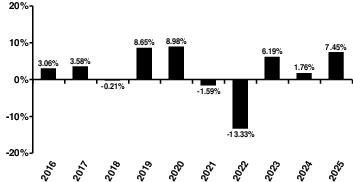
| |
Quarter/Year |
Return |
| Best Quarter |
4th quarter, 2023 |
6.87% |
| Worst Quarter |
1st quarter, 2022 |
-6.05% |
Average Annual Total Return
(for periods ended December 31, 2025)
(for periods ended December 31, 2025)
| |
|
1 Yr |
5 Yr |
10 Yr |
| Portfolio: |
Select Bond Portfolio |
7.45% |
-0.19% |
2.25% |
| Broad-Based Index: |
Bloomberg® U.S. Aggregate Bond
Index
(reflects no deduction for fees,
expenses or taxes) |
7.30% |
-0.36% |
2.01% |
PORTFOLIO MANAGEMENT
Investment Adviser: Mason Street Advisors, LLC
Sub-Adviser: Allspring Global Investments, LLC (Allspring)
Portfolio Managers: Maulik Bhansali, CFA, Senior Portfolio Manager and Co-Head of the Core Fixed Income team at Allspring, has managed the Portfolio in his capacity with Allspring since 2021 and had managed the Portfolio in his capacity with the previous sub-adviser since 2017.
Jarad Vasquez, Senior Portfolio Manager and Co-Head of the Core Fixed Income team at Allspring, has managed the Portfolio in his capacity with Allspring since 2021, and had managed the Portfolio in his capacity with the previous sub-adviser since 2017.
Sub-Adviser: Allspring Global Investments, LLC (Allspring)
Portfolio Managers: Maulik Bhansali, CFA, Senior Portfolio Manager and Co-Head of the Core Fixed Income team at Allspring, has managed the Portfolio in his capacity with Allspring since 2021 and had managed the Portfolio in his capacity with the previous sub-adviser since 2017.
Jarad Vasquez, Senior Portfolio Manager and Co-Head of the Core Fixed Income team at Allspring, has managed the Portfolio in his capacity with Allspring since 2021, and had managed the Portfolio in his capacity with the previous sub-adviser since 2017.
TAX INFORMATION
Shares of the Portfolio are offered only for funding variable annuity contracts and
variable life insurance policies offered by The Northwestern Mutual Life Insurance Company through separate accounts. Insurance company separate
accounts generally do not pay tax on dividends or capital gain distributions. Investors in variable annuity contracts and variable life insurance
policies should refer to the prospectuses for the variable products for a discussion of the tax considerations that affect the insurance company and its
separate accounts and the tax consequences to investors of owning such products.
COMPENSATION TO BROKER-DEALERS AND OTHER FINANCIAL INTERMEDIARIES
Neither the Portfolio nor any related companies pay compensation to broker-dealers or
other financial intermediaries for the sale of Portfolio shares or related services. Investors in variable annuity contracts and variable life insurance
policies should refer to the prospectuses for the variable products for important information about compensation paid to financial intermediaries for
sales of variable annuity contracts and variable life insurance policies.
NMSF-SP4Northwestern Mutual Series
Fund, Inc. Prospectus