
Registration Nos. 002-94641/811-4163
UNITED
STATES
SECURITIES AND EXCHANGE COMMISSION
WASHINGTON, D.C. 20549
FORM
| REGISTRATION STATEMENT UNDER THE SECURITIES ACT OF 1933 | ☒ |
| Post-Effective Amendment No. 63 | ☒ |
and/or
| REGISTRATION STATEMENT UNDER THE INVESTMENT COMPANY ACT OF 1940 | ☒ |
| Amendment No. 61 | ☒ |
Exact Name of Registrant as Specified in Charter
1307 Point Street, Baltimore,
Maryland 21231
Address of Principal Executive Offices
410-345-2000
Registrant’s Telephone Number, Including Area Code
David Oestreicher
1307 Point Street, Baltimore,
Maryland 21231
Name and Address of Agent for Service
Approximate Date of Proposed Public Offering May 1, 2026
It is proposed that this filing will become effective (check appropriate box):
| ☐ | Immediately upon filing pursuant to paragraph (b) |
| ☒ | On May 1, 2026 pursuant to paragraph (b) |
| ☐ | 60 days after filing pursuant to paragraph (a)(1) |
| ☐ | On (date) pursuant to paragraph (a)(1) |
| ☐ | 75 days after filing pursuant to paragraph (a)(2) |
| ☐ | On (date) pursuant to paragraph (a)(2) of Rule 485 |
If appropriate, check the following box:
| ☐ | This post-effective amendment designates a new effective date for a previously filed post-effective amendment. |
|
||||
Prospectus
|
||||
| T. ROWE PRICE | ||||
| Tax-Free High Yield Fund | ||||
PRFHX PATFX
|
Investor Class I
Class | |||
| The Securities and Exchange Commission (SEC) has not approved or disapproved these securities or passed upon the adequacy of this prospectus. Any representation to the contrary is a criminal offense. | ||||
 | ||||
Table of Contents
| 1 | ||
The fund seeks to provide a high level of income exempt from federal income taxes by investing primarily in long-term low- to upper-medium-grade municipal securities.
This table describes the fees and expenses that you may pay if you buy, hold, and sell shares of the fund. You may also incur brokerage commissions and other charges when buying or selling shares of the fund, which are not reflected in the table or example below.
Fees and Expenses of the Fund
| Investor Class |
I Class |
Advisor Class | ||||
| Maximum account fee | $ |
a | ||||
(expenses that you pay each year as a percentage of the value of your investment) |
| Management fees | % | % | % | |||
| Distribution and service (12b-1) fees | ||||||
| Other expenses | ||||||
| Total annual fund operating expenses |
| a |
This example is intended to help you compare the cost of investing in the fund with the cost of investing in other mutual funds. The example assumes that you invest $10,000 in the fund for the time periods indicated and then redeem all of your shares at the end of those periods, that your investment has a 5% return each year, and that the fund’s operating expenses remain the same. The example also assumes that any current expense limitation arrangement remains in place for the period noted in the previous table; therefore, the figures have been adjusted to reflect fee waivers or expense reimbursements only in the periods for which the expense limitation arrangement is expected to continue. Although your actual costs may be higher or lower, based on these assumptions your costs would be:
| 1 Year | 3 Years | 5 Years | 10 Years | ||||||
| Investor Class | $ | $ | $ | $ | |||||
| I Class | |||||||||
| Advisor Class | |
|
|||||||
| T. Rowe Price | 2 |
The fund pays transaction costs, such as commissions, when it buys and sells securities (or “turns over”
its portfolio). A higher portfolio turnover rate may indicate higher transaction costs and may result in higher taxes when the
fund’s shares are held in a taxable account. These costs, which are not reflected in annual fund operating expenses or in
the example, affect the fund’s performance. During the most recent fiscal year, the fund’s portfolio turnover rate
was
Investments, Risks, and Performance
Effective August 1, 2026, the T. Rowe Price Tax-Free High Yield Fund will change its name to the T. Rowe Price High Yield Municipal Bond Fund.
Normally, at least 80% of the fund’s income will be exempt from federal income taxes. Any derivatives that provide exposure to the investment focus suggested by the fund’s name, or to one or more market risk factors associated with the investment focus suggested by the fund’s name, are counted (as applicable) toward compliance with the fund’s 80% investment policy.
Subject to shareholder approval, the fund’s Board of Directors has approved changing the fund’s 80% investment
policy to the following: “
The fund also has a policy that up to 20% of the fund’s income could be derived from securities subject to the alternative minimum tax. Subject to shareholder approval, the fund’s Board of Directors has approved eliminating this policy. If approved by shareholders, the elimination of the alternative minimum tax policy is expected to become effective on August 1, 2026.
Because the change to the fund’s 80% investment policy and elimination of the alternative minimum tax policy require shareholder approval to become effective, the changes are being proposed for approval at a special shareholder meeting scheduled for June 25, 2026. All shareholders who held shares of the fund at the close of business on March 27, 2026, are eligible to vote on the proposed changes.
The proposed changes are intended to provide the fund with greater long-term flexibility in executing its investment program, align the policies with the fund’s new name, and reduce potential compliance risks for the fund, although the changes are not expected to substantially affect the way the fund is currently managed. Proxy materials for the special shareholder meeting describe the proposed changes and the rationale in greater detail. If either proposed change is not approved by shareholders, the name change will still become effective on August 1, 2026.
Although the fund may purchase securities of any maturity, the fund invests primarily in longer-term municipal securities. The fund generally seeks higher-yielding municipal bonds, including those that are rated below investment grade (BB and lower, or an equivalent rating) by a credit rating agency or by T. Rowe Price, known as “junk” bonds.
T. Rowe Price’s active investment management approach emphasizes the value of in-depth fundamental credit research, diversification, and risk management practices. By using fundamental research, T. Rowe Price seeks to select investments for the fund’s portfolio based on its outlook for the different sectors of the tax-free municipal market (for example, T. Rowe Price may emphasize revenue bonds instead of state and local general obligation debt) and specific issuers or securities. The goal of this approach is to seek higher yields while taking a risk-conscious approach. Risk management practices include managing the fund’s duration (which is a measurement of the price sensitivity of a bond or bond fund to changes in interest rates), while also focusing on striking a balance between (i) investing more heavily in certain sectors or issuers and (ii) diversifying the fund’s investments across the broader municipal market.
| SUMMARY | 3 |
From time to time, the fund may invest a significant portion of its assets in sectors with special risks, such as health care, transportation, utilities, or private activity bonds.
Principal Risks
As with any fund, there is no guarantee that the fund will achieve its objective(s).
Municipal securities: The fund may be highly impacted by events tied to the overall municipal securities markets, which can be very volatile and significantly affected by unfavorable legislative or political developments and adverse changes in the financial conditions of municipal securities issuers and the global, national, and/or local economies. Income from municipal securities held by the fund could become taxable because of changes in tax laws or interpretations by taxing authorities, or noncompliant conduct of a state or municipality. Other changes in tax laws, including changes to individual or corporate tax rates, could alter the attractiveness and overall demand for municipal bonds.
Certain sectors of the municipal bond market have special risks and could be affected by certain developments more significantly than the market as a whole. For example: health care can be negatively impacted by rising expenses and dependency on third party reimbursements; transportation can be negatively impacted by declining revenues or unexpectedly high construction or fuel costs; utilities are subject to governmental rate regulation; and private activity bonds (including industrial development bonds) rely on project revenues and the creditworthiness of the corporate user as opposed to governmental support. Investing significantly in municipal obligations backed by revenues of similar types of industries or projects may make the fund more susceptible to developments affecting those industries and projects. If the fund invests a substantial amount of its assets in issuers located in a single region, state, or city, there is an increased risk that environmental, economic, political, and social conditions in those regions will have a significant impact on the fund’s investment performance.
Market conditions: The value of the fund’s investments may decrease, sometimes rapidly or unexpectedly, due to factors affecting an issuer held by the fund, particular industries, or the overall securities markets. A variety of factors can increase the volatility of the fund’s holdings and markets generally, including geopolitical developments (such as trade and tariff arrangements, sanctions, and cybersecurity attacks), recessions, inflation, rapid interest rate changes, war, military conflict, acts of terrorism, natural disasters, and outbreaks of infectious illnesses or other widespread public health issues (such as the coronavirus pandemic) and related governmental and public responses. Certain events may cause instability across global markets, including reduced liquidity and disruptions in trading markets, while some events may affect certain geographic regions, countries, sectors, and industries more significantly than others. Government intervention in markets may impact interest rates, market volatility, and security pricing. These adverse developments may cause broad declines in market value due to short-term market movements or for significantly longer periods during more prolonged market downturns.
| T. Rowe Price | 4 |
Credit quality: An issuer of a debt instrument could suffer an adverse change in financial condition that results in a payment default (failure to make scheduled interest or principal payments), rating downgrade, or inability to meet a financial obligation. Securities that are rated below investment grade carry greater risk of default and should be considered speculative. Economic downturns often result in reduced levels of taxes collected and revenues earned by municipalities and insufficient funding to meet pension or health care obligations, which could lessen the overall financial strength of a municipality and increase the credit risk of the securities it issues. The fund’s credit risk is increased to the extent it invests in securities that are not backed by the taxing power of the municipal issuer.
Junk bonds: Investments in bonds that are rated below investment grade, commonly referred to as junk bonds, expose the fund to greater volatility and credit risk than investments in bonds that are rated investment grade. As a result, bonds rated below investment grade carry a higher risk of default and should be considered speculative.
Interest rates: A rise in interest rates typically causes the price of a fixed rate debt instrument to fall and its yield to rise. Conversely, a decline in interest rates typically causes the price of a fixed rate debt instrument to rise and the yield to fall. The prices and yields of inflation-linked bonds are directly impacted by the rate of inflation as well as changes in interest rates. Generally, funds with longer weighted average maturities and durations carry greater interest rate risk. Changes in monetary policy made by central banks and/or governments are likely to affect the interest rates or yields of the securities in which the fund invests.
Callable bonds: While a rise in interest rates is the principal source of interest rate risk for bond funds, falling rates bring the possibility that a bond may be “called,” or redeemed before maturity, and that the proceeds may need to be reinvested in lower-yielding securities.
Alternative minimum tax: Although the fund seeks to distribute tax-exempt income, a portion of the fund’s otherwise tax-exempt dividends may be taxable to those shareholders subject to the federal alternative minimum tax.
Liquidity: The fund may not be able to sell a holding in a timely manner at a desired price. Reduced liquidity in the bond markets can result from a number of events, such as limited trading activity, reductions in bond inventory, and rapid or unexpected changes in interest rates. The secondary market for certain municipal bonds tends to be less developed and less liquid than many other bond markets. Less liquid markets could lead to greater price volatility and limit the fund’s ability to sell a holding at a suitable price.
| SUMMARY | 5 |
Active management: The fund’s overall investment program and holdings selected by the fund’s investment adviser may underperform the broad markets, relevant indices, or other funds with similar objectives and investment strategies.
Cybersecurity breaches: The fund could be harmed by intentional cyberattacks and other cybersecurity breaches, including unauthorized access to the fund’s assets, confidential information, or other proprietary information. In addition, a cybersecurity breach could cause one of the fund’s service providers or financial intermediaries to suffer unauthorized data access, data corruption, or loss of operational functionality.
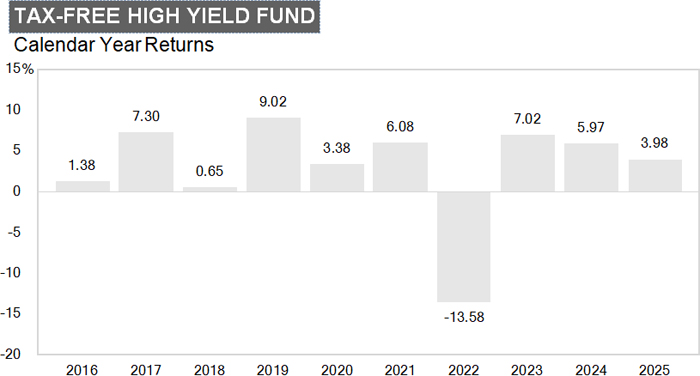
The following bar chart illustrates how much returns can differ from year to year by showing calendar year returns and the best and worst calendar quarter returns during those years for the fund’s Investor Class. Returns for other share classes vary since they have different expenses.
| Quarter
Ended |
Total Return |
Quarter
Ended |
Total Return |
|||||
| - |
The following table shows the average annual total returns for each class of the fund that has been in operation for at least one full calendar year. The fund’s performance information included in the table is compared with a regulatory required index that represents an overall securities market (Bloomberg U.S. Aggregate Bond Index). In addition, the table may also include one or more indexes that align to the fund’s investment strategy.
| T. Rowe Price | 6 |
| Since | Inception | ||||||||||||||
| 1 Year | 5 Years | 10 Years | inception | date | |||||||||||
| Investor Class | |||||||||||||||
| Returns before taxes | % | % | % | — | % | ||||||||||
| Returns after taxes on distributions | — | ||||||||||||||
| Returns after taxes on distributions and sale | |||||||||||||||
| of fund shares | — | ||||||||||||||
| I Class | |||||||||||||||
| Returns before taxes | — | ||||||||||||||
| Advisor Class | |||||||||||||||
| Returns before taxes | — | ||||||||||||||
| Bloomberg
U.S. Aggregate Bond Index |
|||||||||||||||
| - |
a | ||||||||||||||
| Bloomberg 65% High-Grade/35% High-Yield Index (reflects no deduction for fees, expenses, or taxes) | |||||||||||||||
| a | |||||||||||||||
| Lipper High Yield Municipal Debt Funds Average | |||||||||||||||
| b | |||||||||||||||
| a |
| b |
Updated
performance information is available through
Management
Investment Adviser T. Rowe Price Associates, Inc. (T. Rowe Price or Price Associates)
| Name | Title |
Managed Fund Since |
Joined Investment Adviser |
| Jim Murphy | Portfolio Manager and Chair of Investment Advisory Committee | 2002 | 2000 |
Purchase and Sale of Fund Shares
The Investor Class and Advisor Class generally require a $2,500 minimum initial investment ($1,000 minimum initial investment if opening an IRA, a custodial account for a minor, or a small business retirement plan account). Additional purchases generally require a $100 minimum. These investment minimums generally are waived for financial intermediaries and certain employer-sponsored retirement plans submitting orders on behalf of their customers. Advisor Class shares may generally only be purchased through a financial intermediary or retirement plan.
| SUMMARY | 7 |
The I Class requires a $500,000 minimum initial investment per fund per account registration, although the initial investment minimum generally is waived or reduced for financial intermediaries, eligible retirement plans, certain accounts for which T. Rowe Price or its affiliates have discretionary investment authority, qualifying directly held accounts, and certain other accounts.
For investors holding shares of the fund directly with T. Rowe Price, you may purchase, redeem, or exchange fund shares by mail; by telephone (1-800-225-5132 for IRAs and nonretirement accounts; 1-800-492-7670 for small business retirement plans; and 1-800-638-8790 for institutional investors and financial intermediaries); or, for certain other accounts, by accessing your account online through troweprice.com.
If you hold shares through a financial intermediary or retirement plan, you must purchase, redeem, and exchange shares of the fund through your intermediary or retirement plan. You should check with your intermediary or retirement plan to determine the investment minimums that apply to your account.
Tax Information
The fund declares dividends, if any, daily and pays them on the first business day of each month. Any capital gains are declared and paid annually, usually in December. The fund intends to distribute tax-exempt income. However, a portion of the fund’s distributions may be subject to federal income taxes or the alternative minimum tax. A redemption or exchange of fund shares, and any capital gains distributed by the fund, may be taxable.
Payments to Broker-Dealers and Other Financial Intermediaries
If you purchase shares of the fund through a broker-dealer or other financial intermediary (such as a bank), the fund and its related companies may pay the intermediary for the sale of fund shares and related services. These payments may create a conflict of interest by influencing the broker-dealer or other intermediary and your salesperson to recommend the fund over another investment. Ask your salesperson or visit your financial intermediary’s website for more information.
| More About the Fund | 2 | |
Management of the FUnd
Investment Adviser(s)
T. Rowe Price is the fund’s investment adviser and oversees the selection of the fund’s investments and management of the fund’s portfolio pursuant to an investment management agreement between the investment adviser and the fund. T. Rowe Price is the investment adviser for all funds sponsored and managed by T. Rowe Price (T. Rowe Price Funds); is an SEC-registered investment adviser that provides investment management services to individual and institutional investors and sponsors; and serves as adviser and subadviser to registered investment companies, institutional separate accounts, and common trust funds. The address for T. Rowe Price is 1307 Point Street, Baltimore, Maryland 21231. As of December 31, 2025, T. Rowe Price and its affiliates (Firm) had approximately $1.78 trillion in assets under management.
Portfolio Management
The portfolio manager is primarily responsible for the day-to-day management of the fund’s portfolio. The portfolio manager is Jim Murphy. The following information provides the year that the portfolio manager first joined the Firm and the portfolio manager’s specific business experience during the past five years (although the portfolio manager may have had portfolio management responsibilities for a longer period). Mr. Murphy has been portfolio manager of the fund since 2002. He joined the Firm in 2000, and his investment experience dates from 1993. During the past five years, he has served as a portfolio manager. The Statement of Additional Information (SAI) provides additional information about the portfolio manager’s compensation, other accounts managed by the portfolio manager, and the portfolio manager’s ownership of the fund’s shares.
T. Rowe Price has also established an Investment Advisory Committee with respect to the fund. The portfolio manager works with the committee in developing and executing the fund’s investment program. The members of the committee are as follows: Jim Murphy, chair; Lee Arnold, Colin Bando, Davis Collins, Katie Floyd, Hannah R. Hrich, Dylan Jones, Michael Kane, Timothy Taylor, and Domingo Villarruel.
| More About the Fund | 9 |
The Management Fee
The fund pays the investment adviser a management fee consisting of two components—an “individual fund fee,” which reflects the fund’s particular characteristics, and a “group fee,” which is designed to reflect the benefits of the shared resources of the Firm and is based on the combined net assets of all T. Rowe Price Funds (except the funds-of-funds, TRP Reserve Funds, Multi-Sector Account Portfolios, and any index or private-label mutual funds). The group fee schedule (in the following table) is graduated, declining as the combined assets of the T. Rowe Price Funds rise, so shareholders benefit from the overall growth in mutual fund and ETF assets.
Group Fee Schedule
| 0.334%* | First $50 billion |
| 0.305% | Next $30 billion |
| 0.300% | Next $40 billion |
| 0.295% | Next $40 billion |
| 0.290% | Next $60 billion |
| 0.285% | Next $80 billion |
| 0.280% | Next $100 billion |
| 0.275% | Next $100 billion |
| 0.270% | Next $150 billion |
| 0.265% | Next $195 billion |
| 0.260% | Thereafter |
* Represents a blended group fee rate containing various breakpoints.
The fund’s management fee is determined by applying the group fee rate and individual fund fee rate to the fund’s average daily net assets. For the prior fiscal year, the group fee rate was 0.28% and the fund’s individual fund fee rate was 0.17%. The management fee is calculated and accrued daily.
The management fee is charged to the fund and each share class of the fund bears its proportionate share of the management fee. An expense limitation agreement that limits the operating expenses or total expense ratio of a particular share class does not result in a reduced or waived management fee.
A discussion about the factors considered by the fund’s Board of Directors (Board) and its conclusions in approving the fund’s investment management agreement (and any subadvisory agreement, if applicable) is contained in Form N-CSR filed with the SEC for the period ended August 31, and made available on the fund’s website at troweprice.com/prospectus.
MORE INFORMATION ABOUT THE FUND’s investment Objective(s), Strategies, and risks
Investment Objective(s)
The fund seeks to provide a high level of income exempt from federal income taxes by investing primarily in long-term low- to upper-medium-grade municipal securities.
Principal Investment Strategies
Effective August 1, 2026, the T. Rowe Price Tax-Free High Yield Fund will change its name to the T. Rowe Price High Yield Municipal Bond Fund.
Normally, at least 80% of the fund’s income will be exempt from federal income taxes. The fund’s 80% investment policy is a fundamental policy and may not be changed without shareholder approval. Any derivatives that provide exposure to the investment focus suggested by the fund’s name, or to one or more market risk factors associated with the investment focus suggested by the fund’s name, are counted (as applicable) toward compliance with the fund’s 80% investment policy.
| T. Rowe Price | 10 |
Subject to shareholder approval, the fund’s Board of Directors has approved changing the fund’s 80% investment policy to the following: “The fund normally invests at least 80% of its net assets (plus any borrowings for investment purposes) in municipal bonds whose income is exempt from regular federal income taxes.” If approved by shareholders, the new 80% investment policy is expected to become effective on August 1, 2026.
The fund also has a policy that up to 20% of the fund’s income could be derived from securities subject to the alternative minimum tax. Subject to shareholder approval, the fund’s Board of Directors has approved eliminating this policy. If approved by shareholders, the elimination of the alternative minimum tax policy is expected to become effective on August 1, 2026.
Because the change to the fund’s 80% investment policy and elimination of the alternative minimum tax policy require shareholder approval to become effective, the changes are being proposed for approval at a special shareholder meeting scheduled for June 25, 2026. All shareholders who held shares of the fund at the close of business on March 27, 2026, are eligible to vote on the proposed changes.
The proposed changes are intended to provide the fund with greater long-term flexibility in executing its investment program, align the policies with the fund’s new name, and reduce potential compliance risks for the fund, although the changes are not expected to substantially affect the way the fund is currently managed. Proxy materials for the special shareholder meeting describe the proposed changes and the rationale in greater detail. If either proposed change is not approved by shareholders, the name change will still become effective on August 1, 2026.
Although the fund may purchase securities of any maturity, the fund invests primarily in longer-term municipal securities. The fund generally seeks higher-yielding municipal bonds, including those that are rated below investment grade (BB and lower, or an equivalent rating) by a credit rating agency or by T. Rowe Price, known as “junk” bonds.
T. Rowe Price’s active investment management approach emphasizes the value of in-depth fundamental credit research, diversification, and risk management practices. By using fundamental research, T. Rowe Price seeks to select investments for the fund’s portfolio based on its outlook for the different sectors of the tax-free municipal market (for example, T. Rowe Price may emphasize revenue bonds instead of state and local general obligation debt) and specific issuers or securities. The goal of this approach is to seek higher yields while taking a risk-conscious approach. Risk management practices include managing the fund’s duration (which is a measurement of the price sensitivity of a bond or bond fund to changes in interest rates), while also focusing on striking a balance between (i) investing more heavily in certain sectors or issuers and (ii) diversifying the fund’s investments across the broader municipal market.
From time to time, the fund may invest a significant portion of its assets in sectors with special risks, such as health care, transportation, utilities, or private activity bonds.
| More About the Fund | 11 |
It is possible that 25% or more of the fund’s assets could be invested in municipal securities that would tend to respond similarly to particular economic or political developments. For example, the fund may invest in securities of issuers whose revenues are generated from similar types of projects or operate in similar industries.
Although the fund may invest more than 25% of its net assets in industrial development bonds, the fund limits its investments in industrial development bonds that are supported principally by the assets or revenues of non-governmental users related to the same industry to 25% of its net assets. Bonds that are refunded with escrowed U.S. government securities are not subject to the 25% limitation. Refunded bonds may have originally been issued as general obligation or revenue bonds, but become “refunded” when they are secured by an escrow fund, usually consisting entirely of direct U.S. government obligations, U.S. government agency obligations, and/or cash.
The fund may invest without limit in below investment-grade securities; however, the fund may only invest up to 10% of its total assets in securities in default.
During periods of abnormal market conditions, for temporary defensive purposes, there is no limit on the fund’s investments in high-quality, short-term securities whose income is subject to federal income taxes. Such investments could cause the fund to distribute taxable income and/or to fail to achieve its objective(s).
The fund may sell assets for a variety of reasons, including in response to a change in the original investment considerations or to limit losses, adjust the characteristics of the overall portfolio, or redeploy assets into different opportunities.
The fund invests in the following types of securities or assets:
Municipal Securities
The fund’s assets are invested primarily in various tax-exempt municipal debt instruments. A municipal bond is an interest-bearing security issued by a state or local government entity. There are two broad categories of municipal bonds. General obligation bonds are typically backed by the issuer’s “full faith and credit,” that is, its full taxing and revenue-raising power. Revenue bonds usually rely exclusively on a specific revenue source, such as charges for water and sewer service, to generate money for debt service. The issuer of a municipal security has a contractual obligation to pay interest at a stated rate on specific dates and to repay principal (the bond’s face value) on a specified date or dates. An issuer may have the right to redeem or “call” a bond before maturity, which could require reinvestment of the proceeds at lower rates.
A municipal bond’s annual interest income, set by its coupon rate, is usually fixed for the life of the bond. Its current yield (income as a percent of current price) will fluctuate to reflect changes in interest rate levels. For example, a municipal bond’s price usually rises when interest rates fall and vice versa, so its yield generally stays consistent with current market conditions.
Certain municipal securities have interest rates that are adjusted periodically. These interest rate adjustments tend to minimize fluctuations in a bond’s price. The maturity of those securities may be shortened under certain specified conditions. Some municipal securities have long-term maturities but are structured with interest rates that reset periodically (typically every 1 or 7 days) through a remarketing process.
| T. Rowe Price | 12 |
In purchasing municipal securities, reliance is placed on the opinion of the issuer’s bond counsel regarding the tax-exempt status of the investment.
Private Activity Bonds
While income from most municipal securities is exempt from federal income taxes, the income from certain types of private activity bonds (a type of revenue bond) is included in the alternative minimum tax calculation. Only persons subject to the alternative minimum tax pay this tax. Private activity bonds may be issued for purposes such as housing or airports or to benefit a private company. Industrial development bonds are a special type of private activity bond permitted under Internal Revenue Service guidelines and are typically backed by a corporate obligor to finance projects benefiting the public.
Securities With Credit Enhancements
Securities purchased by the fund can have the features described below. The fund may consider credit enhancement when determining the credit quality, liquidity, or maturity of an investment.
Letters of Credit Letters of credit are issued by a third party, usually a bank, to enhance liquidity and ensure repayment of principal and any accrued interest if the underlying municipal security should default.
Municipal Bond Insurance This insurance, which is usually purchased by the bond issuer from a private, nongovernmental insurance company, provides an unconditional and irrevocable guarantee that the insured bond’s principal and interest will be paid when due. Insurance does not guarantee the price of the bond or the share price of the fund. The credit rating assigned to an insured bond may reflect either the credit rating of the underlying issuer, based on its ability to make interest payments and repay principal in a timely manner, or the credit rating of the insurer, based on its claims-paying ability. In either case, T. Rowe Price bases its determination on whether to purchase an insured municipal bond on the creditworthiness of the underlying issuer and on the claims-paying ability of the insurer.
The obligation of a municipal bond insurance company to pay a claim extends over the life of each insured bond. Although defaults on insured municipal bonds have been fairly low to date and municipal bond insurers have generally been meeting their claims, there is no assurance this will continue. It is possible that default rates on insured bonds and additional insurer downgrades could increase substantially, which could further strain an insurer’s loss reserves and adversely affect its ability to pay claims to bondholders. Despite the quality of the underlying issuer, a downgrade of an insurer’s rating could adversely affect the values of any bonds it insures because the perceived risk of owning the bonds has increased.
Standby Purchase Agreements A standby purchase agreement is a liquidity facility provided to pay the purchase price of bonds that cannot be remarketed. The obligation of the liquidity provider (usually a bank) is only to advance funds to purchase tendered bonds that cannot be remarketed and does not cover principal or interest under any other circumstances. The liquidity provider’s obligations under the standby purchase agreement are usually subject to numerous conditions, including the continued creditworthiness of the underlying borrower.
| More About the Fund | 13 |
When-Issued Securities and Forwards
New issues of municipal securities are often sold on a “when-issued” basis, that is, delivery and payment usually take place 15 to 45 days after the buyer has agreed to the purchase. Some bonds, called “forwards,” have longer-than-standard settlement dates, typically six to 24 months. Interest is not paid on when-issued and forward securities until settlement, and the value of the securities may fluctuate between purchase and settlement. Municipal forwards typically carry a substantial yield premium to compensate the buyer for their greater interest rate, credit, and liquidity risks.
High Yield or “Junk” Bonds
The price and yield of below investment-grade (high yield or “junk”) bonds can be expected to fluctuate more than the price and yield of higher-quality bonds. Because these bonds are rated below BBB (or an equivalent rating) or are in default, they are regarded as predominantly speculative with respect to the issuer’s continuing ability to meet principal and interest payments. Successful investment in lower-medium and low-quality bonds involves greater investment risk and is highly dependent on T. Rowe Price’s credit analysis. A real or perceived economic downturn or higher interest rates could cause a decline in high yield bond prices by lessening the ability of issuers to make principal and interest payments. These bonds are often thinly traded and can be more difficult to sell and value accurately than higher-quality bonds. Because objective pricing data may be less available, judgment may play a greater role in the valuation process.
Principal Risks
The principal risks associated with the fund’s principal investment strategies, which may be even greater in unfavorable or uncertain market conditions, include the following:
Municipal securities: The municipal securities markets could be significantly affected by adverse political and legislative changes, litigation at the federal or state level, and changes in the financial condition of the issuers of municipal securities. The value of municipal securities (and funds investing in them) is strongly influenced by the value of tax-exempt income to investors. The restructuring of federal income tax rates could cause municipal bond prices to fall as lower income tax rates at the federal and/or state level would reduce the advantage of owning municipal securities. There is also no guarantee that the fund’s income will remain exempt from federal and state income taxes. Proposals have been made to restrict or eliminate the federal income tax exemption for interest on municipal securities and similar proposals may be introduced in the future. If such a proposal were enacted, or there were changes in applicable tax laws or tax treatments that reduce or eliminate the current federal income tax exemption on municipal securities, the availability of municipal securities for investment by the fund and the value of the fund’s portfolio would be adversely affected. Failure of a municipal security issuer to comply with applicable tax requirements may cause income paid on its securities to become taxable, resulting in a decline in the security’s value.
| T. Rowe Price | 14 |
Investments in municipal securities typically rely on the opinion of the issuer’s bond counsel provided at the time the municipal security is initially issued that the interest paid on those securities will not be subject to income tax. However, it is possible that the Internal Revenue Service, state tax authority, or court action may determine that a bond issued as tax-exempt should be considered taxable. If the fund were to hold such a bond, it might have to distribute taxable income or reclassify previously distributed tax-exempt income as taxable income, and be forced to sell the bond at an inopportune time at a price well below its original value.
Prices of municipal securities may be affected by major changes in cash flows into or out of municipal funds or sales of large blocks of municipal bonds by funds and other market participants. For example, substantial and sustained redemptions from municipal bond funds could result in lower prices for these securities. The fund will be adversely affected by a downgrade in the credit rating assigned to an issuer of securities held by the fund, but also may be adversely affected by a credit rating downgrade of a municipal bond insurance company that insures securities held by the fund. Such a decline may cause the insurer to be unable to meet its insurance obligations, which could negatively affect the value of the securities it insures and the fund’s performance. Adverse events involving one or more municipal bond insurers could have a significant adverse effect on the value of the securities insured by an insurer and on the overall municipal securities markets.
Market conditions: The value of investments held by the fund may decline, sometimes rapidly or unpredictably, due to factors affecting certain issuers, particular industries or sectors, or the overall markets. Rapid or unexpected changes in market conditions could cause the fund to liquidate its holdings at inopportune times or at a loss or depressed value. The value of a particular holding may decrease due to developments related to that issuer, but also due to general market conditions, including real or perceived economic developments, such as changes in interest rates, credit quality, inflation, or currency rates, or generally adverse investor sentiment. The value of a holding may also decline due to factors that negatively affect a particular industry or sector, such as labor shortages, increased production costs, or competitive conditions. In addition, local, regional, or global events such as war, military conflict, acts of terrorism, political and social unrest, regulatory changes, recessions, tariffs and shifts in monetary or trade policies, natural or environmental disasters, and the spread of infectious diseases or other public health issues could have a significant negative impact on securities markets and the fund’s investments. Any of these events may lead to unexpected suspensions or closures of securities exchanges; travel restrictions or quarantines; business disruptions and closures; inability to obtain raw materials, supplies, and component parts; reduced or disrupted operations for the fund’s service providers or issuers in which the fund invests; and an extended adverse impact on global market conditions. Government intervention (including sanctions) in markets may impact interest rates, market volatility, and security pricing. The occurrence of any of these events could adversely affect the economies (including through changes in business activity and increased unemployment) and financial markets of specific countries or worldwide.
| More About the Fund | 15 |
Credit quality: An issuer of a debt instrument held by the fund could default (fail to make scheduled interest or principal payments), potentially reducing the fund’s income and share price. Credit risk is increased when portfolio holdings are downgraded or the perceived financial condition of an issuer deteriorates. Holdings with an investment-grade rating should have a relatively low risk of encountering financial problems and a relatively high probability of future payments. However, holdings rated below investment grade are more susceptible to adverse economic conditions than other investment-grade holdings and may have speculative characteristics. Holdings rated below investment grade should be regarded as speculative because their issuers may be more susceptible to financial setbacks and recession than more creditworthy issuers. Adverse developments in a particular state or involving a particular municipal bond insurer could result in price declines if the fund has significant investments in that state or bonds backed by that insurer. The fund’s credit risk is increased to the extent it invests in bonds where the interest and principal are dependent upon the money pledged for a project, fees generated from the use of facilities or services provided, or other dedicated revenues, as opposed to bonds that are backed by the taxing power or full faith and credit of the municipal issuer.
Junk bonds: Investing in bonds that are rated below investment grade subjects the fund to heightened credit risk. Issuers of below investment-grade bonds, or high yield bonds, are usually not as strong financially as those with higher credit ratings, so the issuers are more vulnerable to financial setbacks and recession than more creditworthy issuers, which may impair their ability to make interest and principal payments. As a result, below investment-grade investments carry greater risks of default and erratic price swings due to real or perceived changes in the credit quality of the issuer.
Because the credit quality of the issuer is lower, such bonds are more sensitive to developments affecting the issuer’s underlying fundamentals, such as changes in financial condition or a particular country’s general economy. In addition, the entire below investment-grade bond market can experience sudden and sharp price swings due to a variety of factors, including changes in economic forecasts, stock market activity, large sustained sales by institutional investors, a high-profile default, or a change in the market’s psychology. This type of volatility is usually associated more with stocks than bonds, but investors in lower-quality bonds should also anticipate it. Since funds can be a major source of demand in certain high yield bond markets, substantial cash flows into and out of these funds can affect high yield bond prices. If, for example, a significant number of funds were to sell bonds to meet shareholder redemptions, both bond prices and funds’ share prices could fall more than underlying fundamentals might justify.
Any investments in distressed or defaulted securities subject the fund to even greater credit risk than investments in other below investment-grade investments. Investments in obligations of restructured, distressed, and bankrupt issuers, including debt obligations that are already in default, generally trade significantly below par and may lack liquidity. Defaulted securities might be repaid only after lengthy bankruptcy proceedings, during which the issuer might not make any interest or other payments, and such proceedings may result in only partial recovery of principal or no recovery at all. Recovery could involve an exchange of the defaulted obligation for other debt instruments or equity securities of the issuer or its affiliates, each of which may in turn lack liquidity or be speculative and be valued by the fund at significantly less than its original purchase price. In addition, investments in distressed issuers may subject the fund to liability as a lender.
| T. Rowe Price | 16 |
Interest rates: The prices of bonds and other fixed income securities typically increase as interest rates fall, and prices typically decrease as interest rates rise (bond prices and interest rates usually move in opposite directions). Such decreases in prices are due to the bonds and notes in the fund’s portfolio becoming less attractive to other investors when securities with higher yields become available. The prices and yields of inflation-linked bonds are directly impacted by the rate of inflation as well as changes in interest rates. Generally, funds with longer weighted average maturities (i.e., an average of the maturities of the underlying debt instruments, “weighted” by the percentage of the fund’s assets it represents) and durations (i.e., the measure of the price sensitivity of a fund to changes in interest rates) carry greater interest rate risk. As a result, in a rising interest rate environment, the net asset value of a fund with a longer weighted average maturity or duration typically decreases at a faster rate than the net asset value of a fund with a shorter weighted average maturity or duration. In addition, recent and potential future changes in monetary policy made by central banks and/or governments are likely to affect the interest rates or yields of the securities in which the fund invests. An elevated inflation environment may heighten risks associated with rising interest rates. As a result, rapid changes in interest rates may increase the fund’s overall exposure to interest rate risk.
Callable bonds: During periods of falling interest rates, issuers of callable bonds may redeem securities with higher interest rates before their maturity. The fund would then lose any price appreciation above the bond’s call price and would be forced to reinvest the unanticipated proceeds at lower interest rates, resulting in a decline in the fund’s income.
Alternative minimum tax: The income from certain types of bonds, such as private activity bonds, may be tax-exempt but must be included for purposes of the alternative minimum tax calculation. As a result, the portion of the fund’s income attributable to these bonds may be taxable to those shareholders subject to the federal alternative minimum tax.
Liquidity: The fund may not be able to sell a holding in a timely manner at a desired price. Sectors of the bond market, including the municipal bond market, can experience sudden downturns in trading activity. During periods of reduced market liquidity, the spread between the price at which a security can be bought and the price at which it can be sold can widen, and the fund may not be able to sell a holding readily at a price that reflects what the fund believes it should be worth. Less liquid securities can also become more difficult to value. Liquidity risk may be the result of, among other things, the reduced number and capacity of traditional broker-dealers to make a market in fixed income securities or the lack of an active trading market. The potential for price movements related to liquidity risk may be magnified by a rising interest rate environment or other circumstances where selling activity from fixed income investors may be higher than normal, potentially causing prices to fall due to increased supply in the market. Liquidity in the municipal bond market has been reduced at times as a result of overall economic conditions and credit tightening. Municipal bonds are not traded via a centralized exchange but are instead traded in the “over-the-counter” market among dealers and brokers that connect buyers with sellers. The liquidity in the municipal bond market may suffer from a decrease in the number of bond dealers and the downgrading of certain municipal bond insurers.
| More About the Fund | 17 |
Active management: The investment adviser’s judgments about the attractiveness, value, or potential appreciation of the fund’s investments may prove to be incorrect. The fund could underperform other funds with a similar benchmark or similar investment program if the fund’s investment selections or overall strategies fail to produce the intended results. Regulatory, tax, or other developments may affect the investment strategies available to a portfolio manager, which could adversely affect the ability to implement the fund’s overall investment program and achieve the fund’s investment objective(s).
Cybersecurity breaches: The fund may be subject to operational and information security risks resulting from breaches in cybersecurity. Cybersecurity breaches may involve deliberate attacks and unauthorized access to the digital information systems (for example, through “hacking” or malicious software coding) used by the fund, its investment adviser and subadviser(s) (as applicable), or its service providers but may also result from outside attacks such as denial-of-service attacks, which are efforts to make network services unavailable to intended users. These breaches may, among other things, result in financial losses to the fund and its shareholders, cause the fund to lose proprietary information, disrupt business operations, or result in the unauthorized release of confidential information. Further, cybersecurity breaches involving the fund’s service providers, financial intermediaries, trading counterparties, or issuers in which the fund invests could subject the fund to many of the same risks associated with direct breaches.
Additional Investment Management Practices
The fund may employ additional investment management practices as described in this section. The fund’s investments may be subject to further restrictions and risks described in the SAI, which contains more detailed information about the fund and its investments, operations, and expenses.
ESG Integration
The Firm integrates the analysis of governance and sustainability factors into the investment process in an effort to maximize financial performance (known as ESG integration). The Firm focuses on the particular governance and sustainability factors considered most likely to have a material impact on the performance of the holdings or potential holdings in the fund’s portfolio. For certain types of investments, including, but not limited to, cash, currency positions, and particular types of derivatives, this analysis may not be relevant or possible due to a lack of data.
Reserve Position
A certain portion of the fund’s assets may be held in short-term, tax-exempt money market securities maturing in one year or less. The fund’s reserve positions can consist of shares of a T. Rowe Price internal money market fund (which does not charge any management fees and is not available for public purchase) or a T. Rowe Price tax-exempt money market fund, as well as short-term, investment-grade securities, including tax-exempt commercial paper, municipal notes, and short-term maturity bonds. Some of these securities may have adjustable, variable, or floating rates. If the fund has significant holdings in reserves, it could compromise its ability to achieve its objective(s).
| T. Rowe Price | 18 |
Temporary Defensive Position
The adviser may assume a temporary defensive position for the fund in order to respond to adverse market, economic, political, or other conditions, such as to provide flexibility in satisfying significant redemption activity, managing flows into or out of the fund, or paying expenses. The temporary defensive position may be inconsistent with the fund’s principal investment objective(s) and/or strategies, which may impact the fund’s returns or its ability to achieve its investment objective(s). For temporary defensive purposes, the fund may hold a greater amount of assets in reserves than normal or invest without limit in cash or other liquid instruments.
Borrowing Money and Transferring Assets
The fund may borrow from banks, other persons, and other T. Rowe Price Funds for temporary or emergency purposes, to facilitate redemption requests, or for other purposes consistent with the fund’s policies as set forth in this prospectus and the SAI. Such borrowings may be collateralized with the fund’s assets, subject to certain restrictions.
Borrowings may not exceed 33⅓% of the fund’s total assets. This limitation includes any borrowings for temporary or emergency purposes, applies at the time of the transaction, and continues to the extent required by the Investment Company Act of 1940.
Portfolio Turnover
Turnover is an indication of frequency of trading. Each time the fund purchases or sells a security, it incurs a cost. This cost is reflected in the fund’s net asset value but not in its operating expenses. The higher the turnover rate, the higher the transaction costs and the greater the impact on the fund’s total return. Higher turnover can also increase the possibility of taxable capital gain distributions. The fund’s portfolio turnover rates are shown in the Financial Highlights tables.
Financial Highlights
The Financial Highlights tables, which provide information about each class’ financial history, are based on a single share outstanding throughout the periods shown. The tables are part of the fund’s financial statements, which are included in its Form N-CSR and are incorporated by reference into the SAI (available upon request). The financial statements were audited by the fund’s independent registered public accounting firm, PricewaterhouseCoopers LLP.
| More About the Fund | 19 |
| FINANCIAL HIGHLIGHTS | For a share outstanding throughout each period |
| Investor Class | ||||||||||||||||||||
| Year Ended | ||||||||||||||||||||
| 2/28/26 | 2/28/25 | 2/29/24 | 2/28/23 | 2/28/22 | ||||||||||||||||
| NET ASSET VALUE | ||||||||||||||||||||
| Beginning of period | $ | 11.24 | $ | 10.97 | $ | 10.64 | $ | 12.22 | $ | 12.32 | ||||||||||
| Investment activities | ||||||||||||||||||||
| Net investment income(1)(2) | 0.46 | 0.42 | 0.41 | 0.41 | 0.38 | |||||||||||||||
| Net realized and unrealized gain/loss | 0.04 | 0.28 | 0.32 | (1.58 | ) | (0.10 | ) | |||||||||||||
| Total from investment activities | 0.50 | 0.70 | 0.73 | (1.17 | ) | 0.28 | ||||||||||||||
| Distributions | ||||||||||||||||||||
| Net investment income | (0.45 | ) | (0.43 | ) | (0.40 | ) | (0.40 | ) | (0.38 | ) | ||||||||||
| Net realized gain | — | — | — | (0.01 | ) | — | ||||||||||||||
| Total distributions | (0.45 | ) | (0.43 | ) | (0.40 | ) | (0.41 | ) | (0.38 | ) | ||||||||||
| NET ASSET VALUE | ||||||||||||||||||||
| End of period | $ | 11.29 | $ | 11.24 | $ | 10.97 | $ | 10.64 | $ | 12.22 | ||||||||||
| Ratios/Supplemental Data | ||||||||||||||||||||
| Total return(2)(3) | 4.67 | % | 6.45 | % | 7.05 | % | (9.64 | )% | 2.21 | % | ||||||||||
| Ratios to average net assets:(2) | ||||||||||||||||||||
| Gross expenses before waivers/payments by Price Associates | 0.65 | % | 0.74 | % | 0.76 | % | 0.76 | % | 0.72 | % | ||||||||||
| Net expenses after waivers/payments by Price Associates | 0.65 | % | 0.67 | % | 0.67 | % | 0.67 | % | 0.63 | % | ||||||||||
| Net investment income | 4.20 | % | 3.79 | % | 3.81 | % | 3.68 | % | 2.99 | % | ||||||||||
| Portfolio turnover rate | 18.8 | % | 14.2 | % | 11.6 | % | 19.7 | % | 11.8 | % | ||||||||||
| Net assets, end of period (in millions) | $ | 1,435 | $ | 1,458 | $ | 1,826 | $ | 1,949 | $ | 3,580 |
| (1) | Per share amounts calculated using average shares outstanding method. |
| (2) | Includes the impact of expense-related arrangements with Price Associates. |
| (3) | Total return reflects the rate that an investor would have earned on an investment in the fund during each period, assuming reinvestment of all distributions, and payment of no redemption or account fees, if applicable. |
| T. Rowe Price | 20 |
| FINANCIAL HIGHLIGHTS | For a share outstanding throughout each period |
| I Class | ||||||||||||||||||||
| Year Ended | ||||||||||||||||||||
| 2/28/26 | 2/28/25 | 2/29/24 | 2/28/23 | 2/28/22 | ||||||||||||||||
| NET ASSET VALUE | ||||||||||||||||||||
| Beginning of period | $ | 11.24 | $ | 10.96 | $ | 10.64 | $ | 12.22 | $ | 12.31 | ||||||||||
| Investment activities | ||||||||||||||||||||
| Net investment income(1)(2) | 0.47 | 0.44 | 0.42 | 0.42 | 0.39 | |||||||||||||||
| Net realized and unrealized gain/loss | 0.05 | 0.28 | 0.31 | (1.58 | ) | (0.09 | ) | |||||||||||||
| Total from investment activities | 0.52 | 0.72 | 0.73 | (1.16 | ) | 0.30 | ||||||||||||||
| Distributions | ||||||||||||||||||||
| Net investment income | (0.47 | ) | (0.44 | ) | (0.41 | ) | (0.41 | ) | (0.39 | ) | ||||||||||
| Net realized gain | — | — | — | (0.01 | ) | — | ||||||||||||||
| Total distributions | (0.47 | ) | (0.44 | ) | (0.41 | ) | (0.42 | ) | (0.39 | ) | ||||||||||
| NET ASSET VALUE | ||||||||||||||||||||
| End of period | $ | 11.29 | $ | 11.24 | $ | 10.96 | $ | 10.64 | $ | 12.22 | ||||||||||
| Ratios/Supplemental Data | ||||||||||||||||||||
| Total return(2)(3) | 4.81 | % | 6.69 | % | 7.07 | % | (9.51 | )% | 2.41 | % | ||||||||||
| Ratios to average net assets:(2) | ||||||||||||||||||||
| Gross expenses before waivers/payments by Price Associates | 0.51 | % | 0.60 | % | 0.65 | % | 0.62 | % | 0.60 | % | ||||||||||
| Net expenses after waivers/payments by Price Associates | 0.51 | % | 0.54 | % | 0.55 | % | 0.53 | % | 0.51 | % | ||||||||||
| Net investment income | 4.34 | % | 3.94 | % | 3.93 | % | 3.84 | % | 3.10 | % | ||||||||||
| Portfolio turnover rate | 18.8 | % | 14.2 | % | 11.6 | % | 19.7 | % | 11.8 | % | ||||||||||
| Net assets, end of period (in millions) | $ | 2,047 | $ | 2,065 | $ | 1,509 | $ | 1,846 | $ | 1,942 |
| (1) | Per share amounts calculated using average shares outstanding method. |
| (2) | Includes the impact of expense-related arrangements with Price Associates. |
| (3) | Total return reflects the rate that an investor would have earned on an investment in the fund during each period, assuming reinvestment of all distributions, and payment of no redemption or account fees, if applicable. |
| More About the Fund | 21 |
| FINANCIAL HIGHLIGHTS | For a share outstanding throughout each period |
| Advisor Class | ||||||||||||||||||||
| Year Ended | ||||||||||||||||||||
| 2/28/26 | 2/28/25 | 2/29/24 | 2/28/23 | 2/28/22 | ||||||||||||||||
| NET ASSET VALUE | ||||||||||||||||||||
| Beginning of period | $ | 11.31 | $ | 11.03 | $ | 10.70 | $ | 12.29 | $ | 12.39 | ||||||||||
| Investment activities | ||||||||||||||||||||
| Net investment income(1)(2) | 0.42 | 0.39 | 0.37 | 0.38 | 0.35 | |||||||||||||||
| Net realized and unrealized gain/loss | 0.04 | 0.28 | 0.32 | (1.59 | ) | (0.11 | ) | |||||||||||||
| Total from investment activities | 0.46 | 0.67 | 0.69 | (1.21 | ) | 0.24 | ||||||||||||||
| Distributions | ||||||||||||||||||||
| Net investment income | (0.41 | ) | (0.39 | ) | (0.36 | ) | (0.37 | ) | (0.34 | ) | ||||||||||
| Net realized gain | — | — | — | (0.01 | ) | — | ||||||||||||||
| Total distributions | (0.41 | ) | (0.39 | ) | (0.36 | ) | (0.38 | ) | (0.34 | ) | ||||||||||
| NET ASSET VALUE | ||||||||||||||||||||
| End of period | $ | 11.36 | $ | 11.31 | $ | 11.03 | $ | 10.70 | $ | 12.29 | ||||||||||
| Ratios/Supplemental Data | ||||||||||||||||||||
| Total return(2)(3) | 4.27 | % | 6.17 | % | 6.65 | % | (9.89 | )% | 1.90 | % | ||||||||||
| Ratios to average net assets:(2) | ||||||||||||||||||||
| Gross expenses before waivers/payments by Price Associates | 1.02 | % | 1.08 | % | 1.12 | % | 1.03 | % | 1.03 | % | ||||||||||
| Net expenses after waivers/payments by Price Associates | 1.02 | % | 1.02 | % | 1.02 | % | 0.93 | % | 0.94 | % | ||||||||||
| Net investment income | 3.83 | % | 3.45 | % | 3.46 | % | 3.43 | % | 2.76 | % | ||||||||||
| Portfolio turnover rate | 18.8 | % | 14.2 | % | 11.6 | % | 19.7 | % | 11.8 | % | ||||||||||
| Net assets, end of period (in thousands) | $ | 2,689 | $ | 3,287 | $ | 4,552 | $ | 5,322 | $ | 7,637 |
| (1) | Per share amounts calculated using average shares outstanding method. |
| (2) | Includes the impact of expense-related arrangements with Price Associates. |
| (3) | Total return reflects the rate that an investor would have earned on an investment in the fund during each period, assuming reinvestment of all distributions, and payment of no redemption or account fees, if applicable. |
| T. Rowe Price | 22 |
DISCLOSURE OF FUND PORTFOLIO INFORMATION
Most T. Rowe Price Funds disclose their portfolio holdings periodically on troweprice.com. A description of the policies and procedures with respect to the disclosure of portfolio holdings and other portfolio information for the T. Rowe Price Funds is available in the SAI.
| Information About Accounts in T. Rowe Price Funds | 3 | |
The following policies and procedures generally apply to Investor Class, I Class, Advisor Class, R Class, and Z Class accounts in the T. Rowe Price Funds. The front cover and Section 1 of this prospectus indicate which share classes are available for the fund.
INVESTING WITH T. ROWE PRICE
This section of the prospectus explains the basics of investing with T. Rowe Price and describes some of the different share classes that may be available. Certain share classes can be held directly with T. Rowe Price, while other share classes typically must be held through a financial intermediary, such as broker-dealers, banks, insurance companies, retirement plan recordkeepers, and investment advisers.
aVAILABLE SHARE CLASSES
Each class of a fund’s shares represents an interest in the same fund with the same investment program and investment policies. However, each class is designed for a different type of investor and has a different cost structure primarily due to shareholder services or distribution arrangements that may apply only to that class. For example, certain classes may make payments to financial intermediaries for various administrative services they provide (commonly referred to as administrative fee payments) and/or make payments to certain financial intermediaries for distribution of the fund’s shares (commonly referred to as 12b-1 fee payments). Determining the most appropriate share class depends on many factors, including how much you plan to invest, whether you are investing directly in the fund or through a financial intermediary, and whether you are investing on behalf of a person or an organization.
This section generally describes the differences between Investor Class, I Class, Advisor Class, R Class, and Z Class shares. This section does not describe the policies that apply to accounts in T. Rowe Price Institutional Funds and certain other types of funds. Policies for these other funds are described in their respective prospectuses, and all types of T. Rowe Price Funds and available share classes are described more fully in the funds’ SAI. While many T. Rowe Price Funds are offered in more than one share class, not all funds offer all of the share classes described in this section.
Investor Class
A T. Rowe Price Fund that does not include the term “institutional” or indicate a specific share class as part of its name is considered to be the Investor Class of that fund. The Investor Class is available to individual investors, institutions, and a wide variety of other types of investors. The Investor Class may be purchased directly from T. Rowe Price or through a retirement plan or financial intermediary. The Investor Class does not impose a sales charge and does not make any 12b-1 fee payments to financial intermediaries but may make administrative fee payments at an annual rate of up to 0.15% of the class’ average daily net assets. In addition, you may also incur brokerage commissions and other charges when buying or selling Investor Class shares through a financial intermediary. For investors holding the Investor Class through the T. Rowe Price® ActivePlus Portfolios program, the terms and conditions of the program will be applicable.
| T. Rowe Price | 24 |
I Class
The I Class may be purchased directly from T. Rowe Price or through a retirement plan or a financial intermediary. The I Class does not impose sales charges and does not make any administrative fee payments or 12b-1 fee payments to financial intermediaries. However, you may incur brokerage commissions and other charges when buying or selling I Class shares through a financial intermediary.
The I Class requires a $500,000 minimum initial investment per fund per account registration, although the minimum generally is waived or reduced for financial intermediaries, eligible retirement plans, certain accounts for which T. Rowe Price or its affiliates have discretionary investment authority, and certain other accounts.
Certain qualifying accounts are eligible to invest in the I Class at a lower investment minimum through programs available to investors holding their accounts directly with T. Rowe Price, including, but not limited to, programs for which T. Rowe Price or its affiliates have discretionary authority. For investors eligible for the I Class through such programs, the terms and conditions, including applicable minimums, of the respective program will apply. Certain accounts, including most T. Rowe Price Brokerage sweep accounts and small business retirement plans with more than one participant that are held directly with T. Rowe Price, are not eligible to invest in the I Class, regardless of account balance.
Advisor Class
The Advisor Class is designed to be sold through various financial intermediaries, such as broker-dealers, banks, insurance companies, retirement plan recordkeepers, and advisers. The Advisor Class must be purchased through an eligible financial intermediary (except for certain retirement plans held directly with T. Rowe Price). The Advisor Class does not impose sales charges but may make 12b-1 fee payments at an annual rate of up to 0.25% of the class’ average daily net assets and may also separately make administrative fee payments at an annual rate of up to 0.15% of the class’ average daily net assets. You may also incur other fees or charges when buying or selling Advisor Class shares through a financial intermediary.
The Advisor Class requires an agreement between the financial intermediary and T. Rowe Price to be executed prior to investment. Purchases of Advisor Class shares for which the required agreement with T. Rowe Price has not been executed or that are not made through an eligible financial intermediary are subject to rejection or cancellation without prior notice to the financial intermediary or investor, and accounts that are no longer eligible for the Advisor Class (including any accounts that are no longer serviced by a financial intermediary or for which the financial intermediary does not accept or assess 12b-1 fee payments) may be converted to the Investor Class following notice to the financial intermediary or investor.
| Information About Accounts in T. Rowe Price Funds | 25 |
R Class
The R Class is designed to be sold through financial intermediaries for employer-sponsored defined contribution retirement plans and certain other retirement accounts. The R Class must be purchased through an eligible financial intermediary (except for certain retirement plans held directly with T. Rowe Price). The R Class does not impose sales charges but may make 12b-1 fee payments at an annual rate of up to 0.50% of the class’ average daily net assets and may also separately make administrative fee payments at an annual rate of up to 0.15% of the class’ average daily net assets. You may also incur other fees or charges when buying or selling R Class shares through a financial intermediary.
The R Class requires an agreement between the financial intermediary and T. Rowe Price to be executed prior to investment. Purchases of R Class shares for which the required agreement with T. Rowe Price has not been executed or that are not made through an eligible financial intermediary are subject to rejection or cancellation without prior notice to the financial intermediary or investor, and accounts that are no longer eligible for the R Class (including any accounts that are no longer serviced by a financial intermediary or for which the financial intermediary does not accept or assess 12b-1 fee payments) may be converted to the Investor Class or Advisor Class following notice to the financial intermediary or investor.
Z Class
The Z Class is only available to funds managed by T. Rowe Price and other advisory clients of T. Rowe Price or its affiliates that are subject to a contractual fee for investment management services. There is no minimum initial investment and no minimum for additional purchases. The Z Class does not impose sales charges and does not make any administrative fee payments or 12b-1 fee payments to financial intermediaries.
DISTRIBUTION AND SHAREHOLDER SERVICING FEEs
Administrative Fee Payments (Investor Class, Advisor Class, and R Class)
Certain financial intermediaries perform recordkeeping and administrative services for their clients that would otherwise be performed by the funds’ transfer agent. Investor Class, Advisor Class, and R Class shares may make administrative fee payments to retirement plan recordkeepers, broker-dealers, and other financial intermediaries (at an annual rate of up to 0.15% of the class’ average daily net assets) for transfer agency, recordkeeping, and other administrative services that they provide on behalf of the funds. These administrative services may include maintaining account records for each customer; transmitting purchase and redemption orders; delivering shareholder confirmations, statements, and tax forms; and providing support to respond to customers’ questions regarding their accounts. Except for funds that pay an annual all-inclusive fee, these separate administrative fee payments are reflected in the “Other expenses” line that appears in the table titled “Fees and Expenses of the Fund” in Section 1 of this prospectus.
| T. Rowe Price | 26 |
12b-1 Fee Payments (Advisor Class and R Class)
Mutual funds are permitted to adopt a 12b-1 plan to pay certain expenses associated with the distribution of the fund’s shares out of the fund’s assets. Each fund offering Advisor Class and/or R Class shares has adopted a 12b-1 plan under which those classes may make payments (for the Advisor Class, at an annual rate of up to 0.25% of the class’ average daily net assets and, for the R Class, at an annual rate of up to 0.50% of the class’ average daily net assets) to various financial intermediaries, such as broker-dealers, banks, insurance companies, retirement plan recordkeepers, and investment advisers, for distribution and/or shareholder servicing of the Advisor Class and R Class shares. The 12b-1 plans provide for the class to pay such fees to the fund’s distributor and for the distributor to then pay such fees to the financial intermediaries that provide services for the class and/or make the class available to investors.
For the Advisor Class, distribution payments may include payments to financial intermediaries for making the Advisor Class shares available to their customers (for example, providing the fund with “shelf space” or inclusion on a “preferred list” or “supermarket” platform). For the R Class, distribution payments may include payments to financial intermediaries for making the R Class shares available as investment options to retirement plans and retirement plan participants, assisting plan sponsors in conducting searches for investment options, and providing ongoing monitoring of investment options.
Shareholder servicing payments under the plans may include payments to financial intermediaries for providing shareholder support services to existing shareholders of the Advisor Class and R Class. These payments may be more or less than the costs incurred by the financial intermediaries. Because the fees are paid from the Advisor Class or R Class net assets on an ongoing basis, they will increase the cost of your investment over time. In addition, payments of 12b-1 fees may influence your financial adviser’s recommendation of the fund or of any particular share class of the fund. Payments of 12b-1 fees are reflected in the “Distribution and service (12b-1) fees” line that appears in the table titled “Fees and Expenses of the Fund” in Section 1 of this prospectus.
Additional Compensation to Financial Intermediaries
In addition to the administrative fee payments made by the Investor Class, Advisor Class, and R Class and the 12b-1 payments made by the Advisor Class and R Class, T. Rowe Price or its affiliates will, at their own expense and out of their own profits, provide compensation to certain financial intermediaries that have sold shares of or provide shareholder or other services to the T. Rowe Price Funds, commonly referred to as revenue sharing. These payments may be in the form of asset-based, transaction-based, or flat payments. These payments are used to compensate financial intermediaries for distribution and shareholder servicing activities, including subaccounting, sub-transfer agency, or other services. Some of these payments may include expense reimbursements and meeting and marketing support payments (out of T. Rowe Price’s or its affiliates’ own resources and not as an expense of the funds) to financial intermediaries, such as broker-dealers, banks, insurance companies, retirement plan recordkeepers, and investment advisers, in connection with the sale, distribution, marketing, and/or servicing of the T. Rowe Price Funds. The SAI provides more information about these payment arrangements.
| Information About Accounts in T. Rowe Price Funds | 27 |
The receipt of, or the prospect of receiving, these payments and expense reimbursements from T. Rowe Price or its affiliates may influence financial intermediaries, plan sponsors, and other third parties to offer or recommend T. Rowe Price Funds over other investment options for which an intermediary does not receive additional compensation (or receives lower levels of additional compensation). In addition, financial intermediaries that receive these payments and/or expense reimbursements may elevate the prominence of the T. Rowe Price Funds by, for example, placing the T. Rowe Price Funds on a list of preferred or recommended funds and/or providing preferential or enhanced opportunities to promote the T. Rowe Price Funds in various ways. Since these additional payments are not paid by a fund directly, these arrangements do not increase fund expenses and will not change the price that an investor pays for shares of the T. Rowe Price Funds or the amount that is invested in a T. Rowe Price Fund on behalf of an investor. You may ask your financial intermediary for more information about any payments they receive from T. Rowe Price or its affiliates.
Comparison of Distribution and Shareholder Servicing Fees
The following table summarizes the distribution and service (12b-1) fee and administrative fee arrangements applicable to each class based on its average daily net assets.
| Class | 12b-1 Fee Payments | Administrative Fee Payments |
| Investor Class | None | Up to 0.15% per year |
| I Class | None | None |
| Advisor Class | Up to 0.25% per year | Up to 0.15% per year |
| R Class | Up to 0.50% per year | Up to 0.15% per year |
| Z Class | None | None |
Account SERVICE FEE
Investor Class
In an effort to help offset the disproportionately high costs incurred by the funds in connection with servicing lower-balance accounts that are held directly with the T. Rowe Price Funds’ transfer agent, an annual $20 account service fee (paid to T. Rowe Price Services, Inc., or one of its affiliates) is charged to certain Investor Class accounts with a balance below $10,000. The determination of whether a fund account is subject to the account service fee is based on account balances and services selected for accounts as of the last business day of August of each calendar year. The fee may be charged to an account with a balance below $10,000 for any reason, including market fluctuation and recent redemptions. The fee, which is automatically deducted from an account by redeeming fund shares, is typically charged to accounts in early September each calendar year. Such redemption may result in a taxable gain or loss to you.
| T. Rowe Price | 28 |
The account service fee generally does not apply to fund accounts that are held through a financial intermediary, participant accounts in employer-sponsored retirement plans for which T. Rowe Price Retirement Plan Services, Inc. provides recordkeeping services, accounts held through the T. Rowe Price® ActivePlus Portfolios program or Retirement Advisory Service™, or money market funds that are used as a T. Rowe Price Brokerage sweep account. The account service fee is automatically waived for accounts that satisfy any of the following conditions as of the last business day in August:
| ● | Any accounts for which the shareholder has elected to receive electronic delivery of all of the following: account statements, transaction confirmations, prospectuses, and shareholder reports (paper copies of fund documents are available, free of charge, upon request, to any shareholder regardless of whether the shareholder has elected electronic delivery); |
| ● | Any accounts of a shareholder with at least $50,000 in total assets with T. Rowe Price (for this purpose, total assets include investments through T. Rowe Price Brokerage and investments in T. Rowe Price Funds, except for those held through a retirement plan for which T. Rowe Price Retirement Plan Services, Inc. provides recordkeeping services); or |
| ● | Certain accounts enrolled in the T. Rowe Price Summit Program (visit troweprice.com or call 1-800-332-6161 for more information). |
T. Rowe Price reserves the right to authorize additional waivers for other types of accounts or to modify the conditions for assessment of the account service fee. Fund shares held in a T. Rowe Price individual retirement account (IRA), Education Savings Account, or small business retirement plan account (including certain 403(b) plan accounts) are subject to the account service fee and may be subject to additional administrative fees when distributing all fund shares from such accounts.
POLICIES FOR opening an account
Investor Class and I Class shares may be purchased directly from T. Rowe Price or through various financial intermediaries. Advisor Class and R Class shares must be purchased through a financial intermediary (except for certain retirement plans held directly with T. Rowe Price). If you are opening an account through an employer-sponsored retirement plan or other financial intermediary, you should contact the retirement plan or financial intermediary for information regarding its policies on opening an account, including the policies relating to purchasing, exchanging, and redeeming shares, and the applicable initial and subsequent investment minimums.
Tax Identification Number
Investors must provide T. Rowe Price with a valid Social Security number or taxpayer identification number on a signed new account form or Form W-9, and financial intermediaries must provide T. Rowe Price with their certified taxpayer identification number. Otherwise, federal law requires the funds to withhold a percentage of dividends, capital gain distributions, and redemptions and may subject you or the financial intermediary to an Internal Revenue Service penalty. If this information is not received within 60 days of the account being established, the account may be redeemed at the fund’s then-current net asset value.
Important Information Required to Open a New Account
Pursuant to federal law, all financial institutions must obtain, verify, and record information that identifies each person or entity that opens an account. This information is needed not only for the account owner and any other person who opens the account, but also for any person who has authority to act on behalf of the account.
| Information About Accounts in T. Rowe Price Funds | 29 |
When you open an account, you will be required to provide the name, U.S. street address (post office boxes are not acceptable), date of birth, and Social Security number or taxpayer identification number for each account owner and person(s) opening an account on behalf of others, such as custodians, agents, trustees, or other authorized signers. When opening an entity account, you will be asked to identify and provide personal information for: (i) any individual who, either directly or indirectly, owns 25% or more of the equity interest of the entity and (ii) a single individual who controls, manages, or directs the entity. Corporate and other institutional accounts require documents showing the existence of the entity (such as articles of incorporation or partnership agreements) to open an account. Certain other fiduciary accounts (such as trusts or power of attorney arrangements) require documentation, which may include an original or certified copy of the trust agreement or power of attorney, to open an account.
T. Rowe Price will use this information to verify the identity of the person(s)/entity opening the account. An account cannot be opened until all of this information is received. If the identity of the account holder cannot be verified, T. Rowe Price is authorized to take any action permitted by law, including, but not limited to, restricting additional purchases, freezing the account, or closing the account and redeeming the shares in the account at the net asset value next calculated after the redemption is processed (See “Rights Reserved by the Funds” later in this section.)
Institutional investors and financial intermediaries should call Client Account Management at 1-800-638-8790 for more information on these requirements, as well as to be assigned an account number and to receive instructions for opening an account. Other investors should call Investor Services at 1-800-638-5660 for more information about these requirements.
The funds are generally available only to investors residing in the United States.
Retail Money Market Funds
Money market funds that operate as “retail money market funds” pursuant to Rule 2a-7 under the Investment Company Act of 1940, as amended (1940 Act), are required to limit their beneficial owners to natural persons. An investor in a retail money market fund is required to demonstrate eligibility (for example, by providing a valid Social Security number) before an account can be opened. The retail money market funds have also obtained assurances from financial intermediaries that sell the funds that they have developed adequate procedures to limit accounts to only those beneficially owned by natural persons. Any new investors wishing to purchase shares will be required to demonstrate eligibility (for example, by providing their Social Security number). The retail money market funds will, upon advance written notification, involuntarily redeem investors that do not satisfy these eligibility requirements.
| T. Rowe Price | 30 |
Pricing OF Shares and TRANSACTIONS
How and When Shares Are Priced
Your transaction request will normally be executed using the next share price, also referred to as the net asset value, calculated after your order is received in correct form by the fund or its agent (or by your financial intermediary if it has the authority to accept transaction orders on behalf of the fund).
The information set forth in the following table regarding times relevant to net asset value determination applies only to regular business days.
| Fund | Daily Share Price Calculation Times |
| All funds other than Government Money and U.S. Treasury Money Funds | ● As of close of trading on the NYSE, generally 4 p.m. ET. |
| Government Money and U.S. Treasury Money Funds | ● As of 5 p.m. ET, unless the NYSE closes early. (If the NYSE closes early, as of the close of trading on the NYSE.) |
Net asset values are not calculated for the funds on days when the NYSE is scheduled to be closed for trading (for example, weekends and certain U.S. national holidays). If the NYSE is unexpectedly closed due to weather or other extenuating circumstances on a day it would typically be open for business, or if the NYSE has an unscheduled early closing on a day it has opened for business, or as may be permitted by the SEC, the funds reserve the right to treat such day as a regular business day and accept purchase and redemption orders and calculate their share price as of their normally scheduled share price calculation times.
To calculate the net asset value, the fund’s assets are valued and totaled; liabilities are subtracted; and each class’ proportionate share of the balance, called net assets, is divided by the number of shares outstanding of that class. Market values are used to price portfolio holdings for which market quotations are readily available. Market values generally reflect the prices at which securities actually trade or represent prices that have been adjusted based on evaluations and information provided by the fund’s pricing services. Investments in other mutual funds are valued at the closing net asset value per share of the mutual fund on the day of valuation. Investments for which market quotations are not readily available or deemed unreliable are valued at fair value as determined in good faith by T. Rowe Price, as the valuation designee, designated by the Board, by taking into account various, adopted factors and methodologies for determining the fair value. This value may differ from the value the fund receives upon sale of the securities.
| Information About Accounts in T. Rowe Price Funds | 31 |
Amortized cost is used to price securities held by money market funds and certain short-term debt securities held by other funds. The retail and government money market funds, which seek to maintain a stable net asset value of $1.00, use the amortized cost method of valuation to calculate their net asset value. Amortized cost allows the money market funds to value a holding at the fund’s acquisition cost with adjustments for any premiums or discounts and then round the net asset value per share to the nearest whole cent. The amortized cost method of valuation enables the money market funds to maintain a $1.00 net asset value, but it may also result in periods during which the stated value of a security held by the funds differs from the market-based price the funds would receive if they sold that holding. The current market-based net asset value per share for each business day in the preceding six months is available for the retail and government money market funds through troweprice.com/money-market/en/money-market-fund-information.html. These market-based net asset values are for informational purposes only and are not used to price transactions.
T. Rowe Price uses various pricing services to obtain closing market prices, as well as information used to adjust those prices and to value most fixed income securities. T. Rowe Price cannot predict how often it will use closing prices or how often it will adjust those prices. T. Rowe Price routinely evaluates its fair value processes.
Non-U.S. equity securities are valued on the basis of their most recent closing market prices at 4 p.m. ET, except under the following circumstances. Most foreign markets close before 4 p.m. ET. For example, the most recent closing prices for securities traded in certain Asian markets may be as much as 15 hours old at 4 p.m. ET. If T. Rowe Price determines that developments between the close of a foreign market and the close of the NYSE will, in its judgment, affect the value of some or all of the fund’s securities, T. Rowe Price will adjust the previous closing prices to reflect what it believes to be the fair value of the securities as of 4 p.m. ET. In deciding whether to make these adjustments, T. Rowe Price reviews a variety of factors, including developments in foreign markets, the performance of U.S. securities markets, and the performance of instruments trading in U.S. markets that represent foreign securities and baskets of foreign securities.
T. Rowe Price may also fair value certain securities or a group of securities in other situations—for example, when a particular foreign market is closed but the fund is open. For a fund that has investments in securities that are primarily listed on foreign exchanges that trade on weekends or other days when the fund does not price its shares, the fund’s net asset value may change on days when shareholders will not be able to purchase or redeem the fund’s shares. If an event occurs that affects the value of a security after the close of the market, such as a default of a commercial paper issuer or a significant move in short-term interest rates, T. Rowe Price may make a price adjustment depending on the nature and significance of the event. T. Rowe Price also evaluates a variety of factors when assigning fair values to private placements and other restricted securities. Other mutual funds may adjust the prices of their securities by different amounts or assign different fair values than the fair value that the fund assigns to the same security.
The various ways you can purchase, sell, and exchange shares are explained throughout this section. These procedures differ based on whether you hold your account directly with T. Rowe Price or through an employer-sponsored retirement plan or financial intermediary.
| T. Rowe Price | 32 |
investing directly with t. rowe price
The following policies apply to accounts that are held directly with T. Rowe Price and not through a financial intermediary.
Options for Opening Your Account
If you own other T. Rowe Price Funds, you should consider registering any new account identically to your existing accounts so you can exchange shares among them easily (the name(s) of the account owner(s) and the account type must be identical).
For joint accounts or other types of accounts owned or controlled by more than one party, either owner/party has complete authority to act on behalf of all and give instructions concerning the account without notice to the other party. T. Rowe Price may, in its sole discretion, require written authorization from all owners/parties to act on the account for certain transactions (for example, to transfer ownership). There are multiple ways to establish a new account directly with T. Rowe Price.
Online In general, you can open a new Investor Class or I Class account online. Go to troweprice.com/newaccount to choose the type of account you wish to open.
You can exchange shares online from an existing account in one fund to open a new account in another fund. The new account will have the same registration as the account from which you are exchanging, and any services (other than systematic purchase and systematic distribution arrangements) that you have preauthorized will carry over from the existing account to the new account.
To open an account online for the first time or with a different account registration, you must be a U.S. citizen residing in the U.S. or a resident alien and not subject to Internal Revenue Service backup withholding. Additionally, you must provide consent to receive certain documents electronically. You will have the option of providing your bank account information, which will enable you to make electronic funds transfers to and from your bank account. To set up this banking service online, additional steps will be taken to verify your identity.
By Mail If you are sending a check, please make your check payable to T. Rowe Price Funds (otherwise it may be returned) and send the check, together with the applicable new account form, to the appropriate address. (Please refer to the appropriate address under “Contacting T. Rowe Price” later in this section to avoid a delay in opening your new account.) T. Rowe Price does not accept third-party checks for initial purchases; however, third-party checks are typically accepted for additional purchases to an existing account. In addition, T. Rowe Price does not accept purchases by cash, traveler’s checks, money orders, or credit card checks. For exchanges from an identically registered account, be sure to specify the fund(s) and account number(s) that you are exchanging out of and the fund(s) you wish to exchange into.
| Information About Accounts in T. Rowe Price Funds | 33 |
By Telephone Direct investors can call Shareholder Services at 1-800-225-5132 (institutional investors should call 1-800-638-8790) to exchange from an existing fund account to open a new identically registered account in another fund. You may also be eligible to open a new account by telephone and provide your bank account information in order to make an initial purchase. To set up the account and banking service by telephone, additional steps will be taken to verify your identity and the authenticity of your bank account. Although the account may be opened and the purchase made, services may not be established and an Internal Revenue Service penalty withholding may occur until we receive the necessary signed form to certify your Social Security number or taxpayer identification number.
How Your Trade Date Is Determined
In general, if you invest directly with T. Rowe Price and your request to purchase, sell, or exchange shares is received by the fund or its agent in correct form by the fund’s applicable daily share price calculation time, your transaction will be priced at that business day’s net asset value. If your request is received by the fund or its agent in correct form after the fund’s applicable daily share price calculation time, your transaction will be priced at the next business day’s net asset value. The funds’ daily share price calculation times are detailed under the heading “How and When Shares Are Priced.” However, with respect to each of the Government Money and U.S. Treasury Money Funds, which normally calculate their daily share prices as of 5 p.m. ET, certain accounts that are held directly with T. Rowe Price (including, for example, certain retirement plans and T. Rowe Price brokerage accounts) must place their order prior to the close of trading on the NYSE (normally 4 p.m. ET) in order to receive that day’s share price. Contact T. Rowe Price for more information.
Systematic transactions that are scheduled to occur on a date the NYSE is closed will normally be processed the next business day (except for certain retirement plan payroll deduction orders generated by T. Rowe Price where the orders are processed the day before the day the NYSE is closed).
Note: There may be times when you are unable to contact us by telephone or access your account online due to extreme market activity, the unavailability of the T. Rowe Price website, or other circumstances. Should this occur, your order must still be placed and received in correct form by T. Rowe Price prior to the fund’s applicable daily share price calculation time to be priced at that business day’s net asset value. The time at which transactions and shares are priced and the time until which orders are accepted may be changed in case of an emergency or if the NYSE closes at a time other than 4 p.m. ET. The funds reserve the right to not treat an unscheduled intraday disruption or closure in NYSE trading as a closure of the NYSE and still accept transactions and calculate their net asset value as of the fund’s applicable daily share price calculation times.
Transaction Confirmations
T. Rowe Price sends immediate confirmations for most of your fund transactions. However, certain transactions, such as systematic purchases and systematic redemptions, dividend reinvestments, checkwriting redemptions from money market funds, and transactions in money market funds used as a brokerage sweep account, do not receive an immediate transaction confirmation but are reported on your account statement. Please review transaction confirmations and account statements as soon as you receive them and promptly report any discrepancies to Shareholder Services.
| T. Rowe Price | 34 |
Telephone and Online Account Transactions
You may access your accounts and conduct most transactions involving Investor Class or I Class accounts using the telephone or the T. Rowe Price website at troweprice.com. Telephone conversations are recorded.
Preventing Unauthorized Transactions
The T. Rowe Price Funds and their agents use reasonably designed procedures to verify that telephone, electronic, and other instructions are genuine. These procedures include, among other things, recording telephone calls, requiring personalized security codes or other information online and certain identifying information for telephone calls, requiring Medallion signature guarantees for certain transactions and account changes, and promptly sending confirmations of transactions and address changes. For transactions conducted online, we recommend the use of a secure internet browser.
T. Rowe Price Account Protection Program Shareholders who invest in the T. Rowe Price Funds directly are eligible for the Account Protection Program. The Account Protection Program restores eligible losses due to unauthorized or fraudulent activity where you have followed the appropriate security best practices to protect and maintain your account(s). T. Rowe Price reserves the right to modify or withdraw the Account Protection Program at any time. The Account Protection Program security best practices and additional information may be accessed online at troweprice.com/personal-investing/help/policies-and-security/account-protection-program.html.
If our verification procedures are followed and the losses are not eligible to be restored under the Account Protection Program, the funds and their agents are not liable for any losses that may occur from acting on unauthorized instructions.
If you suspect any unauthorized account activity, notice errors or discrepancies in your T. Rowe Price account, or are not receiving your T. Rowe Price account statements, please contact T. Rowe Price as soon as possible. Telephone conversations are recorded.
Trusted Contacts Investors who hold shares of a T. Rowe Price Fund directly or through a T. Rowe Price Brokerage account have the option to add one or more trusted contacts to their brokerage and mutual fund accounts. Trusted contacts are intended to be a resource to help protect client assets. Any individual designated as a trusted contact will be authorized to serve as a primary contact if T. Rowe Price has questions or concerns related to potentially fraudulent account activity or suspected financial exploitation or to confirm your contact information if we are unable to reach you (but are not authorized to act on your account). For more information or to add trusted contacts to your account, visit troweprice.com or call 1-800-225-5132.
If you are age 65 or older, or if you are age 18 or older and we have reason to believe you have a mental or physical impairment that renders you unable to protect your own interest, we may temporarily restrict transactions in your account and place a temporary hold on the disbursement of redemption proceeds from your account in an effort to protect you if we reasonably believe that you have been or will be the victim of actual or attempted financial exploitation. You will receive notice of this temporary delay, and it will be for no more than 15 business days while we conduct an internal review of the suspected financial exploitation (including contacting your trusted contact if one is on file). We may delay an additional 10 business days if T. Rowe Price reasonably believes that actual or attempted financial exploitation has occurred or will occur. At the expiration of the hold time, if we have not confirmed that exploitation has occurred, the proceeds will be released to you. Depending upon the state in which you reside, we may be required to report to the authorities suspected elder or vulnerable adult exploitation.
| Information About Accounts in T. Rowe Price Funds | 35 |
Purchasing Shares
Shares may be purchased in a variety of ways.
By Check Please make your check payable to the T. Rowe Price Funds. Include a new account form if establishing a new account, and include either a fund investment slip or a letter indicating the fund and your account number if adding to an existing account. Your transaction will receive the share price for the business day that the request is received by the fund or its agent, as long as the request is received in correct form prior to the time at which the fund calculates its daily share price (not the day the request is received at the post office box). The funds’ daily share price calculation times are detailed under the heading “How and When Shares Are Priced.”
By Electronic Transfer Shares may be purchased using the Automated Clearing House (ACH) network if you have established the service on your account, which allows the fund or its agent to request payment for your shares directly from your bank account or other financial institution account. You may also arrange for a wire to be sent to the fund or its agent (wire transfer instructions can be found at troweprice.com/wireinstructions or by calling Shareholder Services). The fund or its agent must receive the order and the money funding the order by the time it calculates its daily share price to receive that day’s share price.
With respect to Government Money and U.S. Treasury Money Funds only In some circumstances, a purchase order may be provided to a fund or its agent separately from the wire funding the order. If a purchase order is received by the fund or its agent in correct form and the payment funding the order is wired to and received by the fund prior to the time at which the fund calculates its daily share price (normally 5 p.m. ET), then that purchase will generally receive that day’s share price. However, if the payment funding the order is received by the fund or its agent after the time at which the fund calculates its daily share price (even if the purchase order is received by the fund or its agent prior to the time at which the fund calculates its daily share price, generally 5 p.m. ET), then T. Rowe Price may, in its sole discretion: (1) cancel the order; (2) process the order as the next calculated daily share price (generally, the following business day); or (3) accept the order and process it using that day’s share price, as long as the wire was received prior to the close of the federal wire system, which is generally 6:45 p.m. ET.
Purchase orders for certain accounts that are held directly with T. Rowe Price (including, for example, certain retirement plan accounts and T. Rowe Price Brokerage accounts) must be placed and received in correct form prior to the close of trading on the NYSE (normally 4 p.m. ET) in order to receive that day’s price. Contact T. Rowe Price for more information.
There is no assurance that you will receive the share price for the same day you initiated the wire from your financial institution.
| T. Rowe Price | 36 |
By Exchange You may purchase shares of a fund using the proceeds from the redemption of shares from another fund. The redemption and purchase will receive the same trade date, and if you are establishing a new account, it will have the same registration as the account from which you are exchanging. The purchase must still generally meet the applicable minimum investment requirement.
In general, the share prices you will receive for exchanges are based upon the net asset value that is next calculated after the funds receive your order. However, exchange requests will only be processed when both funds are open (i.e., prior to the time at which both funds calculate their applicable daily share price). As a result, an exchange might not be completed on the date on which an order is received if one of the funds in the exchange has closed (i.e., after the time at which the fund has calculated its applicable daily share price). In such case, you will remain invested in the fund from which you are redeeming until the exchange is processed, which is typically the following business day. Exchange orders between most funds must be placed and received in correct form by the close of trading on the NYSE (normally 4 p.m. ET) to be processed that day. However, exchanges between Government Money and U.S. Treasury Money Funds must be placed and received in correct form by the time at which the funds calculate their daily share prices (generally 5 p.m. ET). Exchange orders for certain accounts that are held directly with T. Rowe Price (including, for example, certain retirement plan accounts and T. Rowe Price Brokerage accounts) must be placed and received in correct form prior to the close of trading on the NYSE (normally 4 p.m. ET), regardless of when a fund calculates its daily share price.
Systematic Purchases (Automatic Asset Builder) You can instruct T. Rowe Price to automatically transfer money from your account at your bank or other financial institution at least once per month, or you can instruct your employer to send all or a portion of your paycheck to the fund or funds that you designate. Each systematic purchase must be at least $100 per fund account to be eligible for the Automatic Asset Builder service. To automatically transfer money to your account from a bank account or through payroll deductions, complete the appropriate section of the new account form when opening a new account or complete an Account Services Form to add the service to an existing account. Prior to establishing payroll deductions, you must set up the service with T. Rowe Price so that the appropriate instructions can be provided to your employer.
Note: The fund may permit institutional investors to submit purchase orders for shares through various other electronic methods as well, if approved by Client Account Management.
Initial Investment Minimums
Investor Class accounts, other than the Retirement Income Funds and Summit Funds, require a $2,500 minimum initial investment ($1,000 minimum initial investment for IRAs; certain small business retirement plan accounts; and custodial accounts for minors, known as Uniform Gifts to Minors Act or Uniform Transfers to Minors Act accounts). The Retirement Income Funds and Summit Funds require a $25,000 minimum initial investment. I Class accounts require a $500,000 minimum initial investment per fund for each account registration, although the minimum is waived or reduced for certain accounts. If you request the I Class of a particular fund when you open a new account, but the investment amount does not meet the applicable minimum, the purchase will be automatically invested in the Investor Class of the same fund (if available).
| Information About Accounts in T. Rowe Price Funds | 37 |
Additional Investment Minimums
Investor Class accounts, other than Summit Funds, require a $100 minimum for additional purchases, including those made through Automatic Asset Builder. Summit Funds require a $100 minimum for additional purchases through Automatic Asset Builder and a $1,000 minimum for all other additional purchases. I Class accounts require a $100 minimum for additional purchases through Automatic Asset Builder but do not require a minimum amount for other additional purchases.
Exchanging and Redeeming Shares
Exchanges You can move money from one account to an existing, identically registered account or open a new identically registered account. For taxable accounts, an exchange from one fund to another will be reported to the Internal Revenue Service as a sale for tax purposes. (Institutional investors are restricted from exchanging into a fund that operates as a retail money market fund.) You can set up systematic exchanges so that money is automatically moved from one fund account to another on a regular basis. In general, exchanges are based upon the net asset value that is next calculated after the funds received your order. However, exchange requests will only be processed when both funds are open (i.e., prior to the time at which both funds calculate their daily share price). As a result, an exchange might not be completed on the date on which an order is received if one of the funds in the exchange has closed (i.e., after the time at which both funds calculate their daily share price). In such case, you will remain invested in the fund from which you are redeeming until the exchange is processed, which is typically the following business day. Exchange orders between most funds must be placed and received in correct form by the close of the NYSE (normally 4 p.m. ET) to be processed that day. However, exchanges between Government Money and U.S. Treasury Money Funds must be placed and received in correct form by the time at which the funds calculate their daily share prices (generally 5 p.m. ET). Exchange orders for certain accounts that are held directly with T. Rowe Price (including, for example, certain retirement plan accounts and T. Rowe Price Brokerage accounts) must be placed and received in correct form prior to the close of the NYSE (normally 4 p.m. ET), regardless of when a fund calculates its daily share price.
Receiving Redemption Proceeds Redemption proceeds can be mailed to your account address by check or sent electronically to your bank account by Automated Clearing House transfer or bank wire. You can set up systematic redemptions and have the proceeds automatically sent via check or Automated Clearing House on a regular basis. Except for money market funds, if your request is received in correct form by the fund or its agent on a business day prior to the time indicated in the table under the heading “How and When Shares Are Priced,” proceeds are usually sent on the next business day.
Proceeds sent by Automated Clearing House transfer are usually credited to your account the second business day after the sale, and there are typically no fees associated with such payments. Proceeds sent by bank wire are usually credited to your account the next business day after the sale (except for wire redemptions from money market funds). A $5 fee will be charged for an outgoing wire of less than $5,000, in addition to any fees your financial institution may charge for an incoming wire.
| T. Rowe Price | 38 |
If, for some reason, your request to exchange or redeem shares cannot be processed because it is not received in correct form, we will attempt to contact you as soon as administratively possible.
If you request to redeem a specific dollar amount and the market value of your account is less than the amount of your request and we are unable to contact you, your redemption will not be processed and you must submit a new redemption request in correct form.
If you change your address on an account, proceeds may not be mailed to the new address for 15 calendar days after the address change, unless we receive a letter of instruction with a Medallion signature guarantee.
Please note that large purchase and redemption requests initiated through the Automated Clearing House may be rejected, and in such instances, the transaction must be placed by calling Shareholder Services.
Note: The fund may permit institutional investors to submit purchase orders for shares through various other electronic methods as well, if approved by Client Account Management.
Wire Redemption Proceeds From Money Market Funds
All money market funds except the Government Money and U.S. Treasury Money Funds Normally, if you request a redemption on a business day prior to noon ET and request to have proceeds sent via bank wire, proceeds are normally sent later that same day.
Government Money and U.S. Treasury Money Funds If you request a redemption on a business day prior to the time at which the fund calculates its daily share price (normally 5 p.m. ET) and request to have proceeds sent via bank wire, proceeds are normally sent later that same day.
All money market funds Under certain unusual circumstances (such as unusual market conditions or in cases of very large redemptions), redemption proceeds may be sent via wire the next business day following receipt of a wire transfer redemption request in correct form. Redemption proceeds sent via wire may be postponed or suspended for longer than one day only for periods during which there is a non-routine closure of the Federal Reserve wire payment system or applicable Federal Reserve banks or as permitted under those circumstances specifically enumerated under the 1940 Act and the relevant rules thereunder. For more information, please reference “Delays in Sending Redemption Proceeds.”
Certain retirement accounts that are held directly with T. Rowe Price are not eligible for same day redemption proceeds. Contact T. Rowe Price for more information.
Checkwriting You may write an unlimited number of free checks on any money market fund and certain bond funds, with a minimum of $500 per check. Keep in mind, however, that a check results in a sale of fund shares; a check written on a bond fund will create a taxable event that must be reported by T. Rowe Price to the Internal Revenue Service as a redemption.
| Information About Accounts in T. Rowe Price Funds | 39 |
Converting to Another Share Class
You may convert from one share class of a fund to another share class of the same fund (which may have a different expense ratio) over the telephone or in writing. Although the conversion has no effect on the dollar value of your investment in the fund, the number of shares owned after the conversion may be greater or less than the number of shares owned before the conversion, depending on the net asset values of the two share classes. A conversion between share classes of the same fund is a nontaxable event. The new account will have the same registration as the account from which you are converting.
Shareholders may contact T. Rowe Price at any time to convert eligible account balances to the I Class. In addition, T. Rowe Price may conduct periodic reviews of account balances. If your account balance in a fund meets or exceeds the applicable minimum amount required for the I Class, T. Rowe Price may, but is not required to, automatically convert your Investor Class shares to I Class shares of the same fund with advance notice, which may be in writing or delivered electronically if you have a valid email address on file with T. Rowe Price. Certain account restrictions will prevent an automatic conversion. If you opt out of any automatic conversions to the I Class, your election will apply to any future periodic reviews and automatic conversions for which you may otherwise be eligible unless you contact T. Rowe Price to change your election. If T. Rowe Price or its affiliates have investment discretion for your account, T. Rowe Price may convert your shares to a different share class without any advance notice to you. Automatic conversions only occur between share classes of the same fund.
Note: The fund may permit institutional investors to submit purchase orders for shares through various other electronic methods as well, if approved by Client Account Management.
Maintaining Your Account Balance
Investor Class Due to the relatively high cost to a fund of maintaining small accounts, we ask that you maintain an account balance of at least $1,000 ($10,000 for Summit Funds). If, for any reason, your balance is below this amount for three months or longer (even if due to market depreciation), we have the right to redeem your account at the then-current net asset value after giving you 60 days’ advance notice to increase your balance.
I Class To keep operating expenses lower, we ask that you maintain an account balance that at least meets the applicable I Class minimum necessary to open an account. If your investment in a fund falls below the applicable I Class minimum (even if due to market depreciation), we have the right to convert your account to a different share class in the same fund (if available) with a higher expense ratio or redeem your account at the then-current net asset value, after giving you 60 days’ advance notice to increase your balance. The redemption of your account by T. Rowe Price could result in a taxable gain or loss. However, if T. Rowe Price or its affiliates have investment discretion for your account, T. Rowe Price may convert your shares to a different share class without advance notice. Shareholders investing in a fund as part of a program that allows for a lower initial investment minimum will be subject to the applicable minimum account balance requirements of the respective program.
The redemption of your account could result in a taxable gain or loss.
| T. Rowe Price | 40 |
Investors holding the fund through the T. Rowe Price® ActivePlus Portfolios program will be subject to the minimum account balance requirements of the program, which may differ from the minimum account balance requirements listed above.
Eligibility Through Certain T. Rowe Price Programs
Direct investors with qualifying accounts may be eligible to invest in the I Class with a lower initial investment minimum and may be eligible to open new accounts in funds that are generally closed to new investors. For certain programs, eligibility is based on the aggregate value of qualifying accounts and certain other accounts held by direct investors in the same household. The terms and conditions of the respective program will apply and are subject to change. Contact T. Rowe Price for more information.
INVESTING THROUGH A FINANCIAL INTERMEDIARY
The following policies apply to accounts that are held through a financial intermediary.
Accounts in Investor Class and I Class shares are not required to be held through a financial intermediary, but accounts in Advisor Class and R Class shares must be held through an eligible financial intermediary (except for certain retirement plans held directly with T. Rowe Price). It is important that you contact your retirement plan or financial intermediary to determine the policies, procedures, and transaction deadlines that apply to your account. The financial intermediary may charge a fee, such as transaction fees or brokerage commissions, for its services.
Opening an Account
The financial intermediary must provide T. Rowe Price with its certified taxpayer identification number. Financial intermediaries should call Client Account Management for an account number and wire transfer instructions. In order to obtain an account number, the financial intermediary must supply the name, certified taxpayer identification number, and business street address for the account. (Please refer to “Contacting T. Rowe Price” later in this section for the appropriate telephone number and mailing address.) Financial intermediaries must also enter into a separate agreement with the fund or its agent.
How the Trade Date Is Determined
If you invest through a financial intermediary and your transaction request is received by the fund or its agent in correct form by the fund’s applicable daily share price calculation time, your transaction will be priced at that business day’s net asset value. If your request is received by the fund or its agent in correct form after the fund’s applicable daily share price calculation time, your transaction will be priced at the next business day’s net asset value unless the fund has an agreement with your financial intermediary for orders to be priced at the net asset value next computed after receipt by the financial intermediary. Shareholders investing through an intermediary are subject to their financial intermediary’s account restrictions and requirements. For example, certain financial intermediaries may have an order cutoff time that differs from the time at which the fund calculates its daily share price (i.e., the fund’s order cutoff time), which may require all transactions to be placed by the close of the NYSE (normally 4 p.m. ET), regardless of what time a fund closes. You should contact your financial intermediary or retirement plan recordkeeper for more information.
| Information About Accounts in T. Rowe Price Funds | 41 |
The funds have authorized certain financial intermediaries or their designees to accept orders to buy or sell fund shares on their behalf. When authorized financial intermediaries receive an order in correct form, the order is considered as being placed with the fund and shares will be bought or sold at the net asset value next calculated after the order is received by the authorized financial intermediary. The financial intermediary must transmit the order to the fund or the fund’s agent and pay for such shares in accordance with the agreement with the fund, or the order may be canceled and the financial intermediary could be held liable for the losses. If the fund does not have such an agreement in place with your financial intermediary, the fund or its agent must receive the request in correct form from your financial intermediary by the close of the NYSE in order for your transaction to be priced at that business day’s net asset value. You should contact your financial intermediary to learn whether it is authorized to accept orders on behalf of the fund.
Note: The time at which transactions and shares are priced and the time until which orders are accepted by the fund or a financial intermediary may be changed in case of an emergency or if the NYSE closes at a time other than 4 p.m. ET. The funds reserve the right to not treat an unscheduled intraday disruption or closure in NYSE trading as a closure of the NYSE and still accept transactions and calculate their net asset value as the fund’s regularly scheduled closing time. Should this occur, your order must still be placed and received in correct form by the fund or its agent (or by the financial intermediary in accordance with its agreement with T. Rowe Price) prior to the fund’s daily share price calculation time to be priced at that business day’s net asset value.
The funds’ daily share price calculation times are detailed under the heading “How and When Shares Are Priced.”
Purchasing Shares
All initial and subsequent investments by financial intermediaries should be made by bank wire or electronic payment. There is no assurance that the share price for the purchase will be the same day the wire was initiated. Purchases by financial intermediaries are typically initiated through the National Securities Clearing Corporation or by calling Client Account Management. The fund may permit financial intermediaries to submit purchase orders for shares through various other methods as well, if approved by Client Account Management.
Investment Minimums
You should check with your financial intermediary to determine what minimum applies to your initial and additional investments.
The Summit Funds require a $25,000 minimum initial investment, and other funds generally require a $2,500 minimum initial investment, although the minimum is generally waived or modified for any retirement plans and financial intermediaries establishing accounts in the Investor Class, Advisor Class, or R Class. I Class accounts require a $500,000 minimum initial investment per fund for each account registration, although the minimum is generally waived for certain accounts.
| T. Rowe Price | 42 |
Investments through a financial intermediary generally do not require a minimum amount for additional purchases.
Redeeming Shares
Unless otherwise indicated, redemption proceeds will be sent via bank wire to the financial intermediary’s designated bank. Redemptions by financial intermediaries are typically initiated through the National Securities Clearing Corporation or by calling Client Account Management. The fund may permit financial intermediaries to submit redemption orders for shares through various other methods as well, if approved by Client Account Management. Normally, the fund transmits proceeds to financial intermediaries for redemption orders received in correct form on the next business day after receipt of the order, depending on the arrangement with the financial intermediary. Shareholders investing through a financial intermediary are subject to their financial intermediary’s account restrictions and requirements. For example, certain financial intermediaries (including many retirement plans) may have an order cutoff time that differs from the time at which the fund calculates its daily share price. You should contact your financial intermediary for more information.
Please note that certain purchase and redemption requests initiated through the National Securities Clearing Corporation may be rejected, and in such instances, the transaction must be placed by contacting Client Account Management.
general policies relating to transactions
The following policies and requirements apply generally to accounts in the T. Rowe Price Funds, regardless of whether the account is held directly or indirectly with T. Rowe Price.
The funds generally do not accept orders that request a particular day or price for a transaction or any other special conditions. However, when authorized by the fund, certain institutions, financial intermediaries, or retirement plans purchasing fund shares directly with T. Rowe Price may place a purchase order unaccompanied by payment. Payment for these shares must be received by the time designated by the fund (not to exceed the period established for settlement under applicable regulations). If payment is not received by this time, the order may be canceled. The institution, financial intermediary, or retirement plan is responsible for any costs or losses incurred by the fund, T. Rowe Price or its agent, or a T. Rowe Price affiliate if payment is delayed or not received.
U.S. Dollars All purchases must be paid for in U.S. dollars; checks must be drawn on U.S. banks. In addition, we request that you give us at least three business days’ notice for any purchase of $1 million or more.
Nonpayment If a check or Automated Clearing House transfer does not clear or payment for an order is not received in a timely manner, your purchase may be canceled. You (or the financial intermediary) may be responsible for any losses or expenses incurred by the fund or its agent, and the fund can redeem shares in your account or another identically registered T. Rowe Price account as reimbursement. The funds and their agents have the right to reject or cancel any purchase, exchange, or redemption due to nonpayment.
| Information About Accounts in T. Rowe Price Funds | 43 |
Liquidity Fees—Retail Money Market Funds A money market fund that operates as a retail money market fund pursuant to Rule 2a-7 under the Investment Company Act of 1940 has the ability to impose liquidity fees of up to 2% of the value of the shares redeemed if the Board (or its delegate) determines that doing so is in the best interests of the fund.
If a liquidity fee is in place, all exchanges out of the fund will be subject to the liquidity fee. When a liquidity fee is in place, the fund may elect to not permit the purchase of shares or to subject the purchase of shares to certain conditions, which may include affirmation of the purchaser’s knowledge that a liquidity fee is in effect.
Omnibus Accounts If your shares are held through a financial intermediary, T. Rowe Price may rely on the financial intermediary to assess any applicable liquidity fees on underlying shareholder accounts. In certain situations, T. Rowe Price enters into agreements with financial intermediaries maintaining omnibus accounts that require the financial intermediary to assess liquidity fees. There are no assurances that T. Rowe Price will be successful in ensuring that all financial intermediaries will properly assess the fees.
Please refer to Sections 1 and 2 of the retail money market fund prospectuses for more information regarding liquidity fees.
Meeting Redemption Requests It is expected that the funds will typically hold sufficient cash or cash equivalents to meet redemption requests, although a fund may also use the proceeds from the sale of portfolio securities to meet redemption requests if consistent with the management of the fund. Funds-of-funds, however, are expected to typically sell shares of their underlying funds in order to meet redemption requests, although a fund-of-funds may at times hold sufficient cash or cash equivalents to meet redemption requests. These redemption methods will be used regularly and may also be used in deteriorating or stressed market conditions. The funds reserve the right to pay redemption proceeds with securities from the fund’s portfolio rather than in cash (redemptions in-kind), as described under “Large Redemptions.” Redemptions in-kind may be used regularly in circumstances as described above (generally if the shareholder is able to accept securities in-kind) and may also be used in stressed market conditions.
The funds may rely on an interfund lending exemptive order received from the SEC that permits the T. Rowe Price Funds to borrow money from and/or lend money to other T. Rowe Price Funds to help the funds meet short-term redemptions and liquidity needs. In certain circumstances, the T. Rowe Price Funds may also meet redemption requests by utilizing overdraft protection afforded to the fund’s account by the fund custodian. In addition, certain funds have a revolving line of credit in place to help meet short-term redemptions and liquidity needs, if necessary.
During periods of deteriorating or stressed market conditions,when an increased portion of a fund’s portfolio may be composed of holdings with reduced liquidity or lengthy settlement periods, or during extraordinary or emergency circumstances, the fund may be more likely to pay redemption proceeds with cash obtained through interfund lending or short-term borrowing arrangements (if available) or by redeeming a large redemption request in-kind.
| T. Rowe Price | 44 |
Large Redemptions Large redemptions (for example, $250,000 or more) can adversely affect a portfolio manager’s ability to implement a fund’s investment strategy by causing the premature sale of securities that would otherwise be held longer. Therefore, if, during any 90-day period, a shareholder redeems fund shares worth more than $250,000 (or 1% of the value of a fund’s assets if that amount is less than $250,000), we reserve the right to pay part or all of the redemption proceeds in excess of this amount in readily marketable securities instead of in cash. Although the fund normally intends to pay redemption proceeds solely in cash, in consideration of the best interests of the remaining shareholders, the fund reserves the right (without prior notice) to pay any redemption proceeds exceeding this amount in whole or in part by a distribution in kind of securities held by a fund. This in-kind distribution may be in the form of a pro-rata slice of the fund’s portfolio (potentially with certain exclusions and modifications). We will value these securities in the same manner as we do in computing the fund’s net asset value. The redeeming shareholder will be responsible for disposing of the securities, and the shareholder will be subject to the risks that the value of the securities could decline prior to their sale, the securities could be difficult to sell, and brokerage fees could be incurred. If you continue to hold the securities, you may be subject to any ownership restrictions imposed by the issuers. For example, real estate investment trusts (REITs) often impose ownership restrictions on their equity securities. In addition, we request that you give us at least three business days’ notice for any redemption of $1 million or more.
Delays in Sending Redemption Proceeds
The T. Rowe Price Funds typically expect that redemption requests will be paid out to redeeming shareholders by the business day following the receipt of a redemption request that is in correct form, regardless of the method the fund uses to make such payment (for example, check, wire, or Automated Clearing House transfer). Checks are typically mailed on the business day after the redemption, proceeds sent by wire are typically credited to your financial institution the business day after the redemption, and proceeds sent by Automated Clearing House are typically credited to your financial institution on the second business day after the redemption. However, under certain circumstances, and when deemed to be in a fund’s best interests, proceeds may not be sent for up to seven calendar days after receipt of a valid redemption order (for example, during periods of deteriorating or stressed market conditions or during extraordinary or emergency circumstances).
In addition, if shares are sold that were just purchased and paid for by check or Automated Clearing House transfer, the fund will process your redemption but generally will delay sending the proceeds for up to seven calendar days to allow the check or Automated Clearing House transfer to clear. If, during the clearing period, we receive a check drawn against your newly purchased shares, it will be returned and marked “uncollected.” (The seven-day hold does not apply to purchases paid for by bank wire or automatic purchases through payroll deduction.)
Under certain limited circumstances, the Board of a money market fund may elect to permanently suspend redemptions in order to facilitate an orderly liquidation of the fund (subject to any additional liquidation requirements).
| Information About Accounts in T. Rowe Price Funds | 45 |
Involuntary Redemptions and Share Class Conversions
Since nongovernment money market funds that operate as retail money market funds are required to limit their beneficial owners to natural persons, shares held directly by an investor or through a financial intermediary in these funds that are not eligible to invest in a retail money market fund are subject to involuntary redemption at any time without prior notice.
Shares held by any investors or financial intermediaries that are no longer eligible to invest in the I Class or who fail to meet or maintain their account(s) at the investment minimum are subject to involuntary redemption or conversion to the Investor Class of the same fund (which may have a higher expense ratio). Investments in Advisor Class shares that are no longer held through an eligible financial intermediary may be automatically converted by T. Rowe Price to the Investor Class of the same fund following notice to the financial intermediary or shareholder. Investments in R Class shares that are no longer held on behalf of an employer-sponsored defined contribution retirement plan or other eligible R Class account or that are not held through an eligible financial intermediary may be automatically converted by T. Rowe Price to the Investor Class or Advisor Class of the same fund following notice to the financial intermediary or shareholder.
Excessive and Short-Term Trading Policy
Excessive transactions and short-term trading can be harmful to fund shareholders in various ways, such as disrupting a fund’s portfolio management strategies, increasing a fund’s trading and other costs, and negatively affecting its performance. Short-term traders in funds that invest in foreign securities may seek to take advantage of developments overseas that could lead to an anticipated difference between the price of the funds’ shares and price movements in foreign markets. While there is no assurance that T. Rowe Price can prevent all excessive and short-term trading, the Boards of the T. Rowe Price Funds have adopted the following trading limits that are designed to deter such activity and protect the funds’ shareholders. The funds may revise their trading limits and procedures at any time as the Boards deem necessary or appropriate to better detect short-term trading that may adversely affect the funds, to comply with applicable regulatory requirements, or to impose additional or alternative restrictions.
Subject to certain exceptions, each T. Rowe Price Fund restricts a shareholder’s purchases (including through exchanges) into a fund account for a period of 30 calendar days after the shareholder has redeemed or exchanged out of that same fund account (30-Day Purchase Block). The calendar day after the date of redemption is considered Day 1 for purposes of computing the period before another purchase may be made.
General Exceptions As of the date of this prospectus, the following types of transactions generally are not subject to the funds’ Excessive and Short-Term Trading Policy:
| ● | Shares purchased or redeemed in money market funds and ultra short-term bond funds; |
| ● | Shares purchased or redeemed through a systematic purchase or withdrawal plan; |
| ● | Checkwriting redemptions from bond funds and money market funds; |
| ● | Shares purchased through the reinvestment of dividends or capital gain distributions; |
| ● | Shares redeemed automatically by a fund to pay fund fees or shareholder account fees; |
| ● | Transfers and changes of account registration within the same fund; |
| T. Rowe Price | 46 |
| ● | Shares purchased by asset transfer or direct rollover; |
| ● | Shares purchased or redeemed through IRA conversions and recharacterizations; |
| ● | Shares redeemed to return an excess contribution from a retirement account; |
| ● | Transactions in Section 529 college savings plans; |
| ● | Certain transactions made by or in connection with activity in a defined benefit or nonqualified plan, subject to prior approval by T. Rowe Price; |
| ● | Shares converted from one share class to another share class in the same fund; |
| ● | Shares of T. Rowe Price Funds that are purchased by another T. Rowe Price Fund, including shares purchased by T. Rowe Price fund-of-funds products, and shares purchased by discretionary accounts managed by T. Rowe Price or one of its affiliates (please note that shareholders of the investing T. Rowe Price Fund are still subject to the policy); |
| ● | Transactions initiated by the trustee or adviser to a donor-advised charitable gift fund as approved by T. Rowe Price; |
| ● | Transactions having a value of $5,000 or less (retirement plans, including those for which “T. Rowe Price Retirement Plan Services, Inc.”, serves as recordkeeper, and other financial intermediaries may apply the Excessive and Short-Term Trading Policy to transactions of any amount); and |
| ● | Certain shares purchased or redeemed in exchange for securities and cash (transactions in-kind), subject to prior approval by T. Rowe Price. |
Transactions in certain rebalancing, asset allocation, wrap, and other advisory programs, as well as non-T. Rowe Price fund-of-funds products, may also be exempt from the 30-Day Purchase Block, subject to prior written approval by T. Rowe Price.
In addition to restricting transactions in accordance with the 30-Day Purchase Block, T. Rowe Price may, in its discretion, reject (or instruct a financial intermediary to reject) any purchase or exchange into a fund from a person (which includes individuals and entities) whose trading activity could disrupt the management of the fund or dilute the value of the fund’s shares, including trading by persons acting collectively (for example, following the advice of a newsletter, blogger, or social media platform). Such persons may be barred, without prior notice, from further purchases of T. Rowe Price Funds for a period longer than 30 calendar days, or permanently.
Financial Intermediary and Retirement Plan Accounts If you invest in T. Rowe Price Funds through a financial intermediary, including a retirement plan, you should review the financial intermediary’s or retirement plan’s materials carefully or consult with the financial intermediary or plan sponsor directly to determine the trading policy that will apply to your trades in the T. Rowe Price Funds as well as any other rules or conditions on transactions that may apply. If T. Rowe Price is unable to identify a transaction placed through a financial intermediary as exempt from the excessive trading policy, the 30-Day Purchase Block may apply.
| Information About Accounts in T. Rowe Price Funds | 47 |
Financial intermediaries, including retirement plans, may maintain their underlying accounts directly with the fund, although they often establish an omnibus account (one account with the fund that represents multiple underlying shareholder accounts) on behalf of their customers. When financial intermediaries establish omnibus accounts in the T. Rowe Price Funds, T. Rowe Price is not able to monitor the trading activity of the underlying shareholders. However, T. Rowe Price monitors aggregate trading activity at the financial intermediary (omnibus account) level in an attempt to identify activity that indicates potential excessive or short-term trading. If it detects suspicious trading activity, T. Rowe Price may contact the financial intermediary to request personal identifying information and transaction histories for some or all underlying shareholders (including plan participants, if applicable) pursuant to a written agreement that T. Rowe Price has entered into with each financial intermediary. Any nonpublic personal information provided to the fund (for example, a shareholder’s taxpayer identification number or transaction records) is subject to the fund’s privacy policy. If T. Rowe Price believes that excessive or short-term trading has occurred and there is no exception for such trades under the funds’ Excessive and Short-Term Trading Policy as previously described, it will instruct the financial intermediary to impose restrictions to discourage such practices and take appropriate action with respect to the underlying shareholder, including restricting purchases for 30 calendar days or longer. Each financial intermediary has agreed to execute such instructions pursuant to a written agreement. There is no assurance that T. Rowe Price will be able to properly enforce its Excessive and Short-Term Trading Policy for omnibus accounts. Because T. Rowe Price generally relies on financial intermediaries to provide information and impose restrictions for omnibus accounts, its ability to monitor and deter excessive trading will be dependent upon the financial intermediaries’ timely performance of their responsibilities.
For shares that are held in a retirement plan, generally the 30-Day Purchase Block applies only to shares redeemed by a participant-directed exchange to another fund. However, the 30-Day Purchase Block may apply to transactions other than exchanges depending on how shares of the plan are held at T. Rowe Price or the excessive trading policy applied by your plan’s recordkeeper.
T. Rowe Price may allow a financial intermediary, including a retirement plan, to maintain restrictions on trading in the T. Rowe Price Funds that differ from the 30-Day Purchase Block. An alternative excessive trading policy would be acceptable to T. Rowe Price if it believes that the policy would provide sufficient protection to the T. Rowe Price Funds and their shareholders that is consistent with the excessive trading policy adopted by the funds’ Boards.
There is no guarantee that T. Rowe Price will be able to identify or prevent all excessive or short-term trades or trading practices.
Unclaimed Accounts and Uncashed Checks
If your account has no activity for a certain period of time and/or mail sent to you from T. Rowe Price (or your financial intermediary) is deemed undeliverable, T. Rowe Price (or your financial intermediary) may be required to transfer (i.e., escheat) your account assets, including any assets related to uncashed checks, to the appropriate state under its abandoned property laws. For IRAs escheated to a state under these abandoned property laws, the escheatment will be treated as a taxable distribution to you and federal and any applicable state income tax will be withheld. This may also apply to your Roth IRA (see the T. Rowe Price Traditional and Roth IRA Disclosure Statement and Custodial Agreement and/or the T. Rowe Price SIMPLE IRA Summary & Agreement for more information). To avoid such action, it is important to keep your account address up to date and periodically communicate with T. Rowe Price by contacting us or logging in to your account at least once every two years.
| T. Rowe Price | 48 |
Delivery of Shareholder Documents
If two or more accounts own the same fund, share the same address, and T. Rowe Price reasonably believes that the two accounts are part of the same household or institution, we may economize on fund expenses by mailing only one shareholder report and summary prospectus or prospectus, as applicable, for the fund. If you need additional copies or do not want your mailings to be “householded,” please call Shareholder Services.
T. Rowe Price can deliver account statements, transaction confirmations, prospectuses/summary prospectuses, proxy materials, and shareholder reports electronically. If you are a registered user of troweprice.com, you can consent to the electronic delivery of these documents by logging in and changing your mailing preferences. You can revoke your consent at any time through troweprice.com, and we will begin to send paper copies of these documents within a reasonable time after receiving your revocation.
Signature Guarantees
A Medallion signature guarantee is designed to protect you and the T. Rowe Price Funds from fraud by verifying your signature.
A shareholder or financial intermediary may be required to obtain a Medallion signature guarantee in certain situations, such as:
| ● | Requests to wire redemption proceeds when bank account information is not already authorized and on file for an account; |
| ● | Remitting redemption proceeds to any person, address, or bank account not on file; |
| ● | Establishing certain services after an account is opened; or |
| ● | Changing the account registration or broker-dealer of record for an account. |
Financial intermediaries should contact T. Rowe Price Client Account Management for specific requirements.
The signature guarantee must be obtained from a financial institution that is a participant in a Medallion signature guarantee program. You can obtain a Medallion signature guarantee from certain banks, savings institutions, broker-dealers, and other guarantors acceptable to T. Rowe Price. When obtaining a Medallion signature guarantee, please discuss with the guarantor the dollar amount of your proposed transaction. It is important that the level of coverage provided by the guarantor’s stamp covers the dollar amount of the transaction or it may be rejected. We cannot accept guarantees from notaries public or organizations that do not provide reimbursement in the case of fraud.
Fund Operations and Shareholder Services
T. Rowe Price and The Bank of New York Mellon, subject to the oversight of T. Rowe Price, each provide certain accounting services to the T. Rowe Price Funds. T. Rowe Price Services, Inc., acts as the transfer agent and dividend disbursing agent and provides shareholder and administrative services to the funds. T. Rowe Price Retirement Plan Services, Inc., provides recordkeeping, sub-transfer agency, and administrative services for certain types of retirement plans investing in the funds. These companies receive compensation from the funds for their services. The funds may also pay financial intermediaries for performing shareholder and administrative services for underlying shareholders in omnibus accounts. In addition, certain funds serve as an underlying fund in which some fund-of-funds products, the T. Rowe Price Spectrum and Retirement Funds, invest. Subject to approval by each applicable fund’s Board, each underlying fund bears its proportionate share of the direct operating expenses of the T. Rowe Price Spectrum and Retirement Funds. All of the fees previously discussed are included in a fund’s financial statements and, except for funds that pay an annual all-inclusive fee, are also reflected in the “Other expenses” line that appears in the table titled “Fees and Expenses of the Fund” in Section 1 of this prospectus.
| Information About Accounts in T. Rowe Price Funds | 49 |
CONTACTING T. ROWE PRICE
If you hold shares of a fund through a financial intermediary, you must contact your financial intermediary to determine the requirements for opening a new account and placing transactions. Otherwise, you may access your accounts and conduct most transactions involving Investor Class or I Class accounts using the telephone, the T. Rowe Price website at troweprice.com, or the T. Rowe Price Personal® App. Telephone conversations are recorded.
| Web | |
| troweprice.com | For
the most complete source of T. Rowe Price news To open an account For most account transactions |
| troweprice.com/paperless | To sign up for e-delivery of your account statements, transaction confirmations, prospectuses/summary prospectuses, proxy materials, and shareholder reports |
| Phone | |
Shareholder Services: 1-800-225-5132
|
To make a transaction or for fund, account, and service information (for IRAs and nonretirement accounts) |
Investor Services: 1-800-638-5660
|
To open an account (for IRAs and nonretirement accounts) |
Client Account Management: 1-800-638-8790
|
For information and services for large institutional investors and financial intermediaries |
Retirement Client Services: 1-800-492-7670
|
For information and services for small business retirement plans (or consult your plan administrator) |
Summit Program: 1-800-332-6161 |
Complimentary
services and resources designed to help investors make informed investment decisions Tiered client benefits based on asset level |
Brokerage: 1-800-225-7720
|
If you hold your shares through a T. Rowe Price Brokerage account |
Tele*Access®: 1-800-638-2587 |
To
access information on fund performance, prices, account balances, and your latest transactions 24 hours a day Please note that transactions cannot be placed through Tele*Access® |
| Hearing Impaired | Call the applicable number with a relay operator; inquiries may also be directed to info@troweprice.com |
T. Rowe Price Personal® App Download the app at troweprice.com/mobile or text MOBILEAPP to 68784 |
To access account information To open an account For most account transactions |
| T. Rowe Price | 50 |
T. Rowe Price Addresses
Please be sure to use the correct address to avoid a delay in opening your account or processing your transaction. These addresses are subject to change at any time, so please check troweprice.com/contactus or call the appropriate telephone number to ensure that you use the correct mailing address.
Investors (IRAs and nonretirement accounts) opening a new account or making additional purchases by check should use the following addresses:
via U.S. mail T.
Rowe Price Account Services
|
via private carriers/overnight services T.
Rowe Price Account Services
|
Investors (IRAs and nonretirement accounts) requesting an exchange or redemption should use the following addresses:
via U.S. mail T.
Rowe Price Account Services
|
via private carriers/overnight services T.
Rowe Price Account Services
|
Investors in a small business retirement plan opening a new account, making a purchase by check, or placing an exchange or redemption should use the following addresses:
via U.S. mail T.
Rowe Price Retirement Client Services
|
via private carriers/overnight services T.
Rowe Price
|
| Information About Accounts in T. Rowe Price Funds | 51 |
Institutional investors (including financial intermediaries) opening a new account, making a purchase by check, or placing an exchange or redemption should use the following addresses:
via U.S. mail T.
Rowe Price Client Account Management
|
via private carriers/overnight services T.
Rowe Price Client Account Management
|
Note: Your transaction will receive the share price for the business day that the request is received in correct form by T. Rowe Price or its agent prior to the time at which the fund calculates its daily share price, which could differ from the day that the request is received at the post office box.
Information on Distributions and Taxes
Each fund intends to qualify to be treated each year as a regulated investment company under Subchapter M of the Internal Revenue Code of 1986, as amended. In order to qualify, a fund must satisfy certain income, diversification, and distribution requirements. A regulated investment company is not subject to U.S. federal income tax at the portfolio level on income and gains from investments that are distributed to shareholders. However, if a fund were to fail to qualify as a regulated investment company and were ineligible to or otherwise did not cure such failure, the result would be fund-level taxation and, consequently, a reduction in income available for distribution to the fund’s shareholders.
To the extent possible, all net investment income and realized capital gains are distributed to shareholders. Generally, your share of the distributions is based on the number of shares of the fund outstanding on the applicable dividend record date. Therefore, if the fund has experienced a net redemption during the taxable period, your share of the distribution that is declared less frequently than daily may be relatively higher due to the smaller number of shares outstanding on the record date. See also “Taxes on Fund Distributions” below.
Dividends and Other Distributions
Except for the Retirement Income Funds, dividend and capital gain distributions are reinvested in additional fund shares in your account unless you select another option on your new account form. For the Retirement Income Funds, subject to certain exceptions, regularly scheduled monthly dividends may generally not be reinvested. Reinvesting distributions results in compounding, which allows you to receive dividends and capital gain distributions on an increasing number of shares.
Distributions not reinvested may be paid by check or transmitted to your bank account via Automated Clearing House or may be automatically invested into another fund account. For the Retirement Income Funds, regularly scheduled monthly dividends are generally not paid by check. If the U.S. Postal Service cannot deliver your check or if your check remains uncashed for six months, the fund reserves the right to reinvest your distribution check in your account at the net asset value on the day of the reinvestment and to reinvest all subsequent distributions in additional shares of the fund. Interest will not accrue on amounts represented by uncashed distributions or redemption checks.
| T. Rowe Price | 52 |
The following table provides details on dividend accrual eligibility and payments. The information set forth in this table applies only to regular business days when the NYSE is open and closes at its regularly scheduled closing time (normally 4 p.m. ET).
| Dividend Accrual Eligibility and Payment Schedule | |
| Fund | |
| All money market funds except Government Money and U.S. Treasury Money Funds | Purchases:
● If a purchase order is received by the fund on a business day by noon ET and the payment funding the order is instantaneously available (for example, most wires) and received by the fund by noon ET, then dividends will begin to accrue on the same business day that the wire purchase order is received. ● Shares purchased via instantaneously available money (for example, most wires) that do not meet the deadline specified above, and shares purchased via any other method (for example, via check or ACH) normally begin to earn dividends on the business day after payment is received by the fund.
Redemptions: ● If redemption proceeds are sent on the same day that the redemption order is placed (for example, most wires), those shares will receive dividends through the calendar day prior to the date of redemption. ● If redemption proceeds are sent on the next business day after an order is placed (for example, redemption orders via ACH or check), those shares will be entitled to dividends through the day that the redemption order was placed (the trade date). ● Dividends, if any, are declared daily and paid on the first business day of each month. |
| Information About Accounts in T. Rowe Price Funds | 53 |
| Dividend Accrual Eligibility and Payment Schedule | |
| Fund | |
| Government Money and U.S. Treasury Money Funds | Purchases:
● If a purchase order is received on a business day by 5 p.m. ET and the payment funding the order is instantaneously available (for example, most wires) and received by the fund prior to the time at which the fund calculates its daily share price (normally, by 5 p.m. ET), then dividends will begin to accrue on the same business day that the wire purchase order is received. ● Shares purchased via instantaneously available money (for example, most wires) that do not meet the deadlines specified above, and shares purchased via any other method (for example, via check or ACH) normally begin to earn dividends on the business day after payment is received by the fund.
Redemptions: ● If redemption proceeds are sent by the fund on the same day that the redemption order is placed (for example, most wires), those shares will receive dividends through the calendar day prior to the date of redemption. ● If redemption proceeds are sent on the next business day after an order is placed (for example, redemption orders via ACH or check), those shares will be entitled to dividends through the day that the redemption order was placed (the trade date). ● Dividends, if any, are declared daily and paid on the first business day of each month. |
| Bond funds, including Capital Appreciation and Income, Retirement Balanced and Spectrum Income Funds | ● Shares normally begin to earn any dividends on the business day after payment is received by the fund or its agent. ● Dividends, if any, are declared daily and paid on the first business day of each month. |
| T. Rowe Price | 54 |
| Dividend Accrual Eligibility and Payment Schedule | |
| Fund | |
These stock funds only: ● Balanced
● Dividend Growth ● Equity Income
● Equity Index 500
● Global Real Estate
● Real Estate
● Spectrum Conservative Allocation
● Spectrum Moderate Allocation |
● Dividends, if any, are declared and paid quarterly, in March, June, September, and December.
|
| Retirement Income Funds | ● Dividends are declared and normally paid in the middle of each month. |
| All other funds | ● Dividends, if any, are declared and paid annually, generally in December. |
| All funds | ● If necessary, a fund may make additional distributions on short notice to minimize any fund-level tax liabilities.
● Must be a shareholder on the dividend record date. |
The deadlines described in the table above for wire transactions in money market funds are based on when the fund receives the money and are not based on the time at which a shareholder initiates a wire, or the time a financial intermediary receives the wire. Neither the funds nor T. Rowe Price assume any responsibility for the performance of your bank or financial intermediary in the wire process. If a problem with such performance arises, you should contact your bank or financial intermediary.
In general, for funds other than money market funds, shares redeemed on a Friday or prior to a holiday will continue to earn dividends until the next business day. Generally, if you redeem all of your shares at any time during the month, you will also receive all dividends earned through the date of redemption in the same distribution. When you redeem only a portion of your shares, all dividends accrued on those shares will be reinvested, or paid in cash, on the next dividend payment date. The funds do not pay dividends in fractional cents. Any dividend amount earned for a particular day on all shares held that is one-half of one cent or greater (for example, $0.016) will be rounded up to the next whole cent (for example, $0.02), and any amount that is less than one-half of one cent (for example, $0.014) will be rounded down to the nearest whole cent (for example, $0.01). Please note that if the dividend payable on all shares held is less than one-half of one cent for a particular day, no dividend will be earned for that day.
If you purchase and redeem your shares through a financial intermediary, consult your financial intermediary to determine when your shares begin and stop accruing dividends as the information previously described may vary.
| Information About Accounts in T. Rowe Price Funds | 55 |
Capital Gain Payments
A capital gain or loss is the difference between the purchase and sale price of a security. If a fund has net capital gains for the year (after subtracting any capital losses), they are usually declared and paid in December to shareholders of record on a specified date that month. If a second distribution is necessary, it is generally paid the following year. A fund may have to make additional capital gain distributions, if necessary, to comply with the applicable tax law. Capital gains are not expected from money market funds since they are managed to maintain a stable share price. However, if a money market fund unexpectedly has net capital gains for the year (after subtracting any capital losses), the capital gain may be declared and paid in December to shareholders of record.
Tax Information
In most cases, you will be provided information for your tax filing needs no later than mid-February.
If you invest in the fund through a tax-deferred account, such as an IRA or employer-sponsored retirement plan, you will not be subject to tax on dividends and distributions from the fund or the sale of fund shares if those amounts remain in the tax-deferred account. You may receive a Form 1099-R or other Internal Revenue Service forms, as applicable, if any portion of the account is distributed to you.
If you invest in the fund through a taxable account, you generally will be subject to tax when:
| ● | You sell fund shares, including an exchange from one fund to another. |
| ● | The fund makes dividend or capital gain distributions. |
Additional information about the taxation of dividends for certain T. Rowe Price Funds is listed below:
| Tax-Free and Municipal Funds |
| ● Regular monthly dividends (including those from the state-specific tax-free funds) are expected to be exempt from federal income taxes. |
| ● Exemption is not guaranteed since the fund has the right under certain conditions to invest in nonexempt securities. |
| ● Tax-exempt dividends paid to Social Security recipients may increase the portion of benefits that is subject to tax. |
| ● For state-specific funds, the monthly dividends you receive are generally expected to be exempt from state and local income tax of that particular state. For other funds, a small portion of your income dividend may be exempt from state and local income taxes. |
| ● If a fund invests in certain “private activity” bonds that are not exempt from the alternative minimum tax, shareholders who are subject to the alternative minimum tax must include income generated by those bonds in their alternative minimum tax calculation. The portion of a fund’s income dividend that should be included in your alternative minimum tax calculation, if any, will be reported to you by mid-February on Form 1099-DIV. |
| T. Rowe Price | 56 |
For individual shareholders, a portion of ordinary dividends representing “qualified dividend income” received by the fund may be subject to tax at the lower rates applicable to long-term capital gains rather than ordinary income. You may report it as qualified dividend income in computing your taxes, provided you have held the fund shares on which the dividend was paid for more than 60 days during the 121-day period beginning 60 days before the ex-dividend date. Ordinary dividends that do not qualify for this lower rate are generally taxable at the investor’s marginal income tax rate. This includes the portion of ordinary dividends derived from interest, short-term capital gains, income and gains from derivatives, distributions from nonqualified foreign corporations, distributions from real estate investment trusts, and dividends received by the fund from stocks that were on loan. For taxable years ending after December 31, 2017, you generally may be allowed a deduction of up to 20% on your qualified REIT dividends. You may not take this deduction for a dividend on shares of a fund that have been held for less than 46 days during the 91-day period beginning on the date 45 days before the ex-dividend date. Little, if any, of the ordinary dividends paid by the bond funds or money market funds is expected to qualify for treatment as qualified dividend income or qualified REIT dividends.
For corporate shareholders, a portion of ordinary dividends may be eligible for the deduction for dividends received by corporations to the extent the fund’s income consists of dividends paid by U.S. corporations. Little, if any, of the ordinary dividends paid by the international stock funds, bond funds, or money market funds is expected to qualify for this deduction. A fund that earns interest income may, in its discretion, designate all or a portion of ordinary dividends as Section 163(j) interest dividends, which would allow the recipient to treat the designated portion of such dividends as interest income for purposes of determining interest expense deduction limitation under Section 163(j) of the Internal Revenue Code. Section 163(j) interest dividends, if so designated by a fund, will be reported to your financial intermediary or otherwise in accordance with the requirements specified by the Internal Revenue Service. To be eligible to treat a Section 163(j) interest dividend as interest income, you must have held the fund share for more than 180 days during the 361-day period beginning on the date which is 180 days before the date on which the share becomes ex-dividend with respect to such dividend. The holding period requirement does not apply to money market funds or funds that declare interest dividends on a daily basis in an amount equal to at least 90% of the fund’s excess Section 163(j) interest income and distribute such dividends on a monthly basis.
A 3.8% net investment income tax is imposed on net investment income, including interest, dividends, and capital gains of U.S. individuals with income exceeding $200,000 (or $250,000 if married filing jointly) and of estates and trusts.
If you hold your fund through a financial intermediary, the financial intermediary is responsible for providing you with any necessary tax forms. You should contact your financial intermediary for the tax information that will be sent to you and reported to the Internal Revenue Service.
| Information About Accounts in T. Rowe Price Funds | 57 |
Taxes on Fund Redemptions
When you sell shares in any fund, you may realize a gain or loss. An exchange from one fund to another fund in a taxable account is also a sale for tax purposes. As long as a money market fund maintains a stable share price of $1.00, a redemption or exchange to another fund will not result in a gain or loss for tax purposes. However, an exchange from one fund into a money market fund may result in a gain or loss on the fund from which shares were redeemed.
All or a portion of the loss realized from a sale or exchange of your fund shares may be disallowed under the “wash sale” rule if you purchase substantially identical shares within a 61-day period beginning 30 days before and ending 30 days after the date on which the shares are sold or exchanged. Shares of the same fund you acquire through dividend reinvestment are shares purchased for the purpose of the wash sale rule and may trigger a disallowance of the loss for shares sold or exchanged within the 61-day period of the dividend reinvestment. Any loss disallowed under the wash sale rule is added to the cost basis of the purchased shares.
T. Rowe Price (or your financial intermediary) will make available to you Form 1099-B, if applicable, no later than mid-February, providing certain information for each sale you made in the fund during the prior year. Unless otherwise indicated on your Form 1099-B, this information will also be reported to the Internal Revenue Service. For mutual fund shares acquired prior to 2012 in most accounts established or opened by exchange in 1984 or later, our Form 1099-B will provide you with the gain or loss on the shares you sold during the year based on the average cost single category method. This information on average cost and gain or loss from sale is not reported to the Internal Revenue Service. For these mutual fund shares acquired prior to 2012, you may calculate the cost basis using other methods acceptable to the Internal Revenue Service, such as First In First Out, for example.
For mutual fund shares acquired on or after January 1, 2012, federal income tax regulations require us to report the cost basis information on Form 1099-B using a cost basis method selected by the shareholder in compliance with such regulations or, in the absence of such selected method, our default method if you acquire your shares directly from T. Rowe Price. Our default method is average cost. For any fund shares acquired through a financial intermediary on or after January 1, 2012, you should check with your financial intermediary regarding the applicable cost basis method. You should note that the cost basis information reported to you may not always be the same as what you should report on your tax return because the rules applicable to the determination of cost basis on Form 1099-B may be different from the rules applicable to the determination of cost basis for reporting on your tax return. Therefore, you should save your transaction records to make sure the information reported on your tax return is accurate. T. Rowe Price and financial intermediaries are not required to issue a Form 1099-B to report sales of money market fund shares.
To help you maintain accurate records, T. Rowe Price will make available to you a confirmation promptly following each transaction you make (except for systematic purchases and systematic redemptions) and a year-end statement detailing all of your transactions in each fund account during the year. If you hold your fund through a financial intermediary, the financial intermediary is responsible for providing you with transaction confirmations and statements.
| T. Rowe Price | 58 |
Taxes on Fund Distributions
T. Rowe Price (or your financial intermediary) will make available to you, as applicable, generally no later than mid-February, a Form 1099-DIV, or other Internal Revenue Service forms, as required, indicating the tax status of any income dividends, dividends exempt from federal income taxes, capital gain distributions made to you, and/or any return of capital. This information will be reported to the Internal Revenue Service. Taxable distributions are generally taxable to you in the year in which they are paid. A dividend declared in October, November, or December and paid in the following January is generally treated as taxable to you as if you received the distribution in December. Dividends from tax-free funds are generally expected to be tax-exempt for federal income tax purposes. Your bond fund and money market fund dividends for each calendar year will include dividends accrued up to the first business day of the next calendar year. Ordinary dividends and capital gain distributions may also be subject to state and local taxes. You will be sent any additional information you need to determine your taxes on fund distributions, such as the portion of your dividends, if any, that may be exempt from state and local income taxes.
Taxable distributions are subject to tax, whether reinvested in additional shares or received in cash.
The tax treatment of a capital gain distribution is determined by how long the fund held the portfolio securities, not how long you held the shares in the fund. Short-term (one year or less) capital gain distributions are taxable at the same rate as ordinary income, and gains on securities held for more than one year are taxed at the lower rates applicable to long-term capital gains. If you realized a loss on the sale or exchange of fund shares that you held for six months or less, your short-term capital loss must be reclassified as a long-term capital loss to the extent of any long-term capital gain distributions received during the period you held the shares. For funds investing in foreign instruments, distributions resulting from the sale of certain foreign currencies, currency contracts, and the foreign currency portion of gains on debt instruments are taxed as ordinary income. Net foreign currency losses may cause monthly or quarterly dividends to be reclassified as returns of capital.
A fund’s distributions that have exceeded the fund’s earnings and profits for the relevant tax year may be treated as a return of capital to its shareholders. A return of capital distribution is generally nontaxable but reduces the shareholder’s cost basis in the fund, and any return of capital in excess of the cost basis will result in a capital gain.
When a dividend or distribution is declared, the fund provides an estimate of its source. Such information is made available on the fund’s website (troweprice.com) or provided on a written notice to shareholders as required. The tax status of certain distributions may be recharacterized on year-end tax forms, such as your Form 1099-DIV. Distributions made by a fund may later be recharacterized for federal income tax purposes—for example, from taxable ordinary income dividends to returns of capital. A recharacterization of distributions may occur for a number of reasons, including the recharacterization of income received from underlying investments, such as REITs, and distributions that exceed taxable income due to losses from foreign currency transactions or other investment transactions. Certain funds, including international bond funds and funds that invest significantly in REITs, are more likely to recharacterize a portion of their distributions as a result of their investments. The Retirement Income Funds are also more likely to have some or all of their distributions recharacterized as returns of capital because of the predetermined monthly distribution amount.
| Information About Accounts in T. Rowe Price Funds | 59 |
If the fund qualifies and elects to pass through nonrefundable foreign income taxes paid to foreign governments during the year, your portion of such taxes will be reported to you as taxable income. However, you may be able to claim an offsetting credit or deduction on your tax return for those amounts. There can be no assurance that a fund will meet the requirements to pass through foreign income taxes paid.
If you are subject to backup withholding, we will have to withhold a 24% backup withholding tax on distributions and, in some cases, redemption payments. You may be subject to backup withholding if we are notified by the Internal Revenue Service to withhold, you have failed one or more tax certification requirements, or our records indicate that your tax identification number is missing or incorrect. Backup withholding is not an additional tax and is generally available to credit against your federal income tax liability with any excess refunded to you by the Internal Revenue Service.
The following table provides additional details on distributions for certain funds:
| Taxes on Fund Distributions |
| Tax-Free and Municipal Funds |
● Gains realized on the sale of market discount bonds with maturities beyond one year may be treated as ordinary income and cannot be offset by other capital losses.
● Payments received or gains realized on certain derivative transactions may result in taxable ordinary income or capital gains.
● To the extent the fund makes such investments, the likelihood of a taxable distribution will be increased. |
| Limited Duration Inflation Focused Bond, U.S. Limited Duration TIPS Index, and Inflation Protected Bond Funds |
● Inflation adjustments on Treasury inflation protected securities that exceed deflation adjustments for the year will be distributed as ordinary income.
● In computing the distribution amount, the funds cannot reduce inflation adjustments by short- or long-term capital losses from the sales of securities.
● Net deflation adjustments for a year may result in all or a portion of dividends paid earlier in the year being treated as a return of capital. |
| Fund-of-Funds |
| ● Distributions by the underlying funds and changes in asset allocations may result in taxable distributions of ordinary income or capital gains, which could have a significant tax impact to taxable account holders. |
Tax Consequences of Liquidity Fees
It is currently anticipated that shareholders of retail money market funds that impose a liquidity fee may generally treat the liquidity fee as offsetting the shareholder’s amount realized on the redemption (thereby decreasing the shareholder’s gain, or increasing the shareholder’s loss, on the redeemed amount). A fund that imposes a liquidity fee anticipates using 100% of that fee to help repair a market-based net asset value per share that was below $1.00. Any such discretionary liquidity fee will constitute an asset of the fund and will serve to benefit non-redeeming shareholders. However, the fund does not intend to distribute such fees to non-redeeming shareholders.
| T. Rowe Price | 60 |
If the fund receives discretionary liquidity fees, it will consider the appropriate tax treatment of such fees to the fund at such time. However, due to a lack of guidance, the tax consequences of liquidity fees to the fund and the shareholders is unclear and may differ from that described in this section.
Tax Consequences of Hedging
Entering into certain transactions involving options, futures, swaps, and forward currency exchange contracts may result in the application of the mark-to-market and straddle provisions of the Internal Revenue Code. These provisions could result in a fund being required to distribute gains on such transactions even though it did not close the contracts during the year or receive cash to pay such distributions. The fund may not be able to reduce its distributions for losses on such transactions to the extent of unrealized gains in offsetting positions.
Tax Effect of Buying Shares Before an Income Dividend or Capital Gain Distribution
If you buy shares before or on the record date—the date that establishes you as the person to receive the upcoming distribution—you may receive a portion of the money you invested in the form of a taxable distribution. Therefore, you may wish to find out a fund’s record date before investing. In addition, a fund’s share price may, at any time, reflect undistributed capital gains or income and unrealized appreciation, which may result in future taxable distributions. Such distributions can occur even in a year when the fund has a negative return. The amount of capital gains realized by the fund is dependent upon the price at which securities are sold compared with the cost basis of those securities. When evaluating investment opportunities and deciding to sell a particular holding, a portfolio manager may consider the fund’s cash position relative to the cash needed to meet shareholder redemptions and/or purchase other securities and may identify certain shares with a specific cost basis to be sold in an attempt to minimize capital gain distributions. Additional information is available in the fund’s annual and semiannual Form N-CSRs.
| Information About Accounts in T. Rowe Price Funds | 61 |
RIGHTS RESERVED BY THE FUNDS
T. Rowe Price Funds and their agents, in their sole discretion, reserve the following rights: (1) to waive or lower investment minimums; (2) to accept initial purchases by telephone; (3) to refuse any purchase or exchange order; (4) to cancel or rescind any purchase or exchange order placed through a financial intermediary no later than the business day after the order is received by the financial intermediary (including, but not limited to, orders deemed to result in excessive trading, market timing, or 5% ownership); (5) to cease offering fund shares at any time to all or certain groups of investors; (6) to freeze any account and suspend account services when notice has been received of a dispute regarding the ownership of the account, or a legal claim against an account, upon initial notification to T. Rowe Price of a shareholder’s death until T. Rowe Price receives required documentation in correct form, or if there is reason to believe a fraudulent transaction may occur; (7) to otherwise modify the conditions of purchase and modify or terminate any services at any time; (8) to waive any wire, small account, maintenance, or fiduciary fees charged to a group of shareholders; (9) to act on instructions reasonably believed to be genuine; (10) to involuntarily redeem an account at the net asset value calculated the day the account is redeemed when permitted by law, including in cases of threatening or abusive conduct, suspected fraudulent or illegal activity, or if the fund or its agent is unable, through its procedures, to verify the identity of the person(s) or entity opening an account; and (11) for money market funds, to suspend redemptions to facilitate an orderly liquidation.
The fund’s Statement of Additional Information, which contains a more detailed description of the fund’s operations, investment restrictions, policies, and practices, is incorporated by reference into this prospectus, which means that it is legally part of this prospectus even if you do not request a copy. Additional information about the fund’s investments is available in the fund’s annual and semi-annual reports to shareholders and in Form N-CSR. Except for money market funds, the fund’s annual report contains a discussion of the market conditions and investment strategies that significantly affected the fund’s performance during its last fiscal year. These documents and other information are available without charge through troweprice.com/prospectus. You can also request these documents and make shareholder inquiries at no cost by calling 1-800-638-5660, by sending an e-mail request to info@troweprice.com, or by contacting your financial intermediary.
Annual and semi-annual shareholder reports and other fund information are available on the EDGAR Database on the SEC’s internet site at sec.gov. Copies of this information may be obtained, after paying a duplicating fee, by electronic request at publicinfo@sec.gov.
 |
|
|
T. Rowe Price Associates, Inc. |
| 1940 Act File No. 811-4163 | F59-040 5/1/26 |
 |
|
| STATEMENT OF ADDITIONAL INFORMATION |
This is the Statement of Additional Information (SAI) for all of the funds listed below (Price Funds). It is divided into two parts (Part I and Part II). Part I primarily contains information that is particular to each fund, and Part II contains information that generally applies to all of the mutual funds sponsored and managed by T. Rowe Price Associates, Inc. (Price Associates or T. Rowe Price).
The date of this Statement of Additional Information is May 1, 2026.
| T. ROWE PRICE ALL-CAP OPPORTUNITIES FUND, INC. | |
| T. Rowe Price All-Cap Opportunities Fund | PRWAX |
| T. Rowe Price All-Cap Opportunities Fund—Advisor Class | PAWAX |
| T. Rowe Price All-Cap Opportunities Fund—I Class | PNAIX |
| T. Rowe Price All-Cap Opportunities Fund—Z Class | PNZAX |
| T. ROWE PRICE BALANCED FUND, INC. | |
| T. Rowe Price Balanced Fund | RPBAX |
| T. Rowe Price Balanced Fund—I Class | RBAIX |
| T. ROWE PRICE BLUE CHIP GROWTH FUND, INC. | |
| T. Rowe Price Blue Chip Growth Fund | TRBCX |
| T. Rowe Price Blue Chip Growth Fund—Advisor Class | PABGX |
| T. Rowe Price Blue Chip Growth Fund—I Class | TBCIX |
| T. Rowe Price Blue Chip Growth Fund—R Class | RRBGX |
| T. Rowe Price Blue Chip Growth Fund—Z Class | TRZBX |
| T. ROWE PRICE CAPITAL APPRECIATION FUND, INC. | |
| T. Rowe Price Capital Appreciation and Income Fund | PRCFX |
| T. Rowe Price Capital Appreciation and Income Fund—I Class | PRCHX |
| T. Rowe Price Capital Appreciation Fund | PRWCX |
| T. Rowe Price Capital Appreciation Fund—Advisor Class | PACLX |
| T. Rowe Price Capital Appreciation Fund—I Class | TRAIX |
| T. ROWE PRICE COMMUNICATIONS & TECHNOLOGY FUND, INC. | |
| T. Rowe Price Communications & Technology Fund | PRMTX |
| T. Rowe Price Communications & Technology Fund—I Class | TTMIX |
| T. ROWE PRICE CORPORATE INCOME FUND, INC. | |
| T. Rowe Price Corporate Income Fund | PRPIX |
| T. Rowe Price Corporate Income Fund—I Class | TICCX |
| T. Rowe Price Corporate Income Fund—Z Class | TRZCX |
| T. ROWE PRICE CREDIT OPPORTUNITIES FUND, INC. | |
| T. Rowe Price Credit Opportunities Fund | PRCPX |
| T. Rowe Price Credit Opportunities Fund—Advisor Class | PAOPX |
| T. Rowe Price Credit Opportunities Fund—I Class | TCRRX |
| T. ROWE PRICE DIVERSIFIED MID-CAP GROWTH FUND, INC. | |
| T. Rowe Price Diversified Mid-Cap Growth Fund | PRDMX |
| T. Rowe Price Diversified Mid-Cap Growth Fund—I Class | RPTTX |
| T. ROWE PRICE DIVIDEND GROWTH FUND, INC. | |
| T. Rowe Price Dividend Growth Fund | PRDGX |
| T. Rowe Price Dividend Growth Fund—Advisor Class | TADGX |
| T. Rowe Price Dividend Growth Fund—I Class | PDGIX |
| T. Rowe Price Dividend Growth Fund—Z Class | TRZDX |
C00-042 5/1/26
| T. ROWE PRICE EQUITY FUNDS, INC. | |
| T. Rowe Price Hedged Equity Fund | PHEFX |
| T. Rowe Price Hedged Equity Fund—I Class | PHEIX |
| T. Rowe Price Hedged Equity Fund—Z Class | PZHEX |
| T. Rowe Price Institutional Large-Cap Core Growth Fund | TPLGX |
| T. Rowe Price Institutional Mid-Cap Equity Growth Fund | PMEGX |
| T. Rowe Price Institutional Small-Cap Stock Fund | TRSSX |
| T. Rowe Price Large-Cap Growth Fund | TRGOX |
| T. Rowe Price Large-Cap Growth Fund—I Class | TRLGX |
| T. Rowe Price Large-Cap Value Fund | TRLUX |
| T. Rowe Price Large-Cap Value Fund—I Class | TILCX |
| T. ROWE PRICE EQUITY INCOME FUND, INC. | |
| T. Rowe Price Equity Income Fund | PRFDX |
| T. Rowe Price Equity Income Fund—Advisor Class | PAFDX |
| T. Rowe Price Equity Income Fund—I Class | REIPX |
| T. Rowe Price Equity Income Fund—R Class | RRFDX |
| T. Rowe Price Equity Income Fund—Z Class | TRZQX |
| T. ROWE PRICE FINANCIAL SERVICES FUND, INC. | |
| T. Rowe Price Financial Services Fund | PRISX |
| T. Rowe Price Financial Services Fund—I Class | TFIFX |
| T. ROWE PRICE FLOATING RATE FUND, INC. | |
| T. Rowe Price Floating Rate Fund | PRFRX |
| T. Rowe Price Floating Rate Fund—Advisor Class | PAFRX |
| T. Rowe Price Floating Rate Fund—I Class | TFAIX |
| T. Rowe Price Floating Rate Fund—Z Class | TRIZX |
| T. ROWE PRICE GLOBAL ALLOCATION FUND, INC. | |
| T. Rowe Price Global Allocation Fund | RPGAX |
| T. Rowe Price Global Allocation Fund—Advisor Class | PAFGX |
| T. Rowe Price Global Allocation Fund—I Class | TGAFX |
| T. ROWE PRICE GLOBAL FUNDS, INC. | |
| T. Rowe Price Global Value Equity Fund | TRGVX |
| T. Rowe Price Global Value Equity Fund—I Class | PRIGX |
| T. Rowe Price Institutional Emerging Markets Equity Fund | IEMFX |
| T. ROWE PRICE GLOBAL MULTI-SECTOR BOND FUND, INC. | |
| T. Rowe Price Global Multi-Sector Bond Fund | PRSNX |
| T. Rowe Price Global Multi-Sector Bond Fund—Advisor Class | PRSAX |
| T. Rowe Price Global Multi-Sector Bond Fund—I Class | PGMSX |
| T. ROWE PRICE GLOBAL REAL ESTATE FUND, INC. | |
| T. Rowe Price Global Real Estate Fund | TRGRX |
| T. Rowe Price Global Real Estate Fund—Advisor Class | PAGEX |
| T. Rowe Price Global Real Estate Fund—I Class | TIRGX |
| T. ROWE PRICE GLOBAL TECHNOLOGY FUND, INC. | |
| T. Rowe Price Global Technology Fund | PRGTX |
| T. Rowe Price Global Technology Fund—I Class | PGTIX |
| T. ROWE PRICE GNMA FUND, INC. | |
| T. Rowe Price GNMA Fund | PRGMX |
| T. Rowe Price GNMA Fund—I Class | PRXAX |
| T. ROWE PRICE GOVERNMENT MONEY FUND, INC. | |
| T. Rowe Price Government Money Fund | PRRXX |
| T. Rowe Price Government Money Fund—I Class | TTGXX |
| T. ROWE PRICE GROWTH STOCK FUND, INC. | |
| T. Rowe Price Growth Stock Fund | PRGFX |
| T. Rowe Price Growth Stock Fund—Advisor Class | TRSAX |
| T. Rowe Price Growth Stock Fund—I Class | PRUFX |
| T. Rowe Price Growth Stock Fund—R Class | RRGSX |
| T. Rowe Price Growth Stock Fund—Z Class | TRJZX |
| T. ROWE PRICE HEALTH SCIENCES FUND, INC. | |
| T. Rowe Price Health Sciences Fund | PRHSX |
| T. Rowe Price Health Sciences Fund—I Class | THISX |
2
| T. ROWE PRICE HIGH YIELD FUND, INC. | |
| T. Rowe Price High Yield Fund | PRHYX |
| T. Rowe Price High Yield Fund—Advisor Class | PAHIX |
| T. Rowe Price High Yield Fund—I Class | PRHIX |
| T. Rowe Price High Yield Fund—Z Class | TRKZX |
| T. Rowe Price U.S. High Yield Fund | TUHYX |
| T. Rowe Price U.S. High Yield Fund—Advisor Class | TUHAX |
| T. Rowe Price U.S. High Yield Fund—I Class | TUHIX |
| T. ROWE PRICE INDEX TRUST, INC. | |
| T. Rowe Price Equity Index 500 Fund | PREIX |
| T. Rowe Price Equity Index 500 Fund—I Class | PRUIX |
| T. Rowe Price Equity Index 500 Fund—Z Class | TRHZX |
| T. Rowe Price Extended Equity Market Index Fund | PEXMX |
| T. Rowe Price Mid-Cap Index Fund | TRMNX |
| T. Rowe Price Mid-Cap Index Fund—I Class | TRMSX |
| T. Rowe Price Mid-Cap Index Fund—Z Class | TRSZX |
| T. Rowe Price Small-Cap Index Fund | TRSYX |
| T. Rowe Price Small-Cap Index Fund—I Class | TRCSX |
| T. Rowe Price Small-Cap Index Fund—Z Class | TRZIX |
| T. Rowe Price Total Equity Market Index Fund | POMIX |
| T. Rowe Price U.S. Limited Duration TIPS Index Fund | TLDTX |
| T. Rowe Price U.S. Limited Duration TIPS Index Fund—I Class | TLDUX |
| T. Rowe Price U.S. Limited Duration TIPS Index Fund—Z Class | TLDZX |
| T. ROWE PRICE INFLATION PROTECTED BOND FUND, INC. | |
| T. Rowe Price Inflation Protected Bond Fund | PRIPX |
| T. Rowe Price Inflation Protected Bond Fund—I Class | TIIPX |
| T. Rowe Price Inflation Protected Bond Fund—Z Class | TRZHX |
| T. ROWE PRICE INSTITUTIONAL INCOME FUNDS, INC. | |
| T. Rowe Price Institutional Floating Rate Fund | RPIFX |
| T. Rowe Price Institutional Floating Rate Fund—F Class | PFFRX |
| T. Rowe Price Institutional Floating Rate Fund—Z Class | TRAZX |
| T. Rowe Price Institutional High Yield Fund | TRHYX |
| T. Rowe Price Institutional Long Duration Credit Fund | RPLCX |
| T. ROWE PRICE INTEGRATED EQUITY FUNDS, INC. | |
| T. Rowe Price Integrated Global Equity Fund | TQGEX |
| T. Rowe Price Integrated Global Equity Fund—I Class | TQGIX |
| T. Rowe Price Integrated U.S. Large-Cap Value Equity Fund | TQMVX |
| T. Rowe Price Integrated U.S. Large-Cap Value Equity Fund—Advisor Class | TQVAX |
| T. Rowe Price Integrated U.S. Large-Cap Value Equity Fund—I Class | TQVIX |
| T. Rowe Price Integrated U.S. Small-Cap Growth Equity Fund | PRDSX |
| T. Rowe Price Integrated U.S. Small-Cap Growth Equity Fund—Advisor Class | TQAAX |
| T. Rowe Price Integrated U.S. Small-Cap Growth Equity Fund—I Class | TQAIX |
| T. Rowe Price Integrated U.S. Small-Mid Cap Core Equity Fund | TQSMX |
| T. Rowe Price Integrated U.S. Small-Mid Cap Core Equity Fund—Advisor Class | TQSAX |
| T. Rowe Price Integrated U.S. Small-Mid Cap Core Equity Fund—I Class | TQSIX |
| T. ROWE PRICE INTERMEDIATE TAX-FREE HIGH YIELD FUND, INC. | |
| T. Rowe Price Intermediate Tax-Free High Yield Fund | PRIHX |
| T. Rowe Price Intermediate Tax-Free High Yield Fund—I Class | TFHAX |
| T. ROWE PRICE INTERNATIONAL FUNDS, INC. | |
| T. Rowe Price Africa & Middle East Fund | TRAMX |
| T. Rowe Price Africa & Middle East Fund—I Class | PRAMX |
| T. Rowe Price Africa & Middle East Fund—Z Class | TRZMX |
| T. Rowe Price China Evolution Equity Fund | TCELX |
| T. Rowe Price China Evolution Equity Fund—I Class | TRCLX |
| T. Rowe Price Dynamic Credit Fund | RPIDX |
| T. Rowe Price Dynamic Credit Fund—I Class | RPELX |
| T. Rowe Price Dynamic Credit Fund—Z Class | TRCDX |
3
| T. Rowe Price Dynamic Global Bond Fund | RPIEX |
| T. Rowe Price Dynamic Global Bond Fund—Advisor Class | PAIEX |
| T. Rowe Price Dynamic Global Bond Fund—I Class | RPEIX |
| T. Rowe Price Dynamic Global Bond Fund—Z Class | TRDZX |
| T. Rowe Price Emerging Europe Fund | TREMX |
| T. Rowe Price Emerging Europe Fund—I Class | TTEEX |
| T. Rowe Price Emerging Europe Fund—Z Class | TRZEX |
| T. Rowe Price Emerging Markets Bond Fund | PREMX |
| T. Rowe Price Emerging Markets Bond Fund—Advisor Class | PAIKX |
| T. Rowe Price Emerging Markets Bond Fund—I Class | PRXIX |
| T. Rowe Price Emerging Markets Bond Fund—Z Class | TREZX |
| T. Rowe Price Emerging Markets Corporate Bond Fund | TRECX |
| T. Rowe Price Emerging Markets Corporate Bond Fund—Advisor Class | PACEX |
| T. Rowe Price Emerging Markets Corporate Bond Fund—I Class | TECIX |
| T. Rowe Price Emerging Markets Corporate Bond Fund—Z Class | TECZX |
| T. Rowe Price Emerging Markets Discovery Stock Fund | PRIJX |
| T. Rowe Price Emerging Markets Discovery Stock Fund—Advisor Class | PAIJX |
| T. Rowe Price Emerging Markets Discovery Stock Fund—I Class | REVIX |
| T. Rowe Price Emerging Markets Discovery Stock Fund—Z Class | TRFZX |
| T. Rowe Price Emerging Markets Local Currency Bond Fund | PRELX |
| T. Rowe Price Emerging Markets Local Currency Bond Fund—Advisor Class | PAELX |
| T. Rowe Price Emerging Markets Local Currency Bond Fund—I Class | TEIMX |
| T. Rowe Price Emerging Markets Local Currency Bond Fund—Z Class | TRZFX |
| T. Rowe Price Emerging Markets Stock Fund | PRMSX |
| T. Rowe Price Emerging Markets Stock Fund—I Class | PRZIX |
| T. Rowe Price Emerging Markets Stock Fund—Z Class | TRGZX |
| T. Rowe Price European Stock Fund | PRESX |
| T. Rowe Price European Stock Fund—I Class | TEUIX |
| T. Rowe Price European Stock Fund—Z Class | TRZPX |
| T. Rowe Price Global Growth Stock Fund | RPGEX |
| T. Rowe Price Global Growth Stock Fund—Advisor Class | PAGLX |
| T. Rowe Price Global Growth Stock Fund—I Class | RGGIX |
| T. Rowe Price Global High Income Bond Fund | RPIHX |
| T. Rowe Price Global High Income Bond Fund—Advisor Class | PAIHX |
| T. Rowe Price Global High Income Bond Fund—I Class | RPOIX |
| T. Rowe Price Global Impact Equity Fund | TGPEX |
| T. Rowe Price Global Impact Equity Fund—I Class | TGBLX |
| T. Rowe Price Global Industrials Fund | RPGIX |
| T. Rowe Price Global Industrials Fund—I Class | TRGAX |
| T. Rowe Price Global Stock Fund | PRGSX |
| T. Rowe Price Global Stock Fund—Advisor Class | PAGSX |
| T. Rowe Price Global Stock Fund—I Class | TRGLX |
| T. Rowe Price International Bond Fund | RPIBX |
| T. Rowe Price International Bond Fund—Advisor Class | PAIBX |
| T. Rowe Price International Bond Fund—I Class | RPISX |
| T. Rowe Price International Bond Fund—Z Class | TRLZX |
| T. Rowe Price International Bond Fund (USD Hedged) | TNIBX |
| T. Rowe Price International Bond Fund (USD Hedged)—Advisor Class | TTABX |
| T. Rowe Price International Bond Fund (USD Hedged)—I Class | TNBMX |
| T. Rowe Price International Bond Fund (USD Hedged)—Z Class | TRMZX |
| T. Rowe Price International Discovery Fund | PRIDX |
| T. Rowe Price International Discovery Fund—I Class | TIDDX |
| T. Rowe Price International Discovery Fund—Z Class | TRZKX |
| T. Rowe Price International Stock Fund | PRITX |
| T. Rowe Price International Stock Fund—Advisor Class | PAITX |
| T. Rowe Price International Stock Fund—I Class | PRIUX |
| T. Rowe Price International Stock Fund—R Class | RRITX |
| T. Rowe Price International Stock Fund—Z Class | TRNZX |
| T. Rowe Price International Value Equity Fund | TRIGX |
| T. Rowe Price International Value Equity Fund—Advisor Class | PAIGX |
| T. Rowe Price International Value Equity Fund—I Class | TRTIX |
4
| T. Rowe Price International Value Equity Fund—R Class | RRIGX |
| T. Rowe Price International Value Equity Fund—Z Class | TROZX |
| T. Rowe Price Japan Fund | PRJPX |
| T. Rowe Price Japan Fund—I Class | RJAIX |
| T. Rowe Price Japan Fund—Z Class | TRZJX |
| T. Rowe Price Latin America Fund | PRLAX |
| T. Rowe Price Latin America Fund—I Class | RLAIX |
| T. Rowe Price Latin America Fund—Z Class | TRZYX |
| T. Rowe Price New Asia Fund | PRASX |
| T. Rowe Price New Asia Fund—I Class | PNSIX |
| T. Rowe Price New Asia Fund—Z Class | TRZNX |
| T. Rowe Price Overseas Stock Fund | TROSX |
| T. Rowe Price Overseas Stock Fund—Advisor Class | PAEIX |
| T. Rowe Price Overseas Stock Fund—I Class | TROIX |
| T. Rowe Price Overseas Stock Fund—Z Class | TRZSX |
| T. ROWE PRICE INTERNATIONAL INDEX FUND, INC. | |
| T. Rowe Price International Equity Index Fund | PIEQX |
| T. Rowe Price International Equity Index Fund—Z Class | TLIEX |
| T. ROWE PRICE LIMITED DURATION INFLATION FOCUSED BOND FUND, INC. | |
| T. Rowe Price Limited Duration Inflation Focused Bond Fund | TRBFX |
| T. Rowe Price Limited Duration Inflation Focused Bond Fund—I Class | TRLDX |
| T. Rowe Price Limited Duration Inflation Focused Bond Fund—Z Class | TRPZX |
| T. ROWE PRICE MID-CAP GROWTH FUND, INC. | |
| T. Rowe Price Mid-Cap Growth Fund | RPMGX |
| T. Rowe Price Mid-Cap Growth Fund—Advisor Class | PAMCX |
| T. Rowe Price Mid-Cap Growth Fund—I Class | RPTIX |
| T. Rowe Price Mid-Cap Growth Fund—R Class | RRMGX |
| T. Rowe Price Mid-Cap Growth Fund—Z Class | TRQZX |
| T. ROWE PRICE MID-CAP VALUE FUND, INC. | |
| T. Rowe Price Mid-Cap Value Fund | TRMCX |
| T. Rowe Price Mid-Cap Value Fund—Advisor Class | TAMVX |
| T. Rowe Price Mid-Cap Value Fund—I Class | TRMIX |
| T. Rowe Price Mid-Cap Value Fund—R Class | RRMVX |
| T. Rowe Price Mid-Cap Value Fund—Z Class | TRTZX |
| T. ROWE PRICE MULTI-SECTOR ACCOUNT PORTFOLIOS, INC. | |
| T. Rowe Price Mortgage-Backed Securities Multi-Sector Account Portfolio | — |
| T. ROWE PRICE NEW ERA FUND, INC. | |
| T. Rowe Price New Era Fund | PRNEX |
| T. Rowe Price New Era Fund—I Class | TRNEX |
| T. ROWE PRICE NEW HORIZONS FUND, INC. | |
| T. Rowe Price New Horizons Fund | PRNHX |
| T. Rowe Price New Horizons Fund—I Class | PRJIX |
| T. Rowe Price New Horizons Fund—Z Class | TRUZX |
| T. ROWE PRICE NEW INCOME FUND, INC. | |
| T. Rowe Price New Income Fund | PRCIX |
| T. Rowe Price New Income Fund—Advisor Class | PANIX |
| T. Rowe Price New Income Fund—I Class | PRXEX |
| T. Rowe Price New Income Fund—R Class | RRNIX |
| T. Rowe Price New Income Fund—Z Class | TRVZX |
| T. ROWE PRICE QM U.S. BOND INDEX FUND, INC. | |
| T. Rowe Price QM U.S. Bond Index Fund | PBDIX |
| T. Rowe Price QM U.S. Bond Index Fund—I Class | TSBLX |
| T. Rowe Price QM U.S. Bond Index Fund—Z Class | TSBZX |
| T. ROWE PRICE REAL ASSETS FUND, INC. | |
| T. Rowe Price Real Assets Fund | PRAFX |
| T. Rowe Price Real Assets Fund—I Class | PRIKX |
| T. Rowe Price Real Assets Fund—Z Class | TRZRX |
| T. ROWE PRICE REAL ESTATE FUND, INC. | |
| T. Rowe Price Real Estate Fund | TRREX |
| T. Rowe Price Real Estate Fund—Advisor Class | PAREX |
| T. Rowe Price Real Estate Fund—I Class | TIRRX |
5
| T. ROWE PRICE RESERVE INVESTMENT FUNDS, INC. (TRP Reserve Funds) | |
| T. Rowe Price Government Reserve Fund | — |
| T. Rowe Price Transition Fund | TTNFX |
| T. Rowe Price Treasury Reserve Fund | — |
| T. ROWE PRICE RETIREMENT FUNDS, INC. (Retirement Funds) | |
| T. Rowe Price Retirement 2005 Fund | TRRFX |
| T. Rowe Price Retirement 2005 Fund—Advisor Class | PARGX |
| T. Rowe Price Retirement 2005 Fund—I Class | TRAJX |
| T. Rowe Price Retirement 2005 Fund—R Class | RRTLX |
| T. Rowe Price Retirement 2010 Fund | TRRAX |
| T. Rowe Price Retirement 2010 Fund—Advisor Class | PARAX |
| T. Rowe Price Retirement 2010 Fund—I Class | TRPUX |
| T. Rowe Price Retirement 2010 Fund—R Class | RRTAX |
| T. Rowe Price Retirement 2015 Fund | TRRGX |
| T. Rowe Price Retirement 2015 Fund—Advisor Class | PARHX |
| T. Rowe Price Retirement 2015 Fund—I Class | TRUBX |
| T. Rowe Price Retirement 2015 Fund—R Class | RRTMX |
| T. Rowe Price Retirement 2020 Fund | TRRBX |
| T. Rowe Price Retirement 2020 Fund—Advisor Class | PARBX |
| T. Rowe Price Retirement 2020 Fund—I Class | TRDBX |
| T. Rowe Price Retirement 2020 Fund—R Class | RRTBX |
| T. Rowe Price Retirement 2025 Fund | TRRHX |
| T. Rowe Price Retirement 2025 Fund—Advisor Class | PARJX |
| T. Rowe Price Retirement 2025 Fund—I Class | TREHX |
| T. Rowe Price Retirement 2025 Fund—R Class | RRTNX |
| T. Rowe Price Retirement 2030 Fund | TRRCX |
| T. Rowe Price Retirement 2030 Fund—Advisor Class | PARCX |
| T. Rowe Price Retirement 2030 Fund—I Class | TRFHX |
| T. Rowe Price Retirement 2030 Fund—R Class | RRTCX |
| T. Rowe Price Retirement 2035 Fund | TRRJX |
| T. Rowe Price Retirement 2035 Fund—Advisor Class | PARKX |
| T. Rowe Price Retirement 2035 Fund—I Class | TRFJX |
| T. Rowe Price Retirement 2035 Fund—R Class | RRTPX |
| T. Rowe Price Retirement 2040 Fund | TRRDX |
| T. Rowe Price Retirement 2040 Fund—Advisor Class | PARDX |
| T. Rowe Price Retirement 2040 Fund—I Class | TRHDX |
| T. Rowe Price Retirement 2040 Fund—R Class | RRTDX |
| T. Rowe Price Retirement 2045 Fund | TRRKX |
| T. Rowe Price Retirement 2045 Fund—Advisor Class | PARLX |
| T. Rowe Price Retirement 2045 Fund—I Class | TRIKX |
| T. Rowe Price Retirement 2045 Fund—R Class | RRTRX |
| T. Rowe Price Retirement 2050 Fund | TRRMX |
| T. Rowe Price Retirement 2050 Fund—Advisor Class | PARFX |
| T. Rowe Price Retirement 2050 Fund—I Class | TRJLX |
| T. Rowe Price Retirement 2050 Fund—R Class | RRTFX |
| T. Rowe Price Retirement 2055 Fund | TRRNX |
| T. Rowe Price Retirement 2055 Fund—Advisor Class | PAROX |
| T. Rowe Price Retirement 2055 Fund—I Class | TRJMX |
| T. Rowe Price Retirement 2055 Fund—R Class | RRTVX |
| T. Rowe Price Retirement 2060 Fund | TRRLX |
| T. Rowe Price Retirement 2060 Fund—Advisor Class | TRRYX |
| T. Rowe Price Retirement 2060 Fund—I Class | TRLNX |
| T. Rowe Price Retirement 2060 Fund—R Class | TRRZX |
| T. Rowe Price Retirement 2065 Fund | TRSJX |
| T. Rowe Price Retirement 2065 Fund—Advisor Class | PASUX |
| T. Rowe Price Retirement 2065 Fund—I Class | TRMOX |
| T. Rowe Price Retirement 2065 Fund—R Class | RRSUX |
| T. Rowe Price Retirement 2070 Fund | TRVSX |
| T. Rowe Price Retirement 2070 Fund—Advisor Class | TRVTX |
| T. Rowe Price Retirement 2070 Fund—I Class | TRVQX |
| T. Rowe Price Retirement 2070 Fund—R Class | TRGQX |
6
| T. Rowe Price Retirement Balanced Fund | TRRIX |
| T. Rowe Price Retirement Balanced Fund—Advisor Class | PARIX |
| T. Rowe Price Retirement Balanced Fund—I Class | TRJWX |
| T. Rowe Price Retirement Balanced Fund—R Class | RRTIX |
| T. Rowe Price Retirement Blend 2005 Fund | TBLPX |
| T. Rowe Price Retirement Blend 2005 Fund—I Class | TBLAX |
| T. Rowe Price Retirement Blend 2010 Fund | TBLQX |
| T. Rowe Price Retirement Blend 2010 Fund—I Class | TBLBX |
| T. Rowe Price Retirement Blend 2015 Fund | TBLSX |
| T. Rowe Price Retirement Blend 2015 Fund—I Class | TBLCX |
| T. Rowe Price Retirement Blend 2020 Fund | TSBAX |
| T. Rowe Price Retirement Blend 2020 Fund—I Class | TBLDX |
| T. Rowe Price Retirement Blend 2025 Fund | TBLVX |
| T. Rowe Price Retirement Blend 2025 Fund—I Class | TBLEX |
| T. Rowe Price Retirement Blend 2030 Fund | TBLWX |
| T. Rowe Price Retirement Blend 2030 Fund—I Class | TBLGX |
| T. Rowe Price Retirement Blend 2035 Fund | TBLYX |
| T. Rowe Price Retirement Blend 2035 Fund—I Class | TBLHX |
| T. Rowe Price Retirement Blend 2040 Fund | TRBLX |
| T. Rowe Price Retirement Blend 2040 Fund—I Class | TBLJX |
| T. Rowe Price Retirement Blend 2045 Fund | TRBQX |
| T. Rowe Price Retirement Blend 2045 Fund—I Class | TBLKX |
| T. Rowe Price Retirement Blend 2050 Fund | TRBSX |
| T. Rowe Price Retirement Blend 2050 Fund—I Class | TBLLX |
| T. Rowe Price Retirement Blend 2055 Fund | TRBOX |
| T. Rowe Price Retirement Blend 2055 Fund—I Class | TBLMX |
| T. Rowe Price Retirement Blend 2060 Fund | TRBNX |
| T. Rowe Price Retirement Blend 2060 Fund—I Class | TBLNX |
| T. Rowe Price Retirement Blend 2065 Fund | TRBPX |
| T. Rowe Price Retirement Blend 2065 Fund—I Class | TBLOX |
| T. Rowe Price Retirement Blend 2070 Fund | TRPQX |
| T. Rowe Price Retirement Blend 2070 Fund—I Class | TRYQX |
| T. Rowe Price Retirement Income 2020 Fund | TRLAX |
| T. Rowe Price Retirement Income 2020 Fund—I Class | Trabx |
| T. Rowe Price Retirement Income 2025 Fund | Travx |
| T. Rowe Price Retirement Income 2025 Fund—I Class | Tratx |
| T. Rowe Price Target 2005 Fund | TRARX |
| T. Rowe Price Target 2005 Fund—Advisor Class | PANRX |
| T. Rowe Price Target 2005 Fund—I Class | TFRRX |
| T. Rowe Price Target 2010 Fund | TRROX |
| T. Rowe Price Target 2010 Fund—Advisor Class | PAERX |
| T. Rowe Price Target 2010 Fund—I Class | TORFX |
| T. Rowe Price Target 2015 Fund | TRRTX |
| T. Rowe Price Target 2015 Fund—Advisor Class | PAHRX |
| T. Rowe Price Target 2015 Fund—I Class | TTRTX |
| T. Rowe Price Target 2020 Fund | TRRUX |
| T. Rowe Price Target 2020 Fund—Advisor Class | PAIRX |
| T. Rowe Price Target 2020 Fund—I Class | TTURX |
| T. Rowe Price Target 2025 Fund | TRRVX |
| T. Rowe Price Target 2025 Fund—Advisor Class | PAJRX |
| T. Rowe Price Target 2025 Fund—I Class | TRVVX |
| T. Rowe Price Target 2030 Fund | TRRWX |
| T. Rowe Price Target 2030 Fund—Advisor Class | PAKRX |
| T. Rowe Price Target 2030 Fund—I Class | TWRRX |
| T. Rowe Price Target 2035 Fund | RPGRX |
| T. Rowe Price Target 2035 Fund—Advisor Class | PATVX |
| T. Rowe Price Target 2035 Fund—I Class | TPGPX |
| T. Rowe Price Target 2040 Fund | TRHRX |
| T. Rowe Price Target 2040 Fund—Advisor Class | PAHHX |
| T. Rowe Price Target 2040 Fund—I Class | TRXRX |
7
| T. Rowe Price Target 2045 Fund | RPTFX |
| T. Rowe Price Target 2045 Fund—Advisor Class | PAFFX |
| T. Rowe Price Target 2045 Fund—I Class | TRFWX |
| T. Rowe Price Target 2050 Fund | TRFOX |
| T. Rowe Price Target 2050 Fund—Advisor Class | PAOFX |
| T. Rowe Price Target 2050 Fund—I Class | TOORX |
| T. Rowe Price Target 2055 Fund | TRFFX |
| T. Rowe Price Target 2055 Fund—Advisor Class | PAFTX |
| T. Rowe Price Target 2055 Fund—I Class | TRPPX |
| T. Rowe Price Target 2060 Fund | TRTFX |
| T. Rowe Price Target 2060 Fund—Advisor Class | TRTGX |
| T. Rowe Price Target 2060 Fund—I Class | TTOIX |
| T. Rowe Price Target 2065 Fund | PRSLX |
| T. Rowe Price Target 2065 Fund—Advisor Class | PAZLX |
| T. Rowe Price Target 2065 Fund—I Class | RPFDX |
| T. Rowe Price Target 2070 Fund | TRHQX |
| T. Rowe Price Target 2070 Fund—Advisor Class | TRMDX |
| T. Rowe Price Target 2070 Fund—I Class | TRYDX |
| T. ROWE PRICE SCIENCE & TECHNOLOGY FUND, INC. | |
| T. Rowe Price Science & Technology Fund | PRSCX |
| T. Rowe Price Science & Technology Fund—Advisor Class | PASTX |
| T. Rowe Price Science & Technology Fund—I Class | TSNIX |
| T. ROWE PRICE SHORT-TERM BOND FUND, INC. | |
| T. Rowe Price Short Duration Income Fund | TSDLX |
| T. Rowe Price Short Duration Income Fund—I Class | TSIDX |
| T. Rowe Price Short-Term Bond Fund | PRWBX |
| T. Rowe Price Short-Term Bond Fund—Advisor Class | PASHX |
| T. Rowe Price Short-Term Bond Fund—I Class | TBSIX |
| T. Rowe Price Short-Term Bond Fund—Z Class | TRZOX |
| T. Rowe Price Ultra Short-Term Bond Fund | TRBUX |
| T. Rowe Price Ultra Short-Term Bond Fund—I Class | TRSTX |
| T. Rowe Price Ultra Short-Term Bond Fund—Z Class | TRZWX |
| T. ROWE PRICE SMALL-CAP STOCK FUND, INC. | |
| T. Rowe Price Small-Cap Stock Fund | OTCFX |
| T. Rowe Price Small-Cap Stock Fund—Advisor Class | PASSX |
| T. Rowe Price Small-Cap Stock Fund—I Class | OTIIX |
| T. Rowe Price Small-Cap Stock Fund—Z Class | TRZZX |
| T. ROWE PRICE SMALL-CAP VALUE FUND, INC. | |
| T. Rowe Price Small-Cap Value Fund | PRSVX |
| T. Rowe Price Small-Cap Value Fund—Advisor Class | PASVX |
| T. Rowe Price Small-Cap Value Fund—I Class | PRVIX |
| T. Rowe Price Small-Cap Value Fund—Z Class | TRZVX |
| T. ROWE PRICE SPECTRUM FUND, INC. (Spectrum Funds) | |
| T. Rowe Price Spectrum Diversified Equity Fund | PRSGX |
| T. Rowe Price Spectrum Diversified Equity Fund—I Class | TSVPX |
| T. Rowe Price Spectrum Income Fund | RPSIX |
| T. Rowe Price Spectrum Income Fund—I Class | TSPNX |
| T. Rowe Price Spectrum International Equity Fund | PSILX |
| T. Rowe Price Spectrum International Equity Fund—I Class | TSINX |
| T. ROWE PRICE spectrum funds ii, INC. (Spectrum Funds II) | |
| T. Rowe Price Spectrum Conservative Allocation Fund | PRSIX |
| T. Rowe Price Spectrum Conservative Allocation Fund—I Class | PPIPX |
| T. Rowe Price Spectrum Moderate Allocation Fund | TRPBX |
| T. Rowe Price Spectrum Moderate Allocation Fund—I Class | TPPAX |
| T. Rowe Price Spectrum Moderate Growth Allocation Fund | TRSGX |
| T. Rowe Price Spectrum Moderate Growth Allocation Fund—I Class | TGIPX |
| T. ROWE PRICE STATE TAX-FREE FUNDS, INC. | |
| T. Rowe Price California Tax-Free Bond Fund | PRXCX |
| T. Rowe Price California Tax-Free Bond Fund—I Class | TCFEX |
| T. Rowe Price Georgia Tax-Free Bond Fund | GTFBX |
| T. Rowe Price Georgia Tax-Free Bond Fund—I Class | TBGAX |
8
| T. Rowe Price Maryland Short-Term Tax-Free Bond Fund | PRMDX |
| T. Rowe Price Maryland Short-Term Tax-Free Bond Fund—I Class | TRMUX |
| T. Rowe Price Maryland Tax-Free Bond Fund | MDXBX |
| T. Rowe Price Maryland Tax-Free Bond Fund—I Class | TFBIX |
| T. Rowe Price Maryland Tax-Free Money Fund | TMDXX |
| T. Rowe Price Maryland Tax-Free Money Fund—I Class | TWNXX |
| T. Rowe Price New Jersey Tax-Free Bond Fund | NJTFX |
| T. Rowe Price New Jersey Tax-Free Bond Fund—I Class | TRJIX |
| T. Rowe Price New York Tax-Free Bond Fund | PRNYX |
| T. Rowe Price New York Tax-Free Bond Fund—I Class | TRYIX |
| T. Rowe Price Virginia Tax-Free Bond Fund | PRVAX |
| T. Rowe Price Virginia Tax-Free Bond Fund—I Class | TFBVX |
| T. ROWE PRICE SUMMIT FUNDS, INC. (Summit Income Funds) | |
| T. Rowe Price Cash Reserves Fund | TSCXX |
| T. ROWE PRICE SUMMIT MUNICIPAL FUNDS, INC. (summit municipal funds) | |
| T. Rowe Price Summit Municipal Income Fund | PRINX |
| T. Rowe Price Summit Municipal Income Fund—Advisor Class | PAIMX |
| T. Rowe Price Summit Municipal Income Fund—I Class | PRIMX |
| T. Rowe Price Summit Municipal Intermediate Fund | PRSMX |
| T. Rowe Price Summit Municipal Intermediate Fund—Advisor Class | PAIFX |
| T. Rowe Price Summit Municipal Intermediate Fund—I Class | PRTMX |
| T. ROWE PRICE TAX-EFFICIENT FUNDS, INC. (Tax-efficient funds) | |
| T. Rowe Price Tax-Efficient Equity Fund | PREFX |
| T. Rowe Price Tax-Efficient Equity Fund—I Class | TEEFX |
| T. ROWE PRICE TAX-EXEMPT MONEY FUND, INC. | |
| T. Rowe Price Tax-Exempt Money Fund | PTEXX |
| T. Rowe Price Tax-Exempt Money Fund—I Class | TERXX |
| T. ROWE PRICE TAX-FREE HIGH YIELD FUND, INC. | |
| T. Rowe Price Tax-Free High Yield Fund | PRFHX |
| T. Rowe Price Tax-Free High Yield Fund—Advisor Class | PATFX |
| T. Rowe Price Tax-Free High Yield Fund—I Class | PTYIX |
| T. ROWE PRICE TAX-FREE INCOME FUND, INC. | |
| T. Rowe Price Tax-Free Income Fund | PRTAX |
| T. Rowe Price Tax-Free Income Fund—Advisor Class | PATAX |
| T. Rowe Price Tax-Free Income Fund—I Class | TFILX |
| T. ROWE PRICE TAX-FREE SHORT-INTERMEDIATE FUND, INC. | |
| T. Rowe Price Tax-Free Short-Intermediate Fund | PRFSX |
| T. Rowe Price Tax-Free Short-Intermediate Fund—Advisor Class | PATIX |
| T. Rowe Price Tax-Free Short-Intermediate Fund—I Class | TTSIX |
| T. ROWE PRICE TOTAL RETURN FUND, INC. | |
| T. Rowe Price Total Return Fund | PTTFX |
| T. Rowe Price Total Return Fund—Advisor Class | PTATX |
| T. Rowe Price Total Return Fund—I Class | PTKIX |
| T. ROWE PRICE u.s. equity research FUND, INC. | |
| T. Rowe Price U.S. Equity Research Fund | PRCOX |
| T. Rowe Price U.S. Equity Research Fund—Advisor Class | PACOX |
| T. Rowe Price U.S. Equity Research Fund—I Class | PCCOX |
| T. Rowe Price U.S. Equity Research Fund—R Class | RRCOX |
| T. Rowe Price U.S. Equity Research Fund—Z Class | PCUZX |
| T. ROWE PRICE U.S. LARGE-CAP CORE FUND, INC. | |
| T. Rowe Price U.S. Large-Cap Core Fund | TRULX |
| T. Rowe Price U.S. Large-Cap Core Fund—Advisor Class | PAULX |
| T. Rowe Price U.S. Large-Cap Core Fund—I Class | RCLIX |
| T. Rowe Price U.S. Large-Cap Core Fund—Z Class | TRZLX |
| T. ROWE PRICE U.S. TREASURY FUNDS, INC. (U.s. treasury funds) | |
| T. Rowe Price U.S. Treasury Intermediate Index Fund | PRTIX |
| T. Rowe Price U.S. Treasury Intermediate Index Fund—I Class | PRKIX |
| T. Rowe Price U.S. Treasury Intermediate Index Fund—Z Class | TRZTX |
| T. Rowe Price U.S. Treasury Long-Term Index Fund | PRULX |
| T. Rowe Price U.S. Treasury Long-Term Index Fund—I Class | PRUUX |
| T. Rowe Price U.S. Treasury Long-Term Index Fund—Z Class | TRZUX |
9
| T. Rowe Price U.S. Treasury Money Fund | PRTXX |
| T. Rowe Price U.S. Treasury Money Fund—I Class | TRGXX |
| T. Rowe Price U.S. Treasury Money Fund—Z Class | TRZXX |
| T. ROWE PRICE VALUE FUND, INC. | |
| T. Rowe Price Value Fund | TRVLX |
| T. Rowe Price Value Fund—Advisor Class | PAVLX |
| T. Rowe Price Value Fund—I Class | TRPIX |
| T. Rowe Price Value Fund—Z Class | TRZAX |
Mailing Address:
T.
Rowe Price Investment Services, Inc.
1307 Point Street
Baltimore, Maryland 21231
1-800-638-5660
This SAI is not a prospectus. It should be read in conjunction with the appropriate current fund prospectus, which may be obtained from T. Rowe Price Investment Services, Inc. (Investment Services), the Corporation’s principal underwriter (Distributor). If you would like a prospectus, annual or semiannual shareholder report for a fund, or other fund documents or information, please visit troweprice.com or call 1-800-638-5660 and it will be sent to you at no charge. Please read this material carefully.
The prospectus for each fund may be revised from time to time. Capitalized terms used herein that are not defined have the same meaning as in the prospectuses, unless otherwise noted.
The financial statements and Report of Independent Registered Public Accounting Firm of the funds included in each fund’s Form N-CSR, when available, are incorporated into this SAI by reference.
10
PART I – TABLE OF CONTENTS
| Page | |
| Management of the Funds | 15 |
| Principal Holders of Securities | 59 |
| Investment Adviser and Investment Management Agreements | 189 |
| Third-Party Arrangements | 232 |
| Distributor for the Funds | 238 |
| Page | |
| Portfolio Transactions | 241 |
| Portfolio Turnover | 255 |
| Securities Lending Activities | 258 |
| Independent Registered Public Accounting Firm | 262 |
| Part II | 263 |
References to the following are as indicated:
Fitch Ratings, Inc. (Fitch)
Internal Revenue Code of 1986, as amended (Code)
Internal Revenue Service (IRS)
Investment Company Act of 1940, as amended (1940 Act)
Moody’s Investors Service, Inc. (Moody’s)
Securities Act of 1933, as amended (1933 Act)
Securities and Exchange Commission (SEC)
Securities Exchange Act of 1934, as amended (1934 Act)
S&P Global Ratings (S&P)
T. Rowe Price Australia Limited (Price Australia)
T. Rowe Price Hong Kong Limited (Price Hong Kong)
T. Rowe Price Japan, Inc. (Price Japan)
T. Rowe Price International Ltd (Price International)
T. Rowe Price Investment Management, Inc. (Price Investment Management)
T. Rowe Price Singapore Private Ltd. (Price Singapore)
While many Price Funds are offered in more than one share class, not all Price Funds are offered in the share classes described below. The front cover of each Price Fund’s prospectus indicates which share classes are available for the fund.
Investor Class
The Investor Class is available to individual investors, institutions, and a wide variety of other types of investors. The Investor Class may be purchased directly through T. Rowe Price or through a retirement plan or through a financial intermediary. A Price Fund (other than an institutional fund) that does not indicate a specific share class after its name is considered to be the Investor Class of that fund.
I Class
The I Class requires a $500,000 minimum initial investment per fund per account registration, although the initial investment minimum generally is waived or reduced for financial intermediaries, eligible retirement plans, certain client accounts for which T. Rowe Price or its affiliate has discretionary investment authority, qualifying directly held accounts, and certain other accounts.
Advisor Class
The Advisor Class is designed to be sold through various financial intermediaries, such as broker-dealers, banks, insurance companies, retirement plan recordkeepers, and financial advisors. The Advisor Class must be purchased through an eligible intermediary (except for certain retirement plans held directly with T. Rowe Price). The Advisor Class requires an agreement between the financial intermediary and T. Rowe Price to be executed prior to investment.
R Class
The R Class is designed to be sold only through various third-party intermediaries that offer employer-sponsored defined contribution retirement plans and certain other accounts, including brokers, dealers, banks, insurance companies, retirement plan recordkeepers, and others. The R Class must be purchased through an eligible intermediary (except for certain retirement plans held directly with T. Rowe Price). The R Class requires an agreement between the financial intermediary and T. Rowe Price to be executed prior to investment.
11
Institutional Class
Most of the T. Rowe Price institutional funds are available only in a single share class (referred to as the “Institutional Class”). The institutional funds (other than their F Class shares) generally require a $1 million initial investment minimum, although the minimum may be waived for retirement plans, financial intermediaries maintaining omnibus accounts, and certain other accounts. The Institutional Class is designed for institutional investors, which typically include, but are not limited to: corporations, endowments and foundations, charitable trusts, investment companies and other pooled vehicles, defined benefit and defined contribution retirement plans, broker-dealers, registered investment advisers, banks and bank trust programs, and Section 529 college savings plans. Institutional funds may be purchased directly through T. Rowe Price or through a financial intermediary.
F Class
The F Class is a separate share class of certain institutional funds and is designed to be sold only through financial advisors and certain third-party intermediaries, including brokers, banks, insurance companies, retirement plan recordkeepers, and other financial intermediaries that provide various distribution and administrative services. F Class shares are not intended to be offered by intermediaries through a mutual fund “supermarket” platform. The F Class cannot be purchased directly through T. Rowe Price and must be purchased through a financial intermediary.
Z Class
The Z Class is only available to funds managed by T. Rowe Price and other advisory clients of T. Rowe Price or its affiliates that are subject to a contractual fee for investment management services. The Z Class does not impose sales charges and does not make any administrative fee payments or 12b-1 fee payments to financial intermediaries.
Mid-Cap Index Fund, Multi-Sector Account Portfolios, Small-Cap Index Fund, and TRP Reserve Funds
These funds are not available for direct purchase by members of the public. Shares of these funds may only be purchased by or on behalf of mutual funds, Section 529 college savings plans, or certain institutional client accounts for which T. Rowe Price or one of its affiliates has discretionary investment authority.
PART I
Below is a table showing the prospectus and shareholder report dates for each fund. Each prospectus includes information on all share classes available for a fund. The table also lists each fund’s category, which should be used to identify groups of funds that are referenced throughout this SAI. The prospectus date shown for each fund reflects the date that the prospectus will be annually updated once the fund has been in operation at its fiscal year-end.
| Fund | Fund Category | Fiscal Year-End |
Annual Report Date | Semiannual Report Date |
Prospectus Date |
| Africa & Middle East Fund | International Equity | October 31 | October 31 | April 30 | January 1 |
| All-Cap Opportunities Fund | Equity | December 31 | December 31 | June 30 | March 1 |
| Balanced Fund | Multi-Asset | December 31 | December 31 | June 30 | March 1 |
| Blue Chip Growth Fund | Equity | December 31 | December 31 | June 30 | March 1 |
| California Tax-Free Bond Fund | State Tax-Free Bond | February 28 | February 28 | August 31 | May 1 |
| Capital Appreciation and Income Fund | Multi-Asset | December 31 | December 31 | June 30 | March 1 |
| Capital Appreciation Fund | Multi-Asset | December 31 | December 31 | June 30 | March 1 |
| Cash Reserves Fund | Taxable Money | October 31 | October 31 | April 30 | January 1 |
| China Evolution Equity Fund | International Equity | October 31 | October 31 | April 30 | January 1 |
| Communications & Technology Fund | Equity | December 31 | December 31 | June 30 | March 1 |
| Corporate Income Fund | Taxable Bond | May 31 | May 31 | November 30 | August 1 |
| Credit Opportunities Fund | Taxable Bond | May 31 | May 31 | November 30 | August 1 |
| Diversified Mid-Cap Growth Fund | Equity | December 31 | December 31 | June 30 | March 1 |
| Dividend Growth Fund | Equity | December 31 | December 31 | June 30 | March 1 |
| Dynamic Credit Fund | Taxable Bond | December 31 | December 31 | June 30 | March 1 |
| Dynamic Global Bond Fund | Taxable Bond | December 31 | December 31 | June 30 | March 1 |
12
| Fund | Fund Category | Fiscal Year-End |
Annual Report Date | Semiannual Report Date |
Prospectus Date |
| Emerging Europe Fund | International Equity | October 31 | October 31 | April 30 | January 1 |
| Emerging Markets Bond Fund | International Bond | December 31 | December 31 | June 30 | March 1 |
| Emerging Markets Corporate Bond Fund | International Bond | December 31 | December 31 | June 30 | March 1 |
| Emerging Markets Discovery Stock Fund | International Equity | October 31 | October 31 | April 30 | January 1 |
| Emerging Markets Local Currency Bond Fund | International Bond | December 31 | December 31 | June 30 | March 1 |
| Emerging Markets Stock Fund | International Equity | October 31 | October 31 | April 30 | January 1 |
| Equity Income Fund | Equity | December 31 | December 31 | June 30 | March 1 |
| Equity Index 500 Fund | Index Equity | December 31 | December 31 | June 30 | March 1 |
| European Stock Fund | International Equity | October 31 | October 31 | April 30 | January 1 |
| Extended Equity Market Index Fund | Index Equity | December 31 | December 31 | June 30 | March 1 |
| Financial Services Fund | Equity | December 31 | December 31 | June 30 | March 1 |
| Floating Rate Fund | Taxable Bond | May 31 | May 31 | November 30 | August 1 |
| Georgia Tax-Free Bond Fund | State Tax-Free Bond | February 28 | February 28 | August 31 | May 1 |
| Global Allocation Fund | Multi-Asset | October 31 | October 31 | April 30 | January 1 |
| Global Growth Stock Fund | Equity | October 31 | October 31 | April 30 | January 1 |
| Global High Income Bond Fund | Taxable Bond | December 31 | December 31 | June 30 | March 1 |
| Global Impact Equity Fund | Equity | October 31 | October 31 | April 30 | January 1 |
| Global Industrials Fund | Equity | December 31 | December 31 | June 30 | March 1 |
| Global Multi-Sector Bond Fund | Taxable Bond | May 31 | May 31 | November 30 | August 1 |
| Global Real Estate Fund | Equity | December 31 | December 31 | June 30 | March 1 |
| Global Stock Fund | Equity | October 31 | October 31 | April 30 | January 1 |
| Global Technology Fund | Equity | December 31 | December 31 | June 30 | March 1 |
| Global Value Equity Fund | Equity | October 31 | October 31 | April 30 | January 1 |
| GNMA Fund | Taxable Bond | May 31 | May 31 | November 30 | August 1 |
| Government Money Fund | Taxable Money | May 31 | May 31 | November 30 | August 1 |
| Government Reserve Fund | Taxable Money | May 31 | May 31 | November 30 | August 1 |
| Growth Stock Fund | Equity | December 31 | December 31 | June 30 | March 1 |
| Health Sciences Fund | Equity | December 31 | December 31 | June 30 | March 1 |
| Hedged Equity Fund | Equity | December 31 | December 31 | June 30 | March 1 |
| High Yield Fund | Taxable Bond | May 31 | May 31 | November 30 | August 1 |
| Inflation Protected Bond Fund | Taxable Bond | May 31 | May 31 | November 30 | August 1 |
| Institutional Emerging Markets Equity Fund | International Equity | October 31 | October 31 | April 30 | January 1 |
| Institutional Floating Rate Fund | Taxable Bond | May 31 | May 31 | November 30 | August 1 |
| Institutional High Yield Fund | Taxable Bond | May 31 | May 31 | November 30 | August 1 |
| Institutional Large-Cap Core Growth Fund | Equity | December 31 | December 31 | June 30 | March 1 |
| Institutional Long Duration Credit Fund | Taxable Bond | May 31 | May 31 | November 30 | August 1 |
| Institutional Mid-Cap Equity Growth Fund | Equity | December 31 | December 31 | June 30 | March 1 |
| Institutional Small-Cap Stock Fund | Equity | December 31 | December 31 | June 30 | March 1 |
| Integrated Global Equity Fund | Equity | December 31 | December 31 | June 30 | March 1 |
| Integrated U.S. Large-Cap Value Equity Fund | Equity | December 31 | December 31 | June 30 | March 1 |
| Integrated U.S. Small-Cap Growth Equity Fund | Equity | December 31 | December 31 | June 30 | March 1 |
| Integrated U.S. Small-Mid Cap Core Equity Fund | Equity | December 31 | December 31 | June 30 | March 1 |
| Intermediate Tax-Free High Yield Fund | Tax-Free Bond | February 28 | February 28 | August 31 | May 1 |
| International Bond Fund | International Bond | December 31 | December 31 | June 30 | March 1 |
| International Bond Fund (USD Hedged) | International Bond | December 31 | December 31 | June 30 | March 1 |
| International Discovery Fund | International Equity | October 31 | October 31 | April 30 | January 1 |
| International Equity Index Fund | International Equity | October 31 | October 31 | April 30 | January 1 |
| International Stock Fund | International Equity | October 31 | October 31 | April 30 | January 1 |
| International Value Equity Fund | International Equity | October 31 | October 31 | April 30 | January 1 |
| Japan Fund | International Equity | October 31 | October 31 | April 30 | January 1 |
| Latin America Fund | International Equity | October 31 | October 31 | April 30 | January 1 |
13
| Fund | Fund Category | Fiscal Year-End |
Annual Report Date | Semiannual Report Date |
Prospectus Date |
| Large-Cap Growth Fund | Equity | December 31 | December 31 | June 30 | March 1 |
| Large-Cap Value Fund | Equity | December 31 | December 31 | June 30 | March 1 |
| Limited Duration Inflation Focused Bond Fund | Taxable Bond | May 31 | May 31 | November 30 | August 1 |
| Maryland Short-Term Tax-Free Bond Fund | State Tax-Free Bond | February 28 | February 28 | August 31 | May 1 |
| Maryland Tax-Free Bond Fund | State Tax-Free Bond | February 28 | February 28 | August 31 | May 1 |
| Maryland Tax-Free Money Fund | State Tax-Free Money | February 28 | February 28 | August 31 | May 1 |
| Mid-Cap Growth Fund | Equity | December 31 | December 31 | June 30 | March 1 |
| Mid-Cap Index Fund | Index Equity | December 31 | December 31 | June 30 | March 1 |
| Mid-Cap Value Fund | Equity | December 31 | December 31 | June 30 | March 1 |
| Mortgage-Backed Securities Multi-Sector Account Portfolio | Taxable Bond | February 28 | February 28 | August 31 | May 1 |
| New Asia Fund | International Equity | October 31 | October 31 | April 30 | January 1 |
| New Era Fund | Equity | December 31 | December 31 | June 30 | March 1 |
| New Horizons Fund | Equity | December 31 | December 31 | June 30 | March 1 |
| New Income Fund | Taxable Bond | May 31 | May 31 | November 30 | August 1 |
| New Jersey Tax-Free Bond Fund | State Tax-Free Bond | February 28 | February 28 | August 31 | May 1 |
| New York Tax-Free Bond Fund | State Tax-Free Bond | February 28 | February 28 | August 31 | May 1 |
| Overseas Stock Fund | International Equity | October 31 | October 31 | April 30 | January 1 |
| QM U.S. Bond Index Fund | Index Bond | October 31 | October 31 | April 30 | January 1 |
| Real Assets Fund | Multi-Asset | December 31 | December 31 | June 30 | March 1 |
| Real Estate Fund | Equity | December 31 | December 31 | June 30 | March 1 |
| Retirement 2005 Fund | Multi-Asset | May 31 | May 31 | November 30 | August 1 |
| Retirement 2010 Fund | Multi-Asset | May 31 | May 31 | November 30 | August 1 |
| Retirement 2015 Fund | Multi-Asset | May 31 | May 31 | November 30 | August 1 |
| Retirement 2020 Fund | Multi-Asset | May 31 | May 31 | November 30 | August 1 |
| Retirement 2025 Fund | Multi-Asset | May 31 | May 31 | November 30 | August 1 |
| Retirement 2030 Fund | Multi-Asset | May 31 | May 31 | November 30 | August 1 |
| Retirement 2035 Fund | Multi-Asset | May 31 | May 31 | November 30 | August 1 |
| Retirement 2040 Fund | Multi-Asset | May 31 | May 31 | November 30 | August 1 |
| Retirement 2045 Fund | Multi-Asset | May 31 | May 31 | November 30 | August 1 |
| Retirement 2050 Fund | Multi-Asset | May 31 | May 31 | November 30 | August 1 |
| Retirement 2055 Fund | Multi-Asset | May 31 | May 31 | November 30 | August 1 |
| Retirement 2060 Fund | Multi-Asset | May 31 | May 31 | November 30 | August 1 |
| Retirement 2065 Fund | Multi-Asset | May 31 | May 31 | November 30 | August 1 |
| Retirement 2070 Fund | Multi-Asset | May 31 | May 31 | November 30 | August 1 |
| Retirement Balanced Fund | Multi-Asset | May 31 | May 31 | November 30 | August 1 |
| Retirement Blend 2005 Fund | Multi-Asset | May 31 | May 31 | November 30 | August 1 |
| Retirement Blend 2010 Fund | Multi-Asset | May 31 | May 31 | November 30 | August 1 |
| Retirement Blend 2015 Fund | Multi-Asset | May 31 | May 31 | November 30 | August 1 |
| Retirement Blend 2020 Fund | Multi-Asset | May 31 | May 31 | November 30 | August 1 |
| Retirement Blend 2025 Fund | Multi-Asset | May 31 | May 31 | November 30 | August 1 |
| Retirement Blend 2030 Fund | Multi-Asset | May 31 | May 31 | November 30 | August 1 |
| Retirement Blend 2035 Fund | Multi-Asset | May 31 | May 31 | November 30 | August 1 |
| Retirement Blend 2040 Fund | Multi-Asset | May 31 | May 31 | November 30 | August 1 |
| Retirement Blend 2045 Fund | Multi-Asset | May 31 | May 31 | November 30 | August 1 |
| Retirement Blend 2050 Fund | Multi-Asset | May 31 | May 31 | November 30 | August 1 |
| Retirement Blend 2055 Fund | Multi-Asset | May 31 | May 31 | November 30 | August 1 |
| Retirement Blend 2060 Fund | Multi-Asset | May 31 | May 31 | November 30 | August 1 |
| Retirement Blend 2065 Fund | Multi-Asset | May 31 | May 31 | November 30 | August 1 |
| Retirement Blend 2070 Fund | Multi-Asset | May 31 | May 31 | November 30 | August 1 |
| Retirement Income 2020 Fund | Multi-Asset | December 31 | December 31 | June 30 | March 1 |
| Retirement Income 2025 Fund | Multi Asset | December 31 | December 31 | June 30 | March 1 |
| Science & Technology Fund | Equity | December 31 | December 31 | June 30 | March 1 |
| Short Duration Income Fund | Taxable Bond | May 31 | May 31 | November 30 | August 1 |
| Short-Term Bond Fund | Taxable Bond | May 31 | May 31 | November 30 | August 1 |
| Small-Cap Index Fund | Index Equity | December 31 | December 31 | June 30 | March 1 |
| Small-Cap Stock Fund | Equity | December 31 | December 31 | June 30 | March 1 |
| Small-Cap Value Fund | Equity | December 31 | December 31 | June 30 | March 1 |
| Spectrum Conservative Allocation Fund | Multi-Asset | May 31 | May 31 | November 30 | August 1 |
14
| Fund | Fund Category | Fiscal Year-End |
Annual Report Date | Semiannual Report Date |
Prospectus Date |
| Spectrum Diversified Equity Fund | Multi-Asset | December 31 | December 31 | June 30 | March 1 |
| Spectrum Income Fund | Multi-Asset | December 31 | December 31 | June 30 | March 1 |
| Spectrum International Equity Fund | Multi-Asset | December 31 | December 31 | June 30 | March 1 |
| Spectrum Moderate Allocation Fund | Multi-Asset | May 31 | May 31 | November 30 | August 1 |
| Spectrum Moderate Growth Allocation Fund | Multi-Asset | May 31 | May 31 | November 30 | August 1 |
| Summit Municipal Income Fund | Tax-Free Bond | October 31 | October 31 | April 30 | January 1 |
| Summit Municipal Intermediate Fund | Tax-Free Bond | October 31 | October 31 | April 30 | January 1 |
| Target 2005 Fund | Multi-Asset | May 31 | May 31 | November 30 | August 1 |
| Target 2010 Fund | Multi-Asset | May 31 | May 31 | November 30 | August 1 |
| Target 2015 Fund | Multi-Asset | May 31 | May 31 | November 30 | August 1 |
| Target 2020 Fund | Multi-Asset | May 31 | May 31 | November 30 | August 1 |
| Target 2025 Fund | Multi-Asset | May 31 | May 31 | November 30 | August 1 |
| Target 2030 Fund | Multi-Asset | May 31 | May 31 | November 30 | August 1 |
| Target 2035 Fund | Multi-Asset | May 31 | May 31 | November 30 | August 1 |
| Target 2040 Fund | Multi-Asset | May 31 | May 31 | November 30 | August 1 |
| Target 2045 Fund | Multi-Asset | May 31 | May 31 | November 30 | August 1 |
| Target 2050 Fund | Multi-Asset | May 31 | May 31 | November 30 | August 1 |
| Target 2055 Fund | Multi-Asset | May 31 | May 31 | November 30 | August 1 |
| Target 2060 Fund | Multi-Asset | May 31 | May 31 | November 30 | August 1 |
| Target 2065 Fund | Multi-Asset | May 31 | May 31 | November 30 | August 1 |
| Target 2070 Fund | Multi-Asset | May 31 | May 31 | November 30 | August 1 |
| Tax-Efficient Equity Fund | Equity | February 28 | February 28 | August 31 | May 1 |
| Tax-Exempt Money Fund | Tax-Free Money | February 28 | February 28 | August 31 | May 1 |
| Tax-Free High Yield Fund | Tax-Free Bond | February 28 | February 28 | August 31 | May 1 |
| Tax-Free Income Fund | Tax-Free Bond | February 28 | February 28 | August 31 | May 1 |
| Tax-Free Short-Intermediate Fund | Tax-Free Bond | February 28 | February 28 | August 31 | May 1 |
| Total Equity Market Index Fund | Index Equity | December 31 | December 31 | June 30 | March 1 |
| Total Return Fund | Taxable Bond | May 31 | May 31 | November 30 | August 1 |
| Transition Fund | Other | December 31 | December 31 | June 30 | March 1 |
| Treasury Reserve Fund | Taxable Money | May 31 | May 31 | November 30 | August 1 |
| U.S. Equity Research Fund | Equity | December 31 | December 31 | June 30 | March 1 |
| U.S. High Yield Fund | Taxable Bond | May 31 | May 31 | November 30 | August 1 |
| U.S. Large-Cap Core Fund | Equity | December 31 | December 31 | June 30 | March 1 |
| U.S. Limited Duration TIPS Index Fund | Index Bond | May 31 | May 31 | November 30 | August 1 |
| U.S. Treasury Intermediate Index Fund | Index Bond | May 31 | May 31 | November 30 | August 1 |
| U.S. Treasury Long-Term Index Fund | Index Bond | May 31 | May 31 | November 30 | August 1 |
| U.S. Treasury Money Fund | Taxable Money | May 31 | May 31 | November 30 | August 1 |
| Ultra Short-Term Bond Fund | Taxable Bond | May 31 | May 31 | November 30 | August 1 |
| Value Fund | Equity | December 31 | December 31 | June 30 | March 1 |
| Virginia Tax-Free Bond Fund | State Tax-Free Bond | February 28 | February 28 | August 31 | May 1 |
MANAGEMENT OF THE FUNDS
The officers and directors of the Price Funds are listed on the following pages. Unless otherwise noted, the address of each officer and director is 1307 Point Street, Baltimore, Maryland 21231.
15
Each fund is overseen by a Board of Directors (Board) that meets regularly to review a wide variety of matters affecting or potentially affecting the funds, including performance, investment programs, compliance matters, advisory fees and expenses, service providers, and business and regulatory affairs. The Boards elect the funds’ officers and are responsible for performing various duties imposed on them by the 1940 Act, the laws of Maryland, and other applicable laws. The directors who are also employees or officers of T. Rowe Price are considered to be “interested” directors as defined in Section 2(a)(19) of the 1940 Act because of their relationships with T. Rowe Price and its affiliates. Each interested director and officer (except as indicated in the tables setting forth the directors’ and officers’ principal occupations during the past five years) has been an employee of T. Rowe Price or its affiliates for five or more years. The Boards held five regularly scheduled formal meetings in 2025. The same directors currently serve on the Board of all the exchange-traded funds sponsored and managed by T. Rowe Price (such exchange-traded funds, the “Price ETFs,” and together with the Price Funds, the “Price Complex”). Although the Boards have direct responsibility over various matters (such as approval of advisory contracts and review of fund performance), each Board also exercises certain of its oversight responsibilities through several committees that it has established and that report back to the full Boards. The Boards believe that a committee structure is an effective means to permit directors to focus on particular operations or issues affecting the funds, including risk oversight. Each Board currently has three standing committees that are joint with the Board of the Price ETFs (hereinafter referred to as “Joint” committees): a Joint Nominating and Governance Committee, a Joint Audit Committee, and a Joint Executive Committee.
Robert J. Gerrard, Jr., an independent director, serves as the chair of the Board of each Price Fund. The chair presides at all meetings of the Boards and all executive sessions of the independent directors. He also reviews and provides guidance on Board meeting agendas and materials, and typically represents the independent directors in discussions with T. Rowe Price management. Each fund’s Board has determined that its leadership and committee structure is appropriate because the Board believes that it sets the proper tone for the relationship between the fund, on the one hand, and T. Rowe Price or its affiliates and the fund’s other principal service providers, on the other, and facilitates the exercise of the Board’s independent judgment in evaluating and managing the relationships. In addition, the structure efficiently allocates responsibility among committees and the full Boards. The same independent directors currently serve on the Boards of all of the Price Funds. This approach is designed to provide effective governance by exposing the independent directors to a wider range of business issues and market trends, allowing the directors to better share their knowledge, background, and experience and permitting the Boards to operate more efficiently, particularly with respect to matters common to all Price Funds.
The Joint Nominating and Governance Committee consists of all of the independent directors of the funds, and is responsible for, among other things, seeking, reviewing, and selecting candidates to fill independent director vacancies on each fund’s Board; periodically evaluating the compensation payable to the independent directors; and performing certain functions with respect to the governance of the funds. The chair of the Board of the Price Funds serves as chair of the committee. The committee will consider written recommendations from shareholders for possible nominees for independent directors. Nominees will be considered based on their ability to review critically, evaluate, question, and discuss information provided to them; to interact effectively with the funds’ management and counsel and the various service providers to the funds; and to exercise reasonable business judgment in the performance of their duties as directors. The Joint Nominating and Governance Committee seeks to ensure that the Board is composed of independent directors who bring diverse perspectives to the Board, including diverse experiences, backgrounds, race, ethnicity, gender, qualifications, skills, thoughts, viewpoints, and other qualities. Nominees will also be considered based on their independence from T. Rowe Price and other principal service providers. Other than executive sessions in connection with Board meetings, the Joint Nominating and Governance Committee formally met two times in 2025.
The Joint Audit Committee consists of only independent directors. The current members of the committee are Melody Bianchetto, Bruce W. Duncan, Paul F. McBride, and Kellye L. Walker. Mr. McBride serves as chair of the committee and is considered an “audit committee financial expert” within the meaning of applicable SEC rules. The Joint Audit Committee oversees the pricing processes for the Price Funds and holds at least three regular meetings during each fiscal year. Each of the three regular meetings includes the attendance of the independent registered public accounting firm of the Price Funds as the Joint Audit Committee reviews: (1) the services provided; (2) the findings of the most recent audits; (3) management’s response to the findings of the most recent audits; (4) the scope of the audits to be performed; (5) the accountants’ fees; (6) the qualifications, independence, and performance of the independent registered public accounting firm; and (7) any accounting questions relating to particular areas of the T. Rowe Price Funds’ operations, accounting service provider performance, or the operations of parties dealing with the T. Rowe Price Funds, as circumstances indicate. The Joint Audit Committee also reviews the risk management program of the funds’ investment adviser and valuation-related materials and reports provided by the funds’ valuation designee. The Joint Audit Committee met four times in 2025.
The Joint Executive Committee, which consists of each fund’s interested directors, has been authorized by the Boards to exercise all powers of the Boards in the intervals between regular meetings of the Boards, except for those powers prohibited by statute from being delegated. All actions of the Joint Executive Committee must be approved in advance by the independent chair of the Board (and if the independent chair is unavailable, in consultation with an independent director of the Board) and reviewed after the fact by the full Board. The Joint Executive Committee does not hold regularly scheduled meetings. The Joint Executive Committee did not take action by written consent on behalf of the funds during 2025.
16
From time to time, the independent directors may create a special committee (Special Committee) or an ad hoc working group composed of independent directors, whose purpose is to review certain limited topics that require in-depth consideration outside of the Boards’ regular review.
Like other investment companies, the Price Funds are subject to various risks, including, among others, investment, compliance, operational, and valuation risks. The Boards oversee risk as part of their oversight of the funds. Risk oversight is addressed as part of various Board and committee activities. Each Board, directly or through its committees, interacts with and reviews reports from, among others, the investment adviser or its affiliates, the funds’ chief compliance officer, the funds’ independent registered public accounting firm, legal counsel, and internal auditors for T. Rowe Price or its affiliates, as appropriate, regarding risks the funds face and the risk management programs of the investment adviser and certain other service providers. Also, the Joint Audit Committee receives periodic reports from the chief risk officer and members of the adviser’s Risk and Operational Steering Committee on the significant risks inherent to the adviser’s business, including aggregate investment risks, reputational risk, business continuity risk, technology and cybersecurity risk, and operational risk. The actual day-to-day risk management functions with respect to the funds are subsumed within the responsibilities of the investment adviser, its affiliates that serve as investment subadvisers to the funds, and other service providers (depending on the nature of the risk) that carry out the funds’ investment management and business affairs. Although the risk management policies of T. Rowe Price and its affiliates, and the funds’ other service providers, are reasonably designed to be effective, those policies and their implementation vary among service providers over time, and there is no guarantee that they will always be effective.
Each director’s experience, qualifications, attributes, or skills, on an individual basis and in combination with those of the other directors, have led to the conclusion that each director should serve on the Boards of the Price Funds. Attributes common to all directors include the ability to review critically, evaluate, question, and discuss information provided to them; to interact effectively with the funds’ management and counsel and the various service providers to the funds; and to exercise reasonable business judgment in the performance of their duties as directors. In addition, the actual service and commitment of the directors during their tenure on the funds’ Boards is taken into consideration in concluding that each should continue to serve. A director’s ability to perform his or her duties effectively may have been attained through his or her educational background or professional training; business, consulting, public service, or academic positions; experience from service as a director of the Price Funds, public companies, nonprofit entities, or other organizations; or other experiences. Each director brings a diverse perspective to the Boards.
Set forth below is a brief discussion of the specific experience, qualifications, attributes, or skills of each current director that led to the conclusion that he or she should serve as a director.
Teresa Bryce Bazemore has over 30 years of experience as a senior executive in the mortgage banking field, including building both mortgage insurance and services businesses. Most recently, Ms. Bazemore served as president and chief executive officer of the Federal Home Loan Bank of San Francisco (March 2021 to June 2024) in which capacity she also served as a director of the FHLBanks Office of Finance; a director of First Industrial Realty Trust, an owner and operator of industrial properties (May 2020 to present) for which she has served as the Audit Committee Chair since May 2023; a director of Anza Mortgage Insurance Corporation, a private mortgage insurance company (August 2024 to present) for which she has served as the Audit Committee Chair since September 2024; a director of Public Media Company (2008 to present) and the Advisory Board of its subsidiary, Public Media Bridge Fund; a director of The Gift Collaborative of Black Theological Education & Black Faith Traditions; and a trustee and Assistant Treasurer of the Southern California chapter of the International Women’s Forum (January 2021 to present). She also serves on the Advisory Council of the National Housing Conference. She is the chief executive officer of Bazemore Consulting LLC (active from 2018 to 2021); a director of Chimera Investment Corporation, a publicly traded mortgage REIT (November 2017 to February 2021 and 2025); a director of the University of Virginia Foundation (July 2014 to June 2022); a member of the University of Virginia’s Center for Politics Advisory Board (October 2019 to July 2022); a president of Radian Guaranty, a national private mortgage insurer (2008 to 2017); and a director of the Federal Home Loan Bank of Pittsburgh (August 2017 to February 2019). She has been an independent director of the Price Funds since January 2018 and was the chair of the Joint Audit Committee from August 2019 to October 2023. Ms. Bazemore has a J.D. from Columbia University and a B.A. from the University of Virginia (UVA).
Melody Bianchetto is an accomplished finance professional with over 30 years of experience. She served as vice president for finance at UVA from 2015 until her retirement in February 2023, with oversight of key financial activities, including tax, accounting, financial reporting, debt and cash management, procurement, payroll, financial planning, and enterprise risk management. Prior to that, she led UVA’s financial planning and analysis function from 1998 to 2015. She currently serves as chair of The Haven Day Shelter, secretary of the Community Investment Collaborative, and treasurer for Madison House, a UVA-affiliated student volunteer organization and of The Sexual Assault Resource Agency. Ms. Bianchetto earned a B.S. in commerce with a concentration in accounting from UVA and an M.B.A. from James Madison University. She is also a licensed certified public accountant. Ms. Bianchetto served as a member of the Board’s Advisory Committee from February 24, 2023, until July 24, 2023, at which point she was elected as an independent director of all Price Funds. Ms. Bianchetto has served as a member of the Joint Audit Committee since October 1, 2023.
17
Bruce W. Duncan has substantial experience in the field of commercial real estate. Mr. Duncan served as president, chief executive officer, and a director of CyrusOne, Inc., a real estate investment trust specializing in engineering, building, and managing data centers, from July 2020 to July 2021. He served as chair of the board of First Industrial Realty Trust from January 2016 until July 2020, president from January 2009 until September 2016, and chief executive officer from January 2009 until December 2016. Mr. Duncan served as a senior adviser to KKR from November 2018 to December 2022. In May 2016, Mr. Duncan became a member of the board of BXP, and he is currently a member of the nominating and governance committee, a member of the compensation committee, and chair of the audit committee. In September 2023, Mr. Duncan became chair of the compensation committee of BXP. From September 2016 until July 2020, Mr. Duncan served as a member of the board of Marriott International, Inc. He has been an independent director of the Price Funds since October 2013; in September 2014, he became a member of the Joint Audit Committee until August 2019, served as chair of the Joint Audit Committee from July 2017 to August 2019, and again became a member of the Joint Audit Committee in January 2026. Mr. Duncan holds an M.B.A. in finance from the University of Chicago and a B.A. in economics from Kenyon College. He has been an independent director of the Price Funds since October 2013.
Robert J. Gerrard, Jr., has served as chair of the Boards of all Price Funds since July 2018. He has been an independent director of certain Price Funds since 2012 (and all Price Funds since October 2013) and served as the chair of the Joint Audit Committee from September 2014 to July 2017. He became chair of the Price Funds in July 2018 and was a member of the Joint Audit Committee from August 2019 through August 2024. He has substantial legal and business experience in the industries relating to communications and interactive data services. He has served on the board and compensation committee for Syniverse Holdings and served as general counsel to Scripps Networks. Mr. Gerrard earned a J.D. from Harvard Law School and an A.B. from Harvard College.
Paul F. McBride has served in various management and senior leadership roles with the Black & Decker Corporation and General Electric Company. He led businesses in the materials, industrial, and consumer durable segments, and has significant global experience. He serves on the advisory board of Gilman School and Bridges Baltimore, and previously served on the advisory board of Vizzia Technologies from 2014 to 2024. He has been an independent director of the Price Funds since October 2013, served as a member of the Joint Audit Committee from September 2014 to August 2019, and became a member of the Joint Audit Committee in February 2022 and chair of the Joint Audit Committee in October 2023. Mr. McBride received a B.A. in economics from Trinity College in Hartford, Connecticut.
David Oestreicher has served as an interested director of all Price Funds since July 2018. He is the general counsel for T. Rowe Price Group, Inc. and a member of the firm’s Management Committee. Mr. Oestreicher serves as a member of the Board of Governors for the Investment Company Institute (ICI), and previously served as the chair of the ICI’s international committee. He is chair of the ICI Mutual Insurance Company Board of Governors and serves as chair of its executive committee. He also served on the board of the Investment Adviser Association and previously served as the chair of its legal and regulatory committee. Before joining T. Rowe Price in 1997, Mr. Oestreicher was special counsel in the Division of Market Regulation (now known as the Division of Trading and Markets) with the SEC. Mr. Oestreicher earned a B.S. in business administration from Bucknell University and a J.D. from Villanova University School of Law.
Eric L. Veiel has served as an interested director of all Price Funds since February 2022. He is the head of Global Investments and chief investment officer; cochair of the Investment Management Steering Committee; and a member of the Management Committee, Global Equity Steering Committee, Fixed Income Steering Committee, the Multi-Asset Steering Committee, the Product Steering Committee, and the Management Compensation and Development Committee. Mr. Veiel’s investment experience began in 1999, and he has been with T. Rowe Price since 2005, beginning in the Equity Division as an investment analyst covering life insurance companies, asset managers, money centered banks, and investment banks. From 2010 to 2014, he was the portfolio manager of the Financial Services Equity Strategy and the financial services sector team leader. After that, he was a codirector of Equity Research for North America from 2014 to 2015 and co-portfolio manager of the US Equity Structured Research Strategy from 2015 to 2017. He was then cohead of Global Equity and head of U.S. Equity. Prior to T. Rowe Price, Mr. Veiel spent six years as a sell-side equity analyst covering health insurers and pharmacy benefit managers at Wachovia Securities, Deutsche Bank Securities, and A.G. Edwards & Sons. Mr. Veiel earned a B.B.A., magna cum laude, in finance from James Madison University and an M.B.A., with concentrations in finance and accounting, from Washington University in St. Louis, John M. Olin School of Business, where he was a Charles F. Knight Scholar. He also has earned the Chartered Financial Analyst® designation.
18
Kellye L. Walker is senior vice president, chief legal officer and corporate secretary, global law services, and regulatory affairs of Deere & Company (NYSE: DE) and is a seasoned senior executive with over 30 years of experience helping publicly traded companies increase value through forward-thinking, strategic discipline and a focus on continuous improvement. Her experience includes leading law departments, as well as other functions including compliance; government affairs; human resources; health, safety, environment, and security; and information technology. Ms. Walker received a B.S. from Louisiana Tech University and a J.D. from Emory University School of Law. Ms. Walker has served as an independent director of the Price Funds since November 8, 2021, and became a member of the Joint Audit Committee in April 2023.
In addition, the following tables provide biographical information for the directors, along with their principal occupations and any directorships they have held of public companies and other investment companies during the past five years. Each director who is not an interested person (as defined in the 1940 Act) of the fund is referred to herein as an independent director.
Independent Directors(a)
| Name,
Year of Birth, and Number of Portfolios in Fund Complex Overseen by Director |
Principal
Occupation(s) During Past Five Years |
Directorships
of Public Companies and Other Investment Companies During Past Five Years |
| Teresa
Bryce Bazemore 1959 206 portfolios |
Director, Anza Mortgage Insurance Corporation, a private mortgage insurance company (August 2024 to present); President and Chief Executive Officer, Federal Home Loan Bank of San Francisco (2021 to 2024) and director of the FHLBanks Office of Finance; Chief Executive Officer, Bazemore Consulting LLC (2018 to 2021 and 2025) | Chimera Investment Corporation (2017 to 2021 and 2025); First Industrial Realty Trust (2020 to present) |
| Melody
Bianchetto 1966 206 portfolios |
Vice President for Finance, University of Virginia (2015 to 2023) | None |
| Bruce
W. Duncan 1951 206 portfolios |
President, Chief Executive Officer, and Director, CyrusOne, Inc. (2020 to 2021); Senior Advisor, KKR (2018 to 2022) | CyrusOne, Inc. (2020 to 2021); BXP (2016 to present) |
| Robert
J. Gerrard, Jr. 1952 206 portfolios |
Chair of the Board, all funds (July 2018 to present) | None |
| Paul
F. McBride 1956 206 portfolios |
Advisory Board Member, Vizzia Technologies (2015 to 2024) | None |
| Kellye
L. Walker 1966 206 portfolios |
Senior Vice President, Chief Legal Officer and Corporate Secretary, Global Law Services and Regulatory Affairs, Deere & Company (April 2024 to present); Executive Vice President and Chief Legal Officer, Eastman Chemical Company (April 2020 to March 2024) | Lincoln Electric Company (October 2020 to May 2025) |
| (a) | All information about the independent directors was current as of December 31, 2025, unless otherwise indicated, except for the number of portfolios overseen, which is current as of the date of this SAI. |
19
Interested Directors(a)
The following persons are considered interested directors of the funds because they also serve as employees of T. Rowe Price or its affiliates. No more than two interested directors serve as directors of any fund.
The Boards invite nominations from the funds’ investment adviser for persons to serve as interested directors, and the Board reviews and approves these nominations. Each of the current interested directors is a senior executive officer of T. Rowe Price and T. Rowe Price Group, Inc., as well as certain of their affiliates. David Oestreicher has served as an interested director of all Price Funds since July 2018. Eric L. Veiel has served as an interested director of all Price Funds since February 2022. For each fund, the two interested directors serve as members of the fund’s Executive Committee. In addition, specific experience with respect to the interested directors’ principal occupations and any directorships they have held of public companies and other investment companies during the past five years are set forth in the following table.
| Name,
Year of Birth, and Number of Portfolios in Fund Complex Overseen by Director |
Principal
Occupation(s) During Past Five Years |
Directorships
of Public Companies and Other Investment Companies During Past Five Years |
| David
Oestreicher 1967 206 portfolios |
Director, Vice President, and Secretary, T. Rowe Price, Director and Secretary, Price Investment Management; Vice President and Secretary, T. Rowe Price Investment Services, Inc., T. Rowe Price Retirement Plan Services, Inc., T. Rowe Price Services, Inc. and Price International; Vice President, Price Hong Kong, Price Japan, and Price Singapore; General Counsel, Vice President, and Secretary, T. Rowe Price Group, Inc.; Chair of the Board, Chief Executive Officer, President, and Secretary, T. Rowe Price Trust Company
Principal Executive Officer and President, all funds |
None |
| Eric
L. Veiel, CFA 1972 206 portfolios |
Director and Vice President, T. Rowe Price; Vice President, T. Rowe Price Group, Inc. and T. Rowe Price Trust Company
|
None |
| (a) | All information about the interested directors was current as of December 31, 2025, unless otherwise indicated, except for the number of portfolios overseen, which is current as of the date of this SAI. |
Funds-of-Funds Arrangements
The Board is responsible for overseeing the business and affairs of the T. Rowe Price Funds-of-Funds, which consist of the following: Spectrum Diversified Equity Fund, Spectrum Income Fund, and Spectrum International Equity Fund, and their respective shares classes (collectively, the “Spectrum Funds”); Retirement 2005 Fund, Retirement 2010 Fund, Retirement 2015 Fund, Retirement 2020 Fund, Retirement 2025 Fund, Retirement 2030 Fund, Retirement 2035 Fund, Retirement 2040 Fund, Retirement 2045 Fund, Retirement 2050 Fund, Retirement 2055 Fund, Retirement 2060 Fund, Retirement 2065 Fund, Retirement 2070 Fund, and Retirement Balanced Fund, and their respective share classes (collectively, the “RDFs”); Retirement Blend 2005 Fund, Retirement Blend 2010 Fund, Retirement Blend 2015 Fund, Retirement Blend 2020 Fund, Retirement Blend 2025 Fund, Retirement Blend 2030 Fund, Retirement Blend 2035 Fund, Retirement Blend 2040 Fund, Retirement Blend 2045 Fund, Retirement Blend 2050 Fund, Retirement Blend 2055 Fund, Retirement Blend 2060 Fund, Retirement Blend 2065 Fund, and Retirement Blend 2070 Fund, and their respective share classes (collectively, the “Retirement Blend Funds”); Retirement Income 2020 Fund and Retirement Income 2025 Fund, and their respective share classes (collectively, the “Retirement Income Funds”); and Target 2005 Fund, Target 2010 Fund, Target 2015 Fund, Target 2020 Fund, Target 2025 Fund, Target 2030 Fund, Target 2035 Fund, Target 2040 Fund, Target 2045 Fund, Target 2050 Fund, Target 2055 Fund, Target 2060 Fund, Target 2065 Fund, and Target 2070 Fund, and their respective share classes (collectively, the “TRFs”). The Spectrum Funds, RDFs, Retirement Blend Funds, Retirement Income Funds, and TRFs are referred to collectively as “Funds-of-Funds” and each fund individually as a “Fund-of-Funds,” and where the policies that apply to the RDFs, Retirement Blend Funds, Retirement Income Funds, and TRFs are identical, the RDFs, Retirement Blend Funds, Retirement Income Funds, and TRFs may be referred to collectively as “Target Date Funds.”
A majority of the directors of the Funds-of-Funds are independent of T. Rowe Price and its affiliates. However, the directors and officers of the Funds-of-Funds and certain directors and officers of T. Rowe Price and its affiliates also serve in similar positions with most of the various Price Funds in which the Fund-of-Funds invest (collectively, the “underlying Price Funds”). Thus, if the interests of the Funds-of-Funds and the underlying Price Funds were ever to become divergent, it is possible that a conflict of interest could arise and affect how this latter group of persons fulfill their fiduciary duties to the Funds-of-Funds and the underlying Price Funds. The directors of the Funds-of-Funds believe they have structured the Funds-of-Funds to avoid these concerns. However, a situation could conceivably occur where proper action for the Funds-of-Funds could be adverse to the interests of an underlying Price Fund, or the reverse could occur. If the possibility of such a situation arises, the directors and officers of the affected funds and the directors and officers of T. Rowe Price will carefully analyze the situation and take all steps they believe reasonable to minimize and, where possible, eliminate the potential conflict or adverse impacts. For example, the Fund-of-Funds may add or remove underlying Price Funds from their list of permissible investments, change their asset allocations among the underlying Price Funds, or change their investments in the underlying Price Funds to a different share class, any of which could cause large redemptions or purchases in the underlying Price Funds. These actions could increase a Fund-of-Fund’s capital gain distributions, which may be taxable to shareholders who do not hold the Fund-of-Fund in a tax-deferred account or have an adverse impact on an underlying Price Fund, including increasing the underlying Price Fund’s capital gains, portfolio turnover, and transaction costs. Such actions could also cause the underlying Price Fund to sell securities or invest additional cash at disadvantageous prices. In addition, changing an investment in an underlying Price Fund to a different share class of the underlying Price Fund could cause an increase to the expense ratio of one or more of the underlying Price Fund’s share classes. In an effort to minimize any potential adverse impacts on the underlying Price Funds, a Fund-of-Funds may purchase or redeem its shares of an underlying Price Fund gradually over time or seek to effect redemptions of shares in kind when possible.
20
Term of Office and Length of Time Served
The directors serve until retirement, resignation, or election of a successor. The following table shows the year from which each director has served on each fund’s Board (or that of the corporation of which the fund is a series of).
| Corporation | Number of Portfolios | Independent Directors | |||||
| Bazemore | Bianchetto | Duncan | Gerrard | McBride | Walker | ||
| All-Cap Opportunities Fund | 1 | 2018 | 2023 | 2013 | 2012 | 2013 | 2021 |
| Balanced Fund | 1 | 2018 | 2023 | 2013 | 2012 | 2013 | 2021 |
| Blue Chip Growth Fund | 1 | 2018 | 2023 | 2013 | 2012 | 2013 | 2021 |
| Capital Appreciation Fund | 2 | 2018 | 2023 | 2013 | 2012 | 2013 | 2021 |
| Communications & Technology Fund | 1 | 2018 | 2023 | 2013 | 2012 | 2013 | 2021 |
| Corporate Income Fund | 1 | 2018 | 2023 | 2013 | 2013 | 2013 | 2021 |
| Credit Opportunities Fund | 1 | 2018 | 2023 | 2014 | 2014 | 2014 | 2021 |
| Diversified Mid-Cap Growth Fund | 1 | 2018 | 2023 | 2013 | 2012 | 2013 | 2021 |
| Dividend Growth Fund | 1 | 2018 | 2023 | 2013 | 2012 | 2013 | 2021 |
| Equity Funds | 6 | 2018 | 2023 | 2013 | 2012 | 2013 | 2021 |
| Equity Income Fund | 1 | 2018 | 2023 | 2013 | 2012 | 2013 | 2021 |
| Financial Services Fund | 1 | 2018 | 2023 | 2013 | 2012 | 2013 | 2021 |
| Floating Rate Fund | 1 | 2018 | 2023 | 2013 | 2013 | 2013 | 2021 |
| Global Allocation Fund | 1 | 2018 | 2023 | 2013 | 2013 | 2013 | 2021 |
| Global Funds | 2 | 2018 | 2023 | 2013 | 2012 | 2013 | 2021 |
| Global Multi-Sector Bond Fund | 1 | 2018 | 2023 | 2013 | 2013 | 2013 | 2021 |
| Global Real Estate Fund | 1 | 2018 | 2023 | 2013 | 2012 | 2013 | 2021 |
| Global Technology Fund | 1 | 2018 | 2023 | 2013 | 2012 | 2013 | 2021 |
| GNMA Fund | 1 | 2018 | 2023 | 2013 | 2013 | 2013 | 2021 |
| Government Money Fund | 1 | 2018 | 2023 | 2013 | 2013 | 2013 | 2021 |
| Growth Stock Fund | 1 | 2018 | 2023 | 2013 | 2012 | 2013 | 2021 |
| Health Sciences Fund | 1 | 2018 | 2023 | 2013 | 2012 | 2013 | 2021 |
| High Yield Fund | 2 | 2018 | 2023 | 2013 | 2013 | 2013 | 2021 |
| Index Trust | 6 | 2018 | 2023 | 2013 | 2012 | 2013 | 2021 |
| Inflation Protected Bond Fund | 1 | 2018 | 2023 | 2013 | 2013 | 2013 | 2021 |
| Institutional Income Funds | 3 | 2018 | 2023 | 2013 | 2013 | 2013 | 2021 |
| Integrated Equity Funds | 4 | 2018 | 2023 | 2013 | 2012 | 2013 | 2021 |
| Intermediate Tax-Free High Yield Fund | 1 | 2018 | 2023 | 2014 | 2014 | 2014 | 2021 |
| International Funds | 25 | 2018 | 2023 | 2013 | 2012 | 2013 | 2021 |
| International Index Fund | 1 | 2018 | 2023 | 2013 | 2012 | 2013 | 2021 |
| Limited Duration Inflation Focused Bond Fund | 1 | 2018 | 2023 | 2013 | 2013 | 2013 | 2021 |
| Mid-Cap Growth Fund | 1 | 2018 | 2023 | 2013 | 2012 | 2013 | 2021 |
| Mid-Cap Value Fund | 1 | 2018 | 2023 | 2013 | 2012 | 2013 | 2021 |
| Multi-Sector Account Portfolios | 1 | 2018 | 2023 | 2013 | 2013 | 2013 | 2021 |
| New Era Fund | 1 | 2018 | 2023 | 2013 | 2012 | 2013 | 2021 |
| New Horizons Fund | 1 | 2018 | 2023 | 2013 | 2012 | 2013 | 2021 |
| New Income Fund | 1 | 2018 | 2023 | 2013 | 2013 | 2013 | 2021 |
| QM U.S. Bond Index Fund | 1 | 2018 | 2023 | 2013 | 2013 | 2013 | 2021 |
| Real Assets Fund | 1 | 2018 | 2023 | 2013 | 2012 | 2013 | 2021 |
| Real Estate Fund | 1 | 2018 | 2023 | 2013 | 2012 | 2013 | 2021 |
| TRP Reserve Funds | 3 | 2018 | 2023 | 2013 | 2013 | 2013 | 2021 |
| Retirement Funds | 45 | 2018 | 2023 | 2013 | 2012 | 2013 | 2021 |
| Science & Technology Fund | 1 | 2018 | 2023 | 2013 | 2012 | 2013 | 2021 |
| Short-Term Bond Fund | 3 | 2018 | 2023 | 2013 | 2013 | 2013 | 2021 |
| Small-Cap Stock Fund | 1 | 2018 | 2023 | 2013 | 2012 | 2013 | 2021 |
| Small-Cap Value Fund | 1 | 2018 | 2023 | 2013 | 2012 | 2013 | 2021 |
21
| Corporation | Number of Portfolios | Independent Directors | |||||
| Bazemore | Bianchetto | Duncan | Gerrard | McBride | Walker | ||
| Spectrum Funds | 3 | 2018 | 2023 | 2013 | 2012 | 2013 | 2021 |
| Spectrum Funds II | 3 | 2018 | 2023 | 2013 | 2012 | 2013 | 2021 |
| State Tax-Free Funds | 8 | 2018 | 2023 | 2013 | 2013 | 2013 | 2021 |
| Summit Income Funds | 1 | 2018 | 2023 | 2013 | 2013 | 2013 | 2021 |
| Summit Municipal Funds | 2 | 2018 | 2023 | 2013 | 2013 | 2013 | 2021 |
| Tax-Efficient Funds | 1 | 2018 | 2023 | 2013 | 2012 | 2013 | 2021 |
| Tax-Exempt Money Fund | 1 | 2018 | 2023 | 2013 | 2013 | 2013 | 2021 |
| Tax-Free High Yield Fund | 1 | 2018 | 2023 | 2013 | 2013 | 2013 | 2021 |
| Tax-Free Income Fund | 1 | 2018 | 2023 | 2013 | 2013 | 2013 | 2021 |
| Tax-Free Short-Intermediate Fund | 1 | 2018 | 2023 | 2013 | 2013 | 2013 | 2021 |
| Total Return Fund | 1 | 2018 | 2023 | 2016 | 2016 | 2016 | 2021 |
| U.S. Equity Research Fund | 1 | 2018 | 2023 | 2013 | 2012 | 2013 | 2021 |
| U.S. Large-Cap Core Fund | 1 | 2018 | 2023 | 2013 | 2012 | 2013 | 2021 |
| U.S. Treasury Funds | 3 | 2018 | 2023 | 2013 | 2013 | 2013 | 2021 |
| Value Fund | 1 | 2018 | 2023 | 2013 | 2012 | 2013 | 2021 |
| Corporation | Number of Portfolios | Interested Directors | |
| Oestreicher | Veiel | ||
| All-Cap Opportunities Fund | 1 | 2018 | 2022 |
| Balanced Fund | 1 | 2018 | 2022 |
| Blue Chip Growth Fund | 1 | 2018 | 2022 |
| Capital Appreciation Fund | 2 | 2018 | 2022 |
| Communications & Technology Fund | 1 | 2018 | 2022 |
| Corporate Income Fund | 1 | 2018 | 2022 |
| Credit Opportunities Fund | 1 | 2018 | 2022 |
| Diversified Mid-Cap Growth Fund | 1 | 2018 | 2022 |
| Dividend Growth Fund | 1 | 2018 | 2022 |
| Equity Funds | 6 | 2018 | 2022 |
| Equity Income Fund | 1 | 2018 | 2022 |
| Financial Services Fund | 1 | 2018 | 2022 |
| Floating Rate Fund | 1 | 2018 | 2022 |
| Global Allocation Fund | 1 | 2018 | 2022 |
| Global Funds | 2 | 2018 | 2022 |
| Global Multi-Sector Bond Fund | 1 | 2018 | 2022 |
| Global Real Estate Fund | 1 | 2018 | 2022 |
| Global Technology Fund | 1 | 2018 | 2022 |
| GNMA Fund | 1 | 2018 | 2022 |
| Government Money Fund | 1 | 2018 | 2022 |
| Growth Stock Fund | 1 | 2018 | 2022 |
| Health Sciences Fund | 1 | 2018 | 2022 |
| High Yield Fund | 2 | 2018 | 2022 |
| Index Trust | 6 | 2018 | 2022 |
| Inflation Protected Bond Fund | 1 | 2018 | 2022 |
| Institutional Income Funds | 3 | 2018 | 2022 |
| Integrated Equity Funds | 4 | 2018 | 2022 |
| Intermediate Tax-Free High Yield Fund | 1 | 2018 | 2022 |
| International Funds | 25 | 2018 | 2022 |
| International Index Fund | 1 | 2018 | 2022 |
| Limited Duration Inflation Focused Bond Fund | 1 | 2018 | 2022 |
| Mid-Cap Growth Fund | 1 | 2018 | 2022 |
| Mid-Cap Value Fund | 1 | 2018 | 2022 |
| Multi-Sector Account Portfolios | 1 | 2018 | 2022 |
| New Era Fund | 1 | 2018 | 2022 |
| New Horizons Fund | 1 | 2018 | 2022 |
| New Income Fund | 1 | 2018 | 2022 |
| QM U.S. Bond Index Fund | 1 | 2018 | 2022 |
| Real Assets Fund | 1 | 2018 | 2022 |
| Real Estate Fund | 1 | 2018 | 2022 |
| TRP Reserve Funds | 3 | 2018 | 2022 |
22
| Corporation | Number of Portfolios | Interested Directors | |
| Oestreicher | Veiel | ||
| Retirement Funds | 45 | 2018 | 2022 |
| Science & Technology Fund | 1 | 2018 | 2022 |
| Short-Term Bond Fund | 3 | 2018 | 2022 |
| Small-Cap Stock Fund | 1 | 2018 | 2022 |
| Small-Cap Value Fund | 1 | 2018 | 2022 |
| Spectrum Funds | 3 | 2018 | 2022 |
| Spectrum Funds II | 3 | 2018 | 2022 |
| State Tax-Free Funds | 8 | 2018 | 2022 |
| Summit Income Funds | 1 | 2018 | 2022 |
| Summit Municipal Funds | 2 | 2018 | 2022 |
| Tax-Efficient Funds | 1 | 2018 | 2022 |
| Tax-Exempt Money Fund | 1 | 2018 | 2022 |
| Tax-Free High Yield Fund | 1 | 2018 | 2022 |
| Tax-Free Income Fund | 1 | 2018 | 2022 |
| Tax-Free Short-Intermediate Fund | 1 | 2018 | 2022 |
| Total Return Fund | 1 | 2018 | 2022 |
| U.S. Equity Research Fund | 1 | 2018 | 2022 |
| U.S. Large-Cap Core Fund | 1 | 2018 | 2022 |
| U.S. Treasury Funds | 3 | 2018 | 2022 |
| Value Fund | 1 | 2018 | 2022 |
The below tables set forth certain information, as of December 31, 2025, concerning each person deemed to be an officer of the Price Funds.
Officers
| Name | Position
Held With Each Fund |
| David Oestreicher* | President, Interested Director, and Principal Executive Officer |
| Alan Dupski | Principal Financial Officer, Vice President, and Treasurer |
| Richard Sennett | Assistant Treasurer |
| Savonne Ferguson | Chief Compliance Officer and Vice President |
| Marc Corredor | Vice President |
| Cheryl Hampton | Vice President |
| Ben Kersse | Vice President |
| Rob McDavid | Vice President and Anti-Money Laundering (AML) Officer |
| Fran Pollack-Matz | Vice President and Secretary |
| Ellen York | Vice President |
| Cheryl Emory | Assistant Secretary |
| * | Further biographical information for David Oestreicher can be found under the heading “MANAGEMENT OF THE FUNDS.” |
| Name,
Year of Birth, and Principal Occupation(s) During Past Five Years |
Position
Held With Each Fund |
| Marc
Corredor, 1976 Vice President, T. Rowe Price, Price Investment Management, Price International, T. Rowe Price Group, Inc., T. Rowe Price Retirement Services, Inc., T. Rowe Price Services, Inc., and T. Rowe Price Trust Company |
Vice President |
| Alan
Dupski, CPA, 1982 Vice President, Price Investment Management, T. Rowe Price, T. Rowe Price Group, Inc., and T. Rowe Price Trust Company |
Principal Financial Officer, Vice President, and Treasurer |
| Cheryl
Emory, 1963 Vice President and Assistant Secretary, T. Rowe Price; Assistant Secretary, Price Investment Management, Price International, Price Hong Kong, Price Investment Services, Price Singapore, T. Rowe Price Group, Inc., T. Rowe Price Retirement Plan Services, Inc., and T. Rowe Price Trust Company |
Assistant Secretary |
23
| Name,
Year of Birth, and Principal Occupation(s) During Past Five Years |
Position
Held With Each Fund |
| Savonne
Ferguson, 1973 Chief Compliance Officer and Vice President, T. Rowe Price and Price Investment Management; Vice President, T. Rowe Price Group; formerly, Senior Vice President, Chief Compliance Officer, and Associate General Counsel, Neuberger Berman (to 2024) |
Chief Compliance Officer and Vice President |
| Cheryl
Hampton, CPA, 1969 Vice President, T. Rowe Price, T. Rowe Price Group, Inc., and T. Rowe Price Trust Company; formerly, Tax Director, Invesco Ltd. (to 2021) |
Vice President |
| Ben
Kersse, CPA, 1989 Vice President, T. Rowe Price and T. Rowe Price Trust Company |
Vice President |
| Rob
McDavid, 1972 Vice President, T. Rowe Price, Price Investment Management, Price Investment Services, and T. Rowe Price Trust Company |
Vice President and AML Officer |
| Fran
Pollack-Matz, 1961 Vice President, T. Rowe Price, T. Rowe Price Group, Inc., T. Rowe Price Investment Services, Inc., T. Rowe Price Services, Inc., and T. Rowe Price Trust Company |
Vice President and Secretary |
| Richard
Sennett, CPA, 1970 Vice President, T. Rowe Price, T. Rowe Price Group, Inc., and T. Rowe Price Trust Company |
Assistant Treasurer |
| Ellen
York, 1988 Vice President, Price Investment Management, Price International, T. Rowe Price, and T. Rowe Price Trust Company |
Vice President |
Directors’ Compensation
Effective January 1, 2026, each independent director is paid $395,000 annually for his or her service on the Boards. The chair of the Boards, an independent director, receives an additional $180,000 annually for serving in this capacity. An independent director serving on the Joint Audit Committee receives an additional $30,000 annually for his or her service, and the chair of the Joint Audit Committee receives an additional $35,000 for his or her service. An independent director serving as a member of a Special Committee of the Independent Directors receives an additional $1,500 per meeting of the Special Committee (currently, no Special Committees have been assigned by the Boards). All of these fees are allocated to each fund on a pro-rata basis based on each fund’s net assets relative to the other funds.
The following table shows the total compensation that was received by the independent directors in the calendar year 2025, unless otherwise indicated. The independent directors of the funds do not receive any pension or retirement benefits from the funds or from T. Rowe Price. In addition, the officers and interested directors of the funds do not receive any compensation or benefits from the funds for their service.
| Directors | Total Compensation |
| Bazemore | $395,000 |
| Bianchetto | 425,000 |
| Duncan | 395,000 |
| Gerrard | 575,000 |
| McBride | 460,000 |
| Parrell* | 389,583 |
| Walker | 425,000 |
| * | Mark Parrell received compensation from the funds as an independent director until his service on the Boards ended on November 15, 2025. |
The following table shows the amounts paid by each fund to the independent directors based on accrued compensation in the calendar year 2025, unless otherwise indicated:
| Fund | Aggregate Compensation From Fund | ||||||
| Bazemore | Bianchetto | Duncan | Gerrard | McBride | Parrell | Walker | |
| Africa & Middle East Fund | $39 | $42 | $39 | $57 | $46 | $38 | $42 |
| All-Cap Opportunities Fund | 6,351 | 6,834 | 6,351 | 9,246 | 7,397 | 6,254 | 6,834 |
| Balanced Fund | 1,900 | 2,044 | 1,900 | 2,766 | 2,213 | 1,872 | 2,044 |
| Blue Chip Growth Fund | 25,661 | 27,610 | 25,661 | 37,355 | 29,884 | 25,253 | 27,610 |
| California Tax-Free Bond Fund | 303 | 326 | 303 | 441 | 353 | 299 | 326 |
| Capital Appreciation and Income Fund | 116 | 125 | 116 | 169 | 135 | 112 | 125 |
24
| Fund | Aggregate Compensation From Fund | ||||||
| Bazemore | Bianchetto | Duncan | Gerrard | McBride | Parrell | Walker | |
| Capital Appreciation Fund | 26,749 | 28,781 | 26,749 | 38,939 | 31,151 | 26,315 | 28,781 |
| Cash Reserves Fund | 2,047 | 2,202 | 2,047 | 2,979 | 2,383 | 2,024 | 2,202 |
| China Evolution Equity Fund | 20 | 22 | 20 | 30 | 24 | 20 | 22 |
| Communications & Technology Fund | 4,059 | 4,367 | 4,059 | 5,908 | 4,726 | 4,030 | 4,367 |
| Corporate Income Fund | 152 | 163 | 152 | 221 | 177 | 153 | 163 |
| Credit Opportunities Fund | 116 | 125 | 116 | 168 | 135 | 113 | 125 |
| Diversified Mid-Cap Growth Fund | 1,380 | 1,485 | 1,380 | 2,009 | 1,607 | 1,340 | 1,485 |
| Dividend Growth Fund | 9,564 | 10,290 | 9,564 | 13,922 | 11,137 | 9,460 | 10,290 |
| Dynamic Credit Fund | 444 | 478 | 444 | 646 | 517 | 436 | 478 |
| Dynamic Global Bond Fund | 1,612 | 1,735 | 1,612 | 2,347 | 1,877 | 1,594 | 1,735 |
| Emerging Europe Fund | 21 | 23 | 21 | 31 | 25 | 21 | 23 |
| Emerging Markets Bond Fund | 1,967 | 2,116 | 1,967 | 2,863 | 2,290 | 1,937 | 2,116 |
| Emerging Markets Corporate Bond Fund | 115 | 123 | 115 | 167 | 134 | 112 | 123 |
| Emerging Markets Local Currency Bond Fund | 120 | 129 | 120 | 174 | 139 | 117 | 129 |
| Emerging Markets Discovery Stock Fund | 1,934 | 2,081 | 1,934 | 2,815 | 2,252 | 1,895 | 2,081 |
| Emerging Markets Stock Fund | 2,097 | 2,257 | 2,097 | 3,053 | 2,443 | 2,056 | 2,257 |
| Equity Income Fund | 6,576 | 7,076 | 6,576 | 9,573 | 7,658 | 6,524 | 7,076 |
| Equity Index 500 Fund | 13,913 | 14,969 | 13,913 | 20,253 | 16,202 | 13,683 | 14,969 |
| European Stock Fund | 359 | 386 | 359 | 522 | 418 | 355 | 386 |
| Extended
Equity Market Index Fund (a) |
396 | 426 | 396 | 576 | 461 | 391 | 400 |
| Financial Services Fund | 773 | 832 | 773 | 1,125 | 900 | 767 | 832 |
| Floating Rate Fund | 1,677 | 1,805 | 1,677 | 2,442 | 1,953 | 1,658 | 1,805 |
| Georgia Tax-Free Bond Fund | 192 | 207 | 192 | 279 | 224 | 189 | 207 |
| Global Allocation Fund | 317 | 341 | 317 | 461 | 369 | 313 | 341 |
| Global Growth Stock Fund | 429 | 462 | 429 | 625 | 500 | 426 | 462 |
| Global High Income Bond Fund | 258 | 277 | 258 | 375 | 300 | 252 | 277 |
| Global Impact Equity Fund | 10 | 11 | 10 | 15 | 12 | 10 | 11 |
| Global Industrials Fund | 60 | 65 | 60 | 88 | 70 | 59 | 65 |
| Global Multi-Sector Bond Fund | 774 | 833 | 774 | 1,127 | 901 | 755 | 833 |
| Global Real Estate Fund | 27 | 29 | 27 | 39 | 31 | 26 | 29 |
| Global Stock Fund | 2,755 | 2,965 | 2,755 | 4,011 | 3,209 | 2,709 | 2,965 |
| Global Technology Fund | 1,937 | 2,084 | 1,937 | 2,820 | 2,256 | 1,890 | 2,084 |
| Global Value Equity Fund | 63 | 68 | 63 | 92 | 74 | 61 | 68 |
| GNMA Fund | 219 | 235 | 219 | 319 | 255 | 223 | 235 |
| Government Money Fund | 5,293 | 5,695 | 5,293 | 7,705 | 6,164 | 5,204 | 5,695 |
| Government Reserve Fund | 5,848 | 6,292 | 5,848 | 8,513 | 6,811 | 5,927 | 6,292 |
| Growth Stock Fund | 19,906 | 21,418 | 19,906 | 28,978 | 23,182 | 19,670 | 21,418 |
| Health Sciences Fund | 4,754 | 5,116 | 4,754 | 6,921 | 5,537 | 4,695 | 5,116 |
| Hedged Equity Fund | 1,509 | 1,624 | 1,509 | 2,197 | 1,758 | 1,490 | 1,624 |
| High Yield Fund | 2,673 | 2,876 | 2,673 | 3,891 | 3,113 | 2,650 | 2,876 |
| Inflation Protected Bond Fund | 192 | 207 | 192 | 280 | 224 | 190 | 207 |
| Institutional Emerging Markets Equity Fund (a) | 205 | 220 | 205 | 298 | 238 | 202 | 220 |
| Institutional Floating Rate Fund (a) | 1,895 | 2,039 | 1,895 | 2,759 | 2,207 | 1,858 | 2,039 |
| Institutional High Yield Fund (a) | 673 | 724 | 673 | 979 | 783 | 666 | 724 |
| Institutional Large-Cap Core Growth Fund | 1,178 | 1,268 | 1,178 | 1,715 | 1,372 | 1,164 | 1,268 |
| Institutional Long Duration Credit Fund (a) | 85 | 91 | 85 | 123 | 99 | 84 | 91 |
| Institutional Mid-Cap Equity Growth Fund | 1,655 | 1,781 | 1,655 | 2,410 | 1,928 | 1,668 | 1,781 |
| Institutional Small-Cap Stock Fund | 1,698 | 1,827 | 1,698 | 2,472 | 1,978 | 1,678 | 1,827 |
| Integrated Global Equity Fund | 39 | 42 | 39 | 57 | 45 | 37 | 42 |
| Integrated U.S. Large-Cap Value Equity Fund | 24 | 26 | 24 | 35 | 28 | 24 | 26 |
| Integrated U.S. Small-Cap Growth Equity Fund | 3,246 | 3,492 | 3,246 | 4,725 | 3,780 | 3,214 | 3,492 |
| Integrated U.S. Small-Mid Cap Core Equity Fund | 312 | 336 | 312 | 455 | 364 | 304 | 336 |
25
| Fund | Aggregate Compensation From Fund | ||||||
| Bazemore | Bianchetto | Duncan | Gerrard | McBride | Parrell | Walker | |
| Intermediate Tax-Free High Yield Fund | 48 | 52 | 48 | 70 | 56 | 46 | 52 |
| International Bond Fund | 324 | 349 | 324 | 472 | 378 | 320 | 349 |
| International
Bond Fund (USD Hedged) |
2,825 | 3,039 | 2,825 | 4,112 | 3,289 | 2,785 | 3,039 |
| International Discovery Fund | 2,350 | 2,529 | 2,350 | 3,421 | 2,737 | 2,311 | 2,529 |
| International Equity Index Fund (a) | 602 | 648 | 602 | 876 | 701 | 584 | 648 |
| International Stock Fund | 5,442 | 5,855 | 5,442 | 7,922 | 6,337 | 5,385 | 5,855 |
| International Value Equity Fund | 5,753 | 6,190 | 5,753 | 8,375 | 6,700 | 5,620 | 6,190 |
| Japan Fund | 112 | 121 | 112 | 163 | 130 | 110 | 121 |
| Latin America Fund | 143 | 154 | 143 | 208 | 167 | 139 | 154 |
| Large-Cap Growth Fund | 9,004 | 9,688 | 9,004 | 13,108 | 10,486 | 8,875 | 9,688 |
| Large-Cap Value Fund | 1,290 | 1,388 | 1,290 | 1,878 | 1,502 | 1,283 | 1,388 |
| Limited Duration Inflation Focused Bond Fund | 3,463 | 3,726 | 3,463 | 5,041 | 4,033 | 3,414 | 3,726 |
| Maryland Short-Term Tax-Free Bond Fund | 67 | 72 | 67 | 97 | 77 | 65 | 72 |
| Maryland Tax-Free Bond Fund | 925 | 996 | 925 | 1,347 | 1,078 | 913 | 996 |
| Maryland Tax-Free Money Fund | 41 | 44 | 41 | 59 | 47 | 40 | 44 |
| Mid-Cap Growth Fund | 11,120 | 11,964 | 11,120 | 16,187 | 12,950 | 11,097 | 11,964 |
| Mid-Cap Index Fund | 113 | 122 | 113 | 165 | 132 | 111 | 122 |
| Mid-Cap Value Fund | 6,059 | 6,519 | 6,059 | 8,820 | 7,056 | 6,021 | 6,519 |
| Mortgage-Backed Securities Multi-Sector Account Portfolio | 31 | 33 | 31 | 45 | 36 | 31 | 33 |
| New Asia Fund | 766 | 825 | 766 | 1,116 | 893 | 750 | 825 |
| New Era Fund | 942 | 1,014 | 942 | 1,371 | 1,097 | 928 | 1,014 |
| New Horizons Fund | 6,504 | 6,998 | 6,504 | 9,468 | 7,575 | 6,532 | 6,998 |
| New Income Fund | 6,562 | 7,060 | 6,562 | 9,552 | 7,642 | 6,483 | 7,060 |
| New Jersey Tax-Free Bond Fund | 139 | 150 | 139 | 203 | 162 | 138 | 150 |
| New York Tax-Free Bond Fund | 171 | 184 | 171 | 248 | 199 | 169 | 184 |
| Overseas Stock Fund | 9,315 | 10,022 | 9,315 | 13,560 | 10,848 | 9,189 | 10,022 |
| QM U.S. Bond Index Fund | 722 | 777 | 722 | 1,051 | 841 | 706 | 777 |
| Real Assets Fund | 4,250 | 4,573 | 4,250 | 6,187 | 4,950 | 4,192 | 4,573 |
| Real Estate Fund | 284 | 305 | 284 | 413 | 330 | 283 | 305 |
| Retirement 2005 Fund (a) | 477 | 513 | 477 | 694 | 555 | 471 | 513 |
| Retirement 2010 Fund (a) | 1,341 | 1,443 | 1,341 | 1,953 | 1,562 | 1,327 | 1,443 |
| Retirement 2015 Fund (a) | 2,087 | 2,246 | 2,087 | 3,038 | 2,431 | 2,065 | 2,246 |
| Retirement 2020 Fund (a) | 5,569 | 5,992 | 5,569 | 8,107 | 6,485 | 5,518 | 5,992 |
| Retirement 2025 Fund (a) | 7,378 | 7,939 | 7,378 | 10,741 | 8,593 | 7,315 | 7,939 |
| Retirement 2030 Fund (a) | 11,810 | 12,707 | 11,810 | 17,192 | 13,753 | 11,672 | 12,707 |
| Retirement 2035 Fund (a) | 9,164 | 9,860 | 9,164 | 13,340 | 10,672 | 9,039 | 9,860 |
| Retirement 2040 Fund (a) | 10,044 | 10,807 | 10,044 | 14,622 | 11,697 | 9,904 | 10,807 |
| Retirement 2045 Fund (a) | 7,027 | 7,561 | 7,027 | 10,230 | 8,184 | 6,922 | 7,561 |
| Retirement 2050 Fund (a) | 6,599 | 7,100 | 6,599 | 9,606 | 7,684 | 6,498 | 7,100 |
| Retirement 2055 Fund (a) | 4,304 | 4,631 | 4,304 | 6,266 | 5,013 | 4,237 | 4,631 |
| Retirement 2060 Fund (a) | 2,345 | 2,523 | 2,345 | 3,414 | 2,731 | 2,300 | 2,523 |
| Retirement 2065 Fund (a) | 501 | 539 | 501 | 729 | 584 | 486 | 539 |
| Retirement 2070 Fund (a) | 1 | 1 | 1 | 1 | 1 | 0 | 1 |
| Retirement Balanced Fund (a) | 862 | 927 | 862 | 1,254 | 1,003 | 851 | 927 |
| Retirement Blend 2005 Fund (a) | 31 | 34 | 31 | 46 | 37 | 30 | 34 |
| Retirement Blend 2010 Fund (a) | 21 | 22 | 21 | 30 | 24 | 20 | 22 |
| Retirement Blend 2015 Fund (a) | 48 | 52 | 48 | 70 | 56 | 47 | 52 |
| Retirement Blend 2020 Fund (a) | 121 | 131 | 121 | 177 | 141 | 118 | 131 |
| Retirement Blend 2025 Fund (a) | 258 | 277 | 258 | 375 | 300 | 248 | 277 |
| Retirement Blend 2030 Fund (a) | 334 | 359 | 334 | 486 | 388 | 318 | 359 |
| Retirement Blend 2035 Fund (a) | 316 | 340 | 316 | 460 | 368 | 303 | 340 |
| Retirement Blend 2040 Fund (a) | 278 | 299 | 278 | 404 | 323 | 265 | 299 |
| Retirement Blend 2045 Fund (a) | 222 | 239 | 222 | 324 | 259 | 212 | 239 |
| Retirement Blend 2050 Fund (a) | 190 | 205 | 190 | 277 | 222 | 182 | 205 |
| Retirement Blend 2055 Fund (a) | 121 | 130 | 121 | 176 | 141 | 116 | 130 |
| Retirement Blend 2060 Fund (a) | 69 | 74 | 69 | 100 | 80 | 65 | 74 |
| Retirement Blend 2065 Fund (a) | 55 | 59 | 55 | 79 | 64 | 53 | 59 |
| Retirement Blend 2070 Fund (a) | 0 | 0 | 0 | 0 | 0 | 0 | 0 |
| Retirement Income 2020 Fund (a) | 72 | 77 | 72 | 104 | 83 | 70 | 77 |
26
| Fund | Aggregate Compensation From Fund | ||||||
| Bazemore | Bianchetto | Duncan | Gerrard | McBride | Parrell | Walker | |
| Retirement Income 2025 Fund (a) | 5 | 6 | 5 | 8 | 6 | 5 | 6 |
| Science & Technology Fund | 4,110 | 4,423 | 4,110 | 5,983 | 4,787 | 4,012 | 4,423 |
| Short Duration Income Fund | 38 | 41 | 38 | 55 | 44 | 36 | 41 |
| Short-Term Bond Fund | 1,859 | 2,000 | 1,859 | 2,706 | 2,165 | 1,837 | 2,000 |
| Small-Cap Index Fund | 96 | 103 | 96 | 139 | 111 | 93 | 103 |
| Small-Cap Stock Fund | 3,242 | 3,488 | 3,242 | 4,719 | 3,775 | 3,214 | 3,488 |
| Small-Cap Value Fund | 3,931 | 4,230 | 3,931 | 5,723 | 4,578 | 3,911 | 4,230 |
| Spectrum Conservative Allocation Fund | 776 | 834 | 776 | 1,129 | 903 | 765 | 834 |
| Spectrum Diversified Equity Fund (a) | 1,667 | 1,793 | 1,667 | 2,426 | 1,941 | 1,646 | 1,793 |
| Spectrum Income Fund (a) | 2,375 | 2,556 | 2,375 | 3,457 | 2,766 | 2,346 | 2,556 |
| Spectrum International Equity Fund (a) | 481 | 517 | 481 | 700 | 560 | 474 | 517 |
| Spectrum Moderate Allocation Fund | 804 | 865 | 804 | 1,170 | 936 | 794 | 865 |
| Spectrum Moderate Growth Allocation Fund | 1,434 | 1,543 | 1,434 | 2,087 | 1,670 | 1,413 | 1,543 |
| Summit Municipal Income Fund | 1,218 | 1,310 | 1,218 | 1,773 | 1,418 | 1,200 | 1,310 |
| Summit Municipal Intermediate Fund | 1,622 | 1,745 | 1,622 | 2,361 | 1,889 | 1,603 | 1,745 |
| Target 2005 Fund (a) | 20 | 22 | 20 | 29 | 23 | 20 | 22 |
| Target 2010 Fund (a) | 27 | 29 | 27 | 39 | 31 | 26 | 29 |
| Target 2015 Fund (a) | 62 | 67 | 62 | 90 | 72 | 61 | 67 |
| Target 2020 Fund (a) | 109 | 117 | 109 | 158 | 127 | 108 | 117 |
| Target 2025 Fund (a) | 181 | 194 | 181 | 263 | 210 | 180 | 194 |
| Target 2030 Fund (a) | 233 | 251 | 233 | 339 | 271 | 231 | 251 |
| Target 2035 Fund (a) | 208 | 224 | 208 | 303 | 243 | 207 | 224 |
| Target 2040 Fund (a) | 182 | 196 | 182 | 265 | 212 | 180 | 196 |
| Target 2045 Fund (a) | 183 | 197 | 183 | 267 | 213 | 181 | 197 |
| Target 2050 Fund (a) | 154 | 166 | 154 | 224 | 179 | 152 | 166 |
| Target 2055 Fund (a) | 119 | 128 | 119 | 173 | 138 | 118 | 128 |
| Target 2060 Fund (a) | 74 | 79 | 74 | 107 | 86 | 72 | 79 |
| Target 2065 Fund (a) | 17 | 18 | 17 | 24 | 19 | 16 | 18 |
| Target 2070 Fund (a) | 0 | 0 | 0 | 0 | 0 | 0 | 0 |
| Tax-Efficient Equity Fund | 516 | 555 | 516 | 752 | 601 | 507 | 555 |
| Tax-Exempt Money Fund | 268 | 289 | 268 | 390 | 312 | 266 | 289 |
| Tax-Free High Yield Fund | 1,333 | 1,435 | 1,333 | 1,941 | 1,553 | 1,318 | 1,435 |
| Tax-Free Income Fund | 909 | 978 | 909 | 1,323 | 1,058 | 897 | 978 |
| Tax-Free Short-Intermediate Fund | 550 | 592 | 550 | 801 | 641 | 545 | 592 |
| Total Equity Market Index Fund (a) | 1,145 | 1,232 | 1,145 | 1,666 | 1,333 | 1,128 | 1,232 |
| Total Return Fund | 261 | 281 | 261 | 380 | 304 | 258 | 281 |
| Transition Fund | 49 | 53 | 49 | 71 | 57 | 26 | 53 |
| Treasury Reserve Fund | 1,039 | 1,118 | 1,039 | 1,513 | 1,210 | 876 | 1,118 |
| U.S. Equity Research Fund | 5,795 | 6,235 | 5,795 | 8,435 | 6,748 | 5,680 | 6,235 |
| U.S. High Yield Fund | 206 | 222 | 206 | 300 | 240 | 204 | 222 |
| U.S. Large-Cap Core Fund | 7,652 | 8,233 | 7,652 | 11,139 | 8,911 | 7,583 | 8,233 |
| U.S. Limited Duration TIPS Index Fund | 810 | 872 | 810 | 1,180 | 944 | 793 | 872 |
| U.S. Treasury Intermediate Index Fund | 181 | 195 | 181 | 264 | 211 | 179 | 195 |
| U.S. Treasury Long-Term Index Fund | 1,860 | 2,002 | 1,860 | 2,708 | 2,166 | 1,846 | 2,002 |
| U.S. Treasury Money Fund | 5,761 | 6,198 | 5,761 | 8,386 | 6,709 | 5,637 | 6,198 |
| Ultra Short-Term Bond Fund | 987 | 1,062 | 987 | 1,436 | 1,149 | 971 | 1,062 |
| Value Fund | 11,878 | 12,781 | 11,878 | 17,291 | 13,833 | 11,741 | 12,781 |
| Virginia Tax-Free Bond Fund | 525 | 565 | 525 | 765 | 612 | 518 | 565 |
| (a) | Directors’ fees were paid by T. Rowe Price on behalf of the fund. |
27
Directors’ Holdings in the Price Funds
The following tables set forth the Price Funds holdings of the current independent and interested directors, as of December 31, 2025, unless otherwise indicated.
| Aggregate Holdings | Independent Directors | |||||
| All Price Funds | Bazemore | Bianchetto | Duncan | Gerrard | McBride | Walker |
| Over $100,000 |
Over $100,000 |
Over $100,000 |
Over $100,000 |
Over $100,000 |
Over $100,000 | |
| Africa & Middle East Fund | None | None | None | None | None | None |
| Africa & Middle East Fund—I Class | None | None | None | None | None | None |
| All-Cap Opportunities Fund | None | None | None | $50,001-$100,000 | None | None |
| All-Cap Opportunities Fund—Advisor Class | None | None | None | None | None | None |
| All-Cap Opportunities Fund—I Class | None | None | None | $50,001-$100,000 | Over $100,000 |
None |
| All-Cap Opportunities Fund—Z Class(a) | — | — | — | — | — | — |
| Balanced Fund | None | None | None | None | None | None |
| Balanced Fund—I Class | None | None | None | None | None | None |
| Blue Chip Growth Fund | Over $100,000 |
None | None | $10,001-$50,000 | None | None |
| Blue Chip Growth Fund—Advisor Class | None | None | None | None | None | None |
| Blue Chip Growth Fund—I Class | None | None | None | $50,001-$100,000 | None | None |
| Blue Chip Growth Fund—R Class | None | None | None | None | None | None |
| California Tax-Free Bond Fund | None | None | None | None | None | None |
| California Tax-Free Bond Fund—I Class | None | None | None | None | None | None |
| Capital Appreciation and Income Fund | None | None | None | None | None | None |
| Capital Appreciation and Income Fund—I Class | None | None | None | None | None | None |
| Capital Appreciation Fund | None | None | None | $10,001-$50,000 | None | None |
| Capital Appreciation Fund—Advisor Class | None | None | None | None | None | None |
| Capital Appreciation Fund—I Class | None | None | None | Over $100,000 |
Over $100,000 |
None |
| Cash Reserves Fund | None | None | None | Over $100,000 |
None | None |
| China Evolution Equity Fund | None | None | None | $10,001-$50,000 | None | None |
| China Evolution Equity Fund—I Class | None | None | None | None | None | None |
| Communications & Technology Fund | None | None | None | $10,001-$50,000 | None | None |
| Communications & Technology Fund—I Class | None | None | None | Over $100,000 |
None | None |
| Corporate Income Fund | None | None | None | None | None | None |
| Corporate Income Fund—I Class | None | None | None | None | None | None |
| Credit Opportunities Fund | None | None | None | None | None | None |
| Credit Opportunities Fund—Advisor Class | None | None | None | None | None | None |
| Credit Opportunities Fund—I Class | None | None | None | None | None | None |
| Diversified Mid-Cap Growth Fund | None | None | None | $10,001-$50,000 | None | None |
| Diversified Mid-Cap Growth Fund—I Class | None | None | None | None | None | None |
| Dividend Growth Fund | None | None | None | None | None | Over $100,000 |
28
| Aggregate Holdings | Independent Directors | |||||
| All Price Funds | Bazemore | Bianchetto | Duncan | Gerrard | McBride | Walker |
| Over $100,000 |
Over $100,000 |
Over $100,000 |
Over $100,000 |
Over $100,000 |
Over $100,000 | |
| Dividend Growth Fund—Advisor Class | None | None | None | None | None | None |
| Dividend Growth Fund—I Class | None | None | None | $50,001-$100,000 | None | None |
| Dynamic Credit Fund | None | None | None | None | None | None |
| Dynamic Credit Fund—I Class | None | None | None | None | None | None |
| Dynamic Credit Fund—Z Class | None | None | None | None | None | None |
| Dynamic Global Bond Fund | None | None | None | None | None | None |
| Dynamic Global Bond Fund—Advisor Class | None | None | None | None | None | None |
| Dynamic Global Bond Fund—I Class | None | None | None | None | None | None |
| Dynamic Global Bond Fund—Z Class | None | None | None | None | None | None |
| Emerging Europe Fund | None | None | None | None | None | None |
| Emerging Europe Fund—I Class | None | None | None | None | None | None |
| Emerging Markets Bond Fund | None | None | None | None | None | $10,001-$50,000 |
| Emerging Markets Bond Fund—Advisor Class | None | None | None | None | None | None |
| Emerging Markets Bond Fund—I Class | None | None | None | None | None | None |
| Emerging Markets Bond Fund—Z Class | None | None | None | None | None | None |
| Emerging Markets Corporate Bond Fund | None | None | None | None | None | None |
| Emerging Markets Corporate Bond Fund—Advisor Class | None | None | None | None | None | None |
| Emerging Markets Corporate Bond Fund—I Class | None | None | None | None | None | None |
| Emerging Markets Discovery Stock Fund | None | None | None | $10,001-$50,000 | None | None |
| Emerging Markets Discovery Stock Fund—Advisor Class | None | None | None | None | None | None |
| Emerging Markets Discovery Stock Fund—I Class | None | None | None | None | None | None |
| Emerging Markets Discovery Stock Fund—Z Class | None | None | None | None | None | None |
| Emerging Markets Local Currency Bond Fund | Over $100,000 |
None | None | None | None | None |
| Emerging Markets Local Currency Bond Fund—Advisor Class | None | None | None | None | None | None |
| Emerging Markets Local Currency Bond Fund—I Class | None | None | None | None | None | None |
| Emerging Markets Stock Fund | None | None | None | $1-$10,000 | None | None |
| Emerging Markets Stock Fund—I Class | None | None | None | None | None | None |
| Emerging Markets Stock Fund—Z Class | None | None | None | None | None | None |
| Equity Income Fund | None | None | None | $10,001-$50,000 | None | None |
| Equity Income Fund—Advisor Class | None | None | None | None | None | None |
| Equity Income Fund—I Class | None | None | None | None | None | None |
| Equity Income Fund—R Class | None | None | None | None | None | None |
| Equity Index 500 Fund | None | None | None | None | None | $50,001-$100,000 |
| Equity Index 500 Fund—I Class | None | None | None | $50,001-$100,000 | None | None |
| European Stock Fund | None | None | None | None | None | None |
| European Stock Fund—I Class | None | None | None | None | None | None |
29
| Aggregate Holdings | Independent Directors | |||||
| All Price Funds | Bazemore | Bianchetto | Duncan | Gerrard | McBride | Walker |
| Over $100,000 |
Over $100,000 |
Over $100,000 |
Over $100,000 |
Over $100,000 |
Over $100,000 | |
| Extended Equity Market Index Fund | None | None | None | $10,001-$50,000 | None | None |
| Financial Services Fund | None | None | None | $10,001-$50,000 | None | None |
| Financial Services Fund—I Class | None | None | None | $50,001-$100,000 | None | None |
| Floating Rate Fund | None | None | None | None | None | $10,001-$50,000 |
| Floating Rate Fund—Advisor Class | None | None | None | None | None | None |
| Floating Rate Fund—I Class | None | None | None | None | None | None |
| Floating Rate Fund—Z Class | None | None | None | None | None | None |
| Georgia Tax-Free Bond Fund | None | None | None | None | None | None |
| Georgia Tax-Free Bond Fund—I Class | None | None | None | None | None | None |
| Global Allocation Fund | None | None | None | None | None | None |
| Global Allocation Fund—Advisor Class | None | None | None | None | None | None |
| Global Allocation Fund—I Class | None | None | None | None | None | None |
| Global Growth Stock Fund | None | None | None | None | None | None |
| Global Growth Stock Fund—Advisor Class | None | None | None | None | None | None |
| Global Growth Stock Fund—I Class | None | None | None | None | None | None |
| Global High Income Bond Fund | None | None | None | None | None | None |
| Global High Income Bond Fund—Advisor Class | None | None | None | None | None | None |
| Global High Income Bond Fund—I Class | None | None | None | None | None | None |
| Global Industrials Fund | None | None | None | None | None | None |
| Global Industrials Fund—I Class | None | None | None | None | None | None |
| Global Multi-Sector Bond Fund | None | None | None | None | None | None |
| Global Multi-Sector Bond Fund—Advisor Class | None | None | None | None | None | None |
| Global Multi-Sector Bond Fund—I Class | None | None | None | None | None | None |
| Global Real Estate Fund | None | None | None | None | None | None |
| Global Real Estate Fund—Advisor Class | None | None | None | None | None | None |
| Global Real Estate Fund—I Class | None | None | None | None | None | None |
| Global Stock Fund | None | None | None | $10,001-$50,000 | None | $50,001-$100,000 |
| Global Stock Fund—Advisor Class | None | None | None | None | None | None |
| Global Stock Fund—I Class | None | None | None | $50,001-$100,000 | None | None |
| Global Technology Fund | None | None | None | Over $100,000 |
None | None |
| Global Technology Fund—I Class | None | None | None | Over $100,000 |
None | None |
| Global Value Equity Fund | None | None | None | None | None | None |
| Global Value Equity Fund—I Class | None | None | None | None | None | None |
| GNMA Fund | None | None | None | $1-$10,000 | None | None |
| GNMA Fund—I Class | None | None | None | None | None | None |
| Government Money Fund | None | None | None | None | None | None |
| Government Money Fund—I Class | None | None | None | None | None | None |
| Government Reserve Fund | None | None | None | None | None | None |
| Growth Stock Fund | None | None | None | $10,001-$50,000 | None | None |
30
| Aggregate Holdings | Independent Directors | |||||
| All Price Funds | Bazemore | Bianchetto | Duncan | Gerrard | McBride | Walker |
| Over $100,000 |
Over $100,000 |
Over $100,000 |
Over $100,000 |
Over $100,000 |
Over $100,000 | |
| Growth Stock Fund—Advisor Class | None | None | None | None | None | None |
| Growth Stock Fund—I Class | None | None | None | $50,001-$100,000 | None | None |
| Growth Stock Fund—R Class | None | None | None | None | None | None |
| Health Sciences Fund | None | None | None | $10,001-$50,000 | None | None |
| Health Sciences Fund—I Class | None | None | None | Over $100,000 |
Over $100,000 |
None |
| Hedged Equity Fund | None | None | None | None | None | None |
| Hedged Equity Fund—I Class | None | None | None | None | None | None |
| Hedged Equity Fund—Z Class | None | None | None | None | None | None |
| High Yield Fund | None | None | None | None | None | None |
| High Yield Fund—Advisor Class | None | None | None | None | None | None |
| High Yield Fund—I Class | None | None | None | None | None | None |
| Inflation Protected Bond Fund | None | None | None | None | None | $10,001-$50,000 |
| Inflation Protected Bond Fund—I Class | None | None | None | None | None | None |
| Institutional Emerging Markets Equity Fund | None | None | None | None | None | None |
| Institutional Floating Rate Fund | None | None | None | None | None | None |
| Institutional Floating Rate Fund—F Class | None | None | None | None | None | None |
| Institutional Floating Rate Fund—Z Class | None | None | None | None | None | None |
| Institutional High Yield Fund | None | None | None | None | None | None |
| Institutional Large-Cap Core Growth Fund | None | None | None | None | None | None |
| Institutional Long Duration Credit Fund | None | None | None | None | None | None |
| Institutional Mid-Cap Equity Growth Fund | None | None | None | None | None | None |
| Institutional Small-Cap Stock Fund | None | None | None | None | None | None |
| Integrated Global Equity Fund | None | None | None | None | None | None |
| Integrated Global Equity Fund—I Class | None | None | None | None | None | None |
| Integrated U.S. Large-Cap Value Equity Fund | None | None | None | None | None | None |
| Integrated U.S. Large-Cap Value Equity Fund—Advisor Class | None | None | None | None | None | None |
| Integrated U.S. Large-Cap Value Equity Fund—I Class | None | None | None | None | None | None |
| Integrated U.S. Small-Cap Growth Equity Fund | None | None | None | None | None | None |
| Integrated
U.S. Small-Cap Growth Equity Fund—Advisor Class |
None | None | None | None | None | None |
| Integrated
U.S. Small-Cap Growth Equity Fund—I Class |
None | None | None | None | None | None |
| Integrated U.S. Small-Mid Cap Core Equity Fund | None | None | None | $1-$10,000 | None | None |
| Integrated U.S. Small-Mid Cap Core Equity Fund—Advisor Class | None | None | None | None | None | None |
| Integrated U.S. Small-Mid Cap Core Equity Fund—I Class | None | None | None | None | None | None |
| Intermediate Tax-Free High Yield Fund | None | None | None | None | None | None |
| Intermediate
Tax-Free High Yield Fund—I Class |
None | None | None | None | None | None |
31
| Aggregate Holdings | Independent Directors | |||||
| All Price Funds | Bazemore | Bianchetto | Duncan | Gerrard | McBride | Walker |
| Over $100,000 |
Over $100,000 |
Over $100,000 |
Over $100,000 |
Over $100,000 |
Over $100,000 | |
| International Bond Fund | None | None | None | None | None | None |
| International Bond Fund—Advisor Class | None | None | None | None | None | None |
| International Bond Fund—I Class | None | None | None | None | None | None |
| International Bond Fund—Z Class | None | None | None | None | None | None |
| International Bond Fund (USD Hedged) | None | None | None | None | None | None |
| International Bond Fund (USD Hedged)—Advisor Class | None | None | None | None | None | None |
| International Bond Fund (USD Hedged)—I Class | None | None | None | None | None | None |
| International Bond Fund (USD Hedged)—Z Class | None | None | None | None | None | None |
| International Discovery Fund | None | None | None | None | None | None |
| International Discovery Fund—I Class | None | None | None | None | None | None |
| International Equity Index Fund | None | None | None | None | None | None |
| International Equity Index Fund—Z Class | None | None | None | None | None | None |
| International Stock Fund | None | None | None | $1-$10,000 | None | None |
| International Stock Fund—Advisor Class | None | None | None | None | None | None |
| International Stock Fund—I Class | None | None | None | None | None | None |
| International Stock Fund—R Class | None | None | None | None | None | None |
| International Stock Fund—Z Class | None | None | None | None | None | None |
| International Value Equity Fund | None | None | None | None | None | None |
| International Value Equity Fund—Advisor Class | None | None | None | None | None | None |
| International Value Equity Fund—I Class | None | None | None | None | None | None |
| International Value Equity Fund—R Class | None | None | None | None | None | None |
| International Value Equity Fund—Z Class | None | None | None | None | None | None |
| Japan Fund | None | None | None | None | None | None |
| Japan Fund—I Class | None | None | None | None | None | None |
| Latin America Fund | None | None | None | None | None | None |
| Latin America Fund—I Class | None | None | None | None | None | None |
| Large-Cap Growth Fund | None | None | None | $10,001-$50,000 | None | None |
| Large-Cap Growth Fund—I Class | None | None | None | None | None | None |
| Large-Cap Value Fund | None | None | None | None | None | None |
| Large-Cap Value Fund—I Class | None | None | None | $10,001-$50,000 | None | None |
| Limited Duration Inflation Focused Bond Fund | None | None | None | None | None | None |
| Limited Duration Inflation Focused Bond Fund—I Class | None | None | None | None | None | None |
| Limited Duration Inflation Focused Bond Fund—Z Class | None | None | None | None | None | None |
| Maryland Short-Term Tax-Free Bond Fund | None | None | None | None | None | None |
| Maryland Short-Term Tax-Free Bond Fund—I Class | None | None | None | None | None | None |
| Maryland Tax-Free Bond Fund | None | None | None | None | None | None |
32
| Aggregate Holdings | Independent Directors | |||||
| All Price Funds | Bazemore | Bianchetto | Duncan | Gerrard | McBride | Walker |
| Over $100,000 |
Over $100,000 |
Over $100,000 |
Over $100,000 |
Over $100,000 |
Over $100,000 | |
| Maryland Tax-Free Bond Fund—I Class | None | None | None | None | None | None |
| Maryland Tax-Free Money Fund | None | None | None | None | None | None |
| Maryland Tax-Free Money Fund—I Class | None | None | None | None | None | None |
| Mid-Cap Growth Fund | None | None | None | None | None | $10,001-$50,000 |
| Mid-Cap Growth Fund—Advisor Class | None | None | None | None | None | None |
| Mid-Cap Growth Fund—I Class | None | None | None | None | None | None |
| Mid-Cap Growth Fund—R Class | None | None | None | None | None | None |
| Mid-Cap Growth Fund—Z Class | None | None | None | None | None | None |
| Mid-Cap Index Fund | None | None | None | None | None | None |
| Mid-Cap Index Fund—I Class | None | None | None | None | None | None |
| Mid-Cap Index Fund—Z Class | None | None | None | None | None | None |
| Mid-Cap Value Fund | None | None | None | None | None | None |
| Mid-Cap Value Fund—Advisor Class | None | None | None | None | None | None |
| Mid-Cap Value Fund—I Class | None | None | None | $50,001-$100,000 | None | None |
| Mid-Cap Value Fund—R Class | None | None | None | None | None | None |
| Mid-Cap Value Fund—Z Class | None | None | None | None | None | None |
| Mortgage-Backed Securities Multi-Sector Account Portfolio | None | None | None | None | None | None |
| New Asia Fund | None | None | None | None | None | None |
| New Asia Fund—I Class | None | None | None | None | None | None |
| New Era Fund | None | None | None | None | None | None |
| New Era Fund—I Class | None | None | None | None | None | None |
| New Horizons Fund | None | None | None | None | None | None |
| New Horizons Fund—I Class | None | None | None | Over $100,000 |
None | None |
| New Horizons Fund—Z Class | None | None | None | None | None | None |
| New Income Fund | None | None | None | None | None | None |
| New Income Fund—Advisor Class | None | None | None | None | None | None |
| New Income Fund—I Class | None | None | None | None | None | None |
| New Income Fund—R Class | None | None | None | None | None | None |
| New Income Fund—Z Class | None | None | None | None | None | None |
| New Jersey Tax-Free Bond Fund | None | None | None | None | None | None |
| New Jersey Tax-Free Bond Fund—I Class | None | None | None | None | None | None |
| New York Tax-Free Bond Fund | None | None | None | None | None | None |
| New York Tax-Free Bond Fund—I Class | None | None | None | None | None | None |
| Overseas Stock Fund | None | None | None | None | None | $50,001-$100,000 |
| Overseas Stock Fund—Advisor Class | None | None | None | None | None | None |
| Overseas Stock Fund—I Class | None | None | None | None | None | None |
| Overseas Stock Fund—Z Class | None | None | None | None | None | None |
| QM U.S. Bond Index Fund | None | None | None | None | None | None |
| QM U.S. Bond Index Fund—I Class | None | None | None | None | None | None |
| QM U.S. Bond Index Fund—Z Class | None | None | None | None | None | None |
| Real Assets Fund | None | None | None | None | None | None |
| Real Assets Fund—I Class | None | None | None | None | None | None |
| Real Assets Fund—Z Class | None | None | None | None | None | None |
| Real Estate Fund | None | None | None | None | None | None |
| Real Estate Fund—Advisor Class | None | None | None | None | None | None |
| Real Estate Fund—I Class | None | None | None | None | None | None |
33
| Aggregate Holdings | Independent Directors | |||||
| All Price Funds | Bazemore | Bianchetto | Duncan | Gerrard | McBride | Walker |
| Over $100,000 |
Over $100,000 |
Over $100,000 |
Over $100,000 |
Over $100,000 |
Over $100,000 | |
| Retirement 2005 Fund | None | None | None | None | None | None |
| Retirement 2005 Fund—Advisor Class | None | None | None | None | None | None |
| Retirement 2005 Fund—I Class | None | None | None | None | None | None |
| Retirement 2005 Fund—R Class | None | None | None | None | None | None |
| Retirement 2010 Fund | None | None | None | None | None | None |
| Retirement 2010 Fund—Advisor Class | None | None | None | None | None | None |
| Retirement 2010 Fund—I Class | None | None | None | None | None | None |
| Retirement 2010 Fund—R Class | None | None | None | None | None | None |
| Retirement 2015 Fund | None | None | None | None | None | None |
| Retirement 2015 Fund—Advisor Class | None | None | None | None | None | None |
| Retirement 2015 Fund—I Class | None | None | None | None | None | None |
| Retirement 2015 Fund—R Class | None | None | None | None | None | None |
| Retirement 2020 Fund | None | None | None | $10,001-$50,000 | None | None |
| Retirement 2020 Fund—Advisor Class | None | None | None | None | None | None |
| Retirement 2020 Fund—I Class | None | None | None | None | None | None |
| Retirement 2020 Fund—R Class | None | None | None | None | None | None |
| Retirement 2025 Fund | None | None | None | $50,001-$100,000 | None | None |
| Retirement 2025 Fund—Advisor Class | None | None | None | None | None | None |
| Retirement 2025 Fund—I Class | None | None | None | None | None | None |
| Retirement 2025 Fund—R Class | None | None | None | None | None | None |
| Retirement 2030 Fund | None | None | None | $10,001-$50,000 | None | None |
| Retirement 2030 Fund—Advisor Class | None | None | None | None | None | None |
| Retirement 2030 Fund—I Class | None | None | None | None | None | None |
| Retirement 2030 Fund—R Class | None | None | None | None | None | None |
| Retirement 2035 Fund | None | None | None | $10,001-$50,000 | None | None |
| Retirement 2035 Fund—Advisor Class | None | None | None | None | None | None |
| Retirement 2035 Fund—I Class | None | None | None | None | None | None |
| Retirement 2035 Fund—R Class | None | None | None | None | None | None |
| Retirement 2040 Fund | None | None | None | $10,001-$50,000 | None | None |
| Retirement 2040 Fund—Advisor Class | None | None | None | None | None | None |
| Retirement 2040 Fund—I Class | None | None | None | None | None | None |
| Retirement 2040 Fund—R Class | None | None | None | None | None | None |
| Retirement 2045 Fund | None | None | None | None | None | None |
| Retirement 2045 Fund—Advisor Class | None | None | None | None | None | None |
| Retirement 2045 Fund—I Class | None | None | None | None | None | None |
| Retirement 2045 Fund—R Class | None | None | None | None | None | None |
| Retirement 2050 Fund | None | None | None | None | None | None |
| Retirement 2050 Fund—Advisor Class | None | None | None | None | None | None |
| Retirement 2050 Fund—I Class | None | None | None | None | None | None |
34
| Aggregate Holdings | Independent Directors | |||||
| All Price Funds | Bazemore | Bianchetto | Duncan | Gerrard | McBride | Walker |
| Over $100,000 |
Over $100,000 |
Over $100,000 |
Over $100,000 |
Over $100,000 |
Over $100,000 | |
| Retirement 2050 Fund—R Class | None | None | None | None | None | None |
| Retirement 2055 Fund | None | None | None | None | None | None |
| Retirement 2055 Fund—Advisor Class | None | None | None | None | None | None |
| Retirement 2055 Fund—I Class | None | None | None | None | None | None |
| Retirement 2055 Fund—R Class | None | None | None | None | None | None |
| Retirement 2060 Fund | None | None | None | None | None | None |
| Retirement 2060 Fund—Advisor Class | None | None | None | None | None | None |
| Retirement 2060 Fund—I Class | None | None | None | None | None | None |
| Retirement 2060 Fund—R Class | None | None | None | None | None | None |
| Retirement 2065 Fund | None | None | None | None | None | None |
| Retirement 2065 Fund—Advisor Class | None | None | None | None | None | None |
| Retirement 2065 Fund—I Class | None | None | None | None | None | None |
| Retirement 2065 Fund—R Class | None | None | None | None | None | None |
| Retirement 2070 Fund | None | None | None | None | None | None |
| Retirement 2070 Fund—Advisor Class | None | None | None | None | None | None |
| Retirement 2070 Fund—I Class | None | None | None | None | None | None |
| Retirement 2070 Fund—R Class | None | None | None | None | None | None |
| Retirement Balanced Fund | None | None | None | None | None | None |
| Retirement Balanced Fund—Advisor Class | None | None | None | None | None | None |
| Retirement Balanced Fund—I Class | None | None | None | None | None | None |
| Retirement Balanced Fund—R Class | None | None | None | None | None | None |
| Retirement Blend 2005 Fund | None | None | None | None | None | None |
| Retirement Blend 2005 Fund—I Class | None | None | None | None | None | None |
| Retirement Blend 2010 Fund | None | None | None | None | None | None |
| Retirement Blend 2010 Fund—I Class | None | None | None | None | None | None |
| Retirement Blend 2015 Fund | None | None | None | None | None | None |
| Retirement Blend 2015 Fund—I Class | None | None | None | None | None | None |
| Retirement Blend 2020 Fund | None | None | None | None | None | None |
| Retirement Blend 2020 Fund—I Class | None | None | None | None | None | None |
| Retirement Blend 2025 Fund | None | None | None | None | None | None |
| Retirement Blend 2025 Fund—I Class | None | None | None | None | None | None |
| Retirement Blend 2030 Fund | None | None | None | None | None | None |
| Retirement Blend 2030 Fund—I Class | None | None | None | None | None | None |
| Retirement Blend 2035 Fund | None | None | None | None | None | None |
| Retirement Blend 2035 Fund—I Class | None | None | None | None | None | None |
| Retirement Blend 2040 Fund | None | None | None | None | None | None |
| Retirement Blend 2040 Fund—I Class | None | None | None | None | None | None |
| Retirement Blend 2045 Fund | None | None | None | None | None | None |
| Retirement Blend 2045 Fund—I Class | None | None | None | None | None | None |
| Retirement Blend 2050 Fund | None | None | None | None | None | None |
| Retirement Blend 2050 Fund—I Class | None | None | None | None | None | None |
35
| Aggregate Holdings | Independent Directors | |||||
| All Price Funds | Bazemore | Bianchetto | Duncan | Gerrard | McBride | Walker |
| Over $100,000 |
Over $100,000 |
Over $100,000 |
Over $100,000 |
Over $100,000 |
Over $100,000 | |
| Retirement Blend 2055 Fund | None | None | None | None | None | None |
| Retirement Blend 2055 Fund—I Class | None | None | None | None | None | None |
| Retirement Blend 2060 Fund | None | None | None | None | None | None |
| Retirement Blend 2060 Fund—I Class | None | None | None | None | None | None |
| Retirement Blend 2065 Fund | None | None | None | None | None | None |
| Retirement Blend 2070 Fund—I Class | None | None | None | None | None | None |
| Retirement Blend 2070 Fund | None | None | None | None | None | None |
| Retirement Blend 2065 Fund—I Class | None | None | None | None | None | None |
| Retirement Income 2020 Fund | None | None | None | None | None | None |
| Retirement Income 2020 Fund—I Class | None | None | None | None | None | None |
| Retirement Income 2025 Fund | None | None | None | None | None | None |
| Retirement Income 2025 Fund—I Class | None | None | None | None | None | None |
| Science & Technology Fund | None | None | None | $10,001-$50,000 | None | None |
| Science & Technology Fund—Advisor Class | None | None | None | None | None | None |
| Science & Technology Fund—I Class | None | None | None | $50,001-$100,000 | None | None |
| Short Duration Income Fund | None | None | None | None | None | None |
| Short Duration Income Fund—I Class | None | None | None | None | None | None |
| Short-Term Bond Fund | None | None | None | None | None | None |
| Short-Term Bond Fund—Advisor Class | None | None | None | None | None | None |
| Short-Term Bond Fund—I Class | None | None | None | None | None | None |
| Small-Cap Index Fund | None | None | None | None | None | None |
| Small-Cap Index Fund—I Class | None | None | None | None | None | None |
| Small-Cap Index Fund—Z Class | None | None | None | None | None | None |
| Small-Cap Stock Fund | None | None | None | $1-$10,000 | None | None |
| Small-Cap Stock Fund—Advisor Class | None | None | None | None | None | None |
| Small-Cap Stock Fund—I Class | None | None | None | $50,001-$100,000 | None | None |
| Small-Cap Stock Fund—Z Class | None | None | None | None | None | None |
| Small-Cap Value Fund | None | None | None | $10,001-$50,000 | None | $10,001-$50,000 |
| Small-Cap Value Fund—Advisor Class | None | None | None | None | None | None |
| Small-Cap Value Fund—I Class | None | None | None | None | None | None |
| Small-Cap Value Fund—Z Class | None | None | None | None | None | None |
| Spectrum Conservative Allocation Fund | None | None | None | None | None | None |
| Spectrum Conservative Allocation Fund—I Class | None | None | None | None | None | None |
| Spectrum Diversified Equity Fund | None | None | None | None | None | None |
| Spectrum Diversified Equity Fund—I Class | None | None | None | None | None | None |
| Spectrum Income Fund | None | None | None | None | None | None |
| Spectrum Income Fund—I Class | None | None | None | None | None | None |
| Spectrum International Equity Fund | None | None | None | None | None | None |
36
| Aggregate Holdings | Independent Directors | |||||
| All Price Funds | Bazemore | Bianchetto | Duncan | Gerrard | McBride | Walker |
| Over $100,000 |
Over $100,000 |
Over $100,000 |
Over $100,000 |
Over $100,000 |
Over $100,000 | |
| Spectrum International Equity Fund—I Class | None | None | None | None | None | None |
| Spectrum Moderate Allocation Fund | None | None | None | None | None | None |
| Spectrum Moderate Allocation Fund—I Class | None | None | None | $10,001-$50,000 | None | None |
| Spectrum Moderate Growth Allocation Fund | None | None | None | None | None | None |
| Spectrum
Moderate Growth Allocation Fund—I Class |
None | None | None | $50,001-$100,000 | None | None |
| Summit Municipal Income Fund | None | None | None | None | None | None |
| Summit Municipal Income Fund—Advisor Class | None | None | None | None | None | None |
| Summit Municipal Income Fund—I Class | None | None | None | None | None | None |
| Summit Municipal Intermediate Fund | None | None | None | None | None | None |
| Summit
Municipal Intermediate Fund—Advisor Class |
None | None | None | None | None | None |
| Summit Municipal Intermediate Fund—I Class | None | None | None | None | None | None |
| Target 2005 Fund | None | None | None | None | None | None |
| Target 2005 Fund—Advisor Class | None | None | None | None | None | None |
| Target 2005 Fund—I Class | None | None | None | None | None | None |
| Target 2010 Fund | None | None | None | None | None | None |
| Target 2010 Fund—Advisor Class | None | None | None | None | None | None |
| Target 2010 Fund—I Class | None | None | None | None | None | None |
| Target 2015 Fund | None | None | None | None | None | None |
| Target 2015 Fund—Advisor Class | None | None | None | None | None | None |
| Target 2015 Fund—I Class | None | None | None | None | None | None |
| Target 2020 Fund | None | None | None | None | None | None |
| Target 2020 Fund—Advisor Class | None | None | None | None | None | None |
| Target 2020 Fund—I Class | None | None | None | None | None | None |
| Target 2025 Fund | None | None | None | None | None | None |
| Target 2025 Fund—Advisor Class | None | None | None | None | None | None |
| Target 2025 Fund—I Class | None | None | None | None | None | None |
| Target 2030 Fund | None | None | None | None | None | None |
| Target 2030 Fund—Advisor Class | None | None | None | None | None | None |
| Target 2030 Fund—I Class | None | None | None | None | None | None |
| Target 2035 Fund | None | None | None | None | None | None |
| Target 2035 Fund—Advisor Class | None | None | None | None | None | None |
| Target 2035 Fund—I Class | None | None | None | None | None | None |
| Target 2040 Fund | None | None | None | None | None | None |
| Target 2040 Fund—Advisor Class | None | None | None | None | None | None |
| Target 2040 Fund—I Class | None | None | None | None | None | None |
| Target 2045 Fund | None | None | None | None | None | None |
| Target 2045 Fund—Advisor Class | None | None | None | None | None | None |
| Target 2045 Fund—I Class | None | None | None | None | None | None |
| Target 2050 Fund | None | None | None | None | None | None |
| Target 2050 Fund—Advisor Class | None | None | None | None | None | None |
| Target 2050 Fund—I Class | None | None | None | None | None | None |
| Target 2055 Fund | None | None | None | None | None | None |
37
| Aggregate Holdings | Independent Directors | |||||
| All Price Funds | Bazemore | Bianchetto | Duncan | Gerrard | McBride | Walker |
| Over $100,000 |
Over $100,000 |
Over $100,000 |
Over $100,000 |
Over $100,000 |
Over $100,000 | |
| Target 2055 Fund—Advisor Class | None | None | None | None | None | None |
| Target 2055 Fund—I Class | None | None | None | None | None | None |
| Target 2060 Fund | None | None | None | None | None | None |
| Target 2060 Fund—Advisor Class | None | None | None | None | None | None |
| Target 2060 Fund—I Class | None | None | None | None | None | None |
| Target 2065 Fund | None | None | None | $10,001-$50,000 | None | None |
| Target 2065 Fund—Advisor Class | None | None | None | None | None | None |
| Target 2065 Fund—I Class | None | None | None | None | None | None |
| Target 2070 Fund | None | None | None | None | None | None |
| Target 2070 Fund—Advisor Class | None | None | None | None | None | None |
| Target 2070 Fund—I Class | None | None | None | None | None | None |
| Tax-Efficient Equity Fund | None | None | None | None | None | None |
| Tax-Efficient Equity Fund—I Class | None | None | None | None | None | None |
| Tax-Exempt Money Fund | None | None | None | None | None | None |
| Tax-Exempt Money Fund—I Class | None | None | None | None | None | None |
| Tax-Free High Yield Fund | None | None | None | None | None | None |
| Tax-Free High Yield Fund—Advisor Class | None | None | None | None | None | None |
| Tax-Free High Yield Fund—I Class | None | None | None | None | None | None |
| Tax-Free Income Fund | None | None | None | None | None | None |
| Tax-Free Income Fund—Advisor Class | None | None | None | None | None | None |
| Tax-Free Income Fund—I Class | None | None | None | None | None | None |
| Tax-Free Short-Intermediate Fund | None | None | None | None | None | None |
| Tax-Free Short-Intermediate Fund—Advisor Class | None | None | None | None | None | None |
| Tax-Free Short-Intermediate Fund—I Class | None | None | None | None | None | None |
| Total Equity Market Index Fund | None | None | None | None | None | None |
| Total Return Fund | None | None | None | None | None | $10,001-$50,000 |
| Total Return Fund—Advisor Class | None | None | None | None | None | None |
| Total Return Fund—I Class | None | None | None | None | None | None |
| Treasury Reserve Fund | None | None | None | None | None | None |
| U.S. Equity Research Fund | None | None | None | $10,001-$50,000 | None | None |
| U.S. Equity Research Fund—Advisor Class | None | None | None | None | None | None |
| U.S. Equity Research Fund—I Class | None | None | None | $50,001-$100,000 | None | None |
| U.S. Equity Research Fund—R Class | None | None | None | None | None | None |
| U.S. Equity Research Fund—Z Class | None | None | None | None | None | None |
| U.S. High Yield Fund | None | None | None | None | None | None |
| U.S. High Yield Fund—Advisor Class | None | None | None | None | None | None |
| U.S. High Yield Fund—I Class | None | None | None | None | None | None |
| U.S. Large-Cap Core Fund | None | None | None | $10,001-$50,000 | None | None |
| U.S. Large-Cap Core Fund—Advisor Class | None | None | None | None | None | None |
38
| Aggregate Holdings | Independent Directors | |||||
| All Price Funds | Bazemore | Bianchetto | Duncan | Gerrard | McBride | Walker |
| Over $100,000 |
Over $100,000 |
Over $100,000 |
Over $100,000 |
Over $100,000 |
Over $100,000 | |
| U.S. Large-Cap Core Fund—I Class | None | None | None | $10,001-$50,000 | None | None |
| U.S. Large-Cap Core Fund—Z Class | None | None | None | None | None | None |
| U.S. Limited Duration TIPS Index Fund | None | None | None | None | None | None |
| U.S.
Limited Duration TIPS Index Fund—I Class |
None | None | None | None | None | None |
| U.S.
Limited Duration TIPS Index Fund—Z Class |
None | None | None | None | None | None |
| U.S. Treasury Intermediate Index Fund | None | None | None | None | None | None |
| U.S.
Treasury Intermediate Index Fund—I Class |
None | None | None | None | None | None |
| U.S.
Treasury Intermediate Index Fund—Z Class |
None | None | None | None | None | None |
| U.S. Treasury Long-Term Index Fund | None | None | None | None | None | None |
U.S. Treasury Long-Term Index Fund—I Class |
None | None | None | None | None | None |
| U.S.
Treasury Long-Term Index Fund—Z Class |
None | None | None | None | None | None |
| U.S. Treasury Money Fund | None | $1-$10,000 | None | None | None | None |
| U.S. Treasury Money Fund—I Class | None | None | None | None | None | None |
| U.S. Treasury Money Fund—Z Class | None | None | None | None | None | None |
| Ultra Short-Term Bond Fund | None | None | None | $1-$10,000 | None | None |
| Ultra Short-Term Bond Fund—I Class | None | None | None | None | None | None |
| Value Fund | None | None | None | $50,001-$100,000 | None | None |
| Value Fund—Advisor Class | None | None | None | None | None | None |
| Value Fund—I Class | None | None | None | None | None | None |
| Value Fund—Z Class | None | None | None | None | None | None |
| Virginia Tax-Free Bond Fund | None | None | None | None | None | None |
| Virginia Tax-Free Bond Fund—I Class | None | None | None | None | None | None |
| (a) | Prior to commencement of operations. |
| Aggregate Holdings | Interested Directors | |
| All Price Funds | Oestreicher | Veiel |
| Over $100,000 |
Over $100,000 | |
| Africa & Middle East Fund | None | None |
| Africa & Middle East Fund—I Class | None | None |
| All-Cap Opportunities Fund | None | Over $100,000 |
| All-Cap Opportunities Fund—Advisor Class | None | None |
| All-Cap Opportunities Fund—I Class | None | Over $100,000 |
| All-Cap Opportunities Fund—Z Class(a) | — | — |
| Balanced Fund | None | None |
| Balanced Fund—I Class | None | None |
| Blue Chip Growth Fund | None | None |
| Blue Chip Growth Fund—Advisor Class | None | None |
| Blue Chip Growth Fund—I Class | $50,001-$100,000 | None |
| Blue Chip Growth Fund—R Class | None | None |
| California Tax-Free Bond Fund | None | None |
| California Tax-Free Bond Fund—I Class | None | None |
| Capital Appreciation and Income Fund | None | None |
39
| Aggregate Holdings | Interested Directors | |
| All Price Funds | Oestreicher | Veiel |
| Over $100,000 |
Over $100,000 | |
| Capital Appreciation and Income Fund—I Class | None | None |
| Capital Appreciation Fund | None | None |
| Capital Appreciation Fund—Advisor Class | None | None |
| Capital Appreciation Fund—I Class | None | None |
| Cash Reserves Fund | None | None |
| China Evolution Equity Fund | None | None |
| China Evolution Equity Fund—I Class | None | None |
| Communications & Technology Fund | None | None |
| Communications & Technology Fund—I Class | None | None |
| Corporate Income Fund | None | None |
| Corporate Income Fund—I Class | None | None |
| Credit Opportunities Fund | None | None |
| Credit Opportunities Fund—Advisor Class | None | None |
| Credit Opportunities Fund—I Class | None | None |
| Diversified Mid-Cap Growth Fund | None | None |
| Diversified Mid-Cap Growth Fund—I Class | None | None |
| Dividend Growth Fund | None | None |
| Dividend Growth Fund—Advisor Class | None | None |
| Dividend Growth Fund—I Class | None | Over $100,000 |
| Dynamic Credit Fund | None | None |
| Dynamic Credit Fund—I Class | None | None |
| Dynamic Credit Fund—Z Class | None | None |
| Dynamic Global Bond Fund | None | None |
| Dynamic Global Bond Fund—Advisor Class | None | None |
| Dynamic Global Bond Fund—I Class | None | None |
| Dynamic Global Bond Fund—Z Class | None | None |
| Emerging Europe Fund | None | None |
| Emerging Europe Fund—I Class | None | None |
| Emerging Markets Bond Fund | None | None |
| Emerging Markets Bond Fund—Advisor Class | None | None |
| Emerging Markets Bond Fund—I Class | None | None |
| Emerging Markets Bond Fund—Z Class | None | None |
| Emerging Markets Corporate Bond Fund | None | None |
| Emerging Markets Corporate Bond Fund—Advisor Class | None | None |
| Emerging Markets Corporate Bond Fund—I Class | None | None |
| Emerging Markets Discovery Stock Fund | None | None |
| Emerging Markets Discovery Stock Fund—Advisor Class | None | None |
| Emerging Markets Discovery Stock Fund—I Class | None | None |
| Emerging Markets Discovery Stock Fund—Z Class | None | None |
| Emerging Markets Local Currency Bond Fund | None | None |
| Emerging Markets Local Currency Bond Fund—Advisor Class | None | None |
| Emerging Markets Local Currency Bond Fund—I Class | None | None |
| Emerging Markets Stock Fund | None | None |
| Emerging Markets Stock Fund—I Class | None | None |
| Emerging Markets Stock Fund—Z Class | None | None |
| Equity Income Fund | $50,001-$100,000 | None |
| Equity Income Fund—Advisor Class | None | None |
| Equity Income Fund—I Class | $50,001-$100,000 | None |
| Equity Income Fund—R Class | None | None |
| Equity Index 500 Fund | None | None |
| Equity Index 500 Fund—I Class | None | None |
| European Stock Fund | None | None |
| European Stock Fund—I Class | None | None |
| Extended Equity Market Index Fund | None | None |
| Financial Services Fund | None | None |
| Financial Services Fund—I Class | None | None |
| Floating Rate Fund | None | None |
| Floating Rate Fund—Advisor Class | None | None |
| Floating Rate Fund—I Class | None | Over $100,000 |
| Floating Rate Fund—Z Class | None | None |
40
| Aggregate Holdings | Interested Directors | |
| All Price Funds | Oestreicher | Veiel |
| Over $100,000 |
Over $100,000 | |
| Georgia Tax-Free Bond Fund | None | None |
| Georgia Tax-Free Bond Fund—I Class | None | None |
| Global Allocation Fund | None | None |
| Global Allocation Fund—Advisor Class | None | None |
| Global Allocation Fund—I Class | None | None |
| Global Growth Stock Fund | None | None |
| Global Growth Stock Fund—Advisor Class | None | None |
| Global Growth Stock Fund—I Class | None | None |
| Global High Income Bond Fund | None | None |
| Global High Income Bond Fund—Advisor Class | None | None |
| Global High Income Bond Fund—I Class | None | None |
| Global Industrials Fund | None | None |
| Global Industrials Fund—I Class | None | None |
| Global Multi-Sector Bond Fund | None | None |
| Global Multi-Sector Bond Fund—Advisor Class | None | None |
| Global Multi-Sector Bond Fund—I Class | None | None |
| Global Real Estate Fund | None | None |
| Global Real Estate Fund—Advisor Class | None | None |
| Global Real Estate Fund—I Class | None | None |
| Global Stock Fund | None | None |
| Global Stock Fund—Advisor Class | None | None |
| Global Stock Fund—I Class | None | None |
| Global Technology Fund | None | None |
| Global Technology Fund—I Class | None | None |
| Global Value Equity Fund | None | None |
| Global Value Equity Fund—I Class | None | None |
| GNMA Fund | None | None |
| GNMA Fund—I Class | None | None |
| Government Money Fund | $50,001-$100,000 | None |
| Government Money Fund—I Class | Over $100,000 |
None |
| Government Reserve Fund | None | None |
| Growth Stock Fund | None | None |
| Growth Stock Fund—Advisor Class | None | None |
| Growth Stock Fund—I Class | None | None |
| Growth Stock Fund—R Class | None | None |
| Health Sciences Fund | None | None |
| Health Sciences Fund—I Class | None | None |
| Hedged Equity Fund | None | None |
| Hedged Equity Fund—I Class | None | None |
| Hedged Equity Fund—Z Class | None | None |
| High Yield Fund | $10,001-$50,000 | None |
| High Yield Fund—Advisor Class | None | None |
| High Yield Fund—I Class | None | None |
| Inflation Protected Bond Fund | None | None |
| Inflation Protected Bond Fund—I Class | None | None |
| Institutional Emerging Markets Equity Fund | None | None |
| Institutional Floating Rate Fund | None | None |
| Institutional Floating Rate Fund—F Class | None | None |
| Institutional Floating Rate Fund—Z Class | None | None |
| Institutional High Yield Fund | None | None |
| Institutional Large-Cap Core Growth Fund | None | None |
| Institutional Long Duration Credit Fund | None | None |
| Institutional Mid-Cap Equity Growth Fund | None | None |
| Institutional Small-Cap Stock Fund | None | None |
| Integrated Global Equity Fund | None | None |
| Integrated Global Equity Fund—I Class | None | None |
| Integrated U.S. Large-Cap Value Equity Fund | None | None |
| Integrated U.S. Large-Cap Value Equity Fund—Advisor Class | None | None |
| Integrated U.S. Large-Cap Value Equity Fund—I Class | None | None |
| Integrated U.S. Small-Cap Growth Equity Fund | None | None |
| Integrated U.S. Small-Cap Growth Equity Fund—Advisor Class | None | None |
41
| Aggregate Holdings | Interested Directors | |
| All Price Funds | Oestreicher | Veiel |
| Over $100,000 |
Over $100,000 | |
| Integrated U.S. Small-Cap Growth Equity Fund—I Class | None | None |
| Integrated U.S. Small-Mid Cap Core Equity Fund | None | None |
| Integrated U.S. Small-Mid Cap Core Equity Fund—Advisor Class | None | None |
| Integrated U.S. Small-Mid Cap Core Equity Fund—I Class | None | None |
| Intermediate Tax-Free High Yield Fund | None | None |
| Intermediate Tax-Free High Yield Fund—I Class | None | Over $100,000 |
| International Bond Fund | None | None |
| International Bond Fund—Advisor Class | None | None |
| International Bond Fund—I Class | None | None |
| International Bond Fund—Z Class | None | None |
| International Bond Fund (USD Hedged) | None | None |
| International Bond Fund (USD Hedged)—Advisor Class | None | None |
| International Bond Fund (USD Hedged)—I Class | None | None |
| International Bond Fund (USD Hedged)—Z Class | None | None |
| International Discovery Fund | None | None |
| International Discovery Fund—I Class | None | None |
| International Equity Index Fund | None | None |
| International Equity Index Fund—Z Class | None | None |
| International Stock Fund | None | None |
| International Stock Fund—Advisor Class | None | None |
| International Stock Fund—I Class | None | None |
| International Stock Fund—R Class | None | None |
| International Stock Fund—Z Class | None | None |
| International Value Equity Fund | None | None |
| International Value Equity Fund—Advisor Class | None | None |
| International Value Equity Fund—I Class | None | None |
| International Value Equity Fund—R Class | None | None |
| International Value Equity Fund—Z Class | None | None |
| Japan Fund | None | None |
| Japan Fund—I Class | None | None |
| Latin America Fund | None | None |
| Latin America Fund—I Class | None | None |
| Large-Cap Growth Fund | None | None |
| Large-Cap Growth Fund—I Class | None | None |
| Large-Cap Value Fund | None | None |
| Large-Cap Value Fund—I Class | None | None |
| Limited Duration Inflation Focused Bond Fund | None | None |
| Limited Duration Inflation Focused Bond Fund—I Class | None | None |
| Limited Duration Inflation Focused Bond Fund—Z Class | None | None |
| Maryland Short-Term Tax-Free Bond Fund | None | None |
| Maryland Short-Term Tax-Free Bond Fund—I Class | None | None |
| Maryland Tax-Free Bond Fund | None | None |
| Maryland Tax-Free Bond Fund—I Class | None | None |
| Maryland Tax-Free Money Fund | None | None |
| Maryland Tax-Free Money Fund—I Class | None | None |
| Mid-Cap Growth Fund | None | $50,001-$100,000 |
| Mid-Cap Growth Fund—Advisor Class | None | None |
| Mid-Cap Growth Fund—I Class | $50,001-$100,000 | None |
| Mid-Cap Growth Fund—R Class | None | None |
| Mid-Cap Growth Fund—Z Class | None | None |
| Mid-Cap Index Fund | None | None |
| Mid-Cap Index Fund—I Class | None | None |
| Mid-Cap Index Fund—Z Class | None | None |
| Mid-Cap Value Fund | $10,001-$50,000 | None |
| Mid-Cap Value Fund—Advisor Class | None | None |
| Mid-Cap Value Fund—I Class | None | None |
| Mid-Cap Value Fund—R Class | None | None |
| Mid-Cap Value Fund—Z Class | None | None |
| Mortgage-Backed Securities Multi-Sector Account Portfolio | None | None |
| New Asia Fund | None | None |
| New Asia Fund—I Class | None | None |
42
| Aggregate Holdings | Interested Directors | |
| All Price Funds | Oestreicher | Veiel |
| Over $100,000 |
Over $100,000 | |
| New Era Fund | None | None |
| New Era Fund—I Class | None | None |
| New Horizons Fund | None | None |
| New Horizons Fund—I Class | None | None |
| New Horizons Fund—Z Class | None | None |
| New Income Fund | None | None |
| New Income Fund—Advisor Class | None | None |
| New Income Fund—I Class | $50,001-$100,000 | None |
| New Income Fund—R Class | None | None |
| New Income Fund—Z Class | None | None |
| New Jersey Tax-Free Bond Fund | None | None |
| New Jersey Tax-Free Bond Fund—I Class | None | None |
| New York Tax-Free Bond Fund | None | None |
| New York Tax-Free Bond Fund—I Class | None | None |
| Overseas Stock Fund | None | None |
| Overseas Stock Fund—Advisor Class | None | None |
| Overseas Stock Fund—I Class | None | None |
| Overseas Stock Fund—Z Class | None | None |
| QM U.S. Bond Index Fund | None | None |
| QM U.S. Bond Index Fund—I Class | None | None |
| QM U.S. Bond Index Fund—Z Class | None | None |
| Real Assets Fund | None | None |
| Real Assets Fund—I Class | None | None |
| Real Assets Fund—Z Class | None | None |
| Real Estate Fund | None | None |
| Real Estate Fund—Advisor Class | None | None |
| Real Estate Fund—I Class | None | None |
| Retirement 2005 Fund | None | None |
| Retirement 2005 Fund—Advisor Class | None | None |
| Retirement 2005 Fund—I Class | None | None |
| Retirement 2005 Fund—R Class | None | None |
| Retirement 2010 Fund | None | None |
| Retirement 2010 Fund—Advisor Class | None | None |
| Retirement 2010 Fund—I Class | None | None |
| Retirement 2010 Fund—R Class | None | None |
| Retirement 2015 Fund | None | None |
| Retirement 2015 Fund—Advisor Class | None | None |
| Retirement 2015 Fund—I Class | None | None |
| Retirement 2015 Fund—R Class | None | None |
| Retirement 2020 Fund | Over $100,000 |
None |
| Retirement 2020 Fund—Advisor Class | None | None |
| Retirement 2020 Fund—I Class | None | None |
| Retirement 2020 Fund—R Class | None | None |
| Retirement 2025 Fund | $10,001-$50,000 | None |
| Retirement 2025 Fund—Advisor Class | None | None |
| Retirement 2025 Fund—I Class | None | None |
| Retirement 2025 Fund—R Class | None | None |
| Retirement 2030 Fund | None | None |
| Retirement 2030 Fund—Advisor Class | None | None |
| Retirement 2030 Fund—I Class | None | None |
| Retirement 2030 Fund—R Class | None | None |
| Retirement 2035 Fund | None | None |
| Retirement 2035 Fund—Advisor Class | None | None |
| Retirement 2035 Fund—I Class | None | None |
| Retirement 2035 Fund—R Class | None | None |
| Retirement 2040 Fund | None | None |
| Retirement 2040 Fund—Advisor Class | None | None |
| Retirement 2040 Fund—I Class | None | None |
| Retirement 2040 Fund—R Class | None | None |
| Retirement 2045 Fund | None | None |
| Retirement 2045 Fund—Advisor Class | None | None |
43
| Aggregate Holdings | Interested Directors | |
| All Price Funds | Oestreicher | Veiel |
| Over $100,000 |
Over $100,000 | |
| Retirement 2045 Fund—I Class | None | None |
| Retirement 2045 Fund—R Class | None | None |
| Retirement 2050 Fund | None | None |
| Retirement 2050 Fund—Advisor Class | None | None |
| Retirement 2050 Fund—I Class | None | None |
| Retirement 2050 Fund—R Class | None | None |
| Retirement 2055 Fund | None | None |
| Retirement 2055 Fund—Advisor Class | None | None |
| Retirement 2055 Fund—I Class | None | None |
| Retirement 2055 Fund—R Class | None | None |
| Retirement 2060 Fund | None | None |
| Retirement 2060 Fund—Advisor Class | None | None |
| Retirement 2060 Fund—I Class | $10,001-$50,000 | None |
| Retirement 2060 Fund—R Class | None | None |
| Retirement 2065 Fund | None | None |
| Retirement 2065 Fund—Advisor Class | None | None |
| Retirement 2065 Fund—I Class | None | None |
| Retirement 2065 Fund—R Class | None | None |
| Retirement 2070 Fund | None | None |
| Retirement 2070 Fund—Advisor Class | None | None |
| Retirement 2070 Fund—I Class | None | None |
| Retirement 2070 Fund—R Class | None | None |
| Retirement Balanced Fund | None | None |
| Retirement Balanced Fund—Advisor Class | None | None |
| Retirement Balanced Fund—I Class | None | None |
| Retirement Balanced Fund—R Class | None | None |
| Retirement Blend 2005 Fund | None | None |
| Retirement Blend 2005 Fund—I Class | None | None |
| Retirement Blend 2010 Fund | None | None |
| Retirement Blend 2010 Fund—I Class | None | None |
| Retirement Blend 2015 Fund | None | None |
| Retirement Blend 2015 Fund—I Class | None | None |
| Retirement Blend 2020 Fund | None | None |
| Retirement Blend 2020 Fund—I Class | None | None |
| Retirement Blend 2025 Fund | None | None |
| Retirement Blend 2025 Fund—I Class | None | None |
| Retirement Blend 2030 Fund | None | None |
| Retirement Blend 2030 Fund—I Class | None | None |
| Retirement Blend 2035 Fund | None | None |
| Retirement Blend 2035 Fund—I Class | None | None |
| Retirement Blend 2040 Fund | None | None |
| Retirement Blend 2040 Fund—I Class | None | None |
| Retirement Blend 2045 Fund | None | None |
| Retirement Blend 2045 Fund—I Class | None | None |
| Retirement Blend 2050 Fund | None | None |
| Retirement Blend 2050 Fund—I Class | None | None |
| Retirement Blend 2055 Fund | None | None |
| Retirement Blend 2055 Fund—I Class | None | None |
| Retirement Blend 2060 Fund | None | None |
| Retirement Blend 2060 Fund—I Class | None | None |
| Retirement Blend 2065 Fund | None | None |
| Retirement Blend 2065 Fund—I Class | None | None |
| Retirement Blend 2070 Fund | None | None |
| Retirement Blend 2070 Fund—I Class | None | None |
| Retirement Income 2020 Fund | None | None |
| Retirement Income 2020 Fund—I Class | None | None |
| Retirement Income 2025 Fund | None | None |
| Retirement Income 2025 Fund—I Class | None | None |
| Science & Technology Fund | None | None |
| Science & Technology Fund—Advisor Class | None | None |
| Science & Technology Fund—I Class | None | None |
| Short Duration Income Fund | None | None |
44
| Aggregate Holdings | Interested Directors | |
| All Price Funds | Oestreicher | Veiel |
| Over $100,000 |
Over $100,000 | |
| Short Duration Income Fund—I Class | None | None |
| Short-Term Bond Fund | None | None |
| Short-Term Bond Fund—Advisor Class | None | None |
| Short-Term Bond Fund—I Class | None | None |
| Small-Cap Index Fund | None | None |
| Small-Cap Index Fund—I Class | None | None |
| Small-Cap Index Fund—Z Class | None | None |
| Small-Cap Stock Fund | $10,001-$50,000 | None |
| Small-Cap Stock Fund—Advisor Class | None | None |
| Small-Cap Stock Fund—I Class | None | None |
| Small-Cap Stock Fund—Z Class | None | None |
| Small-Cap Value Fund | None | None |
| Small-Cap Value Fund—Advisor Class | None | None |
| Small-Cap Value Fund—I Class | None | None |
| Small-Cap Value Fund—Z Class | None | None |
| Spectrum Conservative Allocation Fund | $1-$10,000 | None |
| Spectrum Conservative Allocation Fund—I Class | None | None |
| Spectrum Diversified Equity Fund | None | None |
| Spectrum Diversified Equity Fund—I Class | None | None |
| Spectrum Income Fund | $1-$10,000 | None |
| Spectrum Income Fund—I Class | None | None |
| Spectrum International Equity Fund | None | None |
| Spectrum International Equity Fund—I Class | None | None |
| Spectrum Moderate Allocation Fund | None | None |
| Spectrum Moderate Allocation Fund—I Class | None | None |
| Spectrum Moderate Growth Allocation Fund | None | None |
| Spectrum Moderate Growth Allocation Fund—I Class | None | None |
| Summit Municipal Income Fund | None | None |
| Summit Municipal Income Fund—Advisor Class | None | None |
| Summit Municipal Income Fund—I Class | None | None |
| Summit Municipal Intermediate Fund | None | None |
| Summit Municipal Intermediate Fund—Advisor Class | None | None |
| Summit Municipal Intermediate Fund—I Class | None | None |
| Target 2005 Fund | None | None |
| Target 2005 Fund—Advisor Class | None | None |
| Target 2005 Fund—I Class | None | None |
| Target 2010 Fund | None | None |
| Target 2010 Fund—Advisor Class | None | None |
| Target 2010 Fund—I Class | None | None |
| Target 2015 Fund | None | None |
| Target 2015 Fund—Advisor Class | None | None |
| Target 2015 Fund—I Class | None | None |
| Target 2020 Fund | None | None |
| Target 2020 Fund—Advisor Class | None | None |
| Target 2020 Fund—I Class | None | None |
| Target 2025 Fund | None | None |
| Target 2025 Fund—Advisor Class | None | None |
| Target 2025 Fund—I Class | None | None |
| Target 2030 Fund | None | None |
| Target 2030 Fund—Advisor Class | None | None |
| Target 2030 Fund—I Class | None | None |
| Target 2035 Fund | None | None |
| Target 2035 Fund—Advisor Class | None | None |
| Target 2035 Fund—I Class | None | None |
| Target 2040 Fund | None | None |
| Target 2040 Fund—Advisor Class | None | None |
| Target 2040 Fund—I Class | None | None |
| Target 2045 Fund | None | None |
| Target 2045 Fund—Advisor Class | None | None |
| Target 2045 Fund—I Class | None | None |
| Target 2050 Fund | None | None |
| Target 2050 Fund—Advisor Class | None | None |
45
| Aggregate Holdings | Interested Directors | |
| All Price Funds | Oestreicher | Veiel |
| Over $100,000 |
Over $100,000 | |
| Target 2050 Fund—I Class | None | None |
| Target 2055 Fund | None | None |
| Target 2055 Fund—Advisor Class | None | None |
| Target 2055 Fund—I Class | None | None |
| Target 2060 Fund | None | None |
| Target 2060 Fund—Advisor Class | None | None |
| Target 2060 Fund—I Class | None | None |
| Target 2065 Fund | None | None |
| Target 2065 Fund—Advisor Class | None | None |
| Target 2065 Fund—I Class | None | None |
| Target 2070 Fund | None | None |
| Target 2070 Fund—Advisor Class | None | None |
| Target 2070 Fund—I Class | None | None |
| Tax-Efficient Equity Fund | None | None |
| Tax-Efficient Equity Fund—I Class | None | None |
| Tax-Exempt Money Fund | None | None |
| Tax-Exempt Money Fund—I Class | None | None |
| Tax-Free High Yield Fund | None | None |
| Tax-Free High Yield Fund—Advisor Class | None | None |
| Tax-Free High Yield Fund—I Class | None | None |
| Tax-Free Income Fund | None | None |
| Tax-Free Income Fund—Advisor Class | None | None |
| Tax-Free Income Fund—I Class | None | None |
| Tax-Free Short-Intermediate Fund | None | None |
| Tax-Free Short-Intermediate Fund—Advisor Class | None | None |
| Tax-Free Short-Intermediate Fund—I Class | None | None |
| Total Equity Market Index Fund | None | None |
| Total Return Fund | None | None |
| Total Return Fund—Advisor Class | None | None |
| Total Return Fund—I Class | None | None |
| Treasury Reserve Fund | None | None |
| U.S. Equity Research Fund | None | None |
| U.S. Equity Research Fund—Advisor Class | None | None |
| U.S. Equity Research Fund—I Class | None | None |
| U.S. Equity Research Fund—R Class | None | None |
| U.S. Equity Research Fund—Z Class | None | None |
| U.S. High Yield Fund | None | None |
| U.S. High Yield Fund—Advisor Class | None | None |
| U.S. High Yield Fund—I Class | None | None |
| U.S. Large-Cap Core Fund | None | None |
| U.S. Large-Cap Core Fund—Advisor Class | None | None |
| U.S. Large-Cap Core Fund—I Class | None | None |
| U.S. Large-Cap Core Fund—Z Class | None | None |
| U.S. Limited Duration TIPS Index Fund | None | None |
| U.S. Limited Duration TIPS Index Fund—I Class | None | None |
| U.S. Limited Duration TIPS Index Fund—Z Class | None | None |
| U.S. Treasury Intermediate Index Fund | None | None |
| U.S. Treasury Intermediate Index Fund—I Class | None | None |
| U.S. Treasury Intermediate Index Fund—Z Class | None | None |
| U.S. Treasury Long-Term Index Fund | None | None |
| U.S. Treasury Long-Term Index Fund—I Class | None | None |
| U.S. Treasury Long-Term Index Fund—Z Class | None | None |
| U.S. Treasury Money Fund | Over $100,000 |
Over $100,000 |
| U.S. Treasury Money Fund—I Class | None | None |
| U.S. Treasury Money Fund—Z Class | None | None |
| Ultra Short-Term Bond Fund | None | None |
| Ultra Short-Term Bond Fund—I Class | None | None |
| Virginia Tax-Free Bond Fund | None | None |
| Virginia Tax-Free Bond Fund—I Class | None | None |
| Value Fund | None | None |
| Value Fund—Advisor Class | None | None |
46
| Aggregate Holdings | Interested Directors | |
| All Price Funds | Oestreicher | Veiel |
| Over $100,000 |
Over $100,000 | |
| Value Fund—I Class | None | None |
| Value Fund—Z Class | None | None |
| (a) | Prior to commencement of operations. |
Portfolio Managers’ Holdings in the Price Funds
The following tables set forth the dollar range of equity securities beneficially owned by each Price Fund’s portfolio manager as of each Price Fund’s most recently completed fiscal year-end, unless otherwise indicated. Portfolio managers are encouraged to invest in the Price Funds they manage to align their interests with those of fund shareholders. Exceptions may arise when, for example, tax considerations or the nature of the fund make the investment inappropriate for the portfolio manager.
Holdings in the investment strategy include investments in the applicable Price Fund, as well as all investment portfolios that are managed by the same portfolio manager and have investment objectives, policies, and strategies that are substantially similar to those of the fund. Substantially similar portfolios may include other Price Funds (such as institutional funds), T. Rowe Price common trust funds, and non-U.S. pooled investment vehicles, such as Société d’Investissement à Capital Variable Funds (SICAVs).
The state tax-free funds are designed to be sold to persons residing in the state referenced in the fund’s name. Since the portfolio managers of the state tax-free funds reside in Maryland, they do not typically invest in funds designed to provide tax benefits for residents of other states.
| Fund | Portfolio Manager | Range of Equity Securities in the Fund Beneficially Owned as of 2/28/26 | Range of Holdings in Investment Strategy as of 2/28/26 |
| California Tax-Free Bond Fund | Austin
Applegate Timothy Taylor |
None None |
$50,001-$100,000
|
| Georgia Tax-Free Bond Fund | Austin
Applegate Timothy Taylor |
None
|
$50,001-$100,000
|
| Intermediate Tax-Free High Yield Fund | Jim Murphy | $500,001-$1,000,000 | $500,001-$1,000,000 |
| Maryland Short-Term Tax-Free Bond Fund | James Lynch | None | None |
| Maryland Tax-Free Bond Fund | Austin
Applegate Timothy Taylor |
$50,001-$100,000
|
$50,001-$100,000
|
| Maryland Tax-Free Money Fund | Alexander
Obaza Chen Shao |
None None |
None None |
| Mortgage-Backed
Securities Multi-Sector Account Portfolio (a) |
Ramon R. de Castro | None | $100,001-$500,000 |
| New Jersey Tax-Free Bond Fund | Austin
Applegate Timothy Taylor |
None
|
$50,001-$100,000
|
| New York Tax-Free Bond Fund | Austin
Applegate Timothy Taylor |
None
|
$50,001-$100,000
|
| Tax-Efficient Equity Fund | Don Peters | over $1,000,000 | over $1,000,000 |
| Tax-Exempt Money Fund | Alexander
Obaza Chen Shao |
None None |
None None |
| Tax-Free High Yield Fund | Jim Murphy | over $1,000,000 | over $1,000,000 |
| Tax-Free Income Fund | Austin
Applegate Timothy Taylor |
None
|
$100,001-$500,000
|
| Tax-Free Short-Intermediate Fund | James Lynch | None | None |
| Virginia Tax-Free Bond Fund | Austin
Applegate Timothy Taylor |
None |
$50,001-$100,000 |
| (a) | The fund is not available for direct purchase by members of the public, therefore, the portfolio manager is not permitted to invest directly in the fund. |
47
| Fund | Portfolio Manager | Range of Equity Securities in the Fund Beneficially Owned as of 5/31/25 | Range of Holdings in Investment Strategy as of 5/31/25 |
| Corporate Income Fund | Steve Boothe | $100,001-$500,000 | $100,001-$500,000 |
| Lauren Wagandt | $10,001-$50,000 | $10,001-$50,000 | |
| Credit Opportunities Fund | Rodney Rayburn | Over $1,000,000 | Over $1,000,000 |
| Floating Rate Fund | Paul Massaro | $500,001-$1,000,000 | $500,001-$1,000,000 |
| Global Multi-Sector Bond Fund | Kenneth Orchard | $100,001-$500,000 | $500,001-$1,000,000 |
| Jeanny Silva (a) | (a) | (a) | |
| GNMA Fund | Ramon R. de Castro | $10,001-$50,000 | $10,001-$50,000 |
| Government Money Fund | Alexander Obaza | None | None |
| Government Reserve Fund (b) | Alexander Obaza | None | None |
| High Yield Fund | Rodney Rayburn | None | $100,001-$500,000 |
| Inflation Protected Bond Fund | Robert Larkins | None | None |
| Yong Lee | None | None | |
| Institutional Floating Rate Fund | Paul Massaro | $100,001-$500,000 | $500,001-$1,000,000 |
| Institutional High Yield Fund | Rodney Rayburn | $100,001-$500,000 | $100,001-$500,000 |
| Institutional Long Duration | Robert Larkins | None | None |
| Credit Fund | Yong Lee | None | None |
| Limited Duration Inflation | Robert Larkins | None | None |
| Focused Bond Fund | Yong Lee | None | None |
| New Income Fund | Anna Dreyer | None | $100,001-$500,000 |
| Carolyn Roby (c) | (c) | (c) | |
| Retirement 2005 Fund | Kim DeDominicis | None | Over $1,000,000 |
| Andrew G. Jacobs van Merlen | None | Over $1,000,000 | |
| Wyatt Lee | None | Over $1,000,000 | |
| Retirement 2010 Fund | Kim DeDominicis | None | Over $1,000,000 |
| Andrew G. Jacobs van Merlen | None | Over $1,000,000 | |
| Wyatt Lee | None | Over $1,000,000 | |
| Retirement 2015 Fund | Kim DeDominicis | None | Over $1,000,000 |
| Andrew G. Jacobs van Merlen | None | Over $1,000,000 | |
| Wyatt Lee | None | Over $1,000,000 | |
| Retirement 2020 Fund | Kim DeDominicis | None | Over $1,000,000 |
| Andrew G. Jacobs van Merlen | None | Over $1,000,000 | |
| Wyatt Lee | None | Over $1,000,000 | |
| Retirement 2025 Fund | Kim DeDominicis | None | Over $1,000,000 |
| Andrew G. Jacobs van Merlen | None | Over $1,000,000 | |
| Wyatt Lee | None | Over $1,000,000 | |
| Retirement 2030 Fund | Kim DeDominicis | None | Over $1,000,000 |
| Andrew G. Jacobs van Merlen | None | Over $1,000,000 | |
| Wyatt Lee | None | Over $1,000,000 | |
| Retirement 2035 Fund | Kim DeDominicis | None | Over $1,000,000 |
| Andrew G. Jacobs van Merlen | None | Over $1,000,000 | |
| Wyatt Lee | $50,001-$100,000 | Over $1,000,000 | |
| Retirement 2040 Fund | Kim DeDominicis | None | Over $1,000,000 |
| Andrew G. Jacobs van Merlen | None | Over $1,000,000 | |
| Wyatt Lee | $100,001-$500,000 | Over $1,000,000 | |
| Retirement 2045 Fund | Kim DeDominicis | $500,001-$1,000,000 | Over $1,000,000 |
| Andrew G. Jacobs van Merlen | None | Over $1,000,000 | |
| Wyatt Lee | None | Over $1,000,000 | |
| Retirement 2050 Fund | Kim DeDominicis | None | Over $1,000,000 |
| Andrew G. Jacobs van Merlen | None | Over $1,000,000 | |
| Wyatt Lee | None | Over $1,000,000 | |
| Retirement 2055 Fund | Kim DeDominicis | None | Over $1,000,000 |
| Andrew G. Jacobs van Merlen | None | Over $1,000,000 | |
| Wyatt Lee | None | Over $1,000,000 | |
| Retirement 2060 Fund | Kim DeDominicis | None | Over $1,000,000 |
| Andrew G. Jacobs van Merlen | None | Over $1,000,000 | |
| Wyatt Lee | None | Over $1,000,000 | |
| Retirement 2065 Fund | Kim DeDominicis | None | Over $1,000,000 |
| Andrew G. Jacobs van Merlen | None | Over $1,000,000 | |
| Wyatt Lee | Over $1,000,000 | Over $1,000,000 | |
| Retirement 2070 Fund | Kim DeDominicis | (d) | (d) |
| Andrew G. Jacobs van Merlen | (d) | (d) | |
| Wyatt Lee | (d) | (d) | |
| Retirement Balanced Fund | Kim DeDominicis | None | Over $1,000,000 |
| Andrew G. Jacobs van Merlen | None | Over $1,000,000 | |
| Wyatt Lee | None | Over $1,000,000 |
48
| Fund | Portfolio Manager | Range of Equity Securities in the Fund Beneficially Owned as of 5/31/25 | Range of Holdings in Investment Strategy as of 5/31/25 |
| Retirement Blend 2005 Fund | Kim DeDominicis | None | None |
| Andrew G. Jacobs van Merlen | None | None | |
| Wyatt Lee | None | None | |
| Retirement Blend 2010 Fund | Kim DeDominicis | None | None |
| Andrew G. Jacobs van Merlen | None | None | |
| Wyatt Lee | None | None | |
| Retirement Blend 2015 Fund | Kim DeDominicis | None | None |
| Andrew G. Jacobs van Merlen | None | None | |
| Wyatt Lee | None | None | |
| Retirement Blend 2020 Fund | Kim DeDominicis | None | None |
| Andrew G. Jacobs van Merlen | None | None | |
| Wyatt Lee | None | None | |
| Retirement Blend 2025 Fund | Kim DeDominicis | None | None |
| Andrew G. Jacobs van Merlen | None | None | |
| Wyatt Lee | None | None | |
| Retirement Blend 2030 Fund | Kim DeDominicis | None | None |
| Andrew G. Jacobs van Merlen | None | None | |
| Wyatt Lee | None | None | |
| Retirement Blend 2035 Fund | Kim DeDominicis | None | None |
| Andrew G. Jacobs van Merlen | None | None | |
| Wyatt Lee | None | None | |
| Retirement Blend 2040 Fund | Kim DeDominicis | None | None |
| Andrew G. Jacobs van Merlen | None | None | |
| Wyatt Lee | None | None | |
| Retirement Blend 2045 Fund | Kim DeDominicis | None | None |
| Andrew G. Jacobs van Merlen | None | None | |
| Wyatt Lee | None | None | |
| Retirement Blend 2050 Fund | Kim DeDominicis | None | None |
| Andrew G. Jacobs van Merlen | None | None | |
| Wyatt Lee | None | None | |
| Retirement Blend 2055 Fund | Kim DeDominicis | None | None |
| Andrew G. Jacobs van Merlen | None | None | |
| Wyatt Lee | None | None | |
| Retirement Blend 2060 Fund | Kim DeDominicis | None | None |
| Andrew G. Jacobs van Merlen | None | None | |
| Wyatt Lee | None | None | |
| Retirement Blend 2065 Fund | Kim DeDominicis | None | None |
| Andrew G. Jacobs van Merlen | None | None | |
| Wyatt Lee | None | None | |
| Retirement Blend 2070 Fund | Kim DeDominicis | (d) | (d) |
| Andrew G. Jacobs van Merlen | (d) | (d) | |
| Wyatt Lee | (d) | (d) | |
| Short Duration Income Fund | Steven Kohlenstein | $10,001-$50,000 | $10,001-$50,000 |
Cheryl Mickel Michael Reinartz (e) |
Over $1,000,000 (e) |
Over $1,000,000 (e) | |
| Short-Term Bond Fund | Michael Reinartz | $500,001-$1,000,000 | $500,001-$1,000,000 |
| Steven Kohlenstein | $1-$10,000 | $1-$10,000 | |
| Spectrum Conservative | Christina Noonan | None | None |
| Allocation Fund | Charles Shriver | $100,001-$500,000 | $100,001-$500,000 |
| Toby Thompson | $500,001-$1,000,000 | $500,001-$1,000,000 | |
| Spectrum Moderate Allocation | Christina Noonan | None | None |
| Fund | Charles Shriver | $100,001-$500,000 | $100,001-$500,000 |
| Toby Thompson | $100,001-$500,000 | $100,001-$500,000 | |
| Spectrum Moderate Growth | Christina Noonan | None | None |
| Allocation Fund | Charles Shriver | $100,001-$500,000 | $100,001-$500,000 |
| Toby Thompson | $100,001-$500,000 | $100,001-$500,000 | |
| Target 2005 Fund | Kim DeDominicis | None | None |
| Andrew G. Jacobs van Merlen | None | None | |
| Wyatt Lee | None | None | |
| Target 2010 Fund | Kim DeDominicis | None | None |
| Andrew G. Jacobs van Merlen | None | None | |
| Wyatt Lee | None | None | |
| Target 2015 Fund | Kim DeDominicis | None | None |
| Andrew G. Jacobs van Merlen | None | None | |
| Wyatt Lee | None | None |
49
| Fund | Portfolio Manager | Range of Equity Securities in the Fund Beneficially Owned as of 5/31/25 | Range of Holdings in Investment Strategy as of 5/31/25 |
| Target 2020 Fund | Kim DeDominicis | None | None |
| Andrew G. Jacobs van Merlen | None | None | |
| Wyatt Lee | None | None | |
| Target 2025 Fund | Kim DeDominicis | None | None |
| Andrew G. Jacobs van Merlen | None | None | |
| Wyatt Lee | None | None | |
| Target 2030 Fund | Kim DeDominicis | None | None |
| Andrew G. Jacobs van Merlen | None | None | |
| Wyatt Lee | None | None | |
| Target 2035 Fund | Kim DeDominicis | None | None |
| Andrew G. Jacobs van Merlen | None | None | |
| Wyatt Lee | None | None | |
| Target 2040 Fund | Kim DeDominicis | None | None |
| Andrew G. Jacobs van Merlen | None | None | |
| Wyatt Lee | None | None | |
| Target 2045 Fund | Kim DeDominicis | None | None |
| Andrew G. Jacobs van Merlen | None | None | |
| Wyatt Lee | None | None | |
| Target 2050 Fund | Kim DeDominicis | None | None |
| Andrew G. Jacobs van Merlen | None | None | |
| Wyatt Lee | None | None | |
| Target 2055 Fund | Kim DeDominicis | None | None |
| Andrew G. Jacobs van Merlen | None | None | |
| Wyatt Lee | None | None | |
| Target 2060 Fund | Kim DeDominicis | None | None |
| Andrew G. Jacobs van Merlen | None | None | |
| Wyatt Lee | None | None | |
| Target 2065 Fund | Kim DeDominicis | None | None |
| Andrew G. Jacobs van Merlen | None | None | |
| Wyatt Lee | None | None | |
| Target 2070 Fund | Kim DeDominicis | (d) | (d) |
| Andrew G. Jacobs van Merlen | (d) | (d) | |
| Wyatt Lee | (d) | (d) | |
| Total Return Fund | Anna Dreyer | $100,001-$500,000 | $100,001-$500,000 |
| Carolyn Roby (c) | (c) | (c) | |
| Treasury Reserve Fund (b) | Alexander Obaza | None | None |
| U.S. High Yield Fund | Kevin Loome | None | None |
| U.S. Limited Duration TIPS | Robert Larkins | None | None |
| Index Fund | Yong Lee | None | None |
| U.S. Treasury Intermediate | Robert Larkins | $50,001-$100,000 | $50,001-$100,000 |
| Index Fund | Yong Lee | None | None |
| U.S. Treasury Long-Term Index | Robert Larkins | None | None |
| Fund | Yong Lee | $100,001-$500,000 | $100,001-$500,000 |
| U.S. Treasury Money Fund | Alexander Obaza | $1-$10,000 | $1-$10,000 |
| Ultra Short-Term Bond Fund | Alexander Obaza | $100,001-$500,000 | $100,001-$500,000 |
| (a) | Effective December 31, 2025, Ms. Silva became a co-portfolio manager of the fund. Therefore, the range of fund holdings is not yet available. |
| (b) | The fund is not available for direct purchase by members of the public; therefore, the portfolio manager is not permitted to invest directly in the fund. |
| (c) | Effective September 30, 2025, Ms. Roby became a co-portfolio manager of the fund. Therefore, the range of fund holdings is not yet available. |
| (d) | The fund incepted on June 18, 2025. Therefore, the range of fund holdings is not yet available. |
| (e) | Effective March 31, 2026, Mr. Reinartz became a co-portfolio manager of the fund. Therefore, the range of fund holdings is not yet available. |
| Fund | Portfolio Manager | Range of Equity Securities in the Fund Beneficially Owned as of 10/31/25 | Range of Holdings in Investment Strategy as of 10/31/25 |
| Africa & Middle East | Johannes Loefstrand | None | None |
| Cash Reserves | Alexander Obaza | None | None |
| China Evolution Equity | Wenli Zheng | Over $1,000,000 | Over $1,000,000 |
| Emerging Europe | Ulle Adamson | None | None |
| Oliver Bell | None | None | |
| Emerging Markets Discovery Stock | Ernest Yeung | Over $1,000,000 | Over $1,000,000 |
| Emerging Markets Stock | Seun Oyegunle | Over $1,000,000 | Over $1,000,000 |
| Wenli Zheng | None | None |
50
| Fund | Portfolio Manager | Range of Equity Securities in the Fund Beneficially Owned as of 10/31/25 | Range of Holdings in Investment Strategy as of 10/31/25 |
| European Stock | Sebastian Schrott | $100,001-$500,000 | $100,001-$500,000 |
| Global Allocation | Charles Shriver | Over $1,000,000 | Over $1,000,000 |
| Toby Thompson | $100,001-$500,000 | $100,001-$500,000 | |
| Christina Noonan | None | None | |
| Global Growth Stock | Scott Berg | Over $1,000,000 | Over $1,000,000 |
| Global Impact Equity | Hari Balkrishna | None | $50,001-$100,000 |
| Global Stock | David Eiswert | Over $1,000,000 | Over $1,000,000 |
| Global Value Equity Fund | Sebastien Mallet | Over $1,000,000 | Over $1,000,000 |
| Institutional Emerging Markets Equity | Seun Oyegunle | None | Over $1,000,000 |
| Wenli Zheng | None | None | |
| International Discovery | Dawei Feng | None | None |
| Ben Griffiths | Over $1,000,000 | Over $1,000,000 | |
| Hiroshi Watanabe | None | None | |
| International Equity Index | Neil Smith | None | None |
| International Stock | Richard Clattenburg | Over $1,000,000 | Over $1,000,000 |
| International Value Equity | Colin McQueen | $500,001-$1,000,000 | $500,001-$1,000,000 |
| Japan | Hiroshi Watanabe | None | None |
| Latin America | Paulina Amieva (a) | (a) | (a) |
| New Asia | Jai Kapadia (b) | (b) | (b) |
| Anh Lu (c) | None | over $1,000,000 | |
| Overseas Stock | Elias Chrysostomou | None | None |
| QM U.S. Bond Index | Robert Larkins | None | $10,001-$50,000 |
| Yong Lee | None | $10,001-$50,000 | |
| Summit Municipal Income | Austin Applegate | $100,001-$500,000 | $100,001-$500,000 |
| Timothy Taylor | None | $50,001-$100,000 | |
| Summit Municipal Intermediate | James Lynch | None | $50,001-$100,000 |
| (a) | Effective January 1, 2026, Ms. Amieva became co-portfolio manager, and effective January 29, 2026, she became sole portfolio manager. Therefore, the range of fund holdings is not yet available. |
| (b) | Effective April 1, 2026, Mr. Kapadia became co-portfolio manager of the fund. Therefore, the range of fund holdings is not yet available. |
| (c) | On June 30, 2026, Ms. Lu will step down from her role on the fund and, effective July 1, 2026, Mr. Kapadia will become the fund’s sole portfolio manager. |
| Fund | Portfolio Manager | Range of Equity Securities in the Fund Beneficially Owned as of 12/31/25 | Range of Holdings in Investment Strategy as of 12/31/25 |
| All-Cap Opportunities Fund(a) | Justin
White Peter Bates |
over
$1,000,000 (a) |
over
$1,000,000 (a) |
| Balanced Fund | Christina Noonan | $1-$10,000 | $1-$10,000 |
| Charles Shriver | $100,001-$500,000 | $100,001-$500,000 | |
| Toby Thompson | $500,001-$1,000,000 | $500,001-$1,000,000 | |
| Blue Chip Growth Fund | Paul Greene | None | over $1,000,000 |
| Capital Appreciation Fund | David Giroux | over $1,000,000 | over $1,000,000 |
| Vivek Rajeswaran | $10,001-$50,000 | over $1,000,000 | |
| Mike Signore | $50,001-$100,000 | $100,001-$500,000 | |
| Brian Solomon | $500,001-$1,000,000 | over $1,000,000 | |
| Capital Appreciation and | David Giroux | over $1,000,000 | over $1,000,000 |
| Income Fund | Farris Shuggi | $50,001-$100,000 | $50,001-$100,000 |
| Communications & Technology | Daniel J. Shear | $100,001-$500,000 | $100,001-$500,000 |
| Fund | |||
| Diversified Mid-Cap Growth | Don Peters | over $1,000,000 | over $1,000,000 |
| Fund (b) | Dante Pearson | (b) | (b) |
| Dividend Growth Fund | Tom Huber | over $1,000,000 | over $1,000,000 |
| Dynamic Credit Fund | Steve Boothe | $500,001-$1,000,000 | $500,001-$1,000,000 |
| Kenneth Orchard | None | None | |
| Dynamic Global Bond Fund | Adam Marden | None | None |
| Scott Solomon | None | $100,001-$500,000 | |
| Emerging Markets Bond Fund | Richard Hall | $10,001-$50,000 | $50,001-$100,000 |
| Samy Muaddi | $500,001-$1,000,000 | $500,001-$1,000,000 | |
| Emerging Markets Corporate | Sheldon Chan | $50,001-$100,000 | $50,001-$100,000 |
| Bond Fund | Siby Thomas | over $1,000,000 | over $1,000,000 |
| Emerging Markets Local | Andrew Keirle | $100,001-$500,000 | $100,001-$500,000 |
| Currency Bond Fund |
51
| Fund | Portfolio Manager | Range of Equity Securities in the Fund Beneficially Owned as of 12/31/25 | Range of Holdings in Investment Strategy as of 12/31/25 |
| Equity Income Fund | John Linehan | over $1,000,000 | over $1,000,000 |
| Equity Index 500 Fund | Evan Scheiner | None | None |
| Neil Smith | None | None | |
| Extended Equity Market Index | Evan Scheiner | None | None |
| Fund | Neil Smith | None | None |
52
| Fund | Portfolio Manager | Range of Equity Securities in the Fund Beneficially Owned as of 12/31/25 | Range of Holdings in Investment Strategy as of 12/31/25 |
| Financial Services Fund | Matt Snowling | $100,001-$500,000 | $100,001-$500,000 |
| Greg Locraft | None | None | |
| Global High Income Bond Fund | Michael Connelly | over $1,000,000 | over $1,000,000 |
| Samy Muaddi | over $1,000,000 | over $1,000,000 | |
| Global Industrials Fund | Jason Adams | $100,001-$500,000 | $100,001-$500,000 |
| Global Real Estate Fund (c) | Gregg Korondi | $50,001-$100,000 | $50,001-$100,000 |
| Global Technology Fund | Dom Rizzo | over $1,000,000 | over $1,000,000 |
| Growth Stock Fund | Eric DeVilbiss(d) | (d) | (d) |
| James Stillwagon | $10,001-$50,000 | $10,001-$50,000 | |
| Health Sciences Fund (e) | Ziad Bakri | $100,001-$500,000 | $100,001-$500,000 |
| Jeff Holford | (e) | (e) | |
| Hedged Equity Fund | Sean McWilliams | $100,001-$500,000 | $100,001-$500,000 |
| Institutional Large-Cap Core | Paul Greene | None | over $1,000,000 |
| Growth Fund | |||
| Institutional Mid-Cap Equity | Don Easley | $500,001-$1,000,000 | over $1,000,000 |
| Growth Fund | Ashley Woodruff | $500,001-$1,000,000 | $500,001-$1,000,000 |
| Institutional Small-Cap Stock | Alex Roik | $500,001-$1,000,000 | $500,001-$1,000,000 |
| Fund | |||
| Integrated Global Equity Fund | David Corris | $50,001-$100,000 | $50,001-$100,000 |
| Prashant Jeyaganesh | $10,001-$50,000 | $10,001-$50,000 | |
| Jordan Pryor | $500,001-$1,000,000 | $500,001-$1,000,000 | |
| Joseph Wolfe | $50,001-$100,000 | $50,001-$100,000 | |
| Integrated U.S. Large-Cap | David Corris | $100,001-$500,000 | $100,001-$500,000 |
| Value Equity Fund | Prashant Jeyaganesh | $10,001-$50,000 | $10,001-$50,000 |
| Joseph Wolfe | $10,001-$50,000 | $10,001-$50,000 | |
| Integrated U.S. Small-Cap | David Corris | $10,001-$50,000 | $10,001-$50,000 |
| Growth Equity Fund | Prashant Jeyaganesh | $10,001-$50,000 | $10,001-$50,000 |
| Integrated U.S. Small-Mid Cap | David Corris | $100,001-$500,000 | $100,001-$500,000 |
| Core Equity Fund | Prashant Jeyaganesh | $100,001-$500,000 | $100,001-$500,000 |
| International Bond Fund | Andrew Keirle | None | None |
| Kenneth Orchard | None | None | |
| International Bond Fund (USD | Andrew Keirle | None | None |
| Hedged) | Kenneth Orchard | None | None |
| Large-Cap Growth Fund | Jon Friar | None | None |
| Large-Cap Value Fund | John Linehan | over $1,000,000 | over $1,000,000 |
| Melanie Rizzo (f) | (f) | (f) | |
| Gabe Solomon | over $1,000,000 | over $1,000,000 | |
| Mid-Cap Growth Fund | Don Easley | over $1,000,000 | over $1,000,000 |
| Ashley Woodruff | $100,001-$500,000 | $500,001-$1,000,000 | |
| Mid-Cap Index Fund | Evan Scheiner | None | None |
| Neil Smith | None | None | |
| Mid-Cap Value Fund | Vincent DeAugustino | over $1,000,000 | over $1,000,000 |
| New Era Fund | Shinwoo Kim | $100,001-$500,000 | $100,001-$500,000 |
| Rick de los Reyes | over $1,000,000 | over $1,000,000 | |
| New Horizons Fund | Shaun Currie | $500,001-$1,000,000 | over $1,000,000 |
| Real Assets Fund | Richard A. N. Coghlan | $100,001-$500,000 | $100,001-$500,000 |
| Chris Faulkner-MacDonagh | $100,001-$500,000 | $100,001-$500,000 | |
| Real Estate Fund | Gregg Korondi | $100,001-$500,000 | $100,001-$500,000 |
| Retirement Income 2020 Fund | Kim DeDominicis | None | None |
| Andrew G. Jacobs van Merlen | None | None | |
| Wyatt Lee | None | None | |
| Retirement Income 2025 Fund | Kim DeDominicis | None | None |
| Andrew G. Jacobs van Merlen | None | None | |
| Wyatt Lee | None | None | |
| Science & Technology Fund | Tony Wang | over $1,000,000 | over $1,000,000 |
| Small-Cap Index Fund | Evan Scheiner | None | None |
| Neil Smith | None | None | |
| Small-Cap Stock Fund | Alex Roik | $500,001-$1,000,000 | over $1,000,000 |
| Small-Cap Value Fund | David Wagner | $100,001-$500,000 | over $1,000,000 |
| Spectrum Diversified | Christina Noonan | $1-$10,000 | $1-$10,000 |
| Equity Fund | Charles Shriver | $500,001-$1,000,000 | $500,001-$1,000,000 |
| Toby Thompson | $10,001-$50,000 | $10,001-$50,000 | |
| Spectrum Income Fund | Christina Noonan | None | None |
| Charles Shriver | $100,001-$500,000 | $100,001-$500,000 | |
| Toby Thompson | $100,001-$500,000 | $100,001-$500,000 |
53
| Fund | Portfolio Manager | Range of Equity Securities in the Fund Beneficially Owned as of 12/31/25 | Range of Holdings in Investment Strategy as of 12/31/25 |
| Spectrum International | Christina Noonan | $1-$10,000 | $1-$10,000 |
| Equity Fund | Charles Shriver | $100,001-$500,000 | $100,001-$500,000 |
| Toby Thompson | $10,001-$50,000 | $10,001-$50,000 | |
| Total Equity Market Index Fund | Evan Scheiner | None | None |
| Neil Smith | None | None | |
| Transition Fund | Matthew Novak | None | None |
| Brad Raglin | None | None | |
| U.S. Equity Research Fund | Ann Holcomb | over $1,000,000 | over $1,000,000 |
| Jason Nogueira | over $1,000,000 | over $1,000,000 | |
| Jason Polun | $500,001-$1,000,000 | over $1,000,000 | |
| U.S. Large-Cap Core Fund | Shawn Driscoll | over $1,000,000 | over $1,000,000 |
| Value Fund | Ryan S. Hedrick | over $1,000,000 | over $1,000,000 |
| (a) | Effective March 5 2026, Mr. Bates became a co-portfolio manager of the fund. Therefore, the range of fund holdings is not yet available. Effective June 21, 2026, Mr. White will step down from his role on the fund and Mr. Bates will become the fund’s sole portfolio manager, |
| (b) | Effective March 31, 2026, Mr. Pearson became a co-portfolio manager of the fund. Therefore, the range of fund holdings is not yet available. Effective December 31, 2026, Mr. Peters will step down from his role on the fund and Mr. Pearson will become the fund’s sole portfolio manager. |
| (c) | Effective April 1, 2026, Mr. Korondi became the fund’s sole portfolio manager. Therefore, the range of fund holdings is not yet available. |
| (d) | Effective April 1, 2026, Mr. DeVilbiss became a co-portfolio manager of the fund. Therefore, the range of fund holdings is not yet available. |
| (e) | Effective April 1, 2026, Mr. Holford became a co-portfolio manager of the fund. Therefore, the range of fund holdings is not yet available. On June 30, 2026, Mr. Bakri will step down from his role on the fund and, effective July 1, 2026, Mr. Holford will become the fund’s sole portfolio manager. |
| (f) | Effective April 1, 2026, Ms. Rizzo became a co-portfolio manager of the fund. Therefore, the range of fund holdings is not yet available. |
Portfolio Manager Compensation
The compensation structure for the Price Funds’ portfolio managers consists primarily of a base salary, a cash bonus, and an equity incentive that usually comes in the form of restricted stock grants. Compensation is variable and is determined based on the following factors.
Investment performance over 1-, 3-, 5-, and 10-year periods is the most important input. The weightings for these time periods are generally balanced and are applied consistently across similar strategies. T. Rowe Price (and Price Australia, Price Hong Kong, Price Singapore, Price Japan, Price International, and Price Investment Management, as appropriate) evaluates performance in absolute, relative, and risk-adjusted terms. Relative performance and risk-adjusted performance are typically determined with reference to the broad-based index (e.g., S&P 500 Index) and the Lipper average or index (e.g., Large-Cap Growth Index) set forth in the total returns table in the fund’s prospectus, although other benchmarks may be used as well. Investment results are also measured against comparably managed funds of competitive investment management firms. The selection of comparable funds is approved by the applicable investment steering committee (as described under the “Disclosure of Fund Portfolio Information” section) and is the same as the selection presented to the directors of the Price Funds in their regular review of fund performance. Performance is primarily measured on a pretax basis, although tax efficiency is considered and is especially important for the Tax-Efficient Equity Fund.
Compensation is viewed with a long-term time horizon. The more consistent a portfolio manager’s performance over time, the higher the compensation opportunity. The increase or decrease in a fund’s assets due to the purchase or sale of fund shares is not considered a material factor. In reviewing relative performance for fixed income funds, a fund’s expense ratio is usually taken into account. Contribution to T. Rowe Price’s overall investment process is an important consideration as well. Leveraging ideas and investment insights across applicable investment platforms; working effectively with and mentoring others; and other contributions to our clients, the firm, or our culture are important components of T. Rowe Price’s long-term success and are generally taken into consideration.
All employees of T. Rowe Price, including portfolio managers, can participate in a 401(k) plan sponsored by T. Rowe Price Group. In addition, all employees are eligible to purchase T. Rowe Price common stock through an employee stock purchase plan that features a limited corporate matching contribution. Eligibility for and participation in these plans is on the same basis for all employees. Finally, all vice presidents of T. Rowe Price Group, including all portfolio managers, are eligible to participate in a supplemental savings plan sponsored by T. Rowe Price Group, and certain vice presidents of T. Rowe Price Group receive supplemental medical/hospital reimbursement benefits.
This compensation structure is used when evaluating the performance of all portfolios (including the Price Funds) managed by the portfolio manager.
54
Assets Under Management
The following table sets forth the number and total assets of the registered investment companies, other pooled investment vehicles, and other accounts managed by the portfolio managers as of the most recent fiscal year-end of the funds they manage, unless otherwise indicated. All of the assets of the funds that have multiple portfolio managers are shown as being allocated to all co-portfolio managers of those funds. There are no accounts for which the advisory fee is based on the performance of the account.
| Registered
Investment Companies |
Other
Pooled Investment Vehicles |
Other Accounts | ||||
| Portfolio Manager | Number | Total Assets | Number | Total Assets | Number | Total Assets |
| Jason Adams | 1 | $171,947,762 | 0 | — | 0 | — |
| Ulle Adamson | 1 | 61,107,643 | 0 | — | 0 | — |
| Paulina Amieva | 1 | 430,417,102 | 0 | — | 0 | — |
| Austin Applegate | 11 | 15,174,324,319 | 6 | $418,009,319 | 1 | $319,867,122 |
| Ziad Bakri | 4 | 13,243,465,824 | 3 | 2,025,233,118 | 0 | — |
| Hari Balkrishna | 1 | 27,567,203 | 5 | 157,847,279 | 0 | — |
| Peter Bates (a) | — | — | — | — | — | — |
| Oliver Bell | 1 | 62,436,726 | 0 | — | 1 | 1,647 |
| Scott Berg | 1 | 1,115,727,372 | 20 | 10,913,725,011 | 0 | — |
| Steve Boothe | 2 | 1,469,958,871 | 12 | 10,950,738,457 | 14 | 13,717,304,000 |
| Sheldon Chan | 1 | 332,447,841 | 5 | 612,577,907 | 8 | 4,618,212,628 |
| Elias Chrysostomou | 3 | 25,448,407,702 | 1 | 18,056,214,475 | 2 | 411,716,417 |
| Richard Clattenburg | 4 | 15,515,277,013 | 3 | 16,565,231,274 | 1 | 118,546 |
| Richard A. N. Coghlan | 2 | 10,247,937,368 | 3 | 15,164,899,885 | 3 | 128,133 |
| Michael Connelly | 1 | 728,578,626 | 9 | 2,428,508,840 | 1 | 43,750,684 |
| David Corris | 8 | 16,451,603,682 | 6 | 5,616,309,724 | 3 | 15,383,524 |
| Shaun Currie | 1 | 13,496,355,074 | 7 | 7,503,918,931 | 2 | 64,373,664 |
| Ramon R. de Castro | 2 | 423,978,570 | 0 | — | 0 | — |
| Vincent DeAugustino | 5 | 17,937,318,169 | 3 | 9,302,201,434 | 1 | 10,311,465 |
| Rick de los Reyes | 3 | 3,038,626,177 | 2 | 168,264,417 | 1 | 107,915 |
| Kim DeDominicis | 61 | 185,380,033,231 | 157 | 335,111,631,247 | 0 | — |
| Eric DeVilbiss (b) | — | — | — | — | — | — |
| Anna Dreyer | 2 | 758,981,082 | 2 | 254,377,123 | 0 | — |
| Shawn Driscoll | 2 | 19,063,978,140 | 8 | 23,916,969,450 | 1 | 5,479,977 |
| Don Easley | 8 | 39,159,564,826 | 5 | 4,017,559,367 | 5 | 868,721,846 |
| David Eiswert | 1 | 7,410,994,078 | 41 | 24,985,281,843 | 7 | 5,048,017,251 |
| Chris Faulkner-MacDonagh | 6 | 19,234,642,933 | 7 | 19,264,481,046 | 1 | 7,653,535 |
| Dawei Feng | 1 | 6,496,926,494 | 3 | 3,055,104,165 | 0 | — |
| Jon Friar | 7 | 35,679,909,883 | 62 | 60,438,180,773 | 12 | 7,428,573,694 |
| David Giroux | 12 | 108,016,169,851 | 3 | 3,096,933,981 | 1 | 29,998,250 |
| Paul Greene | 9 | 87,334,972,246 | 22 | 30,733,272,617 | 2 | 2,226,430,677 |
| Ben Griffiths | 1 | 6,496,926,494 | 4 | 1,633,736,235 | 0 | — |
| Richard Hall | 5 | 13,537,609,880 | 9 | 5,746,428,729 | 0 | — |
| Ryan S. Hedrick | 3 | 35,155,453,808 | 6 | 41,559,560,725 | 1 | 6,074,745 |
| Ann Holcomb | 5 | 39,007,980,517 | 54 | 43,521,137,703 | 8 | 12,320,591,175 |
| Jeff Holford (b) | — | — | — | — | — | — |
| Tom Huber | 3 | 25,943,443,317 | 0 | — | 4 | 346,782,259 |
| Andrew G. Jacobs van Merlen | 50 | 211,079,672,012 | 116 | 421,130,111,565 | 0 | — |
| Prashant Jeyaganesh | 6 | 11,400,578,873 | 6 | 976,671,112 | 2 | 224,478 |
| Jai Kapadia | 1 | 64,470,020 | 1 | 20,499,476 | 0 | — |
| Andrew Keirle | 6 | 16,693,497,928 | 4 | 9,389,274,979 | 0 | — |
| Shinwoo Kim | 4 | 13,006,995,513 | 3 | 14,840,737,526 | 1 | 107,915 |
| Steven Kohlenstein | 7 | 8,633,300,268 | 2 | 9,102,915,372 | 2 | 296,093,637 |
| Gregg Korondi | 1 | 636,331,516 | 0 | — | 0 | — |
| Robert Larkins | 8 | 20,589,877,361 | 17 | 27,526,025,477 | 3 | 659,928,704 |
| Wyatt Lee | 50 | 192,797,543,018 | 113 | 396,948,938,078 | 0 | — |
| Yong Lee | 14 | 29,000,886,941 | 18 | 29,955,055,718 | 3 | 659,928,704 |
| John Linehan | 13 | 33,771,107,751 | 29 | 32,270,858,684 | 9 | 2,718,754,701 |
| Greg Locraft | 2 | 2,001,019,916 | 0 | — | 0 | — |
| Johannes Loefstrand | 0 | — | 1 | 154,269,386 | 1 | 1,676 |
| Kevin Loome | 5 | 2,146,166,723 | 7 | 838,881,520 | 0 | — |
| Jodi Love | 4 | 3,707,401,745 | 0 | — | 0 | — |
| Anh Lu | 1 | 2,122,800,940 | 3 | 1,017,228,233 | 0 | — |
| James Lynch | 5 | 6,574,336,311 | 2 | 143,624,862 | 28 | 2,022,861,197 |
| Sebastien Mallet | 1 | 195,964,328 | 5 | 1,470,094,674 | 0 | — |
55
| Registered
Investment Companies |
Other
Pooled Investment Vehicles |
Other Accounts | ||||
| Portfolio Manager | Number | Total Assets | Number | Total Assets | Number | Total Assets |
| Adam Marden | 5 | 12,266,212,009 | 11 | 7,539,685,523 | 0 | — |
| Paul Massaro | 4 | 9,473,929,633 | 8 | 3,294,337,282 | 10 | 4,136,391,051 |
| Colin McQueen | 2 | 17,499,762,539 | 1 | 21,447,982,268 | 1 | 138,242 |
| Sean McWilliams | 4 | 5,391,030,666 | 1 | 4,705,426,362 | 1 | 237,210 |
| Cheryl Mickel | 1 | 97,236,062 | 1 | 15,771,271,807 | 1 | 145,419,323 |
| Jihong Min | 1 | 86,868,411 | 2 | 160,882,625 | 0 | — |
| Samy Muaddi | 4 | 6,419,312,473 | 18 | 7,849,918,948 | 9 | 4,661,963,312 |
| Jim Murphy | 5 | 7,752,200,308 | 0 | — | 0 | — |
| Jason Nogueira | 8 | 43,004,960,646 | 56 | 68,818,163,125 | 8 | 12,320,591,175 |
| Christina Noonan | 2 | 5,914,467,900 | 10 | 762,868,465 | 0 | — |
| Matthew Novak | 1 | 20,963,610 | 0 | — | 0 | — |
| Alexander Obaza | 10 | 59,643,673,254 | 2 | 20,639,721,467 | 0 | — |
| Kenneth Orchard | 5 | 11,712,550,477 | 23 | 14,324,142,864 | 3 | 8,627,765,072 |
| Seun Oyegunle | 3 | 6,612,509,260 | 2 | 8,081,194,300 | 0 | — |
| Dante Pearson (c) | — | — | — | — | — | — |
| Don Peters | 9 | 11,837,683,220 | 5 | 2,880,233,880 | 7 | 360,926,900 |
| Jason Polun | 7 | 42,982,379,085 | 56 | 71,755,518,500 | 8 | 12,320,591,175 |
| Jordan Pryor | 4 | 1,249,993,608 | 1 | 4,138,006 | 4 | 13,919,278 |
| Brad Raglin | 1 | 20,963,610 | 0 | — | 0 | — |
| Vivek Rajeswaran | 10 | 107,404,455,357 | 1 | 866,874,832 | 1 | 29,998,250 |
| Rodney Rayburn | 5 | 9,087,374,642 | 2 | 3,997,488,028 | 0 | — |
| Michael Reinartz | 6 | 8,536,064,206 | 3 | 9,419,055,282 | 2 | 296,093,637 |
| Dom Rizzo | 2 | 5,781,615,965 | 6 | 4,244,283,220 | 2 | 727,786,608 |
| Melanie Rizzo (b) | — | — | — | — | — | — |
| Carolyn Roby | 7 | 27,050,092,993 | 5 | 18,765,052,810 | 0 | — |
| Alex Roik | 4 | 13,147,377,420 | 5 | 5,487,418,477 | 1 | 77,523,797 |
| Evan Scheiner | 6 | 42,811,478,584 | 8 | 61,998,836,446 | 0 | — |
| Sebastian Schrott | 2 | 981,918,980 | 10 | 374,392,138 | 2 | 213,793,411 |
| Chen Shao | 3 | 1,526,909,944 | 0 | — | — | — |
| Daniel J. Shear | 1 | 9,329,356,025 | 1 | 988,138,873 | 0 | — |
| Charles Shriver | 12 | 27,370,112,561 | 25 | 11,022,116,028 | 3 | 198,343,374 |
| Farris Shuggi | 2 | 611,714,494 | 0 | — | 0 | — |
| Mike Signore | 10 | 107,404,455,357 | 1 | 866,874,832 | 1 | 29,998,250 |
| Jeanny Silva | 2 | 2,312,281,166 | 3 | 1,283,374,876 | 3 | 8,627,765,072 |
| Neil Smith | 6 | 44,771,837,412 | 7 | 51,280,490,155 | 0 | — |
| Matt Snowling | 2 | 2,001,019,916 | 0 | — | 0 | — |
| Brian Solomon | 11 | 107,616,081,225 | 1 | 866,874,832 | 1 | 29,998,250 |
| Gabe Solomon | 4 | 8,063,532,277 | 16 | 6,399,246,716 | 4 | 2,386,844,606 |
| Scott Solomon | 1 | 4,160,863,257 | 7 | 7,441,987,462 | 0 | — |
| James Stillwagon | 7 | 62,949,129,437 | 4 | 45,734,405,161 | 3 | 585,218,056 |
| Timothy Taylor | 9 | 11,099,777,177 | 1 | 2,977,624 | 0 | — |
| Siby Thomas | 3 | 784,354,983 | 3 | 575,136,870 | 5 | 3,502,365,853 |
| Toby Thompson | 9 | 23,195,246,729 | 26 | 10,606,559,505 | 51 | 193,587,120 |
| Lauren Wagandt | 1 | 331,426,786 | 5 | 8,490,907,478 | 1 | 421,641,180 |
| David Wagner | 4 | 11,307,679,283 | 3 | 6,349,034,981 | 0 | — |
| Tony Wang | 2 | 13,129,754,423 | 1 | 182,028,155 | 0 | — |
| Hiroshi Watanabe | 2 | 6,799,087,882 | 10 | 1,960,089,626 | 0 | — |
| Justin White | 2 | 17,331,642,354 | 7 | 5,182,842,906 | 2 | 95,981,218 |
| Joseph Wolfe | 4 | 225,027,775 | 5 | 132,941,012 | 5 | 29,215,783 |
| Ashley Woodruff | 8 | 39,159,564,826 | 6 | 12,451,871,647 | 5 | 868,721,846 |
| Ernest Yeung | 3 | 5,016,025,852 | 5 | 4,979,845,508 | 0 | — |
| Wenli Zheng | 2 | 6,041,812,085 | 6 | 1,309,411,099 | 4 | 132,652,845 |
| (a) | The individual became co-portfolio manager of a fund on March 5, 2026. The information on other managed accounts is not yet available |
| (b) | The individual became co-portfolio manager of a fund on April 1, 2026. The information on other managed accounts is not yet available. |
| (c) | The individual became co-portfolio manager of a fund on March 31, 2026. The information on other managed accounts is not yet available. |
Conflicts of Interest
Portfolio managers at T. Rowe Price and its affiliates may manage multiple accounts. These accounts may include, among others, mutual funds, exchange-traded funds, business development companies, separate accounts (assets managed on behalf of institutions such as pension funds, colleges and universities, and foundations), offshore funds, private funds, and common trust funds. T. Rowe Price also provides nondiscretionary advice to institutional investors in the form of delivery of model portfolios. Like other investment professionals with multiple clients, a fund’s portfolio manager(s) may face certain potential conflicts of interest in connection with managing both a fund and other accounts at the same time. T. Rowe Price and the Price Funds have adopted various compliance policies and procedures that seek to address and mitigate certain of the potential conflicts that T. Rowe Price and its investment personnel may face in this regard. Please see the “Portfolio Transactions” section of this SAI for more information about our brokerage and trade allocation policies. Certain of these conflicts of interest are summarized below.
56
Portfolio managers make investment decisions for each portfolio based on the investment objectives, policies, practices, and other relevant investment considerations that they believe are applicable to that portfolio. Consequently, portfolio managers may purchase (or sell) securities for one portfolio and not another portfolio. Investments made by a fund and the results achieved by a fund at any given time are not expected to be the same as those made by other funds for which T. Rowe Price acts as investment adviser, including funds with names, investment objectives and policies, and/or portfolio management teams, similar to a fund. This may be attributable to a wide variety of factors, including, but not limited to, large shareholder purchases or redemptions or specific investment restrictions.
The Price Funds generally may not purchase shares of stock issued by T. Rowe Price Group, Inc. However, a T. Rowe Price Index Fund is permitted to make such purchases to the extent T. Rowe Price Group, Inc., is represented in the benchmark index the fund is designed to track. T. Rowe Price may execute securities transactions with, and the Price Funds and other accounts managed by T. Rowe Price may invest in, the securities of the fund’s service providers. In addition, other T. Rowe Price accounts may use the same service providers as the Price Funds for the same or different services.
T. Rowe Price and its affiliates furnish investment management and advisory services to numerous clients in addition to the Price Funds, and T. Rowe Price or its affiliates may, consistent with applicable law, make investment recommendations to other clients or accounts (including accounts that have performance or higher fees paid to T. Rowe Price), which may be the same as or different from those made to a Price Fund. The management of funds or other accounts with different advisory fee rates and/or fee structures, including accounts that pay advisory fees based on account performance (performance fee accounts), may raise potential conflicts of interest by creating an incentive to favor accounts that pay higher fees, including performance fee accounts.
The same portfolio manager(s) could serve as portfolio manager to one or more Price mutual funds or ETFs. That portfolio manager may determine to have one Price mutual fund or ETF (Investing Fund) invest in another Price mutual fund or ETF (Underlying Fund) and may have incentives, such as to support an investment strategy or cash flow needs. Moreover, a situation could occur where the best interests of the Investing Fund could be adverse to the best interests of an Underlying Fund or vice versa. For example, conflicts could arise in voting proxies or purchasing or redeeming shares of the Underlying Fund in a manner beneficial to the Investing Fund but potentially detrimental to the Underlying Fund (or vice versa). The Price Funds may be either an Investing Fund or Underlying Fund. T. Rowe Price and the portfolio managers have a fiduciary duty to act in the best interests of each Price Fund. Under the oversight of the Board and pursuant to applicable policies and procedures, T. Rowe Price will carefully analyze any such situation and take all steps it believes necessary to minimize and, where possible, eliminate potential conflicts. The Investing Fund’s or Underlying Fund’s activities may be limited or restricted because of laws and regulations applicable to T. Rowe Price, the Price Fund, or applicable policies and procedures. For example, if a portfolio manager comes into possession of material, non-public information about an Investing Fund or Underlying Fund, the portfolio manager could potentially be restricted from transacting in either fund, which may adversely affect the Price Fund.
T. Rowe Price, its affiliates, and significant shareholders and any officer, director, shareholder, or employee may or may not have an interest in the securities whose purchase and sale T. Rowe Price recommends to the Price Funds. In certain circumstances, a T. Rowe Price employee, officer, or director may serve on the board of a Price Fund’s portfolio company. In addition, T. Rowe Price may refrain from rendering any advice or services concerning securities of companies of which any of T. Rowe Price’s (or its affiliates’ or significant shareholders’) officers, directors, or employees are directors or officers, or companies in which T. Rowe Price or any of its affiliates or significant shareholders or the officers, directors, and employees of any of them has any substantial interest or possesses material nonpublic information.
Additional potential conflicts may be inherent in our use of multiple strategies. For example, conflicts will arise in cases where different clients invest in different parts of an issuer’s capital structure, including circumstances in which one or more clients may own private securities or obligations of an issuer and other clients may own or seek to acquire securities of the same issuer. For example, a client may acquire a loan, loan participation, or loan assignment of a particular borrower in which one or more other clients have an equity investment or may invest in senior debt obligations of an issuer for one client and junior debt obligations or equity of the same issuer for another client. Similarly, if an issuer in which a client and one or more other clients directly or indirectly hold different classes of securities (or other assets, instruments, or obligations issued by such issuer or underlying investments of such issuer) encounters financial problems, is involved in a merger or acquisition or a going private transaction, decisions over the terms of any workout or transaction will raise conflicts of interests. While it is appropriate for different clients to hold investments in different parts of the same issuer’s capital structure under normal circumstances, the interests of stockholders and debt holders may conflict, as the securities they hold will likely have different voting rights, dividend or repayment priorities, or other features that could be in conflict with one another. Clients should be aware that conflicts will not necessarily be resolved in favor of their interests.
57
In some cases, T. Rowe Price or its affiliates may refrain from taking certain actions or making certain investments on behalf of clients in order to avoid or to mitigate certain conflicts of interest or to prevent adverse regulatory actions or other implications for T. Rowe Price or its affiliates or may sell investments for certain clients, in such case potentially disadvantaging the clients on whose behalf the actions are not taken, investments not made, or investments sold. In other cases, T. Rowe Price or its affiliates may take actions in order to mitigate legal risks to T. Rowe Price or its affiliates, even if disadvantageous to a client.
Conflicts such as those described above may also occur between clients, on the one hand, and T. Rowe Price or its affiliates, on the other. These conflicts will not always be resolved in the favor of the client. In addition, conflicts may exist between different clients of T. Rowe Price or its affiliates. T. Rowe Price and one or more of its affiliates may operate autonomously from each other and may take actions that are adverse to other clients managed by an affiliate. In some cases, T. Rowe Price or its affiliates will have limited or no ability to mitigate those actions or address those conflicts, which could adversely affect T. Rowe Price or its affiliates’ clients. Additional potential conflicts may be inherent in our use of multiple strategies. Regulatory requirements may prohibit T. Rowe Price or its affiliates from investing in certain companies on behalf of some of their clients, including the Price Funds, while at the same time not prohibiting T. Rowe Price or its affiliates from making those same investments on behalf of other clients that are not subject to such requirements. T. Rowe Price’s or its affiliates’ ability to negotiate certain rights or remedies or to take other actions on behalf of the Price Funds with respect to an investment also may be limited in situations in which an affiliate of the Price Funds (or certain other interested persons) have a direct or indirect interest in the same issuer. When permitted by applicable law, other clients of T. Rowe Price or its affiliates, on the one hand, and one or more Price Funds, on the other hand, may invest in or extend credit to different classes of securities or different parts of the capital structure of a single issuer. T. Rowe Price or its affiliates may pursue rights; provide advice or engage in other activities; or refrain from pursuing rights, providing advice, or engaging in other activities, on behalf of themselves or one or more clients other than the Price Funds with respect to an issuer in which a Price Fund has invested, and such actions (or refraining from action) may have a material adverse effect on such Price Fund. In addition, as a result of regulatory requirements or otherwise, in situations in which T. Rowe Price clients (including the Price Funds) hold positions in multiple parts of the capital structure of an issuer, T. Rowe Price or its affiliates may not pursue certain actions that may otherwise be available. T. Rowe Price and its affiliates address these and other potential conflicts of interest based on the facts and circumstances of particular situations. For example, T. Rowe Price may determine to rely on one or more information barriers between different advisers, business units, or portfolio management teams or to rely on the actions of similarly situated holders of loans or securities rather than, or in connection with, taking such actions itself on behalf of a client. In these situations, investment personnel are mindful of potentially conflicting interests of our clients with investments in different parts of an issuer’s capital structure and seek to take appropriate measures to ensure that the interests of all clients are fairly represented. As a result of the various conflicts and related issues described in this paragraph, a Price Fund could sustain losses during periods in which T. Rowe Price or its affiliates and other clients of T. Rowe Price or its affiliates achieve profits generally or with respect to particular holdings or could achieve lower profits or higher losses than would have been the case had the conflicts described above not existed.
58
PRINCIPAL HOLDERS OF SECURITIES
As of December 31, 2025, none of the independent directors or their immediate family members owned beneficially or of record any securities of T. Rowe Price (the Price Funds’ investment adviser), Investment Services (the Price Funds’ distributor), or any person controlling, controlled by, or under common control with T. Rowe Price or Investment Services.
As of March 31, 2026, the directors and executive officers of the funds, as a group, owned less than 1% of the outstanding shares of any fund.
As of March 31, 2026, the following shareholders of record owned more than 5% of the outstanding shares of the indicated funds and/or classes.
2/28 Fiscal Year Funds
| FUND | SHAREHOLDER | % | ||
| CALIFORNIA TAX-FREE BOND FUND | CHARLES SCHWAB & CO INC | 17.58 | ||
| REINVEST ACCOUNT | ||||
| ATTN MUTUAL FUND DEPT | ||||
| 211 MAIN STREET | ||||
| SAN FRANCISCO CA 94105-1905 | ||||
| MLPF&S FOR THE SOLE BENEFIT OF | 6.22 | |||
| ITS CUSTOMERS | ||||
| 4800 DEERLAKE DR E 3RD FL | ||||
| JACKSONVILLE FL 32246-6484 | ||||
| NATIONAL FINANCIAL SERVICES | 39.86(a) | |||
| FOR THE EXCLUSIVE BENEFIT | ||||
| OF OUR CUSTOMERS | ||||
| 499 WASHINGTON BLVD | ||||
| JERSEY CITY NJ 07310-2010 | ||||
| CALIFORNIA TAX-FREE BOND FUND—I CLASS | CHARLES SCHWAB & CO INC | 11.05 | ||
| SPECIAL CUSTODY A/C FBO CUSTOMERS | ||||
| ATTN MUTUAL FUNDS | ||||
| SEI PRIVATE TRUST COMPANY | 11.43 | |||
| C/O MELLON BANK | ||||
| 1 FREEDOM VALLEY DR | ||||
| OAKS PA 19456-9989 | ||||
| GEORGIA TAX-FREE BOND FUND | CHARLES SCHWAB & CO INC | 11.89 | ||
| REINVEST ACCOUNT | ||||
| ATTN MUTUAL FUND DEPT | ||||
| NATIONAL FINANCIAL SERVICES | 53.22(a) | |||
| FOR THE EXCLUSIVE BENEFIT | ||||
| OF OUR CUSTOMERS | ||||
| GEORGIA TAX-FREE BOND FUND—I CLASS | CHARLES SCHWAB & CO INC | 20.49 | ||
| SPECIAL CUSTODY A/C FBO CUSTOMERS | ||||
| ATTN MUTUAL FUNDS | ||||
| NATIONAL FINANCIAL SERVICES | 6.17 | |||
| FOR THE EXCLUSIVE BENEFIT | ||||
| OF OUR CUSTOMERS | ||||
| SEI PRIVATE TRUST COMPANY | 28.85(a) |
59
| FUND | SHAREHOLDER | % | ||
| INTERMEDIATE TAX-FREE HIGH YIELD FUND | CHARLES SCHWAB & CO INC | 46.64(a) | ||
| REINVEST ACCOUNT | ||||
| ATTN MUTUAL FUND DEPT | ||||
| LPL FINANCIAL | 8.67 | |||
| OMNIBUS CUSTOMER ACCOUNT | ||||
| ATTN MUTUAL FUND TRADING | ||||
| 4707 EXECUTIVE DR | ||||
| SAN DIEGO CA 92121-3091 | ||||
| NATIONAL FINANCIAL SERVICES | 20.67 | |||
| FOR THE EXCLUSIVE BENEFIT | ||||
| OF OUR CUSTOMERS | ||||
| RAYMOND JAMES | 9.56 | |||
| OMNIBUS FOR MUTUAL FUNDS | ||||
| HOUSE ACCT FIRM | ||||
| ATTN MF RECON 14G | ||||
| 880 CARILLON PKWY | ||||
| ST PETERSBURG FL 33716-1100 | ||||
| INTERMEDIATE TAX-FREE HIGH YIELD FUND— | CHARLES SCHWAB & CO INC | 30.28(a) | ||
| I CLASS | SPECIAL CUSTODY A/C FBO CUSTOMERS | |||
| ATTN MUTUAL FUNDS | ||||
| VANGUARD BROKERAGE SERVICES | 12.71 | |||
| PO BOX 1170 | ||||
| VALLEY FORGE PA 19482-1170 | ||||
| MARYLAND SHORT-TERM TAX-FREE BOND FUND | CHARLES SCHWAB & CO INC | 15.40 | ||
| REINVEST ACCOUNT | ||||
| ATTN MUTUAL FUND DEPT | ||||
| LPL FINANCIAL | 10.01 | |||
| OMNIBUS CUSTOMER ACCOUNT | ||||
| ATTN MUTUAL FUND TRADING | ||||
| NATIONAL FINANCIAL SERVICES | 10.49 | |||
| FOR THE EXCLUSIVE BENEFIT | ||||
| OF OUR CUSTOMERS | ||||
| PERSHING LLC | 21.48 | |||
| 1 PERSHING PLZ | ||||
| JERSEY CITY NJ 07399-0002 | ||||
| MARYLAND SHORT-TERM TAX-FREE BOND FUND— | CHARLES SCHWAB & CO INC | 10.30 | ||
| I CLASS | SPECIAL CUSTODY A/C FBO CUSTOMERS | |||
| ATTN MUTUAL FUNDS | ||||
| DAVID EISWERT | 7.88 |
60
| FUND | SHAREHOLDER | % | ||
| MARYLAND TAX-FREE BOND FUND | CHARLES SCHWAB & CO INC | 13.36 | ||
| REINVEST ACCOUNT | ||||
| ATTN MUTUAL FUND DEPT | ||||
| MORGAN STANLEY SMITH BARNEY LLC | 6.30 | |||
| FOR THE EXCL BENEFIT OF ITS CUST | ||||
| 1 NEW YORK PLZ FL 12 | ||||
| NEW YORK NY 10004-1965 | ||||
| NATIONAL FINANCIAL SERVICES | 27.53(a) | |||
| FOR THE EXCLUSIVE BENEFIT | ||||
| OF OUR CUSTOMERS | ||||
| MARYLAND TAX-FREE BOND FUND—I CLASS | CHARLES SCHWAB & CO INC | 8.63 | ||
| SPECIAL CUSTODY A/C FBO CUSTOMERS | ||||
| ATTN MUTUAL FUNDS | ||||
| MARYLAND TAX-FREE MONEY FUND | NATIONAL FINANCIAL SERVICES | 19.11 | ||
| FOR THE EXCLUSIVE BENEFIT | ||||
| OF OUR CUSTOMERS | ||||
| RBC CAPITAL MARKETS LLC | 23.43 | |||
| MUTUAL FUND OMNIBUS PROCESSING | ||||
| OMNIBUS | ||||
| ATTN MUTUAL FUND OPS MANAGER | ||||
| 250 NICOLLET MALL STE 1400 | ||||
| MINNEAPOLIS MN 55401-1931 | ||||
| MARYLAND TAX-FREE MONEY FUND—I CLASS | MARY JOHN MILLER | 12.85 | ||
| JAMES D MILLER JT TEN | ||||
| MORTGAGE-BACKED SECURITIES MULTI-SECTOR | GENERAL DYNAMICS CORP 401K | 100.00(a) | ||
| ACCOUNT PORTFOLIO | PLAN MASTER TRUST CP | |||
| 11011 SUNSET HILLS RD | ||||
| RESTON VA 20190-5311 | ||||
| NEW JERSEY TAX-FREE BOND FUND | CHARLES SCHWAB & CO INC | 10.98 | ||
| REINVEST ACCOUNT | ||||
| ATTN MUTUAL FUND DEPT | ||||
| LPL FINANCIAL | 7.34 | |||
| OMNIBUS CUSTOMER ACCOUNT | ||||
| ATTN MUTUAL FUND TRADING | ||||
| NATIONAL FINANCIAL SERVICES | 46.22(a) | |||
| FOR THE EXCLUSIVE BENEFIT | ||||
| OF OUR CUSTOMERS | ||||
| NEW JERSEY TAX-FREE BOND FUND—I CLASS | CHARLES SCHWAB & CO INC | 13.91 | ||
| SPECIAL CUSTODY A/C FBO CUSTOMERS | ||||
| ATTN MUTUAL FUNDS | ||||
| SAXON & CO | 5.70 | |||
| PO BOX 94597 | ||||
| CLEVELAND OH 44101-4597 |
61
| FUND | SHAREHOLDER | % | ||
| NEW YORK TAX-FREE BOND FUND | CHARLES SCHWAB & CO INC | 15.90 | ||
| REINVEST ACCOUNT | ||||
| ATTN MUTUAL FUND DEPT | ||||
| NATIONAL FINANCIAL SERVICES | 18.72 | |||
| FOR THE EXCLUSIVE BENEFIT | ||||
| OF OUR CUSTOMERS | ||||
| NEW YORK TAX-FREE BOND FUND—I CLASS | CHARLES SCHWAB & CO INC | 8.20 | ||
| SPECIAL CUSTODY A/C FBO CUSTOMERS | ||||
| ATTN MUTUAL FUNDS | ||||
| TAX-EFFICIENT EQUITY FUND | CHARLES SCHWAB & CO INC | 16.99 | ||
| SPECIAL CUSTODY A/C FBO CUSTOMERS | ||||
| ATTN MUTUAL FUND DEPT | ||||
| LPL FINANCIAL | 9.73 | |||
| OMNIBUS CUSTOMER ACCOUNT | ||||
| ATTN MUTUAL FUND TRADING | ||||
| NATIONAL FINANCIAL SERVICES | 21.61 | |||
| FOR THE EXCLUSIVE BENEFIT | ||||
| OF OUR CUSTOMERS | ||||
| PERSHING LLC | 9.43 | |||
| TAX-EFFICIENT EQUITY FUND—I CLASS | CHARLES SCHWAB & CO INC | 10.19 | ||
| SPECIAL CUSTODY A/C FBO CUSTOMERS | ||||
| ATTN MUTUAL FUNDS | ||||
| PERSHING LLC | 5.63 | |||
| TAX-EXEMPT MONEY FUND | PERSHING LLC | 15.26 | ||
| TAX-FREE HIGH YIELD FUND | CHARLES SCHWAB & CO INC | 9.13 | ||
| REINVEST ACCOUNT | ||||
| ATTN MUTUAL FUND DEPT | ||||
| GOLDMAN SACHS & CO | 27.09(a) | |||
| C/O MUTUAL FUNDS OPS | ||||
| 222 S MAIN ST | ||||
| SALT LAKE CITY UT 84101-2199 | ||||
| NATIONAL FINANCIAL SERVICES | 9.56 | |||
| FOR THE EXCLUSIVE BENEFIT | ||||
| OF OUR CUSTOMERS | ||||
| PERSHING LLC | 9.56 | |||
| WELLS FARGO CLEARING SERVICES LLC | 6.78 | |||
| SPECIAL CUSTODY ACCT FOR THE | ||||
| EXCLUSIVE BENEFIT OF CUSTOMERS | ||||
| 2801 MARKET ST | ||||
| SAINT LOUIS MO 63103-2523 |
62
| FUND | SHAREHOLDER | % | ||
| TAX-FREE HIGH YIELD FUND—ADVISOR CLASS | CHARLES SCHWAB & CO INC | 9.49 | ||
| REINVEST ACCOUNT | ||||
| ATTN MUTUAL FUND DEPT | ||||
| NATIONAL FINANCIAL SERVICES | 54.27(a) | |||
| FOR THE EXCLUSIVE BENEFIT | ||||
| OF OUR CUSTOMERS | ||||
| PERSHING LLC | 24.51 | |||
| TAX-FREE HIGH YIELD FUND—I CLASS | BAND & CO C/O US BANK NA | 21.60 | ||
| 1555 N RIVERCENTER DR STE 302 | ||||
| MILWAUKEE WI 53212-3958 | ||||
| EDWARD D JONES & CO | 7.78 | |||
| FOR THE BENEFIT OF CUSTOMERS | ||||
| 12555 MANCHESTER RD | ||||
| SAINT LOUIS MO 63131-3729 | ||||
| TAX-FREE INCOME FUND | CHARLES SCHWAB & CO INC | 11.99 | ||
| REINVEST ACCOUNT | ||||
| ATTN MUTUAL FUND DEPT | ||||
| LPL FINANCIAL | 9.75 | |||
| OMNIBUS CUSTOMER ACCOUNT | ||||
| ATTN MUTUAL FUND TRADING | ||||
| NATIONAL FINANCIAL SERVICES | 10.60 | |||
| FOR THE EXCLUSIVE BENEFIT | ||||
| OF OUR CUSTOMERS | ||||
| RAYMOND JAMES | 10.74 | |||
| OMNIBUS FOR MUTUAL FUNDS | ||||
| HOUSE ACCT FIRM | ||||
| ATTN MF RECON 14G | ||||
| TAX-FREE INCOME FUND—ADVISOR CLASS | CHARLES SCHWAB & CO INC | 25.79(a) | ||
| REINVEST ACCOUNT | ||||
| ATTN MUTUAL FUND DEPT | ||||
| NATIONAL FINANCIAL SERVICES | 59.25(a) | |||
| FOR THE EXCLUSIVE BENEFIT | ||||
| OF OUR CUSTOMERS |
63
| FUND | SHAREHOLDER | % | ||
| TAX-FREE INCOME FUND—I CLASS | NATIONAL FINANCIAL SERVICES | 10.68 | ||
| FOR THE EXCLUSIVE BENEFIT | ||||
| OF OUR CUSTOMERS | ||||
| ATTN MUTUAL FUNDS DEPT | ||||
| SEI PRIVATE TRUST COMPANY | 22.37 | |||
| ATTN MUTUAL FUNDS | ||||
| SEI PRIVATE TRUST COMPANY | 5.68 | |||
| ATTN MUTUAL FUNDS | ||||
| TAX-FREE SHORT-INTERMEDIATE FUND | CHARLES SCHWAB & CO INC | 17.09 | ||
| REINVEST ACCOUNT | ||||
| ATTN MUTUAL FUND DEPT | ||||
| NATIONAL FINANCIAL SERVICES | 13.71 | |||
| FOR THE EXCLUSIVE BENEFIT | ||||
| OF OUR CUSTOMERS | ||||
| PERSHING LLC | 5.86 | |||
| WELLS FARGO CLEARING SERVICES LLC | 18.74 | |||
| SPECIAL CUSTODY ACCT FOR THE | ||||
| EXCLUSIVE BENEFIT OF CUSTOMERS | ||||
| TAX-FREE SHORT-INTERMEDIATE FUND— | CHARLES SCHWAB & CO INC | 26.96(a) | ||
| ADVISOR CLASS | SPECIAL CUSTODY A/C FBO CUSTOMERS | |||
| ATTN MUTUAL FUNDS | ||||
| MORGAN STANLEY SMITH BARNEY LLC | 9.21 | |||
| FOR THE EXCL BENEFIT OF ITS CUST | ||||
| NATIONAL FINANCIAL SERVICES | 51.88(a) | |||
| FOR THE EXCLUSIVE BENEFIT | ||||
| OF OUR CUSTOMERS | ||||
| PERSHING LLC | 11.72 | |||
| TAX-FREE SHORT-INTERMEDIATE FUND—I CLASS | CHARLES SCHWAB & CO INC | 10.22 | ||
| SPECIAL CUSTODY A/C FBO CUSTOMERS | ||||
| ATTN MUTUAL FUNDS | ||||
| EDWARD D JONES & CO | 17.07 | |||
| FOR THE BENEFIT OF CUSTOMERS | ||||
| PERSHING LLC | 13.67 |
64
| FUND | SHAREHOLDER | % | ||
| VIRGINIA TAX-FREE BOND FUND | CHARLES SCHWAB & CO INC | 11.73 | ||
| REINVEST ACCOUNT | ||||
| ATTN MUTUAL FUND DEPT | ||||
| NATIONAL FINANCIAL SERVICES | 38.34(a) | |||
| FOR THE EXCLUSIVE BENEFIT | ||||
| OF OUR CUSTOMERS | ||||
| PERSHING LLC | 6.65 | |||
| RAYMOND JAMES | 5.61 | |||
| OMNIBUS FOR MUTUAL FUNDS | ||||
| HOUSE ACCT FIRM | ||||
| ATTN MF RECON 14G | ||||
| VIRGINIA TAX-FREE BOND FUND—I CLASS | CHARLES SCHWAB & CO INC | 20.52 | ||
| SPECIAL CUSTODY A/C FBO CUSTOMERS | ||||
| ATTN MUTUAL FUNDS |
| (a) | At the level of ownership indicated, the shareholder may be able to determine the outcome of any matters affecting a fund or one of its classes that are submitted to shareholders for vote. |
5/31 Fiscal Year Funds
| FUND | SHAREHOLDER | % | ||
| CORPORATE INCOME FUND | CHARLES SCHWAB & CO INC | 6.67 | ||
| REINVEST ACCOUNT | ||||
| ATTN MUTUAL FUND DEPT | ||||
| NATIONAL FINANCIAL SERVICES | 7.96 | |||
| FOR THE EXCLUSIVE BENEFIT | ||||
| OF OUR CUSTOMERS | ||||
| CORPORATE INCOME FUND—I CLASS | T ROWE PRICE RPS INC | 5.92 | ||
| FBO TRP PLAN | ||||
| T ROWE PRICE SCI & TECH I | ||||
| PO BOX 17215 | ||||
| BALTIMORE MD 21297-1215 | ||||
| CORPORATE INCOME FUND—Z CLASS | T ROWE PRICE ASSOCIATES | 100.00(a) | ||
| ATTN FINANCIAL REPORTING DEPT | ||||
| PO BOX 89000 MAILCODE OM-1205 | ||||
| BALTIMORE MD 21289-1205 |
65
| FUND | SHAREHOLDER | % | ||
| CREDIT OPPORTUNITIES FUND | CHARLES SCHWAB & CO INC | 35.04(b) | ||
| REINVEST ACCOUNT | ||||
| ATTN MUTUAL FUND DEPT | ||||
| LPL FINANCIAL | 9.74 | |||
| OMNIBUS CUSTOMER ACCOUNT | ||||
| ATTN MUTUAL FUND TRADING | ||||
| NATIONAL FINANCIAL SERVICES | 9.97 | |||
| FOR THE EXCLUSIVE BENEFIT | ||||
| OF OUR CUSTOMERS | ||||
| PERSHING LLC | 10.14 | |||
| RAYMOND JAMES | 8.63 | |||
| OMNIBUS FOR MUTUAL FUNDS | ||||
| HOUSE ACCT FIRM | ||||
| ATTN MF RECON 14G | ||||
| CREDIT OPPORTUNITIES FUND—ADVISOR CLASS | PERSHING LLC | 95.66(b) | ||
| CREDIT OPPORTUNITIES FUND—I CLASS | CHARLES SCHWAB & CO INC | 32.38(b) | ||
| REINVEST ACCOUNT | ||||
| ATTN MUTUAL FUND DEPT | ||||
| FIRST DAKOTA NATIONAL BANK TRUST D0 | 5.01 | |||
| 101 N MAIN AVE STE 201 | ||||
| SIOUX FALLS SD 57104-6411 |
66
| FUND | SHAREHOLDER | % | ||
| FLOATING RATE FUND | CHARLES SCHWAB & CO INC | 15.45 | ||
| SPECIAL CUSTODY A/C FBO CUSTOMERS | ||||
| ATTN MUTUAL FUND DEPT | ||||
| LPL FINANCIAL | 10.44 | |||
| OMNIBUS CUSTOMER ACCOUNT | ||||
| ATTN MUTUAL FUND TRADING | ||||
| MLPF&S FOR THE SOLE BENEFIT OF | 5.12 | |||
| ITS CUSTOMERS | ||||
| MORGAN STANLEY SMITH BARNEY LLC | 6.35 | |||
| FOR THE EXCL BENEFIT OF ITS CUST | ||||
| NATIONAL FINANCIAL SERVICES | 19.67 | |||
| FOR THE EXCLUSIVE BENEFIT | ||||
| OF OUR CUSTOMERS | ||||
| UBS WM USA | 6.94 | |||
| SPEC CDY A/C EXL BEN CUSTOMERS | ||||
| OF UBSFI | ||||
| 1000 HARBOR BLVD | ||||
| WEEHAWKEN NJ 07086-6761 | ||||
| WELLS FARGO CLEARING SERVICES | 8.55 | |||
| SPECIAL CUSTODY ACCT FOR THE | ||||
| EXCLUSIVE BENEFIT OF CUSTOMERS | ||||
| FLOATING RATE FUND—ADVISOR CLASS | AMERITAS LIFE INSURANCE CORP | 8.53 | ||
| SEPARATE ACCOUNT | ||||
| ATTN VARIABLE TRADES | ||||
| 5900 O ST | ||||
| LINCOLN NE 68510-2234 | ||||
| CHARLES SCHWAB & CO INC | 7.10 | |||
| REINVEST ACCOUNT | ||||
| ATTN MUTUAL FUND DEPT | ||||
| CHARLES SCHWAB & CO INC | 28.87(b) | |||
| SPECIAL CUSTODY A/C FBO CUSTOMERS | ||||
| ATTN MUTUAL FUNDS | ||||
| NATIONAL FINANCIAL SERVICES | 34.11(b) | |||
| FOR THE EXCLUSIVE BENEFIT | ||||
| OF OUR CUSTOMERS |
67
| FUND | SHAREHOLDER | % | ||
| FLOATING RATE FUND—I CLASS | CHARLES SCHWAB & CO INC | 24.07 | ||
| REINVEST ACCOUNT | ||||
| ATTN MUTUAL FUND DEPT | ||||
| NATIONAL FINANCIAL SERVICES | 7.73 | |||
| FOR THE EXCLUSIVE BENEFIT | ||||
| OF OUR CUSTOMERS | ||||
| ATTN MUTUAL FUNDS DEPT FL 4 | ||||
| PERSHING LLC | 6.85 | |||
| FLOATING RATE FUND—Z CLASS | RETIREMENT PORTFOLIO 2020 | 7.92 | ||
| C/O T ROWE PRICE ASSOCIATES INC | ||||
| ATTN FUND ACCOUNTING DEPT | ||||
| CUST STATE STREET BANK & TRUST CO | ||||
| RETIREMENT PORTFOLIO 2025 | 9.32 | |||
| C/O T ROWE PRICE ASSOCIATES INC | ||||
| ATT FUND ACCOUNTING DEPT | ||||
| CUST STATE STREET BANK & TRUST CO | ||||
| RETIREMENT PORTFOLIO 2030 | 12.73 | |||
| C/O T ROWE PRICE ASSOCIATES INC | ||||
| ATTN FUND ACCOUNTING DEPT | ||||
| CUST STATE STREET BANK & TRUST CO | ||||
| RETIREMENT PORTFOLIO 2035 | 7.08 | |||
| C/O T ROWE PRICE ASSOCIATES INC | ||||
| ATTN FUND ACCOUNTING DEPT | ||||
| CUST STATE STREET BANK & TRUST CO | ||||
| SPECTRUM INCOME FUND | 47.59(c) | |||
| C/O T ROWE PRICE ASSOCIATES INC | ||||
| ATTN FUND ACCOUNTING DEPT | ||||
| CUST STATE STREET BANK & TRUST CO | ||||
| 1307 POINT ST | ||||
| BALTIMORE MD 21231-3827 | ||||
68
| FUND | SHAREHOLDER | % | ||
| GLOBAL MULTI-SECTOR BOND FUND | CHARLES SCHWAB & CO INC | 8.92 | ||
| SPECIAL CUSTODY A/C FBO CUSTOMERS | ||||
| ATTN MUTUAL FUND DEPT | ||||
| LPL FINANCIAL | 10.04 | |||
| OMNIBUS CUSTOMER ACCOUNT | ||||
| ATTN MUTUAL FUND TRADING | ||||
| MORGAN STANLEY SMITH BARNEY LLC | 8.53 | |||
| FOR THE EXCL BENEFIT OF ITS CUST | ||||
| NATIONAL FINANCIAL SERVICES | 14.89 | |||
| FOR THE EXCLUSIVE BENEFIT | ||||
| OF OUR CUSTOMERS | ||||
| PERSHING LLC | 6.17 | |||
| RAYMOND JAMES | 11.42 | |||
| OMNIBUS FOR MUTUAL FUNDS | ||||
| HOUSE ACCT FIRM | ||||
| ATTN MF RECON 14G | ||||
| WELLS FARGO CLEARING SERVICES LLC | 8.73 | |||
| SPECIAL CUSTODY ACCT FOR THE | ||||
| EXCLUSIVE BENEFIT OF CUSTOMERS | ||||
| GLOBAL MULTI-SECTOR BOND FUND— | CHARLES SCHWAB & CO INC | 13.09 | ||
| ADVISOR CLASS | SPECIAL CUSTODY A/C FBO CUSTOMERS | |||
| ATTN MUTUAL FUNDS | ||||
| NATIONAL FINANCIAL SERVICES | 61.43(b) | |||
| FOR THE EXCLUSIVE BENEFIT | ||||
| OF OUR CUSTOMERS | ||||
| GLOBAL MULTI-SECTOR BOND FUND—I CLASS | CHARLES SCHWAB & CO INC | 22.57 | ||
| REINVEST ACCOUNT | ||||
| ATTN MUTUAL FUND DEPT | ||||
| PERSHING LLC | 37.22(b) | |||
| GNMA FUND | CHARLES SCHWAB & CO INC | 5.70 | ||
| REINVEST ACCOUNT | ||||
| ATTN MUTUAL FUND DEPT | ||||
| GNMA FUND—I CLASS | CHARLES SCHWAB & CO INC | 9.61 | ||
| SPECIAL CUSTODY A/C FBO CUSTOMERS | ||||
| ATTN MUTUAL FUNDS | ||||
| GOVERNMENT MONEY FUND | T ROWE PRICE ASSOCIATES INC | 21.52 |
69
| FUND | SHAREHOLDER | % | ||
| GOVERNMENT RESERVE FUND | SALTBLUFF & CO | 5.90 | ||
| C/O T ROWE PRICE ASSOCIATES INC | ||||
| ATTN INTERNATIONAL BOND(USD HEDGED) | ||||
| CUST STATE STREET BANK & TRUST CO | ||||
| 1307 POINT ST | ||||
| BALTIMORE MD 21231-3827 | ||||
| BRIDGESAIL & CO | 5.23 | |||
| C/O T ROWE PRICE ASSOCIATES INC | ||||
| ATTN SCIENCE & TECHNOLOGY FD | ||||
| CUST STATE STREET BANK & TRUST CO | ||||
| 1307 POINT ST | ||||
| BALTIMORE MD 21231-3827 | ||||
| SEAMILE & CO | 6.57 | |||
| C/O T ROWE PRICE ASSOCIATES INC | ||||
| ATTN CAPITAL APPREC FUND | ||||
| CUST STATE STREET BANK & TRUST CO | ||||
| 1307 POINT ST | ||||
| BALTIMORE MD 21231-3827 | ||||
| TUNA & CO | 11.42 | |||
| C/O T ROWE PRICE ASSOCIATES INC | ||||
| ATTN NEW INCOME FUND | ||||
| CUST STATE STREET BANK & TRUST CO | ||||
| 1307 POINT ST | ||||
| BALTIMORE MD 21231-3827 | ||||
| HIGH YIELD FUND | CHARLES SCHWAB & CO INC | 13.80 | ||
| REINVEST ACCOUNT | ||||
| ATTN MUTUAL FUND DEPT | ||||
| NATIONAL FINANCIAL SERVICES | 9.30 | |||
| FOR THE EXCLUSIVE BENEFIT | ||||
| OF OUR CUSTOMERS | ||||
| RBC CAPITAL MARKETS LLC | 7.22 | |||
| MUTUAL FUND OMNIBUS PROCESSING | ||||
| OMNIBUS | ||||
| ATTN MUTUAL FUND OPS MANAGER | ||||
| HIGH YIELD FUND—ADVISOR CLASS | CHARLES SCHWAB & CO INC | 7.61 | ||
| REINVEST ACCOUNT | ||||
| ATTN MUTUAL FUND DEPT | ||||
| MORGAN STANLEY SMITH BARNEY LLC | 11.60 | |||
| FOR THE EXCL BENEFIT OF ITS CUST | ||||
| NATIONAL FINANCIAL SERVICES | 57.63(b) | |||
| FOR THE EXCLUSIVE BENEFIT | ||||
| OF OUR CUSTOMERS |
70
| FUND | SHAREHOLDER | % | ||
| HIGH YIELD FUND—I CLASS | EDWARD D JONES & CO | 38.03(b) | ||
| FOR THE BENEFIT OF CUSTOMERS | ||||
| HIGH YIELD FUND—Z CLASS | RETIREMENT PORTFOLIO 2040 | 5.12 | ||
| C/O T ROWE PRICE ASSOCIATES INC | ||||
| ATTN FUND ACCOUNTING DEPT | ||||
| CUST STATE STREET BANK & TRUST CO | ||||
| RETIREMENT PORTFOLIO 2020 | 10.66 | |||
| C/O T ROWE PRICE ASSOCIATES INC | ||||
| ATTN FUND ACCOUNTING DEPT | ||||
| CUST STATE STREET BANK & TRUST CO | ||||
| RETIREMENT PORTFOLIO 2025 | 12.78 | |||
| C/O T ROWE PRICE ASSOCIATES INC | ||||
| ATTN FUND ACCOUNTING DEPT | ||||
| CUST STATE STREET BANK & TRUST CO | ||||
| RETIREMENT PORTFOLIO 2030 | 17.94 | |||
| C/O T ROWE PRICE ASSOCIATES INC | ||||
| ATTN FUND ACCOUNTING DEPT | ||||
| CUST STATE STREET BANK & TRUST CO | ||||
| RETIREMENT PORTFOLIO 2035 | 10.20 | |||
| C/O T ROWE PRICE ASSOCIATES INC | ||||
| ATTN FUND ACCOUNTING DEPT | ||||
| CUST STATE STREET BANK & TRUST CO | ||||
| SPECTRUM INCOME FUND | 26.90(c) | |||
| C/O T ROWE PRICE ASSOCIATES INC | ||||
| ATTN FUND ACCOUNTING DEPT | ||||
| CUST STATE STREET BANK & TRUST CO | ||||
| INFLATION PROTECTED BOND FUND | LPL FINANCIAL | 5.62 | ||
| OMNIBUS CUSTOMER ACCOUNT | ||||
| ATTN MUTUAL FUND TRADING | ||||
| NATIONAL FINANCIAL SERVICES | 15.42 | |||
| FOR THE EXCLUSIVE BENEFIT | ||||
| OF OUR CUSTOMERS | ||||
| T ROWE PRICE RPS INC | 12.46 | |||
| OMNIBUS ACCOUNT | ||||
| INFLATION PROTECTED BOND | ||||
| PO BOX 17215 | ||||
| BALTIMORE MD 21297-1215 |
71
| FUND | SHAREHOLDER | % | ||
| INFLATION PROTECTED BOND FUND—I CLASS | BREAD & CO | 11.46 | ||
| C/O T ROWE PRICE ASSOCIATES INC | ||||
| ATTN BALANCED FUND | ||||
| CUST STATE STREET BANK & TRUST CO | ||||
| 1307 POINT ST | ||||
| BALTIMORE MD 21231-3827 | ||||
| CHARLES SCHWAB & CO INC | 8.52 | |||
| REINVEST ACCOUNT | ||||
| ATTN MUTUAL FUND DEPT | ||||
| LADYBIRD & CO | 5.51 | |||
| C/O T ROWE PRICE ASSOCIATES INC | ||||
| ATTN TRP SPECTRUM CONSERV ALLOC | ||||
| CUST STATE STREET BANK & TRUST CO | ||||
| 1307 POINT ST | ||||
| BALTIMORE MD 21231-3827 | ||||
| INFLATION PROTECTED BOND FUND—Z CLASS | SPECTRUM INCOME FUND | 100.00(c) | ||
| C/O T ROWE PRICE ASSOCIATES INC | ||||
| ATTN FUND ACCOUNTING DEPT | ||||
| CUST STATE STREET BANK & TRUST CO | ||||
| INSTITUTIONAL FLOATING RATE FUND—F CLASS | CHARLES SCHWAB & CO INC | 8.04 | ||
| REINVEST ACCOUNT | ||||
| ATTN MUTUAL FUND DEPT | ||||
| LPL FINANCIAL | 23.99 | |||
| OMNIBUS CUSTOMER ACCOUNT | ||||
| ATTN MUTUAL FUND TRADING | ||||
| NATIONAL FINANCIAL SERVICES | 51.40(b) | |||
| FOR THE EXCLUSIVE BENEFIT | ||||
| OF OUR CUSTOMERS | ||||
| RBC CAPITAL MARKETS LLC | 5.59 | |||
| MUTUAL FUND OMNIBUS PROCESSING | ||||
| OMNIBUS | ||||
| ATTN MUTUAL FUND OPS MANAGER |
72
| FUND | SHAREHOLDER | % | ||
| INSTITUTIONAL FLOATING RATE FUND | CHARLES SCHWAB & CO INC | 17.16 | ||
| SPECIAL CUSTODY A/C FBO CUSTOMERS | ||||
| ATTN MUTUAL FUND DEPT | ||||
| J.P. MORGAN SECURITIES LLC | 5.31 | |||
| FOR THE EXCLUSIVE BENEFIT | ||||
| OF OUR CUSTOMERS | ||||
| 4 CHASE METROTECH CTR | ||||
| BROOKLYN NY 11245-0003 | ||||
| NATIONAL FINANCIAL SERVICES | 16.86 | |||
| FOR THE EXCLUSIVE BENEFIT | ||||
| OF OUR CUSTOMERS | ||||
| SEAMILE & CO | 20.86 | |||
| C/O T ROWE PRICE ASSOCIATES INC | ||||
| ATTN CAPITAL APPREC FUND | ||||
| CUST STATE STREET BANK & TRUST CO | ||||
| WELLS FARGO BANK NA FBO | 5.51 | |||
| OMNIBUS ACCOUNT CASH/CASH | ||||
| PO BOX 1533 | ||||
| MINNEAPOLIS MN 55480-1533 | ||||
| INSTITUTIONAL FLOATING RATE FUND—Z CLASS | T ROWE PRICE TOTAL RETURN ETF | 87.54(b) | ||
| C/O T ROWE PRICE ASSOCIATES INC | ||||
| ATTN FUND ACCOUNTING DEPT | ||||
| CUST STATE STREET BANK & TRUST CO | ||||
| 1307 POINT ST | ||||
| BALTIMORE MD 21231-3827 | ||||
| TUNA AND COMPANY | 12.46 | |||
| C/O T ROWE PRICE ASSOCIATES INC | ||||
| ATTN NEW INCOME FUND | ||||
| CUST STATE STREET BANK & TRUST CO |
73
| FUND | SHAREHOLDER | % | ||
| INSTITUTIONAL HIGH YIELD FUND | BREAD & CO | 11.59 | ||
| C/O T ROWE PRICE ASSOCIATES INC | ||||
| ATTN BALANCED FUND | ||||
| CUST STATE STREET BANK & TRUST CO | ||||
| FACTORY MUTUAL INSURANCE CO | 11.97 | |||
| 270 CENTRAL AVE | ||||
| JOHNSTON RI 02919-4923 | ||||
| GOLDMAN SACHS & CO | 9.02 | |||
| EXCLUSIVE BENEFIT OF CUSTOMERS | ||||
| 85 BROAD ST | ||||
| NEW YORK NY 10004-2434 | ||||
| MAC & CO | 5.61 | |||
| ATTN MUTUAL FUND OPERATIONS | ||||
| 500 GRANT STREET ROOM 151-1010 | ||||
| PITTSBURGH PA 15219-2502 | ||||
| NATIONAL FINANCIAL SERVICES | 25.42(b) | |||
| FOR THE EXCLUSIVE BENEFIT | ||||
| OF OUR CUSTOMERS | ||||
| INSTITUTIONAL LONG DURATION CREDIT FUND | BAND & CO C/O US BANK NA | 10.67 | ||
| CHARLES SCHWAB & CO INC | 80.50(b) | |||
| REINVEST ACCOUNT | ||||
| ATTN MUTUAL FUND DEPT | ||||
| LIMITED DURATION INFLATION FOCUSED BOND | CHARLES SCHWAB & CO INC | 10.34 | ||
| FUND | REINVEST ACCOUNT | |||
| ATTN MUTUAL FUND DEPT | ||||
| PERSHING LLC | 29.07(b) | |||
| LIMITED DURATION INFLATION FOCUSED BOND | PERSHING LLC | 16.43 | ||
| FUND—I CLASS | ||||
| T ROWE PRICE SERVICES INC FBO | 36.97(b) | |||
| EDUCATION TRUST OF ALASKA | ||||
| ENROLLMENT PORTFOLIO | ||||
| 1307 POINT ST | ||||
| BALTIMORE MD 21231-3827 | ||||
| T ROWE PRICE SERVICES INC FBO | 28.34(b) | |||
| EDUCATION TRUST OF ALASKA | ||||
| PORTFOLIO 2025-2028 | ||||
| ATTN DAWN WAGNER FIXED INCOME |
74
| FUND | SHAREHOLDER | % | ||
| LIMITED DURATION INFLATION FOCUSED BOND | RETIREMENT INCOME PORTFOLIO | 5.28 | ||
| FUND—Z CLASS | C/O T ROWE PRICE ASSOCIATES INC | |||
| ATTN FUND ACCOUNTING DEPT | ||||
| CUST STATE STREET BANK & TRUST CO | ||||
| RETIREMENT PORTFOLIO 2010 | 6.57 | |||
| C/O T ROWE PRICE ASSOCIATES INC | ||||
| ATTN FUND ACCOUNTING DEPT | ||||
| CUST STATE STREET BANK & TRUST CO | ||||
| RETIREMENT PORTFOLIO 2015 | 8.92 | |||
| C/O T ROWE PRICE ASSOCIATES INC | ||||
| ATTN FUND ACCOUNTING DEPT | ||||
| CUST STATE STREET BANK & TRUST CO | ||||
| RETIREMENT PORTFOLIO 2020 | 20.04 | |||
| C/O T ROWE PRICE ASSOCIATES INC | ||||
| ATTN FUND ACCOUNTING DEPT | ||||
| CUST STATE STREET BANK & TRUST CO | ||||
| RETIREMENT PORTFOLIO 2025 | 22.25 | |||
| C/O T ROWE PRICE ASSOCIATES INC | ||||
| ATTN FUND ACCOUNTING DEPT | ||||
| CUST STATE STREET BANK & TRUST CO | ||||
| RETIREMENT PORTFOLIO 2030 | 21.84 | |||
| C/O T ROWE PRICE ASSOCIATES INC | ||||
| ATTN FUND ACCOUNTING DEPT | ||||
| CUST STATE STREET BANK & TRUST CO |
75
| FUND | SHAREHOLDER | % | ||
| NEW INCOME FUND | PERSHING LLC | 8.39 | ||
| NEW INCOME FUND—ADVISOR CLASS | EMPOWER TRUST FBO | 15.61 | ||
| EMPLOYEE BENEFITS CLIENTS 401K | ||||
| 8515 E ORCHARD RD 2T2 | ||||
| GREENWOOD VLG CO 80111-5002 | ||||
| MORGAN STANLEY SMITH BARNEY LLC | 5.10 | |||
| FOR THE EXCL BENEFIT OF ITS CUST | ||||
| PERSHING LLC | 12.93 | |||
| STATE STREET BANK AND TRUST AS | 8.39 | |||
| TRUSTEE AND/OR CUSTODIAN | ||||
| FBO ADP ACCESS PRODUCT | ||||
| 1 LINCOLN ST | ||||
| BOSTON MA 02111-2901 | ||||
| VANTAGEPOINT ROTH IRA | 5.50 | |||
| C/O MISSIONSQUARE RETIREMENT | ||||
| 777 NORTH CAPITOL STREET, NE | ||||
| WASHINGTON DC 20002-4239 | ||||
| VANTAGEPOINT TRADITIONAL IRA | 22.33 | |||
| C/O MISSIONSQUARE RETIREMENT | ||||
| NEW INCOME FUND—I CLASS | EDUCATION TRUST OF ALASKA | 10.82 | ||
| PORTFOLIO 2027 | ||||
| C/O T ROWE PRICE ASSOCIATES | ||||
| ATTN DAWN WAGNER FIXED INCOME | ||||
| EDUCATION TRUST OF ALASKA | 5.26 | |||
| PORTFOLIO 2030 | ||||
| C/O T ROWE PRICE ASSOCIATES | ||||
| ATTN FIXED INCOME | ||||
| EDWARD D JONES & CO | 8.22 | |||
| FOR THE BENEFIT OF CUSTOMERS | ||||
| MARYLAND COLLEGE INVESTMENT PLAN | 6.34 | |||
| BALANCED PORTFOLIO | ||||
| T ROWE PRICE FUND ACCOUNTING | ||||
| 1307 POINT ST | ||||
| BALTIMORE MD 21231-3827 | ||||
| T ROWE PRICE SERVICES INC FBO | 16.09 | |||
| EDUCATION TRUST OF ALASKA | ||||
| PORTFOLIO FOR EDUCATION TODAY | ||||
| 1307 POINT ST | ||||
| BALTIMORE MD 21231-3827 |
76
| FUND | SHAREHOLDER | % | ||
| NEW INCOME FUND—R CLASS | MATRIX TRUST COMPANY CUST. FBO | 22.82 | ||
| FAMILY HOME OFFICE LLC 401(K) PLAN | ||||
| 717 17TH ST STE 1300 | ||||
| DENVER CO 80202-3304 | ||||
| NATIONWIDE TRUST CO FSB | 8.10 | |||
| C/O IPO PORTFOLIO ACCTG | ||||
| STATE STREET BANK AND TRUST AS | 57.90(b) | |||
| TRUSTEE AND/OR CUSTODIAN | ||||
| FBO ADP ACCESS PRODUCT | ||||
| NEW INCOME FUND—Z CLASS | RETIREMENT PORTFOLIO 2040 | 9.64 | ||
| C/O T ROWE PRICE ASSOCIATES INC | ||||
| ATTN FUND ACCOUNTING DEPT | ||||
| CUST STATE STREET BANK & TRUST CO | ||||
| RETIREMENT PORTFOLIO 2015 | 5.31 | |||
| C/O T ROWE PRICE ASSOCIATES INC | ||||
| ATTN FUND ACCOUNTING DEPT | ||||
| CUST STATE STREET BANK & TRUST CO | ||||
| RETIREMENT PORTFOLIO 2020 | 13.41 | |||
| C/O T ROWE PRICE ASSOCIATES INC | ||||
| ATTN FUND ACCOUNTING DEPT | ||||
| CUST STATE STREET BANK & TRUST CO | ||||
| RETIREMENT PORTFOLIO 2025 | 16.71 | |||
| C/O T ROWE PRICE ASSOCIATES INC | ||||
| ATTN FUND ACCOUNTING DEPT | ||||
| CUST STATE STREET BANK & TRUST CO | ||||
| RETIREMENT PORTFOLIO 2030 | 24.49 | |||
| C/O T ROWE PRICE ASSOCIATES INC | ||||
| ATTN FUND ACCOUNTING DEPT | ||||
| CUST STATE STREET BANK & TRUST CO | ||||
| RETIREMENT PORTFOLIO 2035 | 15.33 | |||
| C/O T ROWE PRICE ASSOCIATES INC | ||||
| ATTN FUND ACCOUNTING DEPT | ||||
| CUST STATE STREET BANK & TRUST CO | ||||
| RETIREMENT 2005 FUND | NATIONAL FINANCIAL SERVICES | 10.28 | ||
| FOR THE EXCLUSIVE BENEFIT | ||||
| OF OUR CUSTOMERS | ||||
| T ROWE PRICE RPS INC | 6.21 | |||
| OMNIBUS ACCOUNT | ||||
| RETIREMENT |
77
| FUND | SHAREHOLDER | % | ||
| RETIREMENT 2005 FUND—ADVISOR CLASS | NATIONAL FINANCIAL SVCS CORP | 8.43 | ||
| FOR EXCLUSIVE BENEFIT OF OUR | ||||
| CUSTOMERS | ||||
| RUSS LENNON | ||||
| RELIANCE TRUST COMPANY FBO | 16.68 | |||
| RETIREMENT PLANS SERVICED BY METLIFE | ||||
| 8515 E ORCHARD RD 2T2 | ||||
| GREENWOOD VLG CO 80111-5002 | ||||
| VANTAGEPOINT ROTH IRA | 6.22 | |||
| C/O MISSIONSQUARE RETIREMENT | ||||
| VANTAGEPOINT TRADITIONAL IRA | 36.61(b) | |||
| C/O MISSIONSQUARE RETIREMENT | ||||
| RETIREMENT 2005 FUND—R CLASS | AXA EQUITABLE FOR SA NO 65 | 9.42 | ||
| 500 PLAZA DR FL 7 | ||||
| SECAUCUS NJ 07094-3619 | ||||
| STATE STREET BANK AND TRUST AS | 63.68(b) | |||
| TRUSTEE AND/OR CUSTODIAN | ||||
| FBO ADP ACCESS PRODUCT | ||||
| VOYA RETIREMENT INS & ANNUITY CO | 11.30 | |||
| 1 ORANGE WAY B3N | ||||
| WINDSOR CT 06095-4774 | ||||
| RETIREMENT 2010 FUND | NATIONAL FINANCIAL SERVICES | 13.51 | ||
| FOR THE EXCLUSIVE BENEFIT | ||||
| OF OUR CUSTOMERS |
78
| FUND | SHAREHOLDER | % | ||
| RETIREMENT 2010 FUND—ADVISOR CLASS | EMPOWER TRUST COMPANY LLC | 13.76 | ||
| EMPOWER BENEFIT PLANS | ||||
| 8515 E ORCHARD RD 2T2 | ||||
| GREENWOOD VLG CO 80111-5002 | ||||
| LINCOLN FINANCIAL GROUP TRUST CO | 9.44 | |||
| FBO ROLLOVER IRA PLANS | ||||
| 1 GRANITE PL | ||||
| CONCORD NH 03301-3258 | ||||
| NATIONAL FINANCIAL SERVICES | 9.09 | |||
| FOR THE EXCLUSIVE BENEFIT | ||||
| OF OUR CUSTOMERS | ||||
| TIAA TRUST, N.A. AS CUST/TTEE | 7.19 | |||
| OF RETIREMENT PLANS | ||||
| RECORDKEPT BY TIAA | ||||
| ATTN FUND OPERATIONS | ||||
| 8500 ANDREW CARNEGIE BLVD | ||||
| CHARLOTTE NC 28262-8500 | ||||
| VANTAGEPOINT TRADITIONAL IRA | 6.76 | |||
| C/O MISSIONSQUARE RETIREMENT | ||||
| RETIREMENT 2010 FUND—R CLASS | AXA EQUITABLE FOR SA NO 65 | 5.63 | ||
| STATE STREET BANK AND TRUST AS | 57.13(b) | |||
| TRUSTEE AND/OR CUSTODIAN | ||||
| FBO ADP ACCESS PRODUCT | ||||
| RETIREMENT 2015 FUND | NATIONAL FINANCIAL SERVICES | 12.76 | ||
| FOR THE EXCLUSIVE BENEFIT | ||||
| OF OUR CUSTOMERS | ||||
| RETIREMENT 2015 FUND—ADVISOR CLASS | CHARLES SCHWAB & CO INC | 5.18 | ||
| SPECIAL CUSTODY A/C FBO CUSTOMERS | ||||
| ATTN MUTUAL FUND DEPT | ||||
| LINCOLN FINANCIAL GROUP TRUST CO | 9.34 | |||
| FBO ROLLOVER IRA PLANS | ||||
| NATIONAL FINANCIAL SVCS CORP | 14.61 | |||
| FOR EXCLUSIVE BENEFIT OF OUR | ||||
| CUSTOMERS | ||||
| RUSS LENNON | ||||
| VALIC SEPARATE ACCOUNT A | 9.80 | |||
| 2727-A ALLEN PKWY 4 D-1 | ||||
| HOUSTON TX 77019-2107 | ||||
| VANTAGEPOINT TRADITIONAL IRA | 8.72 | |||
| C/O MISSIONSQUARE RETIREMENT |
79
| FUND | SHAREHOLDER | % |
| RETIREMENT 2015 FUND—R CLASS | AXA EQUITABLE FOR SA NO 65 | 8.40 |
| STATE STREET BANK AND TRUST AS | 54.99(b) | |
| TRUSTEE AND/OR CUSTODIAN | ||
| FBO ADP ACCESS PRODUCT | ||
| VOYA RETIREMENT INS & ANNUITY CO | 8.38 | |
| RETIREMENT 2020 FUND | CHARLES SCHWAB & CO INC | 6.00 |
| REINVEST ACCOUNT | ||
| ATTN MUTUAL FUND DEPT | ||
| NATIONAL FINANCIAL SERVICES | 17.46 | |
| FOR THE EXCLUSIVE BENEFIT | ||
| OF OUR CUSTOMERS | ||
| T ROWE PRICE RPS INC | 7.43 | |
| OMNIBUS ACCOUNT | ||
| RETIREMENT 2020 | ||
| RETIREMENT 2020 FUND—ADVISOR CLASS | CHARLES SCHWAB & CO INC | 5.00 |
| REINVEST ACCOUNT | ||
| ATTN MUTUAL FUND DEPT | ||
| EMPOWER TRUST FBO | 6.01 | |
| EMPOWER BENEFIT PLANS | ||
| NATIONAL FINANCIAL SERVICES | 11.32 | |
| FOR THE EXCLUSIVE BENEFIT | ||
| OF OUR CUSTOMERS | ||
| STATE STREET BANK AND TRUST AS | 5.59 | |
| TRUSTEE AND/OR CUSTODIAN | ||
| FBO ADP ACCESS PRODUCT | ||
| VALIC SEPARATE ACCOUNT A | 5.11 | |
| RETIREMENT 2020 FUND—R CLASS | AXA EQUITABLE FOR SA NO 65 | 5.70 |
| CHARLES SCHWAB TRUST BANK CUST | 6.75 | |
| ARCHDIOCESE OF WASHINGTON | ||
| RETIREMENT SAV PLAN | ||
| 2423 E LINCOLN DR | ||
| PHOENIX AZ 85016-1215 | ||
| STATE STREET BANK AND TRUST AS | 54.71(b) | |
| TRUSTEE AND/OR CUSTODIAN | ||
| FBO ADP ACCESS PRODUCT |
80
| FUND | SHAREHOLDER | % |
| RETIREMENT 2025 FUND | CHARLES SCHWAB & CO INC | 5.42 |
| REINVEST ACCOUNT | ||
| ATTN MUTUAL FUND DEPT | ||
| NATIONAL FINANCIAL SERVICES | 20.22 | |
| FOR THE EXCLUSIVE BENEFIT | ||
| OF OUR CUSTOMERS | ||
| T ROWE PRICE RPS INC | 11.39 | |
| OMNIBUS ACCOUNT | ||
| RETIREMENT | ||
| RETIREMENT 2025 FUND—ADVISOR CLASS | NATIONAL FINANCIAL SVCS CORP | 17.19 |
| FOR EXCLUSIVE BENEFIT OF OUR | ||
| CUSTOMERS | ||
| RUSS LENNON | ||
| STATE STREET BANK AND TRUST AS | 6.04 | |
| TRUSTEE AND/OR CUSTODIAN | ||
| FBO ADP ACCESS PRODUCT | ||
| VALIC SEPARATE ACCOUNT A | 10.18 | |
| RETIREMENT 2025 FUND—R CLASS | AXA EQUITABLE FOR SA NO 65 | 7.73 |
| STATE STREET BANK AND TRUST AS | 57.52(b) | |
| TRUSTEE AND/OR CUSTODIAN | ||
| FBO ADP ACCESS PRODUCT | ||
| VOYA RETIREMENT INS & ANNUITY CO | 6.91 | |
| RETIREMENT 2030 FUND | CHARLES SCHWAB & CO INC | 7.77 |
| REINVEST ACCOUNT | ||
| ATTN MUTUAL FUND DEPT | ||
| NATIONAL FINANCIAL SERVICES | 19.87 | |
| FOR THE EXCLUSIVE BENEFIT | ||
| OF OUR CUSTOMERS | ||
| T ROWE PRICE RPS INC | 11.29 | |
| OMNIBUS ACCOUNT | ||
| RETIREMENT 2030 |
81
| FUND | SHAREHOLDER | % |
| RETIREMENT 2030 FUND—ADVISOR CLASS | CHARLES SCHWAB & CO INC | 5.78 |
| REINVEST ACCOUNT | ||
| ATTN MUTUAL FUND DEPT | ||
| EMPOWER TRUST COMPANY LLC | 6.41 | |
| EMPOWER BENEFIT PLANS | ||
| NATIONAL FINANCIAL SERVICES | 11.98 | |
| FOR THE EXCLUSIVE BENEFIT | ||
| OF OUR CUSTOMERS | ||
| STATE STREET BANK AND TRUST AS | 6.94 | |
| TRUSTEE AND/OR CUSTODIAN | ||
| FBO ADP ACCESS PRODUCT | ||
| VALIC SEPARATE ACCOUNT A | 6.99 | |
| RETIREMENT 2030 FUND—R CLASS | AXA EQUITABLE FOR SA NO 65 | 6.26 |
| STATE STREET BANK AND TRUST AS | 58.24(b) | |
| TRUSTEE AND/OR CUSTODIAN | ||
| FBO ADP ACCESS PRODUCT | ||
| RETIREMENT 2035 FUND | CHARLES SCHWAB & CO INC | 6.93 |
| REINVEST ACCOUNT | ||
| ATTN MUTUAL FUND DEPT | ||
| NATIONAL FINANCIAL SERVICES | 21.16 | |
| FOR THE EXCLUSIVE BENEFIT | ||
| OF OUR CUSTOMERS | ||
| T ROWE PRICE RPS INC | 11.42 | |
| OMNIBUS ACCOUNT | ||
| RETIREMENT | ||
| RETIREMENT 2035 FUND—ADVISOR CLASS | NATIONAL FINANCIAL SVCS CORP | 17.73 |
| FOR EXCLUSIVE BENEFIT OF OUR | ||
| CUSTOMERS | ||
| RUSS LENNON | ||
| STATE STREET BANK AND TRUST AS | 6.64 | |
| TRUSTEE AND/OR CUSTODIAN | ||
| FBO ADP ACCESS PRODUCT | ||
| UMB BANK N/A | 5.27 | |
| FBO FIDUCIARY FOR VARIOUS | ||
| RETIREMENT PROGRAMS | ||
| VALIC SEPARATE ACCOUNT A | 11.07 |
82
| FUND | SHAREHOLDER | % |
| RETIREMENT 2035 FUND—R CLASS | AXA EQUITABLE FOR SA NO 65 | 9.49 |
| STATE STREET BANK AND TRUST AS | 58.24(b) | |
| TRUSTEE AND/OR CUSTODIAN | ||
| FBO ADP ACCESS PRODUCT | ||
| VOYA RETIREMENT INS & ANNUITY CO | 5.73 | |
| RETIREMENT 2040 FUND | CHARLES SCHWAB & CO INC | 8.10 |
| REINVEST ACCOUNT | ||
| ATTN MUTUAL FUND DEPT | ||
| NATIONAL FINANCIAL SERVICES | 18.63 | |
| FOR THE EXCLUSIVE BENEFIT | ||
| OF OUR CUSTOMERS | ||
| T ROWE PRICE RPS INC | 10.35 | |
| OMNIBUS ACCOUNT | ||
| RETIREMENT 2040 | ||
| RETIREMENT 2040 FUND—ADVISOR CLASS | CHARLES SCHWAB & CO INC | 5.04 |
| REINVEST ACCOUNT | ||
| ATTN MUTUAL FUND DEPT | ||
| EMPOWER TRUST FBO | 6.21 | |
| EMPOWER BENEFIT PLANS | ||
| NATIONAL FINANCIAL SERVICES | 11.69 | |
| FOR THE EXCLUSIVE BENEFIT | ||
| OF OUR CUSTOMERS | ||
| STATE STREET BANK AND TRUST AS | 6.09 | |
| TRUSTEE AND/OR CUSTODIAN | ||
| FBO ADP ACCESS PRODUCT | ||
| VALIC SEPARATE ACCOUNT A | 8.08 | |
| RETIREMENT 2040 FUND—R CLASS | AXA EQUITABLE FOR SA NO 65 | 6.28 |
| STATE STREET BANK AND TRUST AS | 60.56(b) | |
| TRUSTEE AND/OR CUSTODIAN | ||
| FBO ADP ACCESS PRODUCT |
83
| FUND | SHAREHOLDER | % |
| RETIREMENT 2045 FUND | CHARLES SCHWAB & CO INC | 6.72 |
| REINVEST ACCOUNT | ||
| ATTN MUTUAL FUND DEPT | ||
| NATIONAL FINANCIAL SERVICES | 19.85 | |
| FOR THE EXCLUSIVE BENEFIT | ||
| OF OUR CUSTOMERS | ||
| T ROWE PRICE RPS INC | 10.99 | |
| OMNIBUS ACCOUNT | ||
| RETIREMENT | ||
| RETIREMENT 2045 FUND—ADVISOR CLASS | NATIONAL FINANCIAL SVCS CORP | 19.02 |
| FOR EXCLUSIVE BENEFIT OF OUR | ||
| CUSTOMERS | ||
| RUSS LENNON | ||
| STATE STREET BANK AND TRUST AS | 6.34 | |
| TRUSTEE AND/OR CUSTODIAN | ||
| FBO ADP ACCESS PRODUCT | ||
| VALIC SEPARATE ACCOUNT A | 11.41 | |
| RETIREMENT 2045 FUND—R CLASS | AXA EQUITABLE FOR SA NO 65 | 9.72 |
| STATE STREET BANK AND TRUST AS | 60.17(b) | |
| TRUSTEE AND/OR CUSTODIAN | ||
| FBO ADP ACCESS PRODUCT | ||
| VOYA RETIREMENT INS & ANNUITY CO | 5.66 | |
| RETIREMENT 2050 FUND | CHARLES SCHWAB & CO INC | 9.22 |
| REINVEST ACCOUNT | ||
| ATTN MUTUAL FUND DEPT | ||
| NATIONAL FINANCIAL SERVICES | 20.55 | |
| FOR THE EXCLUSIVE BENEFIT | ||
| OF OUR CUSTOMERS | ||
| T ROWE PRICE RPS INC | 10.33 | |
| OMNIBUS ACCOUNT | ||
| RETIREMENT |
84
| FUND | SHAREHOLDER | % |
| RETIREMENT 2050 FUND—ADVISOR CLASS | EMPOWER TRUST FBO | 6.33 |
| EMPOWER BENEFIT PLANS | ||
| NATIONAL FINANCIAL SERVICES | 15.58 | |
| FOR THE EXCLUSIVE BENEFIT | ||
| OF OUR CUSTOMERS | ||
| STATE STREET BANK AND TRUST AS | 7.65 | |
| TRUSTEE AND/OR CUSTODIAN | ||
| FBO ADP ACCESS PRODUCT | ||
| VALIC SEPARATE ACCOUNT A | 7.71 | |
| RETIREMENT 2050 FUND—R CLASS | AXA EQUITABLE FOR SA NO 65 | 6.06 |
| STATE STREET BANK AND TRUST AS | 62.75(b) | |
| TRUSTEE AND/OR CUSTODIAN | ||
| FBO ADP ACCESS PRODUCT | ||
| RETIREMENT 2055 FUND | CHARLES SCHWAB & CO INC | 6.14 |
| REINVEST ACCOUNT | ||
| ATTN MUTUAL FUND DEPT | ||
| NATIONAL FINANCIAL SERVICES | 21.62 | |
| FOR THE EXCLUSIVE BENEFIT | ||
| OF OUR CUSTOMERS | ||
| T ROWE PRICE RPS INC | 9.23 | |
| OMNIBUS ACCOUNT | ||
| RETIREMENT | ||
| RETIREMENT 2055 FUND—ADVISOR CLASS | NATIONAL FINANCIAL SVCS CORP | 23.43 |
| FOR EXCLUSIVE BENEFIT OF OUR | ||
| CUSTOMERS | ||
| RUSS LENNON | ||
| STATE STREET BANK AND TRUST AS | 7.93 | |
| TRUSTEE AND/OR CUSTODIAN | ||
| FBO ADP ACCESS PRODUCT | ||
| VALIC SEPARATE ACCOUNT A | 8.13 | |
| RETIREMENT 2055 FUND—R CLASS | AXA EQUITABLE FOR SA NO 65 | 10.04 |
| STATE STREET BANK AND TRUST AS | 64.01(b) | |
| TRUSTEE AND/OR CUSTODIAN | ||
| FBO ADP ACCESS PRODUCT |
85
| FUND | SHAREHOLDER | % |
| RETIREMENT 2060 FUND | CHARLES SCHWAB & CO INC | 8.42 |
| REINVEST ACCOUNT | ||
| ATTN MUTUAL FUND DEPT | ||
| NATIONAL FINANCIAL SERVICES | 21.19 | |
| FOR THE EXCLUSIVE BENEFIT | ||
| OF OUR CUSTOMERS | ||
| ATTN MUTUAL FUNDS DEPT 4TH FL | ||
| T ROWE PRICE RPS INC | 12.92 | |
| OMNIBUS ACCOUNT | ||
| TRP RETIREMENT 2060 | ||
| RETIREMENT 2060 FUND—ADVISOR CLASS | NATIONAL FINANCIAL SERVICES | 13.17 |
| FOR THE EXCLUSIVE BENEFIT | ||
| OF OUR CUSTOMERS | ||
| STATE STREET BANK AND TRUST AS | 6.98 | |
| TRUSTEE AND/OR CUSTODIAN | ||
| FBO ADP ACCESS PRODUCT | ||
| STATE STREET BANK CUSTODIAN FBO ADP | 6.37 | |
| ACCESS LARGE MARKET 401K | ||
| VALIC SEPARATE ACCOUNT A | 13.29 | |
| RETIREMENT 2060 FUND—R CLASS | AXA EQUITABLE FOR SA NO 65 | 7.96 |
| NATIONAL FINANCIAL SERVICES | 8.18 | |
| STATE STREET BANK AND TRUST AS | 54.61(b) | |
| TRUSTEE AND/OR CUSTODIAN | ||
| FBO ADP ACCESS PRODUCT | ||
| RETIREMENT 2065 FUND | DCGT AS TTEE AND/OR CUST | 5.55 |
| ATTN NPIO TRADE DESK | ||
| FBO PLIC VARIOUS RETIREMENT PLANS | ||
| OMNIBUS | ||
| NATIONAL FINANCIAL SERVICES | 14.98 | |
| FOR THE EXCLUSIVE BENEFIT | ||
| OF OUR CUSTOMERS | ||
| T ROWE PRICE RPS INC | 22.17 | |
| OMNIBUS ACCOUNT | ||
| TRP RETIREMENT 2065 FUND - INV |
86
| FUND | SHAREHOLDER | % |
| RETIREMENT 2065 FUND—ADVISOR CLASS | AMERITAS LIFE INSURANCE CORP | 6.76 |
| SEPARATE ACCOUNT D | ||
| AMERITAS LIFE INSURANCE CORP | 10.16 | |
| SEPARATE ACCOUNT G | ||
| NATIONAL FINANCIAL SERVICES | 15.35 | |
| FOR THE EXCLUSIVE BENEFIT | ||
| OF OUR CUSTOMERS | ||
| STATE STREET BANK AND TRUST AS | 8.79 | |
| TRUSTEE AND/OR CUSTODIAN | ||
| FBO ADP ACCESS PRODUCT | ||
| RETIREMENT 2065 FUND—R CLASS | CHARLES SCHWAB TRUST BANK CUST | 7.20 |
| ARCHDIOCESE OF WASHINGTON | ||
| RETIREMENT SAVINGS PLAN | ||
| DCGT AS TTEE AND/OR CUST | 8.95 | |
| ATTN NPIO TRADE DESK | ||
| FBO PLIC VARIOUS RETIREMENT PLANS | ||
| OMNIBUS | ||
| STATE STREET BANK AND TRUST AS | 43.21(b) | |
| TRUSTEE AND/OR CUSTODIAN | ||
| FBO ADP ACCESS PRODUCT | ||
| VOYA RETIREMENT INS & ANNUITY CO | 11.18 | |
| RETIREMENT BALANCED FUND | CHARLES SCHWAB & CO INC | 10.86 |
| REINVEST ACCOUNT | ||
| ATTN MUTUAL FUND DEPT | ||
| NATIONAL FINANCIAL SERV CORP | 14.08 | |
| FOR THE EXCLUSIVE BENEFIT | ||
| OF OUR CUSTOMERS |
87
| FUND | SHAREHOLDER | % |
| RETIREMENT BALANCED FUND—ADVISOR CLASS | AMERITAS LIFE INSURANCE CORP | 7.89 |
| SEPARATE ACCOUNT G | ||
| CHARLES SCHWAB & CO INC | 6.54 | |
| REINVEST ACCOUNT | ||
| ATTN MUTUAL FUND DEPT | ||
| EMPOWER TRUST FBO | 5.81 | |
| EMPLOYEE BENEFITS CLIENTS 401K | ||
| LINCOLN FINANCIAL GROUP TRUST CO | 5.23 | |
| FBO ROLLOVER IRA PLAN-NY | ||
| LINCOLN FINANCIAL GROUP TRUST CO | 9.79 | |
| FBO ROLLOVER IRA PLANS | ||
| NATIONAL FINANCIAL SERVICES | 9.03 | |
| FOR THE EXCLUSIVE BENEFIT | ||
| OF OUR CUSTOMERS | ||
| STATE STREET BANK AND TRUST AS | 5.39 | |
| TRUSTEE AND/OR CUSTODIAN | ||
| FBO ADP ACCESS PRODUCT | ||
| RETIREMENT BALANCED FUND—R CLASS | EMPOWER TRUST FBO | 7.02 |
| SECUR BENE HLTH REIN ARNGNT IN VEBA | ||
| STATE STREET BANK AND TRUST AS | 54.54(b) | |
| TRUSTEE AND/OR CUSTODIAN | ||
| FBO ADP ACCESS PRODUCT | ||
| UMB BANK N/A | 7.70 | |
| FBO FIDUCIARY FOR VARIOUS | ||
| RETIREMENT PROGRAMS |
88
| FUND | SHAREHOLDER | % |
| RETIREMENT BLEND 2005 FUND | CHARLES SCHWAB & CO INC | 29.57(b) |
| REINVEST ACCOUNT | ||
| ATTN MUTUAL FUND DEPT | ||
| EMPOWER TRUST FBO | 16.90 | |
| EMPOWER BENEFIT PLANS | ||
| NATIONAL FINANCIAL SERVICES | 8.24 | |
| FOR THE EXCLUSIVE BENEFIT | ||
| OF OUR CUSTOMERS | ||
| T ROWE PRICE RPS INC | 6.34 | |
| FBO RETIREMENT PLAN CLIENTS | ||
| TRP RETIREMENT BLEND 2005 | ||
| RETIREMENT BLEND 2005 FUND—I CLASS | DCGT AS TTEE AND/OR CUST | 6.40 |
| ATTN NPIO TRADE DESK | ||
| FBO PLIC VARIOUS RETIREMENT PLANS | ||
| OMNIBUS | ||
| NATIONAL FINANCIAL SERVICES | 6.56 | |
| FOR THE EXCLUSIVE BENEFIT | ||
| OF OUR CUSTOMERS | ||
| PRINCIPAL TRUST COMPANY | 29.06(b) | |
| ATTN PLAN TRUSTEE | ||
| FBO PENSKE CORPORATION SUPP EXEC | ||
| RET PLAN | ||
| 1013 CENTRE RD | ||
| WILMINGTON DE 19805-1265 | ||
| T ROWE PRICE RPS INC | 7.35 | |
| OMNIBUS ACCOUNT | ||
| TRP RETIREMENT BLEND 2005 - I |
89
| FUND | SHAREHOLDER | % |
| RETIREMENT BLEND 2010 FUND | CHARLES SCHWAB & CO INC | 9.61 |
| REINVEST ACCOUNT | ||
| ATTN MUTUAL FUND DEPT | ||
| NATIONAL FINANCIAL SERVICES | 25.81(b) | |
| FOR THE EXCLUSIVE BENEFIT | ||
| OF OUR CUSTOMERS | ||
| T ROWE PRICE RPS INC | 28.50(d) | |
| FBO RETIREMENT PLAN CLIENTS | ||
| TRP RETIREMENT BLEND 2010 | ||
| RETIREMENT BLEND 2010 FUND—I CLASS | CHARLES SCHWAB & CO INC | 7.07 |
| REINVEST ACCOUNT | ||
| ATTN MUTUAL FUND DEPT | ||
| DCGT AS TTEE AND/OR CUST | 7.47 | |
| ATTN NPIO TRADE DESK | ||
| FBO PLIC VARIOUS RETIREMENT PLANS | ||
| OMNIBUS | ||
| NATIONAL FINANCIAL SERVICES | 13.58 | |
| FOR THE EXCLUSIVE BENEFIT | ||
| OF OUR CUSTOMERS | ||
| TIAA TRUST, N.A. AS CUST/TTEE | 10.38 | |
| OF RETIREMENT PLANS | ||
| RECORDKEPT BY TIAA | ||
| RETIREMENT BLEND 2015 FUND | CHARLES SCHWAB & CO INC | 8.35 |
| REINVEST ACCOUNT | ||
| ATTN MUTUAL FUND DEPT | ||
| EMPOWER TRUST FBO | 60.79(b) | |
| EMPOWER BENEFIT PLANS | ||
| RETIREMENT BLEND 2015 FUND—I CLASS | DCGT AS TTEE AND/OR CUST | 5.18 |
| ATTN NPIO TRADE DESK | ||
| FBO PLIC VARIOUS RETIREMENT PLANS | ||
| OMNIBUS | ||
| NATIONAL FINANCIAL SERVICES | 15.15 | |
| FOR THE EXCLUSIVE BENEFIT | ||
| OF OUR CUSTOMERS | ||
| TIAA TRUST, N.A. AS CUST/TTEE | 11.48 | |
| OF RETIREMENT PLANS | ||
| RECORDKEPT BY TIAA |
90
| FUND | SHAREHOLDER | % |
| RETIREMENT BLEND 2020 FUND | CHARLES SCHWAB & CO INC | 5.42 |
| REINVEST ACCOUNT | ||
| ATTN MUTUAL FUND DEPT | ||
| EMPOWER TRUST FBO | 5.91 | |
| EMPOWER BENEFIT PLANS | ||
| NATIONAL FINANCIAL SERVICES | 19.45 | |
| FOR THE EXCLUSIVE BENEFIT | ||
| OF OUR CUSTOMERS | ||
| T ROWE PRICE RPS INC | 9.02 | |
| FBO RETIREMENT PLAN CLIENTS | ||
| TRP RETIREMENT BLEND 2020 | ||
| RETIREMENT BLEND 2020 FUND—I CLASS | DCGT AS TTEE AND/OR CUST | 5.38 |
| ATTN NPIO TRADE DESK | ||
| FBO PLIC VARIOUS RETIREMENT PLANS | ||
| OMNIBUS | ||
| NATIONAL FINANCIAL SERVICES | 12.41 | |
| FOR THE EXCLUSIVE BENEFIT | ||
| OF OUR CUSTOMERS | ||
| RETIREMENT BLEND 2025 FUND | CHARLES SCHWAB & CO INC | 10.02 |
| REINVEST ACCOUNT | ||
| ATTN MUTUAL FUND DEPT | ||
| EMPOWER TRUST FBO | 14.34 | |
| EMPOWER BENEFIT PLANS | ||
| NATIONAL FINANCIAL SERVICES | 27.55(b) | |
| FOR THE EXCLUSIVE BENEFIT | ||
| OF OUR CUSTOMERS | ||
| T ROWE PRICE RPS INC | 8.14 | |
| FBO RETIREMENT PLAN CLIENTS | ||
| TRP RETIREMENT BLEND 2025 | ||
| RETIREMENT BLEND 2025 FUND—I CLASS | NATIONAL FINANCIAL SERVICES | 13.88 |
| FOR THE EXCLUSIVE BENEFIT | ||
| OF OUR CUSTOMERS | ||
| T ROWE PRICE RPS INC | 8.30 | |
| OMNIBUS ACCOUNT | ||
| TRP RETIREMENT BLEND 2025 - I |
91
| FUND | SHAREHOLDER | % |
| RETIREMENT BLEND 2030 FUND | CHARLES SCHWAB & CO INC | 10.56 |
| REINVEST ACCOUNT | ||
| ATTN MUTUAL FUNDS DEPT | ||
| EMPOWER TRUST FBO | 11.79 | |
| EMPOWER BENEFIT PLANS | ||
| NATIONAL FINANCIAL SERVICES | 34.95(b) | |
| FOR THE EXCLUSIVE BENEFIT | ||
| OF OUR CUSTOMERS | ||
| T ROWE PRICE RPS INC | 7.94 | |
| FBO RETIREMENT PLAN CLIENTS | ||
| TRP RETIREMENT BLEND 2030 | ||
| RETIREMENT BLEND 2030 FUND—I CLASS | CHARLES SCHWAB & CO INC | 5.00 |
| REINVEST ACCOUNT | ||
| ATTN MUTUAL FUNDS DEPT | ||
| DCGT AS TTEE AND/OR CUST | 5.38 | |
| ATTN NPIO TRADE DESK | ||
| FBO PLIC VARIOUS RETIREMENT PLANS | ||
| OMNIBUS | ||
| NATIONAL FINANCIAL SERVICES | 14.98 | |
| FOR THE EXCLUSIVE BENEFIT | ||
| OF OUR CUSTOMERS | ||
| ATTN MUTUAL FUNDS DEPT 4TH FL | ||
| T ROWE PRICE RPS INC | 10.42 | |
| OMNIBUS ACCOUNT | ||
| TRP RETIREMENT BLEND 2030 - I | ||
| RETIREMENT BLEND 2035 FUND | CHARLES SCHWAB & CO INC | 7.43 |
| REINVEST ACCOUNT | ||
| ATTN MUTUAL FUNDS DEPT | ||
| EMPOWER TRUST FBO | 21.80 | |
| EMPOWER BENEFIT PLANS | ||
| NATIONAL FINANCIAL SERVICES | 30.45(b) | |
| FOR THE EXCLUSIVE BENEFIT | ||
| OF OUR CUSTOMERS | ||
| T ROWE PRICE RPS INC | 12.21 | |
| FBO RETIREMENT PLAN CLIENTS | ||
| TRP RETIREMENT BLEND 2035 |
92
| FUND | SHAREHOLDER | % |
| RETIREMENT BLEND 2035 FUND—I CLASS | DCGT AS TTEE AND/OR CUST | 6.49 |
| ATTN NPIO TRADE DESK | ||
| FBO PLIC VARIOUS RETIREMENT PLANS | ||
| OMNIBUS | ||
| LINCOLN RETIREMENT SERVICES COMPANY | 5.63 | |
| FBO CAROMONT HEALTH INC 403B PLAN | ||
| NATIONAL FINANCIAL SERVICES | 14.35 | |
| FOR THE EXCLUSIVE BENEFIT | ||
| OF OUR CUSTOMERS | ||
| T ROWE PRICE RPS INC | 12.84 | |
| OMNIBUS ACCOUNT | ||
| TRP RETIREMENT BLEND 2035 - I | ||
| RETIREMENT BLEND 2040 FUND | CHARLES SCHWAB & CO INC | 10.34 |
| REINVEST ACCOUNT | ||
| ATTN MUTUAL FUNDS DEPT | ||
| EMPOWER TRUST FBO | 22.49 | |
| EMPOWER BENEFIT PLANS | ||
| NATIONAL FINANCIAL SERVICES | 17.38 | |
| FOR THE EXCLUSIVE BENEFIT | ||
| OF OUR CUSTOMERS | ||
| T ROWE PRICE RPS INC | 16.26 | |
| FBO RETIREMENT PLAN CLIENTS | ||
| TRP RETIREMENT BLEND 2040 |
93
| FUND | SHAREHOLDER | % |
| RETIREMENT BLEND 2040 FUND—I CLASS | DCGT AS TTEE AND/OR CUST | 7.14 |
| ATTN NPIO TRADE DESK | ||
| FBO PLIC VARIOUS RETIREMENT PLANS | ||
| OMNIBUS | ||
| LINCOLN RETIREMENT SERVICES COMPANY | 5.69 | |
| FBO CAROMONT HEALTH INC 403B PLAN | ||
| NATIONAL FINANCIAL SERVICES | 14.73 | |
| FOR THE EXCLUSIVE BENEFIT | ||
| OF OUR CUSTOMERS | ||
| T ROWE PRICE RPS INC | 10.21 | |
| OMNIBUS ACCOUNT | ||
| TRP RETIREMENT BLEND 2040 - I | ||
| TIAA TRUST, N.A. AS CUST/TTEE | 5.91 | |
| OF RETIREMENT PLANS | ||
| RECORDKEPT BY TIAA | ||
| RETIREMENT BLEND 2045 FUND | CHARLES SCHWAB & CO INC | 7.67 |
| REINVEST ACCOUNT | ||
| ATTN MUTUAL FUNDS DEPT | ||
| EMPOWER TRUST FBO | 22.90 | |
| EMPOWER BENEFIT PLANS | ||
| NATIONAL FINANCIAL SERVICES | 14.75 | |
| FOR THE EXCLUSIVE BENEFIT | ||
| OF OUR CUSTOMERS | ||
| T ROWE PRICE RPS INC | 18.37 | |
| FBO RETIREMENT PLAN CLIENTS | ||
| TRP RETIREMENT BLEND 2045 |
94
| FUND | SHAREHOLDER | % |
| RETIREMENT BLEND 2045 FUND—I CLASS | DCGT AS TTEE AND/OR CUST | 7.35 |
| ATTN NPIO TRADE DESK | ||
| FBO PLIC VARIOUS RETIREMENT PLANS | ||
| OMNIBUS | ||
| LINCOLN RETIREMENT SERVICES COMPANY | 6.03 | |
| FBO CAROMONT HEALTH INC 403B PLAN | ||
| NATIONAL FINANCIAL SERVICES | 15.86 | |
| FOR THE EXCLUSIVE BENEFIT | ||
| OF OUR CUSTOMERS | ||
| T ROWE PRICE RPS INC | 10.33 | |
| OMNIBUS ACCOUNT | ||
| TRP RETIREMENT BLEND 2045 - I | ||
| TIAA TRUST, N.A. AS CUST/TTEE | 5.75 | |
| OF RETIREMENT PLANS | ||
| RECORDKEPT BY TIAA | ||
| RETIREMENT BLEND 2050 FUND | CHARLES SCHWAB & CO INC | 7.95 |
| REINVEST ACCOUNT | ||
| ATTN MUTUAL FUNDS DEPT | ||
| EMPOWER TRUST FBO | 26.81(b) | |
| EMPOWER BENEFIT PLANS | ||
| NATIONAL FINANCIAL SERVICES | 10.67 | |
| FOR THE EXCLUSIVE BENEFIT | ||
| OF OUR CUSTOMERS | ||
| T ROWE PRICE RPS INC | 14.55 | |
| FBO RETIREMENT PLAN CLIENTS | ||
| TRP RETIREMENT BLEND 2050 |
95
| FUND | SHAREHOLDER | % |
| RETIREMENT BLEND 2050 FUND—I CLASS | CHARLES SCHWAB & CO INC | 7.34 |
| REINVEST ACCOUNT | ||
| ATTN MUTUAL FUNDS DEPT | ||
| DCGT AS TTEE AND/OR CUST | 9.16 | |
| ATTN NPIO TRADE DESK | ||
| FBO PLIC VARIOUS RETIREMENT PLANS | ||
| OMNIBUS | ||
| NATIONAL FINANCIAL SERVICES | 14.78 | |
| FOR THE EXCLUSIVE BENEFIT | ||
| OF OUR CUSTOMERS | ||
| T ROWE PRICE RPS INC | 7.65 | |
| OMNIBUS ACCOUNT | ||
| TRP RETIREMENT BLEND 2050 - I | ||
| RETIREMENT BLEND 2055 FUND | CHARLES SCHWAB & CO INC | 8.61 |
| REINVEST ACCOUNT | ||
| ATTN MUTUAL FUND DEPT | ||
| EMPOWER TRUST FBO | 26.74(b) | |
| EMPOWER BENEFIT PLANS | ||
| NATIONAL FINANCIAL SERVICES | 8.93 | |
| FOR THE EXCLUSIVE BENEFIT | ||
| OF OUR CUSTOMERS | ||
| T ROWE PRICE RPS INC | 12.81 | |
| FBO RETIREMENT PLAN CLIENTS | ||
| TRP RETIREMENT BLEND 2055 | ||
| RETIREMENT BLEND 2055 FUND—I CLASS | DCGT AS TTEE AND/OR CUST | 8.29 |
| ATTN NPIO TRADE DESK | ||
| FBO PLIC VARIOUS RETIREMENT PLANS | ||
| OMNIBUS | ||
| MLPF&S FOR THE SOLE BENEFIT OF | 5.19 | |
| ITS CUSTOMERS | ||
| NATIONAL FINANCIAL SERVICES | 16.47 | |
| FOR THE EXCLUSIVE BENEFIT | ||
| OF OUR CUSTOMERS | ||
| T ROWE PRICE RPS INC | 8.87 | |
| OMNIBUS ACCOUNT | ||
| TRP RETIREMENT BLEND 2055 - I |
96
| FUND | SHAREHOLDER | % |
| RETIREMENT BLEND 2060 FUND | CHARLES SCHWAB & CO INC | 5.44 |
| REINVEST ACCOUNT | ||
| EMPOWER TRUST FBO | 36.24(b) | |
| EMPOWER BENEFIT PLANS | ||
| NATIONAL FINANCIAL SERVICES | 12.73 | |
| FOR THE EXCLUSIVE BENEFIT | ||
| OF OUR CUSTOMERS | ||
| T ROWE PRICE RPS INC | 10.86 | |
| FBO RETIREMENT PLAN CLIENTS | ||
| TRP RETIREMENT BLEND 2060 | ||
| RETIREMENT BLEND 2060 FUND—I CLASS | CHARLES SCHWAB & CO INC | 7.09 |
| REINVEST ACCOUNT | ||
| ATTN MUTUAL FUNDS DEPT | ||
| DCGT AS TTEE AND/OR CUST | 8.28 | |
| ATTN NPIO TRADE DESK | ||
| FBO PLIC VARIOUS RETIREMENT PLANS | ||
| OMNIBUS | ||
| MLPF&S FOR THE SOLE BENEFIT OF | 5.46 | |
| ITS CUSTOMERS | ||
| NATIONAL FINANCIAL SERVICES | 14.98 | |
| FOR THE EXCLUSIVE BENEFIT | ||
| OF OUR CUSTOMERS | ||
| T ROWE PRICE RPS INC | 6.46 | |
| OMNIBUS ACCOUNT | ||
| TRP RETIREMENT BLEND 2060 - I | ||
| RETIREMENT BLEND 2065 FUND | CHARLES SCHWAB & CO INC | 8.96 |
| REINVEST ACCOUNT | ||
| ATTN MUTUAL FUNDS DEPT | ||
| EMPOWER TRUST FBO | 28.25(b) | |
| EMPOWER BENEFIT PLANS | ||
| NATIONAL FINANCIAL SERVICES | 13.01 | |
| FOR THE EXCLUSIVE BENEFIT | ||
| OF OUR CUSTOMERS |
97
| FUND | SHAREHOLDER | % |
| RETIREMENT BLEND 2065 FUND—I CLASS | CHARLES SCHWAB & CO INC | 12.59 |
| REINVEST ACCOUNT | ||
| ATTN MUTUAL FUND DEPT | ||
| NATIONAL FINANCIAL SERVICES | 7.16 | |
| FOR THE EXCLUSIVE BENEFIT | ||
| OF OUR CUSTOMERS | ||
| SEI PRIVATE TRUST COMPANY | 23.12 | |
| ATTN MUTUAL FUNDS | ||
| T ROWE PRICE RPS INC | 6.52 | |
| OMNIBUS ACCOUNT | ||
| TRP RETIREMENT BLEND 2065 - I | ||
| SHORT DURATION INCOME FUND | CHARLES SCHWAB & CO INC | 21.88 |
| REINVEST ACCOUNT | ||
| ATTN MUTUAL FUND DEPT | ||
| LPL FINANCIAL | 10.63 | |
| OMNIBUS CUSTOMER ACCOUNT | ||
| ATTN MUTUAL FUND TRADING | ||
| NATIONAL FINANCIAL SERVICES | 15.36 | |
| FOR THE EXCLUSIVE BENEFIT | ||
| OF OUR CUSTOMERS | ||
| PERSHING LLC | 8.98 | |
| T ROWE PRICE ASSOCIATES | 19.09 | |
| ATTN FINANCIAL REPORTING DEPT | ||
| SHORT DURATION INCOME FUND—I CLASS | CHARLES SCHWAB & CO INC | 50.03(b) |
| REINVEST ACCOUNT | ||
| ATTN MUTUAL FUND DEPT | ||
| WELLS FARGO CLEARING SERVICES LLC | 11.57 | |
| SPECIAL CUSTODY ACCT FOR THE | ||
| EXCLUSIVE BENEFIT OF CUSTOMERS | ||
| SHORT-TERM BOND FUND | NATIONAL FINANCIAL SERVICES | 5.04 |
| FOR THE EXCLUSIVE BENEFIT | ||
| OF OUR CUSTOMERS | ||
| T ROWE PRICE ASSOCIATES | 19.52 | |
| ATTN FINANCIAL REPORTING DEPT | ||
| WELLS FARGO CLEARING SERVICES LLC | 12.65 | |
| SPECIAL CUSTODY ACCT FOR THE | ||
| EXCLUSIVE BENEFIT OF CUSTOMERS |
98
| FUND | SHAREHOLDER | % |
| SHORT-TERM BOND FUND—ADVISOR CLASS | ANDREW ROSENMAN FBO | 6.99 |
| ARISE COMMUNICATIONS 401 K PROFIT | ||
| SHARING PLAN & TRUST | ||
| CHARLES SCHWAB & CO INC | 12.25 | |
| REINVEST ACCOUNT | ||
| ATTN MUTUAL FUND DEPT | ||
| CHARLES SCHWAB & CO INC | 7.20 | |
| SPECIAL CUSTODY A/C FBO CUSTOMERS | ||
| ATTN MUTUAL FUNDS | ||
| MID ATLANTIC TRUST COMPANY FBO | 5.70 | |
| WORLDWIDE TRAVEL STAFFING, LTD 401 | ||
| NATIONAL FINANCIAL SERVICES | 29.23(b) | |
| FOR THE EXCLUSIVE BENEFIT | ||
| OF OUR CUSTOMERS | ||
| PERSHING LLC | 9.48 | |
| WELLS FARGO CLEARING SERVICES LLC | 9.16 | |
| SPECIAL CUSTODY ACCT FOR THE | ||
| EXCLUSIVE BENEFIT OF CUSTOMERS | ||
| SHORT-TERM BOND FUND—I CLASS | MARYLAND COLLEGE INVESTMENT PLAN | 13.74 |
| PORTFOLIO 2027 | ||
| ATTN FUND ACCOUNTING | ||
| NATIONAL FINANCIAL SERVICES | 19.75 | |
| FOR THE EXCLUSIVE BENEFIT | ||
| OF OUR CUSTOMERS | ||
| T ROWE PRICE SERVICES INC FBO | 20.10 | |
| MARYLAND COLLEGE INVESTMENT PLAN | ||
| PORTFOLIO FOR EDUCATION TODAY | ||
| 1307 POINT ST | ||
| BALTIMORE MD 21231-3827 | ||
| SHORT-TERM BOND FUND—Z CLASS | SPECTRUM INCOME FUND | 100.00(c) |
| C/O T ROWE PRICE ASSOCIATES INC | ||
| ATTN FUND ACCOUNTING DEPT | ||
| CUST STATE STREET BANK & TRUST CO |
99
| FUND | SHAREHOLDER | % |
| SPECTRUM CONSERVATIVE ALLOCATION FUND | CHARLES SCHWAB & CO | 10.70 |
| REINVEST ACCOUNT | ||
| ATTN MUTUAL FUND DEPT | ||
| NATIONAL FINANCIAL SERVICES | 13.37 | |
| FOR THE EXCLUSIVE BENEFIT | ||
| OF OUR CUSTOMERS | ||
| SPECTRUM CONSERVATIVE ALLOCATION FUND— | CHARLES SCHWAB & CO INC | 7.72 |
| I CLASS | REINVEST ACCOUNT | |
| ATTN MUTUAL FUND DEPT | ||
| T ROWE PRICE CHARITABLE | 6.11 | |
| CONSERVATIVE GROWTH POOL | ||
| ATTN FUND ACCOUNTING | ||
| 4515 PAINTERS MILL RD | ||
| OWINGS MILLS MD 21117-4903 | ||
| SPECTRUM MODERATE ALLOCATION FUND | CHARLES SCHWAB & CO INC | 9.97 |
| REINVEST ACCOUNT | ||
| ATTN MUTUAL FUND DEPT | ||
| NATIONAL FINANCIAL SERVICES | 8.72 | |
| FOR THE EXCLUSIVE BENEFIT | ||
| OF OUR CUSTOMERS | ||
| SPECTRUM MODERATE ALLOCATION FUND— | CHARLES SCHWAB & CO INC | 8.21 |
| I CLASS | REINVEST ACCOUNT | |
| ATTN MUTUAL FUND DEPT | ||
| T ROWE PRICE CHARITABLE | 9.32 | |
| MODERATE GROWTH POOL | ||
| ATTN FUND ACCOUNTING | ||
| SPECTRUM MODERATE GROWTH ALLOCATION | CHARLES SCHWAB & CO | 13.83 |
| FUND | REINVEST ACCOUNT | |
| ATTN MUTUAL FUND DEPT | ||
| MORGAN STANLEY SMITH BARNEY LLC | 5.06 | |
| FOR THE EXCL BENEFIT OF ITS CUST | ||
| NATIONAL FINANCIAL SERVICES | 14.07 | |
| FOR THE EXCLUSIVE BENEFIT | ||
| OF OUR CUSTOMERS | ||
| SPECTRUM MODERATE GROWTH ALLOCATION | CHARLES SCHWAB & CO INC | 62.60(b) |
| FUND—I CLASS | REINVEST ACCOUNT | |
| ATTN MUTUAL FUND DEPT |
100
| FUND | SHAREHOLDER | % |
| TARGET 2005 FUND—ADVISOR CLASS | MATRIX TRUST COMPANY AS AGENT FOR | 18.63 |
| ADVISOR TRUST INC | ||
| ASPIRE- INVESTLINK | ||
| 717 17TH ST STE 1300 | ||
| DENVER CO 80202-3304 | ||
| PERSHING LLC | 6.66 | |
| T ROWE PRICE ASSOCIATES | 68.57(a) | |
| ATTN FINANCIAL REPORTING DEPT | ||
| TRAC 2000 | 6.14 | |
| MARILYN RIVERO DMD, PC 401(K) PLAN | ||
| MARILYN RIVERO-NOELTE | ||
| TARGET 2005 FUND—I CLASS | ANN G SHANNON | 5.59 |
| EDWARD P SHANNON JT TEN | ||
| NATIONAL FINANCIAL SERVICES | 12.46 | |
| FOR THE EXCLUSIVE BENEFIT | ||
| OF OUR CUSTOMERS | ||
| ATTN MUTUAL FUNDS DEPT 4TH FL | ||
| T ROWE PRICE TRUST CO | 5.05 | |
| CUST FOR THE ROLLOVER IRA OF | ||
| TOMMY M HALL | ||
| TARGET 2010 FUND | CHARLES SCHWAB & CO INC | 6.00 |
| REINVEST ACCOUNT | ||
| ATTN MUTUAL FUND DEPT | ||
| NATIONAL FINANCIAL SERVICES | 5.07 | |
| FOR THE EXCLUSIVE BENEFIT | ||
| OF OUR CUSTOMERS | ||
| TARGET 2010 FUND—ADVISOR CLASS | MATRIX TRUST COMPANY AS AGENT FOR | 34.77(b) |
| BANCORPSOUTH FBO | ||
| CAFFEY INC 401(K) PLAN | ||
| 2910 W JACKSON ST | ||
| TUPELO MS 38801-6799 | ||
| NATIONAL FINANCIAL SERVICES | 64.57(b) | |
| FOR THE EXCLUSIVE BENEFIT | ||
| OF OUR CUSTOMERS | ||
| TARGET 2010 FUND—I CLASS | REBECCA L. BESSON | 10.59 |
| STUART B COOPER TENENT | ||
| TARGET 2015 FUND—ADVISOR CLASS | NATIONAL FINANCIAL SERVICES | 12.51 |
| FOR THE EXCLUSIVE BENEFIT | ||
| OF OUR CUSTOMERS | ||
| PERSHING LLC | 82.55(b) |
101
| FUND | SHAREHOLDER | % |
| TARGET 2015 FUND—I CLASS | T ROWE PRICE TRUST CO | 5.04 |
| CUST FOR THE ROLLOVER IRA OF | ||
| THOMAS ROGER POWELL | ||
| TARGET 2020 FUND | CHARLES SCHWAB & CO INC | 5.06 |
| REINVEST ACCOUNT | ||
| ATTN MUTUAL FUND DEPT | ||
| NATIONAL FINANCIAL SERVICES | 8.48 | |
| FOR THE EXCLUSIVE BENEFIT | ||
| OF OUR CUSTOMERS | ||
| TARGET 2020 FUND—ADVISOR CLASS | CHARLES SCHWAB & CO INC | 10.03 |
| REINVEST ACCOUNT | ||
| ATTN MUTUAL FUND DEPT | ||
| NATIONAL FINANCIAL SERVICES | 83.67(b) | |
| FOR THE EXCLUSIVE BENEFIT | ||
| OF OUR CUSTOMERS | ||
| TARGET 2020 FUND—I CLASS | NATIONAL FINANCIAL SERVICES | 12.05 |
| FOR THE EXCLUSIVE BENEFIT | ||
| OF OUR CUSTOMERS | ||
| TARGET 2025 FUND | CHARLES SCHWAB & CO INC | 8.69 |
| REINVEST ACCOUNT | ||
| ATTN MUTUAL FUND DEPT | ||
| NATIONAL FINANCIAL SERVICES | 12.99 | |
| FOR THE EXCLUSIVE BENEFIT | ||
| OF OUR CUSTOMERS | ||
| TARGET 2025 FUND—ADVISOR CLASS | MATRIX TRUST COMPANY AS AGENT FOR | 5.57 |
| ADVISOR TRUST INC | ||
| ASPIRE- INVESTLINK | ||
| NATIONAL FINANCIAL SERVICES | 12.87 | |
| FOR THE EXCLUSIVE BENEFIT | ||
| OF OUR CUSTOMERS | ||
| STATE STREET BANK AND TRUST AS | 69.26(b) | |
| TRUSTEE AND/OR CUSTODIAN | ||
| FBO ADP ACCESS PRODUCT | ||
| TARGET 2025 FUND—I CLASS | EMPOWER TRUST FBO | 6.08 |
| EMPLOYEE BENEFITS CLIENTS 401K | ||
| NATIONAL FINANCIAL SERVICES | 22.82 | |
| FOR THE EXCLUSIVE BENEFIT | ||
| OF OUR CUSTOMERS |
102
| FUND | SHAREHOLDER | % |
| TARGET 2030 FUND | CHARLES SCHWAB & CO INC | 8.74 |
| REINVEST ACCOUNT | ||
| ATTN MUTUAL FUND DEPT | ||
| NATIONAL FINANCIAL SERVICES | 17.15 | |
| FOR THE EXCLUSIVE BENEFIT | ||
| OF OUR CUSTOMERS | ||
| TARGET 2030 FUND—ADVISOR CLASS | NATIONAL FINANCIAL SERVICES | 78.98(b) |
| FOR THE EXCLUSIVE BENEFIT | ||
| OF OUR CUSTOMERS | ||
| TARGET 2030 FUND—I CLASS | EMPOWER TRUST FBO | 8.56 |
| EMPLOYEE BENEFITS CLIENTS 401K | ||
| NATIONAL FINANCIAL SERVICES | 30.73(b) | |
| FOR THE EXCLUSIVE BENEFIT | ||
| OF OUR CUSTOMERS | ||
| TARGET 2035 FUND | CHARLES SCHWAB & CO INC | 10.24 |
| ATTN MUTUAL FUND OPS | ||
| NATIONAL FINANCIAL SERVICES | 16.87 | |
| FOR THE EXCLUSIVE BENEFIT | ||
| OF OUR CUSTOMERS | ||
| STATE STREET BANK AND TRUST AS | 8.46 | |
| TRUSTEE AND/OR CUSTODIAN | ||
| FBO ADP ACCESS PRODUCT | ||
| TARGET 2035 FUND—ADVISOR CLASS | EMPOWER TRUST FBO | 9.63 |
| EMPLOYEE BENEFITS CLIENTS 401K | ||
| MATRIX TRUST COMPANY AS AGENT FOR | 11.38 | |
| BANCORPSOUTH FBO | ||
| CAFFEY INC 401(K) PLAN | ||
| NATIONAL FINANCIAL SERVICES | 40.95(b) | |
| FOR THE EXCLUSIVE BENEFIT | ||
| OF OUR CUSTOMERS | ||
| PERSHING LLC | 8.74 | |
| STATE STREET BANK AND TRUST AS | 15.50 | |
| TRUSTEE AND/OR CUSTODIAN | ||
| FBO ADP ACCESS PRODUCT |
103
| FUND | SHAREHOLDER | % |
| TARGET 2035 FUND—I CLASS | EMPOWER TRUST FBO | 6.51 |
| EMPLOYEE BENEFITS CLIENTS 401K | ||
| EMPOWER TRUST FBO | 5.18 | |
| MARY FREE BED REHABILITATION HOSP 4 | ||
| C/O FASCORE LLC | ||
| NATIONAL FINANCIAL SERVICES | 39.58(b) | |
| FOR THE EXCLUSIVE BENEFIT | ||
| OF OUR CUSTOMERS | ||
| TARGET 2040 FUND | CHARLES SCHWAB & CO INC | 9.40 |
| REINVEST ACCOUNT | ||
| ATTN MUTUAL FUND DEPT | ||
| NATIONAL FINANCIAL SERVICES | 19.22 | |
| FOR THE EXCLUSIVE BENEFIT | ||
| OF OUR CUSTOMERS | ||
| STATE STREET BANK AND TRUST AS | 6.90 | |
| TRUSTEE AND/OR CUSTODIAN | ||
| FBO ADP ACCESS PRODUCT | ||
| TARGET 2040 FUND—ADVISOR CLASS | MATRIX TRUST COMPANY AS AGENT FOR | 7.14 |
| ADVISOR TRUST INC | ||
| ASPIRE- INVESTLINK | ||
| NATIONAL FINANCIAL SERVICES | 47.19(b) | |
| FOR THE EXCLUSIVE BENEFIT | ||
| OF OUR CUSTOMERS | ||
| STATE STREET BANK AND TRUST AS | 12.16 | |
| TRUSTEE AND/OR CUSTODIAN | ||
| FBO ADP ACCESS PRODUCT | ||
| TRAC 2000 | 9.35 | |
| SKONA ADVERTISING, INC, 401K PLAN | ||
| JENNY SAGSTROM-WARNES |
104
| FUND | SHAREHOLDER | % |
| TARGET 2040 FUND—I CLASS | EMPOWER TRUST FBO | 8.91 |
| EMPLOYEE BENEFITS CLIENTS 401K | ||
| NATIONAL FINANCIAL SERVICES | 37.38(b) | |
| FOR THE EXCLUSIVE BENEFIT | ||
| OF OUR CUSTOMERS | ||
| STATE STREET BANK AND TRUST AS | 8.14 | |
| TRUSTEE AND/OR CUSTODIAN | ||
| FBO ADP ACCESS PRODUCT | ||
| T ROWE PRICE RPS INC | 5.67 | |
| OMNIBUS ACCOUNT | ||
| TRP TARGET 2040-ICL | ||
| TARGET 2045 FUND | CHARLES SCHWAB & CO INC | 9.69 |
| REINVEST ACCOUNT | ||
| ATTN MUTUAL FUND DEPT | ||
| NATIONAL FINANCIAL SERVICES | 16.22 | |
| FOR THE EXCLUSIVE BENEFIT | ||
| OF OUR CUSTOMERS | ||
| STATE STREET BANK AND TRUST AS | 9.12 | |
| TRUSTEE AND/OR CUSTODIAN | ||
| FBO ADP ACCESS PRODUCT | ||
| TARGET 2045 FUND—ADVISOR CLASS | MCS CONSTRUCTION SERVICES 401(K) | 14.93 |
| DUSTIN HARAL MARTINONI | ||
| NATIONAL FINANCIAL SERVICES | 18.70 | |
| FOR THE EXCLUSIVE BENEFIT | ||
| OF OUR CUSTOMERS | ||
| PERSHING LLC | 6.93 | |
| STATE STREET BANK AND TRUST AS | 37.19(b) | |
| TRUSTEE AND/OR CUSTODIAN | ||
| FBO ADP ACCESS PRODUCT | ||
| TARGET 2045 FUND—I CLASS | EDWARD C BERNARD TR | 6.93 |
| THORNTON MILL IRREVOCABLE TRUST | ||
| EMPOWER TRUST FBO | 6.49 | |
| EMPLOYEE BENEFITS CLIENTS 401K | ||
| NATIONAL FINANCIAL SERVICES | 41.27(b) | |
| FOR THE EXCLUSIVE BENEFIT | ||
| OF OUR CUSTOMERS |
105
| FUND | SHAREHOLDER | % |
| TARGET 2050 FUND | CHARLES SCHWAB & CO INC | 14.00 |
| REINVEST ACCOUNT | ||
| ATTN MUTUAL FUND DEPT | ||
| NATIONAL FINANCIAL SERVICES | 14.08 | |
| FOR THE EXCLUSIVE BENEFIT | ||
| OF OUR CUSTOMERS | ||
| STATE STREET BANK AND TRUST AS | 16.53 | |
| TRUSTEE AND/OR CUSTODIAN | ||
| FBO ADP ACCESS PRODUCT | ||
| TARGET 2050 FUND—ADVISOR CLASS | CHARLES SCHWAB & CO INC | 10.07 |
| SPECIAL CUSTODY A/C FBO CUSTOMERS | ||
| ATTN MUTUAL FUNDS | ||
| NATIONAL FINANCIAL SERVICES | 32.28(b) | |
| FOR THE EXCLUSIVE BENEFIT | ||
| OF OUR CUSTOMERS | ||
| STATE STREET BANK AND TRUST AS | 41.03(b) | |
| TRUSTEE AND/OR CUSTODIAN | ||
| FBO ADP ACCESS PRODUCT | ||
| TRAC 2000 | 6.45 | |
| SKONA ADVERTISING, INC, 401K PLAN | ||
| BORAMY KHLOTH | ||
| TARGET 2050 FUND—I CLASS | EMPOWER TRUST FBO | 7.42 |
| EMPLOYEE BENEFITS CLIENTS 401K | ||
| EMPOWER TRUST FBO | 8.12 | |
| MARY FREE BED REHABILITATION HOSP 4 | ||
| C/O FASCORE LLC | ||
| NATIONAL FINANCIAL SERVICES | 40.56(b) | |
| FOR THE EXCLUSIVE BENEFIT | ||
| OF OUR CUSTOMERS | ||
| STATE STREET BANK AND TRUST AS | 5.88 | |
| TRUSTEE AND/OR CUSTODIAN | ||
| FBO ADP ACCESS PRODUCT |
106
| FUND | SHAREHOLDER | % |
| TARGET 2055 FUND | CHARLES SCHWAB & CO INC | 13.89 |
| REINVEST ACCOUNT | ||
| ATTN MUTUAL FUND DEPT | ||
| NATIONAL FINANCIAL SERVICES | 15.73 | |
| FOR THE EXCLUSIVE BENEFIT | ||
| OF OUR CUSTOMERS | ||
| TARGET 2055 FUND—ADVISOR CLASS | EMPOWER TRUST FBO | 7.93 |
| EMPLOYEE BENEFITS CLIENTS 401K | ||
| MATRIX TRUST COMPANY AS AGENT FOR | 5.23 | |
| BANCORPSOUTH FBO | ||
| CAFFEY INC 401(K) PLAN | ||
| MCS CONSTRUCTION SERVICES 401(K) | 6.16 | |
| MATTHEW MARTINEZ | ||
| NATIONAL FINANCIAL SERVICES | 17.75 | |
| FOR THE EXCLUSIVE BENEFIT | ||
| OF OUR CUSTOMERS | ||
| STATE STREET BANK AND TRUST AS | 49.46(b) | |
| TRUSTEE AND/OR CUSTODIAN | ||
| FBO ADP ACCESS PRODUCT | ||
| TARGET 2055 FUND—I CLASS | EMPOWER TRUST FBO | 5.66 |
| EMPLOYEE BENEFITS CLIENTS 401K | ||
| EMPOWER TRUST FBO | 7.48 | |
| MARY FREE BED REHABILITATION HOSP 4 | ||
| C/O FASCORE LLC | ||
| JOHN HANCOCK TRUST COMPANY LLC | 5.64 | |
| 200 BERKELEY ST STE 7 | ||
| BOSTON MA 02116-5038 | ||
| NATIONAL FINANCIAL SERVICES | 48.70(b) | |
| FOR THE EXCLUSIVE BENEFIT | ||
| OF OUR CUSTOMERS | ||
| TARGET 2060 FUND | CHARLES SCHWAB & CO INC | 16.99 |
| REINVEST ACCOUNT | ||
| ATTN MUTUAL FUND DEPT | ||
| NATIONAL FINANCIAL SERVICES | 14.87 | |
| FOR THE EXCLUSIVE BENEFIT | ||
| OF OUR CUSTOMERS |
107
| FUND | SHAREHOLDER | % |
| TARGET 2060 FUND—ADVISOR CLASS | CHARLES SCHWAB & CO INC | 6.34 |
| REINVEST ACCOUNT | ||
| ATTN MUTUAL FUND DEPT | ||
| FIIOC AS AGENT FBO | 8.75 | |
| POINTE ADVISORY INC 401K | ||
| RETIREMENT PLAN | ||
| 100 MAGELLAN WAY | ||
| COVINGTON KY 41015-1987 | ||
| NATIONAL FINANCIAL SERVICES | 69.24(b) | |
| FOR THE EXCLUSIVE BENEFIT | ||
| OF OUR CUSTOMERS | ||
| TARGET 2060 FUND—I CLASS | EMPOWER TRUST FBO | 5.55 |
| EMPLOYEE BENEFITS CLIENTS 401K | ||
| EMPOWER TRUST FBO | 7.93 | |
| MARY FREE BED REHABILITATION HOSP 4 | ||
| C/O FASCORE LLC | ||
| NATIONAL FINANCIAL SERVICES | 48.89(b) | |
| FOR THE EXCLUSIVE BENEFIT | ||
| OF OUR CUSTOMERS | ||
| STATE STREET BANK AND TRUST AS | 6.36 | |
| TRUSTEE AND/OR CUSTODIAN | ||
| FBO ADP ACCESS PRODUCT | ||
| TARGET 2065 FUND | CHARLES SCHWAB & CO INC | 16.92 |
| SPECIAL CUSTODY A/C FBO CUSTOMERS | ||
| ATTN MUTUAL FUND DEPT | ||
| NATIONAL FINANCIAL SERVICES | 28.85(b) | |
| FOR THE EXCLUSIVE BENEFIT | ||
| OF OUR CUSTOMERS | ||
| T ROWE PRICE RPS INC | 6.42 | |
| OMNIBUS ACCOUNT | ||
| TRP TARGET 2065 FUND - INV |
108
| FUND | SHAREHOLDER | % |
| TARGET 2065 FUND—ADVISOR CLASS | EMPOWER TRUST FBO | 9.57 |
| EMPOWER BENEFIT PLANS | ||
| MATRIX TRUST COMPANY AS AGENT FOR | 33.21(b) | |
| ADVISOR TRUST INC | ||
| ASPIRE- INVESTLINK | ||
| MCS CONSTRUCTION SERVICES 401(K) | 13.76 | |
| BRIAN VARGAS | ||
| NATIONAL FINANCIAL SERVICES | 29.68(b) | |
| FOR THE EXCLUSIVE BENEFIT | ||
| OF OUR CUSTOMERS | ||
| T ROWE PRICE ASSOCIATES | 7.09 | |
| ATTN FINANCIAL REPORTING DEPT | ||
| TARGET 2065 FUND—I CLASS | EMPOWER TRUST FBO | 7.48 |
| C/O FASCORE LLC | ||
| MARY FREE BED REHABILITATION HOSP 4 | ||
| NATIONAL FINANCIAL SERVICES | 32.88(b) | |
| FOR THE EXCLUSIVE BENEFIT | ||
| OF OUR CUSTOMERS | ||
| STATE STREET BANK AND TRUST AS | 5.14 | |
| TRUSTEE AND/OR CUSTODIAN | ||
| FBO ADP ACCESS PRODUCT | ||
| T ROWE PRICE TRUST CO | 6.44 | |
| CUST FOR THE ROTH IRA OF | ||
| JOSEPH HUBER | ||
| TOTAL RETURN FUND | CHARLES SCHWAB & CO INC | 14.65 |
| REINVEST ACCOUNT | ||
| ATTN MUTUAL FUND DEPT | ||
| LPL FINANCIAL | 20.15 | |
| OMNIBUS CUSTOMER ACCOUNT | ||
| ATTN MUTUAL FUND TRADING | ||
| NATIONAL FINANCIAL SERVICES | 6.14 | |
| FOR THE EXCLUSIVE BENEFIT | ||
| OF OUR CUSTOMERS | ||
| RAYMOND JAMES | 17.67 | |
| OMNIBUS FOR MUTUAL FUNDS | ||
| HOUSE ACCT FIRM | ||
| ATTN MF RECON 14G |
109
| FUND | SHAREHOLDER | % |
| TOTAL RETURN FUND—ADVISOR CLASS | RAYMOND JAMES | 90.69(b) |
| OMNIBUS FOR MUTUAL FUNDS | ||
| HOUSE ACCT FIRM 92500015 | ||
| ATTN MF RECON 14G | ||
| STIFEL NICOLAUS & CO INC | 6.95 | |
| 501 N BROADWAY FL 8 | ||
| SAINT LOUIS MO 63102-2137 | ||
| TOTAL RETURN FUND—I CLASS | NATIONAL FINANCIAL SERVICES | 33.20(b) |
| FOR THE EXCLUSIVE BENEFIT | ||
| OF OUR CUSTOMERS | ||
| SEI PRIVATE TRUST COMPANY | 8.07 | |
| FBO THE CHURCH FOUNDATION | ||
| TREASURY RESERVE FUND | JPMORGAN CHASE BANK AS AGENT | 47.58(b) |
| FOR INSTITUTIONAL FUNDS | ||
| ATTN AMANDA MORLEY | ||
| STATE STREET BANK & TRUST CO AGENT | 52.42(b) | |
| FOR T ROWE INSTITUTIONAL FUNDS | ||
| U.S. HIGH YIELD FUND | CHARLES SCHWAB & CO INC | 7.59 |
| REINVEST ACCOUNT | ||
| ATTN MUTUAL FUND DEPT | ||
| LPL FINANCIAL | 19.75 | |
| OMNIBUS CUSTOMER ACCOUNT | ||
| ATTN MUTUAL FUND TRADING | ||
| MORGAN STANLEY SMITH BARNEY LLC | 33.25(b) | |
| FOR THE EXCL BENEFIT OF ITS CUST | ||
| U.S. HIGH YIELD FUND—ADVISOR CLASS | CHARLES SCHWAB & COMPANY INC | 6.73 |
| SPECIAL CUSTODY ACCT FBO CUSTOMERS | ||
| MORGAN STANLEY SMITH BARNEY LLC | 23.63 | |
| FOR THE EXCL BENEFIT OF ITS CUST | ||
| NATIONAL FINANCIAL SERVICES | 19.10 | |
| FOR EXCLUSIVE BENEFIT OF OUR CUST | ||
| PERSHING LLC | 39.20(b) |
110
| FUND | SHAREHOLDER | % |
| U.S. HIGH YIELD FUND—I CLASS | NATIONAL FINANCIAL SERVICES | 5.96 |
| FOR EXCLUSIVE BENEFIT OF OUR CUST | ||
| ATTN MUTUAL FUNDS DEPT 4TH FL | ||
| PERSHING LLC | 8.12 | |
| U.S. LIMITED DURATION TIPS INDEX FUND | CHARLES SCHWAB & CO INC | 6.07 |
| SPECIAL CUSTODY A/C FBO CUSTOMERS | ||
| ATTN MUTUAL FUND DEPT | ||
| JOHN D BESSON T O D | 6.53 | |
| PERSHING LLC | 8.47 | |
| U.S. LIMITED DURATION TIPS INDEX FUND—I CLASS | EDUCATION TRUST OF ALASKA | 9.99 |
| PORTFOLIO 2027 | ||
| C/O T ROWE PRICE ASSOCIATES | ||
| ATTN DAWN WAGNER FIXED INCOME | ||
| MARYLAND COLLEGE INVESTMENT PLAN | 23.78 | |
| PORTFOLIO 2027 | ||
| ATTN FUND ACCOUNTING | ||
| T ROWE PRICE SERVICES INC FBO | 16.70 | |
| EDUCATION TRUST OF ALASKA | ||
| PORTFOLIO FOR EDUCATION TODAY | ||
| T ROWE PRICE SERVICES INC FBO | 36.00(b) | |
| MARYLAND COLLEGE INVESTMENT PLAN | ||
| PORTFOLIO FOR EDUCATION TODAY |
111
| FUND | SHAREHOLDER | % |
| U.S. LIMITED DURATION TIPS INDEX FUND—Z CLASS | RETIREMENT BLEND 2005 FUND | 5.92 |
| C/O T ROWE PRICE ASSOCIATES INC | ||
| ATTN FUND ACCOUNTING DEPT | ||
| CUST STATE STREET BANK & TRUST CO | ||
| RETIREMENT BLEND 2015 FUND | 7.29 | |
| C/O T ROWE PRICE ASSOCIATES INC | ||
| ATTN FUND ACCOUNTING DEPT | ||
| CUST STATE STREET BANK & TRUST CO | ||
| RETIREMENT BLEND 2020 FUND | 16.54 | |
| C/O T ROWE PRICE ASSOCIATES INC | ||
| ATTN FUND ACCOUNTING DEPT | ||
| CUST STATE STREET BANK & TRUST CO | ||
| RETIREMENT BLEND 2025 FUND | 30.94(c) | |
| C/O T ROWE PRICE ASSOCIATES INC | ||
| ATTN FUND ACCOUNTING DEPT | ||
| CUST STATE STREET BANK & TRUST CO | ||
| RETIREMENT BLEND 2030 FUND | 26.91(c) | |
| C/O T ROWE PRICE ASSOCIATES INC | ||
| ATTN FUND ACCOUNTING DEPT | ||
| CUST STATE STREET BANK & TRUST CO | ||
| RETIREMENT BLEND 2035 FUND | 5.23 | |
| C/O T ROWE PRICE ASSOCIATES INC | ||
| ATTN FUND ACCOUNTING DEPT | ||
| CUST STATE STREET BANK & TRUST CO | ||
| U.S. TREASURY INTERMEDIATE INDEX FUND | MLPF&S FOR THE SOLE BENEFIT OF | 30.41(b) |
| ITS CUSTOMERS | ||
| NATIONAL FINANCIAL SERVICES | 7.74 | |
| FOR THE EXCLUSIVE BENEFIT | ||
| OF OUR CUSTOMERS | ||
| PERSHING LLC | 7.75 | |
| U.S. TREASURY INTERMEDIATE INDEX FUND— | SPECTRUM INCOME FUND | 100.00(c) |
| Z CLASS | C/O T ROWE PRICE ASSOCIATES INC | |
| ATTN FUND ACCOUNTING DEPT | ||
| CUST STATE STREET BANK & TRUST CO |
112
| FUND | SHAREHOLDER | % |
| U.S. TREASURY LONG-TERM INDEX FUND | CHARLES SCHWAB & CO INC | 6.19 |
| REINVEST ACCOUNT | ||
| ATTN MUTUAL FUND DEPT | ||
| NATIONAL FINANCIAL SERVICES | 12.33 | |
| FOR THE EXCLUSIVE BENEFIT | ||
| OF OUR CUSTOMERS | ||
| PERSHING LLC | 22.03 | |
| U.S. TREASURY LONG-TERM INDEX FUND—I CLASS | CHARLES SCHWAB & CO INC | 6.79 |
| SPECIAL CUSTODY A/C FBO CUSTOMERS | ||
| ATTN MUTUAL FUNDS | ||
| LADYBIRD & CO | 5.40 | |
| C/O T ROWE PRICE ASSOCIATES INC | ||
| ATTN TRP SPECTRUM CONSERV ALLOC | ||
| CUST STATE STREET BANK & TRUST CO | ||
| LADYBUG & CO | 14.48 | |
| C/O T ROWE PRICE ASSOCIATES INC | ||
| ATTN TRP SPECTRUM MODERATE ALLOC | ||
| CUST STATE STREET BANK & TRUST CO | ||
| LAKESIDE & CO | 24.59 | |
| C/O T ROWE PRICE ASSOCIATES INC | ||
| ATTN TRP SPECTRUM MOD GROWTH ALLOC | ||
| CUST STATE STREET BANK & TRUST CO |
113
| FUND | SHAREHOLDER | % |
| U.S. TREASURY LONG-TERM INDEX FUND—Z CLASS | RETIREMENT PORTFOLIO 2040 | 13.24 |
| C/O T ROWE PRICE ASSOCIATES INC | ||
| ATTN FUND ACCOUNTING DEPT | ||
| CUST STATE STREET BANK & TRUST CO | ||
| RETIREMENT PORTFOLIO 2020 | 8.13 | |
| C/O T ROWE PRICE ASSOCIATES INC | ||
| ATTN FUND ACCOUNTING DEPT | ||
| CUST STATE STREET BANK & TRUST CO | ||
| RETIREMENT PORTFOLIO 2025 | 10.87 | |
| C/O T ROWE PRICE ASSOCIATES INC | ||
| ATTN FUND ACCOUNTING DEPT | ||
| CUST STATE STREET BANK & TRUST CO | ||
| RETIREMENT PORTFOLIO 2030 | 21.29 | |
| C/O T ROWE PRICE ASSOCIATES INC | ||
| ATTN FUND ACCOUNTING DEPT | ||
| CUST STATE STREET BANK & TRUST CO | ||
| RETIREMENT PORTFOLIO 2035 | 16.78 | |
| C/O T ROWE PRICE ASSOCIATES INC | ||
| ATTN FUND ACCOUNTING DEPT | ||
| CUST STATE STREET BANK & TRUST CO | ||
| RETIREMENT PORTFOLIO 2045 | 5.77 | |
| C/O T ROWE PRICE ASSOCIATES INC | ||
| ATTN FUND ACCOUNTING DEPT | ||
| CUST STATE STREET BANK & TRUST CO | ||
| U.S. TREASURY MONEY FUND | PERSHING LLC | 7.51 |
| U.S. TREASURY MONEY FUND—I CLASS | EDWARD D JONES & CO | 22.83 |
| FOR THE BENEFIT OF CUSTOMERS | ||
| MARYLAND COLLEGE INVESTMENT PLAN | 6.23 | |
| US TREASURY MONEY MARKET | ||
| ATTN FUND ACCOUNTING |
114
| FUND | SHAREHOLDER | % |
| U.S. TREASURY MONEY FUND—Z CLASS | RETIREMENT PORTFOLIO 2040 | 13.55 |
| C/O T ROWE PRICE ASSOCIATES INC | ||
| ATTN FUND ACCOUNTING DEPT | ||
| CUST STATE STREET BANK & TRUST CO | ||
| RETIREMENT PORTFOLIO 2020 | 10.10 | |
| C/O T ROWE PRICE ASSOCIATES INC | ||
| ATTN FUND ACCOUNTING DEPT | ||
| CUST STATE STREET BANK & TRUST CO | ||
| RETIREMENT PORTFOLIO 2025 | 13.59 | |
| C/O T ROWE PRICE ASSOCIATES INC | ||
| ATTN FUND ACCOUNTING DEPT | ||
| CUST STATE STREET BANK & TRUST CO | ||
| RETIREMENT PORTFOLIO 2030 | 14.91 | |
| C/O T ROWE PRICE ASSOCIATES INC | ||
| ATTN FUND ACCOUNTING DEPT | ||
| CUST STATE STREET BANK & TRUST CO | ||
| RETIREMENT PORTFOLIO 2035 | 14.64 | |
| C/O T ROWE PRICE ASSOCIATES INC | ||
| ATTN FUND ACCOUNTING DEPT | ||
| CUST STATE STREET BANK & TRUST CO | ||
| SPECTRUM INCOME FUND | 5.13 | |
| C/O T ROWE PRICE ASSOCIATES INC | ||
| ATTN FUND ACCOUNTING DEPT | ||
| CUST STATE STREET BANK & TRUST CO | ||
| ULTRA SHORT-TERM BOND FUND | CHARLES SCHWAB & CO INC | 18.52 |
| REINVEST ACCOUNT | ||
| ATTN MUTUAL FUND DEPT | ||
| LPL FINANCIAL | 16.86 | |
| OMNIBUS CUSTOMER ACCOUNT | ||
| ATTN MUTUAL FUND TRADING | ||
| NATIONAL FINANCIAL SERVICES | 38.30(b) | |
| FOR THE EXCLUSIVE BENEFIT | ||
| OF OUR CUSTOMERS |
115
| FUND | SHAREHOLDER | % |
| ULTRA SHORT-TERM BOND FUND—I CLASS | CHARLES SCHWAB & CO INC | 32.05(b) |
| SPECIAL CUSTODY A/C FBO CUSTOMERS | ||
| ATTN MUTUAL FUNDS | ||
| EDWARD D JONES & CO | 6.55 | |
| FOR THE BENEFIT OF CUSTOMERS | ||
| NATIONAL FINANCIAL SERVICES | 6.85 | |
| FOR THE EXCLUSIVE BENEFIT | ||
| OF OUR CUSTOMERS | ||
| ULTRA SHORT-TERM BOND FUND—Z CLASS | T ROWE PRICE ASSOCIATES | 100.00(a) |
| ATTN FINANCIAL REPORTING DEPT |
| (a) | T. Rowe Price Associates, Inc. is a wholly owned subsidiary of T. Rowe Price Group, Inc., each a Maryland corporation. Shares owned by T. Rowe Price Associates, Inc. may represent discretionary investments and/or a contribution to the fund at its inception that provided the fund with sufficient capital to invest in accordance with its investment program. At the level of ownership indicated, T. Rowe Price Associates, Inc. may be able to determine the outcome of most issues that were submitted to shareholders for vote. |
| (b) | At the level of ownership indicated, the shareholder may be able to determine the outcome of any matters affecting a fund or one of its classes that are submitted to shareholders for vote. |
| (c) | The indicated percentage of the outstanding shares of this fund are owned by another T. Rowe Price fund and held in the nominee name indicated. Shares of the fund are “echo-voted” by the T. Rowe Price fund that owns the shares in the same proportion that the shares of the underlying fund are voted by other shareholders. |
| (d) | T. Rowe Price Retirement Plan Services, Inc., is a wholly owned subsidiary of T. Rowe Price Associates, Inc., which is a wholly owned subsidiary of T. Rowe Price Group, Inc., each a Maryland corporation. T. Rowe Price Retirement Plan Services, Inc. is not the beneficial owner of these shares. Such shares are held of record by T. Rowe Price Retirement Plan Services, Inc. and are normally voted by various retirement plans and retirement plan participants. |
10/31 Fiscal Year Funds
| FUND | SHAREHOLDER | % |
| AFRICA & MIDDLE EAST FUND | CHARLES SCHWAB & CO INC | 12.60 |
| REINVEST ACCOUNT | ||
| ATTN MUTUAL FUND DEPT | ||
| NATIONAL FINANCIAL SERVICES | 11.88 | |
| FOR THE EXCLUSIVE BENEFIT | ||
| OF OUR CUSTOMERS | ||
| AFRICA & MIDDLE EAST FUND—I CLASS | T ROWE PRICE RPS INC | 17.60 |
| FBO TRP PLAN | ||
| TRP LATIN AMERICA I | ||
| AFRICA & MIDDLE EAST FUND—Z CLASS | SPECTRUM INTERNATIONAL EQUITY FUND | 100.00(a) |
| C/O T ROWE PRICE ASSOCIATES INC | ||
| ATTN FUND ACCOUNTING DEPT | ||
| CUST STATE STREET BANK & TRUST CO | ||
| 1307 POINT ST | ||
| BALTIMORE MD 21231-3827 |
116
| FUND | SHAREHOLDER | % |
| ASIA OPPORTUNITIES FUND | CHARLES SCHWAB & CO INC | 11.22 |
| REINVEST ACCOUNT | ||
| ATTN MUTUAL FUND DEPT | ||
| NATIONAL FINANCIAL SERVICES | 11.96 | |
| FOR THE EXCLUSIVE BENEFIT | ||
| OF OUR CUSTOMERS | ||
| ASIA OPPORTUNITIES FUND—ADVISOR CLASS | CHARLES SCHWAB & CO INC | 17.02 |
| SPECIAL CUSTODY A/C FBO CUSTOMERS | ||
| ATTN MUTUAL FUNDS | ||
| MIAMI DADE COUNTY | 13.67 | |
| C/O MISSIONSQUARE RETIREMENT | ||
| 777 NORTH CAPITOL STREET NE | ||
| WASHINGTON DC 20002-4239 | ||
| NATIONAL FINANCIAL SERVICES | 14.20 | |
| FOR THE EXCLUSIVE BENEFIT | ||
| OF OUR CUSTOMERS | ||
| VANTAGEPOINT ROTH IRA | 31.44(b) | |
| C/O MISSIONSQUARE RETIREMENT | ||
| ASIA OPPORTUNITIES FUND—I CLASS | CHARLES SCHWAB & CO INC | 16.03 |
| SPECIAL CUSTODY A/C FBO CUSTOMERS | ||
| ATTN MUTUAL FUNDS | ||
| CASH RESERVES FUND | PERSHING LLC | 6.89 |
| CHINA EVOLUTION EQUITY FUND | CHARLES SCHWAB & CO INC | 10.57 |
| REINVEST ACCOUNT | ||
| ATTN MUTUAL FUND DEPT | ||
| WENLI ZHENG | 9.17 | |
| CHINA EVOLUTION EQUITY FUND—I CLASS | T ROWE PRICE ASSOCIATES | 15.37 |
| ATTN FINANCIAL REPORTING DEPT | ||
| T ROWE PRICE RPS INC | 11.89 | |
| FBO TRP PLAN | ||
| T ROWE PRICE CORP INCOME I | ||
| WENLI ZHENG | 9.45 | |
| EMERGING EUROPE FUND | NATIONAL FINANCIAL SERVICES | 7.07 |
| FOR THE EXCLUSIVE BENEFIT | ||
| OF OUR CUSTOMERS |
117
| FUND | SHAREHOLDER | % |
| EMERGING EUROPE FUND—I CLASS | CHRISTOPHER HADDAD | 8.74 |
| LYNN HADDAD | ||
| DAVID V FOWLER | 5.25 | |
| KEVIN M STEPHENSON | 7.73 | |
| KAREN S STEPHENSON | ||
| RUSSELL P GOULD | 7.42 | |
| SUSAN M GOULD | ||
| T ROWE PRICE RPS INC | 19.44 | |
| FBO TRP PLAN | ||
| TRP AFRICA & MIDDLE EAST I | ||
| EMERGING EUROPE FUND—Z CLASS | SPECTRUM INTERNATIONAL EQUITY FUND | 100.00(a) |
| C/O T ROWE PRICE ASSOCIATES INC | ||
| ATTN FUND ACCOUNTING DEPT | ||
| CUST STATE STREET BANK & TRUST CO | ||
| EMERGING MARKETS DISCOVERY STOCK FUND | AMERICAN ENTERPRISE INVESTMENT SVC | 23.05 |
| LPL FINANCIAL | 12.41 | |
| OMNIBUS CUSTOMER ACCOUNT | ||
| ATTN MUTUAL FUND TRADING | ||
| MORGAN STANLEY SMITH BARNEY LLC | 11.22 | |
| FOR THE EXCL BENEFIT OF ITS CUST | ||
| NATIONAL FINANCIAL SERVICES | 10.99 | |
| FOR THE EXCLUSIVE BENEFIT | ||
| OF OUR CUSTOMERS | ||
| PERSHING LLC | 10.99 | |
| EMERGING MARKETS DISCOVERY STOCK FUND— | CHARLES SCHWAB & CO INC | 79.90(b) |
| ADVISOR CLASS | SPECIAL CUSTODY A/C FBO CUSTOMERS | |
| ATTN MUTUAL FUND DEPT | ||
| MATRIX TRUST COMPANY TRUSTEE FBO | 6.47 | |
| ARIZONA GROUP DEFERRED COMPENSATION | ||
| PERSHING LLC | 6.44 | |
| EMERGING MARKETS DISCOVERY STOCK FUND— | CHARLES SCHWAB & CO INC | 5.50 |
| I CLASS | SPECIAL CUSTODY A/C FBO CUSTOMERS | |
| ATTN MUTUAL FUNDS | ||
| PERSHING LLC | 19.49 |
118
| FUND | SHAREHOLDER | % |
| EMERGING MARKETS DISCOVERY STOCK FUND— | RETIREMENT PORTFOLIO 2025 | 5.84 |
| Z CLASS | C/O T ROWE PRICE ASSOCIATES INC | |
| ATTN FUND ACCOUNTING DEPT | ||
| CUST STATE STREET BANK & TRUST CO | ||
| RETIREMENT PORTFOLIO 2030 | 12.38 | |
| C/O T ROWE PRICE ASSOCIATES INC | ||
| ATTN FUND ACCOUNTING DEPT | ||
| CUST STATE STREET BANK & TRUST CO | ||
| RETIREMENT PORTFOLIO 2035 | 12.59 | |
| C/O T ROWE PRICE ASSOCIATES INC | ||
| ATTN FUND ACCOUNTING DEPT | ||
| CUST STATE STREET BANK & TRUST CO | ||
| RETIREMENT PORTFOLIO 2040 | 15.68 | |
| C/O T ROWE PRICE ASSOCIATES INC | ||
| ATTN FUND ACCOUNTING DEPT | ||
| CUST STATE STREET BANK & TRUST CO | ||
| RETIREMENT PORTFOLIO 2045 | 12.28 | |
| C/O T ROWE PRICE ASSOCIATES INC | ||
| ATTN FUND ACCOUNTING DEPT | ||
| CUST STATE STREET BANK & TRUST CO | ||
| RETIREMENT PORTFOLIO 2050 | 11.78 | |
| C/O T ROWE PRICE ASSOCIATES INC | ||
| ATTN FUND ACCOUNTING DEPT | ||
| CUST STATE STREET BANK & TRUST CO | ||
| RETIREMENT PORTFOLIO 2055 | 8.01 | |
| C/O T ROWE PRICE ASSOCIATES INC | ||
| ATTN FUND ACCOUNTING DEPT | ||
| CUST STATE STREET BANK & TRUST CO | ||
| EMERGING MARKETS STOCK FUND | CHARLES SCHWAB & CO INC | 11.44 |
| REINVEST ACCOUNT | ||
| ATTN MUTUAL FUND DEPT | ||
| MLPF&S FOR THE SOLE BENEFIT OF ITS | 5.55 | |
| CUSTOMERS | ||
| NATIONAL FINANCIAL SERVICES | 13.76 | |
| FOR THE EXCLUSIVE BENEFIT | ||
| OF OUR CUSTOMERS | ||
| PERSHING LLC | 5.84 |
119
| FUND | SHAREHOLDER | % |
| EMERGING MARKETS STOCK FUND—I CLASS | CHARLES SCHWAB & CO INC | 5.62 |
| REINVEST ACCOUNT | ||
| ATTN MUTUAL FUND DEPT | ||
| NATIONAL FINANCIAL SERVICES | 24.20 | |
| FOR THE EXCLUSIVE BENEFIT | ||
| OF OUR CUSTOMERS | ||
| PERSHING LLC | 22.35 | |
| EMERGING MARKETS STOCK FUND—Z CLASS | RETIREMENT PORTFOLIO 2025 | 5.99 |
| C/O T ROWE PRICE ASSOCIATES INC | ||
| ATTN FUND ACCOUNTING DEPT | ||
| CUST STATE STREET BANK & TRUST CO | ||
| RETIREMENT PORTFOLIO 2030 | 12.53 | |
| C/O T ROWE PRICE ASSOCIATES INC | ||
| ATTN FUND ACCOUNTING DEPT | ||
| CUST STATE STREET BANK & TRUST CO | ||
| RETIREMENT PORTFOLIO 2035 | 12.63 | |
| C/O T ROWE PRICE ASSOCIATES INC | ||
| ATTN FUND ACCOUNTING DEPT | ||
| CUST STATE STREET BANK & TRUST CO | ||
| RETIREMENT PORTFOLIO 2040 | 15.69 | |
| C/O T ROWE PRICE ASSOCIATES INC | ||
| ATTN FUND ACCOUNTING DEPT | ||
| CUST STATE STREET BANK & TRUST CO | ||
| RETIREMENT PORTFOLIO 2045 | 12.33 | |
| C/O T ROWE PRICE ASSOCIATES INC | ||
| ATTN FUND ACCOUNTING DEPT | ||
| CUST STATE STREET BANK & TRUST CO | ||
| RETIREMENT PORTFOLIO 2050 | 11.68 | |
| C/O T ROWE PRICE ASSOCIATES INC | ||
| ATTN FUND ACCOUNTING DEPT | ||
| CUST STATE STREET BANK & TRUST CO | ||
| RETIREMENT PORTFOLIO 2055 | 7.92 | |
| C/O T ROWE PRICE ASSOCIATES INC | ||
| ATTN FUND ACCOUNTING DEPT | ||
| CUST STATE STREET BANK & TRUST CO |
120
| FUND | SHAREHOLDER | % |
| EUROPEAN STOCK FUND | CHARLES SCHWAB & CO INC | 15.22 |
| REINVEST ACCOUNT | ||
| ATTN MUTUAL FUND DEPT | ||
| NATIONAL FINANCIAL SERVICES | 10.04 | |
| FOR THE EXCLUSIVE BENEFIT | ||
| OF OUR CUSTOMERS | ||
| EUROPEAN STOCK FUND—I CLASS | CHARLES SCHWAB & CO INC | 6.49 |
| SPECIAL CUSTODY A/C FBO CUSTOMERS | ||
| ATTN MUTUAL FUNDS | ||
| EUROPEAN STOCK FUND—Z CLASS | SPECTRUM INTERNATIONAL EQUITY FUND | 100.00(a) |
| C/O T ROWE PRICE ASSOCIATES INC | ||
| ATTN FUND ACCOUNTING DEPT | ||
| CUST STATE STREET BANK & TRUST CO | ||
| GLOBAL ALLOCATION FUND | CHARLES SCHWAB & CO INC | 6.87 |
| REINVEST ACCOUNT | ||
| ATTN MUTUAL FUND DEPT | ||
| LPL FINANCIAL | 24.24 | |
| OMNIBUS CUSTOMER ACCOUNT | ||
| ATTN MUTUAL FUND TRADING | ||
| MLPF&S FOR THE SOLE BENEFIT OF | 5.64 | |
| ITS CUSTOMERS | ||
| MORGAN STANLEY SMITH BARNEY LLC | 9.31 | |
| FOR THE EXCL BENEFIT OF ITS CUST | ||
| NATIONAL FINANCIAL SERVICES | 12.91 | |
| FOR THE EXCLUSIVE BENEFIT | ||
| OF OUR CUSTOMERS | ||
| PERSHING LLC | 10.77 | |
| RAYMOND JAMES | 6.63 | |
| OMNIBUS FOR MUTUAL FUNDS | ||
| HOUSE ACCT FIRM | ||
| ATTN MF RECON 14G |
121
| FUND | SHAREHOLDER | % |
| GLOBAL ALLOCATION FUND—ADVISOR CLASS | CHARLES SCHWAB & CO INC | 7.46 |
| REINVEST ACCOUNT | ||
| ATTN MUTUAL FUND DEPT | ||
| CHARLES SCHWAB & CO INC | 12.44 | |
| SPECIAL CUSTODY A/C FBO CUSTOMERS | ||
| ATTN MUTUAL FUNDS | ||
| LPL FINANCIAL | 7.16 | |
| OMNIBUS CUSTOMER ACCOUNT | ||
| ATTN MUTUAL FUND TRADING | ||
| MLPF&S FOR THE SOLE BENEFIT OF | 8.20 | |
| ITS CUSTOMERS | ||
| NATIONAL FINANCIAL SERVICES | 30.53(b) | |
| FOR THE EXCLUSIVE BENEFIT | ||
| OF OUR CUSTOMERS | ||
| PERSHING LLC | 20.64 | |
| GLOBAL ALLOCATION FUND—I CLASS | CHARLES SCHWAB & CO INC | 26.05(b) |
| REINVEST ACCOUNT | ||
| ATTN MUTUAL FUND DEPT | ||
| CHARLES SCHWAB & CO INC | 9.65 | |
| SPECIAL CUSTODY A/C FBO CUSTOMERS | ||
| ATTN MUTUAL FUNDS | ||
| NATIONAL FINANCIAL SERVICES | 17.75 | |
| FOR THE EXCLUSIVE BENEFIT | ||
| OF OUR CUSTOMERS | ||
| GLOBAL GROWTH STOCK FUND | CHARLES SCHWAB & CO INC | 7.10 |
| SPECIAL CUSTODY A/C FBO CUSTOMERS | ||
| ATTN MUTUAL FUND DEPT | ||
| LPL FINANCIAL | 14.72 | |
| OMNIBUS CUSTOMER ACCOUNT | ||
| ATTN MUTUAL FUND TRADING | ||
| MLPF&S FOR THE SOLE BENEFIT OF | 15.50 | |
| ITS CUSTOMERS | ||
| NATIONAL FINANCIAL SERVICES | 12.77 | |
| FOR THE EXCLUSIVE BENEFIT | ||
| OF OUR CUSTOMERS |
122
| FUND | SHAREHOLDER | % |
| GLOBAL GROWTH STOCK FUND—ADVISOR CLASS | LPL FINANCIAL | 13.49 |
| OMNIBUS CUSTOMER ACCOUNT | ||
| ATTN MUTUAL FUND TRADING | ||
| NATIONAL FINANCIAL SERVICES | 73.11(b) | |
| FOR THE EXCLUSIVE BENEFIT | ||
| OF OUR CUSTOMERS | ||
| GLOBAL GROWTH STOCK FUND—I CLASS | CTC FBO | 17.59 |
| TEXAS TUITION PROMISE FUND 529 | ||
| 17605 WRIGHT STREET SUITE #3 | ||
| OMAHA NE 68130-2033 | ||
| NATIONAL FINANCIAL SERVICES | 21.18 | |
| FOR THE EXCLUSIVE BENEFIT | ||
| OF OUR CUSTOMERS | ||
| SAXON & CO | 5.09 | |
| WASHINGTON SUBURBAN SANITARY | 7.95 | |
| COMMISSION RETIREE OTHER POST | ||
| EMPLOYMENT BENEFIT TRUST | ||
| 14501 SWEITZER LN | ||
| LAUREL MD 20707-5901 | ||
| GLOBAL IMPACT EQUITY FUND | NATIONAL FINANCIAL SERVICES | 10.56 |
| FOR THE EXCLUSIVE BENEFIT | ||
| OF OUR CUSTOMERS | ||
| T ROWE PRICE ASSOCIATES | 63.07(c) | |
| ATTN FINANCIAL REPORTING DEPT | ||
| GLOBAL IMPACT EQUITY FUND—I CLASS | EDUCATION TRUST OF ALASKA | 45.63(b) |
| GLOBAL IMPACT EQUITY PORTFOLIO | ||
| C/O T ROWE PRICE ASSOCIATES | ||
| ATTN FIXED INCOME | ||
| T ROWE PRICE CHARITABLE | 21.69 | |
| GLOBAL IMPACT EQUITY POOL | ||
| ATTN FUND ACCOUNTING |
123
| FUND | SHAREHOLDER | % |
| GLOBAL STOCK FUND | CHARLES SCHWAB & CO INC | 8.37 |
| REINVEST ACCOUNT | ||
| ATTN MUTUAL FUND DEPT | ||
| LPL FINANCIAL | 10.67 | |
| OMNIBUS CUSTOMER ACCOUNT | ||
| ATTN MUTUAL FUND TRADING | ||
| MORGAN STANLEY SMITH BARNEY LLC | 8.95 | |
| FOR THE EXCL BENEFIT OF ITS CUST | ||
| NATIONAL FINANCIAL SERVICES | 19.15 | |
| FOR THE EXCLUSIVE BENEFIT | ||
| OF OUR CUSTOMERS | ||
| PERSHING LLC | 16.06 | |
| GLOBAL STOCK FUND—ADVISOR CLASS | EMPOWER ANNUITY INSURANCE | 33.42(b) |
| FBO FUTURE FUNDS II | ||
| UMB BANK N/A | 44.06(b) | |
| FBO FIDUCIARY FOR VARIOUS | ||
| RETIREMENT PROGRAMS | ||
| GLOBAL STOCK FUND—I CLASS | AFFILIATED FM INSURANCE CO. | 6.75 |
| 270 CENTRAL AVE | ||
| JOHNSTON RI 02919-4923 | ||
| CHARLES SCHWAB & CO INC | 22.89 | |
| REINVEST ACCOUNT | ||
| ATTN MUTUAL FUND DEPT | ||
| EDWARD D JONES & CO | 10.94 | |
| FOR THE BENEFIT OF CUSTOMERS | ||
| FACTORY MUTUAL INSURANCE CO | 10.11 | |
| 270 CENTRAL AVE | ||
| JOHNSTON RI 02919-4923 | ||
| NATIONAL FINANCIAL SERVICES | 9.24 | |
| FOR THE EXCLUSIVE BENEFIT | ||
| OF OUR CUSTOMERS |
124
| FUND | SHAREHOLDER | % |
| GLOBAL VALUE EQUITY FUND | CHARLES SCHWAB & CO INC | 9.67 |
| REINVEST ACCOUNT | ||
| ATTN MUTUAL FUND DEPT | ||
| NATIONAL FINANCIAL SERVICES | 9.66 | |
| FOR THE EXCLUSIVE BENEFIT | ||
| OF OUR CUSTOMERS | ||
| PERSHING LLC | 63.76(b) | |
| GLOBAL VALUE EQUITY FUND—I CLASS | T ROWE PRICE RPS INC | 11.74 |
| FBO TRP PLAN | ||
| TRP GLOBAL TECHNOLOGY I | ||
| INSTITUTIONAL EMERGING MARKETS | LADYBIRD & CO | 11.66 |
| EQUITY FUND | C/O T ROWE PRICE ASSOCIATES INC | |
| ATTN TRP SPECTRUM CONSERV ALLOC | ||
| CUST STATE STREET BANK & TRUST CO | ||
| LADYBUG & CO | 17.86 | |
| C/O T ROWE PRICE ASSOCIATES INC | ||
| ATTN TRP SPECTRUM MODERATE ALLOC | ||
| CUST STATE STREET BANK & TRUST CO | ||
| LAKESIDE & CO | 48.99(a) | |
| C/O T ROWE PRICE ASSOCIATES INC | ||
| ATTN TRP SPECTRUM MOD GROWTH ALLOC | ||
| CUST STATE STREET BANK & TRUST CO | ||
| WELLS FARGO BANK NA FBO | 7.89 | |
| OMNIBUS ACCOUNT CASH/CASH | ||
| INTERNATIONAL DISCIPLINED EQUITY FUND | CHARLES SCHWAB & CO INC | 31.84(b) |
| REINVEST ACCOUNT | ||
| ATTN MUTUAL FUND DEPT | ||
| LPL FINANCIAL | 5.15 | |
| OMNIBUS CUSTOMER ACCOUNT | ||
| ATTN MUTUAL FUND TRADING | ||
| NATIONAL FINANCIAL SERVICES | 18.17 | |
| FOR THE EXCLUSIVE BENEFIT | ||
| OF OUR CUSTOMERS | ||
| RAYMOND JAMES | 22.29 | |
| OMNIBUS FOR MUTUAL FUNDS | ||
| HOUSE ACCT FIRM | ||
| ATTN MF RECON 14G |
125
| FUND | SHAREHOLDER | % |
| INTERNATIONAL DISCIPLINED EQUITY FUND— | FIIOC AS AGENT FBO | 24.00 |
| ADVISOR CLASS | PRO TOOL & SUPPLY, INC AND | |
| PRO EQUIPMENT RENTAL, INC 401K | ||
| NATIONAL FINANCIAL SERVICES | 59.25(b) | |
| FOR THE EXCLUSIVE BENEFIT | ||
| OF OUR CUSTOMERS | ||
| RAYMOND JAMES | 10.38 | |
| OMNIBUS FOR MUTUAL FUNDS | ||
| HOUSE ACCT FIRM | ||
| ATTN MF RECON 14G | ||
| INTERNATIONAL DISCIPLINED EQUITY FUND— | CHARLES SCHWAB & CO INC | 41.80(b) |
| I CLASS | SPECIAL CUSTODY A/C FBO CUSTOMERS | |
| ATTN MUTUAL FUNDS | ||
| COLUMBIA TRUST PARTNERS | 7.14 | |
| PO BOX 1012 | ||
| SALEM OR 97308-1012 | ||
| MARIL & CO | 7.06 | |
| C/O RELIANCE TRUST COMPANY WI | ||
| MAILCODE: BD1N - ATTN MF | ||
| NATIONAL FINANCIAL SERVICES | 15.35 | |
| FOR THE EXCLUSIVE BENEFIT | ||
| OF OUR CUSTOMERS | ||
| INTERNATIONAL DISCOVERY FUND | CHARLES SCHWAB & CO | 8.74 |
| REINVEST ACCOUNT | ||
| ATTN MUTUAL FUND DEPT | ||
| MORGAN STANLEY SMITH BARNEY LLC | 5.25 | |
| FOR THE EXCL BENEFIT OF ITS CUST | ||
| NATIONAL FINANCIAL SERVICES | 18.76 | |
| FOR THE EXCLUSIVE BENEFIT | ||
| OF OUR CUSTOMERS | ||
| PERSHING LLC | 5.20 | |
| RAYMOND JAMES | 6.16 | |
| OMNIBUS FOR MUTUAL FUNDS | ||
| HOUSE ACCT FIRM | ||
| ATTN MF RECON 14G |
126
| FUND | SHAREHOLDER | % |
| INTERNATIONAL DISCOVERY FUND—I CLASS | CHARLES SCHWAB & CO INC | 9.02 |
| REINVEST ACCOUNT | ||
| ATTN MUTUAL FUND DEPT | ||
| EDWARD D JONES & CO | 39.69(b) | |
| FOR THE BENEFIT OF CUSTOMERS | ||
| NATIONAL FINANCIAL SERVICES | 12.19 | |
| FOR THE EXCLUSIVE BENEFIT | ||
| OF OUR CUSTOMERS | ||
| INTERNATIONAL DISCOVERY FUND—Z CLASS | SPECTRUM INTERNATIONAL EQUITY FUND | 100.00(a) |
| C/O T ROWE PRICE ASSOCIATES INC | ||
| ATTN FUND ACCOUNTING DEPT | ||
| CUST STATE STREET BANK & TRUST CO | ||
| INTERNATIONAL EQUITY INDEX FUND | MARYLAND COLLEGE INVESTMENT PLAN | 16.80 |
| GLOBAL EQUITY MARKET INDEX | ||
| ATTN FUND ACCOUNTING |
127
| FUND | SHAREHOLDER | % |
| INTERNATIONAL EQUITY INDEX FUND—Z CLASS | RETIREMENT BLEND 2025 FUND | 7.12 |
| C/O T ROWE PRICE ASSOCIATES INC | ||
| ATTN FUND ACCOUNTING DEPT | ||
| CUST STATE STREET BANK & TRUST CO | ||
| RETIREMENT BLEND 2030 FUND | 13.14 | |
| C/O T ROWE PRICE ASSOCIATES INC | ||
| ATTN FUND ACCOUNTING DEPT | ||
| CUST STATE STREET BANK & TRUST CO | ||
| RETIREMENT BLEND 2035 FUND | 15.87 | |
| C/O T ROWE PRICE ASSOCIATES INC | ||
| ATTN FUND ACCOUNTING DEPT | ||
| CUST STATE STREET BANK & TRUST CO | ||
| RETIREMENT BLEND 2040 FUND | 16.24 | |
| C/O T ROWE PRICE ASSOCIATES INC | ||
| ATTN FUND ACCOUNTING DEPT | ||
| CUST STATE STREET BANK & TRUST CO | ||
| RETIREMENT BLEND 2045 FUND | 14.28 | |
| C/O T ROWE PRICE ASSOCIATES INC | ||
| ATTN FUND ACCOUNTING DEPT | ||
| CUST STATE STREET BANK & TRUST CO | ||
| RETIREMENT BLEND 2050 FUND | 12.44 | |
| C/O T ROWE PRICE ASSOCIATES INC | ||
| ATTN FUND ACCOUNTING DEPT | ||
| CUST STATE STREET BANK & TRUST CO | ||
| RETIREMENT BLEND 2055 FUND | 8.17 | |
| C/O T ROWE PRICE ASSOCIATES INC | ||
| ATTN FUND ACCOUNTING DEPT | ||
| CUST STATE STREET BANK & TRUST CO |
128
| FUND | SHAREHOLDER | % |
| INTERNATIONAL STOCK FUND | CHARLES SCHWAB & CO INC | 10.12 |
| REINVEST ACCOUNT | ||
| ATTN MUTUAL FUND DEPT | ||
| NATIONAL FINANCIAL SERVICES | 10.20 | |
| FOR THE EXCLUSIVE BENEFIT | ||
| OF OUR CUSTOMERS | ||
| INTERNATIONAL STOCK FUND—ADVISOR CLASS | CHARLES SCHWAB & CO INC | 5.85 |
| REINVEST ACCOUNT | ||
| ATTN MUTUAL FUND DEPT | ||
| EMPOWER TRUST COMPANY LLC | 7.38 | |
| FBO PLANPREMIER RTMT PLANS OMNIBUS | ||
| MERRILL LYNCH PIERCE FENNER & | 8.77 | |
| SMITH INC FOR THE SOLE BENEFIT OF | ||
| ITS CUSTOMERS | ||
| 4800 DEER LAKE DRIVE E | ||
| JACKSONVILLE, FL 32246-6484 | ||
| MORGAN STANLEY SMITH BARNEY LLC | 6.42 | |
| FOR THE EXCL BENEFIT OF ITS CUST | ||
| NATIONAL FINANCIAL SERVICES | 30.85(b) | |
| FOR THE EXCLUSIVE BENEFIT | ||
| OF OUR CUSTOMERS | ||
| STATE STREET BANK AND TRUST AS | 5.48 | |
| TRUSTEE AND/OR CUSTODIAN | ||
| FBO ADP ACCESS PRODUCT | ||
| INTERNATIONAL STOCK FUND—I CLASS | EDWARD D JONES & CO | 19.80 |
| FOR THE BENEFIT OF CUSTOMERS | ||
| NATIONAL FINANCIAL SERVICES | 7.41 | |
| FOR THE EXCLUSIVE BENEFIT | ||
| OF OUR CUSTOMERS |
129
| FUND | SHAREHOLDER | % |
| INTERNATIONAL STOCK FUND—R CLASS | AMERICAN UNITED LIFE | 6.03 |
| SEPARATE ACCOUNT II | ||
| ATTN SEPARATE ACCOUNTS | ||
| AXA EQUITABLE FOR SA NO 65 | 6.40 | |
| DCGT AS TTEE AND/OR CUST | 13.24 | |
| ATTN NPIO TRADE DESK | ||
| FBO PLIC VARIOUS RETIREMENT PLANS | ||
| OMNIBUS | ||
| EMPOWER TRUST COMPANY LLC | 6.06 | |
| FBO PLANPREMIER RTMT PLANS OMNIBUS | ||
| INTERNATIONAL STOCK FUND—Z CLASS | RETIREMENT PORTFOLIO 2040 | 15.78 |
| C/O T ROWE PRICE ASSOCIATES INC | ||
| ATTN FUND ACCOUNTING DEPT | ||
| CUST STATE STREET BANK & TRUST CO | ||
| RETIREMENT PORTFOLIO 2025 | 6.00 | |
| C/O T ROWE PRICE ASSOCIATES INC | ||
| ATTN FUND ACCOUNTING DEPT | ||
| CUST STATE STREET BANK & TRUST CO | ||
| RETIREMENT PORTFOLIO 2030 | 12.43 | |
| C/O T ROWE PRICE ASSOCIATES INC | ||
| ATTN FUND ACCOUNTING DEPT | ||
| CUST STATE STREET BANK & TRUST CO | ||
| RETIREMENT PORTFOLIO 2035 | 12.61 | |
| C/O T ROWE PRICE ASSOCIATES INC | ||
| ATTN FUND ACCOUNTING DEPT | ||
| CUST STATE STREET BANK & TRUST CO | ||
| RETIREMENT PORTFOLIO 2045 | 12.43 | |
| C/O T ROWE PRICE ASSOCIATES INC | ||
| ATTN FUND ACCOUNTING DEPT | ||
| CUST STATE STREET BANK & TRUST CO | ||
| RETIREMENT PORTFOLIO 2050 | 11.95 | |
| C/O T ROWE PRICE ASSOCIATES INC | ||
| ATTN FUND ACCOUNTING DEPT | ||
| CUST STATE STREET BANK & TRUST CO | ||
| RETIREMENT PORTFOLIO 2055 | 8.12 | |
| C/O T ROWE PRICE ASSOCIATES INC | ||
| ATTN FUND ACCOUNTING DEPT | ||
| CUST STATE STREET BANK & TRUST CO |
130
| FUND | SHAREHOLDER | % |
| INTERNATIONAL VALUE EQUITY FUND | AMERICAN ENTERPRISE INVESTMENT SVC | 6.36 |
| 707 2ND AVE S | ||
| MINNEAPOLIS, MN 55402-2405 | ||
| CHARLES SCHWAB & CO INC | 8.24 | |
| SPECIAL CUSTODY FOR THE BENEFIT OF | ||
| CUSTOMERS ATTN MUTUAL FUNDS | ||
| LPL FINANCIAL | 16.40 | |
| OMNIBUS CUSTOMER ACCOUNT | ||
| ATTN MUTUAL FUND TRADING | ||
| MORGAN STANLEY SMITH BARNEY LLC | 15.73 | |
| FOR THE EXCL BENEFIT OF ITS CUST | ||
| NATIONAL FINANCIAL SERVICES | 20.75 | |
| FOR THE EXCLUSIVE BENEFIT | ||
| OF OUR CUSTOMERS | ||
| RAYMOND JAMES | 6.38 | |
| OMNIBUS FOR MUTUAL FUNDS | ||
| HOUSE ACCT FIRM | ||
| ATTN MF RECON 14G | ||
| INTERNATIONAL VALUE EQUITY FUND— | MLPF&S FOR THE SOLE BENEFIT OF | 25.86(b) |
| ADVISOR CLASS | ITS CUSTOMERS | |
| NATIONAL FINANCIAL SERVICES | 8.46 | |
| FOR THE EXCLUSIVE BENEFIT | ||
| OF OUR CUSTOMERS | ||
| STATE STREET BANK AND TRUST AS | 36.76(b) | |
| TRUSTEE AND/OR CUSTODIAN | ||
| FBO ADP ACCESS PRODUCT | ||
| INTERNATIONAL VALUE EQUITY FUND—I CLASS | CHARLES SCHWAB & CO INC | 12.52 |
| REINVEST ACCOUNT | ||
| ATTN MUTUAL FUND DEPT | ||
| NATIONAL FINANCIAL SERVICES | 6.83 | |
| FOR THE EXCLUSIVE BENEFIT | ||
| OF OUR CUSTOMERS | ||
| PERSHING LLC | 16.19 | |
| INTERNATIONAL VALUE EQUITY FUND—R CLASS | SAMMONS INSTITUTIONAL GROUP | 63.80(b) |
| STATE STREET BANK AND TRUST AS | 17.64 | |
| TRUSTEE AND/OR CUSTODIAN | ||
| FBO ADP ACCESS PRODUCT |
131
| FUND | SHAREHOLDER | % |
| INTERNATIONAL VALUE EQUITY FUND—Z CLASS | RETIREMENT PORTFOLIO 2040 | 15.76 |
| C/O T ROWE PRICE ASSOCIATES INC | ||
| ATTN FUND ACCOUNTING DEPT | ||
| CUST STATE STREET BANK & TRUST CO | ||
| RETIREMENT PORTFOLIO 2025 | 5.85 | |
| C/O T ROWE PRICE ASSOCIATES INC | ||
| ATTN FUND ACCOUNTING DEPT | ||
| CUST STATE STREET BANK & TRUST CO | ||
| RETIREMENT PORTFOLIO 2030 | 12.24 | |
| C/O T ROWE PRICE ASSOCIATES INC | ||
| ATTN FUND ACCOUNTING DEPT | ||
| CUST STATE STREET BANK & TRUST CO | ||
| RETIREMENT PORTFOLIO 2035 | 12.53 | |
| C/O T ROWE PRICE ASSOCIATES INC | ||
| ATTN FUND ACCOUNTING DEPT | ||
| CUST STATE STREET BANK & TRUST CO | ||
| RETIREMENT PORTFOLIO 2045 | 12.46 | |
| C/O T ROWE PRICE ASSOCIATES INC | ||
| ATTN FUND ACCOUNTING DEPT | ||
| CUST STATE STREET BANK & TRUST CO | ||
| RETIREMENT PORTFOLIO 2050 | 12.00 | |
| C/O T ROWE PRICE ASSOCIATES INC | ||
| ATTN FUND ACCOUNTING DEPT | ||
| CUST STATE STREET BANK & TRUST CO | ||
| RETIREMENT PORTFOLIO 2055 | 8.17 | |
| C/O T ROWE PRICE ASSOCIATES INC | ||
| ATTN FUND ACCOUNTING DEPT | ||
| CUST STATE STREET BANK & TRUST CO |
132
| FUND | SHAREHOLDER | % |
| JAPAN FUND | CHARLES SCHWAB & CO INC | 9.18 |
| REINVEST ACCOUNT | ||
| ATTN MUTUAL FUND DEPT | ||
| MERRILL LYNCH PIERCE FENNER & | 5.09 | |
| SMITH INC | ||
| FOR THE SOLE BENEFIT OF ITS | ||
| CUSTOMERS | ||
| MORGAN STANLEY SMITH BARNEY LLC | 26.14(b) | |
| FOR THE EXCL BENEFIT OF ITS CUST | ||
| NATIONAL FINANCIAL SERVICES | 6.51 | |
| FOR THE EXCLUSIVE BENEFIT | ||
| OF OUR CUSTOMERS | ||
| JAPAN FUND—I CLASS | CHARLES SCHWAB & CO INC | 6.86 |
| SPECIAL CUSTODY A/C FBO CUSTOMERS | ||
| ATTN MUTUAL FUNDS | ||
| S KENNETH LEECH | 16.64 | |
| EILEEN STUECK LEECH | ||
| JAPAN FUND—Z CLASS | SPECTRUM INTERNATIONAL EQUITY FUND | 100.00(a) |
| C/O T ROWE PRICE ASSOCIATES INC | ||
| ATTN FUND ACCOUNTING DEPT | ||
| CUST STATE STREET BANK & TRUST CO | ||
| LATIN AMERICA FUND | CHARLES SCHWAB & CO INC | 9.85 |
| REINVEST ACCOUNT | ||
| ATTN MUTUAL FUND DEPT | ||
| NATIONAL FINANCIAL SERVICES | 16.85 | |
| FOR THE EXCLUSIVE BENEFIT | ||
| OF OUR CUSTOMERS | ||
| LATIN AMERICA FUND—I CLASS | CHARLES SCHWAB & CO INC | 10.22 |
| SPECIAL CUSTODY A/C FBO CUSTOMERS | ||
| ATTN MUTUAL FUNDS | ||
| T ROWE PRICE RPS INC | 7.37 | |
| FBO TRP PLAN | ||
| TRP JAPAN I | ||
| LATIN AMERICA FUND—Z CLASS | SPECTRUM INTERNATIONAL EQUITY FUND | 100.00(a) |
| C/O T ROWE PRICE ASSOCIATES INC | ||
| ATTN FUND ACCOUNTING DEPT | ||
| CUST STATE STREET BANK & TRUST CO |
133
| FUND | SHAREHOLDER | % |
| NEW ASIA FUND | CHARLES SCHWAB & CO INC | 12.21 |
| REINVEST ACCOUNT | ||
| ATTN MUTUAL FUND DEPT | ||
| NATIONAL FINANCIAL SERVICES | 12.05 | |
| FOR THE EXCLUSIVE BENEFIT | ||
| OF OUR CUSTOMERS | ||
| NEW ASIA FUND—I CLASS | CHARLES SCHWAB & CO INC | 8.39 |
| REINVEST ACCOUNT | ||
| ATTN MUTUAL FUND DEPT | ||
| J.P. MORGAN SECURITIES LLC | 14.41 | |
| FOR THE EXCLUSIVE BENEFIT | ||
| OF OUR CUSTOMERS | ||
| NEW ASIA FUND—Z CLASS | SPECTRUM INTERNATIONAL EQUITY FUND | 100.00(a) |
| C/O T ROWE PRICE ASSOCIATES INC | ||
| ATTN FUND ACCOUNTING DEPT | ||
| CUST STATE STREET BANK & TRUST CO | ||
| OVERSEAS STOCK FUND | NATIONAL FINANCIAL SERVICES | 7.75 |
| FOR THE EXCLUSIVE BENEFIT | ||
| OF OUR CUSTOMERS | ||
| RAYMOND JAMES | 19.16 | |
| OMNIBUS FOR MUTUAL FUNDS | ||
| HOUSE ACCT FIRM | ||
| ATTN MF RECON 14G | ||
| WELLS FARGO CLEARING SERVICES LLC | 54.42(b) | |
| SPECIAL CUSTODY ACCT FOR THE | ||
| EXCLUSIVE BENEFIT OF CUSTOMERS | ||
| OVERSEAS STOCK FUND—ADVISOR CLASS | NATIONAL FINANCIAL SERVICES | 93.69(b) |
| FOR THE EXCLUSIVE BENEFIT | ||
| OF OUR CUSTOMERS |
134
| FUND | SHAREHOLDER | % |
| OVERSEAS STOCK FUND—I CLASS | CHARLES SCHWAB & CO INC | 5.97 |
| ATTN MUTUAL FUNDS | ||
| CHARLES SCHWAB & CO INC | 6.26 | |
| SPECIAL CUSTODY A/C FBO CUSTOMERS | ||
| ATTN MUTUAL FUNDS | ||
| EDWARD D JONES & CO | 12.35 | |
| FOR THE BENEFIT OF CUSTOMERS | ||
| NATIONAL FINANCIAL SERVICES | 22.15 | |
| FOR THE EXCLUSIVE BENEFIT | ||
| OF OUR CUSTOMERS | ||
| STATE STREET BANK AND TRUST AS | 7.96 | |
| TRUSTEE AND/OR CUSTODIAN | ||
| FBO ADP ACCESS PRODUCT |
135
| FUND | SHAREHOLDER | % |
| OVERSEAS STOCK FUND—Z CLASS | RETIREMENT PORTFOLIO 2040 | 16.60 |
| C/O T ROWE PRICE ASSOCIATES INC | ||
| ATTN FUND ACCOUNTING DEPT | ||
| CUST STATE STREET BANK & TRUST CO | ||
| RETIREMENT PORTFOLIO 2025 | 6.12 | |
| C/O T ROWE PRICE ASSOCIATES INC | ||
| ATTN FUND ACCOUNTING DEPT | ||
| CUST STATE STREET BANK & TRUST CO | ||
| RETIREMENT PORTFOLIO 2030 | 13.17 | |
| C/O T ROWE PRICE ASSOCIATES INC | ||
| ATTN FUND ACCOUNTING DEPT | ||
| CUST STATE STREET BANK & TRUST CO | ||
| RETIREMENT PORTFOLIO 2035 | 13.33 | |
| C/O T ROWE PRICE ASSOCIATES INC | ||
| ATTN FUND ACCOUNTING DEPT | ||
| CUST STATE STREET BANK & TRUST CO | ||
| RETIREMENT PORTFOLIO 2045 | 13.00 | |
| C/O T ROWE PRICE ASSOCIATES INC | ||
| ATTN FUND ACCOUNTING DEPT | ||
| CUST STATE STREET BANK & TRUST CO | ||
| RETIREMENT PORTFOLIO 2050 | 12.39 | |
| C/O T ROWE PRICE ASSOCIATES INC | ||
| ATTN FUND ACCOUNTING DEPT | ||
| CUST STATE STREET BANK & TRUST CO | ||
| RETIREMENT PORTFOLIO 2055 | 8.42 | |
| C/O T ROWE PRICE ASSOCIATES INC | ||
| ATTN FUND ACCOUNTING DEPT | ||
| CUST STATE STREET BANK & TRUST CO | ||
| QM U.S. BOND INDEX FUND | CHARLES SCHWAB & CO INC | 9.34 |
| REINVEST ACCOUNT | ||
| ATTN MUTUAL FUND DEPT | ||
| LPL FINANCIAL | 21.60 | |
| OMNIBUS CUSTOMER ACCOUNT | ||
| ATTN MUTUAL FUND TRADING | ||
| NATIONAL FINANCIAL SERVICES | 18.19 | |
| FOR THE EXCLUSIVE BENEFIT | ||
| OF OUR CUSTOMERS |
136
| FUND | SHAREHOLDER | % |
| QM U.S. BOND INDEX FUND—I CLASS | EDUCATION TRUST OF ALASKA | 11.91 |
| ACT PORTFOLIO | ||
| C/O T ROWE PRICE ASSOCIATES | ||
| ATTN DAWN WAGNER FIXED INCOME | ||
| 1307 POINT ST | ||
| BALTIMORE MD 21231-3827 | ||
| JEANETTE STUMP & | 5.17 | |
| JAMES CARNEY & HOWARD KLINE TRS | ||
| SPECIAL METALS CORPORATION RETIREE | ||
| BENEFIT TRUST | ||
| QM U.S. BOND INDEX FUND—Z CLASS | RETIREMENT BLEND 2020 FUND | 9.61 |
| C/O T ROWE PRICE ASSOCIATES INC | ||
| ATTN FUND ACCOUNTING DEPT | ||
| CUST STATE STREET BANK & TRUST CO | ||
| RETIREMENT BLEND 2025 FUND | 20.20 | |
| C/O T ROWE PRICE ASSOCIATES INC | ||
| ATTN FUND ACCOUNTING DEPT | ||
| CUST STATE STREET BANK & TRUST CO | ||
| RETIREMENT BLEND 2030 FUND | 26.15(a) | |
| C/O T ROWE PRICE ASSOCIATES INC | ||
| ATTN FUND ACCOUNTING DEPT | ||
| CUST STATE STREET BANK & TRUST CO | ||
| RETIREMENT BLEND 2035 FUND | 19.60 | |
| C/O T ROWE PRICE ASSOCIATES INC | ||
| ATTN FUND ACCOUNTING DEPT | ||
| CUST STATE STREET BANK & TRUST CO | ||
| RETIREMENT BLEND 2040 FUND | 10.12 | |
| C/O T ROWE PRICE ASSOCIATES INC | ||
| ATTN FUND ACCOUNTING DEPT | ||
| CUST STATE STREET BANK & TRUST CO | ||
| SUMMIT MUNICIPAL INCOME FUND | LPL FINANCIAL | 17.22 |
| OMNIBUS CUSTOMER ACCOUNT | ||
| ATTN MUTUAL FUND TRADING | ||
| RAYMOND JAMES | 22.71 | |
| OMNIBUS FOR MUTUAL FUNDS | ||
| HOUSE ACCT FIRM | ||
| ATTN MF RECON 14G | ||
| WELLS FARGO CLEARING SERVICES LLC | 41.19(b) | |
| SPECIAL CUSTODY ACCT FOR THE | ||
| EXCLUSIVE BENEFIT OF CUSTOMERS |
137
| FUND | SHAREHOLDER | % |
| SUMMIT MUNICIPAL INCOME FUND— | CHARLES SCHWAB & CO INC | 13.27 |
| ADVISOR CLASS | SPECIAL CUSTODY A/C FBO CUSTOMERS | |
| ATTN MUTUAL FUNDS | ||
| CITBANCO A PARTNERSHIP | 76.00(b) | |
| 529 LAKE AVENUE | ||
| PO BOX 1227 | ||
| STORM LAKE IA 50588-1227 | ||
| PERSHING LLC | 6.17 | |
| SUMMIT MUNICIPAL INCOME FUND—I CLASS | CHARLES SCHWAB & CO INC | 11.26 |
| SPECIAL CUSTODY A/C FBO CUST | ||
| ATTN MUTUAL FUNDS | ||
| EDWARD D JONES & CO | 25.86(b) | |
| FOR THE BENEFIT OF CUSTOMERS | ||
| J.P. MORGAN SECURITIES LLC | 15.07 | |
| FOR THE EXCLUSIVE BENEFIT | ||
| OF OUR CUSTOMERS | ||
| SAXON & CO | 8.39 | |
| WELLS FARGO BANK NA FBO | 14.75 | |
| OMNIBUS CASH | ||
| SUMMIT MUNICIPAL INTERMEDIATE FUND | CHARLES SCHWAB & CO INC | 5.87 |
| REINVEST ACCOUNT | ||
| ATTN MUTUAL FUND DEPT | ||
| LPL FINANCIAL | 26.43(b) | |
| OMNIBUS CUSTOMER ACCOUNT | ||
| ATTN MUTUAL FUND TRADING | ||
| MLPF&S FOR THE SOLE BENEFIT OF | 17.88 | |
| ITS CUSTOMERS | ||
| NATIONAL FINANCIAL SERVICES | 8.63 | |
| FOR THE EXCLUSIVE BENEFIT | ||
| OF OUR CUSTOMERS | ||
| RAYMOND JAMES | 7.53 | |
| OMNIBUS FOR MUTUAL FUNDS | ||
| HOUSE ACCT FIRM | ||
| ATTN MF RECON 14G | ||
| WELLS FARGO CLEARING SERVICES LLC | 17.99 | |
| SPECIAL CUSTODY ACCT FOR THE | ||
| EXCLUSIVE BENEFIT OF CUSTOMERS |
138
| FUND | SHAREHOLDER | % |
| SUMMIT MUNICIPAL INTERMEDIATE FUND— | CITBANCO A PARTNERSHIP | 75.45(b) |
| ADVISOR CLASS | ||
| NATIONAL FINANCIAL SERVICES | 17.70 | |
| FOR THE EXCLUSIVE BENEFIT | ||
| OF OUR CUSTOMERS | ||
| SUMMIT MUNICIPAL INTERMEDIATE FUND— | CHARLES SCHWAB & CO INC | 19.80 |
| I CLASS | SPECIAL CUSTODY A/C FBO CUSTOMERS | |
| ATTN MUTUAL FUND DEPT | ||
| CHARLES SCHWAB & CO INC | 6.53 | |
| SPECIAL CUSTODY A/C FBO CUSTOMERS | ||
| ATTN MUTUAL FUNDS | ||
| EDWARD D JONES & CO | 11.26 | |
| FOR THE BENEFIT OF CUSTOMERS | ||
| J.P. MORGAN SECURITIES LLC | 26.18(b) | |
| FOR THE EXCLUSIVE BENEFIT | ||
| OF OUR CUSTOMERS |
| (a) | The indicated percentage of the outstanding shares of this fund are owned by another T. Rowe Price fund and held in the nominee name indicated. Shares of the fund are “echo-voted” by the T. Rowe Price fund that owns the shares in the same proportion that the shares of the underlying fund are voted by other shareholders. |
| (b) | At the level of ownership indicated, the shareholder may be able to determine the outcome of any matters affecting a fund or one of its classes that are submitted to shareholders for vote. |
| (c) | T. Rowe Price Associates, Inc. is a wholly owned subsidiary of T. Rowe Price Group, Inc., each a Maryland corporation. Shares owned by T. Rowe Price Associates, Inc. may represent discretionary investments and/or a contribution to the fund at its inception that provided the fund with sufficient capital to invest in accordance with its investment program. At the level of ownership indicated, T. Rowe Price Associates, Inc. may be able to determine the outcome of most issues that were submitted to shareholders for vote. |
12/31 Fiscal Year Funds
| FUND | SHAREHOLDER | % |
| ALL-CAP OPPORTUNITIES FUND | CHARLES SCHWAB & CO INC | 16.91 |
| REINVEST ACCOUNT | ||
| ATTN MUTUAL FUND DEPT | ||
| LPL FINANCIAL | 8.96 | |
| OMNIBUS CUSTOMER ACCOUNT | ||
| ATTN MUTUAL FUND TRADING | ||
| NATIONAL FINANCIAL SERVICES | 15.90 | |
| FOR THE EXCLUSIVE BENEFIT | ||
| OF OUR CUSTOMERS | ||
| PERSHING LLC | 5.95 |
139
| FUND | SHAREHOLDER | % |
| ALL-CAP OPPORTUNITIES FUND—ADVISOR CLASS | CHARLES SCHWAB & CO INC | 6.69 |
| REINVEST ACCOUNT | ||
| ATTN MUTUAL FUND DEPT | ||
| CHARLES SCHWAB & CO INC | 5.87 | |
| SPECIAL CUSTODY A/C FBO CUSTOMERS | ||
| ATTN MUTUAL FUNDS | ||
| DCGT AS TTEE AND/OR CUST | 5.33 | |
| ATTN NPIO TRADE DESK | ||
| FBO PLIC VARIOUS RETIREMENT PLANS | ||
| OMNIBUS | ||
| EMPOWER TRUST FBO | 27.78(a) | |
| FBO:SANTA BARBARA COUNTY DCP | ||
| C/O FASCORE LLC | ||
| MLPF&S FOR THE SOLE BENEFIT OF | 10.90 | |
| ITS CUSTOMERS | ||
| NATIONAL FINANCIAL SERVICES | 8.61 | |
| FOR THE EXCLUSIVE BENEFIT | ||
| OF OUR CUSTOMERS | ||
| ALL-CAP OPPORTUNITIES FUND—I CLASS | CHARLES SCHWAB & CO INC | 14.67 |
| REINVEST ACCOUNT | ||
| ATTN MUTUAL FUND DEPT | ||
| NATIONAL FINANCIAL SERVICES | 16.99 | |
| FOR THE EXCLUSIVE BENEFIT | ||
| OF OUR CUSTOMERS | ||
| BALANCED FUND | CHARLES SCHWAB & CO INC | 7.40 |
| REINVEST A/C | ||
| ATT MUTUAL FUNDS DEPT | ||
| NATIONAL FINANCIAL SERVICES | 9.93 | |
| FOR THE EXCLUSIVE BENEFIT | ||
| OF OUR CUSTOMERS | ||
| T ROWE PRICE TRUST CO INC | 19.06 | |
| ATTN TRPS INST CONTROL DEPT | ||
| BALANCED FUND—I CLASS | CHARLES SCHWAB & CO INC | 12.29 |
| REINVEST ACCOUNT | ||
| ATTN MUTUAL FUND DEPT |
140
| FUND | SHAREHOLDER | % |
| BLUE CHIP GROWTH FUND | CHARLES SCHWAB & CO INC | 10.96 |
| REINVEST ACCOUNT | ||
| ATTN MUTUAL FUND DEPT | ||
| NATIONAL FINANCIAL SERVICES | 15.15 | |
| FOR THE EXCLUSIVE BENEFIT | ||
| OF OUR CUSTOMERS | ||
| WELLS FARGO CLEARING SERVICES LLC | 16.25 | |
| SPECIAL CUSTODY ACCT FOR THE | ||
| EXCLUSIVE BENEFIT OF CUSTOMERS | ||
| BLUE CHIP GROWTH FUND—ADVISOR CLASS | CHARLES SCHWAB & CO INC | 6.35 |
| REINVEST ACCOUNT | ||
| ATTN MUTUAL FUND DEPT | ||
| DCGT AS TTEE AND/OR CUST | 6.53 | |
| ATTN NPIO TRADE DESK | ||
| FBO PLIC VARIOUS RETIREMENT PLANS | ||
| OMNIBUS | ||
| EMPOWER TRUST FBO | 6.71 | |
| EMPLOYEE BENEFITS CLIENTS 401K | ||
| EMPOWER TRUST FBO | 8.22 | |
| GREAT WEST IRA ADVANTAGE | ||
| C/O FASCORE LLC | ||
| NATIONAL FINANCIAL SERVICES | 18.21 | |
| FOR THE EXCLUSIVE BENEFIT | ||
| OF OUR CUSTOMERS | ||
| BLUE CHIP GROWTH FUND—I CLASS | CHARLES SCHWAB & CO INC | 9.67 |
| ATTN MUTUAL FUNDS | ||
| EDWARD D JONES & CO | 11.94 | |
| FOR THE BENEFIT OF CUSTOMERS | ||
| NATIONAL FINANCIAL SERVICES | 9.89 | |
| FOR THE EXCLUSIVE BENEFIT | ||
| OF OUR CUSTOMERS |
141
| FUND | SHAREHOLDER | % |
| BLUE CHIP GROWTH FUND—R CLASS | DCGT AS TTEE AND/OR CUST | 6.58 |
| ATTN NPIO TRADE DESK | ||
| FBO PLIC VARIOUS RETIREMENT PLANS | ||
| OMNIBUS | ||
| EMPOWER TRUST COMPANY LLC | 8.19 | |
| FBO PLANPREMIER RTMT PLANS OMNIBUS | ||
| NATIONWIDE LIFE INSURANCE COMPANY | 8.79 | |
| C/O IPO PORTFOLIO ACCOUNTING | ||
| DCVA | ||
| SAMMONS INSTITUTIONAL GROUP | 30.97(a) | |
| STATE STREET BANK AND TRUST AS | 15.28 | |
| TRUSTEE AND/OR CUSTODIAN | ||
| FBO ADP ACCESS PRODUCT | ||
| BLUE CHIP GROWTH FUND—Z CLASS | SPECTRUM DIVERSIFIED EQUITY | 100.00(b) |
| C/O T ROWE PRICE ASSOCIATES INC | ||
| ATTN FUND ACCOUNTING DEPT | ||
| CUST STATE STREET BANK & TRUST CO | ||
| CAPITAL APPRECIATION FUND | CHARLES SCHWAB & CO INC | 8.53 |
| REINVEST ACCOUNT | ||
| ATTN MUTUAL FUND DEPT | ||
| LPL FINANCIAL | 23.41 | |
| OMNIBUS CUSTOMER ACCOUNT | ||
| ATTN MUTUAL FUND TRADING | ||
| NATIONAL FINANCIAL SERVICES | 15.22 | |
| FOR THE EXCLUSIVE BENEFIT | ||
| OF OUR CUSTOMERS | ||
| PERSHING LLC | 6.36 | |
| RAYMOND JAMES | 7.31 | |
| OMNIBUS FOR MUTUAL FUNDS | ||
| HOUSE ACCT FIRM | ||
| ATTN MF RECON 14G |
142
| FUND | SHAREHOLDER | % |
| CAPITAL APPRECIATION FUND—ADVISOR CLASS | CHARLES SCHWAB & CO INC | 10.68 |
| REINVEST ACCOUNT | ||
| ATTN MUTUAL FUND DEPT | ||
| NATIONAL FINANCIAL SERVICES | 10.87 | |
| FOR THE EXCLUSIVE BENEFIT | ||
| OF OUR CUSTOMERS | ||
| UMB BANK N/A | 40.36(a) | |
| FBO FIDUCIARY FOR TAX DEFERRED | ||
| ACCOUNTS | ||
| CAPITAL APPRECIATION FUND—I CLASS | CHARLES SCHWAB & CO INC | 25.39(a) |
| ATTN MUTUAL FUNDS | ||
| NATIONAL FINANCIAL SERVICES | 14.49 | |
| FOR THE EXCLUSIVE BENEFIT | ||
| OF OUR CUSTOMERS | ||
| COMMUNICATIONS & TECHNOLOGY FUND | CHARLES SCHWAB & CO INC | 11.32 |
| REINVEST ACCOUNT | ||
| ATTN MUTUAL FUND DEPT | ||
| NATIONAL FINANCIAL SERVICES | 12.90 | |
| FOR THE EXCLUSIVE BENEFIT | ||
| OF OUR CUSTOMERS | ||
| T ROWE PRICE TRUST CO INC | 6.82 | |
| MEDIA & TELECOMMUNICATION FUND | ||
| PO BOX 17215 | ||
| BALTIMORE MD 21297-1215 | ||
| DIVERSIFIED MID-CAP GROWTH FUND | CHARLES SCHWAB & CO INC | 9.54 |
| REINVEST ACCOUNT | ||
| ATTN MUTUAL FUND DEPT | ||
| LPL FINANCIAL | 13.10 | |
| OMNIBUS CUSTOMER ACCOUNT | ||
| ATTN MUTUAL FUND TRADING | ||
| NATIONAL FINANCIAL SERVICES | 16.57 | |
| FOR THE EXCLUSIVE BENEFIT | ||
| OF OUR CUSTOMERS | ||
| PERSHING LLC | 5.78 |
143
| FUND | SHAREHOLDER | % |
| DIVERSIFIED MID-CAP GROWTH FUND—I CLASS | CHARLES SCHWAB & CO INC | 9.41 |
| SPECIAL CUSTODY A/C FBO CUSTOMERS | ||
| ATTN MUTUAL FUNDS | ||
| DCGT AS TTEE AND/OR CUST | 5.67 | |
| ATTN NPIO TRADE DESK | ||
| FBO PLIC VARIOUS RETIREMENT PLANS | ||
| OMNIBUS | ||
| EMPOWER TRUST FBO | 8.28 | |
| EMPLOYEE BENEFIT CLIENTS 401K | ||
| NATIONAL FINANCIAL SERVICES | 18.92 | |
| FOR THE EXCLUSIVE BENEFIT | ||
| OF OUR CUSTOMERS | ||
| DIVIDEND GROWTH FUND | CHARLES SCHWAB & CO INC | 13.37 |
| REINVEST ACCOUNT | ||
| ATTN MUTUAL FUND DEPT | ||
| LPL FINANCIAL | 14.53 | |
| OMNIBUS CUSTOMER ACCOUNT | ||
| ATTN MUTUAL FUND TRADING | ||
| MLPF&S FOR THE SOLE BENEFIT OF | 6.19 | |
| ITS CUSTOMERS | ||
| MORGAN STANLEY SMITH BARNEY LLC | 5.18 | |
| FOR THE EXCL BENEFIT OF ITS CUST | ||
| NATIONAL FINANCIAL SERVICES | 20.92 | |
| FOR THE EXCLUSIVE BENEFIT | ||
| OF OUR CUSTOMERS | ||
| DIVIDEND GROWTH FUND—ADVISOR CLASS | CHARLES SCHWAB & CO INC | 5.17 |
| REINVEST ACCOUNT | ||
| ATTN MUTUAL FUND DEPT | ||
| EMPOWER TRUST FBO | 12.59 | |
| GREAT WEST IRA ADVANTAGE | ||
| C/O FASCORE LLC | ||
| MLPF&S FOR THE SOLE BENEFIT OF | 8.01 | |
| ITS CUSTOMERS | ||
| NATIONAL FINANCIAL SERVICES | 30.74(a) | |
| FOR THE EXCLUSIVE BENEFIT | ||
| OF OUR CUSTOMERS |
144
| FUND | SHAREHOLDER | % |
| DIVIDEND GROWTH FUND—I CLASS | CHARLES SCHWAB & CO INC | 10.06 |
| REINVEST ACCOUNT | ||
| ATTN MUTUAL FUND DEPT | ||
| EDWARD D JONES & CO | 25.93(a) | |
| FOR THE BENEFIT OF CUSTOMERS | ||
| NATIONAL FINANCIAL SERVICES | 11.42 | |
| FOR THE EXCLUSIVE BENEFIT | ||
| OF OUR CUSTOMERS | ||
| ATTN MUTUAL FUNDS DEPT 4TH FL | ||
| STATE STREET BANK AND TRUST AS | 5.40 | |
| TRUSTEE AND/OR CUSTODIAN | ||
| FBO ADP ACCESS PRODUCT | ||
| DIVIDEND GROWTH FUND—Z CLASS | SPECTRUM DIVERSIFIED EQUITY | 100.00(b) |
| C/O T ROWE PRICE ASSOCIATES INC | ||
| ATTN FUND ACCOUNTING DEPT | ||
| CUST STATE STREET BANK & TRUST CO | ||
| DYNAMIC CREDIT FUND | CHARLES SCHWAB & CO INC | 25.20(a) |
| SPECIAL CUSTODY A/C FBO CUSTOMERS | ||
| ATTN MUTUAL FUNDS | ||
| LPL FINANCIAL | 38.46(a) | |
| OMNIBUS CUSTOMER ACCOUNT | ||
| ATTN MUTUAL FUND TRADING | ||
| NATIONAL FINANCIAL SERVICES | 14.15 | |
| FOR THE EXCLUSIVE BENEFIT | ||
| OF OUR CUSTOMERS | ||
| DYNAMIC CREDIT FUND—I CLASS | CHARLES SCHWAB & CO INC | 49.55(a) |
| SPECIAL CUSTODY A/C FBO CUSTOMERS | ||
| ATTN MUTUAL FUNDS | ||
| DYNAMIC GLOBAL BOND FUND | CHARLES SCHWAB & CO INC | 5.64 |
| REINVEST ACCOUNT | ||
| ATTN MUTUAL FUND DEPT | ||
| LPL FINANCIAL | 8.68 | |
| OMNIBUS CUSTOMER ACCOUNT | ||
| ATTN MUTUAL FUND TRADING | ||
| NATIONAL FINANCIAL SERVICES | 13.27 | |
| FOR THE EXCLUSIVE BENEFIT | ||
| OF OUR CUSTOMERS | ||
| PERSHING LLC | 21.54 |
145
| FUND | SHAREHOLDER | % |
| DYNAMIC GLOBAL BOND FUND—ADVISOR CLASS | CHARLES SCHWAB & CO INC | 62.78(a) |
| SPECIAL CUSTODY A/C FBO CUSTOMERS | ||
| ATTN MUTUAL FUNDS | ||
| PERSHING LLC | 37.22(a) | |
| DYNAMIC GLOBAL BOND FUND—I CLASS | LADYBIRD & CO | 29.52(b) |
| LADYBUG & CO | 11.92 | |
| MAC & CO | 7.33 | |
| PERSHING LLC | 32.24(a) | |
| DYNAMIC GLOBAL BOND FUND—Z CLASS | RETIREMENT PORTFOLIO 2020 | 11.81 |
| C/O T ROWE PRICE ASSOCIATES INC | ||
| ATTN FUND ACCOUNTING DEPT | ||
| CUST STATE STREET BANK & TRUST CO | ||
| RETIREMENT PORTFOLIO 2025 | 14.72 | |
| C/O T ROWE PRICE ASSOCIATES INC | ||
| ATTN FUND ACCOUNTING DEPT | ||
| CUST STATE STREET BANK & TRUST CO | ||
| RETIREMENT PORTFOLIO 2030 | 21.37 | |
| C/O T ROWE PRICE ASSOCIATES INC | ||
| ATTN FUND ACCOUNTING DEPT | ||
| CUST STATE STREET BANK & TRUST CO | ||
| RETIREMENT PORTFOLIO 2035 | 13.46 | |
| C/O T ROWE PRICE ASSOCIATES INC | ||
| ATTN FUND ACCOUNTING DEPT | ||
| CUST STATE STREET BANK & TRUST CO | ||
| RETIREMENT PORTFOLIO 2040 | 8.51 | |
| C/O T ROWE PRICE ASSOCIATES INC | ||
| ATTN FUND ACCOUNTING DEPT | ||
| CUST STATE STREET BANK & TRUST CO | ||
| SPECTRUM INCOME FUND | 7.84 | |
| C/O T ROWE PRICE ASSOCIATES INC | ||
| ATTN FUND ACCOUNTING DEPT | ||
| CUST STATE STREET BANK & TRUST CO |
146
| FUND | SHAREHOLDER | % |
| EMERGING MARKETS BOND FUND | CHARLES SCHWAB & CO INC | 8.51 |
| REINVEST ACCOUNT | ||
| ATTN MUTUAL FUND DEPT | ||
| LPL FINANCIAL | 7.42 | |
| OMNIBUS CUSTOMER ACCOUNT | ||
| ATTN MUTUAL FUND TRADING | ||
| NATIONAL FINANCIAL SERVICES | 7.68 | |
| FOR THE EXCLUSIVE BENEFIT | ||
| OF OUR CUSTOMERS | ||
| EMERGING MARKETS BOND FUND— | CHARLES SCHWAB & CO INC | 35.97(a) |
| ADVISOR CLASS | SPECIAL CUSTODY A/C FBO CUSTOMERS | |
| ATTN MUTUAL FUNDS | ||
| MID ATLANTIC TRUST COMPANY FBO | 25.76(a) | |
| CFD LEASING, INC 401(K) PLAN | ||
| MID ATLANTIC TRUST COMPANY FBO | 26.84(a) | |
| MODERN FOUNDATIONS INC 401(K) PRO | ||
| PERSHING LLC | 11.43 | |
| EMERGING MARKETS BOND FUND—I CLASS | EDWARD D JONES & CO | 39.91(a) |
| FOR THE BENEFIT OF CUSTOMERS | ||
| J.P. MORGAN SECURITIES LLC | 10.51 | |
| FOR THE EXCLUSIVE BENEFIT | ||
| OF OUR CUSTOMERS | ||
| NATIONAL FINANCIAL SERVICES LLC | 14.82 | |
| FOR THE EXCLUSIVE BENEFIT | ||
| OF OUR CUSTOMERS |
147
| FUND | SHAREHOLDER | % |
| EMERGING MARKETS BOND FUND—Z CLASS | RETIREMENT PORTFOLIO 2020 | 12.38 |
| C/O T ROWE PRICE ASSOCIATES INC | ||
| ATTN FUND ACCOUNTING DEPT | ||
| CUST STATE STREET BANK & TRUST CO | ||
| RETIREMENT PORTFOLIO 2025 | 15.10 | |
| C/O T ROWE PRICE ASSOCIATES INC | ||
| ATTN FUND ACCOUNTING DEPT | ||
| CUST STATE STREET BANK & TRUST CO | ||
| RETIREMENT PORTFOLIO 2030 | 21.08 | |
| C/O T ROWE PRICE ASSOCIATES INC | ||
| ATTN FUND ACCOUNTING DEPT | ||
| CUST STATE STREET BANK & TRUST CO | ||
| RETIREMENT PORTFOLIO 2035 | 11.87 | |
| C/O T ROWE PRICE ASSOCIATES INC | ||
| ATTN FUND ACCOUNTING DEPT | ||
| CUST STATE STREET BANK & TRUST CO | ||
| RETIREMENT PORTFOLIO 2040 | 6.01 | |
| C/O T ROWE PRICE ASSOCIATES INC | ||
| ATTN FUND ACCOUNTING DEPT | ||
| CUST STATE STREET BANK & TRUST CO | ||
| SPECTRUM INCOME FUND | 14.60 | |
| C/O T ROWE PRICE ASSOCIATES INC | ||
| ATTN FUND ACCOUNTING DEPT | ||
| CUST STATE STREET BANK & TRUST CO | ||
| EMERGING MARKETS CORPORATE BOND FUND | CHARLES SCHWAB & CO INC | 29.14(a) |
| REINVEST ACCOUNT | ||
| ATTN MUTUAL FUND DEPT | ||
| LPL FINANCIAL | 10.01 | |
| OMNIBUS CUSTOMER ACCOUNT | ||
| ATTN MUTUAL FUND TRADING | ||
| NATIONAL FINANCIAL SERVICES | 32.09(a) | |
| FOR THE EXCLUSIVE BENEFIT | ||
| OF OUR CUSTOMERS |
148
| FUND | SHAREHOLDER | % |
| EMERGING MARKETS CORPORATE BOND FUND— | CHARLES SCHWAB & CO INC | 9.62 |
| ADVISOR CLASS | REINVEST ACCOUNT | |
| ATTN MUTUAL FUND DEPT | ||
| NATIONAL FINANCIAL SERVICES | 5.61 | |
| FOR THE EXCLUSIVE BENEFIT | ||
| OF OUR CUSTOMERS | ||
| PERSHING LLC | 83.39(a) | |
| EMERGING MARKETS CORPORATE BOND FUND— | CHARLES SCHWAB & CO INC | 50.21(a) |
| I CLASS | REINVEST ACCOUNT | |
| ATTN MUTUAL FUND DEPT | ||
| NATIONAL FINANCIAL SERVICES | 6.72 | |
| FOR THE EXCLUSIVE BENEFIT | ||
| OF OUR CUSTOMERS | ||
| EMERGING MARKETS LOCAL CURRENCY BOND | CHARLES SCHWAB & CO INC | 27.23(a) |
| FUND | REINVEST ACCOUNT | |
| ATTN MUTUAL FUND DEPT | ||
| LPL FINANCIAL | 7.54 | |
| OMNIBUS CUSTOMER ACCOUNT | ||
| ATTN MUTUAL FUND TRADING | ||
| NATIONAL FINANCIAL SERVICES | 17.69 | |
| FOR THE EXCLUSIVE BENEFIT | ||
| OF OUR CUSTOMERS | ||
| EMERGING MARKETS LOCAL CURRENCY BOND | CHARLES SCHWAB & CO INC | 67.57(a) |
| FUND—ADVISOR CLASS | REINVEST ACCOUNT | |
| ATTN MUTUAL FUND DEPT | ||
| NATIONAL FINANCIAL SERVICES | 5.09 | |
| FOR THE EXCLUSIVE BENEFIT | ||
| OF OUR CUSTOMERS | ||
| T ROWE PRICE ASSOCIATES | 27.22(c) | |
| ATTN FINANCIAL REPORTING DEPT |
149
| FUND | SHAREHOLDER | % |
| EMERGING MARKETS LOCAL CURRENCY BOND | CHARLES SCHWAB & CO INC | 39.90(a) |
| FUND—I CLASS | REINVEST ACCOUNT | |
| ATTN MUTUAL FUND DEPT | ||
| CHARLES SCHWAB & CO INC | 5.66 | |
| SPECIAL CUSTODY A/C FBO CUSTOMERS | ||
| ATTN MUTUAL FUNDS | ||
| HORIZONDECK & CO | 13.94 | |
| C/O T ROWE PRICE ASSOCIATES INC | ||
| ATTN GLOBAL ALLOCATION FUND | ||
| CUST STATE STREET BANK & TRUST CO | ||
| 1307 POINT ST | ||
| BALTIMORE MD 21231-3827 | ||
| NATIONAL FINANCIAL SERVICES | 6.41 | |
| FOR THE EXCLUSIVE BENEFIT | ||
| OF OUR CUSTOMERS | ||
| PERSHING LLC | 13.54 | |
| EMERGING MARKETS LOCAL CURRENCY BOND | SPECTRUM INCOME FUND | 100.00(b) |
| FUND—Z CLASS | C/O T ROWE PRICE ASSOCIATES INC | |
| ATTN FUND ACCOUNTING DEPT | ||
| CUST STATE STREET BANK & TRUST CO | ||
| EQUITY INCOME FUND | CHARLES SCHWAB & CO INC | 7.32 |
| REINVEST ACCOUNT | ||
| ATTN MUTUAL FUND DEPT | ||
| NATIONAL FINANCIAL SERVICES | 11.39 | |
| FOR THE EXCLUSIVE BENEFIT | ||
| OF OUR CUSTOMERS | ||
| T ROWE PRICE TRUST CO INC | 5.28 | |
| ATTN TRPS INST CONTROL DEPT | ||
| EQUITY INCOME FUND—ADVISOR CLASS | CHARLES SCHWAB & CO INC | 5.10 |
| REINVEST ACCOUNT | ||
| ATTN MUTUAL FUND DEPT | ||
| EMPOWER TRUST COMPANY LLC | 5.07 | |
| EMPOWER BENEFIT PLANS | ||
| MORGAN STANLEY SMITH BARNEY LLC | 8.69 | |
| FOR THE EXCL BENEFIT OF ITS CUST | ||
| NATIONAL FINANCIAL SERVICES | 34.46(a) | |
| FOR THE EXCLUSIVE BENEFIT | ||
| OF OUR CUSTOMERS |
150
| FUND | SHAREHOLDER | % |
| EQUITY INCOME FUND—I CLASS | EDWARD D JONES & CO | 6.30 |
| FOR THE BENEFIT OF CUSTOMERS | ||
| NATIONAL FINANCIAL SERVICES | 5.13 | |
| FOR THE EXCLUSIVE BENEFIT | ||
| OF OUR CUSTOMERS | ||
| EQUITY INCOME FUND—R CLASS | AMERICAN UNITED LIFE | 8.39 |
| AMERICAN UNIT TRUST | ||
| ATTN SEPARATE ACCOUNTS | ||
| PO BOX 368 | ||
| INDIANAPOLIS IN 46206-0368 | ||
| AMERICAN UNITED LIFE | 6.33 | |
| SEPARATE ACCOUNT II | ||
| ATTN SEPARATE ACCOUNTS | ||
| DCGT AS TTEE AND/OR CUST | 7.29 | |
| ATTN NPIO TRADE DESK | ||
| FBO PLIC VARIOUS RETIREMENT PLANS | ||
| OMNIBUS | ||
| EMPOWER TRUST COMPANY LLC | 6.45 | |
| FBO PLANPREMIER RTMT PLANS OMNIBUS | ||
| NATIONWIDE TRUST CO FSB | 6.90 | |
| C/O IPO PORTFOLIO ACCTG | ||
| PO BOX 182029 | ||
| COLUMBUS OH 43218-2029 | ||
| SAMMONS INSTITUTIONAL GROUP | 17.42 | |
| TALCOTT RESOLUTION LIFE INS CO | 8.93 | |
| SEPARATE ACCOUNT | ||
| ATTN UNIT OPERATIONS | ||
| PO BOX 2999 | ||
| HARTFORD CT 06104-2999 | ||
| EQUITY INCOME FUND—Z CLASS | SPECTRUM DIVERSIFIED EQUITY | 100.00(b) |
| C/O T ROWE PRICE ASSOCIATES INC | ||
| ATTN FUND ACCOUNTING DEPT | ||
| CUST STATE STREET BANK & TRUST CO |
151
| FUND | SHAREHOLDER | % |
| EQUITY INDEX 500 FUND | CHARLES SCHWAB & CO INC | 10.65 |
| REINVEST ACCOUNT | ||
| ATTN MUTUAL FUND DEPT | ||
| NATIONAL FINANCIAL SERVICES | 7.29 | |
| FOR THE EXCLUSIVE BENEFIT | ||
| OF OUR CUSTOMERS | ||
| T ROWE PRICE TRUST CO INC | 9.62 | |
| ATTN RPS CONTROL DEPT | ||
| 10090 RED RUN BLVD | ||
| OWINGS MILLS MD 21117-4842 | ||
| EQUITY INDEX 500 FUND—I CLASS | MARYLAND COLLEGE INVESTMENT PLAN | 9.49 |
| EQUITY INDEX 500 PORTFOLIO | ||
| ATTN FUND ACCOUNTING | ||
| EQUITY INDEX 500 FUND—Z CLASS | RETIREMENT PORTFOLIO 2040 | 14.12 |
| C/O T ROWE PRICE ASSOCIATES INC | ||
| ATTN FUND ACCOUNTING DEPT | ||
| CUST STATE STREET BANK & TRUST CO | ||
| RETIREMENT PORTFOLIO 2025 | 5.35 | |
| C/O T ROWE PRICE ASSOCIATES INC | ||
| ATTN FUND ACCOUNTING DEPT | ||
| CUST STATE STREET BANK & TRUST CO | ||
| RETIREMENT PORTFOLIO 2030 | 11.23 | |
| C/O T ROWE PRICE ASSOCIATES INC | ||
| ATTN FUND ACCOUNTING DEPT | ||
| CUST STATE STREET BANK & TRUST CO | ||
| RETIREMENT PORTFOLIO 2035 | 11.38 | |
| C/O T ROWE PRICE ASSOCIATES INC | ||
| ATTN FUND ACCOUNTING DEPT | ||
| CUST STATE STREET BANK & TRUST CO | ||
| RETIREMENT PORTFOLIO 2045 | 11.20 | |
| C/O T ROWE PRICE ASSOCIATES INC | ||
| ATTN FUND ACCOUNTING DEPT | ||
| CUST STATE STREET BANK & TRUST CO | ||
| RETIREMENT PORTFOLIO 2050 | 10.79 | |
| C/O T ROWE PRICE ASSOCIATES INC | ||
| ATTN FUND ACCOUNTING DEPT | ||
| CUST STATE STREET BANK & TRUST CO | ||
| RETIREMENT PORTFOLIO 2055 | 7.36 | |
| C/O T ROWE PRICE ASSOCIATES INC | ||
| ATTN FUND ACCOUNTING DEPT | ||
| CUST STATE STREET BANK & TRUST CO |
152
| FUND | SHAREHOLDER | % |
| EXTENDED EQUITY MARKET INDEX FUND | CHARLES SCHWAB & CO INC | 7.83 |
| REINVEST ACCOUNT | ||
| ATTN MUTUAL FUND DEPT | ||
| FINANCIAL SERVICES FUND | CHARLES SCHWAB & CO INC | 14.59 |
| REINVEST ACCOUNT | ||
| ATTN MUTUAL FUND DEPT | ||
| LPL FINANCIAL | 9.92 | |
| OMNIBUS CUSTOMER ACCOUNT | ||
| ATTN MUTUAL FUND TRADING | ||
| NATIONAL FINANCIAL SERVICES | 12.90 | |
| FOR THE EXCLUSIVE BENEFIT | ||
| OF OUR CUSTOMERS | ||
| PERSHING LLC | 6.19 | |
| FINANCIAL SERVICES FUND—I CLASS | AFFILIATED FM INSURANCE CO. | 17.61 |
| 270 CENTRAL AVE | ||
| JOHNSTON RI 02919-4923 | ||
| CHARLES SCHWAB & CO INC | 6.08 | |
| REINVEST ACCOUNT | ||
| ATTN MUTUAL FUND DEPT | ||
| T ROWE PRICE SERVICES INC FBO | 10.00 | |
| EDUCATION TRUST OF ALASKA | ||
| PORTFOLIO FUTURE TRENDS | ||
| ATTN DAWN WAGNER FIXED INCOME | ||
| GLOBAL HIGH INCOME BOND FUND | CHARLES SCHWAB & CO INC | 12.09 |
| REINVEST ACCOUNT | ||
| ATTN MUTUAL FUND DEPT | ||
| NATIONAL FINANCIAL SERVICES | 62.65(a) | |
| FOR THE EXCLUSIVE BENEFIT | ||
| OF OUR CUSTOMERS |
153
| FUND | SHAREHOLDER | % |
| GLOBAL HIGH INCOME BOND FUND— | CHARLES SCHWAB & CO INC | 45.69(a) |
| ADVISOR CLASS | REINVEST ACCOUNT | |
| ATTN MUTUAL FUND DEPT | ||
| NATIONAL FINANCIAL SERVICES | 25.68(a) | |
| FOR THE EXCLUSIVE BENEFIT | ||
| OF OUR CUSTOMERS | ||
| PERSHING LLC | 28.58(a) | |
| GLOBAL HIGH INCOME BOND FUND—I CLASS | CHARLES SCHWAB & CO INC | 13.53 |
| ATTN MUTUAL FUNDS | ||
| NATIONAL FINANCIAL SERVICES LLC | 57.68(a) | |
| FOR THE EXCLUSIVE BENEFIT | ||
| OF OUR CUSTOMERS | ||
| GLOBAL INDUSTRIALS FUND | CHARLES SCHWAB & CO INC | 15.20 |
| REINVEST ACCOUNT | ||
| ATTN MUTUAL FUND DEPT | ||
| NATIONAL FINANCIAL SERVICES | 22.50 | |
| FOR THE EXCLUSIVE BENEFIT | ||
| OF OUR CUSTOMERS | ||
| UBS WM USA | 12.37 | |
| SPEC CDY A/C EXL BEN CUSTOMERS | ||
| OF UBSFI |
154
| FUND | SHAREHOLDER | % |
| GLOBAL INDUSTRIALS FUND—I CLASS | SUTTER HEALTH | 52.75(a) |
| 2200 RIVER PLAZA DR | ||
| SACRAMENTO CA 95833-4134 | ||
| GLOBAL REAL ESTATE FUND | CHARLES SCHWAB & CO INC | 16.64 |
| REINVEST ACCOUNT | ||
| ATTN MUTUAL FUND DEPT | ||
| HORACE MANN LIFE INS COMPANY | 7.06 | |
| SEPARATE ACCOUNT | ||
| 1 HORACE MANN PLZ | ||
| SPRINGFIELD IL 62715-0002 | ||
| NATIONAL FINANCIAL SERVICES | 5.99 | |
| FOR THE EXCLUSIVE BENEFIT | ||
| OF OUR CUSTOMERS | ||
| GLOBAL REAL ESTATE FUND—ADVISOR CLASS | CHARLES SCHWAB & CO INC | 5.66 |
| REINVEST ACCOUNT | ||
| ATTN MUTUAL FUND DEPT | ||
| EMPOWER ANNUITY INSURANCE | 12.96 | |
| FBO FUTURE FUNDS II | ||
| EMPOWER ANNUITY INSURANCE OF NY | 5.08 | |
| FBO FUTURE FUNDS II | ||
| EMPOWER TRUST COMPANY LLC | 13.92 | |
| FBO PLAN PREMIER RTMT PLANS OMNIBUS | ||
| EMPOWER TRUST FBO | 32.30(a) | |
| EMPLOYEE BENEFITS CLIENTS 401K | ||
| EMPOWER TRUST FBO | 7.05 | |
| EMPLOYEE BENEFITS CLIENTS 401K - FG | ||
| LINCOLN RETIREMENT SERVICES COMPANY | 10.90 | |
| FBO MONTCLAIR 403B | ||
| GLOBAL REAL ESTATE FUND—I CLASS | CHARLES SCHWAB & CO INC | 15.59 |
| REINVEST ACCOUNT | ||
| ATTN MUTUAL FUND DEPT | ||
| T ROWE PRICE RPS INC | 8.57 | |
| FBO TRP PLAN | ||
| TRP CHINA EVOLUTION EQUITY I |
155
| FUND | SHAREHOLDER | % |
| GLOBAL TECHNOLOGY FUND | CHARLES SCHWAB & CO INC | 9.69 |
| REINVEST ACCOUNT | ||
| ATTN MUTUAL FUND DEPT | ||
| MORGAN STANLEY SMITH BARNEY LLC | 7.56 | |
| FOR THE EXCL BENEFIT OF ITS CUST | ||
| NATIONAL FINANCIAL SERVICES | 13.54 | |
| FOR THE EXCLUSIVE BENEFIT | ||
| OF OUR CUSTOMERS | ||
| GLOBAL TECHNOLOGY FUND—I CLASS | J.P. MORGAN SECURITIES LLC | 25.55(a) |
| FOR THE EXCLUSIVE BENEFIT | ||
| OF OUR CUSTOMERS | ||
| GROWTH STOCK FUND | CHARLES SCHWAB & CO INC | 10.61 |
| REINVEST ACCOUNT | ||
| ATTN MUTUAL FUND DEPT | ||
| LPL FINANCIAL | 8.86 | |
| OMNIBUS CUSTOMER ACCOUNT | ||
| ATTN MUTUAL FUND TRADING | ||
| MORGAN STANLEY SMITH BARNEY LLC | 7.21 | |
| FOR THE EXCL BENEFIT OF ITS CUST | ||
| NATIONAL FINANCIAL SERVICES | 12.61 | |
| FOR THE EXCLUSIVE BENEFIT | ||
| OF OUR CUSTOMERS | ||
| T ROWE PRICE TRUST CO INC | 6.73 | |
| ATTN TRPS INST CONTROL DEPT | ||
| GROWTH STOCK FUND—ADVISOR CLASS | NATIONAL FINANCIAL SERVICES | 7.00 |
| FOR THE EXCLUSIVE BENEFIT | ||
| OF OUR CUSTOMERS | ||
| VANTAGETRUST - UNITIZED | 52.56(a) | |
| C/O ICMA RETIREMENT CORPORATION | ||
| GROWTH STOCK FUND—I CLASS | CHARLES SCHWAB & CO INC | 7.11 |
| ATTN MUTUAL FUNDS | ||
| CHARLES SCHWAB & CO INC | 8.12 | |
| SPECIAL CUSTODY A/C FBO CUSTOMERS | ||
| ATTN MUTUAL FUNDS | ||
| NATIONAL FINANCIAL SERVICES LLC | 6.38 | |
| FOR THE EXCLUSIVE BENEFIT | ||
| OF OUR CUSTOMERS |
156
| FUND | SHAREHOLDER | % |
| GROWTH STOCK FUND—R CLASS | AXA EQUITABLE FOR SA NO 65 | 12.53 |
| SAMMONS INSTITUTIONAL GROUP | 5.16 | |
| STATE STREET BANK AND TRUST AS | 15.60 | |
| TRUSTEE AND/OR CUSTODIAN | ||
| FBO ADP ACCESS PRODUCT | ||
| UMB BANK N/A | 21.07 | |
| FBO FIDUCIARY FOR TAX DEFERRED | ||
| ACCOUNTS | ||
| UMB BANK NA SFR | 17.45 | |
| FBO FIDUCIARY FOR TAX DEFERRED | ||
| ACCOUNTS GROUP | ||
| GROWTH STOCK FUND—Z CLASS | RETIREMENT PORTFOLIO 2040 | 15.72 |
| C/O T ROWE PRICE ASSOCIATES INC | ||
| ATTN FUND ACCOUNTING DEPT | ||
| CUST STATE STREET BANK & TRUST CO | ||
| RETIREMENT PORTFOLIO 2025 | 5.96 | |
| C/O T ROWE PRICE ASSOCIATES INC | ||
| ATTN FUND ACCOUNTING DEPT | ||
| CUST STATE STREET BANK & TRUST CO | ||
| RETIREMENT PORTFOLIO 2030 | 12.28 | |
| C/O T ROWE PRICE ASSOCIATES INC | ||
| ATTN FUND ACCOUNTING DEPT | ||
| CUST STATE STREET BANK & TRUST CO | ||
| RETIREMENT PORTFOLIO 2035 | 12.46 | |
| C/O T ROWE PRICE ASSOCIATES INC | ||
| ATTN FUND ACCOUNTING DEPT | ||
| CUST STATE STREET BANK & TRUST CO | ||
| RETIREMENT PORTFOLIO 2045 | 12.47 | |
| C/O T ROWE PRICE ASSOCIATES INC | ||
| ATTN FUND ACCOUNTING DEPT | ||
| CUST STATE STREET BANK & TRUST CO | ||
| RETIREMENT PORTFOLIO 2050 | 12.01 | |
| C/O T ROWE PRICE ASSOCIATES INC | ||
| ATTN FUND ACCOUNTING DEPT | ||
| CUST STATE STREET BANK & TRUST CO | ||
| RETIREMENT PORTFOLIO 2055 | 8.17 | |
| C/O T ROWE PRICE ASSOCIATES INC | ||
| ATTN FUND ACCOUNTING DEPT | ||
| CUST STATE STREET BANK & TRUST CO |
157
| FUND | SHAREHOLDER | % |
| HEALTH SCIENCES FUND | CHARLES SCHWAB & CO INC | 10.57 |
| REINVEST ACCOUNT | ||
| ATTN MUTUAL FUND DEPT | ||
| NATIONAL FINANCIAL SERVICES | 12.58 | |
| FOR THE EXCLUSIVE BENEFIT | ||
| OF OUR CUSTOMERS | ||
| HEALTH SCIENCES FUND—I CLASS | CHARLES SCHWAB & CO INC | 6.39 |
| REINVEST ACCOUNT | ||
| ATTN MUTUAL FUND DEPT | ||
| INSTITUTIONAL LARGE-CAP CORE GROWTH FUND | CHARLES SCHWAB & CO INC | 5.28 |
| REINVEST ACCOUNT | ||
| ATTN MUTUAL FUND DEPT | ||
| MAC & CO | 6.50 | |
| FBO HIGHMARK WEST PENN 403B | ||
| MAC & CO | 12.55 | |
| ATTN MUTUAL FUND OPERATIONS | ||
| FBO HIGHMARK HEALTH AHN | ||
| NATIONAL FINANCIAL SVCS CORP | 39.05(a) | |
| FOR EXCLUSIVE BENEFIT OF OUR | ||
| CUSTOMERS | ||
| RUSS LENNON | ||
| INSTITUTIONAL MID-CAP EQUITY GROWTH FUND | KY PUBLIC EMP DEF COMP AUTHORITY | 13.02 |
| C/O NATIONWIDE AS CUSTODIAN & | ||
| RECORDKEEPER | ||
| IPO PORTFOLIO ACCOUNTING | ||
| PO BOX 182029 | ||
| COLUMBUS OH 43218-2029 | ||
| NATIONAL FINANCIAL SERVICES | 31.42(a) | |
| FOR THE EXCLUSIVE BENEFIT | ||
| OF OUR CUSTOMERS | ||
| THE STATE OF WISC DEF COMP BRD TTEE | 15.78 | |
| STATE OF WISCONSIN DCP | ||
| C/O FASCORE | ||
| 8515 E ORCHARD RD 2T2 | ||
| GREENWOOD VLG CO 80111-5002 | ||
| VANGUARD FIDUCIARY TRUST COMPANY | 9.04 | |
| T ROWE INSTITUTIONAL CLASS | ||
| ATTN OUTSIDE FUNDS/SCOTT GELLERT | ||
| PO BOX 2600 L-24 | ||
| VALLEY FORGE PA 19482-2600 |
158
| FUND | SHAREHOLDER | % |
| INSTITUTIONAL SMALL-CAP STOCK FUND | NATIONAL FINANCIAL SERVICES | 15.98 |
| FOR THE EXCLUSIVE BENEFIT | ||
| OF OUR CUSTOMERS | ||
| T ROWE PRICE RPS INC. | 16.24 | |
| FBO FEDERAL DEPOSIT INSURANCE CORPF | ||
| TRP INST SMALL CAP STOCK | ||
| PO BOX 17215 | ||
| BALTIMORE MD 21297-1215 | ||
| VANGUARD FIDUCIARY TRUST COMPANY | 20.02 | |
| T ROWE INSTITUTIONAL CLASS | ||
| ATTN OUTSIDE FUNDS/SCOTT GELLERT | ||
| VOYA INSTITUTIONAL TRUST COMPANY | 20.82 | |
| FBO MINNESOTA STATE RETIREMENT SYS | ||
| INTEGRATED GLOBAL EQUITY FUND | CHARLES SCHWAB & CO INC | 21.33 |
| REINVEST ACCOUNT | ||
| ATTN MUTUAL FUND DEPT | ||
| NATIONAL FINANCIAL SERVICES | 47.68(a) | |
| FOR THE EXCLUSIVE BENEFIT | ||
| OF OUR CUSTOMERS | ||
| INTEGRATED GLOBAL EQUITY FUND—I CLASS | CHARLES SCHWAB & CO INC | 8.19 |
| REINVEST ACCOUNT | ||
| ATTN MUTUAL FUND DEPT | ||
| NATIONAL FINANCIAL SERVICES | 5.76 | |
| FOR THE EXCLUSIVE BENEFIT | ||
| OF OUR CUSTOMERS | ||
| PORT OF SEATTLE, WA | 11.14 | |
| C/O MISSIONSQUARE RETIREMENT | ||
| 2711 ALASKAN WAY | ||
| PO BOX 1209 | ||
| SEATTLE WA 98121-1107 | ||
| STILVAL PARTNERSHIP CASH | 6.16 | |
| 8492 E STATE ST | ||
| ROCKFORD IL 61108-2734 | ||
| T ROWE PRICE RPS INC | 6.14 | |
| FBO TRP PLAN | ||
| QM US VALUE EQUITY FUND I |
159
| FUND | SHAREHOLDER | % |
| INTEGRATED U.S. LARGE-CAP VALUE EQUITY FUND | CHARLES SCHWAB & CO INC | 37.20(a) |
| REINVEST ACCOUNT | ||
| ATTN MUTUAL FUND DEPT | ||
| LPL FINANCIAL | 6.83 | |
| OMNIBUS CUSTOMER ACCOUNT | ||
| ATTN MUTUAL FUND TRADING | ||
| INTEGRATED U.S. LARGE-CAP VALUE EQUITY | PERSHING LLC | 96.44(a) |
| FUND—ADVISOR CLASS | ||
| INTEGRATED U.S. LARGE-CAP VALUE EQUITY | CHARLES SCHWAB & CO INC | 5.08 |
| FUND—I CLASS | REINVEST ACCOUNT | |
| ATTN MUTUAL FUND DEPT | ||
| T ROWE PRICE RPS INC | 13.89 | |
| FBO RETIREMENT PLAN CLIENTS | ||
| TRP INT U.S. L-C VALUE EQ | ||
| T ROWE PRICE RPS INC | 5.67 | |
| FBO TRP PLAN | ||
| T ROWE PRICE REAL ESTATE I | ||
| INTEGRATED U.S. SMALL-CAP GROWTH EQUITY | CHARLES SCHWAB & CO INC | 6.46 |
| FUND | REINVEST ACCOUNT | |
| ATTN MUTUAL FUND DEPT | ||
| LPL FINANCIAL | 11.05 | |
| OMNIBUS CUSTOMER ACCOUNT | ||
| ATTN MUTUAL FUND TRADING | ||
| MLPF&S FOR THE SOLE BENEFIT OF | 5.78 | |
| ITS CUSTOMERS | ||
| MORGAN STANLEY SMITH BARNEY LLC | 14.71 | |
| FOR THE EXCL BENEFIT OF ITS CUST | ||
| NATIONAL FINANCIAL SERVICES | 14.98 | |
| FOR THE EXCLUSIVE BENEFIT | ||
| OF OUR CUSTOMERS | ||
| PERSHING LLC | 7.08 | |
| INTEGRATED U.S. SMALL-CAP GROWTH EQUITY | NATIONAL FINANCIAL SERVICES | 19.01 |
| FUND—ADVISOR CLASS | FOR THE EXCLUSIVE BENEFIT | |
| OF OUR CUSTOMERS | ||
| UMB BANK CUSTODIAN | 68.18(a) | |
| SECURITY FINANCIAL RESOURCES | ||
| ONE SECURITY BENEFIT PLACE |
160
| FUND | SHAREHOLDER | % |
| INTEGRATED U.S. SMALL-CAP GROWTH EQUITY | CHARLES SCHWAB & CO INC | 17.86 |
| FUND—I CLASS | ATTN MUTUAL FUND DEPT | |
| EDWARD D JONES & CO | 5.33 | |
| FOR THE BENEFIT OF CUSTOMERS | ||
| MAC & CO | 15.45 | |
| NATIONAL FINANCIAL SERVICES LLC | 16.14 | |
| FOR THE EXCLUSIVE BENEFIT | ||
| OF OUR CUSTOMERS | ||
| INTEGRATED U.S. SMALL-MID CAP CORE | CHARLES SCHWAB & CO INC | 10.02 |
| EQUITY FUND | REINVEST ACCOUNT | |
| ATTN MUTUAL FUND DEPT | ||
| LPL FINANCIAL | 27.72(a) | |
| OMNIBUS CUSTOMER ACCOUNT | ||
| ATTN MUTUAL FUND TRADING | ||
| MLPF&S FOR THE SOLE BENEFIT OF | 5.10 | |
| ITS CUSTOMERS | ||
| NATIONAL FINANCIAL SERVICES | 15.18 | |
| FOR THE EXCLUSIVE BENEFIT | ||
| OF OUR CUSTOMERS | ||
| PERSHING LLC | 12.83 | |
| T ROWE PRICE RPS INC | 5.86 | |
| FBO RETIREMENT PLAN CLIENTS | ||
| TRP INT US SMALL&MIDCAP CORE EQ | ||
| INTEGRATED U.S. SMALL-MID CAP CORE EQUITY | CHARLES SCHWAB & CO INC | 24.37 |
| FUND—ADVISOR CLASS | SPECIAL CUSTODY A/C FBO CUSTOMERS | |
| ATTN MUTUAL FUNDS | ||
| MLPF&S FOR THE SOLE BENEFIT OF | 23.69 | |
| ITS CUSTOMERS | ||
| PERSHING LLC | 27.52(a) | |
| RAYMOND JAMES | 11.53 | |
| OMNIBUS FOR MUTUAL FUNDS | ||
| HOUSE ACCT FIRM | ||
| ATTN MF RECON 14G |
161
| FUND | SHAREHOLDER | % |
| INTEGRATED U.S. SMALL-MID CAP CORE EQUITY | CAPINCO C/O US BANK NA | 14.96 |
| FUND—I CLASS | ||
| CHARLES SCHWAB & CO INC | 7.40 | |
| REINVEST ACCOUNT | ||
| ATTN MUTUAL FUND DEPT | ||
| CHARLES SCHWAB & CO INC | 6.19 | |
| SPECIAL CUSTODY A/C FBO CUSTOMERS | ||
| ATTN MUTUAL FUNDS | ||
| HORIZONDECK & CO | 5.92 | |
| C/O T ROWE PRICE ASSOCIATES INC | ||
| TRP GAF - QM SMID EQUITY | ||
| CUST STATE STREET BANK & TRUST CO | ||
| NATIONAL FINANCIAL SERVICES | 24.44 | |
| FOR THE EXCLUSIVE BENEFIT | ||
| OF OUR CUSTOMERS | ||
| INTERNATIONAL BOND FUND (USD HEDGED) | CHARLES SCHWAB & CO INC | 5.58 |
| REINVEST ACCOUNT | ||
| ATTN MUTUAL FUND DEPT | ||
| NATIONAL FINANCIAL SERVICES | 13.34 | |
| FOR THE EXCLUSIVE BENEFIT | ||
| OF OUR CUSTOMERS | ||
| PERSHING LLC | 24.14 | |
INTERNATIONAL BOND FUND (USD HEDGED)—ADVISOR CLASS |
PERSHING LLC | 98.60(a) |
| INTERNATIONAL BOND FUND (USD HEDGED)— | EDWARD D JONES & CO | 38.18(a) |
| I CLASS | FOR THE BENEFIT OF CUSTOMERS | |
| NATIONAL FINANCIAL SERVICES | 5.06 | |
| FOR THE EXCLUSIVE BENEFIT | ||
| OF OUR CUSTOMERS | ||
| PERSHING LLC | 13.37 | |
| THE NORTHERN TRUST COMPANY AS | 23.88 | |
| CUSTODIAN FBO KANSAS LEARNING QUEST | ||
| 529 - SCHWAB | ||
| 333 S WABASH AVE | ||
| CHICAGO IL 60604-4107 |
162
| FUND | SHAREHOLDER | % |
| INTERNATIONAL BOND FUND (USD HEDGED)— | RETIREMENT PORTFOLIO 2040 | 8.88 |
| Z CLASS | C/O T ROWE PRICE ASSOCIATES INC | |
| ATTN FUND ACCOUNTING DEPT | ||
| CUST STATE STREET BANK & TRUST CO | ||
| RETIREMENT PORTFOLIO 2020 | 12.01 | |
| C/O T ROWE PRICE ASSOCIATES INC | ||
| ATTN FUND ACCOUNTING DEPT | ||
| CUST STATE STREET BANK & TRUST CO | ||
| RETIREMENT PORTFOLIO 2025 | 15.03 | |
| C/O T ROWE PRICE ASSOCIATES INC | ||
| ATTN FUND ACCOUNTING DEPT | ||
| CUST STATE STREET BANK & TRUST CO | ||
| RETIREMENT PORTFOLIO 2030 | 21.99 | |
| C/O T ROWE PRICE ASSOCIATES INC | ||
| ATTN FUND ACCOUNTING DEPT | ||
| CUST STATE STREET BANK & TRUST CO | ||
| RETIREMENT PORTFOLIO 2035 | 13.79 | |
| C/O T ROWE PRICE ASSOCIATES INC | ||
| ATT FUND ACCOUNTING DEPT | ||
| CUST STATE STREET BANK & TRUST CO | ||
| SPECTRUM INCOME FUND | 5.38 | |
| C/O T ROWE PRICE ASSOCIATES INC | ||
| ATTN FUND ACCOUNTING DEPT | ||
| CUST STATE STREET BANK & TRUST CO | ||
| INTERNATIONAL BOND FUND | CHARLES SCHWAB & CO INC | 13.05 |
| REINVEST ACCOUNT | ||
| ATTN MUTUAL FUND DEPT | ||
| NATIONAL FINANCIAL SERVICES | 13.33 | |
| FOR THE EXCLUSIVE BENEFIT | ||
| OF OUR CUSTOMERS | ||
| INTERNATIONAL BOND FUND—ADVISOR CLASS | MATRIX TRUST COMPANY AS AGENT FOR | 8.15 |
| ADVISOR TRUST INC | ||
| ASPIRE- INVESTLINK | ||
| MORGAN STANLEY SMITH BARNEY LLC | 25.18(a) | |
| FOR THE EXCL BENEFIT OF ITS CUST | ||
| NATIONAL FINANCIAL SERVICES | 27.14(a) | |
| FOR THE EXCLUSIVE BENEFIT | ||
| OF OUR CUSTOMERS | ||
| PERSHING LLC | 11.54 |
163
| FUND | SHAREHOLDER | % |
| INTERNATIONAL BOND FUND—I CLASS | CHARLES SCHWAB & CO INC | 8.26 |
| REINVEST ACCOUNT | ||
| ATTN MUTUAL FUND DEPT | ||
| EDWARD D JONES & CO | 7.64 | |
| FOR THE BENEFIT OF CUSTOMERS | ||
| NATIONAL FINANCIAL SERVICES LLC | 5.85 | |
| FOR THE EXCLUSIVE BENEFIT | ||
| OF OUR CUSTOMERS | ||
| PERSHING LLC | 54.05(a) | |
| INTERNATIONAL BOND FUND—Z CLASS | SPECTRUM INCOME FUND | 99.96(b) |
| C/O T ROWE PRICE ASSOCIATES INC | ||
| ATTN FUND ACCOUNTING DEPT | ||
| CUST STATE STREET BANK & TRUST CO | ||
| LARGE-CAP GROWTH FUND | CHARLES SCHWAB & CO INC | 15.65 |
| REINVEST ACCOUNT | ||
| ATTN MUTUAL FUND DEPT | ||
| LPL FINANCIAL | 12.18 | |
| OMNIBUS CUSTOMER ACCOUNT | ||
| ATTN MUTUAL FUND TRADING | ||
| NATIONAL FINANCIAL SERVICES | 13.50 | |
| FOR THE EXCLUSIVE BENEFIT | ||
| OF OUR CUSTOMERS | ||
| T ROWE PRICE RPS INC | 26.19(d) | |
| OMNIBUS ACCOUNT | ||
| TRP LARGE CAP GROWTH - INV CLASS | ||
| LARGE-CAP GROWTH FUND—I CLASS | CHARLES SCHWAB & CO INC | 6.59 |
| REINVEST ACCOUNT | ||
| ATTN MUTUAL FUND DEPT | ||
| EDWARD D JONES & CO | 13.87 | |
| FOR THE BENEFIT OF CUSTOMERS | ||
| NATIONAL FINANCIAL SERVICES | 21.79 | |
| FOR THE EXCLUSIVE BENEFIT | ||
| OF OUR CUSTOMERS | ||
| TIAA TRUST, N.A. AS CUST/TTEE | 6.47 | |
| OF RETIREMENT PLANS | ||
| RECORDKEPT BY TIAA |
164
| FUND | SHAREHOLDER | % |
| LARGE-CAP VALUE FUND | CHARLES SCHWAB & CO INC | 9.84 |
| REINVEST ACCOUNT | ||
| ATTN MUTUAL FUND DEPT | ||
| NATIONAL FINANCIAL SERVICES | 6.27 | |
| FOR THE EXCLUSIVE BENEFIT | ||
| OF OUR CUSTOMERS | ||
| PERSHING LLC | 12.43 | |
| T ROWE PRICE RPS INC | 13.07 | |
| FBO RETIREMENT PLAN CLIENTS | ||
| TRP LARGE CAP VALUE | ||
| LARGE-CAP VALUE FUND—I CLASS | CHARLES SCHWAB & CO INC | 5.23 |
| REINVEST ACCOUNT | ||
| ATTN MUTUAL FUND DEPT | ||
| MAC & CO | 13.90 | |
| NATIONAL FINANCIAL SERVICES | 23.84 | |
| FOR THE EXCLUSIVE BENEFIT | ||
| OF OUR CUSTOMERS | ||
| SEI PRIVATE TRUST COMPANY | 10.73 | |
| C/O COUNTRY FINANCIAL | ||
| TIAA TRUST, N.A. AS CUST/TTEE | 26.26(a) | |
| OF RETIREMENT PLANS | ||
| RECORDKEPT BY TIAA | ||
| MID-CAP GROWTH FUND | CHARLES SCHWAB & CO INC | 8.62 |
| REINVEST ACCOUNT | ||
| ATTN MUTUAL FUND DEPT | ||
| NATIONAL FINANCIAL SERV CORP | 15.24 | |
| FOR THE EXCLUSIVE BENEFIT | ||
| OF OUR CUSTOMERS | ||
| T ROWE PRICE TRUST CO | 18.06 | |
| ATTN ASSET RECONCILIATIONS | ||
| WELLS FARGO CLEARING SERVICES LLC | 13.10 | |
| SPECIAL CUSTODY ACCT FOR THE | ||
| EXCLUSIVE BENEFIT OF CUSTOMERS |
165
| FUND | SHAREHOLDER | % |
| MID-CAP GROWTH FUND—ADVISOR CLASS | CHARLES SCHWAB & CO INC | 6.81 |
| REINVEST ACCOUNT | ||
| ATTN MUTUAL FUND DEPT | ||
| DCGT AS TTEE AND/OR CUST | 8.30 | |
| ATTN NPIO TRADE DESK | ||
| FBO PLIC VARIOUS RETIREMENT PLANS | ||
| OMNIBUS | ||
| NATIONAL FINANCIAL SERVICES | 42.38(a) | |
| FOR THE EXCLUSIVE BENEFIT | ||
| OF OUR CUSTOMERS | ||
| NATIONWIDE TRUST CO FSB | 8.77 | |
| FBO PARTICIPATING RETIREMENT PLANS | ||
| (NTC-PLNS) | ||
| C/O IPO PORTFOLIO ACCTG | ||
| MID-CAP GROWTH FUND—I CLASS | CHARLES SCHWAB & CO INC | 11.23 |
| REINVEST ACCOUNT | ||
| ATTN MUTUAL FUND DEPT | ||
| NATIONAL FINANCIAL SERVICES | 8.96 | |
| FOR THE EXCLUSIVE BENEFIT | ||
| OF OUR CUSTOMERS | ||
| MID-CAP GROWTH FUND—R CLASS | AMERICAN UNITED LIFE | 5.88 |
| SEPARATE ACCOUNT II | ||
| ATTN SEPARATE ACCOUNTS | ||
| EMPOWER TRUST COMPANY LLC | 5.02 | |
| VARIOUS FASCORE LLC RECORDKEPT PLAN | ||
| NATIONAL FINANCIAL SERVICES | 9.35 | |
| FOR THE EXCLUSIVE BENEFIT | ||
| OF OUR CUSTOMERS | ||
| SAMMONS INSTITUTIONAL GROUP | 38.77(a) | |
| VOYA RETIREMENT INS & ANNUITY CO | 15.09 |
166
| FUND | SHAREHOLDER | % |
| MID-CAP GROWTH FUND—Z CLASS | RETIREMENT PORTFOLIO 2040 | 15.76 |
| C/O T ROWE PRICE ASSOCIATES INC | ||
| ATTN FUND ACCOUNTING DEPT | ||
| CUST STATE STREET BANK & TRUST CO | ||
| RETIREMENT PORTFOLIO 2025 | 5.73 | |
| C/O T ROWE PRICE ASSOCIATES INC | ||
| ATTN FUND ACCOUNTING DEPT | ||
| CUST STATE STREET BANK & TRUST CO | ||
| RETIREMENT PORTFOLIO 2030 | 12.31 | |
| C/O T ROWE PRICE ASSOCIATES INC | ||
| ATTN FUND ACCOUNTING DEPT | ||
| CUST STATE STREET BANK & TRUST CO | ||
| RETIREMENT PORTFOLIO 2035 | 12.63 | |
| C/O T ROWE PRICE ASSOCIATES INC | ||
| ATTN FUND ACCOUNTING DEPT | ||
| CUST STATE STREET BANK & TRUST CO | ||
| RETIREMENT PORTFOLIO 2045 | 12.41 | |
| C/O T ROWE PRICE ASSOCIATES INC | ||
| ATTN FUND ACCOUNTING DEPT | ||
| CUST STATE STREET BANK & TRUST CO | ||
| RETIREMENT PORTFOLIO 2050 | 11.88 | |
| C/O T ROWE PRICE ASSOCIATES INC | ||
| ATTN FUND ACCOUNTING DEPT | ||
| CUST STATE STREET BANK & TRUST CO | ||
| RETIREMENT PORTFOLIO 2055 | 8.10 | |
| C/O T ROWE PRICE ASSOCIATES INC | ||
| ATTN FUND ACCOUNTING DEPT | ||
| CUST STATE STREET BANK & TRUST CO | ||
| MID-CAP INDEX FUND | T ROWE PRICE ASSOCIATES | 100.00(c) |
| ATTN FINANCIAL REPORTING DEPT |
167
| FUND | SHAREHOLDER | % |
| MID-CAP INDEX FUND—I CLASS | EDUCATION TRUST OF ALASKA | 5.26 |
| ACT PORTFOLIO | ||
| C/O T ROWE PRICE ASSOCIATES | ||
| ATTN DAWN WAGNER FIXED INCOME | ||
| EDUCATION TRUST OF ALASKA | 42.59(a) | |
| TOTAL EQUITY MARKET INDEX PORTFOLIO | ||
| C/O T ROWE PRICE ASSOCIATES | ||
| ATTN DAWN WAGNER FIXED INCOME | ||
| MARYLAND COLLEGE INVESTMENT PLAN | 19.84 | |
| EXTENDED EQUITY INDEX PORTFOLIO | ||
| ATTN FUND ACCOUNTING | ||
| MARYLAND COLLEGE INVESTMENT PLAN | 25.77(a) | |
| GLOBAL EQUITY MARKET INDEX | ||
| ATTN FUND ACCOUNTING | ||
| T ROWE PRICE CHARITABLE | 6.54 | |
| U.S. EQUITY INDEX POOL | ||
| ATTN FUND ACCOUNTING |
168
| FUND | SHAREHOLDER | % |
| MID-CAP INDEX FUND—Z CLASS | RETIREMENT BLEND 2025 FUND | 7.10 |
| C/O T ROWE PRICE ASSOCIATES INC | ||
| ATTN FUND ACCOUNTING DEPT | ||
| CUST STATE STREET BANK & TRUST CO | ||
| RETIREMENT BLEND 2030 FUND | 13.25 | |
| C/O T ROWE PRICE ASSOCIATES INC | ||
| ATTN FUND ACCOUNTING DEPT | ||
| CUST STATE STREET BANK & TRUST CO | ||
| RETIREMENT BLEND 2035 FUND | 15.98 | |
| C/O T ROWE PRICE ASSOCIATES INC | ||
| ATTN FUND ACCOUNTING DEPT | ||
| CUST STATE STREET BANK & TRUST CO | ||
| RETIREMENT BLEND 2040 FUND | 16.24 | |
| C/O T ROWE PRICE ASSOCIATES INC | ||
| ATTN FUND ACCOUNTING DEPT | ||
| CUST STATE STREET BANK & TRUST CO | ||
| RETIREMENT BLEND 2045 FUND | 14.23 | |
| C/O T ROWE PRICE ASSOCIATES INC | ||
| ATTN FUND ACCOUNTING DEPT | ||
| CUST STATE STREET BANK & TRUST CO | ||
| RETIREMENT BLEND 2050 FUND | 12.38 | |
| C/O T ROWE PRICE ASSOCIATES INC | ||
| ATTN FUND ACCOUNTING DEPT | ||
| CUST STATE STREET BANK & TRUST CO | ||
| RETIREMENT BLEND 2055 FUND | 8.13 | |
| C/O T ROWE PRICE ASSOCIATES INC | ||
| ATTN FUND ACCOUNTING DEPT | ||
| CUST STATE STREET BANK & TRUST CO | ||
| MID-CAP VALUE FUND | CHARLES SCHWAB & CO INC | 7.78 |
| REINVEST ACCOUNT | ||
| ATTN MUTUAL FUND DEPT | ||
| LPL FINANCIAL | 6.98 | |
| OMNIBUS CUSTOMER ACCOUNT | ||
| ATTN MUTUAL FUND TRADING | ||
| NATIONAL FINANCIAL SERVICES | 17.65 | |
| FOR THE EXCLUSIVE BENEFIT | ||
| OF OUR CUSTOMERS | ||
| T ROWE PRICE RPS INC | 6.57 | |
| PLAN # OMNIBUS ACCT | ||
| NEW BUSINESS GROUP FOR #115 |
169
| FUND | SHAREHOLDER | % |
| MID-CAP VALUE FUND—ADVISOR CLASS | NATIONAL FINANCIAL SERVICES | 53.82(a) |
| FOR THE EXCLUSIVE BENEFIT | ||
| OF OUR CUSTOMERS | ||
| STATE STREET BANK AND TRUST AS | 6.54 | |
| TRUSTEE AND/OR CUSTODIAN | ||
| FBO ADP ACCESS PRODUCT | ||
| MID-CAP VALUE FUND—I CLASS | CHARLES SCHWAB & CO INC | 9.95 |
| ATTN MUTUAL FUNDS | ||
| EDWARD D JONES & CO | 6.85 | |
| FOR THE BENEFIT OF CUSTOMERS | ||
| NATIONAL FINANCIAL SERVICES | 15.49 | |
| FOR THE EXCLUSIVE BENEFIT | ||
| OF OUR CUSTOMERS | ||
| MID-CAP VALUE FUND—R CLASS | NATIONWIDE TRUST CO FSB | 7.41 |
| C/O IPO PORTFOLIO ACCTG | ||
| STATE STREET BANK AND TRUST AS | 62.12(a) | |
| TRUSTEE AND/OR CUSTODIAN | ||
| FBO ADP ACCESS PRODUCT | ||
| VOYA RETIREMENT INS & ANNUITY CO | 6.67 | |
| 1 ORANGE WAY B3N |
170
| FUND | SHAREHOLDER | % |
| MID-CAP VALUE FUND—Z CLASS | RETIREMENT PORTFOLIO 2040 | 15.81 |
| C/O T ROWE PRICE ASSOCIATES INC | ||
| ATTN FUND ACCOUNTING DEPT | ||
| CUST STATE STREET BANK & TRUST CO | ||
| RETIREMENT PORTFOLIO 2025 | 5.82 | |
| C/O T ROWE PRICE ASSOCIATES INC | ||
| ATTN FUND ACCOUNTING DEPT | ||
| CUST STATE STREET BANK & TRUST CO | ||
| RETIREMENT PORTFOLIO 2030 | 12.76 | |
| C/O T ROWE PRICE ASSOCIATES INC | ||
| ATTN FUND ACCOUNTING DEPT | ||
| CUST STATE STREET BANK & TRUST CO | ||
| RETIREMENT PORTFOLIO 2035 | 12.75 | |
| C/O T ROWE PRICE ASSOCIATES INC | ||
| ATTN FUND ACCOUNTING DEPT | ||
| CUST STATE STREET BANK & TRUST CO | ||
| RETIREMENT PORTFOLIO 2045 | 12.29 | |
| C/O T ROWE PRICE ASSOCIATES INC | ||
| ATTN FUND ACCOUNTING DEPT | ||
| CUST STATE STREET BANK & TRUST CO | ||
| RETIREMENT PORTFOLIO 2050 | 11.72 | |
| C/O T ROWE PRICE ASSOCIATES INC | ||
| ATTN FUND ACCOUNTING DEPT | ||
| CUST STATE STREET BANK & TRUST CO | ||
| RETIREMENT PORTFOLIO 2055 | 8.08 | |
| C/O T ROWE PRICE ASSOCIATES INC | ||
| ATTN FUND ACCOUNTING DEPT | ||
| CUST STATE STREET BANK & TRUST CO |
171
| FUND | SHAREHOLDER | % |
| NEW ERA FUND | CHARLES SCHWAB & CO INC | 8.25 |
| REINVEST ACCOUNT | ||
| ATTN MUTUAL FUND DEPT | ||
| NATIONAL FINANCIAL SERVICES | 8.66 | |
| FOR THE EXCLUSIVE BENEFIT | ||
| OF OUR CUSTOMERS | ||
| WELLS FARGO CLEARING SERVICES | 6.70 | |
| SPECIAL CUSTODY ACCT FOR THE | ||
| EXCLUSIVE BENEFIT OF CUSTOMERS | ||
| NEW ERA FUND—I CLASS | CHARLES SCHWAB & CO INC | 6.25 |
| REINVEST ACCOUNT | ||
| ATTN MUTUAL FUND DEPT | ||
| NATIONAL FINANCIAL SERVICES | 29.52(a) | |
| FOR THE EXCLUSIVE BENEFIT | ||
| OF OUR CUSTOMERS | ||
| PERSHING LLC | 16.62 | |
| NEW HORIZONS FUND | CHARLES SCHWAB & CO INC | 7.27 |
| REINVEST ACCOUNT | ||
| ATTN MUTUAL FUND DEPT | ||
| NATIONAL FINANCIAL SERVICES | 16.09 | |
| FOR THE EXCLUSIVE BENEFIT | ||
| OF OUR CUSTOMERS | ||
| T ROWE PRICE TRUST CO INC | 7.17 | |
| ATTN TRPS INST CONTROL DEPT | ||
| NEW HORIZONS FUND—I CLASS | NATIONAL FINANCIAL SERVICES | 6.42 |
| FOR THE EXCLUSIVE BENEFIT | ||
| OF OUR CUSTOMERS |
172
| FUND | SHAREHOLDER | % |
| NEW HORIZONS FUND—Z CLASS | RETIREMENT PORTFOLIO 2040 | 14.82 |
| C/O T ROWE PRICE ASSOCIATES INC | ||
| ATTN FUND ACCOUNTING DEPT | ||
| CUST STATE STREET BANK & TRUST CO | ||
| RETIREMENT PORTFOLIO 2025 | 5.59 | |
| C/O T ROWE PRICE ASSOCIATES INC | ||
| ATTN FUND ACCOUNTING DEPT | ||
| CUST STATE STREET BANK & TRUST CO | ||
| RETIREMENT PORTFOLIO 2030 | 11.65 | |
| C/O T ROWE PRICE ASSOCIATES INC | ||
| ATTN FUND ACCOUNTING DEPT | ||
| CUST STATE STREET BANK & TRUST CO | ||
| RETIREMENT PORTFOLIO 2035 | 11.90 | |
| C/O T ROWE PRICE ASSOCIATES INC | ||
| ATTN FUND ACCOUNTING DEPT | ||
| CUST STATE STREET BANK & TRUST CO | ||
| RETIREMENT PORTFOLIO 2045 | 11.72 | |
| C/O T ROWE PRICE ASSOCIATES INC | ||
| ATTN FUND ACCOUNTING DEPT | ||
| CUST STATE STREET BANK & TRUST CO | ||
| RETIREMENT PORTFOLIO 2050 | 11.25 | |
| C/O T ROWE PRICE ASSOCIATES INC | ||
| ATTN FUND ACCOUNTING DEPT | ||
| CUST STATE STREET BANK & TRUST CO | ||
| RETIREMENT PORTFOLIO 2055 | 7.64 | |
| C/O T ROWE PRICE ASSOCIATES INC | ||
| ATTN FUND ACCOUNTING DEPT | ||
| CUST STATE STREET BANK & TRUST CO | ||
| SPECTRUM DIVERSIFIED EQUITY | 7.18 | |
| C/O T ROWE PRICE ASSOCIATES INC | ||
| ATTN FUND ACCOUNTING DEPT | ||
| CUST STATE STREET BANK & TRUST CO | ||
| REAL ASSETS FUND | NATIONAL FINANCIAL SERVICES | 14.50 |
| FOR THE EXCLUSIVE BENEFIT | ||
| OF OUR CUSTOMERS | ||
| PERSHING LLC | 15.69 |
173
| FUND | SHAREHOLDER | % |
| REAL ASSETS FUND—I CLASS | BREAD & CO | 16.27 |
| LADYBUG & CO | 6.03 | |
| LAKESIDE & CO | 16.01 | |
| REAL ASSETS FUND—Z CLASS | RETIREMENT PORTFOLIO 2040 | 15.38 |
| C/O T ROWE PRICE ASSOCIATES INC | ||
| ATTN FUND ACCOUNTING DEPT | ||
| CUST STATE STREET BANK & TRUST CO | ||
| RETIREMENT PORTFOLIO 2025 | 6.53 | |
| C/O T ROWE PRICE ASSOCIATES INC | ||
| ATTN FUND ACCOUNTING DEPT | ||
| CUST STATE STREET BANK & TRUST CO | ||
| RETIREMENT PORTFOLIO 2030 | 12.89 | |
| C/O T ROWE PRICE ASSOCIATES INC | ||
| ATTN FUND ACCOUNTING DEPT | ||
| CUST STATE STREET BANK & TRUST CO | ||
| RETIREMENT PORTFOLIO 2035 | 12.40 | |
| C/O T ROWE PRICE ASSOCIATES INC | ||
| ATTN FUND ACCOUNTING DEPT | ||
| CUST STATE STREET BANK & TRUST CO | ||
| RETIREMENT PORTFOLIO 2045 | 12.12 | |
| C/O T ROWE PRICE ASSOCIATES INC | ||
| ATTN FUND ACCOUNTING DEPT | ||
| CUST STATE STREET BANK & TRUST CO | ||
| RETIREMENT PORTFOLIO 2050 | 11.64 | |
| C/O T ROWE PRICE ASSOCIATES INC | ||
| ATTN FUND ACCOUNTING DEPT | ||
| CUST STATE STREET BANK & TRUST CO | ||
| RETIREMENT PORTFOLIO 2055 | 7.92 | |
| C/O T ROWE PRICE ASSOCIATES INC | ||
| ATTN FUND ACCOUNTING DEPT | ||
| CUST STATE STREET BANK & TRUST CO | ||
| REAL ESTATE FUND | CHARLES SCHWAB & CO INC | 7.48 |
| REINVEST ACCOUNT | ||
| ATTN MUTUAL FUND DEPT | ||
| NATIONAL FINANCIAL SERVICES | 9.88 | |
| FOR THE EXCLUSIVE BENEFIT | ||
| OF OUR CUSTOMERS |
174
| FUND | SHAREHOLDER | % |
| REAL ESTATE FUND—ADVISOR CLASS | CHARLES SCHWAB & CO INC | 5.79 |
| REINVEST ACCOUNT | ||
| ATTN MUTUAL FUND DEPT | ||
| EMPOWER TRUST COMPANY LLC | 7.67 | |
| FBO PLANPREMIER RTMT PLANS OMNIBUS | ||
| EMPOWER TRUST FBO | 10.63 | |
| EMPLOYEE BENEFITS CLIENTS 401K | ||
| MID ATLANTIC TRUST COMPANY FBO | 5.68 | |
| ALLIANCE CONSULTING GROUP 401(K) PL | ||
| 1251 WATERFRONT PL STE 525 | ||
| PITTSBURGH PA 15222-4228 | ||
| NATIONAL FINANCIAL SERVICES | 20.95 | |
| FOR THE EXCLUSIVE BENEFIT | ||
| OF OUR CUSTOMERS | ||
| PERSHING LLC | 6.39 | |
| WELLS FARGO CLEARING SERVICES LLC | 6.09 | |
| SPECIAL CUSTODY ACCT FOR THE | ||
| EXCLUSIVE BENEFIT OF CUSTOMERS | ||
| REAL ESTATE FUND—I CLASS | CHARLES SCHWAB & CO INC | 5.45 |
| REINVEST ACCOUNT | ||
| ATTN MUTUAL FUND DEPT | ||
| EMPOWER TRUST FBO | 7.57 | |
| LOCAL NO 1 IBEW PENSION BENEFIT TR | ||
| NATIONAL FINANCIAL SERVICES | 6.58 | |
| FOR THE EXCLUSIVE BENEFIT | ||
| OF OUR CUSTOMERS | ||
| SCIENCE & TECHNOLOGY FUND | CHARLES SCHWAB & CO INC | 6.09 |
| REINVEST ACCOUNT | ||
| ATTN MUTUAL FUND DEPT | ||
| JOHN HANCOCK LIFE | 11.09 | |
| INSURANCE CO USA | ||
| ATTN JHRPS TRADING OPS ST6 | ||
| NATIONAL FINANCIAL SERVICES | 7.33 | |
| FOR THE EXCLUSIVE BENEFIT | ||
| OF OUR CUSTOMERS | ||
| T ROWE PRICE RPS INC | 10.50 |
175
| FUND | SHAREHOLDER | % |
| SCIENCE & TECHNOLOGY FUND—ADVISOR CLASS | FIIOC AS AGENT | 5.14 |
| FBO CBCC 401K PROFIT SHARING PLAN | ||
| 100 MAGELLAN WAY # KW1C | ||
| COVINGTON KY 41015-1987 | ||
| STATE STREET BANK CUSTODIAN FBO ADP | 5.74 | |
| ACCESS LARGE MARKET 401K | ||
| VANGUARD FIDUCIARY TRUST CO | 6.71 | |
| VOYA INSTITUTIONAL TRUST COMPANY | 19.83 | |
| VOYA RETIREMENT INS & ANNUITY CO | 23.09 | |
| SCIENCE & TECHNOLOGY FUND—I CLASS | NATIONAL FINANCIAL SERVICES | 5.97 |
| FOR THE EXCLUSIVE BENEFIT | ||
| OF OUR CUSTOMERS | ||
| SMALL-CAP INDEX FUND | T ROWE PRICE ASSOCIATES | 100.00(c) |
| ATTN FINANCIAL REPORTING DEPT | ||
| SMALL-CAP INDEX FUND—I CLASS | EDUCATION TRUST OF ALASKA | 6.30 |
| ACT PORTFOLIO | ||
| C/O T ROWE PRICE ASSOCIATES | ||
| ATTN DAWN WAGNER FIXED INCOME | ||
| EDUCATION TRUST OF ALASKA | 42.20(a) | |
| TOTAL EQUITY MARKET INDEX PORTFOLIO | ||
| C/O T ROWE PRICE ASSOCIATES | ||
| ATTN DAWN WAGNER FIXED INCOME | ||
| MARYLAND COLLEGE INVESTMENT PLAN | 19.14 | |
| EXTENDED EQUITY INDEX PORTFOLIO | ||
| ATTN FUND ACCOUNTING | ||
| MARYLAND COLLEGE INVESTMENT PLAN | 25.85(a) | |
| GLOBAL EQUITY MARKET INDEX | ||
| ATTN FUND ACCOUNTING | ||
| T ROWE PRICE CHARITABLE | 6.52 | |
| U.S. EQUITY INDEX POOL | ||
| ATTN FUND ACCOUNTING |
176
| FUND | SHAREHOLDER | % |
| SMALL-CAP INDEX FUND—Z CLASS | RETIREMENT BLEND 2025 FUND | 6.94 |
| C/O T ROWE PRICE ASSOCIATES INC | ||
| ATTN FUND ACCOUNTING DEPT | ||
| CUST STATE STREET BANK & TRUST CO | ||
| RETIREMENT BLEND 2030 FUND | 12.97 | |
| C/O T ROWE PRICE ASSOCIATES INC | ||
| ATTN FUND ACCOUNTING DEPT | ||
| CUST STATE STREET BANK & TRUST CO | ||
| RETIREMENT BLEND 2035 FUND | 15.98 | |
| C/O T ROWE PRICE ASSOCIATES INC | ||
| ATTN FUND ACCOUNTING DEPT | ||
| CUST STATE STREET BANK & TRUST CO | ||
| RETIREMENT BLEND 2040 FUND | 16.21 | |
| C/O T ROWE PRICE ASSOCIATES INC | ||
| ATTN FUND ACCOUNTING DEPT | ||
| CUST STATE STREET BANK & TRUST CO | ||
| RETIREMENT BLEND 2045 FUND | 14.25 | |
| C/O T ROWE PRICE ASSOCIATES INC | ||
| ATTN FUND ACCOUNTING DEPT | ||
| CUST STATE STREET BANK & TRUST CO | ||
| RETIREMENT BLEND 2050 FUND | 12.63 | |
| C/O T ROWE PRICE ASSOCIATES INC | ||
| ATTN FUND ACCOUNTING DEPT | ||
| CUST STATE STREET BANK & TRUST CO | ||
| RETIREMENT BLEND 2055 FUND | 8.27 | |
| C/O T ROWE PRICE ASSOCIATES INC | ||
| ATTN FUND ACCOUNTING DEPT | ||
| CUST STATE STREET BANK & TRUST CO | ||
| SMALL-CAP STOCK FUND | CHARLES SCHWAB & CO INC | 10.46 |
| REINVEST ACCOUNT | ||
| ATTN MUTUAL FUND DEPT | ||
| NATIONAL FINANCIAL SERV CORP | 17.98 | |
| FOR THE EXCLUSIVE BENEFIT | ||
| OF OUR CUSTOMERS |
177
| FUND | SHAREHOLDER | % |
| SMALL-CAP STOCK FUND—ADVISOR CLASS | DCGT AS TTEE AND/OR CUST | 17.82 |
| ATTN NPIO TRADE DESK | ||
| FBO PLIC VARIOUS RETIREMENT PLANS | ||
| OMNIBUS | ||
| NATIONAL FINANCIAL SERVICES | 23.78 | |
| FOR THE EXCLUSIVE BENEFIT | ||
| OF OUR CUSTOMERS | ||
| STATE STREET BANK CUSTODIAN FBO ADP | 9.01 | |
| ACCESS LARGE MARKET 401K | ||
| VANGUARD FIDUCIARY TRUST CO | 7.86 | |
| T ROWE PRICE ADVISOR CLASS FUNDS | ||
| VOYA INSTITUTIONAL TRUST COMPANY | 5.72 | |
| 1 ORANGE WAY B3N | ||
| SMALL-CAP STOCK FUND—I CLASS | CHARLES SCHWAB & CO INC | 9.62 |
| REINVEST ACCOUNT | ||
| ATTN MUTUAL FUND DEPT | ||
| NATIONAL FINANCIAL SERVICES | 9.75 | |
| FOR THE EXCLUSIVE BENEFIT | ||
| OF OUR CUSTOMERS |
178
| FUND | SHAREHOLDER | % |
| SMALL-CAP STOCK FUND—Z CLASS | RETIREMENT PORTFOLIO 2040 | 16.75 |
| C/O T ROWE PRICE ASSOCIATES INC | ||
| ATTN FUND ACCOUNTING DEPT | ||
| CUST STATE STREET BANK & TRUST CO | ||
| RETIREMENT PORTFOLIO 2025 | 6.09 | |
| C/O T ROWE PRICE ASSOCIATES INC | ||
| ATTN FUND ACCOUNTING DEPT | ||
| CUST STATE STREET BANK & TRUST CO | ||
| RETIREMENT PORTFOLIO 2030 | 13.38 | |
| C/O T ROWE PRICE ASSOCIATES INC | ||
| ATTN FUND ACCOUNTING DEPT | ||
| CUST STATE STREET BANK & TRUST CO | ||
| RETIREMENT PORTFOLIO 2035 | 13.57 | |
| C/O T ROWE PRICE ASSOCIATES INC | ||
| ATTN FUND ACCOUNTING DEPT | ||
| CUST STATE STREET BANK & TRUST CO | ||
| RETIREMENT PORTFOLIO 2045 | 13.12 | |
| C/O T ROWE PRICE ASSOCIATES INC | ||
| ATTN FUND ACCOUNTING DEPT | ||
| CUST STATE STREET BANK & TRUST CO | ||
| RETIREMENT PORTFOLIO 2050 | 12.64 | |
| C/O T ROWE PRICE ASSOCIATES INC | ||
| ATTN FUND ACCOUNTING DEPT | ||
| CUST STATE STREET BANK & TRUST CO | ||
| RETIREMENT PORTFOLIO 2055 | 8.57 | |
| C/O T ROWE PRICE ASSOCIATES INC | ||
| ATTN FUND ACCOUNTING DEPT | ||
| CUST STATE STREET BANK & TRUST CO | ||
| SMALL-CAP VALUE FUND | CHARLES SCHWAB & CO INC | 9.24 |
| REINVEST ACCOUNT | ||
| ATTN MUTUAL FUND DEPT | ||
| NATIONAL FINANCIAL SERVICES | 14.63 | |
| FOR THE EXCLUSIVE BENEFIT | ||
| OF OUR CUSTOMERS | ||
| RAYMOND JAMES | 17.92 | |
| OMNIBUS FOR MUTUAL FUNDS | ||
| HOUSE ACCT FIRM | ||
| ATTN MF RECON 14G |
179
| FUND | SHAREHOLDER | % |
| SMALL-CAP VALUE FUND—ADVISOR CLASS | CHARLES SCHWAB & CO INC | 8.64 |
| REINVEST ACCOUNT | ||
| ATTN MUTUAL FUND DEPT | ||
| NATIONAL FINANCIAL SERVICES | 16.52 | |
| FOR THE EXCLUSIVE BENEFIT | ||
| OF OUR CUSTOMERS | ||
| PERSHING LLC | 11.44 | |
| RAYMOND JAMES | 16.67 | |
| OMNIBUS FOR MUTUAL FUNDS | ||
| HOUSE ACCT FIRM | ||
| ATTN MF RECON 14G | ||
| VANTAGEPOINT TRADITIONAL IRA | 5.38 | |
| C/O MISSIONSQUARE RETIREMENT | ||
| SMALL-CAP VALUE FUND—I CLASS | CHARLES SCHWAB & CO INC | 5.10 |
| ATTN MUTUAL FUNDS | ||
| NATIONAL FINANCIAL SERVICES | 8.60 | |
| FOR THE EXCLUSIVE BENEFIT | ||
| OF OUR CUSTOMERS |
180
| FUND | SHAREHOLDER | % |
| SMALL-CAP VALUE FUND—Z CLASS | RETIREMENT PORTFOLIO 2040 | 14.87 |
| C/O T ROWE PRICE ASSOCIATES INC | ||
| ATTN FUND ACCOUNTING DEPT | ||
| CUST STATE STREET BANK & TRUST CO | ||
| RETIREMENT PORTFOLIO 2025 | 5.61 | |
| C/O T ROWE PRICE ASSOCIATES INC | ||
| ATTN FUND ACCOUNTING DEPT | ||
| CUST STATE STREET BANK & TRUST CO | ||
| RETIREMENT PORTFOLIO 2030 | 11.73 | |
| C/O T ROWE PRICE ASSOCIATES INC | ||
| ATTN FUND ACCOUNTING DEPT | ||
| CUST STATE STREET BANK & TRUST CO | ||
| RETIREMENT PORTFOLIO 2035 | 11.91 | |
| C/O T ROWE PRICE ASSOCIATES INC | ||
| ATTN FUND ACCOUNTING DEPT | ||
| CUST STATE STREET BANK & TRUST CO | ||
| RETIREMENT PORTFOLIO 2045 | 11.73 | |
| C/O T ROWE PRICE ASSOCIATES INC | ||
| ATTN FUND ACCOUNTING DEPT | ||
| CUST STATE STREET BANK & TRUST CO | ||
| RETIREMENT PORTFOLIO 2050 | 11.24 | |
| C/O T ROWE PRICE ASSOCIATES INC | ||
| ATTN FUND ACCOUNTING DEPT | ||
| CUST STATE STREET BANK & TRUST CO | ||
| RETIREMENT PORTFOLIO 2055 | 7.62 | |
| C/O T ROWE PRICE ASSOCIATES INC | ||
| ATTN FUND ACCOUNTING DEPT | ||
| CUST STATE STREET BANK & TRUST CO | ||
| SPECTRUM DIVERSIFIED EQUITY | 7.25 | |
| C/O T ROWE PRICE ASSOCIATES INC | ||
| ATTN FUND ACCOUNTING DEPT | ||
| CUST STATE STREET BANK & TRUST CO | ||
| SPECTRUM DIVERSIFIED EQUITY FUND | NATIONAL FINANCIAL SERVICES | 6.03 |
| FOR THE EXCLUSIVE BENEFIT | ||
| OF OUR CUSTOMERS | ||
| SPECTRUM DIVERSIFIED EQUITY FUND—I CLASS | T ROWE PRICE CHARITABLE | 7.03 |
| AGGRESSIVE GROWTH POOL | ||
| ATTN FUND ACCOUNTING |
181
| FUND | SHAREHOLDER | % |
| SPECTRUM INCOME FUND | CHARLES SCHWAB & CO | 5.05 |
| REINVEST ACCOUNT | ||
| ATTN MUTUAL FUND DEPT | ||
| JOHN HANCOCK LIFE | 6.50 | |
| INSURANCE CO USA | ||
| ATTN JHRPS TRADING OPS ST6 | ||
| NATIONAL FINANCIAL SERVICES | 5.56 | |
| FOR THE EXCLUSIVE BENEFIT | ||
| OF OUR CUSTOMERS | ||
| T ROWE PRICE TRUST CO INC | 15.58 | |
| ATTN TRPS INST CONTROL DEPT | ||
| SPECTRUM INCOME FUND—I CLASS | EDUCATION TRUST OF ALASKA | 5.14 |
| PORTFOLIO 2030 | ||
| C/O T ROWE PRICE ASSOCIATES | ||
| ATTN FIXED INCOME | ||
| MARYLAND COLLEGE INVESTMENT PLAN | 14.01 | |
| PORTFOLIO 2030 | ||
| ATTN FUND ACCOUNTING | ||
| MARYLAND COLLEGE INVESTMENT PLAN | 10.45 | |
| PORTFOLIO 2033 | ||
| ATTN FUND ACCOUNTING | ||
| T ROWE PRICE SERVICES INC FBO | 5.00 | |
| EDUCATION TRUST OF ALASKA | ||
| PORTFOLIO 2025-2028 | ||
| ATTN DAWN WAGNER FIXED INCOME | ||
| SPECTRUM INTERNATIONAL EQUITY FUND | CHARLES SCHWAB & CO INC | 15.23 |
| REINVEST ACCOUNT | ||
| ATTN MUTUAL FUND DEPT | ||
| LPL FINANCIAL | 5.09 | |
| OMNIBUS CUSTOMER ACCOUNT | ||
| ATTN MUTUAL FUND TRADING | ||
| NATIONAL FINANCIAL SERVICES | 10.72 | |
| FOR THE EXCLUSIVE BENEFIT | ||
| OF OUR CUSTOMERS | ||
| WELLS FARGO CLEARING SERVICES | 8.83 | |
| SPECIAL CUSTODY ACCT FOR THE | ||
| EXCLUSIVE BENEFIT OF CUSTOMERS |
182
| FUND | SHAREHOLDER | % |
| TOTAL EQUITY MARKET INDEX FUND | CHARLES SCHWAB & CO INC | 5.06 |
| SPECIAL CUSTODY A/C FBO CUSTOMERS | ||
| ATTN MUTUAL FUND DEPT | ||
| PERSHING LLC | 5.25 | |
| U.S. EQUITY RESEARCH FUND | CHARLES SCHWAB & CO INC | 13.78 |
| REINVEST ACCOUNT | ||
| ATTN MUTUAL FUND DEPT | ||
| LPL FINANCIAL | 7.69 | |
| OMNIBUS CUSTOMER ACCOUNT | ||
| ATTN MUTUAL FUND TRADING | ||
| NATIONAL FINANCIAL SERVICES | 30.70(a) | |
| FOR THE EXCLUSIVE BENEFIT | ||
| OF OUR CUSTOMERS | ||
| RAYMOND JAMES | 29.37(a) | |
| OMNIBUS FOR MUTUAL FUNDS | ||
| HOUSE ACCT FIRM | ||
| ATTN MF RECON 14G |
183
| FUND | SHAREHOLDER | % |
| U.S. EQUITY RESEARCH FUND—ADVISOR CLASS | ASCENSUS TRUST COMPANY FBO | 7.76 |
| MEDICAL SERVICES GROUP-DEPARTMENT O | ||
| CHARLES SCHWAB & CO INC | 8.35 | |
| REINVEST ACCOUNT | ||
| ATTN MUTUAL FUND DEPT | ||
| EMPOWER TRUST COMPANY LLC | 19.44 | |
| FBO PLANPREMIER RTMT PLANS OMNIBUS | ||
| NATIONAL FINANCIAL SERVICES | 9.69 | |
| FOR THE EXCLUSIVE BENEFIT | ||
| OF OUR CUSTOMERS | ||
| PERSHING LLC | 7.56 | |
| U.S. EQUITY RESEARCH FUND—I CLASS | CHARLES SCHWAB & CO INC | 49.28(a) |
| REINVEST ACCOUNT | ||
| ATTN MUTUAL FUND DEPT | ||
| NATIONAL FINANCIAL SERVICES | 14.25 | |
| FOR THE EXCLUSIVE BENEFIT | ||
| OF OUR CUSTOMERS | ||
| U.S. EQUITY RESEARCH FUND—Z CLASS | T ROWE PRICE ASSOCIATES | 100.00(c) |
| ATTN FINANCIAL REPORTING DEPT | ||
| U.S. LARGE-CAP CORE FUND | CHARLES SCHWAB & CO INC | 8.93 |
| REINVEST ACCOUNT | ||
| ATTN MUTUAL FUND DEPT | ||
| NATIONAL FINANCIAL SERVICES | 12.84 | |
| FOR THE EXCLUSIVE BENEFIT | ||
| OF OUR CUSTOMERS | ||
| PERSHING LLC | 5.17 |
184
| FUND | SHAREHOLDER | % |
| U.S. LARGE-CAP CORE FUND—ADVISOR CLASS | ALERUS FINANCIAL FBO | 5.71 |
| ALERUS FINANCIAL FBO KASKASKIA TOOL | ||
| 2300 S COLUMBIA RD | ||
| GRAND FORKS ND 58201-5826 | ||
| CHARLES SCHWAB & CO INC | 29.81(a) | |
| REINVEST ACCOUNT | ||
| ATTN MUTUAL FUND DEPT | ||
| LPL FINANCIAL | 8.04 | |
| OMNIBUS CUSTOMER ACCOUNT | ||
| ATTN MUTUAL FUND TRADING | ||
| NATIONAL FINANCIAL SERVICES | 12.82 | |
| FOR THE EXCLUSIVE BENEFIT | ||
| OF OUR CUSTOMERS | ||
| PERSHING LLC | 11.18 | |
| STATE STREET BANK AND TRUST AS | 6.03 | |
| TRUSTEE AND/OR CUSTODIAN | ||
| FBO ADP ACCESS PRODUCT |
185
| FUND | SHAREHOLDER | % |
| U.S. LARGE-CAP CORE FUND—Z CLASS | RETIREMENT PORTFOLIO 2040 | 16.08 |
| C/O T ROWE PRICE ASSOCIATES INC | ||
| ATTN FUND ACCOUNTING DEPT | ||
| CUST STATE STREET BANK & TRUST CO | ||
| RETIREMENT PORTFOLIO 2025 | 6.02 | |
| C/O T ROWE PRICE ASSOCIATES INC | ||
| ATTN FUND ACCOUNTING DEPT | ||
| CUST STATE STREET BANK & TRUST CO | ||
| RETIREMENT PORTFOLIO 2030 | 12.59 | |
| C/O T ROWE PRICE ASSOCIATES INC | ||
| ATTN FUND ACCOUNTING DEPT | ||
| CUST STATE STREET BANK & TRUST CO | ||
| RETIREMENT PORTFOLIO 2035 | 12.82 | |
| C/O T ROWE PRICE ASSOCIATES INC | ||
| ATTN FUND ACCOUNTING DEPT | ||
| CUST STATE STREET BANK & TRUST CO | ||
| RETIREMENT PORTFOLIO 2045 | 12.69 | |
| C/O T ROWE PRICE ASSOCIATES INC | ||
| ATTN FUND ACCOUNTING DEPT | ||
| CUST STATE STREET BANK & TRUST CO | ||
| RETIREMENT PORTFOLIO 2050 | 12.24 | |
| C/O T ROWE PRICE ASSOCIATES INC | ||
| ATTN FUND ACCOUNTING DEPT | ||
| CUST STATE STREET BANK & TRUST CO | ||
| RETIREMENT PORTFOLIO 2055 | 8.31 | |
| C/O T ROWE PRICE ASSOCIATES INC | ||
| ATTN FUND ACCOUNTING DEPT | ||
| CUST STATE STREET BANK & TRUST CO |
186
| FUND | SHAREHOLDER | % |
| VALUE FUND | CHARLES SCHWAB & CO INC | 10.67 |
| REINVESTMENT ACCOUNT | ||
| ATTN MUTUAL FUNDS DEPT | ||
| LPL FINANCIAL | 13.78 | |
| OMNIBUS CUSTOMER ACCOUNT | ||
| ATTN MUTUAL FUND TRADING | ||
| MORGAN STANLEY SMITH BARNEY LLC | 5.47 | |
| FOR THE EXCL BENEFIT OF ITS CUST | ||
| NATIONAL FINANCIAL SERVICES | 15.94 | |
| FOR THE EXCLUSIVE BENEFIT | ||
| OF OUR CUSTOMERS | ||
| PERSHING LLC | 5.20 | |
| T ROWE PRICE TRUST CO | 6.26 | |
| VALUE FUND—ADVISOR CLASS | AMERITAS LIFE INSURANCE CORP | 5.83 |
| SEPARATE ACCOUNT D | ||
| CHARLES SCHWAB & CO INC | 7.30 | |
| REINVEST ACCOUNT | ||
| ATTN MUTUAL FUND DEPT | ||
| NATIONAL FINANCIAL SERVICES | 38.63(a) | |
| FOR THE EXCLUSIVE BENEFIT | ||
| OF OUR CUSTOMERS | ||
| PERSHING LLC | 5.55 | |
| VOYA RETIREMENT INS & ANNUITY CO | 13.54 | |
| VALUE FUND—I CLASS | CHARLES SCHWAB & CO INC | 8.78 |
| SPECIAL CUSTODY A/C FBO CUSTOMERS | ||
| ATTN MUTUAL FUND DEPT | ||
| NATIONAL FINANCIAL SERVICES | 9.09 | |
| FOR THE EXCLUSIVE BENEFIT | ||
| OF OUR CUSTOMERS |
187
| FUND | SHAREHOLDER | % |
| VALUE FUND—Z CLASS | RETIREMENT PORTFOLIO 2040 | 15.67 |
| C/O T ROWE PRICE ASSOCIATES INC | ||
| ATTN FUND ACCOUNTING DEPT | ||
| CUST STATE STREET BANK & TRUST CO | ||
| RETIREMENT PORTFOLIO 2025 | 5.93 | |
| C/O T ROWE PRICE ASSOCIATES INC | ||
| ATTN FUND ACCOUNTING DEPT | ||
| CUST STATE STREET BANK & TRUST CO | ||
| RETIREMENT PORTFOLIO 2030 | 12.38 | |
| C/O T ROWE PRICE ASSOCIATES INC | ||
| ATTN FUND ACCOUNTING DEPT | ||
| CUST STATE STREET BANK & TRUST CO | ||
| RETIREMENT PORTFOLIO 2035 | 12.54 | |
| C/O T ROWE PRICE ASSOCIATES INC | ||
| ATTN FUND ACCOUNTING DEPT | ||
| CUST STATE STREET BANK & TRUST CO | ||
| RETIREMENT PORTFOLIO 2045 | 12.36 | |
| C/O T ROWE PRICE ASSOCIATES INC | ||
| ATTN FUND ACCOUNTING DEPT | ||
| CUST STATE STREET BANK & TRUST CO | ||
| RETIREMENT PORTFOLIO 2050 | 11.88 | |
| C/O T ROWE PRICE ASSOCIATES INC | ||
| ATTN FUND ACCOUNTING DEPT | ||
| CUST STATE STREET BANK & TRUST CO | ||
| RETIREMENT PORTFOLIO 2055 | 8.07 | |
| C/O T ROWE PRICE ASSOCIATES INC | ||
| ATTN FUND ACCOUNTING DEPT | ||
| CUST STATE STREET BANK & TRUST CO |
| (a) | At the level of ownership indicated, the shareholder may be able to determine the outcome of any matters affecting a fund or one of its classes that are submitted to shareholders for vote. |
| (b) | The indicated percentage of the outstanding shares of this fund are owned by another T. Rowe Price fund and held in the nominee name indicated. Shares of the fund are “echo-voted” by the T. Rowe Price fund that owns the shares in the same proportion that the shares of the underlying fund are voted by other shareholders. |
| (c) | T. Rowe Price Associates, Inc. is a wholly owned subsidiary of T. Rowe Price Group, Inc., each a Maryland corporation. Shares owned by T. Rowe Price Associates, Inc. may represent discretionary investments and/or a contribution to the fund at its inception that provided the fund with sufficient capital to invest in accordance with its investment program. At the level of ownership indicated, T. Rowe Price Associates, Inc. may be able to determine the outcome of most issues that were submitted to shareholders for vote. |
| (d) | T. Rowe Price Retirement Plan Services, Inc., is a wholly owned subsidiary of T. Rowe Price Associates, Inc., which is a wholly owned subsidiary of T. Rowe Price Group, Inc., each a Maryland corporation. T. Rowe Price Retirement Plan Services, Inc. is not the beneficial owner of these shares. Such shares are held of record by T. Rowe Price Retirement Plan Services, Inc. and are normally voted by various retirement plans and retirement plan participants. |
188
INVESTMENT ADVISER AND INVESTMENT MANAGEMENT AGREEMENTS
T. Rowe Price is the investment adviser for all of the Price Funds and has executed an Investment Management Agreement with each fund.
For certain Price Funds, T. Rowe Price has entered into an investment subadvisory agreement with Price Investment Management, Price International, Price Australia, Price Hong Kong, Price Japan, and/or Price Singapore. T. Rowe Price, Price Investment Management, Price International, Price Australia, Price Hong Kong, Price Japan, and Price Singapore are hereinafter referred to collectively as “Price Advisers.” T. Rowe Price is a wholly owned subsidiary of T. Rowe Price Group, Inc. Price Investment Management and Price International are wholly owned subsidiaries of T. Rowe Price. Price Australia, Price Hong Kong, Price Japan, and Price Singapore are wholly owned subsidiaries of Price International.
Investment Management Services
Under the Investment Management Agreements for each fund, T. Rowe Price is responsible for supervising and overseeing investments of the funds in accordance with the funds’ investment objectives, programs, and restrictions as provided in the funds’ prospectuses and this SAI. In addition, T. Rowe Price provides the funds with certain corporate administrative services, including maintaining the funds’ corporate existence and corporate records; registering and qualifying fund shares under federal laws; monitoring the financial, accounting, and administrative functions of the funds; maintaining liaison with the agents employed by the funds, such as the funds’ custodians, fund accounting vendor, and transfer agent; assisting the funds in the coordination of such agents’ activities; and permitting employees of the Price Advisers to serve as officers, directors, and committee members of the funds without cost to the funds. For those Price Funds for which T. Rowe Price has not entered into a subadvisory agreement, T. Rowe Price is responsible for making discretionary investment decisions on behalf of the funds and is generally responsible for effecting security transactions, including the negotiation of commissions and the allocation of principal business and portfolio brokerage.
T. Rowe Price has entered into a subadvisory agreement with one or more Price Adviser(s) on behalf of each fund as indicated in the table below under which, subject to the supervision of T. Rowe Price, the Price Adviser is authorized to trade securities or delegate the trading of securities and make discretionary investment decisions with respect to all or a portion of each fund’s portfolio. Under the subadvisory agreement, each Price Adviser is responsible for effecting all or a portion of the securities transactions on behalf of the funds, including the negotiation of commissions and the allocation of principal business and portfolio brokerage.
| Price Adviser | Fund |
| Price Investment Management | Capital Appreciation and Income Fund Capital Appreciation Fund Institutional Mid-Cap Equity Growth Fund Institutional Small-Cap Stock Fund Mid-Cap Growth Fund Small-Cap Stock Fund Small-Cap Value Fund Spectrum Conservative Allocation Fund Spectrum Moderate Allocation Fund Spectrum Moderate Growth Allocation Fund U.S. High Yield Fund |
| Price International | Africa & Middle East Fund Balanced Fund Dynamic Credit Fund Dynamic Global Bond Fund Emerging Europe Fund Emerging Markets Local Currency Bond Fund Emerging Markets Stock Fund Equity Index 500 Fund European Stock Fund Extended Equity Market Index Fund Global Allocation Fund Global High Income Bond Fund Global Impact Equity Fund Global Multi-Sector Bond Fund Global Value Equity Fund Institutional Emerging Markets Equity Fund International Bond Fund |
189
| Price Adviser | Fund |
International Bond Fund (USD Hedged) International Discovery Fund International Equity Index Fund International Stock Fund International Value Equity Fund Latin America Fund Mid-Cap Index Fund New Asia Fund Overseas Stock Fund Real Assets Fund Small-Cap Index Fund Spectrum Conservative Allocation Fund Spectrum Moderate Allocation Fund Spectrum Moderate Growth Allocation Fund Total Equity Market Index Fund | |
| Price Australia | Global Allocation Fund Real Assets Fund |
| Price Hong Kong | China Evolution Equity Fund Emerging Markets Corporate Bond Fund Emerging Markets Discovery Stock Fund Emerging Markets Stock Fund Global Allocation Fund Global Multi-Sector Bond Fund Global Real Estate Fund Institutional Emerging Markets Equity Fund International Discovery Fund New Asia Fund Real Assets Fund Spectrum Conservative Allocation Fund Spectrum Moderate Allocation Fund Spectrum Moderate Growth Allocation Fund |
| Price Japan | Global Allocation Fund International Discovery Fund Japan Fund |
The Price Advisers have controls to generally prevent the sharing of information between Price Investment Management and the other Price Advisers related to portfolio management, such as investment decisions, investment research, trading, and proxy voting decisions. Thus, Price Investment Management generally makes independent portfolio management decisions from and does not coordinate trading activities with the other Price Advisers.
The Investment Management Agreements also provide that T. Rowe Price, and its directors, officers, employees, and certain other persons performing specific functions for the funds, will be liable to the funds only for losses resulting from willful misfeasance, bad faith, gross negligence, or reckless disregard of duty. The subadvisory agreements have a similar provision limiting the liability of the investment subadviser for errors, mistakes, and losses other than those caused by its willful misfeasance, bad faith, or gross negligence.
Under the Investment Management Agreements (and subadvisory agreements, if applicable), the Price Advisers are permitted to utilize the services or facilities of others to provide them or the funds with statistical and other factual information; advice regarding economic factors and trends; advice as to occasional transactions in specific securities; and such other information, advice, or assistance as the Price Advisers may deem necessary, appropriate, or convenient for the discharge of their obligations under the Investment Management Agreements (and subadvisory agreements, if applicable) or otherwise helpful to the funds.
Control of Investment Adviser
T. Rowe Price Group, Inc. (Group), is a publicly owned company and owns 100% of the stock of T. Rowe Price, which in turn owns 100% each of Price Investment Management and Price International. Price International in turn owns 100% each of Price Australia, Price Hong Kong, Price Japan, and Price Singapore. Group was formed in 2000 as a holding company for the T. Rowe Price-affiliated companies.
190
Management Fees
All funds except Index Funds, Institutional Funds, Multi-Sector Account Portfolios, Spectrum Funds, Target Date Funds, TRP Reserve Funds, and Certain Municipal and Money Market Funds
The funds pay T. Rowe Price a fee (Fee), which consists of two components: a group management fee (Group Fee) and an individual fund fee (Fund Fee). The Fee is paid monthly to T. Rowe Price and is calculated as described below.
The monthly Group Fee (Monthly Group Fee) is the sum of the daily Group Fee accruals (Daily Group Fee Accruals) for each month. The Daily Group Fee Accrual for any particular day is computed by multiplying the Price Funds’ group fee accrual as determined below (Daily Price Funds’ Group Fee Accrual) by the ratio of the Price Funds’ net assets for that day to the sum of the aggregate net assets of the Price Funds for that day. The Daily Price Funds’ Group Fee Accrual for any particular day is calculated by multiplying the fraction of one over the number of calendar days in the year by the annualized Daily Price Funds’ Group Fee Accrual for that day as determined in accordance with the following schedule:
| 0.480% | First $1 billion | 0.340% | Next $5 billion | 0.290% | Next $60 billion |
| 0.450% | Next $1 billion | 0.330% | Next $10 billion | 0.285% | Next $80 billion |
| 0.420% | Next $1 billion | 0.320% | Next $10 billion | 0.280% | Next $100 billion |
| 0.390% | Next $1 billion | 0.310% | Next $16 billion | 0.275% | Next $100 billion |
| 0.370% | Next $1 billion | 0.305% | Next $30 billion | 0.270% | Next $150 billion |
| 0.360% | Next $2 billion | 0.300% | Next $40 billion | 0.265% | Next $195 billion |
| 0.350% | Next $2 billion | 0.295% | Next $40 billion | 0.260% | Thereafter |
For the purpose of calculating the Group Fee, the Price Funds include all the mutual funds distributed by Investment Services (excluding the Funds-of-Funds, TRP Reserve Funds, Multi-Sector Account Portfolios, any Index, or private-label mutual funds). In addition, any investments by a fund in another Price Fund are excluded from the calculation. For the purpose of calculating the Daily Price Funds’ Group Fee Accrual for any particular day, the net assets of each Price Fund are determined in accordance with each fund’s prospectus as of the close of business on the previous business day on which the fund was open for business.
The monthly Fund Fee (Monthly Fund Fee) is the sum of the daily Fund Fee accruals (Daily Fund Fee Accruals) for each month. The Daily Fund Fee Accrual for any particular day is computed by multiplying the fraction of one over the number of calendar days in the year by the individual fund fee. The product of this calculation is multiplied by the net assets of the fund for that day, as determined in accordance with the fund’s prospectus as of the close of business on the previous business day on which the fund was open for business. The individual fund fees are listed in the following tables:
| Fund | Fee % | |
| Africa & Middle East Fund | 0.75 | |
| All-Cap Opportunities Fund | 0.35 | |
| Balanced Fund | 0.15 | |
| Blue Chip Growth Fund | 0.30 | (a) |
| California Tax-Free Bond Fund | 0.10 | |
| Capital Appreciation and Income Fund | 0.16 | |
| Capital Appreciation Fund | 0.30 | |
| China Evolution Equity Fund | 0.70 | |
| Communications & Technology Fund | 0.35 | |
| Corporate Income Fund | 0.07 | |
| Credit Opportunities Fund | 0.27 | |
| Diversified Mid-Cap Growth Fund | 0.35 | |
| Dividend Growth Fund | 0.20 | |
| Dynamic Credit Fund | 0.22 | |
| Dynamic Global Bond Fund | 0.20 | |
| Emerging Europe Fund | 0.75 | |
| Emerging Markets Bond Fund | 0.36 | (b) |
| Emerging Markets Corporate Bond Fund | 0.36 | |
| Emerging Markets Discovery Stock Fund | 0.65 | |
| Emerging Markets Local Currency Bond Fund | 0.31 | |
| Emerging Markets Stock Fund | 0.65 | |
| Equity Income Fund | 0.25 | (c) |
| European Stock Fund | 0.50 | |
| Financial Services Fund | 0.35 | |
| Floating Rate Fund | 0.30 | |
| Georgia Tax-Free Bond Fund | 0.10 | |
| Global Allocation Fund | 0.40 | |
| Global Growth Stock Fund | 0.35 | (d) |
191
| Fund | Fee % | |
| Global High Income Bond Fund | 0.27 | |
| Global Impact Equity Fund | 0.40 | |
| Global Industrials Fund | 0.40 | |
| Global Multi-Sector Bond Fund | 0.19 | |
| Global Real Estate Fund | 0.40 | |
| Global Stock Fund | 0.35 | (d) |
| Global Value Equity Fund | 0.35 | (d) |
| Global Technology Fund | 0.45 | |
| GNMA Fund | 0.07 | |
| Growth Stock Fund | 0.25 | (c) |
| Health Sciences Fund | 0.35 | |
| Hedged Equity Fund | 0.16 | |
| High Yield Fund | 0.30 | |
| Inflation Protected Bond Fund | 0.05 | |
| Integrated Global Equity Fund | 0.25 | |
| Integrated U.S. Large-Cap Value Equity Fund | 0.20 | |
| Integrated U.S. Small-Cap Growth Equity Fund | 0.35 | |
| Integrated U.S. Small-Mid Cap Core Equity Fund | 0.35 | |
| Intermediate Tax-Free High Yield Fund | 0.07 | |
| International Bond Fund | 0.20 | |
| International Bond Fund (USD Hedged) | 0.20 | |
| International Discovery Fund | 0.75 | |
| International Stock Fund | 0.35 | (b) |
| International Value Equity Fund | 0.35 | |
| Japan Fund | 0.50 | |
| Latin America Fund | 0.75 | |
| Large-Cap Growth Fund | 0.26 | (e) |
| Large-Cap Value Fund | 0.26 | (e) |
| Limited Duration Inflation Focused Bond Fund | 0.05 | |
| Maryland Short-Term Tax-Free Bond Fund | 0.10 | |
| Maryland Tax-Free Bond Fund | 0.10 | |
| Mid-Cap Growth Fund | 0.35 | (f) |
| Mid-Cap Value Fund | 0.35 | |
| New Asia Fund | 0.50 | |
| New Era Fund | 0.25 | |
| New Horizons Fund | 0.35 | |
| New Income Fund | 0.03 | (g) |
| New Jersey Tax-Free Bond Fund | 0.10 | |
| New York Tax-Free Bond Fund | 0.10 | |
| Overseas Stock Fund | 0.35 | (h) |
| Real Assets Fund | 0.35 | |
| Real Estate Fund | 0.30 | |
| Science & Technology Fund | 0.35 | |
| Short Duration Income Fund | 0.00 | |
| Short-Term Bond Fund | 0.01 | |
| Small-Cap Stock Fund | 0.45 | |
| Small-Cap Value Fund | 0.35 | |
| Spectrum Conservative Allocation Fund | 0.15 | |
| Spectrum Moderate Allocation Fund | 0.25 | |
| Spectrum Moderate Growth Allocation Fund | 0.30 | |
| Summit Municipal Income Fund | 0.04 | |
| Tax-Efficient Equity Fund | 0.35 | |
| Tax-Free High Yield Fund | 0.17 | |
| Tax-Free Income Fund | 0.04 | |
| Total Return Fund | 0.02 | |
| U.S. Equity Research Fund | 0.04 | (i) |
| U.S. High Yield Fund | 0.27 | |
| U.S. Large-Cap Core Fund | 0.25 | |
| Value Fund | 0.27 | (j) |
| Virginia Tax-Free Bond Fund | 0.10 | |
| (a) | On assets up to $15 billion and 0.255% on assets above $15 billion. |
| (b) | Total management fee not to exceed 0.70% of the fund’s average daily net assets. |
| (c) | On assets up to $15 billion and 0.2125% on assets above $15 billion. |
| (d) | Total management fee not to exceed 0.65% of the fund’s average daily net assets. |
| (e) | Total management fee not to exceed 0.55% of the fund’s average daily net assets. |
| (f) | On assets up to $15 billion and 0.2975% on assets above $15 billion. |
| (g) | On assets up to $20 billion and 0.0255% on assets above $20 billion. |
| (h) | On assets up to $25 billion and 0.2975% on assets above $25 billion. |
| (i) | Total management fee not to exceed 0.33% of the fund’s average daily net assets. |
| (j) | On assets up to $20 billion and 0.2295% on assets above $20 billion. |
192
Index Funds, Institutional Funds, and Certain Municipal and Money Market Funds
The following funds pay T. Rowe Price an annual investment management fee in monthly installments of the amount listed below based on the average daily net asset value of the fund.
| Fund | Fee % | |
| Equity Index 500 Fund | 0.05 | |
| Extended Equity Market Index Fund | 0.09 | |
| Government Money Fund | 0.18 | |
| Institutional Large-Cap Core Growth Fund | 0.55 | |
| Institutional Mid-Cap Equity Growth Fund | 0.60 | |
| Institutional Small-Cap Stock Fund | 0.65 | |
| International Equity Index Fund | 0.09 | |
| Maryland Tax-Free Money Fund | 0.19 | |
| Mid-Cap Index Fund | 0.09 | |
| QM U.S. Bond Index Fund | 0.07 | |
| Small-Cap Index Fund | 0.09 | |
| Summit Municipal Intermediate Fund | 0.27 | |
| Tax-Exempt Money Fund | 0.19 | |
| Tax-Free Short-Intermediate Fund | 0.20 | |
| Total Equity Market Index Fund | 0.09 | |
| U.S. Limited Duration TIPS Index Fund | 0.06 | |
| U.S. Treasury Intermediate Index Fund | 0.06 | |
| U.S. Treasury Long-Term Index Fund | 0.06 | |
| U.S. Treasury Money Fund | 0.18 | |
| Ultra Short-Term Bond Fund | 0.16 | |
The following funds (All-Inclusive Fee Funds) pay T. Rowe Price a single annual investment management fee in monthly installments of the amount listed below based on the average daily net asset value of the fund.
| Fund | Fee % | |
| Cash Reserves Fund | 0.40 | |
| Institutional Emerging Markets Equity Fund | 1.00 | |
| Institutional Floating Rate Fund | 0.55 | |
| Institutional High Yield Fund | 0.50 | |
| Institutional Long Duration Credit Fund | 0.45 | |
The Investment Management Agreement between each All-Inclusive Fee Fund and T. Rowe Price provides that T. Rowe Price will pay all expenses of each fund’s operations except for interest; taxes; brokerage commissions, and other charges incident to the purchase, sale, or lending of the fund’s portfolio securities; and such nonrecurring or extraordinary expenses that may arise, including the costs of actions, suits, or proceedings to which the fund is a party and the expenses the fund may incur as a result of its obligation to provide indemnification to its officers, directors, and agents. However, the Boards for the funds reserve the right to impose additional fees against shareholder accounts to defray expenses that would otherwise be paid by T. Rowe Price under the Investment Management Agreement. The Boards do not anticipate levying such charges; such a fee, if charged, may be retained by the funds or paid to the Price Advisers.
The Fee is paid monthly to T. Rowe Price and is the sum of the Daily Fee accruals for each month. The Daily Fee accrual for any particular day is calculated by multiplying the fraction of one over the number of calendar days in the year by the appropriate Fee. The product of this calculation is multiplied by the net assets of the fund for that day, as determined in accordance with each fund’s prospectus as of the close of business on the previous business day on which the fund was open for business.
Spectrum Funds and Target Date Funds
The Spectrum Funds and Target Date Funds also pay an All-Inclusive Fee to T. Rowe Price based on each fund’s average daily net assets and the fee covers investment management services and all of the fund’s operating expenses, except for interest and borrowing expenses; taxes; brokerage commissions; nonrecurring and extraordinary expenses; acquired fund fees and expenses; and any 12b-1 fees applicable to a share class. Any differences in the All-Inclusive Fee rates between certain share classes of the same fund relate to differences in expected shareholder servicing expenses.
193
In accordance with predetermined contractual fee schedules, the All-Inclusive Fee rates for the Spectrum Funds are as follows:
| Fund | All-Inclusive Fee Rate (%) |
| Spectrum Diversified Equity Fund | 0.73 |
| Spectrum Diversified Equity Fund—I Class | 0.58 |
| Spectrum Income Fund | 0.61 |
| Spectrum Income Fund—I Class | 0.46 |
| Spectrum International Equity Fund | 0.89 |
| Spectrum International Equity Fund—I Class | 0.74 |
In accordance with predetermined contractual fee schedules, the All-Inclusive Fee rates for the Target Date Funds (other than the Retirement Balanced Fund) will continue to generally decline over time as a fund reduces its overall stock exposure along its investment glide path. Any predetermined decrease for a particular year will occur on the first day of the fund’s fiscal year.
The Retirement Balanced Fund charges an All-Inclusive Fee of 0.49%. The other RDFs’ Investor Classes, Advisor Classes, and R Classes charge an All-Inclusive Fee in accordance with the following fee schedule (Year 0 represents the target date year referenced in the fund’s name):
| Years to Target Date | All-Inclusive Fee Rate (%) | Years to Target Date | All-Inclusive Fee Rate (%) | Years to Target Date | All-Inclusive Fee Rate (%) |
| All prior years | 0.64 | 17 | 0.60 | 3 | 0.55 |
| 30 | 0.63 | 16 | 0.60 | 2 | 0.54 |
| 29 | 0.63 | 15 | 0.59 | 1 | 0.54 |
| 28 | 0.63 | 14 | 0.59 | 0 | 0.53 |
| 27 | 0.63 | 13 | 0.59 | (1) | 0.53 |
| 26 | 0.63 | 12 | 0.59 | (2) | 0.53 |
| 25 | 0.62 | 11 | 0.59 | (3) | 0.53 |
| 24 | 0.62 | 10 | 0.58 | (4) | 0.52 |
| 23 | 0.62 | 9 | 0.58 | (5) | 0.51 |
| 22 | 0.62 | 8 | 0.58 | (6) | 0.51 |
| 21 | 0.61 | 7 | 0.57 | (7) | 0.51 |
| 20 | 0.60 | 6 | 0.56 | (8) | 0.50 |
| 19 | 0.60 | 5 | 0.55 | (9) | 0.50 |
| 18 | 0.60 | 4 | 0.55 | Thereafter | 0.49 |
The Retirement Balanced Fund—I Class charges an All-Inclusive Fee of 0.34%. The other RDFs’ I Classes charge an All-Inclusive Fee in accordance with the following fee schedule (Year 0 represents the target date year referenced in the fund’s name):
| Years to Target Date | All-Inclusive Fee Rate (%) | Years to Target Date | All-Inclusive Fee Rate (%) | Years to Target Date | All-Inclusive Fee Rate (%) |
| All prior years | 0.46 | 17 | 0.43 | 3 | 0.39 |
| 30 | 0.45 | 16 | 0.43 | 2 | 0.38 |
| 29 | 0.45 | 15 | 0.42 | 1 | 0.38 |
| 28 | 0.45 | 14 | 0.42 | 0 | 0.37 |
| 27 | 0.45 | 13 | 0.42 | (1) | 0.37 |
| 26 | 0.45 | 12 | 0.42 | (2) | 0.37 |
| 25 | 0.44 | 11 | 0.42 | (3) | 0.37 |
| 24 | 0.44 | 10 | 0.41 | (4) | 0.37 |
| 23 | 0.44 | 9 | 0.41 | (5) | 0.36 |
| 22 | 0.44 | 8 | 0.41 | (6) | 0.36 |
| 21 | 0.44 | 7 | 0.40 | (7) | 0.36 |
| 20 | 0.43 | 6 | 0.40 | (8) | 0.35 |
| 19 | 0.43 | 5 | 0.39 | (9) | 0.35 |
| 18 | 0.43 | 4 | 0.39 | Thereafter | 0.34 |
The Retirement Blend Funds’ Investor Classes charge an All-Inclusive Fee in accordance with the following fee schedule (Year 0 represents the target date year referenced in the fund’s name):
| Years to Target Date | All-Inclusive Fee Rate (%) | Years to Target Date | All-Inclusive Fee Rate (%) | Years to Target Date | All-Inclusive Fee Rate (%) |
| All prior years | 0.44 | 17 | 0.41 | 3 | 0.38 |
194
| Years to Target Date | All-Inclusive Fee Rate (%) | Years to Target Date | All-Inclusive Fee Rate (%) | Years to Target Date | All-Inclusive Fee Rate (%) |
| 30 | 0.43 | 16 | 0.41 | 2 | 0.38 |
| 29 | 0.43 | 15 | 0.41 | 1 | 0.38 |
| 28 | 0.43 | 14 | 0.41 | 0 | 0.37 |
| 27 | 0.43 | 13 | 0.41 | (1) | 0.37 |
| 26 | 0.43 | 12 | 0.41 | (2) | 0.37 |
| 25 | 0.43 | 11 | 0.41 | (3) | 0.37 |
| 24 | 0.43 | 10 | 0.40 | (4) | 0.36 |
| 23 | 0.43 | 9 | 0.40 | (5) | 0.35 |
| 22 | 0.43 | 8 | 0.40 | (6) | 0.35 |
| 21 | 0.42 | 7 | 0.40 | (7) | 0.35 |
| 20 | 0.41 | 6 | 0.39 | (8) | 0.35 |
| 19 | 0.41 | 5 | 0.38 | (9) | 0.35 |
| 18 | 0.41 | 4 | 0.38 | Thereafter | 0.34 |
The Retirement Blend Funds’ I Classes charge an All-Inclusive Fee in accordance with the following fee schedule (Year 0 represents the target date year referenced in the fund’s name):
| Years to Target Date | All-Inclusive Fee Rate (%) | Years to Target Date | All-Inclusive Fee Rate (%) | Years to Target Date | All-Inclusive Fee Rate (%) |
| All prior years | 0.26 | 17 | 0.24 | 3 | 0.22 |
| 30 | 0.25 | 16 | 0.24 | 2 | 0.22 |
| 29 | 0.25 | 15 | 0.24 | 1 | 0.22 |
| 28 | 0.25 | 14 | 0.24 | 0 | 0.21 |
| 27 | 0.25 | 13 | 0.24 | (1) | 0.21 |
| 26 | 0.25 | 12 | 0.24 | (2) | 0.21 |
| 25 | 0.25 | 11 | 0.24 | (3) | 0.21 |
| 24 | 0.25 | 10 | 0.23 | (4) | 0.21 |
| 23 | 0.25 | 9 | 0.23 | (5) | 0.20 |
| 22 | 0.25 | 8 | 0.23 | (6) | 0.20 |
| 21 | 0.25 | 7 | 0.23 | (7) | 0.20 |
| 20 | 0.24 | 6 | 0.23 | (8) | 0.20 |
| 19 | 0.24 | 5 | 0.22 | (9) | 0.20 |
| 18 | 0.24 | 4 | 0.22 | Thereafter | 0.19 |
The Retirement Income Funds’ Investor Classes charge an All-Inclusive Fee in accordance with the following fee schedule (Year 0 represents the target date year referenced in the fund’s name):
| Years to Target Date | All-Inclusive Fee Rate (%) | Years to Target Date | All-Inclusive Fee Rate (%) | Years to Target Date | All-Inclusive Fee Rate (%) |
| All prior years | 0.64 | 17 | 0.60 | 3 | 0.55 |
| 30 | 0.63 | 16 | 0.60 | 2 | 0.54 |
| 29 | 0.63 | 15 | 0.59 | 1 | 0.54 |
| 28 | 0.63 | 14 | 0.59 | 0 | 0.53 |
| 27 | 0.63 | 13 | 0.59 | (1) | 0.53 |
| 26 | 0.63 | 12 | 0.59 | (2) | 0.53 |
| 25 | 0.62 | 11 | 0.59 | (3) | 0.53 |
| 24 | 0.62 | 10 | 0.58 | (4) | 0.52 |
| 23 | 0.62 | 9 | 0.58 | (5) | 0.51 |
| 22 | 0.62 | 8 | 0.58 | (6) | 0.51 |
| 21 | 0.61 | 7 | 0.57 | (7) | 0.51 |
| 20 | 0.60 | 6 | 0.56 | (8) | 0.50 |
| 19 | 0.60 | 5 | 0.55 | (9) | 0.50 |
| 18 | 0.60 | 4 | 0.55 | Thereafter | 0.49 |
The Retirement Income Funds’ I Classes charge an All-Inclusive Fee in accordance with the following fee schedule (Year 0 represents the target date year referenced in the fund’s name):
| Years to Target Date | All-Inclusive Fee Rate (%) | Years to Target Date | All-Inclusive Fee Rate (%) | Years to Target Date | All-Inclusive Fee Rate (%) |
| All prior years | 0.46 | 17 | 0.43 | 3 | 0.39 |
| 30 | 0.45 | 16 | 0.43 | 2 | 0.38 |
| 29 | 0.45 | 15 | 0.42 | 1 | 0.38 |
| 28 | 0.45 | 14 | 0.42 | 0 | 0.37 |
| 27 | 0.45 | 13 | 0.42 | (1) | 0.37 |
195
| Years to Target Date | All-Inclusive Fee Rate (%) | Years to Target Date | All-Inclusive Fee Rate (%) | Years to Target Date | All-Inclusive Fee Rate (%) |
| 26 | 0.45 | 12 | 0.42 | (2) | 0.37 |
| 25 | 0.44 | 11 | 0.42 | (3) | 0.37 |
| 24 | 0.44 | 10 | 0.41 | (4) | 0.37 |
| 23 | 0.44 | 9 | 0.41 | (5) | 0.36 |
| 22 | 0.44 | 8 | 0.41 | (6) | 0.36 |
| 21 | 0.44 | 7 | 0.40 | (7) | 0.36 |
| 20 | 0.43 | 6 | 0.40 | (8) | 0.35 |
| 19 | 0.43 | 5 | 0.39 | (9) | 0.35 |
| 18 | 0.43 | 4 | 0.39 | Thereafter | 0.34 |
The TRFs’ Investor Classes and Advisor Classes charge an All-Inclusive Fee in accordance with the following fee schedule (Year 0 represents the target date year referenced in the fund’s name):
| Years to Target Date | All-Inclusive Fee Rate (%) | Years to Target Date | All-Inclusive Fee Rate (%) | Years to Target Date | All-Inclusive Fee Rate (%) |
| All prior years | 0.64 | 21 | 0.60 | 5 | 0.52 |
| 35 | 0.63 | 20 | 0.59 | 4 | 0.52 |
| 34 | 0.63 | 19 | 0.59 | 3 | 0.52 |
| 33 | 0.63 | 18 | 0.59 | 2 | 0.51 |
| 32 | 0.63 | 17 | 0.58 | 1 | 0.51 |
| 31 | 0.63 | 16 | 0.58 | 0 | 0.50 |
| 30 | 0.62 | 15 | 0.57 | (1) | 0.50 |
| 29 | 0.62 | 14 | 0.57 | (2) | 0.50 |
| 28 | 0.62 | 13 | 0.57 | (3) | 0.49 |
| 27 | 0.62 | 12 | 0.56 | (4) | 0.48 |
| 26 | 0.62 | 11 | 0.56 | (5) | 0.47 |
| 25 | 0.61 | 10 | 0.55 | (6) | 0.47 |
| 24 | 0.61 | 9 | 0.55 | (7) | 0.47 |
| 23 | 0.61 | 8 | 0.55 | (8) | 0.46 |
| 22 | 0.61 | 7 | 0.54 | (9) | 0.46 |
| 6 | 0.53 | Thereafter | 0.45 |
The TRFs’ I Classes charge an All-Inclusive Fee in accordance with the following fee schedule (Year 0 represents the target date year referenced in the fund’s name):
| Years to Target Date | All-Inclusive Fee Rate (%) | Years to Target Date | All-Inclusive Fee Rate (%) | Years to Target Date | All-Inclusive Fee Rate (%) |
| All prior years | 0.46 | 21 | 0.43 | 5 | 0.36 |
| 35 | 0.45 | 20 | 0.42 | 4 | 0.36 |
| 34 | 0.45 | 19 | 0.42 | 3 | 0.36 |
| 33 | 0.45 | 18 | 0.42 | 2 | 0.35 |
| 32 | 0.45 | 17 | 0.41 | 1 | 0.35 |
| 31 | 0.45 | 16 | 0.41 | 0 | 0.34 |
| 30 | 0.44 | 15 | 0.40 | (1) | 0.34 |
| 29 | 0.44 | 14 | 0.40 | (2) | 0.34 |
| 28 | 0.44 | 13 | 0.40 | (3) | 0.33 |
| 27 | 0.44 | 12 | 0.39 | (4) | 0.33 |
| 26 | 0.44 | 11 | 0.39 | (5) | 0.32 |
| 25 | 0.43 | 10 | 0.38 | (6) | 0.32 |
| 24 | 0.43 | 9 | 0.38 | (7) | 0.32 |
| 23 | 0.43 | 8 | 0.38 | (8) | 0.31 |
| 22 | 0.43 | 7 | 0.37 | (9) | 0.31 |
| 6 | 0.37 | Thereafter | 0.30 |
Multi-Sector Account Portfolios and TRP Reserve Funds
None of these funds pays T. Rowe Price an investment management fee.
Investment Subadvisory Agreements
Pursuant to each of the subadvisory agreements that T. Rowe Price has entered into on behalf of a Price Fund, T. Rowe Price may pay the investment subadviser up to 60% of the management fee that T. Rowe Price receives from that fund.
196
Management Fee Compensation
The following tables set forth the total management fees, if any, paid to the Price Advisers by each fund, during the fiscal years indicated:
| Fiscal Year Ended | ||||||
| Fund | 2/28/26 | 2/28/25 | 2/29/24 | |||
| California Tax-Free Bond Fund(a) | $2,906,000 | $2,955,000 | $2,682,000 | |||
| Georgia Tax-Free Bond Fund(a) | 1,919,000 | 1,677,000 | 1,575,000 | |||
| Intermediate Tax-Free High Yield Fund(a) | 476,000 | 355,000 | 286,000 | |||
| Maryland Short-Term Tax-Free Bond Fund(a) | 662,000 | 607,000 | 597,000 | |||
| Maryland Tax-Free Bond Fund(a) | 9,004,000 | 8,864,000 | 8,477,000 | |||
| Maryland Tax-Free Money Fund(a) | 197,000 | 180,000 | 180,000 | |||
| Mortgage-Backed Securities Multi-Sector Account Portfolio | (b) | (b) | (b) | |||
| New Jersey Tax-Free Bond Fund(a) | 1,359,000 | 1,338,000 | 1,308,000 | |||
| New York Tax-Free Bond Fund(a) | 1,638,000 | 1,668,000 | 1,620,000 | |||
| Tax-Efficient Equity Fund(a) | 8,409,000 | 7,290,000 | 5,319,000 | |||
| Tax-Exempt Money Fund(a) | 1,269,000 | 1,272,000 | 1,254,000 | |||
| Tax-Free High Yield Fund(a) | 15,122,000 | 18,397,000 | 20,101,000 | |||
| Tax-Free Income Fund(a) | 7,360,000 | 9,221,000 | 9,882,000 | |||
| Tax-Free Short-Intermediate Fund(a) | 2,739,000 | 4,233,000 | 5,562,000 | |||
| Virginia Tax-Free Bond Fund(a) | 5,130,000 | 4,996,000 | 4,803,000 | |||
| (a) | The fund has multiple share classes. The management fee is allocated to each class based on relative net assets. |
| (b) | The fund does not pay an investment management fee. |
| Fiscal Year Ended | ||||||
| Fund | 5/31/25 | 5/31/24 | 5/31/23 | |||
| Corporate Income Fund (a) | $1,808,000 | $1,911,000 | $2,007,000 | |||
| Credit Opportunities Fund (a) | 1,316,000 | 770,000 | 529,000 | |||
| Floating Rate Fund (a) | 22,713,000 | 20,161,000 | 25,085,000 | |||
| Global Multi-Sector Bond Fund (a) | 8,010,000 | 6,250,000 | 6,476,000 | |||
| GNMA Fund (a) | 3,096,000 | 3,530,000 | 3,487,000 | |||
| Government Money Fund (a) | 22,256,000 | 19,838,000 | 18,328,000 | |||
| Government Reserve Fund (a) | (b) | (b) | (b) | |||
| High Yield Fund (a) | 39,820,000 | 40,841,000 | 40,876,000 | |||
| Inflation Protected Bond Fund (a) | 1,600,000 | 1,512,000 | 2,164,000 | |||
| Institutional Floating Rate Fund (a) | 23,847,000 | 22,101,000 | 28,901,000 | |||
| Institutional High Yield Fund (c) | 8,654,000 | 8,381,000 | 8,165,000 | |||
| Institutional Long Duration Credit Fund (c) | 981,000 | 426,000 | 141,000 | |||
| Limited Duration Inflation Focused Bond Fund (a) | 28,280,000 | 25,389,000 | 24,637,000 | |||
| New Income Fund (a) | 53,245,000 | 51,063,000 | 50,289,000 | |||
| Retirement 2005 Fund (a) | 4,968,000 | 4,629,000 | 4,865,000 | |||
| Retirement 2010 Fund (a) | 13,939,000 | 13,300,000 | 13,515,000 | |||
| Retirement 2015 Fund (a) | 22,182,000 | 20,519,000 | 21,354,000 | |||
| Retirement 2020 Fund (a) | 63,408,000 | 56,914,000 | 57,854,000 | |||
| Retirement 2025 Fund (a) | 86,833,000 | 69,737,000 | 67,037,000 | |||
| Retirement 2030 Fund (a) | 141,106,000 | 106,265,000 | 95,668,000 | |||
| Retirement 2035 Fund (a) | 111,919,000 | 76,825,000 | 63,175,000 | |||
| Retirement 2040 Fund (a) | 125,997,000 | 86,610,000 | 71,575,000 | |||
| Retirement 2045 Fund (a) | 88,073,000 | 57,009,000 | 44,404,000 | |||
| Retirement 2050 Fund (a) | 84,601,000 | 52,453,000 | 39,744,000 | |||
| Retirement 2055 Fund (a) | 55,382,000 | 33,286,000 | 24,167,000 | |||
| Retirement 2060 Fund (a) | 28,637,000 | 15,196,000 | 9,328,000 | |||
| Retirement 2065 Fund (a) | 5,226,000 | 1,935,000 | 733,000 | |||
| Retirement 2070 Fund (a) | (d) | (d) | (d) | |||
| Retirement Balanced Fund (a) | 9,125,000 | 8,317,000 | 8,460,000 | |||
| Retirement Blend 2005 Fund (a) | 105,000 | 31,000 | 15,000 | |||
| Retirement Blend 2010 Fund (a) | 89,000 | 48,000 | 16,000 | |||
| Retirement Blend 2015 Fund (a) | 187,000 | 75,000 | 35,000 | |||
| Retirement Blend 2020 Fund (a) | 551,000 | 299,000 | 134,000 | |||
| Retirement Blend 2025 Fund (a) | 1,117,000 | 492,000 | 217,000 | |||
197
| Fiscal Year Ended | ||||||
| Fund | 5/31/25 | 5/31/24 | 5/31/23 | |||
| Retirement Blend 2030 Fund (a) | 1,419,000 | 561,000 | 215,000 | |||
| Retirement Blend 2035 Fund (a) | 1,442,000 | 566,000 | 227,000 | |||
| Retirement Blend 2040 Fund (a) | 1,240,000 | 477,000 | 207,000 | |||
| Retirement Blend 2045 Fund (a) | 1,034,000 | 411,000 | 158,000 | |||
| Retirement Blend 2050 Fund (a) | 872,000 | 330,000 | 117,000 | |||
| Retirement Blend 2055 Fund (a) | 575,000 | 203,000 | 65,000 | |||
| Retirement Blend 2060 Fund (a) | 307,000 | 101,000 | 26,000 | |||
| Retirement Blend 2065 Fund (a) | 286,000 | 110,000 | 16,000 | |||
| Retirement Blend 2070 Fund (a) | (d) | (d) | (d) | |||
| Short Duration Income Fund (a) | 194,000 | 144,000 | 136,000 | |||
| Short-Term Bond Fund (a) | 13,794,000 | 13,643,000 | 14,546,000 | |||
| Spectrum Conservative Allocation Fund (a) | 4,037,000 | 8,735,000 | 9,250,000 | |||
| Spectrum Moderate Allocation Fund (a) | 7,280,000 | 7,212,000 | 11,534,000 | |||
| Spectrum Moderate Growth Allocation Fund (a) | 15,469,000 | 14,095,000 | 17,934,000 | |||
| Target 2005 Fund (a) | 180,000 | 175,000 | 189,000 | |||
| Target 2010 Fund (a) | 247,000 | 254,000 | 265,000 | |||
| Target 2015 Fund (a) | 587,000 | 611,000 | 671,000 | |||
| Target 2020 Fund (a) | 1,119,000 | 1,201,000 | 1,318,000 | |||
| Target 2025 Fund (a) | 1,857,000 | 1,971,000 | 2,023,000 | |||
| Target 2030 Fund (a) | 2,481,000 | 2,422,000 | 2,354,000 | |||
| Target 2035 Fund (a) | 2,304,000 | 2,153,000 | 1,987,000 | |||
| Target 2040 Fund (a) | 2,113,000 | 1,937,000 | 1,791,000 | |||
| Target 2045 Fund (a) | 2,119,000 | 1,894,000 | 1,608,000 | |||
| Target 2050 Fund (a) | 1,868,000 | 1,599,000 | 1,309,000 | |||
| Target 2055 Fund (a) | 1,440,000 | 1,197,000 | 939,000 | |||
| Target 2060 Fund (a) | 880,000 | 705,000 | 511,000 | |||
| Target 2065 Fund (a) | 184,000 | 112,000 | 61,000 | |||
| Target 2070 Fund (a) | (d) | (d) | (d) | |||
| Total Return Fund (a) | 2,014,000 | 2,038,000 | 1,971,000 | |||
| Treasury Reserve Fund (a) | (b) | (b) | (b) | |||
| U.S. High Yield Fund (a) | 2,780,000 | 2,492,000 | 2,450,000 | |||
| U.S. Limited Duration TIPS Index Fund (a) | 1,124,000 | 1,013,000 | 917,000 | |||
| U.S. Treasury Intermediate Index Fund (a) | 323,000 | 481,000 | 492,000 | |||
| U.S. Treasury Long-Term Index Fund (a) | 2,999,000 | 2,894,000 | 2,698,000 | |||
| U.S. Treasury Money Fund (a) | 23,732,000 | 23,339,000 | 24,065,000 | |||
| Ultra Short-Term Bond Fund (a) | 3,718,000 | 3,596,000 | 4,698,000 | |||
| (a) | The fund has multiple share classes. The management fee is allocated to each class based on relative net assets. |
| (b) | The fund does not pay an investment management fee. |
| (c) | The fee includes investment management fees and administrative expenses. |
| (d) | Prior to commencement of operations. |
| Fiscal Year Ended | ||||||
| Fund | 10/31/25 | 10/31/24 | 10/31/23 | |||
| Africa & Middle East Fund (a) | $1,008,000 | $995,000 | $1,136,000 | |||
| Cash Reserves Fund (b) | 20,402,000 | 18,886,000 | 18,068,000 | |||
| China Evolution Equity Fund (a) | 489,000 | 355,000 | 555,000 | |||
| Emerging Europe Fund (a) | 540,000 | 511,000 | 410,000 | |||
| Emerging Markets Discovery Stock Fund (a) | 44,469,000 | 40,515,000 | 39,751,000 | |||
| Emerging Markets Stock Fund (a) | 48,331,000 | 49,802,000 | 59,780,000 | |||
| European Stock Fund (a) | 7,037,000 | 7,479,000 | 7,498,000 | |||
| Global Allocation Fund (a) | 4,389,000 | 4,454,000 | 6,385,000 | |||
| Global Growth Stock Fund (a) | 6,867,000 | 6,793,000 | 6,241,000 | |||
| Global Impact Equity Fund (a) | 168,000 | 138,000 | 130,000 | |||
| Global Stock Fund (a) | 43,542,000 | 41,682,000 | 33,481,000 | |||
| Global Value Equity Fund (a) | 985,000 | 830,000 | 675,000 | |||
| Institutional Emerging Markets Equity Fund (b) | 5,111,000 | 6,081,000 | 8,751,000 | |||
| International Discovery Fund (a) | 60,551,000 | 63,905,000 | 66,245,000 | |||
| International Equity Index Fund (a)(b) | 1,304,000 | 857,000 | 690,000 | |||
198
| Fiscal Year Ended | ||||||
| Fund | 10/31/25 | 10/31/24 | 10/31/23 | |||
| International Stock Fund (a) | 86,465,000 | 92,523,000 | 88,951,000 | |||
| International Value Equity Fund (a) | 89,194,000 | 73,479,000 | 65,905,000 | |||
| Japan Fund (a) | 2,191,000 | 2,450,000 | 3,432,000 | |||
| Latin America Fund (a) | 3,648,000 | 4,220,000 | 4,166,000 | |||
| New Asia Fund (a) | 14,884,000 | 15,853,000 | 21,347,000 | |||
| Overseas Stock Fund (a) | 147,176,000 | 149,127,000 | 136,285,000 | |||
| QM U.S. Bond Index Fund (a) | 1,243,000 | 963,000 | 853,000 | |||
| Summit Municipal Income Fund (a)(b) | 9,882,000 | 9,405,000 | 8,226,000 | |||
| Summit Municipal Intermediate Fund (a)(b) | 11,075,000 | 18,994,000 | 19,671,000 | |||
| (a) | The fund has multiple share classes. The management fee is allocated to each class based on relative net assets. |
| (b) | The fee includes investment management fees and administrative expenses. |
| Fiscal Year Ended | ||||||
| Fund | 12/31/25 | 12/31/24 | 12/31/23 | |||
| All-Cap Opportunities Fund(a) | $101,873,000 | $87,625,000 | $60,379,000 | |||
| Balanced Fund(a) | 18,455,000 | 17,720,000 | 16,245,000 | |||
| Blue Chip Growth Fund(a) | 354,730,000 | 338,283,000 | 294,194,000 | |||
| Capital Appreciation and Income Fund(a) | 1,362,000 | 709,000 | 15,000 | |||
| Capital Appreciation Fund(a) | 389,185,000 | 356,175,000 | 296,662,000 | |||
| Communications & Technology Fund(a) | 64,164,000 | 55,645,000 | 43,388,000 | |||
| Diversified Mid-Cap Growth Fund(a) | 22,798,000 | 14,986,000 | 12,030,000 | |||
| Dividend Growth Fund(a) | 116,040,000 | 119,964,000 | 105,831,000 | |||
| Dynamic Credit Fund(a) | 5,711,000 | 4,841,000 | 1,053,000 | |||
| Dynamic Global Bond Fund(a) | 19,629,000 | 18,999,000 | 20,766,000 | |||
| Emerging Markets Bond Fund(a) | 32,949,000 | 29,679,000 | 27,523,000 | |||
| Emerging Markets Corporate Bond Fund(a) | 1,988,000 | 1,942,000 | 2,558,000 | |||
| Emerging Markets Local Currency Bond Fund(a) | 1,885,000 | 2,017,000 | 2,359,000 | |||
| Equity Income Fund(a) | 87,086,000 | 93,547,000 | 89,018,000 | |||
| Equity Index 500 Fund(a) | 17,582,000 | 15,959,000 | 12,830,000 | |||
| Extended Equity Market Index Fund(b) | 897,000 | 876,000 | 782,000 | |||
| Financial Services Fund(a) | 12,404,000 | 9,642,000 | 8,258,000 | |||
| Global High Income Bond Fund(a) | 3,645,000 | 2,319,000 | 1,565,000 | |||
| Global Industrials Fund(a) | 1,043,000 | 1,257,000 | 1,290,000 | |||
| Global Real Estate Fund(a) | 452,000 | 500,000 | 541,000 | |||
| Global Technology Fund(a) | 36,075,000 | 32,700,000 | 25,634,000 | |||
| Growth Stock Fund(a) | 252,299,000 | 256,067,000 | 237,752,000 | |||
| Health Sciences Fund(a) | 75,074,000 | 94,788,000 | 96,940,000 | |||
| Institutional Large-Cap Core Growth Fund | 16,131,000 | 16,565,000 | 16,548,000 | |||
| Institutional Mid-Cap Equity Growth Fund | 24,008,000 | 30,805,000 | 30,210,000 | |||
| Institutional Small-Cap Stock Fund | 27,676,000 | 28,846,000 | 27,842,000 | |||
| Integrated Global Equity Fund(a) | 551,000 | 259,000 | 151,000 | |||
| Integrated U.S. Large-Cap Value Equity Fund(a) | 301,000 | 180,000 | 154,000 | |||
| Integrated U.S. Small-Cap Growth Equity Fund(a) | 51,578,000 | 53,233,000 | 45,923,000 | |||
| Integrated U.S. Small-Mid Cap Core Equity Fund(a) | 5,149,000 | 3,800,000 | 2,324,000 | |||
| International Bond Fund(a) | 3,948,000 | 4,286,000 | 4,669,000 | |||
| International Bond Fund (USD Hedged)(a) | 34,334,000 | 31,595,000 | 28,256,000 | |||
| Large-Cap Growth Fund(a) | 122,850,000 | 118,399,000 | 92,394,000 | |||
| Large-Cap Value Fund | 17,371,000 | 18,930,000 | 17,711,000 | |||
| Mid-Cap Growth Fund(a) | 167,162,000 | 187,036,000 | 176,319,000 | |||
| Mid-Cap Index Fund(a) | 263,000 | 171,000 | 86,000 | |||
| Mid-Cap Value Fund(a) | 95,988,000 | 95,472,000 | 84,072,000 | |||
| New Era Fund(a) | 12,703,000 | 13,546,000 | 15,209,000 | |||
| New Horizons Fund(a) | 99,757,000 | 143,039,000 | 150,921,000 | |||
| Real Assets Fund(a) | 68,285,000 | 65,661,000 | 48,661,000 | |||
| Real Estate Fund(a) | 4,098,000 | 4,785,000 | 5,536,000 | |||
| Retirement Income 2020 Fund(a)(c) | 722,000 | 709,000 | 717,000 | |||
| Retirement Income 2025 Fund(a)(c) | 61,000 | 17,000 | (f) | |||
| Science & Technology Fund(a) | 66,084,000 | 59,245,000 | 42,944,000 | |||
199
| Fiscal Year Ended | ||||||
| Fund | 12/31/25 | 12/31/24 | 12/31/23 | |||
| Small-Cap Index Fund(a) | 224,000 | 159,000 | 105,000 | |||
| Small-Cap Stock Fund(a) | 59,462,000 | 66,946,000 | 64,830,000 | |||
| Small-Cap Value Fund(a) | 61,920,000 | 66,776,000 | 64,932,000 | |||
| Spectrum Diversified Equity Fund(a) | 25,423,000 | 26,511,000 | 23,731,000 | |||
| Spectrum Income Fund(a) | 25,009,000 | 30,013,000 | 30,509,000 | |||
| Spectrum International Equity Fund(a)(e) | 9,611,000 | 10,765,000 | 11,813,000 | |||
| Total Equity Market Index Fund(b) | 2,591,000 | 2,354,000 | 1,841,000 | |||
| Transition Fund(a) | (d) | (d) | (d) | |||
| U.S. Equity Research Fund(a) | 47,700,000 | 38,403,000 | 37,005,000 | |||
| U.S. Large-Cap Core Fund(a) | 102,141,000 | 99,825,000 | 61,857,000 | |||
| Value Fund(a) | 165,621,000 | 164,982,000 | 150,938,000 | |||
| (a) | The fund has multiple share classes. The management fee is allocated to each class based on relative net assets. |
| (b) | The fee includes investment management fees and administrative expenses. |
| (c) | In April, 2020, the fund began charging an all-inclusive management fee. |
| (d) | The fund does not pay an investment management fee. |
| (e) | In March, 2021, the fund began charging an all-inclusive management fee. |
| (f) | Prior to commencement of operations. |
Expense Limitations and Reimbursements
The Investment Management Agreement between each Price Fund and T. Rowe Price provides that the fund will bear all expenses of its operations that are not specifically assumed by T. Rowe Price. Certain Price Funds have implemented contractual expense limitations pursuant to either their Investment Management Agreement or a separate agreement between the fund and T. Rowe Price. Some expense limitations apply to a fund’s (or class’) total expense ratio, while others apply to a fund’s management fee rate or to a particular class’ ordinary operating expenses.
For purposes of applying a fund’s expense limitation, the expenses of a fund and its share classes are generally calculated on a monthly basis. If a class is operating above its expense limitation, that month’s management fee will be reduced or waived and/or the fund’s operating expenses will be paid or reimbursed, with any adjustment made after the end of the year. For all contractual expense limitation arrangements except for management fee waivers, fees waived, and expenses borne by T. Rowe Price are subject to reimbursement by the fund (or class) through the indicated reimbursement date, provided no reimbursement will be made if it would result in a fund’s (or class’) expense ratio exceeding the lower of: (i) the expense limitation in place at the time of the waiver or payment; or (ii) any applicable expense limitation at the time of the reimbursement. Generally, T. Rowe Price may agree (with approval of the fund’s Board) to implement one or more additional expense limitations (of the same or different time periods and amounts) for a fund after the expiration of the current expense limitation, and that with respect to any such additional limitation period, the fund may reimburse T. Rowe Price, provided the reimbursement does not result in the fund’s (or class’) expenses exceeding the lower of: (i) the expense limitation in place at the time of the waiver or payment; or (ii) any applicable expense limitation at the time of the reimbursement. Expenses waived pursuant to a management fee waiver agreement are not subject to reimbursement.
The following four tables set forth the majority of the contractual expense limitation arrangements currently in effect (or those that will be in effect in the near future) for the Price Funds and the periods for which they are effective. The tables are organized by fiscal year-end. Limitations that were in effect during the prior three fiscal years and certain expense limitation arrangements that are currently in effect are included in the additional tables appearing under the heading “Additional Expense Limitation Arrangements.”
Funds with a 10/31 Fiscal Year End
| Fund | Limitation Period | Total
Expense Ratio Limitation %1 |
Operating Expense Limitation %2 |
Management
Fee Limitation %3 |
Reimbursement Date |
| Africa & Middle East Fund | March 1, 2026 – December 31, 2027 | 1.30 | — | — | (b) |
| Africa & Middle East Fund—I Class | March 1, 2026 – December 31, 2027 | — | 0.05 | — | (a) |
200
| Fund | Limitation Period | Total
Expense Ratio Limitation %1 |
Operating Expense Limitation %2 |
Management
Fee Limitation %3 |
Reimbursement Date |
| Africa & Middle East Fund—Z Class | Effective October 26, 2020 (f) | 0.00 | — | — | (c) |
| China Evolution Equity Fund | March 1, 2026 – December 31, 2027 | 1.40 | — | — | (b) |
| China Evolution Equity Fund—I Class | March 1, 2026 – December 31, 2027 |
— | 0.05 | — | (a) |
| Emerging Europe Fund | March 1, 2026 – December 31, 2027 |
1.41 | — | — | (b) |
| Emerging Europe Fund—I Class | March 1, 2026 – December 31, 2027 |
— | 0.05 | — | (a) |
| Emerging Europe Fund—Z Class | Effective October 26, 2020 (f) | 0.00 | — | — | (c) |
| Emerging Markets Discovery Stock Fund | January 1, 2027 – December 31, 2028 | 1.13 | — | — | (b) |
| Emerging Markets Discovery Stock Fund—Advisor Class | January 1, 2027 – December 31, 2028 | 1.55 | — | — | (b) |
| Emerging Markets Discovery Stock Fund—I Class | January 1, 2027 – December 31, 2028 | — | 0.05 | — | (a) |
| Emerging Markets Discovery Stock Fund—Z Class | Effective March 16, 2020 (f) | 0.00 | — | — | (c) |
| Emerging Markets Stock Fund | March 1, 2026 – December 31, 2027 | 1.29 | — | — | (b) |
| Emerging Markets Stock Fund—I Class | March 1, 2026 – December 31, 2027 | — | 0.05 | — | (a) |
| Emerging Markets Stock Fund—Z Class | Effective March 16, 2020 (f) | 0.00 | — | — | (c) |
| European Stock Fund | January 1, 2027 – December 31, 2028 | 1.14 | — | — | (b) |
| European Stock Fund—I Class | January 1, 2027 – December 31, 2028 | — | 0.05 | — | (a) |
| European Stock Fund—Z Class | Effective October 26, 2020 (f) | 0.00 | — | — | (c) |
| Global Allocation Fund | March 1, 2026 – December 31, 2027 | 1.04 | — | — | (b) |
| Global Allocation Fund—Advisor Class | March 1, 2026 – December 31, 2027 |
1.15 | — | — | (b) |
| Global Allocation Fund—I Class | March 1, 2026 – December 31, 2027 | — | 0.05 | — | (a) |
| Global Growth Stock Fund | January 1, 2027 – December 31, 2028 | 0.99 | — | — | (b) |
| Global Growth Stock Fund—Advisor Class | January 1, 2027 – December 31, 2028 | 1.10 | — | — | (b) |
| Global Growth Stock Fund—I Class | January 1, 2027 – December 31, 2028 | — | 0.05 | — | (a) |
| Global Impact Equity Fund | January 1, 2027 – December 31, 2028 | 0.94 | — | — | (b) |
| Global Impact Equity Fund—I Class | January 1, 2027 – December 31, 2028 | — | 0.10 | — | (a) |
| Global Stock Fund | January 1, 2027 – December 31, 2028 | 0.99 | — | — | (b) |
| Global Stock Fund—Advisor Class | January 1, 2027 – December 31, 2028 | 1.24 | — | — | (b) |
| Global Stock Fund—I Class | January 1, 2027 – December 31, 2028 | — | 0.05 | — | (a) |
| Global Value Equity Fund | March 1, 2026 – December 31, 2027 | 0.89 | — | — | (a) |
| Global Value Equity Fund—I Class | March 1, 2026 – December 31, 2027 | — | 0.05 | — | (a) |
| International Discovery Fund | March 1, 2026 – December 31, 2027 | 1.39 | — | — | (b) |
| International Discovery Fund—I Class | March 1, 2026 – December 31, 2027 | — | 0.05 | — | (a) |
| International Discovery Fund—Z Class | Effective October 26, 2020 (f) | 0.00 | — | — | (c) |
| International Equity Index Fund | March 1, 2026 – December 31, 2027 | 0.31 | — | — | (b) |
| International Equity Index Fund—Z Class | Effective November 2, 2020 (f) | 0.00 | — | — | (c) |
| International Stock Fund | March 1, 2026 – December 31, 2027 | 0.99 | — | — | (b) |
201
| Fund | Limitation Period | Total
Expense Ratio Limitation %1 |
Operating Expense Limitation %2 |
Management
Fee Limitation %3 |
Reimbursement Date |
| International Stock Fund—Advisor Class | March 1, 2026 – December 31, 2027 | 1.24 | — | — | (b) |
| International Stock Fund—I Class | March 1, 2026 – December 31, 2027 | — | 0.05 | — | (a) |
| International Stock Fund—R Class | March 1, 2026 – December 31, 2027 | 1.40 | — | — | (b) |
| International Stock Fund—Z Class | Effective March 16, 2020 (f) | 0.00 | — | — | (c) |
| International Value Equity | March 1, 2026 – December 31, 2027 | 0.99 | — | — | (b) |
| International Value Equity Fund—Advisor Class | March 1, 2026 – December 31, 2027 | 1.24 | — | — | (b) |
| International Value Equity Fund—I Class | March 1, 2026 – December 31, 2027 | — | 0.05 | — | (a) |
| International Value Equity Fund—R Class | March 1, 2026 – December 31, 2027 | 1.49 | — | — | (b) |
| International Value Equity Fund—Z Class | Effective March 16, 2020 (f) | 0.00 | — | — | (c) |
| Japan Fund | January 1, 2027 – December 31, 2028 | 1.14 | — | — | (b) |
| Japan Fund—I Class | January 1, 2027 – December 31, 2028 | — | 0.05 | — | (a) |
| Japan Fund—Z Class | Effective October 26, 2020 (f) | 0.00 | — | — | (c) |
| Latin America Fund | January 1, 2027 – December 31, 2028 | 1.47 | — | — | (b) |
| Latin America Fund—I Class | January 1, 2027 – December 31, 2028 | — | 0.05 | — | (a) |
| Latin America Fund—Z Class | Effective October 26, 2020 (f) | 0.00 | — | — | (c) |
| New Asia Fund—I Class | March 1, 2026 – December 31, 2027 | — | 0.05 | — | (a) |
| New Asia Fund—Z Class | Effective October 26, 2020 (f) | 0.00 | — | — | (c) |
| Overseas Stock Fund | January 1, 2027 – December 31, 2027 | — | — | 0.2975(g) | (c) |
| Overseas Stock Fund—Advisor Class | March 1, 2026 – December 31, 2027 | 1.24 | — | — | (b) |
| Overseas Stock Fund—Advisor Class | January 1, 2027 – December 31, 2027 | — | — | 0.2975(g) | (c) |
| Overseas Stock Fund—I Class | March 1, 2026 – December 31, 2027 | — | 0.05 | — | (a) |
| Overseas Stock Fund—I Class | January 1, 2027 – December 31, 2027 | — | — | 0.2975(g) | (c) |
| Overseas Stock Fund—Z Class | Effective March 16, 2020 (f) | 0.00 | — | — | (c) |
| QM U.S. Bond Index Fund | January 1, 2027 – December 31, 2028 | 0.25 | — | — | (b) |
| QM U.S. Bond Index Fund—I Class | January 1, 2027 – December 31, 2028 | — | 0.05 | — | (a) |
| QM U.S. Bond Index Fund—Z Class | Effective October 1, 2020 (f) | 0.00 | — | — | (c) |
| Summit Municipal Income Fund—I Class | January 1, 2027 – December 31, 2028 | — | 0.05 | — | (a) |
| Summit Municipal Intermediate Fund—I Class | January 1, 2027 – December 31, 2028 | — | 0.05 | — | (a) |
202
Funds with a 12/31 Fiscal Year End
| Fund | Limitation Period | Total
Expense Ratio Limitation %1 |
Operating Expense Limitation %2 |
Management
Fee Limitation %3 |
Reimbursement Date |
| All-Cap Opportunities Fund | May 1, 2026 – February 29, 2028 | 0.99 | — | — | (b) |
| All-Cap Opportunities Fund—Advisor Class | May 1, 2026 – February 29, 2028 | 1.24 | — | — | (b) |
All-Cap Opportunities Fund— I Class |
May 1, 2026 – February 29, 2028 | — | 0.05 | — | (a) |
All-Cap Opportunities Fund—Z Class |
Effective October 24, 2024 (f) | 0.00 | — | — | (c) |
| Balanced Fund | May 1, 2026 – February 29, 2028 | 0.79 | — | — | (b) |
| Balanced Fund—I Class | May 1, 2026 – February 29, 2028 | — | 0.05 | — | (a) |
| Blue Chip Growth Fund | May 1, 2026 – February 29, 2028 | 0.90 | — | — | (b) |
| Blue Chip Growth Fund—Advisor Class | May 1, 2026 – February 29, 2028 | 1.15 | — | — | (b) |
| Blue Chip Growth Fund—I Class | May 1, 2026 – February 29, 2028 | — | 0.05 | — | (a) |
| Blue Chip Growth Fund—R Class | May 1, 2026 – February 29, 2028 | 1.40 | — | — | (b) |
| Blue Chip Growth Fund—Z Class | Effective October 26, 2020 (f) | 0.00 | — | — | (c) |
| Capital Appreciation and Income Fund | March 1, 2027 – February 28, 2029 | 0.65 | — | — | (b) |
| Capital Appreciation and Income Fund—I Class | March 1, 2027 – February 28, 2029 | — | 0.05 | — | (a) |
| Capital Appreciation Fund | May 1, 2026 – February 29, 2028 | 0.94 | — | — | (b) |
| Capital Appreciation Fund | March 1, 2027 – February 29, 2028 | — | — | 0.27(d) | (c) |
Capital Appreciation Fund—Advisor Class |
May 1, 2026 – February 29, 2028 | 1.19 | — | — | (b) |
Capital Appreciation Fund—Advisor Class |
March 1, 2027 – February 29, 2028 | — | — | 0.27(d) | (c) |
| Capital Appreciation Fund—I Class | May 1, 2026 – February 29, 2028 | — | 0.05 | — | (a) |
| Capital Appreciation Fund—I Class | March 1, 2027 – February 29, 2028 | — | — | 0.27(d) | (c) |
| Communications & Technology Fund | March 1, 2027 – February 28, 2029 | 0.77 | — | — | (b) |
| Communications & Technology Fund—I Class | March 1, 2027 – February 28, 2029 | — | 0.05 | — | (a) |
| Diversified Mid-Cap Growth Fund | March 1, 2027 – February 28, 2029 | 0.99 | — | — | (b) |
| Diversified Mid-Cap Growth Fund—I Class | March 1, 2027 – February 28, 2029 | — | 0.05 | — | (a) |
| Dividend Growth Fund | May 1, 2026 – February 29, 2028 | 0.84 | — | — | (b) |
| Dividend Growth Fund | March 1, 2027 – February 29, 2028 | — | — | 0.17(g) | (c) |
Dividend Growth Fund—Advisor Class |
May 1, 2026 – February 29, 2028 | 1.09 | — | — | (b) |
Dividend Growth Fund—Advisor Class |
March 1, 2027 – February 29, 2028 | — | — | 0.17(g) | (c) |
| Dividend Growth Fund—I Class | May 1, 2026 – February 29, 2028 | — | 0.05 | — | (a) |
| Dividend Growth Fund—I Class | March 1, 2027 – February 29, 2028 | — | — | 0.17(g) | (c) |
| Dividend Growth Fund—Z Class | Effective October 26, 2020 (f) | 0.00 | — | — | (c) |
| Dynamic Credit Fund | March 1, 2027 – February 28, 2029 | 0.63 | — | — | (b) |
| Dynamic Credit Fund—I Class | March 1, 2027 – February 28, 2029 | — | 0.05 | — | (a) |
| Dynamic Credit Fund—Z Class | Effective June 26, 2023 (f) | 0.00 | — | — | (c) |
| Dynamic Global Bond Fund | May 1, 2026 – February 29, 2028 | 0.84 | — | — | (b) |
203
| Fund | Limitation Period | Total
Expense Ratio Limitation %1 |
Operating Expense Limitation %2 |
Management
Fee Limitation %3 |
Reimbursement Date |
| Dynamic Global Bond Fund—Advisor Class | May 1, 2026 – February 29, 2028 | 0.90 | — | — | (b) |
Dynamic Global Bond Fund—I Class |
May 1, 2026 – February 29, 2028 | — | 0.05 | — | (a) |
Dynamic Global Bond Fund—Z Class |
Effective March 16, 2020 (f) | 0.00 | — | — | (c) |
| Emerging Markets Bond Fund | May 1, 2026 – February 29, 2028 | 1.05 | — | — | (b) |
| Emerging Markets Bond Fund—Advisor Class | May 1, 2026 – February 29, 2028 | 1.15 | — | — | (b) |
Emerging Markets Bond Fund—Z Class |
Effective March 16, 2020 (f) | 0.00 | — | — | (c) |
| Emerging Markets Corporate Bond Fund | May 1, 2026 – February 29, 2028 | 0.88 | — | — | (b) |
| Emerging Markets Corporate Bond Fund—Advisor Class | May 1, 2026 – February 29, 2028 | 1.16 | — | — | (b) |
| Emerging Markets Corporate Bond Fund—I Class | May 1, 2026 – February 29, 2028 | — | 0.05 | — | (a) |
| Emerging Markets Corporate Bond Fund—Z Class | Effective May 12, 2025 (f) | 0.00 | — | — | (c) |
| Emerging Markets Local Currency Bond Fund | June 1, 2025 – February 29, 2028 | 0.92 | — | — | (b) |
| Emerging Markets Local Currency Bond Fund—Advisor Class | May 1, 2026 – February 29, 2028 | 1.10 | — | — | (b) |
| Emerging Markets Local Currency Bond Fund—I Class | May 1, 2026 – February 29, 2028 | — | 0.05 | — | (a) |
| Emerging Markets Local Currency Bond Fund—Z Class | Effective October 26, 2020 (f) | 0.00 | — | — | (c) |
| Equity Income Fund | May 1, 2026 – February 29, 2028 | 0.88 | — | — | (b) |
Equity Income Fund—Advisor Class |
May 1, 2026 – February 29, 2028 | 1.13 | — | — | (b) |
| Equity Income Fund—I Class | May 1, 2026 – February 29, 2028 | — | 0.05 | — | (a) |
| Equity Income Fund—R Class | May 1, 2026 – February 29, 2028 | 1.38 | — | — | (b) |
| Equity Income Fund—Z Class | Effective October 26, 2020 (f) | 0.00 | — | — | (c) |
| Equity Index 500 Fund | May 1, 2026 – February 29, 2028 | 0.21 | — | — | (b) |
| Equity Index 500 Fund—I Class | May 1, 2026 – February 29, 2028 | — | 0.00 | — | (a) |
| Equity Index 500 Fund—Z Class | Effective March 16, 2020 (f) | 0.00 | — | — | (c) |
| Extended Equity Market Index Fund | May 1, 2026 – February 29, 2028 | 0.25 | — | — | (b) |
| Financial Services Fund | March 1, 2027 – February 28, 2029 | 0.83 | — | — | (b) |
| Financial Services Fund—I Class | March 1, 2027 – February 28, 2029 | — | 0.05 | — | (a) |
| Global High Income Bond Fund | May 1, 2026 – February 29, 2028 | 0.75 | — | — | (b) |
| Global High Income Bond Fund—Advisor Class | May 1, 2026 – February 29, 2028 | 0.96 | — | — | (b) |
Global High Income Bond Fund—I Class |
May 1, 2026 – February 29, 2028 | — | 0.05 | — | (a) |
| Global Industrials Fund | March 1, 2027 – February 28, 2029 | 1.05 | — | — | (b) |
| Global Industrials Fund—I Class | March 1, 2027 – February 28, 2029 | — | 0.05 | — | (a) |
| Global Real Estate Fund | March 1, 2027 – February 28, 2029 | 0.95 | — | — | (b) |
Global Real Estate Fund—Advisor Class |
March 1, 2027 – February 28, 2029 | 1.15 | — | — | (b) |
| Global Real Estate Fund—I Class | March 1, 2027 – February 28, 2029 | — | 0.05 | — | (a) |
| Global Technology Fund | March 1, 2027 – February 28, 2029 | 1.09 | — | — | (b) |
| Global Technology Fund—I Class | March 1, 2027 – February 28, 2029 | — | 0.05 | — | (a) |
204
| Fund | Limitation Period | Total
Expense Ratio Limitation %1 |
Operating Expense Limitation %2 |
Management
Fee Limitation %3 |
Reimbursement Date |
| Growth Stock Fund | May 1, 2026 – February 29, 2028 | 0.86 | — | — | (b) |
| Growth Stock Fund—Advisor Class | May 1, 2026 – February 29, 2028 | 1.11 | — | — | (b) |
| Growth Stock Fund—I Class | May 1, 2026 – February 29, 2028 | — | 0.05 | — | (a) |
| Growth Stock Fund—R Class | May 1, 2026 – February 29, 2028 | 1.36 | — | — | (b) |
| Growth Stock Fund—Z Class | Effective March 16, 2020 (f) | 0.00 | — | — | (c) |
| Health Sciences Fund | May 1, 2026 – February 29, 2028 | 0.99 | — | — | (b) |
| Health Sciences Fund | March 1, 2027 – February 29, 2028 | — | — | 0.2975(g) | (c) |
| Health Sciences Fund—I Class | May 1, 2026 – February 29, 2028 | — | 0.05 | — | (a) |
| Health Sciences Fund—I Class | March 1, 2027 – February 29, 2028 | — | — | 0.2975(g) | (c) |
| Hedged Equity Fund | March 1, 2027 – February 28, 2029 | 0.75 | — | — | (b) |
| Hedged Equity Fund—I Class | March 1, 2027 – February 28, 2029 | — | 0.05 | — | (a) |
| Hedged Equity Fund—Z Class | Effective February 1, 2023 (f) | 0.00 | — | — | (c) |
| Integrated Global Equity Fund | May 1, 2026 – February 29, 2028 | 0.74 | — | — | (b) |
Integrated Global Equity Fund—I Class |
May 1, 2026 – February 29, 2028 | — | 0.05 | — | (a) |
| Integrated U.S. Large-Cap Value Equity Fund | May 1, 2026 – February 29, 2028 | 0.72 | — | — | (b) |
| Integrated U.S. Large-Cap Value Equity Fund—Advisor Class | May 1, 2026 – February 29, 2028 | 0.99 | — | — | (b) |
| Integrated U.S. Large-Cap Value Equity Fund—I Class | May 1, 2026 – February 29, 2028 | — | 0.05 | — | (a) |
| Integrated U.S. Small-Cap Growth Equity Fund | May 1, 2026 – February 29, 2028 | 0.99 | — | — | (b) |
| Integrated U.S. Small-Cap Growth Equity Fund—Advisor Class | May 1, 2026 – February 29, 2028 | 1.24 | — | — | (b) |
| Integrated U.S. Small-Cap Growth Equity Fund—I Class | May 1, 2026 – February 29, 2028 | — | 0.05 | — | (a) |
| Integrated U.S. Small-Mid Cap Core Equity Fund | May 1, 2026 – February 29, 2028 | 0.87 | — | — | (b) |
| Integrated U.S. Small-Mid Cap Core Equity Fund—Advisor Class | May 1, 2026 – February 29, 2028 | 1.14 | — | — | (b) |
| Integrated U.S. Small-Mid Cap Core Equity Fund—I Class | May 1, 2026 – February 29, 2028 | — | 0.05 | — | (a) |
| International Bond Fund | March 1, 2027 – February 28, 2029 | 0.67 | — | — | (b) |
International Bond Fund—Advisor Class |
March 1, 2027 – February 28, 2029 | 1.09 | — | — | (b) |
| International Bond Fund—I Class | March 1, 2027 – February 28, 2029 | — | 0.05 | — | (a) |
| International Bond Fund—Z Class | Effective March 16, 2020 (f) | 0.00 | — | — | (c) |
| International Bond Fund (USD Hedged) | May 1, 2026 – February 29, 2028 | 0.84 | — | — | (b) |
| International Bond Fund (USD Hedged)—Advisor Class | May 1, 2026 – February 29, 2028 | 0.99 | — | — | (b) |
| International Bond Fund (USD Hedged)—I Class | May 1, 2026 – February 29, 2028 | — | 0.05 | — | (a) |
| International Bond Fund (USD Hedged)—Z Class | Effective October 28, 2019 (f) | 0.00 | — | — | (c) |
| Institutional Large-Cap Core Growth Fund | March 1, 2027 – February 28, 2029 |
— |
0.05 |
— |
(a) |
| Institutional Mid-Cap Equity Growth Fund | March 1, 2027 – February 28, 2029 |
— |
0.05 |
— |
(a) |
| Institutional Small-Cap Stock Fund | March 1, 2027 – February 28, 2029 | — | 0.05 | — | (a) |
| Large-Cap Growth Fund | May 1, 2026 – February 29, 2028 | 0.70 | — | — | (a) |
205
| Fund | Limitation Period | Total
Expense Ratio Limitation %1 |
Operating Expense Limitation %2 |
Management
Fee Limitation %3 |
Reimbursement Date |
| Large-Cap Growth Fund | March 1, 2027 – February 29, 2028 | — | — | 0.221(g) | (c) |
| Large-Cap Growth Fund—I Class | May 1, 2026 – February 29, 2028 | — | 0.05 | — | (a) |
| Large-Cap Growth Fund—I Class | March 1, 2027 – February 29, 2028 | — | — | 0.221(g) | (c) |
| Large-Cap Value Fund | May 1, 2026 – February 29, 2028 | 0.70 | — | — | (a) |
| Large-Cap Value Fund—I Class | May 1, 2026 – February 29, 2028 | — | 0.05 | — | (a) |
| Mid-Cap Growth Fund | May 1, 2026 – February 29, 2028 | 0.96 | — | — | (b) |
| Mid-Cap Growth Fund—Advisor Class | May 1, 2026 – February 29, 2028 | 1.21 | — | — | (b) |
| Mid-Cap Growth Fund—I Class | May 1, 2026 – February 29, 2028 | — | 0.05 | — | (a) |
| Mid-Cap Growth Fund—R Class | May 1, 2026 – February 29, 2028 | 1.46 | — | — | (b) |
| Mid-Cap Growth Fund—Z Class | Effective March 16, 2020 (f) | 0.00 | — | — | (c) |
| Mid-Cap Index Fund | May 1, 2026 – February 29, 2028 | 0.27 | — | — | (b) |
| Mid-Cap Index Fund—I Class | May 1, 2026 – February 29, 2028 | — | 0.05 | — | (a) |
| Mid-Cap Index Fund—Z Class | Effective March 16, 2020 (f) | 0.00 | — | — | (c) |
| Mid-Cap Value Fund | May 1, 2026 – February 29, 2028 | 0.99 | — | — | (b) |
Mid-Cap Value Fund—Advisor Class |
May 1, 2026 – February 29, 2028 | 1.24 | — | — | (b) |
| Mid-Cap Value Fund—I Class | May 1, 2026 – February 29, 2028 | — | 0.05 | — | (a) |
| Mid-Cap Value Fund—R Class | May 1, 2026 – February 29, 2028 | 1.49 | — | — | (b) |
| Mid-Cap Value Fund—Z Class | Effective March 16, 2020 (f) | 0.00 | — | — | (c) |
| New Era Fund | May 1, 2026 – February 29, 2028 | 0.89 | — | — | (b) |
| New Era Fund—I Class | May 1, 2026 – February 29, 2028 | — | 0.05 | — | (a) |
| New Horizons Fund | May 1, 2026 – February 29, 2028 | 0.99 | — | — | (b) |
| New Horizons Fund | March 1, 2027 – February 29, 2028 | — | — | 0.2975(h) | (c) |
| New Horizons Fund—I Class | May 1, 2026 – February 29, 2028 | — | 0.05 | — | (a) |
| New Horizons Fund—I Class | March 1, 2027 – February 29, 2028 | — | — | 0.2975(h) | (c) |
| New Horizons Fund—Z Class | Effective March 16, 2020 (f) | 0.00 | — | — | (c) |
| Real Assets Fund | March 1, 2027 – February 28, 2029 | 0.99 | — | — | (b) |
| Real Assets Fund—I Class | March 1, 2027 – February 28, 2029 | — | 0.05 | — | (a) |
| Real Assets Fund—Z Class | Effective March 16, 2020 (f) | 0.00 | — | — | (c) |
| Real Estate Fund | May 1, 2026 – February 29, 2028 | 0.94 | — | — | (b) |
| Real Estate Fund—Advisor Class | May 1, 2026 – February 29, 2028 | 1.19 | — | — | (b) |
| Real Estate Fund—I Class | May 1, 2026 – February 29, 2028 | — | 0.05 | — | (a) |
| Science & Technology Fund | May 1, 2026 – February 29, 2028 | 0.99 | — | — | (b) |
| Science & Technology Fund—Advisor Class | May 1, 2026 – February 29, 2028 | 1.24 | — | — | (b) |
Science & Technology Fund—I Class |
May 1, 2026 – February 29, 2028 | — | 0.05 | — | (a) |
| Small-Cap Index Fund | May 1, 2026 – February 29, 2028 | 0.29 | — | — | (b) |
| Small-Cap Index Fund—I Class | May 1, 2026 – February 29, 2028 | — | 0.05 | — | (a) |
| Small-Cap Index Fund—Z Class | Effective March 16, 2020 (f) | 0.00 | — | — | (c) |
| Small-Cap Stock Fund | May 1, 2026 – February 29, 2028 | 1.09 | — | — | (b) |
206
| Fund | Limitation Period | Total
Expense Ratio Limitation %1 |
Operating Expense Limitation %2 |
Management
Fee Limitation %3 |
Reimbursement Date |
| Small-Cap Stock Fund—Advisor Class | May 1, 2026 – February 29, 2028 | 1.34 | — | — | (b) |
| Small-Cap Stock Fund—I Class | May 1, 2026 – February 29, 2028 | — | 0.05 | — | (a) |
| Small-Cap Stock Fund—Z Class | Effective March 16, 2020 (f) | 0.00 | — | — | (c) |
| Small-Cap Value Fund | May 1, 2026 – February 29, 2028 | 0.99 | — | — | (b) |
Small-Cap Value Fund—Advisor Class |
May 1, 2026 – February 29, 2028 | 1.24 | — | — | (b) |
| Small-Cap Value Fund—I Class | May 1, 2026 – February 29, 2028 | — | 0.05 | — | (a) |
| Small-Cap Value Fund—Z Class | Effective March 16, 2020 (f) | 0.00 | — | — | (c) |
| Total Equity Market Index Fund | May 1, 2026 – February 29, 2028 | 0.22 | — | — | (b) |
| U.S. Equity Research Fund | May 1, 2026 – February 29, 2028 | 0.68 | — | — | (b) |
| U.S. Equity Research Fund—Advisor Class | May 1, 2026 – February 29, 2028 | 0.93 | — | — | (b) |
U.S. Equity Research Fund—I Class |
May 1, 2026 – February 29, 2028 | — | 0.04 | — | (a) |
U.S. Equity Research Fund—R Class |
May 1, 2026 – February 29, 2028 | 1.18 | — | — | (b) |
U.S. Equity Research Fund—Z Class |
Effective November 23, 2021 (f) | 0.00 | — | — | (c) |
| U.S. Large-Cap Core Fund | March 1, 2027 – February 28, 2029 | 0.64 | — | — | (b) |
| U.S. Large-Cap Core Fund—Advisor Class | March 1, 2027 – February 28, 2029 | 1.13 | — | — | (b) |
U.S. Large-Cap Core Fund—I Class |
March 1, 2027 – February 28, 2029 | — | 0.05 | — | (a) |
U.S. Large-Cap Core Fund—Z Class |
Effective March 16, 2020 (f) | 0.00 | — | — | (c) |
| Value Fund | May 1, 2026 – February 29, 2028 | 0.91 | — | — | (b) |
| Value Fund | March 1, 2027 – February 29, 2028 | — | — | 0.2295(e) | (c) |
| Value Fund—Advisor Class | May 1, 2026 – February 29, 2028 | 1.17 | — | — | (b) |
| Value Fund—Advisor Class | March 1, 2027 – February 29, 2028 | — | — | 0. 2295(e) | (c) |
| Value Fund—I Class | May 1, 2026 – February 29, 2028 | — | 0.05 | — | (a) |
| Value Fund—I Class | March 1, 2027 – February 29, 2028 | — | — | 0. 2295(e) | (c) |
| Value Fund—Z Class | Effective March 16, 2020 (f) | 0.00 | — | — | (c) |
207
Funds with a 2/28 Fiscal Year End
| Fund | Limitation Period | Total
Expense Ratio Limitation %1 |
Operating Expense Limitation %2 |
Management
Fee Limitation %3 |
Reimbursement Date |
| California Tax-Free Bond Fund | July 1, 2025 – April 30, 2027 | 0.74 | — | — | (b) |
| California Tax-Free Bond Fund—I Class | July 1, 2025 – April 30, 2027 | — | 0.05 | — | (a) |
| Georgia Tax-Free Bond Fund | July 1, 2025 – April 30, 2027 | 0.56 | — | — | (b) |
| Georgia Tax-Free Bond Fund—I Class | July 1, 2025 – April 30, 2027 | — | 0.05 | — | (a) |
| Intermediate Tax-Free High Yield Fund | July 1, 2025 – April 30, 2027 | 0.45 | — | — | (b) |
| Intermediate Tax-Free High Yield Fund—I Class | July 1, 2025 – April 30, 2027 | — | 0.05 | — | (a) |
| Maryland Short-Term Tax-Free Bond Fund | May 1, 2026 – April 30, 2028 | 0.53 | — | — | (b) |
| Maryland Short-Term Tax-Free Bond Fund—I Class | May 1, 2026 – April 30, 2028 | — | 0.05 | — | (a) |
| Maryland Tax-Free Bond Fund | July 1, 2025 – April 30, 2027 | 0.49 | — | — | (b) |
| Maryland Tax-Free Bond Fund—I Class | July 1, 2025 – April 30, 2027 | — | 0.05 | — | (a) |
| Maryland Tax-Free Money Fund | July 1, 2025 – April 30, 2027 | 0.41 | — | — | (b) |
| Maryland Tax-Free Money Fund—I Class | July 1, 2025 – April 30, 2027 | — | 0.05 | — | (a) |
| New Jersey Tax-Free Bond Fund | July 1, 2025 – April 30, 2027 | 0.57 | — | — | (b) |
| New Jersey Tax-Free Bond Fund—I Class | July 1, 2025 – April 30, 2027 | — | 0.05 | — | (a) |
| New York Tax-Free Bond Fund | July 1, 2025 – April 30, 2027 | 0.53 | — | — | (b) |
| New York Tax-Free Bond Fund—I Class | July 1, 2025 – April 30, 2027 | — | 0.05 | — | (a) |
| Tax-Efficient Equity Fund | July 1, 2025 – April 30, 2027 | 0.99 | — | — | (b) |
| Tax-Efficient Equity Fund—I Class | July 1, 2025 – April 30, 2027 | — | 0.05 | — | (a) |
| Tax-Exempt Money Fund | May 1, 2026 – April 30, 2028 | 0.45 | — | — | (b) |
| Tax-Exempt Money Fund—I Class | May 1, 2026 – April 30, 2028 | — | 0.05 | — | (a) |
| Tax-Free High Yield Fund | November 1, 2024 – April 30, 2027 | 0.80 |
— | — | (b) |
| Tax-Free High Yield Fund—Advisor Class | November 1, 2024 – April 30, 2027 | 1.05 | — | — | (b) |
| Tax-Free High Yield Fund—I Class | November 1, 2024 – April 30, 2027 | — | 0.05 | — | (a) |
| Tax-Free Income Fund | November 1, 2024 – April 30, 2027 | 0.41 | — | — | (b) |
| Tax-Free Income Fund—Advisor Class | November 1, 2024 – April 30, 2027 | 0.92 | — | — | (b) |
| Tax-Free Income Fund—I Class | November 1, 2024 – April 30, 2027 | — | 0.05 | — | (a) |
| Tax-Free Short-Intermediate Fund | November 1, 2024 – April 30, 2027 | 0.55 | — | — | (b) |
| Tax-Free Short-Intermediate Fund—Advisor Class | November 1, 2024 – April 30, 2027 | 0.80 | — | — | (b) |
| Tax-Free Short-Intermediate Fund—I Class | November 1, 2024 – April 30, 2027 | — | 0.05 | — | (a) |
| Virginia Tax-Free Bond Fund | July 1, 2025 – April 30, 2027 | 0.74 | — | — | (b) |
| Virginia Tax-Free Bond Fund—I Class | July 1, 2025 – April 30, 2027 | — | 0.05 | — | (a) |
208
Funds with a 5/31 Fiscal Year End
| Fund | Limitation Period | Total
Expense Ratio Limitation %1 |
Operating Expense Limitation %2 |
Management
Fee Limitation %3 |
Reimbursement Date |
| Corporate Income Fund | October 1, 2025 – July 31, 2027 | 0.59 | — | — | (b) |
| Corporate Income Fund—I Class | October 1, 2025 – July 31, 2027 | — | 0.05 | — | (a) |
| Corporate Income Fund—Z Class | Effective October 26, 2020 (f) | 0.00 | — | — | (c) |
| Credit Opportunities Fund | October 1, 2025 – July 31, 2027 | 0.81 | — | — | (b) |
| Credit Opportunities Fund—Advisor Class | October 1, 2025 – July 31, 2027 | 0.91 | — | — | (b) |
| Credit Opportunities Fund—I Class | October 1, 2025 – July 31, 2027 | — | 0.01 | — | (a) |
| Floating Rate Fund | October 1, 2025 – July 31, 2027 | 0.94 | — | — | (b) |
| Floating Rate Fund—Advisor Class | October 1, 2025 – July 31, 2027 | 0.95 | — | — | (b) |
| Floating Rate Fund—I Class | October 1, 2025 – July 31, 2027 | — | 0.05 | — | (a) |
| Floating Rate Fund—Z Class | Effective March 16, 2020 (f) | 0.00 | — | — | (c) |
| Global Multi-Sector Bond Fund | October 1, 2025 – July 31, 2027 | 0.65 | — | — | (b) |
| Global Multi-Sector Bond Fund—Advisor Class | October 1, 2025 – July 31, 2027 | 0.93 | — | — | (b) |
| Global Multi-Sector Bond Fund—I Class | October 1, 2025 – July 31, 2027 | — | 0.01 | — | (a) |
| GNMA Fund | October 1, 2025 – July 31, 2027 | 0.62 | — | — | (b) |
| GNMA Fund—I Class | October 1, 2025 – July 31, 2027 | — | 0.05 | — | (a) |
| Government Money Fund | October 1, 2025 – July 31, 2027 | 0.53 | — | — | (b) |
| Government Money Fund—I Class | October 1, 2025 – July 31, 2027 | — | 0.05 | — | (a) |
| High Yield Fund | October 1, 2025 – July 31, 2027 | 0.70 | — | — | (b) |
| High Yield Fund—Advisor Class | October 1, 2025 – July 31, 2027 | 1.19 | — | — | (b) |
| High Yield Fund—I Class | October 1, 2025 – July 31, 2027 | — | 0.05 | — | (a) |
| High Yield Fund—Z Class | Effective March 16, 2020 (f) | 0.00 | — | — | (c) |
| Inflation Protected Bond Fund | October 1, 2025 – July 31, 2027 | 0.41 | — | — | (b) |
| Inflation Protected Bond Fund | August 1, 2026 – July 31, 2027 | — | — | 0.17 | (c) |
| Inflation Protected Bond Fund—I Class | October 1, 2025 – July 31, 2027 | — | 0.05 | — | (a) |
| Inflation Protected Bond Fund—I Class | August 1, 2026 – July 31, 2027 | — | — | 0.17 | (c) |
| Inflation Protected Bond Fund—Z Class | Effective October 26, 2020 (f) | 0.00 | — | — | (c) |
| Institutional Floating Rate Fund—Z Class | Effective March 16, 2020 (f) | 0.00 | — | — | (c) |
| Limited Duration Inflation Focused Bond Fund | October 1, 2025 – July 31, 2027 | 0.69 | — | — | (b) |
| Limited Duration Inflation Focused Bond Fund | August 1, 2026 – July 31, 2027 | — | — | 0.25 | (c) |
| Limited Duration Inflation Focused Bond Fund—I Class | October 1, 2025 – July 31, 2027 | — | 0.05 | — | (a) |
| Limited Duration Inflation Focused Bond Fund—I Class | August 1, 2026 – July 31, 2027 | — | — | 0.25 | (c) |
| Limited Duration Inflation Focused Bond Fund—Z Class | Effective March 16, 2020 (f) | 0.00 | — | — | (c) |
| New Income Fund | October 1, 2025 – July 31, 2027 | 0.44 | — | — | (b) |
| New Income Fund | August 1, 2026 – July 31, 2027 | — | — | 0.0255(e) | (c) |
209
| Fund | Limitation Period | Total
Expense Ratio Limitation %1 |
Operating Expense Limitation %2 |
Management
Fee Limitation %3 |
Reimbursement Date |
| New Income Fund—Advisor Class | October 1, 2025 – July 31, 2027 | 0.92 | — | — | (b) |
| New Income Fund—Advisor Class | August 1, 2026 – July 31, 2027 | — | — | 0.0255(e) | (c) |
| New Income Fund—I Class | October 1, 2025 – July 31, 2027 | — | 0.05 | — | (a) |
| New Income Fund—I Class | August 1, 2026 – July 31, 2027 | — | — | 0.0255(e) | (c) |
| New Income Fund—R Class | October 1, 2025 – July 31, 2027 | 1.08 | — | — | (b) |
| New Income Fund—R Class | August 1, 2026 – July 31, 2027 | — | — | 0.0255(e) | (c) |
| New Income Fund—Z Class | Effective March 16, 2020 (f) | 0.00 | — | — | (c) |
| Short-Term Bond Fund | October 1, 2025 – July 31, 2027 | 0.65 | — | — | (b) |
| Short-Term Bond Fund—Advisor Class | October 1, 2024 – July 31, 2027 | 0.90 | — | — | (b) |
| Short-Term Bond Fund—I Class | October 1, 2024 – July 31, 2027 | — | 0.05 | — | (a) |
| Short-Term Bond Fund—Z Class | Effective October 26, 2020 (f) | 0.00 | — | — | (c) |
| Short Duration Income Fund | October 1, 2025 – July 31, 2027 | 0.40 | — | — | (b) |
| Short Duration Income Fund—I Class | October 1, 2025 – July 31, 2027 | — | 0.01 | — | (a) |
| Spectrum Conservative Allocation Fund | October 1, 2025 – July 31, 2027 | 0.79 | — | — | (b) |
| Spectrum Conservative Allocation Fund—I Class | October 1, 2024 – July 31, 2027 | — | 0.05 | — | (a) |
| Spectrum Moderate Allocation Fund | October 1, 2025 – July 31, 2027 | 0.89 | — | — | (b) |
| Spectrum Moderate Allocation Fund—I Class | October 1, 2024 – July 31, 2027 | — | 0.05 | — | (a) |
| Spectrum Moderate Growth Allocation Fund | October 1, 2025 – July 31, 2027 | 0.94 | — | — | (b) |
| Spectrum Moderate Growth Allocation Fund—I Class | October 1, 2024 – July 31, 2027 | — | 0.05 | — | (a) |
| Total Return Fund | October 1, 2025 – July 31, 2027 | 0.46 | — | — | (b) |
| Total Return Fund—Advisor Class | October 1, 2025 – July 31, 2027 | 0.75 | — | — | (b) |
| Total Return Fund—I Class | October 1, 2025 – July 31, 2027 | — | 0.02 | — | (a) |
| U.S. High Yield Fund | October 1, 2025 – July 31, 2027 | 0.75 | — | — | (b) |
| U.S. High Yield Fund—Advisor Class | October 1, 2025 – July 31, 2027 | 0.90 | — | — | (b) |
| U.S. High Yield Fund—I Class | October 1, 2025 – July 31, 2027 | — | 0.05 | — | (a) |
| U.S. Limited Duration TIPS Index Fund | August 1, 2026 – July 31, 2028 | 0.21 | — | — | (b) |
| U.S. Limited Duration TIPS Index Fund—I Class | August 1, 2026 – July 31, 2028 | — | 0.05 | — | (a) |
| U.S. Limited Duration TIPS Index Fund—Z Class | Effective August 14, 2020 (f) | 0.00 | — | — | (c) |
| U.S. Treasury Intermediate Index Fund | October 1, 2025 – July 31, 2027 | 0.41 | — | — | (b) |
| U.S. Treasury Intermediate Index Fund—I Class | October 1, 2025 – July 31, 2027 | — | 0.05 | — | (a) |
| U.S. Treasury Intermediate Index Fund—Z Class | Effective October 26, 2020 (f) | 0.00 | — | — | (c) |
| U.S. Treasury Long-Term Index Fund | October 1, 2025 – July 31, 2027 | 0.29 | — | — | (b) |
| U.S. Treasury Long-Term Index Fund—I Class | October 1, 2025 – July 31, 2027 | — | 0.05 | — | (a) |
| U.S. Treasury Long-Term Index Fund—Z Class | Effective March 16, 2020 (f) | 0.00 | — | — | (c) |
210
| Fund | Limitation Period | Total
Expense Ratio Limitation %1 |
Operating Expense Limitation %2 |
Management
Fee Limitation %3 |
Reimbursement Date |
| U.S. Treasury Money Fund | October 1, 2025 – July 31, 2027 | 0.53 |
— | — | (b) |
| U.S. Treasury Money Fund—I Class | October 1, 2025 – July 31, 2027 | — | 0.05 | — | (a) |
| U.S. Treasury Money Fund—Z Class | Effective March 16, 2020 (f) | 0.00 | — | — | (c) |
| Ultra Short-Term Bond Fund | October 1, 2025 – July 31, 2027 | 0.31 | — | — | (b) |
| Ultra Short-Term Bond Fund—I Class | October 1, 2025 – July 31, 2027 | — | 0.05 | — | (a) |
| Ultra Short-Term Bond Fund—Z Class | Effective October 26, 2020 (f) | 0.00 | — | — | (c) |
| 1 | T. Rowe Price has agreed to waive its fees and/or bear any expenses, including but not limited to management fees, but excluding interest; expenses related to borrowings, taxes, and brokerage; nonrecurring, extraordinary expenses; and acquired fund fees and expenses, or reimburse fund or class, to the extent the fund’s or class’ total ratio of expenses to average daily net assets to exceed the percentage indicated (on an annualized basis). |
| 2 | T. Rowe Price has agreed to pay the operating expenses of the fund or class excluding management fees; interest, expenses relating to borrowings, taxes, and brokerage; nonrecurring, extraordinary expenses; and acquired fund fees and expenses (“Class Operating Expenses”), or reimburse the fund or class, to the extent the Class Operating Expenses exceed the percentage indicated (on an annualized basis) of the fund’s or class’ average daily net assets. |
| 3 | T. Rowe Price has agreed to waive a portion of its management fee in order to limit the fund’s management fee to the percentage indicated of the fund’s average daily net assets. |
| (a) | No reimbursement will be made more than three years after the payment of Class Operating Expenses. |
| (b) | No reimbursement will be made more than three years after any waiver or payment. |
| (c) | Fees waived under this agreement are not subject to reimbursement to T. Rowe Price by the fund. |
| (d) | This Fund Fee rate, when combined with the Group Fee rate, is applied to assets equal to or greater than $27.5 billion. |
| (e) | This Fund Fee rate, when combined with the Group Fee rate, is applied to assets equal to or greater than $20 billion. |
| (f) | This contractual arrangement is expected to remain in place indefinitely. |
| (g) | This Fund Fee rate, when combined with the Group Fee rate, is applied to assets equal to or greater than $25 billion. |
| (h) | This Fund Fee rate, when combined with the Group Fee rate, is applied to assets equal to or greater than $40 billion. |
Indefinite Expense Limitation Arrangements
The following table sets forth contractual expense limitations for the Price Funds that are expected to remain in place indefinitely. Fees waived and expenses borne by T. Rowe Price are subject to reimbursement by the fund (or class) through the indicated reimbursement date, provided no reimbursement will be made if it would result in a fund’s (or class’) expense ratio exceeding its applicable limitation at the time of the waiver/payment or reimbursement, whichever is lower.
| Fund | Limitation Period | Total
Expense Ratio Limitation %1 |
Management Fee Limitation %2 |
Reimbursement Date |
| New Asia Fund (Investor Class only) | Effective April 1, 2026 | 1.03 | — | (a) |
| Overseas Stock Fund (Investor Class only) | Effective April 1, 2026 | 0.90 | — | (a) |
| Overseas Stock Fund | Effective April 1, 2026 | — | 0.65 | (b) |
| 1 | T. Rowe Price has agreed to waive its fees and/or bear any expenses, including but not limited to management fees, but excluding interest; expenses related to borrowings, taxes, and brokerage; nonrecurring, extraordinary expenses; acquired fund fees and expenses, or with respect to any class other than the Investor Class, 12b-l fees, if any, or reimburse fund or class, to the extent the fund’s or class’ total ratio of expenses to average daily net assets to exceed the percentage indicated (on an annualized basis). |
| 2 | T. Rowe Price has contractually agreed to permanently waive any portion of the management fee in order to limit the management fee rate. This agreement can only be modified or terminated with approval by the Board. |
| (a) | No reimbursement will be made more than three years after any waiver or payment. |
| (b) | Fees waived under this agreement are not subject to reimbursement. |
211
Additional Expense Limitation Arrangements
The following four tables set forth contractual expense limitation arrangements that were in effect during the prior three fiscal years and certain expense limitation arrangements that are currently in effect.
Funds With a 10/31 Fiscal Year-End
| Fund | Limitation Period | Total
Expense Ratio Limitation %1 |
Operating Expense Limitation %2 |
Management
Fee Limitation %3 |
Reimbursement Date |
| Africa & Middle East Fund | March
1, 2023 – February 29, 2024 March 1, 2024 – February 28, 2026 |
1.30 | — | — | (b) |
| Africa & Middle East Fund—I Class | March
1, 2022 – February 29, 2024 March 1, 2024 – February 28, 2026 |
— | 0.05 | (a) | |
| China Evolution Equity Fund | March
1, 2022 – February 29, 2024 March 1, 2024 – February 28, 2026 |
1.40 | — | — | (b) |
| China Evolution Equity Fund—I Class | March
1, 2022 – February 29, 2024 March 1, 2024 – February 28, 2026 |
— | 0.05 | — | (a) |
| Emerging Europe Fund | March
1, 2022 – February 29, 2024 March 1, 2024 – February 28, 2026 |
1.41 | — | — | (b) |
| Emerging Europe Fund—I Class | March
1, 2022 – February 29, 2024 March 1, 2024 – February 28, 2026 |
— | 0.05 | — | (a) |
| Emerging Markets Discovery Stock Fund | March
1, 2023 – February 28, 2025 |
1.13 | — | — | (b) |
| Emerging Markets Discovery Stock Fund—Advisor Class | March
1, 2023 – February 28, 2025 March 1, 2025 – December 31, 2026 |
1.55 | — | — | (b) |
| Emerging Markets Discovery Stock Fund—I Class | March
1, 2023 – February 28, 2025 |
— | 0.05 | — | (a) |
| Emerging Markets Stock Fund | November 1, 2023 – February 28, 2026 | 1.29 | — | — | (a) |
| Emerging Markets Stock Fund—I Class | March
1, 2022 – February 29, 2024 March 1, 2024 – February 28, 2026 |
— | 0.05 | — | (a) |
| European Stock Fund | November 1, 2023 – February 28, 2025 | 1.14 | — | — | (b) |
| European Stock Fund—I Class | March 1, 2023 – February 28, 2025 | — | 0.05 | — | (a) |
| Global Allocation Fund | November 1, 2023 – February 28, 2026 | 1.04 | — | — | (b) |
| Global Allocation Fund—Advisor Class | March
1, 2022 – February 29, 2024 March 1, 2024 – February 28, 2026 |
1.15 | — | — | (b) |
| Global Allocation Fund—I Class | March
1, 2022 – February 29, 2024 March 1, 2024 – February 28, 2026 |
— | 0.05 | — | (a) |
| Global Growth Stock Fund | November
1, 2023 – February 28, 2025 March 1, 2025 – December 31, 2026 |
0.99 | — | — | (b) |
| Global Growth Stock Fund—Advisor Class | March
1, 2023 – February 28, 2025 March 1, 2025 – December 31, 2026 |
1.10 | — | — | (b) |
| Global Growth Stock Fund—I Class | March
1, 2023 – February 28, 2025 March 1, 2025 – December 31, 2026 |
— | 0.05 | — | (a) |
| Global Impact Equity Fund | March
1, 2023 – February 28, 2025 March 1, 2025 – December 31, 2026 |
0.94 | — | — | (b) |
| Global Impact Equity Fund—I Class | March
1, 2023 – February 28, 2025 March 1, 2025 – December 31, 2026 |
— | 0.10 | — | (a) |
| Global Stock Fund | November
1, 2023 – February 28, 2025 March 1, 2025 – December 31, 2026 |
0.99 | — | — | (b) |
| Global Stock Fund—Advisor Class | June
1, 2023 – February 28, 2025 March 1, 2025 – December 31, 2026 |
1.24 | — | — | (b) |
| Global Stock Fund—I Class | March
1, 2023 – February 28, 2025 March 1, 2025 – December 31, 2026 |
— | 0.05 | — | (a) |
| Global Value Equity Fund | March
1, 2022 – February 29, 2024 March 1, 2024 – February 28, 2026 |
0.89 | — | — | (b) |
| Global Value Equity Fund—I Class | March
1, 2022 – February 29, 2024 March 1, 2024 – February 28, 2026 |
— | 0.05 | — | (a) |
| International Discovery Fund | November 1, 2023 – February 28, 2026 | 1.39 | — | — | (b) |
212
| Fund | Limitation Period | Total
Expense Ratio Limitation %1 |
Operating Expense Limitation %2 |
Management
Fee Limitation %3 |
Reimbursement Date |
| International Discovery Fund—I Class | March
1, 2022 – February 29, 2024 March 1, 2024 – February 28, 2026 |
— | 0.05 | — | (a) |
| International Equity Index Fund | August
1, 2021 – February 29, 2024 March 1, 2024 – February 28, 2026 |
0.31 | — | — | (b) |
| International Stock Fund | November 1, 2023 – February 28, 2026 | 0.99 | — | — | (b) |
| International Stock Fund—Advisor Class | June
1, 2023 – February 29, 2024 March 1, 2024 – February 28, 2026 |
1.24 | — | — | (b) |
| International Stock Fund—I Class | March
1, 2022 – February 29, 2024 March 1, 2024 – February 28, 2026 |
— | 0.05 | — | (a) |
| International Stock Fund—R Class | March
1, 2022 – February 29, 2024 March 1, 2024 – February 28, 2026 |
1.40 | — | — | (b) |
| International Value Equity Fund | November 1, 2023 – February 28, 2026 | 0.99 | — | — | (b) |
| International Value Equity Fund—Advisor Class | June
1, 2023 – February 29, 2024 March 1, 2024 – February 28, 2026 |
1.24 | — | — | (b) |
| International Value Equity Fund—I Class | March
1, 2023 – February 29, 2024 March 1, 2024 – February 28, 2026 |
— | 0.05 | — | (a) |
| International Value Equity Fund—R Class | March
1, 2023 – February 29, 2024 March 1, 2024 – February 28, 2026 |
1.49 | — | — | (b) |
| Japan Fund | November
1, 2023 – February 28, 2025 March 1, 2025 – December 31, 2026 |
1.14 | — | — | (b) |
| Japan Fund—I Class | March
1, 2023 – February 28, 2025 March 1, 2025 – December 31, 2026 |
— | 0.05 | — | (a) |
| Latin America Fund | November
1, 2023 – February 28, 2025 March 1, 2025 – December 31, 2026 |
1.47 | — | — | (b) |
| Latin America Fund—I Class | March
1, 2023 – February 28, 2025 March 1, 2025 – December 31, 2026 |
— | 0.05 | — | (a) |
| New Asia Fund | November
1, 2023 – February 28, 2026 March 1, 2026 – March 31, 2026 |
1.14 | — | — | (b) |
| New Asia Fund—I Class | March
1, 2022 – February 29, 2024 March 1, 2024 – February 28, 2026 |
— | 0.05 | — | (a) |
| Overseas Stock Fund | November
1, 2023 – February 28, 2026 March 1, 2025 – December 31, 2026 |
0.99 | — | — | (b) |
| Overseas Stock Fund | March
1, 2023 – February 29, 2024 March 1, 2024 – February 28, 2025 |
— | — | 0.2975(g) | (c) |
| Overseas Stock Fund—Advisor Class | June
1, 2023 – February 29, 2024 March 1, 2024 – February 28, 2026 |
1.24 | — | — | (c) |
| Overseas Stock Fund—Advisor Class | March
1, 2023 – February 29, 2024 March 1, 2024 – February 28, 2025 March 1, 2025 – December 31, 2026 |
— | — | 0.2975(g) | (c) |
| Overseas Stock Fund—I Class | March
1, 2022 – February 29, 2024 March 1, 2024 – February 28, 2026 |
— | 0.05 | — | (a) |
| Overseas Stock Fund—I Class | March
1, 2023 – February 29, 2024 March 1, 2024 – February 28, 2025 March 1, 2025 – December 31, 2026 |
— | — | 0.2975(g) | (c) |
| QM
U.S. Bond Index Fund |
March
1, 2023 – February 28, 2025 March 1, 2025 – December 31, 2026 |
0.25 | — | — | (b) |
| QM U.S. Bond Index Fund—I Class | March
1, 2023 – February 28, 2025 March 1, 2025 – December 31, 2026 |
— | 0.05 | — | (a) |
| Summit Municipal Income Fund—I Class | March
1, 2023 – February 28, 2025 March 1, 2025 – December 31, 2026 |
— | 0.05 | — | (a) |
| Summit Municipal Intermediate Fund—I Class | March
1, 2023 – February 28, 2025 March 1, 2025 – December 31, 2026 |
— | 0.05 | — | (a) |
213
Funds With a 12/31 Fiscal Year-End
| Fund | Limitation Period | Total
Expense Ratio Limitation %1 |
Operating Expense Limitation %2 |
Management
Fee Limitation %3 |
Reimbursement Date |
| All-Cap Opportunities Fund | November 1, 2023 – April 30, 2026 | 0.99 | — | — | (b) |
| All-Cap Opportunities Fund—Advisor Class | June
1, 2023 – April 30, 2024 May 1, 2024 – April 30, 2026 |
1.24 | — | — | (b) |
| All-Cap Opportunities Fund—I Class | May
1, 2022 – April 30, 2024 May 1, 2024 – April 30, 2026 |
— | 0.05 | — | (a) |
| Balanced Fund | November 1, 2023 – April 30, 2026 | 0.79 | — | — | (b) |
| Balanced Fund—I Class | May
1, 2022 – April 30, 2024 May 1, 2024 – April 30, 2026 |
— | 0.05 | — | (a) |
| Blue Chip Growth | November 1, 2023 – April 30, 2026 | 0.90 | — | — | (b) |
| Blue Chip Growth—Advisor Class | June
1, 2023 – April 30, 2024 May 1, 2024 – April 30, 2026 |
1.15 | — | — | (b) |
| Blue Chip Growth—I Class | May
1, 2022 – April 30, 2024 May 1, 2024 – April 30, 2026 |
— | 0.05 | — | (a) |
| Blue Chip Growth—R Class | June
1, 2023 – April 30, 2024 May 1, 2024 – April 30, 2026 |
1.40 | — | — | (b) |
| Capital Appreciation and Income Fund | May
1, 2023 – April 30, 2025 May 1, 2025 – February 28, 2027 |
0.65 | — | — | (b) |
| Capital Appreciation and Income Fund—I Class | May
1, 2023 – April 30, 2025 May 1, 2025 – February 28, 2027 |
— | 0.05 | — | (a) |
| Capital Appreciation Fund | November 1, 2023 – April 30, 2026 | 0.94 | — | — | (b) |
| Capital Appreciation Fund | May
1, 2023 – April 30, 2024 |
— | — | 0.27(d) | (c) |
| Capital Appreciation Fund—Advisor Class | May
1, 2023 – April 30, 2024 |
— | — | 0.27(d) | (c) |
| Capital Appreciation Fund—Advisor Class | June
1, 2023 – April 30, 2024 May 1, 2024 – April 30, 2026 |
1.19 | — | — | (b) |
| Capital Appreciation Fund—I Class | May
1, 2023 – April 30, 2024 |
— | — | 0.27(d) | (c) |
| Capital Appreciation Fund—I Class | May
1, 2023 – April 30, 2024 |
— | 0.05 | — | (a) |
| Communications & Technology Fund | September
1, 2021 – April 30, 2023 May 1, 2023 – April 30, 2025 May 1, 2025 – February 28, 2027 |
0.77 | — | — | (b) |
| Communications & Technology Fund—I Class | May 1, 2023 – April 30, 2025 |
— | 0.05 | — | (a) |
| Diversified Mid-Cap Growth Fund | November
1, 2023 – April 30, 2025 May 1, 2025 – February 28, 2027 |
0.99 | — | — | (b) |
| Diversified Mid-Cap Growth Fund—I Class | May 1, 2023 – April 30, 2025 May 1, 2025 – February 28, 2027 |
— | 0.05 | — | (a) |
| Dividend Growth Fund | November 1, 2023 – April 30, 2026 | 0.84 | — | — | (b) |
| Dividend Growth Fund | May
1, 2023 – April 30, 2024 |
— | — | 0.17(g) | (c) |
| Dividend Growth Fund—Advisor Class | June
1, 2023 – April 30, 2024 May 1, 2024 – April 30, 2026 |
1.09 | — | — | (b) |
| Dividend Growth Fund—Advisor Class | May
1, 2023 – April 30, 2024 May 1, 2024 – April 30, 2025 May 1, 2025 – February 28, 2027 |
— | — | 0.17(g) | (c) |
| Dividend Growth Fund—I Class | May
1, 2023 – April 30, 2024 May 1, 2024 – April 30, 2026 |
— | 0.05 | — | (a) |
| Dividend Growth Fund—I Class | May
1, 2023 – April 30, 2024 |
— | — | 0.17(g) | (c) |
| Dynamic Credit Fund | May
1, 2023 – April 30, 2025 |
0.63 | — | — | (b) |
| Dynamic Credit Fund—I Class | May
1, 2023 – April 30, 2025 |
— | 0.05 | — | (a) |
214
| Fund | Limitation Period | Total
Expense Ratio Limitation %1 |
Operating Expense Limitation %2 |
Management
Fee Limitation %3 |
Reimbursement Date |
| Dynamic Global Bond Fund | November 1, 2023 – April 30, 2026 | 0.84 | — | — | (b) |
| Dynamic Global Bond Fund—Advisor Class | May
1, 2022 – April 30, 2024 May 1, 2024 – April 30, 2026 |
0.90 | — | — | (b) |
| Dynamic Global Bond Fund—I Class | May
1, 2022 – April 30, 2024 May 1, 2024 – April 30, 2026 |
— | 0.05 | — | (a) |
| Emerging Markets Bond Fund | November 1, 2023 – April 30, 2026 | 1.05 | — | — | (b) |
| Emerging Markets Bond Fund—Advisor Class | May
1, 2022 – April 30, 2024 May 1, 2024 – April 30, 2026 |
1.15 | — | — | (b) |
| Emerging Markets Bond Fund—I Class | May
1, 2022 – April 30, 2024 May 1, 2024 – April 30, 2026 |
— | 0.01 | — | (a) |
| Emerging Markets Corporate Bond Fund | May
1, 2022 – April 30, 2024 May 1, 2024 – April 30, 2026 |
0.88 | — | — | (b) |
| Emerging Markets Corporate Bond Fund—Advisor Class | May
1, 2022 – April 30, 2024 May 1, 2024 – April 30, 2026 |
1.16 | — | — | (b) |
| Emerging Markets Corporate Bond Fund—I Class | May
1, 2022 – April 30, 2024 May 1, 2024 – April 30, 2026 |
— | 0.05 | — | (a) |
| Emerging Markets Local Currency Bond Fund | November 1, 2023 – May 31, 2025 | 1.02 | — | — | (b) |
| Emerging Markets Local Currency Bond Fund—Advisor Class | May
1, 2022 – April 30, 2024 May 1, 2024 – April 30, 2026 |
1.10 | — | — | (b) |
| Emerging Markets Local Currency Bond Fund—I Class | May
1, 2022 – April 30, 2024 May 1, 2024 – April 30, 2026 |
— | 0.05 | — | (a) |
| Equity Income Fund | November 1, 2023 – April 30, 2026 | 0.88 | — | — | (b) |
| Equity Income Fund—Advisor Class | June
1, 2023 – April 30, 2024 May 1, 2024 – April 30, 2026 |
1.13 | — | — | (b) |
| Equity Income Fund—I Class | May
1, 2022 – April 30, 2024 May 1, 2024 – April 30, 2026 |
— | 0.05 | — | (a) |
| Equity Income Fund—R Class | June
1, 2023 – April 30, 2024 May 1, 2024 – April 30, 2026 |
1.38 | — | — | (b) |
| Equity Index 500 Fund | May
1, 2022 – April 30, 2024 May 1, 2024 – April 30, 2026 |
0.21 | — | — | (b) |
| Equity Index 500 Fund—I Class | May
1, 2022 – April 30, 2024 May 1, 2024 – April 30, 2026 |
— | 0.00 | — | (a) |
| Extended Equity Market Index Fund | August
1, 2021 – April 30, 2024 May 1, 2024 – April 30, 2026 |
0.25 | — | — | (b) |
| Financial Services Fund | May
1, 2023 – April 30, 2025 |
0.83 | — | — | (b) |
| Financial Services Fund—I Class | May
1, 2023 – April 30, 2025 |
— | 0.05 | — | (a) |
| Global High Income Bond Fund | May
1, 2022 – April 30, 2024 May 1, 2024 – April 30, 2026 |
0.75 | — | — | (b) |
| Global High Income Bond Fund—Advisor Class | May
1, 2022 – April 30, 2024 May 1, 2024 – April 30, 2026 |
0.96 | — | — | (b) |
| Global High Income Bond Fund—I Class | May
1, 2022 – April 30, 2024 May 1, 2024 – April 30, 2026 |
— | 0.05 | — | (a) |
| Global Industrials Fund | May
1, 2023 – April 30, 2025 |
1.05 | — | — | (b) |
| Global Industrials Fund—I Class | May
1, 2023 – April 30, 2025 |
— | 0.05 | — | (a) |
| Global Real Estate Fund | May
1, 2023 – April 30, 2025 |
0.95 | — | — | (b) |
| Global Real Estate Fund—Advisor Class | May 1, 2023 – April 30, 2025 May 1, 2025 – February 28, 2027 |
1.15 | — | — | (b) |
| Global Real Estate Fund—I Class | May 1, 2023 – April 30, 2025 May 1, 2025 – February 28, 2027 |
— | 0.05 | — | (a) |
| Global Technology Fund | November
1, 2023 – April 30, 2025 May 1, 2025 – February 28, 2027 |
1.09 | — | — | (b) |
| Global Technology Fund—I Class | May
1, 2023 – April 30, 2025 |
— | 0.05 | — | (a) |
| Growth Stock Fund | November 1, 2023 – April 30, 2026 | 0.86 | — | — | (b) |
215
| Fund | Limitation Period | Total
Expense Ratio Limitation %1 |
Operating Expense Limitation %2 |
Management
Fee Limitation %3 |
Reimbursement Date |
| Growth Stock Fund—Advisor Class | June
1 2023 – April 30, 2024 May 1, 2024 – April 30, 2026 |
1.11 | — | — | (b) |
| Growth Stock Fund—I Class | May
1 2022 – April 30, 2024 May 1, 2024 – April 30, 2026 |
— | 0.05 | — | (a) |
| Growth Stock Fund—R Class | June
1 2023 – April 30, 2024 May 1, 2024 – April 30, 2026 |
1.36 | — | — | (b) |
| Health Sciences Fund | November 1, 2023 – April 30, 2026 | 0.99 | — | — | (b) |
| Health Sciences Fund | May
1, 2023 – April 30, 2024 |
— | — | 0.2975(h) | (c) |
| Health Sciences Fund—I Class | May
1, 2023 – April 30, 2024 May 1, 2024 – April 30, 2026 |
— | 0.05 | — | (a) |
| Health Sciences Fund—I Class | May
1, 2023 – April 30, 2024 |
— | — | 0.2975(h) | (c) |
| Hedged Equity Fund | February 1, 2023 – October 31, 2023 | 0.90 | — | — | (b) |
| Hedged Equity Fund | November
1, 2023 – April 30, 2025 May 1, 2025 – February 28, 2027 |
0.75 | — | — | (b) |
| Hedged Equity Fund—I Class | February
1, 2023 – April 30, 2025 May 1, 2025 – February 28, 2027 |
— | 0.05 | — | (a) |
| Integrated Global Equity Fund | May
1, 2022 – April 30, 2024 May 1, 2024 – April 30, 2026 |
0.74 | — | — | (b) |
| Integrated Global Equity Fund—I Class | May
1, 2022 – April 30, 2024 May 1, 2024 – April 30, 2026 |
— | 0.05 | — | (a) |
| Integrated U.S. Large-Cap Value Equity Fund | May
1, 2022 – April 30, 2024 May 1, 2024 – April 30, 2026 |
0.72 | — | — | (b) |
| Integrated U.S. Large-Cap Value Equity Fund—Advisor Class | May
1, 2022 – April 30, 2024 May 1, 2024 – April 30, 2026 |
0.99 | — | — | (b) |
| Integrated U.S. Large-Cap Value Equity Fund—I Class | May
1, 2022 – April 30, 2024 May 1, 2024 – April 30, 2026 |
— | 0.05 | — | (a) |
| Integrated U.S. Small-Cap Growth Equity Fund | November 1, 2023 – April 30, 2026 | 0.99 | — | — | (b) |
| Integrated U.S. Small-Cap Growth Equity Fund—Advisor Class | May
1, 2022 – April 30, 2024 May 1, 2024 – April 30, 2026 |
1.24 | — | — | (b) |
| Integrated U.S. Small-Cap Growth Equity Fund—I Class | May
1, 2022 – April 30, 2024 May 1, 2024 – April 30, 2026 |
— | 0.05 | — | (a) |
| Integrated U.S. Small-Mid Cap Core Equity Fund | May
1, 2022 – April 30, 2024 May 1, 2024 – April 30, 2026 |
0.87 | — | — | (b) |
| Integrated U.S. Small-Mid Cap Core Equity Fund—Advisor Class | May
1, 2022 – April 30, 2024 May 1, 2024 – April 30, 2026 |
1.14 | — | — | (b) |
| Integrated U.S. Small-Mid Cap Core Equity Fund—I Class | May
1, 2022 – April 30, 2024 May 1, 2024 – April 30, 2026 |
— | 0.05 | — | (a) |
| International Bond Fund | May
1, 2023 – April 30, 2025 May 1, 2025 – February 28, 2027 |
0.67 | — | — | (b) |
| International Bond Fund—Advisor Class | June
1, 2023 – April 30, 2025 May 1, 2025 – February 28, 2027 |
1.09 | — | — | (b) |
| International Bond Fund—I Class | May
1, 2023 – April 30, 2025 May 1, 2025 – February 28, 2027 |
— | 0.05 | — | (a) |
| International Bond Fund (USD Hedged) | May
1, 2022 – April 30, 2024 November 1, 2023 – April 30, 2026 |
0.84 | — | — | (b) |
| International Bond Fund (USD Hedged)—Advisor Class | May
1, 2022 – April 30, 2024 May 1, 2024 – April 30, 2026 |
0.99 | — | — | (b) |
| International Bond Fund (USD Hedged)—I Class | May
1, 2022 – April 30, 2024 May 1, 2024 – April 30, 2026 |
— | 0.05 | — | (a) |
| Institutional Large-Cap Core Growth Fund | May 1, 2025 – February 28, 2027 | — | 0.05 | — | (a) |
| Institutional Mid-Cap Equity Growth Fund | May 1, 2025 – February 28, 2027 | — | 0.05 | — | (a) |
| Institutional Small-Cap Stock Fund | May 1, 2025 – February 28, 2027 | — | 0.05 | — | (a) |
| Large-Cap Growth Fund | May
1, 2022 – April 30, 2024 May 1, 2024 – April 30, 2026 |
0.70 | — | — | (b) |
216
| Fund | Limitation Period | Total
Expense Ratio Limitation %1 |
Operating Expense Limitation %2 |
Management
Fee Limitation %3 |
Reimbursement Date |
| Large-Cap Growth Fund | May
1, 2023 – April 30, 2024 |
— | — | 0.221(h) | (c) |
| Large-Cap Growth Fund—I Class | May
1, 2022 – April 30, 2024 May 1, 2024 – April 30, 2026 |
— | 0.05 | — | (a) |
| Large-Cap Growth Fund—I Class | May
1, 2023 – April 30, 2024 |
— | — | 0.221(h) | (c) |
| Large-Cap Value Fund | May
1, 2022 – April 30, 2024 May 1, 2024 – April 30, 2026 |
0.70 | — | — | (b) |
| Large-Cap Value Fund—I Class | May
1, 2022 – April 30, 2024 May 1, 2024 – April 30, 2026 |
— | 0.05 | — | (a) |
| Mid-Cap Growth Fund | November 1, 2023 – April 30, 2026 | 0.96 | — | — | (b) |
| Mid-Cap Growth Fund—Advisor Class | June
1, 2023 – April 30, 2024 May 1, 2024 – April 30, 2026 |
1.21 | — | — | (b) |
| Mid-Cap Growth Fund—I Class | May
1, 2022 – April 30, 2024 May 1, 2024 – April 30, 2026 |
— | 0.05 | (a) | |
| Mid-Cap Growth Fund—R Class | June
1, 2023 – April 30, 2024 May 1, 2024 – April 30, 2026 |
1.46 | — | — | (b) |
| Mid-Cap Index Fund | August
1, 2021 – April 30, 2024 May 1, 2024 – April 30, 2026 |
0.27 | — | — | (b) |
| Mid-Cap Index Fund—I Class | May
1, 2022 – April 30, 2024 May 1, 2024 – April 30, 2026 |
— | 0.05 | — | (a) |
| Mid-Cap Value Fund | November 1, 2023 – April 30, 2026 | 0.99 | — | — | (b) |
| Mid-Cap Value Fund—Advisor Class | June
1, 2023 – April 30, 2024 May 1, 2024 – April 30, 2026 |
1.24 | — | — | (b) |
| Mid-Cap Value Fund—I Class | May
1, 2022 – April 30, 2024 May 1, 2024 – April 30, 2026 |
— | 0.05 | — | (a) |
| Mid-Cap Value Fund—R Class | June
1, 2023 – April 30, 2024 May 1, 2024 – April 30, 2026 |
1.49 | — | — | (b) |
| New Era Fund | November 1, 2023 – April 30, 2026 | 0.89 | — | — | (b) |
| New Era Fund—I Class | May
1, 2022 – April 30, 2024 May 1, 2024 – April 30, 2026 |
— | 0.05 | — | (a) |
| New Horizons Fund | November 1, 2023 – April 30, 2026 | 0.99 | — | — | (b) |
| New Horizons Fund | May
1, 2023 – April 30, 2024 |
— | — | 0.2975(h) | (c) |
| New Horizons Fund—I Class | May
1, 2022 – April 30, 2024 May 1, 2024 – April 30, 2026 |
— | 0.05 | — | (a) |
| New Horizons Fund—I Class | May
1, 2023 – April 30, 2024 |
— | — | 0.2975(h) | (c) |
| Real Assets Fund | May 1, 2023 – April 30, 2025
|
0.99 | — | — | (b) |
| Real Assets Fund—I Class | May
1, 2022 – April 30, 2024 May 1, 2024 – April 30, 2025 May 1, 2025 – February 28, 2027 |
— | 0.05 | — | (a) |
| Real Estate Fund | November 1, 2023 – April 30, 2026 | 0.94 | — | — | (b) |
| Real Estate Fund—Advisor Class | June
1, 2023 – April 30, 2024 May 1, 2024 – April 30, 2026 |
1.19 | — | — | (b) |
| Real Estate Fund—I Class | June
1, 2023 – April 30, 2024 May 1, 2024 – April 30, 2026 |
— | 0.05 | — | (a) |
| Science & Technology Fund | November 1, 2023 – April 30, 2026 | 0.99 | — | — | (b) |
| Science & Technology Fund—Advisor Class | June
1, 2023 – April 30, 2024 May 1, 2024 – April 30, 2026 |
1.24 | — | — | (b) |
| Science & Technology Fund—I Class | May
1, 2022 – April 30, 2024 May 1, 2024 – April 30, 2026 |
— | 0.05 | — | (a) |
| Small-Cap Index Fund | August
1, 2021 – April 30, 2024 May 1, 2024 – April 30, 2026 |
0.29 | — | — | (b) |
| Small-Cap Index Fund—I Class | May
1, 2022 – April 30, 2024 May 1, 2024 – April 30, 2026 |
— | 0.05 | — | (a) |
| Small-Cap Stock Fund | November 1, 2023 – April 30, 2026 | 1.09 | — | — | (b) |
| Small-Cap Stock Fund—Advisor Class | June
1, 2023 – April 30, 2024 May 1, 2024 – April 30, 2026 |
1.34 | — | — | (b) |
217
| Fund | Limitation Period | Total
Expense Ratio Limitation %1 |
Operating Expense Limitation %2 |
Management
Fee Limitation %3 |
Reimbursement Date |
| Small-Cap Stock Fund—I Class | May
1, 2022 – April 30, 2024 May 1, 2024 – April 30, 2026 |
— | 0.05 | — | (a) |
| Small-Cap Value Fund | November 1, 2023 – April 30, 2026 | 0.99 | — | — | (b) |
| Small-Cap Value Fund—Advisor Class | June
1, 2023 – April 30, 2024 May 1, 2024 – April 30, 2026 |
1.24 | — | — | (b) |
| Small-Cap Value Fund—I Class | May
1, 2022 – April 30, 2024 May 1, 2024 – April 30, 2026 |
— | 0.05 | — | (a) |
| Total Equity Market Index Fund | August
1, 2021 – April 30, 2024 May 1, 2024 – April 30, 2026 |
0.22 | — | — | (b) |
| U.S. Equity Research Fund | November 1, 2023 – April 30, 2026 | 0.68 | — | — | (b) |
| U.S. Equity Research Fund—Advisor Class | June
1, 2023 – April 30, 2024 May 1, 2024 – April 30, 2026 |
0.93 | — | — | (b) |
| U.S. Equity Research Fund—I Class | May
1, 2022 – April 30, 2024 May 1, 2024 – April 30, 2026 |
— | 0.04 | — | (a) |
| U.S. Equity Research Fund—R Class | June
1, 2023 – April 30, 2024 May 1, 2024 – April 30, 2026 |
1.18 | — | — | (b) |
| U.S. Large-Cap Core Fund | March
1, 2023 – April 30, 2025 |
0.64 | — | — | (b) |
| U.S. Large-Cap Core Fund—Advisor Class | June
1, 2023 – April 30, 2025 May 1, 2025 – February 28, 2027 |
1.13 | — | — | (b) |
| U.S. Large-Cap Core Fund—I Class | May
1, 2023 – April 30, 2025 |
— | 0.05 | — | (a) |
| Value Fund | November 1, 2023 – April 30, 2026 | 0.91 | — | — | (b) |
| Value Fund | May
1, 2023 – April 30, 2024 |
— | — | 0.2295(e) | (c) |
| Value Fund—Advisor Class | June
1, 2023 – April 30, 2024 May 1, 2024 – April 30, 2026 |
1.17 | — | — | (b) |
| Value Fund—Advisor Class | May
1, 2023 – April 30, 2024 May 1, 2024 – April 30, 2025 May 1, 2025 – February 28, 2027 |
— | — | 0.2295(e) | (c) |
| Value Fund—I Class | May
1, 2023 – April 30, 2024 May 1, 2024 – April 30, 2026 |
— | 0.05 | — | (a) |
| Value Fund—I Class | May
1, 2023 – April 30, 2024 |
— | — | 0.2295(e) | (c) |
Funds With a 2/28 Fiscal Year-End
| Fund | Limitation Period | Total
Expense Ratio Limitation %1 |
Operating Expense Limitation %2 |
Management
Fee Limitation %3 |
Reimbursement Date |
| California Tax-Free Bond Fund | November 1, 2023 – June 30, 2025 | 0.74 | — | — | (b) |
| California Tax-Free Bond Fund—I Class | July
1, 2021 – June 30, 2023 July 1, 2023 – June 30, 2025 |
— | 0.05 | — | (a) |
| Georgia Tax-Free Bond Fund | September
1, 2021 – June 30, 2023 July 1, 2023 – June 30, 2025 |
0.56 | — | — | (b) |
| Georgia Tax-Free Bond Fund—I Class | July
1, 2021 – June 30, 2023 July 1, 2023 – June 30, 2025 |
— | 0.05 | — | (a) |
| Intermediate Tax-Free High Yield Fund | October
1, 2021 – June 30, 2023 July 1, 2023 – June 30, 2025 |
0.45 | — | — | (b) |
| Intermediate Tax-Free High Yield Fund—I Class | July
1, 2021 – June 30, 2023 July 1, 2023 – June 30, 2025 |
— | 0.05 | — | (a) |
| Maryland Short-Term Tax-Free Bond Fund | July
1, 2022 – June 30, 2024 July 1, 2024 – April 30, 2026 |
0.53 | — | — | (b) |
| Maryland Short-Term Tax-Free Bond Fund—I Class | July
1, 2022 – June 30, 2024 July 1, 2024 – April 30, 2026 |
— | 0.05 | — | (a) |
| Maryland Tax-Free Bond Fund | October
1, 2021 – June 30, 2023 July 1, 2023 – June 30, 2025 |
0.49 | — | — | (b) |
218
| Fund | Limitation Period | Total
Expense Ratio Limitation %1 |
Operating Expense Limitation %2 |
Management
Fee Limitation %3 |
Reimbursement Date |
| Maryland Tax-Free Bond Fund—I Class | July
1, 2021 – June 30, 2023 July 1, 2023 – June 30, 2025 |
— | 0.05 | — | (a) |
| Maryland Tax-Free Money Fund | October
1, 2021 – June 30, 2023 July 1, 2023 – June 30, 2025 |
0.41 | — | — | (b) |
| Maryland Tax-Free Money Fund—I Class | July
1, 2021 – June 30, 2023 July 1, 2023 – June 30, 2025 |
— | 0.05 | — | (a) |
| New Jersey Tax-Free Bond Fund | October
1, 2021 – June 30, 2023 July 1, 2023 – June 30, 2025 |
0.57 | — | — | (b) |
| New Jersey Tax-Free Bond Fund—I Class | July
1, 2021 – June 30, 2023 July 1, 2023 – June 30, 2025 |
— | 0.05 | — | (a) |
| New York Tax-Free Bond Fund | October
1, 2021 – June 30, 2023 July 1, 2023 – June 30, 2025 |
0.53 | — | — | (b) |
| New York Tax-Free Bond Fund—I Class | July
1, 2021 – June 30, 2023 July 1, 2023 – June 30, 2025 |
— | 0.05 | — | (a) |
| Tax-Efficient Equity Fund | November 1, 2023 – June 30, 2025 | 0.99 | — | — | (b) |
| Tax-Efficient Equity Fund—I Class | July
1, 2021 – June 30, 2023 July 1, 2023 – June 30, 2025 |
— | 0.05 | — | (a) |
| Tax-Exempt Money Fund | July
1, 2022 – June 30, 2024 July 1, 2024 – April 30, 2026 |
0.45 | — | — | (b) |
| Tax-Exempt Money Fund—I Class | July
1, 2022 – June 30, 2024 July 1, 2024 – April 30, 2026 |
— | 0.05 | — | (a) |
| Tax-Free High Yield Fund | November 1, 2023 – June 30, 2025 | 0.94 | — | — | (b) |
| Tax-Free High Yield Fund | July
1, 2022 – June 30, 2023 July 1, 2023 – June 30, 2024 July 1, 2024 – April 30, 2026 |
— | — | 0.49 | (c) |
| Tax-Free High Yield Fund—Advisor Class | June 1, 2023 – June 30, 2025 | 1.19 | — | — | (b) |
| Tax-Free High Yield Fund—Advisor Class | July
1, 2022 – June 30, 2023 July 1, 2023 – June 30, 2024 July 1, 2024 – April 30, 2026 |
— | — | 0.49 | (c) |
| Tax-Free High Yield Fund—I Class | July
1, 2022 – June 30, 2023 July 1, 2023 – June 30, 2024 July 1, 2024 – April 30, 2026 |
— | — | 0.49 | (c) |
| Tax-Free High Yield Fund—I Class | July
1, 2021 – June 30, 2023 July 1, 2023 – June 30, 2025 |
— | 0.05 | — | (a) |
| Tax-Free Income Fund | October
1, 2021 – June 30, 2023 July 1, 2023 – June 30, 2025 |
0.53 | — | — | (b) |
| Tax-Free Income Fund—Advisor Class | June 1, 2023 – June 30, 2025 | 1.04 | — | — | (b) |
| Tax-Free Income Fund—I Class | July
1, 2021 – June 30, 2023 July 1, 2023 – June 30, 2025 |
— | 0.05 | — | (a) |
| Tax-Free Short-Intermediate Fund | November 1, 2023 – June 30, 2025 | 0.69 | — | — | (b) |
| Tax-Free Short-Intermediate Fund—Advisor Class | June 1, 2023 – June 30, 2025 | 0.94 | — | — | (b) |
| Tax-Free Short-Intermediate Fund—I Class | July
1, 2021 – June 30, 2023 July 1, 2023 – June 30, 2025 |
— | 0.05 | — | (a) |
| Virginia Tax-Free Bond Fund | November 1, 2023 – June 30, 2025 | 0.74 | — | — | (b) |
| Virginia Tax-Free Bond Fund—I Class | July
1, 2021 – June 30, 2023 July 1, 2023 – June 30, 2025 |
— | 0.05 | — | (a) |
219
Funds With a 5/31 Fiscal Year-End
| Fund | Limitation Period | Total
Expense Ratio Limitation %1 |
Operating Expense Limitation %2 |
Management
Fee Limitation %3 |
Reimbursement Date |
| Corporate Income Fund | September
1, 2021 – September 30, 2023 October 1, 2023 – September 30, 2025 |
0.59 | — | — | (b) |
| Corporate Income Fund—I Class | October
1, 2022 – September 30, 2023 October 1, 2023 – September 30, 2025 |
— | 0.05 | — | (a) |
| Credit Opportunities Fund | October
1, 2021 – September 30, 2023 October 1, 2023 – September 30, 2025 |
0.81 | — | — | (b) |
| Credit Opportunities Fund—Advisor Class | October
1, 2021 – September 30, 2023 October 1, 2023 – September 30, 2025 |
0.91 | — | — | (b) |
| Credit Opportunities Fund—I Class | October
1, 2021 – September 30, 2023 October 1, 2023 – September 30, 2025 |
— | 0.01 | — | (a) |
| Floating Rate Fund | November 1, 2023 – September 30, 2025 | 0.94 | — | — | (b) |
| Floating Rate Fund—Advisor Class | October
1, 2021 – September 30, 2023 October 1, 2023 – September 30, 2025 |
0.95 | — | — | (b) |
| Floating Rate Fund—I Class | October
1, 2021 – September 30, 2023 October 1, 2023 – September 30, 2025 |
— | 0.05 | — | (a) |
| Global Multi-Sector Bond Fund | September
1, 2021 – September 30, 2023 October 1, 2023 – September 30, 2025 |
0.65 | — | — | (b) |
| Global Multi-Sector Bond Fund—Advisor Class | October
1, 2021 – September 30, 2023 October 1, 2023 – September 30, 2025 |
0.93 | — | — | (b) |
| Global Multi-Sector Bond Fund—I Class | October
1, 2021 – September 30, 2023 October 1, 2023 – September 30, 2025 |
— | 0.01 | — | (a) |
| GNMA Fund | September
1, 2021 – September 30, 2023 October 1, 2023 – September 30, 2025 |
0.62 | — | — | (b) |
| GNMA Fund—I Class | October
1, 2021 – September 30, 2023 October 1, 2023 – September 30, 2025 |
— | 0.05 | — | (a) |
| Government Money Fund | November 1, 2023 – September 30, 2025 | 0.53 | — | — | (b) |
| Government Money Fund—I Class | October
1, 2021 – September 30, 2023 October 1, 2023 – September 30, 2025 |
— | 0.05 | — | (a) |
| High Yield Fund | September
1, 2021 – September 30, 2023 October 1, 2023 – September 30, 2025 |
0.70 | — | — | (b) |
| High Yield Fund—Advisor Class | June 1, 2023 – September 30, 2025 | 1.19 | — | — | (b) |
| High Yield Fund—I Class | October
1, 2021 – September 30, 2023 October 1, 2023 – September 30, 2025 |
— | 0.05 | — | (a) |
| Inflation Protected Bond Fund | October
1, 2021 – September 30, 2023 October 1, 2023 – September 30, 2025 |
0.41 | — | — | (b) |
| Inflation Protected Bond Fund | October
1, 2022 – September 30, 2023 October 1, 2023 – September 30, 2024 October 1, 2024 – July 31, 2026 |
— | — | 0.17 | (c) |
| Inflation Protected Bond Fund—I Class | October
1, 2021 – September 30, 2023 October 1, 2023 – September 30, 2025 |
— | 0.05 | — | (a) |
| Inflation Protected Bond Fund—I Class | October
1, 2022 – September 30, 2023 October 1, 2023 – September 30, 2024 October 1, 2024 – July 31, 2026 |
— | — | 0.17 | (c) |
| Limited Duration Inflation Focused Bond Fund | November 1, 2023 – September 30, 2025 | 0.69 | — | — | (b) |
| Limited Duration Inflation Focused Bond Fund | October
1, 2022 – September 30, 2023 October 1, 2023 – September 30, 2024 October 1, 2024 – July 31, 2026 |
— | — | 0.25 | (c) |
| Limited Duration Inflation Focused Bond Fund—I Class | October
1, 2021 – September 30, 2023 October 1, 2023 – September 30, 2025 |
— | 0.05 | — | (a) |
| Limited Duration Inflation Focused Bond Fund—I Class | October
1, 2022 – September 30, 2023 October 1, 2023 – September 30, 2024 October 1, 2024 – July 31, 2026 |
— | — | 0.25 | (c) |
| New Income Fund | September
1, 2021 – September 30, 2023 October 1, 2023 – September 30, 2025 |
0.44 | — | — | (b) |
220
| Fund | Limitation Period | Total
Expense Ratio Limitation %1 |
Operating Expense Limitation %2 |
Management
Fee Limitation %3 |
Reimbursement Date |
| New Income Fund | October
1, 2022 – September 30, 2023 October 1, 2023 – September 30, 2024 October 1, 2024 – July 31, 2026 |
— | — | 0.0255(e) | (c) |
| New Income Fund—Advisor Class | June 1, 2023 – September 30, 2025 | 0.92 | — | — | (b) |
| New Income Fund—Advisor Class | October
1, 2022 – September 30, 2023 October 1, 2023 – September 30, 2024 October 1, 2024 – July 31, 2026 |
— | — | 0.0255(e) | (c) |
| New Income Fund—I Class | October
1, 2021 – September 30, 2023 October 1, 2023 – September 30, 2025 |
— | 0.05 | — | (a) |
| New Income Fund—I Class | October
1, 2022 – September 30, 2023 October 1, 2023 – September 30, 2024 October 1, 2024 – July 31, 2026 |
— | — | 0.0255(e) | (c) |
| New Income Fund—R Class | October
1, 2021 – September 30, 2023 October 1, 2023 – September 30, 2025 |
1.08 | — | — | (b) |
| New Income Fund—R Class | October
1, 2022 – September 30, 2023 October 1, 2023 – September 30, 2024 October 1, 2024 – July 31, 2026 |
— | — | 0.0255(e) | (c) |
| Short Duration Income Fund | October
1, 2020 – September 30, 2023 October 1, 2023 – September 30, 2025 |
0.40 | — | — | (b) |
| Short Duration Income Fund—I Class | October
1, 2020 – September 30, 2023 October 1, 2023 – September 30, 2025 |
— | 0.01 | — | (a) |
| Short-Term Bond Fund | November 1, 2023 – September 30, 2025 | 0.65 | — | — | (b) |
| Short-Term Bond Fund—Advisor Class | June 1, 2023 – September 30, 2024 | 0.90 | — | — | (b) |
| Short-Term Bond Fund—I Class | October 1, 2022 – September 30, 2024 | — | 0.05 | — | (a) |
| Spectrum Conservative Allocation Fund | November 1, 2023 – September 30, 2025 | 0.79 | — | — | (b) |
| Spectrum Conservative Allocation Fund—I Class | October 1, 2022 – September 30, 2024 | — | 0.05 | — | (a) |
| Spectrum Moderate Allocation Fund | November 1, 2023 – September 30, 2025 | 0.89 | — | — | (b) |
| Spectrum Moderate Allocation Fund—I Class | October 1, 2022 – September 30, 2024 | — | 0.05 | — | (a) |
| Spectrum Moderate Growth Allocation Fund | November 1, 2023 – September 30, 2025 | 0.94 | — | — | (b) |
| Spectrum Moderate Growth Allocation Fund—I Class | October 1, 2022 – September 30, 2024 | — | 0.05 | — | (a) |
| Total Return Fund | October
1, 2021 – September 30, 2023 October 1, 2023 – September 30, 2025 |
0.46 | — | — | (b) |
| Total Return Fund—Advisor Class | October
1, 2021 – September 30, 2023 October 1, 2023 – September 30, 2025 |
0.75 | — | — | (b) |
| Total Return Fund—I Class | September
1, 2021 – September 30, 2023 October 1, 2023 – September 30, 2025 |
— | 0.02 | — | (a) |
| U.S. High Yield Fund | October
1, 2021 – September 30, 2023 October 1, 2023 – September 30, 2025 |
0.75 | — | — | (b) |
| U.S. High Yield Fund—Advisor Class | October
1, 2021 – September 30, 2023 October 1, 2023 – September 30, 2025 |
0.90 | — | — | (b) |
| U.S. High Yield Fund—I Class | October
1, 2021 – September 30, 2023 October 1, 2023 – September 30, 2025 |
— | 0.05 | — | (a) |
| U.S. Limited Duration TIPS Index Fund | October
1, 2022 – September 30, 2024 October 1, 2024 – July 31, 2026 |
0.21 | — | — | (b) |
| U.S. Limited Duration TIPS Index Fund—I Class | October
1, 2022 – September 30, 2024 October 1, 2024 – July 31, 2026 |
— | 0.05 | — | (a) |
| U.S. Treasury Intermediate Index Fund | November 1, 2023 – September 30, 2025 | 0.41 | — | — | (b) |
| U.S. Treasury Intermediate Index Fund—I Class | October
1, 2021 – September 30, 2023 October 1, 2023 – September 30, 2025 |
— | 0.05 | — | (a) |
| U.S. Treasury Long-Term Index Fund | September
1, 2021 – September 30, 2023 October 1, 2023 – September 30, 2025 |
0.29 | — | — | (b) |
221
| Fund | Limitation Period | Total
Expense Ratio Limitation %1 |
Operating Expense Limitation %2 |
Management
Fee Limitation %3 |
Reimbursement Date |
| U.S. Treasury Long-Term Index Fund—I Class | October
1, 2021 – September 30, 2023 October 1, 2023 – September 30, 2025 |
— | 0.05 | — | (a) |
| U.S. Treasury Money Fund | November 1, 2023 – September 30, 2025 | 0.53 | — | — | (b) |
| U.S. Treasury Money Fund—I Class | October
1, 2021 – September 30, 2023 October 1, 2023 – September 30, 2025 |
— | 0.05 | — | (a) |
| Ultra Short-Term Bond Fund | October
1, 2021 – September 30, 2023 October 1, 2023 – September 30, 2025 |
0.31 | — | — | (b) |
| Ultra Short-Term Bond Fund—I Class | October
1, 2021 – September 30, 2023 October 1, 2023 – September 30, 2025 |
— | 0.05 | — | (a) |
| 1 | T. Rowe Price has agreed to waive its fees and/or bear any expenses (excluding interest; taxes; brokerage, and other expenses that are capitalized in accordance with generally accepted accounting principles; extraordinary expenses; and acquired fund fees and expenses) that would cause the class’ total ratio of expenses to average daily net assets to exceed the percentage indicated. |
| 2 | T. Rowe Price has agreed to pay or reimburse the operating expenses of the class excluding management fees; interest, expenses relating to borrowings, taxes, and brokerage; nonrecurring, extraordinary expenses; and acquired fund fees and expenses (“Class-Level Operating Expenses”) to the extent the Class-Level Operating Expenses exceed the percentage indicated. |
| 3 | T. Rowe Price has agreed to waive a portion of its management fee in order to limit the fund’s management fee to the percentage indicated of the fund’s average daily net assets. The agreement may be terminated at any time after the expiration of the current expense limitation with approval by the fund’s Board of Directors. |
| (a) | No reimbursement will be made more than three years after the payment of Class-Level Operating Expenses. |
| (b) | No reimbursement will be made more than three years after any waiver or payment. |
| (c) | Fees waived under this agreement are not subject to reimbursement to T. Rowe Price by the fund. |
| (d) | This Fund Fee rate, when combined with the Group Fee rate, is applied to assets equal to or greater than $27.5 billion. |
| (e) | This Fund Fee rate, when combined with the Group Fee rate, is applied to assets equal to or greater than $20 billion. |
| (f) | In April 2020, the fund began charging an all-inclusive management fee based on the fund’s average daily net assets. As a result, although the expense limitation agreement will still be in effect, the fund is not expected to waive any expenses pursuant to the agreement. |
| (g) | This Fund Fee rate, when combined with the Group Fee rate, is applied to assets equal to or greater than $25 billion. |
| (h) | This Fund Fee rate, when combined with the Group Fee rate, is applied to assets equal to or greater than $40 billion. |
Indefinite Expense Limitation Arrangements
The following table sets forth contractual expense limitations for the Price Funds that are expected to remain in place indefinitely. If applicable, fees waived and expenses borne by T. Rowe Price are subject to reimbursement by the fund (or class) through the indicated reimbursement date, provided no reimbursement will be made if it would result in a fund’s (or class’) expense ratio exceeding its applicable limitation at the time of the waiver/payment or reimbursement, whichever is lower.
| Fund | Limitation Period | Total
Expense Ratio Limitation %1 |
Operating
Expense Limitation %2 |
Management Fee Limitation %3 |
Reimbursement Date |
| Extended Equity Market Index Fund | Effective August 1, 2021 | 0.35 | — | — | (a) |
| Emerging Markets Bond Fund | Effective September 1, 2024 | — | — | 0.70 | (b) |
| Emerging Markets Bond Fund—Advisor Class | Effective September 1, 2024 | — | — | 0.70 | (b) |
| Emerging Markets Bond Fund—I Class | Effective September 1, 2024 | — | — | 0.70 | (b) |
| Emerging Markets Bond Fund—I Class | Effective September 1, 2024 | — | 0.00 | — | (b) |
| Global Stock Fund | Effective November 25, 2019 | — | — | 0.65 | (b) |
| Global Stock Fund—Advisor Class | Effective November 25, 2019 | — | — | 0.65 | (b) |
| Global Stock Fund—I Class | Effective November 25, 2019 | — | — | 0.65 | (b) |
| International Equity Index Fund | Effective August 1, 2021 | 0.45 | — | — | (a) |
| International Stock Fund | Effective September 1, 2020 | — | — | 0.70 | (b) |
| International Stock Fund—Advisor Class | Effective September 1, 2020 | — | — | 0.70 | (b) |
| International Stock Fund—I Class | Effective September 1, 2020 | — | — | 0.70 | (b) |
| International Stock Fund—R Class | Effective September 1, 2020 | — | — | 0.70 | (b) |
| QM U.S. Bond Index Fund | Effective October 1, 2020 | 0.30 | — | — | (a) |
| Summit Municipal Income Fund | March 1, 2019 – October 31, 2024 | 0.50 | — | — | (a) |
| Summit Municipal Income Fund | Effective November 1, 2024 | 0.45 | — | — | (a) |
| Summit Municipal Income Fund—Advisor Class | March 1, 2019 – October 31, 2024 | 0.50 | — | — | (a) |
| Summit Municipal Income Fund—Advisor Class | Effective November 1, 2024 | 0.45 | — | — | (a) |
222
| Fund | Limitation Period | Total
Expense Ratio Limitation %1 |
Operating
Expense Limitation %2 |
Management Fee Limitation %3 |
Reimbursement Date |
| Summit Municipal Income Fund—I Class | March 1, 2019 – October 31, 2024 | 0.50 | — | — | (a) |
| Summit Municipal Income Fund—I Class | Effective November 1, 2024 | 0.45 | — | — | (a) |
| Summit Municipal Intermediate Fund | March 1, 2019 – October 31, 2024 | 0.50 | — | — | (a) |
| Summit Municipal Intermediate Fund | Effective November 1, 2024 | 0.40 | — | — | (a) |
| Summit Municipal Intermediate Fund—Advisor Class | March 1, 2019 – October 31, 2024 | 0.50 | — | — | (a) |
| Summit Municipal Intermediate Fund—Advisor Class | Effective November 1, 2024 | 0.40 | — | — | (a) |
| Summit Municipal Intermediate Fund—I Class | March 1, 2019 – October 31, 2024 | 0.50 | — | — | (a) |
| Summit Municipal Intermediate Fund—I Class | Effective November 1, 2024 | 0.40 | — | — | (a) |
| Total Equity Market Index Fund | Effective August 1, 2021 | 0.30 | — | — | (a) |
| Total Return Fund—I Class | Effective September 1, 2020 | 0.40 | — | — | (a) |
| U.S. Equity Research Fund | Effective November 1, 2019 | — | — | 0.33 | (b) |
| U.S. Equity Research Fund—Advisor Class | Effective November 1, 2019 | — | — | 0.33 | (b) |
| U.S. Equity Research Fund—I Class | Effective November 1, 2019 | — | — | 0.33 | (b) |
| U.S. Equity Research Fund—R Class | Effective November 1, 2019 | — | — | 0.33 | (b) |
| 1 | T. Rowe Price has agreed to waive its fees and/or bear any expenses, including but not limited to management fees, but excluding interest; expenses related to borrowings, taxes, and brokerage; nonrecurring, extraordinary expenses; acquired fund fees and expenses, or with respect to any class other than the Investor Class, 12b-l fees, if any, or reimburse fund or class, to the extent the fund’s or class’ total ratio of expenses to average daily net assets to exceed the percentage indicated (on an annualized basis). |
| 2 | T. Rowe Price has agreed to pay or reimburse the operating expenses of the class excluding management fees; interest, expenses relating to borrowings, taxes, and brokerage; nonrecurring, extraordinary expenses; and acquired fund fees and expenses (Class-Level Operating Expenses) to the extent the Class-Level Operating Expenses exceed the percentage indicated. |
| 3 | T. Rowe Price has contractually agreed to permanently waive any portion of the management fee in order to limit the management fee rate. This agreement can only be modified or terminated with approval by the Board. |
| (a) | No reimbursement will be made more than three years after any waiver or payment. |
| (b) | Fees waived under this agreement are not subject to reimbursement. |
Management-Related Services
In addition to the management fee, the funds (other than the All-Inclusive Fee Funds) pay for the following: shareholder service expenses; custodial, accounting, legal, and audit fees; costs of preparing and printing prospectuses and reports sent to shareholders; registration fees and expenses; proxy and annual meeting expenses (if any); and directors’ fees and expenses.
T. Rowe Price Services, Inc. (Services), a wholly owned subsidiary of T. Rowe Price, acts as the funds’ transfer and dividend disbursing agent and provides shareholder and administrative services. T. Rowe Price Retirement Plan Services, Inc. (RPS), also a wholly owned subsidiary of T. Rowe Price, provides recordkeeping, sub-transfer agency, and administrative services for certain types of retirement plans investing in the funds. Pursuant to an agreement between the Price Funds and Services, the fees paid by the funds to Services are based on the costs to Services of providing these services plus a return on capital employed in support of the services.
Pursuant to an agreement between applicable Price Funds and RPS, the fees paid to RPS are based on the percentage of Price Fund assets for which RPS provides recordkeeping and sub-transfer agency services. The fees paid to Services and RPS are set forth in each fund’s Form N-CSR under “Related Party Transactions.” The address for Services and RPS is 1307 Point Street, Baltimore, Maryland 21231.
Pursuant to an agreement between T. Rowe Price and BNY Mellon, BNY Mellon provides a variety of nondiscretionary portfolio accounting and investment operations functions, including, but not limited to, trade support, security pricing unrelated to fair valuation, nondiscretionary aspects of corporate actions, and collateral management functions, to T. Rowe Price for the benefit of the Price Funds. The fees paid by T. Rowe Price to BNY Mellon under this agreement are based on a combination of flat, asset-based, and transaction fees.
T. Rowe Price, under a separate agreement with the Price Funds, provides accounting services to the funds. Certain accounting services are provided to the Price Funds by T. Rowe Price and certain accounting services are provided to the Price Funds by BNY Mellon, subject to the oversight of T. Rowe Price. The following table shows the fees paid by the funds for accounting services during the fiscal years indicated.
223
| Fiscal Year Ended | |||||||
| Fund | 2/28/26 | 2/28/25 | 2/29/24 | ||||
| California Tax-Free Bond Fund | $66,000 | $101,000 | $93,000 | ||||
| California Tax-Free Bond Fund—I Class | 60,000 | 98,000 | 86,000 | ||||
| Georgia Tax-Free Bond Fund | 69,000 | 98,000 | 85,000 | ||||
| Georgia Tax-Free Bond Fund—I Class | 58,000 | 99,000 | 93,000 | ||||
| Intermediate Tax-Free High Yield Fund | 54,000 | 67,000 | 48,000 | ||||
| Intermediate Tax-Free High Yield Fund—I Class | 73,000 | 129,000 | 129,000 | ||||
| Maryland Short-Term Tax-Free Bond Fund | 41,000 | 66,000 | 72,000 | ||||
| Maryland Short-Term Tax-Free Bond Fund—I Class | 84,000 | 126,000 | 105,000 | ||||
| Maryland Tax-Free Bond Fund | 57,000 | 91,000 | 83,000 | ||||
| Maryland Tax-Free Bond Fund—I Class | 70,000 | 115,000 | 102,000 | ||||
| Maryland Tax-Free Money Fund | 30,000 | 40,000 | 36,000 | ||||
| Maryland Tax-Free Money Fund—I Class | 90,000 | 143,000 | 138,000 | ||||
| Mortgage-Backed Securities Multi-Sector Account Portfolio | — | — | — | ||||
| New Jersey Tax-Free Bond Fund | 79,000 | 124,000 | 110,000 | ||||
| New Jersey Tax-Free Bond Fund—I Class | 48,000 | 73,000 | 68,000 | ||||
| New York Tax-Free Bond Fund | 58,000 | 91,000 | 85,000 | ||||
| New York Tax-Free Bond Fund—I Class | 69,000 | 106,000 | 93,000 | ||||
| Tax-Efficient Equity Fund | 40,000 | 67,000 | 64,000 | ||||
| Tax-Efficient Equity Fund—I Class | 86,000 | 135,000 | 117,000 | ||||
| Tax-Exempt Money Fund | 27,000 | 43,000 | 46,000 | ||||
| Tax-Exempt Money Fund—I Class | 94,000 | 143,000 | 130,000 | ||||
| Tax-Free High Yield Fund | 53,000 | 106,000 | 105,000 | ||||
| Tax-Free High Yield Fund—Advisor Class | (a) | (a) | (a) | ||||
| Tax-Free High Yield Fund—I Class | 74,000 | 103,000 | 84,000 | ||||
| Tax-Free Income Fund | 42,000 | 69,000 | 64,000 | ||||
| Tax-Free Income Fund—Advisor Class | 2,000 | 3,000 | 3,000 | ||||
| Tax-Free Income Fund—I Class | 84,000 | 133,000 | 118,000 | ||||
| Tax-Free Short-Intermediate Fund | 60,000 | 96,000 | 88,000 | ||||
| Tax-Free Short-Intermediate Fund—Advisor Class | (a) | (a) | (a) | ||||
| Tax-Free Short-Intermediate Fund—I Class | 66,000 | 101,000 | 94,000 | ||||
| Virginia Tax-Free Bond Fund | 65,000 | 104,000 | 96,000 | ||||
| Virginia Tax-Free Bond Fund—I Class | 62,000 | 98,000 | 86,000 | ||||
| (a) | Less than $1,000. |
| Fiscal Year Ended | ||||||
| Fund | 5/31/25 | 5/31/24 | 5/31/23 | |||
| Corporate Income Fund | $49,000 | $44,000 | $49,000 | |||
| Corporate Income Fund—I Class | 61,000 | 49,000 | 50,000 | |||
| Corporate Income Fund—Z Class | 93,000 | 85,000 | 87,000 | |||
| Credit Opportunities Fund | 101,000 | 81,000 | 83,000 | |||
| Credit Opportunities Fund—Advisor Class | (a) | (a) | (a) | |||
| Credit Opportunities Fund—I Class | 101,000 | 98,000 | 103,000 | |||
| Floating Rate Fund | 95,000 | 77,000 | 80,000 | |||
| Floating Rate Fund—Advisor Class | 1,000 | 1,000 | 1,000 | |||
| Floating Rate Fund—I Class | 50,000 | 38,000 | 44,000 | |||
| Floating Rate Fund—Z Class | 68,000 | 70,000 | 81,000 | |||
| Global Multi-Sector Bond Fund | 97,000 | 93,000 | 109,000 | |||
| Global Multi-Sector Bond Fund—Advisor Class | 2,000 | 2,000 | 2,000 | |||
| Global Multi-Sector Bond Fund—I Class | 109,000 | 88,000 | 81,000 | |||
| GNMA Fund | 55,000 | 44,000 | 57,000 | |||
| GNMA Fund—I Class | 37,000 | 28,000 | 34,000 | |||
| Government Money Fund | 170,000 | 154,000 | 162,000 | |||
| Government Money Fund—I Class | 69,000 | 56,000 | 51,000 | |||
| Government Reserve Fund | 253,000 | 228,000 | 245,000 | |||
| High Yield Fund | 39,000 | 33,000 | 35,000 | |||
| High Yield Fund—Advisor Class | 1,000 | 1,000 | 1,000 | |||
| High Yield Fund—I Class | 80,000 | 74,000 | 80,000 | |||
224
| Fiscal Year Ended | ||||||
| Fund | 5/31/25 | 5/31/24 | 5/31/23 | |||
| High Yield Fund—Z Class | 110,000 | 97,000 | 97,000 | |||
| Inflation Protected Bond Fund | 73,000 | 87,000 | 106,000 | |||
| Inflation Protected Bond Fund—I Class | 91,000 | 86,000 | 81,000 | |||
| Inflation Protected Bond Fund—Z Class | 38,000 | 2,000 | (a) | |||
| Institutional Floating Rate Fund | 200,000 | 172,000 | 183,000 | |||
| Institutional Floating Rate Fund—F Class | 15,000 | 14,000 | 22,000 | |||
| Institutional Floating Rate Fund—Z Class | (a) | (a) | 4,000 | |||
| Institutional High Yield Fund | 208,000 | 184,000 | 190,000 | |||
| Institutional Long Duration Credit Fund | 200,000 | 173,000 | 185,000 | |||
| Limited Duration Inflation Focused Bond Fund | 2,000 | 3,000 | 13,000 | |||
| Limited Duration Inflation Focused Bond Fund— I Class | 31,000 | 25,000 | 19,000 | |||
| Limited Duration Inflation Focused Bond Fund— Z Class | 203,000 | 174,000 | 182,000 | |||
| New Income Fund | 11,000 | 11,000 | 14,000 | |||
| New Income Fund—Advisor Class | (a) | (a) | (a) | |||
| New Income Fund—I Class | 40,000 | 37,000 | 43,000 | |||
| New Income Fund—R Class | (a) | (a) | (a) | |||
| New Income Fund—Z Class | 222,000 | 188,000 | 194,000 | |||
| Retirement 2005 Fund | 52,000 | 92,000 | 103,000 | |||
| Retirement 2005 Fund—Advisor Class | 3,000 | 4,000 | 4,000 | |||
| Retirement 2005 Fund—I Class | 64,000 | 19,000 | (b) | |||
| Retirement 2005 Fund—R Class | 4,000 | 4,000 | 4,000 | |||
| Retirement 2010 Fund | 48,000 | 90,000 | 101,000 | |||
| Retirement 2010 Fund—Advisor Class | 5,000 | 6,000 | 6,000 | |||
| Retirement 2010 Fund—I Class | 68,000 | 20,000 | (b) | |||
| Retirement 2010 Fund—R Class | 3,000 | 4,000 | 4,000 | |||
| Retirement 2015 Fund | 55,000 | 106,000 | 120,000 | |||
| Retirement 2015 Fund—Advisor Class | 4,000 | 5,000 | 6,000 | |||
| Retirement 2015 Fund—I Class | 83,000 | 23,000 | (b) | |||
| Retirement 2015 Fund—R Class | 3,000 | 4,000 | 4,000 | |||
| Retirement 2020 Fund | 52,000 | 100,000 | 112,000 | |||
| Retirement 2020 Fund—Advisor Class | 6,000 | 9,000 | 10,000 | |||
| Retirement 2020 Fund—I Class | 78,000 | 25,000 | (b) | |||
| Retirement 2020 Fund—R Class | 5,000 | 7,000 | 8,000 | |||
| Retirement 2025 Fund | 52,000 | 99,000 | 112,000 | |||
| Retirement 2025 Fund—Advisor Class | 5,000 | 8,000 | 9,000 | |||
| Retirement 2025 Fund—I Class | 79,000 | 26,000 | (b) | |||
| Retirement 2025 Fund—R Class | 6,000 | 8,000 | 9,000 | |||
| Retirement 2030 Fund | 51,000 | 94,000 | 106,000 | |||
| Retirement 2030 Fund—Advisor Class | 8,000 | 12,000 | 13,000 | |||
| Retirement 2030 Fund—I Class | 75,000 | 25,000 | (b) | |||
| Retirement 2030 Fund—R Class | 7,000 | 11,000 | 11,000 | |||
| Retirement 2035 Fund | 51,000 | 95,000 | 108,000 | |||
| Retirement 2035 Fund—Advisor Class | 6,000 | 10,000 | 11,000 | |||
| Retirement 2035 Fund—I Class | 78,000 | 26,000 | (b) | |||
| Retirement 2035 Fund—R Class | 6,000 | 10,000 | 11,000 | |||
| Retirement 2040 Fund | 51,000 | 91,000 | 104,000 | |||
| Retirement 2040 Fund—Advisor Class | 8,000 | 13,000 | 14,000 | |||
| Retirement 2040 Fund—I Class | 75,000 | 25,000 | (b) | |||
| Retirement 2040 Fund—R Class | 8,000 | 12,000 | 13,000 | |||
| Retirement 2045 Fund | 51,000 | 91,000 | 105,000 | |||
| Retirement 2045 Fund—Advisor Class | 7,000 | 11,000 | 12,000 | |||
| Retirement 2045 Fund—I Class | 80,000 | 25,000 | (b) | |||
| Retirement 2045 Fund—R Class | 7,000 | 11,000 | 12,000 | |||
| Retirement 2050 Fund | 46,000 | 82,000 | 97,000 | |||
| Retirement 2050 Fund—Advisor Class | 9,000 | 15,000 | 17,000 | |||
| Retirement 2050 Fund—I Class | 81,000 | 26,000 | (b) | |||
| Retirement 2050 Fund—R Class | 8,000 | 14,000 | 16,000 | |||
| Retirement 2055 Fund | 46,000 | 84,000 | 103,000 | |||
225
| Fiscal Year Ended | ||||||
| Fund | 5/31/25 | 5/31/24 | 5/31/23 | |||
| Retirement 2055 Fund—Advisor Class | 8,000 | 14,000 | 16,000 | |||
| Retirement 2055 Fund—I Class | 83,000 | 26,000 | (b) | |||
| Retirement 2055 Fund—R Class | 8,000 | 14,000 | 16,000 | |||
| Retirement 2060 Fund | 42,000 | 83,000 | 103,000 | |||
| Retirement 2060 Fund—Advisor Class | 8,000 | 14,000 | 16,000 | |||
| Retirement 2060 Fund—I Class | 88,000 | 28,000 | (b) | |||
| Retirement 2060 Fund—R Class | 7,000 | 13,000 | 15,000 | |||
| Retirement 2065 Fund | 36,000 | 82,000 | 103,000 | |||
| Retirement 2065 Fund—Advisor Class | 3,000 | 5,000 | 5,000 | |||
| Retirement 2065 Fund—I Class | 81,000 | 28,000 | (b) | |||
| Retirement 2065 Fund—R Class | 2,000 | 3,000 | 3,000 | |||
| Retirement 2070 Fund | (b) | (b) | (b) | |||
| Retirement 2070 Fund—Advisor Class | (b) | (b) | (b) | |||
| Retirement 2070 Fund—I Class | (b) | (b) | (b) | |||
| Retirement 2070 Fund—R Class | (b) | (b) | (b) | |||
| Retirement Balanced Fund | 56,000 | 89,000 | 98,000 | |||
| Retirement Balanced Fund—Advisor Class | 4,000 | 5,000 | 6,000 | |||
| Retirement Balanced Fund—I Class | 57,000 | 17,000 | (b) | |||
| Retirement Balanced Fund—R Class | 7,000 | 8,000 | 8,000 | |||
| Retirement Blend 2005 Fund | 13,000 | 20,000 | 26,000 | |||
| Retirement Blend 2005 Fund—I Class | 108,000 | 86,000 | 86,000 | |||
| Retirement Blend 2010 Fund | 30,000 | 30,000 | 61,000 | |||
| Retirement Blend 2010 Fund—I Class | 93,000 | 76,000 | 51,000 | |||
| Retirement Blend 2015 Fund | 32,000 | 29,000 | 43,000 | |||
| Retirement Blend 2015 Fund—I Class | 90,000 | 78,000 | 69,000 | |||
| Retirement Blend 2020 Fund | 25,000 | 32,000 | 55,000 | |||
| Retirement Blend 2020 Fund—I Class | 97,000 | 75,000 | 57,000 | |||
| Retirement Blend 2025 Fund | 28,000 | 37,000 | 64,000 | |||
| Retirement Blend 2025 Fund—I Class | 94,000 | 69,000 | 49,000 | |||
| Retirement Blend 2030 Fund | 28,000 | 34,000 | 65,000 | |||
| Retirement Blend 2030 Fund—I Class | 94,000 | 72,000 | 47,000 | |||
| Retirement Blend 2035 Fund | 32,000 | 37,000 | 65,000 | |||
| Retirement Blend 2035 Fund—I Class | 90,000 | 70,000 | 47,000 | |||
| Retirement Blend 2040 Fund | 34,000 | 43,000 | 76,000 | |||
| Retirement Blend 2040 Fund—I Class | 87,000 | 63,000 | 37,000 | |||
| Retirement Blend 2045 Fund | 30,000 | 39,000 | 75,000 | |||
| Retirement Blend 2045 Fund—I Class | 92,000 | 67,000 | 38,000 | |||
| Retirement Blend 2050 Fund | 27,000 | 36,000 | 72,000 | |||
| Retirement Blend 2050 Fund—I Class | 95,000 | 70,000 | 41,000 | |||
| Retirement Blend 2055 Fund | 24,000 | 33,000 | 70,000 | |||
| Retirement Blend 2055 Fund—I Class | 99,000 | 73,000 | 43,000 | |||
| Retirement Blend 2060 Fund | 22,000 | 31,000 | 64,000 | |||
| Retirement Blend 2060 Fund—I Class | 100,000 | 76,000 | 48,000 | |||
| Retirement Blend 2065 Fund | 11,000 | 19,000 | 57,000 | |||
| Retirement Blend 2065 Fund—I Class | 111,000 | 88,000 | 55,000 | |||
| Retirement Blend 2070 Fund | (b) | (b) | (b) | |||
| Retirement Blend 2070 Fund—I Class | (b) | (b) | (b) | |||
| Short Duration Income Fund | 117,000 | 106,000 | 116,000 | |||
| Short Duration Income Fund—I Class | 81,000 | 65,000 | 67,000 | |||
| Short-Term Bond Fund | 61,000 | 59,000 | 69,000 | |||
| Short-Term Bond Fund—Advisor Class | (a) | (a) | (a) | |||
| Short-Term Bond Fund—I Class | 142,000 | 122,000 | 128,000 | |||
| Short-Term Bond Fund—Z Class | 14,000 | 10,000 | 7,000 | |||
| Spectrum Conservative Allocation Fund | 111,000 | 97,000 | 104,000 | |||
| Spectrum Conservative Allocation Fund—I Class | 104,000 | 92,000 | 93,000 | |||
| Spectrum Moderate Allocation Fund | 106,000 | 99,000 | 105,000 | |||
| Spectrum Moderate Allocation Fund—I Class | 109,000 | 90,000 | 93,000 | |||
| Spectrum Moderate Growth Allocation Fund | 83,000 | 85,000 | 95,000 | |||
| Spectrum Moderate Growth Allocation Fund—I Class | 138,000 | 109,000 | 106,000 | |||
| Target 2005 Fund | 48,000 | 43,000 | 49,000 | |||
226
| Fiscal Year Ended | ||||||
| Fund | 5/31/25 | 5/31/24 | 5/31/23 | |||
| Target 2005 Fund—Advisor Class | (a) | (a) | (a) | |||
| Target 2005 Fund—I Class | 73,000 | 63,000 | 62,000 | |||
| Target 2010 Fund | 49,000 | 47,000 | 54,000 | |||
| Target 2010 Fund—Advisor Class | 1,000 | 1,000 | 1,000 | |||
| Target 2010 Fund—I Class | 72,000 | 58,000 | 56,000 | |||
| Target 2015 Fund | 47,000 | 45,000 | 50,000 | |||
| Target 2015 Fund—Advisor Class | 1,000 | 1,000 | 1,000 | |||
| Target 2015 Fund—I Class | 74,000 | 60,000 | 60,000 | |||
| Target 2020 Fund | 43,000 | 41,000 | 51,000 | |||
| Target 2020 Fund—Advisor Class | 2,000 | 2,000 | 2,000 | |||
| Target 2020 Fund—I Class | 76,000 | 63,000 | 58,000 | |||
| Target 2025 Fund | 37,000 | 37,000 | 44,000 | |||
| Target 2025 Fund—Advisor Class | 1,000 | 1,000 | 1,000 | |||
| Target 2025 Fund—I Class | 83,000 | 68,000 | 66,000 | |||
| Target 2030 Fund | 36,000 | 34,000 | 42,000 | |||
| Target 2030 Fund—Advisor Class | 1,000 | 1,000 | 1,000 | |||
| Target 2030 Fund—I Class | 85,000 | 70,000 | 68,000 | |||
| Target 2035 Fund | 35,000 | 34,000 | 42,000 | |||
| Target 2035 Fund—Advisor Class | 1,000 | 1,000 | 1,000 | |||
| Target 2035 Fund—I Class | 86,000 | 71,000 | 68,000 | |||
| Target 2040 Fund | 38,000 | 38,000 | 47,000 | |||
| Target 2040 Fund—Advisor Class | 2,000 | 2,000 | 2,000 | |||
| Target 2040 Fund—I Class | 82,000 | 67,000 | 62,000 | |||
| Target 2045 Fund | 29,000 | 28,000 | 34,000 | |||
| Target 2045 Fund—Advisor Class | 2,000 | 2,000 | 2,000 | |||
| Target 2045 Fund—I Class | 91,000 | 76,000 | 76,000 | |||
| Target 2050 Fund | 38,000 | 38,000 | 45,000 | |||
| Target 2050 Fund—Advisor Class | 2,000 | 2,000 | 2,000 | |||
| Target 2050 Fund—I Class | 82,000 | 67,000 | 64,000 | |||
| Target 2055 Fund | 32,000 | 33,000 | 40,000 | |||
| Target 2055 Fund—Advisor Class | 2,000 | 2,000 | 3,000 | |||
| Target 2055 Fund—I Class | 88,000 | 71,000 | 69,000 | |||
| Target 2060 Fund | 39,000 | 47,000 | 57,000 | |||
| Target 2060 Fund—Advisor Class | 2,000 | 2,000 | 3,000 | |||
| Target 2060 Fund—I Class | 81,000 | 57,000 | 51,000 | |||
| Target 2065 Fund | 34,000 | 36,000 | 38,000 | |||
| Target 2065 Fund—Advisor Class | 1,000 | 1,000 | 1,000 | |||
| Target 2065 Fund—I Class | 87,000 | 69,000 | 72,000 | |||
| Target 2070 Fund | (b) | (b) | (b) | |||
| Target 2070 Fund—Advisor Class | (b) | (b) | (b) | |||
| Target 2070 Fund—I Class | (b) | (b) | (b) | |||
| Total Return Fund | 30,000 | 24,000 | 27,000 | |||
| Total Return Fund—Advisor Class | (a) | (a) | (a) | |||
| Total Return Fund—I Class | 172,000 | 156,000 | 160,000 | |||
| Treasury Reserve Fund | 198,000 | 177,000 | 186,000 | |||
| U.S. High Yield Fund | 105,000 | 93,000 | 97,000 | |||
| U.S. High Yield Fund—Advisor Class | 1,000 | 2,000 | 2,000 | |||
| U.S. High Yield Fund—I Class | 91,000 | 78,000 | 85,000 | |||
| U.S. Limited Duration TIPS Index Fund | 1,000 | 1,000 | 2,000 | |||
| U.S. Limited Duration TIPS Index Fund—I Class | 194,000 | 174,000 | 187,000 | |||
| U.S. Limited Duration TIPS Index Fund—Z Class | 13,000 | 5,000 | 2,000 | |||
| U.S. Treasury Intermediate Index Fund | 143,000 | 144,000 | 152,000 | |||
| U.S. Treasury Intermediate Index Fund—I Class | 54,000 | 30,000 | 34,000 | |||
| U.S. Treasury Intermediate Index Fund—Z Class | (a) | (a) | (a) | |||
| U.S. Treasury Long-Term Index Fund | 11,000 | 9,000 | 9,000 | |||
| U.S. Treasury Long-Term Index Fund—I Class | 23,000 | 16,000 | 15,000 | |||
| U.S. Treasury Long-Term Index Fund—Z Class | 183,000 | 166,000 | 177,000 | |||
| U.S. Treasury Money Fund | 117,000 | 98,000 | 84,000 | |||
| U.S. Treasury Money Fund—I Class | 88,000 | 71,000 | 59,000 | |||
| U.S. Treasury Money Fund—Z Class | 35,000 | 52,000 | 83,000 | |||
227
| Fiscal Year Ended | ||||||
| Fund | 5/31/25 | 5/31/24 | 5/31/23 | |||
| Ultra Short-Term Bond Fund | 123,000 | 110,000 | 124,000 | |||
| Ultra Short-Term Bond Fund—I Class | 84,000 | 72,000 | 72,000 | |||
| Ultra Short-Term Bond Fund—Z Class | (a) | (a) | (a) | |||
| (a) | Less than $1,000. |
| (b) | Prior to commencement of operations. |
| Fiscal Year Ended | ||||||
| Fund | 10/31/25 | 10/31/24 | 10/31/23 | |||
| Africa & Middle East Fund | $127,000 | $128,000 | $112,000 | |||
| Africa & Middle East Fund—I Class | 62,000 | 54,000 | 53,000 | |||
| Africa & Middle East Fund—Z Class | 13,000 | 15,000 | 13,000 | |||
| Cash Reserves Fund | 209,000 | 206,000 | 183,000 | |||
| China Evolution Equity Fund | 107,000 | 89,000 | 72,000 | |||
| China Evolution Equity Fund—I Class | 94,000 | 109,000 | 106,000 | |||
| Emerging Europe Fund | 160,000 | 156,000 | 145,000 | |||
| Emerging Europe Fund—I Class | 24,000 | 25,000 | 22,000 | |||
| Emerging Europe Fund—Z Class | 18,000 | 15,000 | 11,000 | |||
| Emerging Markets Discovery Stock Fund | 4,000 | 4,000 | 3,000 | |||
| Emerging Markets Discovery Stock Fund—Advisor Class | (a) | (a) | (a) | |||
| Emerging Markets Discovery Stock Fund—I Class | 21,000 | 19,000 | 15,000 | |||
| Emerging Markets Discovery Stock Fund—Z Class | 196,000 | 194,000 | 175,000 | |||
| Emerging Markets Stock Fund | 26,000 | 32,000 | 43,000 | |||
| Emerging Markets Stock Fund—I Class | 43,000 | 57,000 | 52,000 | |||
| Emerging Markets Stock Fund—Z Class | 154,000 | 130,000 | 101,000 | |||
| European Stock Fund | 102,000 | 101,000 | 94,000 | |||
| European Stock Fund—I Class | 58,000 | 51,000 | 41,000 | |||
| European Stock Fund—Z Class | 43,000 | 47,000 | 43,000 | |||
| Global Allocation Fund | 134,000 | 130,000 | 135,000 | |||
| Global Allocation Fund—Advisor Class | 1,000 | 1,000 | 1,000 | |||
| Global Allocation Fund—I Class | 72,000 | 72,000 | 50,000 | |||
| Global Growth Stock Fund | 71,000 | 70,000 | 64,000 | |||
| Global Growth Stock Fund—Advisor Class | 2,000 | 3,000 | 3,000 | |||
| Global Growth Stock Fund—I Class | 131,000 | 129,000 | 114,000 | |||
| Global Impact Equity Fund | 97,000 | 121,000 | 109,000 | |||
| Global Impact Equity Fund—I Class | 102,000 | 74,000 | 66,000 | |||
| Global Stock Fund | 112,000 | 112,000 | 99,000 | |||
| Global Stock Fund—Advisor Class | 2,000 | 2,000 | 2,000 | |||
| Global Stock Fund—I Class | 114,000 | 109,000 | 90,000 | |||
| Global Value Equity Fund | 162,000 | 164,000 | 145,000 | |||
| Global Value Equity Fund—I Class | 37,000 | 33,000 | 32,000 | |||
| Institutional Emerging Markets Equity Fund | 203,000 | 199,000 | 179,000 | |||
| International Discovery Fund | 77,000 | 85,000 | 87,000 | |||
| International Discovery Fund—I Class | 147,000 | 132,000 | 106,000 | |||
| International Discovery Fund—Z Class | 3,000 | 5,000 | 4,000 | |||
| International Equity Index Fund | 134,000 | 160,000 | 162,000 | |||
| International Equity Index Fund—Z Class | 75,000 | 42,000 | 17,000 | |||
| International Stock Fund | 33,000 | 32,000 | 27,000 | |||
| International Stock Fund—Advisor Class | (a) | (a) | (a) | |||
| International Stock Fund—I Class | 46,000 | 61,000 | 55,000 | |||
| International Stock Fund—R Class | (a) | (a) | (a) | |||
| International Stock Fund—Z Class | 183,000 | 168,000 | 139,000 | |||
| International Value Equity Fund | 15,000 | 7,000 | 7,000 | |||
| International Value Equity Fund—Advisor Class | 1,000 | 1,000 | (a) | |||
| International Value Equity Fund—I Class | 25,000 | 21,000 | 17,000 | |||
| International Value Equity Fund—R Class | 1,000 | 1,000 | (a) | |||
| International Value Equity Fund—Z Class | 214,000 | 216,000 | 186,000 | |||
| Japan Fund | 111,000 | 116,000 | 100,000 | |||
228
| Fiscal Year Ended | ||||||
| Fund | 10/31/25 | 10/31/24 | 10/31/23 | |||
| Japan Fund—I Class | 52,000 | 43,000 | 46,000 | |||
| Japan Fund—Z Class | 40,000 | 39,000 | 32,000 | |||
| Latin America Fund | 140,000 | 138,000 | 131,000 | |||
| Latin America Fund—I Class | 56,000 | 53,000 | 41,000 | |||
| Latin America Fund—Z Class | 7,000 | 7,000 | 7,000 | |||
| New Asia Fund | 108,000 | 105,000 | 83,000 | |||
| New Asia Fund—I Class | 87,000 | 85,000 | 90,000 | |||
| New Asia Fund—Z Class | 15,000 | 15,000 | 12,000 | |||
| Overseas Stock Fund | 74,000 | 80,000 | 63,000 | |||
| Overseas Stock Fund—Advisor Class | 6,000 | 6,000 | 5,000 | |||
| Overseas Stock Fund—I Class | 78,000 | 81,000 | 61,000 | |||
| Overseas Stock Fund—Z Class | 141,000 | 137,000 | 117,000 | |||
| QM U.S. Bond Index Fund | 67,000 | 86,000 | 94,000 | |||
| QM U.S. Bond Index Fund—I Class | 98,000 | 90,000 | 79,000 | |||
| QM U.S. Bond Index Fund—Z Class | 39,000 | 19,000 | 7,000 | |||
| Summit Municipal Income Fund | 81,000 | 87,000 | 78,000 | |||
| Summit Municipal Income Fund—Advisor Class | (a) | (a) | (a) | |||
| Summit Municipal Income Fund—I Class | 129,000 | 116,000 | 103,000 | |||
| Summit Municipal Intermediate Fund | 56,000 | 81,000 | 81,000 | |||
| Summit Municipal Intermediate Fund—Advisor Class | (a) | (a) | (a) | |||
| Summit Municipal Intermediate Fund—I Class | 158,000 | 135,000 | 112,000 | |||
| (a) | Less than $1,000. |
| Fiscal Year Ended | ||||||
| Fund | 12/31/25 | 12/31/24 | 12/31/23 | |||
| All-Cap Opportunities Fund | $145,000 | 142,000 | 120,000 | |||
| All-Cap Opportunities Fund—Advisor Class | 3,000 | 4,000 | 4,000 | |||
| All-Cap Opportunities Fund—I Class | 118,000 | 109,000 | 85,000 | |||
| All-Cap Opportunities Fund—Z Class | 8,000 | (a) | (a) | |||
| Balanced Fund | 120,000 | 122,000 | 112,000 | |||
| Balanced Fund—I Class | 105,000 | 96,000 | 82,000 | |||
| Blue Chip Growth Fund | 241,000 | 233,000 | 168,000 | |||
| Blue Chip Growth Fund—Advisor Class | 9,000 | 9,000 | 8,000 | |||
| Blue Chip Growth Fund—I Class | 222,000 | 207,000 | 150,000 | |||
| Blue Chip Growth Fund—R Class | 6,000 | 6,000 | 4,000 | |||
| Blue Chip Growth Fund—Z Class | 4,000 | 3,000 | 2,000 | |||
| Capital Appreciation Fund | 265,000 | 255,000 | — | |||
| Capital Appreciation Fund—Advisor Class | 6,000 | 6,000 | — | |||
| Capital Appreciation Fund—I Class | 225,000 | 203,000 | — | |||
| Communications & Technology Fund | 141,000 | 139,000 | 120,000 | |||
| Communications & Technology Fund—I Class | 107,000 | 95,000 | 76,000 | |||
| Diversified Mid-Cap Growth Fund | 83,000 | 95,000 | 92,000 | |||
| Diversified Mid-Cap Growth Fund—I Class | 135,000 | 111,000 | 89,000 | |||
| Dividend Growth Fund | 161,000 | 157,000 | 137,000 | |||
| Dividend Growth Fund—Advisor Class | 4,000 | 5,000 | 4,000 | |||
| Dividend Growth Fund—I Class | 146,000 | 135,000 | 110,000 | |||
| Dividend Growth Fund—Z Class | 3,000 | 6,000 | 5,000 | |||
| Dynamic Credit Fund | 10,000 | 4,000 | 126,000 | |||
| Dynamic Credit Fund—I Class | 16,000 | 6,000 | 25,000 | |||
| Dynamic Credit Fund—Z Class | 184,000 | 192,000 | 28,000 | |||
| Dynamic Global Bond Fund | 5,000 | 8,000 | 20,000 | |||
| Dynamic Global Bond Fund—Advisor Class | 0 | 0 | 0 | |||
| Dynamic Global Bond Fund—I Class | 29,000 | 33,000 | 31,000 | |||
| Dynamic Global Bond Fund—Z Class | 189,000 | 173,000 | 144,000 | |||
| Emerging Markets Bond Fund | 15,000 | 20,000 | 24,000 | |||
| Emerging Markets Bond Fund—Advisor Class | 0 | 0 | 0 | |||
| Emerging Markets Bond Fund—I Class | 74,000 | 48,000 | 24,000 | |||
| Emerging Markets Bond Fund—Z Class | 132,000 | 162,000 | 144,000 | |||
229
| Fiscal Year Ended | ||||||
| Fund | 12/31/25 | 12/31/24 | 12/31/23 | |||
| Emerging Markets Corporate Bond Fund | 55,000 | 60,000 | 46,000 | |||
| Emerging Markets Corporate Bond Fund—Advisor Class | 0 | 0 | 0 | |||
| Emerging Markets Corporate Bond Fund—I Class | 110,000 | 135,000 | 134,000 | |||
| Emerging Markets Corporate Bond Fund—Z Class | 42,000 | (a) | (a) | |||
| Emerging Markets Local Currency Bond Fund | 14,000 | 15,000 | 13,000 | |||
| Emerging Markets Local Currency Bond Fund—Advisor Class | 0 | 0 | 0 | |||
| Emerging Markets Local Currency Bond Fund—I Class | 69,000 | 62,000 | 48,000 | |||
| Emerging Markets Local Currency Bond Fund—Z Class | 124,000 | 119,000 | 120,000 | |||
| Equity Income Fund | 133,000 | 130,000 | 117,000 | |||
| Equity Income Fund—Advisor Class | 2,000 | 2,000 | 2,000 | |||
| Equity Income Fund—I Class | 137,000 | 124,000 | 102,000 | |||
| Equity Income Fund—R Class | 1,000 | 1,000 | 1,000 | |||
| Equity Income Fund—Z Class | 9,000 | 15,000 | 14,000 | |||
| Equity Index 500 Fund | 84,000 | 82,000 | 65,000 | |||
| Equity Index 500 Fund—I Class | 117,000 | 98,000 | 70,000 | |||
| Equity Index 500 Fund—Z Class | 154,000 | 150,000 | 127,000 | |||
| Extended Equity Market Index Fund | 208,000 | 200,000 | 178,000 | |||
| Financial Services Fund | 121,000 | 114,000 | 106,000 | |||
| Financial Services Fund—I Class | 92,000 | 88,000 | 75,000 | |||
| Global High Income Bond Fund | 47,000 | 52,000 | 36,000 | |||
| Global High Income Bond Fund—Advisor Class | 0 | 0 | 0 | |||
| Global High Income Bond Fund—I Class | 155,000 | 153,000 | 142,000 | |||
| Global Industrials Fund | 90,000 | 90,000 | 87,000 | |||
| Global Industrials Fund—I Class | 118,000 | 108,000 | 88,000 | |||
| Global Real Estate Fund | 127,000 | 124,000 | 112,000 | |||
| Global Real Estate Fund—Advisor Class | 9,000 | 9,000 | 9,000 | |||
| Global Real Estate Fund—I Class | 72,000 | 66,000 | 58,000 | |||
| Global Technology Fund | 122,000 | 129,000 | 117,000 | |||
| Global Technology Fund—I Class | 103,000 | 86,000 | 67,000 | |||
| Growth Stock Fund | 101,000 | 104,000 | 82,000 | |||
| Growth Stock Fund—Advisor Class | 11,000 | 11,000 | 10,000 | |||
| Growth Stock Fund—I Class | 126,000 | 121,000 | 91,000 | |||
| Growth Stock Fund—R Class | 6,000 | 6,000 | 4,000 | |||
| Growth Stock Fund—Z Class | 181,000 | 171,000 | 136,000 | |||
| Health Sciences Fund | 152,000 | 160,000 | 148,000 | |||
| Health Sciences Fund—I Class | 110,000 | 103,000 | 88,000 | |||
| Institutional Large-Cap Core Growth Fund | 216,000 | 207,000 | 187,000 | |||
| Institutional Mid-Cap Equity Growth Fund | 223,000 | 218,000 | 193,000 | |||
| Institutional Small-Cap Stock Fund | 223,000 | 215,000 | 191,000 | |||
| Integrated Global Equity Fund | 105,000 | 91,000 | 85,000 | |||
| Integrated Global Equity Fund—I Class | 100,000 | 106,000 | 91,000 | |||
| Integrated U.S. Large-Cap Value Equity Fund | 85,000 | 117,000 | 107,000 | |||
| Integrated U.S. Large-Cap Value Equity Fund—Advisor Class | 0 | 1,000 | 1,000 | |||
| Integrated U.S. Large-Cap Value Equity Fund—I Class | 121,000 | 78,000 | 67,000 | |||
| Integrated U.S. Small-Cap Growth Equity Fund | 110,000 | 122,000 | 100,000 | |||
| Integrated U.S. Small-Cap Growth Equity Fund—Advisor Class | 0 | 0 | — | |||
| Integrated U.S. Small-Cap Growth Equity Fund—I Class | 132,000 | 109,000 | 100,000 | |||
| Integrated U.S. Small-Mid Cap Core Equity Fund | 88,000 | 79,000 | 70,000 | |||
| Integrated U.S. Small-Mid Cap Core Equity Fund—Advisor Class | 0 | 0 | 0 | |||
| Integrated U.S. Small-Mid Cap Core Equity Fund—I Class | 121,000 | 119,000 | 106,000 | |||
| International Bond Fund | 50,000 | 49,000 | 46,000 | |||
| International Bond Fund—Advisor Class | 0 | 0 | 1,000 | |||
230
| Fiscal Year Ended | ||||||
| Fund | 12/31/25 | 12/31/24 | 12/31/23 | |||
| International Bond Fund—I Class | 137,000 | 104,000 | 82,000 | |||
| International Bond Fund—Z Class | 22,000 | 47,000 | 54,000 | |||
| International Bond Fund (USD Hedged) | 2,000 | 3,000 | 3,000 | |||
| International Bond Fund (USD Hedged)—Advisor Class | 0 | 0 | 0 | |||
| International Bond Fund (USD Hedged)—I Class | 50,000 | 56,000 | 45,000 | |||
| International Bond Fund (USD Hedged)—Z Class | 185,000 | 165,000 | 149,000 | |||
| Large-Cap Growth Fund | 6,000 | 5,000 | 4,000 | |||
| Large-Cap Growth Fund—I Class | 296,000 | 283,000 | 228,000 | |||
| Large-Cap Value Fund | 8,000 | 7,000 | — | |||
| Large-Cap Value Fund—I Class | 212,000 | 204,000 | — | |||
| Mid-Cap Growth Fund | 132,000 | 132,000 | 117,000 | |||
| Mid-Cap Growth Fund—Advisor Class | 2,000 | 2,000 | 2,000 | |||
| Mid-Cap Growth Fund—I Class | 139,000 | 134,000 | 110,000 | |||
| Mid-Cap Growth Fund—R Class | 0 | 0 | 0 | |||
| Mid-Cap Growth Fund—Z Class | 61,000 | 57,000 | 47,000 | |||
| Mid-Cap Index Fund | 0 | 0 | 0 | |||
| Mid-Cap Index Fund—I Class | 106,000 | 132,000 | 143,000 | |||
| Mid-Cap Index Fund—Z Class | 102,000 | 65,000 | — | |||
| Mid-Cap Value Fund | 81,000 | 76,000 | 69,000 | |||
| Mid-Cap Value Fund—Advisor Class | 2,000 | 1,000 | 1,000 | |||
| Mid-Cap Value Fund—I Class | 106,000 | 96,000 | 78,000 | |||
| Mid-Cap Value Fund—R Class | 1,000 | 1,000 | 2,000 | |||
| Mid-Cap Value Fund—Z Class | 87,000 | 87,000 | 76,000 | |||
| New Era Fund | 84,000 | 84,000 | 82,000 | |||
| New Era Fund—I Class | 133,000 | 125,000 | 106,000 | |||
| New Horizons Fund | 107,000 | 120,000 | 106,000 | |||
| New Horizons Fund—I Class | 138,000 | 143,000 | 122,000 | |||
| New Horizons Fund—Z Class | 40,000 | 30,000 | 22,000 | |||
| Real Assets Fund | 2,000 | 2,000 | 4,000 | |||
| Real Assets Fund—I Class | 32,000 | 30,000 | 24,000 | |||
| Real Assets Fund—Z Class | 222,000 | 214,000 | 177,000 | |||
| Real Estate Fund | 132,000 | 125,000 | 115,000 | |||
| Real Estate Fund—Advisor Class | 3,000 | 3,000 | 3,000 | |||
| Real Estate Fund—I Class | 76,000 | 73,000 | 64,000 | |||
| Retirement Income 2020 Fund | 33,000 | 57,000 | 106,000 | |||
| Retirement Income 2020 Fund—I Class | 91,000 | 63,000 | — | |||
| Retirement Income 2025 Fund | 38,000 | 63,000 | — | |||
| Retirement Income 2025 Fund—I Class | 87,000 | 49,000 | — | |||
| Science & Technology Fund | 139,000 | 144,000 | 127,000 | |||
| Science & Technology Fund—Advisor Class | 1,000 | 2,000 | 1,000 | |||
| Science & Technology Fund—I Class | 110,000 | 93,000 | 71,000 | |||
| Small-Cap Index Fund | 0 | 0 | 0 | |||
| Small-Cap Index Fund—I Class | 117,000 | 137,000 | 143,000 | |||
| Small-Cap Index Fund—Z Class | 90,000 | 59,000 | 33,000 | |||
| Small-Cap Stock Fund | 69,000 | 66,000 | 59,000 | |||
| Small-Cap Stock Fund—Advisor Class | 1,000 | 1,000 | 1,000 | |||
| Small-Cap Stock Fund—I Class | 100,000 | 88,000 | 75,000 | |||
| Small-Cap Stock Fund—Z Class | 74,000 | 81,000 | 74,000 | |||
| Small-Cap Value Fund | 98,000 | 101,000 | 94,000 | |||
| Small-Cap Value Fund—Advisor Class | 1,000 | 1,000 | 2,000 | |||
| Small-Cap Value Fund—I Class | 74,000 | 68,000 | 61,000 | |||
| Small-Cap Value Fund—Z Class | 78,000 | 70,000 | 59,000 | |||
| Spectrum Diversified Equity Fund | 56,000 | 60,000 | 57,000 | |||
| Spectrum Diversified Equity Fund—I Class | 68,000 | 61,000 | 49,000 | |||
| Spectrum Income Fund | 39,000 | 42,000 | 40,000 | |||
| Spectrum Income Fund—I Class | 106,000 | 99,000 | 83,000 | |||
| Spectrum International Equity Fund | 44,000 | 49,000 | 46,000 | |||
| Spectrum International Equity Fund—I Class | 80,000 | 72,000 | 60,000 | |||
| Total Equity Market Index Fund | 216,000 | 207,000 | 182,000 | |||
231
| Fiscal Year Ended | ||||||
| Fund | 12/31/25 | 12/31/24 | 12/31/23 | |||
| Transition Fund | — | — | — | |||
| U.S. Equity Research Fund | 145,000 | 119,000 | 68,000 | |||
| U.S. Equity Research Fund—Advisor Class | 1,000 | 1,000 | 1,000 | |||
| U.S. Equity Research Fund—I Class | 119,000 | 116,000 | 83,000 | |||
| U.S. Equity Research Fund—R Class | 38,000 | 3,000 | 2,000 | |||
| U.S. Equity Research Fund—Z Class | 0 | 6,000 | 66,000 | |||
| U.S. Large-Cap Core Fund | 29,000 | 30,000 | 32,000 | |||
| U.S. Large-Cap Core Fund—Advisor Class | 0 | 0 | 0 | |||
| U.S. Large-Cap Core Fund—I Class | 38,000 | 32,000 | 30,000 | |||
| U.S. Large-Cap Core Fund—Z Class | 224,000 | 217,000 | 156,000 | |||
| Value Fund | 39,000 | 38,000 | 34,000 | |||
| Value Fund—Advisor Class | 3,000 | 3,000 | 2,000 | |||
| Value Fund—I Class | 48,000 | 47,000 | 41,000 | |||
| Value Fund—Z Class | 250,000 | 237,000 | 194,000 | |||
| (a) | Prior to commencement of operations. |
529 Plans
T. Rowe Price is the investment manager of several college savings plans established by states under Section 529 of the Code. Each plan has a number of portfolios that invest in underlying Price Funds, including the Blue Chip Growth, Emerging Markets Bond, Emerging Markets Stock, Equity Income, Equity Index 500, Financial Services, Global Impact Equity, Health Sciences, Hedged Equity, High Yield, International Bond, International Equity Index, International Stock, International Value Equity, Limited Duration Inflation Focused Bond, Mid-Cap Growth, Mid-Cap Index, Mid-Cap Value, New Horizons, New Income, Overseas Stock, QM U.S. Bond Index, Real Assets, Science & Technology, Short-Term Bond, Small-Cap Index, Small-Cap Stock, Spectrum Income, Total Equity Market Index, Transition, U.S. Equity Research, U.S. Large-Cap Core, U.S. Limited Duration TIPS Index, U.S. Treasury Money, and Value Funds. Each portfolio establishes an omnibus account in the underlying Price Funds. Transfer agent and recordkeeping expenses incurred by the portfolios as a result of transactions by participants in the Section 529 college savings plans that invest in the Investor Class of certain Price Funds are paid for by the Investor Class of that underlying Price Fund under its agreement with its transfer agent, T. Rowe Price Services, Inc. The expenses borne by each underlying Price Fund are set forth in the Form N-CSR of the underlying Price Fund under “Related Party Transactions.”
third-Party Arrangements
Administrative Fee Payments
The Price Funds (other than I Class and Z Class shares; Institutional Funds, except for their F Class shares; Mid-Cap Index Fund; Multi-Sector Account Portfolios; Small-Cap Index Fund; and TRP Reserve Funds) have adopted an administrative fee payment (AFP) program that authorizes the funds to make payments to financial intermediaries for services provided on behalf of the funds. Under the AFP program, payments by a fund’s Investor Class (of up to 0.15% of its average daily net assets per year) may be made to retirement plans, retirement plan recordkeepers, insurance companies, banks, and broker-dealers that maintain omnibus accounts with the funds for transfer agency, recordkeeping, and other administrative services. These services may include but are not limited to: transmitting purchase and redemption orders; maintaining separate records for shareholders reflecting purchases, redemptions, and share balances; delivering shareholder confirmations, statements, and tax forms; processing dividend payments; and providing support to respond to customers’ questions regarding their accounts. The Price Funds generally pay $10 per account up to a maximum of 0.15% of its average daily net assets per year for financial intermediaries that continue to maintain Price Fund assets in client-level networked accounts. Under the AFP program, the funds paid the amounts set forth below in the calendar year 2025, unless otherwise indicated.
| Fund | Payment | |
| Africa & Middle East Fund | $35,046 | |
| All-Cap Opportunities Fund | 9,478,920 | |
| Balanced Fund | 1,410,584 | |
| Blue Chip Growth Fund | 35,608,418 | |
232
| Fund | Payment | |
| California Tax-Free Bond Fund | 462,806 | |
| Capital Appreciation Fund | 41,907,396 | |
| Capital Appreciation and Income Fund | 202,697 | |
| Cash Reserves Fund | 746,319 | |
| China Evolution Equity Fund | 17,606 | |
| Communications & Technology Fund | 4,394,014 | |
| Corporate Income Fund | 44,693 | |
| Credit Opportunities Fund | 187,284 | |
| Diversified Mid-Cap Growth Fund | 1,315,558 | |
| Dividend Growth Fund | 14,660,338 | |
| Dynamic Credit Fund | 62,319 | |
| Dynamic Global Bond Fund | 71,817 | |
| Emerging Europe Fund | 15,192 | |
| Emerging Markets Bond Fund | 200,471 | |
| Emerging Markets Corporate Bond Fund | 91,368 | |
| Emerging Markets Discovery Stock Fund | 105,097 | |
| Emerging Markets Local Currency Bond Fund | 16,480 | |
| Emerging Markets Stock Fund | 438,435 | |
| Equity Income Fund | 4,959,397 | |
| Equity Index 500 Fund | 3,791,086 | |
| European Stock Fund | 281,411 | |
| Extended Equity Market Index Fund | 340,898 | |
| Financial Services Fund | 1,034,821 | |
| Floating Rate Fund | 2,399,531 | |
| GNMA Fund | 55,887 | |
| Georgia Tax-Free Bond Fund | 331,932 | |
| Global Allocation Fund | 620,367 | |
| Global Growth Stock Fund | 326,872 | |
| Global High Income Bond Fund | 183,664 | |
| Global Impact Equity Fund | 2,179 | |
| Global Industrials Fund | 65,570 | |
| Global Multi-Sector Bond Fund | 987,367 | |
| Global Real Estate Fund | 23,682 | |
| Global Stock Fund | 4,055,429 | |
| Global Technology Fund | 2,211,054 | |
| Global Value Equity Fund | 184,694 | |
| Government Money Fund | 742,007 | |
| Government Reserve Fund | (a) | |
| Growth Stock Fund | 11,032,435 | |
| Health Sciences Fund | 5,970,801 | |
| Hedged Equity Fund | 2,679 | |
| High Yield Bond Fund | 787,219 | |
| Inflation Protected Bond Fund | 83,735 | |
| Institutional Emerging Markets Equity Fund | (a) | |
| Institutional Floating Rate Fund | (a) | |
| Institutional Floating Rate Fund—F Class | 393,878 | |
| Institutional High Yield Fund | (a) | |
| Institutional Large-Cap Core Growth Fund | (a) | |
| Institutional Long Duration Credit Fund | (a) | |
| Institutional Mid-Cap Equity Growth Fund | (a) | |
| Institutional Small-Cap Stock Fund | (a) | |
| Integrated Global Equity Fund | 56,824 | |
| Integrated U.S. Large-Cap Value Equity | 18,276 | |
| Integrated U.S. Small-Cap Growth Equity Fund | 4,314,912 | |
| Integrated U.S. Small & Mid-Cap Core Equity | 364,440 | |
| Intermediate Tax Free High Yield Fund | 67,612 | |
| International Bond Fund | 124,036 | |
| International Bond Fund (USD Hedged) | 32,495 | |
| International Discovery Fund | 1,811,073 | |
| International Equity Index Fund | 309,161 | |
| International Stock Fund | 943,900 | |
| International Value Equity Fund | 1,170,897 | |
| Japan Fund | 108,079 | |
| Large-Cap Growth Fund | 354,021 | |
| Large-Cap Value Fund | 29,023 | |
233
| Fund | Payment | |
| Latin America Fund | 141,005 | |
| Limited Duration Inflation Focused Bond Fund | 24,271 | |
| Maryland Short-Term Tax-Free Bond Fund | 51,063 | |
| Maryland Tax-Free Bond Fund | 1,050,079 | |
| Maryland Tax-Free Money Fund | 14,600 | |
| Mid-Cap Growth Fund | 8,763,283 | |
| Mid-Cap Index Fund | (a) | |
| Mid Cap Value Fund | 4,065,256 | |
| Mortgage-Backed Securities Multi-Sector Account Portfolio | (a) | |
| New Asia Fund | 582,102 | |
| New Era Fund | 548,389 | |
| New Horizons Fund | 4,699,631 | |
| New Income Fund | 164,937 | |
| New Jersey Tax-Free Bond Fund | 256,649 | |
| New York Tax-Free Bond Fund | 159,661 | |
| Overseas Stock Fund | 6,662,813 | |
| QM U.S. Bond Index Fund | 476,276 | |
| Real Assets Fund | 37,250 | |
| Real Estate Fund | 264,190 | |
| Retirement 2005 Fund | 202,878 | |
| Retirement 2010 Fund | 591,163 | |
| Retirement 2015 Fund | 822,570 | |
| Retirement 2020 Fund | 3,047,625 | |
| Retirement 2025 Fund | 4,413,392 | |
| Retirement 2030 Fund | 7,781,268 | |
| Retirement 2035 Fund | 5,979,400 | |
| Retirement 2040 Fund | 6,833,412 | |
| Retirement 2045 Fund | 4,534,171 | |
| Retirement 2050 Fund | 4,441,672 | |
| Retirement 2055 Fund | 2,768,042 | |
| Retirement 2060 Fund | 1,491,239 | |
| Retirement 2065 Fund | 210,211 | |
| Retirement 2070 Fund | 128 | |
| Retirement Balanced Fund | 644,302 | |
| Retirement Blend 2005 Fund | 6,613 | |
| Retirement Blend 2010 Fund | 6,265 | |
| Retirement Blend 2015 Fund | 52,497 | |
| Retirement Blend 2020 Fund | 19,585 | |
| Retirement Blend 2025 Fund | 107,869 | |
| Retirement Blend 2030 Fund | 160,634 | |
| Retirement Blend 2035 Fund | 172,947 | |
| Retirement Blend 2040 Fund | 124,391 | |
| Retirement Blend 2045 Fund | 88,180 | |
| Retirement Blend 2050 Fund | 59,113 | |
| Retirement Blend 2055 Fund | 38,411 | |
| Retirement Blend 2060 Fund | 26,168 | |
| Retirement Blend 2065 Fund | 13,330 | |
| Retirement Blend 2070 Fund | 3 | |
| Retirement Income 2020 Fund | 0 | |
| Retirement Income 2025 Fund | 0 | |
| Science & Technology Fund | 3,308,809 | |
| Short Duration Income Fund | 44,990 | |
| Short-Term Bond Fund | 844,984 | |
| Small-Cap Index Fund | (a) | |
| Small-Cap Stock Fund | 1,804,747 | |
| Small-Cap Value Fund | 2,902,294 | |
| Spectrum Conservative Allocation Fund | 616,847 | |
| Spectrum Diversified Equity Fund | 670,819 | |
| Spectrum Income Fund | 712,007 | |
| Spectrum International Equity Fund | 276,146 | |
| Spectrum Moderate Allocation Fund | 631,220 | |
| Spectrum Moderate Growth Allocation Fund | 946,010 | |
| Summit Municipal Income Fund | 1,686,378 | |
| Summit Municipal Intermediate Fund | 1,314,840 | |
| Target 2005 Fund | 4,050 | |
234
| Fund | Payment | |
| Target 2010 Fund | 5,398 | |
| Target 2015 Fund | 10,284 | |
| Target 2020 Fund | 32,692 | |
| Target 2025 Fund | 75,874 | |
| Target 2030 Fund | 100,128 | |
| Target 2035 Fund | 97,162 | |
| Target 2040 Fund | 95,856 | |
| Target 2045 Fund | 73,374 | |
| Target 2050 Fund | 93,729 | |
| Target 2055 Fund | 49,520 | |
| Target 2060 Fund | 38,312 | |
| Target 2065 Fund | 8,698 | |
| Target 2070 Fund | 207 | |
| Tax-Efficient Equity Fund | 470,832 | |
| Tax-Exempt Money Fund | 38,099 | |
| Tax-Free High-Yield Fund | 1,607,983 | |
| Tax-Free Income Fund | 721,743 | |
| Tax-Free Short-Intermediate Fund | 843,759 | |
| Total Equity Market Index Fund | 1,023,055 | |
| Total Return Fund | 78,051 | |
| Transition Fund | (a) | |
| Treasury Reserve Fund | (a) | |
| U.S. Equity Research Fund | 8,567,723 | |
| U.S. High Yield Fund | 200,860 | |
| U.S. Large-Cap Core Fund | 1,110,843 | |
| U.S. Limited Duration TIPS Index Fund | 1,155 | |
| U.S. Treasury Intermediate Index Fund | 214,713 | |
| U.S. Treasury Long-Term Index Fund | 124,535 | |
| U.S. Treasury Money Fund | 1,306,016 | |
| Ultra Short-Term Bond Fund | 1,882,445 | |
| Value Fund | 3,290,854 | |
| Virginia Tax Free Bond Fund | 768,687 | |
| (a) | Not eligible to participate in AFP program. |
| (b) | Prior to commencement of operations. |
Each Advisor Class and R Class has adopted an AFP program under which various third parties, including third parties receiving 12b-1 payments, may receive administrative fee payments from the class (at an annual rate of up to 0.15% of the class’ average daily net assets) in addition to 12b-1 fees for providing, on behalf of the funds, various recordkeeping, transfer agency, and other administrative services. These services may include, but are not limited to: transmitting purchase and redemption orders; maintaining separate records for shareholders reflecting purchases, redemptions, and share balances; delivering shareholder confirmations, statements, and tax forms; processing dividend payments; and providing support to respond to customers’ questions regarding their accounts. Under this AFP program, the funds paid the amounts set forth below in the calendar year 2025, unless otherwise indicated.
| Fund | Payment | |
| All-Cap Opportunities Fund—Advisor Class | $279,360 | |
| Blue Chip Growth Fund—Advisor Class | 1,728,704 | |
| Blue Chip Growth Fund—R Class | 1,147,271 | |
| Capital Appreciation Fund—Advisor Class | 1,202,557 | |
| Credit Opportunities Fund—Advisor Class | 138 | |
| Dividend Growth Fund—Advisor Class | 494,863 | |
| Dynamic Global Bond Fund—Advisor Class | 286 | |
| Emerging Markets Bond Fund—Advisor Class | 121 | |
| Emerging Markets Discovery Stock Fund—Advisor Class | 738 | |
| Emerging Markets Local Currency Bond Fund—Advisor Class | 354 | |
| Emerging Markets Corporate Bond Fund—Advisor Class | 4 | |
| Equity Income Fund—Advisor Class | 162,576 | |
| Equity Income Fund—R Class | 60,724 | |
| Floating Rate Fund—Advisor Class | 20,647 | |
| Global Allocation Fund—Advisor Class | 4,471 | |
| Global Growth Stock Fund—Advisor Class | 17,680 | |
| Global High Income Bond Fund—Advisor Class | 231 | |
| Global Multi-Sector Bond Fund—Advisor Class | 20,958 | |
235
| Fund | Payment | |
| Global Real Estate Fund—Advisor Class | 4,270 | |
| Global Stock Fund—Advisor Class | 104,777 | |
| Growth Stock Fund—Advisor Class | 1,922,270 | |
| Growth Stock Fund—R Class | 1,003,965 | |
| High Yield Fund—Advisor Class | 21,455 | |
| Integrated U.S. Large-Cap Value Equity Fund—Advisor Class | 171 | |
| Integrated U.S. Small-Cap Growth Equity Fund—Advisor Class | 22,784 | |
| Integrated U.S. Small-Mid-Cap Core Equity Fund—Advisor Class | 1,102 | |
| International Bond Fund—Advisor Class | 2,123 | |
| International Bond Fund (USD Hedged)—Advisor Class | 112 | |
| International Stock Fund—Advisor Class | 18,310 | |
| International Stock Fund—R Class | 27,065 | |
| International Value Equity Fund—Advisor Class | 64,327 | |
| International Value Equity Fund—R Class | 78,187 | |
| Mid-Cap Growth Fund—Advisor Class | 234,262 | |
| Mid-Cap Growth Fund—R Class | 43,777 | |
| Mid-Cap Value Fund—Advisor Class | 136,333 | |
| Mid-Cap Value Fund—R Class | 117,271 | |
| New Income Fund—Advisor Class | 10,660 | |
| New Income Fund—R Class | 1,500 | |
| Overseas Stock Fund—Advisor Class | 728,184 | |
| Real Estate Fund—Advisor Class | 15,633 | |
| Retirement 2005 Fund—Advisor Class | 44,658 | |
| Retirement 2005 Fund—R Class | 54,452 | |
| Retirement 2010 Fund—Advisor Class | 183,982 | |
| Retirement 2010 Fund—R Class | 108,838 | |
| Retirement 2015 Fund—Advisor Class | 203,052 | |
| Retirement 2015 Fund—R Class | 149,927 | |
| Retirement 2020 Fund—Advisor Class | 855,870 | |
| Retirement 2020 Fund—R Class | 742,134 | |
| Retirement 2025 Fund—Advisor Class | 1,023,894 | |
| Retirement 2025 Fund—R Class | 1,062,406 | |
| Retirement 2030 Fund—Advisor Class | 2,371,291 | |
| Retirement 2030 Fund—R Class | 2,139,754 | |
| Retirement 2035 Fund—Advisor Class | 1,496,974 | |
| Retirement 2035 Fund—R Class | 1,526,411 | |
| Retirement 2040 Fund—Advisor Class | 2,094,989 | |
| Retirement 2040 Fund—R Class | 1,930,198 | |
| Retirement 2045 Fund—Advisor Class | 1,215,777 | |
| Retirement 2045 Fund—R Class | 1,228,169 | |
| Retirement 2050 Fund—Advisor Class | 1,554,033 | |
| Retirement 2050 Fund—R Class | 1,387,516 | |
| Retirement 2055 Fund—Advisor Class | 900,770 | |
| Retirement 2055 Fund—R Class | 891,232 | |
| Retirement 2060 Fund—Advisor Class | 501,082 | |
| Retirement 2060 Fund—R Class | 427,629 | |
| Retirement 2065 Fund—Advisor Class | 49,691 | |
| Retirement 2065 Fund—R Class | 30,032 | |
| Retirement 2070 Fund—Advisor Class | 37 | |
| Retirement 2070 Fund—R Class | 8 | |
| Retirement Balanced Fund—Advisor Class | 107,492 | |
| Retirement Balanced Fund—R Class | 176,280 | |
| Science & Technology Fund—Advisor Class | 91,441 | |
| Short-Term Bond Fund—Advisor Class | 8,905 | |
| Small-Cap Stock Fund—Advisor Class | 58,098 | |
| Small-Cap Value Fund—Advisor Class | 65,934 | |
| Summit Municipal Income Fund—Advisor Class | 3,191 | |
| Summit Municipal Intermediate Fund—Advisor Class | 5,413 | |
| Target 2005 Fund—Advisor Class | 24 | |
| Target 2010 Fund—Advisor Class | 685 | |
| Target 2015 Fund—Advisor Class | 1,808 | |
| Target 2020 Fund—Advisor Class | 2,631 | |
| Target 2025 Fund—Advisor Class | 4,603 | |
| Target 2030 Fund—Advisor Class | 5,965 | |
| Target 2035 Fund—Advisor Class | 4,623 | |
236
| Fund | Payment | |
| Target 2040 Fund—Advisor Class | 8,905 | |
| Target 2045 Fund—Advisor Class | 6,688 | |
| Target 2050 Fund—Advisor Class | 5,617 | |
| Target 2055 Fund—Advisor Class | 5,674 | |
| Target 2060 Fund—Advisor Class | 4,659 | |
| Target 2065 Fund—Advisor Class | 159 | |
| Target 2070 Fund—Advisor Class | 0 | |
| Tax-Free High Yield Fund—Advisor Class | 4,593 | |
| Tax-Free Income Fund—Advisor Class | 43,829 | |
| Tax-Free Short-Intermediate Fund—Advisor Class | 1,429 | |
| Total Return Fund—Advisor Class | 1,230 | |
| U.S. Equity Research Fund—Advisor Class | 88,605 | |
| U.S. Equity Research Fund—R Class | 192,700 | |
| U.S. High Yield Fund—Advisor Class | 3,198 | |
| U.S. Large-Cap Core Fund—Advisor Class | 17,108 | |
| Value Fund—Advisor Class | 325,509 | |
| (a) | Prior to commencement of operations. |
Additional Payments to Financial Intermediaries and Other Third Parties (All Funds)
In addition to shareholder servicing payments (including AFP) and the 12b-1 payments made by each Advisor Class and R Class, T. Rowe Price or its affiliates will, at their own expense and out of their own profits, provide additional compensation to certain persons and financial intermediaries such as broker-dealers, registered investment advisers, banks, insurance companies, and retirement plan recordkeepers. These payments may be in the form of asset-based, transaction-based, or fixed-dollar payments in connection with the sale, distribution, marketing, servicing, and/or any other arrangement that facilitates investment in the Price Funds, commonly referred to as revenue sharing (collectively, “Additional Compensation”). Certain categories of Additional Compensation are described below. These categories are not mutually exclusive, and T. Rowe Price or its affiliates may pay Additional Compensation for other types of services. The same financial intermediaries may receive payments under one or more categories.
Marketing Support Payments T. Rowe Price or its affiliates will pay Additional Compensation for sales and marketing support activities to certain financial intermediaries in connection with their efforts to educate financial professionals and provide services that may facilitate, directly or indirectly, investment in the Price Funds. A financial intermediary’s marketing support services may include business planning assistance; advertising; educating financial intermediary personnel about the Price Funds and shareholder financial planning needs; placement on the financial intermediary’s sales platform; inclusion on a no-transaction fee fund list or preferred funds list; periodic sales reporting and data on the Price Funds; and access to sales meetings, sales representatives, and management representatives of the financial intermediary. T. Rowe Price or its affiliates compensate financial intermediaries differently depending upon, among other factors, sales and asset levels, redemption rates and their level, and/or the type of marketing and educational activities provided by the financial intermediary.
Conference Support Payments Additional Compensation will include financial assistance to financial intermediaries that enable employees of T. Rowe Price or its affiliates to participate in and/or present at conferences or seminars, sales or training programs, client and investor events, cooperative advertising, newsletters, and other events. Additional Compensation amounts may vary depending upon the nature of the event. T. Rowe Price or its affiliates routinely sponsor and pay Additional Compensation in connection with due diligence meetings during which attendees receive updates on various Price Funds and are afforded the opportunity to speak with investment professionals, including portfolio managers. To the extent permitted by their firm’s policies and procedures, registered representatives’ expenses in attending these meetings, including lodging and transportation, may be covered by T. Rowe Price or its affiliates.
Administrative and Processing Support Payments T. Rowe Price provides Additional Compensation to financial intermediaries that will help facilitate rollovers from employer-sponsored retirement plans to individual retirement accounts; contribute to the costs of providing certain technology and data support services; reimburse certain transaction expenses, such as ticket charges for purchases or exchanges; and contribute to costs for ancillary services, such as setting up Price Funds on an intermediary’s mutual fund trading system/platform.
Payments to Retirement Plans T. Rowe Price or its affiliated retirement plan recordkeeper, RPS, will pay Additional Compensation in circumstances where the Price Funds are offered as investment options in such plans to the extent that amounts collected by RPS for providing administrative and transfer agent services to the Price Funds exceed the RPS negotiated revenue requirements for servicing such plan. These payments are provided directly to the retirement plans. To the extent the amounts are not used to offset plan expenses, the amounts may be allocated to participant accounts.
237
The receipt of, or the prospect of receiving, Additional Compensation from T. Rowe Price and its affiliates may influence intermediaries, plan sponsors, and other third parties to offer or recommend Price Funds over other investment options for which an intermediary does not receive similar compensation (or receives lower levels of additional compensation). In addition, financial intermediaries that receive Additional Compensation may elevate the prominence of the Price Funds by, for example, placing the Price Funds on a list of preferred or recommended funds and/or providing preferential or enhanced opportunities to promote the Price Funds in various ways. Additional Compensation amounts are not paid by a fund directly; these arrangements do not increase fund expenses and will not change the price that an investor pays for shares of the Price Funds or the amount that a Price Fund receives to invest on behalf of an investor. However, T. Rowe Price’s revenues or profits may in part be derived from fees earned for services provided to and paid for by the Price Funds. Investors or prospective investors in the Price Funds should ask their financial intermediary for more information about any Additional Compensation it receives from T. Rowe Price or its affiliates.
Distributor for the Funds
Investment Services, a Maryland corporation formed in 1980 as a wholly owned subsidiary of T. Rowe Price, serves as distributor for all Price Funds on a continuous basis. Investment Services is registered as a broker-dealer under the 1934 Act and is a member of the Financial Industry Regulatory Authority, Inc. (FINRA).
Investment Services is located at the same address as the funds and T. Rowe Price: 1307 Point Street, Baltimore, Maryland 21231.
Investment Services serves as distributor to the Price Funds, pursuant to an Underwriting Agreement (Underwriting Agreement), which provides that the funds (other than the All-Inclusive Fee Funds) will pay all fees and expenses in connection with necessary state filings; preparing, setting in type, printing, and mailing of prospectuses and shareholder reports to shareholders; and issuing shares, including expenses of confirming purchase orders. For the All-Inclusive Funds, the Underwriting Agreement provides that Investment Services will pay, or will arrange for others to pay, these fees and expenses.
The Underwriting Agreement also provides that Investment Services will pay all fees and expenses in connection with printing and distributing prospectuses and shareholder reports for use in offering and selling fund shares; preparing, setting in type, printing, and mailing all sales literature and advertising; Investment Services’ federal and state registrations as a broker-dealer; and offering and selling shares for each fund, except for those fees and expenses specifically assumed by the funds. Investment Services’ expenses are paid by T. Rowe Price.
Investment Services acts as the agent of the funds, in connection with the sale of fund shares in the various states in which Investment Services is qualified as a broker-dealer. Under the Underwriting Agreement, Investment Services accepts orders for fund shares at net asset value (NAV). Other than as described below with respect to the Advisor Class and R Class shares, no sales charges are paid by investors or the funds, and no compensation is paid to Investment Services. However, certain representatives of Investment Services may receive compensation based on successful sales activities to financial intermediaries, including broker-dealers, registered investment advisers, banks, insurance companies, and retirement plan recordkeepers (Wholesaling Compensation) related to specific asset classes, investment strategies, or particular mutual funds or ETFs advised by T. Rowe Price and/or its affiliates. Wholesaling Compensation is not paid to any representatives of Investment Services or its affiliates in connection with selling or marketing funds directly to retail investors. Such Wholesaling Compensation (i) is paid by T. Rowe Price or its affiliates from their own resources and is not paid directly from a fund’s assets or charged as an expense to any fund; and (ii) creates an incentive for Investment Services representatives eligible to receive Wholesaling Compensation to promote a particular fund over another. The Underwriting Agreement also allows Investment Services to enter into agreements with affiliated T. Rowe Price entities to offer and sell shares of the Price Funds, under limited conditions, to certain institutional investors outside the United States.
238
Advisor Class and R Class
Distribution and Shareholder Services Plan
The funds’ directors adopted a plan pursuant to Rule 12b-1 under the 1940 Act with respect to each Advisor Class and R Class (each, a “Class”). Each plan provides that the Class may compensate Investment Services, or such other persons as the funds or Investment Services designates, to finance any or all of the distribution, shareholder servicing, maintenance of shareholder accounts, and/or other administrative services with respect to Class shares. It is expected that most, if not all, payments under each plan will be made (either directly, or indirectly through Investment Services) to intermediaries other than Investment Services such as broker-dealers, banks, insurance companies, and retirement plan recordkeepers. Under each plan, the Advisor Class pays a fee at the annual rate of up to 0.25% of that class’ average daily net assets and the R Class pays a fee at the annual rate of up to 0.50% of that class’ average net daily assets. Normally, the full amount of the fee is paid to the intermediary on shares sold through that intermediary; however, a lesser amount may be paid. In addition, the fee may be split among intermediaries based on the level of services provided by each. Intermediaries may use the payments for, among other purposes, compensating employees engaged in sales and/or shareholder servicing of the Class, as well as for a wide variety of other purposes associated with supporting, distributing, and servicing Class shares. The amount of fees paid by a Class during any year may be more or less than the cost of distribution and other services provided to the Class and its investors. FINRA rules limit the amount of annual distribution and service fees that may be paid by a mutual fund and impose a ceiling on the cumulative distribution fees paid. The plan complies with these rules.
The plan requires that Investment Services provide, or cause to be provided, a quarterly written report identifying the amounts expended by each Class and the purposes for which such expenditures were made to the fund directors for their review.
Prior to approving the plan, the fund directors considered various factors relating to the implementation of the plan and determined that there is a reasonable likelihood that the plan will benefit each fund, its Class, and the Class’ shareholders. The fund directors noted that to the extent the plan allows a fund to sell Class shares in markets to which it would not otherwise have access, the plan may result in additional sales of fund shares. This may enable a fund to achieve economies of scale that could reduce expenses. In addition, certain ongoing shareholder services may be provided more effectively by intermediaries with which shareholders have an existing relationship.
The plan is renewable from year to year with respect to each fund, as long as its continuance is approved at least annually (1) by the vote of a majority of the fund directors and (2) by a vote of the majority of the funds’ independent directors cast in person at a meeting called for the purpose of voting on such approval. The plan may not be amended to increase materially the amount of fees paid by any Class thereunder unless such amendment is approved by a majority vote of the outstanding shares of such Class and by the fund directors in the manner prescribed by Rule 12b-1 under the 1940 Act. The plan is terminable with respect to a Class at any time by a vote of a majority of the independent directors or by a majority vote of the outstanding shares in the Class.
Payments under the 12b-1 plans will still normally be made for funds that are closed to new investors. Such payments are made for the various services provided to existing investors by the intermediaries receiving such payments.
The following payments for the fiscal year indicated were made to intermediaries, including broker-dealers and insurance companies, for the distribution, shareholder servicing, maintenance of shareholder accounts, and/or other administrative services under the plan.
| Fund | Fiscal Year Ended |
| 2/28/26 | |
| Tax-Free High Yield Fund—Advisor Class | $7,463 |
| Tax-Free Income Fund—Advisor Class | 70,524 |
| Tax-Free Short-Intermediate Fund—Advisor Class | 2,430 |
| Fund | Fiscal Year Ended |
| 5/31/25 | |
| Credit Opportunities Fund—Advisor Class | $239 |
| Floating Rate Fund—Advisor Class | 27,560 |
| Global Multi-Sector Bond Fund—Advisor Class | 37,990 |
| High Yield Fund—Advisor Class | 38,281 |
| New Income Fund—Advisor Class | 18,641 |
239
| Fund | Fiscal Year Ended |
| 5/31/25 | |
| New Income Fund—R Class | 4,862 |
| Retirement 2005 Fund—Advisor Class | 77,769 |
| Retirement 2005 Fund—R Class | 174,090 |
| Retirement 2010 Fund—Advisor Class | 323,983 |
| Retirement 2010 Fund—R Class | 392,925 |
| Retirement 2015 Fund—Advisor Class | 356,450 |
| Retirement 2015 Fund—R Class | 554,759 |
| Retirement 2020 Fund—Advisor Class | 1,575,836 |
| Retirement 2020 Fund—R Class | 2,693,389 |
| Retirement 2025 Fund—Advisor Class | 1,846,541 |
| Retirement 2025 Fund—R Class | 3,772,596 |
| Retirement 2030 Fund—Advisor Class | 4,099,761 |
| Retirement 2030 Fund—R Class | 7,359,845 |
| Retirement 2035 Fund—Advisor Class | 2,490,072 |
| Retirement 2035 Fund—R Class | 5,127,027 |
| Retirement 2040 Fund—Advisor Class | 3,520,441 |
| Retirement 2040 Fund—R Class | 6,535,802 |
| Retirement 2045 Fund—Advisor Class | 1,987,129 |
| Retirement 2045 Fund—R Class | 4,049,522 |
| Retirement 2050 Fund—Advisor Class | 2,540,450 |
| Retirement 2050 Fund—R Class | 4,589,690 |
| Retirement 2055 Fund—Advisor Class | 1,451,837 |
| Retirement 2055 Fund—R Class | 2,880,633 |
| Retirement 2060 Fund—Advisor Class | 768,408 |
| Retirement 2060 Fund—R Class | 1,316,082 |
| Retirement 2065 Fund—Advisor Class | 62,961 |
| Retirement 2065 Fund—R Class | 74,197 |
| Retirement 2070 Fund—Advisor Class | (a) |
| Retirement 2070 Fund—R Class | (a) |
| Retirement Balanced Fund—Advisor Class | 188,239 |
| Retirement Balanced Fund—R Class | 594,936 |
| Short-Term Bond Fund—Advisor Class | 15,991 |
| Target 2005 Fund—Advisor Class | 210 |
| Target 2010 Fund—Advisor Class | 1,084 |
| Target 2015 Fund—Advisor Class | 3,043 |
| Target 2020 Fund—Advisor Class | 13,205 |
| Target 2025 Fund—Advisor Class | 9,767 |
| Target 2030 Fund—Advisor Class | 12,421 |
| Target 2035 Fund—Advisor Class | 7,708 |
| Target 2040 Fund—Advisor Class | 16,416 |
| Target 2045 Fund—Advisor Class | 17,093 |
| Target 2050 Fund—Advisor Class | 11,691 |
| Target 2055 Fund—Advisor Class | 10,650 |
| Target 2060 Fund—Advisor Class | 8,181 |
| Target 2065 Fund—Advisor Class | 377 |
| Target 2070 Fund—Advisor Class | (a) |
| Total Return Fund—Advisor Class | 2,004 |
| U.S. High Yield Fund—Advisor Class | 6,407 |
| (a) | Less than $1,000. |
| Fund | Fiscal Year Ended |
| 10/31/25 | |
| Emerging Markets Discovery Stock Fund —Advisor Class | 377 |
| Global Allocation Fund—Advisor Class | 7,185 |
| Global Growth Stock Fund—Advisor Class | 29,407 |
| Global Stock Fund—Advisor Class | 176,011 |
| International Stock Fund—Advisor Class | 31,007 |
| International Stock Fund—R Class | 89,424 |
| International Value Equity Fund—Advisor Class | 100,446 |
| International Value Equity Fund—R Class | 238,377 |
240
| Fund | Fiscal Year Ended |
| 10/31/25 | |
| Overseas Stock Fund—Advisor Class | 1,180,881 |
| Summit Municipal Income Fund—Advisor Class | 5,434 |
| Summit Municipal Intermediate Fund—Advisor Class | 9,272 |
| Fund | Fiscal Year Ended |
| 12/31/25 | |
| All-Cap Opportunities Fund—Advisor Class | $468,810 |
| Blue Chip Growth Fund—Advisor Class | 2,901,059 |
| Blue Chip Growth Fund—R Class | 3,813,298 |
| Capital Appreciation Fund—Advisor Class | 2,016,464 |
| Dividend Growth Fund—Advisor Class | 807,817 |
| Dynamic Global Bond Fund—Advisor Class | 476 |
| Emerging Markets Bond Fund—Advisor Class | 201 |
| Emerging Markets Corporate Bond Fund—Advisor Class | 1,236 |
| Emerging Markets Local Currency Bond Fund—Advisor Class | 9 |
| Equity Income Fund—Advisor Class | 277,152 |
| Equity Income Fund—R Class | 192,617 |
| Global High Income Bond Fund—Advisor Class | 380 |
| Global Real Estate Fund—Advisor Class | 7,233 |
| Growth Stock Fund—Advisor Class | 3,199,679 |
| Growth Stock Fund—R Class | 3,351,554 |
| Integrated U.S. Large-Cap Value Equity Fund—Advisor Class | 286 |
| Integrated U.S. Small-Cap Growth Equity Fund—Advisor Class | 38,065 |
| Integrated U.S. Small-Mid Cap Core Equity Fund—Advisor Class | 1,989 |
| International Bond Fund—Advisor Class | 3,556 |
| International Bond Fund (USD Hedged)—Advisor Class | 190 |
| Mid-Cap Growth Fund—Advisor Class | 393,996 |
| Mid-Cap Growth Fund—R Class | 145,678 |
| Mid-Cap Value Fund—Advisor Class | 228,175 |
| Mid-Cap Value Fund—R Class | 391,275 |
| Real Estate Fund—Advisor Class | 25,182 |
| Science & Technology Fund—Advisor Class | 153,882 |
| Small-Cap Stock Fund—Advisor Class | 97,848 |
| Small-Cap Value Fund—Advisor Class | 110,247 |
| U.S. Equity Research Fund—Advisor Class | 147,135 |
| U.S. Equity Research Fund—R Class | 647,392 |
| U.S. Large-Cap Core Fund—Advisor Class | 27,009 |
| Value Fund—Advisor Class | 544,257 |
Portfolio Transactions
Investment or Brokerage Discretion
Decisions with respect to the selection, purchase, and sale of portfolio securities on behalf of all or a portion of the funds’ portfolios are made by the Price Advisers. The Price Advisers are responsible for implementing these decisions for the funds, including, where applicable, the negotiation of commissions, the allocation of portfolio brokerage and principal business, and the use of affiliates to assist in routing orders for execution. Each Price Adviser may delegate actual trade execution to the trading desks of other Price Advisers and may use these other Price Advisers for certain other trading-related services.
Broker-Dealer Selection
With respect to equity, fixed income, and derivative transactions, and subject to the investment limitations of each fund, the Price Advisers may effect principal transactions on behalf of a fund with a broker-dealer that furnishes brokerage and, in certain cases, research services; designate a broker-dealer to receive selling concessions, discounts, or other allowances; and otherwise deal with a broker-dealer in the acquisition of securities in underwritings.
241
Fixed Income Securities
In purchasing and selling fixed income securities, the Price Advisers ordinarily place transactions with the issuer or a broker-dealer acting as principal for the securities on a net basis, with no stated brokerage commission being paid by the client, although the price usually reflects undisclosed compensation to the broker-dealer. Fixed income transactions may also be placed with underwriters at prices that include underwriting fees. Fixed income transactions through broker-dealers reflect the spread between the bid and asked prices.
Foreign Currency Transactions
Subject to the investment limitations of each fund, the Price Advisers may engage in foreign currency transactions (FX) to facilitate trading in or settlement of trades in foreign securities. The Price Advisers may use FX, including forward currency contracts, when seeking to manage exposure to or profit from changes in interest or exchange rates, to protect the value of portfolio securities, or to facilitate cash management. The Price Advisers select broker-dealers that they believe will provide best execution on behalf of the funds and other investment accounts that they manage, frequently via electronic platforms. To minimize transaction costs, certain FX trading activity may be aggregated across accounts, including the funds, but each account’s trade is individually settled with the counterparty. T. Rowe Price has agreed to voluntarily reimburse from its own resources certain funds managed by Price Investment Management for the cost of brokerage commissions embedded in the cost of the fund’s foreign currency transactions. This agreement may be rescinded at any time.
Equity Securities
Subject to the investment limitations of each fund, in purchasing and selling equity securities, the Price Advisers seek to obtain best execution at favorable security prices through responsible broker-dealers and, in the case of agency transactions, at competitive commission rates. However, under certain conditions, higher brokerage commissions may be paid to broker-dealers providing brokerage and research services to the Price Advisers than might be paid to other broker-dealers in accordance with Section 28(e) of the 1934 Act (Section 28(e)) and subsequent guidance from regulators.
In selecting broker-dealers to execute the funds’ portfolio transactions, consideration is given to such factors as the (i) liquidity of the security; (ii) the size and difficulty of the order; (iii) the speed and likelihood of execution and settlement; (iv) the reliability, integrity and creditworthiness, general execution, and operational capabilities of competing broker-dealers and services provided; and (v) expertise in particular markets. It is not the policy of the Price Advisers to seek the lowest available commission rate where it is believed that a broker-dealer charging a higher commission rate would offer greater reliability or provide better pricing or more efficient execution. Therefore, the Price Advisers pay higher commission rates to broker-dealers that are believed to offer greater reliability, better pricing, or more efficient execution.
Best Execution
T. Rowe Price’s Global Trading Committee (GTC) oversees the brokerage allocation and trade execution policies for the Price Advisers. The GTC is supported by the equity and fixed income best execution subcommittees in monitoring the Price Advisers’ compliance with the execution policy. The execution policy requires the Price Advisers to execute trades consistent with the principles of best execution, which require an adviser to take all sufficient steps to obtain the best possible result for the funds taking into account various factors.
Research Benefits
The Price Advisers rely upon their own research and subject any external research to internal analysis before incorporating it into the investment process. The Price Advisers use equity brokerage commissions in connection with securities transactions consistent with Section 28(e) (1934 Act) and other relevant regulatory guidance to acquire brokerage and research services from broker-dealers through commission-sharing arrangements (CSAs). Section 28(e) permits an investment adviser to cause an account to pay a higher commission to a broker-dealer that provides brokerage and research services than the commission another broker-dealer would charge, provided the adviser determines in good faith that the commission paid is reasonable in relation to the value of the brokerage and research services provided. An adviser may make this good faith determination based upon either the particular transaction involved or the overall responsibilities of the adviser with respect to the accounts over which it exercises investment discretion.
242
Research services furnished by broker-dealers through which the Price Advisers effect securities transactions may be used in servicing all accounts (including non-Price Funds that may not be permitted to utilize excess commissions to pay for research because of a regulatory prohibition) managed by the Price Advisers. Therefore, research services received from broker-dealers that execute transactions for a particular fund will not necessarily be used by the Price Advisers in connection with the management of that fund. Each of the Price Advisers may take a different approach to paying for research services in consideration of the regulatory regime and local market practice applicable to each Price Adviser.
Consistent with Section 28(e), the external research received from broker-dealers or independent third-party research providers can include information on the economy, industries, groups of securities, and individual companies; statistical information; accounting and tax law interpretations; political developments; legal developments affecting portfolio securities; technical market action; pricing and appraisal services; credit analysis; currency and commodity market analysis; risk measurement analysis; performance analysis; and analysis of corporate, environmental, social, and governance responsibility issues. Research services are received in the form of written reports; computer-generated data; telephone contacts; investment conferences; financial models; personal meetings with security analysts or market specialists; or access to unaffiliated individuals with expertise in various industries, businesses, or other related areas, including use of expert network services that provide access to industry consultants, vendors, and suppliers. The above list is not exhaustive, and the Price Advisers may consume any other external research or research service that falls within the safe harbor provision of Section 28(e). Each Price Adviser pays for fixed income research and services directly from its own resources where feasible or required.
Allocation of Brokerage Business
Each Price Adviser has a policy of not pre-committing a specific amount of business to any broker-dealer over any specific period. Each Price Adviser makes brokerage placement determinations, as appropriate, based on the needs of a specific transaction such as market-making, availability of a buyer for or seller of a particular security, or specialized execution skills. Each Price Adviser may choose to allocate brokerage among several broker-dealers that are able to meet the needs of the transaction. Allocation of brokerage business is monitored on a regularly scheduled basis by appropriate personnel and the GTC.
Each Price Adviser may have brokerage relationships with broker-dealers that are, or are an affiliate of, clients that have appointed the Price Adviser or an affiliate to serve as investment adviser, trustee, or recordkeeper. Each Price Adviser also has other relationships with or may own positions in the publicly traded securities of the broker-dealers with which they transact with or on behalf of our clients.
Evaluating the Overall Reasonableness of Brokerage Commissions Paid
On a continuing basis, the Price Advisers seek to determine what levels of commission rates are reasonable in the marketplace for transactions executed on behalf of funds and other institutional clients. In evaluating the reasonableness of commission rates, the Price Advisers may consider any or all of the following: (a) rates quoted by broker-dealers; (b) the size of a particular transaction, in terms of the number of shares, dollar amount, and number of clients involved; (c) the complexity of a particular transaction in terms of both execution and settlement; (d) the level and type of business conducted with a particular firm over a period of time; (e) the extent to which the broker-dealer has capital at risk in the transaction; (f) historical commission rates; (g) rates paid by other institutional investors based on available public information; and (h) research provided by the broker-dealer.
Commission Recapture
Currently, the Price Advisers do not recapture commissions, underwriting discounts, or selling-group concessions for fixed income securities acquired in underwritten offerings. The Price Advisers may, however, designate a portion of the underwriting spread to broker-dealers that participate in the offering.
Block Trading/Aggregated Orders/Order Sequencing
Because certain investment vehicles (including the funds) managed by the Price Advisers and other affiliated investment advisers have similar investment objectives and programs, investment decisions may be made that result in the simultaneous purchase or sale of securities. As a result, the demand for, or supply of, securities may increase or decrease, which could have an adverse effect on prices. Aggregation of orders may be a collaborative process between trading and portfolio management staff. The Price Advisers’ policy is not to favor one client over another in grouping orders for various clients.
243
The grouping of orders could at times result in more or less favorable prices. In certain cases, where the aggregated order is executed in a series of transactions at various prices on a given day, each participating investment vehicle’s proportionate share of grouped orders reflects the average price paid or received. The Price Advisers may include orders on behalf of Price Funds and other clients and products advised by the Price Advisers and their affiliates, including the not-for-profit entities T. Rowe Price Foundation, Inc., the T. Rowe Price Program for Charitable Giving, Inc., employee stock for certain Retirement Plan Services relationships, and T. Rowe Price and its affiliates’ proprietary investments, in its aggregated orders.
The Price Advisers and other affiliated investment advisers have developed written trade allocation guidelines for their trading desks. Generally, when the amount of securities available in a public or initial offering or the secondary markets is insufficient to satisfy the volume for participating clients, the Price Advisers will make pro-rata allocations based upon the relative sizes of the participating client orders or the relative sizes of the participating client portfolios depending upon the market involved, subject to portfolio manager and trader input. For example, a portfolio manager may choose to receive a non-pro-rata allocation to comply with certain client guidelines, manage anticipated cash flows, or achieve the portfolio manager’s long-term vision for the portfolio. Each investment vehicle (including the Price Funds) receives the same average share price of the securities for each aggregated order. Because a pro-rata allocation may not always accommodate all facts and circumstances, the guidelines provide for adjustments to allocation amounts in certain cases. For example, adjustments may be made: (i) to eliminate de minimis positions or to satisfy minimum denomination requirements; (ii) to give priority to accounts with specialized investment policies and objectives; and (iii) to allocate in light of a participating portfolio’s characteristics, such as available cash, industry or issuer concentration, duration, and credit exposure. Such allocation processes may result in a partial execution of a proposed purchase or sale order.
The Price Advisers employ certain guidelines in an effort to ensure equitable distribution of investment opportunities among clients of the firm, which may occasionally serve to limit the participation of certain clients in a particular security, based on factors such as client mandate or a sector- or industry-specific investment strategy or focus. For example, accounts that maintain a broad investment mandate may have less access than targeted investment mandates to certain securities (e.g., sector-specific securities) where the relevant adviser does not receive a fully filled order (e.g., certain IPO transactions) or where aggregate ownership of such securities is approaching firm limits.
Also, for certain types of investments, most commonly private placement transactions, conditions imposed by the issuer may limit the number or type of clients allowed to participate or number of shares offered to the Price Advisers.
The Price Advisers have developed written trade sequencing and execution guidelines that they believe are reasonably designed to provide the fair and equitable allocation of trades, both long and short, to minimize the impact of trading activity across client accounts. The policies and procedures are intended to mitigate conflicts of interest when: (i) trading both long and short in the same security and (ii) shorting a security that is held by other accounts managed by the Price Advisers that are not simultaneously transacting in the security. Notwithstanding the application of the Price Advisers’ policies and procedures, it may not be possible to mitigate all conflicts of interest when transacting both long and short in the same security; therefore, there is a risk that one transaction will be completed ahead of the other transaction, that the pricing may not be consistent between long and short transactions, or that a long or short transaction may have an adverse impact on the market price of the security being traded.
Miscellaneous
The brokerage allocation policies for the Price Advisers are generally applied to all of their fully discretionary accounts, which represent a substantial majority of all assets under management. The Price Funds do not allocate business to any broker-dealer on the basis of its sales of the funds’ shares. However, this does not mean that broker-dealers that purchase fund shares for their clients will not receive business from the fund.
The Price Advisers may give advice and take action for clients, including the funds, that differs from advice given or the timing or nature of action taken for other clients. The Price Advisers are not obligated to initiate transactions for clients in any security that their principals, affiliates, or employees may purchase or sell for their own accounts or for other clients.
Purchase and sale transactions may be effected directly among and between non-ERISA client accounts (including affiliated mutual funds), provided no commission is paid to any broker-dealer, the security traded has readily available market quotations, and the transaction is effected at the independent current market price.
The GTC is responsible for developing brokerage policies, monitoring their implementation, and resolving any questions that arise in connection with these policies for the Price Advisers.
244
The Price Advisers have established a general investment policy that they will ordinarily not make additional purchases of a common stock for their clients (including the funds) if, as a result of such purchases, 10% or more of the outstanding common stock of the issuer would be held by clients in the aggregate. Approval may be given for aggregate ownership up to 20% and, in certain instances, higher amounts. All aggregate ownership decisions are reviewed by the appropriate oversight committee. For purposes of monitoring both of these limits, securities held by clients and clients of affiliated advisers are included.
Total Brokerage Commissions
The funds’ bond investments are generally purchased and sold through principal transactions, meaning that a fund normally purchases bonds directly from the issuer or a primary market-maker acting as principal for the bonds, on a net basis. As a result, there is no explicit brokerage commission paid on these transactions, although purchases of new issues from underwriters of bonds typically include a commission or concession paid by the issuer to the underwriter, and purchases from dealers serving as market-makers typically include a dealer’s markup (i.e., a spread between the bid and the asked prices). Explicit brokerage commissions are paid, however, in connection with opening and closing out futures positions. In addition, the funds do not incur any brokerage commissions when buying and selling shares of other Price Funds or another mutual fund, although a fund will pay brokerage commissions if it purchases or sells shares of an exchange-traded fund.
The following table shows the approximate total amount of brokerage commissions paid by each fund for its prior three fiscal years. Since bond purchases do not normally involve the payment of explicit brokerage commissions, the tables generally reflect only the brokerage commissions paid on transactions involving equity securities and futures, if applicable. The amount of brokerage commissions paid by a fund may change from year to year because of changing asset levels, shareholder activity, portfolio turnover, or other factors.
| Fiscal Year Ended | ||||||
| Fund | 2/28/26 | 2/28/25 | 2/29/24 | |||
| California Tax-Free Bond Fund | 0 | 0 | 0 | |||
| Georgia Tax-Free Bond Fund | 0 | 0 | 0 | |||
| Intermediate Tax-Free High Yield Fund | 0 | 0 | 0 | |||
| Maryland Short-Term Tax-Free Bond Fund | 0 | 0 | 0 | |||
| Maryland Tax-Free Bond Fund | 0 | 0 | 0 | |||
| Maryland Tax-Free Money Fund | 0 | 0 | 0 | |||
| Mortgage-Backed
Securities Multi-Sector Account Portfolio |
0 | 0 | 0 | |||
| New Jersey Tax-Free Bond Fund | 0 | 0 | 0 | |||
| New York Tax-Free Bond Fund | 0 | 0 | 0 | |||
| Tax-Efficient Equity Fund | $10,681.43 | $23,032.20 | $25,020.44 | |||
| Tax-Exempt Money Fund | 0 | 0 | 0 | |||
| Tax-Free High Yield Fund | 0 | 36.24 | 0 | |||
| Tax-Free Income Fund | 0 | 0 | 0 | |||
| Tax-Free Short-Intermediate Fund | 0 | 1,089.20 | 0 | |||
| Virginia Tax-Free Bond Fund | 0 | 1.90 | 0 | |||
| Fiscal Year Ended | ||||||
| Fund | 5/31/2025 | 5/31/2024 | 5/31/2023 | |||
| Corporate Income Fund | $26,536.57 | $40,926.65 | $32,056.20 | |||
| Credit Opportunities Fund | 1,708.79 | 534.46 | 297.45 | |||
| Floating Rate Fund | 0 | 0 | 14,205.00 | |||
| Global Multi-Sector Bond Fund | $298,215.70 | $430,800.08 | $279,245.61 | |||
| GNMA Fund | 15,792.20 | 13,573.20 | 38,776.00 | |||
| Government Money Fund | 0 | 0 | 0 | |||
| Government Reserve Fund | 0 | 0 | 0 | |||
| High Yield Fund | 31,754.48 | 23,907.99 | 12,834.41 | |||
| Inflation Protected Bond Fund | 6,468.40 | 43,470.05 | 90,735.32 | |||
| Institutional Floating Rate Fund | 2,375.00 | 2,375.00 | 17,777.75 | |||
| Institutional High Yield Fund | 8,101.48 | 6,930.87 | 3,000.28 | |||
| Institutional Long Duration Credit Fund | 6,476.40 | 3,064.60 | 303.80 | |||
| Limited Duration Inflation Focused Bond Fund | 115,967.80 | 734,935.41 | 999,084.64 | |||
| New Income Fund | 852,063.93 | 2,158,600.75 | 1,162,490.88 | |||
| Retirement 2005 Fund | 0 | 0 | 0 | |||
| Retirement 2010 Fund | 0 | 0 | 0 | |||
245
| Fiscal Year Ended | ||||||
| Fund | 5/31/2025 | 5/31/2024 | 5/31/2023 | |||
| Retirement 2015 Fund | 0 | 0 | 0 | |||
| Retirement 2020 Fund | 0 | 0 | 0 | |||
| Retirement 2025 Fund | 0 | 0 | 0 | |||
| Retirement 2030 Fund | 0 | 0 | 0 | |||
| Retirement 2035 Fund | 0 | 0 | 0 | |||
| Retirement 2040 Fund | 0 | 0 | 0 | |||
| Retirement 2045 Fund | 0 | 0 | 0 | |||
| Retirement 2050 Fund | 0 | 0 | 0 | |||
| Retirement 2055 Fund | 0 | 0 | 0 | |||
| Retirement 2060 Fund | 0 | 0 | 0 | |||
| Retirement 2065 Fund | 0 | 0 | 0 | |||
| Retirement 2070 Fund | (a) | (a) | (a) | |||
| Retirement Balanced Fund | 0 | 0 | 0 | |||
| Retirement Blend 2005 Fund | 0 | 0 | 0 | |||
| Retirement Blend 2010 Fund | 0 | 0 | 0 | |||
| Retirement Blend 2015 Fund | 0 | 0 | 0 | |||
| Retirement Blend 2020 Fund | 0 | 0 | 0 | |||
| Retirement Blend 2025 Fund | 0 | 0 | 0 | |||
| Retirement Blend 2030 Fund | 0 | 0 | 0 | |||
| Retirement Blend 2035 Fund | 0 | 0 | 0 | |||
| Retirement Blend 2040 Fund | 0 | 0 | 0 | |||
| Retirement Blend 2045 Fund | 0 | 0 | 0 | |||
| Retirement Blend 2050 Fund | 0 | 0 | 0 | |||
| Retirement Blend 2055 Fund | 0 | 0 | 0 | |||
| Retirement Blend 2060 Fund | 0 | 0 | 0 | |||
| Retirement Blend 2065 Fund | 0 | 0 | 0 | |||
| Retirement Blend 2070 Fund | (a) | (a) | (a) | |||
| Short Duration Income Fund | 3,501.35 | 3,279.50 | 1,059.00 | |||
| Short-Term Bond Fund | 159,349.45 | 170,096.55 | 98,858 | |||
| Spectrum Conservative Allocation Fund | 211,800.53 | 220,723.26 | 248,257 | |||
| Spectrum Moderate Allocation Fund | 319,638.42 | 270,062.84 | 355,204 | |||
| Spectrum Moderate Growth Allocation Fund | 701,142.26 | 485,268.57 | 617,867 | |||
| Target 2005 Fund | 0 | 0 | 0 | |||
| Target 2010 Fund | 0 | 0 | 0 | |||
| Target 2015 Fund | 0 | 0 | 0 | |||
| Target 2020 Fund | 0 | 0 | 0 | |||
| Target 2025 Fund | 0 | 0 | 0 | |||
| Target 2030 Fund | 0 | 0 | 0 | |||
| Target 2035 Fund | 0 | 0 | 0 | |||
| Target 2040 Fund | 0 | 0 | 0 | |||
| Target 2045 Fund | 0 | 0 | 0 | |||
| Target 2050 Fund | 0 | 0 | 0 | |||
| Target 2055 Fund | 0 | 0 | 0 | |||
| Target 2060 Fund | 0 | 0 | 0 | |||
| Target 2065 Fund | 0 | 0 | 0 | |||
| Target 2070 Fund | (a) | (a) | (a) | |||
| Total Return Fund | 74,627.05 | 104,444.44 | 67,221.13 | |||
| Treasury Reserve Fund | 0 | 0 | 0 | |||
| U.S. High Yield Fund | 0 | 0 | 0 | |||
| U.S. Limited Duration TIPS Index Fund | 26,368.20 | 164,300.24 | 200,021.07 | |||
| U.S. Treasury Intermediate Index Fund | 7,103.60 | 80,656.75 | 98,060.85 | |||
| U.S. Treasury Long-Term Index Fund | $89,395.60 | $479,794.25 | $554,605.55 | |||
| U.S. Treasury Money Fund | 0 | 0 | 0 | |||
| Ultra Short-Term Bond Fund | 77,494.85 | 66,545.75 | 43,081.30 | |||
| (a) | Prior to commencement of operations. |
| Fiscal Year Ended | ||||||
| Fund | 10/31/25 | 10/31/24 | 10/31/23 | |||
| Africa & Middle East Fund | $92,331.74 | $103,582.15 | $191,277.16 | |||
| Cash Reserves Fund | 0 | 0 | 0 | |||
| China Evolution Equity Fund | 102,180.40 | 61,485.73 | 55,636.38 | |||
| Emerging Europe Fund | 21,757.35 | 35,073.30 | 87,873.09 | |||
246
| Fiscal Year Ended | ||||||
| Fund | 10/31/25 | 10/31/24 | 10/31/23 | |||
| Emerging Markets Discovery Stock Fund | 4,355,039.85 | 4,807,186.28 | 3,168,926.80 | |||
| Emerging Markets Stock Fund | 6,658,697.86 | 7,672,035.25 | 7,277,301.82 | |||
| European Stock Fund | 605,952.37 | 349,256.21 | 608,114.90 | |||
| Global Allocation Fund | 182,946.84 | 179,777.04 | 300,270.55 | |||
| Global Growth Stock Fund | 600,964.15 | 548,831.63 | 479,099.83 | |||
| Global Impact Equity Fund | 10,421.29 | 5,446.51 | 5,684.69 | |||
| Global Stock Fund | 6,927,796.71 | 4,714,612.63 | 2,576,496.33 | |||
| Global Value Equity | 87,065.84 | 55,919.24 | 56,625.37 | |||
| Institutional Emerging Markets Equity Fund | 685,262.50 | 914,308.63 | 956,607.01 | |||
| International Discovery Fund | 3,867,002.75 | 3,526,455.28 | 3,565,403.04 | |||
| International Equity Index Fund | 220,515.67 | 86,567.75 | 127,423.44 | |||
| International Stock Fund | 6,861,509.58 | 6,410,535.79 | 5,757,523.44 | |||
| International Value Equity Fund | 3,310,229.84 | 2,672,529.22 | 2,520,340.32 | |||
| Japan Fund | 132,594.41 | 277,221.14 | 541,244.05 | |||
| Latin America Fund | 250,992.75 | 178,154.49 | 282,186.95 | |||
| New Asia Fund | 2,058,603.06 | 2,387,253.93 | 2,147,752.88 | |||
| Overseas Stock Fund | 9,163,467.82 | 3,280,760.33 | 2,650,433.44 | |||
| QM U.S. Bond Index Fund | 11,172.80 | 12,480.40 | 9,476.60 | |||
| Summit Municipal Income Fund | 0 | 0 | 0 | |||
| Summit Municipal Intermediate Fund | 0 | 3,813.60 | 0 | |||
| Fiscal Year Ended | ||||||
| Fund | 12/31/25 | 12/31/24 | 12/31/23 | |||
| All-Cap Opportunities Fund | $3,481,594 | $3,790,375 | $2,655,505 | |||
| Balanced Fund | 684,413 | 460,763 | 464,935 | |||
| Blue Chip Growth Fund | 1,319,208 | 1,016,365 | 2,370,995 | |||
| Capital Appreciation and Income Fund | 16,035 | 8,836 | 987 | |||
| Capital Appreciation Fund | 11,518,884 | 6,536,627 | 5,746,874 | |||
| Communications & Technology Fund | 2,909,240 | 1,088,339 | 942,593 | |||
| Diversified Mid-Cap Growth Fund | 470,303 | 260,349 | 198,832 | |||
| Dividend Growth Fund | 872,731 | 944,763 | 1,225,211 | |||
| Dynamic Credit Fund | 159,120 | 391,013 | 272,310 | |||
| Dynamic Global Bond Fund | 658,902 | 1,241,699 | 2,382,269 | |||
| Emerging Markets Bond Fund | 91,693 | 76,179 | 56,541 | |||
| Emerging Markets Corporate Bond Fund | 5,155 | 4,168 | 3,481 | |||
| Emerging Markets Local Currency Bond Fund | 6,929 | 6,667 | 7,754 | |||
| Equity Income Fund | 1,430,709 | 1,977,849 | 1,975,199 | |||
| Equity Index 500 Fund | 133,747 | 158,157 | 259,323 | |||
| Extended Equity Market Index Fund | 81,120 | 64,260 | 77,810 | |||
| Financial Services Fund | 500,942 | 354,682 | 356,849 | |||
| Global High Income Bond Fund | 311 | 1,152 | (b) | |||
| Global Industrials Fund | 69,043 | 72,684 | 60,413 | |||
| Global Real Estate Fund | 39,802 | 28,213 | 24,316 | |||
| Global Technology Fund | 676,237 | 697,926 | 877,546 | |||
| Growth Stock Fund | 3,609,800 | 5,379,563 | 4,595,343 | |||
| Health Sciences Fund | 3,824,940 | 4,303,041 | 3,684,233 | |||
| Hedged Equity Fund | 740,763 | 567,774 | 175,407 | |||
| Integrated Global Equity Fund | 52,704 | 18,828 | 6,383 | |||
| Integrated U.S. Large-Cap Value Equity Fund | 13,092 | 9,169 | 6,925 | |||
| Integrated U.S. Small-Cap Growth Equity Fund | 2,534,048 | 1,982,377 | 1,680,124 | |||
| Integrated U.S. Small-Mid Cap Core Equity Fund | 334,294 | 307,548 | 160,977 | |||
| Institutional Large-Cap Core Growth Fund | 67,505 | 79,375 | 208,237 | |||
| Institutional Mid-Cap Equity Growth Fund | 784,731 | 781,745 | 924,609 | |||
| Institutional Small-Cap Stock Fund | 4,368,623 | 3,045,844 | 1,823,836 | |||
| International Bond Fund | 31,997 | 25,123 | 43,318 | |||
| International Bond Fund (USD Hedged) | 276,470 | 175,892 | 264,359 | |||
| Large-Cap Growth Fund | 2,090,083 | 1,102,601 | 1,048,294 | |||
| Large-Cap Value Fund | 514,228 | 664,922 | 464,588 | |||
| Mid-Cap Growth Fund | 5,056,679 | 4,125,506 | 4,541,780 | |||
| Mid-Cap Index Fund | 26,123 | 17,706 | 12,803 | |||
| Mid-Cap Value Fund | 7,177,891 | 6,691,526 | 5,362,444 | |||
| New Era Fund | 1,211,141 | 784,049 | 2,444,092 | |||
247
| Fiscal Year Ended | ||||||
| Fund | 12/31/25 | 12/31/24 | 12/31/23 | |||
| New Horizons Fund | 10,886,880 | 4,623,375 | 4,827,275 | |||
| Real Assets Fund | 7,318,274 | 5,812,882 | 6,610,611 | |||
| Real Estate Fund | 54,192 | 59,954 | 135,204 | |||
| Retirement Income 2020 Fund | 0 | 0 | 0 | |||
| Retirement Income 2025 Fund | 0 | 0 | (a) | |||
| Science & Technology Fund | 5,147,503 | 5,692,219 | 4,855,152 | |||
| Small-Cap Index Fund | 44,814 | 31,852 | 22,217 | |||
| Small-Cap Stock Fund | 8,263,138 | 6,273,563 | 3,274,789 | |||
| Small-Cap Value Fund | 6,067,765 | 5,350,045 | 5,142,789 | |||
| Spectrum Diversified Equity Fund | 0 | 0 | 0 | |||
| Spectrum Income Fund | 0 | 0 | 0 | |||
| Spectrum International Equity Fund | 0 | 0 | 0 | |||
| Total Equity Market Index Fund | 37,807 | 55,328 | 59,153 | |||
| Transition Fund | 234,808 | 354,833 | 257,421 | |||
| U.S. Equity Research Fund | 2,739,006 | 1,843,599 | 2,494,792 | |||
| U.S. Large-Cap Core Fund | 3,262,483 | 3,420,039 | 2,470,974 | |||
| Value Fund | 7,720,390 | 8,320,295 | 8,254,138 | |||
| (a) | Prior to commencement of operations. |
| (b) | Less than $1,000. |
Fund Holdings in Securities of Brokers and Dealers
The following lists each fund’s holdings in securities of its regular brokers and dealers as of the end of the fiscal years indicated, if applicable.
| Fiscal Year Ended 2/28/26 | ||||
| Brokers | Value of Bond Holdings | Value of Stock Holdings | ||
| Tax-Efficient Equity Fund | ||||
| Morgan Stanley | — | $1,965,000 | ||
| Fiscal Year Ended 5/31/25 | ||||
| Brokers | Value of Bond Holdings | Value of Stock Holdings | ||
| Corporate Income Fund | ||||
| Bank of America | $6,874,000 | — | ||
| Barclays | 1,172,000 | — | ||
| BNP Paribas | 1,343,000 | — | ||
| Citigroup | 5,922,000 | — | ||
| Goldman Sachs | 5,014,000 | — | ||
| JPMorgan Chase | 3,620,000 | — | ||
| Morgan Stanley | 6,181,000 | — | ||
| Wells Fargo | 4,801,000 | — | ||
| Credit Opportunities Fund | ||||
| Barclays | 2,758,000 | — | ||
| Jane Street Group | 4,487,000 | — | ||
| Global Multi-Sector Bond Fund | ||||
| Bank of America | $4,063,000 | — | ||
| Barclays | 11,802,000 | — | ||
| Wells Fargo | 2,763,000 | — | ||
| GNMA Fund | ||||
| Morgan Stanley | 603,000 | — | ||
| High Yield Fund | ||||
| Barclays | 25,910,000 | — | ||
| Inflation Protected Bond Fund | ||||
| Goldman Sachs | 4,000 | — | ||
| Institutional Floating Rate Fund | ||||
| Jane Street Group | 27,091,000 | — | ||
| Institutional High Yield Fund | ||||
| Barclays | 6,555,000 | — | ||
| Jane Street Group | 19,496,000 | — | ||
248
| Fiscal Year Ended 5/31/25 | ||||
| Brokers | Value of Bond Holdings | Value of Stock Holdings | ||
| Institutional Long Duration Credit Fund | ||||
| Bank of America | 1,579,000 | — | ||
| Barclays | 656,000 | — | ||
| Citigroup | 1,227,000 | — | ||
| Goldman Sachs | 2,881,000 | — | ||
| JPMorgan Chase | 2,782,000 | — | ||
| Morgan Stanley | 1,342,000 | — | ||
| UBS Group | 778,000 | — | ||
249
| Fiscal Year Ended 5/31/25 | ||||
| Brokers | Value of Bond Holdings | Value of Stock Holdings | ||
| Limited Duration Inflation Focused Bond Fund | ||||
| Goldman Sachs | 67,000 | — | ||
| New Income Fund | ||||
| Bank of America | 128,628,000 | — | ||
| Barclays | 17,877,000 | — | ||
| BNP Paribas | 1,891,000 | — | ||
| Citigroup | 73,923,000 | — | ||
| Goldman Sachs | 94,413,000 | — | ||
| JPMorgan Chase | 129,350,000 | — | ||
| Morgan Stanley | 23,182,000 | — | ||
| Wells Fargo | 76,313,000 | — | ||
| Short Duration Income Fund | ||||
| Bank of America | 400,000 | — | ||
| Barclays | 804,000 | — | ||
| BNP Paribas | 359,000 | — | ||
| Citigroup | 196,000 | — | ||
| Goldman Sachs | 328,000 | — | ||
| JPMorgan Chase | 925,000 | — | ||
| Morgan Stanley | 335,000 | — | ||
| Wells Fargo | 668,000 | — | ||
| Short-Term Bond Fund | ||||
| Bank of America | 18,051,000 | — | ||
| Barclays | 16,219,000 | — | ||
| BNP Paribas | 11,228,000 | — | ||
| Citigroup | 11,861,000 | — | ||
| Goldman Sachs | 24,492,000 | — | ||
| JPMorgan Chase | 46,075,000 | — | ||
| Morgan Stanley | 22,110,000 | — | ||
| Wells Fargo | 34,757,000 | — | ||
| Spectrum Conservative Allocation Fund | ||||
| Bank of America | 3,154,000 | $1,861,000 | ||
| Barclays | 433,000 | 949,000 | ||
| Citigroup | 1,374,000 | 818,000 | ||
| Goldman Sachs | 2,236,000 | 3,027,000 | ||
| JPMorgan Chase | 4,379,000 | 8,029,000 | ||
| Morgan Stanley | 1,680,000 | 616,000 | ||
| UBS Group | 955,000 | — | ||
| Wells Fargo | 627,000 | — | ||
| Spectrum Moderate Allocation Fund | ||||
| Bank of America | $2,043,000 | $2,898,000 | ||
| Barclays | 403,000 | 1,504,000 | ||
| Citigroup | 902,000 | 1,284,000 | ||
| Goldman Sachs | 1,140,000 | 4,752,000 | ||
| JPMorgan Chase | 2,397,000 | 12,465,000 | ||
| Morgan Stanley | 1,260,000 | 951,000 | ||
| UBS Group | 710,000 | — | ||
| Wells Fargo | 957,000 | — | ||
| Spectrum Moderate Growth Allocation Fund | ||||
| Bank of America | 2,577,000 | 6,811,000 | ||
| Barclays | 403,000 | 3,455,000 | ||
| Citigroup | 954,000 | 3,018,000 | ||
| Goldman Sachs | 1,907,000 | 11,257,000 | ||
| JPMorgan Chase | 1,827,000 | 29,470,000 | ||
| Morgan Stanley | 700,000 | 2,267,000 | ||
| UBS Group | 255,000 | — | ||
| Wells Fargo | 595,000 | — | ||
250
| Fiscal Year Ended 5/31/25 | ||||
| Brokers | Value of Bond Holdings | Value of Stock Holdings | ||
| Total Return Fund | ||||
| Bank of America | 1,975,000 | — | ||
| Barclays | 630,000 | — | ||
| Citigroup | 1,522,000 | — | ||
| Goldman Sachs | 3,394,000 | — | ||
| Jane Street Group | 1,564,000 | — | ||
| JPMorgan Chase | 1,866,000 | — | ||
| Morgan Stanley | 1,095,000 | — | ||
| Santander Bank | 7,073,000 | — | ||
| Wells Fargo | 674,000 | — | ||
| Ultra Short-Term Bond Fund | ||||
| Bank of America | 4,579,000 | — | ||
| Barclays | 19,000,000 | — | ||
| BNP Paribas | 18,034,000 | — | ||
| Citigroup | 31,646,000 | — | ||
| JPMorgan Chase | 9,822,000 | — | ||
| Wells Fargo | 6,595,000 | — | ||
| Fiscal Year Ended 10/31/25 | ||||
| Brokers | Value of Bond Holdings | Value of Stock Holdings | ||
| Emerging Markets Stock Fund | ||||
| Kotak | — | $92,490,000 | ||
| Global Allocation Fund | ||||
| Bank of America | $786,000 | 3,709,000 | ||
| Barclays | 381,000 | 547,000 | ||
| BNP Paribas | 316,000 | 243,000 | ||
| Citigroup | 523,000 | 1,095,000 | ||
| Goldman Sachs | 322,000 | 1,712,000 | ||
| JPMorgan Chase | 957,000 | 5,849,000 | ||
| Morgan Stanley | 766,000 | 1,232,000 | ||
| RBC | 224,000 | — | ||
| UBS Group | 298,000 | 217,000 | ||
| Wells Fargo | 469,000 | — | ||
| Global Growth Stock Fund | ||||
| Bank of America | — | 9,477,000 | ||
| Citigroup | — | 4,933,000 | ||
| Goldman Sachs | — | 4,795,000 | ||
| JPMorgan Chase | — | 9,629,000 | ||
| Kotak | — | 7,461,000 | ||
| Morgan Stanley | — | 3,953,000 | ||
| Global Impact Equity Fund | ||||
| Kotak | — | 568,000 | ||
| Global Stock Fund | ||||
| Bank of America | — | $131,779,000 | ||
| Barclays | — | 96,165,000 | ||
| Citigroup | — | 132,500,000 | ||
| Kotak | — | 37,339,000 | ||
| UBS Group | — | 40,681,000 | ||
| Global Value Equity Fund | ||||
| Apollo Global Securities | — | 1,381,000 | ||
| Citigroup | — | 2,613,000 | ||
| JPMorgan Chase | — | 4,412,000 | ||
| Toronto-Dominion Bank | — | 1,245,000 | ||
| International Equity Index Fund | ||||
| Nomura | — | 3,195,000 | ||
| UBS Group | — | 10,870,000 | ||
| International Stock Fund | ||||
| Kotak | — | 119,884,000 | ||
| International Value Equity Fund | ||||
| Barclays | — | 217,789,000 | ||
| BNP Paribas | — | 162,699,000 | ||
251
| Fiscal Year Ended 10/31/25 | ||||
| Brokers | Value of Bond Holdings | Value of Stock Holdings | ||
| New Asia Fund | ||||
| Kotak | — | 29,132,000 | ||
| Overseas Stock Fund | ||||
| Barclays | — | 155,107,000 | ||
| UBS Group | — | 154,789,000 | ||
| QM U.S. Bond Index Fund | ||||
| Bank of America | $8,369,000 | — | ||
| Barclays | 4,672,000 | — | ||
| BNP Paribas | 2,840,000 | — | ||
| Citigroup | 5,223,000 | — | ||
| Goldman Sachs | 4,497,000 | — | ||
| JPMorgan Chase | 20,796,000 | — | ||
| Morgan Stanley | 13,325,000 | — | ||
| Wells Fargo | 14,556,000 | — | ||
| Fiscal Year Ended 12/31/25 | ||||
| Brokers | Value of Bond Holdings | Value of Stock Holdings | ||
| All-Cap Opportunities Fund | ||||
| Bank of America | — | $297,462,000 | ||
| Evercore | — | 130,430,000 | ||
| JPMorgan Chase | — | 357,167,000 | ||
| Morgan Stanley | — | 157,078,000 | ||
| Balanced Fund | ||||
| Bank of America | $8,403,000 | 17,274,000 | ||
| Bank of Montreal | 2,006,000 | — | ||
| Barclays | 3,508,000 | 7,546,000 | ||
| Citigroup | 5,227,000 | 11,363,000 | ||
| Goldman Sachs | 4,571,000 | 11,097,000 | ||
| JPMorgan Chase | 10,605,000 | 35,900,000 | ||
| Morgan Stanley | 9,322,000 | 11,238,000 | ||
| UBS Group | — | 8,013,000 | ||
| Wells Fargo | 11,261,000 | 1,157,000 | ||
| Blue Chip Growth Fund | ||||
| Goldman Sachs | — | 271,081,000 | ||
| Morgan Stanley | — | 298,986,000 | ||
| Capital Appreciation Fund | ||||
| Bank of America | — | 2,213,000 | ||
| JPMorgan Chase | — | 4,004,000 | ||
| Morgan Stanley | — | 1,827,000 | ||
| Dividend Growth Fund | ||||
| Bank of America | — | 459,189,000 | ||
| Goldman Sachs | — | 176,670,000 | ||
| JPMorgan Chase | — | 780,052,000 | ||
| Morgan Stanley | — | 377,608,000 | ||
| Dynamic Credit Fund | ||||
| Banco Santander | 4,768,000 | — | ||
| Dynamic Global Bond Fund | ||||
| Banco Santander | 23,008,000 | — | ||
| Barclays | 806,000 | — | ||
| BNP Paribas | 7,611,000 | — | ||
| Citigroup | 6,473,000 | — | ||
| Toronto-Dominion Bank | 16,076,000 | — | ||
| Emerging Markets Bond Fund | ||||
| Banco Santander | 11,089,000 | — | ||
| Scotia Capital | 10,320,000 | — | ||
| Emerging Markets Corporate Bond Fund | ||||
| Citigroup | 3,060,000 | — | ||
| Goldman Sachs | 1,528,000 | — | ||
| Morgan Stanley | 931,000 | — | ||
| Standard Chartered | 4,500,000 | — | ||
252
| Fiscal Year Ended 12/31/25 | ||||
| Brokers | Value of Bond Holdings | Value of Stock Holdings | ||
| Emerging Markets Local Currency Bond Fund | ||||
| Citigroup | 382,000 | — | ||
| Goldman Sachs | 818,000 | — | ||
| Standard Chartered | 3,057,000 | — | ||
| Equity Income Fund | ||||
| Bank of America | — | 276,925,000 | ||
| Citigroup | — | 336,651,000 | ||
| JPMorgan Chase | — | 322,220,000 | ||
| Morgan Stanley | — | 31,955,000 | ||
| Wells Fargo | — | 209,234,000 | ||
| Equity Index 500 Fund | ||||
| Bank of America | — | 238,583,000 | ||
| Citigroup | — | 134,586,000 | ||
| Goldman Sachs | — | 170,090,000 | ||
| JPMorgan Chase | — | 567,049,000 | ||
| Morgan Stanley | — | 138,244,000 | ||
| Extended Equity Market Index Fund | ||||
| Evercore | — | 1,800,000 | ||
| Stifel | — | 1,763,000 | ||
| Morgan Stanley | — | 641,000 | ||
| Financial Services Fund | ||||
| Citigroup | — | 77,762,000 | ||
| Goldman Sachs | — | 78,196,000 | ||
| JPMorgan Chase | — | 86,645,000 | ||
| Morgan Stanley | — | 43,603,000 | ||
| Raymond James Financial | — | 11,145,000 | ||
| UBS Group | — | 11,013,000 | ||
| Wells Fargo | — | 51,758,000 | ||
| Global High Income Bond Fund | ||||
| Barclays | 5,169,000 | — | ||
| Hedged Equity Fund | ||||
| Bank of America | — | 25,063,000 | ||
| Citigroup | — | 19,830,000 | ||
| Goldman Sachs | — | 11,036,000 | ||
| JPMorgan Chase | — | 44,469,000 | ||
| Morgan Stanley | — | 9,994,000 | ||
| Wells Fargo | — | 5,287,000 | ||
| Institutional Large-Cap Core Growth Fund | ||||
| Goldman Sachs | — | 11,473,000 | ||
| Morgan Stanley | — | 12,004,000 | ||
| Institutional Small-Cap Stock Fund | ||||
| Stifel | — | 436,000 | ||
| Integrated Global Equity Fund | ||||
| Bank of America | — | 1,145,000 | ||
| Citigroup | — | 858,000 | ||
| JPMorgan Chase | — | 839,000 | ||
| Wells Fargo | — | 198,000 | ||
| Integrated U.S. Large-Cap Value Equity Fund | ||||
| Bank of America | — | 1,370,000 | ||
| Citigroup | — | 1,051,000 | ||
| Goldman Sachs | — | 497,000 | ||
| JPMorgan Chase | — | 1,276,000 | ||
| Wells Fargo | — | 127,000 | ||
253
| Fiscal Year Ended 12/31/25 | ||||
| Brokers | Value of Bond Holdings | Value of Stock Holdings | ||
| International Bond Fund | ||||
| Banco Santander | 2,801,000 | — | ||
| Bank of America | 476,000 | — | ||
| Barclays | 3,116,000 | — | ||
| BNP Paribas | 1,778,000 | — | ||
| Citigroup | 1,420,000 | — | ||
| Goldman Sachs | 2,129,000 | — | ||
| HSBC | 995,000 | — | ||
| JPMorgan Chase | 2,807,000 | — | ||
| Morgan Stanley | 514,000 | — | ||
| UBS | 2,144,000 | — | ||
| Wells Fargo | 486,000 | — | ||
| International Bond Fund (USD Hedged) | ||||
| Banco Santander | 17,778,000 | — | ||
| Bank of America | 3,033,000 | — | ||
| Barclays | 15,473,000 | — | ||
| BNP Paribas | 15,754,000 | — | ||
| Citigroup | 15,665,000 | — | ||
| Goldman Sachs | 9,039,000 | — | ||
| HSBC | 12,845,000 | — | ||
| JPMorgan Chase | 10,112,000 | — | ||
| Morgan Stanley | 21,087,000 | — | ||
| RBC | 2,903,000 | — | ||
| UBS | 17,049,000 | — | ||
| Wells Fargo | 3,077,000 | — | ||
| Large-Cap Value Fund | ||||
| Bank of America | — | 86,489,000 | ||
| Citigroup | — | 55,603,000 | ||
| Wells Fargo | — | 48,986,000 | ||
| Mid-Cap Index Fund | ||||
| Evercore | — | 909,000 | ||
| Stifel | — | 897,000 | ||
| Virtu | — | 190,000 | ||
| Small-Cap Index Fund | ||||
| Virtu | — | 112,000 | ||
| Small-Cap Stock Fund | ||||
| Stifel | — | 856,000 | ||
| Total Equity Market Index Fund | ||||
| Bank of America | — | 17,811,000 | ||
| Citigroup | — | 10,483,000 | ||
| Evercore | — | 859,000 | ||
| Goldman Sachs | — | 11,738,000 | ||
| JPMorgan Chase | — | 40,500,000 | ||
| Morgan Stanley | — | 9,199,000 | ||
| Virtu | — | 476,000 | ||
| U.S. Equity Research Fund | ||||
| Bank of America | — | 130,765,000 | ||
| Citigroup | — | 103,471,000 | ||
| Goldman Sachs | — | 57,843,000 | ||
| JPMorgan Chase | — | 233,026,0000 | ||
| Morgan Stanley | — | 52,457,000 | ||
| U.S. Large-Cap Core Fund | ||||
| Bank of America | — | 339,332,000 | ||
| Goldman Sachs | — | 223,797,000 | ||
| JPMorgan Chase | — | 374,678,000 | ||
| Value Fund | ||||
| Bank of America | — | 515,758,000 | ||
| Citigroup | — | 309,409,000 | ||
| Goldman Sachs | — | 248,994,000 | ||
| JPMorgan Chase | — | 1,139,524,000 | ||
| Morgan Stanley | — | 255,156,000 | ||
254
Portfolio Turnover
The portfolio turnover rates for the funds (if applicable) for the fiscal years indicated are shown in the table that follows. A fund’s portfolio turnover rate may vary from year to year due to fluctuating volume of shareholder purchase and redemption orders, market conditions, changes in T. Rowe Price’s investment outlook, or other factors.
| Fiscal Year Ended | ||||||
| Fund | 2/28/26 | 2/28/25 | 2/29/24 | |||
| California Tax-Free Bond Fund | 23.9 | % | 16.5 | % | 12.0 | % |
| Georgia Tax-Free Bond Fund | 16.0 | 13.8 | 34.8 | |||
| Intermediate Tax-Free High Yield Fund | 11.4 | 19.9 | 12.1 | |||
| Maryland Short-Term Tax-Free Bond Fund | 22.9 | 41.0 | 45.8 | |||
| Maryland Tax-Free Bond Fund | 26.1 | 17.3 | 25.7 | |||
| Maryland Tax-Free Money Fund | (a) | (a) | (a) | |||
| Mortgage-Backed Securities Multi-Sector Account Portfolio | 377.6 | 290.3 | 552.4 | |||
| New Jersey Tax-Free Bond Fund | 19.0 | 28.2 | 15.0 | |||
| New York Tax-Free Bond Fund | 36.7 | 30.7 | 22.7 | |||
| Tax-Efficient Equity Fund | 17.0 | 8.0 | 16.8 | |||
| Tax-Exempt Money Fund | (a) | (a) | (a) | |||
| Tax-Free High Yield Fund | 18.8 | 14.2 | 11.6 | |||
| Tax-Free Income Fund | 31.4 | 25.8 | 25.0 | |||
| Tax-Free Short-Intermediate Fund | 36.0 | 31.8 | 28.8 | |||
| Virginia Tax-Free Bond Fund | 23.4 | 19.1 | 28.5 | |||
| (a) | Money market funds are not required to show portfolio turnover. |
| Fiscal Year Ended | ||||||
| Fund | 5/31/25 | 5/31/24 | 5/31/23 | |||
| Corporate Income Fund | 78.1 | % | 90.7 | % | 68.6 | % |
| Credit Opportunities Fund | 43.8 | 36.2 | 28.9 | |||
| Floating Rate Fund | 106.9 | 77.9 | 27.6 | |||
| Global Multi-Sector Bond Fund | 134.1 | 228.7 | 257.6 | |||
| GNMA Fund | 256.1 | 304.5 | 200.3 | |||
| Government Money Fund | (a) | (a) | (a) | |||
| Government Reserve Fund | (a) | (a) | (a) | |||
| High Yield Fund | 42.6 | 37.9 | 29.7 | |||
| Inflation Protected Bond Fund | 53.0 | 160.5 | 175.0 | |||
| Institutional Floating Rate Fund | 107.3 | 78.5 | 34.3 | |||
| Institutional High Yield Fund | 40.9 | 38.4 | 30.4 | |||
| Institutional Long Duration Credit Fund | 68.3 | 59.3 | 46.7 | |||
| Limited Duration Inflation Focused Bond Fund | 40.9 | 123.5 | 155.9 | |||
| New Income Fund | 99.3 | 179.3 | 171.6 | |||
| Retirement 2005 Fund | 20.8 | 29.6 | 22.4 | |||
| Retirement 2010 Fund | 16.9 | 28.7 | 25.0 | |||
| Retirement 2015 Fund | 14.8 | 27.8 | 23.5 | |||
| Retirement 2020 Fund | 13.4 | 28.7 | 21.3 | |||
| Retirement 2025 Fund | 14.9 | 31.5 | 23.2 | |||
| Retirement 2030 Fund | 16.9 | 31.2 | 24.3 | |||
| Retirement 2035 Fund | 15.2 | 27.3 | 24.8 | |||
| Retirement 2040 Fund | 14.9 | 26.7 | 23.9 | |||
| Retirement 2045 Fund | 13.0 | 24.4 | 24.5 | |||
| Retirement 2050 Fund | 11.6 | 24.6 | 26.0 | |||
| Retirement 2055 Fund | 11.0 | 25.6 | 28.3 | |||
| Retirement 2060 Fund | 9.7 | 23.6 | 24.8 | |||
| Retirement 2065 Fund | 9.3 | 22.4 | 28.4 | |||
| Retirement 2070 Fund | (b) | (b) | (b) | |||
| Retirement Balanced Fund | 18.6 | 26.8 | 22.8 | |||
| Retirement Blend 2005 Fund | 43.2 | 33.3 | 35.6 | |||
| Retirement Blend 2010 Fund | 39.6 | 27.6 | 32.1 | |||
| Retirement Blend 2015 Fund | 32.4 | 34.1 | 40.3 | |||
| Retirement Blend 2020 Fund | 28.6 | 29.7 | 52.1 | |||
| Retirement Blend 2025 Fund | 23.0 | 23.2 | 31.6 | |||
| Retirement Blend 2030 Fund | 22.3 | 22.4 | 32.2 | |||
255
| Fiscal Year Ended | ||||||
| Fund | 5/31/25 | 5/31/24 | 5/31/23 | |||
| Retirement Blend 2035 Fund | 19.2 | 19.7 | 23.9 | |||
| Retirement Blend 2040 Fund | 17.3 | 14.3 | 24.7 | |||
| Retirement Blend 2045 Fund | 19.0 | 12.7 | 27.0 | |||
| Retirement Blend 2050 Fund | 14.0 | 10.2 | 24.5 | |||
| Retirement Blend 2055 Fund | 15.5 | 8.8 | 23.0 | |||
| Retirement Blend 2060 Fund | 17.9 | 9.2 | 39.9 | |||
| Retirement Blend 2065 Fund | 10.0 | 11.0 | 26.6 | |||
| Retirement Blend 2070 Fund | (b) | (b) | (b) | |||
| Short Duration Income Fund | 90.8 | 88.7 | 96.9 | |||
| Short-Term Bond Fund | 107.2 | 92.3 | 50.6 | |||
| Spectrum Conservative Allocation Fund | 45.3 | 52.9 | 66.2 | |||
| Spectrum Moderate Allocation Fund | 45.0 | 46.9 | 65.5 | |||
| Spectrum Moderate Growth Allocation Fund | 44.6 | 42.9 | 62.2 | |||
| Target 2005 Fund | 30.0 | 35.6 | 25.6 | |||
| Target 2010 Fund | 19.5 | 31.5 | 33.5 | |||
| Target 2015 Fund | 19.0 | 28.6 | 26.6 | |||
| Target 2020 Fund | 23.8 | 34.2 | 28.8 | |||
| Target 2025 Fund | 25.2 | 34.7 | 33.6 | |||
| Target 2030 Fund | 26.4 | 38.4 | 33.3 | |||
| Target 2035 Fund | 29.6 | 37.7 | 31.6 | |||
| Target 2040 Fund | 28.5 | 37.3 | 32.2 | |||
| Target 2045 Fund | 23.5 | 32.2 | 29.0 | |||
| Target 2050 Fund | 23.1 | 31.5 | 26.8 | |||
| Target 2055 Fund | 20.5 | 30.9 | 25.3 | |||
| Target 2060 Fund | 22.3 | 32.7 | 22.8 | |||
| Target 2065 Fund | 24.6 | 33.7 | 27.2 | |||
| Target 2070 Fund | (b) | (b) | (b) | |||
| Total Return Fund | 150.3 | 255.2 | 323.0 | |||
| Treasury Reserve Fund | (a) | (a) | (a) | |||
| U.S. High Yield Fund | 88.1 | 87.0 | 31.6 | |||
| U.S. Limited Duration TIPS Index Fund | 44.0 | 152.4 | 169.1 | |||
| U.S. Treasury Intermediate Index Fund | 47.6 | 141.1 | 267.2 | |||
| U.S. Treasury Long-Term Index Fund | 28.2 | 85.3 | 96.9 | |||
| U.S. Treasury Money Fund | (a) | (a) | (a) | |||
| Ultra Short-Term Bond Fund | 73.4 | 82.0 | 38.5 | |||
| (a) | Money market funds are not required to show portfolio turnover. | |
| (b) | Prior to commencement of operations. |
| Fiscal Year Ended | ||||||
| Fund | 10/31/25 | 10/31/24 | 10/31/23 | |||
| Africa & Middle East Fund | 43.2 | % | 40.1 | % | 53.1 | % |
| Cash Reserves Fund | (a) | (a) | (a) | |||
| China Evolution Equity Fund | 104.1 | 82.4 | 54.6 | |||
| Emerging Europe Fund | 5.4 | 15.4 | 50.9 | |||
| Emerging Markets Discovery Stock Fund | 36.3 | 51.1 | 34.7 | |||
| Emerging Markets Stock Fund | 70.2 | 64.1 | 47.6 | |||
| European Stock Fund | 52.8 | 25.9 | 48.9 | |||
| Global Allocation Fund | 39.0 | 38.8 | 50.5 | |||
| Global Growth Stock Fund | 76.9 | 61.5 | 64.9 | |||
| Global Impact Equity Fund | 92.2 | 58.6 | 62.6 | |||
| Global Stock Fund | 172.2 | 139.2 | 102.5 | |||
| Global Value Equity Fund | 76.9 | 68.4 | 67.6 | |||
| Institutional Emerging Markets Equity Fund | 69.5 | 63.3 | 46.3 | |||
| International Discovery Fund | 41.3 | 29.3 | 28.3 | |||
| International Equity Index Fund | 8.6 | 4.6 | 29.2 | |||
| International Stock Fund | 40.2 | 31.0 | 38.4 | |||
| International Value Equity Fund | 15.0 | 15.9 | 17.5 | |||
| Japan Fund | 42.0 | 67.6 | 124.4 | |||
| Latin America Fund | 34.3 | 23.2 | 32.6 | |||
| New Asia Fund | 52.9 | 54.8 | 36.5 | |||
256
| Fiscal Year Ended | ||||||
| Fund | 10/31/25 | 10/31/24 | 10/31/23 | |||
| Overseas Stock Fund | 26.2 | 8.7 | 7.1 | |||
| QM U.S. Bond Index Fund | 67.0 | 78.1 | 39.3 | |||
| Summit Municipal Income Fund | 30.1 | 16.2 | 19.2 | |||
| Summit Municipal Intermediate Fund | 23.6 | 20.8 | 22.5 | |||
| (a) | Money market funds are not required to show portfolio turnover. |
| Fiscal Year Ended | ||||||
| Fund | 12/31/25 | 12/31/24 | 12/31/23 | |||
| All-Cap Opportunities Fund | 103.8 | % | 96.2 | % | 95.6 | % |
| Balanced Fund | 43.7 | 39.2 | 40.9 | |||
| Blue Chip Growth Fund | 18.3 | 15.7 | 9.8 | |||
| Capital Appreciation and Income Fund | 36.3 | 36.5 | 0.4 | |||
| Capital Appreciation Fund | 124.7 | 85.0 | 65.3 | |||
| Communications & Technology Fund | 73.1 | 38.4 | 33.9 | |||
| Diversified Mid-Cap Growth Fund | 51.3 | 46.8 | 49.7 | |||
| Dividend Growth Fund | 9.7 | 10.0 | 15.9 | |||
| Dynamic Credit Fund | 130.1 | 178.6 | 146.5 | |||
| Dynamic Global Bond Fund | 69.7 | 66.4 | 122.2 | |||
| Emerging Markets Bond Fund | 53.2 | 40.2 | 23.3 | |||
| Emerging Markets Corporate Bond Fund | 89.7 | 80.3 | 46.3 | |||
| Emerging Markets Local Currency Bond Fund | 81.8 | 75.2 | 107.6 | |||
| Equity Income Fund | 18.2 | 21.4 | 16.7 | |||
| Equity Index 500 Fund | 3.2 | 3.6 | 5.8 | |||
| Extended Equity Market Index Fund | 15.1 | 11.8 | 13.3 | |||
| Financial Services Fund | 45.1 | 46.9 | 30.2 | |||
| Global High Income Bond Fund | 57.8 | 45.6 | 51.7 | |||
| Global Industrials Fund | 84.5 | 60.9 | 56.1 | |||
| Global Real Estate Fund | 48.0 | 31.9 | 33.2 | |||
| Global Technology Fund | 34.6 | 31.4 | 53.9 | |||
| Growth Stock Fund | 35.2 | 38.2 | 28.9 | |||
| Health Sciences Fund | 61.6 | 52.4 | 48.4 | |||
| Institutional Large-Cap Core Growth Fund | 17.1 | 15.5 | 14.5 | |||
| Institutional Mid-Cap Equity Growth Fund | 28.8 | 26.1 | 28.6 | |||
| Institutional Small-Cap Stock Fund | 84.1 | 59.9 | 26.2 | |||
| Integrated Global Equity Fund | 71.6 | 48.5 | 44.7 | |||
| Integrated U.S. Large-Cap Value Equity Fund | 87.6 | 67.5 | 64.0 | |||
| Integrated U.S. Small-Cap Growth Equity Fund | 47.2 | 40.7 | 36.9 | |||
| Integrated U.S. Small-Mid Cap Core Equity Fund | 48.1 | 52.6 | 57.1 | |||
| International Bond Fund | 70.9 | 54.3 | 68.1 | |||
| International Bond Fund (USD Hedged) | 71.3 | 54.5 | 68.9 | |||
| Large-Cap Growth Fund | 27.1 | 16.6 | 15.1 | |||
| Large-Cap Value Fund | 31.2 | 32.7 | 28.2 | |||
| Mid-Cap Growth Fund | 31.5 | 22.6 | 21.7 | |||
| Mid-Cap Index Fund | 39.3 | 31.7 | 29.5 | |||
| Mid-Cap Value Fund | 55.3 | 52.9 | 45.3 | |||
| New Era Fund | 38.6 | 24.3 | 82.8 | |||
| New Horizons Fund | 92.8 | 31.9 | 54.8 | |||
| Real Assets Fund | 48.3 | 41.3 | 65.1 | |||
| Real Estate Fund | 8.9 | 6.2 | 9.6 | |||
| Retirement Income 2020 Fund | 24.6 | 19.1 | 34.7 | |||
| Science & Technology Fund | 229.2 | 217.3 | 186.3 | |||
| Small-Cap Index Fund | 19.9 | 24.7 | 27.2 | |||
| Small-Cap Stock Fund | 78.1 | 58.7 | 28.2 | |||
| Small-Cap Value Fund | 36.4 | 32.4 | 27.5 | |||
| Spectrum Diversified Equity Fund | 26.4 | 26.1 | 7.8 | |||
| Spectrum Income Fund | 88.4 | 38.7 | 23.6 | |||
| Spectrum International Equity Fund | 13.5 | 6.1 | 7.5 | |||
257
| Fiscal Year Ended | ||||||
| Fund | 12/31/25 | 12/31/24 | 12/31/23 | |||
| Total Equity Market Index Fund | 2.7 | 6.1 | 5.8 | |||
| Transition Fund | (a) | (a) | (a) | |||
| U.S. Equity Research Fund | 47.3 | 37.6 | 47.0 | |||
| U.S. Large-Cap Core Fund | 65.4 | 58.4 | 57.1 | |||
| Value Fund | 59.5 | 59.5 | 62.3 | |||
| (a) | Funds registered only under the 1940 Act are not required to show portfolio turnover. |
SECURITIES LENDING ACTIVITIES
JPMorgan Chase and State Street serves as custodian and securities lending agent (individually, the “Agent”) for the Price Funds. As the securities lending agent, it administers the funds’ securities lending program pursuant to the terms of a securities lending agency agreement entered into between the Price Funds and the Agent.
The Agent is responsible for making securities from each fund’s portfolio available to approved borrowers. The Agent is also responsible for the administration and management of each fund’s securities lending program, including the preparation and execution of an agreement with each borrower governing the terms and conditions of any securities loan, ensuring that securities loans are properly coordinated and documented, ensuring that loaned securities are valued daily and that the corresponding required collateral is delivered by the borrower(s), arranging for the investment of cash collateral received from borrowers in accordance with the investment vehicle approved by each fund’s Board (currently, the Treasury Reserve Fund, although the Board may approve additional vehicles in the future), and arranging for the return of loaned securities to the fund in accordance with the funds’ instruction or at loan termination. As compensation for its services, the Agent receives a portion of the amount earned by each fund for lending securities.
The following table sets forth, for each fund’s most recently completed fiscal year, the fund’s gross income received from securities lending activities, any fees and/or other compensation paid by the fund for securities lending activities, and the net income earned by the fund for securities lending activities. The funds do not pay cash collateral management fees through their investment in the Treasury Reserve Fund, separate administrative fees, separate indemnification fees, or other fees not reflected in the following table. Net income from securities lending activities may differ from the amount reported in a fund’s Form N-CSR, which reflects estimated accruals.
| Fiscal Year Ended 2/28/26 | Fees and/or compensation for securities lending activities and related services | |||||||||
| Fund | Gross income from securities lending activities |
Fees paid to securities lending agent from a revenue split |
Rebate (paid to borrower) |
Aggregate fees/compensation for securities lending activities |
Net income from securities lending activities | |||||
| California Tax-Free Bond Fund | (a) | (a) | (a) | (a) | (a) | |||||
| Georgia Tax-Free Bond Fund | (a) | (a) | (a) | (a) | (a) | |||||
| Intermediate Tax-Free High Yield Fund | (a) | (a) | (a) | (a) | (a) | |||||
| Maryland Short-Term Tax-Free Bond Fund | (a) | (a) | (a) | (a) | (a) | |||||
| Maryland Tax-Free Bond Fund | (a) | (a) | (a) | (a) | (a) | |||||
| Maryland Tax-Free Money Fund | (a) | (a) | (a) | (a) | (a) | |||||
| Mortgage-Backed Securities Multi-Sector Account Portfolio | (a) | (a) | (a) | (a) | (a) | |||||
| New Jersey Tax-Free Bond Fund | (a) | (a) | (a) | (a) | (a) | |||||
| New York Tax-Free Bond Fund | (a) | (a) | (a) | (a) | (a) | |||||
| Tax-Efficient Equity Fund | $92,023.05 | $2,040.49 | $77,004.49 | $79,044.98 | $12,978.07 | |||||
| Tax-Exempt Money Fund | (a) | (a) | (a) | (a) | (a) | |||||
| Tax-Free High Yield Fund | (a) | (a) | (a) | (a) | (a) | |||||
| Tax-Free Income Fund | (a) | (a) | (a) | (a) | (a) | |||||
| Tax-Free Short-Intermediate Fund | (a) | (a) | (a) | (a) | (a) | |||||
| Virginia Tax-Free Bond Fund | (a) | (a) | (a) | (a) | (a) | |||||
| (a) | This fund does not participate in securities lending. |
258
| Fiscal Year Ended 5/31/25 | Fees and/or compensation for securities lending activities and related services | |||||||||
| Fund | Gross income from securities lending activities |
Fees paid to securities lending agent from a revenue split |
Rebate (paid to borrower) |
Aggregate fees/compensation for securities lending activities |
Net income from securities lending activities | |||||
| Corporate Income Fund | $476,629.61 | $6,044.55 | $441,773.56 | $447,818.11 | $28,811.50 | |||||
| Credit Opportunities Fund | 152,128.84 | 3,397.70 | 125,950.85 | 129,348.55 | 22,780.29 | |||||
| Floating Rate Fund | (a) | (a) | (a) | (a) | (a) | |||||
| Global Multi-Sector Bond Fund | 855,550.26 | 8,574.59 | 780,283.97 | 788,858.56 | 66,691.70 | |||||
| GNMA Fund | 0 | 0 | 0 | 0 | 0 | |||||
| Government Money Fund | (a) | (a) | (a) | (a) | (a) | |||||
| Government Reserve Fund | (a) | (a) | (a) | (a) | (a) | |||||
| High Yield Fund | 19,856,359.75 | 295,315.53 | 17,517,501.41 | 17,812,816.94 | 2,043,542.81 | |||||
| Inflation Protected Bond Fund | 7,161.39 | 28.14 | 6,879.72 | 6,907.86 | 253.53 | |||||
| Institutional Floating Rate Fund | (a) | (a) | (a) | (a) | (a) | |||||
| Institutional High Yield Fund | 6,261,694.10 | 93,825.91 | 5,476,068.14 | 5,569,894.05 | 691,800.05 | |||||
| Institutional Long Duration Credit Fund | 327,088.42 | 6,446.55 | 271,444.81 | 277,891.36 | 49,197.06 | |||||
| Limited Duration Inflation Focused Bond Fund | 31,093.49 | 63.50 | 30,458.46 | 30,521.96 | 571.53 | |||||
| New Income Fund | 8,599,066.76 | 53,745.09 | 8,252,217.56 | 8,305,962.65 | 293,104.11 | |||||
| Retirement 2005 Fund | (a) | (a) | (a) | (a) | (a) | |||||
| Retirement 2010 Fund | (a) | (a) | (a) | (a) | (a) | |||||
| Retirement 2015 Fund | (a) | (a) | (a) | (a) | (a) | |||||
| Retirement 2020 Fund | (a) | (a) | (a) | (a) | (a) | |||||
| Retirement 2025 Fund | (a) | (a) | (a) | (a) | (a) | |||||
| Retirement 2030 Fund | (a) | (a) | (a) | (a) | (a) | |||||
| Retirement 2035 Fund | (a) | (a) | (a) | (a) | (a) | |||||
| Retirement 2040 Fund | (a) | (a) | (a) | (a) | (a) | |||||
| Retirement 2045 Fund | (a) | (a) | (a) | (a) | (a) | |||||
| Retirement 2050 Fund | (a) | (a) | (a) | (a) | (a) | |||||
| Retirement 2055 Fund | (a) | (a) | (a) | (a) | (a) | |||||
| Retirement 2060 Fund | (a) | (a) | (a) | (a) | (a) | |||||
| Retirement 2065 Fund | (a) | (a) | (a) | (a) | (a) | |||||
| Retirement 2070 Fund | (a) | (a) | (a) | (a) | (a) | |||||
| Retirement Balanced Fund | (a) | (a) | (a) | (a) | (a) | |||||
| Retirement Blend 2005 Fund | (a) | (a) | (a) | (a) | (a) | |||||
| Retirement Blend 2010 Fund | (a) | (a) | (a) | (a) | (a) | |||||
| Retirement Blend 2015 Fund | (a) | (a) | (a) | (a) | (a) | |||||
| Retirement Blend 2020 Fund | (a) | (a) | (a) | (a) | (a) | |||||
| Retirement Blend 2025 Fund | (a) | (a) | (a) | (a) | (a) | |||||
| Retirement Blend 2030 Fund | (a) | (a) | (a) | (a) | (a) | |||||
| Retirement Blend 2035 Fund | (a) | (a) | (a) | (a) | (a) | |||||
| Retirement Blend 2040 Fund | (a) | (a) | (a) | (a) | (a) | |||||
| Retirement Blend 2045 Fund | (a) | (a) | (a) | (a) | (a) | |||||
| Retirement Blend 2050 Fund | (a) | (a) | (a) | (a) | (a) | |||||
| Retirement Blend 2055 Fund | (a) | (a) | (a) | (a) | (a) | |||||
| Retirement Blend 2060 Fund | (a) | (a) | (a) | (a) | (a) | |||||
| Retirement Blend 2065 Fund | (a) | (a) | (a) | (a) | (a) | |||||
| Retirement Blend 2070 Fund | (a) | (a) | (a) | (a) | (a) | |||||
| Short Duration Income Fund | 51,784.99 | 1,216.31 | 42,781.26 | 43,997.57 | 7,787.42 | |||||
| Short-Term Bond Fund | 3,167,722.50 | 22,715.86 | 3,014,890.59 | 3,037,606.45 | 130,116.05 | |||||
| Spectrum Conservative Allocation Fund | 9,455.32 | 138.70 | 7,616.92 | 7,755.62 | 1,699.70 | |||||
| Spectrum Moderate Allocation Fund | 11,535.23 | 205.60 | 8,788.13 | 8,993.73 | 2,541.50 | |||||
| Spectrum Moderate Growth Allocation Fund | 29,618.50 | 576.74 | 21,831.09 | 22,407.83 | 7,210.67 | |||||
| Target 2005 Fund | (a) | (a) | (a) | (a) | (a) | |||||
| Target 2010 Fund | (a) | (a) | (a) | (a) | (a) | |||||
| Target 2015 Fund | (a) | (a) | (a) | (a) | (a) | |||||
| Target 2020 Fund | (a) | (a) | (a) | (a) | (a) | |||||
| Target 2025 Fund | (a) | (a) | (a) | (a) | (a) | |||||
| Target 2030 Fund | (a) | (a) | (a) | (a) | (a) | |||||
| Target 2035 Fund | (a) | (a) | (a) | (a) | (a) | |||||
259
| Fiscal Year Ended 5/31/25 | Fees and/or compensation for securities lending activities and related services | |||||||||
| Fund | Gross income from securities lending activities |
Fees paid to securities lending agent from a revenue split |
Rebate (paid to borrower) |
Aggregate fees/compensation for securities lending activities |
Net income from securities lending activities | |||||
| Target 2040 Fund | (a) | (a) | (a) | (a) | (a) | |||||
| Target 2045 Fund | (a) | (a) | (a) | (a) | (a) | |||||
| Target 2050 Fund | (a) | (a) | (a) | (a) | (a) | |||||
| Target 2055 Fund | (a) | (a) | (a) | (a) | (a) | |||||
| Target 2060 Fund | (a) | (a) | (a) | (a) | (a) | |||||
| Target 2065 Fund | (a) | (a) | (a) | (a) | (a) | |||||
| Target 2070 Fund | (a) | (a) | (a) | (a) | (a) | |||||
| Total Return Fund | 250,852.95 | 3,158.78 | 225,130.57 | 228,289.35 | 22,563.60 | |||||
| Treasury Reserve Fund | (a) | (a) | (a) | (a) | (a) | |||||
| U.S. High Yield Fund | (a) | (a) | (a) | (a) | (a) | |||||
| U.S. Limited Duration TIPS Index Fund | 0 | 0 | 0 | 0 | 0 | |||||
| U.S. Treasury Intermediate Index Fund | 7,232.28 | 31.85 | 6,913.72 | 6,945.57 | 286.71 | |||||
| U.S. Treasury Long-Term Index Fund | 566,094.58 | 21,880.28 | 347,291.81 | 369,172.09 | 196,922.49 | |||||
| U.S. Treasury Money Fund | (a) | (a) | (a) | (a) | (a) | |||||
| Ultra Short-Term Bond Fund | 495,822.75 | 7,563.27 | 448,614.41 | 456,177.68 | 39,645.07 | |||||
| (a) | This fund does not participate in securities lending. |
| Fiscal Year Ended 10/31/25 | Fees and/or compensation for securities lending activities and related services | |||||||||
| Fund | Gross income from securities lending activities |
Fees paid to securities lending agent from a revenue split |
Rebate (paid to borrower) |
Aggregate fees/compensation for securities lending activities |
Net income from securities lending activities | |||||
| Africa & Middle East Fund | $106,317.04 | $6,451.16 | $40,925.10 | $47,376.26 | $58,940.78 | |||||
| Cash Reserves Fund | (a) | (a) | (a) | (a) | (a) | |||||
| China Evolution Equity Fund | 55,030.67 | 3,494.74 | 20,080.25 | 23,574.99 | 31,455.68 | |||||
| Emerging Europe Fund | 11,916.21 | 41.59 | 11,499.97 | 11,541.56 | 374.65 | |||||
| Emerging Markets Discovery Stock Fund | 762,380.87 | 5,143.39 | 710,924.74 | 716,068.13 | 46,312.74 | |||||
| Emerging Markets Stock Fund | 0 | 0 | 0 | 0 | 0 | |||||
| European Stock Fund | 570,858.23 | 6,480.22 | 506,037.13 | 512,517.35 | 58,340.88 | |||||
| Global Allocation Fund | 201,739.69 | 3,542.95 | 170,922.84 | 174,465.79 | 27,273.90 | |||||
| Global Growth Stock Fund | 560,389.18 | 3,171.92 | 528,655.54 | 531,827.46 | 28,561.72 | |||||
| Global Impact Equity Fund | 0 | 0 | 0 | 0 | 0 | |||||
| Global Stock Fund | 1,357,276.90 | 6,901.31 | 1,288,250.95 | 1,295,152.26 | 62,124.64 | |||||
| Global Value Equity Fund | 152,073.68 | 3,419.23 | 117,868.28 | 121,287.51 | 30,786.17 | |||||
| Institutional Emerging Markets Equity Fund | 0 | 0 | 0 | 0 | 0 | |||||
| International Discovery Fund | 12,031,726.05 | 242,427.33 | 9,606,870.91 | 9,849,298.24 | 2,182,427.81 | |||||
| International Equity Index Fund | 2,042,516.49 | 19,405.65 | 1,848,152.22 | 1,867,557.87 | 174,958.62 | |||||
| International Stock Fund | 5,706,569.88 | 73,492.69 | 4,971,494.10 | 5,044,986.79 | 661,583.09 | |||||
| International Value Equity Fund | 13,226,012.54 | 197,949.16 | 11,246,441.27 | 11,444,390.43 | 1,781,622.11 | |||||
| Japan Fund | 534,775.93 | 4,944.12 | 485,301.27 | 490,245.39 | 44,530.54 | |||||
| Latin America Fund | 156,014.08 | 1,846.99 | 137,539.98 | 139,386.97 | 16,627.11 | |||||
| New Asia Fund | 1,313,987.26 | 26,467.33 | 1,049,296.74 | 1,075,764.07 | 238,223.19 | |||||
| Overseas Stock Fund | 17,863,471.97 | 319,153.48 | 14,671,870.06 | 14,991,023.54 | 2,872,448.43 | |||||
| QM U.S. Bond Index Fund | 445,144.92 | 5,109.07 | 402,615,65 | 407,724.72 | 37,420.20 | |||||
| Summit Municipal Income Fund | (a) | (a) | (a) | (a) | (a) | |||||
| Summit Municipal Intermediate Fund | (a) | (a) | (a) | (a) | (a) | |||||
| (a) | This fund does not participate in securities lending. |
260
| Fiscal Year Ended 12/31/25 |
Fees and/or compensation for securities lending activities and related services | |||||||||
| Fund | Gross income from securities lending activities |
Fees paid to securities lending agent from a revenue split |
Rebate (paid to borrower) |
Aggregate fees/compensation for securities lending activities |
Net income from securities lending activities | |||||
| All-Cap Opportunities Fund | 0 | 0 | 0 | 0 | 0 | |||||
| Balanced Fund | $768,612.96 | $9,790.26 | $719,772.71 | $729,562.97 | $39,049.99 | |||||
| Blue Chip Growth Fund | 355,505.60 | 1,997.73 | 338,971.49 | 340,969.22 | 14,536.38 | |||||
| Capital Appreciation and Income Fund | 0 | 0 | 0 | 0 | 0 | |||||
| Capital Appreciation Fund | 0 | 0 | 0 | 0 | 0 | |||||
| Communications & Technology Fund | 1,229,746.14 | 26,486.44 | 1,145,166.57 | 1,171,653.01 | 58,093.13 | |||||
| Diversified Mid-Cap Growth Fund | 1,384,597.28 | 41,758.57 | 1,073,872.09 | 1,115,630.66 | 268,966.62 | |||||
| Dividend Growth Fund | 206,567.09 | 1,177.78 | 198,661.85 | 199,839.63 | 6,727.46 | |||||
| Dynamic Credit Fund | 1,372,523.24 | 19,876.53 | 1,178,886.45 | 1,198,762.98 | 173,760.26 | |||||
| Dynamic Global Bond Fund | 9,392,764.80 | 132,164.77 | 8,415,074.73 | 8,547,239.50 | 845,525.30 | |||||
| Emerging Markets Bond Fund | (a) | (a) | (a) | (a) | (a) | |||||
| Emerging Markets Corporate Bond Fund | (a) | (a) | (a) | (a) | (a) | |||||
| Emerging Markets Local Currency Bond Fund | (a) | (a) | (a) | (a) | (a) | |||||
| Equity Income Fund | 0 | 0 | 0 | 0 | 0 | |||||
| Equity Index 500 Fund | 1,666,480.00 | 90,073.47 | 823,260.00 | 913,333.47 | 753,146.53 | |||||
| Extended Equity Market Index Fund | 1,823,460.04 | 67,075.29 | 1,265,850.94 | 1,332,926.23 | 490,533.81 | |||||
| Financial Services Fund | 325,291.21 | 13,997.67 | 203,986.58 | 217,984.25 | 107,306.96 | |||||
| Global High Income Bond Fund | (a) | (a) | (a) | (a) | (a) | |||||
| Global Industrials Fund | 73,974.17 | 214.04 | 71,828.72 | 72,042.76 | 1,931.41 | |||||
| Global Real Estate Fund | 4,369.70 | 42.58 | 3,942.96 | 3,985.54 | 384.16 | |||||
| Global Technology Fund | 880,699.84 | 35,690.12 | 553,305.67 | 588,995.79 | 291,704.05 | |||||
| Growth Stock Fund | 1,231,207.74 | 9,414.52 | 1,149,347.00 | 1,158,761.52 | 72,446.22 | |||||
| Health Sciences Fund | 0 | 0 | 0 | 0 | 0 | |||||
| Hedged Equity Fund | 43,031.81 | 141.20 | 42,322.09 | 42,463.29 | 568.52 | |||||
| Institutional Large-Cap Core Growth Fund | 0 | 0 | 0 | 0 | 0 | |||||
| Institutional Mid-Cap Equity Growth Fund | 0 | 0 | 0 | 0 | 0 | |||||
| Institutional Small-Cap Stock Fund | 0 | 0 | 0 | 0 | 0 | |||||
| Integrated Global Equity Fund | 20,786.20 | 183.38 | 18,948.12 | 19,131.50 | 1,654.70 | |||||
| Integrated U.S. Large-Cap Value Equity Fund | 10,646.07 | 251.04 | 8,449.59 | 8,700.63 | 1,945.44 | |||||
| Integrated U.S. Small-Cap Growth Equity Fund | 6,967,858.29 | 133,996.54 | 6,128,160.70 | 6,262,157.24 | 705,701.05 | |||||
| Integrated U.S. Small-Mid Cap Core Equity Fund | 191,354.19 | 3,875.68 | 166,215.02 | 170,090.70 | 21,263.49 | |||||
| International Bond Fund | 30,217.38 | 144.16 | 28,771.71 | 28,915.87 | 1,301.51 | |||||
| International Bond Fund (USD Hedged) | 1,134,707.67 | 11,529.58 | 1,019,377.13 | 1,030,906.71 | 103,800.96 | |||||
| Large-Cap Growth Fund | 958,876.68 | 13,341.16 | 899,679.99 | 913,021.15 | 45,855.53 | |||||
| Large-Cap Value Fund | 1,065,926.95 | 17,224.22 | 906,925.84 | 924,150.06 | 141,776.89 | |||||
| Mid-Cap Growth Fund | 0 | 0 | 0 | 0 | 0 | |||||
| Mid-Cap Index Fund | 255,500.96 | 5,965.69 | 215,385.20 | 221,350.89 | 34,150.07 | |||||
| Mid-Cap Value Fund | 6,173,081.37 | 282,734.77 | 3,614,196.63 | 3,896,931.40 | 2,276,149.97 | |||||
| New Era Fund | 1,656,064.11 | 60,419.44 | 1,230,996.50 | 1,291,415.94 | 364,648.17 | |||||
| New Horizons Fund | 1,526,353.26 | 48,294.43 | 1,043,399.74 | 1,091,694.17 | 434,659.09 | |||||
| Real Assets Fund | 6,576,902.23 | 163,377.45 | 5,316,718.81 | 5,480,096.26 | 1,096,805.97 | |||||
| Real Estate Fund | 146,778.32 | 2,135.25 | 134,135.55 | 136,270.80 | 10,507.52 | |||||
| Retirement Income 2020 Fund | (a) | (a) | (a) | (a) | (a) | |||||
| Retirement Income 2025 Fund | (a) | (a) | (a) | (a) | (a) | |||||
| Science & Technology Fund | 18,379,831.69 | 1,561,816.13 | 3,715,537.26 | 5,277,353.39 | 13,102,478.30 | |||||
| Small-Cap Index Fund | 698,095.39 | 24,937.54 | 489,297.67 | 514,235.21 | 183,860.18 | |||||
| Small-Cap Stock Fund | 0 | 0 | 0 | 0 | 0 | |||||
| Small-Cap Value Fund | 11,319,121.14 | 272,379.90 | 9,285,667.31 | 9,558,047.21 | 1,761,073.93 | |||||
| Spectrum Diversified Equity Fund | (a) | (a) | (a) | (a) | (a) | |||||
| Spectrum Income Fund | (a) | (a) | (a) | (a) | (a) | |||||
| Spectrum International Equity Fund | (a) | (a) | (a) | (a) | (a) | |||||
261
| Fiscal Year Ended 12/31/25 |
Fees and/or compensation for securities lending activities and related services | |||||||||
| Fund | Gross income from securities lending activities |
Fees paid to securities lending agent from a revenue split |
Rebate (paid to borrower) |
Aggregate fees/compensation for securities lending activities |
Net income from securities lending activities | |||||
| Total Equity Market Index Fund | 456,069.49 | 16,768.08 | 316,954.16 | 333,722.24 | 122,347.25 | |||||
| Transition Fund | (a) | (a) | (a) | (a) | (a) | |||||
| U.S. Equity Research Fund | 677,056.64 | 6,932.27 | 627,103.28 | 634,035.55 | 43,021.09 | |||||
| U.S. Large-Cap Core Fund | 189,644.11 | 712.84 | 182,516.22 | 183,229.06 | 6,415.05 | |||||
| Value Fund | 2,790,467.81 | 63,180.54 | 2,594,710.35 | 2,657,890.89 | 132,576.92 | |||||
| (a) | This fund does not participate in securities lending. |
Independent Registered Public Accounting Firm
PricewaterhouseCoopers LLP, 100 East Pratt Street, Suite 2600, Baltimore, Maryland 21202, is the independent registered public accounting firm to the funds.
The financial statements and Report of Independent Registered Public Accounting Firm of the funds included in each fund’s Form N-CSR are incorporated into this SAI by reference. A copy of the Form N-CSR of each fund with respect to which an inquiry is made will accompany this SAI.
262
PART II – TABLE OF CONTENTS
PART II
Part II of this SAI describes risks, policies, and practices that apply to the Price Funds.
INVESTMENT OBJECTIVES AND POLICIES
The following information supplements the discussion of the funds’ investment programs and policies discussed in the funds’ prospectuses. You should refer to each fund’s prospectus to determine the types of holdings in which the fund primarily invests. You will then be able to review additional information set forth herein on those types of holdings and their risks, as well as information on other holdings in which the fund may occasionally invest.
Except for the Capital Appreciation and Income, Global Impact Equity, Hedged Equity, Retirement 2070, Retirement Blend 2070, Retirement Income 2025, and Target 2070 Funds, each fund’s investment objective is considered a fundamental policy. For all funds other than the Capital Appreciation and Income, Global Impact Equity, Hedged Equity, Retirement 2070, Retirement Blend 2070, Retirement Income 2025, and Target 2070 Funds, shareholder approval is required to change the investment objectives. Shareholder approval is not required to change the investment objective of the Capital Appreciation and Income, Global Impact Equity, Hedged Equity, Retirement 2070, Retirement Blend 2070, Retirement Income 2025, or Target 2070 Funds. Unless otherwise specified, the investment programs and restrictions of the funds are not fundamental policies. Each fund’s operating policies are subject to change by the Board without shareholder approval. The funds’ fundamental policies may not be changed without the approval of at least a majority of the outstanding shares of the fund or, if it is less, 67% of the shares represented at a meeting of shareholders at which the holders of more than 50% of the shares are represented.
RISK FACTORS
You may also refer to the sections titled “Portfolio Securities” and “Portfolio Management Practices” for discussions of the risks associated with the investments and practices described therein as they apply to the funds.
All Funds
Unforeseen Market Events
Unpredictable environmental, political, social and economic events, including but not limited to, environmental or natural disasters, war and conflict (including Russia’s military invasion of Ukraine and the conflict in Israel, Gaza and surrounding areas), terrorism, geopolitical developments (including trading and tariff arrangements, sanctions and cybersecurity attacks), and public health epidemics or pandemics and similar public health threats, may significantly affect the economy and the markets and issuers in which a fund invests. The extent and duration of such events and resulting market disruptions cannot be predicted, but could be substantial and could magnify the impact of other risks to a fund. These and other similar events could adversely affect the U.S. and foreign financial markets and lead to increased market volatility, reduced liquidity in the securities markets, significant negative impacts on issuers and the markets for certain securities and commodities and/or government intervention. They may also cause short- or long-term economic uncertainties in the United States and worldwide. As a result, whether or not a fund invests in securities of issuers located in or with significant exposure to the countries directly affected, the value and liquidity of a fund’s investments may be negatively impacted. Some events may affect certain geographic regions, countries, sectors, and industries more significantly than others and exacerbate other preexisting environmental, political, social, and economic risks. Governmental and quasi-governmental authorities and regulators have in the past responded to major economic disruptions with a variety of significant fiscal and monetary policy changes, including but not limited to, direct capital infusions into companies, new monetary programs, and dramatically lower interest rates. An unexpected or quick reversal of these policies, or the ineffectiveness of these policies, could lead to inflation, negatively impact overall investor sentiment and/or further increase volatility in securities markets.
263
Governments and regulators may take actions that affect the regulation of the funds or the instruments in which the funds invest, or the issuers of such instruments, in ways that are unforeseeable. Future legislation or regulation or other governmental actions could limit or preclude the funds’ abilities to achieve their investment objectives or otherwise adversely impact an investment in the funds. Political and diplomatic events within the United States, including a contentious domestic political environment, changes in political party control of one or more branches of the U.S. government, the U.S. government’s inability at times to agree on a long-term budget and deficit reduction plan, the threat of a U.S. government shutdown, and disagreements over, or threats not to increase, the U.S. government’s borrowing limit (or “debt ceiling”), as well as political and diplomatic events abroad, may affect investor and consumer confidence and may adversely impact financial markets and the broader economy, perhaps suddenly and to a significant degree. A downgrade of the ratings of U.S. government debt obligations, or concerns about the U.S. government’s credit quality in general, could have a substantial negative effect on the U.S. and global economies. For example, concerns about the U.S. government’s credit quality may cause increased volatility in the stock and bond markets, higher interest rates, reduced prices and liquidity of U.S. Treasury securities, and/or increased costs of various kinds of debt. Moreover, although the U.S. government has honored its credit obligations, there remains a possibility that the United States could default on its obligations. The consequences of such an unprecedented event are impossible to predict, but it is likely that a default by the United States would be highly disruptive to the U.S. and global securities markets and could significantly impair the value of the funds’ investments.
Public health epidemics and pandemics have had and may have, an impact on a fund’s investments and net asset value and have led and may lead to increased market volatility and the potential for illiquidity in certain classes of securities and sectors of the market. Public health epidemics or pandemics may result in periods of disruptions to business operations, supply chains and customer activity, travel restrictions, business closures, inability to obtain raw materials, supplies and component parts, and reduced or disrupted operations for the issuers in which a fund invests. The occurrence, reoccurrence and pendency of public health epidemics or pandemics could adversely affect the economies and financial markets either in specific countries or worldwide.
In addition, the operations of the funds, their investment advisers, and the funds’ service providers may be significantly impacted, or even temporarily halted, as a result of any impairment to their information technology and other operational systems and other factors related to public emergencies.
Global economies and financial markets have become increasingly interconnected, which increases the possibility that environmental, economic, financial, or political events and factors in one country or region might adversely impact issuers in a different country or region or worldwide.
Cybersecurity Risks
As the use of the internet and other technologies is prevalent in the course of business, each fund and its service providers are more susceptible to operational and financial risks associated with cyberattacks. Cybersecurity incidents can result from deliberate attacks, such as gaining unauthorized access to digital systems (e.g., through “hacking” or malicious software coding) for purposes of misappropriating assets or sensitive information, corrupting data, or causing operational disruption, or from unintentional events, such as the inadvertent release of confidential information. Cybersecurity failures or breaches of the funds, or their service providers or the issuers of securities in which the funds invest, can cause disruptions and impact business operations, potentially resulting in financial losses; the inability of fund shareholders to transact; violations of applicable privacy and other laws, regulatory fines, penalties, reputational damage, reimbursement, or other compensation costs; and/or additional compliance costs. While measures have been developed that are designed to reduce the risks associated with cyberattacks, there is no guarantee that those measures will be effective, particularly since the funds do not directly control the cybersecurity defenses or plans of their service providers, financial intermediaries, and companies in which they invest or with which they do business.
264
Operational Risks
An investment in a Price Fund may be negatively impacted because of the operational risks arising from factors such as processing errors and human errors, inadequate or failed internal or external processes, failures in systems and technology, changes in personnel, and errors caused by third-party service providers or trading counterparties. Although the funds attempt to minimize such failures through controls and oversight, it is not possible to identify all of the operational risks that may affect a fund or to develop processes and controls that completely eliminate or mitigate the occurrence of such failures. A fund and its shareholders could be negatively impacted as a result. Processes and controls developed may not eliminate or mitigate the occurrence or effects of all risks, and some risks simply may be beyond any control of the funds, T. Rowe Price and its affiliates, or other service providers.
Government and Regulatory Risks
Legal, tax, and regulatory changes could occur that may adversely affect investments in which a fund invests. The Price Advisers and the instruments in which a fund invests may be subject to different and sometimes conflicting legislation or regulations. New or changing legislation or regulations may be imposed by the SEC, Commodity Futures Trading Commission (CFTC), U.S. Department of Labor, IRS, U.S. Federal Reserve or other banking regulators, Financial Crimes Enforcement Network, Office of Foreign Assets Control, or other governmental regulatory authorities or self-regulatory organizations that supervise financial markets, including non-U.S. regulatory authorities. Such changes may impact the regulation of instruments in which a fund invests, the issuers of or counterparties to such instruments, or the Price Advisers or the funds themselves. Increasing regulation and the costs of compliance can generally be expected to increase the costs of investing and trading activities.
Large Shareholder Risks
Certain shareholders of a fund may from time to time own or control a significant percentage of the fund’s shares (Large Shareholders). Large Shareholders may include, for example, institutional investors, funds of funds, and discretionary advisory clients whose buy-sell decisions are controlled by a single decision-maker. Large Shareholders may sell all or a portion of their shares of a fund at any time or may be required to sell all or a portion of their shares in order to comply with applicable regulatory restrictions (including, but not limited to, restrictions that apply to U.S. banking entities and their affiliates).
Certain T. Rowe Price-sponsored programs or funds (including, for example, advisory programs or funds-of-funds) may add or remove underlying Price Funds from their list of permissible investments, change their asset allocations among the underlying Price Funds, or change their investments in the underlying Price Funds to a different share class, any of which could cause large redemptions or purchases in the underlying Price Funds. These actions could increase a fund-of-fund’s capital gain distributions, which may be taxable to shareholders who do not hold the fund-of-fund in a tax-deferred account or have an adverse impact on an underlying Price Fund, including increasing the underlying Price Fund’s capital gains, portfolio turnover, and transaction costs. Such actions could also cause the underlying Price Fund to sell securities or invest additional cash at disadvantageous prices. In addition, changing an investment in an underlying Price Fund to a different share class of the underlying Price Fund could cause an increase to the expense ratio of one or more of the underlying Price Fund’s share classes. In an effort to minimize any potential adverse impacts on the underlying Price Funds, applicable T. Rowe Price programs and funds may purchase or redeem its shares of an underlying Price Fund gradually over time or seek to effect redemptions of shares in-kind when possible.
Risk Factors of Investing in Foreign Securities
| ● | General Foreign securities include both U.S. dollar-denominated and non-U.S. dollar-denominated securities of foreign issuers. Foreign securities include securities issued by companies that are organized under the laws of countries other than the U.S. as well as securities that are issued or guaranteed by foreign governments or by foreign supranational entities. They also include securities issued by companies whose principal trading market is in a country other than the U.S. and companies that derive a significant portion of their revenue or profits from foreign businesses, investments, or sales or that have a majority of their assets outside the United States. Foreign securities may be traded on foreign securities exchanges or in the foreign over-the-counter (OTC) markets. Foreign securities markets generally are not as developed or efficient as those in the United States. |
265
Investing in foreign securities, as well as instruments that provide investment exposure to foreign securities and markets, involves risks that are not typically associated with investing in U.S. dollar-denominated securities of domestic issuers. Certain of these risks are inherent in any fund investing in foreign securities, while others relate more to the countries and regions in which the funds may invest. Many of the risks are more pronounced for investments in emerging market countries, such as Russia and many of the countries of Africa, Asia, Eastern Europe, Latin America, and the Middle East. There are no universally accepted criteria used to determine which countries are considered developed markets and which are considered emerging markets. However, the funds rely on the classification made for a particular country by an unaffiliated, third-party data provider.
| ● | Political, Social, and Economic Risks Foreign investments involve risks unique to the local political, economic, tax, and regulatory structures in place, as well as the potential for social instability, military unrest, or diplomatic developments that could prove adverse to the interests of U.S. investors. The economies of many of the countries in which the funds may invest are not as developed as the U.S. economy, and individual foreign economies can differ favorably or unfavorably from the U.S. economy in such respects as growth of gross national product, rate of inflation, capital reinvestment, resource self-sufficiency, and balance of payments position. In addition, war and terrorism have affected many countries, especially those in Africa and the Middle East. Many countries throughout the world are dependent on a healthy U.S. economy and are adversely affected when the U.S. economy weakens or its markets decline. |
Governments in certain foreign countries continue to participate to a significant degree, through ownership interest or regulation, in their respective economies. Action by these governments could have a significant effect on market prices of securities and payment of dividends. The economies of many foreign countries are heavily dependent upon international trade and are accordingly affected by protective trade barriers and economic conditions of their trading partners. The enactment by these trading partners of protectionist trade legislation could have a significant adverse effect upon the securities markets of such countries.
| ● | Currency Risks Investments in foreign securities will normally be denominated in foreign currencies. Accordingly, a change in the value of any such currency against the U.S. dollar will result in a corresponding change in the U.S. dollar value of the funds’ holdings denominated in that currency. Generally, when a given currency appreciates against the U.S. dollar (e.g., because the U.S. dollar weakens or the particular foreign currency strengthens), the value of the funds’ securities denominated in that currency will rise. When a given currency depreciates against the U.S. dollar (e.g., because the U.S. dollar strengthens or the particular foreign currency weakens), the value of the funds’ securities denominated in that currency will decline. The value of fund assets may also be affected by losses and other expenses incurred in converting between various currencies in order to purchase and sell foreign securities and by currency restrictions, exchange control regulations, and currency devaluations. In addition, a change in the value of a foreign currency against the U.S. dollar could result in a change in the amount of income available for distribution. If a portion of a fund’s investment income may be received in foreign currencies, the fund will be required to compute its income in U.S. dollars for distribution to shareholders, and therefore, the fund will absorb the cost of currency fluctuations. |
| ● | Investment and Repatriation Restrictions Investment in the securities markets of certain foreign countries is restricted or controlled to varying degrees. These restrictions limit and, at times, preclude investment in such countries and increase the cost and expenses of the funds. Investments by foreign investors are subject to a variety of restrictions in many emerging market countries. These restrictions may take the form of prior governmental approval, limits on the amount or type of securities held by foreigners, and limits on the types of companies in which foreigners may invest. Additional or different restrictions may be imposed at any time by these or other countries in which the funds invest. In addition, the repatriation of both investment income and capital from several foreign countries is restricted and controlled under certain regulations, including, in some cases, the need for certain government consents. |
| ● | Market and Trading Characteristics Foreign securities markets are generally not as developed or efficient as, and are generally more volatile than, those in the United States. While growing in volume, they usually have substantially less volume than U.S. markets and the funds’ foreign portfolio securities may have lower overall liquidity, be more difficult to value, and be subject to more rapid and erratic price movements than securities of comparable U.S. companies. Foreign securities may trade at price/earnings multiples higher than comparable U.S. securities, and such levels may not be sustainable. Commissions on foreign securities trades are generally higher than commissions on U.S. exchanges, and while there are an increasing number of overseas securities markets that have adopted a system of negotiated rates, a number are still subject to an established schedule of minimum commission rates. There is generally less government supervision and regulation of foreign securities exchanges, brokers, and listed companies than in the United States. |
266
Moreover, overall settlement practices for transactions in foreign markets may differ from those in U.S. markets. Such differences include delays beyond periods customary in the U.S. and practices, such as delivery of securities prior to receipt of payment, that increase the likelihood of a “failed settlement.” Failed settlements can result in losses to the funds. In certain markets there have been times when settlements have been unable to keep pace with the volume of securities transactions, making it difficult to conduct transactions. Delays in clearance and settlement could result in temporary periods when assets of the funds are uninvested and no return is earned. The inability of a fund to make intended security purchases due to clearance and settlement problems could cause the fund to miss attractive investment opportunities. The inability of a fund to sell portfolio securities due to clearance and settlement problems could result either in losses to the fund due to subsequent declines in the value of the portfolio security or, if the fund has entered into a contract to sell the security, liability to the purchaser. Military unrest, war, terrorism, and other factors could result in securities markets closing unexpectedly for an extended period, during which a fund would lose the ability to either purchase or sell securities traded in that market. Finally, certain foreign markets are open for trading on days when the funds do not calculate their NAV. Therefore, the values of a fund’s holdings in those markets may be affected on days when shareholders have no access to the fund.
| ● | Depositary Receipts It is expected that most foreign securities will be purchased in OTC markets or on securities exchanges located in the countries in which the issuers of the various securities are located, provided that is the best available market. However, the funds may also purchase depositary receipts, such as American Depositary Receipts (ADRs), Global Depositary Receipts (GDRs), and European Depositary Receipts (EDRs), which are certificates evidencing ownership of underlying foreign securities, as alternatives to directly purchasing the foreign securities in their local markets and currencies. An advantage of ADRs, GDRs, and EDRs is that investors do not have to buy shares through the issuing company’s home exchange, which may be difficult or expensive. ADRs, GDRs, and EDRs are subject to many of the same risks associated with investing directly in foreign securities. |
Generally, ADRs are denominated in U.S. dollars and are designed for use in the U.S. securities markets. The depositaries that issue ADRs are usually U.S. financial institutions, such as a bank or trust company, but the underlying securities are issued by a foreign issuer.
GDRs may be issued in U.S. dollars or other currencies and are generally designed for use in securities markets outside the United States. GDRs represent shares of foreign securities that can be traded on the exchanges of the depositary’s country. The issuing depositary, which may be a foreign or a U.S. entity, converts dividends and the share price into the shareholder’s home currency. EDRs are generally issued by a European bank and traded on local exchanges.
For purposes of a fund’s investment policies, investments in depositary receipts are deemed to be investments in the underlying securities. For example, an ADR representing ownership of common stock will be treated as common stock.
| ● | Participation Notes The funds may gain exposure to securities in certain foreign markets through investments in participation notes (P-notes). For instance, a fund may purchase P-notes while it is awaiting approval from a foreign exchange to trade securities directly in that market as well as to invest in foreign markets that restrict foreign investors, such as the funds, from investing directly in individual securities traded on that exchange. P-notes are generally issued by banks or broker-dealers and are designed to offer a return linked to a particular underlying equity security. An investment in a P-note involves additional risks beyond the risks normally associated with a direct investment in the underlying security, and the P-note’s performance may differ from the underlying security’s performance. While the holder of a P-note is entitled to receive from the broker-dealer or bank any dividends paid by the underlying security, the holder is not entitled to the same rights (e.g., voting rights) as an owner of the underlying stock. P-notes are considered general unsecured contractual obligations of the banks or broker-dealers that issue them as the counterparty. As such, the funds must rely on the creditworthiness of the counterparty for their investment returns on the P-notes and would have no rights against the issuer of the underlying security. There is also no assurance that there will be a secondary trading market for a P-note or that the trading price of a P-note will equal the value of the underlying security. Additionally, issuers of P-notes and the calculation agent may have broad authority to control the foreign exchange rates related to the P-notes and discretion to adjust the P-note’s terms in response to certain events. |
| ● | Investment Funds The funds may invest in investment funds, including ETFs and government money market funds, that have been authorized by the governments of certain countries specifically to permit foreign investment in securities of companies listed and traded on the stock exchanges in these respective countries. Investment in these funds is subject to the provisions of the 1940 Act. If a fund invests in such investment funds, shareholders will bear not only their proportionate share of the expenses of the fund (including operating expenses and the fees of the investment manager), but will also indirectly bear similar expenses of the underlying investment funds. In addition, the securities of these investment funds may trade at a premium over (or discount below) their NAV. |
267
| ● | Financial Information and Governance There is generally less publicly available information about foreign companies when compared with the reports and ratings that are published about companies in the United States. Many foreign companies are not subject to uniform accounting, auditing, and financial reporting standards, practices, and requirements comparable to those applicable to U.S. companies, and there may be less stringent investor protection and disclosure standards. It also is often more difficult to keep currently informed of corporate actions, which can adversely affect the prices of portfolio securities. |
| ● | Taxes The dividends and interest payable on certain of the funds’ foreign portfolio securities may be subject to foreign withholding taxes, thus reducing the net amount of income available for distribution to the funds’ shareholders. In addition, some governments may impose a tax on purchases by foreign investors of certain securities that trade in their country. |
| ● | Higher Costs Investors should understand that the expense ratios of funds investing primarily in foreign securities can be expected to be higher than funds that invest mainly in domestic securities. Reasons include the higher costs of maintaining custody of foreign securities, higher advisory fee rates paid by funds to investment advisers for researching and selecting foreign securities, and brokerage commission rates and trading costs that tend to be more expensive in foreign markets than in the United States. |
| ● | U.S. Economic Trading Partners Risk The United States is a significant, and in some cases the most significant, trading partner of, or foreign investor in, certain countries in which a fund may invest. As a result, economic conditions of such countries may be particularly affected by changes in the U.S. economy. A decrease in U.S. imports or exports, new trade and financial regulations or tariffs, changes in the U.S. dollar exchange rate, or an economic slowdown in the United States may have a material adverse effect on a country’s economic conditions and, as a result, securities to which a fund has exposure. Circumstances could arise that could prevent the timely payment of interest or principal on U.S. government debt, such as reaching the legislative “debt ceiling.” Such nonpayment would result in substantial negative consequences for the U.S. economy and the global financial system. There are strained relations between the United States and a number of foreign countries, including traditional allies, such as certain European countries, and historical adversaries, such as North Korea, Iran, China, and Russia. If these relations were to worsen, it could adversely affect U.S. issuers as well as non-U.S. issuers that rely on the United States for trade. The United States has also experienced increased internal unrest and discord. If these trends were to continue, it may have an adverse impact on the U.S. economy and many of the issuers in which a fund may invest. |
| ● | Other Risks With respect to certain foreign countries, especially emerging markets, there is the possibility of adverse changes in investment or exchange control regulations, expropriation or confiscatory taxation, limitations on the removal of funds or other assets of the funds, or diplomatic developments that could affect investments by U.S. persons in those countries. Further, the funds may find it difficult or be unable to enforce ownership rights, pursue legal remedies, or obtain judgments in foreign courts. Evidence of securities ownership may be uncertain in many foreign countries. In many of these countries, the most notable of which is Russia, the ultimate evidence of securities ownership is the share register held by the issuing company or its registrar. While some companies may issue share certificates or provide extracts of the company’s share register, these are not negotiable instruments and are not effective evidence of securities ownership. In an ownership dispute, the company’s share register is controlling. Foreign companies with securities listed on U.S. exchanges may be delisted if they do not meet U.S. accounting standards and auditor oversight requirements, which may significantly decrease the liquidity and value of the securities. |
| ● | Europe, Middle East, and Africa |
Europe includes both developed and emerging markets. Europe’s economies are diverse, its governments are decentralized, and its cultures vary widely. Unemployment in Europe historically has been higher than in the United States, and public deficits have been an ongoing concern in many European countries.
Fiscal Constraints Most developed countries in Europe are members of the European Union (EU), and many are also members of the European Economic and Monetary Union (EMU). European countries can be significantly affected by the tight fiscal and monetary controls that the EMU imposes on its members and with which candidates for EMU membership are required to comply. Member countries are required to maintain tight controls over inflation, public debt, and budget deficits, and these requirements can severely limit EMU member countries’ ability to implement monetary policy to address local or regional economic conditions. The private and public sectors’ debt problems of a single EU country can pose economic risks to the EU as a whole. The imposition of fiscal and monetary controls by EMU countries can have a significant impact on Europe as a whole. In addition, such controls could prove unsustainable and lead to an abrupt and unexpected elimination of the policy, leading to significant volatility.
268
Eurozone Currency Issues While certain EU countries continue to use their own currency, there is a collective group of EU countries, known as the eurozone, that use the euro as their currency. Although the eurozone has adopted a common currency and central bank, there is no fiscal union; therefore, money does not automatically flow from countries with surpluses to those with fiscal deficits. Several eurozone countries continue to face deficits and budget issues, some of which may have negative long-term effects for the economies of not just eurozone countries but all of Europe. Rising government debt levels could increase market volatility and the probability of a recession, lead to emergency financing for certain countries, and foster increased speculation that certain countries may require bailouts. Eurozone policymakers have previously struggled to agree on solutions to debt crises, which has stressed the European banking system as lending continued to tighten. Similar crises in the future could place additional stress on the banking system and lead to downgrades of European sovereign debt. There continues to be concern over national-level support for the euro, which could lead to the implementation of currency controls, certain countries leaving the EU, or potentially a breakup of the eurozone and dissolution of the euro. A breakup of the eurozone, particularly a disorderly breakup, would pose special challenges for the financial markets and could lead to exchange controls and/or market closures. In the event of a eurozone default or breakup, some of the most significant challenges the funds with euro-denominated holdings and derivatives involving the euro face would include diminished market liquidity, operational issues relating to the settlement of trades, difficulty in establishing the fair values of holdings, and the redenomination of holdings into other currencies.
Emerging Europe, Middle East, and Africa The economies of the countries of emerging Europe, the Middle East, and Africa, sometimes referred to as “EMEA,” are all considered emerging market economies, and they tend to be highly reliant on the exportation of commodities.
Russia’s Invasion of Ukraine In February 2022, Russian military forces invaded Ukraine, significantly amplifying already existing geopolitical tensions among Russia and other countries. Russia’s invasion, the responses of countries and political bodies to Russia’s actions, and the potential for wider conflict may increase financial market volatility and could have severe adverse effects on regional and global economic markets, including the markets for certain securities and commodities such as oil and natural gas. The United States, the regulatory bodies of certain other countries, and the EU have instituted broad economic sanctions against certain Russian individuals and Russian entities in response to political and military actions, including state-sponsored cyberattacks, against foreign companies and foreign governments. The United States and other countries have also imposed economic sanctions on Belarus and Iran and may impose sanctions on other countries that support Russia’s military invasion. These sanctions, as well as any other economic consequences related to the invasion, such as additional sanctions, boycotts, or changes in consumer or purchaser preferences or cyberattacks on governments, companies, or individuals, may further decrease the value and liquidity of certain Russian securities and securities of issuers in other countries that are subject to economic sanctions related to the invasion.
These sanctions can consist of prohibiting certain securities trades, certain private transactions, and doing business with certain Russian corporate entities, large financial institutions, officials, and oligarchs, as well as asset freezes. The sanctions include the removal of selected Russian banks from the Society for Worldwide Interbank Financial Telecommunications, commonly called “SWIFT,” the electronic network that connects banks globally, and imposed restrictive measures to prevent the Russian Central Bank from undermining the impact of the sanctions. Other sanctions have included bans on the export of certain services and goods; bans and restrictions on the importation of Russian origin items, including crude oil and gold; and prohibitions on additional services being provided in Russia that will impact a larger number of non-Russian firms indirectly and thereby negatively affect the value of a fund’s investments beyond any direct exposure to Russian issuers or those of adjoining geographic regions.
In response to sanctions, Russia has adopted a broad range of measures aimed at limiting the impact of sanctions on its economy in response to actions taken by the United States, the United Kingdom, the EU, and other coalition countries. The Russian Central Bank raised its interest rates, and Russia has generally banned purchases and sales of securities traded on its local exchange by most foreigners. Russia has also severely restricted foreign currency transfers outside of Russia and introduced requirements that certain payments be in rubles.
Russia may take additional countermeasures or retaliatory actions, which may further impair the value and liquidity of Russian securities and fund investments. Such actions could include, for example, restricting gas exports to other countries, seizure of U.S. and European residents’ assets, or undertaking or provoking other military conflict elsewhere in Europe, any of which could exacerbate negative consequences on global financial markets and the economy.
269
These actions in response to the Russian invasion of Ukraine have resulted in the devaluation of Russian currency; a downgrade in the country’s credit rating; significant declines in the value and liquidity of securities issued by Russian companies or the Russian government; and/or significant impairment of the funds’ ability to buy, sell, or receive proceeds from those securities. Currently, funds that hold affected Russian equity securities have generally fair valued most or all such securities effectively at zero, which may continue for an extended period of time. Ongoing sanctions, the continued disruption of the Russian economy, or future military actions by Russia have and could continue to severely impact not only the performance of Russian securities or derivatives with exposure to Russian securities or currency, but also the economies of other European countries and globally. Moreover, the measures have and could continue to adversely affect global financial and energy markets, global supply chains, inflation, and global growth, thereby negatively affect the value of a fund’s investments beyond any direct exposure to Russian issuers or those of adjoining geographic regions. The duration of ongoing hostilities and corresponding sanctions and related events cannot be predicted and may result in a continued negative impact on performance and the value of Russian investments.
Political and Military Instability Many formerly communist, Eastern European countries have experienced significant political and economic reform over the past decade, and a continued eastward expansion of the EU could help to further anchor this reform process. However, the democratization process is still relatively new in a number of the smaller states, and political turmoil and popular uprisings remain threats.
Many Middle Eastern economies have little or no democratic tradition and are led by family structures. Opposition parties are often banned, which can lead to dissidence and militancy. Despite a growing trend toward a democratic process, many African nations have a history of dictatorship, military intervention, and corruption. War, terrorism, and military takeovers could result in a securities market unexpectedly closing for an extended period, which would restrict a fund from selling its securities that are traded in that market. In all parts of EMEA, such developments, if they were to recur, could reverse favorable trends toward economic and market reform, privatization, and removal of trade barriers and result in significant disruptions in securities markets.
Foreign Currency Certain countries in the region may have managed currencies that are pegged to the U.S. dollar or the euro, rather than at levels determined by the market. This type of system can lead to sudden and large adjustments in the currency, which may, in turn, have a disruptive and negative effect on investors. There is no significant foreign exchange market for certain currencies, and it would, as a result, be difficult for the funds to engage in foreign currency transactions designed to protect the value of the funds’ interests in securities denominated in such currencies.
Energy/Resources Russia, the Middle East, many African nations, and certain Latin American countries are highly reliant on income from oil sales. As a result, oil prices tend to have a major impact on these economies, and other commodities, such as base and precious metals, may also significantly impact these economies. As global supply and demand for commodities fluctuate, the EMEA economies can be significantly impacted by the prices of such commodities.
Custody and Settlement The process of clearing and settling trades and to the holding of securities, cash, and other assets by local banks, agents, and depositories may result in custody and settlement risks for the funds. Low trading volumes and volatile prices in less developed markets make trades harder to complete and settle, and governments or trade groups may compel local agents to hold securities in designated depositories that may not be subject to independent evaluation. Local agents are held only to the standards of care of their local markets, and thus may be subject to limited or no government oversight. In general, the less developed a country’s securities market, the greater the likelihood of custody problems. The possibility of fraud, negligence, or undue influence being exerted by the issuer or refusal to recognize ownership in some emerging markets, along with other factors, could result in ownership registration being lost. In addition, the laws of certain countries may put limits on a fund’s ability to recover its assets if a foreign bank or depository or issuer of a security or an agent of any of the foregoing goes bankrupt. A fund would absorb any loss resulting from such custody problems and may have no successful claim for compensation.
In particular, because of the underdeveloped state of Russia’s financial and legal systems, the settlement, clearing, and registration of securities transactions are subject to heightened risks. Equity securities in Russia are issued only in book entry form, and ownership records are maintained in a decentralized fashion by registrars who are under contract with the issuers. Although a fund’s Russian sub-custodian maintains copies of the registrar’s records on its premises, such records may not be legally sufficient to establish ownership of securities. The registrars are not necessarily subject to effective state supervision nor are they licensed with any governmental entity. Although a fund investing in Russian securities seeks to ensure through its custodian that its interest continues to be appropriately recorded, it is possible that a fraudulent act may deprive the fund of its ownership rights or improperly dilute its interest. In addition, it is possible that a registrar could be suspended or its license revoked, which would impact a fund’s holdings at that registrar until the suspension is lifted or the companies’ records are transferred to an alternative registrar. Finally, although applicable Russian regulations impose liability on registrars for losses resulting from their errors, it may be difficult for a fund to enforce any rights it may have against the registrar or issuer of the securities in the event of loss of share registration. In addition, Russia has also recently required payments of loans, credit, and other financial instruments only be made in rubles and then deposited in accounts with a Russian bank that are effectively frozen, as well mandatory conversions of depositary receipts issued by Russian issuers to local Russian shares.
270
Investments in Saudi Arabia The funds generally expect to conduct their transactions in a manner in which they would not be limited by regulations to a single broker. However, there may be a limited number of brokers who can provide services to the fund in Saudi Arabia, which may have an adverse impact on the prices, quantity, or timing of fund transactions.
The funds’ ability to invest in Saudi Arabian equity securities depends on the ability of T. Rowe Price as a Foreign Portfolio Manager, and the fund as a Qualified Foreign Investor (QFI), to obtain and maintain their respective authorizations from the Saudi Arabia Capital Market Authority (CMA). Even though the funds have obtained QFI approval, the funds do not have an exclusive investment quota and are subject to foreign investment limitations and other regulations imposed by the CMA on QFIs, as well as local market participants. Any change in the QFI system generally, including the possibility of T. Rowe Price or the funds losing their respective Foreign Portfolio Manager and QFI status, may adversely affect the funds.
The funds are required to use a trading account to buy and sell securities in Saudi Arabia. This trading account can be held directly with a broker, or held with a custodian, which is known as the Independent Custody Model (ICM). The ICM approach is generally regarded as preferable because securities are under the safekeeping and control of the custodian and would be recoverable in the event of the bankruptcy of the custodian. When a fund utilizes the ICM approach, it relies on a broker standing instruction letter to authorize the fund’s sub-custodian to move securities to a trading account for settlement, based on the details supplied by the broker. However, an authorized broker could potentially either fraudulently or erroneously sell a fund’s securities, although opportunities for a local broker to conduct fraudulent transactions are limited due to short trading hours (trading hours in Saudi Arabia are generally between 10 a.m. to 3 p.m. local time). In addition, the risk of fraudulent or erroneous transactions is further mitigated by a manual pre-matching process conducted by the custodian, which validates the fund’s settlement instructions with the local broker contract note and the transaction report from the depository. Similar risks also apply to using a direct broker trading account. When a fund utilizes a direct broker trading account, the account is set up in the fund’s name, and the assets are likely to be treated as ring-fenced and separated from any other accounts at the broker. However, if the broker defaults, there may be a delay to recovering the fund’s assets that are held in the broker account and legal proceedings may need to be initiated in order to do so.
| ● | Latin America |
The majority of Latin American countries have been characterized at various times by high interest and unemployment rates, inflation, an overreliance on commodity trades, and government intervention.
Inflation Most Latin American countries have experienced, at one time or another, severe and persistent levels of inflation, including, in some cases, hyperinflation. This has, in turn, led to high interest rates, extreme measures by governments to keep inflation in check, and a generally debilitating effect on economic growth. For example, recent political and social unrest in Venezuela has resulted in a massive disruption in the Venezuelan economy, including a deep recession and near hyperinflation. Although inflation in many countries has lessened, there is no guarantee it will remain at lower levels.
Political Instability and Government Control Certain Latin American countries have been marred by political uncertainty, intervention by the military in civilian and economic spheres, and political corruption. Such developments, if they were to recur, could reverse favorable trends toward market and economic reform, privatization, and removal of trade barriers and result in significant disruption in securities markets. Many Latin American governments have exercised significant influence over their country’s economies, which can have significant effects on companies doing business in Latin America and the securities they issue. These governments have often changed monetary, taxation, credit, tariff, and other policies to alter the direction of their economies. Actions to control inflation have involved the setting of wage and price controls, blocking access to bank accounts, imposing exchange controls, and limiting imports. Investments in Brazilian securities may be subject to certain restrictions on foreign investment. Brazilian law provides that whenever a serious imbalance in Brazil’s balance of payments exists or is anticipated, the Brazilian government may impose temporary restrictions on the remittance to foreign investors, such as the funds, of proceeds from the sale of Brazilian securities.
271
Foreign Currency Certain Latin American countries may experience sudden and large adjustments in their currency, which, in turn, can have a disruptive and negative effect on foreign investors. Certain Latin American countries may impose restrictions on the free conversion of their currency into other currencies, including the U.S. dollar. There is no significant foreign exchange market for many Latin American currencies, and it would, as a result, be difficult for the funds to engage in foreign currency transactions designed to protect the value of the funds’ interests in securities denominated in such currencies.
Sovereign Debt A number of Latin American countries have been among the largest debtors of emerging market countries. There have been moratoria on, and reschedulings of, repayment with respect to these debts. Such events can restrict the flexibility of these debtor nations in the international markets and result in the imposition of onerous conditions on their economies.
Foreign Trade Because commodities, such as agricultural products, minerals, oil, and metals, represent a significant percentage of exports of many Latin American countries, the economies of those countries are particularly sensitive to fluctuations in commodity prices, currencies, and global demand for commodities.
Venezuela Investments in Venezuela increase a fund’s overall liquidity risk and may subject a fund to legal, regulatory, political, currency, security, expropriation and/or nationalization of assets, and economic risk specific to Venezuela. Natural resources are abundant in Venezuela, and its economy is heavily dependent on the export of natural resources to key trading partners. Any act of terrorism, an armed conflict or a breakdown of a key trading relationship that disrupts the production or export of natural resources will likely negatively affect the Venezuelan economy. The U.S. has imposed economic sanctions, which consist of asset freezes and sectoral sanctions, on certain Venezuelan individuals and Venezuelan corporate entities, as well as certain securities issued by the Venezuelan government. These sanctions, or the threat of further sanctions, may result in the decline of the value and liquidity of Venezuelan securities, a weakening of the bolivar, or other adverse consequences to the Venezuelan economy. These sanctions significantly impair the ability of a fund to buy, sell, receive, or deliver those securities and/or assets. Additional sanctions against Venezuela may be imposed by the U.S. or other countries in the future. These factors and others may significantly reduce the value of creditors’ claims against the Venezuelan government, state-owned enterprises, and private business in Venezuela. Enforcing these claims may also require protracted negotiation or litigation.
After the recent apprehension of Venezuela’s former President Nicolás Maduro on January 3, 2026, the U.S. government has indicated its intent to rebuild Venezuela’s energy sector and improve the overall economic climate. Although the U.S. government has suggested a potential rollback of certain economic sanctions, the Venezuelan government and economy still remain subject to extensive U.S. sanctions and other economic restrictions. Investment in Venezuela currently remains subject to significant investment risk.
| ● | Japan |
Japan may be subject to political, economic, natural disaster, labor, and other risks. The Japanese economy has fallen into recessions due in part to an unstable financials sector, low domestic consumption, and certain corporate structural weaknesses, which remain some of the major issues the Japanese economy faces. Japan’s government implemented significant economic reform aimed at jump-starting the Japanese economy and boosting the competitiveness of Japanese goods in world markets. Through aggressive monetary easing, temporary fiscal stimulus, and overall structural reform, the program is designed to end the recent cycles of deflation, falling prices, and declining wages. In addition, in recent years, Japan’s economic growth rate generally has remained low relative to other advanced economies, and it may remain low in the future. Japan has an aging workforce and has experienced a significant population decline in recent years, which may adversely affect Japan’s economic competitiveness.
Banking System To help sustain Japan’s economic recovery and improve its economic growth, many believe an overhaul of the nation’s financial institutions is necessary. Banks, in particular, may have to reform themselves to become more competitive. While successful financials sector reform would contribute to Japan’s economic recovery at home and would benefit other economies in Asia, internal conflict over the proper way to reform the banking system currently persists.
Natural Disasters Japan has experienced natural disasters, such as earthquakes and tidal waves, of varying degrees of severity. The risks of such phenomena, and the resulting damage, continue to exist and could have a severe and negative impact on a fund’s holdings in Japanese securities. Japan also has one of the world’s highest population densities. A significant percentage of the total population of Japan is concentrated in the metropolitan areas of Tokyo, Osaka, and Nagoya. Therefore, a natural disaster centered in or very near one of these cities could have a particularly devastating effect on Japan’s financial markets. Japan’s financial markets have in the past and may in the future fluctuate dramatically after a natural disaster.
272
Energy Importation Japan historically has depended on oil for most of its energy requirements. Almost all of its oil is imported, the majority from the Middle East. In the past, oil prices have had a major impact on the domestic economy, but more recently Japan has worked to reduce its dependence on oil by encouraging energy conservation and the use of alternative fuels. In addition, a restructuring of industry, with emphasis shifting from basic industries to processing and assembly type industries, has contributed to the reduction of oil consumption. However, there is no guarantee that this favorable trend will continue.
Foreign Trade Overseas trade is important to Japan’s economy, and Japan’s economic growth is significantly driven by its exports. Japan has few natural resources and must export to pay for its imports of these basic requirements. A significant portion of Japan’s trade is conducted with emerging market countries, almost all of which are located in East and Southeast Asia, and it can be affected by conditions in these other countries and currency fluctuations. Because of the concentration of Japanese exports in highly visible products such as automobiles and technology, and the large trade surpluses ensuing therefrom, Japan has had difficult relations with its trading partners, particularly the United States. Japan’s aging and shrinking population increases the cost of the country’s pension and public welfare system and lowers domestic demand, making Japan even more dependent on exports to sustain its economy. It is possible that trade sanctions or other protectionist measures could impact Japan adversely in both the short and long term.
| ● | Asia (excluding Japan) |
Asia includes countries in all stages of economic development, some of which have been characterized at times by overextension of credit, currency fluctuations, devaluations, restrictions, unstable employment rates, overreliance on exports, and less efficient markets. Currency fluctuations or devaluations in any one country can have a significant effect on the entire region. Furthermore, increased political and social unrest in some Asian countries could cause further economic and market uncertainty in the entire region.
Political and Social Instability The political history of some Asian countries has been characterized by political uncertainty, intervention by the military in civilian and economic spheres, and political corruption. Such developments, if they continue to occur, could reverse favorable trends toward market and economic reform, privatization, and removal of trade barriers and could result in significant disruption to securities markets. For example, there is a demilitarized border and hostile relations between North and South Korea, and the Taiwanese economy has been affected by security threats from China. China remains a totalitarian country with continuing risk of nationalization, expropriation, or confiscation of property, and its legal system is still developing, making it more difficult to obtain or enforce judgments. China has experienced security concerns, such as terrorism and strained international relations. Additionally, China is alleged to have participated in state-sponsored cyberattacks against foreign companies and foreign governments. Actual and threatened responses to such activity, including purchasing restrictions, sanctions, tariffs, or cyberattacks on the Chinese government or Chinese companies, may impact China’s economy and Chinese issuers of securities in which certain funds invest. At times, religious, cultural, and military disputes within and outside India have caused volatility in the Indian securities markets, and such disputes could adversely affect the value and liquidity of a fund’s investments in Indian securities in the future.
Foreign Currency Certain Asian countries may have managed currencies, which are maintained at artificial levels to the U.S. dollar rather than at levels determined by the market. This type of system can lead to sudden and large adjustments in the currency, which, in turn, can have a disruptive and negative effect on foreign investors. Certain Asian countries also may restrict the free conversion of their currency into foreign currencies, including the U.S. dollar. There is no significant foreign exchange market for certain currencies, and it would, as a result, be difficult for the funds to engage in foreign currency transactions designed to protect the value of the funds’ interests in securities denominated in such currencies.
Interrelated Economies and International Trade A number of Asian companies are highly dependent on foreign loans for their operation, some of which may impose strict repayment term schedules and require significant economic and financial restructuring. The economies of many countries in the region are heavily dependent on international trade and are accordingly affected by protective trade barriers and the economic conditions of their trading partners. China has had an increasingly significant and positive impact on the region and the global economy, but its continued success depends on its ability to retain the legal and financial policies that have fostered economic freedom and market expansion. China’s central government historically has exercised substantial control over the Chinese economy through administrative regulation and/or state ownership. Despite economic reforms that have resulted in less direct central and local government control over Chinese businesses, actions of the Chinese central and local government authorities continue to have a substantial effect on economic conditions in China. These activities, which may include central planning or partial state ownership of or government actions designed to substantially influence certain Chinese industries, market sectors, or particular Chinese companies, may adversely affect the public and private sector companies in which a fund invests. The Hong Kong, Taiwanese, and Chinese economies can be dependent on the economies of other countries and can be significantly affected by currency fluctuations and increasing competition from Asia’s other low-cost emerging economies. These China region economies can also be significantly affected by general social, economic, and political conditions in China and other countries. The willingness and ability of the Chinese government to support the Hong Kong and Chinese economies and markets is uncertain. China has yet to develop comprehensive securities, corporate, or commercial laws, and its market is relatively new and undeveloped. Also, foreign investments may be restricted. Changes in government policy could significantly affect the local markets.
273
Investments in Chinese Companies and Securities
Chinese companies, including Chinese companies that are listed on U.S. exchanges, are not subject to the same degree of regulatory requirements, accounting standards, or auditor oversight as companies in more developed countries, and as a result, information about the Chinese securities in which certain funds invest may be less reliable or complete.
Chinese operating companies listed on U.S. exchanges are often structured as variable interest entities (VIEs). Instead of directly owning the equity securities of a Chinese company, a VIE enters into service contracts and other contracts with the Chinese company, which provide the VIE with exposure to the company. Although the VIE has no equity ownership of the Chinese operating company, the contractual arrangements permit the VIE to consolidate the Chinese operating company into its financial statements. Intervention by the Chinese government with respect to VIEs could significantly affect the Chinese operating company’s performance and the enforceability of the VIE’s contractual arrangements with the Chinese company.
There may be significant obstacles to obtaining information necessary for investigations into, or litigation against, Chinese companies, and shareholders may have limited legal remedies. In addition, there may be restrictions on investments in Chinese companies. For example, a series of executive orders issued between November 2020 and June 2021 prohibit the funds from investing in certain companies tied to the Chinese military or China’s surveillance technology sector. The prohibited companies are those identified by the U.S. Department of the Treasury as “Chinese Military Industrial Complex Companies.” The restrictions on investing in Chinese Military Industrial Complex Companies extend to instruments that are derivative of, or designed to provide investment exposure to, these companies. The restrictions in these executive orders may force the fund to sell certain positions and may restrict the fund from future investments the fund deems otherwise attractive.
Certain funds may hold securities listed on the Shanghai Stock Exchange (SSE) or Shenzhen Stock Exchange (SZSE). Securities listed on these exchanges are divided into two classes: A shares, which are mostly limited to domestic investors (China A Shares, as described further below under “Risks Associated With Investing in China A Shares”), and B shares, which are allocated for both international and domestic investors (China B Shares). The funds’ exposure to China A Shares is generally through the Shanghai-Hong Kong Stock Connect and Shenzhen-Hong Kong Stock Connect programs (each a “Stock Connect” and together the “Stock Connects”) or through T. Rowe Price’s Qualified Foreign Institutional Investor (QFII) Quota.
The Stock Connects and T. Rowe Price’s QFII Quota are described in more detail under “Risks Associated With Investing in China A Shares” below. In addition to China A Shares and China B Shares, certain funds may also invest in Hong Kong-listed H shares, Hong Kong-listed Red Chips (which are companies incorporated in certain foreign jurisdictions, owned by national or local governments in China, and deriving substantial revenues in China but listed in Hong Kong), P Chips (which are companies incorporated in certain foreign jurisdictions, controlled by individuals in China, and deriving substantial revenues in China but listed in Hong Kong), and companies with a majority of revenues derived from business conducted in China (regardless of the exchange on which the security is listed or the country in which the company is based).
Some funds may invest in onshore China bonds via a QFII license awarded to T. Rowe Price or through a China Interbank Bond Market (CIBM) registration. CIBM is an over-the-counter market outside the two main stock exchanges in the People’s Republic of China (PRC), Shanghai Stock Exchange and Shenzhen Stock Exchange, and was established in 1997. On CIBM, institutional investors (including domestic institutional investors but also QFIIs, Renminbi QFIIs, as well as other offshore institutional investors, subject to authorization) trade certain debt instruments on a one-to-one quote-driven basis. CIBM accounts for a vast majority of outstanding bond values of total trading volume in the PRC. The main debt instruments traded on CIBM include government bonds, financial bonds, corporate bonds, bond repo, bond lending, and People’s Bank of China bills.
Investors should be aware that trading on CIBM exposes the applicable fund to increased risks. CIBM is still in its development stage, and the market capitalization and trading volume may be lower than those of more developed markets. Market volatility and potential lack of liquidity due to low trading volume of certain debt securities may result in the prices of debt securities traded on such market to fluctuate significantly. Funds investing in such a market, therefore, may incur significant trading, settlement, and realization costs and may face counterparty default, liquidity, and volatility risks, resulting in significant losses for the funds and their investors. Further, since a large portion of CIBM consists of Chinese state-owned entities, the policy priorities of the Chinese government; the strategic importance of the industry; and the strength of a company’s ties to the local, provincial, or central government may and will affect the pricing of such securities.
274
In addition to the risks of investing in securities of Chinese issuers described in each applicable fund’s prospectus, it is important to understand that significant portions of the Chinese securities markets may become illiquid rapidly, as the Chinese regulatory authorities and Chinese issuers have the ability to suspend the trading of equity securities and have shown a willingness to exercise that option in response to market volatility and other events. The liquidity of Chinese securities may shrink or disappear suddenly and without warning as a result of adverse economic, market, or political events or adverse investor perceptions, whether or not accurate. The liquidity of a suspended security may be significantly impaired and may be more difficult to value accurately. Illiquidity of a fund’s holdings may limit the ability of the fund to obtain cash to meet redemptions on a timely basis. Some Chinese companies are subject to economic or trade restrictions imposed by other governments due to national security, human rights, or other concerns of such government. For example, the United States and certain countries have agreed to restrict the export of certain technologies as they are believed to pose a national security risk. The United States also bans imports of goods produced in certain regions of China or by certain Chinese companies due to concerns about forced labor. Such restrictions may have unanticipated and adverse effects on the Chinese economy. Any such action that targets Chinese financial markets or securities exchanges could interfere with orderly trading, delay settlement, or cause market disruptions.
Chinese markets generally continue to experience inefficiency, volatility, and pricing anomalies resulting from governmental influence, a lack of publicly available information, and/or political and social instability. Internal social unrest or confrontations with neighboring countries may also disrupt economic development in China and result in a greater risk of currency fluctuations, currency nonconvertibility, interest rate fluctuations, and higher rates of inflation. Investments in Chinese companies are subject to China’s heavy dependence on exports. China’s economy may be adversely impacted by trade or political disputes (including the institution of additional tariffs or other trade barriers); reduction in spending on Chinese products and services; or a downturn in any of the economies of China’s major trading partners, including the U.S. A small number of companies and industries represent a relatively large portion of the Chinese market as a whole. Monsoons and other natural disasters, or public health threats, may cause substantial adverse economic affects. In addition, if China were to exert its authority to alter the economic, political, or legal structures or the existing social policy of Hong Kong or Taiwan, investor and business confidence in Hong Kong or Taiwan could be negatively affected, which, in turn, could negatively affect markets and business performance and have an adverse effect on the fund’s investments.
So long as these restrictions do not include restrictions on investments, a fund may invest in such companies.
China A Share Market Risk Investments in China and, more specifically, investments in securities of the Chinese domestic securities market listed and traded on China’s domestic stock exchanges (including China A Shares) are currently subject to certain additional risks. Purchase and ownership of China A Shares is generally restricted to Chinese investors and may only be accessible to foreign investors under certain regulatory frameworks as described herein. China A Shares may only be bought from, or sold to, a fund from time to time where the relevant China A Shares may be sold or purchased on the SSE or the SZSE, as appropriate. The existence of a liquid trading market for China A Shares may depend on whether there is supply of, and demand for, China A Shares. Investors should note that the SSE and SZSE on which China A Shares are traded (collectively, the “China A Shares Markets”) are undergoing development, and the market capitalization of, and trading volumes on, those exchanges may be lower than those in more developed financial markets. Market volatility and settlement difficulties in the China A Shares Markets may result in significant fluctuation in the prices of the securities traded on such markets and thereby changes in the net asset value of a fund. The China A Shares Markets are considered volatile and unstable (with the risk of suspension of a particular stock or government intervention).
China QFII Investment Risk Certain funds may be invested in China A Shares through the use of a Qualified Foreign Institutional Investor license. Under the prevailing regulations in China, foreign investors can invest in China A Shares pursuant to the applicable QFII rules and regulations (QFII Eligible Securities) through institutions that have obtained QFII status in China. The funds themselves are not QFIIs, but may invest directly in QFII Eligible Securities via the QFII status of an entity having QFII status. T. Rowe Price has been granted QFII status and a QFII investment quota (QFII Quota) through which a fund will be able to invest in QFII Eligible Securities. Some funds, have a segregated account from which they are able to utilize T. Rowe Price’s existing and unused QFII Quota.
A fund’s ability to make the relevant investment to fully implement or pursue its investment objective or strategy is subject to the applicable laws, rules, and regulations (including restrictions on investments and repatriation of principal and profits) in China, which are subject to change, and such change may have potential retrospective effect.
275
There are rules and restrictions under current QFII regulations including rules on remittance of principal, investment restrictions, lockup periods, and repatriation of principal and profits. Due to Chinese legal restrictions on repatriation of assets, proceeds from sales of China A Shares cannot be immediately received by a fund. QFII restrictions on repatriations may apply to the QFII Quota granted to T. Rowe Price.
The QFII Quota is granted to T. Rowe Price as a whole and not simply to investments made by a particular fund. The capacity of a fund to make investments in QFII Eligible Securities and the ability to repatriate funds may be thus adversely affected by the investments, performance, and/or repatriation of funds invested by other client accounts or mutual funds managed by T. Rowe Price utilizing its QFII Quota or by T. Rowe Price itself.
The QFII status of T. Rowe Price could be revoked, in particular because of material violations of rules and regulations by T. Rowe Price. If T. Rowe Price loses its QFII status, the funds may not be able to invest directly in QFII Eligible Securities and may be required to dispose of their holdings, which would likely have a material adverse effect on the funds.
As the QFII, T. Rowe Price is responsible for ensuring that all transactions and dealings by a fund in China A Shares will comply with the fund’s investment policies as well as the relevant laws and regulations applicable to T. Rowe Price as QFII. If any conflicts of interest arise, T. Rowe Price will seek to ensure that each fund is managed in the best interests of the shareholders of that fund. There can be no assurance that the QFII will be able to allocate a sufficient portion of its QFII Quota to meet all desired investments by a fund in China A Shares, or that redemption requests can be processed in a timely manner due to adverse changes in relevant laws or regulations, including changes in QFII repatriation restrictions.
In extreme circumstances, a fund may incur significant loss if there is insufficient QFII Quota allocated for the fund to make investments, if the approval of T. Rowe Price as QFII is revoked/terminated or otherwise invalidated as the fund may be prohibited from trading of relevant securities and repatriating of the fund’s monies, or if any of the key operators or parties (including the QFII custodian/brokers) is bankrupt/in default and/or is disqualified from performing its obligations (including execution or settlement of any transaction or transfer of monies or securities).
Risks Associated With Shanghai-Hong Kong Stock Connect and Shenzhen-Hong Kong Stock Connect Certain funds may invest in and have direct access to certain eligible China A Shares via the Stock Connects upon approval by the relevant regulatory authority. The Shanghai-Hong Kong Stock Connect is a securities trading and clearing linked program developed by Hong Kong Exchanges and Clearing Limited (HKEx), SSE, and China Securities Depository and Clearing Corporation Limited (ChinaClear). The Shenzhen-Hong Kong Stock Connect is a securities trading and clearing linked program developed by HKEx, SZSE, and ChinaClear. The aim of each Stock Connect is to achieve mutual stock market access between mainland China and Hong Kong.
Under both Stock Connects, overseas investors (including the funds) may be allowed, subject to rules and regulations issued and amended from time to time, to trade certain China A Shares listed on either the SSE or SZSE through the relevant “Northbound Trading Link.” The list of eligible securities may be changed subject to the review and approval by the relevant Chinese regulators from time to time and the funds may invest in any security made available through the Stock Connects.
Hong Kong and overseas investors (including the funds) may only trade and settle SSE securities and SZSE securities in renminbi.
Risks of investing through the Stock Connects include:
| ● | Quota Limitations Risk Each of the Stock Connects is subject to a daily quota. If the daily quota is exceeded, further buy orders will be rejected. The daily quota is not particular to either the funds or T. Rowe Price; instead, it applies to all market participants generally. Thus, T. Rowe Price will not be able to control the use or availability of the quota. If T. Rowe Price is unable to purchase additional Stock Connect securities, it may affect T. Rowe Price’s ability to implement the funds’ respective investment strategies. |
| ● | Suspension Risk The Stock Exchange of Hong Kong (SEHK), SZSE, and SSE reserve the right to suspend trading if necessary for ensuring an orderly and fair market and managing risks prudently, which could adversely affect the relevant funds’ ability to access the mainland China market. |
| ● | Differences in Trading Day The Stock Connects only operate on days when both the mainland China and Hong Kong markets are open for trading and when banks in both markets are open on the corresponding settlement days. It is possible that there are occasions when it is a normal trading day for the mainland China market but Hong Kong and overseas investors (such as the funds) cannot carry out any China A Shares trading because it is not a day when the Hong Kong market is open for trading. The funds may be subject to the risk of price fluctuations in China A Shares during the time when the Stock Connects are not trading as a result. |
276
| ● | Extended Market Closings The Shanghai and Shenzhen stock exchanges may close for extended periods for holidays or otherwise, which impacts the fund’s ability to trade during those periods. |
| ● | Clearing and Settlement and Custody Risks The Hong Kong Securities Clearing Company Limited (HKSCC), a wholly owned subsidiary of HKEx, and ChinaClear establish the clearing links, and each is a participant of the other to facilitate clearing and settlement of cross-boundary trades. As the national central counterparty of China’s securities market, ChinaClear operates a comprehensive network of clearing, settlement, and stock holding infrastructure. ChinaClear has established a risk management framework and measures that are approved and supervised by the China Securities Regulatory Commission (CSRC). The chances of a default by ChinaClear are considered to be remote. Should the remote event of a ChinaClear default occur and ChinaClear be declared as a defaulter, HKSCC will, in good faith, seek recovery of the outstanding stocks and monies from ChinaClear through available legal channels or through ChinaClear’s liquidation. In that event, the relevant fund(s) may suffer delay in the recovery process or may not be able to fully recover its losses from ChinaClear. The China A Shares traded through the Stock Connects are issued without stock certificates in scripless form, so investors such as the funds will not hold any physical China A Shares. Hong Kong and overseas investors, such as a fund, who have acquired SSE securities and/or SZSE securities through the Stock Connects, should maintain the SSE securities and/or SZSE securities with their brokers’ or custodians’ stock accounts with the Central Clearing and Settlement System operated by HKSCC for the clearing securities listed or traded on SEHK. |
| ● | Operational Risk The Stock Connects are premised on the functioning of the operational systems of the relevant market participants. Market participants are able to participate in this program subject to meeting certain information technology capability, risk management, and other requirements as may be specified by the relevant exchange and/or clearinghouse. It should be appreciated that the securities regimes and legal systems of the two markets differ significantly, and market participants may need to address issues arising from the differences on an ongoing basis. There is no assurance that the systems of the SEHK and market participants will function properly or will continue to be adapted to changes and developments in both markets. In the event that the relevant systems fail to function properly, trading in both markets through the program could be disrupted. A fund’s ability to access the China A Shares Market (and hence to pursue its investment strategy) will be adversely affected. |
| ● | Recalling Risk and Trading Restrictions A stock may be recalled from the scope of eligible SSE securities or SZSE securities for trading via the Stock Connects for various reasons, and in such event the stock can only be sold but is restricted from being bought. T. Rowe Price’s ability to implement a fund’s investment strategies may be adversely affected. |
| ● | Nominee Arrangements in Holding China A Shares HKSCC is the “nominee holder” of the securities acquired by overseas investors (including the relevant funds) through the Stock Connects. The CSRC Stock Connect rules expressly provide that investors enjoy the rights and benefits of the securities acquired through the Stock Connects in accordance with applicable laws. However, how a beneficial owner of the relevant securities exercises and enforces its rights over such securities in the courts in China is yet to be tested. Even if the concept of beneficial ownership is recognized under Chinese law, those securities may form part of the pool of assets of such nominee holder available for distribution to creditors of such nominee holder and/or that a beneficial owner may have no rights whatsoever in respect thereof. Consequently, a fund and the Depositary cannot ensure that the funds’ ownership of these securities or title thereto is assured in all circumstances. Under the rules of the Central Clearing and Settlement System operated by HKSCC for the clearing of securities listed or traded on SEHK, HKSCC as nominee holder shall have no obligation to take any legal action or court proceeding to enforce any rights on behalf of the investors in respect of the SSE securities and/or SZSE securities in China or elsewhere. Therefore, although the relevant funds’ ownership may be ultimately recognized, that fund may suffer difficulties or delays in enforcing its rights in China. To the extent that HKSCC is deemed to be performing safekeeping functions with respect to assets held through it, the Depositary and the fund will have no legal relationship with HKSCC and no direct legal recourse against HKSCC in the event that the fund suffers losses resulting from the performance or insolvency of HKSCC. |
277
| ● | Investor Compensation Investments of a fund through Northbound trading under the Stock Connects will not be covered by Hong Kong’s Investor Compensation Fund. Hong Kong’s Investor Compensation Fund is established to pay compensation to investors of any nationality who suffer pecuniary losses as a result of default of a licensed intermediary or authorized financial institution in relation to exchange-traded products in Hong Kong. Since default matters in Northbound trading via the Stock Connects do not involve products listed or traded in SEHK or Hong Kong Futures Exchange Limited, they will not be covered by the Investor Compensation Fund. On the other hand, since a fund is carrying out Northbound trading through securities brokers in Hong Kong but not mainland Chinese brokers, it is not protected by the China Securities Investor Protection Fund in China. |
| ● | Trading Costs In addition to paying trading fees and stamp duties in connection with trading China A Shares, a fund may be subject to other fees and taxes arising from stock transfers that are determined by the relevant authorities. |
| ● | Regulatory Risk The Stock Connects are subject to regulations promulgated by regulatory authorities and implementation rules made by the stock exchanges in mainland China and Hong Kong. Further, new regulations may be promulgated from time to time by the regulators in connection with operations and cross-border trades under the Stock Connects. The relevant rules and regulations are untested so far, and there is no certainty as to how they will be applied. Moreover, the rules and regulations are subject to change, which may have potential retroactive effect. There can be no assurance that the Stock Connects will not be abolished. The relevant funds that may invest in mainland China markets through the Stock Connects may be adversely affected as a result of such changes. |
| ● | Risks Associated With the Small and Medium Enterprise Board and/or ChiNext Market Via Shenzhen-Hong Kong Stock Connect, the funds may access securities listed on the Small and Medium Enterprise (SME) board and the ChiNext market of the SZSE. Listed companies on the SME board and/or the ChiNext market are usually of an emerging nature with smaller operating scale. They are subject to higher fluctuation in stock prices and liquidity and have higher risks and turnover ratios than companies listed on the main board of the SZSE. Securities listed on the SME board and/or ChiNext may be overvalued and such exceptionally high valuation may not be sustainable. Stock price may be more susceptible to manipulation due to fewer circulating shares. It may be more common and faster for companies listed on the SME board and/or ChiNext to delist. This may have an adverse impact on the funds if the companies that they invest in are delisted. Also, the rules and regulations regarding companies listed on the ChiNext market are less stringent in terms of profitability and share capital than those on the main board and the SME board. Investments in the SME board and/or ChiNext market may result in significant losses for the funds and their investors. |
Risk Factors of Investing in Taxable Debt Obligations
General
Yields on short-, intermediate-, and long-term debt securities are dependent on a variety of factors, including the general conditions of the money, bond, and foreign exchange markets; the size of a particular offering; the maturity of the obligation; and the credit rating of the issue. Debt securities with longer maturities tend to carry higher yields and are generally subject to greater capital appreciation and depreciation than obligations with shorter maturities and lower yields. The market prices of debt securities usually vary, depending upon available yields. An increase in interest rates will generally reduce the value of portfolio investments, and a decline in interest rates will generally increase the value of portfolio investments. The ability of funds investing in debt securities to achieve their investment objectives is also dependent on the continuing ability of the issuers of the debt securities in which the funds invest to meet their obligations for the payment of interest and principal when due.
After purchase by the funds, a debt security may cease to be rated or its rating may be reduced below the minimum required for purchase by the funds. Neither event will require a sale of such security by the funds. However, such events will be considered in determining whether the funds should continue to hold the security. To the extent that the ratings given by Moody’s, S&P, or another credit rating agency may change as a result of changes in such organizations or their rating systems, the funds will attempt to use comparable ratings as standards for investments in accordance with the investment policies contained in the prospectus. The ratings of Moody’s, S&P, and other credit rating agencies represent their opinions as to the quality of securities that they undertake to rate. Ratings are not absolute standards of quality. When purchasing unrated securities, T. Rowe Price, subject to oversight of the funds’ Boards, determines whether the unrated security is of a quality comparable to that which the funds are allowed to purchase.
278
Full Faith and Credit Securities
Securities backed by the full faith and credit of the United States (e.g., Government National Mortgage Association (GNMA) and U.S. Treasury securities) are generally considered to be among the most, if not the most, creditworthy investments available. While the U.S. government has honored its credit obligations continuously for the last 200 years, political events have, at times, called into question whether the United States would default on its obligations. Such an event would be unprecedented, and there is no way to predict its impact on the securities markets or the funds. However, it is very likely that default by the United States would result in losses to the funds. A downgrade of the rating of U.S. government debt obligations, which are often used as a benchmark for other borrowing arrangements, could result in higher interest rates for individual and corporate borrowers, cause disruptions in the international bond markets, and have a substantial effect on the U.S. economy. A downgrade of U.S. Treasury securities by S&P or another credit rating agency may cause the value of the funds’ U.S. Treasury obligations to decline.
Mortgage Securities
Mortgage-backed securities, including GNMA securities, differ from conventional bonds in that principal is paid back over the life of the security rather than at maturity. As a result, the holder of a mortgage-backed security (e.g., a fund) receives monthly scheduled payments of principal and interest and may receive unscheduled principal payments representing prepayments on the underlying mortgages. Therefore, GNMA securities may not be an effective means of “locking in” long-term interest rates due to the need for the funds to reinvest scheduled and unscheduled principal payments. The incidence of unscheduled principal prepayments is also likely to increase in mortgage pools owned by the funds when prevailing mortgage loan rates fall below the mortgage rates of the securities underlying the individual pool. The effect of such prepayments in a falling rate environment is to (1) cause the funds to reinvest principal payments at the then-lower prevailing interest rate, and (2) reduce the potential for capital appreciation beyond the face amount of the security and adversely affect the return to the funds. Conversely, in a rising interest rate environment, such prepayments can be reinvested at higher prevailing interest rates, which will reduce the potential effect of capital depreciation to which bonds are subject when interest rates rise. When interest rates rise and prepayments decline, GNMA securities become subject to extension risk or the risk that the price of the securities will fluctuate more. In addition, prepayments of mortgage securities purchased at a premium (or discount) will cause such securities to be paid off at par, resulting in a loss (gain) to the funds. T. Rowe Price will actively manage the funds’ portfolios in an attempt to reduce the risk associated with investment in mortgage-backed securities.
The market value of adjustable rate mortgage securities (ARMs), like other U.S. government securities, will generally vary inversely with changes in market interest rates, declining when interest rates rise and rising when interest rates decline. Because of their periodic adjustment feature, ARMs should be more sensitive to short-term interest rates than long-term rates. They should also display less volatility than long-term mortgage-backed securities. Thus, while having less risk of a decline during periods of rapidly rising rates, ARMs may also have less potential for capital appreciation than other investments of comparable maturities. Interest rate caps on mortgages’ underlying ARMs may prevent income on the ARMs from increasing to prevailing interest rate levels and cause the securities to decline in value. In addition, to the extent ARMs are purchased at a premium, mortgage foreclosures and unscheduled principal prepayments may result in some loss of the holders’ principal investment to the extent of the premium paid. On the other hand, if ARMs are purchased at a discount, both a scheduled payment of principal and an unscheduled prepayment of principal will increase current and total returns and will accelerate the recognition of income that, when distributed to shareholders, will be taxable as ordinary income.
High Yield Securities
Special Risks of Investing in Junk Bonds The following special considerations are additional risk factors of funds investing in lower-rated securities.
| ● | Lower-Rated Debt Securities An economic downturn or increase in interest rates is likely to have a greater negative effect on this market; the value of lower-rated debt securities in the funds’ portfolios; the funds’ net asset value; and the ability of the bonds’ issuers to repay principal and interest, meet projected business goals, and obtain additional financing than on higher-rated securities. These circumstances also may result in a higher incidence of defaults than with respect to higher-rated securities. Investment in funds that invest in lower-rated debt securities is more risky than investment in shares of funds that invest only in higher-rated debt securities. |
279
| ● | Sensitivity to Interest Rate and Economic Changes Prices of lower-rated debt securities may be more sensitive to adverse economic changes or corporate developments than higher-rated investments. Debt securities with longer maturities, which may have higher yields, may increase or decrease in value more than debt securities with shorter maturities. Market prices of lower-rated debt securities structured as zero-coupon or pay-in-kind securities are affected to a greater extent by interest rate changes and may be more volatile than securities that pay interest periodically and in cash. Where it deems it appropriate and in the best interests of fund shareholders, a fund may incur additional expenses to seek recovery on a debt security on which the issuer has defaulted and to pursue litigation to protect the interests of security holders of its portfolio companies. |
| ● | Liquidity and Valuation Because the market for lower-rated securities may be thinner and less active than for higher-rated securities, there may be market price volatility for these securities and limited liquidity in the resale market. Nonrated securities are usually not as attractive to as many buyers as rated securities are, a factor that may make nonrated securities less marketable. These factors may have the effect of limiting the availability of the securities for purchase by the funds and may also limit the ability of the funds to sell such securities at their fair value, either to meet redemption requests or in response to changes in the economy or the financial markets. |
Adverse publicity and investor perceptions, whether or not based on fundamental analysis, may decrease the values and liquidity of lower-rated debt securities, especially in a thinly traded market. To the extent the funds own or may acquire illiquid or restricted lower-rated securities, these securities may involve special registration responsibilities, liabilities, costs, and liquidity and valuation difficulties. Changes in values of debt securities that the funds own will affect the net asset value per share. If market quotations are not readily available for the funds’ lower-rated or nonrated securities, these securities will be valued by a method that the funds’ Valuation Designee (as defined below) believes accurately reflects fair value. Judgment plays a greater role in valuing lower-rated debt securities than with respect to securities for which more external sources of quotations and last sale information are available.
| ● | Taxation Special tax considerations are associated with investing in lower-rated debt securities structured as zero-coupon or pay-in-kind securities. The funds accrue income on these securities prior to the receipt of cash payments. Similar requirements may apply to bonds purchased with market discount. The funds must distribute substantially all of their income to their shareholders to qualify for pass-through treatment under the tax laws and may, therefore, have to dispose of portfolio securities to satisfy distribution requirements. |
Risk Factors of Investing in Municipal Securities
General
Yields on municipal securities are dependent on a variety of factors, including the general conditions of the money market and the municipal bond market, the size of a particular offering, the maturity of the obligations, and the credit rating and financial condition of the issuer. Municipal securities with longer maturities tend to produce higher yields and are generally subject to potentially greater price volatility than municipal securities with shorter maturities and lower yields. A bond trading below par or face value (i.e., at a discount) has a yield higher than its coupon rate, which could mean the bonds will be priced based on time to maturity rather than priced to call thus extending the effective duration of the bond. Also, if bonds are acquired at a certain discount from the time of purchase to maturity, then there could be gains resulting from the discount that are taxable. The market prices of municipal securities usually vary, depending upon available yields. An increase in interest rates will generally reduce the value of municipal bonds and a decline in interest rates will generally increase the value of municipal bonds. The ability of all the funds to achieve their investment objectives is also dependent on the continuing ability of the issuers of municipal securities in which the funds invest to meet their obligations for the payment of interest and principal when due. The ratings of Moody’s, S&P, and Fitch represent their opinions as to the quality of municipal securities that they undertake to rate. Ratings are not absolute standards of quality; consequently, municipal securities with the same maturity, coupon, and rating may have different yields. There are variations in municipal securities, both within a particular classification and between classifications, depending on numerous factors. Unlike other types of investments, offerings of municipal securities traditionally have not been subject to regulation by, or registration with, the SEC, although there have been proposals that would provide for regulation in the future.
The federal bankruptcy statutes relating to the debts of political subdivisions and authorities of states of the United States provide that, in certain circumstances, such subdivisions or authorities may be authorized to initiate bankruptcy proceedings without prior notice to or consent of creditors, which proceedings could result in material and adverse changes in the rights of holders of their obligations.
280
Municipal bankruptcies have been rare, and certain provisions of the U.S. Bankruptcy Code governing such bankruptcies are unclear. Further, the application of state law to municipal bond issuers could produce varying results among the states or even among municipal bond issuers within a state. The rights of the holders of municipal bond issues, and the enforceability of municipal bond issues (and their associated financing documents), may be subject to, among others: (1) bankruptcy, insolvency, reorganization, moratorium, and other similar laws relating to or affecting creditors’ rights, in effect now or after the date of the issuance; (2) principles of equity; and (3) the exercise of judicial discretion. The U.S. Bankruptcy Code limits the filing for relief to municipalities that have been specifically authorized to do so under applicable state law, whereas bonds payable exclusively by private entities may be subject to the other provisions of the U.S. Bankruptcy Code. Further, when a municipality experiences an adverse change in financial condition (including, but not limited to, bankruptcy), the municipality may elect not to repay obligations due to economic or political pressures or other external factors.
Proposals have been introduced in Congress to restrict or eliminate the federal income tax exemption for interest on municipal securities, and similar proposals may be introduced in the future. Some of the past proposals would have applied to interest on municipal securities issued before the date of enactment, which would have materially adversely affected their value. If such a proposal were enacted, the availability of municipal securities for investment by the funds and the value of a fund’s portfolio would be affected and, in such an event, the funds would reevaluate their investment objectives and policies. The lowering of income tax rates, including lowering tax rates on dividends and capital gains, could have a negative impact on the desirability of owning municipal securities.
Although the banks and securities dealers with which the funds will transact business will be banks and securities dealers that T. Rowe Price believes to be financially sound, there can be no assurance that they will be able to honor their obligations to the funds with respect to such transactions.
Risk Factors of Investing in Money Market Funds
The T. Rowe Price money market funds limit their purchases of portfolio holdings to those that are eligible securities as defined in Rule 2a-7 under the 1940 Act.
A “government money market fund” is required to invest at least 99.5% of its total assets in cash, U.S. government securities, and/or repurchase agreements that are fully collateralized by government securities or cash. Government securities include any security issued or guaranteed as to principal or interest by the U.S. government and its agencies or instrumentalities.
Pursuant to Rule 2a-7, “retail money market funds” are required to implement policies and procedures reasonably designed to limit investments in the funds to accounts beneficially owned by natural persons. Funds designated as“retail money market funds” have implemented policies and procedures designed to limit new investments to accounts beneficially owned by natural persons and have obtained assurances from financial intermediaries that they have developed adequate procedures to limit new investments in the fund to accounts beneficially owned by natural persons. The T. Rowe Price retail money market funds will involuntarily redeem investors who do not satisfy these eligibility requirements.
There can be no assurance that the T. Rowe Price money market funds will achieve their investment objectives. Investors could lose money by investing in the funds. Although the funds seek to preserve the value of an investment at $1.00 per share, the funds cannot guarantee they will do so. The retail money market funds may impose a fee upon the sale of an investor’s shares. An investment in a money market fund is not bank account and is not insured or guaranteed by the Federal Deposit Insurance Corporation or any other government agency. Price Associates is not required to reimburse a money market fund for any losses, and investors should not expect that Price Associates will provide financial support to a money market fund at any time, including during periods of market stress. An increase in interest rates could reduce the value of the funds’ portfolio investments, and a decline in interest rates could increase the value. A security held by a money market fund may need to be sold if its maturity or credit quality is not acceptable under Rule 2a-7.
The retail money market funds may charge a liquidity fee of up to 2% of the value of shares redeemed if the fund’s Board of Directors (or the Board of Director’s delegate, in accordance with Board approved guidelines) determines that doing so is in the best interests of the fund.
Money market funds that are designated “government money market funds” pursuant to Rule 2a-7 are not required to impose a liquidity fee upon a sale of shares. However, the Board of a government money market fund may reserve the right to impose liquidity fees in the future.
281
A money market fund may permanently suspend redemptions and payment of redemptions if: the fund’s Board determines that the deviation between a fund’s amortized cost price per share and its market-based net asset value per share may result in material dilution or unfair results, the Board has irrevocably approved the liquidation of the fund, and the fund notifies the SEC of its decision to liquidate prior to suspending redemptions.
A low or negative interest rate environment could impact the money market fund’s ability to maintain a stable $1.00 share price. During a negative interest rate environment causing a money market fund to have a negative gross yield, the money market fund may reduce the number of shares outstanding on a pro-rata basis through reverse distribution mechanisms (RDM) or other mechanisms to seek to maintain a stable $1.00 price per share, subject to approval by the Board and to the extent permissible by applicable law and the fund’s organizational documents. A money market fund that implements RDM would continue to maintain a stable $1.00 share price by use of the amortized cost method of valuation and/or penny rounding method, but the value of an investor’s investment would decline if the fund reduces the number of shares held by the investor. Alternatively, the money market fund may discontinue using the amortized cost method of valuation to maintain a stable $1.00 price per share and establish a fluctuating NAV per share rounded to four decimal places by using available market quotations or equivalents. A money market fund that floats its NAV would no longer maintain a stable $1.00 share price and instead have a share price that fluctuates. An investor in a money market fund that floats its NAV would lose money if the investor sells their shares when they are worth less than what the investor originally paid for them.
Eligible Money Market Securities Defined
Under Rule 2a-7, money market funds are required to invest only in eligible securities, as defined in Rule 2a-7. An eligible security is a security that (i) is issued by a registered investment company that is a money market fund, (ii) is a government security, and/or (iii) has a remaining maturity of 397 calendar days or less and has been determined by the fund’s Board (or its delegate) to present minimal credit risks to the fund. The credit risk determination must include an analysis of the capacity of the security’s issuer or guarantor (including the provider of a conditional demand feature, when applicable) to meet its financial obligations. In doing so, the analysis must include, to the extent appropriate, consideration of:
| (a) | the security’s issuer’s or guarantor’s financial condition; |
| (b) | the security’s issuer’s or guarantor’s sources of liquidity; |
| (c) | the security’s issuer’s or guarantor’s ability to react to future marketwide and issuer- or guarantor-specific events, including ability to repay debt in a highly adverse situation; and |
| (d) | the strength of the security’s issuer’s or guarantor’s industry within the economy and relative to economic trends, and the issuer’s or guarantor’s competitive position within its industry. |
The credit risk analysis may include additional factors that may be relevant in evaluating certain specific asset types, as described in Rule 2a-7.
State Tax-Free Funds
California Tax-Free Bond Fund
Risk Factors Associated With a California Portfolio
The fund’s concentration in the debt obligations of a single state carries a higher risk than a portfolio that is more geographically diversified.
Debt As of January 31, 2026, the state of California’s general obligation debt was rated Aa2 by Moody’s, AA- by S&P, and AA by Fitch. All three rating agencies have assigned stable outlooks for their ratings.
Types of Municipal Debt The fund invests mainly in municipal bonds and other municipal debt instruments issued by the state of California and its various political subdivisions and agencies. However, if the fund invests in any securities that pay income that is exempt from California income taxes (for example, municipal obligations of U.S. territories or a neighboring state), such investments will be included toward the fund’s investment policy to invest at least 80% of its net assets in securities that pay interest exempt from federal and California income tax. The issuers of these debt obligations include the state of California and its agencies and authorities, counties and municipalities and their agencies and authorities, various California public institutions of higher education, and certain California not-for-profit organizations (e.g., hospitals, private colleges, and nursing homes). The credit quality and risks of these investments will vary according to each security’s structure and underlying economics.
282
Debt is issued for a wide variety of public purposes, including transportation, housing, education, electric power, and health care. The state of California and its local governments, agencies, and authorities, issue two basic types of debt: general obligation bonds and revenue bonds. General obligation bonds generally are backed by the unlimited taxing power of the issuer. However, bonds issued by certain counties, municipalities, and agencies of the state and local government are not backed by the full faith and credit of the state. Revenue bonds typically are secured by specific pledged fees or charges for a related project, such as fees generated from the use of facilities or enterprises financed by the bonds. Included within the revenue bond sector are tax-exempt lease obligations that are subject to annual appropriations of a governmental body, usually with no implied tax or specific revenue pledge. Local governments also raise capital through the use of Mello-Roos Districts, 1915 Act Bonds, and Tax Increment Bonds, all of which are generally riskier than general obligation debt as they often rely on tax revenues to be generated by future development for their support.
The fund may also invest in private activity bond issues for corporate and nonprofit borrowers. Sold through various governmental conduits, these issues are backed solely by the revenues pledged by the respective borrowing corporations. No governmental support is provided or implied.
Political and Legislative Conditions Certain provisions of the California state constitution and state statutes limit the taxing and spending authority of California governmental entities, thus affecting their ability to meet debt service obligations. For example, the state constitution limits ad valorem taxes on real property to 1% of “full cash value” and restricts the ability of taxing entities to increase real property taxes. It also prohibits the state from spending revenues beyond its annually adjusted “appropriations limit.” Yet another provision further restricts the ability of local governments to levy and collect existing and future taxes, assessments, and fees. In addition to limiting the financial flexibility of local governments in the state, the provision also increases the possibility of voter-determined tax rollbacks and repeals.
One effect of the tax and spending limitations in California has been a broad scale shift by local governments away from general obligation debt requiring voter approval and pledging of future tax revenues toward lease revenue financing that is subject to abatement and does not require voter approval. Lease-backed debt is generally viewed as a less secure form of borrowing and therefore entails greater credit risk.
Future initiatives, if proposed and adopted, or future court decisions could create renewed pressure on California governments and their ability to raise revenues. Although Orange County notably filed for protection under the U.S. Bankruptcy Code in 1994, overall the state and its underlying governments have displayed flexibility in overcoming the negative effects of past initiatives.
Economic and Financial Conditions To a large degree, the credit risk of the portfolio is dependent upon the financial strength of the state of California, its localities, and its agencies. Financial strength is, in turn, influenced by changing economic conditions that affect the level of taxes collected and revenues earned. While California’s economy has been diverse and resilient, and is typically the largest among the 50 states, the state of California is also normally among the most highly indebted states in the nation. The state historically has experienced more extreme swings in employment levels and property values relative to the rest of the country. In addition, California is more prone to earthquakes and other natural disasters, which can result in sudden economic downturns and the unexpected inability of issuers to meet their obligations, as well as a long-lasting negative impact on the overall California municipal securities market.
Sectors Investment concentration in a particular sector can present unique risks. For example, a significant portion of the fund’s assets may be invested in issues related to health care providers. The hospital industry has been under pressure to reduce expenses including labor and supply costs, which has negatively impacted the financial health of some hospitals. All hospitals are dependent on third-party reimbursement mechanisms, including government payors, that are typically complex, subject to numerous conditions, and uncertain as to how long they will continue.
The fund may from time to time invest in electric revenue issues. The financial performance of these utilities was impacted by the industry’s moves toward deregulation and increased competition. California’s original electric utility restructuring plan proved to be flawed as it placed overreliance on the spot market for power purchases during a period of substantial supply and demand imbalance. Now that deregulation has been suspended, municipal utilities face a more traditional set of challenges. In particular, the state of California has embraced increasingly stringent renewable portfolio standards, which could affect the issuer’s financial performance. Other risks include unexpected outages, plant shutdowns, and wildfires caused by electrical lines.
283
Georgia Tax-Free Bond Fund
Risk Factors Associated With a Georgia Portfolio
The fund’s concentration in the debt obligations of a single state carries a higher risk than a portfolio that is more geographically diversified.
Debt As of January 31, 2026, the state of Georgia’s general obligation bonds were rated Aaa by Moody’s, AAA by S&P, and AAA by Fitch. Each rating agency has assigned a stable outlook for the state.
Types of Municipal Debt The fund invests mainly in municipal bonds and other municipal debt instruments issued by the state of Georgia and its various political subdivisions and agencies. However, if the fund invests in any securities that pay income that is exempt from Georgia income taxes (for example, municipal obligations of U.S. territories or a neighboring state), such investments will be included toward the fund’s investment policy to invest at least 80% of its net assets in securities that pay interest exempt from federal and Georgia income tax. The issuers of these debt obligations include the state of Georgia and its agencies and authorities, counties and municipalities and their agencies and authorities, various Georgia public institutions of higher education, and certain Georgia not-for-profit organizations (e.g., hospitals, private colleges, and nursing homes). The credit quality and risks of these investments will vary according to each security’s structure and underlying economics.
Debt is issued for a wide variety of purposes, including transportation, housing, education, health care, and industrial development. The state of Georgia and its local governments, agencies, and authorities issue two basic types of debt: general obligation bonds and revenue bonds. General obligation bonds are backed by the unlimited taxing power of the issuer. However, bonds issued by many counties, municipalities, and agencies of the state and local governments are not backed by the full faith and credit of the state and may or may not be subject to annual appropriations from the state’s General Fund. Revenue bonds typically are secured by specific pledged fees or charges for a related project, such as fees generated from the use of facilities or enterprises financed by the bonds. Included within the revenue bond sector are tax-exempt lease obligations that are subject to annual appropriations of a governmental body, usually with no implied tax or specific revenue pledge.
The Georgia Constitution imposes certain debt limits and controls. The state’s general obligation highest annual debt service requirement cannot exceed 10% of the prior year’s state treasury receipts. The state publishes an annual “Debt Management Plan” that imposes additional limits, including that debt may not exceed 3.5% of personal income and that maximum debt service not exceed 7% of the prior year’s state treasury receipts.
The fund may also invest in private activity bond issues for corporate and nonprofit borrowers. Sold through various governmental conduits, these issues are backed solely by the revenues pledged by the respective borrowing corporations. No governmental support is provided or implied.
Economic and Financial Conditions To a large degree, the credit risk of the portfolio is dependent upon the financial strength of the state of Georgia, its localities, and its agencies. Financial strength is, in turn, influenced by changing economic conditions that affect the level of taxes collected and revenues earned. While local governments in Georgia are primarily reliant on independent revenue sources, such as property taxes, they are not immune to budget shortfalls caused by cutbacks in state aid.
Sectors Investment concentration in a particular sector can present unique risks. For example, a significant portion of the fund’s assets may be invested in issues related to health care providers. The hospital industry has been under pressure to reduce expenses including labor and supply costs, which has negatively impacted the financial health of some hospitals. All hospitals are dependent on third-party reimbursement mechanisms, including government payors, that are typically complex, subject to numerous conditions, and uncertain as to how long they will continue.
The fund may from time to time invest in electric revenue issues that have exposure to or participate in nuclear power plants, which could affect the issuer’s financial performance. Such risks include delay in construction and operation due to increased regulation, unexpected outages or plant shutdowns, increased Nuclear Regulatory Commission surveillance, or inadequate rate relief. In addition, the financial performance of electric utilities may be impacted by increased competition and deregulation of the industry.
The fund may invest in issues related to life-care, which includes nursing homes, assisted living facilities, and continuing care retirement communities. These bonds typically are issued with longer-term maturities, although they are usually callable by the issuer on prescribed dates before maturity. Many life-care municipal bonds are considered below investment grade or are not rated by a credit rating agency. Reasons for the higher credit risk include uncertainty over future regulations and Medicaid funding, increased competition, and a lack of affordability.
284
Maryland Short-Term Tax-Free Bond, Maryland Tax-Free Bond, and Maryland Tax-Free Money Funds
Risk Factors Associated With a Maryland Portfolio
The funds’ concentration in the debt obligations of a single state carries a higher risk than a portfolio that is more geographically diversified.
Debt As of January 31, 2026, the state of Maryland’s general obligation debt was rated Aaa by Moody’s and AAA by S&P and Fitch. All three agencies have assigned stable outlook. On May 17, 2025, Moody’s downgraded the State of Maryland from Aaa to Aa1 and revised the outlook from negative to stable.
Types of Municipal Debt The funds invest mainly in municipal bonds and other municipal debt instruments issued by the state of Maryland and its various political subdivisions and agencies. However, if the funds invest in any securities that pay income that is exempt from Maryland income taxes (for example, municipal obligations of U.S. territories or a neighboring state), such investments will be included toward the funds’ investment policy to invest at least 80% of its net assets in securities that pay interest exempt from federal and Maryland income tax. The issuers of these debt obligations include the state of Maryland and its agencies and authorities, counties and municipalities and their agencies and authorities, various Maryland public institutions of higher education, and certain Maryland not-for-profit organizations (e.g., hospitals, private colleges, and nursing homes). The credit quality and risks of these investments will vary according to each security’s structure and underlying economics.
The state of Maryland and its local governments, agencies, and authorities issue two basic types of debt: general obligation bonds and revenue bonds. General obligation bonds are backed by the unlimited taxing power of the issuer. However, many counties, municipalities, and agencies of the state and local government are authorized to borrow money under laws expressly providing that the loan obligations are not debts or pledges of the full faith and credit of the state. The state constitution imposes a 15-year maturity limit on state-issued general obligation bonds. Revenue bonds typically are secured by specific pledged fees or charges for a related project, such as fees generated from the use of facilities or enterprises financed by the bonds. Included within the revenue bond sector are tax-exempt lease obligations that are subject to annual appropriations of a governmental body, usually with no implied tax or specific revenue pledge.
The funds may also purchase municipal bonds and other municipal debt instruments that are issued by the District of Columbia, or one of its agencies or authorities, but provide for dual income tax exemption in the District of Columbia and Maryland. Such investments are normally revenue bonds that derive their revenues from projects or facilities with economic and geographic ties to both the District of Columbia and Maryland.
The funds may also invest in private activity bond issues for corporate and nonprofit borrowers. Sold through various governmental conduits, these issues are backed solely by the revenues pledged by the respective borrowing corporations. No governmental support is provided or implied.
Economic and Financial Conditions To a large degree, the credit risk of the portfolios is dependent upon the financial strength of the state of Maryland, its localities, and its agencies. Financial strength is, in turn, influenced by changing economic conditions that affect the level of taxes collected and revenues earned.
Sectors Investment concentration in a particular sector can present unique risks. For example, a significant portion of the funds’ assets may be invested in issues related to health care providers. The hospital industry has been under pressure to reduce expenses including labor and supply costs, which has negatively impacted the financial health of some hospitals. All hospitals are dependent on third-party reimbursement mechanisms, including government payors, that are typically complex, subject to numerous conditions, and uncertain as to how long they will continue.
The funds may invest in issues related to life-care, which includes nursing homes, assisted living facilities, and continuing care retirement communities. These bonds typically are issued with longer-term maturities, although they are usually callable by the issuer on prescribed dates before maturity. Many life-care municipal bonds are considered below investment grade or are not rated by a credit rating agency. Reasons for the higher credit risk include uncertainty over future regulations and Medicaid funding, increased competition, pandemics, and a lack of affordability.
285
New Jersey Tax-Free Bond Fund
Risk Factors Associated With a New Jersey Portfolio
The fund’s concentration in the debt obligations of a single state carries a higher risk than a portfolio that is more geographically diversified.
Debt As of January 31, 2026, the state of New Jersey’s general obligation debt was rated Aa3 by Moody’s, A+ by S&P, and A+ by Fitch. All three have assigned a stable outlook for the state.
Types of Municipal Debt The fund invests mainly in municipal bonds and other municipal debt instruments issued by the state of New Jersey and its various political subdivisions and agencies. However, if the fund invests in any securities that pay income that is exempt from New Jersey income taxes (for example, municipal obligations of U.S. territories or a neighboring state), such investments will be included toward the fund’s investment policy to invest at least 80% of its net assets in securities that pay interest exempt from federal and New Jersey income tax. The issuers of these debt obligations include the state of New Jersey and its agencies and authorities, counties and municipalities and their agencies and authorities, various New Jersey public institutions of higher education, and certain New Jersey not-for-profit organizations (e.g., hospitals, private colleges, and nursing homes). The credit quality and risks of these investments will vary according to each security’s structure and underlying economics.
The state of New Jersey and its local governments, agencies, and authorities issue two basic types of debt: general obligation bonds and revenue bonds. General obligation bonds are backed by the unlimited taxing power of the issuer. However, many counties, municipalities, and agencies of the state and local government are authorized to borrow money under laws expressly providing that the loan obligations are not debts or pledges of the full faith and credit of the state. Revenue bonds typically are secured by specific pledged fees or charges for a related project, such as fees generated from the use of facilities or enterprises financed by the bonds. Included within the revenue bond sector are tax-exempt lease obligations that are subject to annual appropriations of a governmental body, usually with no implied tax or specific revenue pledge.
The majority of the state’s debt is appropriation backed. This means that the debt service payments on these obligations must be funded annually by the state legislature, but the legislature has no legal obligation to continue to make such appropriations.
The fund may also invest in private activity bond issues for corporate and nonprofit borrowers. These issues are sold through various governmental conduits, such as the New Jersey Economic Development Authority and various local issuers, and are backed solely by the revenues pledged by the respective borrowing corporations. No governmental support is provided or implied. In the past, a number of New Jersey Economic Development Authority issues have defaulted as a result of borrower financial difficulties.
Economic and Financial Conditions To a large degree, the credit risk of the portfolio is dependent upon the financial strength of the state of New Jersey, its localities, and its agencies. Financial strength is, in turn, influenced by changing economic conditions that affect the level of taxes collected and revenues earned. The state of New Jersey is typically among the most highly indebted states in the nation.
Sectors Investment concentration in a particular sector can present unique risks. For example, a significant portion of the fund’s assets may be invested in issues related to health care providers. The hospital industry has been under pressure to reduce expenses including labor and supply costs, which has negatively impacted the financial health of some hospitals. All hospitals are dependent on third-party reimbursement mechanisms, including government payors, that are typically complex, subject to numerous conditions, and uncertain as to how long they will continue.
The fund may from time to time invest in electric revenue issues that have exposure to or participate in nuclear power plants, which could affect the issuer’s financial performance. Such risks include delay in construction and operation due to increased regulation, unexpected outages or plant shutdowns, increased Nuclear Regulatory Commission surveillance, or inadequate rate relief. In addition, the financial performance of electric utilities may be impacted by increased competition and deregulation of the industry.
The fund may invest in issues related to life-care, which includes nursing homes, assisted living facilities, and continuing care retirement communities. These bonds typically are issued with longer-term maturities, although they are usually callable by the issuer on prescribed dates before maturity. Many life-care municipal bonds are considered below investment grade or are not rated by a credit rating agency. Reasons for the higher credit risk include uncertainty over future regulations and Medicaid funding, increased competition, pandemics, and a lack of consumer affordability.
286
New York Tax-Free Bond Fund
Risk Factors Associated With a New York Portfolio
The fund’s concentration in the debt obligations of a single state carries a higher risk than a portfolio that is more geographically diversified.
Debt As of January 31, 2026, the state of New York’s general obligation debt was rated Aa1 by Moody’s, AA+ by S&P, and AA+ by Fitch. All three agencies have assigned a stable outlook.
Types of Municipal Debt The fund invests mainly in municipal bonds and other municipal debt instruments issued by the state of New York and its various political subdivisions and agencies. However, if the fund invests in any securities that pay income that is exempt from New York income taxes (for example, municipal obligations of U.S. territories or a neighboring state), such investments will be included toward the fund’s investment policy to invest at least 80% of its net assets in securities that pay interest exempt from federal and New York income tax. The issuers of these debt obligations include: the state of New York, New York City, and their agencies and authorities; counties, other municipalities, and their agencies and authorities; various New York public institutions of higher education; and certain New York not-for-profit organizations (e.g., hospitals, private colleges, and nursing homes). The credit quality and risks of these investments will vary according to each security’s structure and underlying economics.
The state of New York and its local governments, agencies, and authorities issue two basic types of debt: general obligation bonds and revenue bonds. General obligation bonds are backed by the unlimited taxing power of the issuer. However, bonds issued by certain counties, municipalities, and agencies of the state and local government are not backed by the full faith and credit of the state of New York or New York City. Revenue bonds typically are secured by specific pledged fees or charges for a related project, such as fees generated from the use of facilities or enterprises financed by the bonds. Included within the revenue bond sector are tax-exempt lease obligations that are subject to annual appropriations of a governmental body, usually with no implied tax or specific revenue pledge.
The majority of the state’s debt is appropriation backed. This means that the debt service payments on these obligations must be funded annually by the state legislature, but the legislature has no legal obligation to continue to make such appropriations.
The funds may also invest in private activity bond issues for corporate and nonprofit borrowers. Sold through various governmental conduits, these issues are backed solely by the revenues pledged by the respective borrowing corporations. No governmental support is provided or implied.
Economic and Financial Conditions To a large degree, the credit risk of the portfolio is dependent upon the financial strength of the state of New York, its localities, and its agencies. Financial strength is, in turn, influenced by changing economic conditions that affect the level of taxes collected and revenues earned. The state of New York is typically among the most highly indebted states in the nation, and New York City is typically one of the most indebted U.S. cities.
Sectors Investment concentration in a particular sector can present unique risks. For example, a significant portion of the funds’ assets may be invested in issues related to health care providers. The hospital industry has been under pressure to reduce expenses including labor and supply costs, which has negatively impacted the financial health of some hospitals. All hospitals are dependent on third-party reimbursement mechanisms, including government payors, that are typically complex, subject to numerous conditions, and uncertain as to how long they will continue.
The fund may from time to time invest in electric revenue issues that have exposure to or participate in nuclear power plants, which could affect the issuer’s financial performance. Such risks include delay in construction and operation due to increased regulation, unexpected outages or plant shutdowns, increased Nuclear Regulatory Commission surveillance, or inadequate rate relief. In addition, the financial performance of electric utilities may be impacted by increased competition and deregulation of the industry.
The fund may invest in issues related to life-care, which includes nursing homes, assisted living facilities, and continuing care retirement communities. These bonds typically are issued with longer-term maturities, although they are usually callable by the issuer on prescribed dates before maturity. Many life-care municipal bonds are considered below investment grade or are not rated by a credit rating agency. Reasons for the higher credit risk include uncertainty over future regulations and Medicaid funding, increased competition, pandemics, and a lack of consumer affordability.
287
Virginia Tax-Free Bond Fund
Risk Factors Associated With a Virginia Portfolio
The fund’s concentration in the debt obligations of a single state carries a higher risk than a portfolio that is more geographically diversified.
Debt As of January 31,2026, the Commonwealth of Virginia’s general obligation debt was rated Aaa by Moody’s and AAA by S&P and Fitch. All three agencies have stable outlooks on the commonwealth’s ratings.
Types of Municipal Debt The fund invests mainly in municipal bonds and other municipal debt instruments issued by the Commonwealth of Virginia and its various political subdivisions and agencies. However, if the fund invests in any securities that pay income that is exempt from Virginia income taxes (for example, municipal obligations of U.S. territories or a neighboring state), such investments will be included toward the fund’s investment policy to invest at least 80% of its net assets in securities that pay interest exempt from federal and Virginia income tax. The issuers of these debt obligations include the Commonwealth of Virginia and its agencies and authorities, counties and municipalities and their agencies and authorities, various Virginia public institutions of higher education, and certain Virginia not-for-profit organizations (e.g., hospitals, private colleges, and nursing homes). The credit quality and risks of these investments will vary according to each security’s structure and underlying economics.
Debt is issued for a wide variety of purposes, including transportation, housing, education, health care, and industrial development. The Commonwealth of Virginia and its local governments, agencies, and authorities issue two basic types of debt: general obligation bonds and revenue bonds. General obligation bonds are backed by the unlimited taxing power of the issuer. However, bonds issued by many counties, municipalities, and agencies of the commonwealth and local governments are not backed by the full faith and credit of the commonwealth and may or may not be subject to annual appropriations from the commonwealth’s General Fund. Revenue bonds typically are secured by specific pledged fees or charges for a related project, such as fees generated from the use of facilities or enterprises financed by the bonds. Included within the revenue bond sector are tax-exempt lease obligations that are subject to annual appropriations of a governmental body, usually with no implied tax or specific revenue pledge.
The fund may also purchase municipal bonds and other municipal debt instruments that are issued by the District of Columbia, or one of its agencies or authorities, but provide for dual income tax exemption in the District of Columbia and Virginia. Such investments are normally revenue bonds that derive their revenues from projects or facilities with economic and geographic ties to both the District of Columbia and Virginia.
The fund may also invest in private activity bond issues for corporate and nonprofit borrowers. Sold through various governmental conduits, these issues are backed solely by the revenues pledged by the respective borrowing corporations. No governmental support is provided or implied.
Economic and Financial Conditions To a large degree, the credit risk of the portfolio is dependent upon the financial strength of the Commonwealth of Virginia, its localities, and its agencies. Financial strength is, in turn, influenced by changing economic conditions that affect the level of taxes collected and revenues earned. While local governments in Virginia are primarily reliant on independent revenue sources, such as property taxes, they are not immune to budget shortfalls caused by cutbacks in state aid.
Sectors Investment concentration in a particular sector can present unique risks. For example, a significant portion of the fund’s assets may be invested in issues related to health care providers. The hospital industry has been under pressure to reduce expenses including labor and supply costs, which has negatively impacted the financial health of some hospitals. All hospitals are dependent on third-party reimbursement mechanisms, including government payors, that are typically complex, subject to numerous conditions, and uncertain as to how long they will continue.
The fund may from time to time invest in electric revenue issues that have exposure to or participate in nuclear power plants, which could affect the issuer’s financial performance. Risks include delay in construction and operation due to increased regulation, unexpected outages or plant shutdowns, increased Nuclear Regulatory Commission surveillance, or inadequate rate relief. In addition, the financial performance of electric utilities may be impacted by increased competition and deregulation of the industry.
288
The fund may invest in issues related to life-care, which includes nursing homes, assisted living facilities, and continuing care retirement communities. These bonds typically are issued with longer-term maturities, although they are usually callable by the issuer on prescribed dates before maturity. Many life-care municipal bonds are considered below investment grade or are not rated by a credit rating agency. Reasons for the higher credit risk include uncertainty over future regulations and Medicaid funding, increased competition, pandemics, and a lack of consumer affordability.
All Tax-Free Funds
The regular income dividends shareholders receive from municipal bond funds typically are exempt from regular federal income taxes. The portion of these dividends representing interest on bonds issued by your state may also be exempt from your state and local income taxes (if any). However, any capital gain distributions from municipal bond funds may be taxable to shareholders. Since the income generated by most municipal securities is exempt from federal taxation, investors are willing to accept lower yields on a municipal bond or municipal bond fund than on an otherwise similar (in quality, maturity, and duration) taxable bond or taxable bond fund.
Interest income from municipal securities is not always exempt from federal taxes. Since 1986, income from private activity municipal bonds generally has been subject to the federal alternative minimum tax AMT. For instance, some bonds financing airports, stadiums, and student loan programs fall into this category. These bonds typically carry higher yields than regular municipal securities. Shareholders subject to the AMT must include income derived from private activity bonds that are not exempt from the AMT tax in their AMT calculation. The portion of any fund income subject to the AMT will be reported annually to shareholders.
Additionally, under highly unusual circumstances, the IRS may determine that a bond issued as tax-exempt should in fact be taxable. If a state tax-free fund were to hold such a bond, it might have to distribute taxable income or reclassify previously distributed tax-free income as taxable income.
Municipal bond funds generally are not appropriate investments for those investing through a tax-deferred account, such as an IRA or employer-sponsored retirement plan, because the funds’ tax advantages are not applicable if investing through such an account.
Credit ratings and the financial and economic conditions of the state and local governments, public authorities, or others in which the state tax-free funds may invest are subject to change at any time.
Puerto Rico From time to time, the funds may invest in debt obligations of the Commonwealth of Puerto Rico and its public corporations, as well as debt obligations of other U.S. territories; some of these securities may be exempt from U.S. federal, state, and local income taxes. As of February 29, 2024, Puerto Rico’s general obligation debt was not rated by Moody’s, S&P, or Fitch.
The lack of ratings are due in part to delays in timely audited financial statements and Puerto Rico’s financial default.
In June 2015, Alejandro García Padilla, the governor at the time, indicated that Puerto Rico would be unable to continue servicing its debt. This announcement was followed in September 2015 by the commonwealth’s Fiscal and Economic Growth Plan, which called into question the constitutional protection of Puerto Rico’s general obligation bonds and recommended negotiations with creditors to restructure the debt. In April 2016, Puerto Rico passed legislation that would allow the governor to declare a state of emergency, which would stop payments on its debts through early 2017. In response to these developments, in June 2016, the U.S. Congress passed the Puerto Rico Oversight, Management, and Economic Stability Act (PROMESA), establishing a federally appointed Financial Oversight & Management Board (FOMB) to oversee the commonwealth’s financial operations and debt restructuring. After years of restructuring negotiations, on January 18, 2022, the court entered an order confirming the Plan of Adjustment, with a March 15, 2022, effective date.
The lack of credit ratings could weaken the demand for such securities and prevent those issuers from obtaining the financing they need. Should the economic or fiscal conditions in Puerto Rico decline, the volatility, liquidity, credit quality, and performance of its obligations could be severely affected. Consequently, a fund’s performance could be negatively impacted, depending on its exposure to Puerto Rico’s municipal obligations.
Puerto Rico has suffered a series of devastating natural events, including in the past decade, hurricanes, earthquakes, and public health epidemics. Such events have resulted in required federal funds to aid with reconstructions as well as prolonged and continuing recovery. These ongoing challenges and any future additional or unanticipated events could negatively impact a fund’s performance, depending on its exposure to Puerto Rico’s obligations.
289
Debt On December 6, 2022, Puerto Rico exchanged more than $6.4 billion of Puerto Rico Highway & Transportation Authority (HTA) claims into $1.2 billion of new bonds, which were subsequently called in full on December 29, 2023, as part of a Public Private Partnership (P3) transaction with Puerto Rico Tollroads LLC. This transaction is in addition to the debts of $7 billion of Puerto Rico General Obligation (GO), $12 billion in restructured Puerto Rico Sales Tax Financing Corporation (COFINA), $5 billion in Puerto Rico Commonwealth Aqueduct & Sewer Authority (PRASA), and $3 billion in restructured Government Development Bank (GDB) for Puerto Rico. Debt restructurings are ongoing for the $9 billion Puerto Rico Electric Power Authority (PREPA).
Guaranteed direct obligations of the commonwealth that are supported by a general obligation pledge are subject to limitations imposed by the commonwealth’s constitution. Debts of its municipalities typically are supported by property and municipal taxes. Debts of its public corporations generally are supported by the entity’s revenues or taxes. Depending on future economic conditions and fiscal management, including the FOMB’s oversight, the ability and willingness for the Commonwealth of Puerto Rico to service its obligations could change. This presents a risk that could impact a fund’s performance, depending on its exposure to Puerto Rico’s obligations.
Economy Puerto Rico’s economy, as measured by the Puerto Rico Economic Activity Index (EDB-EAI), a proxy for gross national product (GNP), has recently started to improve, increasing 16% since June 2020, surpassing pre-COVID levels. Despite recent gains, economic activity has declined over the past decade by roughly 10%. Between the 2020 and 2010 Census, the population in Puerto Rico declined by 12%. The FOMB estimates that GNP will grow by 2.6% over the next five years, while population declines continue. As of January 2024, unemployment was 5.8%. Declines in economic growth or population could negatively impact a fund’s performance, depending on its exposure to Puerto Rico’s obligations.
Manufacturing, particularly pharmaceuticals, medical and scientific equipment, and computer services, is important to the local economy in Puerto Rico. Manufacturing accounted for approximately 43% of GNP in 2022, and 11% of nonfarm payroll employment. Puerto Rico is the world’s fifth largest pharmaceutical manufacturing hub by volume and is home to more than 80 manufacturing facilities. Changes in global and local tax policies could change the economics of manufacturing in Puerto Rico, resulting in a decline in GNP and impacting tax revenue. Lower tax revenue could negatively impact a fund’s performance, depending on its exposure to Puerto Rico’s obligations.
Financial Puerto Rico has yet to release its audited financial statements from fiscal year 2022; therefore, this financial information is based on figures from the latest audited fiscal year, 2021. Puerto Rico’s general fund revenues, on a budgetary basis, were $11.9 billion and the ending general fund balance was $10.9 billion. Puerto Rico’s financial disclosure practices continue to be very weak. The lack of timely audited financials and weak disclosure practices present a risk that could impact a fund’s performance, depending on its exposure to Puerto Rico’s obligations.
Investments by Unaffiliated Investment Companies
At times, investment companies that are not sponsored by T. Rowe Price may invest in shares of a Price Fund. Such investments are subject to the limits and conditions that apply under the 1940 Act. It is the responsibility of the unaffiliated investment company to notify T. Rowe Price or its affiliates prior to investing in a Price Fund in excess of any applicable limits under the 1940 Act that would necessitate entering into an investment agreement.
PORTFOLIO SECURITIES
Types of Securities
Set forth below is additional information about certain of the investments described in the funds’ prospectuses.
Equity Securities
Common and preferred stocks both represent an equity or ownership interest in an issuer. Common stock typically entitles the owner to vote on the election of directors and other important matters, while preferred stock does not ordinarily carry voting rights. In the event an issuer is liquidated or declares bankruptcy, the claims of secured and unsecured creditors and owners of bonds take precedence over the claims of those who own preferred stock, and the owners of preferred stock take precedence over the claims of those who own common stock.
Although owners of common stock are typically entitled to receive any dividends on such stock, owners of common stock participate in company profits on a pro-rata basis. Profits may be paid out in dividends or reinvested in the company to help it grow. Because increases and decreases in earnings are usually reflected in a company’s stock price, common stocks generally have the greatest appreciation and depreciation potential of all corporate securities.
290
Preferred stock, unlike common stock, often has a stated dividend rate payable from the corporation’s earnings. Preferred stock dividends may be cumulative or noncumulative, participating or nonparticipating, or adjustable rate. Cumulative dividend provisions require all or a portion of prior unpaid dividends to be paid before dividends can be paid to the issuer’s common stock, while a passed dividend on noncumulative preferred stock is generally gone forever. Participating preferred stock may be entitled to a dividend exceeding the declared dividend in certain cases, while nonparticipating preferred stock is limited to the stipulated dividend. Adjustable rate preferred stock pays a dividend that is adjustable, usually quarterly, based on changes in certain interest rates. Convertible preferred stock is exchangeable for a specified number of common stock shares and is typically more volatile than nonconvertible preferred stock, which tends to behave more like a bond.
The funds may make equity investments in companies through initial public offerings and by entering into privately negotiated transactions involving equity securities that are not yet publicly traded on a stock exchange. Stocks may also be purchased on a “when issued” basis, which is used to refer to a security that has not yet been issued but that will be issued in the future. The term may be used for new stocks and stocks that have split but have not yet started trading.
The market prices of equity securities owned by the fund may go up or down, sometimes rapidly or unpredictably. The value of a security may decline for a number of reasons that may directly relate to the issuer and also may decline due to general industry or market conditions that are not specifically related to a particular company. In addition, equity markets tend to move in cycles, which may cause stock prices to fall over short or extended periods of time. Stocks of smaller companies may be more vulnerable to adverse developments than those of larger companies. Stocks of companies that the portfolio managers believe are fast-growing may trade at a higher multiple of current earnings than other stocks. The value of such stocks may be more sensitive to changes in current or expected earnings than the values of other stocks.
Debt Securities
| ● | U.S. Government Obligations Bills, notes, bonds, and other debt securities issued by the U.S. Treasury and backed by the full faith and credit of the U.S. government. These are direct obligations of the U.S. government and differ mainly in the length of their maturities. U.S. Treasury obligations may also include, among other things, the separately traded principal and interest components of securities guaranteed or issued by the U.S. Treasury if such components are traded independently under the Separate Trading of Registered Interest and Principal of Securities program (STRIPS), as well as Treasury inflation protected securities (TIPS) whose principal value is periodically adjusted according to the rate of inflation. |
| ● | U.S. Government Agency Securities Issued or guaranteed by U.S. government-sponsored enterprises and federal agencies. These include securities issued by the Federal National Mortgage Association (FNMA), GNMA, Federal Home Loan Bank, Federal Land Banks, Farmers Home Administration, Banks for Cooperatives, Federal Intermediate Credit Banks, Federal Financing Bank, Farm Credit Banks, the Small Business Association, and the Tennessee Valley Authority. Some of these securities are supported by the full faith and credit of the U.S. Treasury; the remainder are supported only by the credit of the instrumentality, which may or may not include the right of the issuer to borrow from the U.S. Treasury. These may also include securities issued by eligible private institutions that are guaranteed by certain U.S. government agencies under authorized programs. |
| ● | Bank Obligations Certificates of deposit, banker’s acceptances, and other short-term debt obligations. Certificates of deposit are short-term obligations of commercial banks. A banker’s acceptance is a time draft drawn on a commercial bank by a borrower, usually in connection with international commercial transactions. Certificates of deposit may have fixed or variable rates. The funds may invest in U.S. banks, foreign branches of U.S. banks, U.S. branches of foreign banks, and foreign branches of foreign banks. |
| ● | Savings and Loan Obligations Negotiable certificates of deposit and other short-term debt obligations of savings and loan associations. |
| ● | Supranational Agencies Securities of certain supranational entities, such as the International Development Bank. |
| ● | Corporate Debt Securities Outstanding corporate debt securities (e.g., bonds and debentures). Corporate notes may have fixed, variable, or floating rates. |
| ● | Short-Term Corporate Debt Securities Outstanding nonconvertible corporate debt securities (e.g., bonds and debentures) that have one year or less remaining to maturity. Corporate notes may have fixed, variable, or floating rates. |
291
| ● | Commercial Paper and Commercial Notes Short-term promissory notes issued by corporations primarily to finance short-term credit needs. Certain notes may have floating or variable rates and may contain options, exercisable by either the buyer or the seller, that extend or shorten the maturity of the note. |
| ● | Foreign Government Securities Issued or guaranteed by a foreign government, province, instrumentality, political subdivision, or similar unit thereof. |
| ● | Funding Agreements Obligations of indebtedness negotiated privately between the funds and an insurance company. Often such instruments will have maturities with unconditional put features, exercisable by the funds, requiring return of principal within one year or less. |
There are other types of securities that are or may become available that are similar to the foregoing, and the funds may invest in these securities.
Convertible Securities and Contingent Capital Securities
The funds may invest in debt instruments or preferred equity securities that are convertible into, or exchangeable for, equity securities at specified times in the future and according to a certain exchange ratio. Convertible bonds are typically callable by the issuer, which could in effect force conversion before the holder would otherwise choose. Traditionally, convertible securities have paid dividends or interest at rates higher than common stocks but lower than nonconvertible securities. They generally participate in the appreciation or depreciation of the underlying stock into which they are convertible, but to a lesser degree than common stock. Some convertible securities combine higher or lower current income with options and other features.
Contingent capital securities, which include contingent convertibles (CoCos) and AT1 bonds, are securities issued by banks and other financial institutions that are intended to provide a buffer (i.e., loss absorption) under scenarios when it may be difficult for the institution to raise new capital. Contingent convertibles work in a similar fashion to traditional convertible bonds in that they have specific strike price that, once breached, allows conversion of the bond into equity. Many of these securities are designed with features to either convert into equity of the issuer or have their principal written down by a predetermined percentage upon the occurrence of certain triggers. The principal write-down features may be triggered upon conditions such as the issuer’s capital ratio falling below a certain level or the financial system being deemed in crisis based on an assessment by regulators or objective indicators such as aggregate losses. Contingent capital securities carry the risk that conditions could cause the principal to be written down to zero and that a coupon could be cancelled at the financial institution’s discretion or at the request of regulators to help the institution absorb losses.
Rights and Warrants
Rights and warrants can be highly volatile and have no voting rights, pay no dividends, and have no rights with respect to the assets of the corporation issuing them. Warrants generally entitle, but do not obligate, their holder to purchase other equity or fixed income securities at a specified price anytime during the life of the warrant (typically two or more years). Rights are similar to warrants but typically have a shorter duration and are issued by a company to existing holders of its stock to provide those holders the right to purchase additional shares of stock at a later date. Additionally, a warrant or right ceases to have value if it is not exercised prior to its expiration date. As a result, warrants and rights may be considered more speculative than certain other types of investments. Rights and warrants differ from call options in that they are issued by the issuer of the security that may be purchased on their exercise, whereas call options may be written or issued by anyone. The prices of rights and warrants do not necessarily move parallel to the prices of the underlying securities.
There are, other types of securities that are or may become available that are similar to the foregoing, and the funds may invest in these securities.
Mortgage-Related Securities
| ● | Mortgage-Backed Securities Mortgage-backed securities are securities representing an interest in a pool of mortgages. The mortgages may be of a variety of types, including adjustable rate, conventional 30-year and 15-year fixed rate, and graduated payment mortgages. Principal and interest payments made on the mortgages in the underlying mortgage pool are passed through to the funds. This is in contrast to traditional bonds where principal is normally paid back at maturity in a lump sum. Unscheduled prepayments of principal shorten the securities’ weighted average life and may lower their total return. (When a mortgage in the underlying mortgage pool is prepaid, an unscheduled principal prepayment is passed through to the funds. This principal is returned to the funds at par. As a result, if a mortgage security were trading at a premium, its total return would be lowered by prepayments, and if a mortgage security were trading at a discount, its total return would be increased by prepayments.) The value of these securities also may change because of changes in the market’s perception of the creditworthiness of the federal agency that issued them or a downturn in housing prices. In addition, the mortgage securities market in general may be adversely affected by changes in governmental regulation or tax policies. |
292
| ● | U.S. Government Agency Mortgage-Backed Securities These are obligations issued or guaranteed by the U.S. government or one of its agencies or instrumentalities, such as GNMA, FNMA, the Federal Home Loan Mortgage Corporation (FHLMC), and the Federal Agricultural Mortgage Corporation (FAMC). FNMA, FHLMC, and FAMC obligations are not backed by the full faith and credit of the U.S. government as GNMA certificates are, but they are supported by the instrumentality’s right to borrow from the U.S. Treasury. On September 7, 2008, FNMA and FHLMC were placed under conservatorship of the Federal Housing Finance Agency, an independent federal agency. U.S. Government Agency Mortgage-Backed Certificates provide for the pass-through to investors of their pro-rata share of monthly payments (including any prepayments) made by the individual borrowers on the pooled mortgage loans, net of any fees paid to the guarantor of such securities and the servicer of the underlying mortgage loans. GNMA, FNMA, FHLMC, and FAMC each guarantee timely distributions of interest to certificate holders. GNMA and FNMA guarantee timely distributions of scheduled principal. FHLMC has in the past guaranteed only the ultimate collection of principal of the underlying mortgage loan; however, FHLMC now issues mortgage-backed securities (FHLMC Gold PCS), which also guarantee timely payment of monthly principal reductions. |
| ● | GNMA Certificates GNMA is a wholly owned corporate instrumentality of the United States within the Department of Housing and Urban Development. The National Housing Act of 1934, as amended (Housing Act), authorizes GNMA to guarantee the timely payment of the principal of, and interest on, certificates that are based on and backed by a pool of mortgage loans insured by the Federal Housing Administration under the Housing Act, or Title V of the American Housing Act of 1949, or guaranteed by the Department of Veterans Affairs under the Servicemen’s Readjustment Act of 1944, as amended, or by pools of other eligible mortgage loans. The Housing Act provides that the full faith and credit of the U.S. government is pledged to the payment of all amounts that may be required to be paid under any guaranty. In order to meet its obligations under such guaranty, GNMA is authorized to borrow from the U.S. Treasury with no limitations as to amount. |
| ● | FNMA Certificates FNMA is a federally chartered and privately owned corporation organized and existing under the Federal National Mortgage Association Charter Act of 1938. FNMA certificates represent a pro-rata interest in a group of mortgage loans purchased by FNMA. FNMA guarantees the timely payment of principal and interest on the securities it issues. The obligations of FNMA are not backed by the full faith and credit of the U.S. government. |
| ● | FHLMC Certificates FHLMC is a corporate instrumentality of the United States created pursuant to the Emergency Home Finance Act of 1970, as amended. FHLMC certificates represent a pro-rata interest in a group of mortgage loans purchased by FHLMC. FHLMC guarantees timely payment of interest and principal on certain securities it issues and timely payment of interest and eventual payment of principal on other securities it issues. The obligations of FHLMC are obligations solely of FHLMC and are not backed by the full faith and credit of the U.S. government. |
| ● | FAMC Certificates FAMC is a federally chartered instrumentality of the United States established by Title VIII of the Farm Credit Act of 1971, as amended. FAMC was chartered primarily to attract new capital for financing of agricultural real estate by making a secondary market in certain qualified agricultural real estate loans. FAMC provides guarantees of timely payment of principal and interest on securities representing interests in, or obligations backed by, pools of mortgages secured by first liens on agricultural real estate. Similar to FNMA and FHLMC, FAMC certificates are not supported by the full faith and credit of the U.S. government; rather, FAMC may borrow from the U.S. Treasury to meet its guaranty obligations. |
As discussed above, prepayments on the underlying mortgages and their effect upon the rate of return of a mortgage-backed security is the principal investment risk for a purchaser of such securities, like the funds. Over time, any pool of mortgages will experience prepayments due to a variety of factors, including (1) sales of the underlying homes (including foreclosures), (2) refinancings of the underlying mortgages, and (3) increased amortization by the mortgagee. These factors, in turn, depend upon general economic factors, such as level of interest rates and economic growth. Thus, investors normally expect prepayment rates to increase during periods of strong economic growth or declining interest rates and to decrease in recessions and rising interest rate environments. Accordingly, the life of the mortgage-backed security is likely to be substantially shorter than the stated maturity of the mortgages in the underlying pool. Because of such variation in prepayment rates, it is not possible to predict the life of a particular mortgage-backed security, but FHA statistics indicate that 25- to 30-year single-family-dwelling mortgages have an average life of approximately 12 years. The majority of GNMA certificates are backed by mortgages of this type, and, accordingly, the generally accepted practice treats GNMA certificates as 30-year securities that prepay in full in the 12th year. FNMA and FHLMC certificates may have differing prepayment characteristics.
293
Fixed rate mortgage-backed securities bear a stated “coupon rate” that represents the effective mortgage rate at the time of issuance, less certain fees to GNMA, FNMA, and FHLMC for providing the guarantee and the issuer for assembling the pool and for passing through monthly payments of interest and principal.
Payments to holders of mortgage-backed securities consist of the monthly distributions of interest and principal less the applicable fees. The actual yield to be earned by a holder of mortgage-backed securities is calculated by dividing interest payments by the purchase price paid for the mortgage-backed securities (which may be at a premium to or a discount from the face value of the certificate).
Monthly distributions of interest, as contrasted to semiannual distributions that are common for other fixed interest investments, have the effect of compounding and thereby raising the effective annual yield earned on mortgage-backed securities. Because of the variation in the life of the pools of mortgages that back various mortgage-backed securities, and because it is impossible to anticipate the rate of interest at which future principal payments may be reinvested, the actual yield earned from a portfolio of mortgage-backed securities will differ significantly from the yield estimated by using an assumption of a certain life for each mortgage-backed security included in such a portfolio as described above.
| ● | Commercial Mortgage-Backed Securities (CMBS) These are securities created from a pool of commercial mortgage loans, such as loans for hotels, restaurants, shopping centers, office buildings, and apartment buildings. Interest and principal payments from the underlying loans are passed through to the funds according to a schedule of payments. CMBS are structured similarly to mortgage-backed securities in that both are backed by mortgage payments. However, CMBS involve loans related to commercial property, whereas mortgage-backed securities are based on loans relating to residential property. Because commercial mortgages tend to be structured with prepayment penalties, CMBS generally carry less prepayment risk than loans backed by residential mortgages. Credit quality depends primarily on the quality of the loans themselves and on the structure of the particular deal. However, the value of these securities may change because of actual or perceived changes in the creditworthiness of the individual borrowers, their tenants, and servicing agents or due to deterioration in the general state of commercial real estate or overall economic conditions. |
| ● | Collateralized Mortgage Obligations (CMOs) CMOs are bonds that are collateralized by whole-loan mortgages or mortgage pass-through securities. The bonds issued in a CMO deal are divided into groups, and each group of bonds is referred to as a “tranche.” Under the traditional CMO structure, the cash flows generated by the mortgages or mortgage pass-through securities in the collateral pool are used to first pay interest and then pay principal to the CMO bondholders. The bonds issued under such a CMO structure are retired sequentially as opposed to the pro-rata return of principal found in traditional pass-through obligations. Subject to the various provisions of individual CMO issues, the cash flow generated by the underlying collateral (to the extent it exceeds the amount required to pay the stated interest) is used to retire the bonds. Under the CMO structure, the repayment of principal among the different tranches is prioritized in accordance with the terms of the particular CMO issuance. The “fastest pay” tranche of bonds, as specified in the prospectus for the issuance, would initially receive all principal payments. When that tranche of bonds is retired, the next tranche, or tranches, in the sequence, as specified in the prospectus, receive all of the principal payments until they are retired. The sequential retirement of bond groups continues until the last tranche, or group of bonds, is retired. Accordingly, the CMO structure allows the issuer to use cash flows of long maturity, monthly pay collateral to formulate securities with short, intermediate, and long final maturities and expected average lives. |
New types of CMO tranches continue to evolve, such as floating rate CMOs, planned amortization classes, accrual bonds, and CMO residuals. Some newer structures could affect the amount and timing of principal and interest received by each tranche from the underlying collateral. Under certain structures, given classes of CMOs have priority over others with respect to the receipt of prepayments on the mortgages. Therefore, depending on the type of CMOs in which the funds invest, the investment may be subject to a greater or lesser risk of prepayment than other types of mortgage-related securities.
The primary risk of any mortgage security is the uncertainty of the timing of cash flows. For CMOs, the primary risk results from the rate of prepayments on the underlying mortgages serving as collateral and from the structure of the deal (priority of the individual tranches). An increase or decrease in prepayment rates (resulting from a decrease or increase in mortgage interest rates) will affect the yield, average life, and price of CMOs. The prices of certain CMOs, depending on their structure and the rate of prepayments, can be volatile. Some CMOs may also not be as liquid as other securities.
| ● | U.S. Government Agency Multi-class Pass-Through Securities Unlike CMOs, U.S. government agency multi-class pass-through securities, which include FNMA guaranteed real estate mortgage investment conduit pass-through certificates and FHLMC multi-class mortgage participation certificates, are ownership interests in a pool of mortgage assets. Unless the context indicates otherwise, all references herein to CMOs include multi-class pass-through securities. |
294
| ● | Multi-class Residential Mortgage Securities Such securities represent interests in pools of mortgage loans to residential homebuyers made by commercial banks, savings and loan associations, or other financial institutions. Unlike GNMA, FNMA, and FHLMC securities, the payment of principal and interest on multi-class residential mortgage securities is not guaranteed by the U.S. government or any of its agencies. Accordingly, yields on multi-class residential mortgage securities historically have been higher than the yields on U.S. government mortgage securities. However, the risk of loss due to default on such instruments is higher since they are not guaranteed by the U.S. government or its agencies. Additionally, pools of such securities may be divided into senior or subordinated segments. Although subordinated mortgage securities may have a higher yield than senior mortgage securities, the risk of loss of principal is greater because losses on the underlying mortgage loans must be borne by persons holding subordinated securities before those holding senior mortgage securities. |
| ● | Privately Issued Mortgage-Backed Certificates These are pass-through certificates issued by nongovernmental issuers. Pools of conventional residential or commercial mortgage loans created by such issuers generally offer a higher rate of interest than government and government-related pools because there are no direct or indirect government guarantees of payment. Timely payment of interest and principal of these pools is, however, generally supported by various forms of insurance or guarantees, including individual loan, title, pool, and hazard insurance. The insurance and guarantees are issued by government entities, private insurance, or the mortgage poolers. Such insurance and guarantees and the creditworthiness of the issuers thereof will be considered in determining whether a mortgage-related security meets the funds’ quality standards. The funds may buy mortgage-related securities without insurance or guarantees if, through an examination of the loan experience and practices of the poolers, the adviser determines that the securities meet the funds’ quality standards. |
| ● | Stripped Mortgage-Backed Securities These instruments represent interests in a pool of mortgages, the cash flow of which has been separated into its interest and principal components. Interest-only securities (IOs) receive the interest portion of the cash flow while principal-only securities (POs) receive the principal portion. IOs and POs are usually structured as tranches of a CMO. Stripped mortgage-backed securities may be issued by U.S. government agencies or by private issuers similar to those described above with respect to CMOs and privately issued mortgage-backed certificates. As interest rates rise and fall, the value of IOs tends to move in the same direction as interest rates. The value of the PO, as with other mortgage-backed securities described herein, and other debt instruments, will tend to move in the opposite direction compared with interest rates. Under the Code, POs may generate taxable income from the current accrual of original issue discount without a corresponding distribution of cash to the funds. |
The cash flows and yields on IO and PO classes are extremely sensitive to the rate of principal payments (including prepayments) on the related underlying mortgage assets. In the case of IOs, prepayments affect the amount of cash flows provided to the investor. In contrast, prepayments on the mortgage pool affect the timing of cash flows received by investors in POs. For example, a rapid or slow rate of principal payments may have a material adverse effect on the prices of IOs or POs, respectively. If the underlying mortgage assets experience greater-than-anticipated prepayments of principal, investors may fail to fully recoup their initial investment in an IO class of a stripped mortgage-backed security, even if the IO class is rated AAA or Aaa or is derived from a full faith and credit obligation. Conversely, if the underlying mortgage assets experience slower-than-anticipated prepayments of principal, the price on a PO class will be affected more severely than would be the case with a traditional mortgage-backed security.
| ● | ARMs ARMs, like fixed rate mortgages, have a specified maturity date, and the principal amount of the mortgage is repaid over the life of the mortgage. Unlike fixed rate mortgages, the interest rate on ARMs is adjusted at regular intervals based on a specified, published interest rate “index” such as a Treasury rate index. The new rate is determined by adding a specific interest amount, the “margin,” to the interest rate of the index. Investment in ARMs allows the funds to participate in changing interest rate levels through regular adjustments in the coupons of the underlying mortgages, resulting in more variable current income and lower price volatility than longer-term fixed rate mortgage securities. ARMs are a less effective means of locking in long-term rates than fixed rate mortgages since the income from adjustable rate mortgages will increase during periods of rising interest rates and decline during periods of falling rates. |
| ● | TBAs and Dollar Rolls Funds that purchase or sell mortgage-backed securities may choose to purchase or sell certain mortgage-backed securities on a delayed delivery or forward commitment basis through the to-be-announced (TBA) market. With TBA transactions, the fund would enter into a commitment to either purchase or sell mortgage-backed securities for a fixed price, with payment and delivery at a scheduled future date beyond the customary settlement period for mortgage-backed securities. These transactions are considered TBA because the fund commits to buy a pool of mortgages that have yet to be specifically identified but will meet certain standardized parameters (such as yield, duration, and credit quality) and contain similar loan characteristics. For either purchase or sale transactions, a fund may choose to extend the settlement through a “dollar roll” transaction in which it sells mortgage-backed securities to a dealer and simultaneously agrees to purchase substantially similar securities in the future at a predetermined price. These transactions have the potential to enhance the fund’s returns and reduce its administrative burdens when compared with holding mortgage-backed securities directly, although these transactions will increase the fund’s portfolio turnover rate. During the roll period, the fund forgoes principal and interest paid on the securities. However, the fund would be compensated by the difference between the current sale price and the forward price for the future purchase, as well as by the interest earned on the cash proceeds of the initial sale. |
295
Although TBA securities must meet industry-accepted “good delivery” standards, there can be no assurance that a security purchased on a forward commitment basis will ultimately be issued or delivered by the counterparty. During the settlement period, the fund will still bear the risk of any decline in the value of the security to be delivered. Dollar roll transactions involve the simultaneous purchase and sale of substantially similar TBA securities for different settlement dates. Because these transactions do not require the purchase and sale of identical securities, the characteristics of the security delivered to the fund may be less favorable than the security delivered to the dealer.
| ● | Other Mortgage-Related Securities Governmental, government-related, or private entities may create mortgage loan pools offering pass-through investments in addition to those described above. The mortgages underlying these securities may be alternative mortgage instruments, that is, mortgage instruments whose principal or interest payments may vary or whose terms to maturity may differ from customary long-term fixed rate mortgages. As new types of mortgage-related securities are developed and offered to investors, the adviser will, consistent with the funds’ objectives, policies, and quality standards, consider making investments in such new types of securities. |
Asset-Backed Securities
Background Asset-backed securities (ABS) transactions are backed by a variety of asset types, including auto loans and credit card receivables, home equity loans, student loans, equipment leases, stranded utility costs, and collateralized bond/loan obligations. For investors, securitization typically provides an opportunity to invest in high-quality securities with higher credit ratings and less downgrade/event risk than corporate bonds. Unlike mortgages, prepayments on ABS collateral are less sensitive to changes in interest rates. They can also be structured into classes that meet the market’s demand for various maturities and credit quality.
Structure ABS are bonds that represent an ownership interest in a pool of receivables sold by originators into a special purpose vehicle (SPV). The collateral types can vary, as long as they are secured by homogeneous assets with relatively predictable cash flows. Assets that are transferred through a sale to an SPV are legally separated from those of the seller/servicer, which insulates investors from bankruptcy or other event risk associated with the seller/servicer of those assets. Most senior tranches of ABS are structured to a AAA rated level through credit enhancement; however, ABS credit ratings range from AAA to non-investment grade. Many ABS transactions are structured to include payout events/performance triggers, which provide added protection against deteriorating credit quality.
ABS structures are generally categorized by two distinct types of collateral. Amortizing assets (such as home equity loans, auto loans, and equipment leases) typically pass through principal and interest payments directly to investors, while revolving assets (such as credit card receivables, home equity lines of credit, and dealer floor-plan loans) typically reinvest principal and interest payments in new collateral for a specified period of time. The majority of amortizing transactions are structured as straight sequential-pay transactions. In these structures, all principal amortization and prepayments are directed to the shortest maturity class until it is retired, then to the next shortest class, and so on. The majority of revolving assets are structured as bullets, whereby investors receive periodic interest payments and only one final payment of principal at maturity.
Underlying Assets The asset-backed securities that may be purchased include securities backed by pools of mortgage-related receivables known as home equity loans, or of consumer receivables such as automobile loans or credit card loans. Other types of ABS may also be purchased. The credit quality of most asset-backed securities depends primarily on the credit quality of the assets underlying such securities, how well the entity issuing the securities is insulated from the credit risk of the originator or any other affiliated entities, and the amount and quality of any credit support provided to the securities. The rate of principal payment on asset-backed securities generally depends on the rate of principal payments received on the underlying assets, which in turn may be affected by a variety of economic and other factors. As a result, the yield and return on any asset-backed security is difficult to predict with precision, and actual return or yield to maturity may be more or less than the anticipated return or yield to maturity.
296
Methods of Allocating Cash Flows While some asset-backed securities are issued with only one class of security, many asset-backed securities are issued in more than one class, each with different payment terms. Multiple-class asset-backed securities are issued for two main reasons. First, multiple classes may be used as a method of providing credit support. This is accomplished typically through creation of one or more classes whose right to payments on the asset-backed security is made subordinate to the right to such payments of the remaining class or classes. Second, multiple classes may permit the issuance of securities with payment terms, interest rates, or other characteristics differing both from those of each other and from those of the underlying assets. Asset-backed securities in which the payment streams on the underlying assets are allocated in a manner different than those described above may be issued in the future. The funds may invest in such asset-backed securities if the investment is otherwise consistent with the fund’s investment objectives, policies, and restrictions.
Types of Credit Support Asset-backed securities are typically backed by a pool of assets representing the obligations of a diversified pool of numerous obligors. To lessen the effect of failures by obligors on the ability of underlying assets to make payments, such securities may contain elements of credit support. Such credit support falls into two classes: liquidity protection and protection against ultimate default by an obligor on the underlying assets. Liquidity protection refers to the provision of advances, generally by the entity administering the pool of assets, to ensure that scheduled payments on the underlying pool are made in a timely fashion. Protection against ultimate default ensures ultimate payment of the obligations on at least a portion of the assets in the pool. Such protection may be provided through guarantees, insurance policies, or letters of credit obtained from third parties (external credit enhancement), through various means of structuring the transaction (internal credit enhancement), or through a combination of such approaches. Examples of asset-backed securities with credit support arising out of the structure of the transaction include:
| ● | Excess Spread Typically, the first layer of protection against losses, equal to the cash flow from the underlying receivables remaining after deducting the sum of the investor coupon, servicing fees, and losses. |
| ● | Subordination Interest and principal that otherwise would have been distributed to a subordinate class is used to support the more senior classes. This feature is intended to enhance the likelihood that the holder of the senior class certificate will receive regular payments of interest and principal. Subordinate classes have a greater risk of loss than senior classes. |
| ● | Reserve Funds Cash that is deposited and/or captured in a designated account that may be used to cover any shortfalls in principal, interest, or servicing fees. |
| ● | Overcollateralization A form of credit enhancement whereby the principal amount of collateral used to secure a given transaction exceeds the principal of the securities issued. Overcollateralization can be created at the time of issuance or may build over time. |
| ● | Surety Bonds Typically consist of third-party guarantees to irrevocably and unconditionally make timely payments of interest and ultimate repayment of principal in the event there are insufficient cash flows from the underlying collateral. |
The degree of credit support provided on each issue is based generally on historical information regarding the level of credit risk associated with such payments. Depending upon the type of assets securitized, historical information on credit risk and prepayment rates may be limited or even unavailable. Delinquency or loss in excess of that anticipated could adversely affect the return on an investment in an asset-backed security. There is no guarantee that the amount of any type of credit enhancement available will be sufficient to protect against future losses on the underlying collateral.
Some of the specific types of ABS that the funds may invest in include the following:
| ● | Collateralized Bond or Loan Obligations Collateralized bond obligations (CBOs) are asset-backed securities collateralized by corporate bonds, mortgages, or pools of asset-backed securities. Collateralized loan obligations (CLOs) are asset-backed securities collateralized by pools of bank loans. CBOs and CLOs are structured into tranches, and payments are allocated such that each tranche has a predictable cash flow stream and average life. Most CBOs tend to be collateralized by high yield bonds or loans, with heavy credit enhancement. |
| ● | Home Equity Loans These ABS typically are backed by pools of mortgage loans made to subprime borrowers or borrowers with blemished credit histories. The underwriting standards for these loans are more flexible than the standards generally used by banks for borrowers with unblemished credit histories with regard to the borrower’s credit standing and repayment ability. Borrowers who qualify generally have impaired credit histories, which may include a record of major derogatory credit items such as outstanding judgments or prior bankruptcies. In addition, they may not have the documentation required to qualify for a standard mortgage loan. |
297
As a result, the mortgage loans in the mortgage pool are likely to experience rates of delinquency, foreclosure, and bankruptcy that are higher, and that may be substantially higher, than those experienced by mortgage loans underwritten in a more traditional manner. Furthermore, changes in the values of the mortgaged properties, as well as changes in interest rates, may have a greater effect on the delinquency, foreclosure, bankruptcy, and loss experience of the mortgage loans in the mortgage pool than on mortgage loans originated in a more traditional manner.
With respect to first-lien mortgage loans, the underwriting standards do not prohibit a mortgagor from obtaining, at the time of origination of the originator’s first-lien mortgage loan, additional financing that is subordinate to that first-lien mortgage loan, which subordinate financing would reduce the equity the mortgagor would otherwise appear to have in the related mortgaged property as indicated in the loan-to-value ratio.
Yield and Reinvestment Could Be Adversely Affected by Unpredictability of Prepayments
No one can accurately predict the level of prepayments that an asset-backed mortgage pool may experience. Factors that influence prepayment behavior include general economic conditions, the level of prevailing interest rates, the availability of alternative financing, the applicability of prepayment charges, and homeowner mobility. Reinvestment risk results from a faster or slower rate of principal payments than expected. A rising interest rate environment and the resulting slowing of prepayments could result in greater volatility of these securities. A falling interest rate environment and the resulting increase in prepayments could require reinvestment in lower-yielding securities.
| ● | Credit Card-Backed Securities These ABS are backed by revolving pools of credit card receivables. Due to the revolving nature of these assets, the credit quality could change over time. Unlike most other asset-backed securities, credit card receivables are unsecured obligations of the cardholder, and payments by cardholders are the primary source of payment on these securities. The revolving nature of these card accounts generally provides for monthly payments to the trust. In order to issue securities with longer-dated maturities, most credit card-backed securities are issued with an initial “revolving” period during which collections are reinvested in new receivables. The revolving period may be shortened upon the occurrence of specified events, which may signal a potential deterioration in the quality of the assets backing the security. |
| ● | Automobile Loans These ABS are backed by receivables from motor vehicle installment sales contracts or installment loans secured by motor vehicles. These securities are primarily discrete pools of assets that pay down over the life of the ABS. The securities are not obligations of the seller of the vehicle or servicer of the loans. The primary source of funds for payments on the securities comes from payment on the underlying trust receivables as well as from credit support. |
Inflation-Linked Securities
Inflation-linked securities are income-generating instruments whose interest and principal payments are periodically adjusted for inflation, which measures a sustained increase in prices of goods and services in an economy that erodes the purchasing power of a currency over time. TIPS are inflation-linked securities issued by the U.S. government. Inflation-linked bonds are also issued by corporations, U.S. government agencies, states, and foreign countries. The inflation adjustment, which is typically applied monthly to the principal of the bond, follows a designated inflation index, such as the consumer price index (CPI). A fixed coupon rate is applied to the inflation-adjusted principal so that as inflation rises, both the principal value and the interest payments increase. This can provide investors with a hedge against inflation, as it helps preserve the purchasing power of the investment. Because of this inflation-adjustment feature, inflation-linked bonds typically have lower yields than conventional fixed rate bonds. Municipal inflation bonds generally have a fixed principal amount, and the inflation component is reflected in the nominal coupon.
Inflation-linked bonds normally decline in price when real interest rates rise. (A real interest rate is calculated by subtracting the inflation rate from a nominal interest rate. For example, if a 10-year U.S. Treasury note is yielding 5% and the rate of inflation is 2%, the real interest rate is 3%.) If inflation is negative, the principal and income of an inflation-linked bond normally will decline and could result in losses for the fund. Funds that invest in inflation-linked securities do not always move in lockstep with changes in the inflation rate because they do not necessarily buy inflation-linked securities when they are originally issued or hold them until maturity. In addition, there is no assurance that the consumer price index or other inflation index used to determine inflation adjustments will accurately measure the real rate of inflation.
Inflation adjustments on TIPS that exceed deflation adjustments for the year will be distributed by a fund as ordinary income to shareholders. Net deflation adjustments for a year could result in all or a portion of dividends paid earlier in the year by a fund being treated as a return of capital. The accrual of inflation or deflation adjustments could significantly impact the current level of dividends actually paid to shareholders of a fund that invests heavily in inflation-linked securities.
298
Loan Participations and Assignments
Loan participations and assignments (collectively, “participations”) typically will be participating interests in loans made by a syndicate of banks, represented by an agent bank that has negotiated and structured the loan. The borrowers are typically corporate borrowers seeking to finance internal growth, mergers, acquisitions, stock repurchases, leveraged buyouts, or other corporate activities. Such loans may also have been made to governmental borrowers as borrowers, especially governments of developing countries, which are referred to as loans to developing countries debt (LDC debt). LDC debt will involve a higher risk that the entity responsible for the repayment of the debt may be unable or unwilling to meet its obligations when they become due.
The loans underlying such participations may be secured or unsecured, and the funds may invest in loans collateralized by mortgages on real property or that have no collateral. The loan participations themselves may extend for the entire term of the loan or may extend only for short “strips” that correspond to a quarterly or monthly floating rate interest period on the underlying loan. Thus, a term or revolving credit that extends for several years may be subdivided into shorter periods. Some of the funds may invest in fixed and floating rate loans. Loans may include senior floating rate loans, secured and unsecured loans, second-lien or more junior loans, and bridge loans or bridge facilities.
Loans may be acquired by direct investment as a lender at the inception of the loan, by assignment of a portion of a loan previously made to a different lender, or by purchase of a participation interest–each of which is pursuant to a contractual arrangement. In an assignment, lenders may assign (a) both the lender’s rights and obligations, (b) only its right to receive payments of principal and interest, or (c) part of its rights to receive payments. Partial assignments, known as “participating interests,” do not shift the debtor-creditor relationship to the assignee, who must rely on the original lending institution to collect sums due and to otherwise enforce its rights against the agent bank that administers the loan or against the underlying borrower. If a fund makes a direct investment in a loan as one of the lenders, it generally acquires the loan at par. This means the fund receives a return at the full interest rate for the loan. As an originator, the fund may have more control in structuring the loan, enforcing compliance, or exercising voting/consent rights than if the fund purchases as an assignment or participating interest. If the fund acquires its interest in loans in the secondary market or acquires a participation interest, the loans may be purchased or sold above, at, or below par, which can result in a yield that is below, equal to, or above the stated interest rate of the loan.
If the funds purchase a participation interest in another lender’s loan, as opposed to acquiring a loan directly from a lender or through an agent or as an assignment from another lender, the funds will treat both the corporate borrower and the bank selling the participation interest as an issuer for purposes of its fundamental investment restriction on diversification.
In the process of buying, selling, and holding loans, a fund may receive and/or pay certain fees. These fees are in addition to interest payments received and may include facility fees, commitment fees, commissions, and prepayment penalty fees. When a fund buys or sells a loan it may pay a fee. In certain circumstances, a fund may receive a prepayment penalty fee upon prepayment of a loan. Various service fees received by the funds from loan participations may be treated as non-interest income depending on the nature of the fee (commitment, takedown, commission, service, or loan origination). To the extent the service fees are not interest income, they will not qualify as income under Section 851(b) of the Code. Thus, the sum of such fees plus any other nonqualifying income earned by the funds cannot exceed 10% of total income.
The Price Advisers will generally choose not to receive material nonpublic information about the issuers of loans who also issue publicly traded securities that a Price Fund owns or may want to own. As a result, the Price Advisers may have less information than other investors about certain of the loans in which they invest or seek to invest on behalf of the Price Funds or other client accounts. In some circumstances, the Price Advisers may receive material nonpublic information about an issuer as a result of a Price Fund’s ownership of a loan involving that issuer. In these situations, a fund may be unable to enter into a transaction in a publicly traded security issued by that borrower when it would otherwise be advantageous to do so due to prohibitions on trading in securities of issuers while in possession of material nonpublic information. Unlike registered securities, such as most stocks and bonds, loans are not registered or regulated under the federal securities laws. As a result, investors in loans have less protection against fraud and other improper practices than investors in registered securities because investors in loans (such as the funds) may not be entitled to rely on the protections of the federal securities laws.
| ● | Covenant-Lite Loans Some of the loans in which a fund may invest or get exposure to through its investments in CDOs, CLOs, or other types of structured securities may be “covenant-lite” loans, which means the loans contain fewer maintenance covenants than other loans (in some cases, none) and do not include terms that allow the lender to monitor the performance of the borrower and declare a default if certain criteria are breached. An investment by a fund in a covenant-lite loan may potentially hinder the ability to reprice credit risk associated with the issuer and reduce the ability to restructure a problematic loan and mitigate potential loss. A fund may also experience delays in enforcing its rights on its holdings of covenant-lite loans. As a result of these risks, a fund’s exposure to losses may be increased, which could result in an adverse impact on the fund’s net income and NAV. |
299
| ● | Delayed Draw Term Loan and Revolver A delayed draw term (or delayed funding) loan is a type of loan where a borrower can request additional funds after the initial draw period has come to an end. The withdrawal periods and loan amounts are determined in advance. There is generally a ticking fee paid from the borrower to the lender on undrawn portions of the loan. |
Revolvers are a form of senior bank debt, where the borrower can draw down the credit of the revolver when it needs cash and repays the credit when the borrower has excess cash. One substantive difference between a delayed draw term loan and revolver is that under a revolver, the borrower would be able to pay off its liability to the fund and then re-borrow again the same amount in the future. Revolvers have maturity dates at which point the borrower can no longer draw on the line of credit and must repay any outstanding obligations.
Loans are subject to the risks associated with debt obligations in general, including interest rate risk, credit risk and market risk as well as high yield securities risk, liquidity risk (as loans may be illiquid), and regulatory risk. Additional risks include:
| ● | Collateral and Subordination Risk With respect to loans that are secured, a fund is subject to the risk that collateral securing the loan will decline in value or have no value or that the fund’s lien is or will become junior in payment to other liens. A decline in value of the collateral, whether as a result of market value declines, bankruptcy proceedings, or otherwise, could cause the loan to be under-collateralized or unsecured. In such event, the fund may have the ability to require that the borrower pledge additional collateral. The fund, however, is subject to the risk that the borrower may not pledge such additional collateral or a sufficient amount of collateral. In some cases (for example, in the case of nonrecourse loans), there may be no formal requirement for the borrower to pledge additional collateral. In addition, collateral may consist of assets that may not be readily liquidated, and there is no assurance that the liquidation of such assets would satisfy a borrower’s obligation on a loan. If the fund were unable to obtain sufficient proceeds upon a liquidation of such assets, this could negatively affect fund performance. |
| ● | Information Risk There is typically less publicly available information concerning loans than other types of fixed income investments. As a result, a fund generally will be dependent on reports and other information provided by the borrower, either directly or through an agent, to evaluate the borrower’s creditworthiness or to determine the borrower’s compliance with the covenants and other terms of the loan agreement. Such reliance may make investments in loans more susceptible to fraud than other types of investments. In addition, because the investment adviser may wish to invest in the publicly traded securities of a borrower, it may not have access to material nonpublic information regarding the borrower to which other loan investors have access. |
| ● | Agent Risk Selling lenders, agents, and other entities that may be positioned between a fund and the borrower may (1) be impacted by economic, political, and regulatory events affecting the banking, finance, and financial industry more than other types of investments or (2) become insolvent, enter into an FDIC receivership, or bankruptcy. In these events, the fund might incur certain costs and delays in realizing payment on a loan or suffer a loss of principal and/or interest if assets or interests held by the agent, lender, or other party positioned between the fund and the borrower are determined to be subject to the claims of the agent’s, lender’s, or such other party’s creditors. |
| ● | Inventory Risk Affiliates of Price Advisers may participate in the primary and secondary market for loans. Because of limitations imposed by applicable law, the presence of the affiliates in the loan market may restrict a fund’s ability to acquire some loans, affect the timing of such acquisition, or affect the price at which the loan is acquired. |
Zero-Coupon and Pay-in-Kind Bonds
A zero-coupon security has no cash coupon payments. Instead, the issuer sells the security at a substantial discount to its maturity value. The interest received by the investor from holding this security to maturity is the difference between the maturity value and the purchase price. The advantage to the investor is that reinvestment risk of the income received during the life of the bond is eliminated. However, zero-coupon bonds, like other bonds, retain interest rate and credit risk and usually display more price volatility than those securities that pay a cash coupon.
300
Pay-in-kind (PIK) instruments are securities that pay interest in either cash or additional securities, at the issuer’s option, for a specified period. PIKs, like zero-coupon bonds, are designed to give an issuer flexibility in managing cash flow. PIK bonds can be either senior or subordinated debt and trade flat (i.e., without accrued interest). The price of PIK bonds is expected to reflect the market value of the underlying debt plus an amount representing accrued interest since the last payment. PIKs are usually less volatile than zero-coupon bonds but more volatile than cash pay securities.
For federal income tax purposes, these types of bonds will require the recognition of gross income each year even though no cash may be paid to the funds until the maturity or call date of the bond. Similar requirements may apply to bonds purchased with market discount. The funds will nonetheless be required to distribute substantially all of this gross income each year to comply with the Code, and such distributions could reduce the amount of cash available for investment by the funds.
Trade Claims
Trade claims are non-securitized rights of payment arising from obligations other than borrowed funds. Trade claims typically arise when, in the ordinary course of business, vendors and suppliers extend credit to a company by offering payment terms. Generally, when a company files for bankruptcy protection, payments on these trade claims cease and the claims are subject to compromise along with the other debts of the company. Trade claims typically are bought and sold at a discount reflecting the degree of uncertainty with respect to the timing and extent of recovery. In addition to the risks otherwise associated with low-quality obligations, trade claims have other risks, including the possibility that the amount of the claim may be disputed by the obligor.
Many vendors are either unwilling or lack the resources to hold their claim through the extended bankruptcy process with an uncertain outcome and timing. Some vendors are also aggressive in establishing reserves against these receivables, so that the sale of the claim at a discount may not result in the recognition of a loss.
Trade claims can represent an attractive investment opportunity because these claims typically are priced at a discount to comparable public securities. This discount is a reflection of a less efficient trading market with lower overall liquidity, a smaller universe of potential buyers, and the risks peculiar to trade claim investing. It is not unusual for trade claims to be priced at a discount to public securities that have an equal- or lower-priority claim.
As noted above, investing in trade claims does carry some unique risks, which include:
| ● | Establishing the Amount of the Claim Frequently, the supplier’s estimate of its receivable will differ from the customer’s estimate of its payable. Resolution of these differences can result in a reduction in the amount of the claim. This risk can be reduced by only purchasing scheduled claims (claims already listed as liabilities by the debtor) and seeking representations from the seller. |
| ● | Defenses to Claims The debtor has a variety of defenses that can be asserted under the bankruptcy code against any claim. Trade claims are subject to these defenses, the most common of which for trade claims relates to preference payments. (Preference payments are all payments made by the debtor during the 90 days prior to the filing. These payments are presumed to have benefited the receiving creditor at the expense of the other creditors. The receiving creditor may be required to return the payment unless it can show that the payments were received in the ordinary course of business.) While none of these defenses can result in any additional liability of the purchaser of the trade claim, they can reduce or wipe out the entire purchased claim. This risk can be reduced by seeking representations and indemnification from the seller. |
| ● | Documentation/Indemnification Each trade claim purchased requires documentation that must be negotiated between the buyer and seller. This documentation is extremely important since it can protect the purchaser from losses such as those described above. Legal expenses in negotiating a purchase agreement can be fairly high. Additionally, it is important to note that the value of an indemnification depends on the seller’s credit. |
| ● | Volatile Pricing Due to Illiquid Market There are only a handful of brokers for trade claims, and the quoted price of these claims can be volatile. Generally, it is expected that trade claims would be considered illiquid investments. |
| ● | No Current Yield/Ultimate Recovery Trade claims are almost never entitled to earn interest. As a result, the return on such an investment is very sensitive to the length of the bankruptcy, which is uncertain. Although not unique to trade claims, it is worth noting that the ultimate recovery on the claim is uncertain and there is no way to calculate a conventional yield to maturity on this investment. Additionally, the exit for this investment is a plan of reorganization, which may include the distribution of new securities. The liquidity of these securities may be tied to the liquidity of the original trade claim investment. |
301
| ● | Tax Issue Although the issue is not free from doubt, it is likely that gains from trade claims would not be treated as gains from the sale of securities for federal income tax purposes. As a result, any gains would be considered “nonqualifying” under the Code. The funds may have up to 10% of their gross income (including capital gains) derived from nonqualifying sources. |
Municipal Securities
Subject to the investment objectives and programs described in the prospectus and the additional investment restrictions described in this SAI, the funds’ portfolios may consist of any combination of the various types of municipal securities described below or other types of municipal securities that may be developed. The amount of the funds’ assets invested in any particular type of municipal security can be expected to vary.
The term “municipal securities” means obligations issued by or on behalf of states, territories, and possessions of the United States and the District of Columbia and their political subdivisions, agencies, and instrumentalities, as well as certain other persons and entities, the interest from which is generally exempt from federal income tax. In determining the tax-exempt status of a municipal security, the funds rely on the opinion of the issuer’s bond counsel at the time of the issuance of the security. However, it is possible this opinion could be overturned, and, as a result, the interest received by the funds from a municipal security assumed to be tax-exempt might not be exempt from federal income tax.
Municipal securities are normally classified by maturity as notes, bonds, or adjustable rate securities. Municipal securities include the following:
| ● | Municipal Notes Municipal notes generally are used to provide short-term operating or capital needs and generally have maturities of one year or less. |
| ● | Tax Anticipation Notes Tax anticipation notes are issued to finance working capital needs of municipalities. Generally, they are issued in anticipation of various seasonal tax revenue, such as income, property, use, and business taxes, and are payable from these specific future taxes. |
| ● | Revenue Anticipation Notes Revenue anticipation notes are issued in expectation of receipt of revenues, such as sales taxes, toll revenues, or water and sewer charges, that are used to pay off the notes. |
| ● | Bond Anticipation Notes Bond anticipation notes are issued to provide interim financing until long-term financing can be arranged. In most cases, the long-term bonds then provide the money for the repayment of the notes. |
| ● | Tax-Exempt Commercial Paper Tax-exempt commercial paper is a short-term obligation with a stated maturity of 270 days or less. It is issued by state and local governments or their agencies to finance seasonal working capital needs or as short-term financing in anticipation of longer-term financing. |
Municipal bonds, which meet longer-term capital needs and generally have maturities of more than one year when issued, have two principal classifications: general obligation bonds and revenue bonds. Additional categories of potential purchases include municipal lease obligations, prerefunded/escrowed to maturity bonds, private activity bonds, industrial development bonds, and participation interests.
| ● | General Obligation Bonds Issuers of general obligation bonds include states, counties, cities, towns, and special districts. The proceeds of these obligations are used to fund a wide range of public projects, including construction or improvement of schools, public buildings, highways and roads, and general projects not supported by user fees or specifically identified revenues. The basic security behind general obligation bonds is the issuer’s pledge of its full faith and credit and taxing power for the payment of principal and interest. The taxes that can be levied for the payment of debt service may be limited or unlimited as to the rate or amount of special assessments. In many cases, voter approval is required before an issuer may sell this type of bond. |
| ● | Revenue Bonds The principal security for a revenue bond is generally the net revenues derived from a particular facility or enterprise or, in some cases, the proceeds of a special charge or other pledged revenue source. Revenue bonds are issued to finance a wide variety of capital projects, including electric, gas, water, and sewer systems; highways, bridges, and tunnels; port and airport facilities; colleges and universities; and hospitals. Revenue bonds are sometimes used to finance various privately operated facilities provided they meet certain tests established for tax-exempt status. |
Although the principal security behind these bonds may vary, many provide additional security in the form of a mortgage or debt service reserve fund. Some authorities provide further security in the form of the state’s ability (without obligation) to make up deficiencies in the debt service reserve fund. Revenue bonds usually do not require prior voter approval before they may be issued.
302
| ● | Municipal Lease Obligations Municipal borrowers may also finance capital improvements or purchases with tax-exempt leases. The security for a lease is generally the borrower’s pledge to make annual appropriations for lease payments. The lease payment is treated as an operating expense subject to appropriation risk and not a full faith and credit obligation of the issuer. Lease revenue bonds and other municipal lease obligations are generally considered less secure than a general obligation or revenue bond and often do not include a debt service reserve fund. To the extent such securities are determined to be illiquid, they will be subject to the funds’ limit on illiquid investments. There have also been certain legal challenges to the use of lease revenue bonds in various states. |
A lease is not a full faith and credit obligation of the issuer and is usually backed only by the borrowing government’s unsecured pledge to make annual appropriations for lease payments. There have been challenges to the legality of lease financing in numerous states and, from time to time, certain municipalities have considered not appropriating money for lease payments. In deciding whether to purchase a lease obligation, an assessment is made of the financial condition of the borrower, the merits of the project, the level of public support for the project, and the legislative history of lease financing in the state. These securities may have lower overall liquidity than other municipal bonds.
| ● | Refunded/Prerefunded/Escrowed to Maturity Bonds Refunded bonds may have originally been issued as general obligation or revenue bonds, but become “refunded” when they are secured by an escrow fund, usually consisting entirely of direct U.S. government obligations, U.S. government agency obligations, and/or cash. Certain municipal bonds have been refunded with a later bond issue from the same issuer. The proceeds from the later issue are used to defease the original issue. In many cases the original issue cannot be redeemed or repaid until the first call date or original maturity date. In these cases, the refunding bond proceeds typically are used to buy U.S. government obligations and/or U.S. government agency obligations, or they may be held in cash, that are held in an escrow account until the original call date or maturity date. The original bonds then become “prerefunded” or “escrowed to maturity” and are considered high-quality investments. While still tax-exempt, the security is the proceeds of the escrow account. To the extent permitted by the SEC and the IRS, a fund’s investment in such securities refunded with U.S. government obligations, U.S. government agency obligations, or cash securities will, for purposes of diversification rules applicable to the funds, be considered a holding in U.S. government obligations, U.S. government agency obligations, or cash. |
| ● | Private Activity Bonds Under current tax law, all municipal debt is divided broadly into two groups: governmental purpose bonds and private activity bonds. Governmental purpose bonds are issued to finance traditional public purpose projects such as public buildings and roads. Private activity bonds may be issued by a state or local government or public authority but principally benefit private users and are considered taxable unless a specific exemption is provided. |
The Code currently provides exemptions for certain private activity bonds such as not-for-profit hospital bonds, small-issue industrial development revenue bonds, and mortgage subsidy bonds, which may still be issued as tax-exempt bonds. With some limited exceptions, interest on tax-exempt private activity bonds is generally subject to the AMT.
| ● | Industrial Development Bonds Industrial development bonds are considered municipal bonds if the interest paid is exempt from federal income tax. They are issued by or on behalf of public authorities to raise money to finance various privately operated facilities for business and manufacturing, housing, sports, and pollution control. These bonds are also used to finance public facilities such as airports, mass transit systems, ports, and parking. The payment of the principal and interest on such bonds is dependent solely on the ability of the facility’s user to meet its financial obligations and the pledge, if any, of real and personal property so financed as security for such payment. |
| ● | Participation Interests The funds may purchase participation interests from third parties in all or part of specific holdings of municipal securities. The purchase may take different forms: In the case of short-term securities, the participation may be backed by a liquidity facility that allows the interest to be sold back to the third party (such as a trust, broker, or bank) for a predetermined price of par at stated intervals. The seller may receive a fee from the funds in connection with the arrangement. |
In the case of longer-term bonds, the funds may purchase interests in a pool of municipal bonds or a single municipal bond or lease without the right to sell the interest back to the third party.
The funds will not purchase participation interests unless a satisfactory opinion of counsel or ruling of the IRS has been issued that the interest earned from the municipal securities on which the funds hold participation interests is exempt from federal income tax to the funds. However, there is no guarantee the IRS would treat such interest income as tax-exempt.
303
| ● | Securities With Puts Some longer-term municipal bonds give the investor the right to “put,” or sell, the security at par (face value) within a specified number of days following the investor’s request. This feature enhances a security’s liquidity by shortening its effective maturity and may enable it to trade at a price equal to or very close to its principal amount. Termination of a put feature prior to its exercise could result in the forced holding of the longer-term security, which could experience substantially more price volatility and become illiquid. |
| ● | Variable and Floating Rate Certificates Variable and floating rate securities are debt instruments that provide for periodic adjustments in the interest rate paid on the security and may sometimes be created by dividing underlying tax-exempt fixed rate bonds into separate components. These securities have been developed in the secondary market to meet the demand for short-term, tax-exempt securities. Some variable or floating rate securities are structured with liquidity features such as put options or tender options, as well as auction rate features, remarketing provisions, or other maturity-shortening devices. The IRS has not issued a definitive ruling on the tax-exempt nature of certain floating rate certificates. However, the fund will only invest in securities with a structure that nationally recognized bond counsel has concluded allows for the pass-through of tax-exempt interest to investors. |
Securities With Credit Enhancements Securities purchased by the fund can have the features described below. The fund may consider credit enhancement when determining the credit quality, liquidity, or maturity of an investment.
Letters of Credit Letters of credit are issued by a third party, usually a bank, to enhance liquidity and ensure repayment of principal and any accrued interest if the underlying municipal security should default.
Privately Arranged Loans The fund may make or acquire participation interests in privately arranged loans, which are typically unsecured and illiquid. Privately arranged loans are generally not rated by a credit rating agency and may only be liquid, if at all, through a provision requiring repayment following demand by the lender.
Municipal Bond Insurance The funds may purchase insured bonds from time to time. Municipal bond insurance provides an unconditional and irrevocable guarantee that the insured bond’s principal and interest will be paid when due. Insurance does not guarantee the price of the bond. The guarantee is purchased from a private, nongovernmental insurance company.
There are two types of insured securities that may be purchased by the funds: (1) bonds carrying new issue insurance and (2) bonds carrying secondary insurance. New issue insurance is purchased by the issuer of a bond in an effort to improve the bond’s credit rating. By meeting the insurer’s standards and paying an insurance premium based on the bond’s principal and interest value, the issuer may be able to obtain a higher credit rating for the bond. The credit rating assigned to an insured municipal bond will usually reflect the financial strength of the issuer or insurer, whichever is higher. Once purchased, municipal bond insurance cannot be canceled, and the protection it affords continues as long as the bond is outstanding and the insurer remains solvent.
The funds may also purchase bonds that carry secondary insurance purchased by an investor after a bond’s original issuance. Such policies insure a security for the remainder of its term. Generally, the funds expect that portfolio bonds carrying secondary insurance will have been insured by a prior investor. However, the funds may, on occasion, purchase secondary insurance on their own behalf.
Each of the municipal bond insurance companies has established reserves to cover estimated losses. Both the method of establishing these reserves and the amount of the reserves vary from company to company. The risk that a municipal bond insurance company may experience a claim extends over the life of each insured bond. Municipal bond insurance companies are obligated to pay a bond’s interest and principal when due if the issuing entity defaults on the insured bond. Defaults on insured municipal bonds have been fairly low to date, but certain of these insurers’ ratings have been downgraded and they are no longer insuring newly issued bonds. It is possible that there could be additional insurer downgrades and that default rates on insured bonds could increase substantially, which could further deplete an insurer’s loss reserves and adversely affect the ability of a municipal bond insurer to pay claims to holders of insured bonds, such as the funds. The inability of an insurer to pay a particular claim, or a downgrade of the insurer’s rating, could adversely affect the values of all the bonds it insures despite the quality of the underlying issuer. The number of municipal bond insurers is relatively small and, therefore, a significant amount of a municipal bond fund’s assets may be insured by a single insurer.
Standby Purchase Agreements A standby purchase agreement is a liquidity facility provided to pay the purchase price of bonds that cannot be remarketed. The obligation of the liquidity provider (usually a bank) is only to advance funds to purchase tendered bonds that cannot be remarketed and does not cover principal or interest under any other circumstances. The liquidity provider’s obligations under the standby purchase agreement are usually subject to numerous conditions, including the continued creditworthiness of the underlying borrower.
304
When-Issued Securities
New issues of municipal securities are often offered on a when-issued basis; that is, delivery and payment for the securities normally takes place 15 to 45 days or more after the date of the commitment to purchase. The payment obligation and the interest rate that will be received on the securities are each fixed at the time the buyer enters into the commitment. The funds will only make a commitment to purchase such securities with the intention of actually acquiring the securities. However, the funds may sell these securities before the settlement date if it is deemed advisable as a matter of investment strategy. Each fund will maintain cash, high-grade marketable debt securities, or other suitable cover with its custodian bank equal in value to commitments for when-issued securities. Such securities either will mature or, if necessary, be sold on or before the settlement date. Securities purchased on a when-issued basis and the securities held in the funds’ portfolios are subject to changes in market value based upon the public perception of the creditworthiness of the issuer and changes in the level of interest rates (which will generally result in similar changes in value, i.e., both experiencing appreciation when interest rates decline and depreciation when interest rates rise). Therefore, to the extent the funds remain fully invested or almost fully invested at the same time that they have purchased securities on a when-issued basis, there will be greater fluctuations in their net asset value than if they solely set aside cash to pay for when-issued securities. In the case of the retail or government money market funds, this could increase the possibility that the market value of the funds’ assets could vary from $1.00 per share. In addition, there will be a greater potential for the realization of capital gains, which are not exempt from federal income tax. When the time comes to pay for when-issued securities, the funds will meet their obligations from then-available cash flow, sale of securities, or—although it would not normally expect to do so—from sale of the when-issued securities themselves (which may have a value greater or less than the payment obligation).
Forwards
In some cases, the funds may purchase bonds on a when-issued basis with longer-than-standard settlement dates, in some cases exceeding one to two years. In such cases, the funds must execute a receipt evidencing the obligation to purchase the bond on the specified issue date and must segregate cash internally to meet that forward commitment. Municipal “forwards” typically carry a substantial yield premium to compensate the buyer for the risks associated with a long when-issued period, including: shifts in market interest rates that could materially impact the principal value of the bond, deterioration in the credit quality of the issuer, loss of alternative investment options during the when-issued period, changes in tax law or issuer actions that would affect the exempt interest status of the bonds and prevent delivery, failure of the issuer to complete various steps required to issue the bonds, and limited liquidity for the buyer to sell the escrow receipts during the when-issued period.
Residual Interest Bonds
The funds may invest in residual interests issued by a special purpose tender option bond trust (TOB Trust). In a tender option bond transaction (TOB), one or more long-term fixed rate municipal bonds (Fixed Rate Bonds) are identified by a fund and deposited into a TOB Trust, which then issues two types of securities: (i) floating rate certificates (TOB Floater) that are sometimes referred to as “tender option bonds” and (ii) residual interest certificates (TOB Residual) that are sometimes referred to as “inverse floaters.” The TOB Floater is a short-term security generally issued to third-party investors (typically a money market fund), and the TOB Residual is a longer-term security generally issued to the fund that identified the Fixed Rate Bonds. The interest rates payable on the TOB Residual issued to a fund bear an inverse relationship to the interest rate on the TOB Floater. The interest rate on the TOB Floater is reset by a remarketing process typically every seven to 35 days. After income is paid on the TOB Floater at current rates, the residual income from the Fixed Rate Bonds goes to the TOB Residual. Therefore, rising short-term rates result in lower income for the TOB Residual, and vice versa. The interest rate for the holders of the TOB Floater typically will be determined by an index or auction process held approximately every seven to 35 days while the long-term bondholders will receive all interest paid by the issuer minus the amount given to the holders of the TOB Residual, a nominal auction fee, and fees paid to service providers, such as liquidity providers and remarketing agents, of the TOB Trust. There is no guarantee that the interest rate for holders of the TOB Floater together with the additional fees will exceed the fixed amount of tax-free income provided by the issuer, which could result in the holders of the TOB Floater receiving no interest payment. In the case of a TOB Trust that utilizes the cash received (less transaction expenses) from the issuance of the TOB Floater and TOB Residual to purchase the Fixed Rate Bond from a fund, such fund may then invest the cash received in additional securities, generating leverage for such fund. Other managed accounts and funds managed by T. Rowe Price may also contribute municipal bonds to a TOB Trust into which a fund has contributed Fixed Rate Bonds. If multiple managed accounts and funds managed by T. Rowe Price participate in the same TOB Trust, the economic rights and obligations under the TOB Residual will be shared among the funds ratably in proportion to their participation in the TOB Trust.
305
The TOB Residual may be more volatile and less liquid than other municipal bonds of comparable maturity. In most circumstances the TOB Residual holder bears substantially all of the underlying Fixed Rate Bonds’ downside investment risk and also benefits from any appreciation in the value of the underlying Fixed Rate Bond. Investments in a TOB Residual typically will involve greater risk than investments in Fixed Rate Bonds.
The TOB Residual held by a fund may provide such fund with the right to: (1) cause the holders of the TOB Floater to tender their certificates at par, and (2) cause the sale of the Fixed Rate Bond held by the TOB Trust, thereby collapsing the TOB Trust. TOB Trusts generally are supported by a liquidity facility provided by a third-party bank or other financial institution (the “Liquidity Provider”) that provides for the purchase of TOB Floaters that cannot be remarketed. The holders of the TOB Floaters have the right to tender their certificates in exchange for payment of par plus accrued interest on a periodic basis (typically weekly) or on the occurrence of certain mandatory tender events. The tendered TOB Floaters are remarketed by a remarketing agent, which is typically an affiliated entity of the Liquidity Provider. If the TOB Floaters cannot be remarketed, the TOB Floaters are purchased by the TOB Trust either from the proceeds of a loan from the Liquidity Provider or from a liquidation of the Fixed Rate Bond.
The TOB Trust may also be collapsed without the consent of a fund, as the TOB Residual holder, upon the occurrence of certain “tender option termination events” (TOTEs) as defined in the TOB Trust agreements. Such termination events typically include the bankruptcy or default of the issuer of the municipal bond, a substantial downgrade in credit quality of the municipal bond (or issuer thereof), or a judgment or ruling that interest on the Fixed Rate Bond is subject to U.S. federal income taxation. Upon the occurrence of a termination event, the TOB Trust generally would be liquidated in full with the proceeds typically applied first to any accrued fees owed to the trustee, remarketing agent, and the Liquidity Provider, and then to the holders of the TOB Floater up to par plus accrued interest owed on the TOB Floater and a portion of gain share, if any, with the balance paid out to the TOB Residual holder. In the case of a mandatory termination event (MTE), after the payment of fees, the TOB Floater holders would be paid before the TOB Residual holders (i.e., a fund). In contrast, in the case of a TOTE, after payment of fees, the TOB Floater holders and the TOB Residual holders would be paid pro rata in proportion to the respective face values of their certificates.
Section 619 (the “Volcker Rule”) and Section 941 (the “Risk Retention Rules”) of the Dodd-Frank Wall Street Reform and Consumer Protection Act (the “Dodd-Frank Act”) and the implementing rules thereunder apply to TOB programs. The Risk Retention Rules require the sponsor of a TOB Trust (e.g., a fund) to retain at least 5% of the credit risk of the underlying assets supporting the TOB Trust’s municipal bonds. A fund may comply with this threshold by retaining either some of the Fixed Rate Bonds deposited into the TOB Trust or owning TOB Residuals, in each case with value equal to or greater than 5% of fair value of the face value of the Fixed Rate Bonds deposited into the TOB Trust as of the closing date of the TOB transaction. The Risk Retention Rules may adversely affect a fund’s ability to engage in TOB Trust transactions or increase the costs of such transactions in certain circumstances.
Also, in response to these rules, a fund may hire service providers to assist with establishing, structuring, and sponsoring a TOB Trust. Service providers to a TOB Trust, such as administrators, liquidity providers, trustees, and remarketing agents, act at the direction of, and as the agent of, the fund holding the TOB Residual.
Under the TOB Trust structure permitted by these rules, the Liquidity Provider or remarketing agent will no longer purchase the tendered TOB Floaters, even in the event of failed remarketing. This may increase the likelihood that a TOB Trust will need to be collapsed and liquidated in order to purchase the tendered TOB Floaters. The TOB Trust may draw upon a loan from the Liquidity Provider to purchase the tendered TOB Floaters. Any loans made by the Liquidity Provider will be secured by the purchased TOB Floaters held by the TOB Trust and will be subject to an interest rate agreed upon with the Liquidity Provider.
Adjustable Rate Securities
Generally, the maturity of a security is deemed to be the period remaining until the date (noted on the face of the instrument) on which the principal amount must be paid or, in the case of an instrument called for redemption, the date on which the redemption payment must be made. However, certain securities may be issued with demand features or adjustable interest rates that are reset periodically by predetermined formulas or indexes in order to minimize movements in the principal value of the investment in accordance with Rule 2a-7 under the 1940 Act. Such securities may have long-term maturities but may be treated as a short-term investment under certain conditions. Generally, as interest rates decrease or increase, the potential for capital appreciation or depreciation on these securities is less than for fixed rate obligations. These securities may take a variety of forms, including variable rate, floating rate, and put option securities.
306
Many financial instruments use a floating rate that is based on the Secured Overnight Financing Rate (SOFR) or another interbank offered rate. A fund may be exposed to financial instruments that are linked or benchmarked to a particular reference rate that ceases to be published. In such case, parties to contracts, securities, or other instruments using that reference rate may disagree on transition rates or the application of applicable transition regulation, potentially resulting in uncertainty of performance and the possibility of litigation.
Variable Rate Securities Variable rate instruments are those whose terms provide for the adjustment of their interest rates on set dates and that, upon such adjustment, can reasonably be expected to have a market value that approximates its par value. A variable rate instrument, the principal amount of which is scheduled to be paid in 397 days or less, is deemed to have a maturity equal to the period remaining until the next readjustment of the interest rate. A variable rate instrument that is subject to a demand feature entitles the purchaser to receive the principal amount of the underlying security or securities.
Forward Commitment Contracts
The price of forward commitment contracts, which may be expressed in yield terms, is fixed at the time the commitment to purchase is made, but delivery and payment take place at a later date. Normally, the settlement date occurs within 90 days of the purchase for when-issued securities, but may be substantially longer for forwards. During the period between purchase and settlement, no payment is made by the funds to the issuer and no interest accrues to the funds. The purchase of these securities will result in a loss if their values decline prior to the settlement date. This could occur, for example, if interest rates increase prior to settlement. The longer the period between purchase and settlement, the greater the risks. At the time the funds make the commitment to purchase these securities, it will record the transaction and reflect the value of the security in determining its net asset value.
To the extent the funds remain fully or almost fully invested (in securities with a remaining maturity of more than one year) at the same time they purchase these securities, there will be greater fluctuations in the funds’ net asset value than if the funds did not purchase them.
Real Estate Investment Trusts (REITs)
Investments in REITs may experience many of the same risks involved with investing in real estate directly. These risks include: declines in real estate values; risks related to local or general economic conditions, particularly lack of demand; overbuilding and increased competition; increases in property taxes and operating expenses; changes in zoning laws; heavy cash flow dependency; possible lack of availability of mortgage funds; obsolescence; losses due to natural disasters; condemnation of properties; regulatory limitations on rents and fluctuations in rental income; variations in market rental rates; and possible environmental liabilities. REITs may own real estate properties (Equity REITs) and be subject to these risks directly or may make or purchase mortgages (Mortgage REITs) and be subject to these risks indirectly through underlying construction, development, and long-term mortgage loans that may default or have payment problems.
Equity REITs can be affected by rising interest rates that may cause investors to demand a high annual yield from future distributions, which, in turn, could decrease the market prices for the REITs. In addition, rising interest rates also increase the costs of obtaining financing for real estate projects. Since many real estate projects are dependent upon receiving financing, this could cause the value of the Equity REITs in which the funds invest to decline.
Mortgage REITs may hold mortgages that the mortgagors elect to prepay during periods of declining interest rates, which may diminish the yield on such REITs. In addition, borrowers may not be able to repay mortgages when due, which could have a negative effect on the funds.
Some REITs have relatively small market capitalizations, which could increase their volatility. REITs tend to be dependent upon specialized management skills and have limited diversification, so they are subject to risks inherent in operating and financing a limited number of properties. In addition, when the funds invest in REITs, a shareholder will bear his or her proportionate share of fund expenses and indirectly bear similar expenses of the REITs. REITs depend generally on their ability to generate cash flow to make distributions to shareholders. Certain REITs may be able to pay up to 90% of their dividends in the form of stock instead of cash. Even if a fund receives all or part of a REIT distribution in stock, the fund will still be deemed to have received 100% of the distribution in cash and the entire distribution will be part of the fund’s taxable income. In addition, both Equity and Mortgage REITs are subject to the risks of failing to qualify for tax-free status of income under the Code or failing to maintain their exemptions from the 1940 Act.
307
Partnerships
The funds may invest in securities issued by companies that are organized as publicly traded partnerships or master limited partnerships, as well as limited liability companies. These entities may be publicly traded on certain stock exchanges or markets, and are generally operated under the supervision of one or more managing partners or members. Limited partners, unitholders, or members (such as a fund that invests in a partnership) are not usually involved in the day-to-day management of the company, but are allocated income and capital gains associated with the partnership project in accordance with the terms of the partnership or limited liability company agreement.
Risks involved with investing in partnerships include, among other things, risks associated with the partnership structure itself and the specific industry or industries in which the partnership invests (e.g., real estate development, oil, or gas). State law governing partnerships is often less restrictive than state law governing corporations. As a result, there may be fewer legal protections afforded to investors in a partnership than to investors in a corporation. At times, partnerships may potentially offer relatively high yields compared with common stocks. Because partnerships are generally treated as “pass through” entities for tax purposes, they do not ordinarily pay income taxes but instead pass their earnings on to unitholders (except in the case of some publicly traded partnerships that may be taxed as corporations).
Illiquid Investments
Certain fund holdings may be considered illiquid because they are subject to legal or contractual restrictions on resale and/or because they cannot reasonably be expected to be sold or disposed of in current market conditions in seven calendar days or less without the sale or disposition significantly changing the market value of the holding. The determination of the liquidity for a particular holding involves a variety of factors. The sale of illiquid investments may involve substantial delays and additional costs, and a fund may only be able to sell such investments at prices significantly lower than what it believes they are worth.
Illiquid investments may include private placements that are sold directly to a small number of investors, usually institutions, and may have resale restrictions. Certain restricted securities may be sold only in privately negotiated transactions or in a public offering with respect to which a registration statement is in effect under the 1933 Act. Where registration is required, the fund may be obligated to pay all or part of the registration expenses, and a considerable period may elapse between the time of the decision to sell and the time the fund may be permitted to sell a security under an effective registration statement. If, during such a period, adverse market conditions were to develop, the fund might obtain a less favorable price than that which prevailed when it decided to sell. Restricted securities will be priced at fair value.
Notwithstanding the above, the funds may purchase securities that, while privately placed, are eligible for purchase and sale under Rule 144A under the 1933 Act. This rule permits certain qualified institutional buyers, such as the funds, to trade in privately placed securities even though such securities are not registered under the 1933 Act. The liquidity and value of these securities are monitored based on a variety of factors.
All Funds (Other Than the Money Market Funds)
Investments in Other Investment Companies
The funds may invest in other investment companies, which include unit investment trusts, mutual funds, exchange-traded funds, closed-end funds, and investment companies that have elected to be treated as a business development company (commonly referred to as a BDC) under the 1940 Act. Investments in other investment companies could allow a fund to obtain the benefits of a more diversified portfolio than might otherwise be available through derivatives or direct investments in a particular asset class and will subject the fund to the risks associated with the particular asset class or asset classes in which the underlying fund invests.
The funds may purchase shares of another investment company to temporarily gain exposure to a portion of the market while awaiting purchase of securities or as an efficient means of gaining exposure to a particular asset class. The funds might also purchase shares of another investment company to gain exposure to the securities in the investment company’s portfolio at times when the fund may not be able to buy those securities directly. Any investment in another investment company would be consistent with a fund’s objective(s) and investment program.
308
Investing in another investment company involves risks similar to those of investing directly in the investment company’s portfolio securities, including the risk that the values of the portfolio securities may fluctuate due to changes in the financial condition of the securities’ issuers and other market factors. An investment company may not achieve its investment objective or execute its investment strategy effectively, which may adversely affect the fund’s performance. In addition, because listed closed-end funds trade on a stock exchange or in the OTC market and ETFs trade on a securities exchange, their shares may trade at a substantial premium or discount to the actual net asset value of its portfolio securities, and their potential lack of liquidity if an active trading market does not exist could result in greater volatility.
Investments in Unaffiliated Investment Companies If a fund invests in an investment company that is not sponsored by T. Rowe Price, the fund must pay its proportionate share of that investment company’s fees and expenses, which are in addition to the management fee and other operational expenses incurred by the fund. The expenses associated with certain investment companies, such as BDCs, may be significant. The fund could also incur a sales charge or redemption fee in connection with purchasing or redeeming shares of an investment company.
A Price Fund’s investments in non-T. Rowe Price investment companies are subject to the limits and conditions that apply to such investments under the 1940 Act.
Investments in Affiliated Investment Companies The funds may also invest in other Price Funds as a means of gaining efficient and cost-effective exposure to specific asset classes, provided the investment is consistent with an investing fund’s investment program and policies. A fund will invest in a Z Class of another Price Fund if such an investment is permitted. If a Z Class is not available or the fund is not eligible to invest in a Z Class, to ensure that the fund does not incur duplicate management fees as a result of its investment in another Price Fund, the management fee paid by the investing fund will be reduced in an amount sufficient to offset the fees paid by the underlying fund related to the investment.
Investments in Hedge Funds Investments in hedge funds may be used to gain exposure to certain asset classes. Hedge funds are not subject to the same regulatory requirements as the funds and other registered investment companies, and an investing fund may not be able to rely on the protections under the 1940 Act that are available to investors in registered investment companies.
There are often advance notice requirements and withdrawal windows that limit investors’ ability to readily redeem shares of a hedge fund. If a hedge fund were to engage in activity deemed inappropriate by a fund or pursue a different strategy than the fund was led to believe, the fund may not be able to withdraw its investment in a hedge fund promptly after a decision has been made to do so, causing the fund to incur a significant loss and adversely affect its total return.
Hedge funds are not required to provide periodic pricing or valuation information to investors, and such funds often engage in leveraging, short-selling, commodities investing, and other speculative investment practices that are not fully disclosed and may increase the risk of investment loss. Their underlying holdings and investment strategies are not as transparent to investors or typically as diversified as those of traditional open-end funds; therefore, an investing fund is unable to look through to the hedge fund’s underlying investments in determining compliance with its own investment restrictions.
For the various reasons cited above, investments in a hedge fund are generally considered illiquid by an investing fund. Valuations of illiquid investments involve various judgments and consideration of factors that may be subjective, and there is a risk that inaccurate valuations of hedge fund positions could adversely affect the stated value of the fund. Fund investors should be aware that situations involving uncertainties as to the valuation of portfolio positions could have an adverse effect on the fund’s net assets, which, in turn, would affect amounts paid on redemptions of fund shares if the judgments made regarding appropriate valuations should be proven incorrect. If the net asset value of a fund is not accurate, purchasing or redeeming shareholders may pay or receive too little or too much for their shares and the interests of remaining shareholders may become overvalued or diluted.
DERIVATIVES
The funds may use derivatives whose characteristics are consistent with the funds’ investment programs. A derivative is a financial instrument that has a value based on—or “derived from”—the value of other assets (such as stocks), reference rates, or indexes (collectively, a reference asset). Specifically, derivatives and derivative transactions means: (1) any swap, security-based swap (including a contract for differences), futures contract, forward contract, option, any combination of the foregoing, or any similar instrument under which a fund is or may be required to make any payment or delivery of cash or other assets during the life of the instrument or at maturity or early termination, whether as margin or settlement payment or otherwise; (2) any short-sale borrowing; and (3) reverse repurchase agreements and similar financing transactions, for those funds that choose to treat these transactions as derivatives transactions, as permitted by regulation. Options, futures, swaps, and currency forwards are discussed further below.
309
Exchange-traded derivatives are traded via specialized derivatives exchanges, securities exchanges, or both. Most exchange-traded derivatives are cleared through a central clearing counterparty where the clearinghouse acts as an intermediary to the transactions. The terms for each type of exchange-traded contract are standardized. Counterparties also have the ability to trade swaps, security-based swaps, or options on a regulated exchange without the contract being cleared by a central counterparty. In addition to exchange-traded derivatives, certain derivatives are entered into or traded OTC whereby the parties directly negotiate the terms of the derivative without going through a regulated exchange.
The funds may use derivatives for a variety of hedging and/or speculative purposes. Hedging is a strategy in which a derivative is used to offset or mitigate risks associated with other fund holdings. Losses on the other investment may be substantially reduced by gains on a derivative that reacts in an opposite manner to market movements. Conversely, hedging may limit gains associated with other fund holdings. The use of a derivative is speculative if a fund is primarily seeking to achieve gains, rather than offset the risk of other positions. To the extent a fund invests in a derivative for speculative purposes, the fund will be fully exposed to the risks of loss of that derivative. Potential uses include, but are not limited to, the following: adjusting portfolio duration or credit risk exposure; establishing exposure to specific markets, interest rates, currency exchange rates, or credit quality; investing in broad segments of the market or certain asset classes with greater efficiency and at a lower cost than is possible through direct investment; enhancing income or total return or protect the value of portfolio securities; improving risk-adjusted returns; and managing cash flows into and out of a fund and maintaining liquidity while remaining invested in the market. Derivatives may also be used to establish both long and short positions within their portfolio. The funds may use derivatives to take a short position in a currency, which allows a fund to sell a currency in excess of the value of its holdings denominated in that currency or to sell a currency even if it does not hold any assets denominated in the currency. The funds may also use derivatives to take short positions with respect to their exposure to a particular aspect of their portfolio. For example, a fund could sell futures contracts on a particular index where the value of the futures contract exceeds the value of the bonds or stocks represented in the index that are held by the fund, or the fund could sell futures or enter into interest rate swaps with respect to a particular bond market without owning any bonds in that market. From time to time, a single order to purchase or sell derivatives (e.g., a futures contract or option thereon) may be made on behalf of a fund and other Price Funds and allocated by the manager across the various funds. Such aggregated orders would be allocated among the fund and the other Price Funds in a manner that is consistent with the allocation policy for the funds.
Risk Factors in Derivatives
Derivatives can be volatile, have lower overall liquidity, involve a higher risk of loss than other fund investments, and involve other significant risks, including:
| ● | Correlation Risk Changes in the value of a derivative will not match the changes in the value of its reference asset or the portfolio holdings that are being hedged. There are a number of factors that may prevent a derivative from achieving the desired correlation (or inverse correlation) with a reference asset, such as the impact of fees, expenses and transaction costs, the timing of pricing, and disruptions or illiquidity in the markets for such derivative. |
| ● | Counterparty Risks Certain OTC derivatives are subject to individual counterparty risk, whereas the risk of default for exchange-traded derivatives mutualizes the risk across the exchange’s clearinghouse, its member firms, and trading participants pursuant to the clearinghouse or exchange rules. Counterparty risk is the risk that a party to an derivative contract may fail to perform or be legally unable to perform on its obligations. A loss may be sustained as a result of the insolvency or bankruptcy of the counterparty; the failure of the counterparty to make required payments or comply with the terms of the contract; and other reasons affecting the counterparty, such as changes in law and imposition of currency controls. In the event of insolvency of the counterparty, a fund may be unable to liquidate, settle, or transfer a derivatives position. Because derivatives traded in OTC markets are not guaranteed by an exchange or, in most cases, a clearing corporation and may not, in some cases, require the counterparty to post margin to the fund to secure its obligations, to the extent that a fund has unrealized gains in such instruments or has deposited collateral with its counterparty, the fund is at risk that its counterparty will become bankrupt or otherwise fail to honor its obligations. The funds attempt to minimize these risks by engaging in transactions in derivatives traded in OTC markets only with financial institutions that have substantial capital or that have provided the fund with a third-party guaranty or other credit enhancement or margin that is held at the custodian for the funds (or at the futures commodity merchant for futures contracts). |
310
| ● | Credit Event Risks The counterparty in a derivative transaction may be unable to honor its financial obligation to a fund, or the reference entity in a credit default swap (CDS) or similar derivative will not be able to honor its financial obligations. |
| ● | Currency Risks For certain types of currency-related derivatives, changes in the exchange rate between two currencies will adversely affect the value (in U.S. dollar terms) of an investment and could cause losses on the investment. |
| ● | Hedging Risks A fund’s hedging techniques may not achieve the anticipated results. When using derivatives for hedging and risk management purposes, losses on other investments may be substantially reduced by gains on a derivative that reacts in an opposite manner to market movements. While hedging can reduce losses, it can also reduce or eliminate gains or cause losses if the market moves in a manner different from that anticipated by the fund or if the cost of the derivative outweighs the benefit of the hedge. There is also a risk of loss by a fund of margin deposits or collateral posted by the fund to the counterparty in the event of bankruptcy of a counterparty with which the fund has an open position. There can be no assurance that a fund’s hedging strategies will be effective. |
| ● | Illiquidity Risk Derivative positions may be (or become) difficult or impossible to exit at the desired time. There can be no assurance that a fund will be able to unwind or offset a derivative at its desired price, in a secondary market or otherwise. It may, therefore, not be possible for the fund to unwind its position in a derivative without incurring substantial losses (if at all). |
| ● | Index Risk If a derivative is linked to the performance of an index, it will be subject to the risks associated with changes in that index. If the index changes, a fund could receive lower interest payments or experience a reduction in the value of the derivative below the level that the fund paid. Certain indexed securities, including inverse securities (which move in an opposite direction to the index), may create leverage to the extent that they increase or decrease in value at a rate that is a multiple of the changes in the applicable index. |
| ● | Leverage Risk Certain types of investments or trading strategies (for example, borrowing money to increase the amount of investments) involve the risk that relatively small market movements may result in large changes in the value of an investment. Certain derivatives and trading strategies that involve leverage can result in losses that greatly exceed the amount originally invested. |
| ● | Management Risk There can be no assurance that the investment adviser’s use of an instrument, if employed, will be successful. There can also be no assurance that a fund’s hedging or speculation strategies will be effective. No fund is required to engage in hedging or speculative transactions. If the investment adviser incorrectly forecasts interest rates, market values, or other economic factors in using a derivatives strategy, the fund might have been in a better position if it had not entered into the transaction at all. |
| ● | Regulatory Risk New regulation of derivatives may make them more costly, may limit their availability, or may otherwise affect their value or performance. |
The funds comply with Rule 18f-4 under the 1940 Act governing the use of derivatives by registered investment companies that, depending on the extent of its use of derivatives, include (as applicable) the adoption and implementation of policies and procedures designed to manage the fund’s derivatives risks, recordkeeping and reporting requirements, compliance with a limit on the amount of leverage-related risk that the fund may obtain based on value-at-risk, and maintaining a derivatives risk management program and designating a derivatives risk manager.
Funds with derivatives exposure that is generally more than 10% of net assets have adopted and implemented a derivatives risk management program to manage the funds’ derivatives risks, have limits on the amount of leverage-related risk that the funds may obtain based on value at risk, and are subject to board oversight, among other requirements. “Limited derivatives users” are funds with gross notional derivatives exposure (with certain exceptions) of 10% or less of its net assets. Limited derivatives users have adopted derivatives risk policies and procedures.
Under Rule 18f-4, when a fund trades reverse repurchase agreements or similar financing transactions, it needs to aggregate the amount of indebtedness associated with the reverse repurchase agreements or similar financing transactions with the aggregate amount of any other senior securities representing indebtedness (e.g., borrowings, if applicable) when calculating the fund’s asset coverage ratio or treat all such transactions as derivatives transactions. In addition, under the Rule, a fund may invest in a security on a when-issued or forward-settling basis, or with a nonstandard settlement cycle, and the transaction will be deemed not to involve a senior security (as defined in Section 18(g) of the 1940 Act) under specified conditions. A fund may otherwise engage in when-issued, forward-settling, and nonstandard settlement cycle securities transactions that do not meet the conditions as long as the fund treats any such transaction as a derivatives transaction for purposes of compliance with the rule. Furthermore, under the Rule, a fund will be permitted to enter into an unfunded commitment agreement, and such unfunded commitment agreement will not be subject to the asset coverage requirements under the 1940 Act under specified conditions. Unfunded commitments are contractual obligations pursuant to which a fund agrees to invest in a loan at a future date.
311
These requirements may limit the ability of the funds to use derivatives, short sales, reverse repurchase agreements and similar financing transactions, and the other relevant transactions as part of its investment strategies. These requirements also may increase the cost of the fund’s investments and cost of doing business, which could adversely affect investors.
| ● | Valuation Risk Valuation risk is the risk that valuation sources for a derivative will not be readily available in the market. This is possible especially in times of market distress, since many market participants may be reluctant to quote prices for them. In addition, some derivatives may be customized for the fund and may include complex features; thus, without comparable instruments to use for pricing purposes, they may be difficult to value. |
Options
The funds may buy or sell listed (also known as exchange-traded) or OTC options on securities, currencies, indexes (including an index representative of short-term interest rates), options on futures and swaps, commodity options, and other instruments. In general, exchange-traded options have standardized exercise prices and expiration dates and require the parties to post margin against their obligations, and the performance of the parties’ obligations in connection with such options is guaranteed by the exchange or a related clearing corporation. OTC options have more flexible terms negotiated between the buyer and the seller.
A fund may use options on interest rate futures and options on interest rate swaps to manage exposure to changes in interest rates or to adjust portfolio duration.
Writing Call Options A call option gives the holder (buyer) the right to purchase, and the writer (seller) the obligation to sell, an instrument at a specified price (the exercise price) at expiration of the option (European style) or at any time prior to the expiration date (American style). Options may be settled physically, meaning that the writer or seller must deliver the referenced instrument to the buyer in exchange for the exercise price, or options may be cash settled, which means that the writer or seller must deliver to the buyer cash equal to the difference between the referenced price level of the instrument and the exercise price. The funds are authorized to write covered call options on the instruments in which they may invest. A covered call option is an option in which a fund, in return for a premium, gives another party a right to buy specified instruments owned by the fund at (or by) a specified future date and price set at the time of the contract. The principal reason for writing covered call options is the attempt to realize, through the receipt of premiums, a greater return than would be realized by only owning the underlying instrument. By writing covered call options, a fund gives up the opportunity, while the option is in effect, to profit from any price increase in the underlying instrument above the option exercise price. In addition, a fund’s ability to sell the underlying instrument will be limited while the option is in effect unless the fund enters into a closing purchase transaction or the option is cash settled. A closing purchase transaction cancels out a fund’s position as the writer of an option by means of an offsetting purchase of an identical option prior to the expiration of the option it has written. Unlike owning an instrument that is not subject to an option, the funds have no control over when they may be required to sell the underlying instrument, since they may be assigned an exercise notice at any time prior to the expiration of its obligation as a writer. If a call option a fund has written expires, the fund will realize a gain in the amount of the premium; however, such gain may be offset by a decline in the market value of the underlying instrument during the option period. If the call option is exercised, the fund will realize a gain or loss from the sale of the underlying instrument. Covered call options also serve as a partial hedge to the extent of the premium received against the price of the underlying instrument declining.
A fund is also permitted to write (i.e., sell) uncovered call options on instruments in which it may invest but that are not currently held by the fund provided the fund operates in compliance with Rule 18f-4 under the 1940 Act. The principal reason for writing uncovered call options is to realize income without committing capital to the ownership of the underlying instruments. When writing uncovered call options, a fund must deposit and maintain sufficient margin with the broker-dealer through which it made the uncovered call option as collateral to ensure that the securities can be purchased for delivery if and when the option is exercised. During periods of declining securities prices or when prices are stable, writing uncovered calls can be a profitable strategy to increase a fund’s income with minimal capital risk. Uncovered calls are riskier than covered calls because there is no underlying security held by a fund that can act as a partial hedge.
312
Uncovered calls have speculative characteristics, and the potential for loss by the writer of the option is unlimited. When an uncovered call is exercised, a fund must purchase the underlying instrument to meet its call obligation. There is also a risk, especially with respect to call options written on preferred and debt securities with lower overall liquidity, that the instruments may not be available for purchase. If the purchase price exceeds the exercise price, a fund will lose the difference.
Index options are option contracts in which the underlying value is based on the value of a particular securities index. As the seller of an index call option, the fund receives a premium from the purchaser. The purchaser of an index call option has the right to any appreciation in the value of the index over a fixed price (the exercise price) by the expiration date of the option. If the purchaser does not exercise the option, the fund retains the premium. If the purchaser exercises the option, the fund pays the purchaser the difference between the value of the index and the exercise price of the option. The premium, the exercise price, and the value of the index determine the gain or loss realized by the fund as the seller of the index call option. The fund can also repurchase the call option prior to the expiration date, thereby ending its obligation. In this case, the difference between the cost of repurchasing the option and the premium received will determine the gain or loss realized by the fund.
The premium received represents the market value of an option. The premium the funds will receive from writing a call option will reflect, among other things, the current market price of the underlying security or currency, the relationship of the exercise price to such market price, the historical price volatility of the underlying security or currency, and the length of the option period. T. Rowe Price, in determining whether a particular call option should be written on a particular security or currency, will consider the reasonableness of the anticipated premium and the likelihood that a liquid secondary market will exist for those options. The premium received by the funds for writing covered call options will be recorded as a liability of the funds. This liability will be adjusted daily to the option’s current market value, which will be the latest sale price on its primary exchange at the time at which the net asset values per share of the funds are computed (for most funds, the close of the New York Stock Exchange (NYSE), normally 4 p.m. ET, see each fund’s prospectus for more information on the fund’s net asset value per share calculation time) or, in the absence of such sale, the mean of closing bid and ask prices. The option will be terminated upon expiration of the option, the purchase of an identical option in a closing transaction, or delivery of the underlying security or currency upon the exercise of the option.
Closing transactions will be effected in order to realize a profit on an outstanding call option, to prevent an underlying instrument from being called, or to permit the sale of the underlying instrument. Furthermore, effecting a closing transaction will permit the funds to write another call option on the underlying instrument with either a different exercise price, expiration date, or both. If the funds desire to sell a particular instrument from their portfolios on which they have written a call option or purchased a put option, they will seek to effect a closing transaction prior to, or concurrently with, the sale of the instrument. There is, of course, no assurance that the funds will be able to effect such closing transactions at favorable prices. If the funds cannot enter into such a transaction, they may be required to hold an instrument that they might otherwise have sold. This could result in higher transaction costs. The funds will pay transaction costs in connection with the writing of options to close out previously written options. Such transaction costs are normally higher than those applicable to purchases and sales of portfolio securities.
The exercise price of the options may be below, equal to, or above the current market values of the underlying instruments at the time the options are written. From time to time, the funds may purchase an underlying instrument for delivery in accordance with an exercise notice of a call option assigned to it, rather than delivering such instrument from their portfolios. In such cases, additional costs may be incurred.
The funds will realize a profit or loss from a closing purchase transaction if the cost of the transaction is less or more than the premium received from the writing of the option. Because increases in the market price of a call option will generally reflect increases in the market price of the underlying instrument, any loss resulting from the repurchase of a call option is likely to be offset in whole or in part by appreciation of the underlying instrument owned by the funds.
Writing Put Options A put option gives the purchaser of the option the right to sell and the writer (seller) the obligation to buy the underlying instrument at the exercise price during the option period (American style) or at the expiration of the option (European style). As long as the obligation of the writer (i.e., the fund) continues, it may be assigned an exercise notice by the broker-dealer through which such option was sold, requiring the fund to make payment of the exercise price against delivery of the underlying instrument. If a put option that a fund has written expires unexercised, the fund will realize a gain in the amount of the premium. The operation of put options in other respects, including their related risks and rewards, is substantially identical to that of call options.
Each fund has authority to write put options on the types of instruments that may be held by the fund. A fund will receive a premium for writing a put option, which increases the fund’s return.
313
A fund would generally write covered put options in circumstances where T. Rowe Price wishes to purchase the underlying instrument for the fund’s portfolios at a price lower than the current market price of the instrument. In such circumstances, the funds would write a put option at an exercise price that, reduced by the premium received on the option, reflects the lower price it is willing to pay. Since the fund would also receive interest on debt securities or currencies maintained to cover the exercise price of the option, this technique could be used to enhance current return during periods of market uncertainty. The risk in such a transaction would be that the market price of the underlying instrument would decline below the exercise price, less the premiums received. Such a decline could be substantial and result in a significant loss to the fund. In addition, because the fund does not own the specific instrument that it may be required to purchase exercising the put, it cannot benefit from appreciation, if any, with respect to such specific instrument.
The funds are also authorized to write (i.e., sell) uncovered put options on instruments in which they may invest but the fund does not currently have a corresponding short position or has not deposited as collateral cash equal to the exercise value of the put option with the broker-dealer through which it made the uncovered put option. The principal reason for writing uncovered put options is to receive premium income and to acquire such securities or instruments at a net cost below the current market value. A fund has the obligation to buy the instruments at an agreed-upon price if the price of the instruments decreases below the exercise price. If the price of the instruments increases during the option period, the option will expire worthless and a fund will retain the premium and will not have to purchase the instruments at the exercise price.
The premium received by the funds for writing put options will be recorded as a liability of the funds. This liability will be adjusted daily to the option’s current market value, which will be the latest sale price on its primary exchange at the time at which the net asset value per share of the funds is computed or, in the absence of such sale, the mean of the closing bid and ask prices.
Purchasing Put Options The funds may purchase American or European style put options. As the holder of a put option, the funds have the right to sell the underlying instrument at the exercise price at any time during the option period (American style) or at the expiration of the option (European style), thus limiting the funds’ risk of loss through a decline in the market value of the instrument until the put option expires. The funds may enter into closing sale transactions with respect to such options, exercise them, or permit them to expire.
The funds may purchase a put option on an underlying instrument (a “protective put”) owned by the funds as a defensive technique in order to protect against an anticipated decline in the value of the instrument. Such hedge protection is provided only during the life of the put option when the funds, as holder of the put option, are able to sell the underlying instrument at the put exercise price regardless of any decline in the underlying instrument’s market price or exchange value (as applicable). For example, a put option may be purchased in order to protect unrealized appreciation of an instrument where T. Rowe Price deems it desirable to continue to hold the instrument because of tax considerations. The premium paid for the put option and any transaction costs would reduce any capital gain otherwise available for distribution when the instrument is eventually sold.
The funds may also purchase put options at a time when they do not own the underlying instrument. By purchasing put options on an instrument they do not own, the funds seek to benefit from a decline in the market price of the underlying instrument. If the put option is not sold when it has remaining value and if the market price of the underlying instrument remains equal to or greater than the exercise price during the life of the put option, the funds will lose their entire investment in the put option. In order for the purchase of a put option to be profitable, the market price of the underlying instrument must decline sufficiently below the exercise price to cover the premium and transaction costs, unless the put option is sold in a closing sale transaction.
Purchasing Call Options The funds may purchase American or European style call options. As the holder of a call option, the funds have the right to purchase, and the seller is obligated to sell, the underlying instrument at the exercise price at any time during the option period (American style) or at the expiration of the option (European style). The funds may enter into closing sale transactions with respect to such options, exercise them, or permit them to expire.
Call options may be purchased by the funds for the purpose of acquiring the underlying instruments for their portfolios. Utilized in this fashion, the purchase of call options enables the funds to acquire the instruments at the exercise price of the call option plus the premium paid. At times, the net cost of acquiring securities or currencies in this manner may be less than the cost of acquiring the instruments directly. This technique may also be useful to the funds when seeking to purchase a large block of instruments that would be difficult to acquire by direct market purchases. As long as a fund holds such a call option, rather than the underlying instrument itself, the fund is partially protected from any unexpected decline in the market price of the underlying instrument and in such event could allow the call option to expire, incurring a loss only to the extent of the premium paid for the option.
314
The funds may also purchase call options on underlying instruments they own in order to protect unrealized gains on call options previously written by them. A call option would be purchased for this purpose where tax considerations make it inadvisable to realize such gains through a closing purchase transaction. Call options may also be purchased at times to avoid realizing losses.
The funds may engage in transactions involving dealer (OTC) options. Certain risks, including credit event risk and counterparty risk, are specific to dealer options. While the funds would look to a clearing corporation to exercise exchange-traded options, if the funds were to purchase a dealer option, they would rely primarily on the dealer from whom they purchased the option to perform if the option were exercised. Failure by the dealer to do so could result in the loss of the premium paid by the funds as well as loss of the expected benefit of the transaction.
Exchange-traded options generally have a continuous liquid market, while dealer options could have less or no liquidity. Consequently, the funds generally will be able to realize the value of a dealer option they have purchased only by exercising it or reselling it to the dealer who issued it. Under certain conditions, the funds may also be able to resell or assign a purchased dealer option to another dealer on substantially the same terms. Similarly, when the funds write a dealer option, unless they can assign the option to another dealer, they generally will be able to close out the option prior to its expiration only by entering into a closing purchase transaction with the dealer to which the funds originally wrote the option. While the funds will seek to enter into dealer options only with dealers who will agree to and are expected to be capable of entering into closing transactions with the funds, there can be no assurance that the dealers will consent to the closing transaction nor is it assured that the funds will realize a favorable price. Until a fund, as a covered dealer call option writer, is able to effect a closing purchase transaction, they will not be able to liquidate securities (or other assets) or currencies used as cover until the option expires or is exercised. In the event of insolvency of the counterparty, the funds may be unable to liquidate a dealer option. With respect to options written by the funds, the inability to enter into a closing transaction may result in material losses to the funds.
Options on GNMA Certificates The following information relates to the unique characteristics of options on GNMA certificates. Since the remaining principal balance of GNMA certificates declines each month as a result of mortgage payments, a fund, as a writer of a GNMA call holding GNMA certificates as “cover” to satisfy its delivery obligation in the event of exercise, may find that the GNMA certificates it holds no longer have a sufficient remaining principal balance for this purpose. Should this occur, a fund will purchase additional GNMA certificates from the same pool (if obtainable) or other GNMA certificates in the cash market in order to maintain its “cover.”
A GNMA certificate held by a fund to cover an option position in any but the nearest expiration month may cease to represent cover for the option in the event of a decline in the GNMA coupon rate at which new pools are originated under the FHA/Veterans Affairs loan ceiling in effect at any given time. If this should occur, a fund will no longer be covered, and the fund will either enter into a closing purchase transaction or replace such GNMA certificate with a certificate that represents cover. When a fund closes its position or replaces such GNMA certificate, it may realize an unanticipated loss and incur transaction costs.
Special Risks Associated With Options There are several risks associated with transactions in options on securities and indexes. For example, there are significant differences between the securities and options markets that could result in an imperfect correlation between these markets, causing a given transaction not to achieve its objectives. In addition, a liquid secondary market for particular options, whether traded OTC or on an exchange may be absent for reasons that include the following: There may be insufficient trading interest in certain options; restrictions may be imposed by an exchange on opening transactions or closing transactions or both; trading halts, suspensions, or other restrictions may be imposed with respect to particular classes or series of options or underlying securities; unusual or unforeseen circumstances may interrupt normal operations on an exchange; the facilities of an exchange or the Options Clearing Corporation may not at all times be adequate to handle current trading volume; or one or more exchanges could, for economic or other reasons, decide or be compelled at some future date to discontinue the trading of options (or a particular class or series of options), in which event the secondary market on that exchange (or in that class or series of options) would cease to exist, although outstanding options that had been issued by the Options Clearing Corporation as a result of trades on that exchange would continue to be exercisable in accordance with their terms. Options on futures, options on swaps, and options on other derivatives instruments involve some of the same considerations and risks as the reference derivative instrument.
Futures Contracts
The funds may enter into futures contracts involving indexes, interest rates, commodities, currencies, and other reference assets (“futures” or “futures contracts”). A futures contract provides for the future sale by one party and purchase by another party of a specified amount of a specific instrument (e.g., units of a stock index) for a specified price, date, time, and place designated at the time the contract is made. Brokerage fees are incurred when a futures contract is bought or sold, and margin deposits must be maintained during the term of the contract. Entering into a contract to buy is commonly referred to as buying or purchasing a contract or holding a long position. Entering into a contract to sell is commonly referred to as selling a contract or holding a short position. Futures may involve substantial leverage risk.
315
The funds will enter into futures contracts that are traded on U.S. (or foreign) futures exchanges and are standardized as to maturity date and underlying financial instrument. Futures exchanges and trading in the United States are regulated under the Commodity Exchange Act by the Commodity Futures Trading Commission (CFTC). Although techniques other than the sale and purchase of futures contracts could be used as an alternative to futures contracts, futures contracts are effective and relatively low cost.
Unlike when the funds purchase or sell a security, no price would be paid or received by the funds upon the purchase or sale of a futures contract. Upon entering into a futures contract, and to maintain the funds’ open positions in futures contracts, the funds would be required to deposit in a segregated account with the clearing broker for the futures contract an amount of cash or liquid assets known as “initial margin.” The margin required for a particular futures contract is set by the exchange on which the contract is traded and may be significantly modified from time to time by the exchange during the term of the contract. Futures contracts are customarily purchased and sold on margins that may range upward from less than 5% of the value of the contract being traded.
Futures are valued daily at closing settlement prices. If the price of an open futures contract changes (by increase in the case of a sale or by decrease in the case of a purchase) so that the loss on the futures contract reaches a point at which the margin on deposit does not satisfy margin requirements, the clearing broker will require a payment by the funds (variation margin) to restore the margin account to the amount of the initial margin.
Subsequent payments (mark-to-market payments) to and from the futures clearing broker are made on a daily basis as the price of the underlying assets fluctuates, making the long and short positions in the futures contract more or less valuable. If the value of the open futures position increases in the case of a sale or decreases in the case of a purchase, the funds will pay the amount of the daily change in value to the clearing broker. However, if the value of the open futures position decreases in the case of a sale or increases in the case of a purchase, the clearing broker will pay the amount of the daily change in value to the funds.
Although certain futures contracts, by their terms, require actual future delivery of and payment for the underlying instruments, in practice, most futures contracts are usually closed out before the delivery date. Closing out an open futures contract purchase or sale is effected by entering into an offsetting futures contract sale or purchase, respectively, for the same aggregate amount of the identical underlying asset and the same delivery date. If the offsetting purchase price is less than the original sale price, the fund realizes a gain; if it is more, the fund realizes a loss. Conversely, if the offsetting sale price is more than the original purchase price, the fund realizes a gain; if it is less, the fund realizes a loss. The transaction costs must also be included in these calculations. There can be no assurance, however, that the funds will be able to enter into an offsetting transaction with respect to a particular futures contract at a particular time. If the funds are not able to enter into an offsetting transaction, the funds will continue to be required to maintain the margin deposits on the futures contract.
As an example of an offsetting transaction in which the underlying instrument is not delivered, the contractual obligations arising from the sale of one contract of September Treasury bills on an exchange may be fulfilled at any time before delivery of the contract is required (i.e., on a specified date in September, the “delivery month”) by the purchase of one contract of September Treasury bills on the same exchange. In such instance, the difference between the price at which the futures contract was sold and the price paid for the offsetting purchase, after allowance for transaction costs, represents the profit or loss to the funds.
The funds may invest in futures on indexes, such as stock and bond indexes. For example, a stock index assigns relative values to the common stocks included in the index and the index value fluctuates with the changes in the market value of those stocks. Stock index futures are contracts based on the future value of the basket of securities that comprise the underlying stock index. The contracts obligate the seller to deliver and the purchaser to take cash to settle the futures transaction or to enter into an obligation contract. No physical delivery of the securities underlying the index is required when settling the futures obligation, and no monetary amount is paid or received by a fund on the purchase or sale of a stock index future. At any time prior to the expiration of the future, a fund may elect to close out its position by taking an opposite position, at which time a final determination of variation margin is made and additional cash is required to be paid by or released to the fund. Any gain or loss is then realized by the fund on the future for tax purposes. Although stock index futures by their terms call for settlement by the delivery of cash, in most cases the settlement obligation is fulfilled without such delivery by entering into an offsetting transaction.
316
A fund may use interest rate futures to manage its exposure to interest rate changes or to adjust portfolio duration. Interest rate futures contracts obligate the long or short holder to take or make delivery of a specified quantity of a financial instrument, such as a specific fixed income security, during a specified future period at a specified price.
It is possible that hedging activities of funds investing in municipal securities will occur through the use of U.S. Treasury bond futures. U.S. Treasury futures contracts are futures contracts where the underlying asset is a security issued by the U.S. Treasury. A fund may use U.S. Treasury futures contracts to manage the duration of its portfolio. U.S. Treasury futures contracts are subject to risks that include, among others, unanticipated changes in interest rates and margin requirements, which include the risk that a fund will be required to pay additional margin or set assign additional collateral to maintain open derivatives positions.
Special Risks of Transactions in Futures The primary risks associated with the use of futures contracts are (a) the imperfect correlation between the change in market value of the instruments held by a fund and the price of the futures contract; (b) possible lack of a liquid secondary market for a futures contract and the resulting inability to close a futures contract when desired; (c) losses caused by unanticipated market movements, which are potentially unlimited; (d) the investment adviser’s inability to predict correctly the direction of securities prices, interest rates, currency exchange rates, and other economic factors; and (e) the risk of loss in the event of bankruptcy of its futures commission merchant.
In addition, the funds are subject to “fellow-customer risk,” which is the risk that one or more customers of a futures commission merchant will default on their obligations and that the resulting losses will be so great that the futures commission merchant will default on its obligations and that margin posted by one customer will be used to cover a loss caused by a different customer.
There are rules that generally prohibit the use of one customer’s funds to meet the obligations of another customer and that limit the ability to use customer margin posted by non-defaulting customers to satisfy losses caused by defaulting customers by requiring the futures commission merchant to use its own funds to meet a defaulting customer’s obligations. While a customer’s loss would likely need to be substantial before other customers would be exposed to fellow-customer risk, these rules nevertheless permit the commingling of margin and do not limit the mutualization of customer losses from investment losses, custodial failures, fraud, or other causes. If the loss is so great that, notwithstanding the application of the futures commission merchant’s own funds, there is a shortfall in the amount of customer funds required to be held in segregation, the futures commission merchant could default and be placed into bankruptcy. In these circumstances, the Bankruptcy Code provides that non-defaulting customers will share pro rata in any shortfall. A shortfall in customer segregated funds may also make the transfer of the accounts of non-defaulting customers to another futures commission merchant more difficult.
Foreign Futures and Options
Participation in foreign futures and foreign options transactions involves the execution and clearing of trades on, or subject to the rules of, a foreign board of trade. Neither the CFTC, the National Futures Association (NFA), nor any domestic exchange regulates activities of any foreign boards of trade, including the execution, delivery, and clearing of transactions, or has the power to compel enforcement of the rules of a foreign board of trade or any applicable foreign law. This is true even if the exchange is formally linked to a domestic market so that a position taken on the market may be liquidated by a transaction on another market. Moreover, such laws or regulations will vary depending on the foreign country in which the foreign futures or foreign options transaction occurs. Although certain foreign futures exchanges may be required to register with the CFTC as a foreign board of trade, the regulatory regime for foreign boards of trade differs from that of a U.S. futures exchange registered with the CFTC as a designated contract market. For these reasons, when the funds trade foreign futures or foreign options contracts, they may not be afforded certain of the protective measures provided by the Commodity Exchange Act, the CFTC’s regulations, and the rules of the NFA and any domestic exchange, including the right to use reparations proceedings before the CFTC and arbitration proceedings provided by the NFA or any domestic futures exchange. In particular, proceeds derived from foreign futures or foreign options transactions may not be provided the same protections as proceeds derived from transactions on U.S. futures exchanges. In addition, the price of any foreign futures or foreign options contract and, therefore, the potential profit and loss thereon, may be affected by any variance in the foreign exchange rate between the time the funds’ orders are placed and the time they are liquidated, offset, or exercised.
317
Swap Agreements
The funds may enter into swap agreements with respect to securities, futures, currencies, indices, commodities, inflation, interest rates, and other instruments.
Swap agreements are typically two-party contracts entered into by the fund and a counterparty, such as a broker or a dealer, for a specified period of time. In a standard bilateral swap transaction, two parties agree on the terms to exchange the returns (or differentials in rates of return) earned or realized on a particular predetermined index, currency, or other investment. The gross returns to be exchanged or “swapped” between the parties are generally calculated with respect to a “notional amount,” e.g., the return or increase in a value of a particular dollar amount invested at a particular interest rate or inflation rate, in a particular foreign currency, or in a particular security or “basket” of securities representing a particular index. The notional amount of the swap agreement is only used to calculate the obligations that the parties to a swap agreement have agreed to exchange.
The funds may enter into swap agreements on either a bilateral basis or a cleared basis. In bilateral swap transactions, all aspects of an agreed trade are dealt with directly between the transacting parties and set forth in the agreements between the parties. Each party takes on the risk, known as counterparty risk, that the other party may default at some time during the life of the contract. Collateral for bilateral agreements is exchanged but subject to negotiations between the counterparties. With centralized clearing, the original buyer and seller of a contract are no longer counterparties to each other. The central clearinghouse becomes the buyer to every seller and the seller to every buyer. These trades require daily settlements of margin to act as collateral to mitigate counterparty risk. Swaps that are not cleared involve substantially more counterparty risk relative to non-cleared swaps.
The funds may also enter into options on swap agreements, commonly referred to as “swaptions,” on the types of swaps listed above as well as swap forwards. A swaption is a contract that gives a counterparty the right (but not the obligation) to enter into a new swap agreement or to shorten, extend, cancel, or otherwise modify an existing swap agreement at some designated future time on specified terms. The funds may write (sell) and purchase put and call swaptions. A swap forward is an agreement to enter into a swap agreement at some point in the future, usually in three to six months.
Special Risks of Swaps The use of swap agreements by the funds entails certain risks. Whether a swap agreement will be successful will depend on the adviser’s ability to correctly predict whether certain types of investments are likely to produce greater returns than other investments. Interest rate and currency swaps could result in losses if interest rate or currency changes are not correctly anticipated by the funds. Total return swaps could result in losses if the reference index, security, or other investments do not perform as anticipated by the funds. Credit default swaps could result in losses if the funds do not correctly evaluate the creditworthiness of the company on which the credit default swap is based.
Depending on the terms of the particular swaption, a fund will generally incur a greater degree of risk when it writes a swaption than when it purchases a swaption. When the fund purchases a swaption, it risks losing only the amount of the premium it has paid should it decide to let the option expire unexercised. However, when the fund writes a swaption, it will become obligated, upon exercise of the option, according to the terms of the underlying agreement.
Because swaps are two-party contracts and because they may have terms of greater than seven days, swap agreements may be considered illiquid. Moreover, the funds bear the risk of loss of the amount expected to be received under a swap agreement in the event of the default or bankruptcy of a swap agreement counterparty. The funds will enter into swap agreements only with counterparties that meet certain standards of creditworthiness. Swap agreements also bear the risk that a fund will not be able to meet it payment obligations to the counterparty. Restrictions imposed by the tax rules applicable to regulated investment companies may limit the fund’s abilities to use swap agreements. The CFTC regulates trading activity in swaps whereas the SEC regulates trading activity in security-based swaps.
Inflation Swap Agreements Inflation swap agreements are contracts in which one party agrees to pay the cumulative percentage increase in a price index (the consumer price index with respect to CPI swaps) over the term of the swap (with some lag on the inflation index), and the other pays a compounded fixed rate. Inflation swap agreements may be used to protect the net asset value of a fund against an unexpected change in the rate of inflation measured by an inflation index since the value of these agreements is expected to increase if unexpected inflation increases.
Interest Rate Swaps, Caps, Floors, and Futures A fund may enter into various transactions, such as interest rate swaps and the purchase or sale of interest rate caps and floors. Interest rate swaps are transactions in which each party makes periodic interest payments based on a fixed or variable interest rate, index, or asset in return for periodic payments from its counterparty based on a different fixed or variable interest rate, index, or asset. The purchase of an interest rate floor entitles the purchaser, to the extent that a specified index falls below a predetermined interest rate, to receive payments of interest on a notional principal amount from the party selling such interest rate floor. The purchase of an interest rate cap entitles the purchaser, to the extent that a specified index rises above a predetermined interest rate, to receive payments of interest on a notional principal amount from the party selling such interest rate cap.
318
A fund expects to enter into these transactions primarily to preserve a return or spread on a particular investment or portion of its portfolio or to protect against any increase in the price of securities the fund anticipates purchasing at a later date. A fund generally will use these transactions primarily as a hedge and not as a speculative investment. However, a fund may also invest in interest rate swaps to enhance income or to increase the fund’s yield during periods of steep interest rate yield curves (i.e., wide differences between short-term and long-term interest rates). In an interest rate swap, a fund may exchange with another party their respective commitments to pay or receive interest (e.g., an exchange of fixed rate payments for floating rate payments). For example, if a fund holds a mortgage-backed security with an interest rate that is reset only once each year, it may swap the right to receive interest at this fixed rate for the right to receive interest at a rate that is reset every week. This would enable a fund to offset a decline in the value of the mortgage-backed security due to rising interest rates but would also limit its ability to benefit from falling interest rates. Conversely, if a fund holds a mortgage-backed security with an interest rate that is reset every week and it would like to lock in what it believes to be a high interest rate for one year, it may swap the right to receive interest at this variable weekly rate for the right to receive interest at a rate that is fixed for one year. Such a swap would protect the fund from a reduction in yield due to falling interest rates and may permit the fund to enhance its income through the positive differential between one-week and one-year interest rates, but would preclude it from taking full advantage of rising interest rates.
A fund usually will enter into interest rate swap transactions on a net basis (i.e., the two payment streams are netted against one another with the fund receiving or paying, as the case may be, only the net amount of the two payment streams). Typically the parties with which a fund will enter into interest rate transactions will be broker-dealers and other financial institutions. CFTC regulations require that certain interest rate swaps be cleared by a derivatives clearing organization, and a subset of the interest rate swaps required to be cleared must also be executed on or pursuant to the rules of a registered exchange.
A fund may also enter into opposite sides of multiple interest rate swaps with respect to the same underlying reference instrument where such swaps have different effective dates with respect to interest accrual time periods. Such “paired swap transactions” may generate distributable gains (which may be characterized as ordinary income for tax purposes). In such transactions, the fund generally would enter into one or more interest rate swap agreements in which it would agree to make regular payments starting at the time the fund entered into the agreements and also enter into one or more agreements on the same underlying instrument but take the opposite position. For example, when the fund enters into such an agreement, it could initially exchange floating interest rate payments in return for fixed rate payments (initial leg). It could then enter into a subsequent agreement on the same underlying instrument exchanging fixed rate payments in return or floating interest rate payments (forward leg). The fund may use paired swap transactions to capitalize on differences between short-term and long-term interest rates and to generate current, distributable income even if such transactions could reduce a fund’s NAV. For example, a portion of a fund’s distributions may be sourced from paired swap transactions that produced current distributable ordinary income for tax purposes on the initial leg. The fund could then realize a capital loss on the forward leg to the extent that there is not a corresponding offsetting capital gain from other sources. If a fund generates capital losses without corresponding offsetting capital gains, portions of the fund’s distributions recognized as ordinary income for tax purposes (such as from paired swap transactions) may be economically similar to a taxable return of capital when considered together with such capital losses.
A fund may also invest in interest rate swap futures, which are instruments that provide a way to obtain swap exposure and the benefits of futures in one contract. Swap futures are futures contracts on interest rate swaps that enable purchasers to settle in cash at a future date at the price determined by a specific benchmark rate at the end of a fixed period.
The funds face counterparty risk with respect to their counterparties to non-cleared interest rate swaps and interest rate caps and floors. The typical counterparties for a fund’s non-cleared interest rate derivatives transactions are swap dealers and other creditworthy entities that have substantial capital or that have provided the fund with a third-party guaranty or other credit support. If there is a default by the counterparty to an interest rate swap transaction, a fund will have contractual remedies pursuant to the agreements related to the transaction. Caps and floors, however, have lower overall liquidity than swaps. Certain federal income tax requirements may limit a fund’s ability to engage in certain interest rate transactions. Gains from transactions in interest rate swaps distributed to shareholders generally will be taxable as ordinary income or, in certain circumstances, as long-term capital gains to shareholders.
319
Credit Default Swap Agreements and Similar Instruments Certain funds may enter into credit default swap agreements and similar agreements (including options based on a credit default swap index) and may also buy other credit-linked derivatives. Credit default swaps are agreements where one party (the protection buyer) will make periodic payments to another party (the protection seller) in exchange for protection against specified credit events, such as defaults and bankruptcies related to an issuer or underlying credit instrument. The funds may enter into credit default swaps that reference the obligations of a single entity (single-name CDS) or the obligations of entities that make up an index (CDX). References to “credit default swaps” shall collectively refer to single-name CDS and CDX. CDXs allow an investor to manage credit risk or take a position on a basket of credit entities (such as credit default swaps or a reference index) rather than transacting in a single-name CDS. CFTC regulations require that certain CDX be cleared by a derivatives clearing organization, and a subset of credit default swaps required to be cleared must also be executed on or pursuant to the rules of a registered exchange.
The credit default swap agreement or similar instrument may have as reference obligations one or more securities that are not currently held by a fund. Credit default swaps and similar instruments involve greater risks than if a fund had invested in the reference obligation directly since, in addition to general market risks, they are subject to illiquidity risk, counterparty risk, and credit event risk. A buyer also will lose its investment and recover nothing should no credit event occur and the swap is held to its termination date. There may also be disputes between the buyer and seller of a credit default swap agreement or within the swaps market as a whole as to whether a credit event has occurred or what the payment should be. Such disputes could result in litigation or other delays, and the outcome could be adverse for the buyer or seller. If a credit event were to occur, the value of any deliverable obligation received by the seller, coupled with the upfront or periodic payments previously received, may be less than the full notional value it pays to the buyer, resulting in a loss of value to the fund. When a fund acts as a seller of a credit default swap or a similar instrument, it is exposed to many of the same risks of leverage since, if a credit event occurs, the seller may be required to pay the buyer the full notional value of the contract net of any amounts owed by the buyer related to its delivery of deliverable obligations.
Total Return Swap Agreements Total return swap agreements are contracts in which one party agrees to make periodic payments to another party based on the change in market value of the assets underlying the contract, which may include a specified security, basket of securities, or securities indices during the specified period, in return for periodic payments based on a fixed or variable interest rate or the total return from other underlying assets. Total return swaps on a specified security, basket of securities, or securities indices may sometimes be referred to as “contracts for difference.” Total return swap agreements may be used to obtain exposure to a security or market without owning or taking physical custody of such security or investing directly in such market. Total return swap agreements may effectively add leverage to the fund’s portfolio because, in addition to its total net assets, the fund would be subject to investment exposure on the notional amount of the swap.
Total return swap agreements are subject to the risk that a counterparty will default on its payment obligations to the fund thereunder. Swap agreements also bear the risk that the fund will not be able to meet its obligation to the counterparty. Generally, the fund will enter into total return swaps on a net basis (i.e., the two payment streams are netted against one another with the fund receiving or paying, as the case may be, only the net amount of the two payment streams).
There are other types of securities that are or may become available that are similar to the foregoing, and the funds may invest in these securities.
Currency Derivatives
The funds may use currency derivatives for a variety of purposes, such as, but not limited to, settling trades in a foreign currency, attempting to protect a fund’s holdings from unfavorable changes in currency exchange rates, enhance returns, and various currency hedging techniques (e.g., gaining exposure to a currency expected to appreciate in value versus other currencies). The currency derivatives may include currency forwards, futures, options, or swaps.
Foreign Exchange Transactions A fund may engage in spot and forward foreign exchange transactions and currency swaps, purchase and sell options on currencies, and purchase and sell currency futures and related options thereon (collectively, “Currency Instruments”) for purposes of hedging against the decline in the value of currencies in which its portfolio holdings are denominated against the U.S. dollar or, with respect to certain funds, to seek to enhance returns. Such transactions could be effected with respect to hedges on foreign dollar-denominated securities owned by a fund, sold by a fund but not yet delivered, or committed or anticipated to be purchased by a fund. As an illustration, a fund may use such techniques to hedge the stated value in U.S. dollars of an investment in a yen-denominated security. In such circumstances, for example, the fund may purchase a foreign currency put option enabling it to sell a specified amount of yen for dollars at a specified price by a future date. To the extent the hedge is successful, a loss in the value of the yen relative to the dollar will tend to be offset by an increase in the value of the put option. To offset, in whole or in part, the cost of acquiring such a put option, the fund may also sell a call option that, if exercised, requires it to sell a specified amount of yen for dollars at a specified price by a future date (a technique called a “straddle”). By selling such a call option in this illustration, the fund gives up the opportunity to profit without limit from increases in the relative value of the yen to the dollar. Straddles of the type that may be used by a fund are considered to constitute hedging transactions.
320
Forward Foreign Exchange Transactions Forward foreign exchange transactions are OTC contracts to purchase or sell a specified amount of a specified currency or multinational currency unit at a price and future date set at the time of the contract. Spot foreign exchange transactions are similar but are settled in the current, or “spot,” market. A fund will enter into foreign exchange transactions for purposes of hedging either a specific transaction or a portfolio position or, with respect to certain funds, to seek to enhance returns. Forward foreign exchange transactions involve substantial currency risk, credit event risk and illiquidity risk. A fund may enter into a foreign exchange transaction for purposes of hedging a specific transaction by, for example, purchasing a currency needed to settle a security transaction or selling a currency in which the fund has received or anticipates receiving a dividend or distribution. A fund may enter into a foreign exchange transaction for purposes of hedging a portfolio position by selling forward a currency in which a portfolio position of the fund is denominated or by purchasing a currency in which the fund anticipates acquiring a portfolio position in the near future. A fund may also hedge portfolio positions through other types of currency derivatives. A fund may also engage in proxy hedging transactions to reduce the effect of currency fluctuations on the value of existing or anticipated holdings of portfolio securities. Proxy hedging is often used when the currency to which the fund is exposed is difficult to hedge or to hedge against the U.S. dollar. Proxy hedging entails entering into a forward contract to sell a currency whose changes in value are generally considered to be linked to a currency or currencies in which some or all of the fund’s securities are, or are expected to be, denominated, and to buy U.S. dollars. Proxy hedging involves some of the same risks and considerations as other transactions with similar instruments. Currency transactions can result in losses to the fund if the currency being hedged fluctuates in value to a degree or in a direction that is not anticipated. In addition, there is the risk that the perceived linkage between various currencies may not be present or may not be present during the particular time that a fund is engaged in proxy hedging. A fund may also cross-hedge currencies by entering into forward contracts to sell one or more currencies that are expected to decline in value relative to other currencies to which the fund has or to which the fund expects to have portfolio exposure. For example, a fund may hold both Canadian government bonds and Japanese government bonds, and T. Rowe Price may believe that Canadian dollars will deteriorate against Japanese yen. The fund would sell Canadian dollars to reduce its exposure to that currency and buy Japanese yen. This strategy would be a hedge against a decline in the value of Canadian dollars, although it would expose the fund to declines in the value of the Japanese yen relative to the U.S. dollar. Forward foreign exchange transactions involve substantial currency risk and also involve credit and illiquidity risk. A fund may also hedge a currency by entering into a transaction in a Currency Instrument denominated in a currency other than the currency being hedged (a “cross-hedge”).
Some of the forward foreign currency contracts entered into by the funds are classified as non-deliverable forwards (NDFs). NDFs are cash-settled, short-term forward contracts that may be thinly traded or are denominated in nonconvertible foreign currency, where the profit or loss at the time at the settlement date is calculated by taking the difference between the agreed-upon exchange rate and the spot rate at the time of settlement, for an agreed-upon notional amount of funds. All NDFs have a fixing date and a settlement date. The fixing date is the date at which the difference between the prevailing market exchange rate and the agreed-upon exchange rate is calculated. The settlement date is the date by which the payment of the difference is due to the party receiving payment. NDFs are commonly quoted for time periods of one month up to two years and are normally quoted and settled in U.S. dollars. They are often used to gain exposure to and/or hedge exposure to foreign currencies that are not internationally traded.
Currency Futures A fund may seek to enhance returns or hedge against the decline in the value of a currency through use of currency futures or options on currency futures. Currency futures are similar to forward foreign exchange transactions except that futures are standardized, exchange-traded contracts, while forward foreign exchange transactions are traded in the OTC market. Currency futures involve substantial currency risk as well as the risks discussed above in “Futures Contracts – Special Risks of Transactions in Futures.”
Currency Options A fund may seek to enhance returns or hedge against the decline in the value of a currency through the use of currency options. Currency options are similar to options on securities. For example, in consideration for an option premium the writer of a currency option is obligated to sell (in the case of a call option) or purchase (in the case of a put option) a specified amount of a specified currency on or before the expiration date for a specified amount of another currency. A fund may engage in transactions in options on currencies either on exchanges or OTC markets. See “Options” above. Currency options involve substantial currency risk, and may also involve credit event risk or illiquidity risk.
321
Currency Swaps A fund may enter into currency swaps in order to protect against currency fluctuations or to hedge portfolio positions. Currency swaps are transactions in which one currency is simultaneously bought for a second currency on a spot basis and sold for the second currency on a forward basis. Currency swaps involve the exchange of the rights of a fund and another party to make or receive payments in specified currencies, and typically require the delivery of the entire principal value of one designated currency in exchange for the other designated currency. As a result, the entire principal value of a currency swap is subject to the risk that the other party to the swap will default on its contractual delivery obligations.
Limitations on Currency Transactions Hedging transactions involving Currency Instruments involve substantial risks, including correlation risk. While a fund’s use of Currency Instruments to effect hedging strategies is intended to reduce the volatility of the net asset value of the fund’s shares, the use of such hedging strategies will not prevent the net asset value of the fund’s shares from fluctuating. Moreover, although Currency Instruments will be used with the intention of hedging against adverse currency movements, transactions in Currency Instruments involve the risk that anticipated currency movements will not be accurately predicted and that the fund’s hedging strategies will be ineffective. To the extent that a fund hedges against anticipated currency movements that do not occur, the fund may realize losses and decrease its total return as the result of its hedging transactions. Furthermore, a fund will only engage in hedging activities from time to time and may not be engaging in hedging activities when movements in currency exchange rates occur.
In connection with its trading in forward foreign currency contracts, a fund will contract with a foreign or domestic bank, or foreign or domestic securities dealer, to make or take future delivery of a specified amount of a particular currency. There are no limitations on daily price moves in such forward contracts, and banks and dealers are not required to continue to make markets in such contracts. There have been periods during which certain banks or dealers have refused to quote prices for such forward contracts or have quoted prices with an unusually wide spread between the price at which the bank or dealer is prepared to buy and that at which it is prepared to sell.
Governmental imposition of currency controls might limit any such forward contract trading. With respect to its trading of forward contracts, if any, a fund will be subject to the risk of bank or dealer failure and the inability of, or refusal by, a bank or dealer to perform with respect to such contracts. Any such default would deprive the fund of any profit potential or force the fund to cover its commitments for resale, if any, at the then-market price and could result in a loss to the fund.
It may not be possible for a fund to hedge against currency exchange rate movements, even if correctly anticipated, in the event that (i) the currency exchange rate movement is so generally anticipated that the fund is not able to enter into a hedging transaction at an effective price, or (ii) the currency exchange rate movement relates to a market with respect to which Currency Instruments are not available and it is not possible to engage in effective foreign currency hedging. The cost to a fund of engaging in foreign currency transactions varies with such factors as the currencies involved, the length of the contract period, and the market conditions then prevailing. Since transactions in foreign currency exchange usually are conducted on a principal basis, no fees or commissions are involved.
Combined Positions
Certain funds may purchase and write options in combination with futures or forward contracts, to adjust the risk and return characteristics of the overall position. For example, a fund may purchase a put option and write a call option on the same underlying instrument, in order to construct a combined position whose risk and return characteristics are similar to selling a futures contract. Another possible combined position would involve writing a call option at one strike price and buying a call option at a lower price in order to reduce the risk of the written call option in the event of a substantial price increase. Because combined options positions involve multiple trades, they result in higher transaction costs and may be more difficult to open and close out.
Regulation of Derivatives
The CFTC’s rules limit the ability of a fund to use commodity futures and options contracts, CFTC-regulated swaps and certain other derivatives (CFTC Derivatives) if its investment adviser does not register with the CFTC as a commodity pool operator (CPO) with respect to the fund. The Price Funds currently intend to normally execute their investment programs within the limits and exclusions prescribed by the CFTC’s rules by limiting their direct investments in CFTC Derivatives to the extent necessary for T. Rowe Price to claim exclusion from regulation as a CPO with respect to the Price Funds pursuant to CFTC Rule 4.5. To comply with the exclusion in accordance with Rule 4.5, each Price Fund will limit its trading activity in CFTC Derivatives (excluding activity for “bona fide hedging purposes,” as defined by the CFTC) such that it meets one of the following tests: (1) the aggregate initial margin deposits and premium required to establish positions in CFTC Derivatives do not exceed 5% of the liquidation value of such fund’s portfolio, after taking into account unrealized profits and unrealized losses on any such contracts that they have entered into, provided, however, that in the case of an option that is in-the-money at the time of purchase, the in-the-money amount may be excluded in calculating the 5% limitation; or (2) the aggregate net notional value of such fund’s positions in CFTC Derivatives does not exceed 100% of the liquidation value of such Price Fund’s portfolio, after taking into account unrealized profits and unrealized losses on such positions.
322
T. Rowe Price is currently registered with the CFTC as a CPO and a commodity trading advisor (CTA). While T. Rowe Price is registered as a CPO with respect to certain funds, it relies on Rule 4.12(c)(3) with respect to such funds, which provides “harmonization” relief with respect to certain CFTC recordkeeping, reporting, and disclosure requirements. Price International is also registered with the CFTC as a CTA. If the CFTC or other regulatory authorities adopt different (including less stringent) or additional restrictions, the funds would comply with such new restrictions. While T. Rowe Price continues to rely on the Rule 4.5 exclusion with respect to other funds in the Price Funds Complex, this may change in the future in the event one of the funds engages in transactions that make Rule 4.5 no longer available for such fund. Compliance with additional CFTC regulatory requirements may increase the applicable fund’s expenses.
Federal Tax Treatment of Certain Derivatives
The funds may enter into certain derivative contracts, such as options, futures, forward foreign exchange contracts, and swaps, including options and futures on currencies. Entering into such transactions can affect the timing and character of the income and gains realized by the funds and the timing and character of fund distributions. Please refer to the specific fund’s “Principal Investment Strategies” section of its prospectus for more information on its use of derivatives.
Such contracts, if they qualify as Section 1256 contracts, will be considered to have been closed at the end of the funds’ taxable years and any gains or losses will be recognized for tax purposes at that time. Section 1256 contracts include regulated futures contracts and certain broad-based index options traded on a qualified board or exchange, but generally exclude swaps. Gains or losses from a Section 1256 contract (as well as gains or losses from the normal closing or settlement of such transactions) will be characterized as 60% long-term capital gain or loss and 40% short-term capital gain or loss regardless of the holding period of the instrument (ordinary income or loss for foreign exchange contracts). The funds will be required to distribute net gains on such transactions to shareholders even though the funds may not have closed the transaction and received cash to pay such distributions.
Certain derivatives that offset another security in the fund, including options, futures, and forward exchange contracts on currencies, which offset a foreign dollar-denominated bond or currency position, may be considered straddles for tax purposes. Generally, a loss on any position in a straddle will be subject to deferral to the extent of any unrealized gain in an offsetting position. For securities that were held for one year or less at inception of the straddle, the holding period may be deemed not to begin until the straddle is terminated. If securities composing a straddle have been held for more than one year at inception of the straddle, losses on offsetting positions may be treated as entirely long-term capital losses even if the offsetting positions have been held for less than one year. However, a fund may choose to comply with certain identification requirements for offsetting positions that are components of a straddle. Losses with respect to identified positions are not deferred; rather, the basis of the identified position that offsets the loss position is increased. In any event, the application of the straddle rules may require the funds to increase taxable income and gain distributions, causing the funds to be less tax-efficient. The suspension of the holding period under the straddle rules may also negatively impact the amount of dividends that would qualify for the dividends received deduction and qualified dividend income treatment. Please see more details about the dividends received deduction and qualified dividend income in the “Tax Status” section of this SAI.
In order for the funds to continue to qualify for federal income tax treatment as regulated investment companies, at least 90% of their gross income for a taxable year must be derived from qualifying income (e.g., generally dividends, interest, income derived from loans of securities, and gains from the sale of securities or currencies). Tax regulations could be issued limiting the extent to which the net gain realized from options, futures, swaps, or forward foreign exchange contracts on currencies is qualifying income for purposes of the 90% requirement. The funds may also enter into swaps referencing commodities, commodity indices, or commodity exchange-traded funds. The income or gains from such commodity swaps may not be qualifying income for purposes of the 90% requirement.
Entering into certain derivatives may result in a “constructive sale” of offsetting stocks or debt securities of the funds. In such a case, the funds will be required to realize gain, but not loss, on the deemed sale of such positions as if the position were sold on that date. The funds may also enter into short sales of securities directly or through the use of options. Any gains or losses from short sales are typically treated as short-term capital gains or losses, as the case may be. As a result, a fund’s ordinary dividends subject to ordinary income tax rates may be increased or decreased by such gains or losses.
323
For certain derivatives, the IRS has not issued comprehensive rules relating to the timing and character of income and gains realized on such contracts. It is possible that new tax legislations and new IRS regulations could result in changes to the amounts recorded by the funds, potentially resulting in tax consequences to the funds. The tax rules on derivatives are complicated and, in some situations, are unclear due to a lack of clear guidance from the IRS. The funds may incur additional income and excise tax liabilities due to such complications. Please see more details about a fund’s potential income and excise tax liabilities in the “Tax Status” section of this SAI.
Portfolio Management Practices
ESG Integration
The Price Advisers integrate the analysis of governance and sustainability factors into their overall investment research processes for certain funds and investments in an effort to maximize financial performance (known as “ESG integration”), with a focus on the factors considered most likely to have a material impact on the performance of the holdings or potential holdings in a fund’s portfolio. Such factors can include, but are not limited to, climate change, resource depletion, labor standards, human rights issues, and governance structure and practices. The funds’ analysts and portfolio managers have primary responsibility for integrating governance and sustainability considerations into investment decisions and are supported by a team of dedicated in-house ESG specialists. The ESG specialists have developed a proprietary research tool to establish a comprehensive process for evaluating certain factors across investments, including a model that systematically and proactively screens and evaluates the responsible investing profile of companies and other issuers using multiple datasets from internal sources, company reports, and select third-party providers. The evaluation of governance and sustainability factors is unique for each asset class based on the relevant characteristics and level of available data, and is highly dependent on the country, industry, company, and management of the investment being analyzed. For certain types of investments, including, but not limited to, cash, currency positions, and particular types of derivatives, an analysis relating to governance and sustainability may not be relevant or possible due to a lack of data. Portfolio managers may conclude that other attributes of an investment outweigh governance and sustainability considerations when making investment decisions for a fund. As a result, the particular factors considered with each investment in the research process will vary, but may include the following:
| ● | Long-term environmental considerations, such as regulation and the availability and costs of raw materials, water, energy; |
| ● | A company’s incentive structure and how closely aligned it is with stated corporate strategy; |
| ● | Supply chain risks, work stoppages, and labor controversies; |
| ● | The quality and diversity of a company’s board; |
| ● | The current and potential regulatory environment, particularly with respect to highly regulated industries or controversial situations; and |
| ● | The relative quality of a company’s disclosures, its degree of focus on investors’ interests, and its philosophy regarding stakeholder communications and engagement. |
The governance and sustainability factors discussed herein may not be applied or analyzed with respect to each issuer or security invested in by a fund and a fund may invest in issuers or securities that do not reflect the views of any particular investor’s views these factors. To the extent T. Rowe Price uses third-party vendor services and/or its own proprietary research platform, such resulting data may not be sufficiently available, complete, or accurate and thus could negatively affect a fund’s performance.
324
Lending of Portfolio Securities
As a means of earning additional income, the funds may lend their portfolio securities to broker-dealers, institutional investors, or other persons pursuant to agreements requiring that the loans be continuously secured by collateral at least equal at all times to the value of the securities lent, marked to market on a daily basis. The collateral received will consist of cash, U.S. government securities, letters of credit, or such other collateral as may be permitted under the funds’ investment programs. Cash collateral is invested in short-term securities, including shares of a T. Rowe Price internal money market fund. While the securities are being lent, the funds making the loan will continue to receive the equivalent of the reasonable interest and the dividends or other distributions paid by the issuer on the securities, as well as a portion of the interest on the investment of the collateral. Normally, the funds employ an agent to implement their securities lending program, and the agent receives a reasonable fee from the funds for its services. The funds have a right to call each loan and obtain the securities within such period of time that coincides with the normal settlement period for purchases and sales of such securities in the respective markets. The funds will not have the right to vote on securities while they are being lent, but they may call a loan in anticipation of any important vote, when practical. The risks in lending portfolio securities, as with other extensions of secured credit, consist of a possible default by the borrower, delay in receiving additional collateral or in the recovery of the securities, or possible loss of rights in the collateral, should the borrower fail financially. Loans will be made only if, in the judgment of T. Rowe Price, the consideration to be earned from such loans would justify the risk. Additionally, the funds bear the risk that the reinvestment of collateral will result in a principal loss. Finally, there is also the risk that the price of the securities will increase while they are on loan and the collateral will not adequately cover their value.
Borrowing and Lending
The Price Funds may rely upon an interfund lending exemptive order received from the SEC on December 8, 1998, amended on November 23, 1999, that permits the funds to borrow money from and/or lend money to other funds in the Price Complex to help the funds meet short-term redemptions and liquidity needs. All loans are set at an interest rate between the rates charged on overnight repurchase agreements and short-term bank loans. All loans are subject to numerous conditions designed to ensure fair and equitable treatment of all participating funds. The program is subject to the oversight and periodic review of the funds’ Board.
In addition, to help certain funds meet short-term redemptions and liquidity needs, the Floating Rate Fund, Institutional Floating Rate Fund, Intermediate Tax-Free High Yield Fund, and Tax-Free High Yield Fund, together with other U.S. and foreign investment funds managed by T. Rowe Price or an affiliate, entered into a 364 day, $1.4 billion committed line of credit facility with a group of lenders pursuant to which the U.S. funds may borrow up to $1.25 billion in order to provide them with temporary liquidity on a first-come, first-served basis. Interest is charged to a borrowing fund at a variable rate. The fund is charged its pro-rata share of commitment fees on the aggregate commitment fees amount based on its net assets. Loans will generally be unsecured; however, the fund will be required to collateralize any borrowings under the facility on an equivalent basis if it has other collateralized borrowings.
Repurchase Agreements
The funds may enter into a repurchase agreement through which an investor (such as the funds) purchases securities (known as the “underlying security”) from well-established securities dealers or banks that are members of the Federal Reserve System. Any such dealer or bank will be on T. Rowe Price’s approved list. At that time, the bank or securities dealer agrees to repurchase the underlying security at the same price, plus specified interest. Repurchase agreements are generally for a short period of time, often less than a week. Repurchase agreements that do not provide for payment within seven days will be treated as illiquid investments. The funds will enter into repurchase agreements only where (1) the underlying securities are of the type (excluding maturity limitations) that the funds’ investment guidelines would allow them to purchase directly; (2) the market value of the underlying security, including interest accrued, will be at all times equal to or exceed the value of the repurchase agreement; and (3) payment for the underlying security is made only upon physical delivery or evidence of book-entry transfer to the account of the custodian or a bank acting as agent. In the event of a bankruptcy or other default of a seller of a repurchase agreement, the funds could experience both delays in liquidating the underlying security and losses, including: (a) possible decline in the value of the underlying security during the period while the funds seek to enforce their rights thereto, (b) possible subnormal levels of income and lack of access to income during this period, and (c) expenses of enforcing their rights. To the extent required by the 1940 Act, the funds will only enter into repurchase agreements that are fully collateralized, as defined by the 1940 Act.
Reverse Repurchase Agreements
Certain funds may enter into reverse repurchase agreements for liquidity purposes, such as meeting cash needs for purposes of satisfying redemption requests. Reverse repurchase agreements are ordinary repurchase agreements in which a fund is the seller of, rather than the investor in, securities and agrees to repurchase them at an agreed-upon time and price. Use of a reverse repurchase agreement may be preferable to a regular sale and later repurchase of the securities because it avoids certain market risks and transaction costs. Such transactions are subject to the risk that the rate of return on the cash derived from these transactions, if any, is greater than the interest cost of obtaining the same amount of cash. The use of reverse repurchase agreements may exaggerate any interim increase or decrease in the value of a fund’s assets. A reverse repurchase agreement may be viewed as a type of borrowing by the funds, subject to Investment Restriction (1) (See “Investment Restrictions”) or as a derivatives transaction under Rule 18f-4 (see “Risk Factors in Derivatives”).
325
Cash Reserves
The funds invest their cash reserves primarily in T. Rowe Price Government Reserve Fund, which is a money market fund established for the exclusive use of the T. Rowe Price family of funds and other clients of T. Rowe Price (TRP Cash Reserves Fund). The TRP Cash Reserve Fund is a series of the T. Rowe Price Reserve Investment Funds, Inc. Additional money market funds may be created in the future.
The TRP Cash Reserves Fund provides an efficient means of managing the cash reserves of the Price Funds. While the TRP Cash Reserves Fund does not pay an advisory fee to T. Rowe Price, it incurs other operating expenses. However, the TRP Cash Reserves Fund is expected by T. Rowe Price to operate at a very low total expense ratio. The Price Funds will only invest in the TRP Cash Reserves Fund to the extent consistent with their investment objectives and programs.
The funds could lose money by investing in the TRP Cash Reserves Fund. Although the TRP Cash Reserves Fund seeks to preserve the value of an investment at $1.00 per share, it cannot guarantee it will do so. An investment in a TRP Cash Reserves Fund is not a bank account and is not insured or guaranteed by the FDIC or any other government agency. Price Associates is not required to reimburse the TRP Cash Reserves Fund for losses, and you should not expect that Price Associates will provide financial support to the TRP Cash Reserves Fund at any time, including during periods of market stress.
Short Sales
Credit Opportunities, Dynamic Credit, Floating Rate, Global High Income Bond, High Yield, Institutional Floating Rate, Institutional High Yield, and U.S. High Yield Funds
While most Price Funds are permitted to take short positions through various types of derivatives, these funds are also permitted to enter into short sales involving individual securities. Short sales are transactions in which the funds sell a security they do not already own, typically in anticipation of a decline in the market value of that security. Short sales typically are executed through a prime broker or, in the absence of a primer broker relationship, with the use of a repurchase agreement. In order to complete a short-sale transaction, the funds must borrow the security to make delivery to the buyer. The funds then are obligated to replace the security borrowed by purchasing it at the market price at the time of replacement. The price at such time may be more or less than the price at which the security was sold by the fund. Until the security is replaced, the funds are required to pay to the lender amounts equal to any dividends or interest which accrue during the period of the loan. To borrow the security, the funds also may be required to pay a premium, that would increase the cost of the security sold. The proceeds of the short sale may be retained by the broker, to the extent necessary to meet margin requirements, until the short position is closed out. A fund secures its obligation to replace borrowed securities by also depositing collateral with the broker, usually in cash, U.S. government securities, or other liquid securities similar to those borrowed.
Until the funds replace a borrowed security in connection with a short sale, the funds will: (a) maintain daily a segregated account, containing cash, U.S. government securities, or other liquid securities as permitted by the SEC, at such a level that the amount deposited in the account plus the amount deposited with the broker as collateral will equal the current value of the security sold short or (b) otherwise cover its short position.
The funds will incur a loss as a result of the short sale if the price of the security sold short increases between the date of the short sale and the date on which the funds replace the borrowed security. The funds will realize a gain if the security sold short declines in price between those dates. This result is the opposite of what one would expect from a cash purchase of a long position in a security. The amount of any gain will be decreased, and the amount of any loss increased, by the amount of any premium, dividends, or interest the funds may be required to pay in connection with a short sale. Any gain or loss on the security sold short would be separate from a gain or loss on the funds’ security being hedged by the short sale.
326
Credit Opportunities, Floating Rate, Global High Income Bond, High Yield, Institutional Floating Rate, Institutional High Yield, and U.S. High Yield Funds
For these funds, no securities will be sold short if, after the effect is given to any such short sale, the total market value of all securities sold short would exceed 2% of the value of the funds’ net assets (any short positions established through derivatives are not subject to this limit).
Liquidity Risk Management Rule
Rule 22e-4 under the 1940 Act requires, among other things, certain open-end investment companies (other than money market funds), such as the Price Funds, to adopt a liquidity risk management program that is reasonably designed to assess and manage liquidity risk. Such funds are also required to provide additional disclosures about a fund’s redemptions and liquidity risk. As required by the rule, the Price Funds implemented a liquidity risk management program (Liquidity Program), pursuant to which each investment has been classified as a “highly liquid,” “moderately liquid,” “less liquid,” or “illiquid” investment. The Board of each fund, including a majority of the independent directors, has appointed T. Rowe Price as the administrator of the Liquidity Program.
INVESTMENT RESTRICTIONS
Fundamental policies may not be changed without the approval of the lesser of (1) 67% of the funds’ shares present at a meeting of shareholders if the holders of more than 50% of the outstanding shares are present in person or by proxy or (2) more than 50% of the funds’ outstanding shares. Other restrictions in the form of operating policies are subject to change by the funds’ Boards without shareholder approval. Any investment restriction that involves a maximum percentage of securities or assets shall not be considered to be violated unless an excess over the percentage occurs immediately after, and is caused by, an acquisition of securities or assets of, or borrowings by, the funds. With the exception of the diversification test required by the Code, calculation of the funds’ total assets for compliance with any of the following fundamental or operating policies or any other investment restrictions set forth in the funds’ prospectuses or this SAI will not include collateral held in connection with securities lending activities. For purposes of the tax diversification test, calculation of the funds’ total assets will include investments made with cash received by the funds as collateral for securities loaned.
Fundamental Policies
As a matter of fundamental policy, the funds may not:
| (1) | (a) Borrowing (All Funds Except Dynamic Credit and Spectrum Funds) Borrow money, except that the funds may (i) borrow for non-leveraging, temporary, or emergency purposes and (ii) engage in reverse repurchase agreements and make other investments or engage in other transactions, which may involve a borrowing, in a manner consistent with the funds’ investment objectives and programs, provided that the combination of (i) and (ii) shall not exceed 33⅓% of the value of the funds’ total assets (including the amount borrowed) less liabilities (other than borrowings) or such other percentage permitted by law. Any borrowings that come to exceed this amount will be reduced in accordance with applicable law. The funds may borrow from banks, other Price Funds, or other persons to the extent permitted by applicable law. In addition, the Target Date Funds may not, in any manner, transfer as collateral for indebtedness any securities owned by the fund except in connection with permissible borrowings, which in no event will exceed 33⅓% of the fund’s total assets valued at market; |
| (b) Borrowing (Dynamic Credit Fund) Borrow money, except that the funds may (i) borrow from other Price Funds for non-leveraging, temporary, or emergency purposes and (ii) engage in reverse repurchase agreements and make other investments or engage in other transactions, which may involve a borrowing or the creation or increase of leverage, in a manner consistent with the funds’ investment objectives and programs, provided that the combination of (i) and (ii) shall not exceed 33⅓% of the value of the funds’ total assets (including the amount borrowed) less liabilities (other than borrowings) or such other percentage permitted by law. Any borrowings that come to exceed this amount will be reduced in accordance with applicable law. The funds may borrow from banks, other Price Funds, or other persons to the extent permitted by applicable law; |
327
| (c) Borrowing (Spectrum Funds) Borrow money, except the funds may borrow from banks or other Price Funds as a temporary measure for extraordinary or emergency purposes, and then only in amounts not exceeding 30% of total assets valued at market. The funds will not borrow in order to increase income (leveraging), but only to facilitate redemption requests that might otherwise require untimely disposition of portfolio securities. Interest paid on any such borrowings will reduce net investment income. In addition, the funds may not, in any manner, transfer as collateral for indebtedness any securities owned by the fund except in connection with permissible borrowings, which in no event will exceed 30% of the fund’s total assets valued at market; |
| (2) | (a) Commodities (All Funds Except Money Market Funds and Institutional Mid-Cap Equity Growth and Institutional Small-Cap Stock Funds) Purchase or sell commodities, except to the extent permitted by applicable law; |
| (b) Commodities (Institutional Mid-Cap Equity Growth and Institutional Small-Cap Stock Funds) Purchase or sell physical commodities, except that the funds may enter into futures and options contracts thereon; |
| (c) Commodities (Money Market Funds) Purchase or sell commodities; |
| (3) | (a) Industry Concentration (All Funds Except Cash Reserves, Emerging Europe, Equity Index 500, Extended Equity Market Index, Financial Services, Global Real Estate, Government Money, Health Sciences, International Equity Index, Mid-Cap Index, QM U.S. Bond Index, Real Estate, TRP Reserve Money, Small-Cap Index, Spectrum, Target Date, and Total Equity Market Index Funds) Purchase the securities of any issuer if, as a result, more than 25% of the value of the funds’ net assets would be invested in the securities of issuers having their principal business activities in the same industry; |
| (b) Industry Concentration (Emerging Europe, Financial Services, Global Real Estate, Health Sciences, and Real Estate Funds) Purchase the securities of any issuer if, as a result, more than 25% of the value of the funds’ net assets would be invested in the securities of issuers having their principal business activities in the same industry, provided, however, that (i) the Emerging Europe Fund may purchase the securities of any issuer if, as a result, no more than 35% of the fund’s net assets would be invested in any industry that accounts for more than 20% of the emerging European market as a whole, as measured by an index determined by T. Rowe Price to be an appropriate measure of the emerging European market (as defined in the fund’s prospectus); (ii) the Health Sciences Fund will invest more than 25% of its net assets in the health sciences industry as defined in the fund’s prospectus; (iii) the Financial Services Fund will invest more than 25% of its net assets in the financial services industry as defined in the fund’s prospectus; and (iv) the Global Real Estate and Real Estate Funds will invest more than 25% of their net assets in the real estate industry as defined in the funds’ prospectuses; |
| (c) Industry Concentration (Equity Index 500, Extended Equity Market Index, International Equity Index, Mid-Cap Index, QM U.S. Bond Index, Small-Cap Index, and Total Equity Market Funds) Purchase the securities of any issuer if, as a result, more than 25% of the value of the fund’s net assets would be invested in the securities of issuers having their principal business activities in the same industry, except that the fund will invest more than 25% of the value of its net assets in issuers having their principal business activities in the same industry to the extent necessary to replicate the index that the fund uses as its benchmark as set forth in its prospectus; |
| (d) Industry Concentration (Cash Reserves, Government Money, Government Reserve, and Treasury Reserve Funds) Purchase the securities of any issuer if, as a result, more than 25% of the value of the funds’ net assets would be invested in the securities of issuers having their principal business activities in the same industry, provided, however, that this limitation does not apply to securities of the banking industry including, but not limited to, certificates of deposit and banker’s acceptances; and |
| (e) Industry Concentration (Spectrum and Target Date Funds) Concentrate in any industry, except that the funds will concentrate (invest more than 25% of net assets) in the mutual fund industry; |
| (4) | (a) Loans (All Funds Except Spectrum and Target Date Funds) Make loans, although the funds may (i) lend portfolio securities and participate in an interfund lending program with other Price Funds provided that no such loan may be made if, as a result, the aggregate of such loans would exceed 33⅓% of the value of the funds’ total assets; (ii) purchase money market securities and enter into repurchase agreements; and (iii) acquire publicly distributed or privately placed debt securities and purchase debt; |
| (b) Loans (Spectrum and Target Date Funds) Make loans, although the funds may purchase money market securities and enter into repurchase agreements; |
328
| (5) | Margin (Spectrum Funds) Purchase securities on margin, except for use of short-term credit necessary for clearance of purchases of portfolio securities; |
| (6) | Mortgaging (Spectrum Funds) Mortgage, pledge, hypothecate, or, in any manner, transfer any security owned by the funds as security for indebtedness, except as may be necessary in connection with permissible borrowings, in which event such mortgaging, pledging, or hypothecating may not exceed 30% of the funds’ total assets, valued at market; |
| (7) | (a) Percent Limit on Assets Invested in Any One Issuer (All Funds Except Blue Chip Growth, Communications & Technology, Dynamic Global Bond, Emerging Europe, Emerging Markets Local Currency Bond, Equity Index 500, Extended Equity Market Index, Georgia Tax-Free Bond, Global Technology, Growth Stock, Hedged Equity, Institutional Large-Cap Core Growth, International Bond, International Bond Fund (USD Hedged), International Equity Index, Large-Cap Growth, Latin America, Maryland Short-Term Tax-Free Bond, Maryland Tax-Free Bond, Mid-Cap Index Fund, New Asia, New Jersey Tax-Free Bond, Real Estate, Science & Technology, Small-Cap Index, Total Equity Market Index, Transition, and Virginia Tax-Free Bond Funds) Purchase a security if, as a result, with respect to 75% of the value of the funds’ total assets, more than 5% of the value of the funds’ total assets would be invested in the securities of a single issuer, except for cash; securities issued or guaranteed by the U.S. government, its agencies, or instrumentalities; and securities of other investment companies; |
| (b) Percent Limit on Assets Invested in Any One Issuer (Equity Index 500, Extended Equity Market Index, International Equity Index, Mid-Cap Index, Small-Cap Index, and Total Equity Market Index Funds) Purchase a security if, as a result, with respect to 75% of the value of the funds’ total assets, more than 5% of the value of the funds’ total assets would be invested in the securities of a single issuer, except for cash; securities issued or guaranteed by the U.S. government, its agencies, or instrumentalities; and securities of other investment companies. However, the funds will exceed these limits to the extent necessary to replicate the index that each fund uses as its benchmark as set forth in its prospectus; |
| (c) Percent Limit on Share Ownership of Any One Issuer (All Funds Except Blue Chip Growth, Communications & Technology, Dynamic Global Bond, Emerging Europe, Emerging Markets Local Currency Bond, Equity Index 500, Extended Equity Market Index, Georgia Tax-Free Bond, Global Technology, Growth Stock, Hedged Equity, Institutional Large-Cap Core Growth, International Bond, International Bond Fund (USD Hedged), International Equity Index, Large-Cap Growth, Latin America, Maryland Short-Term Tax-Free Bond, Maryland Tax-Free Bond, Mid-Cap Index Fund, New Asia, New Jersey Tax-Free Bond, Real Estate, Science & Technology, Small-Cap Index, Total Equity Market Index, Transition, and Virginia Tax-Free Bond Funds) Purchase a security if, as a result, with respect to 75% of the value of the funds’ total assets, more than 10% of the outstanding voting securities of any issuer would be held by the funds (other than cash; securities issued or guaranteed by the U.S. government, its agencies, or instrumentalities; and securities of other investment companies); |
| (d) Percent Limit on Assets Invested in Any One Issuer (Equity Index 500, Extended Equity Market Index, International Equity Index, Mid-Cap Index, Small-Cap Index and Total Equity Market Index Funds) Purchase a security if, as a result, with respect to 75% of the value of the funds’ total assets, more than 10% of the outstanding voting securities of any issuer would be held by the funds (other than cash; securities issued or guaranteed by the U.S. government, its agencies, or instrumentalities; and securities of other investment companies). However, the funds will exceed these limits to the extent necessary to replicate the index that each fund uses as its benchmark as set forth in its prospectus; |
| (8) | (a) Real Estate (All Funds Except Spectrum and Target Date Funds) Purchase or sell real estate, including limited partnership interests therein, unless acquired as a result of ownership of securities or other instruments (but this shall not prevent the funds from investing in securities or other instruments backed by real estate or securities of companies engaged in the real estate business); |
| (b) Real Estate (Spectrum and Target Date Funds) Purchase or sell real estate, including limited partnership interests therein, unless acquired as a result of ownership of securities or other instruments (although the funds may purchase money market securities secured by real estate or interests therein or issued by companies or investment trusts which invest in real estate or interests therein); |
| (9) | (a) Senior Securities (All Funds Except Spectrum Funds) Issue senior securities except in compliance with the 1940 Act; |
329
| (b) Senior Securities (Spectrum Funds) Issue senior securities; |
| (10) | Short Sales (Spectrum Funds) Effect short sales of securities; |
| (11) | (a) Taxable Securities (State Tax-Free and Tax-Free Funds) During periods of normal market conditions, purchase any security if, as a result, less than 80% of the funds’ income would be exempt from federal and, if applicable, any state, city, or local income tax. Normally, the funds will not purchase a security if, as a result, more than 20% of the funds’ income could be derived from securities subject to the AMT; |
| (b) Taxable Securities (Summit Municipal Funds) During periods of normal market conditions, purchase any security if, as a result, less than 80% of the funds’ income would be exempt from federal income tax. |
| (12) | Underwriting Underwrite securities issued by other persons, except to the extent that the funds may be deemed to be an underwriter within the meaning of the 1933 Act in connection with the purchase and sale of fund portfolio securities in the ordinary course of pursuing their investment programs; |
| (13) | U.S. Treasury Securities (U.S. Treasury Money and Short-Term Government Funds) Invest less than 80% of its net assets in U.S. Treasury securities and repurchase agreements thereon. |
NOTES
The following notes should be read in connection with the above-described fundamental policies. The notes are not fundamental policies.
Money Market Funds With respect to investment restriction (1), the funds have no current intention of engaging in any borrowing transactions.
With respect to investment restriction (3)(d), each of the Government Money, Government Reserve, and Treasury Reserve Funds invests its assets in the manner necessary to qualify as a “government money market fund” under Rule 2a-7 under the 1940 Act. Accordingly, each of the Government Money, Government Reserve, and Treasury Reserve Funds will not invest more than 25% of its net assets in the securities of the banking industry, including, but not limited to, certificates of deposit and banker’s acceptances, for as long as each fund intends to qualify as a “government money market fund.”
All Funds Except Money Market Funds and Institutional Mid-Cap Equity Growth and Institutional Small-Cap Stock Funds With respect to investment restriction (2), the funds may not directly purchase or sell commodities that require physical storage unless acquired as a result of ownership of securities or other instruments, but the funds may invest in any derivatives and other financial instruments that involve commodities or represent interests in commodities to the extent permitted by the 1940 Act or other applicable law.
Institutional Mid-Cap Equity Growth and Institutional Small-Cap Stock Funds With respect to investment restriction (2), the funds do not consider currency contracts to be commodities.
All Funds Except Spectrum and Target Date Funds For purposes of investment restriction (3):
| ● | U.S., state, or local governments, or related agencies or instrumentalities, are not considered an industry. With respect to the tax-free funds, each fund has adopted an operating policy requiring investments in industrial development bonds supported principally by the assets or revenues of nongovernmental users related to the same industry (such as solid waste, nuclear utility, or airlines) to be limited to 25% of the fund’s net assets. Bonds that are refunded with escrowed U.S. government securities are not subject to the 25% limitation. |
| ● | With respect to the industry classifications, each fund will define industries according to any one or more widely recognized third-party providers and/or as defined by the investment adviser. The policy also will be interpreted to give broad authority to each fund as to how to classify issuers within or among industries. |
All Funds Except QM U.S. Bond Index and Summit Income Funds For purposes of investment restriction (4), the funds will consider the acquisition of a debt security to include the execution of a note or other evidence of an extension of credit with a term of more than nine months.
All Funds For purposes of investment restriction (7), the funds will treat bonds that are refunded with escrowed U.S. government securities as U.S. government securities.
330
Taxable Bond and Money Market Funds For purposes of investment restriction (7), the funds will consider a repurchase agreement fully collateralized with U.S. government securities to be U.S. government securities.
With respect to investment restrictions (1) and (9), under the 1940 Act, open-end investment companies (such as the Price Funds) can borrow money from a bank provided that immediately after such borrowing there is asset coverage of at least 300% for all borrowings. If the asset coverage falls below 300%, the investment company must, within three days thereafter (not including Sundays and holidays), reduce the amount of its borrowings to satisfy the 300% requirement. Any borrowings by a Price Fund from a bank and transactions by a Price Fund that may be considered to result in the issuance of a senior security will comply with the requirements of the 1940 Act, including any interpretations of the 1940 Act by the SEC or the SEC staff. Any borrowings from other Price Funds will comply with the terms and conditions of the Price Funds’ interfund lending exemptive order.
With respect to investment restriction (1) on borrowing, the funds may engage in reverse repurchase agreements in accordance with Rule 18f-4 (See “Risk Factors in Derivatives”).
Operating Policies
As a matter of operating policy, the funds may not:
| (1) | (a) Borrowing (All Funds Except Global Allocation Fund) Purchase additional securities when money borrowed exceeds 5% of its total assets. |
| (b) Borrowing (All Funds Except Global Allocation Fund) Transfer portfolio securities as collateral except as necessary in connection with permissible borrowings or investments, and then such transfers may not exceed 33⅓% of its total assets. |
| (2) | Control of Portfolio Companies Invest in companies for the purpose of exercising management or control. |
| (3) | Illiquid Investment Acquire an illiquid investment if, immediately after the acquisition, the fund would have invested more than 15% of its net assets (10% of its net assets for Spectrum Funds and 5% of its total assets for Money Market Funds) in such investments. |
| (4) | (a) Investment Companies (All Funds Except Spectrum, Target Date, and Government Reserve, and Treasury Reserve Funds) Purchase securities of open-end or closed-end investment companies except (i) securities of the TRP Reserve Funds; (ii) securities of other Price Funds; (iii) in the case of the Money Market Funds, only securities of other money market funds; or (iv) otherwise consistent with the 1940 Act. |
| (b) Investment Companies (TRP Government Reserve and Treasury Reserve Funds) Invest in, or purchase shares of, any registered open-end investment companies or registered unit investment trusts. |
| (5) | Margin (All Funds Except Spectrum Funds) Purchase securities on margin, except (i) for use of short-term credit necessary for clearance of purchases of portfolio securities and (ii) they may make margin deposits in connection with futures contracts or other permissible investments. |
| (6) | Mortgaging (All Funds Except Spectrum Funds) Mortgage, pledge, hypothecate, or, in any manner, transfer any security owned by the funds as security for indebtedness, except as may be necessary in connection with permissible borrowings or investments, and then such mortgaging, pledging, or hypothecating may not exceed 33⅓% of the funds’ total assets at the time of borrowing or investment. |
| (7) | Oil and Gas Programs Purchase participations or other direct interests in or enter into leases with respect to oil, gas, or other mineral exploration or development programs if, as a result thereof, more than 5% of the value of the total assets of the funds would be invested in such programs. |
| (8) | (a) Short Sales (All Funds Except Credit Opportunities, Dynamic Credit, Floating Rate, Global High Income Bond, High Yield, Institutional Floating Rate, Institutional High Yield, and U.S. High Yield Funds) Effect short sales of securities. |
| (b) Short Sales (Credit Opportunities, Floating Rate, Global High Income Bond, High Yield, Institutional Floating Rate, Institutional High Yield, and U.S. High Yield Funds) Effect short sales of securities, unless the total market value of all securities sold short do not exceed 2% of the fund’s net assets (any short positions established through derivatives are not subject to this limit). |
331
| (9) | Warrants (All Funds Except Dynamic Credit Fund) Invest in warrants if, as a result, more than 10% of the value of the fund’s net assets would be invested in warrants, provided that, the Money, State Tax-Free, Tax-Free, and Summit Municipal Funds will not invest in warrants. |
| (10) | Commodities (Real Assets Fund) Purchase or sell physical commodities, although the fund reserves the right to do so in the future. |
| (11) | (a) Asset- and Mortgage-Backed Securities (Dynamic Global Bond, Global Multi-Sector Bond, and GNMA Funds) Invest in asset-backed securities (other than mortgage-backed securities) if, as a result, more than 20% of the fund’s total assets would be invested in such instruments. |
| (b) Asset- and Mortgage-Backed Securities (Capital Appreciation, Floating Rate, High Yield, Institutional Floating Rate, Institutional High Yield, Institutional Long Duration Credit, and U.S. High Yield Funds) Invest in securitized instruments, including mortgage- and asset-backed securities, if, as a result, more than 10% of the fund’s total assets would be invested in such instruments. |
| (c) Commercial Mortgage-Backed Securities (Global Multi-Sector Bond Fund) Invest in commercial mortgage-backed securities if, as a result, more than 20% of its nets assets would be invested in commercial mortgage-backed securities. |
| (d) Mortgage-Backed Securities (Balanced Fund) Invest in mortgage-backed securities if, as a result, more than 20% of its total assets would be investing in mortgage-backed securities, including up to 10% in stripped mortgage securities. |
| (e) Mortgage-Backed Securities (Dynamic Global Bond Fund) Invest in non-agency-issued mortgage-backed securities if, as a result, more than 25% of the fund’s net assets would be invested in such instruments. |
| (f) Mortgage-Backed Securities (Total Return Fund) Invest in privately issued mortgage-backed securities if, as a result, more than 25% of the fund’s total assets would be invested in such instruments. |
| (g) Mortgage-Backed Securities (Global Multi-Sector Bond Fund) Invest in mortgage-backed securities (other than commercial mortgage-backed securities) if, as a result, more than 40% of its net assets would be invested in such instruments. |
| (h) Stripped Mortgage Securities (Dynamic Global Bond, Global Allocation, Global Multi-Sector Bond, GNMA, Inflation Protected, New Income, Short-Term Bond, Spectrum Conservative Allocation, Spectrum Moderate Allocation, Spectrum Moderate Growth Allocation, Ultra Short-Term Bond, U.S. Treasury Intermediate Index, and U.S. Treasury Long-Term Index Funds and Mortgage-Backed Securities Multi-Sector Account Portfolio) Invest in stripped mortgage securities if, as a result, more than 10% of its total assets would be invested in such instruments. |
| (12) | (a) Loan Participation and Assignments (Dynamic Global Bond, Emerging Markets Bond, Emerging Markets Local Currency Bond, and U.S. High Yield Funds) Invest in bank loans (including loan participations and assignments) if, as a result, more than 20% of the fund’s total assets would be invested in such instruments. |
| (b) Loan Participations and Assignments (Balanced, Emerging Market Corporate Bond, Global Allocation, International Bond, and International Bond (USD Hedged) Funds and Spectrum II Funds) Invest in bank loans (including loan participations and assignments) if, as a result, more than 10% of the fund’s total assets would be invested in such instruments. |
| (13) | (a) Debt Instruments and Loans (Global Industrials Fund) Invest in debt instruments and loans if, as a result, more than 15% of the fund’s total assets would be invested in such instruments. The fund’s investments in convertible securities are not subject to this limit. |
(b) Debt Instruments (Emerging Markets Bond, International Bond, and International Bond (USD Hedged) Funds) Invest more than 5% of its assets in any individual corporate issuer, provided that (1) the fund places assets in bank deposits or other short-term bank instruments with a maturity of up to 30 days, provided that: (a) the bank has a short-term credit rating of A1+ (or, if unrated, an equivalent rating as determined by the adviser) and (b) the fund will not maintain more than 10% of its total assets with any single bank and (2) the fund maintains more than 5% of its total assets, including cash and currencies, in custodial accounts or deposits of the fund’s custodian or sub-custodians.
332
| (c) Fixed Income Senior Securities (Balanced Fund) Invest less than 25% of its total assets in fixed income senior securities, which are securities that rank above equity securities of the same issuer in the event of the issuer’s bankruptcy or liquidation. Fixed income senior securities may include investments in money market securities and shares of other fixed income and money market mutual funds. |
| (14) | (a) Below Investment-Grade Instruments (Africa & Middle East, Balanced, Blue Chip Growth, Communications & Technology, Dividend Growth, Emerging Europe, Emerging Markets Discovery Stock, Emerging Markets Stock, Equity Income, Financial Services, Global Growth Stock, Global Real Estate, Global Stock, Global Technology, Global Value Equity, Hedged Equity, Institutional Emerging Markets Equity, Institutional Large-Cap Core Growth, Institutional Small-Cap Stock, International Discovery, Large-Cap Value, Latin America, Mid-Cap Value, New Asia, New Era, New Horizons, Real Assets, Real Estate, Small-Cap Stock, Small-Cap Value, Tax-Free Short-Intermediate, U.S. Equity Research, U.S. Large-Cap Core, and Value Funds) Invest in below investment-grade instruments if, as a result, more than 10% of the fund’s total assets would be invested in such instruments. The fund’s investments in convertible securities are not subject to this limit. |
| (b) Below Investment-Grade Debt Instruments (Spectrum Conservative Allocation, Spectrum Moderate Allocation, and Spectrum Moderate Growth Allocation Funds) Invest in below investment-grade instruments if, as a result, more than 25% of the fund’s total assets would be invested in such instruments. Any investments in convertible securities are not subject to this limit. |
| (15) | Defaulted Bonds (Intermediate Tax-Free High Yield and Tax-Free High Yield Funds) Invest in bonds in default if, as a result, more than 10% of the fund’s total assets would be invested in such instruments. |
| (16) | (a) Equity Securities (Global Multi-Sector Bond, Inflation Protected Bond, International Bond, International Bond (USD Hedged), and Total Return Funds) Under normal conditions, directly purchase common stocks; however, the funds may occasionally hold shares of common stock that were received through a reorganization, restructuring, exercise, exchange, conversion, or similar action. Any shares of common stock that are received through a reorganization, restructuring, exercise, exchange, conversion, or similar action will be sold within a reasonable time frame, taking into consideration market conditions and any legal restrictions. |
| (b) Equity Securities (Emerging Markets Bond and Emerging Markets Local Currency Bond Funds) Invest in various types of equity securities and securities that are convertible into, or that carry warrants for, common stocks or other equity securities if, as a result, more than 10% of the fund’s total assets would be invested in such securities. However, the fund will not directly purchase common stock if it already holds more than 5% of its total assets in common stocks. Any shares of common stock that are received through a reorganization, restructuring, exercise, exchange, conversion, or similar action that cause the fund to hold more than 5% of its total assets in common stocks will be sold within a reasonable time frame, taking into consideration market conditions and any legal restrictions. |
| (c) Equity Securities (Floating Rate, High Yield, Institutional High Yield, Institutional Floating Rate, and U.S. High Yield Funds) Invest in equity securities, including common and preferred stocks and securities that are convertible into, or that carry warrants for, common stocks or other equity securities if, as a result, more than 20% of the fund’s net assets would be invested in such securities. |
| (d) Equity Securities (Dynamic Global Bond Fund) Invest in stocks, warrants, and other equity securities if, as a result, more than 10% of the fund’s total assets would be invested in such securities. Investments in convertible securities and contingent capital securities are not subject to this limit. |
| (e) Equity Securities (Global High Income Fund) Invest in stocks, warrants, and other equity securities if, as a result, more than 5% of the fund’s total assets would be invested in such securities. Investments in convertible securities and contingent capital securities are not subject to this limit. |
| (f) Equity Securities (Summit Municipal Income and Summit Municipal Intermediate Funds) Purchase shares of common stock issued by operating companies, although the fund may occasionally purchase equity securities or securities convertible into equity securities, including equity securities issued by investment companies consistent with the fund’s investment strategies. |
| (g) Equity Securities (State Tax-Free and Tax-Free Funds) Purchase any equity security or security convertible into an equity security, provided that the funds (other than the Money Market Funds) may invest up to 10% of total assets in equity securities that pay tax-exempt dividends and that are otherwise consistent with the funds’ investment objectives and, further provided, that Money Market Funds may invest up to 10% of total assets in equity securities of other tax-free open-end money market funds. |
333
| (17) | (a) Convertible Securities and Warrants (Inflation Protected Bond and New Income Funds) Invest in preferred stocks and securities that are convertible into, or that carry warrants for, common stocks or other equity securities if, as a result, more than 20% of the fund’s total assets would be invested in such securities. |
| (b) Convertible Securities and Warrants (Institutional Long Duration Credit, International Bond, International Bond (USD Hedged), and Total Return Funds) Invest in preferred stocks and securities that are convertible into, or that carry warrants for, common stocks or other equity securities if, as a result, more than 10% of the fund’s total assets would be invested in such securities. |
| (18) | (a) Currency Derivatives (Floating Rate, High Yield, Inflation Protected Bond, Institutional Floating Rate, Institutional High Yield, Limited Duration Inflation Focused Bond, New Income, Total Return, and U.S. High Yield Funds) Commit more than 20% of its total assets to any combination of currency derivatives. |
| (b) Currency Derivatives (Credit Opportunities Fund) Commit more than 50% of its total assets to any combination of currency derivatives. |
| (c) Currency Derivatives (Balanced, Corporate Income, Institutional Long Duration Credit, Spectrum II, and Short-Term Bond Funds; and Mortgage-Backed Securities Multi-Sector Account Portfolio) Commit more than 10% of its total assets to any combination of currency derivatives. |
| (19) | Participation Notes (China Evolution Equities, Emerging Europe, Emerging Markets Stock, Emerging Markets Discovery Stock, European Stock, Global Allocation, Global Growth Stock, Global Stock, Global Value Equity, Integrated Global Equity, International Discovery, Institutional Emerging Markets Equity, International Value Equity, International Stock, Japan, Latin America, New Asia, Overseas Stock, and Real Assets Funds) Invest in participation notes (P-notes) if, as a result, more than 20% of the fund’s total assets would be invested in such instruments. |
| (20) | Residual Interest Securities (California Tax-Free Bond, Georgia Tax-Free Bond, Intermediate Tax-Free High Yield, Maryland Short-Term Tax-Free Bond, Maryland Tax-Free Bond, New Jersey Tax-Free Bond, New York Tax-Free Bond, Tax-Free High Yield, Tax-Free Income, Tax-Free Short-Intermediate, Summit Municipal Intermediate, and Virginia Tax-Free Bond Funds) Invest in residual securities if, as a result, more than 10% of the fund’s total assets would be invested in such instruments. |
| (21) | Structured Notes (Real Assets Fund) Invest in structured notes if, as a result, more than 10% of the fund’s total assets would be invested in such instruments. |
| (22) | Trade Claims (Credit Opportunities, Floating Rate, Global High Income Bond, High Yield, Institutional Floating Rate, Institutional High Yield, and U.S. High Yield Funds) Invest in trade claims if, as a result, more than 10% of the fund’s total assets would be invested in such instruments. |
| (23) | Zero-Coupon and Pay-in-Kind Bonds (Global Allocation and Spectrum II Funds) Invest more than 10% of its total assets in zero-coupon and pay-in-kind bonds. |
| (24) | Non-U.S. Dollar-Denominated Securities (Short Duration Income, Short-Term Bond Fund, and Ultra Short-Term Bond Funds and Mortgage-Backed Securities Multi-Sector Account Portfolio) Invest in non-U.S. dollar-denominated foreign debt instruments if, as a result, more than 10% of the fund’s total assets (excluding reserves) would be invested in such instruments. |
| (25) | (a) Foreign Securities (Blue Chip Growth, Diversified Mid-Cap Growth, Dividend Growth, Equity Income, Growth Stock, Hedged Equity, Institutional Large-Cap Core Growth, Institutional Mid-Cap Equity Growth, Large-Cap Value, Mid-Cap Growth, Mid-Cap Value, Real Estate, Tax-Efficient Equity, U.S. Equity Research, and Value Funds) Invest in foreign securities if, as a result, more than 25% of the fund’s total assets would be invested in such instruments. |
| (b) Foreign Securities (Financial Services, Health Sciences, and Science & Technology Funds) Invest in foreign securities if, as a result, more than 35% of the fund’s total assets would be invested in such instruments. |
334
| (c) Foreign Securities (All-Cap Opportunities, Institutional Small-Cap Stock, Large-Cap Growth, New Horizons, Small-Cap Stock, Small-Cap Value, and U.S. Large-Cap Core Funds) Invest in foreign securities if, as a result, more than 15% of the fund’s total assets would be invested in such instruments. |
| (d) Foreign Securities (Spectrum Moderate Allocation, Spectrum Moderate Growth Allocation, and Spectrum Conservative Allocation Funds) Invest in foreign securities if, as a result, more than 40% of the fund’s net assets would be invested in such instruments, provided that the bond portion of the fund may be invested without limitation in U.S. dollar-denominated bonds issued by foreign companies. |
| (e) Foreign Securities (Balanced Fund) Invest in foreign securities if, as a result, more than 35% of the fund’s net assets would be invested in such instruments, provided that the bond portion of the fund may be invested without limitation in U.S. dollar-denominated bonds issued by foreign companies. |
| (f) Foreign Securities (Integrated U.S. Small-Cap Growth Equity Fund) Invest in foreign securities if, as a result, more than 10% of the fund’s total assets would be invest in such instruments. |
| (26) | Loans (All Funds) Make loans to T. Rowe Price and its affiliates. |
NOTES
The following notes should be read in connection with the above-described operating policies. The notes are not operating policies.
For purposes of operating policy (3), an illiquid investment is an investment that a fund reasonably expects cannot be sold or disposed of in current market conditions in seven calendar days or less without the sale or disposition significantly changing the market value of the security.
For purposes of operating policy (5), margin purchases are not considered borrowings, and effecting a short sale will be deemed to not constitute a margin purchase.
If a fund includes one or more terms in its name that suggests a focus on a particular type of investment, industry, or geographic region, or investments that have particular characteristics, the fund is required to adopt a policy to invest at least 80% of the value of its assets in investments in accordance with the investment focus that the fund’s name suggests. In such cases, the 80% investment policy will be based on the fund’s net assets plus any borrowings for investment purposes. Any derivatives that provide exposure to the investment focus suggested by the fund’s name, or to one or more market risk factors associated with the investment focus suggested by the fund’s name, are counted (as applicable) toward compliance with the fund’s 80% investment policy.
For purposes of determining whether a fund invests at least 80% of its net assets in a particular country or geographic region, unless otherwise disclosed in a fund’s prospectus, the funds use the country assigned to an equity security by MSCI Inc. or another unaffiliated third-party data provider, and the funds use the country assigned to a fixed income security by Bloomberg or another unaffiliated third-party data provider. The funds generally follow this same process with respect to the remaining 20% of net assets but may occasionally make an exception after assessing various factors relating to a company. For example, T. Rowe Price may assign a different country to a holding than the classification made by a third-party data provider in situations where, among other things, the data provider’s classification does not accurately reflect the company’s country of risk, location of management or primary operations, or country with the most sales or revenues or the country classification is deemed to no longer be appropriate (such as significant changes to the company’s business or operations that were not yet taken into consideration by the data provider). If a particular holding is assigned a country by T. Rowe Price and no third-party data provider has assigned that same country, that holding will not be included toward a fund’s 80% investment policy. The data providers use various criteria to determine the country to which a security is economically tied. Examples include the following: (1) the country under which the issuer is organized, (2) the location of the issuer’s principal place of business or principal office, (3) where the issuer’s securities are listed or traded principally on an exchange or over-the-counter market, and (4) where the issuer conducts the predominant part of its business activities or derives a significant portion (e.g., at least 50%) of its revenues or profits. In addition, for purposes of determining whether a particular country is considered a developed market or an emerging market, the stock funds consider a country to be an emerging market if it is not included in an MSCI Inc. developed market index, and the bond funds consider a country to be an emerging market if it is either included in a JPMorgan emerging market bond index or not included in the International Monetary Fund’s list of advanced economies.
335
Blue Chip Growth, Communications & Technology, Financial Services, Global Technology, Health Sciences, High Yield, Institutional High Yield, Integrated U.S. Small-Cap Growth Equity, Mid-Cap Value, QM U.S. Bond Index, Real Estate, Spectrum Funds II, Summit Income, Summit Municipal, U.S. Equity Research, and Value Funds
Notwithstanding anything in the previously listed fundamental restrictions and operating policies to the contrary, the funds listed above may invest all of their assets in a single investment company or a series thereof in connection with a “master-feeder” arrangement. Such an investment would be made where the funds (a “Feeder”), and one or more other funds with the same investment objective and program as the funds, sought to accomplish their investment objectives and programs by investing all of their assets in the shares of another investment company (the “Master”). The Master would, in turn, have the same investment objective and program as the funds. The funds would invest in this manner in an effort to achieve the economies of scale associated with having a Master fund make investments in portfolio companies on behalf of a number of Feeder funds.
Foreign Investments
In addition to the fundamental restrictions and operating policies previously described, some foreign countries limit or prohibit all direct foreign investment in the securities of their companies. However, P-notes may sometimes be used to gain access to these markets. In addition, the governments of some countries have authorized the organization of investment funds to permit indirect foreign investment in such securities. For tax purposes, these funds may be known as Passive Foreign Investment Companies.
Funds-of-Funds
There is no limit on the amount the Spectrum Funds and Target Date Funds may own of the total outstanding voting securities of other Price Funds.
CUSTODIAN AND FUND ACCOUNTING
State Street Bank and Trust Company (State Street Bank) is the custodian for the funds’ U.S. securities and cash, but it does not participate in the funds’ investment decisions. Portfolio securities purchased in the United States are maintained in the custody of the bank and may be entered into the Federal Reserve Book Entry System, the security depository system of the Depository Trust Corporation, or any central depository system allowed by federal law. In addition, funds investing in municipal securities are authorized to maintain certain of their securities, in particular, variable rate demand notes, in uncertificated form, in the proprietary deposit systems of various dealers in municipal securities. State Street Bank’s main office is at One Lincoln Street, Boston, Massachusetts 02111. State Street Bank maintains shares of the funds-of-funds in the book entry system of the funds’ transfer agent, T. Rowe Price Services, Inc.
All funds that can invest in foreign securities have entered into a Custodian Agreement with JPMorgan Chase Bank, London, pursuant to which portfolio securities that are purchased outside the United States are maintained in the custody of various foreign branches of JPMorgan and such other custodians, including foreign banks and foreign securities depositories as are approved in accordance with regulations under the 1940 Act. The address for JPMorgan is Woolgate House, Coleman Street, London, EC2P 2HD, England.
T. Rowe Price and BNY Mellon, subject to the oversight of T. Rowe Price, each provide certain fund accounting services to the Price Funds.
CODE OF ETHICS
The funds; their investment adviser (T. Rowe Price) and investment subadviser (Price Investment Management, Price International, Price Australia, Price Hong Kong, Price Japan, and/or Price Singapore), if applicable; and their principal underwriter (T. Rowe Price Investment Services) have adopted a written Code of Ethics and Conduct pursuant to Rule 17j-1 under the 1940 Act, which requires persons with access to investment information (Access Persons) to obtain prior clearance before engaging in most personal securities transactions. Transactions must be executed within three business days of their clearance. In addition, all Access Persons must report their personal securities transactions within 30 days after the end of the calendar quarter. Aside from certain limited transactions involving securities in certain issuers with high trading volumes, Access Persons typically are not permitted to effect transactions in a security if: there are pending client orders in the security, the security has been purchased or sold by a client within seven calendar days, the security is being considered for purchase for a client, a change has occurred in T. Rowe Price’s rating of the security within seven calendar days prior to the date of the proposed transaction, or the security is subject to internal trading restrictions. In addition, Access Persons are prohibited from profiting from short-term trading (e.g., purchases and sales involving the same security within 60 days). Any person becoming an Access Person must file a statement of personal securities holdings within 10 days of the date of becoming an Access Person. All Access Persons are required to file an annual statement with respect to their personal securities holdings. Any material violation of the Code of Ethics is reported to the Boards of the funds. The Boards also review the administration of the Code of Ethics on an annual basis.
336
disclosure of fund Portfolio information
Each Price Fund’s complete portfolio holdings as of their fiscal year-ends are disclosed in their annual Form N-CSR, and their complete portfolio holdings as of their second fiscal quarter-end are disclosed in their semiannual Form N-CSR. The annual and semiannual Form N-CSRs are filed with the SEC and publicly available immediately upon filing with the SEC. The Price Funds (other than the money market funds) also publicly disclose their complete portfolio holdings as of their first and third fiscal quarter-ends on Form N-PORT. Form N-PORT is filed with the SEC each quarter, and the fund’s complete portfolio holdings as of its first and third fiscal quarter-ends are made publicly available 60 days after the end of each quarter. Forms N-CSR and N-PORT are available at troweprice.com/prospectus and are sent to shareholders upon request, free of charge. At the discretion of the investment adviser, under certain conditions, Forms N-CSR and N-PORT may include up to 5% of a fund’s holdings under the caption “Miscellaneous Securities” without identifying specific securities held by the fund. Generally, a holding would not be individually identified if it is determined that its disclosure could be harmful to the fund or its shareholders. A holding will not be excluded for these purposes from a fund’s SEC filings for more than one year. The money market funds file detailed month end portfolio holdings information on Form N–MFP with the SEC each month. Form N–MFP is publicly available immediately upon filing with the SEC.
In addition, most Price Funds disclose their full portfolio holdings on troweprice.com for each calendar quarter-end on the 15th calendar day after each quarter-end and, for each month-end that is not a calendar quarter-end, on the 30th calendar day after the month-end. At the discretion of the investment adviser, these holdings reports may also exclude the issuer name and other information relating to a holding in order to protect the fund’s interests and to prevent harm to the fund or its shareholders, and would instead be listed in one line as “Miscellaneous Securities” with the aggregate percentage of the fund’s total assets that they represent. Private placements and other restricted securities may not be individually identified in the holdings that are available on troweprice.com, but must be disclosed in any SEC filings. Money market funds also disclose on troweprice.com their month-end complete portfolio holdings five business days after each month-end and historical information about the fund’s investments for the previous six months, as of the last business day of the preceding month. This information includes, among other things, the percentage of the fund’s investments in daily and weekly liquid assets, the fund’s weighted average maturity and weighted average life, the fund’s market-based net asset value, and the fund’s net inflows and outflows. The calendar quarter-end portfolio holdings will remain on the website for one year and the month end money market fund portfolio holdings will remain on the website for six months. In addition, most Price Funds disclose their 10 largest holdings, along with the percentage of the relevant fund’s total assets that each of the 10 holdings represents, on troweprice.com on the seventh business day after each month-end. These holdings are listed in numerical order based on such percentages of the fund’s assets. Each monthly top 10 list will remain on the website for six months.
The funds’ Boards have adopted policies and procedures with respect to the disclosure of the funds’ portfolio securities and the disclosure of portfolio commentary and statistical information about the funds’ portfolios and their securities. In addition, T. Rowe Price has adopted and implemented policies and procedures reasonably designed to ensure compliance with the policies governing the disclosure of portfolio holdings, including the requirement to first confirm that an appropriate nondisclosure agreement has been obtained from each recipient of nonpublic holdings, the frequency with which portfolio holdings are disclosed, and the length of time required between the effective date of the holdings information and the date on which the information is disclosed. In addition, portfolio holdings with respect to periods prior to the most recent quarter-end may be disclosed upon request, subject to the sole discretion of T. Rowe Price.
This SAI sets forth details of the funds’ policy on portfolio holdings disclosure as well as the funds’ policy on disclosing information about the funds’ portfolios. In adopting the policies, the Boards of the funds took into account the views of the various steering committees of the funds’ investment advisers regarding what information may be disclosed and when and to whom it should be disclosed. The steering committees, which are composed of senior investment personnel of the Price Advisers, have oversight responsibilities for managing the Price Funds. Each steering committee as a whole determines the funds’ policy on the disclosure of portfolio holdings and related information. The funds’ Boards believe the policies they have adopted are in the best interests of the funds and that they strike an appropriate balance between the desire of some persons for information about the funds’ portfolios and the need to protect the funds from potentially harmful disclosures.
337
From time to time, officers of the funds, the funds’ investment adviser (and investment subadviser, if applicable), or the funds’ distributor (collectively, “TRP”) may express their views orally or in writing on one or more of the funds’ portfolio securities or may state that the funds have recently purchased or sold one or more securities. Such views and statements may be made to members of the press; shareholders in the funds, persons considering investing in the funds, or representatives of such shareholders or potential shareholders, such as fiduciaries of a 401(k) plan or a trust and their advisers; and rating and ranking organizations such as Lipper Inc. and Morningstar, Inc. The nature and content of the views and statements provided to each of these persons may differ. The securities subject to these views and statements may be ones that were purchased or sold since the funds’ most recent quarter-end and therefore may not be reflected on the list of the funds’ most recent quarter-end portfolio holdings disclosed on the website.
Additionally, TRP may provide oral or written information (portfolio commentary) about the funds, including, but not limited to, how the funds’ investments are divided among various sectors, industries, and countries; value and growth stocks; and small-, mid-, and large-cap stocks and among stocks, bonds, currencies, and cash; types of bonds; bond maturities; bond coupons; and bond credit quality ratings. This portfolio commentary may also include information on how these various weightings and factors contributed to fund performance. TRP may also provide oral or written information (statistical information) about various financial characteristics of the funds or their underlying portfolio securities, including, but not limited to, alpha, beta, R-squared, duration, maturity, information ratio, Sharpe ratio, earnings growth, payout ratio, price/book value, projected earnings growth, return on equity, standard deviation, tracking error, weighted average quality, market capitalization, percent of debt to equity, price to cash flow, dividend yield or growth, default rate, portfolio turnover, and risk and style characteristics. This portfolio commentary and statistical information about the funds may be based on the funds’ most recent quarter-end portfolio or on some other interim period such as month-end. The portfolio commentary and statistical information may be provided to members of the press; shareholders in the funds; persons considering investing in the funds; or representatives of such shareholders or potential shareholders, such as fiduciaries of a 401(k) plan or a trust and their advisers; and rating and ranking organizations. The content and nature of the information provided to each of these persons may differ.
TRP may provide aggregate liquidity metrics based on publicly disclosed portfolio holdings to shareholders or any non-shareholder whose request satisfies or serves a legitimate business purpose for the applicable fund. Any other aggregate liquidity metrics require legal or compliance approval and cannot be disclosed without an agreement with the recipient party under which the party undertakes to maintain the funds’ portfolio holdings on a confidential basis and to refrain from trading on the basis of the information.
None of the persons described above will receive any of the information described above if, in the sole judgment of TRP, the information could be used in a manner that would be harmful to the funds. The T. Rowe Price Code of Ethics contains a provision to this effect.
TRP also discloses portfolio holdings in connection with the day-to-day operations and management of the funds. Complete portfolio holdings are disclosed to the funds’ custodians, accounting vendors, and auditors. Portfolio holdings are disclosed to the funds’ pricing service vendors and other persons who provide systems or software support in connection with fund operations, including accounting, compliance support, and pricing. Portfolio holdings may also be disclosed to persons assisting the funds in the voting of proxies. In connection with managing the funds, the funds’ investment advisers and investment subadvisers may use analytical systems provided by third parties who may have access to the funds’ portfolio holdings. Insurance companies that offer shares of the certain Price Funds through variable annuity or variable life insurance contracts receive complete portfolio holdings of applicable Price Funds in order for these companies to comply with certain SEC rules. In all of these situations, the funds or TRP have entered into an agreement with the outside party under which the party undertakes to maintain the funds’ portfolio holdings on a confidential basis and to refrain from trading on the basis of the information. TRP relies on these nondisclosure agreements in determining that such disclosures are not harmful to the funds. The names of these persons and the services they provide are set forth in the following table under “Fund Service Providers” with any additions to the list approved by specified employees of TRP.
338
In certain limited situations, T. Rowe Price may provide nonpublic portfolio holdings for a fund when T. Rowe Price believes that such disclosure serves a legitimate business purpose and will not be harmful to the fund. Examples include providing holdings to an institutional client (or its custodian or other agent) when the client is effecting a redemption in-kind from one of the Price Funds and in connection with trial agreements with risk analytics vendors, data providers, and other service providers in order to fully evaluate the value of their services. In these situations, T. Rowe Price makes it clear through nondisclosure agreements or other means that the recipient must ensure that the confidential information is used only as necessary to effect the redemption in-kind or to allow T. Rowe Price to evaluate the services to be provided and that the recipient will not trade on the information and will maintain the information in a manner designed to protect against unauthorized access or misuse.
Additionally, when purchasing and selling its securities through broker-dealers, requesting bids on securities, obtaining price quotations on securities, as required by ratings and rankings organizations, as well as in connection with litigation involving the funds’ portfolio securities, the funds may disclose one or more of their securities.
Fund Service Providers
| Service Provider | Service |
| Accenture | Systems Vendor |
| Bank of New York Mellon | Fund Accounting, Middle Office, and/or Typesetting |
| Bloomberg | Pricing and Data Vendor |
| Bloomberg Port | Fixed Income Risk Modeling and Analytics Vendor |
| Blutic LLC | Systems Vendor |
| Broadridge Investor Communication Solutions | Fulfillment of Regulatory Literature |
| Cassini Systems, Inc. | Systems Vendor |
| Cenotech Solutions LLC | Systems Vendor |
| Charles River | Systems Vendor |
| Donnelley Financial Solutions | Filing, Printing, and Mailing Vendor |
| DTCC Derivatives Repository Ltd. | Systems Vendor |
| Duco Technology Limited | Systems Vendor |
| Ernst & Young LLP | Systems Vendor, Data, and Certain Tax and Regulatory Reporting Services |
| eVestment Alliance | Systems Vendor |
| FactSet | Systems Vendor |
| Fastnet Translation | Translation Vendor |
| FlexTrade Systems | Systems Vendor |
| Global Relay | Records Management Vendor |
| ICE Data Services | Pricing and Systems Vendor |
| ISS | Proxy and Systems Vendor |
| Intercontinental Exchange, Inc. | Fixed Income Analytics |
| Investor Tools, Inc. | Fixed Income Analytics |
| JPMorgan Chase Bank, N.A | Custodian and Securities Lending Agent |
| KPMG | Audit and Tax Services |
| Linedata | Fund Accounting Oversight Platform Vendor |
| London Stock Exchange Group (LSEG) | Pricing Vendor |
| MicroFocus | Systems Vendor |
| MSCI | Market, Liquidity, and Climate Risk Vendor |
| Portware, LLC | Systems Vendor |
| PricewaterhouseCoopers LLP | Independent Registered Public Accounting Firm |
| RR Donnelley | Systems, Printing, and Mailing Vendor |
| S&P Global | Pricing and Data Vendor |
| SS&C Technologies Holdings | Systems Vendor |
| SimCorp Coric | Design and Reporting Vendor |
| State Street Corporation | Custodian, Fund Accounting, Securities Lending Agent, and/or Transfer Agent |
| Style Analytics | Systems Vendor |
| Toppan Merrill | Printing and Mailing Vendor |
| TradingHub Group Limited | Systems Vendor |
| VSS, LLC | Systems Vendor |
339
PRICING OF SECURITIES
All Price Funds (Except Money Market Funds and Funds-of-Funds)
Equity securities, including exchange-traded funds, listed or regularly traded on a securities exchange or in the OTC market are valued at the last quoted sale price or, for certain markets, the official closing price at the time the valuations are made. OTC Bulletin Board securities are valued at the mean of the closing bid and asked prices. A security that is listed or traded on more than one exchange is valued at the quotation on the exchange determined to be the primary market for such security. Listed securities not traded on a particular day are valued at the mean of the closing bid and asked prices for domestic securities and the last quoted sale or closing price for international securities.
Debt securities are generally traded in the OTC market and are valued at prices furnished by independent pricing services or by broker-dealers who make markets in such securities. When valuing securities, the independent pricing services consider factors such as, but not limited to, the yield or price of bonds of comparable quality, coupon, maturity, and type, as well as prices quoted by dealers who make markets in such securities.
Investments in mutual funds are valued at the mutual fund’s closing NAV per share on the day of valuation. Listed options, and OTC options with a listed equivalent, are valued at the mean of the closing bid and asked prices and exchange-traded options on futures contracts are valued at closing settlement prices. Forward currency exchange contracts are valued using the prevailing forward exchange rate. Futures contracts are valued at closing settlement prices. Swaps are valued at prices furnished by an independent pricing service or independent swap dealers.
Investments in private investment companies are valued at the investee’s NAV per share as of the valuation date, if available. If the investee’s NAV is not available as of the valuation date or is not calculated in accordance with GAAP, the Valuation Designee (as defined below) may adjust the investee’s NAV to reflect fair value at the valuation date.
Price Funds Investing in Foreign Securities
Assets, including investments, and liabilities denominated in foreign currencies are translated into U.S. dollar values each day at the prevailing exchange rate, using the mean of the bid and asked prices of such currencies against U.S. dollars as provided by an outside pricing service. Purchases and sales of securities, income, and expenses are translated into U.S. dollars at the prevailing exchange rate on the respective date of such transaction.
Trading in the portfolio securities of the funds may take place in various foreign markets on certain days (such as Saturday) when the funds are not open for business and do not calculate their NAV. As a result, NAVs may be significantly affected by trading on days when shareholders cannot make transactions. In addition, trading in the funds’ portfolio securities may not occur on days when the funds are open. The last quoted prices of non-U.S. equity securities may be adjusted to reflect the fair value of such securities at the close of the NYSE if the Valuation Designee determines that developments between the close of a foreign market and the close of the NYSE (normally 4 p.m. ET) will affect the value of some or all of a fund’s portfolio securities. Each business day, the Valuation Designee uses information from outside pricing services to evaluate the quoted prices of portfolio securities and, if appropriate, decides whether it is necessary to adjust quoted prices to reflect fair value by reviewing a variety of factors, including developments in foreign markets, the performance of U.S. securities markets, and the performance of instruments trading in U.S. markets that represent foreign securities and baskets of foreign securities. The Valuation Designee uses outside pricing services to provide it with quoted prices and information to evaluate or adjust those prices. The Valuation Designee cannot predict how often it will use quoted prices or how often it will determine it necessary to adjust those prices to reflect fair value.
Money Market Funds
In accordance with Rule 2a-7 under the 1940 Act, the funds value their securities at amortized cost, which approximates fair value. Securities for which amortized cost is deemed not to reflect fair value are stated at fair value as determined in good faith by the Valuation Designee, in accordance with fair valuation policies and procedures.
Price Funds Investing in Other Price Funds
Investments in the underlying Price Funds held by each fund are valued at their closing NAV per share on the day of valuation.
Price Funds Investing in Hedge Funds
The Valuation Designee relies primarily on the limited pricing and valuation information provided by the hedge fund managers in order to value its hedge fund investments. The Valuation Designee attempts, to the extent possible, to review the valuation methodology utilized by a hedge fund to gauge whether its principles of fair value are consistent with those used by the funds for valuing their own investments. The Valuation Designee will seek as much information as possible from the hedge fund in order to value its investment and determine the fair value of its interest in the hedge fund based on all relevant circumstances. This may include the most recent estimated NAV and estimated returns reported by the hedge fund, as well as accrued management fees and any other relevant information available at the time the fund values its assets.
340
All Price Funds
Investments for which market quotations are not readily available or are deemed unreliable are valued at fair value as determined in good faith by the Valuation Designee, as defined by Rule 2a-5 of the 1940 Act. The Board has designated T. Rowe Price Associates, Inc., as the fund’s valuation designee (Valuation Designee). Subject to oversight by the Board, the Valuation Designee performs the following functions in performing fair value determinations: assesses and manages valuation risks; establishes and applies fair value methodologies, tests fair value methodologies, and evaluates pricing vendors and pricing agents. The duties and responsibilities of the Valuation Designee are performed by its Valuation Committee. The Valuation Designee provides periodic reporting to the Board on valuation matters.
The Valuation Designee has adopted methodologies for determining the fair value of investments for which market quotations are not readily available or are deemed unreliable, including the use of other pricing sources. Factors used in determining fair value vary by type of investment and may include market- or investment-specific considerations. The Valuation Designee typically will afford the greatest weight to actual prices in arm’s length transactions, to the extent they represent orderly transactions between market participants, transaction information can be reliably obtained, and prices are deemed representative of fair value. However, the Valuation Designee may also consider other valuation methods such as market-based valuation multiples; a discount or premium from market value of a similar, freely traded security of the same issuer; discounted cash flows; yield to maturity; or some combination thereof. Fair value determinations are reviewed on a regular basis. Because any fair value determination involves a significant amount of judgment, there is a degree of subjectivity inherent in such pricing decisions. Fair value prices determined by the Valuation Designee could differ from those of other market participants, and it is possible that the fair value determined for a security may be materially different from the value that could be realized upon the sale of that security. The Price Funds rely on various sources to calculate their NAVs. The information may be provided by third parties that are believed to be reliable, but the information may not be accurate due to errors by fund accounting providers, pricing sources, technological issues, or otherwise.
NET ASSET VALUE PER SHARE
The purchase and redemption price of the funds’ shares is equal to the funds’ NAV per share or share price. The funds determine their NAV per share by subtracting their liabilities (including accrued expenses and dividends payable) from their total assets (the market value of the securities the funds hold plus cash and other assets, including income accrued but not yet received) and dividing the result by the total number of shares outstanding. For all funds other than the Government Money and U.S. Treasury Money Funds, each fund’s NAV per share is calculated as of the close of regular trading on the NYSE, normally 4 p.m. ET, every day the NYSE is open for trading. With respect to the Government Money and U.S. Treasury Money Funds, each fund’s NAV per share is calculated as of 5 p.m. ET, every day that the NYSE is open for trading. However, with respect to all funds, the NAV may be calculated at another time if trading on the NYSE is restricted, if the NYSE closes earlier, or as may be permitted by the SEC.
Determination of NAV (and the offering, sale, redemption, and purchase of shares) for the funds may be suspended at times (a) during which the NYSE is closed, other than customary weekend and holiday closings; (b) during which trading on the NYSE is restricted; (c) during which an emergency exists as a result of which disposal by the funds of securities owned by them is not reasonably practicable or it is not reasonably practicable for the funds fairly to determine the value of their net assets; or (d) during which a governmental body having jurisdiction over the funds may by order permit such a suspension for the protection of the funds’ shareholders, provided that applicable rules and regulations of the SEC (or any succeeding governmental authority) shall govern as to whether the conditions prescribed in (b), (c), or (d) exist. Under certain limited conditions, a money market fund may accept and process purchase and redemption orders during times that the NYSE is not open for trading.
341
Money Market Funds
Maintenance of Retail and Government Money Market Funds’ Net Asset Value per Share at $1.00
It is the current policy of all TRP money market funds to attempt to maintain a net asset value of $1.00 per share by using the amortized cost method of valuation permitted by Rule 2a-7 under the 1940 Act. Under this method, securities are valued by reference to the funds’ acquisition costs as adjusted for amortization of premium or accumulation of discount, rather than by reference to their market value. Under Rule 2a-7:
| (a) | The Boards must establish written procedures reasonably designed, taking into account current market conditions and the funds’ investment objectives, to stabilize the funds’ net asset value per share, as computed for the purpose of distribution, redemption, and repurchase, at a single value; |
| (b) | The funds must (i) maintain a dollar-weighted average portfolio maturity appropriate to their objective of maintaining a stable price per share; (ii) not purchase any instrument with a remaining maturity greater than 397 calendar days, except for certain adjustable rate government securities or other instruments that meet the requirements of Rule 2a-7; (iii) maintain a dollar-weighted average portfolio maturity of 60 calendar days or less; (iv) maintain a dollar-weighted average life of 120 calendar days or less; (v) not acquire any security other than a “weekly liquid asset,” as defined in Rule 2a-7, unless they hold at least 50% of their total assets in weekly liquid assets; and (vi) for the taxable funds, not acquire any security other than a “daily liquid asset,” as defined in Rule 2a-7, unless they hold at least 25% of their total assets in daily liquid assets; |
| (c) | The funds must limit their purchase of portfolio instruments, including repurchase agreements, to those U.S. dollar-denominated instruments that the funds’ Boards (or their delegates) determine present minimal credit risks and that are eligible securities as defined by Rule 2a-7; and |
| (d) | The Boards must determine in good faith that (i) it is in the best interest of the funds and the shareholders to maintain a stable net asset value per share under the amortized cost method, and (ii) the funds will continue to use the amortized cost method only as long as the Boards believe that it fairly reflects the market-based net asset value per share. |
Although each fund believes that it will be able to maintain its net asset value at $1.00 per share under most conditions, there can be no absolute assurance that they will be able to do so on a continuous basis. If a retail or government fund’s net asset value per share declined, or was expected to decline, below $1.00 (rounded to the nearest one cent), the Board of the fund might temporarily reduce or suspend dividend payments in an effort to maintain the net asset value at $1.00 per share. As a result of such reduction or suspension of dividends, an investor would receive less income during a given period than if such a reduction or suspension had not taken place. Such action could result in an investor receiving no dividend during this period and receiving, upon redemption, a price per share lower than the price paid. On the other hand, if the funds’ net asset value per share were to increase, or were anticipated to increase, above $1.00 (rounded to the nearest one cent), the Boards of the funds might supplement dividends in an effort to maintain the net asset value at $1.00 per share.
DIVIDENDS AND DISTRIBUTIONS
Unless you elect otherwise, or it is not permitted by the fund, capital gain distributions and ordinary dividends, if any, will be reinvested on the reinvestment date using the net asset values per share on that date. The reinvestment date normally precedes the payment date by one day, although the exact timing is subject to change and can be as great as 10 days.
TRANSACTIONS In-Kind
Redemptions In-Kind
Certain Price Funds have filed with the SEC a notice of election under Rule 18f-1 of the 1940 Act. This election permits a fund to effect a redemption in-kind if, in any 90-day period, a shareholder redeems: (i) more than $250,000 from the fund or (ii) more than 1% of the fund’s net assets. If either of these conditions is met, the fund has the right to pay the difference between the redemption amount and the lesser of these two figures with securities from the fund’s portfolio rather than in cash.
In the unlikely event a shareholder receives a redemption in-kind of portfolio securities from a fund, it would be the responsibility of the shareholder to dispose of the securities. The shareholder would be subject to the risks that the value of the securities could decline prior to their sale, the securities could be difficult to sell, and brokerage fees could be incurred.
The Price Funds may also redeem securities in-kind to certain affiliates according to procedures adopted by the Price Funds’ Boards. The procedures generally require a pro-rata distribution of the fund’s securities subject to certain limited exceptions. Securities that may be excluded from an in-kind distribution include, among others: private placements and other holdings that cannot be transferred or have other legal restrictions, such as certain types of derivatives; de minimis positions; positions being eliminated by the distributing fund and that will not be held by the receiving shareholder; and positions used as collateral. Any securities that are excluded from an in-kind distribution are not selected by either the affiliated shareholder nor any other party with the ability and the pecuniary incentive to influence the redemption in-kind.
342
Price Funds may also effect redemptions in-kind in an effort (a) to manage cash positions; (b) to mitigate certain costs that arise from significant redemption activity or from portfolio turnover in connection with any type of selling activity, including portfolio repositioning and cash raises (e.g., for distributions or redemptions); or (c) other portfolio management purposes. This practice may benefit a fund and its shareholders by reducing the need for a fund to maintain significant cash reserves and/or to sell securities held in the fund to meet redemption requests or other reasons. By doing so, a fund may avoid or reduce cash drag, transaction costs, and capital gain realization that could otherwise arise from reserves maintained or securities sold. There is a risk that this activity could negatively impact the NAV of the fund. With respect to these redemptions in-kind, shareholders will receive either a pro-rata basket or a custom basket of securities valued in the same manner as they are valued for purposes of computing a fund’s NAV. The custom basket would include only securities that have been disclosed as portfolio holdings in the fund’s most recent public holdings disclosure.
Purchases In-Kind
Transactions involving the issuance of fund shares for securities or assets other than cash will be limited to (1) bona fide reorganizations; (2) statutory mergers; or (3) other acquisitions of portfolio securities that: (a) meet the investment objectives and investment policies of the funds; (b) are generally acquired for investment and not for resale; (c) have a value that is readily ascertainable, which may include securities listed or traded in a recognized U.S. or international exchange or market; and (d) are not illiquid. The securities received in-kind must be deemed by the fund’s portfolio manager to be appropriate, in type and amount, for investment by the fund receiving the securities in light of its investment objectives, investment programs and policies, and its current holdings.
TAX STATUS
The tax discussion in the prospectus and this SAI provides only a brief summary of some of the tax consequences affecting the funds and the shareholders of the funds in general under the U.S. federal income tax law. You may also be subject to foreign, state, and local laws, which are not discussed here. No attempt has been made to discuss tax consequences specifically applicable to any particular shareholder. You should discuss with your tax advisor to determine tax consequences applicable to you and your investments.
Taxation of the Funds
The funds intend to qualify as “regulated investment companies” under Subchapter M of the Code. A number of factors could adversely affect the fund’s qualification as a regulated investment company, including the lack of clear tax guidance in applying certain tests under Subchapter M of the Code and sudden geopolitical and market events affecting the fund’s ability to adjust its portfolio. If, in any taxable year, a fund does not qualify as a regulated investment company under the Code: (1) the fund would be taxed at the normal corporate rates on the entire amount of its taxable income, if any, without a deduction for dividends or other distributions to shareholders; (2) the fund’s distributions, to the extent made out of the fund’s current or accumulated earnings and profits, would be taxable to shareholders as ordinary dividends regardless of whether they would otherwise have been considered capital gain dividends; (3) the fund’s distributions may qualify for taxation at a reduced rate for noncorporate shareholders and for the deduction for dividends received by corporations; and (4) foreign tax credits and qualified REIT dividends, as explained in “Taxation of Fund Shareholders” below, would not “pass through” to shareholders. A fund may avoid losing its qualification as a regulated investment company under certain circumstances by using remedies provided in the Code, but such remedies may still result in a significant tax penalty to the fund.
To be entitled to the special tax benefits applicable to regulated investment companies, the funds will be required to distribute the sum of 90% of their investment company taxable income and 90% of their net tax-exempt income, if any, each year. The investment company taxable income may include income required to be accrued before the fund receives cash associated with such income (e.g., an original issue discount or market discount associated with debt obligations) and income or gains allocated from an investment in a partnership. In order to avoid federal income tax, the funds must distribute all of their investment company taxable income, including any accrued income, and realized long-term capital gains for each fiscal year within 12 months after the end of the fiscal year. To avoid federal excise tax, the funds must declare dividends by December 31 of each year equal to at least 98% of ordinary income (as of December 31) and 98.2% of capital gains (as of October 31) and distribute such amounts prior to February 1 of the following calendar year. In some cases, a fund may have to make additional dividend distributions on subsequently determined undistributed income for a prior tax year. Shareholders are required to include such distributions in their income for federal income tax purposes whether dividends and capital gain distributions are paid in cash or in additional shares. If a fund is not able to meet the distribution requirements, the fund may have to pay tax on the undistributed income.
343
Taxation of Fund Shareholders
For individual shareholders, a portion of the funds’ ordinary dividends representing “qualified dividend income” may be subject to tax at the lower rate applicable to long-term capital gains, rather than ordinary income. “Qualified dividend income” is composed of certain dividends received from domestic and qualified foreign corporations. It excludes dividends representing payments in lieu of dividends related to loaned securities, dividends received on certain hedged positions, dividends on nonqualified foreign corporations, and dividends on stocks the funds have not held for more than 60 days during the 121-day period beginning 60 days before the stock became ex-dividend (90 and 181 days for certain preferred stock). Individual shareholders can only apply the lower rate to the qualified portion of the funds’ dividends if they have held the shares in the funds on which the dividends were paid for the holding period surrounding the ex-dividend date of the funds’ dividends. Little, if any, of the ordinary dividends paid by the bond, money market, Global Real Estate or Real Estate Funds, is expected to qualify for this lower rate.
For taxable years beginning after December 31, 2017, certain taxpayers, such as individuals, trusts and estates, may be eligible to claim, subject to limitations, a 20% federal income tax deduction for certain qualified business income, including “qualified REIT dividends” from REITs and “qualified publicly traded partnership income” from publicly traded partnerships (PTPs). The IRS has issued final regulations allowing mutual funds to pass through qualified REIT dividends to their shareholders. A fund that decides to pass through the qualified REIT dividends will report such dividends to its shareholders in accordance with the IRS requirements. Due to the lack of IRS guidance on passing through qualified publicly traded partnership income, a fund that invests directly or indirectly in PTPs will not pass through any qualified publicly traded partnership income derived by the fund. As a result, investors that invest directly in PTPs may be entitled to this 20% deduction for qualified publicly traded partnership income, while shareholders in a fund that invests directly or indirectly in PTPs will not be entitled to this 20% deduction for qualified publicly traded partnership income derived by the fund.
For corporate shareholders, a portion of the funds’ ordinary dividends may be eligible for the deduction for dividends received by corporations to the extent the funds’ income consists of dividends paid by U.S. corporations. This deduction does not include dividends representing payments in lieu of dividends related to loaned securities, dividends received on certain hedged positions, dividends received from certain foreign corporations, and dividends on stocks the funds have not held for more than 45 days during the 91-day period beginning 45 days before the stock became ex-dividend (90 and 181 days for certain preferred stock). Corporate shareholders can only apply the lower rate to the qualified portion of the funds’ dividends if they have held the shares in the funds on which the dividends were paid for the holding period surrounding the ex-dividend date of the funds’ dividends. Little, if any, of the ordinary dividends paid by the international equity funds (and the global funds that hold significant non-U.S. securities) or the bond and money market funds is expected to qualify for this deduction. Long-term capital gain distributions paid by the funds are not eligible for the dividends-received deduction.
A fund that earns interest income may, in its discretion, designate all or a portion of ordinary dividends as Section 163(j) interest dividends, which would allow the recipient to treat the designated portion of such dividends as interest income for purposes of determining the interest expense deduction limitation under Section 163(j) of the Code. Section 163(j) interest dividends, if so designated by a fund, will be reported to your financial intermediary or otherwise in accordance with the requirements specified by the IRS. To be eligible to treat a Section 163(j) interest dividend as interest income, you must have held the fund share for more than 180 days during the 361-day period beginning on the date that is 180 days before the date on which the share becomes ex-dividend with respect to such dividend. The holding period requirement does not apply to money market funds or funds that declare interest dividends on a daily basis in an amount equal to at least 90% of the fund’s excess Section 163(j) interest income and distribute such dividends on a monthly basis.
Dividends and other distributions by a fund are generally treated under the Code as received by the shareholders at the time the dividend or distribution is paid. However, any dividend declared by the fund in October, November, or December of any calendar year and payable to shareholders of record on a specified date in such a month shall be deemed to have been received by each shareholder on December 31 of such calendar year and to have been paid by the fund not later than such December 31, provided such dividend is actually paid by the fund prior to February 1 of the following calendar year.
344
Dividends of net investment income and distributions of net realized short-term capital gains are taxable to a U.S. shareholder as ordinary income, whether paid in cash or in shares. Distributions of net realized long-term capital gains, if any, that a fund reports as capital gains dividends are taxable as long-term capital gains, whether paid in cash or in shares and regardless of how long a shareholder has held shares of the fund.
The funds may treat a portion of amounts paid to redeem shares as a distribution of investment company taxable income and realized capital gains that are reflected in NAV. This practice, commonly referred to as “equalization,” has no effect on redeeming shareholders or a fund’s total return and reduces the amounts that would otherwise be required to be paid as taxable dividends to the remaining shareholders. Because of uncertainties surrounding some of the technical issues relating to computing the amount of equalization, it is possible that the IRS could challenge the funds’ equalization methodology or calculations, and any such challenge could result in additional dividend income to shareholders and additional tax, interest, or penalties to be paid by the funds.
At the time of your purchase of shares(except in retail and government money market funds), the funds’ NAVs may reflect undistributed income, capital gains, or net unrealized appreciation of securities held by the funds. A subsequent distribution to you of such amounts, although constituting a return of your investment, would be taxable as either dividend or capital gain distributions. The funds may be able to reduce the amount of such distributions by utilizing their capital loss carryovers, if any. For federal income tax purposes, the funds are permitted to carry forward any net realized capital losses indefinitely and use such losses, subject to applicable limitations, to offset net capital gains up to the amount of such losses without being required to pay taxes on, or distribute, such gains.
However, the amount of capital losses that can be carried forward and used in any single year may be limited if a fund experiences an “ownership change” within the meaning of Section 382 of the Code. An ownership change generally results when the shareholders owning 5% or more of the fund increase their aggregate holdings by more than 50 percentage points over a three-year period. An increase in the amount of taxable gains distributed to a fund’s shareholders could result from an ownership change. The Price Funds undertake no obligation to avoid or prevent an ownership change, which can occur in the normal course of shareholder purchases and redemptions. Moreover, because of circumstances beyond a fund’s control, there can be no assurance that a fund will not experience, or has not already experienced, an ownership change.
Upon the sale or exchange of your shares in a fund, you will realize a taxable gain or loss equal to the difference between the amount realized and your basis in the shares. A redemption of shares by a fund will be treated as a sale for this purpose. Such gain or loss will be treated as capital gain or loss if the shares are capital assets in your hands and will be long-term capital gain or loss if the shares are held for more than one year and short-term capital gain or loss if the shares are held for one year or less. Any loss realized on a sale or exchange will be disallowed to the extent the shares disposed of are replaced, including replacement through the reinvesting of dividends and capital gains distributions in the fund, within a 61-day period beginning 30 days before and ending 30 days after the disposition of the shares. In such a case, the basis of the shares acquired will be increased to reflect the disallowed loss. Any loss realized by a shareholder on the sale of a fund share held by the shareholder for six months or less will be treated for U.S. federal income tax purposes as a long-term capital loss to the extent of any distributions or deemed distributions of long-term capital gains received by the shareholder with respect to such share during such six-month period.
Net investment income, including interest, dividends, and capital gains, derived by U.S. individuals with income exceeding certain thresholds and certain estates and trusts may be subject to additional income taxes.
Taxation of Foreign Shareholders
Foreign shareholders may be subject to U.S. tax on the sale of shares in any fund, or on distributions of ordinary income and/or capital gains realized by a fund, depending on a number of factors, including the foreign shareholder’s country of tax residence, its other U.S. operations (if any), and the nature of the distribution received. Foreign shareholders should consult their own tax advisor to determine the precise U.S. and local tax consequences to an investment in any fund.
A 30% withholding tax is currently imposed on all or a portion of any dividends, but not on gross proceeds from a fund redemption paid, to: (i) foreign financial institutions, including non-U.S. investment funds and trusts, unless they agree to collect and disclose to the IRS, or in certain cases to their country of residence, information regarding their direct and indirect U.S. account holders or are exempt from these requirements and certify as such and (ii) certain other foreign entities unless they certify certain information regarding their direct and indirect U.S. owners. To avoid withholding, nonexempt foreign financial institutions will need to enter into agreements with the IRS (unless resident in a country that provides for an alternative regime through an intergovernmental agreement with the U.S.) stipulating that they will provide the IRS with certain information (including name, address, and taxpayer identification number) for direct and indirect U.S. account holders, comply with due diligence procedures with respect to the identification of U.S. accounts, report to the IRS certain information with respect to U.S. accounts maintained, and agree to withhold tax on certain payments made to noncompliant foreign financial institutions or to account holders who fail to provide the required information. Other foreign entities will need to provide the name, address, and taxpayer identification number of each substantial U.S. owner or certifications of no substantial U.S. ownership unless certain exceptions apply.
345
Certain properly reported distributions of qualifying interest income or short-term capital gain made by a fund to its foreign shareholders are exempt from U.S. withholding tax, provided such foreign shareholders furnish valid tax documentation certifying such foreign shareholders’ non-U.S. status. A fund is permitted, but is not required, to report any of its distributions as eligible for such relief, and some distributions (e.g., distributions of interest a fund receives from non-U.S. issuers) are not eligible for this relief. For some funds, T. Rowe Price may choose to report qualifying distributions and apply the withholding tax exemption to those distributions when made to foreign shareholders investing in a fund. If you are investing in these funds through an intermediary, you should check with your intermediary whether any withholding tax would be applied to such distributions. For other funds, T. Rowe Price may choose not to report qualifying distributions or apply the withholding tax exemption to qualifying fund distributions made to foreign shareholders. A foreign shareholder subject to withholding tax on the qualifying fund distributions may have to file a U.S. federal income tax return to reclaim such withholding tax directly from the IRS.
Under the Foreign Investment in Real Property Tax Act of 1980 (FIRPTA), a non-U.S. shareholder is subject to U.S. tax in respect of a disposition of a U.S. real property interest (USRPI) and any gain from such disposition is subject to U.S. federal income tax as if such shareholder were a U.S. person. Such gain is sometimes referred to as “FIRPTA gain.” If a fund is a U.S. real property holding corporation (USRPHC) and is not domestically controlled, any gain realized on the sale or exchange of fund shares by a non-U.S. shareholder that owns at any time during the five-year period ending on the date of disposition more than 5% of a class of fund shares would be FIRPTA gain. A fund will be a USRPHC if, in general, 50% or more of the fair market value of the fund’s assets consists of USRPIs, including stock of certain U.S. REITs.
The Code provides a look-through rule for distributions of FIRPTA gain when a regulated investment company is classified as a qualified investment entity. A regulated investment entity will be classified as a qualified investment entity if, in general, 50% or more of the regulated investment company’s assets consists of interests in U.S. REITs and other USRPHCs. If a regulated investment company is a qualified investment entity and a non-U.S. shareholder owns more than 5% of a class of fund shares at any time during the one-year period ending on the date of the distribution, the distribution to such non-U.S. shareholder will be treated as gain from the disposition of a USRPI, causing the distribution to be subject to U.S. withholding tax at the applicable corporate tax rate (unless reduced by future regulations), and requiring the non-U.S. shareholder to file a nonresident U.S. income tax return. Also, such gain may be subject to a 30% branch profits tax in the hands of a non-U.S. shareholder that is a corporation. In addition, even if a non-U.S. shareholder does not own more than 5% of a class of fund shares, but the fund is a qualified investment entity, fund distributions of FIRPTA gain will be taxable as ordinary dividends (rather than as capital gain or short-term capital gain dividend) subject to withholding at a 30% or lower treaty rate.
Funds-of-Funds
Each Fund-of-Funds pursues its objective by investing in a diversified portfolio of underlying Price Funds that represent various asset classes and sectors. Dividends, interest, and capital gains earned by the underlying Price Funds with respect to non-U.S. positions may give rise to withholding and other taxes imposed by non-U.S. countries. Tax conventions between certain countries and the United States may reduce or eliminate such taxes. If more than 50% of the total assets of any given underlying Price Fund at the close of a year consists of non-U.S. stocks or securities (and 50% of the total assets of the fund at the close of the year consists of foreign securities, or, at the close of each quarter, shares of underlying Price Funds), the fund may “pass through” to you certain non-U.S. income taxes (including withholding taxes) paid by the fund or the underlying Price Fund. This means that you would be considered to have received as an additional dividend your share of such non-U.S. taxes, but you may be entitled to either a corresponding tax deduction in calculating your taxable income or, subject to certain limitations, a credit in calculating your U.S. federal income tax.
Short-term capital gains earned by the underlying Price Funds will be ordinary income when distributed to the fund and will not be offset by the fund’s capital losses. Upon the sale or other disposition by the fund of shares of the underlying Price Fund, the fund will realize a capital gain or loss that will be long term or short term, generally depending on the fund’s holding period for the shares. Losses realized upon such redemptions may result in a substantial number of “wash sales” and deferral, perhaps indefinitely, of realized losses to the fund.
346
If you are neither a resident nor a citizen of the United States or if you are a non-U.S. entity, the fund’s ordinary income dividends (which include distributions of net short-term capital gains unless separately reported by the fund) will generally be subject to a 30% U.S. federal withholding tax, unless a lower treaty rate applies.
Distributions by the underlying Price Funds, redemptions of shares in the underlying Price Funds, and changes in asset allocations may result in taxable distributions of ordinary income or capital gains. In addition, the Funds-of-Funds generally will not be able to currently offset gains realized by one underlying Price Fund in which the Funds-of-Funds invest against losses realized by another underlying Price Fund. These factors could affect the amount, timing, and character of distributions to shareholders.
State Tax-Free and Tax-Free Funds
The funds anticipate that substantially all of the dividends to be paid by each fund will be exempt from federal income taxes. It is possible that a portion of the funds’ dividends is not exempt from federal income taxes, such as income from pre-refunding bonds and market discounts. You will receive a Form 1099-DIV, or other IRS forms, as required, reporting the taxability of all dividends. The funds will also advise you of the percentage of your dividends, if any, which should be included in the computation of the AMT. Social Security recipients who receive income dividends from tax-free funds may have to pay taxes on a portion of their Social Security benefits.
Because the income dividends of the funds are expected to be derived from tax-exempt interest on municipal securities, any interest on money you borrow that is directly or indirectly used to purchase fund shares is not deductible. Further, entities or persons that are “substantial users” (or persons related to “substantial users”) of facilities financed by industrial development bonds should consult their tax advisors before purchasing shares of these funds. The income from such bonds may not be tax-exempt for such substantial users.
Foreign Income Taxes
Income received by the funds from sources within various foreign countries may be subject to foreign income taxes. Under the Code, if more than 50% of the value of the funds’ total assets at the close of the taxable year comprises securities issued by foreign corporations or governments, the funds may file an election to “pass through” to the funds’ shareholders any eligible foreign income taxes paid by the funds. Certain funds of funds may also be able to pass through foreign taxes paid by other funds in which they are invested if at least 50% of the value of the funds’ total assets at the end of each fiscal quarter comprises interests in such regulated investment companies. There can be no assurance that the funds will be able to do so. Pursuant to this election, shareholders will be required to: (1) include in gross income, even though not actually received, their pro-rata share of foreign income taxes paid by the funds; (2) treat their pro-rata share of foreign income taxes as paid by them; and (3) either deduct their pro-rata share of foreign income taxes in computing their taxable income or use it as a foreign tax credit against U.S. income taxes subject to certain limitations (but not both). A deduction for foreign income taxes may only be claimed by a shareholder who itemizes deductions.
In some cases, a fund may determine that it has the right to reclaim foreign taxes paid. If a fund decides to pursue a refund and is successful, the refund may occur in a year after the year of payment. Depending on how the foreign taxes paid were treated by the fund in the year of payment, the fund may be required to reverse any related deduction or credit taken in the year of payment, offset other foreign taxes paid in the year of refund, or remit the refund to the IRS. Therefore, a fund in a year in which it receives foreign tax refunds may have higher distributable income; and if the fund elects to pass through foreign income taxes to shareholders, the shareholders may experience a smaller amount of foreign taxes being passed through to them to the extent such tax refunds offset current year foreign taxes paid.
Foreign Currency Gains and Losses
Foreign currency gains and losses, including the portion of gain or loss on the sale of debt securities attributable to foreign exchange rate fluctuations, are taxable as ordinary income. If the net effect of these transactions is a gain, the ordinary income dividend paid by the funds will be increased. If the result is a loss, the ordinary income dividend paid by the funds will be decreased, or, to the extent such dividend has already been paid, it may be classified as a return of capital. Adjustments to reflect these gains and losses will be made at the end of the funds’ taxable year.
Passive Foreign Investment Companies
The funds may purchase, directly or indirectly, the securities of certain foreign investment funds or trusts, called “passive foreign investment companies” for U.S. tax purposes. Sometimes such investments are the only or primary way to invest in companies in certain countries. Some or all of the capital gains on the sale of such holdings may be considered ordinary income regardless of how long the funds held the investment. In addition, the funds may be subject to corporate income tax and/or an interest charge on certain dividends and capital gains earned from these investments, regardless of whether such income and gains are distributed to shareholders.
347
To avoid such tax and/or interest, the funds may treat these securities, when possible, as sold on the last day of each of their fiscal years and to recognize any gains for tax purposes at that time; deductions for losses may be allowable only to the extent of any gains resulting from these deemed sales in prior taxable years. Such gains and losses will be treated as ordinary income or losses. The funds will be required to distribute any resulting income, even though they have not sold the security and received cash to pay such distributions.
Investing in Mortgage Entities
Special tax rules may apply to the funds’ investments in entities that invest in or finance mortgage debt. Such investments include residual interests in real estate mortgage investment conduits and interests in a REIT that qualifies as a taxable mortgage pool under the Code or has a qualified REIT subsidiary that is a taxable mortgage pool under the Code. Although it is the practice of the funds not to make such investments, there is no guarantee that the funds will be able to sustain this practice or avoid an inadvertent investment.
Such investments may result in the funds receiving excess inclusion income (EII) in which case a portion of its distributions will be characterized as EII and shareholders receiving such distributions, including shares held through nominee accounts, will be deemed to have received EII. This can result in the funds being required to pay tax on the portion allocated to disqualified organizations: certain cooperatives, agencies, or instrumentalities of a government or international organization and tax-exempt organizations that are not subject to tax on unrelated business taxable income. In addition, such amounts will be treated as unrelated business taxable income to tax-exempt organizations that are not disqualified organizations and will be subject to a 30% withholding tax for shareholders who are not U.S. persons, notwithstanding any exemptions or rate reductions in any relevant tax treaties.
Investing in Partnerships
A fund may invest in partnerships, including private partnerships and publicly traded partnerships. In the case of investing in a private partnership, a fund would typically invest through a wholly owned subsidiary. An investment in such partnerships may subject the fund or its wholly owned subsidiaries to tax filing and payment obligations in multiple jurisdictions and increase the fund’s tax compliance risk and burden. In some cases, the fund may have exposure to the partnership’s tax liabilities after its sale of the partnership interests. Such tax exposure could reduce the fund’s return to its shareholders.
Taxation of Certain Derivatives
For tax information on certain derivatives, such as options, futures, and forward foreign exchange contracts, please see the “Federal Tax Treatment of Certain Derivatives” section in this SAI.
CAPITAL STOCK
All of the funds are organized as Maryland corporations (Corporations) or series thereof. The funds’ charters authorize the Boards to classify and reclassify any and all shares that are then unissued, including unissued shares of capital stock into any number of classes or series, each class or series consisting of such number of shares and having such designations, such powers, preferences, rights, qualifications, limitations, and restrictions as shall be determined by the Boards subject to the 1940 Act and other applicable law. The shares of any such additional classes or series might therefore differ from the shares of the present class and series of capital stock and from each other as to preferences, conversions, or other rights; voting powers; restrictions; limitations as to dividends; qualifications; or terms or conditions of redemption, subject to applicable law, and might thus be superior or inferior to the capital stock or to other classes or series in various characteristics. The Boards may increase or decrease the aggregate number of shares of stock or the number of shares of stock of any class or series that the funds have authorized to issue without shareholder approval.
348
Except to the extent that the funds’ Boards might provide that holders of shares of a particular class are entitled to vote as a class on specified matters presented for a vote of the holders of all shares entitled to vote on such matters, there would be no right of class vote unless and to the extent that such a right might be construed to exist under Maryland law. The directors have provided that as to any matter with respect to which a separate vote of any class is required by the 1940 Act, such requirement as to a separate vote by that class shall apply in lieu of any voting requirements established by the Maryland General Corporation Law. Otherwise, holders of each class of capital stock are not entitled to vote as a class on any matter. Accordingly, the preferences, rights, and other characteristics attaching to any class of shares might be altered or eliminated, or the class might be combined with another class or classes, by action approved by the vote of the holders of a majority of all the shares of all classes entitled to be voted on the proposal, without any additional right to vote as a class by the holders of the capital stock or of another affected class or classes.
Shareholders are entitled to one vote for each full share held (and fractional votes for fractional shares held) and will vote in the election of or removal of directors (to the extent hereinafter provided) and on other matters submitted to the vote of shareholders. There will normally be no meetings of shareholders for the purpose of electing directors unless and until such time as less than a majority of the directors holding office have been elected by shareholders, at which time the directors then in office will call a shareholders’ meeting for the election of directors. Except as set forth above, the directors shall continue to hold office and may appoint successor directors. Voting rights are not cumulative, so that the holders of more than 50% of the shares voting in the election of directors can, if they choose to do so, elect all the directors of the funds, in which event the holders of the remaining shares will be unable to elect any person as a director. As set forth in the bylaws of the Corporations, a special meeting of shareholders of the Corporations shall be called by the secretary of the Corporations on the written request of shareholders entitled to cast (a) in the case of a meeting for the purpose of removing a director, at least 10% and (b) in the case of a meeting for any other purpose, at least 25%, in each case of all the votes entitled to be cast at such meeting, provided that any such request shall state the purpose or purposes of the meeting and the matters proposed to be acted on. Shareholders requesting such a meeting must pay to the Corporations the reasonably estimated costs of preparing and mailing the notice of the meeting. The Corporations, however, will otherwise assist the shareholders seeking to hold the special meeting in communicating to the other shareholders of the Corporations to the extent required by Section 16(c) of the 1940 Act.
The series (and classes) set forth in the following table have been established by the Boards under the articles of incorporation of the indicated Corporations. Each series represents a separate pool of assets of the Corporations’ shares and has different objectives and investment policies. Maryland law provides that the debts, liabilities, obligations, and expenses incurred with respect to a particular series or class are enforceable against the assets associated with that series or class only. The articles of incorporation also provide that the Boards may issue additional series of shares. Each share of each fund represents an equal proportionate share in that fund with each other share and is entitled to such dividends and distributions of income belonging to that fund as are declared by the directors. In the event of the liquidation of a fund, each share is entitled to a pro-rata share of the net assets of that fund. Classes represent separate shares in the funds but share the same portfolios as the indicated funds. Each fund is registered with the SEC under the 1940 Act as an open-end management investment company and is a mutual fund.
| Corporations | Year of Inception |
| T. Rowe Price All-Cap Opportunities Fund, Inc. (corporation)(a) | 1985 |
| T. Rowe Price All-Cap Opportunities Fund (series) | 1985 |
| T. Rowe Price All-Cap Opportunities Fund (Investor Class) | 1985 |
| T. Rowe Price All-Cap Opportunities Fund—Advisor Class (class) | 2005 |
| T. Rowe Price All-Cap Opportunities Fund—I Class (class) | 2015 |
| T. Rowe Price All-Cap Opportunities Fund—Z Class (class) | 2025 |
| T. Rowe Price Balanced Fund, Inc. (corporation) | 1939 |
| T. Rowe Price Balanced Fund (series) | 1939 |
| T. Rowe Price Balanced Fund (Investor Class) | 1939 |
| T. Rowe Price Balanced Fund—I Class (class) | 2015 |
| T. Rowe Price Blue Chip Growth Fund, Inc. (corporation) | 1993 |
| T. Rowe Price Blue Chip Growth Fund (series) | 1993 |
| T. Rowe Price Blue Chip Growth Fund (Investor Class) | 1993 |
| T. Rowe Price Blue Chip Growth Fund—Advisor Class (class) | 2000 |
| T. Rowe Price Blue Chip Growth Fund—I Class (class) | 2015 |
| T. Rowe Price Blue Chip Growth Fund—R Class (class) | 2002 |
| T. Rowe Price Blue Chip Growth Fund—Z Class (class) | 2021 |
| T. Rowe Price Capital Appreciation Fund, Inc. (corporation)(a) | 1986 |
| T. Rowe Price Capital Appreciation and Income Fund (series) | 2023 |
| T. Rowe Price Capital Appreciation and Income Fund (Investor Class) | 2023 |
| T. Rowe Price Capital Appreciation and Income Fund—I Class (class) | 2023 |
| T. Rowe Price Capital Appreciation Fund (series) | 1986 |
| T. Rowe Price Capital Appreciation Fund (Investor Class) | 1986 |
| T. Rowe Price Capital Appreciation Fund—Advisor Class (class) | 2004 |
| T. Rowe Price Capital Appreciation Fund—I Class (class) | 2015 |
349
| Corporations | Year of Inception |
| T. Rowe Price Communications & Technology Fund, Inc. (corporation) | 1993 |
| T. Rowe Price Communications & Technology Fund (series) | 1993 |
| T. Rowe Price Communications & Technology Fund (Investor Class) | 1993 |
| T. Rowe Price Communications & Technology Fund—I Class (class) | 2016 |
| T. Rowe Price Corporate Income Fund, Inc. (corporation) | 1995 |
| T. Rowe Price Corporate Income Fund (series) | 1995 |
| T. Rowe Price Corporate Income Fund (Investor Class) | 1995 |
| T. Rowe Price Corporate Income Fund—I Class (class) | 2015 |
| T. Rowe Price Corporate Income Fund—Z Class (class) | 2021 |
| T. Rowe Price Credit Opportunities Fund, Inc. (corporation) | 2014 |
| T. Rowe Price Credit Opportunities Fund (series) | 2014 |
| T. Rowe Price Credit Opportunities Fund (Investor Class) | 2014 |
| T. Rowe Price Credit Opportunities Fund—Advisor Class (class) | 2014 |
| T. Rowe Price Credit Opportunities Fund—I Class (class) | 2016 |
| T. Rowe Price Diversified Mid-Cap Growth Fund, Inc. (corporation) | 2003 |
| T. Rowe Price Diversified Mid-Cap Growth Fund (series) | 2003 |
| T. Rowe Price Diversified Mid-Cap Growth Fund (Investor Class) | 2003 |
| T. Rowe Price Diversified Mid-Cap Growth Fund—I Class (class) | 2017 |
| T. Rowe Price Dividend Growth Fund, Inc. (corporation) | 1992 |
| T. Rowe Price Dividend Growth Fund (series) | 1992 |
| T. Rowe Price Dividend Growth Fund (Investor Class) | 1992 |
| T. Rowe Price Dividend Growth Fund—Advisor Class (class) | 2005 |
| T. Rowe Price Dividend Growth Fund—I Class (class) | 2015 |
| T. Rowe Price Dividend Growth Fund—Z Class (class) | 2021 |
| T. Rowe Price Equity Funds, Inc. (corporation) | 1996 |
| T. Rowe Price Hedged Equity Fund (series) | 2023 |
| T. Rowe Price Hedged Equity Fund (Investor Class) | 2023 |
| T. Rowe Price Hedged Equity Fund—I Class (class) | 2023 |
| T. Rowe Price Hedged Equity Fund—Z Class (class) | 2023 |
| T. Rowe Price Institutional Large-Cap Core Growth Fund (series) | 2003 |
| T. Rowe Price Institutional Mid-Cap Equity Growth Fund (series) | 1996 |
| T. Rowe Price Institutional Small-Cap Stock Fund (series) | 2000 |
| T. Rowe Price Large-Cap Growth Fund (series) | 2001 |
| T. Rowe Price Large-Cap Value Fund (series) | 2000 |
| T. Rowe Price Equity Income Fund, Inc. (corporation)(a) | 1985 |
| T. Rowe Price Equity Income Fund (series) | 1985 |
| T. Rowe Price Equity Income Fund (Investor Class) | 1985 |
| T. Rowe Price Equity Income Fund—Advisor Class (class) | 2000 |
| T. Rowe Price Equity Income Fund—I Class (class) | 2015 |
| T. Rowe Price Equity Income Fund—R Class (class) | 2002 |
| T. Rowe Price Equity Income Fund—Z Class (class) | 2021 |
| T. Rowe Price Financial Services Fund, Inc. (corporation) | 1996 |
| T. Rowe Price Financial Services Fund (series) | 1996 |
| T. Rowe Price Financial Services Fund (Investor Class) | 1996 |
| T. Rowe Price Financial Services Fund—I Class (class) | 2016 |
| T. Rowe Price Floating Rate Fund, Inc. (corporation) | 2011 |
| T. Rowe Price Floating Rate Fund (series) | 2011 |
| T. Rowe Price Floating Rate Fund (Investor Class) | 2011 |
| T. Rowe Price Floating Rate Fund—Advisor Class (class) | 2011 |
| T. Rowe Price Floating Rate Fund—I Class (class) | 2016 |
| T. Rowe Price Floating Rate Fund—Z Class (class) | 2020 |
| T. Rowe Price Global Allocation Fund, Inc. (corporation) | 2013 |
| T. Rowe Price Global Allocation Fund (series) | 2013 |
| T. Rowe Price Global Allocation Fund (Investor Class) | 2013 |
| T. Rowe Price Global Allocation Fund—Advisor Class (class) | 2013 |
| T. Rowe Price Global Allocation Fund—I Class (class) | 2016 |
| T. Rowe Price Global Funds, Inc. (corporation) | 1989 |
| T. Rowe Price Global Value Equity Fund (Investor Class) | 2020 |
| T. Rowe Price Global Value Equity Fund—I Class (class) | 2012 |
| T. Rowe Price Institutional Emerging Markets Equity Fund (series) | 2002 |
| T. Rowe Price Global Multi-Sector Bond Fund, Inc. (corporation) | 2008 |
| T. Rowe Price Global Multi-Sector Bond Fund (series) | 2008 |
| T. Rowe Price Global Multi-Sector Bond Fund (Investor Class) | 2008 |
| T. Rowe Price Global Multi-Sector Bond Fund—Advisor Class (class) | 2008 |
| T. Rowe Price Global Multi-Sector Bond Fund—I Class (class) | 2016 |
350
| Corporations | Year of Inception |
| T. Rowe Price Global Real Estate Fund, Inc. (corporation) | 2008 |
| T. Rowe Price Global Real Estate Fund (series) | 2008 |
| T. Rowe Price Global Real Estate Fund (Investor Class) | 2008 |
| T. Rowe Price Global Real Estate Fund—Advisor Class (class) | 2008 |
| T. Rowe Price Global Real Estate Fund—I Class (class) | 2016 |
| T. Rowe Price Global Technology Fund, Inc. (corporation) | 2000 |
| T. Rowe Price Global Technology Fund (series) | 2000 |
| T. Rowe Price Global Technology Fund (Investor Class) | 2000 |
| T. Rowe Price Global Technology Fund—I Class (class) | 2016 |
| T. Rowe Price GNMA Fund, Inc. (corporation)(a) | 1985 |
| T. Rowe Price GNMA Fund (series) | 1985 |
| T. Rowe Price GNMA Fund (Investor Class) | 1985 |
| T. Rowe Price GNMA Fund—I Class (class) | 2017 |
| T. Rowe Price Government Money Fund, Inc. (corporation) | 1976 |
| T. Rowe Price Government Money Fund (series) | 1976 |
| T. Rowe Price Government Money Fund (Investor Class) | 1976 |
| T. Rowe Price Government Money Fund—I Class (class) | 2017 |
| T. Rowe Price Growth Stock Fund, Inc. (corporation) | 1950 |
| T. Rowe Price Growth Stock Fund (series) | 1950 |
| T. Rowe Price Growth Stock Fund (Investor Class) | 1950 |
| T. Rowe Price Growth Stock Fund—Advisor Class (class) | 2001 |
| T. Rowe Price Growth Stock Fund—I Class (class) | 2015 |
| T. Rowe Price Growth Stock Fund—R Class (class) | 2002 |
| T. Rowe Price Growth Stock Fund—Z Class (class) | 2020 |
| T. Rowe Price Health Sciences Fund, Inc. (corporation) | 1995 |
| T. Rowe Price Health Sciences Fund (series) | 1995 |
| T. Rowe Price Health Sciences Fund (Investor Class) | 1995 |
| T. Rowe Price Health Sciences Fund—I Class (class) | 2016 |
| T. Rowe Price High Yield Fund, Inc. (corporation) | 1984 |
| T. Rowe Price High Yield Fund (series) | 1984 |
| T. Rowe Price High Yield Fund (Investor Class) | 1984 |
| T. Rowe Price High Yield Fund—Advisor Class (class) | 2000 |
| T. Rowe Price High Yield Fund—I Class (class) | 2015 |
| T. Rowe Price High Yield Fund—Z Class (class) | 2020 |
| T. Rowe Price U.S. High Yield Fund (series) | 2017 |
| T. Rowe Price U.S. High Yield Fund (Investor Class) | 2017 |
| T. Rowe Price U.S. High Yield Fund—Advisor Class (class) | 2013(b) |
| T. Rowe Price U.S. High Yield Fund—I Class (class) | 2013(b) |
| T. Rowe Price Index Trust, Inc. (corporation) | 1989 |
| T. Rowe Price Equity Index 500 Fund (series) | 1990 |
| T. Rowe Price Equity Index 500 Fund (Investor Class) | 1990 |
| T. Rowe Price Equity Index 500 Fund—I Class (class) | 2015 |
| T. Rowe Price Equity Index 500 Fund—Z Class (class) | 2020 |
| T. Rowe Price Extended Equity Market Index Fund (series) | 1998 |
| T. Rowe Price Extended Equity Market Index Fund (Investor Class) | 1998 |
| T. Rowe Price Mid-Cap Index Fund (series) | 2015 |
| T. Rowe Price Mid-Cap Index Fund (Investor Class) | 2015 |
| T. Rowe Price Mid-Cap Index Fund—I Class (class) | 2015 |
| T. Rowe Price Mid-Cap Index Fund—Z Class (class) | 2020 |
| T. Rowe Price Small-Cap Index Fund (series) | 2015 |
| T. Rowe Price Small-Cap Index Fund (Investor Class) | 2015 |
| T. Rowe Price Small-Cap Index Fund—I Class (class) | 2015 |
| T. Rowe Price Small-Cap Index Fund—Z Class (class) | 2020 |
| T. Rowe Price Total Equity Market Index Fund (series) | 1998 |
| T. Rowe Price Total Equity Market Index Fund (Investor Class) | 1998 |
| T. Rowe Price U.S. Limited Duration TIPS Index Fund (series) | 2020 |
| T. Rowe Price U.S. Limited Duration TIPS Index Fund (Investor Class) | 2020 |
| T. Rowe Price U.S. Limited Duration TIPS Index Fund—I Class (class) | 2020 |
| T. Rowe Price U.S. Limited Duration TIPS Index Fund—Z Class (class) | 2020 |
| T. Rowe Price Inflation Protected Bond Fund, Inc. (corporation) | 2002 |
| T. Rowe Price Inflation Protected Bond Fund (series) | 2002 |
| T. Rowe Price Inflation Protected Bond Fund (Investor Class) | 2002 |
| T. Rowe Price Inflation Protected Bond Fund—I Class (class) | 2015 |
| T. Rowe Price Inflation Protected Bond Fund—Z Class (class) | 2021 |
| T. Rowe Price Institutional Income Funds, Inc. (corporation) | 2000 |
| T. Rowe Price Institutional Floating Rate Fund (series) | 2008 |
| T. Rowe Price Institutional Floating Rate Fund—F Class (class) | 2010 |
| T. Rowe Price Institutional Floating Rate Fund—Z Class (class) | 2020 |
351
| Corporations | Year of Inception |
| T. Rowe Price Institutional High Yield Fund (series) | 2002 |
| T. Rowe Price Institutional Long Duration Credit Fund (series) | 2013 |
| T. Rowe Price Integrated Equity Funds, Inc. (corporation) | 1997 |
| T. Rowe Price Integrated Global Equity Fund (series) | 2016 |
| T. Rowe Price Integrated Global Equity Fund (Investor Class) | 2016 |
| T. Rowe Price Integrated Global Equity Fund—I Class (class) | 2016 |
| T. Rowe Price Integrated U.S. Large-Cap Value Equity Fund (series) | 2016 |
| T. Rowe Price Integrated U.S. Large-Cap Value Equity Fund (Investor Class) | 2016 |
| T. Rowe Price Integrated U.S. Large-Cap Value Equity Fund—Advisor Class (class) | 2016 |
| T. Rowe Price Integrated U.S. Large-Cap Value Equity Fund—I Class (class) | 2016 |
| T. Rowe Price Integrated U.S. Small-Cap Growth Equity Fund (series) | 1997 |
| T. Rowe Price Integrated U.S. Small-Cap Growth Equity Fund (Investor Class) | 1997 |
| T. Rowe Price Integrated U.S. Small-Cap Growth Equity Fund—Advisor Class (class) | 2016 |
| T. Rowe Price Integrated U.S. Small-Cap Growth Equity Fund—I Class (class) | 2016 |
| T. Rowe Price Integrated U.S. Small-Mid Cap Core Equity Fund (series) | 2016 |
| T. Rowe Price Integrated U.S. Small-Mid Cap Core Equity Fund (Investor Class) | 2016 |
| T. Rowe Price Integrated U.S. Small-Mid Cap Core Equity Fund—Advisor Class (class) | 2016 |
| T. Rowe Price Integrated U.S. Small-Mid Cap Core Equity Fund—I Class (class) | 2016 |
| T. Rowe Price Intermediate Tax-Free High Yield Fund, Inc. (corporation) | 2014 |
| T. Rowe Price Intermediate Tax-Free High Yield Fund (series) | 2014 |
| T. Rowe Price Intermediate Tax-Free High Yield Fund (Investor Class) | 2014 |
| T. Rowe Price Intermediate Tax-Free High Yield Fund—I Class (class) | 2017 |
| T. Rowe International Funds, Inc. (corporation) | 1979 |
| T. Rowe Price Africa & Middle East Fund (series) | 2007 |
| T. Rowe Price Africa & Middle East Fund (Investor Class) | 2007 |
| T. Rowe Price Africa & Middle East Fund—I Class (class) | 2017 |
| T. Rowe Price Africa & Middle East Fund—Z Class (class) | 2021 |
| T. Rowe Price China Evolution Equity Fund (series) | 2019 |
| T. Rowe Price China Evolution Equity Fund (Investor Class) | 2019 |
| T. Rowe Price China Evolution Equity Fund—I Class (class) | 2019 |
| T. Rowe Price Dynamic Credit Fund (series) | 2019 |
| T. Rowe Price Dynamic Credit Fund (Investor Class) | 2019 |
| T. Rowe Price Dynamic Credit Fund—I Class (class) | 2019 |
| T. Rowe Price Dynamic Credit Fund—Z Class (class) | 2023 |
| T. Rowe Price Dynamic Global Bond Fund (series) | 2015 |
| T. Rowe Price Dynamic Global Bond Fund (Investor Class) | 2015 |
| T. Rowe Price Dynamic Global Bond Fund—Advisor Class (class) | 2015 |
| T. Rowe Price Dynamic Global Bond Fund—I Class (class) | 2015 |
| T. Rowe Price Dynamic Global Bond Fund—Z Class (class) | 2020 |
| T. Rowe Price Emerging Europe Fund (series) | 2000 |
| T. Rowe Price Emerging Europe Fund (Investor Class) | 2000 |
| T. Rowe Price Emerging Europe Fund—I Class (class) | 2017 |
| T. Rowe Price Emerging Europe Fund—Z Class (class) | 2021 |
| T. Rowe Price Emerging Markets Bond Fund (series) | 1994 |
| T. Rowe Price Emerging Markets Bond Fund (Investor Class) | 1994 |
| T. Rowe Price Emerging Markets Bond Fund—Advisor Class (class) | 2015 |
| T. Rowe Price Emerging Markets Bond Fund—I Class (class) | 2015 |
| T. Rowe Price Emerging Markets Bond Fund—Z Class (class) | 2020 |
| T. Rowe Price Emerging Markets Corporate Bond Fund (series) | 2012 |
| T. Rowe Price Emerging Markets Corporate Bond Fund (Investor Class) | 2012 |
| T. Rowe Price Emerging Markets Corporate Bond Fund—Advisor Class (class) | 2012 |
| T. Rowe Price Emerging Markets Corporate Bond Fund—I Class (class) | 2015 |
| T. Rowe Price Emerging Markets Corporate Bond Fund—Z Class (class) | 2025 |
| T. Rowe Price Emerging Markets Discovery Stock Fund (series) | 2015 |
| T. Rowe Price Emerging Markets Discovery Stock Fund (Investor Class) | 2015 |
| T. Rowe Price Emerging Markets Discovery Stock Fund—Advisor Class (class) | 2015 |
| T. Rowe Price Emerging Markets Discovery Stock Fund—I Class (class) | 2017 |
| T. Rowe Price Emerging Markets Discovery Stock Fund—Z Class (class) | 2020 |
| T. Rowe Price Emerging Markets Local Currency Bond Fund (series) | 2011 |
| T. Rowe Price Emerging Markets Local Currency Bond Fund (Investor Class) | 2017 |
| T. Rowe Price Emerging Markets Local Currency Bond Fund—Advisor Class (class) | 2011 |
| T. Rowe Price Emerging Markets Local Currency Bond Fund—I Class (class) | 2015 |
| T. Rowe Price Emerging Markets Local Currency Bond Fund—Z Class (class) | 2020 |
| T. Rowe Price Emerging Markets Stock Fund (series) | 1995 |
| T. Rowe Price Emerging Markets Stock Fund (Investor Class) | 1995 |
| T. Rowe Price Emerging Markets Stock Fund—I Class (class) | 2015 |
| T. Rowe Price Emerging Markets Stock Fund—Z Class (class) | 2020 |
352
| Corporations | Year of Inception |
| T. Rowe Price European Stock Fund (series) | 1990 |
| T. Rowe Price European Stock Fund (Investor Class) | 1990 |
| T. Rowe Price European Stock Fund—I Class (class) | 2017 |
| T. Rowe Price European Stock Fund—Z Class (class) | 2021 |
| T. Rowe Price Global Growth Stock Fund (series) | 2008 |
| T. Rowe Price Global Growth Stock Fund (Investor Class) | 2008 |
| T. Rowe Price Global Growth Stock Fund—Advisor Class (class) | 2008 |
| T. Rowe Price Global Growth Stock Fund—I Class (class) | 2017 |
| T. Rowe Price Global High Income Bond Fund (series) | 2015 |
| T. Rowe Price Global High Income Bond Fund (Investor Class) | 2015 |
| T. Rowe Price Global High Income Bond Fund—Advisor Class (class) | 2015 |
| T. Rowe Price Global High Income Bond Fund—I Class (class) | 2015 |
| T. Rowe Price Global Impact Equity Fund (series) | 2021 |
| T. Rowe Price Global Impact Equity Fund (Investor Class) | 2021 |
| T. Rowe Price Global Impact Equity Fund—I Class (class) | 2021 |
| T. Rowe Price Global Industrials Fund (Investor Class) | 2013 |
| T. Rowe Price Global Industrials Fund—I Class (class) | 2017 |
| T. Rowe Price Global Stock Fund (series) | 1995 |
| T. Rowe Price Global Stock Fund (Investor Class) | 1995 |
| T. Rowe Price Global Stock Fund—Advisor Class (class) | 2006 |
| T. Rowe Price Global Stock Fund—I Class (class) | 2017 |
| T. Rowe Price International Bond Fund (series) | 1986 |
| T. Rowe Price International Bond Fund (Investor Class) | 1986 |
| T. Rowe Price International Bond Fund—Advisor Class (class) | 2000 |
| T. Rowe Price International Bond Fund—I Class (class) | 2015 |
| T. Rowe Price International Bond Fund—Z Class (class) | 2020 |
| T. Rowe Price International Bond Fund (USD Hedged) (series) | 2017 |
| T. Rowe Price International Bond Fund (USD Hedged) (Investor Class) | 2017 |
| T. Rowe Price International Bond Fund (USD Hedged)—Advisor Class (class) | 2017 |
| T. Rowe Price International Bond Fund (USD Hedged)—I Class (class) | 2017 |
| T. Rowe Price International Bond Fund (USD Hedged)—Z Class (class) | 2021 |
| T. Rowe Price International Discovery Fund (series) | 1988 |
| T. Rowe Price International Discovery Fund (Investor Class) | 1988 |
| T. Rowe Price International Discovery Fund—I Class (class) | 2015 |
| T. Rowe Price International Discovery Fund—Z Class (class) | 2020 |
| T. Rowe Price International Stock Fund (series) | 1980 |
| T. Rowe Price International Stock Fund (Investor Class) | 1980 |
| T. Rowe Price International Stock Fund—Advisor Class (class) | 2000 |
| T. Rowe Price International Stock Fund—I Class (class) | 2015 |
| T. Rowe Price International Stock Fund—R Class (class) | 2002 |
| T. Rowe Price International Stock Fund—Z Class (class) | 2020 |
| T. Rowe Price International Value Equity Fund (series) | 1998 |
| T. Rowe Price International Value Equity Fund (Investor Class) | 1998 |
| T. Rowe Price International Value Equity Fund—Advisor Class (class) | 2002 |
| T. Rowe Price International Value Equity Fund—I Class (class) | 2015 |
| T. Rowe Price International Value Equity Fund—R Class (class) | 2002 |
| T. Rowe Price International Value Equity Fund—Z Class (class) | 2020 |
| T. Rowe Price Japan Fund (series) | 1991 |
| T. Rowe Price Japan Fund (Investor Class) | 1991 |
| T. Rowe Price Japan Fund—I Class (class) | 2017 |
| T. Rowe Price Japan Fund—Z Class (class) | 2021 |
| T. Rowe Price Latin America Fund (series) | 1993 |
| T. Rowe Price Latin America Fund (Investor Class) | 1993 |
| T. Rowe Price Latin America Fund—I Class (class) | 2017 |
| T. Rowe Price Latin America Fund—Z Class (class) | 2021 |
| T. Rowe Price New Asia Fund (series) | 1990 |
| T. Rowe Price New Asia Fund (Investor Class) | 1990 |
| T. Rowe Price New Asia Fund—I Class (class) | 2015 |
| T. Rowe Price New Asia Fund—Z Class (class) | 2021 |
| T. Rowe Price Overseas Stock Fund (series) | 2006 |
| T. Rowe Price Overseas Stock Fund (Investor Class) | 2006 |
| T. Rowe Price Overseas Stock Fund—Advisor Class (class) | 2015 |
| T. Rowe Price Overseas Stock Fund—I Class (class) | 2015 |
| T. Rowe Price Overseas Stock Fund—Z Class (class) | 2020 |
| T. Rowe Price International Index Fund, Inc. (corporation) | 2000 |
| T. Rowe Price International Equity Index Fund (series) | 2000 |
| T. Rowe Price International Equity Index Fund (Investor Class) | 2000 |
| T. Rowe Price International Equity Index Fund—Z Class (class) | 2020 |
353
| Corporations | Year of Inception |
| T. Rowe Price Limited Duration Inflation Focused Bond Fund, Inc. (corporation) | 2006 |
| T. Rowe Price Limited Duration Inflation Focused Bond Fund (series) | 2006 |
| T. Rowe Price Limited Duration Inflation Focused Bond Fund (Investor Class) | 2006 |
| T. Rowe Price Limited Duration Inflation Focused Bond Fund—I Class (class) | 2015 |
| T. Rowe Price Limited Duration Inflation Focused Bond Fund—Z Class (class) | 2020 |
| T. Rowe Price Mid-Cap Growth Fund, Inc. (corporation) | 1992 |
| T. Rowe Price Mid-Cap Growth Fund (series) | 1992 |
| T. Rowe Price Mid-Cap Growth Fund (Investor Class) | 1992 |
| T. Rowe Price Mid-Cap Growth Fund—Advisor Class (class) | 2000 |
| T. Rowe Price Mid-Cap Growth Fund—I Class (class) | 2015 |
| T. Rowe Price Mid-Cap Growth Fund—R Class (class) | 2002 |
| T. Rowe Price Mid-Cap Growth Fund—Z Class (class) | 2020 |
| T. Rowe Price Mid-Cap Value Fund, Inc. (corporation) | 1996 |
| T. Rowe Price Mid-Cap Value Fund (series) | 1996 |
| T. Rowe Price Mid-Cap Value Fund (Investor Class) | 1996 |
| T. Rowe Price Mid-Cap Value Fund—Advisor Class (class) | 2002 |
| T. Rowe Price Mid-Cap Value Fund—I Class (class) | 2015 |
| T. Rowe Price Mid-Cap Value Fund—R Class (class) | 2002 |
| T. Rowe Price Mid-Cap Value Fund—Z Class (class) | 2020 |
| T. Rowe Price Multi-Sector Account Portfolios, Inc. (corporation) | 2011 |
| T. Rowe Price Mortgage-Backed Securities Multi-Sector Account Portfolio (series) | 2012 |
| T. Rowe Price New Era Fund, Inc. (corporation) | 1969 |
| T. Rowe Price New Era Fund (series) | 1969 |
| T. Rowe Price New Era Fund (Investor Class) | 1969 |
| T. Rowe Price New Era Fund—I Class (class) | 2015 |
| T. Rowe Price New Horizons Fund, Inc. (corporation) | 1960 |
| T. Rowe Price New Horizons Fund (series) | 1960 |
| T. Rowe Price New Horizons Fund (Investor Class) | 1960 |
| T. Rowe Price New Horizons Fund—I Class (class) | 2015 |
| T. Rowe Price New Horizons Fund—Z Class (class) | 2020 |
| T. Rowe Price New Income Fund, Inc. (corporation) | 1973 |
| T. Rowe Price New Income Fund (series) | 1973 |
| T. Rowe Price New Income Fund (Investor Class) | 1973 |
| T. Rowe Price New Income Fund—Advisor Class (class) | 2002 |
| T. Rowe Price New Income Fund—I Class (class) | 2015 |
| T. Rowe Price New Income Fund—R Class (class) | 2002 |
| T. Rowe Price New Income Fund—Z Class (class) | 2020 |
| T. Rowe Price QM U.S. Bond Index Fund, Inc. (corporation) | 2000 |
| T. Rowe Price QM U.S. Bond Index Fund (series) | 2000 |
| T. Rowe Price QM U.S. Bond Index Fund (Investor Class) | 2000 |
| T. Rowe Price QM U.S. Bond Index Fund—I Class (class) | 2020 |
| T. Rowe Price QM U.S. Bond Index Fund—Z Class (class) | 2020 |
| T. Rowe Price Real Assets Fund, Inc. (corporation) | 2010 |
| T. Rowe Price Real Assets Fund (series) | 2010 |
| T. Rowe Price Real Assets Fund (Investor Class) | 2010 |
| T. Rowe Price Real Assets Fund—I Class (class) | 2015 |
| T. Rowe Price Real Assets Fund—Z Class (class) | 2020 |
| T. Rowe Price Real Estate Fund, Inc. (corporation) | 1997 |
| T. Rowe Price Real Estate Fund (series) | 1997 |
| T. Rowe Price Real Estate Fund (Investor Class) | 1997 |
| T. Rowe Price Real Estate Fund—Advisor Class (class) | 2004 |
| T. Rowe Price Real Estate Fund—I Class (class) | 2015 |
| T. Rowe Price Reserve Investment Funds, Inc. (corporation) | 1997 |
| T. Rowe Price Government Reserve Fund (series) | 1997 |
| T. Rowe Price Transition Fund (series) | 2020 |
| T. Rowe Price Treasury Reserve Fund (series) | 2013 |
| T. Rowe Price Retirement Funds, Inc. (corporation) | 2002 |
| T. Rowe Price Retirement 2005 Fund (series) | 2004 |
| T. Rowe Price Retirement 2005 Fund (Investor Class) | 2004 |
| T. Rowe Price Retirement 2005 Fund—Advisor Class (class) | 2007 |
| T. Rowe Price Retirement 2005 Fund—I Class (class) | 2023 |
| T. Rowe Price Retirement 2005 Fund—R Class (class) | 2007 |
| T. Rowe Price Retirement 2010 Fund (series) | 2002 |
| T. Rowe Price Retirement 2010 Fund (Investor Class) | 2002 |
| T. Rowe Price Retirement 2010 Fund—Advisor Class (class) | 2003 |
| T. Rowe Price Retirement 2010 Fund—I Class (class) | 2023 |
| T. Rowe Price Retirement 2010 Fund—R Class (class) | 2003 |
354
| Corporations | Year of Inception |
| T. Rowe Price Retirement 2015 Fund (series) | 2004 |
| T. Rowe Price Retirement 2015 Fund (Investor Class) | 2004 |
| T. Rowe Price Retirement 2015 Fund—Advisor Class (class) | 2007 |
| T. Rowe Price Retirement 2015 Fund—I Class (class) | 2023 |
| T. Rowe Price Retirement 2015 Fund—R Class (class) | 2007 |
| T. Rowe Price Retirement 2020 Fund (series) | 2002 |
| T. Rowe Price Retirement 2020 Fund (Investor Class) | 2002 |
| T. Rowe Price Retirement 2020 Fund—Advisor Class (class) | 2003 |
| T. Rowe Price Retirement 2020 Fund—I Class (class) | 2023 |
| T. Rowe Price Retirement 2020 Fund—R Class (class) | 2003 |
| T. Rowe Price Retirement 2025 Fund (series) | 2004 |
| T. Rowe Price Retirement 2025 Fund (Investor Class) | 2004 |
| T. Rowe Price Retirement 2025 Fund—Advisor Class (class) | 2007 |
| T. Rowe Price Retirement 2025 Fund—I Class (class) | 2023 |
| T. Rowe Price Retirement 2025 Fund—R Class (class) | 2007 |
| T. Rowe Price Retirement 2030 Fund (series) | 2002 |
| T. Rowe Price Retirement 2030 Fund (Investor Class) | 2002 |
| T. Rowe Price Retirement 2030 Fund—Advisor Class (class) | 2003 |
| T. Rowe Price Retirement 2030 Fund—I Class (class) | 2023 |
| T. Rowe Price Retirement 2030 Fund—R Class (class) | 2003 |
| T. Rowe Price Retirement 2035 Fund (series) | 2004 |
| T. Rowe Price Retirement 2035 Fund (Investor Class) | 2004 |
| T. Rowe Price Retirement 2035 Fund—Advisor Class (class) | 2007 |
| T. Rowe Price Retirement 2035 Fund—I Class (class) | 2023 |
| T. Rowe Price Retirement 2035 Fund—R Class (class) | 2007 |
| T. Rowe Price Retirement 2040 Fund (series) | 2002 |
| T. Rowe Price Retirement 2040 Fund (Investor Class) | 2002 |
| T. Rowe Price Retirement 2040 Fund—Advisor Class (class) | 2003 |
| T. Rowe Price Retirement 2040 Fund—I Class (class) | 2023 |
| T. Rowe Price Retirement 2040 Fund—R Class (class) | 2003 |
| T. Rowe Price Retirement 2045 Fund (series) | 2005 |
| T. Rowe Price Retirement 2045 Fund (Investor Class) | 2005 |
| T. Rowe Price Retirement 2045 Fund—Advisor Class (class) | 2007 |
| T. Rowe Price Retirement 2045 Fund—I Class (class) | 2023 |
| T. Rowe Price Retirement 2045 Fund—R Class (class) | 2007 |
| T. Rowe Price Retirement 2050 Fund (series) | 2006 |
| T. Rowe Price Retirement 2050 Fund (Investor Class) | 2006 |
| T. Rowe Price Retirement 2050 Fund—Advisor Class (class) | 2006 |
| T. Rowe Price Retirement 2050 Fund—I Class (class) | 2023 |
| T. Rowe Price Retirement 2050 Fund—R Class (class) | 2006 |
| T. Rowe Price Retirement 2055 Fund (series) | 2006 |
| T. Rowe Price Retirement 2055 Fund (Investor Class) | 2006 |
| T. Rowe Price Retirement 2055 Fund—Advisor Class (class) | 2007 |
| T. Rowe Price Retirement 2055 Fund—I Class (class) | 2023 |
| T. Rowe Price Retirement 2055 Fund—R Class (class) | 2007 |
| T. Rowe Price Retirement 2060 Fund (series) | 2014 |
| T. Rowe Price Retirement 2060 Fund (Investor Class) | 2014 |
| T. Rowe Price Retirement 2060 Fund—Advisor Class (class) | 2014 |
| T. Rowe Price Retirement 2060 Fund—I Class (class) | 2023 |
| T. Rowe Price Retirement 2060 Fund—R Class (class) | 2014 |
| T. Rowe Price Retirement 2065 Fund (series) | 2020 |
| T. Rowe Price Retirement 2065 Fund (Investor Class) | 2020 |
| T. Rowe Price Retirement 2065 Fund—Advisor Class (class) | 2020 |
| T. Rowe Price Retirement 2065 Fund—I Class (class) | 2023 |
| T. Rowe Price Retirement 2065 Fund—R Class (class) | 2020 |
| T. Rowe Price Retirement 2070 Fund (series) | 2025 |
| T. Rowe Price Retirement 2070 Fund (Investor Class) | 2025 |
| T. Rowe Price Retirement 2070 Fund—Advisor Class (class) | 2025 |
| T. Rowe Price Retirement 2070 Fund—I Class (class) | 2025 |
| T. Rowe Price Retirement 2070 Fund—R Class (class) | 2025 |
| T. Rowe Price Retirement Balanced Fund (series) | 2002 |
| T. Rowe Price Retirement Balanced Fund (Investor Class) | 2002 |
| T. Rowe Price Retirement Balanced Fund—Advisor Class (class) | 2003 |
| T. Rowe Price Retirement Balanced Fund—I Class (class) | 2023 |
| T. Rowe Price Retirement Balanced Fund—R Class (class) | 2003 |
| T. Rowe Price Retirement Blend 2005 Fund (series) | 2021 |
| T. Rowe Price Retirement Blend 2005 Fund (Investor Class) | 2021 |
| T. Rowe Price Retirement Blend 2005 Fund—I Class (class) | 2021 |
355
| Corporations | Year of Inception |
| T. Rowe Price Retirement Blend 2010 Fund (series) | 2021 |
| T. Rowe Price Retirement Blend 2010 Fund (Investor Class) | 2021 |
| T. Rowe Price Retirement Blend 2010 Fund—I Class (class) | 2021 |
| T. Rowe Price Retirement Blend 2015 Fund (series) | 2021 |
| T. Rowe Price Retirement Blend 2015 Fund (Investor Class) | 2021 |
| T. Rowe Price Retirement Blend 2015 Fund—I Class (class) | 2021 |
| T. Rowe Price Retirement Blend 2020 Fund (series) | 2021 |
| T. Rowe Price Retirement Blend 2020 Fund (Investor Class) | 2021 |
| T. Rowe Price Retirement Blend 2020 Fund—I Class (class) | 2021 |
| T. Rowe Price Retirement Blend 2025 Fund (series) | 2021 |
| T. Rowe Price Retirement Blend 2025 Fund (Investor Class) | 2021 |
| T. Rowe Price Retirement Blend 2025 Fund—I Class (class) | 2021 |
| T. Rowe Price Retirement Blend 2030 Fund (series) | 2021 |
| T. Rowe Price Retirement Blend 2030 Fund (Investor Class) | 2021 |
| T. Rowe Price Retirement Blend 2030 Fund—I Class (class) | 2021 |
| T. Rowe Price Retirement Blend 2035 Fund (series) | 2021 |
| T. Rowe Price Retirement Blend 2035 Fund (Investor Class) | 2021 |
| T. Rowe Price Retirement Blend 2035 Fund—I Class (class) | 2021 |
| T. Rowe Price Retirement Blend 2040 Fund (series) | 2021 |
| T. Rowe Price Retirement Blend 2040 Fund (Investor Class) | 2021 |
| T. Rowe Price Retirement Blend 2040 Fund—I Class (class) | 2021 |
| T. Rowe Price Retirement Blend 2045 Fund (series) | 2021 |
| T. Rowe Price Retirement Blend 2045 Fund (Investor Class) | 2021 |
| T. Rowe Price Retirement Blend 2045 Fund—I Class (class) | 2021 |
| T. Rowe Price Retirement Blend 2050 Fund (series) | 2021 |
| T. Rowe Price Retirement Blend 2050 Fund (Investor Class) | 2021 |
| T. Rowe Price Retirement Blend 2050 Fund—I Class (class) | 2021 |
| T. Rowe Price Retirement Blend 2055 Fund (series) | 2021 |
| T. Rowe Price Retirement Blend 2055 Fund (Investor Class) | 2021 |
| T. Rowe Price Retirement Blend 2055 Fund—I Class (class) | 2021 |
| T. Rowe Price Retirement Blend 2060 Fund (series) | 2021 |
| T. Rowe Price Retirement Blend 2060 Fund (Investor Class) | 2021 |
| T. Rowe Price Retirement Blend 2060 Fund—I Class (class) | 2021 |
| T. Rowe Price Retirement Blend 2065 Fund (series) | 2021 |
| T. Rowe Price Retirement Blend 2065 Fund (Investor Class) | 2021 |
| T. Rowe Price Retirement Blend 2065 Fund—I Class (class) | 2021 |
| T. Rowe Price Retirement Blend 2070 Fund (series) | 2025 |
| T. Rowe Price Retirement Blend 2070 Fund (Investor Class) | 2025 |
| T. Rowe Price Retirement Blend 2070 Fund—I Class (class) | 2025 |
| T. Rowe Price Retirement Income 2020 Fund (series) | 2017 |
| T. Rowe Price Retirement Income 2020 Fund (Investor Class) | 2017 |
| T. Rowe Price Retirement Income 2020 Fund—I Class (class) | 2023 |
| T. Rowe Price Retirement Income 2025 Fund (series) | 2023 |
| T. Rowe Price Retirement Income 2025 Fund (Investor Class) | 2023 |
| T. Rowe Price Retirement Income 2025 Fund—I Class (class) | 2023 |
| T. Rowe Price Target 2005 Fund (series) | 2013 |
| T. Rowe Price Target 2005 Fund (Investor Class) | 2013 |
| T. Rowe Price Target 2005 Fund—Advisor Class (class) | 2013 |
| T. Rowe Price Target 2005 Fund—I Class (class) | 2016 |
| T. Rowe Price Target 2010 Fund (series) | 2013 |
| T. Rowe Price Target 2010 Fund (Investor Class) | 2013 |
| T. Rowe Price Target 2010 Fund—Advisor Class (class) | 2013 |
| T. Rowe Price Target 2010 Fund—I Class (class) | 2016 |
| T. Rowe Price Target 2015 Fund (series) | 2013 |
| T. Rowe Price Target 2015 Fund (Investor Class) | 2013 |
| T. Rowe Price Target 2015 Fund—Advisor Class (class) | 2013 |
| T. Rowe Price Target 2015 Fund—I Class (class) | 2016 |
| T. Rowe Price Target 2020 Fund (series) | 2013 |
| T. Rowe Price Target 2020 Fund (Investor Class) | 2013 |
| T. Rowe Price Target 2020 Fund—Advisor Class (class) | 2013 |
| T. Rowe Price Target 2020 Fund—I Class (class) | 2016 |
| T. Rowe Price Target 2025 Fund (series) | 2013 |
| T. Rowe Price Target 2025 Fund (Investor Class) | 2013 |
| T. Rowe Price Target 2025 Fund—Advisor Class (class) | 2013 |
| T. Rowe Price Target 2025 Fund—I Class (class) | 2016 |
| T. Rowe Price Target 2030 Fund (series) | 2013 |
| T. Rowe Price Target 2030 Fund (Investor Class) | 2013 |
| T. Rowe Price Target 2030 Fund—Advisor Class (class) | 2013 |
| T. Rowe Price Target 2030 Fund—I Class (class) | 2016 |
356
| Corporations | Year of Inception |
| T. Rowe Price Target 2035 Fund (series) | 2013 |
| T. Rowe Price Target 2035 Fund (Investor Class) | 2013 |
| T. Rowe Price Target 2035 Fund—Advisor Class (class) | 2013 |
| T. Rowe Price Target 2035 Fund—I Class (class) | 2016 |
| T. Rowe Price Target 2040 Fund (series) | 2013 |
| T. Rowe Price Target 2040 Fund (Investor Class) | 2013 |
| T. Rowe Price Target 2040 Fund—Advisor Class (class) | 2013 |
| T. Rowe Price Target 2040 Fund—I Class (class) | 2016 |
| T. Rowe Price Target 2045 Fund (series) | 2013 |
| T. Rowe Price Target 2045 Fund (Investor Class) | 2013 |
| T. Rowe Price Target 2045 Fund—Advisor Class (class) | 2013 |
| T. Rowe Price Target 2045 Fund—I Class (class) | 2016 |
| T. Rowe Price Target 2050 Fund (series) | 2013 |
| T. Rowe Price Target 2050 Fund (Investor Class) | 2013 |
| T. Rowe Price Target 2050 Fund—Advisor Class (class) | 2013 |
| T. Rowe Price Target 2050 Fund—I Class (class) | 2016 |
| T. Rowe Price Target 2055 Fund (series) | 2013 |
| T. Rowe Price Target 2055 Fund (Investor Class) | 2013 |
| T. Rowe Price Target 2055 Fund—Advisor Class (class) | 2013 |
| T. Rowe Price Target 2055 Fund—I Class (class) | 2016 |
| T. Rowe Price Target 2060 Fund (series) | 2014 |
| T. Rowe Price Target 2060 Fund (Investor Class) | 2014 |
| T. Rowe Price Target 2060 Fund—Advisor Class (class) | 2014 |
| T. Rowe Price Target 2060 Fund—I Class (class) | 2016 |
| T. Rowe Price Target 2065 Fund (series) | 2020 |
| T. Rowe Price Target 2065 Fund (Investor Class) | 2020 |
| T. Rowe Price Target 2065 Fund—Advisor Class (class) | 2020 |
| T. Rowe Price Target 2065 Fund—I Class (class) | 2020 |
| T. Rowe Price Target 2070 Fund (series) | 2025 |
| T. Rowe Price Target 2070 Fund (Investor Class) | 2025 |
| T. Rowe Price Target 2070 Fund—Advisor Class (class) | 2025 |
| T. Rowe Price Target 2070 Fund—I Class (class) | 2025 |
| T. Rowe Price Science & Technology Fund, Inc. (corporation) | 1987 |
| T. Rowe Price Science & Technology Fund (series) | 1987 |
| T. Rowe Price Science & Technology Fund (Investor Class) | 1987 |
| T. Rowe Price Science & Technology Fund—Advisor Class (class) | 2000 |
| T. Rowe Price Science & Technology Fund—I Class (class) | 2016 |
| T. Rowe Price Short-Term Bond Fund, Inc. (corporation) | 1984 |
| T. Rowe Price Short Duration Income Fund (series) | 2020 |
| T. Rowe Price Short Duration Income Fund (Investor Class) | 2020 |
| T. Rowe Price Short Duration Income Fund—I Class (class) | 2020 |
| T. Rowe Price Short-Term Bond Fund (series) | 1984 |
| T. Rowe Price Short-Term Bond Fund (Investor Class) | 1984 |
| T. Rowe Price Short-Term Bond Fund—Advisor Class (class) | 2004 |
| T. Rowe Price Short-Term Bond Fund—I Class (class) | 2015 |
| T. Rowe Price Short-Term Bond Fund—Z Class (class) | 2020 |
| T. Rowe Price Ultra Short-Term Bond Fund (series) | 2012 |
| T. Rowe Price Ultra Short-Term Bond Fund (Investor Class) | 2012 |
| T. Rowe Price Ultra Short-Term Bond Fund—I Class (class) | 2017 |
| T. Rowe Price Ultra Short-Term Bond Fund—Z Class (class) | 2021 |
| T. Rowe Price Small-Cap Stock Fund, Inc. (corporation) | 1956 |
| T. Rowe Price Small-Cap Stock Fund (series) | 1956 |
| T. Rowe Price Small-Cap Stock Fund (Investor Class) | 1956 |
| T. Rowe Price Small-Cap Stock Fund—Advisor Class (class) | 2000 |
| T. Rowe Price Small-Cap Stock Fund—I Class (class) | 2015 |
| T. Rowe Price Small-Cap Stock Fund—Z Class (class) | 2020 |
| T. Rowe Price Small-Cap Value Fund, Inc. (corporation) | 1988 |
| T. Rowe Price Small-Cap Value Fund (series) | 1988 |
| T. Rowe Price Small-Cap Value Fund (Investor Class) | 1988 |
| T. Rowe Price Small-Cap Value Fund—Advisor Class (class) | 2000 |
| T. Rowe Price Small-Cap Value Fund—I Class (class) | 2015 |
| T. Rowe Price Small-Cap Value Fund—Z Class (class) | 2020 |
357
| Corporations | Year of Inception |
| T. Rowe Price Spectrum Fund, Inc. (corporation) | 1987 |
| Spectrum Diversified Equity Fund (series) | 1990 |
| Spectrum Diversified Equity Fund—I Class (class) | 2021 |
| Spectrum Income Fund (series) | 1990 |
| Spectrum Income Fund—I Class (class) | 2021 |
| Spectrum International Equity Fund (series) | 1996 |
| Spectrum International Equity Fund—I Class (class) | 2021 |
| T. Rowe Price Spectrum Funds II, Inc. (corporation) | 1994 |
| T. Rowe Price Spectrum Conservative Allocation Fund (series) | 1994 |
| T. Rowe Price Spectrum Conservative Allocation Fund (Investor Class) | 1994 |
| T. Rowe Price Spectrum Conservative Allocation Fund—I Class (class) | 2016 |
| T. Rowe Price Spectrum Moderate Allocation Fund (series) | 1994 |
| T. Rowe Price Spectrum Moderate Allocation Fund (Investor Class) | 1994 |
| T. Rowe Price Spectrum Moderate Allocation Fund—I Class (class) | 2016 |
| T. Rowe Price Spectrum Moderate Growth Allocation Fund (series) | 1994 |
| T. Rowe Price Spectrum Moderate Growth Allocation Fund (Investor Class) | 1994 |
| T. Rowe Price Spectrum Moderate Growth Allocation Fund—I Class (class) | 2016 |
| T. Rowe Price State Tax-Free Funds, Inc. (corporation)(a) | 1986 |
| T. Rowe Price California Tax-Free Bond Fund (series) | 1986 |
| T. Rowe Price California Tax-Free Bond Fund (Investor Class) | 1986 |
| T. Rowe Price California Tax-Free Bond Fund—I Class (class) | 2017 |
| T. Rowe Price Georgia Tax-Free Bond Fund (series) | 1993 |
| T. Rowe Price Georgia Tax-Free Bond Fund (Investor Class) | 1993 |
| T. Rowe Price Georgia Tax-Free Bond Fund—I Class (class) | 2017 |
| T. Rowe Price Maryland Short-Term Tax-Free Bond Fund (series) | 1993 |
| T. Rowe Price Maryland Short-Term Tax-Free Bond Fund (Investor Class) | 1993 |
| T. Rowe Price Maryland Short-Term Tax-Free Bond Fund—I Class (class) | 2017 |
| T. Rowe Price Maryland Tax-Free Bond Fund (series) | 1987 |
| T. Rowe Price Maryland Tax-Free Bond Fund (Investor Class) | 1987 |
| T. Rowe Price Maryland Tax-Free Bond Fund—I Class (class) | 2017 |
| T. Rowe Price Maryland Tax-Free Money Fund (series) | 2001 |
| T. Rowe Price Maryland Tax-Free Money Fund (Investor Class) | 2001 |
| T. Rowe Price Maryland Tax-Free Money Fund—I Class (class) | 2017 |
| T. Rowe Price New Jersey Tax-Free Bond Fund (series) | 1991 |
| T. Rowe Price New Jersey Tax-Free Bond Fund (Investor Class) | 1991 |
| T. Rowe Price New Jersey Tax-Free Bond Fund—I Class (class) | 2017 |
| T. Rowe Price New York Tax-Free Bond Fund (series) | 1986 |
| T. Rowe Price New York Tax-Free Bond Fund (Investor Class) | 1986 |
| T. Rowe Price New York Tax-Free Bond Fund—I Class (class) | 2017 |
| T. Rowe Price Virginia Tax-Free Bond Fund (series) | 1991 |
| T. Rowe Price Virginia Tax-Free Bond Fund (Investor Class) | 1991 |
| T. Rowe Price Virginia Tax-Free Bond Fund—I Class (class) | 2017 |
| T. Rowe Price Summit Funds, Inc. (corporation) | 1993 |
| T. Rowe Price Cash Reserves Fund (series) | 1993 |
| T. Rowe Price Cash Reserves Fund (Investor Class) | 1993 |
| T. Rowe Price Summit Municipal Funds, Inc. (corporation) | 1993 |
| T. Rowe Price Summit Municipal Intermediate Fund (series) | 1993 |
| T. Rowe Price Summit Municipal Intermediate Fund (Investor Class) | 1993 |
| T. Rowe Price Summit Municipal Intermediate Fund—Advisor Class (class) | 2012 |
| T. Rowe Price Summit Municipal Intermediate Fund—I Class (class) | 2019 |
| T. Rowe Price Summit Municipal Income Fund (series) | 1993 |
| T. Rowe Price Summit Municipal Income Fund (Investor Class) | 1993 |
| T. Rowe Price Summit Municipal Income Fund—Advisor Class (class) | 2012 |
| T. Rowe Price Summit Municipal Income Fund—I Class (class) | 2019 |
| T. Rowe Price Tax-Efficient Funds, Inc. (corporation) | 1997 |
| T. Rowe Price Tax-Efficient Equity Fund (series) | 2000 |
| T. Rowe Price Tax-Efficient Equity Fund (Investor Class) | 2000 |
| T. Rowe Price Tax-Efficient Equity Fund—I Class (class) | 2017 |
| T. Rowe Price Tax-Exempt Money Fund, Inc. (corporation) | 1981 |
| T. Rowe Price Tax-Exempt Money Fund (series) | 1981 |
| T. Rowe Price Tax-Exempt Money Fund (Investor Class) | 1981 |
| T. Rowe Price Tax-Exempt Money Fund—I Class(class) | 2017 |
| T. Rowe Price Tax-Free High Yield Fund, Inc. (corporation) | 1985 |
| T. Rowe Price Tax-Free High Yield Fund (series) | 1985 |
| T. Rowe Price Tax-Free High Yield Fund (Investor Class) | 1985 |
| T. Rowe Price Tax-Free High Yield Fund—Advisor Class (class) | 2012 |
| T. Rowe Price Tax-Free High Yield Fund—I Class (class) | 2016 |
358
| Corporations | Year of Inception |
| T. Rowe Price Tax-Free Income Fund, Inc. (corporation) | 1976 |
| T. Rowe Price Tax-Free Income Fund (series) | 1976 |
| T. Rowe Price Tax-Free Income Fund (Investor Class) | 1976 |
| T. Rowe Price Tax-Free Income Fund—Advisor Class (class) | 2002 |
| T. Rowe Price Tax-Free Income Fund—I Class (class) | 2017 |
| T. Rowe Price Tax-Free Short-Intermediate Fund, Inc. (corporation) | 1983 |
| T. Rowe Price Tax-Free Short-Intermediate Fund (series) | 1983 |
| T. Rowe Price Tax-Free Short-Intermediate Fund (Investor Class) | 1983 |
| T. Rowe Price Tax-Free Short-Intermediate Fund—Advisor Class (class) | 2012 |
| T. Rowe Price Tax-Free Short-Intermediate Fund—I Class (class) | 2016 |
| T. Rowe Price Total Return Fund, Inc. (corporation) | 2016 |
| T. Rowe Price Total Return Fund (series) | 2016 |
| T. Rowe Price Total Return Fund (Investor Class) | 2016 |
| T. Rowe Price Total Return Fund—Advisor Class (class) | 2016 |
| T. Rowe Price Total Return Fund—I Class (class) | 2016 |
| T. Rowe Price U.S. Equity Research Fund, Inc. (corporation) | 1994 |
| T. Rowe Price U.S. Equity Research Fund (series) | 1994 |
| T. Rowe Price U.S. Equity Research Fund (Investor Class) | 1994 |
| T. Rowe Price U.S. Equity Research Fund—Advisor Class (class) | 2004 |
| T. Rowe Price U.S. Equity Research Fund—I Class (class) | 2016 |
| T. Rowe Price U.S. Equity Research Fund—R Class (class) | 2004 |
| T. Rowe Price U.S. Equity Research Fund—Z Class (class) | 2021 |
| T. Rowe Price U.S. Large-Cap Core Fund, Inc. (corporation) | 2009 |
| T. Rowe Price U.S. Large-Cap Core Fund (series) | 2009 |
| T. Rowe Price U.S. Large-Cap Core Fund (Investor Class) | 2009 |
| T. Rowe Price U.S. Large-Cap Core Fund—Advisor Class (class) | 2009 |
| T. Rowe Price U.S. Large-Cap Core Fund—I Class (class) | 2016 |
| T. Rowe Price U.S. Large-Cap Core Fund—Z Class (class) | 2020 |
| T. Rowe Price U.S. Treasury Funds, Inc. (corporation) | 1989 |
| T. Rowe Price U.S. Treasury Intermediate Index Fund (series) | 1989 |
| T. Rowe Price U.S. Treasury Intermediate Index Fund (Investor Class) | 1989 |
| T. Rowe Price U.S. Treasury Intermediate Index Fund—I Class (class) | 2017 |
| T. Rowe Price U.S. Treasury Intermediate Index Fund—Z Class (class) | 2021 |
| T. Rowe Price U.S. Treasury Long-Term Index Fund (series) | 1989 |
| T. Rowe Price U.S. Treasury Long-Term Index Fund (Investor Class) | 1989 |
| T. Rowe Price U.S. Treasury Long-Term Index Fund—I Class (class) | 2017 |
| T. Rowe Price U.S. Treasury Long-Term Index Fund—Z Class (class) | 2020 |
| T. Rowe Price U.S. Treasury Money Fund (series) | 1982 |
| T. Rowe Price U.S. Treasury Money Fund (Investor Class) | 1982 |
| T. Rowe Price U.S. Treasury Money Fund—I Class (class) | 2017 |
| T. Rowe Price U.S. Treasury Money Fund—Z Class (class) | 2020 |
| T. Rowe Price Value Fund, Inc. (corporation) | 1994 |
| T. Rowe Price Value Fund (series) | 1994 |
| T. Rowe Price Value Fund (Investor Class) | 1994 |
| T. Rowe Price Value Fund—Advisor Class (class) | 2000 |
| T. Rowe Price Value Fund—I Class (class) | 2015 |
| T. Rowe Price Value Fund—Z Class (class) | 2020 |
| (a) | Reflects the inception date of the corporation’s predecessor, a Massachusetts business trust. The predecessor was reorganized and redomiciled into a Maryland corporation on October 30, 2017. |
| (b) | Reflects the inception date of the Henderson High Yield Opportunities Fund. The U.S. High Yield Fund’s Investor Class incepted in 2017. |
All-Cap Opportunities Fund
On October 30, 2017, the fund was reorganized and redomiciled into a corresponding, newly organized Maryland corporation. Prior to that time, the fund was organized as a Massachusetts business trust. Effective March 1, 2021, the fund’s name was changed from T. Rowe Price New America Growth Fund to T. Rowe Price All-Cap Opportunities Fund.
Balanced Fund
On August 31, 1992, the T. Rowe Price Balanced Fund acquired substantially all of the assets of the Axe-Houghton Fund B, a series of Axe-Houghton Funds, Inc. As a result of this acquisition, the SEC requires that the historical performance information of the Balanced Fund be based on the performance of Fund B. Therefore, all performance information of the Balanced Fund prior to September 1, 1992, reflects the performance of Fund B and investment managers other than T. Rowe Price. Performance information after August 31, 1992, reflects the combined assets of the Balanced Fund and Fund B.
359
California Tax-Free Bond, Georgia Tax-Free Bond, Maryland Short-Term Tax-Free Bond, Maryland Tax-Free Bond, Maryland Tax-Free Money, New Jersey Tax-Free Bond, New York Tax-Free Bond, and Virginia Tax-Free Bond Funds
On October 30, 2017, each fund was reorganized and redomiciled as series of a newly organized Maryland corporation, T. Rowe Price State Tax-Free Funds, Inc. Prior to that time, the California Tax-Free Bond Fund was organized as a sub-trust of T. Rowe Price California Tax-Free Income Trust, a Massachusetts business trust, and each of the Georgia Tax-Free Bond, Maryland Short-Term Tax-Free Bond, Maryland Tax-Free Bond, Maryland Tax-Free Money, New Jersey Tax-Free Bond, New York Tax-Free Bond, and Virginia Tax-Free Bond Funds were each organized as a sub-trust of T. Rowe Price State Tax-Free Income Trust, a Massachusetts business trust.
Capital Appreciation, Equity Income, and GNMA Funds
On October 30, 2017, each fund was reorganized and redomiciled into corresponding, newly organized Maryland corporations. Prior to that time, each fund was organized as a Massachusetts business trust.
Cash Reserves Fund
Effective August 1, 2016, the fund’s name was changed from T. Rowe Price Summit Cash Reserves Fund to T. Rowe Price Cash Reserves Fund.
Communications & Technology Fund
Effective May 1, 2018, the fund’s name was changed from T. Rowe Price Media & Telecommunications Fund to T. Rowe Price Communications & Technology Fund.
On July 28, 1997, the fund converted its status from a closed-end fund to an open-end mutual fund. Prior to the conversion, the fund was known as New Age Media Fund.
Dynamic Global Bond Fund
Effective May 1, 2017, the fund’s name was changed from T. Rowe Price Global Unconstrained Bond Fund to T. Rowe Price Dynamic Global Bond Fund.
Emerging Europe Fund
Effective March 1, 2012, the fund’s name was changed from T. Rowe Price Emerging Europe & Mediterranean Fund to T. Rowe Price Emerging Europe Fund.
Emerging Markets Discovery Stock Fund
Effective March 1, 2019, the fund’s name was changed from T. Rowe Price Emerging Markets Value Stock Fund to T. Rowe Price Emerging Markets Discovery Stock Fund.
Equity Index 500 Fund
Effective January 30, 1998, the fund’s name was changed from T. Rowe Price Equity Index Fund to T. Rowe Price Equity Index 500 Fund.
Global Growth Stock Fund and Global Growth Stock Fund—Advisor Class
Effective November 1, 2013, the funds’ names were changed from T. Rowe Price Global Large-Cap Stock Fund and T. Rowe Price Global Large-Cap Stock Fund—Advisor Class to T. Rowe Price Global Growth Stock Fund and T. Rowe Price Global Growth Stock Fund—Advisor Class, respectively.
Global Multi-Sector Bond Fund and Global Multi-Sector Bond Fund—Advisor Class
Effective July 1, 2015, the funds’ names were changed from T. Rowe Price Strategic Income Fund and T. Rowe Price Strategic Income Fund—Advisor Class to T. Rowe Price Global Multi-Sector Bond Fund and T. Rowe Price Global Multi-Sector Bond Fund—Advisor Class, respectively.
Global Value Equity Fund—I Class
Effective March 1, 2020, the fund’s name was changed from T. Rowe Price Institutional Global Value Equity Fund to T. Rowe Price Global Value Equity Fund—I Class.
360
Government Money Fund
Effective August 1, 2016, the fund’s name was changed from T. Rowe Price Prime Reserve Fund to T. Rowe Price Government Money Fund.
Government Reserve Fund
Effective August 1, 2016, the fund’s name was changed from T. Rowe Price Reserve Investment Fund to T. Rowe Price Government Reserve Fund.
Integrated Global Equity Fund
Effective April 5, 2023, the fund’s name was changed from T. Rowe Price QM Global Equity Fund to T. Rowe Price Integrated Global Equity Fund.
Integrated U.S. Large-Cap Value Equity Fund
Effective April 5, 2023, the fund’s name was changed from T. Rowe Price QM U.S. Value Equity Fund to T. Rowe Price Integrated U.S. Large-Cap Value Equity Fund.
Integrated U.S. Small-Cap Growth Equity Fund
Effective April 5, 2023, the fund’s name was changed from T. Rowe Price QM U.S. Small-Cap Growth Equity Fund to T. Rowe Price Integrated U.S. Small-Cap Growth Equity Fund. Prior to February 24, 2016, the fund name was T. Rowe Price Diversified Small-Cap Growth Fund.
Integrated U.S. Small-Mid Cap Core Equity Fund
Effective April 5, 2023, the fund’s name was changed from T. Rowe Price QM U.S. Small & Mid-Cap Core Equity Fund to T. Rowe Price Integrated U.S. Small-Mid Cap Core Equity Fund
International Value Equity Fund
Effective January 1, 2017, the fund’s name was changed from T. Rowe Price International Growth & Income Fund to T. Rowe Price International Value Equity Fund.
Large-Cap Growth Fund—I Class
Effective May 1, 2020, the fund’s name was changed from T. Rowe Price Institutional Large-Cap Growth Fund to T. Rowe Price Large-Cap Growth Fund—I Class.
Large-Cap Value Fund—I Class
Effective May 1, 2020, the fund’s name was changed from T. Rowe Price Institutional Large-Cap Value Fund to T. Rowe Price Large-Cap Value Fund—I Class.
Limited Duration Inflation Focused Bond Fund
Effective September 29, 2015, the fund’s name was changed from T. Rowe Price Inflation Focused Bond Fund to T. Rowe Price Limited Duration Inflation Focused Bond Fund. Prior to July 7, 2010, the fund was named T. Rowe Price Short-Term Income Fund.
QM U.S. Bond Index Fund
Effective October 1, 2020, the fund’s name was changed from T. Rowe Price U.S. Bond Enhanced Index Fund to T. Rowe Price QM U.S. Bond Index Fund. Prior to May 6, 2011, the fund’s name was T. Rowe Price U.S. Bond Index Fund.
Retirement Balanced Fund, Retirement Balanced Fund—Advisor Class, and Retirement Balanced Fund—R Class
Effective December 29, 2014, the funds’ names were changed from T. Rowe Price Retirement Income Fund, T. Rowe Price Retirement Income Fund—Advisor Class, and T. Rowe Price Retirement Income Fund—R Class to T. Rowe Price Retirement Balanced Fund, T. Rowe Price Retirement Balanced Fund—Advisor Class, and T. Rowe Price Retirement Balanced Fund—R Class, respectively.
361
Small-Cap Stock Fund
Effective May 1, 1997, the fund’s name was changed from T. Rowe Price OTC Fund to T. Rowe Price Small-Cap Stock Fund.
Spectrum Conservative Allocation Fund, Spectrum Moderate Allocation Fund, and Spectrum Moderate Growth Allocation Fund
Effective January 1, 2020, the funds’ names were changed from T. Rowe Price Personal Strategy Balanced Fund, T. Rowe Price Personal Strategy Growth Fund, and T. Rowe Price Personal Strategy Income Fund to T. Rowe Price Moderate Allocation Fund, T. Rowe Price Moderate Growth Allocation Fund, and T. Rowe Price Conservative Allocation Fund, respectively.
Spectrum Diversified Equity Fund and Spectrum International Equity Fund
Effective January 4, 2021, the funds’ names were changed from Spectrum Growth Fund and Spectrum International Fund to T. Rowe Price Spectrum Diversified Equity Fund and T. Rowe Price Spectrum International Equity Fund, respectively.
362
Target 2005 Fund, Target 2010 Fund, Target 2015 Fund, Target 2020 Fund, Target 2025 Fund, Target 2030 Fund, Target 2035 Fund, Target 2040 Fund, Target 2045 Fund, Target 2050 Fund, Target 2055 Fund, Target 2060 Fund, Target 2005 Fund—Advisor Class, Target 2010 Fund—Advisor Class, Target 2015 Fund—Advisor Class, Target 2020 Fund—Advisor Class, Target 2025 Fund—Advisor Class, Target 2030 Fund—Advisor Class, Target 2035 Fund—Advisor Class, Target 2040 Fund—Advisor Class, Target 2045 Fund—Advisor Class, Target 2050 Fund—Advisor Class, Target 2055 Fund—Advisor Class, and Target 2060 Fund—Advisor Class
Effective February 24, 2016, the fund’s names were changed from Target Retirement 2005 Fund, Target Retirement 2010 Fund, Target Retirement 2015 Fund, Target Retirement 2020 Fund, Target Retirement 2025 Fund, Target Retirement 2030 Fund, Target Retirement 2035 Fund, Target Retirement 2040 Fund, Target Retirement 2045 Fund, Target Retirement 2050 Fund, Target Retirement 2055 Fund, Target Retirement 2060 Fund, Target Retirement 2005 Fund—Advisor Class, Target Retirement 2010 Fund—Advisor Class, Target Retirement 2015 Fund—Advisor Class, Target Retirement 2020 Fund—Advisor Class, Target Retirement 2025 Fund—Advisor Class, Target Retirement 2030 Fund—Advisor Class, Target Retirement 2035 Fund—Advisor Class, Target Retirement 2040 Fund—Advisor Class, Target Retirement 2045 Fund—Advisor Class, Target Retirement 2050 Fund—Advisor Class, Target Retirement 2055 Fund—Advisor Class, and Target Retirement 2060 Fund—Advisor Class to Target 2005 Fund, Target 2010 Fund, Target 2015 Fund, Target 2020 Fund, Target 2025 Fund, Target 2030 Fund, Target 2035 Fund, Target 2040 Fund, Target 2045 Fund, Target 2050 Fund, Target 2055 Fund, Target 2060 Fund, Target 2005 Fund—Advisor Class, Target 2010 Fund—Advisor Class, Target 2015 Fund—Advisor Class, Target 2020 Fund—Advisor Class, Target 2025 Fund—Advisor Class, Target 2030 Fund—Advisor Class, Target 2035 Fund—Advisor Class, Target 2040 Fund—Advisor Class, Target 2045 Fund—Advisor Class, Target 2050 Fund—Advisor Class, Target 2055 Fund—Advisor Class, and Target 2060 Fund—Advisor Class, respectively.
Treasury Reserve Fund
Effective August 1, 2016, the fund’s name was changed from T. Rowe Price Government Reserve Investment Fund to T. Rowe Price Treasury Reserve Fund.
U.S. Equity Research Fund
Effective July 1, 2019, the fund’s name was changed from T. Rowe Price Capital Opportunity Fund to T. Rowe Price U.S. Equity Research Fund.
U.S. High Yield Fund
On May 22, 2017, all of the assets and liabilities of the Henderson High Yield Opportunities Fund were transferred to the U.S. High Yield Fund in a tax-free reorganization as set forth in an agreement and plan of reorganization (the “Reorganization”). As a result of the Reorganization, the Henderson High Yield Opportunities Fund’s shareholders received shares of the U.S. High Yield Fund based on the value of their accounts on May 19, 2017. The U.S. High Yield Fund’s Advisor Class assumed the performance and accounting history of the Henderson High Yield Opportunities Fund’s Class A, and the U.S. High Yield Fund’s I Class assumed the performance and accounting history of the Henderson High Yield Opportunities Fund’s Class I. Shareholders who owned Class A or Class C shares of the Henderson High Yield Opportunities Fund received Advisor Class shares of the U.S. High Yield Fund, and shareholders who owned Class I or Class R6 shares of the Henderson High Yield Opportunities Fund received I Class shares of the U.S. High Yield Fund in the Reorganization.
U.S. Treasury Intermediate Index Fund and U.S. Treasury Long-Term Index Fund
Effective October 1, 2020, the funds’ names were changed from U.S. Treasury Intermediate Fund, U.S. Treasury Intermediate Fund—I Class, U.S. Treasury Long-Term Fund, U.S. Treasury Long-Term Fund—I Class and U.S. Treasury Long-Term Fund—Z Class to T. Rowe Price U.S. Treasury Intermediate Index Fund, T. Rowe Price U.S. Treasury Intermediate Index Fund—I Class, T. Rowe Price U.S. Treasury Long-Term Index Fund, T. Rowe Price U.S. Treasury Long-Term Index Fund—I Class Fund, and T. Rowe Price U.S. Treasury Long-Term Index Fund—Z Class, respectively.
363
Proxy Voting Policies
T. ROWE PRICE ASSOCIATES, INC. AND CERTAIN OF ITS INVESTMENT ADVISER AFFILIATES
PROXY VOTING POLICIES AND PROCEDURES
RESPONSIBILITY TO VOTE PROXIES
T. Rowe Price Associates, Inc. and certain of its investment adviser affiliates (collectively, “T. Rowe Price”) have adopted these Proxy Voting Policies and Procedures (Policies and Procedures) for the purpose of establishing formal policies and procedures for performing and documenting their fiduciary duty with regard to the voting of client proxies. This document is reviewed at least annually and updated as necessary.
T. Rowe Price recognizes and adheres to the principle that one of the privileges of owning stock in a company is the right to vote in the election of the company’s directors and on matters affecting certain important aspects of the company’s structure and operations that are submitted to shareholder vote. The U.S.-registered investment companies which T. Rowe Price sponsors and serves as investment adviser (the “Price Funds”) as well as other investment advisory clients have delegated to T. Rowe Price certain proxy voting powers. As an investment adviser, T. Rowe Price has a fiduciary responsibility to such clients when exercising its voting authority with respect to securities held in their portfolios. T. Rowe Price reserves the right to decline to vote proxies in accordance with client-specific voting guidelines.
Fiduciary Considerations
It is the policy of T. Rowe Price that decisions with respect to proxy issues will be made in light of the anticipated impact of the issue on the desirability of investing in the portfolio company from the viewpoint of the particular advisory client or Price Fund. Proxies are voted solely in the interests of the client, Price Fund shareholders or, where employee benefit plan assets are involved, in the interests of plan participants and beneficiaries. Our intent has always been to vote proxies, where possible to do so, in a manner consistent with our fiduciary obligations and responsibilities.
One of the primary factors T. Rowe Price considers when determining the desirability of investing in a particular company is the quality and depth of its management. We recognize that a company’s management is entrusted with the day-to-day operations of the company, as well as its long-term direction and strategic planning, subject to the oversight of the company’s board of directors. Accordingly, our proxy voting guidelines are not intended to substitute our judgment for management’s with respect to the company’s day-to-day operations. Rather, our proxy voting guidelines are designed to promote accountability of a company’s management and board of directors to its shareholders; to align the interests of management with those of shareholders; and to encourage companies to adopt best practices in terms of their corporate governance and disclosure. In addition to our proxy voting guidelines, we rely on a company’s public filings, its board recommendations, its track record, country-specific best practices codes, our research providers and – most importantly – our investment professionals’ views in making voting decisions. T. Rowe Price investment personnel do not coordinate with investment personnel of its affiliated investment adviser, TRPIM, with respect to proxy voting decisions.
T. Rowe Price seeks to vote all of its clients’ proxies. In certain circumstances, T. Rowe Price may determine that refraining from voting a proxy is in a client’s best interest, such as when the cost of voting outweighs the expected benefit to the client. For example, the practicalities and costs involved with international investing may make it impossible at times, and at other times disadvantageous, to vote proxies in every instance.
ADMINISTRATION OF POLICIES AND PROCEDURES
Environmental, Social, and Governance Investing Committee. T. Rowe Price’s Environmental, Social and Governance Investing Committee (“TRPA ESG Investing Committee” or the “Committee”) is responsible for establishing positions with respect to corporate governance and other proxy issues. Certain delegated members of the Committee also review questions and respond to inquiries from clients and mutual fund shareholders pertaining to proxy issues. While the Committee sets voting guidelines and serves as a resource for T. Rowe Price portfolio management, it does not have proxy voting authority for any Price Fund or advisory client. Rather, voting authority and responsibility is held by the Chairperson of the Price Fund’s Investment Advisory Committee or the advisory client’s portfolio manager. The Committee is also responsible for the oversight of third-party proxy services firms that T. Rowe Price engages to facilitate the proxy voting process.
Global Proxy Operations Team. The Global Proxy Operations team is responsible for administering the proxy voting process as set forth in the Policies and Procedures.
364
Governance Team. Our Governance team is responsible for reviewing the proxy agendas for all upcoming meetings and making company-specific recommendations to our global industry analysts and portfolio managers with regard to the voting decisions in their portfolios.
Responsible Investment Team. Our Responsible Investment team oversees the integration of environmental and social factors into our investment processes across asset classes. In formulating vote recommendations for matters of an environmental or social nature, the Governance team consults with the appropriate sector analyst from the Responsible Investment team, as appropriate.
HOW PROXIES ARE REVIEWED, PROCESSED, AND VOTED
In order to facilitate the proxy voting process, T. Rowe Price has retained Institutional Shareholder Services (ISS) as an expert in the proxy voting and corporate governance area. ISS specializes in providing a variety of fiduciary-level proxy advisory and voting services. These services include custom vote recommendations, research, vote execution, and reporting. Services provided by ISS do not include automated processing of votes on our behalf using the ISS Benchmark Policy recommendations. Instead, in order to reflect T. Rowe Price’s issue-by-issue voting guidelines as approved each year by the TRPA ESG Investing Committee, ISS maintains and implements custom voting policies for the Price Funds and other advisory client accounts.
Meeting Notification
T. Rowe Price utilizes ISS’ voting agent services to notify us of upcoming shareholder meetings for portfolio companies held in client accounts and to transmit votes to the various custodian banks of our clients. ISS tracks and reconciles our clients’ holdings against incoming proxy ballots. If ballots do not arrive on time, ISS procures them from the appropriate custodian or proxy distribution agent. Meeting and record date information is updated daily and transmitted to T. Rowe Price through ProxyExchange, an ISS application.
Vote Determination
Each day, ISS delivers into T. Rowe Price’s customized ProxyExchange environment a comprehensive summary of upcoming meetings, proxy proposals, publications discussing key proxy voting issues, and custom vote recommendations to assist us with proxy research and processing. For meetings with complex ballot items in certain international markets, research may be consulted from local domestic proxy research providers. The final authority and responsibility for proxy voting decisions remains with T. Rowe Price. Decisions with respect to proxy matters are made primarily in light of the anticipated impact of the issue on the desirability of investing in the company from the perspective of our clients.
Portfolio managers execute their responsibility to vote proxies in different ways. Some have decided to vote their proxies generally in line with the guidelines as set by the TRPA ESG Investing Committee. Others review the customized vote recommendations and approve them before the votes are cast. Portfolio managers have access to current reports summarizing all proxy votes in their client accounts. Portfolio managers who vote their proxies inconsistent with T. Rowe Price guidelines are required to document the rationale for their votes. The Global Proxy Operations team is responsible for maintaining this documentation and assuring that it adequately reflects the basis for any vote which is contrary to our proxy voting guidelines.
T. Rowe Price Voting Guidelines
Specific proxy voting guidelines have been adopted by the TRPA ESG Investing Committee for all regularly occurring categories of management and shareholder proposals. The guidelines include regional voting guidelines as well as the guidelines for investment strategies with objectives other than purely financial returns, such as Impact and Net Zero. A detailed set of proxy voting guidelines is available on the T. Rowe Price website, www.troweprice.com/esg.
Global Portfolio Companies
The TRPA ESG Investing Committee has developed custom international proxy voting guidelines based on our proxy advisor’s general global policies, regional codes of corporate governance, and our own views as investors in these markets. We apply a two-tier approach to determining and applying global proxy voting policies. The first tier establishes baseline policy guidelines for the most fundamental issues, which span the corporate governance spectrum without regard to a company’s domicile. The second tier takes into account various idiosyncrasies of different countries, making allowances for standard market practices, as long as they do not violate the fundamental goals of good corporate governance. The goal is to enhance shareholder value through effective use of the shareholder franchise, recognizing that application of a single set of policies is not appropriate for all markets.
365
Fixed Income and Passively Managed Strategies
Proxy voting for our fixed income and indexed portfolios is administered by the Global Proxy Operations team using T. Rowe Price’s guidelines as set by the TRPA ESG Investing Committee. Indexed strategies generally vote in line with the T. Rowe Price guidelines. Fixed income strategies generally follow the proxy vote determinations on security holdings held by our equity accounts unless the matter is specific to a particular fixed income security such as consents, restructurings, or reorganization proposals.
Shareblocking
Shareblocking is the practice in certain countries of “freezing” shares for trading purposes in order to vote proxies relating to those shares. In markets where shareblocking applies, the custodian or sub-custodian automatically freezes shares prior to a shareholder meeting once a proxy has been voted. T. Rowe Price’s policy is generally to refrain from voting shares in shareblocking countries unless the matter has compelling economic consequences that outweigh the temporary loss of liquidity in the blocked shares.
Securities on Loan
The Price Funds and our institutional clients may participate in securities lending programs to generate income for their portfolios. Generally, the voting rights pass with the securities on loan; however, lending agreements give the lender the right to terminate the loan and pull back the loaned shares provided sufficient notice is given to the custodian bank in advance of the applicable deadline. T. Rowe Price’s policy is generally not to vote securities on loan unless we determine there is a material voting event that could affect the value of the loaned securities. In this event, we have the discretion to pull back the loaned securities for the Price Funds in order to cast a vote at an upcoming shareholder meeting. A monthly monitoring process is in place to review securities on loan for the Price Funds and how they may affect proxy voting.
Monitoring and Resolving Conflicts of Interest
The TRPA ESG Investing Committee is also responsible for monitoring and resolving potential material conflicts between the interests of T. Rowe Price and those of its clients with respect to proxy voting. We have adopted safeguards to ensure that our proxy voting is not influenced by interests other than those of our fund shareholders and other investment advisory clients. While membership on the Committee is diverse, it does not include individuals whose primary duties relate to client relationship management, marketing, or sales. Since T. Rowe Price’s voting guidelines are predetermined by the Committee, application of the guidelines by portfolio managers to vote client proxies should in most instances adequately address any potential conflicts of interest. However, consistent with the terms of the Policies and Procedures, which allow portfolio managers to vote proxies opposite our general voting guidelines, the Committee regularly reviews all such proxy votes that are inconsistent with the proxy voting guidelines to determine whether the portfolio manager’s voting rationale appears reasonable. The Committee also assesses whether any business or other material relationships between T. Rowe Price and a portfolio company (unrelated to the ownership of the portfolio company’s securities) could have influenced an inconsistent vote on that company’s proxy. Issues raising potential conflicts of interest are referred to designated members of the Committee for immediate resolution prior to the time T. Rowe Price casts its vote.
With respect to personal conflicts of interest, T. Rowe Price’s Global Code of Conduct requires all employees to avoid placing themselves in a “compromising position” in which their interests may conflict with those of our clients and restrict their ability to engage in certain outside business activities. Portfolio managers or Committee members with a personal conflict of interest regarding a particular proxy vote must recuse themselves and not participate in the voting decisions with respect to that proxy.
Specific Conflict of Interest Situations
Voting of T. Rowe Price Group, Inc. common stock (sym: TROW) by certain T. Rowe Price Index Funds will be done in all instances in accordance with T. Rowe Price voting guidelines and votes inconsistent with the guidelines will not be permitted. In the event that there is no previously established guideline for a specific voting issue appearing on the T. Rowe Price Group proxy, the Price Funds will abstain on that voting item.
In addition, T. Rowe Price has voting authority for proxies of the holdings of certain Price Funds that invest in other Price Funds. Shares of the Price Funds that are held by other Price Funds will generally be voted in the same proportion as shares for which voting instructions from other shareholders are timely received. If voting instructions from other shareholders are not received, or if a T. Rowe Price Fund is only held by other T. Rowe Price Funds or other accounts for which T. Rowe Price has proxy voting authority, the fund will vote in accordance with its Board’s instruction.
366
For shares of the Price Funds that are series of T. Rowe Price Equity Series, Inc., T. Rowe Price Fixed Income Series, Inc., and T. Rowe Price International Series, Inc. (collectively, the “Variable Insurance Portfolios”) held by insurance company separate accounts for which the insurance company has not received timely voting instructions, as well as shares the insurance company owns, those shares shall be voted in the same proportion as shares for which voting instructions from contract holders are timely received.
Limitations on Voting Proxies of Banks
T. Rowe Price has obtained relief from the U.S. Federal Reserve Board (the “FRB Relief”) which permits, subject to a number of conditions, T. Rowe Price to acquire in the aggregate on behalf of its clients, 10% or more of the total voting stock of a bank, bank holding company, savings and loan holding company or savings association (each a “Bank”), not to exceed a 15% aggregate beneficial ownership maximum in such Bank. One such condition affects the manner in which T. Rowe Price will vote its clients’ shares of a Bank in excess of 10% of the Bank’s total voting stock (Excess Shares). The FRB Relief requires that T. Rowe Price use its best efforts to vote the Excess Shares in the same proportion as all other shares voted, a practice generally referred to as “mirror voting,” or in the event that such efforts to mirror vote are unsuccessful, Excess Shares will not be voted. With respect to a shareholder vote for a Bank of which T. Rowe Price has aggregate beneficial ownership of greater than 10% on behalf of its clients, T. Rowe Price will determine which of its clients’ shares are Excess Shares on a pro rata basis across all of its clients’ portfolios for which T. Rowe Price has the power to vote proxies.1
REPORTING, RECORD RETENTION, AND OVERSIGHT
The TRPA ESG Investing Committee, and certain personnel under the direction of the Committee perform the following oversight and assurance functions, among others, over T. Rowe Price’s proxy voting: (1) periodically samples proxy votes to ensure that they were cast in compliance with T. Rowe Price’s proxy voting guidelines; (2) reviews, no less frequently than annually, the adequacy of the Policies and Procedures to make sure that they have been implemented effectively, including whether they continue to be reasonably designed to ensure that proxies are voted in the best interests of our clients; (3) performs due diligence on whether a retained proxy advisory firm has the capacity and competency to adequately analyze proxy issues, including the adequacy and quality of the proxy advisory firm’s staffing and personnel and its policies; and (4) oversees any retained proxy advisory firms and their procedures regarding their capabilities to (i) produce proxy research that is based on current and accurate information and (ii) identify and address any conflicts of interest and any other considerations that we believe would be appropriate in considering the nature and quality of the services provided by the proxy advisory firm.
T. Rowe Price will furnish Vote Summary Reports, upon request, to its institutional clients that have delegated proxy voting authority. The report specifies the portfolio companies, meeting dates, proxy proposals, and votes which have been cast for the client during the period and the position taken with respect to each issue. Reports normally cover quarterly or annual periods and are provided to such clients upon request.
T. Rowe Price retains proxy solicitation materials, memoranda regarding votes cast in opposition to the position of a company’s management, and documentation on shares voted differently. In addition, any document which is material to a proxy voting decision such as the T. Rowe Price proxy voting guidelines, Committee meeting materials, and other internal research relating to voting decisions are maintained in accordance with applicable requirements.
| 1 | The FRB Relief and the process for voting of Excess Shares described herein apply to the aggregate beneficial ownership of T. Rowe Price and T. Rowe Price Investment Management Services, Inc. |
T. ROWE PRICE INVESTMENT MANAGEMENT, INC.
PROXY VOTING POLICIES AND PROCEDURES
RESPONSIBILITY TO VOTE PROXIES
T. Rowe Price Investment Management, Inc. (TRPIM) views proxy voting as integral to its investment management responsibilities. Certain investment advisory clients of TRPIM, including U.S.-registered investment companies which TRPIM serves as investment adviser have delegated to TRPIM certain proxy voting powers. TRPIM seeks to vote all proxies of the securities held in client accounts for which it has proxy voting authority in the best interest of those clients.
367
Fiduciary Responsibilities and Voting Considerations. TRPIM believes that it has a fiduciary obligation to vote proxies solely in the best interests of its clients. Our intent is to vote proxies, where possible to do so, in a manner consistent with our fiduciary obligations and responsibilities. One of the primary factors TRPIM considers when determining the desirability of investing in a particular company is the quality and depth of its management. As the management of a portfolio company is responsible for its day-to-day operations, as well as its long-term direction and strategic planning, TRPIM believes that management, subject to the oversight of the relevant board of directors, is typically best suited to make decisions that serve the interests of shareholders. Accordingly, our proxy voting guidelines are not intended to substitute our judgment for management’s with respect to the company’s day-to-day operations. Rather, our proxy voting guidelines are designed to promote accountability of a company’s management and board of directors to its shareholders; to align the interests of management with those of shareholders; and to encourage companies to adopt best practices in terms of their corporate governance and disclosure.
Our portfolio managers are responsible for making proxy voting decision in their clients’ best interests based on the facts and circumstances applicable to each company and issue. In addition to our own internal research, our investment personnel take into account additional factors when making voting decisions, including: our proxy voting guidelines, the issuer’s public filings, its board recommendations, its track record, country-specific best practices codes and input from external research providers. TRPIM investment personnel do not coordinate with investment personnel of its affiliated investment advisers with respect to proxy voting decisions. TRPIM’s proxy voting decisions are independent.
TRPIM seeks to vote all of its clients’ proxies. In certain circumstances, TRPIM may determine that refraining from voting a proxy is in a client’s best interest, such as when the cost of voting outweighs the expected benefit to the client. For example, the practicalities and costs involved with international investing may make it impossible at times, and at other times disadvantageous, to vote proxies in every instance. Additionally, TRPIM reserves the right to decline to vote proxies in accordance with client-specific voting guidelines.
ADMINISTRATION OF POLICIES AND PROCEDURES
Environmental, Social and Governance (ESG) Investing Committee. The TRPIM ESG Investing Committee is responsible for establishing positions with respect to corporate governance and other proxy issues. While the Committee sets voting guidelines and serves as a resource for TRPIM portfolio management, it does not have proxy voting authority for any advisory client. Rather, voting authority and responsibility is held by the particular portfolio manager.
Responsible Investing and Governance Team. Our Responsible Investing and Governance team oversees the integration of environmental, social and governance factors into our investment processes across asset classes. This team is responsible for reviewing proxy agendas for all upcoming meetings and making company-specific recommendations, including for matters of an environmental or social nature.
Global Proxy Operations Team. A team of individuals employed by an affiliated entity of TRPIM is responsible for the administrative and operational aspects of the proxy voting process, which is a ministerial process that does not involve the exercise of discretion. This team is subject to policies that prevent the sharing of voting decisions between TRPIM and its affiliated investment advisers.
HOW PROXIES ARE REVIEWED, PROCESSED, AND VOTED
In order to facilitate the proxy voting process, TRPIM has retained Institutional Shareholder Services (ISS) as an expert in the proxy voting and corporate governance area. ISS specializes in providing a variety of fiduciary-level proxy advisory and voting services. These services include custom vote recommendations, research, vote execution, and reporting. Services provided by ISS do not include automated processing of votes on our behalf using the ISS Benchmark Policy recommendations. Instead, in order to reflect TRPIM’s issue-by-issue voting guidelines as approved by the TRPIM ESG Investing Committee, ISS maintains and implements custom voting policies for TRPIM’s advisory clients that have given it proxy voting authority.
TRPIM utilizes ISS’ voting agent services to notify us of upcoming shareholder meetings for portfolio companies held in client accounts and to transmit votes to the various custodian banks of our clients. ISS tracks and reconciles our clients’ holdings against incoming proxy ballots. If ballots do not arrive on time, ISS procures them from the appropriate custodian or proxy distribution agent. Meeting and record date information is updated daily and transmitted to TRPIM through ProxyExchange, an ISS application.
Each day, ISS delivers into TRPIM’s customized ProxyExchange environment a comprehensive summary of upcoming meetings, proxy proposals, publications discussing key proxy voting issues, and custom vote recommendations to assist us with proxy research and processing. The final authority and responsibility for proxy voting decisions remains with TRPIM.
368
Monitoring and Resolving Conflicts of Interest
The TRPIM ESG Investing Committee is also responsible for monitoring and resolving potential material conflicts between the interests of TRPIM and those of its clients with respect to proxy voting. We have adopted safeguards to ensure that our proxy voting is not influenced by interests other than those of our investment advisory clients. Membership on the Committee does not include individuals whose primary duties relate to client relationship management, marketing, or sales. Since our voting guidelines are predetermined by the Committee, application of the guidelines by portfolio managers to vote client proxies should in most instances adequately address any potential conflicts of interest. However, the Committee regularly reviews all proxy votes that are inconsistent with the proxy voting guidelines to determine whether the portfolio manager’s voting rationale appears reasonable. The Committee also assesses whether any business or other material relationships between TRPIM and a portfolio company (unrelated to the ownership of the portfolio company’s securities) could have influenced an inconsistent vote on that company’s proxy. Issues raising potential conflicts of interest are referred to designated members of the Committee for immediate resolution prior to the vote.
With respect to personal conflicts of interest, the firm’s Global Code of Conduct requires all employees to avoid placing themselves in a “compromising position” in which their interests may conflict with those of our clients and restrict their ability to engage in certain outside business activities. Portfolio managers or Committee members with a personal conflict of interest regarding a particular proxy vote must recuse themselves and not participate in the voting decisions with respect to that proxy.
Specific Conflict of Interest Situations
TRPIM has voting authority for proxies of the holdings of certain investment funds sponsored by an affiliate (the “Price Funds”) that invest in other Price Funds. Shares of the Price Funds that are held by other Price Funds will generally be voted in the same proportion as shares for which voting instructions from other shareholders are timely received. If voting instructions from other shareholders are not received, or if a Price Fund is only held by other Price Funds or other accounts for which TRPIM or an affiliate has proxy voting authority, the fund will vote in accordance with its Board’s instruction.
For shares of the Price Funds that are series of T. Rowe Price Equity Series, Inc., T. Rowe Price Fixed Income Series, Inc., and T. Rowe Price International Series, Inc. (collectively, the “Variable Insurance Portfolios”) held by insurance company separate accounts for which the insurance company has not received timely voting instructions, as well as shares the insurance company owns, those shares shall be voted in the same proportion as shares for which voting instructions from contract holders are timely received.
TRPIM Voting Guidelines
Specific proxy voting guidelines have been adopted by the TRPIM ESG Investing Committee for all regularly occurring categories of management and shareholder proposals. Many guidelines indicate a “case by case” analysis, reflecting that the facts and circumstances of each issue may vary. A detailed set of proxy voting guidelines is available on the T. Rowe Price website, www.troweprice.com/esg.
Fixed Income Strategies
Proxy voting for our fixed income portfolios is administered by the Global Proxy Operations team using TRPIM’s guidelines as set by the TRPIM ESG Investing Committee. Fixed income strategies generally follow the proxy vote determinations on security holdings held by our equity accounts unless the matter is specific to a particular fixed income security such as consents, restructurings, or reorganization proposals.
Shareblocking
Shareblocking is the practice in certain countries of “freezing” shares for trading purposes in order to vote proxies relating to those shares. In markets where shareblocking applies, the custodian or sub-custodian automatically freezes shares prior to a shareholder meeting once a proxy has been voted. Our policy is generally to refrain from voting shares in shareblocking countries unless the matter has compelling economic consequences that outweigh the temporary loss of liquidity in the blocked shares.
Securities on Loan
The Price Funds and our institutional clients may participate in securities lending programs to generate income for their portfolios. Generally, the voting rights pass with the securities on loan; however, lending agreements give the lender the right to terminate the loan and pull back the loaned shares provided sufficient notice is given to the custodian bank in advance of the applicable deadline. TRPIM’s policy is generally not to vote securities on loan unless we determine there is a material voting event that could affect the value of the loaned securities. In this event, we have the discretion to pull back the loaned securities for Price Funds in order to cast a vote at an upcoming shareholder meeting. A monthly monitoring process is in place to review securities on loan for Price Funds and how they may affect proxy voting.
369
Limitations on Voting Proxies of Banks
TRPIM’s parent holding company, T. Rowe Price Group, Inc. has obtained relief from the U.S. Federal Reserve Board (the “FRB Relief”) which permits, subject to a number of conditions, TRPIM and its affiliated investment advisers (collectively, “T. Rowe Price”) to acquire in the aggregate on behalf of their clients, 10% or more of the total voting stock of a bank, bank holding company, savings and loan holding company or savings association (each a “Bank”), not to exceed a 15% aggregate beneficial ownership maximum in such Bank. One such condition affects the manner in which T. Rowe Price will vote its clients’ shares of a Bank in excess of 10% of the Bank’s total voting stock (Excess Shares). The FRB Relief requires that T. Rowe Price (and thus also TRPIM) use its best efforts to vote the Excess Shares in the same proportion as all other shares voted, a practice generally referred to as “mirror voting,” or in the event that such efforts to mirror vote are unsuccessful, Excess Shares will not be voted. With respect to a shareholder vote for a Bank of which T. Rowe Price has aggregate beneficial ownership of greater than 10% on behalf of its clients, T. Rowe Price will determine which of its clients’ shares are Excess Shares on a pro rata basis across all of its clients’ portfolios for which T. Rowe Price has the power to vote proxies.
REPORTING, RECORD RETENTION, AND OVERSIGHT
The TRPIM ESG Investing Committee and the Global Proxy Operations team, perform the following oversight and assurance functions, among others, over TRPIM’s proxy voting: (1) periodically samples proxy votes to ensure that they were cast in compliance with TRPIM’s proxy voting guidelines; (2) reviews, no less frequently than annually, the adequacy of the our proxy voting policy and guidelines to make sure that they have been implemented effectively, including whether they continue to be reasonably designed to ensure that proxies are voted in the best interests of our clients; (3) performs due diligence on whether a retained proxy advisory firm has the capacity and competency to adequately analyze proxy issues, including the adequacy and quality of the proxy advisory firm’s staffing and personnel and its policies; and (4) oversees any retained proxy advisory firms and their procedures regarding their capabilities to (i) produce proxy research that is based on current and accurate information and (ii) identify and address any conflicts of interest and any other considerations that we believe would be appropriate in considering the nature and quality of the services provided by the proxy advisory firm.
TRPIM will furnish Vote Summary Reports, upon request, to its institutional clients that have delegated proxy voting authority. The report specifies the portfolio companies, meeting dates, proxy proposals, and votes which have been cast for the client during the period and the position taken with respect to each issue. Reports normally cover quarterly or annual periods and are provided to such clients upon request.
TRPIM retains proxy solicitation materials, memoranda regarding votes cast in opposition to the position of a company’s management, and documentation on shares voted differently. In addition, any document which is material to a proxy voting decision such as the TRPIM proxy voting guidelines, Committee meeting materials, and other internal research relating to voting decisions are maintained in accordance with applicable requirements.
federal registration of shares
The funds’ shares (except for the TRP Reserve Funds) are registered for sale under the 1933 Act. Registration of the funds’ shares is not required under any state law, but the funds are required to make certain filings with and pay fees to the states in order to sell their shares in the states.
legal counsel
Willkie Farr & Gallagher LLP, whose address is 787 Seventh Avenue, New York, New York 10019, is legal counsel to the funds.
370
RATINGS OF COMMERCIAL PAPER
Moody’s P-1 superior capacity for repayment. P-2 strong capacity for repayment. P-3 acceptable capacity for repayment of short-term promissory obligations.
S&P A-1 highest category, degree of safety regarding timely payment is strong. Those issues determined to possess extremely strong safety characteristics are denoted with a plus sign (+) designation. A-2 satisfactory capacity to pay principal and interest. A-3 adequate capacity for timely payment, but are more vulnerable to adverse effects of changes in circumstances than higher-rated issues. B and C speculative capacity to pay principal and interest.
Fitch F-1+ exceptionally strong credit quality, strongest degree of assurance for timely payment. F-1 very strong credit quality. F-2 good credit quality, having a satisfactory degree of assurance for timely payment. F-3 fair credit quality, assurance for timely payment is adequate, but adverse changes could cause the securities to be rated below investment grade.
Moody’s The rating of Prime-1 is the highest commercial paper rating assigned by Moody’s. Among the factors considered by Moody’s in assigning ratings are the following: valuation of the management of the issuer; economic evaluation of the issuer’s industry or industries and an appraisal of speculative-type risks that may be inherent in certain areas; evaluation of the issuer’s products in relation to competition and customer acceptance; liquidity; amount and quality of long-term debt; trend of earnings over a period of 10 years; financial strength of the parent company and the relationships that exist with the issuer; and recognition by the management of obligations that may be present or may arise as a result of public interest questions and preparations to meet such obligations. These factors are all considered in determining whether the commercial paper is rated P-1, P-2, or P-3.
S&P Commercial paper rated A (highest quality) by S&P has the following characteristics: liquidity ratios are adequate to meet cash requirements; long-term senior debt is rated A or better, although in some cases BBB credits may be allowed. The issuer has access to at least two additional channels of borrowing. Basic earnings and cash flow have an upward trend with allowance made for unusual circumstances. Typically, the issuer’s industry is well established and the issuer has a strong position within the industry. The reliability and quality of management are unquestioned. The relative strength or weakness of the above factors determines whether the issuer’s commercial paper is rated A-1, A-2, or A-3.
Fitch 1–Highest grade Commercial paper assigned this rating is regarded as having the strongest degree of assurance for timely payment. Fitch 2–Very good grade Issues assigned this rating reflect an assurance of timely payment only slightly less in degree than the strongest issues.
RATINGS OF CORPORATE DEBT SECURITIES
Moody’s
Aaa–Bonds rated Aaa are judged to be of the best quality. They carry the smallest degree of investment risk and are generally referred to as “gilt edged.”
Aa–Bonds rated Aa are judged to be of high quality by all standards. Together with the Aaa group, they compose what are generally known as high-grade bonds.
A–Bonds rated A possess many favorable investment attributes and are to be considered as upper-medium-grade obligations.
Baa–Bonds rated Baa are considered as medium-grade obligations, i.e., they are neither highly protected nor poorly secured. Interest payments and principal security appear adequate for the present, but certain protective elements may be lacking or may be characteristically unreliable over any great length of time. Such bonds lack outstanding investment characteristics and in fact have speculative characteristics as well.
Ba–Bonds rated Ba are judged to have speculative elements: Their futures cannot be considered as well assured. Often the protection of interest and principal payments may be very moderate and therefore not well safeguarded during both good and bad times over the future. Uncertainty of position characterizes bonds in this class.
B–Bonds rated B generally lack the characteristics of a desirable investment. Assurance of interest and principal payments or of maintenance of other terms of the contract over any long period of time may be small.
371
Caa–Bonds rated Caa are of poor standing. Such issues may be in default, or there may be present elements of danger with respect to repayment of principal or payment of interest.
Ca–Bonds rated Ca represent obligations that are speculative in a high degree. Such issues are often in default or have other marked shortcomings.
C–Bonds rated C represent the lowest rated and have extremely poor prospects of attaining investment standing.
NP–Issuers (or supporting institutions) rated Not Prime do not fall within any of the Prime rating categories.
S&P
AAA–This is the highest rating assigned by S&P’s to a debt obligation and indicates an extremely strong capacity to pay principal and interest.
AA–Bonds rated AA also qualify as high-quality debt obligations. Capacity to pay principal and interest is very strong.
A–Bonds rated A have a strong capacity to pay principal and interest, although they are somewhat more susceptible to the adverse effects of changes in circumstances and economic conditions.
BBB–Bonds rated BBB are regarded as having an adequate capacity to pay principal and interest. Whereas they normally exhibit adequate protection parameters, adverse economic conditions or changing circumstances are more likely to lead to a weakened capacity to pay principal and interest for bonds in this category than for bonds in the A category.
BB, B, CCC, CC, C–Bonds rated BB, B, CCC, CC, and C are regarded on balance as predominantly speculative with respect to the issuer’s capacity to pay interest and repay principal. BB indicates the lowest degree of speculation and C the highest degree of speculation. While such bonds will likely have some quality and protective characteristics, these are outweighed by large uncertainties or major risk exposures to adverse conditions.
D–In default.
Fitch
AAA–High-grade, broadly marketable, suitable for investment by trustees and fiduciary institutions, and liable to slight market fluctuation other than through changes in the money rate. The prime feature of an AAA bond is the showing of earnings several times or many times interest requirements for such stability of applicable interest that safety is beyond reasonable question whenever changes occur in conditions. Other features may enter, such as wide margin of protection through collateral, security, or direct lien on specific property. Sinking funds or voluntary reduction of debt by call or purchase are often factors, while guarantee or assumption by parties other than the original debtor may influence the rating.
AA–Of safety virtually beyond question and readily salable. Their merits are not greatly unlike those of AAA class, but a bond so rated may be junior, though of strong lien, or the margin of safety is less strikingly broad. The issue may be the obligation of a small company, strongly secured, but influenced as to rating by the lesser financial power of the enterprise and more local type of market.
A–Bonds rated A are considered to be investment grade and of high credit quality. The obligor’s ability to pay interest and repay principal is considered to be strong but may be more vulnerable to adverse changes in economic conditions and circumstances than bonds with higher ratings.
BBB–Bonds rated BBB are considered to be investment grade and of satisfactory credit quality. The obligor’s ability to pay interest and repay principal is considered to be adequate. Adverse changes in economic conditions and circumstances, however, are more likely to have adverse impact on these bonds and therefore impair timely payment. The likelihood that the ratings of these bonds will fall below investment grade is higher than for bonds with higher ratings.
BB, B, CCC, CC, and C–Bonds rated BB, B, CCC, CC, and C are regarded on balance as predominantly speculative with respect to the issuer’s capacity to pay interest and repay principal in accordance with the terms of the obligation for bond issues not in default. BB indicates the lowest degree of speculation and C the highest degree of speculation. The rating takes into consideration special features of the issue, its relationship to other obligations of the issuer, and the current and prospective financial condition and operating performance of the issuer.
372
RATINGS OF MUNICIPAL NOTES AND VARIABLE RATE SECURITIES
Moody’s VMIG-1/MIG-1 the best quality. VMIG-2/MIG-2 high quality, with margins of protection ample, though not so large as in the preceding group. VMIG-3/MIG-3 favorable quality, with all security elements accounted for, but lacking the undeniable strength of the preceding grades. Market access for refinancing, in particular, is likely to be less well established. SG adequate quality, but there is specific risk.
S&P SP-1 very strong or strong capacity to pay principal and interest. Those issues determined to possess overwhelming safety characteristics will be given a plus (+) designation. SP-2 satisfactory capacity to pay interest and principal. SP-3 speculative capacity to pay principal and interest.
Fitch F-1+ exceptionally strong credit quality, strongest degree of assurance for timely payment. F-1 very strong credit quality. F-2 good credit quality, having a satisfactory degree of assurance for timely payment. F-3 fair credit quality, assurance for timely payment is adequate, but adverse changes could cause the securities to be rated below investment grade.
373
PART C
OTHER INFORMATION
Item 28. Exhibits
| (a)(1) | Articles of Incorporation of Registrant, dated November 30, 1984 (electronically filed with Amendment No. 14 dated June 9, 1994) |
| (a)(2) | Articles Supplementary of Registrant, on behalf of T. Rowe Price Tax-Free High Yield Fund–Advisor Class dated April 24, 2012 (electronically filed with Amendment No. 36 dated August 3, 2012) |
| (a)(3) | Articles of Supplementary of Registrant, on behalf of T. Rowe Price Tax-Free High Yield Fund—I Class dated October 17, 2016 (electronically filed with Amendment No. 54 dated June 26, 2020) |
| (c) | Specimen Stock Certificate (filed with Amendment No. 1) |
| (d)(1) | Investment Management Agreement between Registrant and T. Rowe Price Associates, Inc., dated July 1, 1987 (electronically filed with Amendment No. 14 dated June 9, 1994) |
| (d)(2) | Amendment to Investment Management Agreement between Registrant and T. Rowe Price Associates, Inc., dated August 1, 2004 (electronically filed with Amendment No. 24 dated June 30, 2005) |
| (d)(3) | Amendment to Investment Management Agreement between the Registrant and T. Rowe Price Associates, Inc., dated October 24, 2024 (electronically filed with Amendment No. 60 dated April 24, 2025) |
| (e)(1) | Underwriting Agreement between Registrant and T. Rowe Price Investment Services, Inc., dated April 24, 2012 (electronically filed with Amendment No. 36 dated August 3, 2012) |
| (f) | Inapplicable |
| (g) | Custody Agreements |
| (g)(2) | Subcustodian Agreements between T. Rowe Price Tax-Free Funds and Irving Trust Company and Morgan Guaranty Trust Company (filed with Amendment No. 8) |
| (g)(3) | Subcustodian Agreement between Irving Trust Company and State Street Bank and Trust Company (filed with Amendment No. 12) |
| (h) | Other Agreements |
| (h)(1) | Transfer Agency and Service Agreement between T. Rowe Price Services, Inc. and T. Rowe Price Funds, dated February 1, 2026 |
Page 2
| (h)(2) | Agreement between T. Rowe Price Associates, Inc. and T. Rowe Price Funds for Fund Accounting Services, dated January 1, 2014, as amended February 4, 2014, April 29, 2014, November 1, 2014, December 29, 2014, January 20, 2015, July 1, 2015, and July 27, 2015 (electronically filed with Amendment No. 44 dated June 28, 2016) |
| (h)(4) | Agreement between T. Rowe Price Associates, Inc. and the T. Rowe Price Funds for Fund Accounting and Related Administrative Services, dated January 4, 2021 (electronically filed with Amendment No. 57 dated June 29, 2022) |
| (h)(5) | Amended and Restated Agreement between T. Rowe Price Associates, Inc. and the T. Rowe Price Funds for Fund Accounting and Related Administrative Services, dated February 1, 2026 |
| (h)(9) | Management Fee Waiver Agreement between the Registrant and T. Rowe Price Associates, Inc., dated July 1, 2019 (electronically filed with Amendment No. 52 dated June 27, 2019) |
| (h)(11) | Fund of Funds Investment Agreement by and among Fidelity Rutland Square Trust II and each fund set forth on Schedule B dated January 19, 2022 (electronically filed with Amendment No. 57 dated June 29, 2022) |
| (i) | Inapplicable |
| (j) | Other Opinions |
| (j)(1) | Consent of Independent Registered Public Accounting Firm |
| (j)(2) | Opinion of Counsel |
| (j)(3) | Power of Attorney |
| (k) | Inapplicable |
| (l) | Inapplicable |
Page 3
| (m)(1) | Rule 12b-1 Plan for the T. Rowe Price Tax-Free High Yield Fund—Advisor Class dated August 8, 2012 (electronically filed with Amendment No. 33 dated June 7, 2012) |
| (m)(2) | Form of Distribution and Service Agreement to be used by T. Rowe Price Investment Services, Inc. (electronically filed with Amendment No. 33 dated June 7, 2012) |
| (p) | Code of Ethics and Conduct, dated July 1, 2025 |
Item 29. Persons Controlled by or Under Common Control With Registrant
None
Item 30. Indemnification
The Registrant maintains comprehensive Errors and Omissions and Officers and Directors insurance policies written by ICI Mutual. These policies provide coverage for T. Rowe Price Associates, Inc. (“Manager”), and its subsidiaries and affiliates as listed in Item 31 of this Registration Statement and all other investment companies in the T. Rowe Price family of mutual funds. In addition to the corporate insureds, the policies also cover the officers, directors, and employees of the Manager, its subsidiaries, and affiliates. The premium is allocated among the named corporate insureds in accordance with the provisions of Rule 17d-1(d)(7) under the Investment Company Act of 1940.
General. The Charter of the Corporation provides that to the fullest extent permitted by Maryland or federal law, no director or officer of the Corporation shall be personally liable to the Corporation or the holders of Shares for money damages and each director and officer shall be indemnified by the Corporation; provided, however, that nothing therein shall be deemed to protect any director or officer of the Corporation against any liability to the Corporation of the holders of Shares to which such director or officer would otherwise be subject by reason of willful misfeasance, bad faith, gross negligence or reckless disregard of the duties involved in the conduct of his or her office.
Article X, Section 10.01 of the Registrant’s By-Laws provides as follows:
Section 10.01. Indemnification and Payment of Expenses in Advance: The Corporation shall indemnify any individual (“Indemnitee”) who is a present or former director, officer, employee, or agent of the Corporation, or who is or has been serving at the request of the Corporation as a director, officer, employee or agent of another corporation, partnership, joint venture, trust or other enterprise, who, by reason of his position was, is, or is threatened to be made a party to any threatened, pending, or completed action, suit, or proceeding, whether civil, criminal, administrative, or investigative (hereinafter collectively referred to as a “Proceeding”) against any judgments, penalties, fines, settlements, and reasonable expenses (including attorneys’ fees) incurred by such Indemnitee in connection with any Proceeding, to the fullest extent that such indemnification may be lawful under Maryland law. The Corporation shall pay any reasonable expenses so incurred by such Indemnitee in defending a Proceeding in advance of the final disposition thereof to the fullest extent that such advance payment may be lawful under Maryland law. Subject to any applicable limitations and requirements set forth in the Corporation’s Articles of Incorporation and in these By-Laws, any payment of indemnification or advance of expenses shall be made in accordance with the procedures set forth in Maryland law.
Notwithstanding the foregoing, nothing herein shall protect or purport to protect any Indemnitee against any liability to which he would otherwise be subject by reason of willful misfeasance, bad faith, gross negligence, or reckless disregard of the duties involved in the conduct of his office (“Disabling Conduct”).
Anything in this Article X to the contrary notwithstanding, no indemnification shall be made by the Corporation to any Indemnitee unless:
(a) there is a final decision on the merits by a court or other body before whom the Proceeding was brought that the Indemnitee was not liable by reason of Disabling Conduct; or
Page 4
(b) in the absence of such a decision, there is a reasonable determination, based upon a review of the facts, that the Indemnitee was not liable by reason of Disabling Conduct, which determination shall be made by:
(i) the vote of a majority of a quorum of directors who are neither “interested persons” of the Corporation as defined in Section 2(a)(19) of the Investment Company Act, nor parties to the Proceeding; or
(ii) an independent legal counsel in a written opinion.
Anything in this Article X to the contrary notwithstanding, any advance of expenses by the Corporation to any Indemnitee shall be made only upon the undertaking by such Indemnitee to repay the advance unless it is ultimately determined that such Indemnitee is entitled to indemnification as above provided, and only if one of the following conditions is met:
(a) the Indemnitee provides a security for his undertaking; or
(b) the Corporation shall be insured against losses arising by reason of any lawful advances; or
(c) there is a determination, based on a review of readily available facts, that there is reason to believe that the Indemnitee will ultimately be found entitled to indemnification, which determination shall be made by:
(i) a majority of a quorum of directors who are neither “interested persons” of the Corporation as defined in Section 2(a)(19) of the Investment Company Act, nor parties to the Proceeding; or
(ii) an independent legal counsel in a written opinion.
Section 10.02. Insurance of Officers, Directors, Employees, and Agents. To the fullest extent permitted by applicable Maryland law and by Section 17(h) of the Investment Company Act of 1940, as from time to time amended, the Corporation may purchase and maintain insurance on behalf of any person who is or was a director, officer, employee, or agent of the Corporation, or who is or was serving at the request of the Corporation as a director, officer, employee, or agent of another corporation, partnership, joint venture, trust, or other enterprise, against any liability asserted against him and incurred by him in or arising out of his position, whether or not the Corporation would have the power to indemnify him against such liability.
Insofar as indemnification for liability arising under the Securities Act of 1933 may be permitted to directors, officers, and controlling persons of the Registrant pursuant to the foregoing provisions, or otherwise, the Registrant has been advised that in the opinion of the Securities and Exchange Commission such indemnification is against public policy as expressed in the Act and is, therefore, unenforceable. In the event that a claim for indemnification against such liabilities (other than the payment by the Registrant of expenses incurred or paid by a director, officer, or controlling person of the Registrant in the successful defense of any action, suit, or proceeding) is asserted by such director, officer, or controlling person in connection with the securities being registered, the Registrant will, unless in the opinion of its counsel the matter has been settled by controlling precedent, submit to a court of appropriate jurisdiction the question whether such indemnification by it is against public policy as expressed in the Act and will be governed by the final adjudication of such issue.
Item 31. Business and Other Connections of Investment Manager
T. Rowe Price Group, Inc. (T. Rowe Price Group), is a Maryland corporation formed in 2000 as a holding company for the T. Rowe Price affiliated companies. T. Rowe Price Group is an independent asset management firm that is committed to serving the needs of investors worldwide. T. Rowe Price Group owns 100% of the stock of T. Rowe Price Associates, Inc. and is the direct or indirect owner of multiple subsidiaries.
T. Rowe Price Associates, Inc. (Price Associates), a wholly owned subsidiary of T. Rowe Price Group, was incorporated in Maryland in 1947. Price Associates serves as investment adviser to individual and institutional investors, including managing private counsel client accounts, serving as adviser and subadviser to U.S.- and foreign-registered investment companies, providing investment advice to T. Rowe Price Trust Company, as trustee of several Maryland-registered domestic common trust funds, and serving as adviser to private investment funds. Price Associates may delegate investment management responsibilities to T. Rowe Price Investment Management, Inc., T. Rowe International Ltd, T. Rowe Price Hong Kong Limited, T. Rowe Price Singapore Private Ltd., T. Rowe Price Australia Limited, and/or T. Rowe Price Japan, Inc. (each hereinafter referred to as a “Price Investment Adviser”), and a Price Investment Adviser may delegate investment management responsibilities to Price Associates. Price Associates is registered with the Commodity Futures Trading Commission (CFTC) as a commodity pool operator and commodity trading adviser, and with the U.S. Securities and Exchange Commission (SEC) as an investment adviser under the Investment Advisers Act of 1940.
T. Rowe Price Investment Management, Inc. (Price Investment Management), a wholly owned subsidiary of Price Associates, was incorporated in Maryland in 2020. Price Investment Management serves as adviser to T. Rowe Price Trust Company, as trustee of several Maryland-registered domestic common trust funds, and provides investment management services to registered investment companies and other institutional investors. A Price Investment Adviser may delegate investment management responsibilities to Price Investment Management. Price Investment Management is registered with the SEC as an investment adviser under the Investment Advisers Act of 1940.
Page 5
T. Rowe Price International Ltd (Price International), a wholly owned subsidiary of Price Associates, was organized in 2000 as a United Kingdom limited company. Price International sponsors and serves as adviser and distributor to foreign collective investment schemes and is responsible for marketing and client servicing for Europe and the Middle East (EMEA) (ex-European Union (EU)). Price International serves as adviser to T. Rowe Price Trust Company, as trustee of several Maryland-registered domestic common trust funds, and provides investment management services to registered investment companies and other institutional investors. Price International is registered with the SEC as an investment adviser under the Investment Advisers Act of 1940 and is also authorized and regulated by the United Kingdom Financial Conduct Authority and licensed by other global regulators.
T. Rowe Price Australia Limited (Price Australia), a wholly owned subsidiary of Price International, was organized as an Australian public company limited by shares in 2017 and holds an Australian Financial Services License issued by the Australian Securities and Investments Commission (ASIC). Price Australia is responsible for marketing and servicing of clients based in Australia and New Zealand. Price Australia serves as adviser to T. Rowe Price Trust Company, as trustee of several Maryland-registered domestic common trust funds, and serves as an adviser and subadviser to registered investment companies, institutional clients, and certain commingled products. Price Australia may delegate investment management responsibilities to a Price Investment Adviser, and a Price Investment Adviser may delegate investment management responsibilities to Price Australia. Price Australia is the investment manager of the T. Rowe Price Australian Unit Trusts and is also registered with the SEC as an investment adviser under the Investment Advisers Act of 1940.
T. Rowe Price Hong Kong Limited (Price Hong Kong), a wholly owned subsidiary of Price International, was organized as a Hong Kong limited company in 2010. Price Hong Kong is responsible for marketing and servicing of clients based in Hong Kong and certain Asian countries. Price Hong Kong serves as adviser to T. Rowe Price Trust Company, as trustee of several Maryland-registered domestic common trust funds, and serves as an adviser and subadviser to registered investment companies, institutional clients, and certain commingled products. Price Hong Kong also serves as a sub-distributor of collective investment schemes domiciled in Luxembourg. Price Hong Kong may delegate investment management responsibilities to a Price Investment Adviser, and a Price Investment Adviser may delegate investment management responsibilities to Price Hong Kong. Price Hong Kong is licensed with the Securities and Futures Commission of Hong Kong to carry out Type 1 (dealing in securities), Type 2 (dealing in futures contracts), Type 4 (advising on securities), and Type 9 (asset management) regulated activities and is registered with the SEC as an investment adviser under the Investment Advisers Act of 1940.
T. Rowe Price Japan, Inc. (Price Japan), a wholly owned subsidiary of Price International, was organized as a Japanese private company in 2017. Price Japan is responsible for marketing and servicing of clients based in Japan. Price Japan serves as adviser to T. Rowe Price Trust Company, as trustee of several Maryland-registered domestic common trust funds, and serves as an adviser and subadviser to registered investment companies, institutional clients, and certain commingled products. Price Japan may delegate investment management responsibilities to a Price Investment Adviser, and a Price Investment Adviser may delegate investment management responsibilities to Price Japan. Price Japan is registered with the Japan Financial Services Agency as a Financial Instruments Business Operator with permission to conduct investment management advisory businesses and Type II Financial Instruments Business and with the SEC as an investment adviser under the Investment Advisers Act of 1940.
T. Rowe Price Singapore Private Ltd. (Price Singapore), a wholly owned subsidiary of Price International, was organized as a Singapore limited private company in 2010. Price Singapore is responsible for marketing and servicing of clients based in Singapore and certain other Asian countries. Price Singapore serves as adviser to T. Rowe Price Trust Company, as trustee of several Maryland-registered domestic common trust funds, and serves as an adviser and subadviser to registered investment companies, institutional clients, and certain commingled products. Price Singapore also serves as a sub-distributor of collective investment schemes domiciled in Luxembourg. Price Singapore may delegate investment management responsibilities to a Price Investment Adviser, and a Price Investment Adviser may delegate investment management responsibilities to Price Singapore. Price Singapore holds a Capital Markets Service License in Fund Management with the Monetary Authority of Singapore and is registered with the SEC as an investment adviser under the Investment Advisers Act of 1940.
Directors of T. Rowe Price Group
Listed below are the directors and executive officers of T. Rowe Price Group who have other substantial businesses, professions, vocations, or employment aside from their association with Price Associates. The business address for each is 1307 Point Street, Baltimore, MD 21231.
Page 6
Glenn R. August, Director of T. Rowe Price Group. Mr. August has been a director of T. Rowe Price Group, a vice president, and an employee since 2021 and is a member of the firm’s Management Committee. He is the founder and chief executive officer of Oak Hill Advisors, L.P. (“OHA“), a $108 billion investment firm specializing in U.S. and European alternative credit, which was acquired by, and operates as a standalone business within, T. Rowe Price Group. Under his leadership, OHA has become a leading asset manager across multiple credit strategies, including private credit, high yield debt, leveraged loans, stressed and distressed debt and structured credit. Mr. August co-founded the predecessor investment firm to OHA in 1987 and took responsibility for the firm’s credit investment activities in 1990. He heads OHA’s global distressed investment business, chairs OHA’s Investment Strategy Committee and participates in several fund investment committees. Mr. August also is actively involved in relationship management across OHA’s global investor base. Mr. August earned a B.S. in industrial and labor relations from Cornell University and an M.B.A. from Harvard Business School, where he was a Baker Scholar. Prior to founding OHA, Mr. August worked at Morgan Stanley in New York and London. Mr. August has served on several corporate boards since 1987. Most recently, he served on the board of Lucid Group, Inc. from 2021 to 2024 and on the board of Claritev (fka MultiPlan, Inc.) from 2020 to 2024. His non-profit activities include serving on the board of Mount Sinai Medical Center, the Partnership for New York City and Horace Mann School. He is also a member of the Council on Foreign Relations. Mr. August brings to the T. Rowe Price Group Board deep expertise in alternative investments and valuable insight gained from decades of building and leading the OHA platform.
Mark S. Bartlett, Director of T. Rowe Price Group. Mr. Bartlett has been an independent director of T. Rowe Price Group since 2013 and serves as chair of the Audit Committee and as a member on the Executive Compensation and Management Development Committee. He was a partner at Ernst & Young, serving as managing partner of the firm’s Baltimore office and senior client service partner for the mid-Atlantic region. Mr. Bartlett began his career at Ernst & Young in 1972, serving until 2012, and has extensive experience in financial services, as well as other industries. Mr. Bartlett earned a B.S. in accounting from West Virginia University and attended the Executive Program at the Kellogg School of Business at Northwestern University. He also earned the designation of certified public accountant. Mr. Bartlett is a member of the board of directors, chair of the audit committee, and a member of the compensation committee of WillScot Mobile Mini Holdings Corp. He is also a member of the board of directors and a member of the audit committees of FTI Consulting, Inc., and Zurn Elkay Water Solutions Corp., and also serves as Zurn Elkay Water Solutions Corporation’s lead independent director. Mr. Bartlett offers the T. Rowe Price Group Board additional perspective on mergers and acquisitions, significant accounting and financial reporting experience as well as expertise in the accounting-related rules and regulations of the SEC from his experience as a partner of a multinational audit firm. He has extensive finance knowledge, with a broad range of experience in financing alternatives, including the sale of securities, debt offerings, and syndications.
William P. Donnelly, Director of T. Rowe Price Group. Mr. Donnelly has been an independent director of T. Rowe Price Group since 2023 and serves as a member on the Audit Committee and the Executive Compensation and Management Development Committee. Mr. Donnelly was the executive vice president responsible for finance, investor relations, supply chain and information technology for Mettler-Toledo International Inc., a leading global manufacturer of precision instruments and services for use in laboratories and manufacturing, when he retired in 2018 after more than 20 years. Previously, Mr. Donnelly served as chief financial officer of Elsag Bailey Process Automation, NV, and prior to that was an auditor with PricewaterhouseCoopers LLP. Mr. Donnelly earned a B.S. in business administration from John Carroll University. Mr. Donnelly is the lead independent director and a member of the board of directors for Ingersoll Rand, Inc., where he also serves as chair of the nominating and corporate governance committee and as a member of the audit committee. He is also chair of the board of directors of Quanterix Corporation. Mr. Donnelly brings to the T. Rowe Price Group Board substantial expertise with respect to the corporate finance, operations, information technology and mergers and acquisitions gained throughout his career as executive vice president and chief financial officer of a public company.
Dina Dublon, Director of T. Rowe Price Group. Ms. Dublon has been an independent director of T. Rowe Price Group since 2019 and serves as a member on the Audit Committee and the Executive Compensation and Management Development Committee. She was the executive vice president and chief financial officer of JPMorgan Chase & Co., a financial services company, from 1998 to 2004. Ms. Dublon previously held numerous positions at JPMorgan Chase & Co. and its predecessor companies, including corporate treasurer, managing director of the financial institutions’ division, and head of asset liability management. Ms. Dublon earned a B.A. in economics and mathematics from Hebrew University of Jerusalem and an M.S. from Carnegie Mellon University. Ms. Dublon has been a member of the board of directors of PepsiCo, Inc., since 2005, where she serves as a member of the sustainability and public policy committee and the compensation committee. She previously served as chair of the audit committee. She also serves as a member of the independent audit quality committee of Ernst & Young USA, since 2020, and is chair of the board of advisors of Columbia University’s Mailman School of Public Health. She also serves on the boards of the Hastings Center and Westchester Land Trust. From 2021 to 2023, Ms. Dublon served as a director of Motive Capital Corp. II; from 2020 to 2022, as a director of Motive Capital Corp.; from 2002 to 2017, as a director of Accenture PLC; from 2013 to 2018, as a director of Deutsche Bank AG; from 2005 to 2014, as a director of Microsoft Corporation; and from 1999 to 2002, as a director of Hartford Financial Services Group, Inc. She previously served on the faculty of Harvard Business School and on the boards of several nonprofit organizations, including the Women’s Refugee Commission and Global Fund for Women. Ms. Dublon brings to the T. Rowe Price Group Board significant governance experience from serving on the boards of global companies, accounting and financial reporting experience, as well as substantial expertise with respect to the financials sector, mergers and acquisitions, global markets, public policy, and corporate finance gained throughout her career in the financial services industry, particularly her role as executive vice president and chief financial officer of a major financial institution.
Page 7
Allan C. Golston, Director of T. Rowe Price Group. Mr. Golston has been an independent director of T. Rowe Price Group since 2025 and serves as a member of the Audit Committee and as a member of the Executive Compensation and Management Development Committee. He is the president of the United States Program at the Gates Foundation, a private organization dedicated to advancing initiatives in education, global health, and community development. Prior to this role, he served as interim executive director of the Global Health Program and as chief financial and administrative officer at the Gates Foundation from 2005 to 2006 and 2000 to 2006, respectively. He also held senior finance positions at Swedish Health System and the University of Colorado Hospital and served as an auditor with KPMG from 1989-1991. Mr. Golston earned a B.S. in accounting from the University of Colorado and an M.S. in Business Administration from Seattle University. Mr. Golston is a member of the board of directors of Harley-Davidson and serves as a member of the audit and finance committee and as chair of the nominating and corporate governance committee. He also served on the board of directors of Stryker Corporation from January 2011 through May 2025. Mr. Golston brings to the T. Rowe Price Group Board significant governance experience from serving on boards of global companies, accounting and financial reporting experience, as well as substantial expertise with respect to the non-profit sector.
Robert F. MacLellan, Director of T. Rowe Price Group. Mr. MacLellan has been an independent director of T. Rowe Price Group since 2010 and serves as chair of the Executive Compensation and Management Development Committee and as a member on the Audit Committee and Executive Committee. He is the non-executive chairman of Northleaf Capital Partners, an independent global private markets fund manager and advisor, and the non-executive chair of Magna International, a global manufacturer of auto parts. Mr. MacLellan served as chief investment officer of TD Bank Financial Group (TDBFG) from 2003 to 2009, where he was responsible for overseeing the management of investments for its Employee Pension Fund, The Toronto-Dominion Bank, TD Mutual Funds, and TD Capital Group. Earlier in his career, he was managing director of Lancaster Financial Holdings, a merchant banking group acquired by TDBFG in March 1995. Prior to that, Mr. MacLellan was vice president and director at McLeod Young Weir Limited (Scotia McLeod) and a member of the corporate finance department responsible for many corporate underwritings and financial advisory assignments. Mr. MacLellan earned a B.Com. from Carleton University and an M.B.A. from Harvard Business School. He also earned the designation of certified public accountant. Mr. MacLellan is the non-executive chair of the board of directors and a member of the technology committee of Magna International, Inc., a public company based in Aurora, Ontario. From 2012 to 2018, he was the chair of the board of Yellow Media, Inc., a public company based in Montreal. Mr. MacLellan brings substantial experience and perspective to the T. Rowe Price Group Board with respect to the financial services industry, particularly his expertise with respect to investment-related matters, including those relating to the mutual fund industry and the institutional management of investment funds, based on his tenure as chief investment officer of a major financial institution. He also brings an international perspective to the T. Rowe Price Group Board as well as significant accounting and financial reporting experience.
Eileen P. Rominger, Director of T. Rowe Price Group. Ms. Rominger has been an independent director of T. Rowe Price Group since 2021 and serves as chair of the Nominating and Corporate Governance Committee and as a member on the Executive Compensation and Management Development Committee. She was a senior advisor to CamberView Partners, LLC, a provider of investor-led advice for management and boards of public companies on shareholder engagement and corporate governance, from 2013 to 2018. Ms. Rominger also was the director of the Division of Investment Management at the U.S. Securities and Exchange Commission from 2011 to 2012 and was the global chief investment officer from 2008 to 2011 and a partner from 2004 to 2011 at Goldman Sachs Asset Management. She began her career in 1981 at Oppenheimer Capital, where she worked for 18 years as a securities analyst and then as an equity portfolio manager, serving as a managing director and a member of the executive committee. Ms. Rominger earned a B.A. in English from Fairfield University and an M.B.A. in finance from University of Pennsylvania, The Wharton School. Ms. Rominger served as a member of the board of directors of Swiss Re from 2018 to 2020 and served as a director on several of its subsidiaries until 2022. She previously served on the boards of directors of Permal Asset Management, Inc., a private company, from 2012 to 2013. Ms. Rominger brings a broad range of valuable leadership and investment management experience to the T. Rowe Price Group Board. She also has extensive experience with complex issues relevant to the Company’s business, including budget and fiscal responsibility, economic, regulatory policy, and women’s issues.
Robert W. Sharps, Director of T. Rowe Price Group. Mr. Sharps has been a director of T. Rowe Price Group since January 2022. He is the chair of the T. Rowe Price Group Board, chief executive officer and president of T. Rowe Price Group. He also chairs the company’s Executive, Management, and Management Compensation and Development Committees. Mr. Sharps has been with T. Rowe Price since 1997, beginning as an analyst specializing in financial services stocks, including banks, asset managers, and securities brokers, in the U.S. Equity Division. He was the lead portfolio manager of the Institutional Large-Cap Growth Equity Strategy for 15 years until 2016. In 2016, Mr. Sharps stepped down from portfolio management to assume an investment leadership position as co-head of Global Equity, at which time he joined the Management Committee. In 2017, he was named head of Investments and group chief investment officer from 2017 to 2021. In February 2021, Mr. Sharps became president of T. Rowe Price Group and then chief executive officer in January 2022. Prior to T. Rowe Price, he completed an internship as an equity research analyst at Wellington Management. Mr. Sharps also was employed by KPMG Peat Marwick as a senior management consultant, where he focused on corporate transactions, before leaving to pursue his M.B.A. in 1995. Rob earned a B.S., summa cum laude, in accounting from Towson University and an M.B.A. in finance from the University of Pennsylvania, The Wharton School. He also has earned the Chartered Financial Analyst® designation. During his portfolio management tenure, T. Rowe Price was twice named Large-Cap Growth Equity Manager of the Year by Institutional Investor magazine. Mr. Sharps currently serves on the Board of the Baltimore Curriculum Project and the Greater Washington Partnership and on the board of trustees for Bridges of Baltimore. He previously served on the St. Paul’s School board of trustees and was chair of the Investment Committee from July 2015 to June 2020. He also spent six years on Towson University’s College of Business and Economics alumni advisory board. Mr. Sharps brings to the T. Rowe Price Group Board insight into the critical investment component of T. Rowe Price Group’s business based on the leadership roles he has held in the Equity Division of Price Group and his 25-year career with the Company.
Page 8
Cynthia Smith, Director of T. Rowe Price Group. Ms. Smith has been an independent director of T. Rowe Price Group since 2023 and serves as a member on the Audit Committee and the Executive Compensation and Management Development Committee. She is currently the chair and chief executive officer of Chariot Reinsurance, Ltd. (Chariot Re), a Bermuda-based Class E life and annuity reinsurance company. Prior to the appointment as chair and chief executive officer of Chariot Re, Ms. Smith led MetLife’s group benefits regional business and served on the MetLife finance leadership team. Her other senior roles across businesses and functions during more than 30 years at MetLife include strategy, finance, sales, service, delivery, underwriting, technology, and large-scale business transformation. Ms. Smith earned a B.A. in accounting from Aurora University and an M.B.A. with a concentration in information technology from Benedictine University. She is a certified management accountant and a graduate of the executive management program at Smith College. Ms. Smith previously served as a member of the boards of directors for Versant Health, a wholly owned subsidiary of MetLife, and Hyatt Legal Plans, Inc., which is also owned by MetLife. Ms. Smith brings to the T. Rowe Price Group Board a broad range of valuable financial management and investment management experience, along with a deep understanding of how investment products are distributed to clients. She also has extensive experience with complex issues relevant to the Company’s business, including budget and fiscal responsibility, client experience and women’s issues.
Robert J. Stevens, Director of T. Rowe Price Group. Mr. Stevens has been an independent director of T. Rowe Price Group since 2019 and serves as a member on the Executive Compensation and Management Development Committee and the Nominating and Corporate Governance Committee. He was the chairman, president, and chief executive officer of Lockheed Martin Corporation, an American aerospace, defense, arms, security, and advanced technologies company, from 2005 to 2012, and served as executive chairman in 2013. He also served as Lockheed Martin’s chief executive officer from August 2004 through 2012. Previously, Mr. Stevens held a variety of increasingly responsible executive positions with Lockheed Martin, including president and chief operating officer, chief financial officer, and head of strategic planning. Mr. Stevens earned a B.A. in psychology from Slippery Rock University of Pennsylvania, an M.S. in industrial engineering and management from the New York University Tandon School of Engineering, and an M.S. in business from Columbia University. Mr. Stevens serves on the board of directors of U.S. Steel. He also serves on the advisory board of the Marine Corps Scholarship Foundation and is a member of the Council on Foreign Relations. From 2002 to 2018, he was the lead independent director of Monsanto Corporation, where he also served as the chair of the nominating and corporate governance committee and a member of the audit committee. Mr. Stevens served as a director of United States Steel Corporation from 2015 to 2018, where he was on the corporate governance and public policy committee and the compensation and organization committee. Mr. Stevens brings to the T. Rowe Price Group Board significant executive management experience. He also adds additional perspective to the T. Rowe Price Group Board regarding financial matters, mergers and acquisitions, strategic leadership, and international operational experience based on his tenure as chief executive officer of a publicly traded, multinational corporation.
Richard R. Verma, Director of T. Rowe Price Group. Mr. Verma has been an independent director of T. Rowe Price Group since 2025 and serves as a member on the Executive Compensation and Management Development Committee and the Nominating and Corporate Governance Committee. Mr. Verma is the chief administrative officer for Mastercard Incorporated, an American multinational financial services corporation, overseeing the company’s law, government affairs and policy, franchise, corporate security, and community and belonging functions since 2025. He is also a member of the company’s executive leadership team and management committee. Previously, he served as the deputy secretary of state for management and resources and acted as chief operating officer of the United States Department of State from 2023 to 2025, the general counsel and head of global public policy at Mastercard from 2020 to 2023, the vice chairman and a partner at The Asia Group from 2017 to 2020, and as United States Ambassador to India from 2014 to 2017. Mr. Verma was assistant secretary of state for legislative affairs from 2009 to 2011 and was senior national security advisor to the U.S. Senate majority leader from 2004 to 2007. He also was a partner and senior counselor with Steptoe & Johnson LLP, a global law firm, and is a U.S. Airforce veteran, who served as judge advocate during active duty. Mr. Verma holds a doctorate in international relations from Georgetown University; a law degree, cum laude, from American University; a master of law with distinction in international law from Georgetown University Law Center; and a bachelor of science from Lehigh University. He is a board member of the Ford Foundation and has previously served on the T. Rowe Price Board from 2018 until 2023. Mr. Verma brings substantial experience and a global perspective to our Board with respect to public policy, business, foreign and legislative affairs, strategic leadership, and corporate social responsibility.
Page 9
Sandra S. Wijnberg, Director of T. Rowe Price Group, Inc. Ms. Wijnberg has been an independent director of T. Rowe Price Group since 2016 and serves as a member on the Audit Committee and on the Executive Compensation and Management Development Committee. She was an executive advisor to Aquiline Holdings LLC, a registered investment advisory firm from 2015 to early 2019, where she previously served as a partner and chief administrative officer from 2007 to 2014. Previously, Ms. Wijnberg served as the senior vice president and chief financial officer of Marsh McLennan Companies, Inc., and was treasurer and interim chief financial officer of YUM! Brands, Inc. Prior to that, she held financial positions with PepsiCo, Inc., and worked in investment banking at Morgan Stanley. In addition, from 2014 through 2015, Ms. Wijnberg was deputy head of mission for the Office of the Quartet, a development project under the auspices of the United Nations. Ms. Wijnberg earned a B.A. in English literature from the University of California, Los Angeles, and an M.B.A. from the University of Southern California’s Marshall School of Business. Ms. Wijnberg is a member of the board of directors, chair of the audit committee, and a member of the nominating and corporate governance committee of Automatic Data Processing, Inc. She is a member of the board of directors, chair of the audit committee, and a member of the finance and strategy committee of Cognizant Technology Solutions Corp. She is chairperson of the board of directors and a member of the nominating and corporate governance and audit, risk and compliance committees of Hippo Holdings Inc. From 2003 to 2016, Ms. Wijnberg served on the board of directors of Tyco International, PLC, and from 2007 to 2009, she served on the board of directors of TE Connectivity, Ltd. She is a trustee of the John Simon Guggenheim Memorial Foundation. Ms. Wijnberg brings to the T. Rowe Price Group Board a global perspective along with substantial financials sector, corporate finance, and management experience based on her roles at Aquiline Capital Partners, Marsh McLellan, and YUM! Brands, Inc.
Alan D. Wilson, Director of T. Rowe Price Group. Mr. Wilson has been an independent director of T. Rowe Price Group since 2015 and serves as a member of the Executive Committee, the Executive Compensation and Management Development Committee, and the Nominating and Corporate Governance Committee and is also the lead independent director of the Board. He was executive chair of McCormick & Company, Inc., a global leader in flavor, seasonings and spices, and held many executive management roles, including chair, president, and chief executive officer from 2008 to 2016. Mr. Wilson earned a B.S. in communications from the University of Tennessee. He attended school on an ROTC scholarship and, following college, served as a U.S. Army captain, with tours in the United States, United Kingdom, and Germany. Mr. Wilson is a member of the board of directors of Smurfit Westrock Company and serves on the compensation and nominating and corporate governance committees. He also serves as chair for the University of Tennessee’s foundation, and serves on the investment advisory council. Mr. Wilson brings to the T. Rowe Price Group Board significant executive management experience, having led a publicly traded, multinational company. He also adds additional perspective regarding matters relating to general management, strategic leadership, and financial matters.
The following are directors or executive officers of T. Rowe Price Group and/or the investment advisers to the Price Funds:
| Name | Company Name | Position Held With Company |
| Philippe Ayral | T. Rowe Price Group | Vice President |
| Price Japan | Director | |
| Vice President | ||
| Emma Beal | T. Rowe Price Group | Vice President |
| Price International | Director | |
| Vice President | ||
| Assistant Secretary | ||
| Price Hong Kong | Vice President | |
| Price Singapore | Vice President |
Page 10
| Name | Company Name | Position Held With Company |
| Nick Beecroft | T. Rowe Price Group | Vice President |
| Price Australia | Director | |
| Vice President | ||
| Oliver Bell | T. Rowe Price Group | Vice President |
| Price International | Director | |
| Vice President | ||
| Ted Carter | T. Rowe Price Group | Chief Risk Officer |
| Vice President | ||
| Price Associates | Vice President | |
| Tim Chamberlain | T. Rowe Price Group | Vice President |
| Price Associates | Vice President | |
| Price Australia | Director | |
| Vice President | ||
| Price Singapore | Director | |
| Elsie Chan | T. Rowe Price Group | Vice President |
| Price International | Vice President | |
| Price Australia | Director | |
| Vice President | ||
| Price Hong Kong | Director | |
| Vice President | ||
| Responsible Officer | ||
| Price Japan | Director | |
| Price Singapore | Director | |
| Riki Chao | T. Rowe Price Group | Vice President |
| Price Australia | Chief Compliance Officer | |
| Price Hong Kong | Chief Compliance Officer | |
| Vice President | ||
| Price Japan | Chief Compliance Officer | |
| Vice President | ||
| Price Singapore | Chief Compliance Officer | |
| George Chow | T. Rowe Price Group | Vice President |
| Price Hong Kong | Director | |
| Vice President | ||
| Responsible Officer | ||
| Carolyn Chu | T. Rowe Price Group | Vice President |
| Price Hong Kong | Vice President | |
| Responsible Officer | ||
| Jennifer Dardis | T. Rowe Price Group | Chief Financial Officer |
| Vice President | ||
| Treasurer | ||
| Price Associates | Director | |
| Vice President | ||
| Price Investment Management | Director | |
| Treasurer | ||
| Kuniaki Doi | T. Rowe Price Group | Vice President |
| Price Japan | Director | |
| Vice President | ||
| Savonne Ferguson | T. Rowe Price Group | Vice President |
| Price Associates | Chief Compliance Officer | |
| Vice President | ||
| Price Investment Management | Chief Compliance Officer | |
| Vice President | ||
| Darren Hall | T. Rowe Price Group | Vice President |
| Price Australia | Director | |
| Chair of the Board | ||
| Vice President | ||
| Naoyuki Honda | T. Rowe Price Group | Vice President |
| Price Japan | Director | |
| Chair of the Board | ||
| Company’s Representative | ||
| Vice President | ||
| Arif Husain | T. Rowe Price Group | Vice President |
| Price International | Director | |
| Vice President | ||
| Stephon Jackson | T. Rowe Price Group | Vice President |
| Price Associates | Vice President | |
| Price Investment Management | Director | |
| President |
Page 11
| Name | Company Name | Position Held With Company |
| Louise Johnson | T. Rowe Price Group | Vice President |
| Price International | Chief Compliance Officer | |
| Vice President | ||
| Price Hong Kong | Vice President | |
| Price Singapore | Vice President | |
| Scott Keller | T. Rowe Price Group | Vice President |
| Price International | Director | |
| Chair of the Board | ||
| Chief Executive Officer | ||
| President | ||
| Price Singapore | Vice President | |
| Leonard Kwan | T. Rowe Price Group | Vice President |
| Price Hong Kong | Vice President | |
| Responsible Officer | ||
| Glen Lee | T. Rowe Price Group | Vice President |
| Price Hong Kong | Responsible Officer | |
| Price Singapore | Director | |
| Chief Executive Officer | ||
| Vice President | ||
| Yasuo Miyajima | T. Rowe Price Group | Vice President |
| Price Japan | Director | |
| Vice President | ||
| Sridhar Nishtala | T. Rowe Price Group | Vice President |
| Price International | Vice President | |
| Price Singapore | Director | |
| Chair of the Board | ||
| Vice President | ||
| David Oestreicher | T. Rowe Price Group | General Counsel |
| Vice President | ||
| Secretary | ||
| Price Associates | Director | |
| Vice President | ||
| Secretary | ||
| Price Investment Management | Director | |
| Secretary | ||
| Price International | Vice President | |
| Secretary | ||
| Price Australia | Vice President | |
| Price Hong Kong | Vice President | |
| Price Japan | Vice President | |
| Price Singapore | Vice President | |
| Rob Sharps | T. Rowe Price Group | Director |
| Chair of the Board | ||
| Chief Executive Officer | ||
| President | ||
| Price Associates | Director | |
| Chair of the Board | ||
| President | ||
| Price Investment Management | Director | |
| Chair of the Board | ||
| Wenting Shen | T. Rowe Price Group | Vice President |
| Price Singapore | Director | |
| Vice President | ||
| Kiyoko Takagi | T. Rowe Price Group | Vice President |
| Price Japan | Director | |
| Vice President | ||
| Denise E. Thomas | T. Rowe Price Group | Vice President |
| Price International | Director | |
| Vice President | ||
| Justin Thomson | T. Rowe Price Group | Vice President |
| Price International | Vice President | |
| Price Hong Kong | Director | |
| Christine To | T. Rowe Price Group | Vice President |
| Price Hong Kong | Director | |
| Vice President | ||
| Responsible Officer |
Page 12
| Name | Company Name | Position Held With Company |
| Hillman Tong | T. Rowe Price Group | Vice President |
| Price Hong Kong | Vice President | |
| Responsible Officer | ||
| Eric Veiel | T. Rowe Price Group | Vice President |
| Price Associates | Director | |
| Vice President | ||
| Hiroshi Watanabe | T. Rowe Price Group | Vice President |
| Price Japan | Director | |
| Vice President | ||
| Ernest Yeung | T. Rowe Price Group | Vice President |
| Price Hong Kong | Director | |
| Chair of the Board | ||
| Vice President | ||
| Responsible Officer |
Certain directors and officers of T. Rowe Price Group and Price Associates are also officers and/or directors of one or more of the Price Funds and/or one or more of the affiliated entities listed herein.
See also “Management of the Funds,” in Registrant’s Statement of Additional Information.
Item 32. Principal Underwriters
(a) The principal underwriter for the Registrant is Investment Services. Investment Services acts as the principal underwriter for the funds sponsored and managed by T. Rowe Price Associates, Inc., including the following investment companies:
| T. Rowe Price All-Cap Opportunities Fund, Inc. |
| T. Rowe Price Balanced Fund, Inc. |
| T. Rowe Price Blue Chip Growth Fund, Inc. |
| T. Rowe Price Capital Appreciation Fund, Inc. |
| T. Rowe Price Communications & Technology Fund, Inc. |
| T. Rowe Price Corporate Income Fund, Inc. |
| T. Rowe Price Credit Opportunities Fund, Inc. |
| T. Rowe Price Diversified Mid-Cap Growth Fund, Inc. |
| T. Rowe Price Dividend Growth Fund, Inc. |
| T. Rowe Price Equity Funds, Inc. |
| T. Rowe Price Equity Income Fund, Inc. |
| T. Rowe Price Equity Series, Inc. |
| T. Rowe Price Exchange-Traded Funds, Inc. |
| T. Rowe Price Financial Services Fund, Inc. |
| T. Rowe Price Fixed Income Series, Inc. |
| T. Rowe Price Floating Rate Fund, Inc. |
| T. Rowe Price Global Allocation Fund, Inc. |
| T. Rowe Price Global Funds, Inc. |
| T. Rowe Price Global Multi-Sector Bond Fund, Inc. |
| T. Rowe Price Global Real Estate Fund, Inc. |
| T. Rowe Price Global Technology Fund, Inc. |
| T. Rowe Price GNMA Fund, Inc. |
| T. Rowe Price Government Money Fund, Inc. |
| T. Rowe Price Growth Stock Fund, Inc. |
| T. Rowe Price Health Sciences Fund, Inc. |
| T. Rowe Price High Yield Fund, Inc. |
| T. Rowe Price Index Trust, Inc. |
Page 13
| T. Rowe Price Inflation Protected Bond Fund, Inc. |
| T. Rowe Price Institutional Income Funds, Inc. |
| T. Rowe Price Integrated Equity Funds, Inc. |
| T. Rowe Price Intermediate Tax-Free High Yield Fund, Inc. |
| T. Rowe Price International Funds, Inc. |
| T. Rowe Price International Index Fund, Inc. |
| T. Rowe Price International Series, Inc. |
| T. Rowe Price Limited Duration Inflation Focused Bond Fund, Inc. |
| T. Rowe Price Mid-Cap Growth Fund, Inc. |
| T. Rowe Price Mid-Cap Value Fund, Inc. |
| T. Rowe Price Multi-Sector Account Portfolios, Inc. |
| T. Rowe Price New Era Fund, Inc. |
| T. Rowe Price New Horizons Fund, Inc. |
| T. Rowe Price New Income Fund, Inc. |
| T. Rowe Price QM U.S. Bond Index Fund, Inc. |
| T. Rowe Price Real Assets Fund, Inc. |
| T. Rowe Price Real Estate Fund, Inc. |
| T. Rowe Price Reserve Investment Funds, Inc. |
| T. Rowe Price Retirement Funds, Inc. |
| T. Rowe Price Science & Technology Fund, Inc. |
| T. Rowe Price Short-Term Bond Fund, Inc. |
| T. Rowe Price Small-Cap Stock Fund, Inc. |
| T. Rowe Price Small-Cap Value Fund, Inc. |
| T. Rowe Price Spectrum Fund, Inc. |
| T. Rowe Price Spectrum Funds II, Inc. |
| T. Rowe Price State Tax-Free Funds, Inc. |
| T. Rowe Price Summit Funds, Inc. |
| T. Rowe Price Summit Municipal Funds, Inc. |
| T. Rowe Price Tax-Efficient Funds, Inc. |
| T. Rowe Price Tax-Exempt Money Fund, Inc. |
| T. Rowe Price Tax-Free High Yield Fund, Inc. |
| T. Rowe Price Tax-Free Income Fund, Inc. |
| T. Rowe Price Tax-Free Short-Intermediate Fund, Inc. |
| T. Rowe Price Total Return Fund, Inc. |
| T. Rowe Price U.S. Equity Research Fund, Inc. |
| T. Rowe Price U.S. Large-Cap Core Fund, Inc. |
| T. Rowe Price U.S. Treasury Funds, Inc. |
| T. Rowe Price Value Fund, Inc. |
Investment Services is a wholly owned subsidiary of T. Rowe Price Associates, Inc., is registered as a broker-dealer under the Securities Exchange Act of 1934, and is a member of the Financial Industry Regulatory Authority, Inc. Investment Services has been formed for the limited purpose of distributing the shares of the Price Funds and will not engage in the general securities business. Investment Services will not receive any commissions or other compensation for acting as principal underwriter.
(b) The address of each of the directors and officers of Investment Services listed below is 1307 Point Street, Baltimore, Maryland 21231.
Page 14
| Name | Positions and Offices With Underwriter | Positions and Offices With Registrant |
| Anne W. Brown | Director and Vice President | None |
| Timothy J. Coyne | Director | None |
| David Herr | Director | None |
| Phillip Korenman | Chair, Director, and President | None |
| Stephanie P. Mumford | Chief Compliance Officer and Vice President | None |
| Christopher C. Newman | Director and Vice President | None |
| Britton Nyce | Controller, Treasurer, and Vice President | None |
| Christine B. Akins | Vice President | None |
| Martin D. Allenbaugh | Vice President | None |
| Brent A. Andersen | Vice President | None |
| Lorraine J. Andrews | Vice President | None |
| Brendan C. Asaff | Vice President | None |
| Christopher P. Augelli | Vice President | None |
| Andrew L. Baird | Vice President | None |
| Kelsey E. Ballard | Vice President | None |
| Jason L. Bandel | Vice President | None |
| Michelle A. Baran | Vice President | None |
| Thomas E. Bauer | Vice President | None |
| Daniel F. Beadell | Vice President | None |
| Joshua M. Beaudette | Vice President | None |
| Brian T. Beckwith | Vice President | None |
| Ashley Beneski | Vice President | None |
| Javier Bermudez | Vice President | None |
| Sukhvinder K. Bhogal | Vice President | None |
| Bryan K. Blackmon | Vice President | None |
| Matthew W. Boren | Vice President | None |
| Kathy Brady | Vice President | None |
| Jaime M. Branstetter | Vice President | None |
| Martin P. Brown | Vice President | None |
| Christopher D. Browne | Vice President | None |
| Stacy M. Bryant | Vice President | None |
| Barbara J. Burdett | Vice President | None |
| Jeffrey A. Burns | Vice President | None |
| Russell Burns | Vice President | None |
| Jason N. Butler | Vice President | None |
| Adam Byard | Vice President | None |
| Jessica Calder | Vice President | None |
| Tegan Call | Vice President | None |
| Chris E. Carpenter | Vice President | None |
| David Chatterton | Vice President | None |
| John Claffey | Vice President | None |
| Kevin S. Clapper | Vice President | None |
Page 15
| Name | Positions and Offices With Underwriter | Positions and Offices With Registrant |
| Basil Clarke | Vice President | None |
| Mark E. Clarke | Vice President | None |
| Adam I. Cohen | Vice President | None |
| Morgan Cook | Vice President | None |
| Martha B. Daniel | Vice President | None |
| Michael L. Davis | Vice President | None |
| Benjamin P. DeFelice | Vice President | None |
| Jared DeJong | Vice President | None |
| Patrick M. Delaney | Vice President | None |
| Peter A. DeLibro | Vice President | None |
| Noel Doiron | Vice President | None |
| Curtis A. Donald | Vice President | None |
| Mary H. Donovan | Vice President | None |
| Scott Dutcher | Vice President | None |
| Lorraine S. Eakin | Vice President | None |
| Joseph E. Edmonds | Vice President | None |
| John Eiler | Vice President | None |
| Dennis J. Elliott | Vice President | None |
| Chioma V. Eluma | Vice President | None |
| Rebecca A. English | Vice President | None |
| John H. Escario | Vice President | None |
| Richard E. Falcione | Vice President | None |
| Lauren B. Ferrara | Vice President | None |
| Brooks J. Fisher | Vice President | None |
| Derek W. Fisher | Vice President | None |
| Jeremy R. Flagg | Vice President | None |
| Adam Fletcher | Vice President | None |
| Mary L. Fletcher | Vice President | None |
| Jordan E. Ford | Vice President | None |
| Michael K. Fowler | Vice President | None |
| Michael S. Frank | Vice President | None |
| Daniel J. Funk | Vice President | None |
| Douglas M. Greenstein | Vice President | None |
| Joshua J. Habeck | Vice President | None |
| Noel C. Hainsselin | Vice President | None |
| Jessica L. Hamamoto | Vice President | None |
| Jason E. Hammond | Vice President | None |
| Alex C. Hatfield | Vice President | None |
| Philip E. Hauser | Vice President | None |
| James C. Hebert | Vice President | None |
| David Herr | Vice President | None |
| Jeffrey J. Hill | Vice President | None |
Page 16
| Name | Positions and Offices With Underwriter | Positions and Offices With Registrant |
| Todd Hiller | Vice President | None |
| Theodor Hogdahl | Vice President | None |
| Jason P. Horenci | Vice President | None |
| Jerome Hunter | Vice President | None |
| Jennifer L. Hunziker | Vice President | None |
| Robert C. Ihle | Vice President | None |
| Katrina Jacobs | Vice President | None |
| Melanie Jacobs | Vice President | None |
| Maria Jakobowski | Vice President | None |
| Jeffrey Jennes | Vice President | None |
| Charles E. Johnson | Vice President | None |
| Heidi C. Kaney | Vice President | None |
| John J. Keenan | Vice President | None |
| Tya M. Kelly | Vice President | None |
| Sean P. Kilcoyne | Vice President | None |
| Valerie A. Kohlenstein | Vice President | None |
| Jeffrey A. Krawczak | Vice President | None |
| Michael J. Kubik | Vice President | None |
| Jennifer Kulp | Vice President | None |
| Brian Lamar | Vice President | None |
| Christy H. Lausch | Vice President | None |
| Jonathan N. Lepore | Vice President | None |
| Joshua Levine | Vice President | None |
| Ryan M. Liberatore | Vice President | None |
| Daniel Little | Vice President | None |
| Cathryn A. Locke-O’Hara | Vice President | None |
| William J. Luecking | Vice President | None |
| Sean M. Lynch | Vice President | None |
| Benjamin W. Lythgoe | Vice President | None |
| Sean Mackley | Vice President | None |
| Mary G. MacPherson | Vice President | None |
| Vinnett M. Mason | Vice President | None |
| Claire Mateer | Vice President | None |
| Taylor L.B. Mayo | Vice President | None |
| Karen McCafferty | Vice President | None |
| Karan McClimans | Vice President | None |
| Michael A. McKenna | Vice President | None |
| Carey J. McKenzie | Vice President | None |
| Trevor B. McLeod | Vice President | None |
| Hector Mendez | Vice President | None |
| Eric Milano | Vice President | None |
| Sebastian J. Mitchell | Vice President | None |
Page 17
| Name | Positions and Offices With Underwriter | Positions and Offices With Registrant |
| Brian Mitchum | Vice President | None |
| Dana P. Morgan | Vice President | None |
| Lauren L. Moser | Vice President | None |
| James Mugno | Vice President | None |
| Susan L. Nakai | Vice President | None |
| Christian Nesher | Vice President | None |
| Emily A. Neubauer | Vice President | None |
| William N. Nolan | Vice President | None |
| Michael J. Norton | Vice President | None |
| David Oestreicher | Vice President and Secretary | Director and President (Principal Executive Officer) |
| Olutokunbo A. Ojo-Ade | Vice President | None |
| Laurette C. O’Malley | Vice President | None |
| Baris A. Ozuunlu | Vice President | None |
| Adrian M. Pawluk | Vice President | None |
| Anjanette T. Pena | Vice President | None |
| Giovanni Petronelli | Vice President | None |
| Paul J. Pfeiffer | Vice President | None |
| Samantha J. Pilon | Vice President | None |
| Cheryl M. Pipia | Vice President | None |
| Matthew Pisanelli | Vice President | None |
| Victor M. Pita | Vice President | None |
| Anthony D. Polichemi | Vice President | None |
| Fran M. Pollack-Matz | Vice President | Vice President and Secretary |
| Karen Pollock | Vice President | None |
| Brian R. Poole | Vice President | None |
| Matthew T. Pope | Vice President | None |
| Melvin G. Powell | Vice President | None |
| William Presley | Vice President | None |
| Jennifer J. Pyne | Vice President | None |
| Katherine K. Quillen | Vice President | None |
| Alexander Rabiychuk | Vice President | None |
| John K. Ramirez | Vice President | None |
| Meara R. Ranadive | Vice President | None |
| Seamus A. Ray | Vice President | None |
| Shawn D. Reagan | Vice President | None |
| Andrew Redding | Vice President | None |
| Adam Reever | Vice President | None |
| Stuart L. Ritter | Vice President | None |
| Erik C. Ronne | Vice President | None |
| Dawn J. Rorai | Vice President | None |
| Brett A. Round | Vice President | None |
| Megan K. Rumney | Vice President | None |
Page 18
| Name | Positions and Offices With Underwriter | Positions and Offices With Registrant |
| Shawn A. Sacchetti | Vice President | None |
| Jacob Santore | Vice President | None |
| Aaron Sauro | Vice President | None |
| Kevin C. Savage | Vice President | None |
| Dorothy C. Sawyer | Vice President | None |
| Michael R. Saylor | Vice President | None |
| Mark A. Scarborough | Vice President | None |
| Jennifer L. Schmidt | Vice President | None |
| Richard M. Schultz | Vice President | None |
| Heather L. H. Seabeck | Vice President | None |
| Rania B. Selfani | Vice President | None |
| Amelia R. Seman | Vice President | None |
| Brandon Shea | Vice President | None |
| Karen M. Sheehan | Vice President | None |
| Jae M. Shin | Vice President | None |
| Garrett S. Siperko | Vice President | None |
| Robert A. Skaare | Vice President | None |
| Kristin M. Slade | Vice President | None |
| Danielle N. Smith | Vice President | None |
| Craig J. St. Thomas | Vice President | None |
| Danielle Suess | Vice President | None |
| Jill M. Talbott | Vice President | None |
| Daniel Tambellini | Vice President | None |
| Nathan G. Tawes | Vice President | None |
| Christopher Theall | Vice President | None |
| Joy A. Thomas | Vice President | None |
| Christopher N. Thuku | Vice President | None |
| Alan P. Valenca | Vice President | None |
| Bryan W. Venable | Vice President | None |
| J. Tyler Venditti | Vice President | None |
| Benjamin Vidmar | Vice President | None |
| Susanne P. Voelker | Vice President | None |
| Eric P. Wagner | Vice President | None |
| Joseph J. Walsh | Vice President | None |
| David Weeks | Vice President | None |
| Mark P. Whiskeyman | Vice President | None |
| Timothy M. White | Vice President | None |
| Mary E. Whiteman | Vice President | None |
| Jennifer L. Whitman | Vice President | None |
| Jonathan Wilkinson | Vice President | None |
| Mary G. Williams | Vice President | None |
| Andrew M. Winn | Vice President | None |
Page 19
| Name | Positions and Offices With Underwriter | Positions and Offices With Registrant |
| Barrett D. Wragg | Vice President | None |
| Lea B. Wray | Vice President | None |
| Kimberly L. Young | Vice President | None |
| Kelly L. Zimmerman | Vice President | None |
| David A. Zincon | Vice President | None |
| Kimberly Zook | Vice President | None |
| James Zurad | Vice President | None |
| Robert P. McDavid | AML Officer | Vice President and AML Officer |
| Kimberly S. Abramshe | Assistant Vice President | None |
| Tracy Aguilar | Assistant Vice President | None |
| Matthew M. Baarts | Assistant Vice President | None |
| Chad L. Baker | Assistant Vice President | None |
| Chad M. Berman | Assistant Vice President | None |
| Andrew Bossi | Assistant Vice President | None |
| Cheryl A. Brenza | Assistant Vice President | None |
| Jennifer M. Broiles | Assistant Vice President | None |
| Ben Brown | Assistant Vice President | None |
| Lewis J. Brown | Assistant Vice President | None |
| Michael P. Bruno | Assistant Vice President | None |
| Jason Bruns | Assistant Vice President | None |
| Danica M. Campbell | Assistant Vice President | None |
| Brandon D. Carroll | Assistant Vice President | None |
| Adrianna F. Caulder | Assistant Vice President | None |
| Kyle Cheadle | Assistant Vice President | None |
| Kathryn Corcoran | Assistant Vice President | None |
| Linnea C. Cullings | Assistant Vice President | None |
| Alex Davis | Assistant Vice President | None |
| Paul DeNicola | Assistant Vice President | None |
| Liz Deppe | Assistant Vice President | None |
| Zeyn Desai | Assistant Vice President | None |
| Alexander T. Eichler | Assistant Vice President | None |
| Adam Elliott | Assistant Vice President | None |
| Craig Elliott | Assistant Vice President | None |
| Daniel A. Everett | Assistant Vice President | None |
| Robin Feil | Assistant Vice President | None |
| Sean L. Flaherty | Assistant Vice President | None |
| Joanna Frank | Assistant Vice President | None |
| Alana Gaither | Assistant Vice President | None |
| Omar A. Gerrero | Assistant Vice President | None |
| David M. Gilliam | Assistant Vice President | None |
| Tracy L. Hagan | Assistant Vice President | None |
| Kerre Heath | Assistant Vice President | None |
Page 20
| Name | Positions and Offices With Underwriter | Positions and Offices With Registrant |
| Sylvia L. Helfrich | Assistant Vice President | None |
| Joel R. Helzer | Assistant Vice President | None |
| Robert Hill | Assistant Vice President | None |
| Wayne G. Ho | Assistant Vice President | None |
| Erin M. Hogan | Assistant Vice President | None |
| Charles Hogue | Assistant Vice President | None |
| Keith Holmes | Assistant Vice President | None |
| Scott J. Honea | Assistant Vice President | None |
| Jackson R. W. Houbolt | Assistant Vice President | None |
| Conny Ihearahu | Assistant Vice President | None |
| Tahirah Jackson | Assistant Vice President | None |
| Shane N. Jaeger | Assistant Vice President | None |
| Evelyn Johnson | Assistant Vice President | None |
| Joseph S. Killion | Assistant Vice President | None |
| Robert Krauk | Assistant Vice President | None |
| Danielle Lacey | Assistant Vice President | None |
| Luke E. Land | Assistant Vice President | None |
| Patricia E. Langley | Assistant Vice President | None |
| Nathaniel K. Lohrmann | Assistant Vice President | None |
| Kristin Lowcher | Assistant Vice President | None |
| MariaCarla Lurz | Assistant Vice President | None |
| Michael R. Manning | Assistant Vice President | None |
| Brianna M. Martin | Assistant Vice President | None |
| Bridgette M. Mathias | Assistant Vice President | None |
| Jordan T. McLain | Assistant Vice President | None |
| Tierra McLain | Assistant Vice President | None |
| Matthew McMenamin | Assistant Vice President | None |
| Kristina R. Meisner | Assistant Vice President | None |
| Stephen A. Mezzei | Assistant Vice President | None |
| Daniel J. Nelson | Assistant Vice President | None |
| Peter Nguyen | Assistant Vice President | None |
| Andrew B. O’Cain | Assistant Vice President | None |
| Jennifer L. O’Grady | Assistant Vice President | None |
| Michael S. Olshefski | Assistant Vice President | None |
| Mikki L. Oxford | Assistant Vice President | None |
| Stephanie Pack | Assistant Vice President | None |
| Kira Pancotti | Assistant Vice President | None |
| Joshua A. Pape | Assistant Vice President | None |
| Nathan H. Pfeiffer | Assistant Vice President | None |
| Cynthia Ramirez | Assistant Vice President | None |
| Ryan S. Reese | Assistant Vice President | None |
| Billy K. Repp-Maxwell | Assistant Vice President | None |
Page 21
| Name | Positions and Offices With Underwriter | Positions and Offices With Registrant |
| Vikas Rishi | Assistant Vice President | None |
| Sergio Ruiz | Assistant Vice President | None |
| Katherine G. Shaffer | Assistant Vice President | None |
| Gabriel B. Stull | Assistant Vice President | None |
| Jennifer L. Suess | Assistant Vice President | None |
| Ryan Taylor | Assistant Vice President | None |
| Lindsay F. Theodore | Assistant Vice President | None |
| Andrew I. Thompson | Assistant Vice President | None |
| Molly K. Tjaden | Assistant Vice President | None |
| Sergio Valente | Assistant Vice President | None |
| Eric Young | Assistant Vice President | None |
| Jacob R. Ziegler | Assistant Vice President | None |
| Michael P. Zinn | Assistant Vice President | None |
| Virginia Connolly | Assistant Secretary | None |
| Cheryl L. Emory | Assistant Secretary | Assistant Secretary |
| Kathryn L. Reilly | Assistant Secretary | None |
| Melissa Warren | Assistant Secretary | None |
(c) Not applicable. Investment Services will not receive any compensation with respect to its activities as underwriter for the Price Funds.
Item 33. Location of Accounts and Records
All accounts, books, and other documents required to be maintained by the Registrant under Section 31(a) of the Investment Company Act of 1940 and the rules thereunder will be maintained by the Registrant at its offices at 1307 Point Street, Baltimore, Maryland 21231, 1735 Market Street, Philadelphia, Pennsylvania 19103, and 103 Bellevue Parkway, Wilmington, Delaware 19809. Transfer, dividend disbursing, and shareholder service activities are performed by T. Rowe Price Services, Inc., at 4515 Painters Mill Road, Owings Mills, Maryland 21117. Custodian activities for the Registrant are performed at State Street Bank and Trust Company’s Service Center (State Street South), One Lincoln Street, Boston, Massachusetts 02111.
Item 34. Management Services
Registrant is not a party to any management-related service contract, other than as set forth in the Prospectus or Statement of Additional Information.
Item 35. Undertakings
(a) Not applicable
Page 22
Signatures
Pursuant to the requirements of the Securities Act of 1933, as amended, and the Investment Company Act of 1940, as amended, the Registrant certifies that it meets all of the requirements for effectiveness of this Registration Statement pursuant to Rule 485(b) under the Securities Act of 1933 and has duly caused this Registration Statement to be signed on its behalf by the undersigned, duly authorized, in the City of Baltimore, State of Maryland, this April 24, 2026.
T. Rowe Price Tax-Free High Yield Fund, Inc.
| /s/ David Oestreicher | ||
| By: | David Oestreicher | |
| Director and President |
Pursuant to the requirements of the Securities Act of 1933, as amended, this Registration Statement has been signed below by the following persons in the capacities and on the dates indicated:
| Signature | Title | Date |
| /s/ David Oestreicher | Director and President | April 24, 2026 |
| David Oestreicher | (Principal Executive Officer) | |
| /s/ Alan S. Dupski | Treasurer and Vice President | April 24, 2026 |
| Alan S. Dupski | (Principal Financial Officer | |
| and Principal Accounting Officer) | ||
| * | ||
| Teresa Bryce Bazemore | Director | April 24, 2026 |
| * | ||
| Melody Bianchetto | Director | April 24, 2026 |
| * | ||
| Bruce W. Duncan | Director | April 24, 2026 |
| * | ||
| Robert J. Gerrard, Jr. | Chairman of the Board and Director | April 24, 2026 |
| * | ||
| Paul F. McBride | Director | April 24, 2026 |
| /s/ Eric L. Veiel | Director | April 24, 2026 |
| Eric L. Veiel | ||
| * | ||
| Kellye L. Walker | Director | April 24, 2026 |
| */s/ David Oestreicher | Attorney-In-Fact | April 24, 2026 |
| David Oestreicher |